
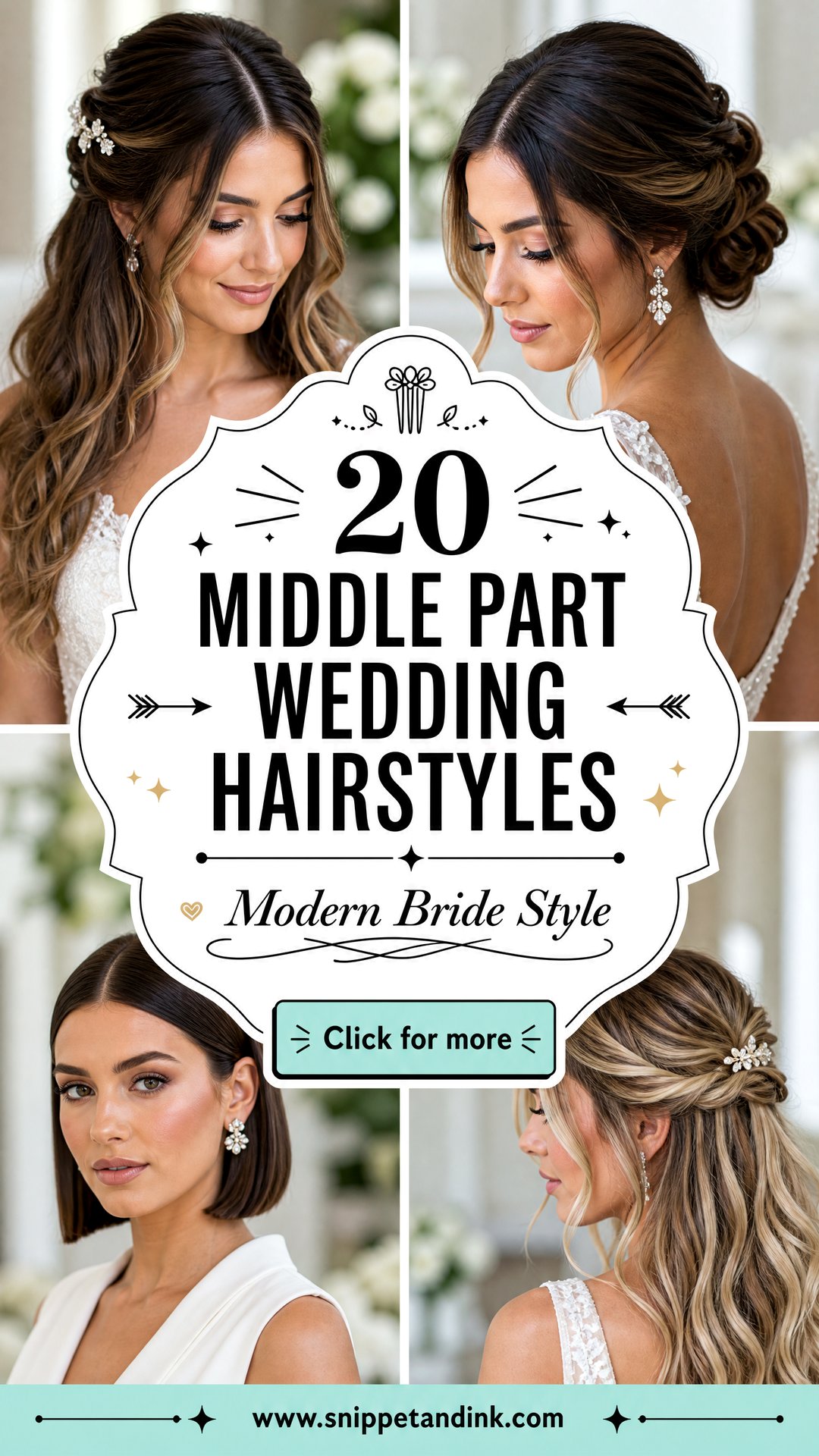
A center part does one thing very well: it gives the face an even frame, so the eyes and the jaw become the focus. It suits a sleek bun and loose waves equally, which is why I see it on so many modern brides, from minimalist city weddings to meadow ceremonies. What brides don’t always expect is how much the part itself changes the prep. Below are twenty middle part styles, up, down and in between, each with the detail I’d want you to know before your trial.
Slicked Center Parts Show Everything at the Hairline
A sleek style pulled back from a center part shows the hairline and the scalp more than any other look. That’s worth knowing before you fall for the glossy bun photos. A soft, wavy middle part hides things that a slicked one shows straight away.
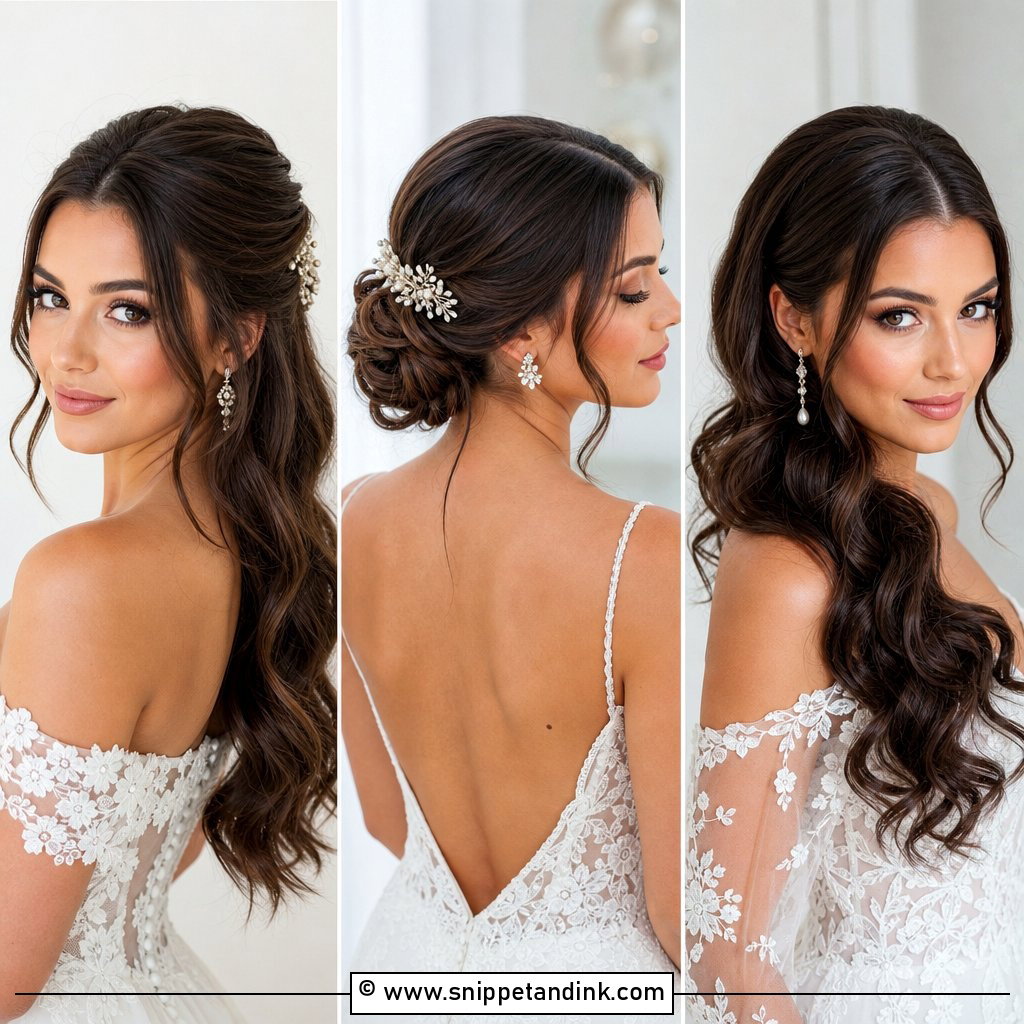
- Thinning at the temples or the part line shows under flash. A tinted root powder matched to your hair color fills it in, and I apply it before any gel.
- Short regrowth around the hairline, common after a pregnancy or a dramatic cut, sticks up when hair is pulled back. Slicking it with a little gel and a brush is fine; fighting it with high-hold spray isn’t.
- Heavy gel flakes white as it dries in heat. Use a thin layer, and keep it on the front section only.
- Grey or faded roots are obvious on a sharp part. Have color touched up about a week before.
If any of this sounds like you, pick a softer version of the style you love: the same bun with the front left slightly loose, or a curtain of waves. Nobody will see the difference except you.
1. Middle Part Sleek Low Bun
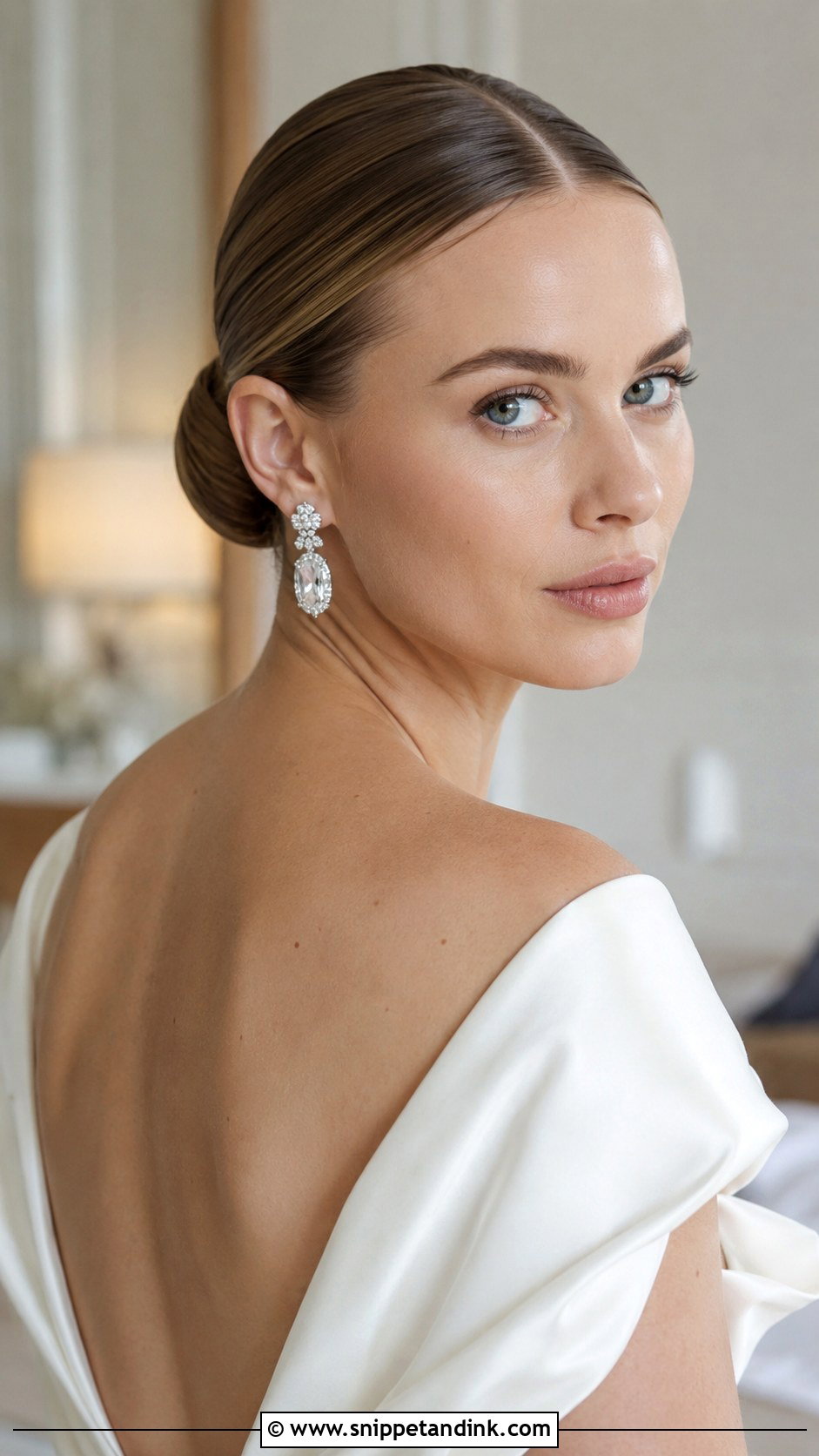
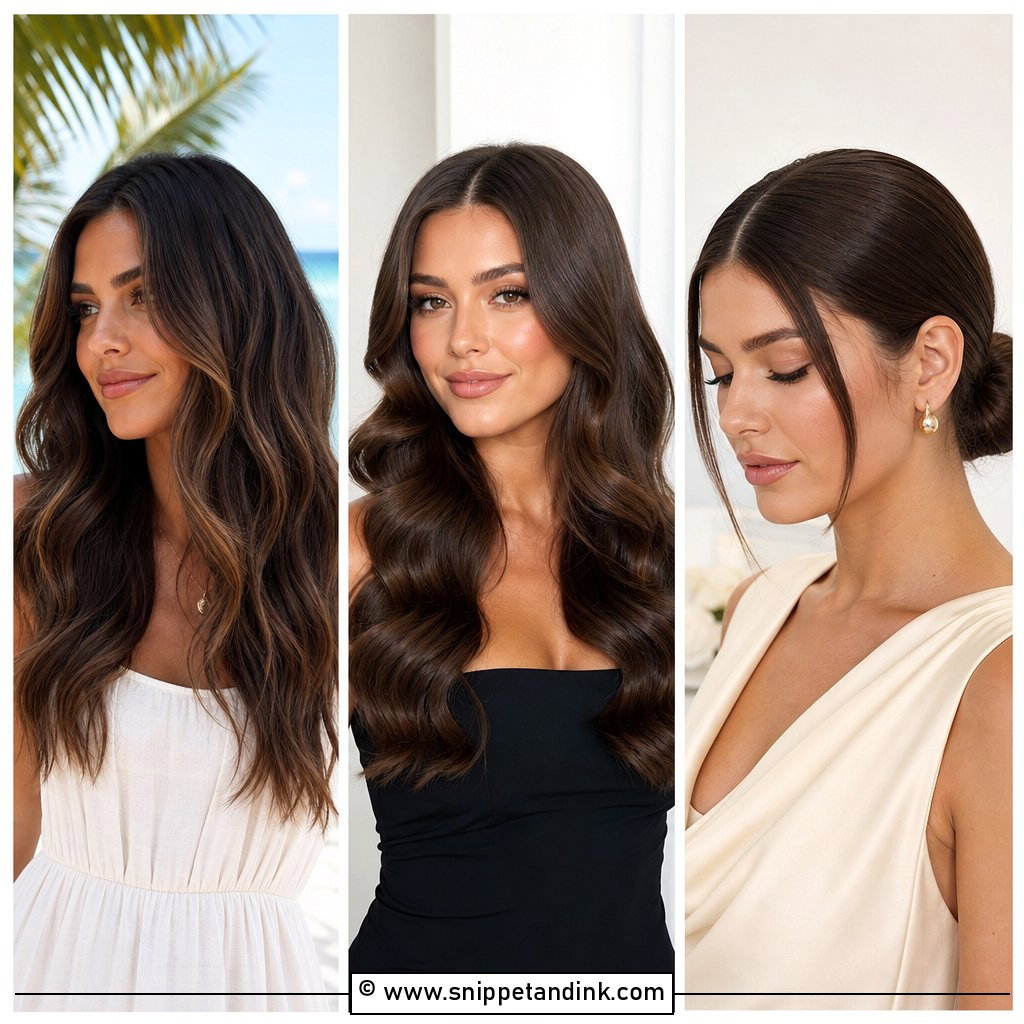
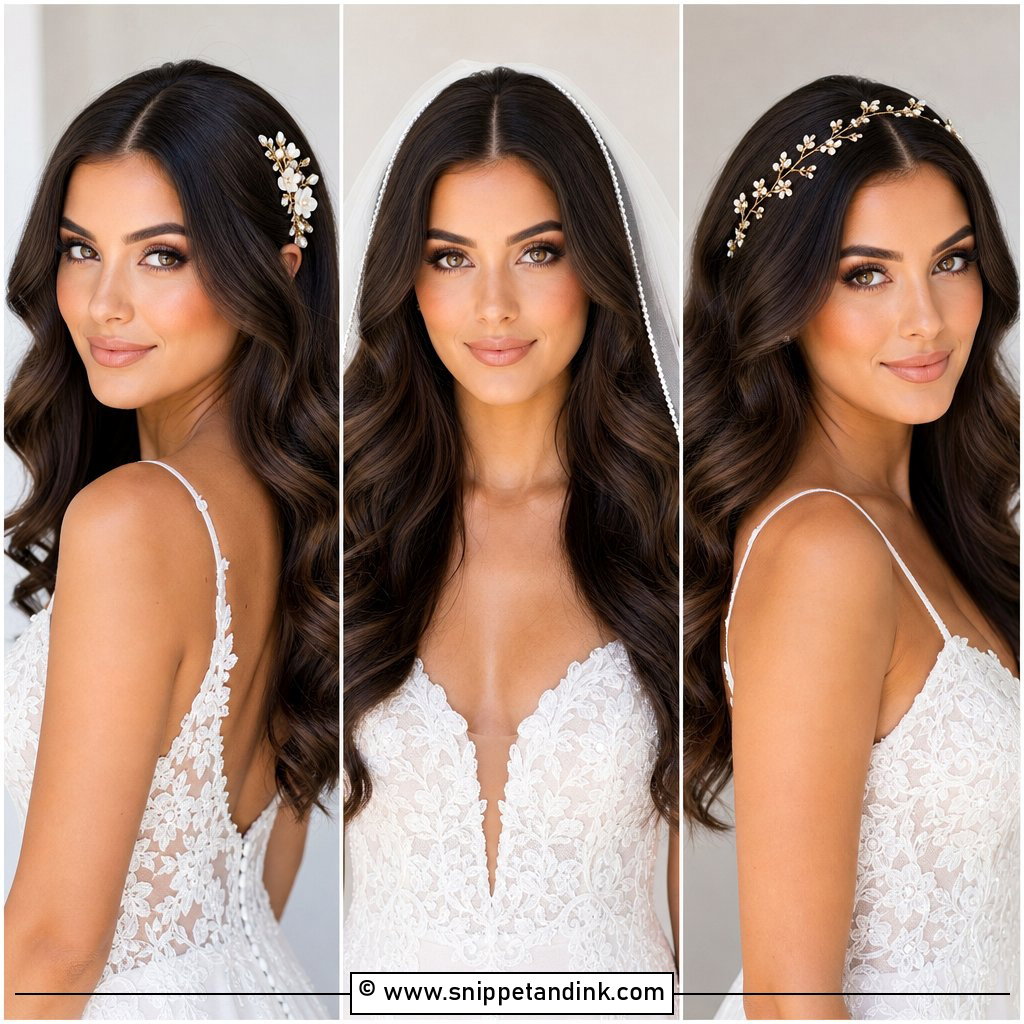
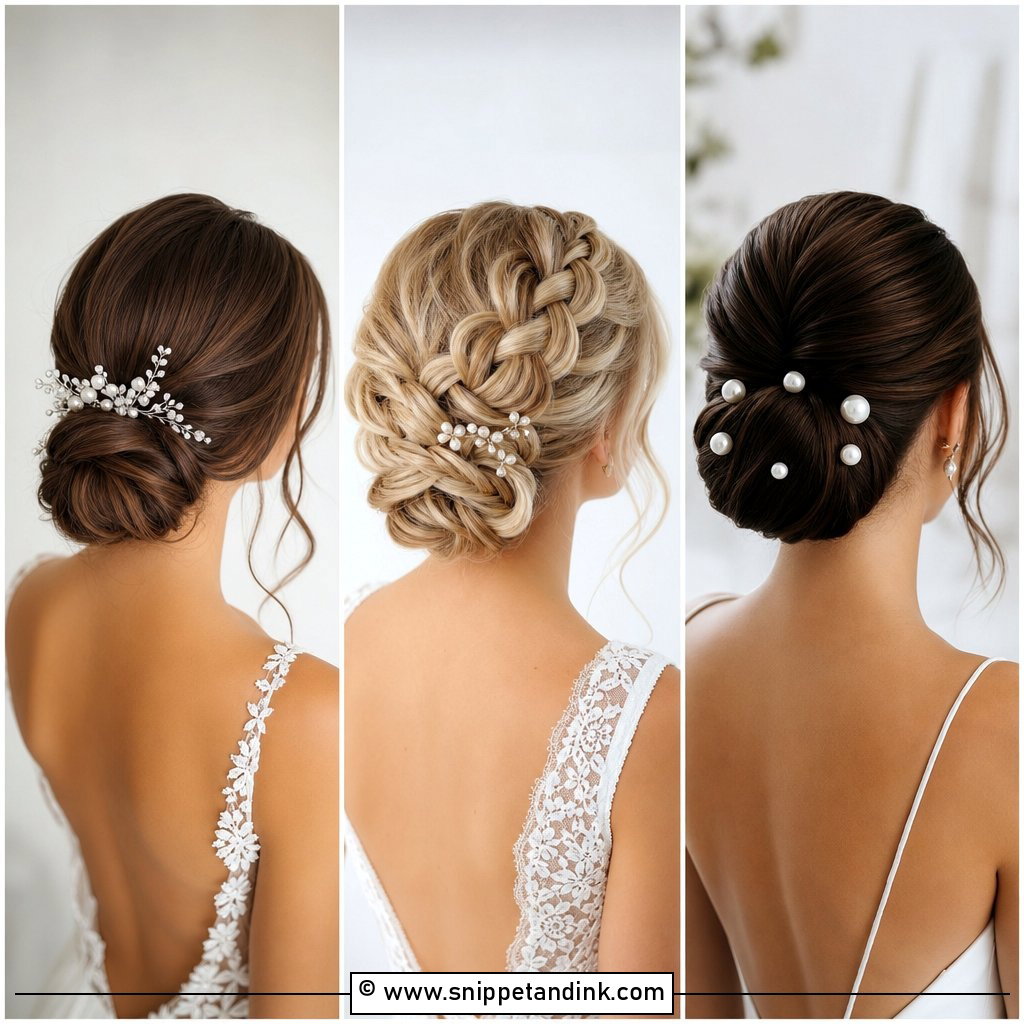
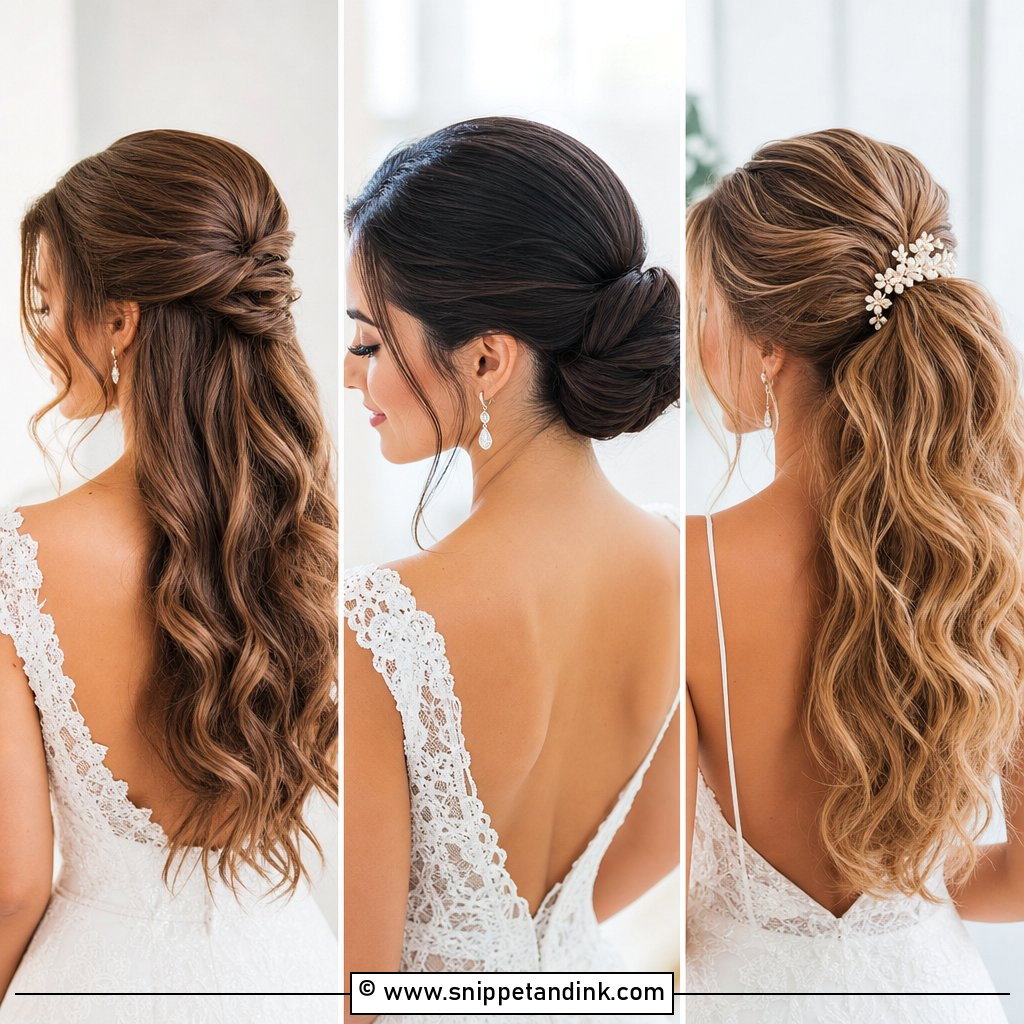
A glossy low bun parted dead center is about as clean as bridal hair gets. Everything is brushed back into a smooth, sculpted knot at the nape, so the face and earrings carry the look. The secret is the ponytail underneath: I tie it slightly above where the bun will sit, because a bun pinned around it settles lower over a few hours. A smoothing cream on damp hair beats piling serum on at the end, which separates the hair into strands. A long veil can tuck in just under the knot.
2. Middle Part Loose Beach Waves
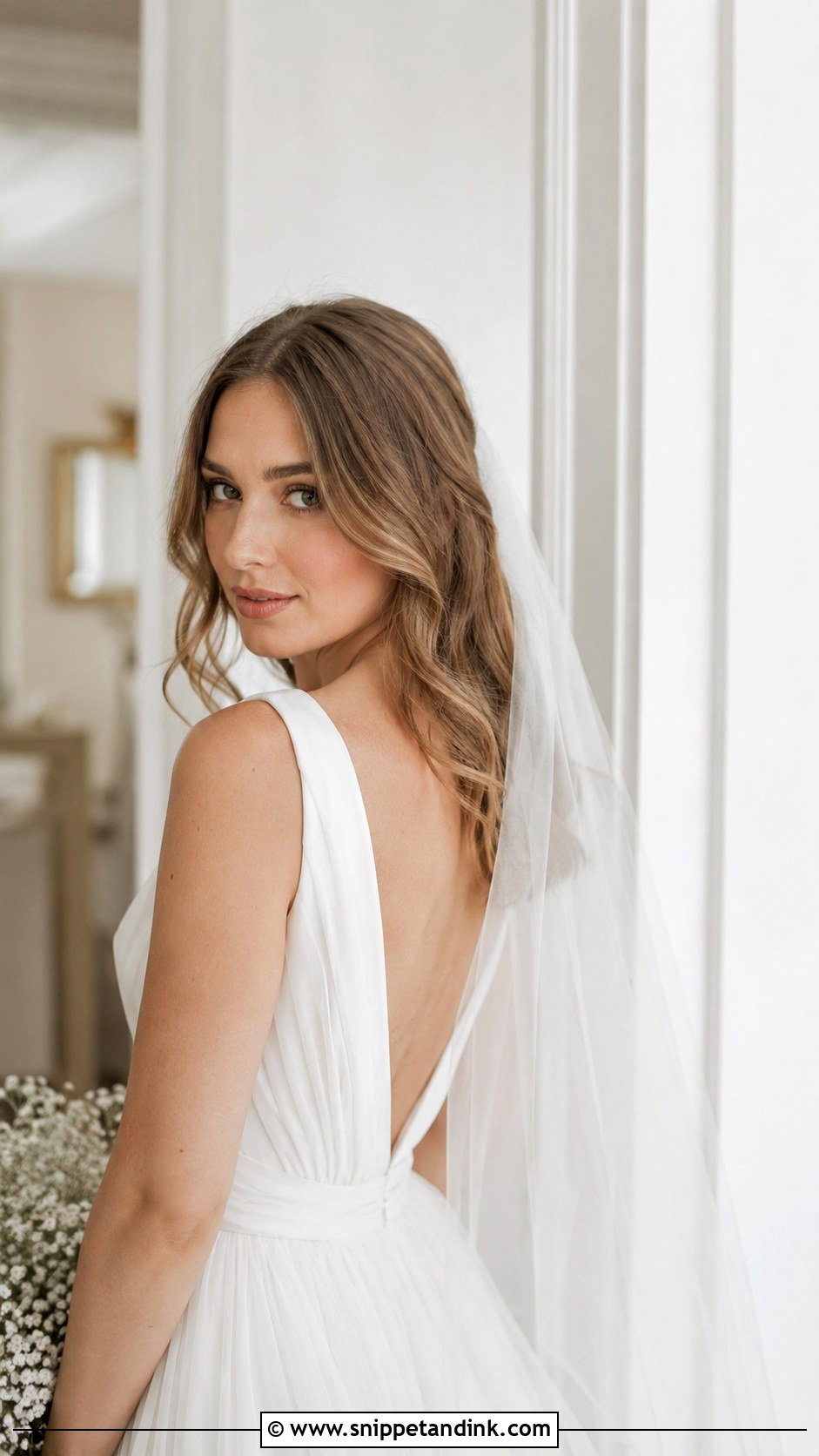
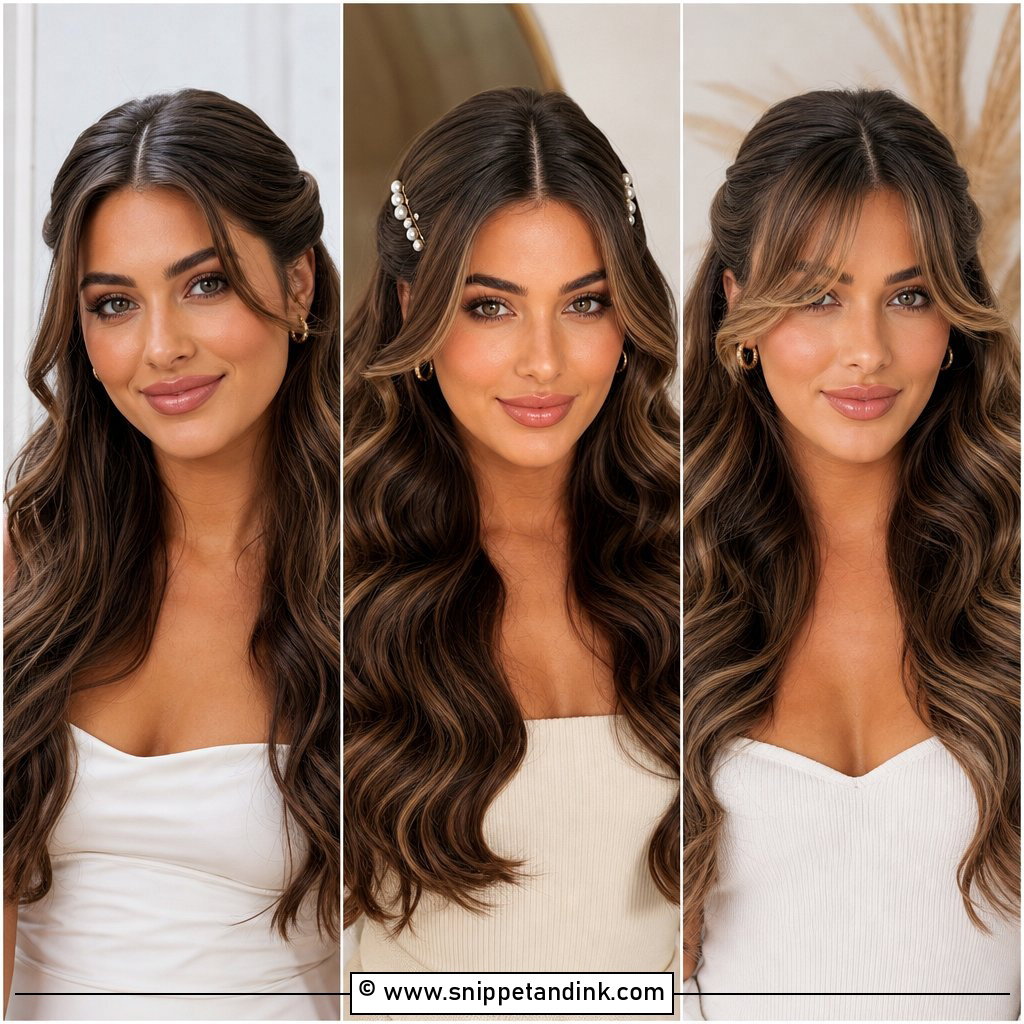
Loose beach waves with a center part are what most beach and garden brides picture. The bend starts around ear level and the ends are left slightly straight, which is what keeps it relaxed instead of curly. I use a large barrel and pin each section while it cools, then rake it apart with my fingers. In humid air these waves relax by the evening, so I set them a little tighter than the photo you bring. A veil at the back or a few small flowers is enough.
3. Middle Part Half Up Half Down
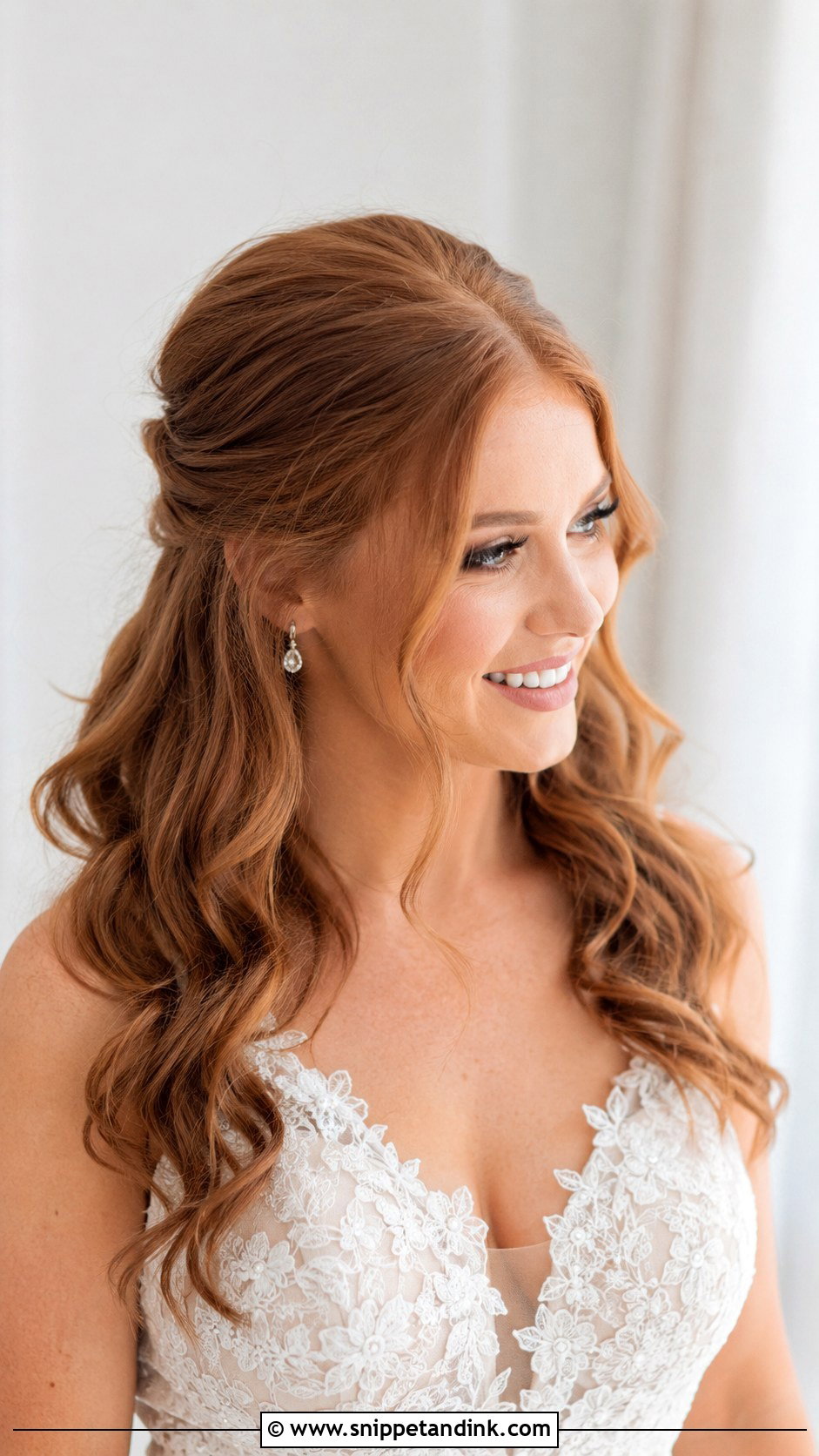
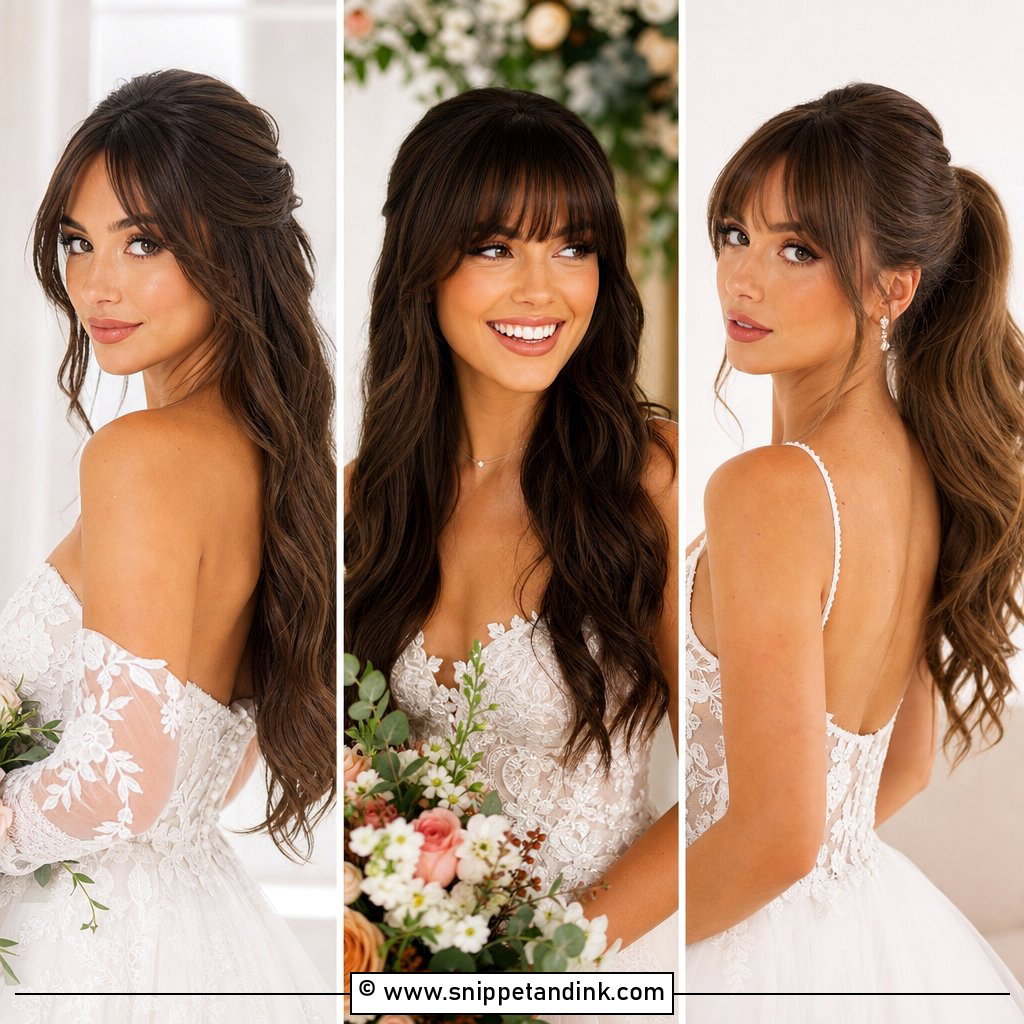
Half up, half down splits the difference: the top section is pulled back, the length stays loose, and the part keeps both sides even. It is practical for dancing and still has loose hair for photos. I anchor the half-up section with a small elastic hidden under a twist rather than pins alone, because pins work loose when the hair below is pulled during hugs. Leave a few face-framing pieces out. It works on medium and long hair and with nearly any neckline.
4. Middle Part Braided Crown
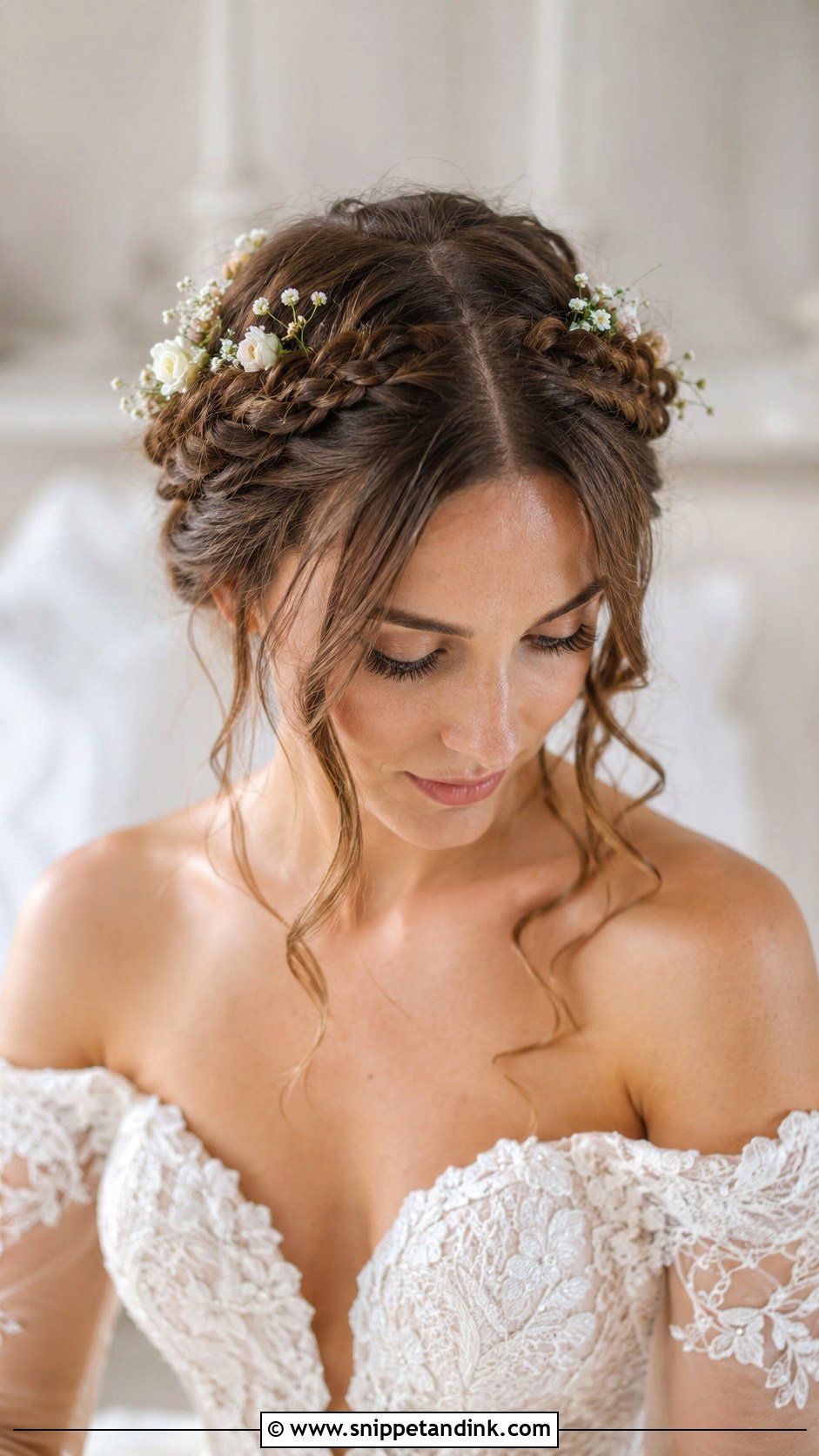
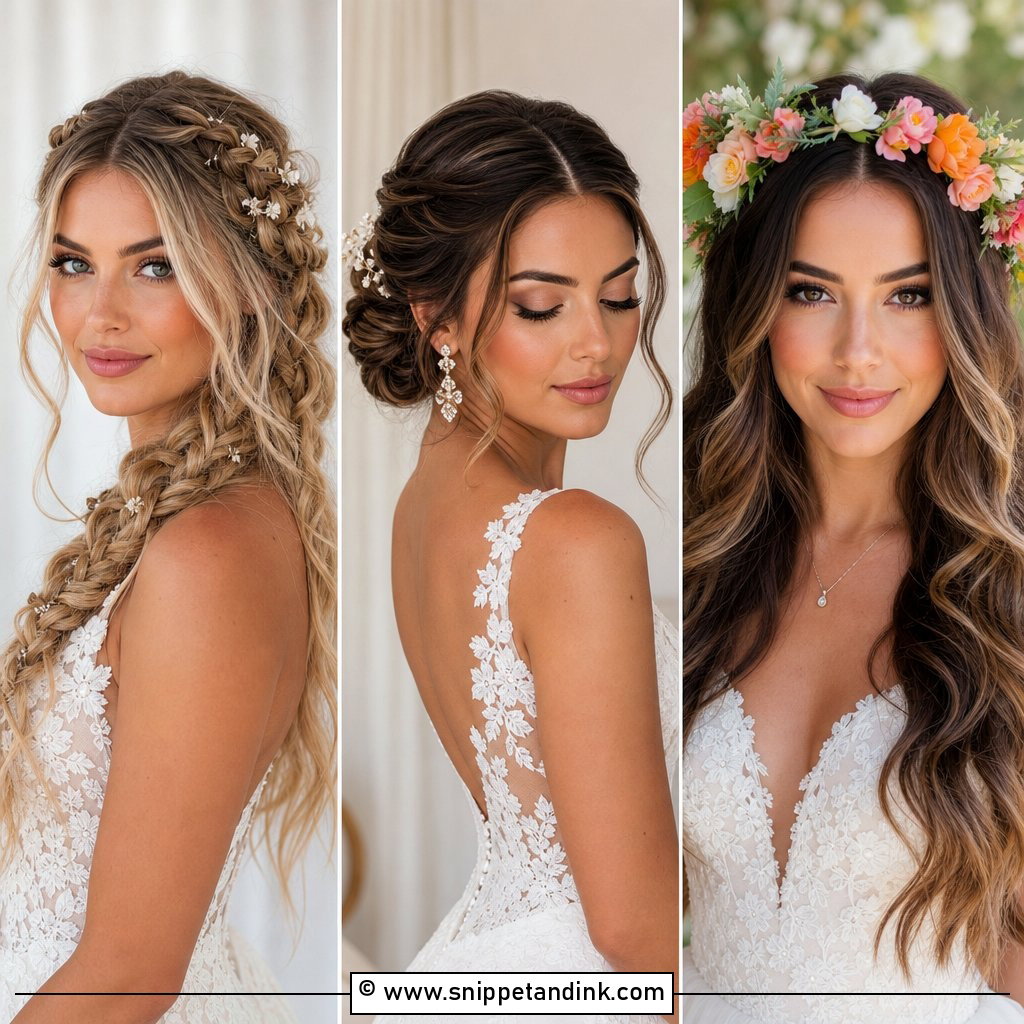
A braided halo wrapped around the head is the most secure style on this list, and the center part makes the two braids meet evenly at the top. I braid each side from the part, cross them over the crown and pin them along the inner edge where the pins disappear. The braids need some thickness to look full, so fine hair often gets a clip-in weft woven in. Small flowers tucked into the braid suit rustic and outdoor weddings, and the whole thing survives tears and dancing.
5. Middle Part Sleek Straight Hair
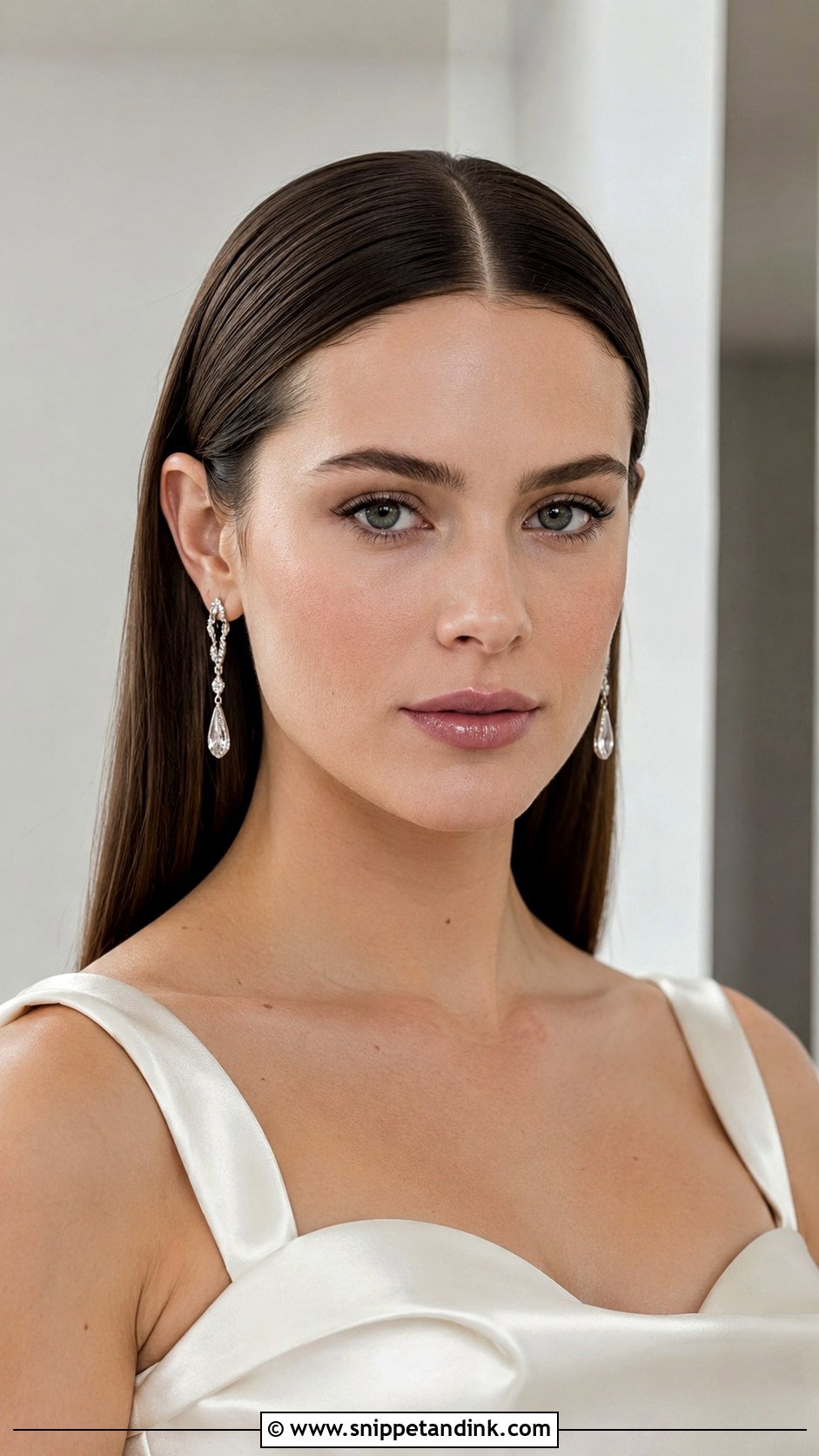
Poker-straight hair with a sharp part is the purest version of this look, and it photographs like glass if the hair is healthy. If it isn’t, it shows. I flat iron in thin sections at a moderate heat, rather than very hot passes, and finish with a few drops of light serum on the lengths only. Tuck it behind the ears to show earrings, or let it hang in a curtain. Long, recently trimmed hair suits it; a satin gown or a jumpsuit suits it even more.
6. Middle Part Low Ponytail
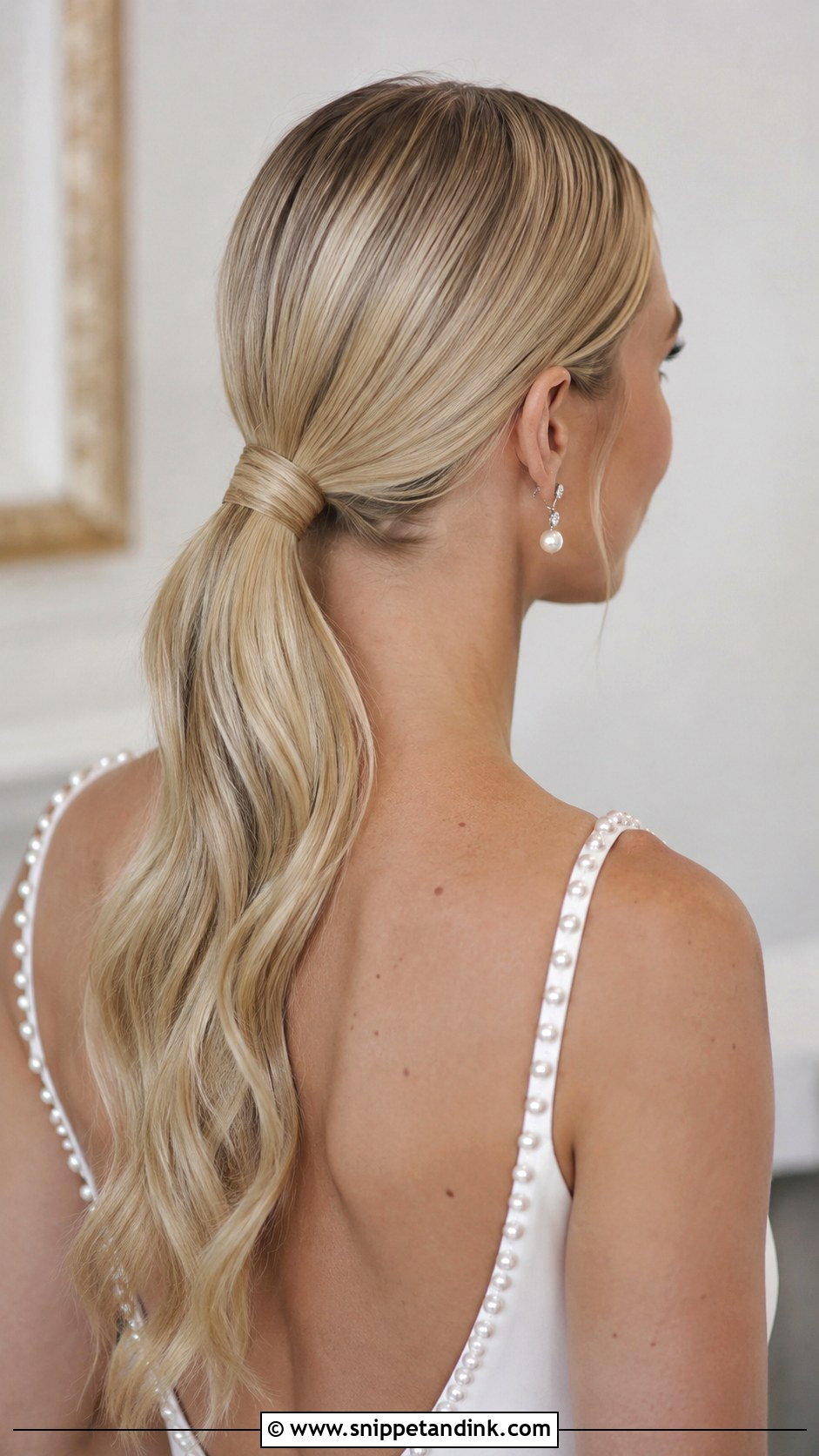
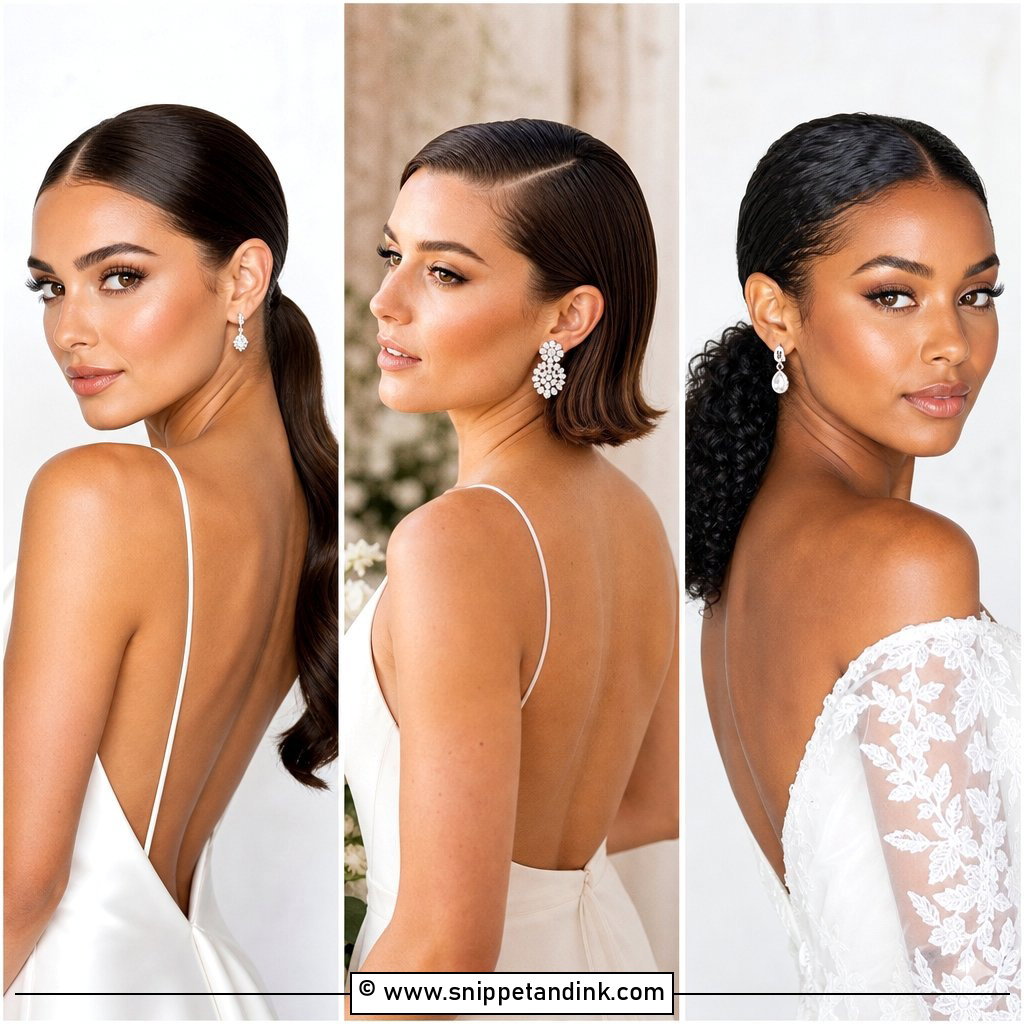
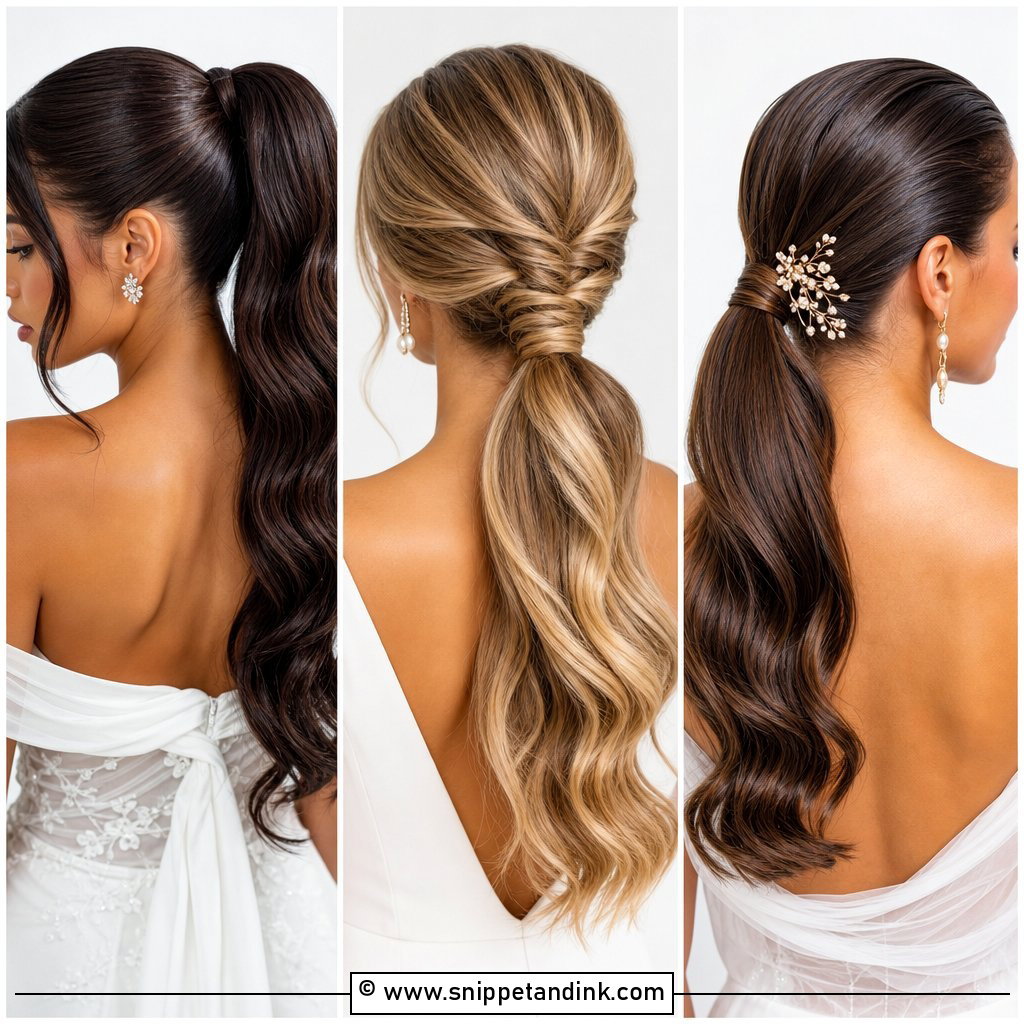
A low ponytail, center parted and smoothed back, has become a real bridal option. It keeps hair off the neck on a hot day and looks sleek in portraits. I wrap a small strand around the base to hide the elastic and pin it underneath. Waving the length adds movement; keeping it straight looks more editorial. A pearl tie or a ribbon at the base is a simple finish, and it’s the easiest style here to rebuild if anything slips.
7. Middle Part Boho Waves With Braids
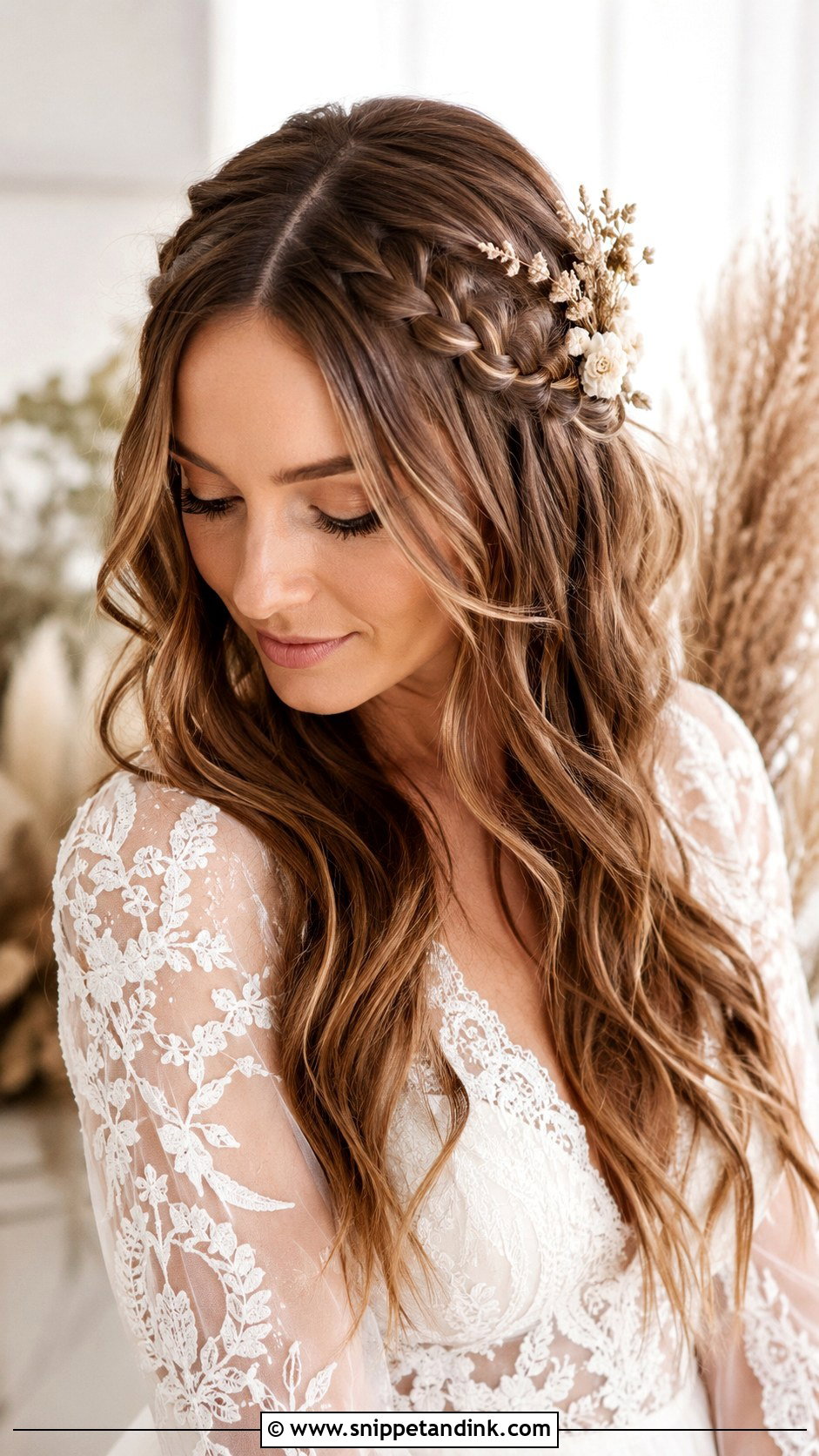
Loose waves with a few thin braids woven through give the look a bohemian texture. Small accent braids on each side, mirrored from the part, pull back to keep hair out of your face while the length stays long. I make the braids first and pancake them slightly, then wave around them so they don’t get frizzed by the iron. Dried flowers or tiny gold pins fit right in. It suits barefoot beach and meadow ceremonies, and brides who love a whimsical aesthetic.
8. Middle Part Twisted Updo
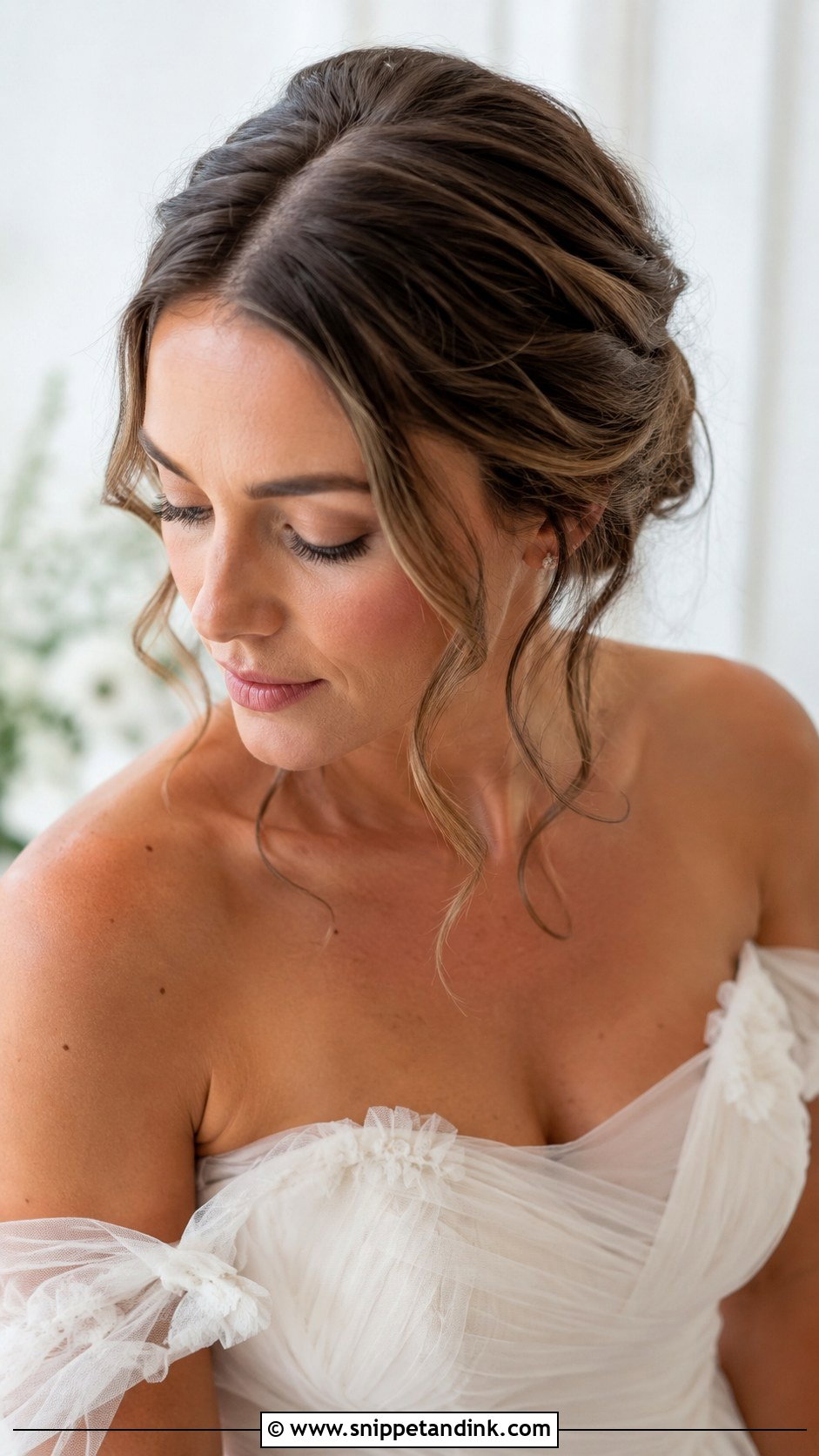
A twisted updo is the soft cousin of the chignon. From the part, each side is twisted back and tucked into a loose, textured shape at the back. It holds better on second-day hair or hair prepped with texture spray, because freshly washed hair slides out of the twists. Leave a few wisps at the face. A low veil or a few scattered pins finish it, and it works on medium to long hair.
9. Middle Part Curtain Bangs
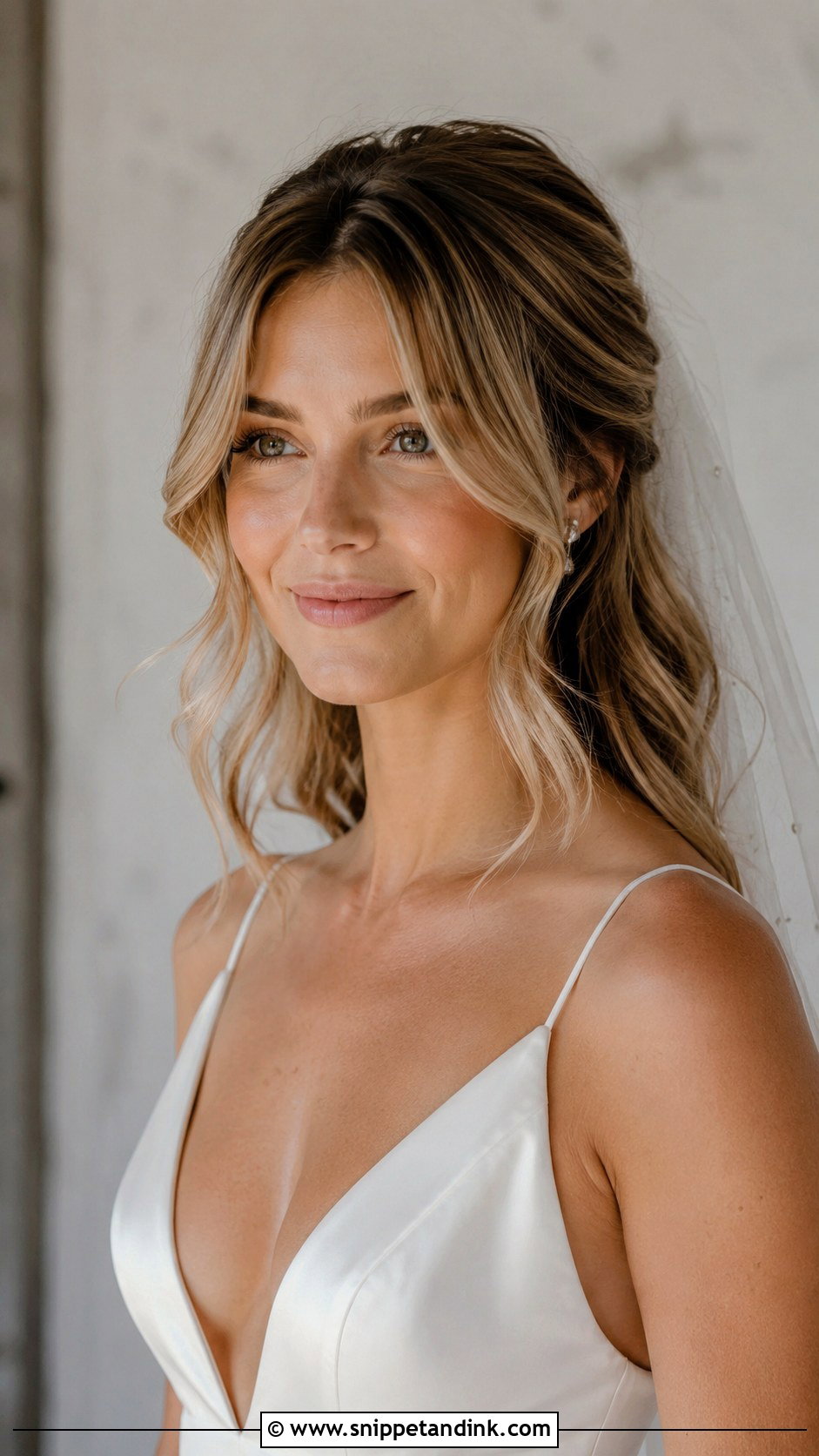
Curtain bangs split at the part and sweep outward past the eyes, softening the whole shape. They blend into loose waves or a sleek updo equally well. Round-brush them back toward the temples with a blow-dryer; a curling iron makes them flip like wings. They suit most faces, and they hide a high forehead nicely. If your bangs are growing out, trim them to cheekbone length a week before so they fall into the waves instead of your eyes.
10. Middle Part Slicked Back Updo
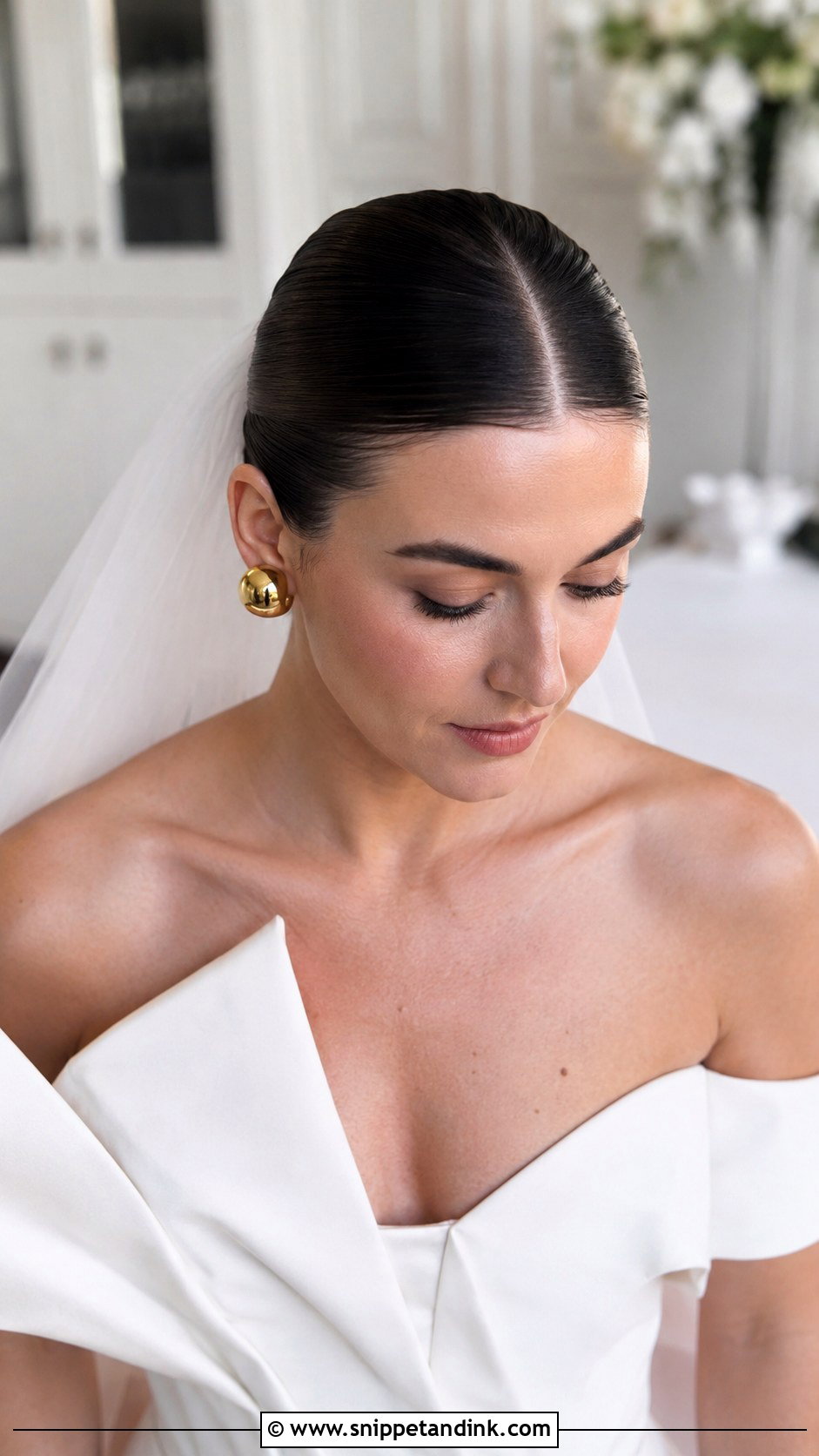
Bold brides love a slicked-back, wet-look updo with a defined part. Every strand is smoothed into a tight bun or twist, so the head shape and the face are completely exposed. I work a strong gel through damp roots with a fine-tooth comb, let it set, then finish with shine spray rather than more gel, which can dry white and flaky in photos. It suits structured gowns and city venues. On very hot days the gel can soften with sweat, so blot the hairline before photos.
11. Middle Part Romantic Chignon
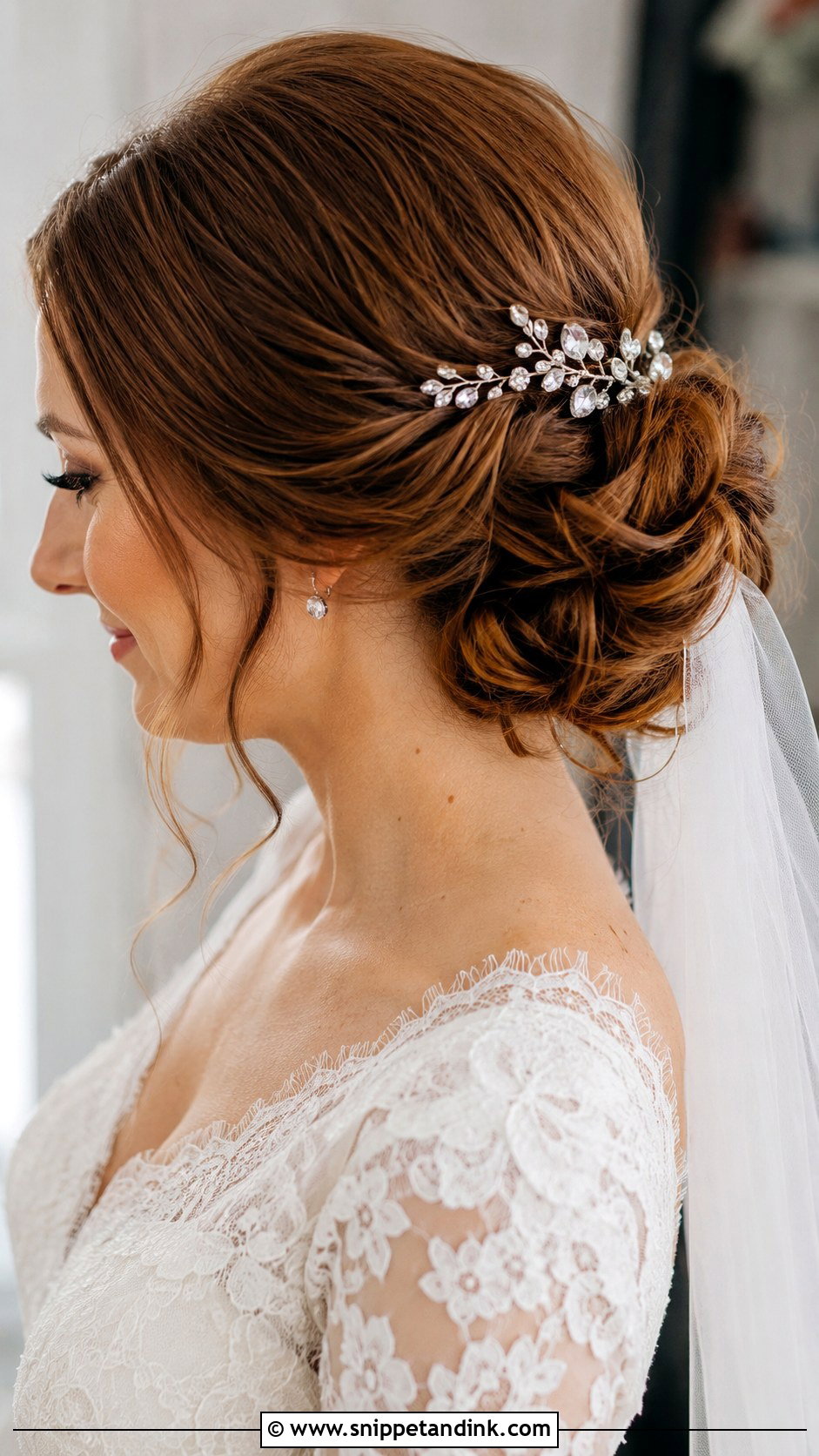
A low chignon with a center part feels fresher than the side-part version brides wore for decades. The knot sits at the nape, slightly textured rather than tight. Loosen a strand or two at each temple to soften it. It holds a veil well, since the comb can slide straight into the knot. It suits fine to thick hair, though very fine hair needs backcombing at the base so the knot has some size.
12. Middle Part Hair Down With Veil
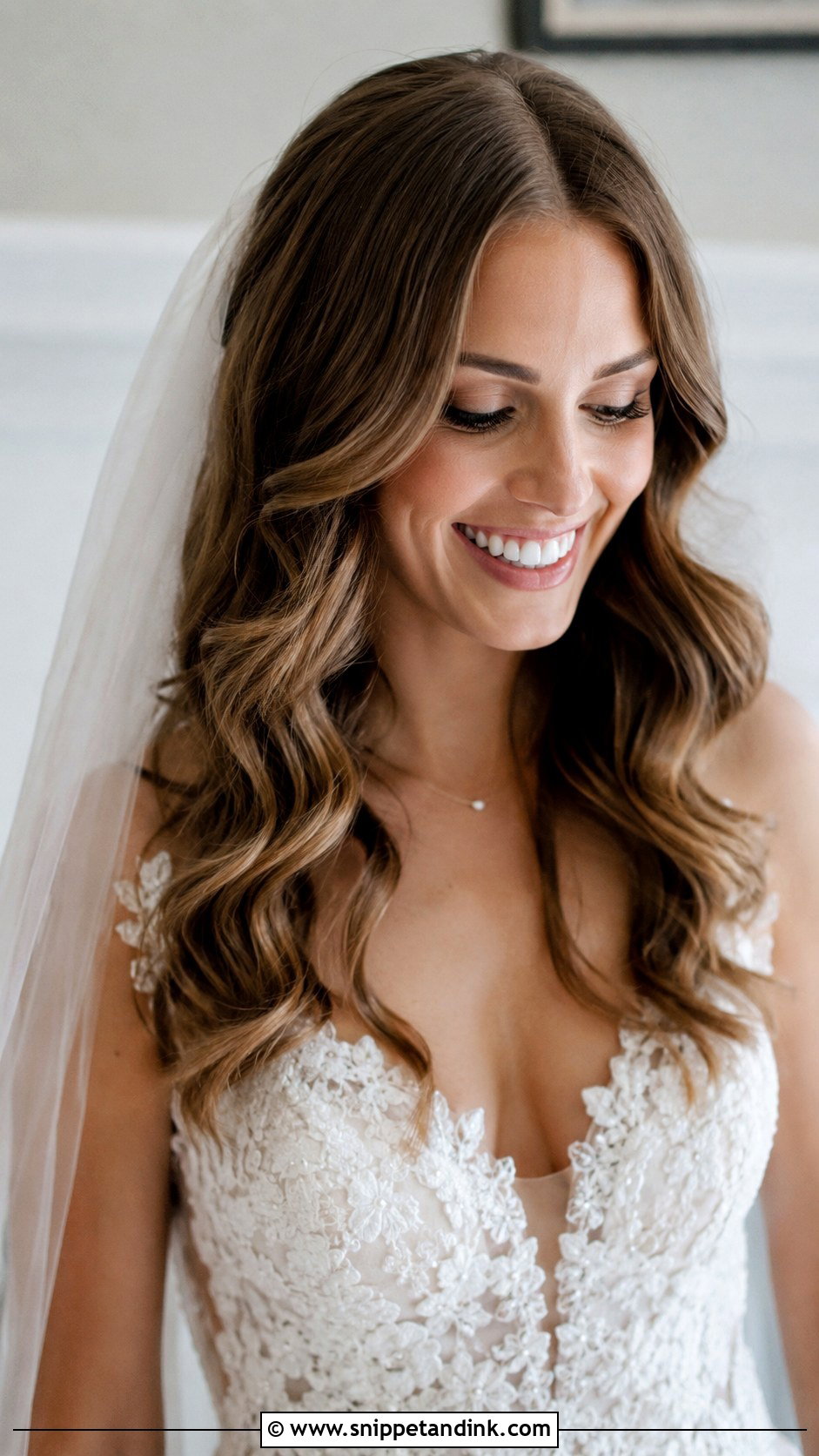
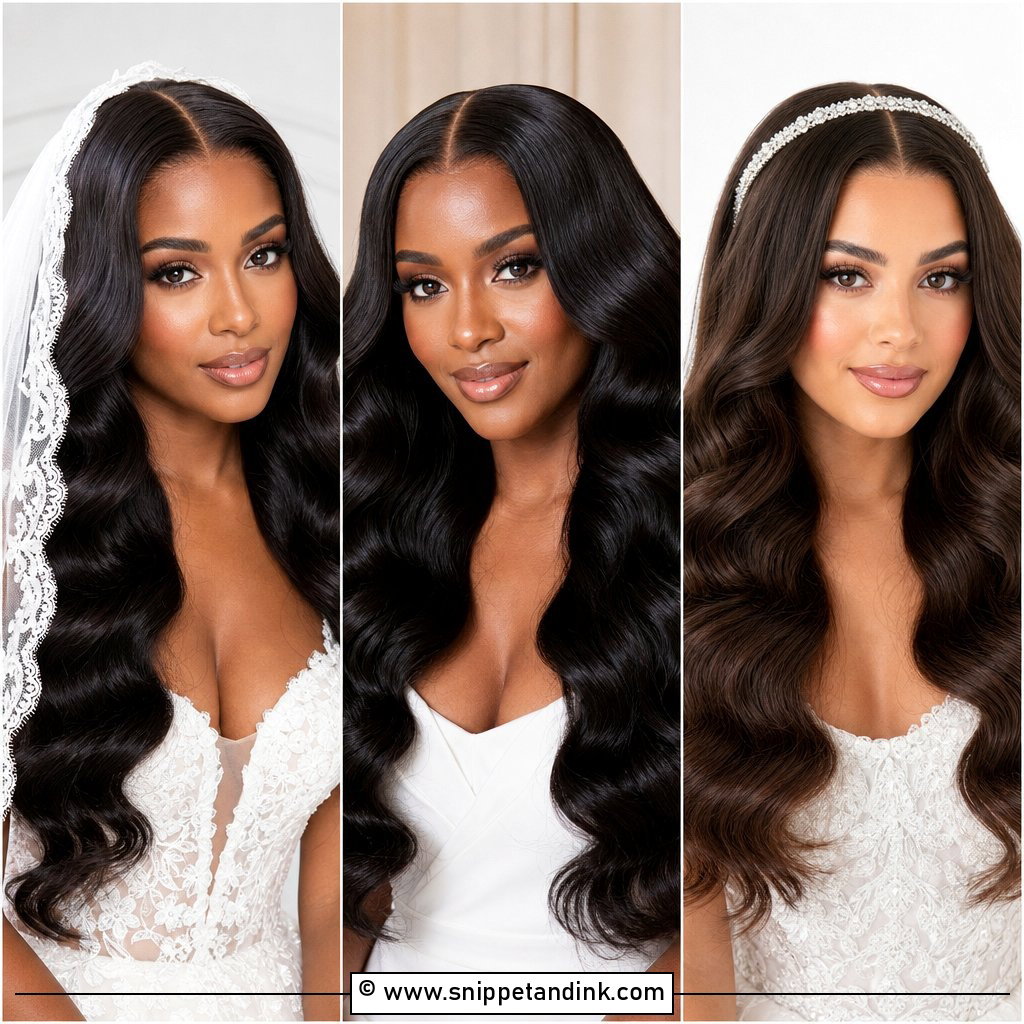
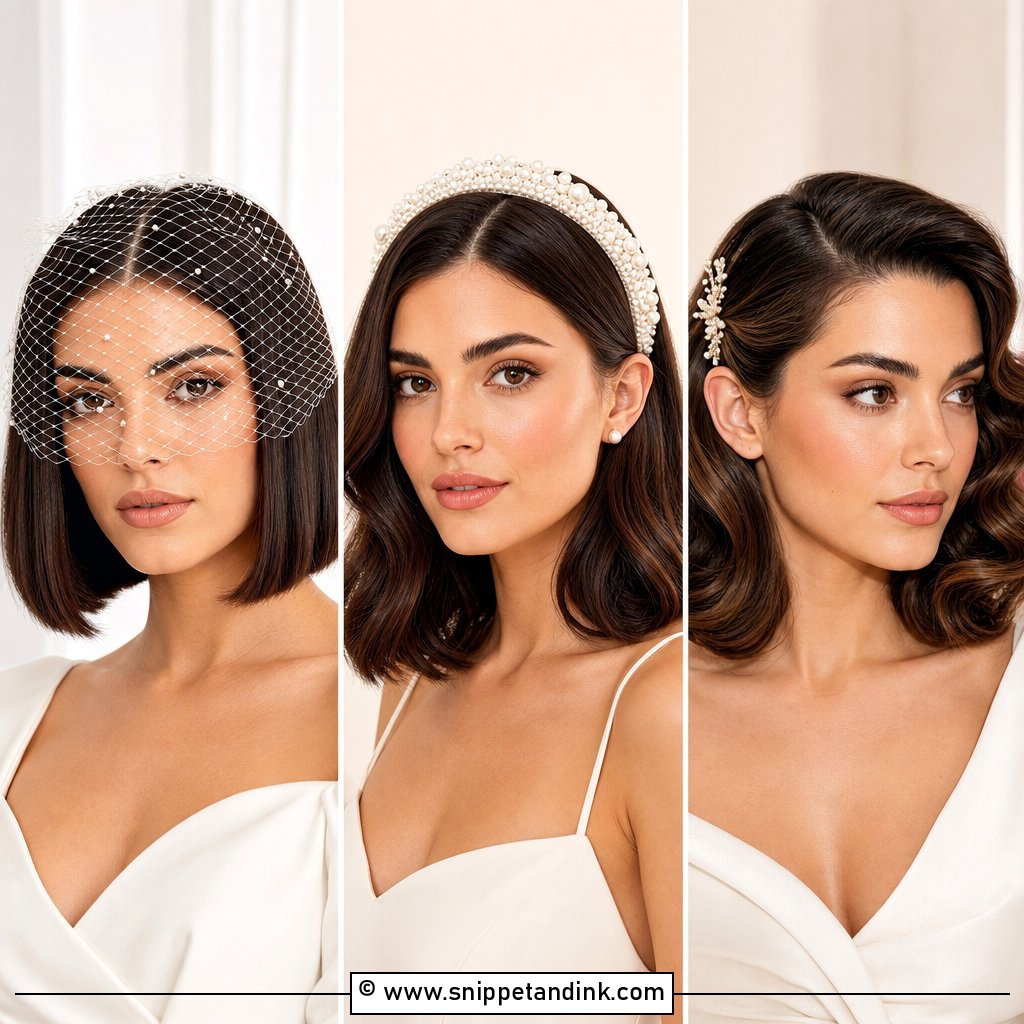
Loose hair under a veil, with a clean center part, is the simplest style here. The veil comb tucks in at the back of the head, and the hair’s own texture does the rest. Straight, wavy or curly hair all work. The thing I always add is a hidden anchor, a few crossed bobby pins under the top layer where the comb sits, or the veil drags the hair backward by the end of the ceremony. When the veil comes off, the hair underneath is still in place.
13. Middle Part Fishtail Braid
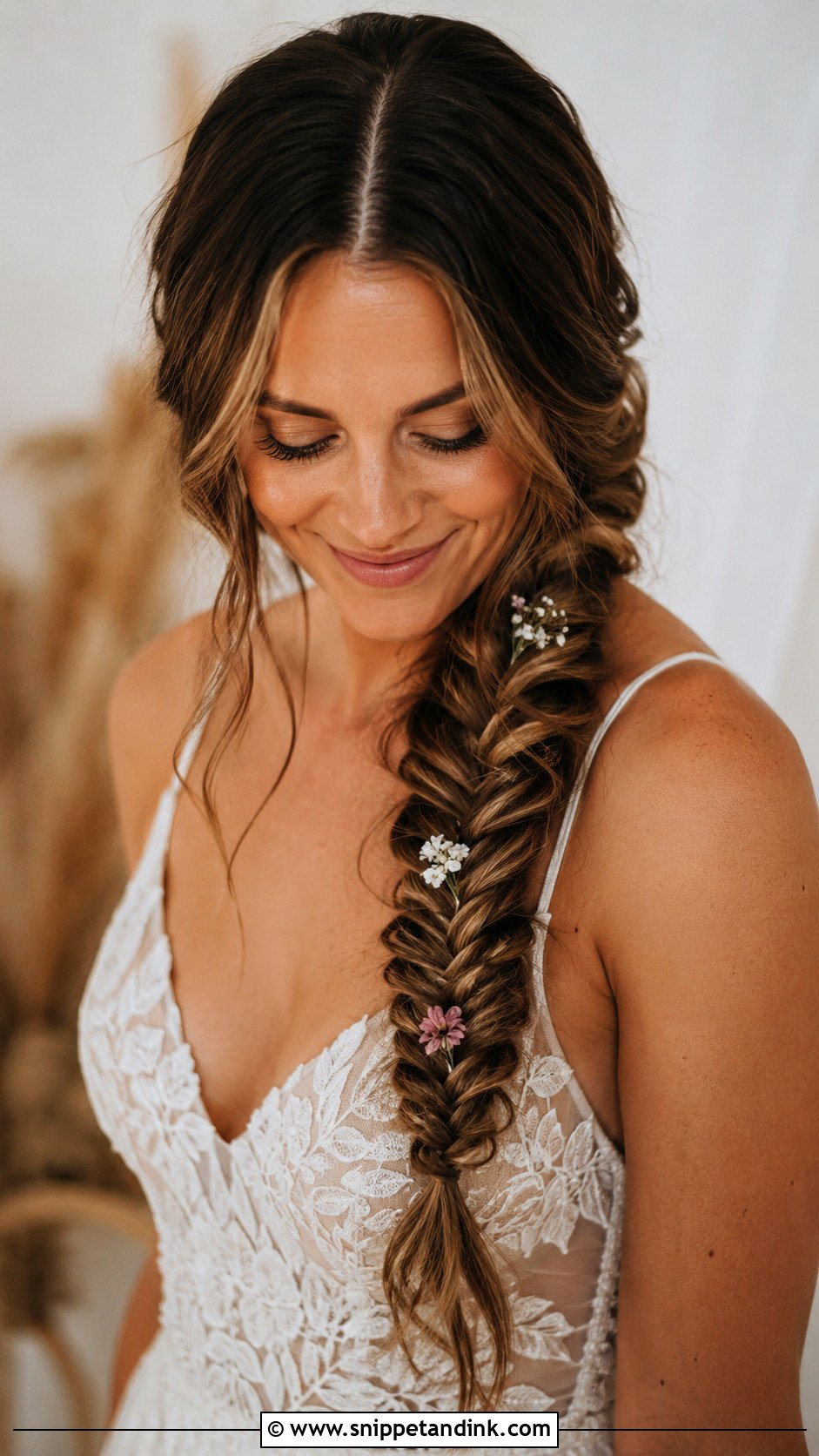
A fishtail braid looks complicated and is actually quite forgiving. From the center part, the hair is gathered over one shoulder or down the back and braided in two strands. I pull the edges out gently afterward to widen it, which also hides a few uneven crossings. It needs length, ideally past the shoulders, and works well at outdoor and vineyard weddings. Tiny flowers along the braid add a detail without weight.
14. Middle Part Sleek Bob
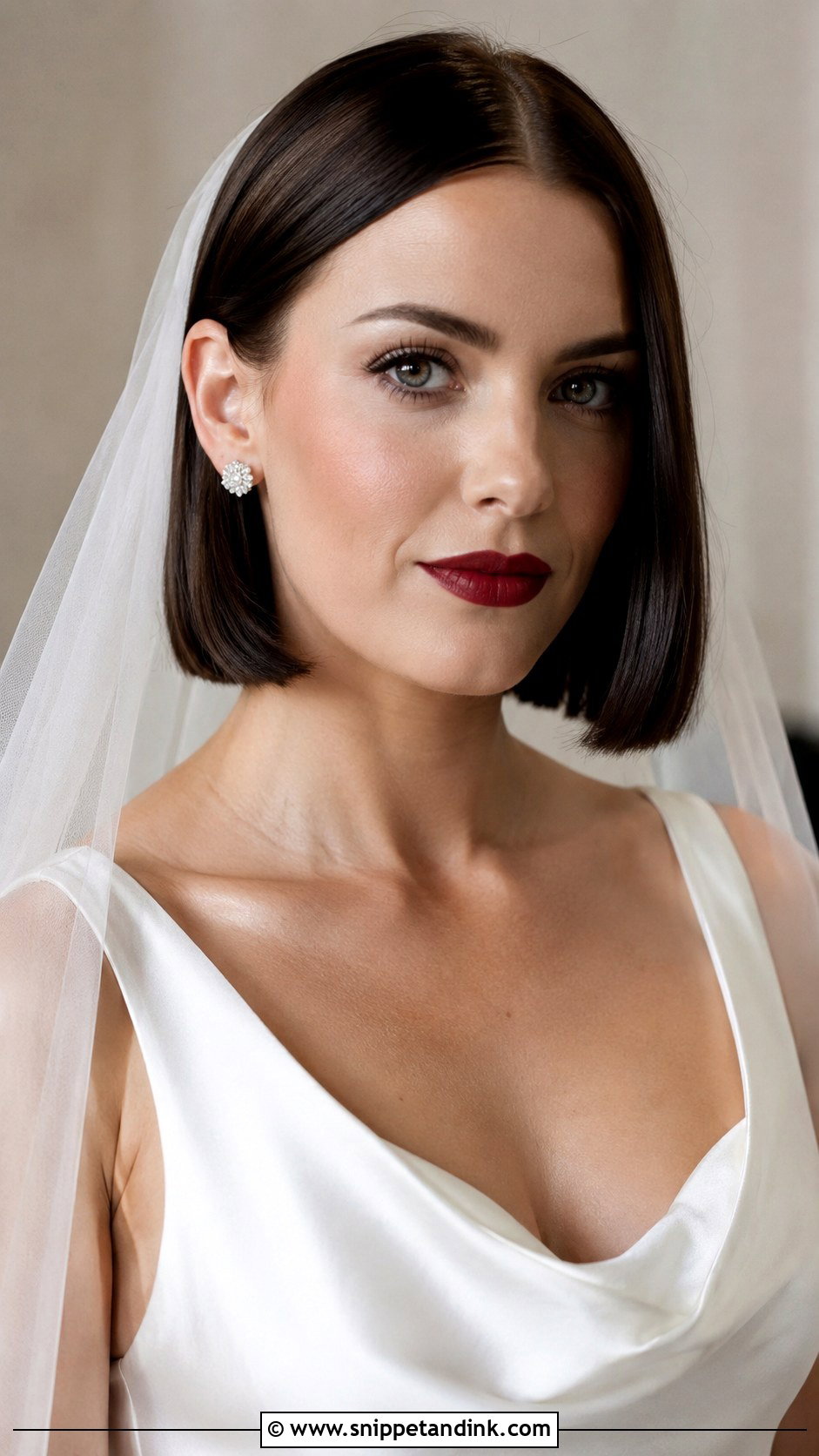
A short cut needs no apology here. A sleek bob with a sharp middle part frames the jaw with clean, blunt lines. Book the cut about a week before so the line is crisp. On the day I smooth it with a flat iron, bending the ends slightly under so they don’t flip out at the collarbone. Tuck one side behind the ear for earrings, or leave both sides full. Bold lips and statement jewelry suit it.
15. Middle Part Loose Curls
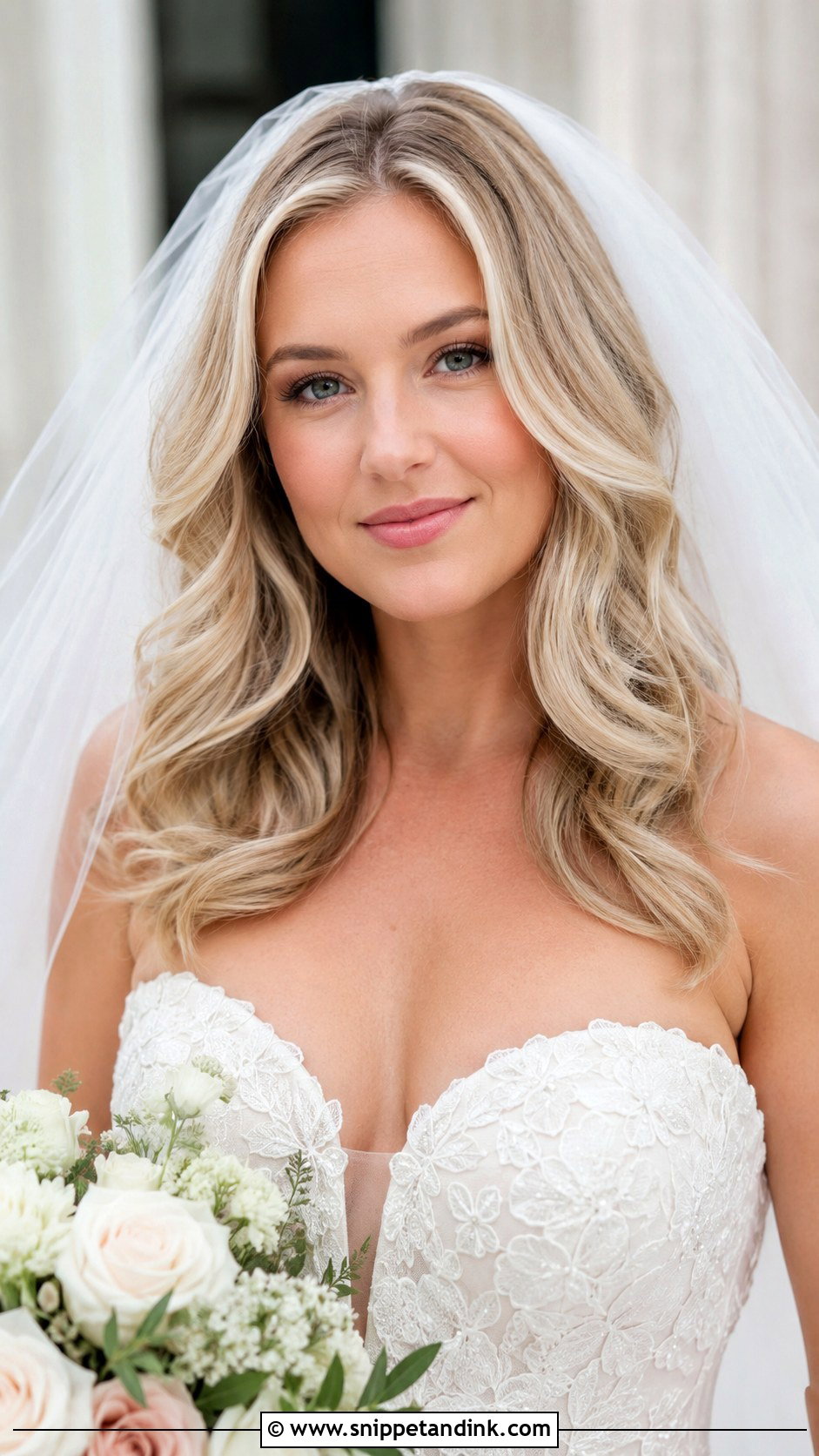
Brushed-out loose curls give the most volume of any down style. The middle part keeps the curls balanced on both sides. I curl with a wand, let them cool completely, then brush through with a paddle brush to soften them into big, loose shapes; skipping the brushing leaves tight ringlets. Use a light, flexible hairspray. It suits medium to long hair and works in a ballroom or a garden.
16. Middle Part Dutch Braid Updo
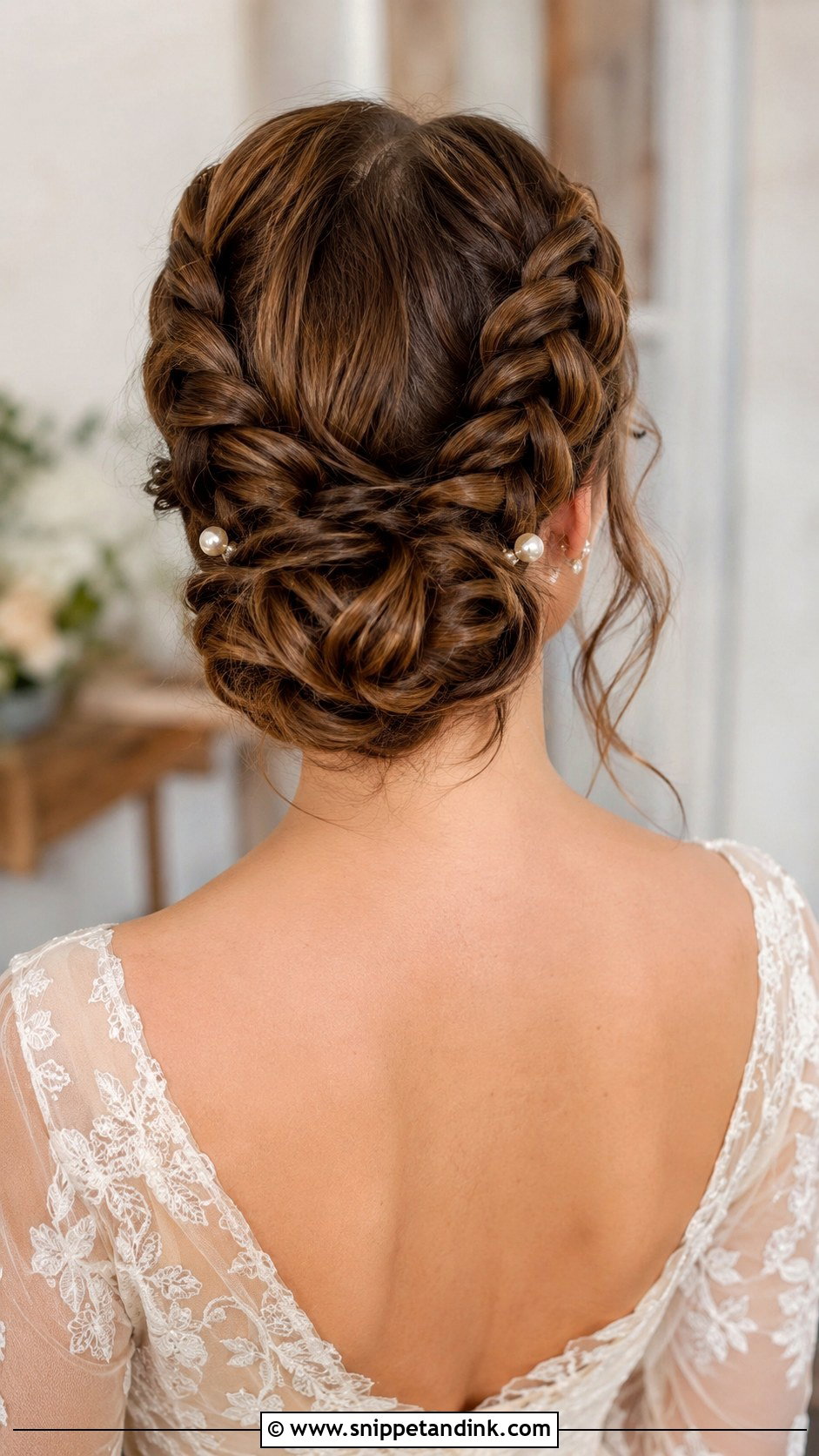
A Dutch braid sits on top of the hair instead of lying flat, so two of them running back from a center part give real texture. They twist into a bun or low knot at the back. This is my pick for dancing brides because the braids are pinned close to the scalp and don’t move. Loosen the edges gently for a softer look. Thick, long hair gives the fullest braids; fine hair can work with a little backcombing at the roots before braiding.
17. Middle Part Wavy Lob
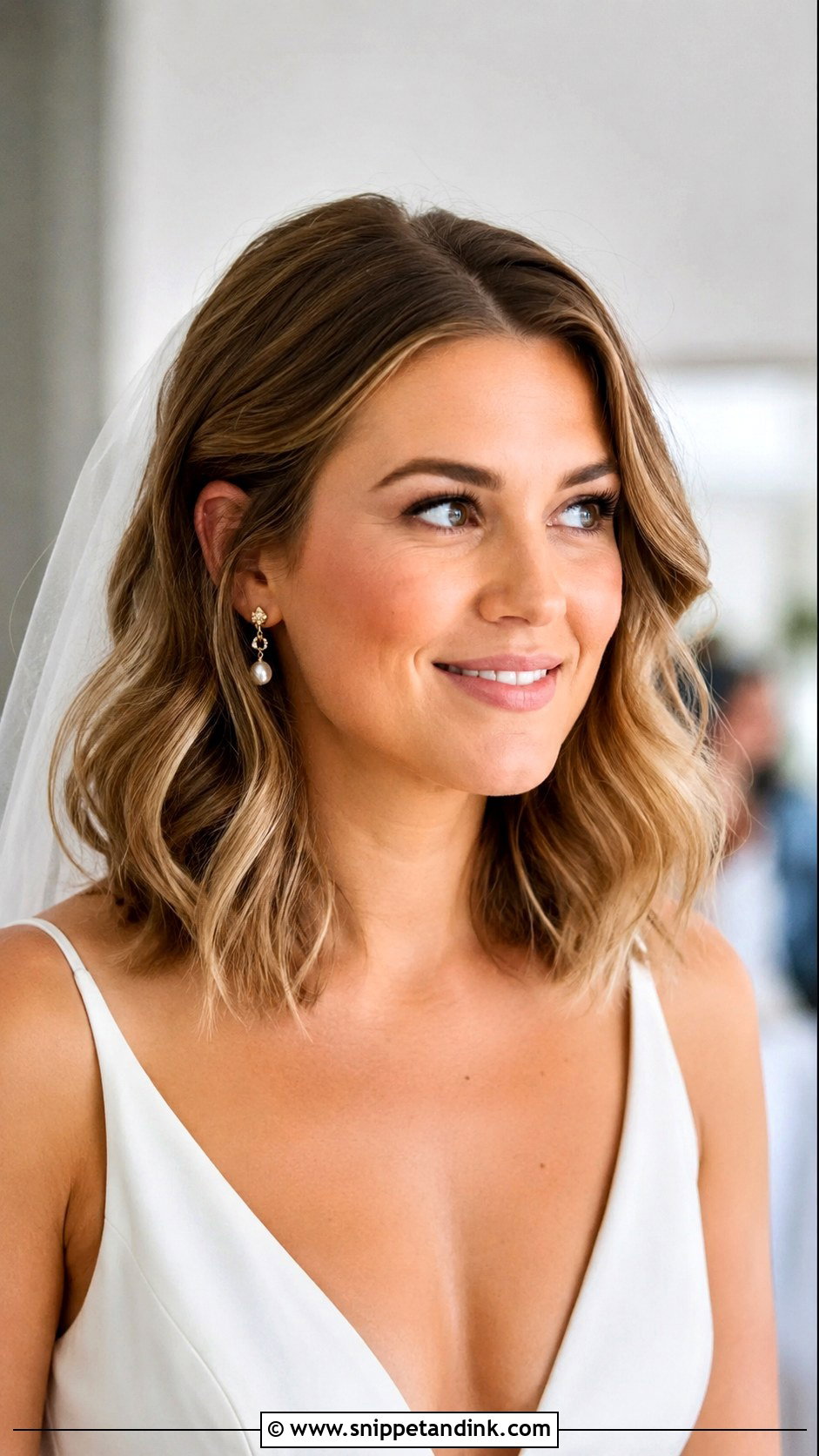
A wavy lob is the easiest length to wear on a wedding day: no tangling, no weight, no hair caught in a dress strap. Soft waves on the mid-lengths and ends, with the last inch left straight, keep it modern. Tuck one side for a touch of asymmetry. Because a lob is short enough to keep its shape, the waves usually last longer than on long hair. Delicate earrings and a simple gown are all it needs.
18. Middle Part Twisted Half Updo
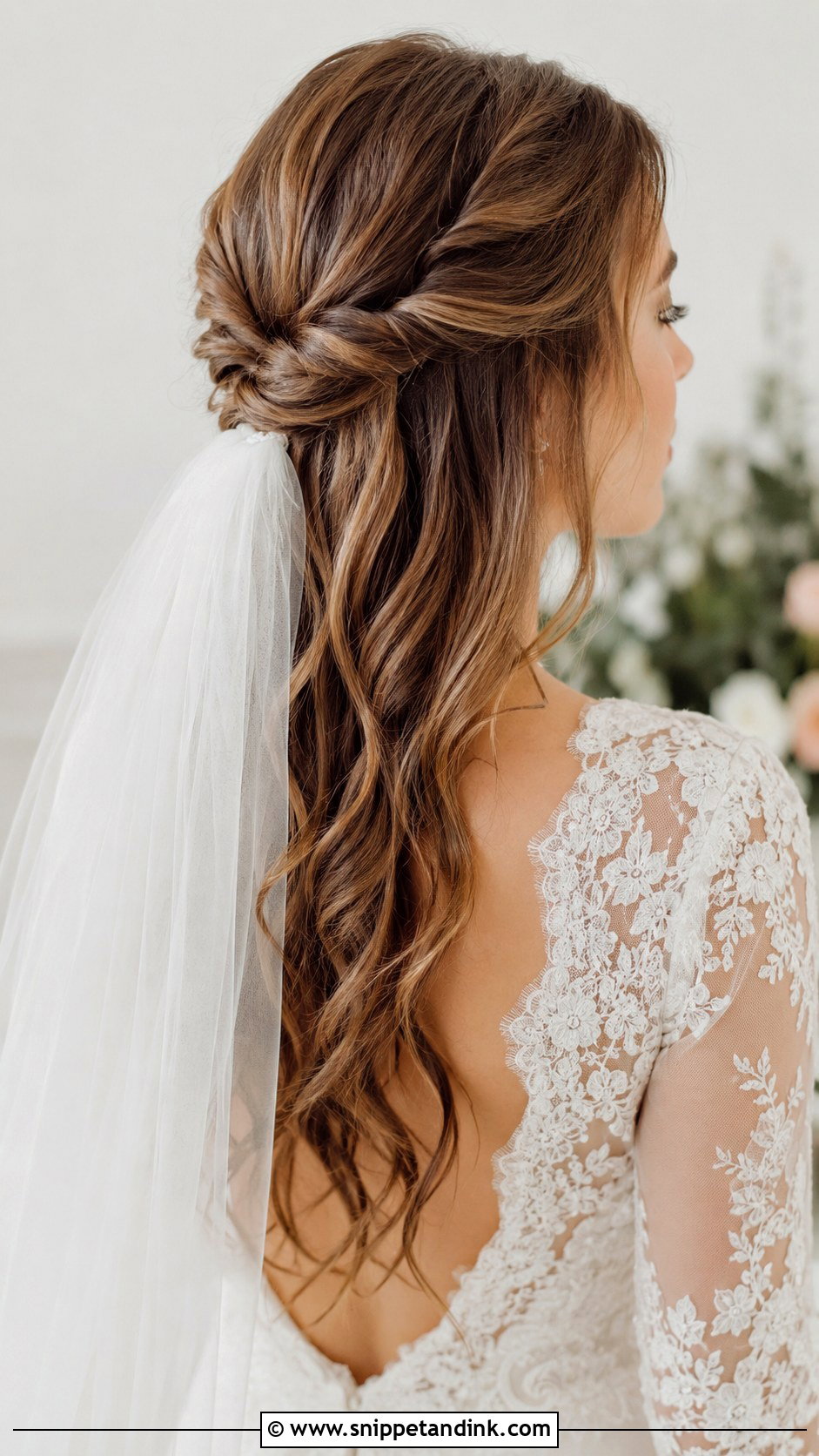
A twisted half updo twists the hair back from each side of the part to meet in the middle, leaving the rest loose. I secure the meeting point with two crossed bobby pins and a clear elastic, then hide them under a small decorative pin. A veil comb can slide in just beneath the twists. Curl the length for texture or leave it sleek. It works for classic and boho brides alike.
19. Middle Part Polished Pin Straight Updo
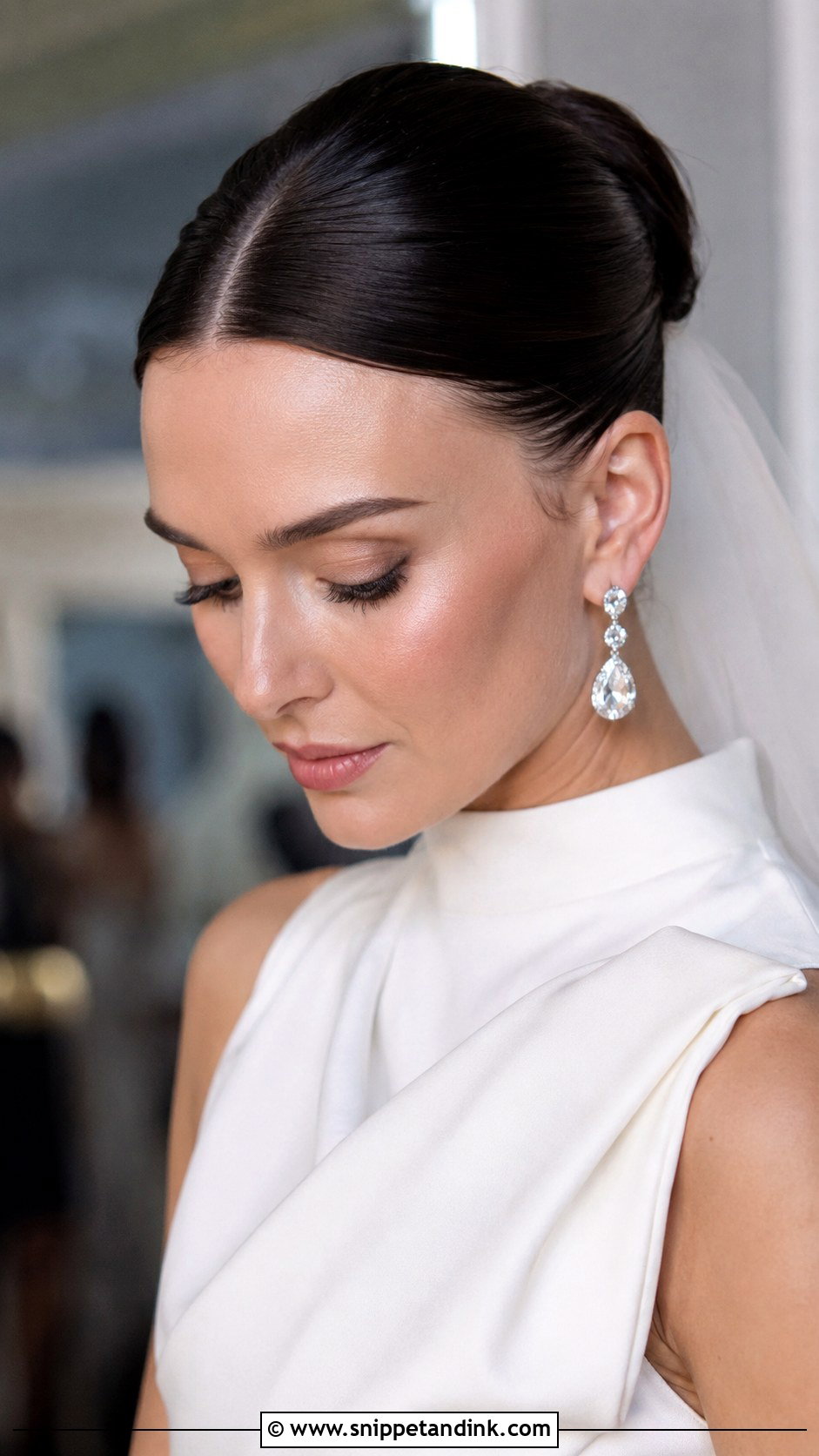
A pin-straight updo with a sharp part is the most architectural style here. The crown is smoothed completely flat, and the hair is gathered into a clean, structured bun at the back. Any frizz shows instantly, so I flat iron the lengths before putting it up, then smooth flyaways with a toothbrush and a light gel. It needs a confident face and good earrings. A structured gown completes it.
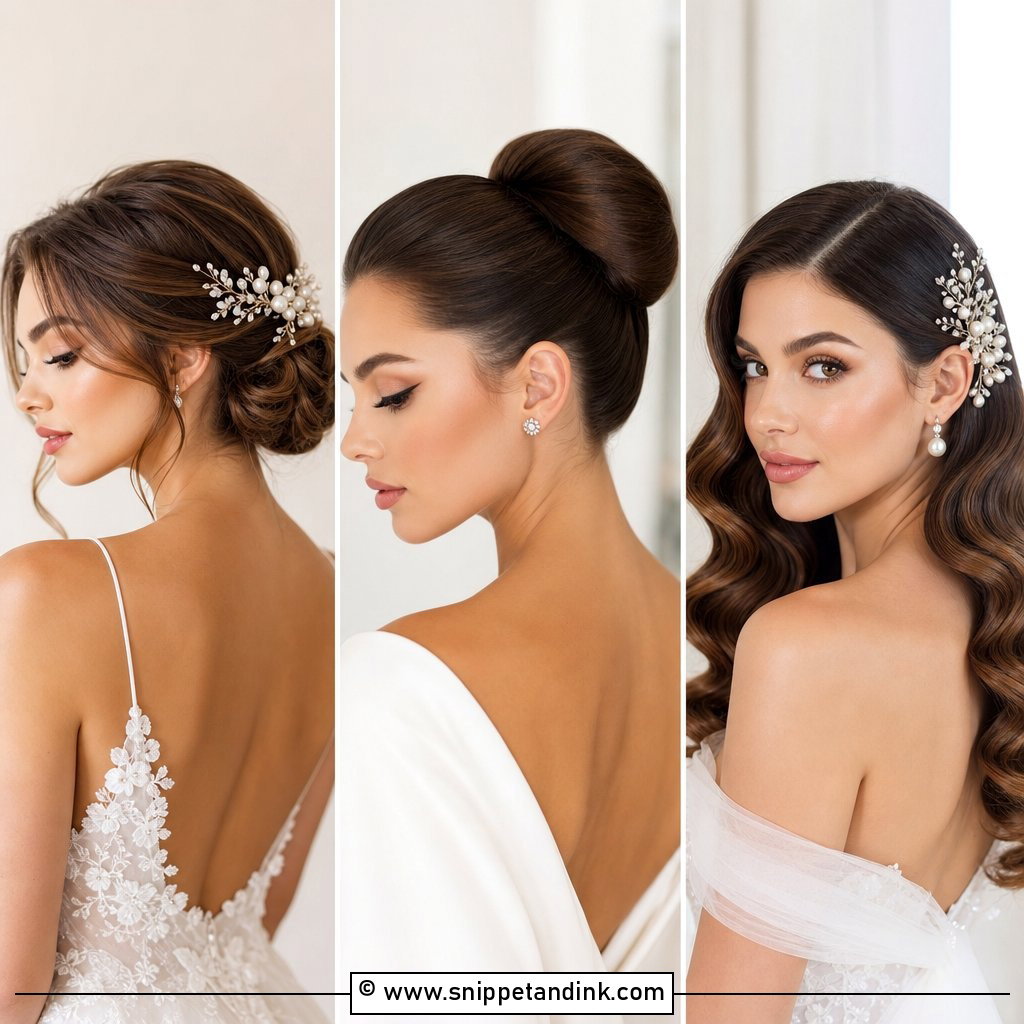
20. Middle Part Flower Adorned Waves
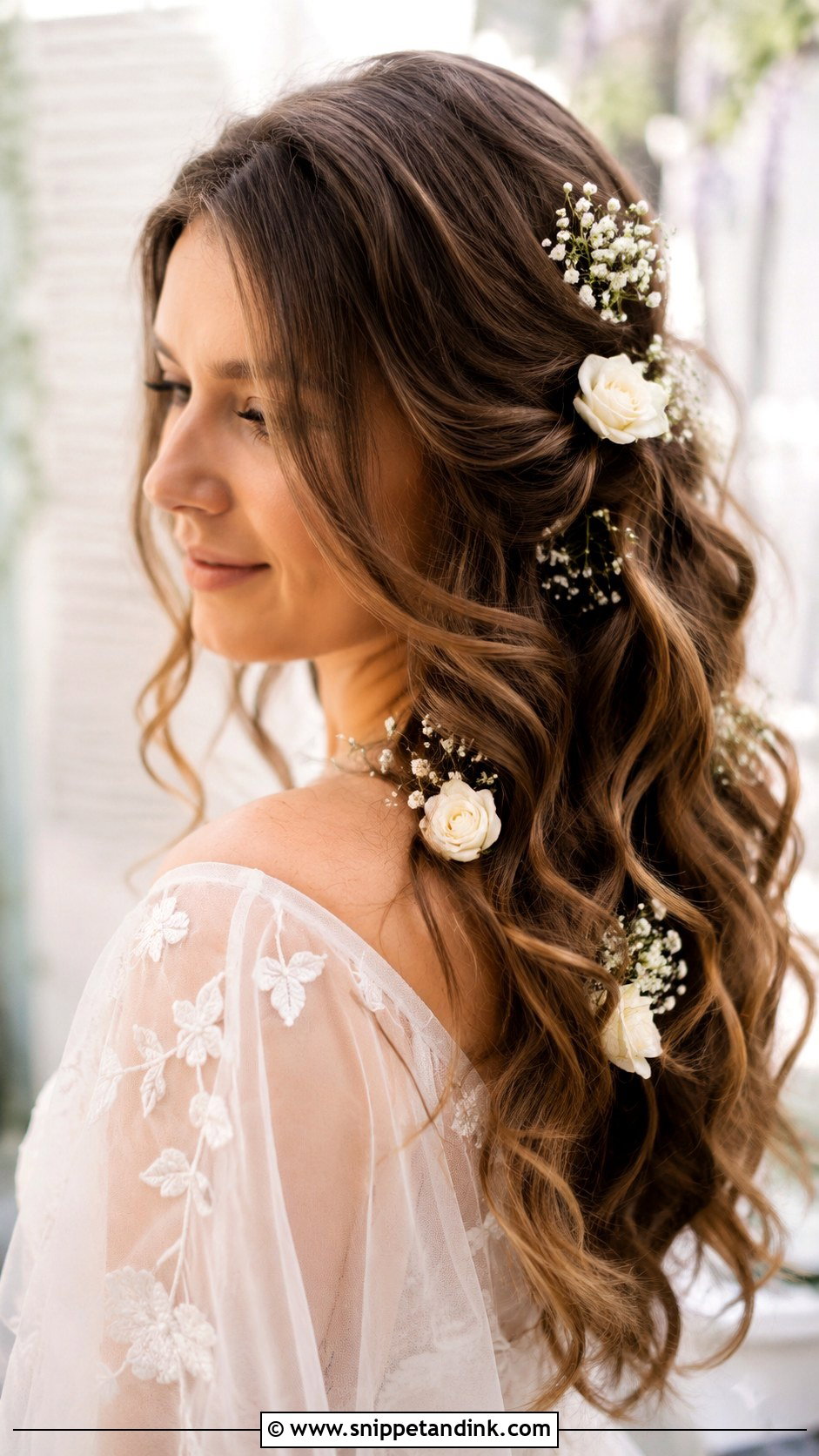
Soft waves with fresh flowers tucked through finish this list on a garden note. The part keeps the blooms evenly placed on both sides. Small, sturdy flowers last; baby’s breath and spray roses hold up, while delicate petals like garden roses can wilt against warm hair in an hour or two. Ask your florist to match the bouquet and keep the stems wired and cool until I place them. It suits spring and summer weddings outdoors.
A Second Look for the Reception, Built on the Same Part
Plenty of brides want one style for the ceremony and another for dancing. The center part makes that easier, because it stays put whatever you do with the rest of the hair. The trick is to plan the change at your trial, so the first style is built in a way that converts quickly.
Changes that take ten minutes or less
- Loose waves to a low ponytail: brush the waves back, tie at the nape and wrap a strand around the elastic.
- Half up to a full low bun: release the length, twist it up and pin it around the existing half-up section.
- Braided crown to loose: the braids can stay, and the length below them comes down.
- Sleek bun to undone: take out the pins, shake the hair loose and add a little texture spray. It kinks where the bun sat, which looks deliberate.
Keep a small pouch with elastics, a dozen bobby pins, a brush and a travel spray, and name someone who watched your trial to help. Plan the change for a quiet moment, such as just before the dinner entrance or right after the first dance, not in the middle of photos.
Which Middle Part Bride Are You?
A middle part gives any style a symmetrical frame, from a slicked bun to flower-filled waves. Decide first whether you want sleek or soft, then pick the shape that works with your hair length and neckline. Bring photos to your stylist and do a trial; mixing elements from two or three of these styles is completely normal. The best version should feel like your own hair, just more polished, and you should be able to forget about it once you walk down the aisle.
You'll Like These Ideas:


Leave a Reply