
A Pakistani wedding rarely asks for one dress. It asks for a wardrobe: something light for the mehndi, something modest and calm for the nikkah, the heaviest piece for the baraat and a softer reception look for the walima. When I sit down with a bride, we plan all of them together, because the colours, fabrics and embroidery weight have to make sense across several days of photos. Below are thirty outfits I’d put on a mood board, from zardozi lehengas and velvet ghararas to pastel maxis, with notes on how each one actually wears, who it suits and where it tends to go wrong.
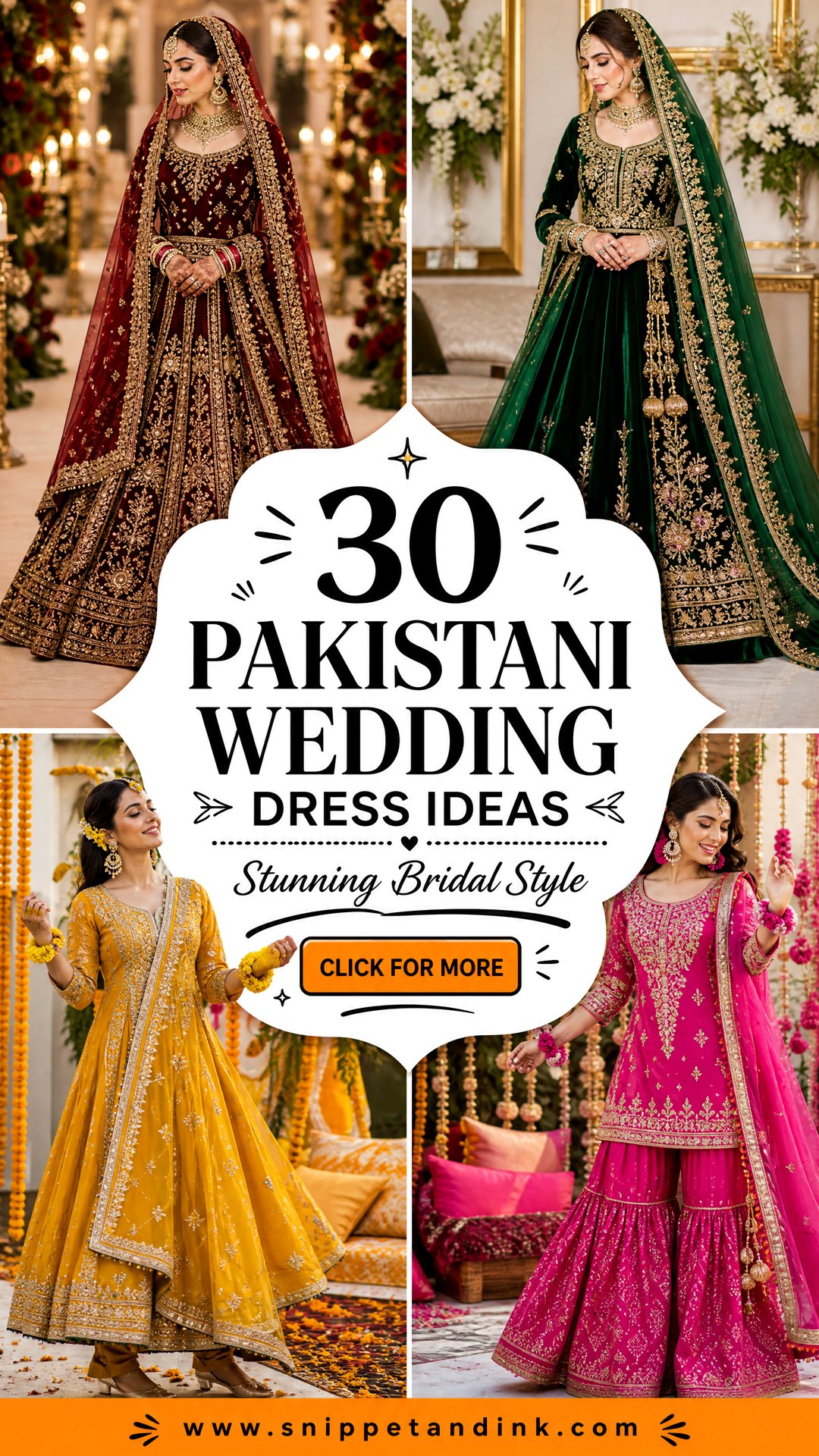
Ordering a Bridal Outfit From a Pakistani Designer or Tailor
Hand embroidery is slow work, and that sets the whole timeline. For a heavily worked baraat lehenga I tell brides to place the order around four to six months ahead, and longer if the designer is busy over the main wedding season. Lighter mehndi and walima pieces can often be made in a couple of months, but I still prefer to order everything together so the colours are decided as a set.
- Bring fabric swatches or photos of each event’s decor, because a colour that looks rich on a screen can clash badly with stage flowers.
- Ask for the embroidery to be approved on a sample panel before the full piece is worked. Changing dabka or zari placement later is costly and sometimes impossible.
- Book at least two fittings, the last one close to the wedding, since weight often changes in the final weeks.
- Ask how heavy the finished piece will be. Some full zardozi lehengas weigh several kilos, and you will wear it for hours.
- If you are ordering from abroad, allow extra weeks for shipping and customs, and have a local tailor ready for final alterations.
I also ask for the dupatta to be finished at the same time as the main outfit rather than last. It is the piece that frames the face in nearly every close photo, and a rushed border is the first thing anyone notices.
1. Red Bridal Lehenga Dress
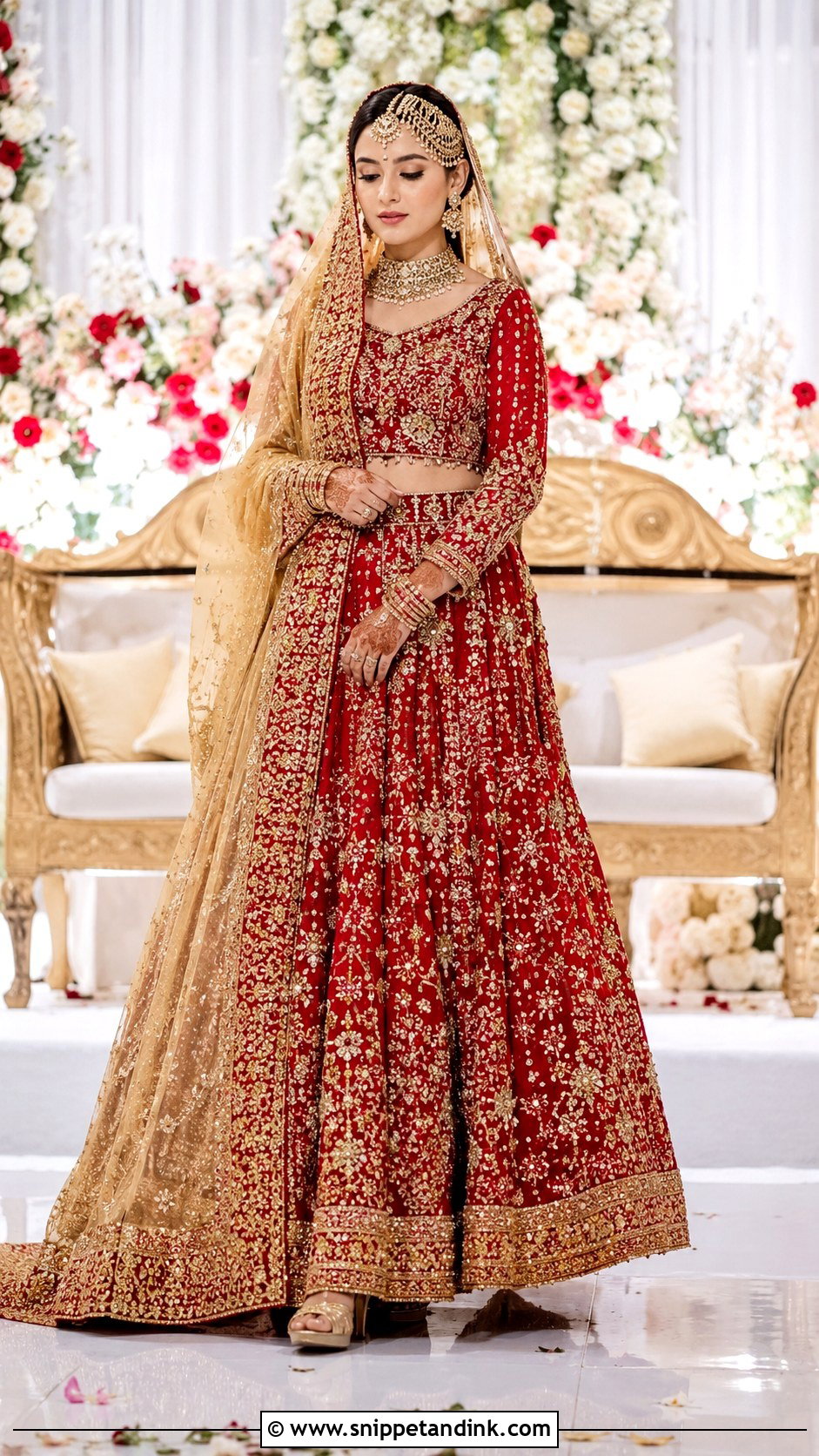
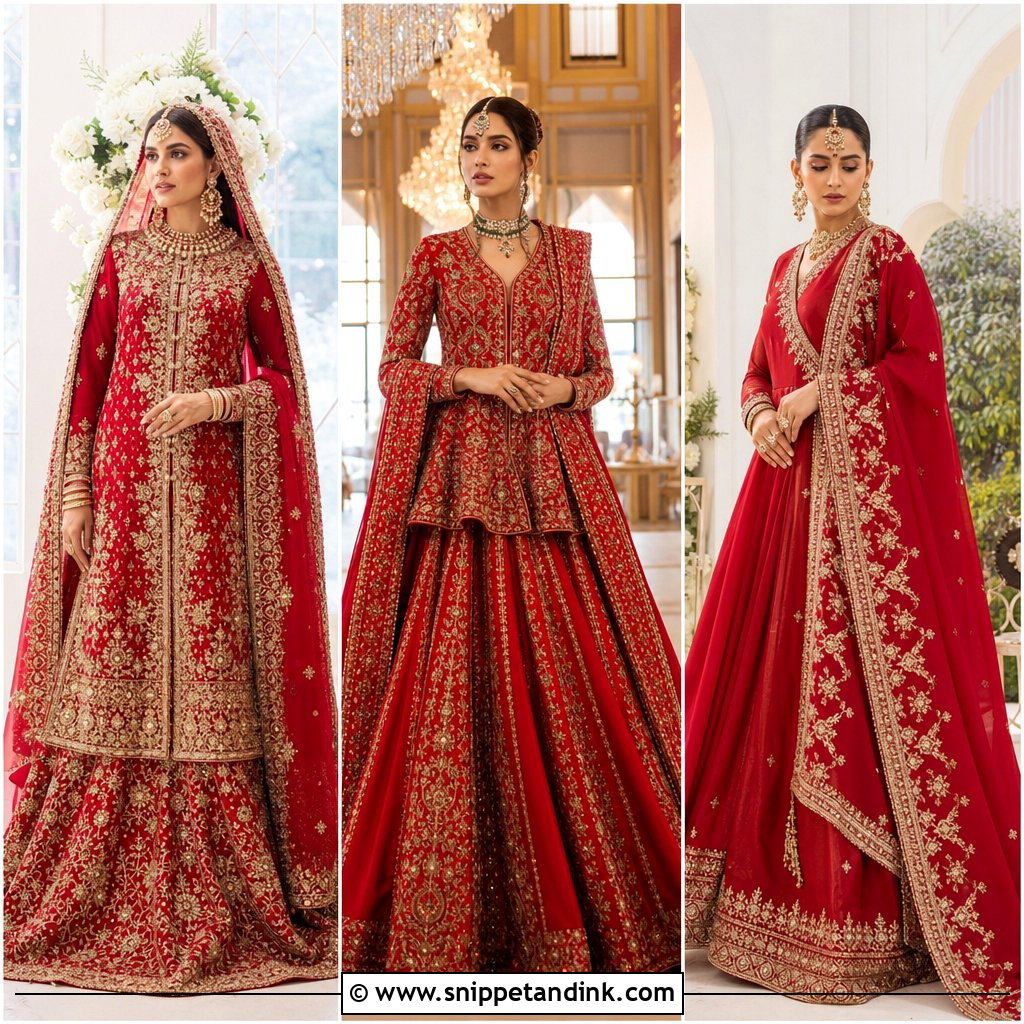
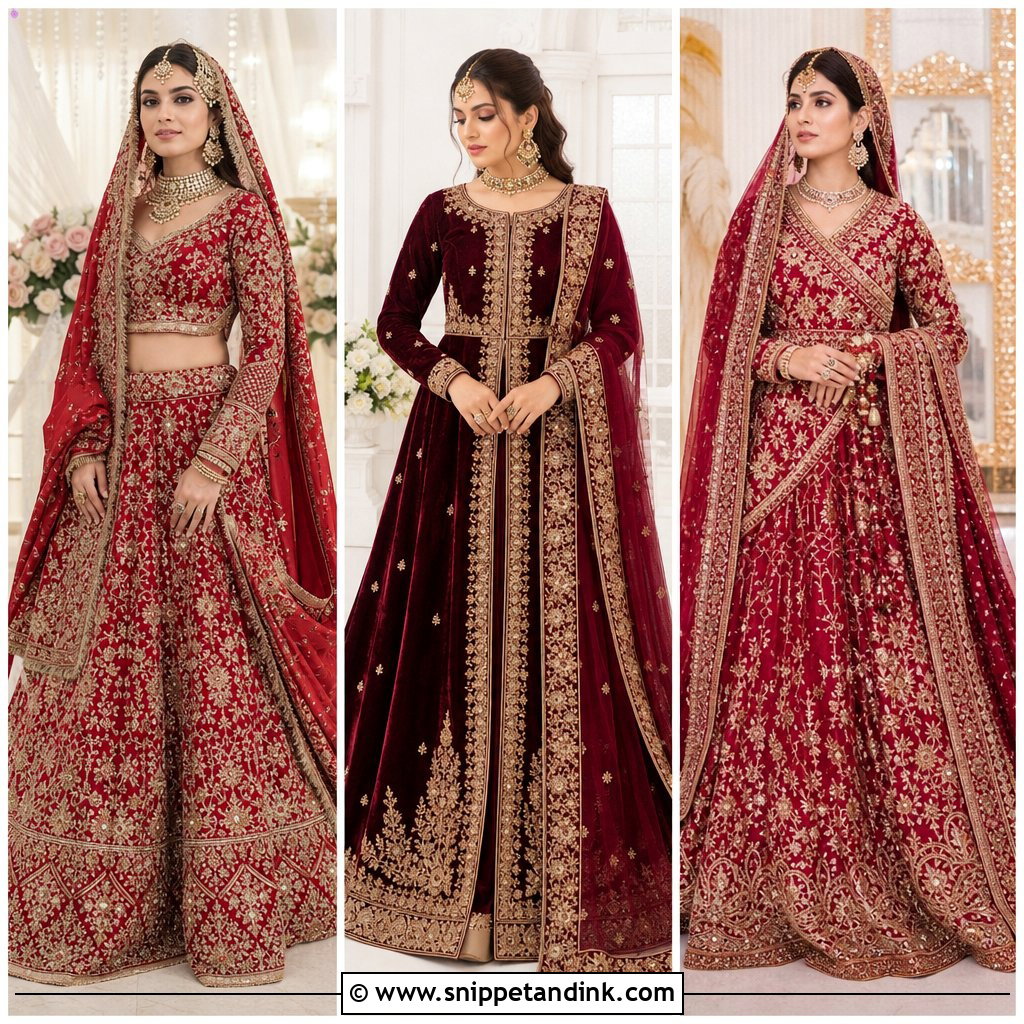
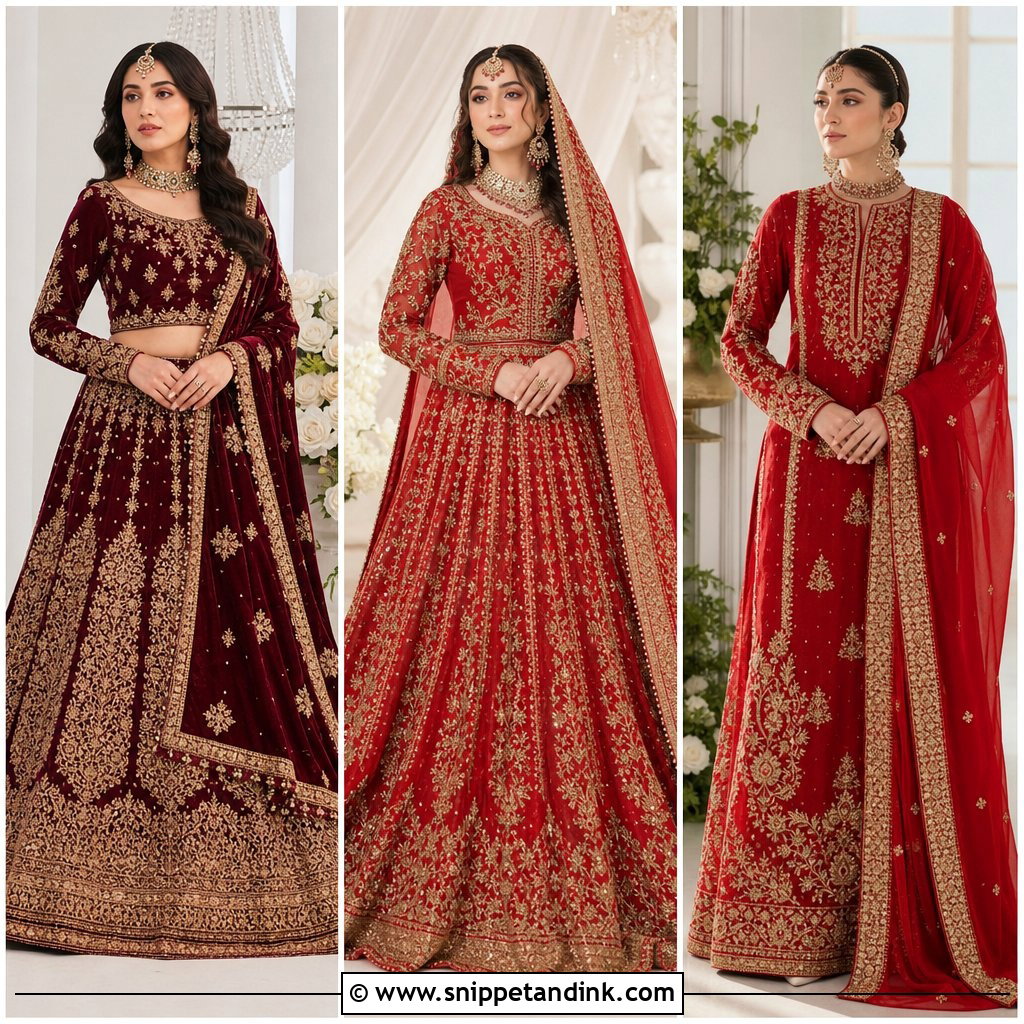
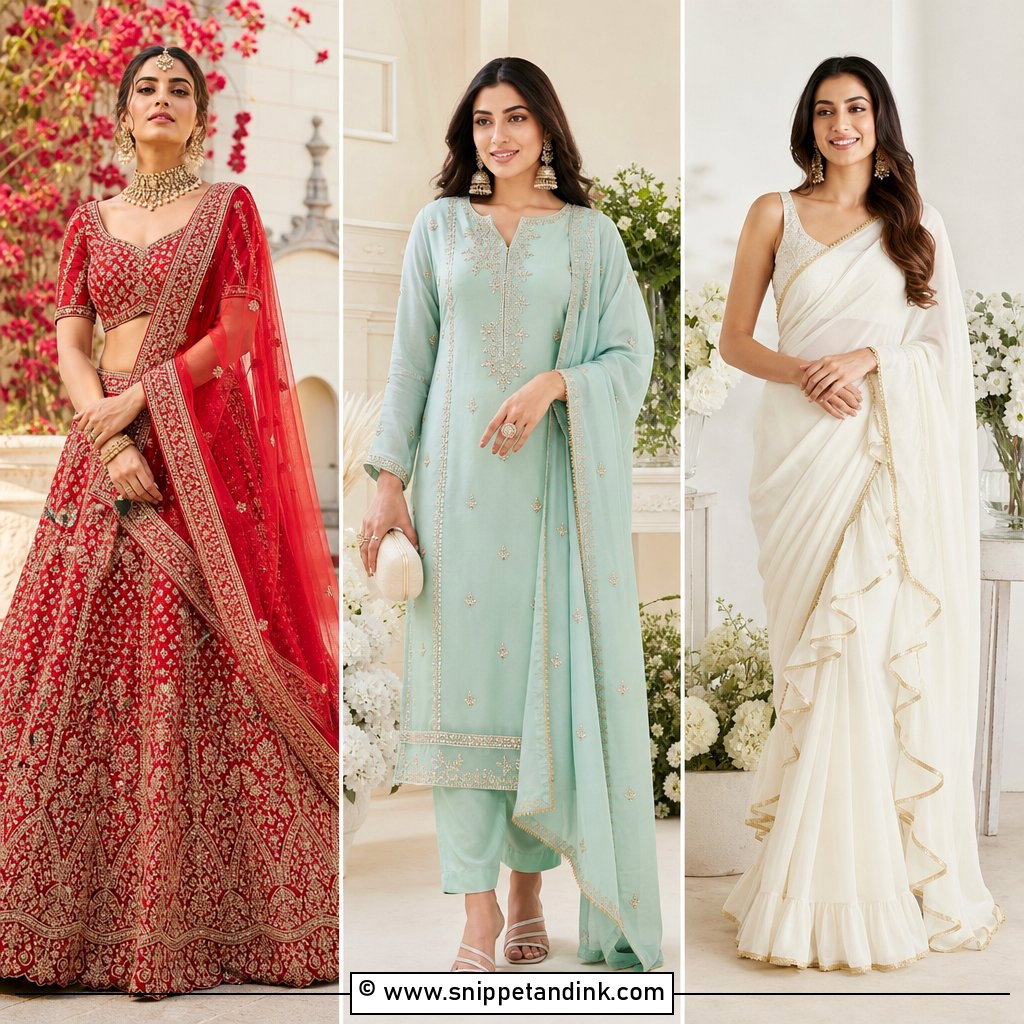
A red bridal lehenga is still the baraat default, and for good reason: red under warm hall lighting reads rich in every photo. The full look is a heavily worked lehenga, a choli or longer shirt and a dupatta draped over the head, finished in zardozi, dabka, tilla and a little maroon. What I check first is the shade against her skin in daylight, because a cool, blue-based red can make warm undertones look grey while an orange-leaning red flatters them. Pair it with a matha patti, choker, jhumkas and gold khussas, and keep the lip a deep rose so the dress stays the loudest thing in the frame.
2. Ivory Nikkah Sharara Dress
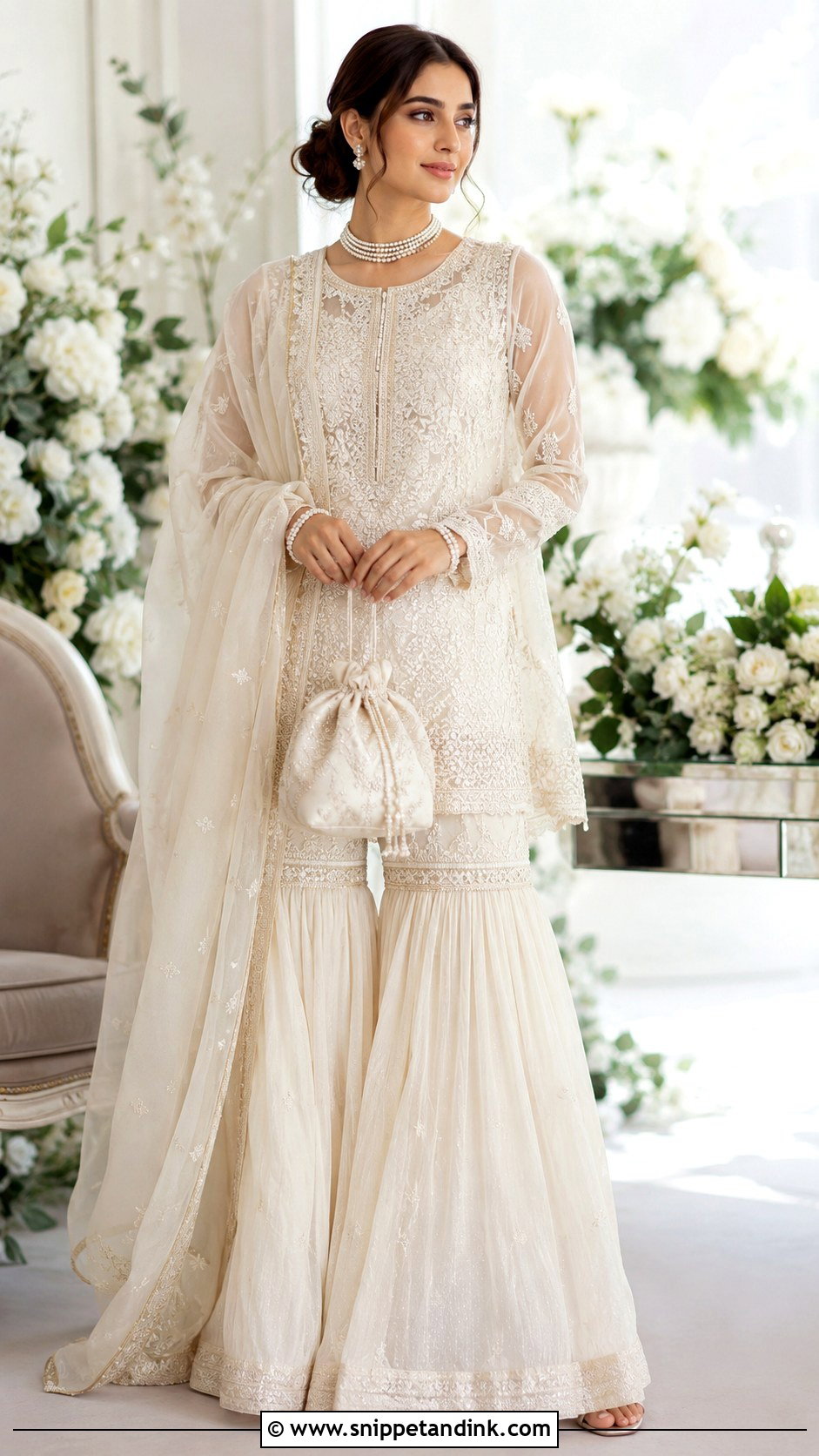
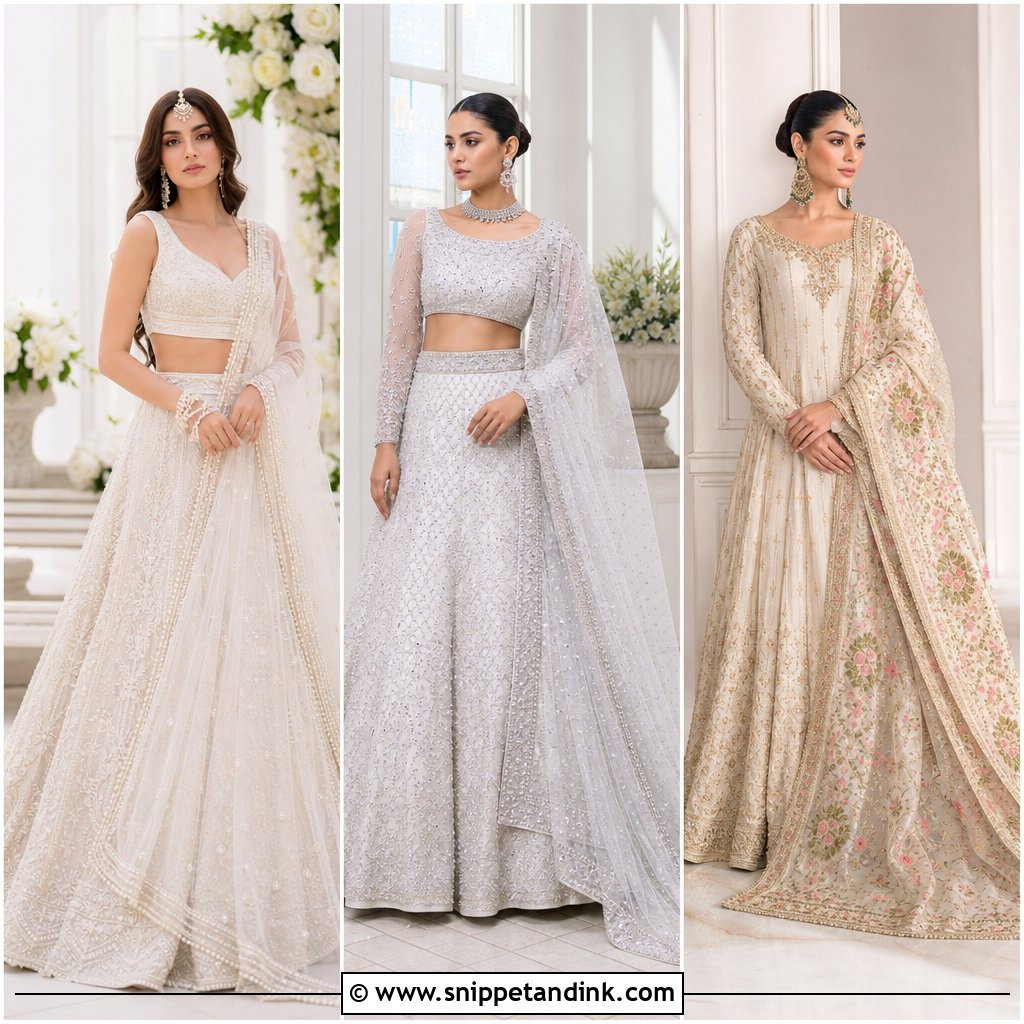
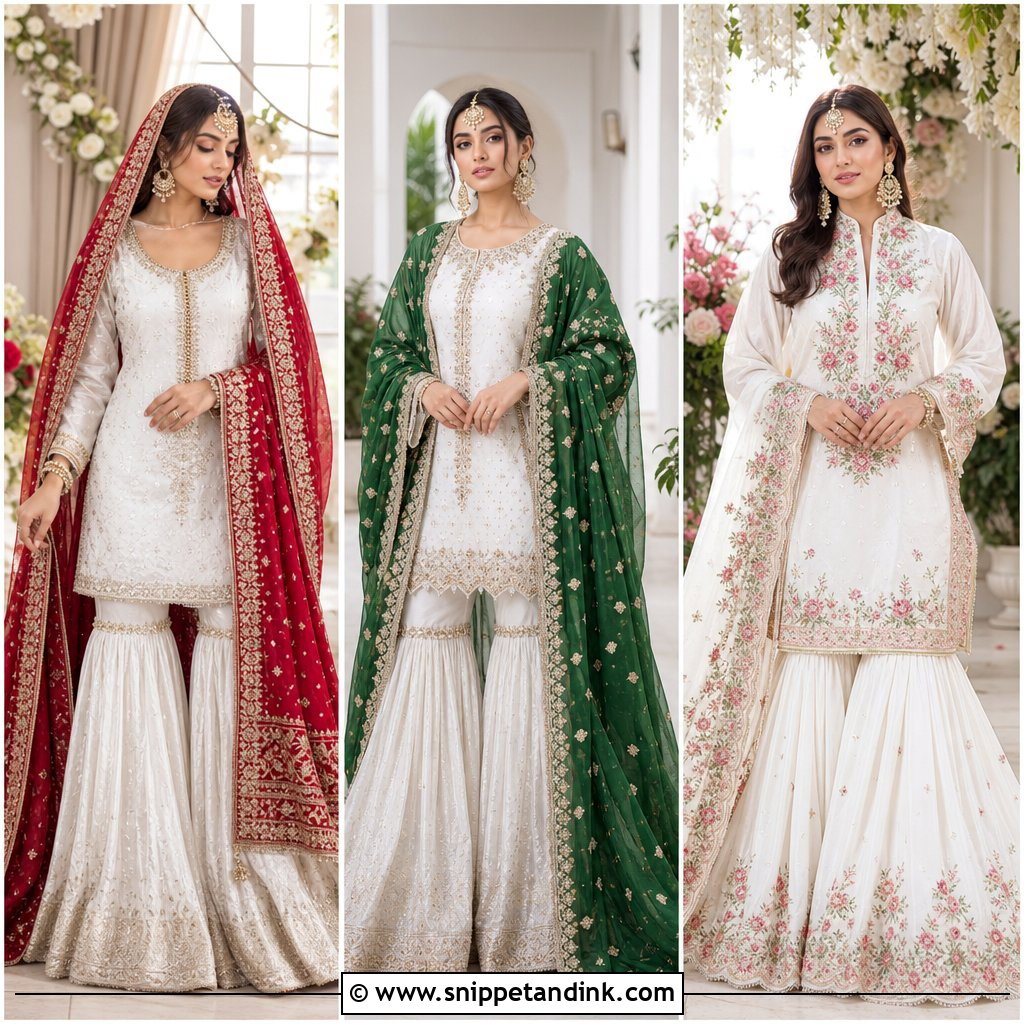
For a daytime nikkah, an ivory sharara is my quiet favourite. A short embroidered kameez, wide sharara pants and a sheer organza dupatta with pearl or thread borders keep it serene rather than heavy. Ivory is unforgiving with makeup, though: any foundation that sits too pink or too yellow shows against the fabric, so I always ask for a makeup trial in the actual outfit. Pin the dupatta lightly over the head with two or three small pins near the crown, add pearl jewellery, a delicate passa and nude heels, and let the softness do the work.
3. Pastel Walima Maxi Dress
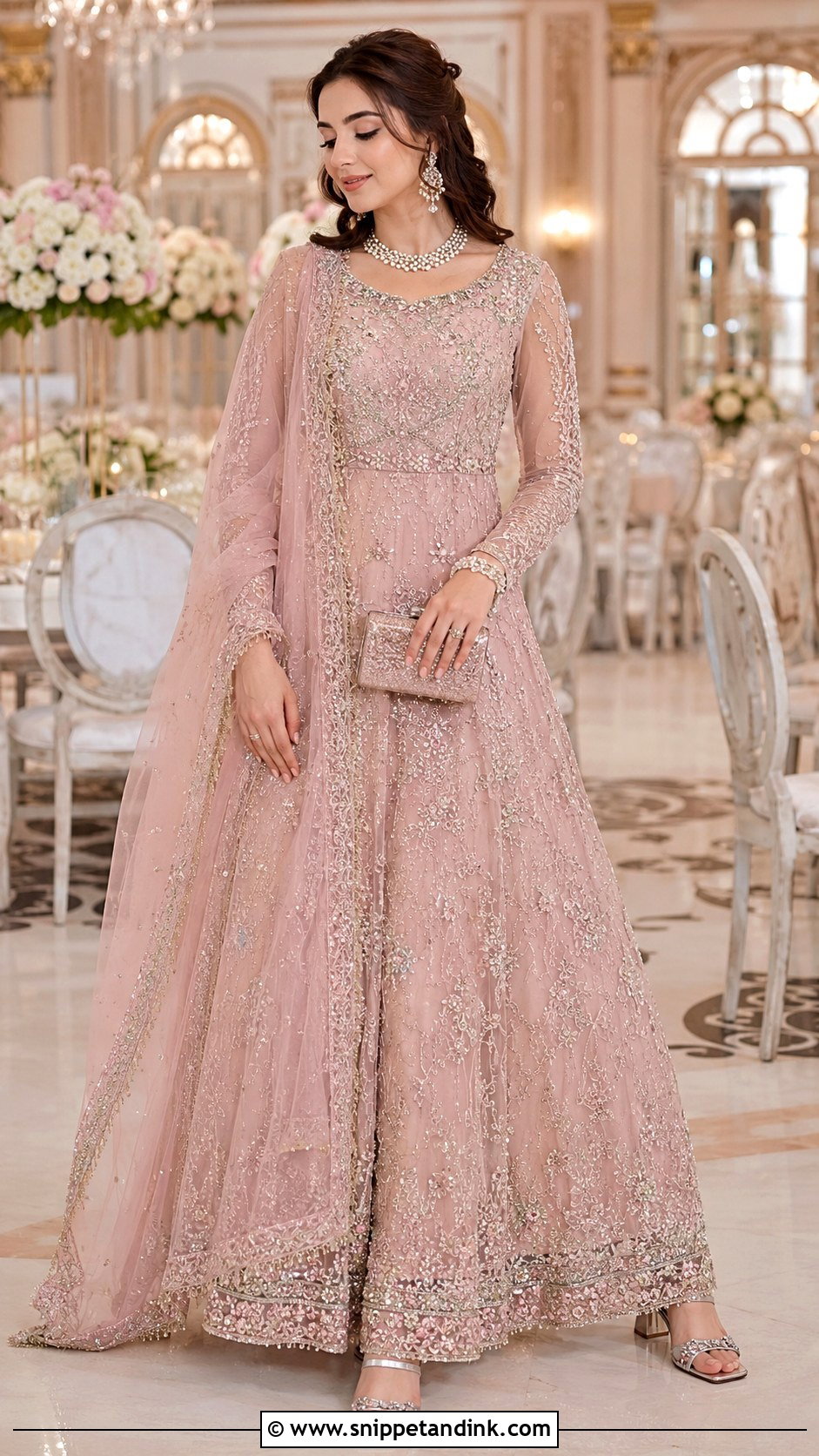
Walima is where most of my brides finally want to breathe. A floor-length maxi in blush, powder blue, mint, lilac or champagne, with embroidery kept to the bodice and sleeves, gives formality without baraat weight. The flowing skirt matters more than people think: you will sit for long stretches on a stage, and a maxi drapes cleanly when seated where a stiff lehenga bunches. Silver or pearl jewellery, loose curls, a sheer dupatta and embellished block heels finish it.
4. Yellow Mehndi Gharara Dress
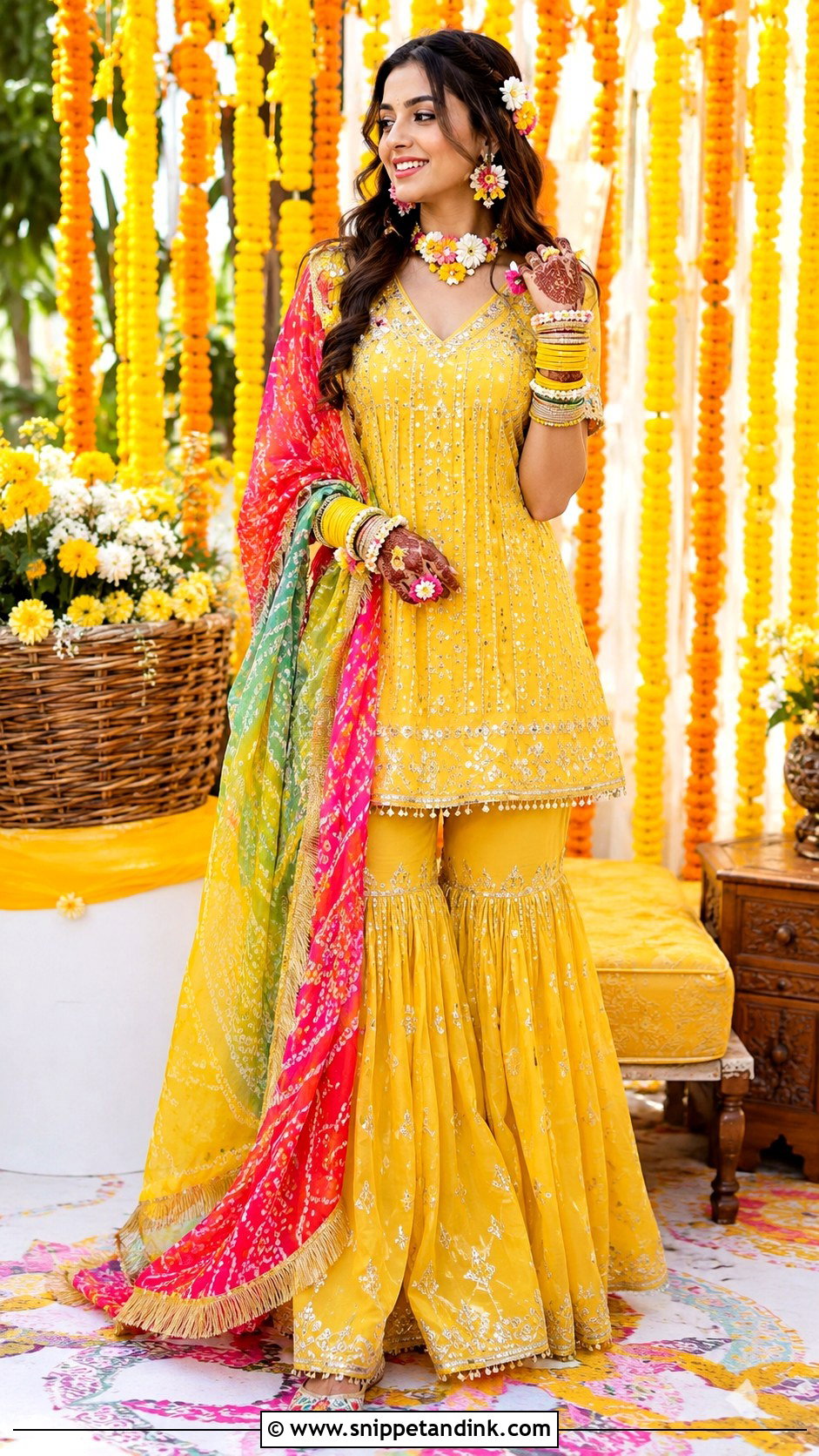
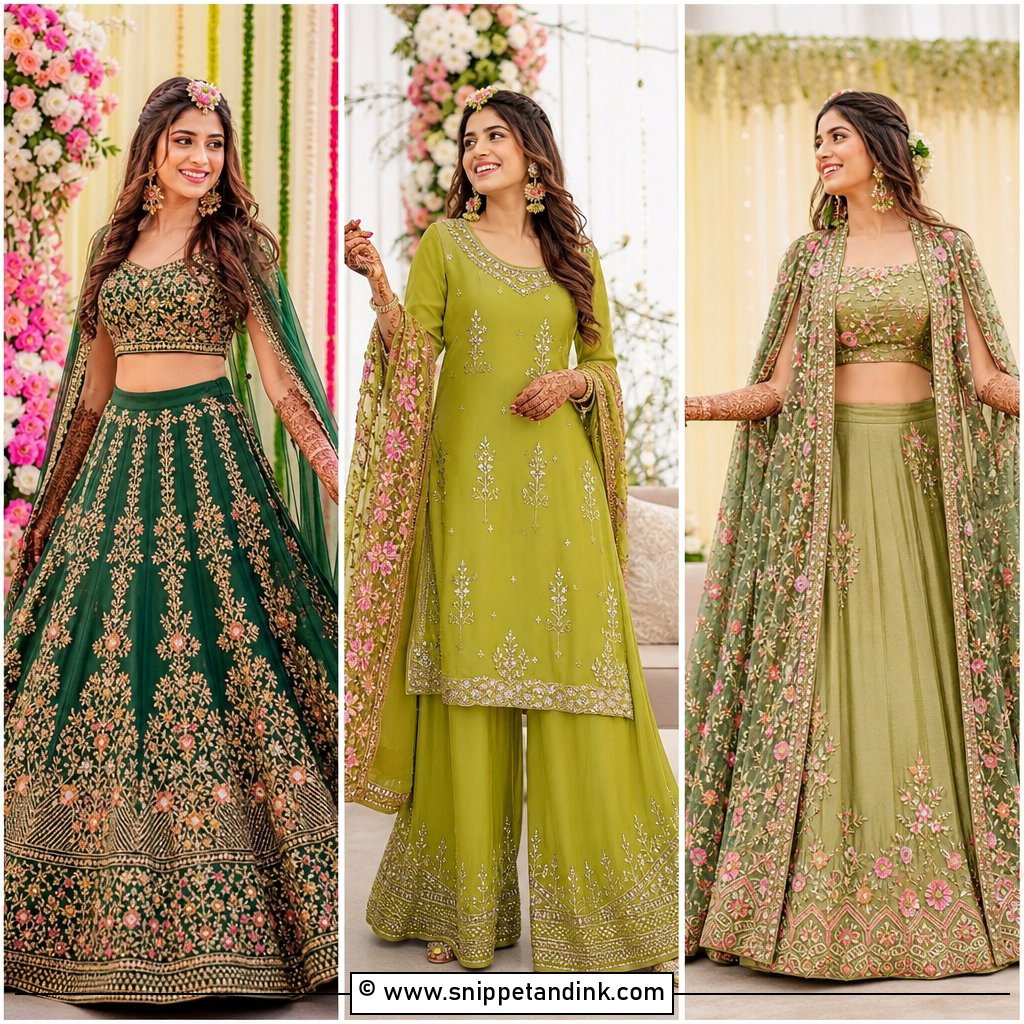
Yellow is the colour of mehndi for most families, and a gharara is the most practical way to wear it. Pair a short yellow kameez with flared gharara pants and a contrasting dupatta in green, orange or pink gota. One thing I warn about: the gharara’s joint at the knee is usually decorated with a band, and if it sits too low on a shorter bride it cuts her leg line, so I have it placed at the actual knee during fitting. Mirror work, tassels and embroidered khussas let her dance on the floor without catching a hem. Sisters and cousins can wear the same shape in lighter work.
5. Green Mehndi Lehenga Dress
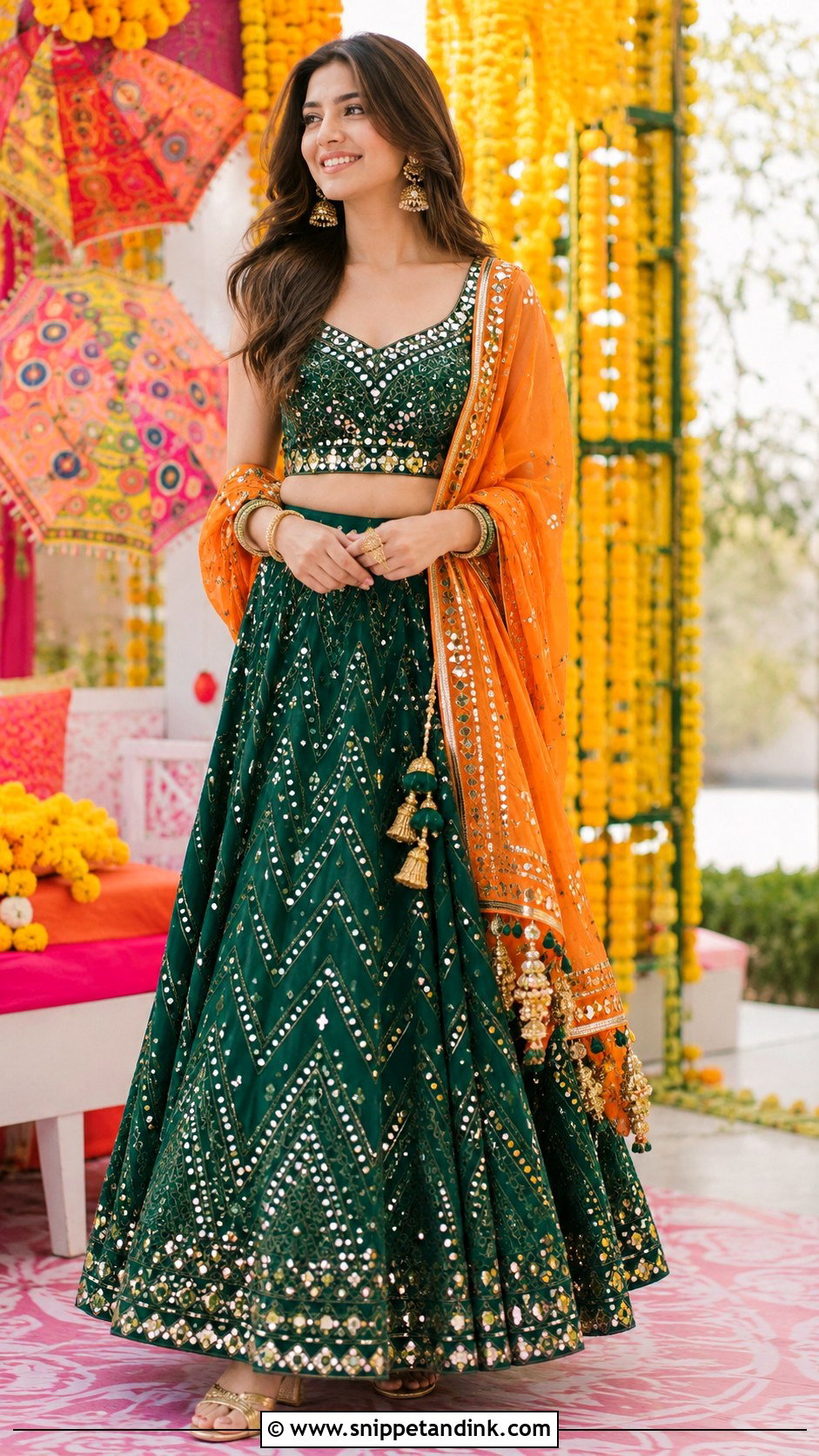
Not every bride wants yellow at her mehndi, and green is my usual answer. Bottle, parrot or emerald green with a magenta or orange dupatta keeps the energy without copying every cousin in the room. A short choli in mirror or gota work gives sparkle at close range. In outdoor settings green holds its depth against flowers and foliage, though I’d avoid a very yellow-green if the decor itself is heavy on marigold, because the two blur together in group shots.
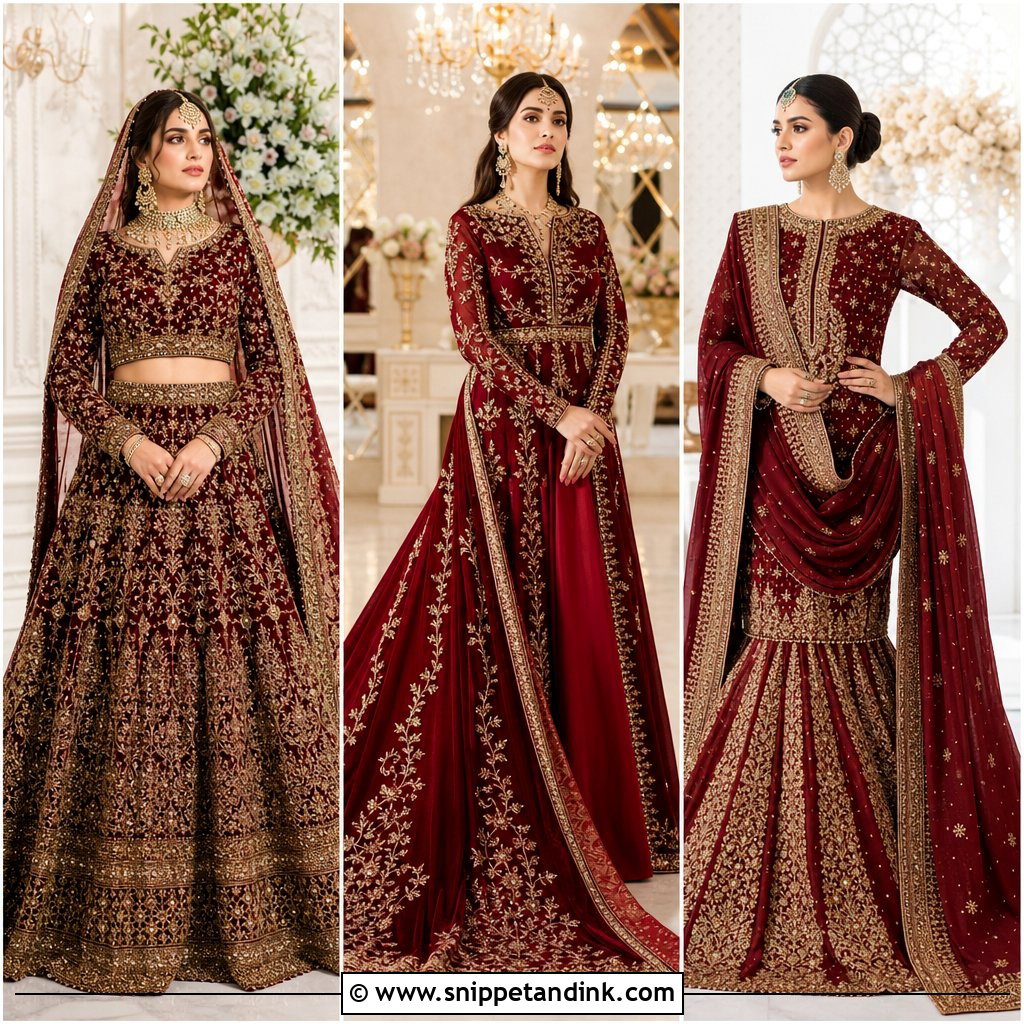
6. Maroon Baraat Lehenga Dress
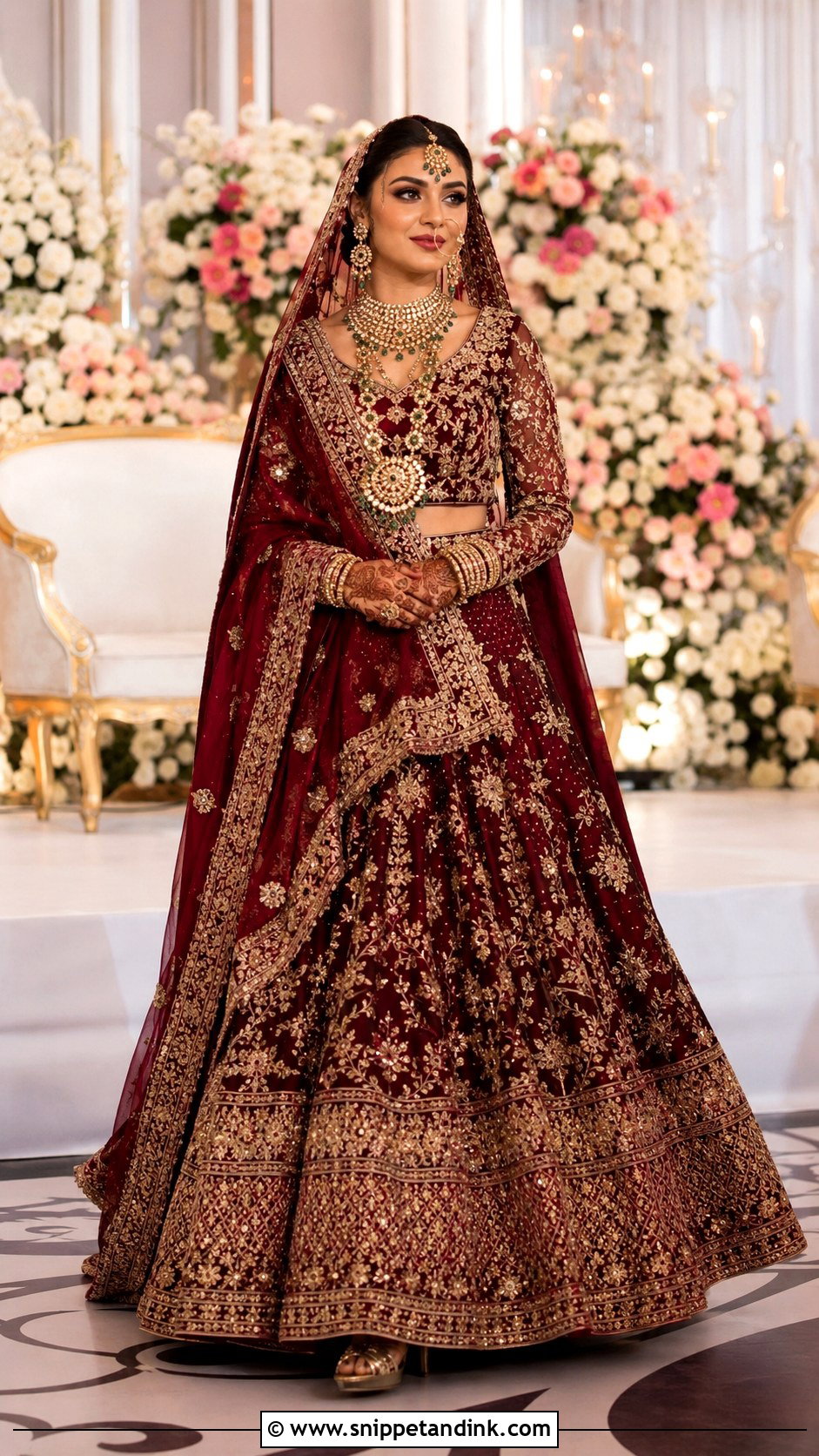
Maroon is the baraat colour I suggest to brides who find red a little too bright on themselves. Antique gold embroidery, velvet details and a heavily bordered dupatta give it richness, especially for an evening function. The catch is weight: a velvet maroon lehenga with full zardozi can be genuinely heavy, so at fittings I ask the bride to walk, sit and climb a step in it. Layer a choker with a rani haar, add bangles and khussas, and you have a mature, very regal baraat look.
7. Gold Bridal Pishwas Dress
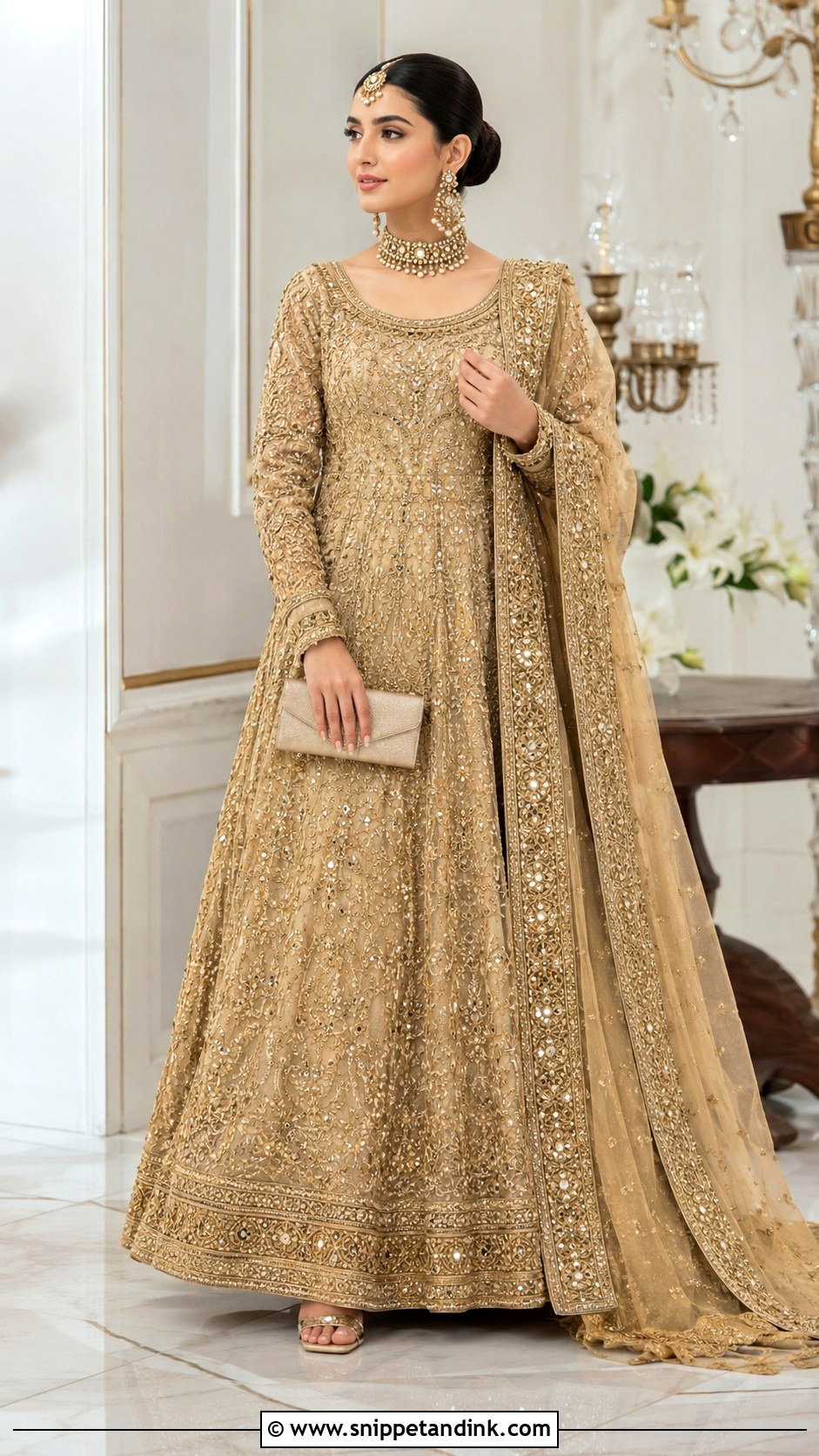
The pishwas is the Mughal-court silhouette: a fitted bodice, full sleeves and a long flared skirt that swings when you walk. In champagne or antique gold with hand embroidery and sequins, it reads royal without needing a lehenga’s volume. I recommend it to anyone needing coverage, since the sleeves and length are built in. My one check is the flare: cut too full in a heavy fabric, it drags the shoulders forward over a long evening, so a lighter lining helps. Depending on embroidery level and jewellery, it can carry a nikkah, baraat or walima.
8. Blush Pink Bridal Gown Dress
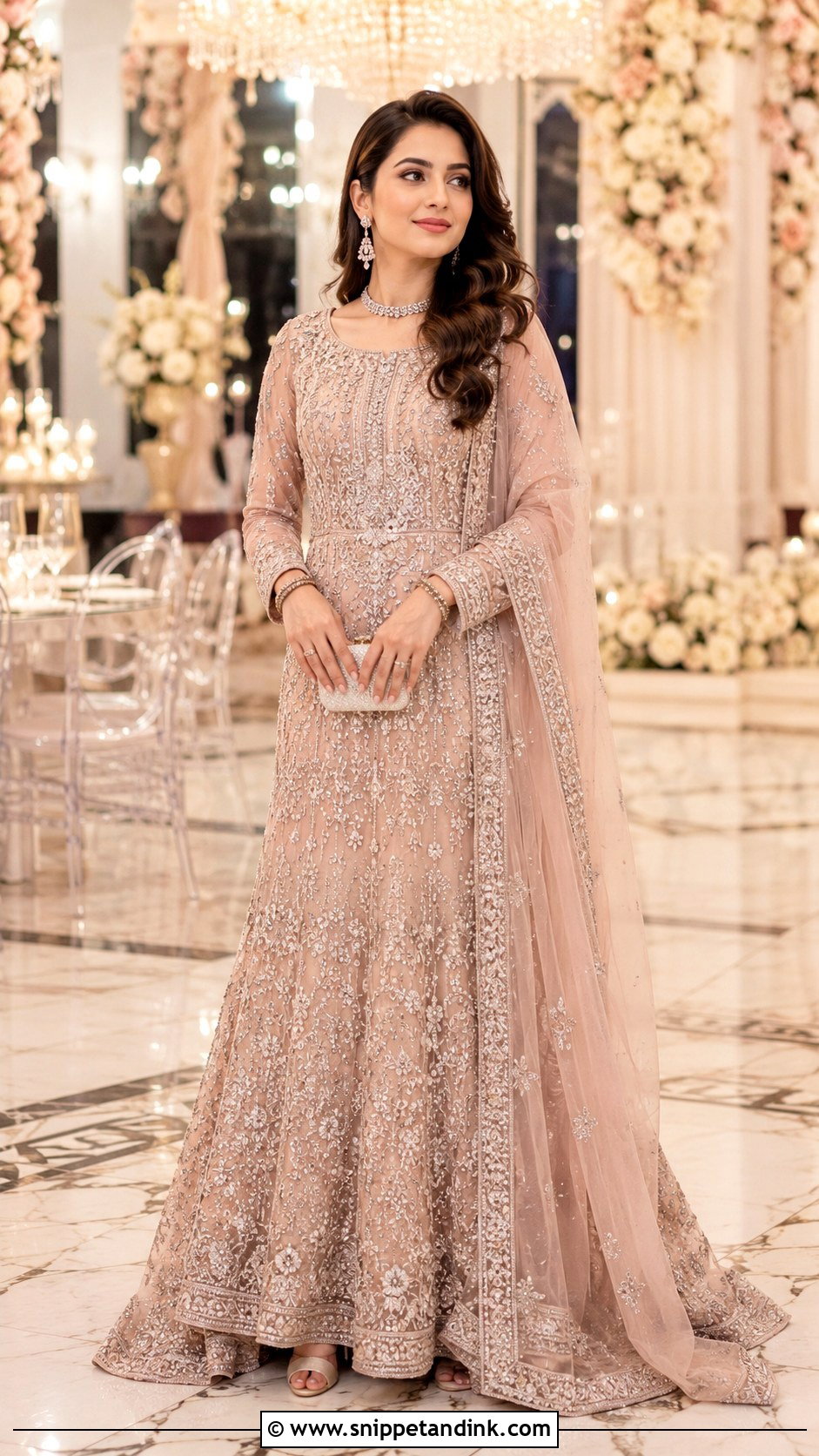
A blush pink gown sits between Pakistani bridal detail and a Western reception shape. Look for embroidered sleeves, a defined waist and a sweeping skirt, then let pearl, crystal and silver work catch the light. Blush can wash out very fair skin under bright venue LEDs, so I usually test it next to the face before ordering and add a touch more colour to the cheeks if needed. It suits walima and engagement events, styled with crystal jewellery, a sheer dupatta and silver heels.
9. White And Gold Nikkah Anarkali Dress
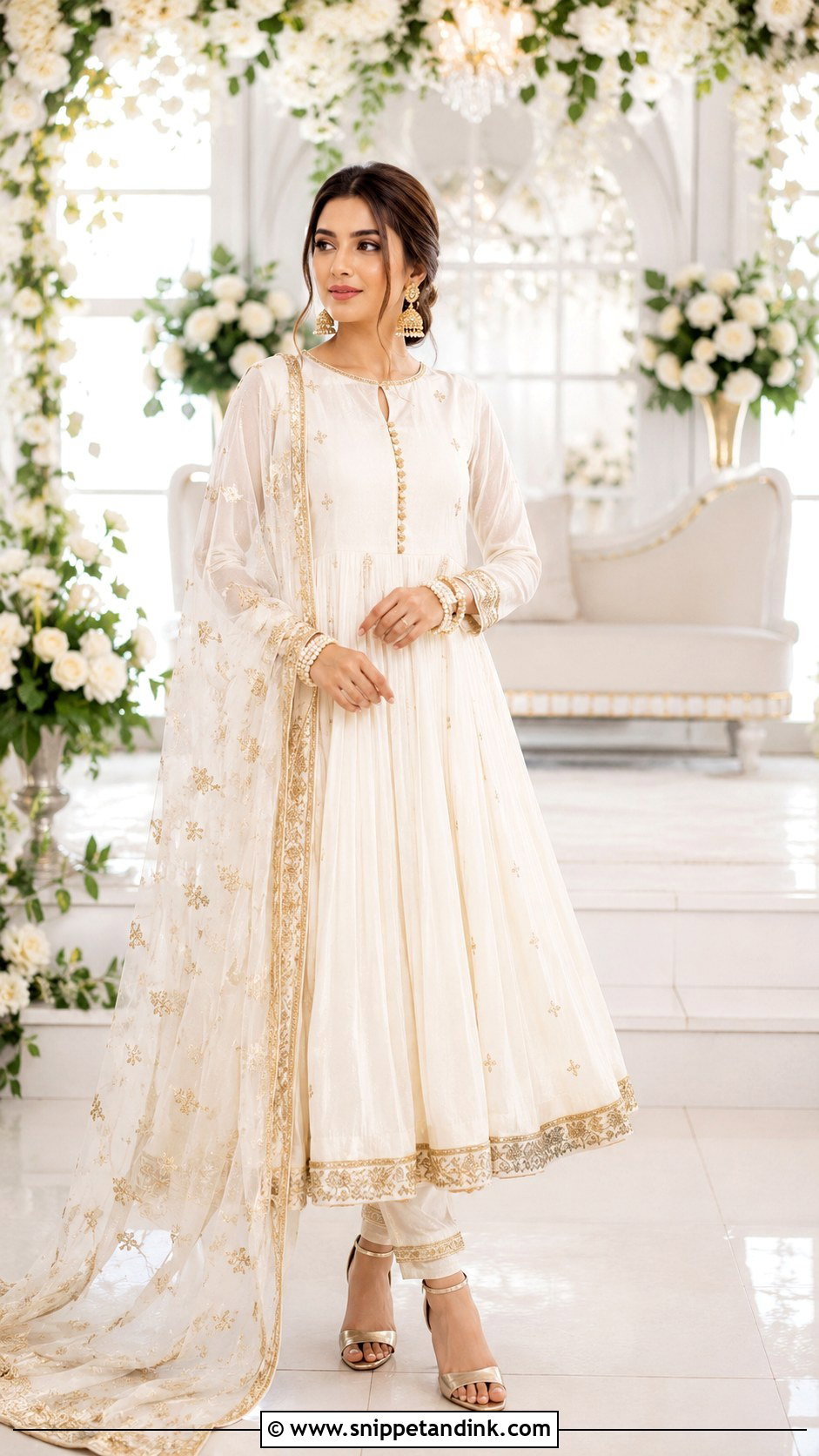
White and gold for a nikkah is peaceful and modest. A long flared anarkali over churidar or straight pants, with a sheer dupatta in gold embroidery, gives full coverage while still feeling like an occasion. I’d choose fine tilla or pearls over dense sequins here, since a nikkah is often in a home or mosque setting where heavy shine looks out of place. Gold jhumkas, a simple tikka and pearl bangles are enough. Close family can wear it too, with lighter embroidery and a plainly styled dupatta.
10. Emerald Green Velvet Lehenga Dress
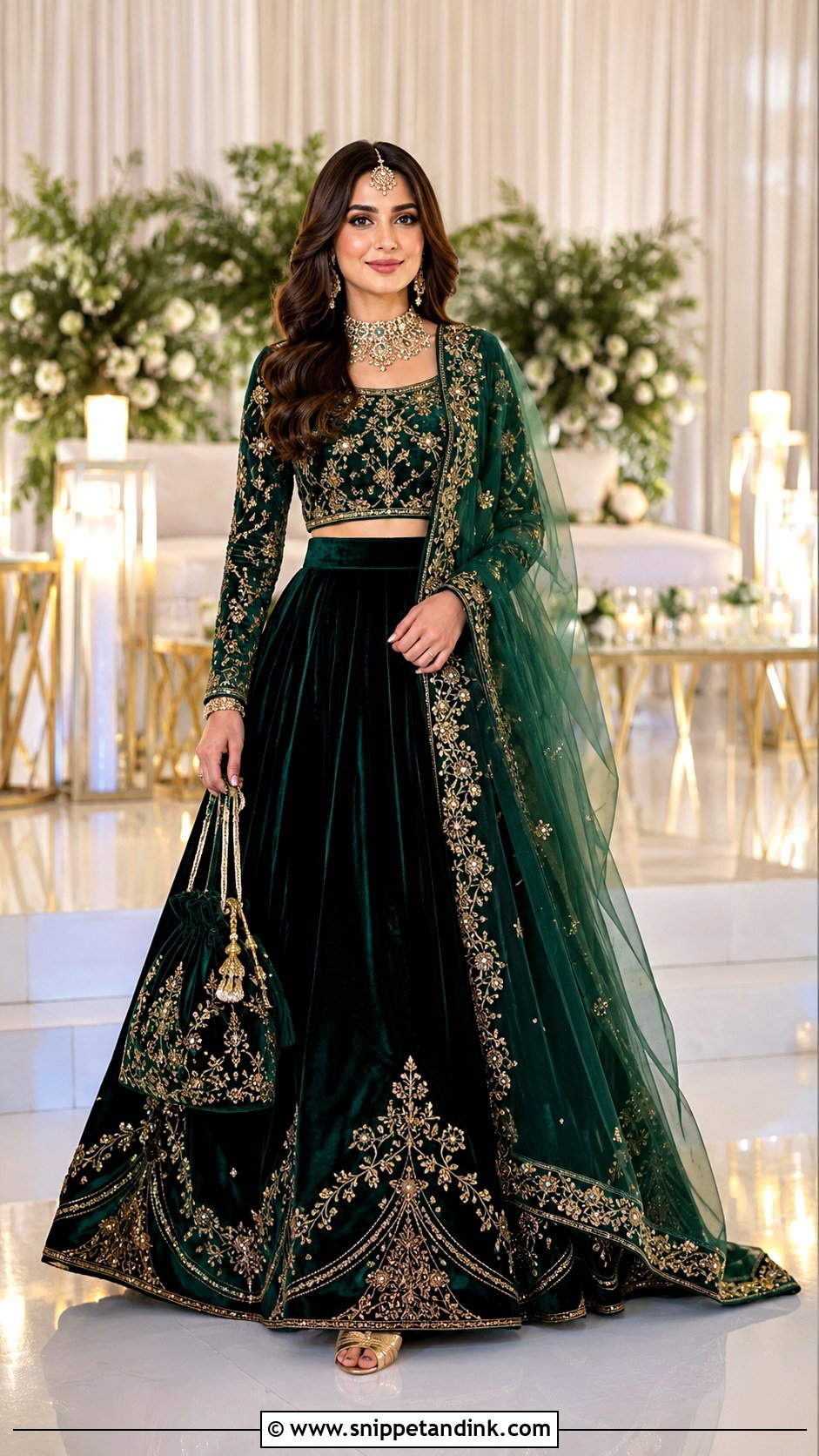
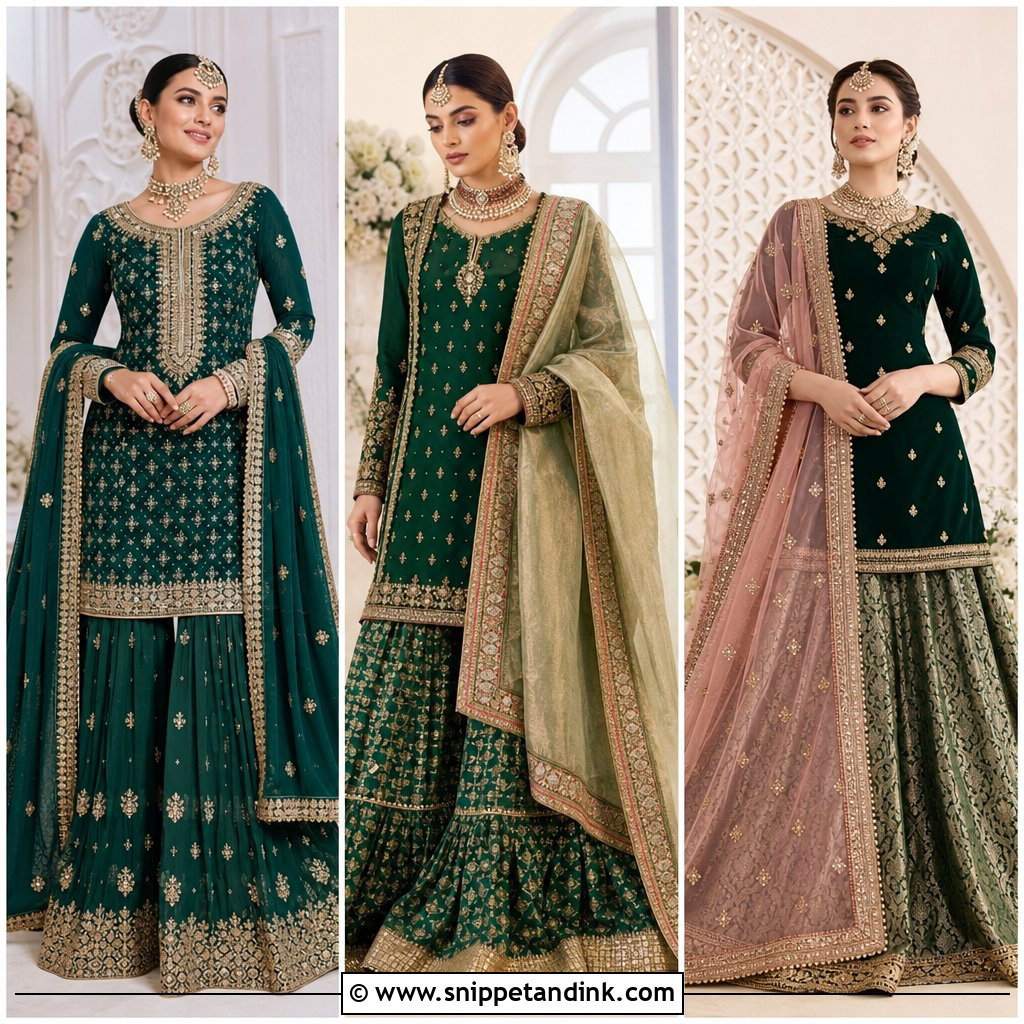
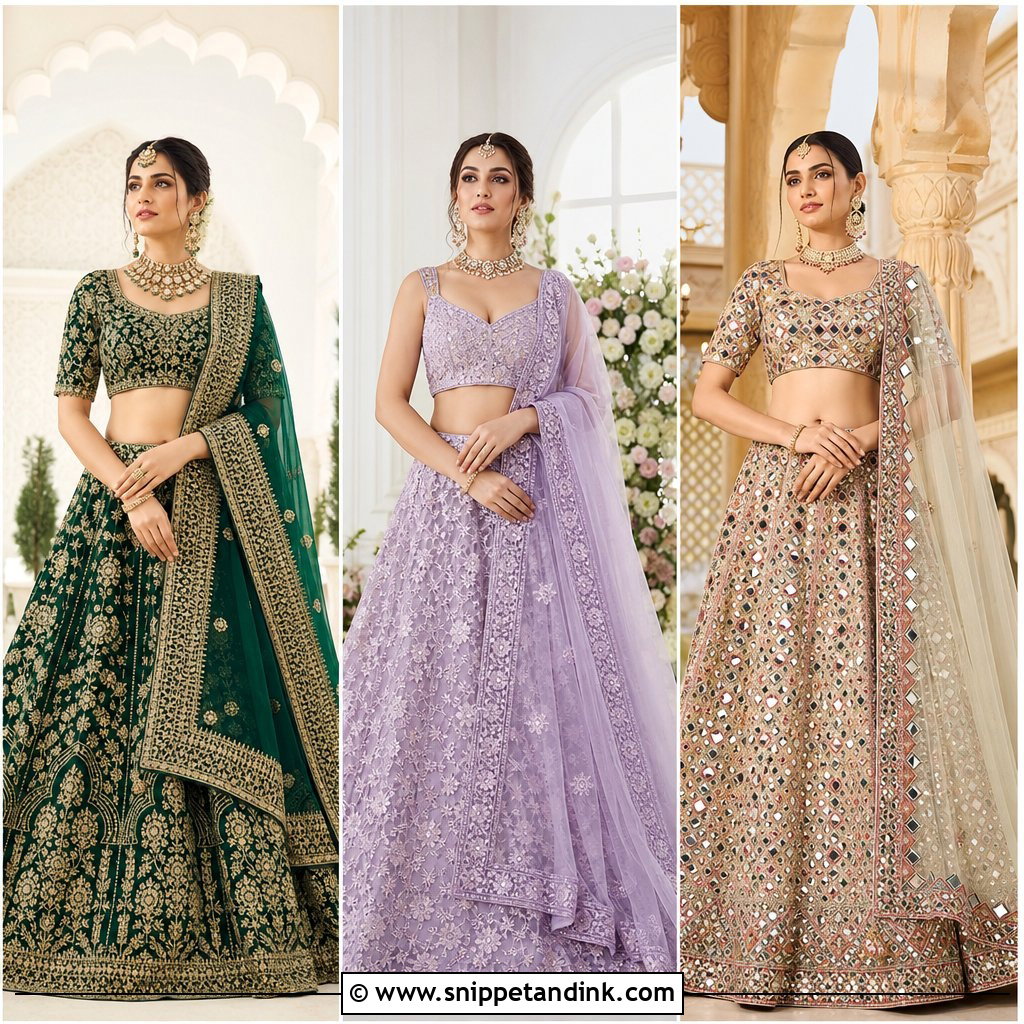
Velvet belongs to winter weddings. An emerald green velvet lehenga with antique gold or copper embroidery has a depth that silk simply cannot match under evening light. Velvet is warm to wear and heavy, so I balance it with an organza or net dupatta instead of another velvet layer. Watch the pile when you sit: velvet marks where it is pressed, and those shiny patches show in close-ups, so I tell brides to smooth the skirt every time they stand. Kundan jewellery, a potli bag and sleek hair complete it.
11. Powder Blue Walima Sharara Dress
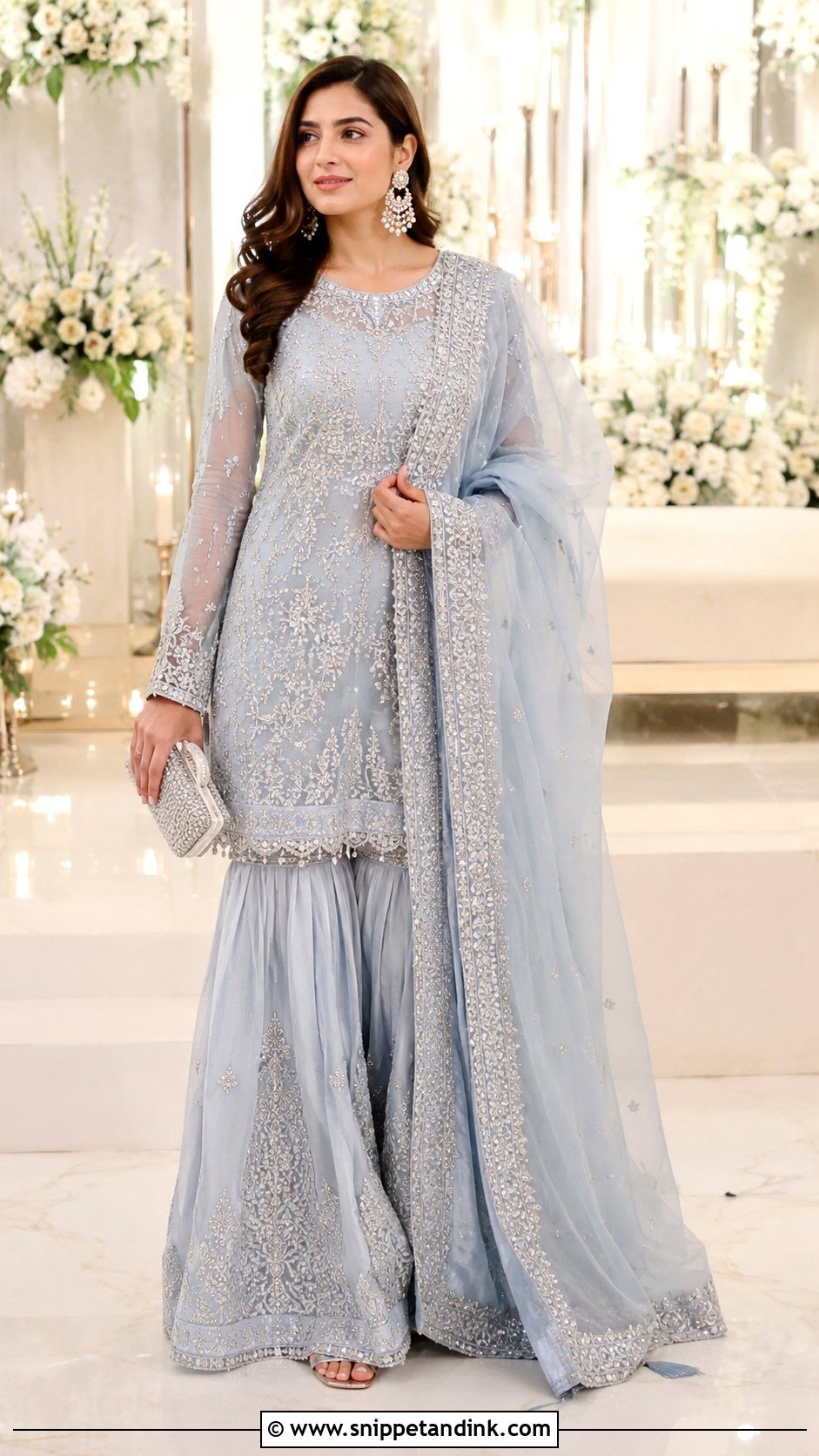
Powder blue gives a walima a calm, polished mood. An embroidered shirt in long or mid length, flared sharara pants and a matching dupatta work best with silver, pearl and crystal rather than gold, which can look muddy against cool blue. Keep the makeup cool-toned with a nude-pink lip. Guests can borrow the same idea in a far less embellished version without stepping on the bride’s colour.
12. Peach Wedding Guest Anarkali Dress
For a guest, a peach anarkali hits the sweet spot: festive, flattering on most skin tones and clearly not bridal. Light embroidery, straight pants and a chiffon or organza dupatta keep it airy for daytime functions and garden venues. If the embroidery is busy, I’d drop the necklace entirely and let the earrings carry the jewellery. It rewears easily for Eid and engagement dinners afterwards, which makes it one of the more sensible purchases on this list.
13. Black Formal Gharara Dress
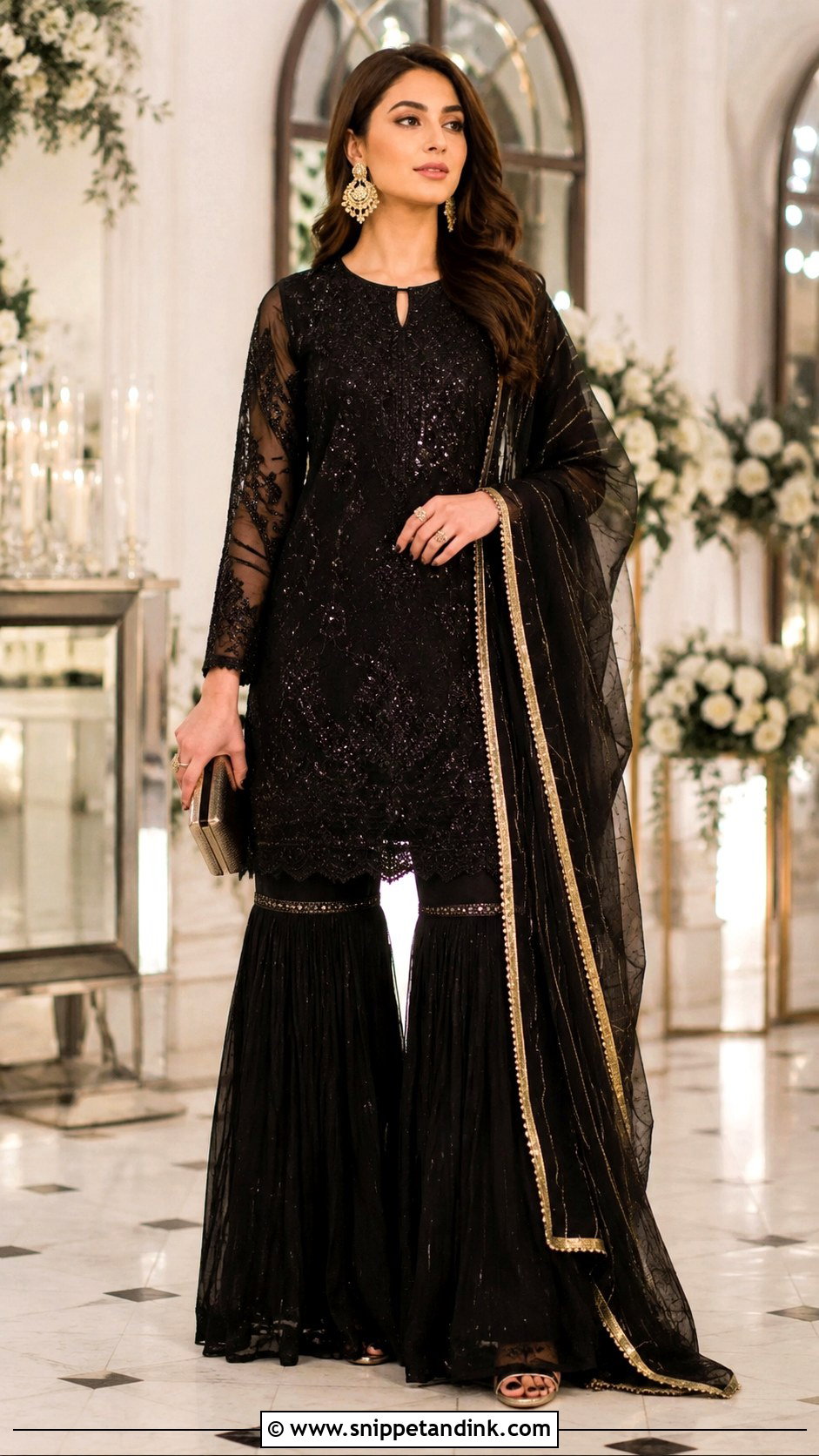
Black at a Pakistani wedding depends entirely on the family, so ask before you buy. Where it is welcome, a black gharara with a gold, silver or champagne bordered dupatta looks sharp at an evening reception. I keep the embroidery refined, never bridal-heavy, and pair it with statement earrings, a slim clutch and metallic heels. Save it for walima or formal dinners; at a mehndi it reads cold among all that colour.
14. Lavender Organza Lehenga Dress
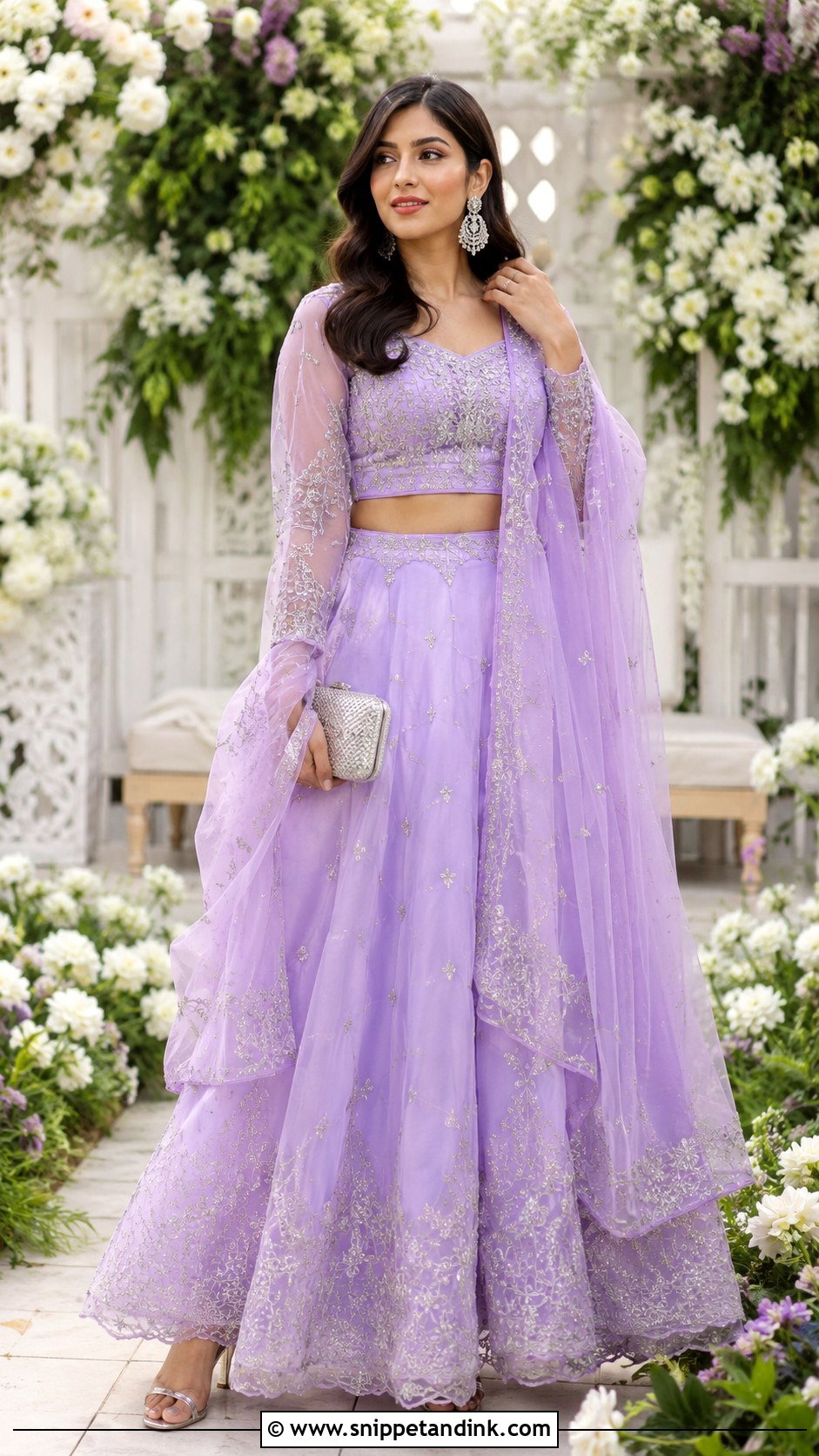
Organza is the fabric I reach for when someone has a long day ahead. A lavender organza lehenga gets its volume from stiffness rather than weight, so it stays light through hours of greeting. Subtle silver embroidery, a matching blouse and a sheer dupatta suit spring and summer weddings. One honest warning: organza creases sharply if it is packed tightly, so it needs to travel on a hanger or be steamed at the venue. Guests should keep the work delicate; brides can add heavier handwork and layered jewellery.
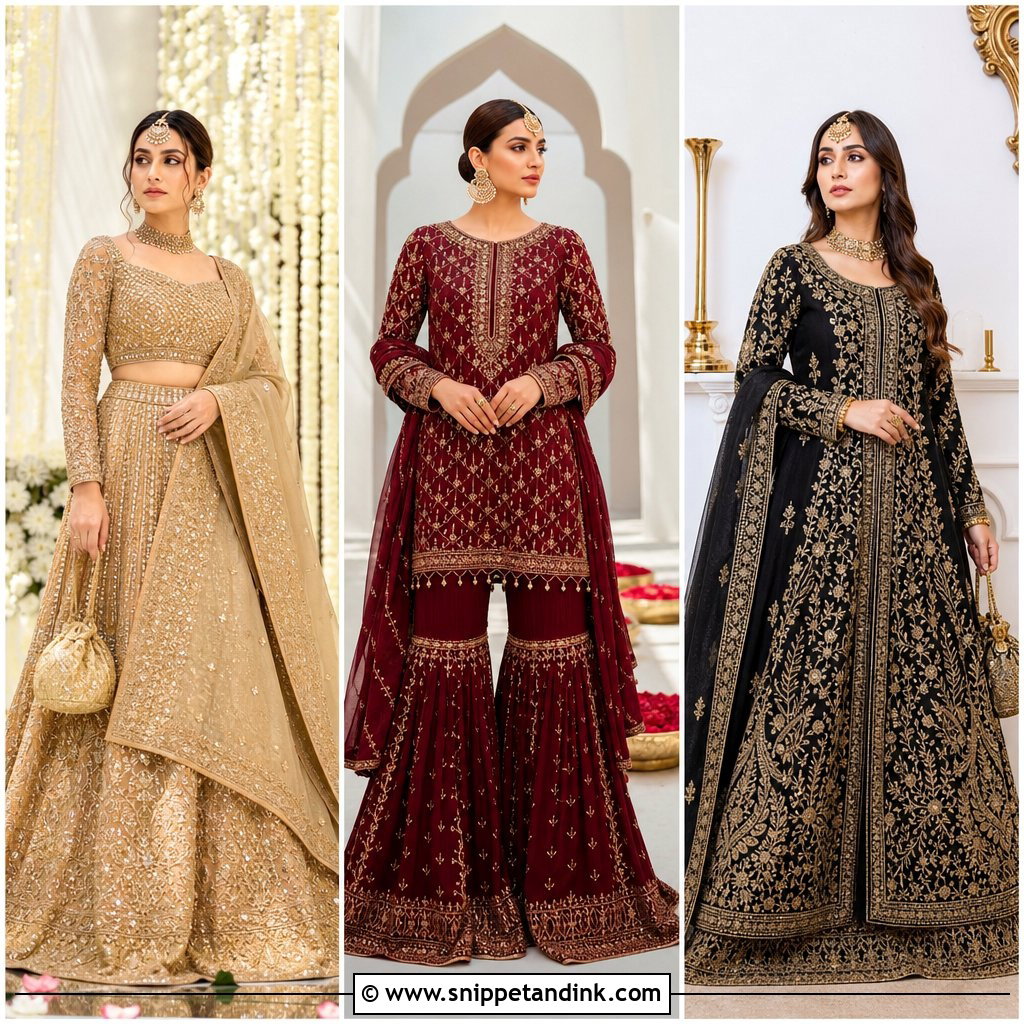
15. Champagne Bridal Maxi Dress
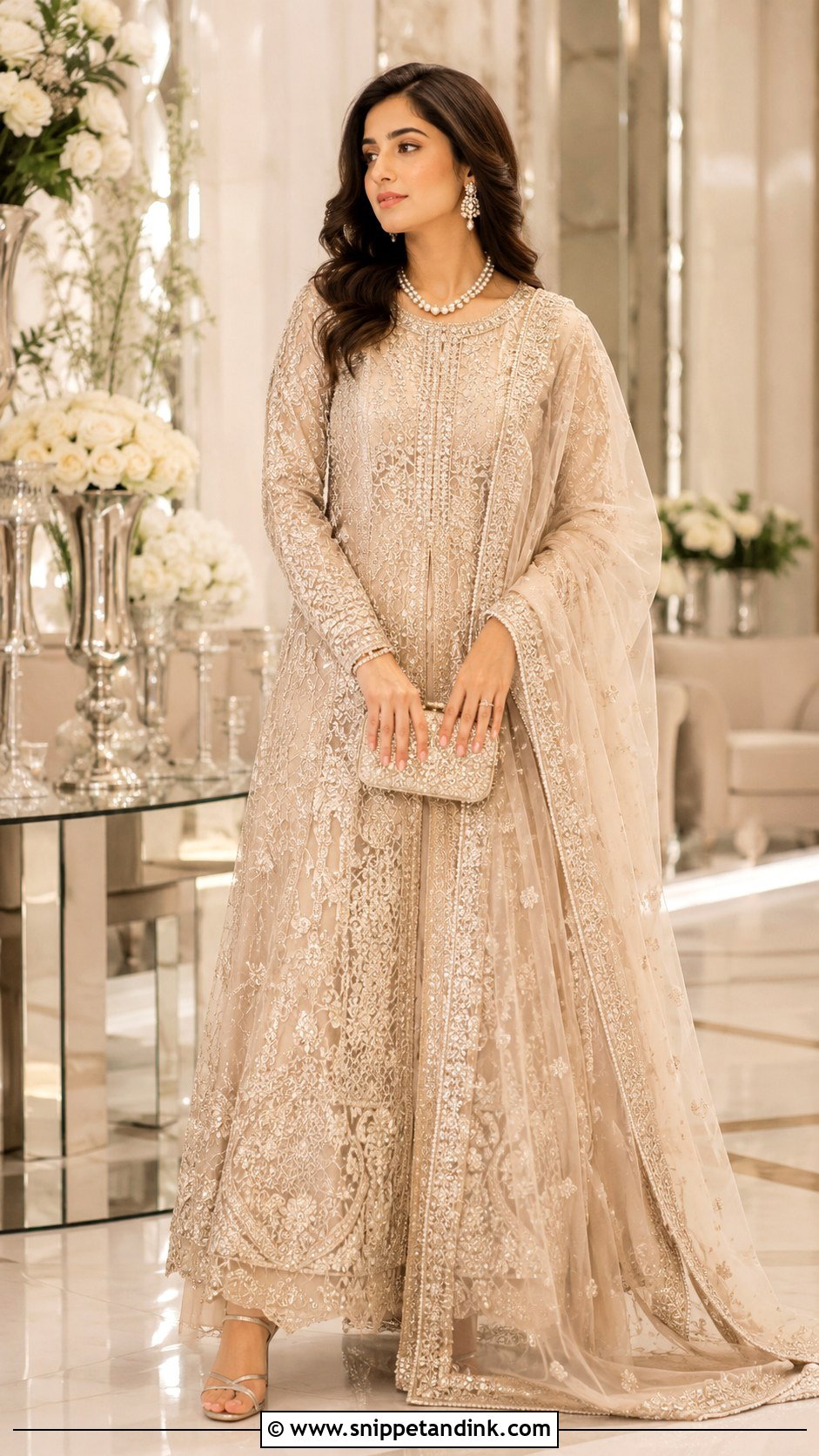
Champagne is the neutral I trust for walima or nikkah when a bride wants very little colour but plenty of presence. The maxi should have a fitted bodice, a soft flare and pearl, sequin or silver thread embroidery. In a hotel ballroom under warm lights, champagne glows; under cool white LEDs it can turn flat beige, so I always ask what the venue lighting is before recommending it. Luminous skin, defined eyes, pearl jewellery and a structured clutch keep it polished.
16. Orange Mehndi Sharara Dress
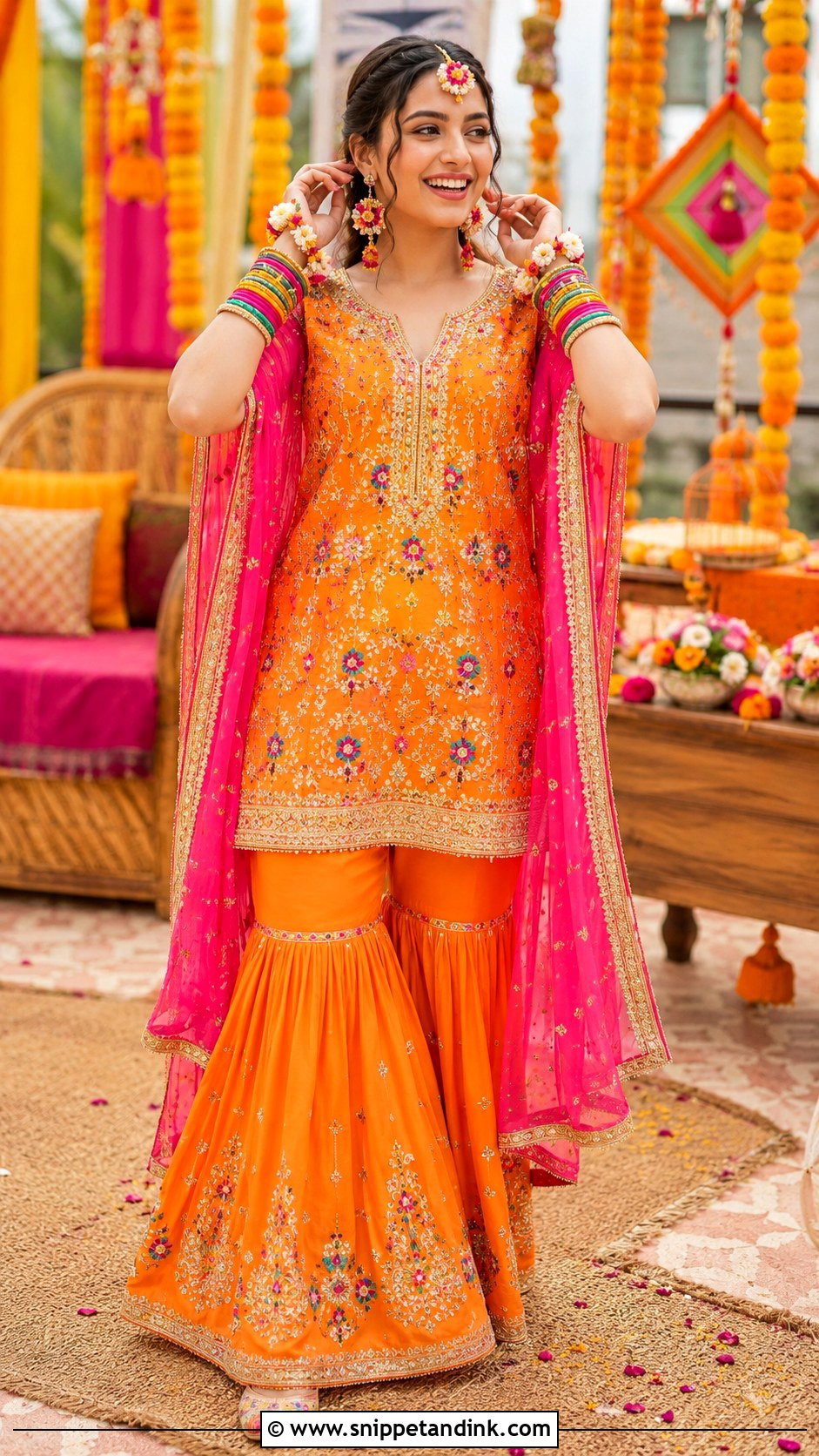
An orange mehndi sharara is pure warmth. A short embroidered shirt over flared sharara pants with a hot pink, yellow or green dupatta gives that classic mehndi contrast, and gota patti with mirror work keeps it lively. Shararas are the easiest silhouette for sitting on floor cushions, which is half of a mehndi, so I recommend them over lehengas for anyone who’ll be performing or doing rasams. Floral jewellery and khussas suit bridesmaids and sisters just as well as a bride making her entrance.
17. Mint Green Nikkah Lehenga Dress
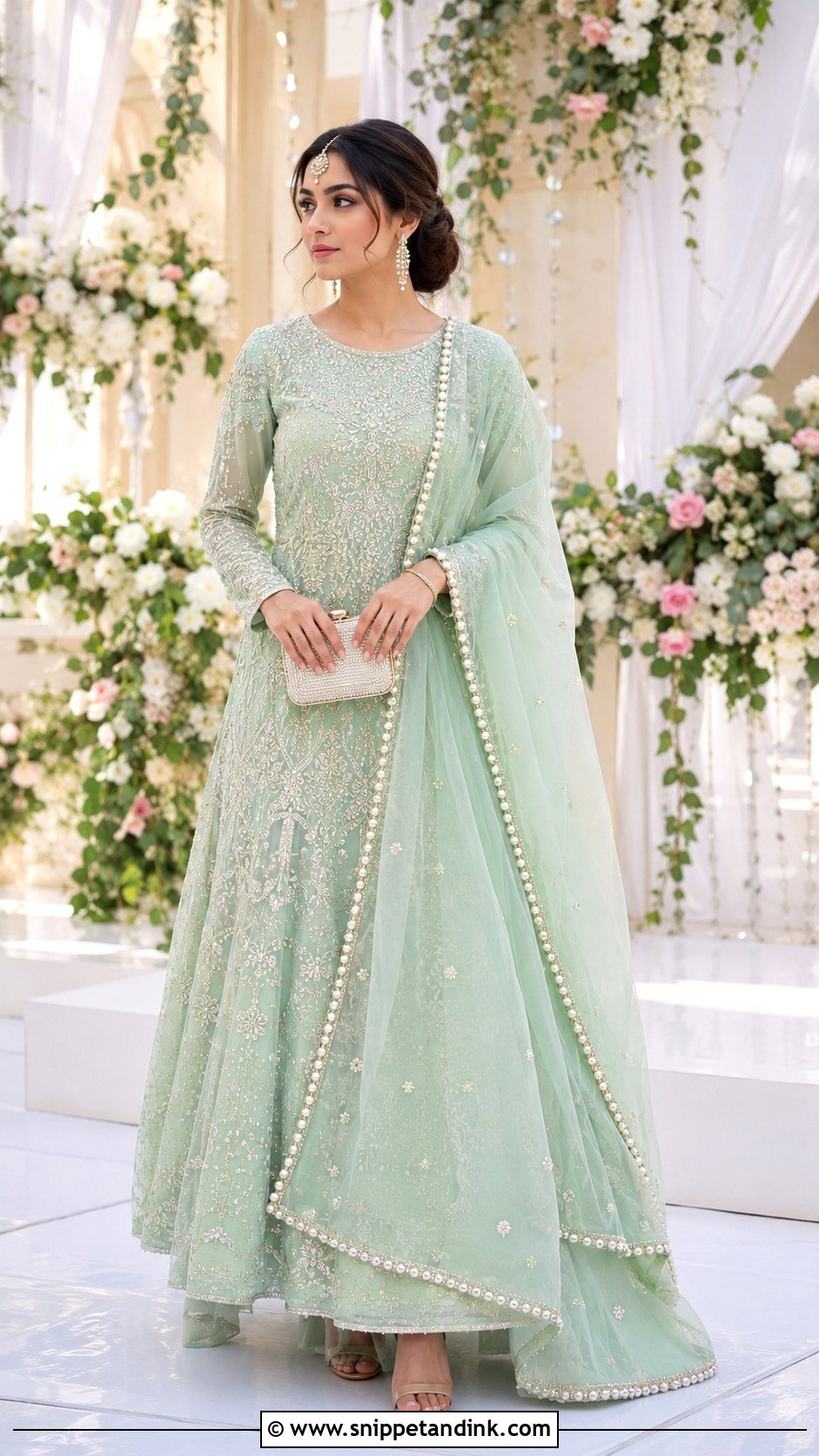
Mint green brings freshness to a daytime nikkah. A lightly embellished lehenga with a longer blouse and a dupatta edged in pearls or lace keeps it modest and soft. Mint sits best with silver and ivory, and I avoid yellow gold with it because the two fight. Brides can go heavier on the embroidery while guests keep a simpler version with minimal jewellery. In an intimate gathering, it gives a gentle bridal look without the expected red or maroon.
18. Royal Blue Wedding Guest Maxi Dress
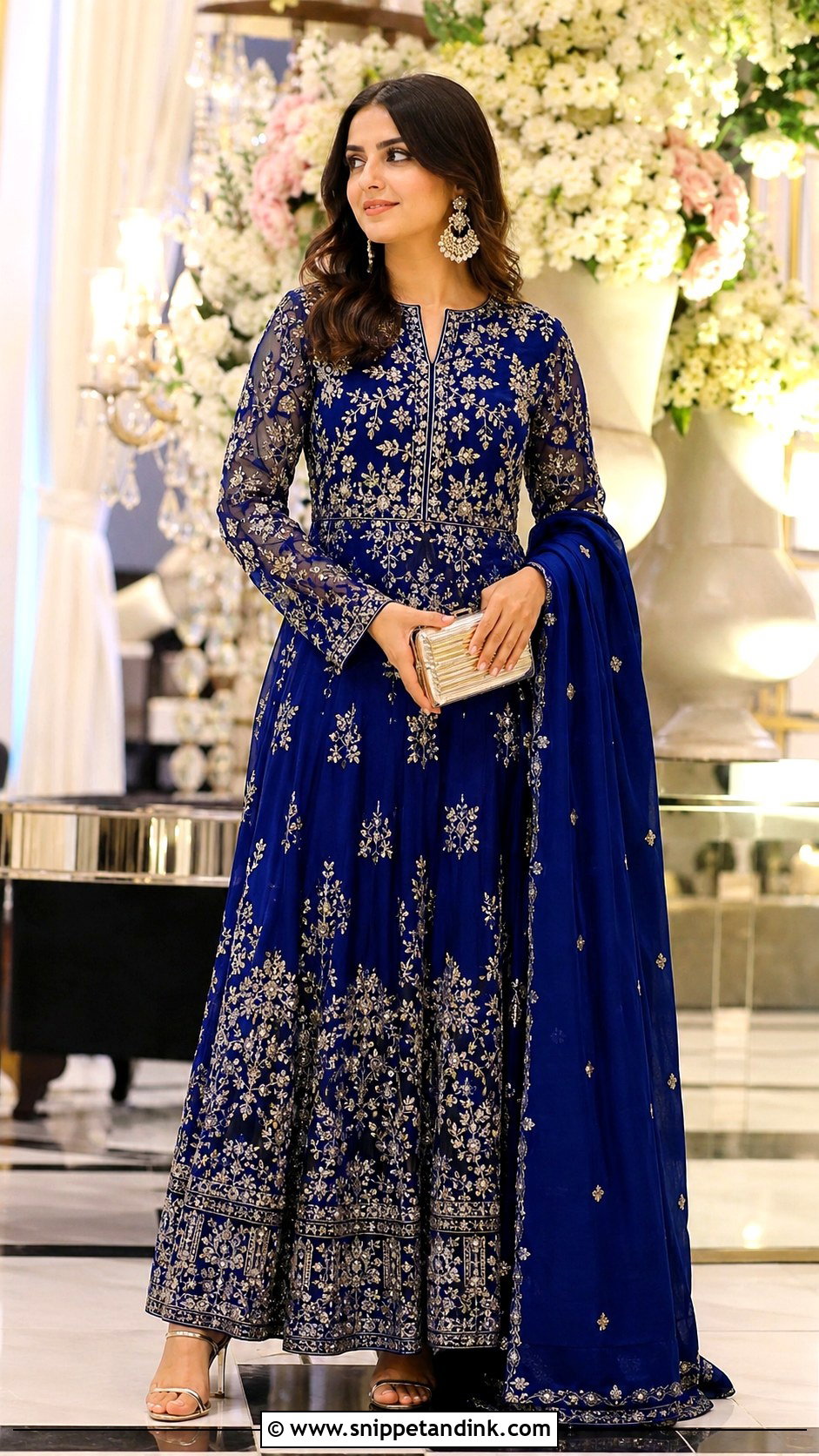
Royal blue is the guest colour that never seems to clash with a bride. A long embroidered maxi with full or three-quarter sleeves and a matching dupatta is formal enough for baraat or reception. Silver, gold or antique embroidery all suit it, so let the time of day decide: silver for evening, gold for daytime. Keep jewellery to earrings and a bracelet so the outfit stays clearly guest-level, and it will hold its colour well in photos.
19. Rani Pink Lehenga Dress
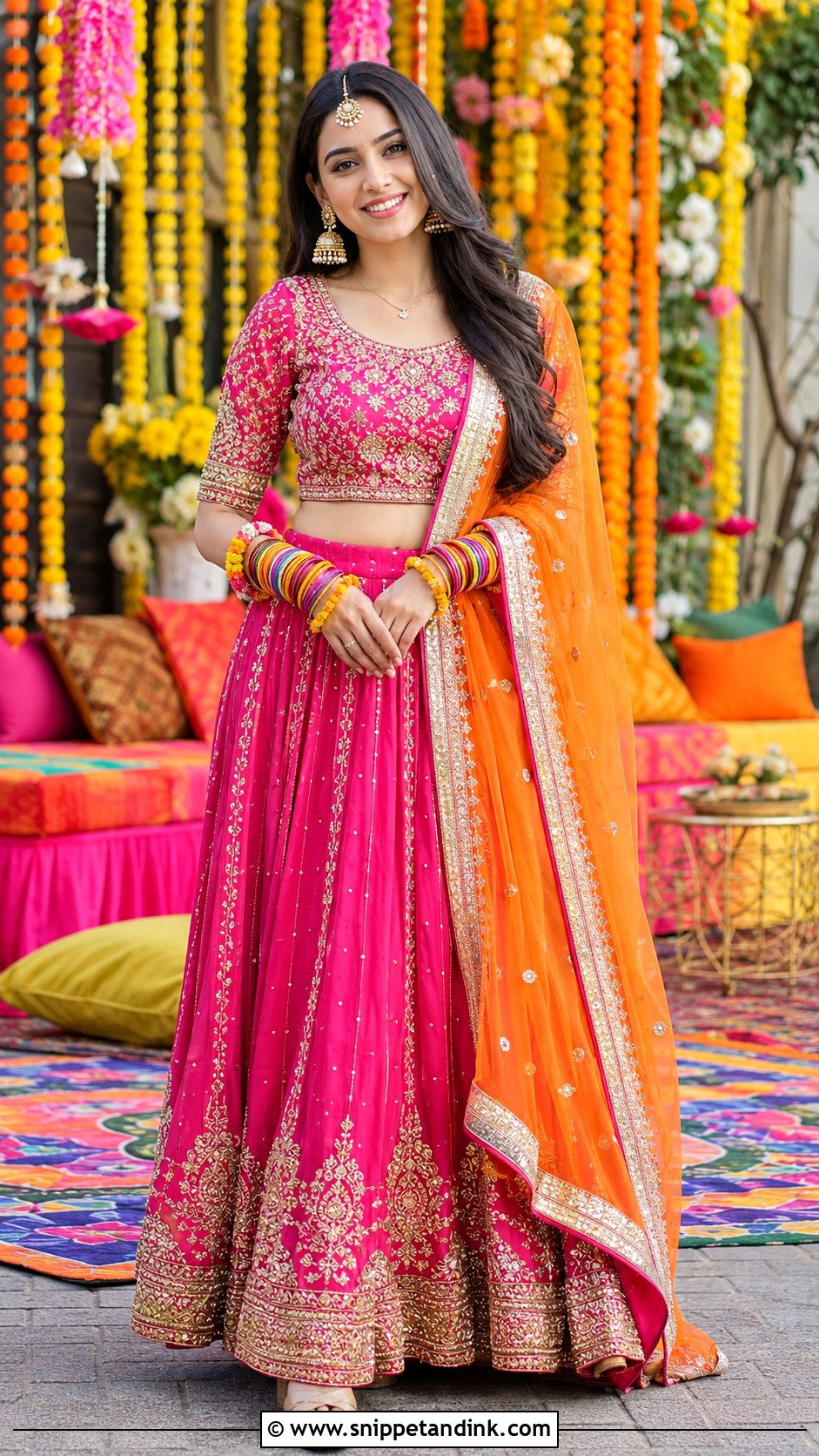
Rani pink is for the loud nights: mehndi, dholki and sangeet-style functions. A flared lehenga with a short blouse and an orange, yellow or green dupatta, picked out in gota and mirror work, gives it that festive punch. This is a colour that can overpower the face, so I keep makeup warm and well-defined. For a bride, choose heavier embroidery and a dramatic dupatta; for guests, lighter work and more playful jewellery, plus wedges or khussas for dancing.


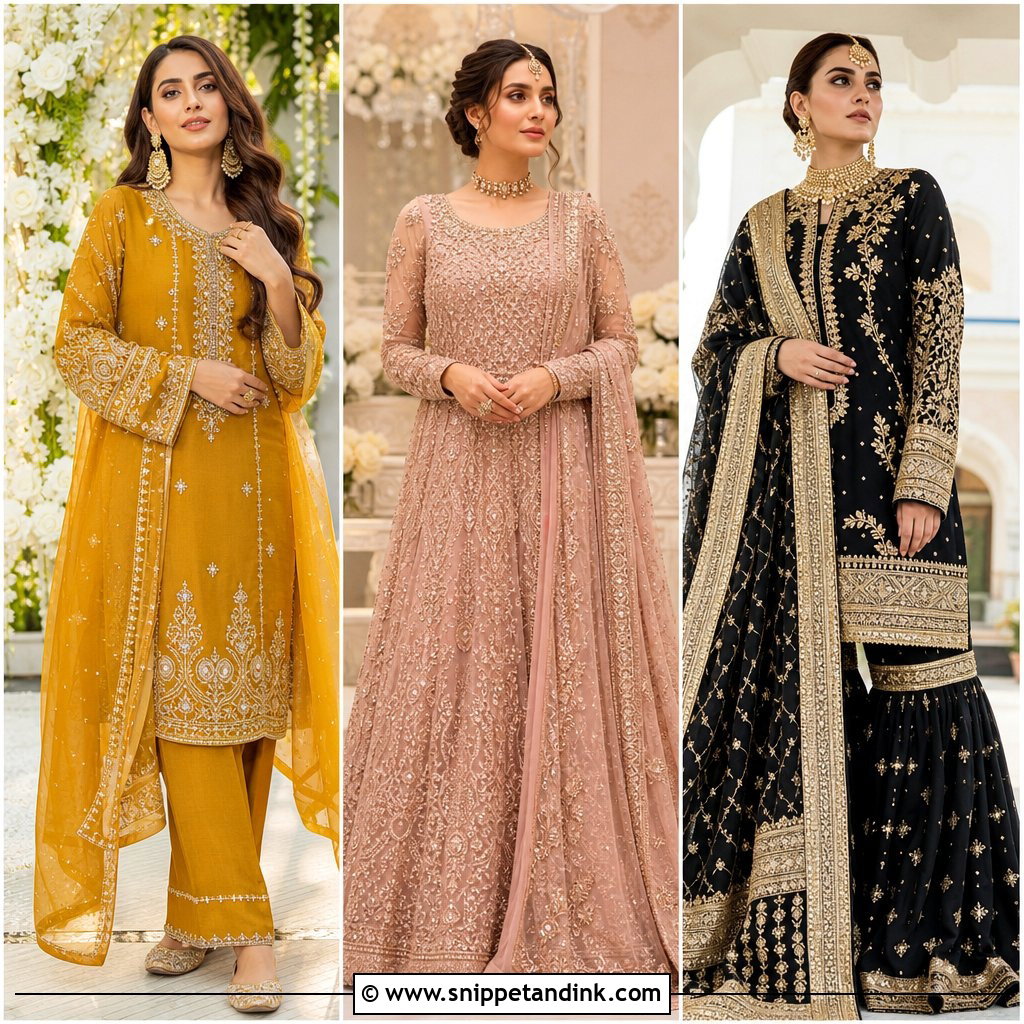
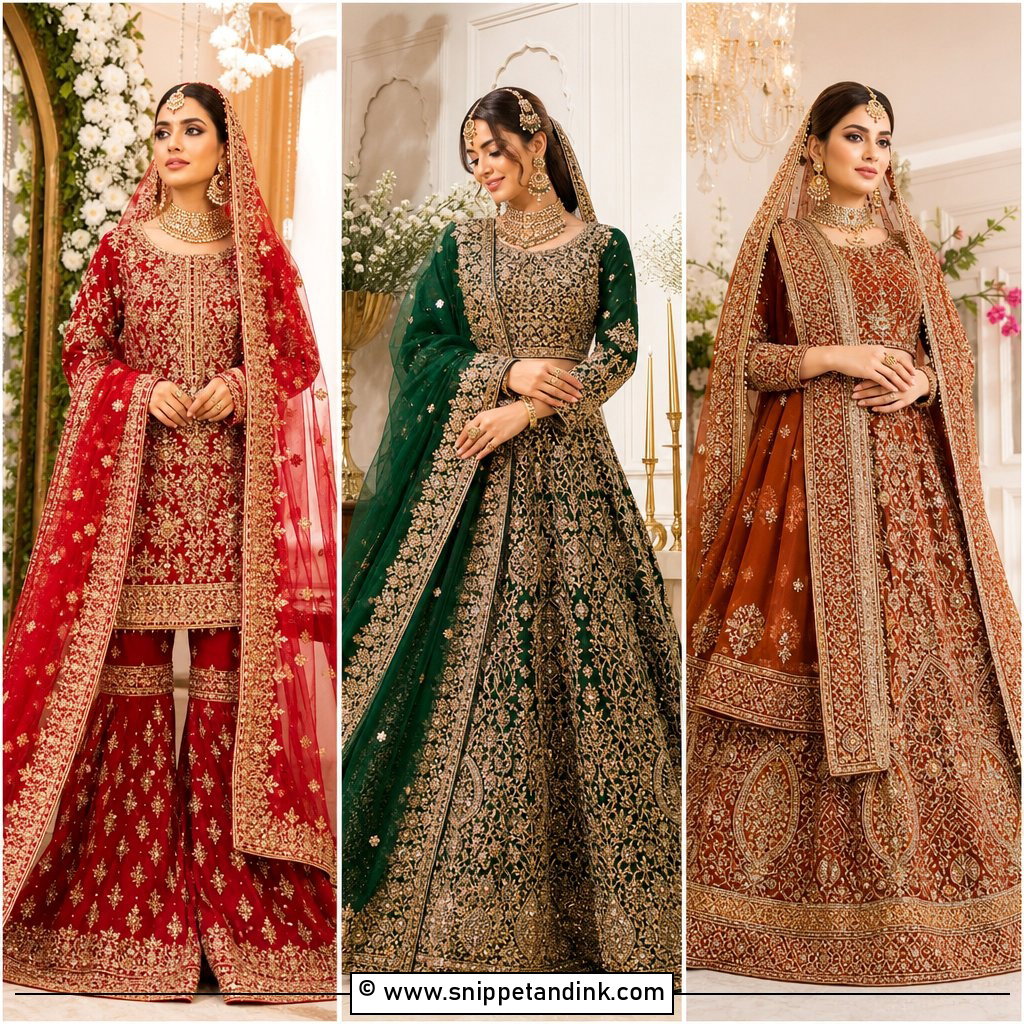
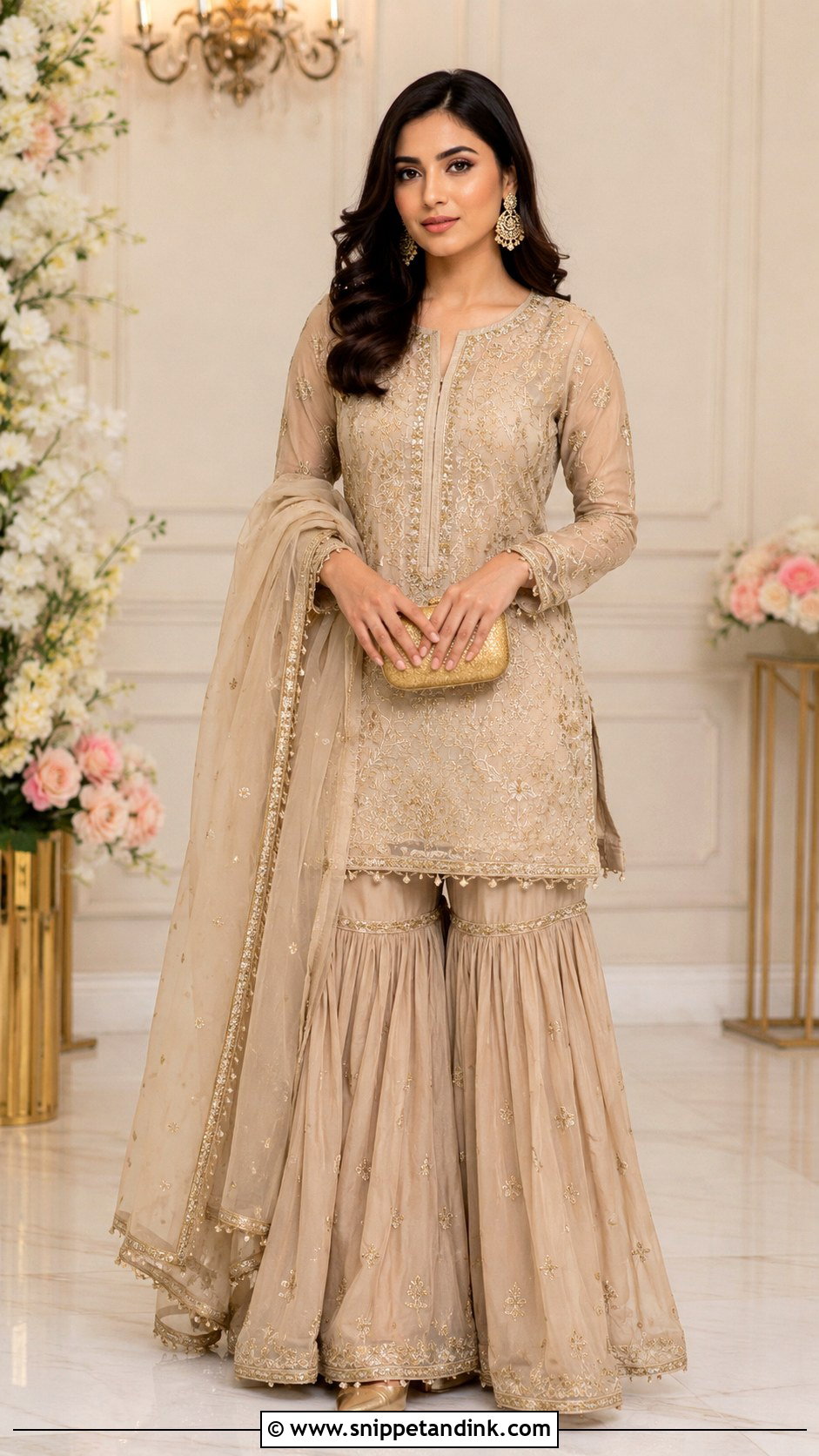
20. Beige Embroidered Gharara Dress
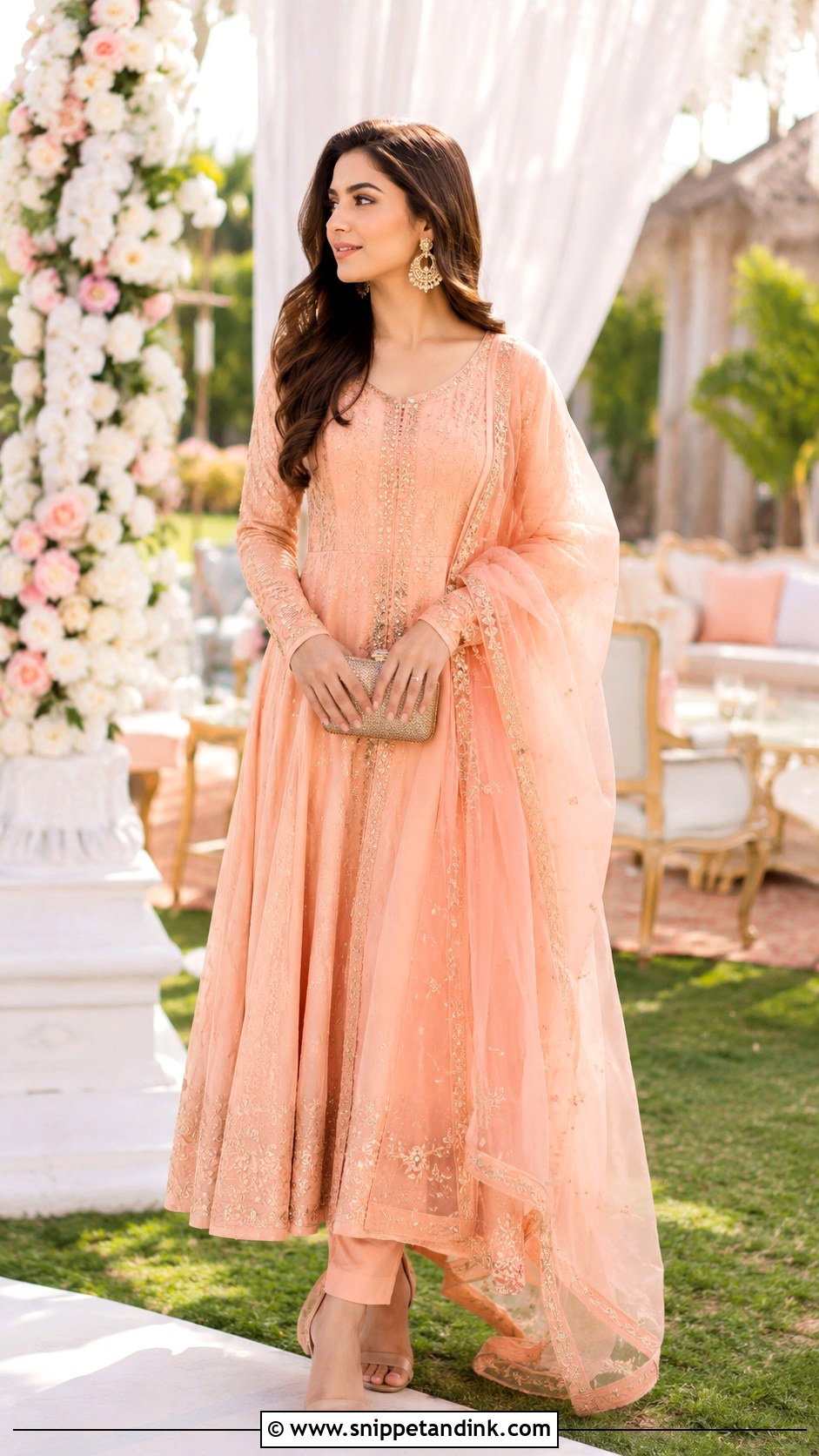
Beige is easy to get wrong. On its own, plain beige can look like an everyday suit in photos, so texture has to come from somewhere: gold threadwork, jacquard fabric or a lace finish. With that sorted, a beige gharara with a taupe kameez and a bordered dupatta is graceful for walima, engagement events and family dinners, and leaves room for statement earrings and a gold clutch. It is also the most rewearable piece on this list, since a new dupatta changes the whole outfit.
21. Teal Pakistani Formal Suit Dress
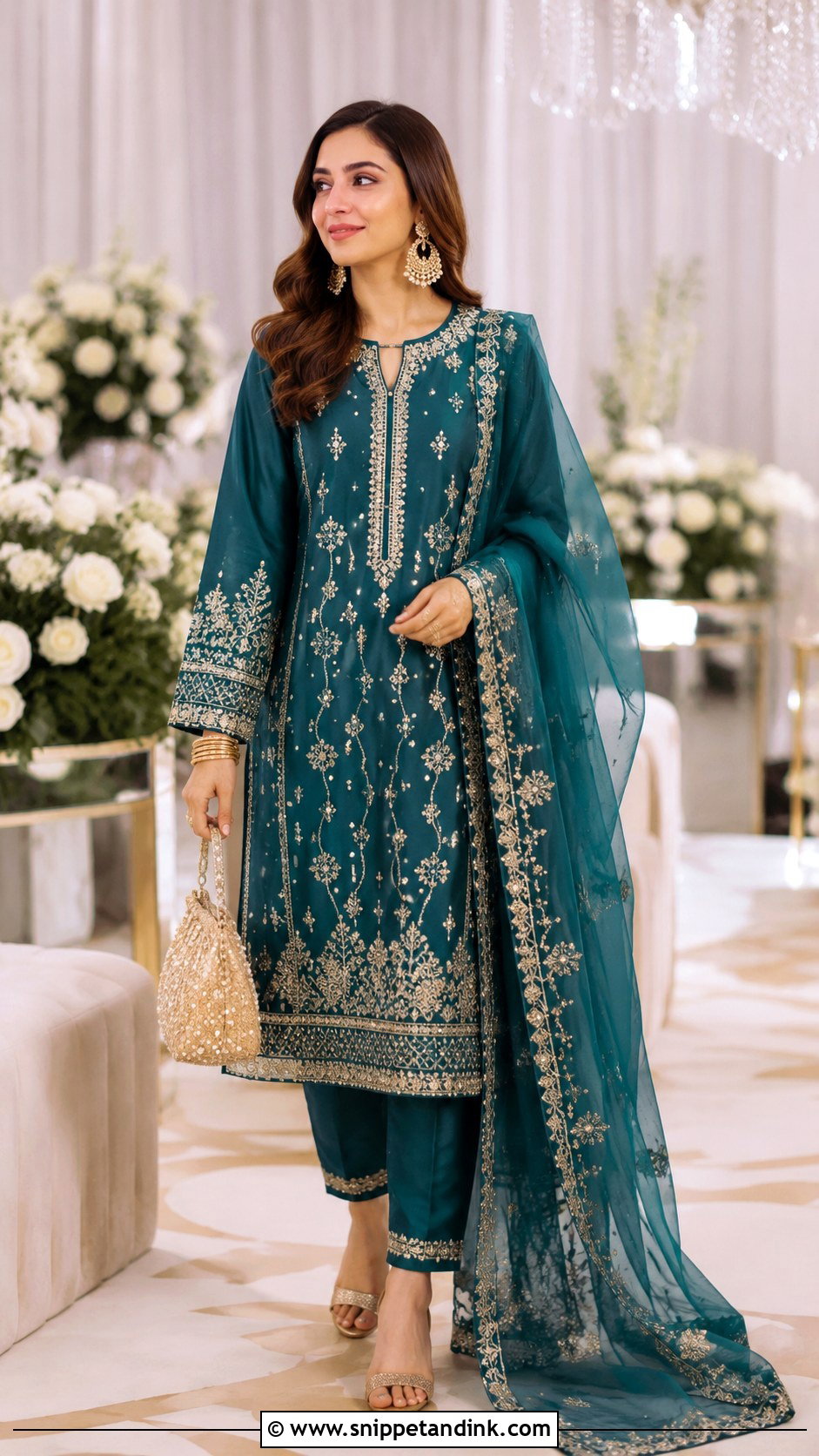
A teal formal suit is what I suggest to guests juggling several functions or travelling for the wedding. A long embroidered shirt, straight trousers and a chiffon or organza dupatta pack small and need no can-can or extra fittings. Teal accepts gold, bronze, silver and pearl equally, so one suit can be restyled across nikkah and reception. Quality fabric and clean tailoring matter more here than embroidery; a well-cut suit looks more expensive than a heavily worked one that fits badly.
22. Mauve Walima Lehenga Dress
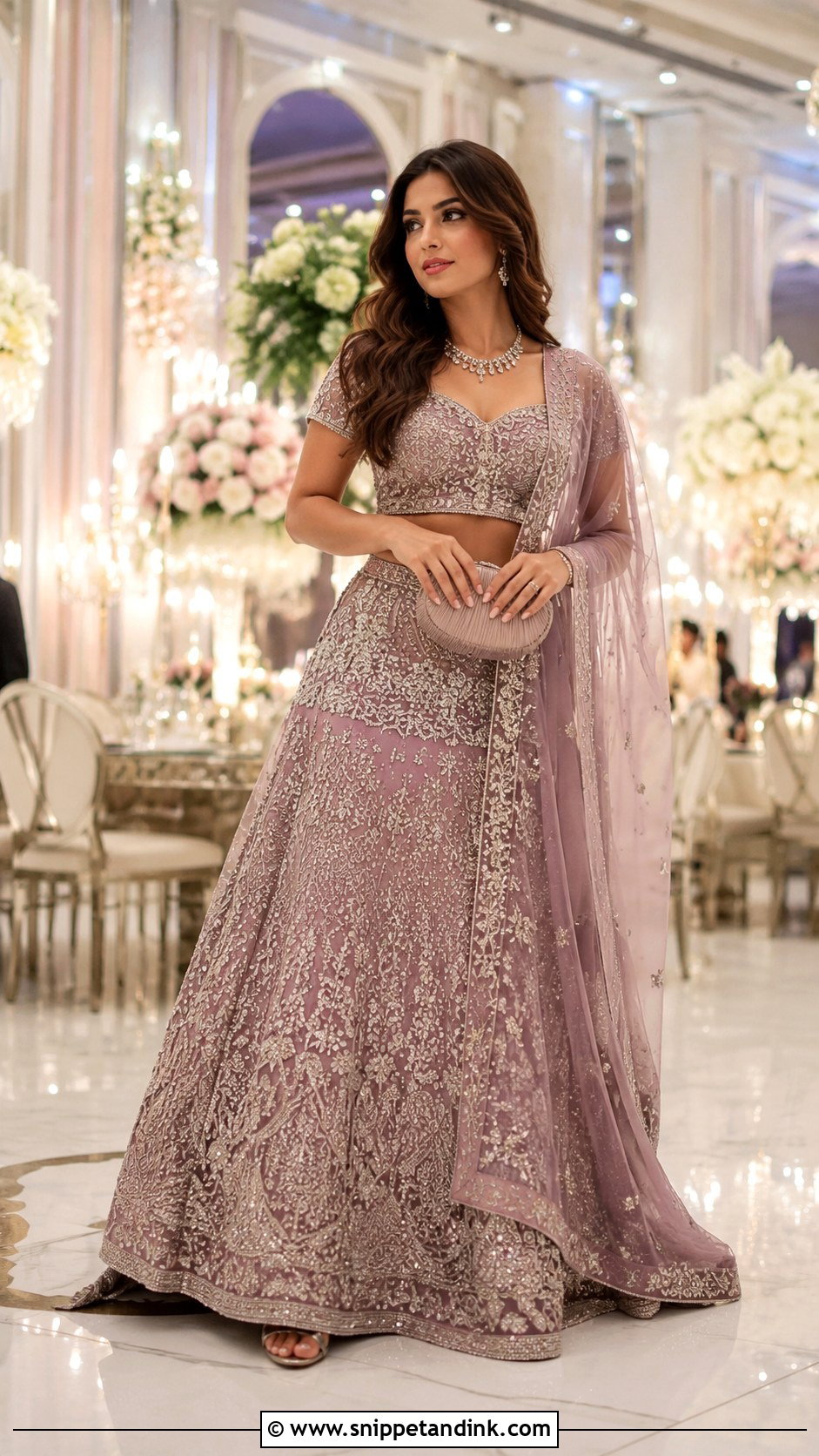
Mauve is my answer for the walima bride who wants colour but nothing bright. A mauve lehenga with an embroidered blouse and a sheer dupatta in the same tone or a paler lavender reads soft and grown-up. Silver, pearl and crystal suit the cool palette. Indoor evening light flatters mauve, though in strong daylight it can turn slightly grey, so I’d keep it for a night reception. Rosy makeup and delicate jewellery finish it; guests can wear the same idea in lighter embroidery.
23. Mustard Mehndi Angrakha Dress
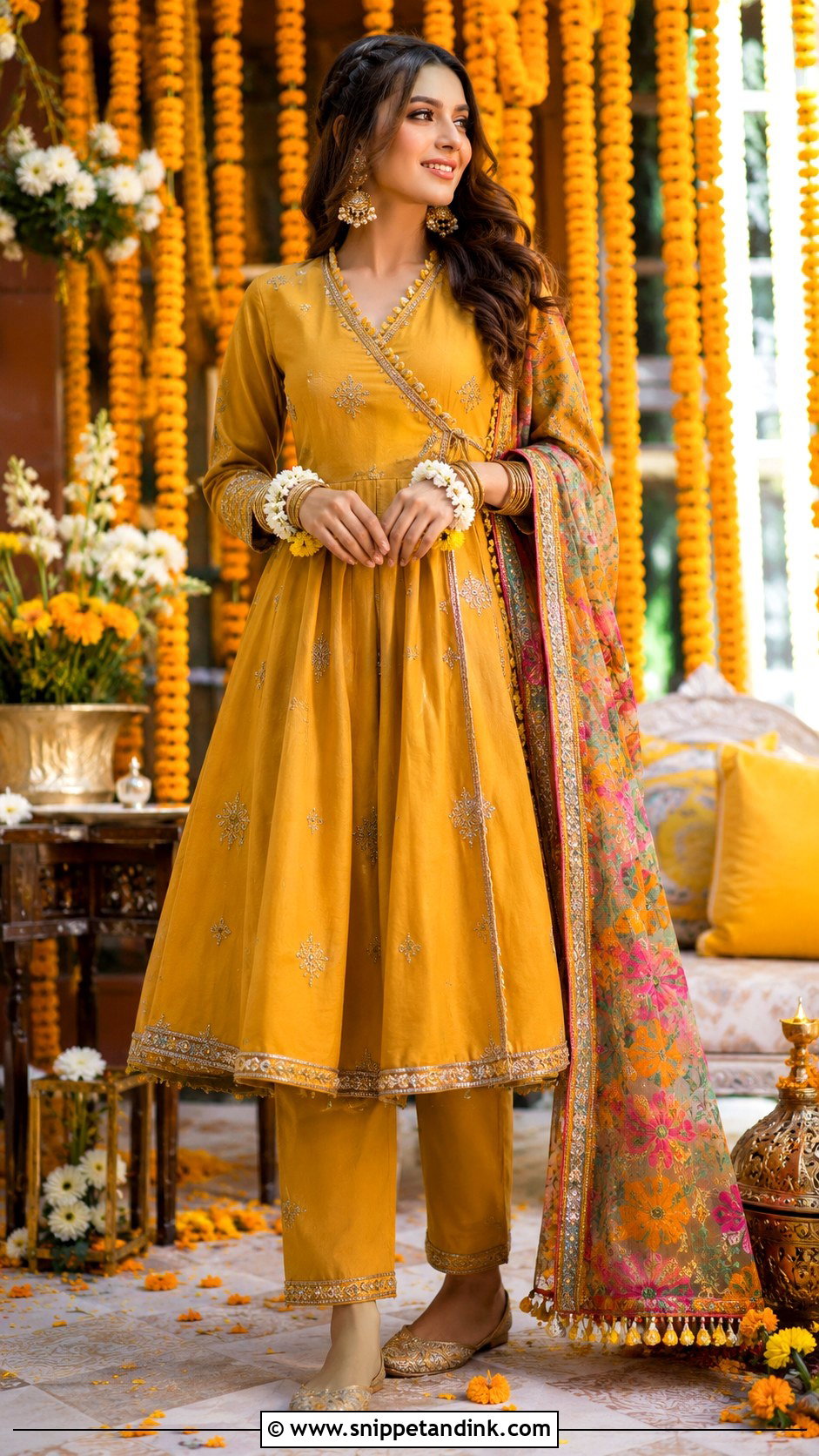
The angrakha’s wrap front gives shape at the bust and waist, which is why I like a mustard mehndi angrakha on brides who want a defined silhouette without a fitted choli. Mustard with gota, mirror work or colourful thread, over straight pants or a gharara, takes orange, green, pink or maroon accessories well. The tie at the side needs a hidden hook or a stitch, or it loosens during dancing. Close relatives suit it too, and mustard carries real tradition in South Asian wedding dressing.
24. Silver Walima Gown Dress
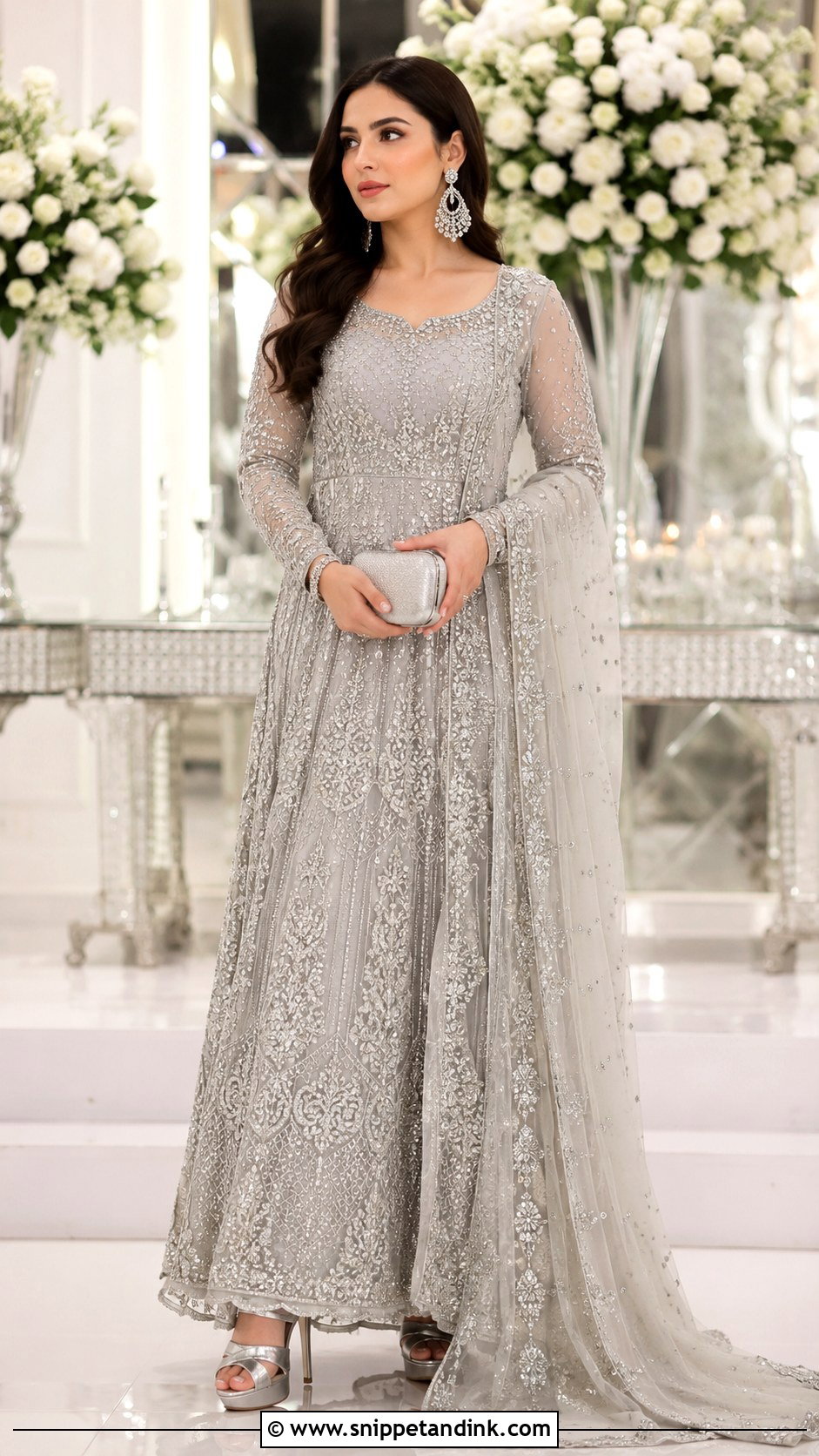
Silver gives a walima a sleek, modern glow. A floor-length gown with delicate crystal, pearl or sequin embroidery, plus a sheer dupatta to keep the Pakistani feel, catches light without loud colour. I’d steer away from a tight, body-skimming cut for a family event; a graceful line with a little ease sits better and is far easier to sit in. Brides can add heavier jewellery and a styled dupatta, guests a simpler gown with fewer embellishments.


25. Coral Wedding Guest Sharara Dress
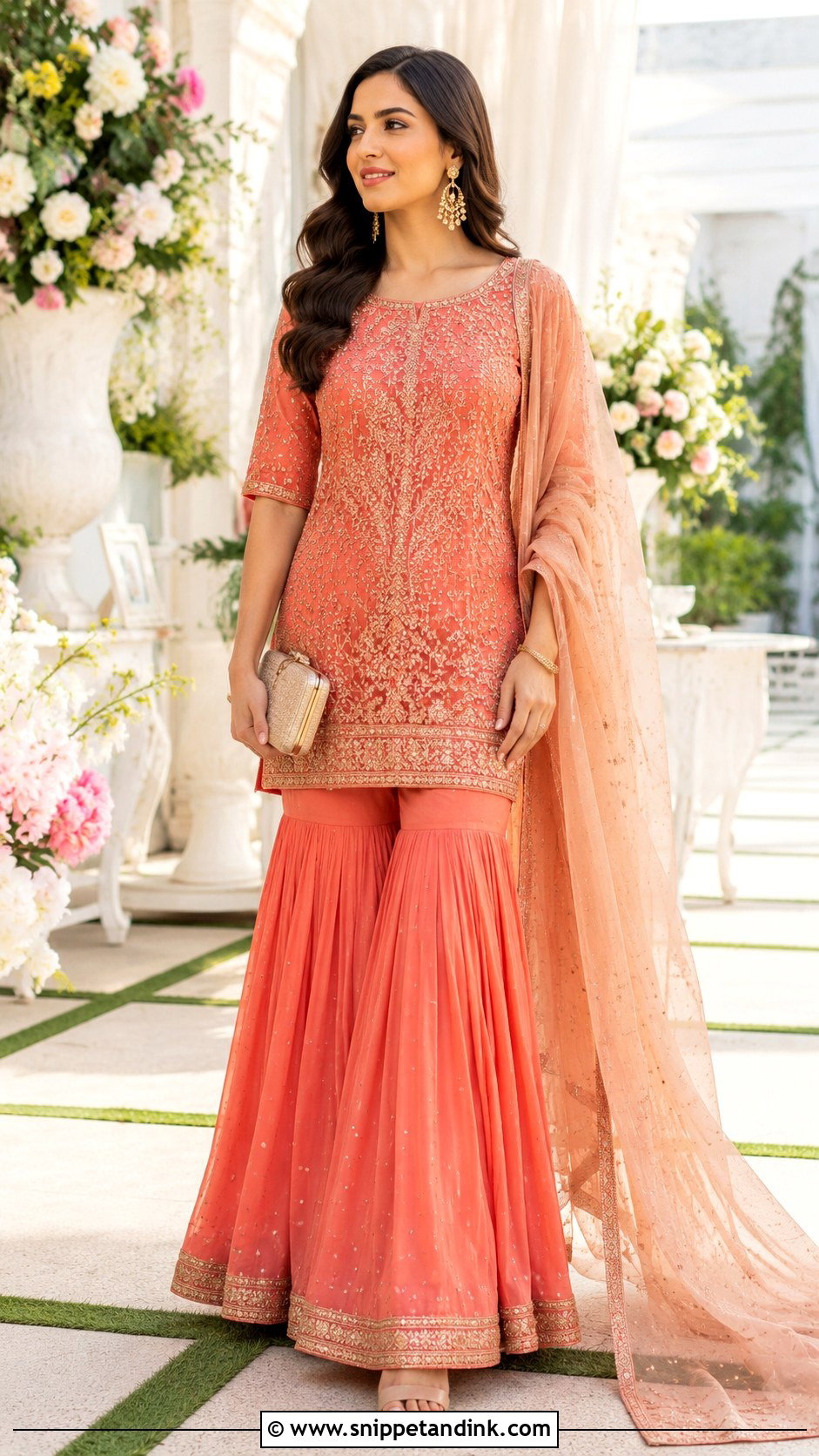
Coral is cheerful for daytime events and suits warm and olive skin especially well. A short coral kameez with light embroidery, sharara pants and a dupatta in coral, peach or ivory is festive enough for mehndi or nikkah without stepping into bridal territory. The pieces separate nicely, so the kameez can later go over jeans or straight pants. Gold earrings, nude heels and warm, glowy makeup keep it fresh at outdoor spring and summer weddings.
26. Plum Velvet Gharara Dress
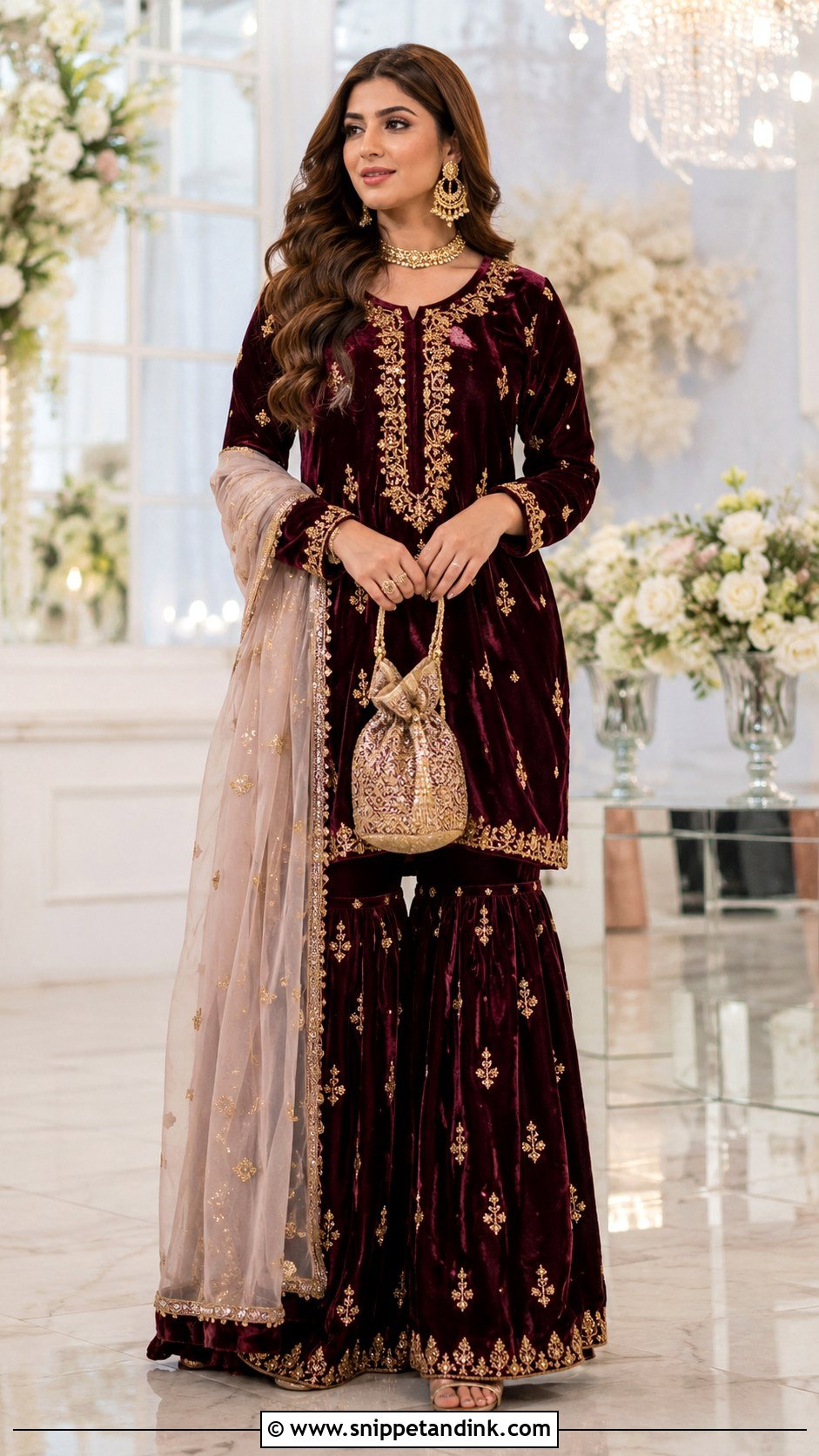
Plum velvet is the less expected cousin of maroon. A plum kameez with gold or antique embroidery over flared gharara pants gives warmth and drama on a winter evening, and a lighter dupatta stops the whole outfit from feeling heavy. If you are a guest, leave the bridal headpieces at home; a potli bag, gold jewellery and khussas are plenty. It looks richest in indoor receptions and formal dinners.
27. Dusty Rose Pishwas Dress
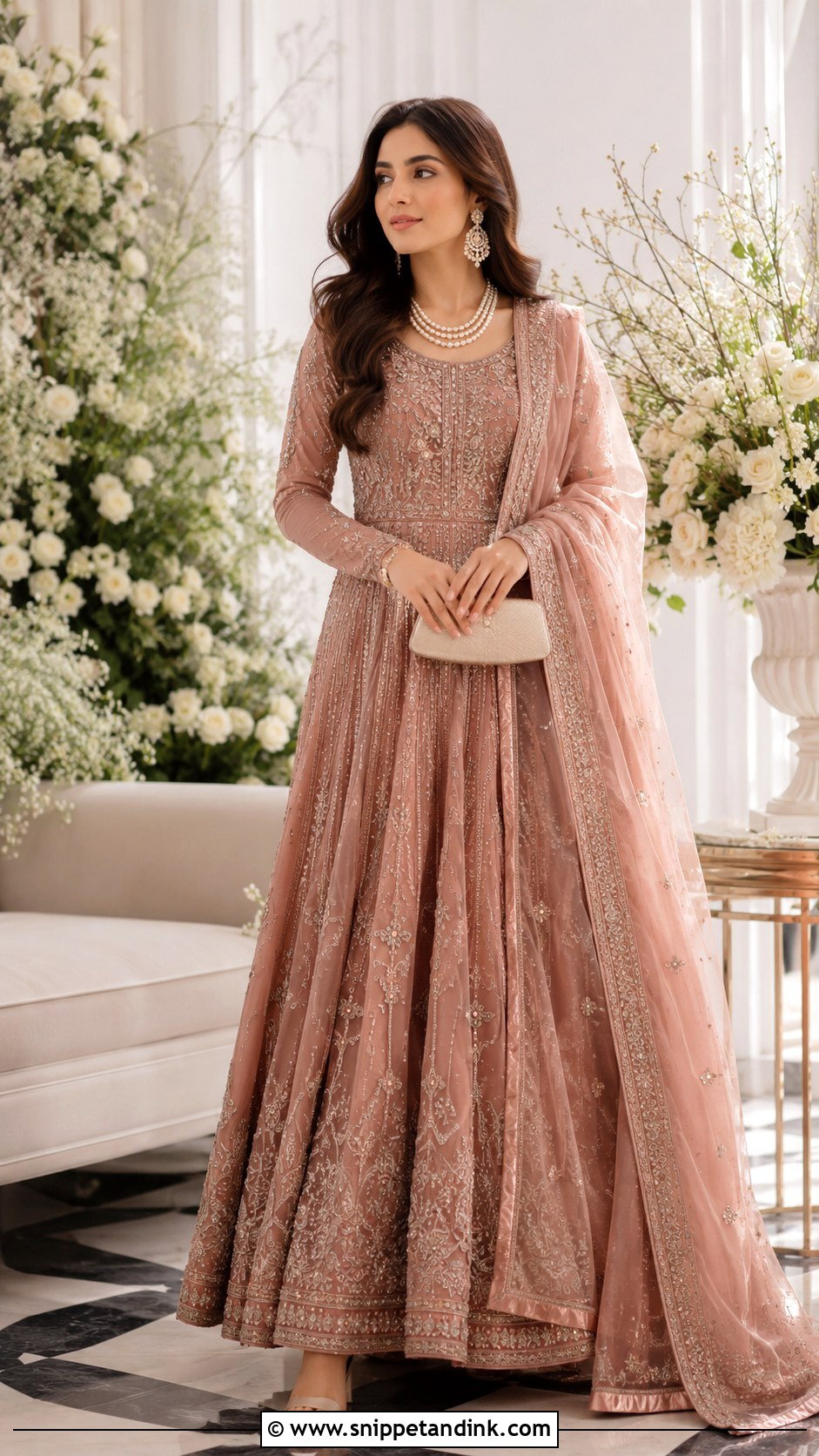
A dusty rose pishwas is the comfortable version of a princess silhouette. The flare looks dramatic in motion but the dress itself is light, which matters on a long nikkah or walima. Fitted sleeves, delicate embroidery and a bordered dupatta keep it romantic rather than bold. I sometimes suggest it to brides who are nervous about lehenga weight, since they get the same twirl with half the effort. Guests can keep the embroidery light; brides layer the jewellery.
28. Olive Green Formal Lehenga Dress
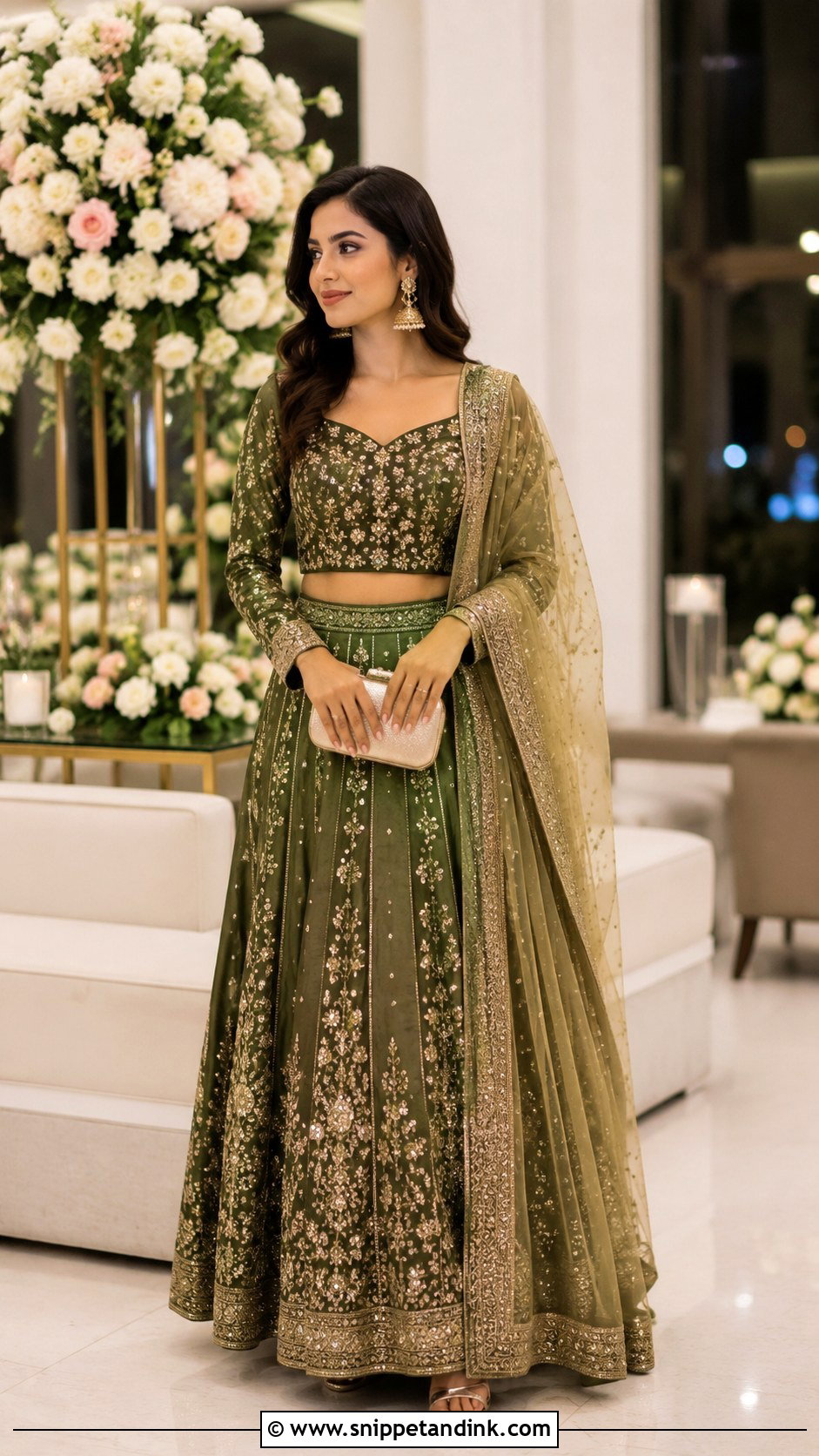
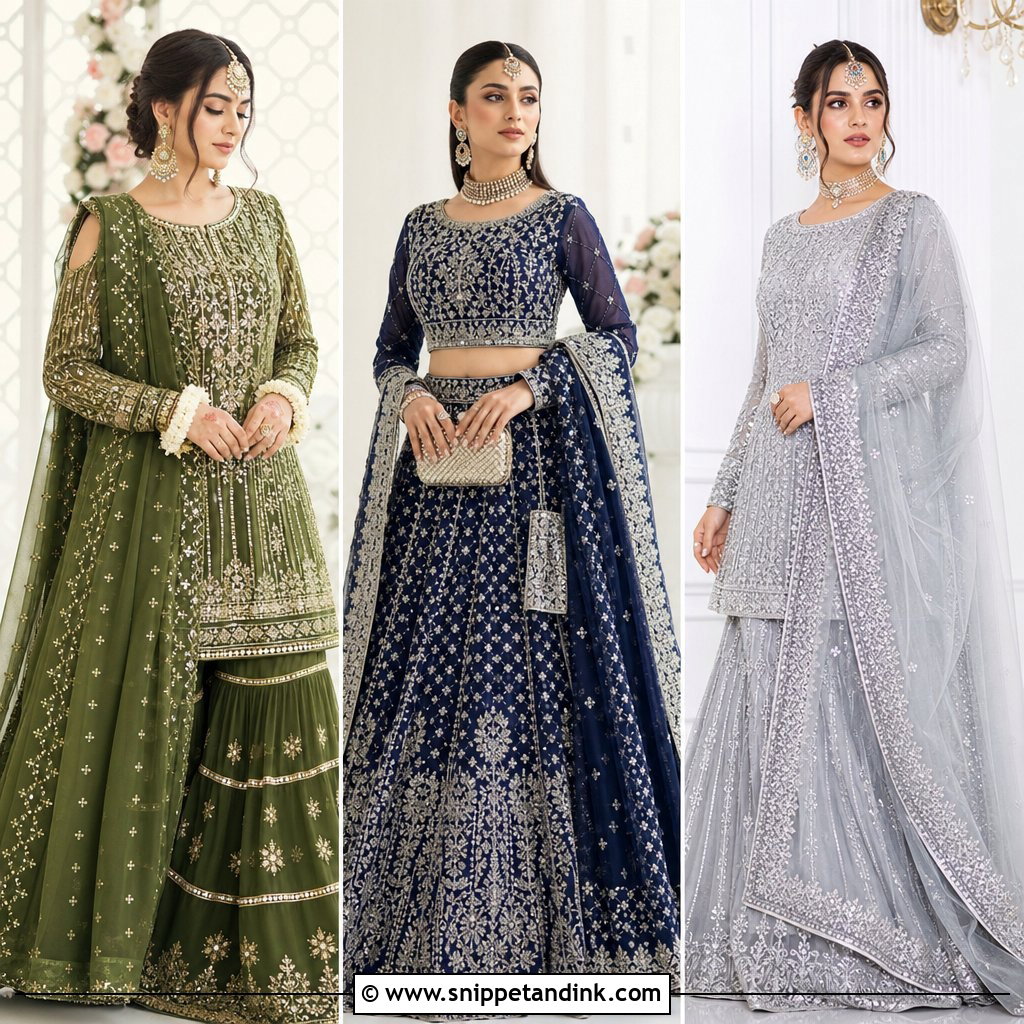
Olive green is the colour for guests tired of seeing the same five shades at every wedding. A lightly embellished olive lehenga with a matching blouse and a gold, beige or tonal dupatta looks mature, especially with antique embroidery. Olive can drain very pale skin, so warm makeup with bronze eyes and a nude lip helps. It suits reception dinners and formal family functions, and is rich without ever reading as bridal.
29. Fuchsia Mehndi Gharara Dress
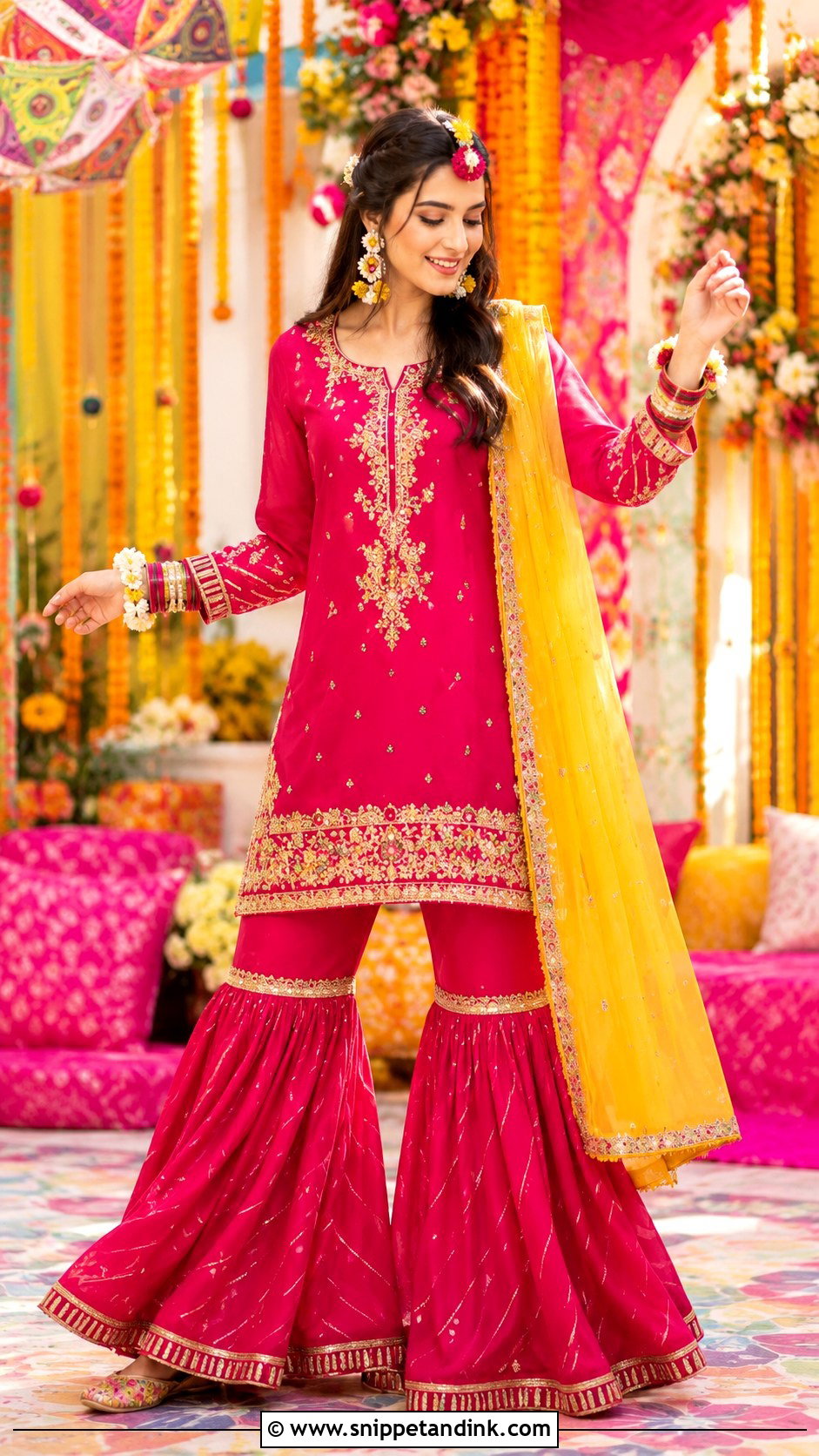
A fuchsia mehndi gharara is bright and playful in equal measure. A fuchsia kameez, flared gharara and a yellow, orange or green dupatta with gota, mirror accents and tassel borders is built for music and dancing. Tassels do catch on bangles and chairs, so I ask the tailor to secure them with a double knot. Cousins, sisters and bridesmaids who want to stand out without wearing bridal red will love it.
30. Navy Blue Reception Suit Dress
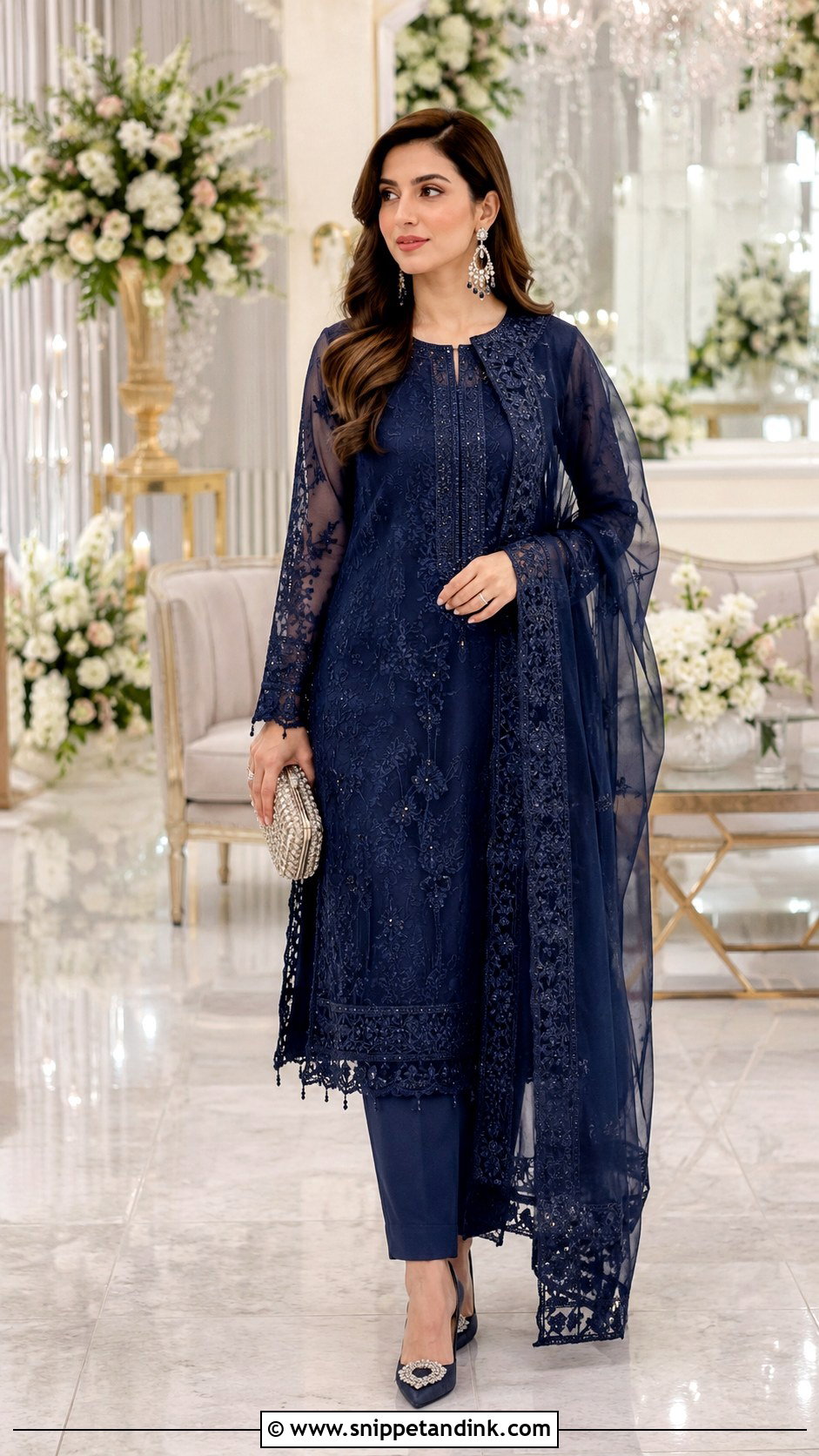
Navy is my pick for guests who prefer structure to flare. A long embroidered shirt, straight trousers and a sheer dupatta with a neat border look sharp at a winter or evening reception. Navy takes silver, gold or champagne embroidery, so the same suit can be dressed up or down. Statement earrings, a clutch and pointed heels finish it, and it stays modest and formal all night.
Carrying a Heavy Lehenga Through a Long Baraat Night
Most of the trouble I fix on the day comes from weight and pinning, not from the design itself. A heavy skirt drags at the waist after a few hours, so I ask the tailor to add a wide, firm waistband with a hook and a drawstring backup. A soft can-can or net layer underneath keeps the skirt full without adding much weight, and it stops the fabric from wrapping around your legs when you walk.
Dupatta pinning that survives the rukhsati
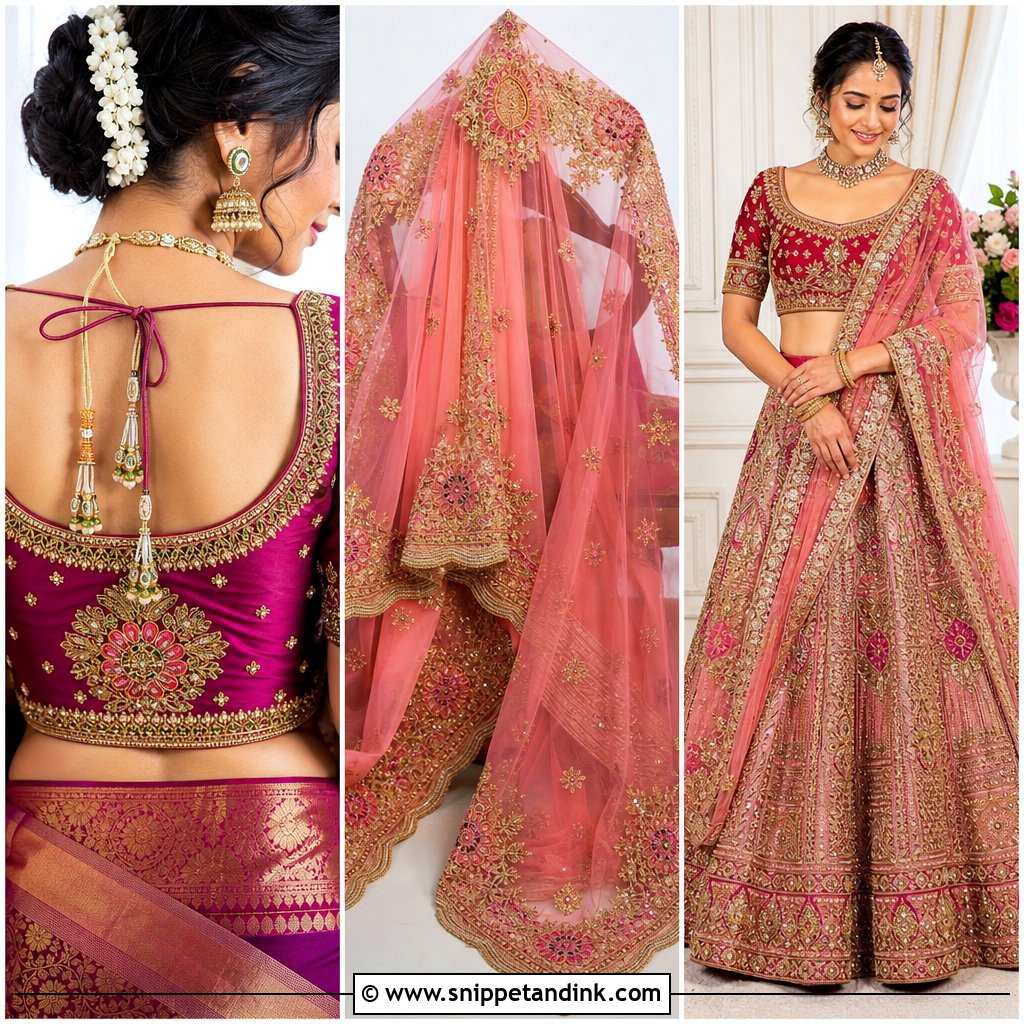
I pin a head dupatta at the crown and behind each ear, using small U-pins anchored into a backcombed section of hair, never just into a smooth bun. If the dupatta is heavy with embroidery, I add a second, lighter dupatta for the shoulders so the head one is not carrying all the weight. Carry a few spare safety pins in your clutch; someone always steps on a border.
Storing Zari, Velvet and Organza After the Last Function
Bridal outfits are often kept for years, and they suffer most in the first month after the wedding when they get folded in a suitcase and forgotten. Air each piece out for a day, then have it dry cleaned by someone who handles embroidered bridal wear, and ask them to avoid pressing directly on zari or dabka.
- Wrap embroidery in soft cotton or muslin. Plastic traps moisture, and metallic thread tarnishes faster in damp air.
- Fold with tissue between layers, and refold along different lines every few months so the creases do not set permanently.
- Keep velvet flat or loosely rolled rather than hung, because hanging stretches the pile at the shoulders.
- Store away from sunlight; pastels and ivory yellow quickly in a bright room.
Planning the Set as One Story Across Four Functions
Every function in a Pakistani wedding has its own mood, and the outfit should match it: red and maroon lehengas for the baraat, ivory and pastels for a nikkah, bright ghararas and shararas for mehndi, softer gowns and maxis for walima. Before you commit, think about fabric for the season, how much embroidery you can comfortably carry, how the dupatta will drape and what jewellery you’ll wear. Brides can lean into heavier work and heirloom pieces; guests should stay festive but a step below. If you plan the whole set together, each outfit will look like it belongs to the same wedding.
You'll Like These Ideas:







Leave a Reply