
The front section is the part of your hair that shows up in almost every close-up, from the varmala to the last selfie at the reception. It also has to work with a maang tikka, a matha patti or a nethi chutti, and with the shape of your face and your hairline. That’s a lot to ask of a few inches of hair, and it’s why I spend more time on the front than on the bun behind it. Here are 30 Indian wedding front hairstyles, from soft puffs to jasmine-wrapped twists, with notes on how each one is built and the faces and hairlines it flatters.
Study Your Hairline Before You Pick a Front
The first thing I look at during a consultation isn’t the photo you’ve brought, it’s your hairline. A front style is built directly on it, so its shape decides what will sit well and what will fight you all day.
- A strong cowlick at the front pushes hair in one direction. I part with it rather than against it, or the parting springs open by the afternoon.
- A widow’s peak looks striking with a sleek center part and a tikka, but it can make a puff look uneven.
- Thin or receding temples show in tight braids and slicked-back styles. A soft puff or twisted front covers them better.
- Baby hairs along the hairline can be smoothed with a little gel or left soft; decide which at your trial, not on the morning.
Bring a photo of yourself with your hair pulled straight back. It tells your stylist more than any inspiration picture.
1. Front Puff With Loose Curls
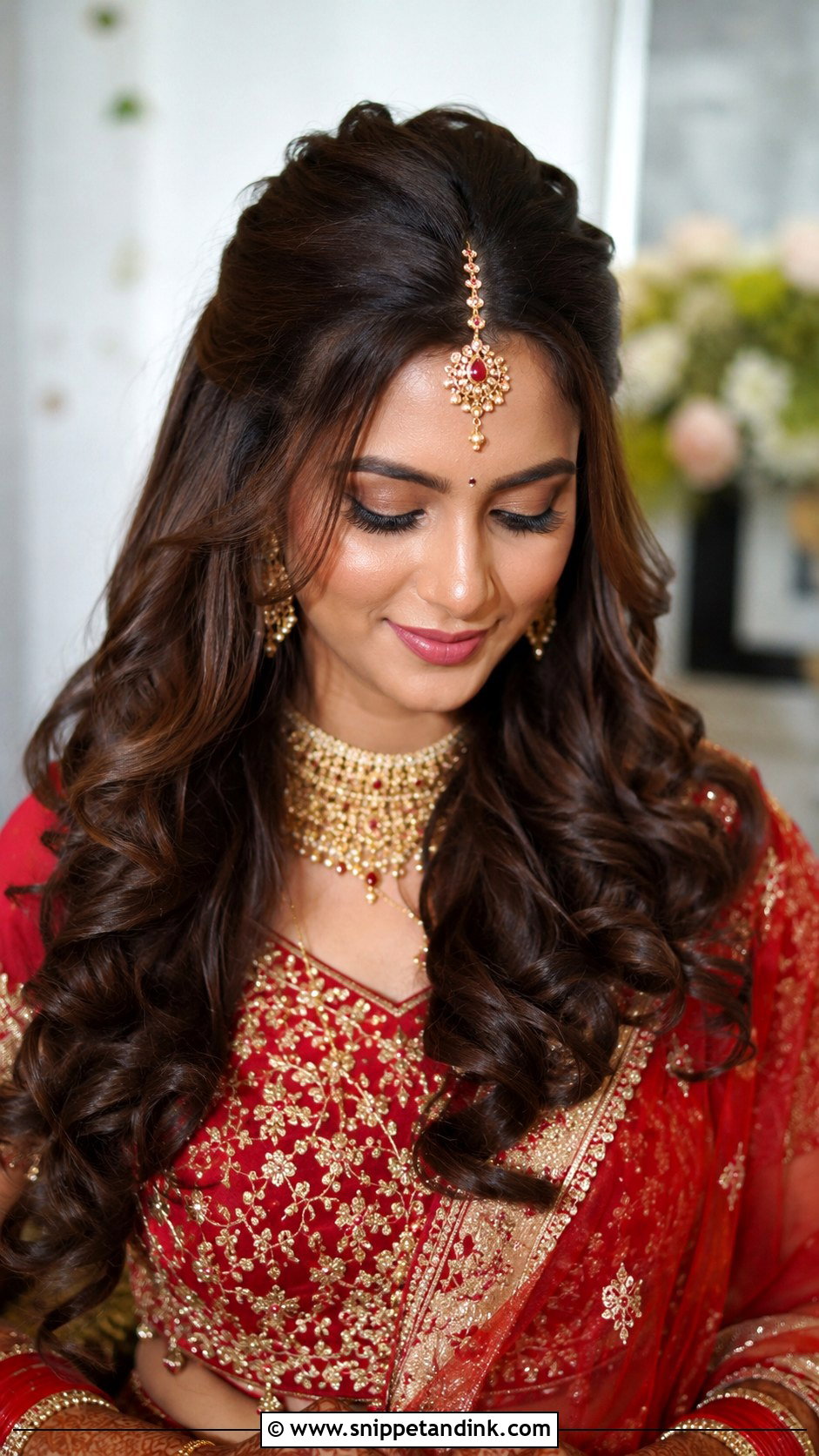
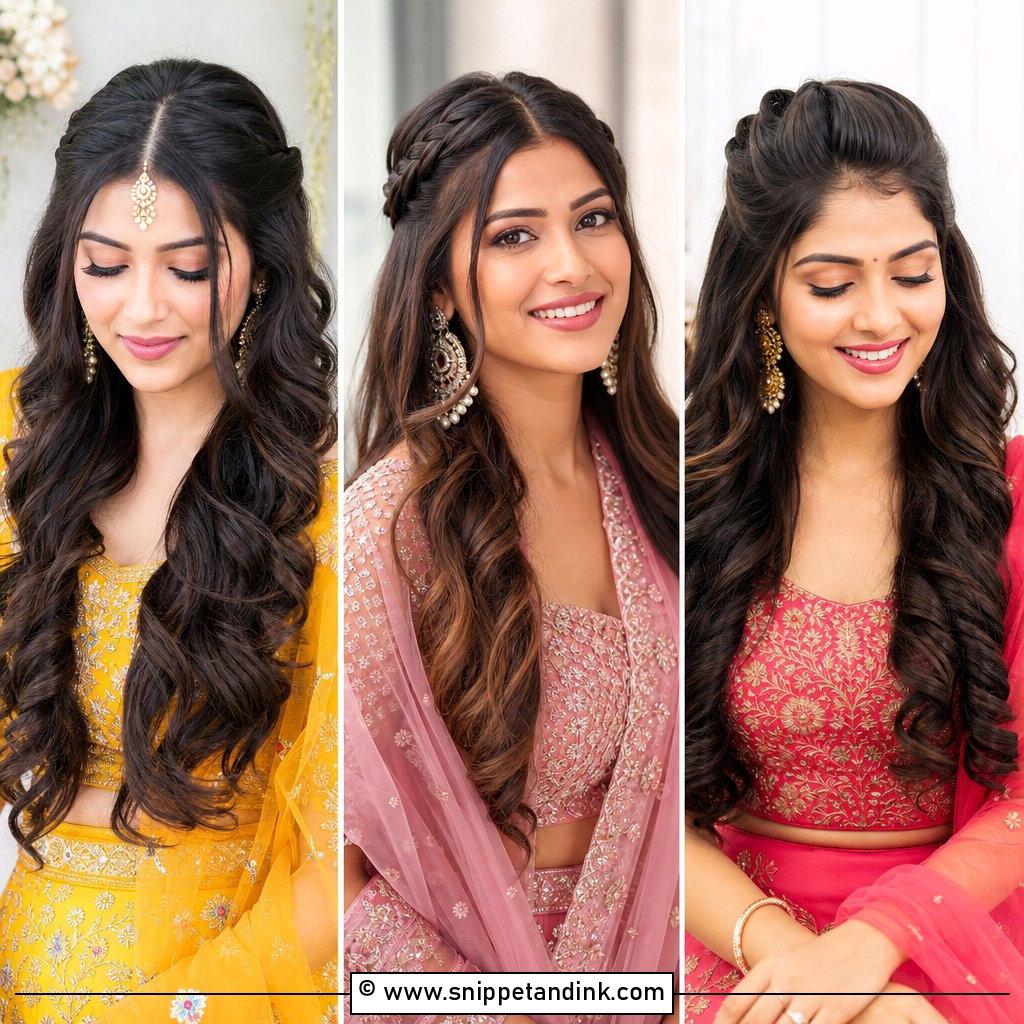
A front puff paired with loose curls is one of the most requested open-hair bridal looks. The puff lifts the crown, which makes a round face look longer, and the curls give width lower down. On a long face I keep the puff low, or it adds even more length. The secret to a puff that lasts is backcombing at the root only and smoothing a clean top layer over it; teasing the surface makes it fuzzy by the evening. A maang tikka along the part finishes it for engagements and receptions.
2. Twisted Front Bangs With Jasmine Flowers
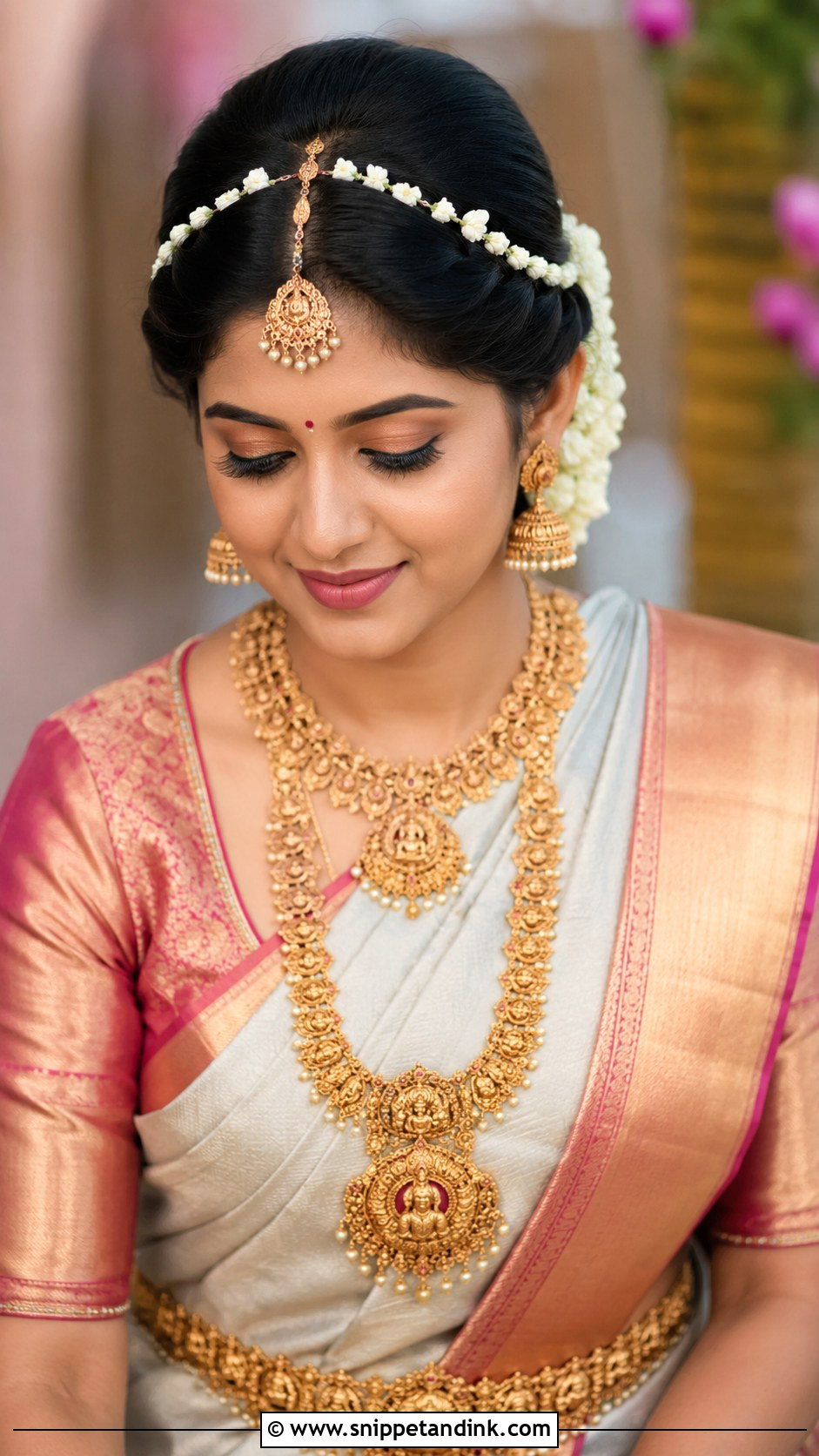
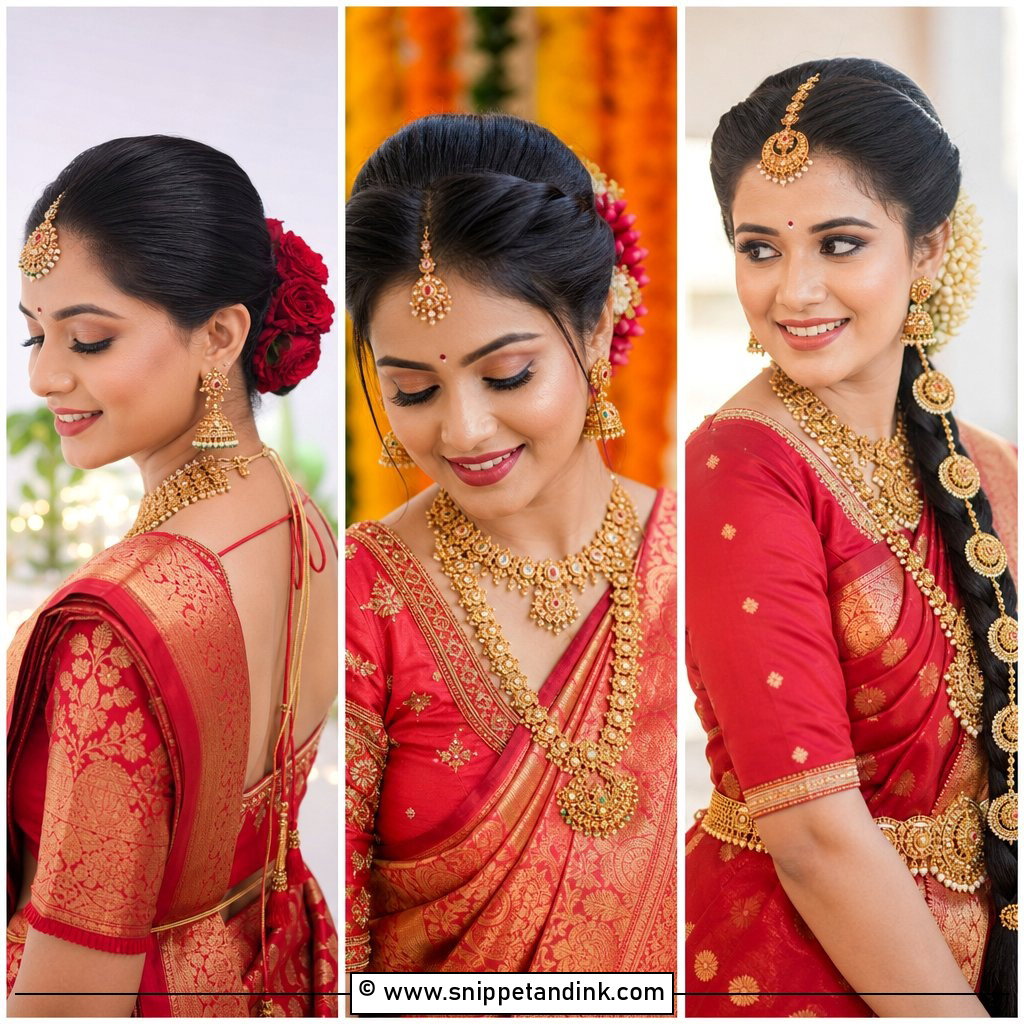
Twisting the front sections back and pinning a string of jasmine along them is a South Indian look I love for the muhurtham. The twists keep the face completely clear, which matters when you’ll be leaning over a fire or a ritual plate for a long time. With a silk saree and temple jewellery it looks entirely at home. I twist toward the back of the head and pin every few centimetres, because a twist that’s pinned only at the end unwinds. Fresh veni can run along the twist or gather where the twists meet.
3. Front Braid With Open Hair
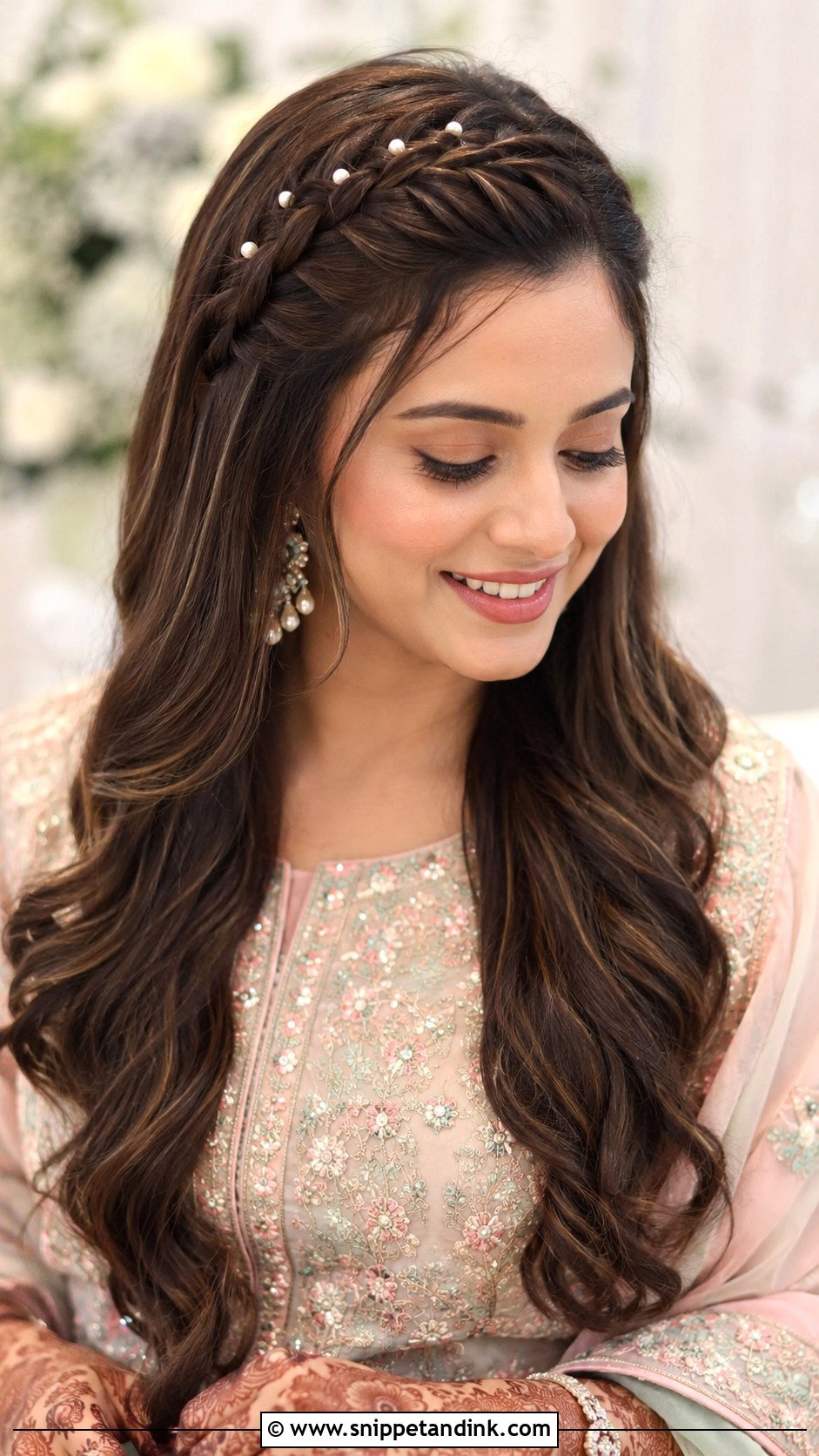
A thin braid running across the front, with everything else left open, gives texture without the weight of an updo. I start it at the deepest part of the parting and braid along the hairline, pinning it behind the opposite ear. Tiny pearls or jewels can be pushed into the braid afterwards. It’s ideal energy for sangeet and mehndi, when you’re moving and dancing. Very fine baby hair at the hairline can slip out of the braid, so I smooth it with a small amount of gel first.
4. Side Swept Front Puff
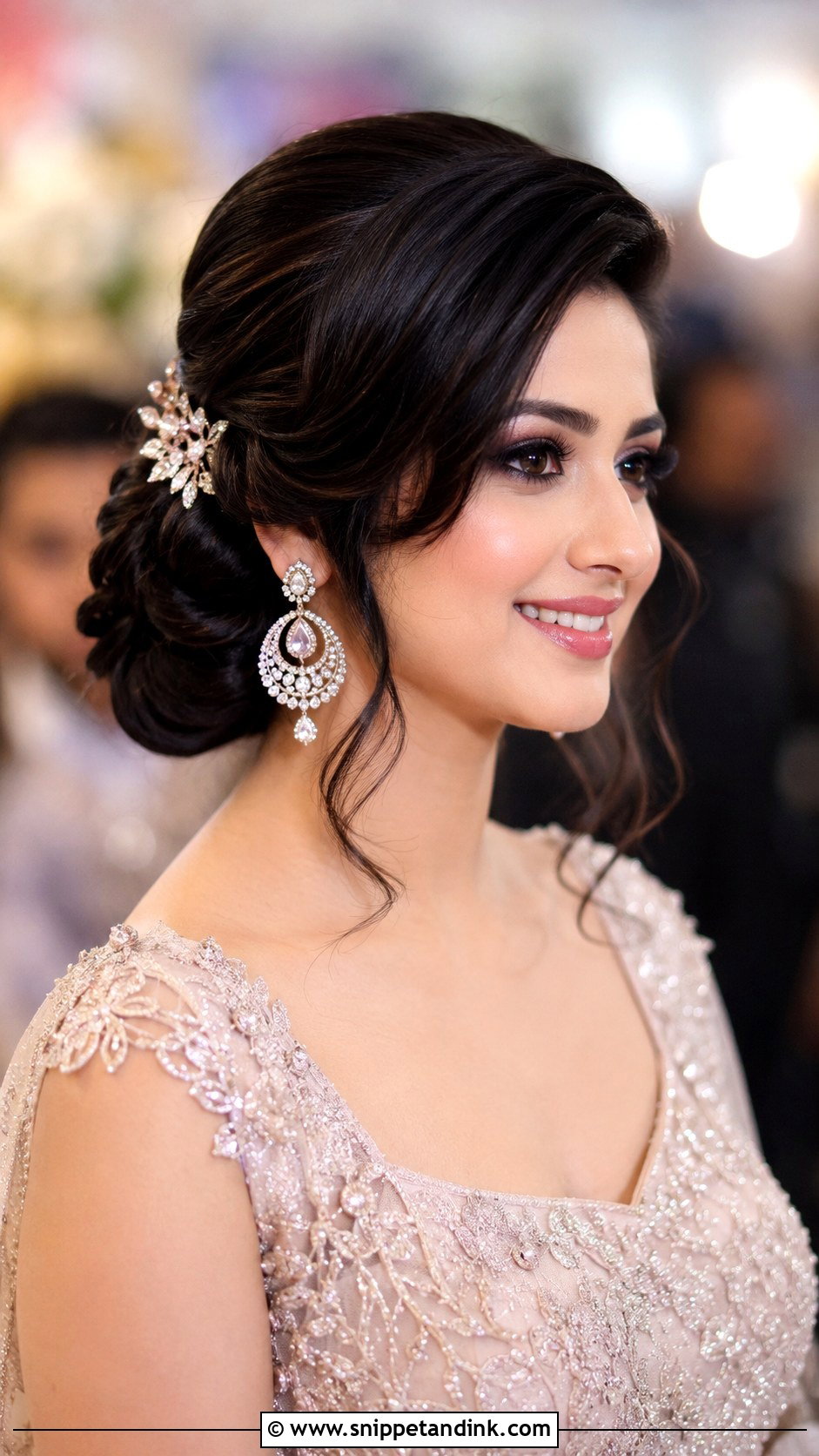
Sweeping the puff to one side gives an old Hollywood shape and softens a strong jaw or a square face. It usually leads into a side bun or low chignon. I build the puff slightly off-center and push it toward the side with my fingers before pinning, so the sweep looks natural rather than flat. Fine hair benefits most, because a small amount of backcombing gives the illusion of thickness at the front. A sparkling clip or a single flower where the sweep ends makes a neat finishing point.
5. Middle Parted Puff With Maang Tikka
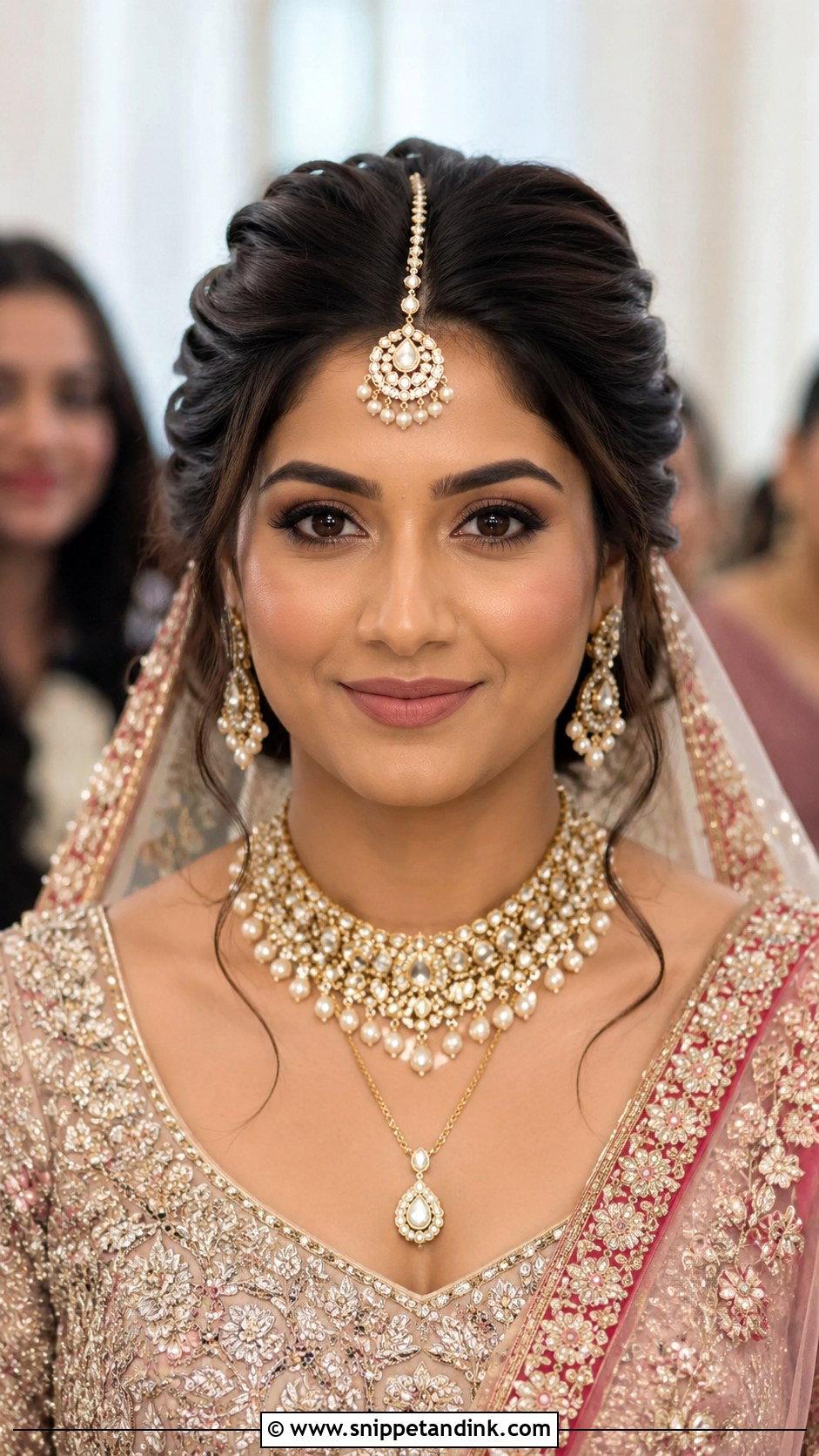
A middle parting with a soft lift on each side is quieter than a full puff. I lift each side with a little backcombing at the root and pin it behind the ear, so the hair frames the face without height. The tikka sits right on the part, drawing the eye up. Symmetry is the point here, so a crooked part or a cowlick on one side shows straight away. It suits balanced, oval faces especially well, and the back can stay open or go into a low bun.
6. Front French Braid Into Bun
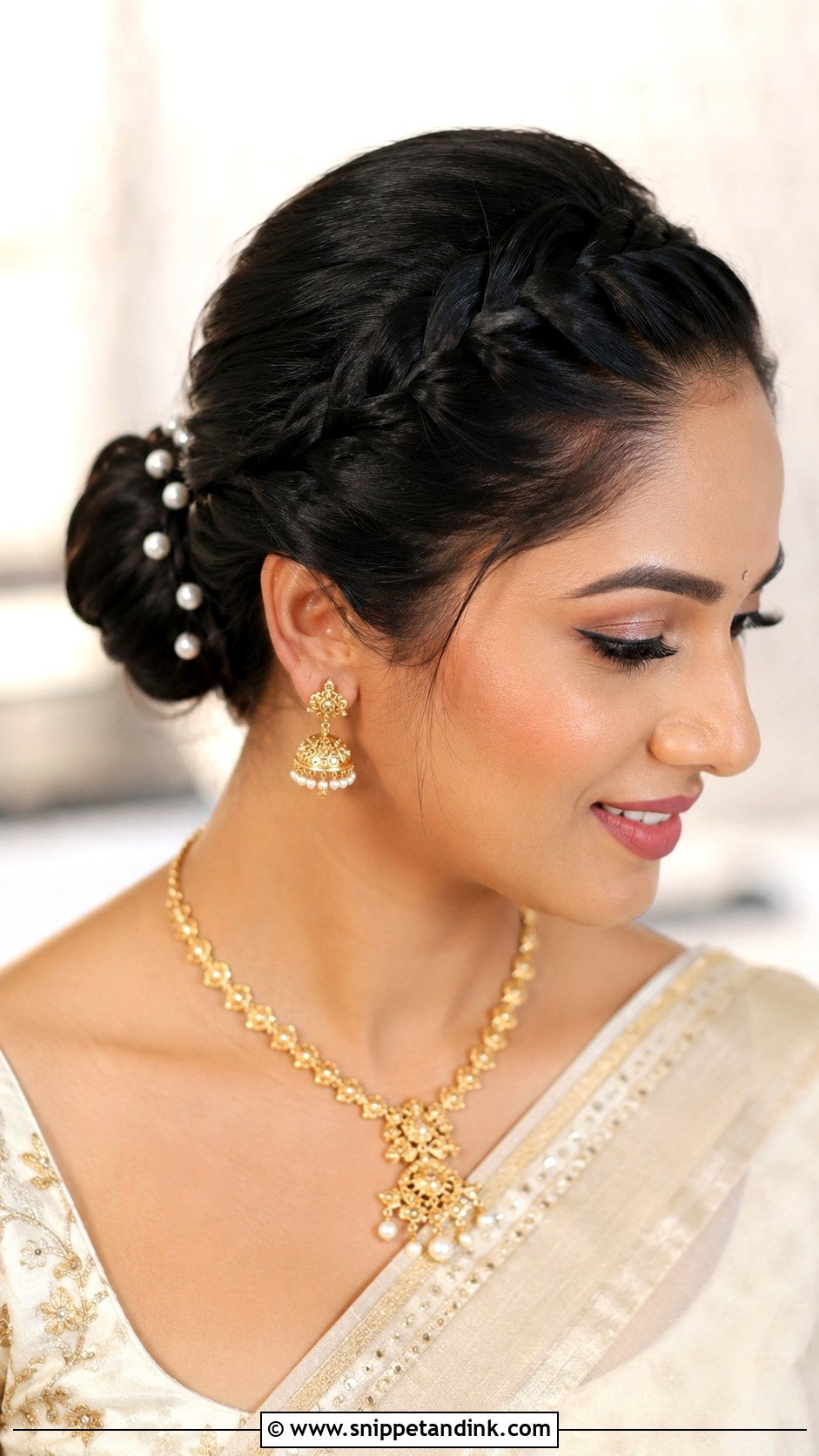
A French braid that starts at the hairline and runs back into a bun takes the front hair completely off the face. For long ceremonies, that’s the main appeal: nothing falls forward, however much you bow or move. I keep the braid fairly tight at the hairline and relax it as it travels back, so the front looks neat and the back looks full. Pearls or small flowers can go into the braid. A low bun is best if you’ll wear a dupatta over your head; a high bun suits a reception.
7. Pearl-Lined Front Braid
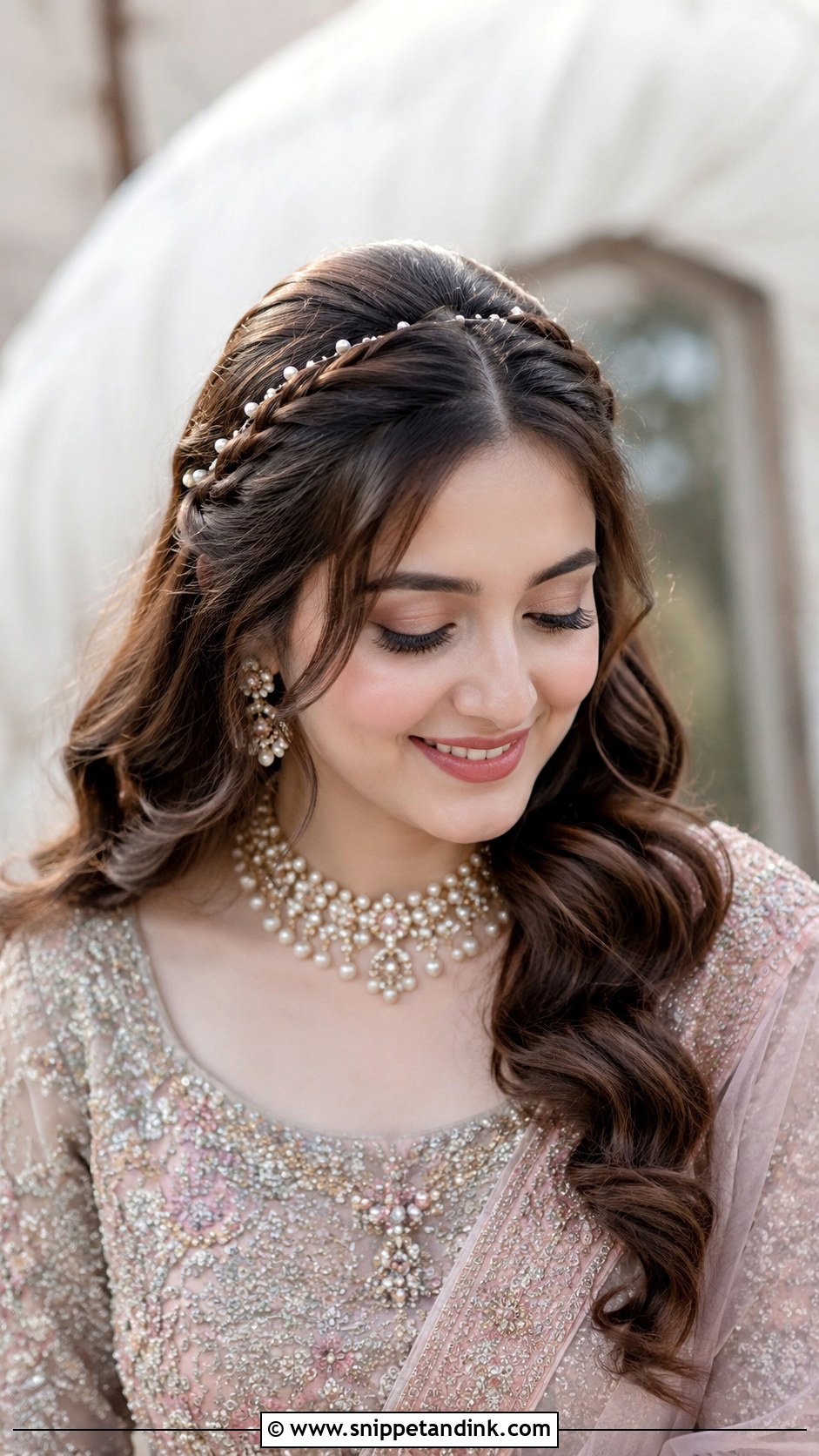
Pearl-lined braids are popular with modern brides because they add a little shine without the weight of gold jewellery. I lace a strand of small pearls into one of the three braid sections so they sit along the edge rather than vanishing in the middle. The effect suits pastel lehengas and pearl jewellery sets. The back can stay open in waves or go into a bun. For dark hair, cream pearls read better than bright white in photos.
8. Rose Twist Front Hairstyle
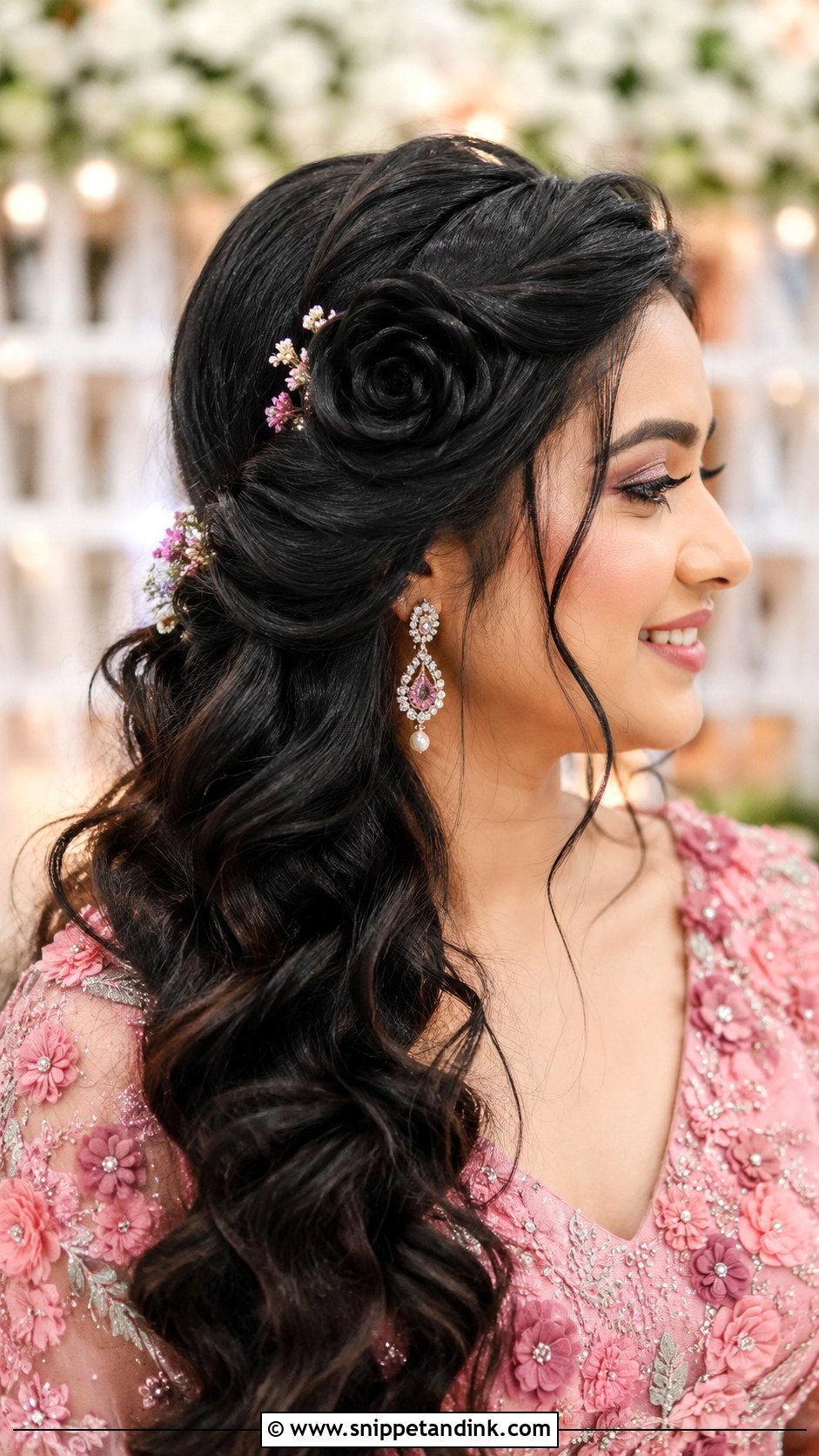
A rose twist is made by twisting a front section tightly, then coiling it around itself near the temple into a flower shape. It’s light and comfortable because it uses only a small amount of hair. I pin it with two crossed pins through the center so it doesn’t uncoil. Behind it, open curls or a loose braid work well. Real roses tucked beside it look fresh at a sangeet or mehndi. This is a good option for brides who find a full puff too formal.
9. Floral Bun With Front Puff
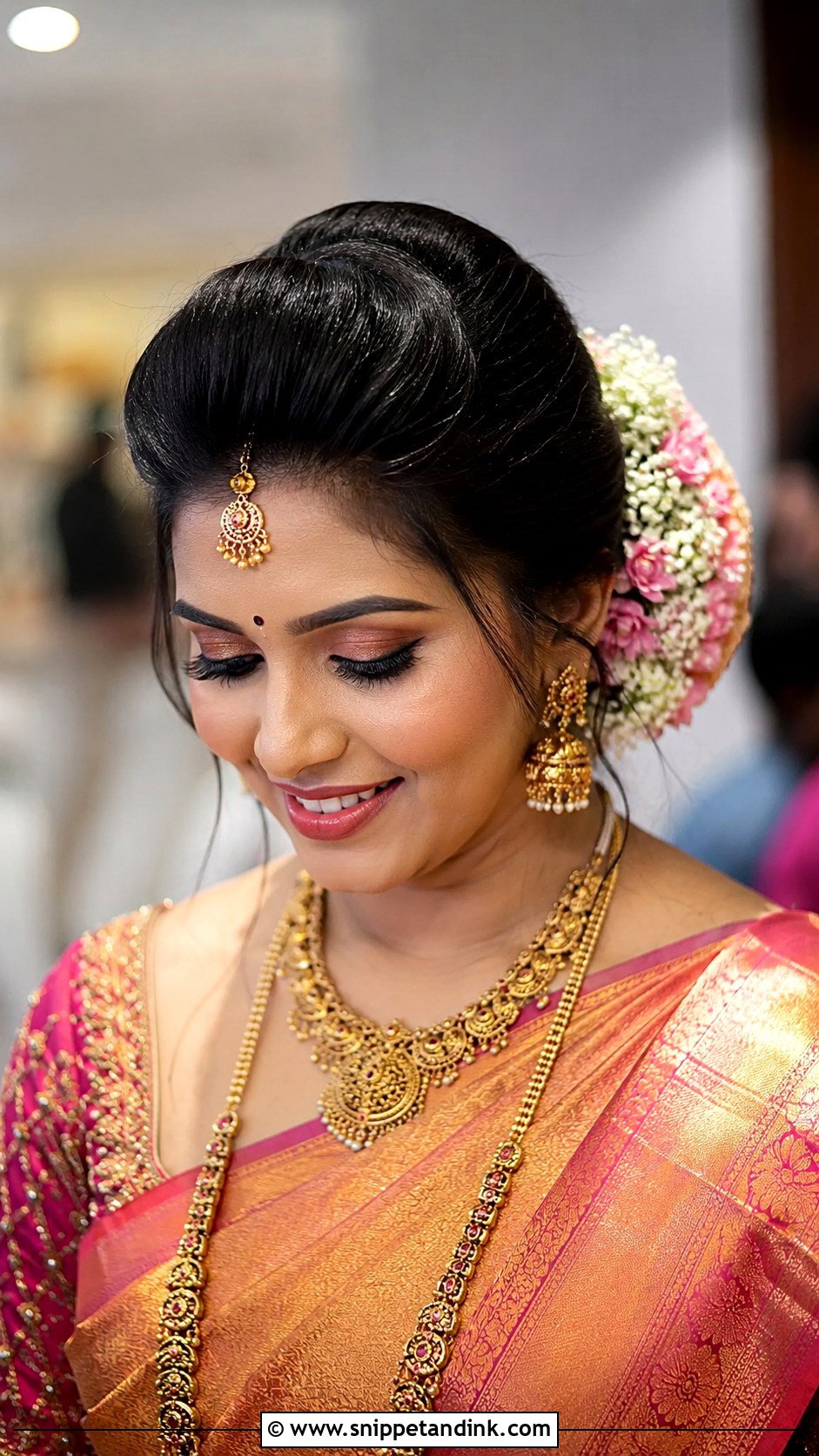
A soft front puff with a big floral bun at the back is as traditional as bridal hair gets. Roses, jasmine or marigolds can be woven around the bun. With heavy jewellery the puff keeps the face open, so the necklace and tikka don’t crowd the features. The weight sits at the back, so I anchor the flowers into the bun itself, not into loose hair. Medium to long hair makes the fullest bun, though a padded filler helps shorter hair.
10. Front Fishtail Braid
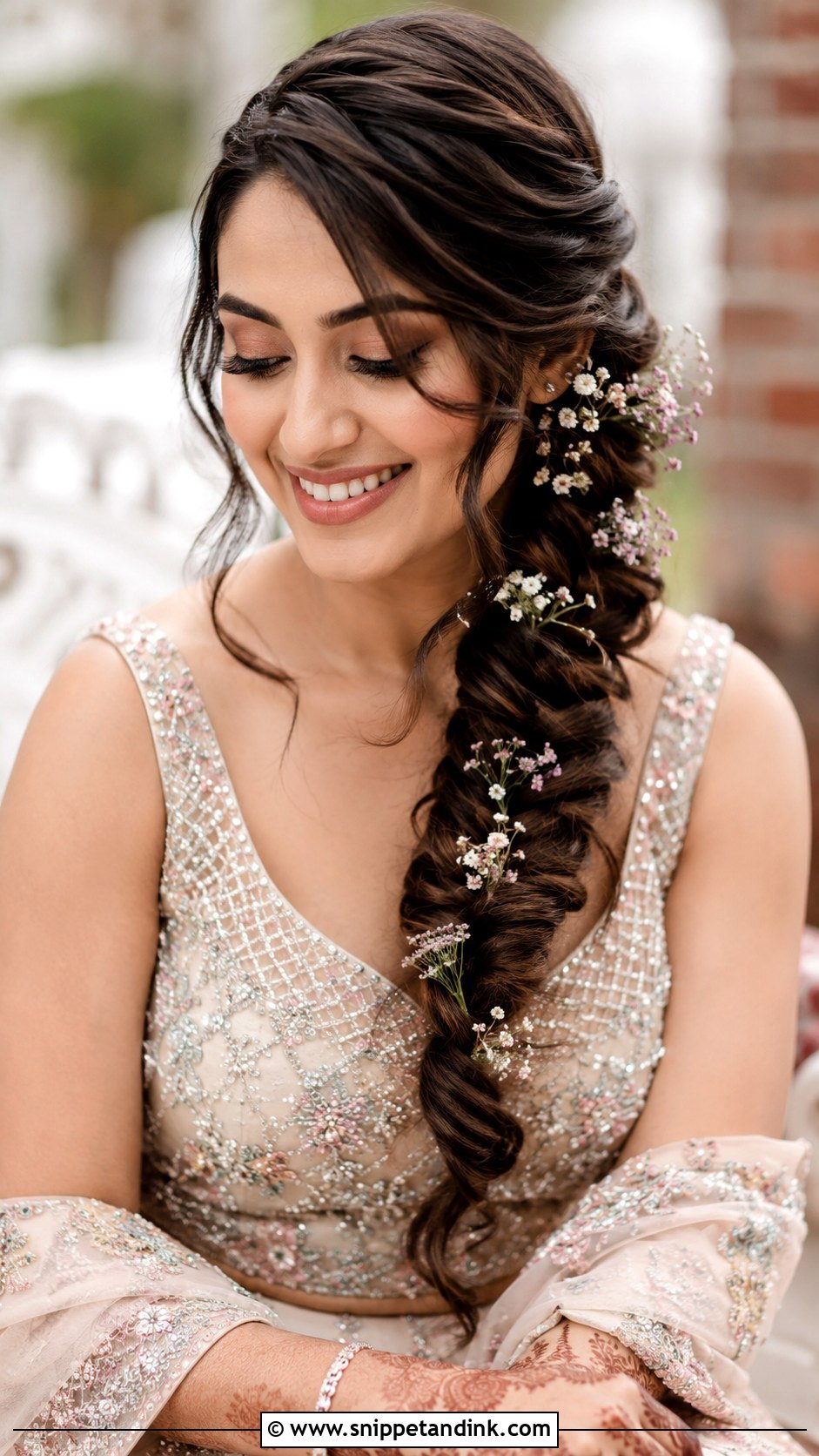
A fishtail along the front looks intricate and is easy to wear, because the fine weave grips the hair well. I usually start it at the front hairline and bring it over one shoulder, leaving the rest open or partly tied. Pulling the edges out softens it. Small flowers or pearls can be tucked between the sections. Expect the fishtail to take longer than a regular braid, so allow time in the schedule. It suits mehndi and sangeet, when natural light shows off the texture.
11. Half-Up Front Twist
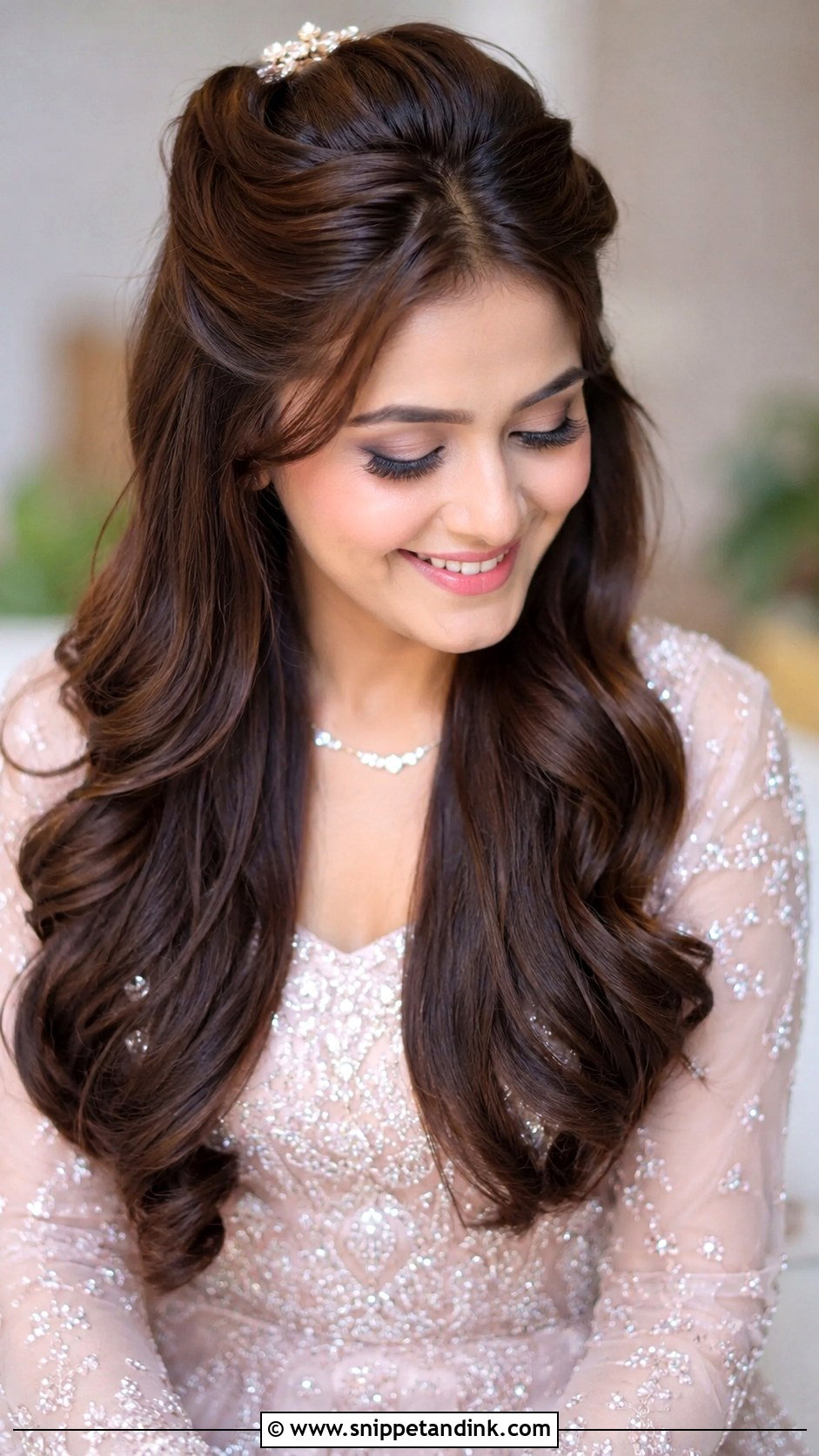
The front sections twist back and meet at the crown, leaving the rest of the hair loose. It’s the tidiest way to wear open hair, since the twists stop strands falling into your face as you eat, dance or hug guests. A maang tikka or small clip covers where the twists meet. I’d suggest it for engagements, receptions and pre-wedding shoots. Twisted sections relax over the night, so a light spray before pinning holds them.
12. Bouffant Front Updo
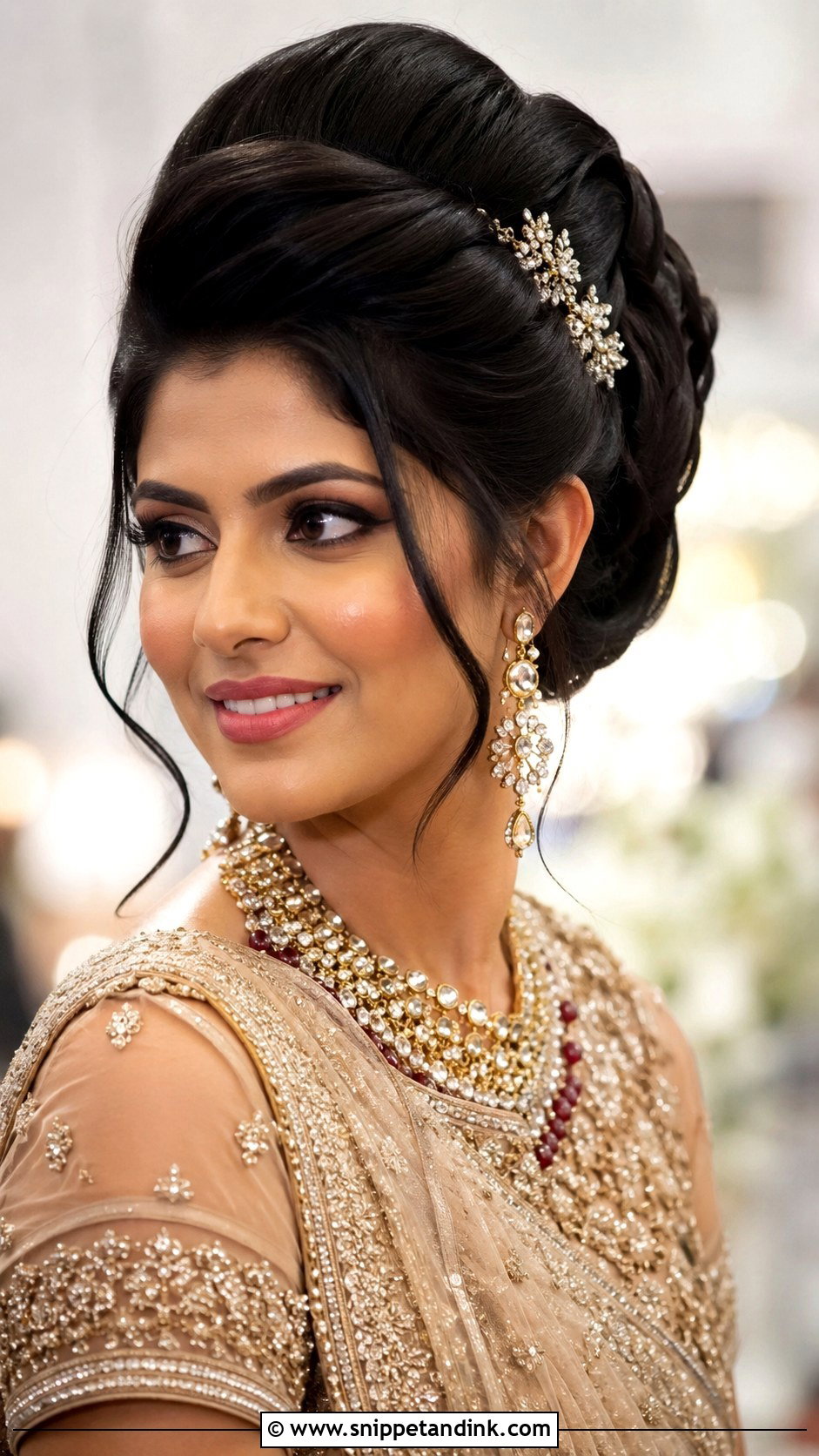
A bouffant lifts the front hair high, then smooths it back into a sleek updo. It’s a statement, and it needs strong statement earrings and a regal lehenga to balance it. Height elongates the face, so a round face benefits; a long, narrow face may look longer still. I back-comb in small sections, smooth the top layer with a soft brush, and secure the base with crossed pins. A maang tikka or jewelled pin at the front finishes it for a reception.
13. Curly Front With Side Braid
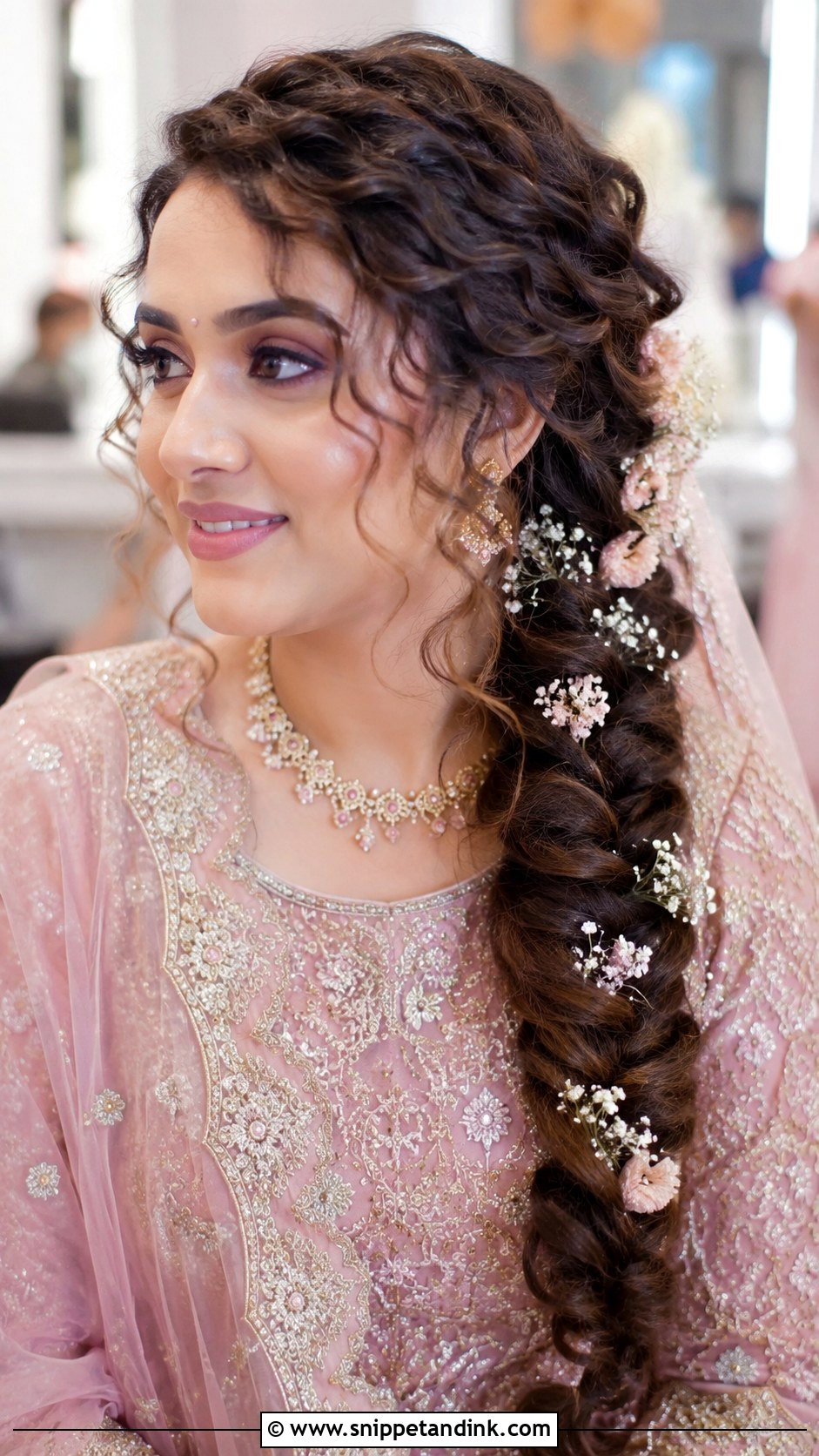
Soft front curls with a side braid mix structure and movement. The braid keeps one side neat, and the curls add volume around the face on the other. It’s relaxed enough for mehndi and haldi, especially outdoors. Turmeric paste at the haldi stains light accessories, so choose small flowers or beads you don’t mind losing. Curls near the face drop faster in heat, so I set them with pins until the last minute.
14. Front Cornrow Braids South Indian Style
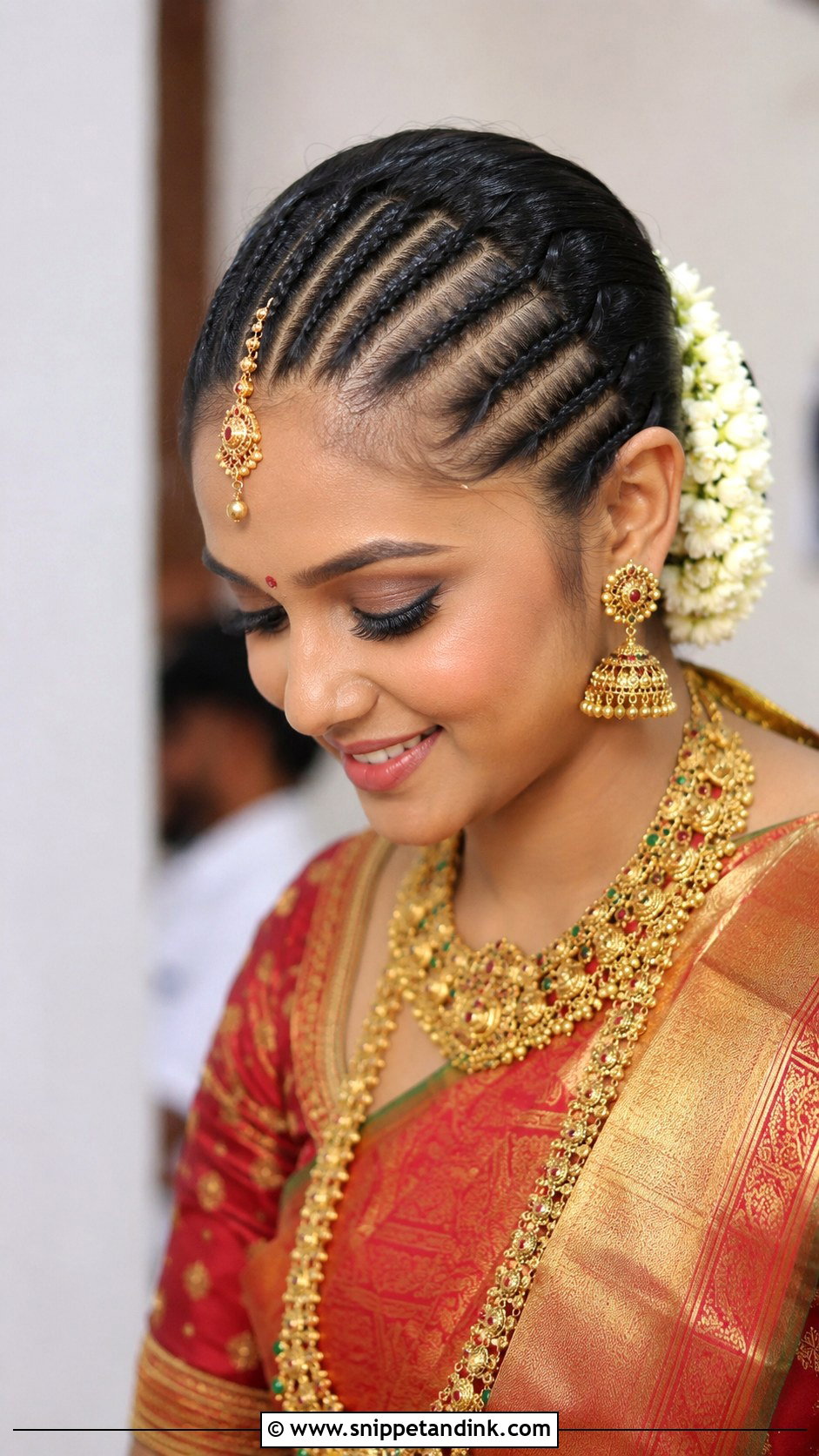
Small cornrow-style braids along the front give a clean, structured hairline, and they lead into a larger braid or bun at the back, often dressed with jasmine. Because the braids sit flat on the scalp, they last all day and don’t move. They pair well with temple jewellery and silk sarees. The technique takes patience: I part each braid with a tail comb so the sections are even. Very fine or thinning hair at the front can look sparse in tight braids, so I’d check the hairline at the trial.
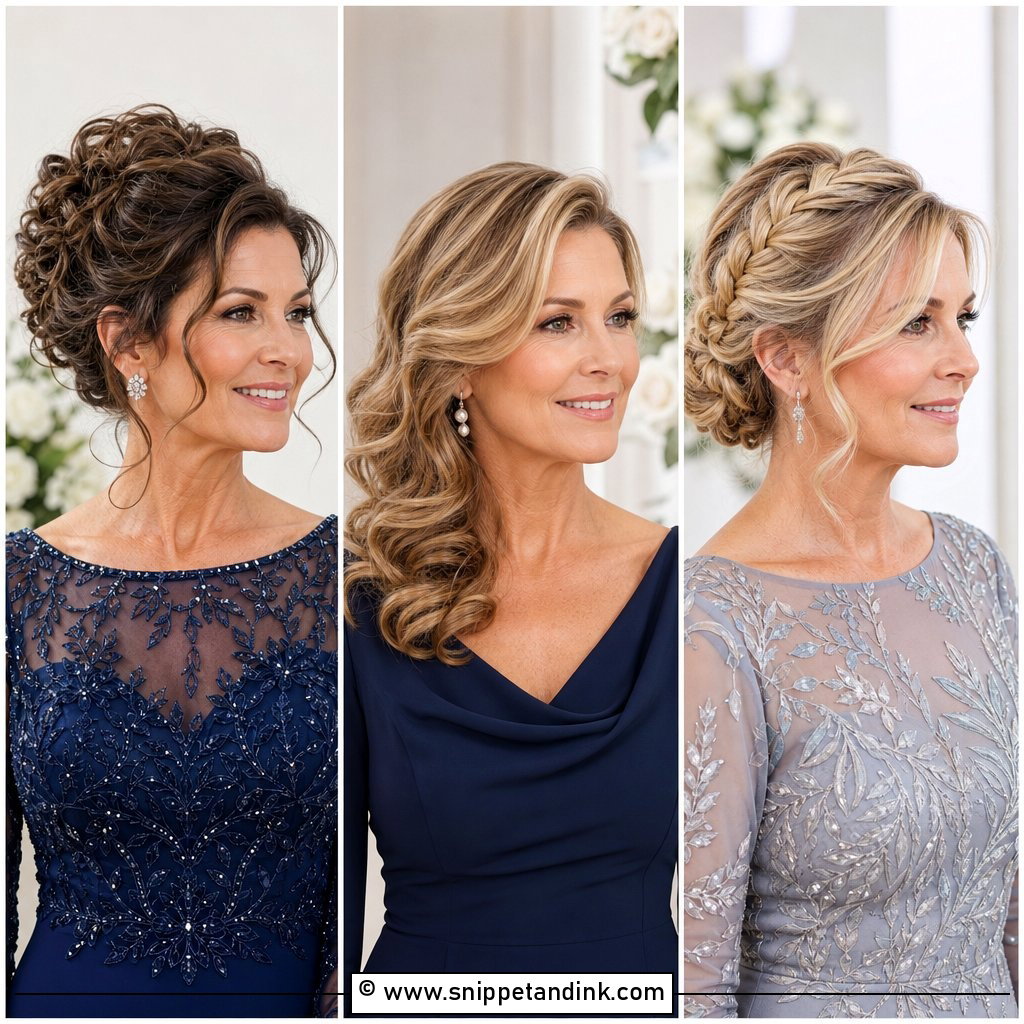
15. Sleek Front Puff With High Bun
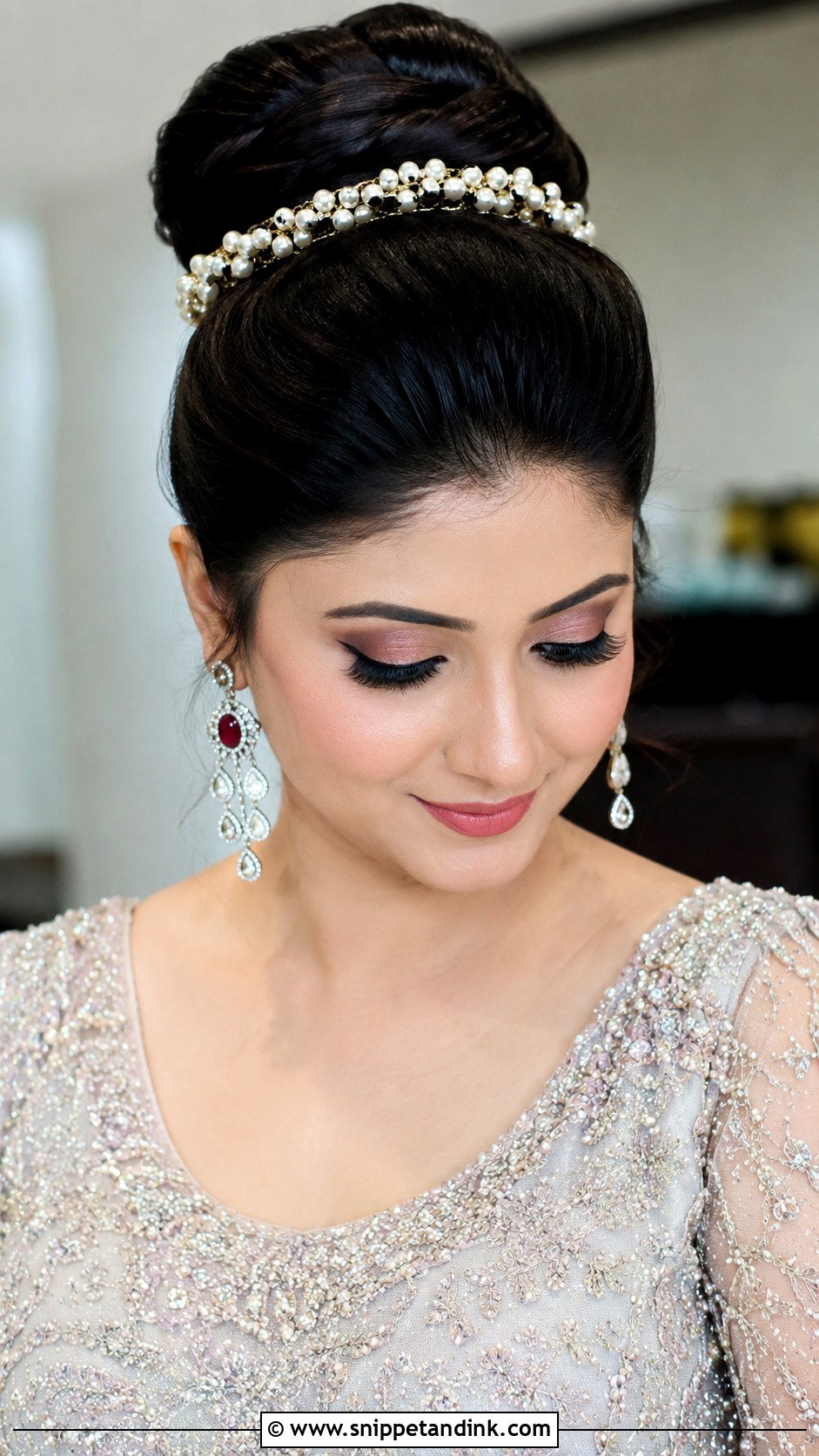
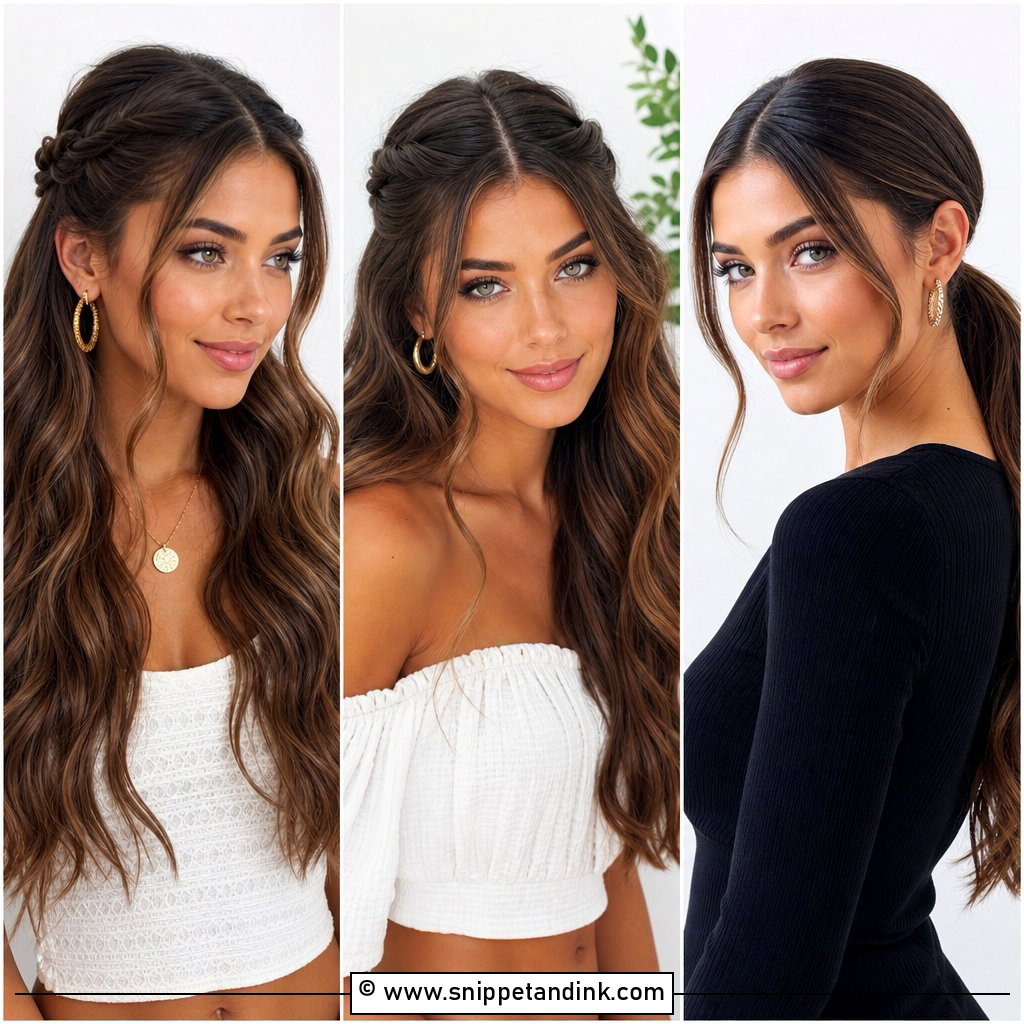
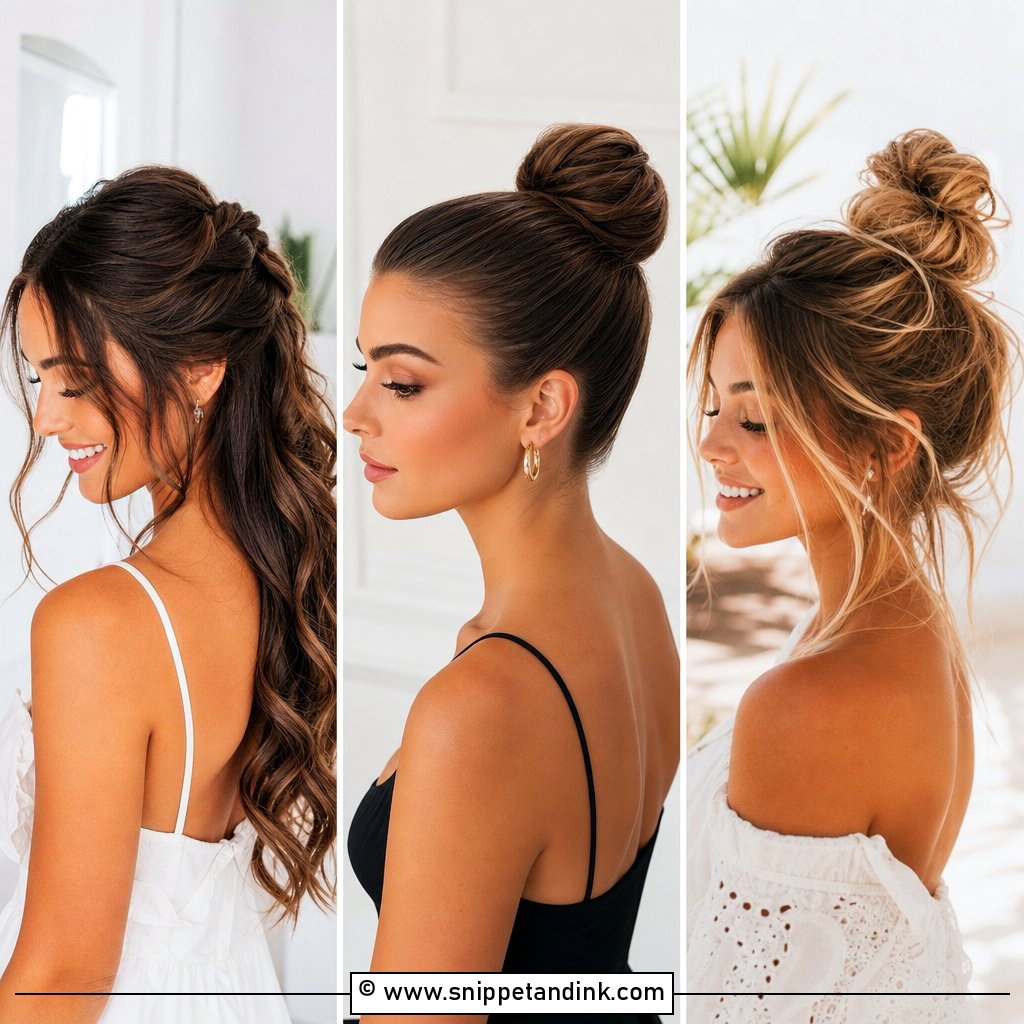
A sleek front puff with a high bun gives a clean, modern shape. The puff adds height and the high bun lengthens the neck. It’s a good look for receptions and cocktail events, and the earrings and neckline get full attention. Round faces benefit most from the lift. The bun can be wrapped with flowers or pearls. A high bun pulls more on the scalp than a low one, so I make the base very secure and avoid heavy accessories.
16. Front Crown Braid
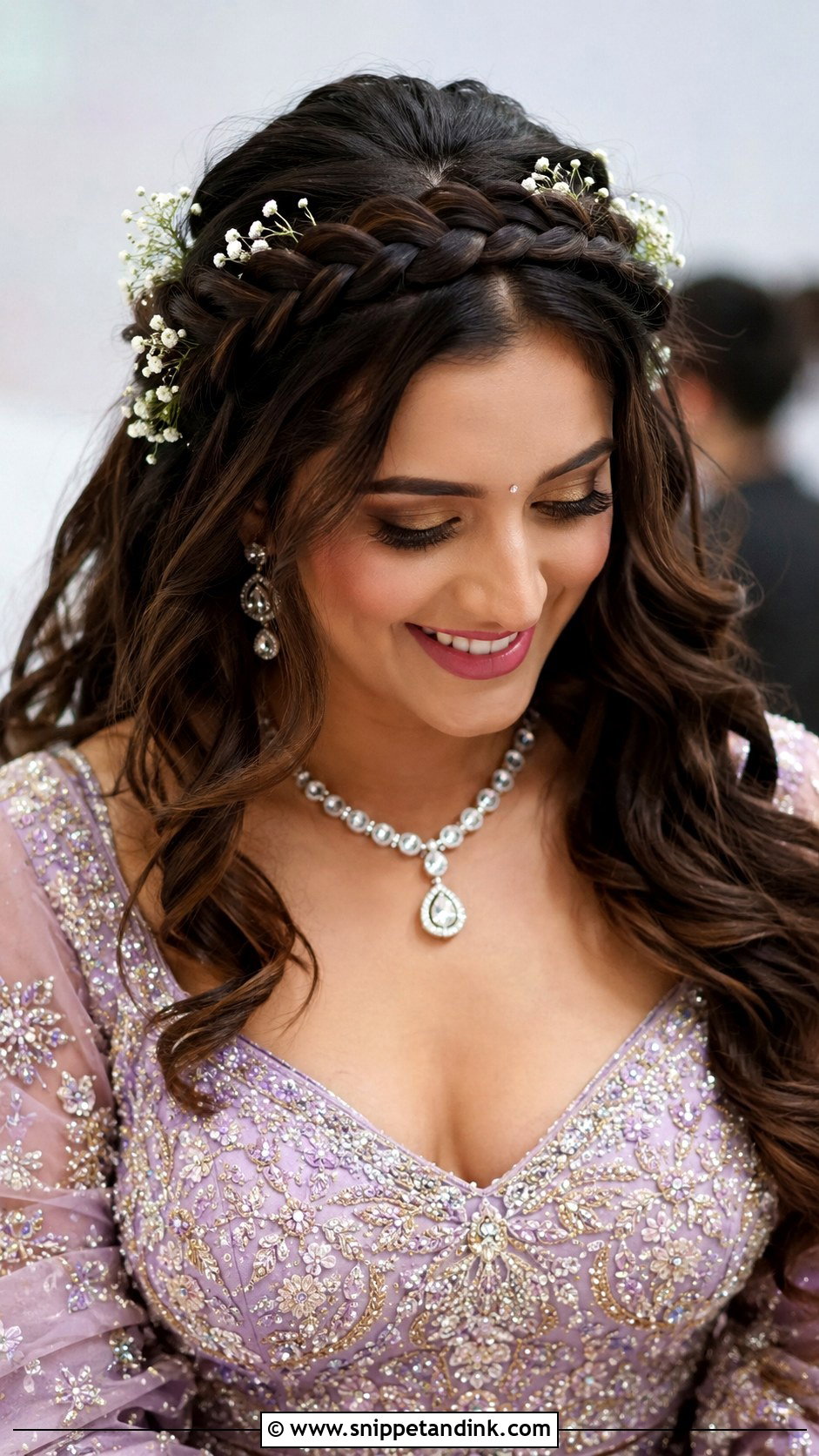
A crown braid across the front of the head works like a halo. The face stays clear, and the rest of the hair can stay open in waves or go into a bun behind. Tiny flowers or jewels tucked in add bridal detail. It’s at its best for mehndi and sangeet. It does take up the space where a matha patti would sit, so it’s not the right choice if you’ve planned heavy forehead jewellery.
17. Wavy Front With Center Parting
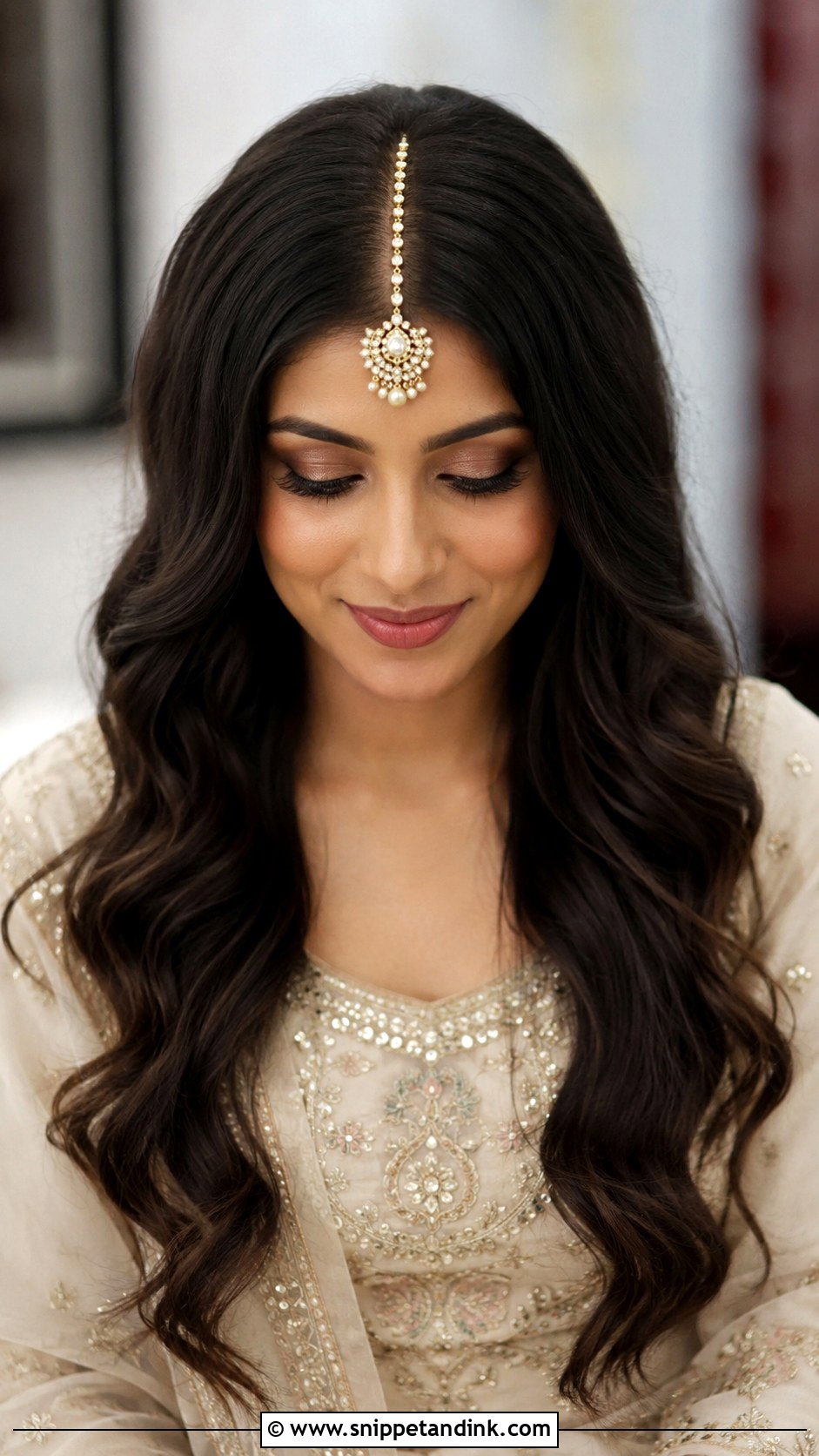
A clean center part with soft waves suits pre-wedding shoots and intimate ceremonies. It’s simple, but the parting must be dead straight because the tikka sits right on it. The waves soften the face and move naturally in photos. I’d suggest it for brides who feel most themselves with their hair down. Most face shapes can wear a center part, though a very long face may suit a slightly deeper side part better.
18. Front Bun With Gajra
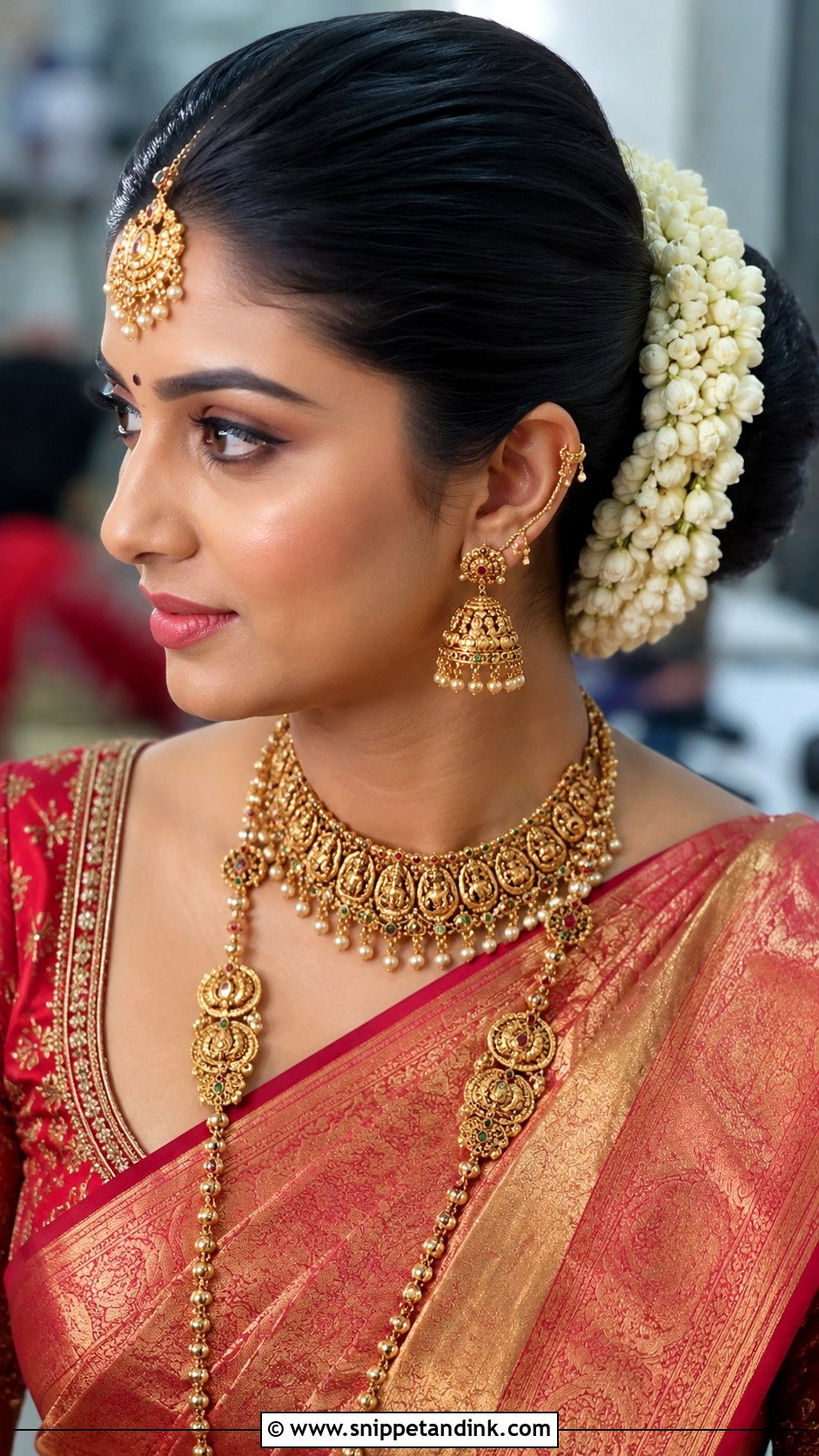
Smoothing the front back into a gajra-wrapped bun keeps the face open and puts the focus on your features and jewellery. The gajra wraps around the bun at the back, adding fragrance. It’s a classic South Indian and traditional look, and it goes perfectly with silk sarees and gold jewellery. I smooth the front with a gel or cream, and keep a soft lift at the crown so it doesn’t look flat. Jasmine browns in heat, so it goes on last.
19. Messy Front Braid Ponytail
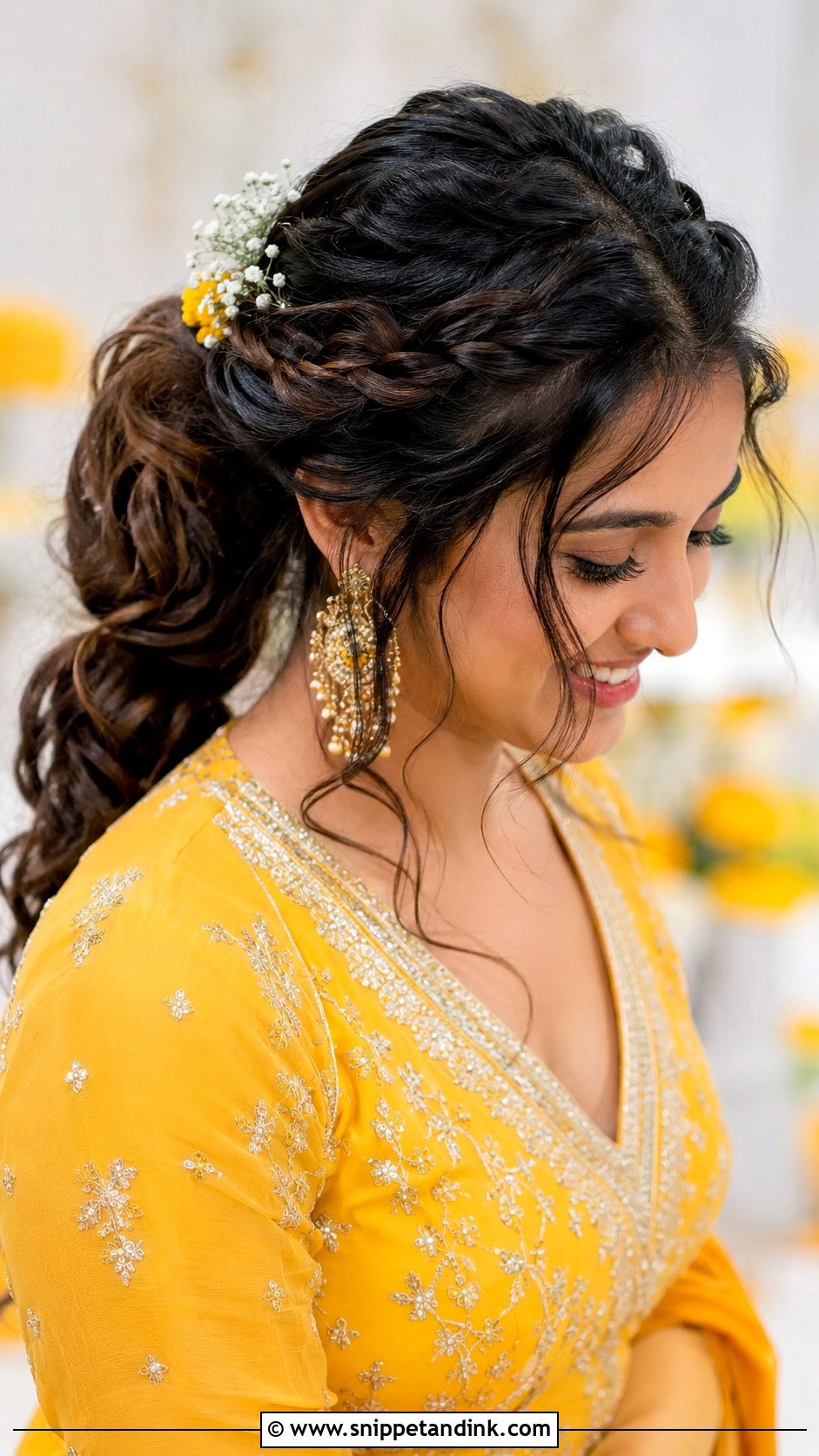
A loose braid at the front, gathered into a soft ponytail, is easy and relaxed. It’s best for haldi and mehndi, when comfort matters most. Loosening the braid gives a puff-like effect at the front without backcombing. Small flowers or a ribbon add colour. Because the braid holds the front, the hair stays off your face even when you’re dancing. Candid shots catch the texture well.
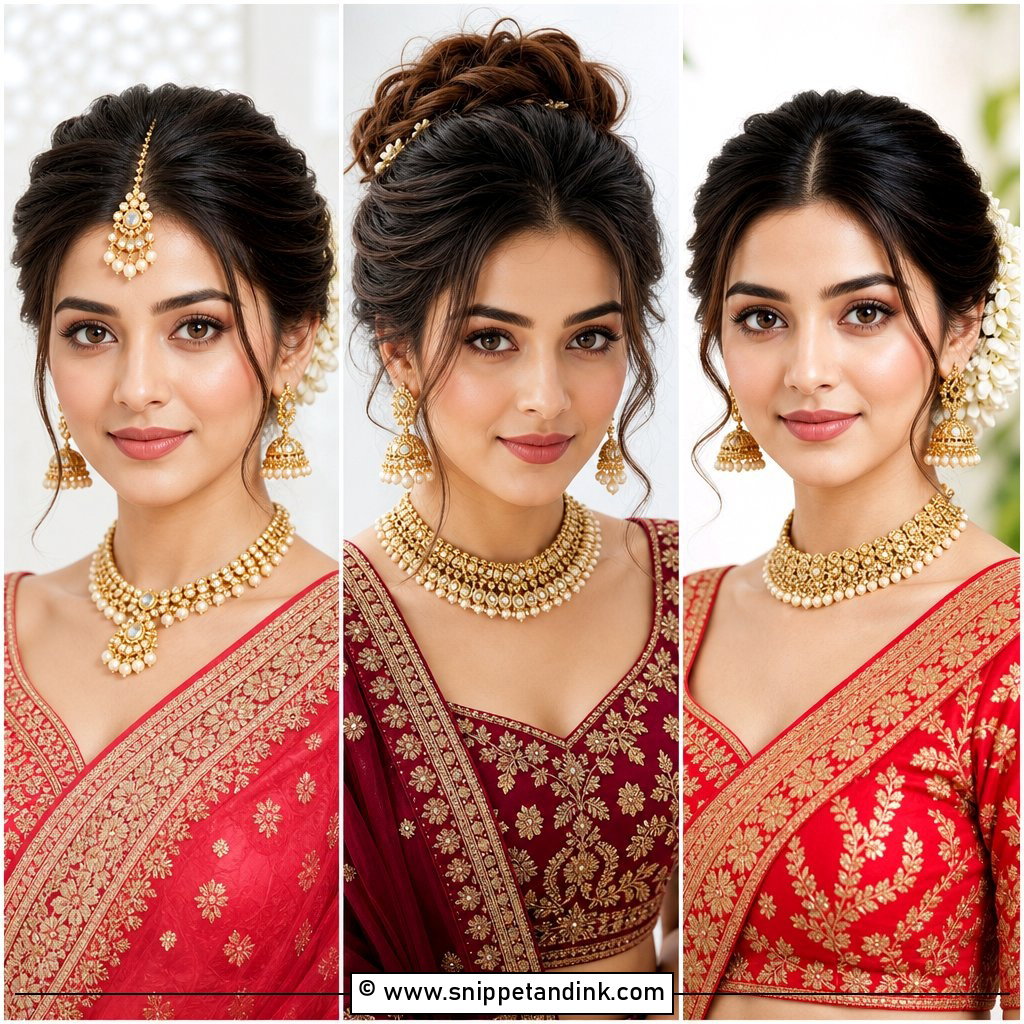
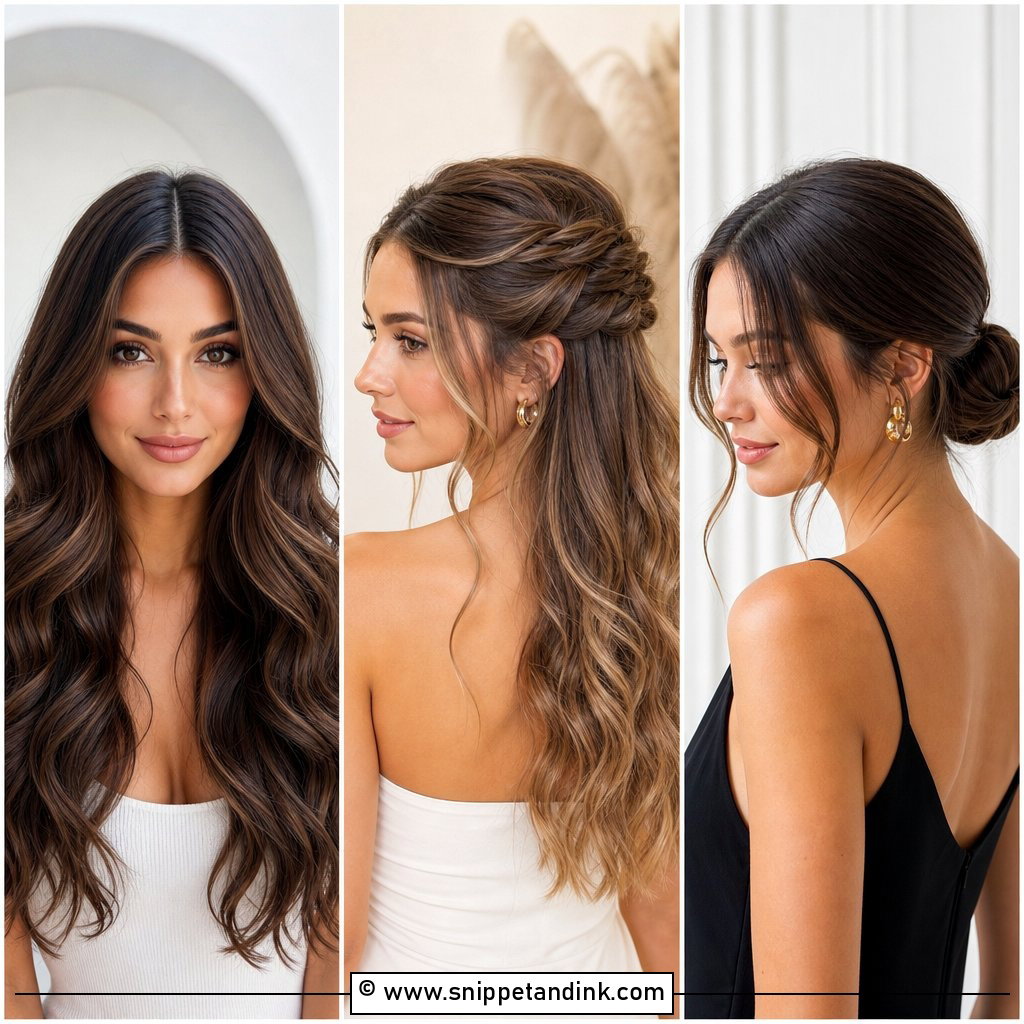
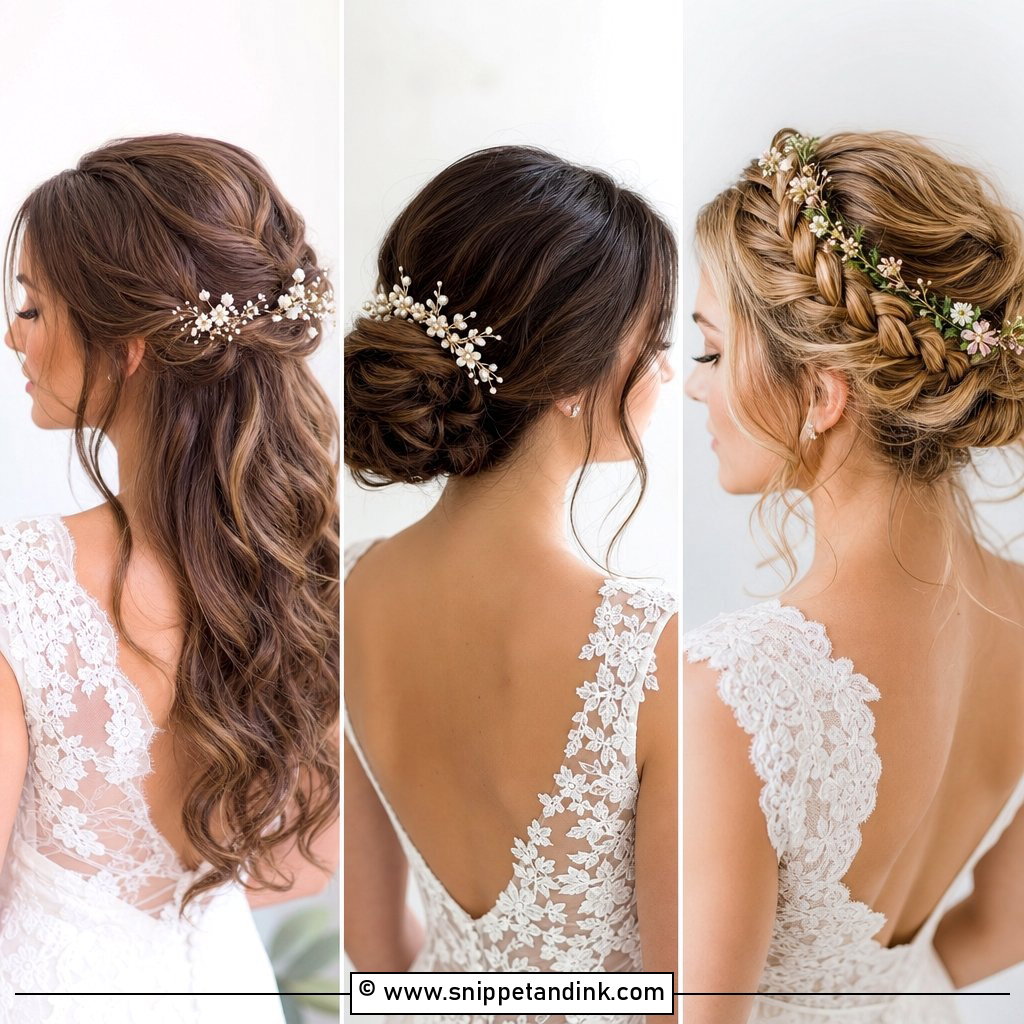
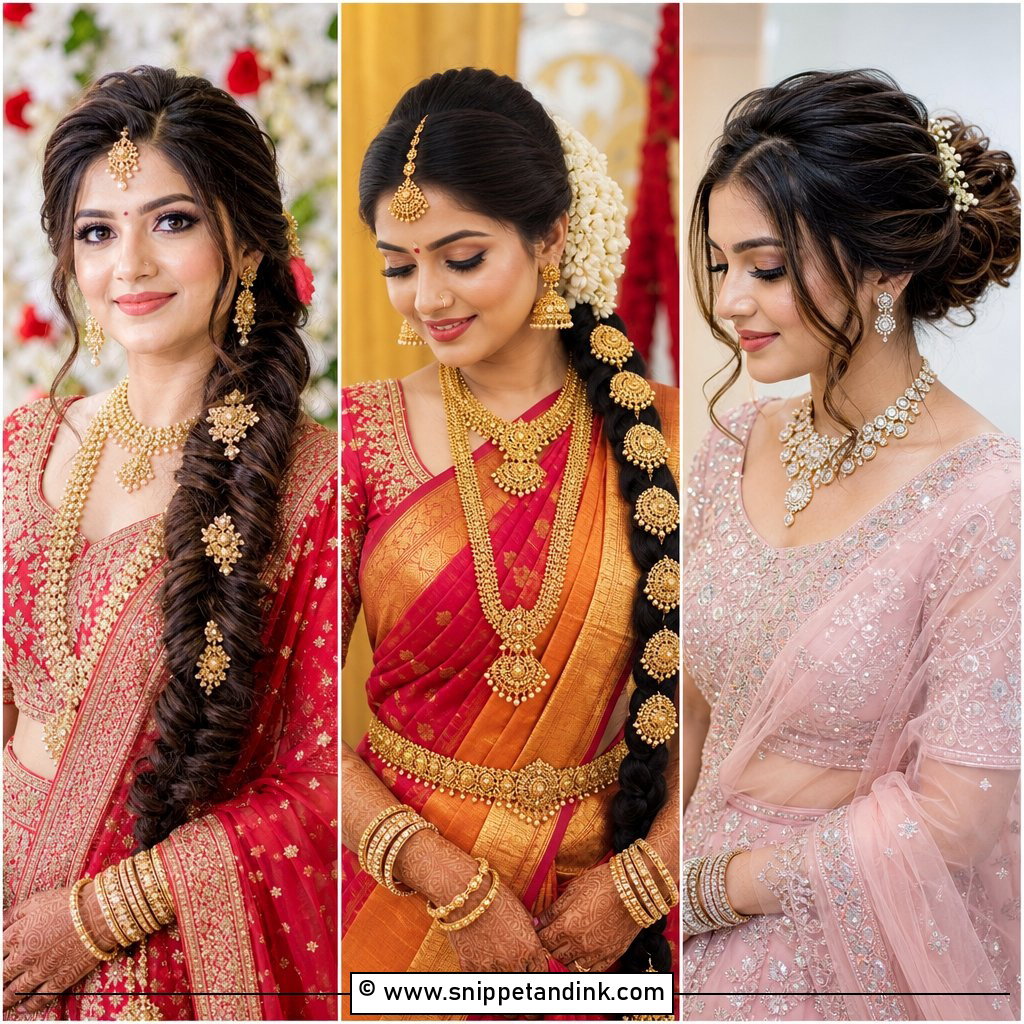
20. Diamond-Accented Open Front Hair
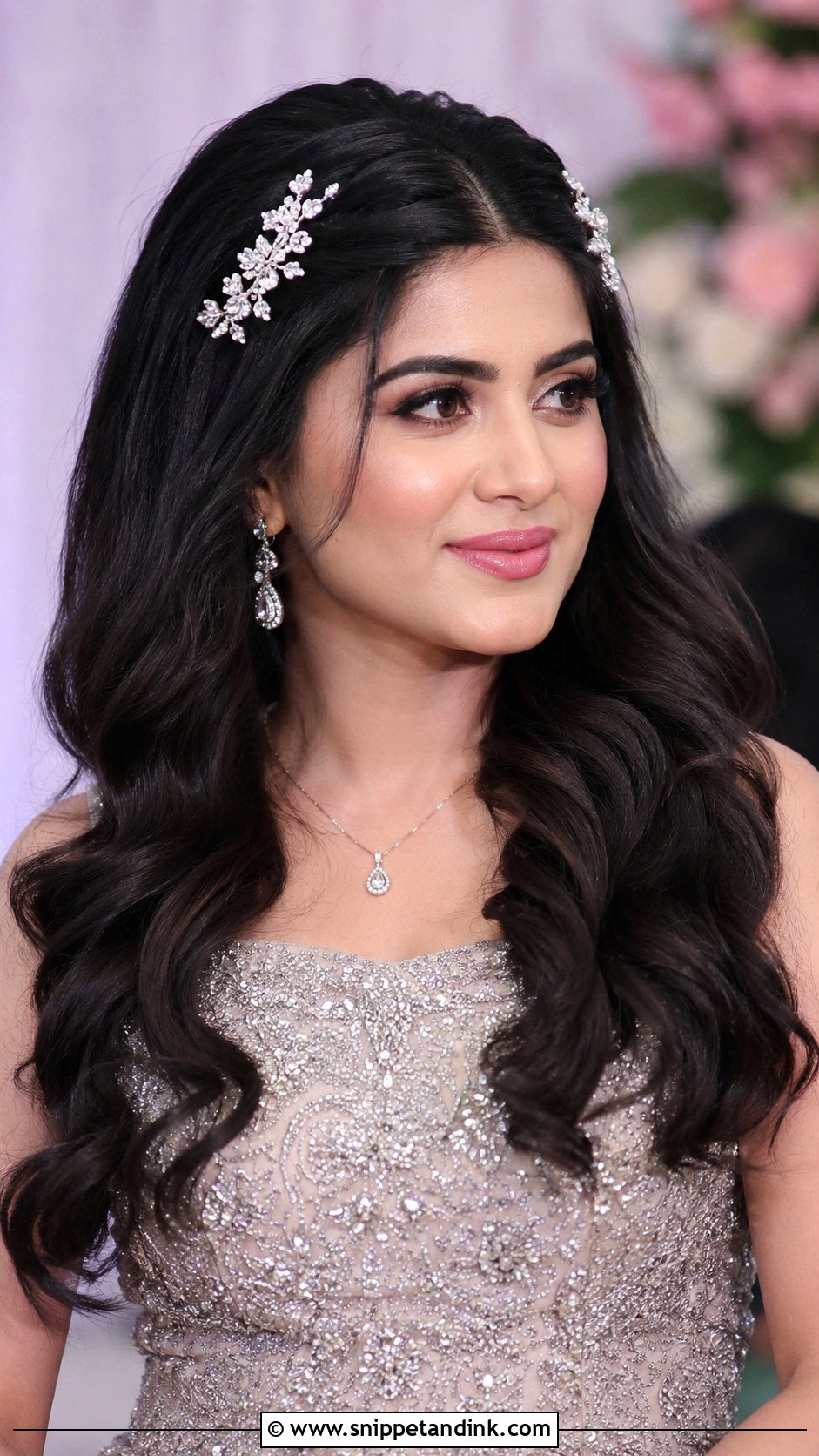
Open hair adorned with diamond accents keeps the front soft and glamorous. Small diamond pins or a fine hair chain sit near the part. I slide pins in at a slight angle so they grip without flattening the waves. It suits receptions and cocktail events, when you want sparkle without heavy jewellery. A maang tikka can be added for tradition. A hair chain needs a firm anchor at each end, usually a small pinned section behind the ears.
21. Twisted Front With Side Bun
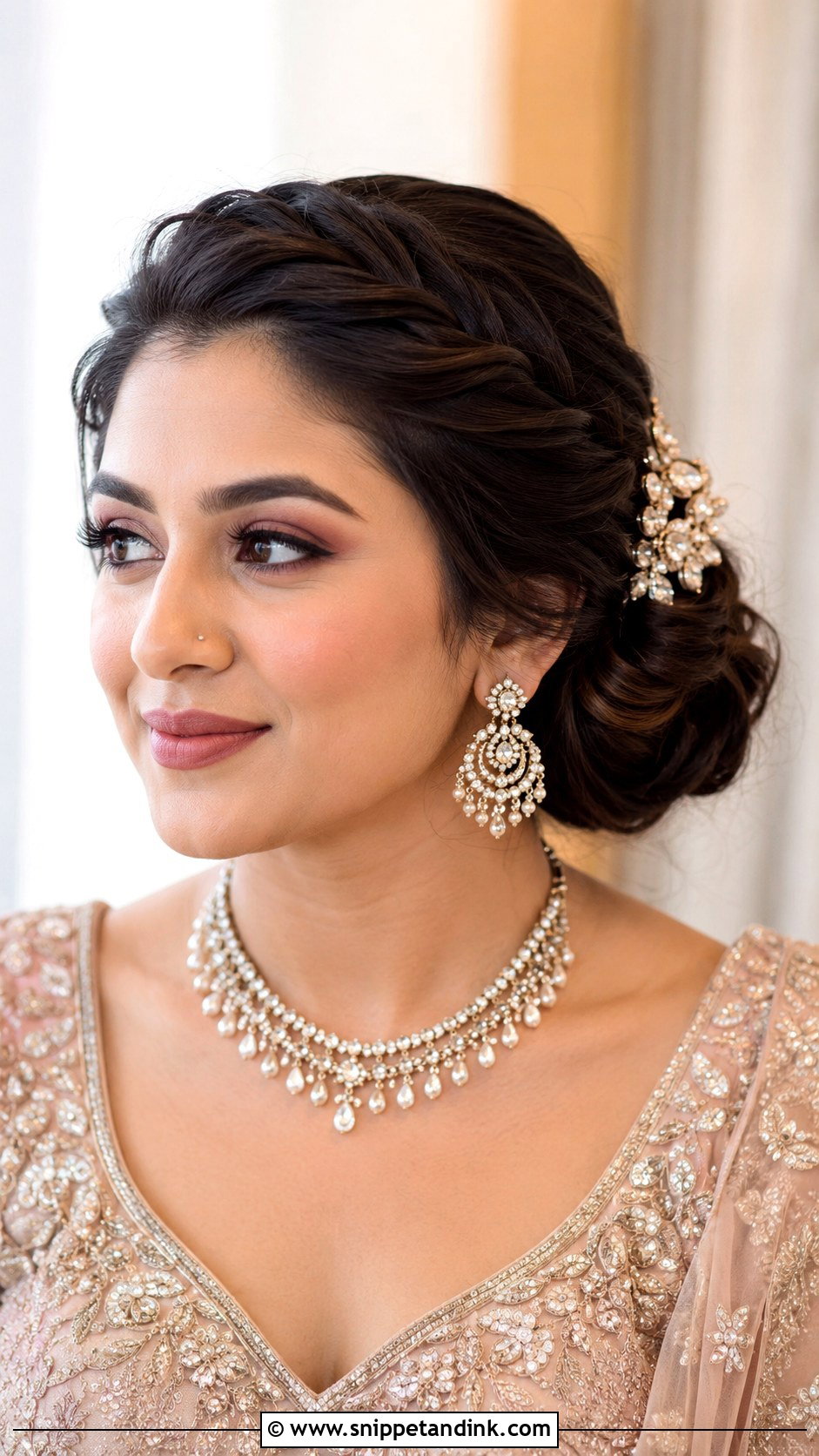
Soft twists at the front lead into a low side bun, giving an asymmetrical shape that flatters the jawline. The twists keep the face clear, and the side bun shows off one earring. It suits engagements and receptions. Flowers or a jewelled pin on the bun finish it. I build the bun just behind the ear, so it doesn’t sit on the shoulder and get pushed around as you move.
22. Front Waterfall Braid
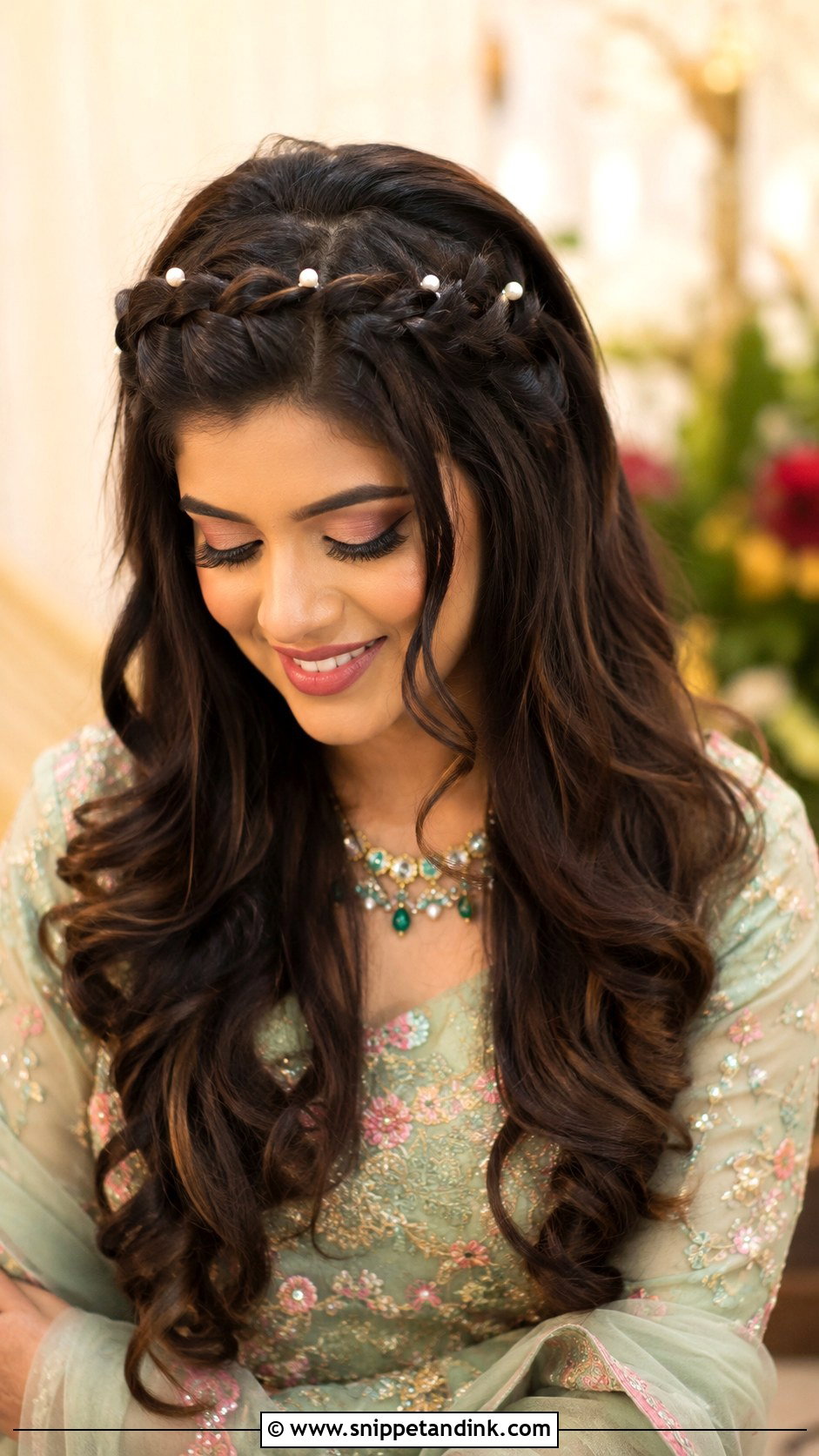
A waterfall braid works horizontally across the front, dropping a strand at each crossing so the hair falls through it like water. It frames the face while leaving the rest open, which is why it’s such a soft, light look. I pin the end of the braid firmly, as the waterfall has less grip than a regular braid. Tiny flowers or pearls along the braid add detail. It’s lovely for mehndi and sangeet functions.
23. Voluminous Front Puff With Saree
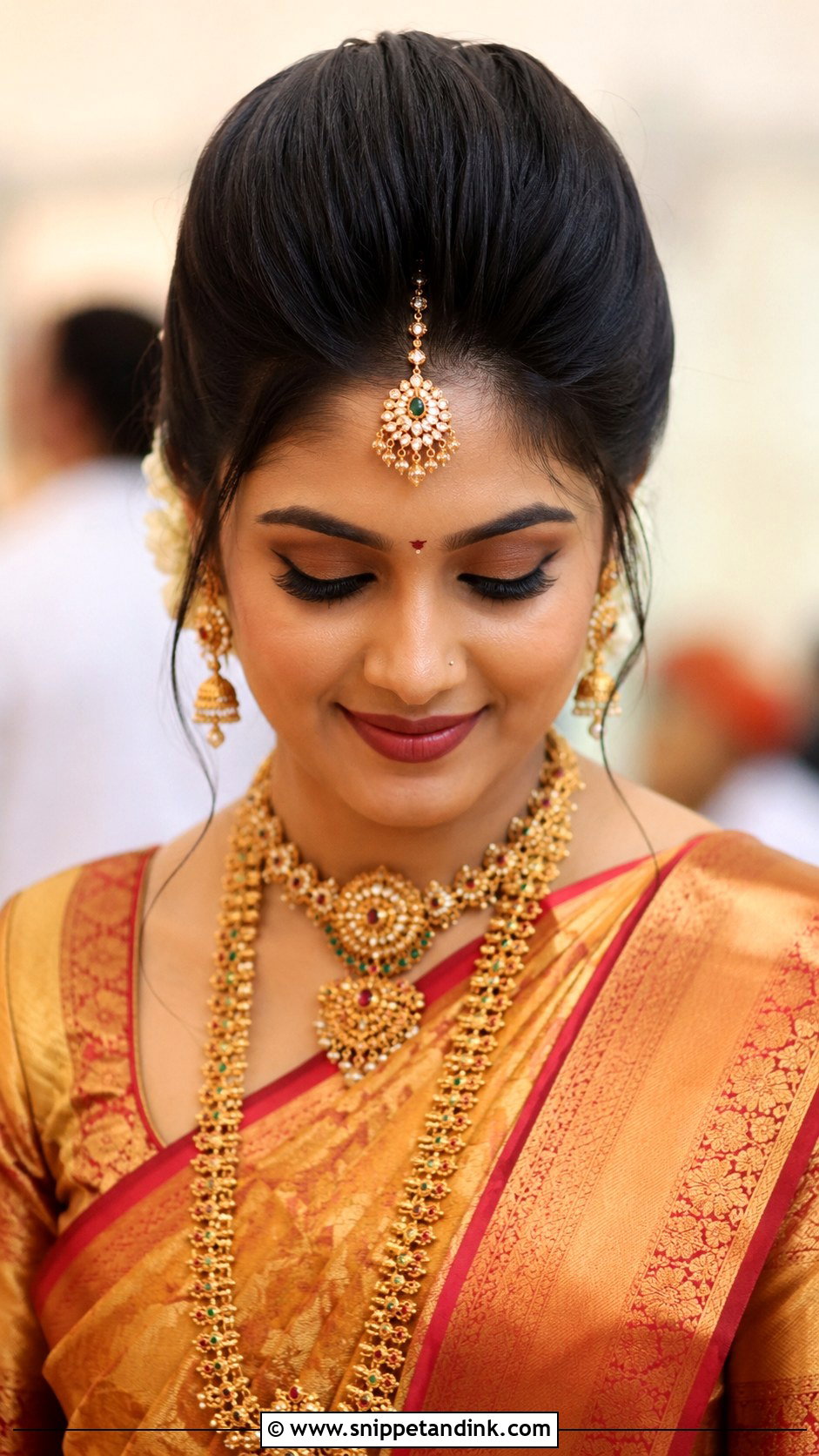
A voluminous front puff with a saree is the classic South Indian bridal profile. The high puff adds height and balances the drape of the pallu. A nethi chutti or maang tikka sits on the puff. Round or long faces both benefit, though for long faces I keep the puff lower. The back can be a bun or open curls. I back-comb at the root only and smooth the top so it doesn’t look fuzzy in photos.
24. Front Knotted Twist Updo
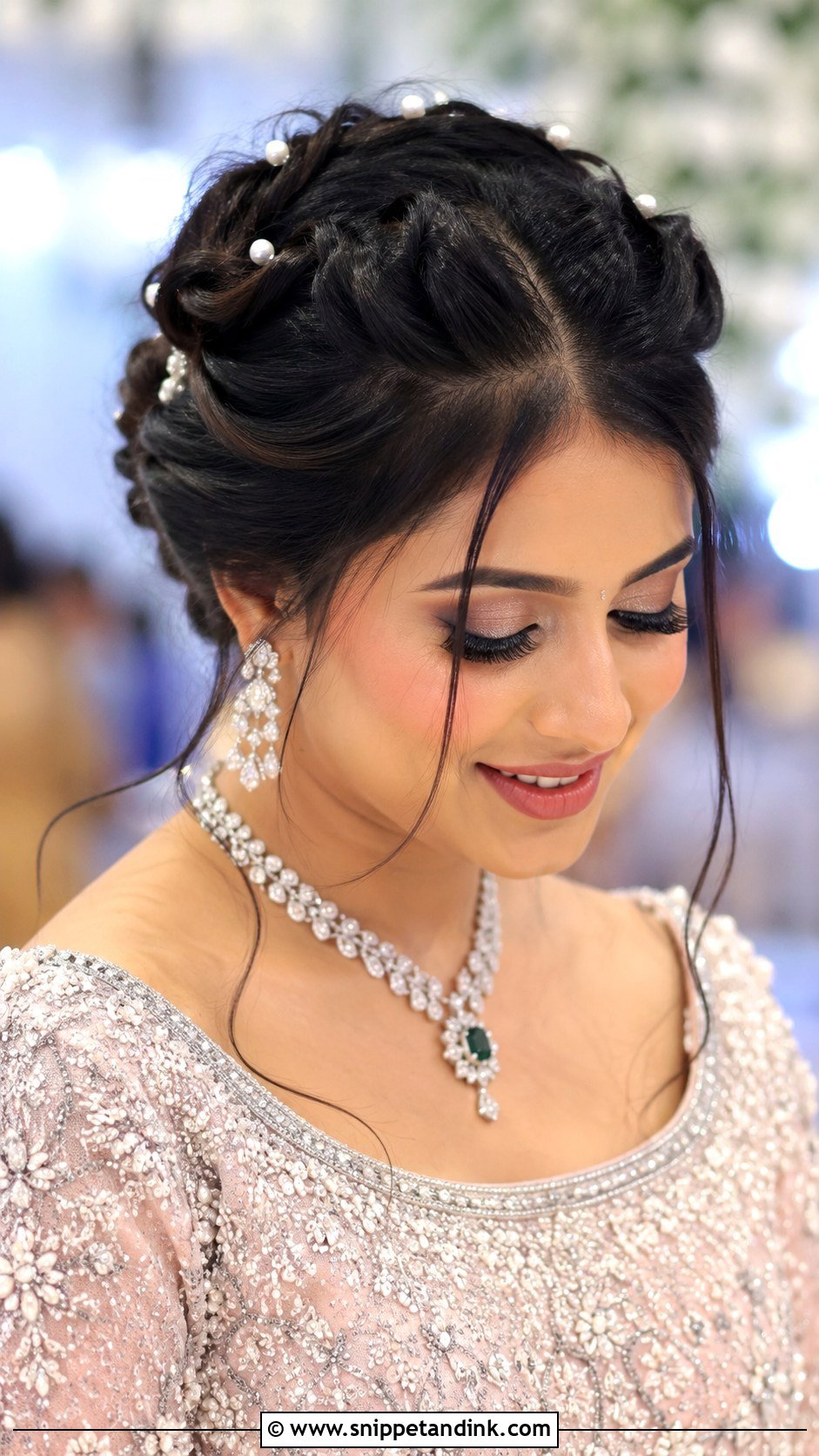
Front sections tied into small knots, then pinned into an updo, give a sculptural look near the face. It’s polished enough for receptions and cocktail events. The knots grip pins well, so the style is secure. Pearls or jewels between the knots add sparkle. Very slippery hair can untie the knots, so I add texture spray before knotting.
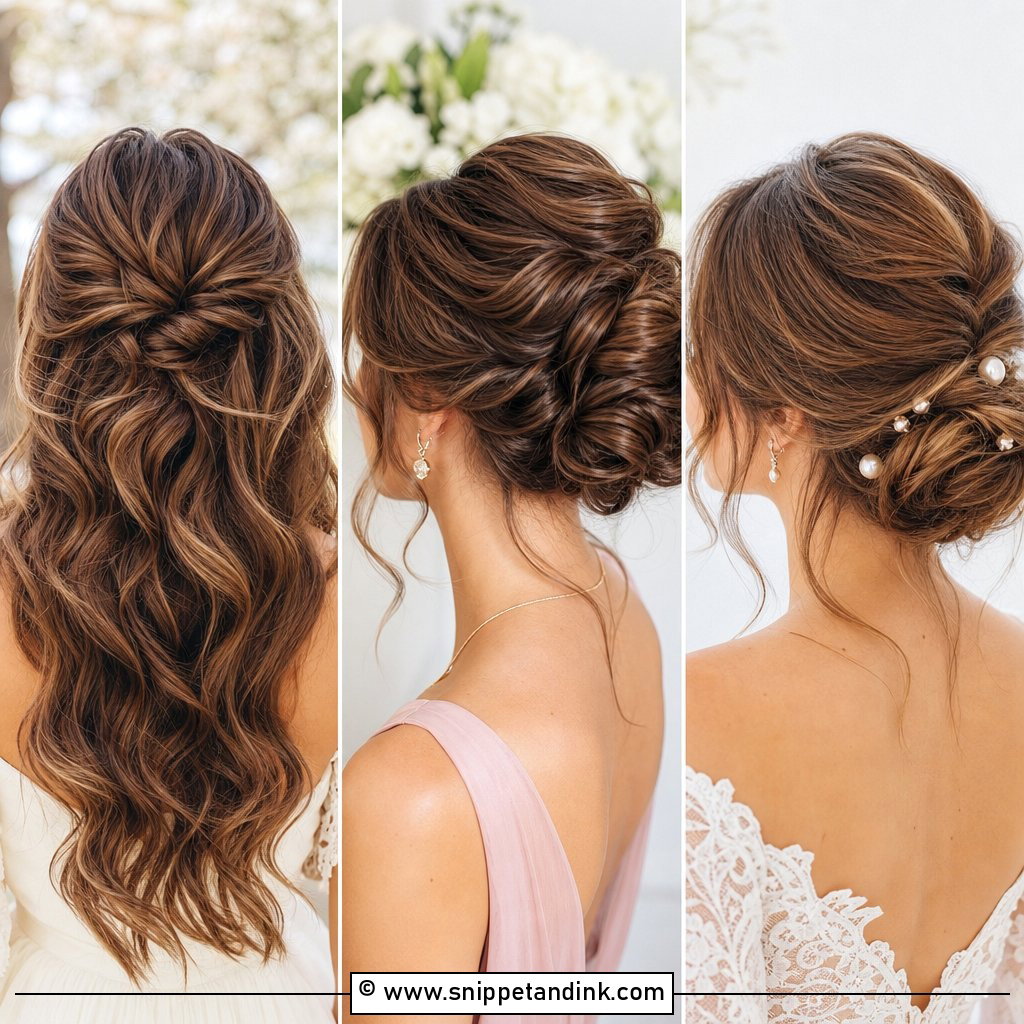
25. Layered Front Curls
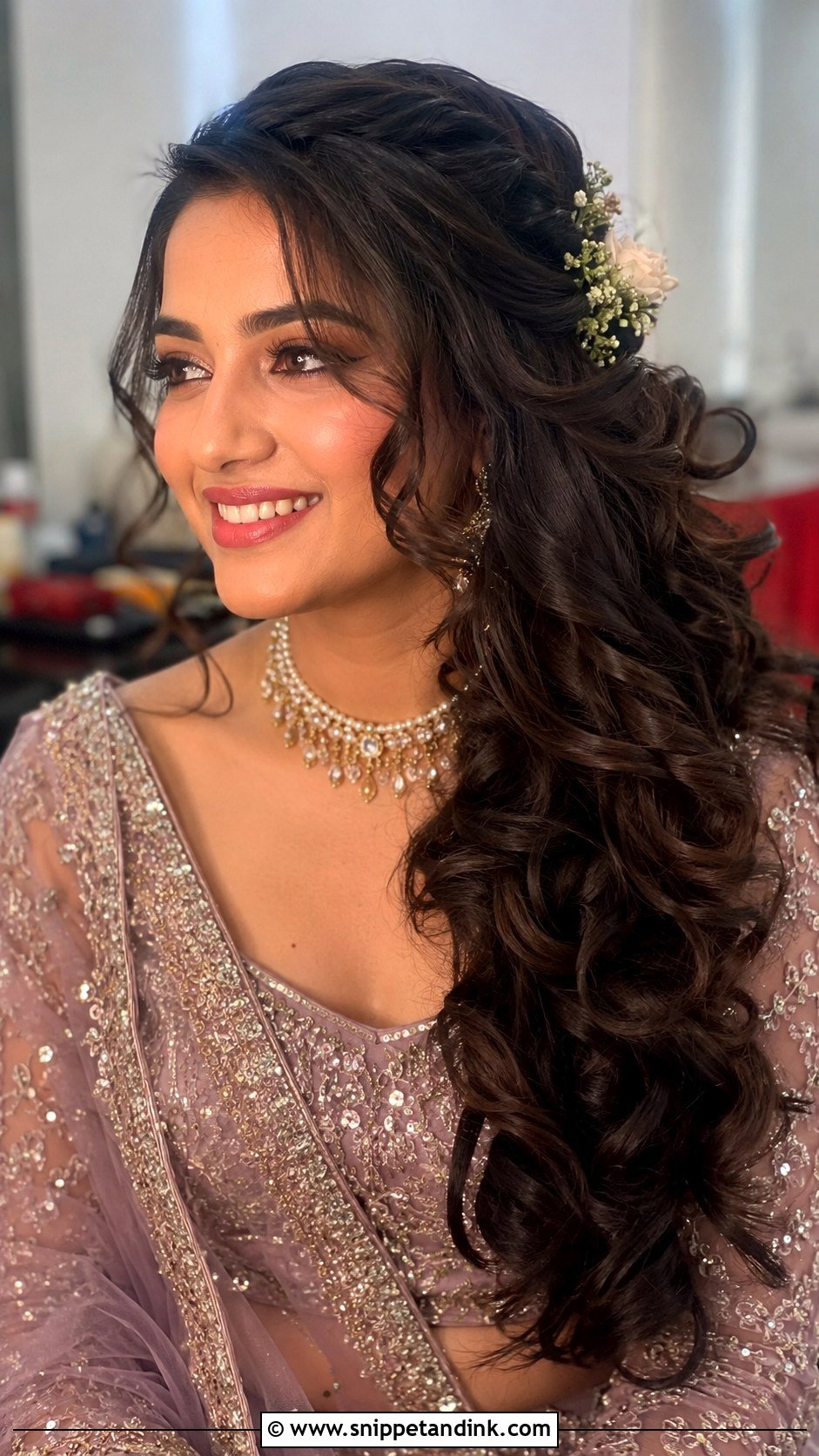
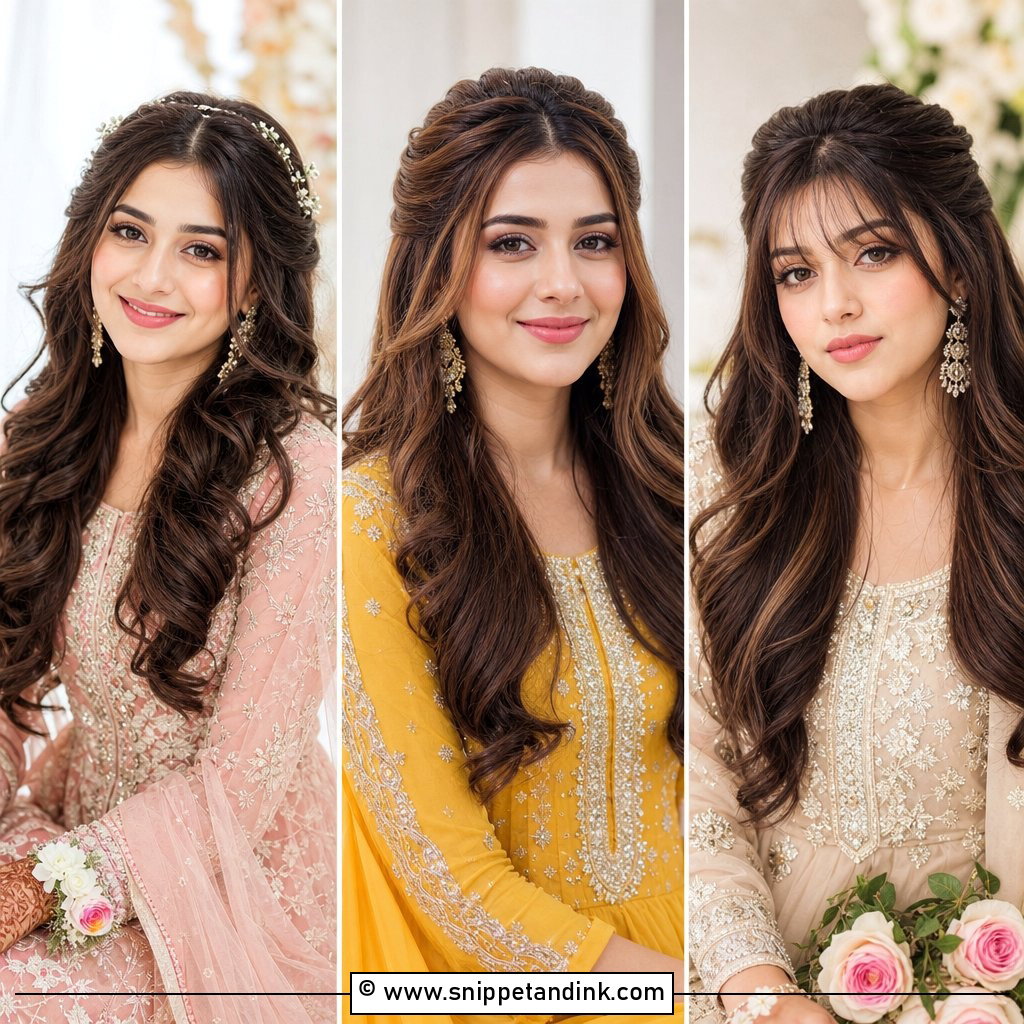
Layered curls around the face add bounce and volume, with shorter layers near the face and longer ones flowing down. Sangeet and pre-wedding events suit this best. I curl the face-framing layers away from the face so they open it rather than cover it. Pinning one side back with a clip gives variety for photos. It pairs with lehengas and gowns. Fine hair may need extensions for the fullness.
26. Front Dutch Braid
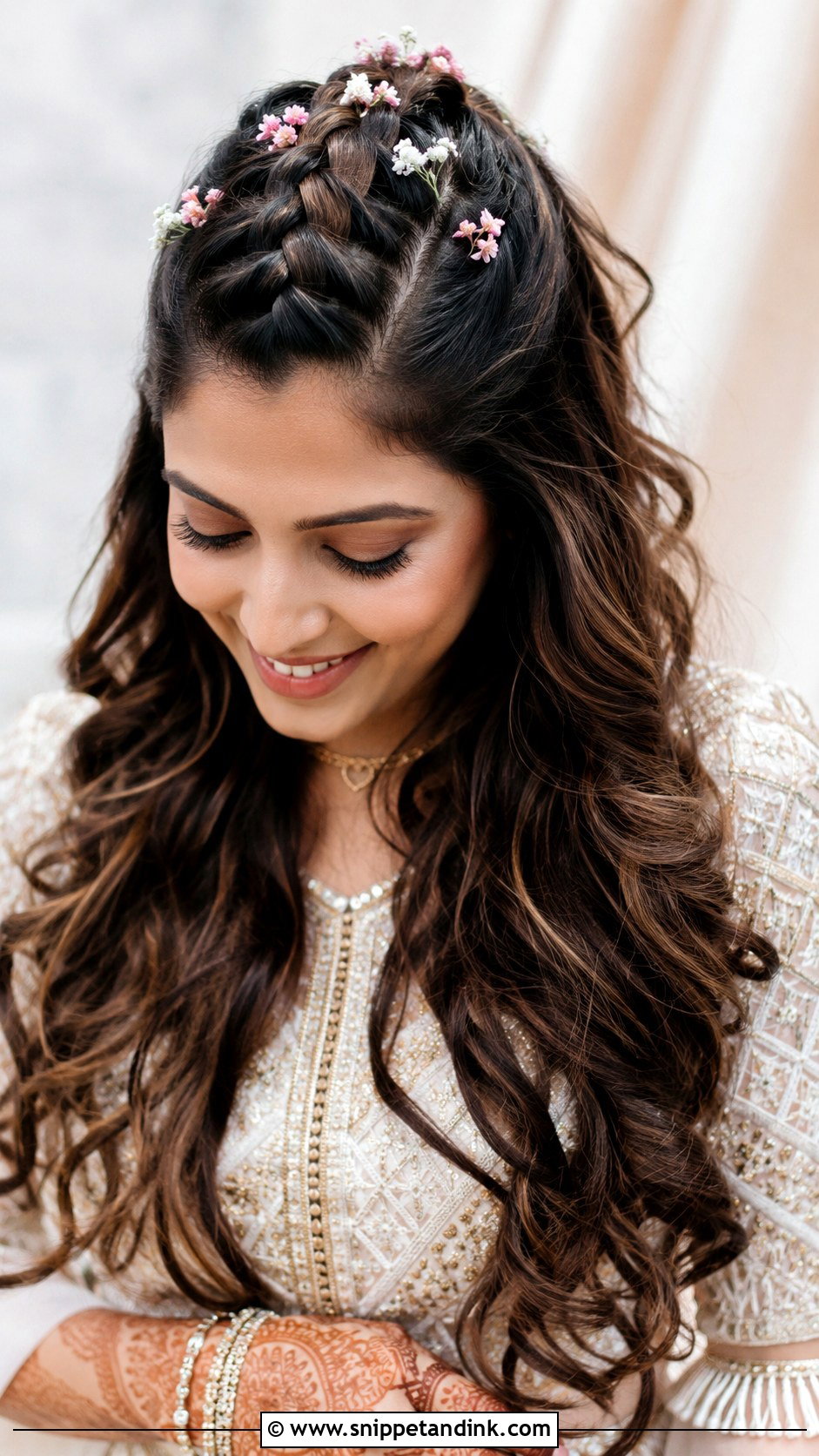
A Dutch braid sits raised above the hair, so it gives a stronger frame than a flat French braid. It can run from the front hairline to the back, leading into open hair or a bun. Mehndi and haldi suit it best. Tiny flowers or beads can be added. The raised texture shows up clearly in photos. Freshly washed hair slips out of a Dutch braid, so I work with day-old hair or add texture spray.
27. Soft Front Waves With Maang Tikka
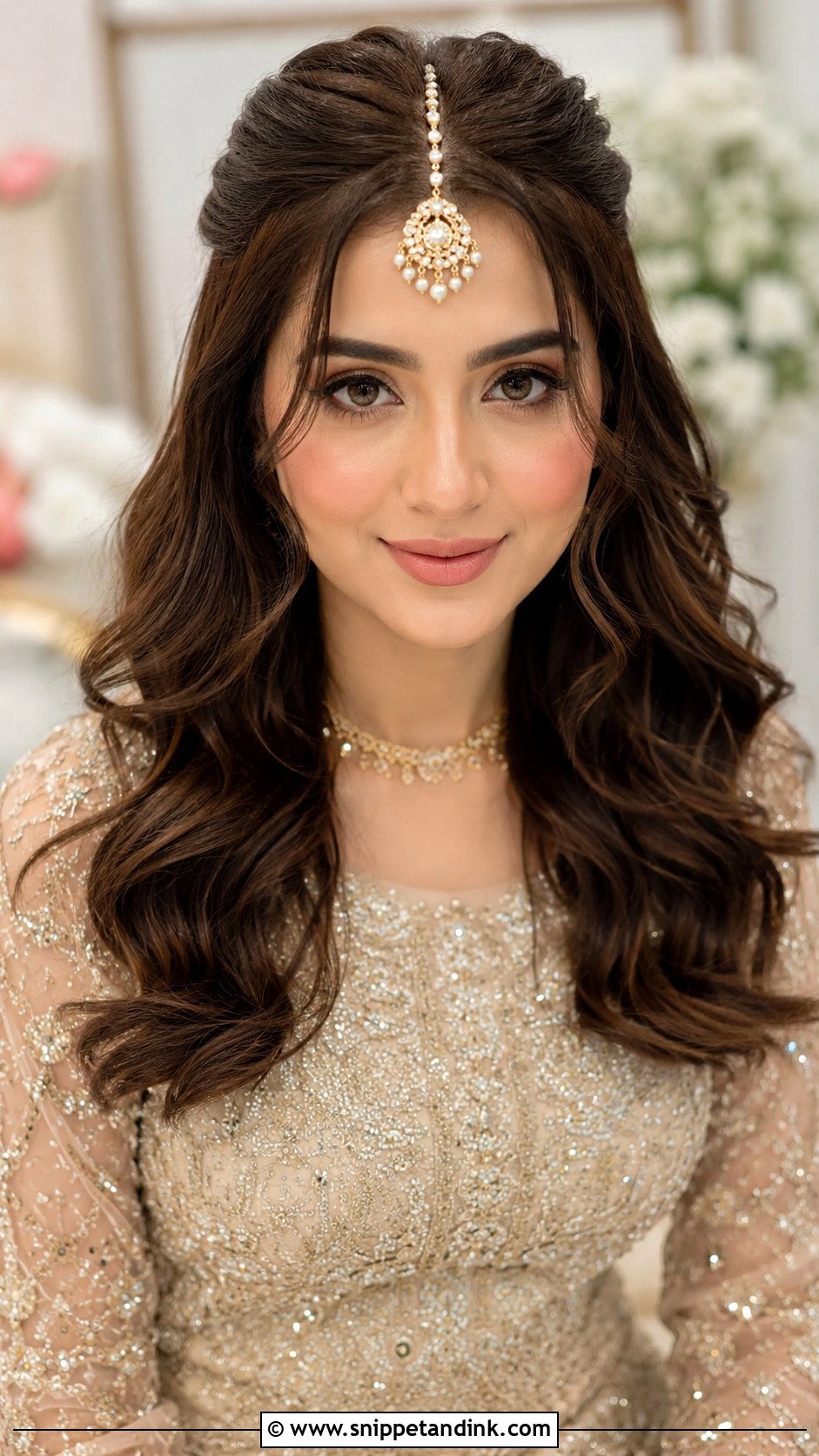
Soft waves at the front with a maang tikka are light and easy to wear. The waves add movement near the face, and the tikka rests at the part. It suits engagements and receptions. You can leave the hair fully open or pin one side back. I set the front waves with clips while they cool, because they’re the first to drop in heat.
28. Front Bump With Low Bun
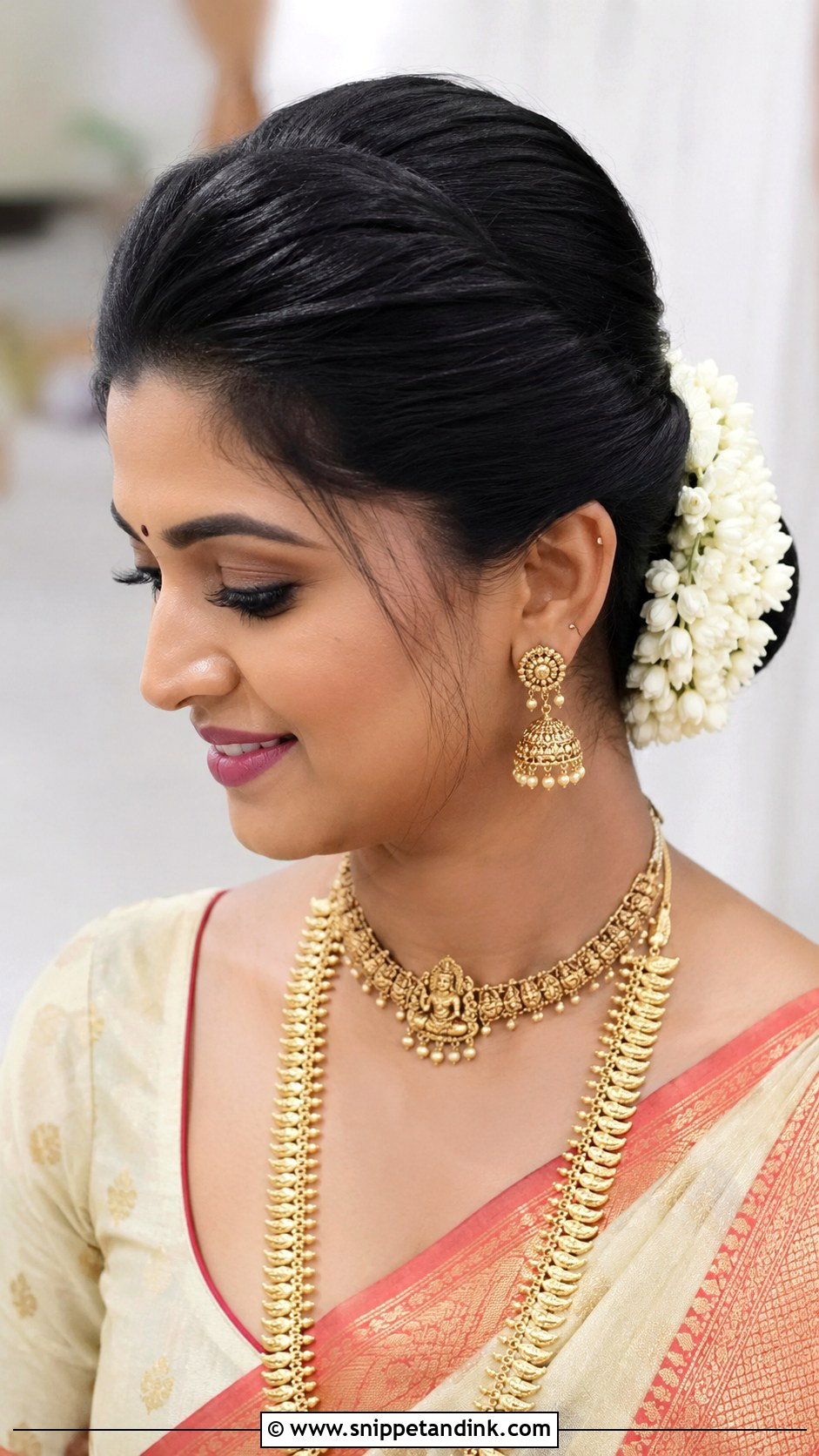
A small front bump with a low bun is understated. The bump adds gentle lift at the crown, and the low bun sits at the nape, which works under a dupatta. Flowers or pearls can be wrapped around the bun. It suits sarees and lehengas. The bump needs only a little backcombing; too much makes it look dated. It stays neat through long ceremonies.
29. Front Braided Crown With Flowers
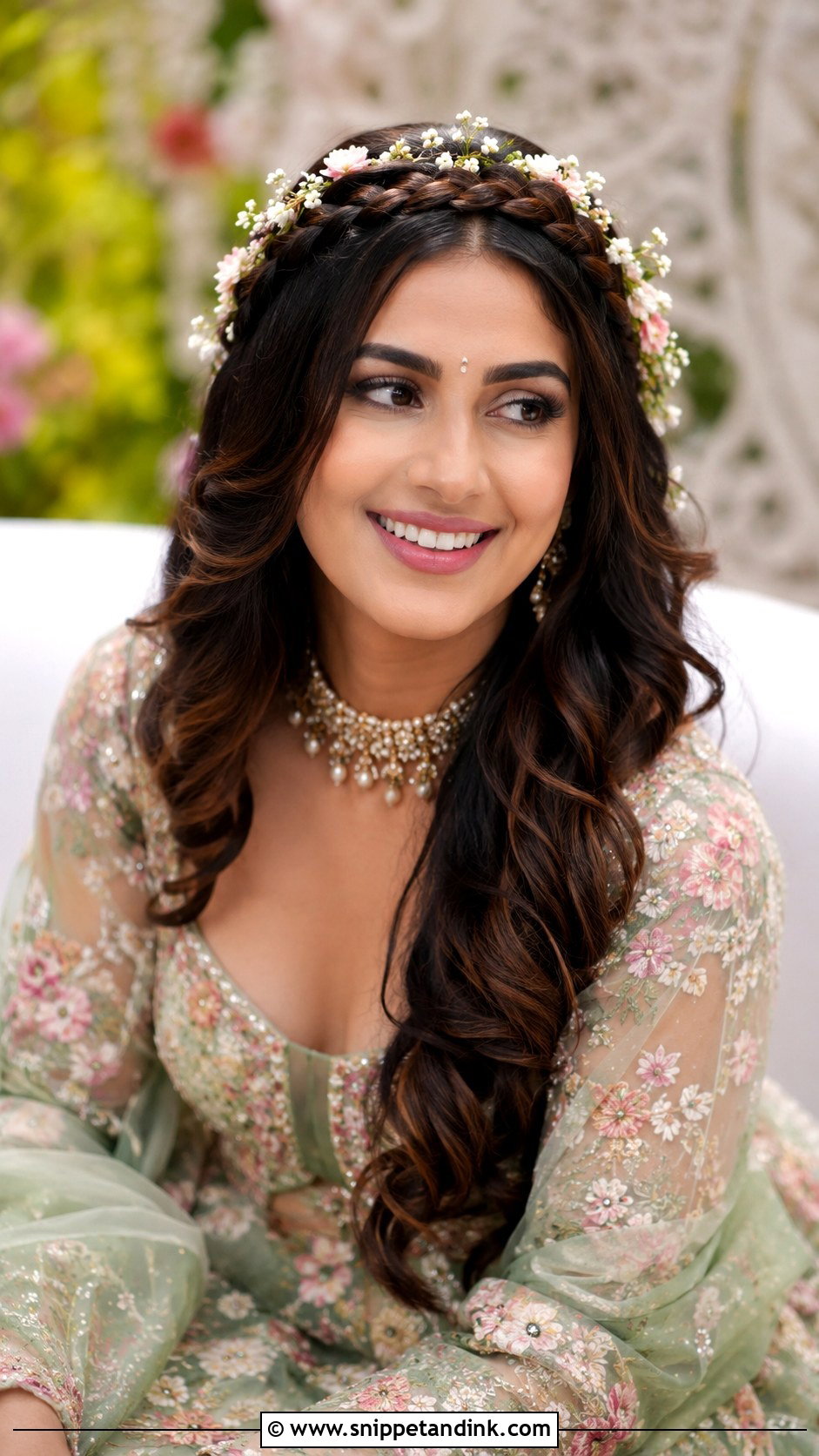
A braided crown dressed with fresh flowers across the front is a garden-inspired look for mehndi and sangeet. The braid wraps the front like a halo, and real or fabric flowers are tucked into it. The back can be open or in a bun. Fabric flowers last longer in heat, which matters at a daytime event. I pin each flower into the braid so it doesn’t slip.
30. Glam Front Puff With Curls Reception
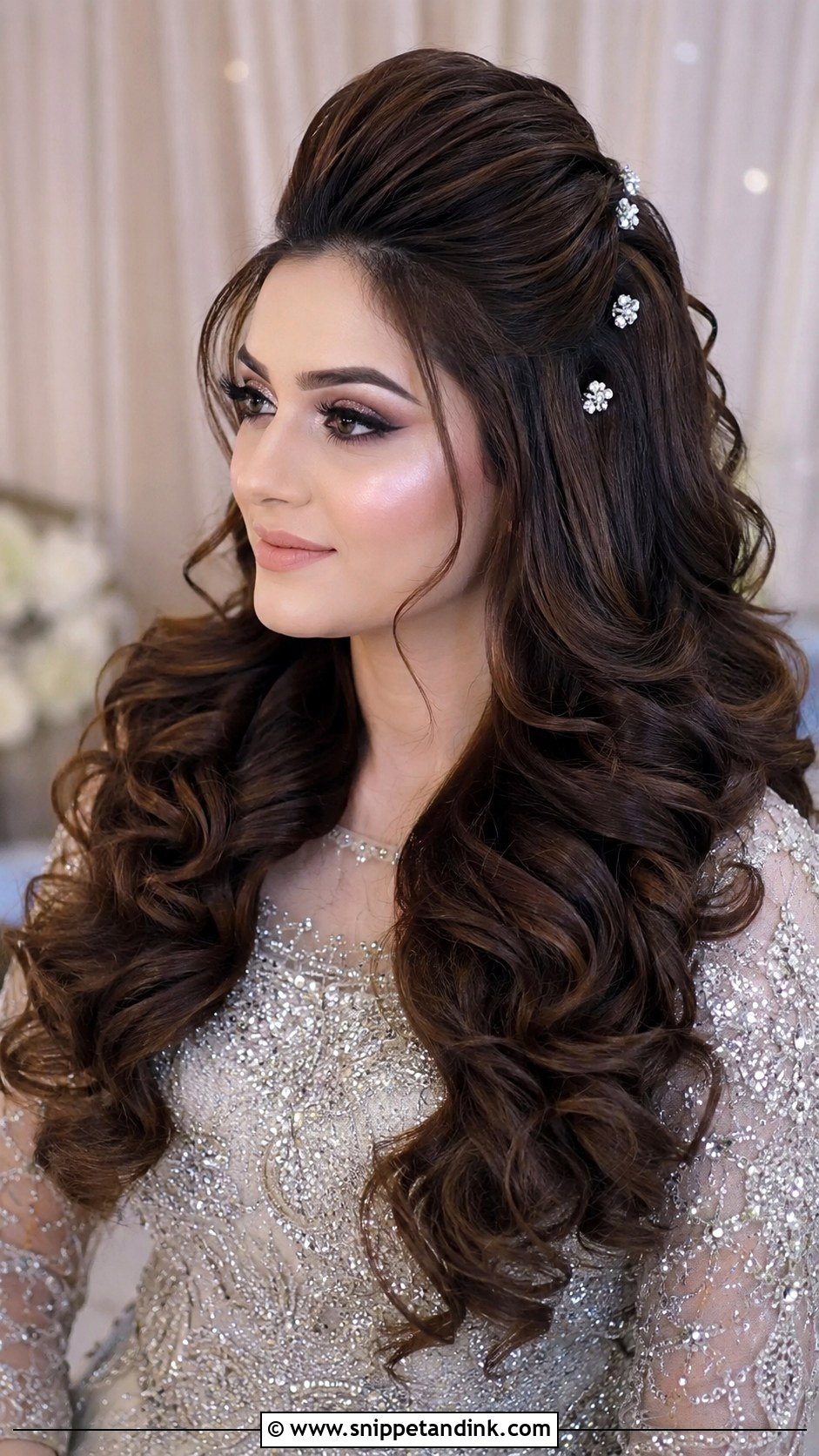
For the final event, a glamorous front puff with bouncy curls gives maximum volume. The puff lifts the face and the curls add width. It’s made for a reception entrance, with gowns or heavy lehengas. Sparkling pins or a tikka finish it. If you’ve worn a different style earlier, the hair needs a fresh blow-dry at the root for the puff to hold.
Tikka, Matha Patti or Nethi Chutti: What Each Does to the Front
Forehead jewellery and front hair have to be planned together. Each piece sits in a different place and needs different support.
- A maang tikka hangs from the parting, with its chain pinned back at the crown. It needs a straight, clean part and a small pinned base behind the puff.
- A matha patti runs across the forehead and along the parting, with side chains pinned behind the ears. Puffs and front braids compete with it, so smoother fronts work best.
- A nethi chutti is the South Indian version, often with a central pendant and side chains following the hairline. It sits well on a smooth front or a soft puff with a saree.
Bring the real piece to your trial, because chain lengths vary and a few millimetres changes where the pendant lands on the forehead.
A Puff That Still Stands at Midnight
The most common complaint I hear about bridal puffs is that they’ve flattened by the reception. Almost always it comes down to how they were built. Backcombing should happen at the root in small sections, with a clean, untouched layer brushed smoothly over the top. Teasing the surface makes it fuzzy and weak. A light setting spray between sections holds better than a heavy lacquer at the end. Very fine hair can use a small padded insert under the puff, which won’t collapse however long the night runs.
Your Forehead Decides More Than Your Outfit
Your front hairstyle frames your face in every photo, so plan it around your forehead jewellery, your face shape and your hairline before anything else. A soft puff, a braid, jasmine twists or open waves with a tikka can all work. Comfort counts over long functions, and pearls or diamond accents can update a traditional look. Save your favourite front styles, try them at your trial with your jewellery, and see which ones suit you.
You'll Like These Ideas:



Leave a Reply