
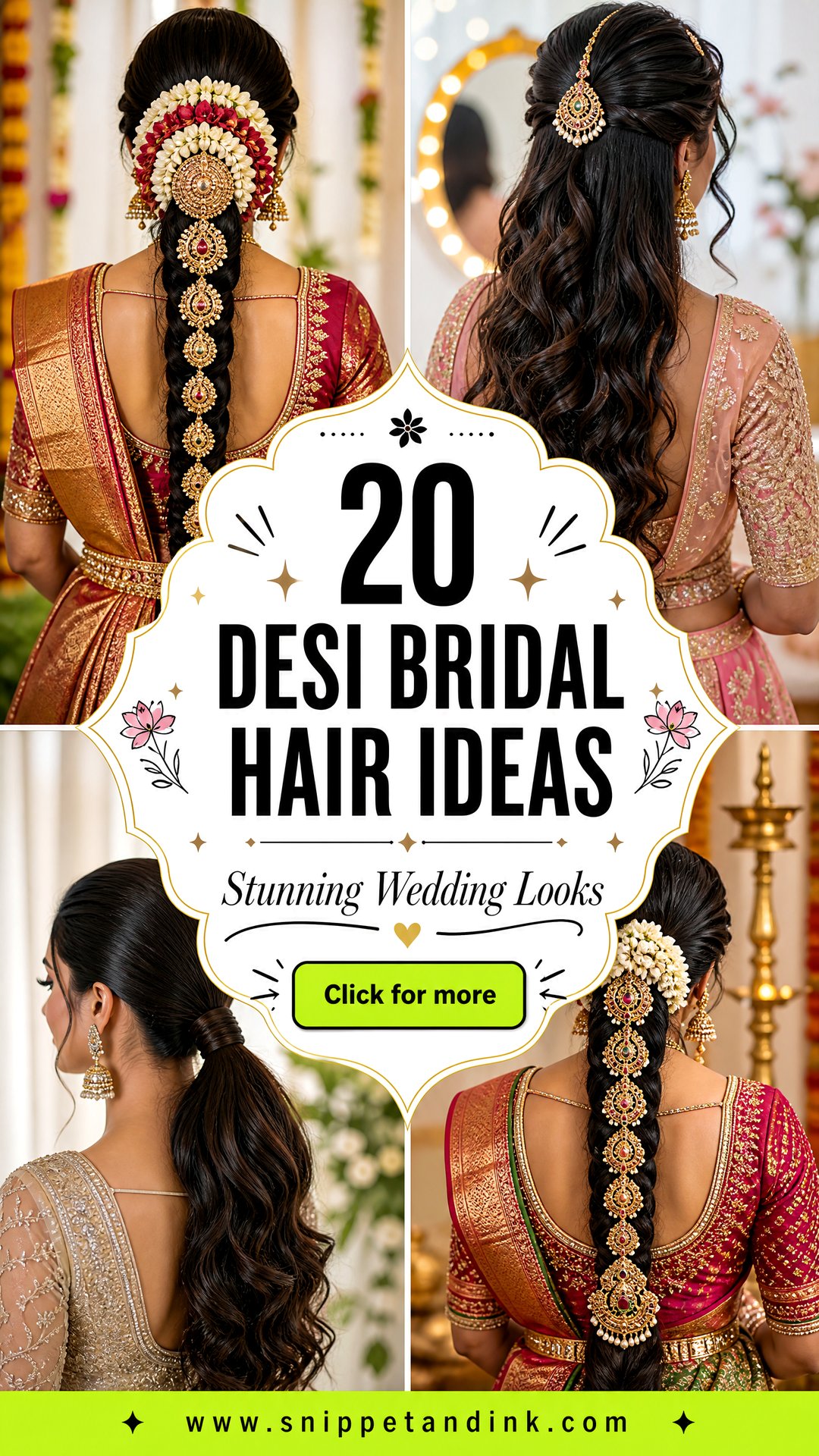
A Desi wedding rarely means one hairstyle. There’s the haldi, the mehendi, the sangeet, the ceremony and often a reception, each with a different outfit, a different set of jewelry and a very different amount of dancing. A jasmine-wrapped bun that’s right for a muhurtam would be odd at a cocktail night, and open waves that look great at the sangeet won’t support a heavy dupatta. I’ve grouped twenty looks below that I’d actually put on a bride, from temple-style braids and gajra buns to sleek reception knots, with notes on which function each one suits and what it needs to stay put.
Spreading Five Functions Across One Head of Hair
Hair takes a beating over a multi-day wedding. Back-to-back updos mean hundreds of pins, heavy backcombing and a lot of hairspray, and by the main ceremony the hair can be dry and tangled. When I plan a Desi bride’s looks, I spread the strain.
- Haldi: a braid or braided crown that keeps hair away from the paste. No heat styling on this day if you can help it.
- Mehendi: something you can sit in for hours without leaning on it, like a side braid or open waves. Your hands are out of action once the henna is on, so nothing that needs fixing.
- Sangeet: the dancing night. Open hair or a ponytail that tolerates movement.
- Wedding ceremony: the most structured look, built to carry the dupatta, flowers and jewelry.
- Reception: a sleek bun or waves, depending on the outfit.
Brush out backcombing gently with a wide-tooth comb and a little conditioner after each function. Ripping through it overnight is how brides end up with breakage on the wedding morning.
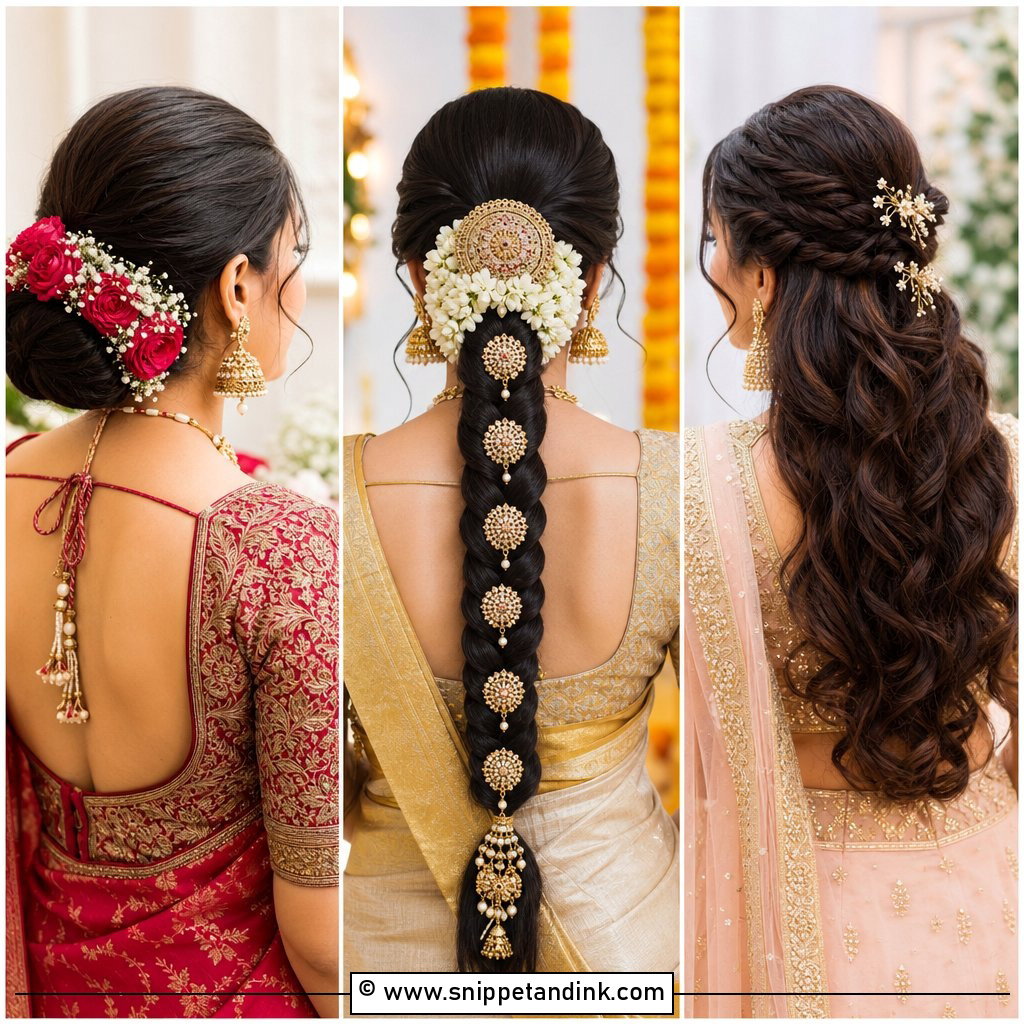
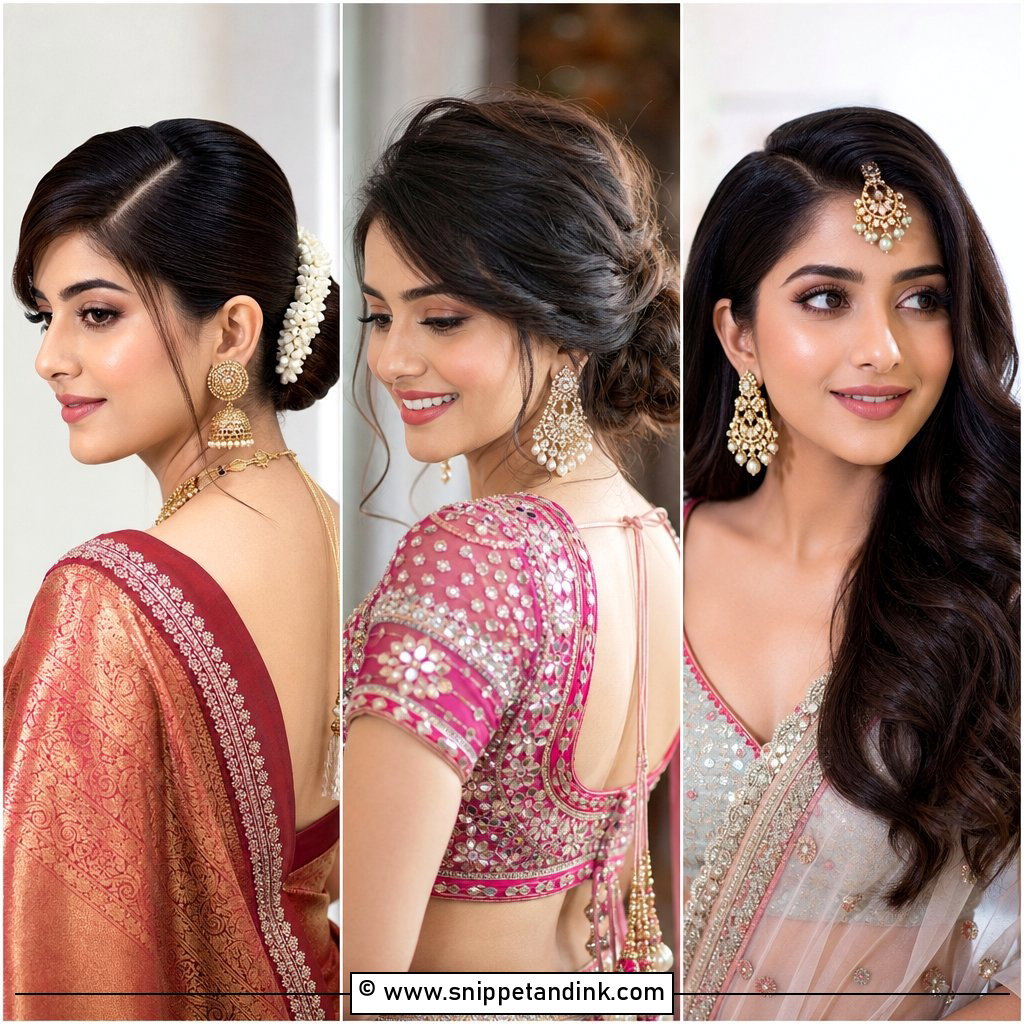
1. Low Bun With Fresh Jasmine Gajra
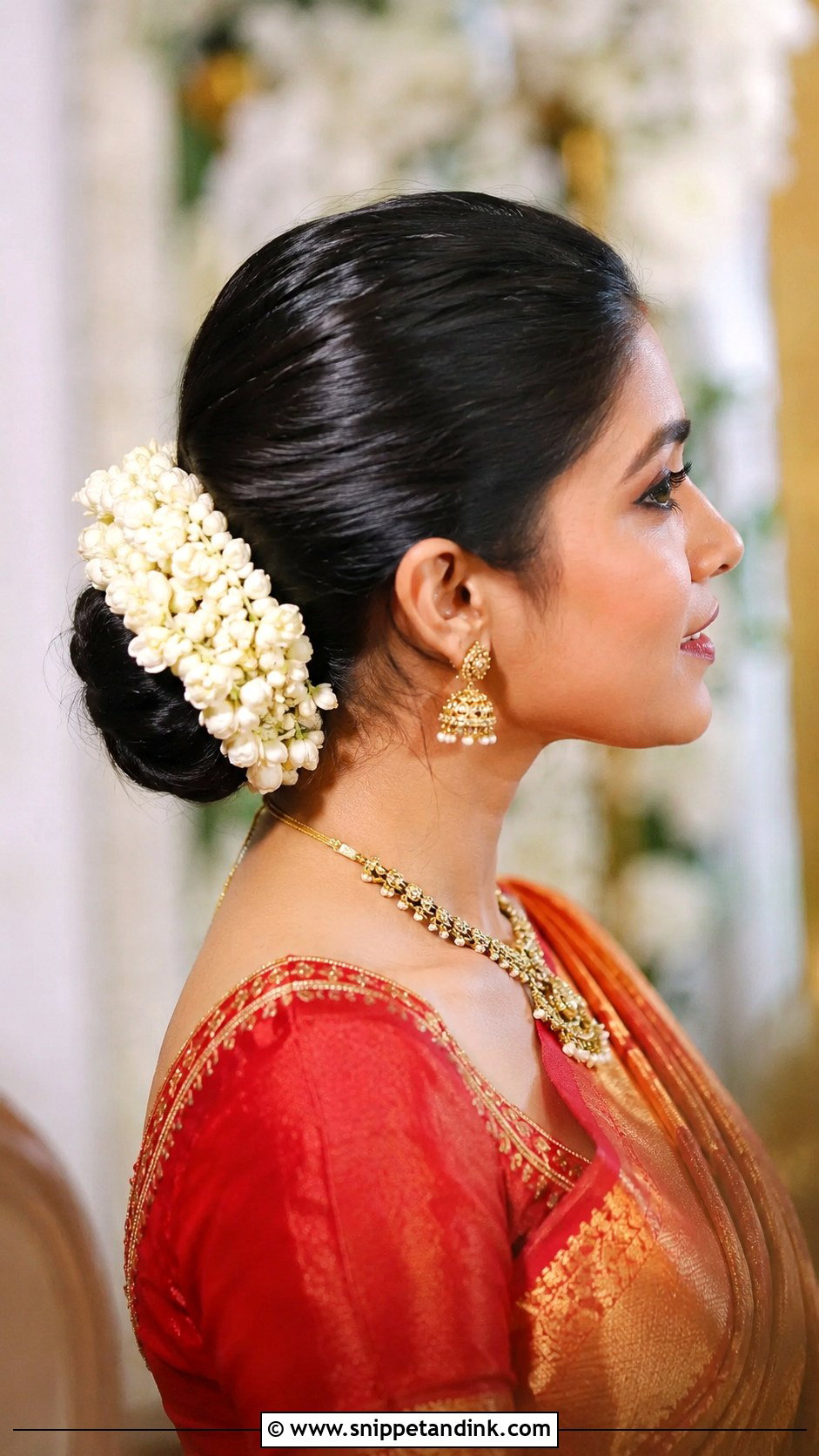
The jasmine-wrapped bun is the one South Indian brides ask me for most, and it earns its place. The hair is smoothed into a low bun at the nape and circled with strings of fresh jasmine. I secure the gajra with U-pins pushed through the string itself rather than over it, because a full ring of buds is heavier than it looks and slips if it’s only resting on the knot. Temple jewelry and a maang tikka finish it for a muhurtam. The fragrance stays with you through the ceremony, and the buds keep opening for the first few hours.
2. Traditional South Indian Braid With Flowers
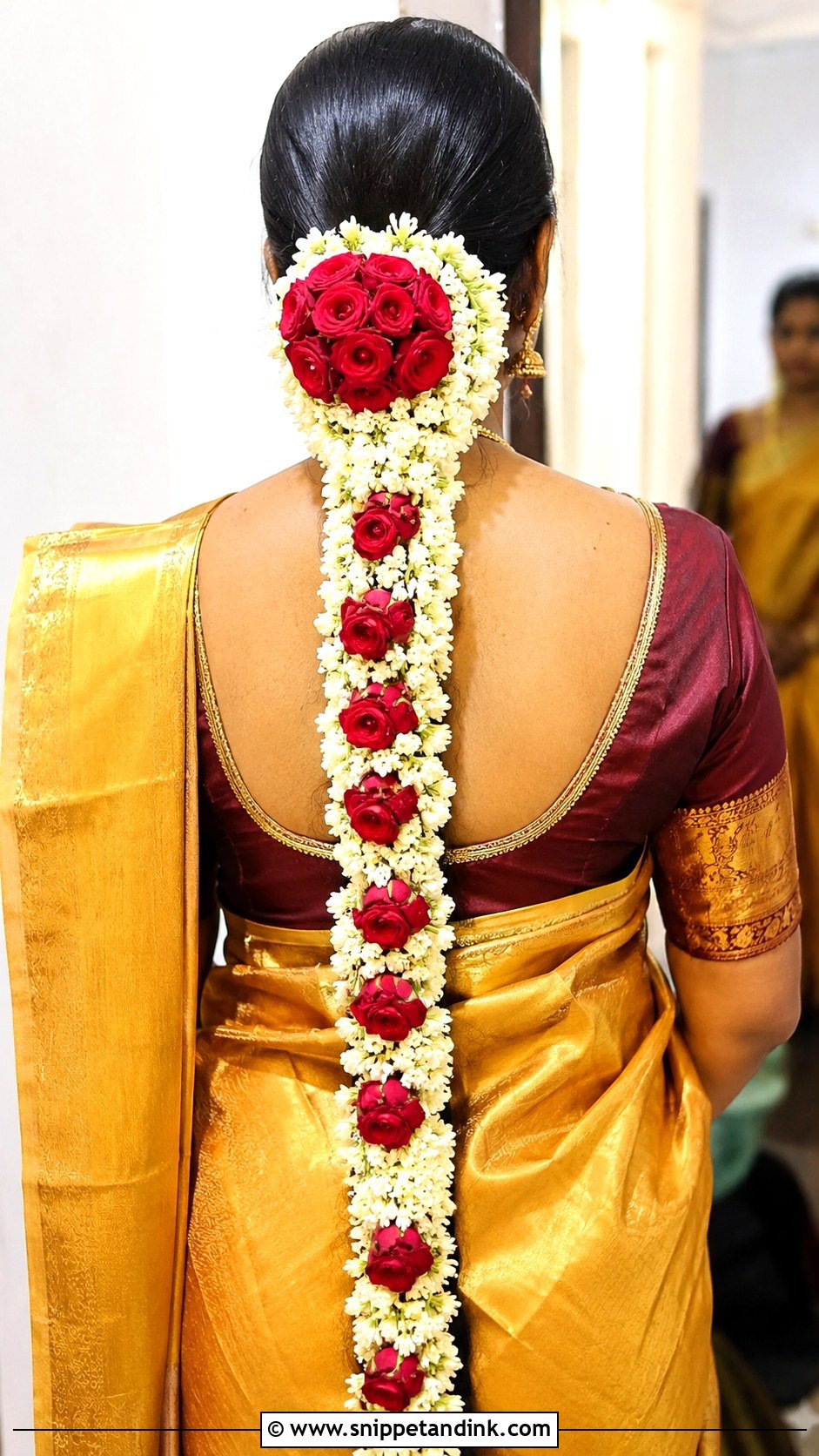
A long braid layered with flowers is the centre of a traditional South Indian bridal look. It runs from the crown to the waist with jasmine, roses and sometimes orange crossandra, and many brides add a jadanagam down the length. Honest note: very few brides have natural hair long or thick enough for the full effect, so I usually braid in a matching extension from the nape down. That also takes the weight of the flowers off your own hair. It pairs with a Kanjeevaram saree and needs long, full hair as a base.
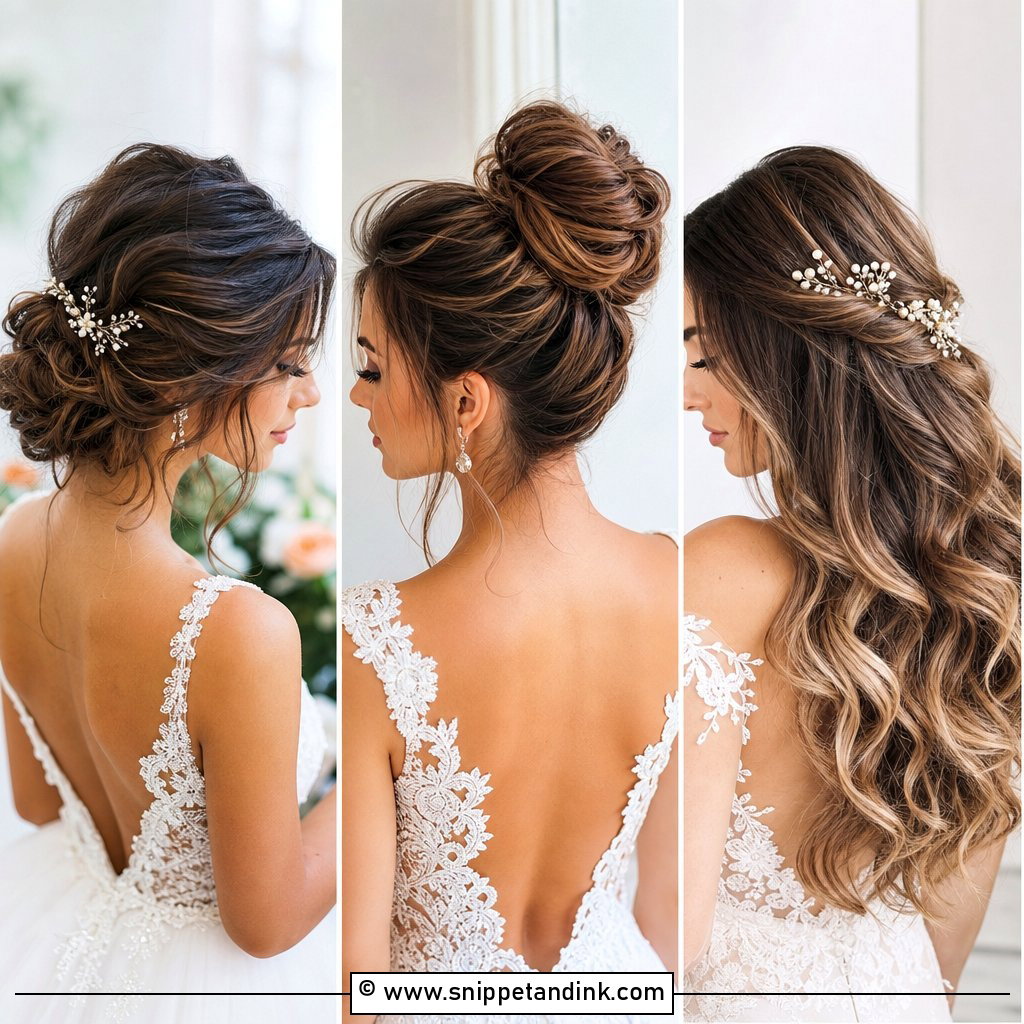
3. Voluminous Power Bun For Reception
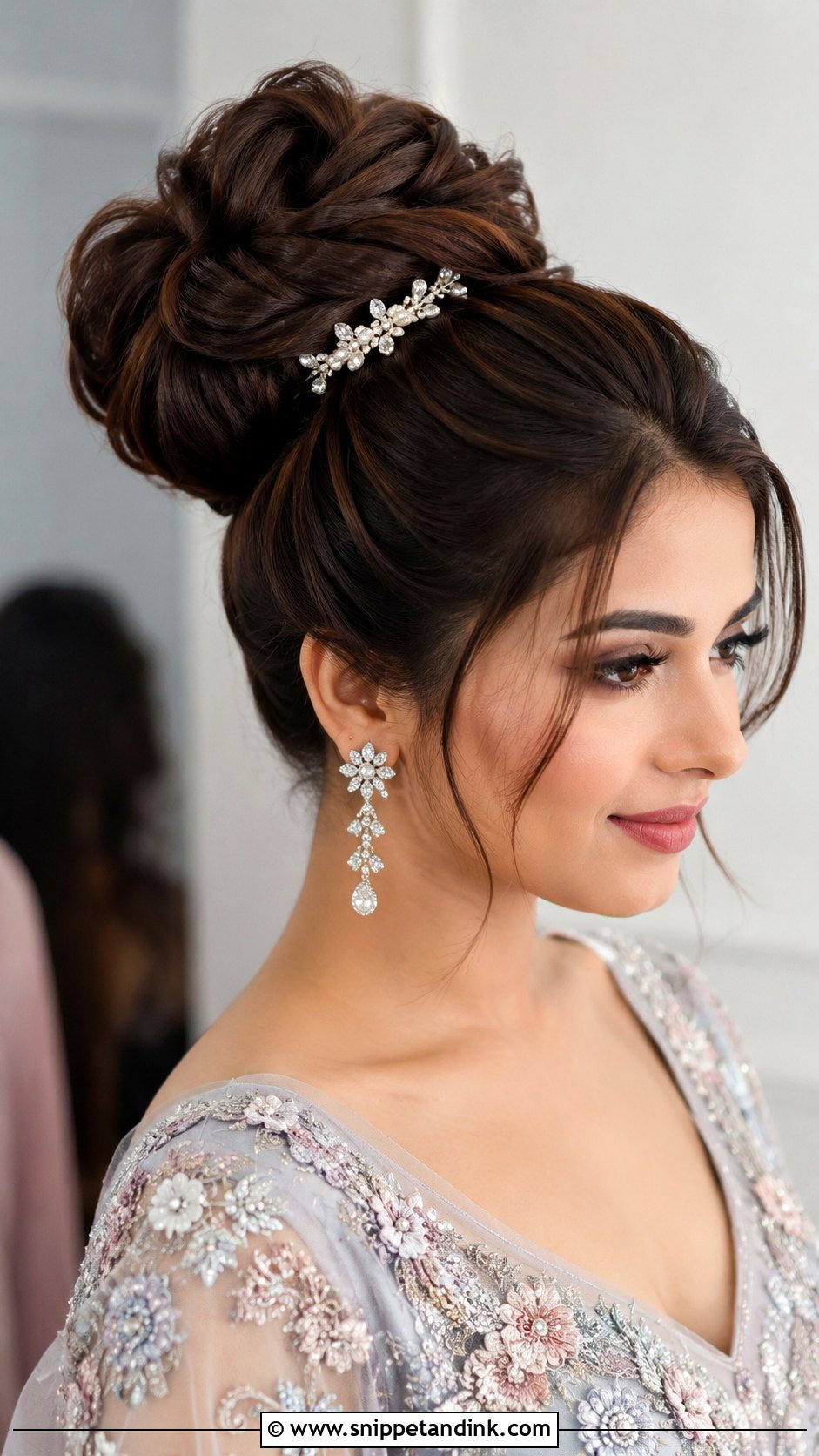
The power bun swaps a flat, tight knot for height and structure. I tease the crown for lift, smooth the surface over it, then twist the lengths into a sculpted bun at the back. A single pearl pin or slim diamond clip is enough decoration. It suits reception nights and works with Indo-Western gowns and embroidered lehengas alike. If your hair is fine, a hidden bun donut gives the shape without needing heavy backcombing that’s painful to brush out later.
4. Fishtail Braid With Pearls
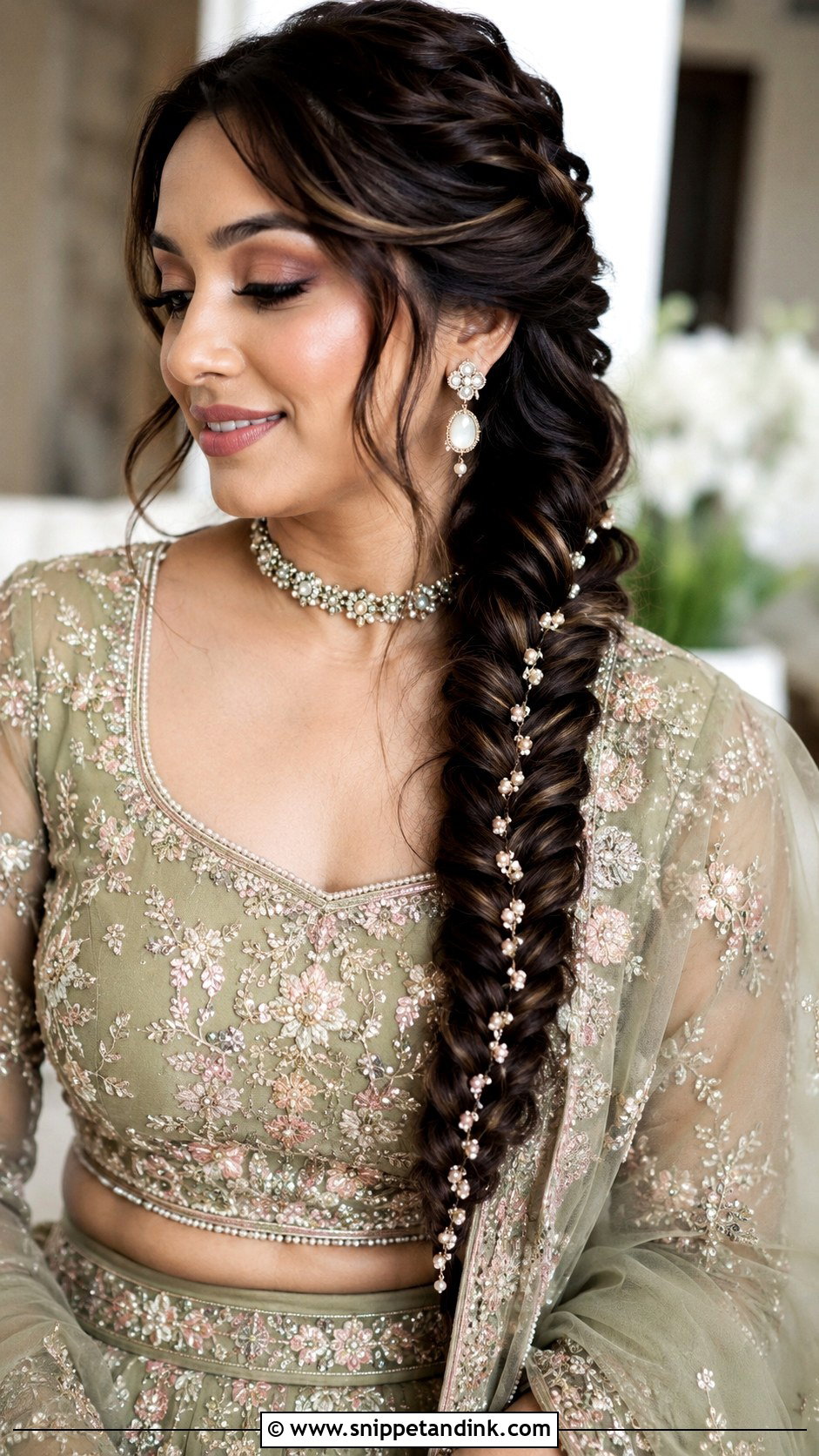
Thin sections crossed over and over create a fishtail’s detailed texture, yet it weighs less than a flower-laden braid. I thread tiny pearls or gold beads on fine wire through the plait after it’s finished, so they sit on the surface instead of getting lost inside. Pull it loose or keep it tight. I like it for the mehendi, sangeet or haldi, worn over one shoulder so the neckline and jewelry stay visible. It’s a good choice if you’d rather skip heavy flowers.
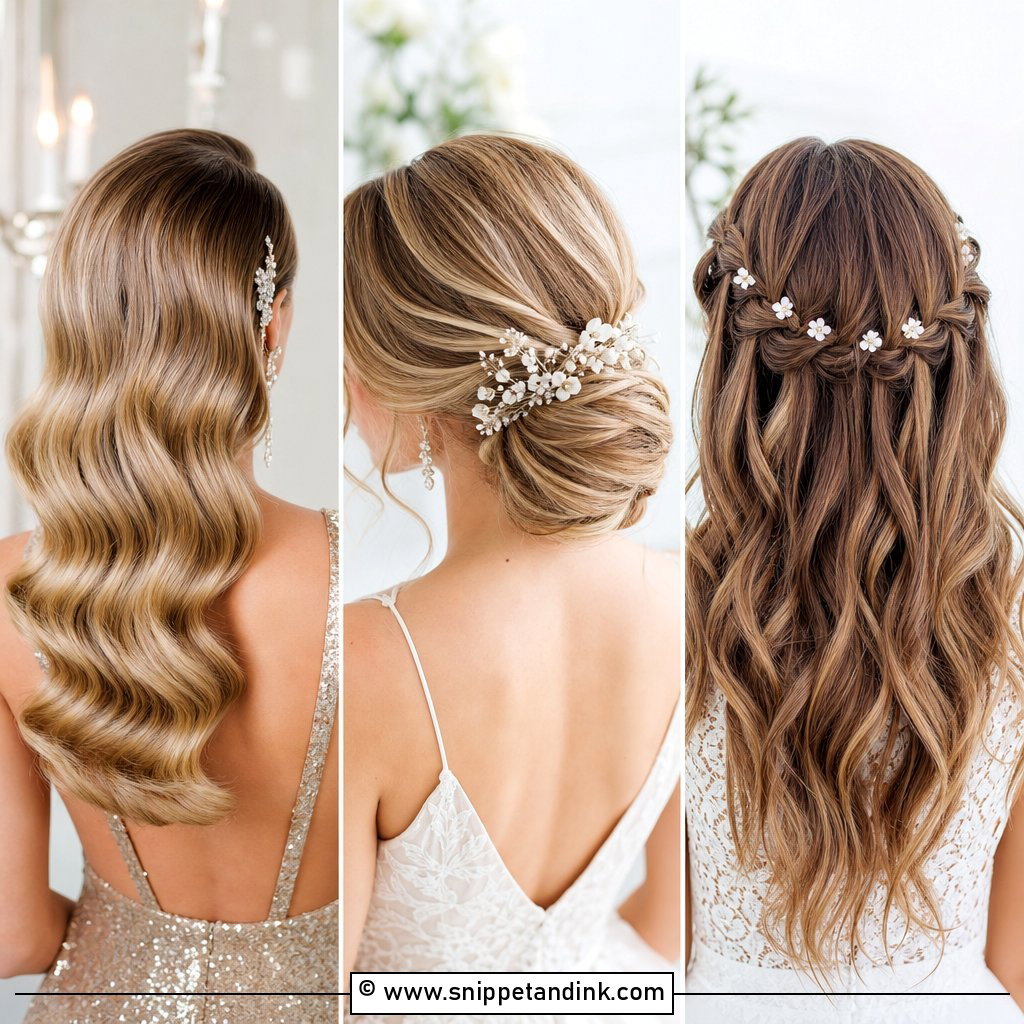
5. Open Hollywood Waves For Sangeet
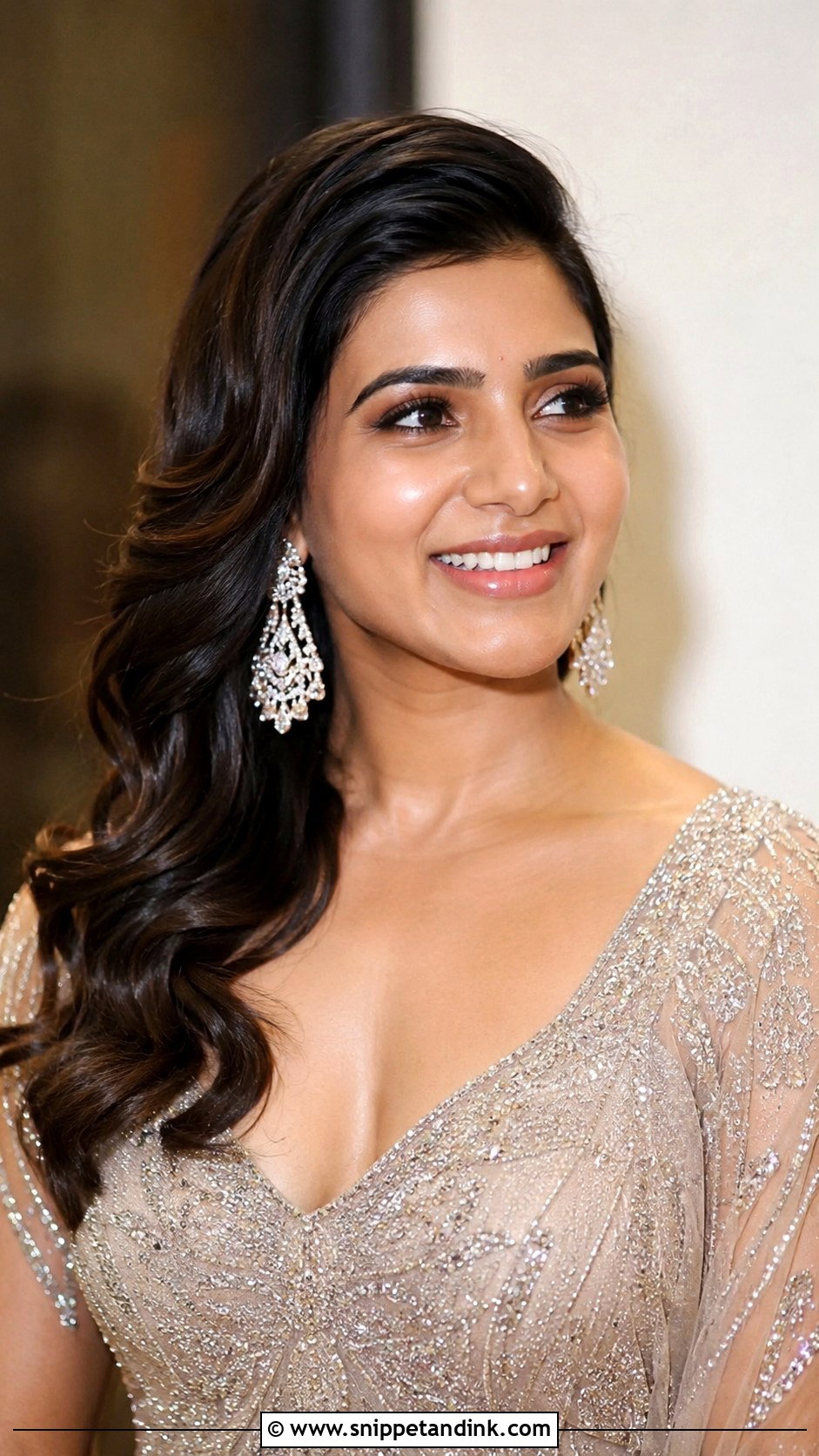
Hollywood waves suit a sangeet or cocktail function, where you want to dance with your hair moving. Each section is curled in the same direction, cooled, then brushed into one smooth S-wave and swept to one side. Statement earrings get room because the neck stays clear on one side. Indian hair that is thick and heavy can drop the wave within a couple of hours, so I set it with a strong mousse at the roots and let every curl cool fully before brushing. A small jeweled clip near the part adds sparkle.
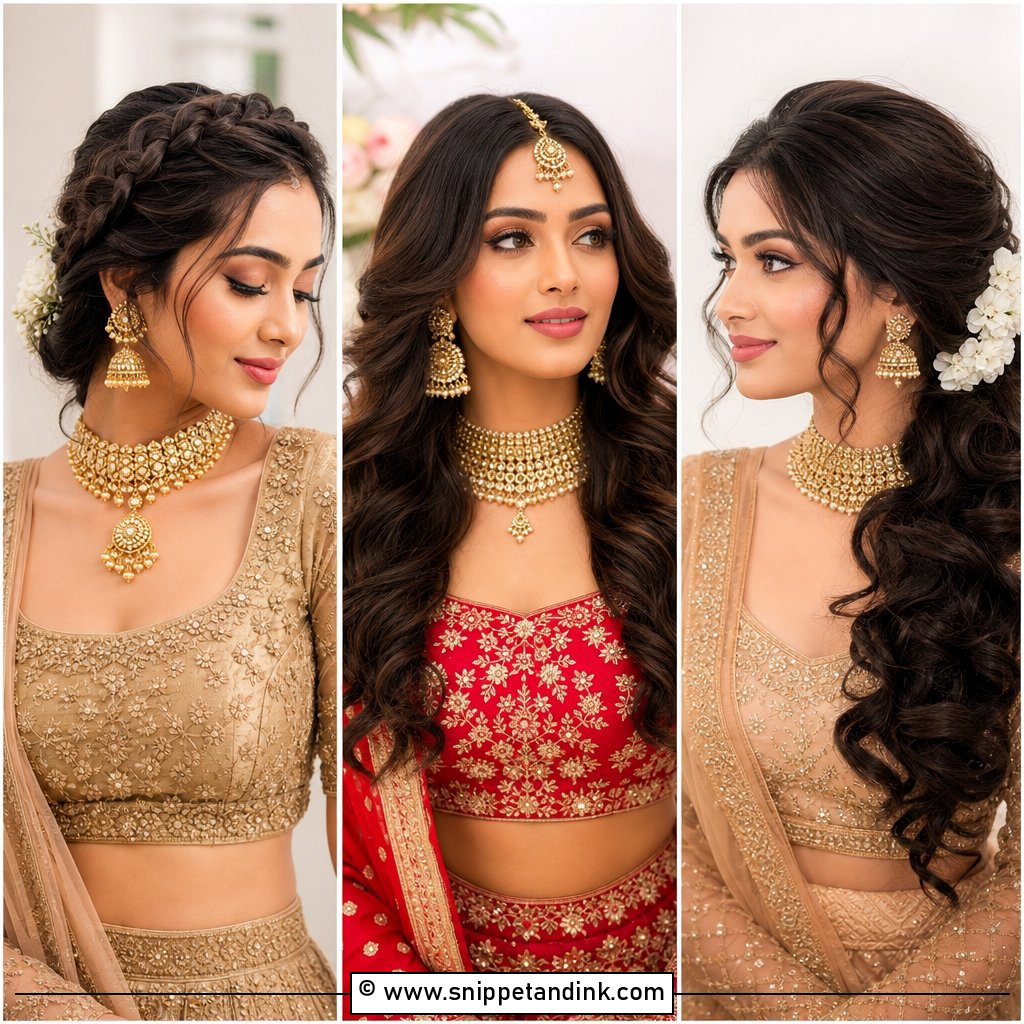
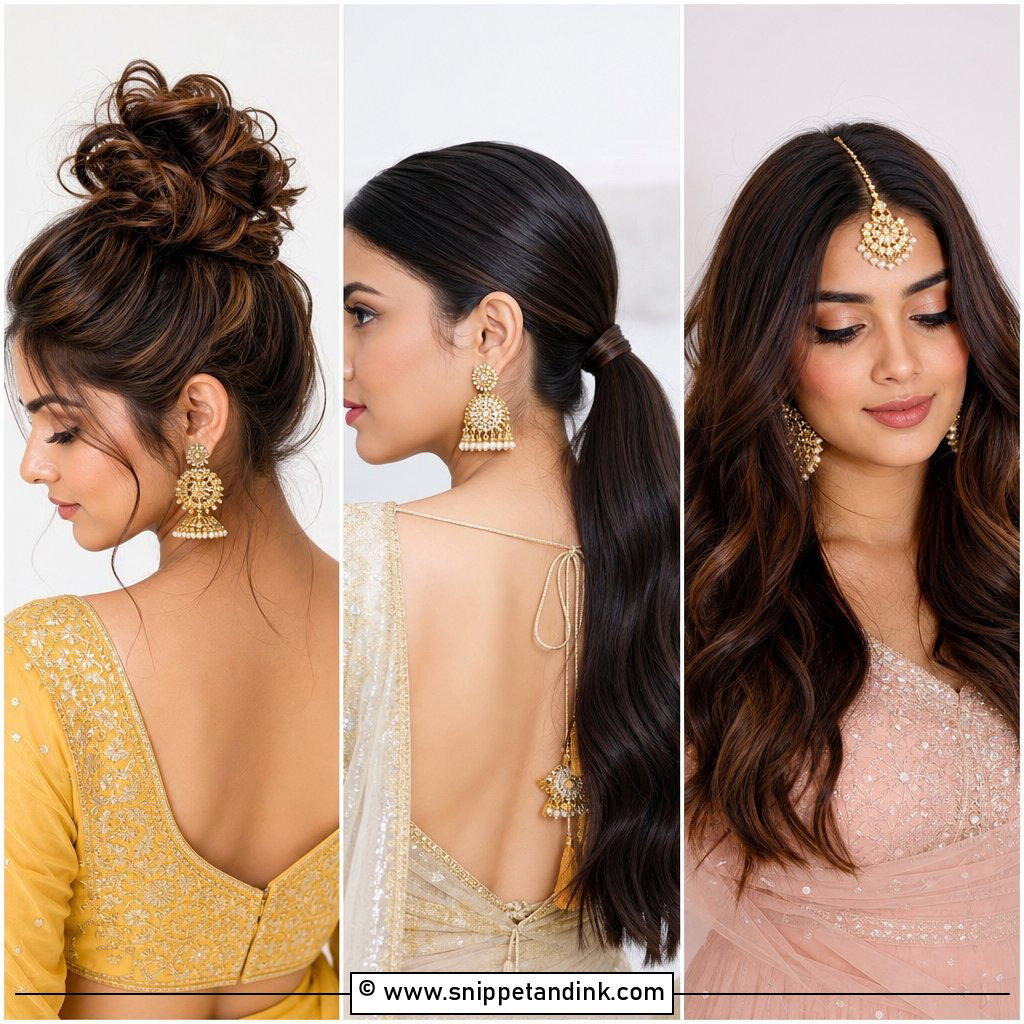
6. Half-Up Half-Down With Maang Tikka
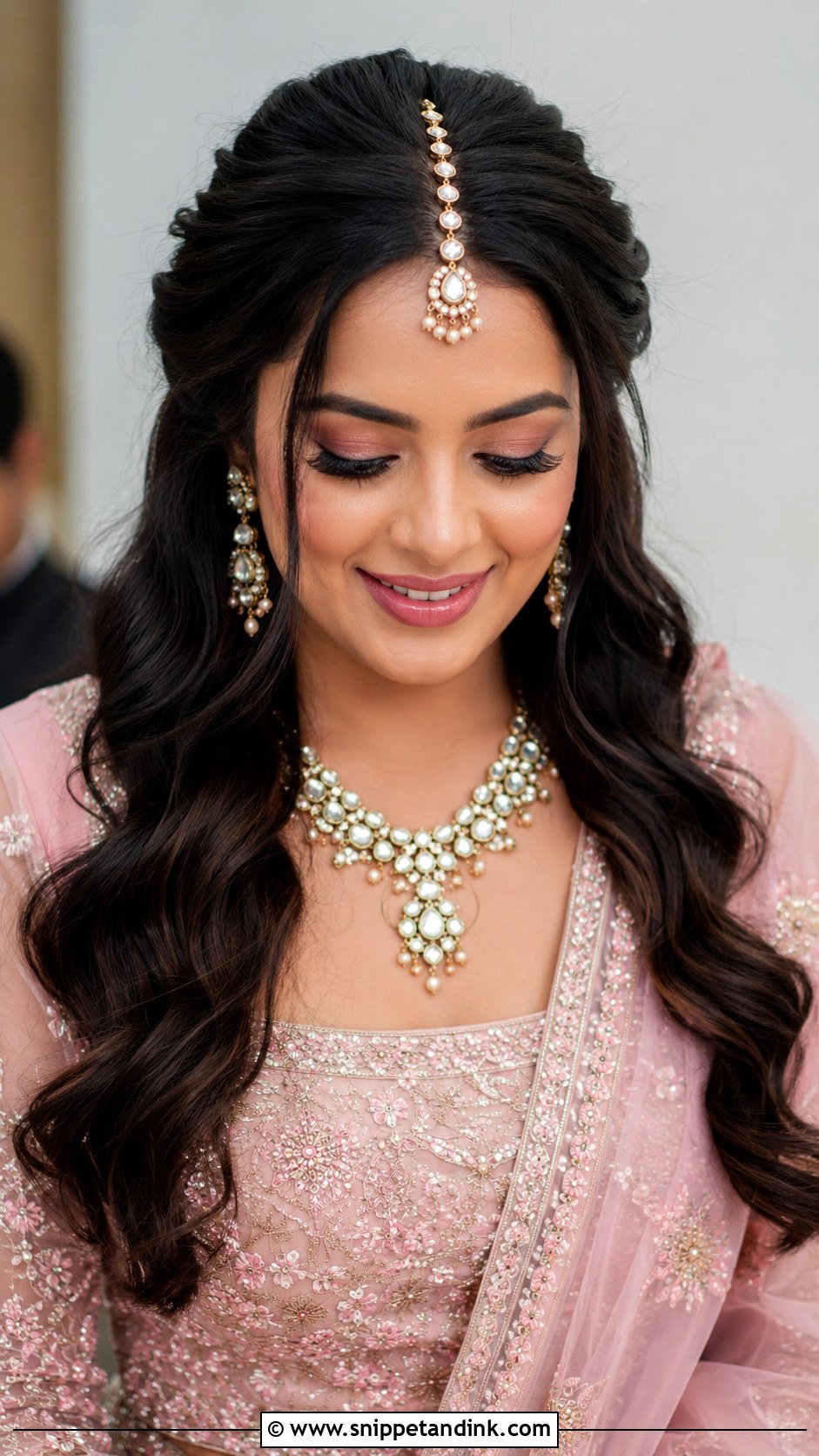
Can’t choose between up and open? Pull the top section back into a soft twist or small bun and leave the rest in loose curls. It frames the face and gives a maang tikka or matha patti a secure base to pin into at the crown. I’d suggest it for engagement ceremonies and roka functions, where you want polish without a full updo. It suits most hair lengths. A few fresh flowers or a sparkling pin can go where the sections meet.
7. Side-Swept Curls With Floral Accents
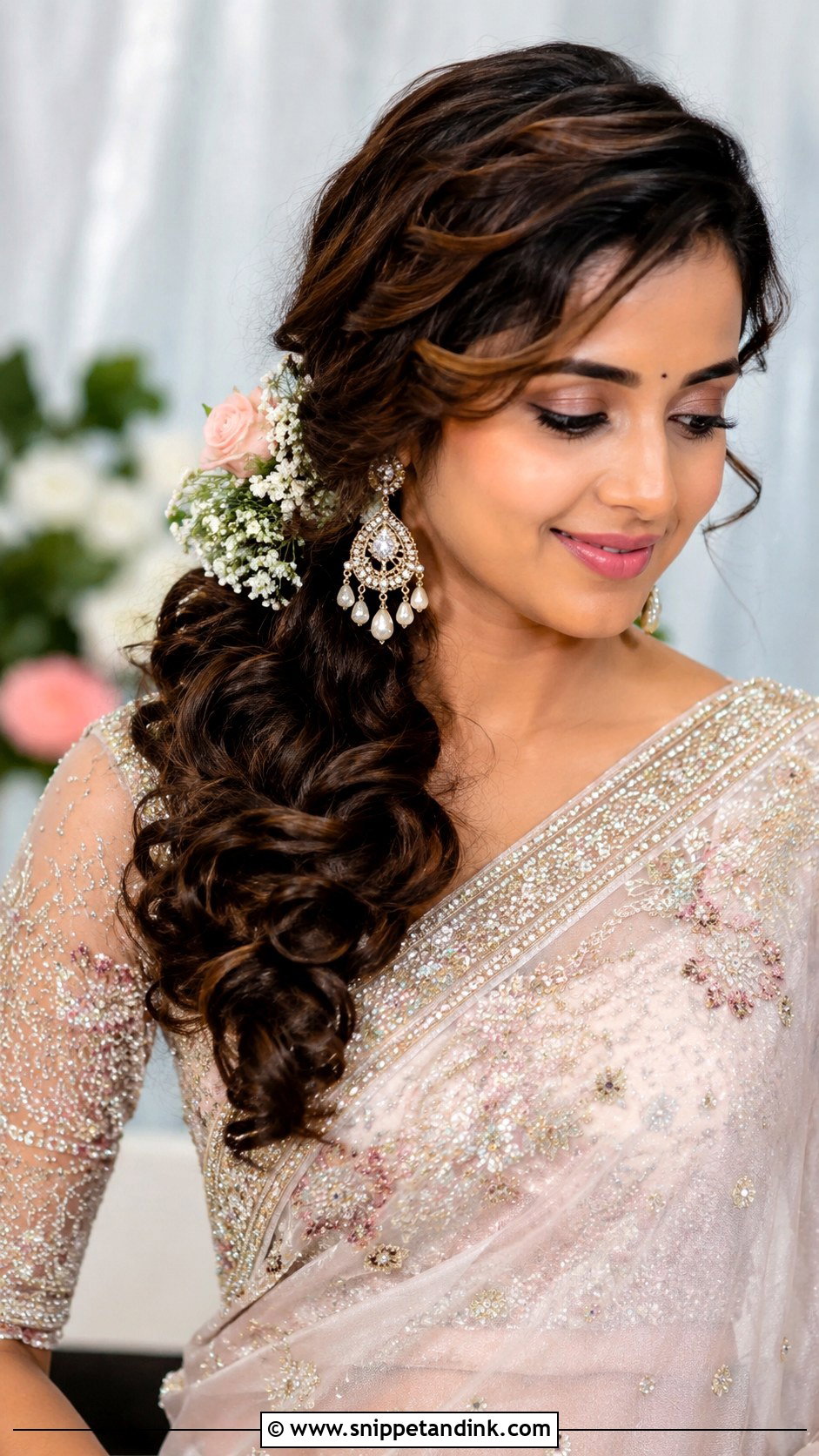
Curls gathered over one shoulder give volume without the weight of a full updo. I pin the hair on the hidden side with crossed grips first so the curls stay put, then arrange them into a cascade and tuck small flowers or a thin vine of blooms near the gather. Round and oval faces both carry the asymmetry well. Chandelier earrings on the open side balance it. It works for receptions and pre-wedding shoots, though under a heavy dupatta it gets flattened quickly.
8. Sleek Low Ponytail For Modern Brides
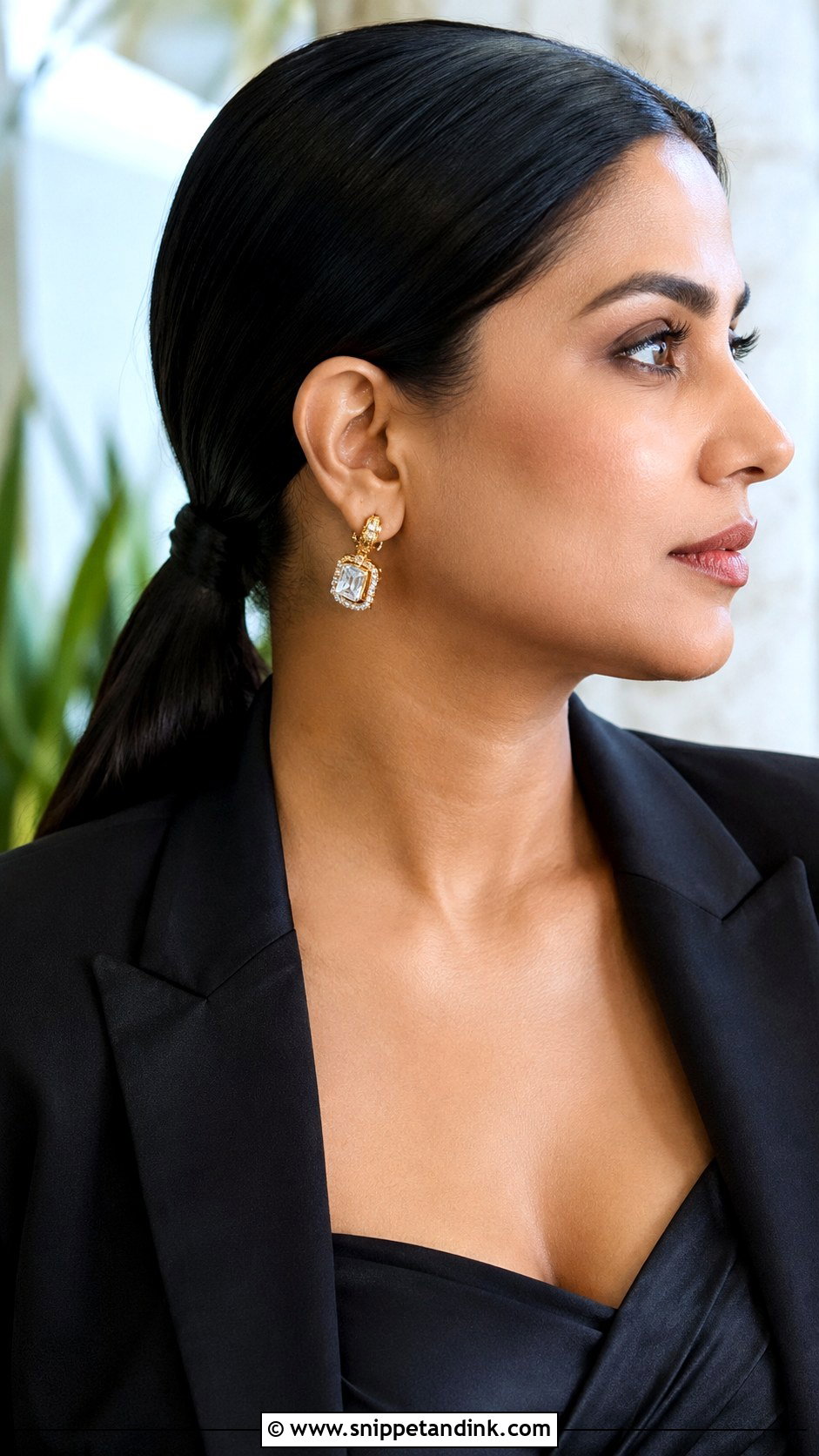
Minimalist brides tend to love this one, and it’s harder to do well than it looks. The hair needs a smooth blow-dry and a flat iron before it’s pulled low to the nape, otherwise the ponytail shows every bump. I hide the elastic with a strand wrapped around the base and pinned underneath. Heavy statement jewelry and sharp tailoring suit it, which makes it a natural fit for cocktail nights and modern receptions. It keeps the focus squarely on your face.
9. Braided Bun With Gold Hair Chains
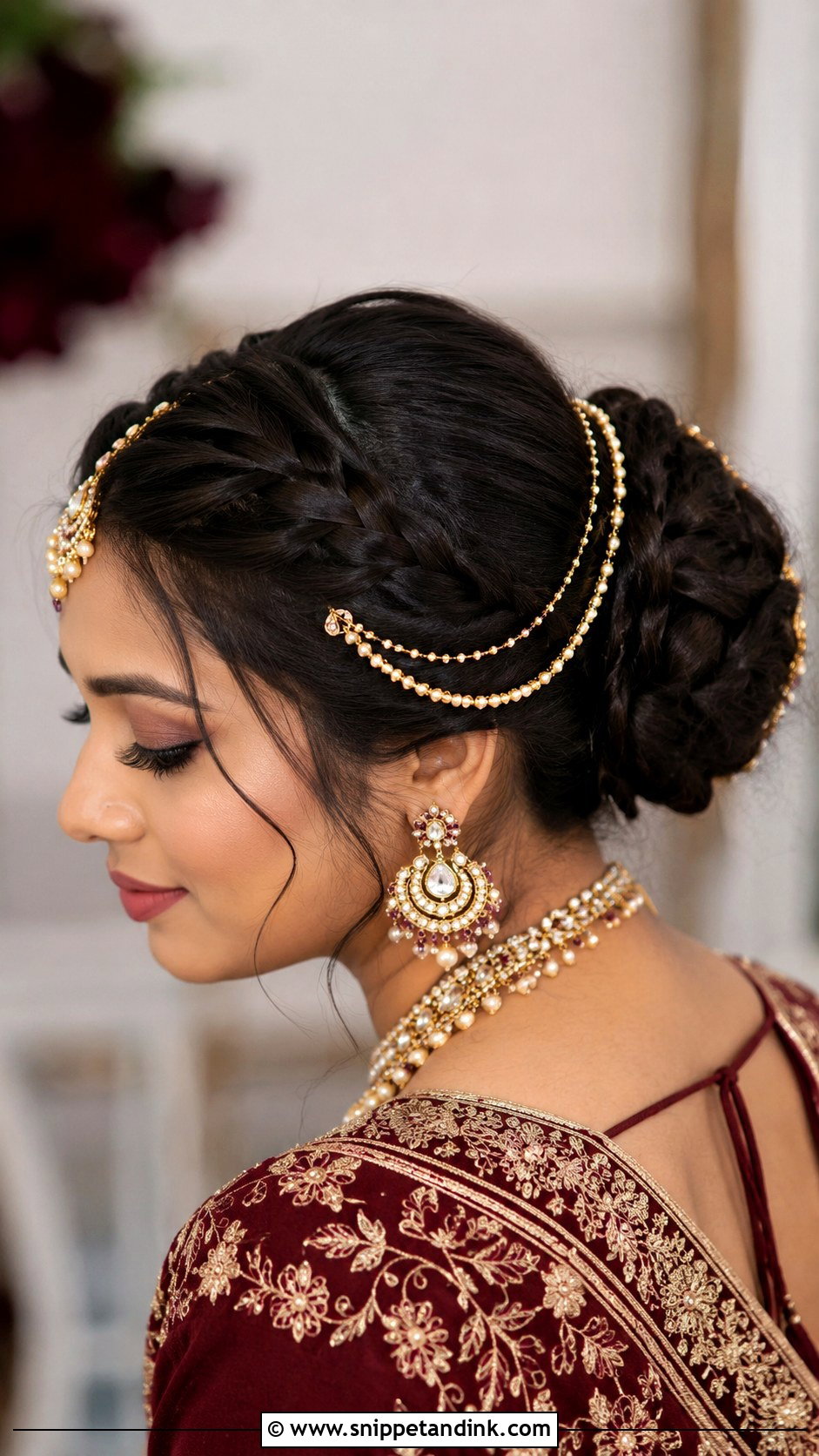
Braided sections coiled into a sculpted bun hold better than a plain bun through long ceremonies, because the braids lock the hair in place. I drape delicate gold hair chains or matha patti accents across the crown last and pin the chain ends into the braids, which gives a Mughal-inspired finish with antique kundan jewelry. Thick or medium hair suits it best. It’s a lot of detail, so I’d keep the rest of the hair simple.
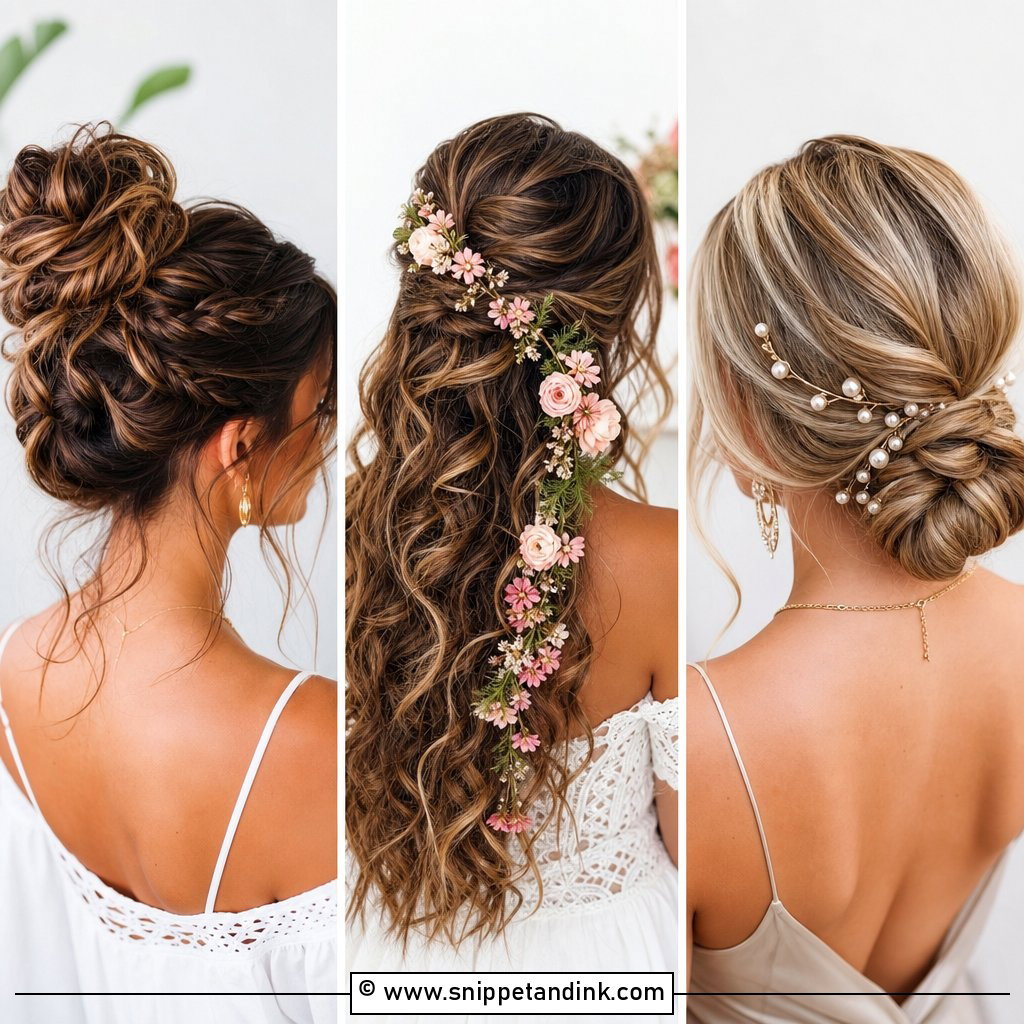
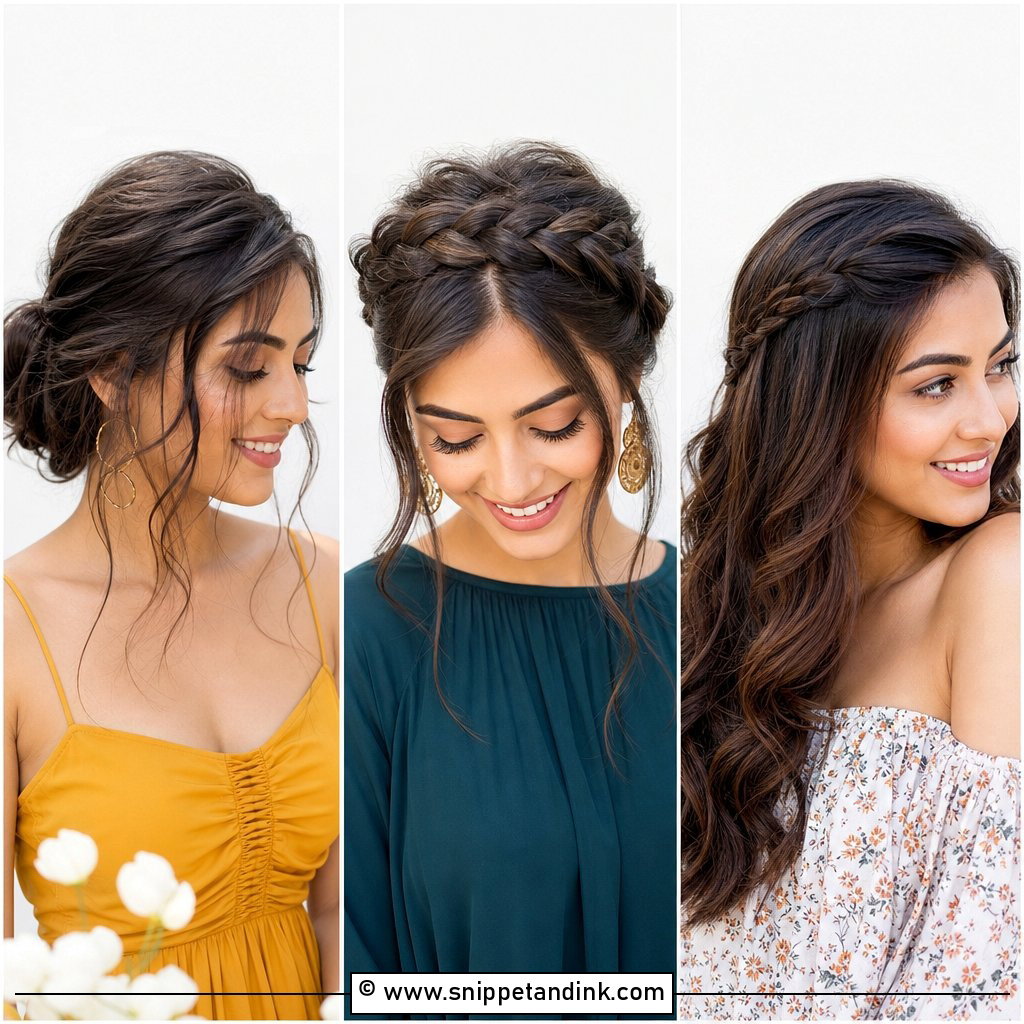
10. Messy Bun With Baby’s Breath
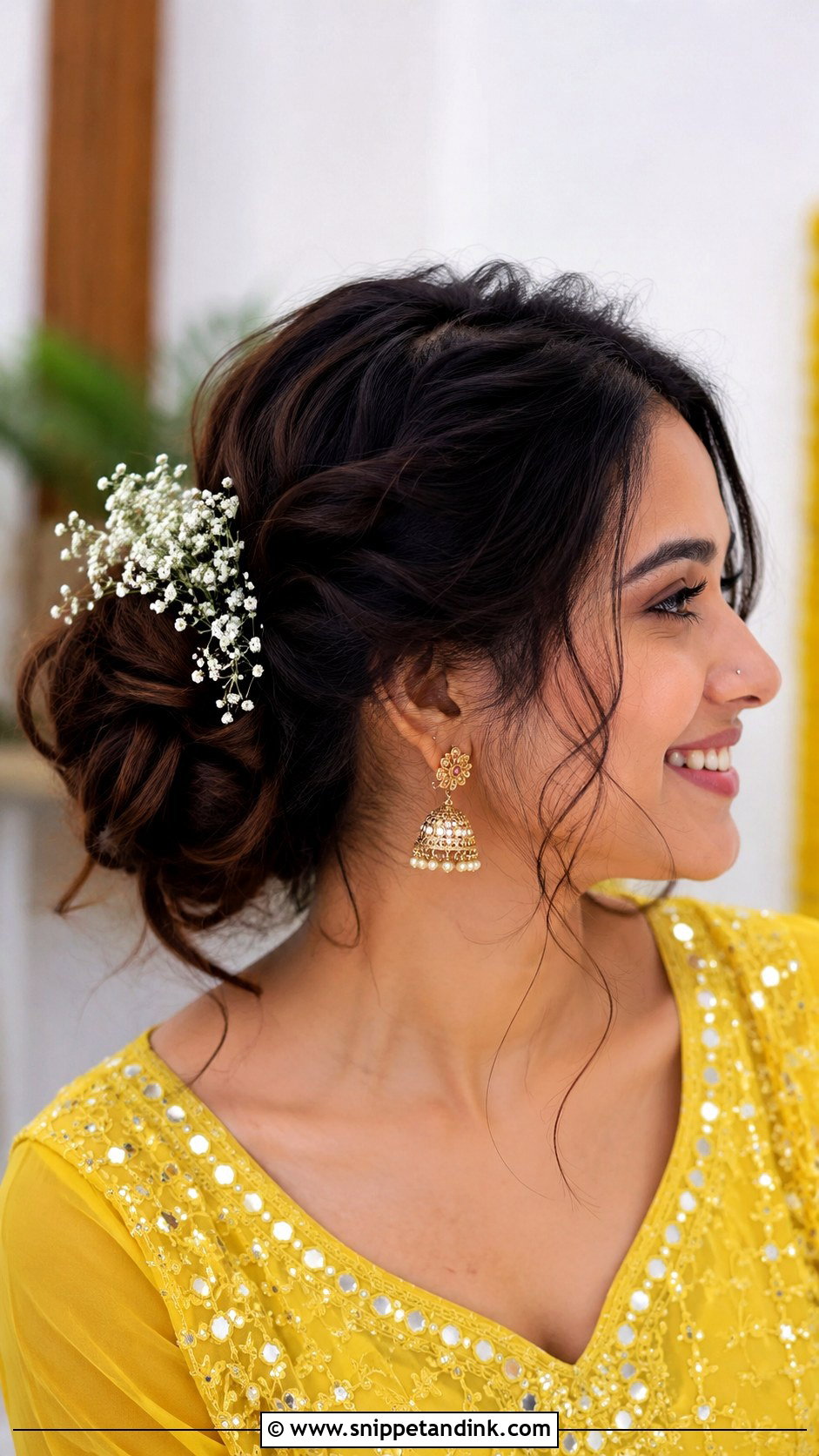
A messy bun with a few loose strands around the face feels relaxed and romantic. It’s easy to tuck sprigs of baby’s breath into it, which hold up well out of water. The trick is that the mess is planned. I curl and texture the hair first and pin in loose sections, otherwise it looks unfinished rather than soft. It suits a haldi, mehendi or a small daytime function, with simple jhumkas and a light dupatta.
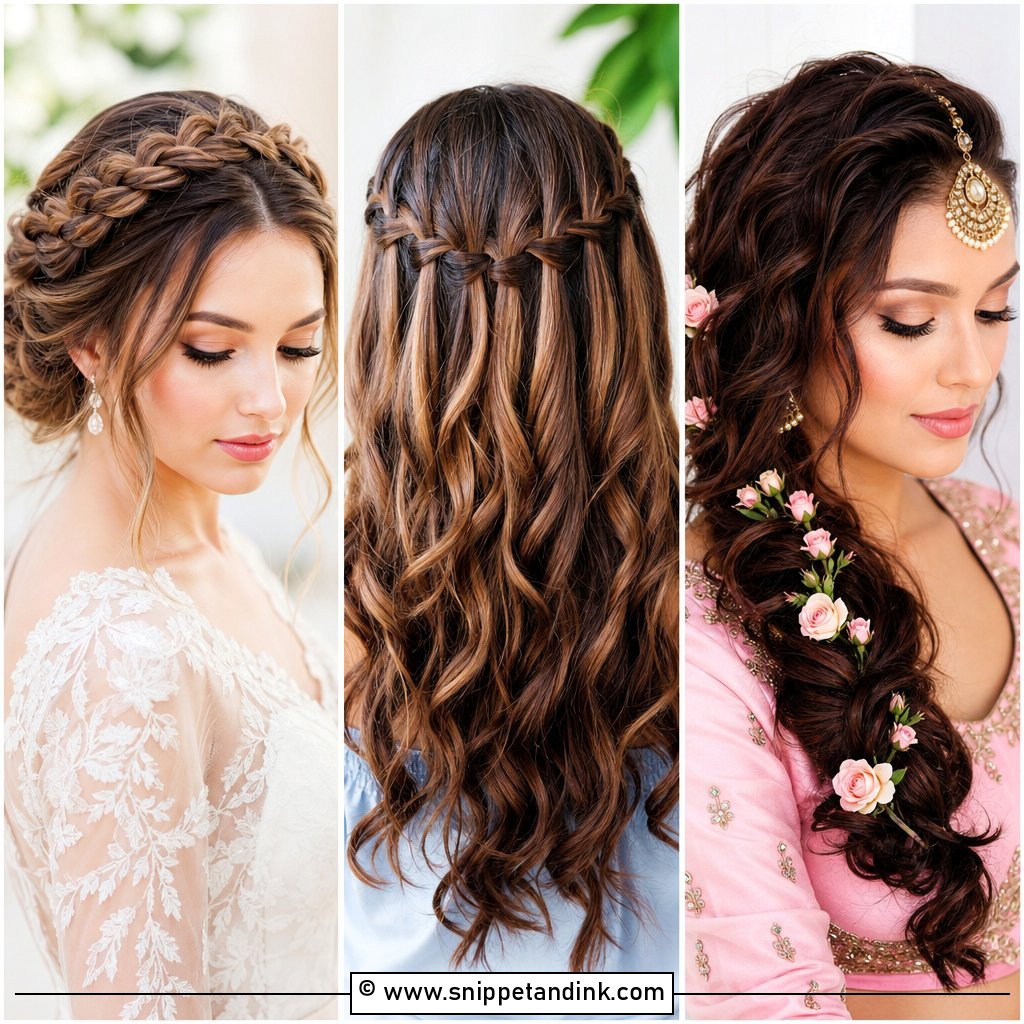
11. Dutch Braid Crown For Haldi
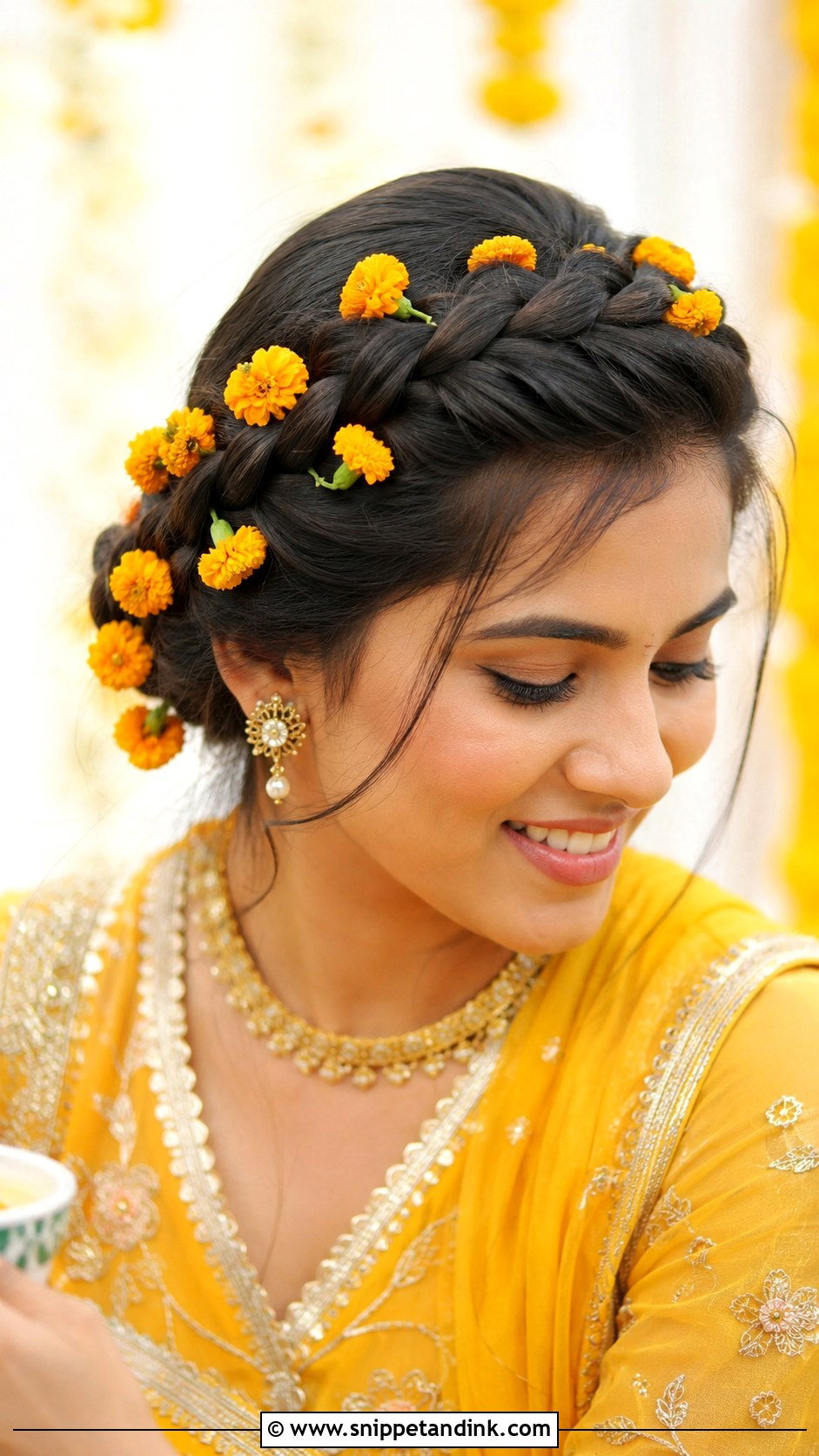
Haldi is messy, so the style needs to be practical. A Dutch braid crown wraps around the head like a halo and keeps every strand off your face while the turmeric paste goes on. I’d tuck in marigolds or other yellow blooms to match the day. Plan for the paste. Turmeric can tint light or colour-treated hair, so a braid that keeps hair tight and away from the face and neck helps, and a little oil on the hairline before the ceremony makes the paste easier to wash out. It suits long to medium hair.
12. Floral Bun With Cascading Roses
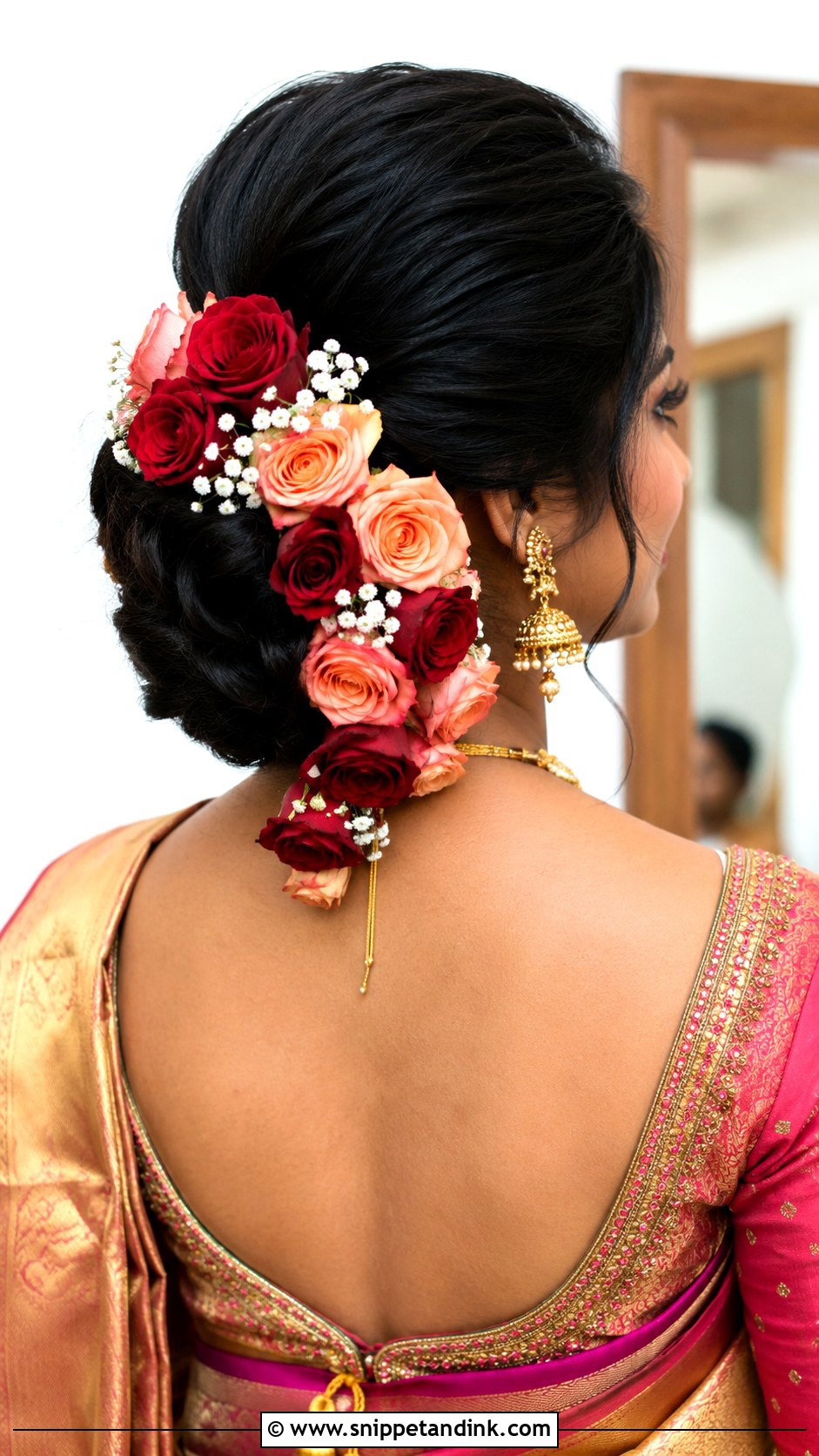
A full bun with roses cascading toward the neck is the most dramatic floral option here. I build a structured bun first so it can carry the flowers, then layer fresh roses down toward the nape, wiring and pinning each stem. Blush or deep red roses work with traditional silk sarees. Fresh roses wilt faster than jasmine in a hot venue, so I’d order a few spares and keep them chilled until you’re dressed. This suits a bride who wants the flowers to lead.
13. Wavy Side Braid With Loose Tendrils
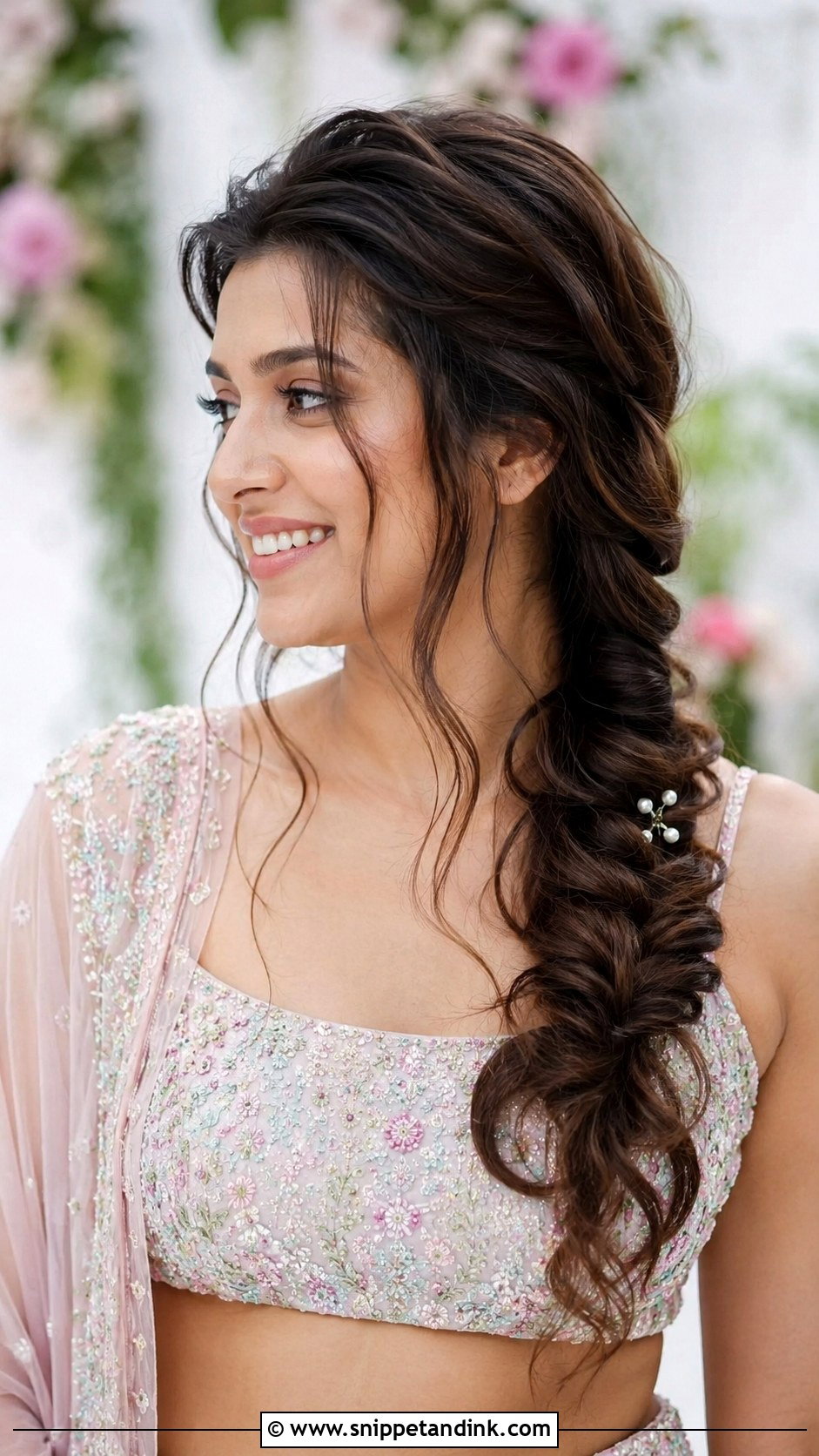
A loose braid over one shoulder with face-framing tendrils feels light and comfortable. I texturize the braid by pulling each section slightly wider, which makes it look fuller. It works for destination weddings, beach mehendis and sangeet functions, especially on naturally wavy or curly hair. A small flower or pearl pin near the top finishes it. On very straight, silky hair the braid tends to slip, so a texture spray before braiding helps.
14. Bouffant Updo With Statement Tikka
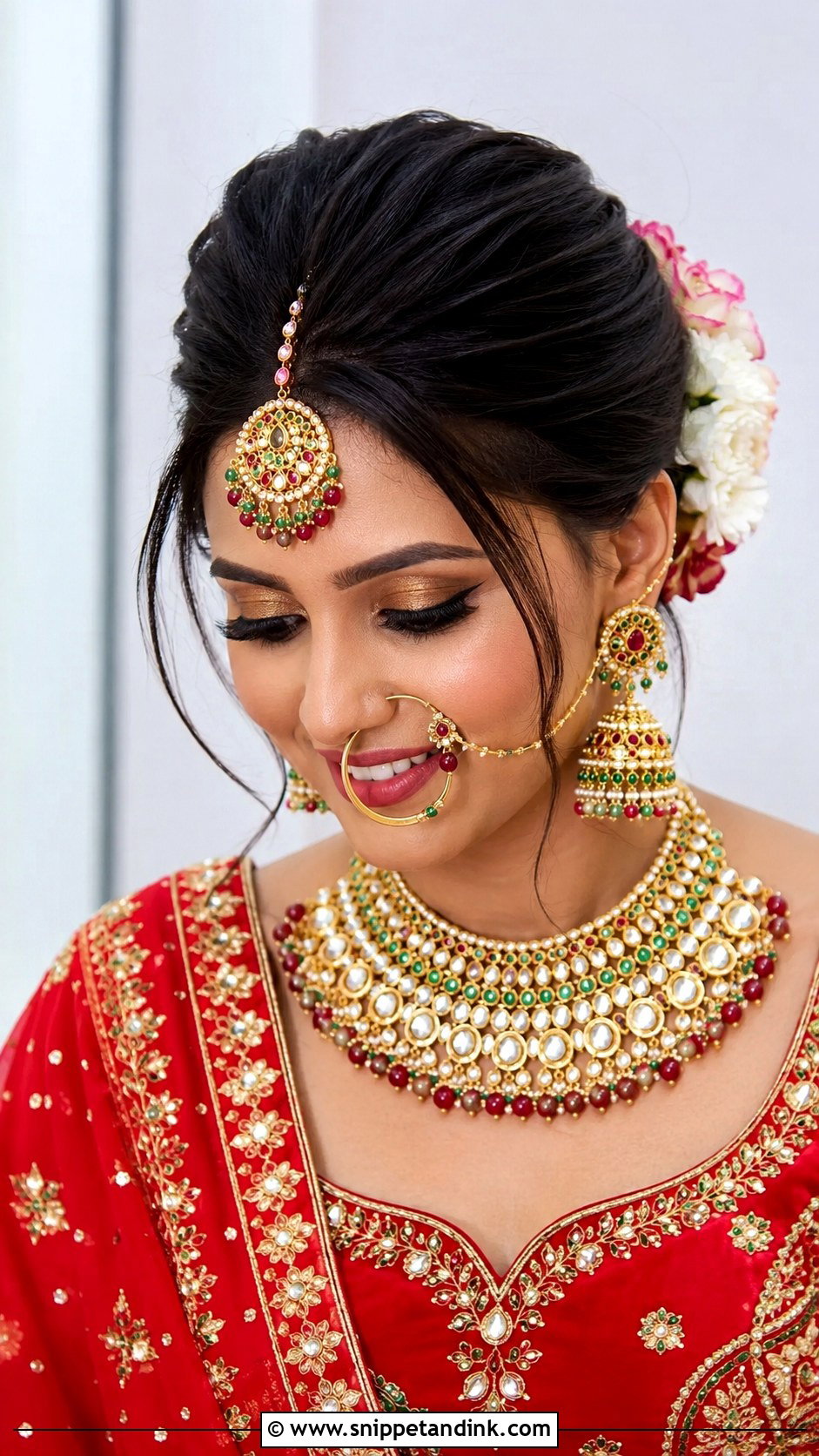
The bouffant brings vintage Bollywood height. I tease the crown in thin sections, smooth the top layer over it and sweep the rest into an updo behind. It gives a bold maang tikka or borla a raised base, and it pairs with heavy Rajasthani jewelry and rich lehengas. Two cautions: it takes time in the chair, and a very tall bouffant can push a heavy dupatta back off the head. I keep the height a little lower if you’re wearing the dupatta on your head.
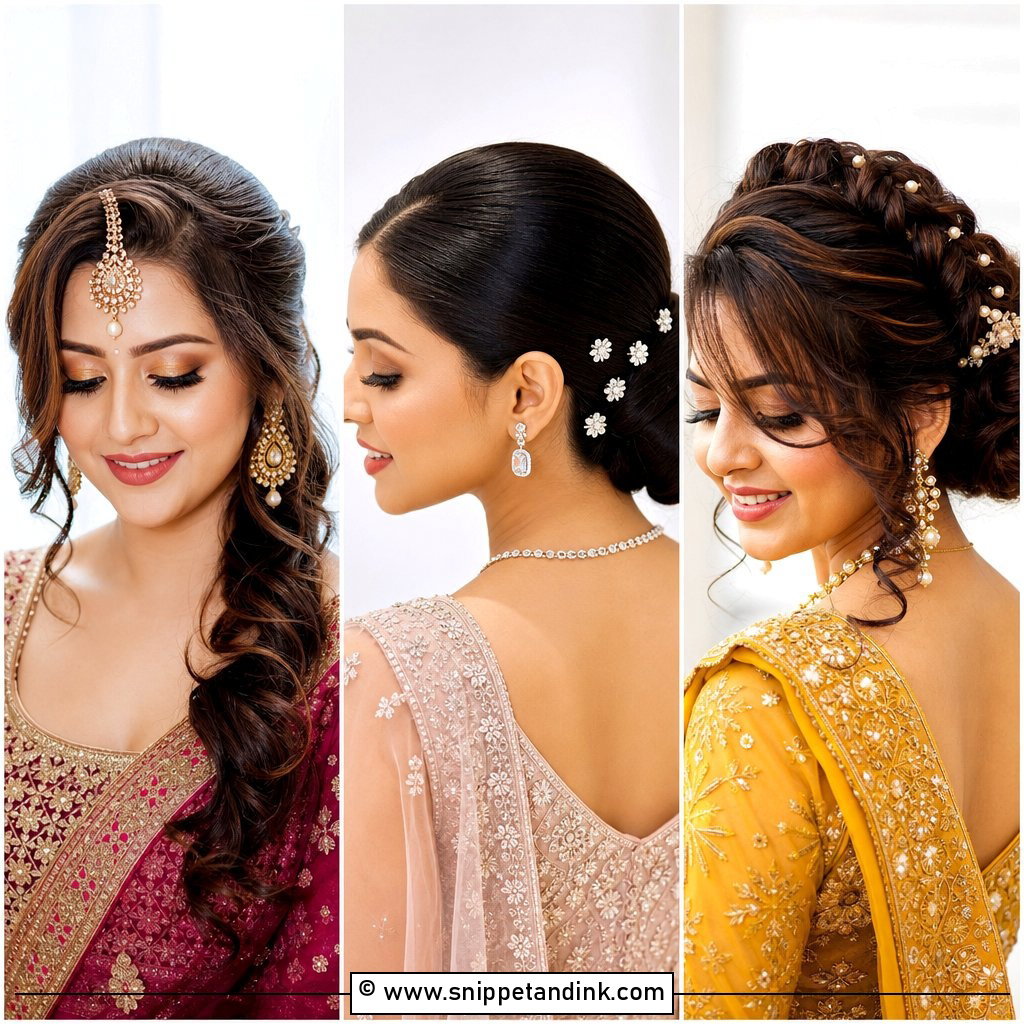
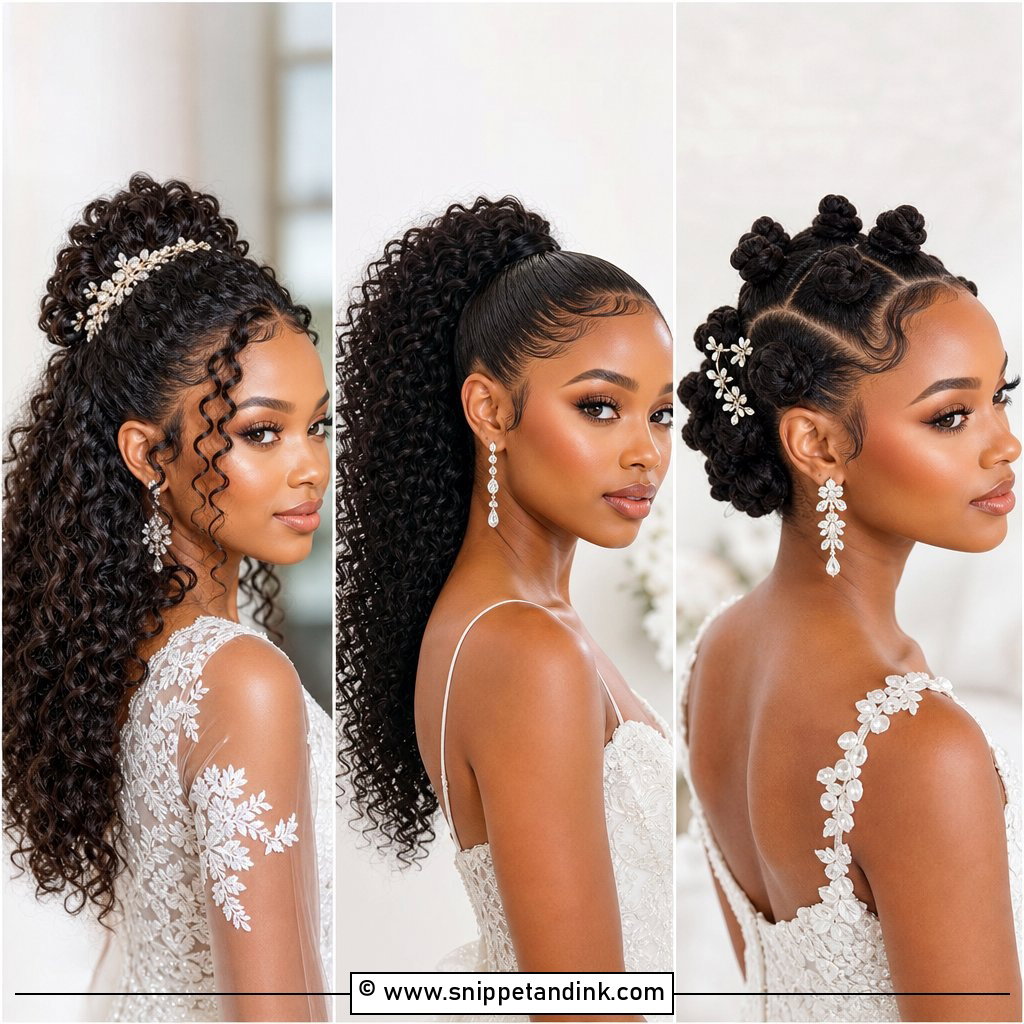
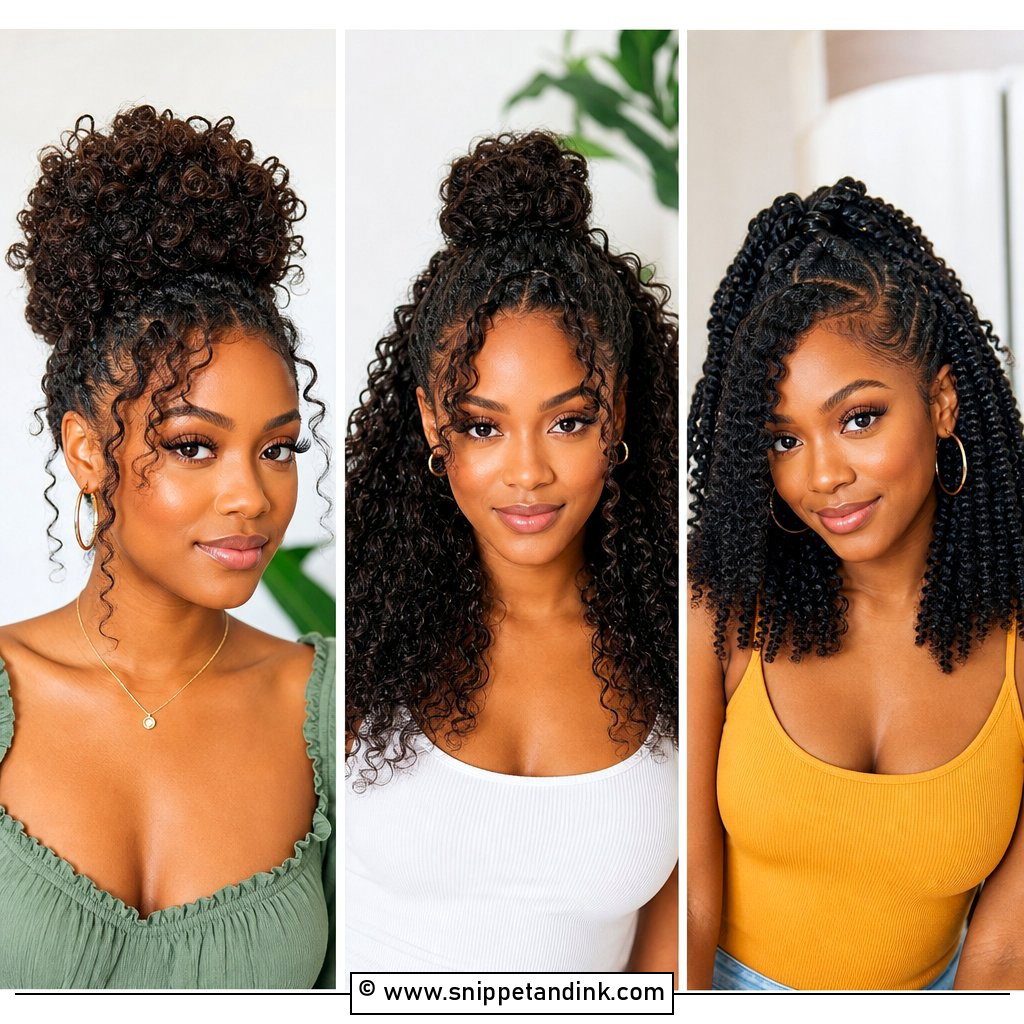
15. Loose Curls With Maang Tikka And Open Hair
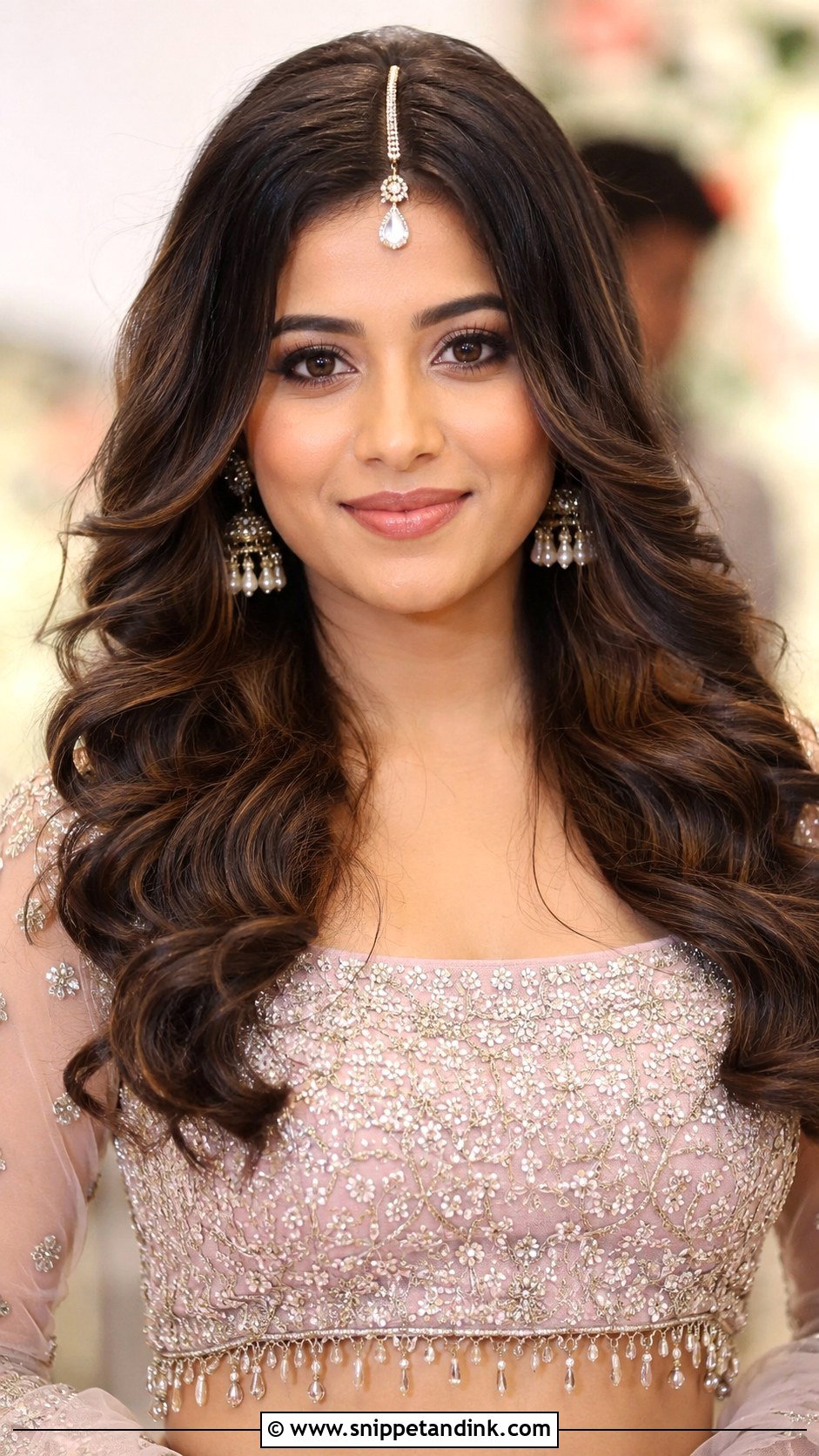
Loose curls worn down with a centred maang tikka on the part look soft and suit both traditional and contemporary outfits. A tikka on open hair needs anchoring, so I pin its hook to a small hidden section of hair at the crown. It suits receptions and pre-wedding shoots, where movement shows. Medium to long hair with plenty of volume works best, and a light shine spray keeps the curls glossy.
16. Twisted Updo With Kundan Pins
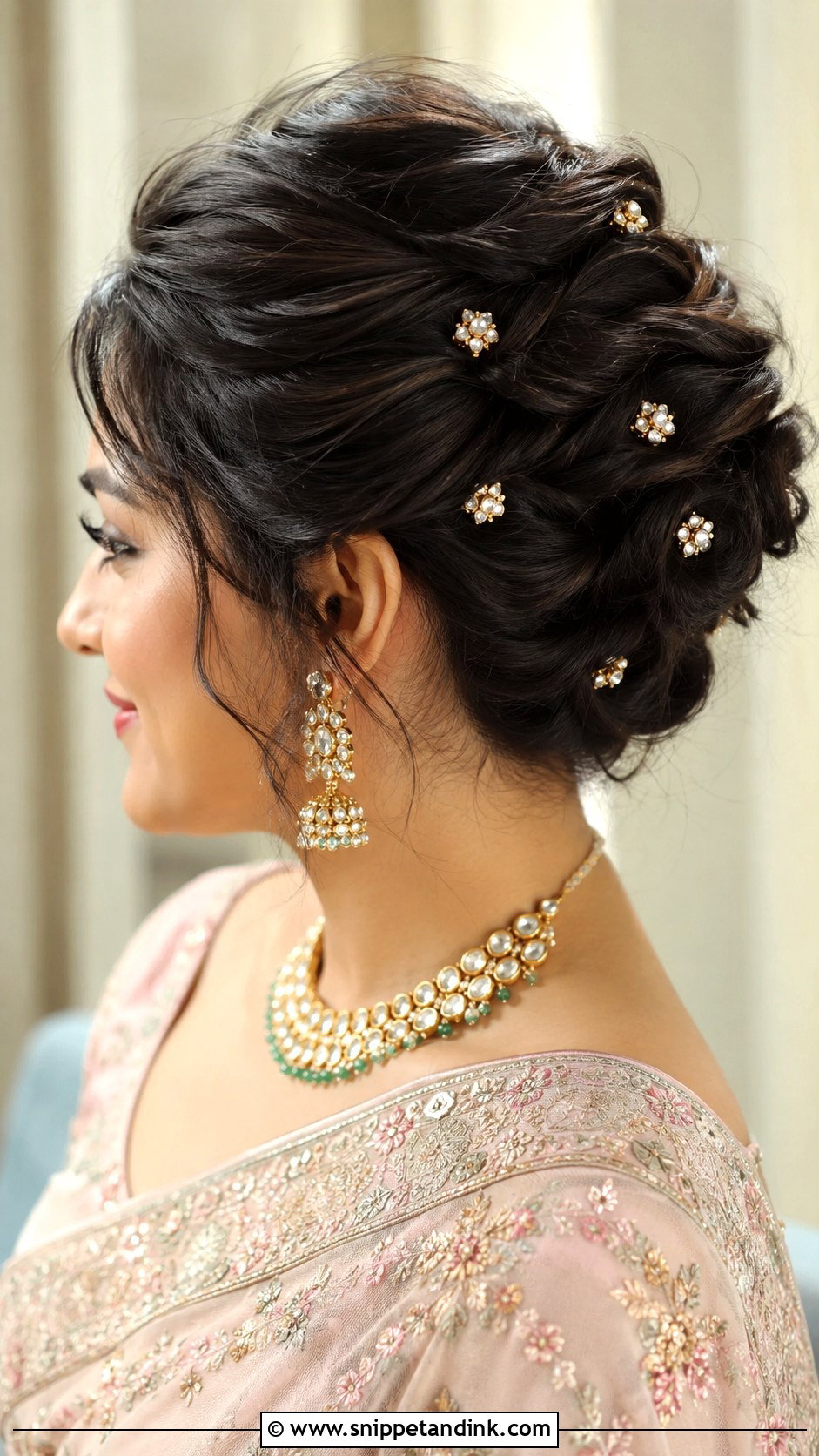
Small sections twisted and pinned into a swirled shape create detail without heavy flowers or chains. Kundan or polki pins scattered through the twists echo your jewelry. The twists also hold well through long events, so it’s a reliable option on fine to medium hair. I place the pins where twists overlap so the shanks stay hidden. It suits most face shapes.
17. Long Braid With Jadanagam Jewelry
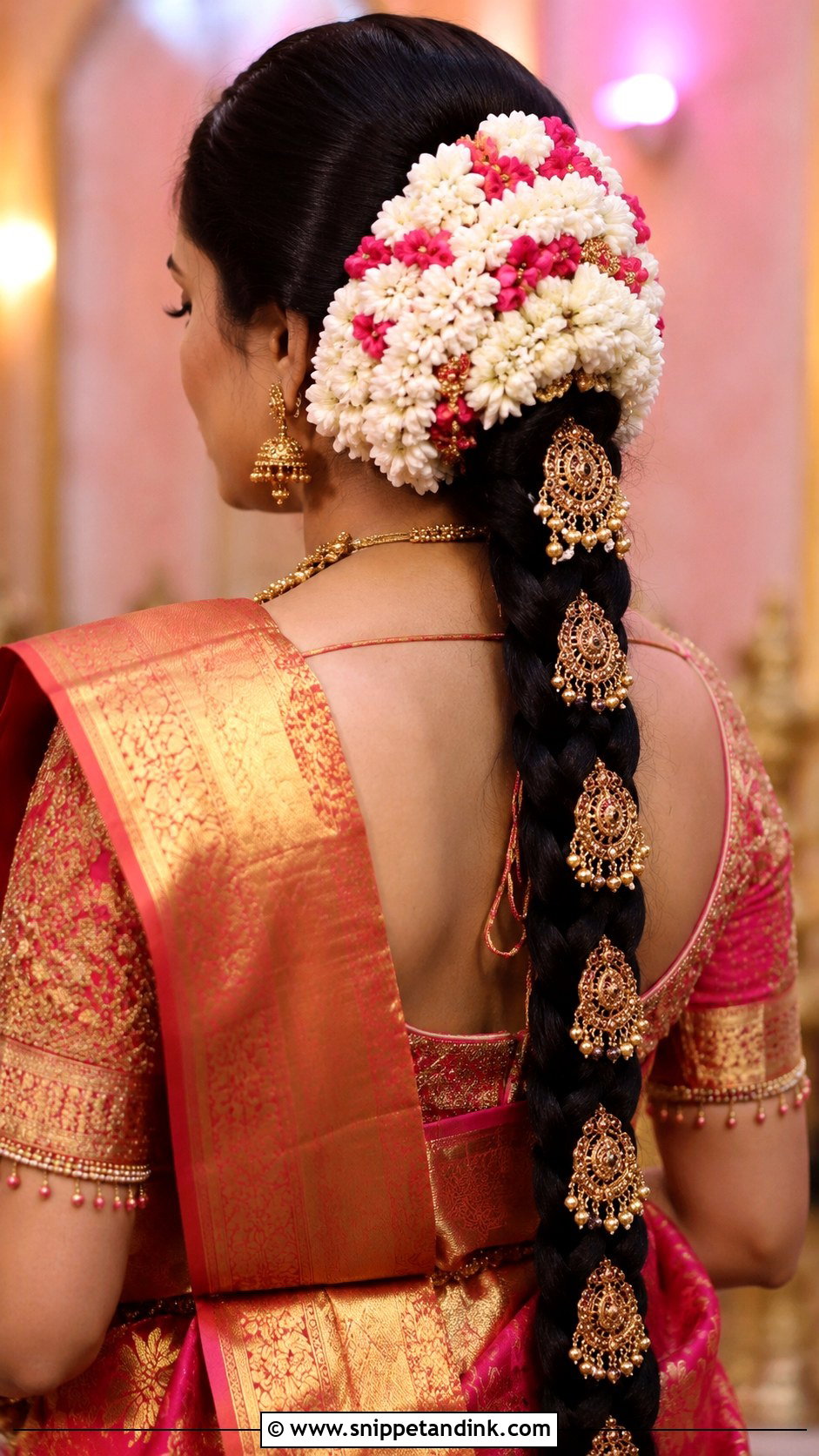
Few styles capture South Indian bridal splendor like a braid dressed with jadanagam jewelry. The ornament runs the length of the braid in gold and gemstones, often with woven flowers alongside. Jadanagam pieces are heavy, so I build the braid tight from the crown and stitch or pin the ornament to it at several points rather than hanging it from the top. The braid stays thick and structured down your back, and it’s the signature look for temple weddings with silk sarees. Long, full hair is the base, often with an extension.
18. Soft Bun With Pearl Headband
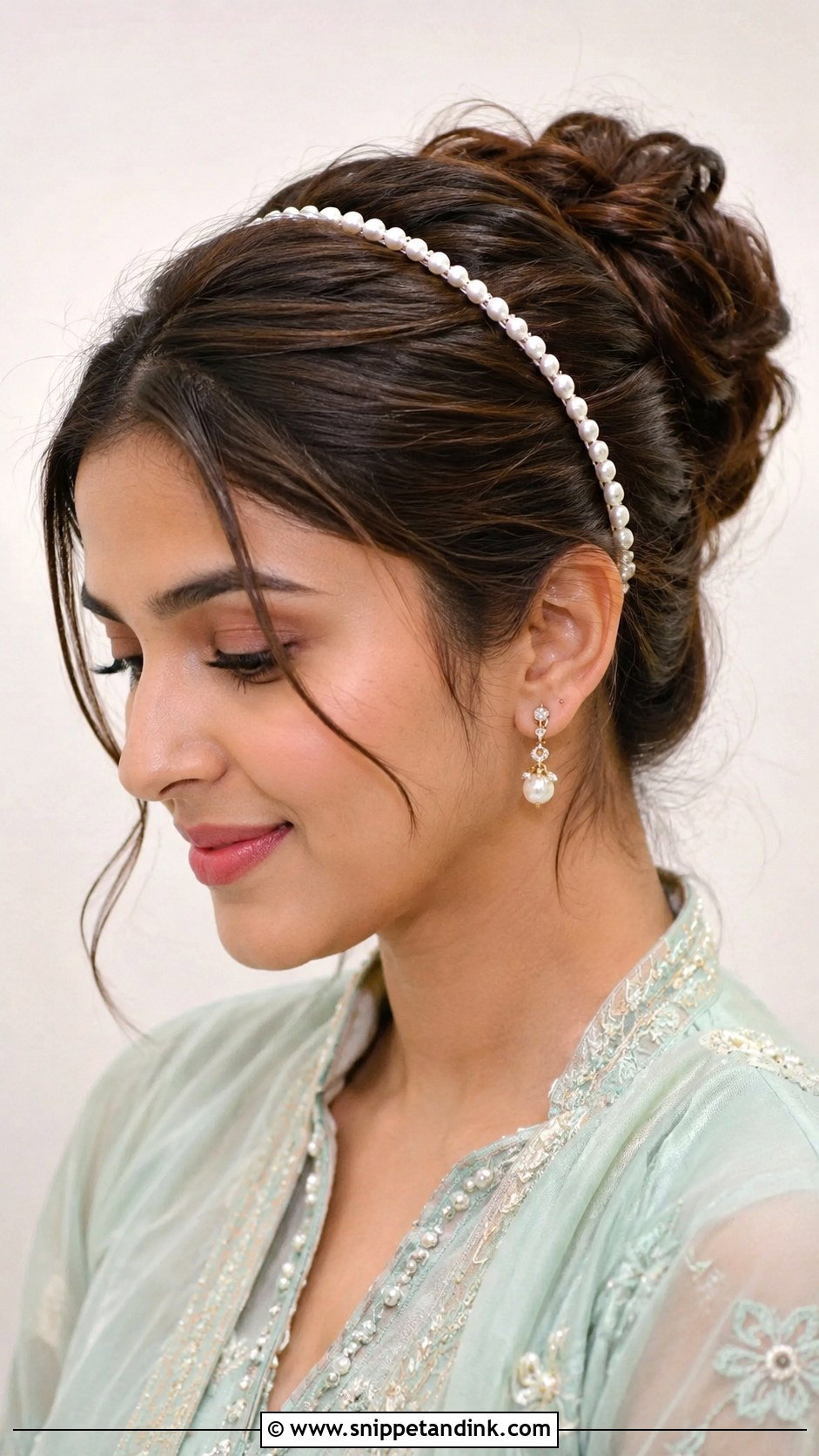
A soft, slightly textured bun with a pearl headband across the crown looks fresh and a little vintage. It suits engagement parties, small ceremonies and fusion weddings where you’d rather skip heavy ornaments. Pearl earrings tie it together. I set the headband before pinning the bun so the band’s ends hide under the side sections.
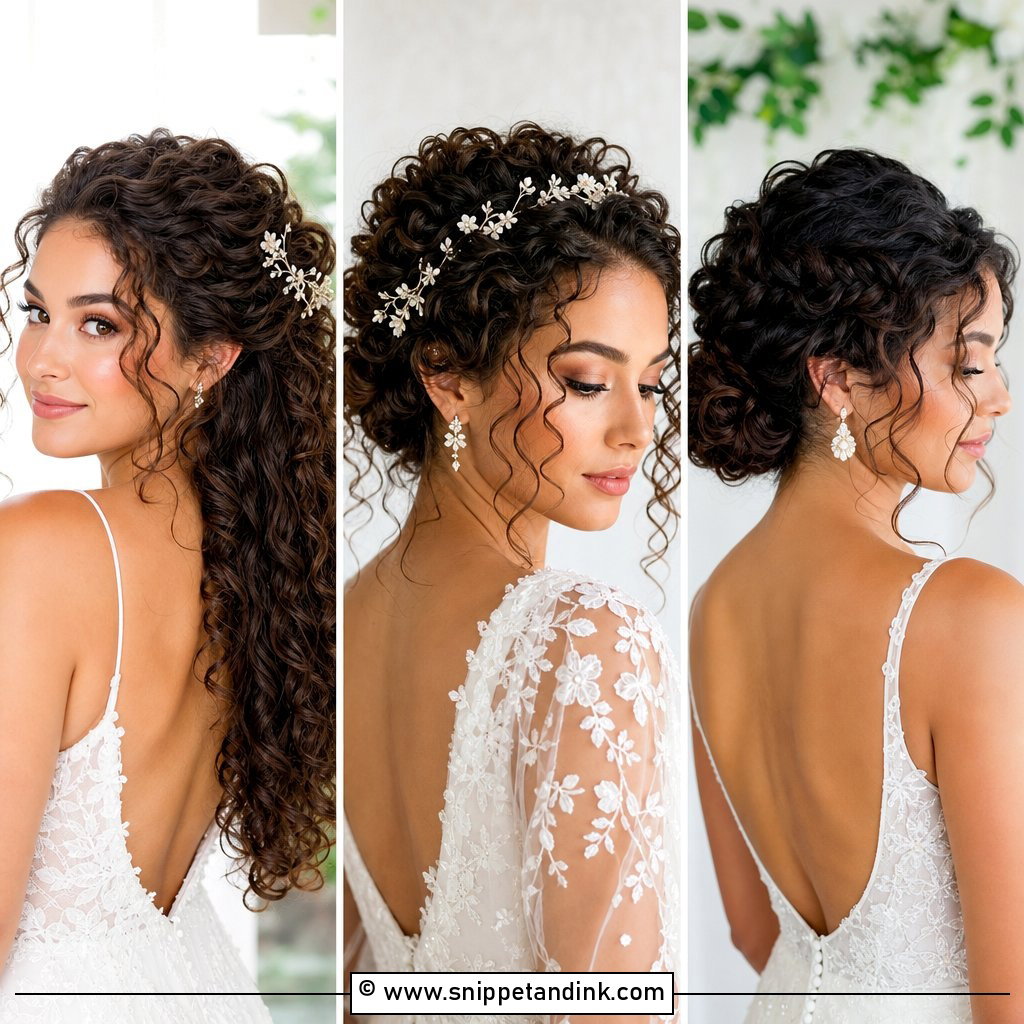
19. Curly Open Hair With Floral Tiara
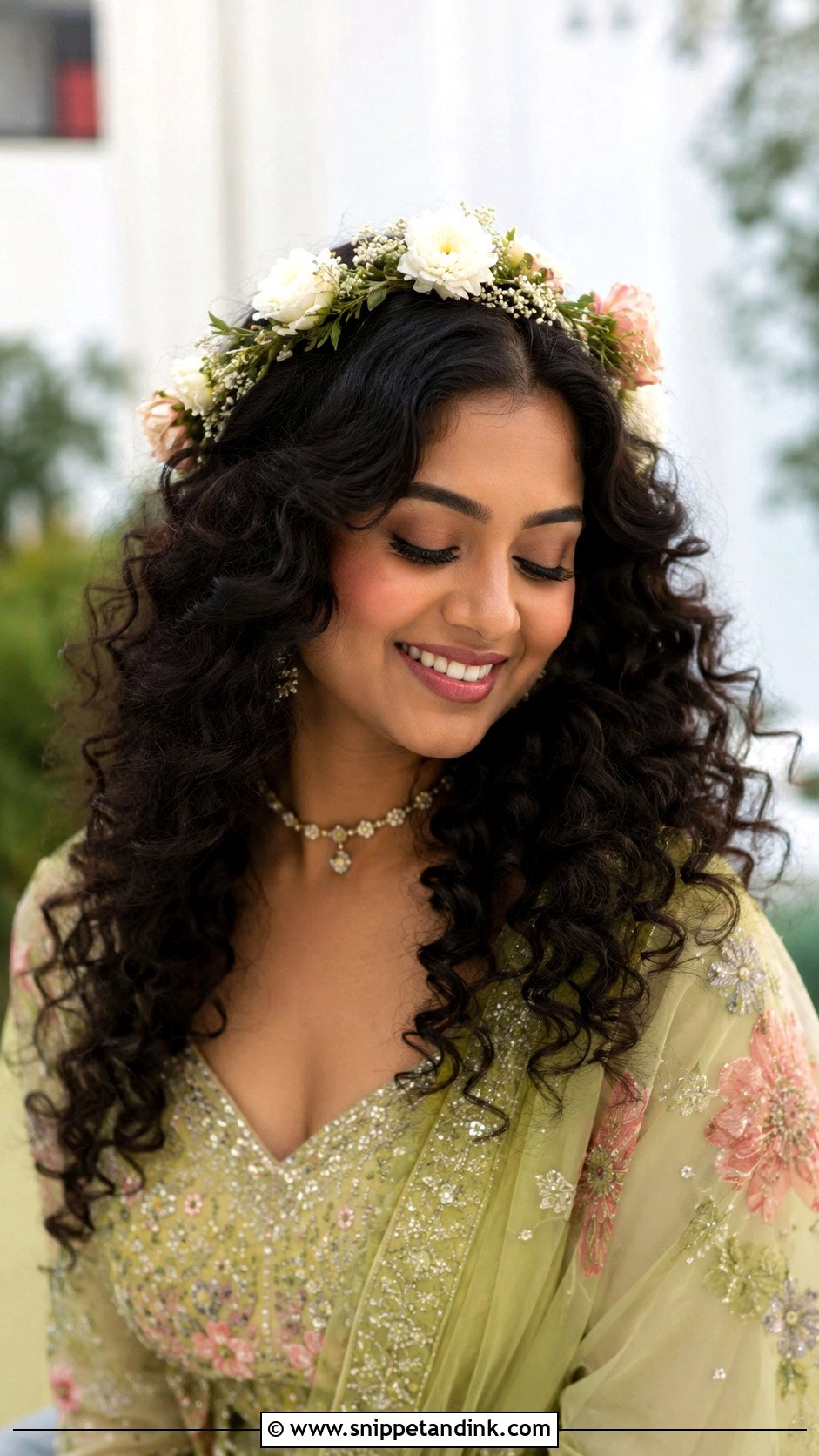
Natural curls worn down with a floral tiara suit a mehendi, haldi or daytime garden ceremony. The flowers sit like a halo. I’d keep the jewelry light so the curls and flowers lead. For curly hair, I don’t brush the curls out; I define them with a cream and diffuse, and pin the floral band in with grips crossed under it. Silk flowers last better on a hot afternoon.
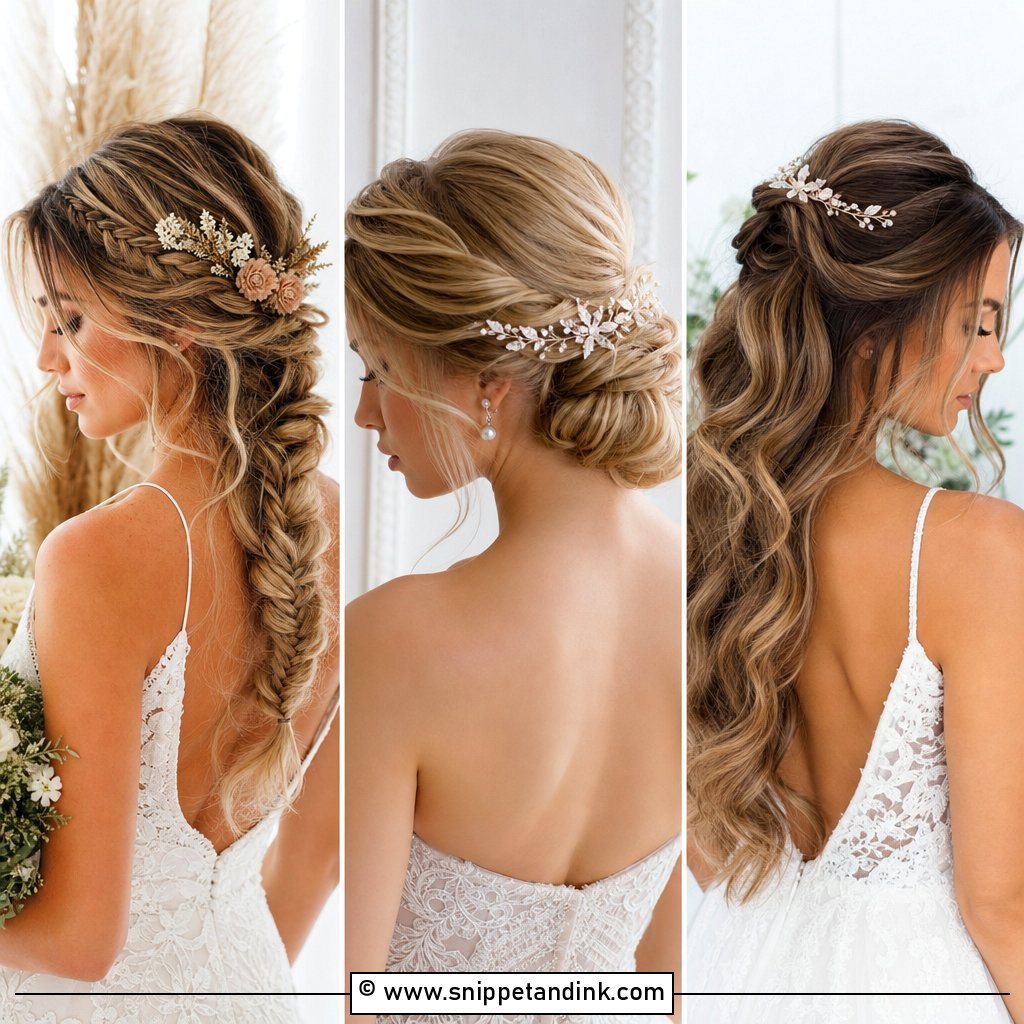
20. Sleek Bun With Statement Hair Accessory
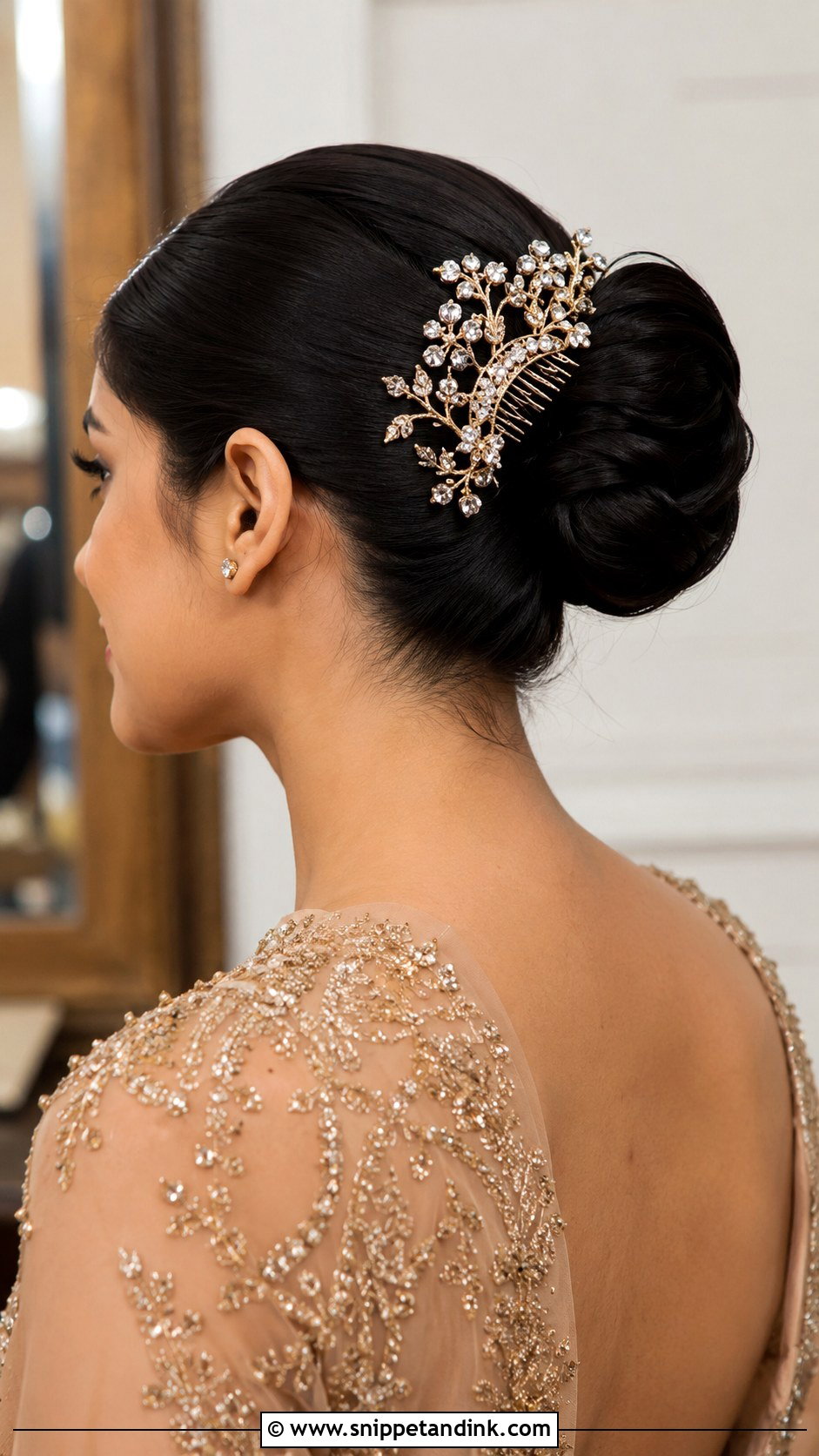
The last look is clean lines with one bold accessory. All the hair goes back into a smooth, polished knot, and a single statement piece like an ornate gold comb or jeweled brooch does the work. Reception brides after an editorial finish tend to pick it, and it keeps the face and jewelry in focus. I’d skip it if you’re already wearing a heavy matha patti; two strong pieces compete.
Where the Dupatta, Tikka and Gajra Actually Get Pinned
The jewelry and dupatta decide the hairstyle more than any photo does. A bride wearing a heavy dupatta draped over the head needs a bun placed so the dupatta can sit flat and be pinned into it. I usually set the bun a little lower than a reception bun for exactly that reason.
Tikka, matha patti and passa
A maang tikka hangs from a hook pinned into the part. A matha patti needs anchor points on both sides, and a passa or jhoomar needs a secure base on one side. I always ask for the jewelry at the trial so I can build those anchors into the style instead of pinning ornaments on top at the end.
Fresh gajra on a long day
Order jasmine strings for the morning of each function, not the night before. Keep them wrapped in a damp cloth in the fridge until you’re ready. The buds open as they warm up, so a tightly budded gajra looks fuller later in the day. Ask for a spare string, since jasmine can bruise and brown if it’s pressed under a dupatta.
Bring These Pictures to Your Hair Trial
Take three or four of these to your stylist and match each to a function rather than picking one favourite. Bring photos of each outfit and the jewelry, especially the tikka, passa and dupatta, because those decide how the hair has to be built. Plan the heavy styles for the days with the most photos, and give your hair an easier look in between. Most of all, make sure you can sit through a long ceremony without a headache from pins.
You'll Like These Ideas:



Leave a Reply