
A Tamil bridal hairstyle has a lot of work to do. It has to carry jasmine, gold and sometimes a hair extension through a muhurtham that often starts before sunrise, then still look composed in the reception photos that night. When I plan Tamil bridal hair, I start with the saree and the jewelry set, because a heavy Kanjeevaram with temple jewelry asks for a fuller, more structured shape than a pastel silk does. The poo jadai is still the style most families picture, though the timeless veni bun and a softer half-up style both earn their place. Here are 20 Tamil bridal hairstyles, with notes on how each one is built and who it suits.
Building a Jadai That Can Carry Gold and Jasmine for Hours
Almost every traditional Tamil style below rests on the same foundation, so it’s worth knowing how a stylist builds it. Very few brides have hair long and thick enough to carry a full jadai, billai and several strings of jasmine on their own. That’s normal, and it’s why I plan the base before I think about decoration.
- The extension: a false braid or a few wefts matched to your natural color, clipped close to the scalp at the crown. Bring it to the trial so I can trim and blend it, not on the morning itself.
- The anchor: a small, tight base (a ponytail or a tiny braided knot) that everything else is pinned or sewn into. Ornaments pinned straight into loose hair drift within an hour.
- The ornaments: heirloom billai, kunjalam and nethi chutti should all come to the trial. Older pieces are heavier and have different fastenings, and I need to plan for both.
- The flowers: these go on last, after the saree is draped, so the pallu doesn’t drag across them.
If your hair is very fine, tell your stylist early. I’d rather build a lighter version of the jadai with fewer billas than load a fine head of hair until it aches by the time the thali is tied.
1. Traditional Poo Jadai Braid
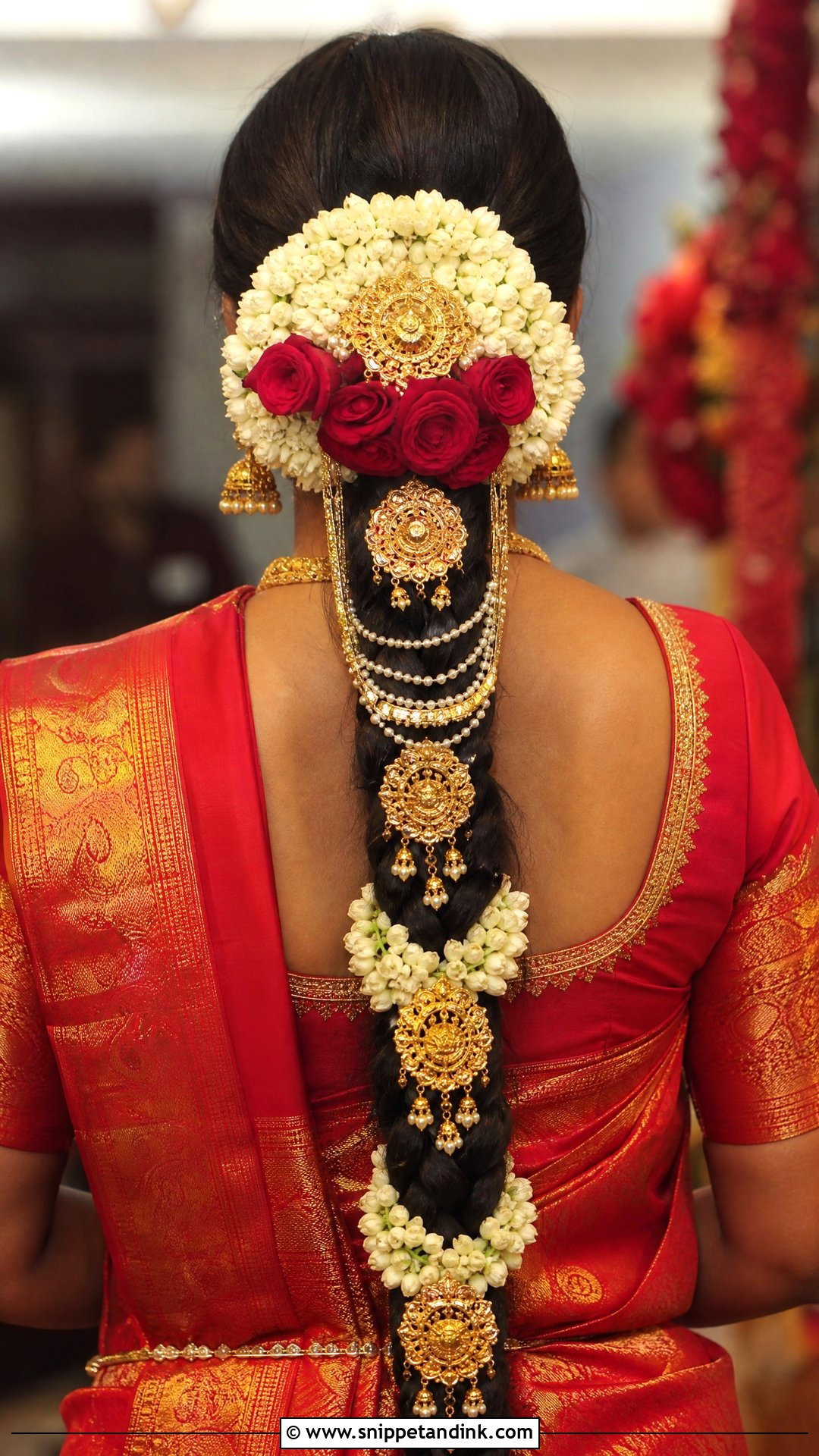
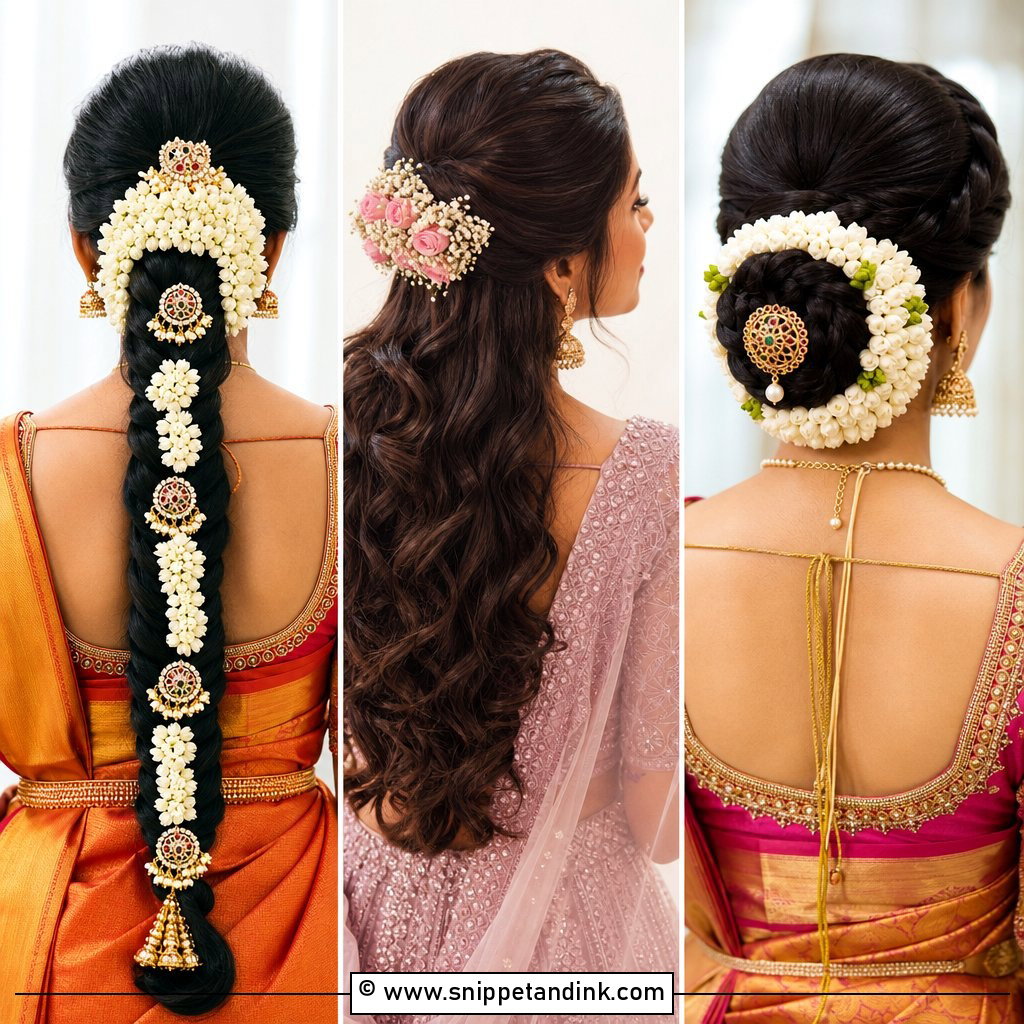
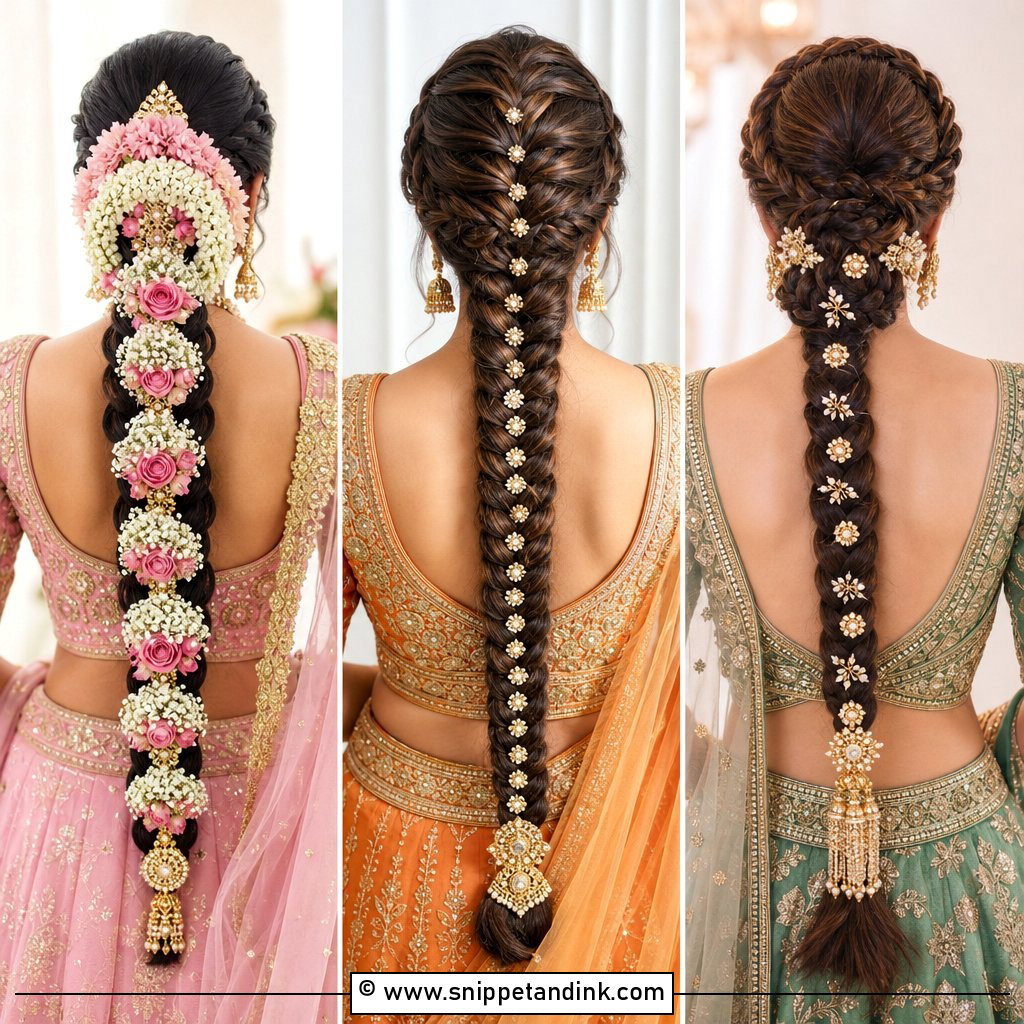
The poo jadai is the style I’m asked about most, and the one that takes the most planning. It’s a long, thick plait decorated section by section with fresh flowers, pearl strings and golden billas laid one after another down its length. Most brides don’t have the length or density for the full version, so I build the base with a false braid clipped in under the natural hair and anchored with crossed pins at the crown. That anchor matters, because a fully dressed jadai feels heavy by the third hour. Paired with a bright Kanjeevaram and temple jewelry, the classic poo jadai braid still does what it has done for generations.
2. Low Veni Bun With Jasmine
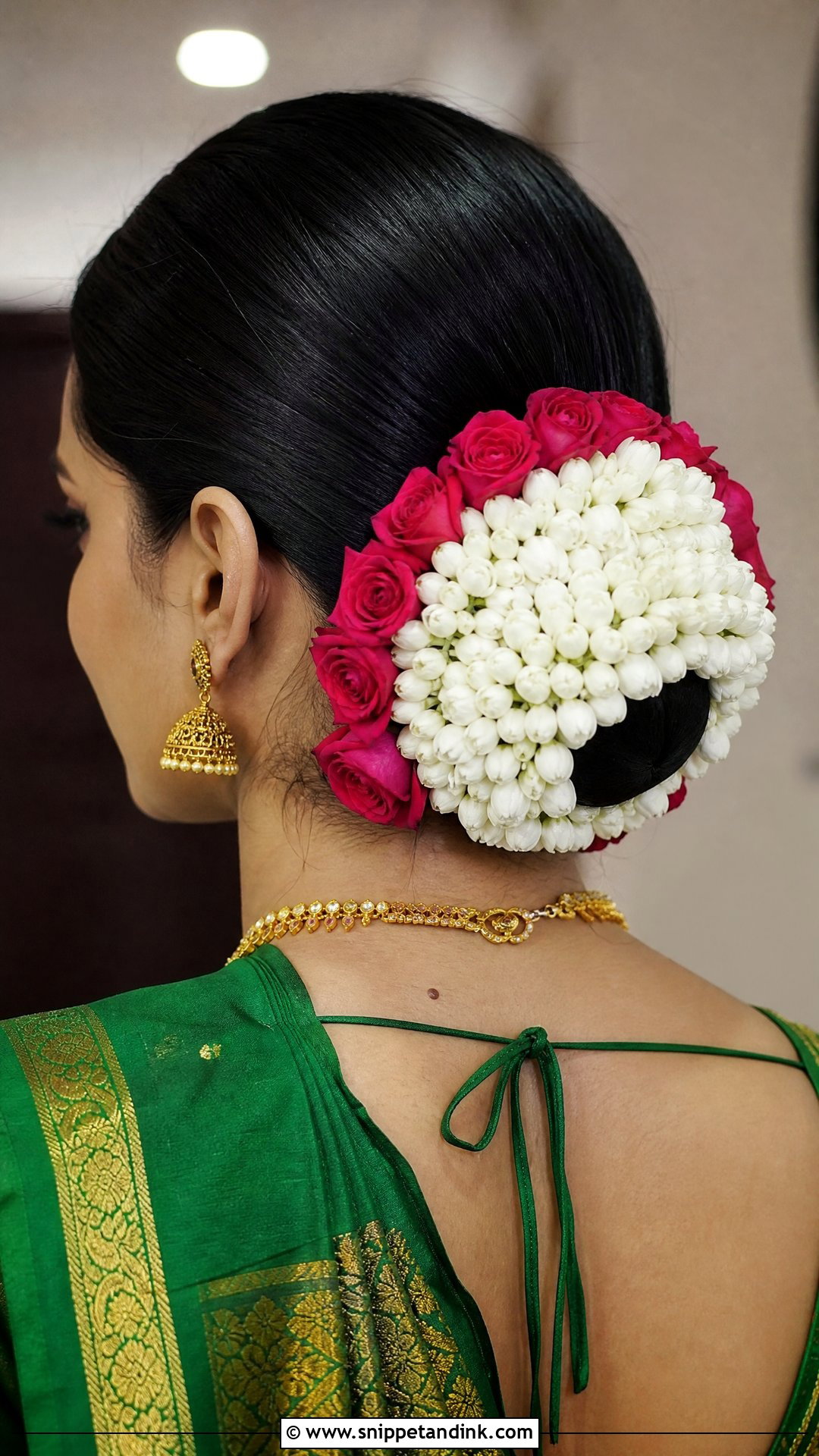
A low veni bun sits at the nape, which is why I suggest it to brides who get headaches from tight styles. The hair is smoothed into a round bun, then wrapped with a thick veni of jasmine and roses. Jasmine is traditionally linked with harmony in marriage, so many families want it there for meaning as much as fragrance. I pad the bun with a doughnut matched to the hair color so it keeps its round shape once the flowers add weight. White blooms read clearly against dark hair, and the muhurtham photos stay focused on your face and jewelry.
3. Jasmine Cascade Hairstyle
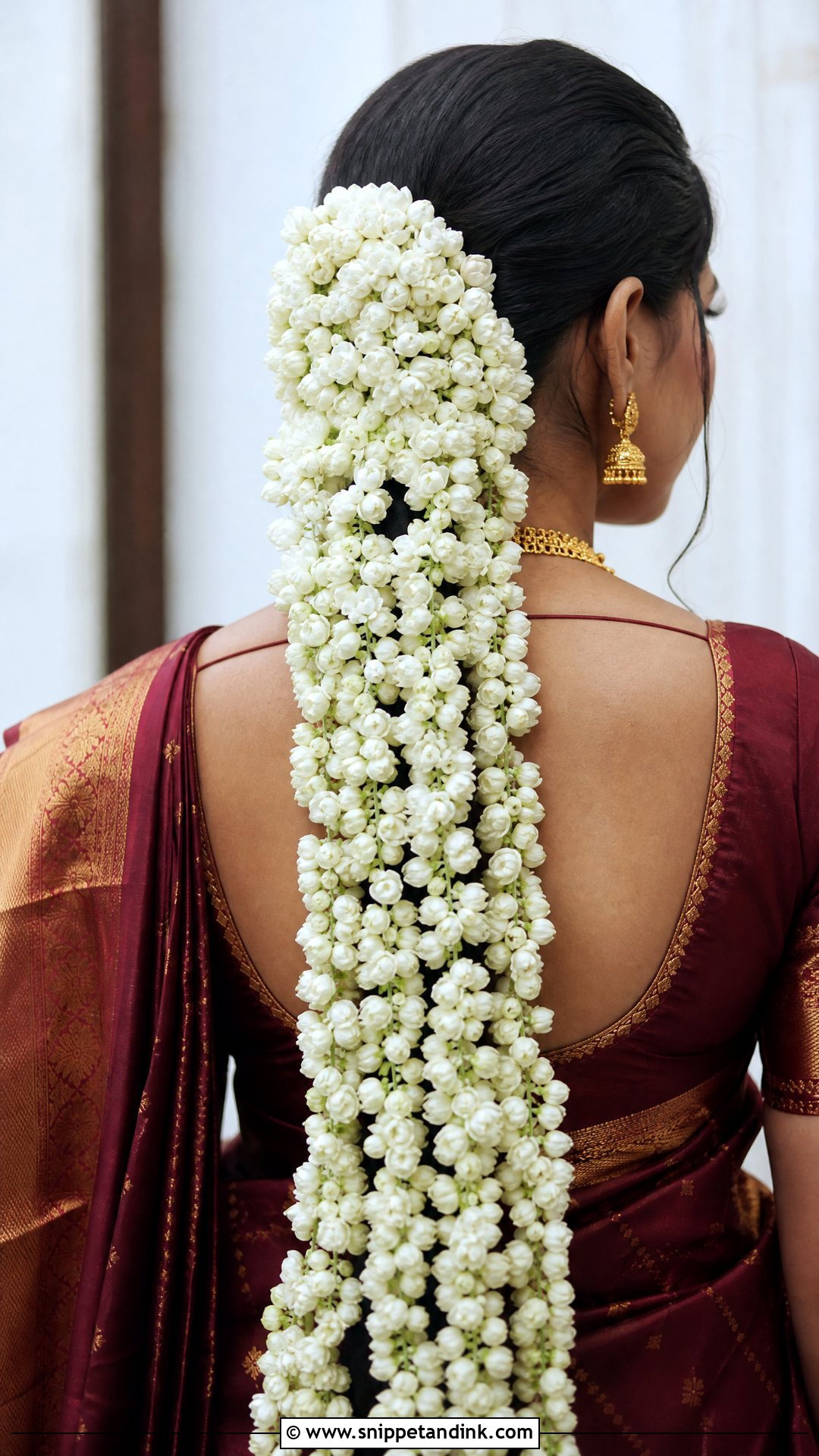
Here the jasmine falls down the back over the saree in a loose waterfall. It needs long hair or a good extension, because the strings are attached along a braid and need something solid to hang from. My one warning is weight. Several long strings of jasmine pull more than you’d expect, so I sew them onto the braid with thread instead of relying on pins. Sitting through rituals also crushes the lowest flowers, and I keep a short spare string to swap in before the couple portraits.
4. Ornamental Bun With Gold Accessories
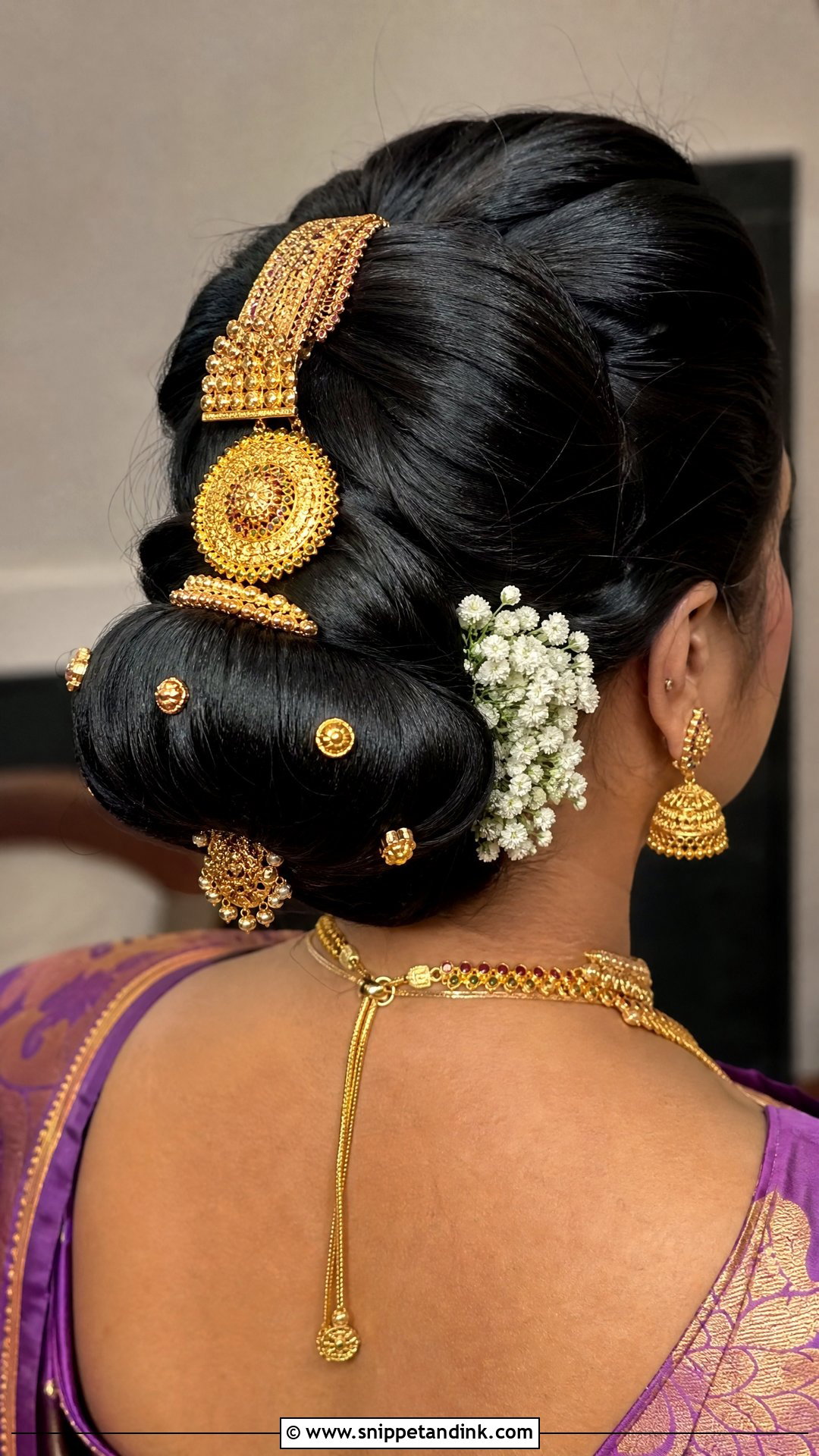
Gold ornaments turn a plain bun into something ceremonial. Here a full bun is dressed with traditional gold ornaments like jadai billai, kunjalam and matching pins, usually with a few fresh flowers to soften the metal. Temple-style pieces are heavier than they look. I ask brides to bring every ornament to the trial so I can see where each one sits and whether the bun needs extra padding to carry it. Built that way, it supports heavy necklaces and long earrings without fighting them, which is why it suits grand temple weddings.
5. Messy Bun With Floral Touches
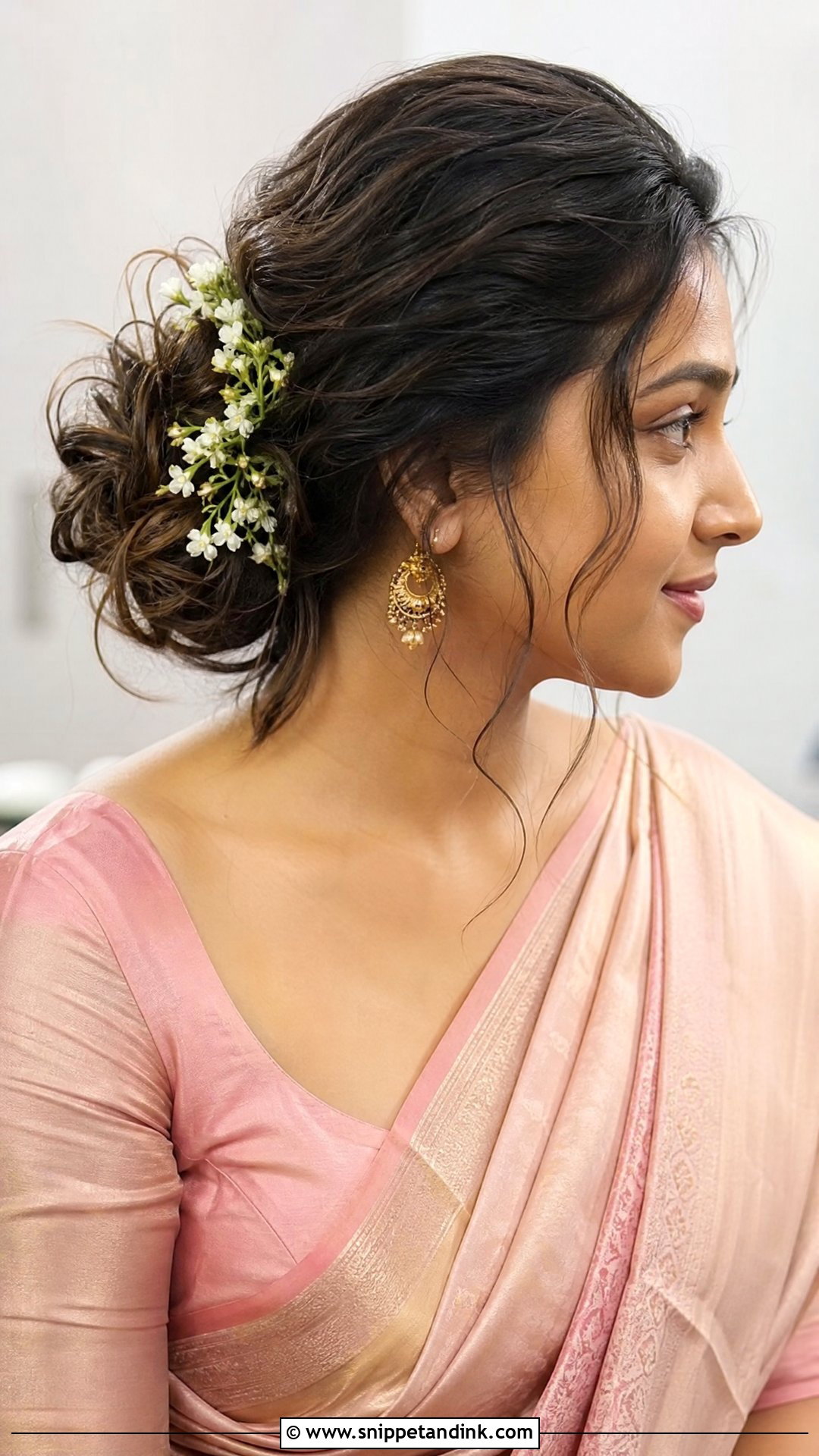
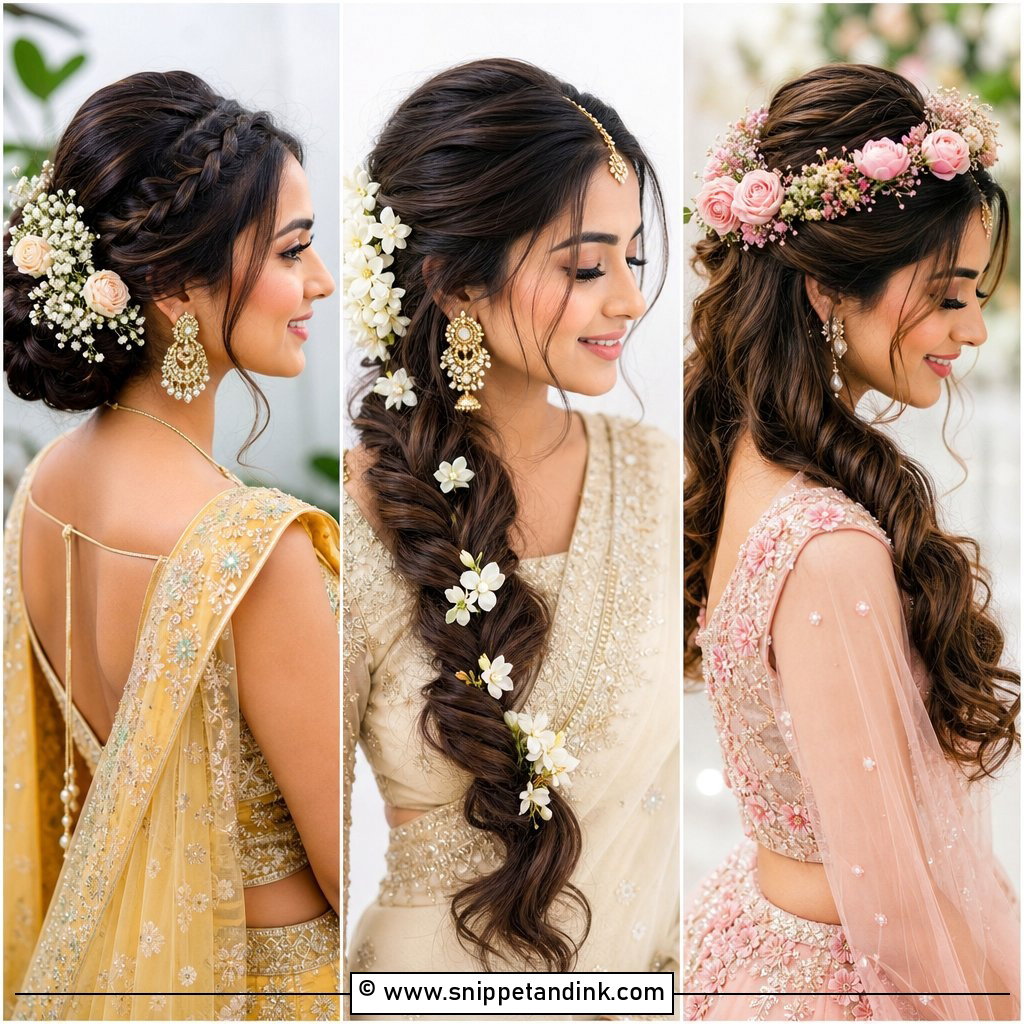
A messy bun sits at the opposite end from the poo jadai: slightly undone, with face-framing strands pulled loose and a few jasmine sprigs or rosebuds tucked in. I like it for engagement functions and smaller ceremonies. The catch is that messy still has to be built. On silky, straight hair a loose bun slides within an hour, so I prep with texture spray and set the bun on a hidden elastic base before pulling any pieces out.
6. Side Swept Braid With Flowers
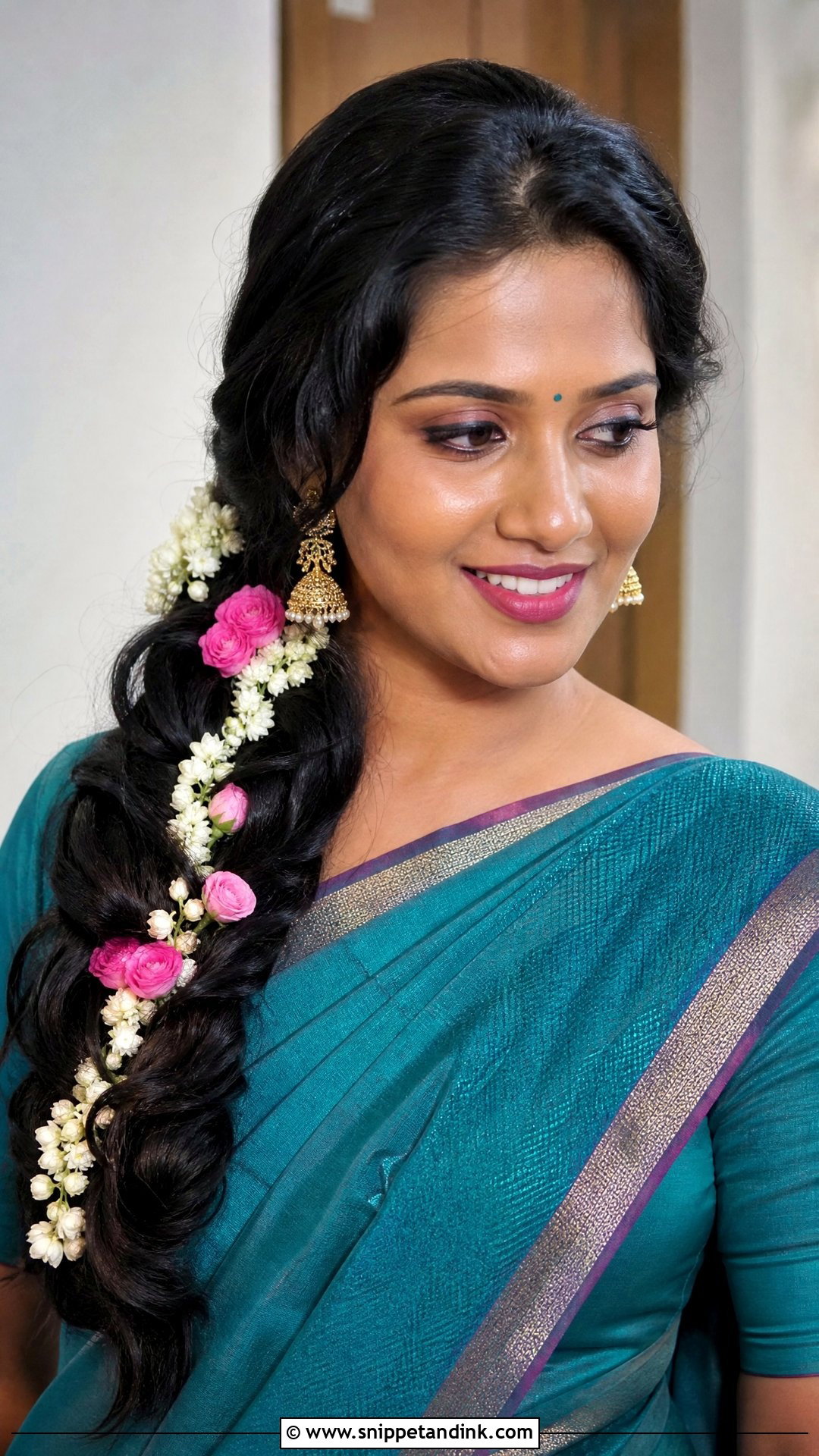
Moving the braid to one shoulder changes the whole silhouette. It shows off the earring on the open side and reads more relaxed than a center braid, which is why sangeet and reception brides tend to pick it. I braid it loosely, then gently widen the loops so jasmine and beadwork have somewhere to sit. Check your drape first. A side braid can hide a pallu pinned on the same shoulder, so I usually put it on the other side.
7. Half-Up Half-Down Bridal Style
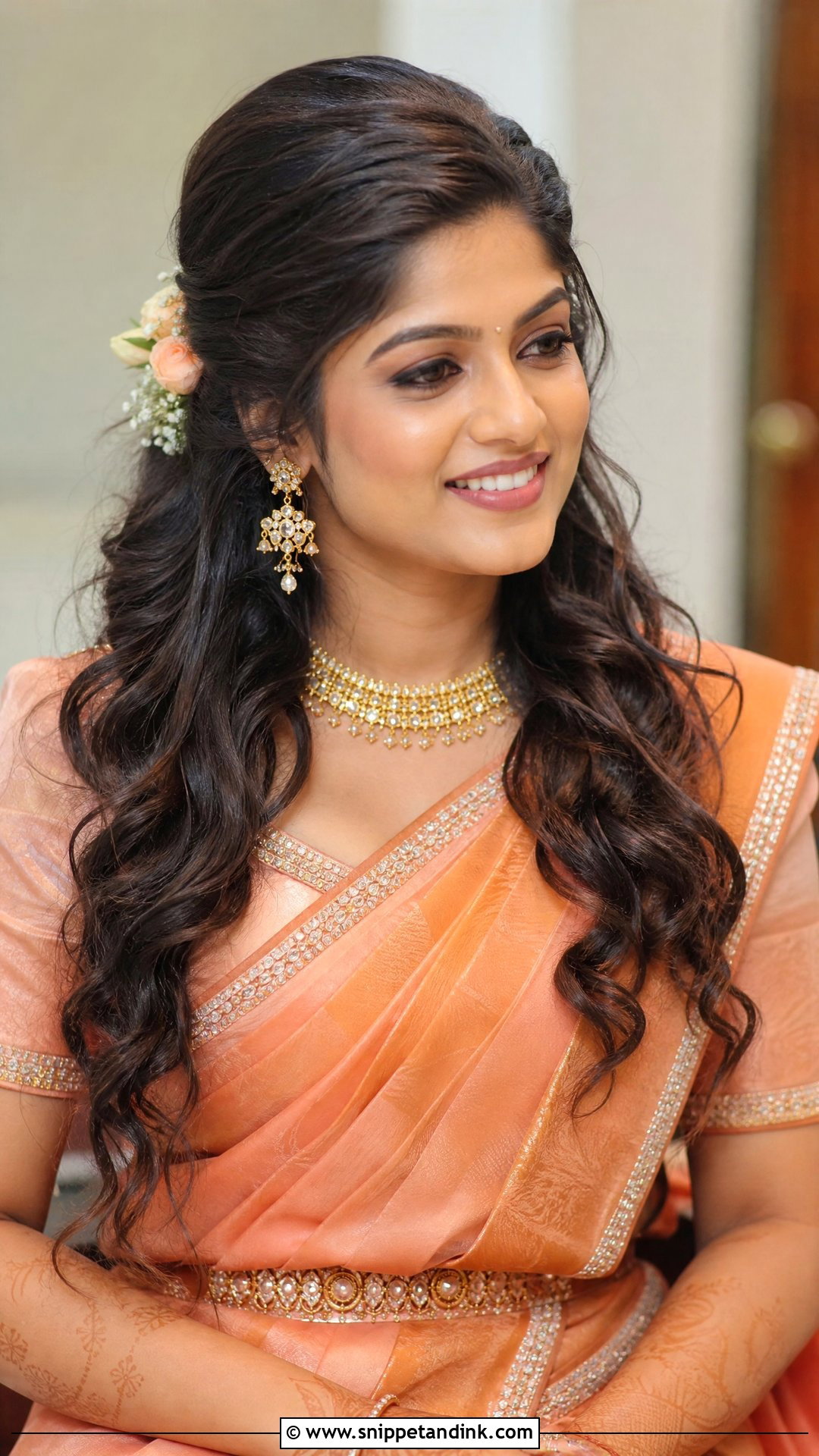
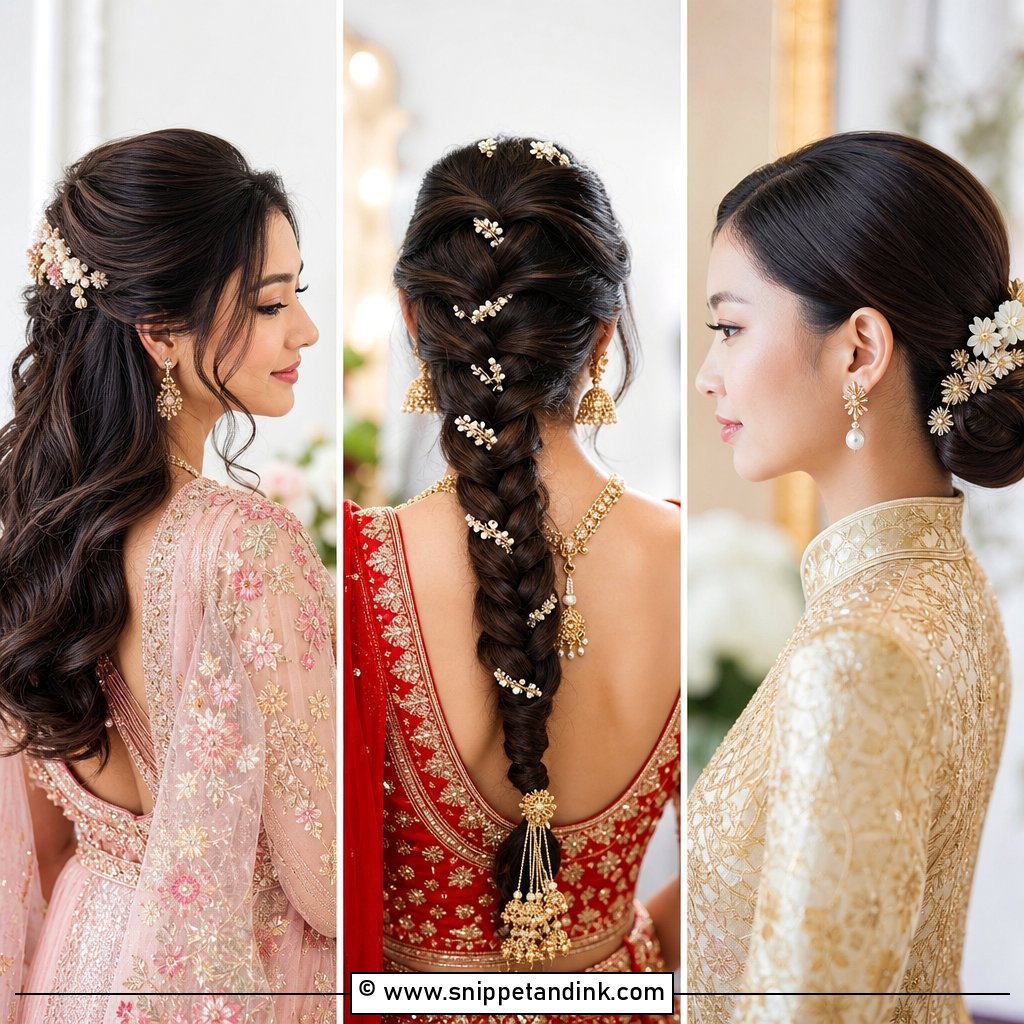
The crown is teased for height and pinned back while the lengths fall in curls, with a small floral arrangement or jeweled pins at the back of the head. It keeps hair off the face and still shows your length. Curls are where this one succeeds or fails. On fine hair in a humid climate, I curl in smaller sections, let each curl cool in a pin curl, and only brush out after the flowers are in. Skip that step and the curls tend to drop well before the reception.
8. Crown Braid With Loose Curls
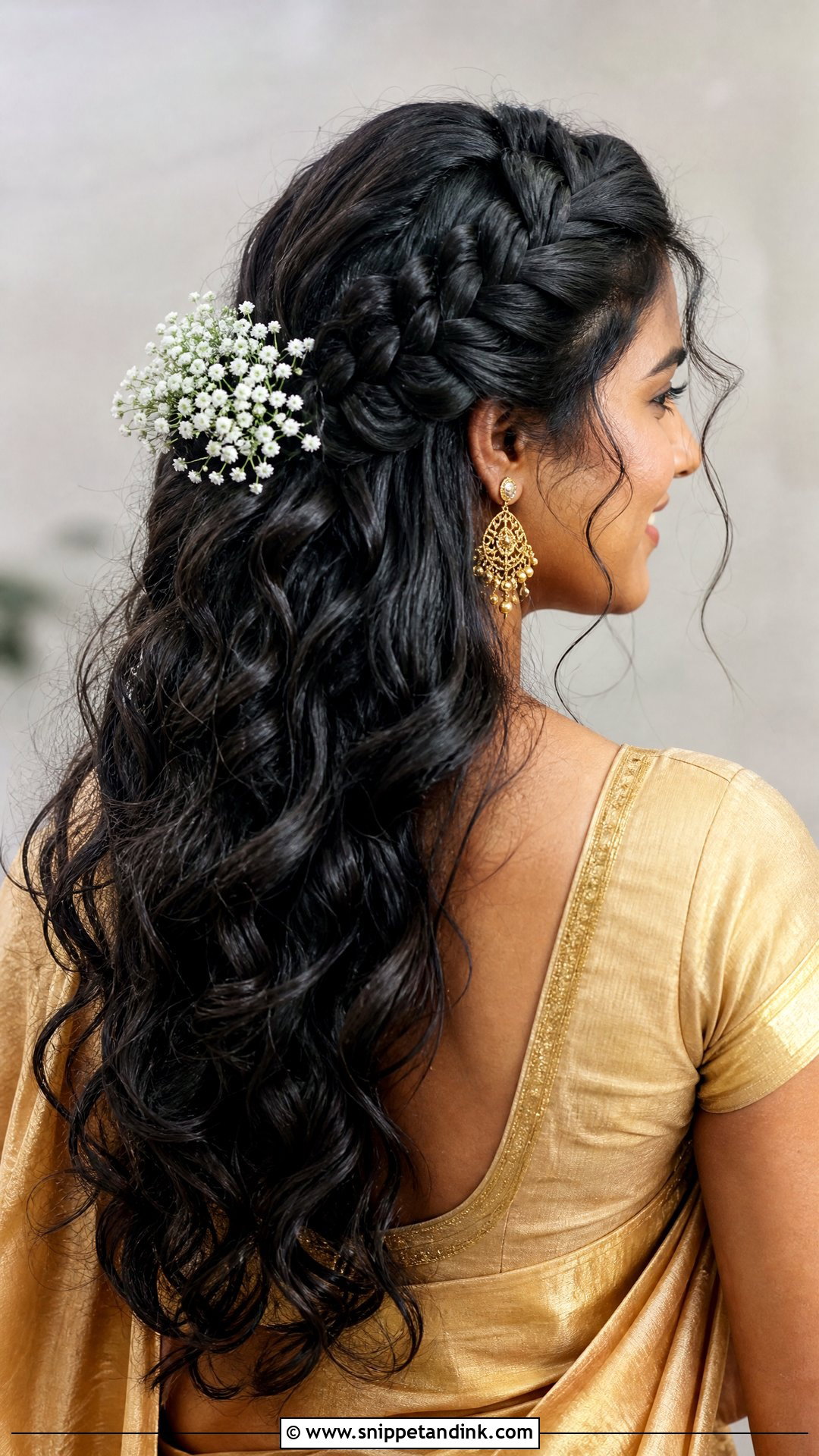
A crown braid wraps over the top of the head like a halo, while loose curls fall at the back. Baby’s breath or small jasmine buds tucked along the braid keep it soft. It counts as a half-tie muhurtham style, so you get some open hair without giving up structure. The braid needs enough length at the sides to reach across the crown. On layered cuts I add a thin clip-in weft so it doesn’t break into short ends over the ears.
9. Bun With Semicircle Veni
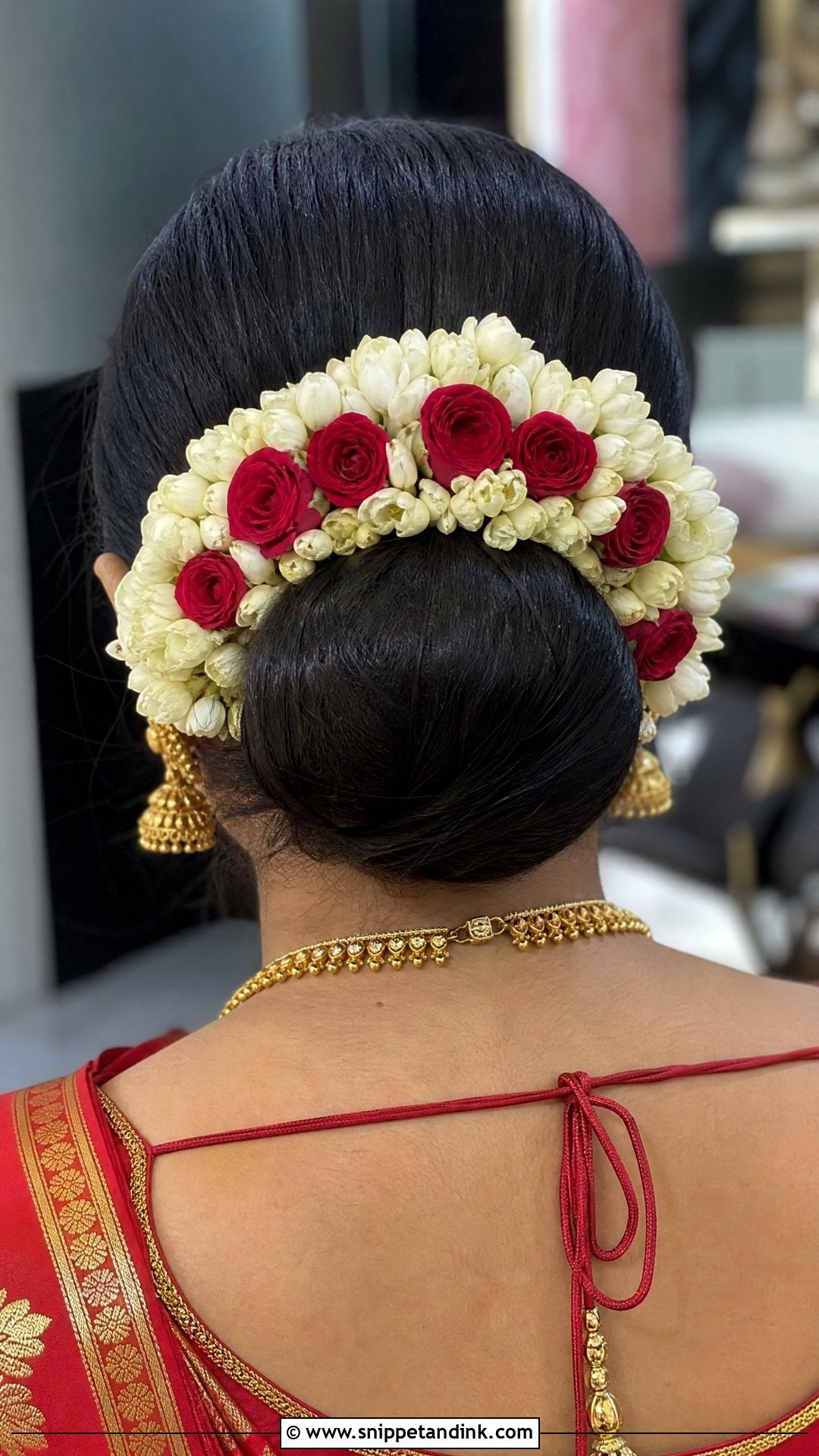
The semicircle veni is a signature Tamil arrangement: a neat bun at the back framed by a crescent of jasmine and rose that arches over the crown. Many Iyer and Iyengar brides choose it for temple ceremonies because it’s tidy and symmetrical. Symmetry is also the hard part. I mark the center back with the tail of a comb before placing the veni, since a crescent sitting even slightly off is obvious in photos taken from behind during the rituals.
10. Pearl Decorated Bridal Braid
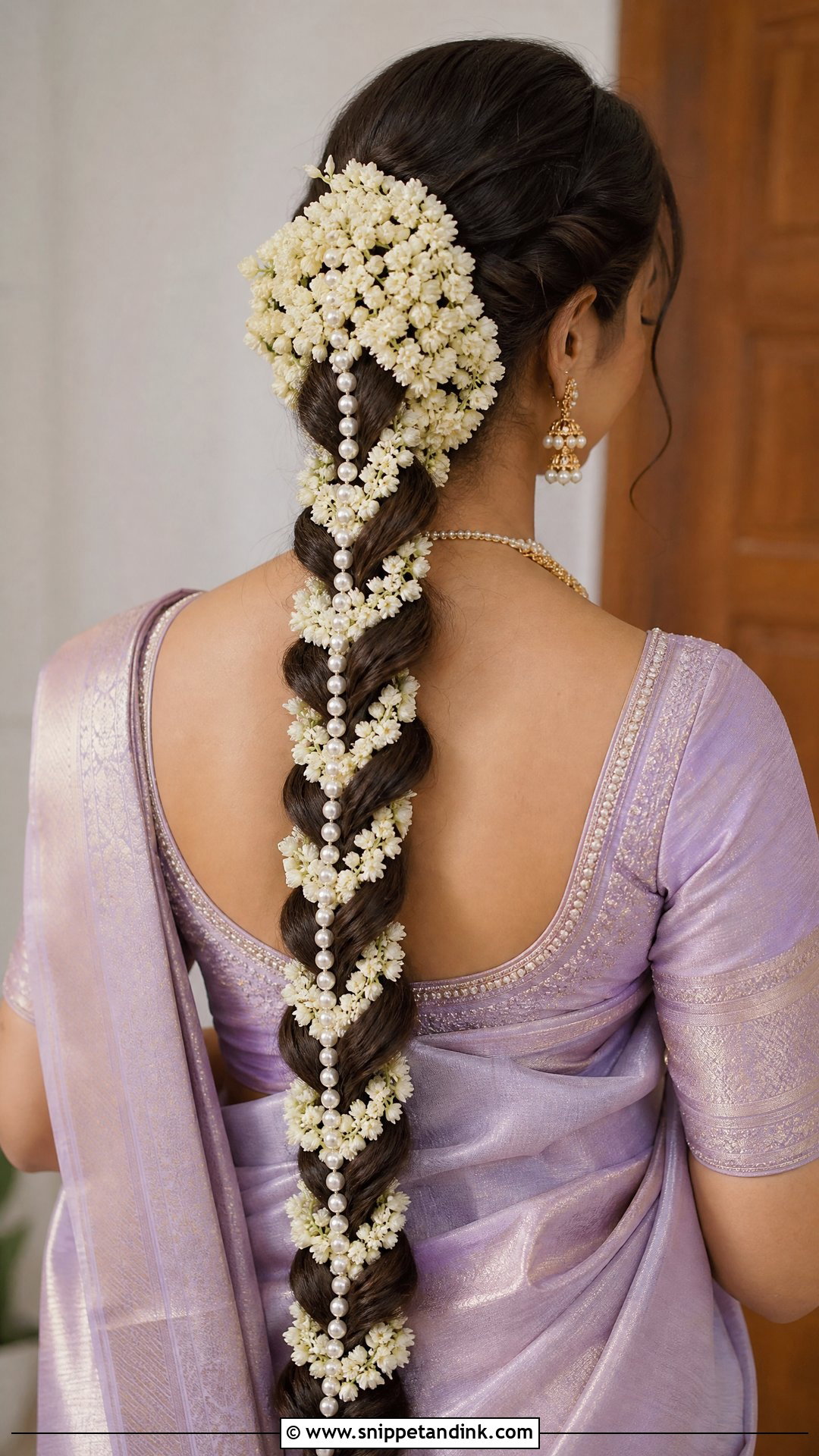
Pearl strings woven through the plait alongside fresh flowers give a softer glow than gold. They sit well with bright and pastel sarees alike, and suit brides who would rather not wear heavy metal in their hair. I see this mix of pearls and jasmine chosen most for daytime and outdoor ceremonies, where natural light shows the sheen. Use strings on a firm cord. Stretchy ones sag out of the weave once the braid starts moving.
11. Reception Curls With Hair Jewelry
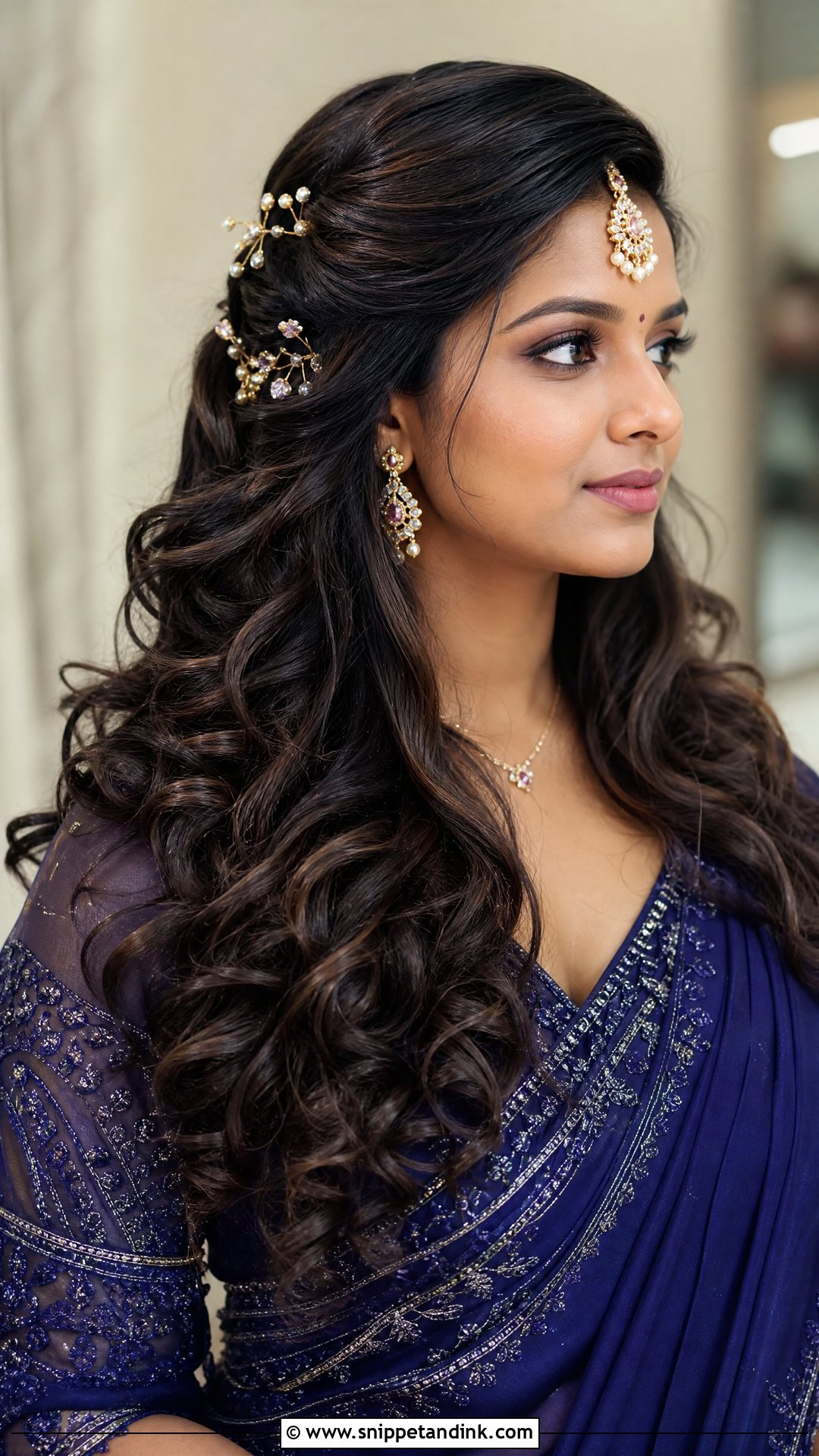
Reception night is when many Tamil brides finally wear their hair open. Big, soft curls are finished with delicate hair jewelry, jeweled pins or a maang tikka, and they move well while you dance and greet guests. They pair with a designer saree or lehenga and statement earrings. Because the morning look was usually a tight bun or braid, I like to start from a quick blow-dry between events if time allows. Curling over a day of pins and hairspray leaves kinks that show at the root.
12. Jadai Billai Decorated Hairstyle
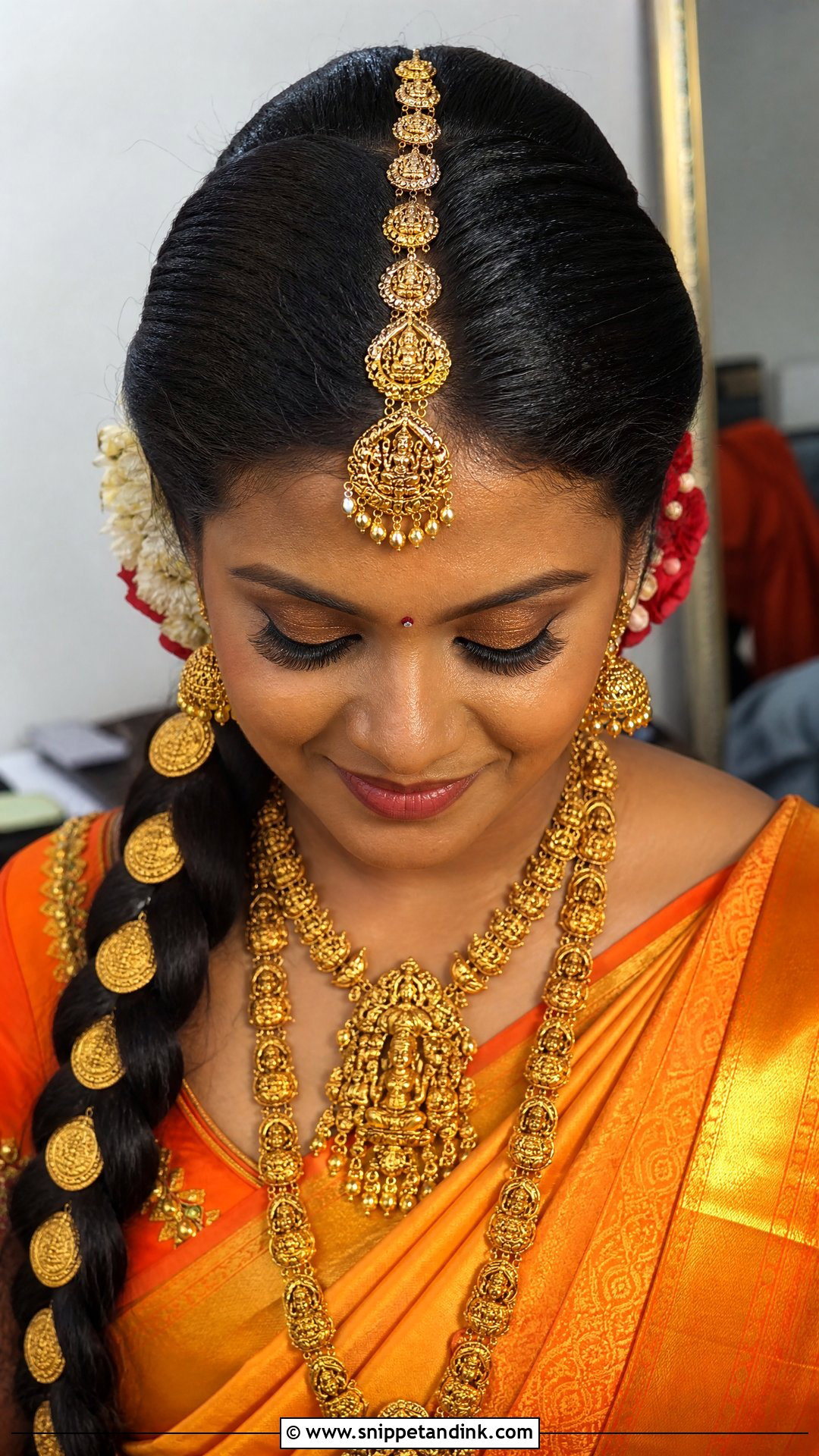
Jadai billai places ornate metal and flower pieces along the parting and down the braid. The set usually starts with a larger piece near the crown, then smaller ones trace the plait. Against jasmine and roses the gold detailing looks regal, and it remains a favorite for traditional Tamil weddings and Seemantham ceremonies. Many families own a set handed down for decades, and older pieces often have small hooks rather than modern clips. I stitch those onto the braid with thread matched to the hair so nothing shifts when the bride bows during the rituals.
13. Braided Bun With Rose Garland
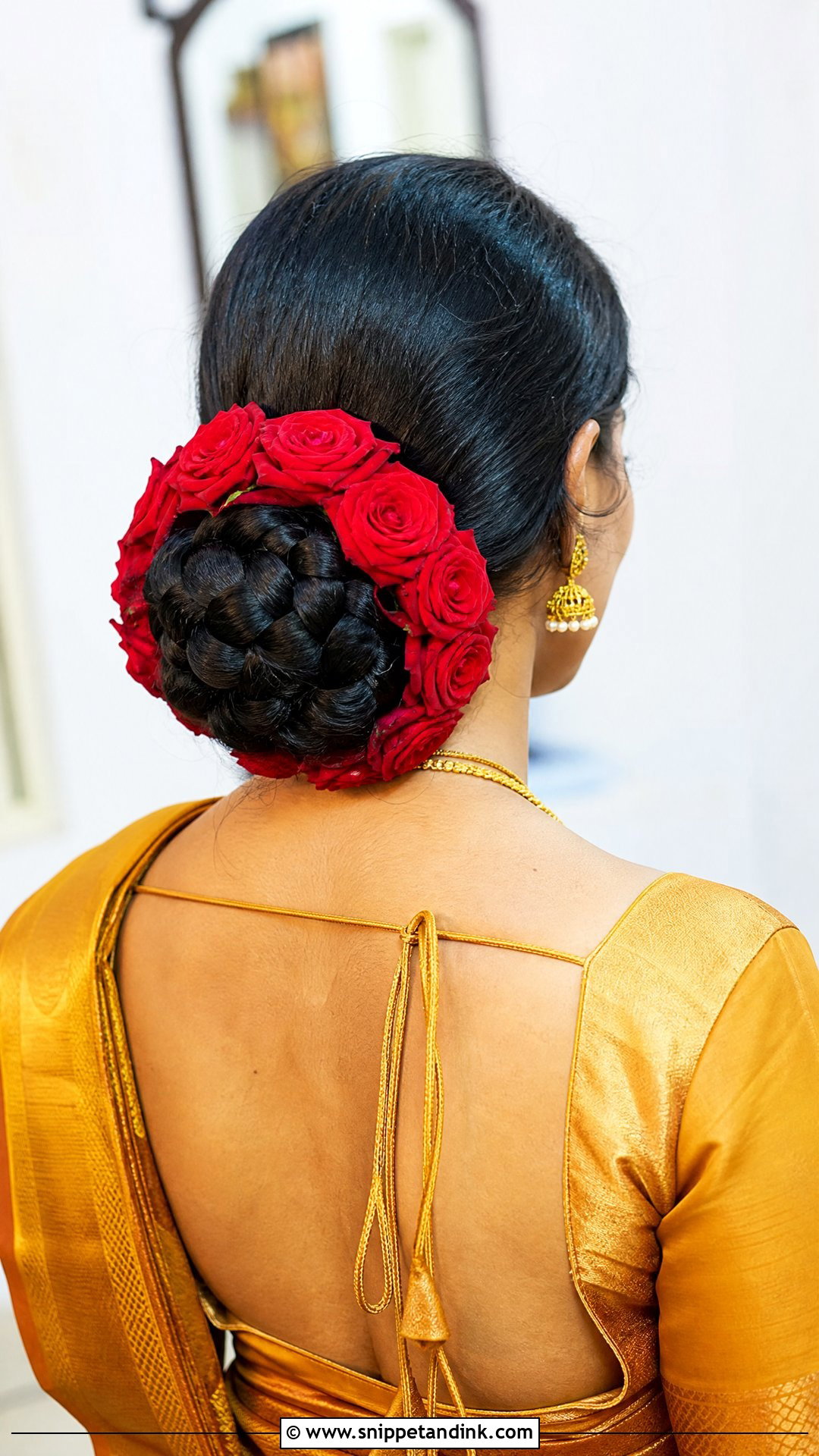
Braiding the hair before coiling it gives a bun far more grip than twisting alone, so I reach for this style when a bride has slippery hair. The braid is coiled at the nape and wrapped with a rose garland for a strong flash of color against dark hair and silk. It looks polished from behind, which matters during long ceremonies. Roses bruise faster than jasmine in heat, so I ask the florist for tighter buds and keep the garland cool until the last minute.
14. Floral Bun With Baby’s Breath
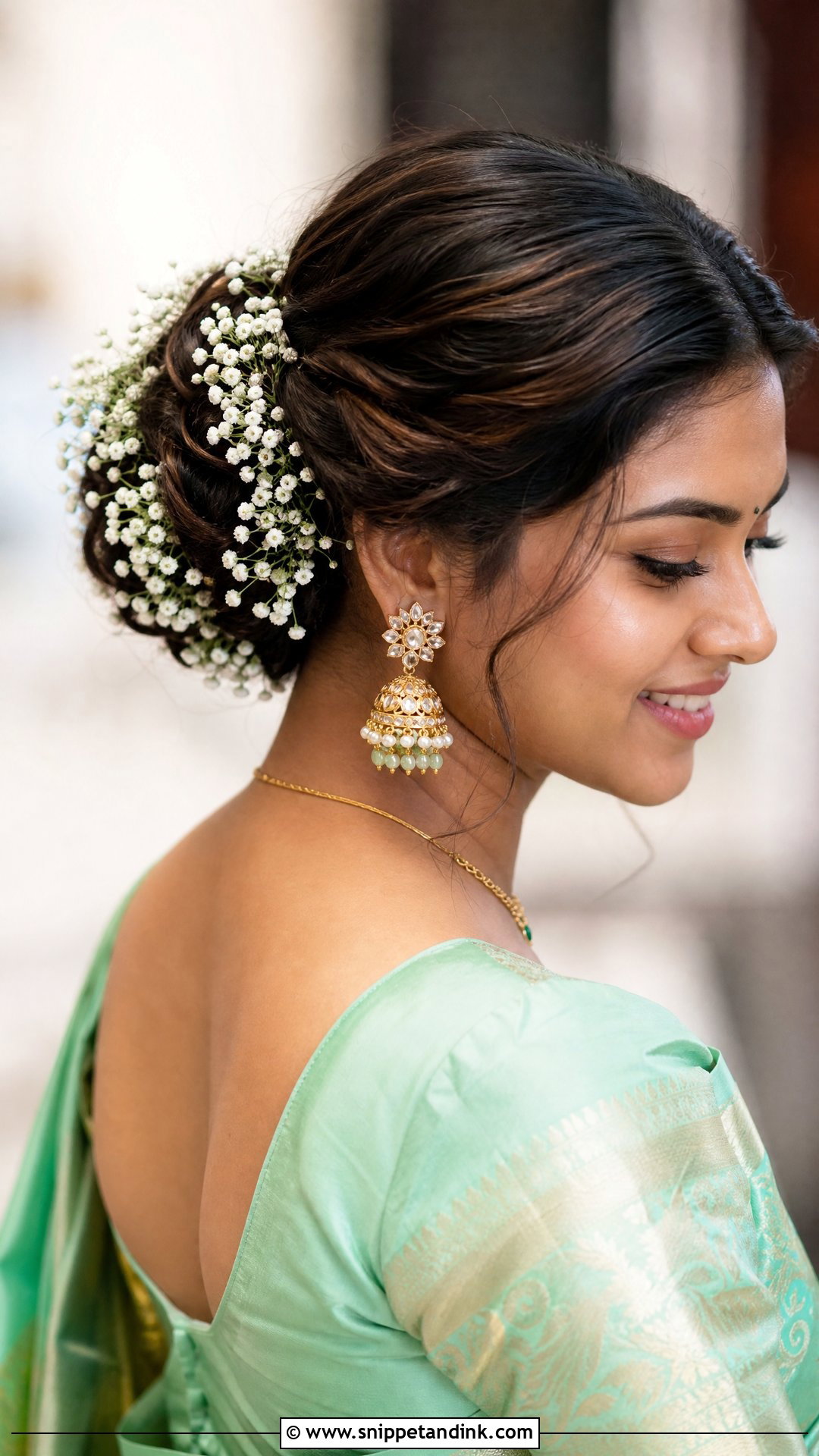
Baby’s breath on a smooth bun is the lightest option on this list. The tiny white flowers add texture without weight, and they suit pastel sarees and lighter jewelry, so I see it most at intimate weddings and engagement shoots. It does wilt in direct sun, though slowly. Short stems pushed into the bun at an angle hold better than glued sprigs, and I add the last few just before you walk out.

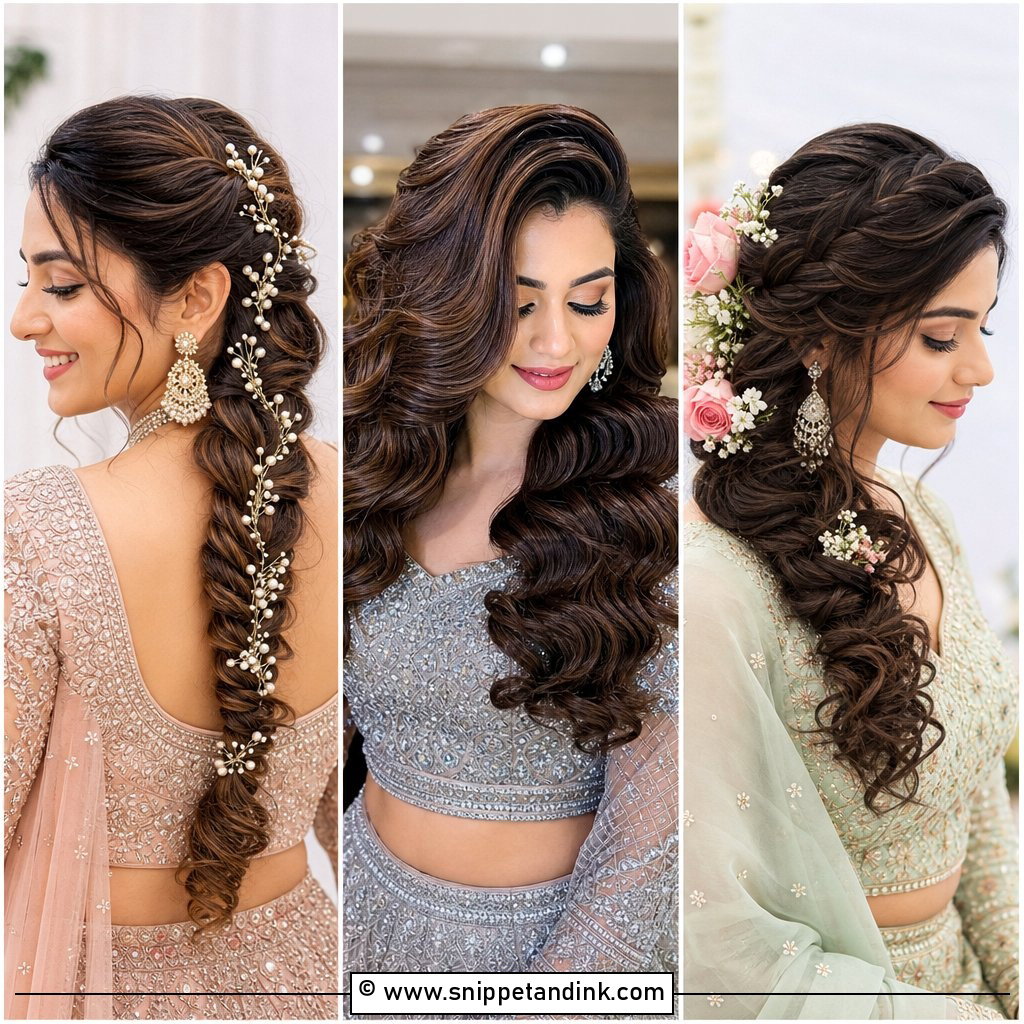
15. Coiled Bun With Kunjalam
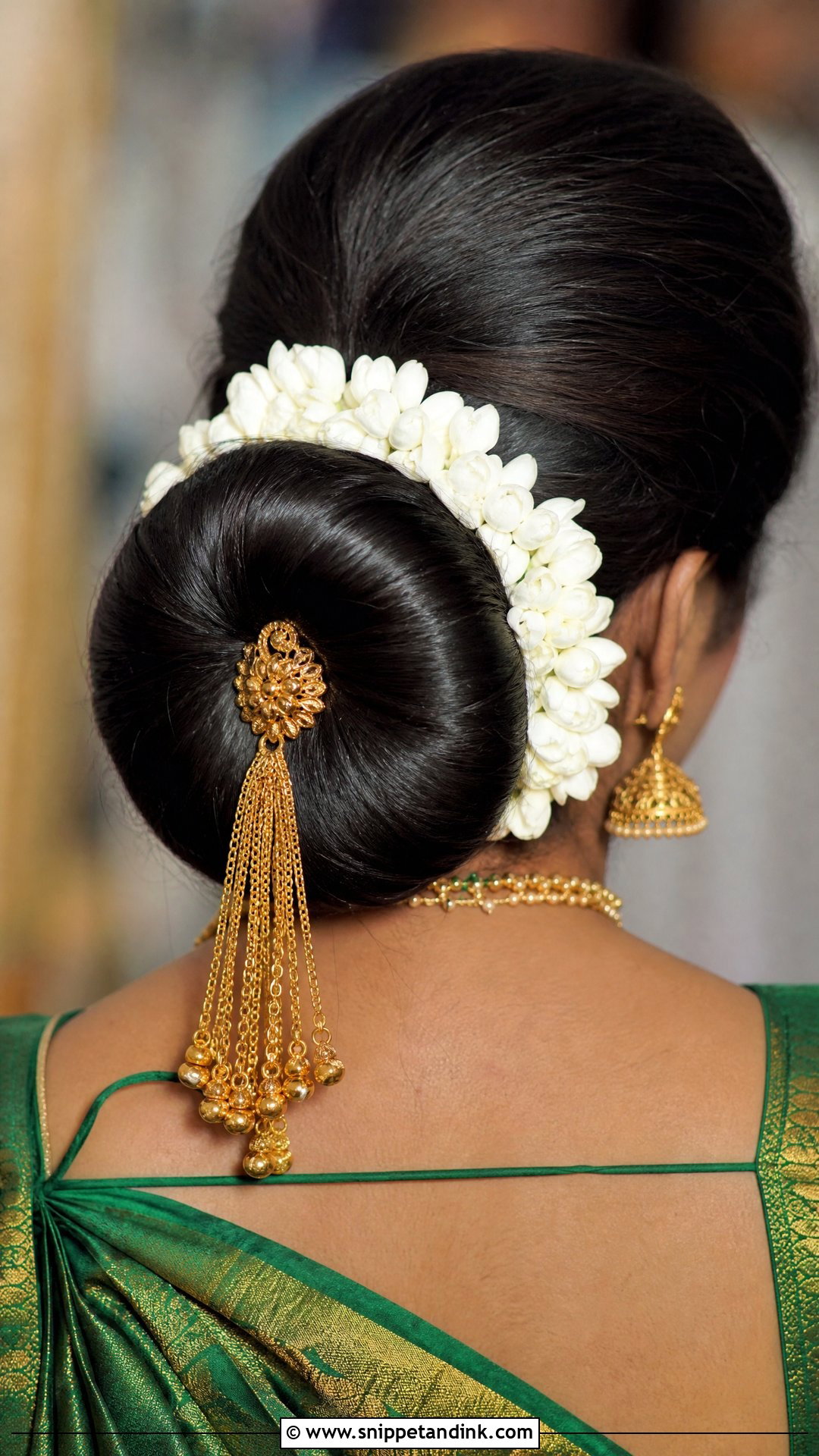
The kunjalam, or jadai kunjalam, is a tasseled ornament that hangs from the end of the braid or bun. Here it finishes a smooth coiled bun, so the golden tassels sway as you move, with fresh jasmine around the coil for fragrance. I tie the kunjalam’s cord into the base elastic rather than pinning it. Tassels swing, and a pinned ornament loosens a little with every turn of the head. If you want traditional ornament with some movement, the coiled bun with kunjalam is a sound pick.
16. Open Hair With Floral Pins
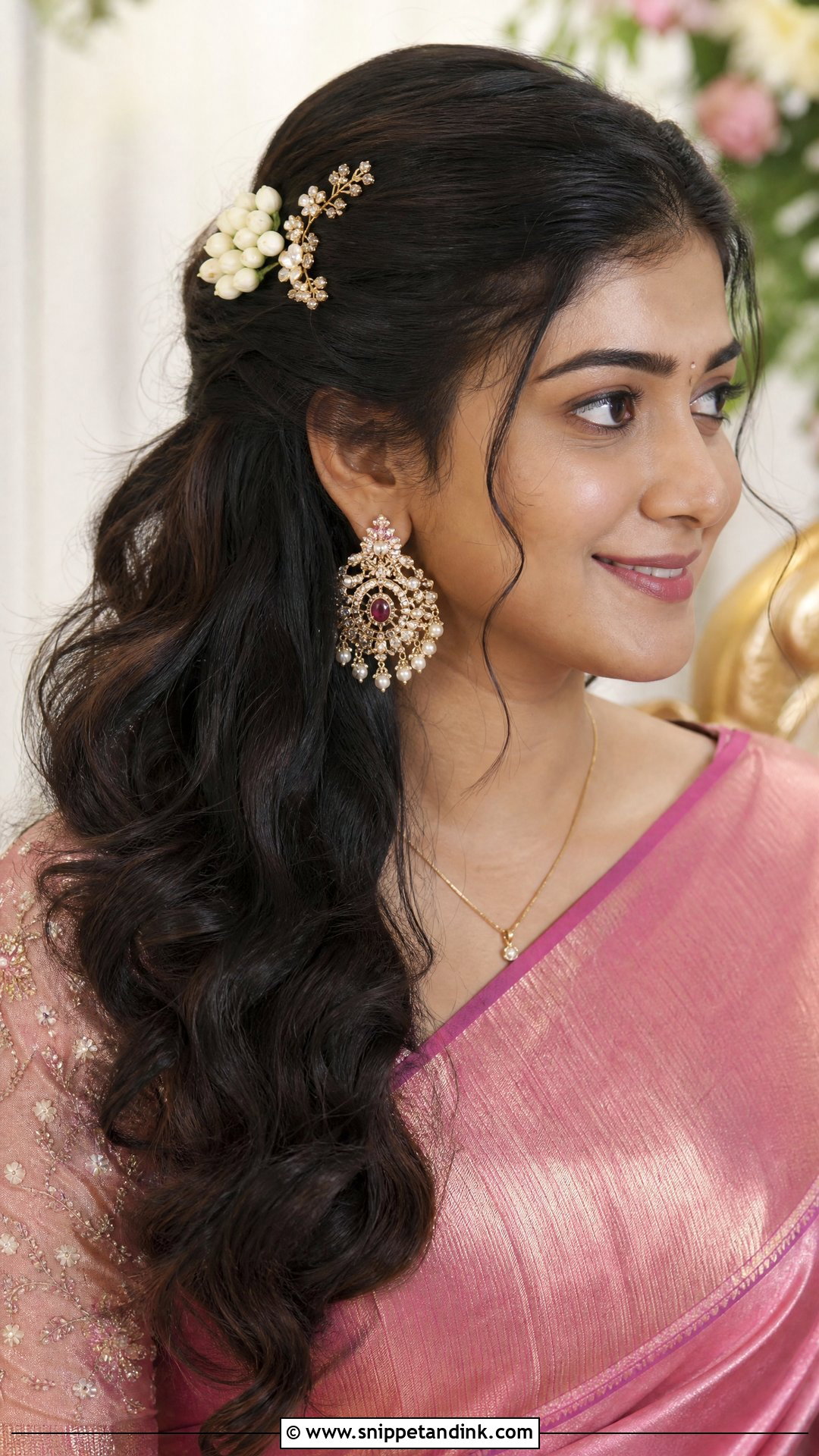
Sometimes simplicity speaks loudest. Open hair in soft waves with a few floral pins is the most understated look here, with small jasmine buds or jeweled pins placed along one side as an accent. It suits pre-wedding functions and receptions. Because it shows off natural length, it’s most convincing on thick, healthy hair. On thinner hair, open styles can reveal the scalp at the parting under flash, and I’d suggest a half-up version instead, where the pinned crown hides that.
17. Twisted Updo With Jasmine
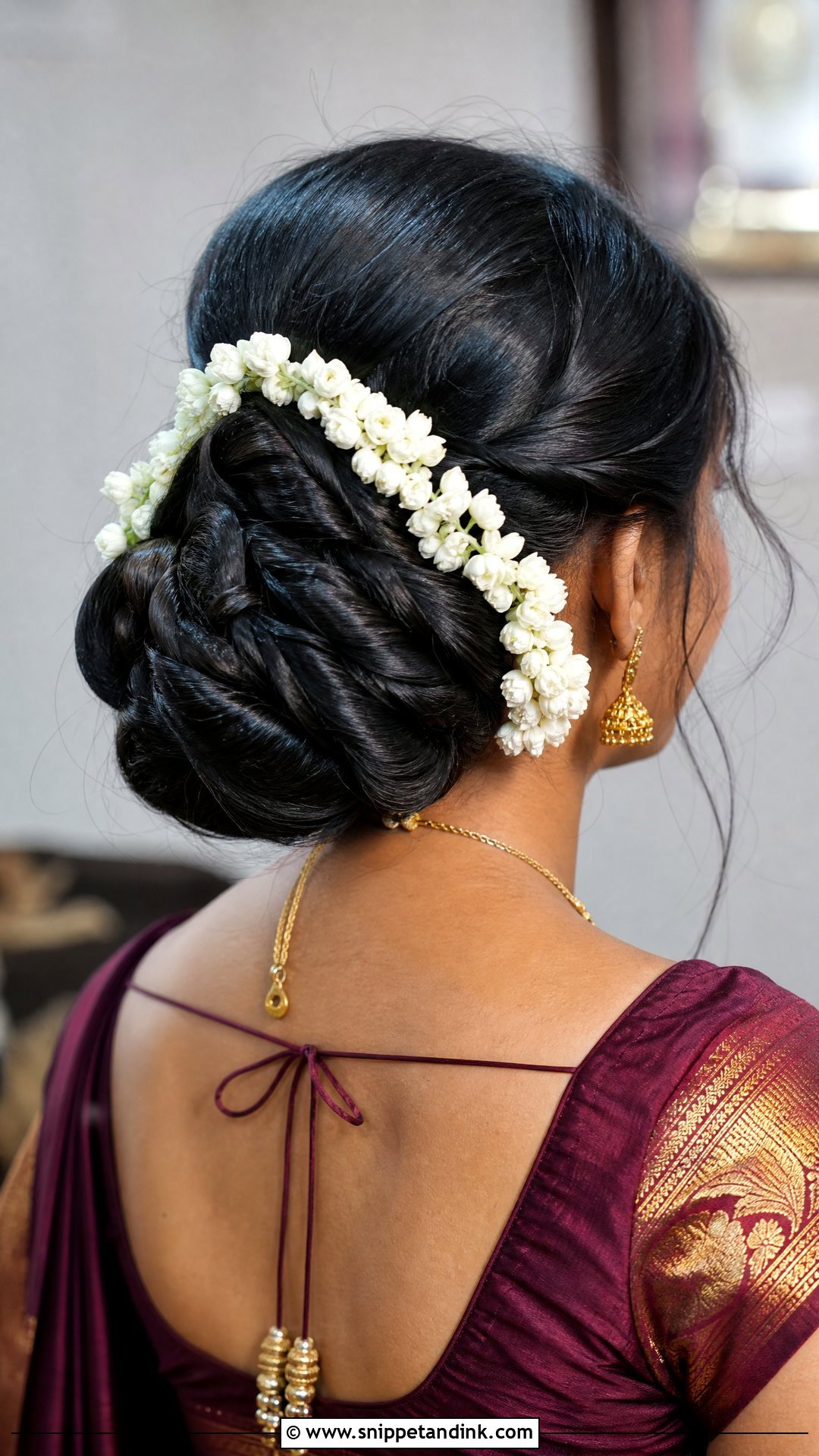
Twisted sections pinned into shape give an updo a depth a smooth bun doesn’t have, and strands of fresh jasmine soften the structure. Brides wear it for both the muhurtham and the reception because it keeps every strand off the face. I secure each twist with two pins crossed in an X, since one pin per twist is how this style starts to unravel during a long ceremony. It suits medium to long hair. Shorter cuts struggle to make the twists wrap.
18. Maang Tikka Bun Hairstyle
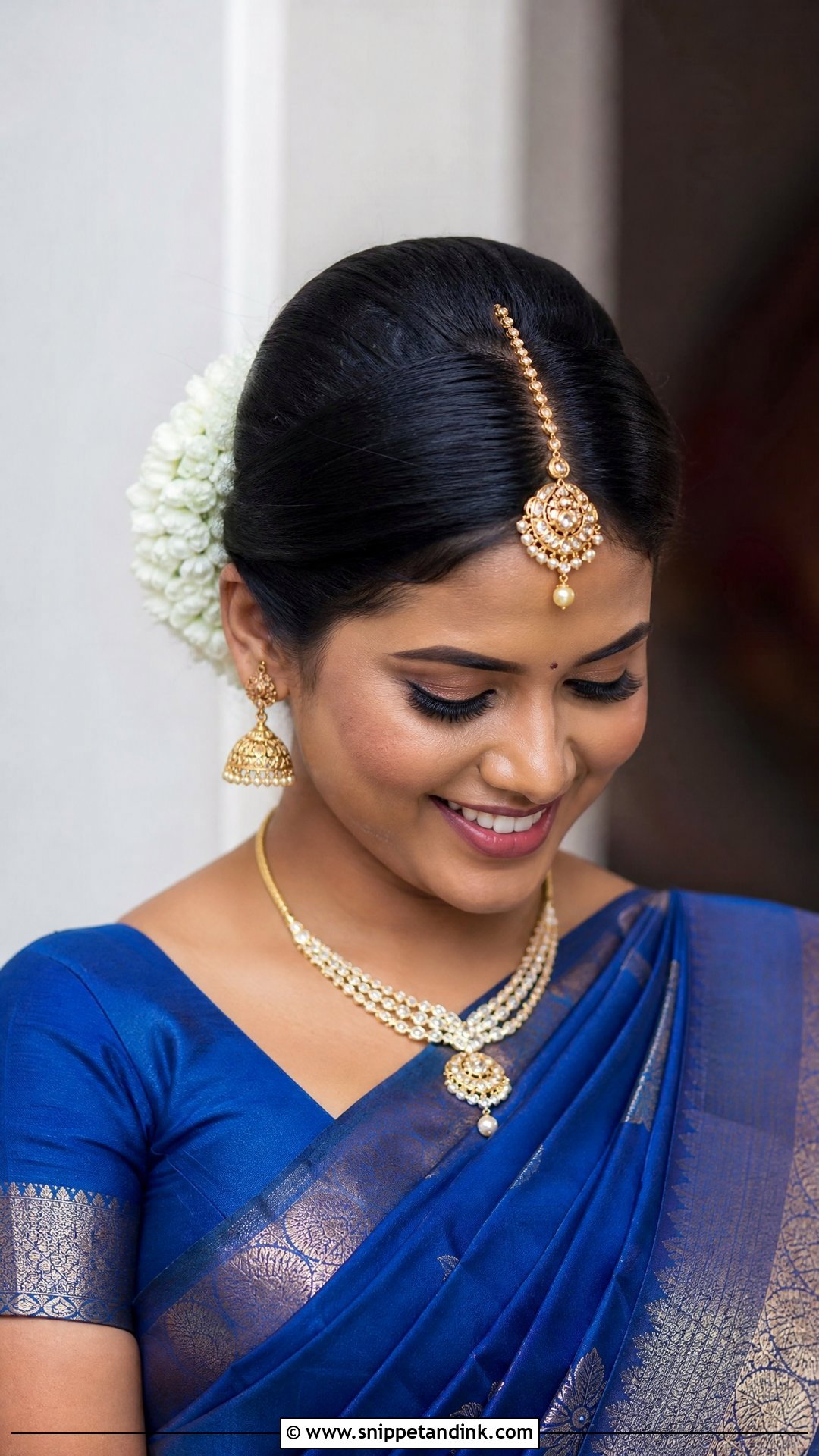
A maang tikka along the center parting turns a simple bun into something regal. The bun can be sleek or floral, often with a few jasmine sprigs, and the tikka draws attention to your eyes and forehead. The parting has to be dead straight for the balance to work. I part with a tail comb from the tip of the nose straight back, then hold the tikka chain with a small pin hidden under the hair so it can’t slide sideways. If you want your face and jewelry to lead, the maang tikka bun does that cleanly.
19. Fishtail Braid With Flowers
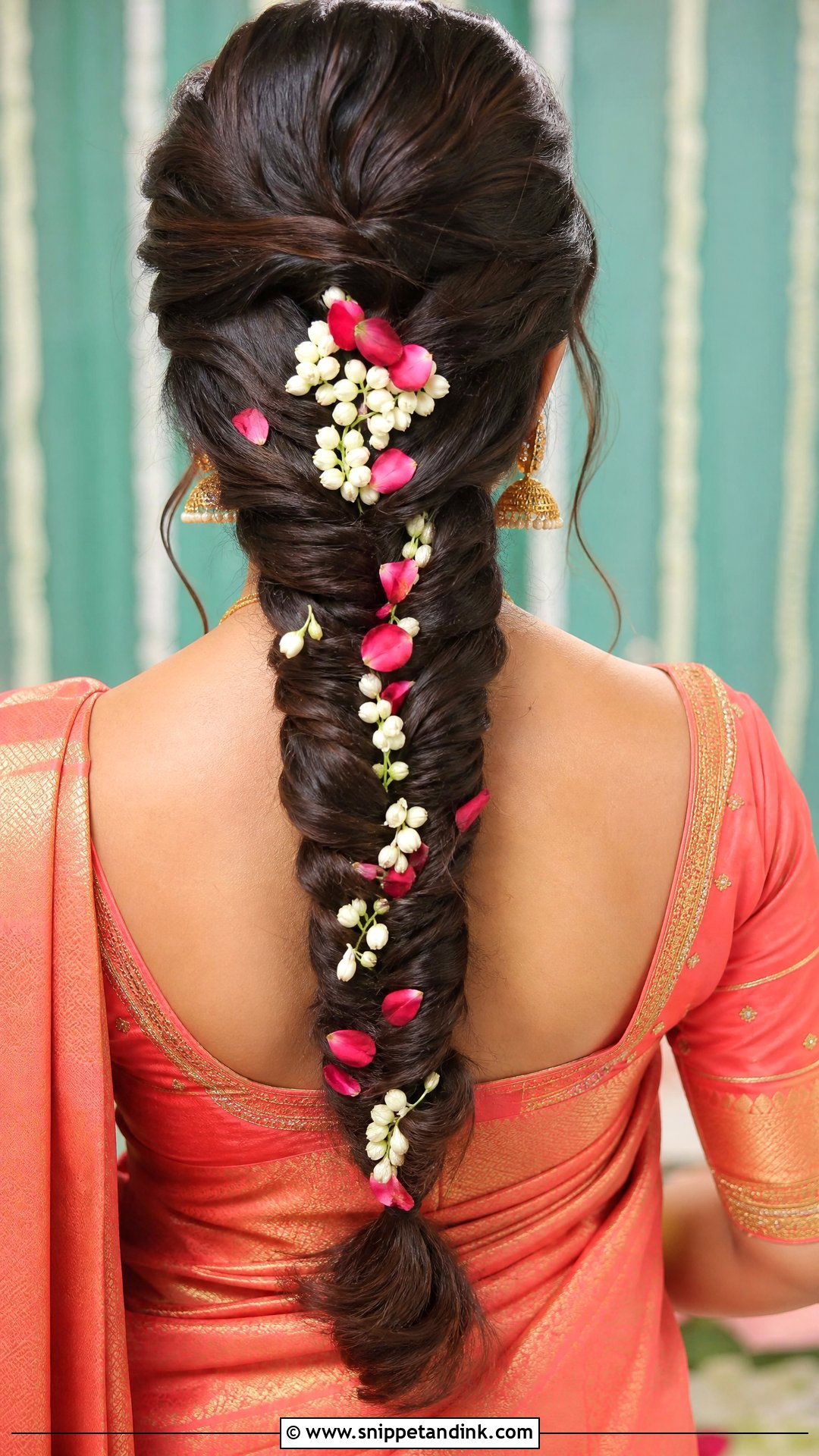
A fishtail looks more intricate than a three-strand plait because it’s made of many small crossings. Small jasmine buds, rose petals or beadwork sit along the weave, and the texture catches light in photos. I’d save it for receptions, sangeets and modern ceremonies rather than a heavy temple look, since a fishtail is harder to load with billai. It also takes noticeably longer to braid on long hair, so allow extra chair time.
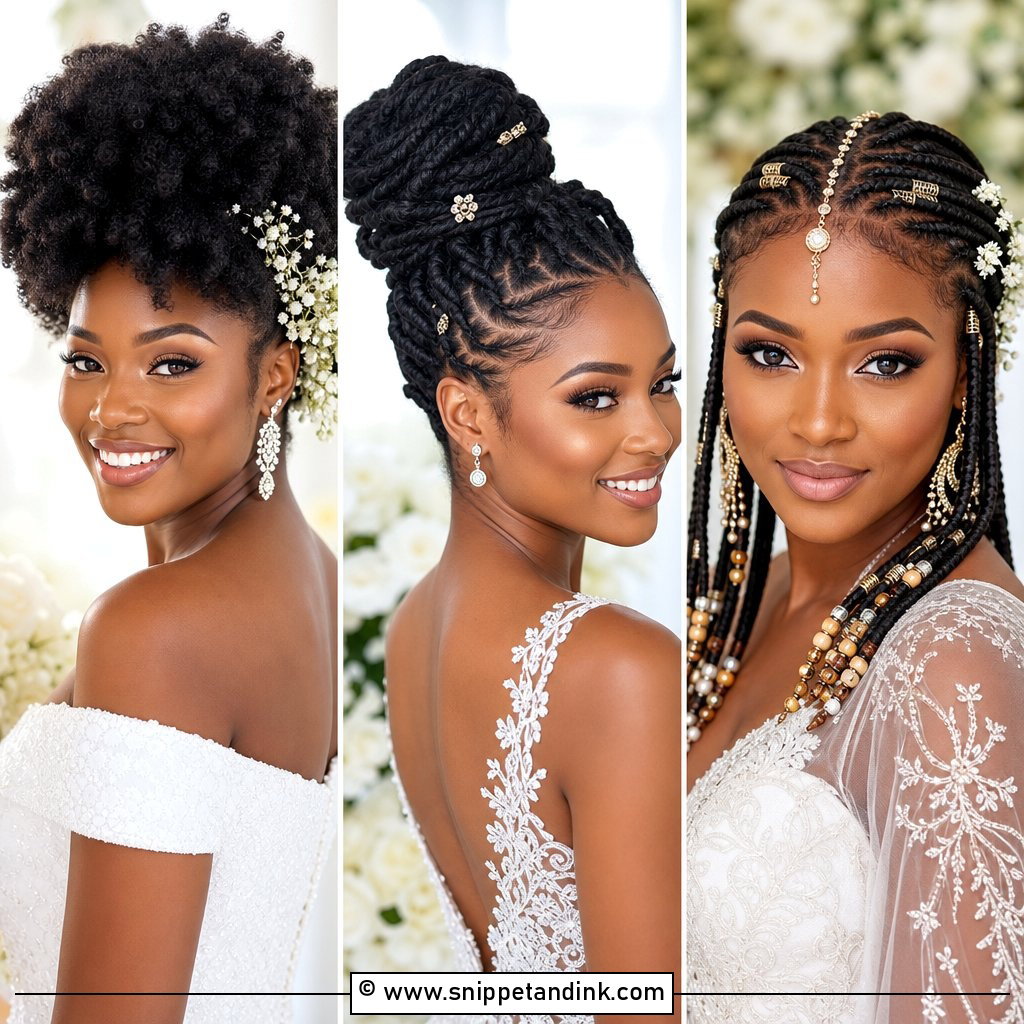
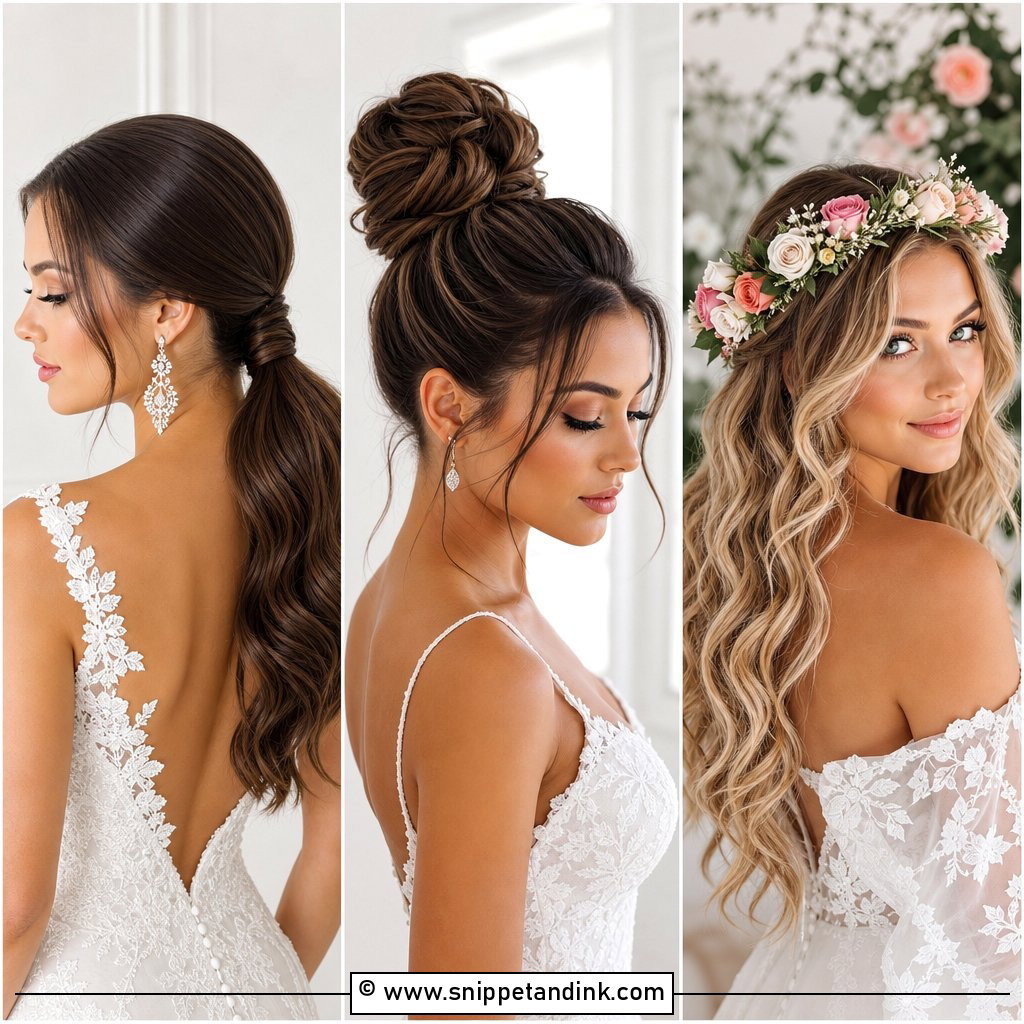
20. Floral Cascade With Loose Waves
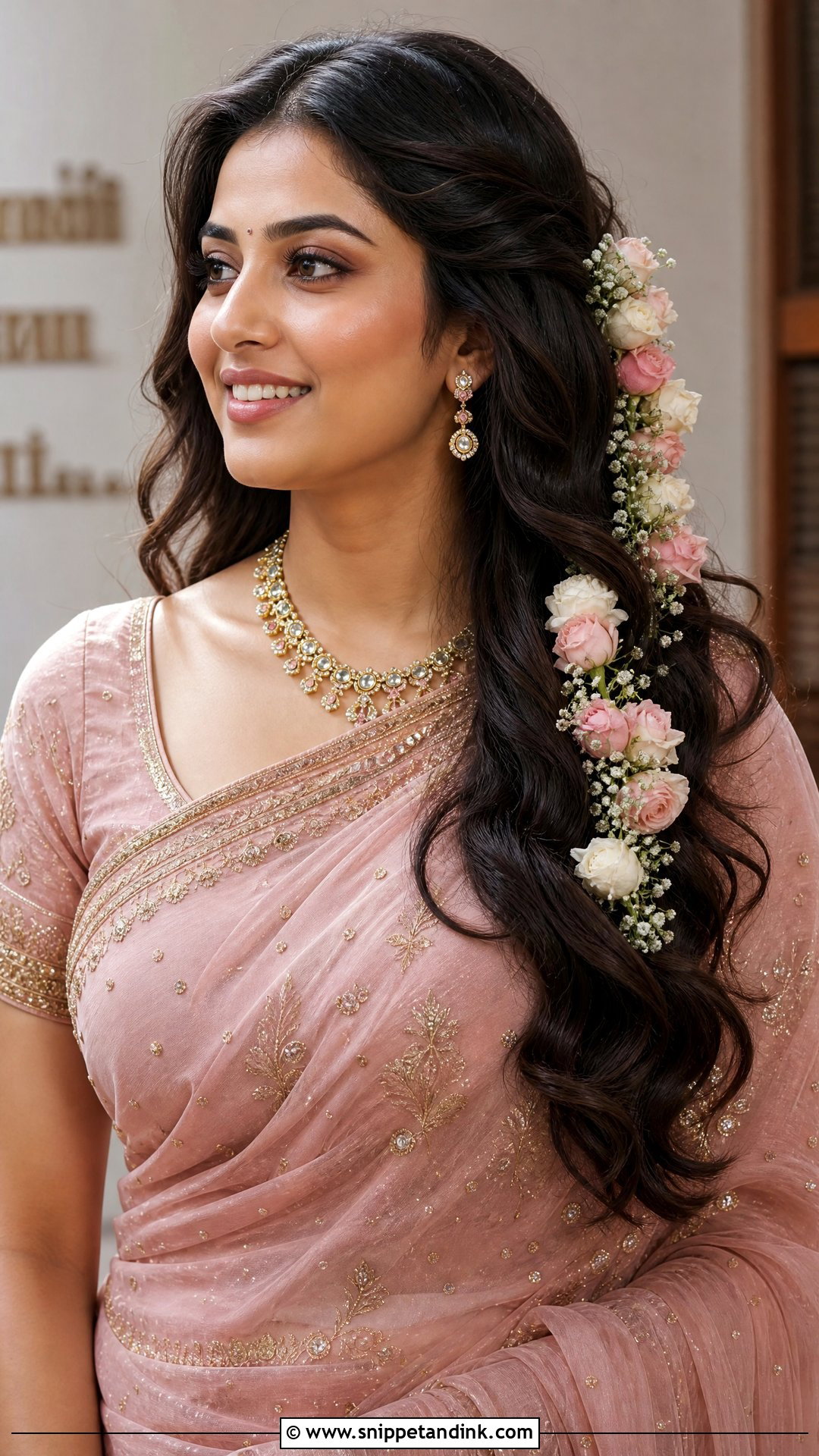
This last style leaves hair open in gentle waves with a trailing line of flowers down one side, a garden feel against the saree that suits receptions and pre-wedding shoots. The trailing flowers need an anchor. I pin a thin hidden braid behind the ear and attach the strand to that, which stops the flowers from sliding into the waves every time you turn.
Keeping Jasmine White From Sunrise to the Reception
Fresh jasmine is the most fragile part of a Tamil bridal look. The tight buds open over the day, which is lovely for fragrance, but the flowers brown at the edges if they get warm, wet or crushed. I ask families to order strung jasmine for collection the same morning, or the evening before at the earliest.
Until it goes into the hair, keep it wrapped loosely in a damp cotton cloth in the coolest room of the house. A box in the fridge works for a few hours, but never let ice or wet paper touch the buds, because cold damage shows as brown spots by midday. Order one spare string per hairstyle and keep it in the same cloth. If you change looks for the reception, plan fresh flowers for that too rather than reusing the morning strings.
The Hour Between the Wedding and the Reception
Taking down a jadai is a job for your stylist or a patient relative, not something to rush alone. Ornaments come out first, in the reverse order they went in, then flowers, then every pin. Count the pins if you can. Leftover pins are the usual cause of a sore scalp at the reception.
Brush from the ends upward, never from the root, because hairspray and knotted jasmine stems tangle easily. A light dry shampoo at the roots, heat protectant and a fresh set of curls usually fits into an hour. If the gap is shorter than that, I’d plan a reception look that builds on the morning style, such as letting the braid down into waves, instead of starting over.
Muhurtham Hair First, Reception Hair Second
Most Tamil brides end up wearing two looks, not one. The muhurtham calls for structure: a poo jadai, veni bun or jadai billai that can carry gold and jasmine through hours of ritual. The reception is when curls, cascades and open hair come in. Book a trial with your actual ornaments, take photos from behind as well as the front, and sit and bow in the style before you commit. The version you can move in comfortably is the one you’ll be glad you wore.
You'll Like These Ideas:


Leave a Reply