
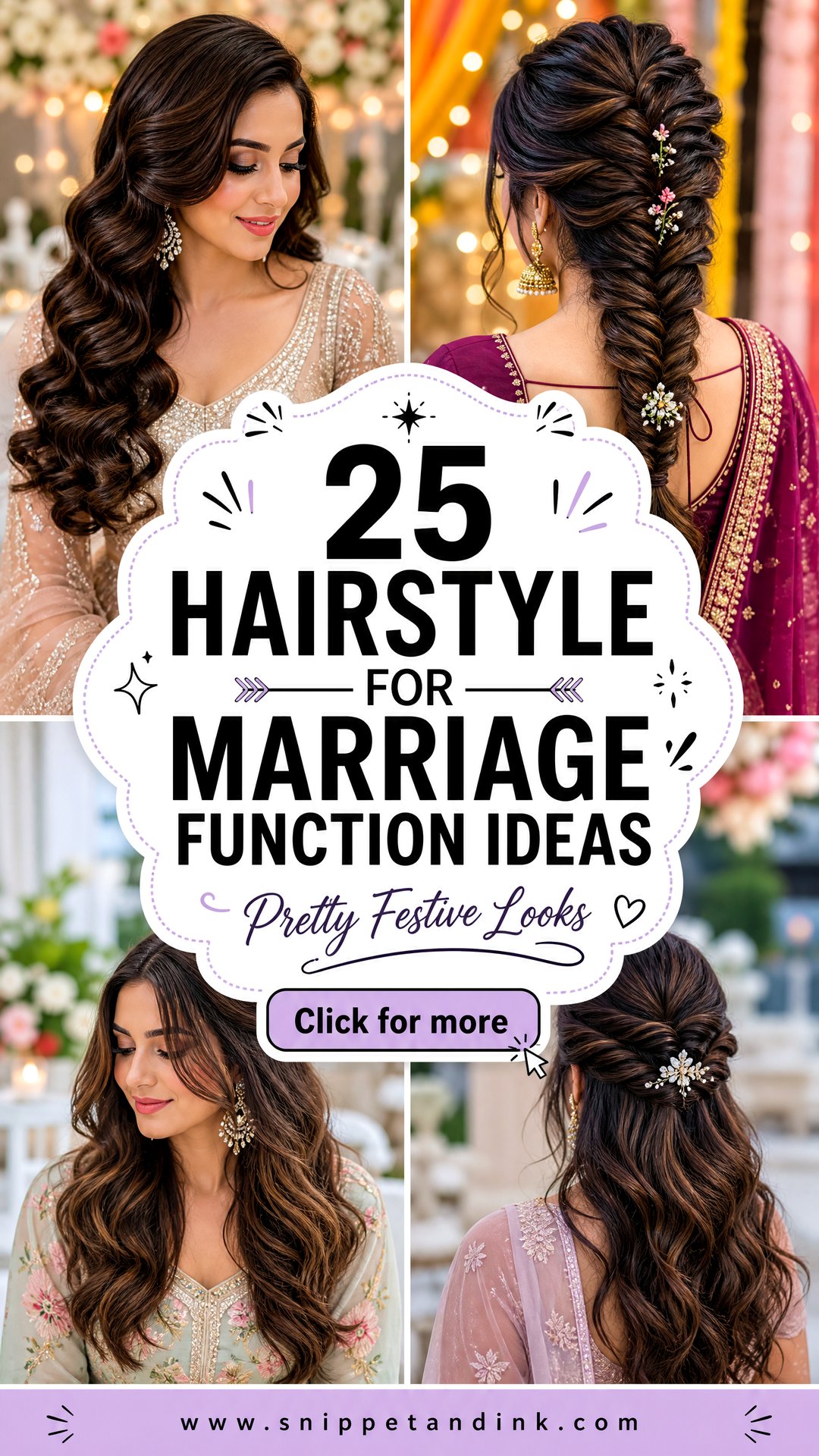
A wedding with several functions asks more of your hair than a single ceremony does. The mehendi wants your hands free and your hair out of the way, the sangeet wants something that survives two hours of dancing, and the main ceremony has to carry a dupatta pinned on top. Marriage functions also run long, so I plan every style around weight, heat and the number of hours it has to last, not only how it looks in the mirror. Below are 25 styles I’d consider across haldi, mehendi, sangeet, wedding and reception, with notes on what each one needs from your hair and where it tends to fail.
Mapping a Hairstyle to Every Function of the Wedding Week
Most South Asian weddings run over several days, and the same head of hair has to get through all of them. I plan the whole week before choosing any single style, because what you do to your hair on one day changes what it can do two days later.
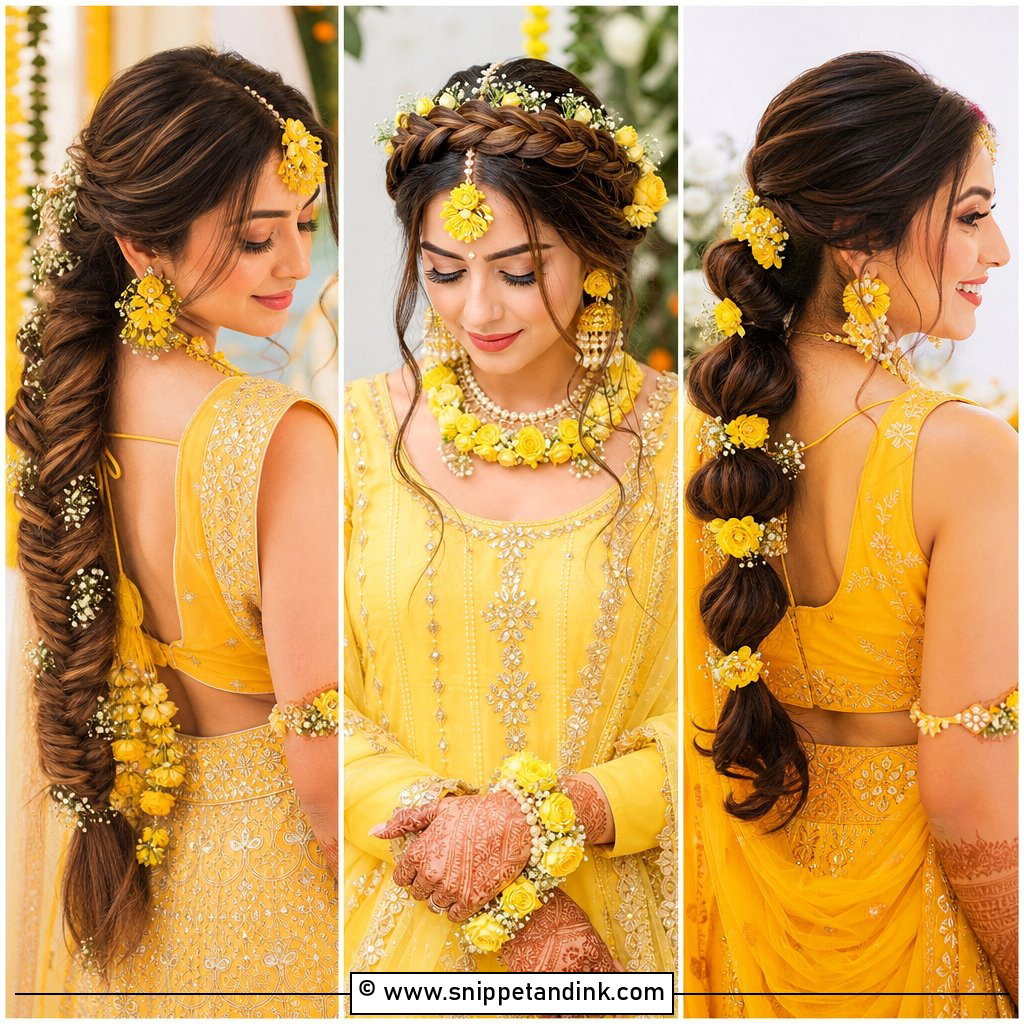
- Haldi: turmeric paste stains, and it shows most on blonde, highlighted or grey hair. Wear a low braid with a little oil through the lengths so the paste rinses out, and wash it the same day.
- Mehendi: your hands are out of use for hours, so choose something pinned off the face, like the low ponytail or the braided flower crown.
- Sangeet: heat and movement decide it. A curly ponytail, messy bun, fishtail or beach waves will cope with dancing.
- Wedding ceremony: the dupatta and tikka set the rules. A low bun, gajra bun or long braid gives them something solid to pin into.
- Reception: often no head covering, so this is the night for open curls, Hollywood waves or a high bun.
Washing and heat between functions
Back-to-back heat styling dries hair out fast. I’d wash the night before the ceremony rather than that morning, since freshly washed, silky hair grips pins and holds curl worse than day-old hair. Use a heat protectant every time, and if the schedule has a free day, give your hair a break from hot tools. When you take a style down, remove the pins gently before brushing; most of the breakage I see comes from dragging a brush through hair that still has pins and hairspray in it.
1. Floral Bun Hairstyle for Wedding
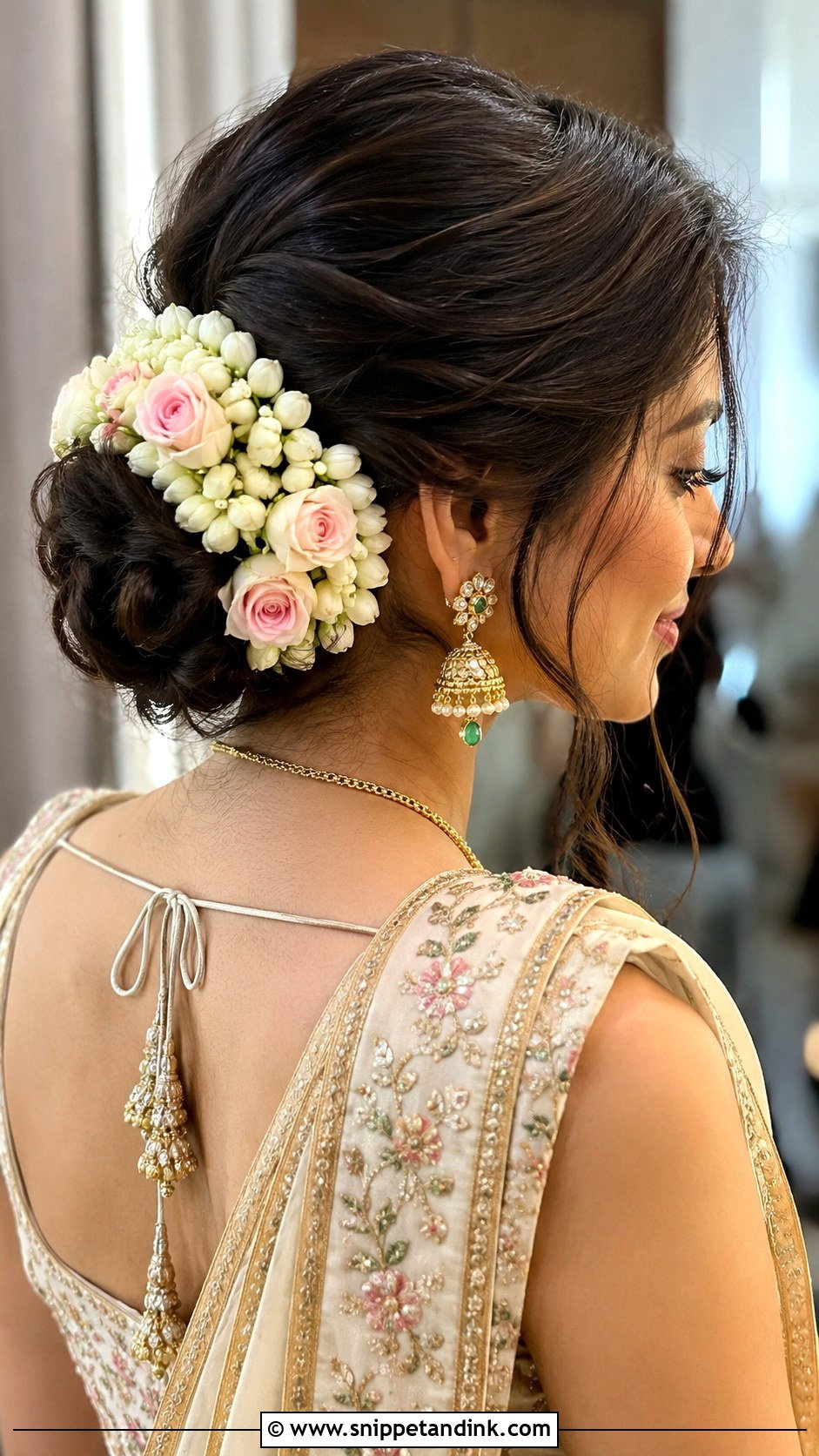
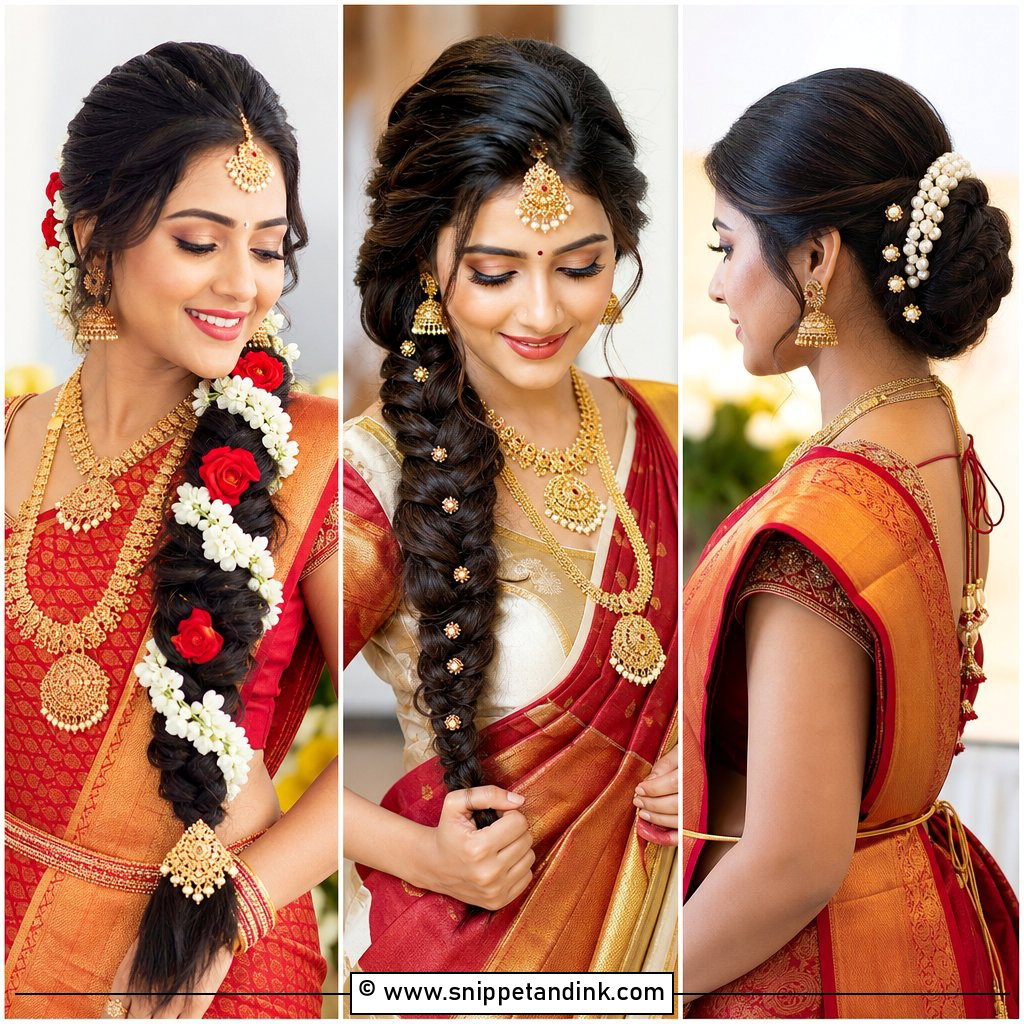
Fresh flowers add weight and moisture, so I build this bun firmer than it looks. The knot sits low or at mid-height, and gajra strands, baby roses or jasmine buds wrap around its base. I push U-pins through the flowers into the bun itself, never only into the outer layer, otherwise the gajra slides down as the jasmine warms and relaxes. Order the flowers for the morning of the function and keep them in a damp cloth in the fridge until the last minute, because jasmine browns quickly in a hot room. Leave out face pieces only if your hair holds a curl; limp tendrils look tired by the pheras.
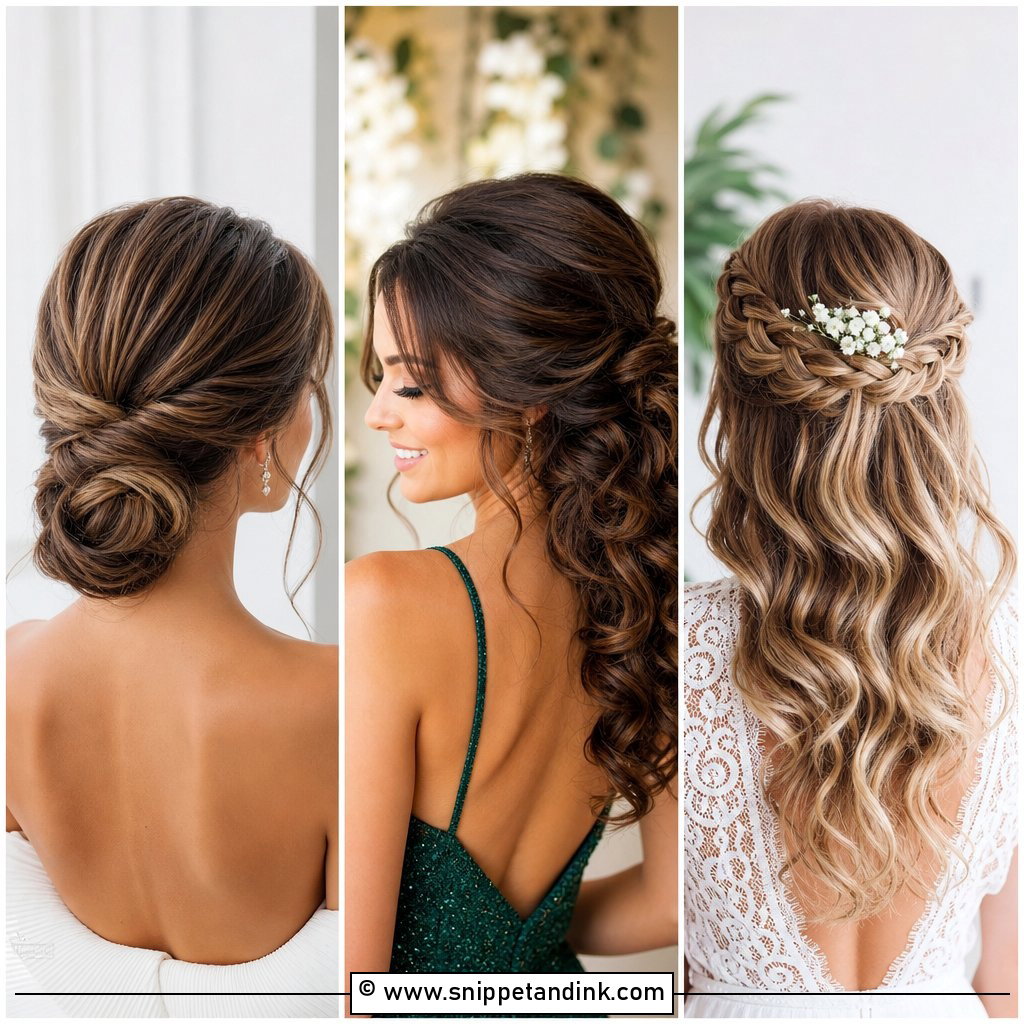
2. Sleek Low Bun Hairstyle for Marriage
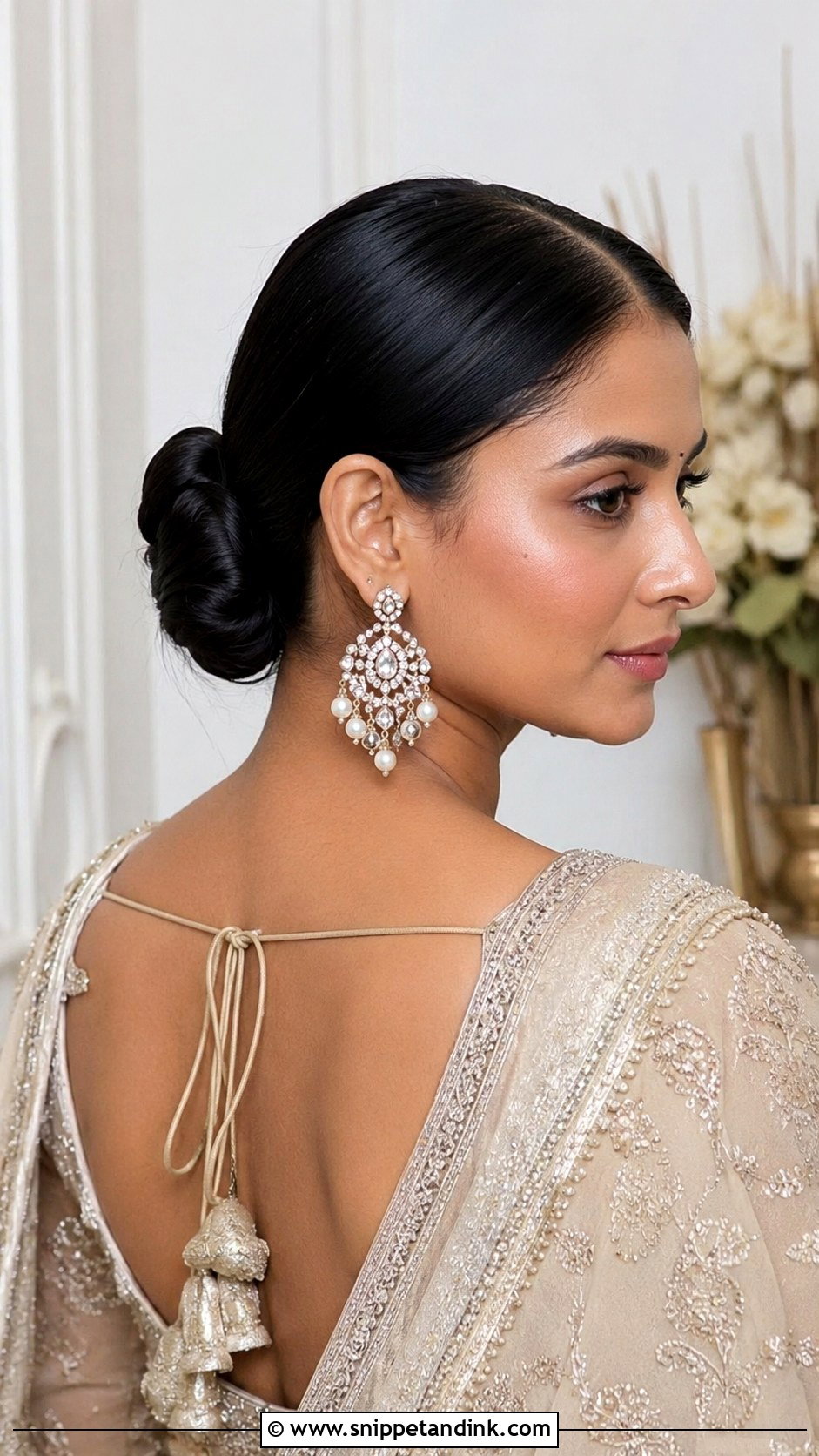
This is the style I reach for when a heavy dupatta and a maang tikka are both going on top. A bun at the nape gives the dupatta a flat shelf to pin into, and nothing gets crushed. The finish depends on prep: I blow-dry the hair smooth first, then use a little gel or wax along the hairline, since a sleek bun shows every bump. It’s unforgiving on very fine hair at the crown, where the scalp can show through the part under flash. A bold lip and statement earrings carry it well.
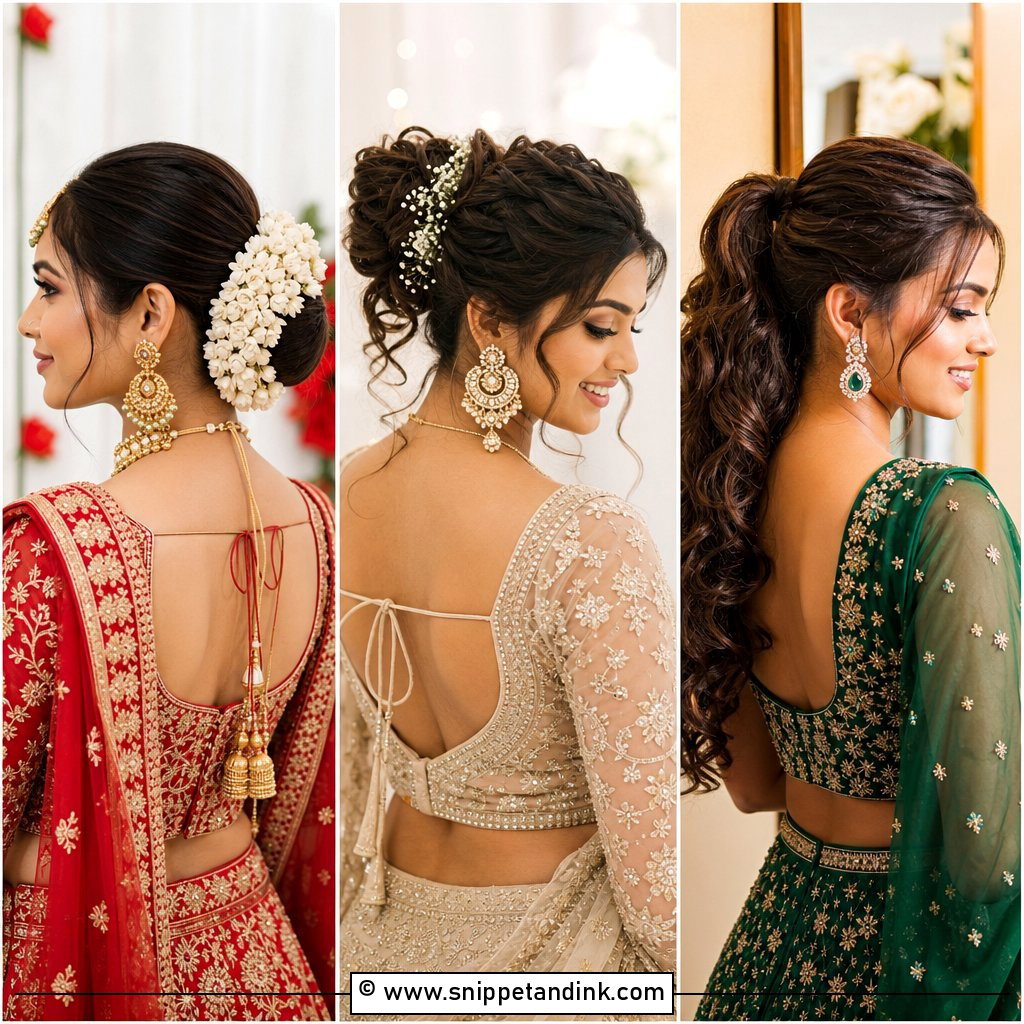
3. Messy Bun Hairstyle for Sangeet
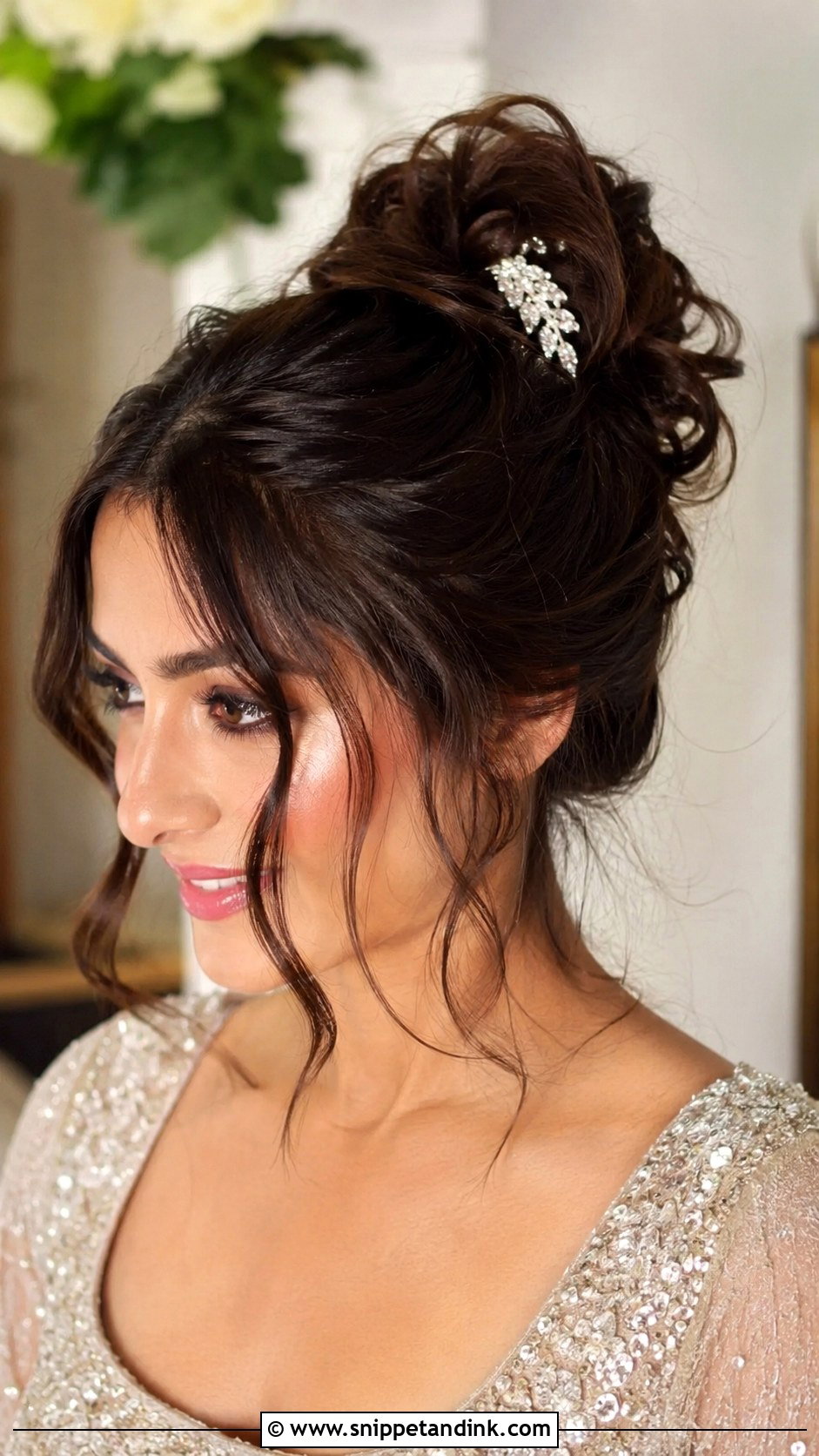
A messy bun only looks careless; the texture is built. For a sangeet I curl the hair first, tease the roots lightly, then pin the bun in loose sections so it has volume without coming apart when you dance. Very silky hair rejects this style unless it’s prepped with texture spray, and freshly washed hair is the hardest of all, so day-old hair is your friend. One sparkly clip or a few small flowers is plenty. I’d skip it for the main ceremony, since loose pieces snag on a dupatta.
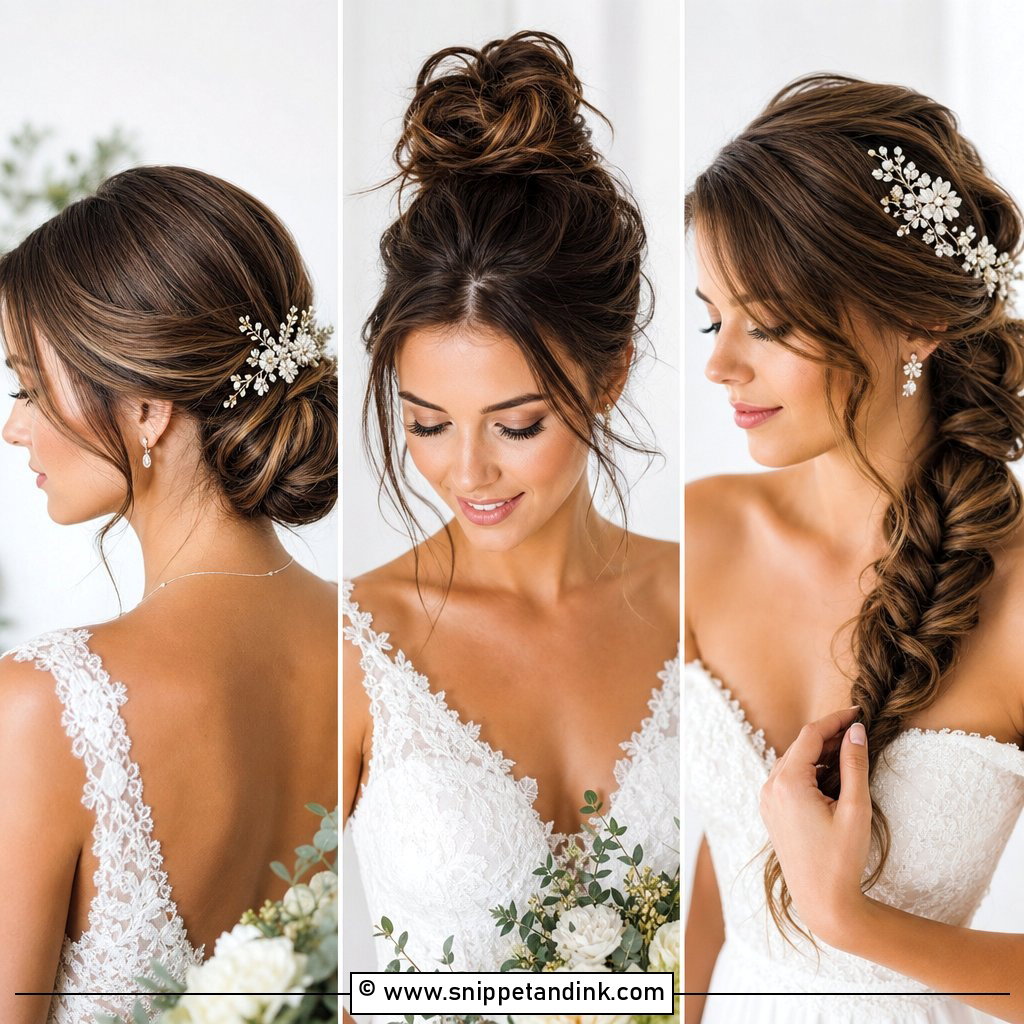
4. Bridal Braid With Hair Jewelry
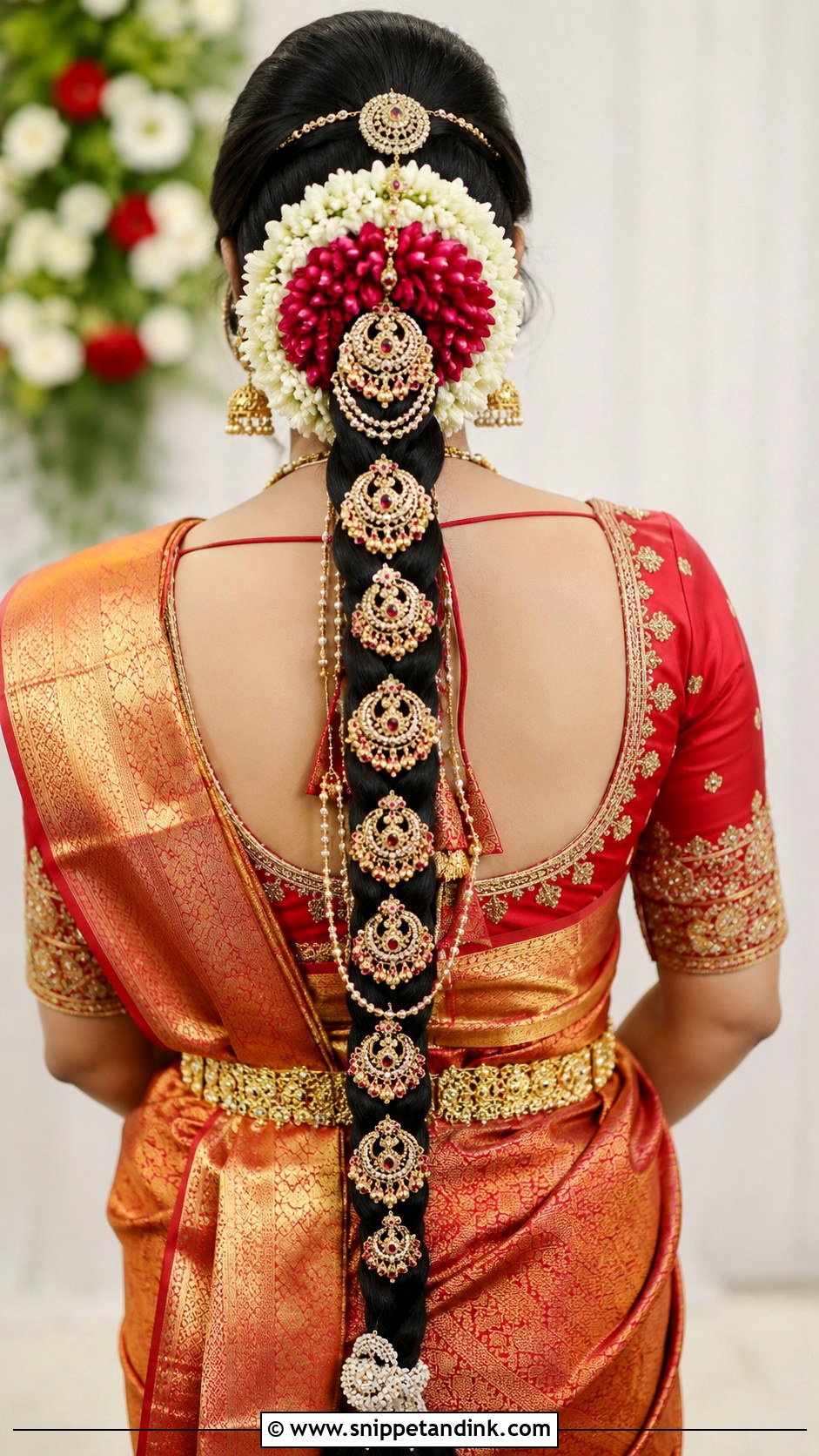
The long bridal braid is a South Asian classic, and it is often heavier than brides expect. It runs down the back and carries ornaments like jada billai, pearl chains or floral garlands. Most brides need clip-in or braided-in extensions for the length, and I match them to the natural colour in daylight well before the day. A full jada pulls on the head, so I anchor its top piece into a small hidden base of crossed bobby pins, which spreads the weight. With silk sarees and temple jewelry it reads as fully traditional, and it keeps the hair contained through a long ceremony.
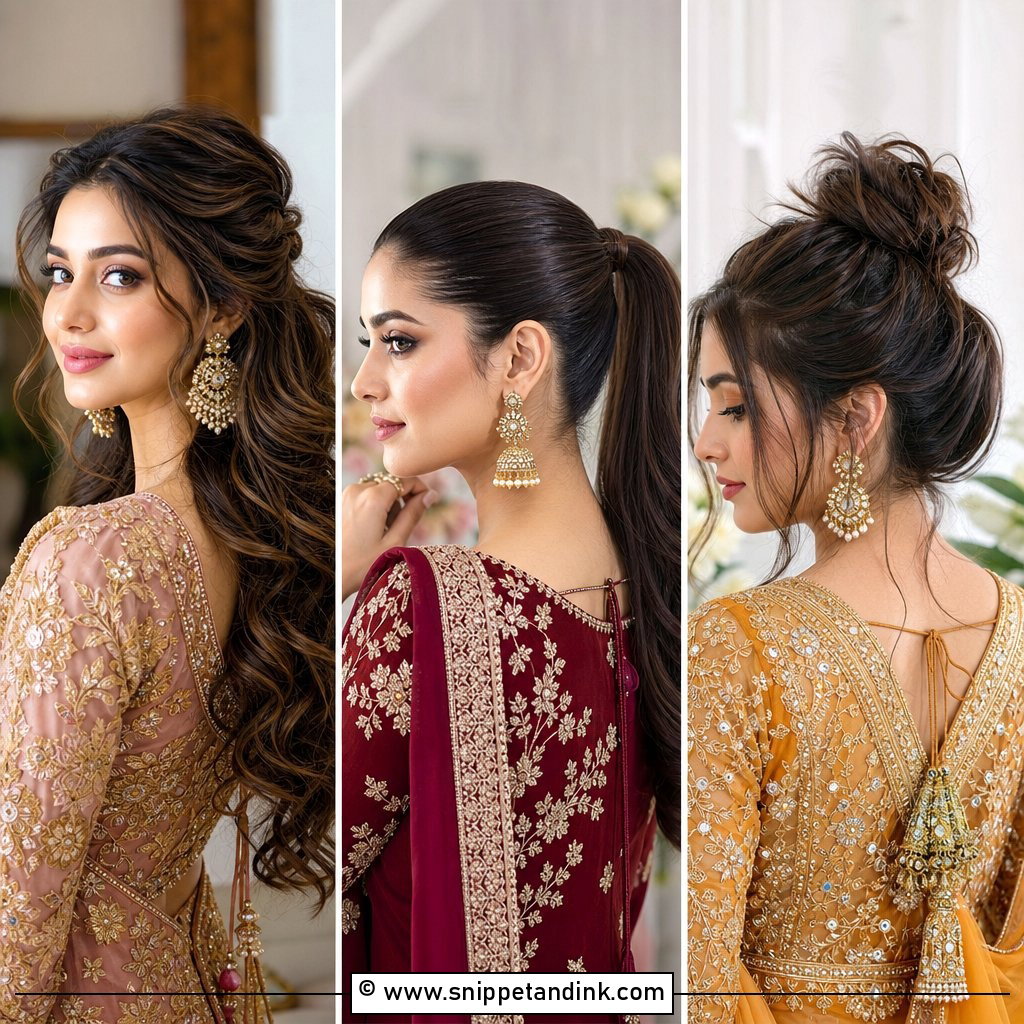
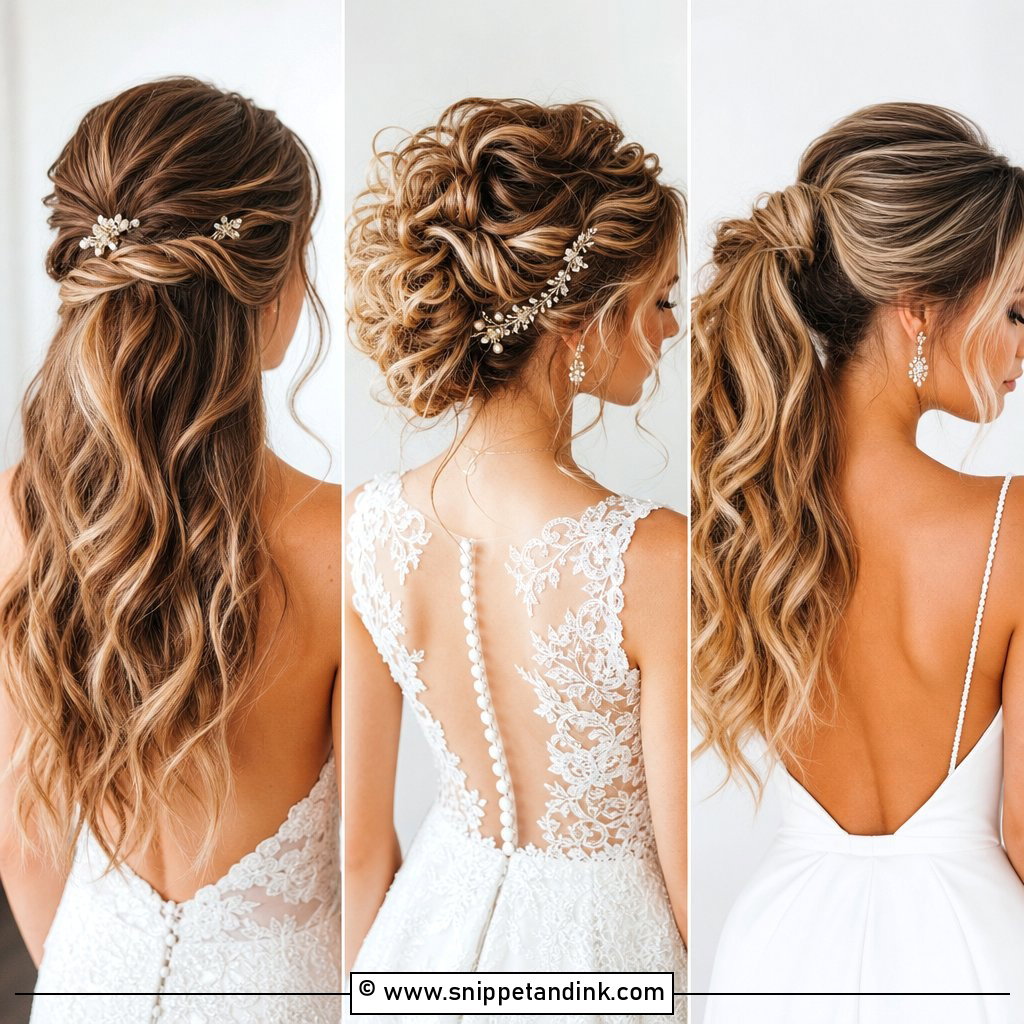
5. Half-Up Half-Down Wedding Hairstyle
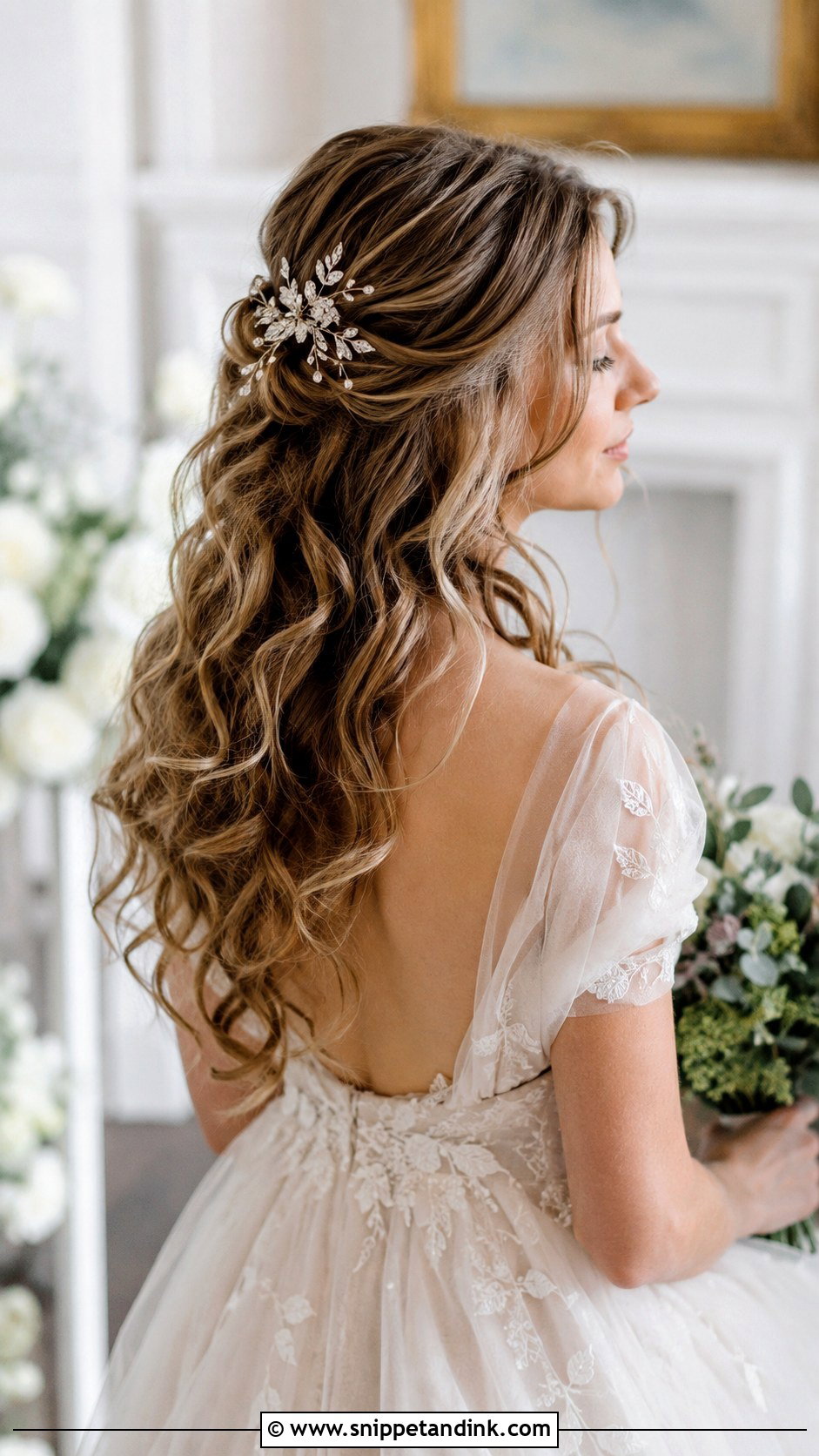
Half-up, half-down is the middle ground for a bride who doesn’t want a full updo but won’t spend the night pushing hair off her face. I pin the top section first, over a small teased base so the clip or flowers have something to grip. The curls underneath are what fail: in humid weather they relax within a few hours unless they were set with heat and cooled in pins. Thick hair handles it best. If yours is fine and won’t hold a curl, I’d go for soft waves and accept a looser finish.
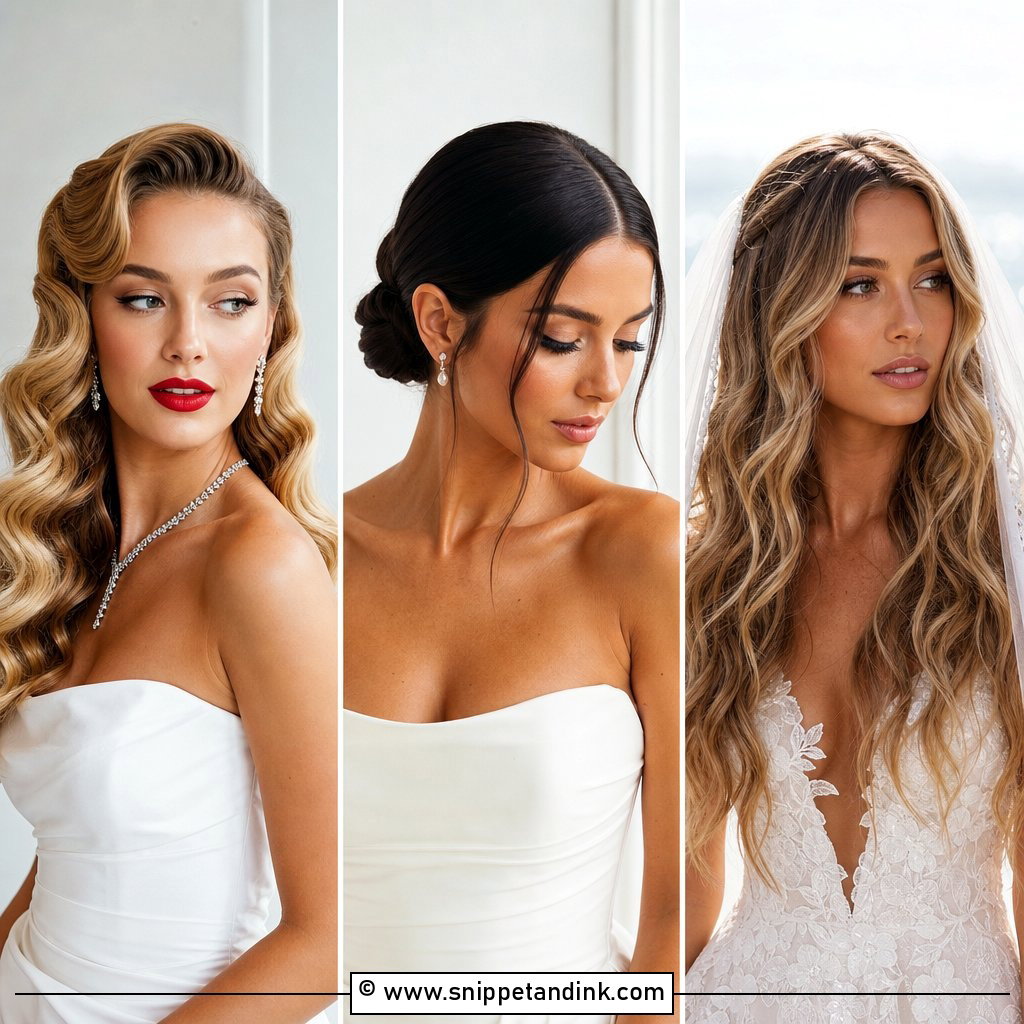
6. Hollywood Waves for Reception
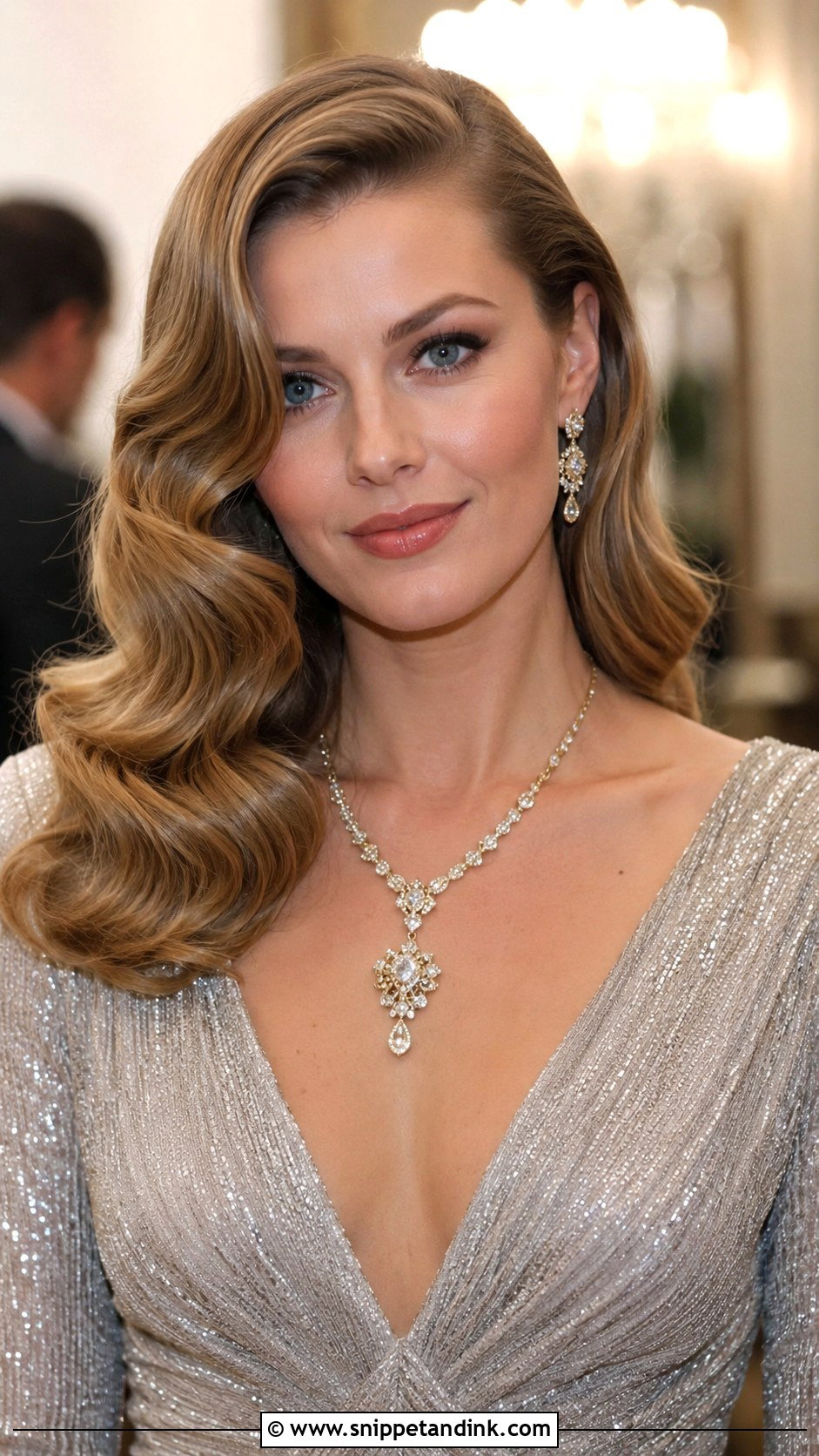
Hollywood waves are structured, not loose. I curl each section with a large-barrel iron, pin the curls while they cool, then brush them out into one continuous wave and press the ridges in with flat clips. That brush-out creates the glossy pattern, and it’s also why this style is hard to do yourself. A deep side part flatters most faces. Expect the waves to soften by late evening, which actually reads well at a reception; a small brush and a little shine spray bring the shape back.
7. Low Ponytail Hairstyle for Mehendi
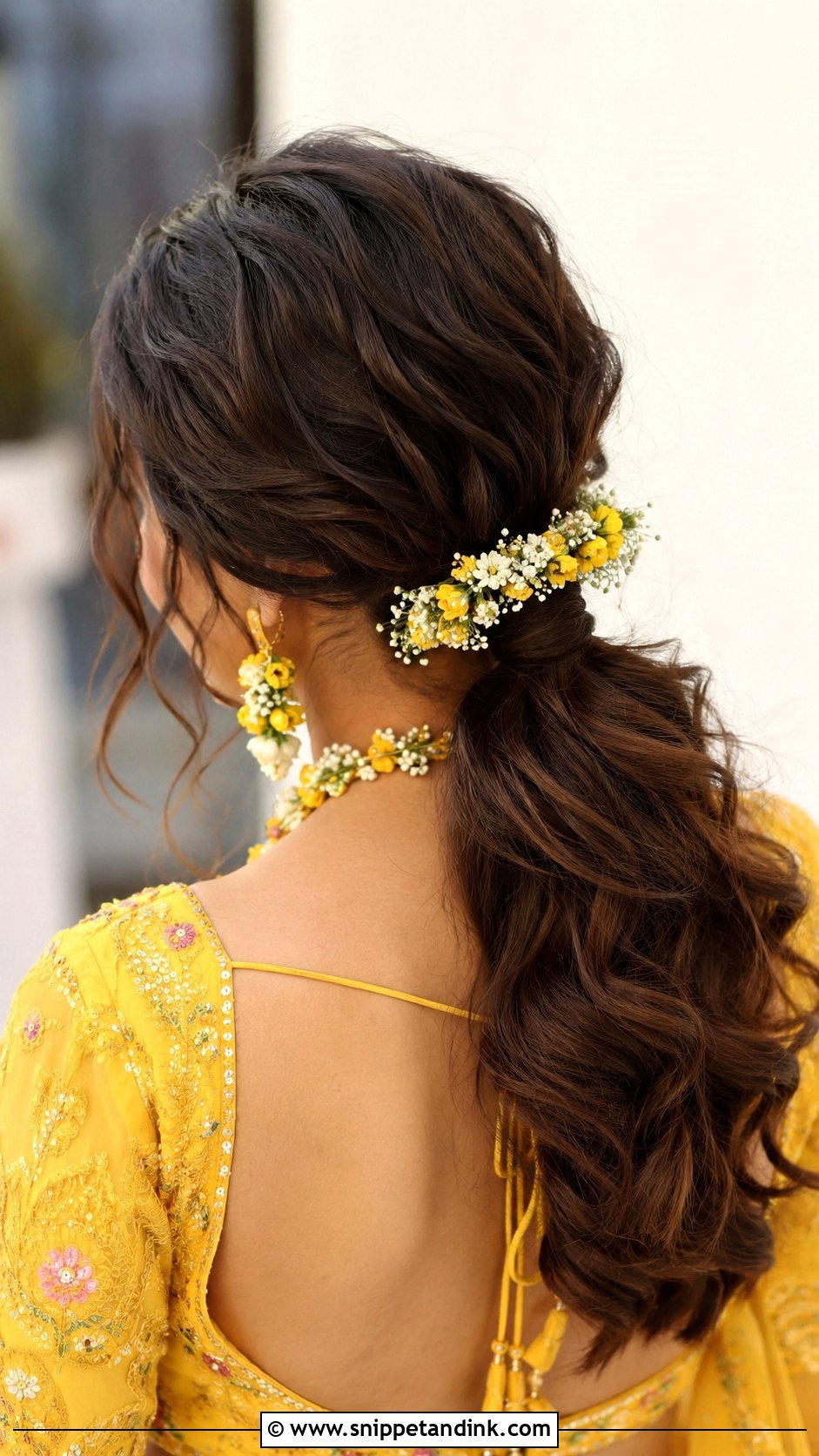
At a mehendi your hands are out of action for hours while the paste dries, so your hair has to stay put without you touching it. A low ponytail does that. I gather it at the nape, add a soft bend through the length, and wrap a strand around the elastic, pinning the end underneath. Keep any loose face pieces short, or wet henna ends up in them. Flowers or a colourful scrunchie suit the mood of the day.
8. Braided Bun Hairstyle for Wedding
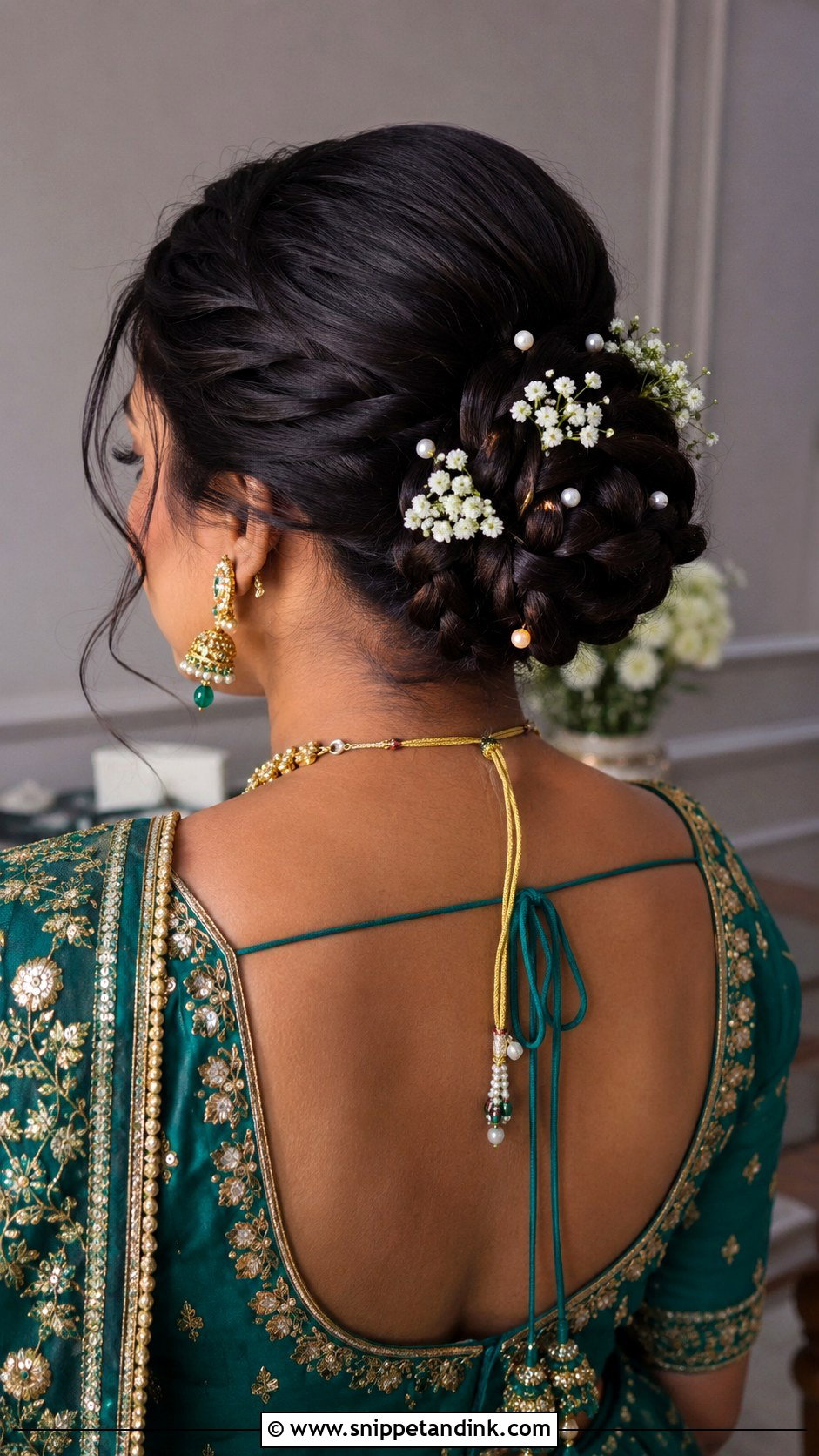
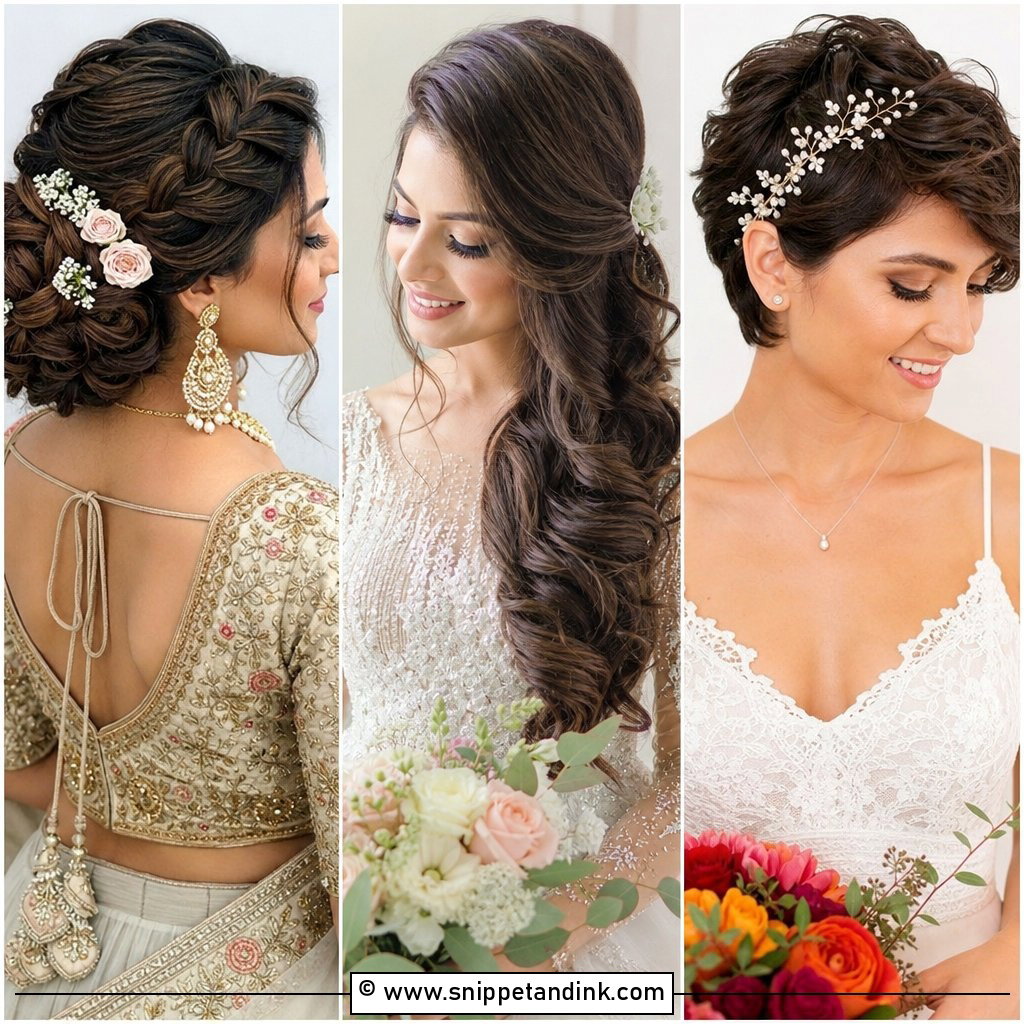
I like the braided bun for brides with long, thick hair, because it uses all that length instead of fighting it. Several braids are coiled and pinned into one knot at the back of the head. It stays secure through long ceremonies, and the woven texture still reads clearly in photos taken from behind, which happens more often during the rituals than brides expect. Layered or shoulder-length hair struggles here: the braids come out thin and short ends poke out, so extensions are usually needed. Pearl pins sit neatly in the gaps between the braids.
9. Open Hair With Curls for Reception
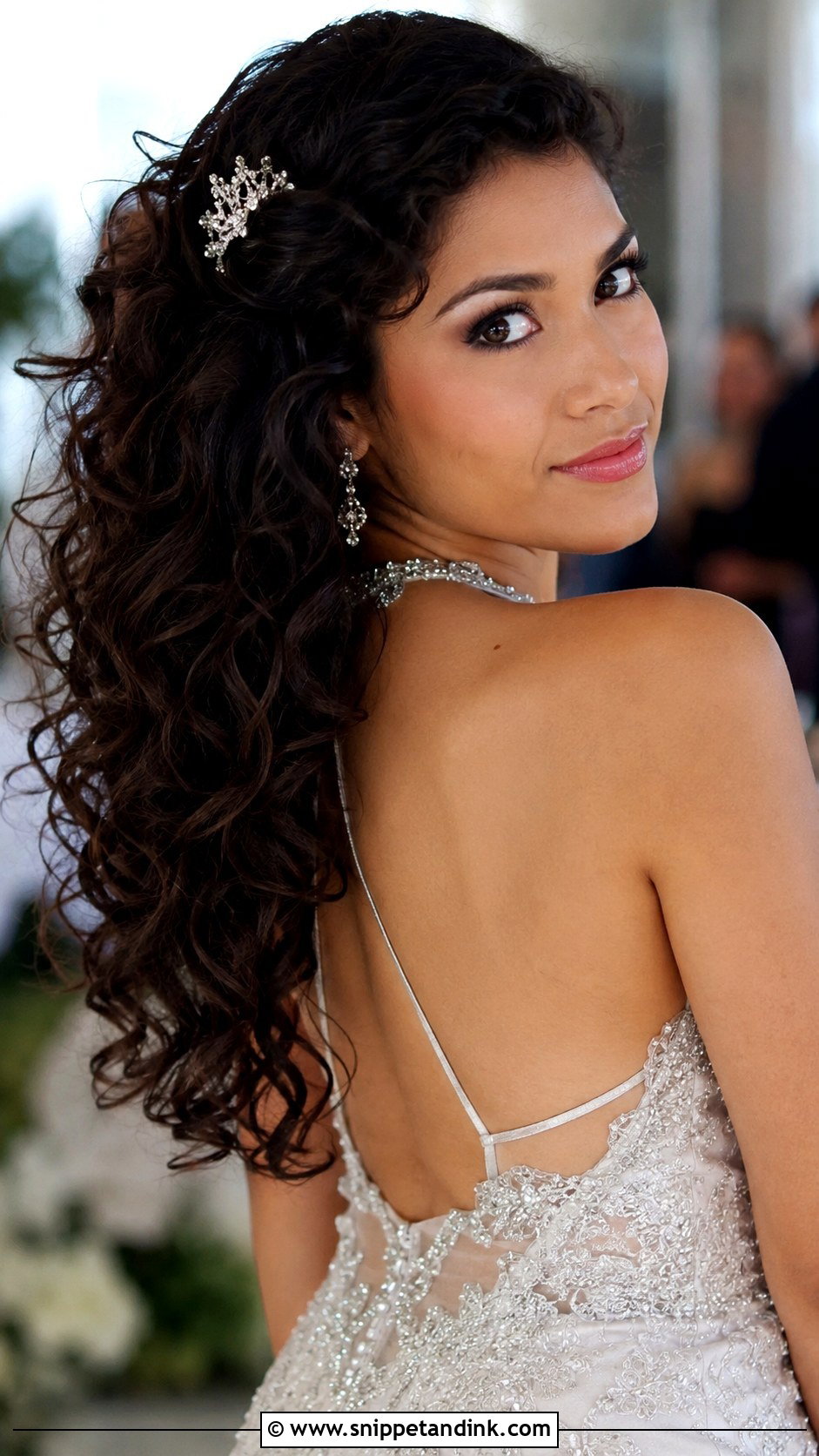
Open hair is the riskiest choice for a long reception, mostly because of heat. Loose curls give volume and movement, and they work with backless gowns and statement necklaces since the shoulders stay on show. The trouble is that curls drop as the room warms up. I prep with a heat protectant and a light mousse, curl in small sections and let every curl cool before brushing out. If your hair is straight and heavy, ask for tighter curls than you want; they’ll relax into the right shape by the first dance.
10. French Twist Hairstyle for Marriage
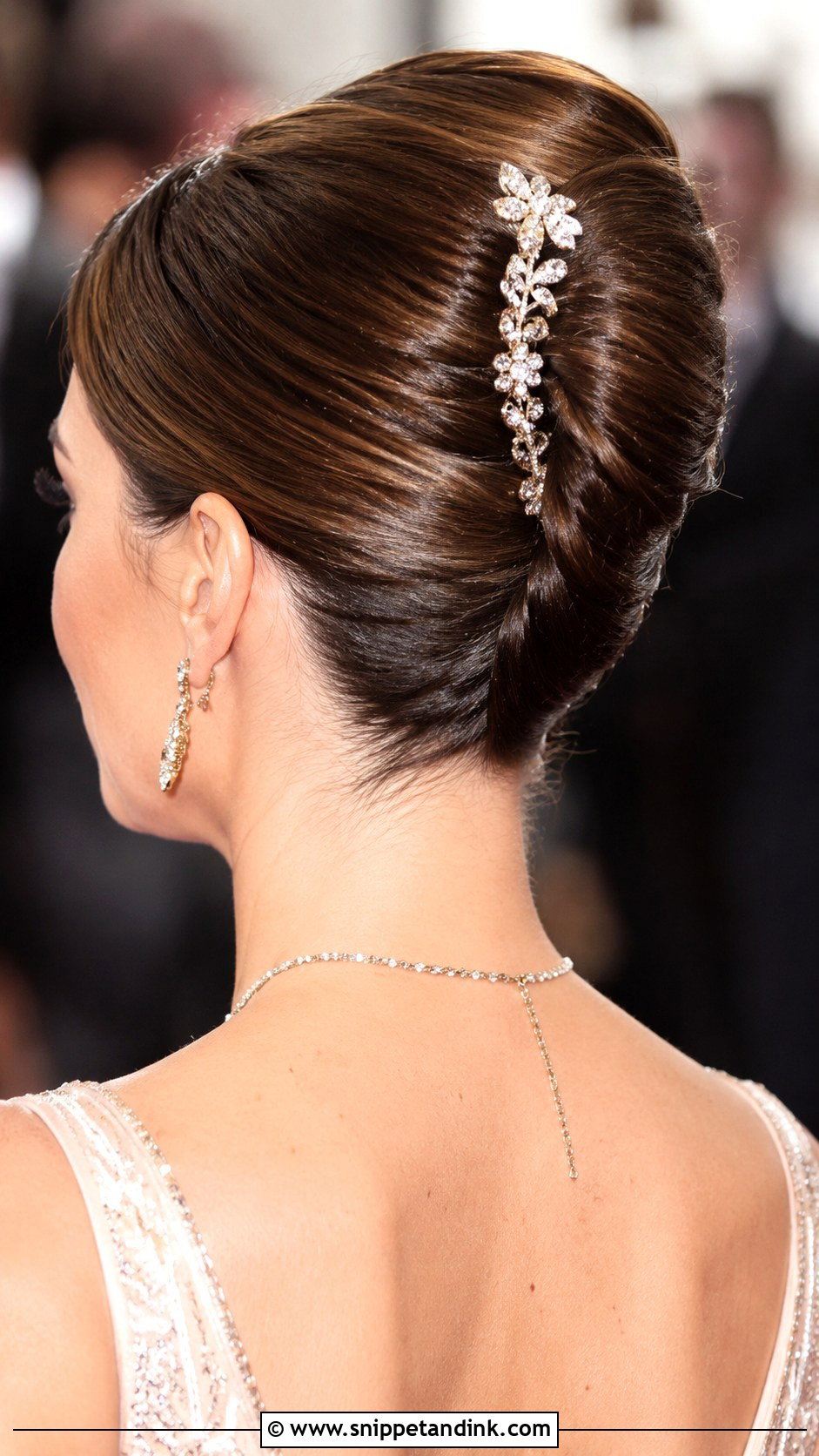
A French twist rolls the hair vertically up the back of the head and tucks it into a seam. It shows off the neckline and gives a dupatta or headpiece a firm surface to pin against. The seam is the tricky part. I back-comb the inner layer so the roll has grip, then pin along it with long bobby pins pointing up into the twist. Hair above the shoulders rarely makes a clean roll. For a marriage function with a saree or a formal gown, it’s one of the tidiest options here.
11. Side Swept Curls Hairstyle for Bride
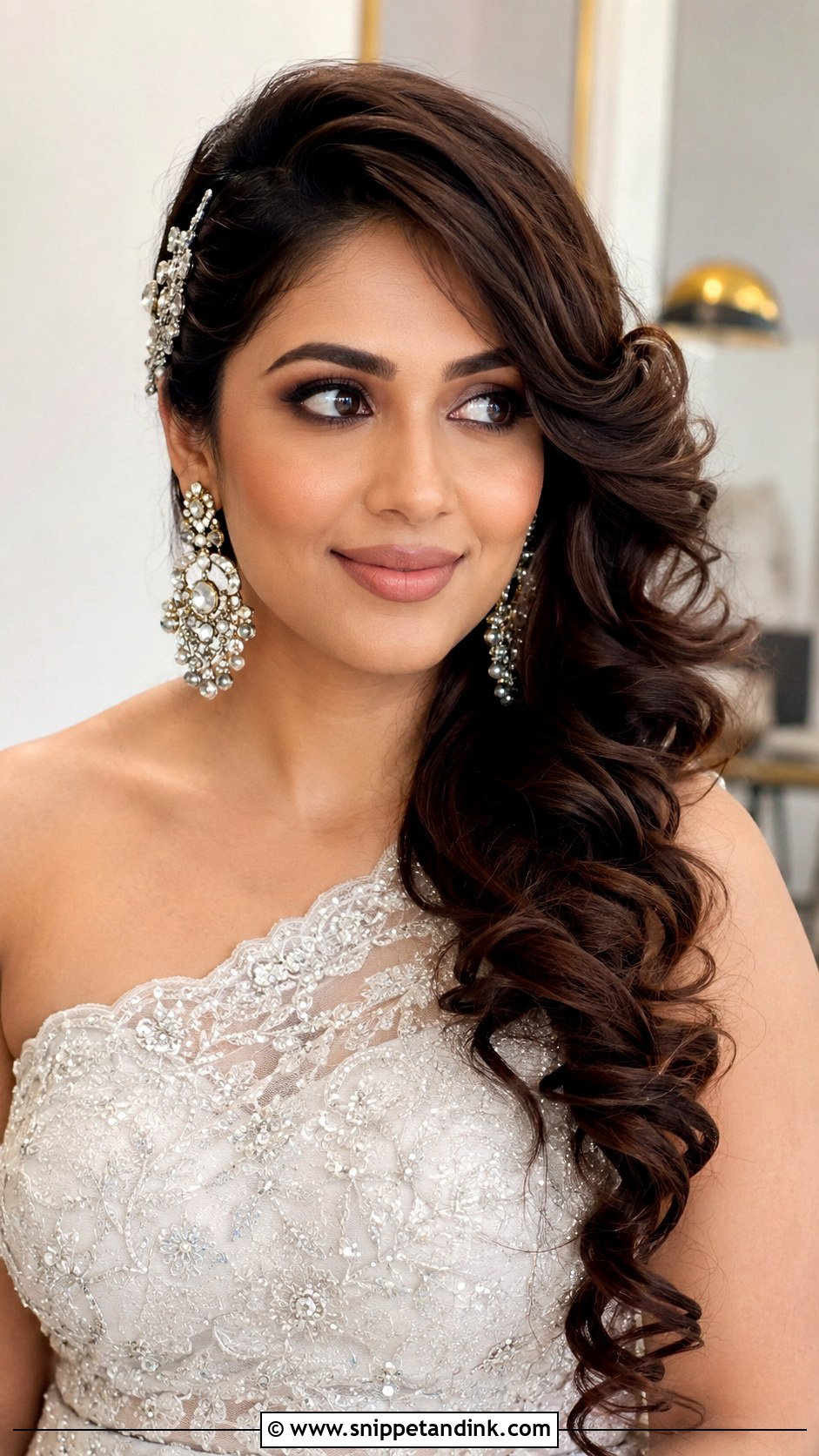
Sweeping all the curls to one side frees the opposite ear, which is why I suggest it when earrings are the main piece of jewelry. The swept side needs real anchoring: I set a crisscross of bobby pins behind the ear on the bare side so the weight of the hair can’t pull it back across the head, and a jeweled clip can sit over those pins. Think about your dupatta, though. If it drapes over one shoulder, the curls and the fabric will fight for the same space, so put them on opposite sides.
12. Fishtail Braid Hairstyle for Sangeet
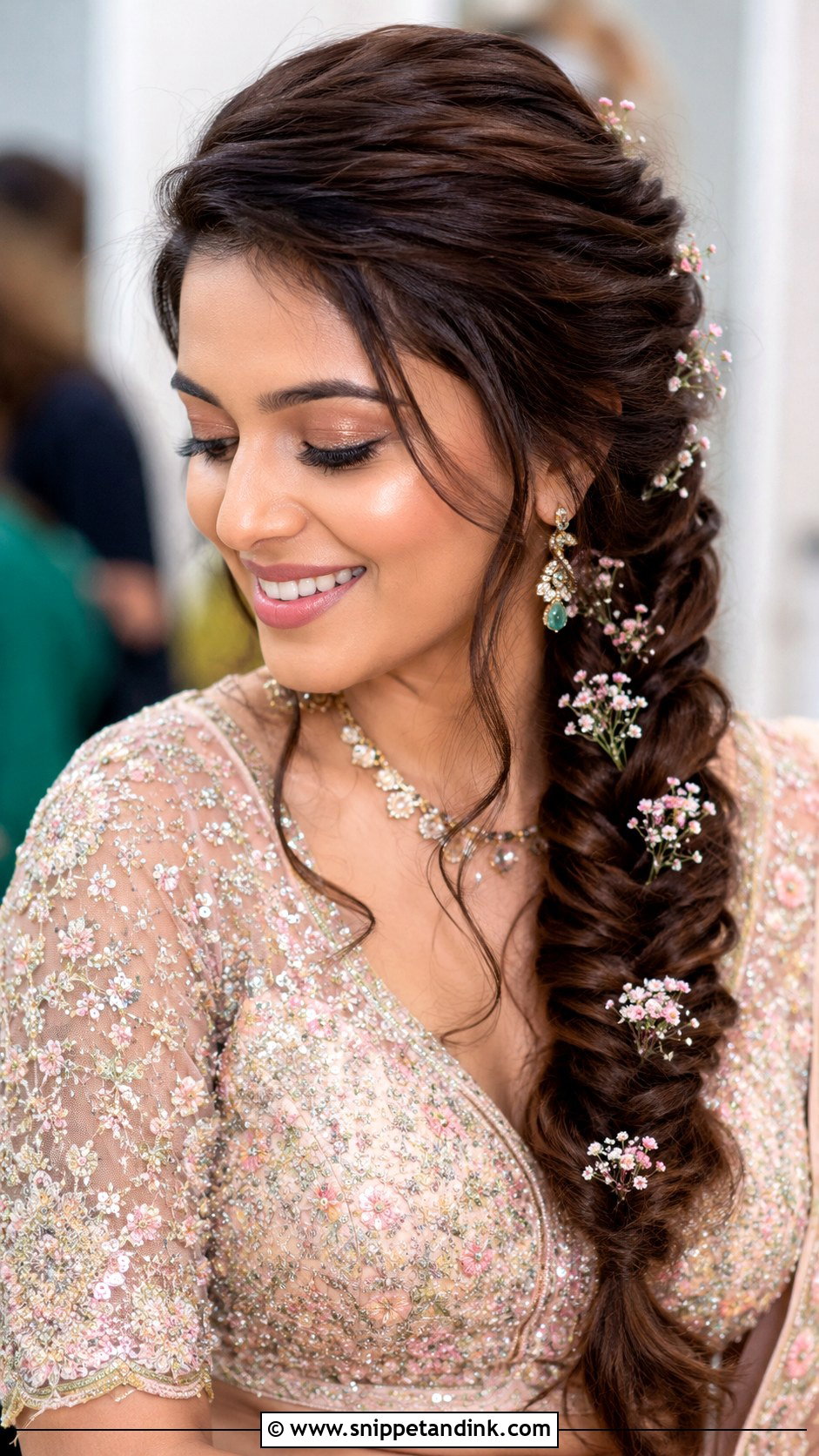
The fishtail uses only two sections, crossing a tiny piece from the outer edge of each, and that’s what creates the herringbone pattern. It holds well but it’s slow on long hair, so allow for it in the schedule. After tying it off I loosen it by pulling gently at the edges from the bottom up, which stops it unravelling. Wear it down the back or over one shoulder. On heavily layered hair the shorter pieces stick out along the braid; a little wax on your fingers while braiding keeps them in.
13. Bun With Gajra for Wedding
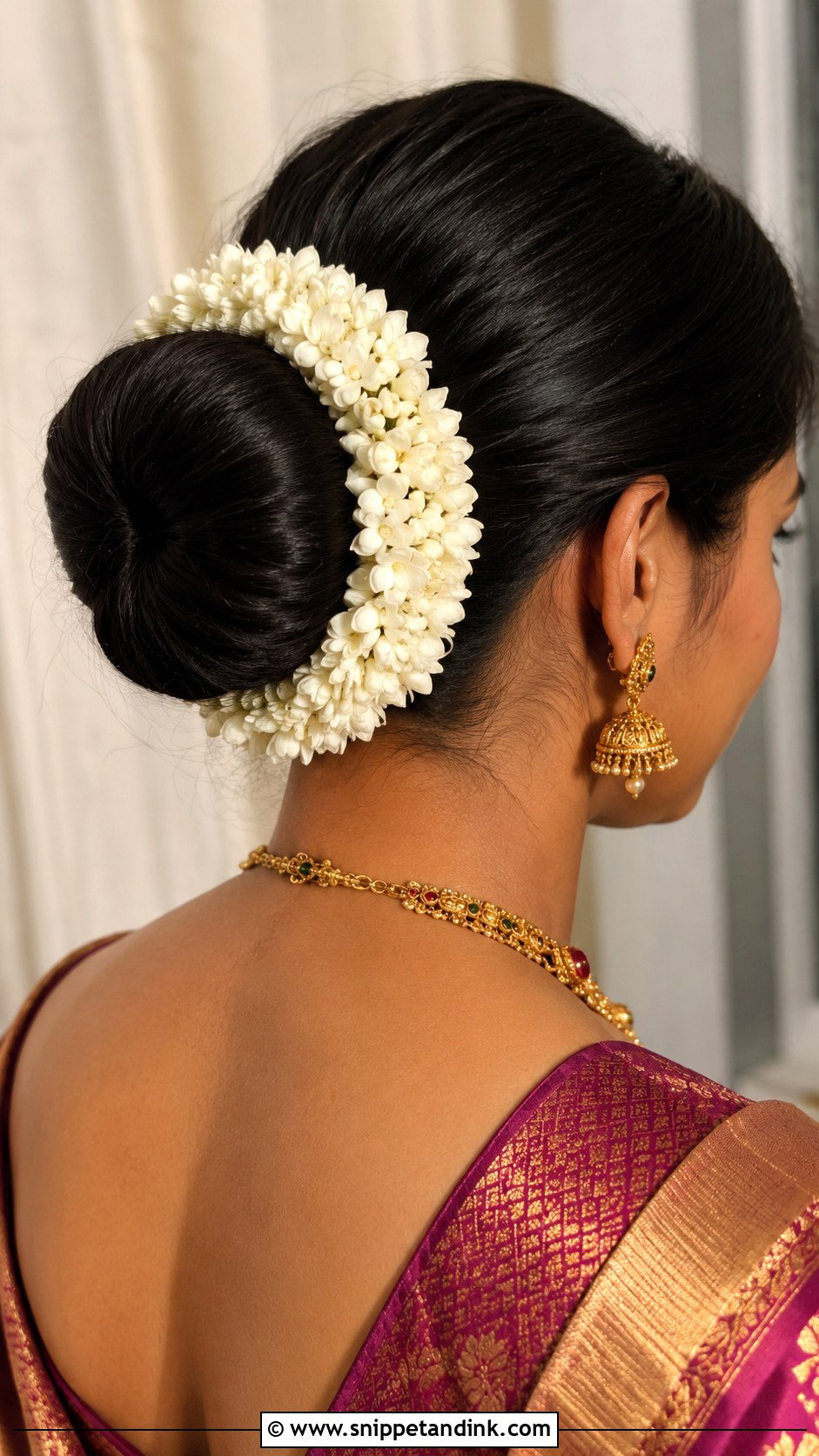
Jasmine or marigold gajra wrapped around a neat knot is the most traditional look on this list. The fragrance is part of the appeal, and it fades with heat: jasmine smells strongest and looks freshest in its first few hours. I add the gajra only once the bun is fully pinned and sprayed, and for a ceremony I’d always buy one spare strand in case the first wilts. The bun underneath must be tight, since the flowers, the dupatta and the tikka all hang off it. Silk sarees and gold temple jewelry are its natural match.
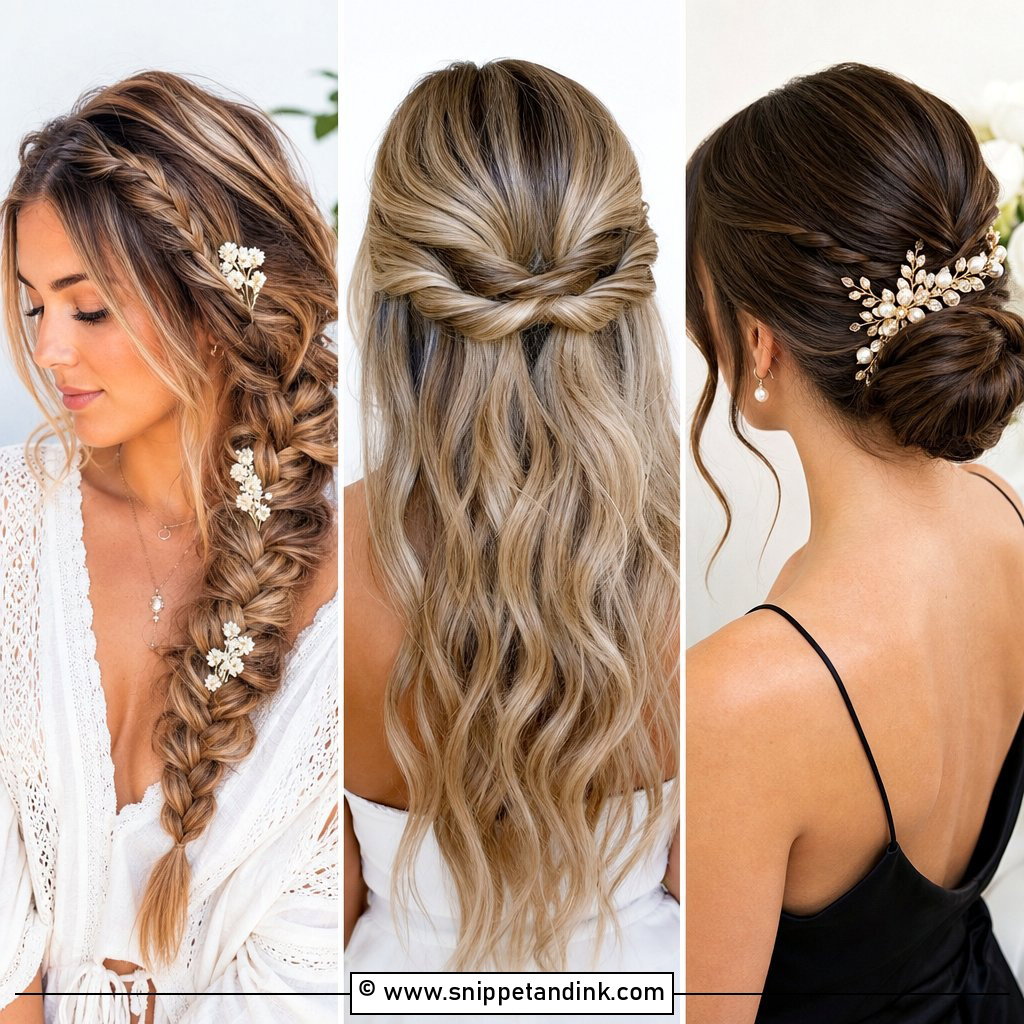
14. Loose Waves Hairstyle for Wedding Guest
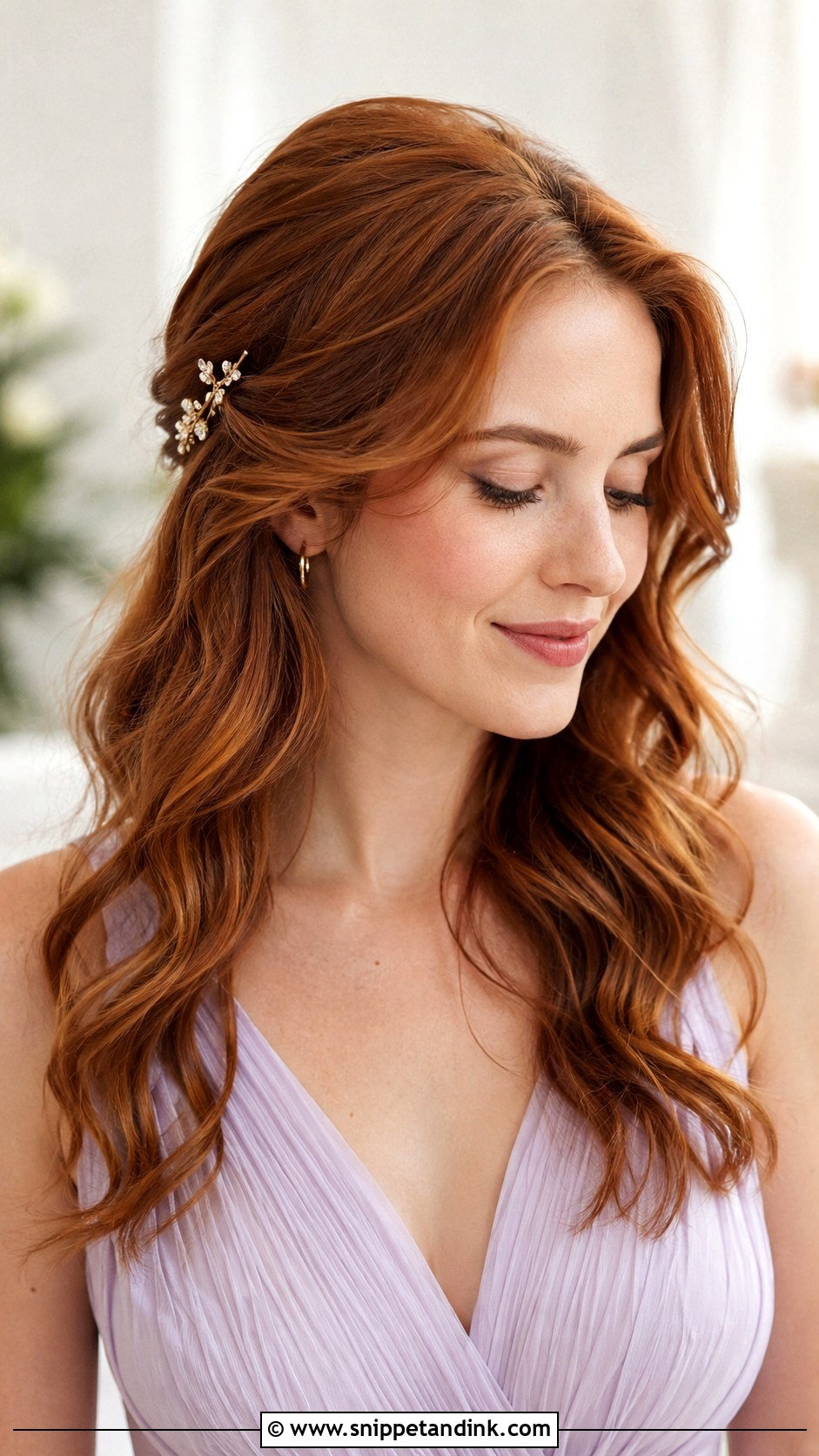
As a guest, this is the easiest style on the list to do yourself. Soft waves need a curling iron of around an inch and a quarter, curls wound in alternating directions, and your fingers to break them up once they’ve cooled. They suit most outfits and anything from collarbone length down. The weak point is humidity at outdoor daytime events, where waves can frizz by lunch, so finish with a light serum on the lengths and keep it off the roots. A small clip at one side gives you somewhere to put the hair if it gets hot.
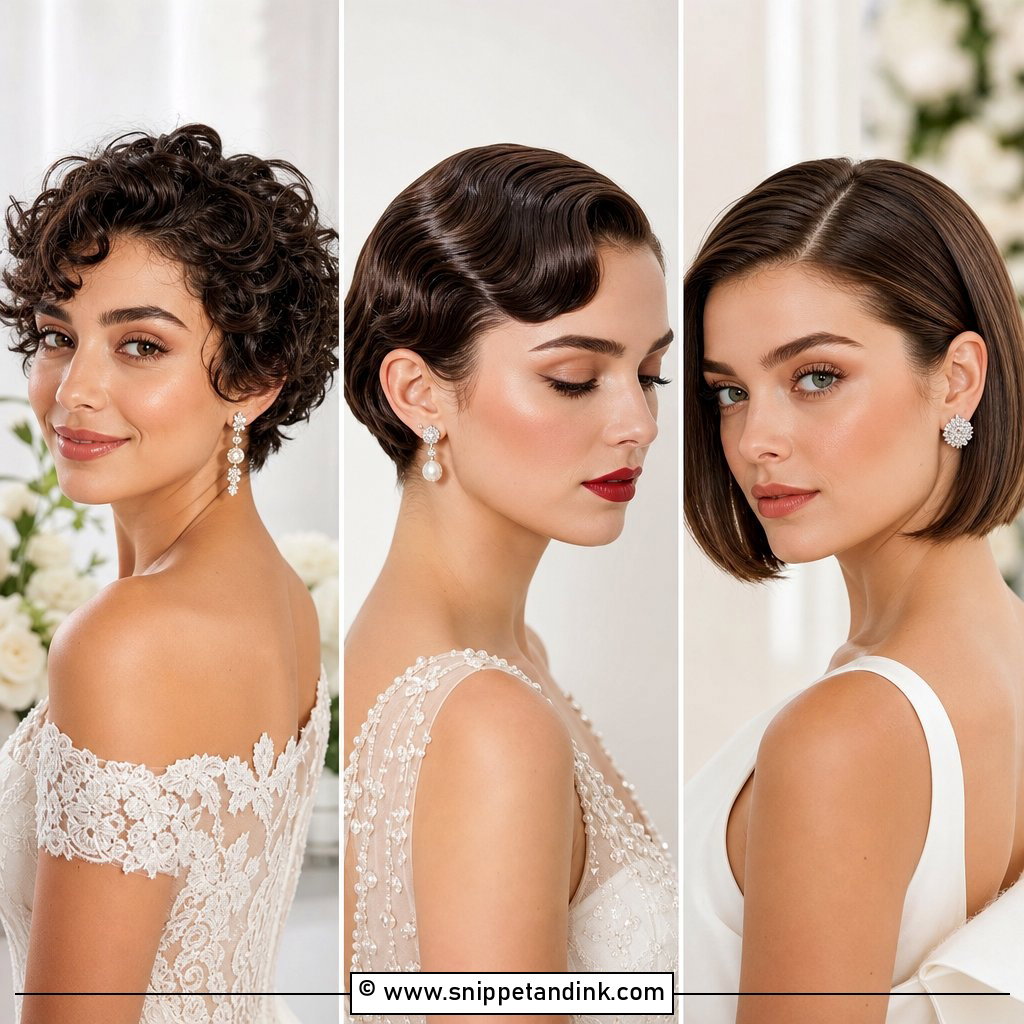
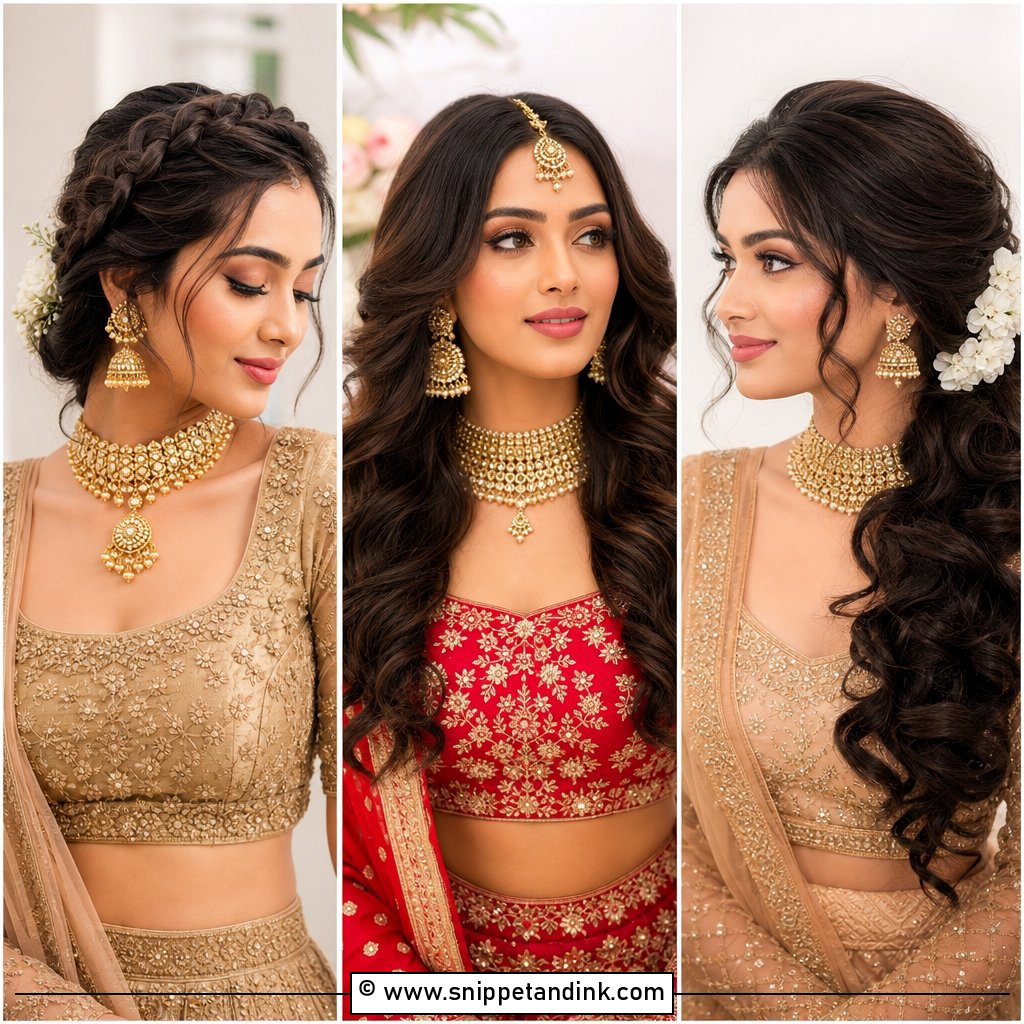
15. Crown Braid Hairstyle for Bride
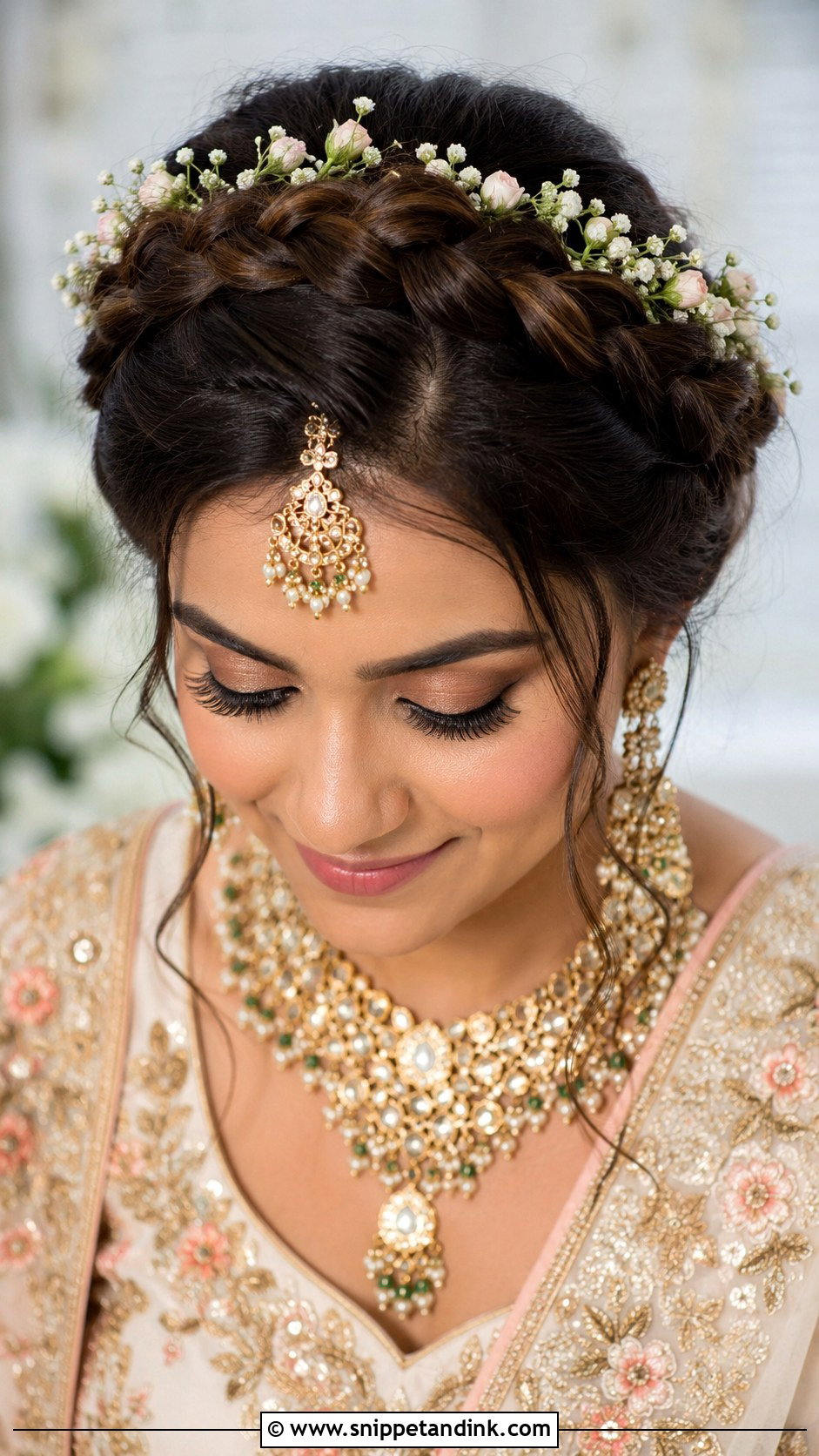
A crown braid wraps around the head like a band and keeps every strand off the face. I usually work two Dutch braids up from the nape and pin the ends under each other at the top, which holds better than one long braid wound all the way round. It pairs well with a maang tikka because the braid frames the center part where the tikka hangs. Long hair helps; anything above the shoulders usually needs a braided-in piece. Small flowers or pearls can be pinned along it.
16. High Bun Hairstyle for Reception
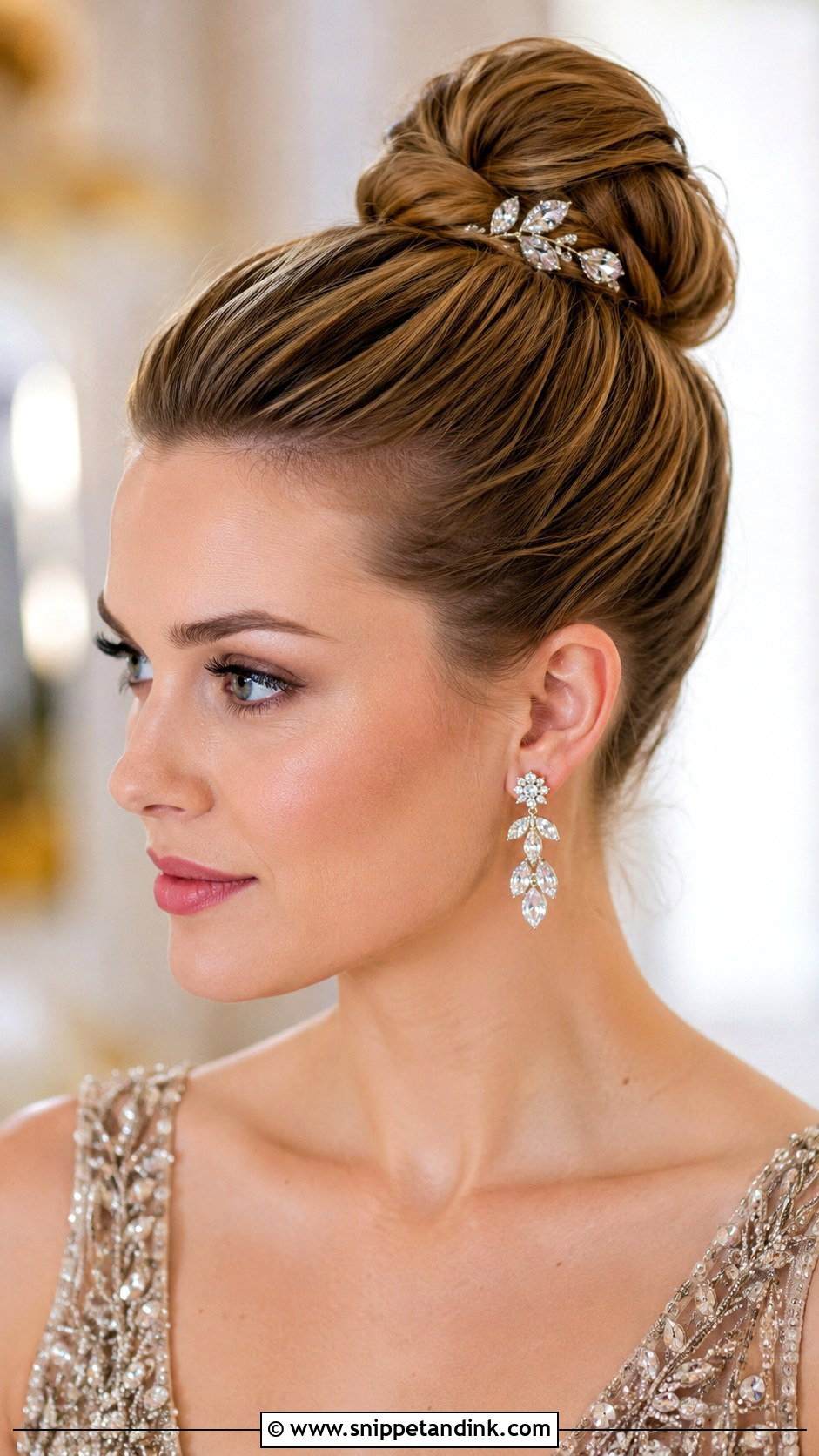
Placed at the crown, a high bun adds height and lengthens the neck, so it suits reception gowns and statement earrings. It has one real limit: you can’t pin a heavy dupatta over it, so I keep it for the reception or any evening without a head covering. I tie the ponytail tight, smooth it with gel, then wrap and pin. Fine hair benefits from a small bun form hidden inside. A single jeweled pin at the base is enough decoration.
17. Curly Ponytail Hairstyle for Sangeet
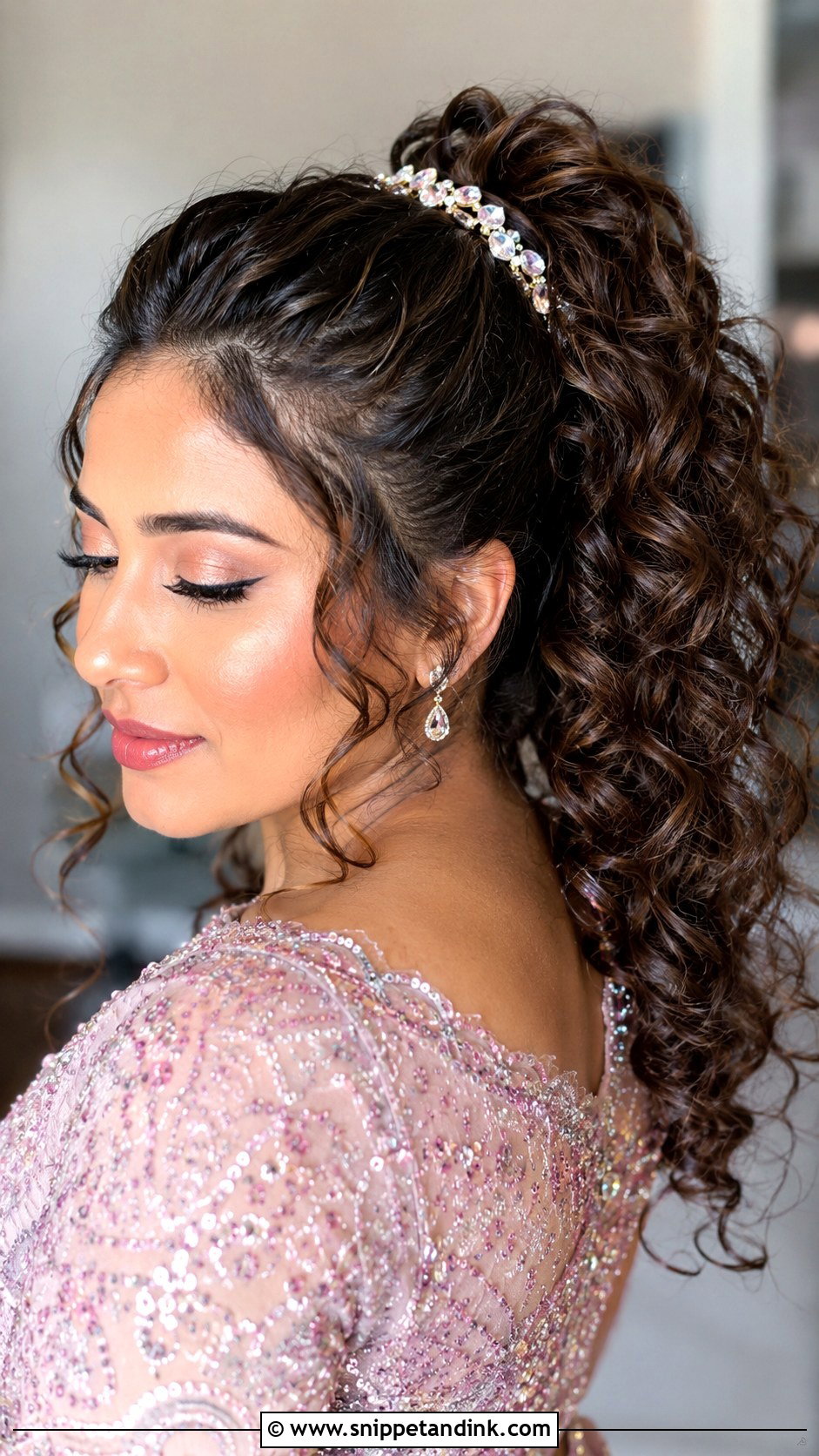
For a sangeet look with lots of dancing, a curly ponytail moves with you and won’t collapse the way open curls do. I curl the hair before tying it, since curling inside a ponytail drags at the elastic. Height is the main decision: high reads playful, while mid-height is kinder to anyone who gets a headache from a tight ponytail over a long night. Wrap a curl around the base to hide the elastic, and pull pieces loose at the front only if your hair will hold them.
18. Braided Crown With Flowers for Mehendi
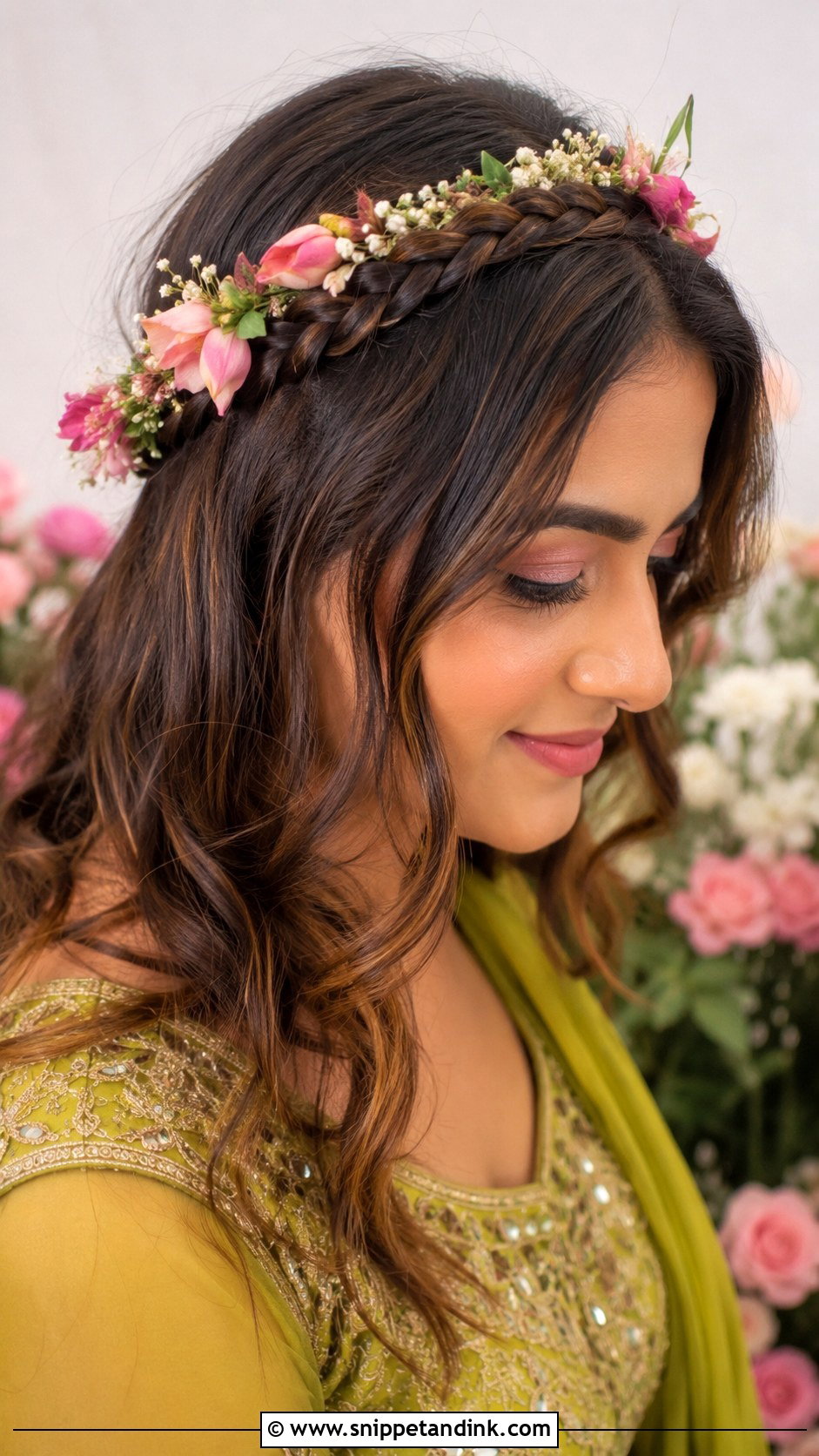
Flowers tucked into a braided crown keep hair well away from wet henna during a long mehendi. The braid goes around the head and fresh blooms are pinned into the gaps. Here I use sturdier flowers, such as baby’s breath, small roses or marigold, because they last through a warm afternoon better than delicate jasmine. Asking your florist for seasonal flowers in your outfit colours is the simplest brief. It’s a relaxed look, so a slightly loose braid is fine.
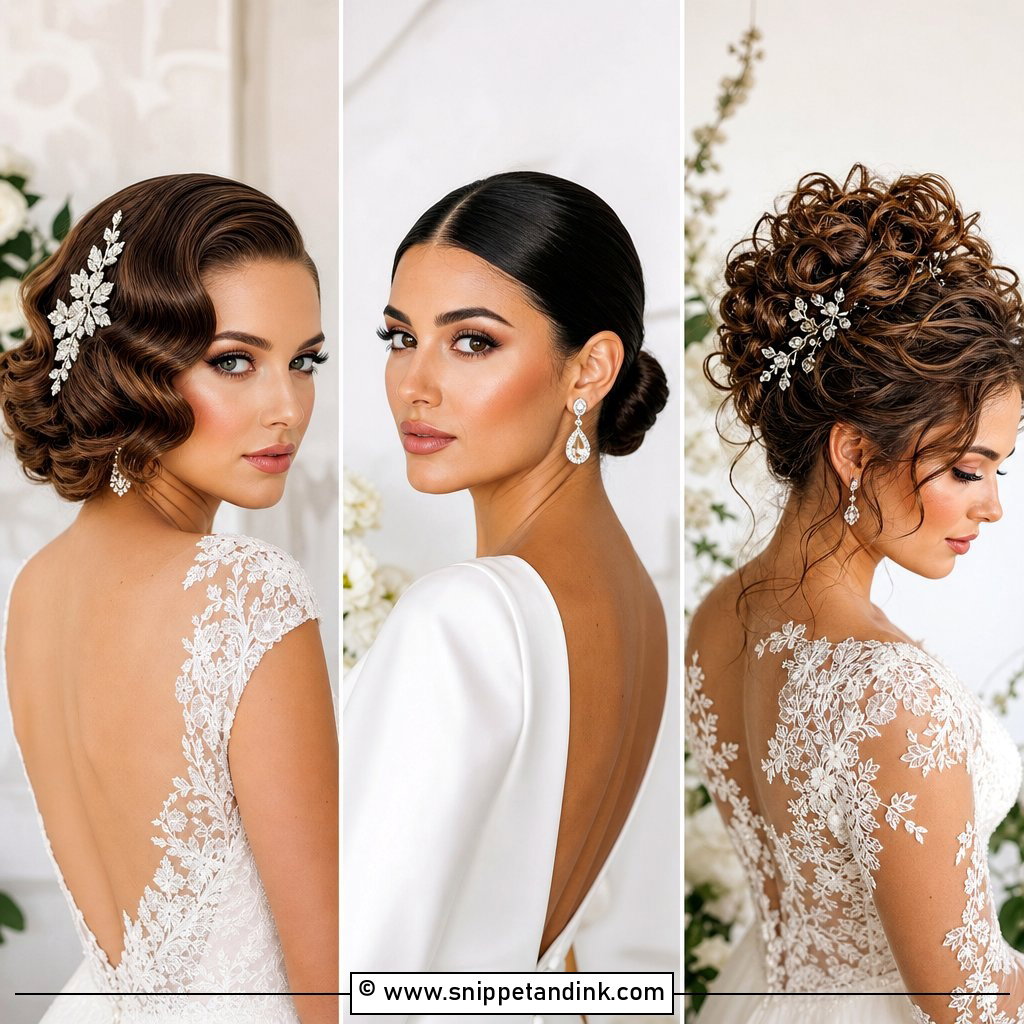
19. Vintage Updo Hairstyle for Marriage
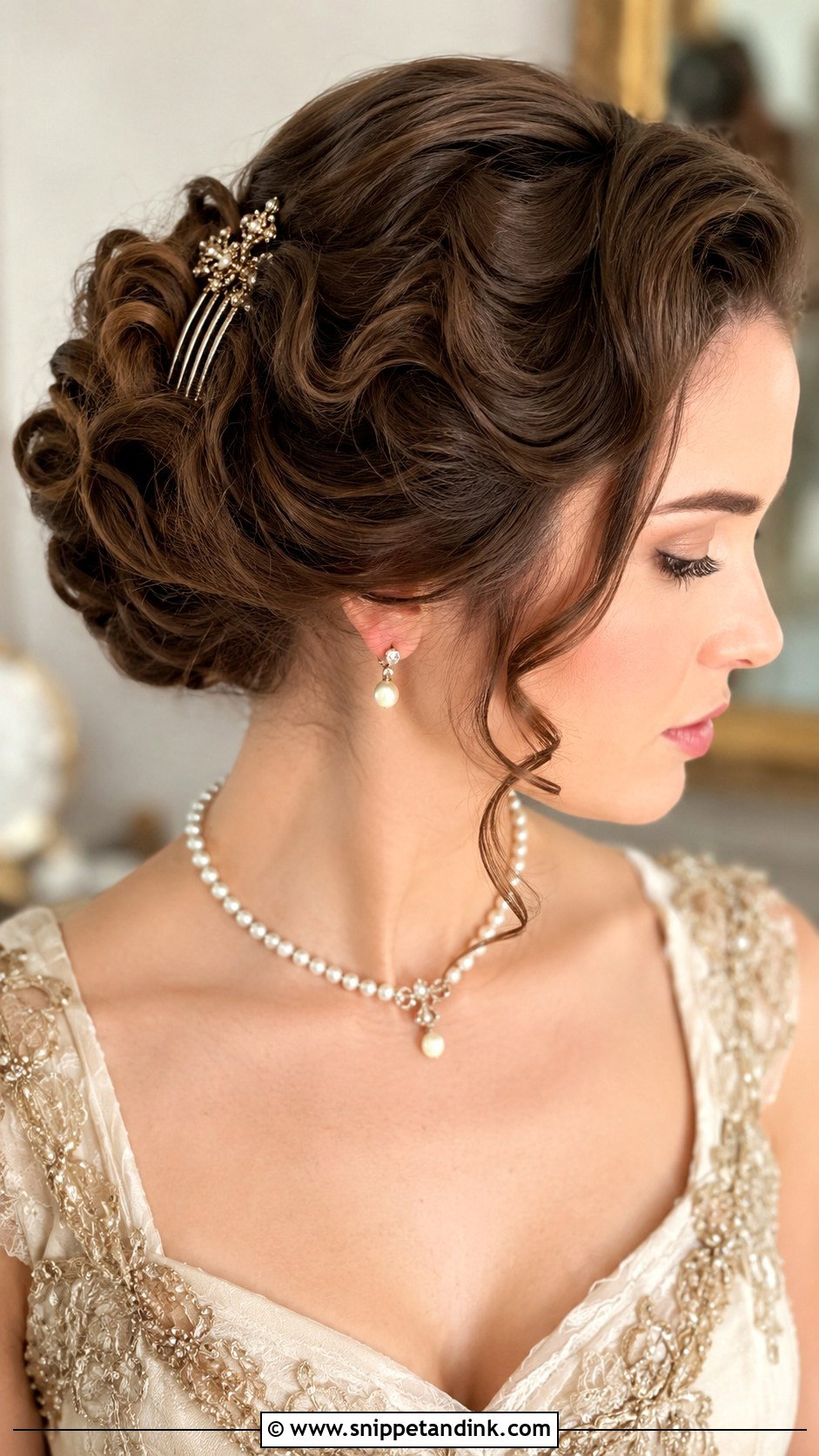
Vintage updos are built from pin curls and rolls. The hair is set in curls, brushed out, then shaped into sculpted rolls and pinned in place. It takes time and a stylist who has actually done period work, because a 1940s roll and a modern messy updo are completely different techniques. I like it with classic gowns and pearls. On very thick hair it can get bulky, so I use fewer, larger rolls. A vintage comb finishes it.
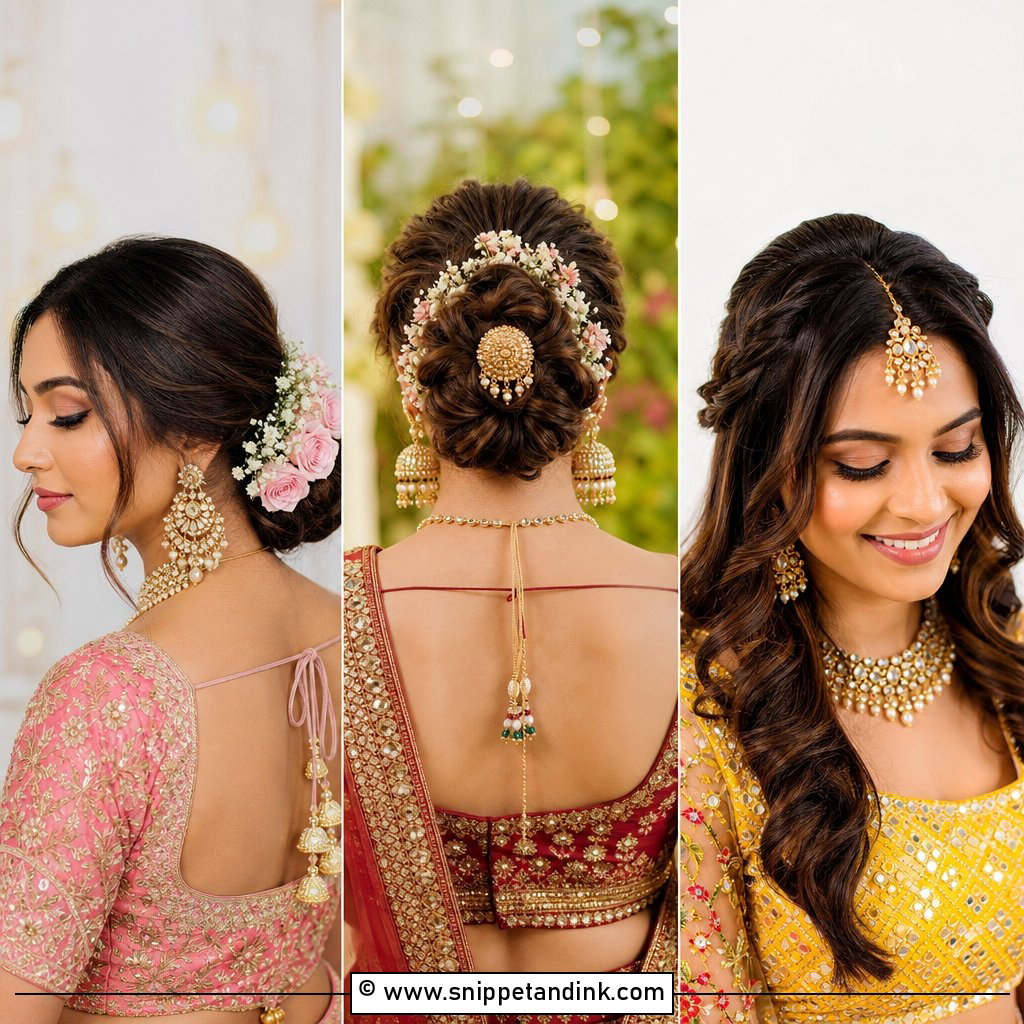
20. Twisted Half Updo for Wedding Guest
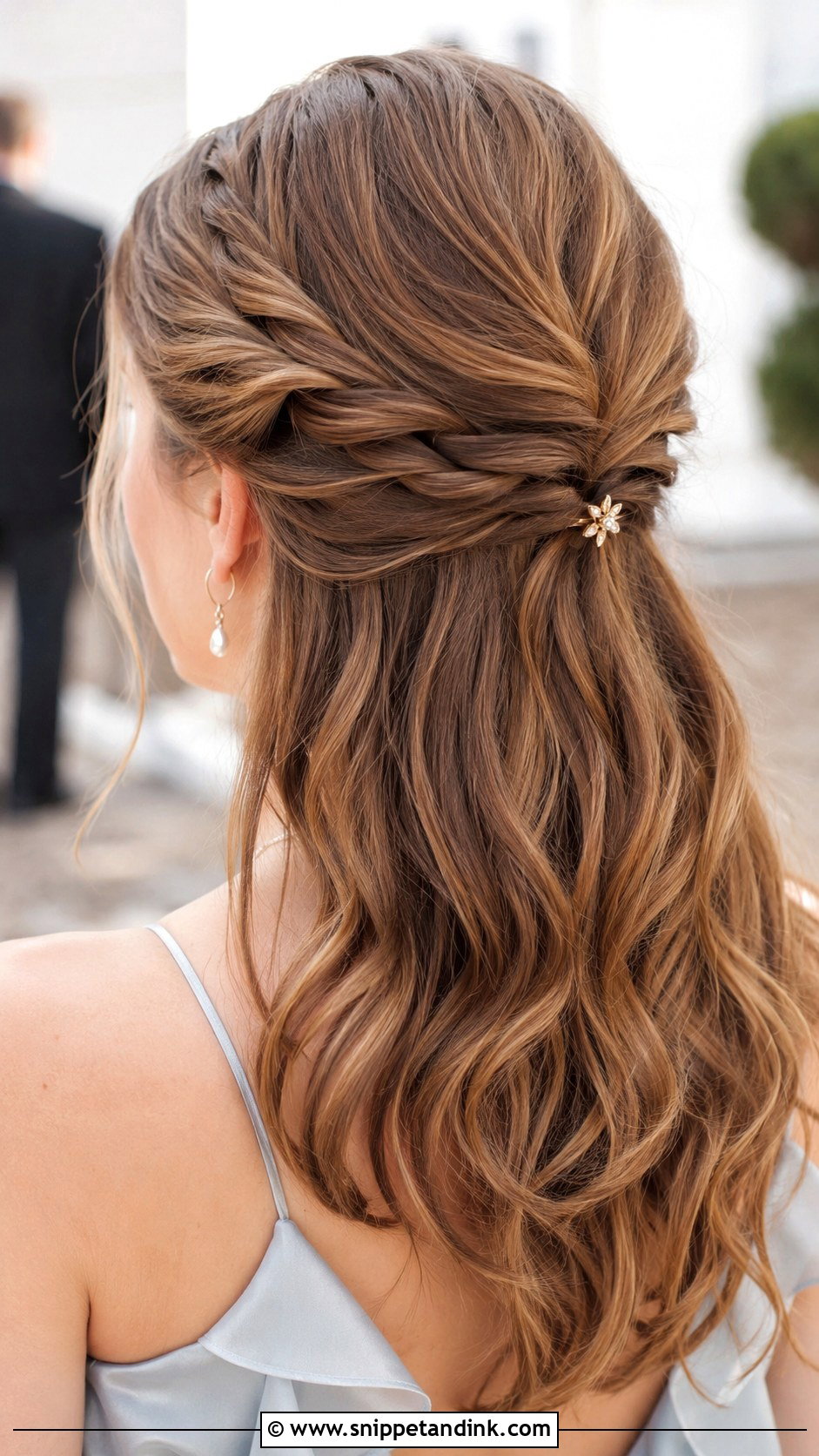
Two sections from each side are twisted back and pinned at the center while the rest stays down, which puts this style halfway between casual and formal. It’s quick and forgiving, so it’s one I teach guests to do themselves. Pin the twists where they meet with two bobby pins crossed in an X, then slide a small clip over the top. It frames the face without scraping hair off it, which helps anyone who doesn’t like a bare forehead.
21. Bun With Maang Tikka for Bride
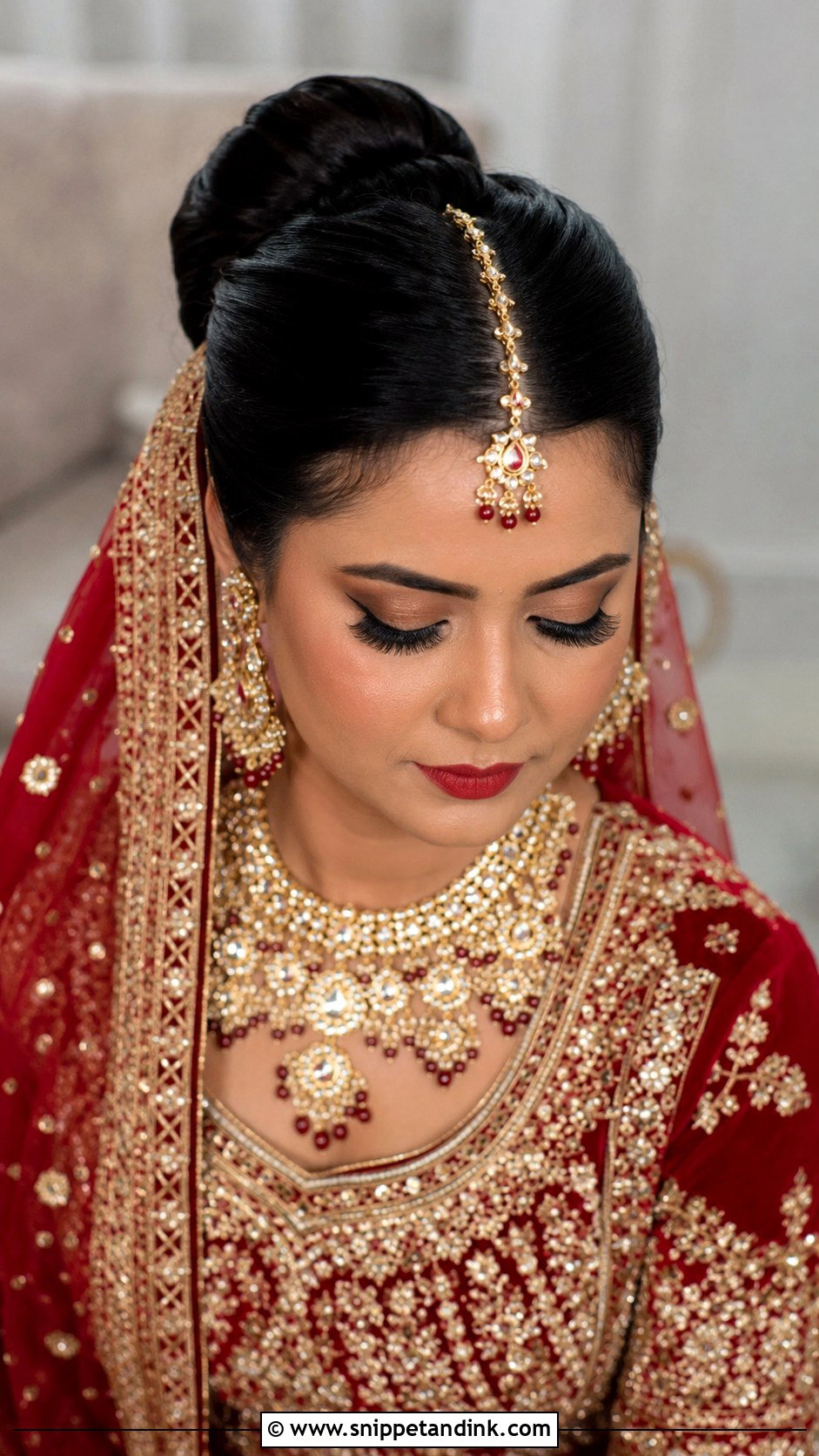
A neat bun with a maang tikka is the classic wedding-day pairing. The tikka sits on the center part, and its chain hides best when that part is clean and straight. I hook the tikka into a small section near the crown and cross a bobby pin over the hook, so it can’t slide when the dupatta goes on. The bun carries the weight of everything else, so it needs to be tight and well anchored. Flowers or pearls around the knot suit heavy lehengas and gold jewelry.
22. Beach Waves Hairstyle for Sangeet
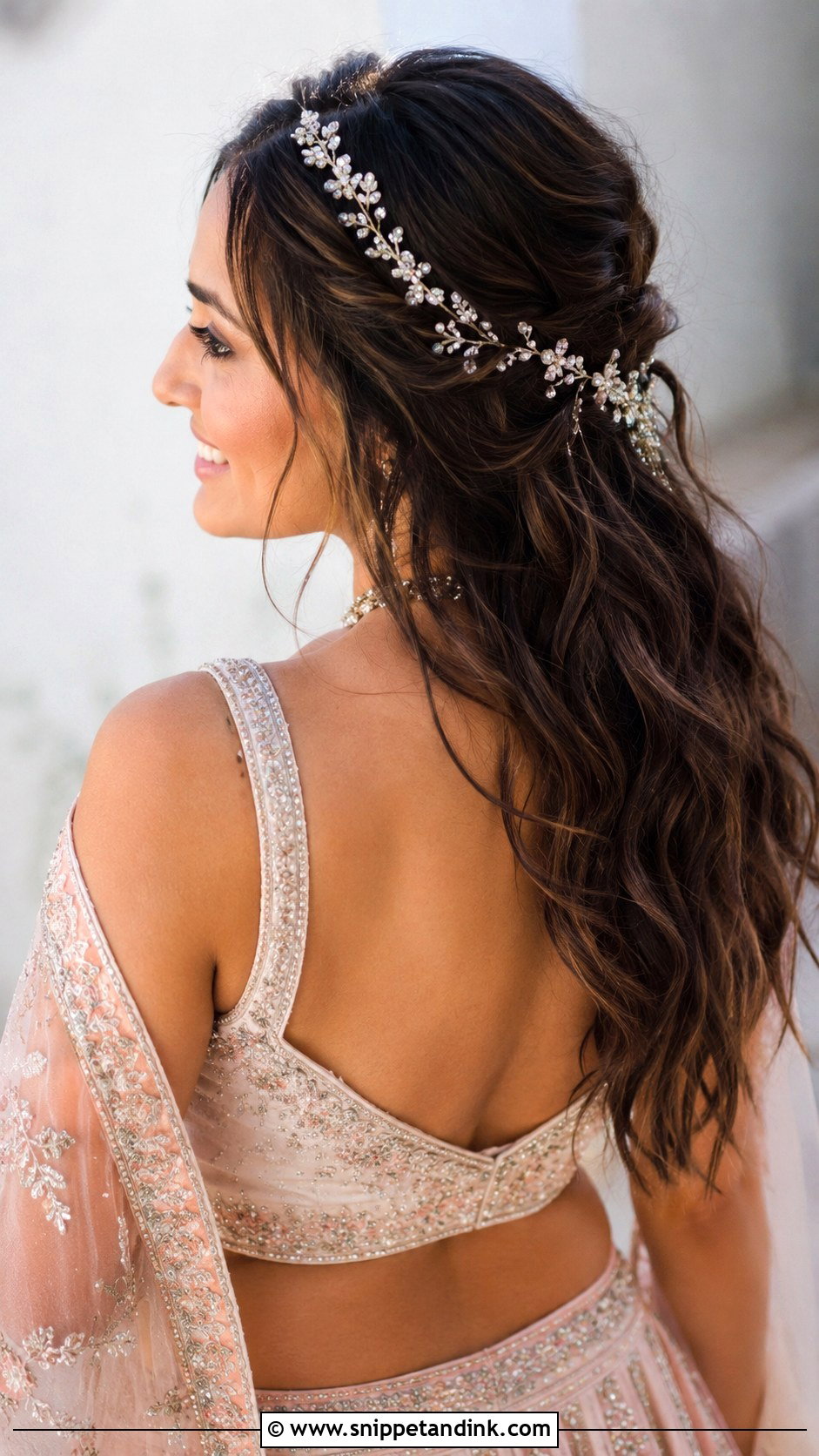
Beach waves are flatter, piecey waves, made by keeping the hair taut as you wrap it around a flat iron or wand and leaving the ends out straight. They feel light and cool at a sangeet with fusion lehengas, and texture spray gives them grip. They’re one of the few styles here that improve as the night goes on and the waves loosen. I’d skip them if your hair frizzes in humidity; a hair vine won’t hide that.
23. Donut Bun Hairstyle for Marriage
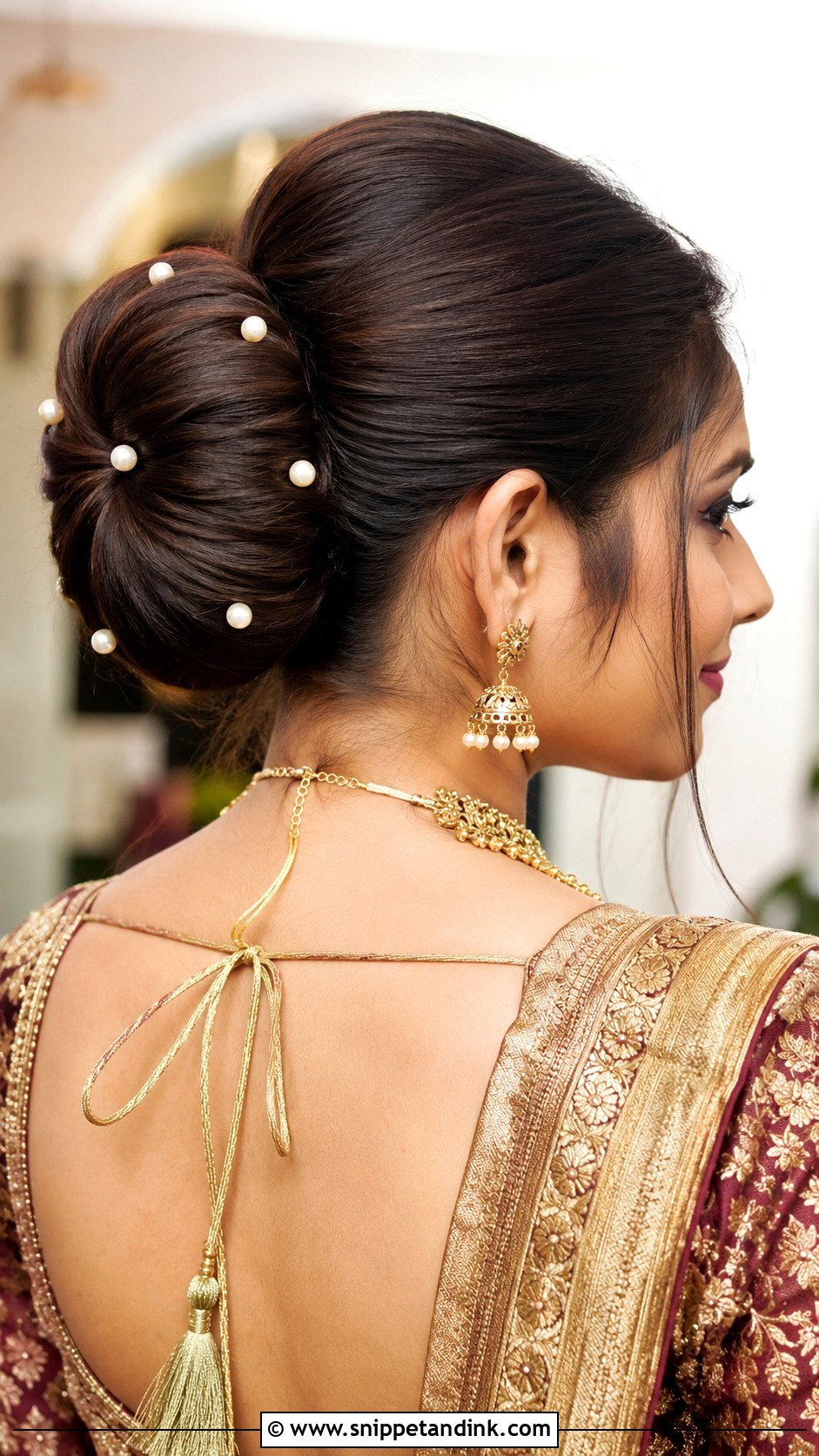
The donut bun wraps hair over a foam ring for a full, round knot, and its real appeal is that it makes medium or fine hair look much thicker. I match the ring’s colour to the hair, because a light form shows through dark hair under flash. Spread the hair evenly around the ring before you pin or you’ll see gaps. It holds very well under a dupatta, and a jeweled net or a ring of pearls suits a formal ceremony.
24. Wavy Side Braid for Wedding Guest
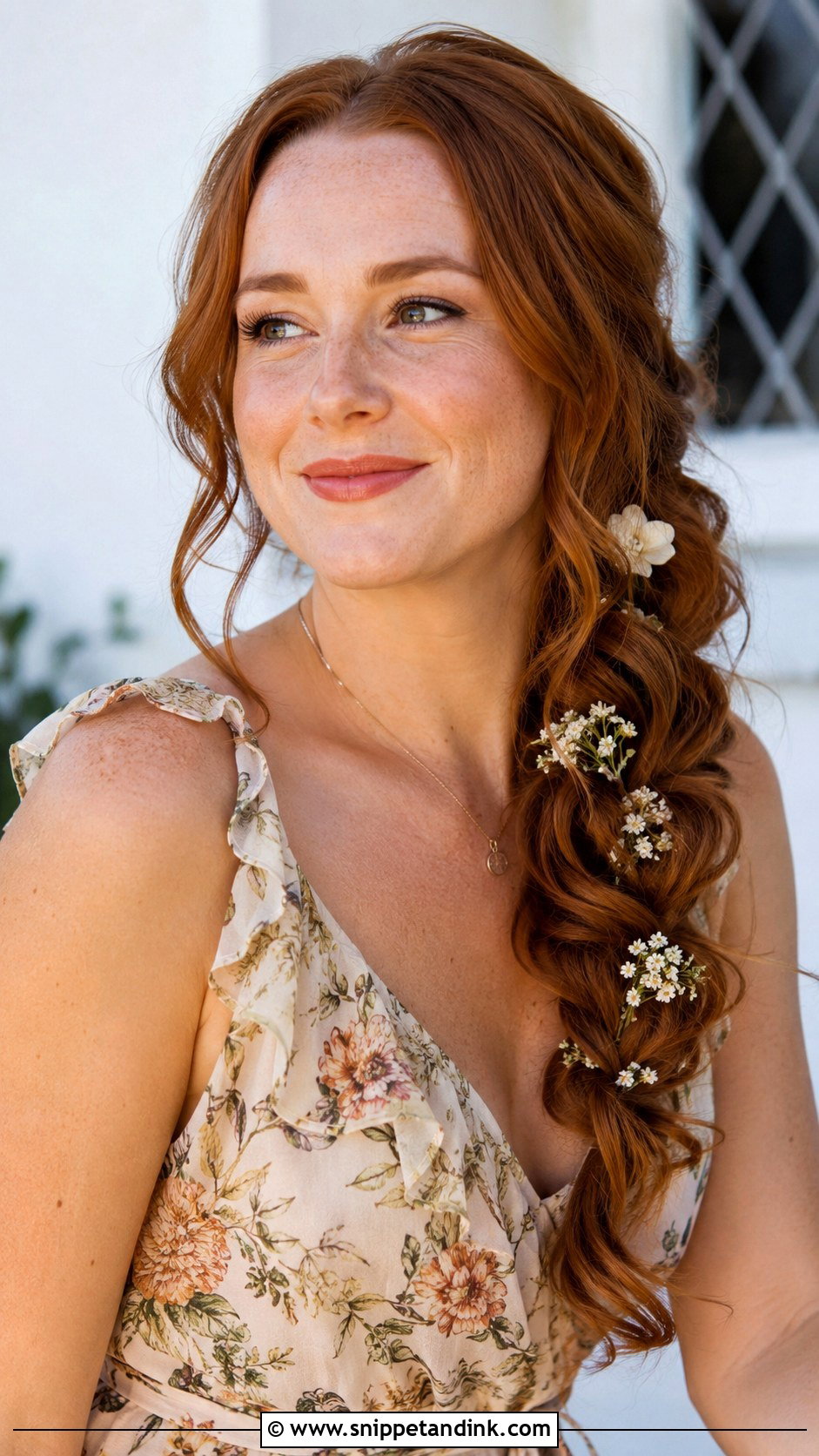
This is a loose three-strand braid made on waved hair and worn over one shoulder. The waves give it bulk, so it looks fuller than the same braid on straight hair. I tug at the edges after braiding to widen it, then tuck in small flowers or pins. Guests can do it themselves in about ten minutes. It sits nicely on flowing dresses, but heavy shoulder embroidery can catch the braid and fray it.
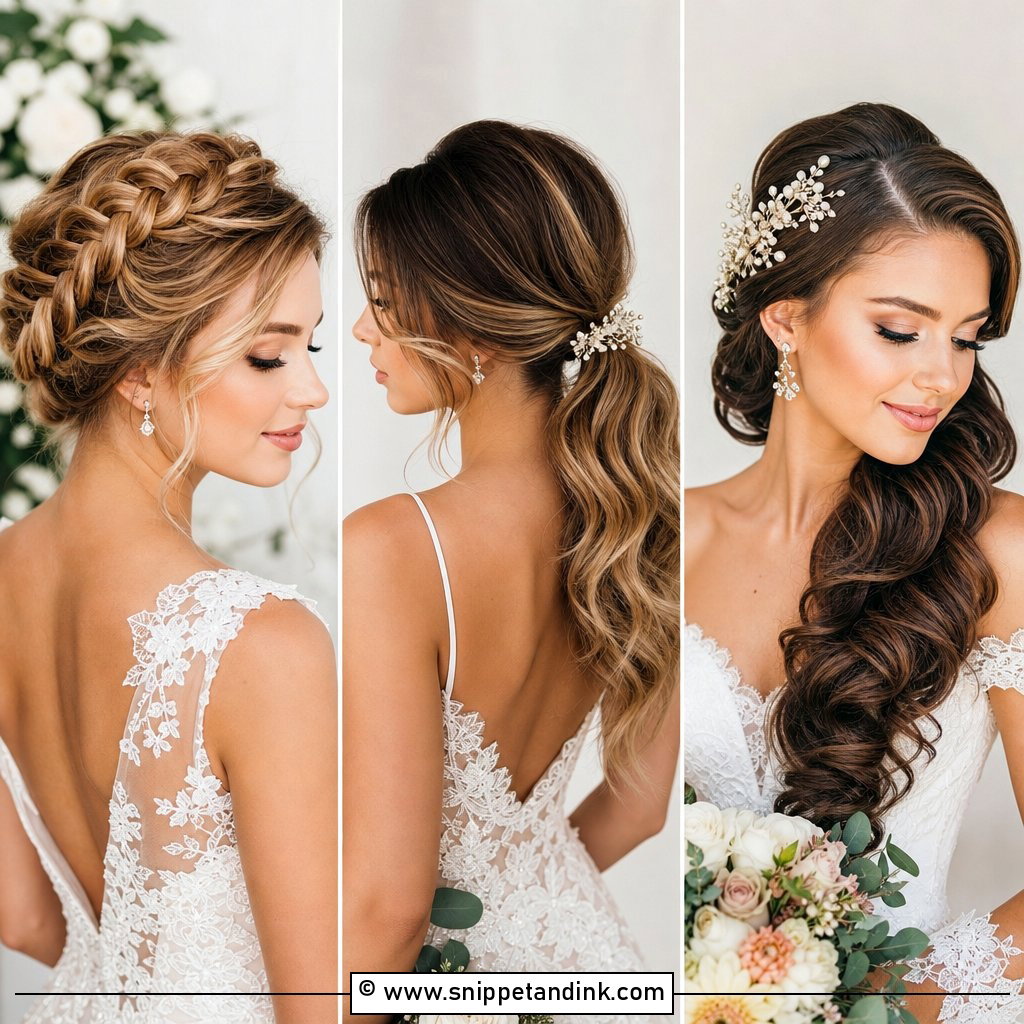
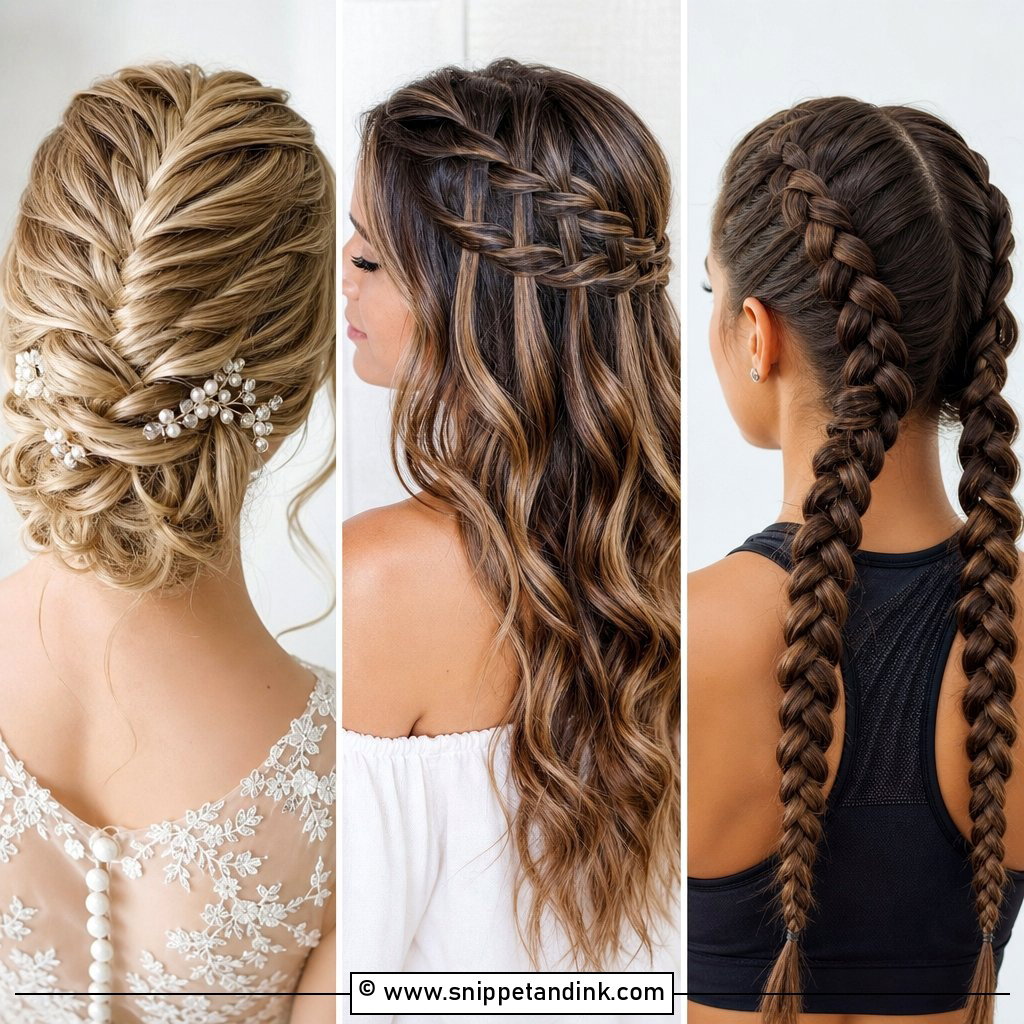
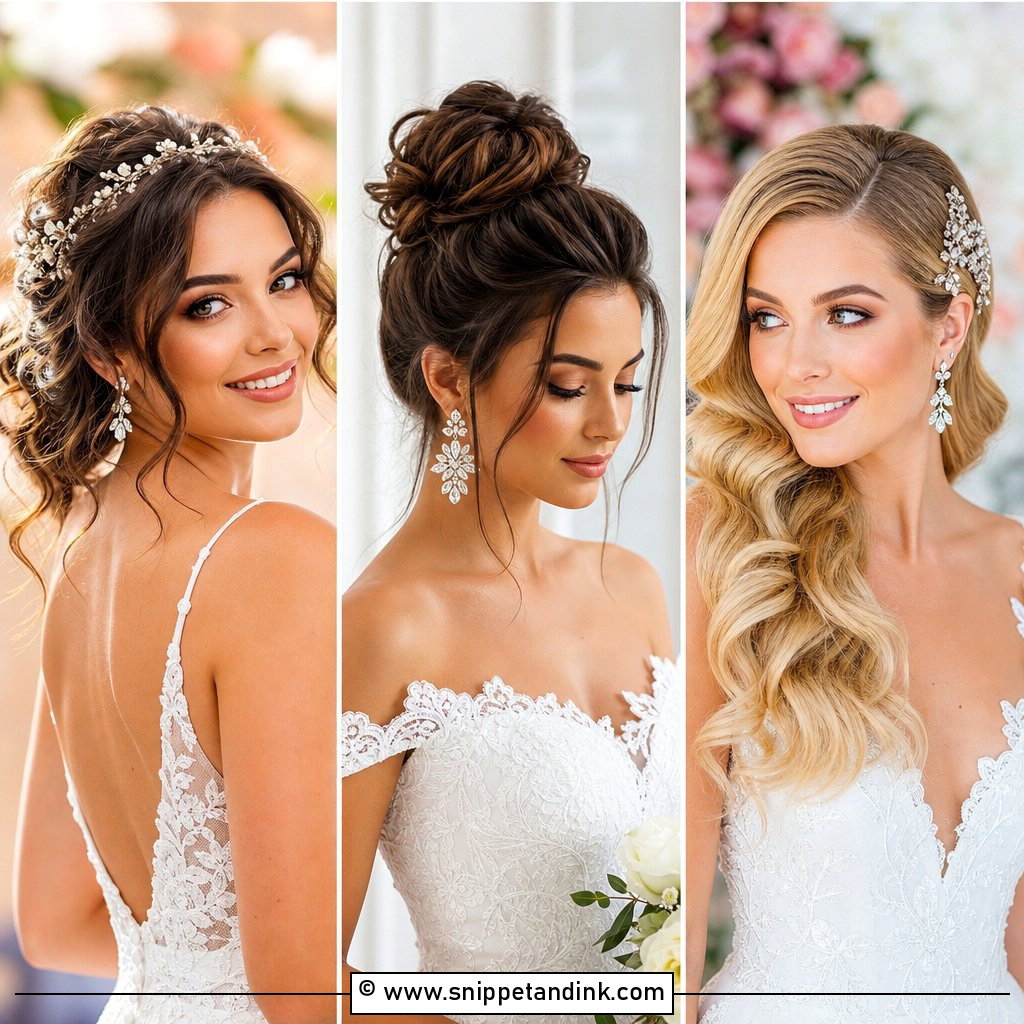
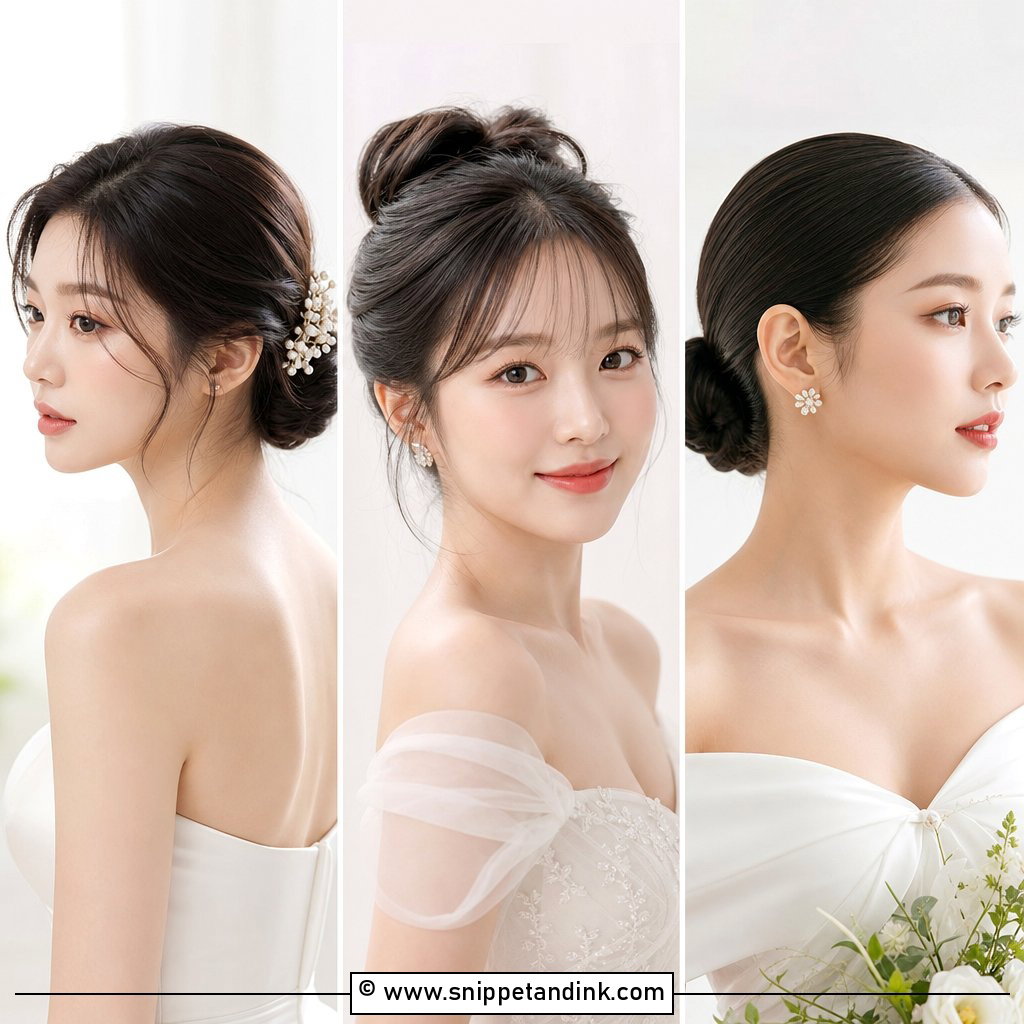
25. Sleek Straight Hairstyle for Reception
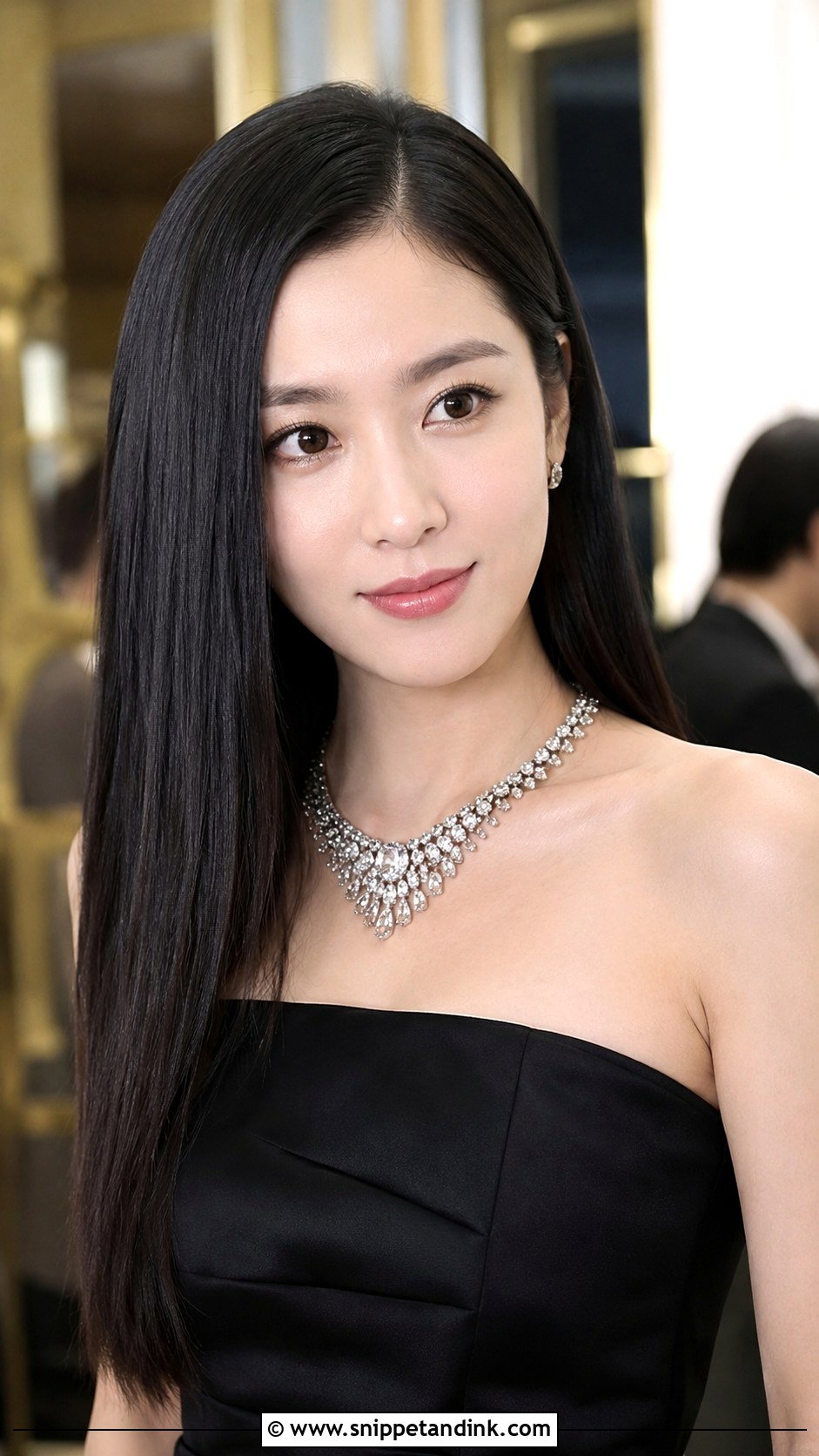
Pin-straight, glossy hair is a modern reception look, and it needs healthy hair to start with. I flat-iron in thin sections at a moderate temperature after a heat protectant, then finish with shine serum on the lengths only. It shows split ends and frizz more than any curled style, so a trim a couple of weeks before is worth it. A center part or a deep side part both work. In humid venues straight hair lifts and puffs; an anti-humidity spray helps but won’t fully stop it.
Dupatta, Tikka and Gajra Pinning That Survives Their Weight
A bridal dupatta, especially an embroidered one, weighs far more than a veil, and it’s pinned straight into your hairstyle. When a bridal style fails on the day, the cause is usually that the dupatta was pinned to the surface of the hair instead of to an anchor.
- Build an anchor first. I make a small base of crossed bobby pins where the dupatta will sit and pin the fabric into that, never into the top layer of hair alone.
- Use U-pins for fabric and bobby pins for hair. U-pins slide through embroidery without snagging it; bobby pins hold the structure underneath.
- Set the tikka before the dupatta goes on, with its hook pinned under the part, so the drape doesn’t drag it off center.
- Keep jasmine cool until it goes on. A damp muslin cloth in the fridge buys you a few extra fresh hours, and it should be the last thing added.
- Pack a touch-up kit with bobby pins in your hair colour, a few U-pins, a small hairspray and a tail comb, and hand it to someone who will stay near you.
Bring the actual dupatta to your hair trial, or at least fabric of a similar weight. A style that feels secure without it can drop within the hour once the real weight is pinned in.
Planning Five Looks Without Wearing Out Your Hair
Start from your schedule rather than the photos: which function is longest, which has the heaviest dupatta, which one means hours of dancing. Then match each to a style your hair type can actually hold. A floral or tikka bun for the ceremony, something hands-free for the mehendi and a style with movement for the sangeet and reception covers most weddings. Do a trial for the main look, test extensions and flowers early, and keep a small pin kit close for the touch-ups that always happen between functions.
You'll Like These Ideas:


Leave a Reply