
An updo has three jobs on a wedding day: frame your face, show the neckline of the dress, and still be where I put it when you’re on the dance floor at eleven. The good news is that most of the updos brides love are not hard to build. What separates a style that lasts from one that slips is the groundwork underneath, and I’ll point that out as we go. These twenty run from soft and loose to sleek and sculpted, with a note on each about the hair and the wedding it suits.
Grip Holds an Updo, Not Hairspray
Brides often arrive with squeaky-clean, freshly conditioned hair, thinking it’s what I want. It’s the hardest hair to pin. Silky strands let bobby pins slide straight out. Hair washed the day before, with no conditioner on the roots, holds far better.
Here’s what I do before a single pin goes in:
- Mist dry texture spray or dry shampoo through the lengths so the hair has some grip.
- Curl or wave the hair even for a sleek style; set hair has shape and holds pins better than straight hair.
- Make a hidden base, a small ponytail or flat braid, where the updo will sit. Everything is pinned to that.
- Cross bobby pins in an X, wavy side against the scalp. Two crossed pins hold more than five single ones.
Hairspray comes last, to finish. If the shape only stays because of spray, it will collapse once the day warms up.
1. Low Twisted Bun
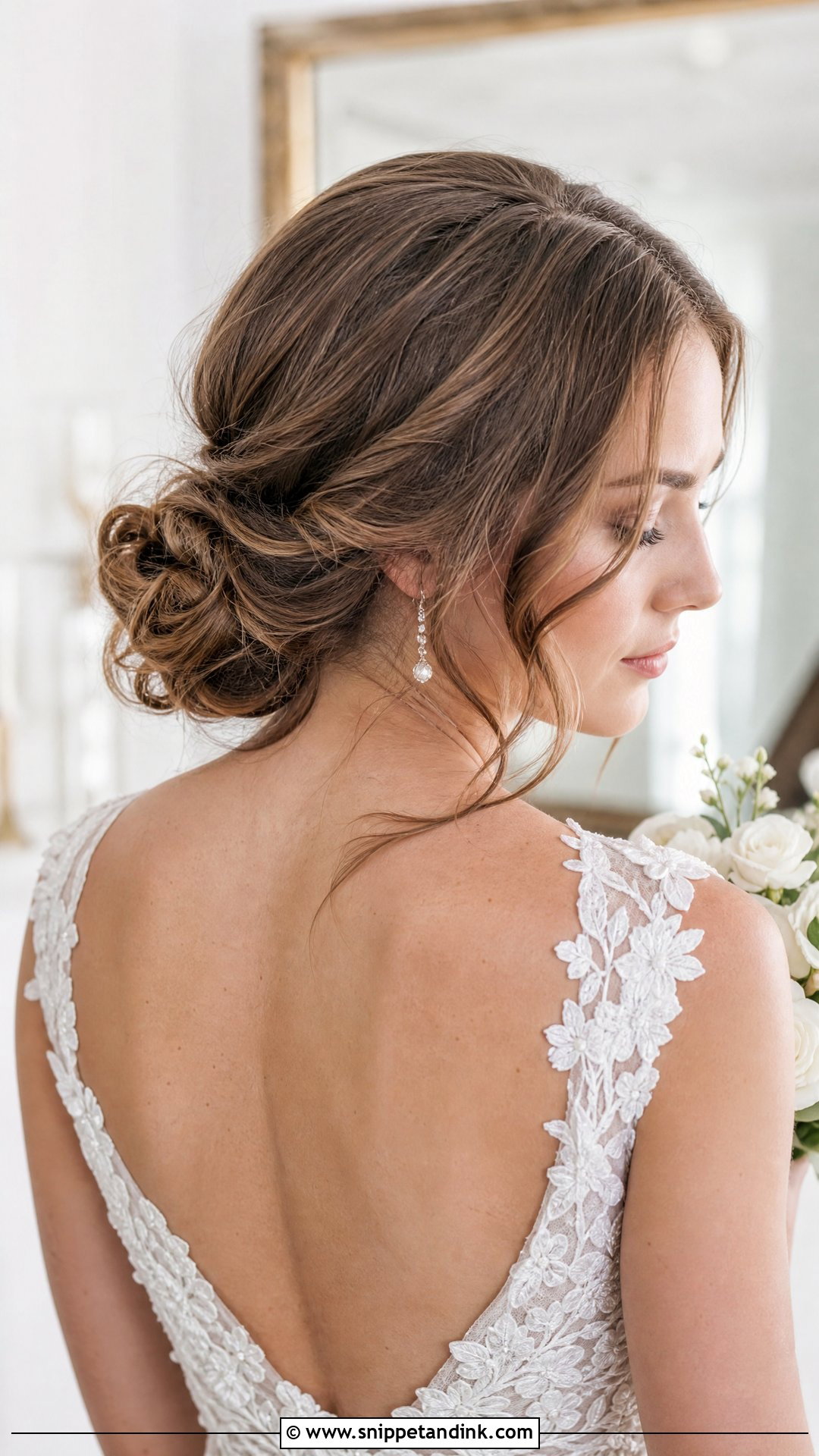
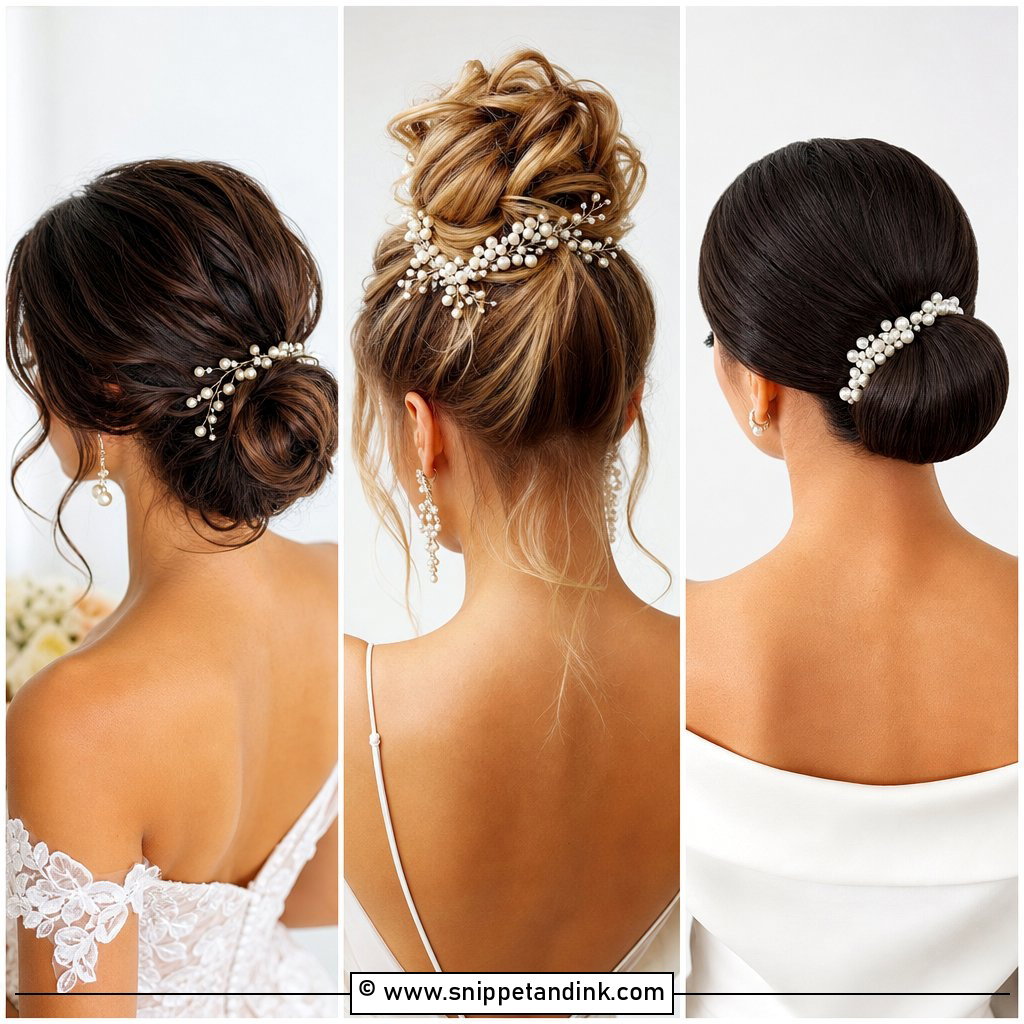
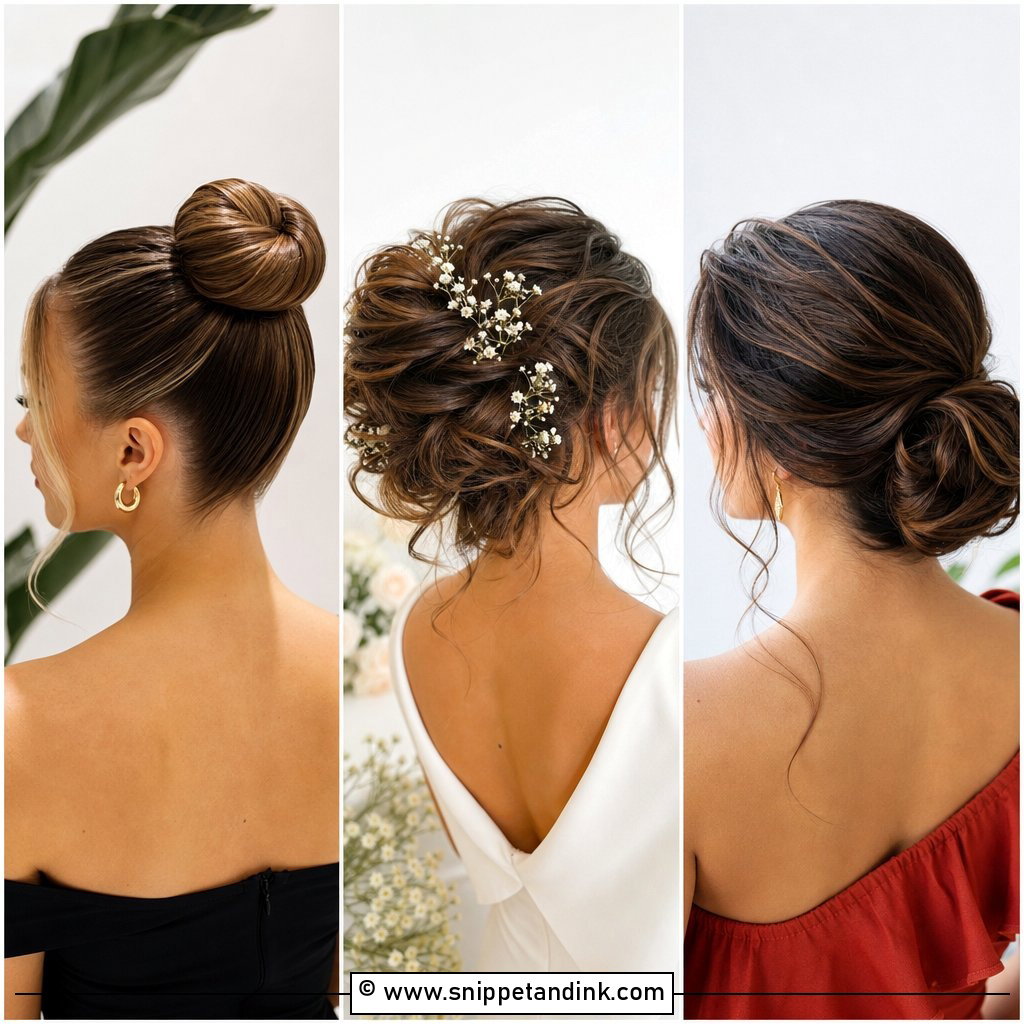
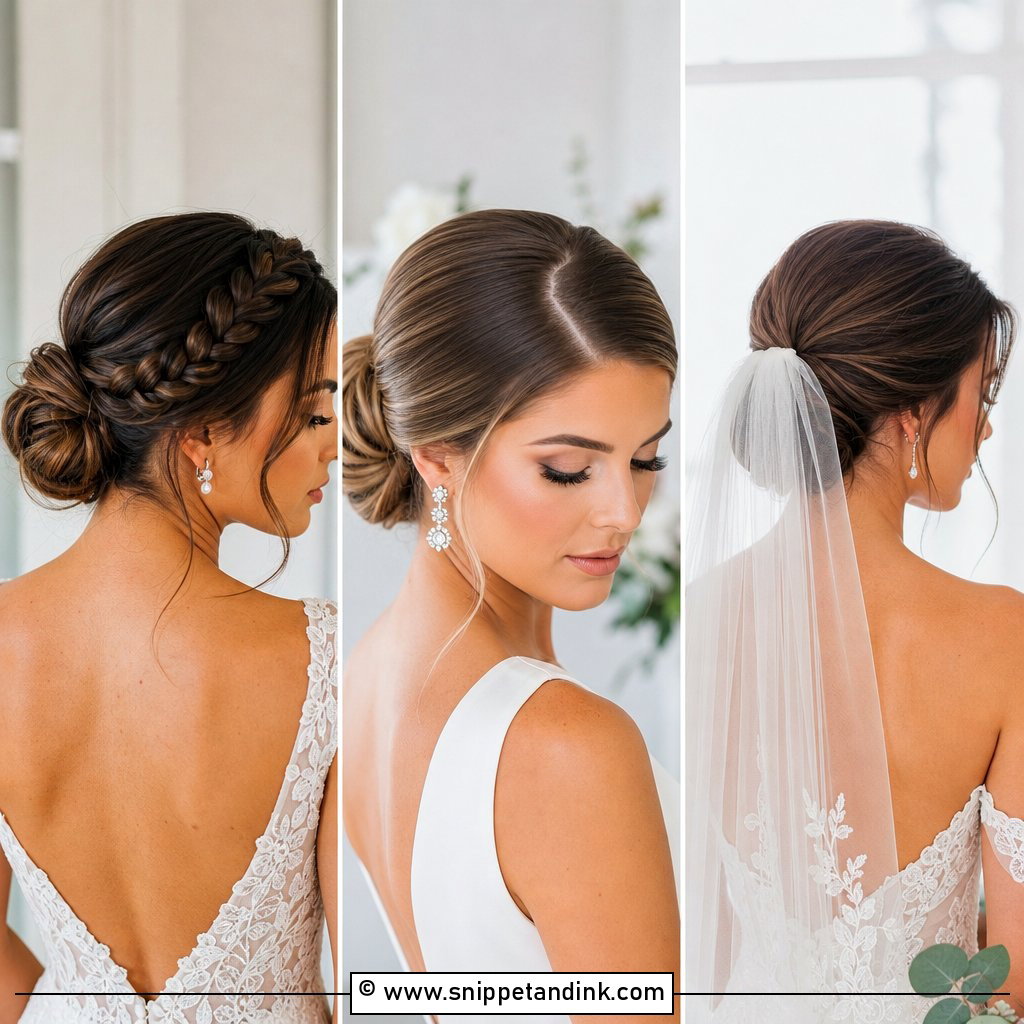
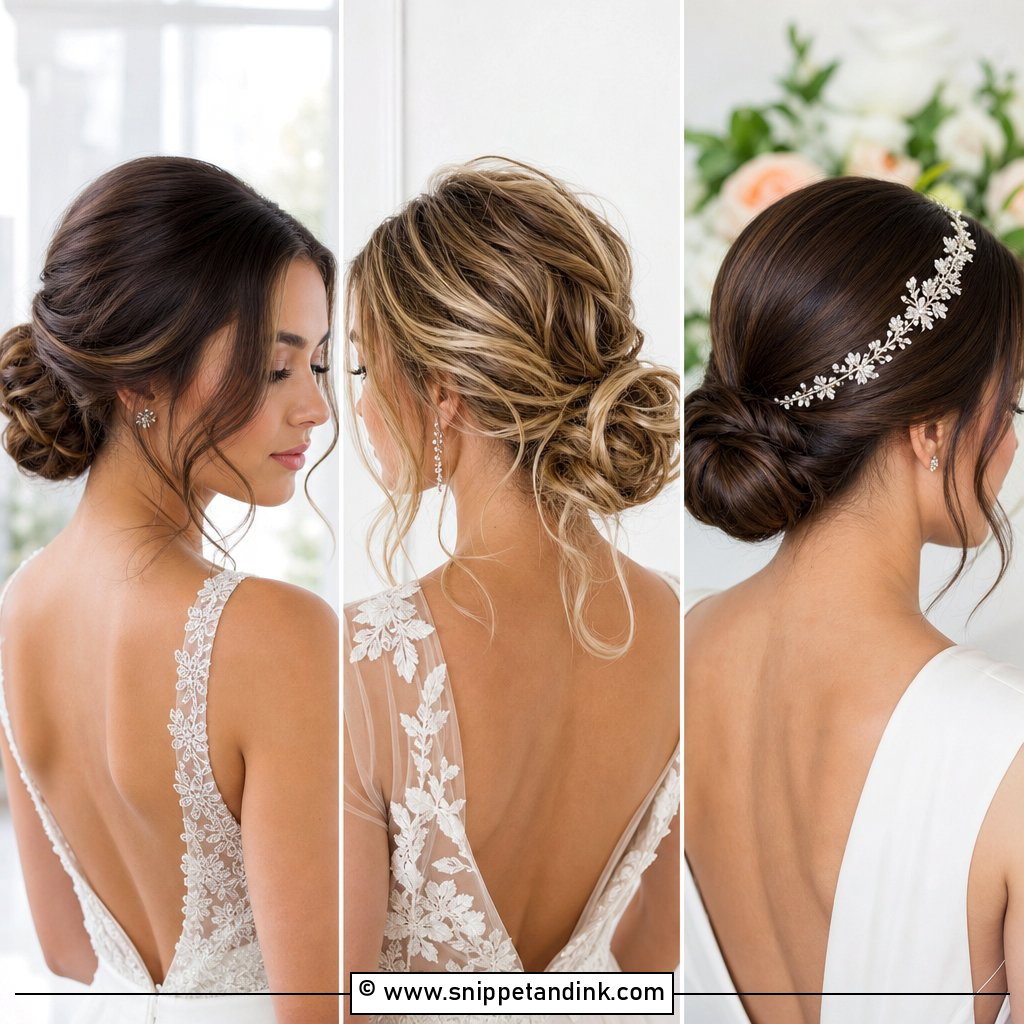
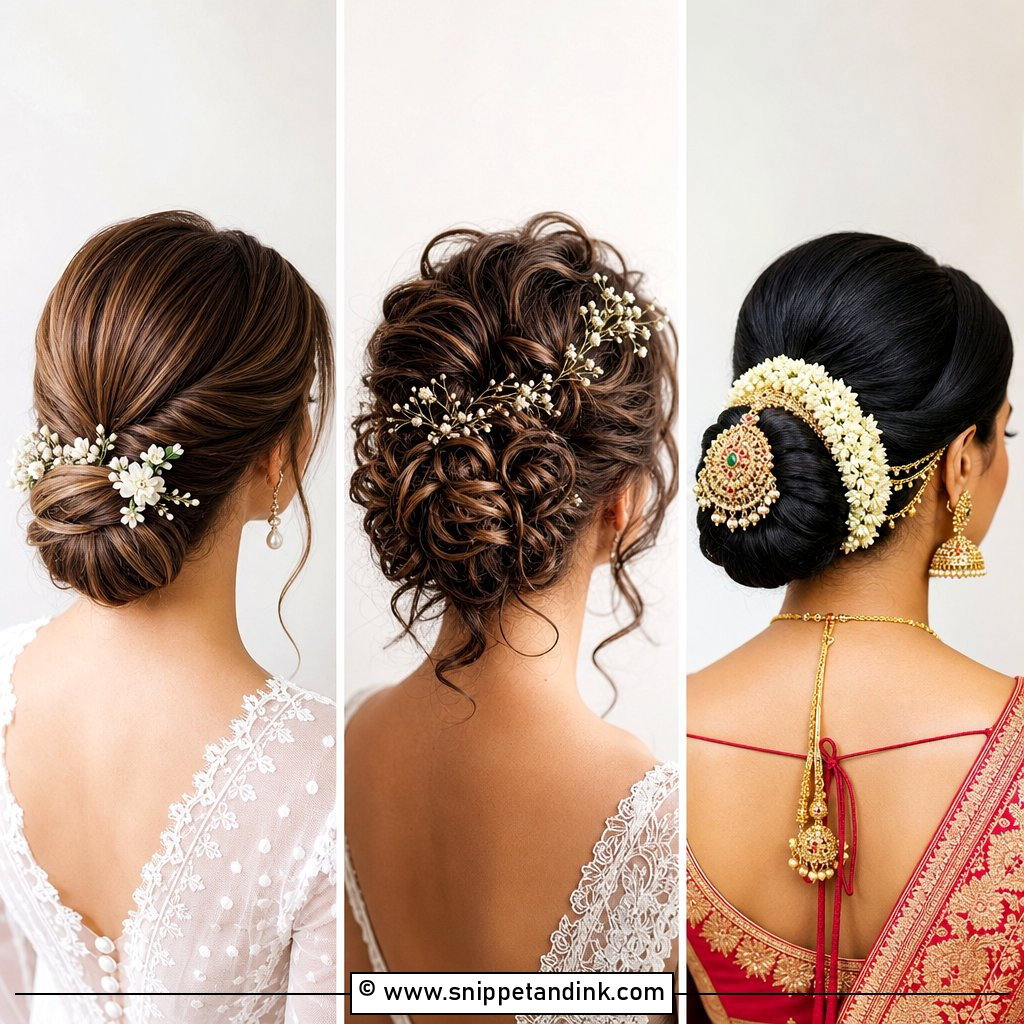
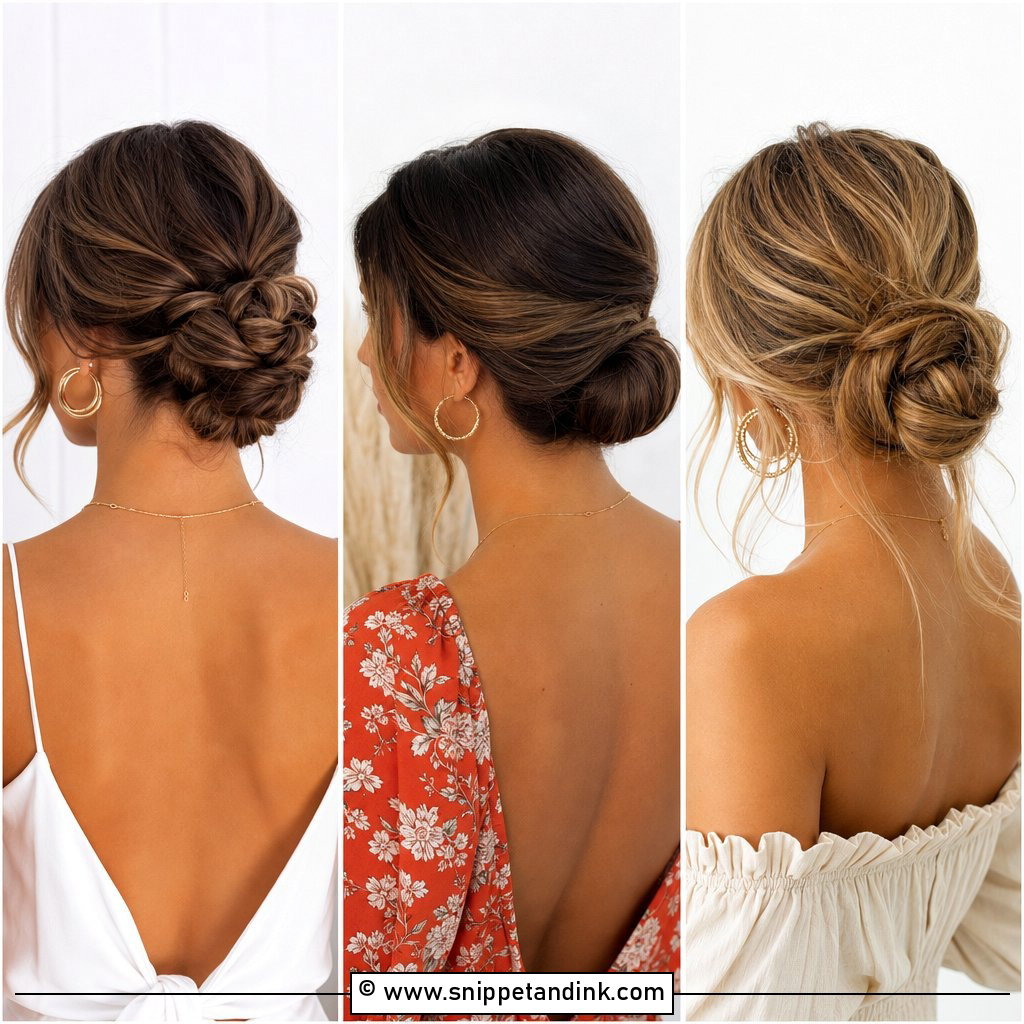
Gather the hair at the nape, twist it gently, and pin it into a soft knot. That’s genuinely all a low twisted bun is, which makes it the style I’d teach a bride doing her own hair. It sits just above most necklines, so earrings and a necklace stay visible. The secret to it lasting is a small hidden ponytail first; the twist is then pinned to that base instead of to loose hair, and it won’t sag during dancing. A pearl pin or one small flower is plenty.
2. Classic French Twist
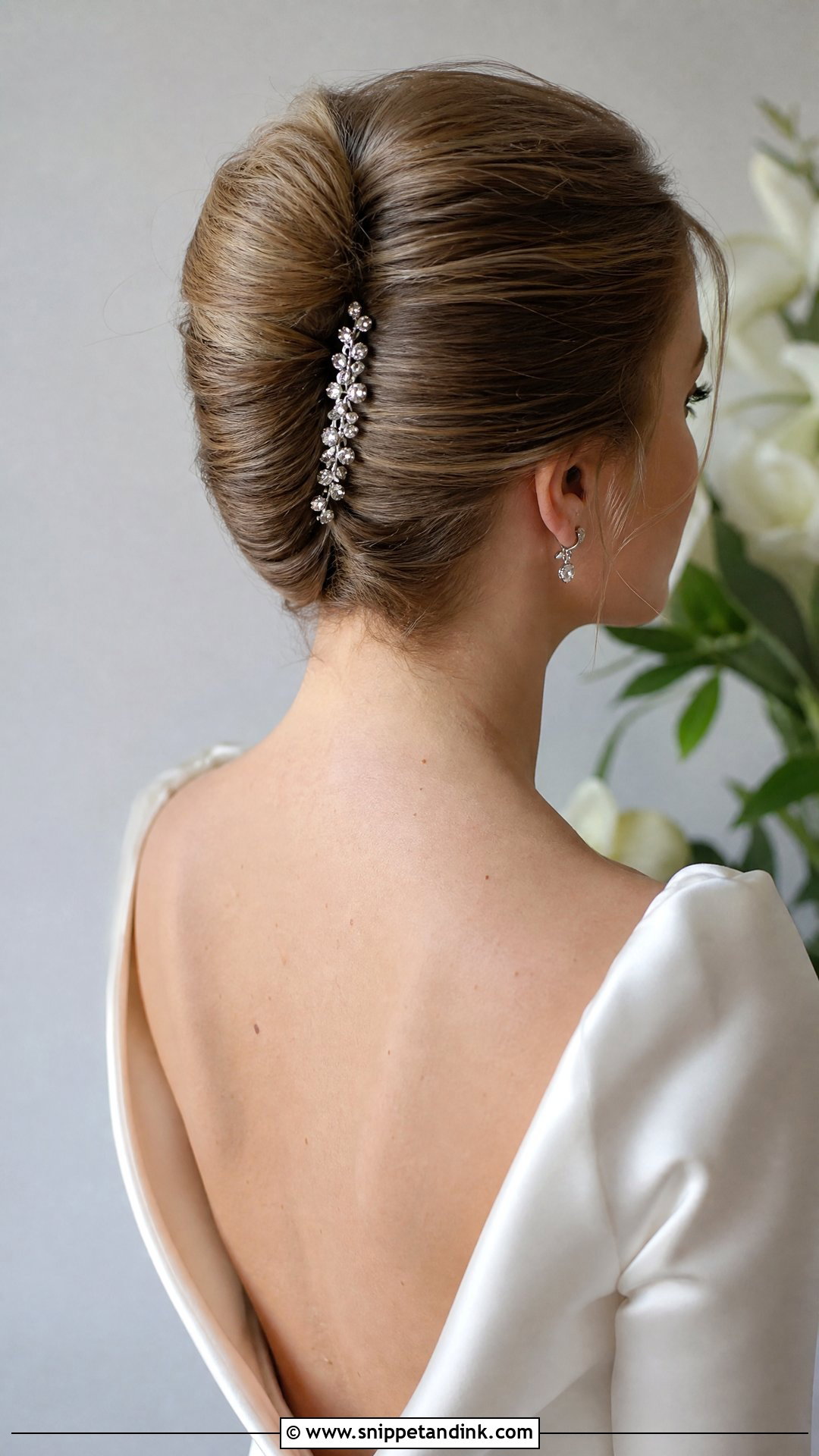
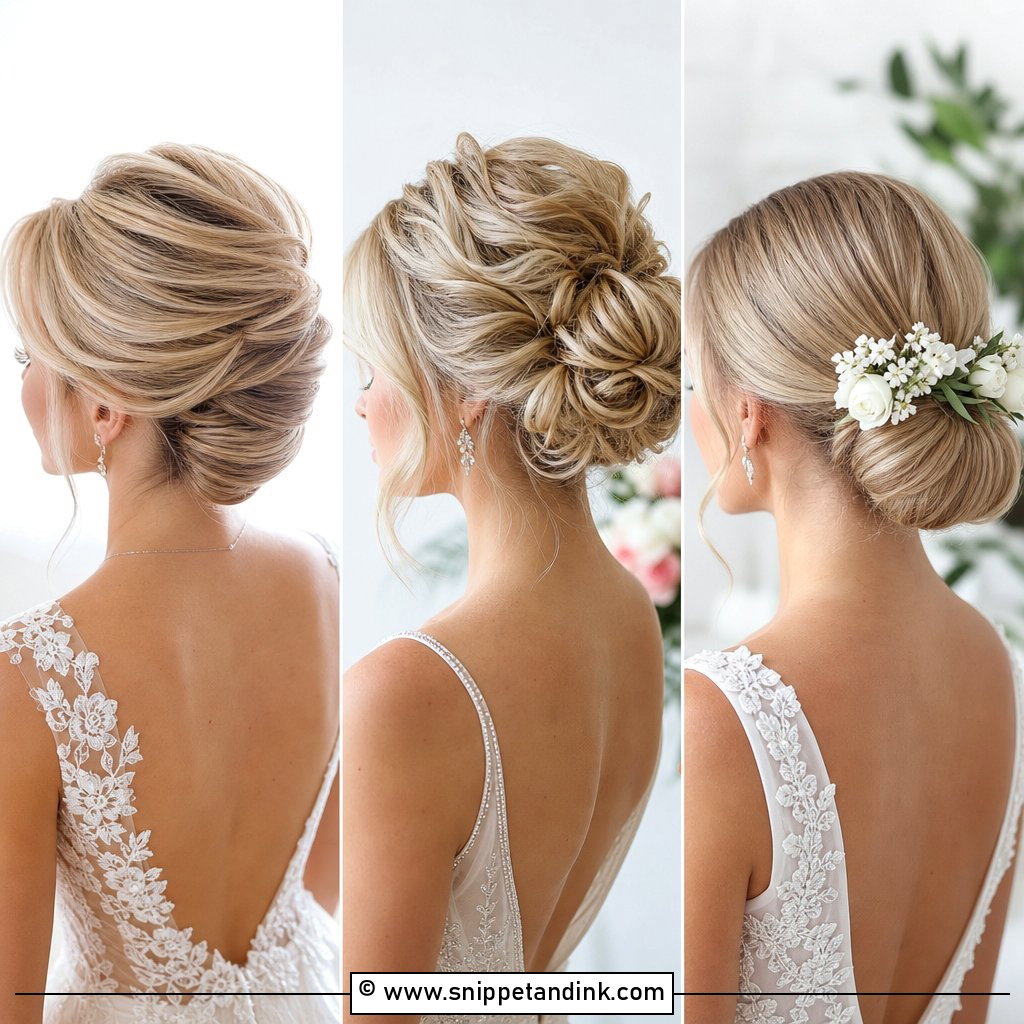
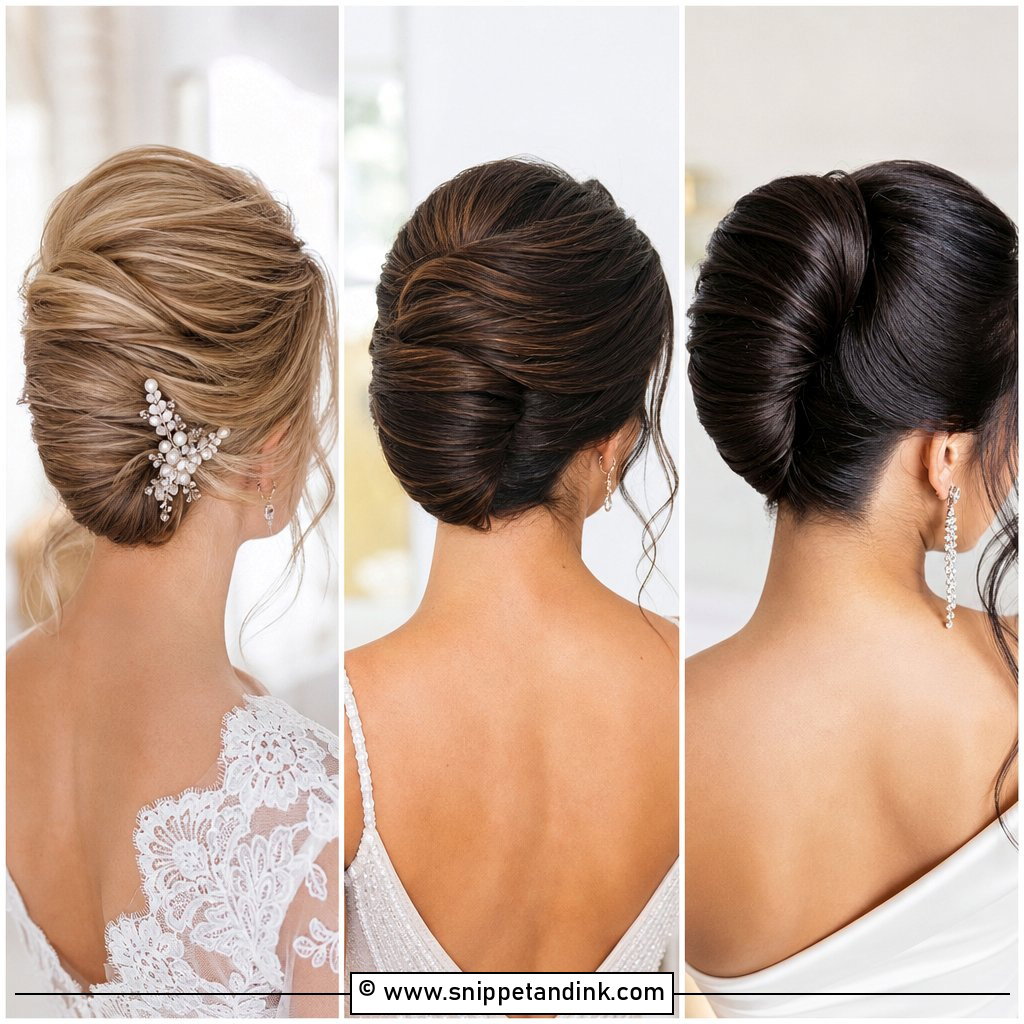
The French twist has lasted for generations because it flatters nearly everyone and photographs cleanly from behind. The hair is swept to one side, folded vertically, and tucked into a roll pinned along the back of the head. I pin it from the inside of the fold so nothing shows, and I backcomb the section first on fine hair, otherwise the roll looks thin and slides down. It suits ballgowns and structured fitted dresses. Keep it sleek or pull out a couple of face-framing pieces, and set a comb at the base if you want shine.
3. Messy Low Bun
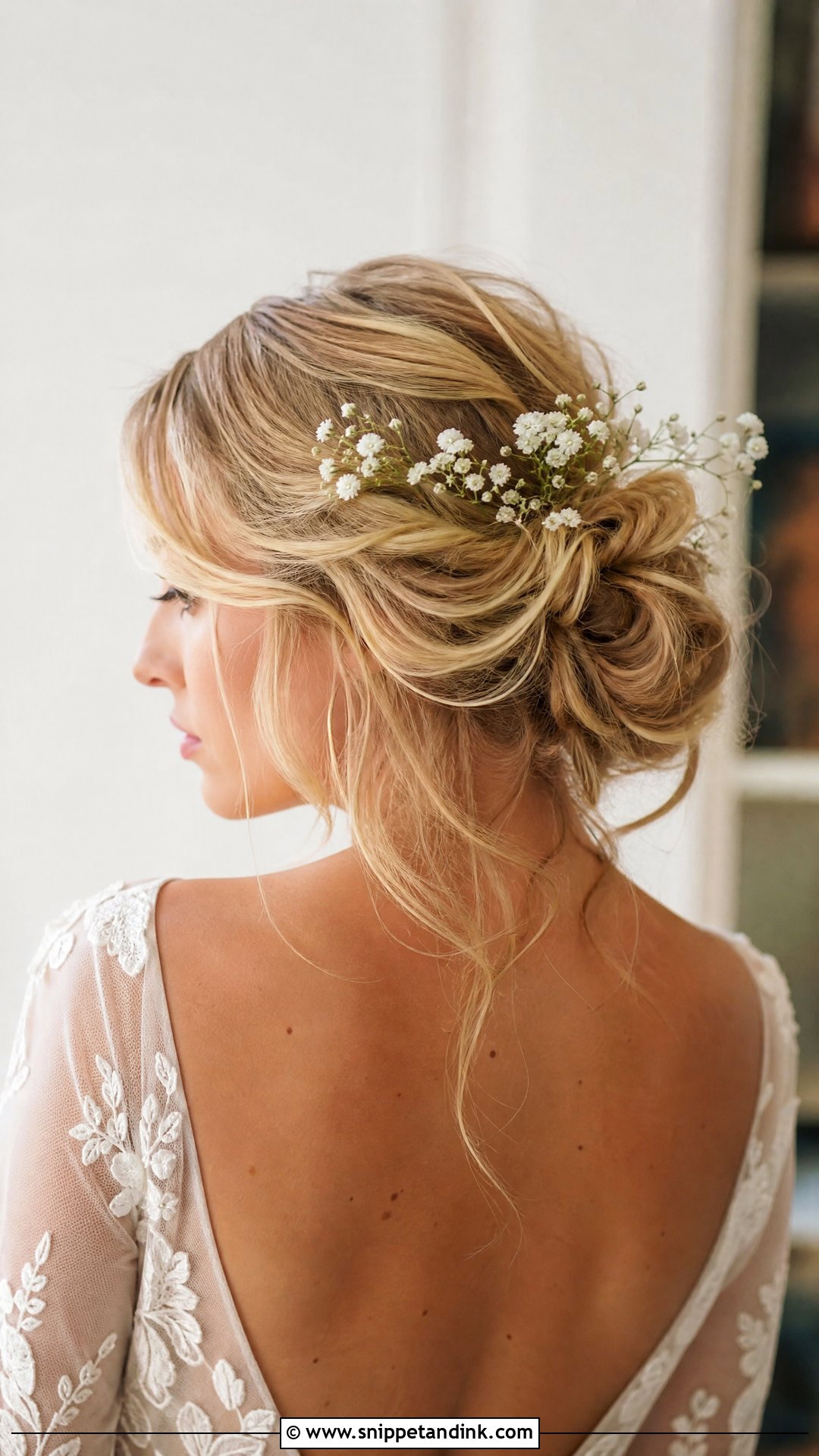
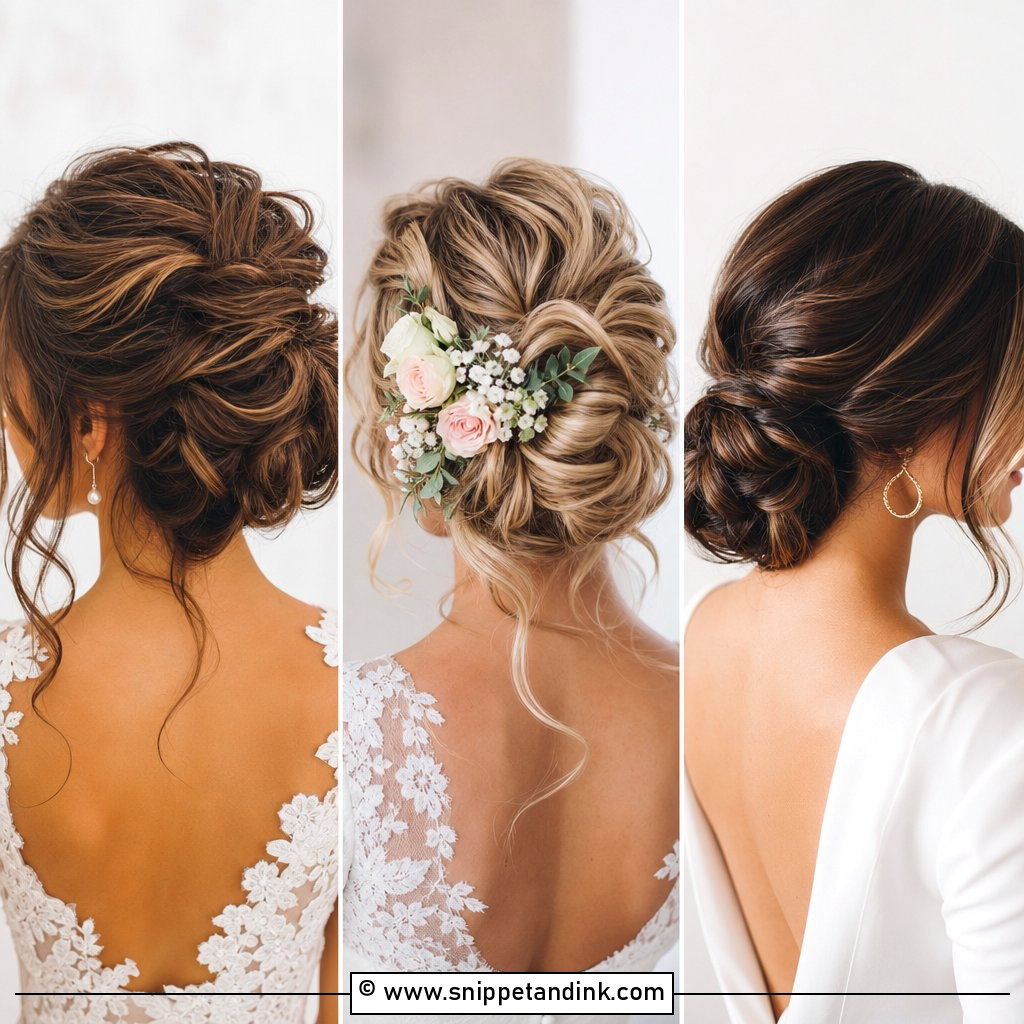
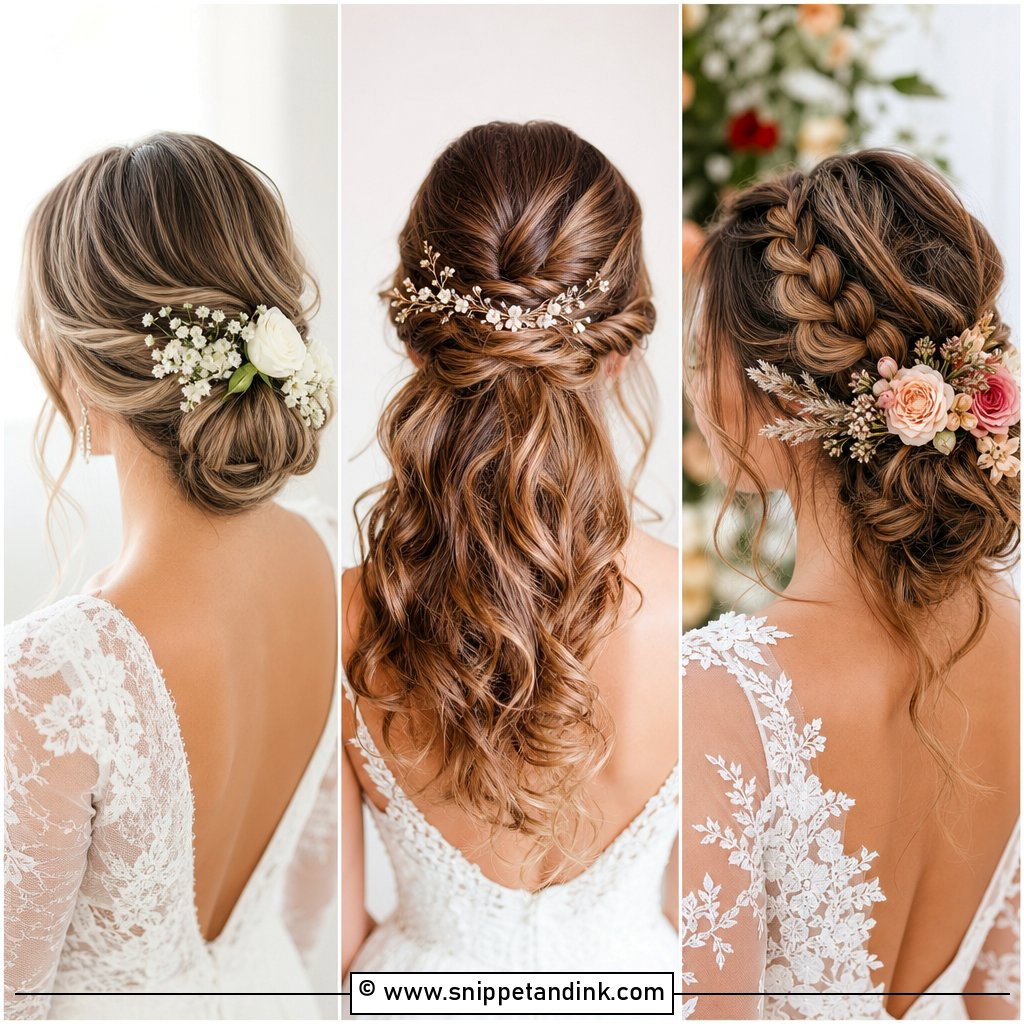
Messy is the one updo that takes more control than it looks. I curl the hair first, then twist and pin loosely, and every “escaped” strand is chosen, not accidental; truly random pieces look untidy by the reception. Boho brides and outdoor weddings suit it best. A little baby’s breath or a few wildflowers tucked in gives it a garden feel with a flowing dress.
4. Sleek Ballerina Bun
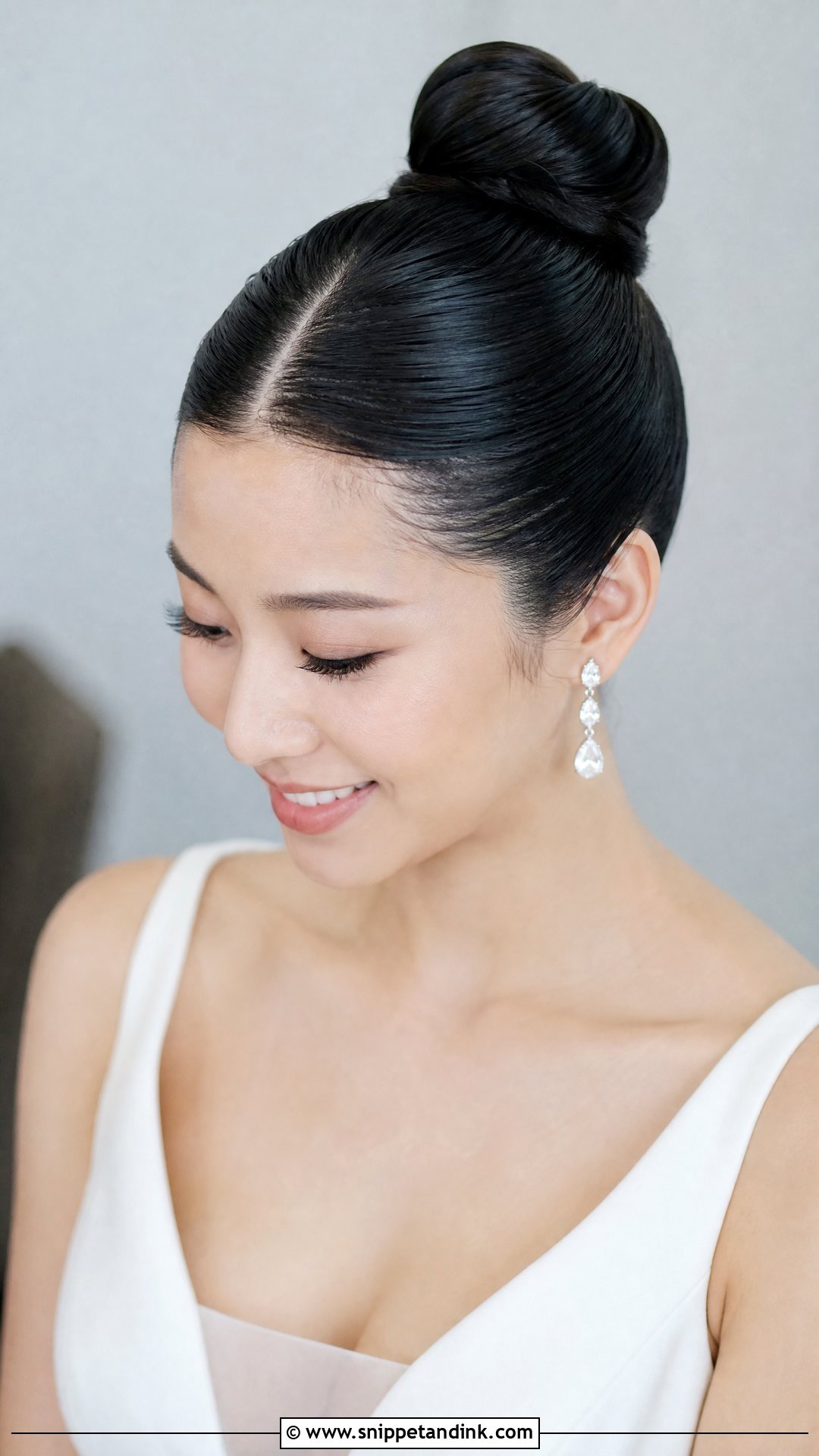
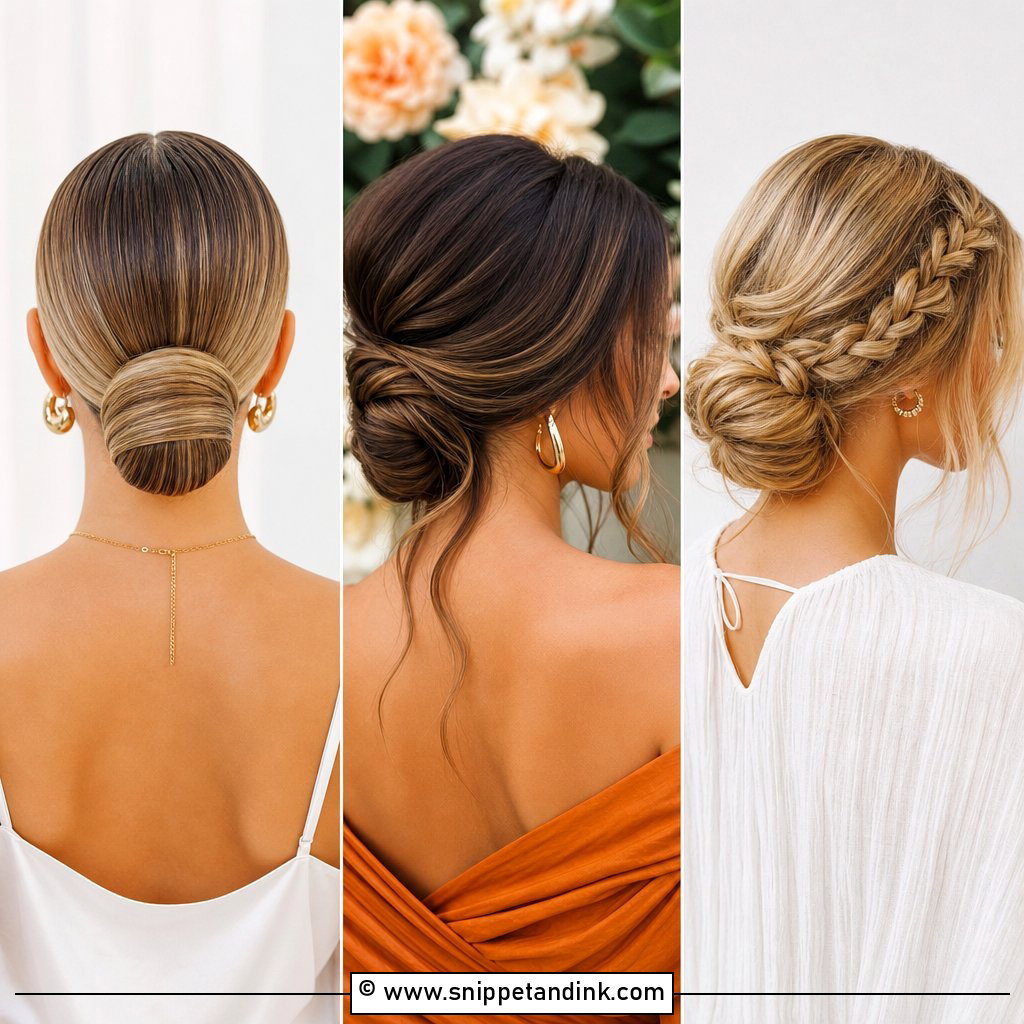
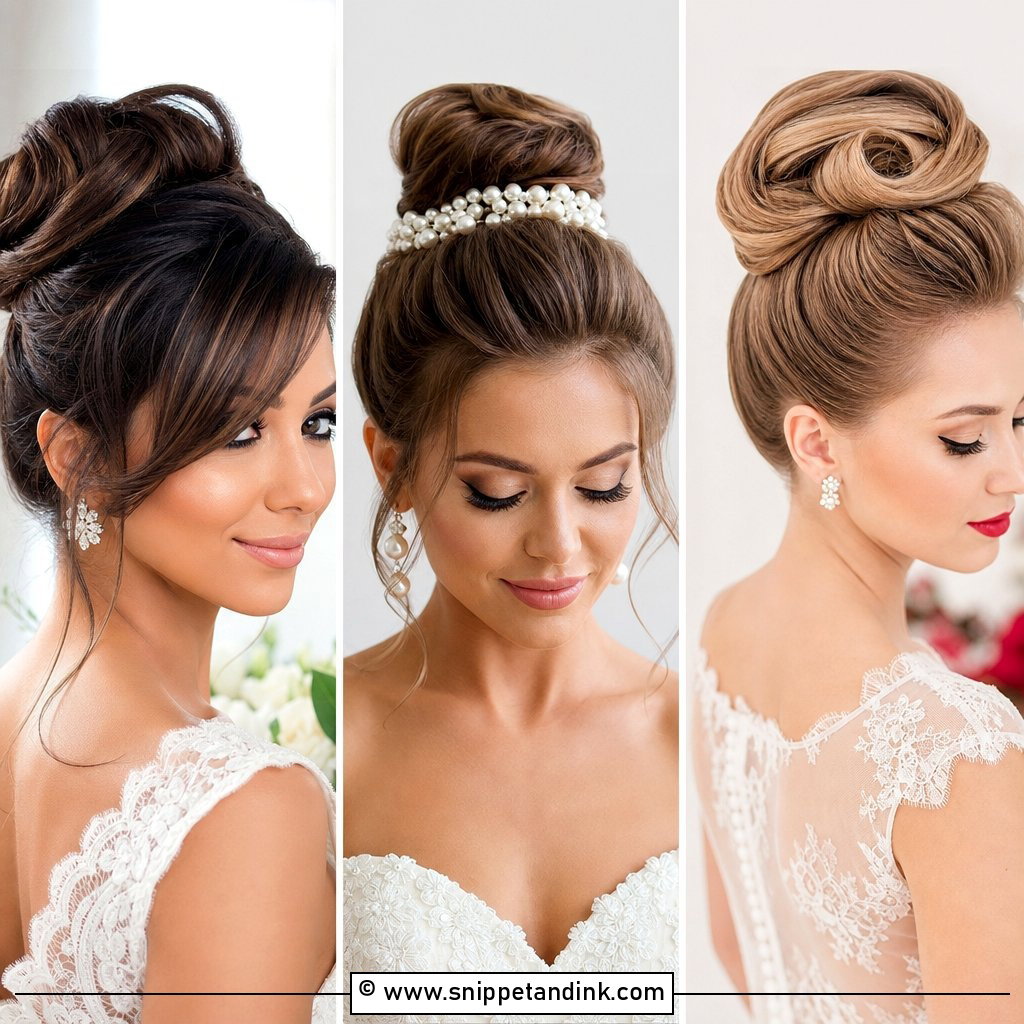
Sleek, high and tight at the crown, the ballerina bun shows the whole face and doesn’t move. It looks sharp with statement earrings and minimal gowns, and a centre part makes it feel current. Two cautions from the chair: a high, tight bun pulls on the scalp, and after ten or twelve hours some brides get a headache from it, so I set the ponytail slightly lower than a dancer’s and wrap the bun loosely. And if your hair has lots of short layers, they’ll poke out of a sleek style; a smoothing balm and small pins are essential.
5. Braided Crown Updo
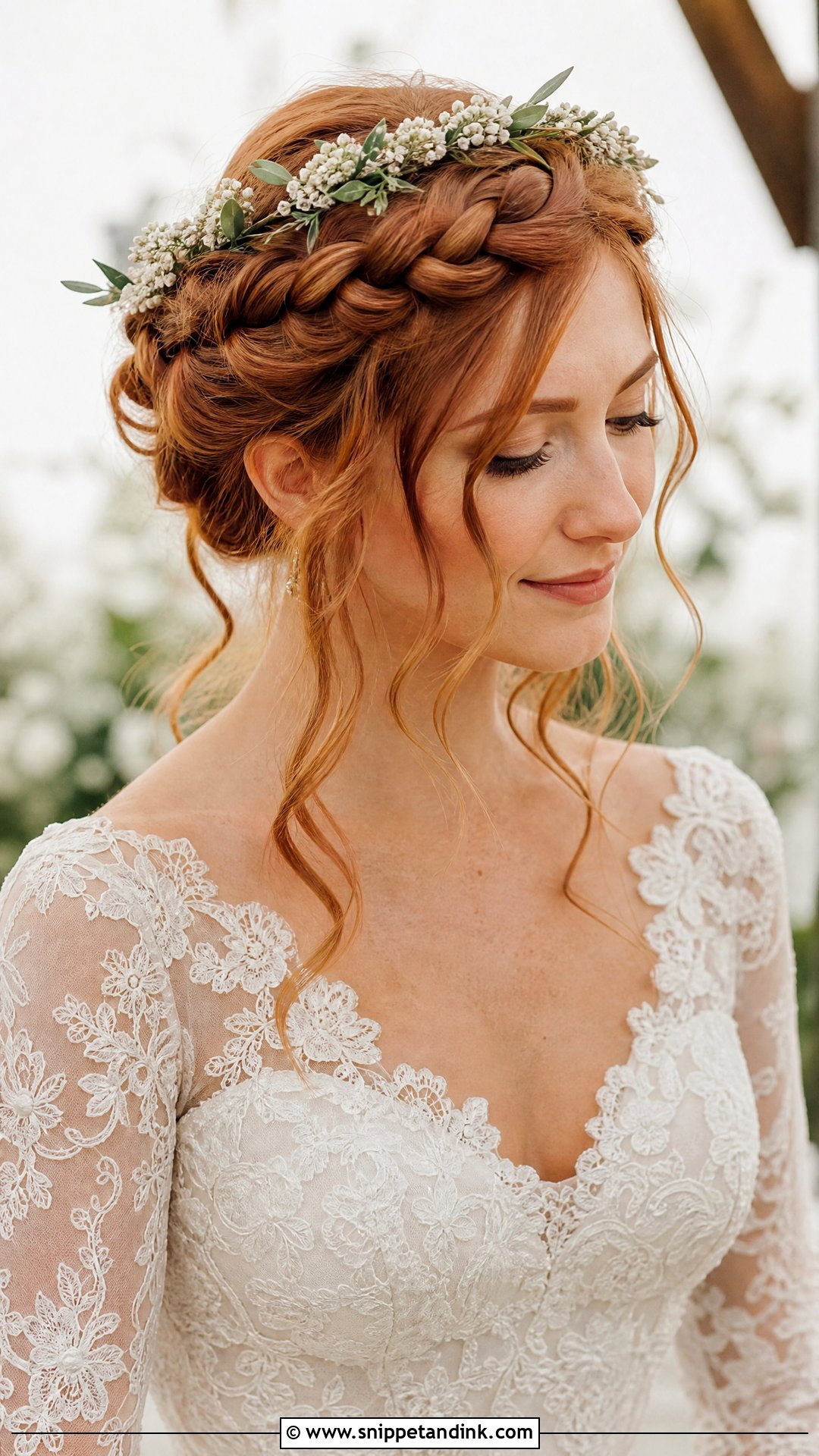
A braided crown wraps around the head like a halo, and it suits more lengths than people think; even shoulder-length hair can manage it with two braids instead of one. I braid each side, cross them over the top and pin the ends hidden under the opposite braid. Then I pancake the braids by gently pulling the edges so they look fuller in photos. Loose pieces at the face stop it looking tight. It pairs naturally with flower crowns and bohemian gowns at garden or forest ceremonies.
6. Twisted Chignon
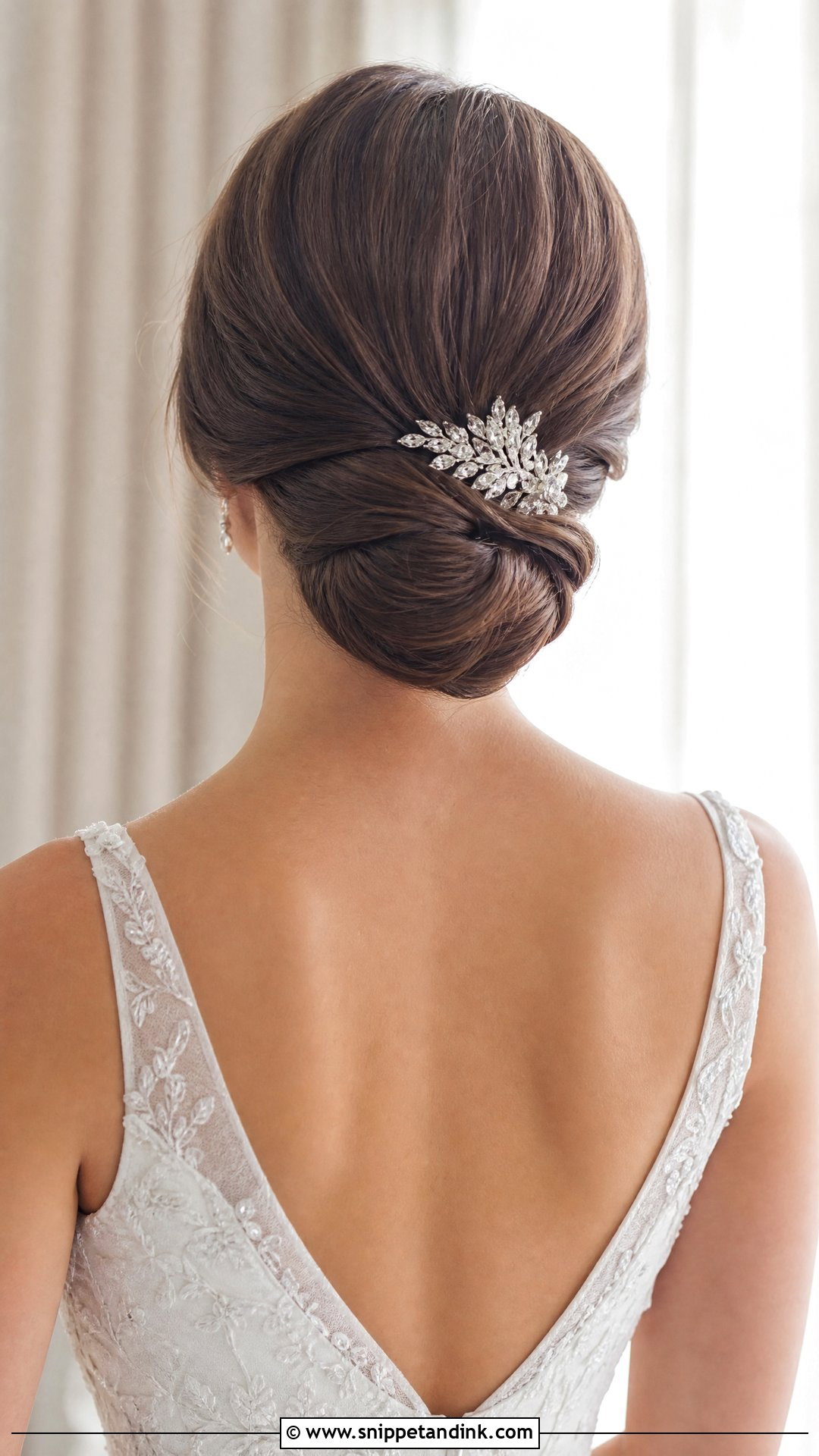
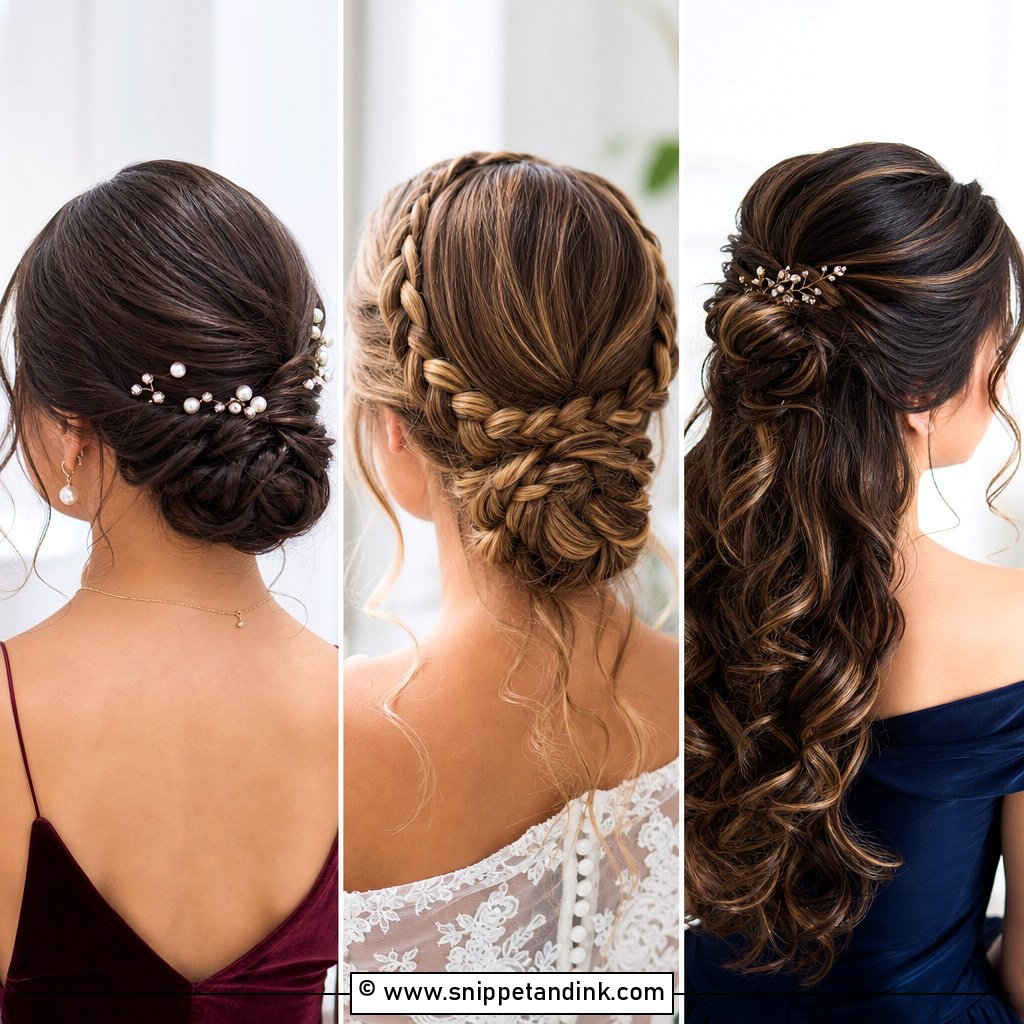
A chignon is a low looped knot at the nape, and the twisted version folds the hair in sections before pinning, which gives the knot texture. It’s formal enough for a black-tie room and soft enough for a garden, and it flatters most face shapes and necklines. I add gentle waves on hair that’s very straight, because a smooth chignon on glossy hair can look a little flat in photos. A jewelled pin or a fresh flower at the side finishes it, and the knot sits low enough to anchor a veil comb above it.
7. Half-Up Half-Down Updo
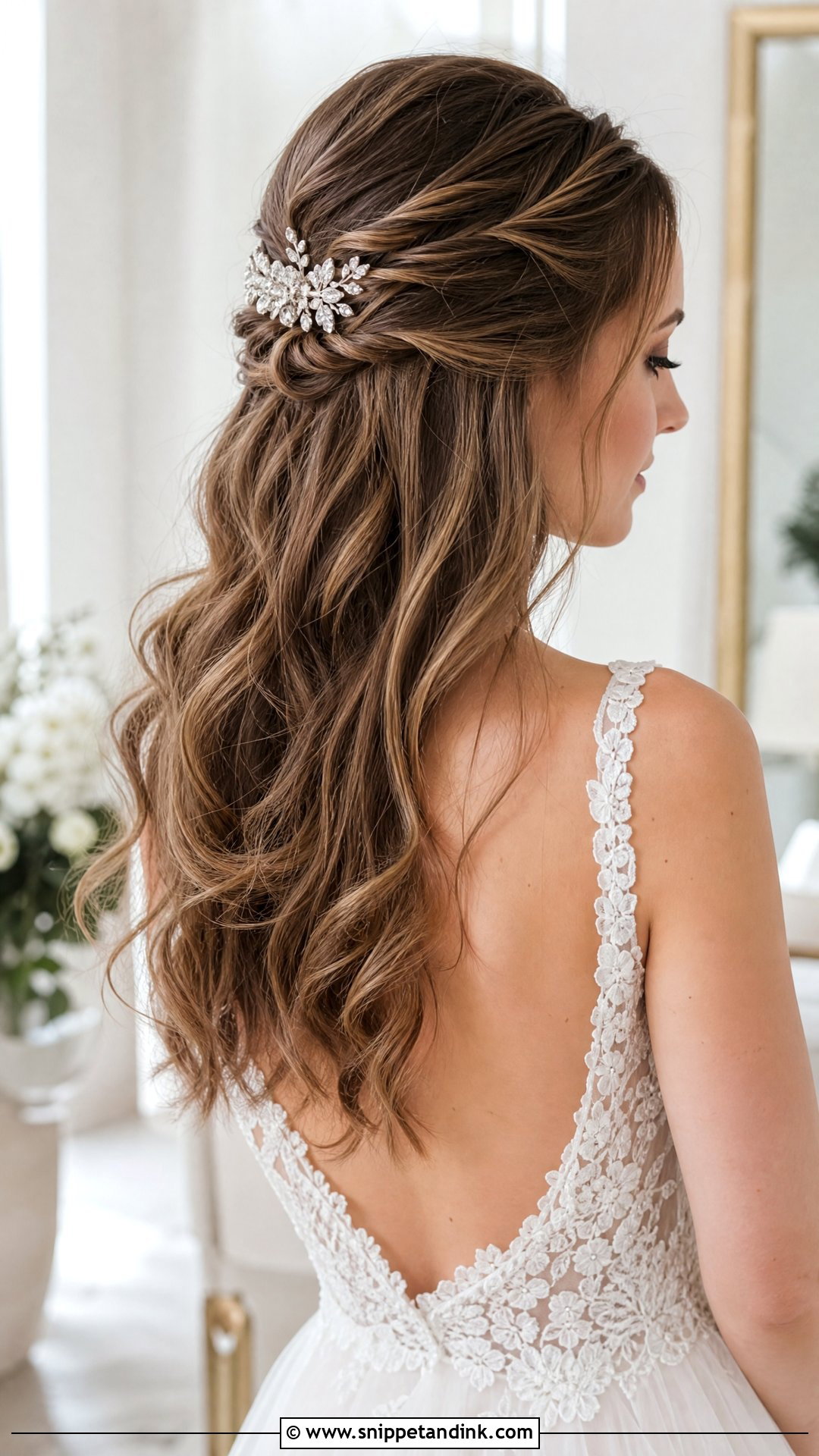
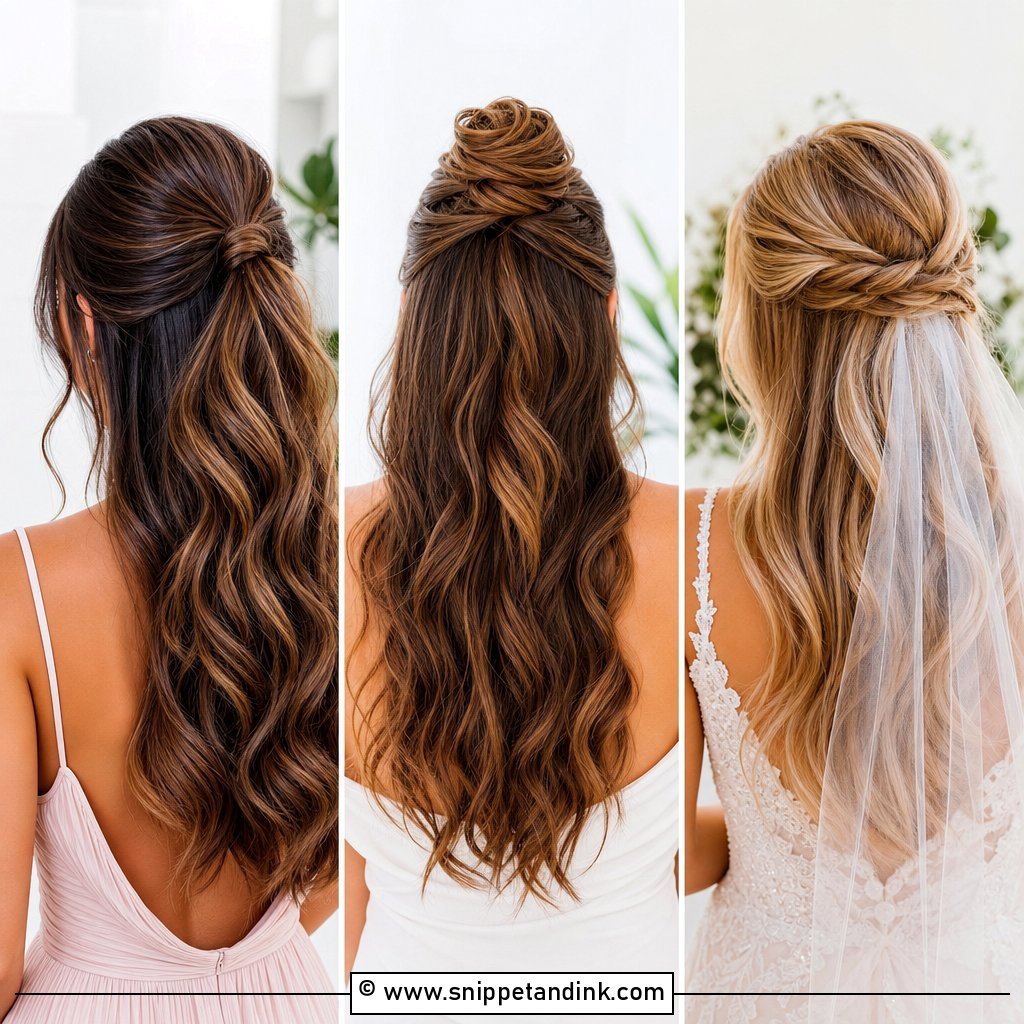
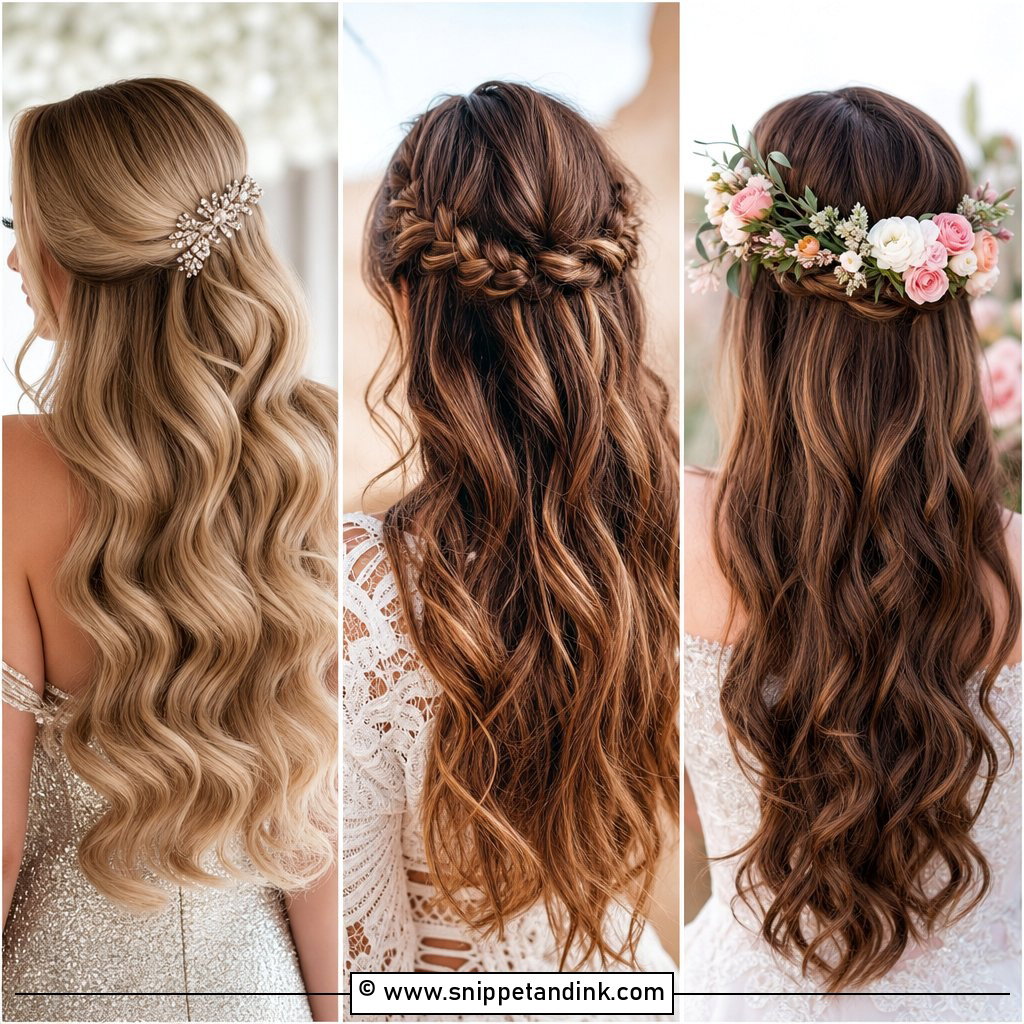
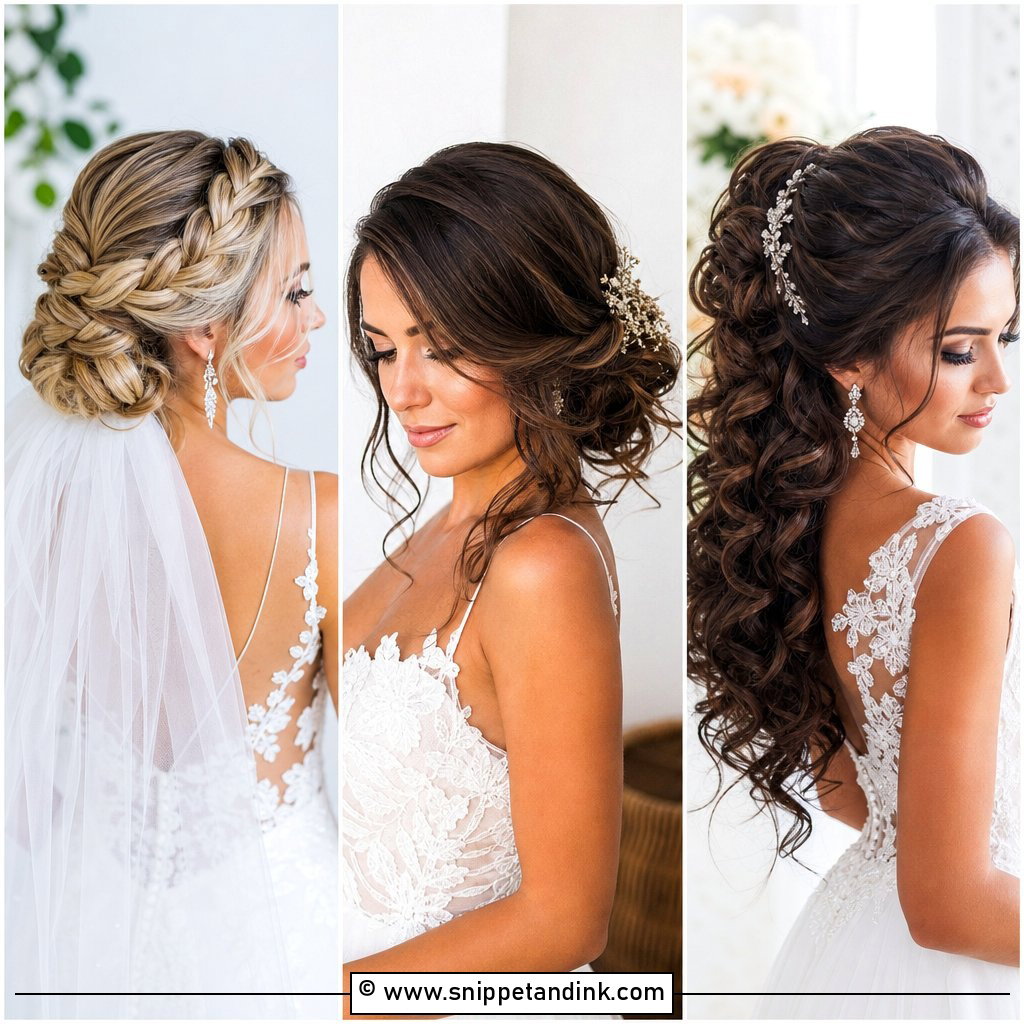
Half-up, half-down is the answer for brides who can’t decide. The top section is pinned back, the rest falls in waves or curls, and delicate tendrils soften the face. I’ll be honest about the down half: in humidity or on very fine hair, curls drop within a few hours, so I set them with heat, let them cool fully in pin curls and only then brush out. A sparkling clip or a few small flowers at the back keeps it bridal.
8. Low Loose Bun With Waves
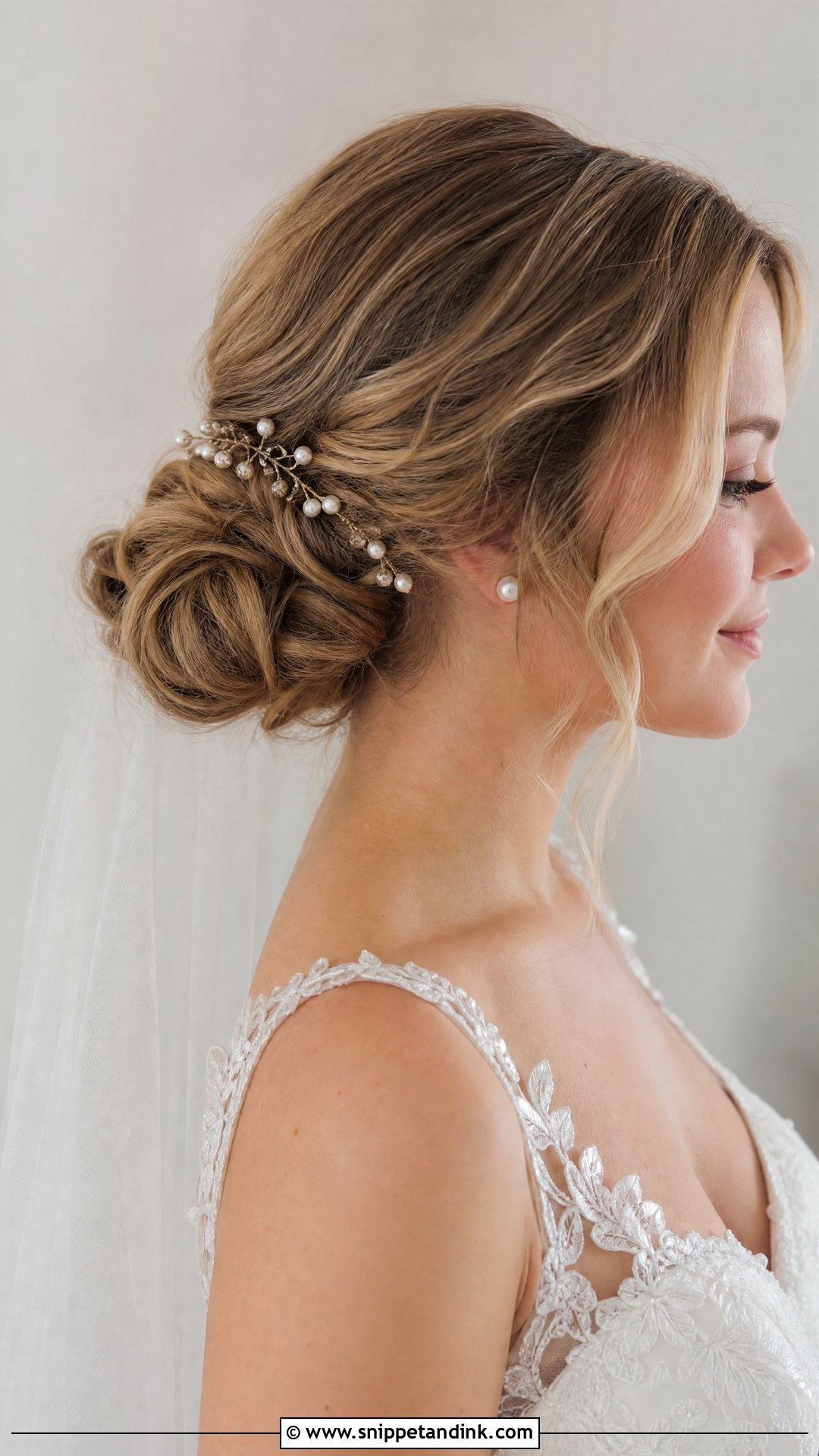
Curl everything first, then gather it loosely at the nape and let the waves do the work. The texture gives volume and movement, and a few soft strands keep it romantic. Under a delicate veil this one sits beautifully. I pin it through the curls rather than flattening them, and I use U-shaped hairpins to shape the bun and bobby pins only to lock it, so it stays soft without falling apart. Pearls or small blooms add a little charm.
9. Twisted Updo With Tendrils
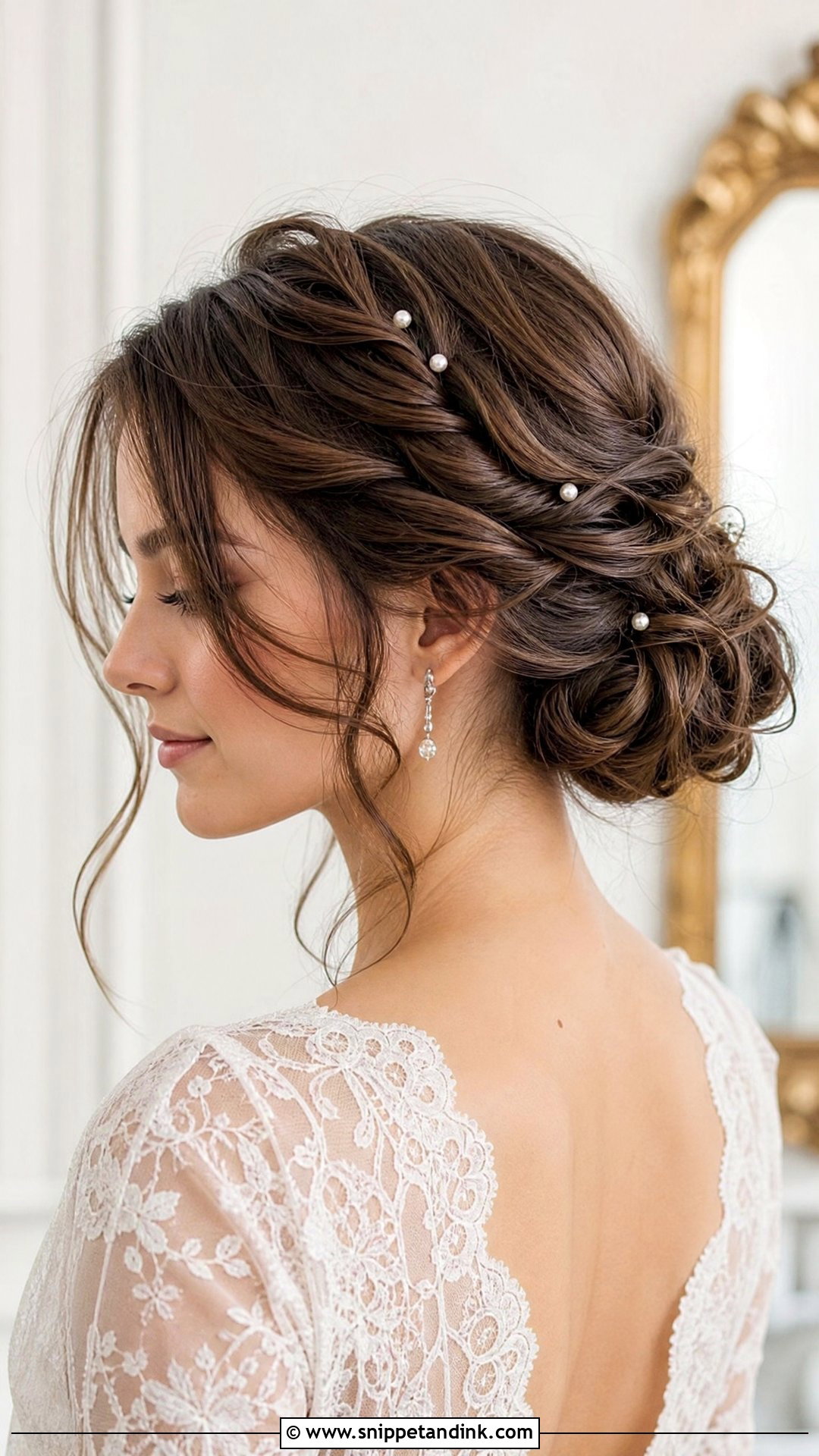
Several small twists, pinned together, give this updo more dimension than a single bun. I section the hair, twist each piece and tuck it into the overall shape, leaving a few tendrils loose at the face. It’s detailed without being complicated, and it works on straight and wavy hair alike; on very straight, slippery hair I add texture spray first so the twists grip. Pearl pins scattered through the twists pick up light, and the whole thing suits lace gowns and vintage themes.
10. Low Bun With Side Braid
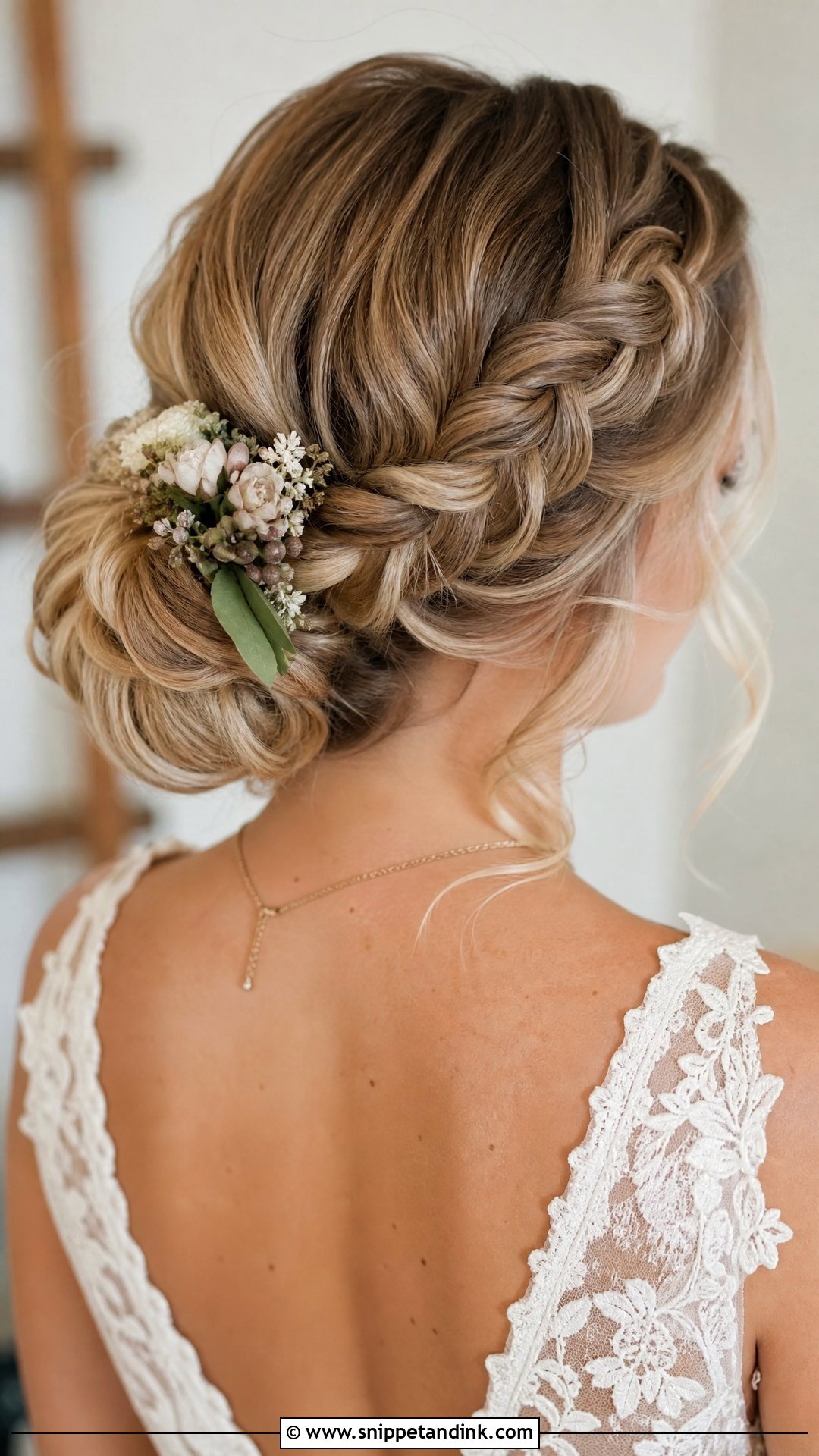
A side braid swept back into a low bun gives you detail on one side and tidiness at the back. I build the braid along the hairline on the side your partner will stand, so it’s the side seen most in ceremony photos. It suits outdoor and rustic weddings, and tiny flowers woven into the braid look fresh. Long hair handles it best; with shoulder-length hair the braid can run out before it reaches the bun, so plan the route at your trial.
11. Sleek Low Ponytail Updo
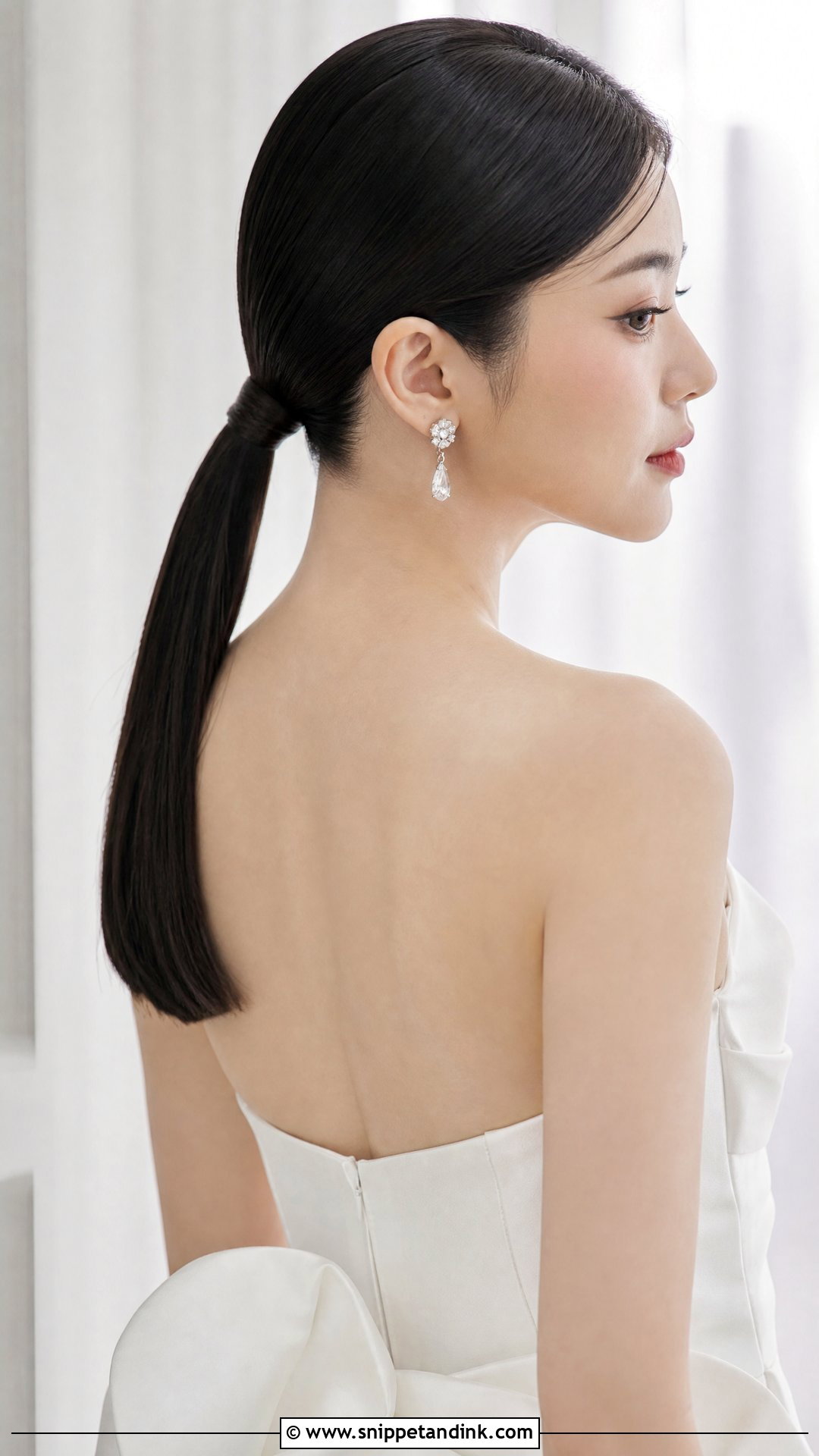
Strictly speaking, a low ponytail isn’t an updo, but polished at the nape it reads just as finished. I smooth the hair back, tie it low, and wrap a strand around the base to hide the elastic, pinning the strand underneath. It’s quick and suits minimal gowns, modern city weddings and bold jewellery. A touch of shine serum gives the glossy finish; too much and it looks greasy by evening, so use less than you think.
12. Romantic Curly Updo
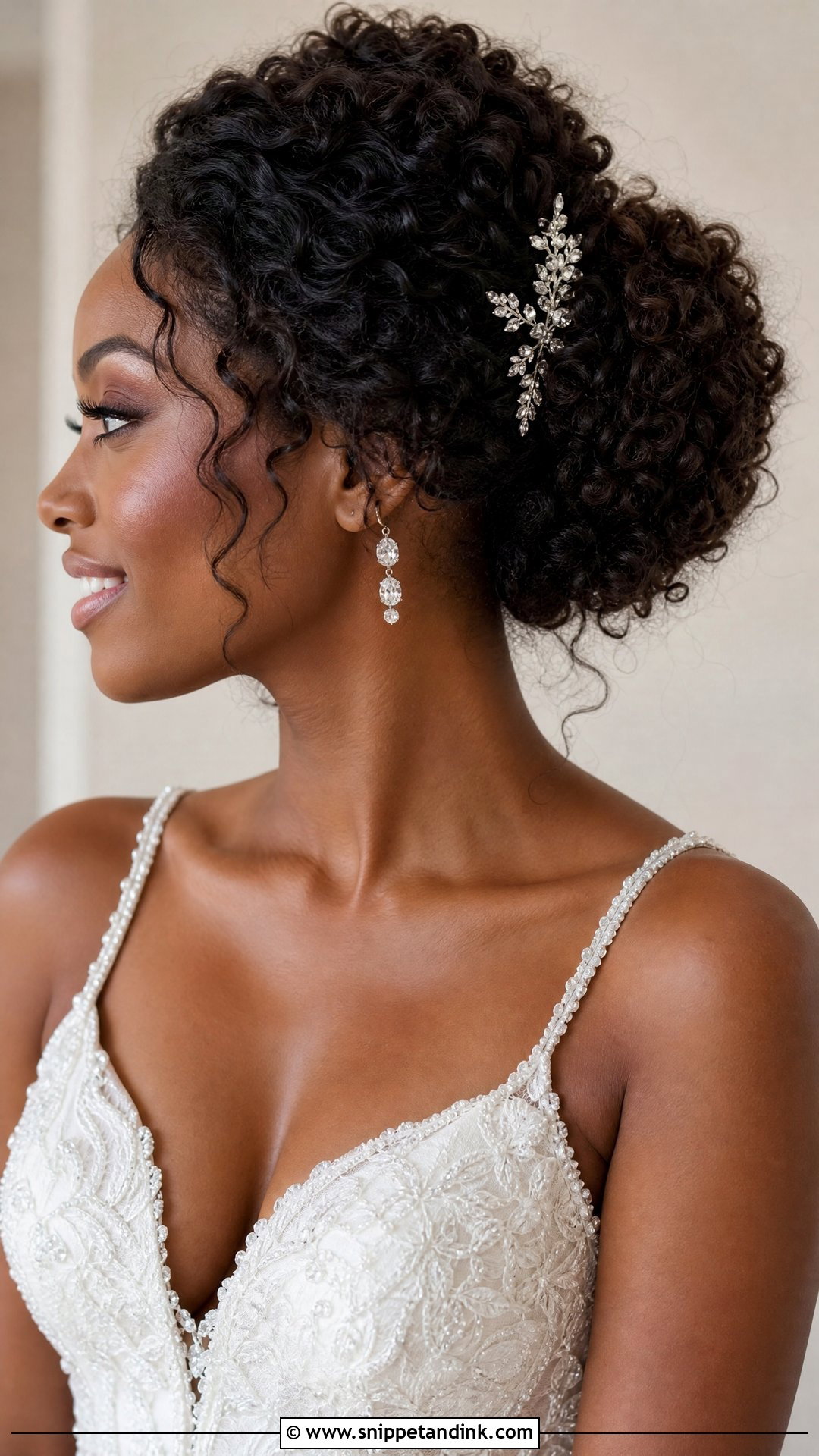
On curly or coily hair, I build the updo with the curl pattern, not against it. Gathered up and pinned into a full shape at the back or crown, natural texture holds pins far better than straight hair does, so these updos tend to last. I shape it on hair that’s been moisturised and defined the day before rather than freshly washed, and I keep curls at the front loose to frame the face. A sparkling pin or fresh flowers tucked into the curls is all it needs.
13. Twist and Roll Updo
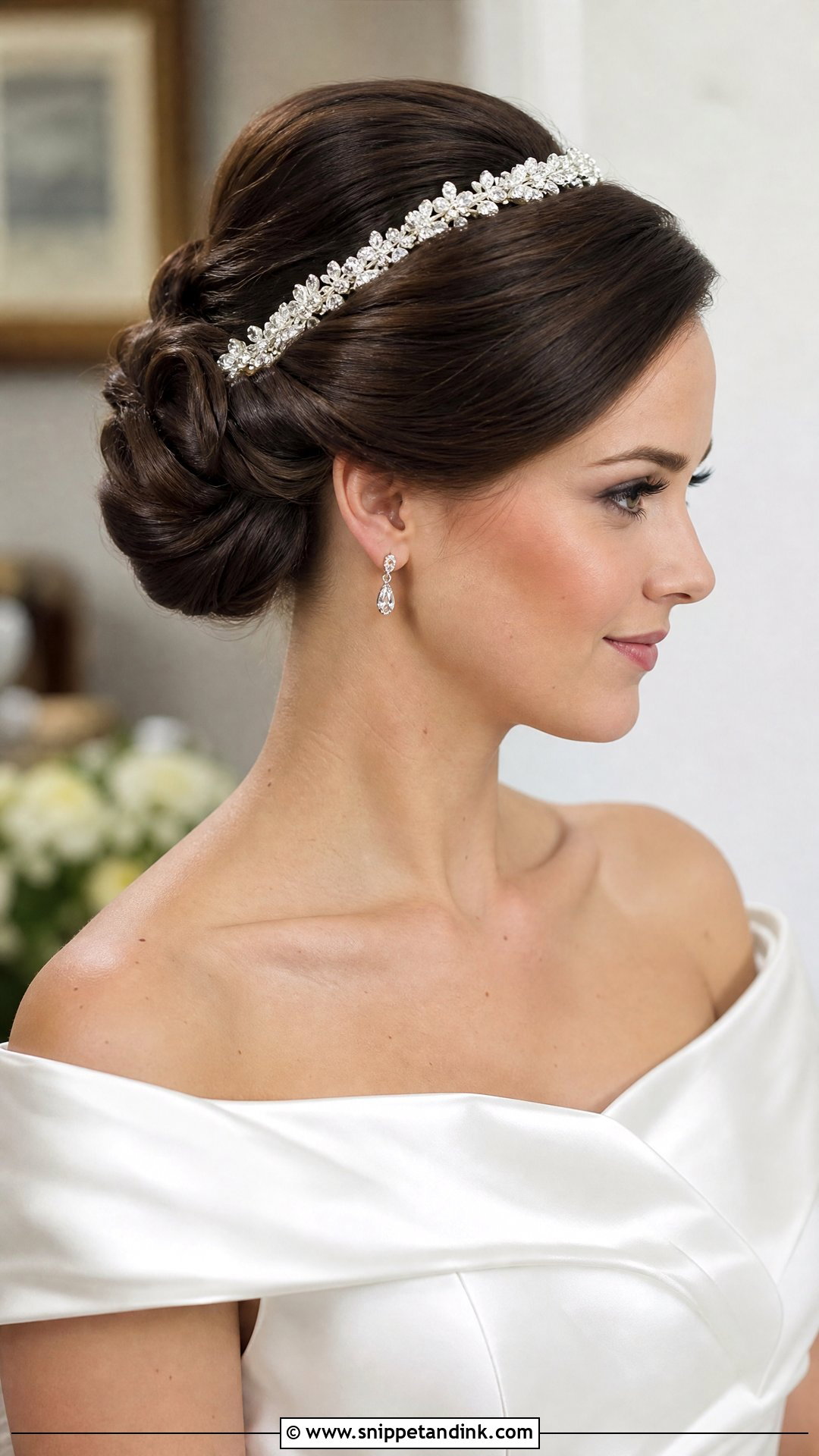
The twist and roll updo is structured and clean. Sections are twisted, rolled and pinned into a smooth shape, with no braiding involved. On shoulder-length hair it often works where a bun won’t, because each section only has to roll, not reach. A white headband or jewelled accessory shows up well against darker hair. It holds through a long day, suits both modern and classic gowns, and keeps the neckline clear.
14. Boho Braided Bun
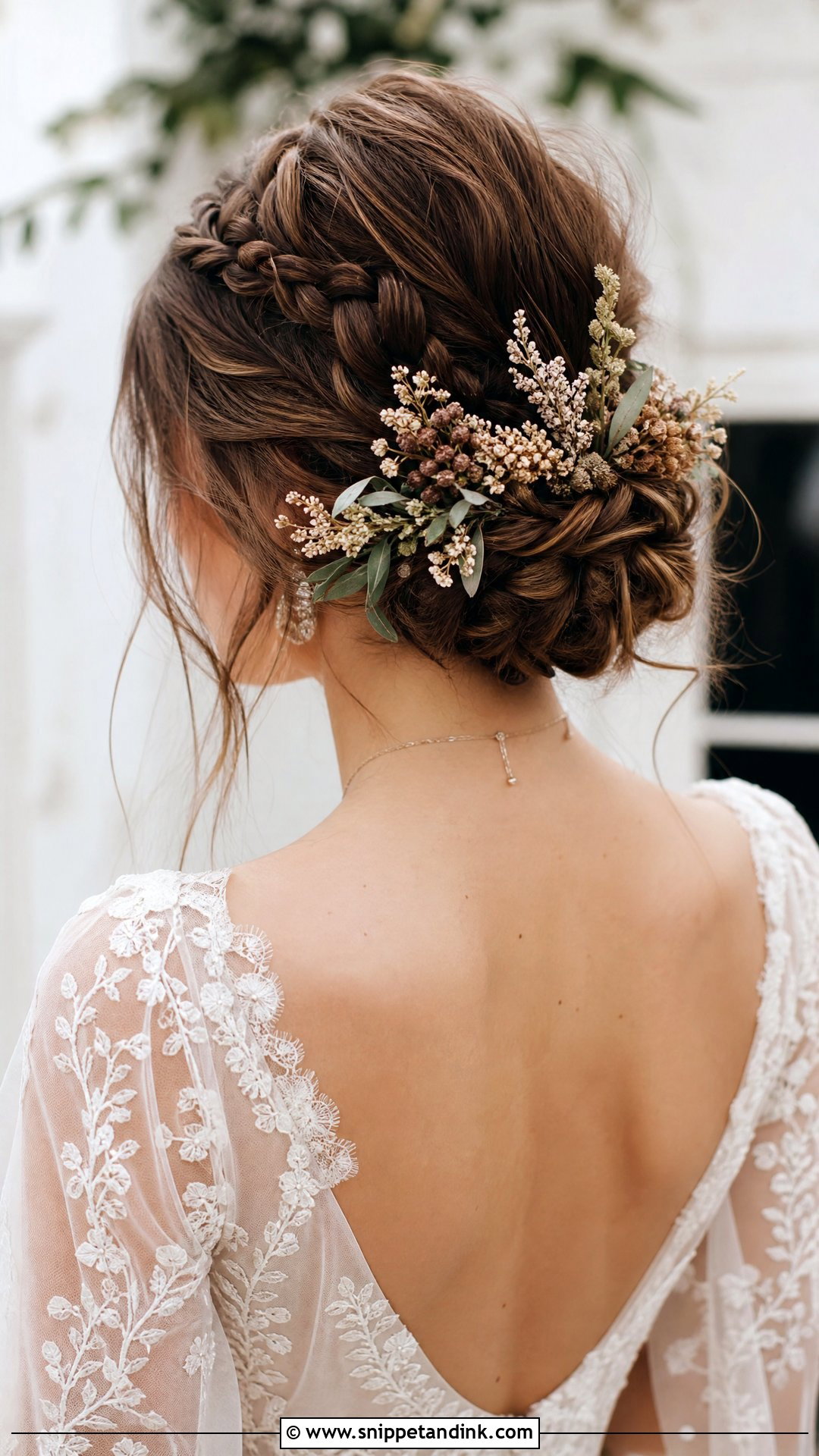
Loose braids wrapped into a soft bun make this the most relaxed style in the list. I braid first, then gather and coil the braids, pulling pieces out a little at a time so the texture looks lived-in rather than frizzy. Festival-style and outdoor weddings suit it, especially with dried flowers, greenery or baby’s breath tucked in. It’s forgiving on most lengths and a good choice if your hair tends to frizz, since braids hide it.
15. Vintage Pin Curl Updo
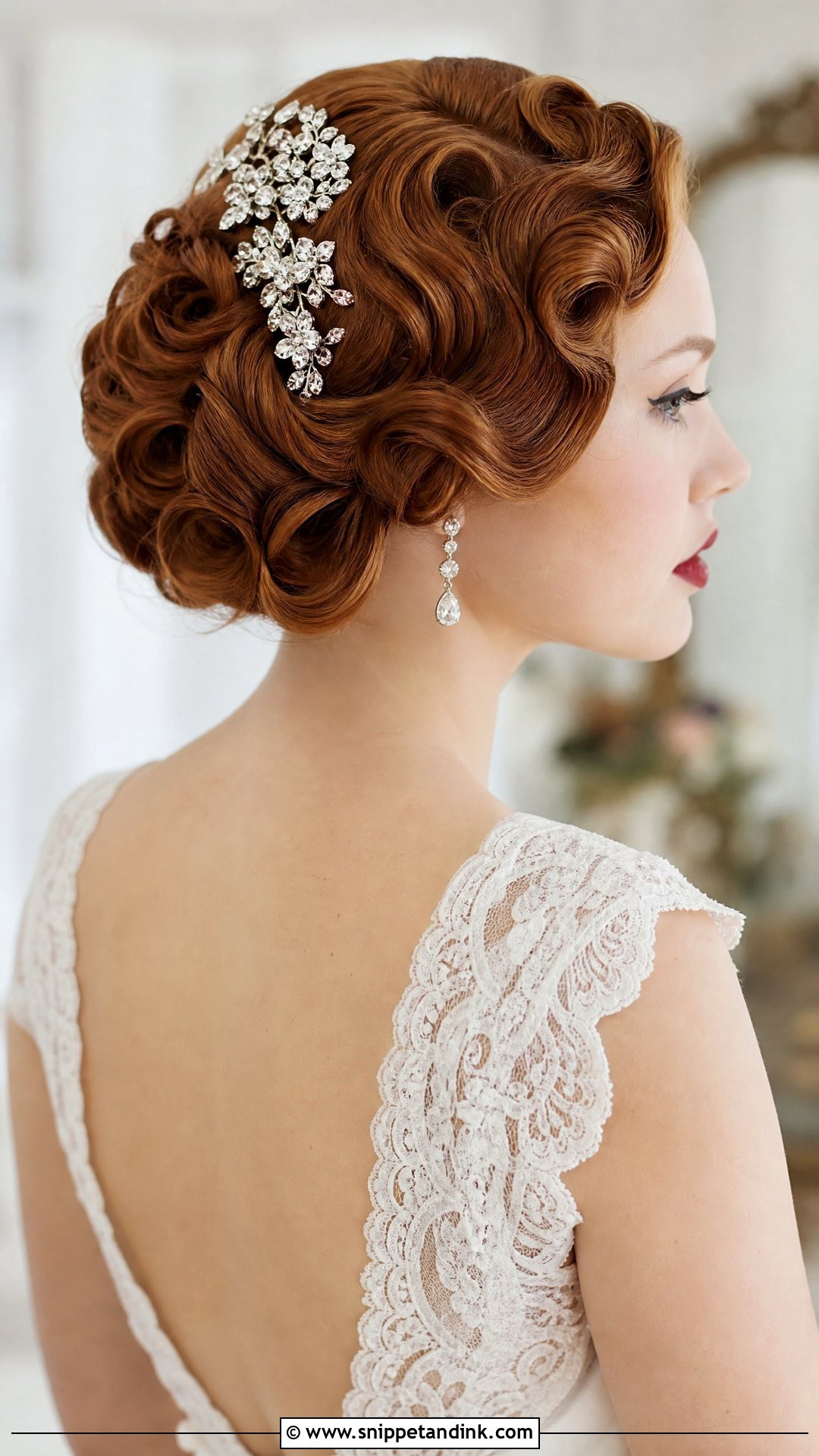
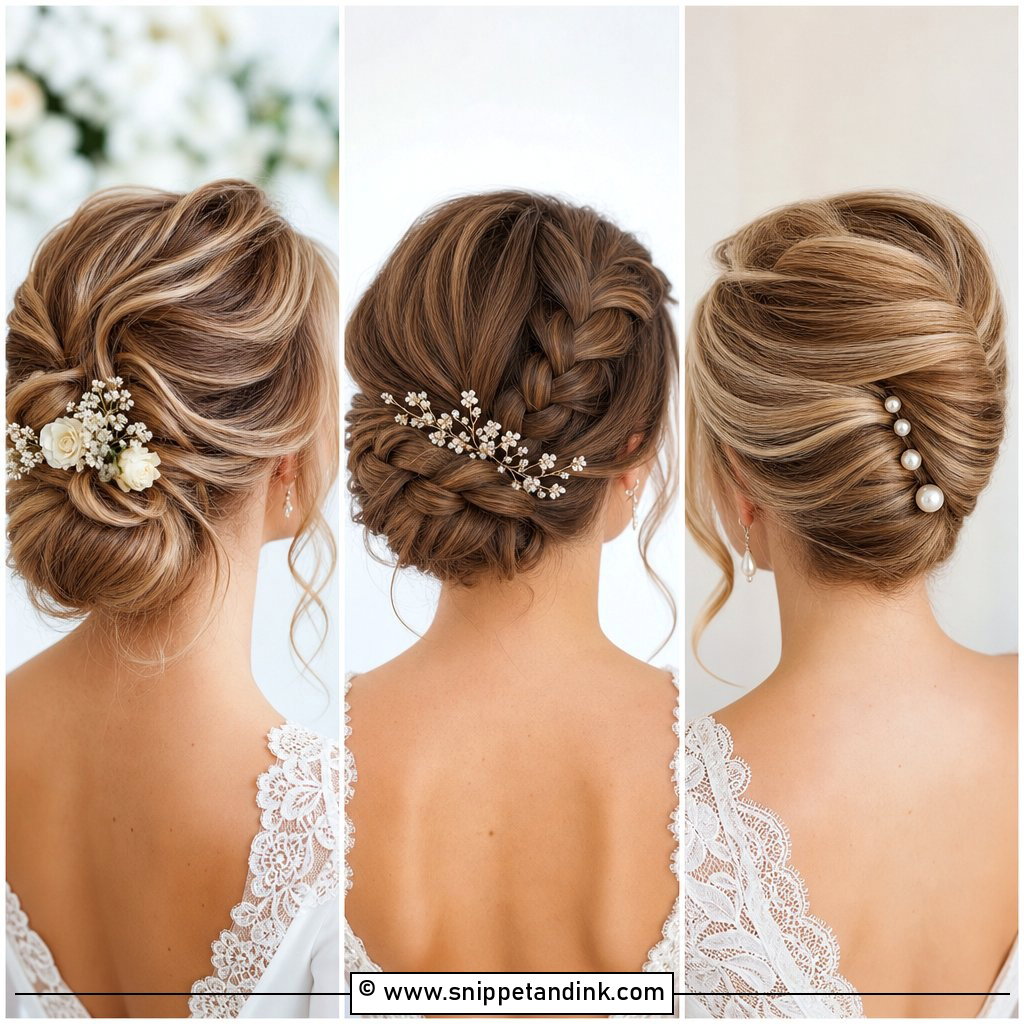
Old Hollywood pin curls take a little practice, but the technique is simple once you’ve done it: small sections curled, pinned flat to set, then brushed into sculpted waves and pinned up into a retro shape. Setting time is the part people skip, and without it the waves fall flat. It sits naturally with vintage lace and antique jewellery, and a jewelled comb or birdcage veil completes it. Mid-length and long hair carry it best.
16. Loose Knotted Updo
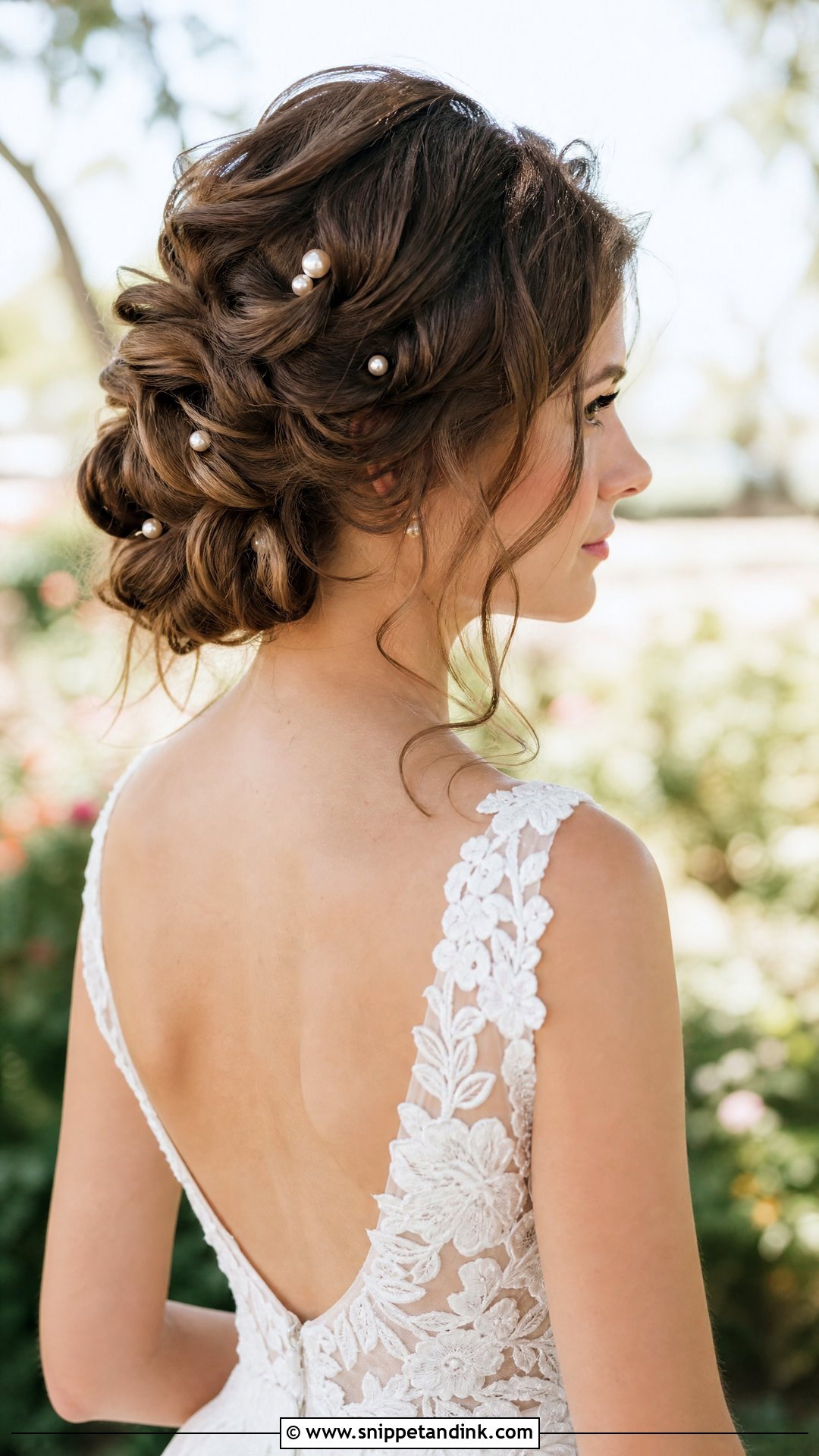
The knotted updo is built by tying sections of hair into soft knots and pinning them together, so you get dimension without braiding. Each knot ends up a little different, which gives it an organic feel. Medium to long hair is needed for the knots to tie properly. Pearl pins scattered through the knots add sparkle, and loose tendrils keep it soft for a garden or bohemian wedding.
17. Side Swept Low Updo
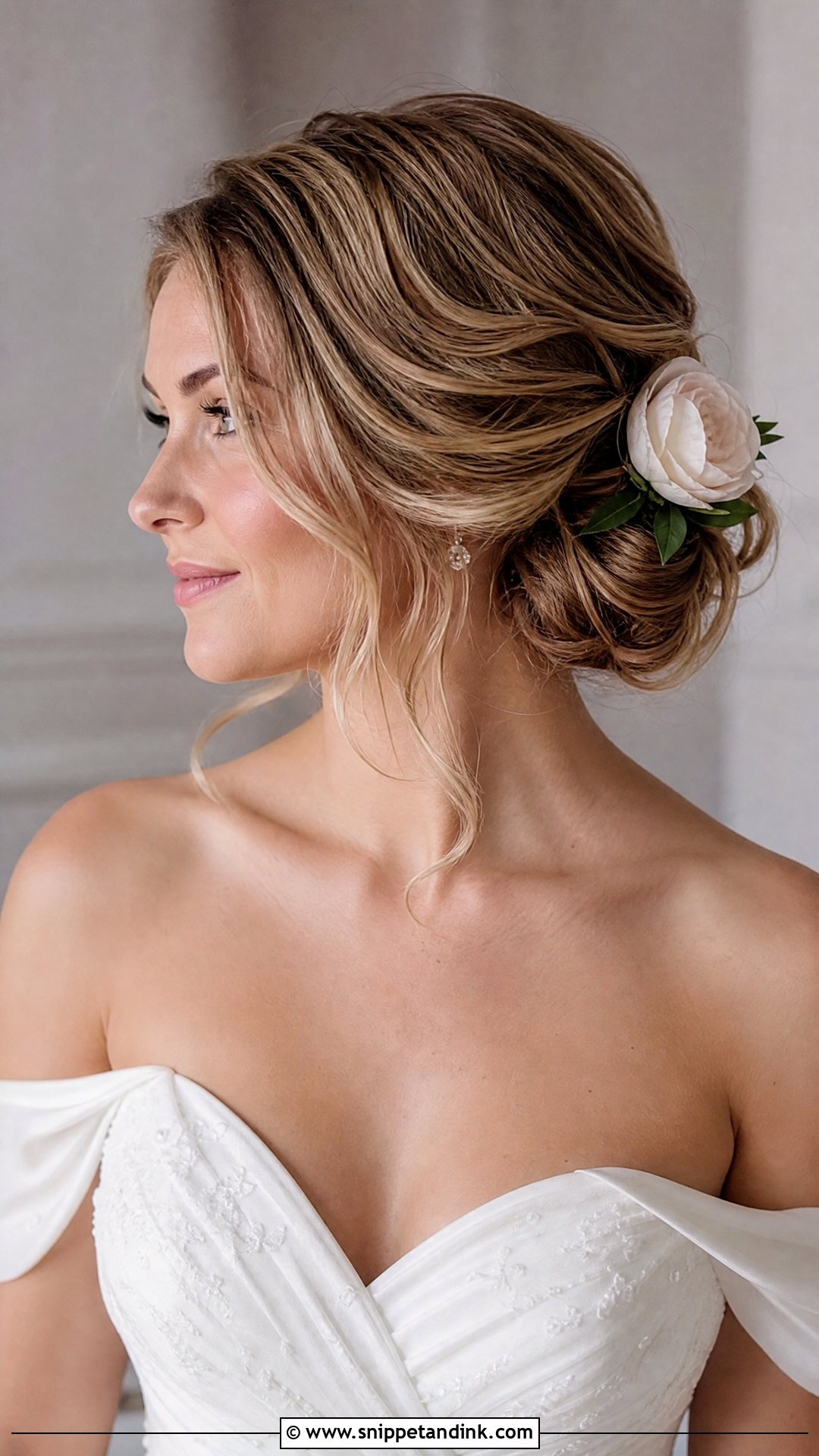
Swept over one shoulder and pinned into a soft low bun or chignon, this asymmetric style shows one side of the neck and one big earring. It’s a natural match for one-shoulder and off-shoulder gowns. I pin a hidden anchor behind the ear on the swept side, because the weight of the hair pulling across the head is what makes these drift by evening. A pin or fresh bloom where the hair gathers finishes the line.
18. Textured Bun With Veil
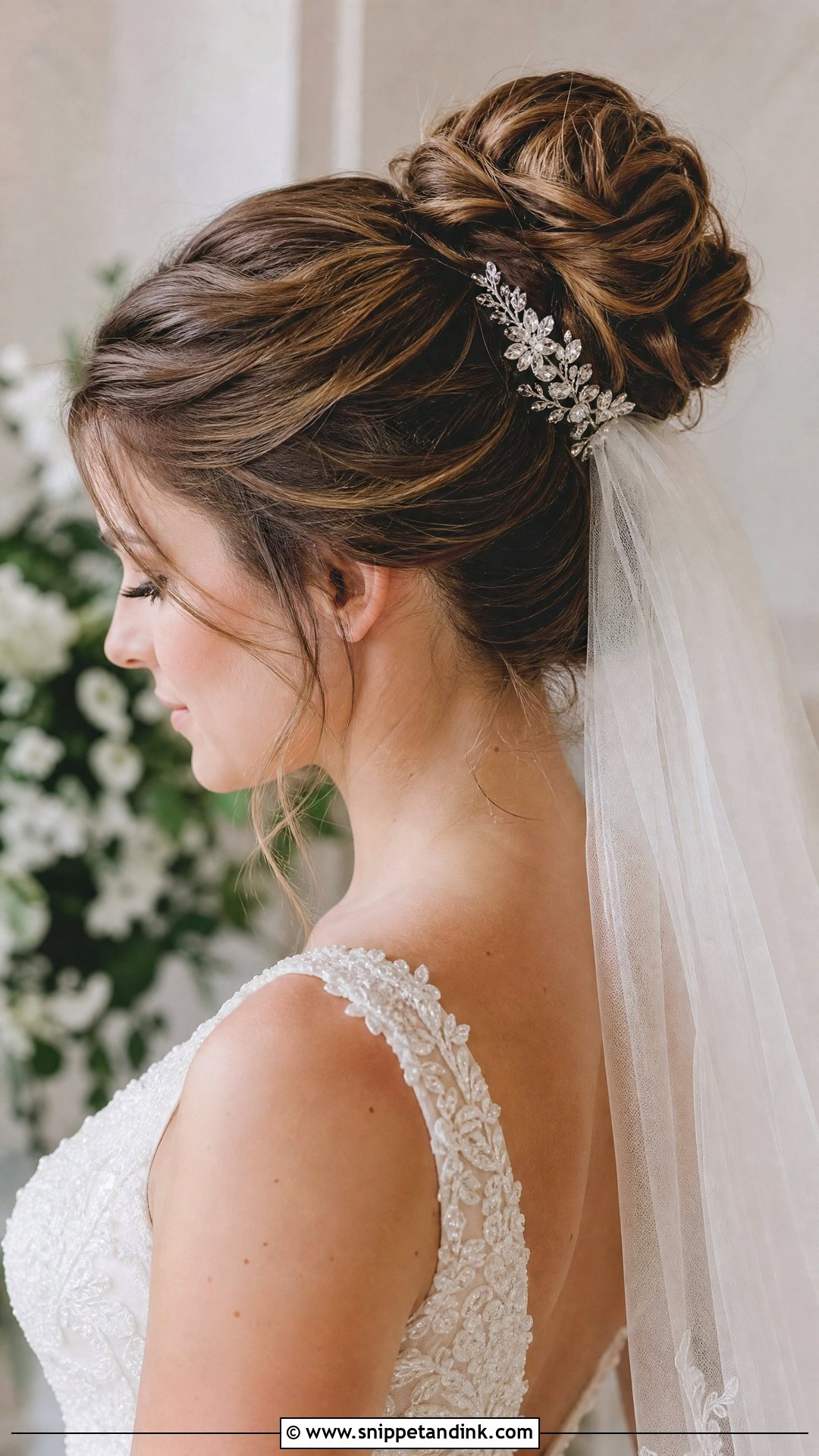
When the veil matters, I design the bun around it. A soft, textured bun gives the comb something solid to grip, and I’ll place the comb just above the bun for a cathedral veil’s drape or tucked under it for a lighter one. Pinning the comb through crossed bobby pins in the bun keeps it from tugging. After the ceremony the veil comes out and the updo stays intact. A decorative comb under the veil can stay in for the reception.
19. Braided Low Bun
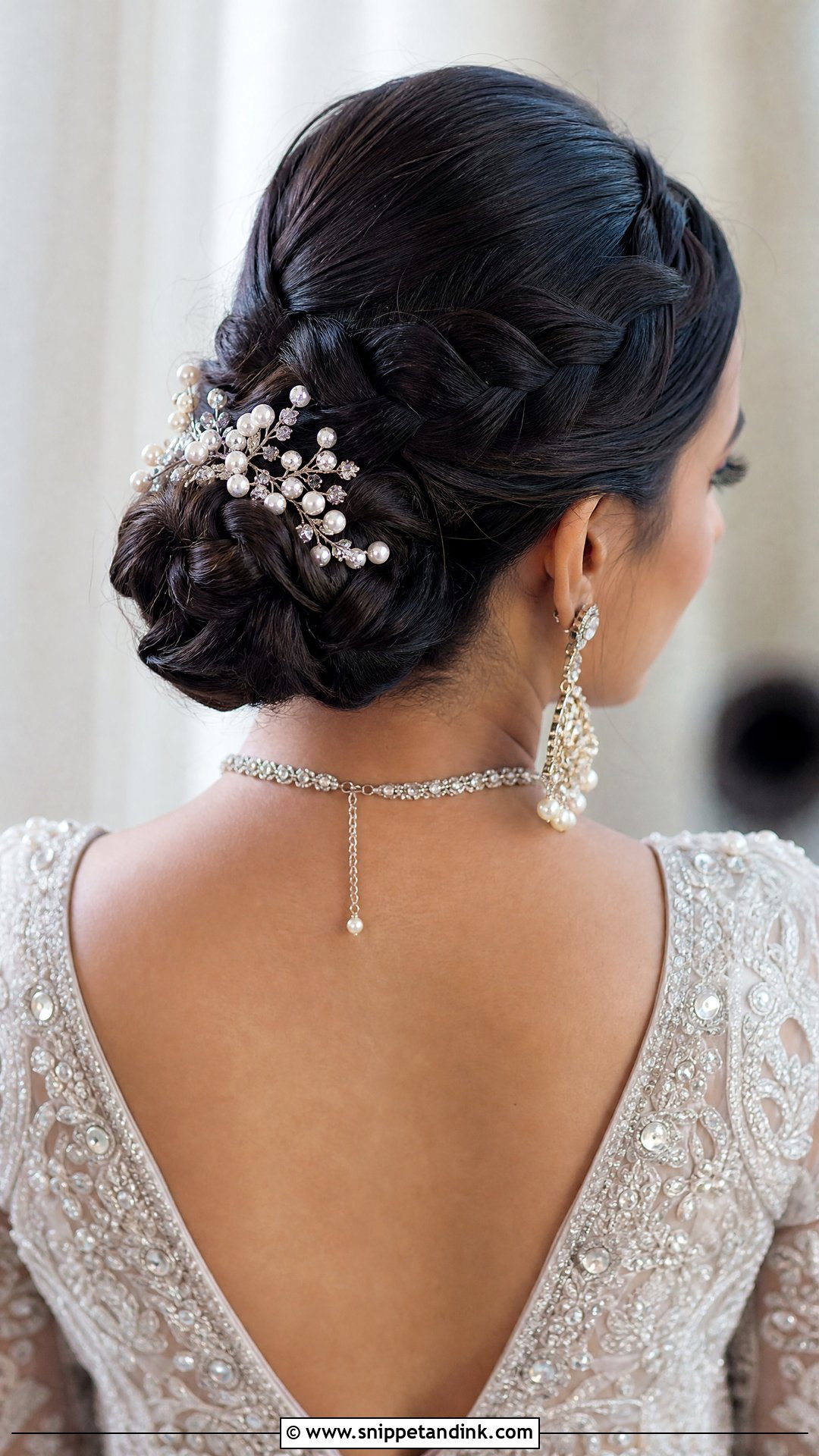
Braids coiled into a soft bun at the nape add texture without looking busy. I braid throughout, gather and coil, then loosen the braids slightly so they look full rather than tight. It suits most lengths and textures and holds through a long celebration because braided hair is already locked in place before it’s pinned. Pearls, flowers or greenery tuck in easily, and it’s one of the most rewarding styles from the back in portraits.
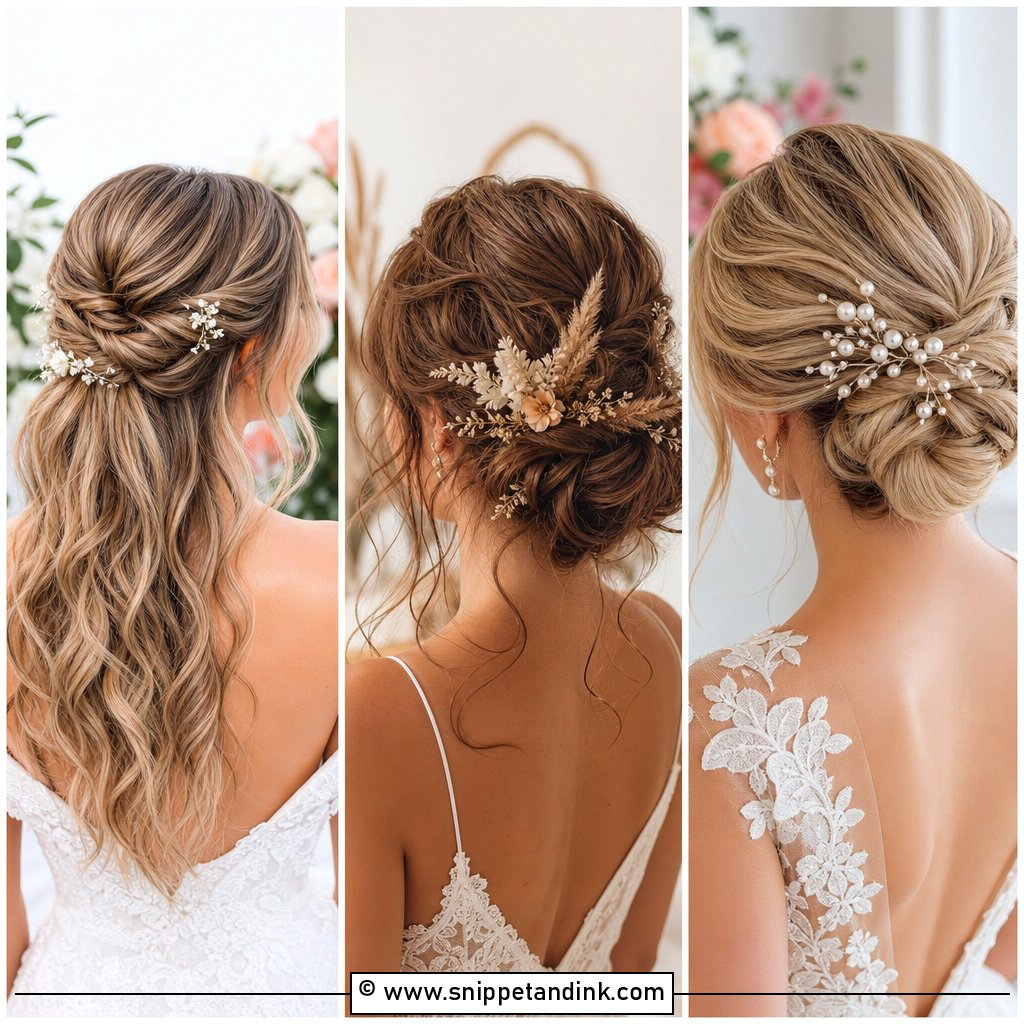
20. Wrapped Bun With Accessories
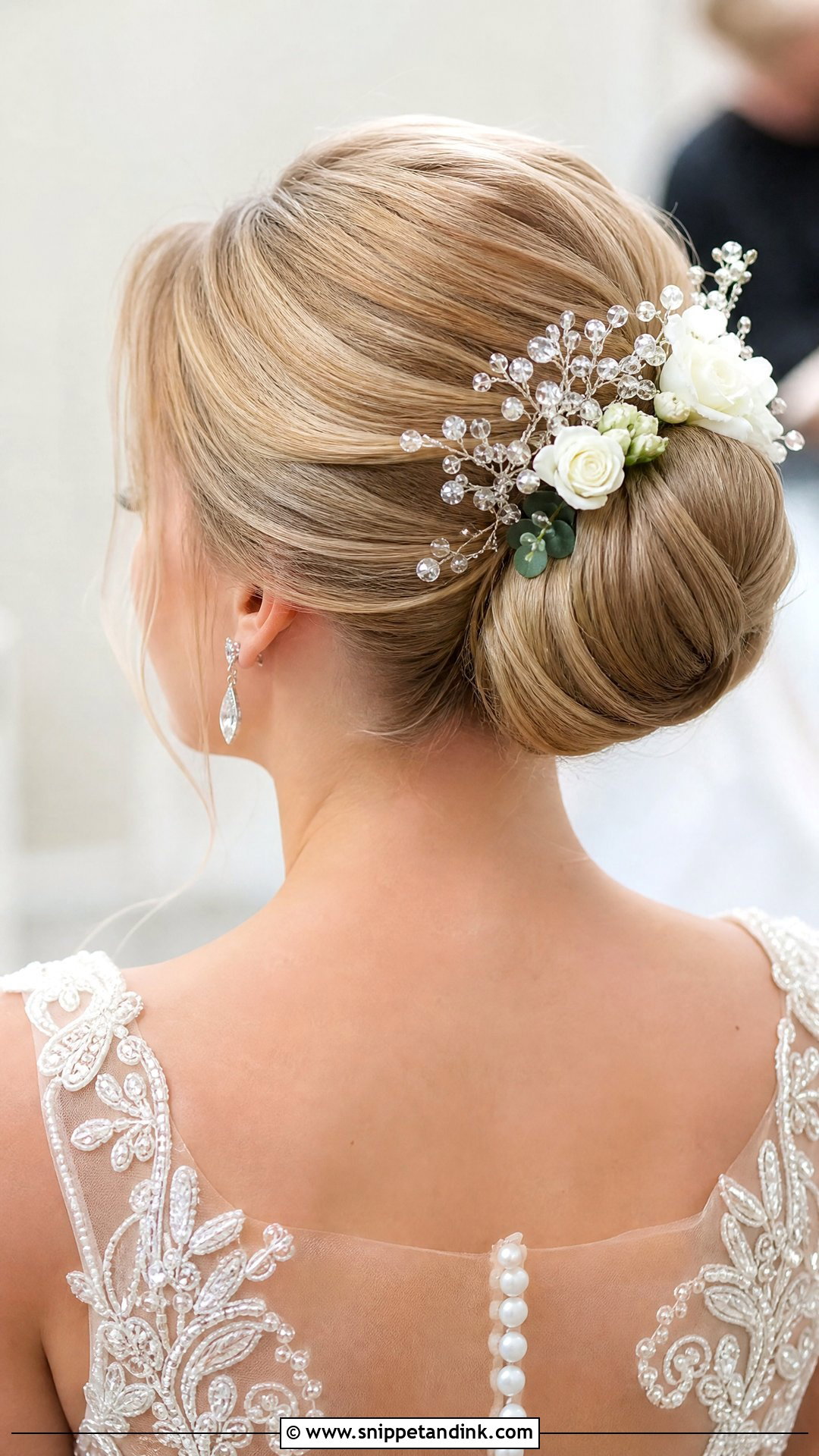
Start with a smooth, simple wrapped bun at the nape or crown, then let accessories do the talking. Scattered pearls feel romantic; crystal pins feel glamorous; a comb or fresh flowers sit between the two. I’d bring the actual pieces to your trial, since heavy combs can pull a bun out of shape and some pins need extra anchoring. The plain base is quick to create and easy to fix if anything loosens.
Layers, Bobs and Very Thick Hair Under Pins
Short layers
Layers around the face and crown escape sleek styles first. Go for a textured option like the twist and roll, the knotted updo or the boho braided bun, where a stray end looks intentional. Small pins and a little balm handle the rest.
Shoulder length and bobs
If your hair can be gathered into a low ponytail, you can have an updo. Pinned sections, rolls and braided crowns work better than one big bun, which needs length. Tiny matching clip-ins can add bulk if you want a fuller knot.
Thick or heavy hair
The problem here is weight, not holding power. One heavy bun at the nape drags downward over the day and can give you a headache. I split thick hair into two or three smaller sections and pin each separately, so the weight is spread across the head. U-shaped pins shape it; bobby pins lock it.
An Updo Proves Itself at Hour Six
Book your trial a month or two before the wedding, bring your veil, comb and earrings, and a photo of the dress neckline. Then keep the style in for the rest of the day. How it looks at hour six tells me far more than how it looks in my mirror, and it gives me time to change the plan if something slips.
Your Gown and Hair Texture Should Make the Call
A bridal updo doesn’t need to be complicated, and most of the twenty here are simpler than they look. Your gown, your venue and your hair texture should decide between them, more than any trend. Test the one you like at a proper trial, bring your veil and accessories, and wear the style for a few hours afterwards. If it’s still in place by evening, you’ll walk down the aisle without thinking about your hair at all.
You'll Like These Ideas:


Leave a Reply