
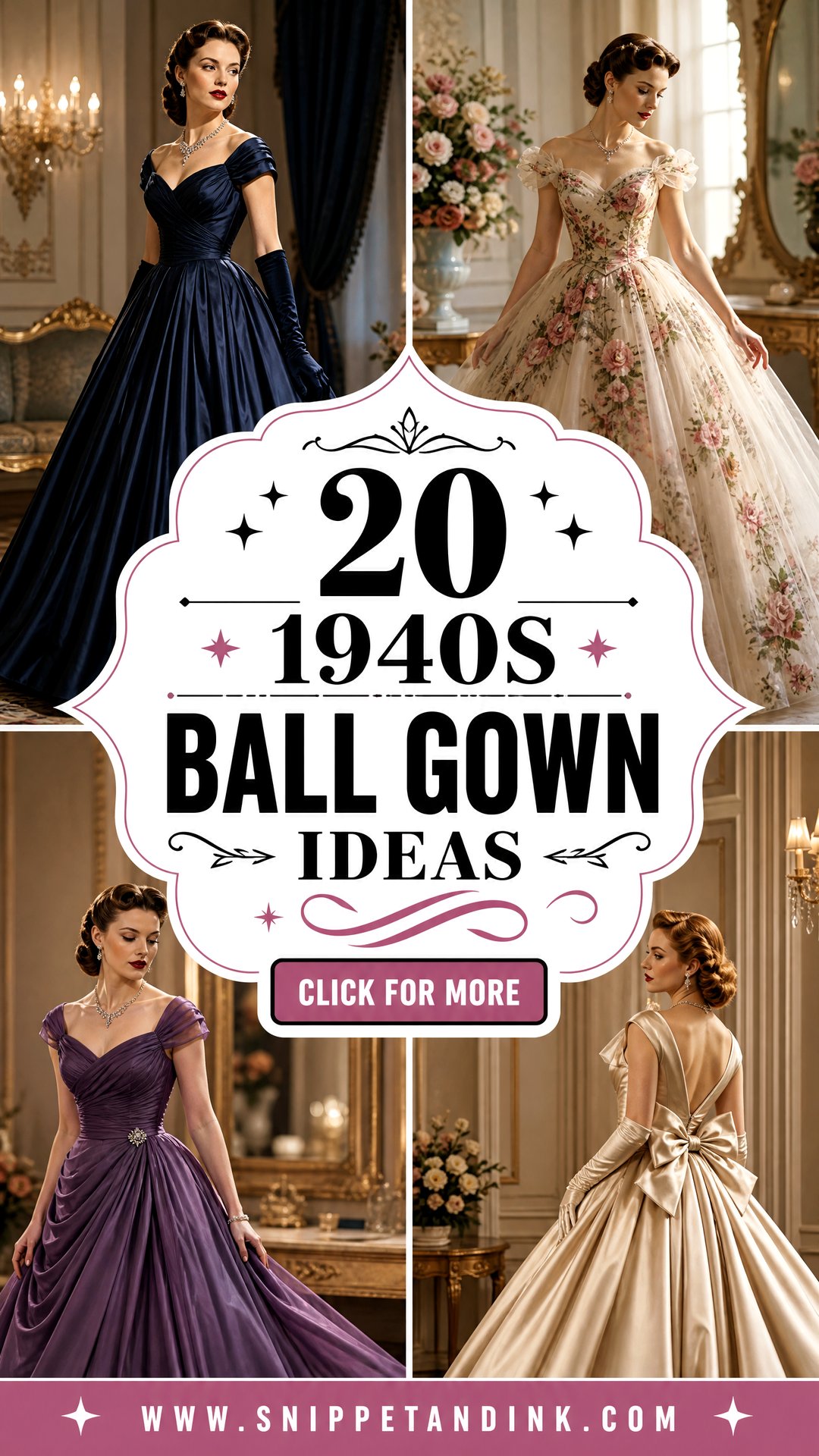
A 1940s ball gown sits somewhere between wartime restraint and the sweeping glamour that came back once the war ended. Early in the decade, evening dresses had defined shoulders, narrow skirts and draping placed exactly where it earned its fabric. Then the New Look of 1947 softened the shoulder, pulled the waist in hard and let the skirt go full, and that shape carried formalwear well into the fifties. I dress brides in both halves of the decade, and the difference between a convincing outfit and a costume is rarely the gown alone. Gloves, a structured clutch, a brooch, the right pump and hair set in proper rolls do half the work. The twenty gowns below run from plain crepe to full satin, each styled the whole way through.
Real 1940s Vintage or a Gown Cut to the Old Pattern?
Brides ask me this at nearly every first meeting. A genuine forties gown has a drape and weight that modern copies struggle to match, but it comes with problems a new dress doesn’t. A reproduction, made from an original pattern or a careful modern one, gives you the shape in a fabric that will survive a full day of dancing.
Checking a vintage gown before you buy
- Measure bust, waist and hip and ignore the label. Sizes from the period run much smaller than modern sizing.
- Hold the underarms and waist seams up to daylight. Old perspiration weakens fabric there, and it tears when stressed.
- Ask what the fabric is. Rayon crepe was everywhere in the forties and it can shrink badly if it gets wet, so a rainy outdoor photo session is a real risk.
- Look at the closure. Many dresses of the era fasten with a metal side zip or snaps, and an old zip that sticks is a small repair worth doing before the day, not during it.
- Check how much seam allowance is left inside. That decides whether a seamstress can let it out or only take it in.
If the gown fails two or more of those checks, I’d treat it as inspiration for a reproduction and keep the original for a portrait or a display. Bring photographs of the original to your dressmaker; the cut of the shoulder and the exact waist height are the details that copies most often get wrong.
1. Black Satin 1940s Ball Gown
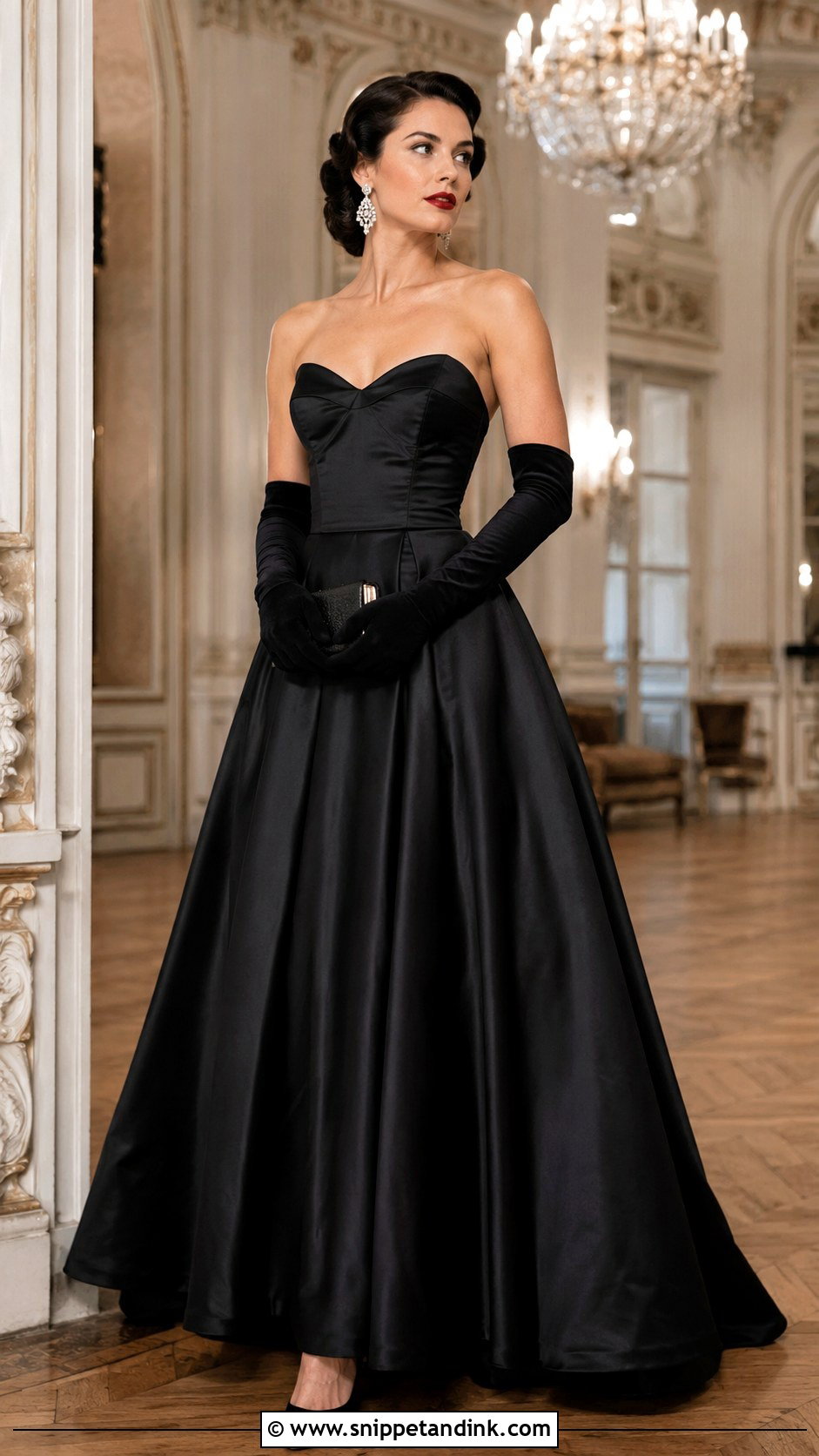
Black satin is pure forties cinema, and it is also the least forgiving fabric on this list. Satin shows every pull at a seam, so the bodice with its lightly structured shoulders has to be fitted properly, with the skirt falling close over the hips and flaring only near the hem. A sweetheart or modest V-neck keeps it of the period. I’d add black peep-toe pumps, sheer stockings, a compact satin clutch, crystal drops near the face and elbow gloves. Smooth side-parted waves or a neat rolled updo for hair. A narrow rhinestone belt is the one extra I allow; the shine of the satin should stay the loudest thing about it.
2. Burgundy Velvet 1940s Ball Gown
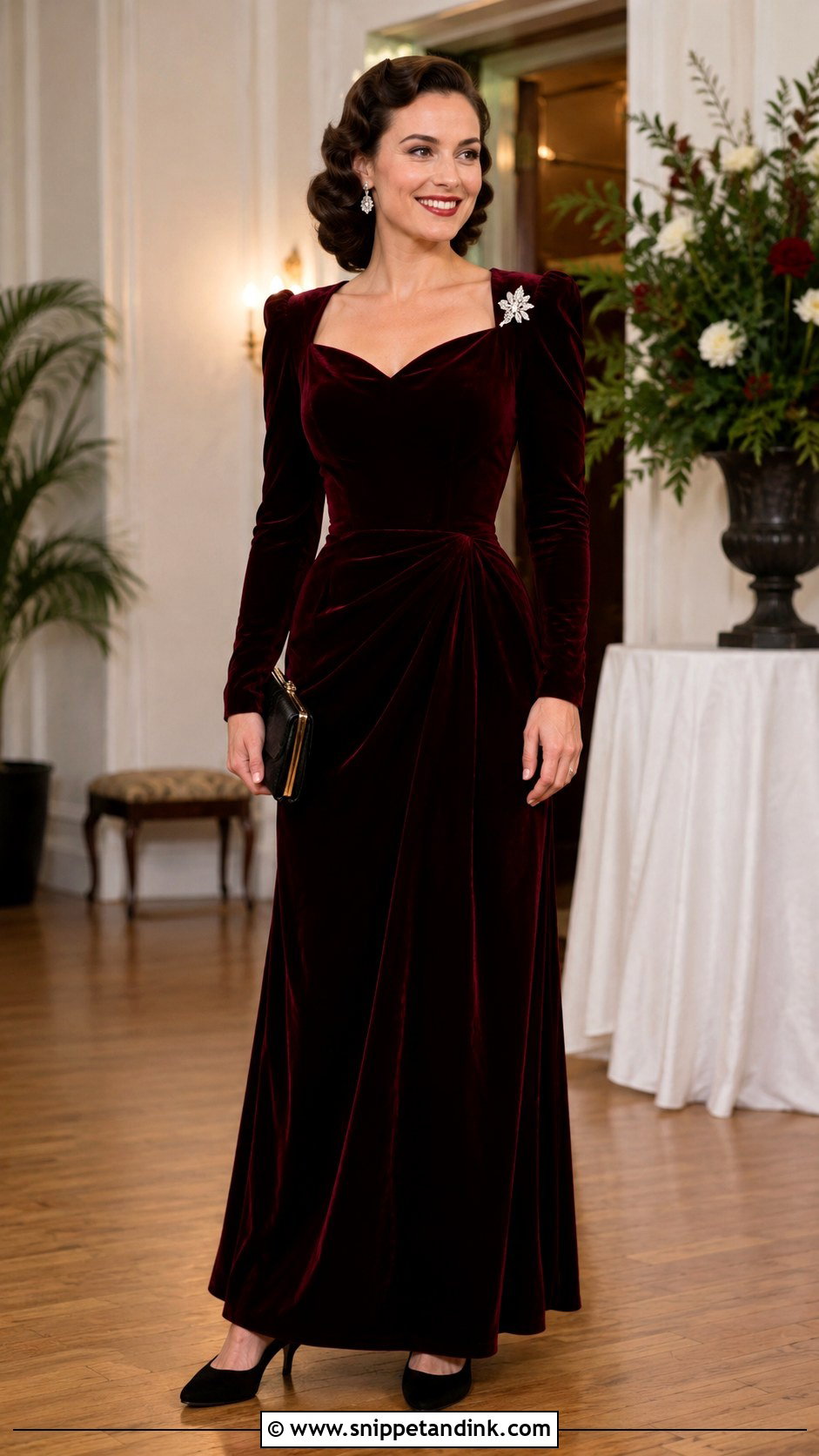
Burgundy velvet is the gown I’d put a winter bride in. Look for a fitted waist, long tapered sleeves and a softly gathered floor-length skirt, with a shallow sweetheart or square neck to balance the weight of the cloth. Velvet has a nap that reflects light differently depending on which way it’s brushed, so a good maker cuts every panel in the same direction or the skirt looks two-toned in photographs. Black suede pumps, a structured black clutch, short crystal earrings and a vintage brooch at the shoulder are enough. Hair goes into a low roll or polished victory rolls, and black or burgundy gloves finish it. Velvet already has depth, so resist beading it.
3. Emerald Green 1940s Ball Gown
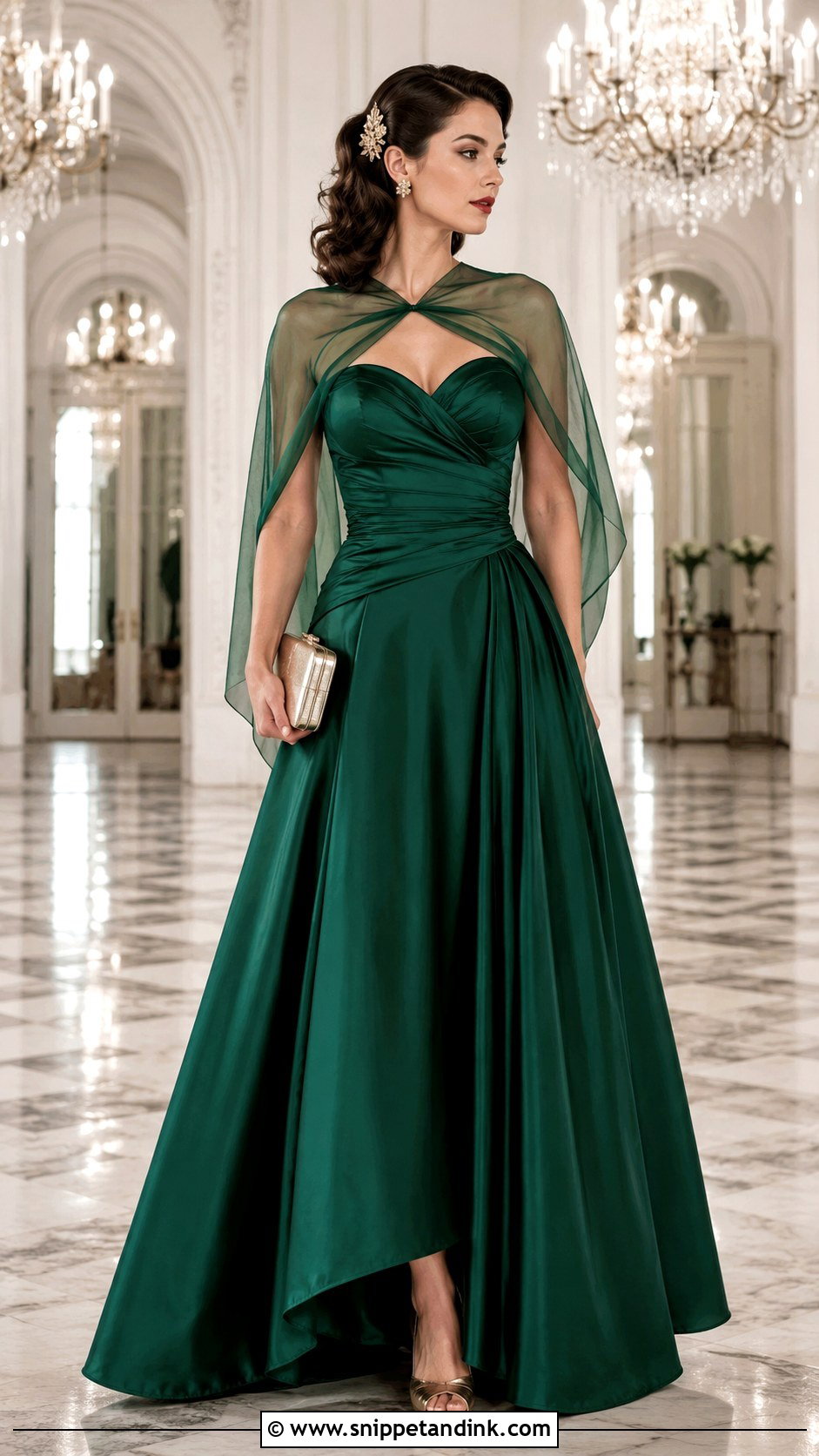
Emerald holds its color under almost any light, which is why it reads so well at an evening reception. Choose a satin or crepe bodice with soft ruching across the waist and a sweeping floor-length skirt; short sleeves or a gently draped neckline soften the shoulders. Gold peep-toe pumps, a small metallic box clutch and plain gold earrings suit the green, and a matching comb can hold a rolled updo with a little sparkle. A sheer capelet just below the shoulders gives coverage for a church ceremony. Keep the makeup in period: groomed brows, a fine flick of liner and a red lip.
4. Navy Blue 1940s Ball Gown
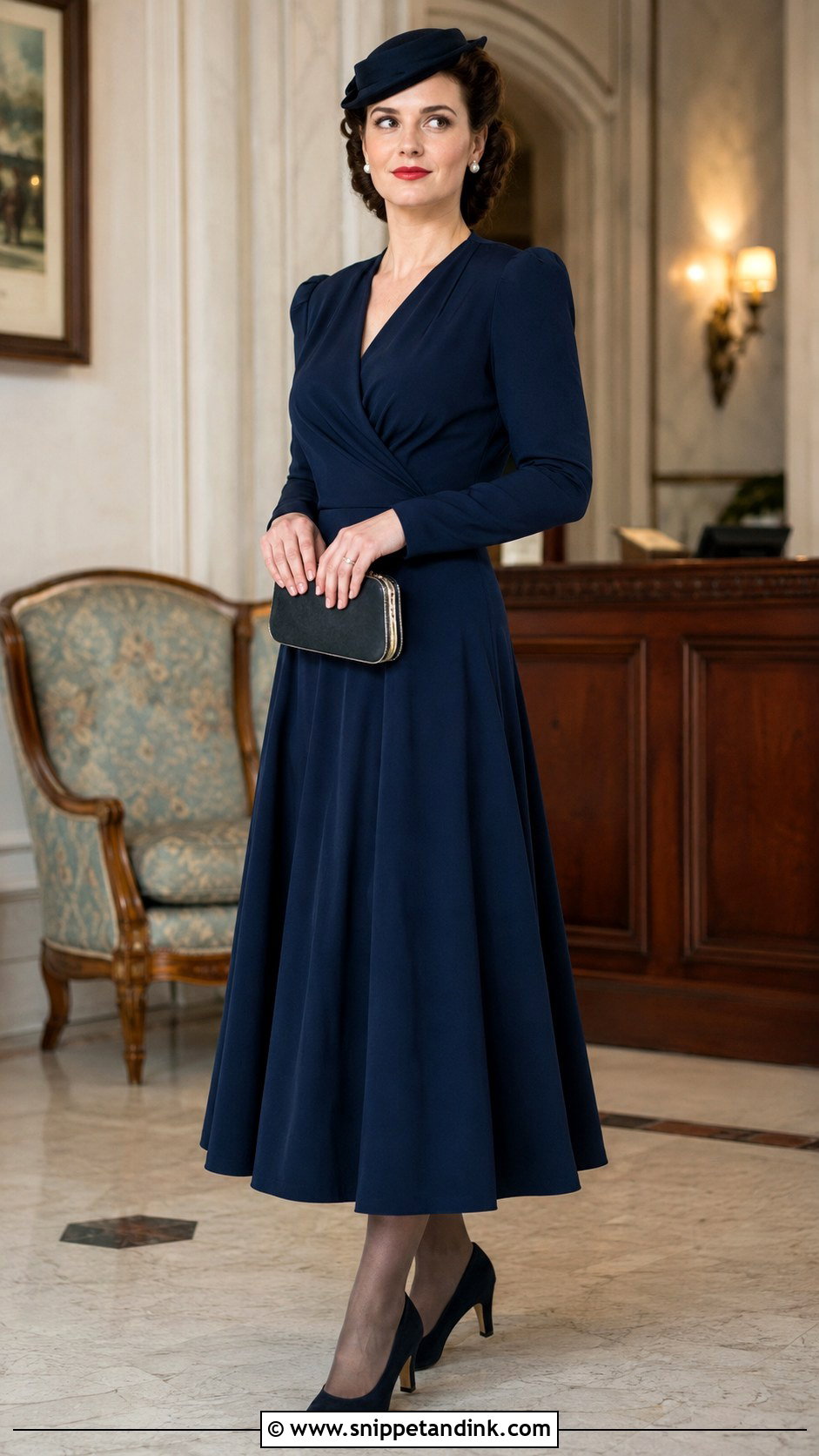
Navy is what I suggest when a bride adores black but won’t wear it to her own wedding. A crepe gown with a fitted bodice, lightly padded shoulders and a slightly flared skirt reflects the streamlined early-decade line. Shoulder pads are worth a fitting conversation, actually: forties pads were bigger than anything modern, and an inch too wide makes a small frame look boxy. A V-neck with gathers or a brooch at the center, navy pumps, sheer stockings and a silver-framed clutch keep it coordinated. Pearl earrings and a narrow bracelet add restrained shine. A small tilt hat suits a daytime wedding; for evening I’d swap it for a sculpted updo, red lipstick and neatly shaped nails.
5. Red Sweetheart 1940s Ball Gown
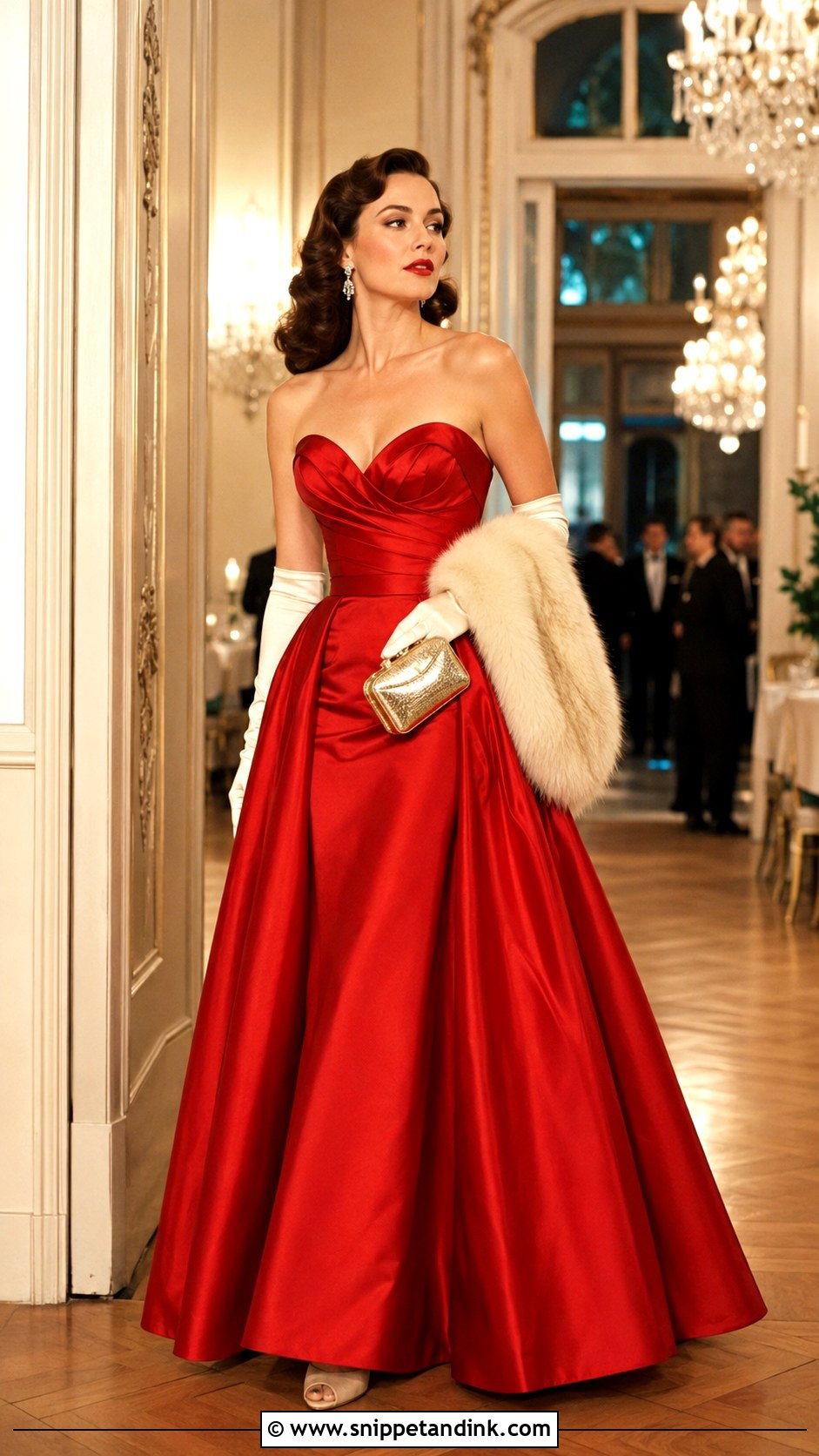
Few outfits say screen star faster than a red 1940s ball gown with a sweetheart neckline. Choose a structured bodice that sits at the natural waist and a long skirt with controlled fullness, not an oversized modern shape. Satin, rayon crepe or taffeta all give the right mix of movement and body. Neutral peep-toe pumps lengthen the leg, and a small red or gold clutch, sparkling studs and elbow gloves do the rest. A faux-fur wrap covers the shoulders on a cold night. Set the hair in side-swept waves with one side pinned neatly behind the ear. One practical note on red: match your lipstick to the gown in daylight, not under a shop’s yellow lighting, because a lipstick that looks right indoors can clash outside.
6. Ivory Taffeta 1940s Ball Gown
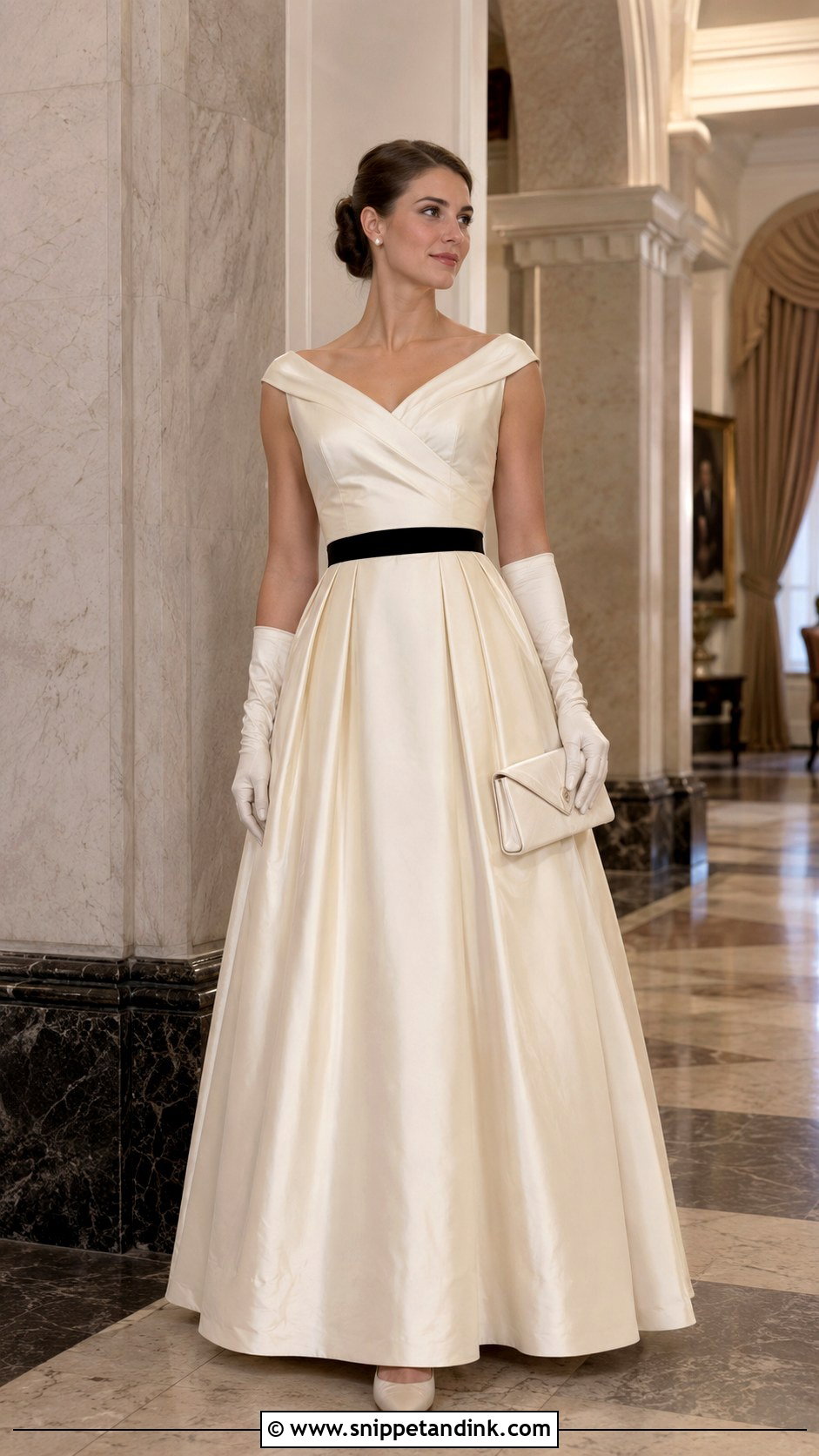
Crisp ivory taffeta is the fabric for the fuller late-forties shape. After years of fabric-conscious wartime dressing, the New Look made a sharply defined waist and a generous skirt fashionable again, and taffeta holds that volume better than anything softer. Build it around a fitted bodice, softly sloped shoulders and a floor-length skirt over a light petticoat. Taffeta creases sharply where you sit, though, so I steam it on site and plan the seated portraits for after the formal ones. Ivory pumps, wrist gloves, a satin envelope clutch, pearl drops and a delicate necklace finish it. A chignon or curled updo keeps the neckline clear, and a narrow velvet waistband in black or emerald pulls in the hourglass.
7. Floral Tulle 1940s Ball Gown
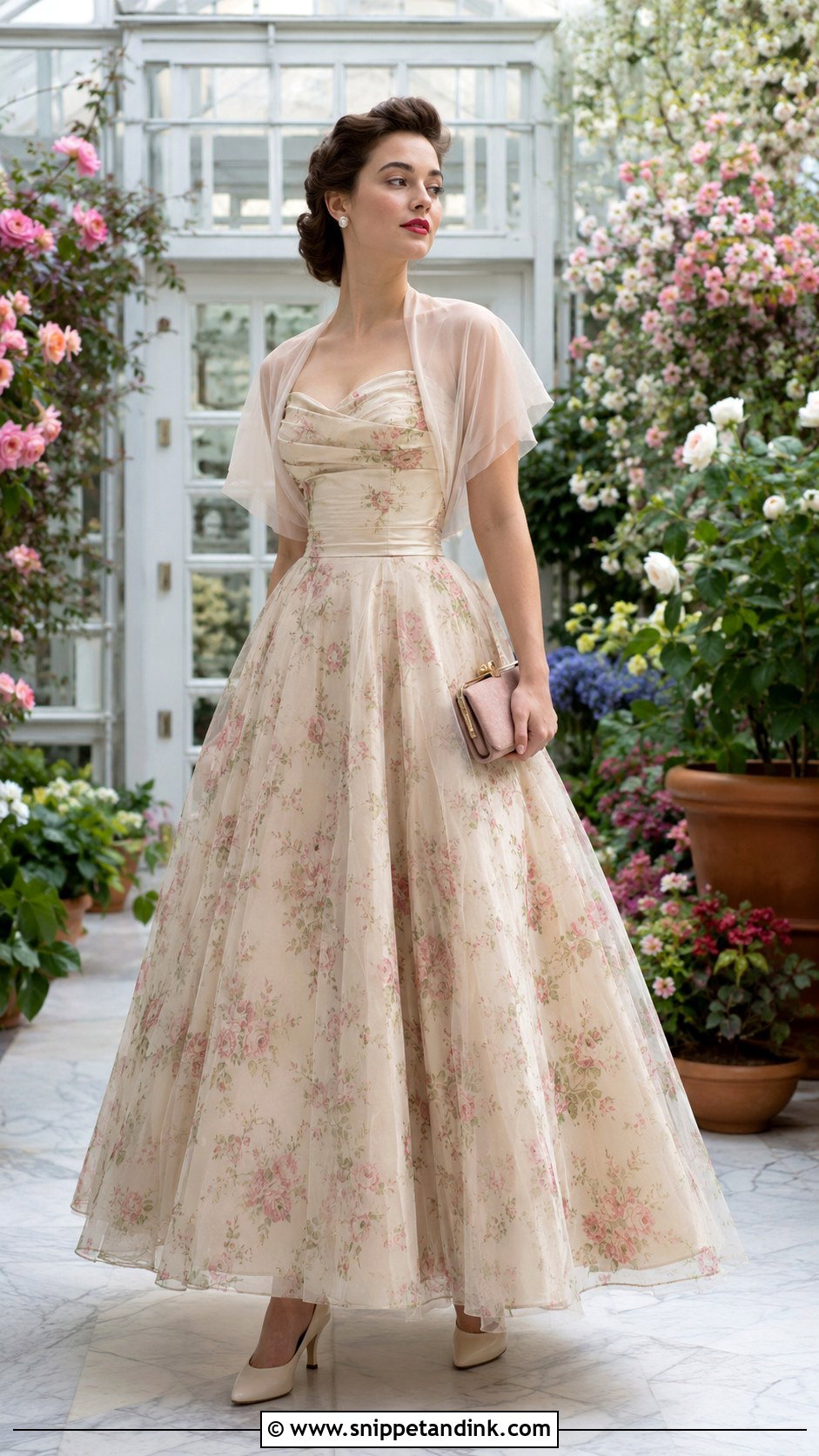
Floral tulle is a late-forties romance piece: a fitted underdress layered with fine printed tulle and a full skirt that skims the ankle or reaches the floor. Small roses and scattered leaves look period. Oversized digital prints don’t, and they are the giveaway on most modern copies. Pick closed-toe pumps in blush or a shade lifted straight from the print, a small satin clutch and pearl studs or a tiny floral brooch. A short tulle wrap covers the arms without weighing anything down. Soft rolls in the hair with a few small fabric flowers at the back are plenty. Printed tulle snags on bracelets and beaded bags, so I’d keep both smooth. It suits a spring evening best.
8. Gold Lamé 1940s Ball Gown
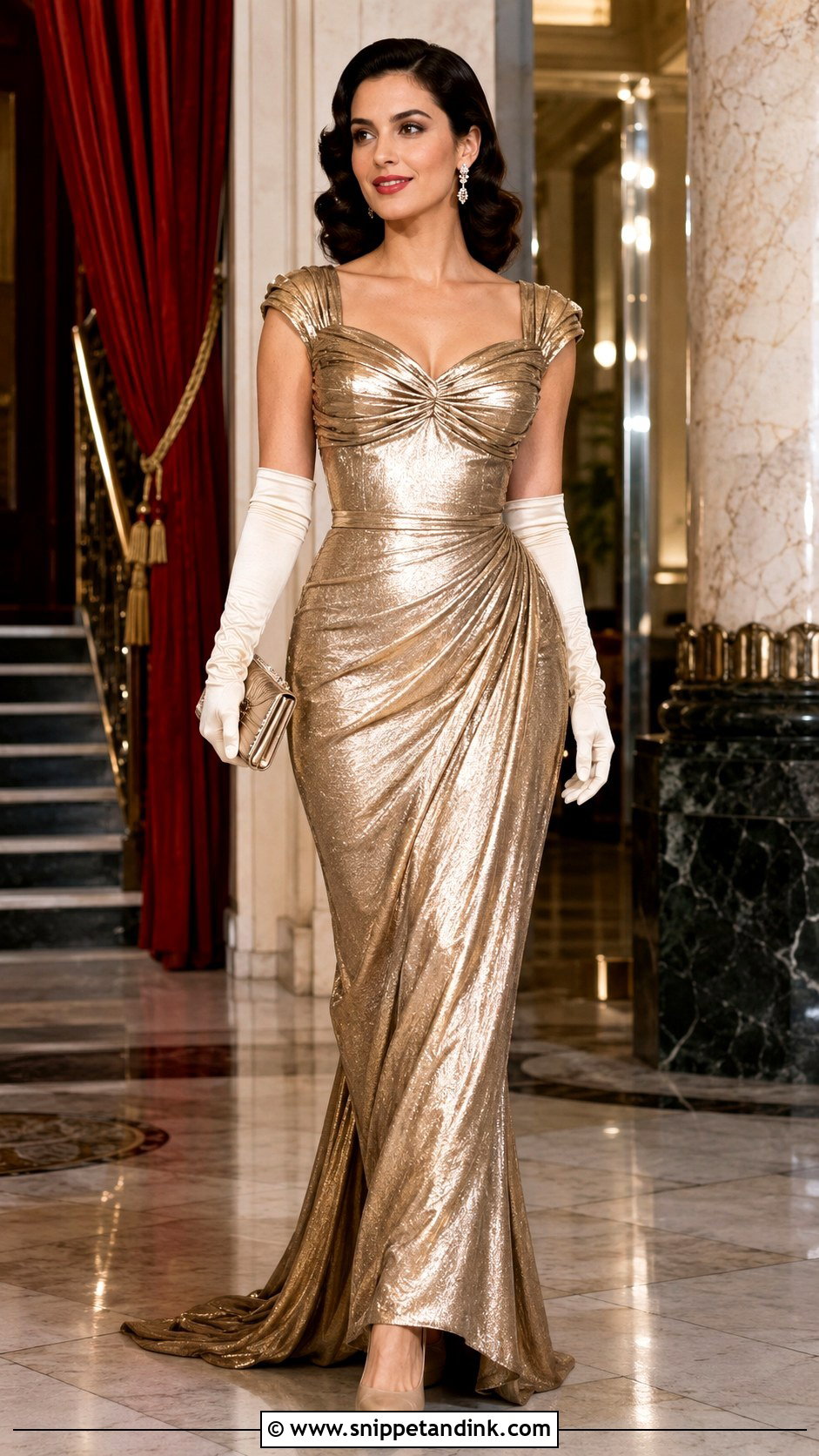
Gold lamé is Hollywood at full volume. A floor-length gown with a gathered bodice, a defined waist and a slim skirt opening into a small train is the classic line, and diagonal draping keeps the metallic cloth fluid instead of stiff. Lamé is scratchy on bare inner arms and marks easily if it rubs, so check the seam finishes inside the bodice before you buy. Gold or neutral platform pumps, a compact metallic clutch and understated crystal earrings are enough; skip the necklace if the neckline already has folds. Long cream gloves break up the gold, and polished waves with a red lip finish it. Because lamé catches light from every angle, the plainer the silhouette, the less it looks like costume.
9. Blue Off-Shoulder 1940s Ball Gown
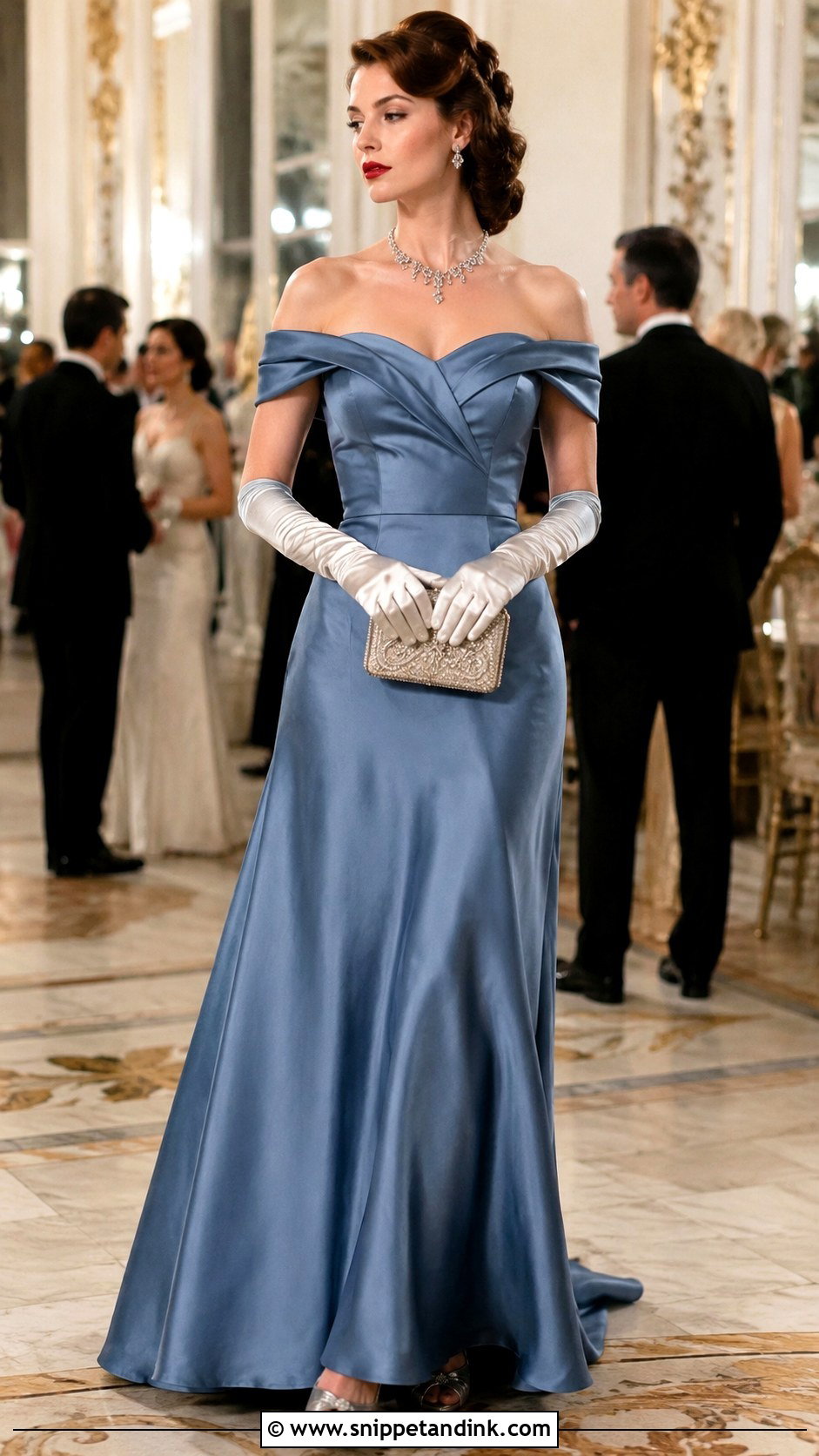
An off-shoulder gown in blue shows the softer, romantic turn evening fashion took at the end of the decade. The bodice is fitted, with folded satin draped across the upper arms, and the skirt flares gradually from a narrow waistband. That shoulder drape is lovely and also restrictive: you can’t lift your arms far, so try hugging and raising a glass at the fitting. Silver peep-toe pumps, a beaded clutch and a short crystal necklace that follows the open neckline suit it, with long gloves in blue or pale grey. Wear the hair up so the drape stays visible. Cool-toned makeup, defined lashes and a berry lip keep the face from fighting the color.
10. Pink New Look 1940s Ball Gown
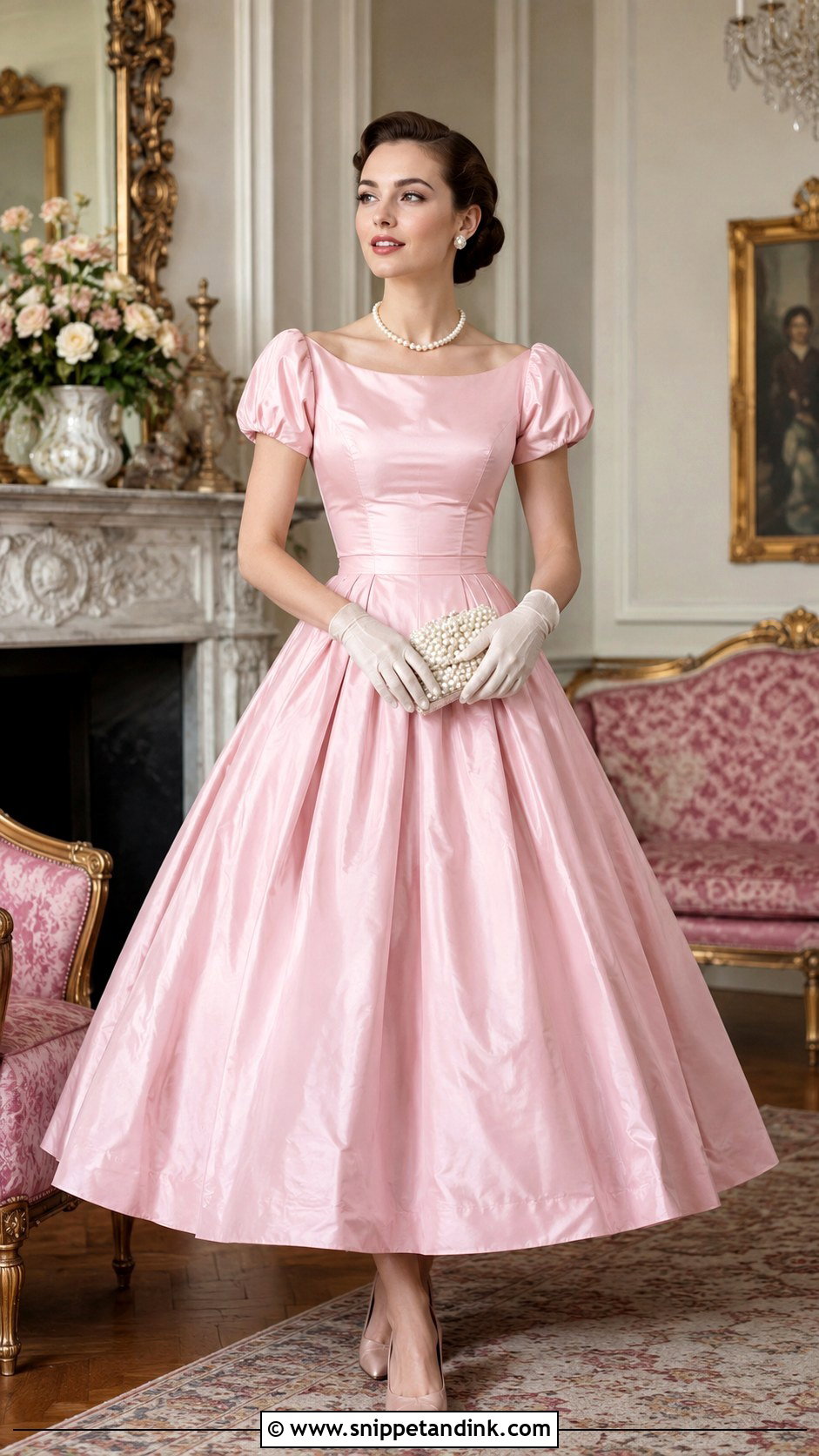
Pink is the softest way into the New Look. It needs a rounded bodice, a sharply fitted waist and a full skirt built from generous layers of taffeta or satin. The hem can stop at the ankle so you can move freely, or sweep the floor for full formality. The volume should come from a petticoat rather than stiffened fabric; a skirt that stands up on its own looks rigid when you walk. Blush pumps, pale gloves, a small pearl-trimmed clutch and a single strand of pearls with matching earrings complete it. Set the hair in a sculpted updo with short curls at the temples. That waist is the whole look, so it should be fitted on a day you’ll be wearing the same underwear as the wedding.
11. White Cape Sleeve 1940s Ball Gown
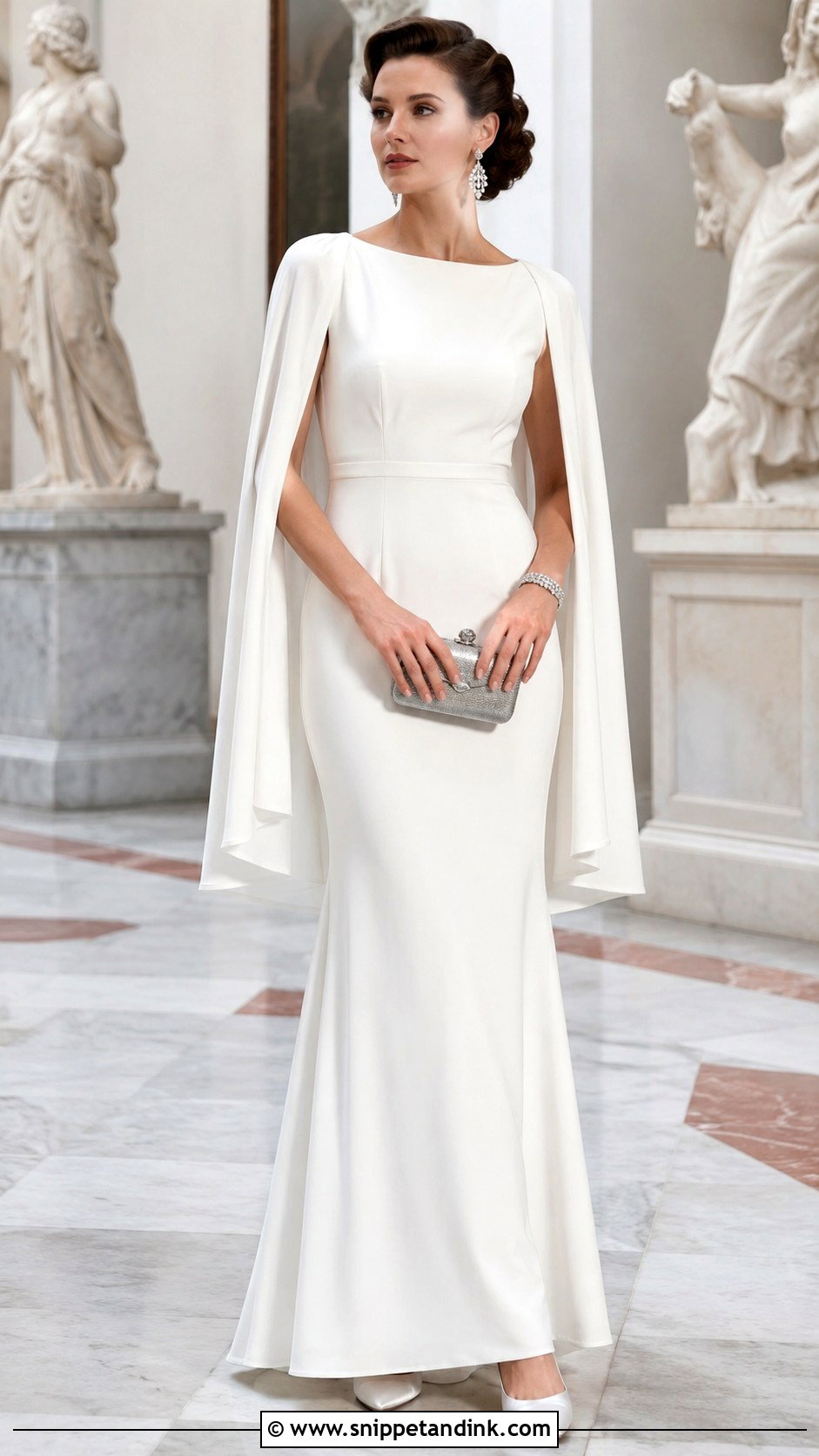
Cape sleeves bring movement to a simple white crepe gown with a natural waist and a slightly flared skirt. The panels fall from the shoulder to the elbow or wrist and swing as you walk, which looks wonderful coming down an aisle. They also catch on everything, from door handles to a groom’s cufflinks, so I ask the maker to tack them lightly at the underarm. White satin pumps, a silver clasp clutch, crystal earrings, a slim bracelet and a decorative comb keep the palette clean. A side-parted rolled hairstyle sits neatly above the cape without adding bulk. Carry small white roses as a bride; for another formal occasion, swap them for wrist gloves.
12. Purple Draped 1940s Ball Gown
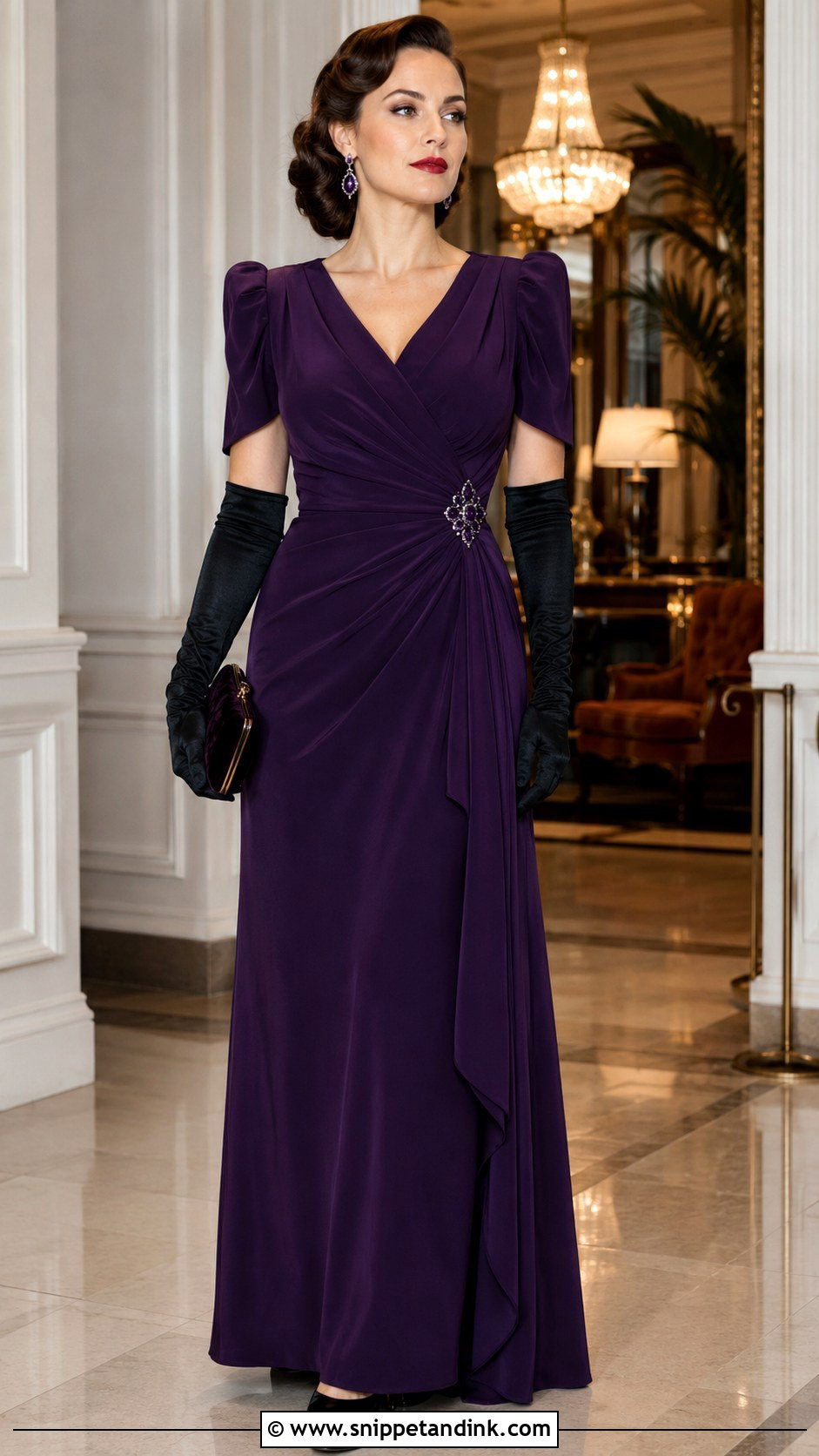
Deep purple crepe drapes better than almost any other color in my experience, because the folds show as shadow rather than flattening out. Look for diagonal gathers on the bodice that meet at the waist and run into a long skirt with a soft side drape, held by a small covered buckle or jeweled clip. Black platform pumps, a structured velvet clutch and amethyst-toned earrings suit it, and black elbow gloves make the purple look richer. A side part, smooth crown and rolled sections at the back keep the hair controlled. The fitted shoulder nods to the early decade while the long skirt keeps it formal. Choose it over a beaded gown if you prefer drama that comes from cut.
13. Black And White 1940s Ball Gown
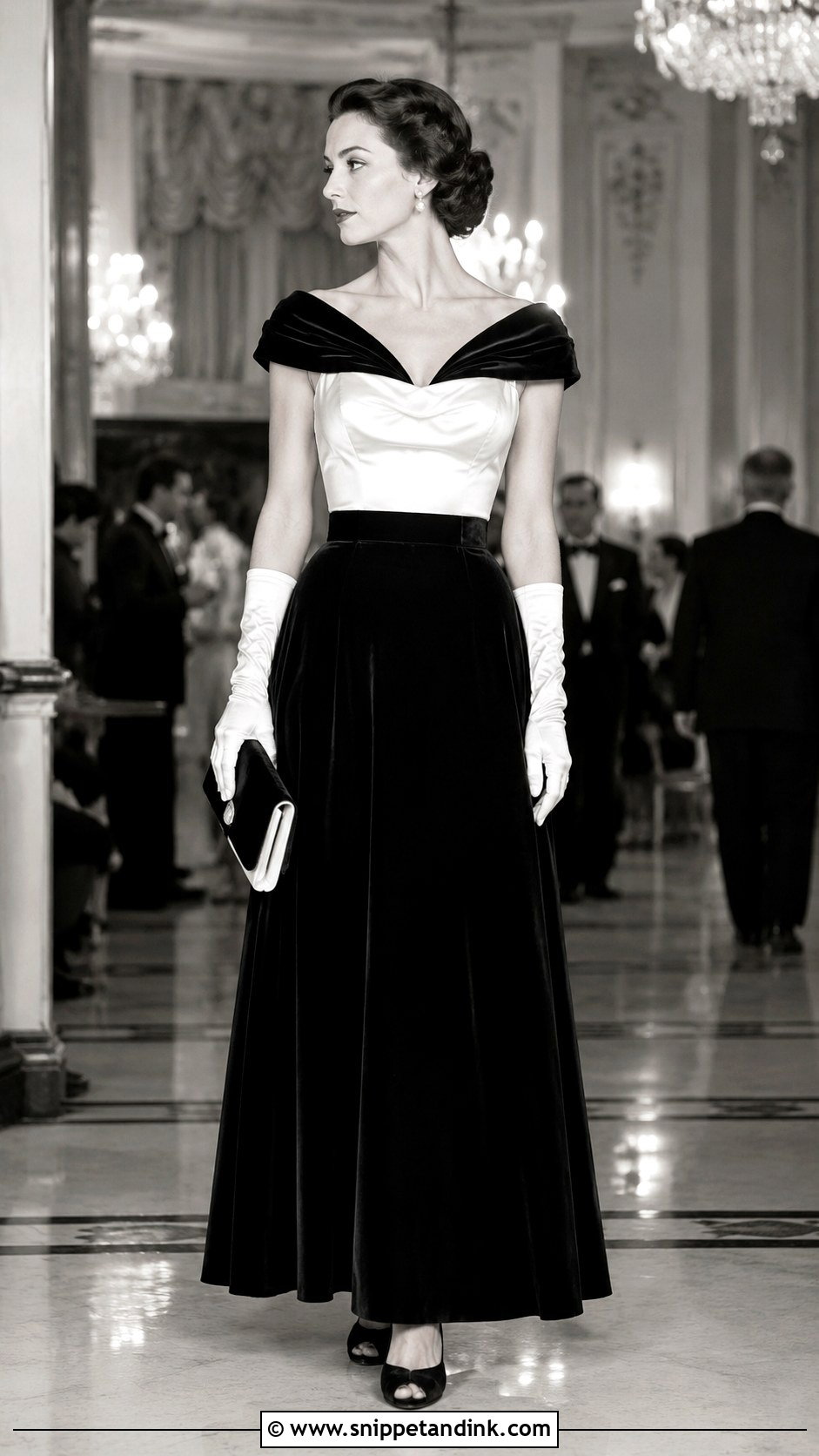
Black and white leaves nowhere to hide. Either pair a black floor-length skirt with a fitted white satin bodice, or wear white with black velvet draped over the shoulders and a matching waistband. Keep it of the decade with a defined natural waist and either structured shoulders or a rounded late-forties neckline. Black peep-toe pumps, wrist gloves, a small monochrome clutch, pearl earrings and a crystal brooch at the waist or shoulder finish the look, with smooth film-star waves and a red lip. With only two colors, every seam and every wobble in the waistband shows, so this is the one I’d spend the most money on in tailoring. Also check that the black and white don’t bleed if they get wet.
14. Sequin 1940s Ball Gown
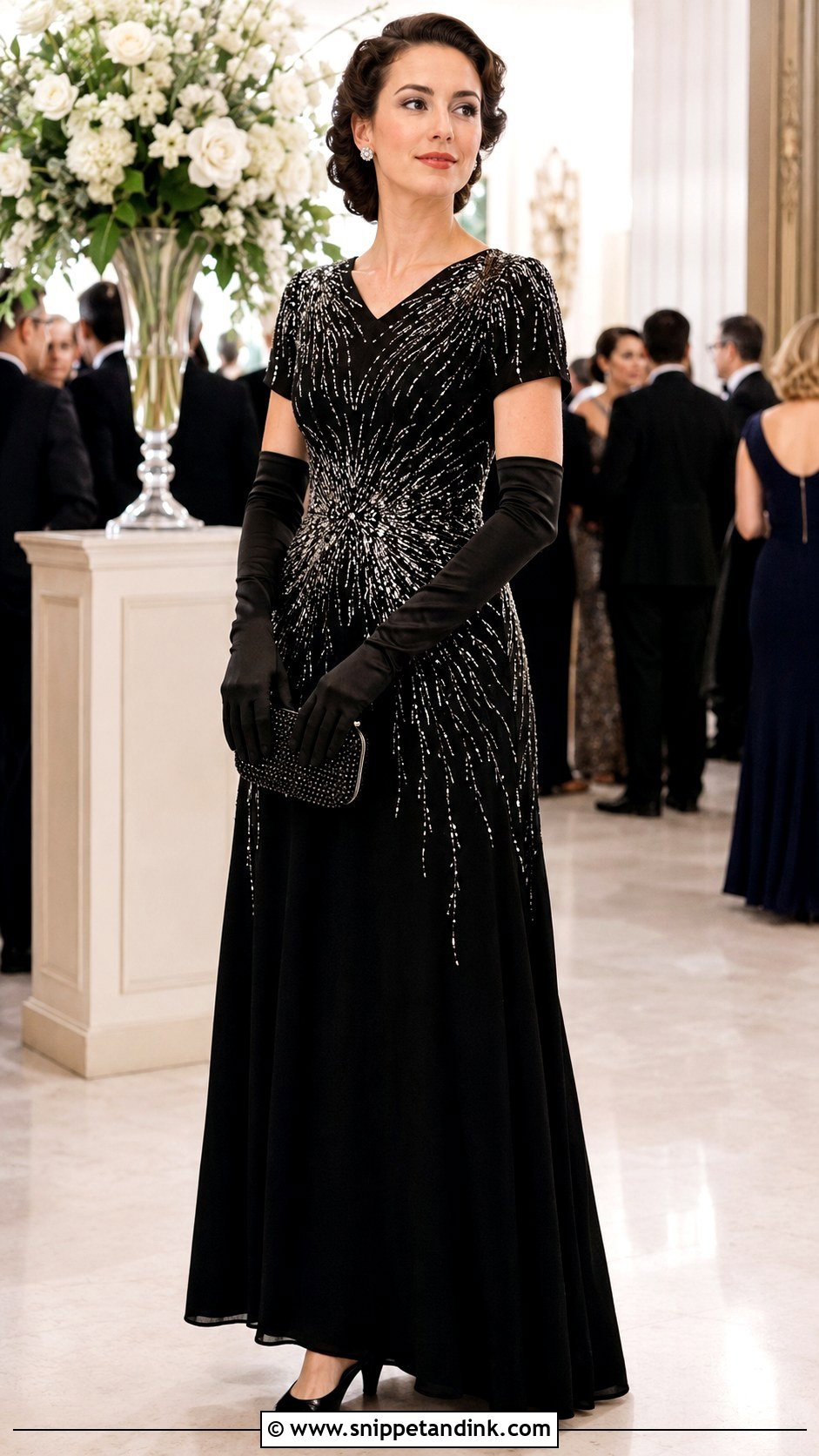
Sequins in the forties were placed, not scattered. A fitted crepe gown with sequins concentrated at the neckline, sleeves or upper bodice gives period sparkle, and the floor-length skirt stays plain so it drapes and balances the top. Heavy sequinned bodices pull downward on crepe over a long evening, so the maker should back that area with a firmer fabric. Satin pumps, a compact beaded clutch and simple studs keep it calm; long gloves are optional but make a short sleeve feel more formal. A high rolled updo or polished side waves both work. Pick one strong makeup feature, usually a deep red lip, and keep the rest soft so the sequins can catch the light on their own.
15. Peplum 1940s Ball Gown
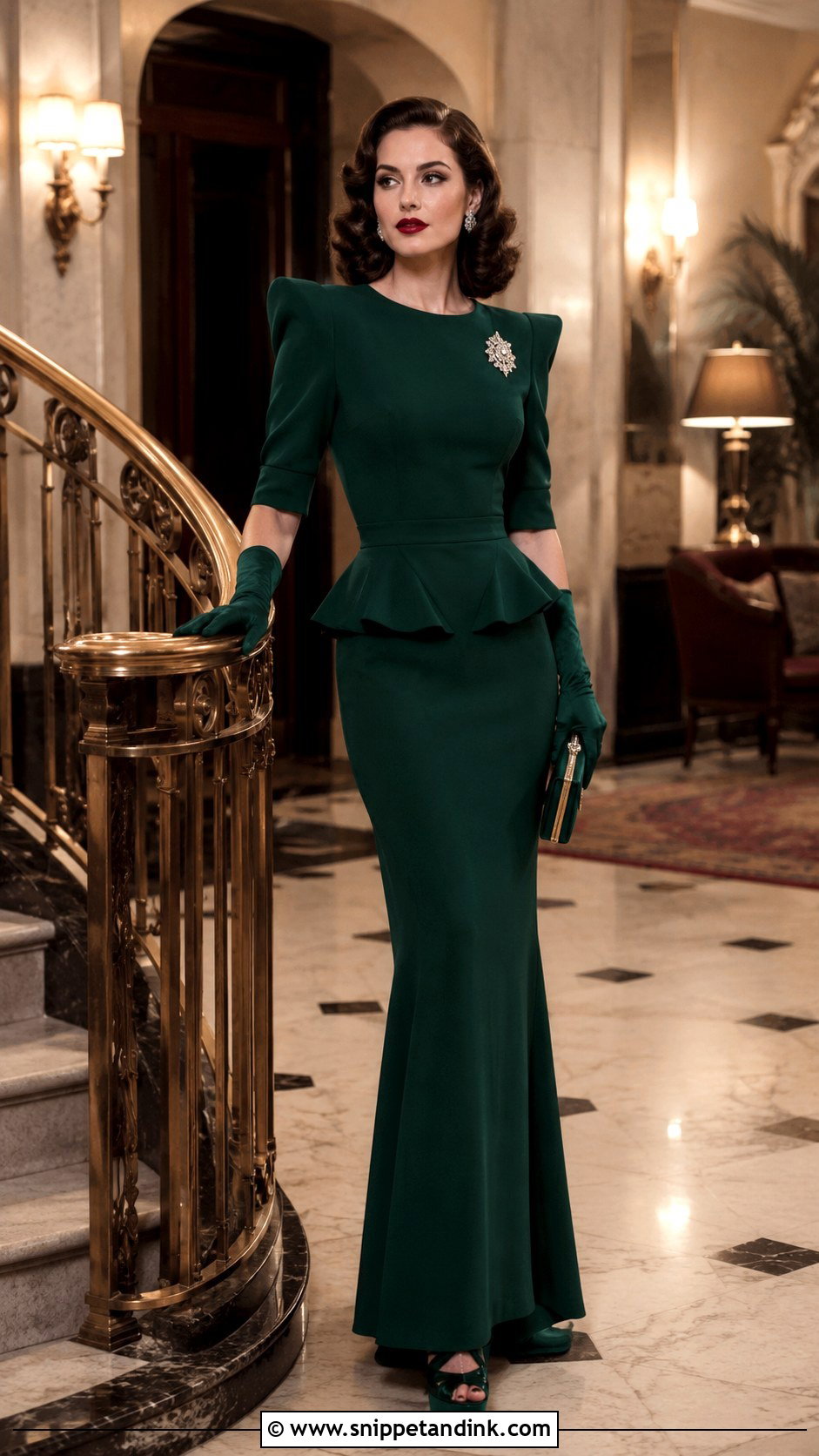
The peplum is one of the decade’s most recognizable tailored shapes: a fitted bodice with defined shoulders, a narrow waist and a short flounce over a slim floor-length skirt. Black, navy or forest green crepe shows the construction cleanly. The rule I hold to is that the peplum must end above the widest part of the hip; let it fall lower and it adds width exactly where most of us don’t want it. Coordinating platform pumps, a rigid frame clutch, a rhinestone brooch at the neckline, small earrings and wrist gloves suit the tailored mood, with a neat rolled hairstyle and red lipstick. It carries the authority of wartime tailoring into a ballroom.
16. Silver Embroidered 1940s Ball Gown
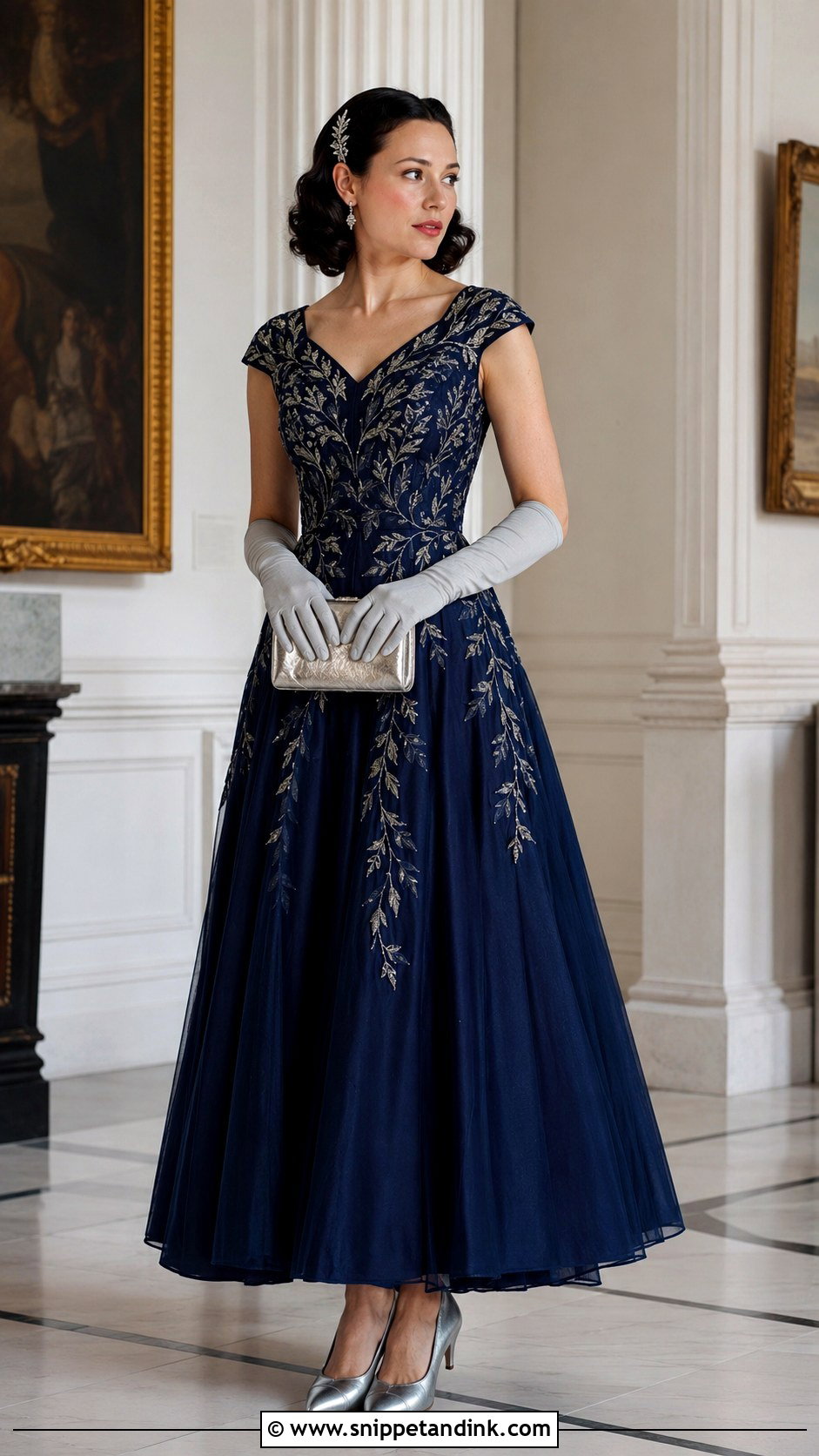
Silver embroidery brings fine detail to a gown without needing a big skirt. Start with a grey or midnight-blue satin or smooth crepe, then work silver thread across the bodice, around the neckline or as scattered botanical sprigs down the skirt. Silver pumps, a slim metallic clutch, clear crystal earrings and pale grey gloves continue the cool palette, and one small silver comb is enough in a smooth updo. Embroidery, sequins and a big necklace all at once compete with each other, so choose one. Metallic thread can scratch the inside of the arms and catch on lace, which is worth checking before anything gets layered over it.
17. Satin Bow 1940s Ball Gown
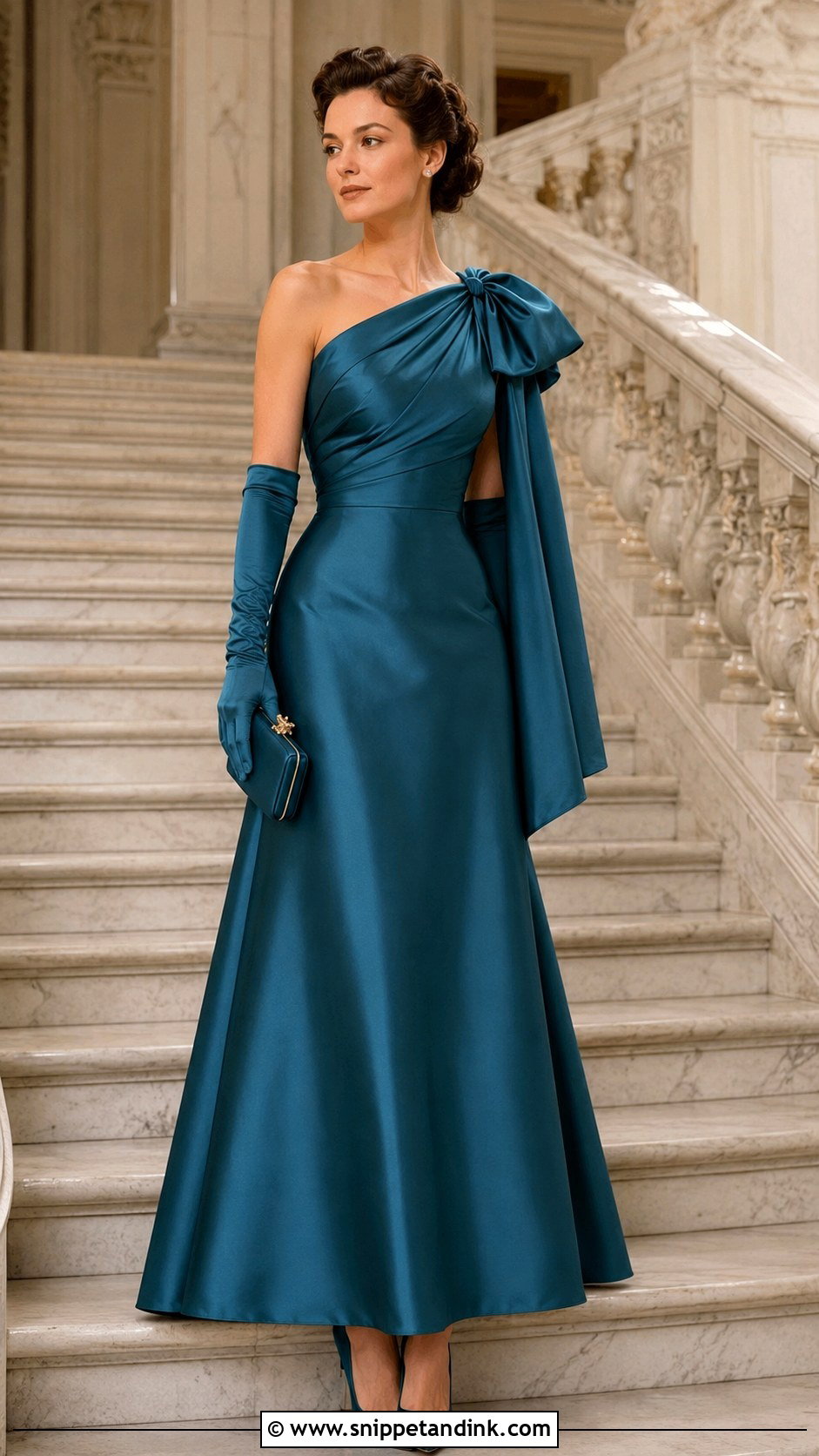
A big satin bow can turn a streamlined gown into the thing guests remember. I place it at one shoulder, across the neckline or just off-center at the waist rather than at the back, where you’ll sit on it all evening. Late-forties evening dress often used shoulder drapery tied into an asymmetric bow, and that offset placement is what makes it look of the period. A fitted bodice and a gently flared floor-length skirt give the bow a clean foundation. Matching pumps, a small clutch and minimal earrings are enough; skip the necklace so the bow stays visible. Ask for the bow to be interfaced or it will droop by the speeches. An elegant updo and long gloves finish it.
18. Princess 1940s Ball Gown
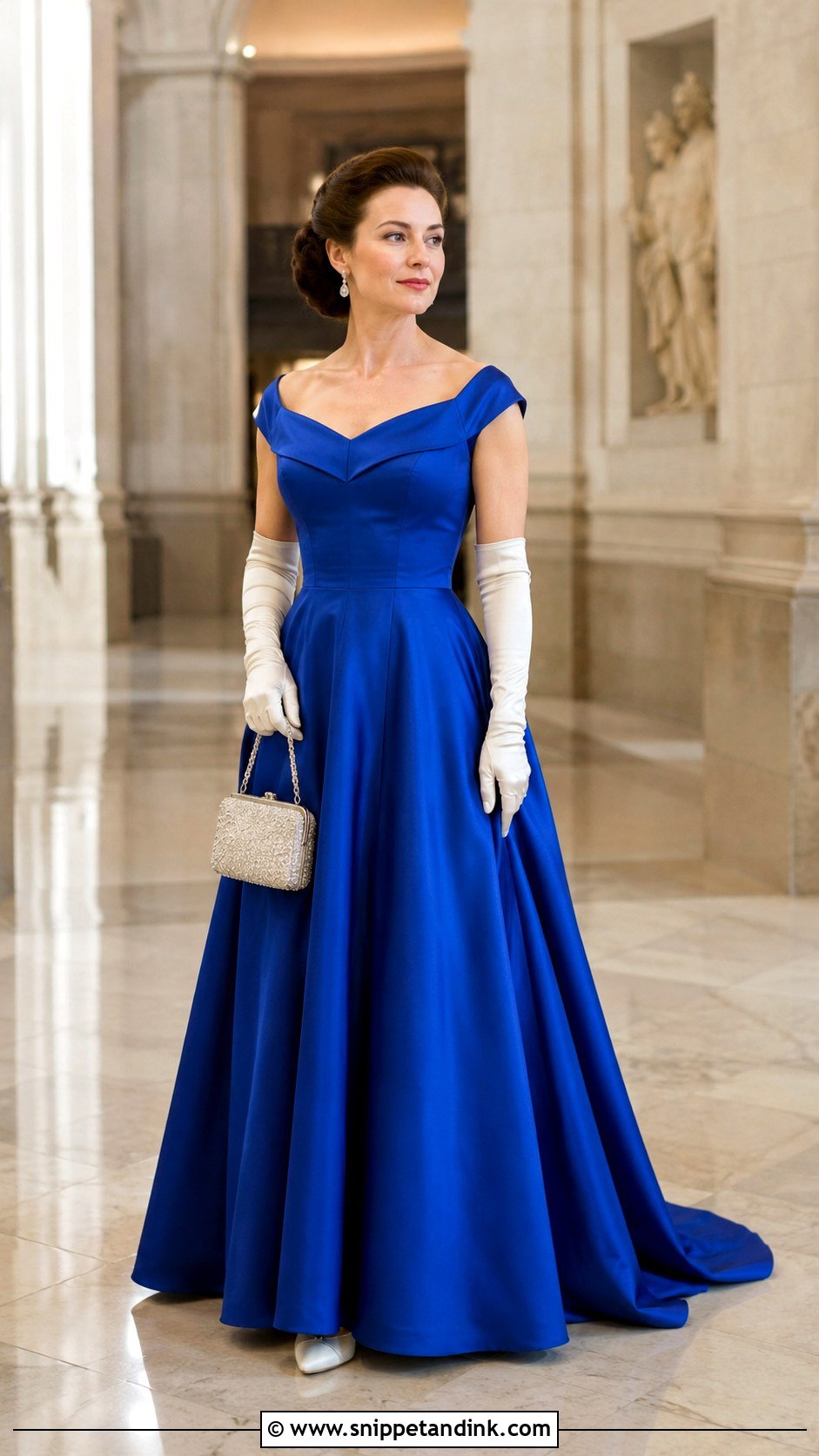
Princess seams run in one unbroken line from the bodice to the hem, so the gown looks long and smooth without heavy skirt volume. The waist should still read as defined, even with no separate waistband. Satin, faille or a substantial crepe holds those seams; a thin fabric shows every stitch. Closed-toe pumps, a small beaded bag and elbow gloves suit the line. Choose a short necklace for a wide neckline or drop earrings for a high one. A soft rolled crown or a sleek low updo works with both. A modest train adds drama, but have a bustle loop sewn in if you plan to dance. Princess seams are also the easiest to alter if your weight shifts before the wedding.
19. Basque Waist 1940s Ball Gown
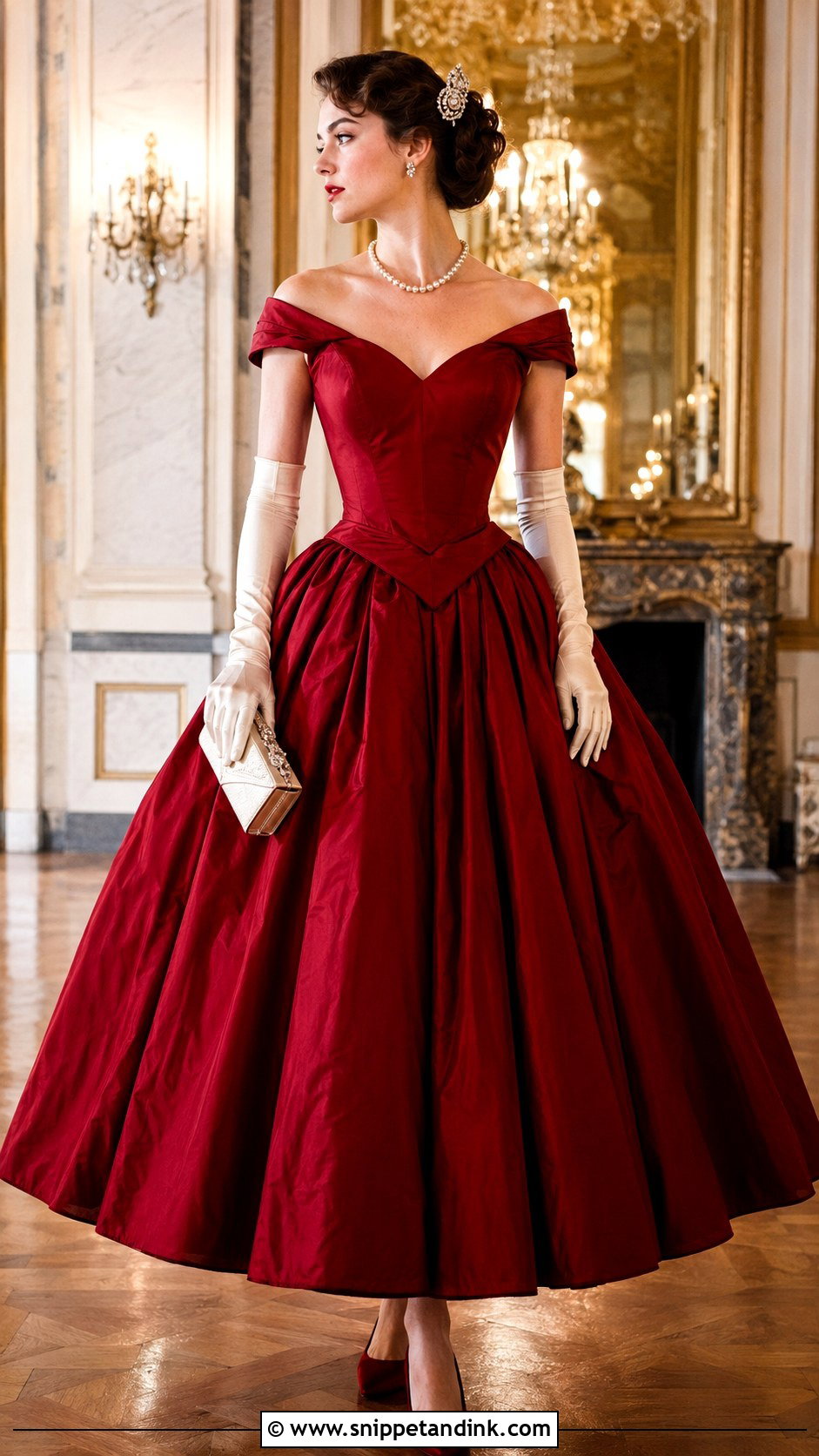
A basque waist drops below the natural waistline in a shallow V and runs smoothly into a full skirt, which gives a late-forties gown real hourglass sculpting. Satin or taffeta in ruby, midnight blue or deep green suits it best. The upper body stays fitted with rounded shoulders and a sweetheart neckline, and a soft petticoat supports the skirt. Matching pumps, a structured clutch, long gloves in a neutral, a short strand of pearls for an open neckline and a jeweled comb in the updo complete it. Fit makes or breaks this one. The point of the V has to lie flat when you sit as well as stand, so do a seated test at every fitting.
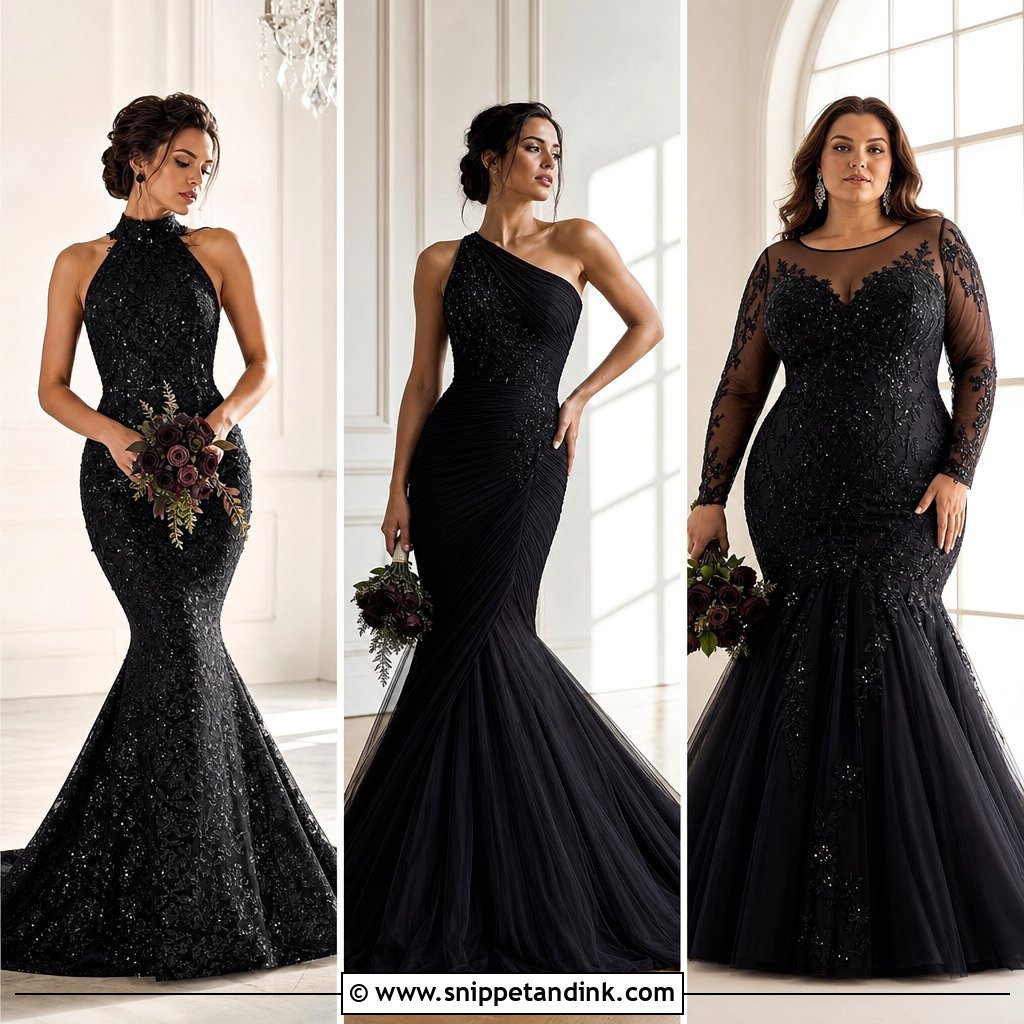
20. Plus Size 1940s Ball Gown
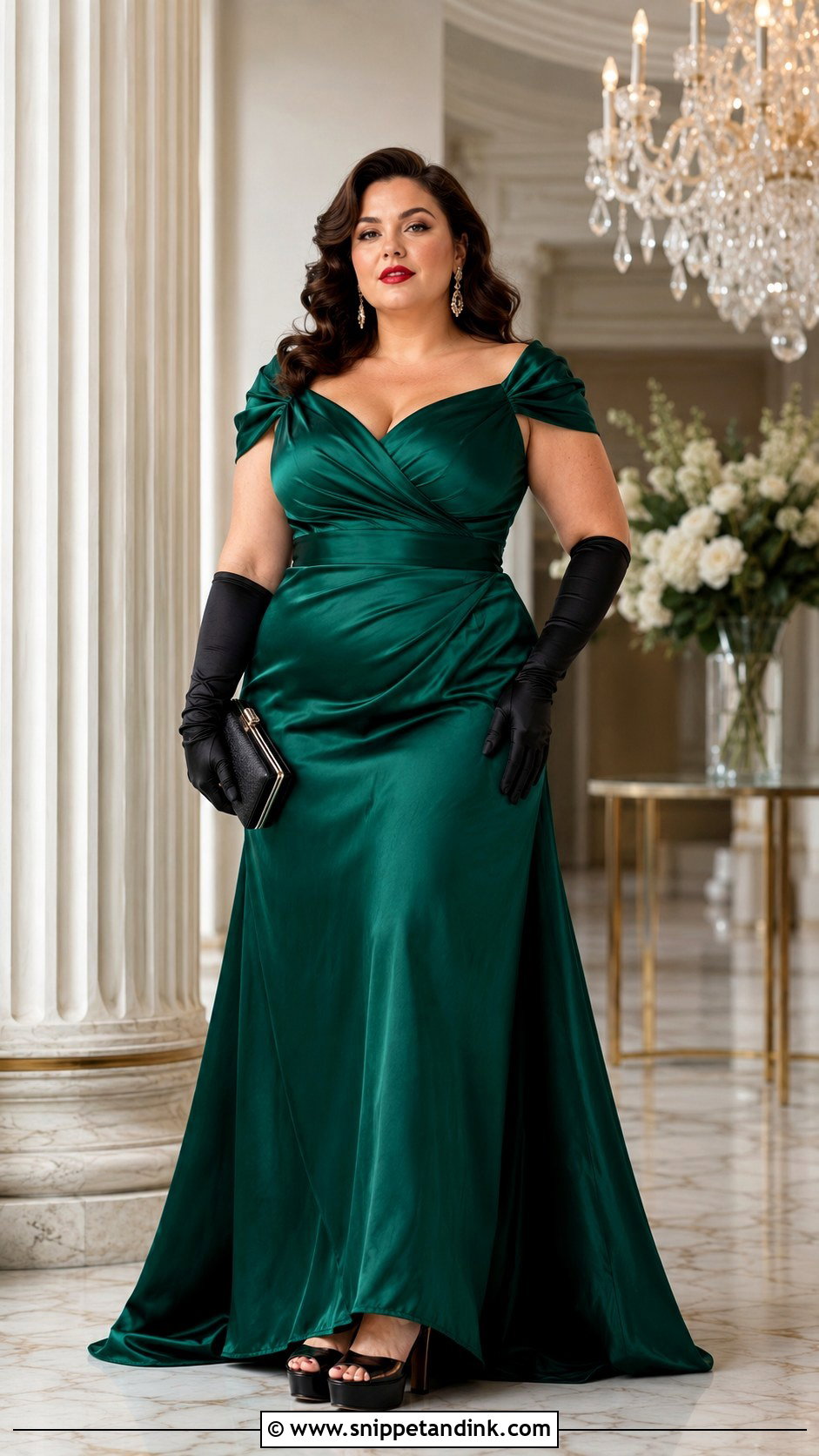
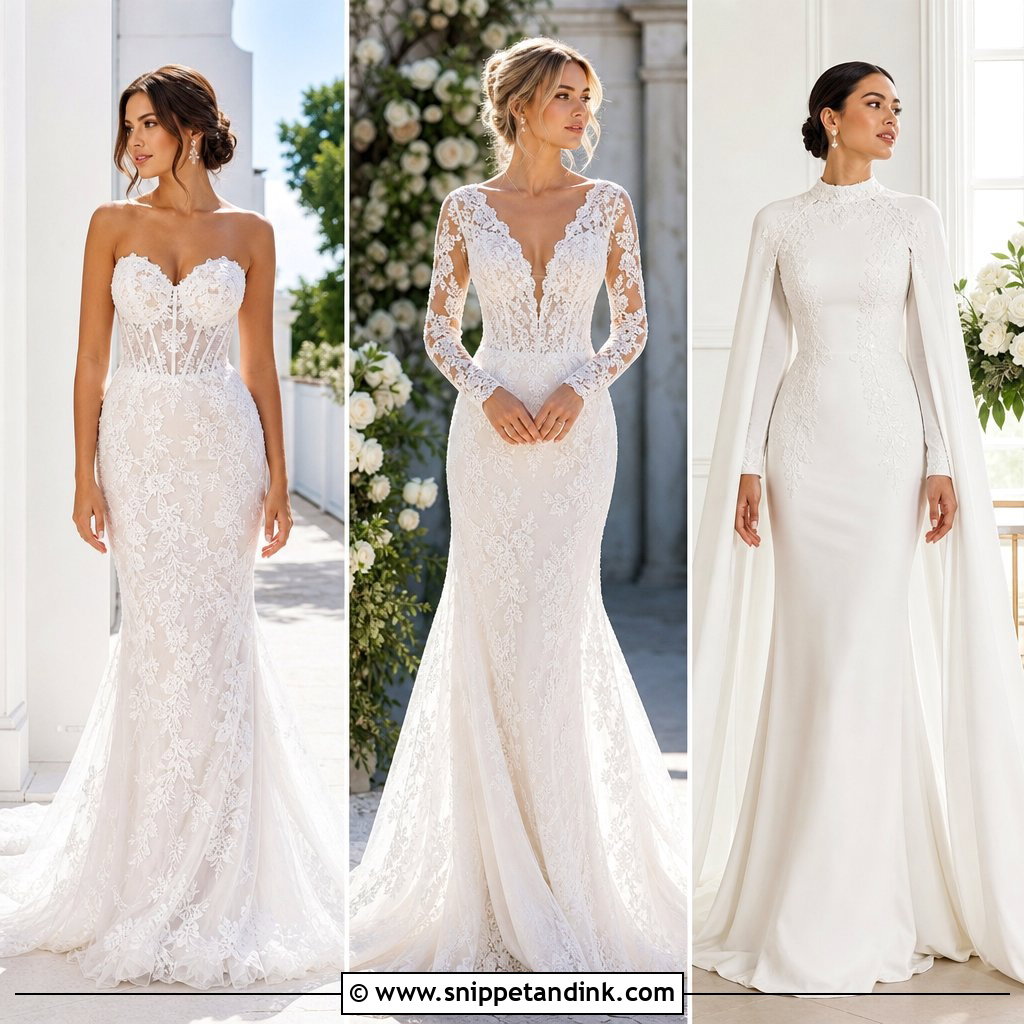
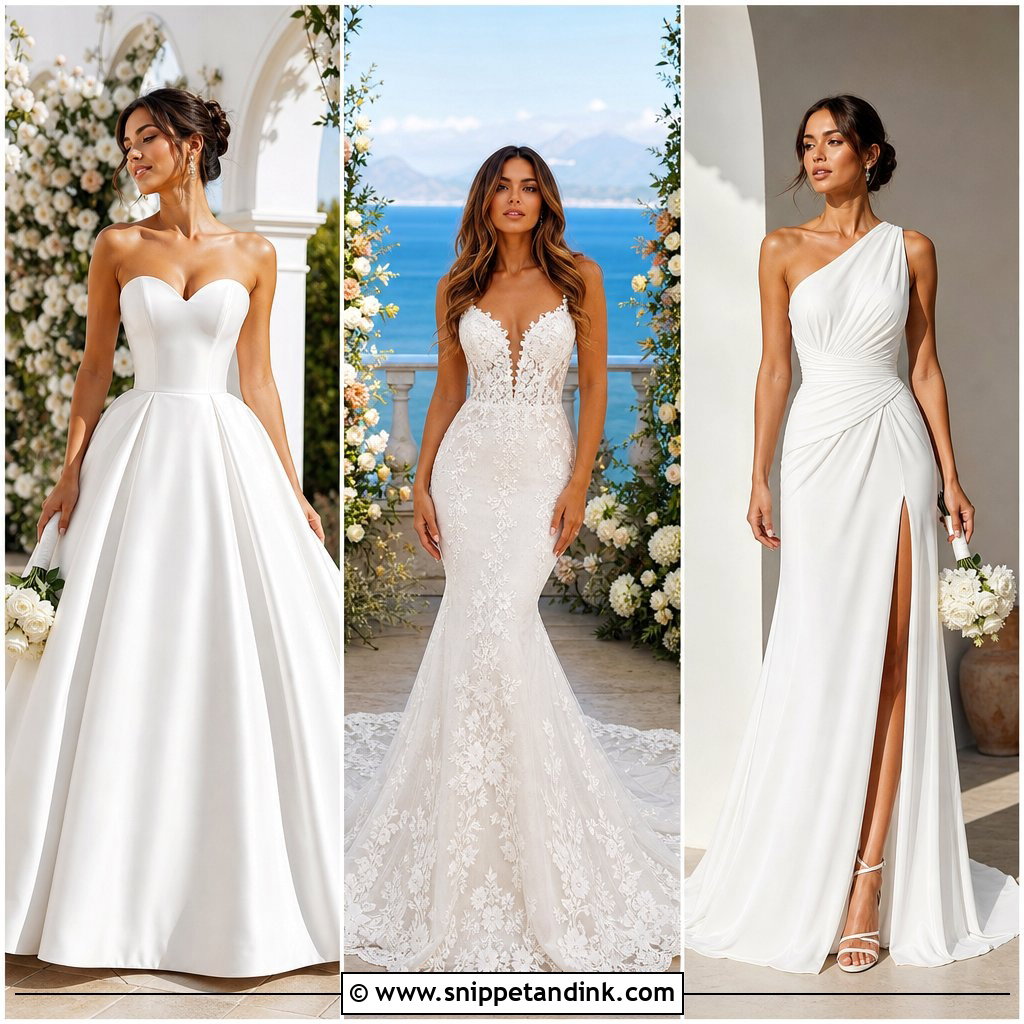
A plus-size 1940s ball gown should work with the body, not cover it up. I start with structure inside the bodice, because support built into the dress lets a wrap-style satin bodice sit cleanly without straps cutting in. A clearly defined waist and a floor-length skirt that skims the hips before opening toward the hem keep the forties proportion. Soft shoulder draping or flutter sleeves frame the neckline and let your arms move. Stable platform pumps, a small structured clutch, elbow gloves and earrings that show beside a rolled updo or shoulder-length waves finish it. A narrow belt or decorative buckle marks the waist without bulk. Ignore the size label entirely. Bodice, hem and sleeve position are what get tailored, and they decide whether you feel secure for eight hours.
The Underpinnings Do Half the Work
Every gown here was designed to go over foundations that most brides no longer own. Put a New Look skirt over a modern strapless bra and nothing else, and the waist looks soft and the skirt collapses by the first dance.
For the fitted early-decade gowns
A longline bra or a light corselette gives the smooth torso that crepe and satin need. Choose one that ends below the waist so there is no ridge under a bias-cut skirt, and wear it to every fitting.
For the full postwar skirts
A waist cincher defines the waist and a net or tulle petticoat holds the volume. Soft net breathes better than stiff crinoline and won’t scratch your legs, which matters on a dance floor. Two light petticoats usually beat one heavy one, because you can take the top layer off for the evening if you get warm.
Stockings, gloves and the long day
Seamed stockings finish the look properly, but the seam twists as you walk, so have a bridesmaid check the back of your legs before the ceremony photographs. Elbow gloves come off for eating and for the ring exchange; some brides have the ring finger seam opened so the ring can go on over the glove. Pack spare stockings too. A ladder halfway through the evening is common with sheer nylon.
Which Half of the Forties Are You Wearing?
Formal dress in the forties changed more in ten years than most decades do. Streamlined crepe, tailored peplums, metallic Hollywood gowns and the full postwar skirts each belong to a different moment. I always start a bride with the shape that suits her venue and how much she wants to move, then add period details one at a time: pumps, gloves, a structured clutch, a brooch, hair set in proper rolls. You don’t need to copy one archival gown. Get the waistline, neckline and fabric right for your chosen year, keep the accessories telling the same story, and the outfit will read as the forties to anyone who sees it.
You'll Like These Ideas:


Leave a Reply