
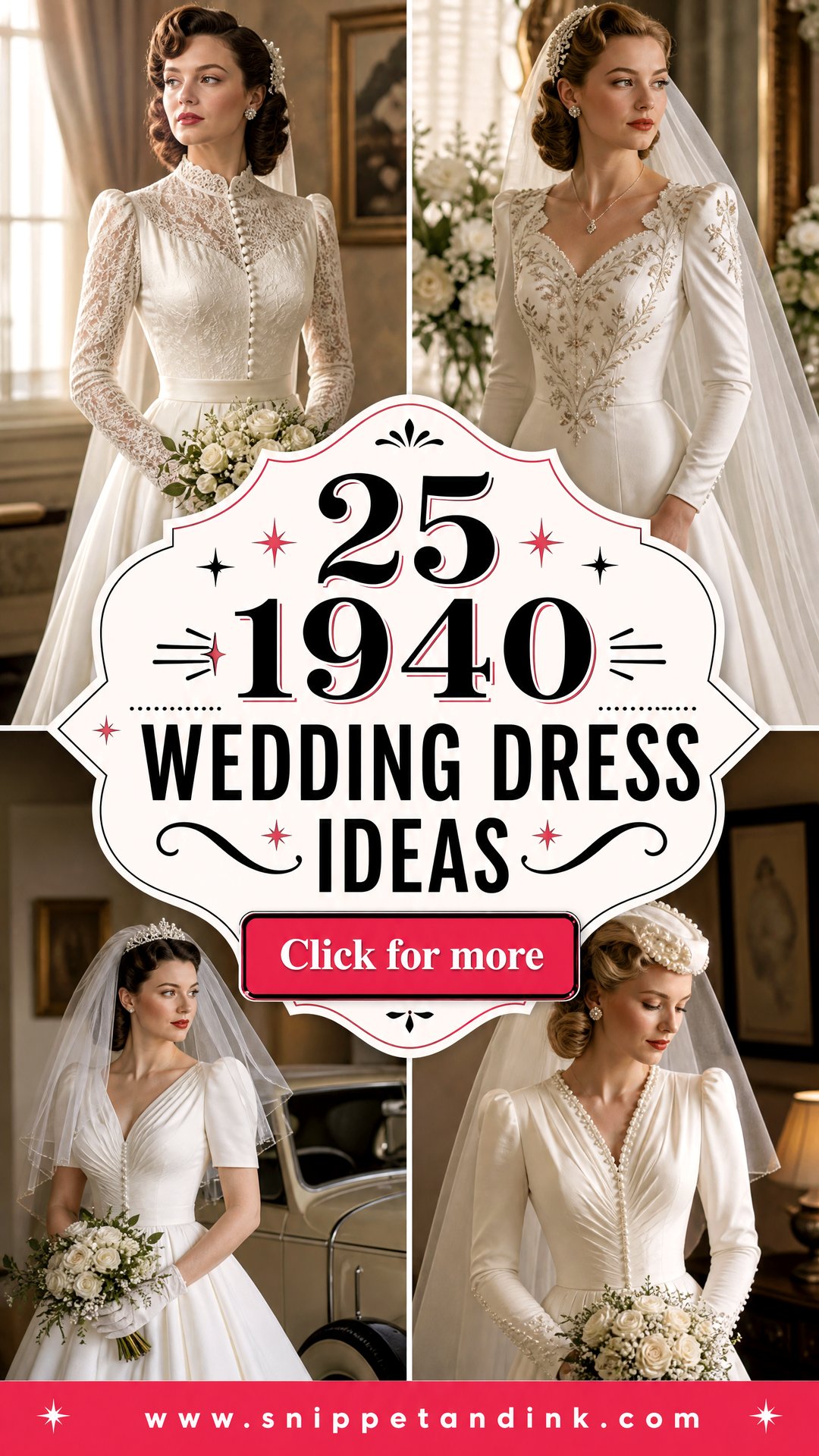
Most brides who come to me wanting a forties look are drawn to the same thing: a dress that covers more than it reveals and still feels romantic. 1940s bridal fashion moved across the decade from wartime restraint toward a softer postwar glamour, and a few shapes stayed constant throughout: a fitted waist, a firm shoulder, long sleeves, sweetheart necklines and veils that did a lot of the work. Rationing meant many women married in suits, borrowed gowns or dresses cut from whatever fabric they could get, while the later years brought fuller skirts and more decoration. Below are 25 looks, from a plain courthouse outfit to a full satin gown, with my notes on fabric, fit and what each one asks of you.
Buying an Original Forties Gown Without Regretting It
Genuine 1940s wedding dresses still turn up at vintage dealers and estate sales, and some are in good shape. Others look fine on a hanger and fail at the first fitting. When a bride brings me an original, I go through the same checks before anyone pays for it.
- Measure, don’t trust the label. Vintage sizing runs much smaller than modern sizing, so compare bust, waist and across-the-back measurements against your own.
- Look inside the seams. Generous seam allowances mean the dress can be let out; narrow, pinked edges mean it can only be taken in.
- Hold the fabric up to daylight. Old silk and rayon thin out at stress points such as the underarms and along the closure, and tiny splits there tend to spread.
- Check the underarms and hem for stains. Yellowed perspiration marks and old water rings rarely come out completely.
- Test the closures. Many dresses of the period fastened with metal side zips or snaps that may need replacing before they can be trusted.
If an original fails these checks, a reproduction or a new gown cut from a 1940s pattern gives you the same shape in fabric you can actually clean and alter. That is often the route I’d suggest, with a true vintage veil or pair of gloves carrying the history instead.
1. 1940s Satin Wedding Dress
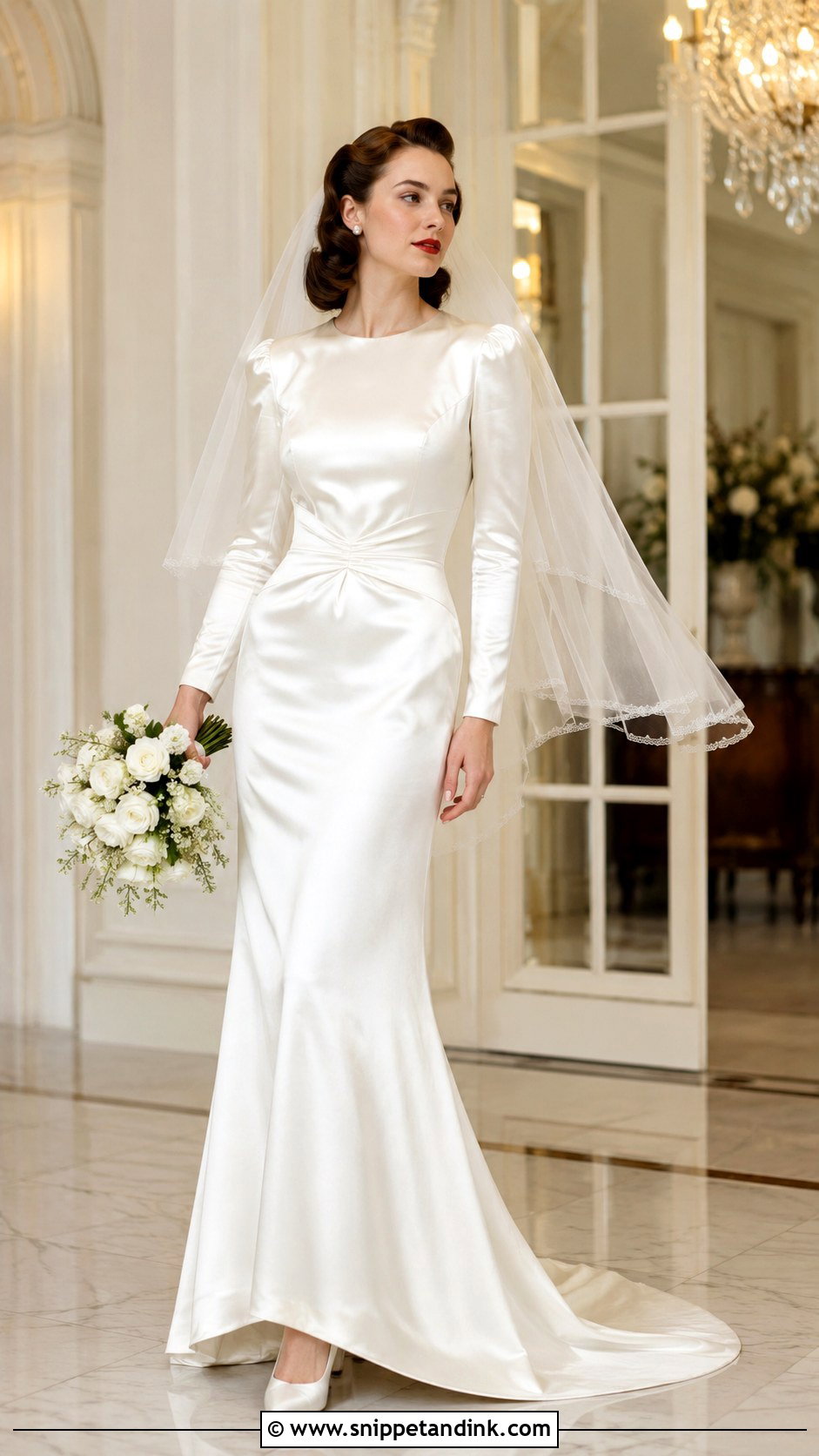
Satin is where I start most forties fittings, because nothing else holds that smooth line from padded shoulder to nipped waist so well. The classic version is ivory with long sleeves and a skirt that flares only slightly, worn with closed-toe pumps, pearl earrings, a small structured clutch and a fingertip veil. One honest warning: satin shows every pull. If the bodice is even slightly tight across the back, diagonal strain lines appear in photos, so I’d rather let a seam out than have you hold your breath all day. Soft waves or a neat roll keep the hair in the same decade as the dress, and the whole outfit sits comfortably in a formal indoor ceremony or a historic venue.
2. 1940s Lace Sleeve Wedding Dress
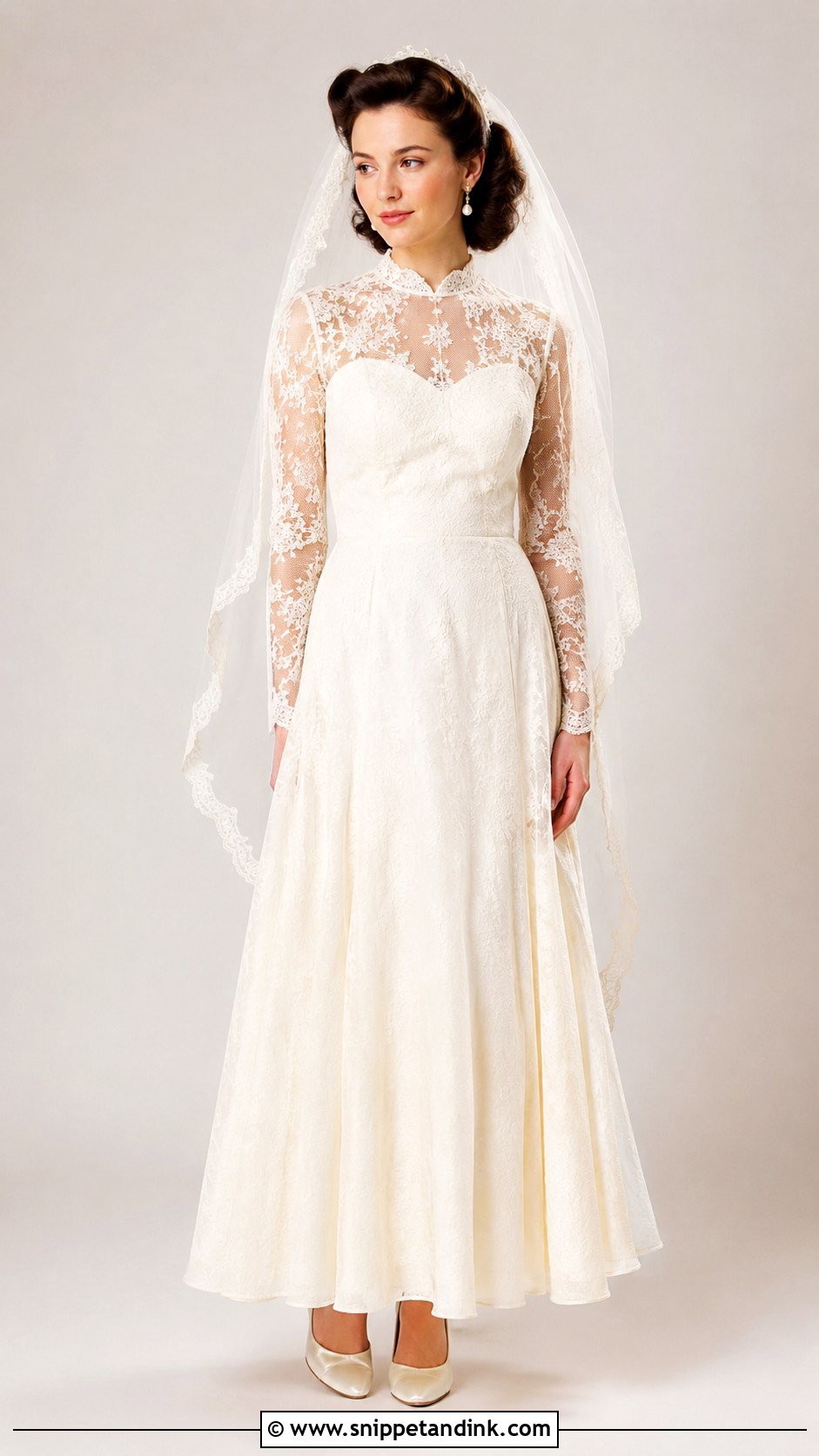
Sheer lace sleeves give you coverage without the weight of a fully lined arm, which is why I suggest them to brides who run warm. Pair them with an ivory gown, a fitted bodice, a defined waist and a gently flowing skirt, then add pearl drops, satin pumps, a lace-trimmed veil and a small posy of white flowers. Check the cuff at your fitting. Lace that ends right on the wrist bone catches on rings and bracelets all day, and a tiny loop over the middle finger or a cuff finished slightly shorter solves it. Brushed-out curls or a soft side part finish the look.
3. 1940s Sweetheart Neckline Wedding Dress
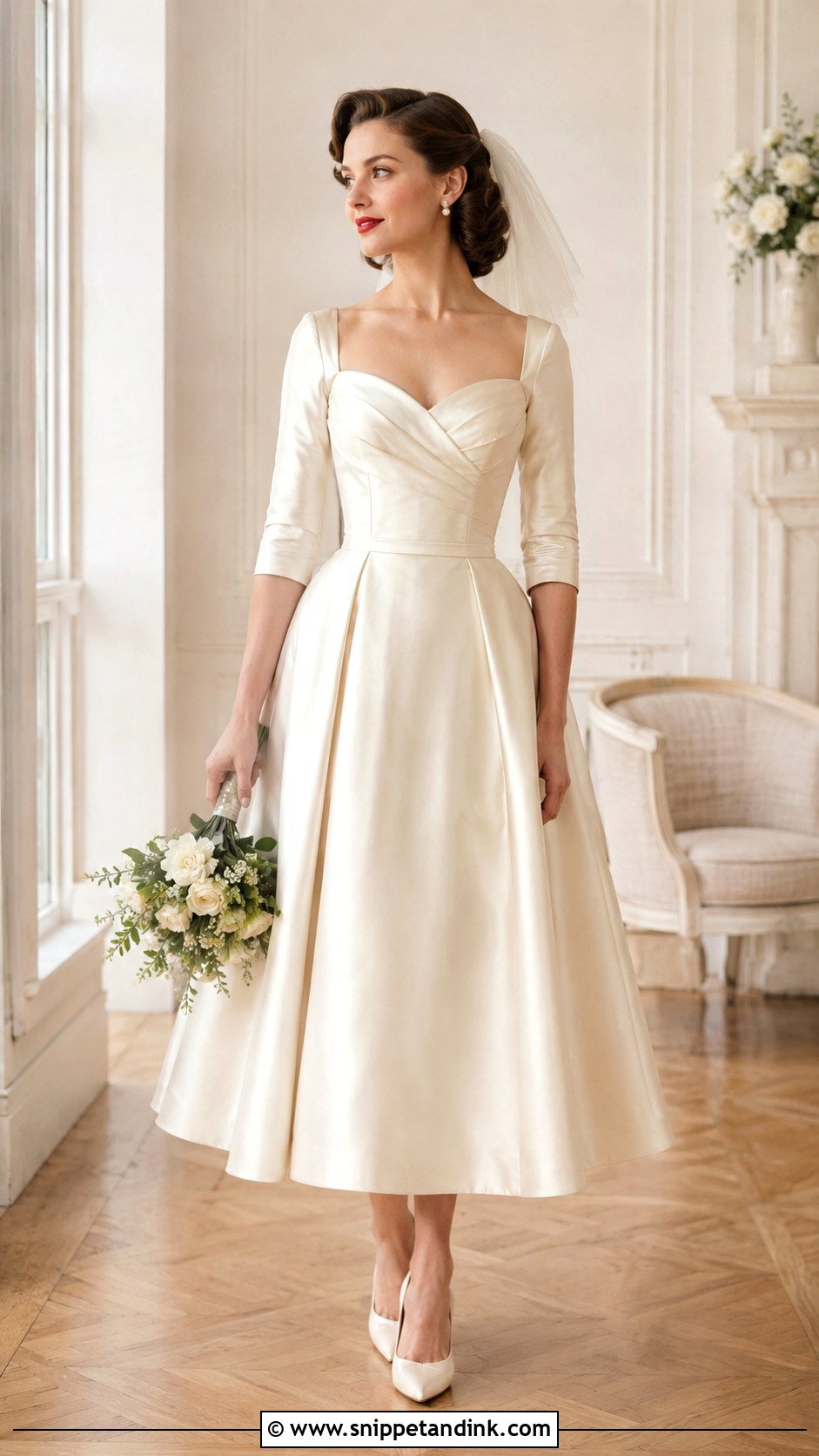
The sweetheart neckline softened the structured forties silhouette, and it still does that job today. Look for a white or ivory gown with a heart-shaped neckline, a fitted bodice, long or three-quarter sleeves and a slim waist, then add satin heels, a short veil, pearl studs and one simple bracelet. What I check first is how the center dip behaves when you sit. On a fuller bust the point can gape forward, so I usually ask for a little boning or a hidden stay at the center front. Curled hair or a low roll suits the way it frames the face, and I’d leave the necklace off entirely.
4. 1940s Long Sleeve Wedding Dress
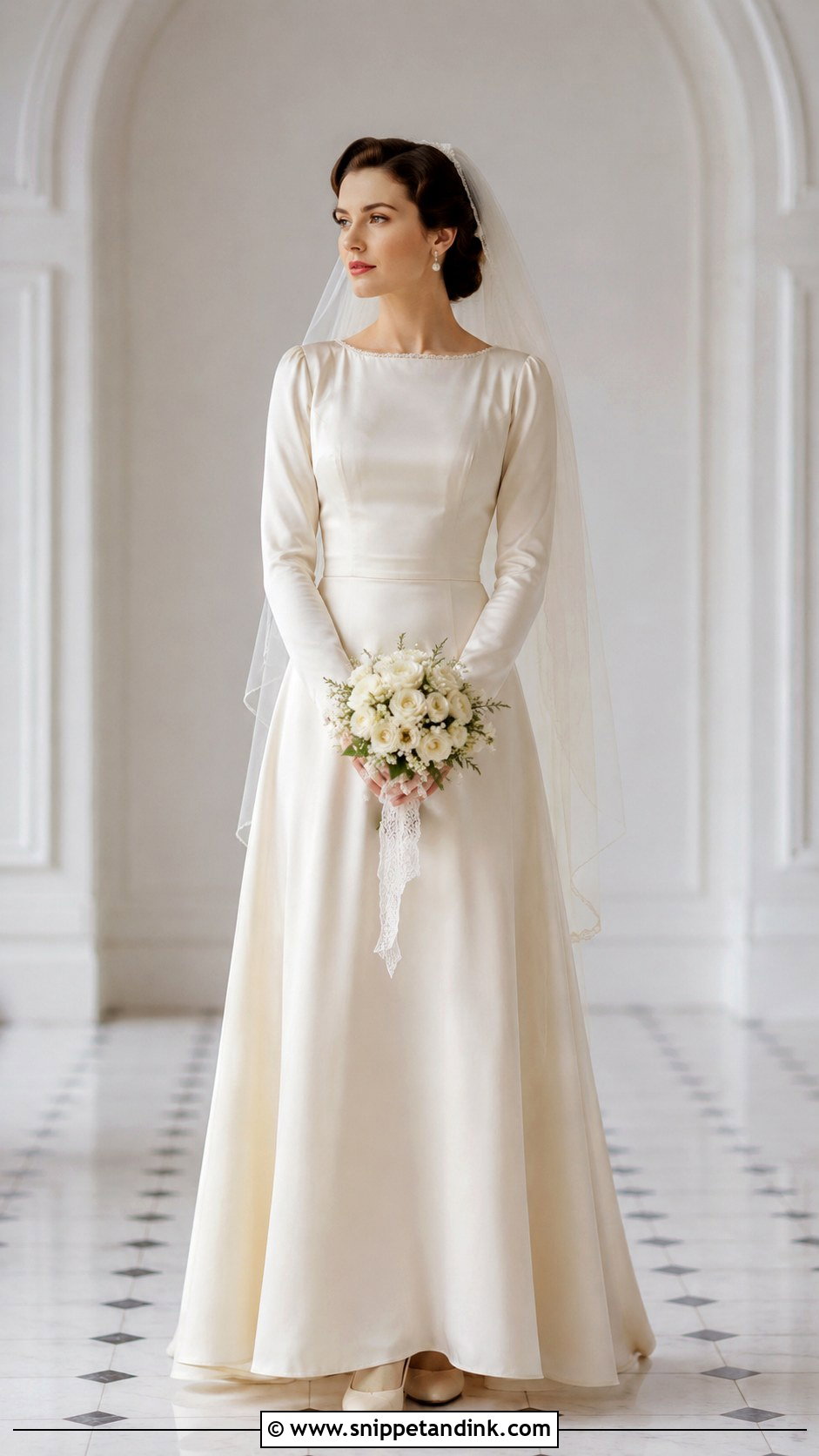
Long sleeves are the single detail that makes a gown read as forties at a glance. Choose slim sleeves, a high or modest neckline, a fitted waist and a long skirt with some movement, then add low ivory heels, pearl earrings, a soft veil and a neat bouquet. The catch is the armhole. Period patterns cut it high and close, which looks clean but limits how far you can lift your arms, so I have every bride do a hug test and a pretend bouquet toss before the final fitting. Soft waves tucked behind one ear keep the neckline visible. Fall and winter weddings are the natural home for this dress.
5. 1940s Tea Length Wedding Dress
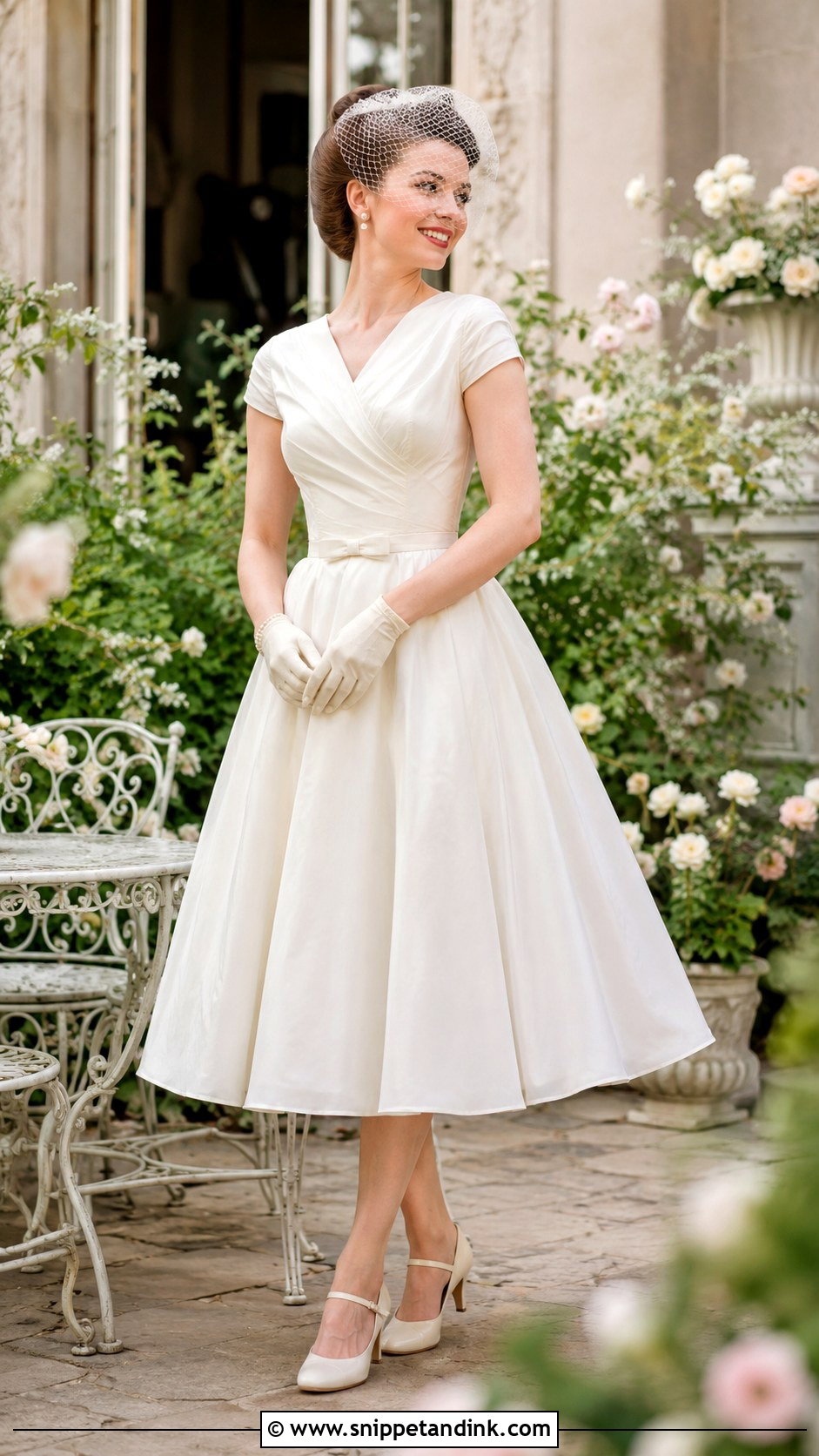
A 1940s tea length wedding dress is the one I recommend to brides who plan to dance for hours. Look for a fitted bodice, a modest neckline and a nipped waist with a skirt ending below the knee or at mid-calf, styled with Mary Jane heels, short gloves, pearl earrings and a small birdcage veil. Because the hem stops above the ankle, your shoes appear in every full-length photo, so buy them early and wear them in at home. Hem length also shifts with heel height, which is why I only ever pin a tea length hem with the actual wedding shoes on. Soft curls keep it sweet.
6. 1940s Courthouse Wedding Dress
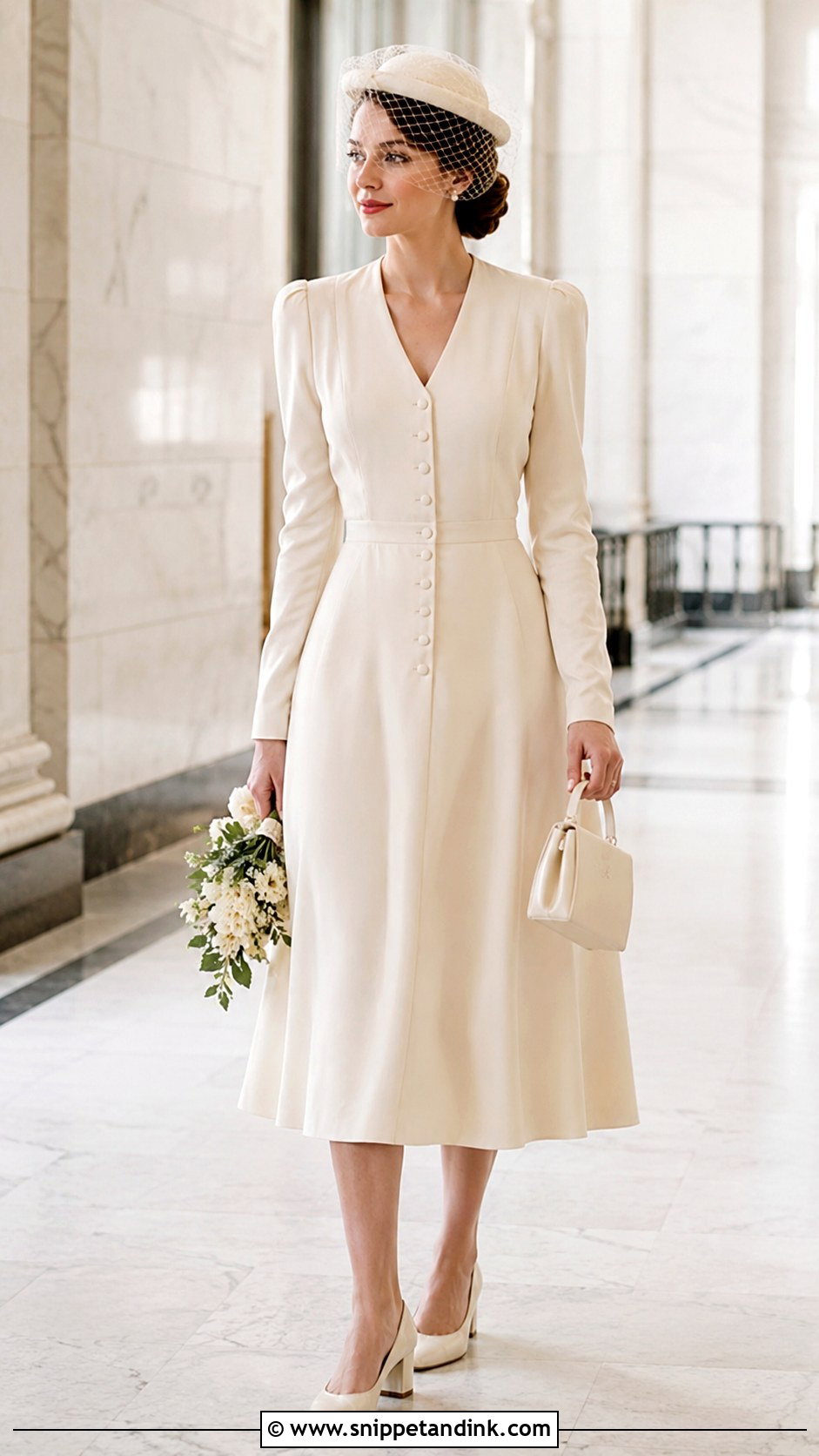
For a courthouse ceremony I’d keep things tailored rather than elaborate. An ivory or cream midi with a tailored waist, structured shoulders, long sleeves and a clean A-line skirt does it, with low block heels, a small hat or birdcage veil, pearl earrings and a compact handbag. Plenty of brides in the decade married exactly this way, in smaller ceremonies and simpler clothes, so it may be the most historically honest look here. The block heels matter more than they seem: courthouse floors are often hard stone, and there is usually some waiting around. A red lip and soft curls supply the period character.
7. 1940s Wedding Suit
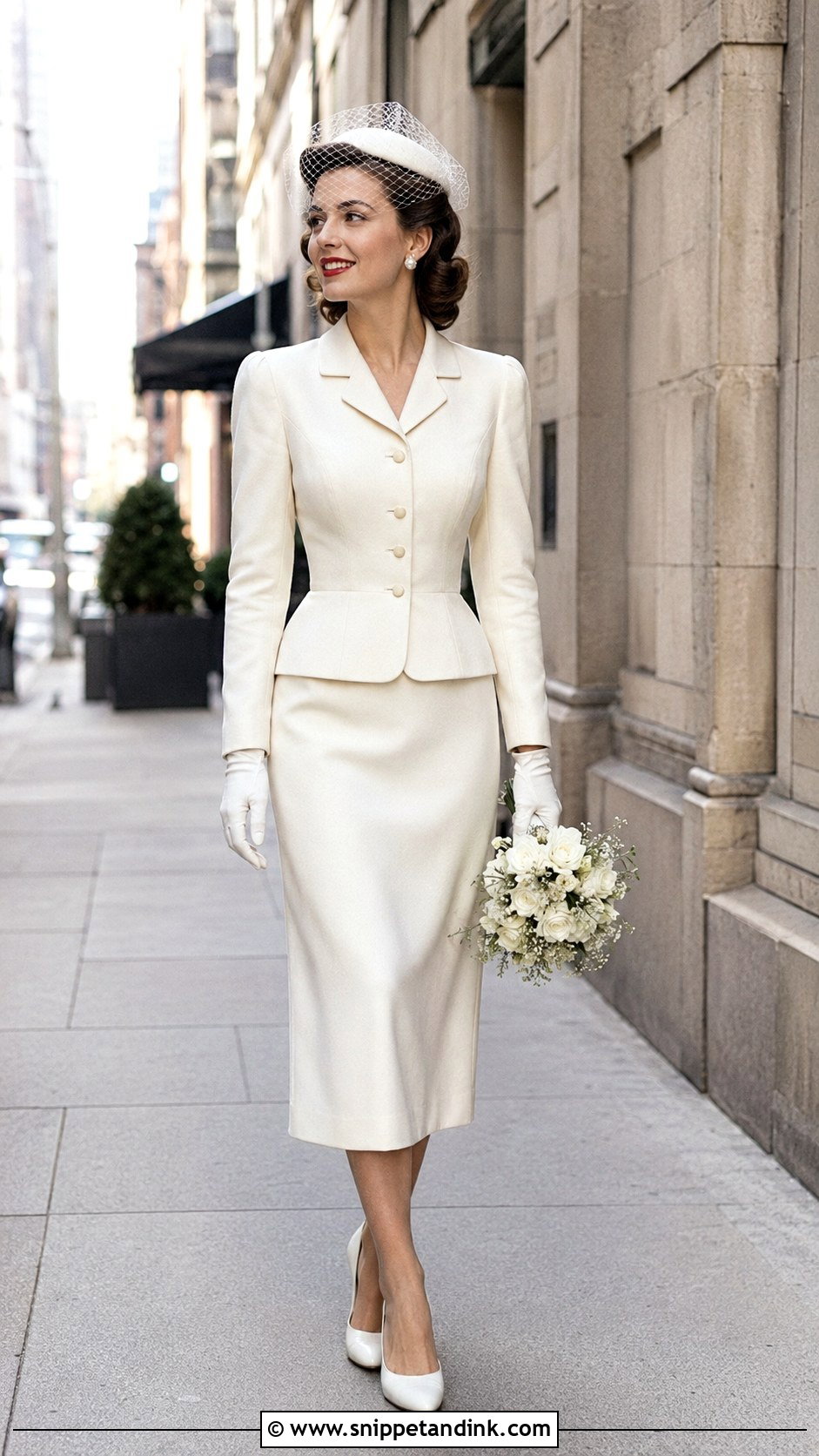
Suits are where forties tailoring really shows. A cream or ivory skirt suit with a fitted jacket, strong shoulders, a nipped waist and a knee-length or mid-calf skirt works with closed-toe pumps, gloves, a structured handbag, pearl earrings and a small veiled hat. Jacket fit decides everything. If the shoulder seam sits past your own shoulder bone, the suit looks borrowed, and shoulders are the alteration that is costly or impossible to fix later, so I always buy for the shoulders and alter the waist. I often suggest this to brides who would rather not wear a gown at all, and it sits naturally at a city wedding.
8. 1940s Rayon Wedding Dress
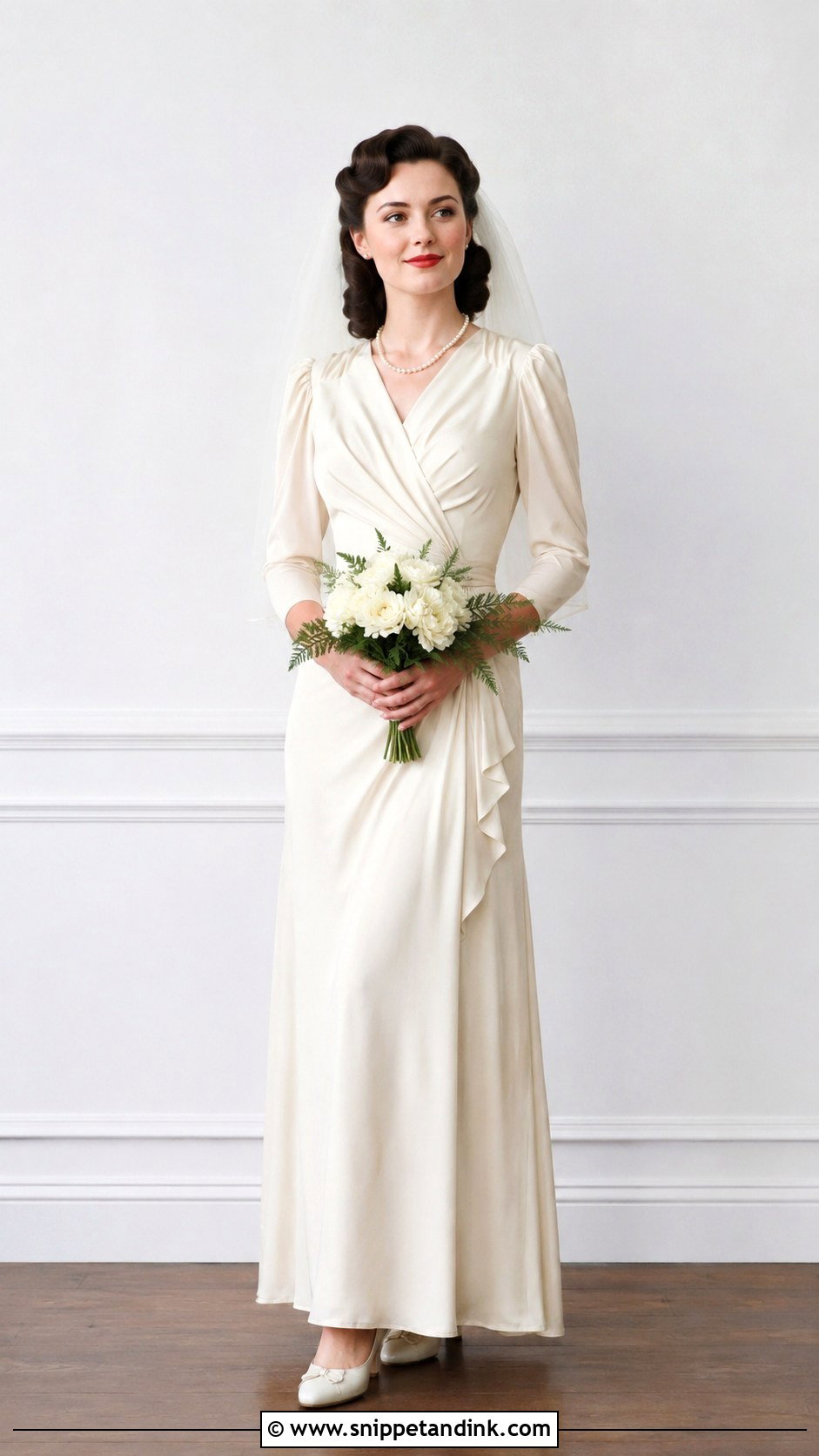
Rayon was the workhorse fabric of those fabric-conscious years, and it gives a soft fall that satin can’t match. Look for an ivory rayon gown with a gently draped bodice, a modest neckline, slim sleeves and a skirt that doesn’t drag you down, then add low satin heels, a pearl necklace, a small veil and a tidy bouquet. Know its weakness before you buy: rayon creases deeply when you sit, and it can shrink or water-mark when it gets damp, so I never let anyone dab at a mark on it with water on the day. A side part with soft curls suits its quiet character.
9. 1940s Parachute Silk Wedding Dress
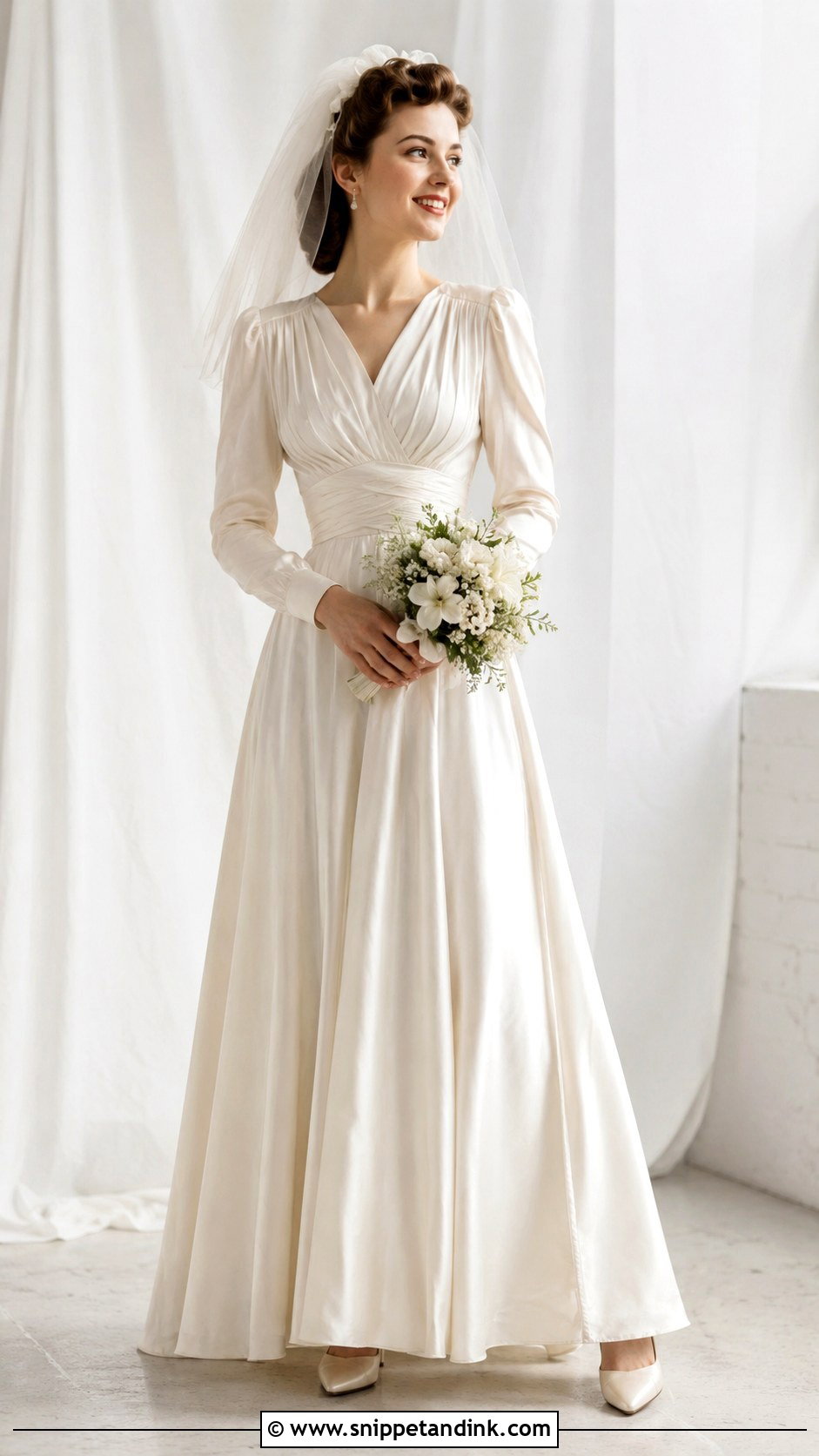
Parachute silk carries real history. After the war, some brides had wedding gowns sewn from parachute silk, and several of those dresses are now kept in museum collections. A modern take means a silk or silk-like ivory gown with a fluid skirt, a fitted waist, long sleeves and subtle gathers, paired with satin pumps, pearl earrings, a simple veil and a delicate bouquet. Keep embellishment almost absent so the fabric carries the meaning. If you own a family piece of old silk, I’d have a seamstress test a hidden corner first, because aged silk can split once it is put under tension.
10. 1940s Bias Cut Wedding Dress
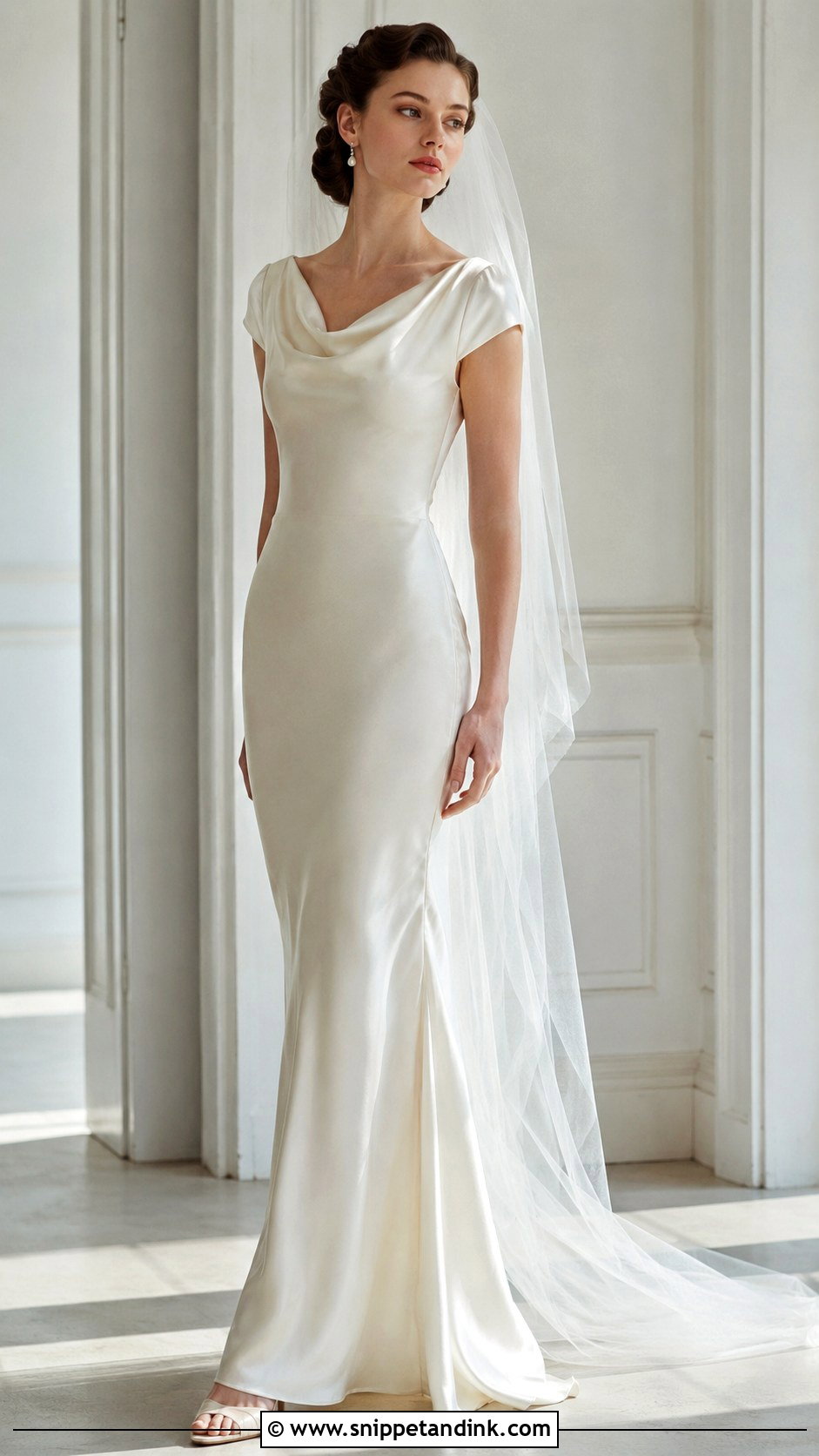
Bias cut is the least forgiving cut on this list, and one of the most graceful. Cutting fabric diagonally to the grain lets it skim the body and fall smoothly to the floor, so look for an ivory gown with a soft neckline, long or cap sleeves and no tightness anywhere. Add simple heels, a delicate bracelet, pearl earrings and a long veil. Bias garments stretch as they hang, so a good dressmaker leaves the dress on a hanger for a day before marking the hem. The cut also shows every underwear line, which means smooth, unpadded underwear from the very first fitting. Brushed waves or a low bun keep the line clean.
11. 1940s Crepe Wedding Dress
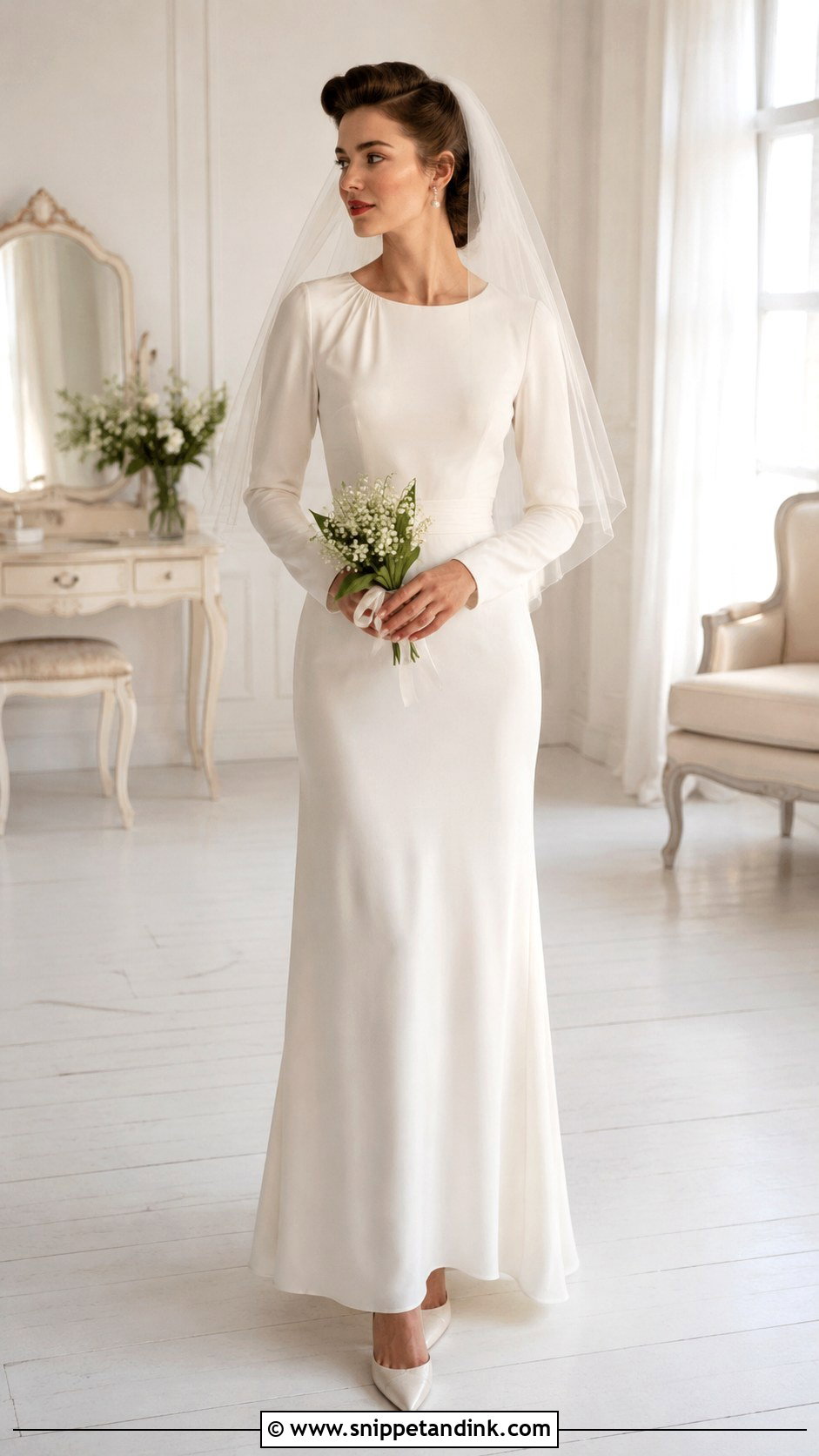
Crepe is my quiet favorite for brides who dislike shine. Its grainy matte surface drapes well and doesn’t bounce light into the camera, so an ivory crepe gown with a fitted waist, a modest neckline, long sleeves and a skirt that flares slightly at the hem looks polished in any light. Pointed ivory pumps, pearl studs, a slim veil and a small floral bouquet are all it needs. Heavier crepe also hides creases from sitting far better than satin does. Pair it with soft waves and natural makeup.
12. 1940s High Neck Wedding Dress
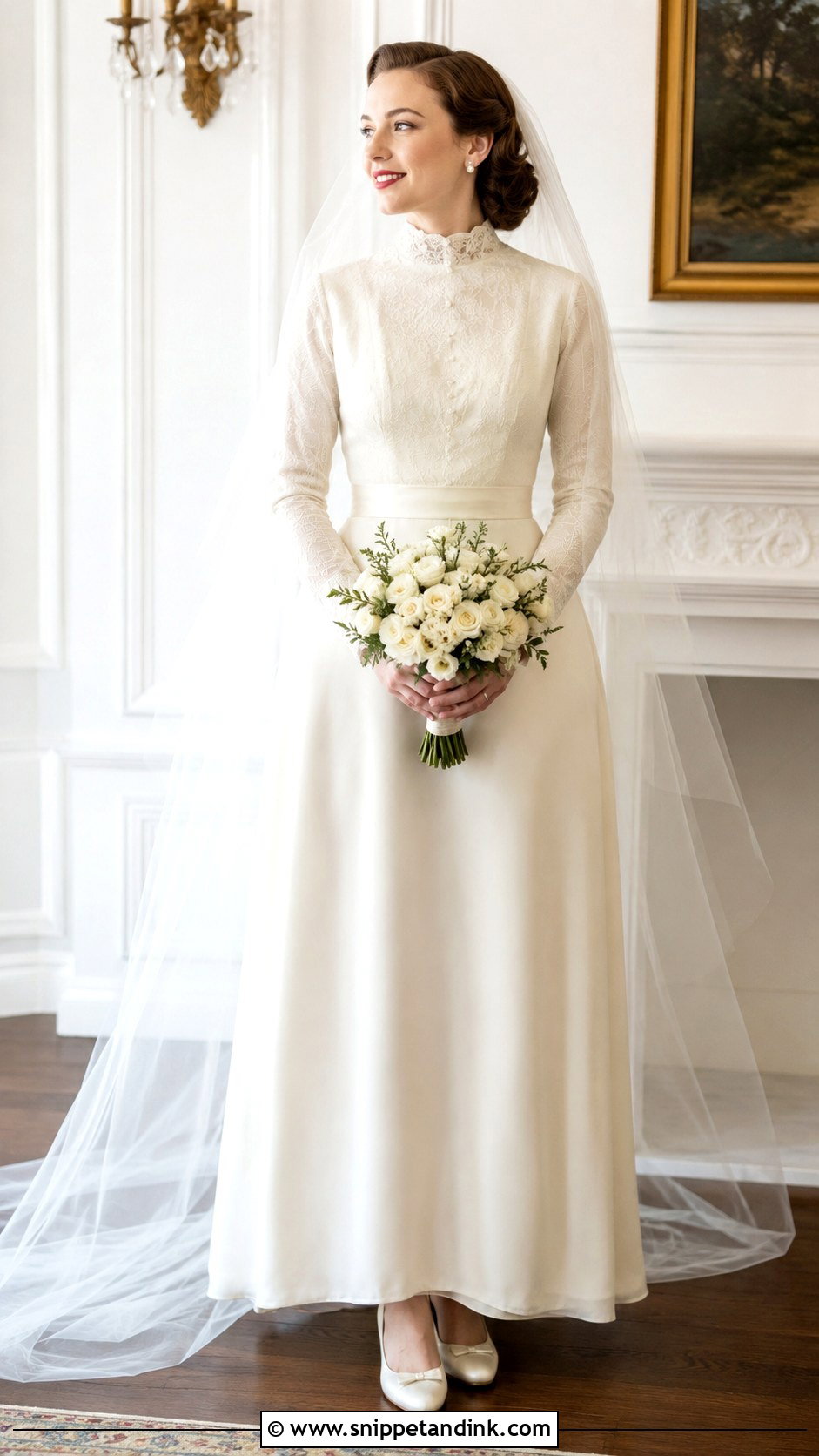
A high neck carries a lot of visual weight, so I treat it as the jewelry. Choose an ivory gown with a fitted bodice, long sleeves and a defined waist, with a slim or gently flared skirt depending on how formal the day is. Pearl studs, low satin heels, a long veil and a simple bouquet are plenty. Have the collar fitted while you sit and turn your head, because a neckline that feels fine standing can press against your throat once you’re seated at dinner. A neat updo or soft roll keeps the neck clear. On a shorter neck it can feel crowded, and a slightly lower stand usually helps.
13. 1940s Puff Sleeve Wedding Dress
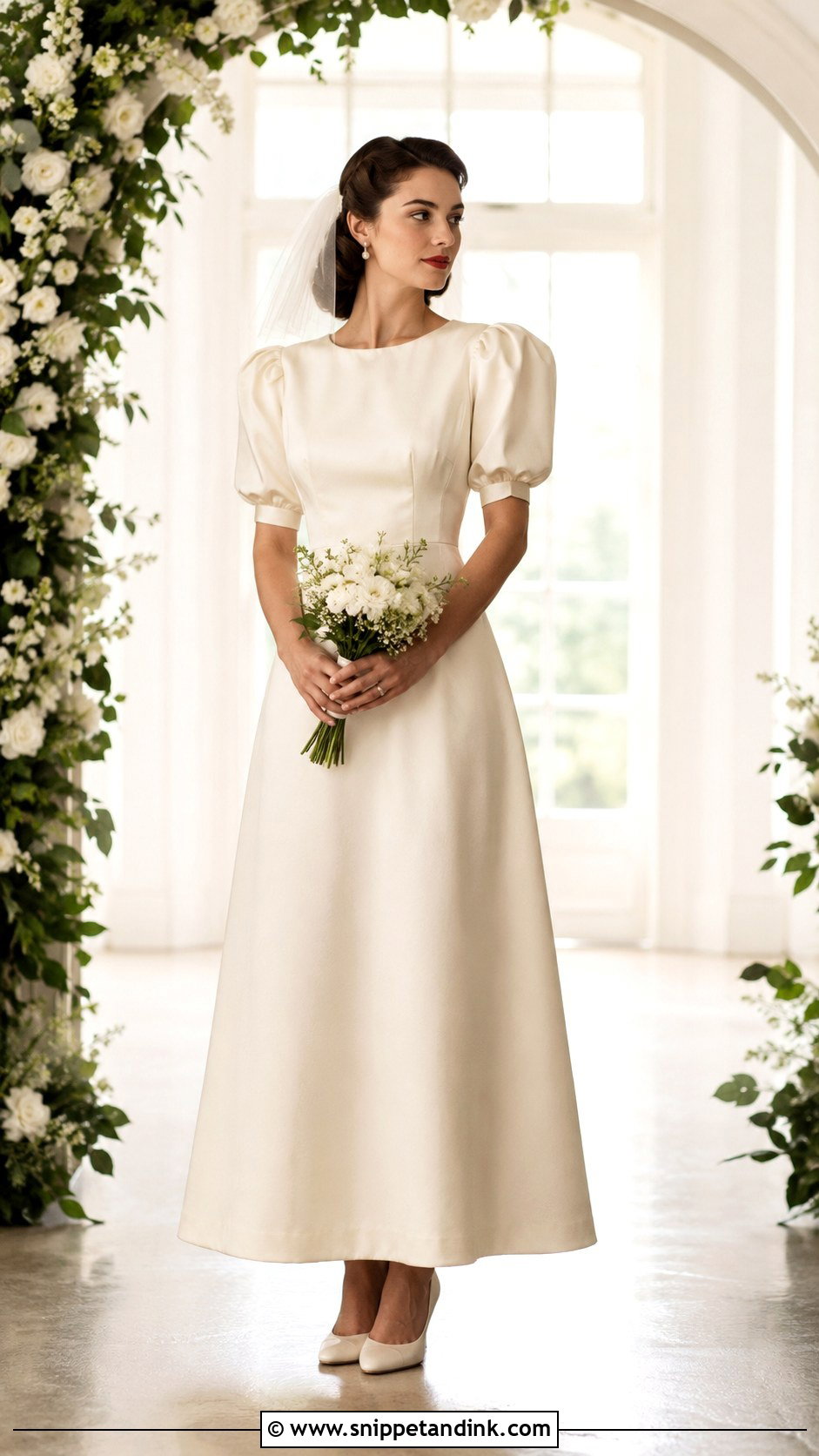
Puff sleeves add drama while staying true to the decade’s strong shoulder. Choose softly puffed sleeves with a fitted waist, a modest neckline and a long skirt with gentle volume, then add ivory pumps, pearl earrings, a small veil and a compact bouquet. Since the sleeves already widen the upper body, I keep everything else narrow, the bouquet included. Ask how the puff is supported. A layer of tulle or organza inside the sleeve head keeps it standing until evening, while an unsupported puff often droops after a few hours of hugs. Soft curls or a half-up style balance the shoulders.
14. 1940s Peplum Wedding Dress
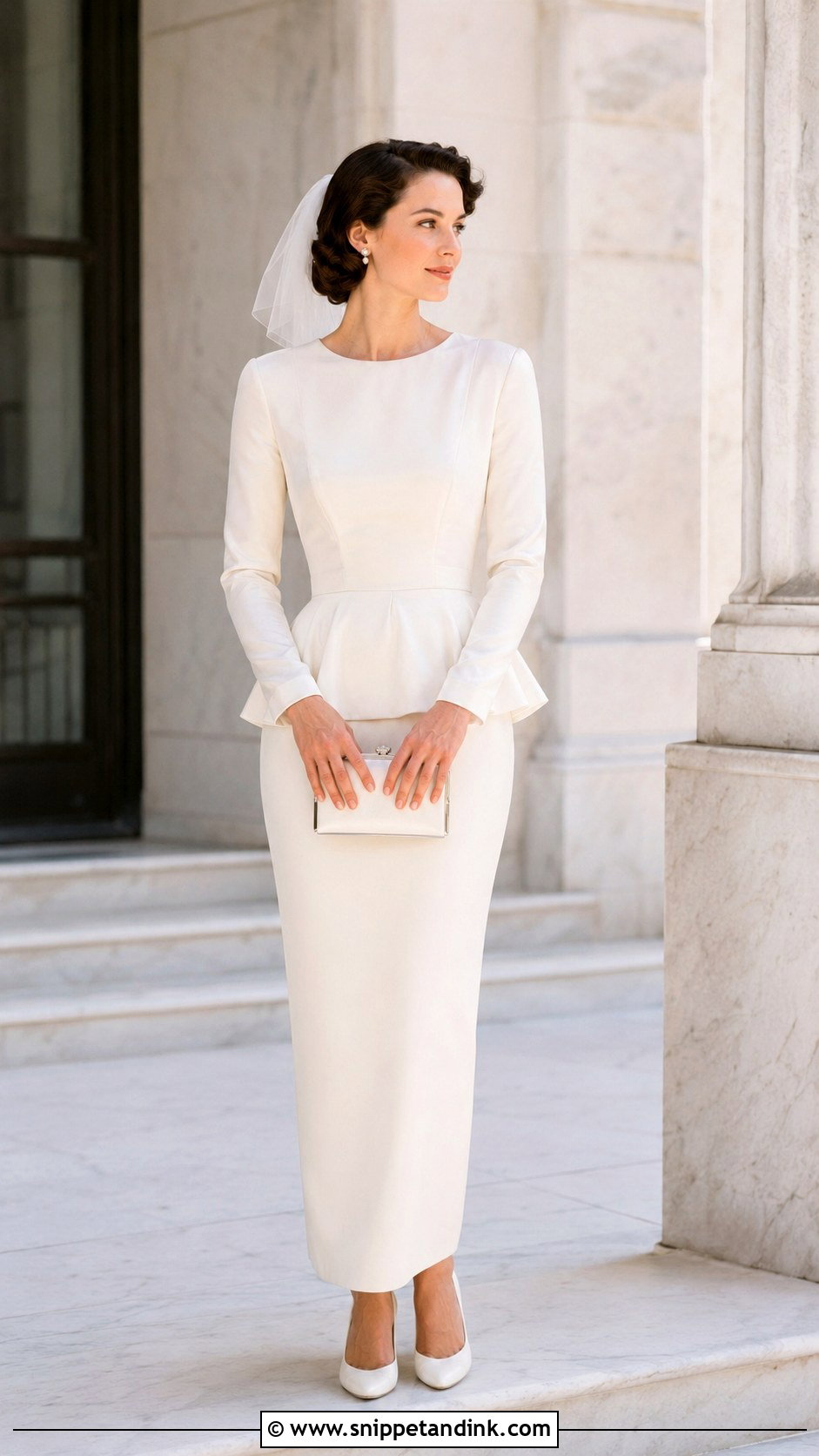
A peplum brings forties tailoring into a bridal outfit without needing a full skirt. Look for a gown or two-piece with a fitted bodice, a small peplum at the waist, a slim skirt and long sleeves, and add closed-toe heels, pearl earrings, a short veil and a structured clutch. A peplum flatters most when it starts exactly at your natural waist; an inch too low and it widens the hip instead. Hold the bouquet slightly higher or to one side so it doesn’t cover the detail. A smooth updo finishes it for a city wedding or a vintage reception.
15. 1940s Two Piece Wedding Dress
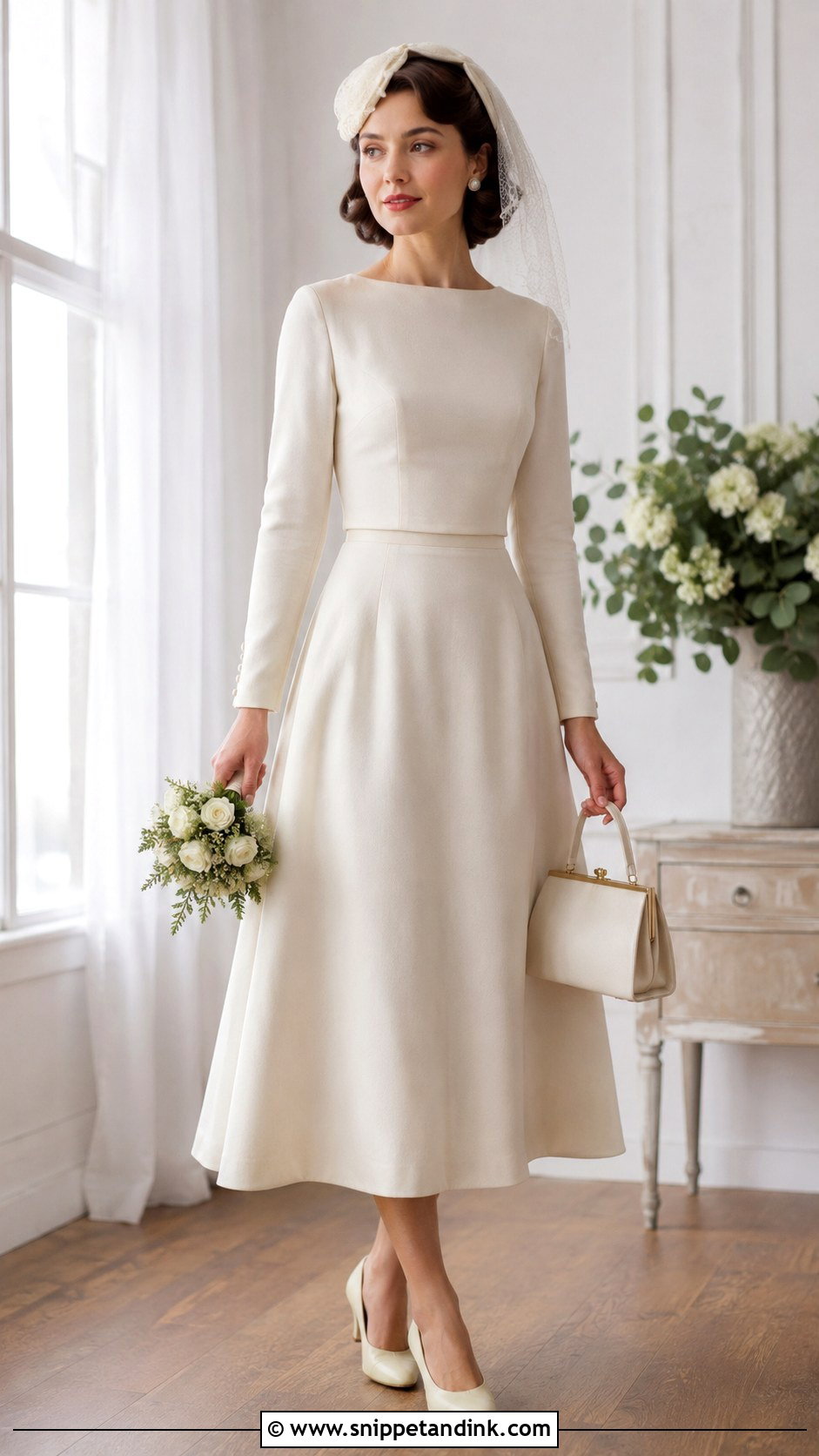
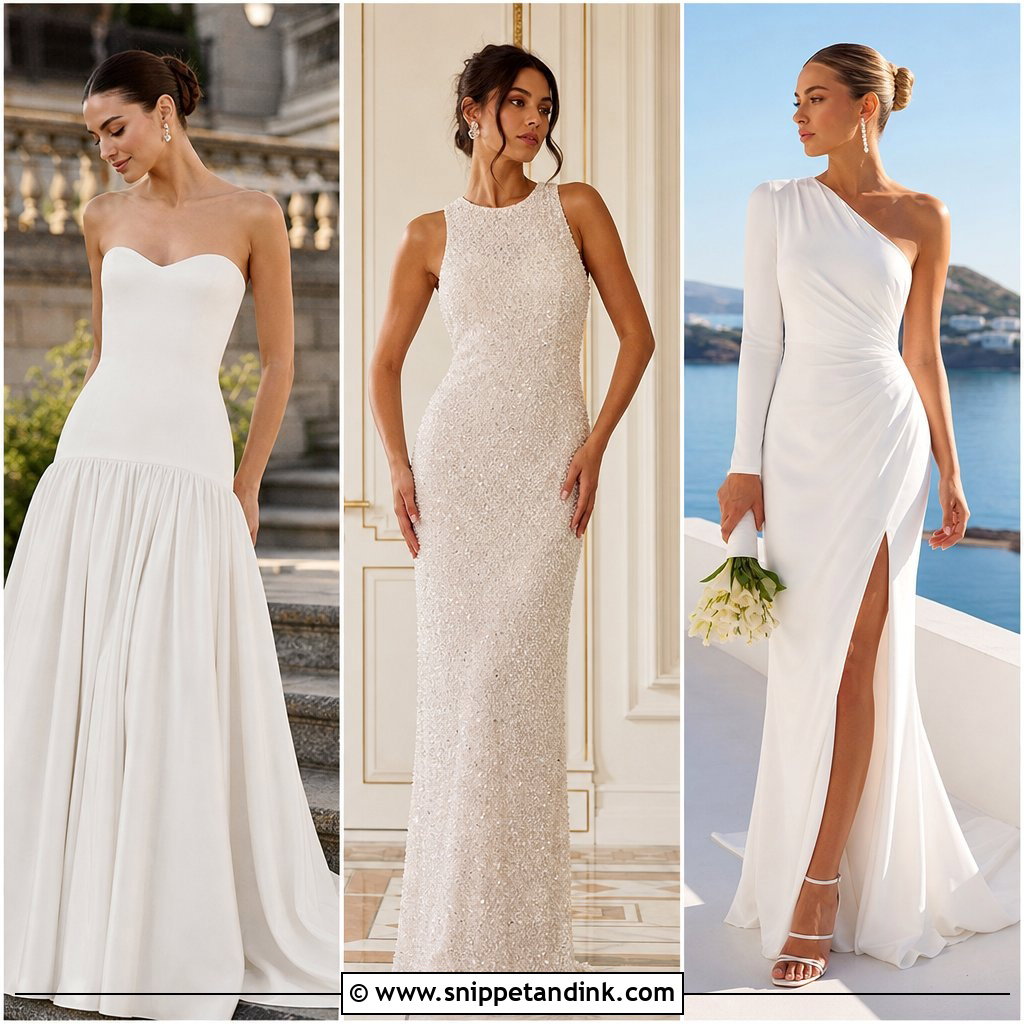
Separates were common in the forties, and a two-piece is one of the most practical options here. Choose a cream or ivory fitted top with long sleeves and a matching high-waist skirt that falls below the knee or to the floor, then add low heels, a small hat or veil, pearl earrings and a neat handbag. The real advantage is fitting: top and skirt can be sized separately, which helps anyone who is a different size above and below the waist. I always check that the top stays tucked or overlapping when you raise your arms. Crepe, rayon and satin all work, but cut both pieces from the same bolt so the ivories match.
16. 1940s Button Front Wedding Dress
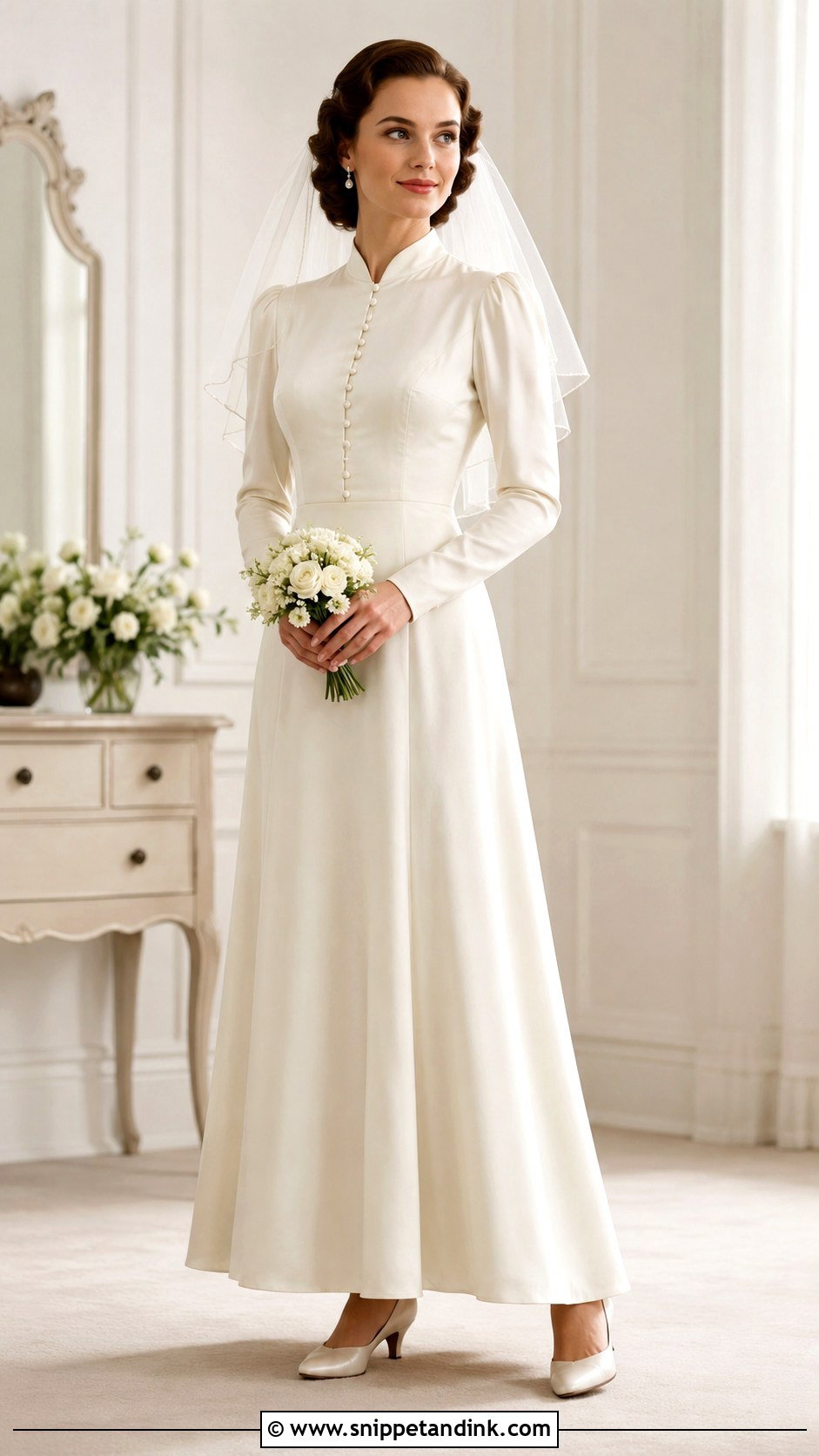
Covered buttons down the bodice draw the eye vertically and give a forties dress real detail without any beading. Choose an ivory gown with a defined waist, long sleeves and a slim or softly flared skirt, and pair it with low pumps, pearl earrings, a fingertip veil and a small bouquet. Find out whether the buttons actually fasten or sit over a hidden zip. A long row of working loops takes ages to close on the morning, and buttons gap if the bodice is at all snug. A soft curl set or tidy updo keeps the mid-century feel.
17. 1940s Peter Pan Collar Wedding Dress
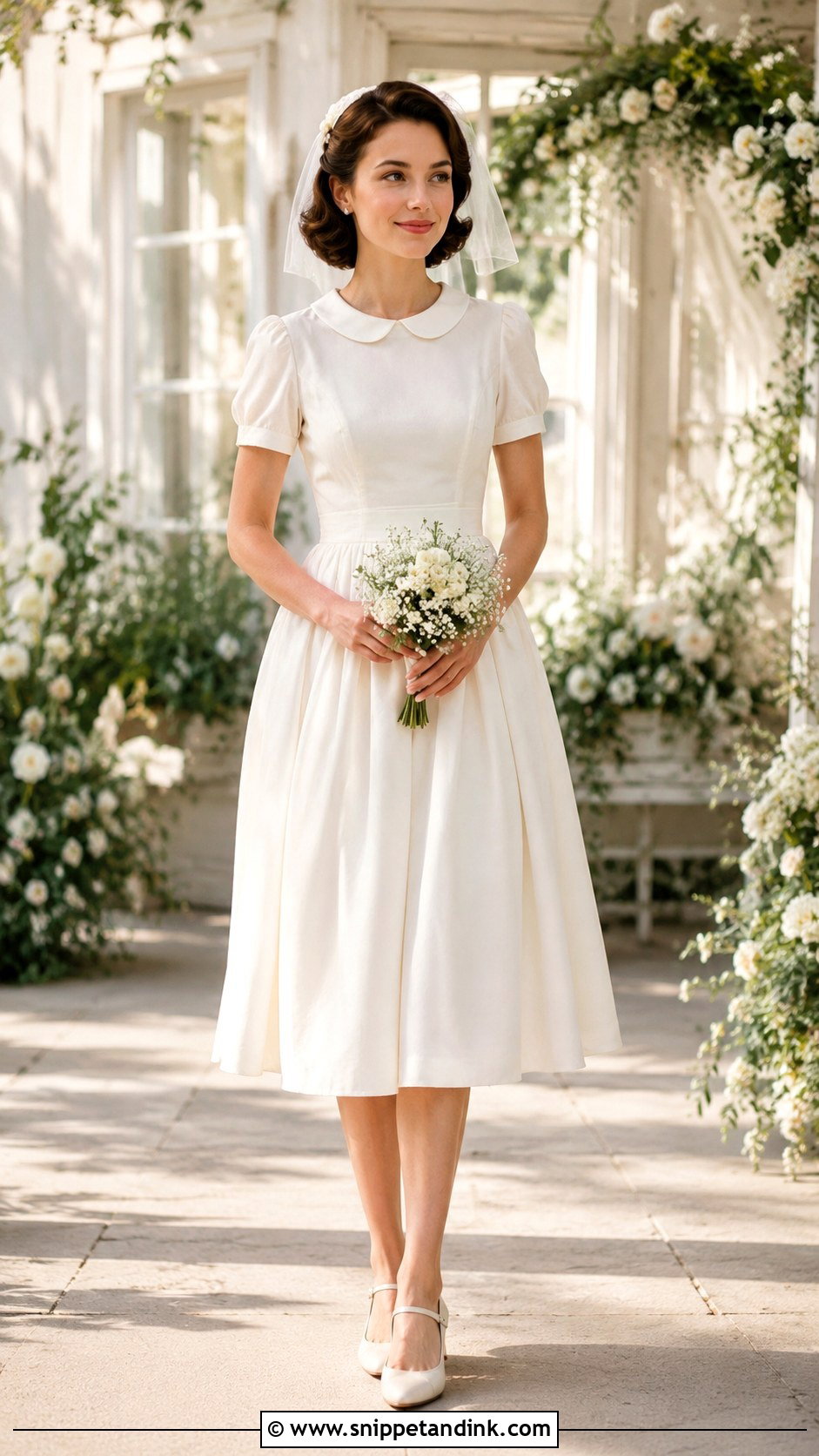
A 1940s Peter Pan collar wedding dress is sweet and modest, and it gets its personality from the collar rather than from sparkle. Choose an ivory dress with a rounded collar, a fitted waist, long sleeves or short puff sleeves and a tea or floor length skirt, then add Mary Jane heels, pearl studs, a short veil and a small bouquet. A collar is only as good as its pressing. Without a light interfacing inside, the edges start curling up after a few hours, so I ask for one and keep a small travel iron in my kit for the morning. Curls, rolls or a low bun all suit it at a daytime wedding.
18. 1940s Embroidered Wedding Dress
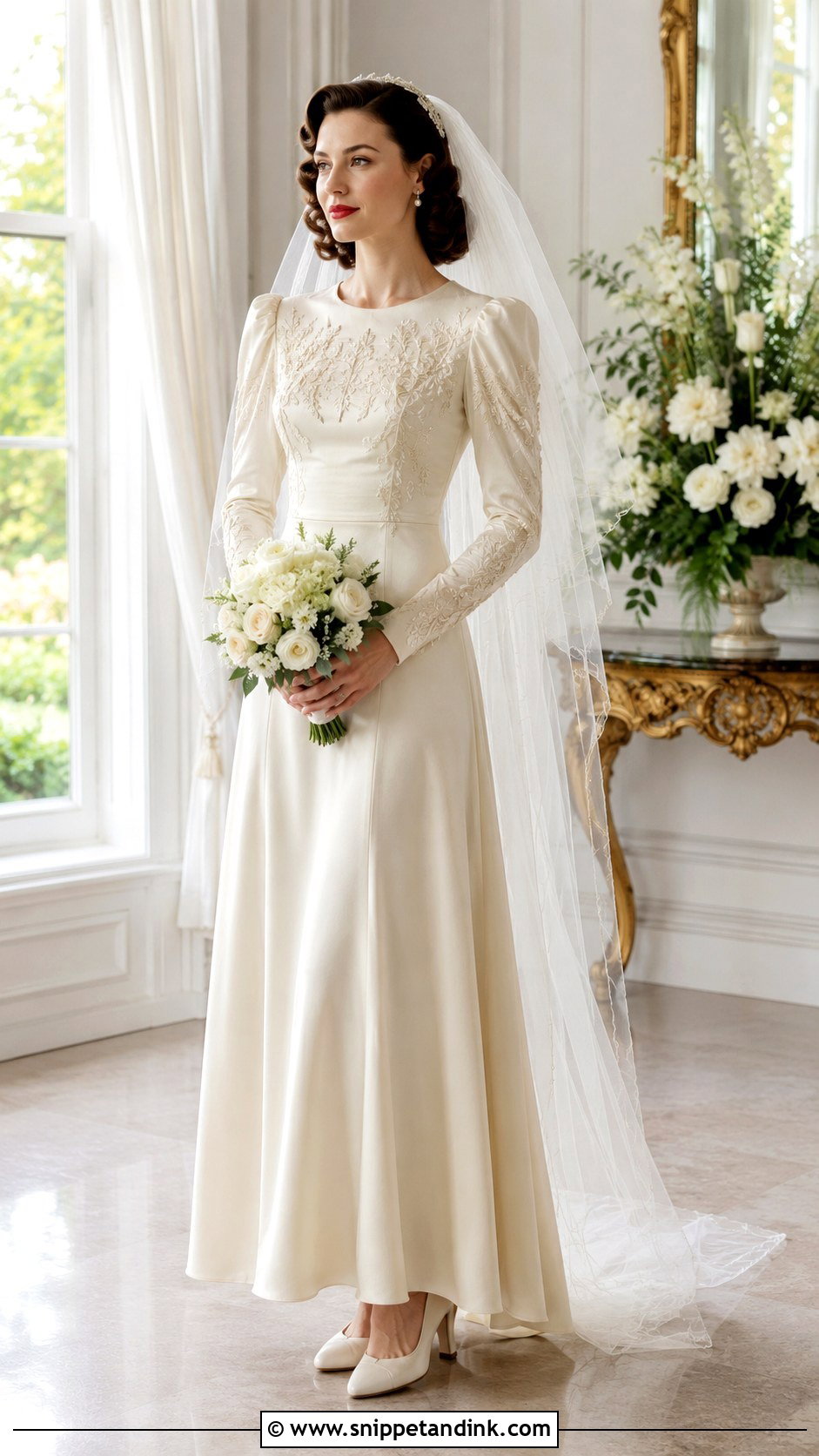
Embroidery adds romance, but the forties version is restrained. Choose an ivory gown with fine floral embroidery on the bodice, sleeves or skirt, kept fitted at the waist and modest at the neck, with simple satin heels, pearl earrings, a light veil and soft white flowers. Turn a sleeve inside out when you try it on. Dense stitching on thin fabric puckers and pulls, and on sleeves the threads can scratch the inside of your arm all evening, which a soft lining fixes. A polished hairstyle stops it tipping into fussiness at a formal wedding.
19. 1940s Full Skirt Wedding Dress
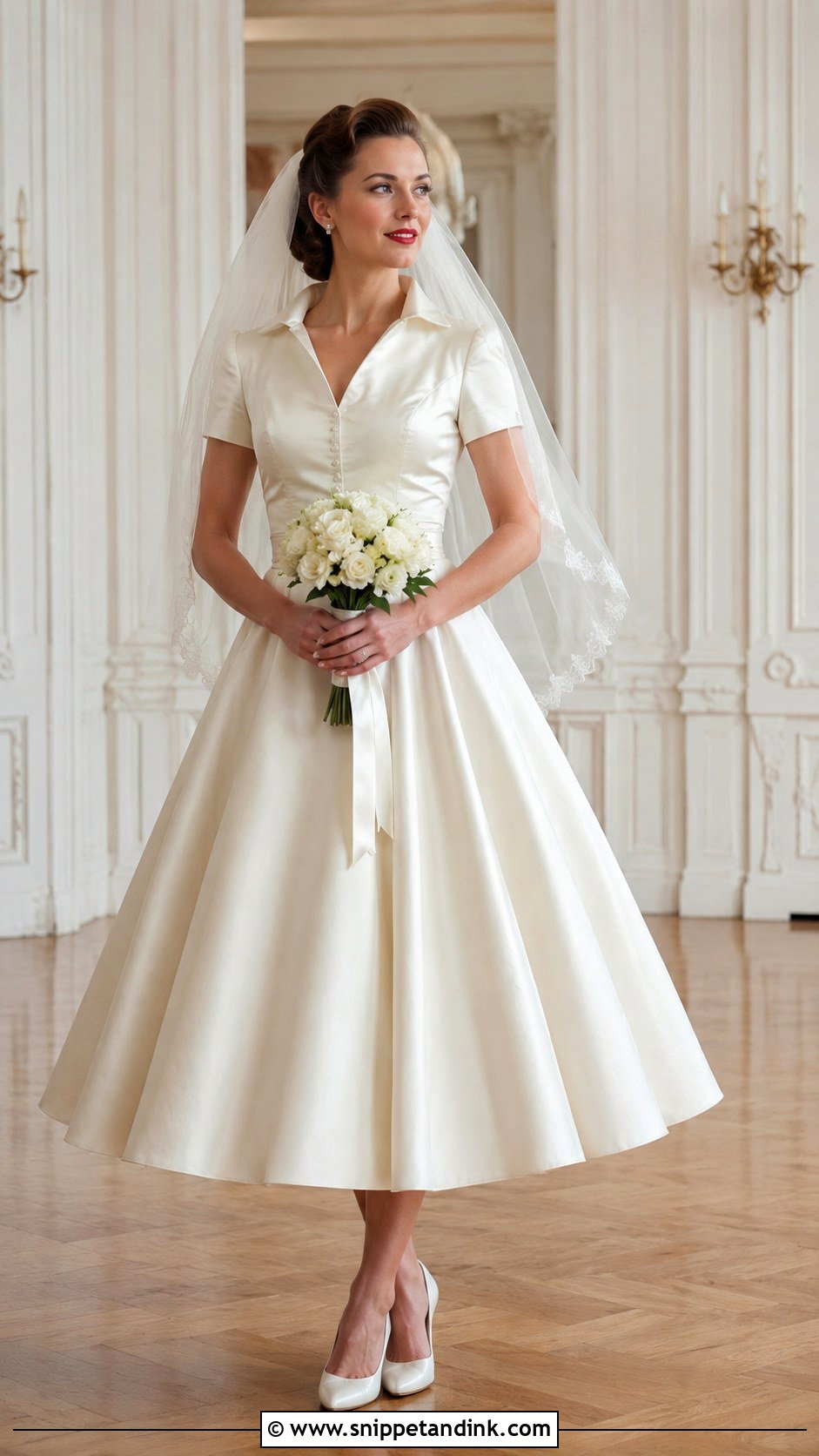
By the late forties, skirts grew fuller and the mood more hopeful, and this dress belongs to those postwar years. Choose an ivory gown with a fitted bodice, a defined waist and a skirt with volume that still feels graceful, adding satin pumps, pearl earrings, a waist-length veil and a simple bouquet. The volume comes from a petticoat underneath, not from the skirt alone. Bring the petticoat you will actually wear to every fitting, because skipping it throws off the hem by a surprising amount. Keep the bodice clean and structured, and expect the skirt to swing well when you dance.
20. 1940s Short Veil Wedding Dress
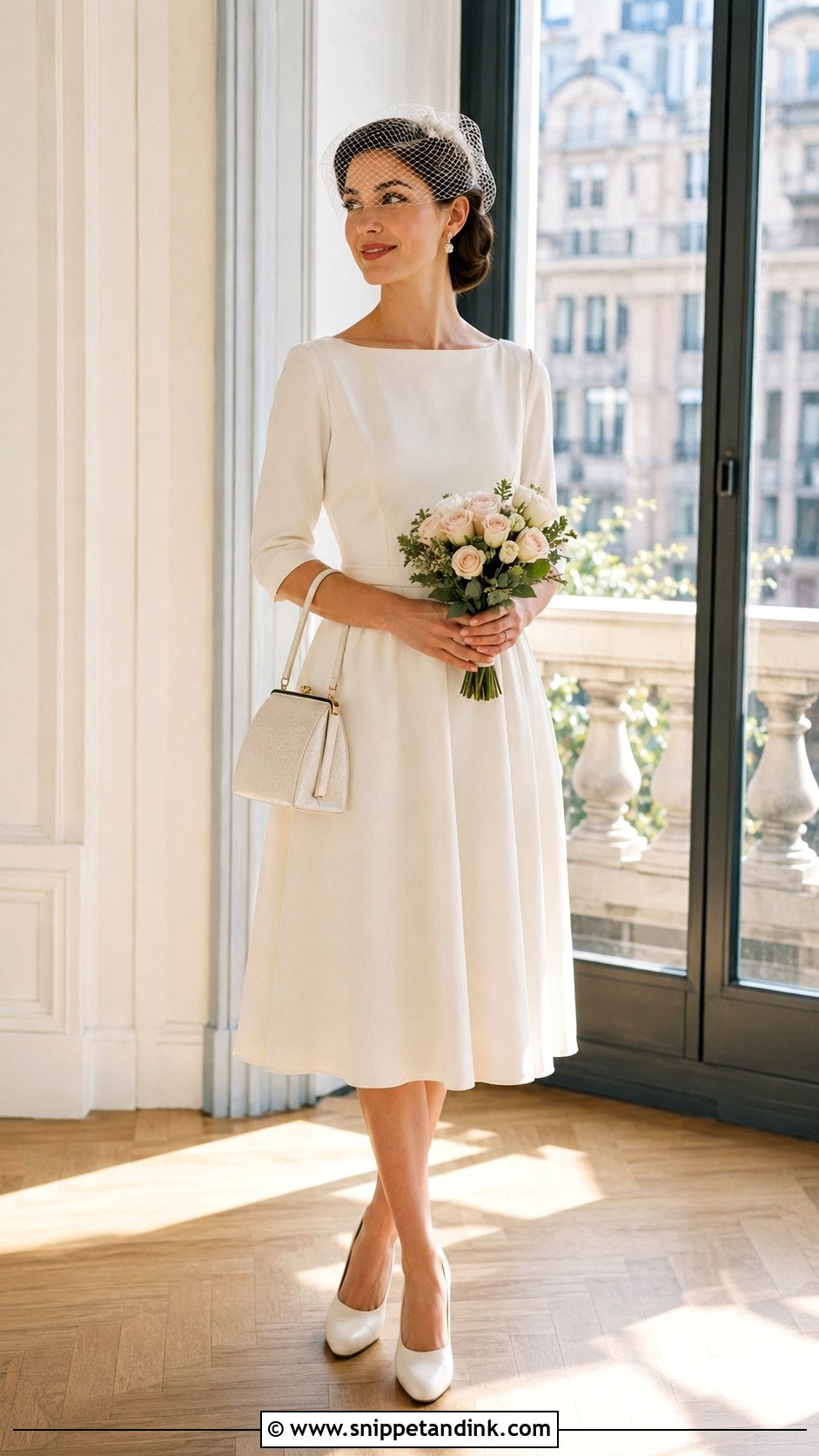
A short veil changes the mood of a forties dress more than any other accessory. Start with a simple ivory gown in satin, crepe or rayon with a fitted waist and modest neckline, then add a shoulder-length or birdcage veil, closed-toe heels, pearl earrings and a structured handbag. Short veils sit naturally with tea length dresses, suits and courthouse looks, where a long one would swamp the shorter hemline. I have the comb anchored into a pinned base rather than loose hair, so it stays put when you turn your head. Keep the style neat with soft curls or a vintage roll.
21. 1940s Long Veil Wedding Dress
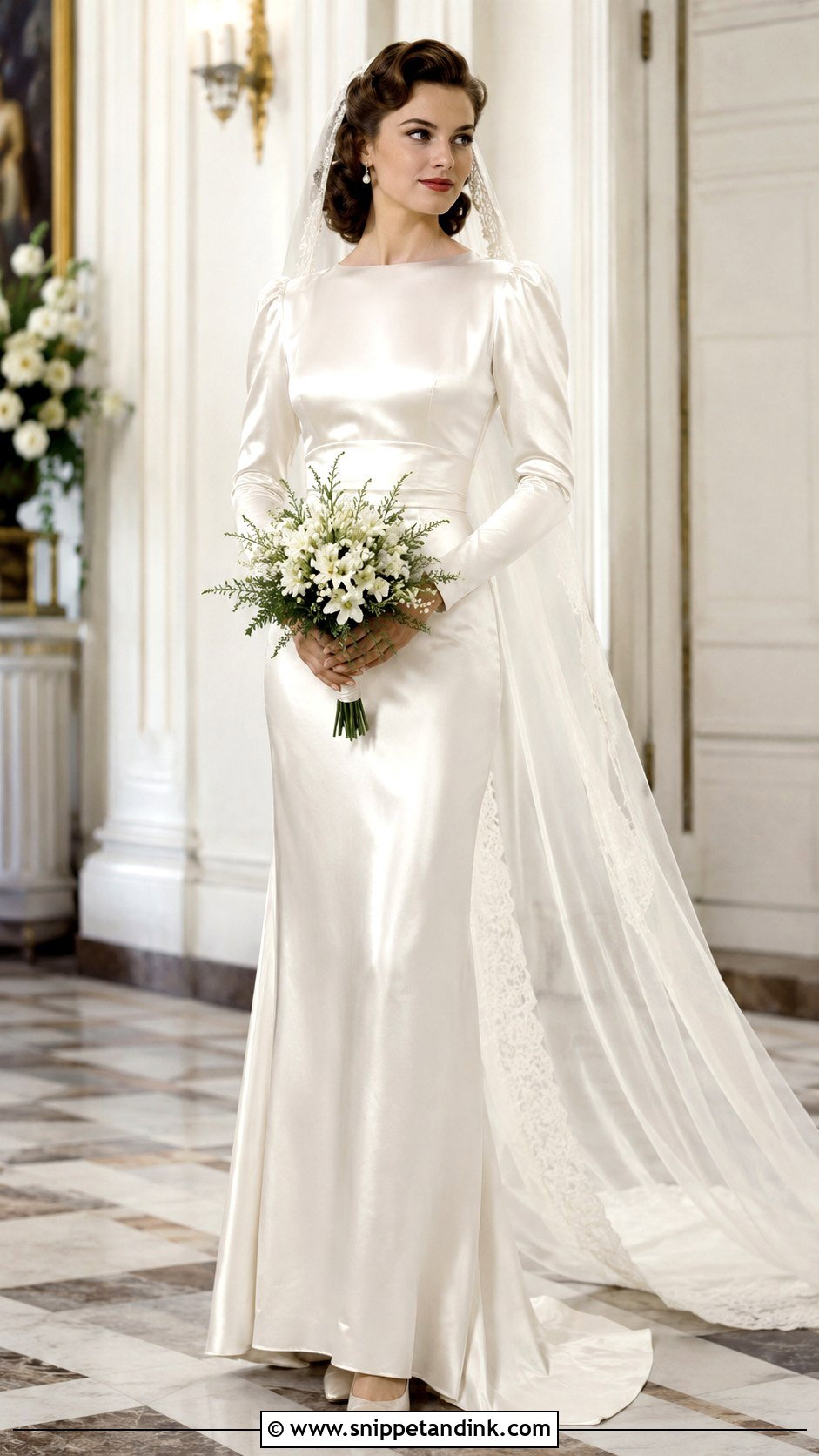
A long veil adds ceremony to a slim forties gown. Choose an ivory satin or crepe dress with long sleeves, a fitted waist and a smooth skirt, then add a chapel-length veil, pearl earrings, satin heels and a simple bouquet. Weight is the problem I solve most often with long veils: a chapel length in heavier tulle drags the comb backward through the afternoon. I pick the softest, lightest tulle the budget allows and anchor it just under a low bun or roll, where there is a firm base to grip. Brides who love old black-and-white wedding portraits tend to gravitate here.
22. 1940s Pearl Detail Wedding Dress
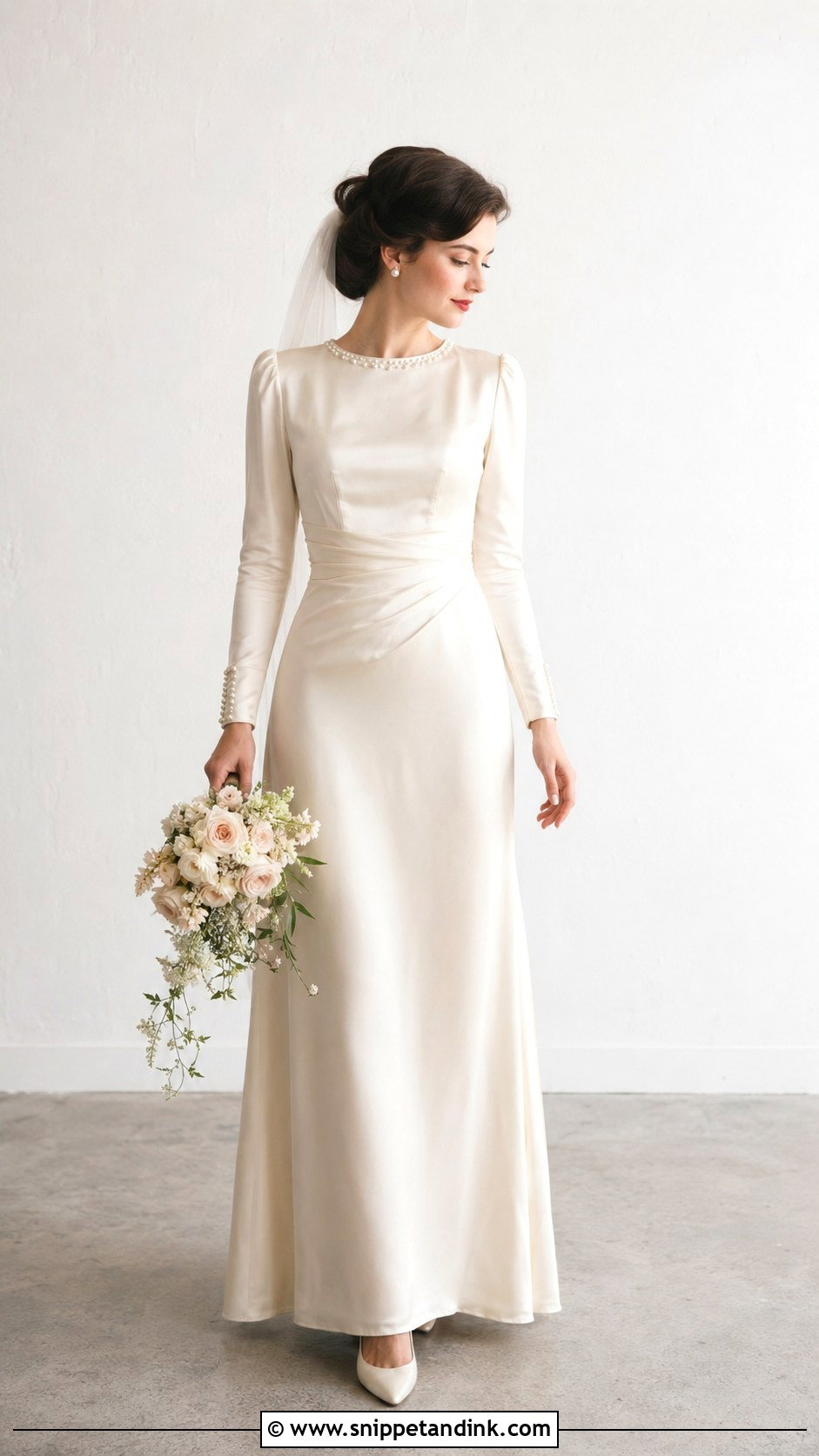
Pearls bring gentle shine without overpowering the vintage shape. Look for an ivory gown with a fitted bodice, long sleeves and small pearl accents at the neckline, cuffs or waist, and add pearl earrings, satin pumps, a simple veil and a soft bouquet. Because the dress already carries decoration, I skip a necklace. Before the wedding, tug gently on a few pearls: ones stitched on individually stay put, while pearls couched along one running thread can come away in a line if a single stitch breaks. A smooth updo or soft waves will finish it.
23. 1940s Winter Wedding Dress
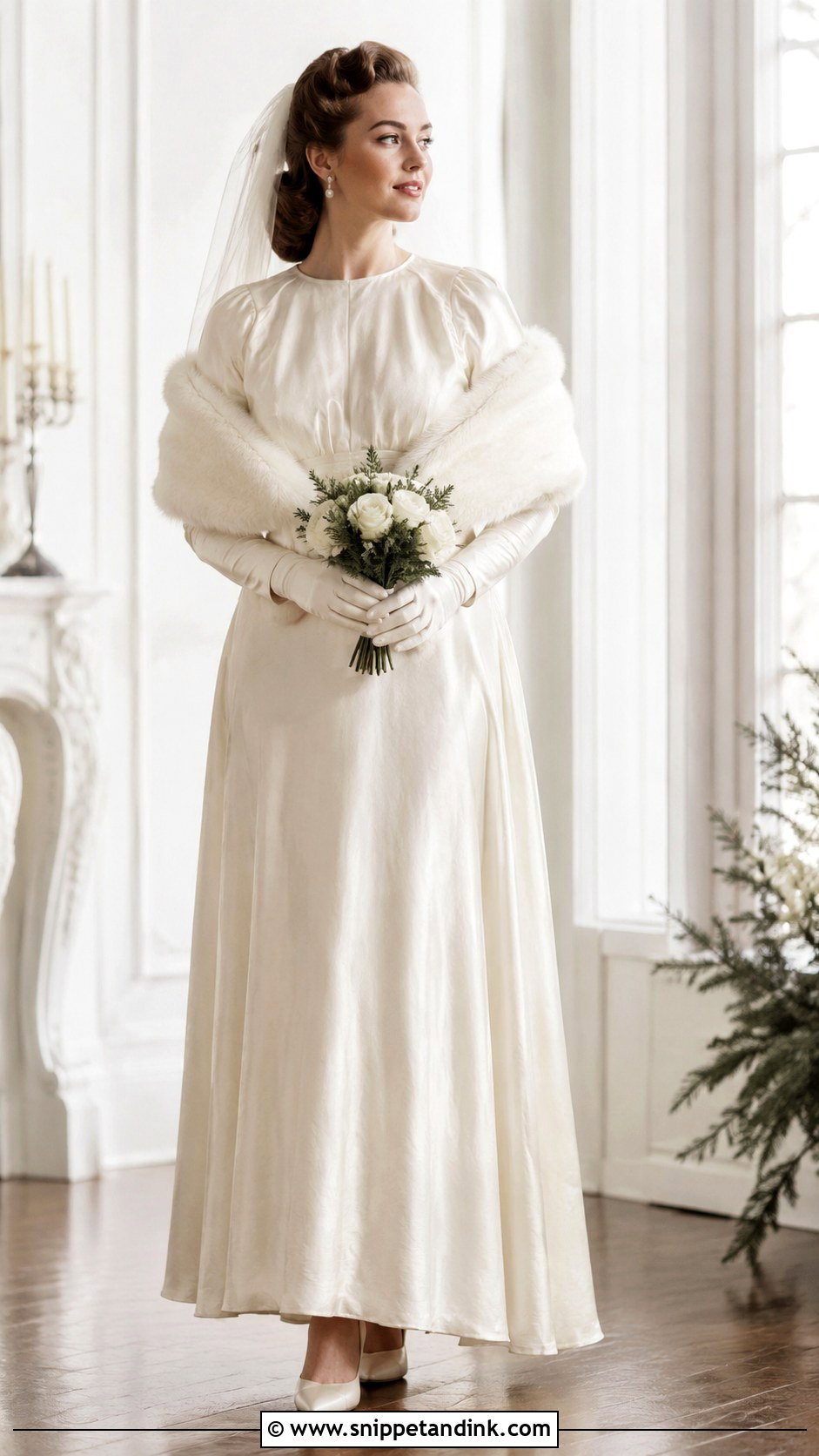
Winter calls for coverage and an outer layer you’ll be happy to see in photos. Choose an ivory long sleeve gown in satin, crepe or heavier rayon with a fitted waist and long skirt, and add closed-toe heels, pearl earrings, a faux fur stole or tailored ivory coat, gloves and a soft veil. Match the ivories carefully. A stole or coat bought separately is often a shade whiter or yellower than the gown, and the difference jumps out on camera, so I hold the pieces together in daylight before anything is bought. Keep the shape tailored, not bulky, and wear a neat updo to show the neckline.
24. 1940s Summer Wedding Dress
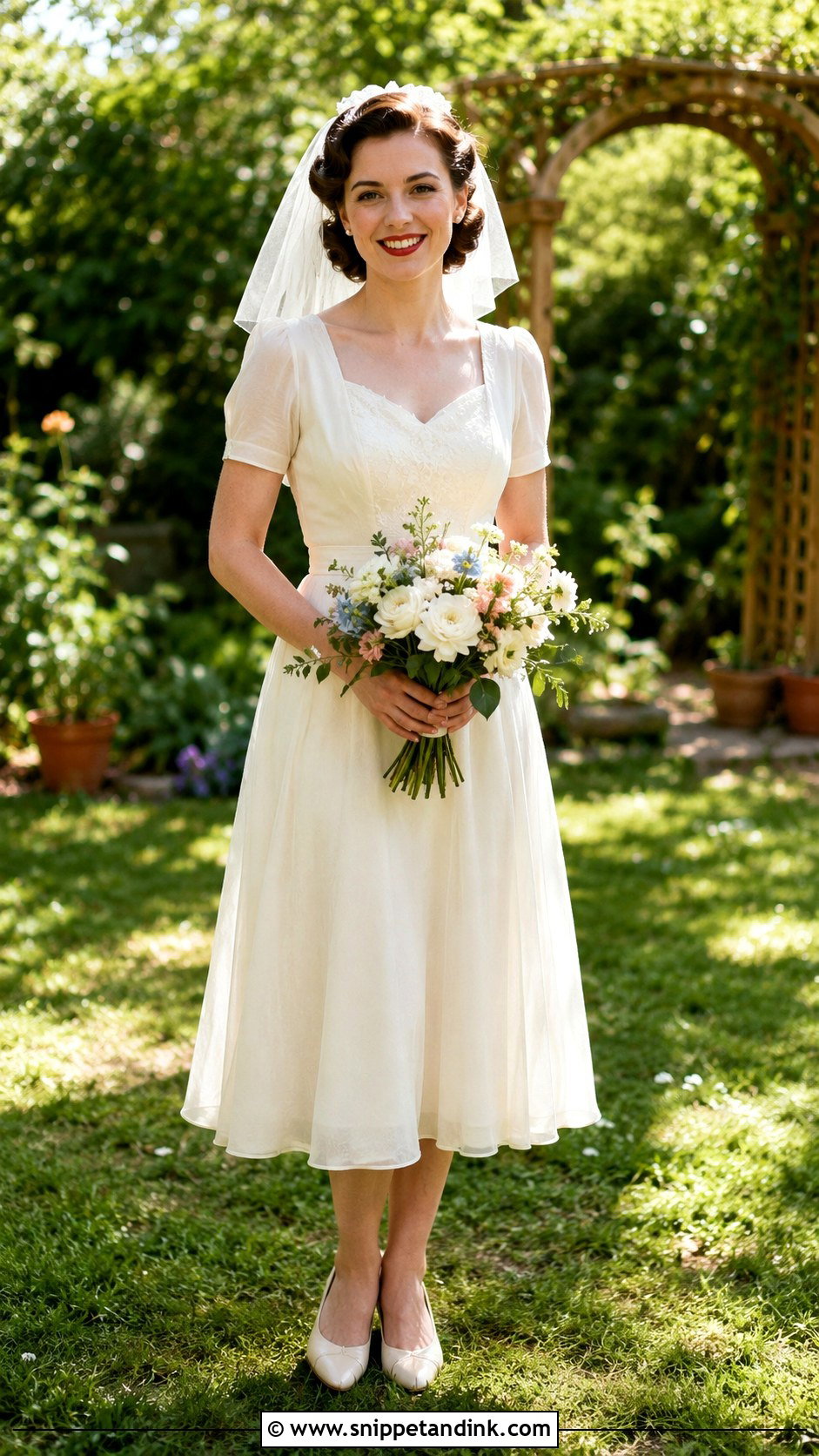
Summer asks for a lighter forties dress. Choose an ivory tea length or floor length dress in rayon, crepe or lightweight satin with short sleeves, a fitted waist and a soft skirt, and add low sandals or closed-toe pumps, pearl studs, a short veil and a fresh bouquet. Satin is the fabric I’d hesitate on outdoors in heat, since it shows perspiration marks clearly; crepe and rayon hide them far better. Soft curls pinned away from the face keep you cool through a garden wedding or a daytime ceremony.

25. 1940s Plus Size Wedding Dress
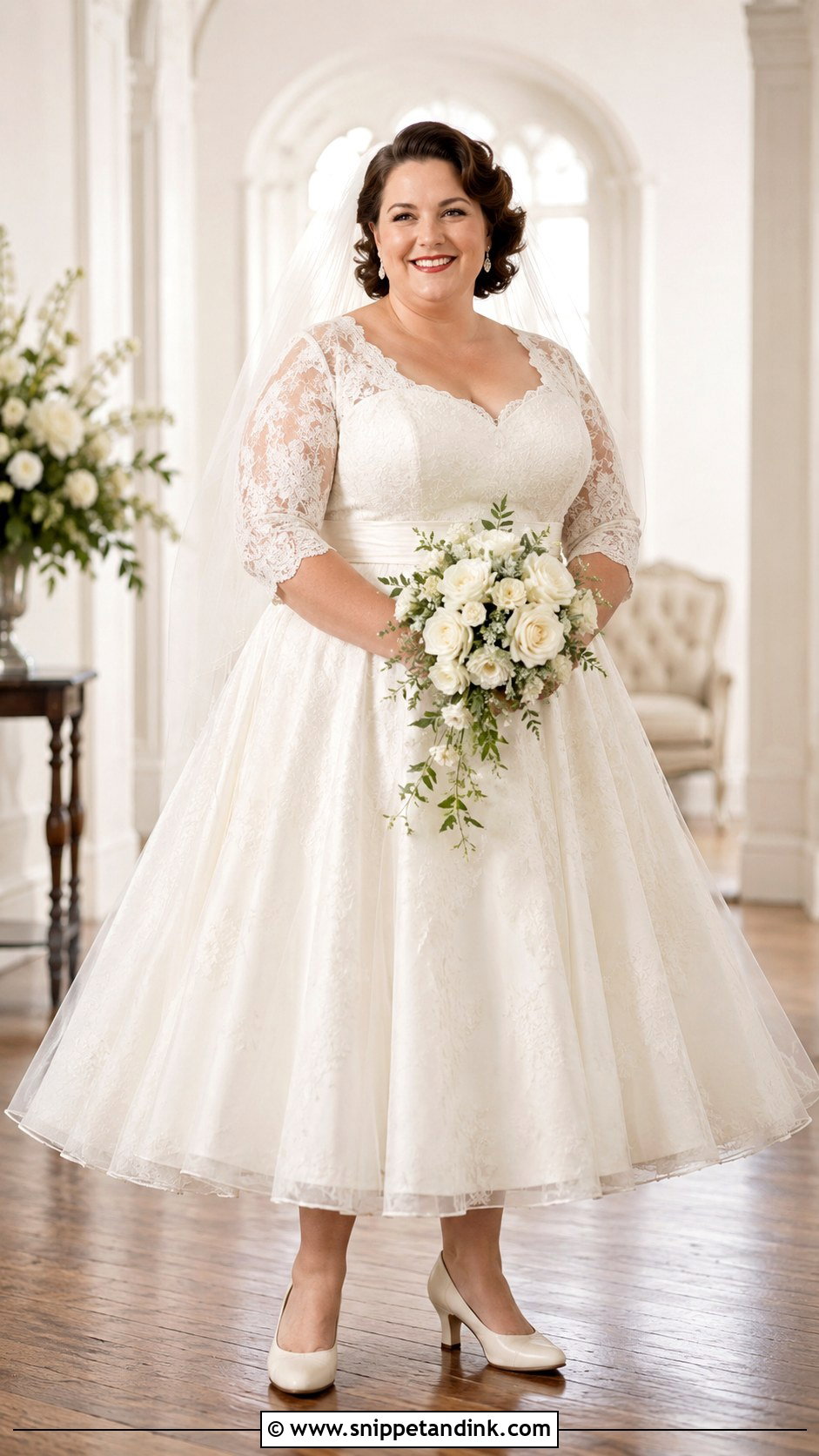
Forties shapes are kind to curves because the whole decade was built around a defined waist. Choose an ivory gown with a supportive bodice, a modest neckline and a skirt that flows smoothly from the hips; long, three-quarter or soft lace sleeves all add coverage. Add stable low heels, pearl earrings, a lightweight veil and a bouquet in proportion to your frame. Fit matters far more than the number on the label, and the dress should skim rather than pull. I usually suggest a V-neck, sweetheart or wrap-style bodice with support built in, so you aren’t relying on a strapless bra under a vintage cut.
The Shoulder, the Waist and the Hem Do the Work
When a forties look falls flat, the dress itself is rarely the reason. The silhouette depends on what sits underneath it and on where the hem lands.
Shoulders
The period shoulder was built, not natural. If a modern gown feels too soft for the era, a seamstress can add thin, rounded pads that sit just inside the shoulder seam. Keep them modest, because oversized pads push the look toward the eighties.
Waist
A longline bra or light shaping garment that ends at the natural waist gives the smooth, defined middle these dresses rely on. Wear it to every fitting, since the bodice will be cut around it.
Hem
Tea and midi hems of the decade sat roughly at mid-calf. Bring your wedding shoes to the hem fitting, stand naturally, and have the length checked from the side as well as the front, because the back of a skirt often rides higher over the seat.
Satin, Crepe and Rayon After the Last Dance
Get the dress to a cleaner who handles bridal and vintage pieces within a few weeks. Spilled drinks and cake leave sugar marks that are invisible at first and turn brown as they oxidize. Tell the cleaner exactly what the fiber is, because rayon in particular can shrink badly in water.
For storage, I fold the dress with acid-free tissue padding every fold and lay it in a breathable box, never sealed plastic, and keep it out of sunlight so the ivory doesn’t yellow. Hang it only if it has sturdy hanging loops; a heavy skirt left on a hanger slowly pulls the shoulders out of shape.
Early Wartime or Late Postwar Forties?
Forties bridal style covers far more ground than people expect, from sleek satin gowns and courthouse dresses to tailored suits, lace sleeves, tea lengths and fabric with a story behind it. What ties the decade together is structure, softened by a defined waist and a covered shoulder. Decide first whether you lean toward early wartime simplicity or late postwar romance, because that one choice settles your skirt shape, veil and shoes. Get the waist and shoulders fitted properly, wear shoes you can stand in, and the rest of the outfit tends to fall into place.
You'll Like These Ideas:









Leave a Reply