
Bridal fashion in 1981 sat right on a hinge. The Edwardian romance of the late seventies hadn’t gone anywhere, but fuller skirts, defined waists, heavy lace and ever-bigger sleeves were pulling dresses toward the look of the 1980s. Princess Diana’s wedding that July, with its ivory silk taffeta, puffed sleeves, antique lace and enormously long train, pushed the fairytale direction further. Brides still had a wide choice, though: flowing chiffon, satin A-lines, prairie dresses and simple gowns for small ceremonies. The twenty looks below each come with the accessories I’d use to keep them reading as vintage rather than fancy dress.
Reworking a Mother’s 1981 Gown for Your Own Wedding
A lot of the dresses in this list are hanging in family wardrobes right now. If you’ve inherited one, it can usually be brought up to date, but it pays to know what’s realistic before you take it to a seamstress.
- Check the fabric first. Many gowns from that period were made in polyester or blended satins and taffetas, which tend to age well. Silk versions are more fragile and more likely to have yellowed or split along the folds.
- Yellowing can often be lightened by a specialist cleaner, but old spills that have oxidised to brown don’t always come out. Ask for a test on a hidden seam first.
- Puff sleeves are the easiest thing to change. Removing the stiff net inside the sleeve head softens them straight away, and a seamstress can take out gathers or replace the sleeves with sheer new tulle.
- Dated lace trim on collars and cuffs can usually be unpicked, and lace saved from the hem or train is often the best match for repairs elsewhere.
- Taking the dress in is straightforward. Letting it out depends on how much seam allowance is left, and many factory-made gowns of that era had very little.
Try it on before you decide anything. A gown that looks dated on a hanger sometimes looks right on a body, and one change, usually to the sleeves, is often all it needs.
1. 1981 Puff Sleeve Wedding Dress
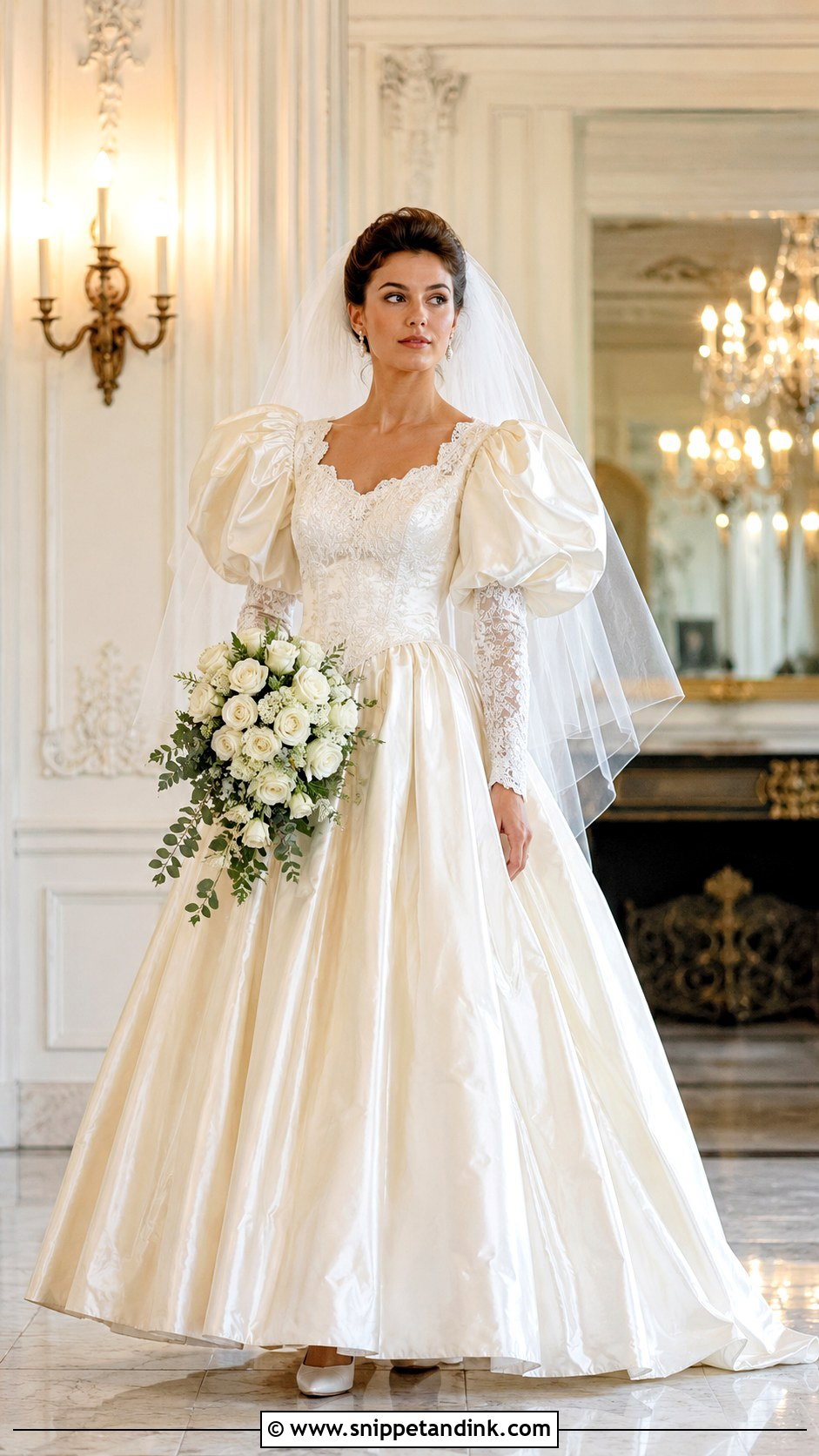
Oversized puff sleeves are the detail everyone remembers from early-eighties weddings, and they need something inside them to stay up. Most are held out by a layer of stiff net sewn into the sleeve head; if that net is soft or missing, the puff collapses by mid-afternoon. Build the rest simply: a fitted lace bodice, a gently curved neckline, a tapered waist and a full taffeta skirt, with a short row of covered buttons. A fingertip veil on a floral headpiece, pearl studs, ivory satin pumps and compact white roses finish it. For a modern take, I reduce the sleeve volume and leave off the ruffles. It still says 1981 and sits well in a ballroom or a formal indoor ceremony.
2. 1981 High Neck Lace Wedding Dress
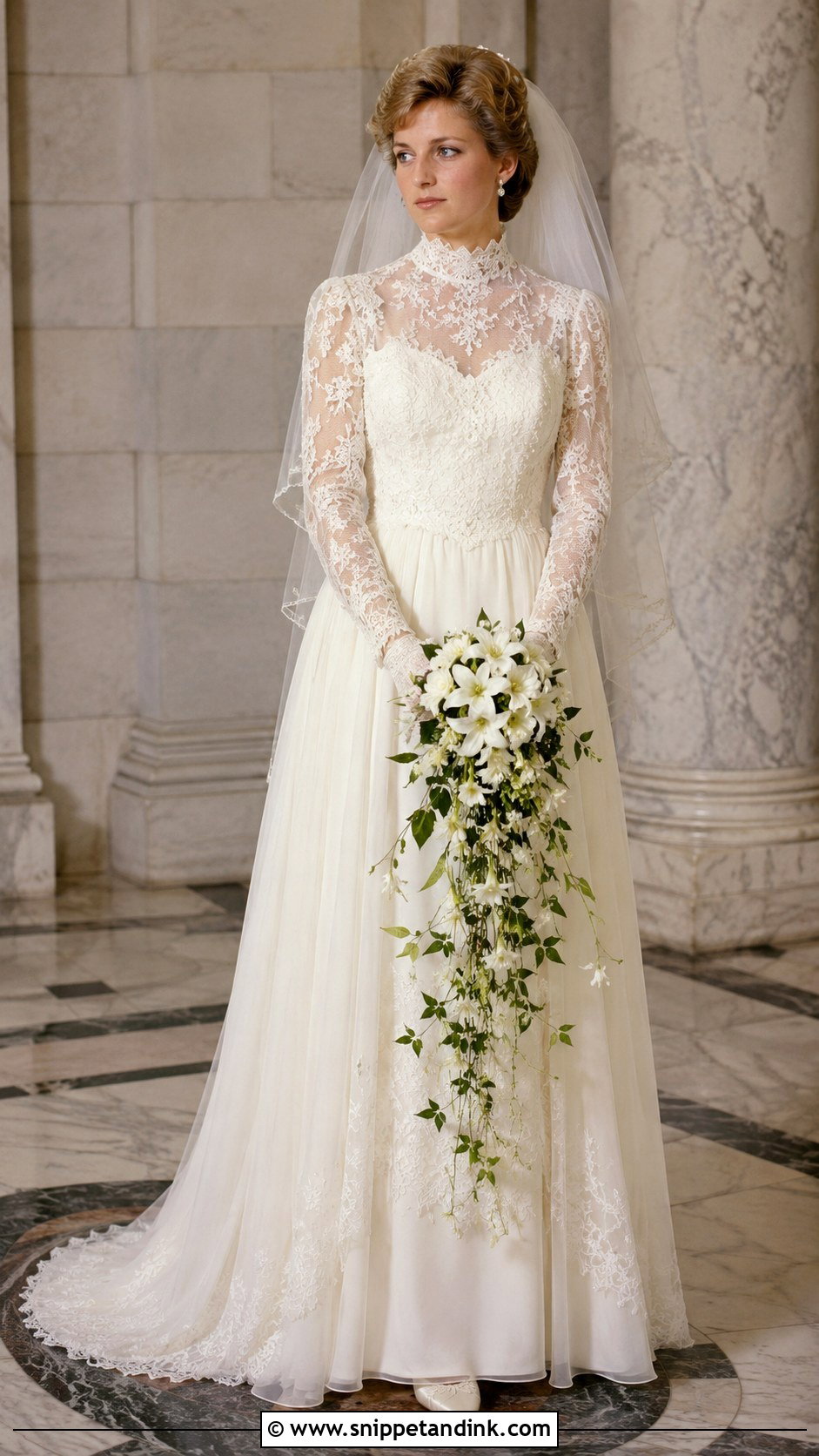
High lace collars came from the Edwardian revival that ran from the late seventies into 1981. I look for a lightly fitted bodice, a scalloped collar, a sheer lace yoke, long sleeves and a softly gathered skirt. Ivory lace over a pale satin lining gives depth, so the pattern shows instead of blending into the base. Set a chapel veil behind the head so the neckline stays visible, and keep the hair softly pinned. Small pearls, lace gloves, low pumps and a trailing bouquet finish the outfit. It suits autumn, historic venues and brides who want coverage. Watch the shoulders: a high neck plus long sleeves can swamp a narrow frame unless the shoulder seam is fitted exactly.
3. 1981 Satin A-Line Wedding Dress
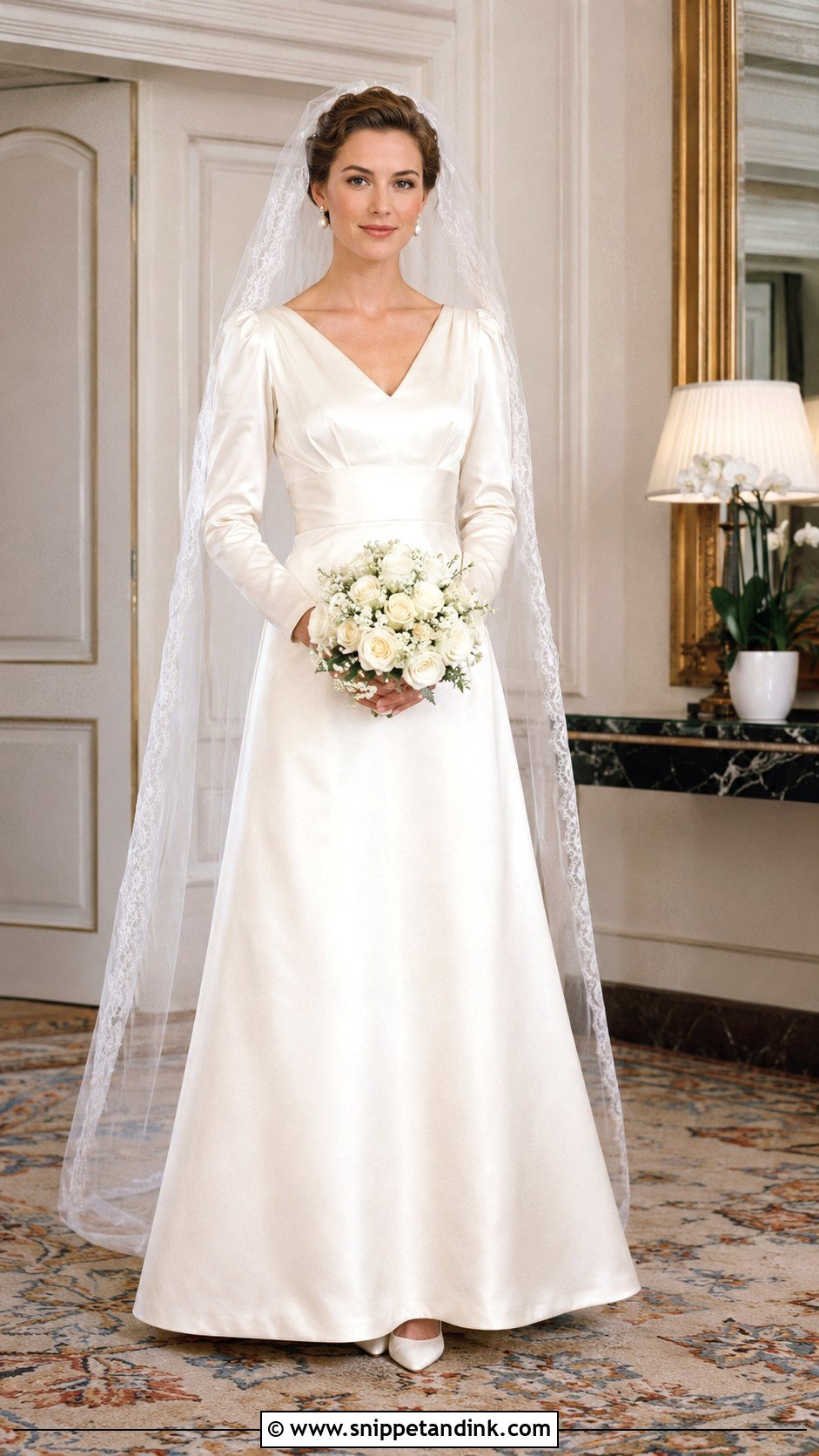
This is the 1981 dress for a bride who doesn’t want the drama. A fitted waist, restrained sleeves, a modest V-neck, lightly gathered shoulders and a smooth skirt give period character with very little decoration. The fabric choice matters more than it looks. A soft-sheen ivory satin reads expensive, while a high-gloss one picks up every wrinkle and bounces flash straight back at the camera. Add a narrow lace-edged veil, pearl drops, closed-toe heels and a structured bouquet of roses and greenery, with a ribbon belt if you want the waist marked. The skirt falls cleanly over the hips, which is why it flatters so many figures.
4. 1981 Edwardian Ruffle Wedding Dress
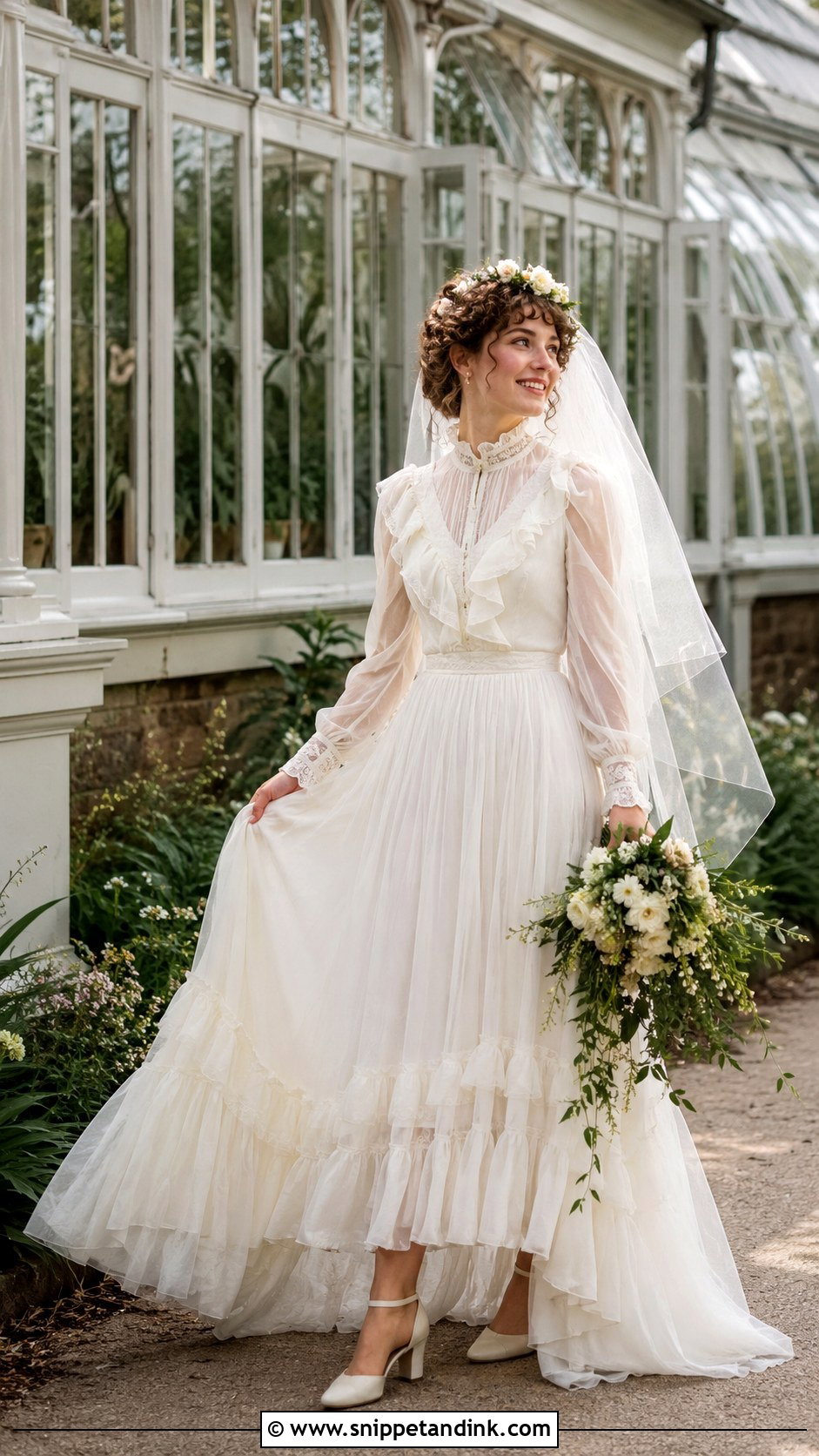
Ruffles are easy to overdo, so with this look I set a rule: one or two decorative features, never all of them. A ruffled high collar and narrow cuffs are enough on a lightweight chiffon or organza gown with sheer sleeves and a defined waist, which means skipping oversized puffs and heavy tiers. Let the skirt fall in airy layers rather than a stiff ball-gown shape. A floral wreath, plain tulle veil, pearl earrings and ivory ankle-strap shoes suit it, with a loose bouquet of daisies, roses and trailing greenery. I’d put it in a spring garden, a historic house or a softly decorated room.
5. 1981 Cathedral Train Wedding Dress
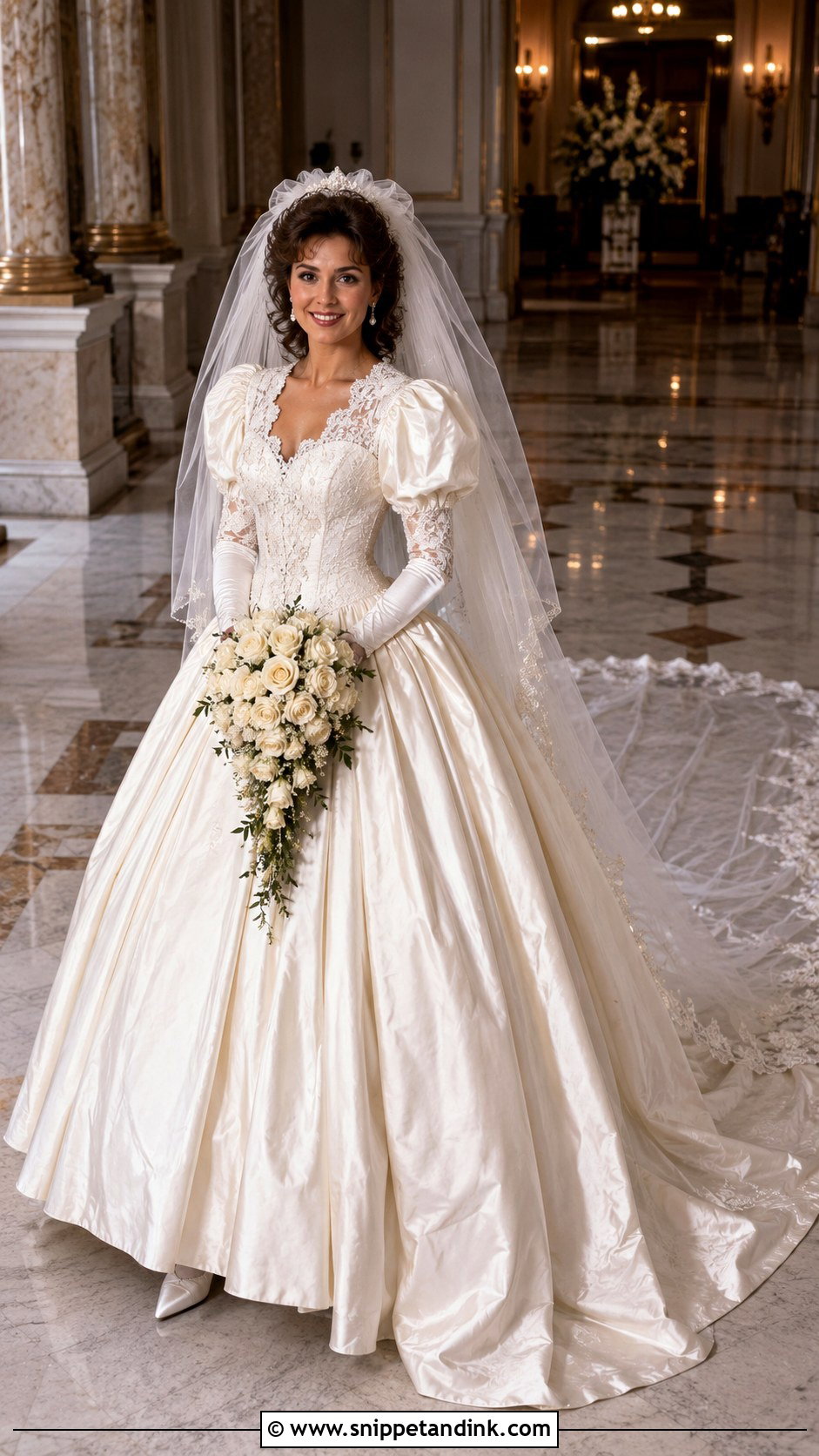
A cathedral train needs room, a plan and a helper. Start with a fitted bodice, V-shaped waist and full skirt in substantial ivory taffeta, with lace appliqués around neckline and hem and covered buttons down the back. The veil should follow the train without extending far past it, because two long layers of different lengths look messy on the aisle. Pearl earrings, satin pumps, wrist-length gloves and a rounded bouquet are plenty. Plan the bustle at alterations, not the week before, and have whoever will hook it up practise once. Choose a venue with space to spread the train for photos.
6. 1981 Bishop Sleeve Wedding Dress
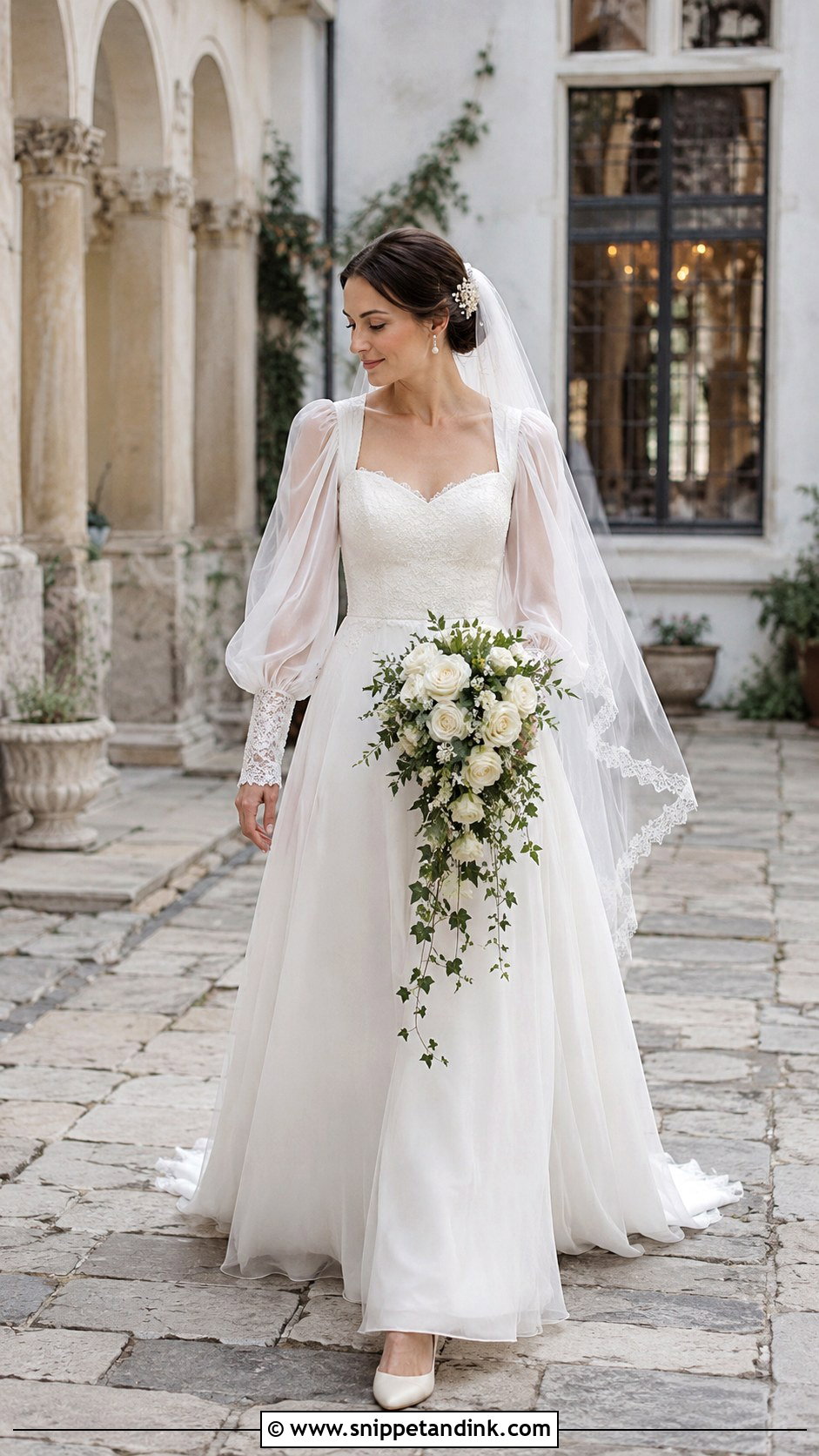
Bishop sleeves are the gentler 1981 option. Sheer sleeves gathered into fitted lace cuffs give movement without the stiffness of a structured puff, and they keep you covered on a cool day without looking heavy. Pair them with a modest sweetheart bodice, lace across the chest to link the sleeves to the dress, and a flowing A-line skirt. A chapel veil, pearl comb, ivory low heels and a cascading bouquet complete it. I insist on soft organza or chiffon for the sleeves, since stiff fabric makes them balloon rather than drape. Keep the waistline smooth so the whole thing doesn’t turn busy.
7. 1981 Tiered Skirt Wedding Dress
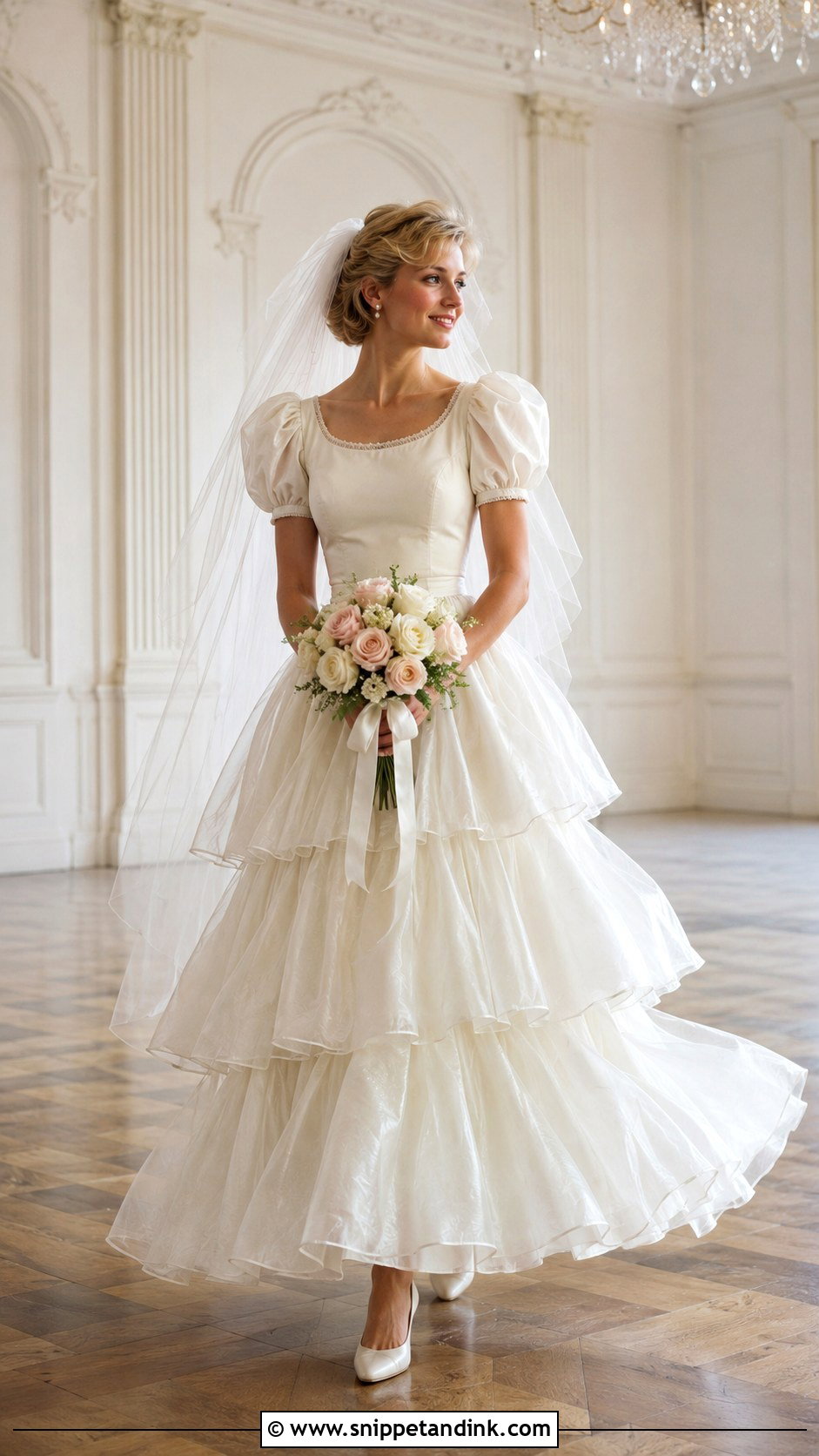
Tiers only work when each layer falls softly. If they stand out like rigid frills, the skirt reads as a costume. I’d go for three or four well-spaced organza or lace tiers under a fitted bodice with short puff sleeves. A waist-length veil keeps the top half balanced and leaves the skirt as the focus. Small pearl studs, ivory pumps and a rounded bouquet tied with satin ribbon complete it. Petite brides should ask for narrower tiers and less volume; taller brides can carry a fuller skirt and a slightly longer train. Give this dress a ballroom, hall or large garden where it can move.
8. 1981 Empire Waist Wedding Dress
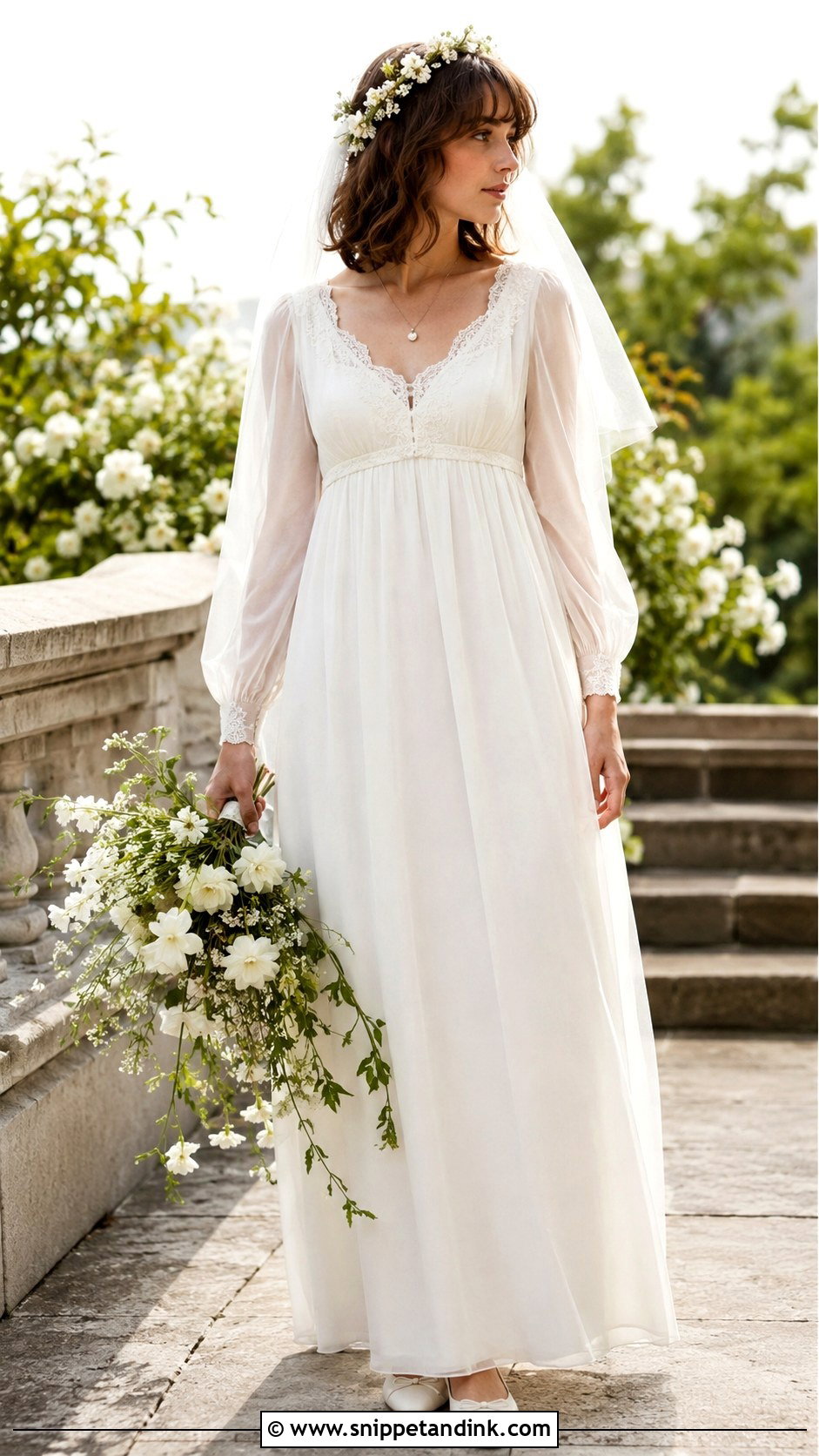
Empire waists carried the softer seventies line into 1981. Look for a lace-trimmed bodice ending just below the bust, long sheer sleeves and a chiffon skirt that falls in a relaxed line, skimming rather than defining. A simple floral crown, shoulder-length veil, fine pendant and ivory ballet flats or low pumps keep it light, with a loose bouquet of small white flowers. It’s comfortable outdoors and at informal venues. All the structure comes from two places: the shoulder fit and the exact position of the empire seam. If the seam sits even slightly low, the dress looks shapeless in photos.
9. 1981 Prairie Wedding Dress
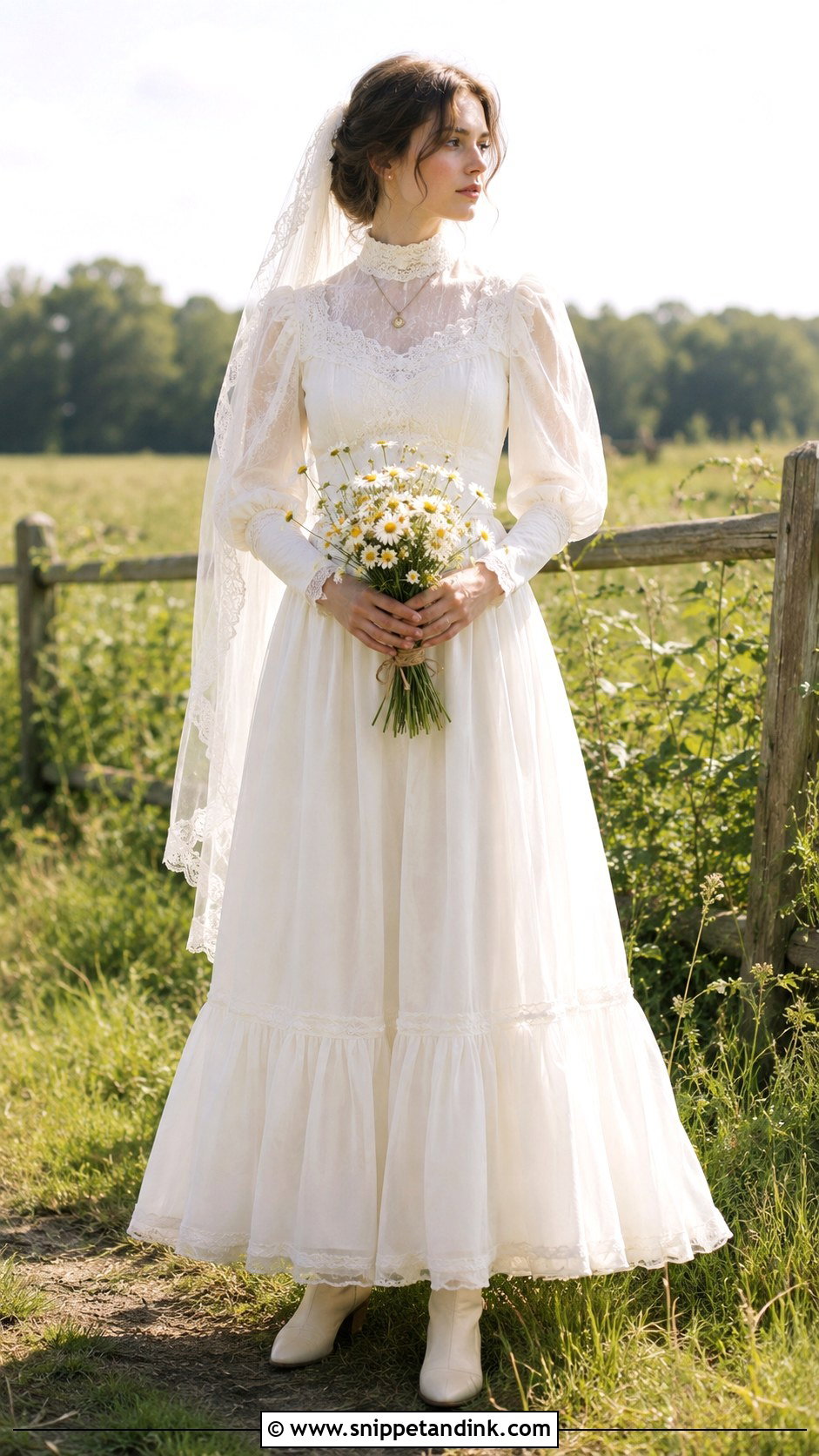
A prairie-inspired wedding dress is the country cousin of the 1981 look. Think cream cotton lace or lightweight voile, a high neckline, gently puffed sleeves with fitted cuffs and a gathered floor-length skirt with a small ruffle at the hem. Natural textures suit it far better than glossy satin. A lace-edged veil, low ivory boots, a small pendant and hand-tied daisies and greenery finish it, with soft waves or a loose braided updo. It belongs in a barn, meadow, farmhouse or garden. The risk is that it looks like an everyday dress, so I keep it floor-length and the accessories polished.
10. 1981 Tea Length Wedding Dress
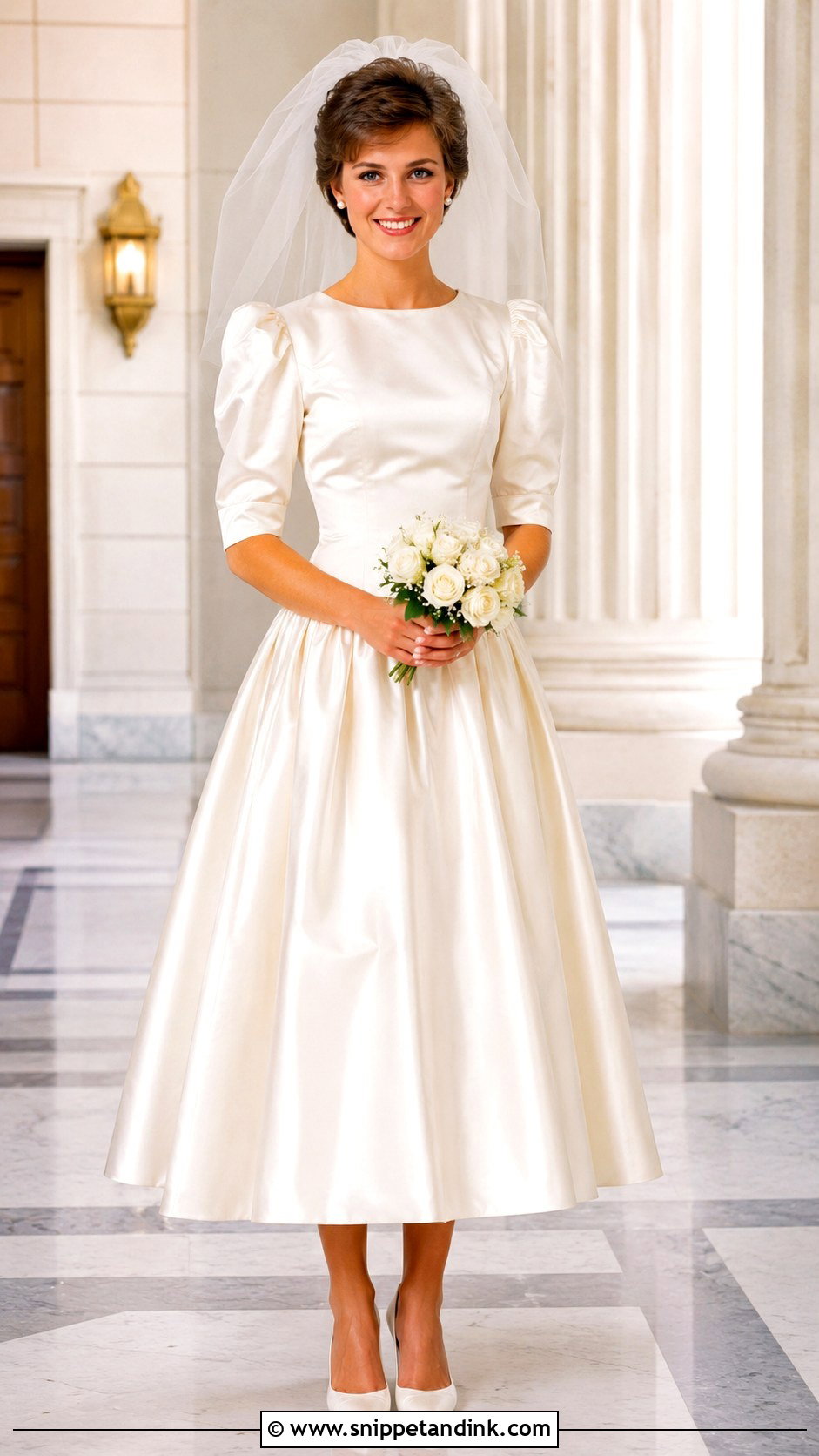
Tea length was the upbeat alternative to the floor-sweeping gowns of the year. An ivory satin or lace dress with a fitted bodice, elbow-length puff sleeves, a defined waist and a hem below the knee keeps the proportions right. A soft petticoat adds fullness, while a stiff hooped one makes the skirt look exaggerated. With the shoes on show, I’d pick an almond toe and a heel you can stand in for hours. A short veil, pearl button earrings and compact roses suit a courthouse, a daytime reception or a smaller second wedding. Short gloves make it more formal. Keep the neckline simple.
11. 1981 Juliet Sleeve Wedding Dress
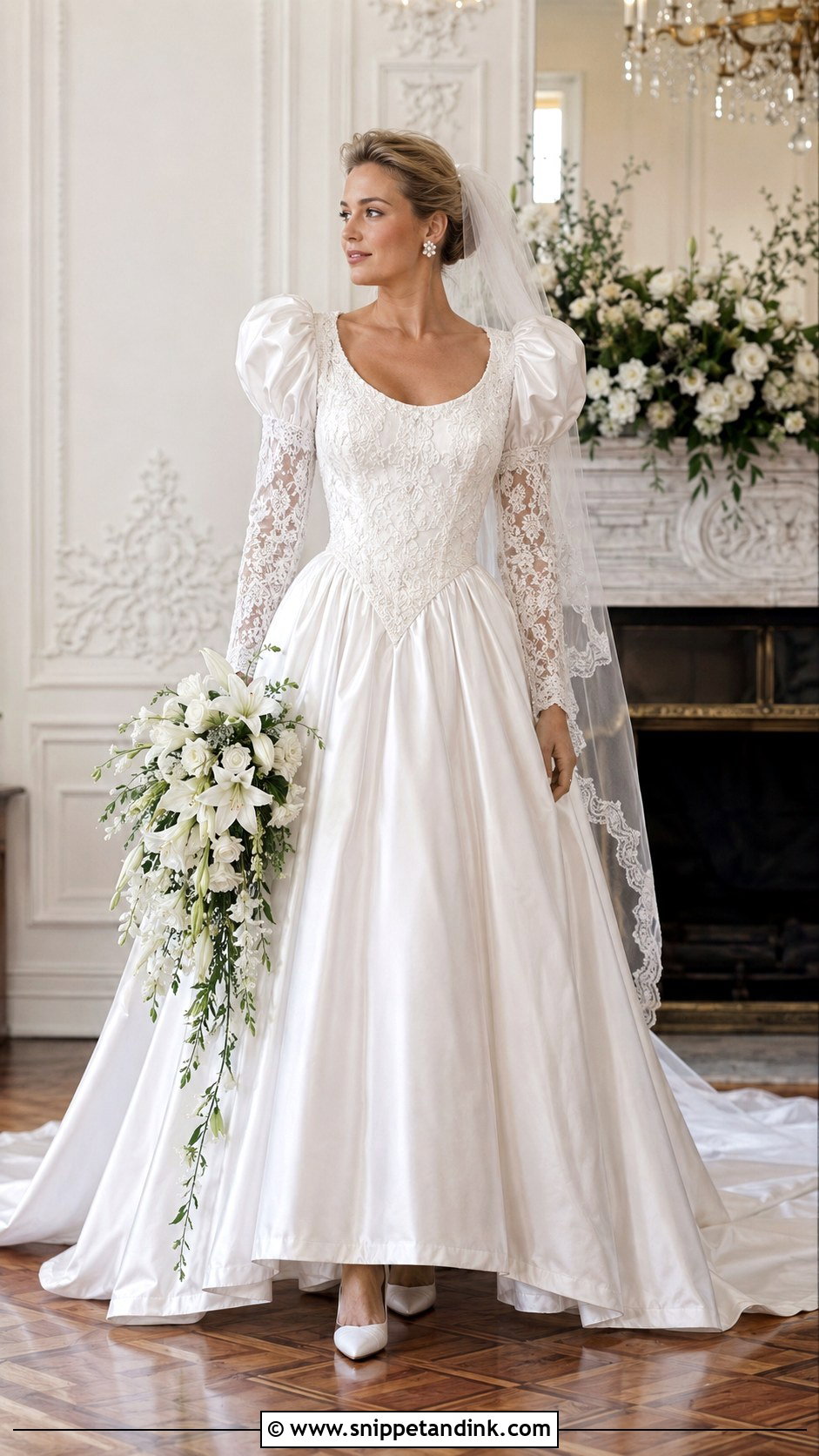
Juliet sleeves puff at the shoulder and then fit closely to the wrist, so the arm looks long instead of wide. The lower sleeve is where fit goes wrong. Cut too tight, it pulls across the elbow every time you bend your arm to hold the bouquet, so I always have the bride bend and reach at the fitting. Pair the sleeves with a lace bodice, modest scoop neckline, pointed waist and full satin skirt. A chapel veil, pearl cluster earrings, ivory court shoes and a cascading bouquet complete it, with a neat updo to show off the shoulder. With dramatic shoulders, keep the skirt smooth and add only scattered lace appliqués.
12. 1981 Organza Wedding Dress
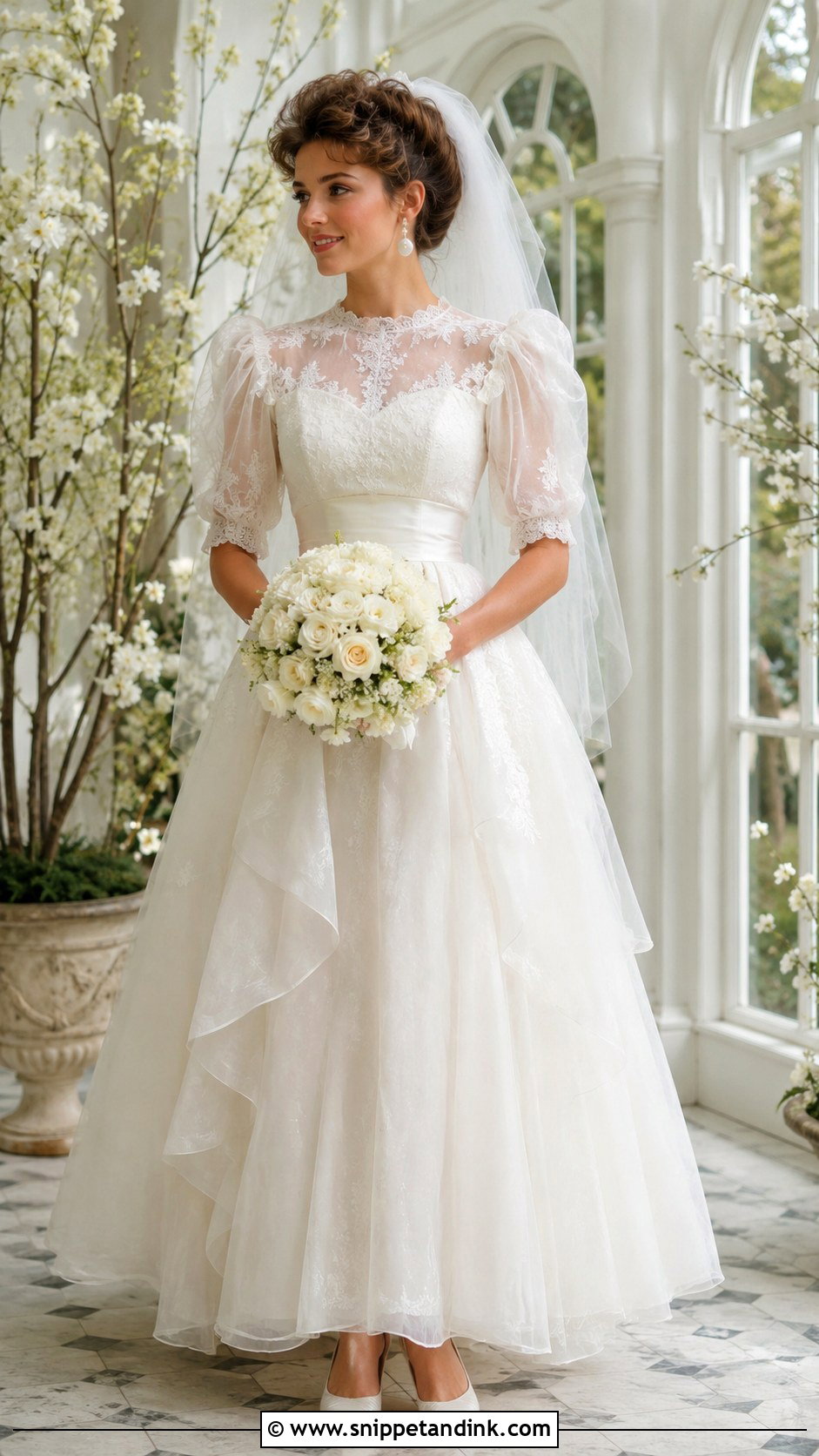
Organza gives you 1981 volume without the weight of taffeta. The version I’d build has a sweetheart lining under a sheer lace neckline, medium puff sleeves and a layered organza skirt, held together by a narrow satin waistband. Quality matters a lot. Cheap organza is scratchy against the inner arm and neckline, so rub a sample against your wrist before ordering. Add a fingertip veil, crystal-and-pearl earrings, ivory slingback shoes and a rounded bouquet. It suits spring and summer, when the fabric catches light and moves. Keep everything else minimal, since bows and extra ruffles fight the layers.
13. 1981 Taffeta Wedding Dress
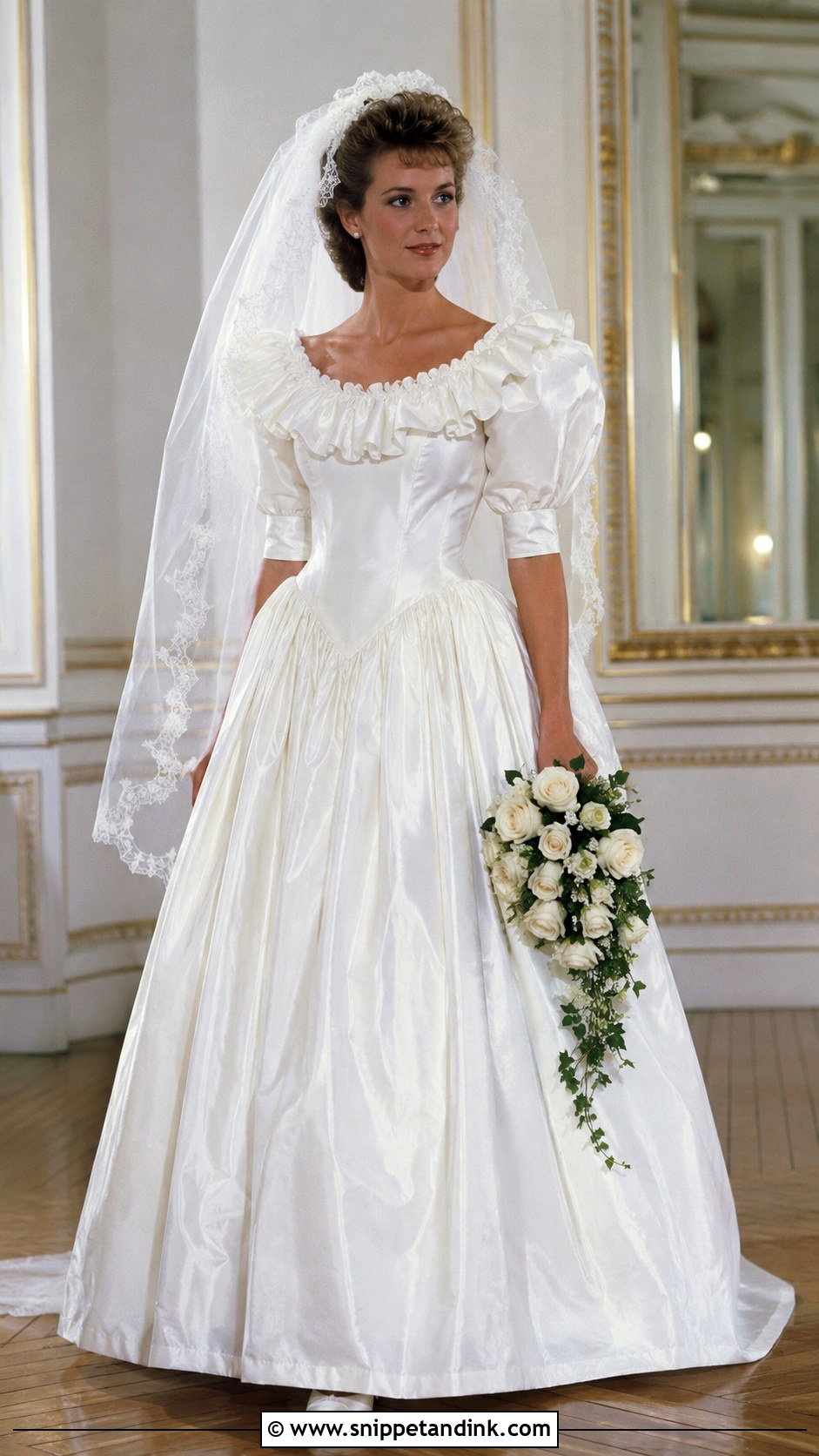
Taffeta is the fabric most people picture for this year, and it holds volume on its own, so it doesn’t need much underneath or on top. A fitted bodice, wide ruffled neckline, gathered puff sleeves and a full skirt over a moderate petticoat are enough, and a V-shaped waist lengthens the torso. Add a lace-trimmed veil, pearl studs, ivory satin pumps and formal roses. Taffeta’s weakness is creasing, and the creases show sharply in photos. The dress should travel on a hanger in a long bag and be steamed that morning, and you should lift the skirt behind you before sitting. Keep the hair simple so the neckline doesn’t overpower your face.
14. 1981 Lace Cape Wedding Dress
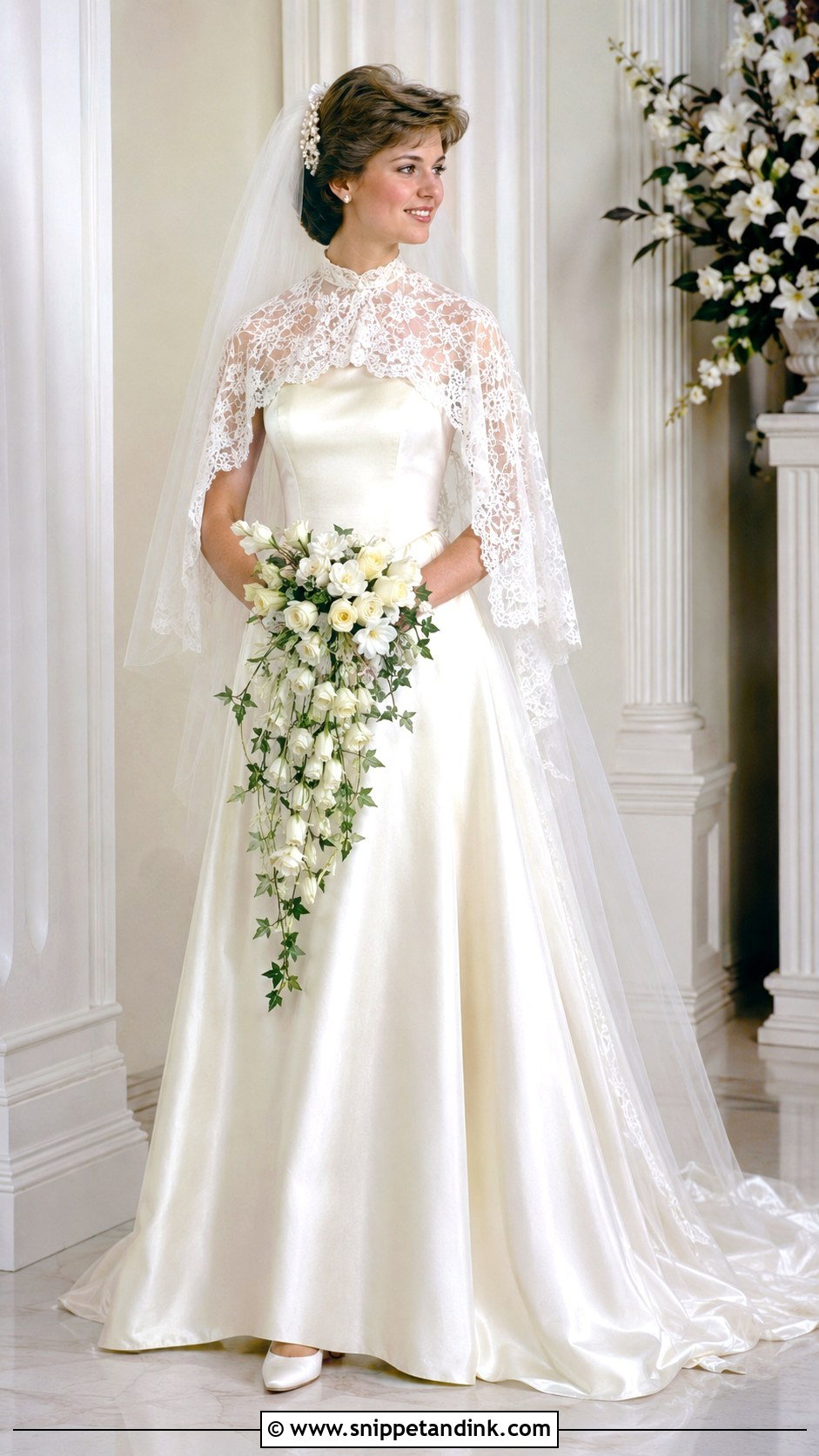
A lace cape gives you two outfits from one dress. Start with a sleeveless or cap-sleeve ivory satin gown with a natural waist and gently flared skirt, then add a sheer lace cape that fastens at the collar and falls to the elbows or waist. It’s covered and formal for the ceremony, lighter once it comes off for the reception. Match the lace to the dress rather than introducing a second pattern. A streamlined veil under a small pearl comb, closed-toe ivory heels and a cascading bouquet complete it, and the necklace can go. I reach for this one for conservative venues and in-between weather.

15. 1981 Floral Lace Wedding Dress
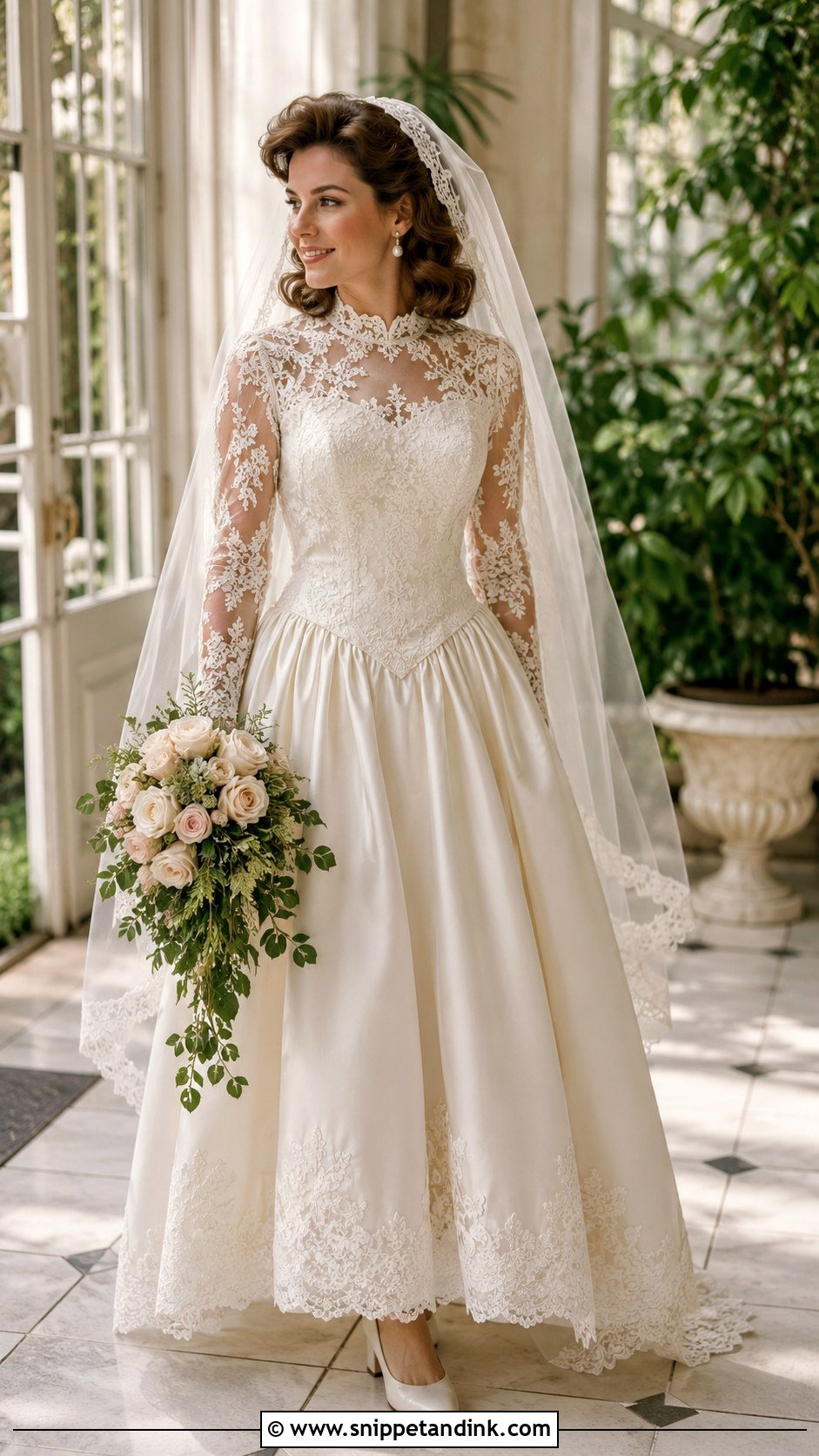
Large floral motifs give texture you can see from the back row, which is why they suit this era’s bigger silhouettes. I’d choose a fitted lace bodice, sheer long sleeves, a natural waist and a softly gathered satin skirt, with appliqués repeated around the hem. Skip a jeweled belt, which competes with the lace. A lace-edged veil, pearl drops, ivory pumps and roses with fine greenery finish it. Ivory rather than bright white gives the lace more depth and a truer vintage tone. At the fitting, check the shoulders and sleeves while you lift your arms, since most lace sleeves have very little give.
16. 1981 Square Neck Wedding Dress
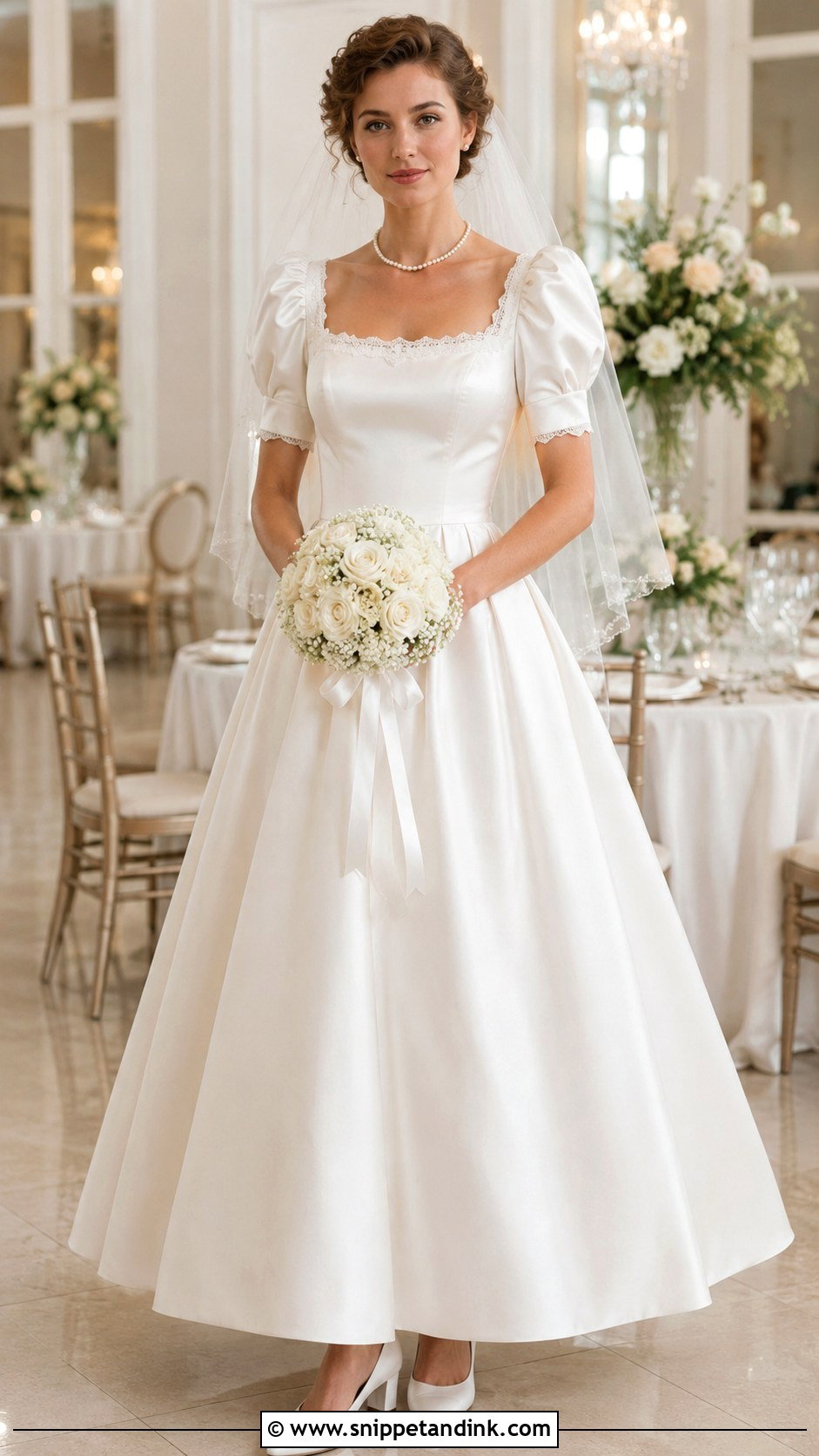
A square neckline frames the face and leaves room for the one necklace in this list I’d actually recommend: a short strand of pearls. Choose a fitted satin bodice with lace edging, gathered puff sleeves and a full A-line skirt, with smooth, supportive seams so the square sits evenly across the chest. A fingertip veil, pearl earrings, ivory block-heel pumps and a ribbon-tied bouquet complete it. Shoulder width decides sleeve volume. Broad shoulders look best with softer gathers; narrow shoulders can carry more puff. Of all these looks, this is the easiest to adapt for a present-day wedding.
17. 1981 Dropped Waist Wedding Dress
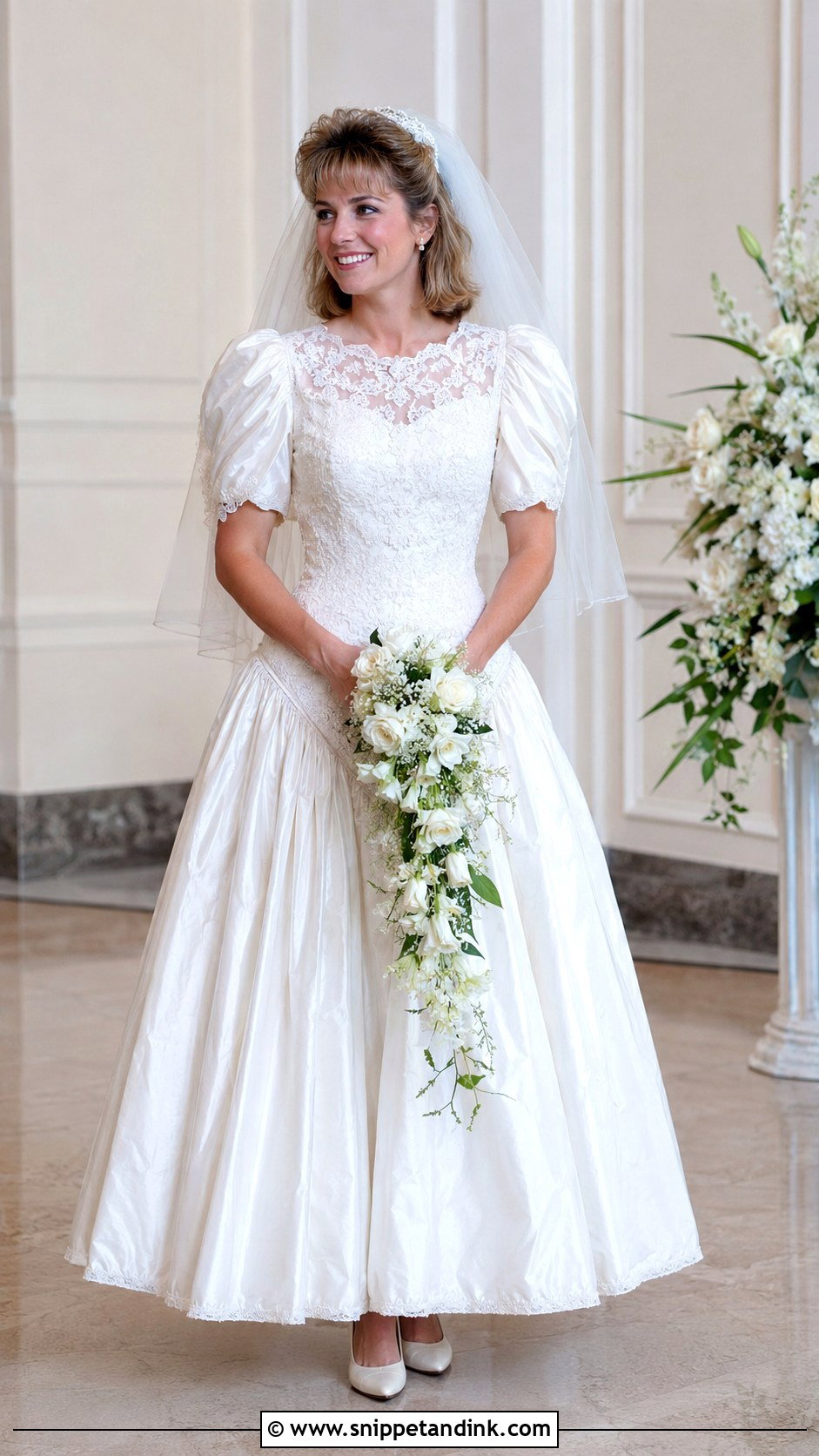
A dropped waist lengthens the torso before the skirt opens out, which suits brides who want a big skirt without volume right at the natural waist. The lace bodice extends slightly below the waist, with puff sleeves and a gathered taffeta skirt. Where that seam sits is everything. It should rest on the upper hip without digging in when you sit, and a pointed or gently curved seam is usually kinder than a straight horizontal line. Fit the bodice closely but not tightly. A shoulder-length veil, pearl earrings, ivory pumps and a cascading bouquet finish it. Keep the skirt plain so the bodice shape reads.
18. 1981 Chiffon Wedding Dress
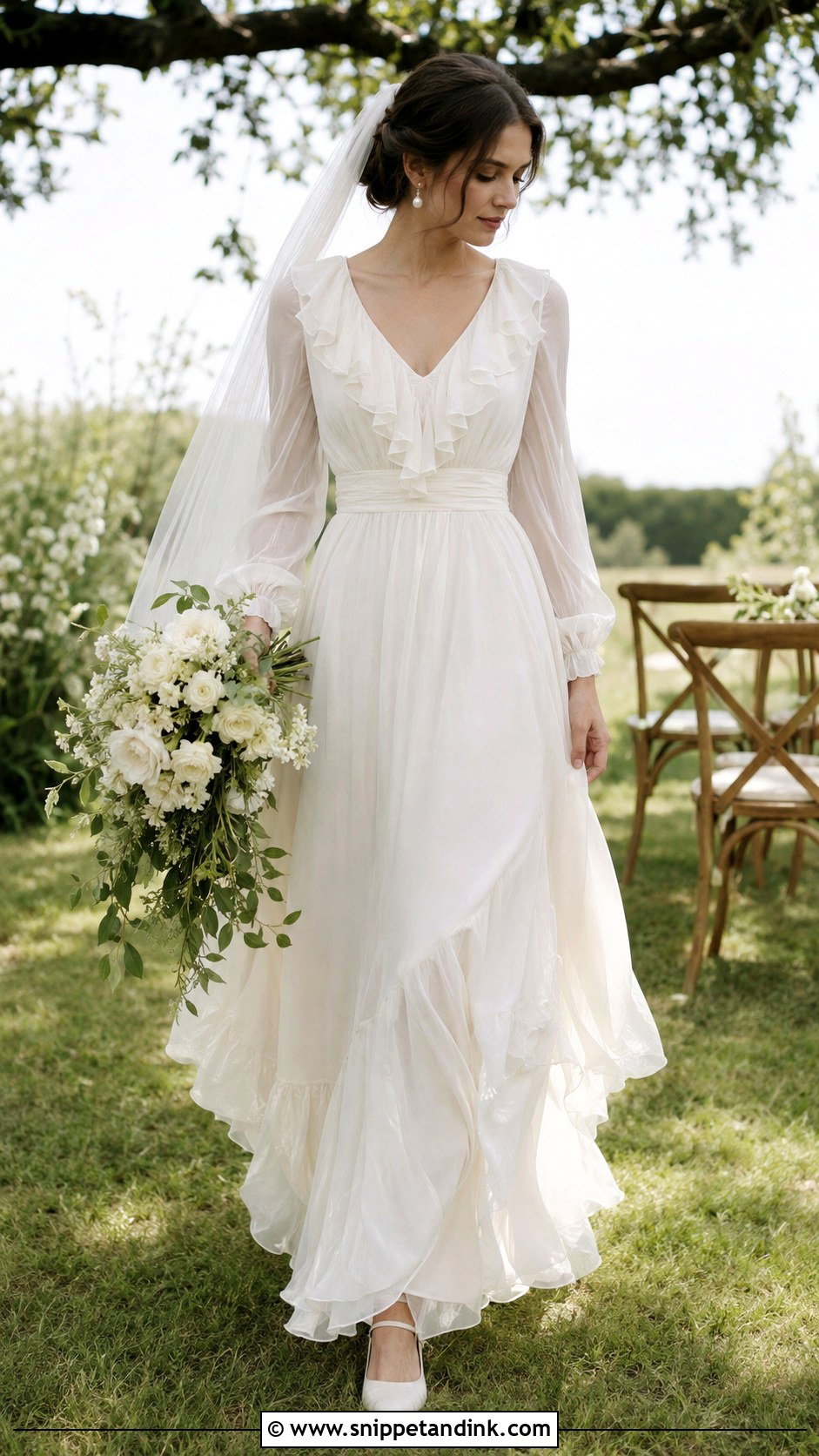
Chiffon is the light answer to the year’s ball gowns. A lined gown with a ruffled V-neck, sheer bishop sleeves, a defined waist and a layered floor-length skirt moves in any breeze, which is why I’d put it on a beach or in a garden. Small lace inserts add vintage detail without weight. A narrow veil, fine pearl earrings, ivory low heels and a loose bouquet with trailing greenery suit it. Two cautions. Match the lining closely to the chiffon colour, or the layers look patchy in photos, and leave sharp-set bracelets at home because chiffon snags on them.
19. 1981 Winter Wedding Dress
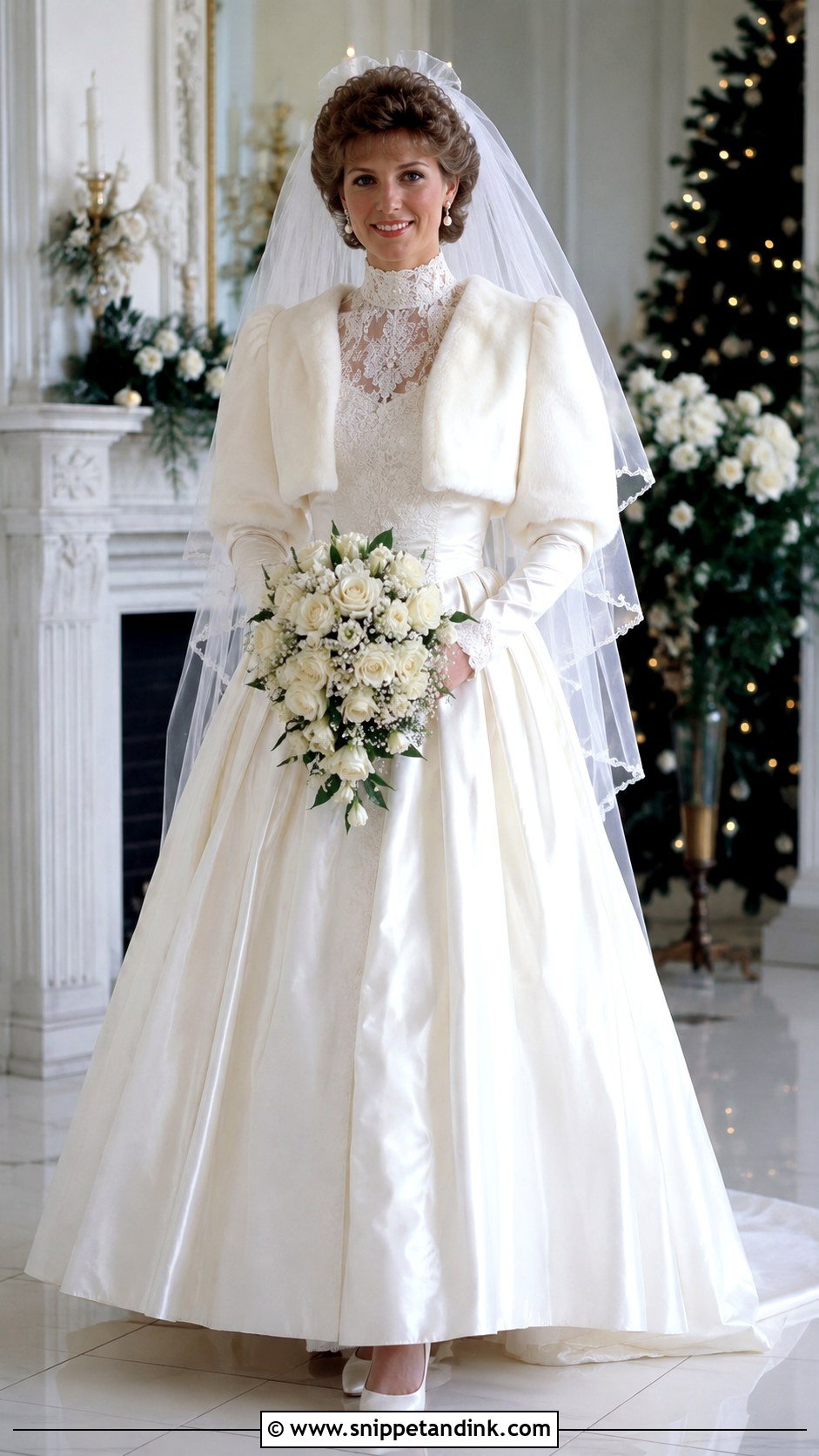
A winter version needs a plan for outerwear, because coats and puff sleeves don’t mix. Start with an ivory satin gown with a high lace neckline, long sleeves that run from puffed to fitted, a defined waist and a full skirt; heavier satin holds the shape better in the cold. For outdoor photos and travel between venues, I’d use a cropped faux-fur wrap or a lined satin cape resting around the shoulders, never a fitted coat that crushes the sleeves. Pearl earrings, closed-toe pumps, a chapel veil and white roses complete it. It suits a hotel ballroom or a historic building.
20. 1981 Minimal Wedding Dress
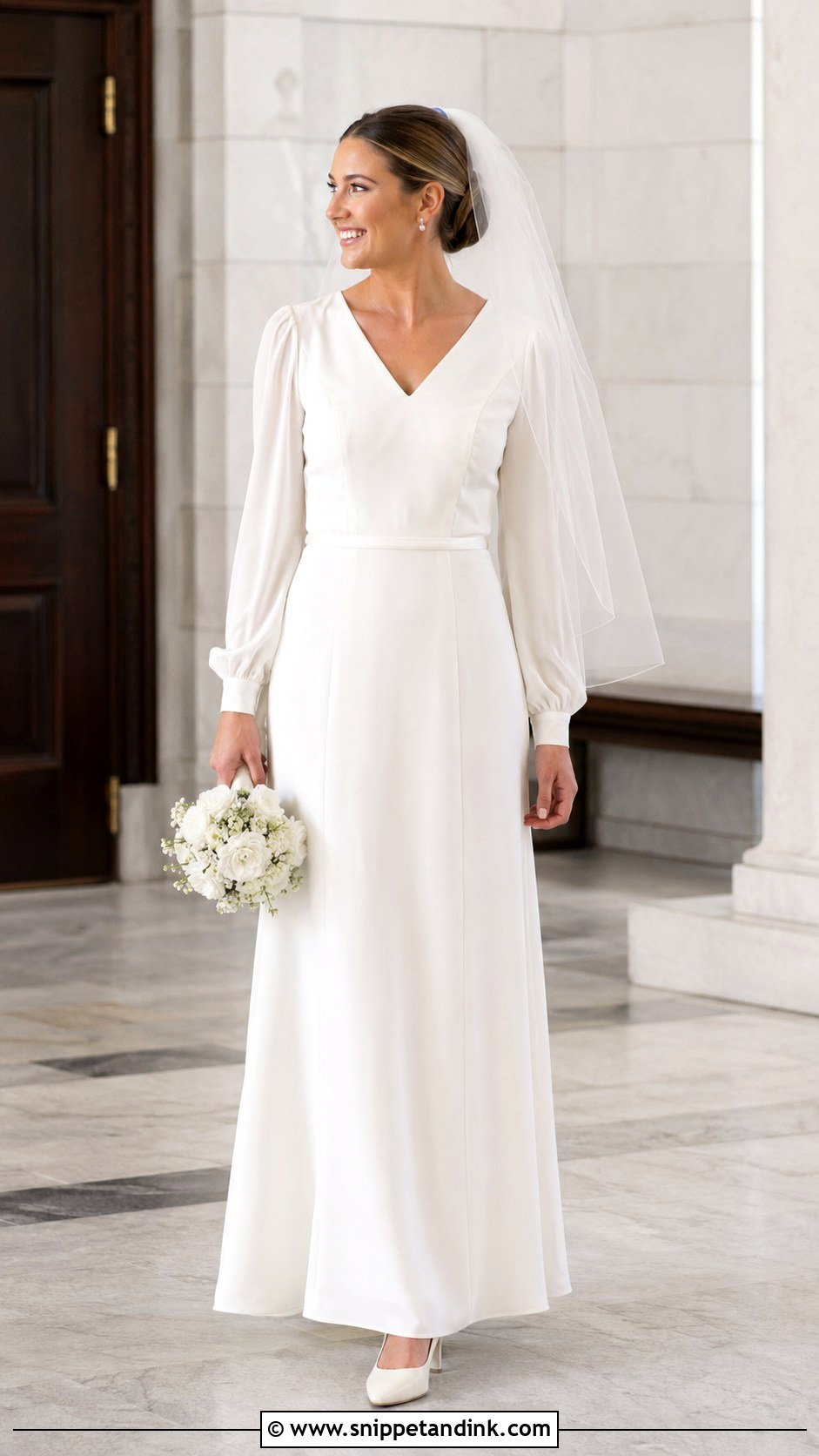
Not every 1981 bride wanted giant sleeves and a sweeping train. A minimal version can be smooth ivory crepe or satin, a modest V-neck, lightly gathered long sleeves, a natural waist and a fluid A-line skirt, with a narrow ribbon belt if it needs definition. A simple tulle veil, pearl studs, ivory pumps and a compact white bouquet are all it takes. With so little decoration, any fit problem is visible, so the tailoring has to be precise. A softly curled bob or low chignon keeps the vintage feel. It’s the right dress for a courthouse or a small daytime ceremony, and for a bride who likes early-1980s fashion but wants clothes she can move in.
Big Sleeves and Full Skirts on a Real Wedding Timeline
The 1981 silhouette takes up space, and that affects your whole day, not just the walk down the aisle. These are the points I plan around with a bride wearing one.
Getting dressed and travelling
Put the dress on last, after hair and makeup, stepping into it rather than pulling it over your head so the sleeves aren’t crushed. Book a car with a wide back seat, and gather the skirt up behind you before you sit. Taffeta and satin crease wherever they’re sat on, so a quick steam at the venue is worth arranging.
Balancing hair and veil against the sleeves
Big shoulders need the head to carry a little volume too. A soft updo or some lift at the crown balances puffed sleeves, while sleek flat hair can make the head look small next to them. Set the veil comb behind the crown so the tulle falls over the sleeves instead of catching on them.
Hugging, eating and dancing
Puffs flatten every time someone hugs you, so ask your maid of honour to plump them between photos. Wide, loose sleeves also drag through food at the table; fitted lower sleeves avoid that.
Puff Sleeves or Plain Crepe, Fit Still Comes First
That year gave brides far more than one famous royal silhouette: taffeta ball gowns, Edwardian lace, chiffon, structured satin, prairie cotton and plain A-lines all sat side by side. To recreate it, I start with one recognisable feature, such as puff sleeves, a high lace collar, tiered organza or a pointed waist, and keep everything else simple. A gown that fits, shoes you can stand in, a veil in proportion and a bouquet that matches the dress’s scale will look more polished than any amount of extra decoration.
You'll Like These Ideas:




Leave a Reply