
Some brides walk into the salon already knowing they want the biggest skirt, the loudest bow or the most sparkle on the rail. I love styling those brides, and the work is mostly about restraint everywhere else. A bold gown looks deliberate when one feature leads and everything around it backs off. It looks chaotic when shoes, veil, jewelry and bouquet all try to compete. Think early about removable elements, too, since a detachable train or overskirt lets you keep the drama for the aisle and still dance later. The twenty looks below range from corseted ball gowns to a mini with a train.
Picking Which Detail Gets to Be Loud
My process with a maximalist bride starts with one question: if you could only keep one thing about this gown, what would it be? That answer becomes the lead, and everything else is styled to support it.
If the lead is volume
A huge skirt already fills the frame, so keep the bodice clean and the veil plain. Small earrings, no necklace, and a compact bouquet held at the waist so it doesn’t hide the shape.
If the lead is sparkle
Crystal, sequins or beading are already doing the work of jewelry. I’d choose studs or simple drops and a veil without crystal edging. Two kinds of sparkle next to each other usually cancel each other out in photos.
If the lead is shape at the neckline or shoulders
Capes, sculpted shoulders and big puffs need the hair up and off the neck. A loose curtain of hair hides exactly what you paid for.
If you can’t choose between two features, look for a convertible gown. A detachable bow, overskirt or cape lets you have one statement for the ceremony and another for the evening.
1. Basque Waist Ball Gown Wedding Dress
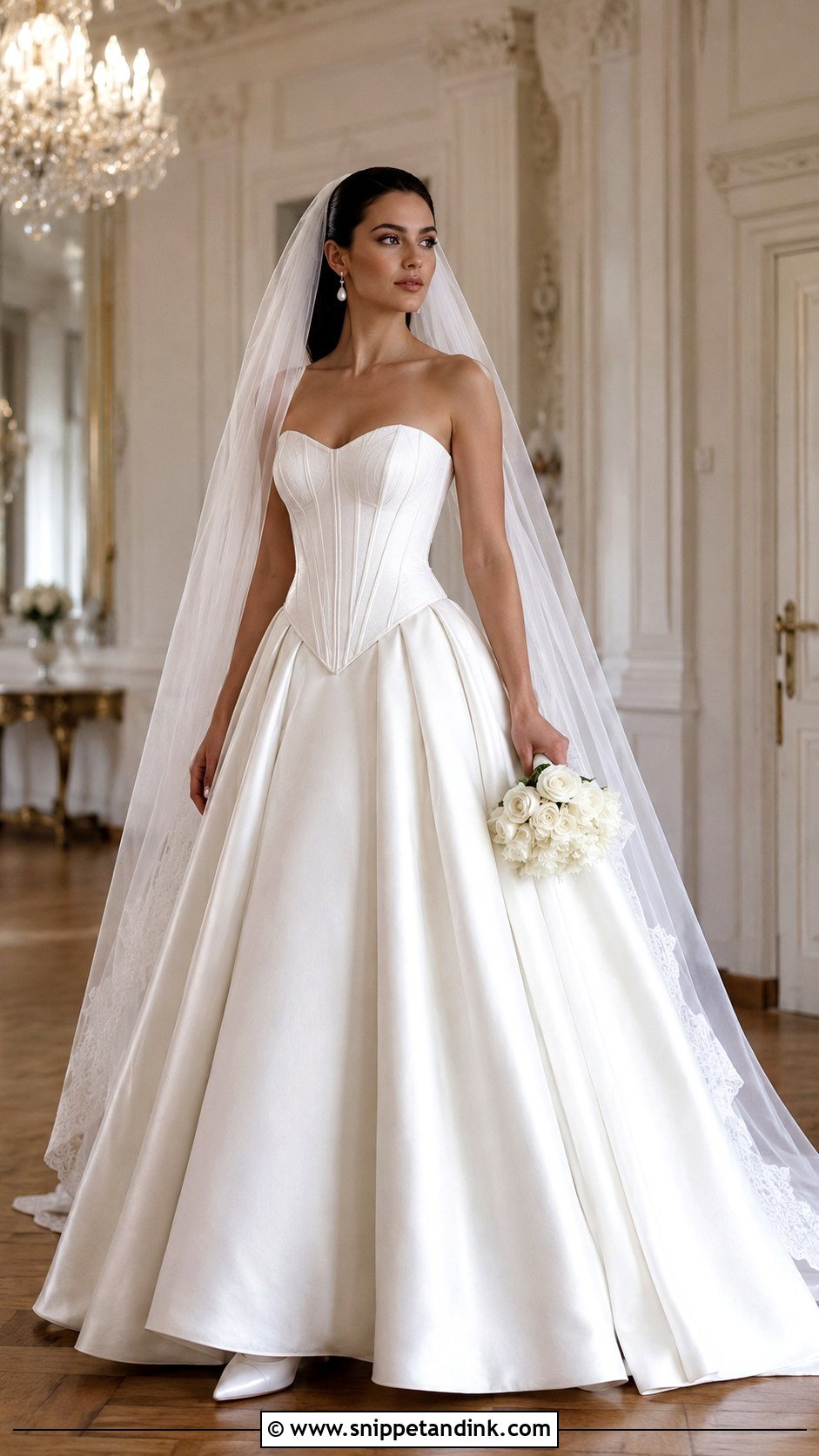
The basque waist dips into a V below your natural waistline, and that point is what makes a huge satin or Mikado skirt look sculpted rather than just wide. I check the boning with the bride seated, because a basque that’s a fraction too long digs into the thighs at dinner. Pointed ivory pumps, pearl drops and a cathedral veil with a raw edge are enough. Keep the bouquet compact, white roses in a tight round, so the bodice line stays visible.
2. Corset Bodice Tulle Wedding Dress
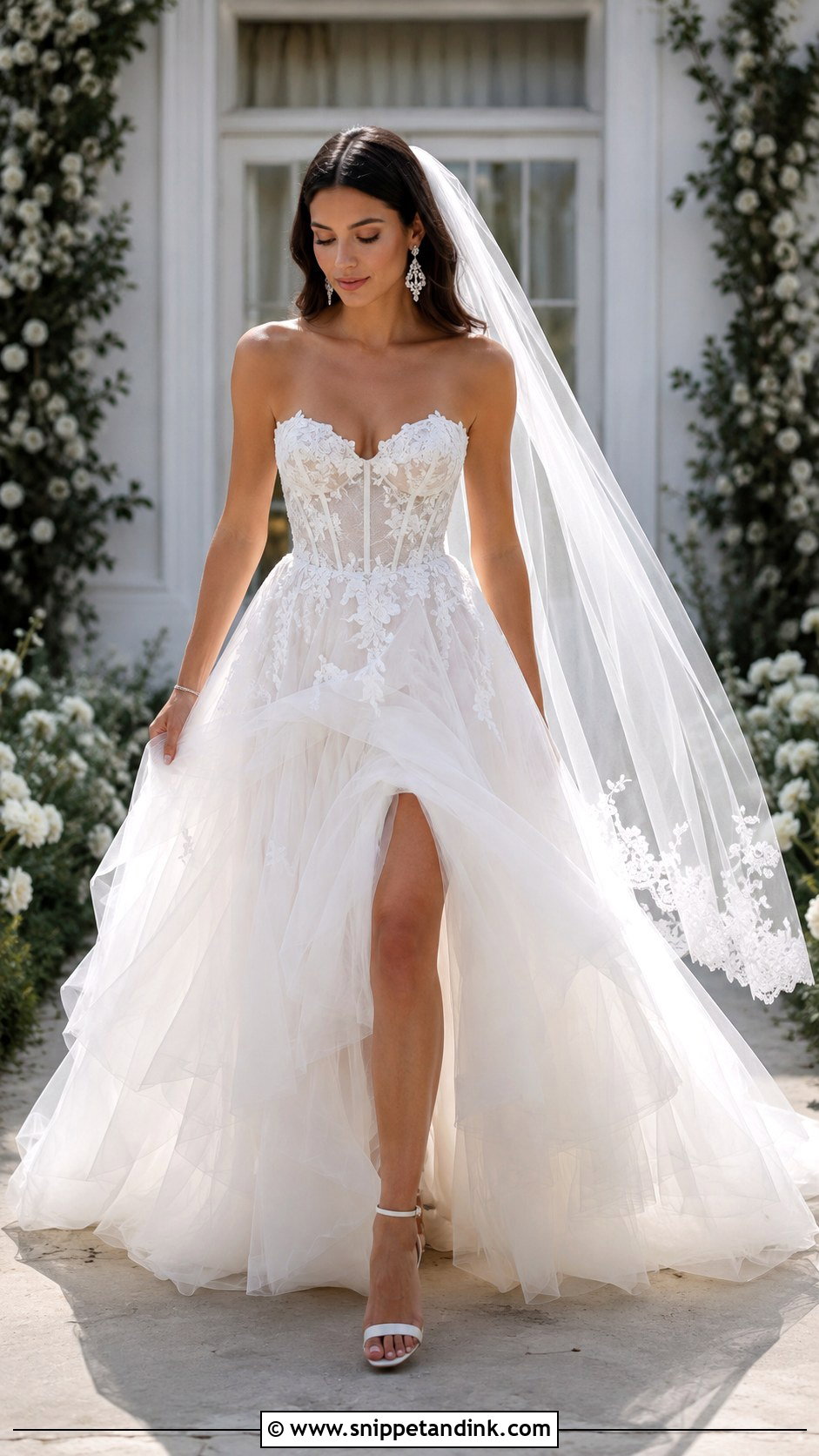
A visible corset over clouds of tulle is a contrast of hard and soft, so the corset has to be built properly: real cups, boning in channels, and tulle gathered smoothly from the waist so there’s no ridge. A few lace appliqués take the edge off the structure. Get the hem set while wearing your actual shoes and petticoat. Tulle that brushes the floor gets stepped on, and once a heel tears through a layer, it keeps catching. Crystal studs, a fingertip veil and a loose bouquet of ranunculus with trailing greenery suit the skirt’s movement.
3. Oversized Bow Satin Wedding Dress
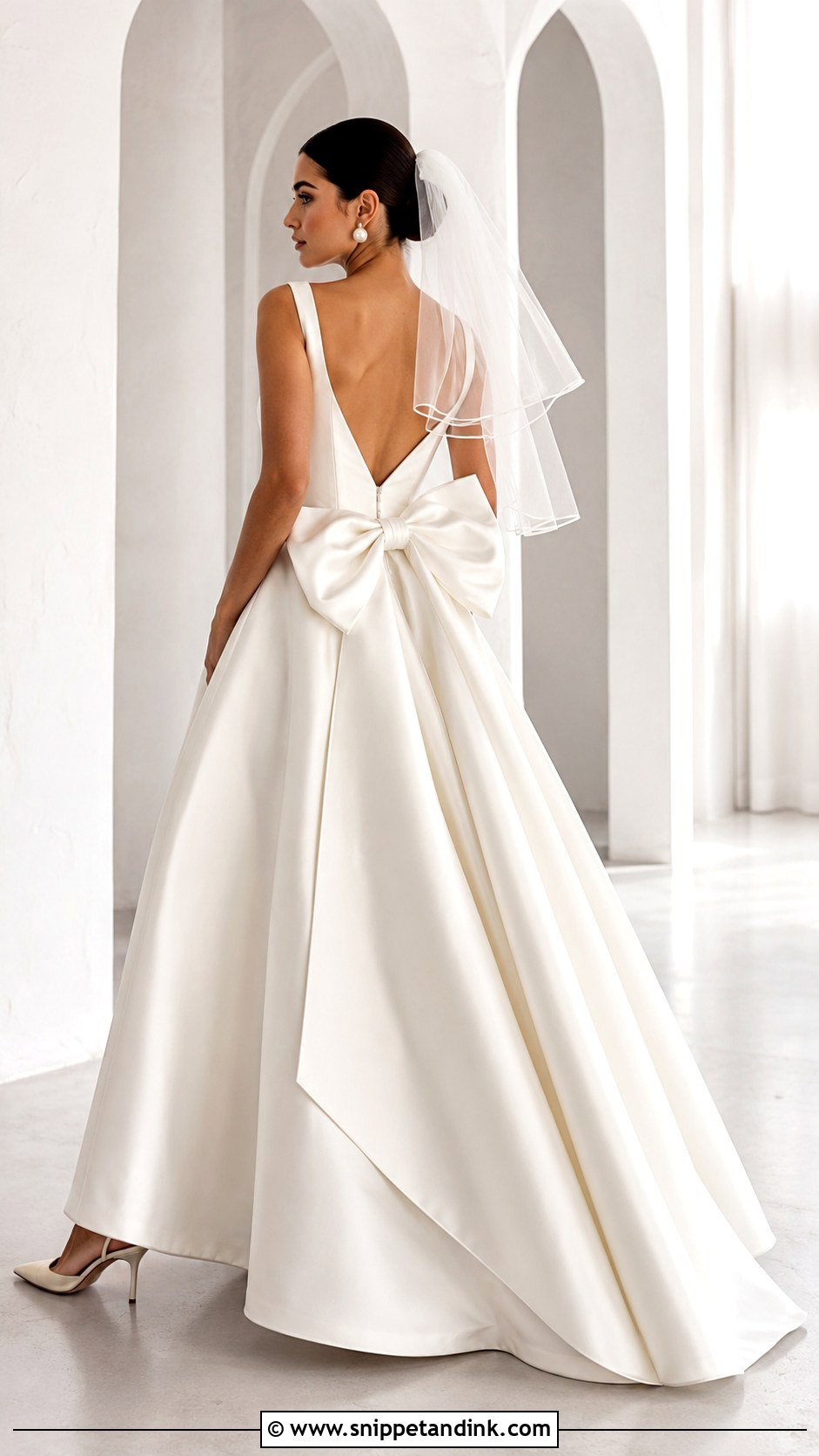
Satin bows only work if the satin is heavy enough to stand up on its own. On a lightweight satin, the loops droop by mid-afternoon. Put the bow at the back waist or the top of the train so it doesn’t swamp a smaller frame, and keep the gown itself plain: a column or clean A-line with minimal seams. A short veil keeps the bow in view during the ceremony. Sleek slingbacks, sculptural pearl earrings and a low bun finish it, and if the bow is detachable, take it off for the reception.
4. 3D Floral Appliqué Wedding Dress
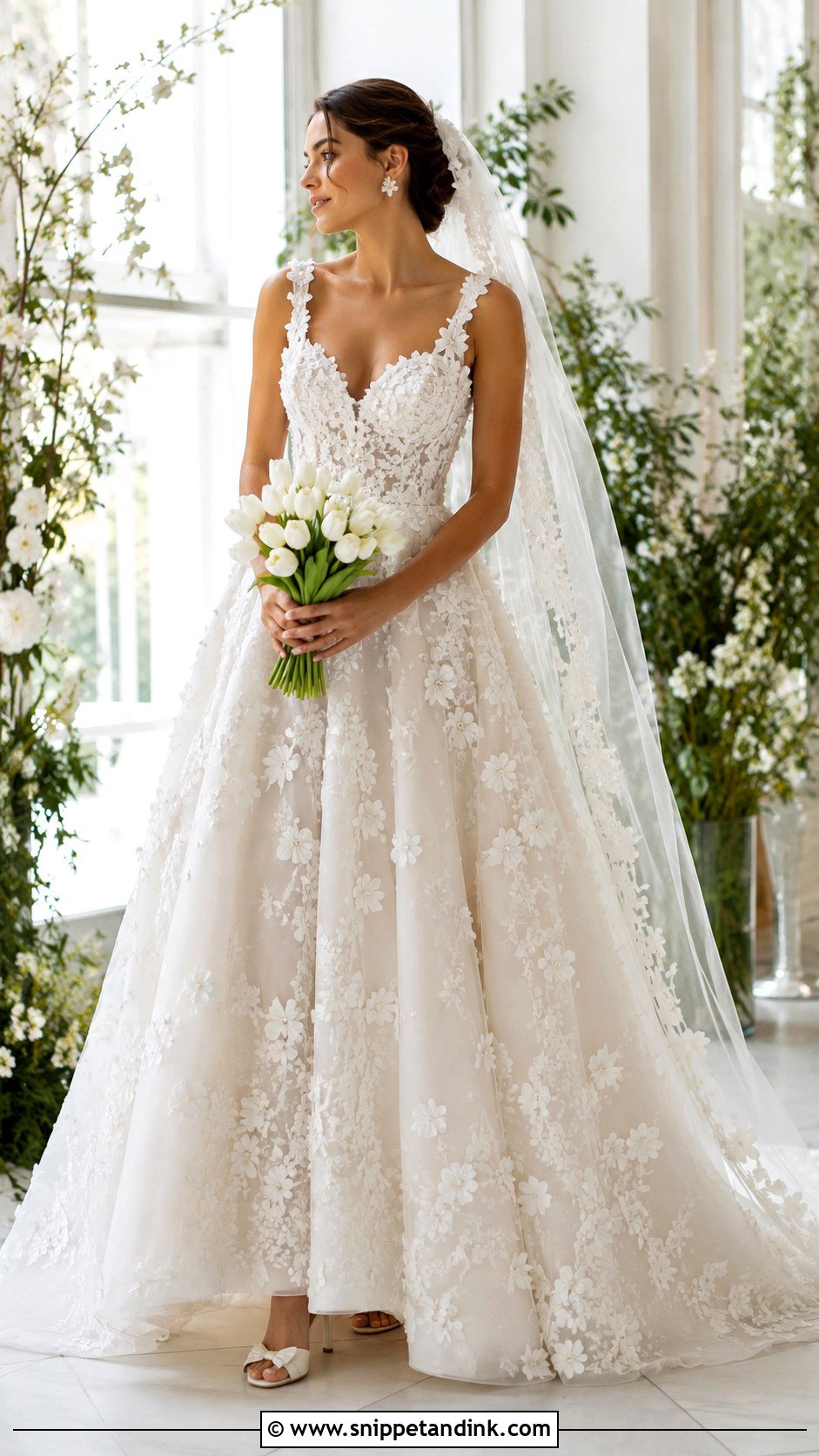
With 3D flowers, I want them clustered at the bodice and scattering out across the skirt, which gives the eye a place to start. Look at the gown by a window and then under warm indoor bulbs before you decide; raised petals cast shadows that change a lot between the two. Delicate floral earrings, pointed heels and a veil with a few matching appliqués near the hem are enough decoration. Carry tulips or calla lilies rather than more roses. Before the day, have loose petals tacked down at the waist, the armholes and along the train.
5. Pearl Beaded Mermaid Wedding Dress
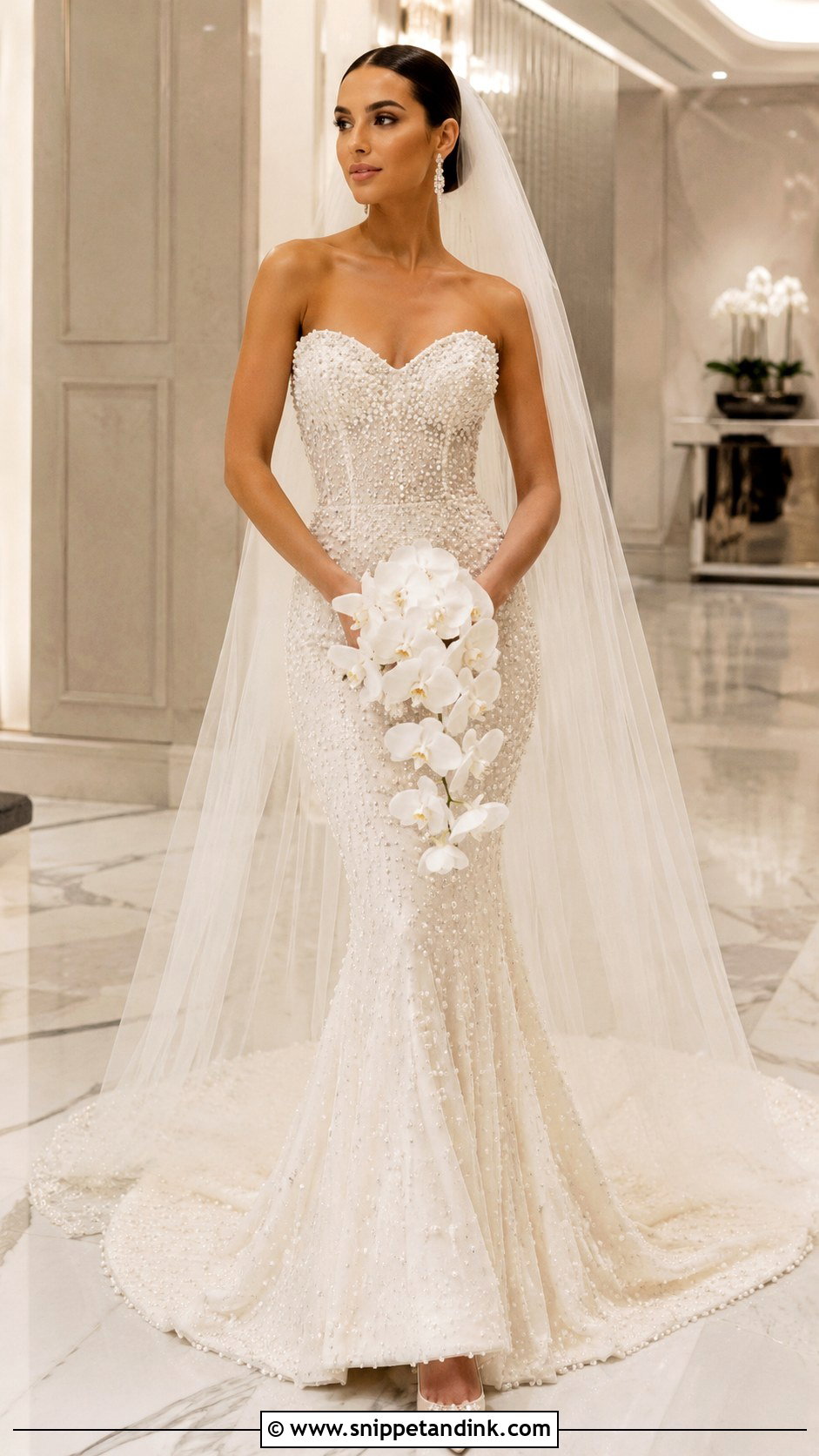
Pearl beading on a mermaid adds real weight to a shape that’s already restrictive. Scattered pearls stay light; dense pearl embroidery can make a train surprisingly heavy by evening. I ask brides to take full strides, sit and climb a few stairs in it at every fitting, because the flare point above or below the knee decides how freely you’ll move. A plain long veil won’t snag the beads. Add pearl-and-crystal earrings, pointed pumps and a structured orchid bouquet, and get a secure bustle sewn in.
6. Ruffled Organza Wedding Dress
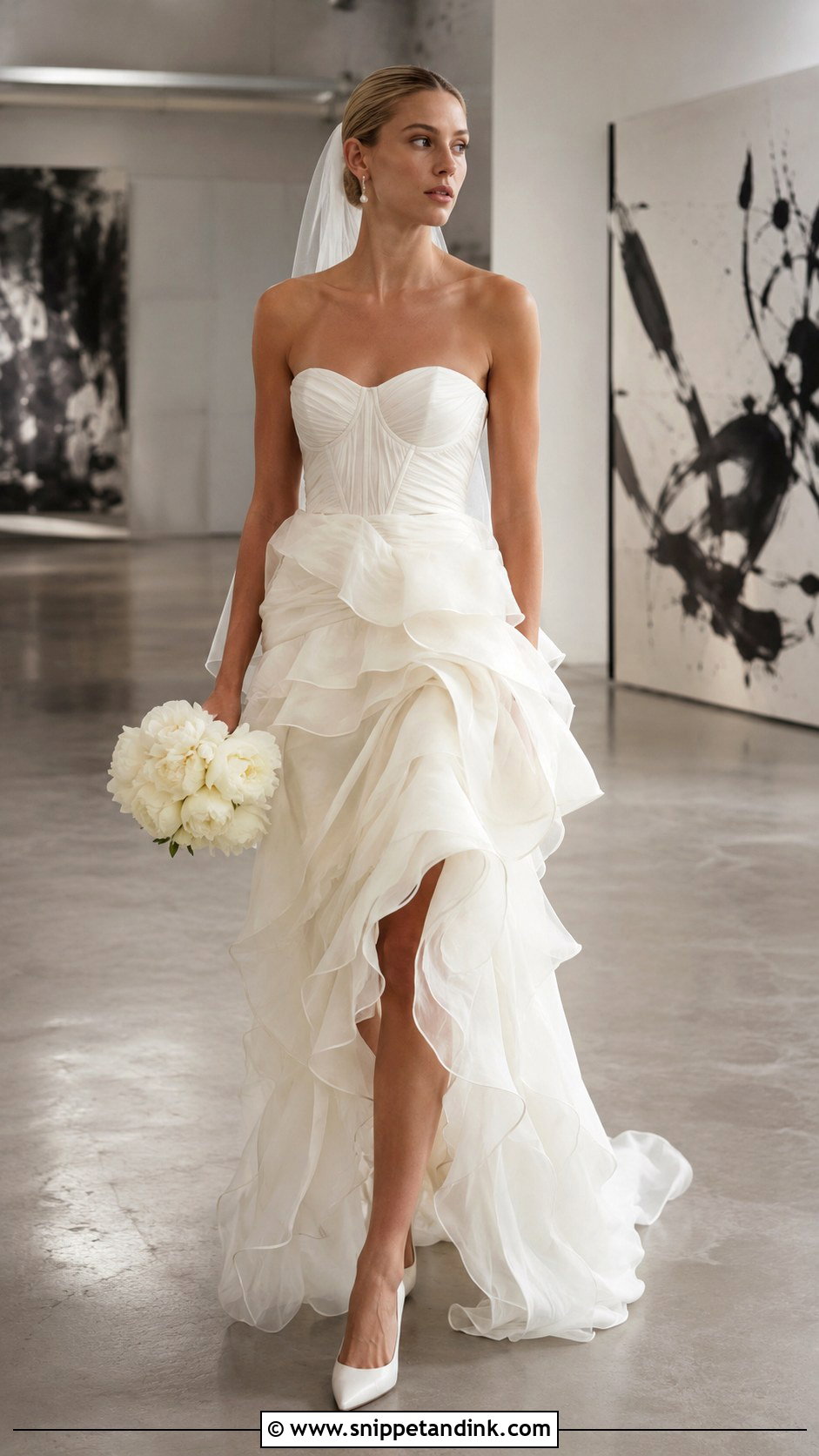
A ruffled organza wedding dress gets its volume from air rather than beading, which keeps it lighter than it looks. Organza is crisp, so the ruffles hold their shape whether they cascade, tier or run on the diagonal. Where they start matters. Ruffles beginning right at the hip add width there, so I usually prefer them starting lower or running asymmetrically. Simple drops, smooth ivory heels and a narrow veil falling behind the skirt keep things clean, with peonies in a small bouquet. Skip ornate necklaces and hair jewelry entirely.
7. Long Sleeve Lace Wedding Dress
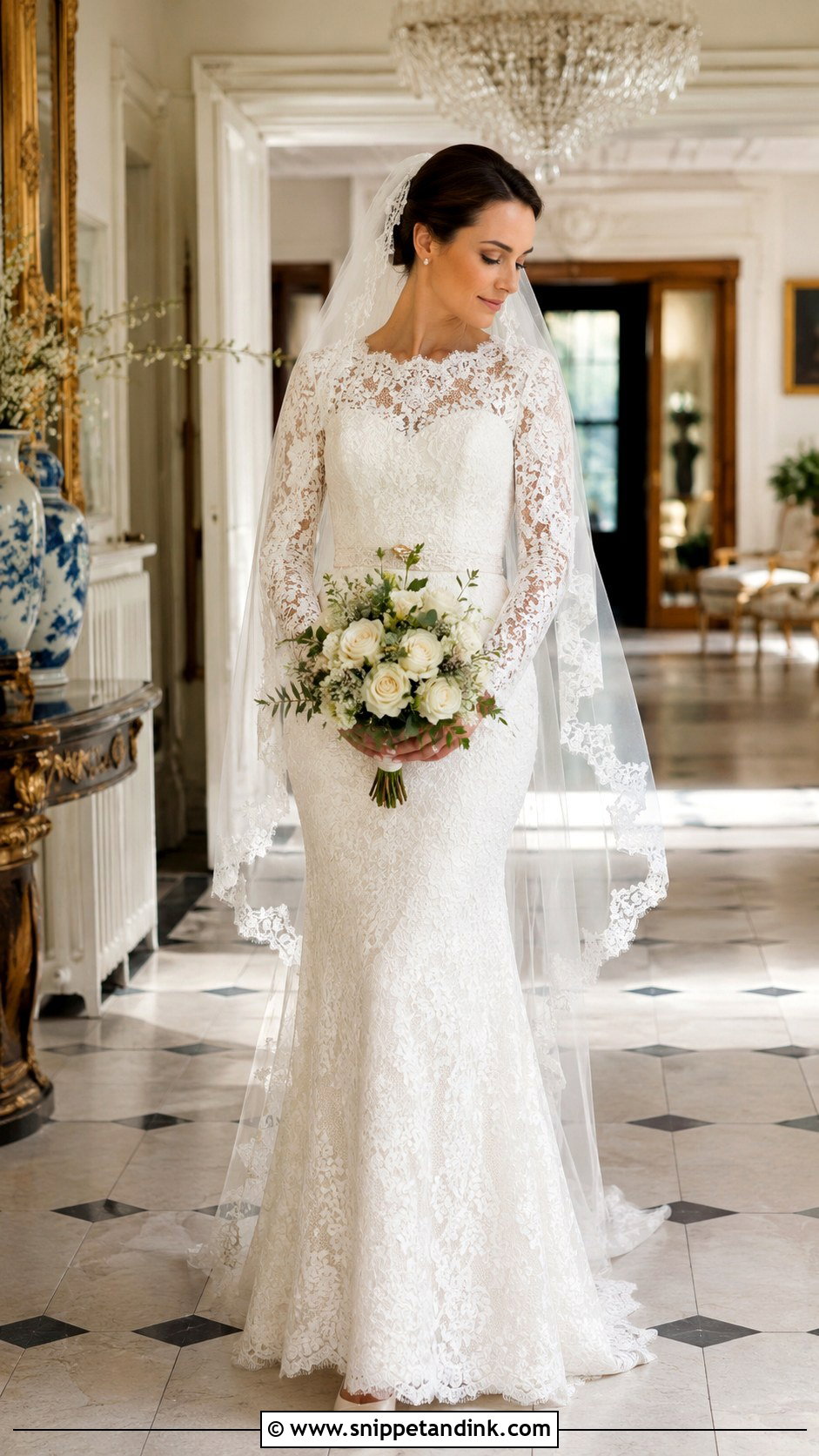
Full lace sleeves from neckline to cuff carry this gown, so the fit across the shoulders comes first. Reach forward as if hugging someone; if the lace pulls tight across your back, the sleeves need letting out or re-cutting. A skilled seamstress can move lace motifs around the wrist and seams without breaking the pattern, which is slow work, so allow time. Covered buttons and a scalloped train add interest without sparkle. Pearl studs, closed-toe satin pumps and a lace-edged veil that echoes, rather than copies, the gown suit it, with cream roses loosely gathered.
8. Detachable Overskirt Wedding Dress
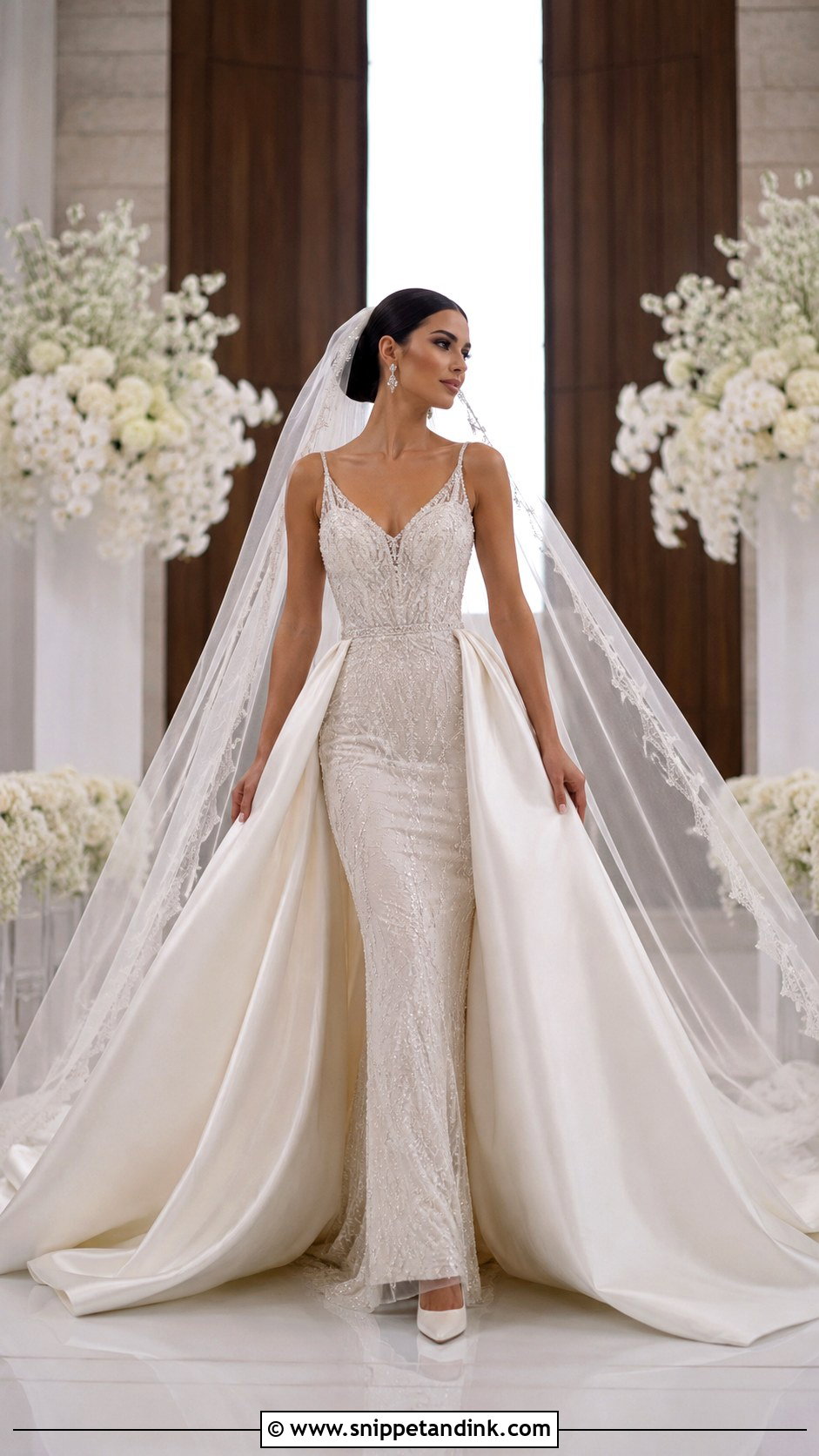
This is the practical way to have two dresses. A fitted crepe, lace or beaded gown sits underneath, and a full satin or tulle overskirt goes on for the ceremony. Ask the salon to hide the attachment points and to show you the waistband from the side. Then rehearse the change with whoever will help on the day, because hooks feel very different in a crowded bathroom than in a fitting room. Switching to statement earrings or a shorter veil after the overskirt comes off makes the second look feel new.
9. Wedding Dress With Dramatic Cape
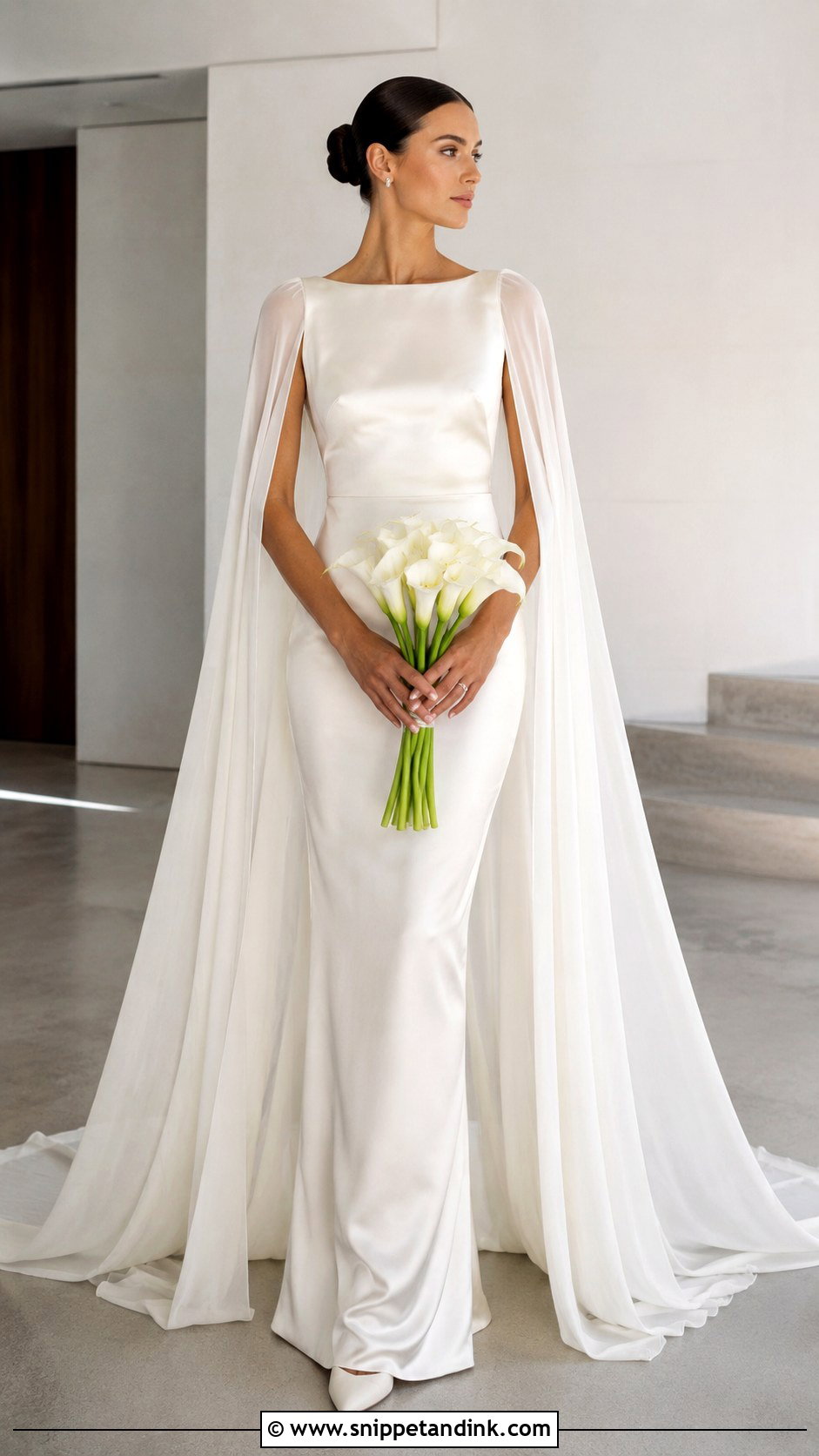
A floor-length cape over a sleek gown gives the walk its sweep, and it replaces a veil rather than joining one. Sheer tulle floats; satin or an embellished cape is heavier and pulls back on the shoulders, so I always check its weight at the fitting. Pair it with a satin column or minimal crepe, pointed heels, small studs and a smooth updo that keeps the neckline clear. Calla lilies in a narrow bouquet match the lines. Removable fastenings let it come off for the reception.
10. Feather Trim Wedding Dress
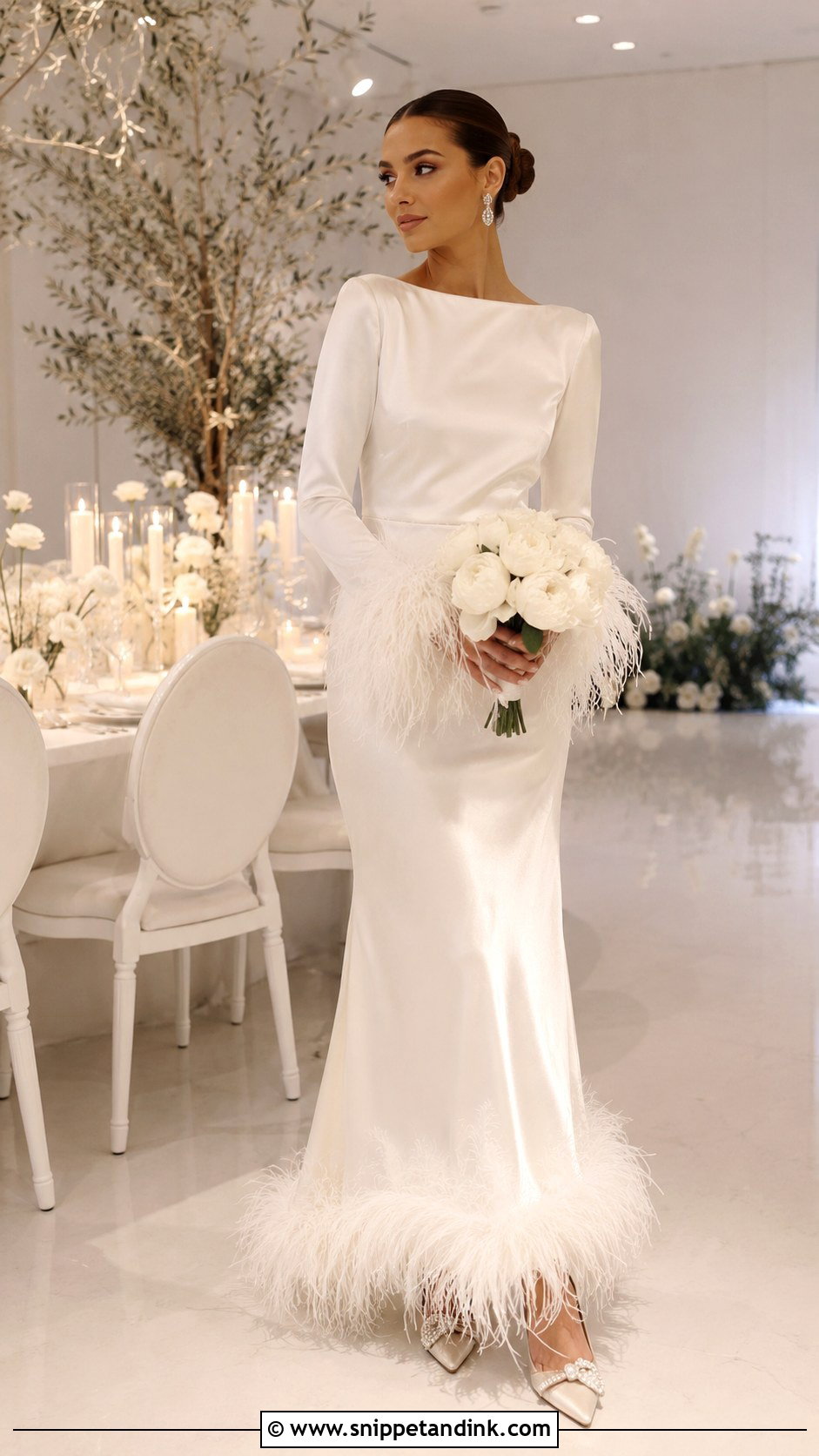
Feathers are best used in one or two places. Choose a streamlined dress with feathers at the neckline, cuffs, hem or on detachable sleeves rather than all over. A satin column with a feathered train reads modern; a fitted mini with feather cuffs makes a fun second look. Feathers do shed and can tickle bare skin, so wear the gown for a good ten minutes at the fitting. Any feathers at the hem must clear the floor or they’ll be grey by the first dance.
11. Sparkly Sequin Wedding Dress
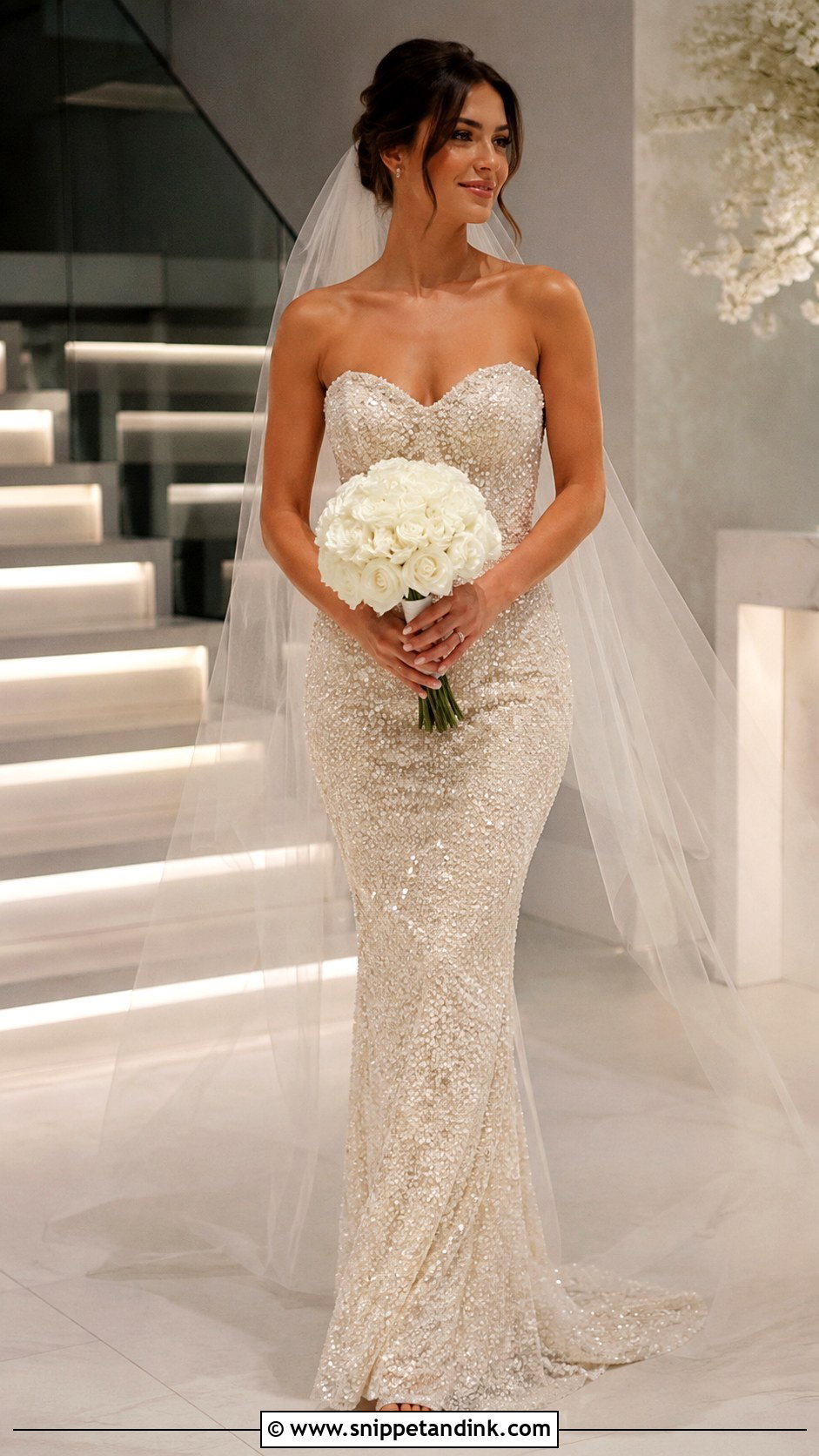
Sequins flatten in daylight and come alive under evening lights, which is why I steer sequin gowns toward night receptions. Mixed beads and sequins give more depth than flat sparkle. The lining is where comfort is decided: sequins are stitched on with threads that scratch, so check the underarms and side seams for rough patches. Keep the rest quiet. Understated heels, small crystal earrings and a plain sheer veil are plenty, and a necklace is one thing too many.
12. High Neck Embroidered Wedding Dress
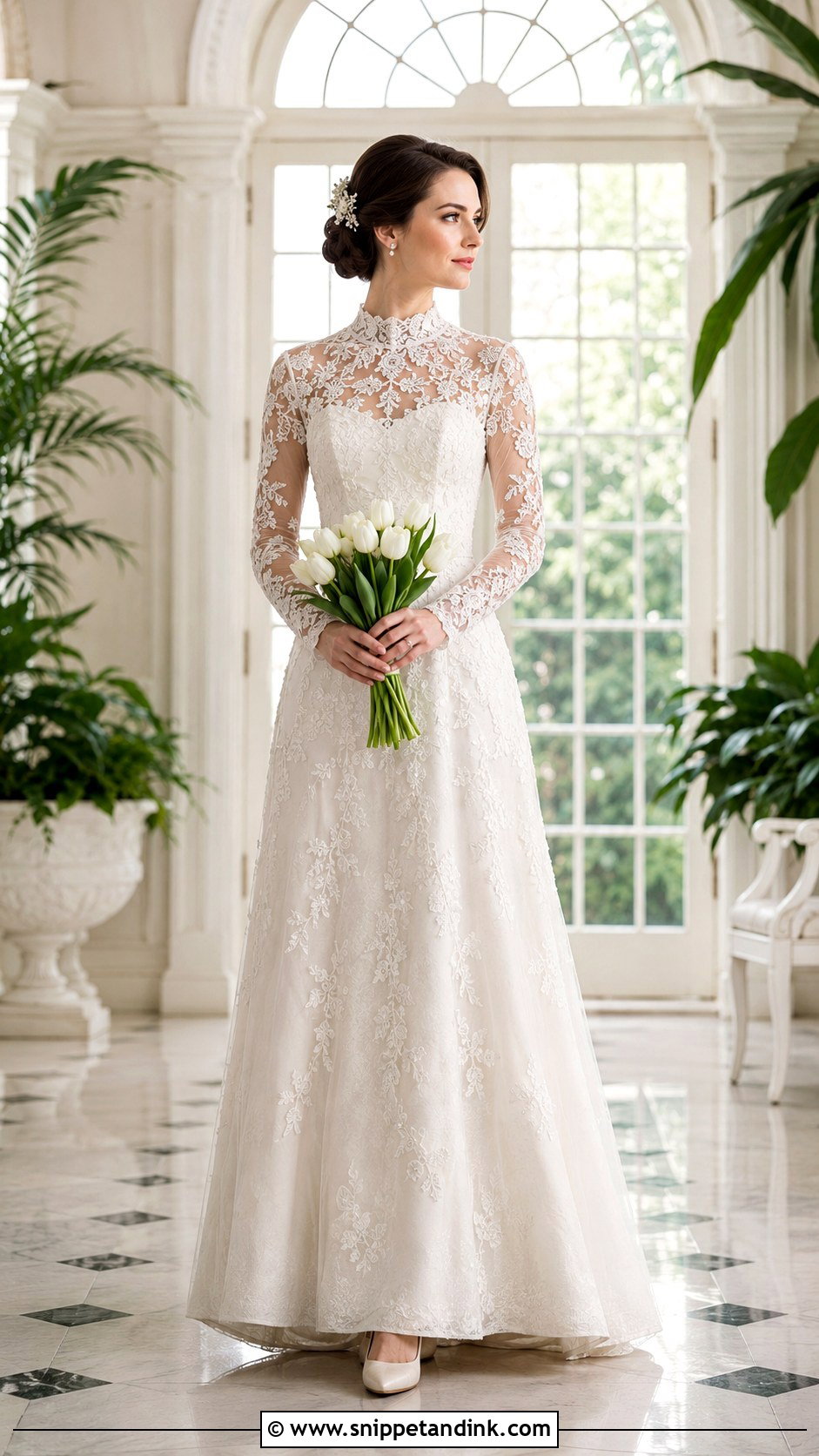
High-neck embroidery puts all the detail near your face, so the neckline needs to sit smoothly when you sit and turn your head. Illusion necklines have a little stretch; solid ones don’t, and any rub at the throat gets worse as the day goes on. Embroidery that flows onto the bodice and sleeves balances well with a softly flared skirt. Stud earrings, a low chignon and closed-toe pumps keep the outfit quiet. In place of a necklace, a fine comb or an embroidered veil can pick up the gown’s motif.
13. Off Shoulder Mikado Wedding Dress
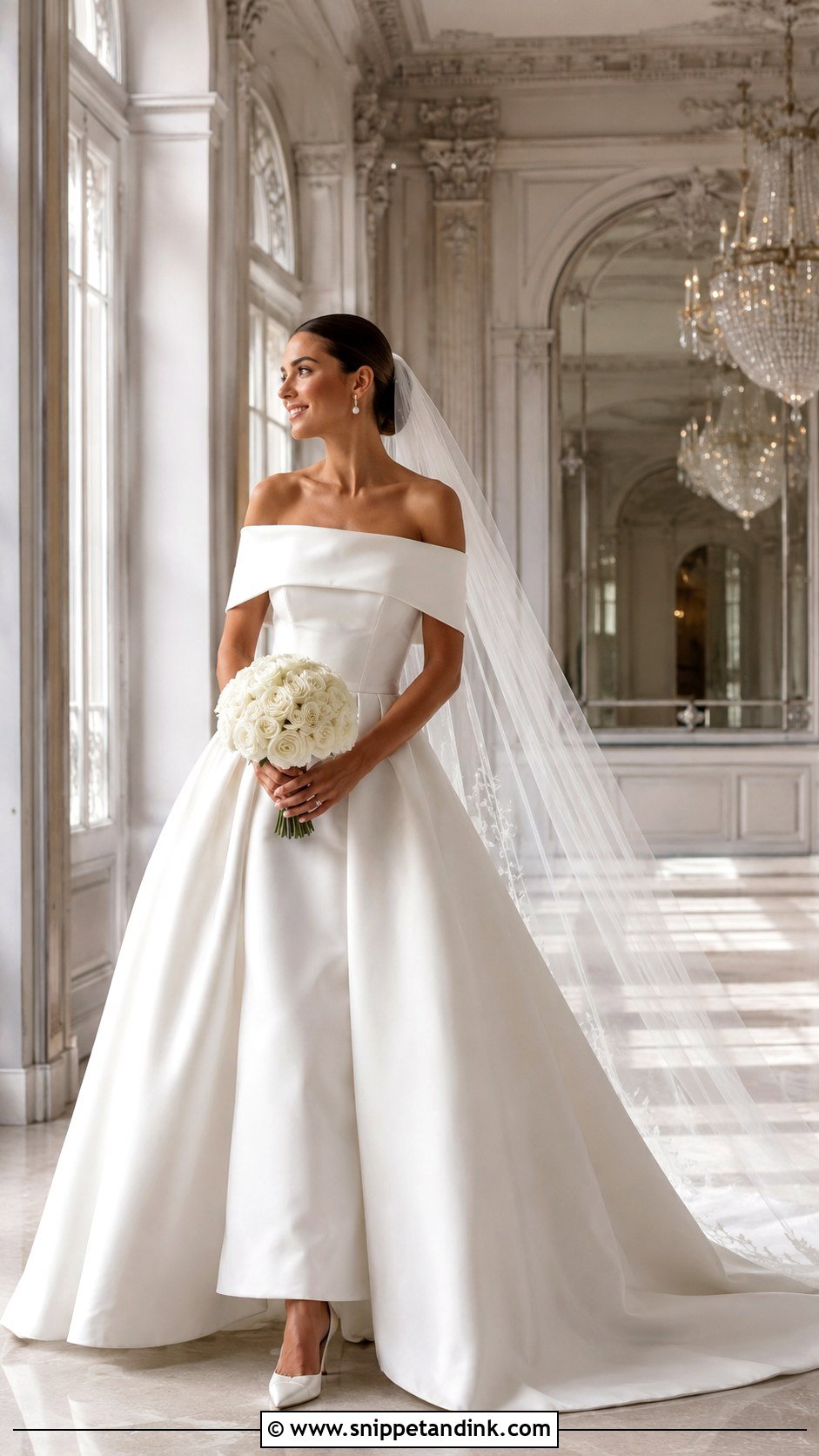
Mikado folded across the shoulders has a crisp, architectural edge that softer satin can’t match. Its weakness is security. I make every bride raise her arms, hug someone and sit down naturally at the fitting, and if the neckline creeps, hidden straps, internal elastic or extra boning can be added without changing the look. A fitted waist, full skirt and long train show the fabric off. Pearl drops, pointed satin heels and a cathedral veil under a low bun complete it.
14. Asymmetrical Draped Wedding Dress
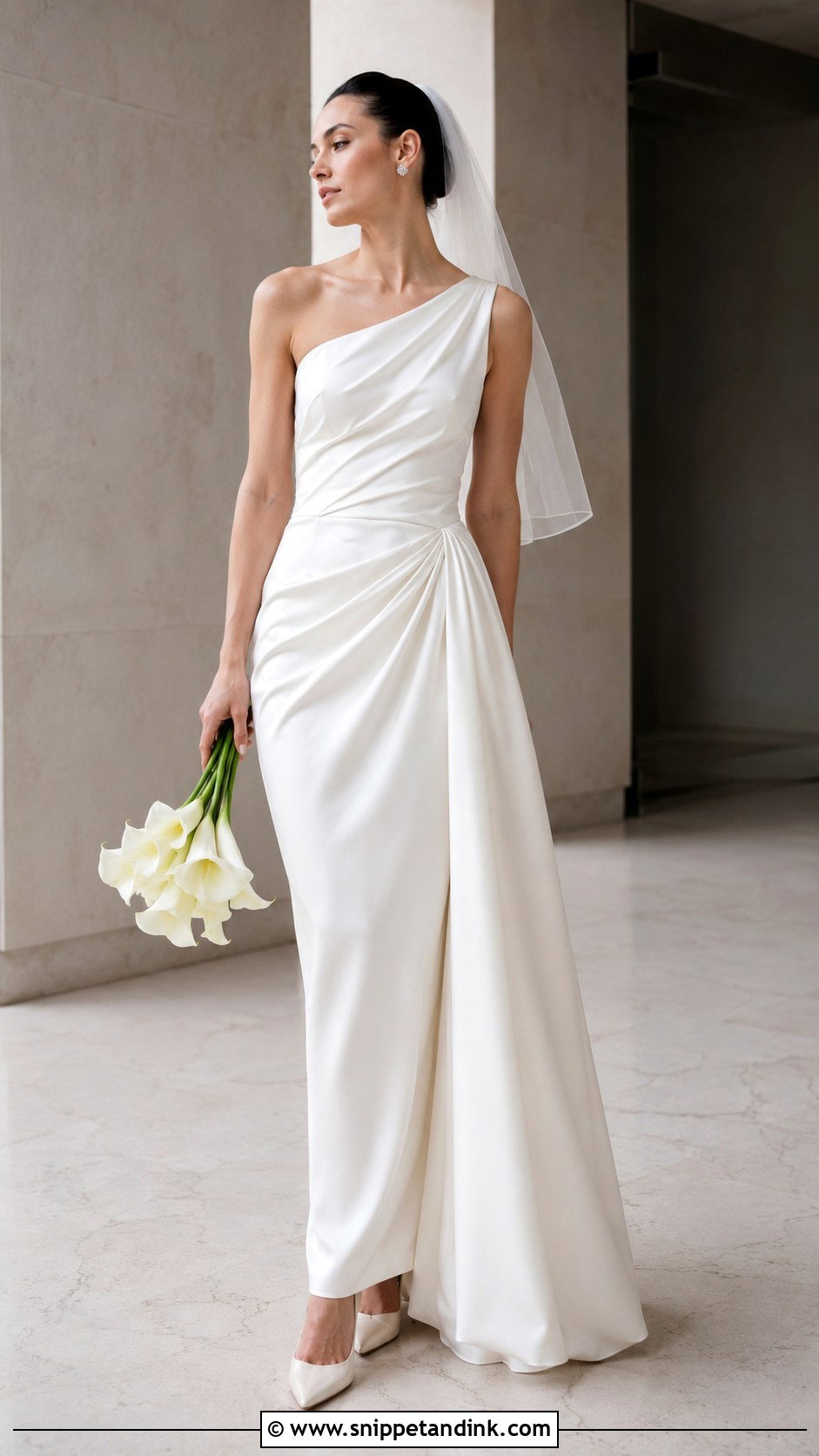
An asymmetrical draped gown gets its drama from shape, so the drape has to be stitched down so it stays put. Loose folds shift when you walk and end up bunched in photos. Satin and crepe hold clean folds best, whether it’s a one-shoulder neckline, a diagonal bodice or a sculpted hip drape. Sleek earrings, an architectural cuff and a neat bun suit the mood. Keep any veil to shoulder or fingertip length so it doesn’t cover the neckline for long.



15. Drop Waist Bubble Hem Wedding Dress
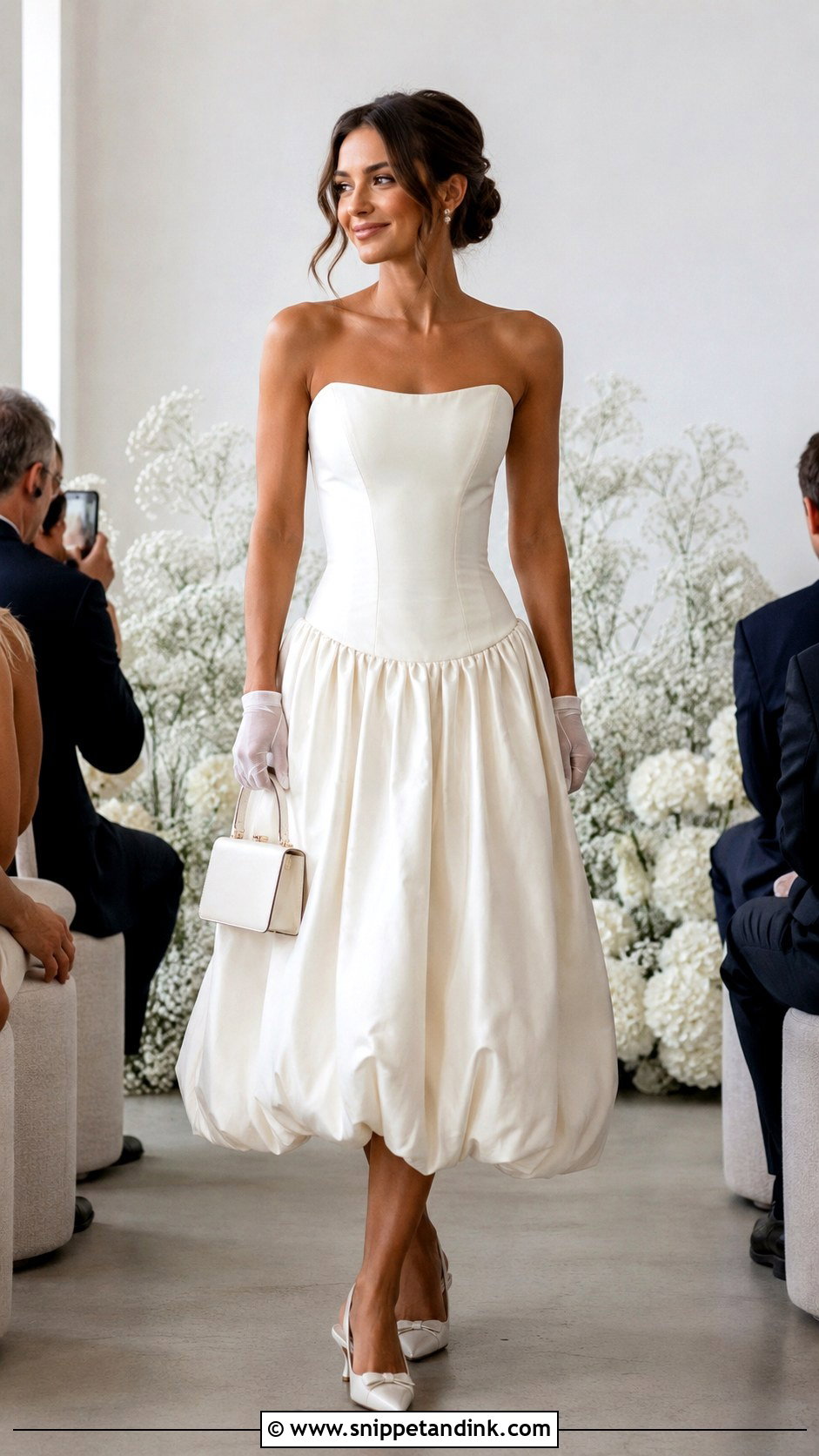
A drop-waist bubble hem wedding dress is the most fashion-led look here, and it’s not for everyone. The long bodice suits a longer torso; on a short one, the bubble can make the legs look shorter. Midi or full length depends on how formal the ceremony is. I’d style it with slingbacks, pearl studs and short gloves, and a small structured bag works in place of flowers for courthouse portraits. Sit down in it before buying, since a dropped waist can fold sharply across the hips. The bubble should hold its round shape without feeling stiff.
16. Sculptural One Shoulder Wedding Dress
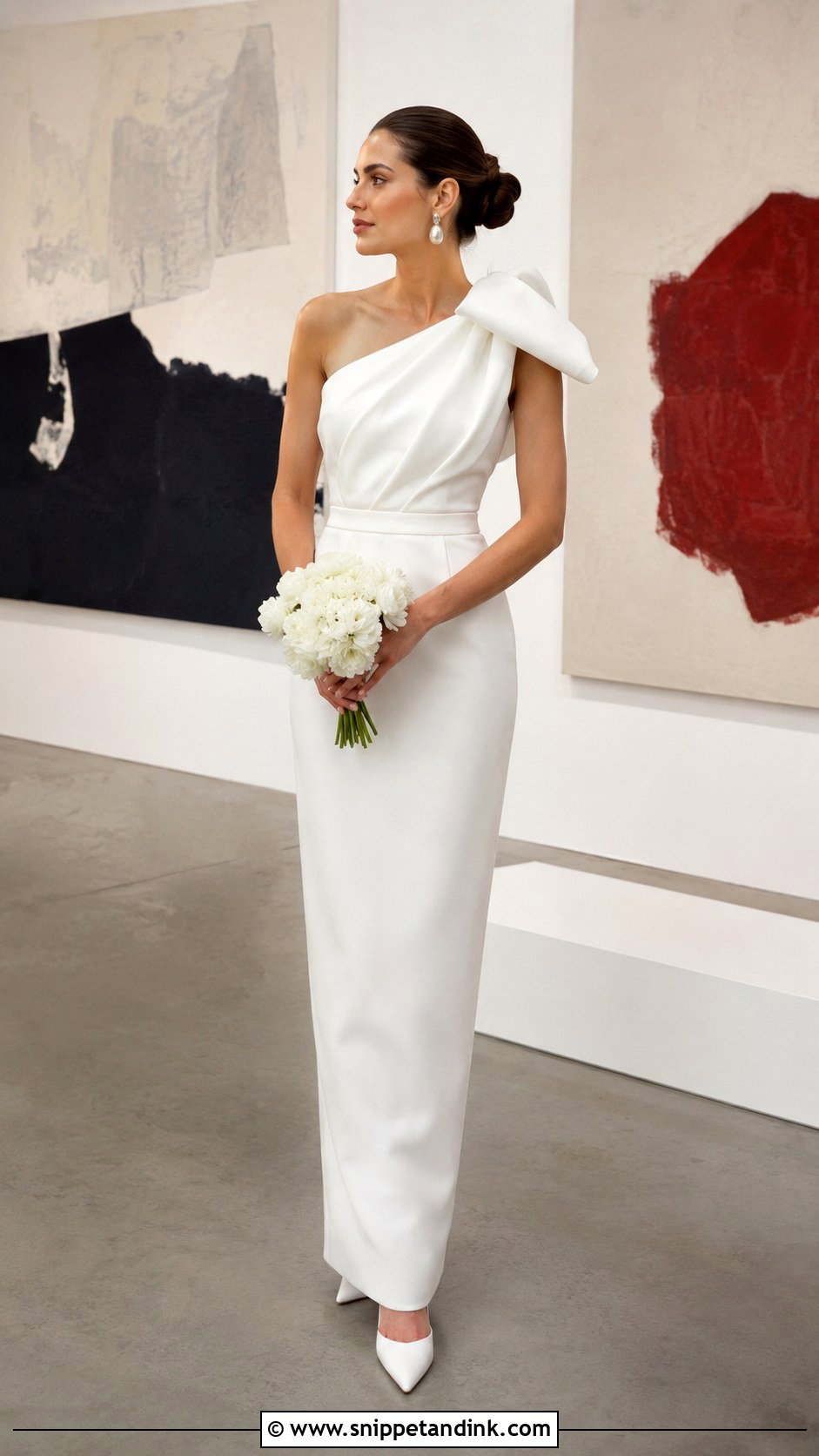
One sculpted shoulder makes the neckline the whole story, from the front and from the side. Folded satin or a curved drape works, as long as the skirt stays clean. The construction issue is balance. The bare side needs enough internal support to stay up without you hitching it, and the sculpted side has to stay upright through dancing. Pointed pumps, a single statement earring and a sleek updo suit it. Hold the bouquet low so it doesn’t block the bodice.
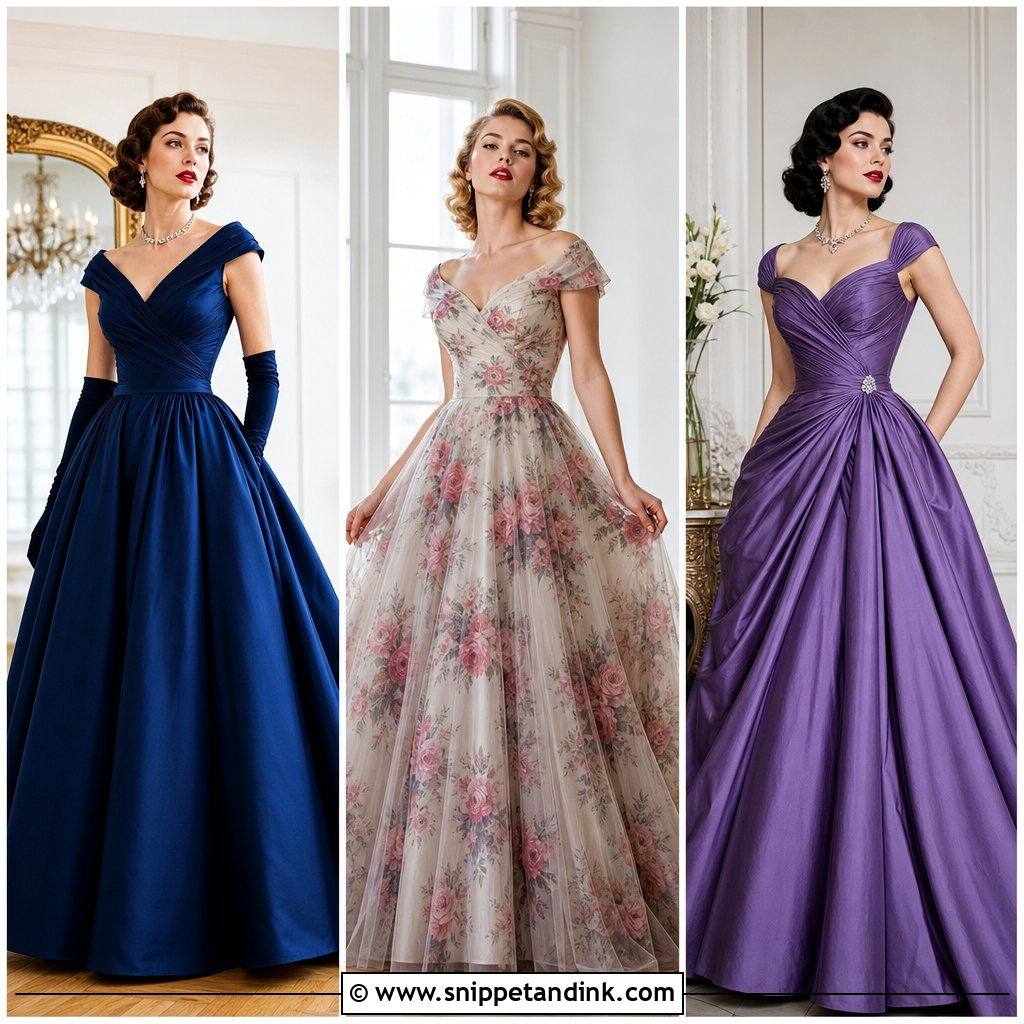
17. Colorful Floral Wedding Dress
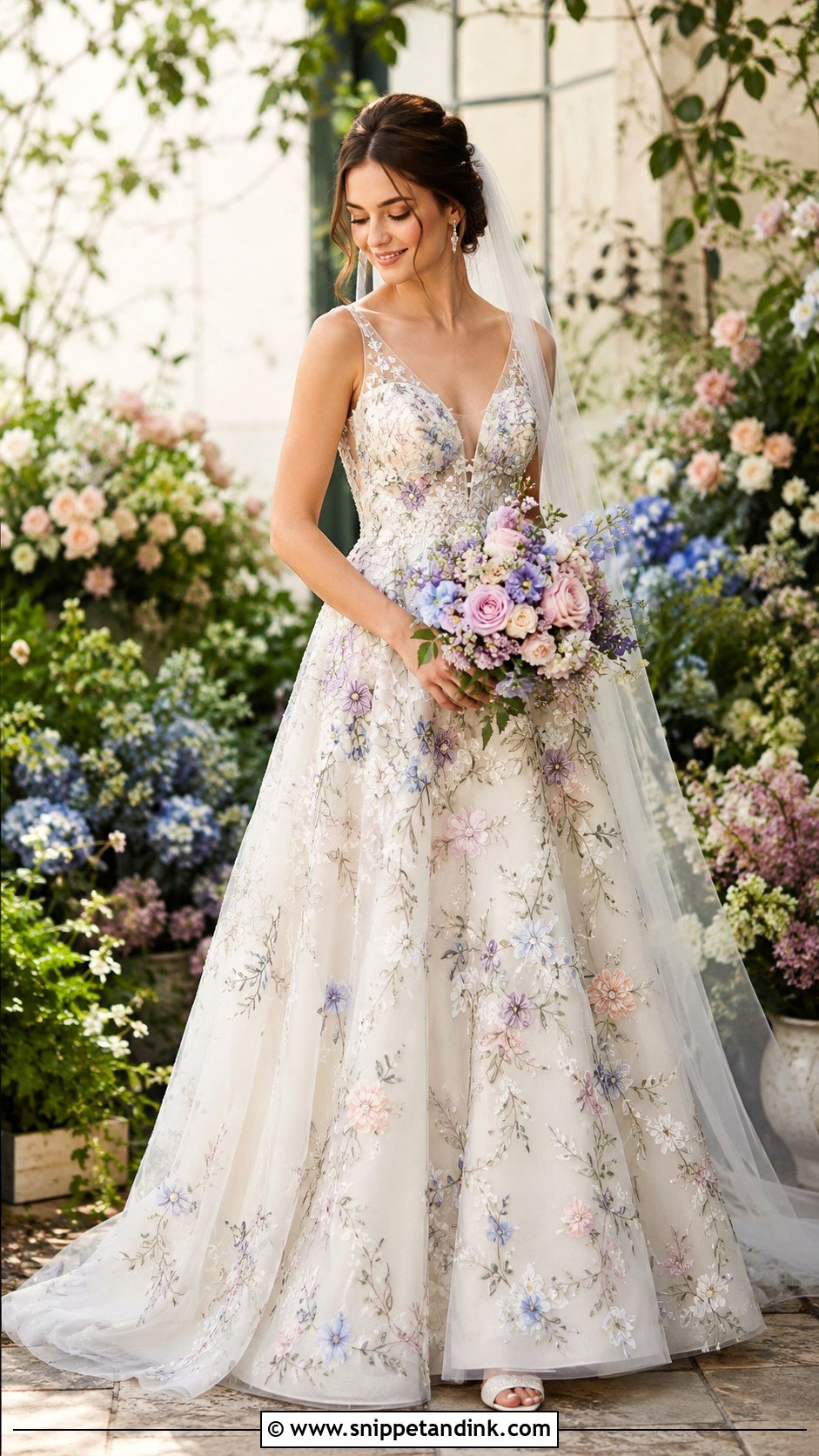
Colored florals over a neutral base are joyful, but color is where camera and eye disagree most. Muted blue, blush and lavender can shift once they’re photographed next to green lawns or under warm venue lighting, so look at the gown outdoors and under the venue’s own bulbs if you can. An A-line gives the pattern room. Ivory heels, small gemstone earrings and a veil in the gown’s palest background shade work well, with a bouquet in just one or two colors pulled from the dress.
18. Vintage Puff Sleeve Wedding Dress
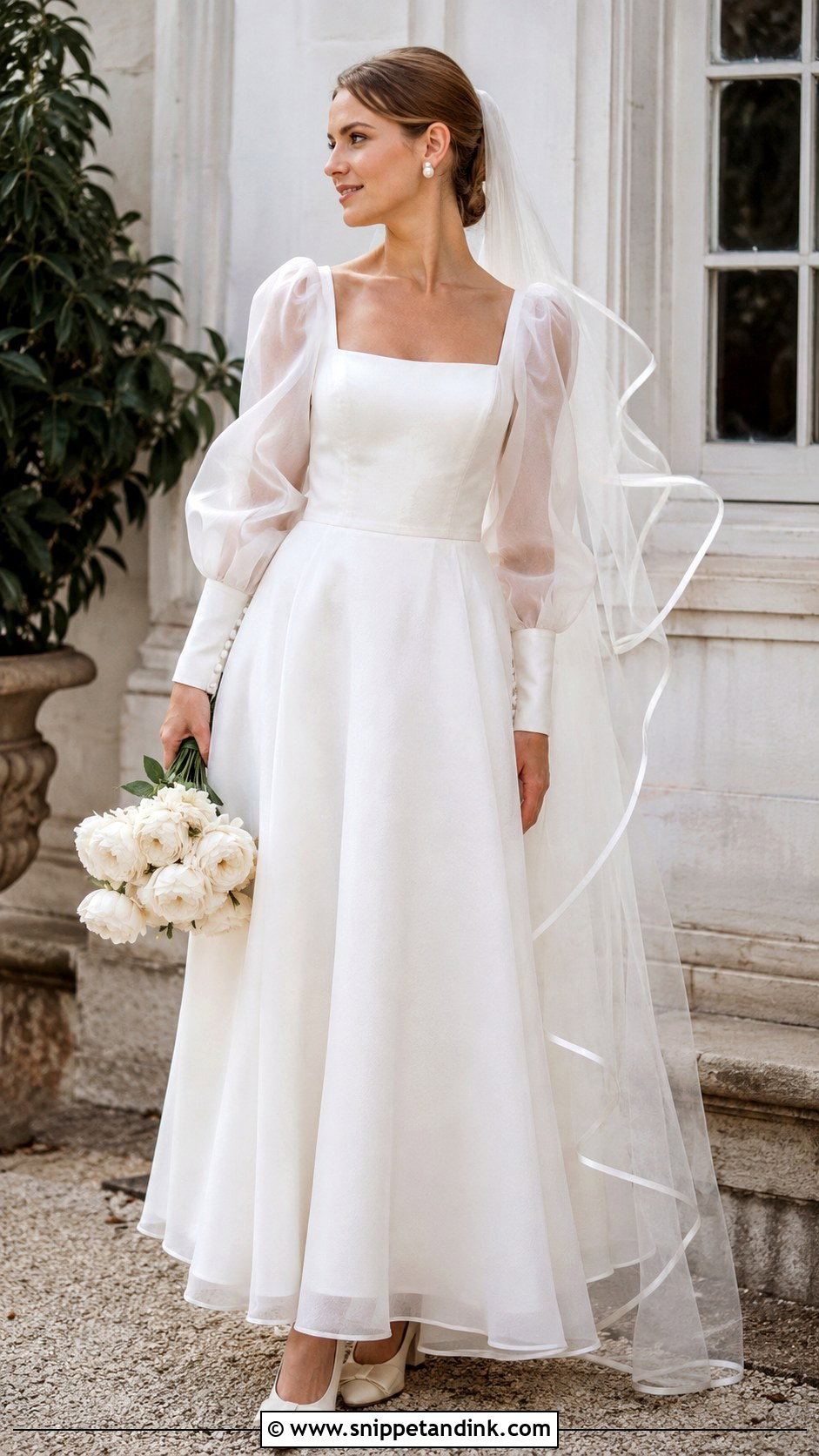
Puff sleeves are pure volume, so the waist has to be fitted to keep the proportions right. Sheer organza puffs look lighter than satin ones. Taper at the wrist, add a square neckline and an A-line skirt, and you have a romantic shape that doesn’t need much else. Move your arms forward and over your head at the fitting. Pearl earrings, low block heels and a ribbon-trimmed veil keep it from tipping into costume, and removable sleeves make the gown simpler for dancing.
19. Tiered Tulle Wedding Dress
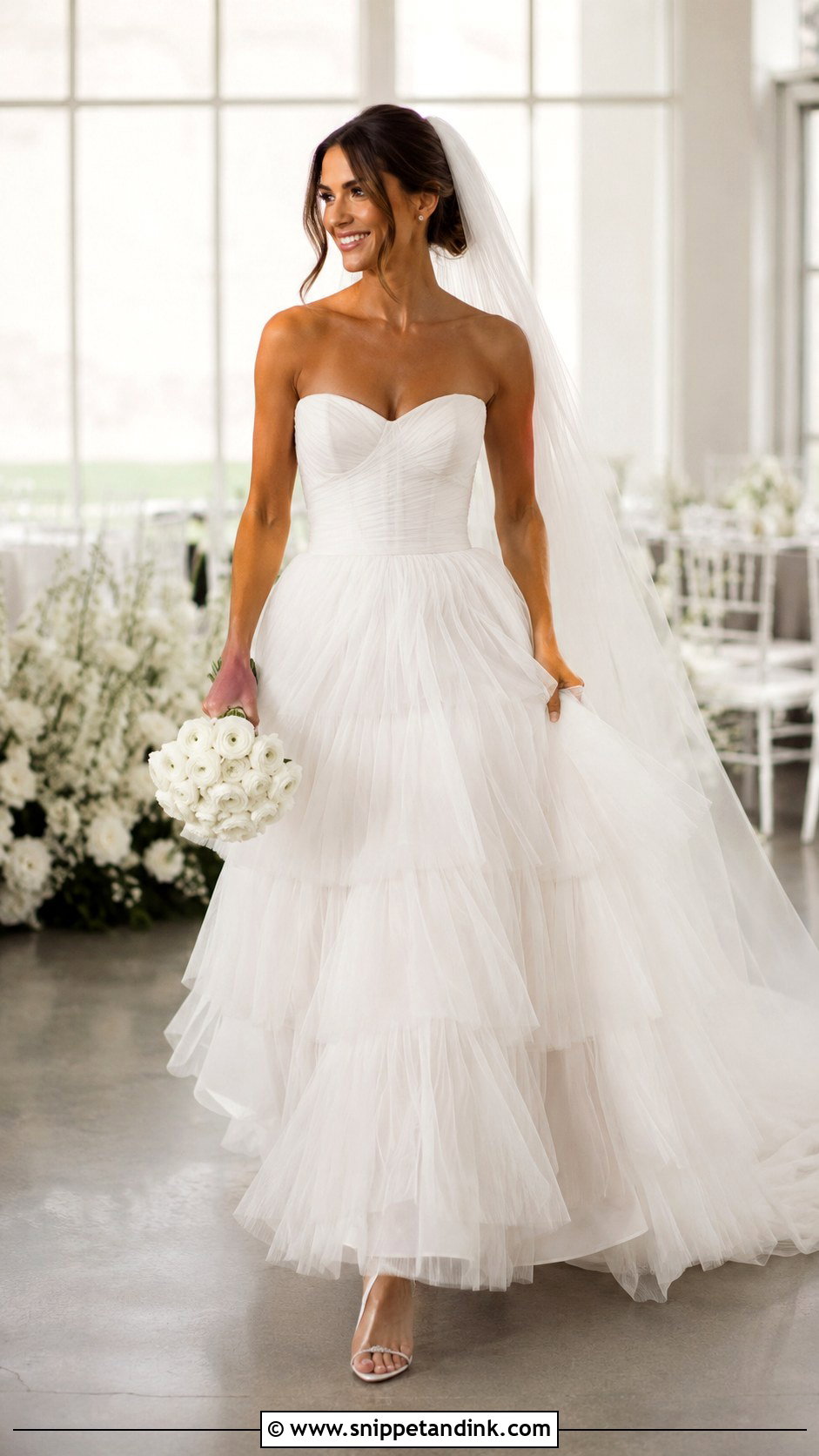
A tiered tulle skirt looks huge but stays light, provided the support underneath is right. Ask the salon whether the skirt needs a hoop, a crinoline or just a lightweight petticoat. Without it, layers can collapse and tangle around your legs as you walk. Raw-edged tiers feel modern, lace-trimmed ones more decorative. Slender heels, crystal studs and a long veil floating over the skirt suit it, with a compact bouquet of ranunculus so the tiers stay visible.

20. Bridal Mini Dress With Detachable Train
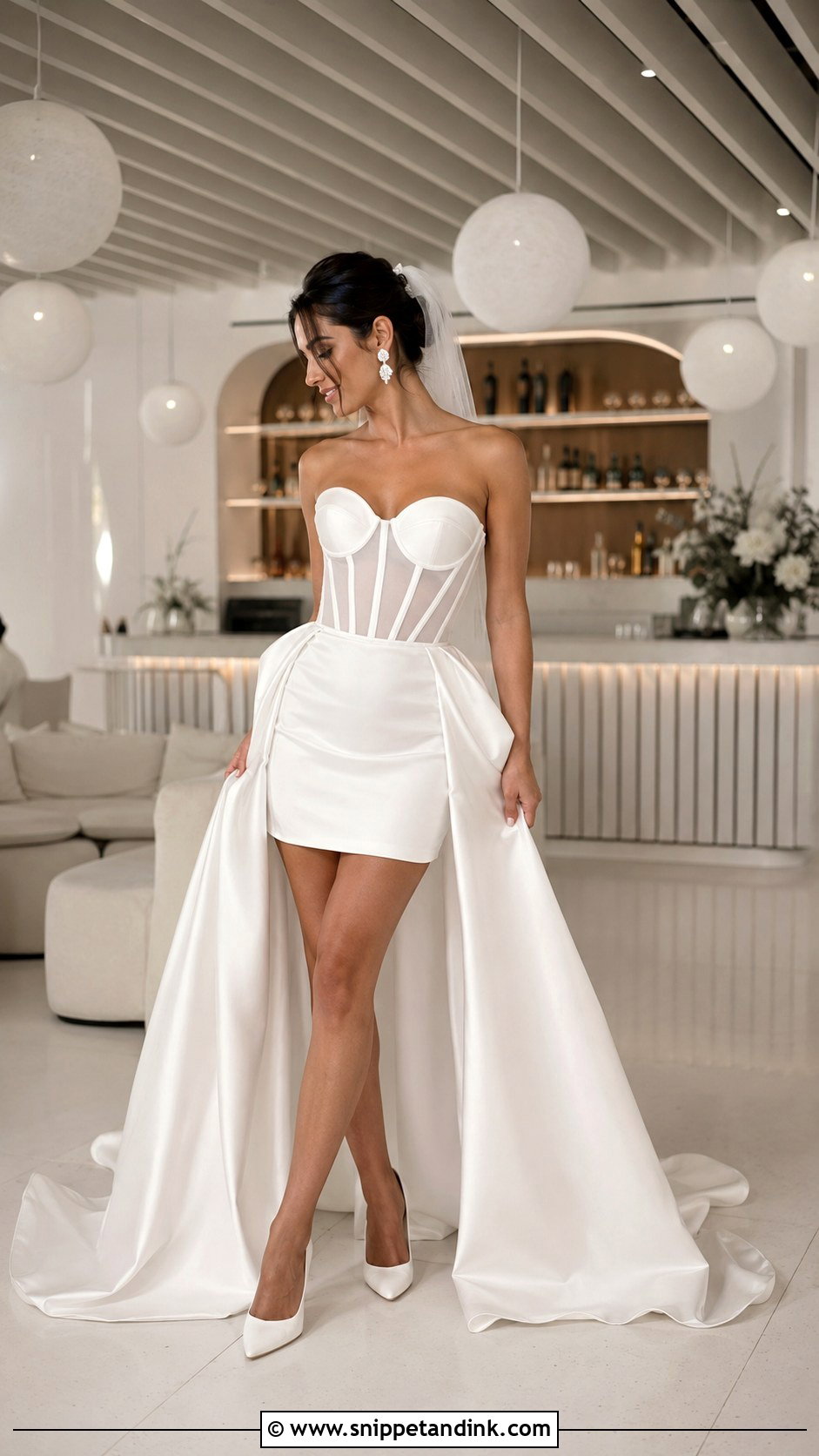
A mini with a detachable train looks like a full gown on the way in and turns into a party dress once the train comes off. A structured mini with a corset bodice or a clean A-line skirt gives the train something firm to attach to at the back waist. I always check the length seated, because minis ride up more than you’d expect, and built-in shorts are worth asking for. Pointed pumps, statement earrings and a short veil or oversized bow suit civil ceremonies and modern venues.
Getting a Very Big Dress Through Doors, Cars and Bathroom Breaks
Nobody tells you that the hardest part of a dramatic gown is the logistics between the photos. These are the steps I walk brides through before the day.
- Measure the getaway car against the skirt. A full ball gown or tiered tulle skirt may need a larger vehicle or a bench seat, and you should get in seat first, then gather the skirt in after you.
- Plan the bathroom. Tall, full skirts are easiest if you face the toilet and straddle it while a helper holds the skirt up from behind. Practise once at home in the petticoat.
- Walk every staircase at the venue in your mind. Lift the front of the skirt with both hands on the way down; mermaid shapes will need smaller steps.
- Learn the bustle. Ask the seamstress to number or colour-code the hooks and loops, and have two people practise at the final fitting.
- Pack a small kit: safety pins, clear thread, a needle, fabric tape and a white chalk stick to cover marks on ivory.
Heavily beaded and corseted gowns also get warm. If your venue is crowded or summer-hot, plan a short break somewhere cool before the speeches, and drink water steadily rather than all at once.
Big Dress, Small Accessories: How the Bold Looks Hold Together
Drama works best one feature at a time. Volume, sparkle, corsetry, flowers and bows can each carry a gown, but put three together and none of them reads. I’d pick the one you love most, then choose shoes, jewelry, veil and bouquet that make room for it. Walk, sit, turn and lift your arms in the full outfit before the final fitting, and let the alterations make even the biggest gown wearable. From a corseted ball gown to a mini with a train, a bold dress can still be comfortable and look like you.
You'll Like These Ideas:




Leave a Reply