
Late-2000s bridalwear dressed for the red carpet. Strapless necklines, corset bodices, satin skirts, pick-up hems, crystal belts and coloured sashes made a 2008 gown easy to spot across a room. Those dresses are back on my rails now, often as thrifted bridal finds, and the brides choosing them want the glamour without the period clutter. The fix is almost always in the styling, not the dress. Below are 25 shapes from that year, each dressed from veil to shoes, with notes from the fitting room on what to keep and what to quietly drop.
Small Alterations That Take a 2008 Gown Out of 2008
A lot of brides now come to me with a real dress from that era, bought secondhand or handed down from a sister. Very few need major work. Most of the dated feeling sits in a handful of details a good seamstress can change in a fitting or two.
- Remove or replace the sash. A crystal or bright ribbon belt is the strongest giveaway of the year; a slim self-fabric belt or nothing at all modernises the waist instantly.
- Thin out the beading. If the bodice is covered, taking away some of the stones around the edges leaves a cleaner frame. Ask first whether the beads are stitched in a way that can be undone without marks.
- Add straps. Thin straps or a soft off-the-shoulder band on a strapless bodice changes the whole silhouette, and also adds security.
- Shorten or remove a long train. Many 2008 trains were long and stiff; a sweep train is easier to live with.
- Change the lining or skirt layers. Swapping a stiff petticoat for a softer one lets the skirt move like a modern gown.
Not every change is reversible, so if the dress may be passed on again, keep the removed pieces in a labelled bag.
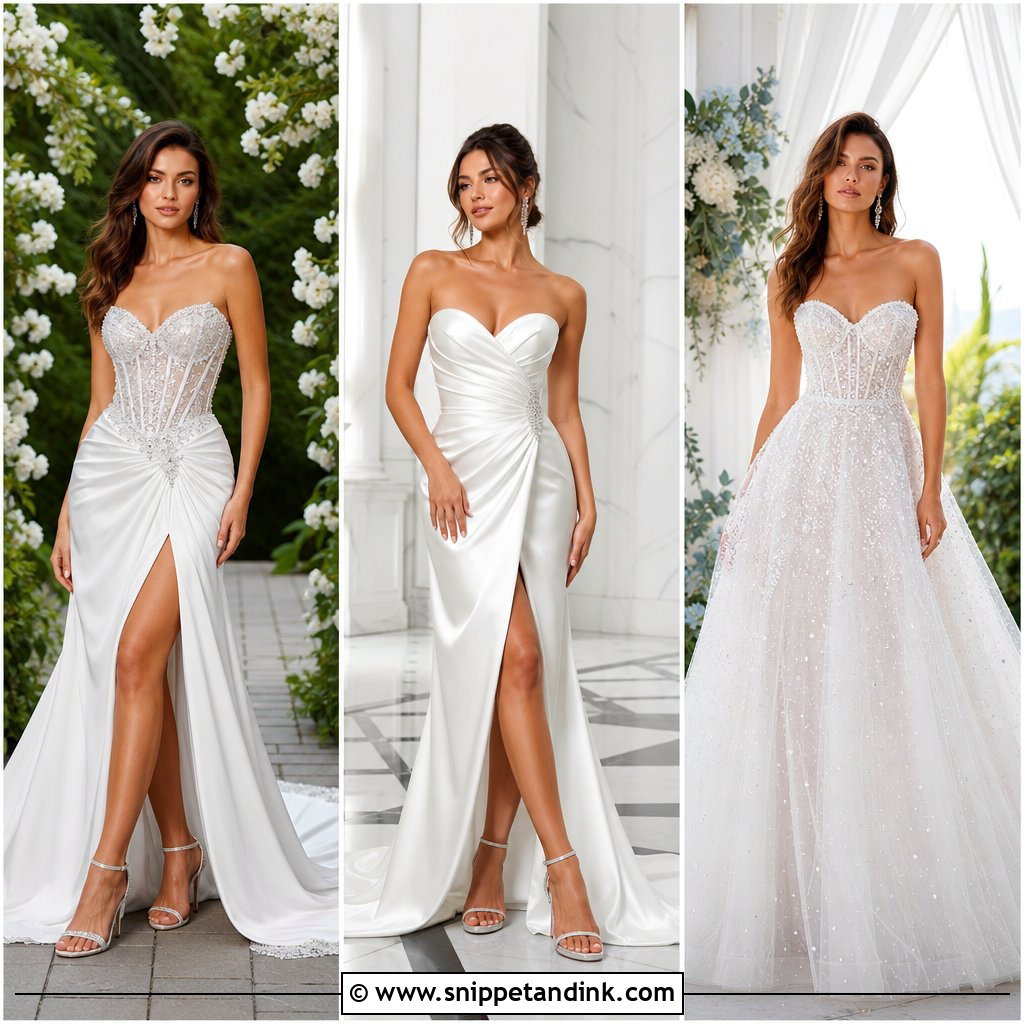
1. Strapless Sweetheart Wedding Dress
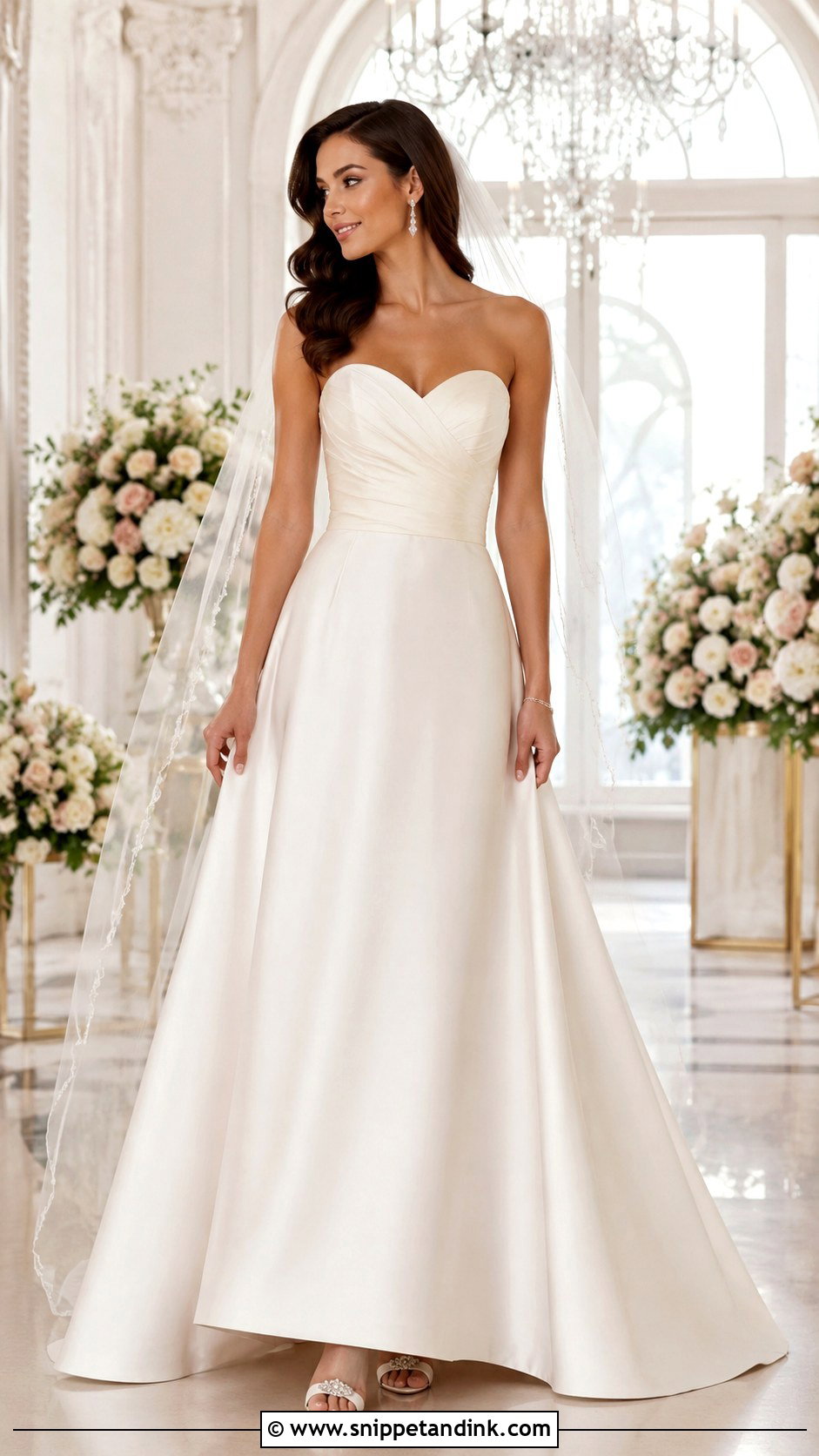
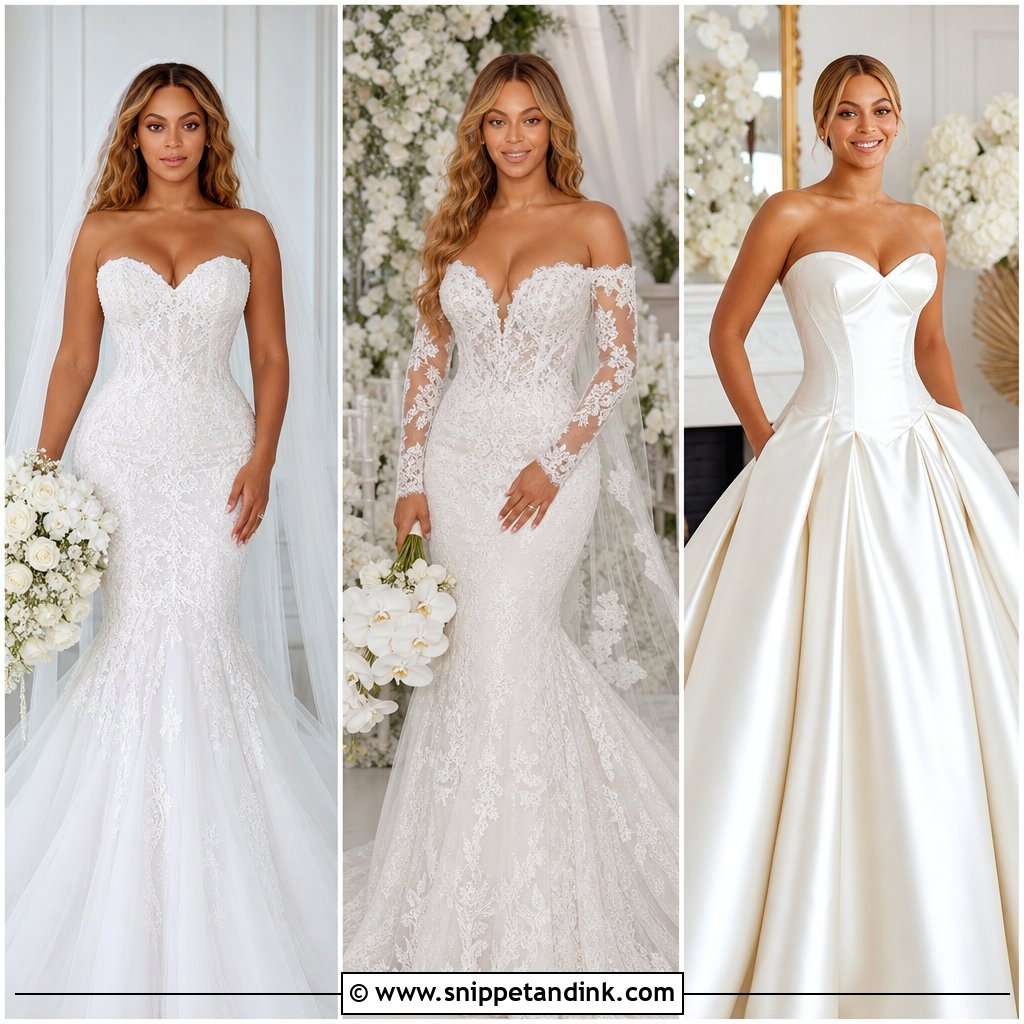
If one neckline defines 2008, it’s the strapless sweetheart. The curve frames the shoulders and softens the bust, and over a fitted, lightly boned bodice with an A-line or soft ball skirt it still looks right. Satin, taffeta and organza all suit it. The dated part was the jewellery. Crystal everything, at once, is what ages a photo, so I keep to one sparkling piece, usually drop earrings. A curled updo, a simple veil, ivory satin heels and a small white bouquet.
2. Strapless Ball Gown Wedding Dress
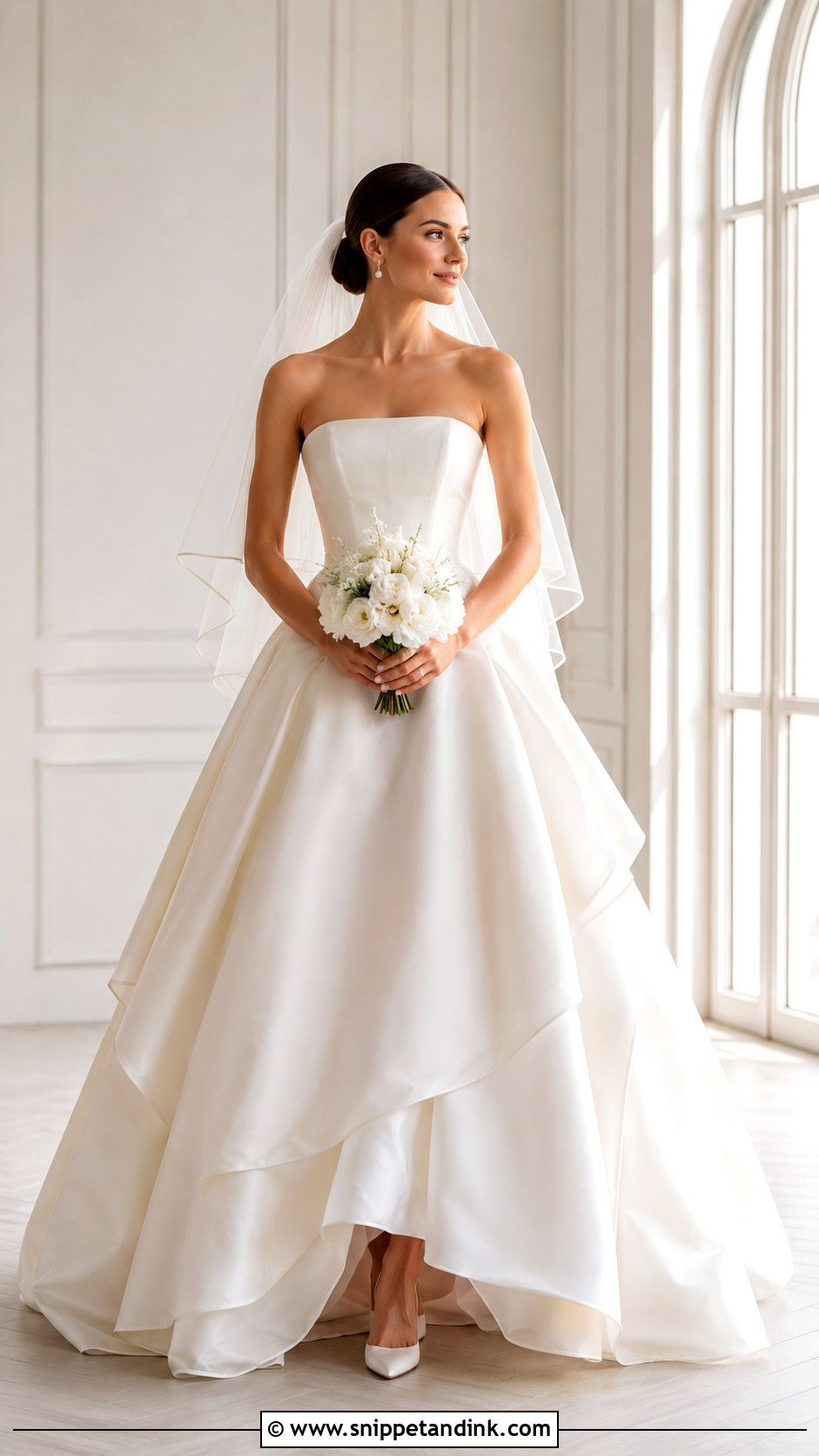
Structured bodice, cinched waist, a skirt that fills the frame: the strapless ball gown was the princess look of the year. Accessories must match its scale, or they disappear. A fingertip veil, a sparkling comb, pearl earrings and closed-toe satin pumps hold their own. With layered tulle or organza in the skirt, skip the necklace. Curvy brides often look most balanced in it, because the fitted top and full skirt make an obvious waist. The weight of those layers is real, though, so I have brides wear it for a full hour at a fitting.
3. Ruched Bodice Wedding Dress
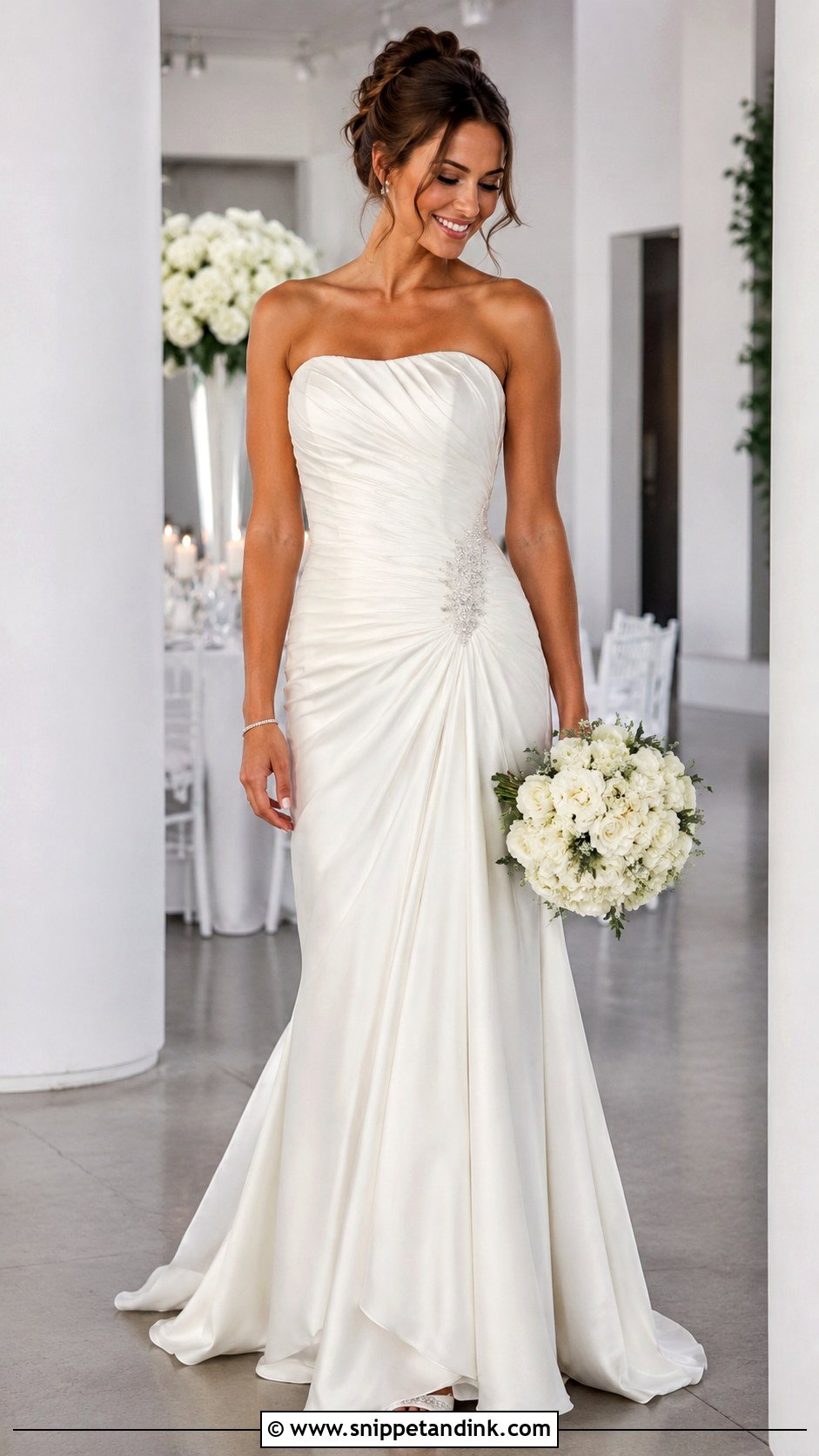
Gathered fabric across a strapless, sweetheart or dropped-waist bodice: the ruched bodice wedding dress defined the waist and added texture without beading. It’s also the most practical dress on this page. Ruching hides the creases that a long day leaves on smooth satin, and it forgives a small change in weight between fittings because the gathers absorb it. A smooth veil, crystal studs, a slim bracelet and peep-toe heels, with white roses or callas. Of all the 2008 shapes, this one still feels least dated.
4. Pick Up Skirt Wedding Dress
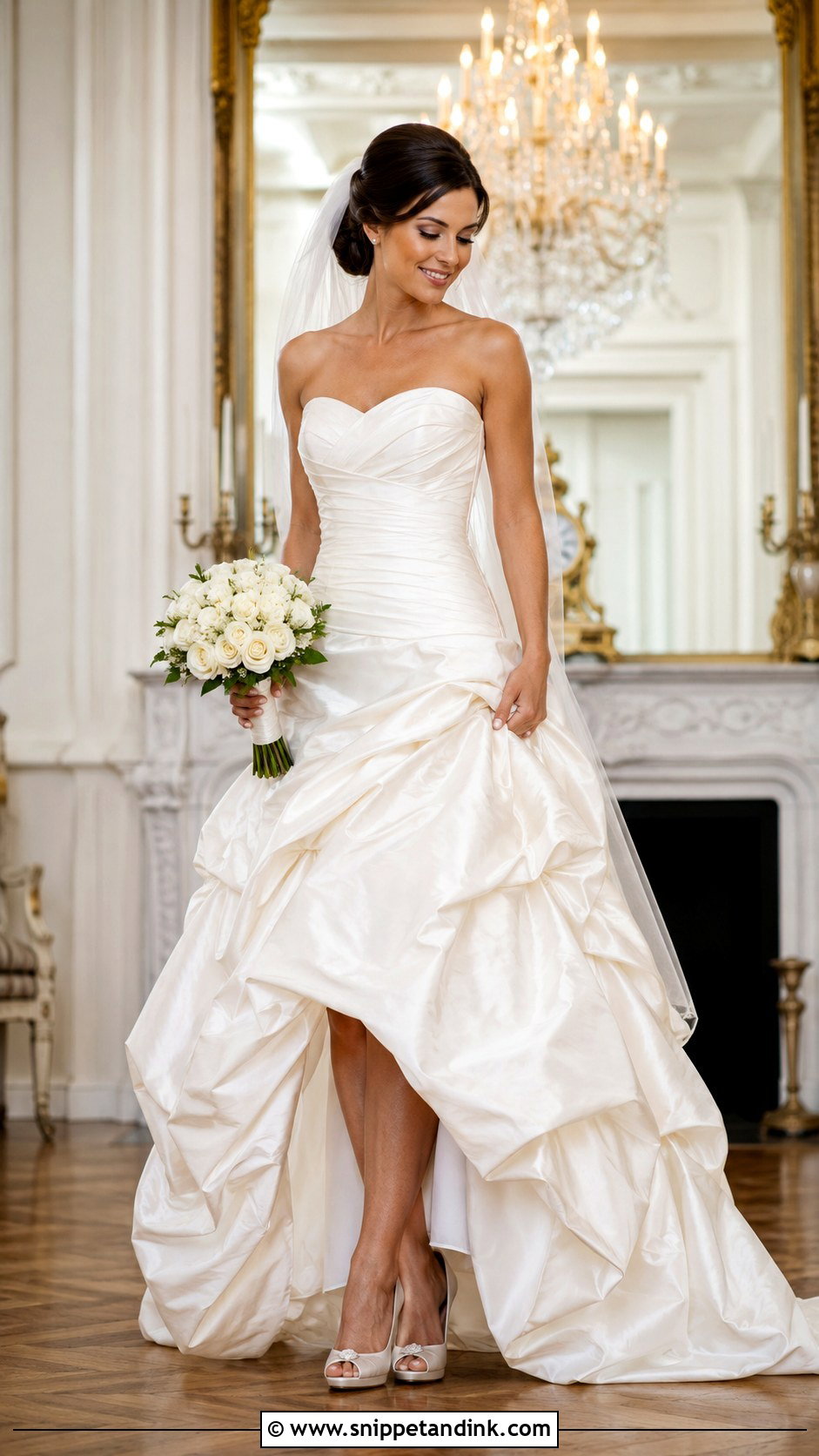
Pick-ups are pure 2008: the skirt is gathered up at points into soft clouds of fabric. It needs a strapless bodice and a fitted waist above it, and very little else. Those gathers are tacked by hand, and a tack that pops leaves a limp patch, so on a secondhand gown I check every one and have loose tacks re-sewn. A smooth veil, small crystal earrings, satin heels and a neat bouquet. A half-up style suits the volume. Ballrooms and garden receptions give it room.
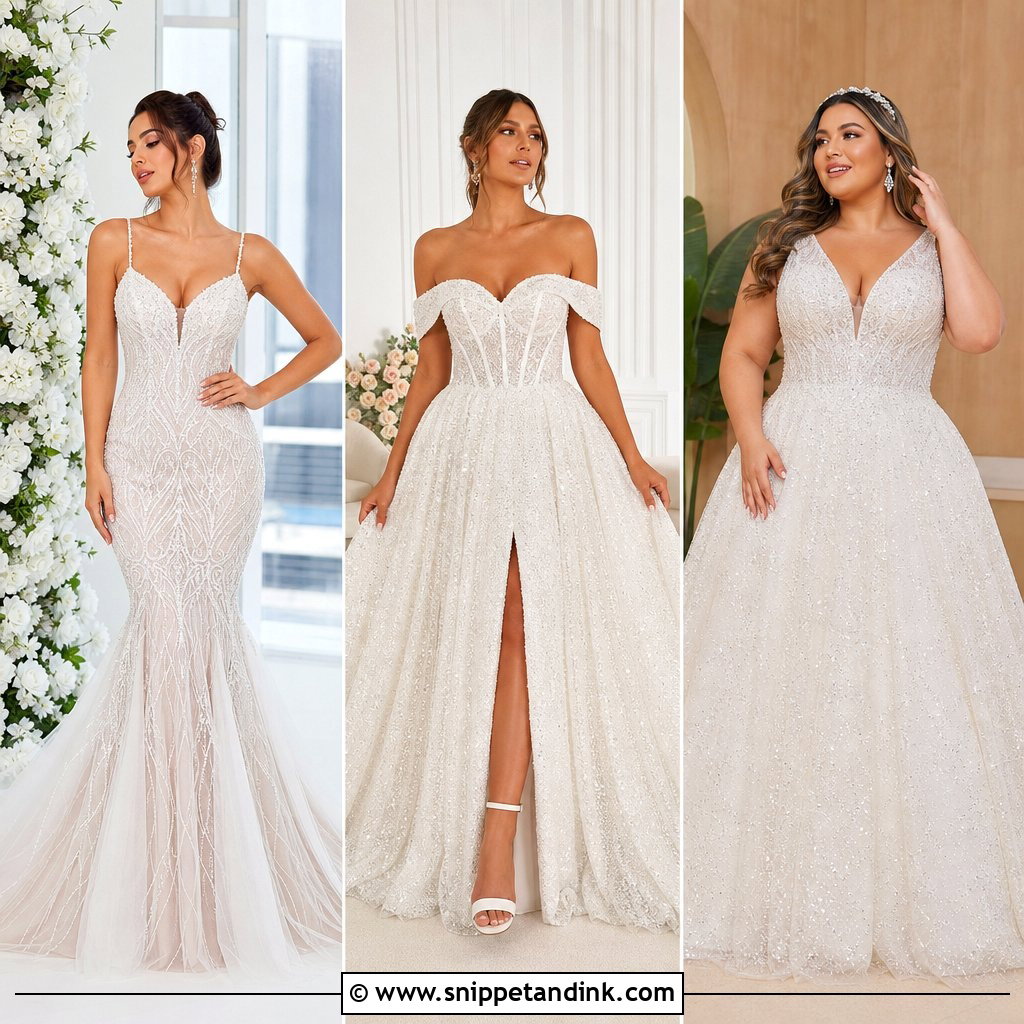
5. Mermaid Wedding Dress
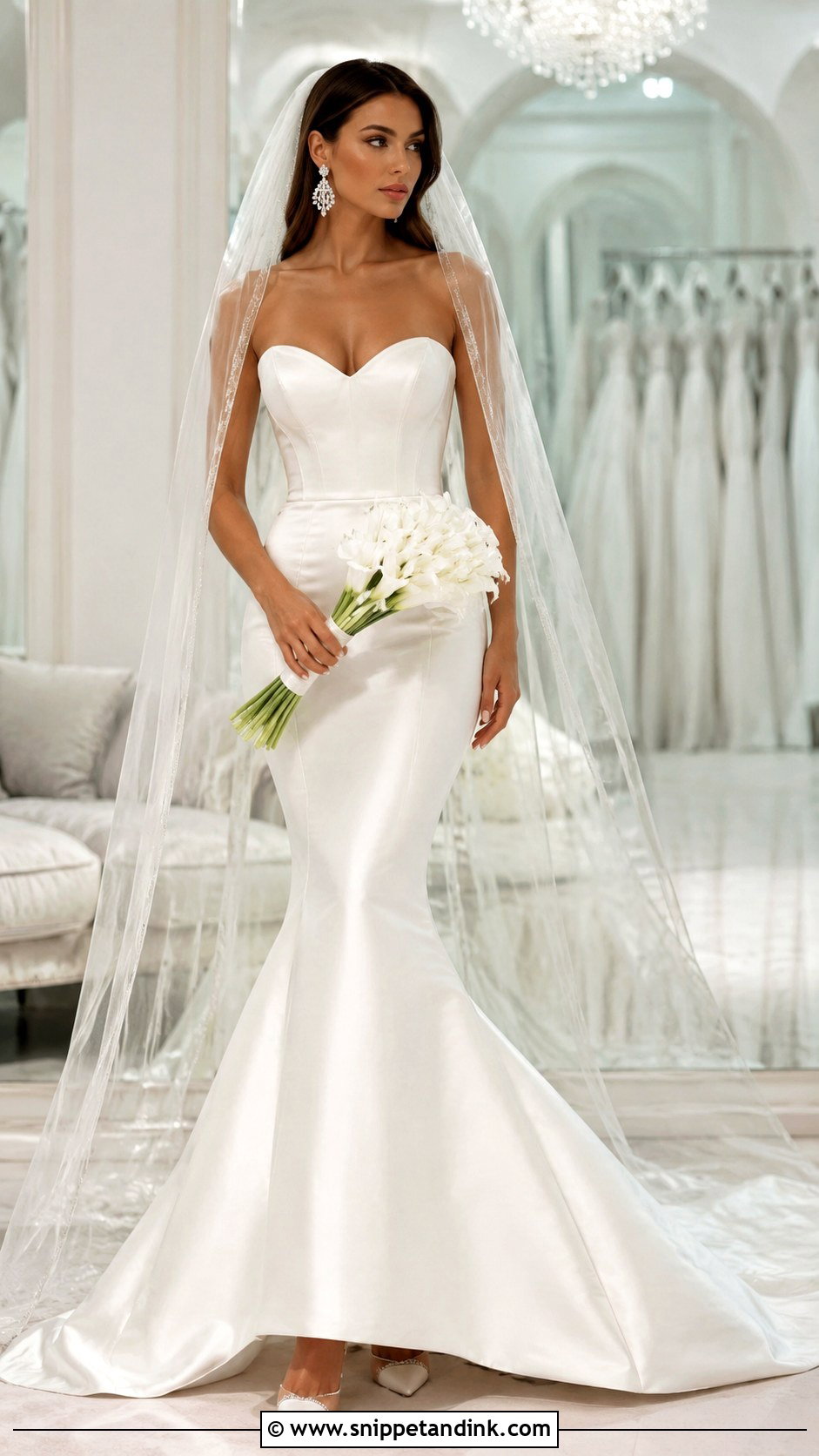
Hugging through bodice, waist and hips, then flaring near the knee, the mermaid brought red-carpet glamour into bridal collections that year. It works in satin, lace or taffeta with a sweetheart or straight strapless top. This silhouette lives or dies on tailoring: if the flare sits too low, you’ll shuffle; too high and it becomes a trumpet. I set it with the bride walking, not standing. Chandelier earrings, a long veil, pointed ivory heels and a sleek bouquet, with soft waves or a low bun.
6. Trumpet Wedding Dress
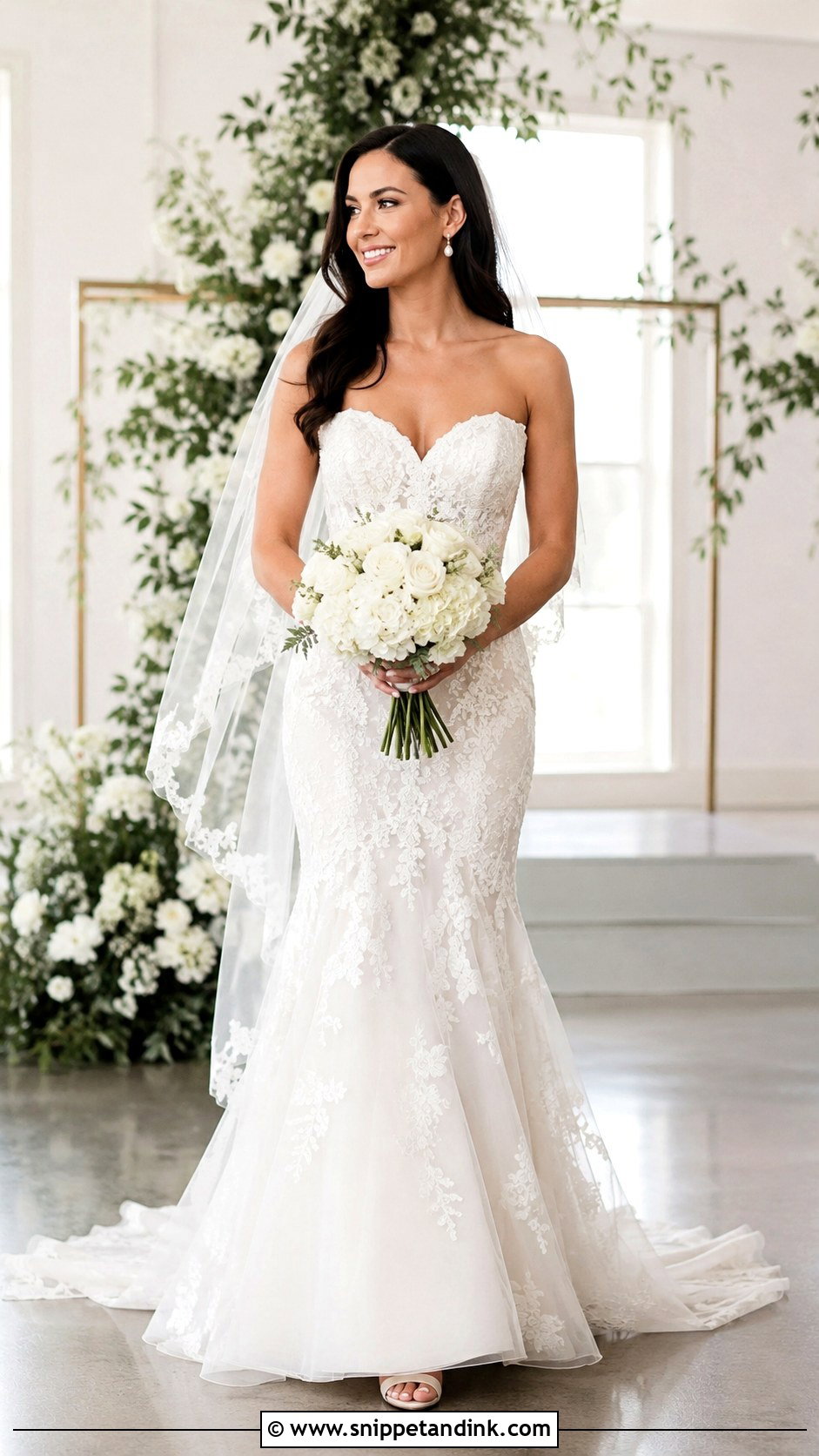
Same idea as the mermaid, but the flare starts around mid-thigh, so walking, sitting and dancing all get easier. That’s why I suggest the trumpet far more often. In a 2008 version, look for a strapless top with subtle ruching, lace appliqué or light beading. It suits a wider range of figures because it marks the waist without gripping the knees. Chapel veil, pearl drops, satin heels and a small structured bouquet that keeps the lines clean.
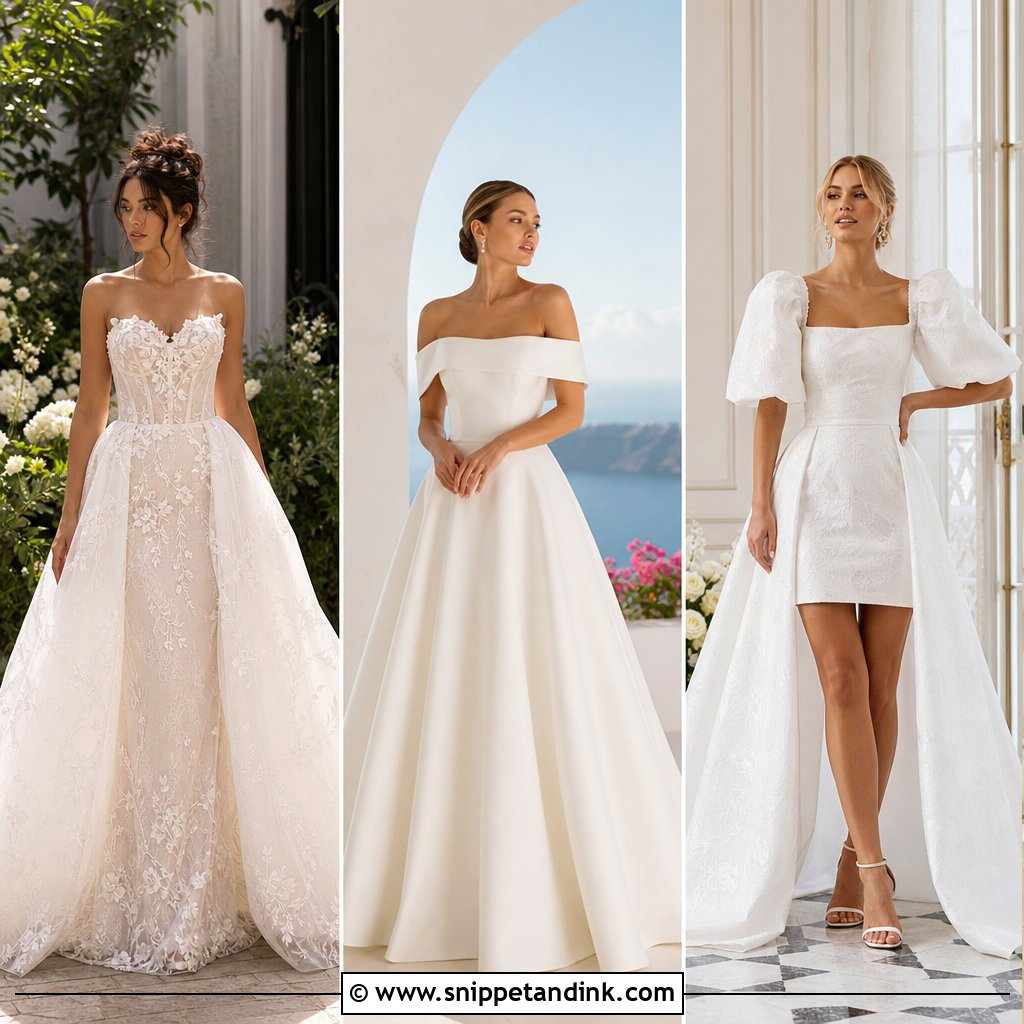
7. Lace A Line Wedding Dress
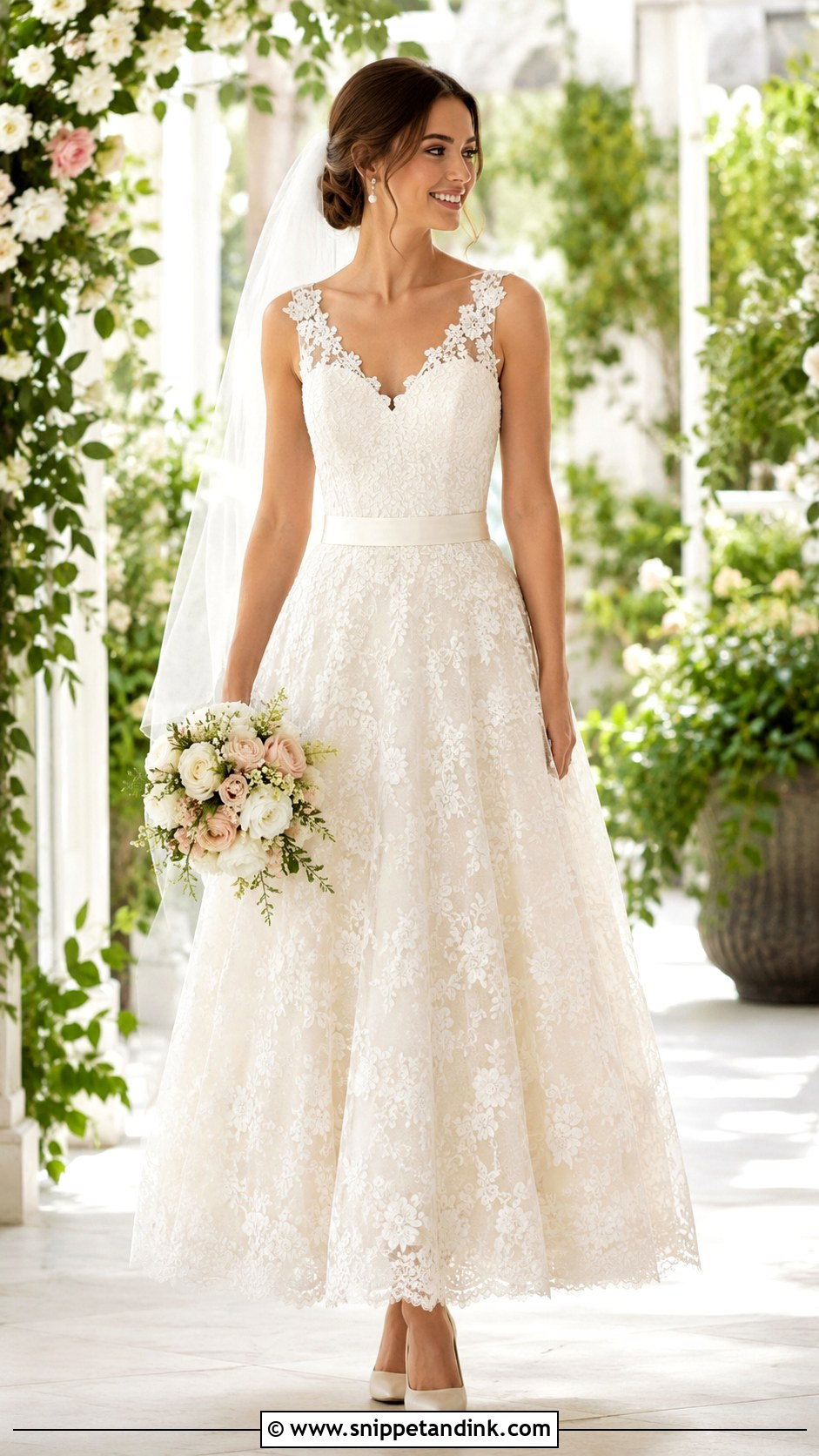
Lace on an A-line skirt is where 2008 romance meets something more lasting. Choose a strapless or cap-sleeve bodice with delicate floral lace and a satin ribbon at the waist, and the skirt floats off the hips instead of clinging. Lace snags on rough stone and on some bouquet wiring, so I ask florists to wrap stems fully in ribbon. Pearl earrings, ivory pumps and a mix of white and blush flowers. Outdoors it holds up well in daylight photos, and it’s the safest pick here if you’re wary of looking trend-bound.
8. Satin A Line Wedding Dress
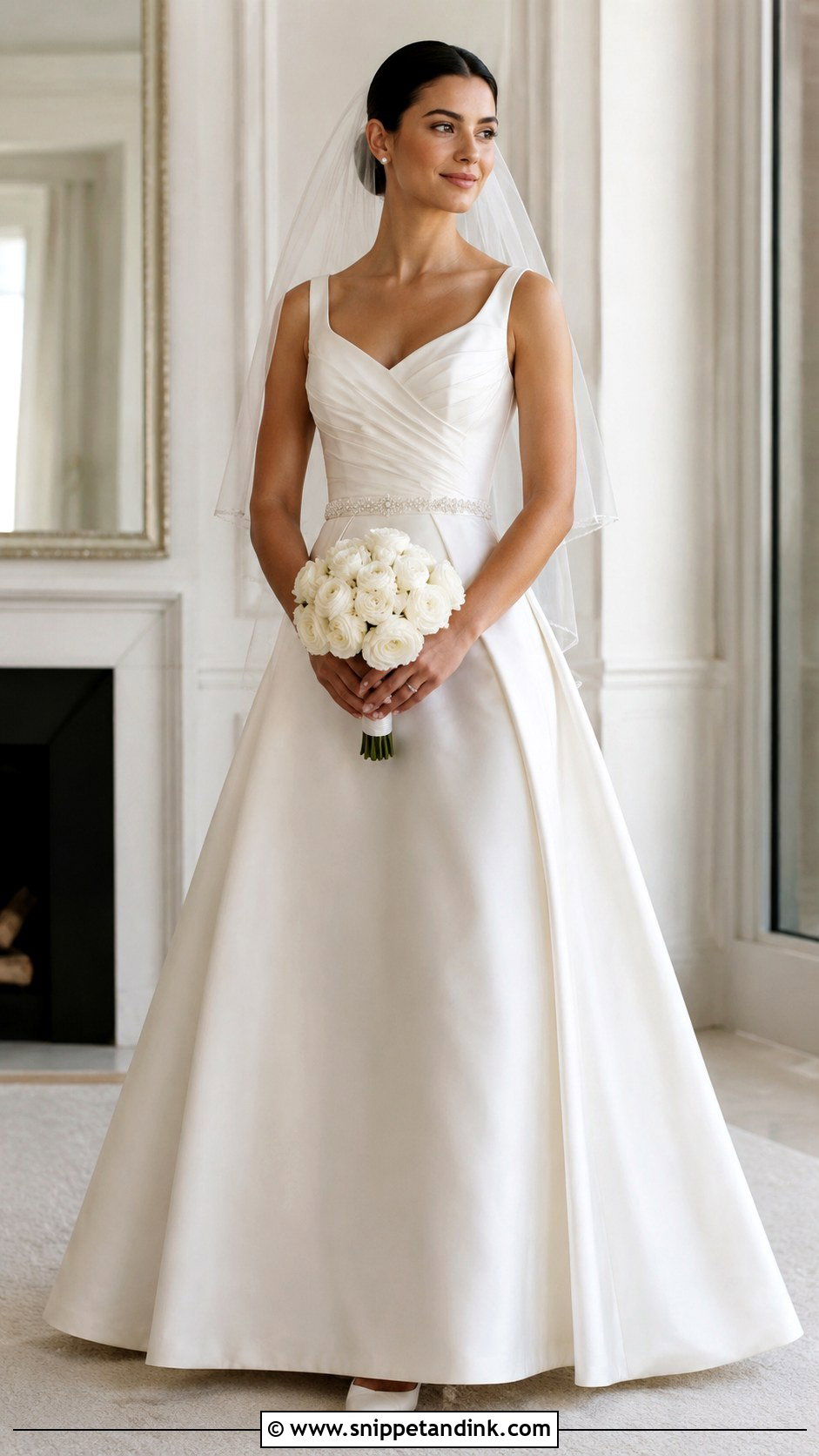
Satin and an A-line skirt give a clean, formal shape with no lace or sparkle needed. A pleated bodice or beaded waistband ties it to 2008. Because satin reflects light, it also shows every crease. Plan for a steamer at the venue, and ask your photographer to grab the full-length shots before the meal. Medium-length veil, pearl studs, a sleek bracelet, classic ivory heels and a neat updo with a simple bouquet.
9. Taffeta Wedding Dress
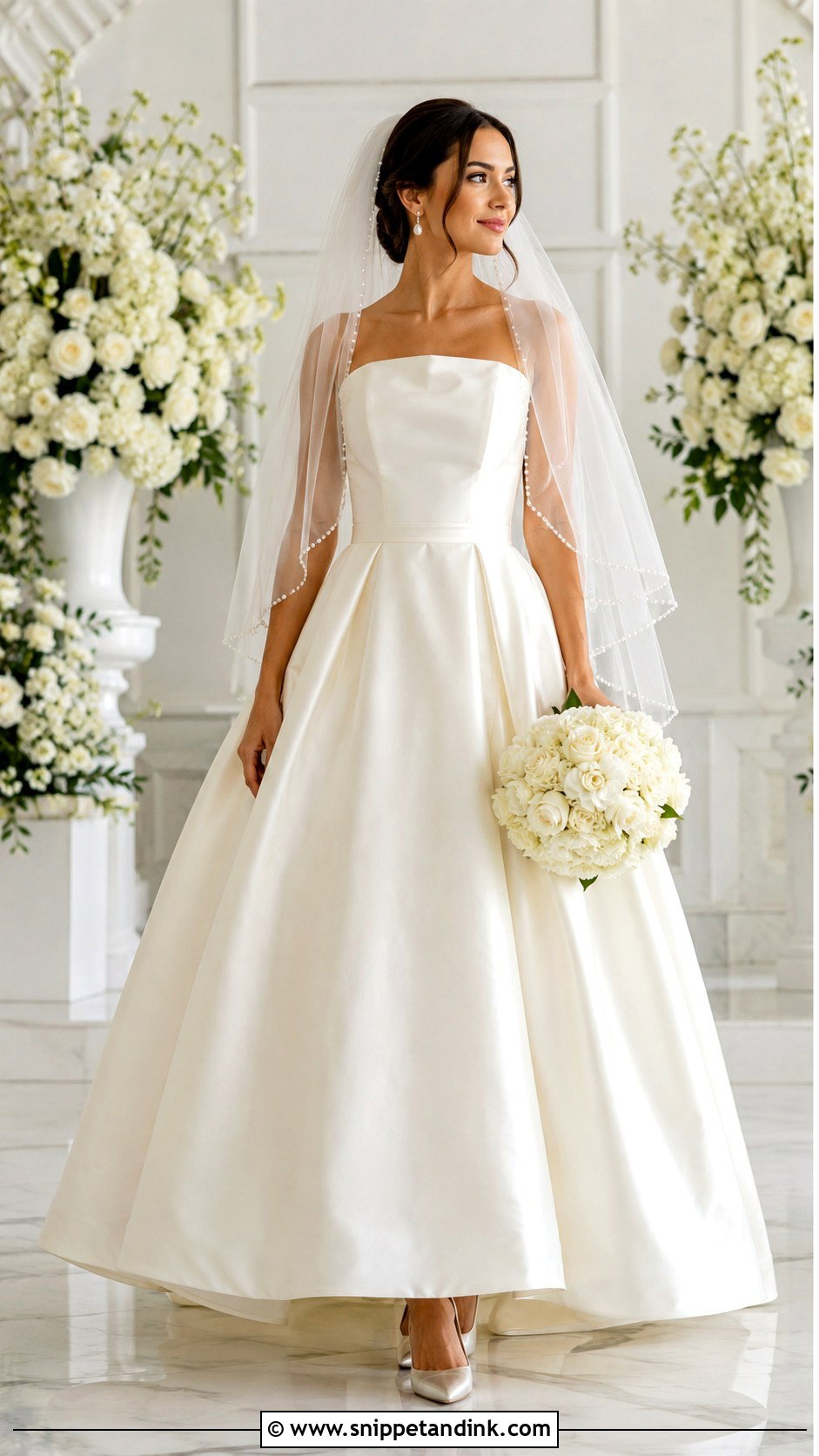
Taffeta has a light sheen and a firm body that holds a shape on its own, which suited the ball gowns, pleats and pick-ups of the late 2000s. It rustles. I mention that at every fitting, because some brides love the sound and others find it distracting during quiet vows. A fitted bodice with a belted waist balances its volume. Satin pumps, a fingertip veil, pearl or crystal earrings and a clean bouquet. Even a plain cut looks finished in taffeta.
10. Beaded Corset Wedding Dress
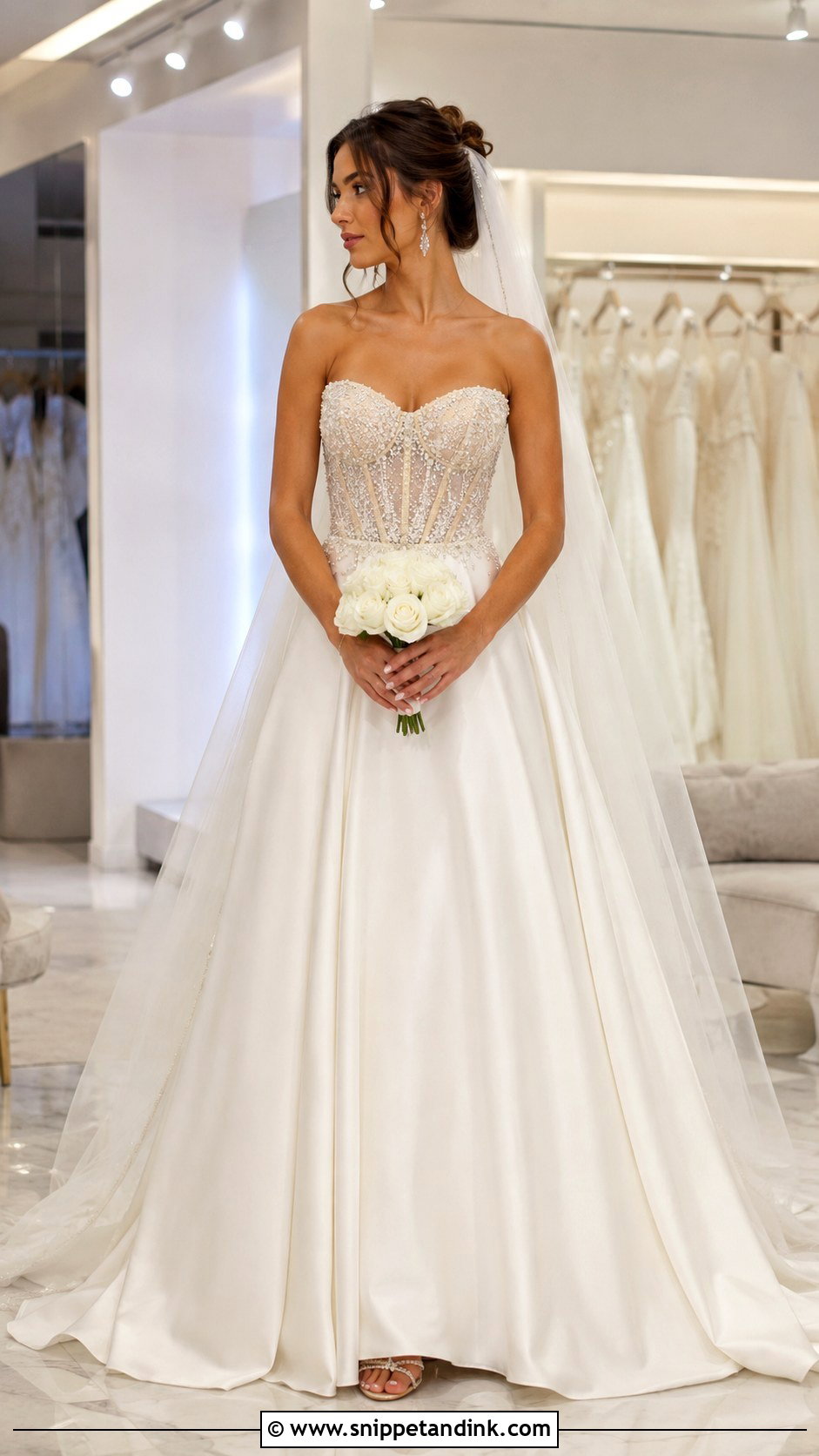
A beaded corset puts sparkle and structure in one place. In 2008 that meant crystal beading, embroidery and lace-up backs, over a calmer skirt: satin A-line, tulle ball gown or soft trumpet. The lacing earns its place on a long day, since it can be loosened a little before dinner. Sheer veil, crystal earrings, understated heels and no heavy necklace. Heavily beaded bodices are heavy, so on secondhand gowns I check that beads are stitched, not glued.
11. Lace Up Back Wedding Dress
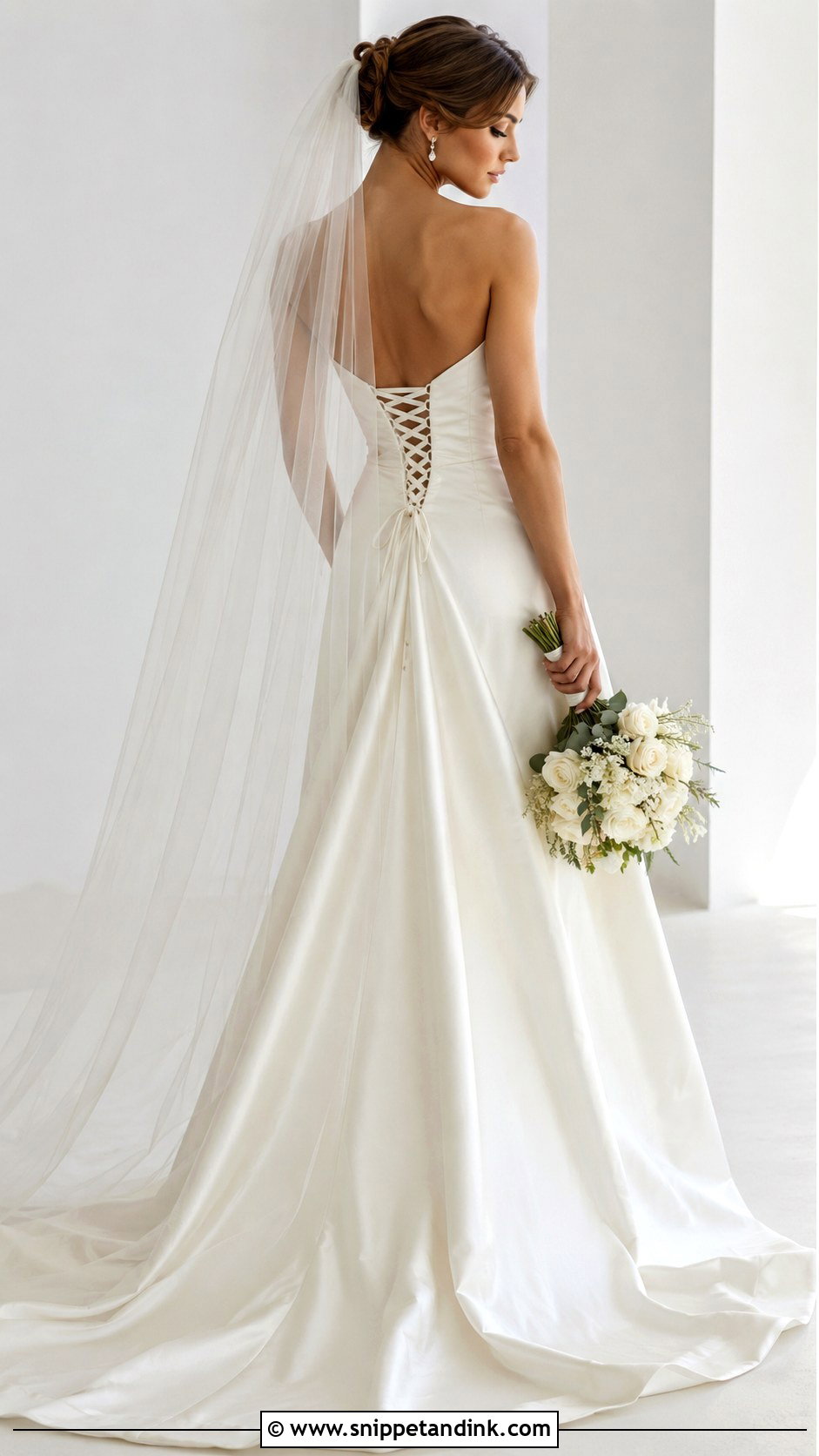
Lace-up backs were everywhere in the late 2000s and remain the most adjustable fastening in bridalwear. The corset-style ribbon lets the bodice be tightened or eased by an inch or so, and it gives a romantic detail from behind. One warning: lacing takes time and practice. I teach a bridesmaid at the final fitting, working from the middle out, rather than leaving it to whoever is nearby on the morning. Strapless satin, taffeta, lace or organza all suit it, with a sheer veil, simple earrings, a polished updo and ivory heels.
12. Halter Wedding Dress
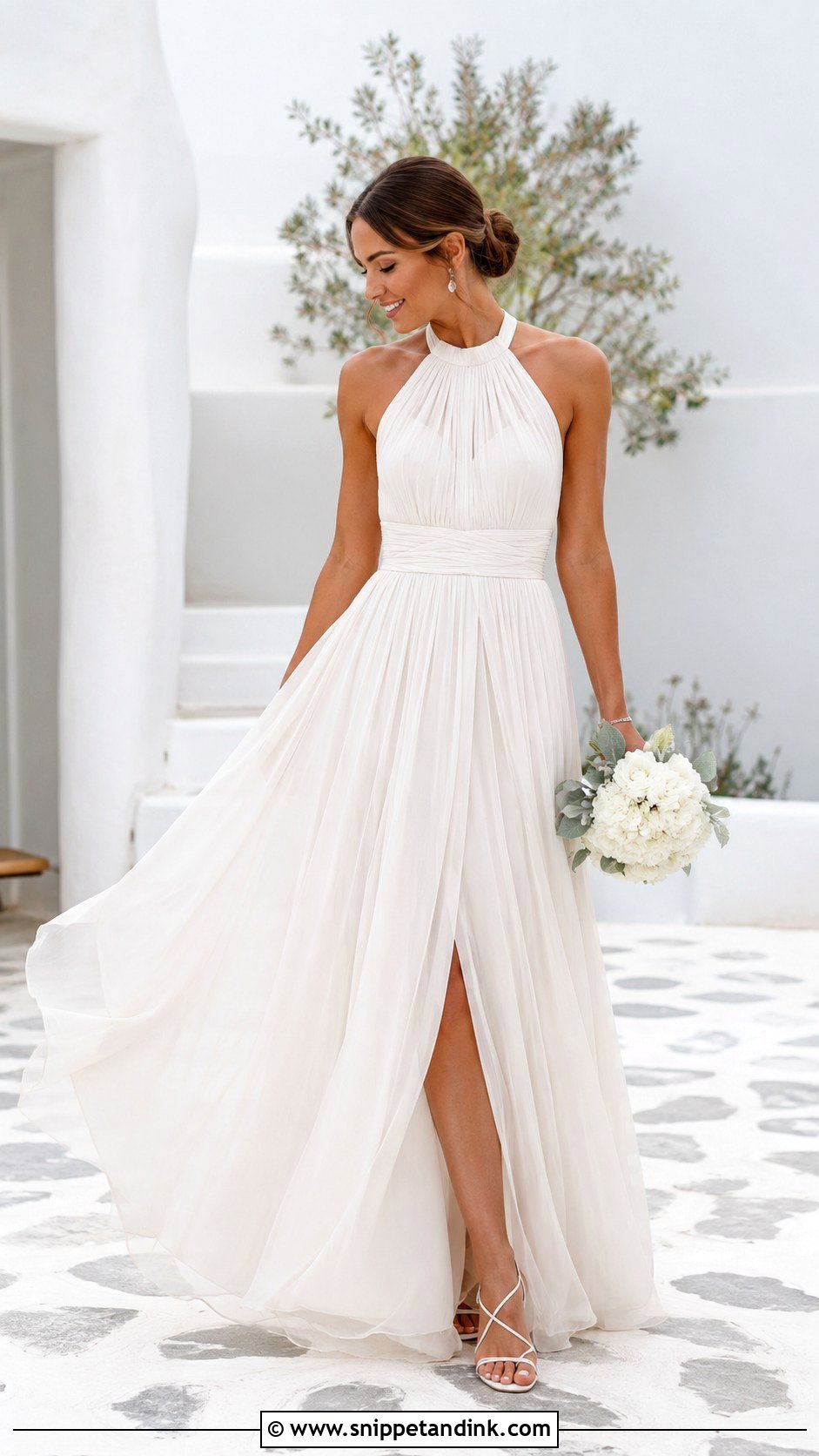
Halters were the alternative to the strapless gowns that dominated 2008, giving support without sleeves and showing the shoulders and upper back. Satin, chiffon or lace with a fitted waist and flowing skirt all work. The neck strap carries weight, so if your skirt is heavy, ask for a wider strap or an anchor inside the bodice. Drop earrings, a bracelet, a low bun or smooth ponytail, a long veil and strappy ivory heels. Destination and warm-weather weddings suit it.
13. One Shoulder Wedding Dress
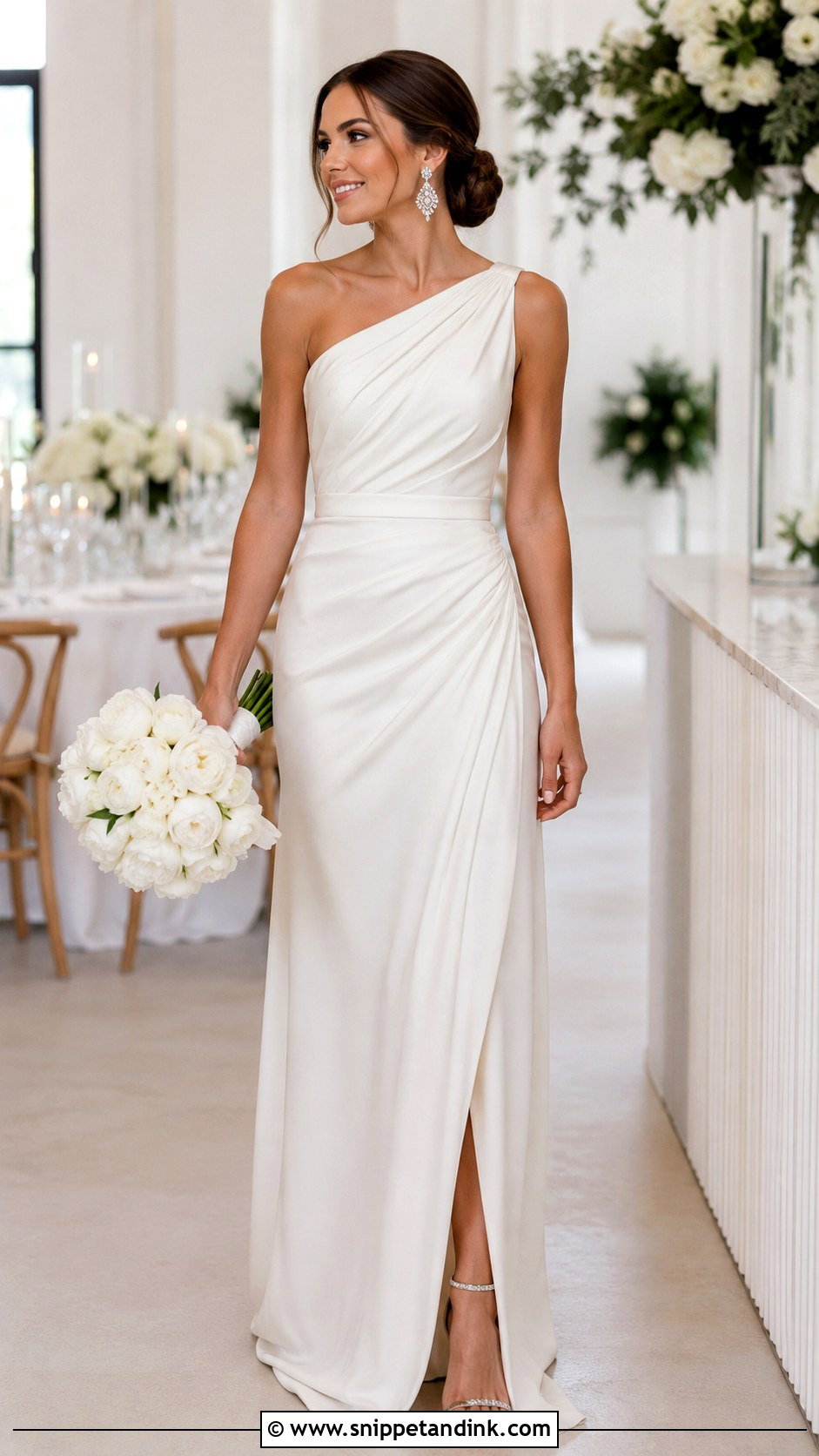
Asymmetry on the red carpet in those years turned into the one-shoulder bridal gown. Draped chiffon, a satin column or a fitted trumpet gives the strongest effect. I check the single strap at a fitting with the bride lifting her opposite arm, because a one-shoulder bodice can twist if it isn’t anchored on the bare side. No necklace; statement earrings instead. Sleek heels, a smooth clutch, a low side bun and a bouquet with clean lines.
14. Off The Shoulder Wedding Dress
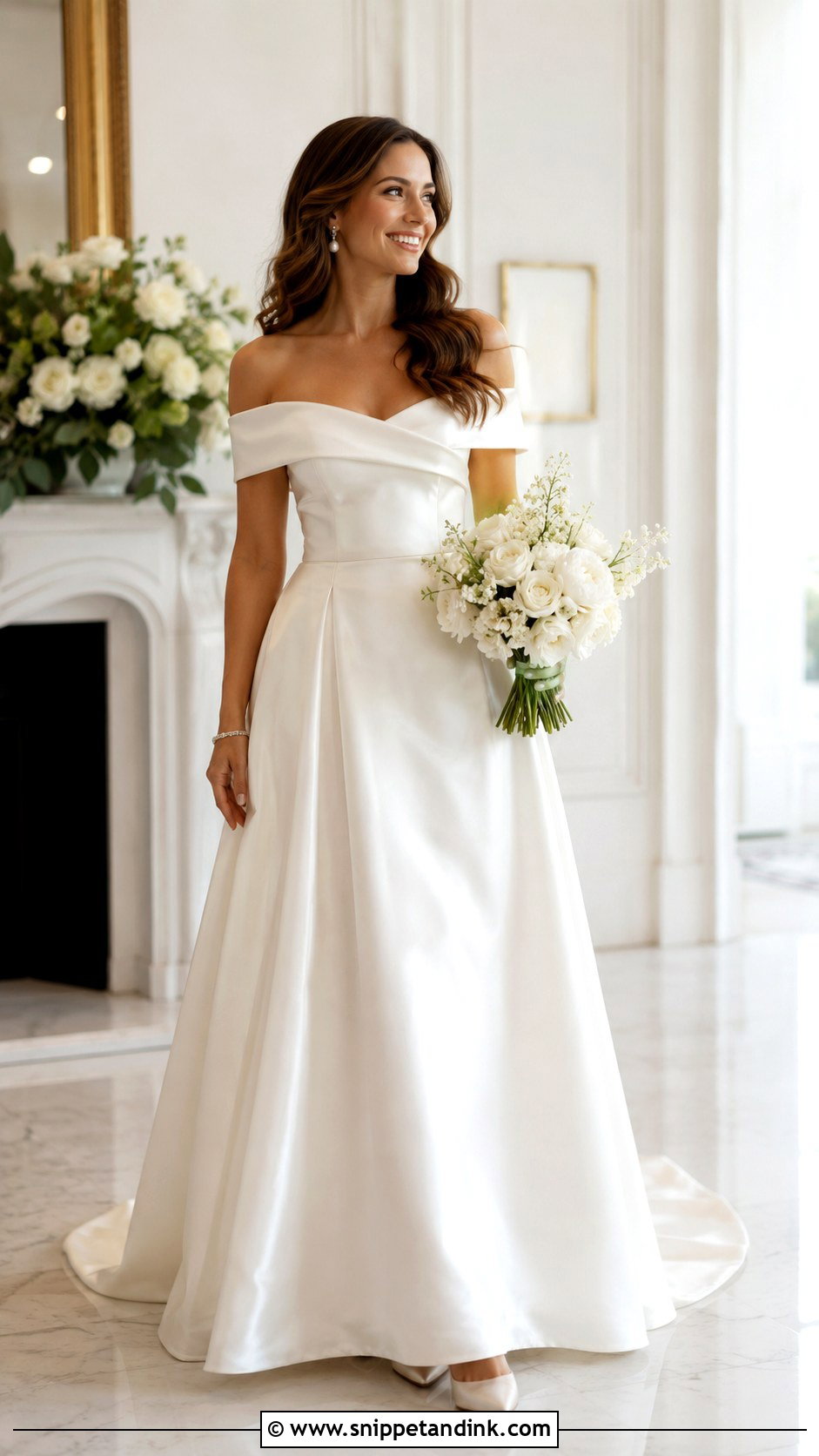
An off-the-shoulder line frames the collarbone and draws the eye up to the face, and it adds width at the shoulders, which helps balance a fuller skirt. A satin A-line, lace ball gown or fitted trumpet with gentle off-shoulder straps all carry it. The straps must sit snugly enough not to slide when you hug people. Loose waves, pearl earrings, a light veil, ivory heels, a delicate bracelet and soft white blooms. Classic without feeling old-fashioned.
15. Empire Waist Wedding Dress
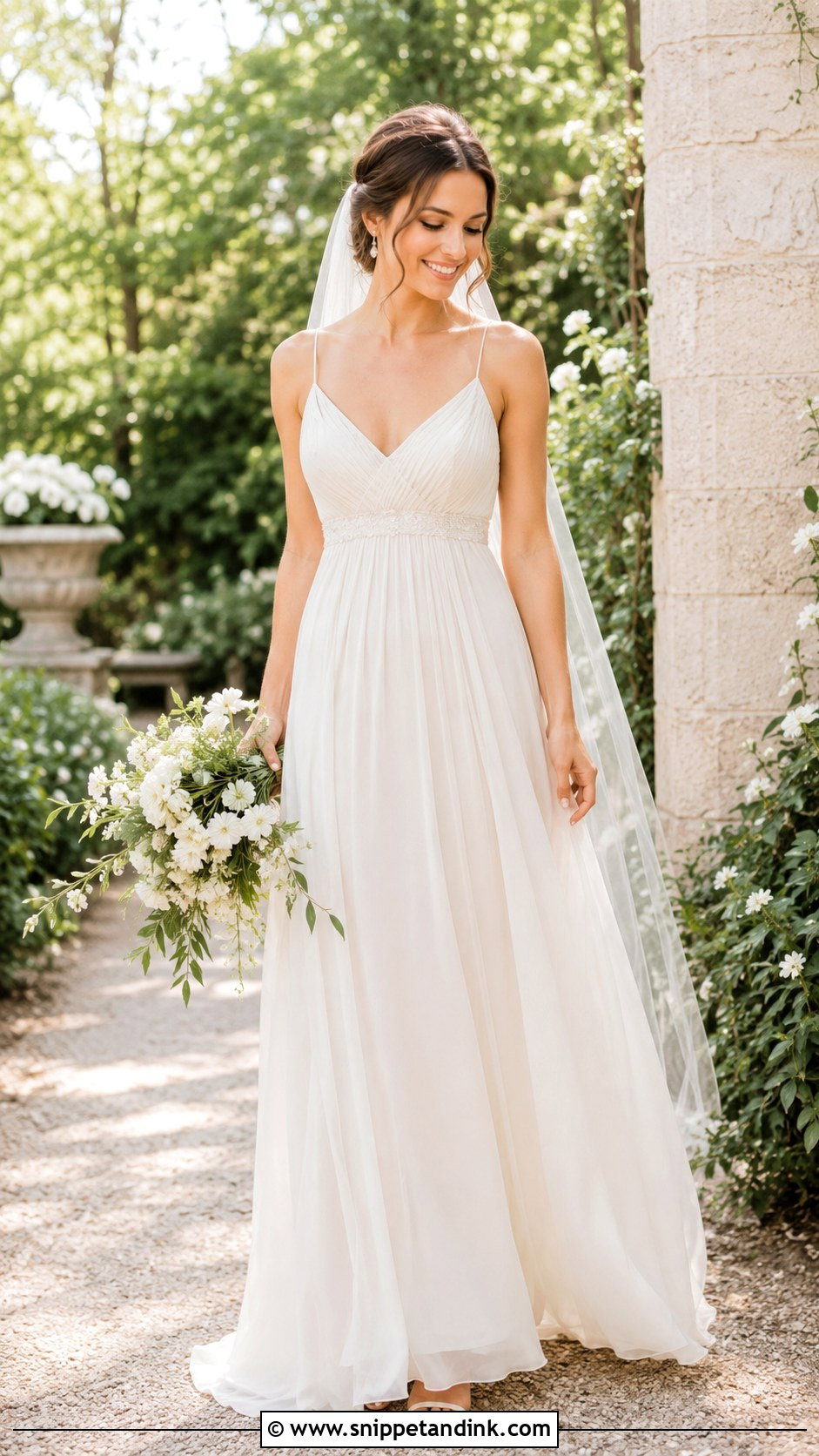
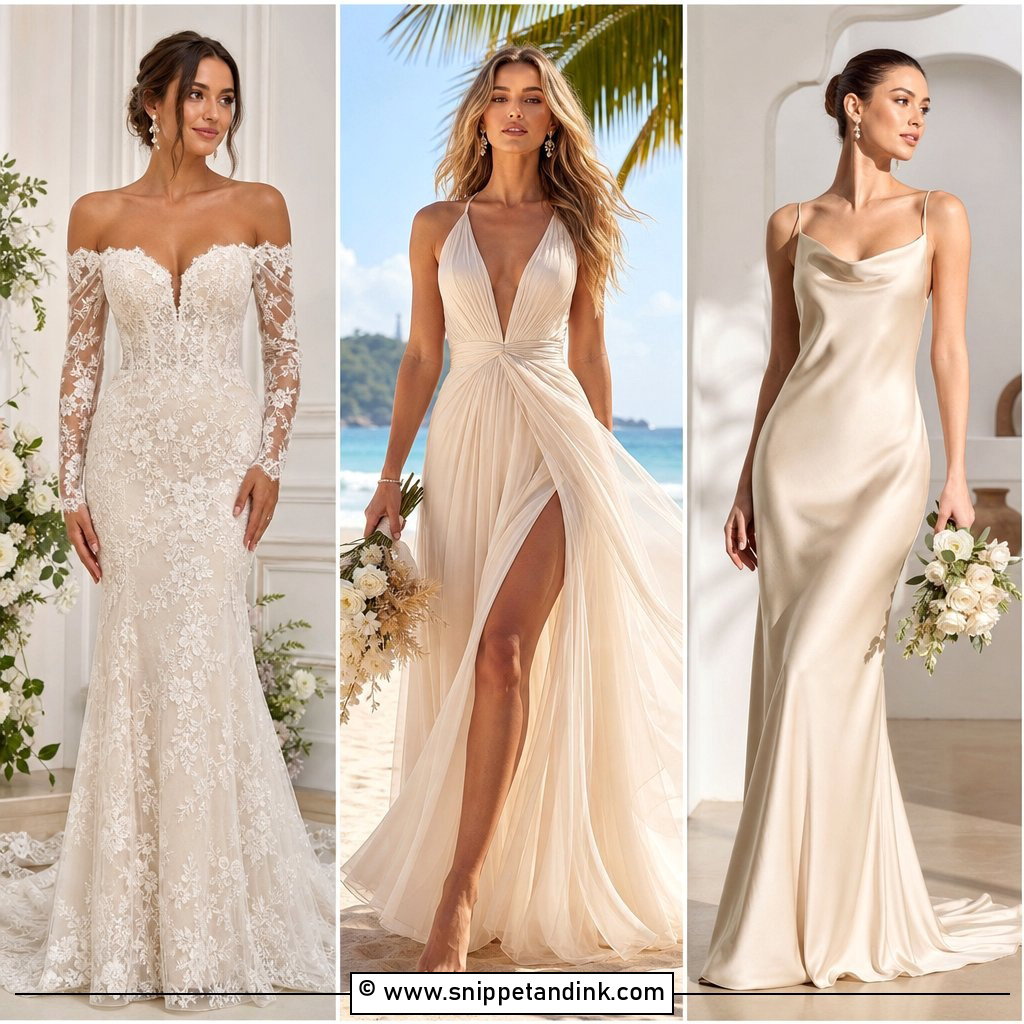
Seam just under the bust, skirt falling loose below: the empire line is the comfort choice of 2008. Chiffon, organza and lightweight satin all work. It doesn’t squeeze the waist, which is why I suggest it to expecting brides and anyone who hates feeling held in, and it lengthens a petite frame. The trade-off is less waist definition. Delicate earrings, flat or low sandals, a soft veil and a loose updo or natural waves. Beaches and outdoor settings suit it.
16. Chiffon Destination Wedding Dress
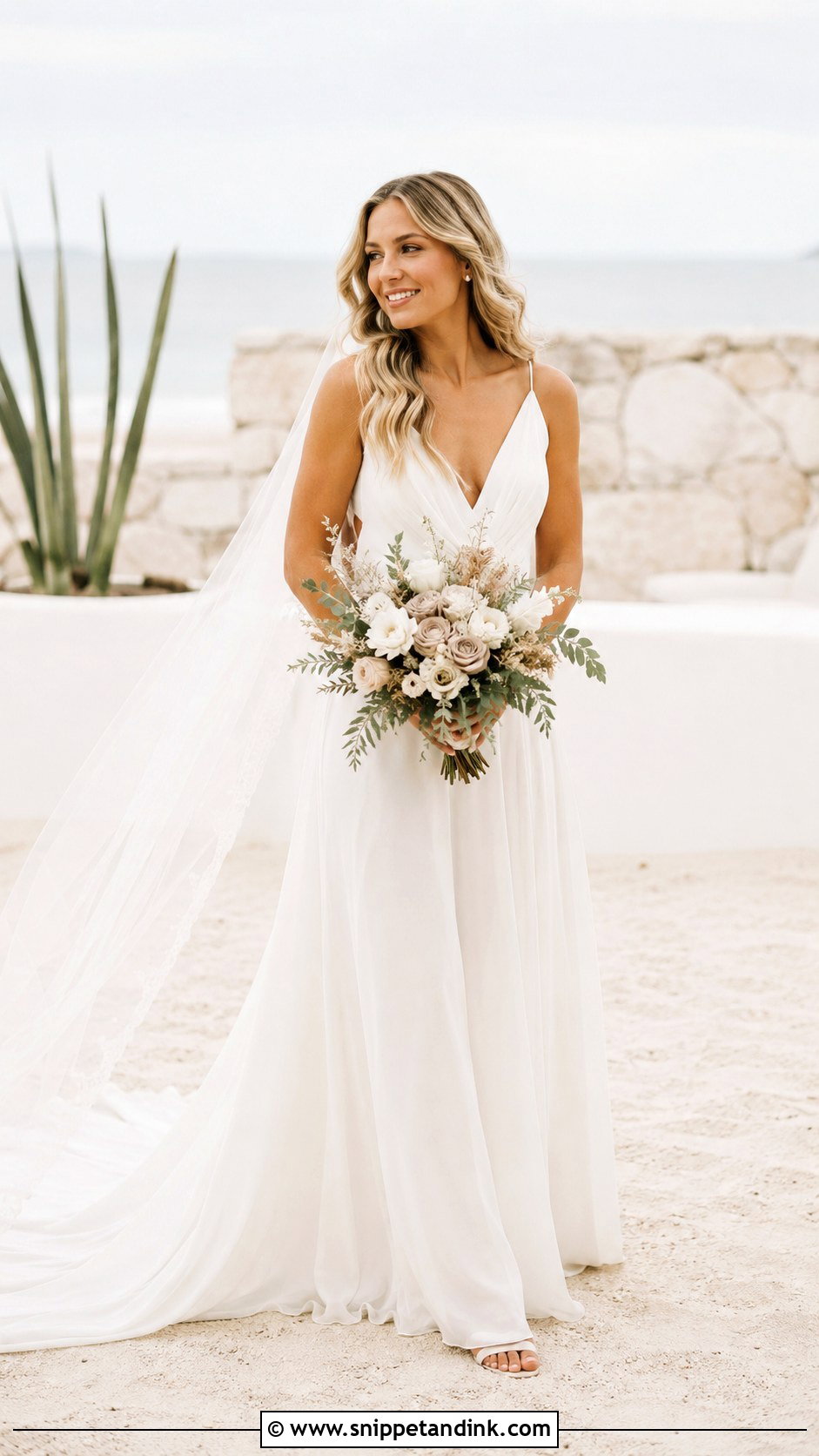
Chiffon moved where satin and taffeta stood still, which is why it took over late-2000s destination dresses. Look for a strapless, halter, or empire-waist shape with a flowing skirt. Chiffon frays and snags easily on sand and rough decking, and it shows water marks, so I tell beach brides to keep the hem clear of the tide line. Simple sandals, pearl studs, a sheer veil and a loose bouquet. Choose hair that copes with breeze, soft waves or a low bun.
17. Colored Sash Wedding Dress
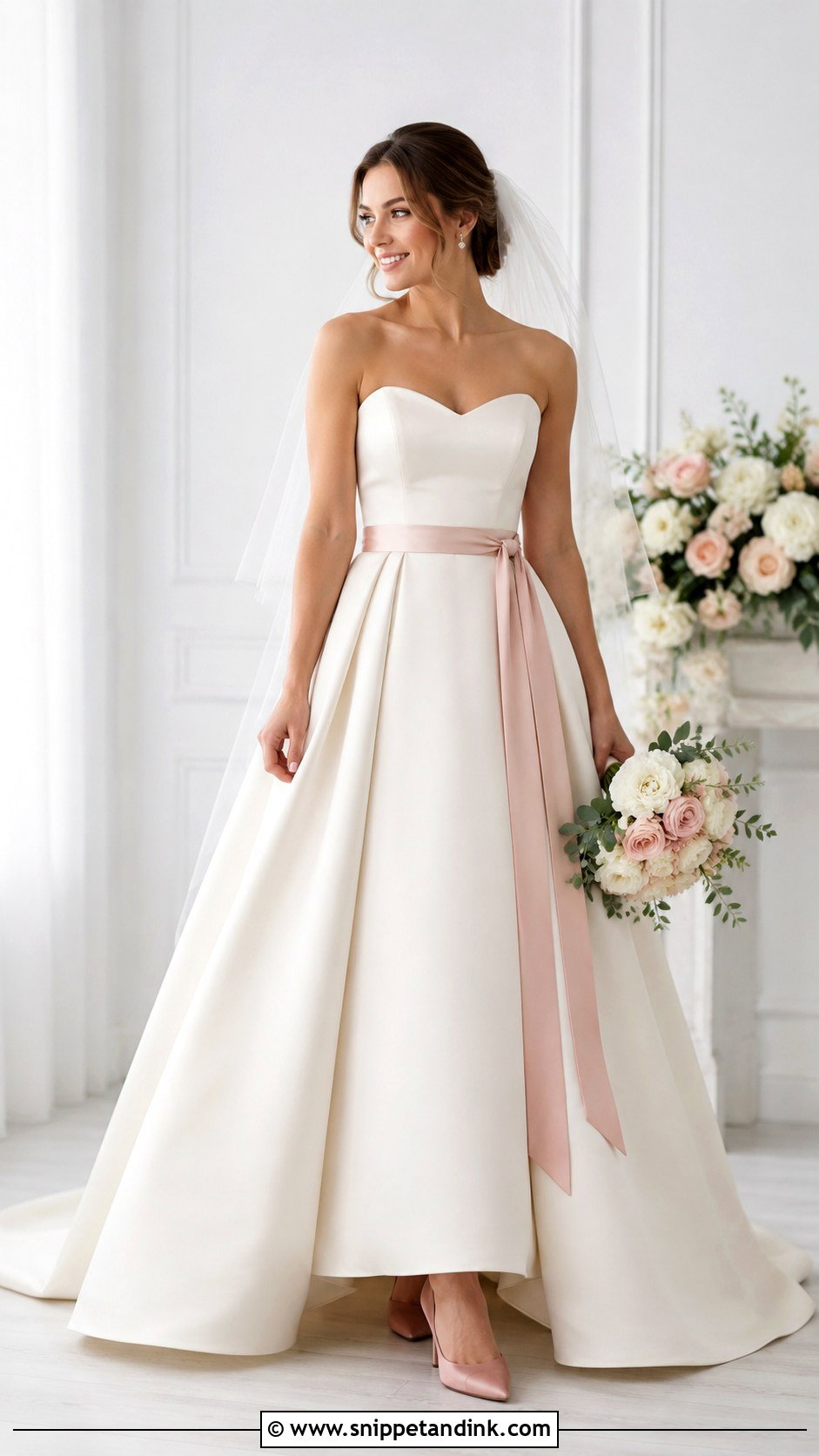
A colored sash wedding dress was the 2008 trend people remember most, in black, champagne, blush or soft pastels. A strapless A-line with a satin ribbon belt is the classic version. The sash is also the easiest dated detail to change. If you buy a 2008 gown secondhand with a colour you don’t want, a new ribbon costs little and alters the whole feel. Matching or complementary shoes, small earrings, a bouquet with a hint of the sash colour and a plain veil.
18. Blush Wedding Dress
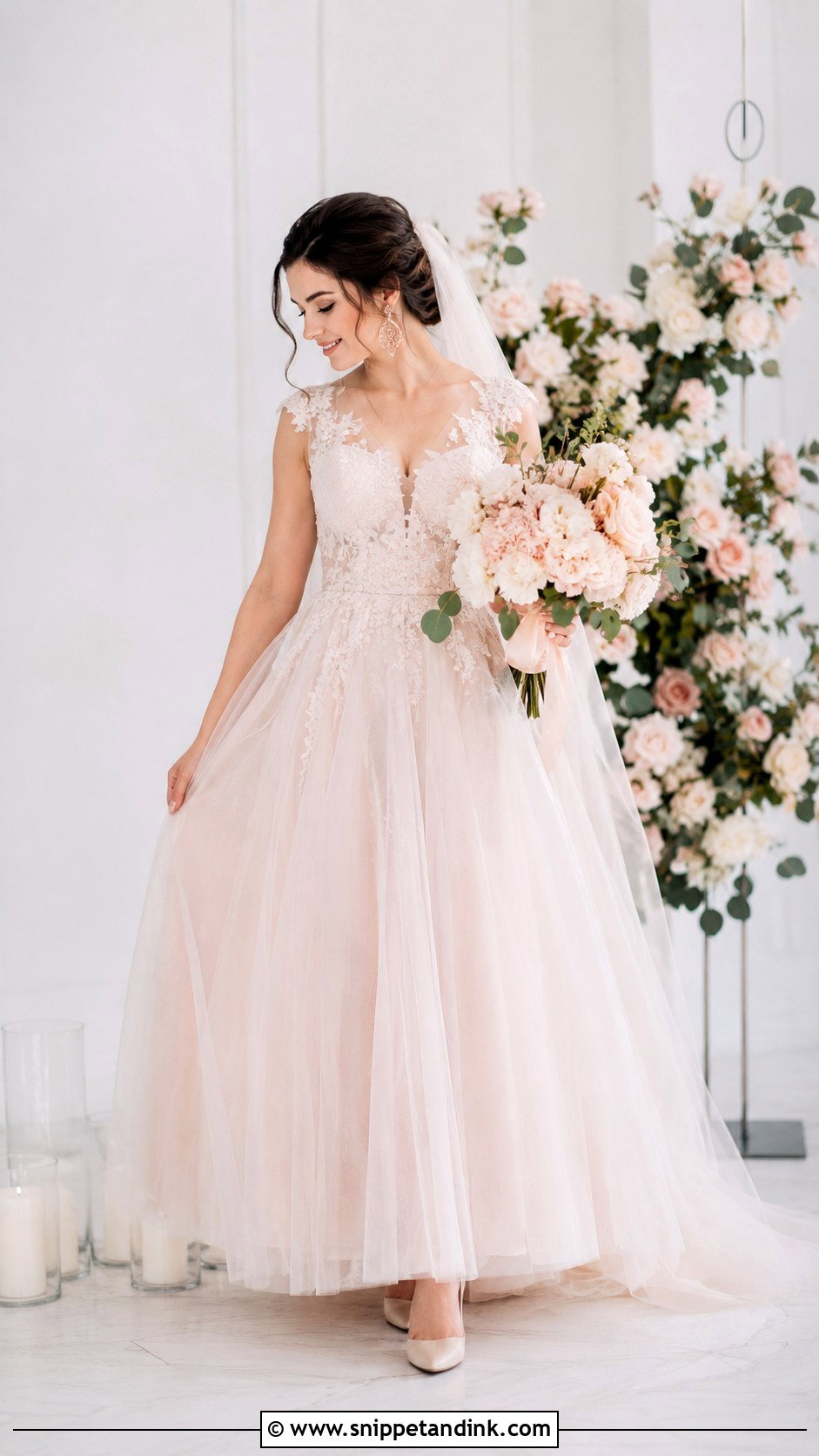
Blush arrived as a soft colour trend in late-2000s bridalwear and hasn’t left. In tulle, organza or satin, as an A-line, ball gown or trumpet, it adds warmth while staying bridal. It does read differently on different skin: on very fair skin a pale blush can look almost white in photos, on deeper skin it can glow, so I hold the fabric near the face in daylight before deciding. Ivory or nude heels, rose-gold jewellery, a veil with a barely-there edge and cream and pale pink flowers.
19. Champagne Wedding Dress
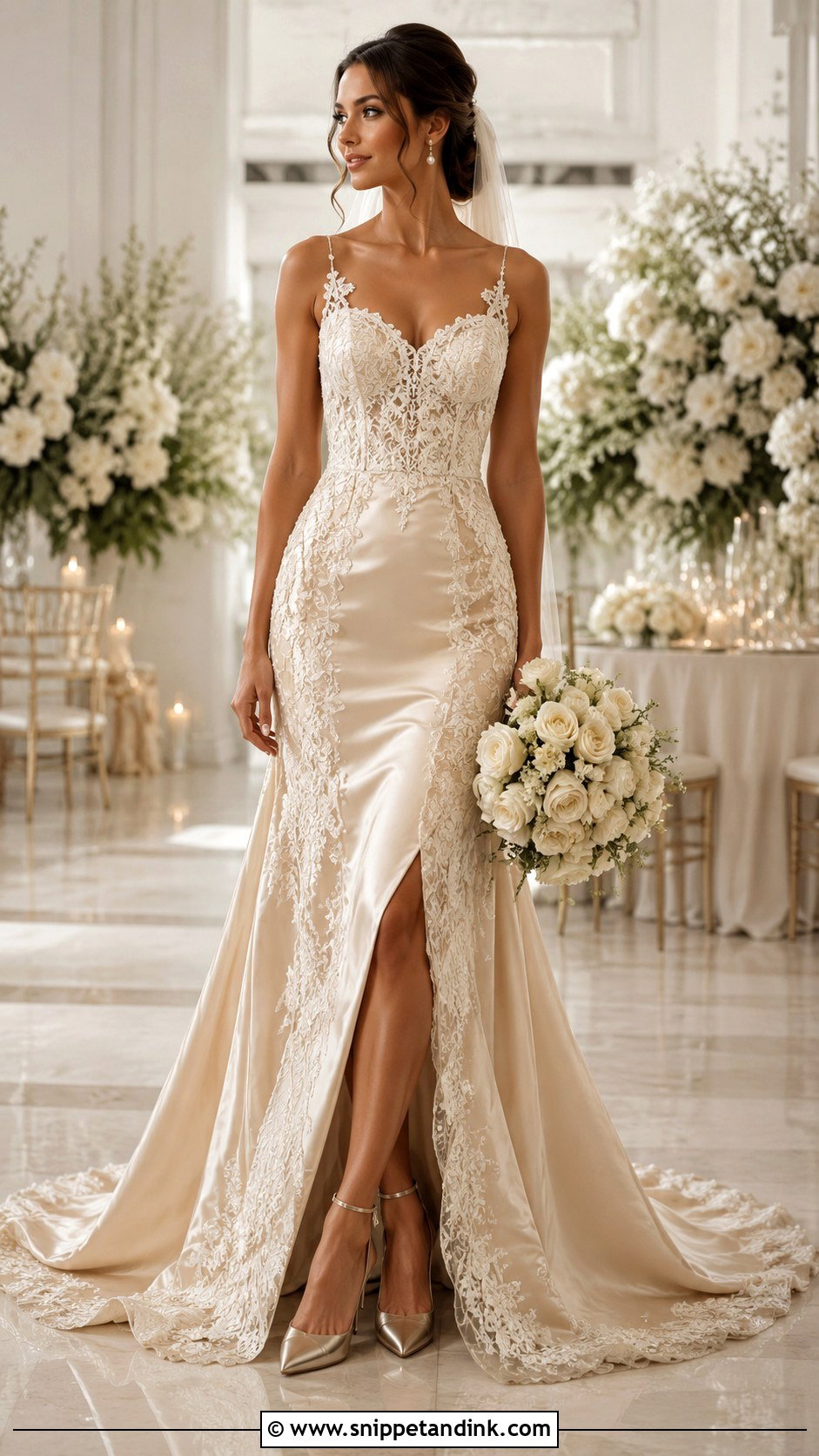
Champagne is a soft golden tone that looks rich in evening light and formal portraits. Paired with satin, lace overlays, beaded bodices and fitted shapes, it’s quietly glamorous. Champagne lace is often lined in a warmer colour than the lace itself, which gives depth; I check the lining shade against the bride’s skin to make sure it doesn’t look like bare skin by accident. Ivory or metallic heels, pearl earrings, a simple veil, cream flowers, neutral eyes and a rosy lip. Vintage accessories sit easily with it.
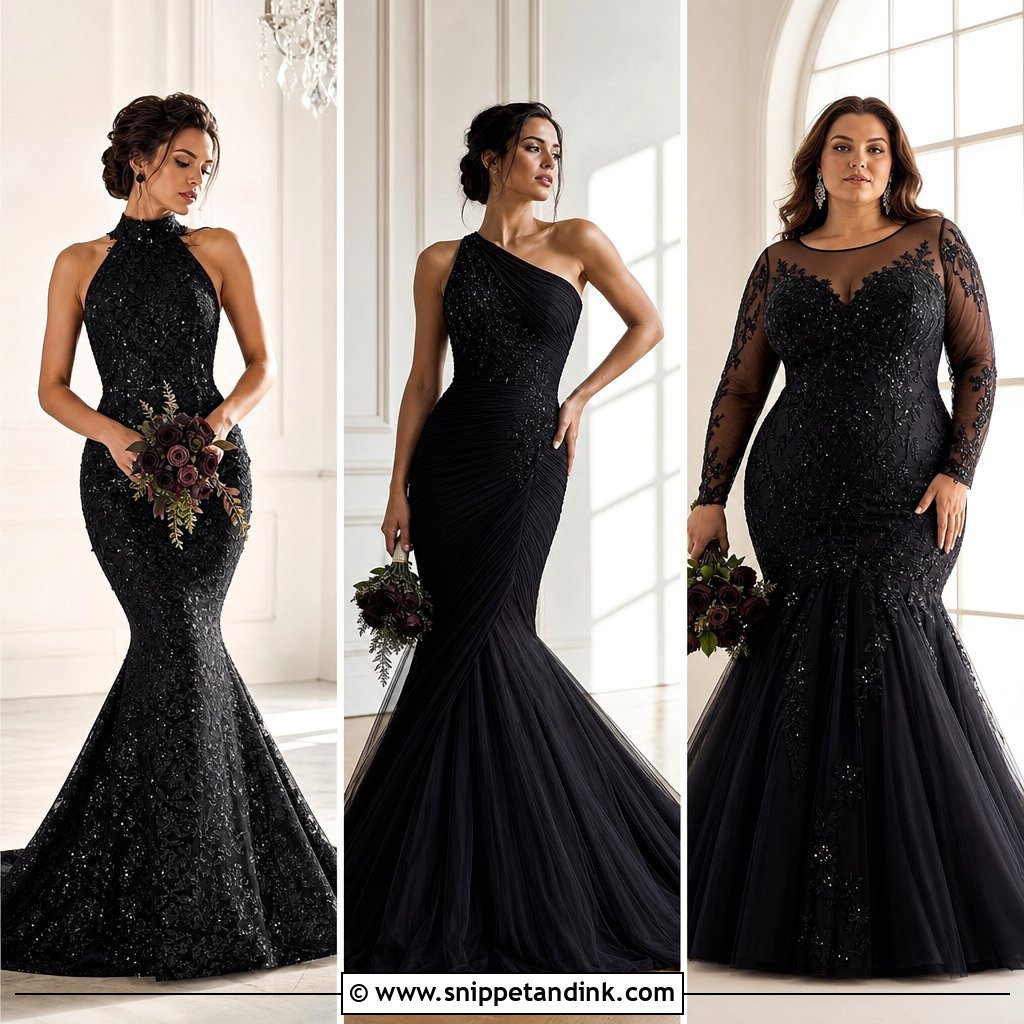
20. Tea Length Wedding Dress
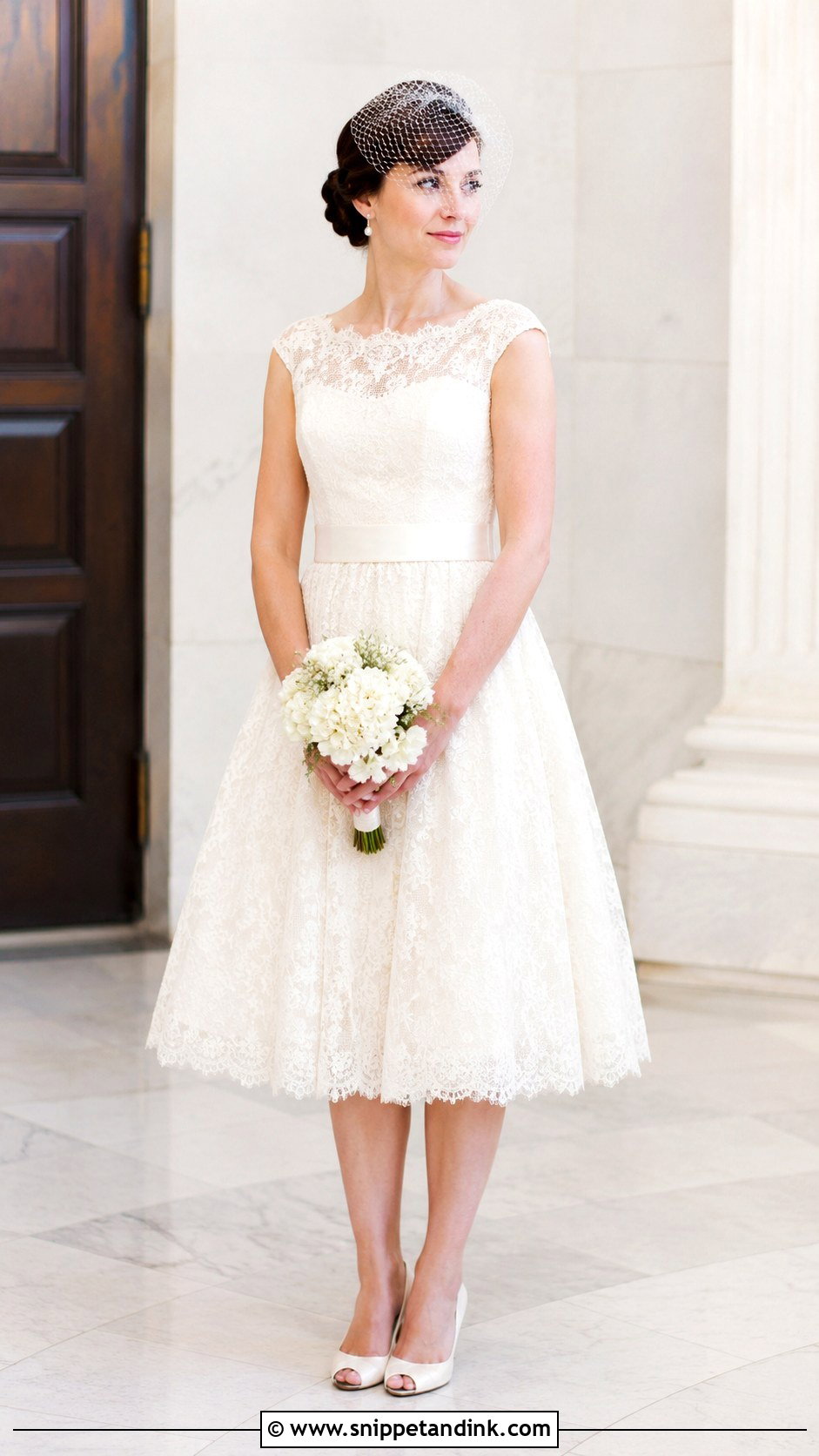
Tea length puts the hem between knee and ankle, so the shoes become a major part of the outfit. A strapless bodice, lace overlay or satin waist belt keeps it polished. On a petite bride it shows the legs and avoids swamping her in fabric. I set the hem with the actual shoes on, since an inch of heel changes where it should fall. Peep-toe heels, pearl earrings, a birdcage veil and a small bouquet. Courthouses and receptions suit it.
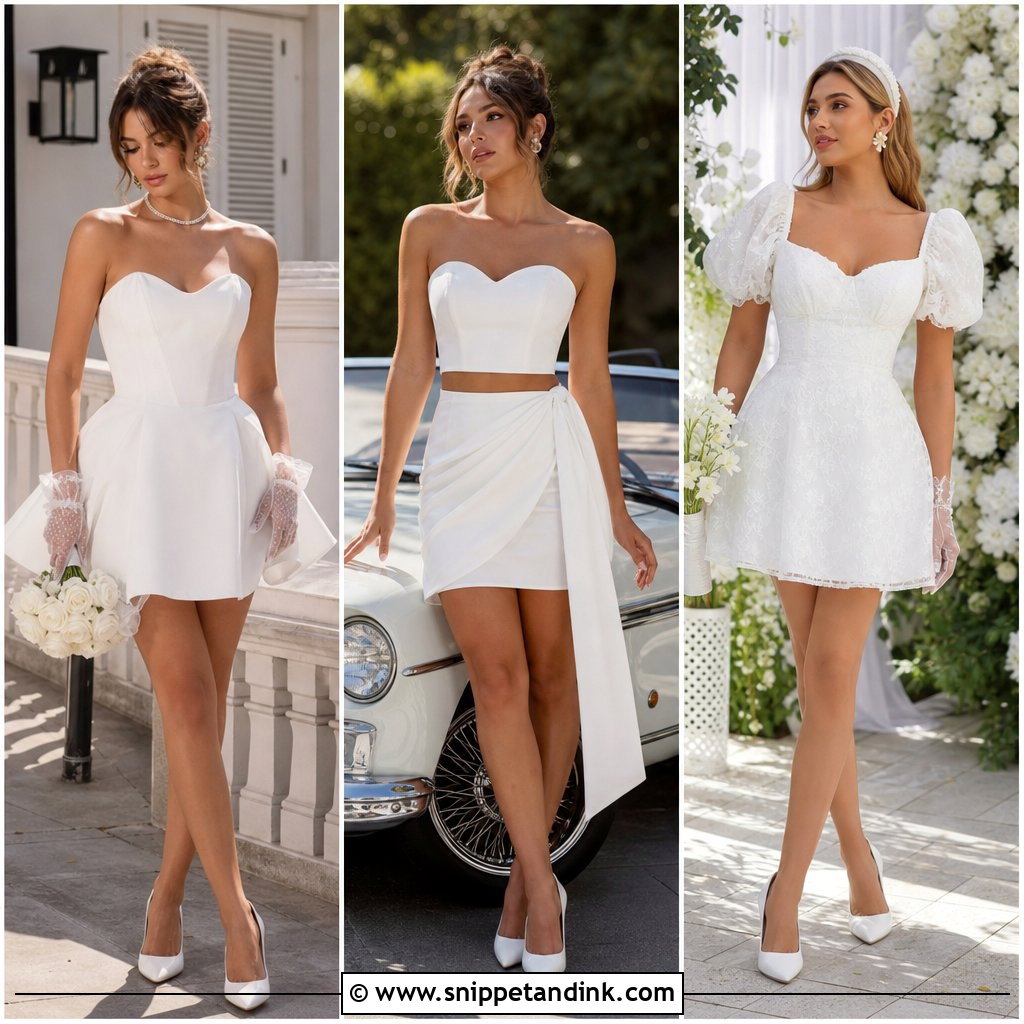
21. Short Reception Wedding Dress
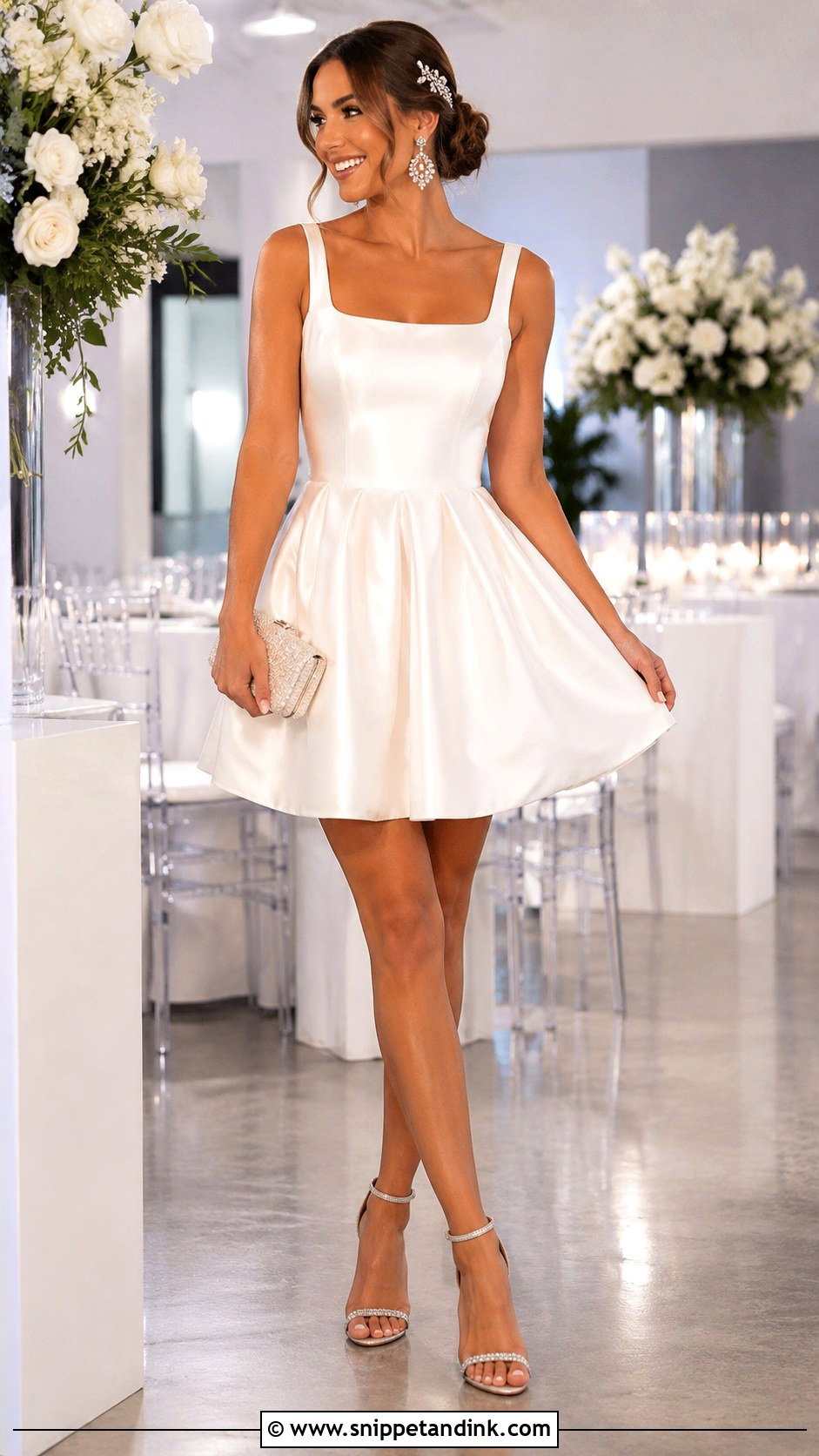
In 2008, swapping a formal ceremony gown for something lighter at the party became a habit, and it’s still a good one if your main dress has a long train or a heavy skirt. A white satin mini, a knee-length lace dress or a short strapless with a full skirt all work. It must still look bridal, so choose polished fabric and proper tailoring, not a high-street party dress. Sparkling heels, a small clutch, statement earrings and a hair comb. Plan ten minutes in the timeline for the change.
22. Ruffle Wedding Dress
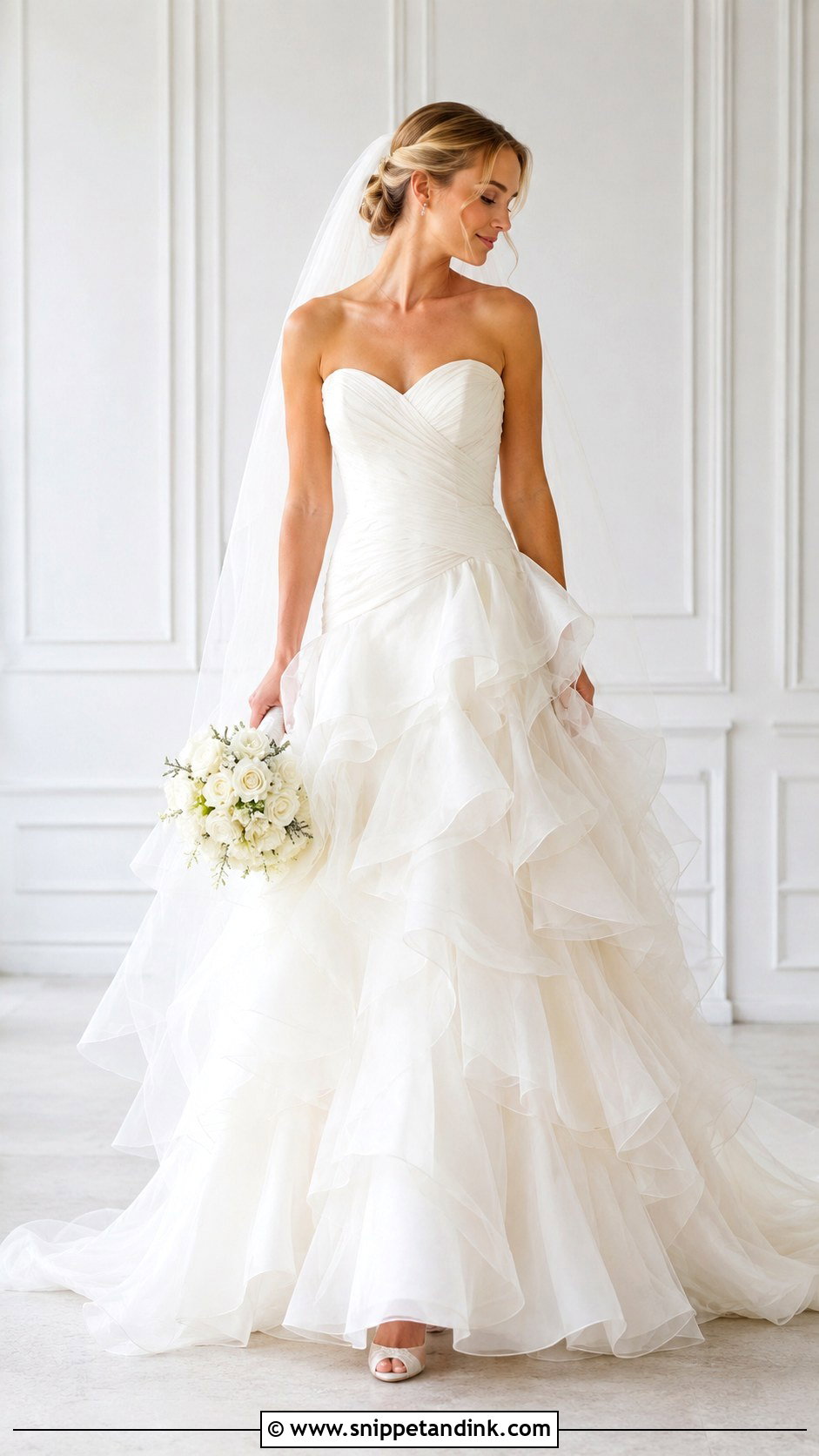
Ruffles across the skirt, edging the neckline or building volume through layers of organza and tulle added texture and movement to many 2008 gowns. They need a fitted bodice above them, or the shape tips into overwhelming. Ruffled organza flattens in a cramped car, so I suggest the bride sits with the skirt fanned out behind or beside her. A clean veil, small earrings and satin heels. Ruffles look their best in motion: walking, turning, dancing.
23. Pleated Wedding Dress
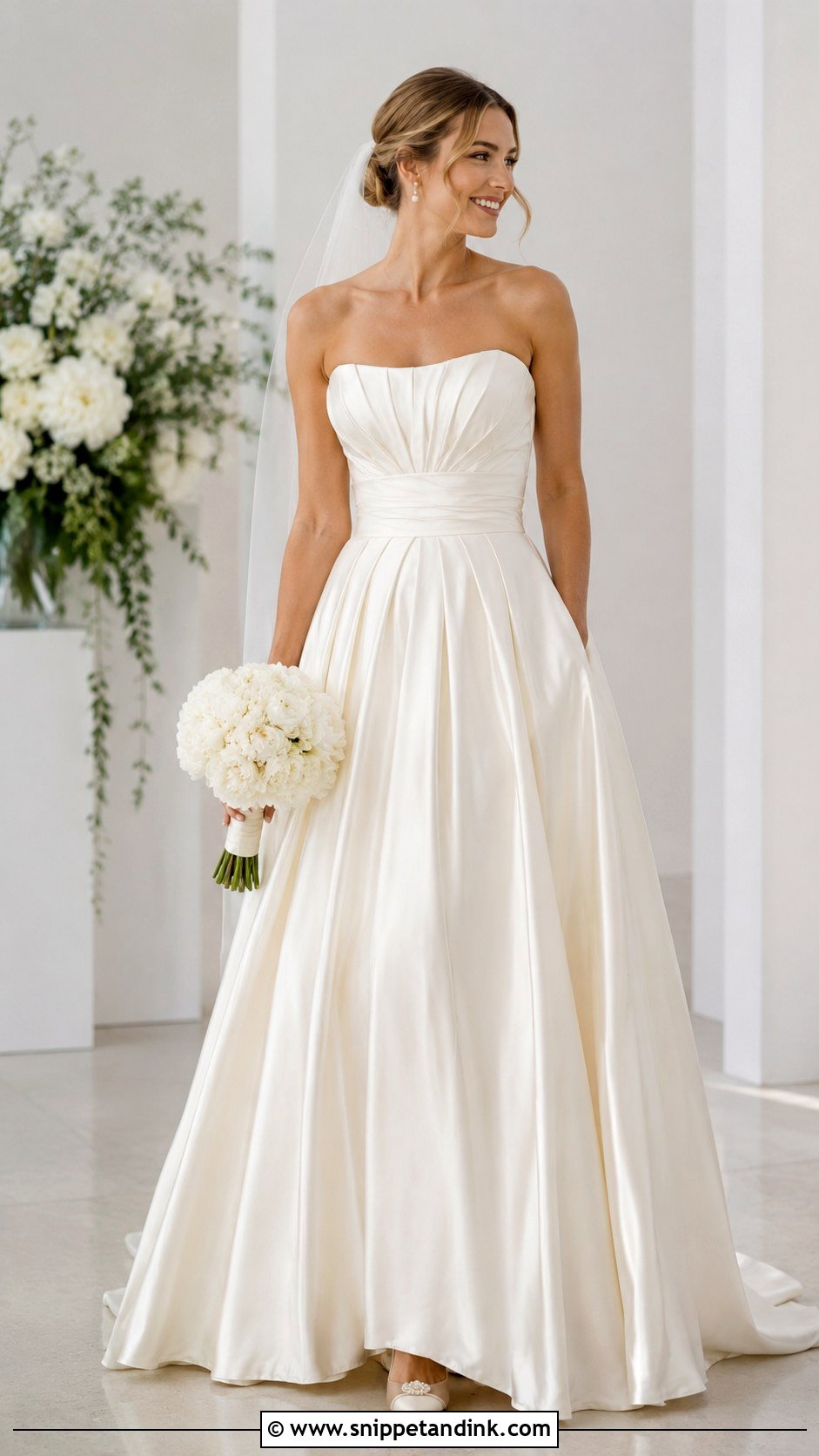
Pleats shape the bodice, mark the waist or give a crisp swing to the skirt, and satin and taffeta hold the folds most clearly. They are tailored detail without lace or sparkle. Pleats should be pressed, never ironed flat, so if the dress needs refreshing I ask for a professional press rather than a hand steamer that softens the edges. Pearl earrings, ivory heels, a simple veil and a low bun. Skip a necklace if the bodice pleating is strong.
24. Bolero Wedding Dress
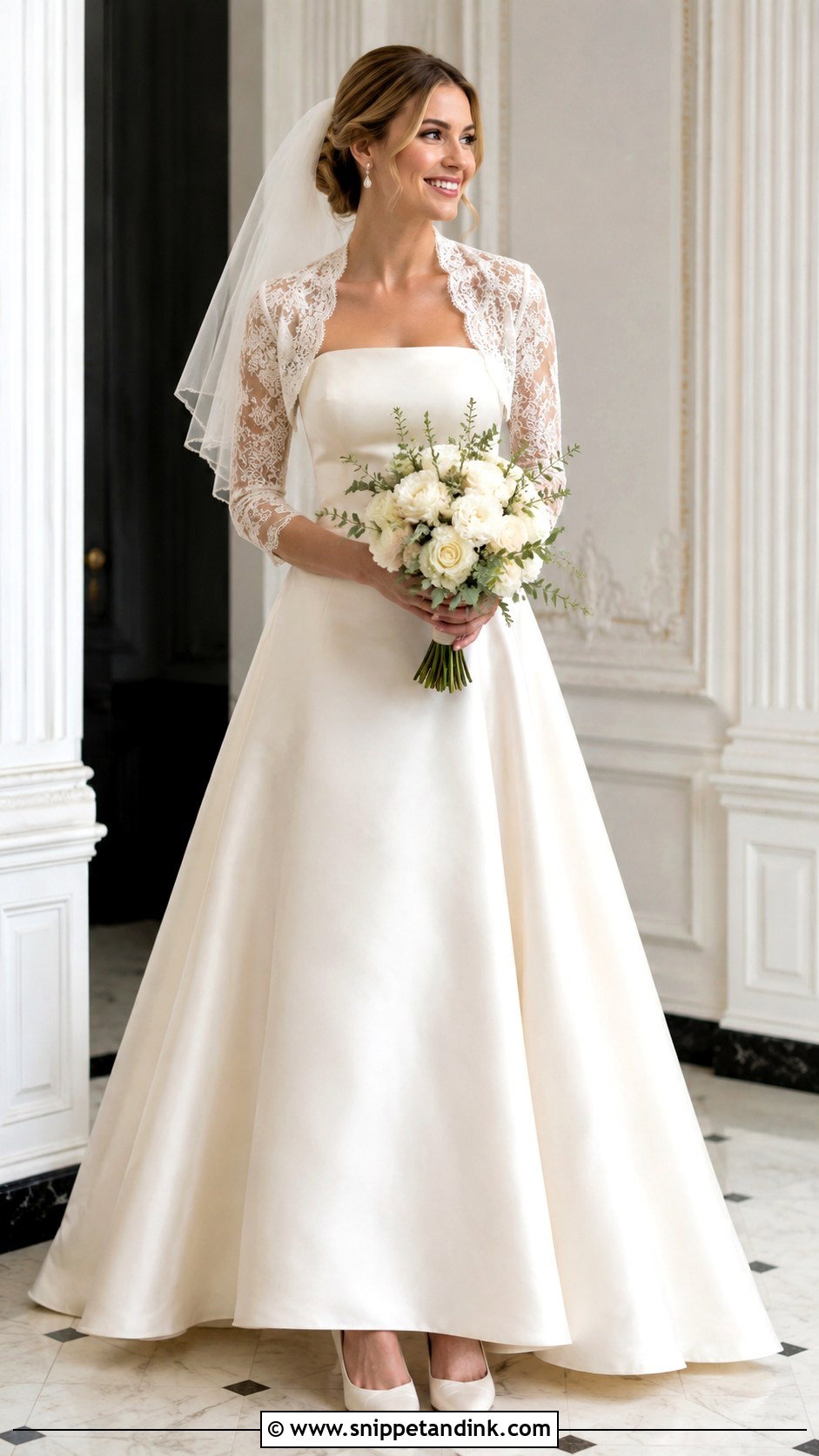
Plenty of 2008 brides wore a strapless gown with a lace, satin or sheer bolero for the ceremony and took it off for the reception, two looks from one dress. A cropped lace bolero over a strapless A-line or ball gown, with pearl earrings and closed-toe heels, is the classic pairing. The bolero should stop at the waistline or above it; anything longer cuts the bodice in half visually. A simple veil keeps the neckline uncrowded. Cooler weather and formal venues suit it.
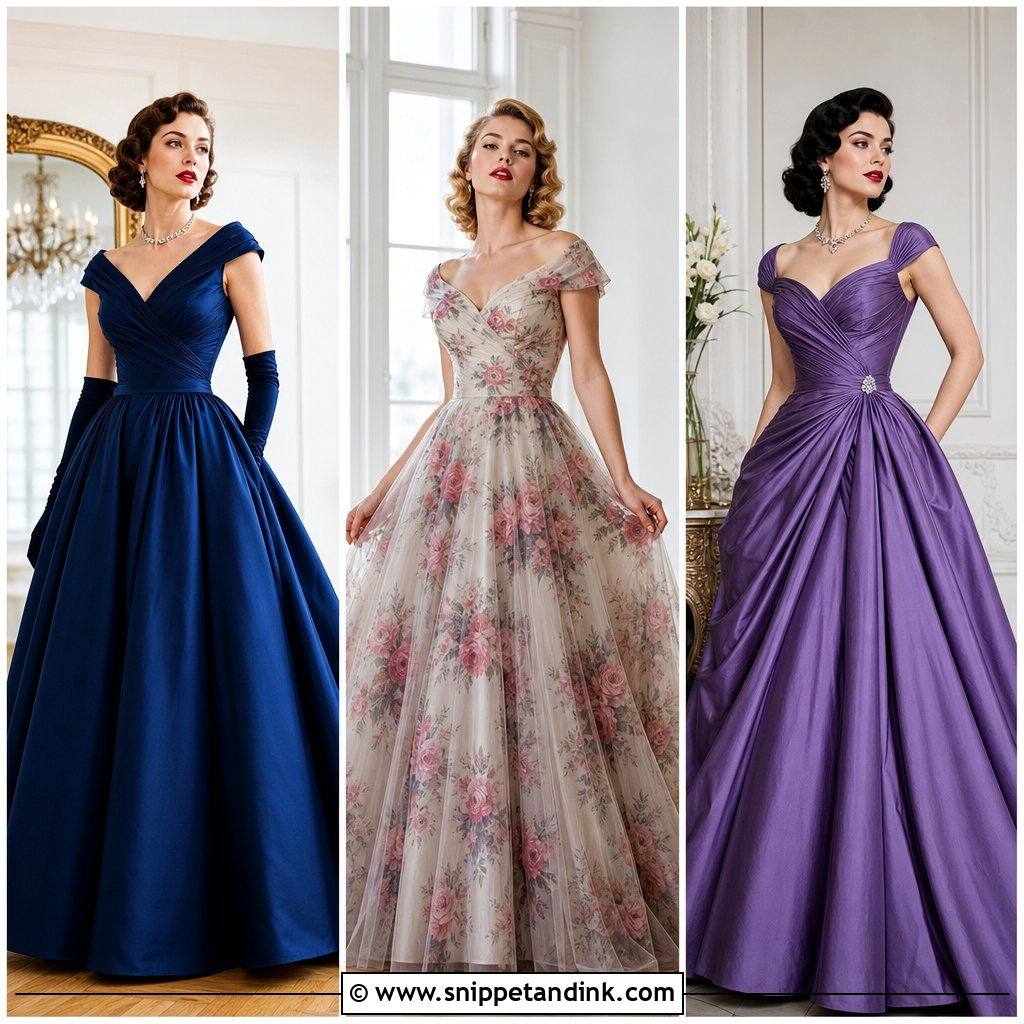


25. Vintage Inspired Wedding Dress
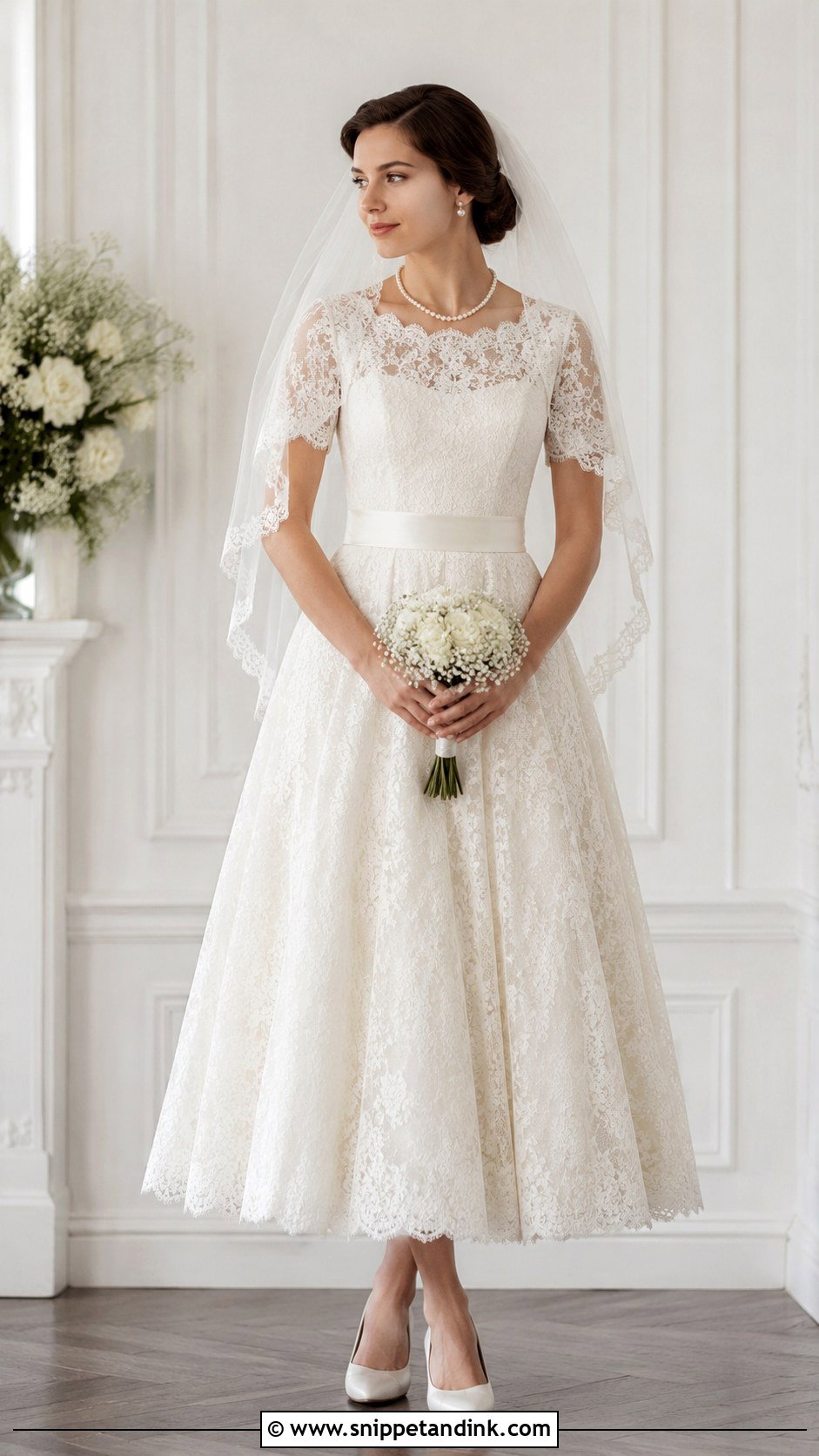
Vintage-inspired gowns were a strong thread in 2008, chosen by brides who wanted classic photos rather than something tied to the year: lace overlays, satin belts, soft sleeves, pearls, A-line or sheath shapes. The mistake I see is mixing eras, a 1950s veil with 1930s jewellery on a 1970s sleeve. Pick one decade and keep every detail from it. A fingertip veil, low heels, a small bouquet and a polished updo. These turn up often secondhand and alter well.
Why Does the Same Dress Look Dated on One Bride and Fresh on Another?
Usually it’s everything from the neck up. Late-2000s brides tended to wear a crystal tiara, chandelier earrings, a beaded veil and a full set of matching jewellery all at once, with tight ringlets and heavy shimmer. Put any of these gowns with that styling and it will look like a 2008 photo. Put it with current styling and it looks like a choice.
What I change first
- One focal piece of jewellery, not a matching set. Earrings or a hair comb, rarely both if the bodice is beaded.
- Softer hair. Loose curls, a smooth low bun or a relaxed half-up style instead of tight, set ringlets.
- A plain or cut-edge veil. A beaded or corded edge competes with a crystal bodice.
- Skin that looks like skin. Light shimmer on the high points only, so the gown provides the shine.
- Shoes in the same family as the dress fabric, satin with satin, rather than mirror-bright sparkle.
I usually suggest a full trial with the gown, hair and makeup together before the wedding. Seeing the whole picture once in a mirror tells you more than any amount of planning on paper.
What to Keep From 2008 and What to Leave There
Strapless bodices, ruched waists, lace-up backs, satin skirts, coloured sashes and soft volume tell the story of late-2000s bridalwear, and some of it still works perfectly. I’d keep the silhouettes and the clever construction, the ruching and the lacing especially. I’d leave behind the crystal overload and the matching-everything accessories. Pick a shape that suits your venue and your comfort, style it with restraint, and it will look charming in your photos instead of dated.
You'll Like These Ideas:



Leave a Reply