
Ask ten brides what glamour means and you get ten answers: a satin ball gown, a beaded column, a lace corset, a bow the size of a small child. A showstopping bridal look is really about knowing which of those is yours. Designers have been leaning into bold embellishment, sculpted drapes, defined waists and three-dimensional flowers lately, which gives you plenty to try on. What follows are twenty finished outfits with the shoes, jewelry and veil worked out, plus the practical catch I would flag for each, so the dress feels like you rather than a costume.
Making a Simpler Gown Look Expensive
Glamour does not have to mean the most embellished dress in the salon. Some of the most luxurious looks I put together start from a clean satin or crepe gown, then add one or two pieces that carry the drama. It is also an easier way to keep the budget under control.
- Spend on fit first. A tailored bodice and a hem set to your shoes do more for a dress than any amount of beading.
- Add one removable statement: a cape, a bow, an overskirt or long gloves. Each can come off for the party.
- Choose a veil with weight. A heavier tulle or silk veil hangs straight and reads richer in photos than a stiff, cheap net.
- Match whites carefully. Ivory gloves, veil and shoes next to a white gown look like mistakes rather than layers.
This route also leaves you with a dress you could alter into a party gown later, which a heavily beaded design rarely allows.
1. Satin Ball Gown Wedding Dress
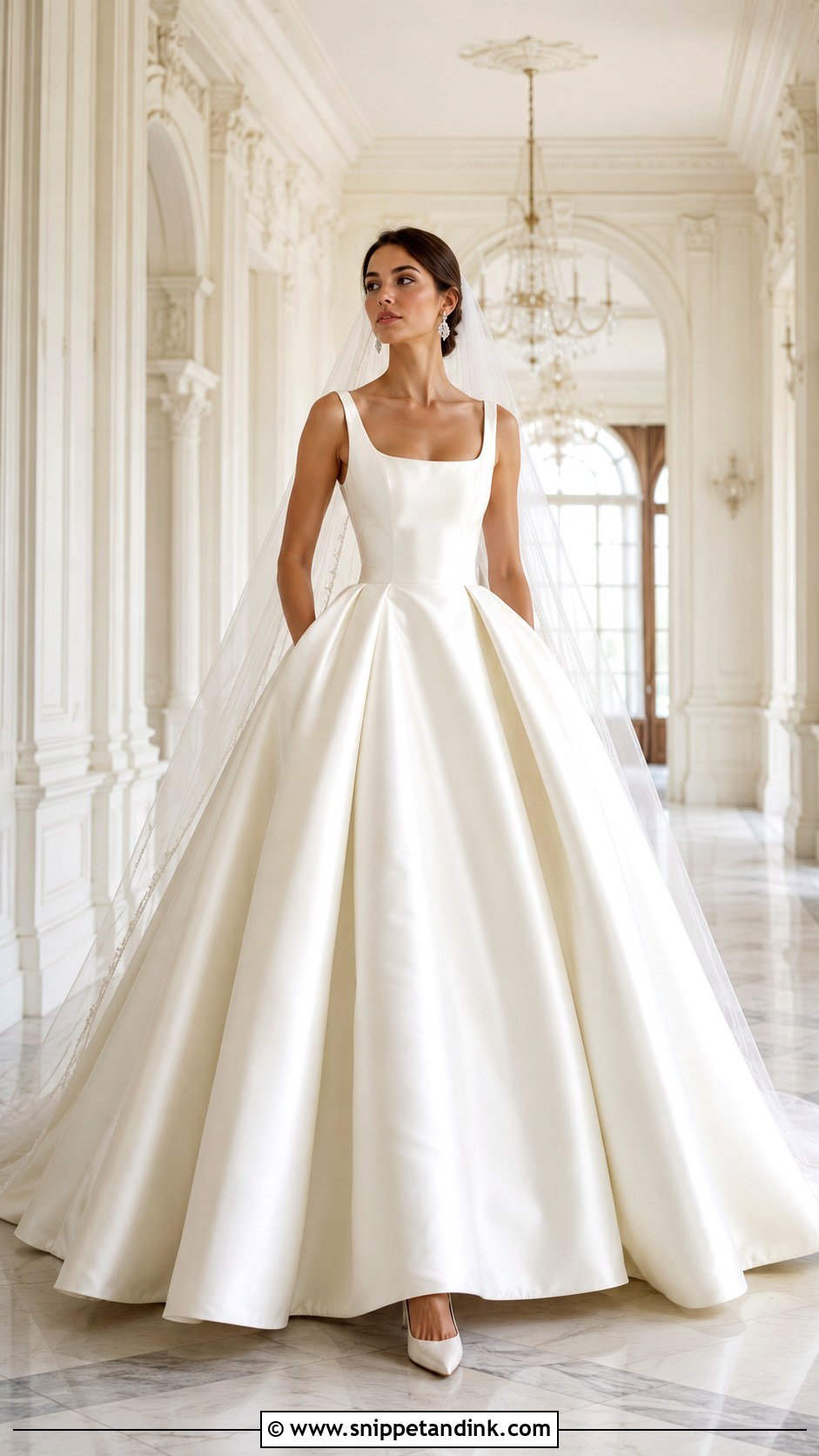
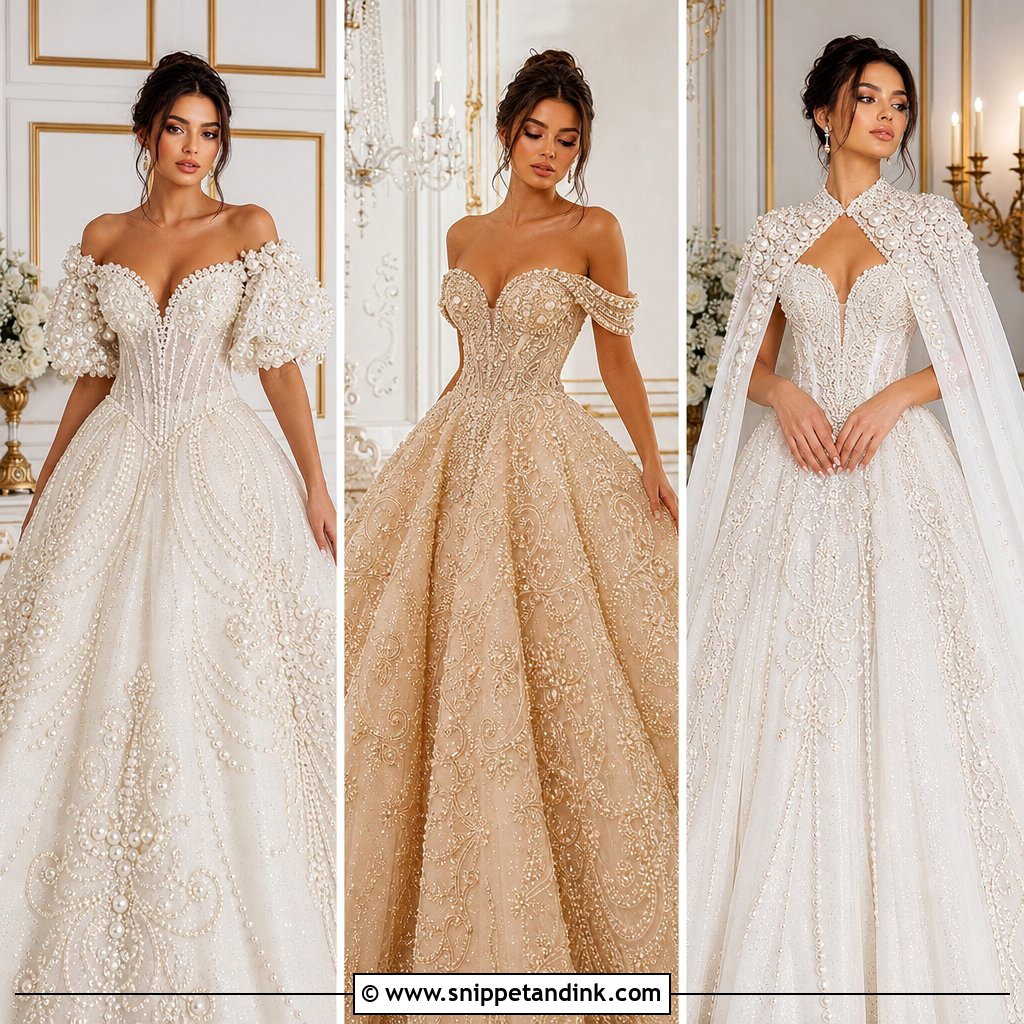
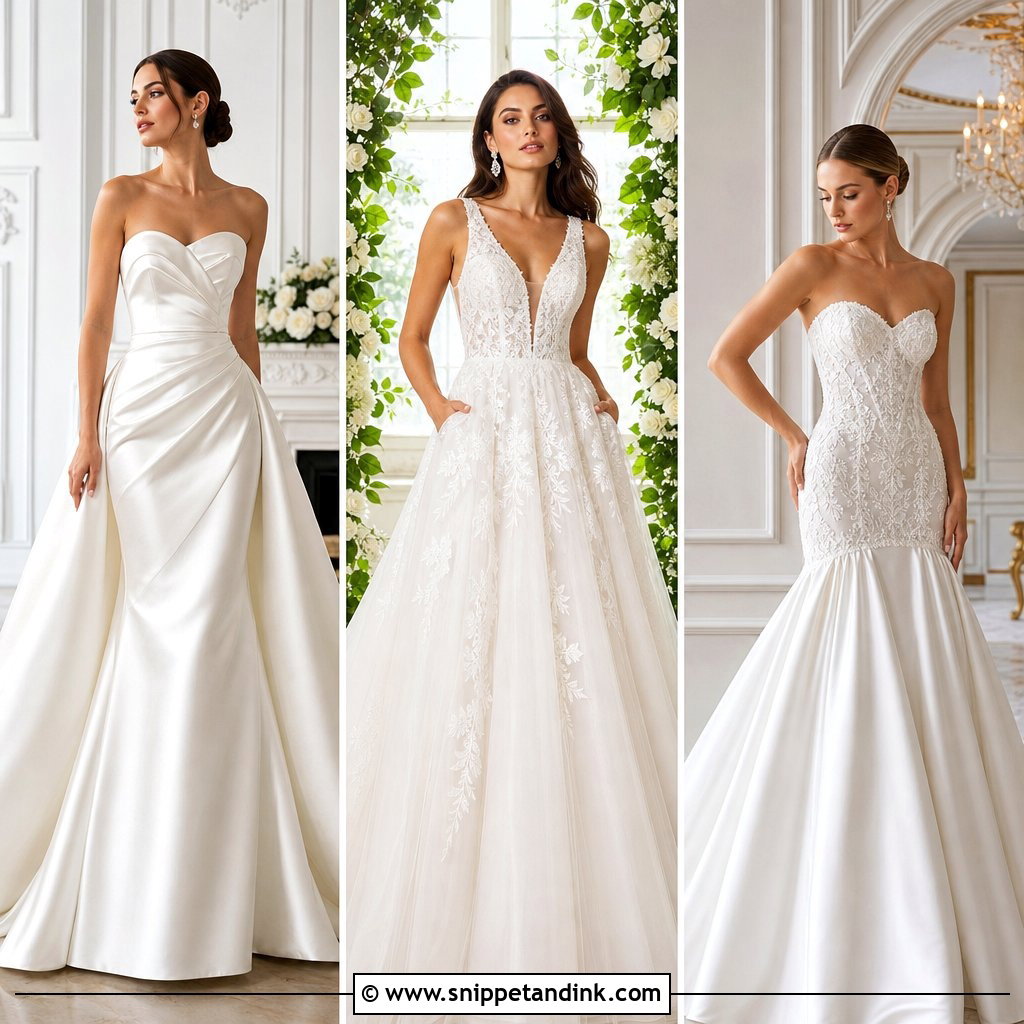
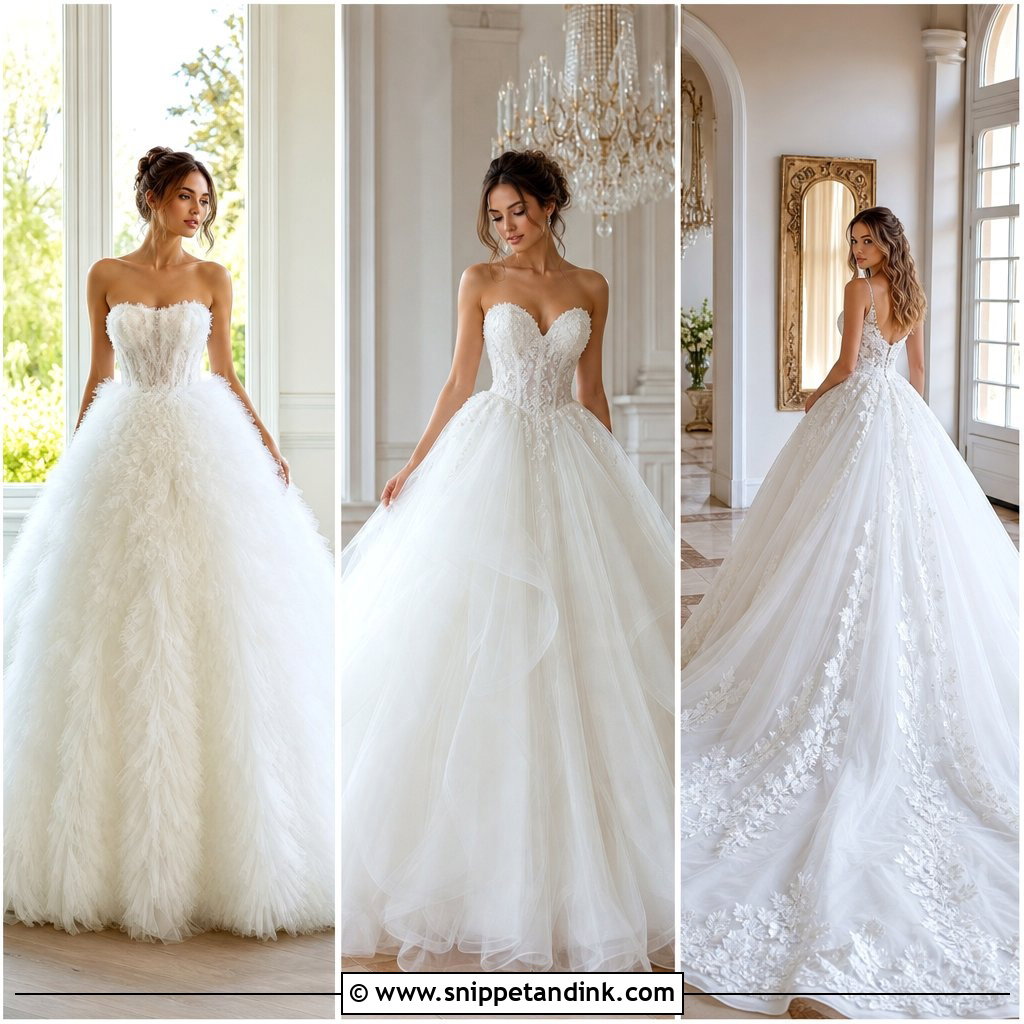
Duchess satin is heavy, smooth and has a quiet sheen, which is why a plain ball gown in it never looks plain. The silhouette does the talking. Choose a fitted bodice with a soft curve at the neckline, then decide early whether you want a basque point or internal corsetry for extra shaping. Crystal drops, pointed ivory pumps and a cathedral veil with a narrow satin edge are enough, with a sleek bun or polished waves. Ask for a bustle that holds the skirt full rather than flattening it. Ballrooms and estates suit it best.
2. Beaded Mermaid Wedding Dress
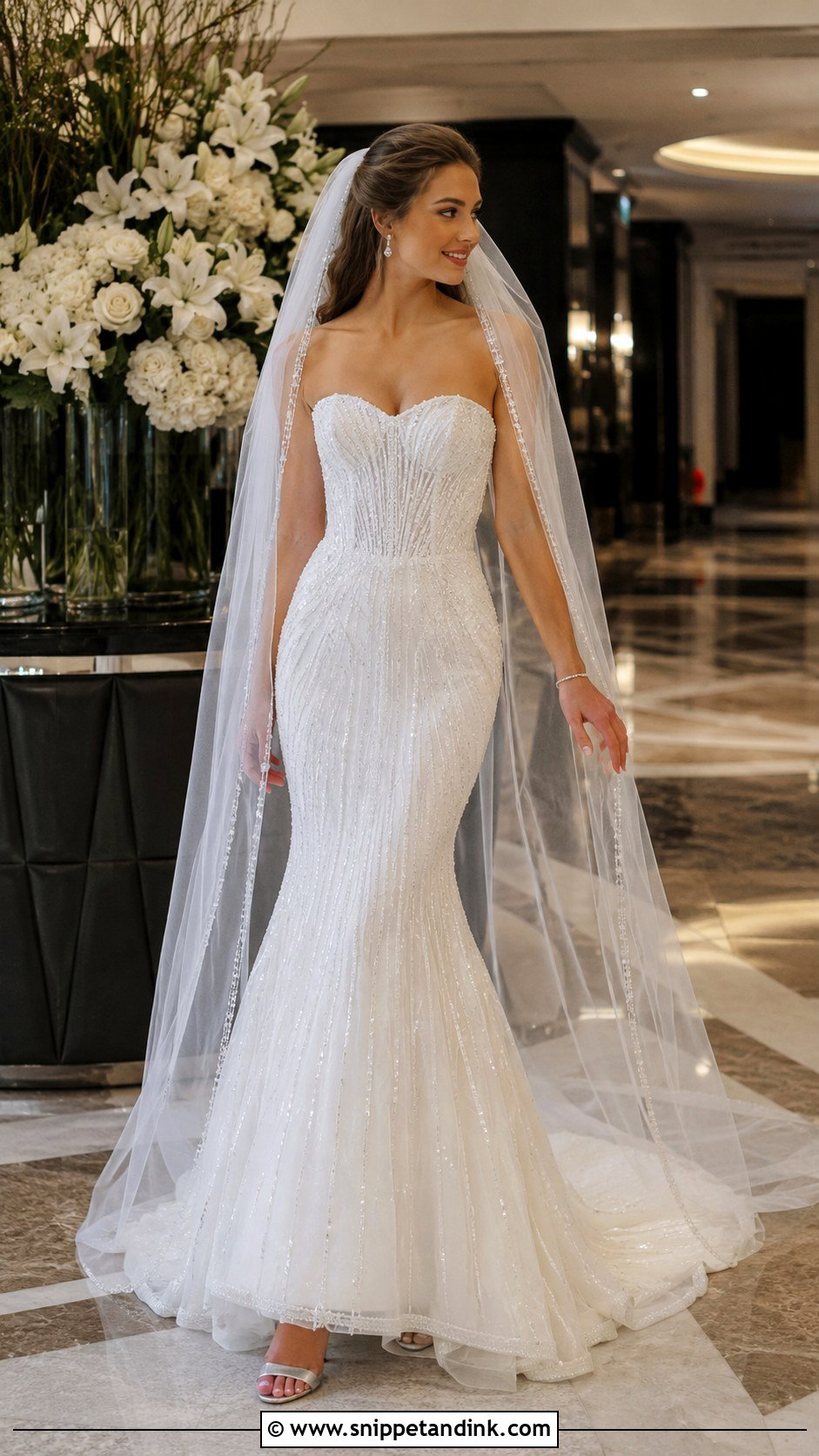
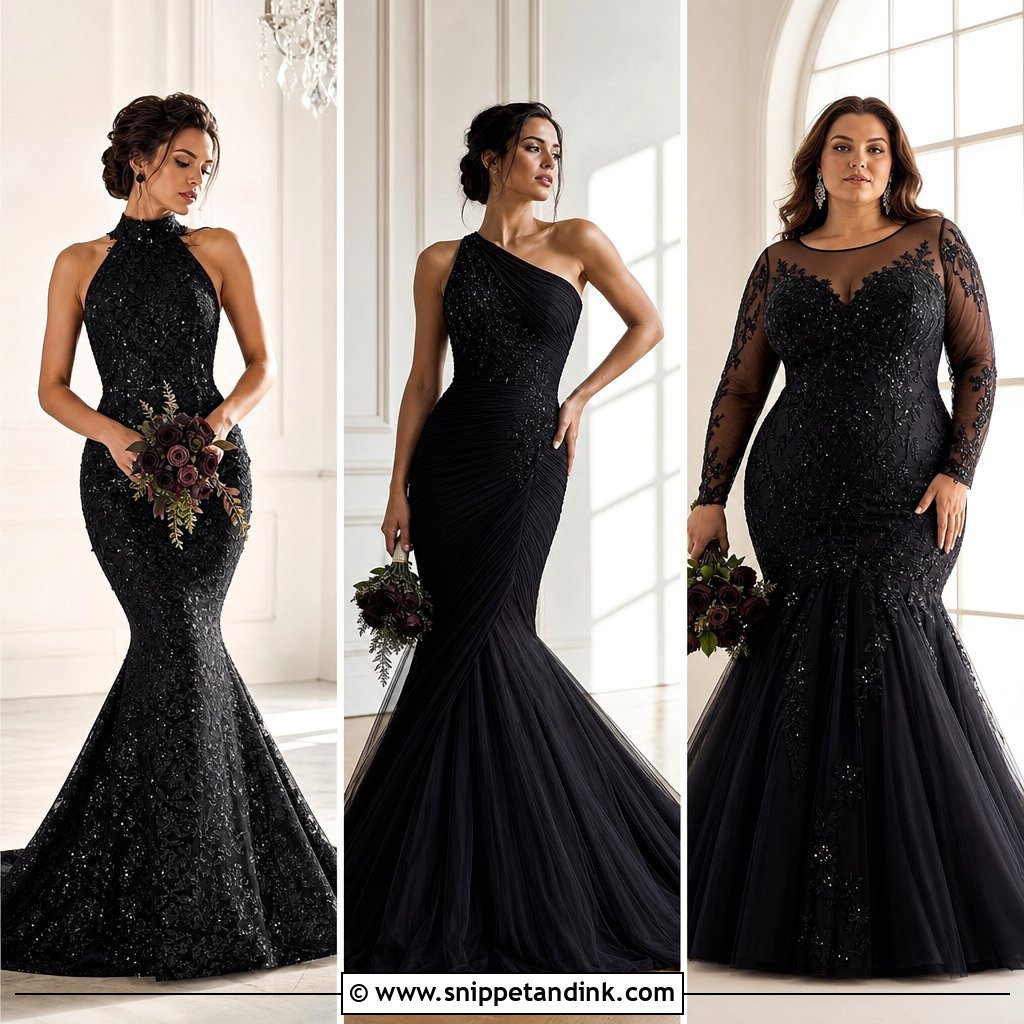
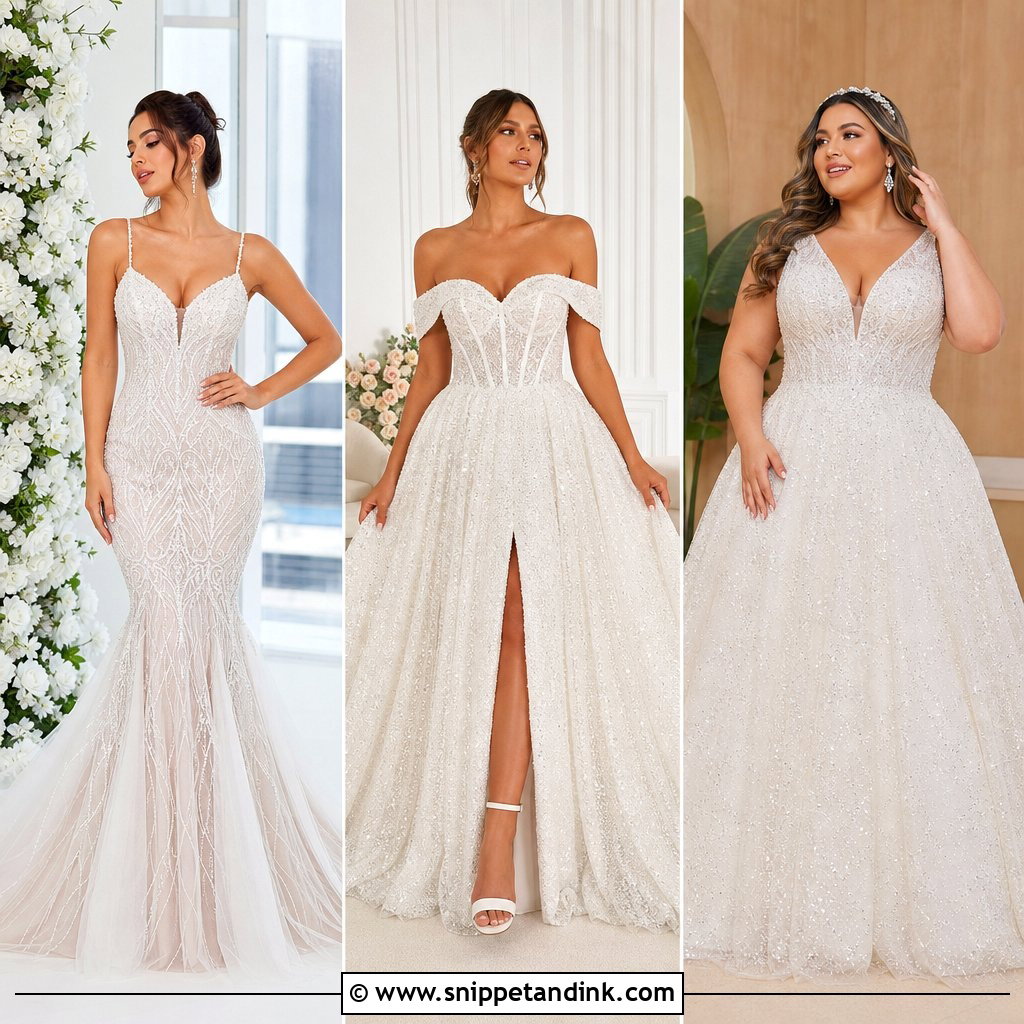
Long vertical beadwork on a mermaid shape makes you look taller; dense all-over beading makes the dress look busy and weighs a ton. That is my first filter. The second is the flare. Walk, sit and climb a step at every fitting, and if it catches, have the flare raised slightly. Metallic silver sandals, a tennis bracelet and small crystal earrings keep the jewelry low-key against the beading. A fingertip veil shows off the fit, a long one adds ceremony. Side-parted waves suit evening receptions.
3. Lace Corset Wedding Dress
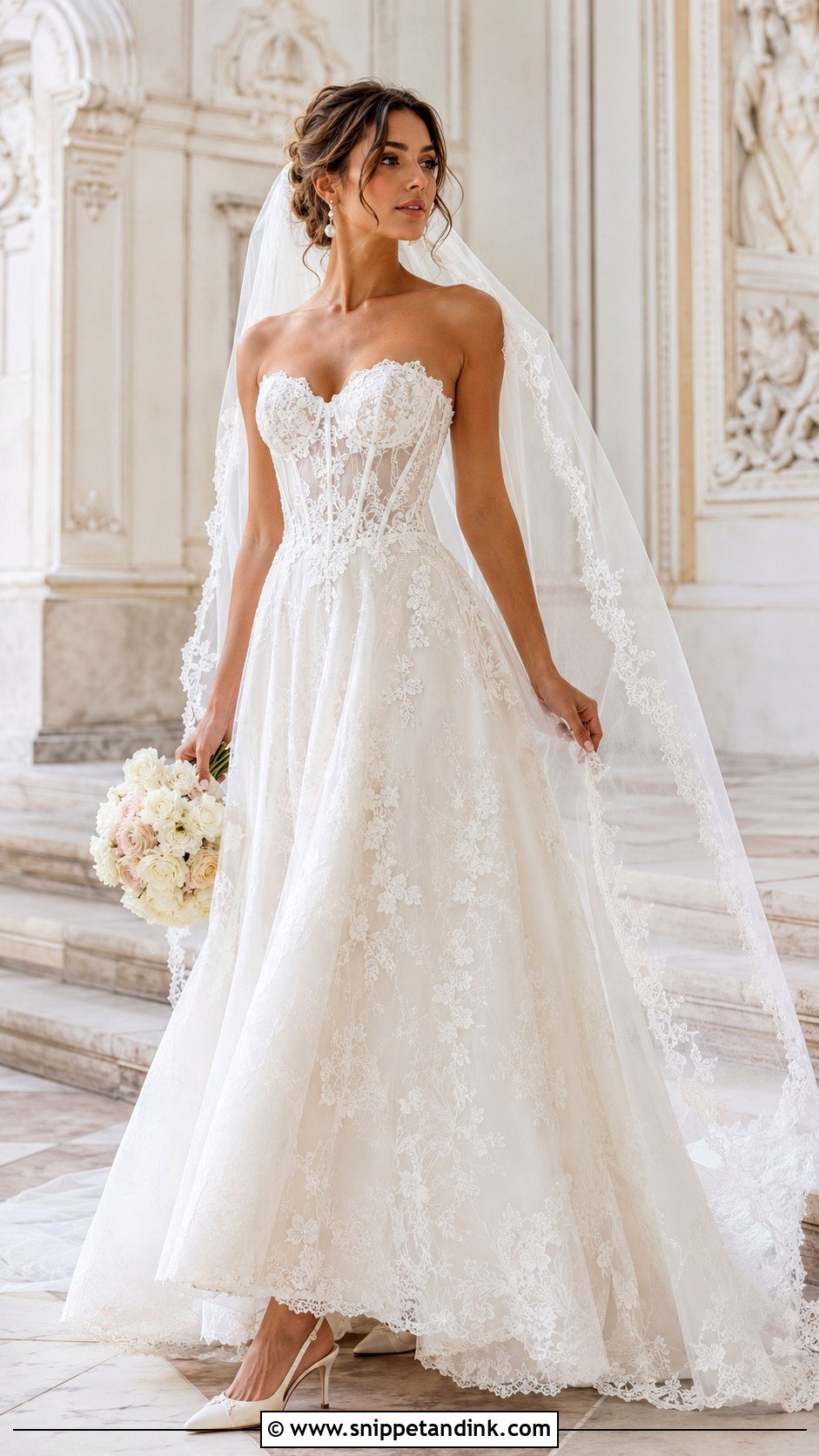
A corset with visible boning gives a couture-inspired shape, and lace appliques placed over it soften the structure. The corset should support you without pinching, and the place it pinches is usually the top of the hip when you sit. Many salons can add cups or adjust the straps and lining during alterations, so ask. An A-line or softly fitted skirt and a lined or illusion neckline set your coverage. Pearl earrings, ivory slingbacks, a lace-edged chapel veil and a low textured bun suit candlelit rooms.
4. Off-the-Shoulder Wedding Dress
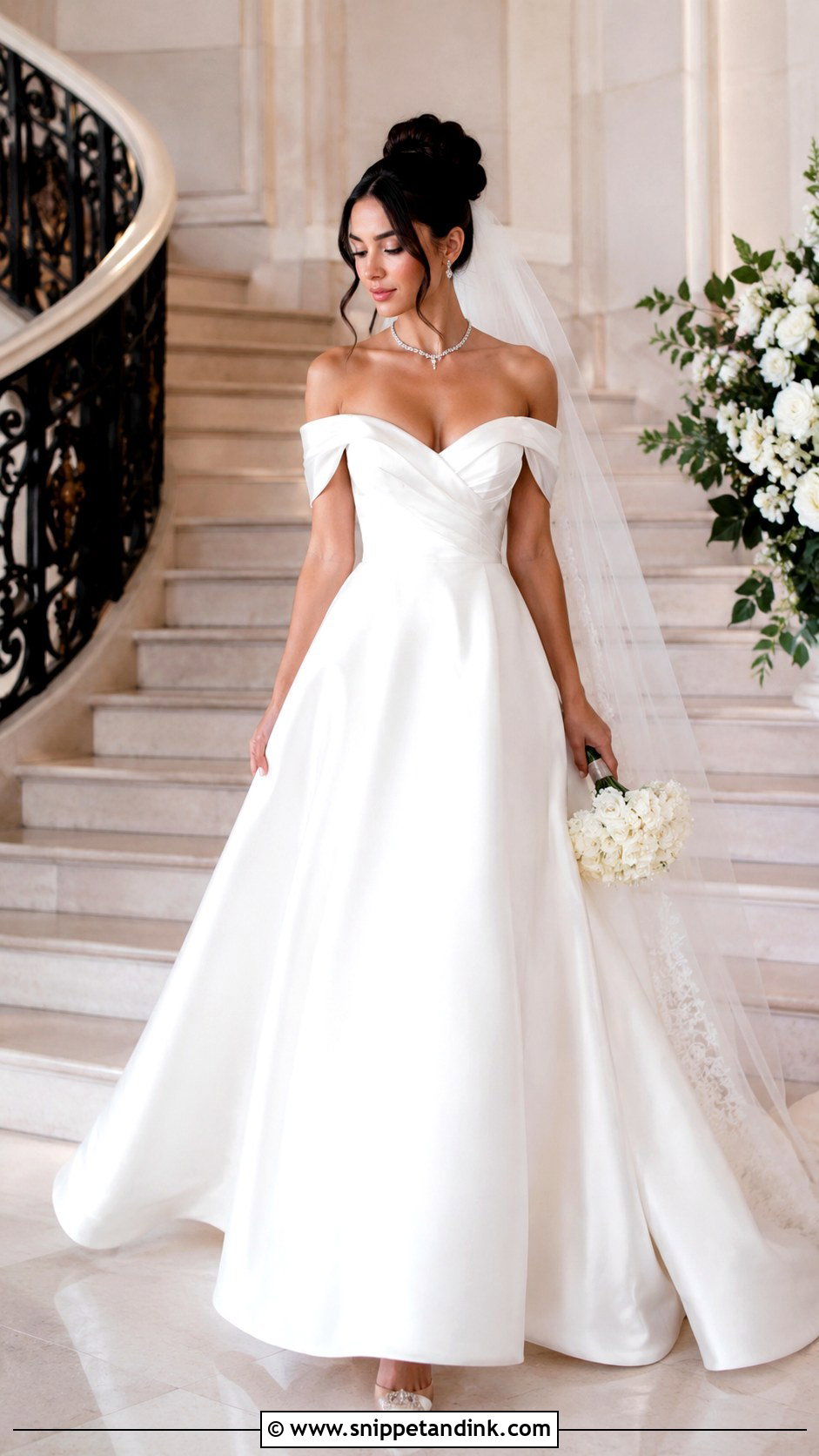
Draped off-shoulder sleeves look romantic until you raise your arms to hug someone and they climb. Test that move at fittings. Hidden elastic in the sleeve band, or detachable sleeves, solves it. Satin or Mikado keeps the bodice and full A-line skirt crisp. This is one of the few necklines here that suits a necklace, so pair a diamond-style piece with matching studs and pointed pumps. Pin a long veil beneath a low bun. Discreet straps or corsetry give extra hold, and it looks grand on a staircase.
5. Square Neck A-Line Wedding Dress
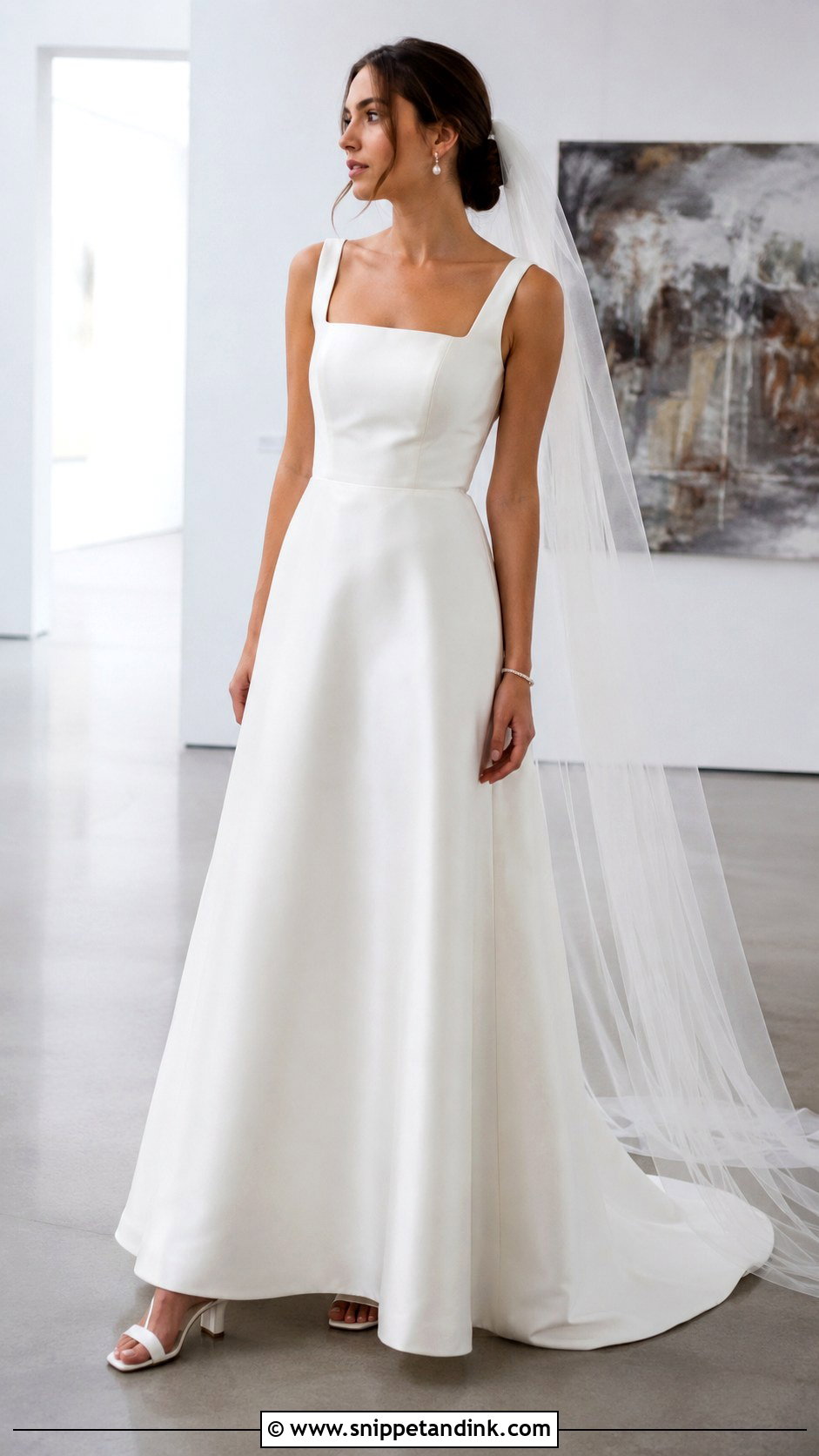
Square necklines frame the collarbone and suit almost every figure, because the straps, waist and neckline height are all easy for a seamstress to adjust. If it feels too open, she can raise it slightly or add a sheer tulle panel. In silk, satin or structured crepe, the gradual A-line skirt is comfortable all day. Pearl drops, a slim bracelet, ivory block heels and a plain cathedral veil keep the front uncluttered, with a center-parted chignon. Minimalist ceremonies and city venues suit it.
6. Drop Waist Wedding Dress
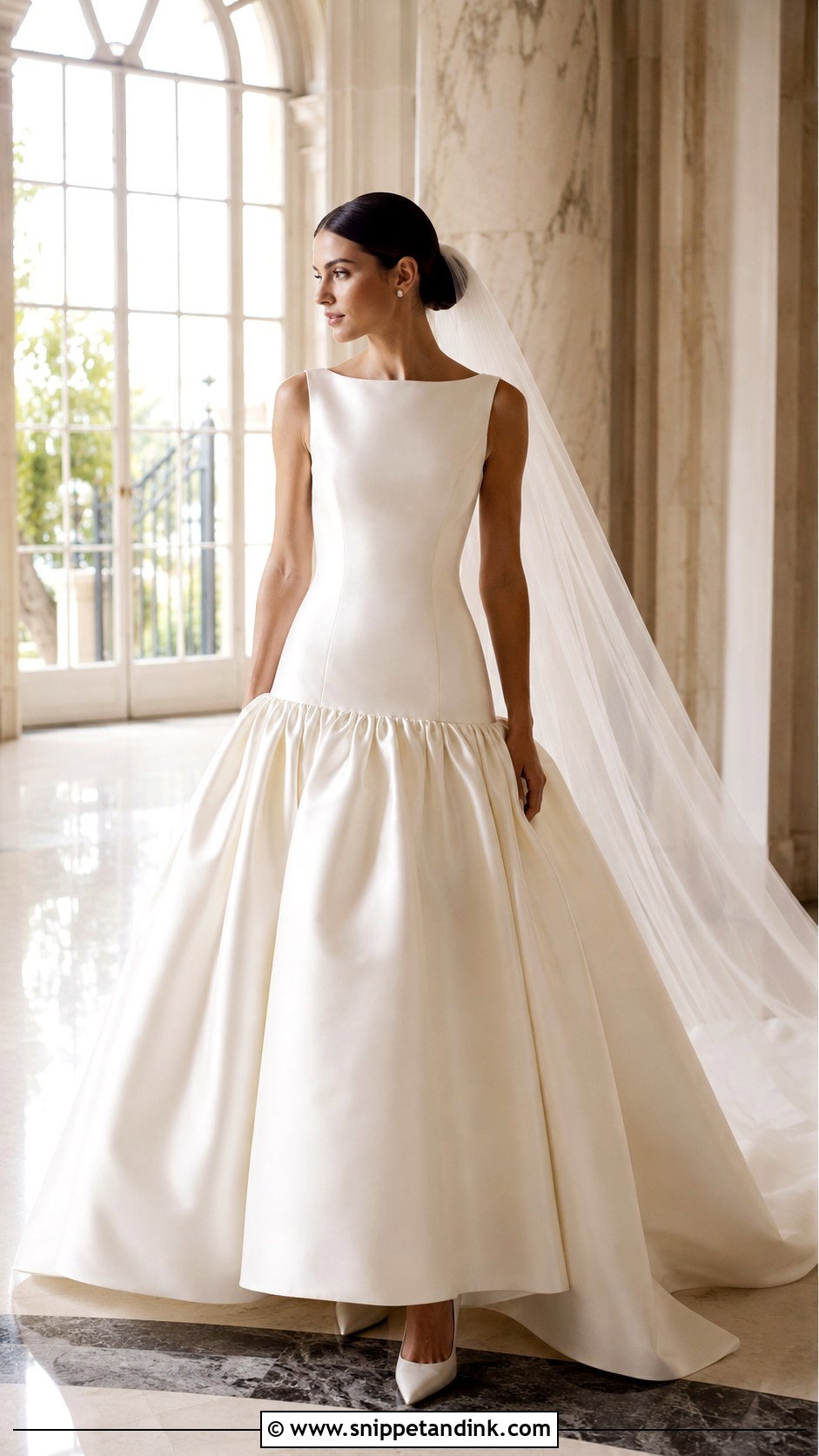
A drop waist lengthens the bodice below your natural waist before the skirt opens. Where that seam lands is everything. On a petite frame a deep drop cuts the legs short, so I keep it subtle; taller brides can carry a longer bodice. Satin or Mikado holds the sculpted seams. Crystal studs, a smooth cuff, pointed heels, a long plain veil and a sleek updo let the long torso line stay the focus. It reads vintage with modern construction, and galleries and architectural venues suit it.
7. 3D Floral Wedding Dress
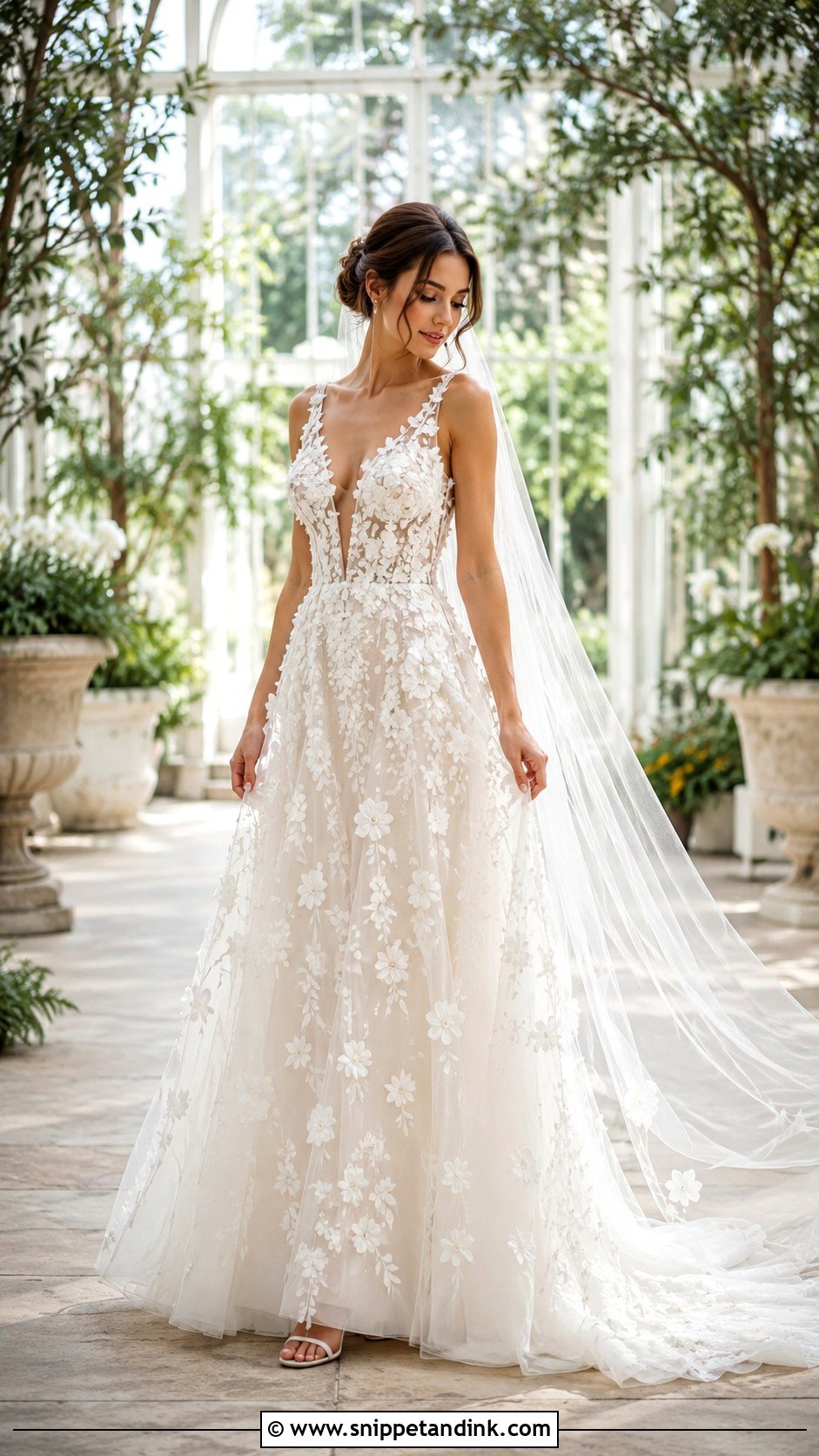
Three-dimensional petals look magical in the shop and messy in the car if they are poorly attached. Run a finger under several and see whether they are stitched at the center or only tacked at an edge. Concentrated on the bodice and scattered down a tulle skirt, they look balanced, and they can also trim straps, gloves or a veil edge. Ivory sandals, tiny studs and a sheer cathedral veil leave them visible. Wear a soft updo with face-framing pieces, and ask how to store the dress so the petals do not crush.
8. Pearl Embellished Wedding Dress
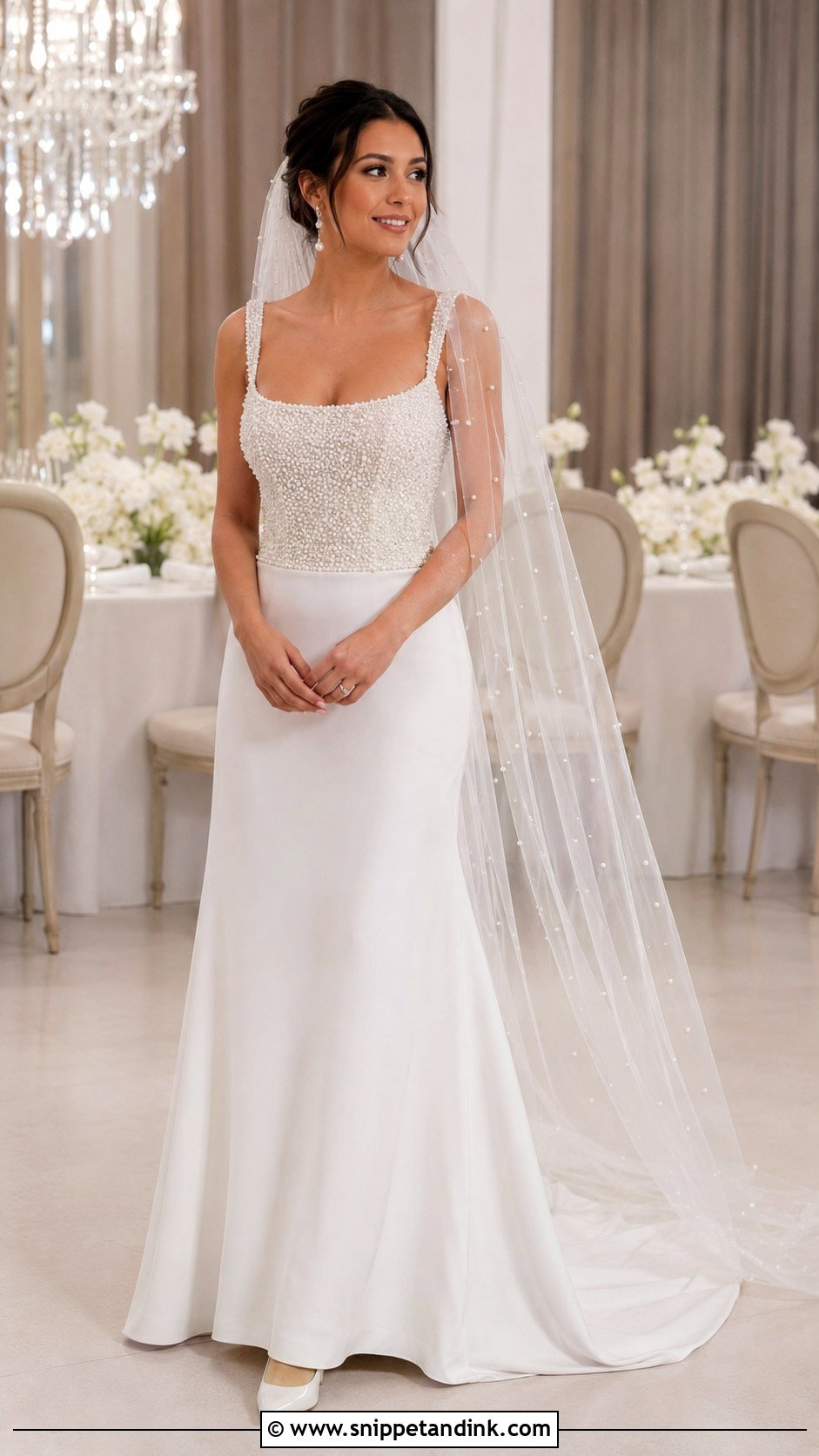
Graduated pearls on a fitted bodice, flowing into crepe, tulle or a classic A-line, give a gentle glow instead of crystal glitter. Choose pearls in your hair or pearls in your ears, not both plus a necklace; too much matching starts to look like a set. Pearl drops, satin pumps and a veil with widely spaced pearl accents work. Hair depends on the neckline, from a low bun to a ponytail. Ask how the embellishment should be cleaned and handled during alterations, since some faux pearls lose their coating with harsh treatment.
9. Long Sleeve Lace Wedding Dress
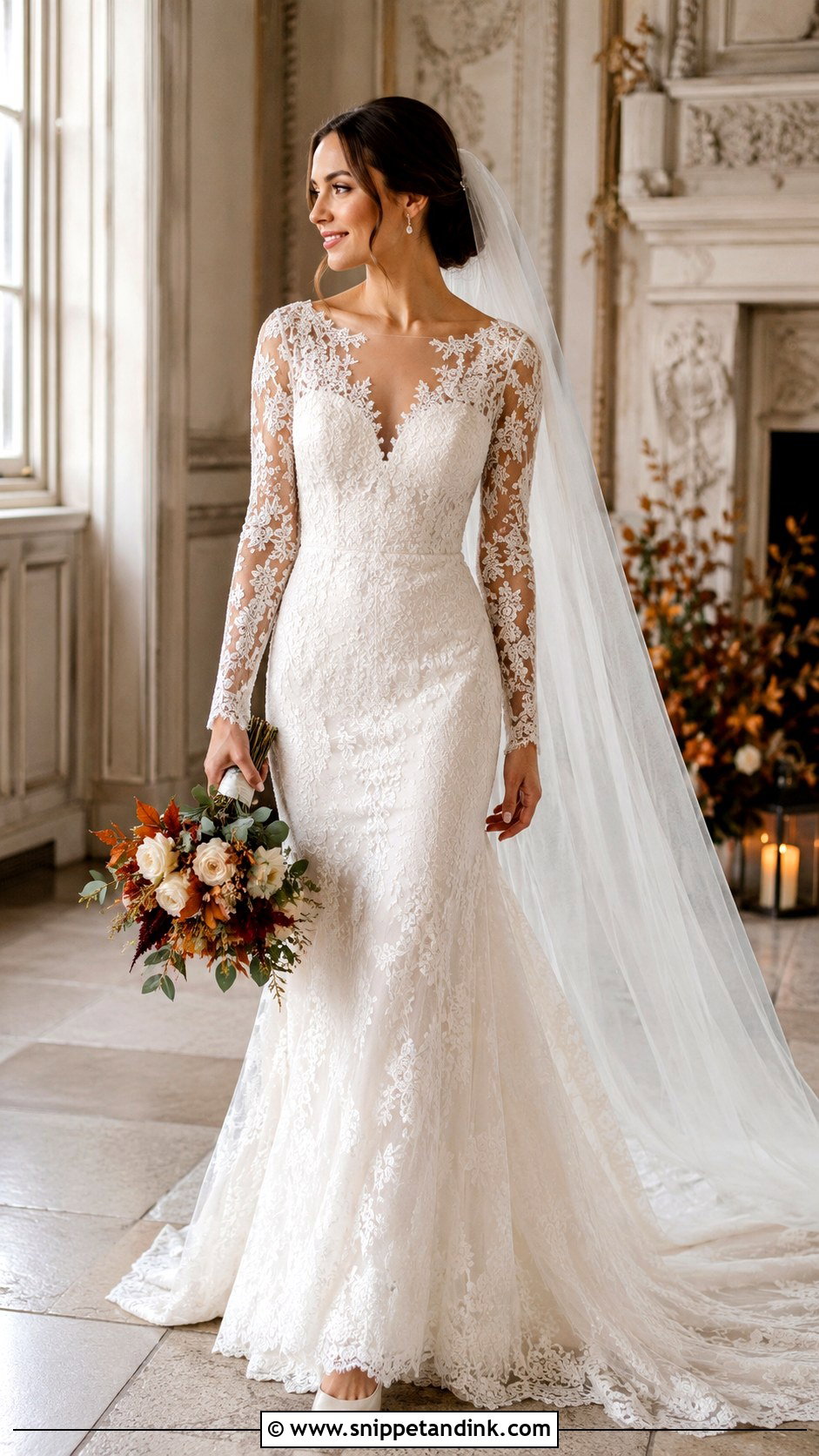
Lace sleeves are lovely right up until you bend your elbow and the lace pulls tight across the joint. Bend and lift your arms at the fitting. Illusion sleeves with placed motifs, a supportive bodice and a flowing skirt make for a composed look, and scalloped cuffs or covered buttons add refinement. For a warm-weather date, ask for lighter lace and a breathable lining. Pointed ivory heels, understated earrings and a plain-edged chapel veil with a neat chignon keep the sleeves visible. It suits fall and historic venues.
10. High Neck Wedding Dress
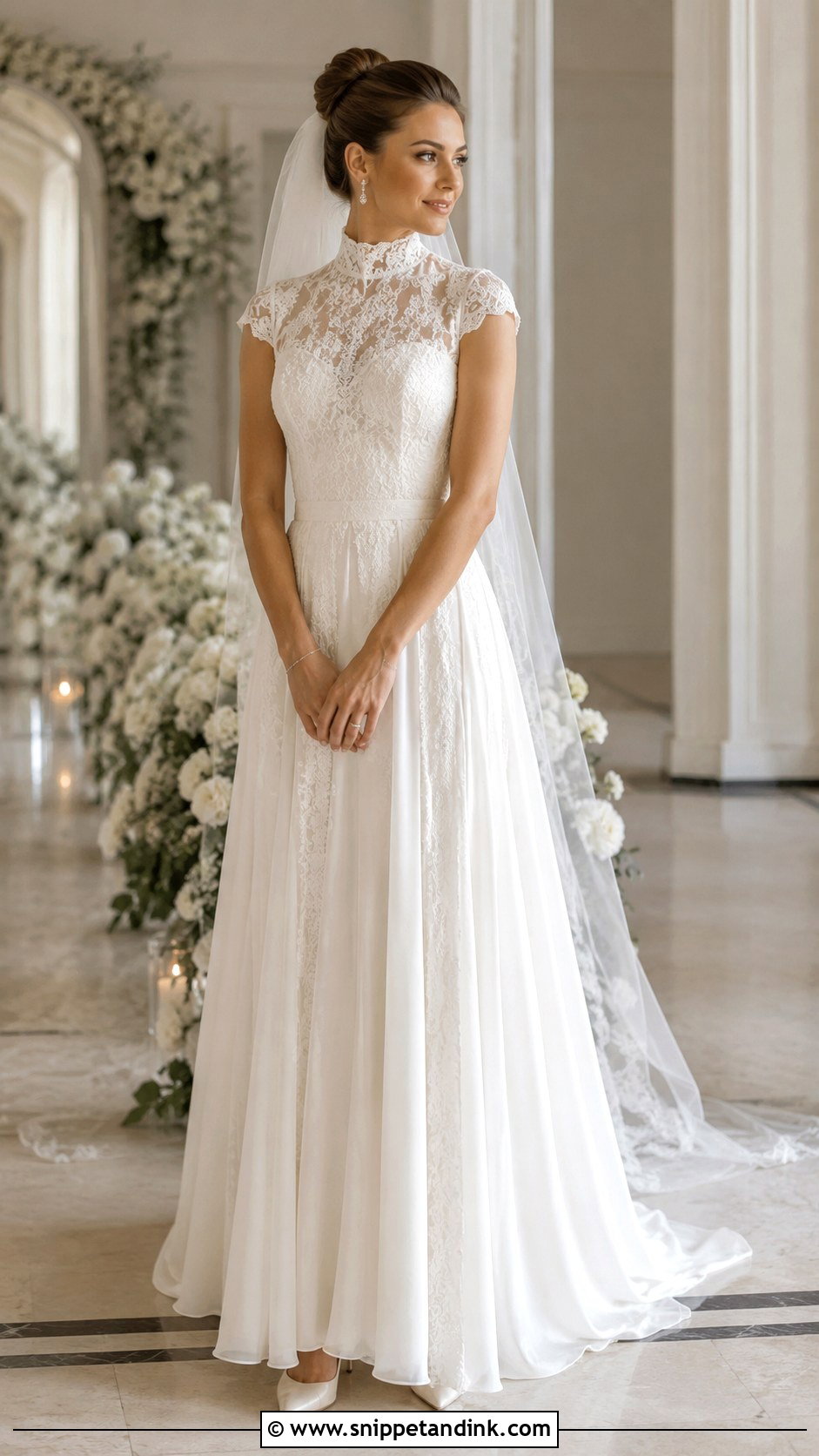
A raised collar in lace or smooth crepe is a strong line, and it needs balance below: an open back, a defined waist or a flowing skirt. Skip the necklace and wear crystal earrings, a slim bracelet and ivory pumps. A structured bun or sleek ponytail shows the collar in profile, and a veil set beneath it keeps the neckline clear. The comfort check is turning your head. If the collar rubs your jaw or tightens when you sit, have it eased. In minimal fabric it looks current.
11. Bow Back Wedding Dress
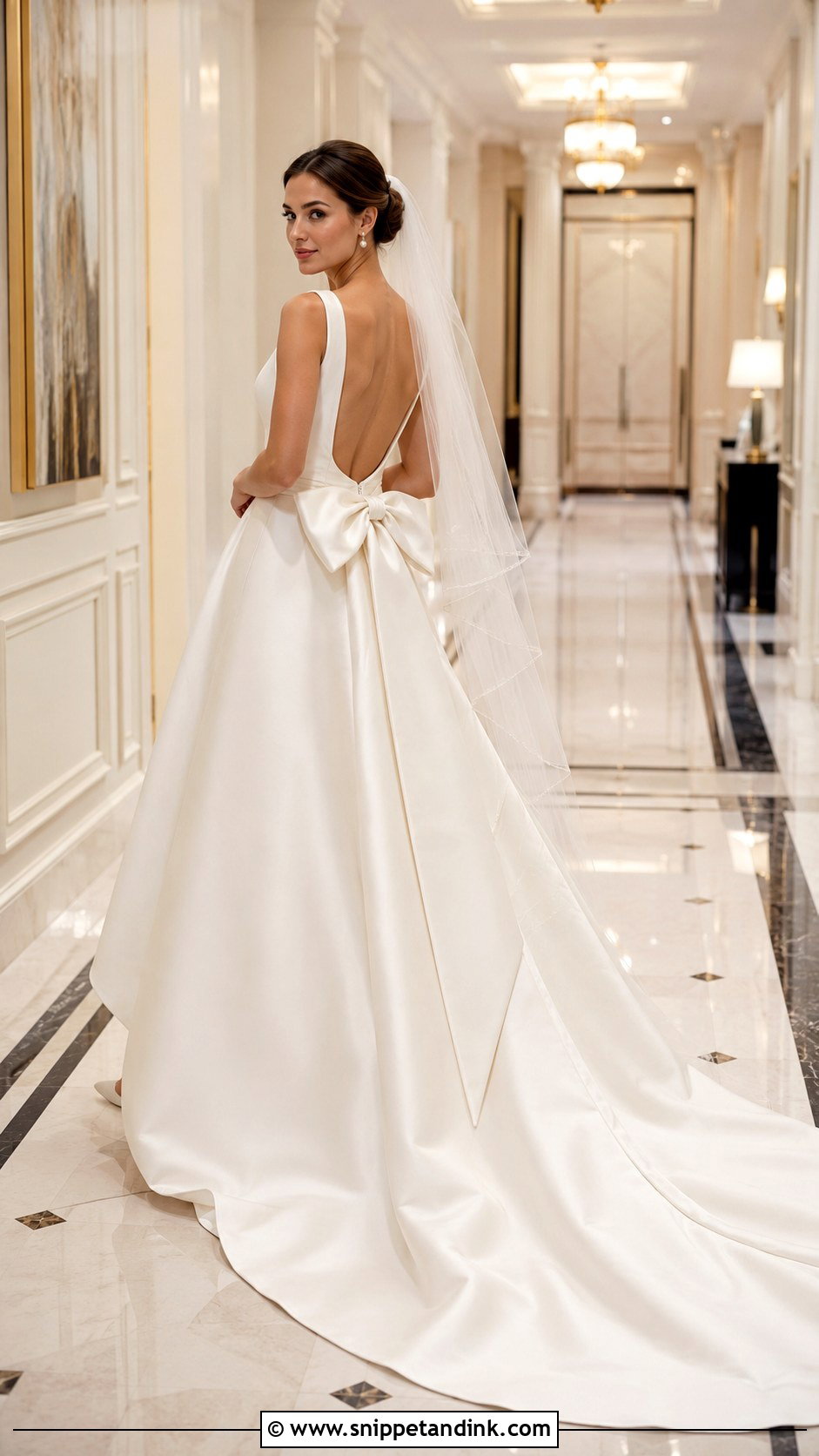
Guests spend the whole ceremony looking at your back, which is the case for a large detachable bow on a structured satin A-line. At the waist or lower back it can fall into long tails or sit above the train. Make sure the bustle points do not crush the bow when the train is lifted; that needs planning at your fitting. Pearl earrings, pointed pumps, a smooth bun and a sheer veil keep it sophisticated rather than sweet. Remove the bow for dancing if it adds bulk.
12. Cape Wedding Dress
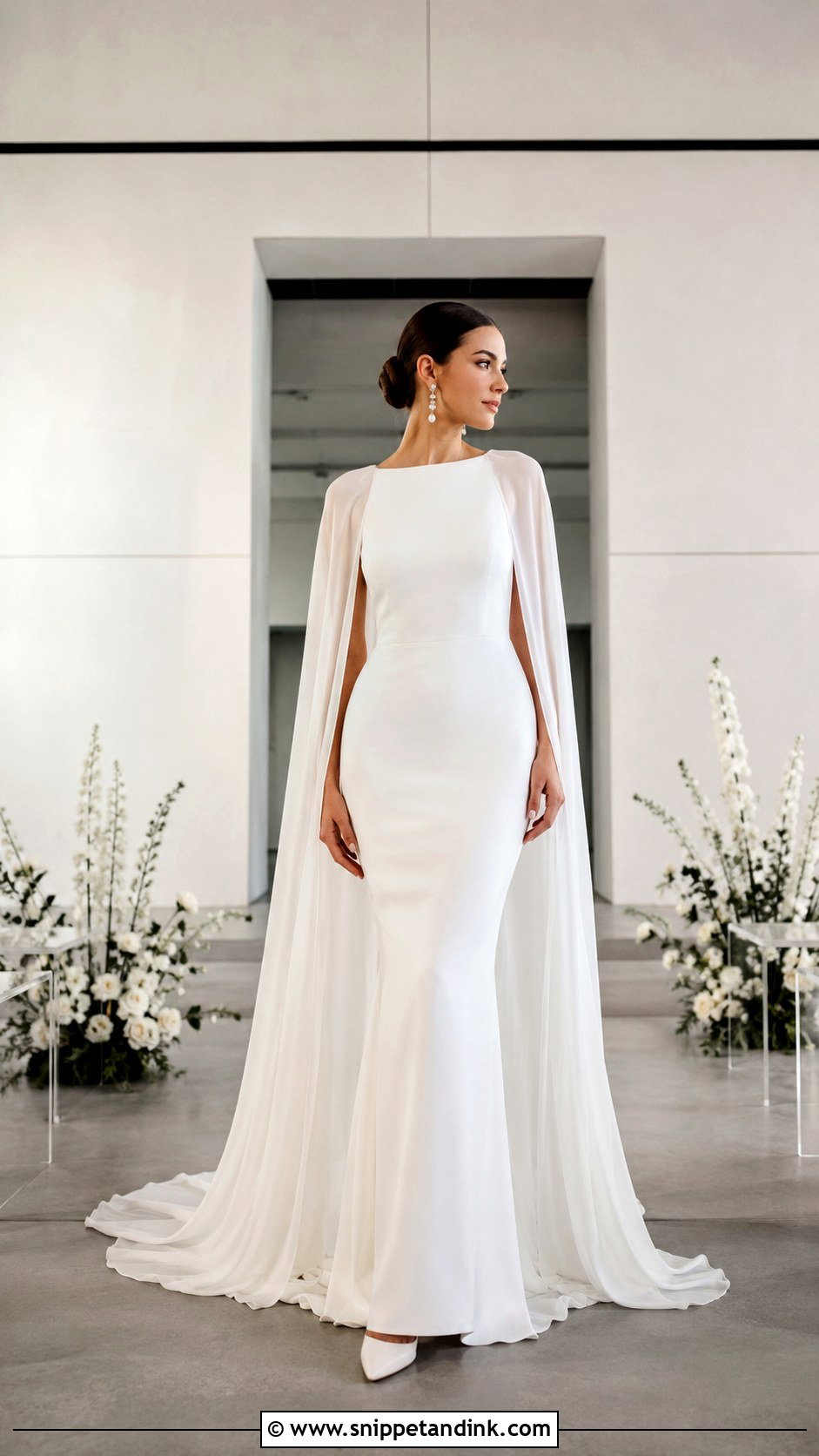
I suggest a cape to brides who want ceremony presence but dislike having a veil pinned into their hair. Over a sleek column or A-line in crepe, satin or Mikado, a sheer tulle cape floats, while embellished fabric brings more sparkle. Have your seamstress set the attachment points so the cape comes off without tugging the gown. Statement earrings, pointed heels and a smooth low bun suit it; skip the necklace if the cape fastens near the collarbone. Take it off for the reception.
13. Feather Trim Wedding Dress
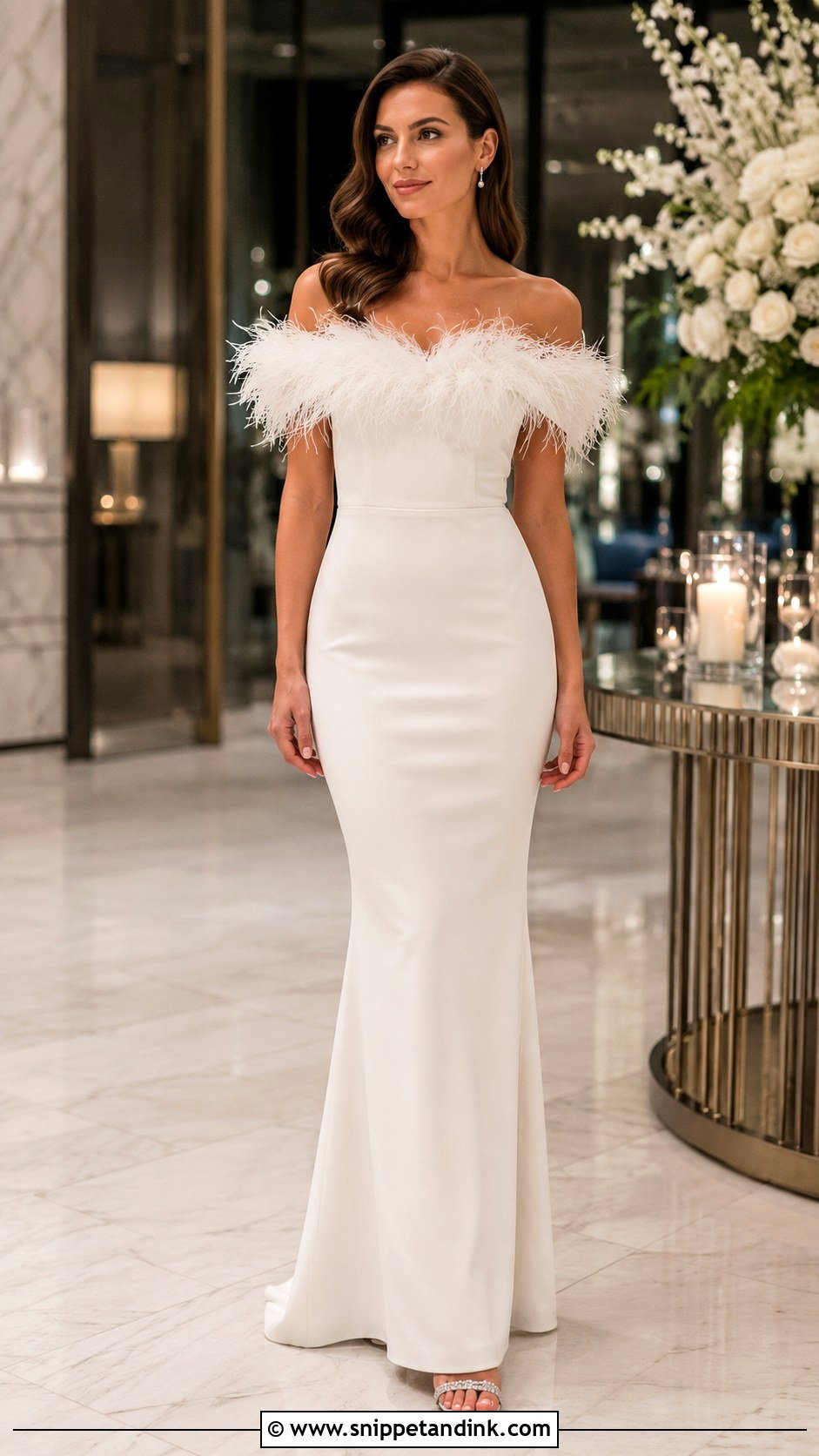
Feather trim belongs in one place only: an off-shoulder neckline, a skirt slit, the hem or detachable sleeves. Spread across several areas, it looks like a costume. Before buying, brush the feathers against your hand. Soft, well-attached ones shed very little; dry, brittle ones leave fluff on everyone you hug. Crystal sandals, small drops and a compact satin clutch suit a fitted satin or crepe gown, with a short veil or polished waves. Detachable feather cuffs give you flexibility for the evening.
14. Basque Waist Wedding Dress
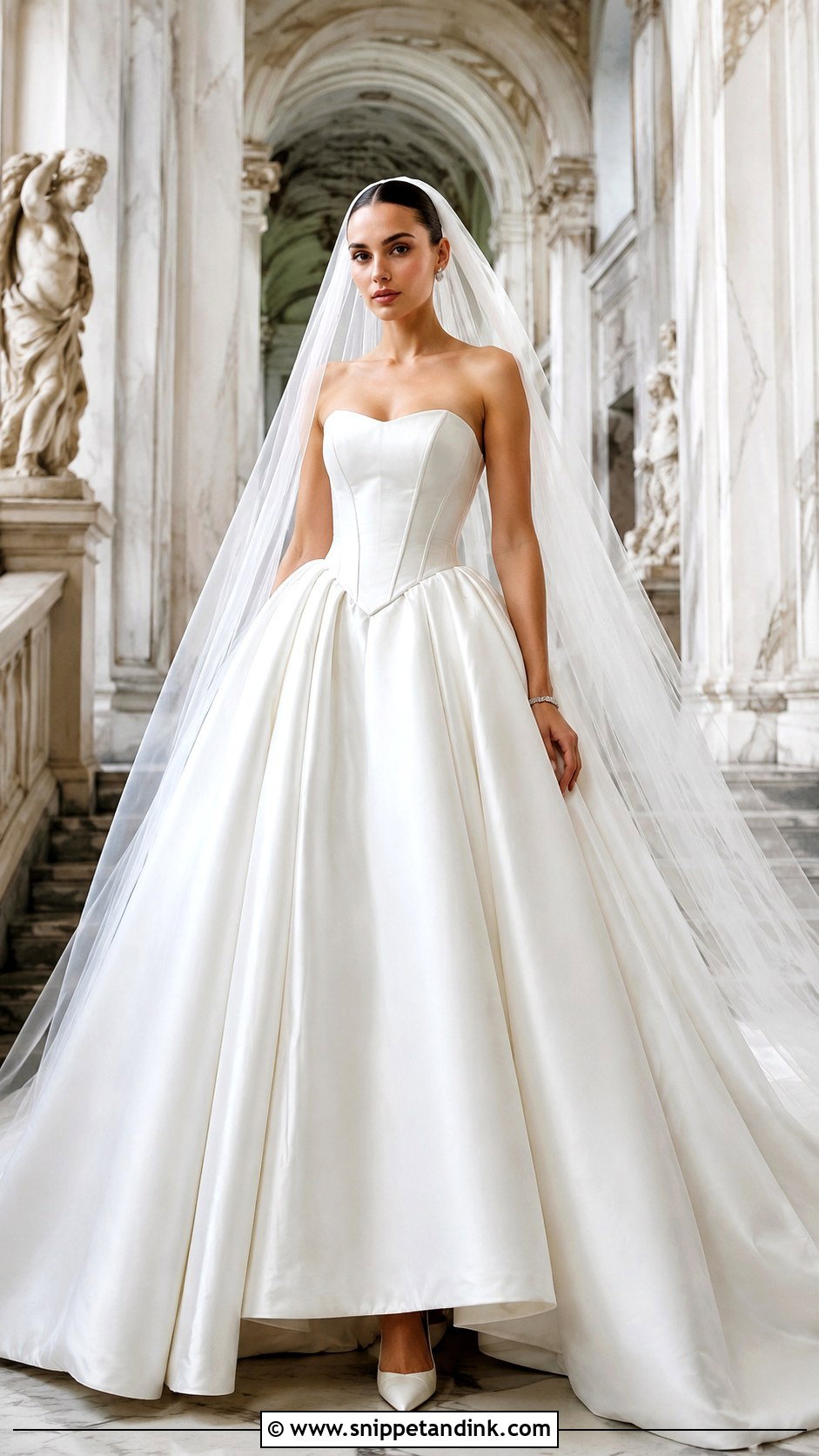
The V-shaped point of a basque waist over a full ball gown skirt is very regal, and very easy to get wrong. If the point is forced too low, it digs in when you sit and buckles the skirt. A good seamstress places it to your proportions. A softer boning or a rounded basque is kinder if you dislike stiff bodices. Crystal studs, an elegant bracelet, pointed pumps and a cathedral veil keep it classic, with a low bun or pinned waves. Ballrooms and museums give it room.
15. One Shoulder Wedding Dress
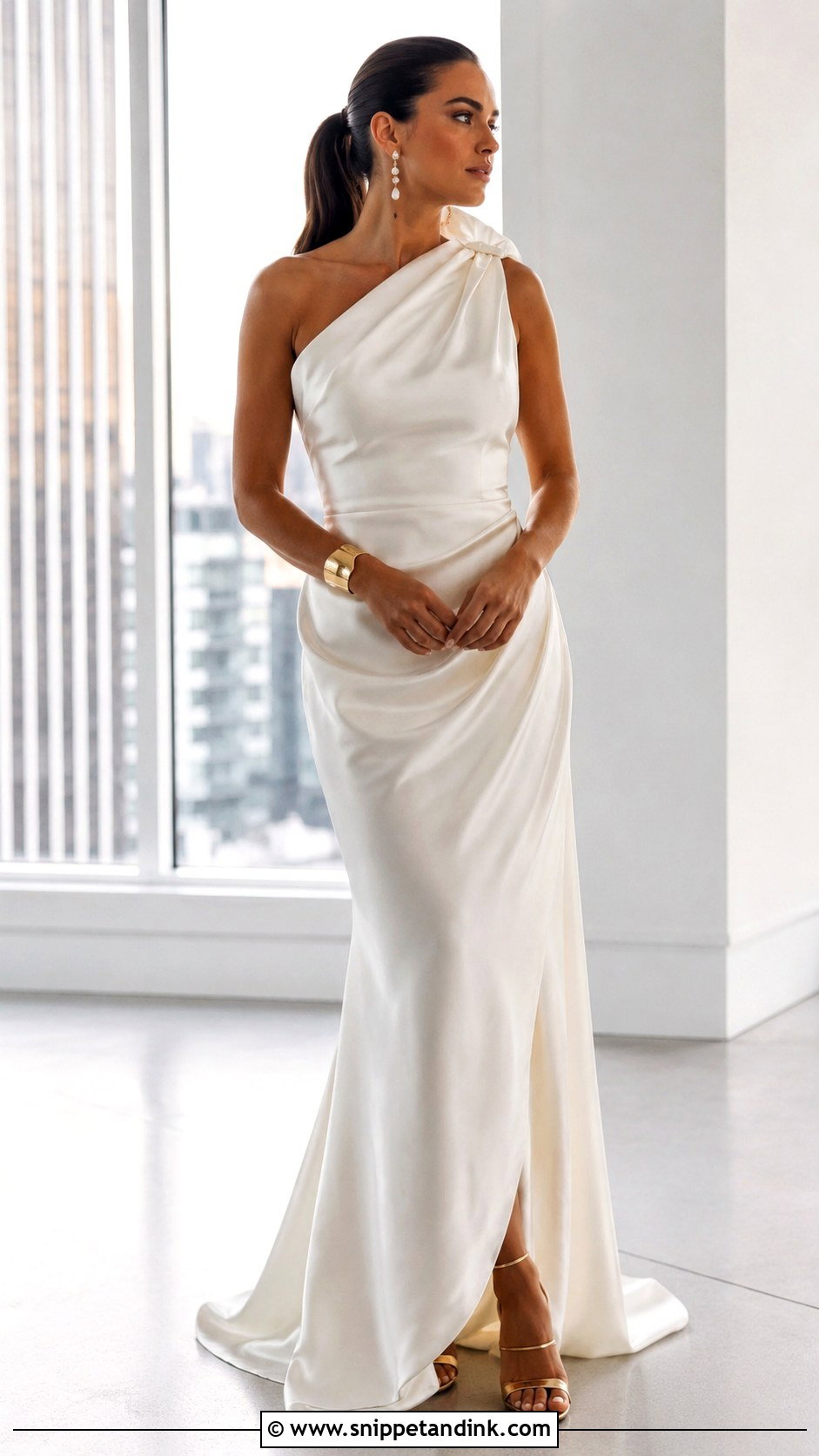
One-shoulder necklines put uneven tension across the bodice, so internal support matters more here than in a symmetrical gown. Without it, the dress slowly tips toward the strapped side. Draped satin, fitted crepe or an A-line with a structured shoulder all work. Skip the necklace and wear statement earrings, a simple cuff and metallic or ivory heels, with a sleek ponytail or side bun that keeps the shoulder visible. A detachable overskirt or a long panel from the shoulder adds ceremony drama. City and gallery weddings suit it.
16. Champagne Wedding Dress
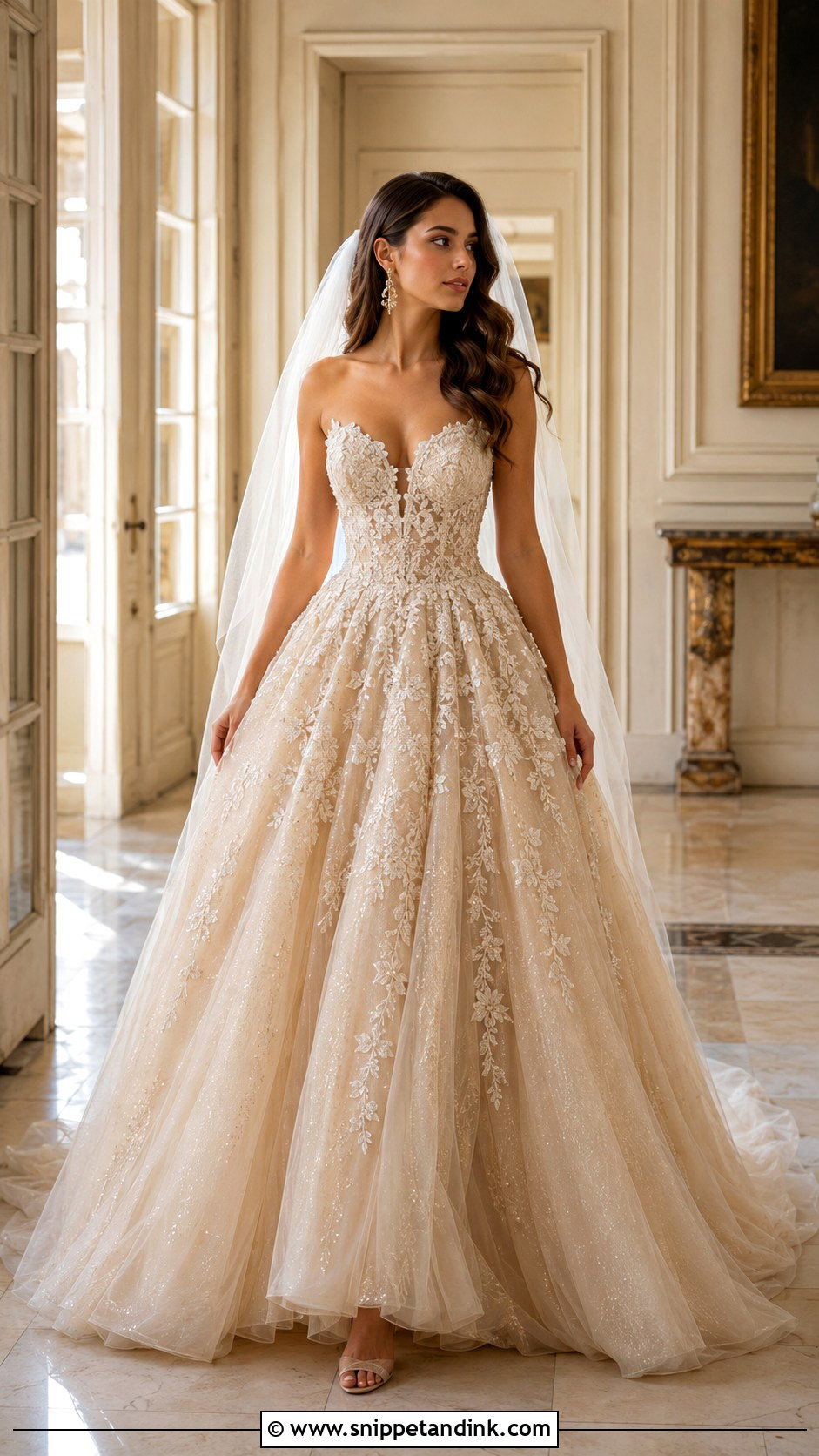
Champagne under satin, tulle or embroidered lace adds warmth, but it changes color in different light and on camera. View the fabric by a window and under indoor bulbs, and hold it next to your flowers and the bridesmaid dresses, because a warm gown beside cool grey bridesmaids can look muddy. Gold-toned earrings, neutral heels and a light ivory veil give soft contrast. Luminous makeup and polished waves suit it. Evening, historic and autumn weddings flatter the tone.
17. Black And White Wedding Dress
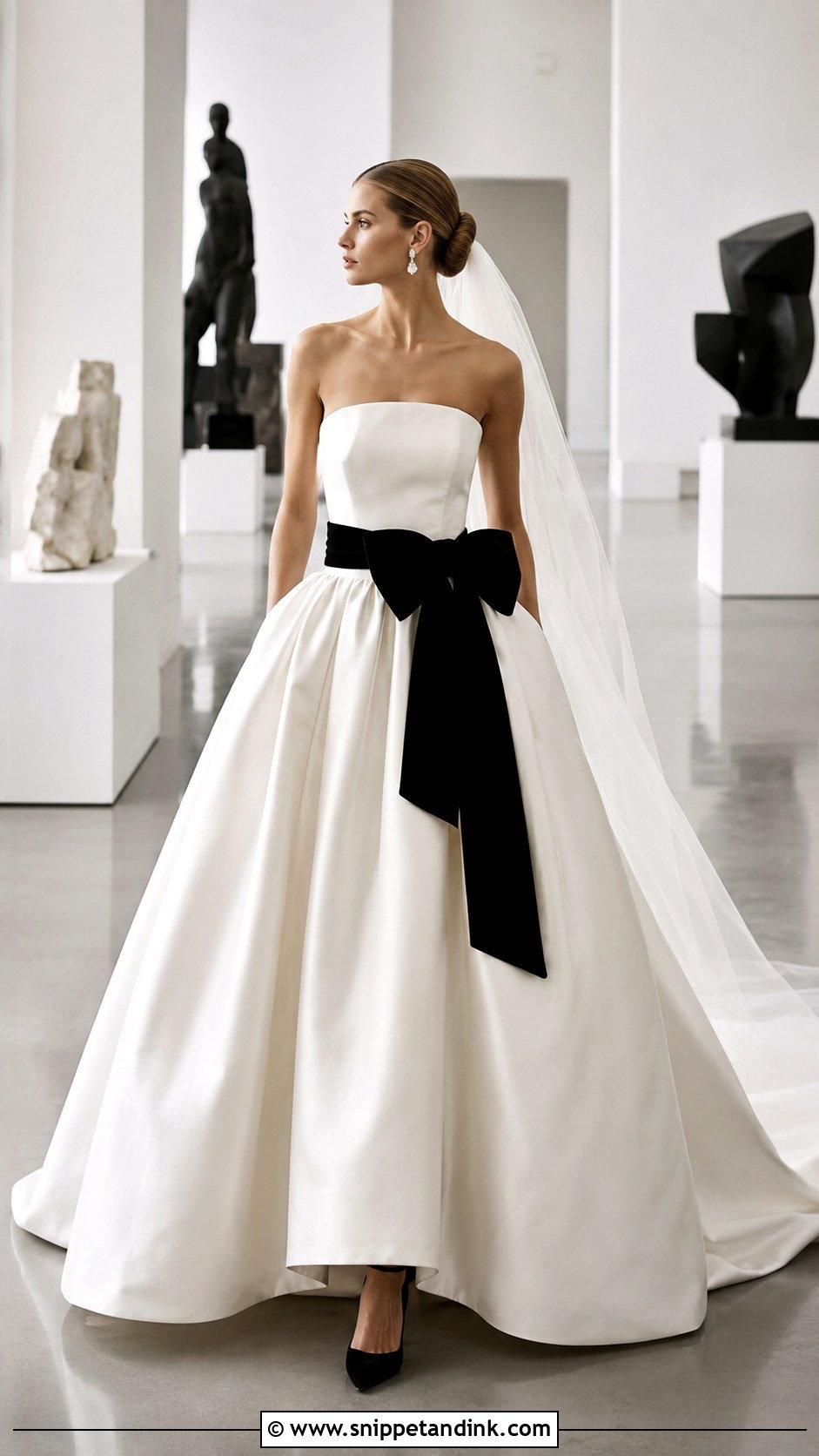
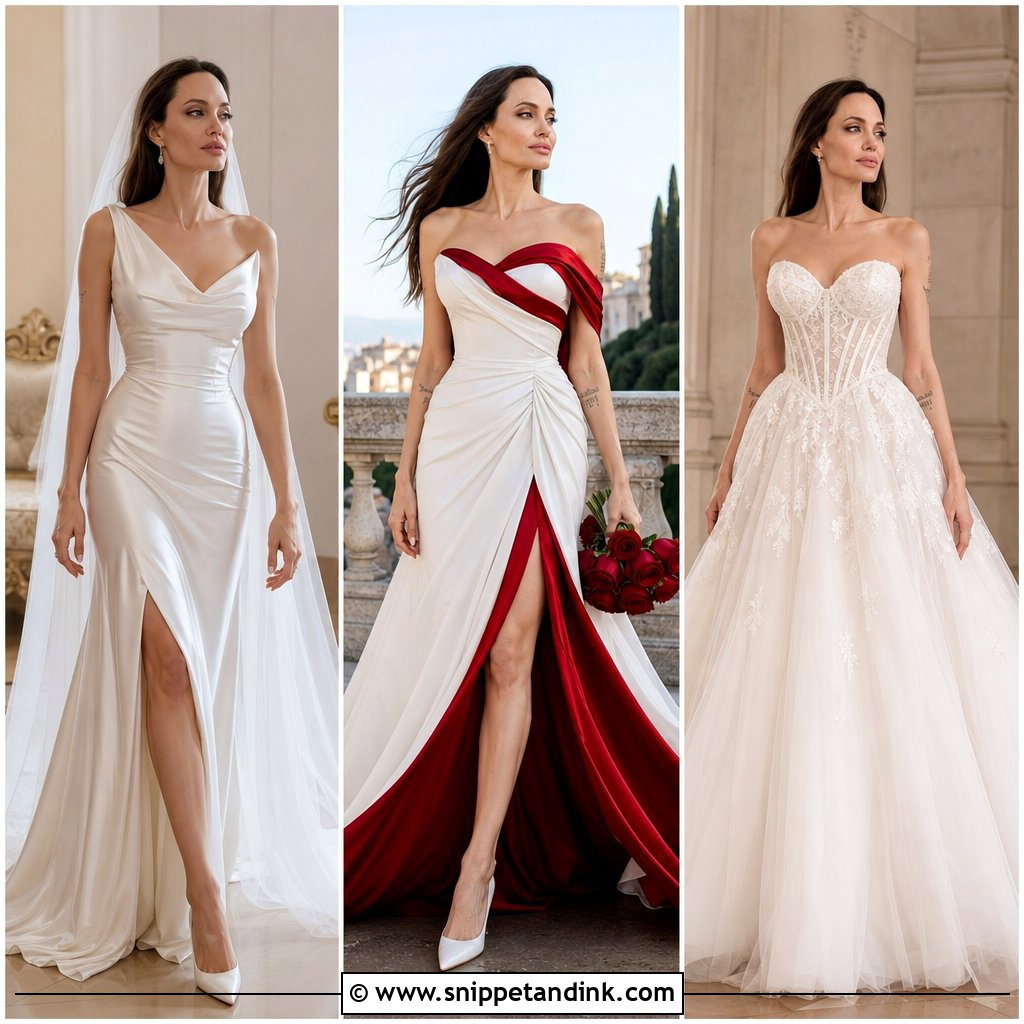
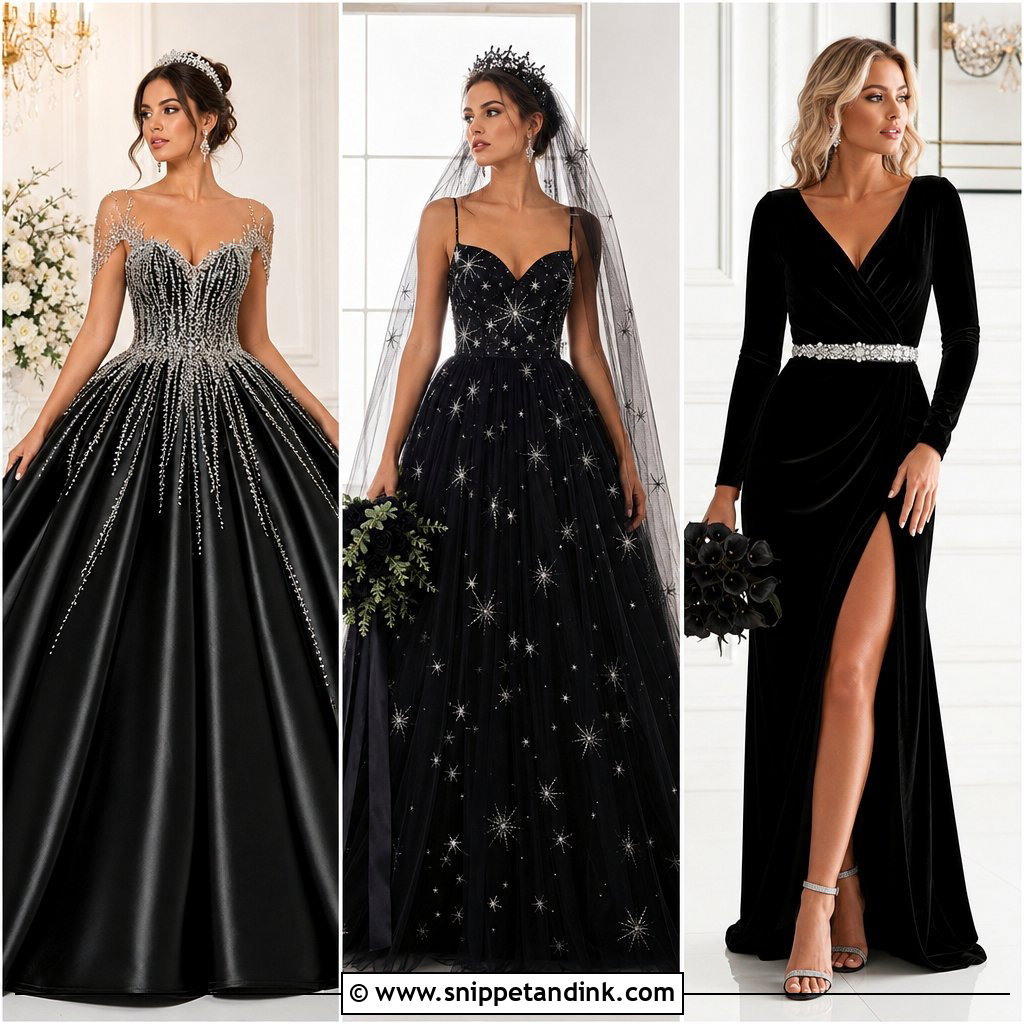
Black on ivory satin is graphic, so I use it as a deliberate accent: a velvet waist bow, embroidered appliques, opera gloves or narrow neckline trim, never scattered randomly. Black pointed pumps, diamond-style earrings and a plain ivory veil balance the contrast, with a sleek bun and defined eye makeup. If the black bow or overskirt is removable, you get an all-ivory reception look later. Ask whether dark trim has been colorfast tested on the pale fabric. Museums and monochrome receptions suit it.
18. Convertible Overskirt Wedding Dress
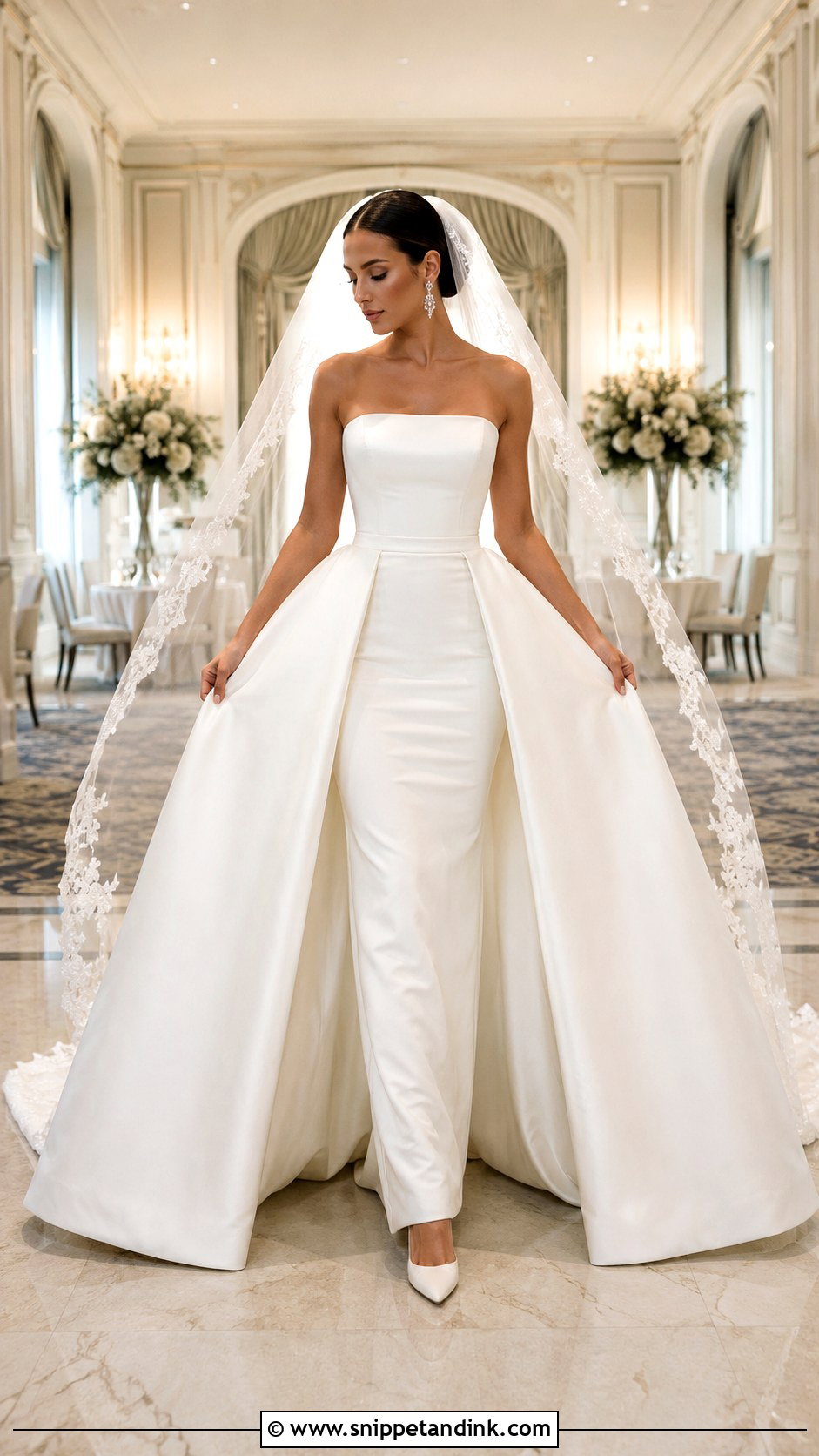
A convertible overskirt wedding dress only works if the underlayer looks finished by itself, so judge the column, mermaid or mini underneath as if it were the only dress. Then add the full satin or tulle overskirt at the waist for the ceremony. The join should be invisible from every side. Pair the first look with a cathedral veil, crystal earrings and classic pumps; after the switch, change to statement earrings, comfortable heels or a shorter veil. You get big photographs without carrying that skirt all night.
19. Tea Length Wedding Dress
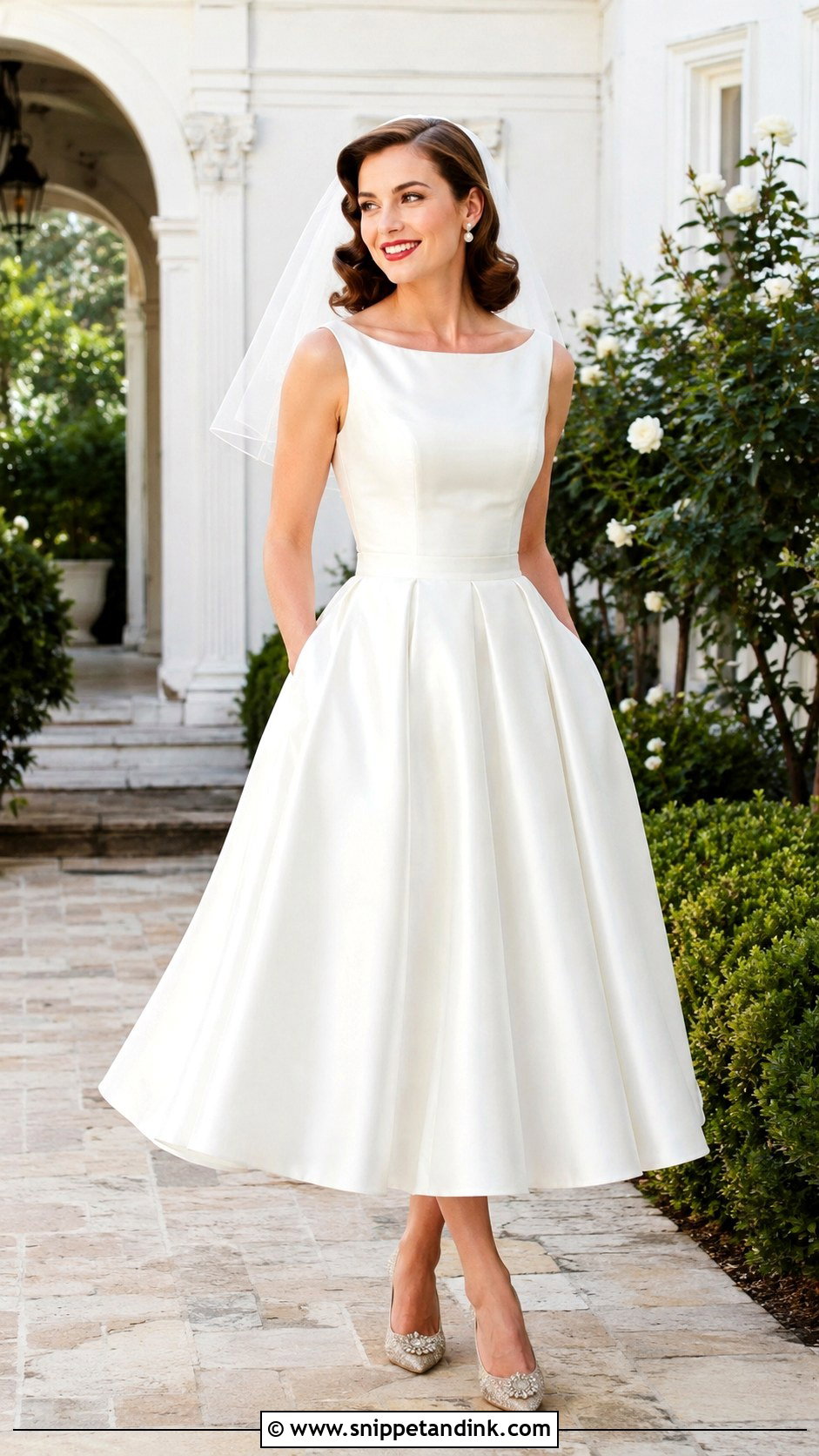
Tea length shows your feet, so start with the shoes and work up. A fitted bodice, defined waist and full skirt between knee and ankle hold best in satin, Mikado or embroidered organza. Jeweled pumps, pearl earrings and a short veil or structured headband suit it, and classic waves, a pinned updo or a sleek bob keep it polished. A light petticoat adds volume; a heavy one makes the skirt stiff and wide. It suits courthouse and daytime weddings, and works as a second dress for dancing.
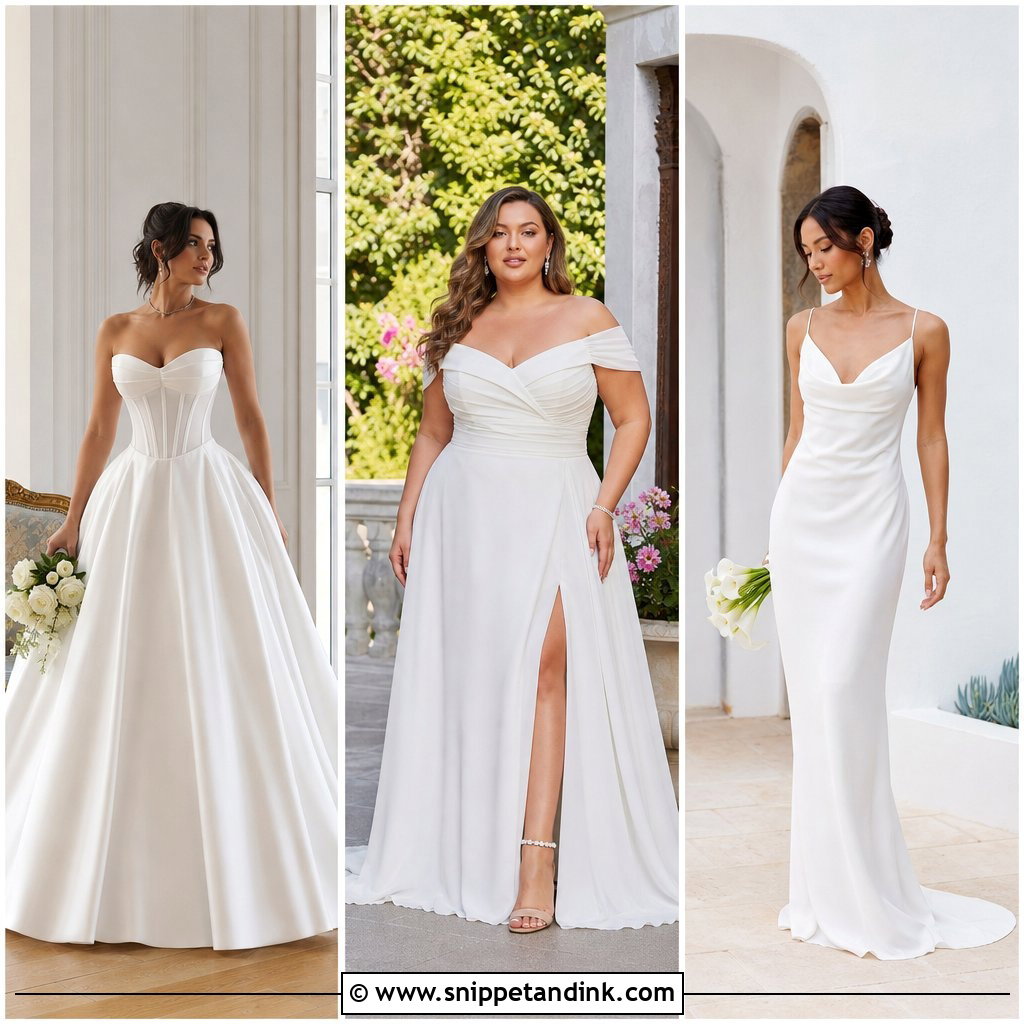
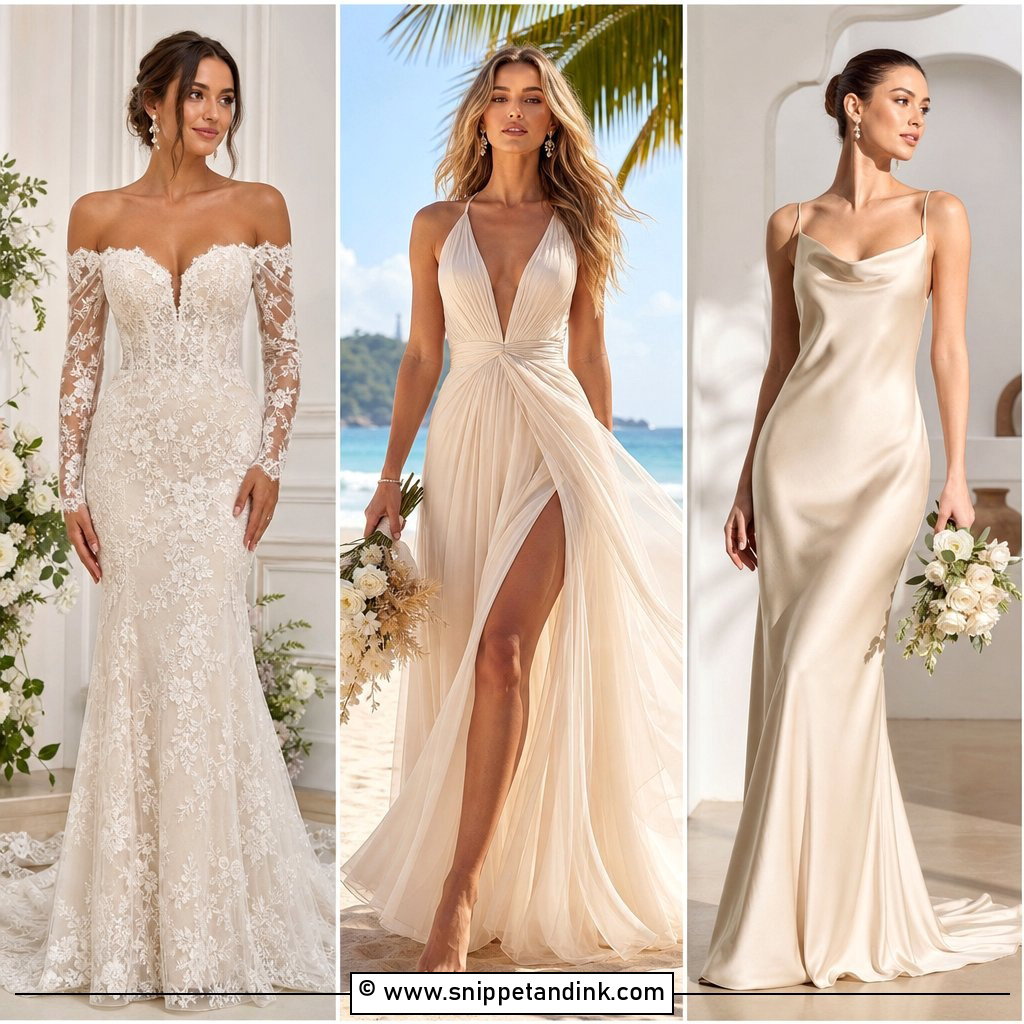
20. Sequin Column Wedding Dress
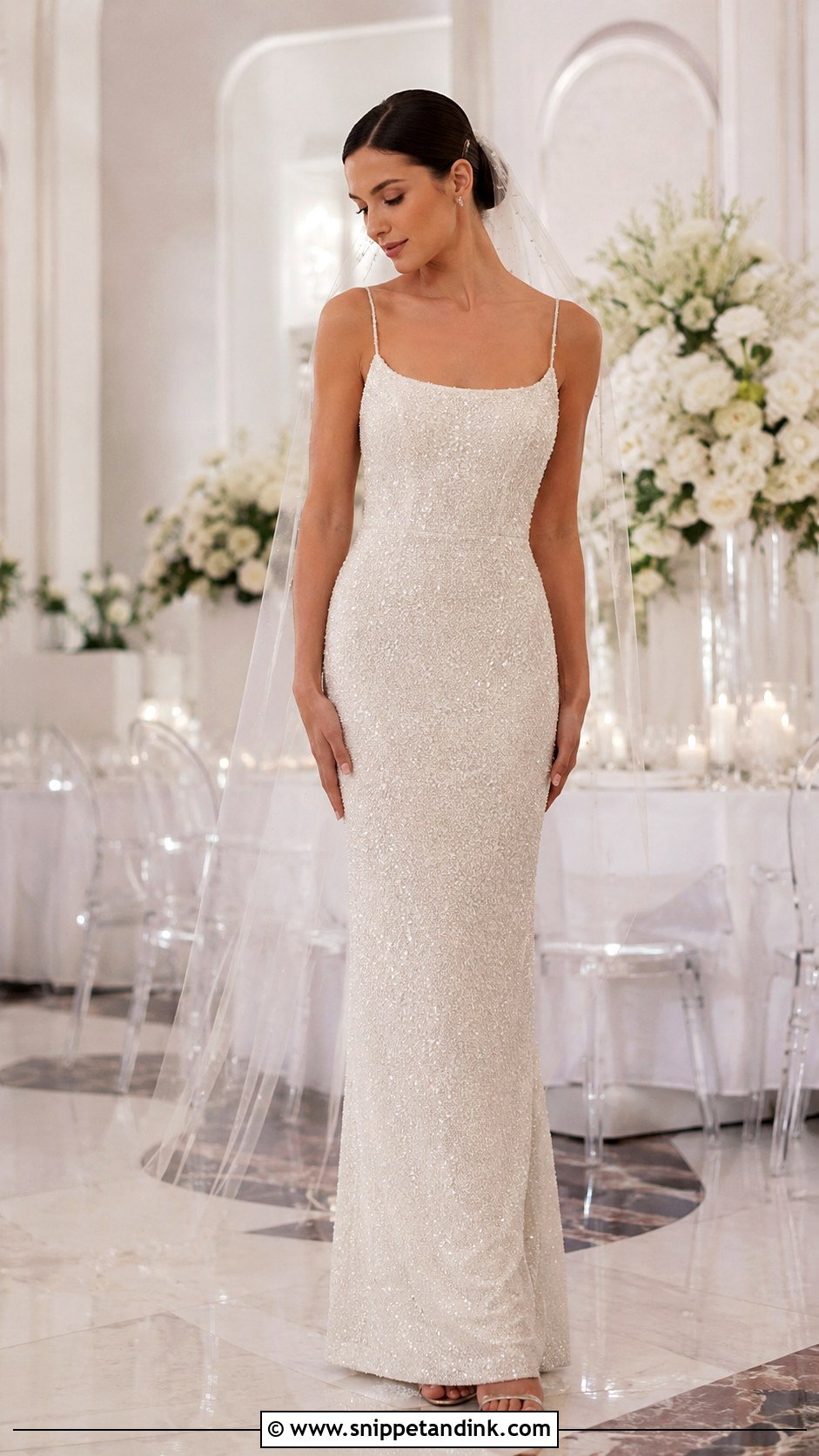
Fine sequins, beading or metallic embroidery over a smooth fitted lining catch light with every step, without a big skirt. The underarm is where these dresses fail, because embellishment there rubs skin all evening, so check the lining at that spot. A back slit or a stretch panel helps you walk. A straight neckline, soft cowl or long sleeves balance the sparkle. Minimal metallic sandals, small diamond-style earrings, a sheer fingertip veil and waves or a sleek bun suit lofts and hotel receptions.
What Goes Under a Fitted Glam Gown
Most of the dresses on this list are close-fitting somewhere, and that makes the underwear decision part of the dress decision. Bring your actual wedding undergarments to the second fitting at the latest. A bodice that was fitted over one bra will not sit the same over another.
Built-in support or your own?
Corseted and strapless gowns usually have enough structure that many brides need nothing more than sewn-in cups, which a seamstress can add. Low backs and plunging necklines need adhesive options or a low-back bodysuit, and these are worth testing for several hours at home before the day, since some adhesives lose grip on warm skin.
Satin shows everything
Smooth satin and crepe highlight seams and edges. Laser-cut shapewear with bonded edges in a shade close to your skin, not white, disappears best under ivory. If shapewear rolls at the waist when you sit, it is the wrong size or the wrong cut, and that roll will show through the dress in every seated photo.
Lighter crepe and chiffon skirts sometimes cling to legs or tights through static, especially in dry winter venues. A thin slip under the skirt fixes it, and a light mist of anti-static spray on the slip, never on the dress itself, keeps the fabric falling straight.
Try the Dress You Would Never Pull From the Rack
Glamour that lets you sit, dance and feel like yourself is the real goal. Use the looks you liked as a starting point, then personalize through fabric, coverage, color, accessories and alterations. Try at least one shape you would never pull from the rack, since a fitted gown can look nothing like the unaltered sample. Weigh the venue, weather and length of the day. Then build the whole outfit together, so the dress, veil, jewelry, shoes and hair all point the same way.
You'll Like These Ideas:








Leave a Reply