
What I Check on an Original 1980s Gown Before You Fall for It
A lot of brides who love this era end up looking at real vintage, from resale sites, a parent’s wardrobe or a specialist shop. I go over every one of these gowns the same way before anyone falls in love with it.
- Underarms and the waist seam. Old perspiration marks yellow over time and are the hardest stains to lift, so look closely in daylight.
- Seam allowances. Turn the bodice inside out. Wide allowances mean a seamstress can let the dress out; narrow, overlocked ones mean she mostly can’t.
- The zip. Metal zips from the period may need replacing, which is a routine job but adds time.
- Puff sleeve supports. The net or tulle inside the sleeve head can go soft and limp. It can be replaced, and the sleeve springs back.
- Smell and storage marks. A musty smell and fold lines along the skirt usually respond to professional cleaning; holes from pests or brittle lace often do not.
Then try it on and ignore the label entirely. Sizes from that decade run small compared with modern ones, so go by your measurements against the gown’s, not the number.
1. 80s Puff Sleeve Wedding Dress
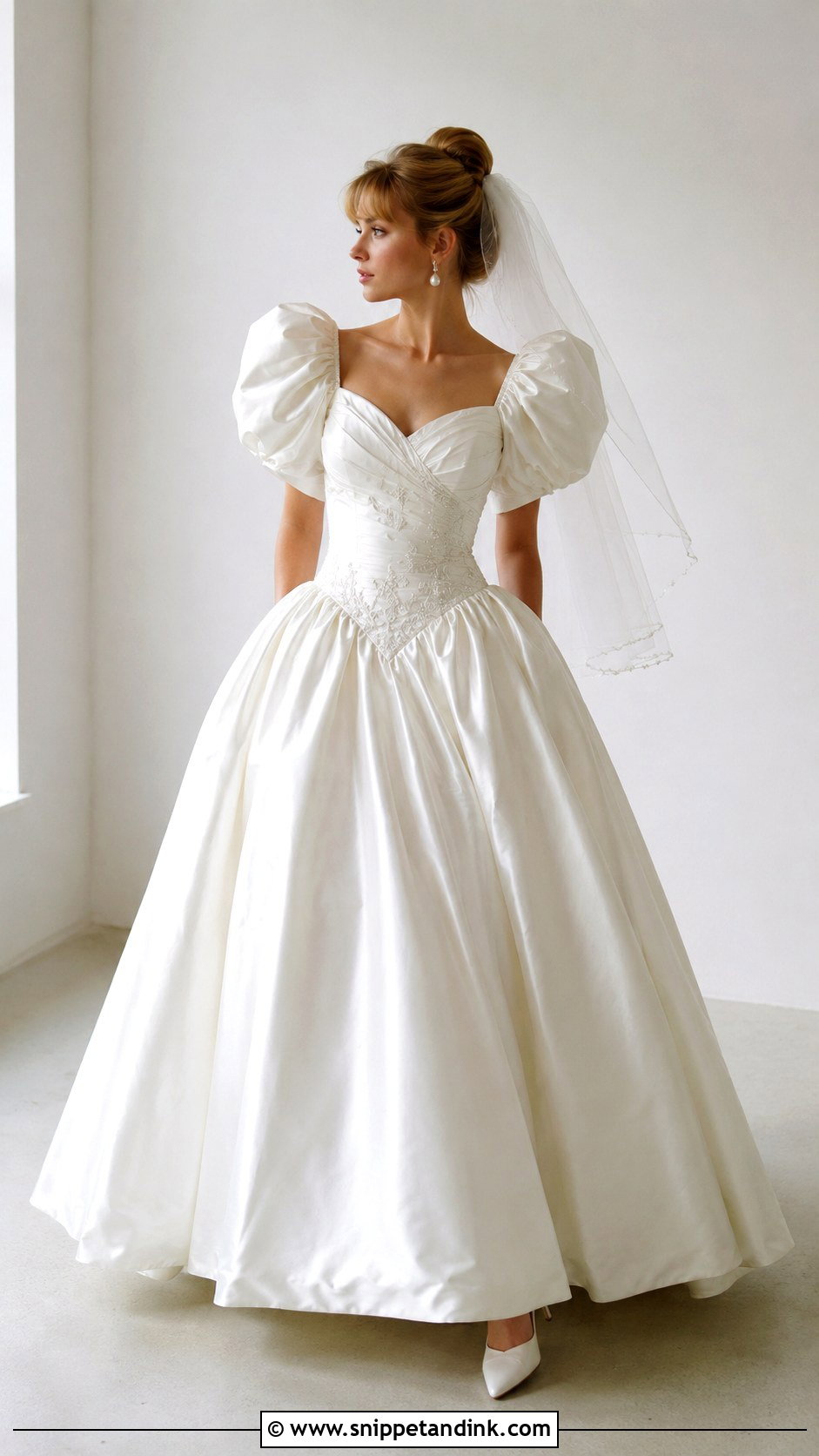
An 80s puff sleeve wedding dress is the shape everyone pictures first, and it still reads bold in a room. The version I steer brides toward has volume sitting on top of the shoulder and a sleeve that narrows to a neat wrist, because a sleeve that stays wide all the way down swallows the arms in photos. Satin holds the puff on its own; organza and lace usually need a tulle or net support layer stitched inside, so ask the shop what is holding it up. Pearl earrings, white satin pumps and a fingertip veil are plenty. Wear the hair up so the sleeve head has room, and if you want it to feel current, pick a plainer bodice and let the sleeves carry everything.
2. 80s Lace Wedding Dress
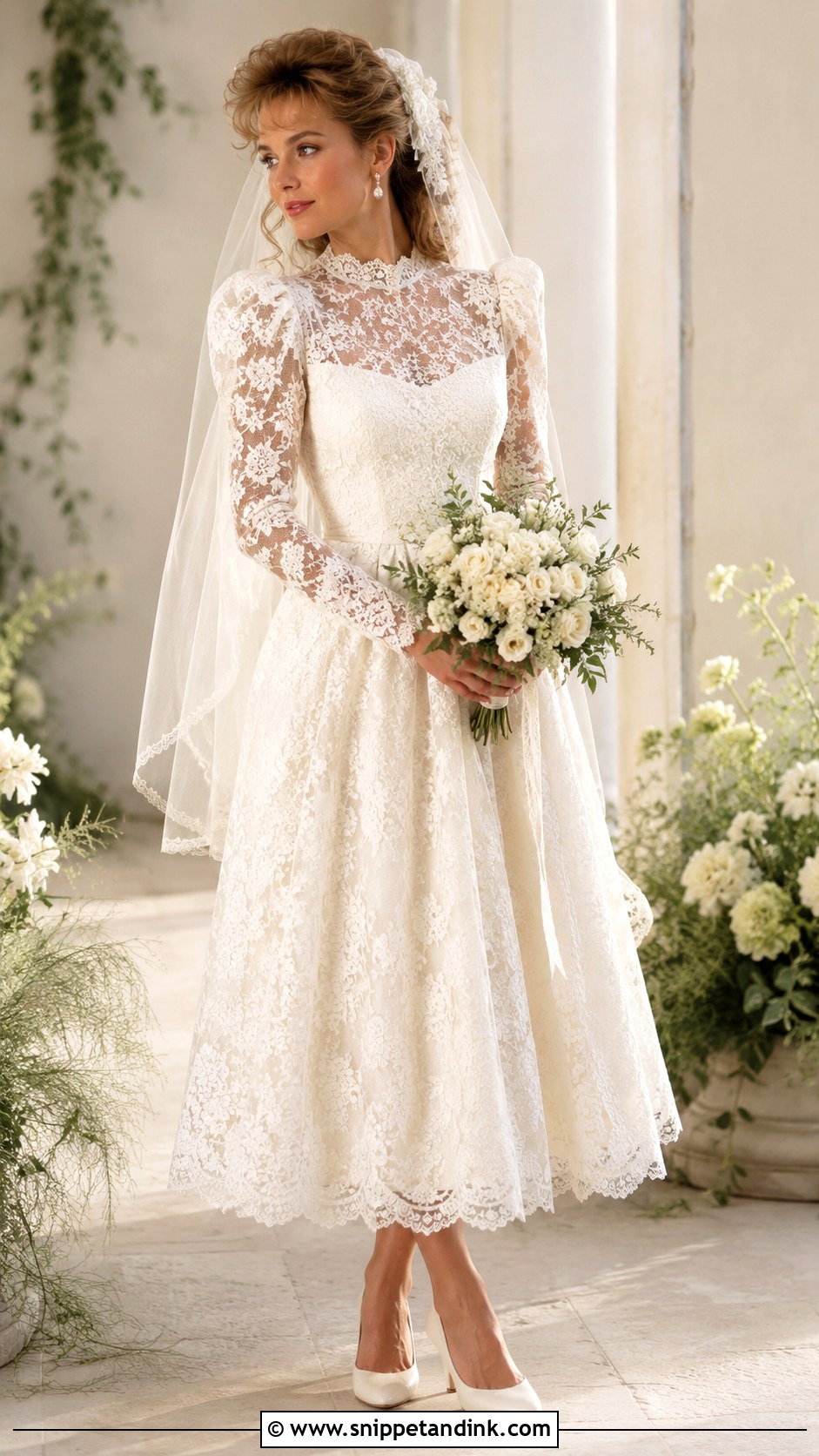
Lace pulls the decade toward something softer. I look for floral lace laid over a lined bodice, long lace sleeves and a scalloped hem, then I check the lining colour against the bride’s skin, because a stark white lining under ivory lace can look grey next to warm skin. Ivory shoes, a small pearl clutch and a veil with a lace edge finish it. With a high neck, skip the necklace and wear earrings. A low bun or brushed-out waves keep it from tipping into costume, and a bouquet of white blooms with greenery lets the lace texture stay the main event.
3. 80s Satin Wedding Dress
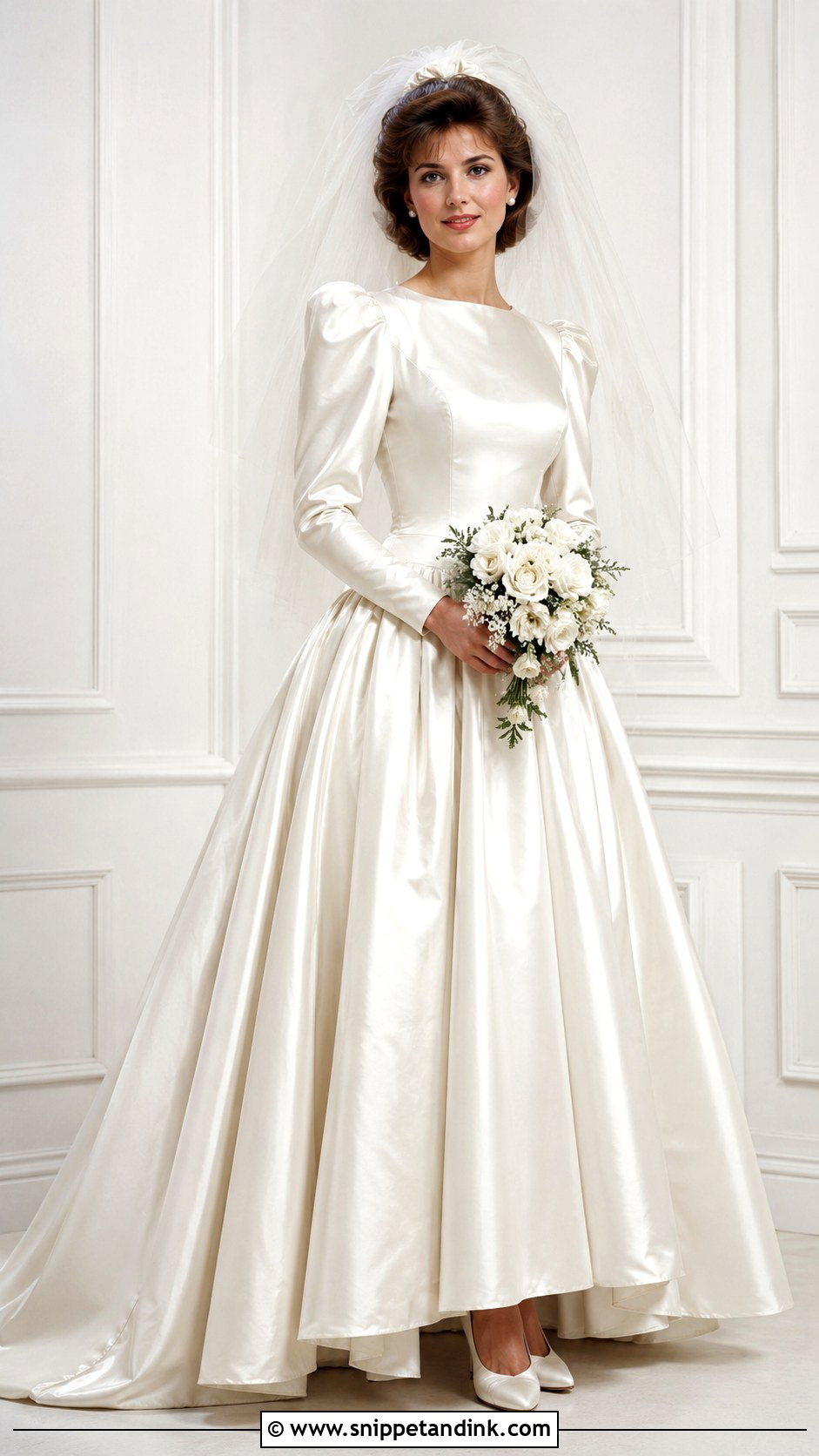
Satin is where the 80s shine comes from, and it is also the least forgiving fabric on this list. It shows every pull at the zip, every pucker at a seam and every crease from sitting, so the fitting has to be precise across the waist and hips. When it is right, a fitted waist, full skirt and structured sleeves need no beading at all. Satin heels, pearl studs and a plain veil that falls cleanly from the back of the hair suit it. A bateau or sweetheart neckline can take a short strand of pearls. Keep the bouquet white or very pale so the colour cast from bright flowers doesn’t land on the fabric.
4. 80s Princess Wedding Dress
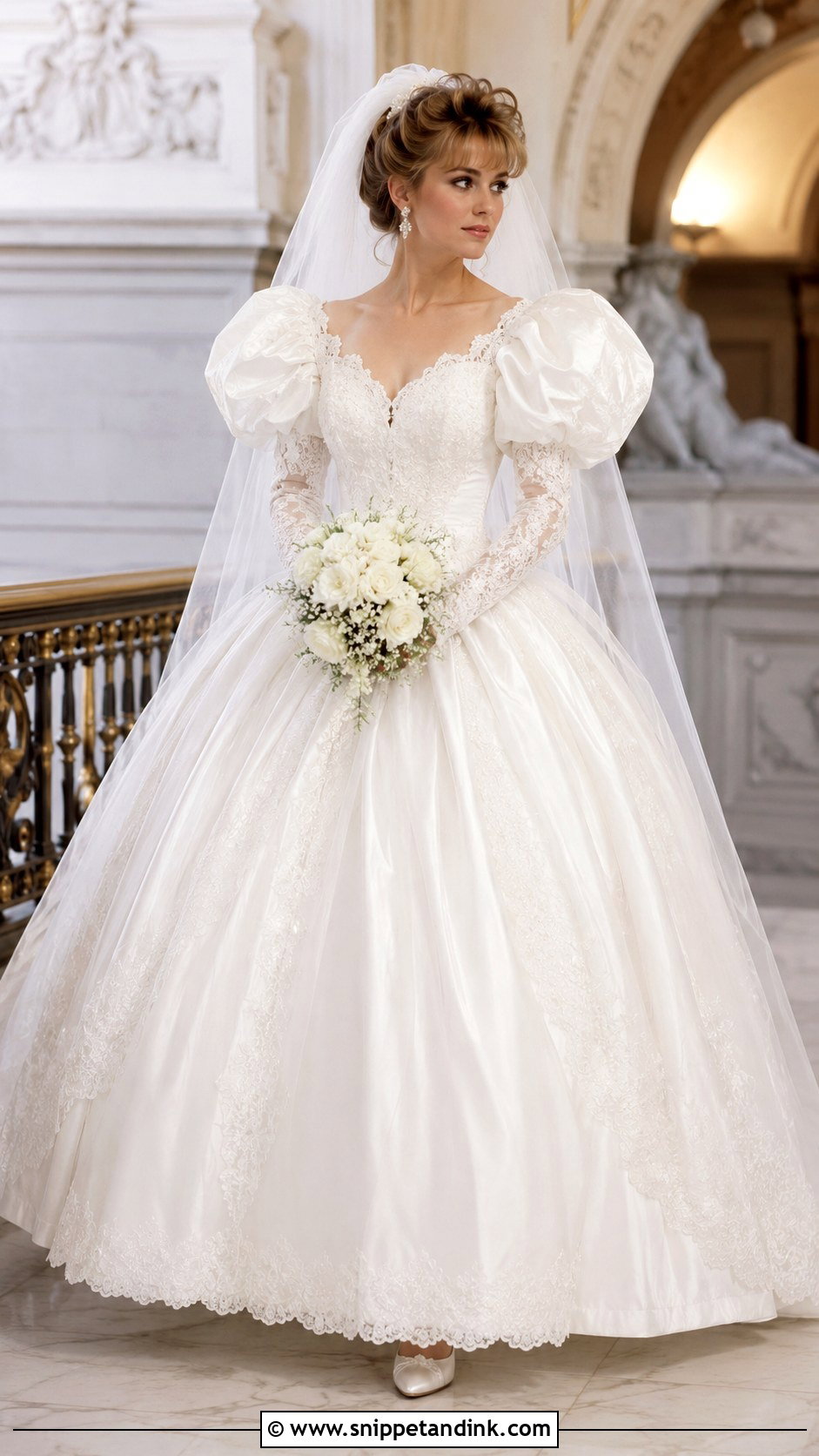
A princess 80s wedding dress is the full fairytale: fitted bodice, big skirt, puff sleeves, lace and a train. Wearing all of that at once is where it starts to look like fancy dress, so I ask a bride which single feature she’d fight for and we keep that one loud. Low satin heels matter here, because a skirt this wide hides your feet and you need to feel the floor on steps. A cathedral veil and small drop earrings are enough. A rounded bouquet repeats the curve of the skirt without adding width.
5. 80s High Neck Wedding Dress
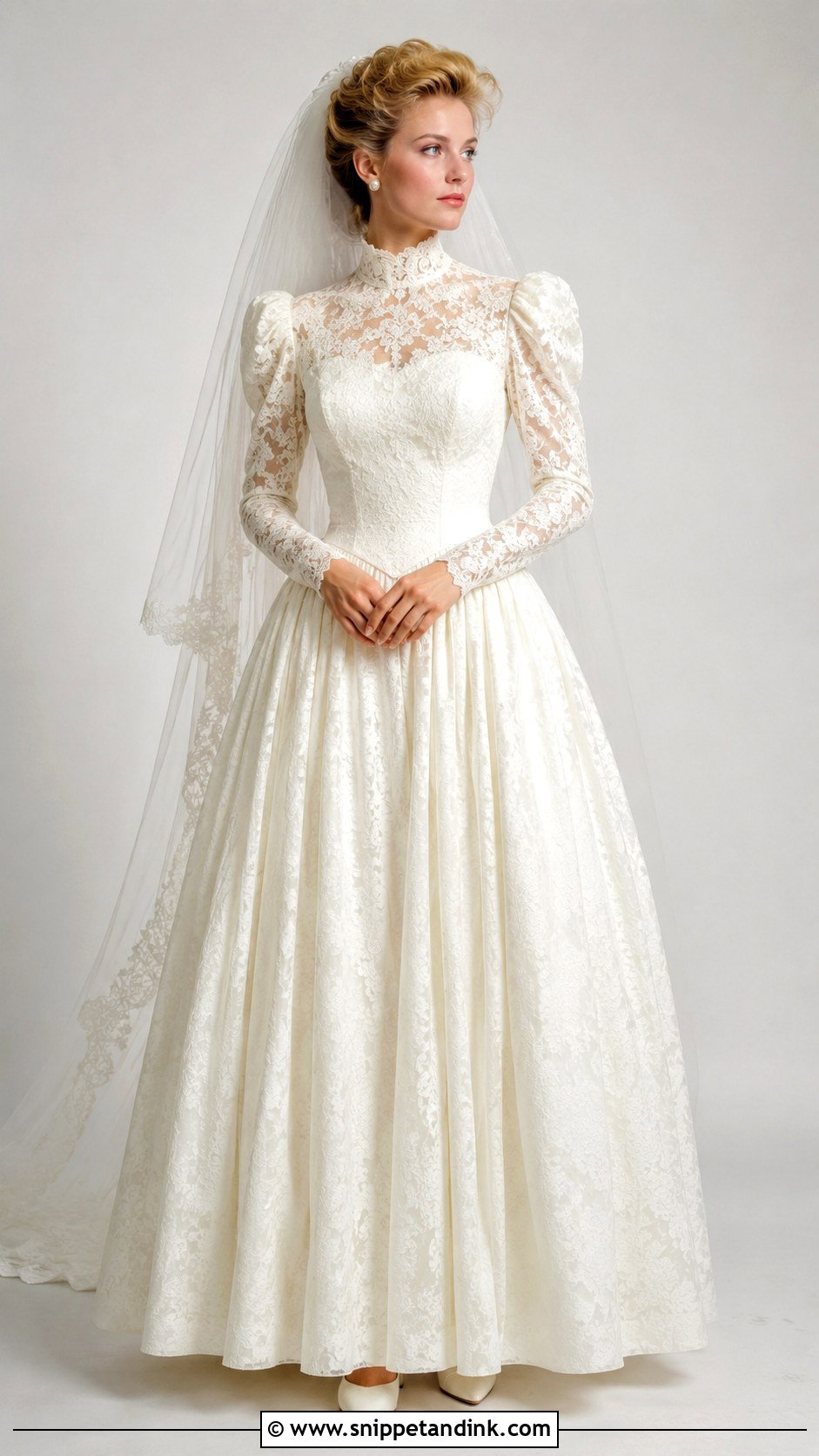
High necklines in lace or sheer illusion fabric give a covered, quietly formal look. The fitting point I watch is the collar itself: if it is cut even slightly tight, you will feel it every time you swallow, and you’ll be tugging at it in photos by the second hour. Pearl button earrings, closed-toe heels and a long veil placed low at the back keep the neckline clear. No necklace, no big hair accessory. A clean bun or a soft braided updo lets the collar frame the face the way it was designed to.
6. 80s Ball Gown Wedding Dress
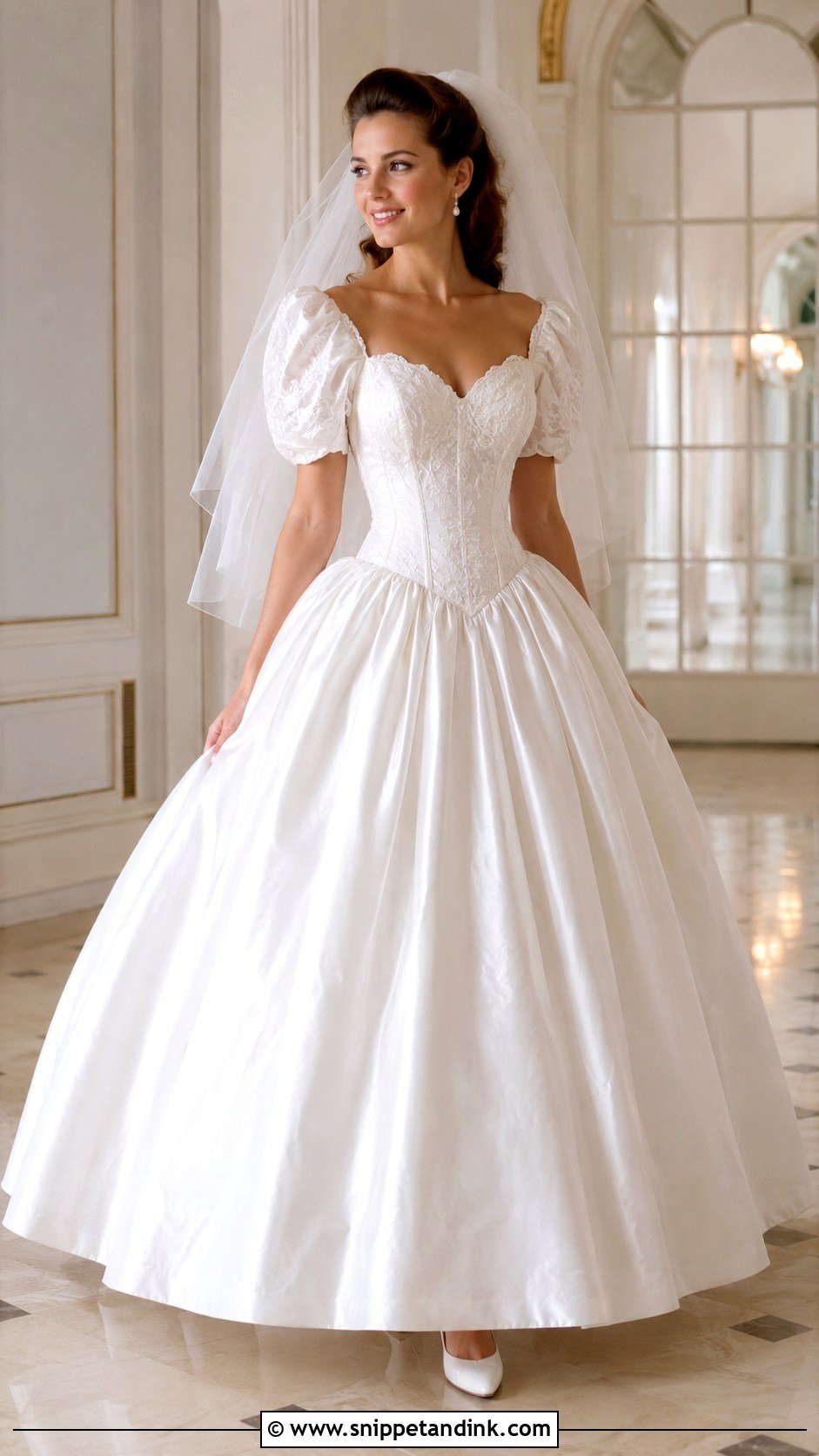
An 80s ball gown is volume and structure first. Tulle, satin and organza are the usual fabrics, often layered so the skirt moves instead of standing stiff. Under the skirt there is almost always a hoop or a stiff petticoat, and I always have brides practise sitting and walking backwards in it before the day, because a hoop catches on chair legs and car doors. A plain veil, classic pumps and small pearl or crystal earrings are all it needs. Keep the bouquet medium so it doesn’t fight the skirt. Formal halls and big gardens give it the space it needs; a tight restaurant room does not.
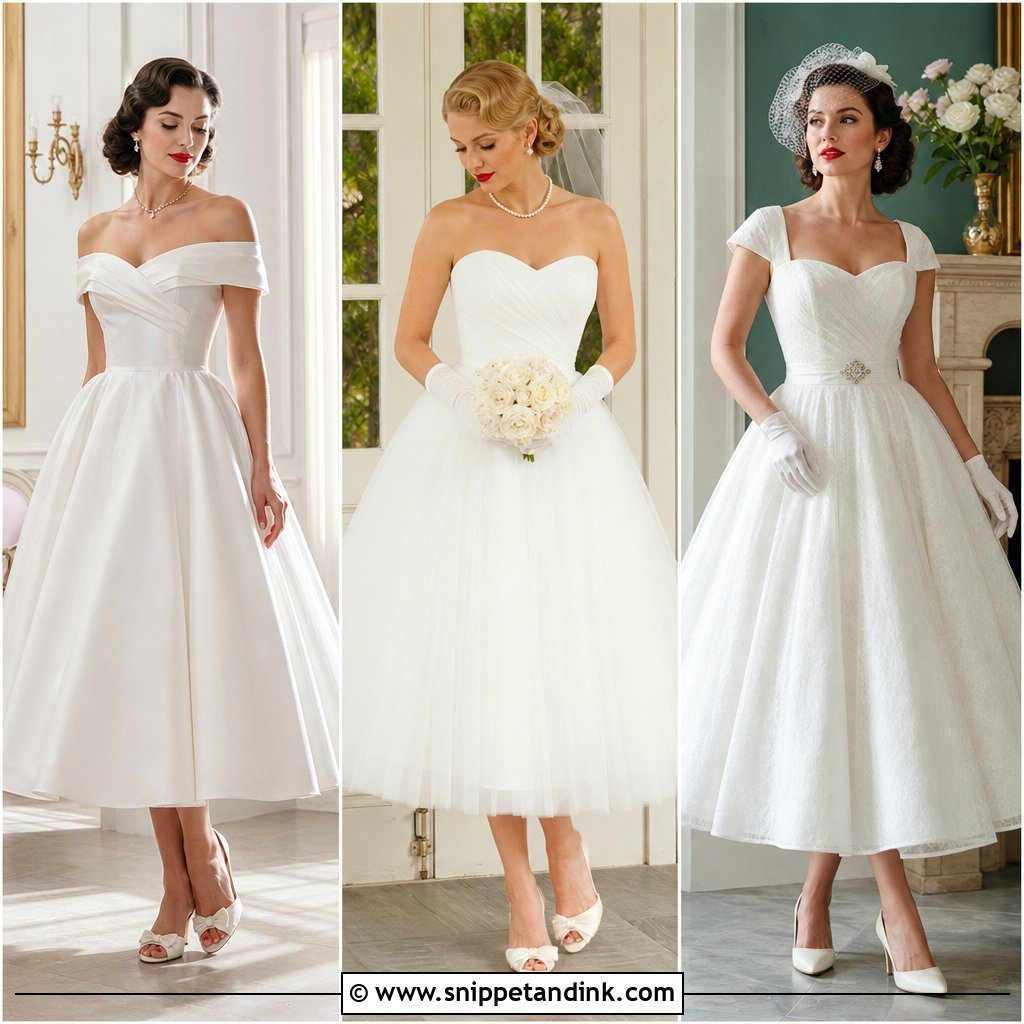
7. 80s Tea Length Wedding Dress
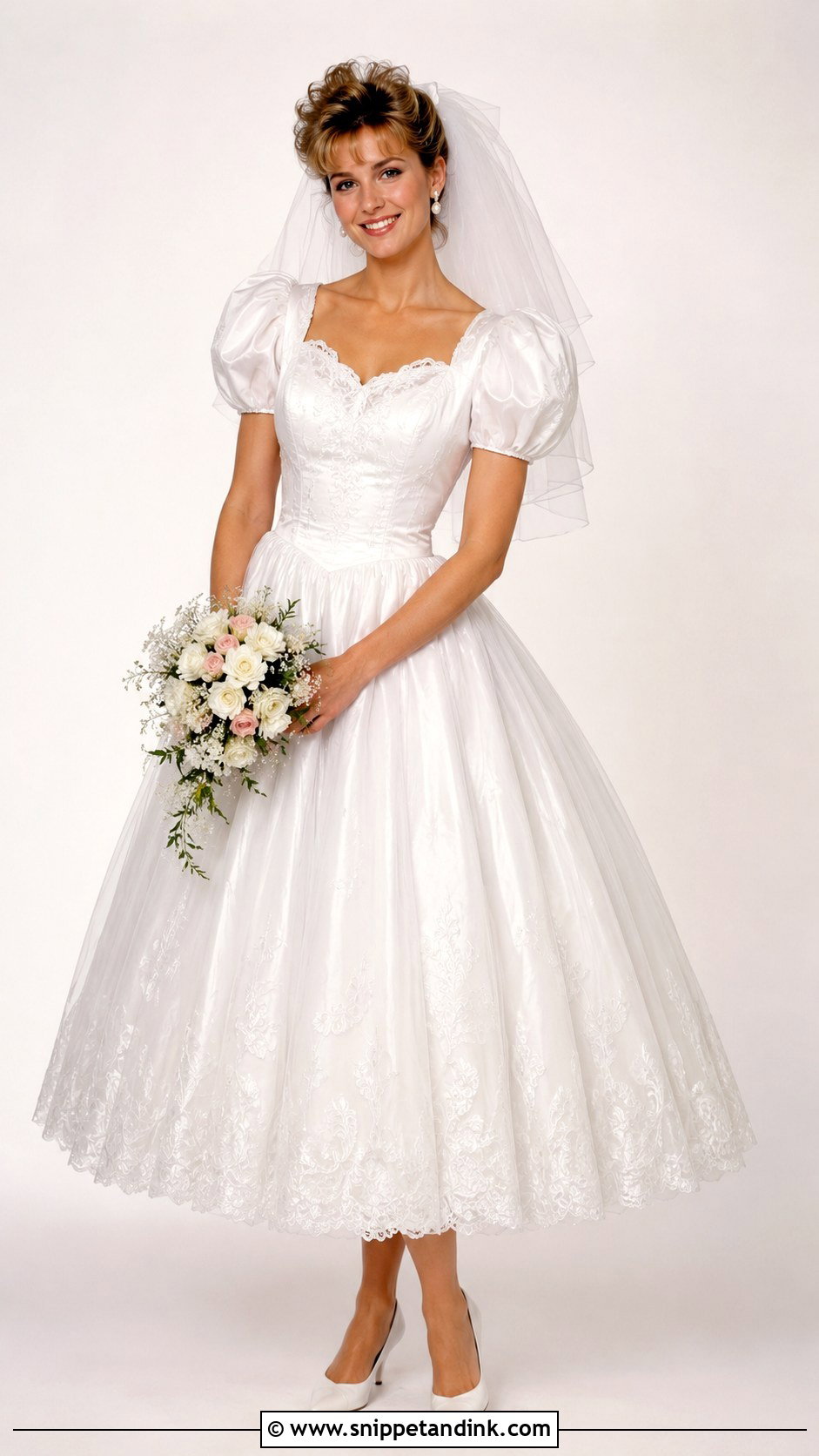
Tea length is the lightest way into the decade, with the hem landing somewhere between knee and ankle. Hem length is the whole decision: hold it at mid-calf and it can cut the leg at its widest point, so I pin it at a few heights in the mirror before anyone sews. Pointed-toe pumps lengthen the line, and because the shoes are on show, satin or subtle beading earns its place. Pearl earrings and a short veil or bow headpiece keep it playful. A small bouquet suits courthouse ceremonies, daytime receptions and relaxed parties where a train would just get stepped on.
8. 80s Off Shoulder Wedding Dress
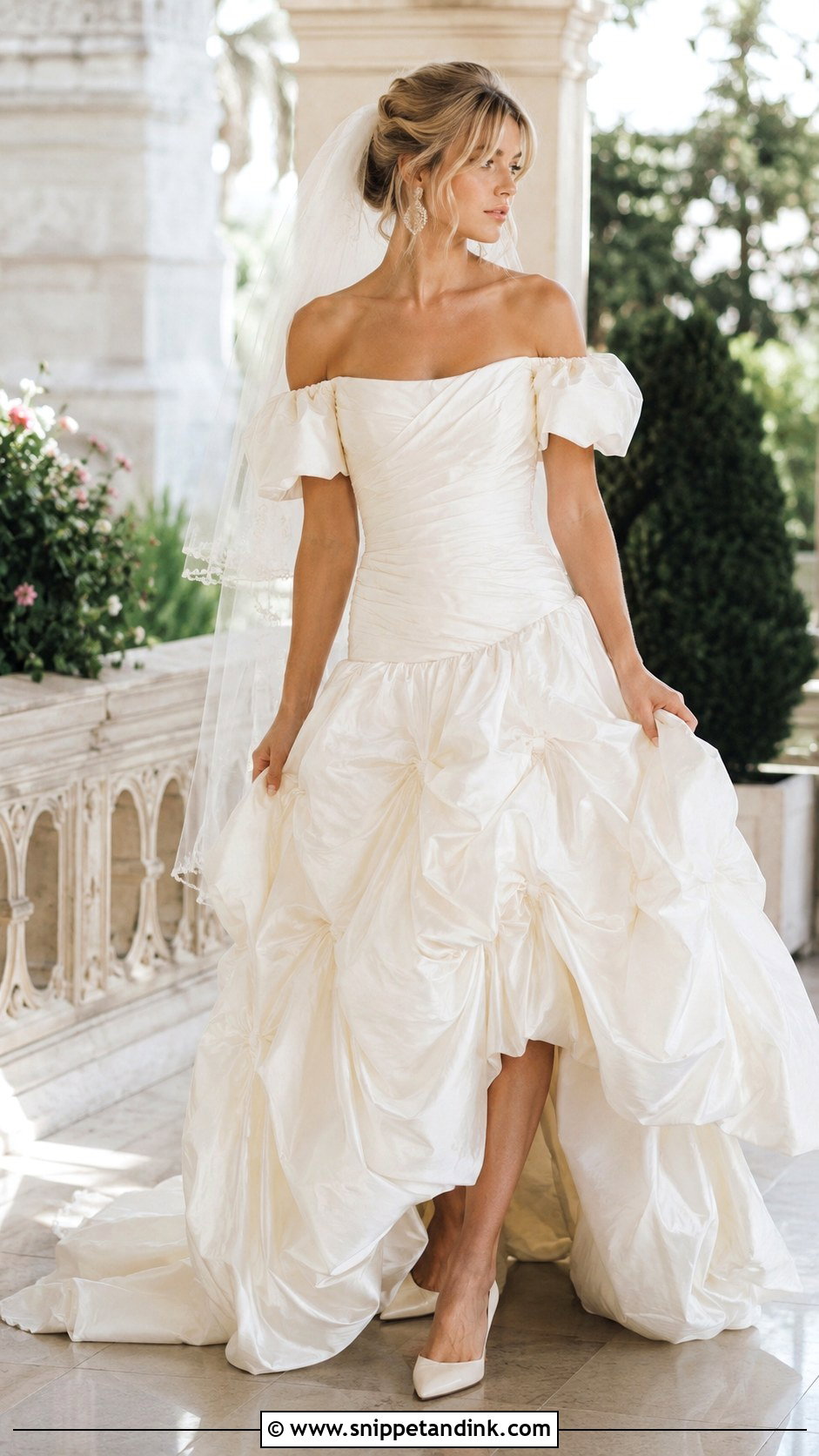
Off-shoulder puffed sleeves put the focus on the collarbone, which is why I’d keep the neck bare and choose delicate earrings with a slim bracelet. The practical issue is arm movement: true off-shoulder sleeves stop you raising your arms much above chest height, so hugging, throwing a bouquet and dancing all need a test at the fitting. A smooth updo or half-up style keeps the shoulder line visible. White or ivory heels and a veil starting behind the crown finish it. Organza or taffeta gives the skirt the swing this neckline wants.
9. 80s Taffeta Wedding Dress
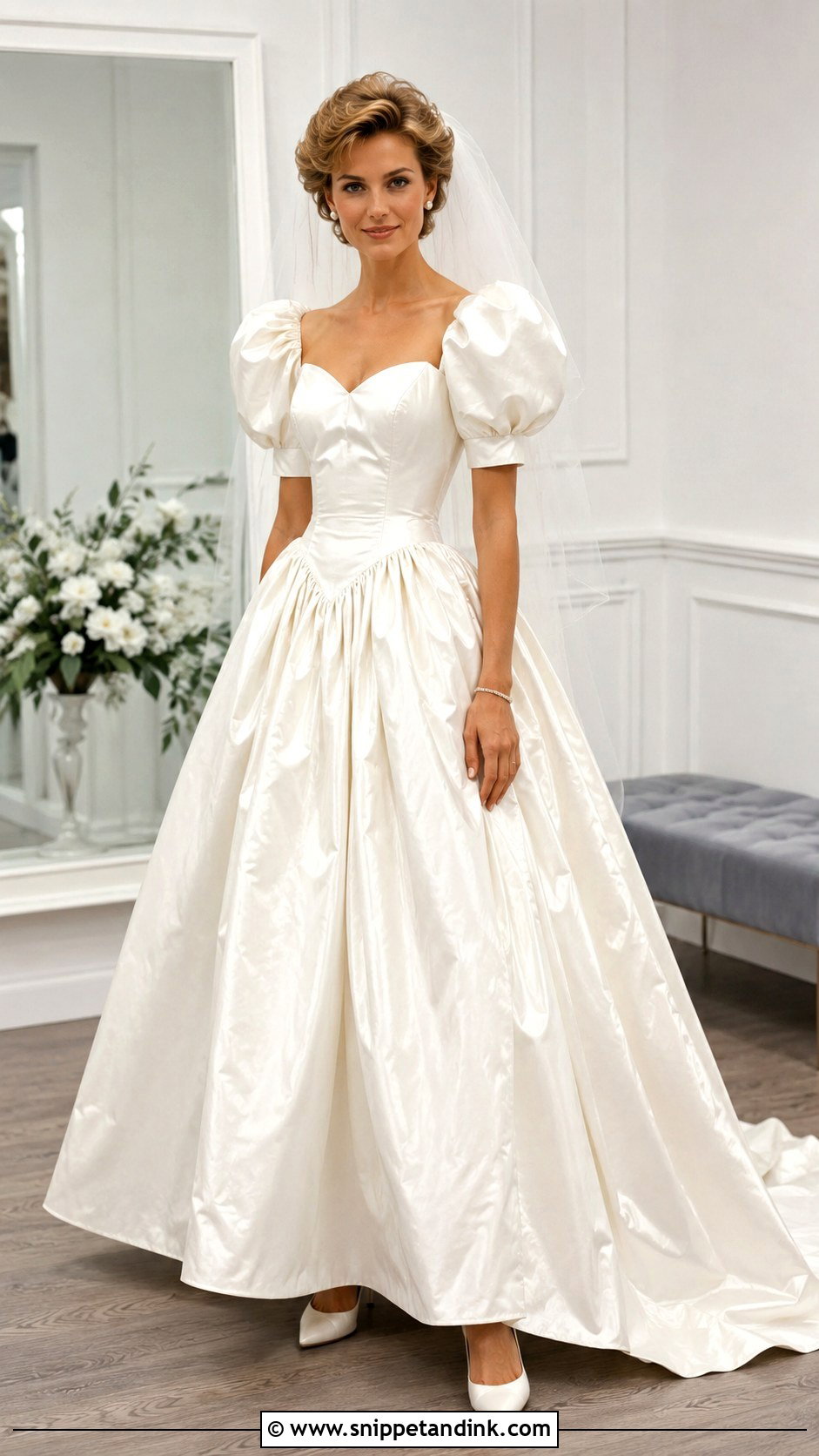
Taffeta was made for this decade because it holds a shape on its own. A taffeta gown with puff sleeves, a gathered skirt and a structured bodice gives that crisp vintage outline. Two things to know: it rustles when you walk, which some brides love and some find distracting during vows, and it creases sharply wherever it is crushed, so a garment steamer at the venue is not optional. With its natural sheen, keep accessories plain: pearl studs, satin pumps, a narrow bracelet and a veil with a simple edge.
10. 80s Beaded Wedding Dress
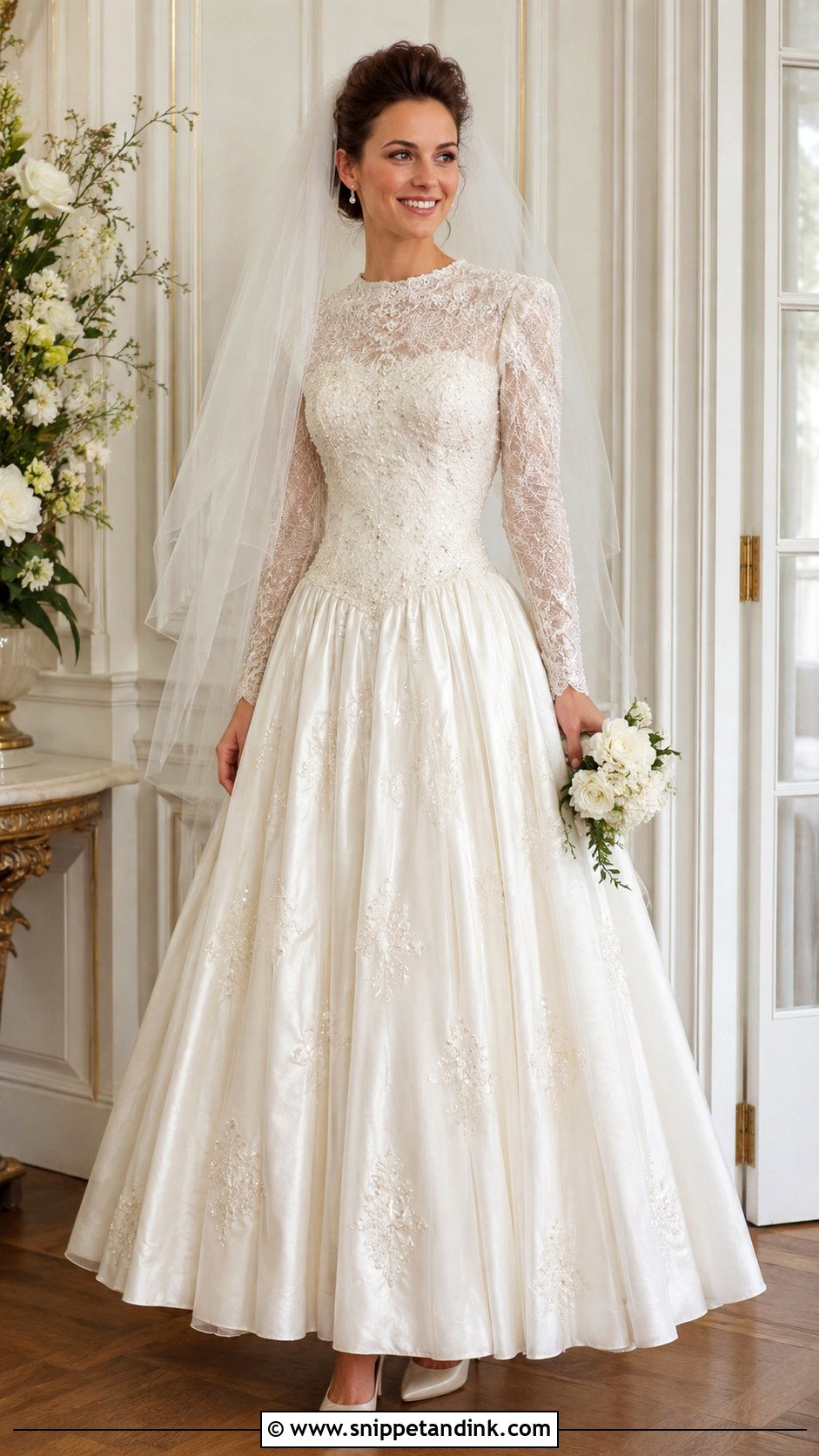
Beading on an 80s gown tends to be pearls, sequins and embroidered appliqués across the bodice, sleeves or hem. Before buying, I turn the bodice inside out and check how the beads are attached; long runs held on a single chain stitch can unravel when one bead snags on a lace sleeve or a guest’s bracelet. Because the dress already catches the light, the rest should be quiet: ivory heels, small pearl earrings and a plain veil. Smooth hair stops the whole look getting busy. Let the beadwork lead and make every other piece support it.
11. 80s Bow Back Wedding Dress
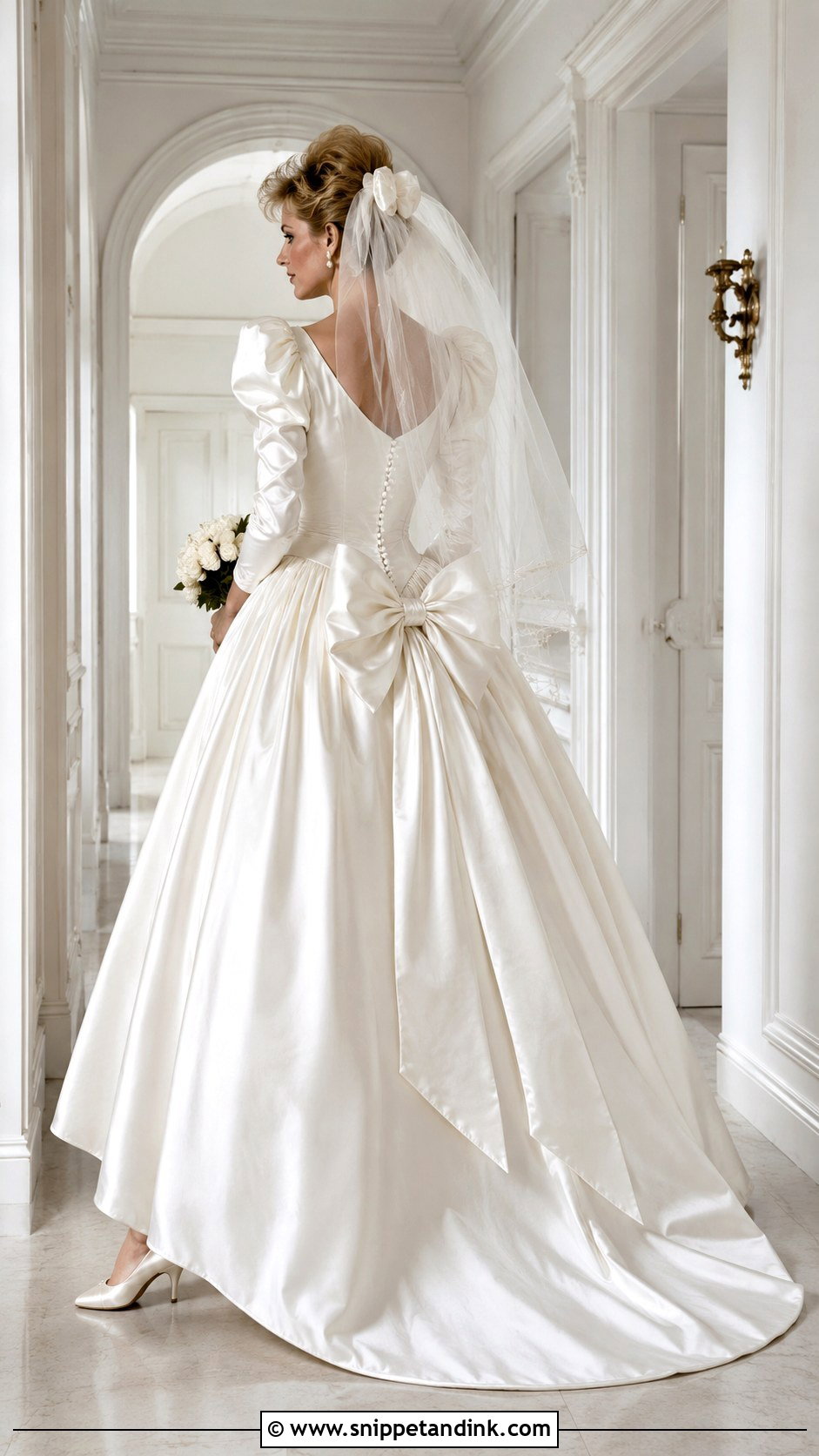
A bow at the back gives the gown a second front, which matters more than people think since guests spend the ceremony looking at it. The bow may sit at the waist, the bustle point or the lower back, usually above a full skirt and train. I check two things at a fitting: that a long veil doesn’t flatten the bow, and that the bow survives the bustle being lifted. A sheer fingertip veil, or one pinned above the hairstyle, solves the first. Pearl earrings, a thin bracelet and closed-toe pumps are all you need. Walking shots and exits are where this dress pays off.
12. 80s Cathedral Train Wedding Dress
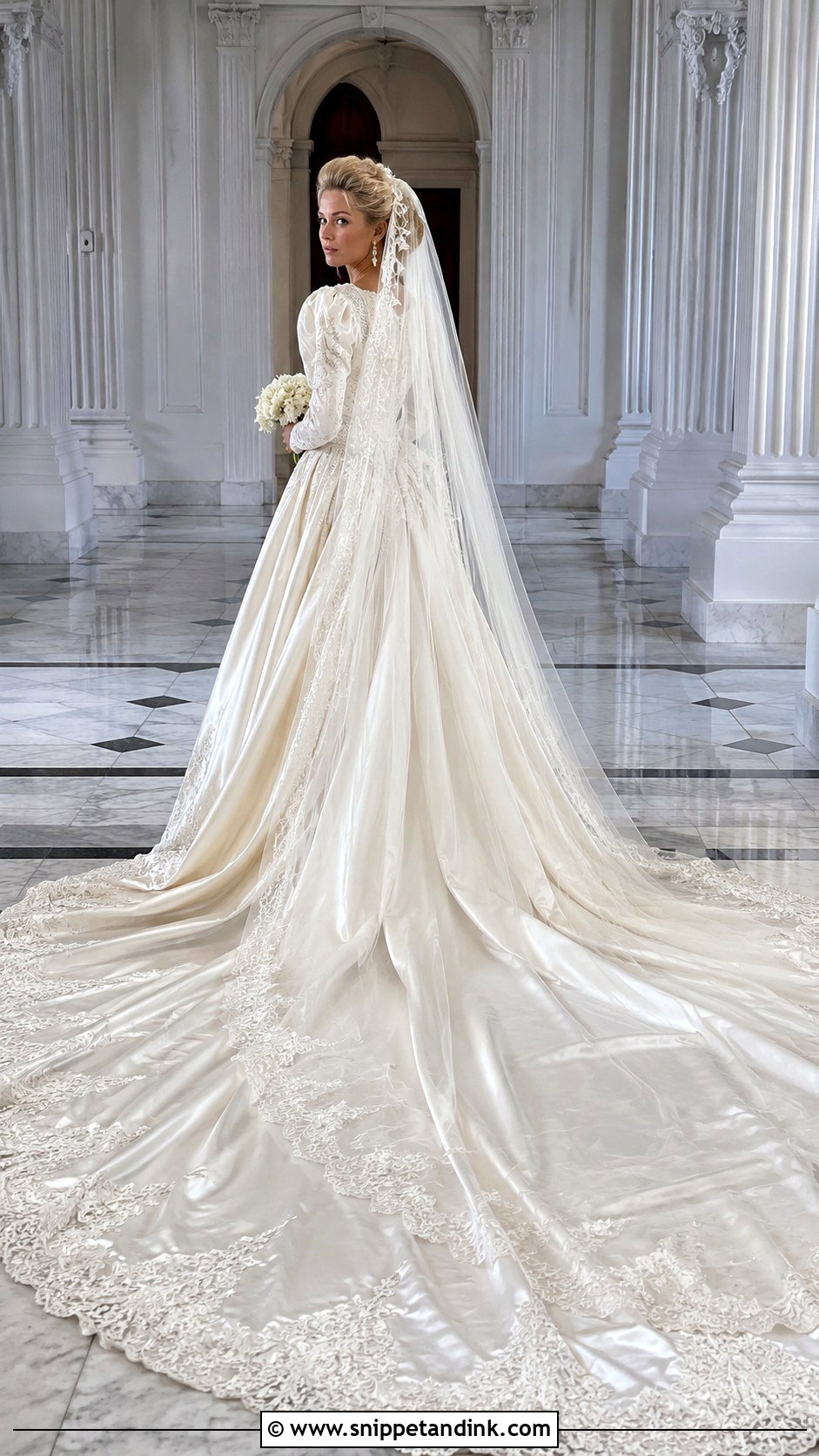
With a cathedral train, the train is the dress, whatever the bodice is doing. It needs a long veil, pearl earrings and low heels you can walk confidently in, because you will be pulling real weight behind you. Ask about the bustle at the first fitting, not the last: a heavy satin train may need several hook points or a French bustle to stay up through dancing, and someone in your party has to learn how to fasten it. Save this one for a long aisle where it can spread out, and keep the bouquet smaller so the proportions hold.
13. 80s Short Sleeve Wedding Dress
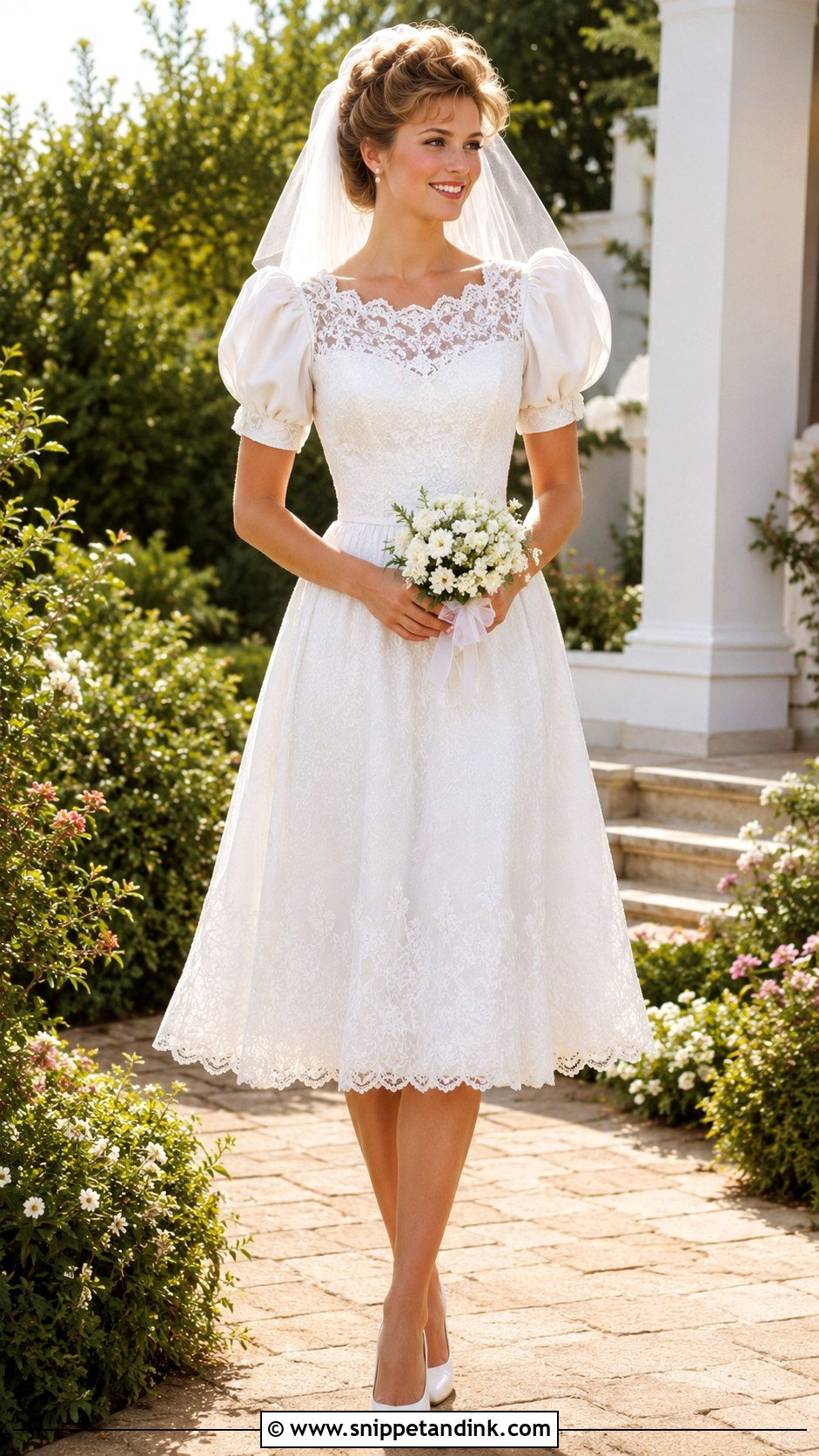
Short puffed sleeves are the easiest 80s detail to live in. With a lace bodice and a full or A-line skirt, the shape still looks of its era but you can move your arms, eat and hug without thinking about it. Satin pumps, pearl studs and a short veil or floral comb suit it. This is the one I suggest most for warm weather, since lace bodices can still get hot under a full sleeve. If the dress has lace trim, don’t add more texture with accessories. White flowers and pale greenery complete it.
14. 80s Long Sleeve Wedding Dress
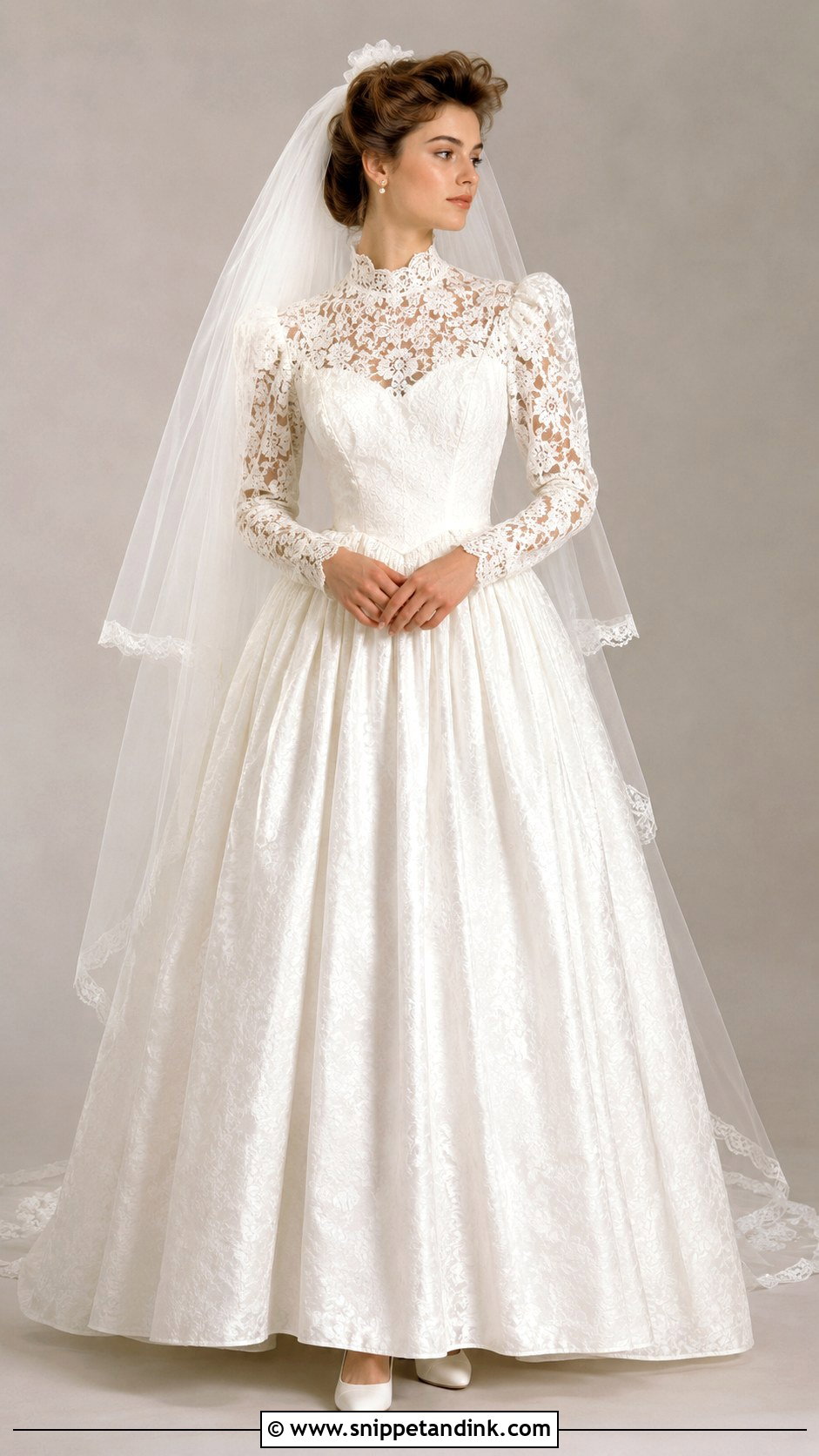
Long sleeves give coverage with plenty of detail, whether in lace, satin, sheer organza or a puffed shoulder with a fitted wrist. The detail I check is the cuff: a fitted wrist with a row of covered buttons looks wonderful but needs to be fastened by someone else, and it needs enough ease that you can lift a fork. Pearl earrings, a smooth veil and white closed-toe heels work. Skip bracelets so the cuffs stay visible. A soft updo keeps it neat, and cooler months or formal church ceremonies suit it best.

15. 80s Sweetheart Neckline Wedding Dress
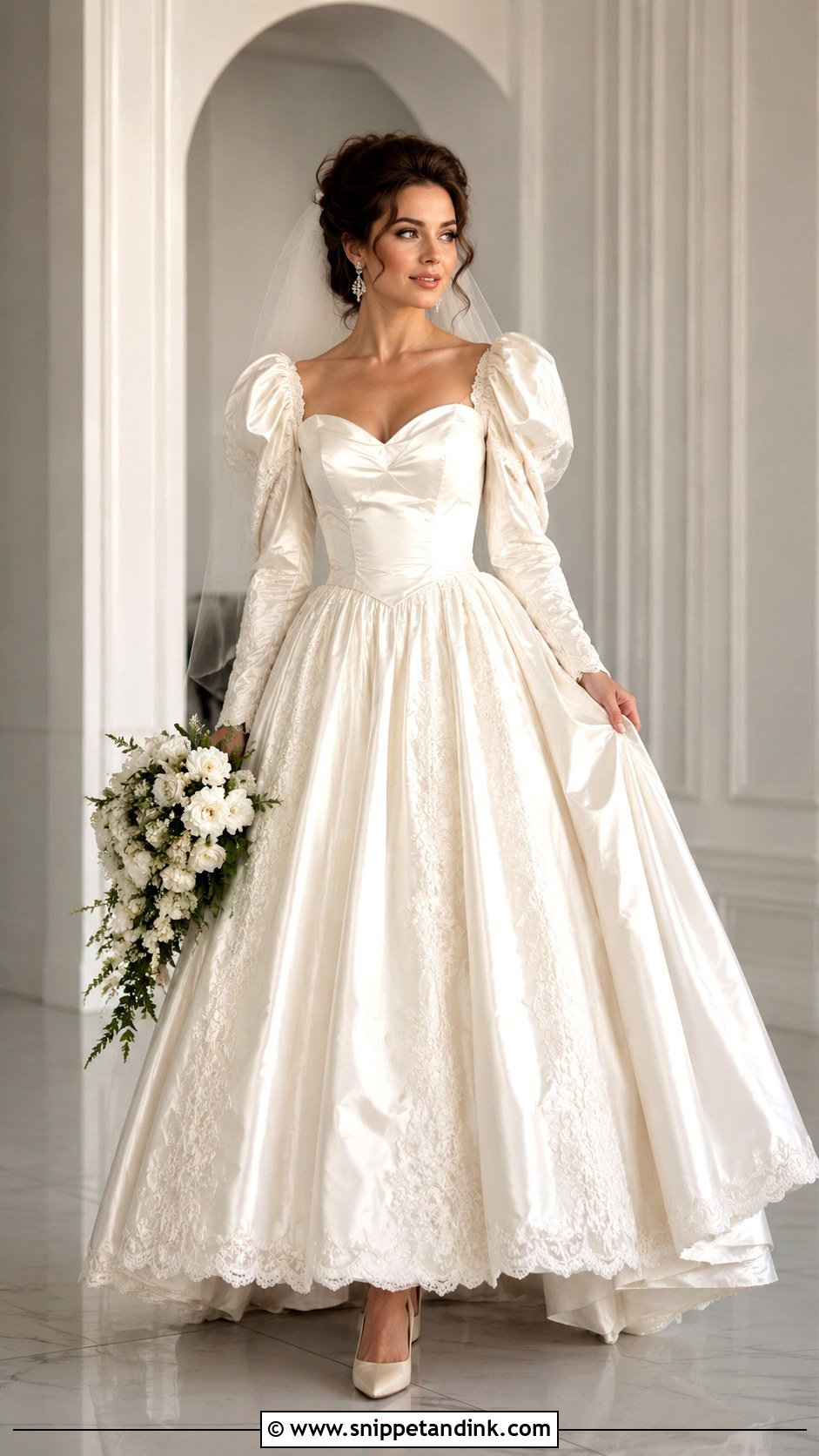
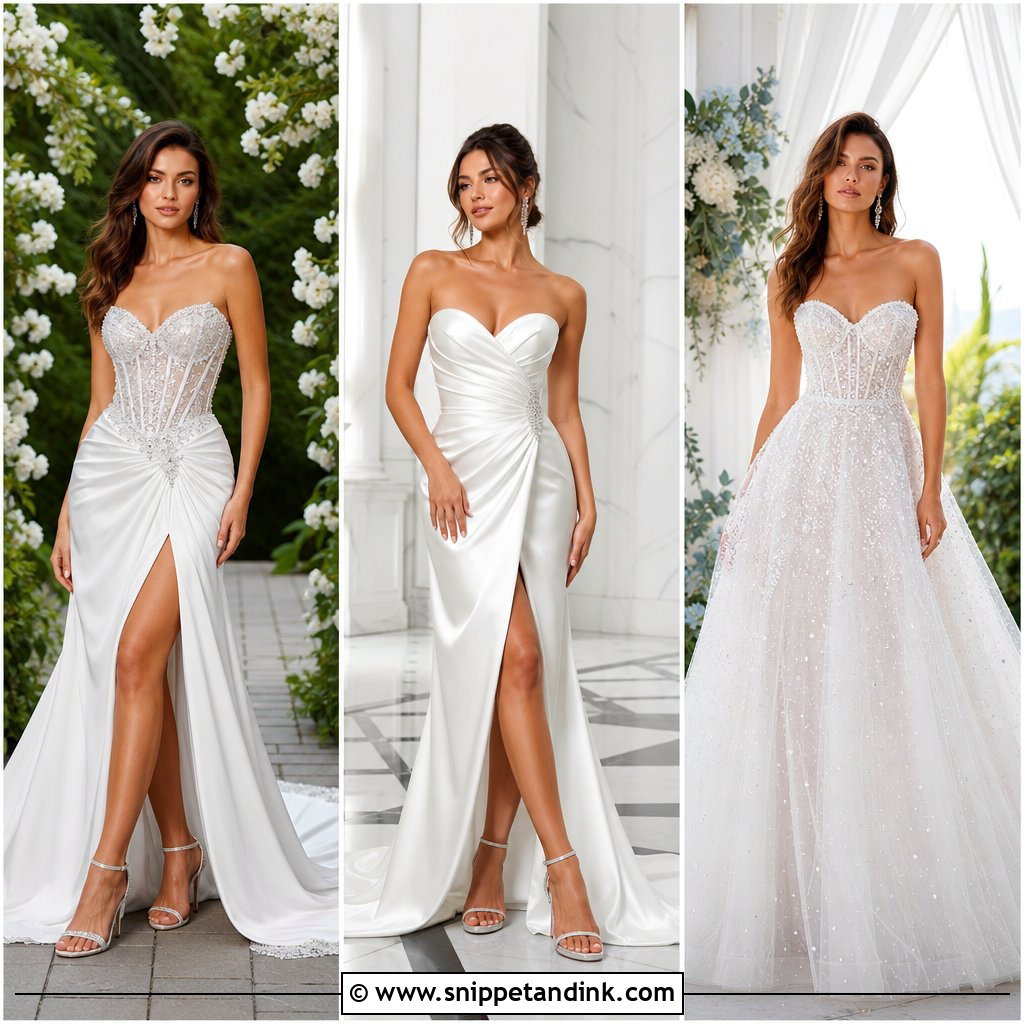
A sweetheart neckline softens the decade’s heavier elements and appears with puff sleeves, lace appliqués, satin bodices and full skirts. Whether it takes a necklace depends on the bodice: a plain one can carry a short strand of pearls, a heavily appliquéd one only wants drop earrings. Fit is everything with this cut, because a sweetheart that gapes when you lean forward will show up in every candid. A veil with a little volume and a soft updo, ivory pumps and a rounded bouquet keep it together. It sits comfortably between dramatic and feminine.
16. 80s Basque Waist Wedding Dress
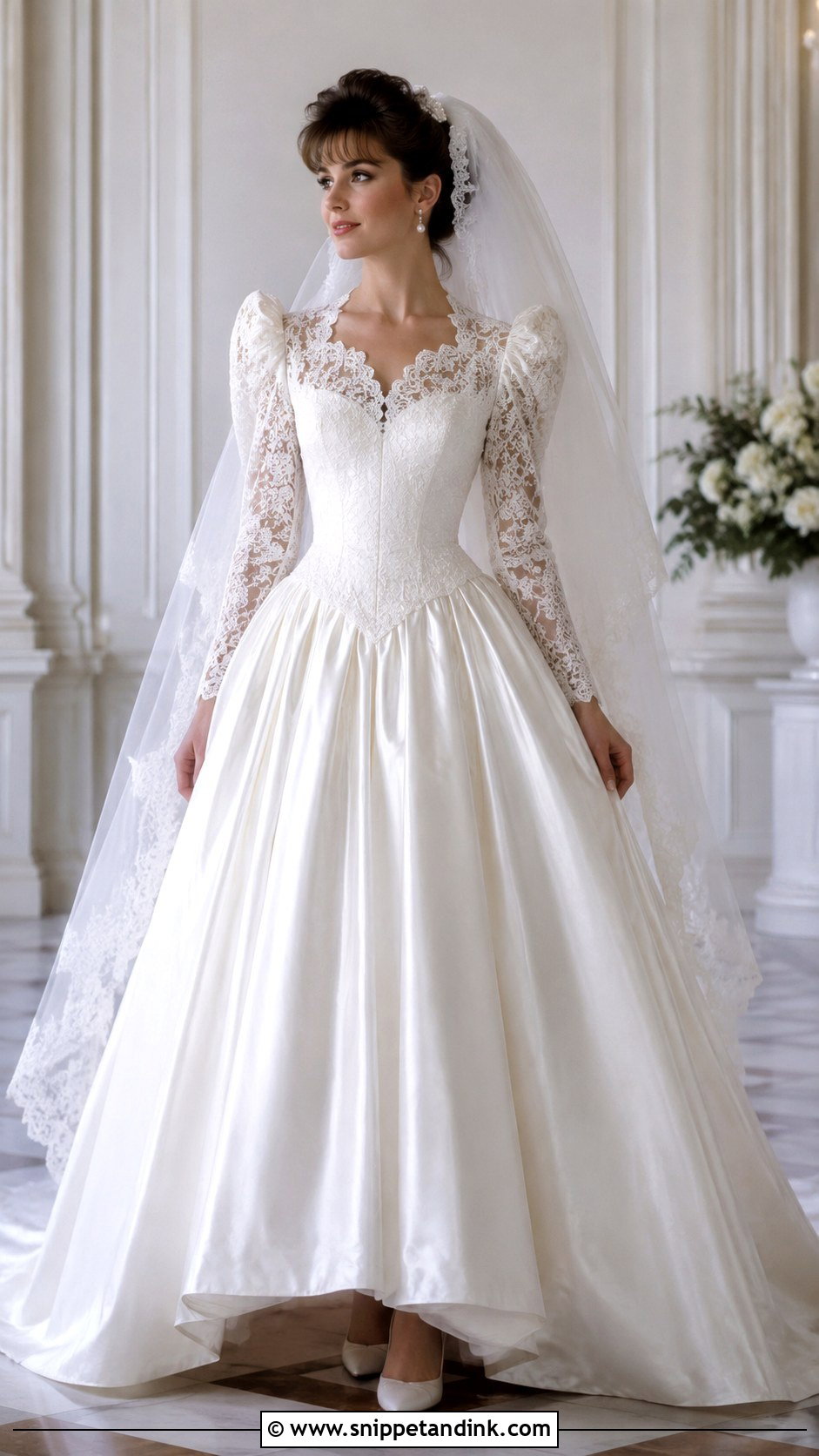
A basque waist 80s wedding dress has a bodice that dips into a point below the natural waist before the skirt flares. That point is a long, slimming vertical line, and it is very kind to most figures because it lengthens the torso and puts volume below. It does need boning to stay crisp, so check that the point doesn’t bend when you sit. Satin, lace or beaded appliqués all suit it. Simple heels, pearl earrings and a veil starting low keep the bodice on show, and a structured bouquet echoes the shape without hiding it.
17. 80s Drop Waist Wedding Dress
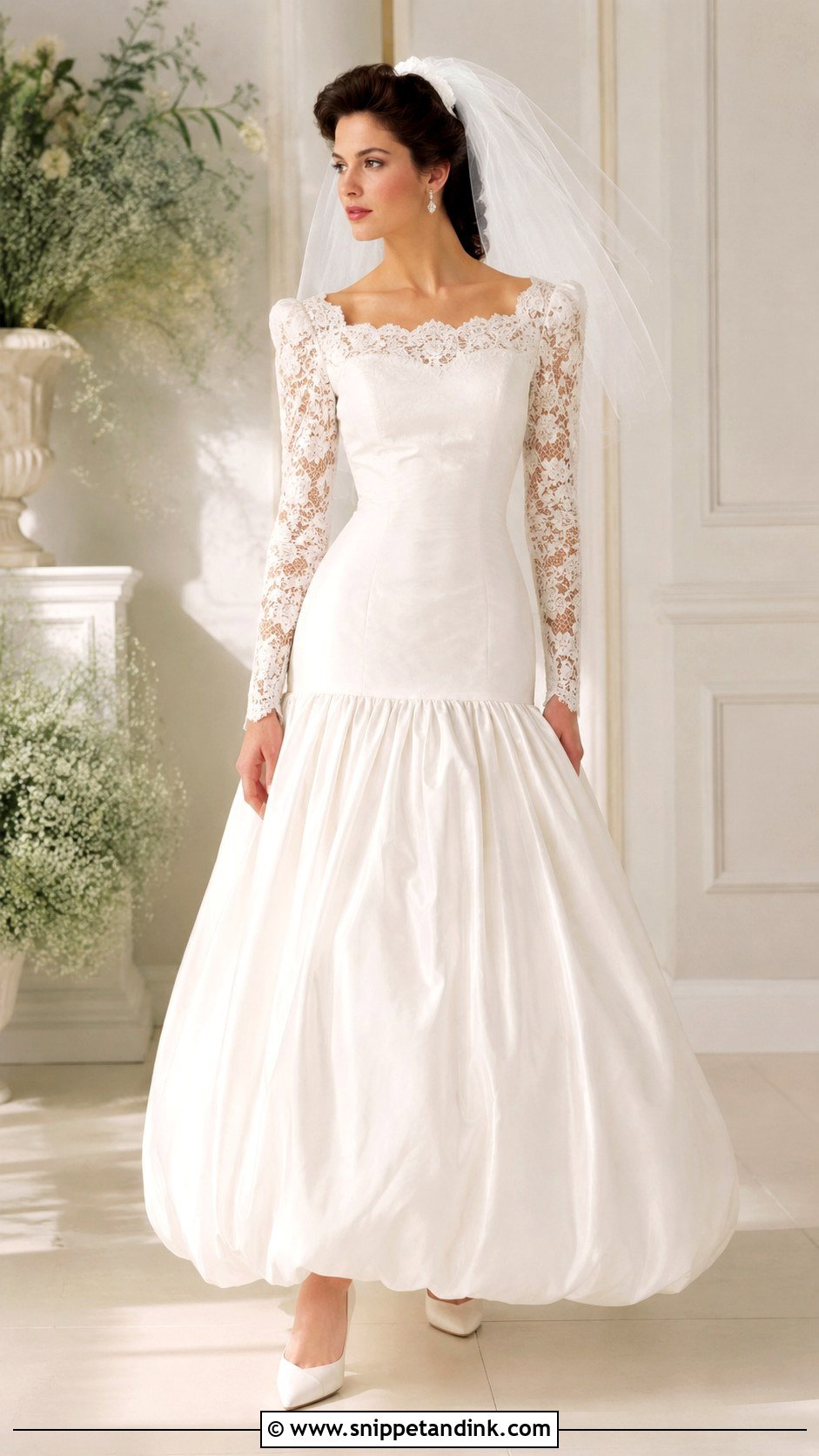
A drop waist sits the bodice below the natural waist before the skirt opens out, which gives a long, sleek top half. I’d be honest that it suits a straighter or longer torso best; on a short torso with a defined waist it can make the legs look shorter. Satin, lace sleeves or a gathered skirt all appear on these. Pointed-toe pumps, delicate earrings and a simple veil work. Don’t add a wide belt or sash unless it came with the dress, because the seam line already is the detail. A long-stem bouquet balances the proportions.
18. 80s Ruffle Wedding Dress
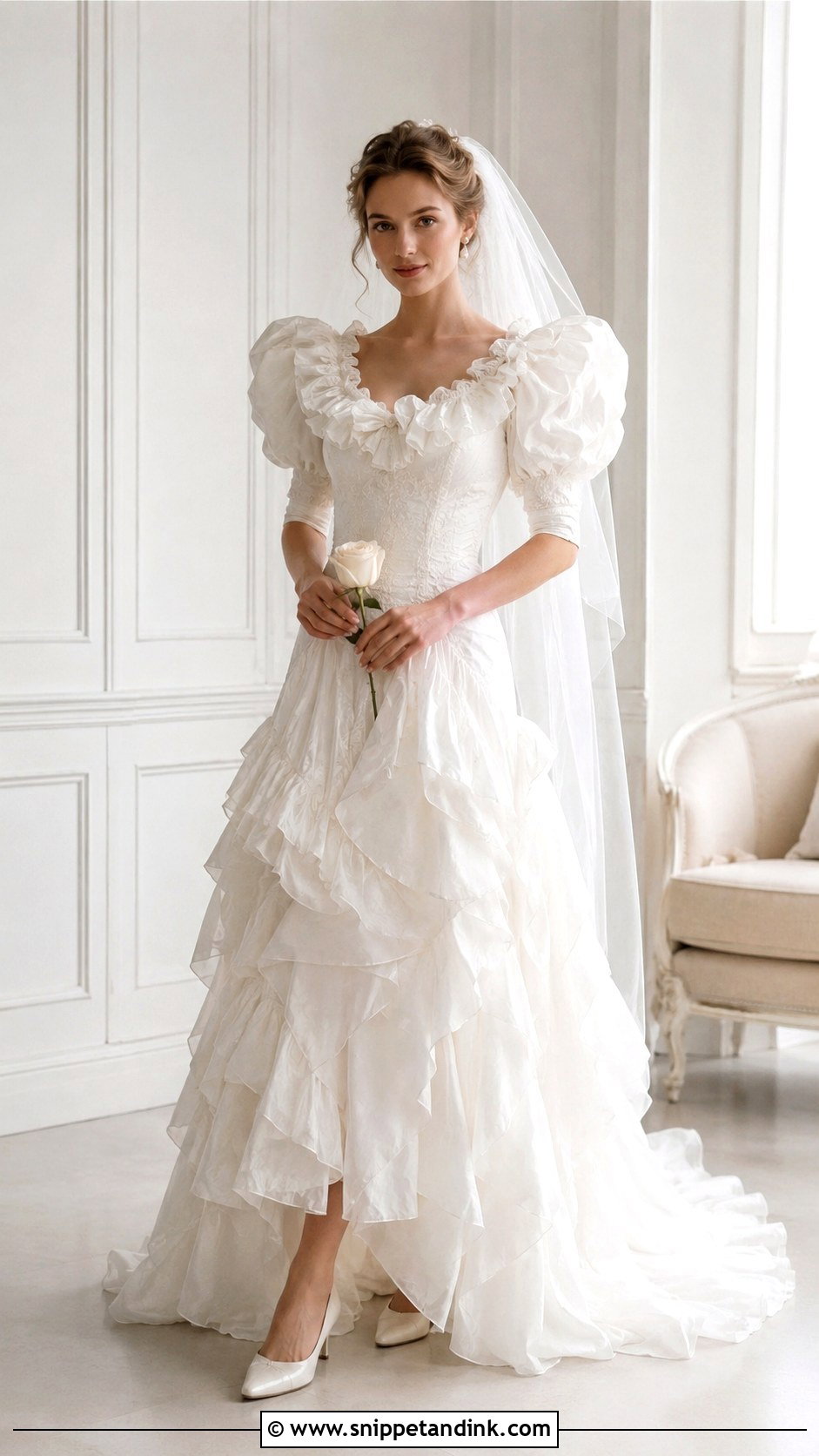
Ruffles bring movement and texture, and they can sit at the neckline, sleeves, hem, train or through the skirt layers. I’d pick one area for ruffles and keep the rest calm, otherwise the gown loses its outline in photos. Simple pumps, small earrings and a clean veil are enough. With a ruffled high neck, wear your hair up so the face stays open. Choose a smaller bouquet because the dress has volume already. Ruffles also crush easily in a car, so travel with the skirt laid out rather than sat on.
19. 80s Organza Wedding Dress
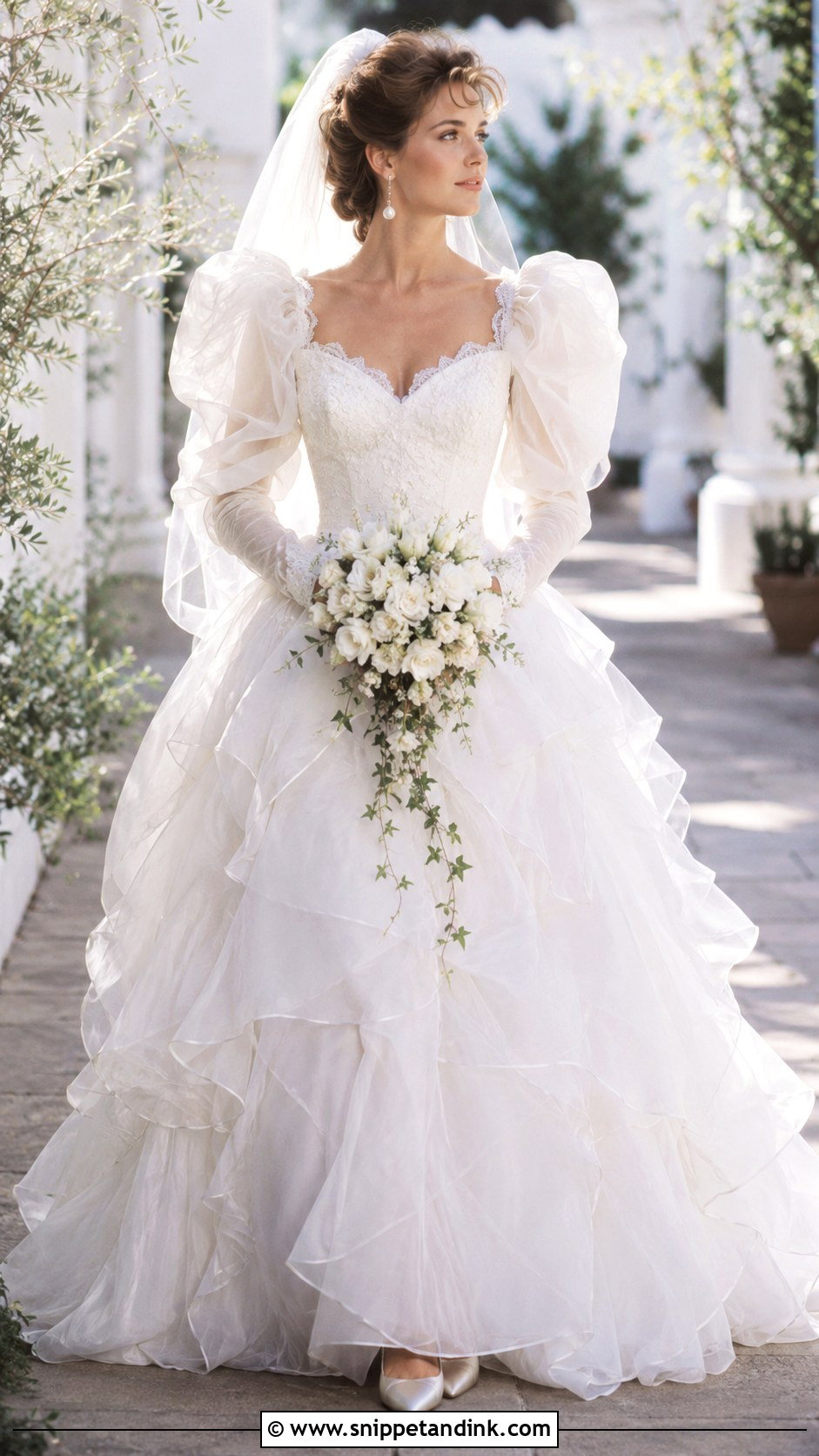
Organza lets an 80s silhouette keep its volume while weighing very little. Puff sleeves, a layered skirt and a fitted bodice in organza look airy rather than heavy. The trade-off is that it marks easily: a damp hand or a lipstick smudge shows on it far more than on satin. Sheer veil layers, pearl earrings and satin or mesh shoes suit it. It is at its best in bright daytime light, which it catches well. Loose waves, a half-up style or a relaxed bun keep the hair soft, with a small bouquet of white flowers and pale greenery.

20. 80s Illusion Neckline Wedding Dress
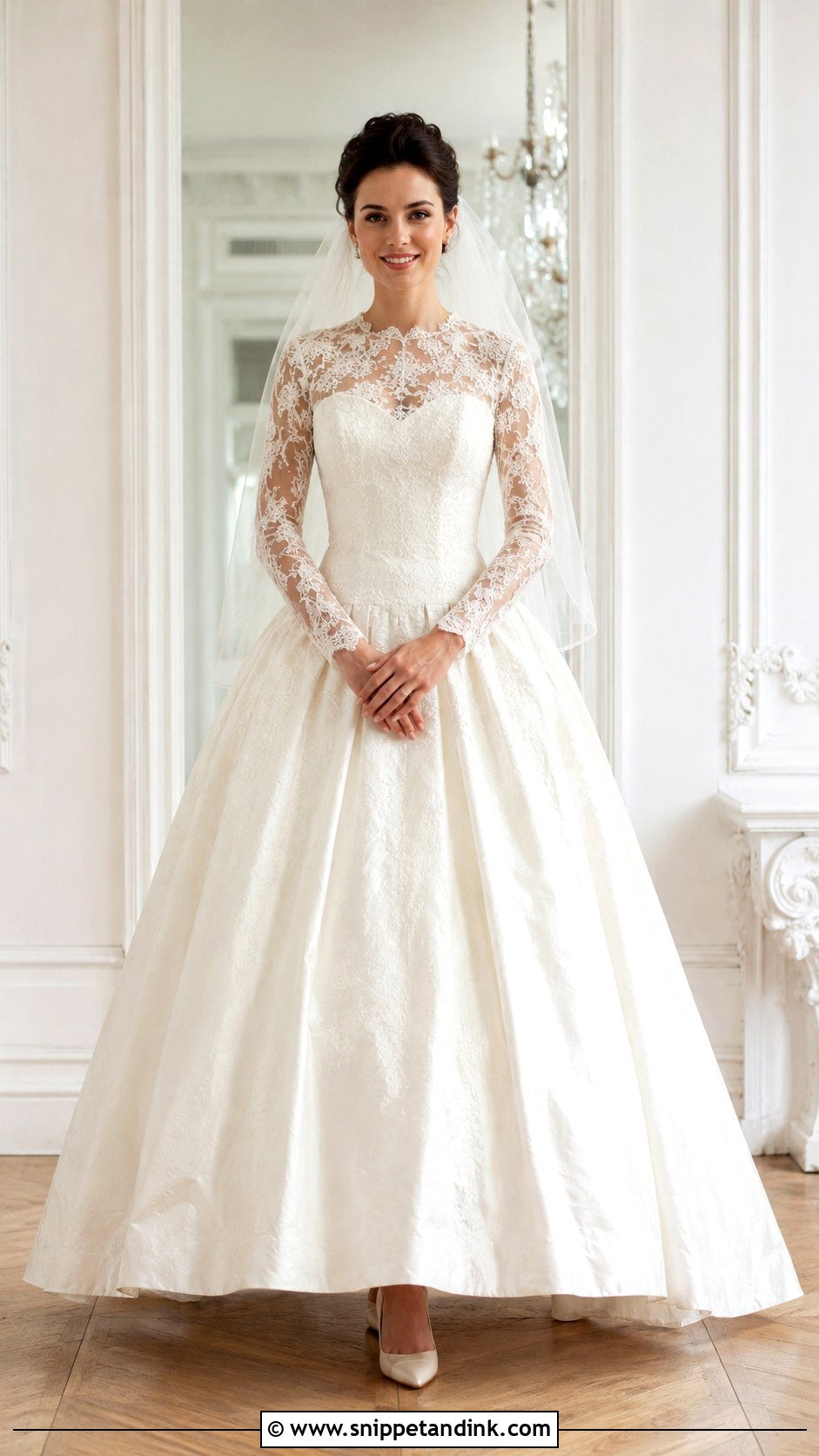
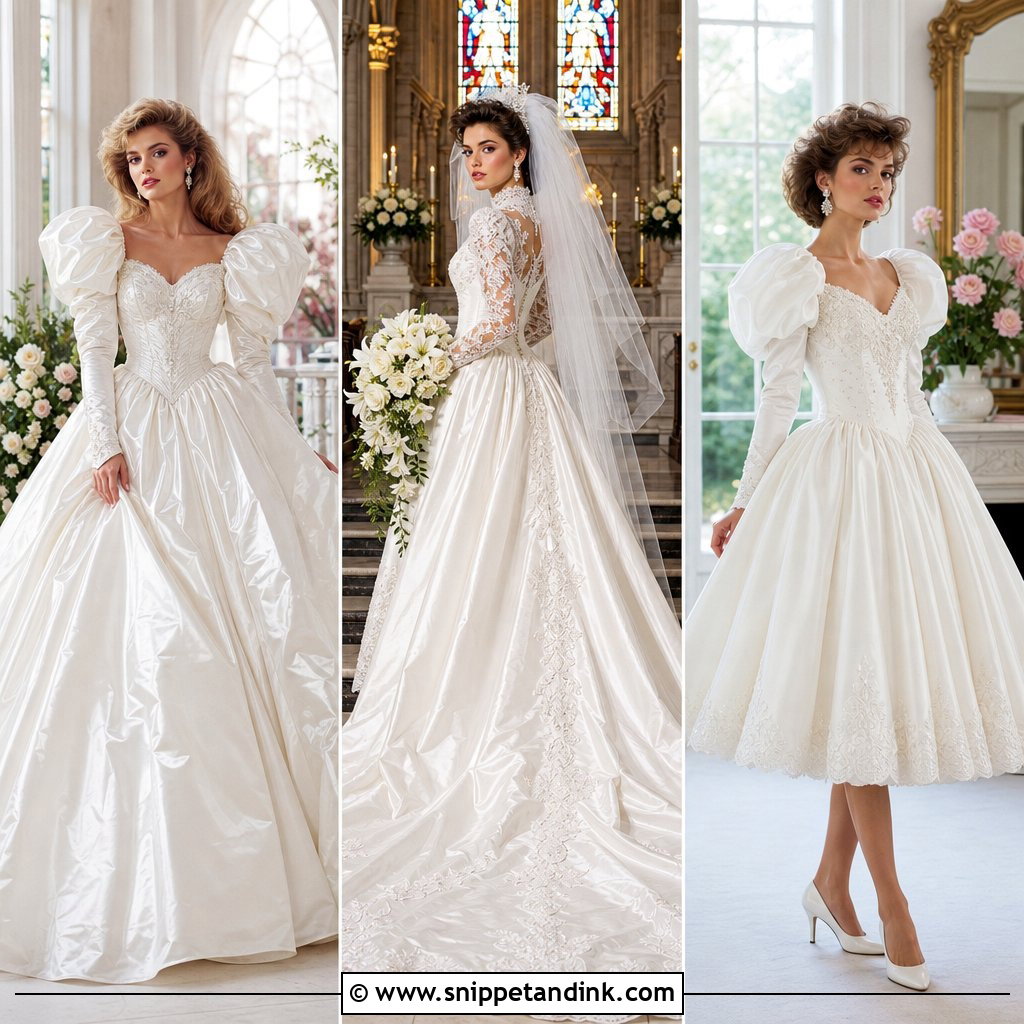
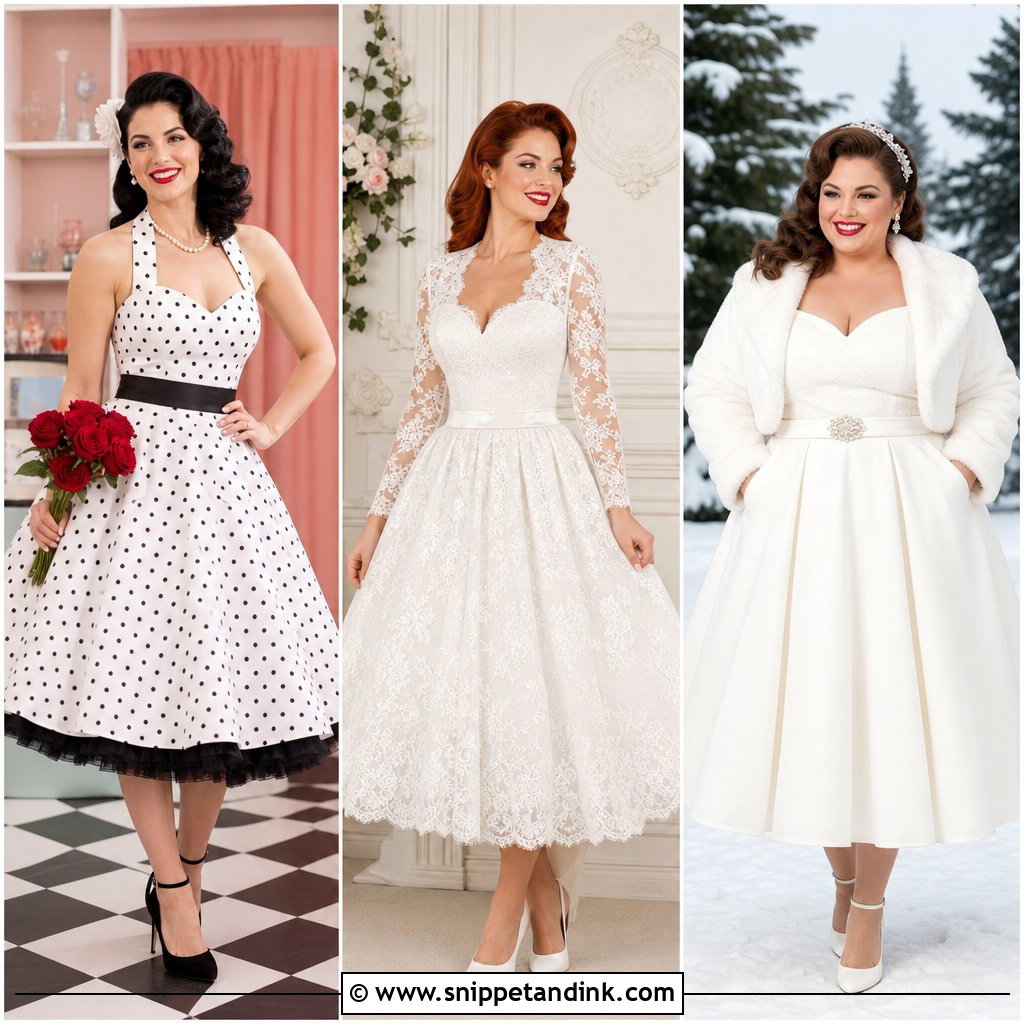
An illusion neckline gives coverage without weight around the face and shoulders, and the sheer panel may carry lace, pearls, embroidery or a high collar. I match the mesh to the skin at the fitting, holding the fabric against the chest in daylight, because a mismatched tone shows clearly in close-ups. Small earrings, a smooth updo and a plain veil let the detail show. Ivory pumps and a soft bouquet finish it. It works best when the sheer fabric on the neckline matches the sleeves.
21. 80s Pearl Wedding Dress
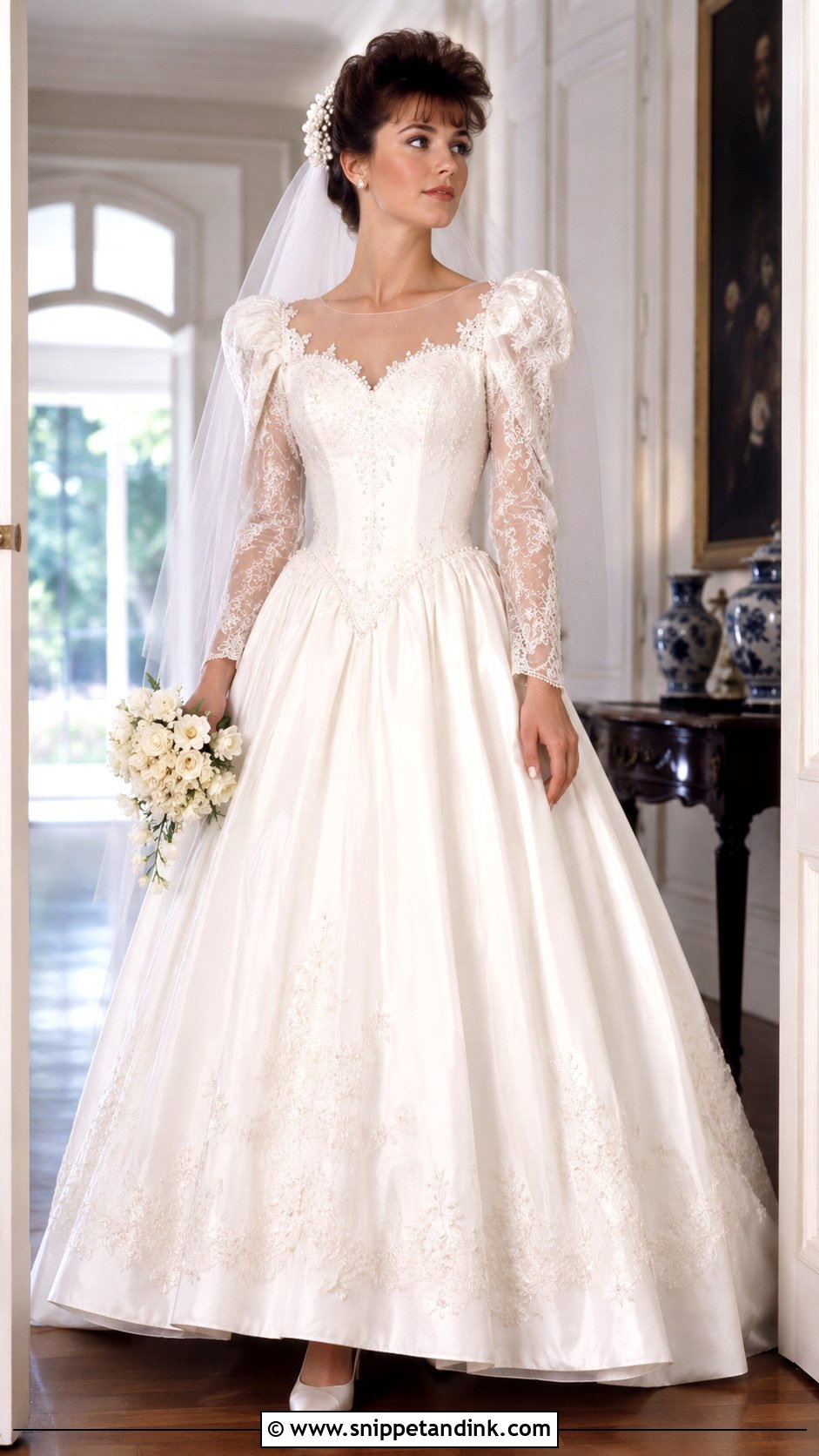
Pearls can sit on the bodice, sleeves, neckline or worked into lace appliqués. When the dress carries that many, I tell brides to choose one pearl accessory rather than a matching set: pearl studs or a pearl comb or a small trimmed clutch, not all three. White satin shoes and a simple veil keep things refined, and a sleek bun or brushed waves suit the texture. Look closely at older pearl beading, since early plastic pearls can lose their coating and show a dull base. In close-up portraits, the detail is what people remember.
22. 80s Sheer Sleeve Wedding Dress
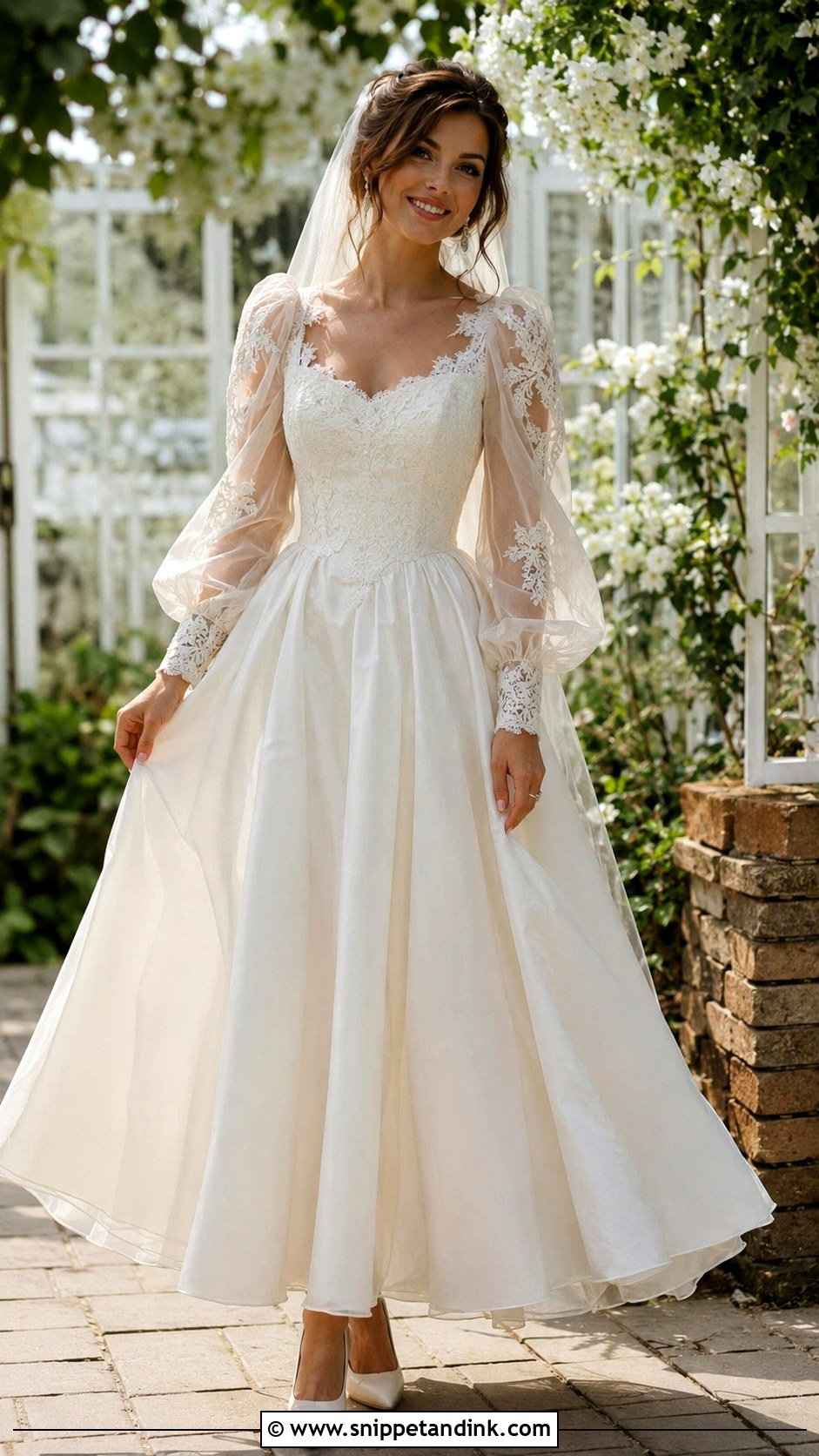
Sheer sleeves give you the puff without the weight of full satin. Look for organza or tulle sleeves with lace appliqués, fitted cuffs and a structured bodice. The sheer fabric lets the shape and the lace show at once, and it is noticeably cooler to wear than a lined sleeve. Simple earrings, a soft veil and plain pumps are all it needs. If the sleeves carry floral lace, let the bouquet repeat the same gentle mood. Styled plainly, this is the version that looks most current.
23. 80s Lace Bodice Wedding Dress
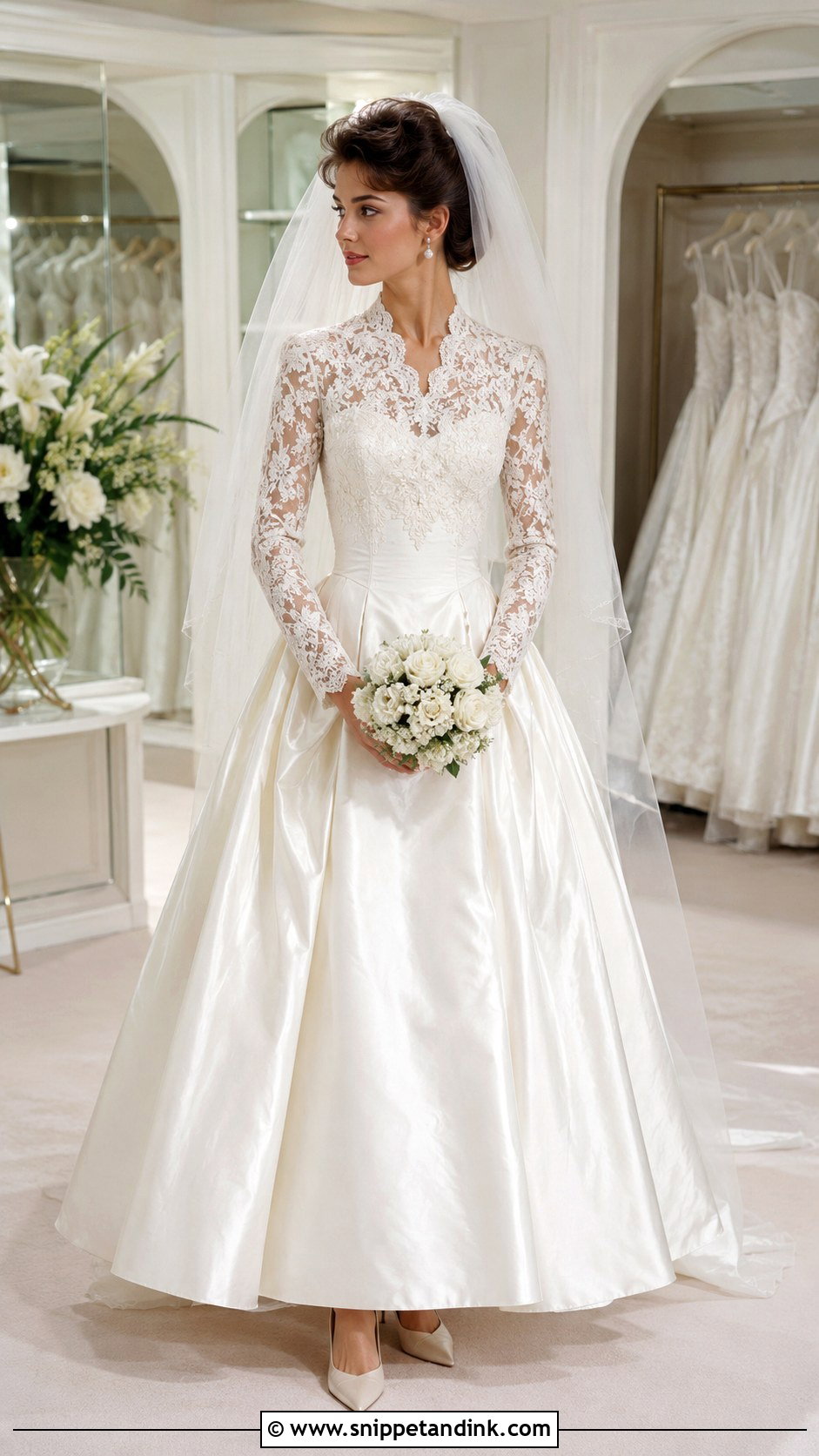
A lace bodice puts the detail up top and lets the skirt stay calm, which draws the eye toward the face. The bodice may have floral lace, pearl trim, a sweetheart neckline or a high collar, usually above a satin or tulle skirt. My one check is where the lace meets the skirt: a clumsy waist seam is very visible in this style, and a good dressmaker can hand-appliqué lace motifs over it. Classic pumps, a veil that doesn’t cover the lace and small jewellery suit it. A soft updo or half-up style finishes it.
24. 80s Tulle Skirt Wedding Dress
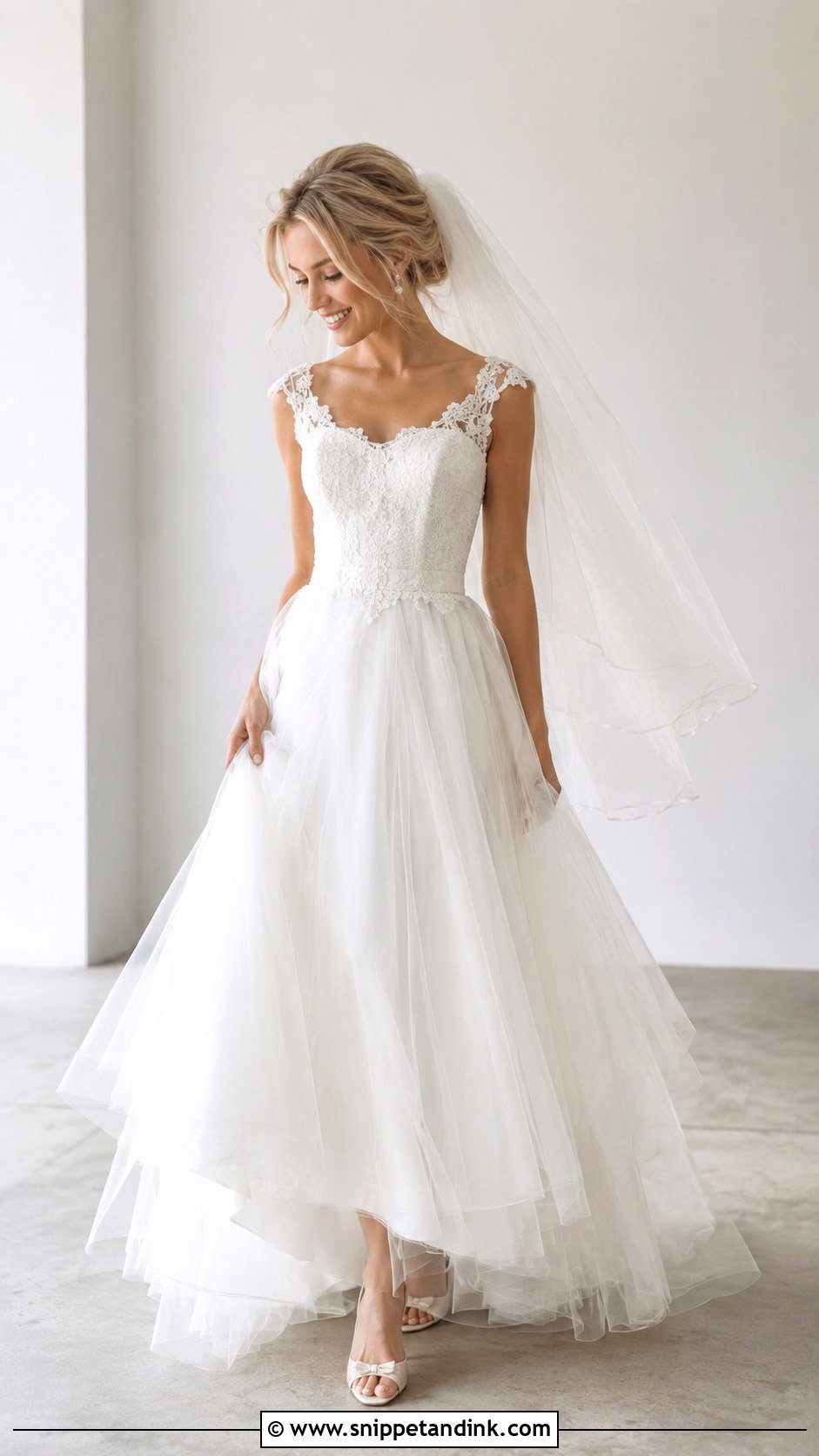
Tulle gives an 80s skirt volume that floats instead of standing, layered, gathered or lightly ruffled under a lace or satin bodice. If the skirt is very full, keep the top half cleaner so the overall shape doesn’t get bulky. Tulle snags on rough stone, bark and Velcro, so I warn brides about garden paths and photographer kit bags. Delicate heels, pearl earrings and a veil with similar airy movement suit it. A small bouquet keeps the proportions right. It moves well on camera, especially when you walk.



25. 80s Vintage Wedding Dress
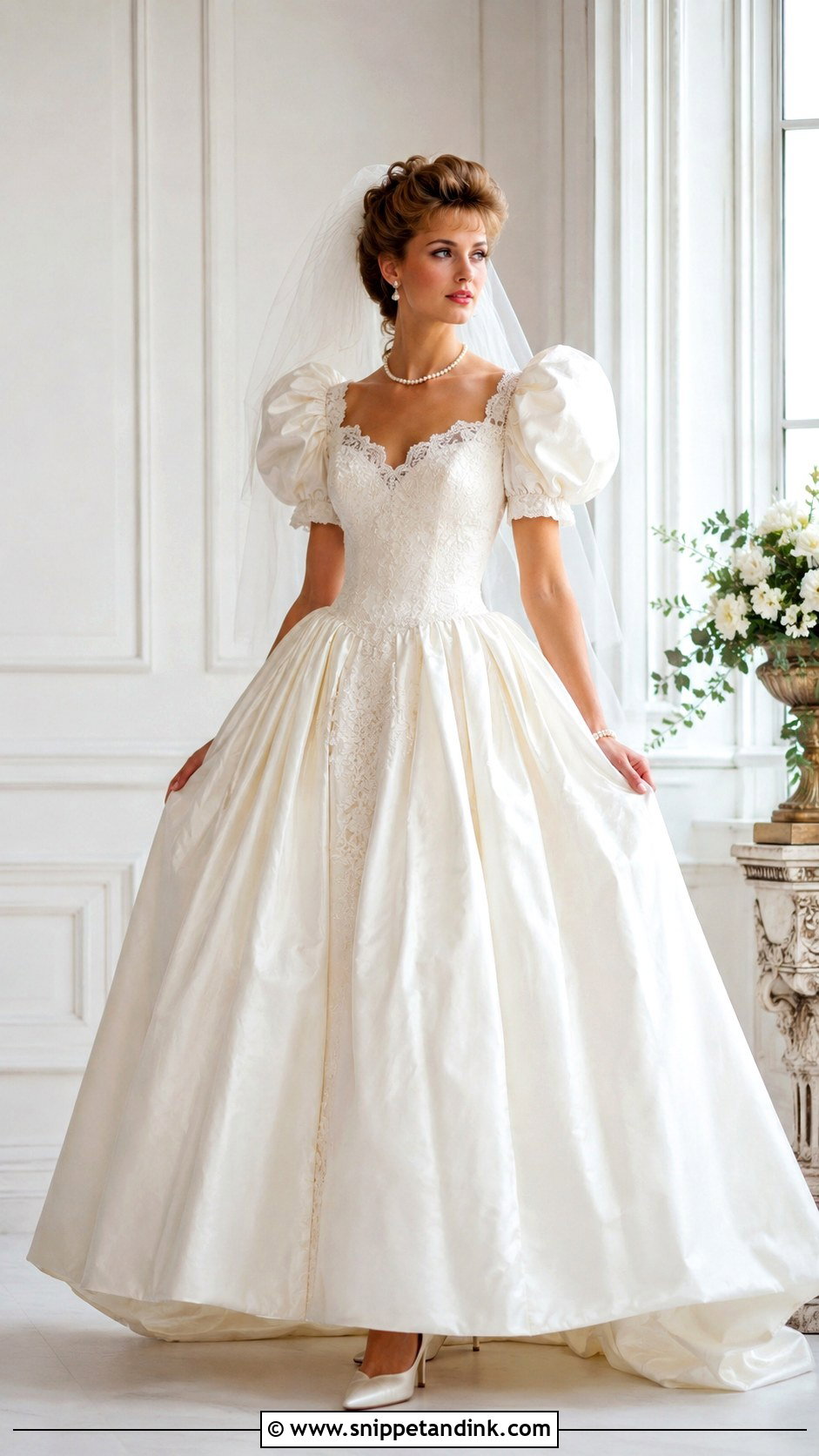
A genuine 1980s gown brings history you cannot buy new, and the first thing I do with one is ignore the size label, because sizing from that era runs very differently from today’s. Fit comes first: tailoring can make puff sleeves, lace bodices and full skirts look intentional. Many of these gowns also have removable shoulder pads that can be taken out to soften the line. Modern shoes, new pearl jewellery and a simple veil bridge the decades. Yellowing, missing buttons or fragile lace need a specialist cleaner or restorer, ideally months before the wedding.
How Big Sleeves and Stiff Skirts Behave Over a Long Day
These dresses look grand standing still. The day itself is mostly sitting, hugging, eating and getting in and out of cars, so I test each of those at the final fitting rather than just turning in front of the mirror.
Sleeves at the table
Puffed sleeves widen you by a hand’s width on each side. At a long reception table that means bumping your neighbours and dragging a cuff through the sauce. I ask the venue for a slightly wider gap at the top table, and I make sure the sleeve support can be gently pressed back into shape after it has been crushed.
Skirts in the car and the loo
A hoop or stiff petticoat needs the back seat of a larger car, ideally with the skirt gathered in front of you rather than under you. For the bathroom, a bridesmaid holding the skirt from the front works far better than trying alone, and a slip-style skirt-holder bag is cheap insurance with a big gown.
Steaming on the morning
Satin and taffeta both crease wherever they were folded. Hang the dress the night before, steam from the inside where you can, and keep the steamer moving so water spots don’t form. Pack a handheld one for the venue as well; the first crease after sitting through the ceremony is the one that shows in every reception photo.
One Loud Detail, Then Everything Else Quiet
The decade gave brides far more range than its reputation suggests. Puff sleeves, satin, lace, bows and big trains are all here, but so are softer and cleaner versions you can actually wear for a full day. You might lean toward a full princess gown, a lace high neck, a tea-length dress or a sheer sleeve and still get the same vintage feel. What I tell every bride trying these on is to let one or two 80s details lead, then keep shoes, jewellery, veil and bouquet plain. That restraint is what makes the look nostalgic rather than dated.
You'll Like These Ideas:






Leave a Reply