
Forties bridal dressing is quieter than people expect: long sleeves, modest necklines, soft waist shaping and fabrics that drape rather than puff. The decade covered two very different moods. During the war, plenty of brides married in a smart suit or a borrowed dress; after it, satin gowns with trains came back. That range is useful now, because it gives you everything from a courthouse suit to a cathedral-worthy gown. I’ve grouped the ideas below as complete outfits, with notes on fabric behavior, fit and the details that keep a vintage look from sliding into fancy dress.
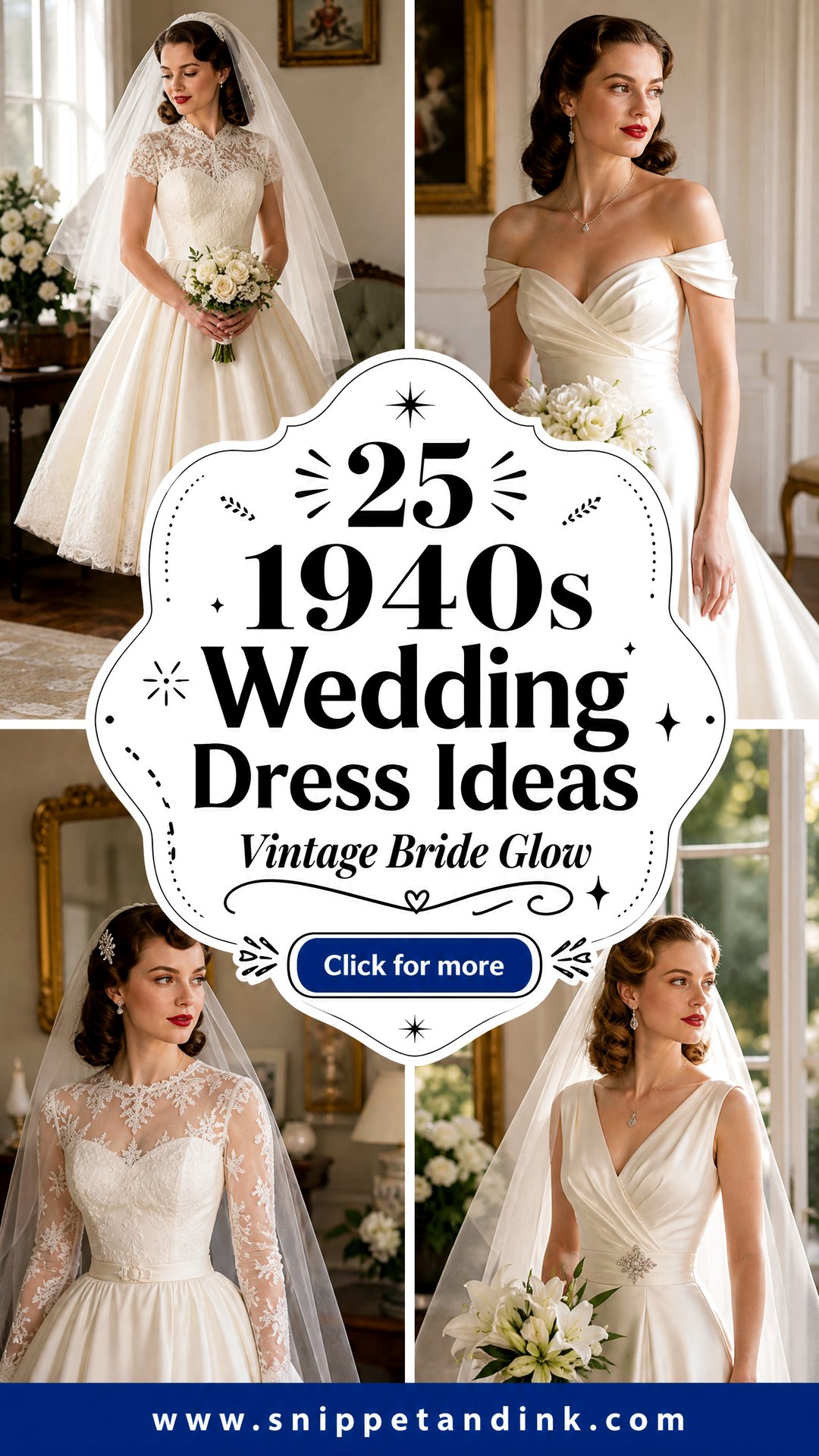
The Shoulder Line Is What Makes a Dress Read as Forties
Brides often bring me photos of fifties dresses when they ask for forties, and the difference is mostly in the shoulders and the skirt. Forties dresses put the emphasis up top, with a defined shoulder, often lightly padded, and sleeves of some kind. The skirt is narrower and longer, falling straight or in a soft A-line. Fifties dresses move the drama down to a very full skirt.
Details that point to the forties
- Shoulder pads or gathered sleeve heads, giving a squared top line.
- Long or three-quarter sleeves, often with a point over the back of the hand.
- A natural waist, defined but not dramatically cinched.
- Satin or crepe that drapes rather than standing away from the body.
- Small covered buttons, sweetheart necklines softened with illusion, and modest collars.
If you’re shopping for a modern dress, look for those details rather than the word vintage on a label. A plain satin gown with the right shoulder and sleeve will read more forties than a lace dress with a huge skirt.
1. 1940s Satin Wedding Dress With Long Sleeves
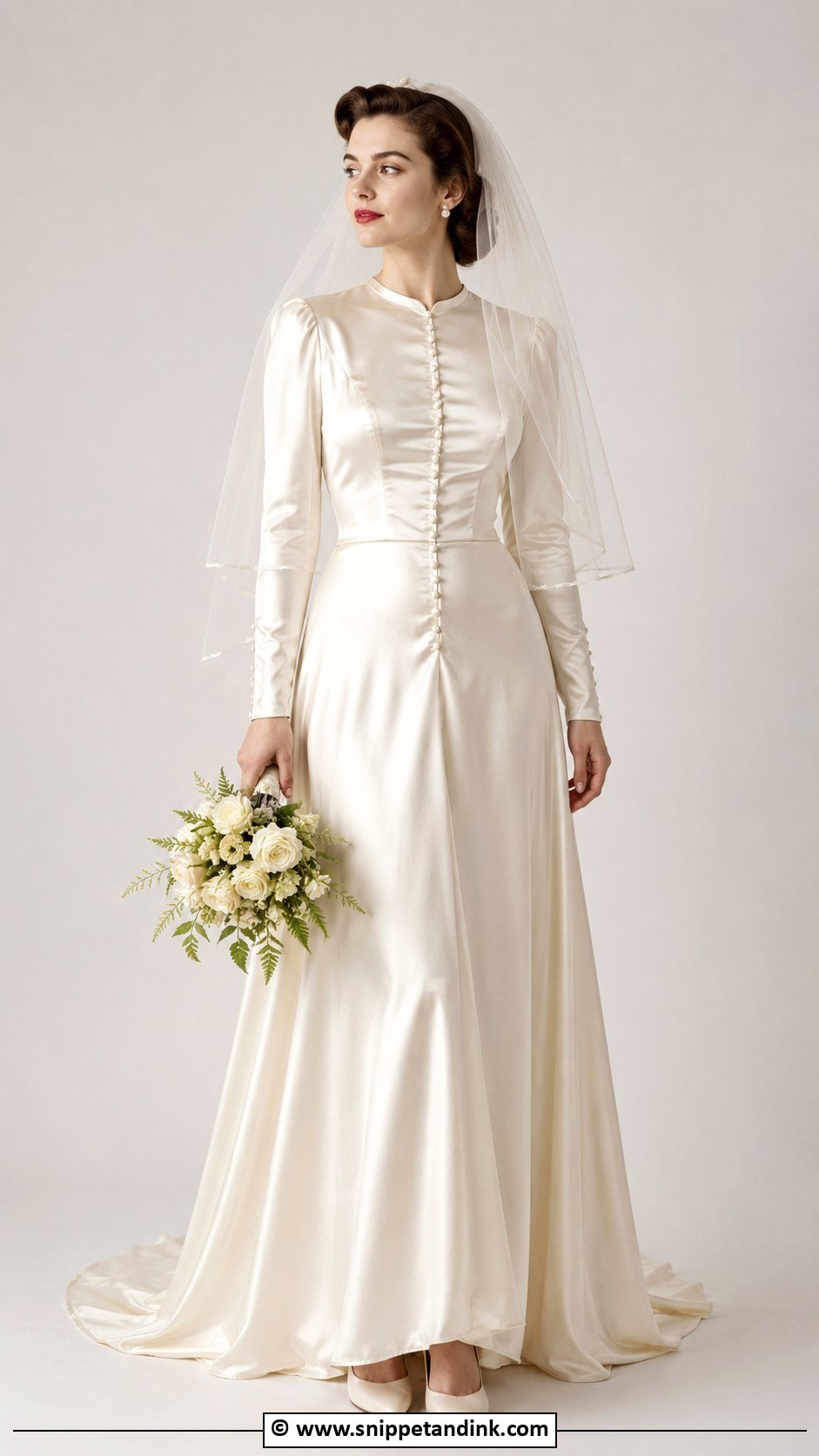
Long-sleeved satin is the dress most people picture from this decade, and it is less forgiving than it looks. Satin shows every pull at the bust and every ripple over a seam, so I fit the bodice and the natural waist before anything else. Pick a satin with some weight so the skirt skims rather than clings. Covered buttons, a fingertip veil, low rolled waves and closed-toe satin pumps complete it. A small bouquet of white flowers keeps the whole thing clean.
2. 1940s Lace Wedding Dress With Sweetheart Neckline
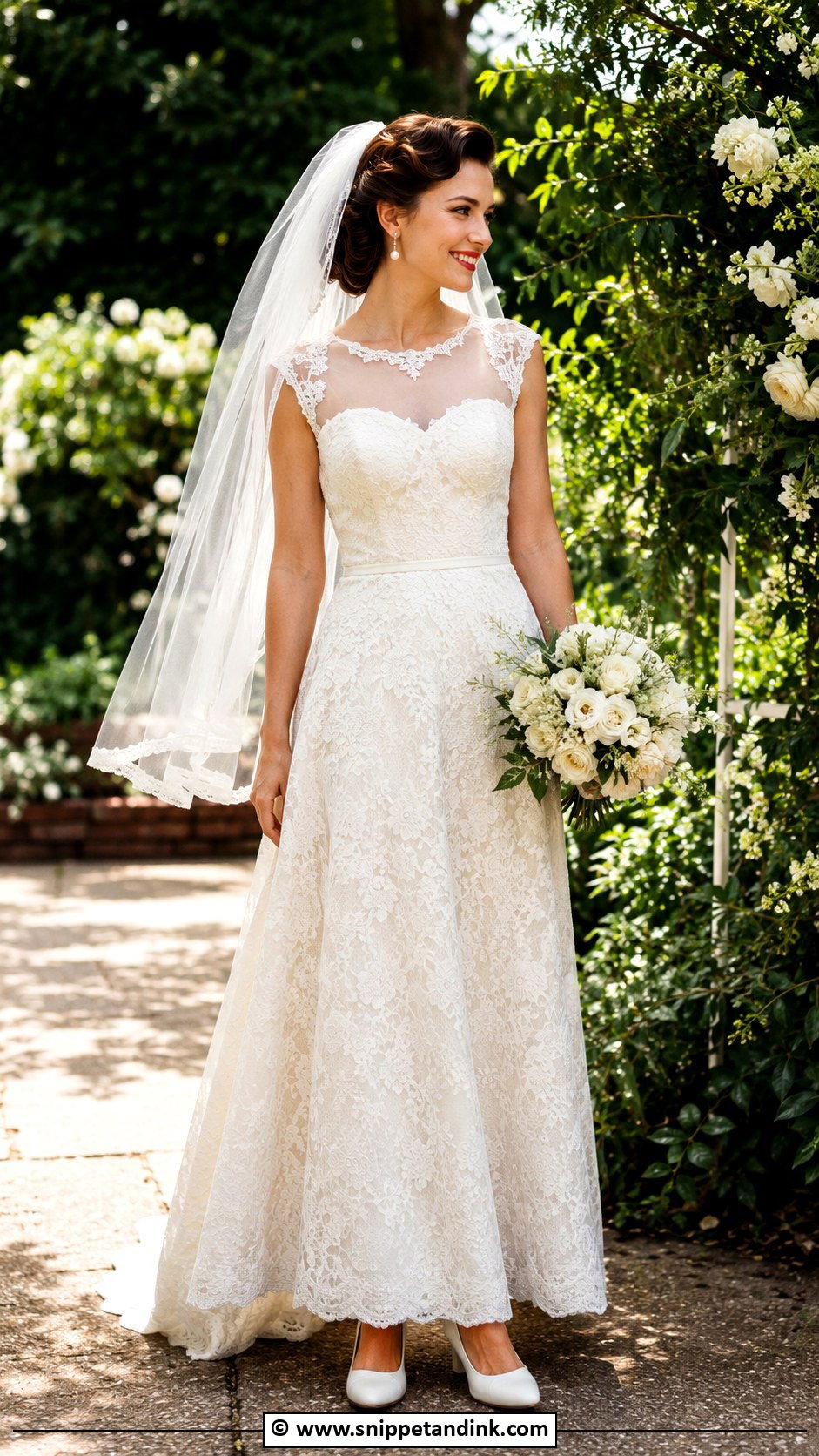
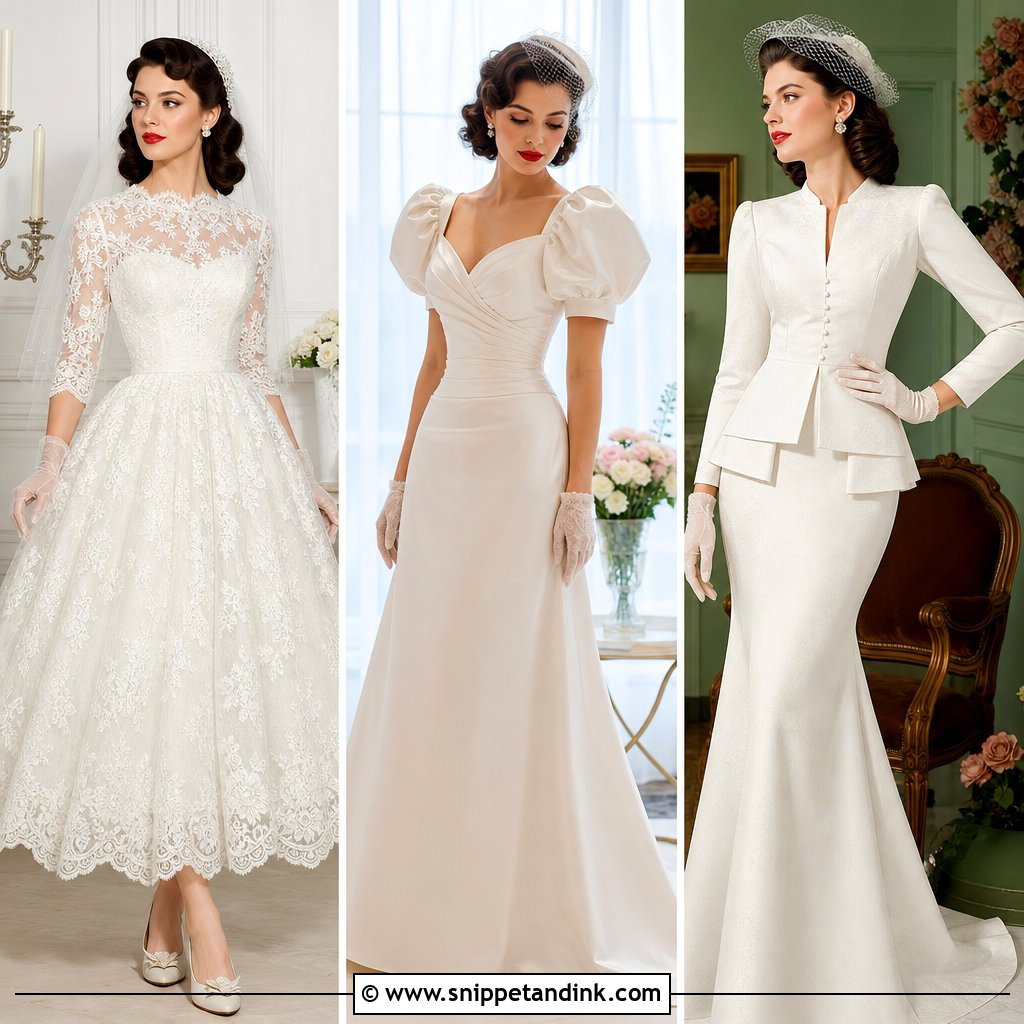
A lace wedding dress with a sweetheart neckline sits at the romantic end of the era. Many originals softened the sweetheart with an illusion panel above it, and I’d copy that if you want coverage without losing the curve. Fit the bodice closely and let the skirt fall straight from the waist rather than bell out. A simple tulle veil, pearl drops, white gloves and low block heels suit it. Keep beading off this one; the lace is the decoration.
3. 1940s Tea Length Wedding Dress With Veil
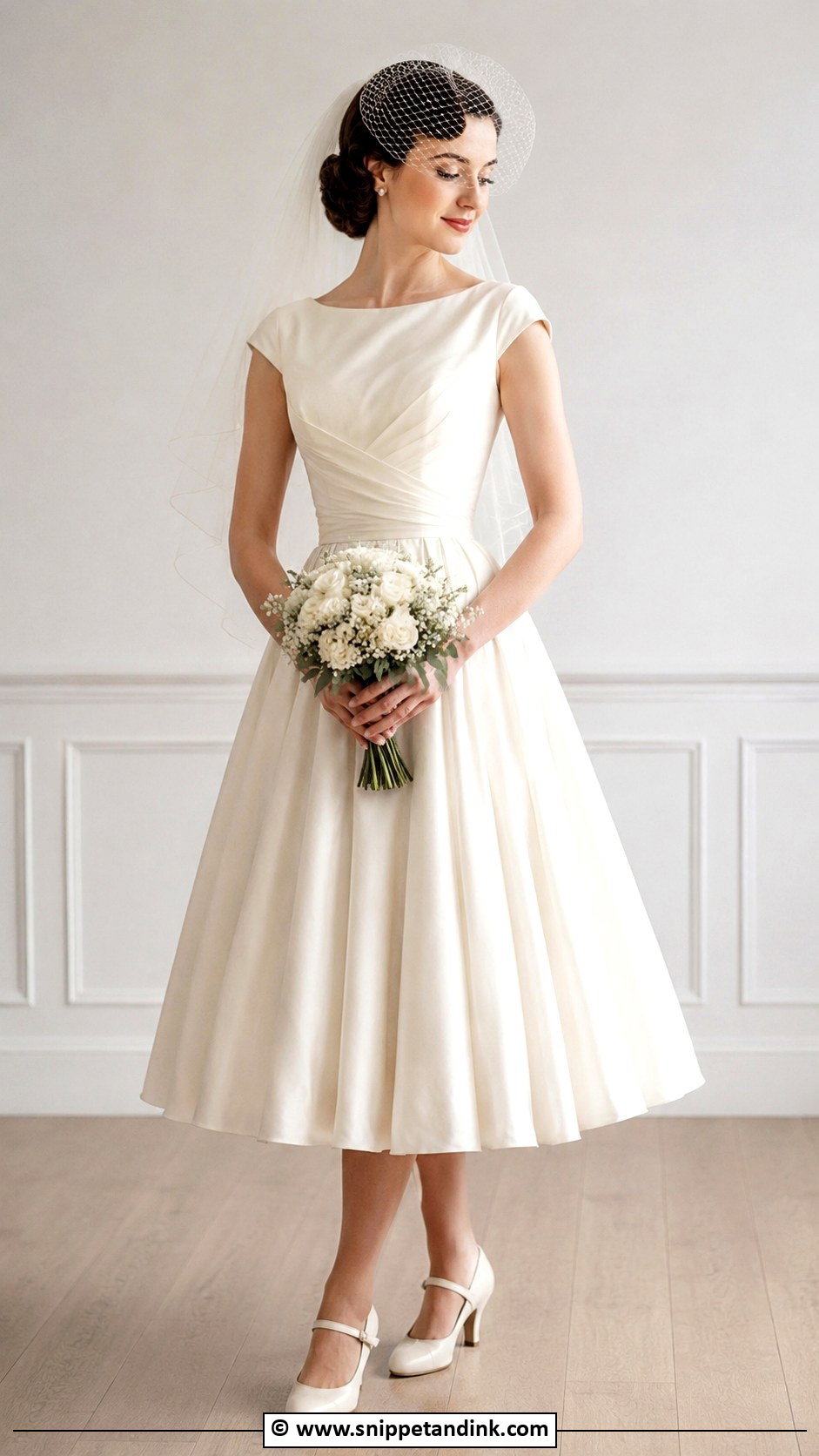
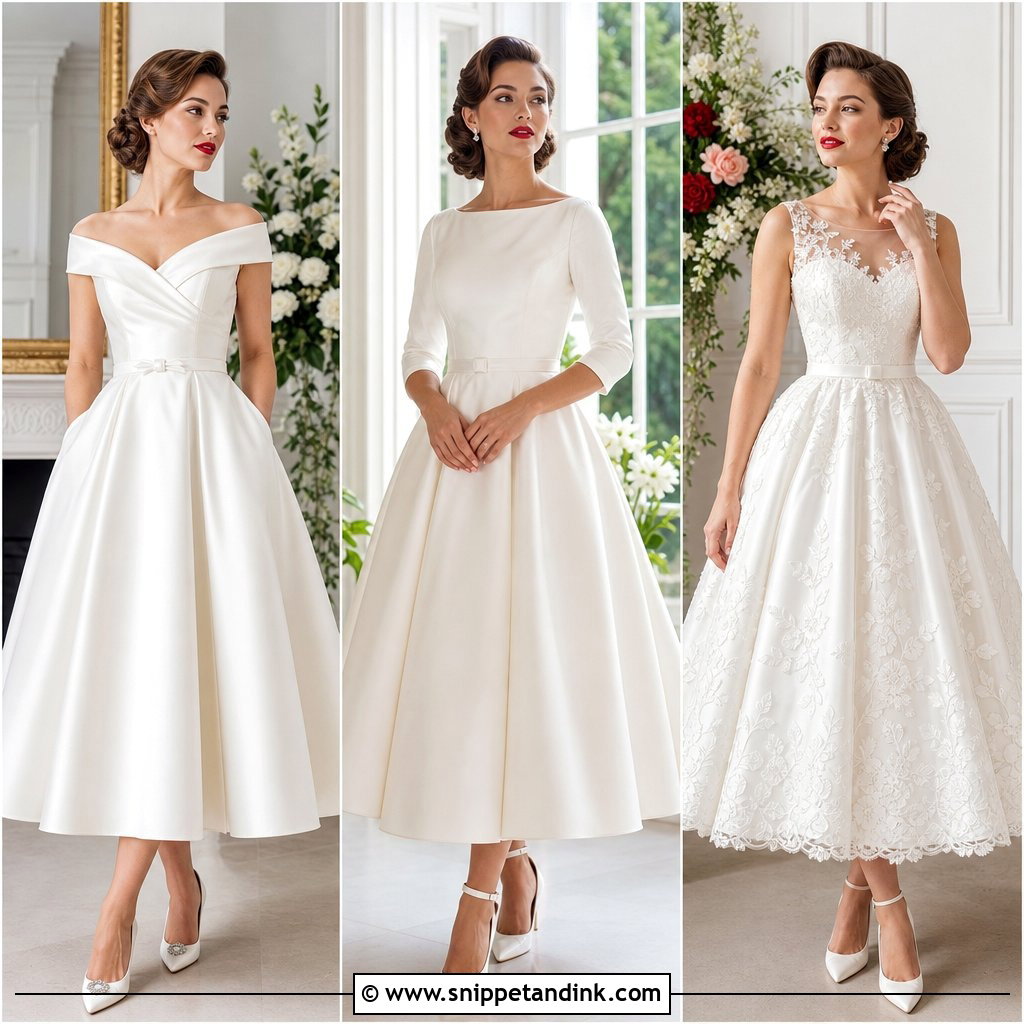
Tea length was common in the forties because fabric was rationed and practical hems made sense. The hem falls between the knee and ankle, so shoes become part of the outfit; ivory Mary Janes are very much of the period. What separates a forties tea length from a fifties one is the skirt: keep it softly flared, not held out by a petticoat, and add cap or puff sleeves. A short veil or birdcage and pearl studs finish it. You can walk and dance in it far more easily than in a floor-length gown.
4. 1940s Ivory Crepe Wedding Dress
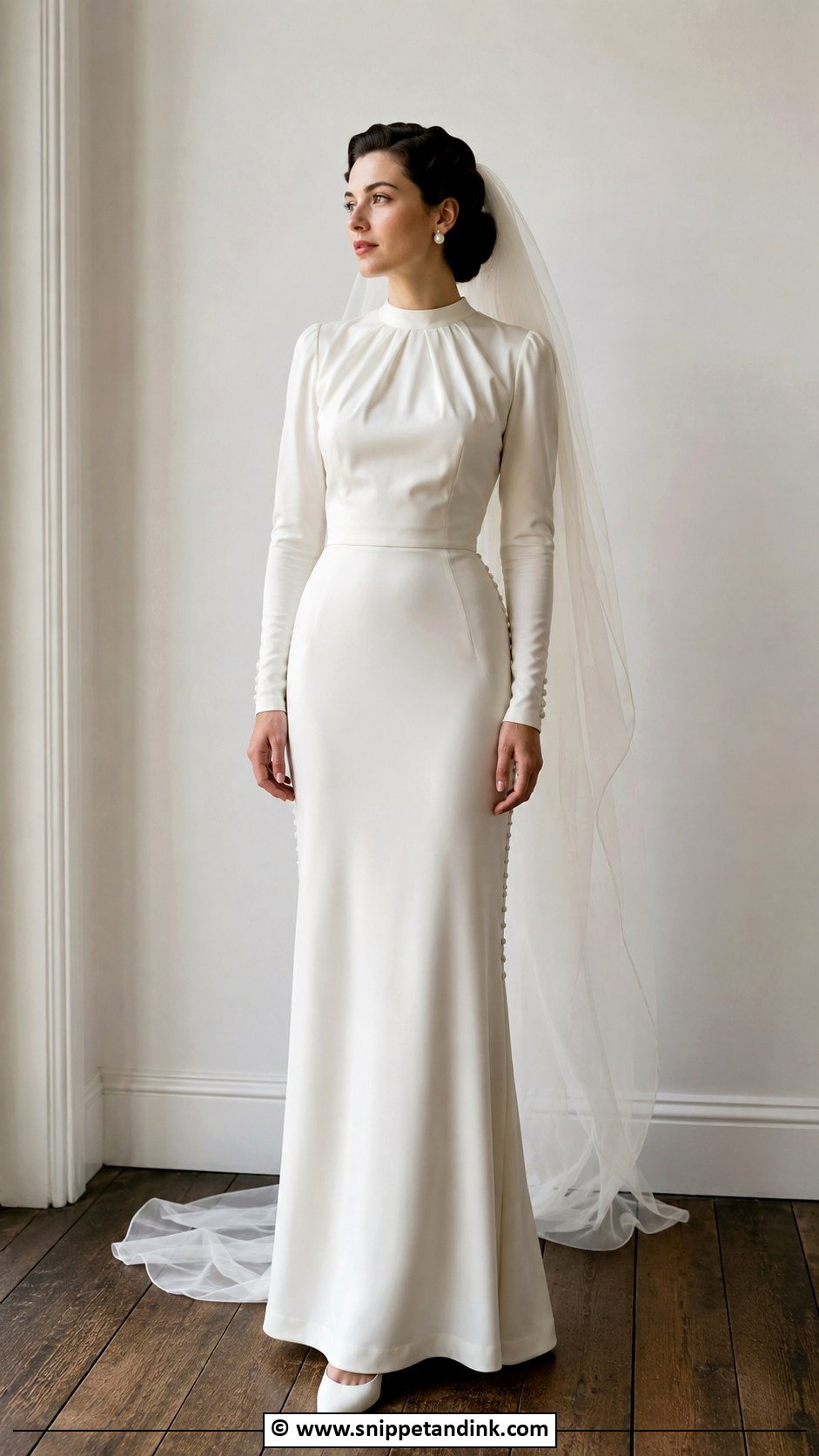
Crepe is the fabric I suggest to brides who dislike shine. It drapes close to the body and falls in soft vertical folds, which suits a high neckline and long, slim sleeves. Be honest about the fit underneath, though: crepe shows the outline of underwear, so smooth, no-line pieces are a must. Style it with a narrow veil, pearl buttons, pointed ivory pumps and a small clutch for portraits. A low chignon or side-parted waves keep the line sleek, and a delicate brooch at the neck is a pleasing period touch.
5. 1940s Wedding Dress With Puff Sleeves
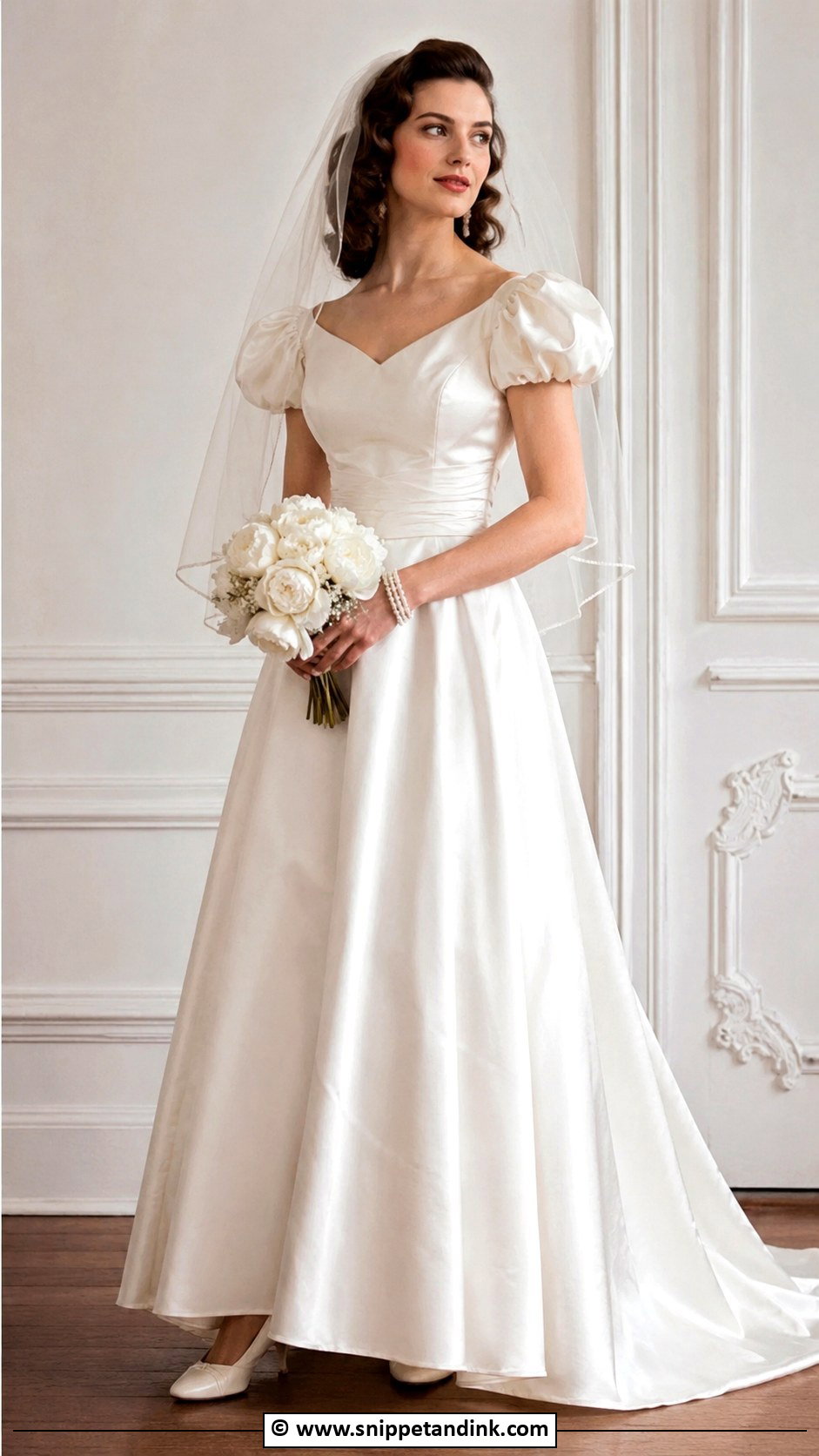
The key with puff sleeves is balance. Volume belongs at the top of the shoulder, then the bodice fits closely and the skirt falls smooth, which gives that strong-shouldered forties silhouette. Too much puff and you look like a bridesmaid from the eighties. A sweetheart neckline or a little lace trim pairs well. Pin your curls away from the face so they don’t crowd the sleeve, carry a compact bouquet, and add a mid-length veil and closed-toe heels.
6. 1940s Wedding Dress With High Neckline
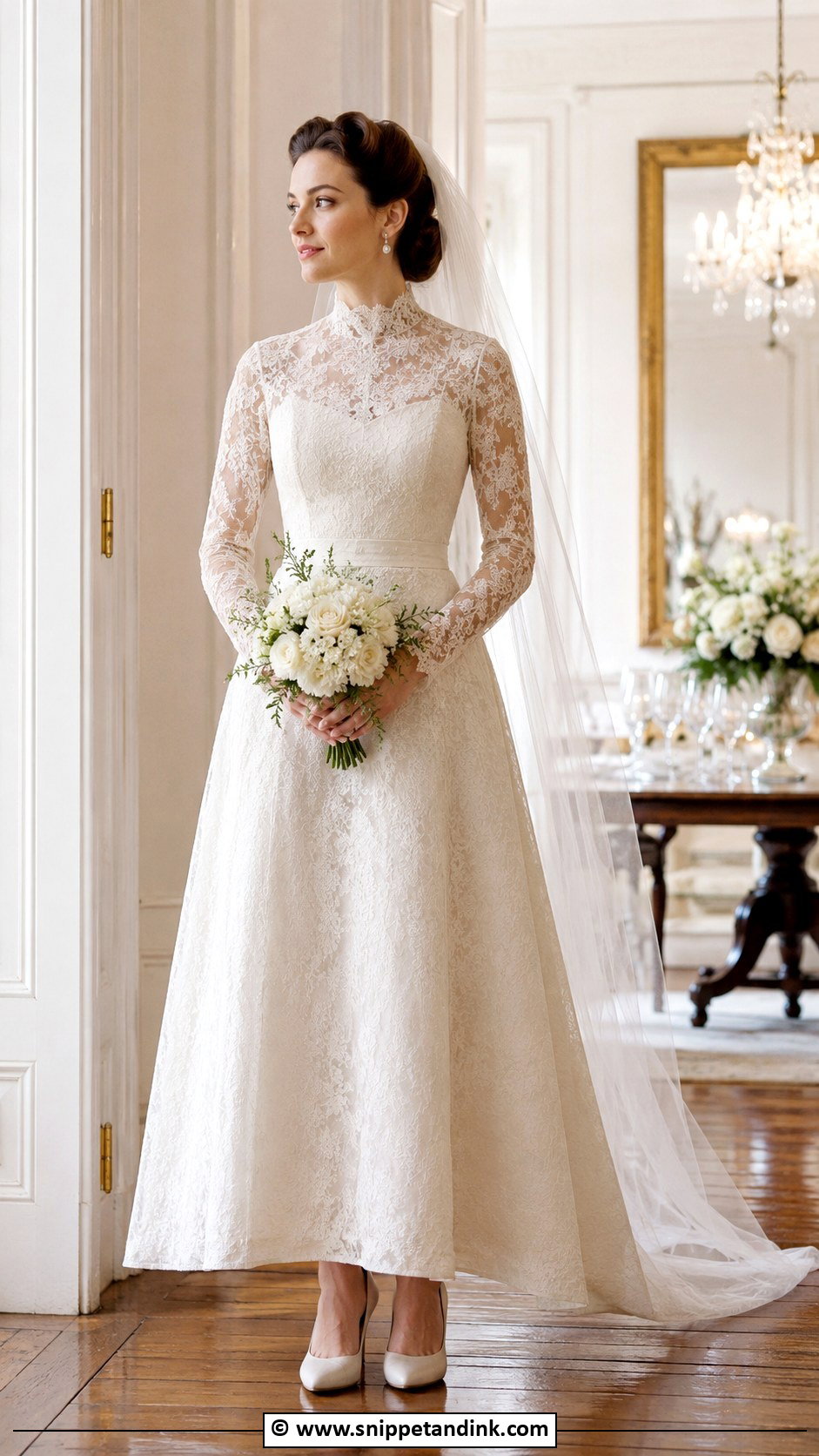
High necks were everywhere in the decade, usually in lace, illusion netting or soft satin. Long sleeves, a fitted waist and a slight A-line skirt balance the covered top. I tell brides to sit and turn their head at the fitting: a high collar that’s even slightly tight rubs under the jaw by evening. Pearl earrings, a low bun, a long veil and plain ivory pumps finish it. Skip necklaces, and if you can, add a row of tiny covered buttons down the back.
7. 1940s Wedding Dress With Lace Sleeves
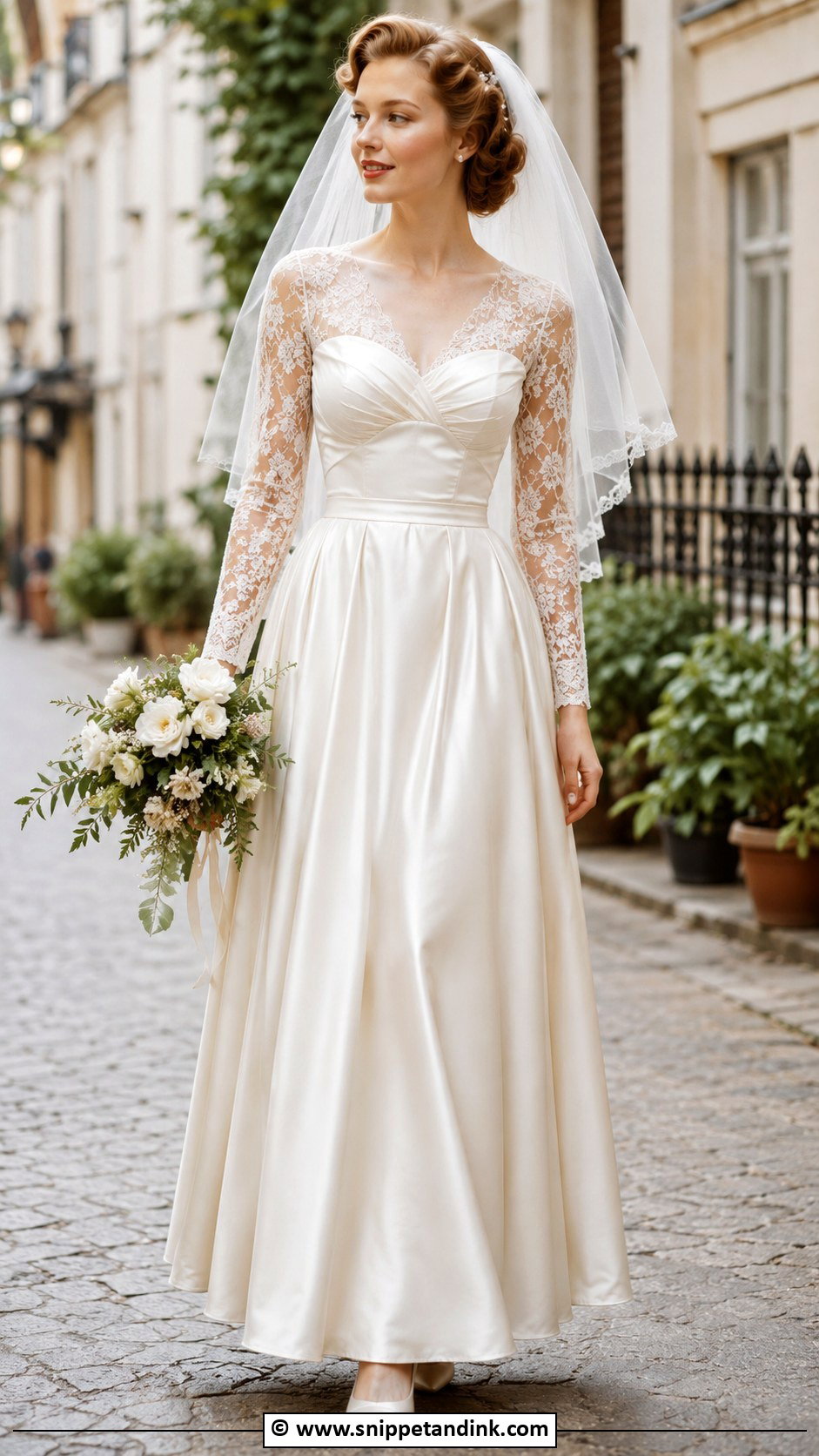
Lace sleeves give texture and coverage without the weight of a fully lace gown. Choose a satin or crepe dress with sheer sleeves, a fitted bodice and a natural waist. Small-scale floral lace looks more period-correct than big bold motifs. One practical note: where the lace sleeve meets the bodice seam, a scratchy edge can irritate the underarm, so ask for it to be finished with a soft binding. A fingertip veil, pearl hair pins and ivory pumps are all it needs.
8. 1940s Wedding Dress With Bateau Neckline
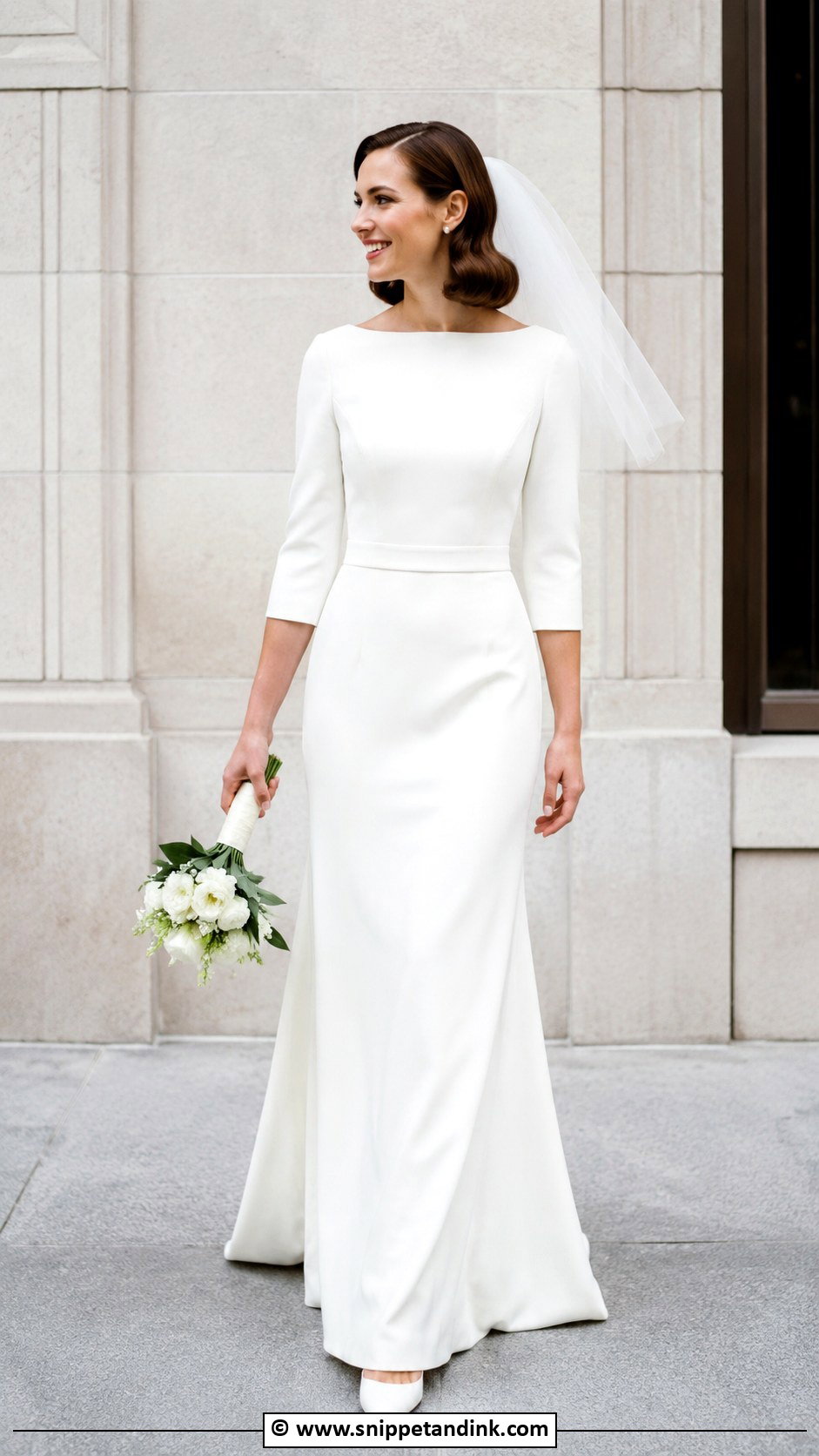
A bateau neckline runs wide across the collarbone, showing the shoulder line without much skin. On a satin or crepe gown with three-quarter sleeves and a fitted waist, it looks clean and slightly formal. Choose a short or shoulder-length veil so the neckline stays visible. A low rolled hairstyle, pearl studs and a narrow bracelet suit it. If your shoulders slope, ask for small shoulder pads; they’re true to the decade and keep a wide neckline from sliding.
9. 1940s Wedding Dress With Button Back
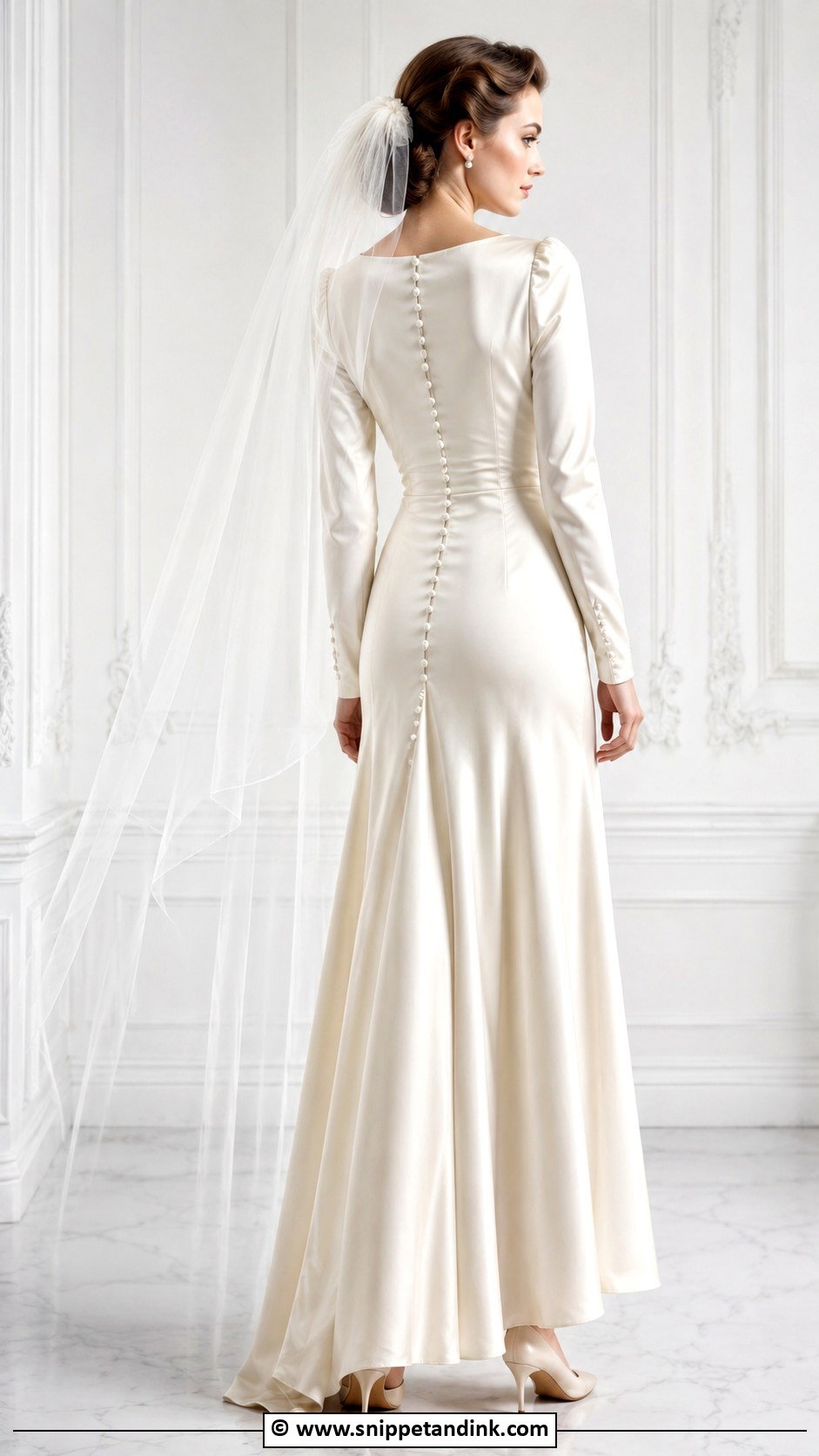
A row of tiny covered buttons from the neck to the waist was one of the decade’s signature details. Guests see your back for the whole ceremony, so it earns its place. Real buttons take time to fasten, so assign someone with steady hands and allow ten minutes; many modern gowns hide a zip under the buttons, which I’d recommend. Place the veil low at the back of the head so the buttons still show, and keep the rest to pearl earrings, ivory pumps and a neat bouquet.
10. 1940s Wedding Dress With Train
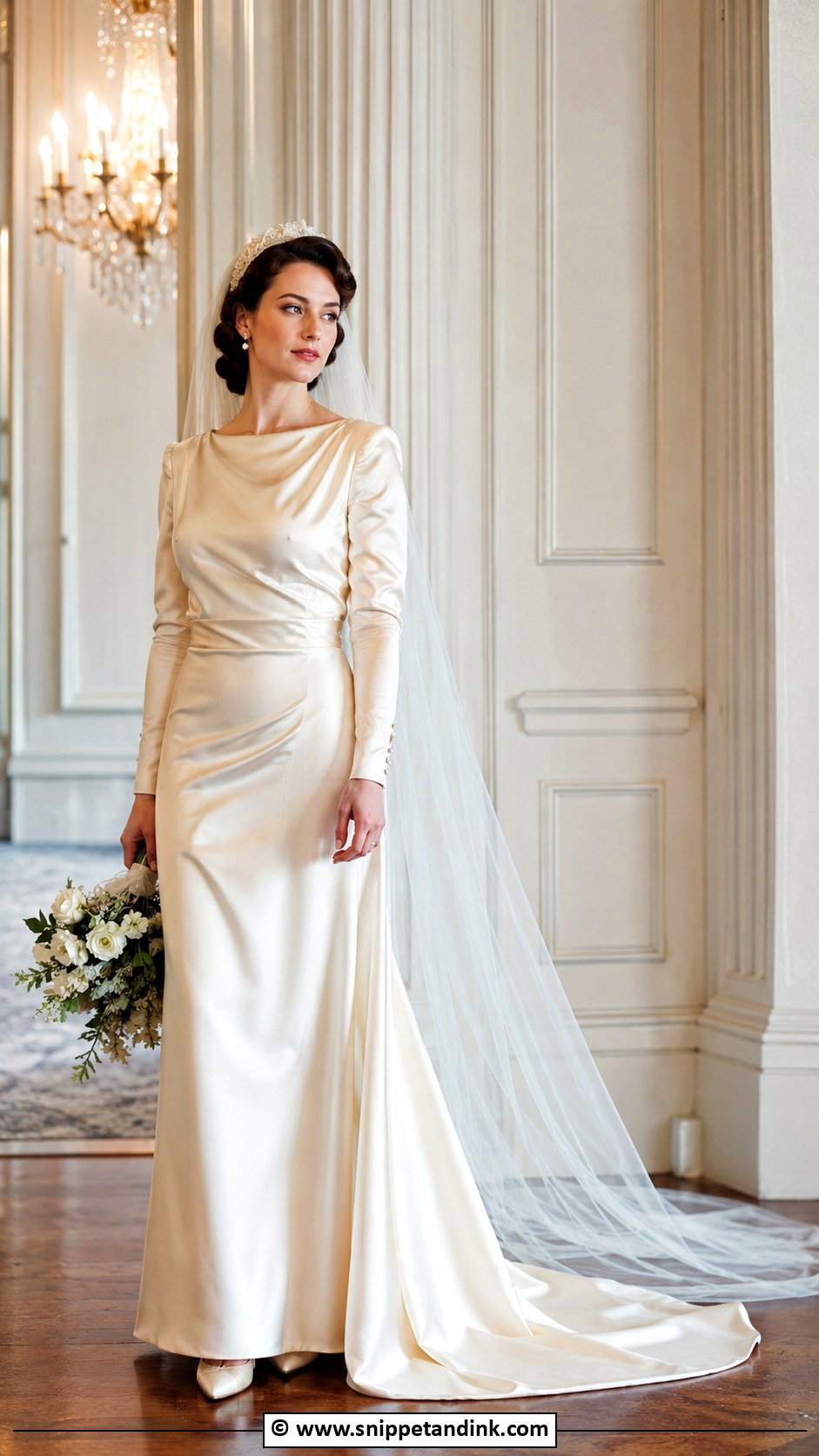
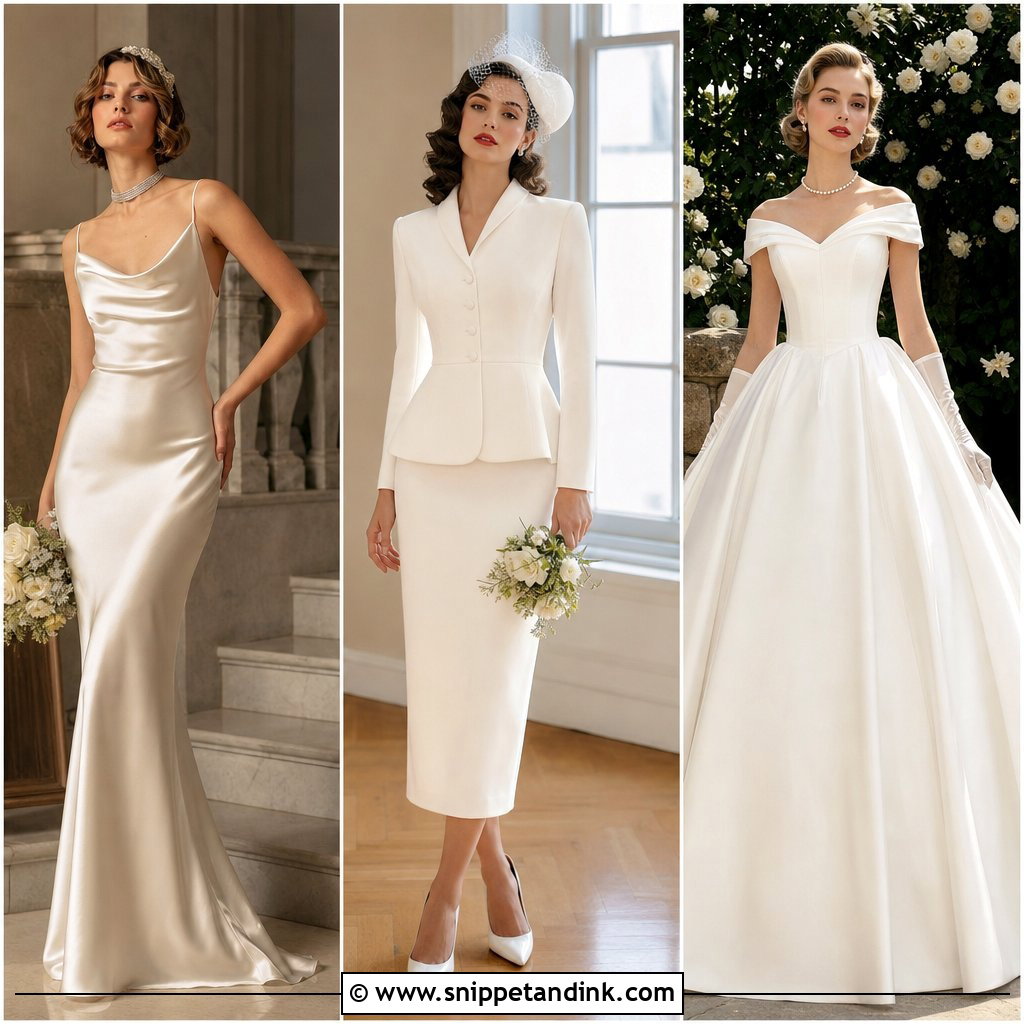
Trains came back after the war, when fabric was available again, and a satin skirt with a chapel or sweep train reads very late forties. Keep the train graceful rather than enormous. Ask how it bustles before you buy: satin trains usually bustle with hooks or ribbon loops, and someone needs to learn the pattern before the day. A long tulle veil, pearl earrings and classic ivory heels complete it. Satin falls in smooth, clean folds along the train, which shows well in photos taken from behind.
11. 1940s Wedding Dress With Peplum Waist
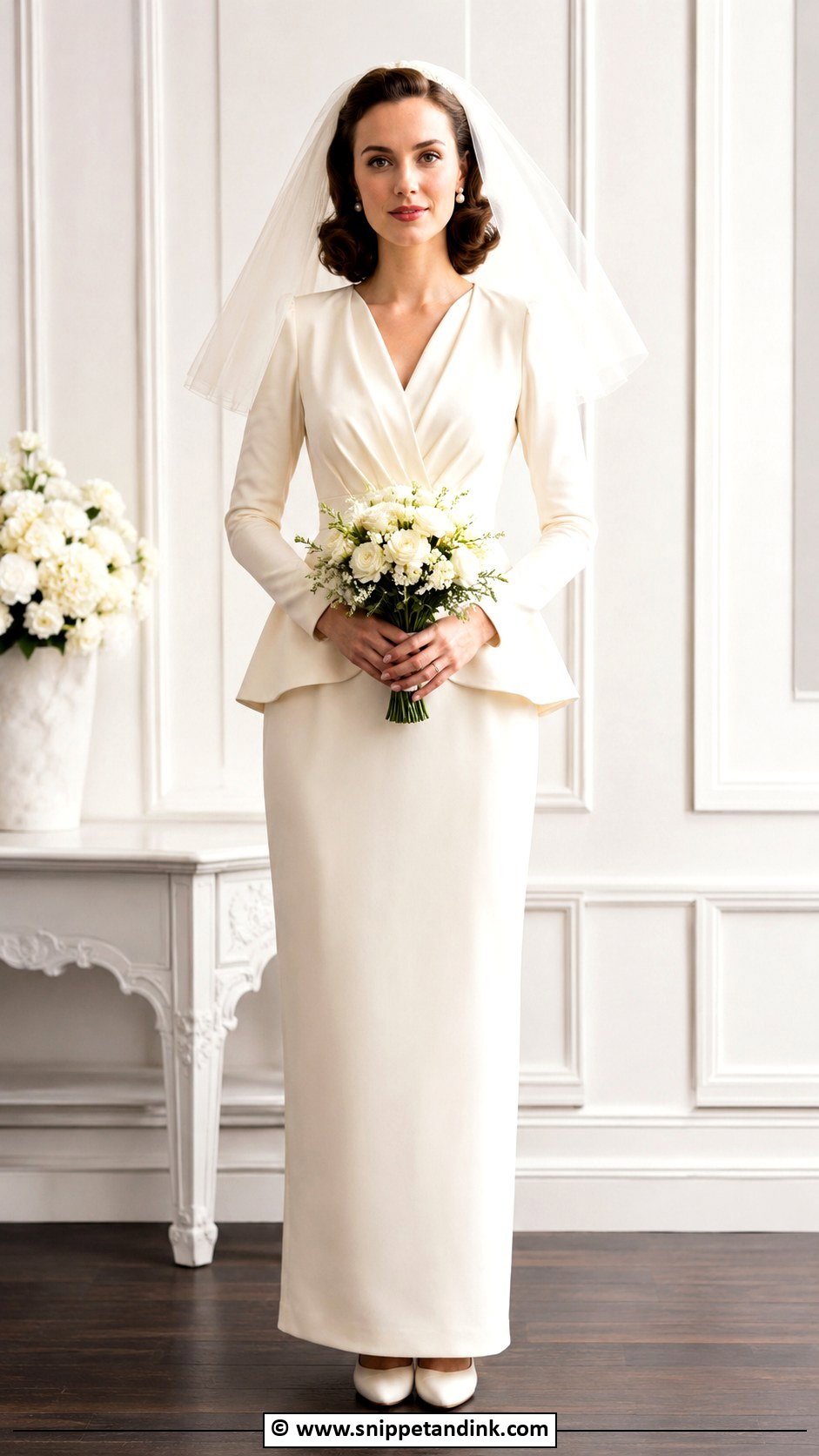
A small peplum at the waist borrows directly from forties tailoring. It marks the waist and gives a hip line without needing a full skirt, which suits brides who like shape but not volume. Keep the peplum soft; a stiffly interfaced one sticks out and looks like a jacket hem. Pair it with a straight or A-line skirt in satin, crepe or lace. A shoulder-length veil, closed-toe pumps and a side-parted hairstyle keep it polished.
12. 1940s Wedding Suit For Bride
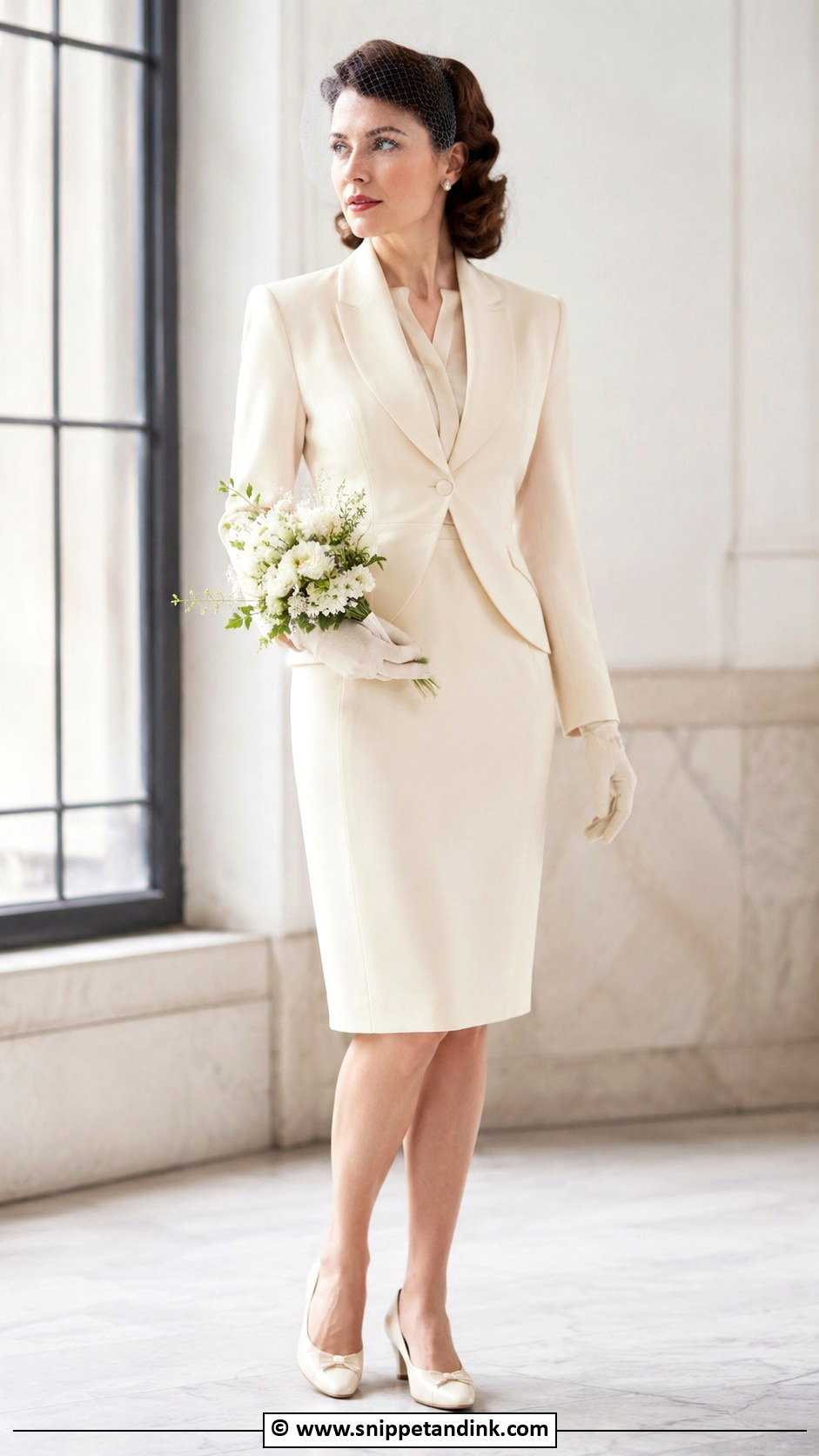
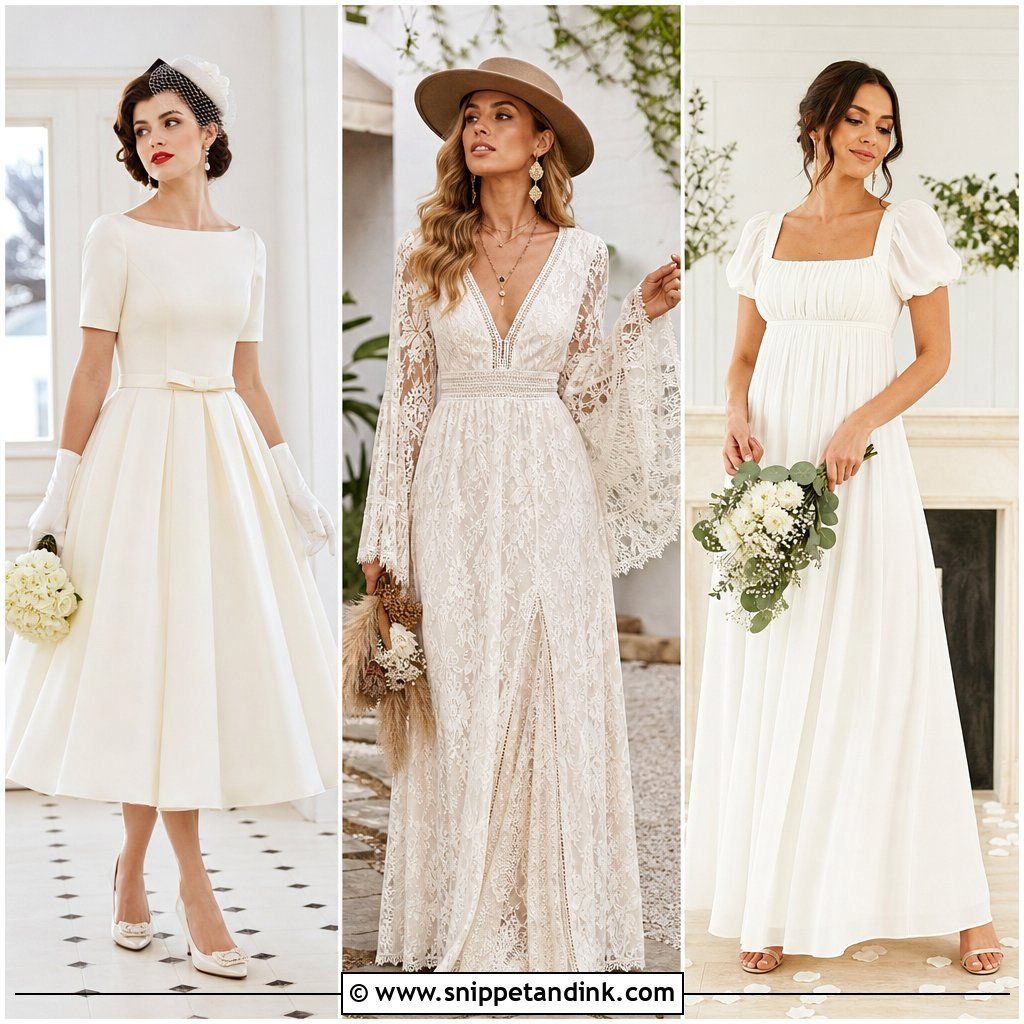
The bridal suit is the most historically honest look on this list. During the war, many brides married in suits they could wear again. Look for an ivory or cream skirt suit with a fitted jacket, padded shoulders, a nipped waist and a knee-length or midi skirt, with a silk blouse underneath. The jacket fit is everything: shoulders should end exactly at your shoulder bone. A small hat or birdcage veil, pearl earrings and low heels complete it, and a structured handbag can stand in for a bouquet at the courthouse.
13. 1940s Courthouse Wedding Dress
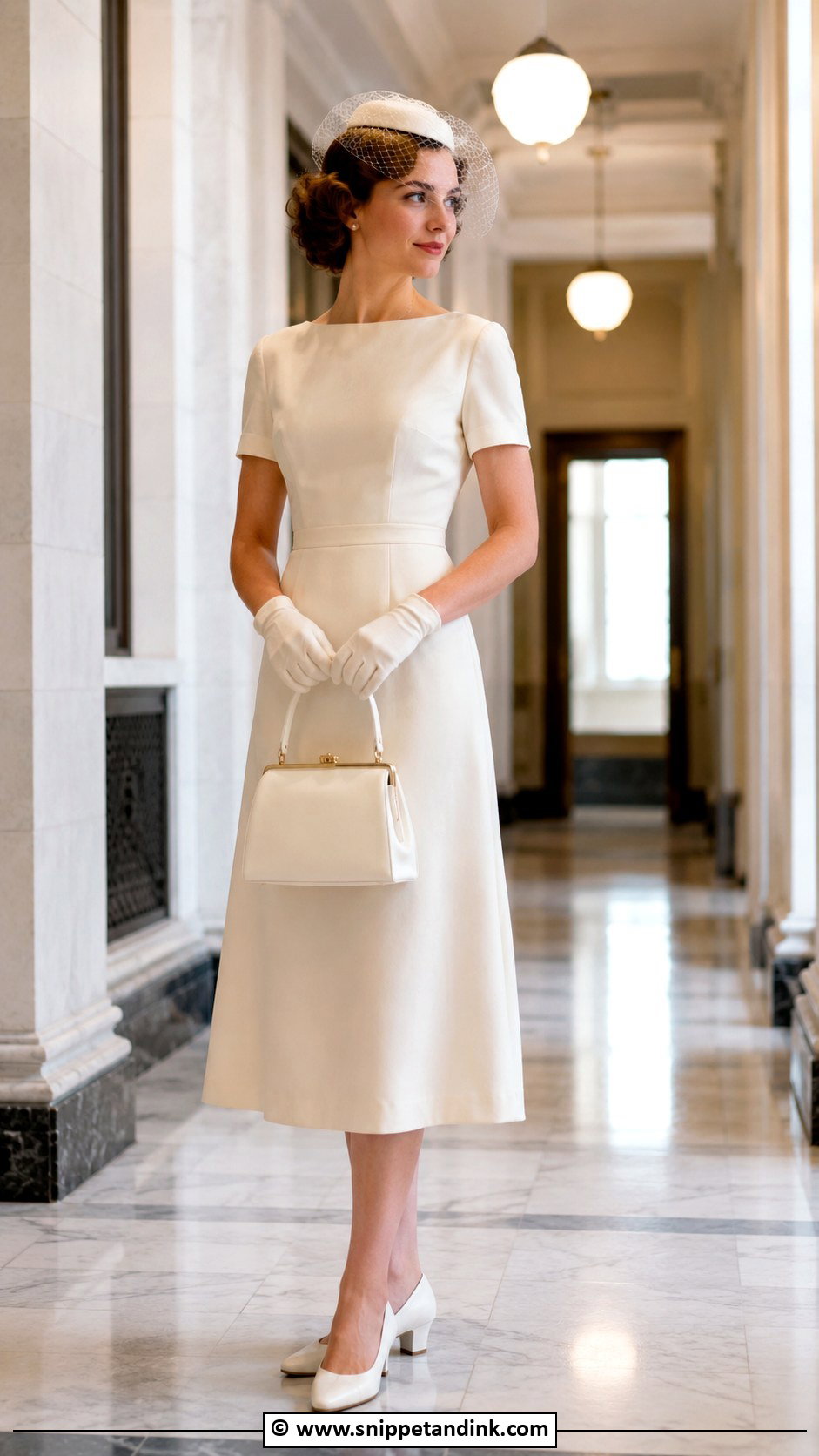
For a courthouse ceremony, I’d go simple and tailored: a knee-length or midi ivory dress with short sleeves, a modest neckline and a fitted waist. Crepe, a rayon-like fabric or lightweight satin all suit it. Rayon was a common forties fabric, but it can shrink and crease, so check the care label on reproductions. Add a small hat or birdcage veil, pearl studs, gloves and low pumps. It doubles nicely as a reception change.
14. 1940s Wedding Dress With Off Shoulder Neckline
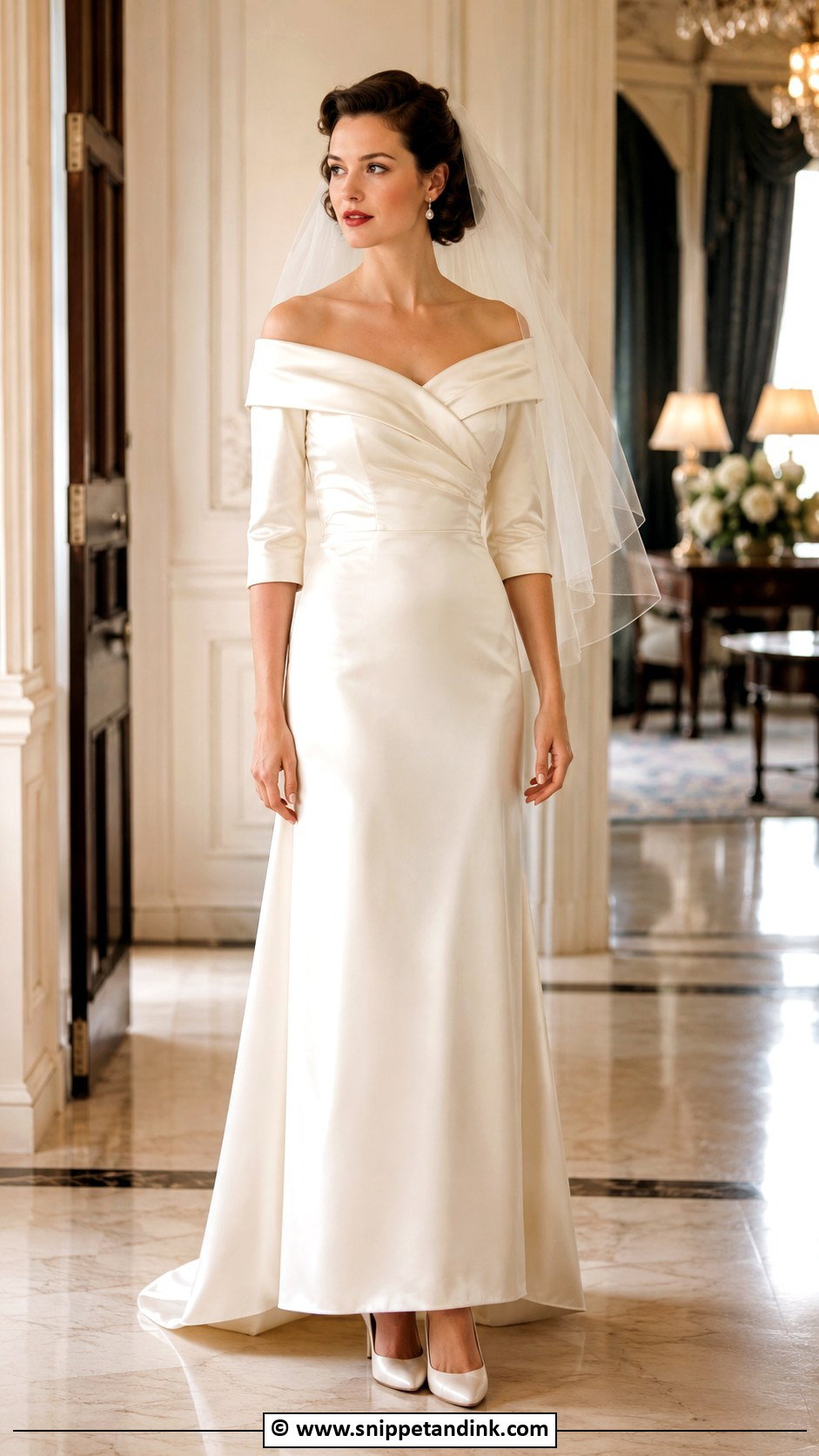
Off-shoulder is less typical of the decade, so the details have to pull it back. A folded neckline, long or three-quarter sleeves and a defined waist do that. Satin or lace both work. Folded necklines need internal structure, so test it by lifting your arms at the fitting. Skip a necklace, add a mid-length veil, pearl earrings and plain heels, and keep the skirt smooth or only gently flared. A soft updo keeps the shoulders clear.
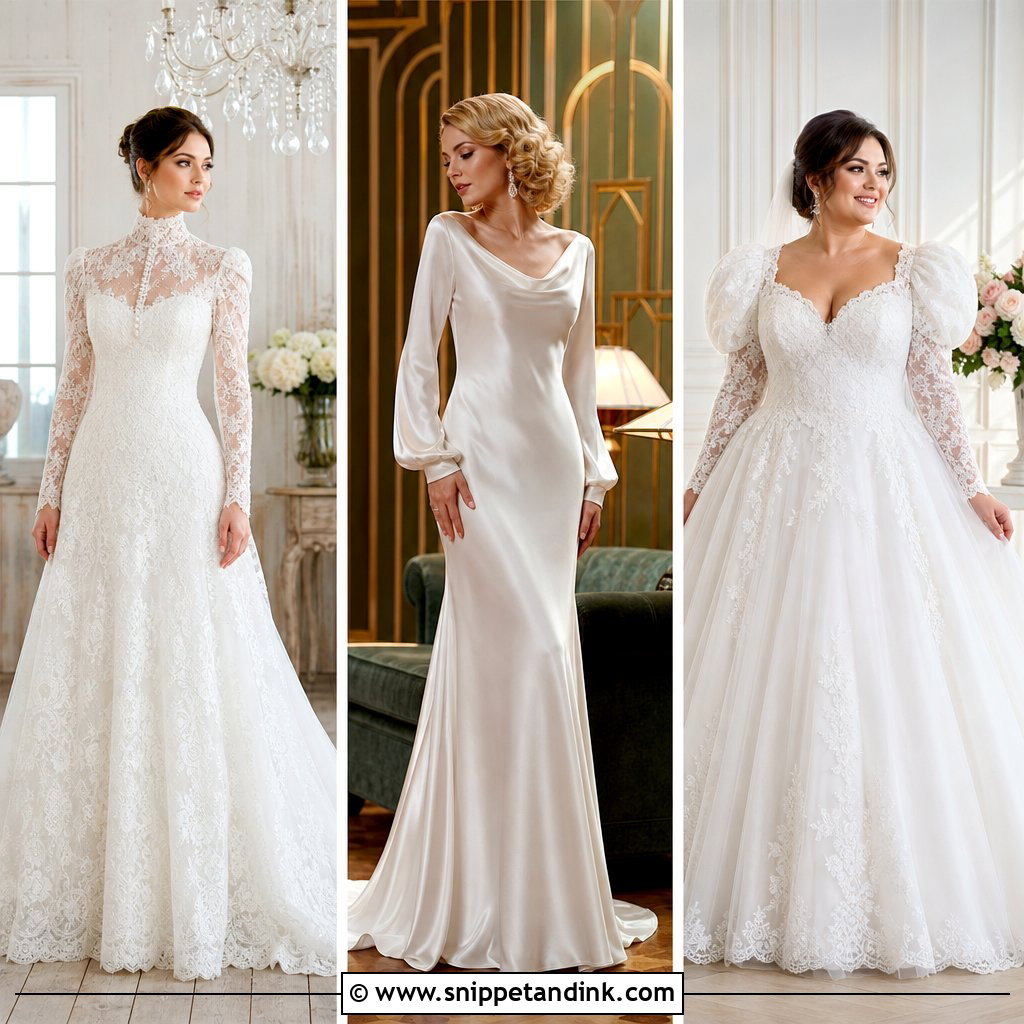

15. 1940s Wedding Dress With Illusion Neckline
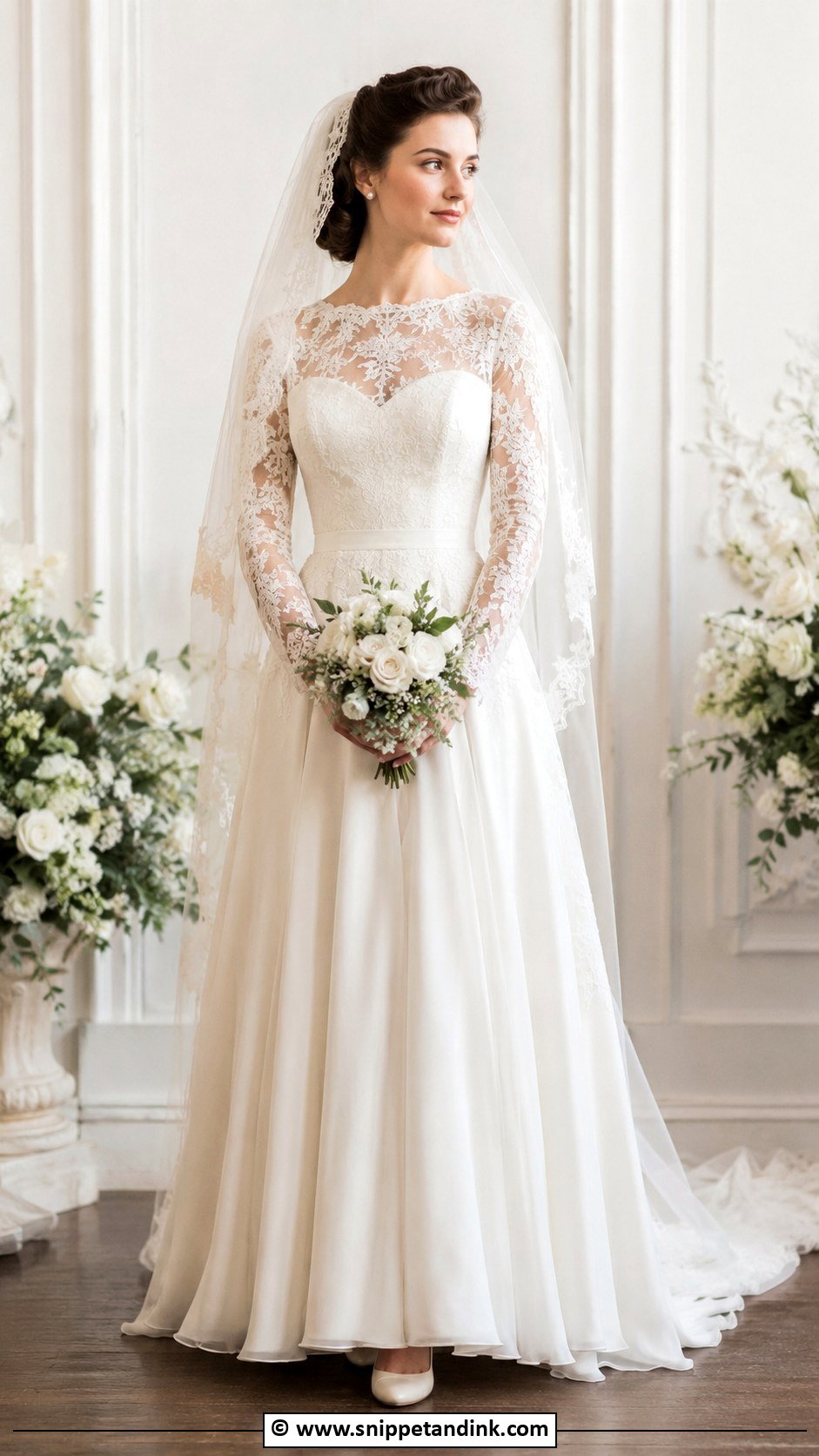
Illusion necklines let you show the line of a sweetheart bodice while covering the chest. Fine netting or delicate lace over the sweetheart looks most authentic; heavy lace patterns pull it toward a modern gown. I’d check the mesh shade against your skin in daylight, since a mismatched illusion panel looks grey outdoors. Long sleeves, a fitted waist and a satin or lace skirt suit it, with pearl studs, a fingertip veil and smooth hair.
16. 1940s Wedding Dress With Three Quarter Sleeves
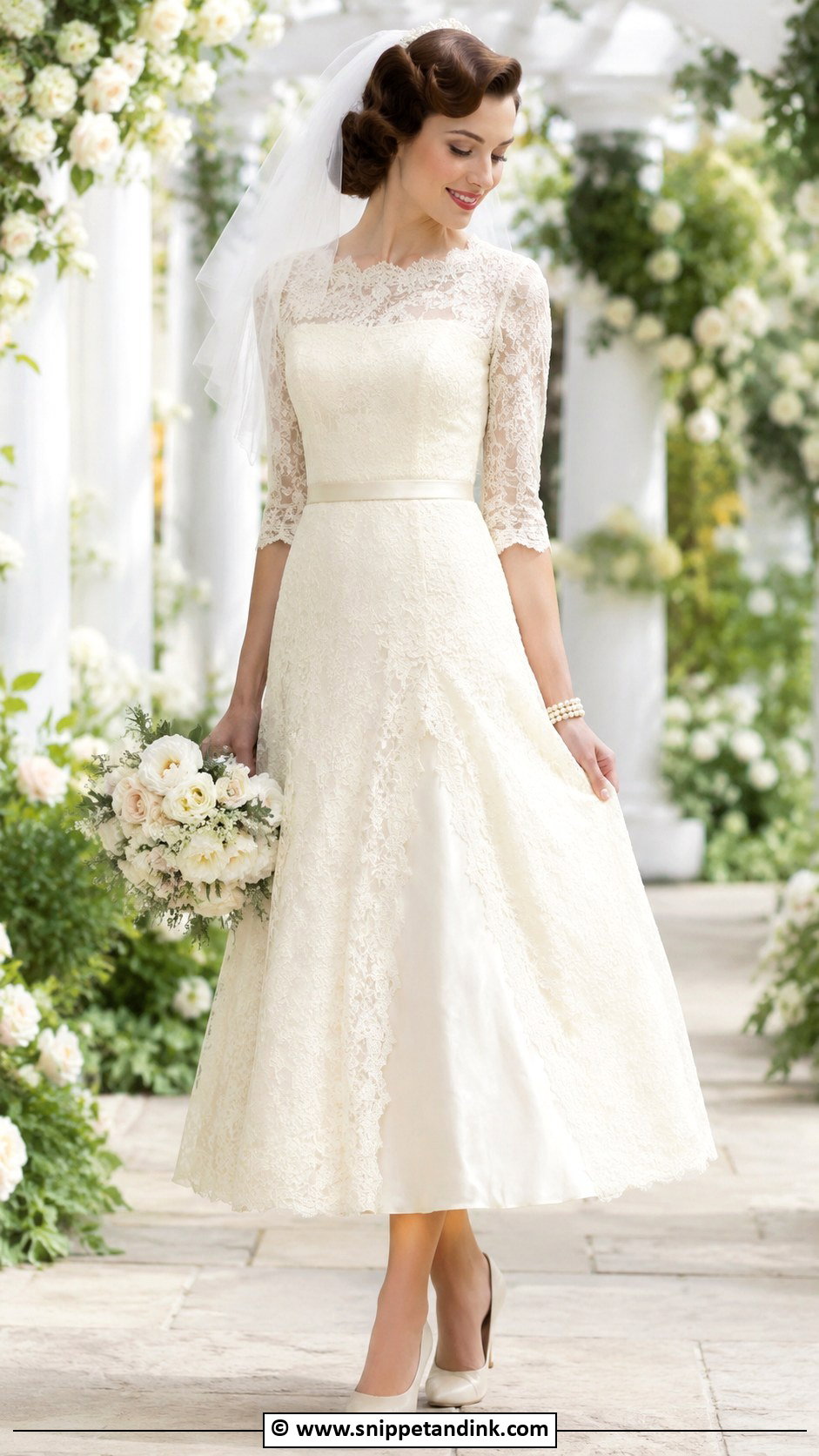
Three-quarter sleeves show the wrist, which leaves room for a bracelet or short gloves, and they stay out of the way when you eat, sign the register or hold hands. Lace sleeves feel romantic; satin sleeves feel formal. They suit tea length or floor length with a fitted bodice and a softly flared skirt. Pearl earrings, a short veil and closed-toe pumps finish it, with a soft side part or pinned curls.
17. 1940s Wedding Dress With A Line Skirt
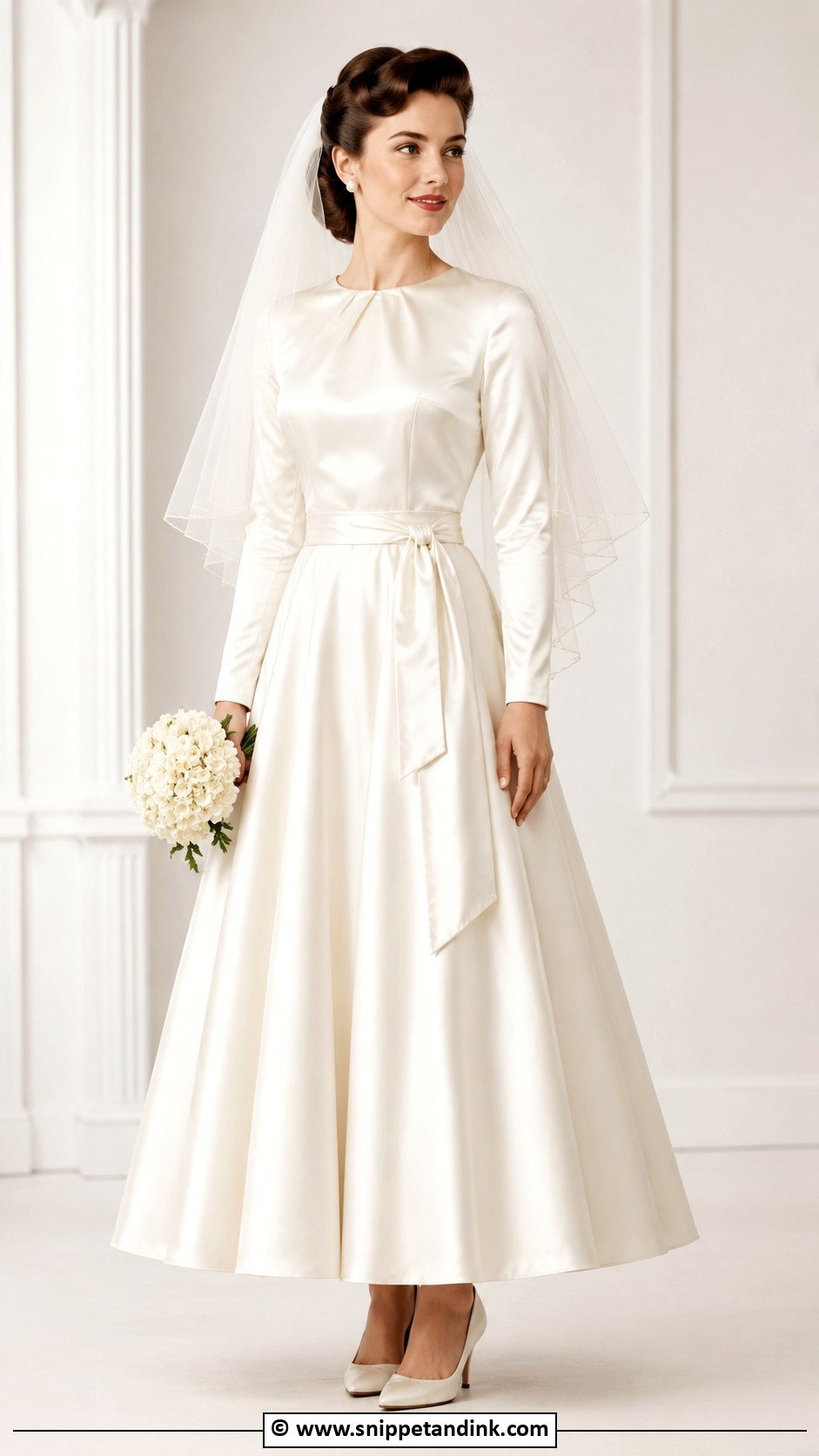
An A-line is the easiest shape here to wear. It fits through the bodice and waist, then widens toward the hem without much volume, which suits most figures. Keep the skirt modest in width; forties proportions are narrower than the fifties ballgown. Satin, lace or crepe with long, cap or puff sleeves all work. A self-fabric belt sharpens the waist. Add a fingertip veil, pearl earrings and ivory pumps.
18. 1940s Wedding Dress With Full Skirt
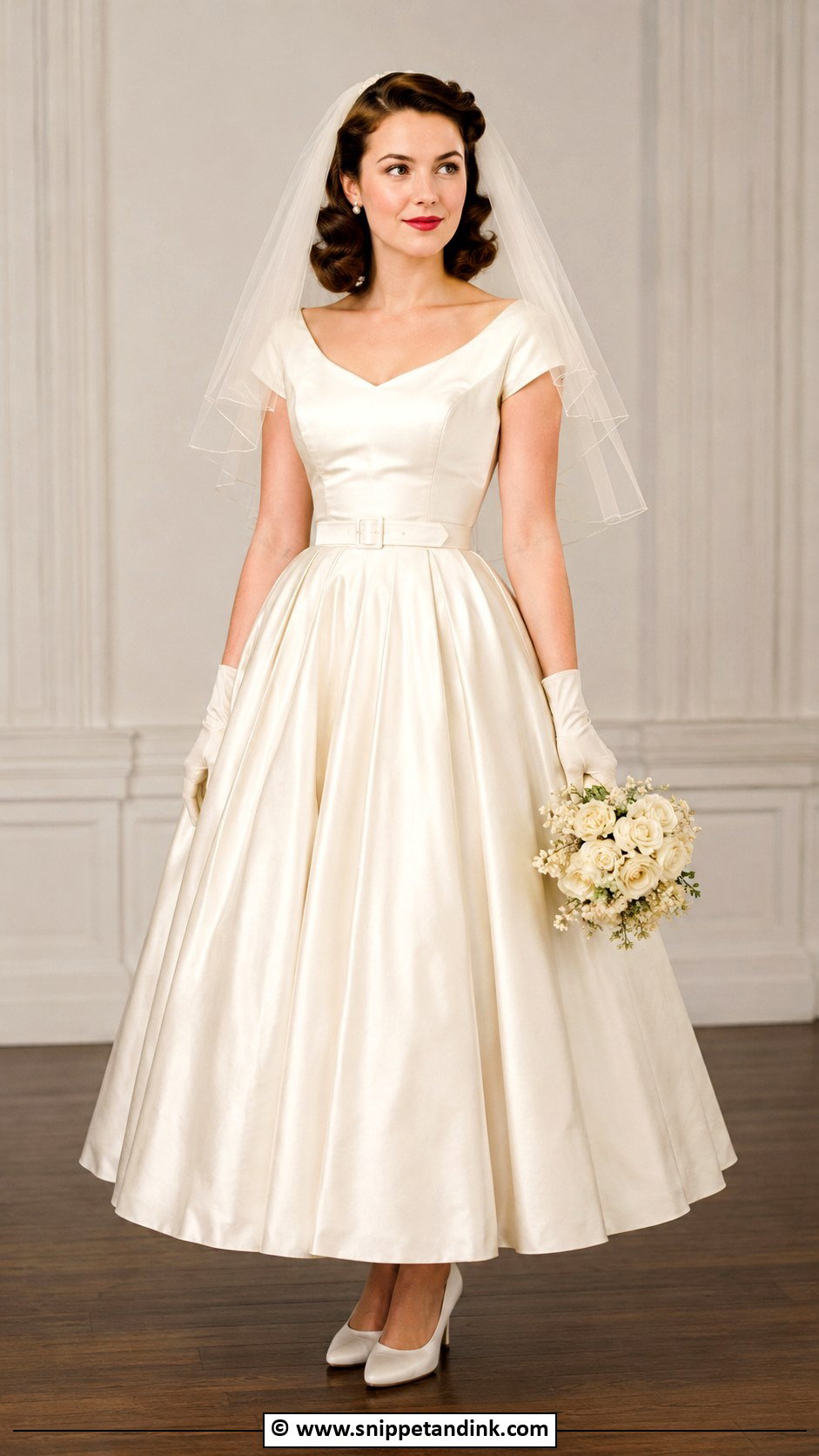
Late in the decade, skirts got fuller and bridal style turned romantic again. The risk is drifting into the fifties. To stay in the forties, keep the bodice modest, the sleeves present and the skirt moderate rather than held out by layers of crinoline. Satin, tulle or lace all suit it, with a small belt at the waist. A shoulder-length veil, pearl earrings, simple pumps, soft curls and classic makeup keep the whole look balanced.
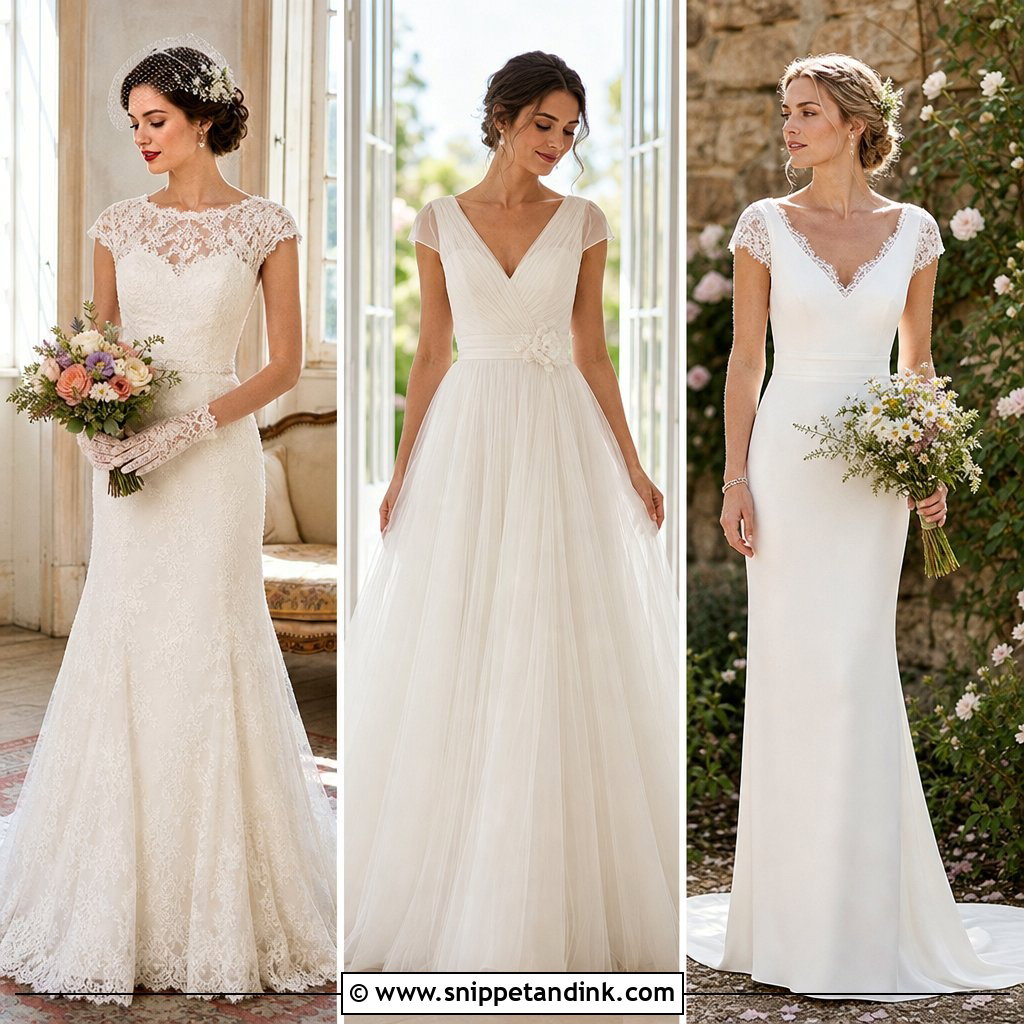
19. 1940s Wedding Dress With Lace Jacket
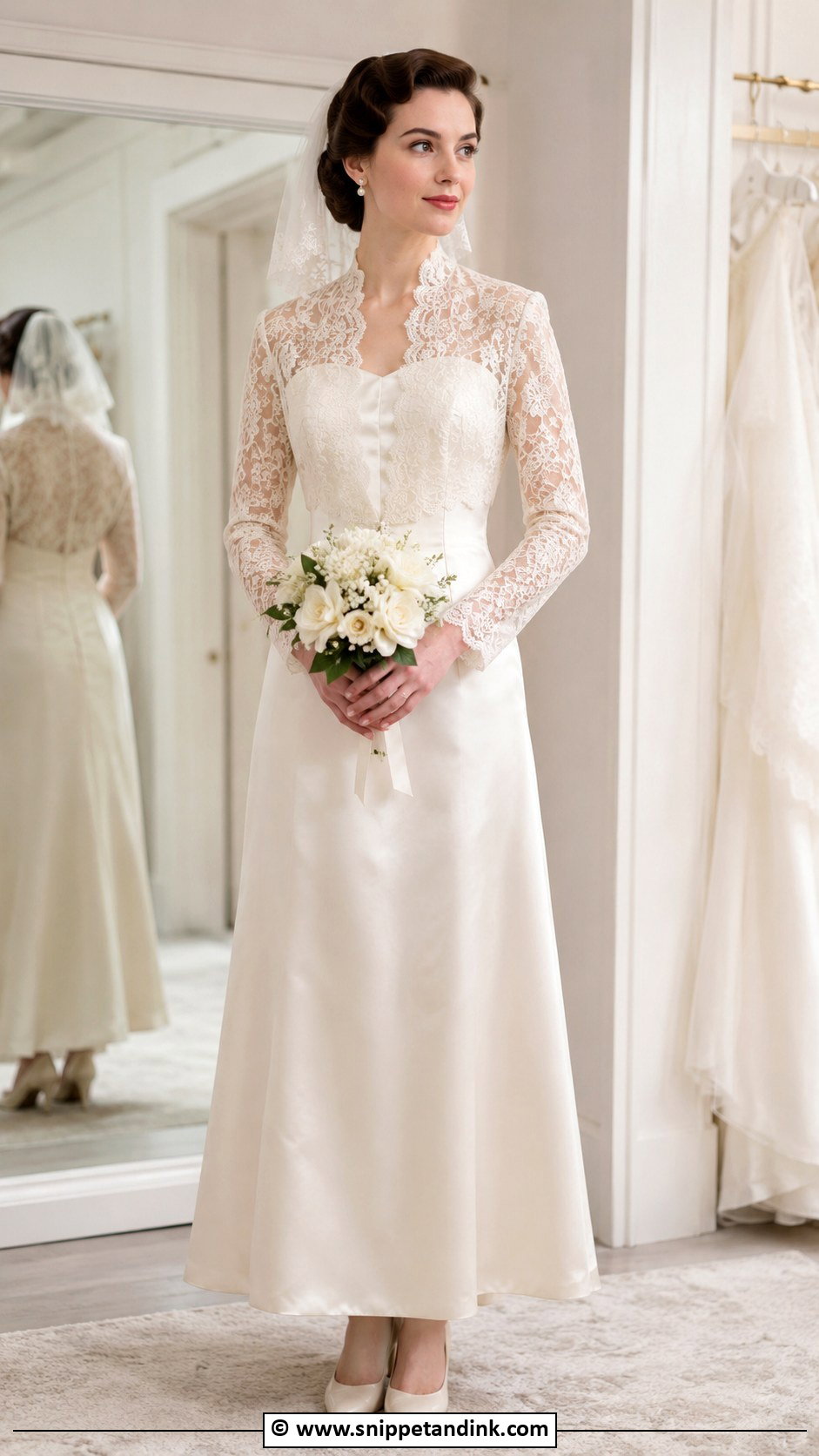
A lace jacket over a slim satin or crepe gown gives you two looks in one. The jacket covers the arms for the ceremony and comes off for the reception. Match the lace to the gown’s tone closely; ivory lace over a bright white slip looks yellow next to it. Ask for a hook-and-eye closure rather than buttons, so you can remove it quickly. A short veil, pearl earrings, ivory pumps and a small bouquet are enough.

20. 1940s Wedding Dress With Cap Sleeves
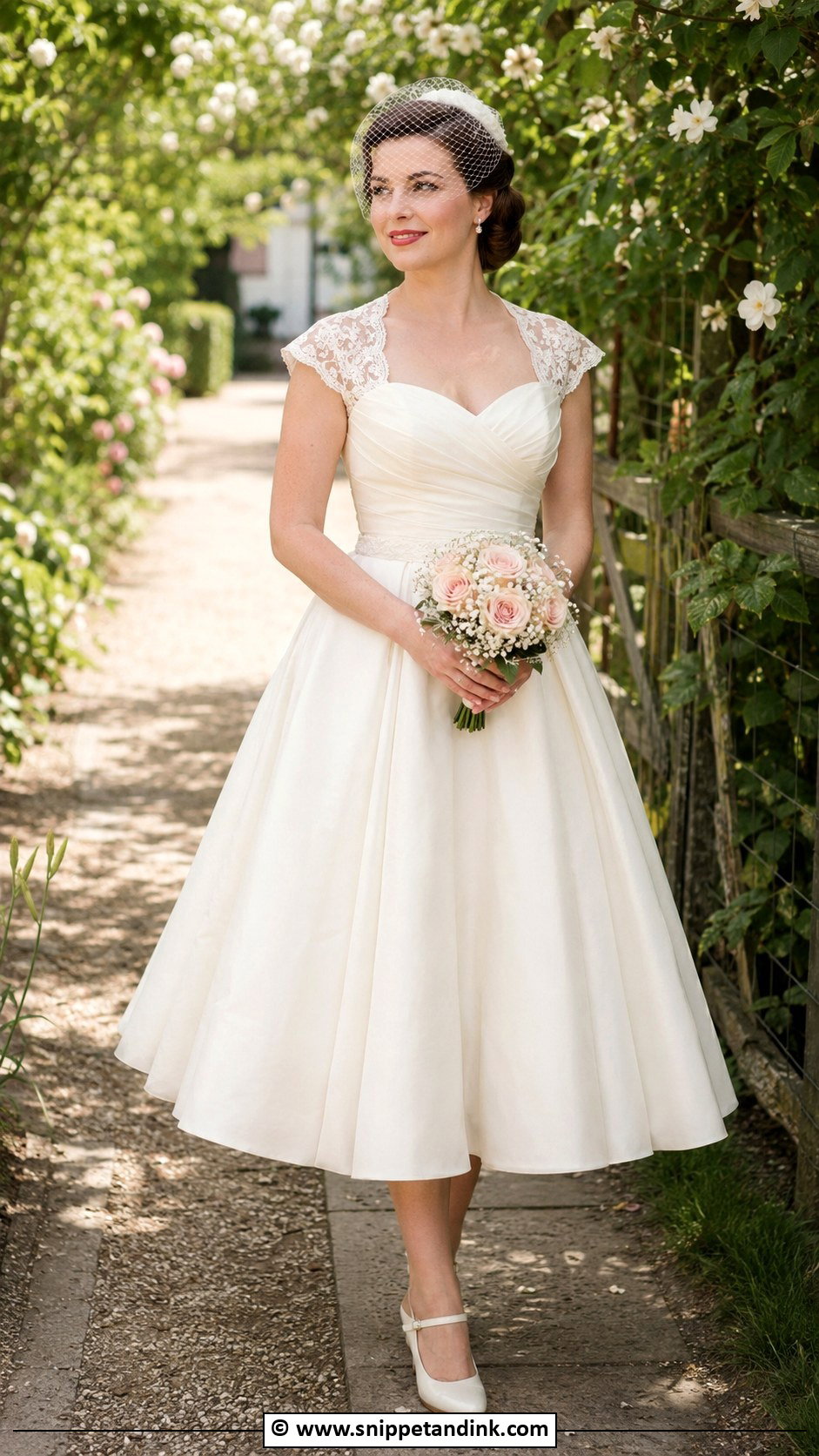
Cap sleeves keep a forties dress light for spring and summer. They give a little shoulder coverage while the arms stay cool. Lace cap sleeves read feminine; satin ones look crisp. Choose a sweetheart neckline, a fitted waist and a simple skirt, in tea length or floor length. If the bodice feels loose, gentle shaping at the waist fixes it better than tightening the sleeves. Add a birdcage veil, pearl studs and ivory Mary Janes.
21. 1940s Wedding Dress With Draped Bodice
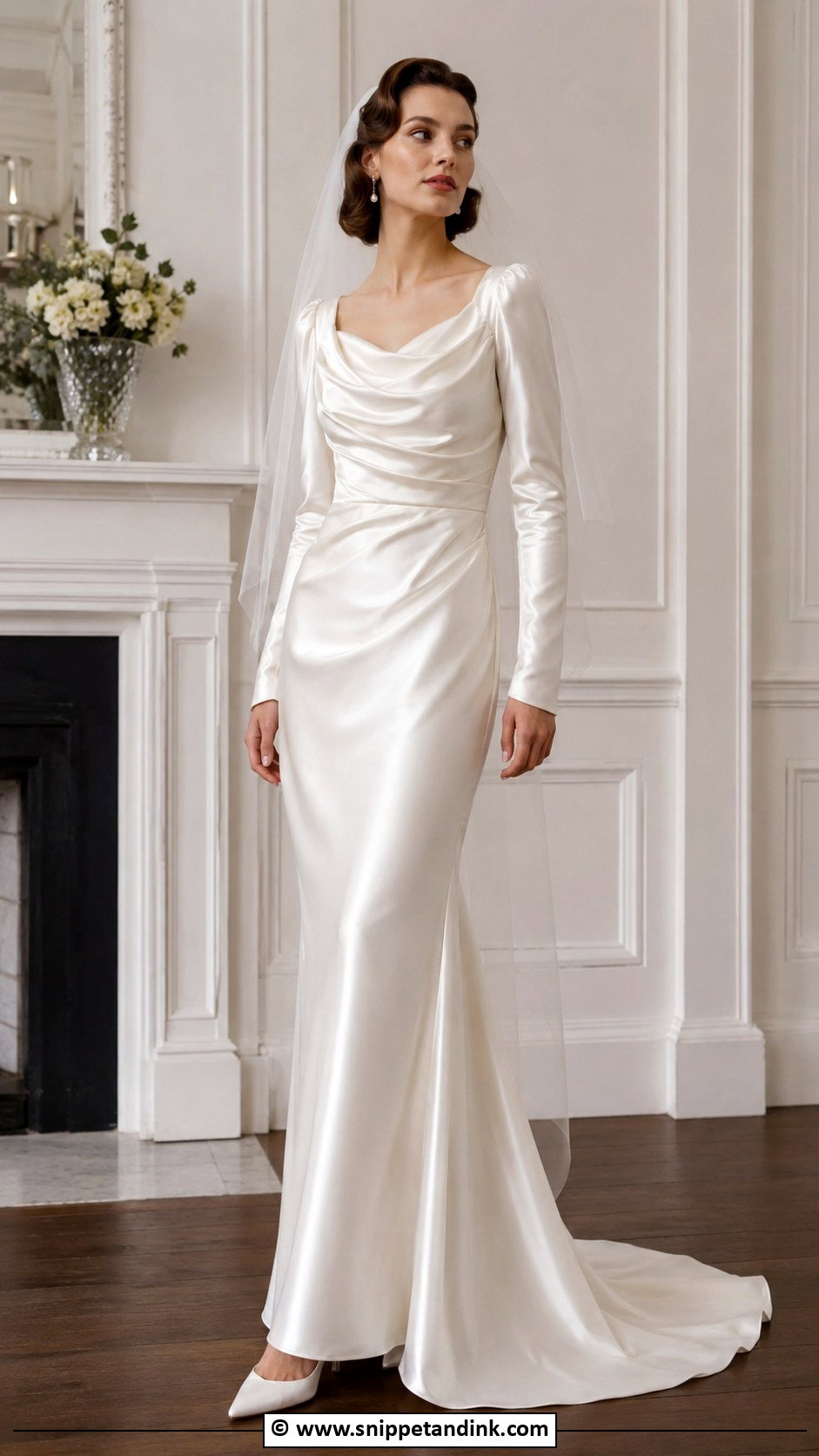
Draped bodices were a forties evening-wear trick, with soft gathers across the bust or waist. Gathering should be gentle, not heavy folds. It’s flattering because the drape hides small fit issues, but only on fabrics that fall well: satin, a silk-like crepe or real crepe. Stiff fabrics bunch. Pair it with long sleeves, a slim skirt and a small train. Pointed closed-toe heels, a narrow veil, side-parted waves and a compact bouquet finish it.
22. 1940s Wedding Dress With Peter Pan Collar
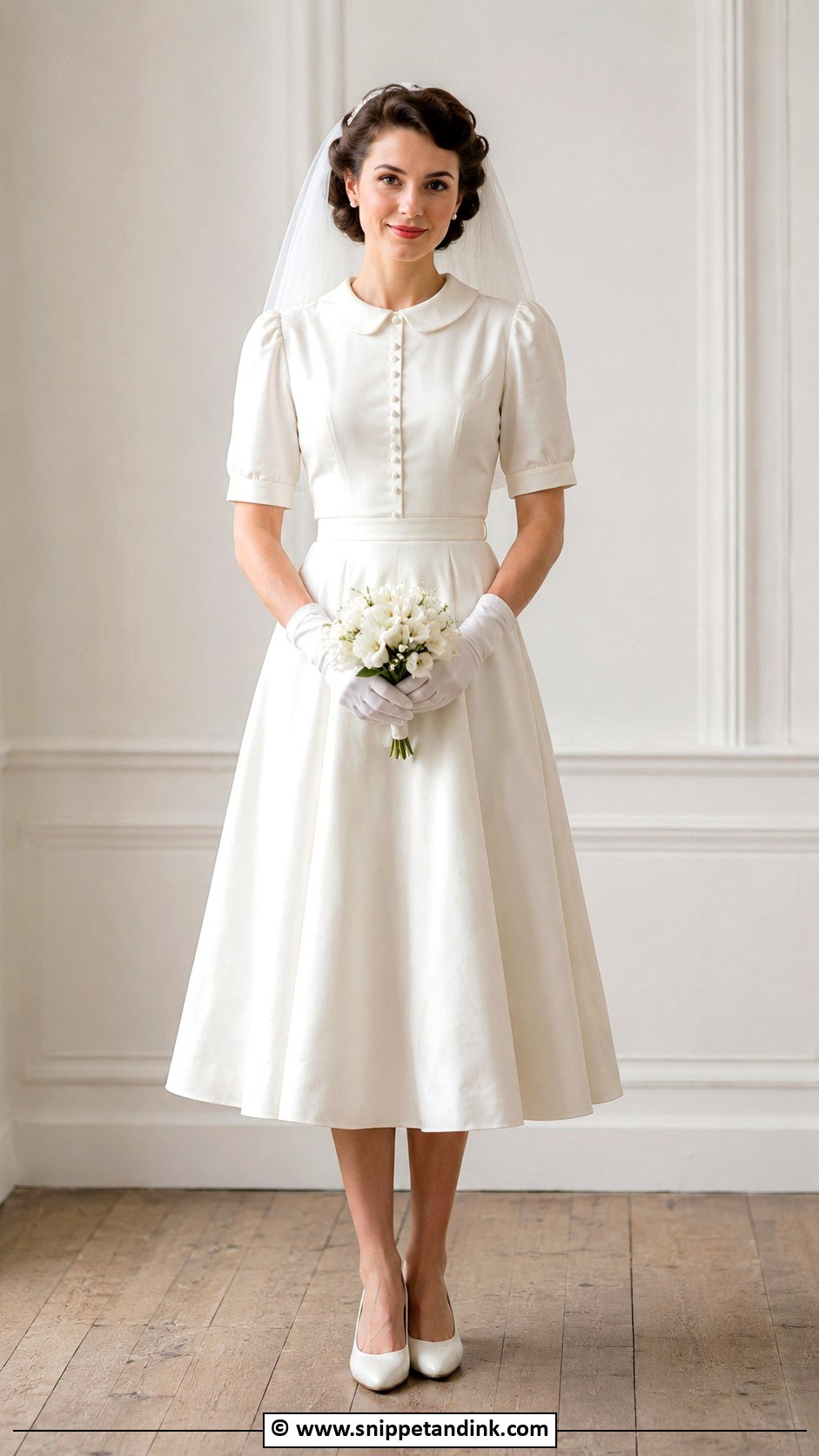
A Peter Pan collar is sweet and modest, and slightly youthful. It sits best on a dress with a fitted bodice, soft sleeves and a defined waist, in midi or floor length. Lace, satin or sheer organza all make good collars. The collar has to lie flat, which means it needs a light interfacing; an unstructured one curls at the points after an hour. Pearl studs, a short veil, white gloves and a neat bun or soft curls frame it.
23. 1940s Wedding Dress With V Neckline
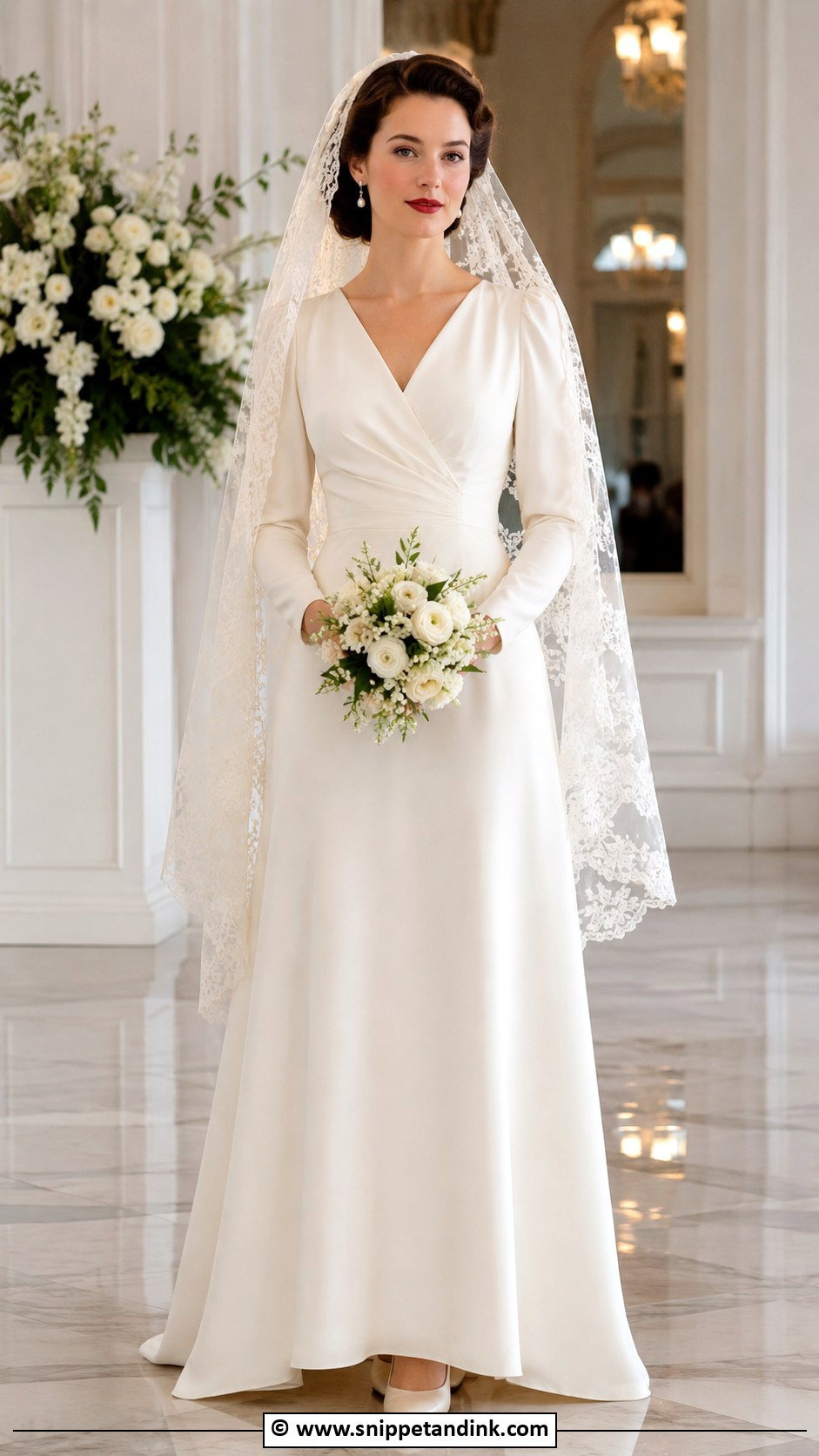
A V-neck stays forties when it’s shallow and framed by long sleeves and a fitted waist. Crepe and satin give the cleanest lines. If the V feels too open, an illusion panel or a lace trim softens it without losing the length it gives the neck. A lace veil, pearl drop earrings, ivory closed-toe heels and soft waves complete it. It suits brides who want to lengthen the neckline without going strapless.
24. 1940s Wedding Dress With Gloves
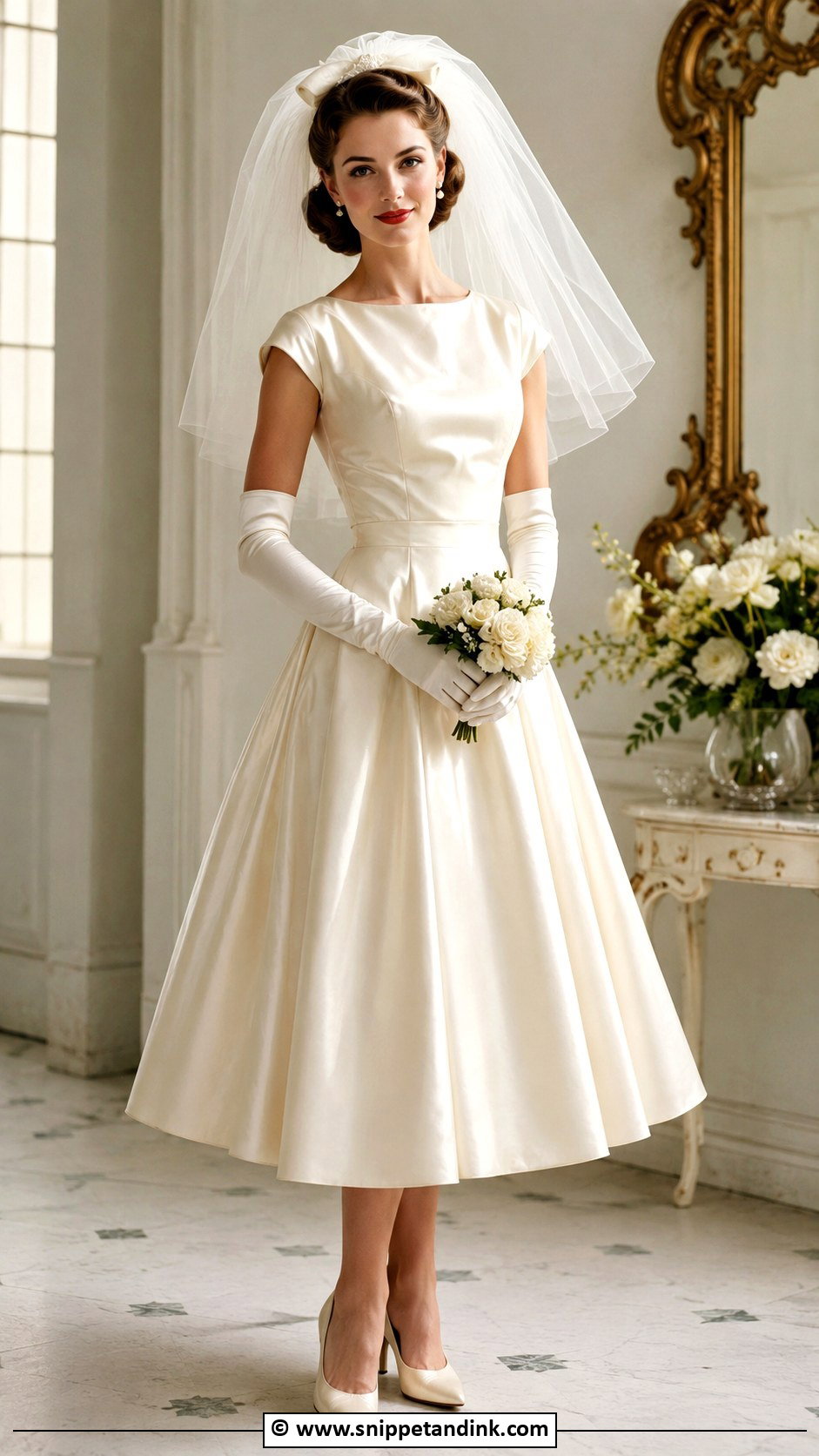
Gloves finish a simple dress more than any piece of jewelry. The rule is short sleeve, long glove: elbow-length with cap or short sleeves, wrist-length with three-quarter sleeves. Practicalities matter here too. You’ll need the ring finger free at the ceremony, so either choose fingerless gloves or plan for your maid of honor to hold one while you exchange rings. Satin or lace gowns, pearl earrings, a structured veil and ivory pumps finish it.
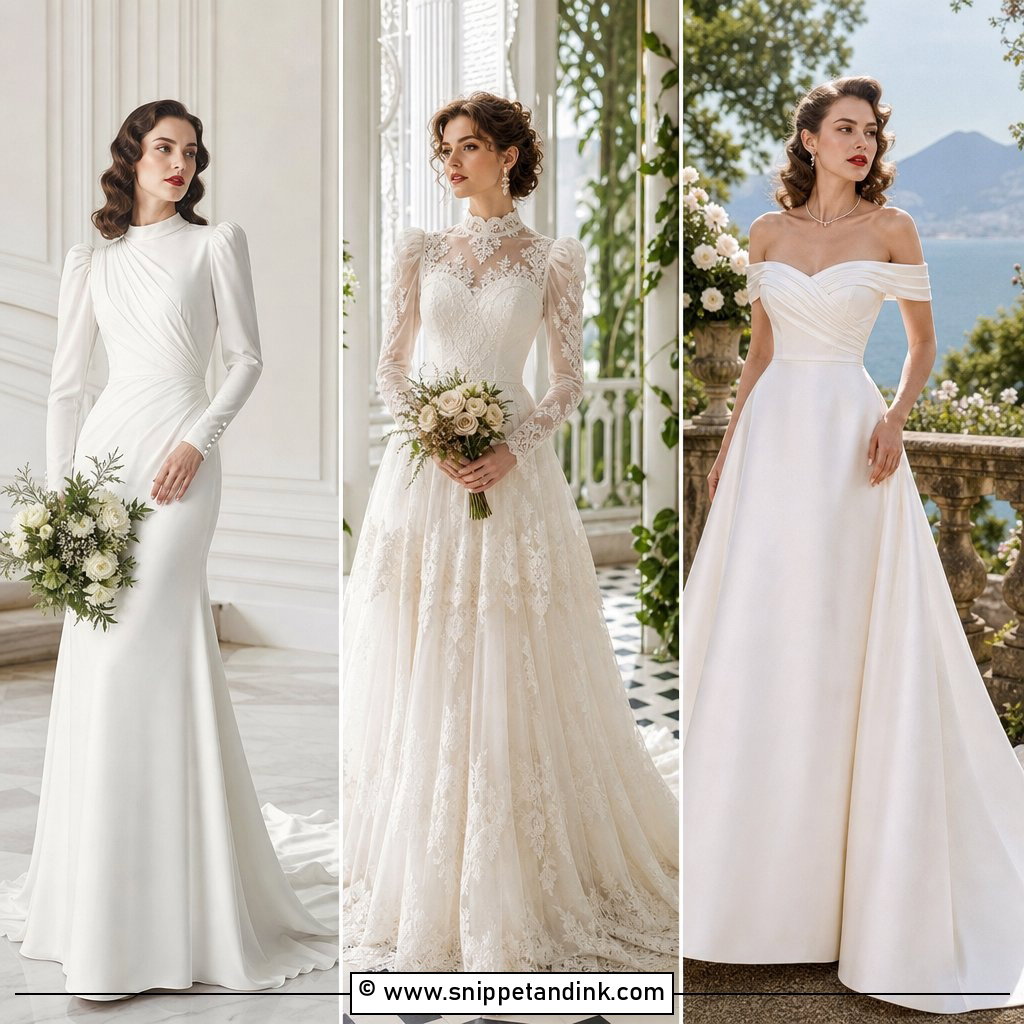



25. 1940s Wedding Dress With Birdcage Veil
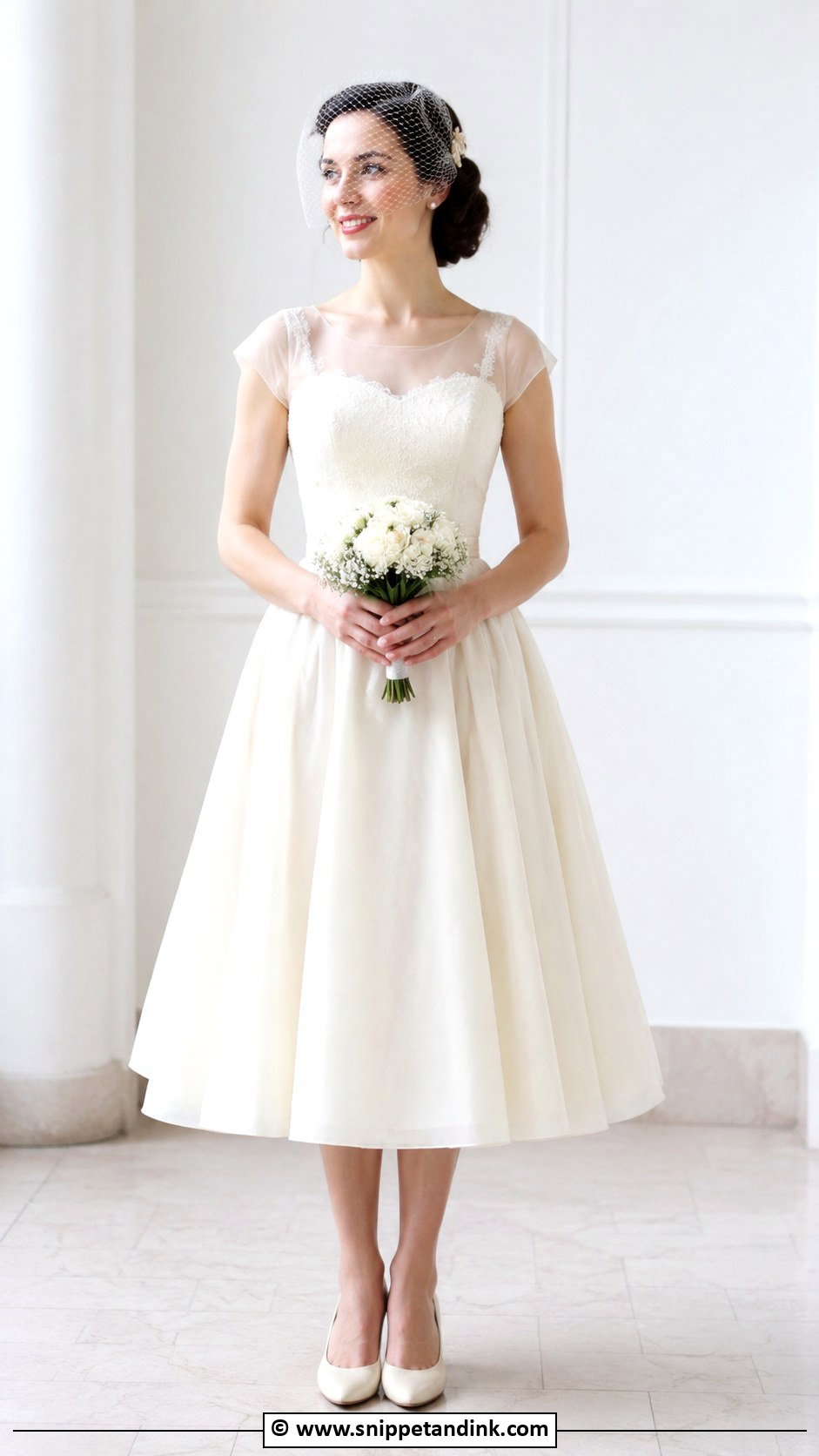
A birdcage veil gives an instant forties mood with almost no effort. It pairs with a tea-length dress, a bridal suit or a slim satin gown. Set it at an angle across one eye, or straight across the brow, so it frames the face without hiding it. A red-toned lip suits it if that’s already your style. Add pearl studs, closed-toe heels and maybe a small hat or floral comb. Keep the dress clean and structured so the veil carries the vintage detail.
Rolls, Waves and a Red Lip Finish the Look
The dress only gets you halfway. Forties hair is set, not blow-dried: pin curls or rollers create the wave, and the curls are brushed out and shaped into rolls. Fine hair drops a set within hours, so tell your hairstylist your hair type at the trial. Many will set curls with heat on the morning and use a padded base or extra pins to support rolls.
Short hair can carry the era too. Finger waves set close to the head, or a deep side part with one sculpted wave at the front, give the same polish without length. If you plan a veil, ask for the comb to be anchored behind the wave rather than through it, so the shape stays crisp all evening.
Makeup of the period is simple: even skin, defined brows, a little liner and a matte red or berry lip. Choose a lip that sticks, like a long-wear liquid or a lipstick blotted and layered, since you’ll be kissing and drinking. Do a trial with the veil and any hat on, because rolls placed too high can clash with a birdcage frame or push a veil comb out of position.
Which Side of the Decade Suits Your Wedding
The forties offer two moods. The wartime side gives you suits, tea lengths and crepe dresses for a small ceremony; the postwar side gives you satin gowns, trains and long veils for a church wedding. Whichever you lean toward, the period comes through in the same places: defined shoulders, sleeves, a neat waist and modest necklines. Plan the outfit as a whole, from veil to shoes, and choose fabrics that drape, and the look will feel authentic rather than costumed.
You'll Like These Ideas:








Leave a Reply