
The 2010s began with strapless sweetheart gowns and ended in plain crepe, and in between came long lace sleeves, illusion necklines, keyhole backs and floral appliqués that seemed to float on skin. It was a varied decade, with fitted mermaids and loose boho sheaths sold side by side. Those dresses already feel nostalgic, yet most of them haven’t dated badly, because the shapes were built around fit rather than gimmicks. I’ve grouped twenty of them below, with the fitting checks and pairings I’d use for each, from royal-style lace sleeves to quiet minimalism.
Matching Illusion Mesh to Your Skin Before You Commit
Sheer panels are the signature of this decade, and they only work when the mesh disappears against your skin. Bridal illusion tulle usually comes in several shades, from ivory and champagne through nude and darker tones. Many shops stock the sample in one shade only, so ask what the gown can be ordered in rather than assuming.
How I test the shade
- Hold the mesh against your collarbone near a window, not under the fitting room spotlights.
- Take a phone photo with flash. Camera flash exaggerates any mismatch, so this is how the panel will look in evening pictures.
- Check the shade against your skin as it will be on the day, including any tan or body makeup you plan to wear.
Mesh is also more delicate than it looks. It can ladder if caught on a bracelet or a ring prong, and makeup or self-tanner can transfer onto it at the neckline. Put your foundation on before the dress, keep a clean tissue at the neck when someone hugs you, and save the tan for several days before.
1. Strapless Sweetheart Mermaid Wedding Dress
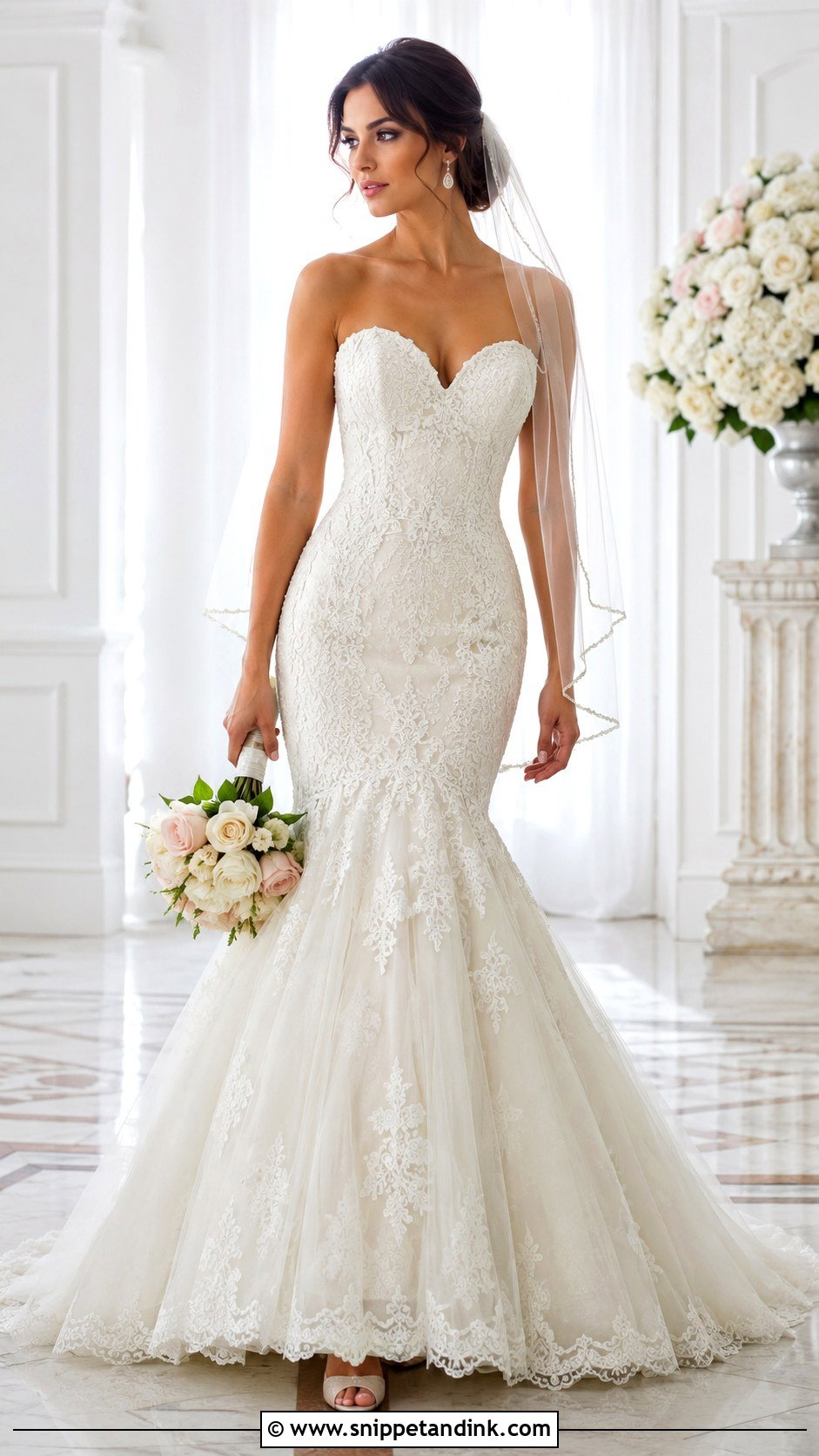
A strapless sweetheart mermaid gown is the early-decade red-carpet look: a structured bodice that follows you to the hips, then a big tulle or organza flare. Lace appliqués, light ruching or scattered crystals add period detail. The boning carries this dress, and if it’s soft or poorly placed, the bodice rolls at the top edge after a few hours of sitting. Have your tailor check it alongside the hem, which needs to clear the floor in your actual shoes. A fingertip veil, teardrop earrings, ivory peep toes and loose side-swept hair suit it.
2. Long Sleeve Lace Ball Gown Wedding Dress
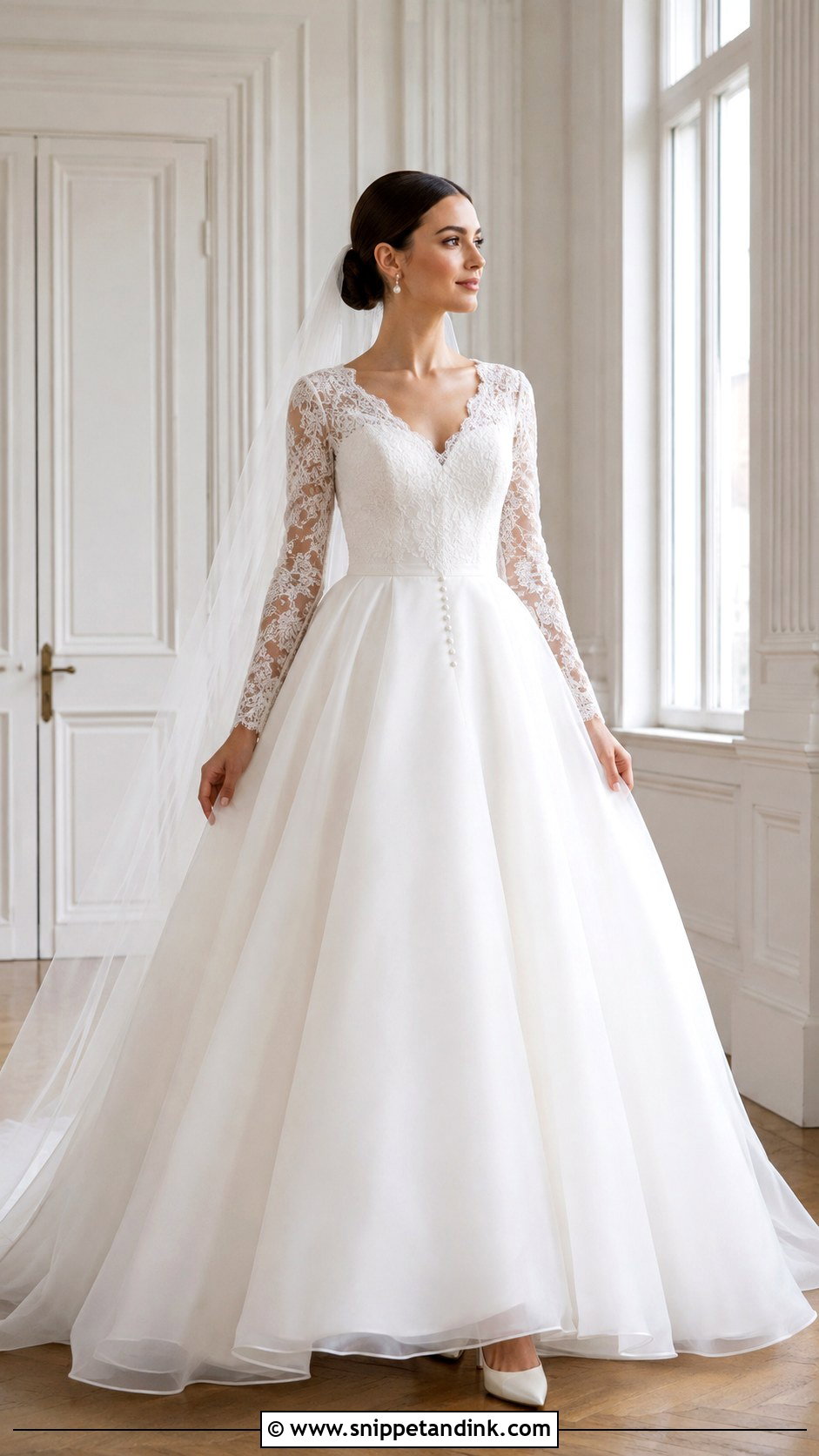
Long lace sleeves over a full skirt are probably the image most people picture for this decade. A fitted bodice with a modest V-neck, scalloped edges and covered buttons down the back sits above a structured waist and satin or organza skirt. Lace sleeves rarely have stretch, so bend your elbows and reach forward at the fitting; a sleeve cut straight from shoulder to wrist can split at the elbow seam on the dance floor. A chapel veil, pearl drops, pointed pumps and a compact white bouquet suit it, with a low chignon. In a lightweight skirt fabric it works for smaller weddings too.
3. Illusion Neckline A-Line Wedding Dress
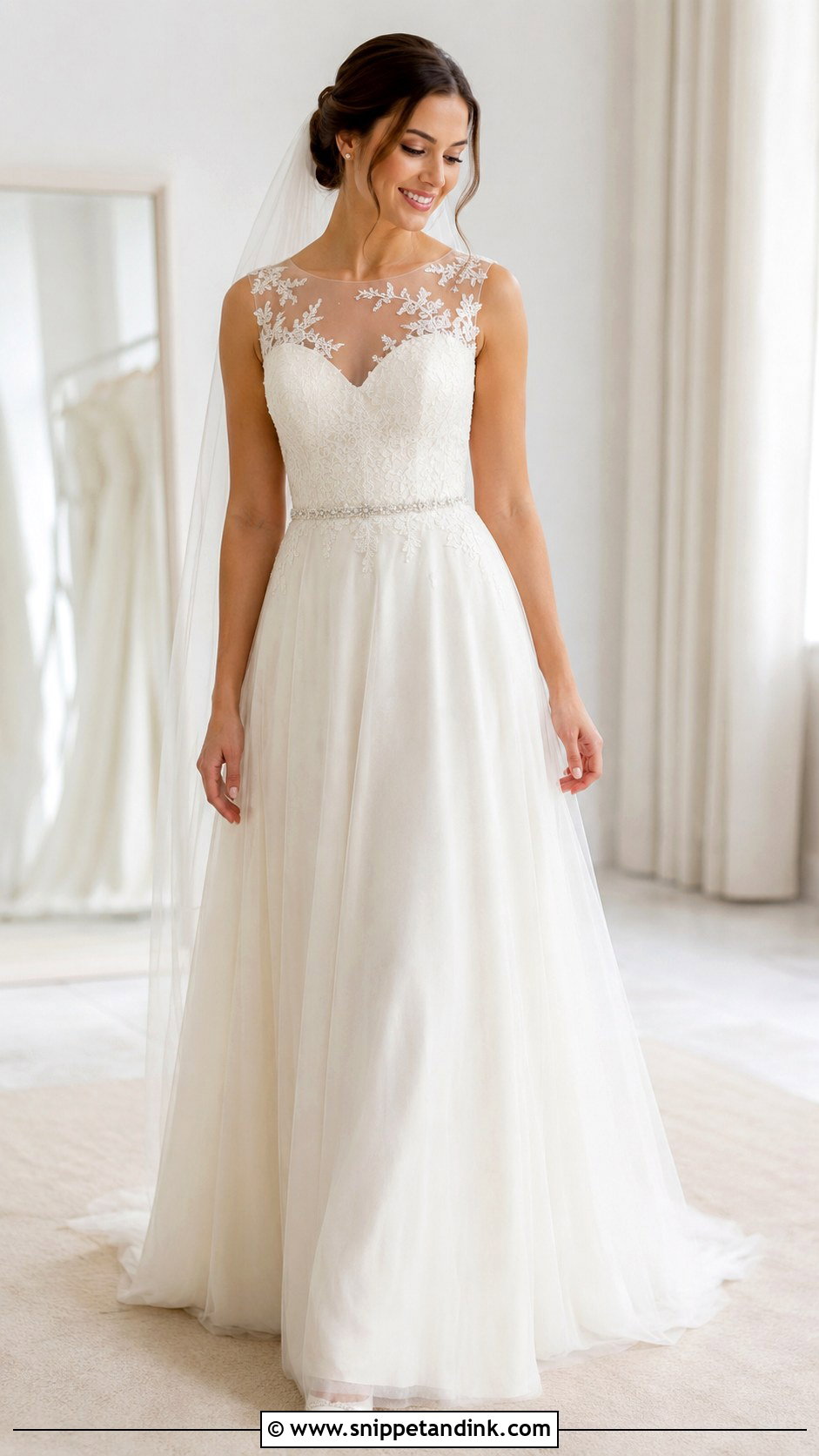
Illusion necklines look strapless from a distance but give coverage and support. Sheer tulle runs from a sweetheart bodice up to the collarbone, with lace appliqués that seem to sit on the skin. An A-line keeps it easy to move in, and a narrow crystal belt marks the waist. The mesh color matters more than anything else here. Look at it in daylight against your chest, because a shade that’s slightly off shows as a visible band in photos. Stud earrings, closed-toe heels, a plain-edged veil and a relaxed updo let the neckline show.
4. Ruffled Organza Ball Gown Wedding Dress
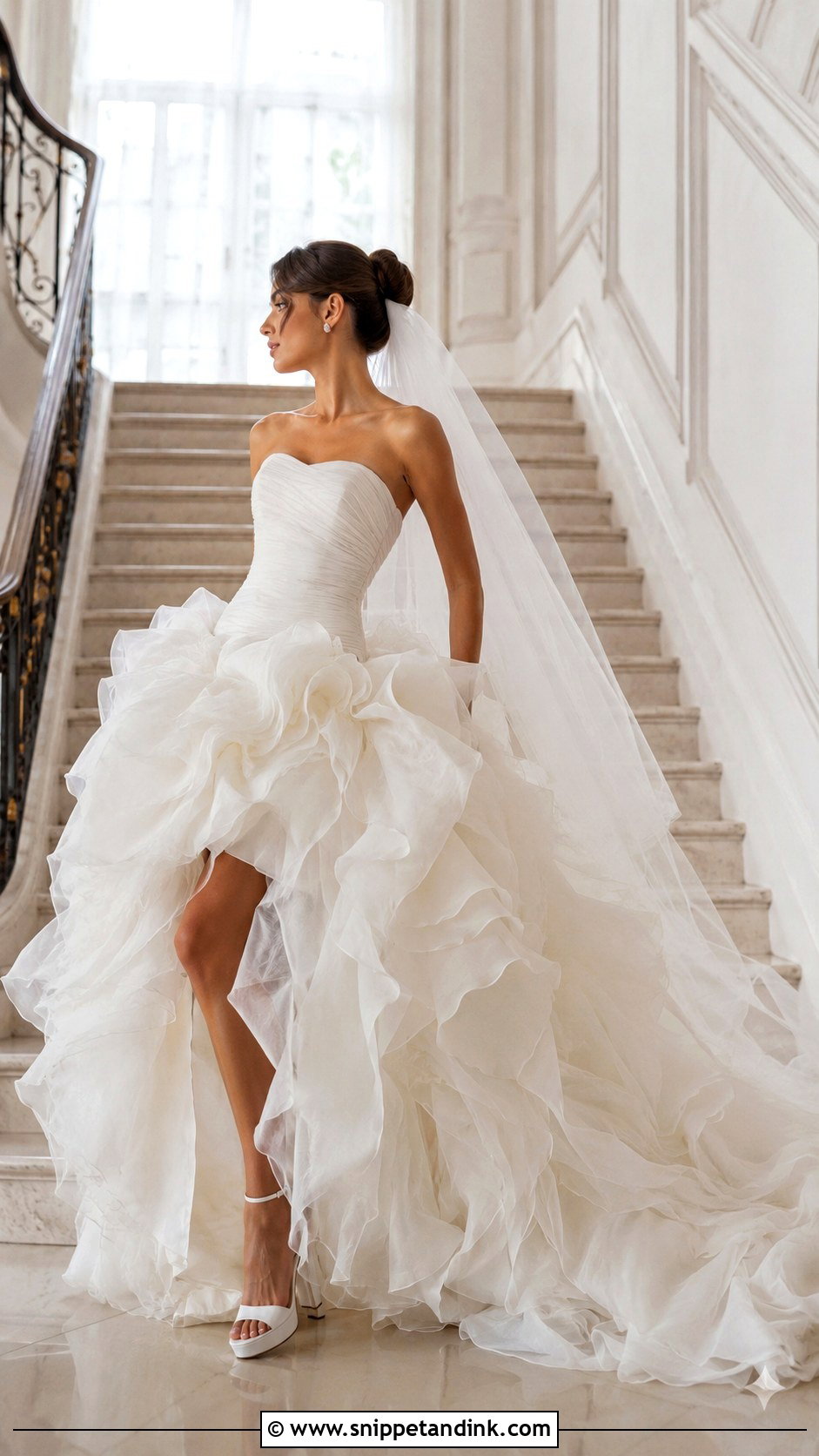
Ruffled organza skirts were the drama of the decade. A fitted strapless or lightly draped bodice sits above cascading ruffles instead of one solid layer, so keep the accessories calm: crystal studs, satin platform heels and a simple tulle veil, with a sleek bun or smooth half-up style. Ruffles add width at the hem, which makes doorways, car seats and bathroom stalls trickier than you’d expect. If that worries you, pick softer, widely spaced ruffles and a chapel train; it still looks grand and you can sit and dance properly.
5. Cap Sleeve Keyhole Back Wedding Dress
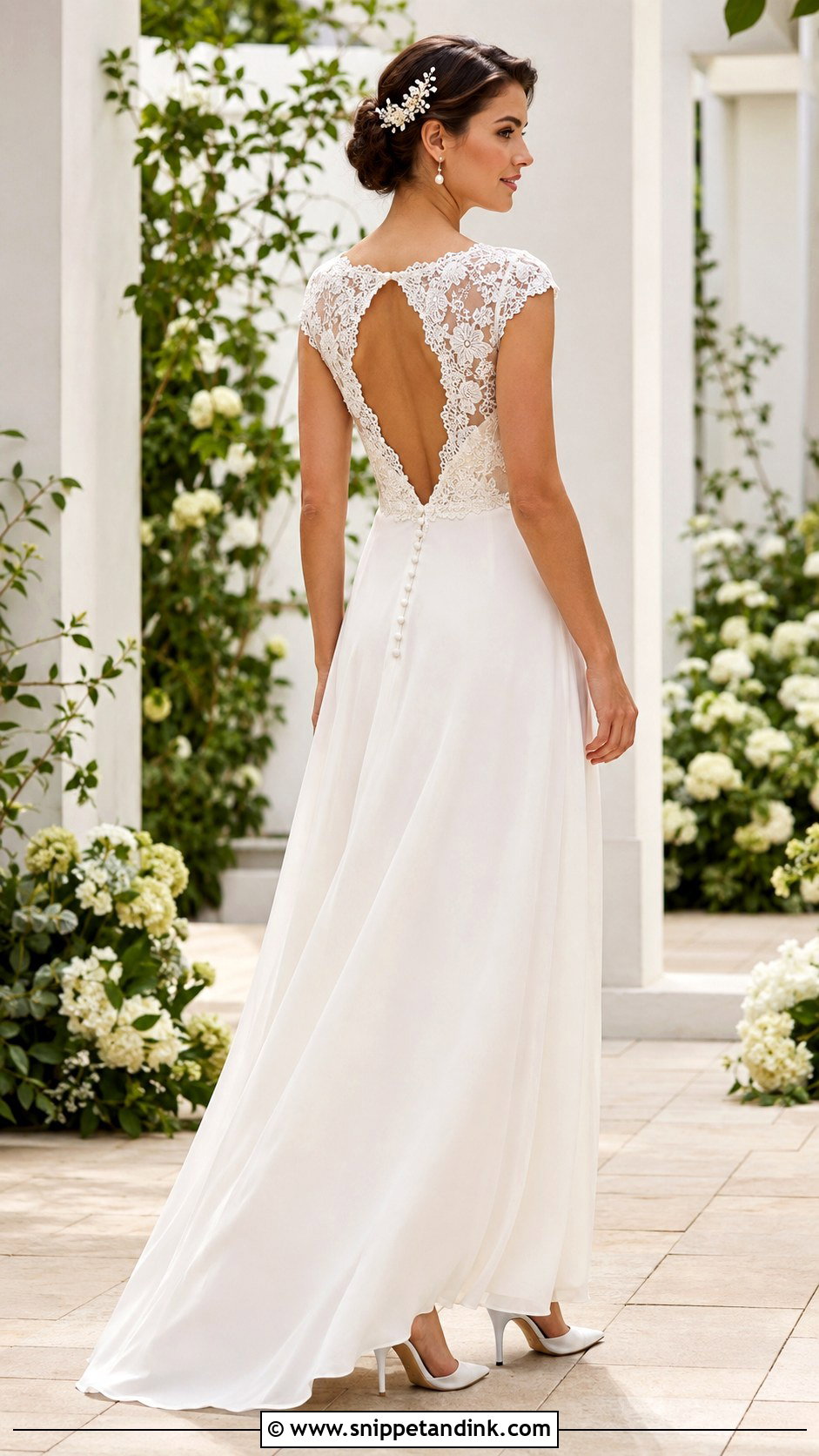
Cap sleeves and a keyhole back were the decade’s answer to all those strapless gowns. Floral lace across the shoulders, a softly fitted bodice and a round or bateau front lead to an open back framed in scalloped lace with covered buttons. Cap sleeves can bind across the upper arm, so test the shoulders before alterations are finished by hugging someone. A low bun with a floral comb, small pearls and classic pointed pumps suit it. Skip an embellished necklace. A lightweight A-line or fit-and-flare skirt keeps it comfortable.
6. Floral Lace Fit And Flare Wedding Dress
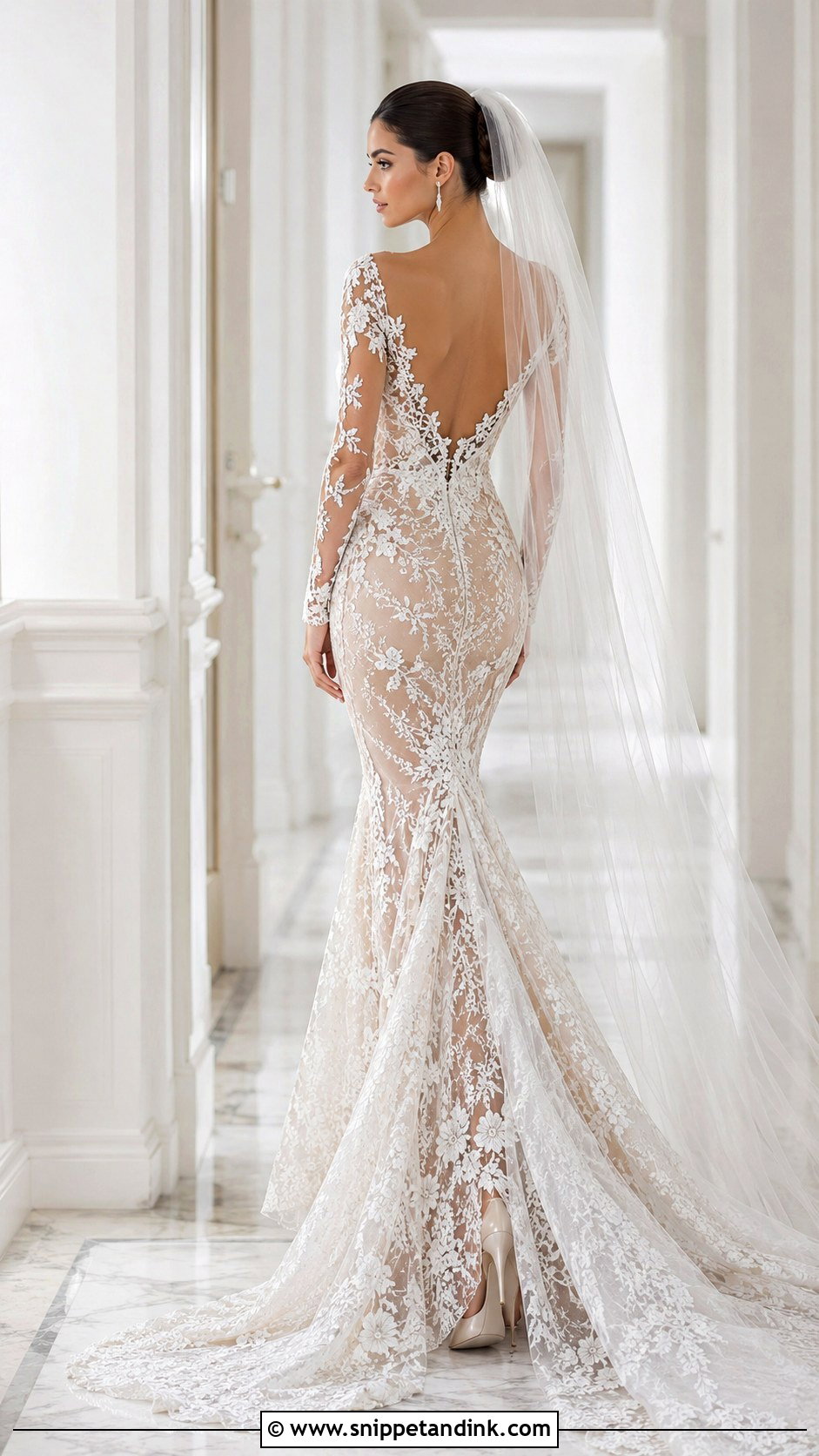
Floral lace was at its boldest in the 2010s, running over bodices, sheer panels and trains. A fit-and-flare with medium-scale motifs from neckline to hem, a soft V-neck and thin straps keeps the pattern from feeling heavy. I often suggest ivory lace over a faint champagne lining; the slight contrast makes the pattern visible in photos, where ivory on ivory can wash out to a flat shape. An unembellished veil, pearl earrings, ivory ankle-strap heels and a small bouquet with plenty of greenery suit it, with loose waves or a low textured ponytail.
7. Tattoo Lace Mermaid Wedding Dress
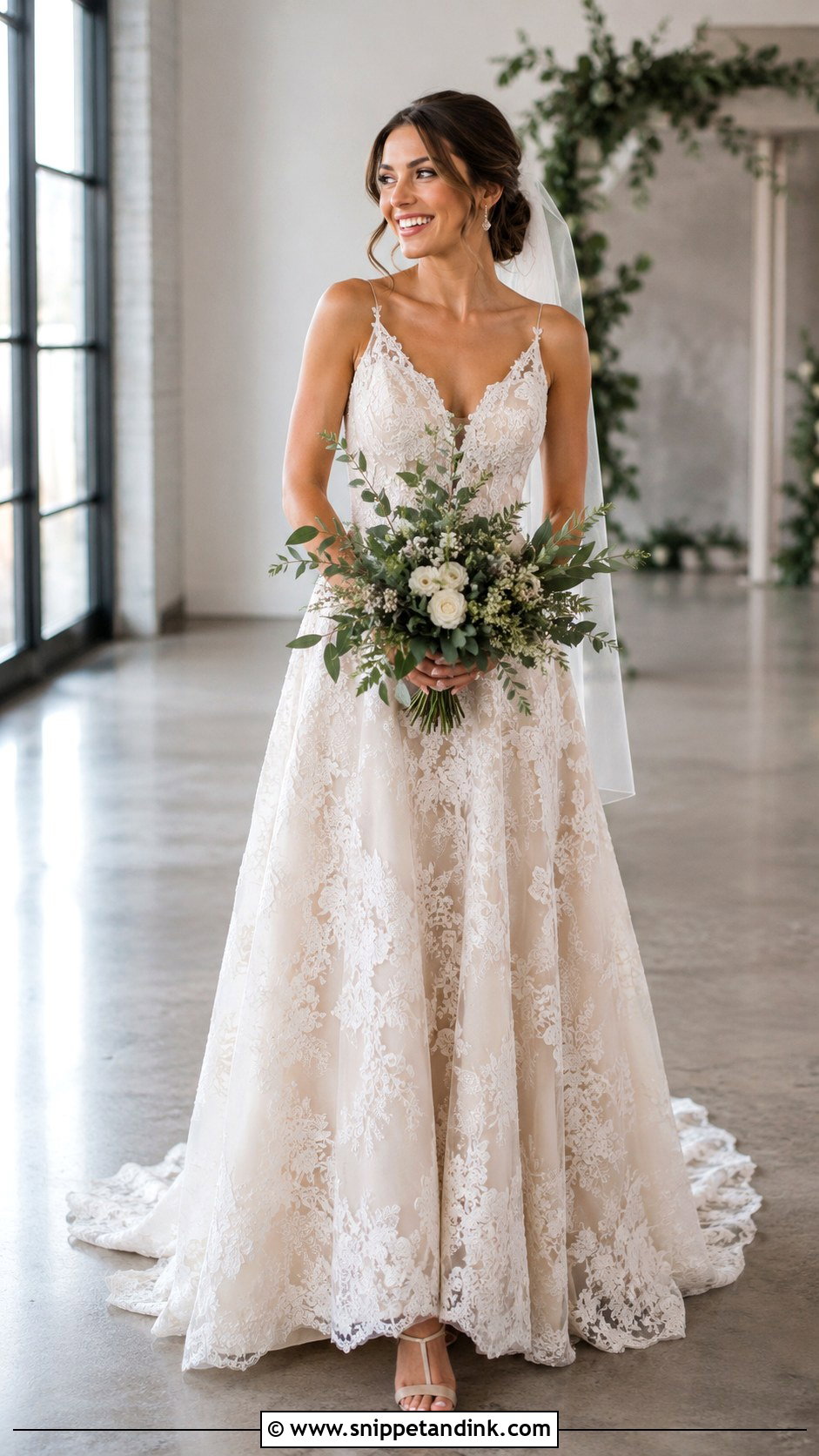
Tattoo lace is the illusion idea taken further: appliqués placed on skin-toned mesh so the embroidery appears to sit directly on your shoulders and back. A defined waist and a knee-height flare make it a mermaid. The mesh needs a precise fit, because loose mesh wrinkles and tight mesh pulls the appliqués out of line. I also warn brides that self-tanner and body makeup rub onto sheer mesh and can stain it, so apply it days ahead or skip it on the back. Match the bodice motifs to those at the hem and train. A plain cathedral veil, slim drops, pointed satin heels and a polished updo complete it.
8. Blush Tulle Wedding Dress
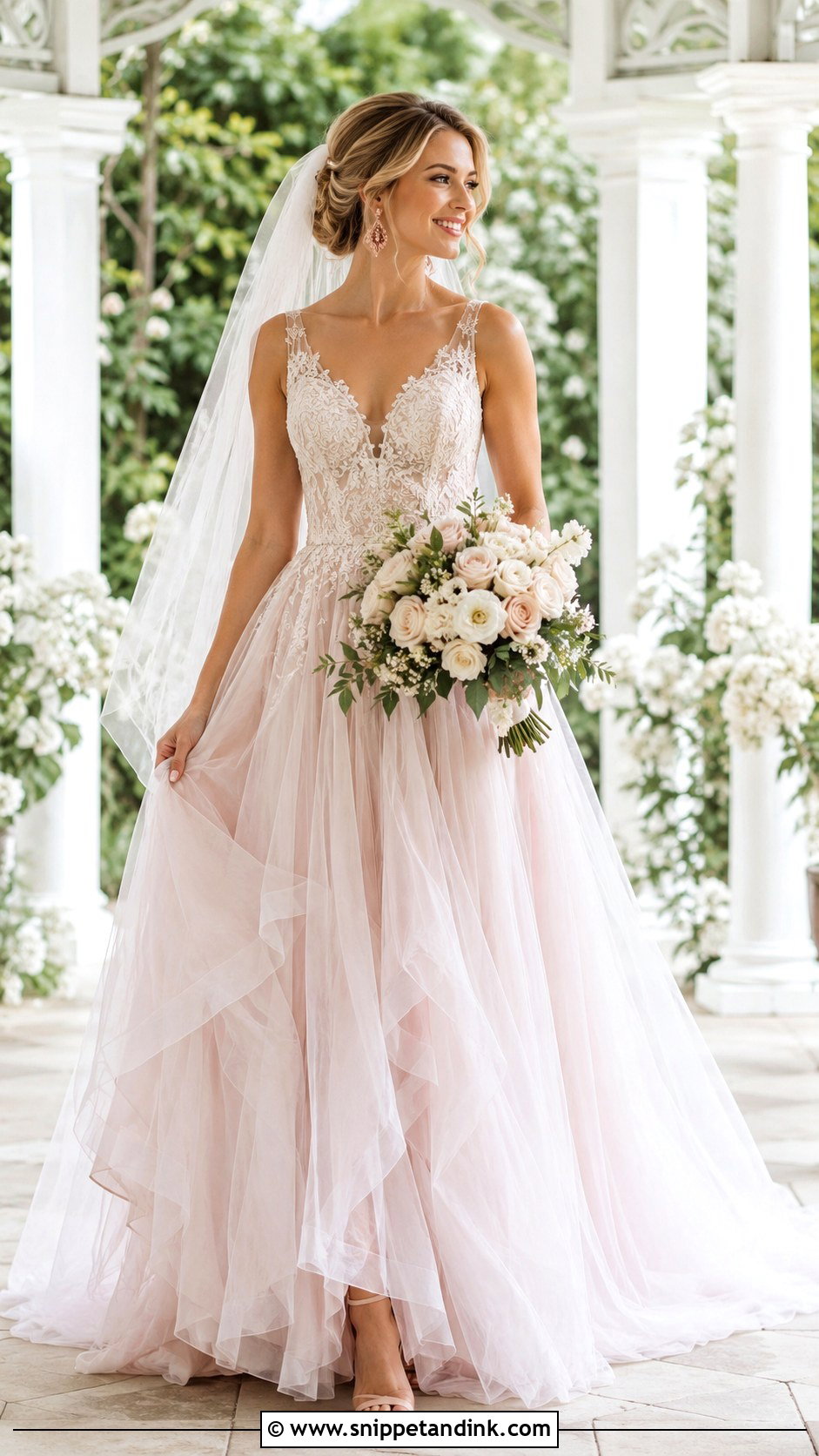
Blush was the decade’s gentle alternative to white. A layered tulle A-line or ball gown with an ivory lace bodice over a muted pink underlay keeps the color soft. Look at it outdoors before you buy. Under shop lighting blush can look stronger or almost grey, and daylight shows its true shade. Rose-gold earrings, nude or pale blush heels and a sheer ivory veil that lets the skirt color through all suit it, with a loose braided updo. Keep the bouquet to ivory, blush and greenery.
9. Beaded Crystal Wedding Dress
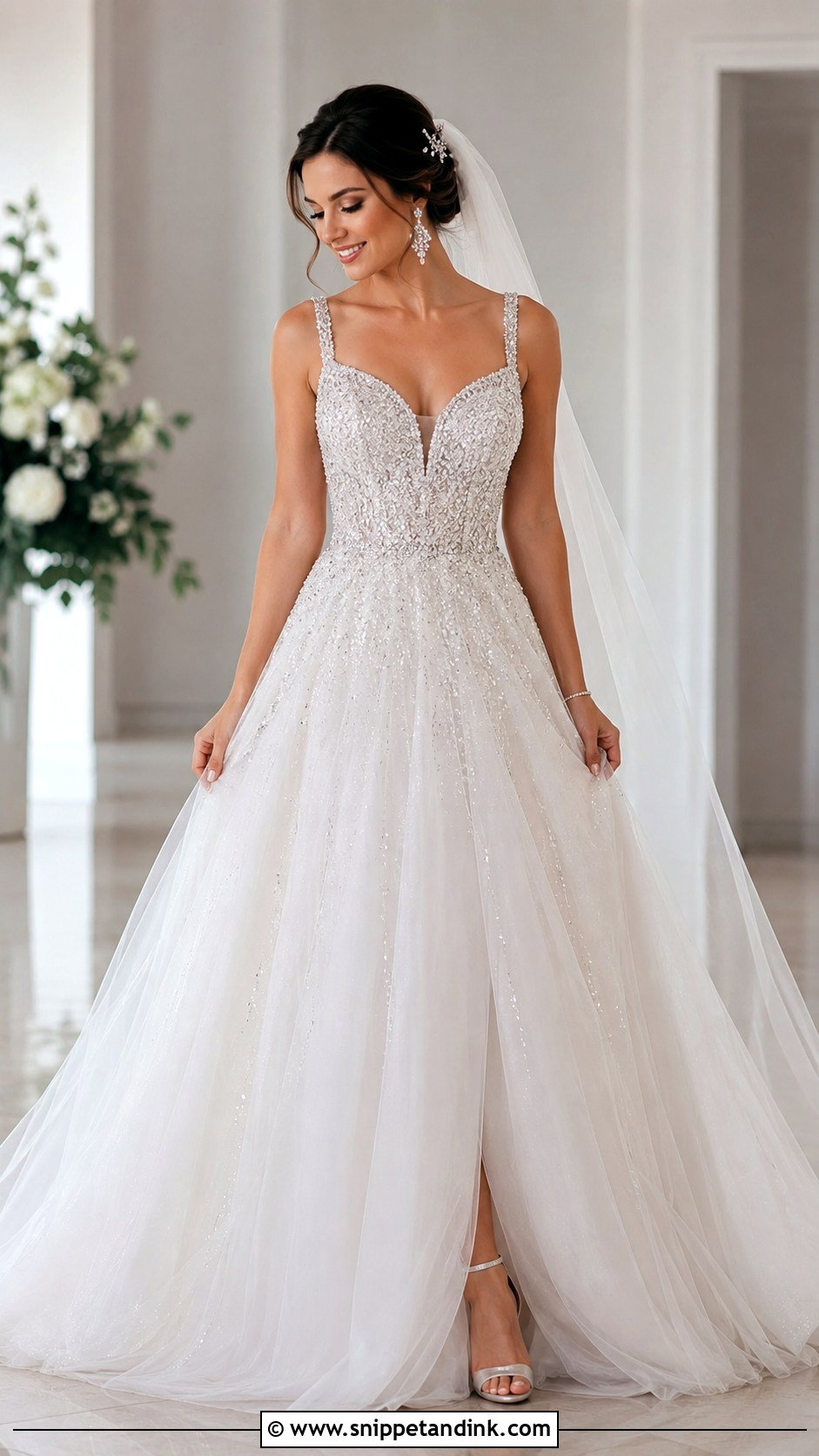
Controlled crystal beading on a fitted bodice, with beaded straps and a flowing tulle skirt, gives sparkle while staying soft. Repeat the shine with silver earrings, a narrow crystal comb and metallic ivory heels, but keep the veil plain. Two things to test at a try-on: whether the beads snag the veil when it falls over your shoulders, and whether they scratch the inside of your arms. Both are fixable with a soft lining or by moving a few beads. A smooth low bun and luminous makeup finish it.
10. One Shoulder Wedding Dress
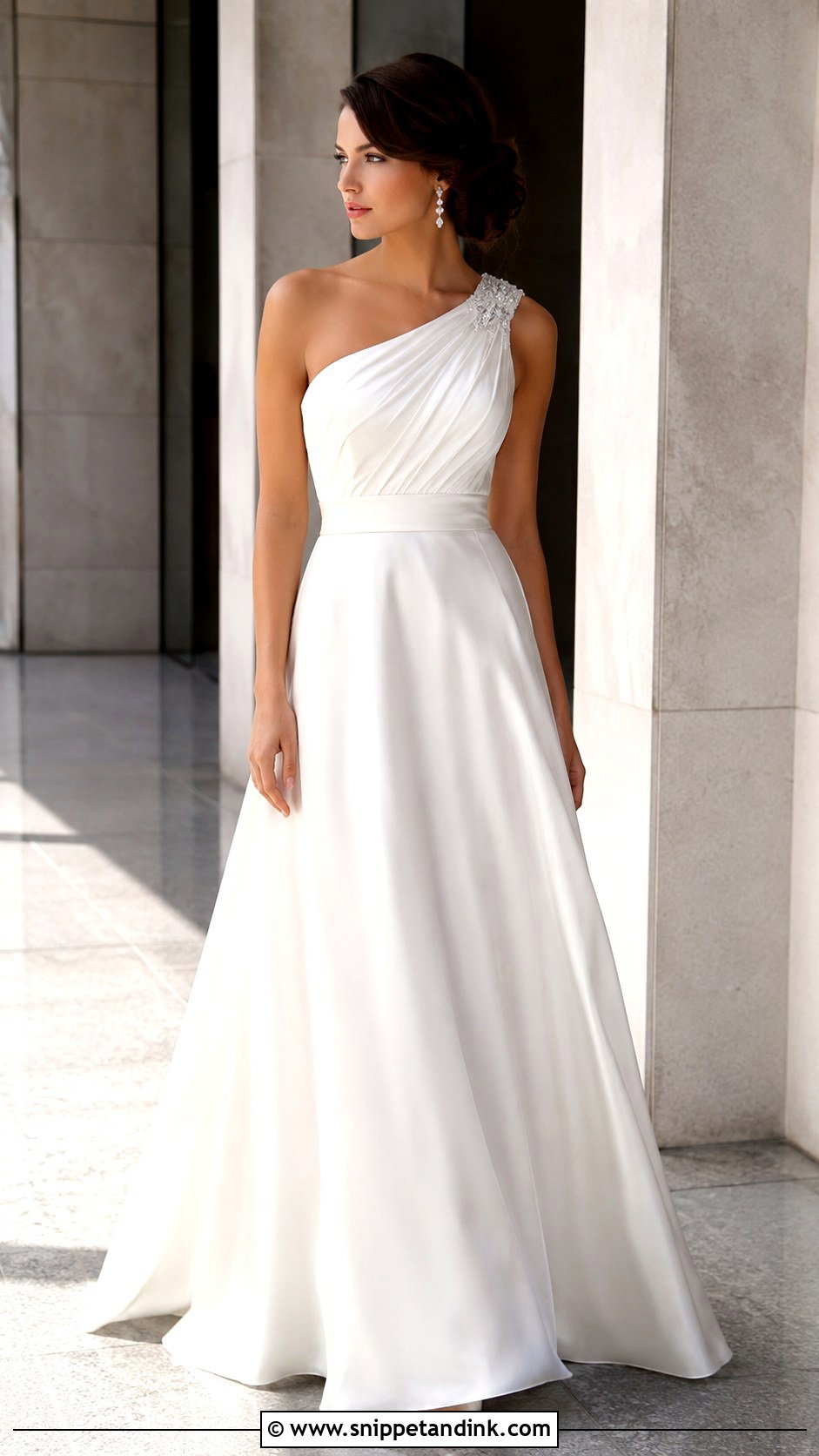
One shoulder was everywhere in early-2010s formalwear. Draped chiffon or structured satin with an asymmetric bodice and a defined waist is the base; a strap trimmed with fabric flowers, pleats or light beading adds period character. Sweep the hair away from the strap, wear simple drops and sleek pointed heels, and leave the necklace off. An A-line skirt suits most figures; a fitted trumpet is bolder. Ask how the bodice is anchored, since a single strap shouldn’t carry the dress. A short veil or delicate hairpiece suits it better than a heavy headpiece.
11. Peplum Mermaid Wedding Dress
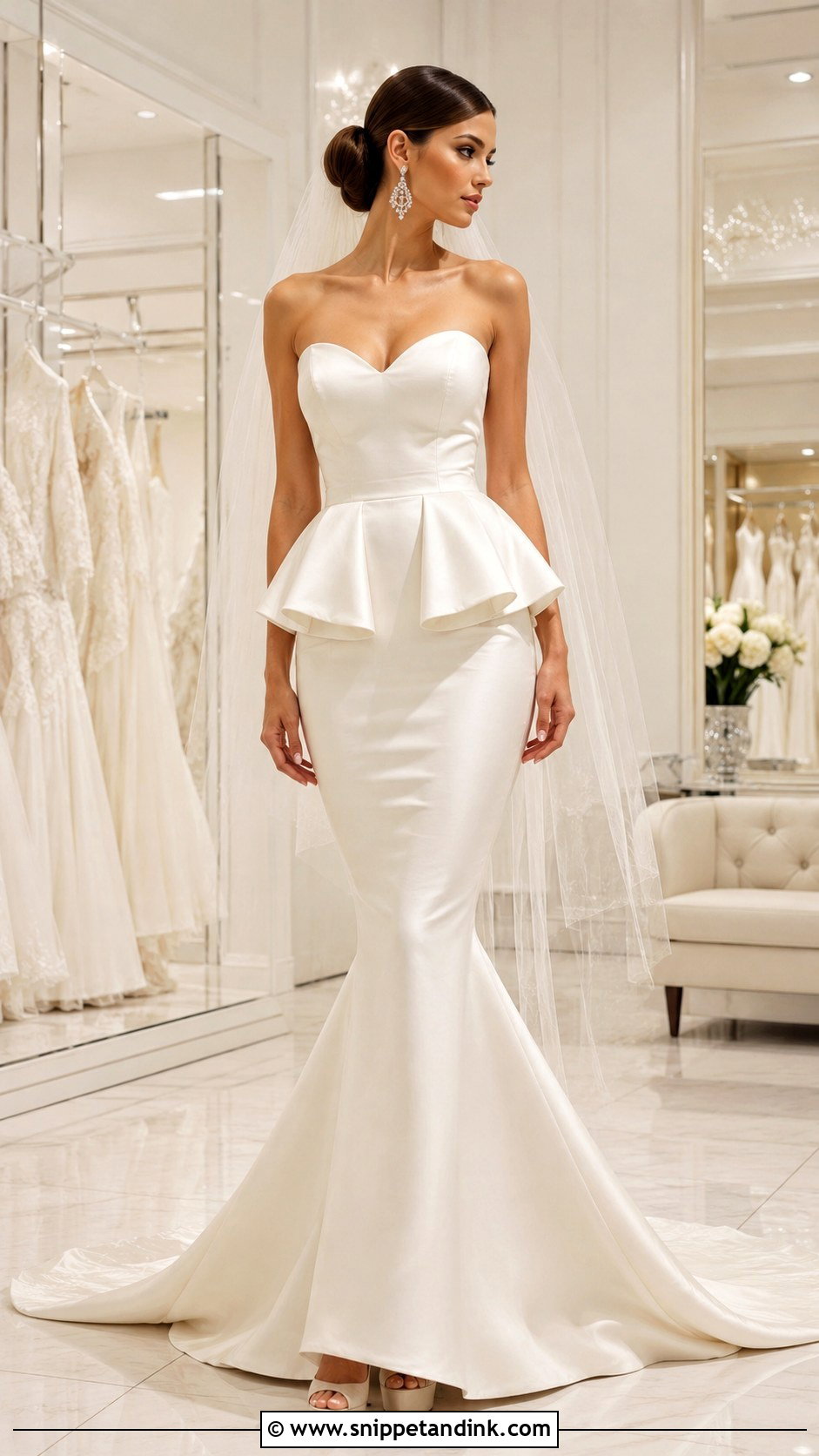
Peplums had a short, memorable moment in the decade. A smooth satin or lace mermaid fitted through the torso and hips, with a small flared panel at the natural waist, gives a strong hourglass line. The peplum must lie flat; if it flips up when you sit or sticks out at the hips, it adds bulk instead of shape. A strapless sweetheart neckline, crystal earrings, platform heels, a simple fingertip veil and a sleek side-parted bun suit it. A detachable lace peplum over a plain gown is the softer route, and it gives you a second look once it comes off.
12. High Low Wedding Dress
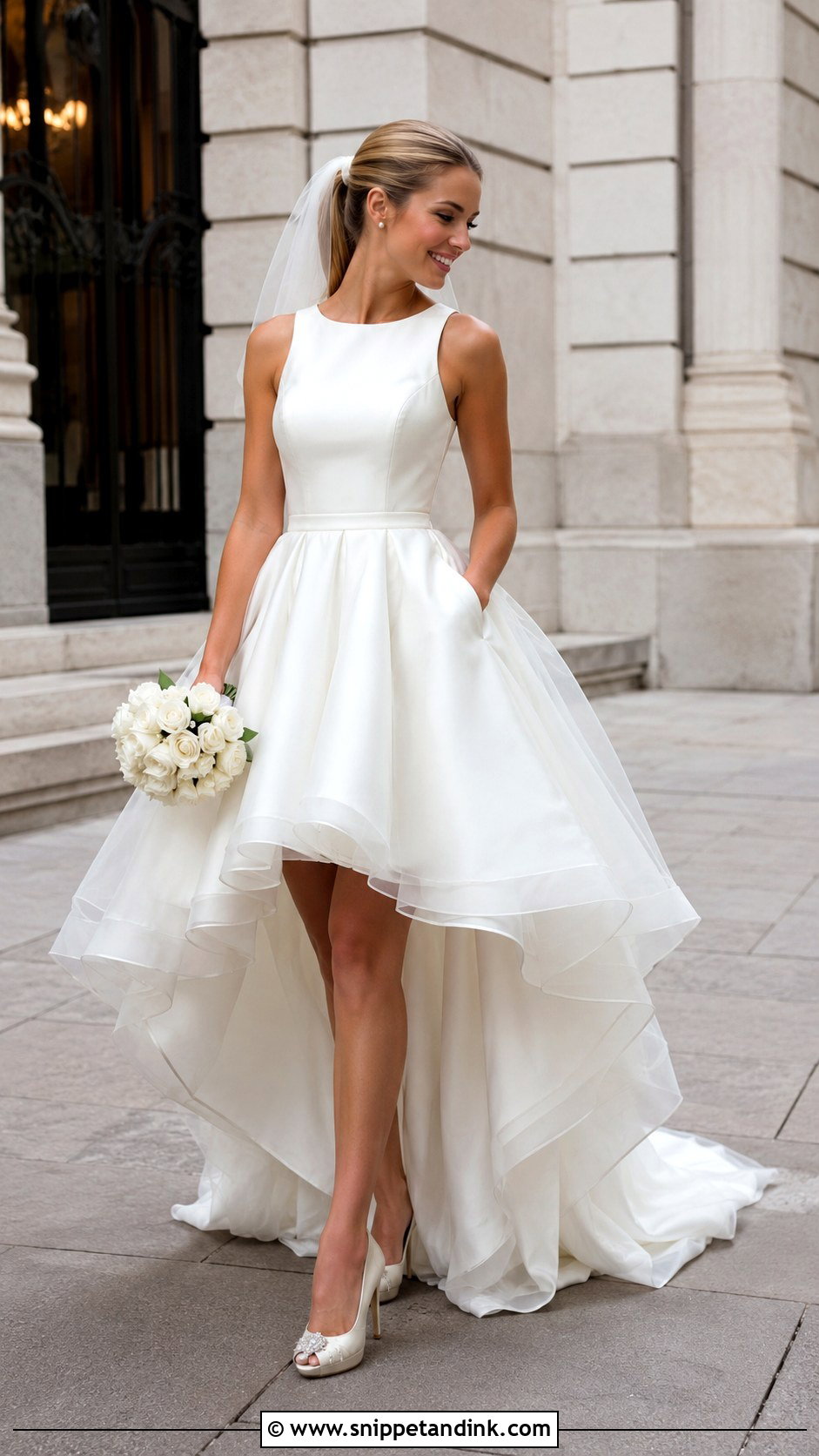
High-low hems were the playful side of 2010s bridalwear: a structured knee-length front sweeping into a full-length back or train, with organza or tulle layers for movement. Your shoes are front and center, so choose them as carefully as the dress. Embellished ivory pumps or satin ankle-strap heels work. The front hem needs to be set with you standing in those exact shoes, since an inch changes how the curve reads. A fitted sleeveless bodice, pearl studs and a short veil keep it balanced, with a smooth ponytail or half-up style. It suits courthouse, garden and reception looks.
13. Boho Lace Sheath Wedding Dress
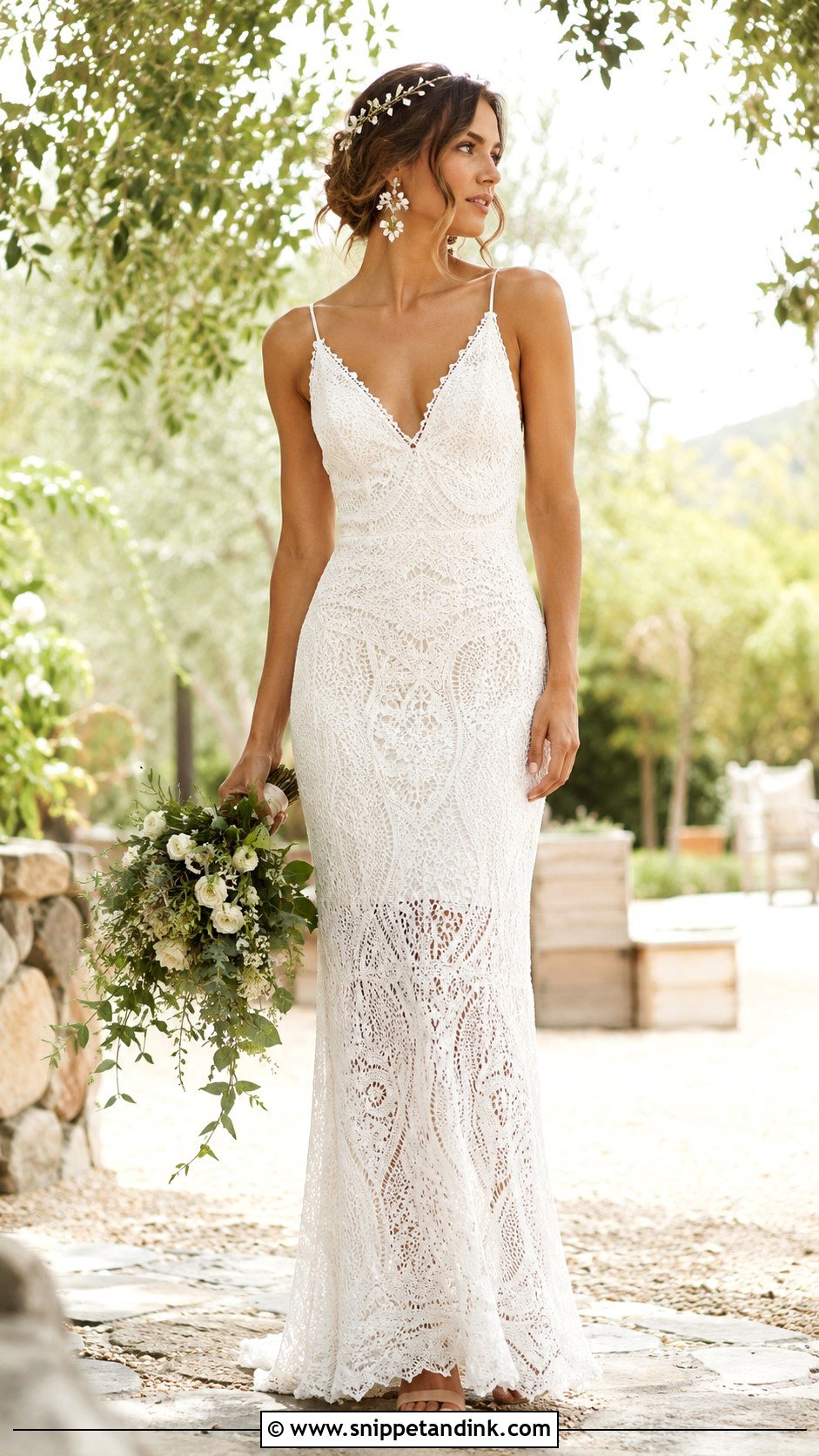
By the late 2010s, many brides wanted less structure. A lace sheath dress with open-pattern lace, a V-neck, slim straps and a light lining follows the body without restricting it. Open lace catches on everything, from bark and rough benches to the prongs of a ring, so outdoor brides should check where they’ll be sitting and walking. Block-heel sandals, a loose updo, small floral earrings and a simple veil or hair vine finish it, with a bouquet of trailing greenery. Pick a sweep train for uneven ground.
14. Off The Shoulder Wedding Dress
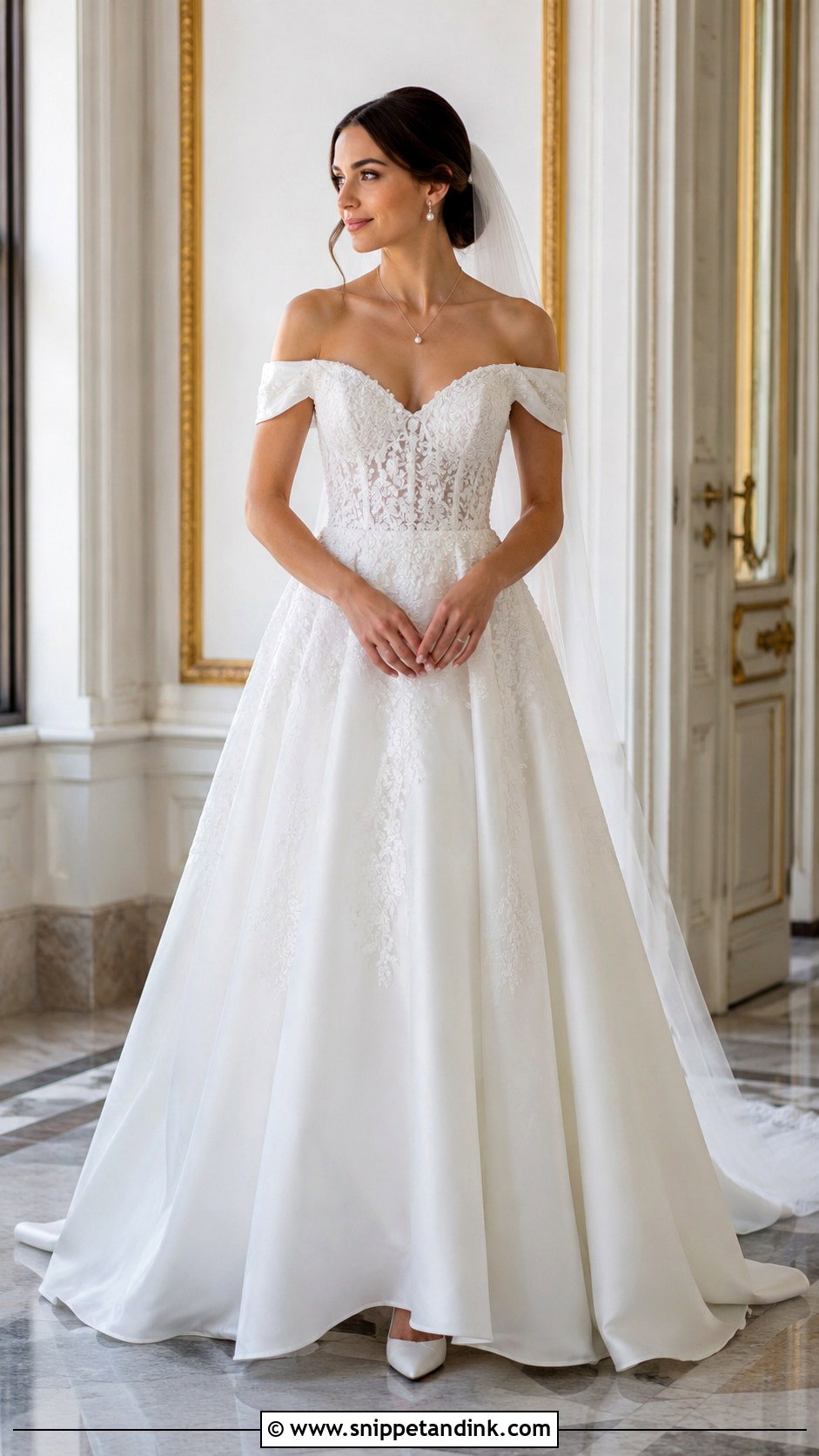
Off the shoulder frames the collarbone while keeping the dress formal. A fitted lace bodice with good internal structure and cap-like straps or a folded satin neckline sits above a flowing A-line or a more dramatic mermaid. Raise and move your arms at every fitting. Off-shoulder sleeves sit on the upper arm, and if the bodice isn’t holding the dress up, they slide down every time you wave. A collarbone-length pendant, pearl drops, a low chignon and pointed pumps suit it, with the veil attached below the hair so it doesn’t hide the neckline.
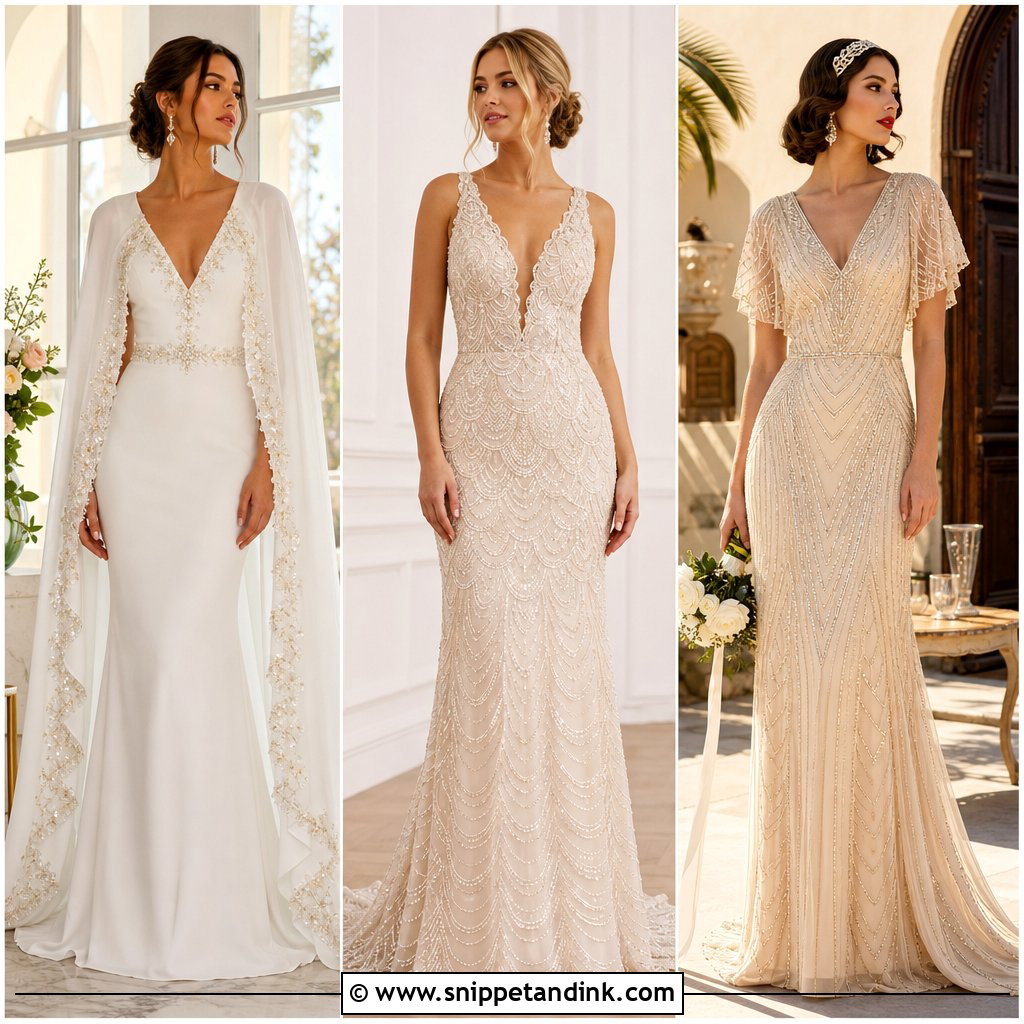
15. Deep V Neck Wedding Dress
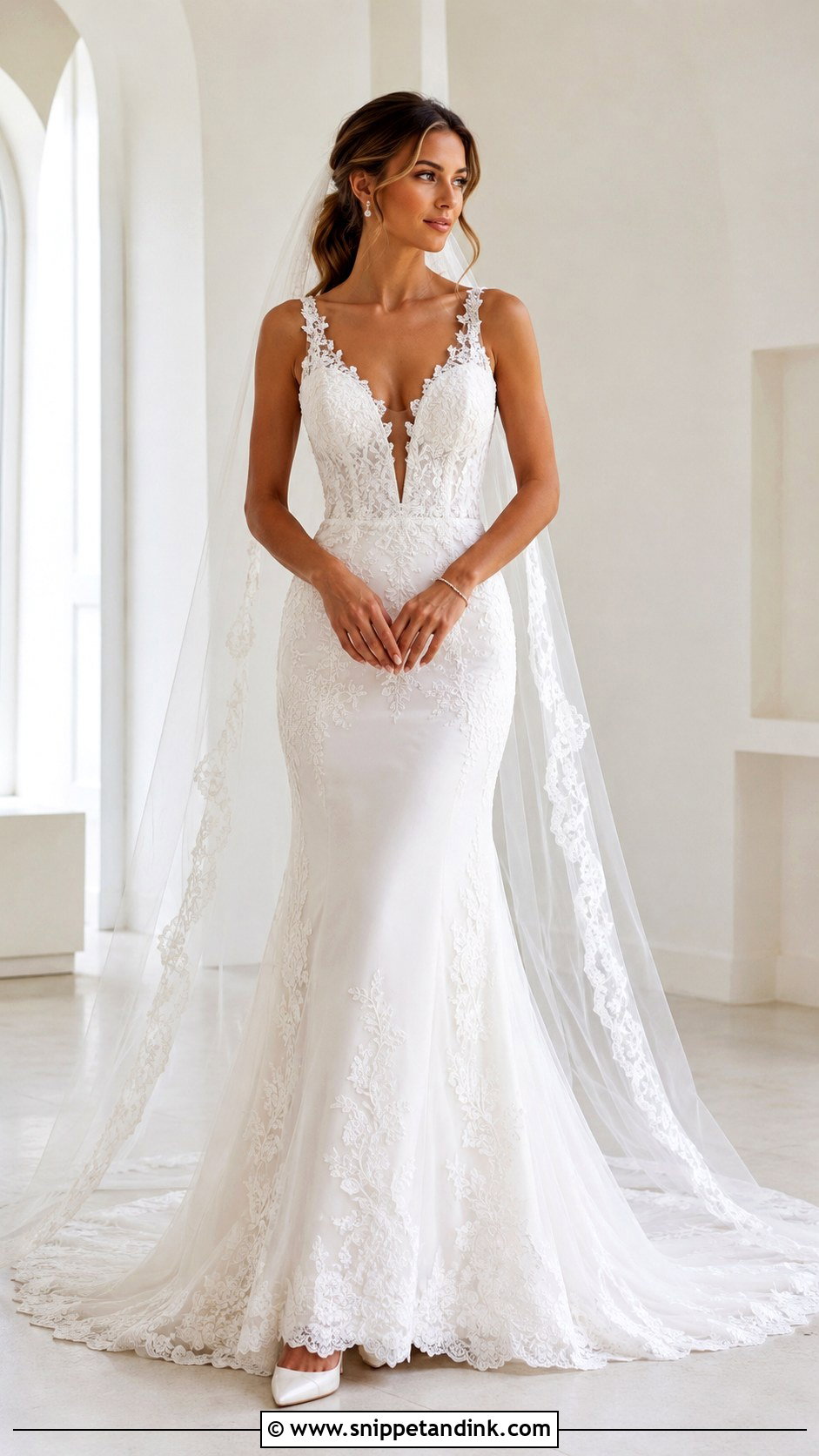
A deep V lengthens the upper body, and later collections leaned into it. Choose a structured A-line or fit-and-flare with illusion mesh at the center, which keeps everything in place and the line smooth. Lace appliqués soften the plunge; clean crepe makes it minimal. Support is the real question. Walk, sit and bend forward during alterations, and ask about cups, boning or a hidden mesh panel if anything shifts. Small earrings, a fine bracelet, pointed heels and a sheer chapel veil suit it, with a softly waved low ponytail and no necklace.
16. Strapless Satin Ball Gown Wedding Dress
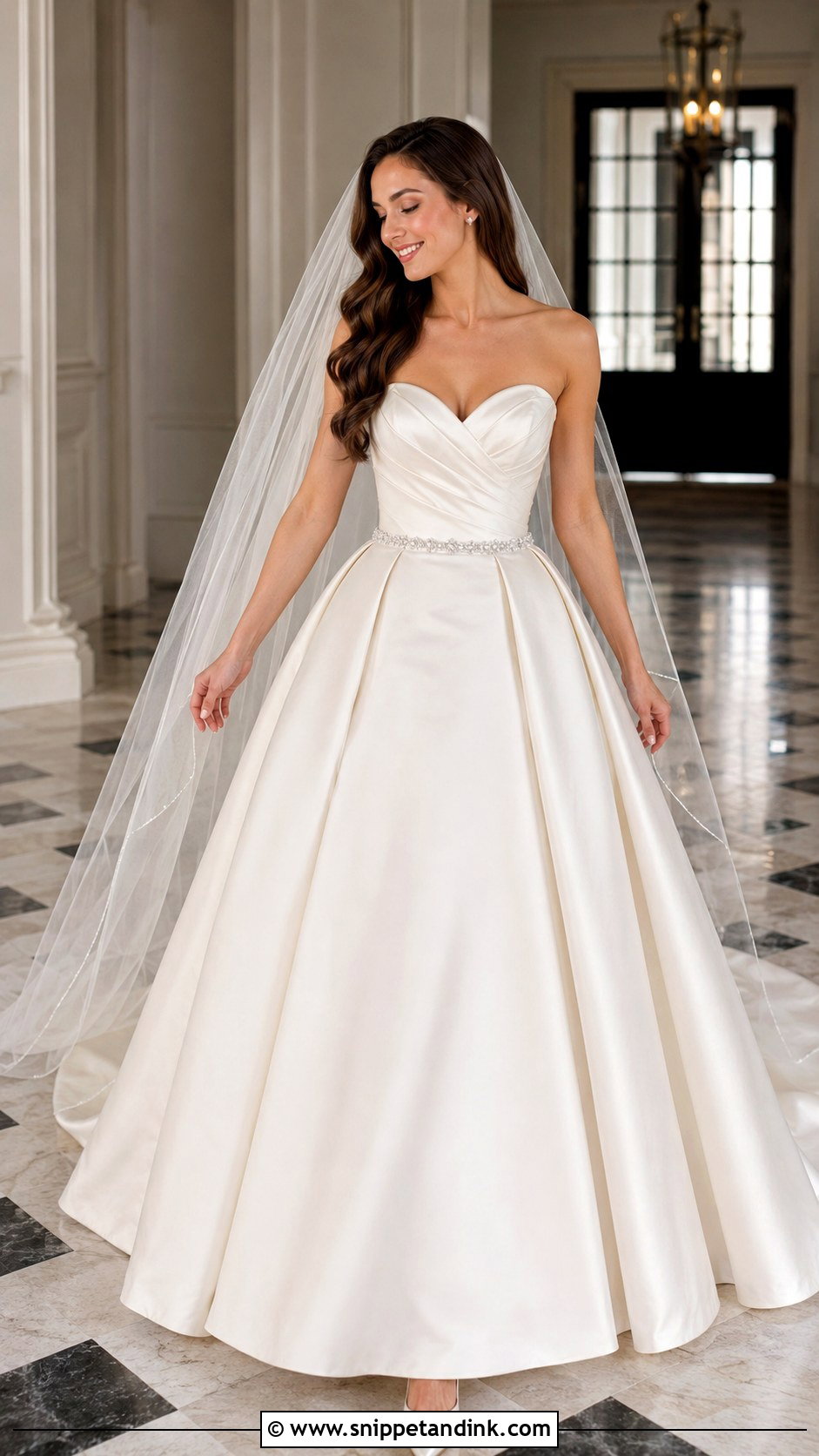
Strapless satin ball gowns stayed in the decade, polished up with a sweetheart neckline, a lightly ruched bodice, a fitted waist and a full skirt structured enough to hold its shape. Covered buttons down the train add interest. Satin reflects light and shows creases, so I check it under the room’s lights from the front, side and back at fittings, not only in the mirror. The understructure has to be right too, or the skirt sags. A crystal belt, pearl studs, satin pumps and a chapel veil suit it, with a neat bun or side-swept waves.
17. Corset Trumpet Wedding Dress
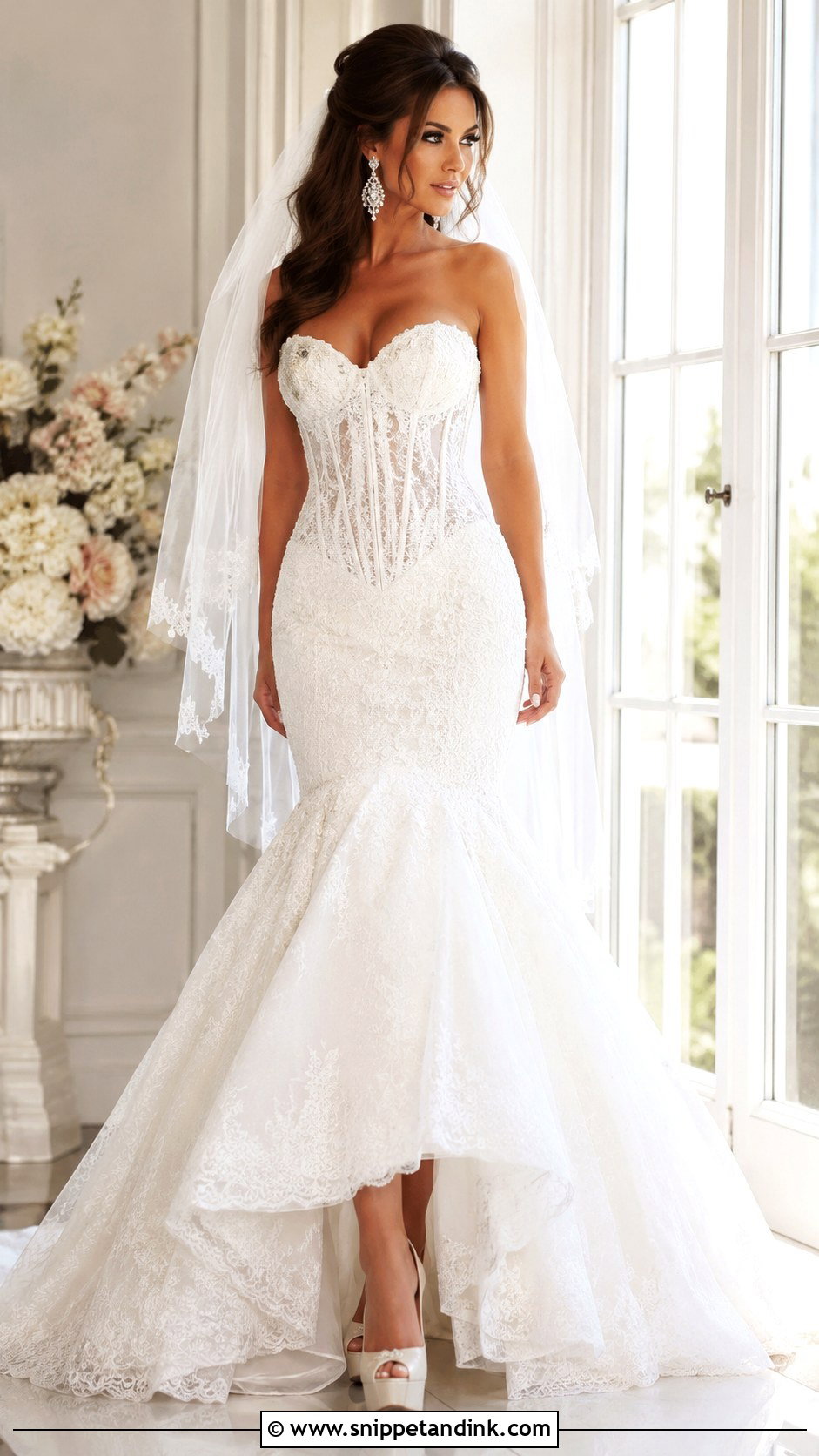
Trumpet skirts widen from mid-thigh, giving a little more walking room than a mermaid. Pair one with a lace-up or internally boned bodice, a sweetheart neckline and a defined waist. Lace overlay, subtle ruching or restrained beading add the 2010s finish. Don’t let anyone overtighten a lace-up back on the morning. It’s tempting to pull it as tight as it goes, but you need to sit, eat and breathe for hours. Test it with your shoes and underwear during alterations. Crystal drops, platform heels, a fingertip veil and a half-up style finish it.
18. Tea Length Lace Wedding Dress
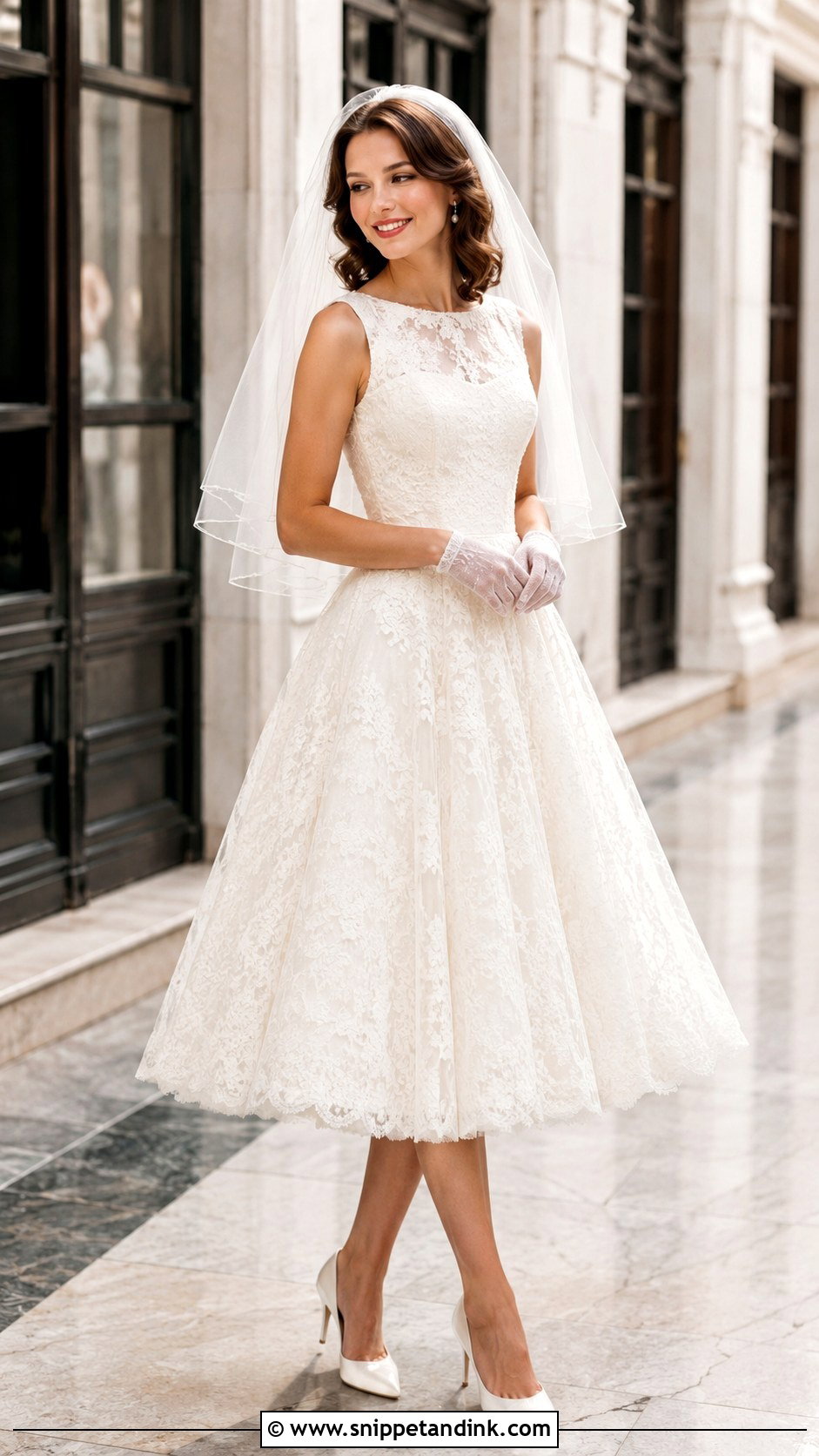
Tea-length lace brought a retro note into the decade. A fitted bodice with a bateau or sweetheart neckline and a full skirt ending between knee and ankle, in floral lace over a smooth ivory lining, keeps detail without fuss. The hem shows your feet, so pointed pumps, low block heels or polished flats all work. Pearl earrings, optional short gloves and a birdcage or shoulder-length veil suit it, with a curled bob or low bun. Smaller venues and civil ceremonies are where it makes the most sense.
19. Wedding Dress With Detachable Overskirt
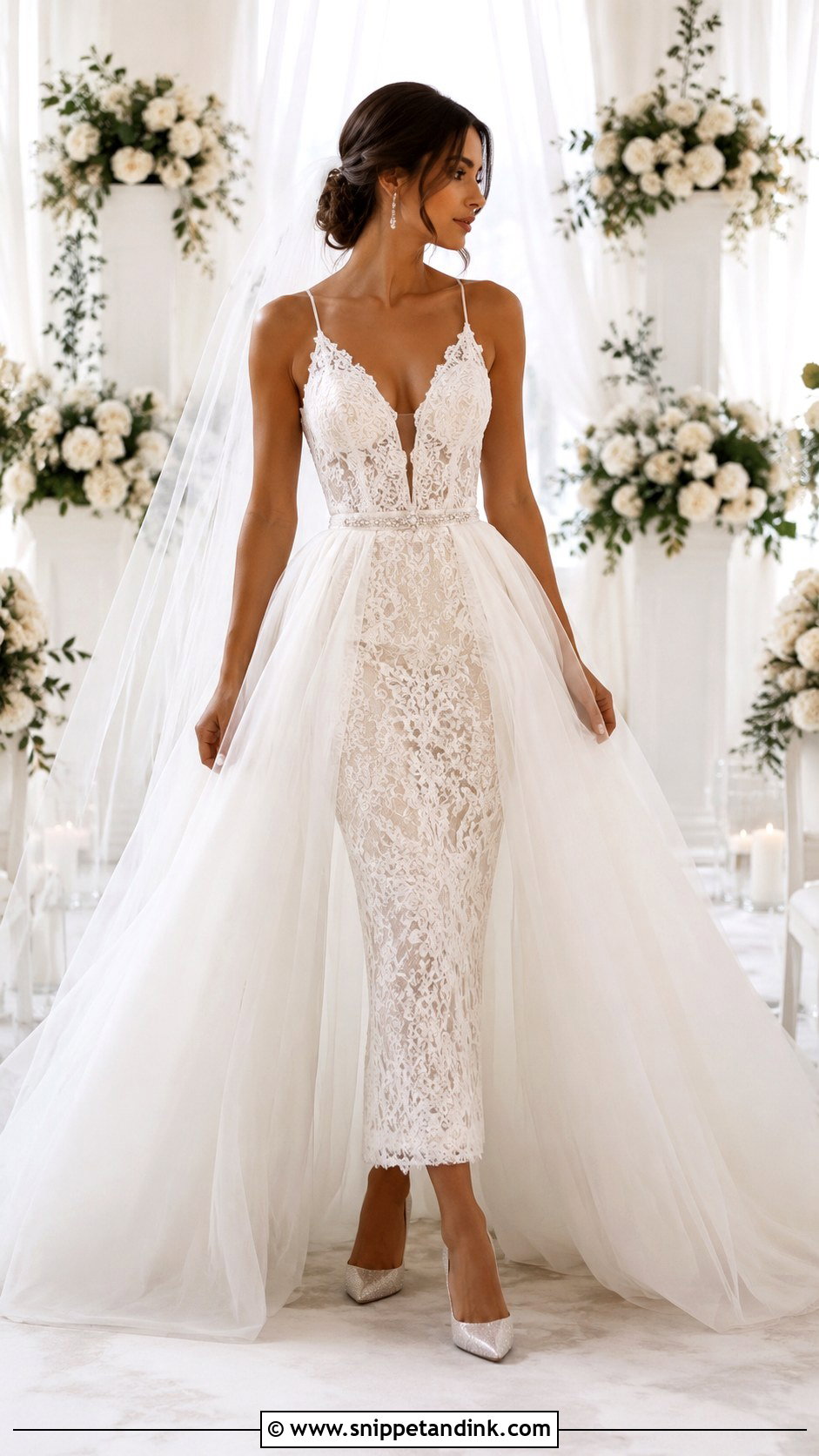
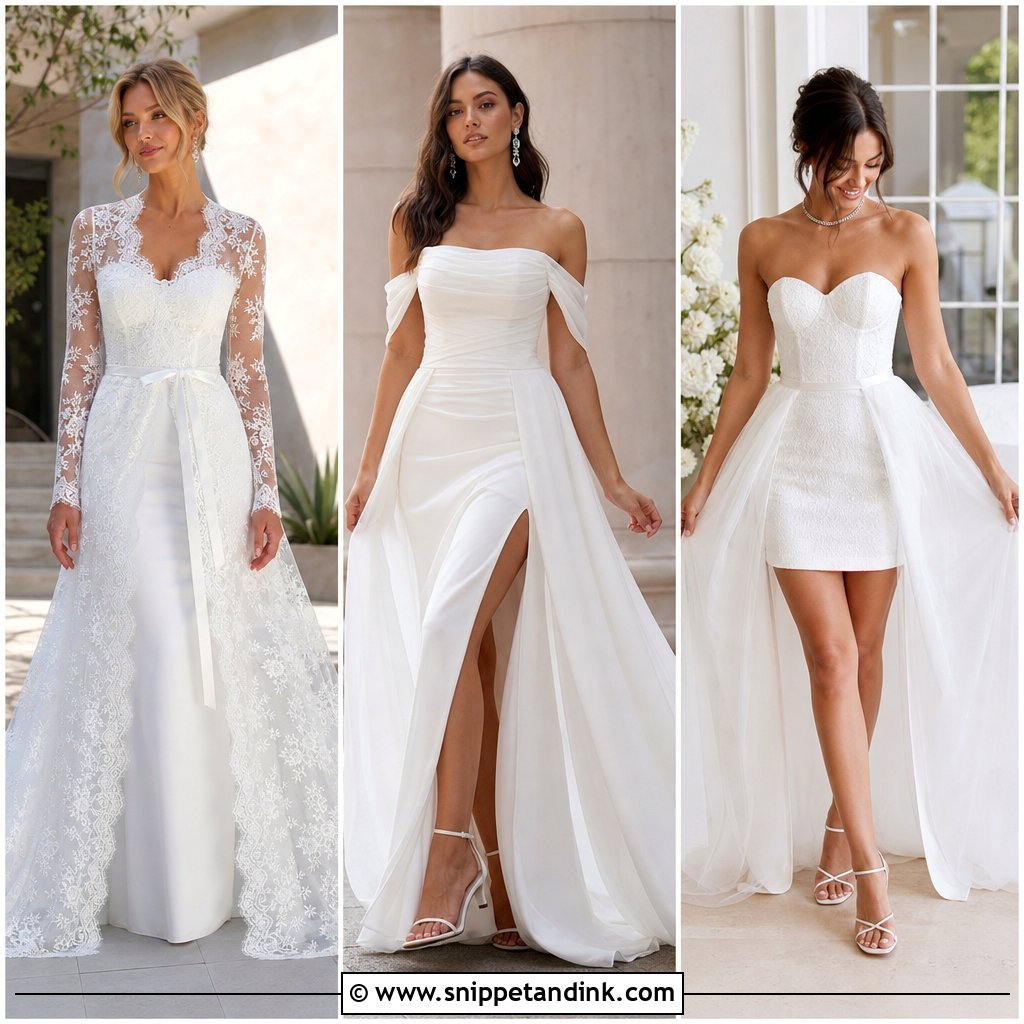
A detachable overskirt was a favorite trick of the decade. Start with a lace or crepe sheath and add a full tulle overskirt fastened at the waist for the ceremony, with a long veil, drop earrings and pointed heels. Take it off later for a streamlined reception dress. A narrow beaded belt hides the attachment and links both versions. Practice removing and refastening it before the day; the closures are usually small hooks, and they’re hard to manage with nervous fingers. Keep the hair simple, such as a low textured bun.
20. Minimalist Crepe Wedding Dress
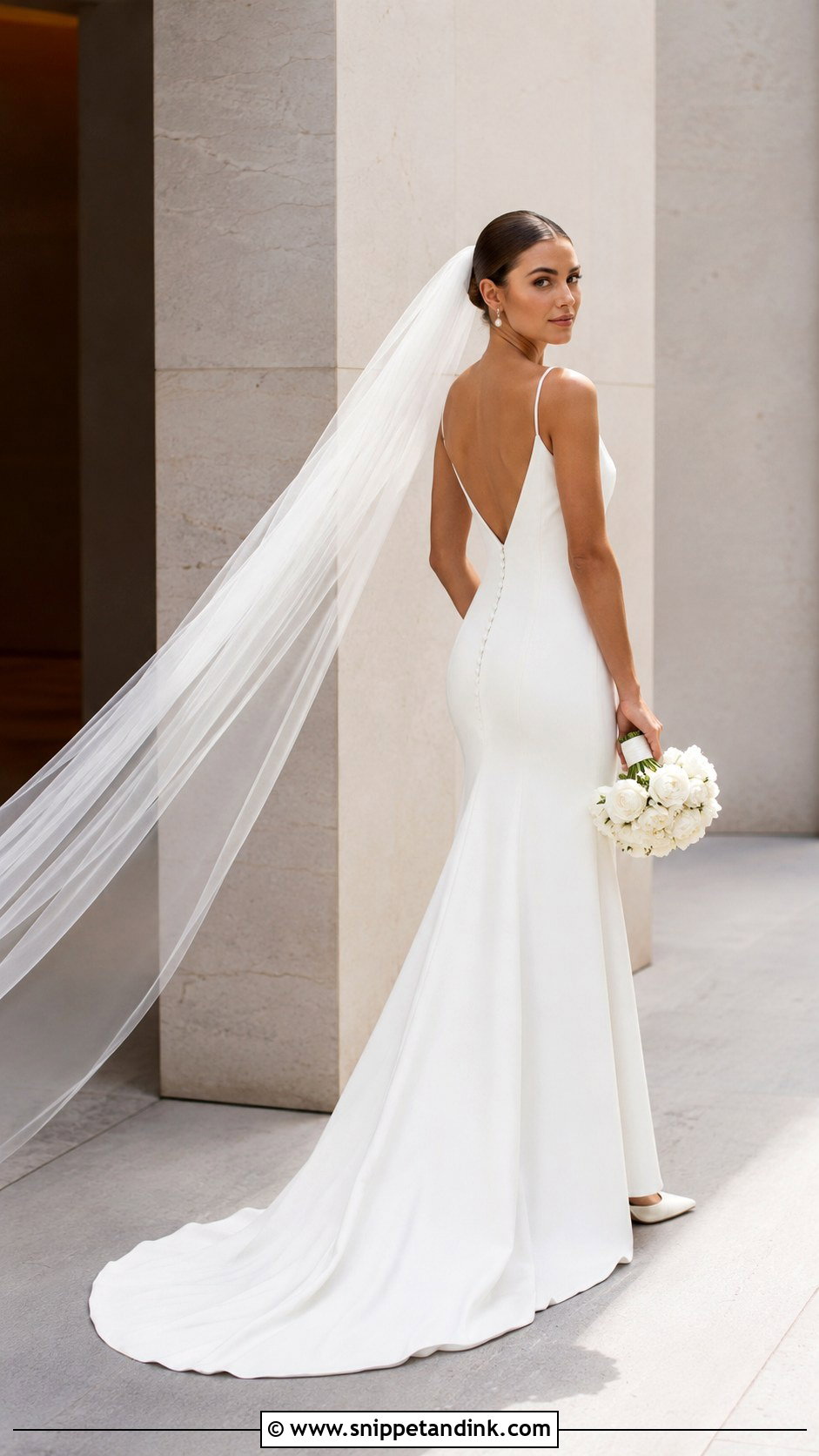
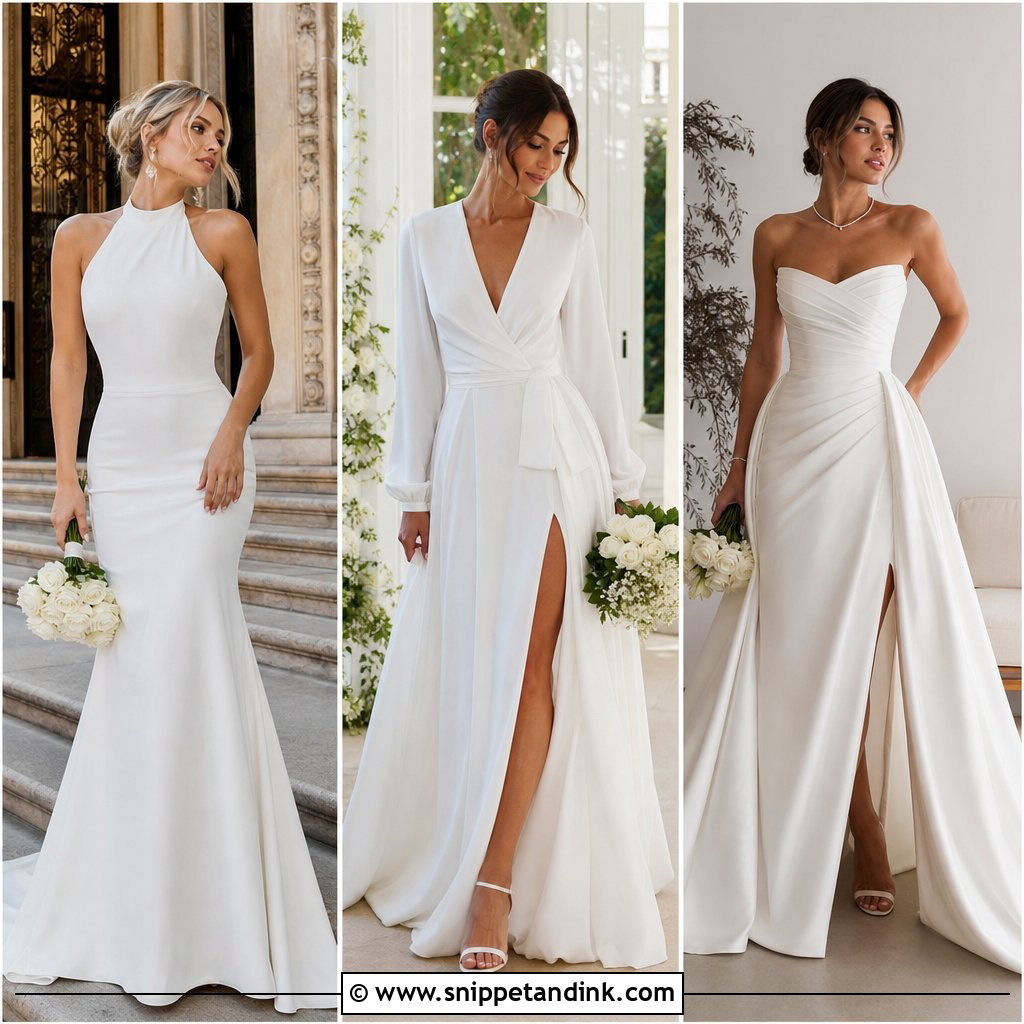
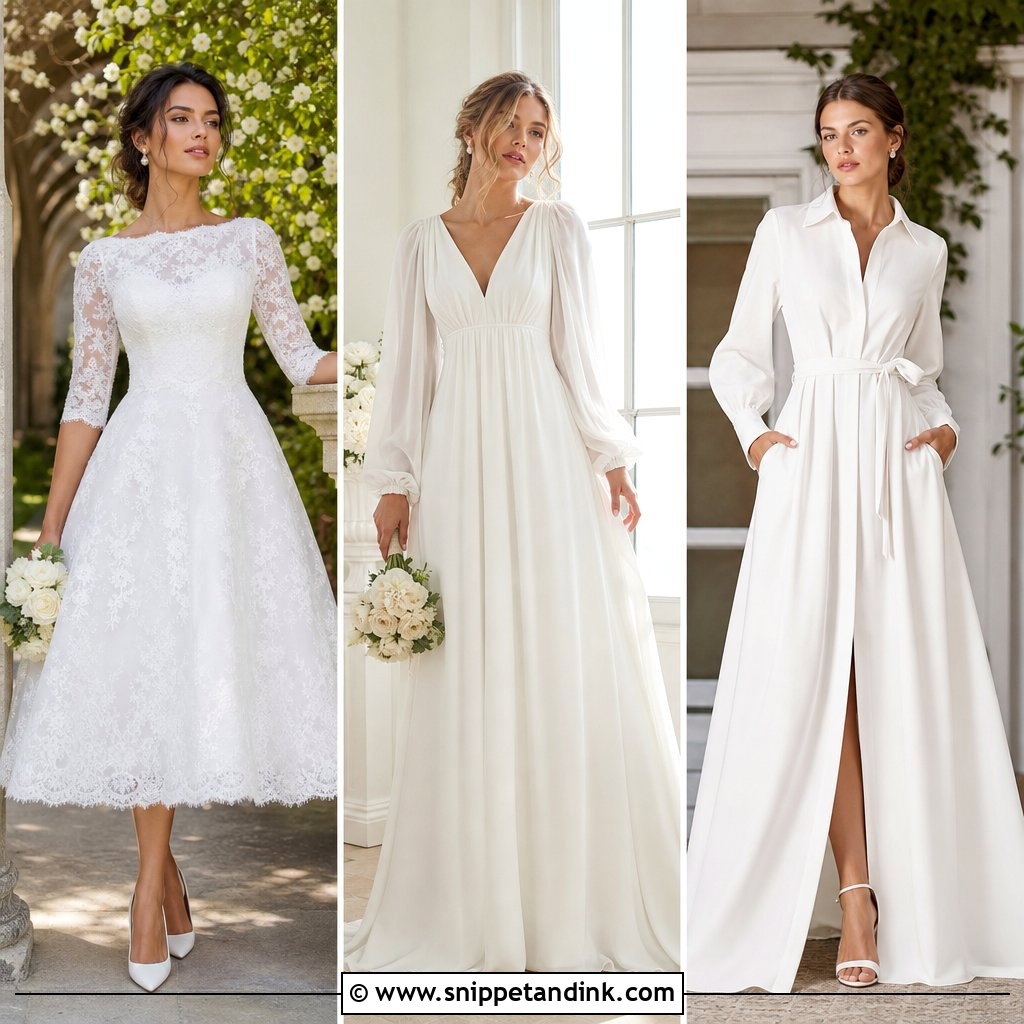
Crepe closed the decade, a simpler alternative to heavy lace and beading. A fitted sheath or soft fit-and-flare with a V-neck, thin straps and a low back is the shape, with covered buttons and a slightly extended train for bridal detail. Crepe reveals every seam and underwear line, so pick smooth, edge-free foundations and plan for precise alterations. It’s honest about fit in a way lace isn’t. Sculptural pearl earrings, pointed ivory heels, a plain cathedral veil and a sleek low bun suit it, with a small structured bouquet.
Snags, Dragged Hems and Small Repairs on a Lace Gown
Lace defines most of this list, and lace gets caught. By the end of a long day, the hem has usually been stepped on, dragged over floors and caught by heels on the dance floor. A few precautions at the fitting stage save a lot of worry later.
Ask your seamstress to set the hem so it just clears the floor in your shoes, rather than resting on it. For dancing, a bustle or a wrist loop on the train keeps it off the floor. If you wear a ring with raised prongs, turn the stone inward when you’re arranging your skirt, because prongs catch lace threads easily.
If a thread pulls on the day
Don’t cut it. A snipped lace thread can keep unravelling. Instead, ease the pulled loop back to the wrong side with a needle, or tack it down with a single stitch in matching thread. A loose appliqué can be held with a tiny safety pin from the inside until the photos are done. Keep a needle, white and ivory thread and a few small pins in your emergency bag.
Which Side of the Decade Suits the Way You Move?
Strapless mermaids and ruffled ball gowns belong to the early years; illusion lace, soft sleeves, boho sheaths and minimalist crepe to the later ones. Start with the silhouette you feel comfortable in, then let accessories support the gown rather than compete with it. A well-fitted bodice, shoes you can stand in and a veil in proportion will improve almost any dress. Sparkle or simplicity, these looks are a starting point, and the fitting room will tell you which one actually suits you.
You'll Like These Ideas:




Leave a Reply