
A cap sleeve is the smallest sleeve a gown can have and still count as a sleeve. It sits on the cap of the shoulder, stops before the underarm, and covers the bra strap zone without wrapping the arm. I like it for brides who feel exposed in strapless but hate the weight of a long sleeve, because it gives the neckline a frame without adding fabric you’ll feel by the third hour. The catch is that a cap sleeve has almost no forgiveness. If the bodice, neckline and sleeve are not cut as one idea, the sleeve looks stuck on. Below are twenty gowns built around that one small detail, with what I check on each when a bride tries it on.
Where a Cap Sleeve Should Land on Your Shoulder
When a bride steps out in a cap sleeve gown, I look at three points before anything else: where the sleeve seam sits on the shoulder bone, how high the armhole is cut, and what happens at the edge of the sleeve when she lifts her arms.
- The seam: it should sit on or just past the bony point of the shoulder. Too far in and the sleeve looks like a strap; too far out and it slides down the arm.
- The armhole: it sounds backwards, but a higher, closer armhole gives you more arm movement, not less. A low, roomy armhole drags the whole bodice up when you reach.
- The edge: the hem of the sleeve should lie flat against the arm. If it flips outward or digs in, the sleeve is the wrong width for your arm, and that’s a cut problem rather than a size one.
Try on in a bra or strapless longline close to what you’ll wear on the day. A cap sleeve hides a regular strap only when the strap sits exactly under it, and most of the time it doesn’t, which is why many of these gowns are built with cups sewn in.
1. Lace A-Line Cap Sleeve Wedding Dress
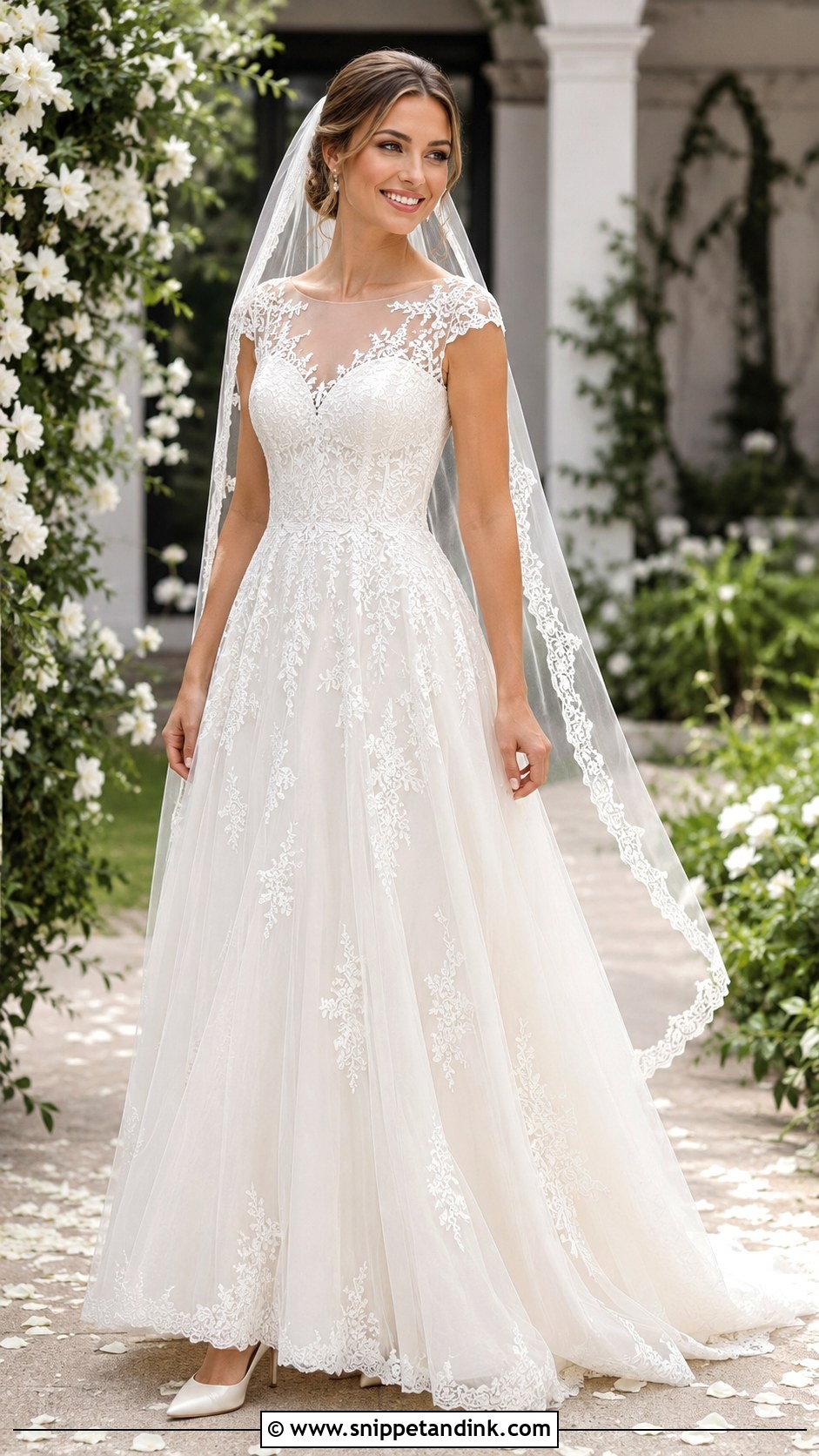
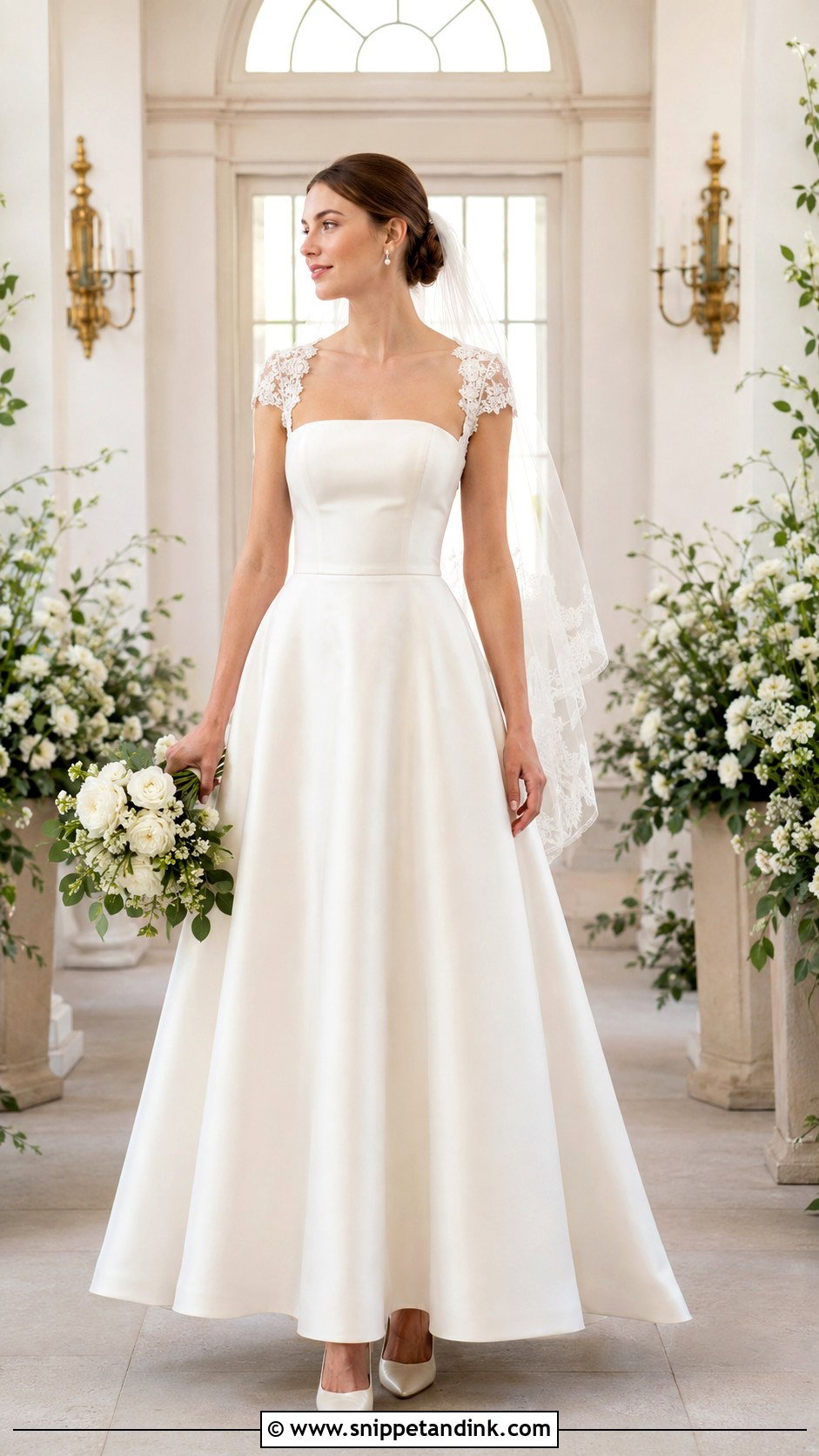
Lace A-lines are where most brides first meet the cap sleeve, and for good reason: when the lace runs straight from the bodice over the shoulder with no seam line, the sleeve reads as part of the dress rather than an add-on. A soft waist and a skirt that falls without boning keep it easy to wear all day. I’d style it with pointed ivory heels, pearl drops and a fingertip veil edged in the same lace, and keep the hair in a loose low bun so the shoulder line stays visible. Outdoors, lace laid over soft tulle moves better than lace over satin. Before you commit, raise both arms as if reaching for your bouquet. If the lace pulls at the sleeve edge, that tension will be there in every hug.
2. Satin Ball Gown Cap Sleeve Wedding Dress
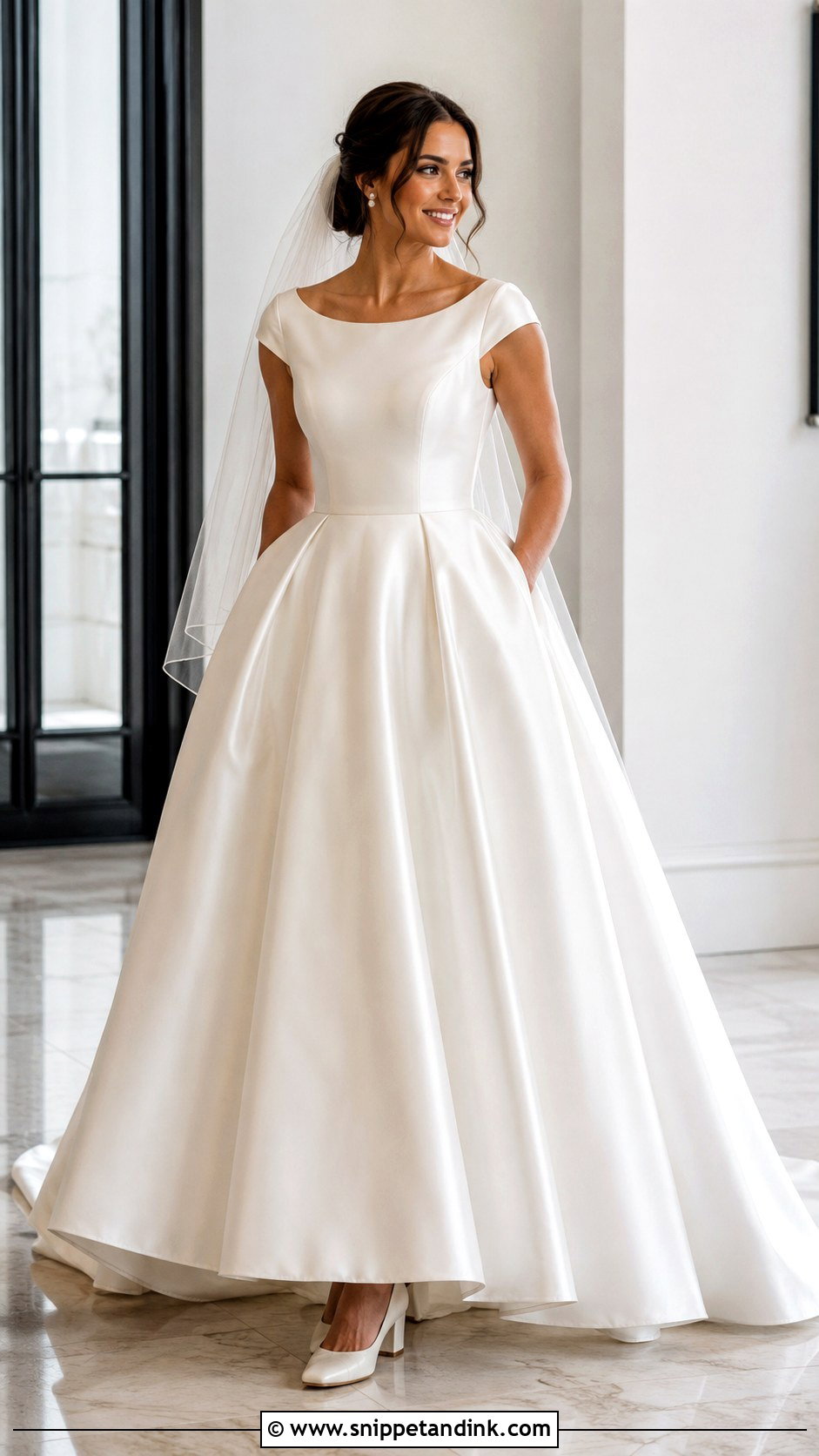
Satin is unforgiving, which is exactly why a satin ball gown with cap sleeves looks so formal. Every seam shows, so the sleeve has to be tailored flat to the shoulder rather than gathered. Look for a structured bodice, a square or gently curved neckline and a skirt that holds its own shape without a hoop doing all the work. Pearl studs, a slim tennis bracelet and a satin block-heel pump finish it without fuss, and a neat chignon with a medium veil leaves the sleeve in view. My one firm rule with this fabric: have your seamstress check the shoulder placement while you are standing in your wedding shoes. Height changes posture, and posture changes how a stiff satin sleeve sits.
3. Crepe Mermaid Cap Sleeve Wedding Dress
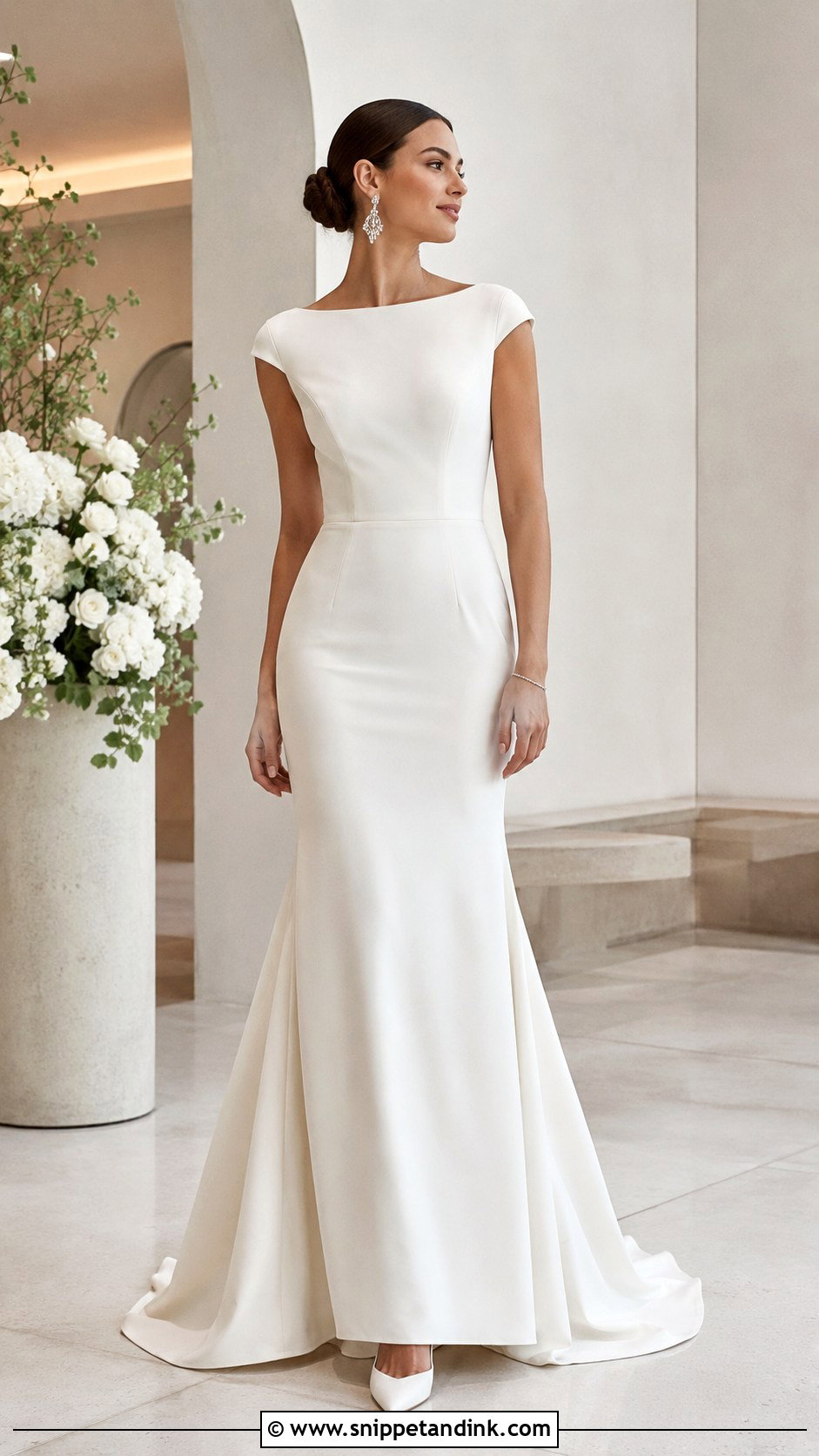
A crepe mermaid gives you a sleek line from shoulder to knee, then a flare that does the talking. Plain fitted cap sleeves suit it because they keep the top quiet. Crepe has a little give, but a mermaid is cut close, so the bodice and the sleeve have to move together or you’ll feel a pull at the underarm every time you lift your arm. I’d pair it with pointed pumps, small crystal earrings and a slim bracelet, and skip a statement necklace. A polished ponytail or low bun keeps the shape modern. If you want more coverage, ask about a higher back or sheer side panels. At fittings, walk, sit and reach. Mermaids that feel fine standing still often fight you at the reception table.
4. Chiffon Empire Waist Cap Sleeve Wedding Dress
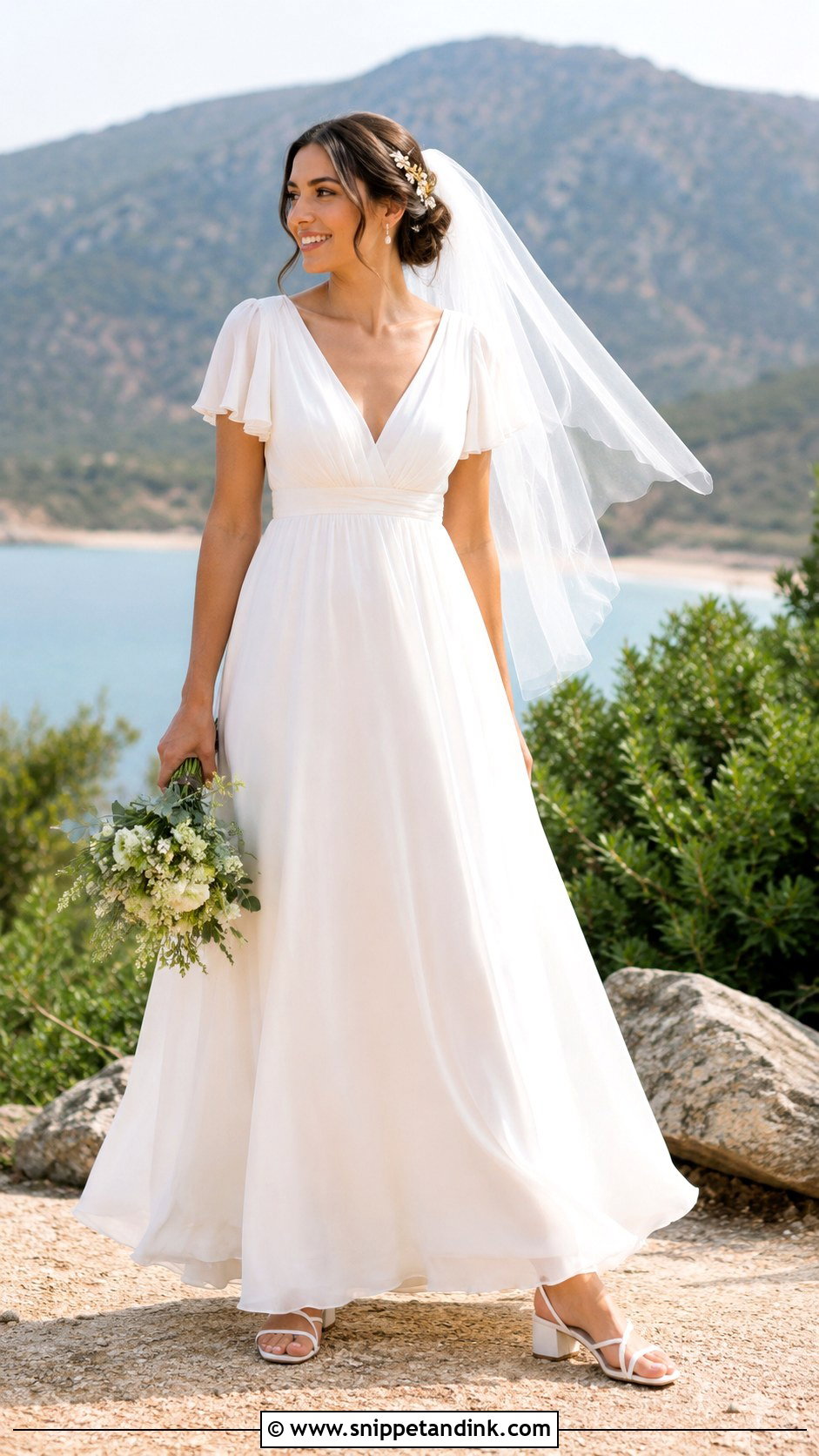
Chiffon cap sleeves flutter, and that’s the appeal on an empire-waist gown. The seam sits just under the bust, the skirt drops loose, and nothing clings to the midsection, which is why I often suggest this cut for warm weather or a bride who doesn’t want structure at the waist. A sheer sleeve finished with a narrow lace edge reads a little more bridal than a plain chiffon one. Low block-heel sandals, fine earrings, a small floral comb and a light chapel veil keep the whole thing airy. The weak spot is support. Chiffon hides nothing underneath, so check that the bodice has cups or a lining strong enough to do the job, and let a skilled seamstress adjust the sleeve opening rather than the drape.
5. Beaded Sheath Cap Sleeve Wedding Dress
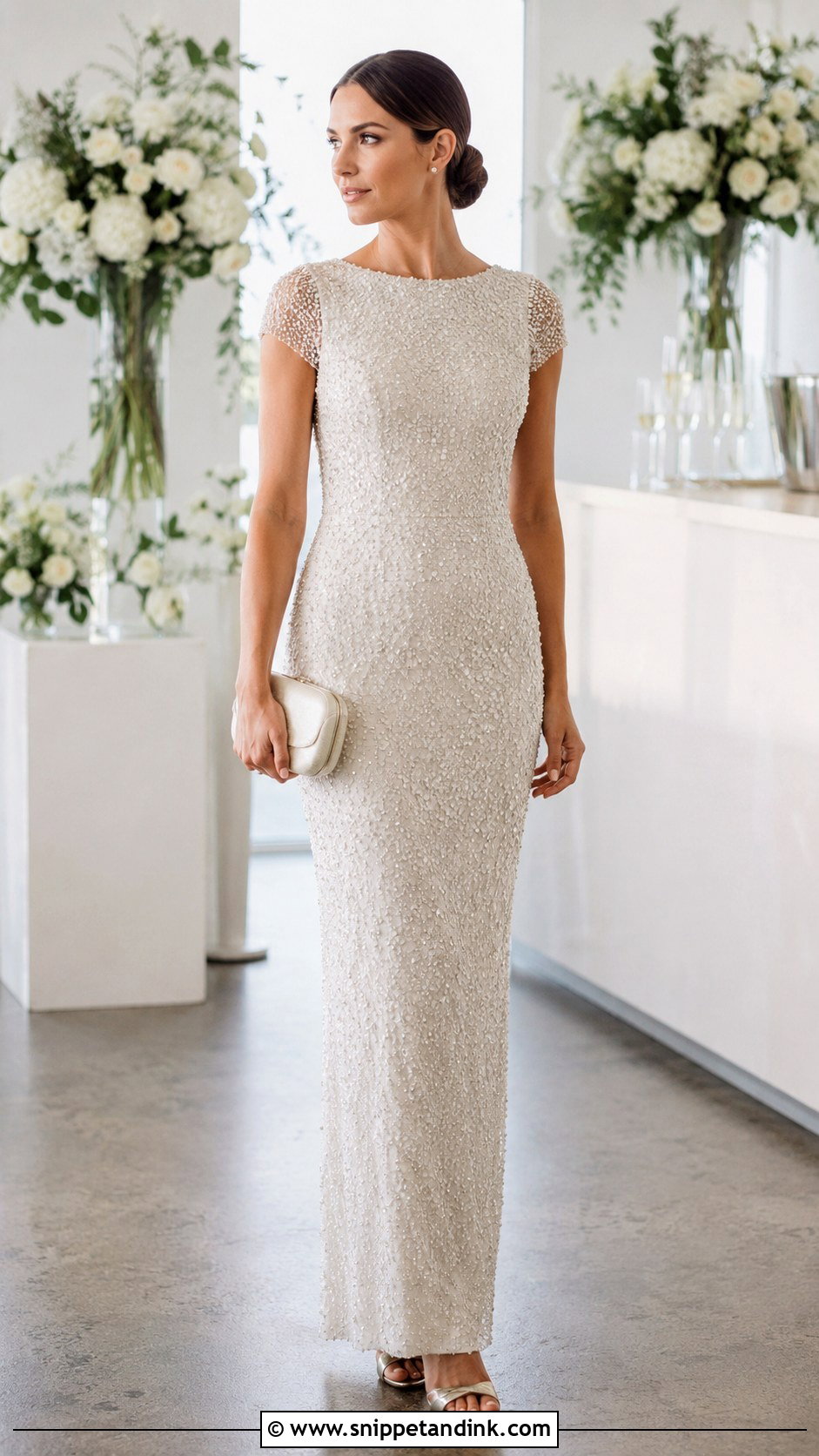
Beadwork on a sheer cap sleeve catches light every time you move your arms, so a slim sheath is the right body for it: the column skirt stays calm while the shoulders do the sparkling. Crystals, pearls or fine embroidery that continue across the bodice look intentional; beads only on the sleeve can look borrowed. Keep the extras simple with metallic heels, a small ivory clutch and studs, and drop the necklace entirely if the neckline is busy. Here is what catches brides out: beaded sleeves are heavier than they look and the backs of the beads can scratch. Wear the dress for a good ten minutes at the appointment, arms moving, and run a finger along the inside edge for loose threads before alterations start.
6. Square Neck Cap Sleeve Wedding Dress
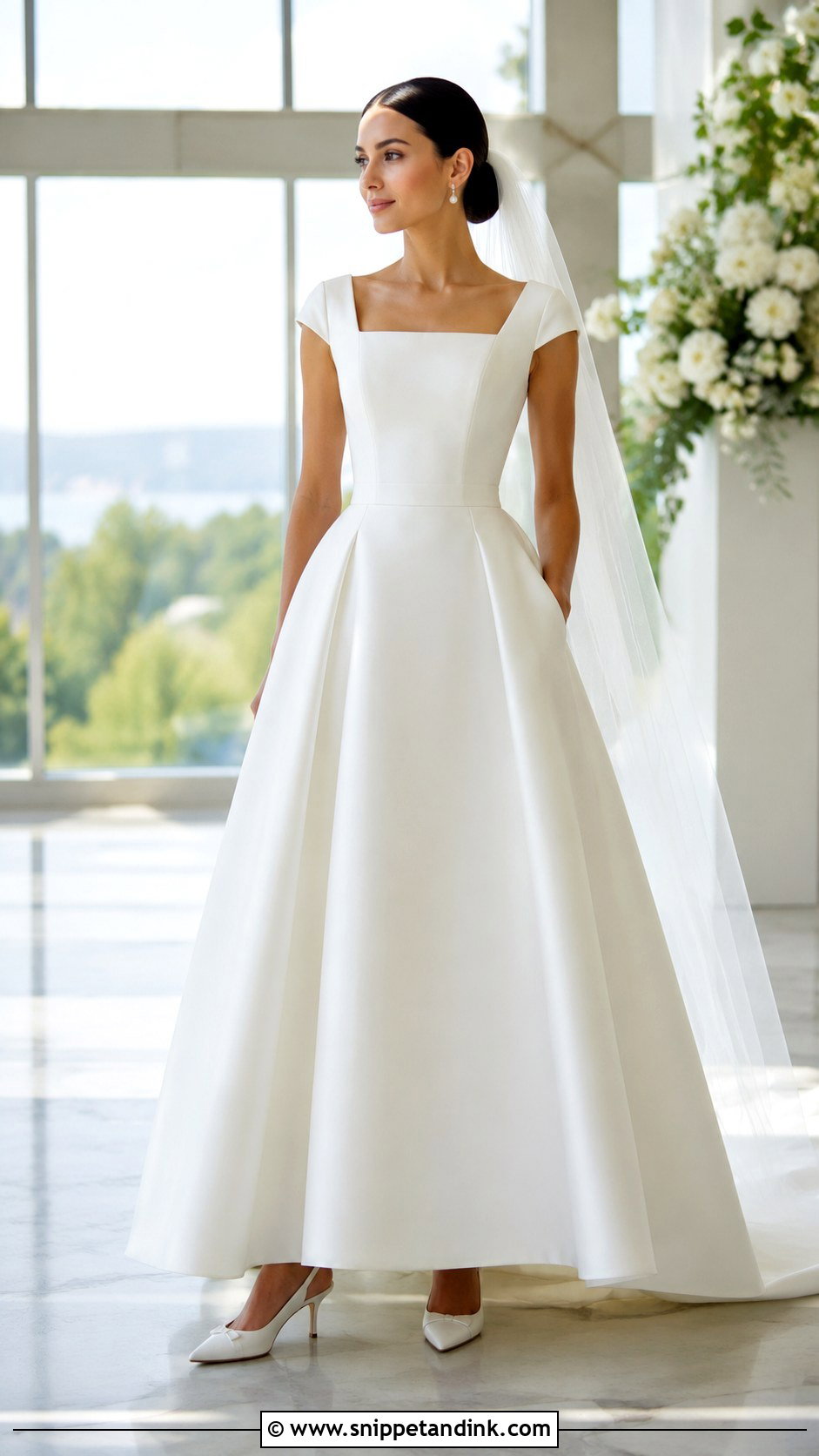
Square necklines and structured cap sleeves together make a clean box around the collarbone. Satin, mikado or crepe hold that geometry; soft lace will slump it. Keep the bodice plain with princess seams so the neckline stays the focus, and finish with pearl drops, pointed slingbacks and a narrow veil set beneath a low bun. A fine pendant is fine if it leaves real space above the neckline. If your shoulders are broad, I’d steer you toward sleeves that angle slightly inward instead of running straight out, because a horizontal sleeve visually widens the frame. Sit down at the fitting and look in the mirror. A square neck that gapes when you are seated is a common, very fixable problem.
7. V-Neck Cap Sleeve Wedding Dress
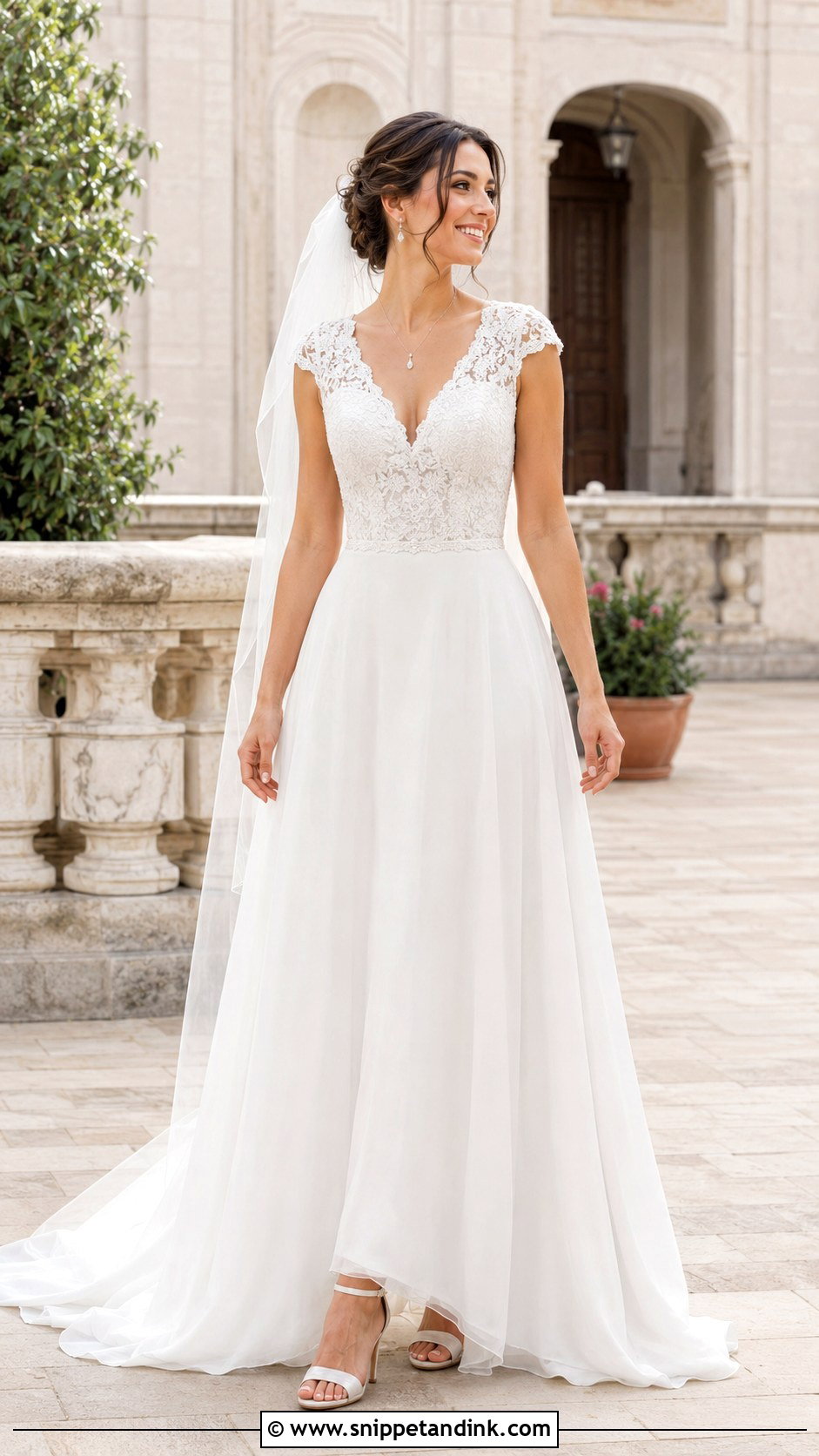
A V-neck draws the eye down and lengthens the torso, and cap sleeves add just enough shoulder to balance it. In lace it feels traditional; in smooth crepe it feels current. The depth matters more than the fabric. I’d rather you choose a V you never think about than one you adjust all evening. A fine pendant, narrow drops, ivory heels with an ankle strap and a soft updo keep the line open, with a plain tulle veil behind. If the V runs deep, hidden mesh inside the neckline adds security without showing. The two spots I check on every V-neck cap sleeve gown are gaping at the bust and strain right where the sleeve joins the bodice.
8. High Neck Cap Sleeve Wedding Dress
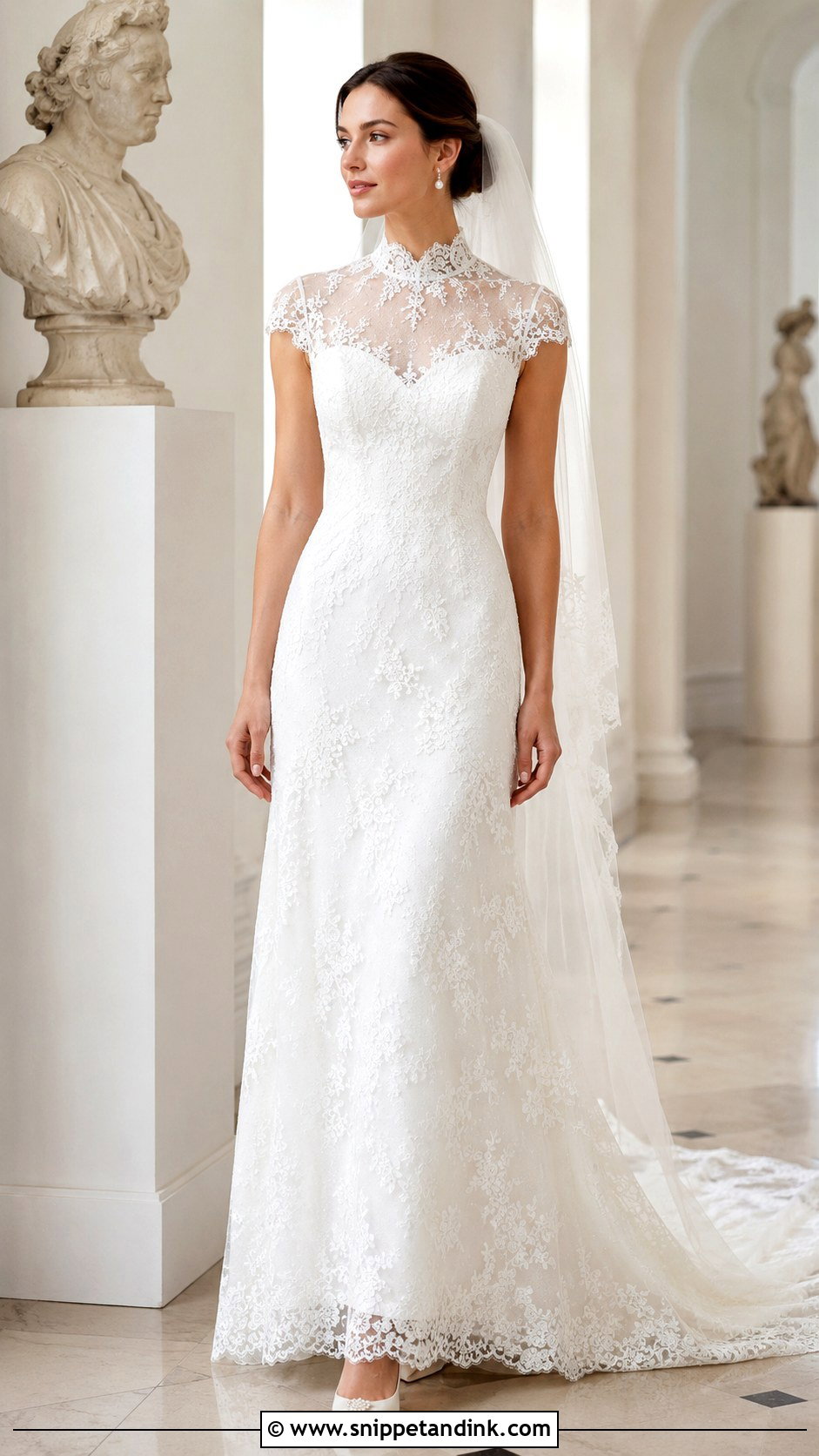
The high-neck cap sleeve gown has to stay light or it starts to feel heavy at the throat. An illusion tulle neckline with lace motifs floating above a fitted bodice does that best, sitting over either a flowing A-line skirt or a narrow column. With that much detail near the face, I skip the necklace and use small pearl earrings, pointed heels and a smooth low bun, with the veil attached below the bun so the back stays visible. Match the illusion mesh to your skin closely; a close match makes the lace look printed on the skin. Then turn your head side to side. A collar that rubs in the fitting room will rub for twelve hours.
9. Illusion Cap Sleeve Wedding Dress
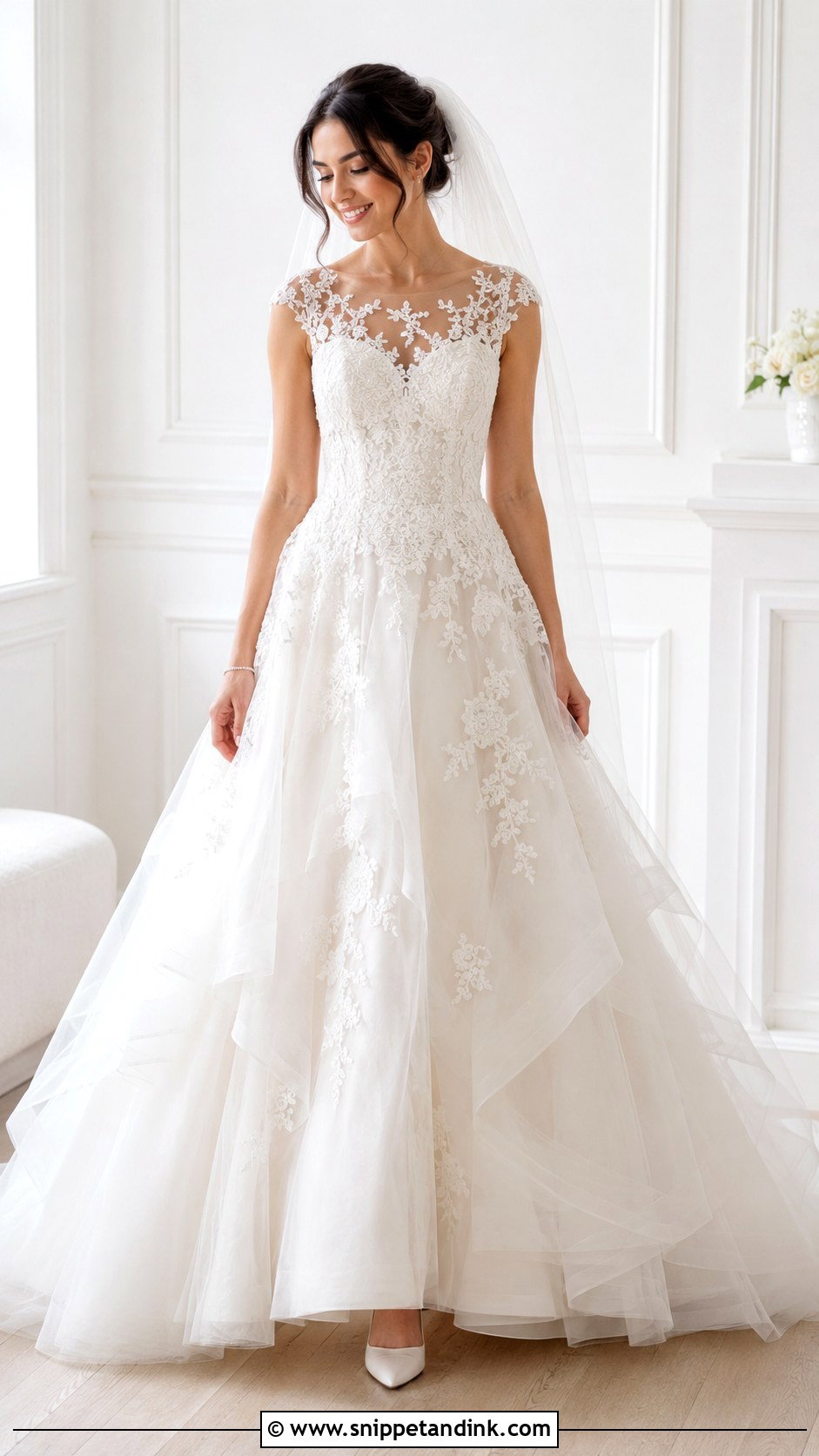
Illusion cap sleeves make lace or appliqués look as though they are resting on bare shoulders. They look most coherent when the same motifs continue down the bodice and thin out into a tulle skirt. Crystal studs, a fine bracelet, closed-toe ivory heels and a sheer veil with no heavy border let the sleeve show, and hair swept back helps too. Illusion mesh is fragile, though. I always check that the sleeve edges are soft and finished, because raw-edged mesh can catch on jewelry and fray. Don’t let your seamstress take these sleeves in tight. Leave a little ease and the mesh survives a full day of hugging; fit it snug and it tears at the seam.
10. Floral Appliqué Cap Sleeve Wedding Dress
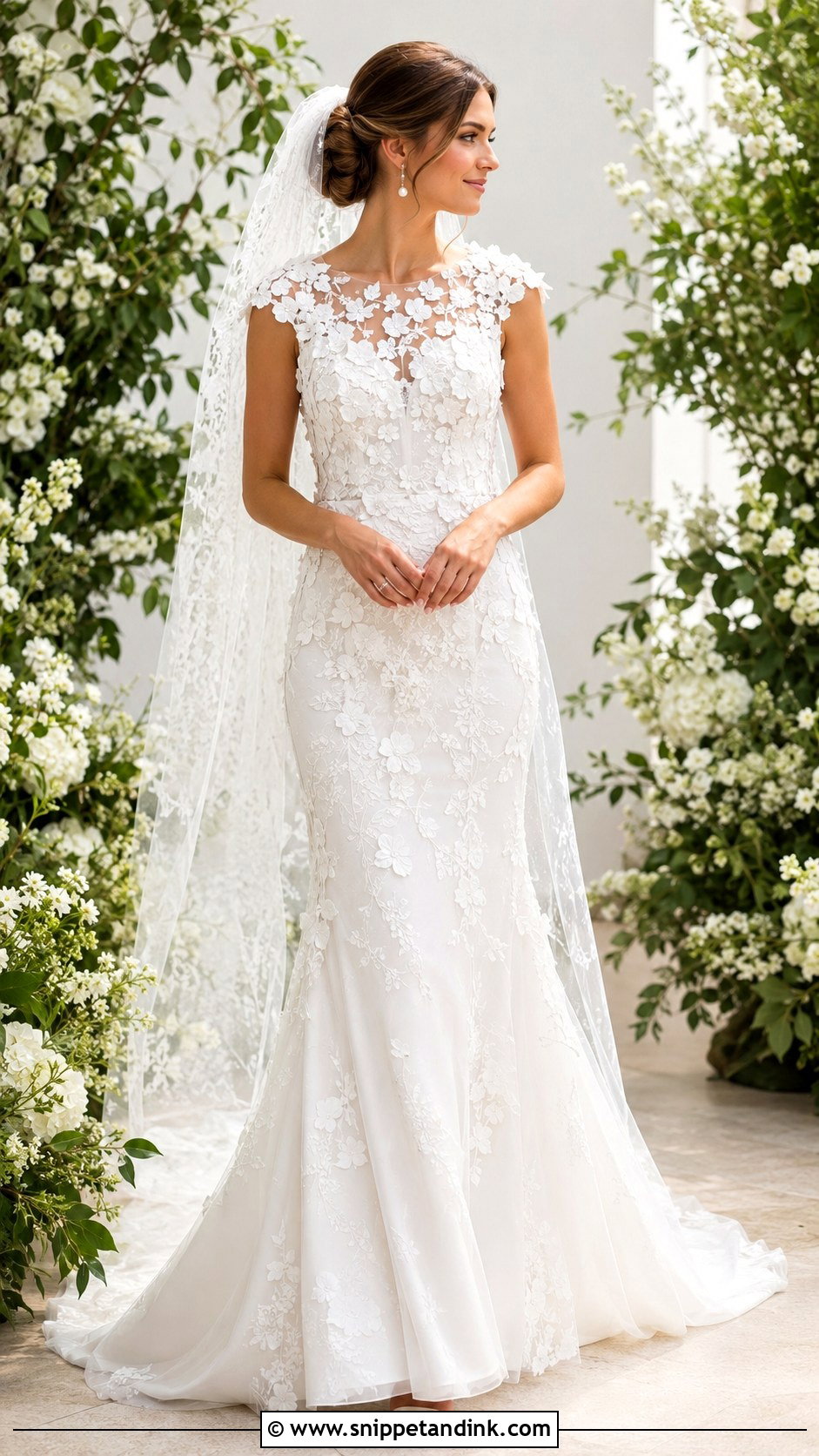
Three-dimensional flowers turn a plain cap sleeve into the main event. The placement I look for is heaviest at the shoulders, continuing across the bodice, then scattered and sparse on the skirt, so the eye moves down the gown instead of stopping at the top. With that much texture, keep jewelry tiny: plain ivory heels, small pearl earrings, a softly textured veil and a low twisted bun with a minimal comb. Oversized earrings fight the flowers. Before you buy, lift your arms and look at the underside of the sleeve. Raised appliqués placed right at the underarm scratch with every movement, and that is far easier to fix before a gown is ordered than after it arrives.
11. Vintage Tea Length Cap Sleeve Wedding Dress
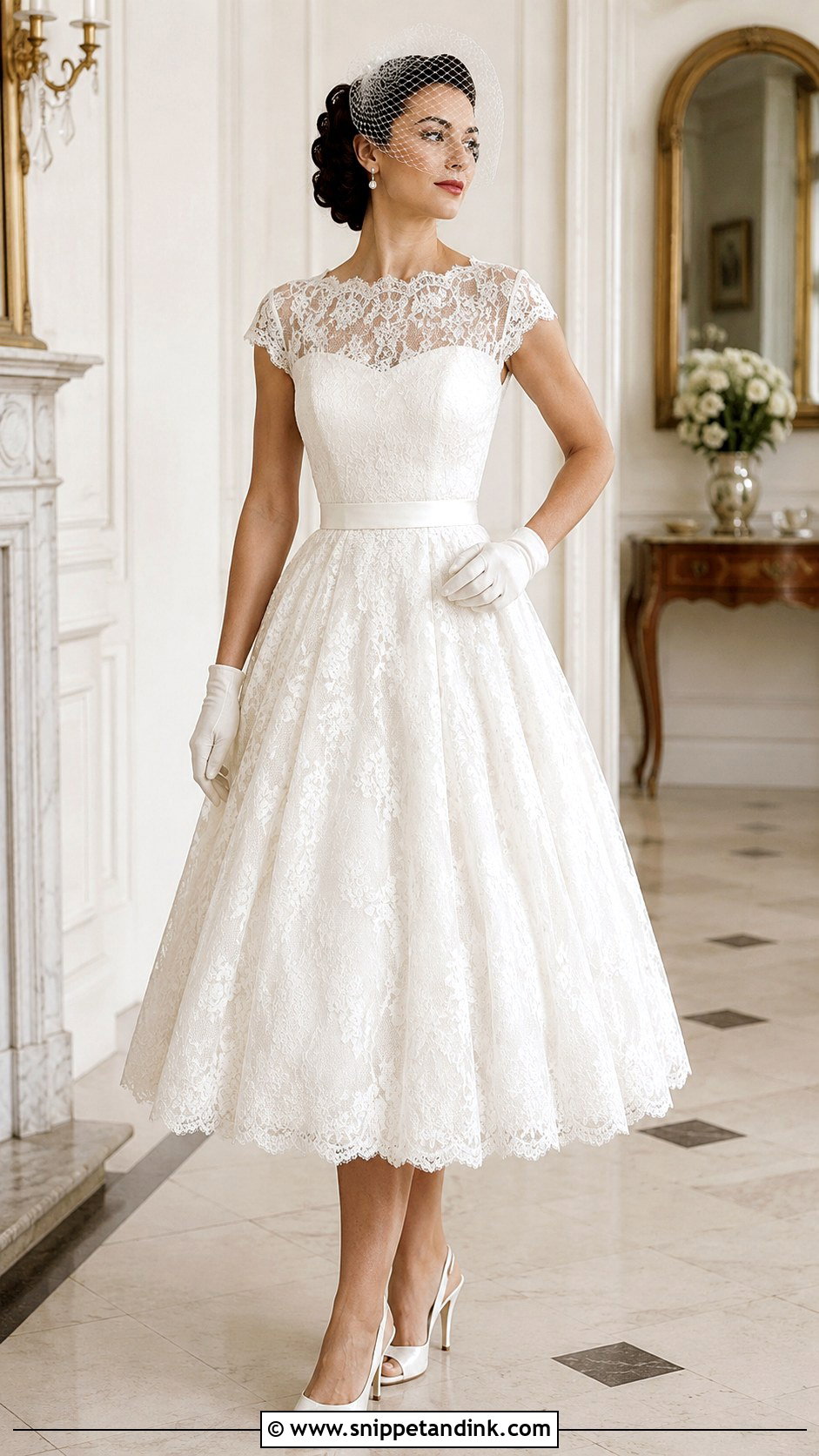
Tea length shows off your shoes, and that changes how you plan the whole charming vintage-inspired outfit. A fitted lace bodice, a defined natural waist and a full skirt ending between knee and ankle need slingbacks, embellished flats or low block heels you’re happy to have photographed in close-up. Pearl earrings, short gloves and a small birdcage veil keep the retro story consistent, with a soft updo or shoulder-length waves. Skirt volume is where these gowns succeed or sag, so ask about a light petticoat if the fabric needs help. Keep the cap sleeves close to the shoulder. Once they start to puff, the look drifts from fifties bride to costume.
12. Boho Lace Cap Sleeve Wedding Dress
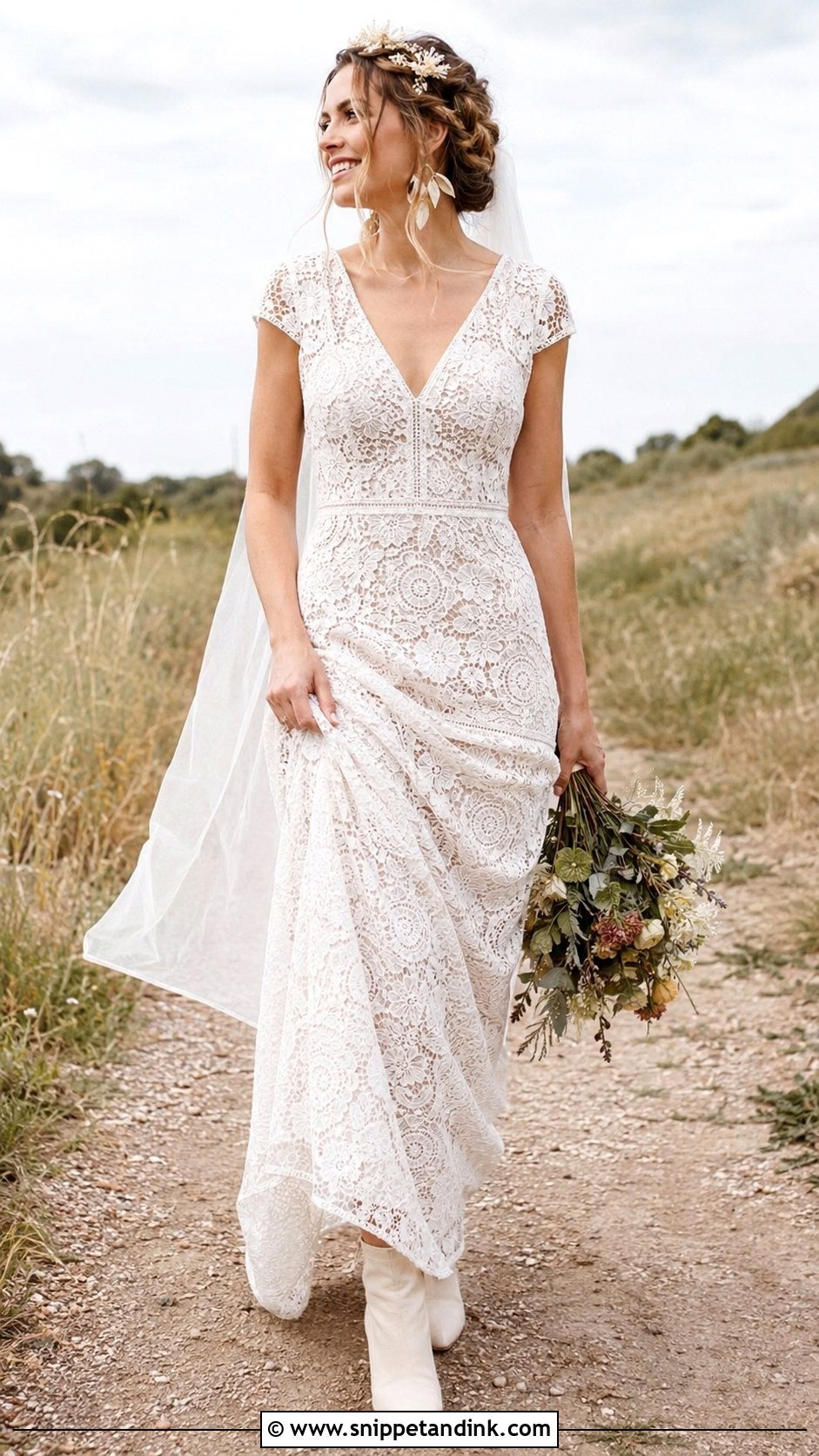
A boho cap sleeve gown should feel unstructured: openwork lace, a V-neck, a light lining and a sleeve that barely registers. An A-line or sheath without heavy boning gives that ease. Low ivory boots, woven flats or block-heel sandals suit it, along with small botanical earrings and a loose braided updo with a floral comb. A plain fingertip veil keeps it bridal without tipping into formal. Outdoor ceremonies on grass or sand are where boho gowns pick up debris, so I’d pick a skirt you can lift with one hand and a hem that clears the ground in your shoes. Run your thumb along the lace edge of the sleeve too. Scalloped lace is sometimes left with a stiff cut edge that chafes the upper arm.
13. Minimalist Cap Sleeve Wedding Dress
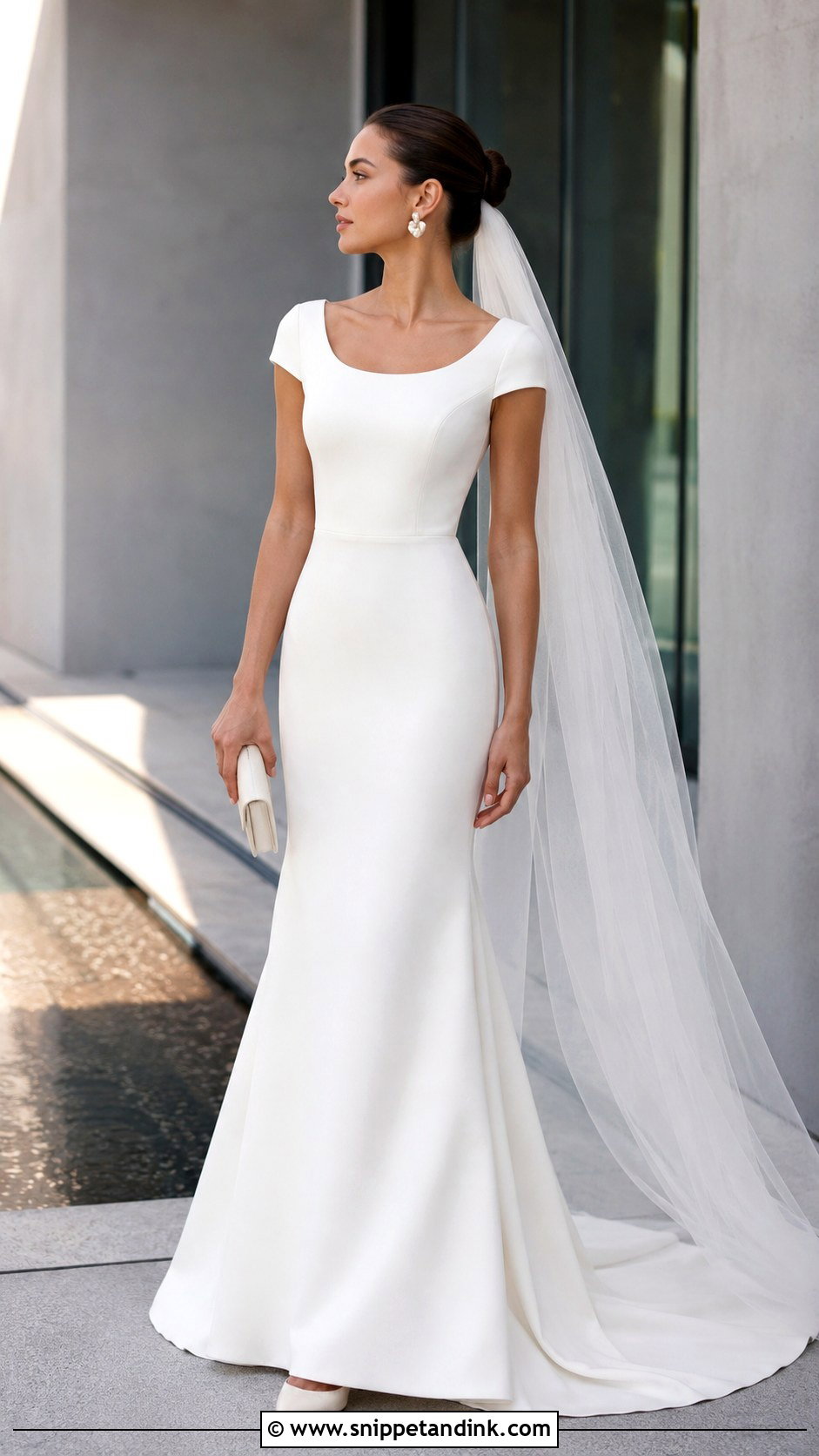
There is nowhere to hide on a minimalist gown, which is the whole point. Crepe, satin or mikado with a clean scoop neckline and fitted sleeves depends entirely on the cut, whether the skirt is a column, an A-line or a soft fit-and-flare. I’d add sculptural earrings, pointed ivory pumps and a sleek clutch, then a polished bun under a plain cathedral veil for drama without decoration. Without lace or beading to disguise construction, fit is everything. Check the shoulder seams, the waist position and the sleeve edge in a three-way mirror. Smooth underwear and a professional press the day before matter more on this gown than on any other in this list.
14. Plus Size Cap Sleeve Wedding Dress
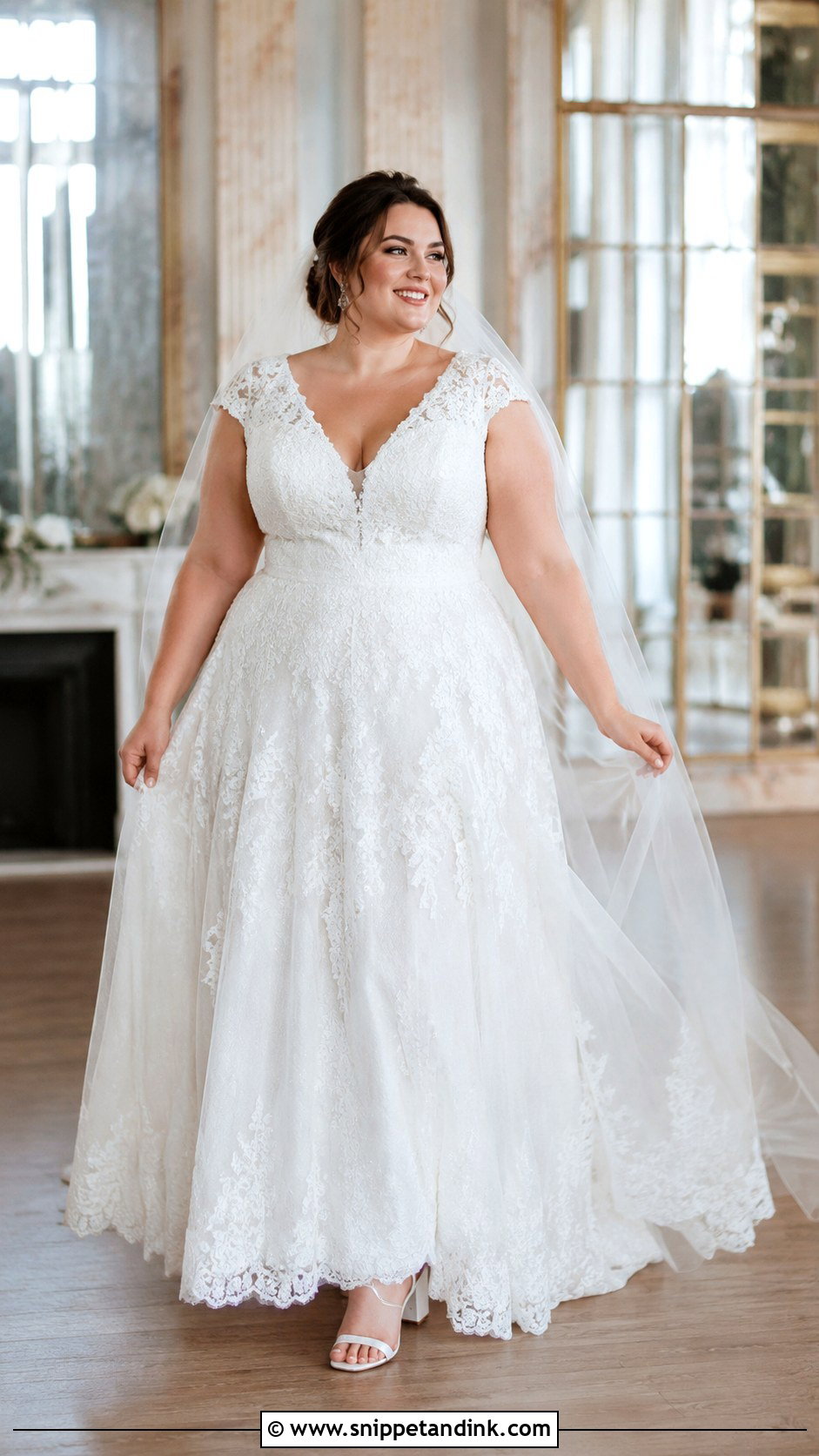
Construction does more for a plus-size bride than any label size. I look first for boning, a supportive lining and a secure closure in a structured A-line or fit-and-flare that defines the waist. Wider lace cap sleeves usually feel more secure than tiny ones and still leave the arms mostly bare, and a V-neck or scoop keeps the upper body from looking crowded. Stable block heels, drop earrings and a veil set behind the shoulders round it out. During the appointment, sit for several minutes and move as you would at dinner. A narrow cap sleeve can roll up toward the neck on a fuller upper arm; if it does, a slightly wider sleeve is the fix, not a tighter one.
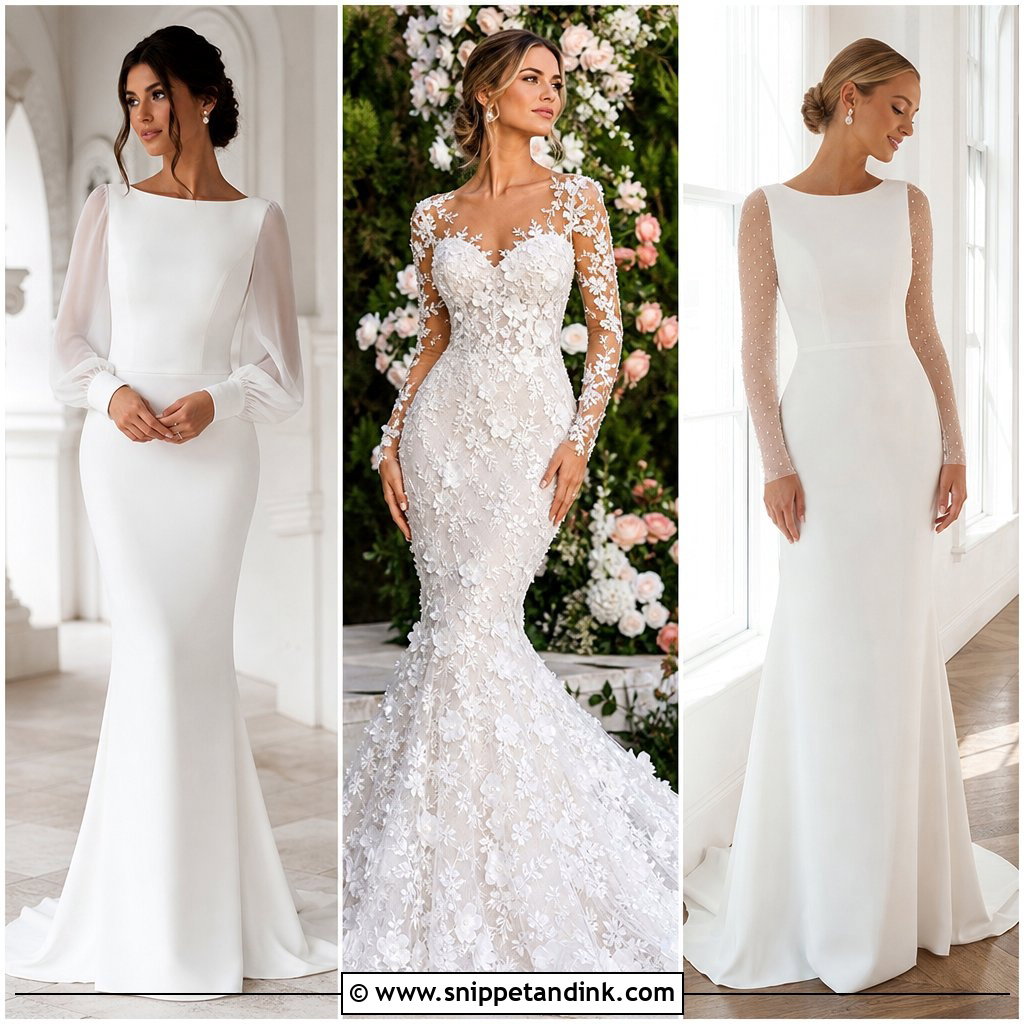
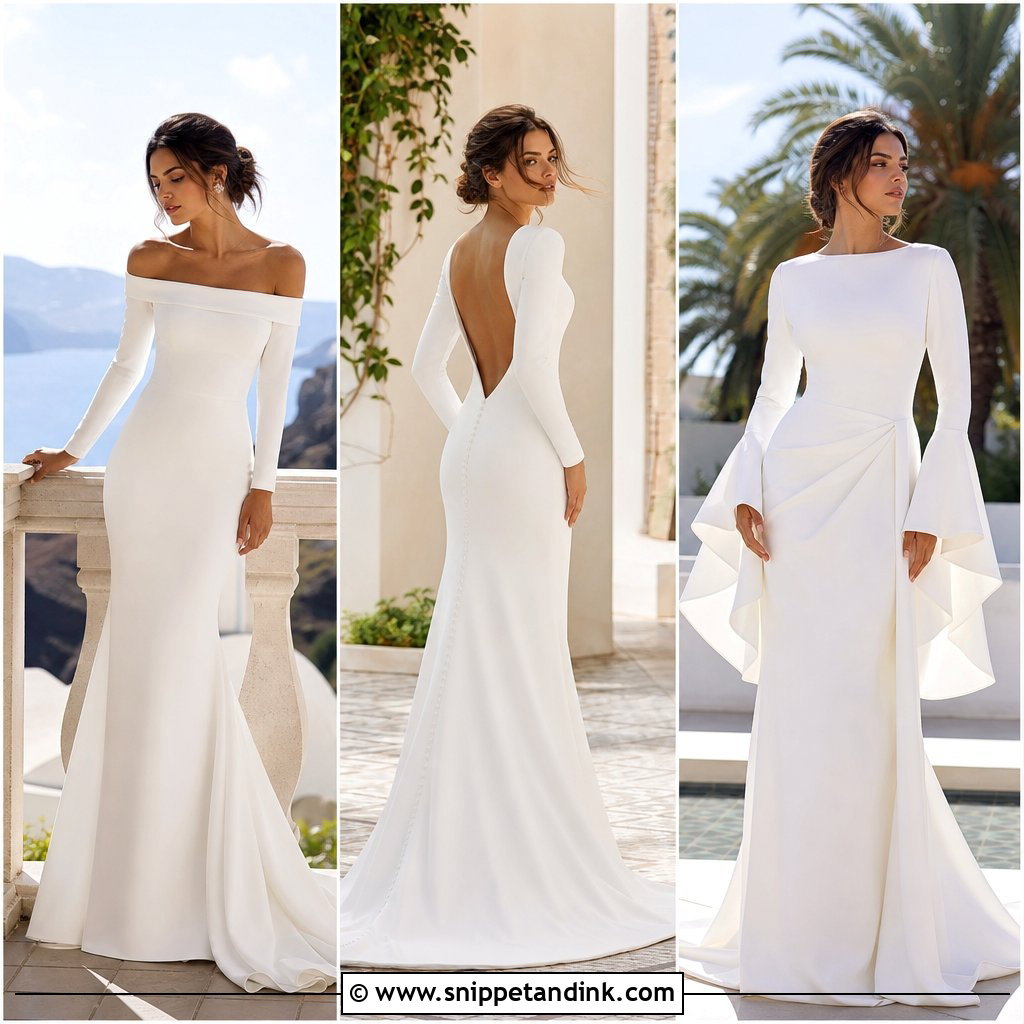

15. Petite Cap Sleeve Wedding Dress
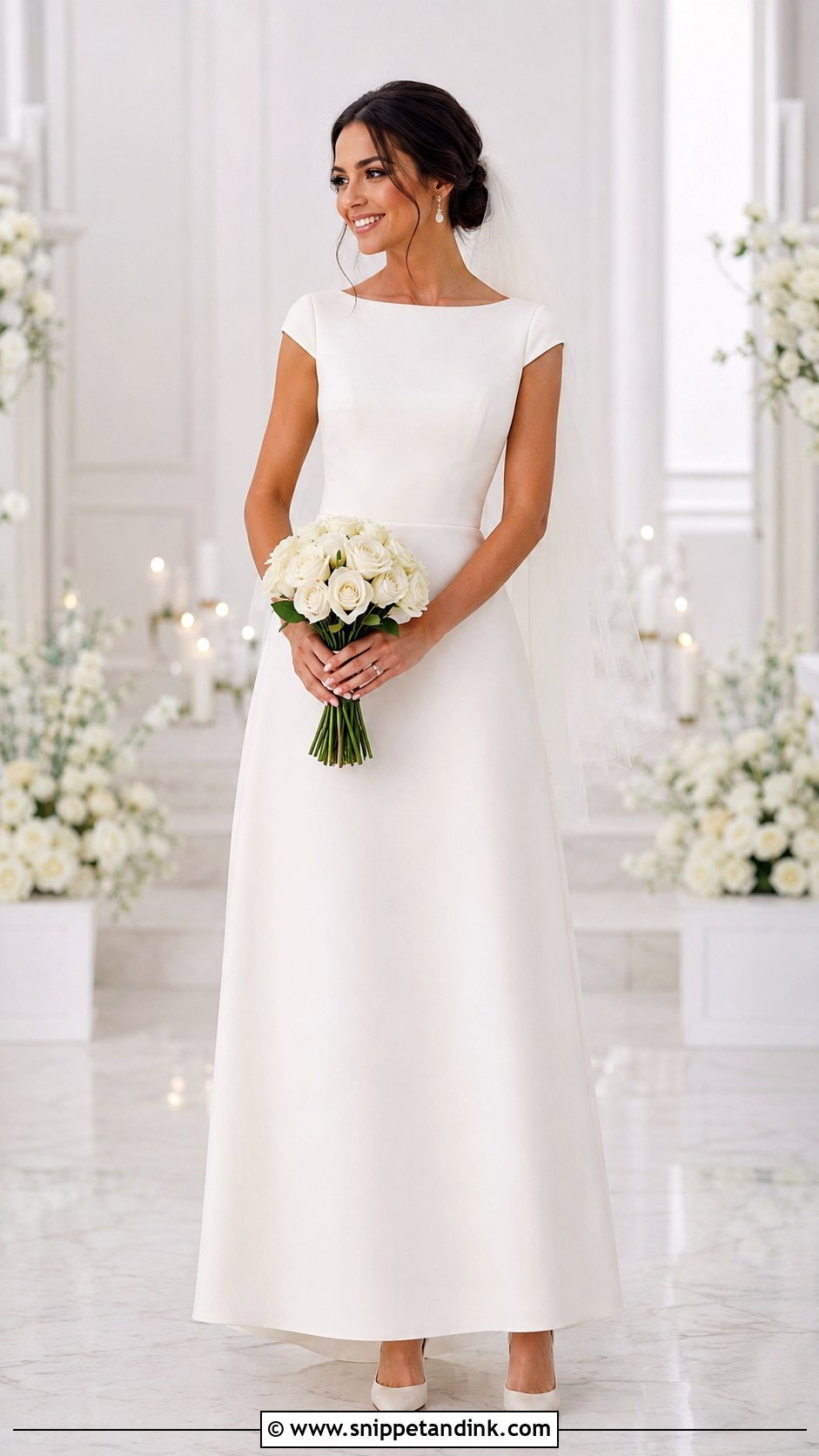
On a petite frame, scale is the whole game. A narrow A-line, sheath or raised-waist silhouette gives a longer line, and a clean bodice keeps the dress from swallowing you. Big appliqués and wide sleeves can overpower a small shoulder, so I’d keep the sleeve delicate and close to the body. Pointed heels, small drops and a narrow veil that falls straight help the vertical line, and hair worn up shows more of the shoulder. Most petite brides assume alterations mean a hem. Usually the bodice length, waist position and strap length need shortening too, and once the shoulder sits in the right place the dress looks made for you.
16. Modest Cap Sleeve Wedding Dress
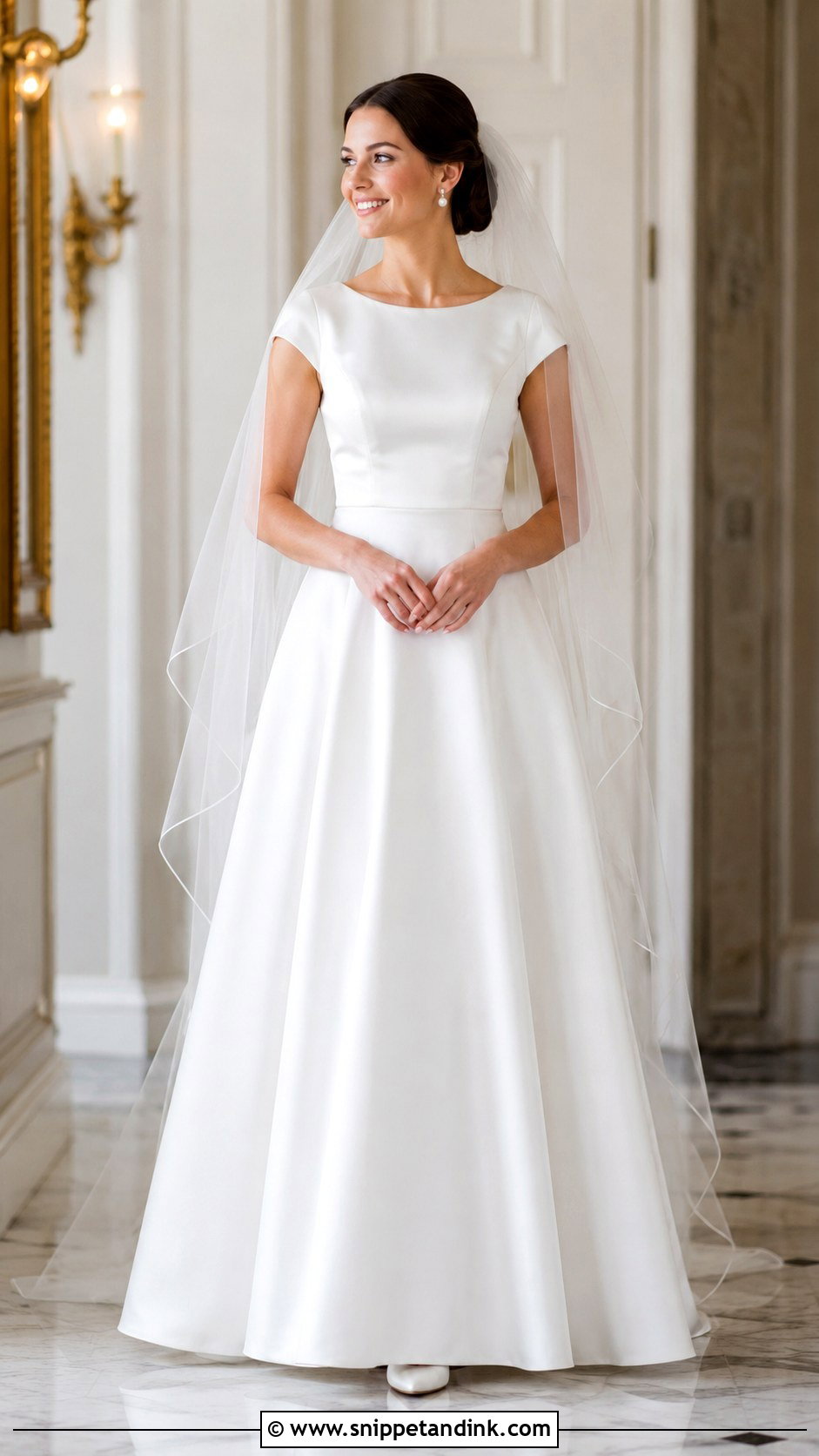
Coverage doesn’t have to look heavy. For a modest cap sleeve gown I’d go with an opaque bodice, a higher scoop neckline and a sleeve cut wide enough to cover the whole top of the shoulder. Satin gives a structured result; lace or chiffon softens it. Closed-toe pumps, pearl earrings, a full-length veil and a neat low bun keep it polished. If your ceremony needs more coverage than the gown offers, a matching lace topper or detachable panel can be made from the same fabric family. My test for modest gowns: bend forward, sit, and lift your arms above shoulder height. Whatever the neckline does in those three moves is what it will do at the altar.
17. Summer Cap Sleeve Wedding Dress
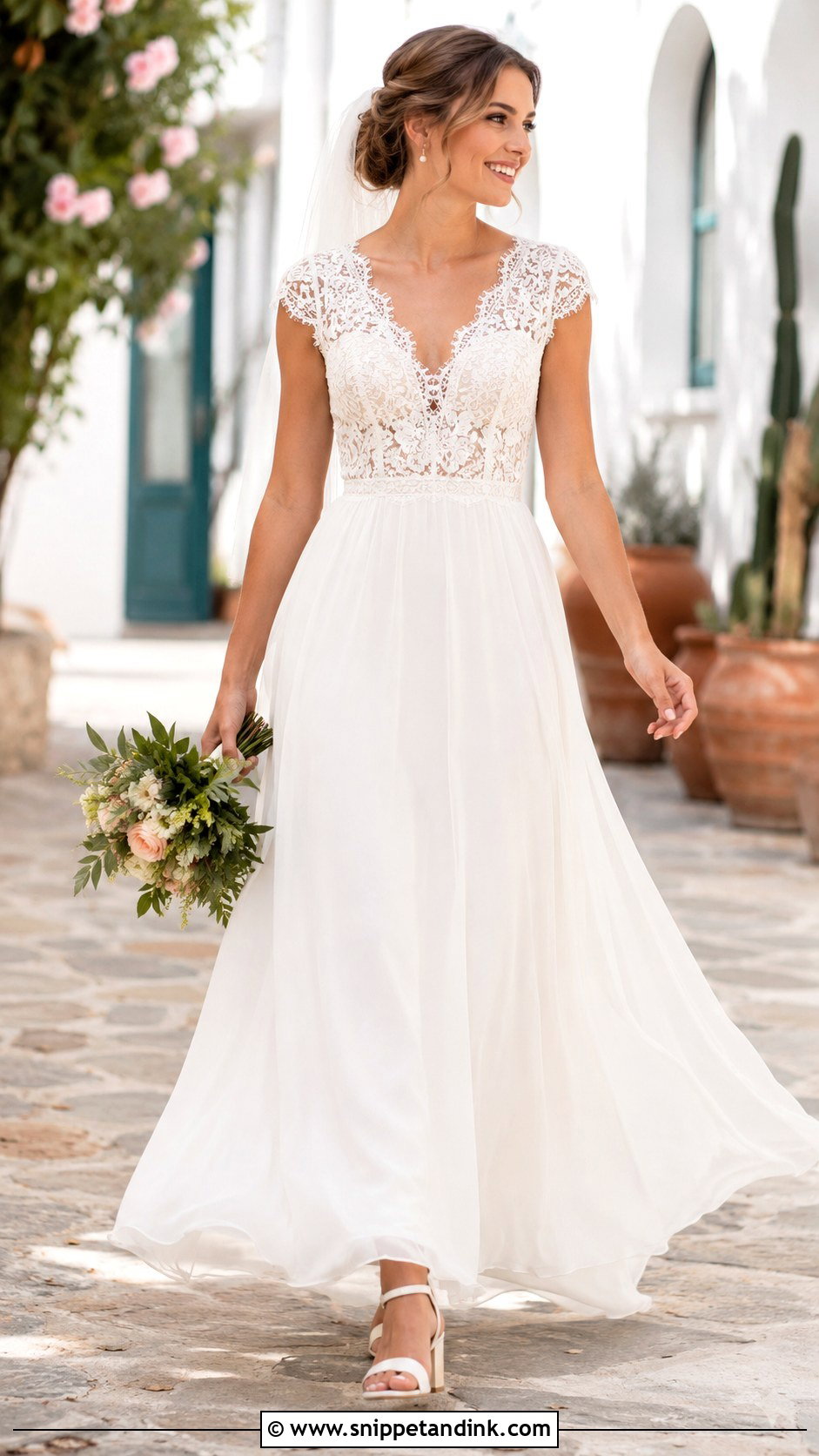
Summer brides overheat in their sleeves and their linings more often than in their skirts. Light cap sleeves that don’t trap heat matter, and so does what sits inside the bodice. A chiffon A-line with a lace bodice or a lightweight crepe sheath stays comfortable, especially with an open neckline and only as much internal structure as your support needs. Block-heel sandals, small earrings and a veil you can take off after the ceremony finish it, and a secure updo keeps hair off a damp neck. I’d avoid dense beadwork on the sleeve for a mostly outdoor day. Ask the shop what the gown weighs and what the lining is made of; polyester linings hold heat far more than cotton or silk ones.
18. Winter Cap Sleeve Wedding Dress
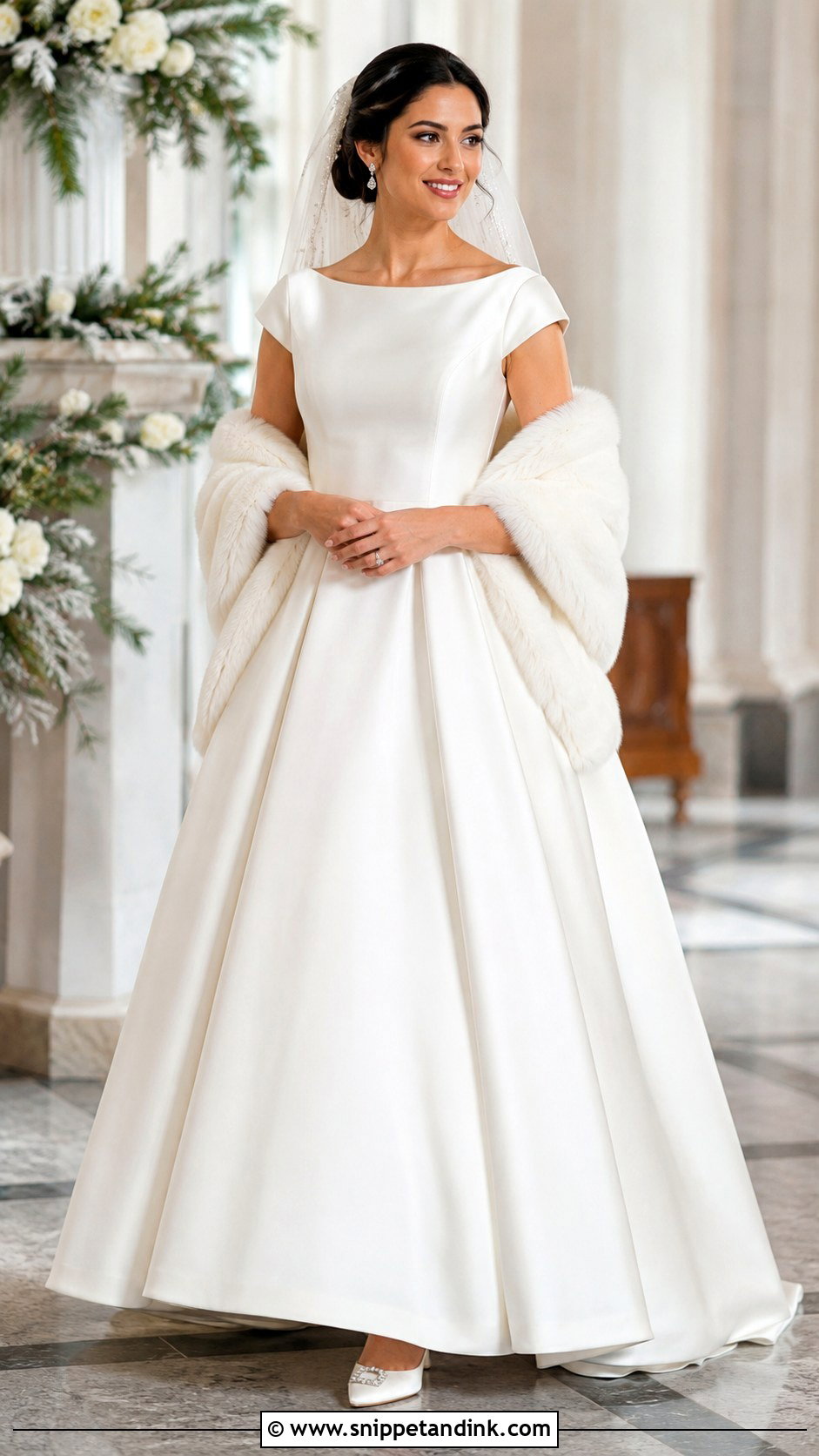
Cap sleeves give you no warmth, so in winter the outerwear does that job. A structured satin or mikado ball gown with a lined bodice and a weighty skirt suits the season, and a tailored bridal cape, faux-fur wrap or long coat handles the travel and outdoor portraits. Closed-toe pumps, crystal earrings and an embellished veil make it formal. The nice part is the reveal: take the layer off indoors and the shoulder detail appears. Thicker tights only work if the skirt and shoes hide them fully. The thing I check on a winter fitting is whether the cape sits over the sleeve without flattening it. Bring the outer layer to your final fitting.
19. Beach Cap Sleeve Wedding Dress
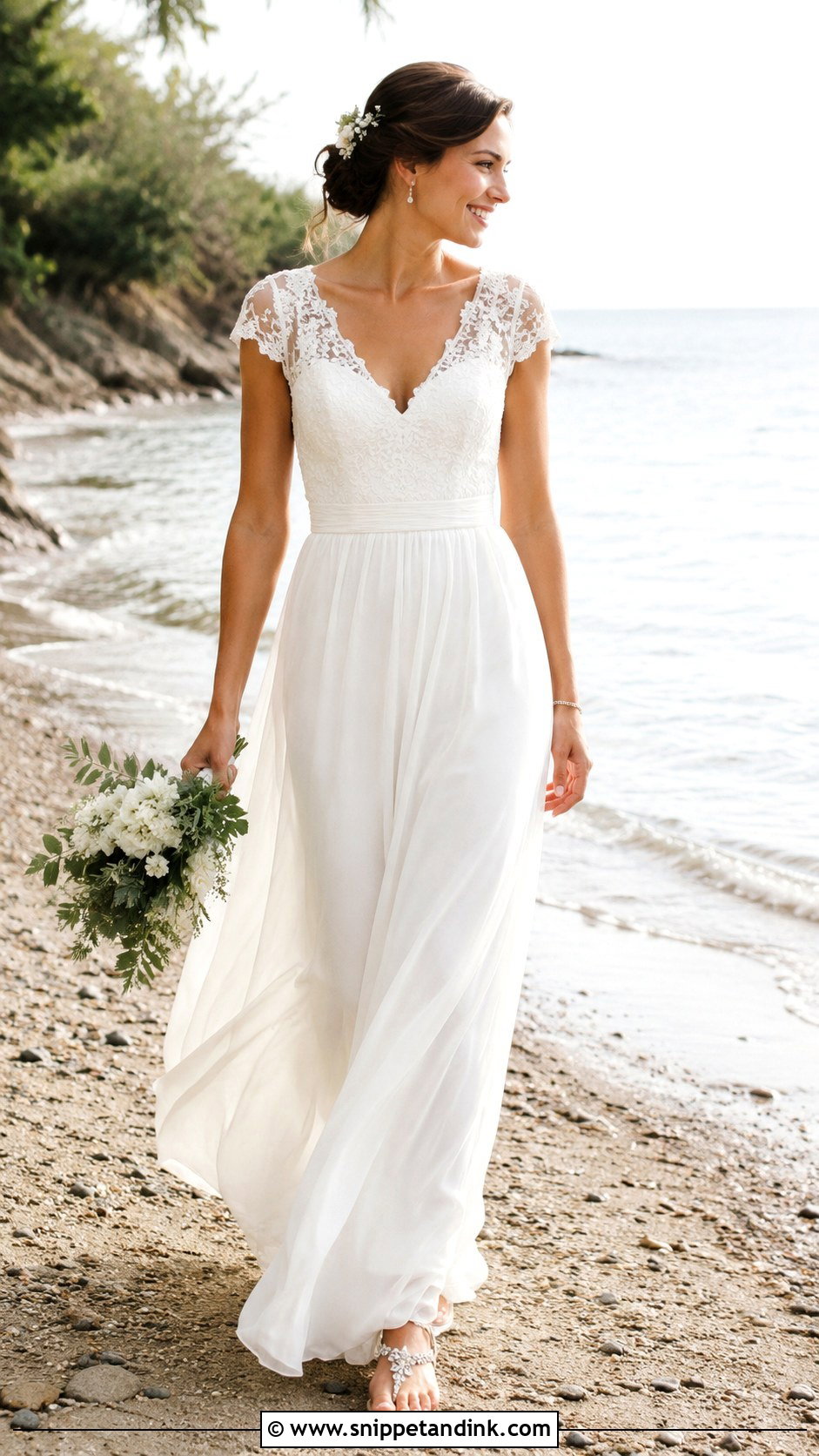
On a beach, wind and sand decide how a gown behaves. Chiffon or soft crepe with simple cap sleeves, a fitted upper bodice and a flowing skirt with no heavy train moves with the breeze instead of dragging. Lightweight lace sleeves are fine if the edges are soft. Flat embellished sandals, fine earrings and a small comb beat a complicated headpiece, and a short veil is far easier to control than a long one, though a floral comb can replace it. Loose sleeves can lift and twist in wind, so keep them close. Have the gown hemmed for the shoes you’ll actually wear on sand, and add a wrist loop so you can lift the skirt for shoreline photos.

20. Detachable Cap Sleeve Wedding Dress
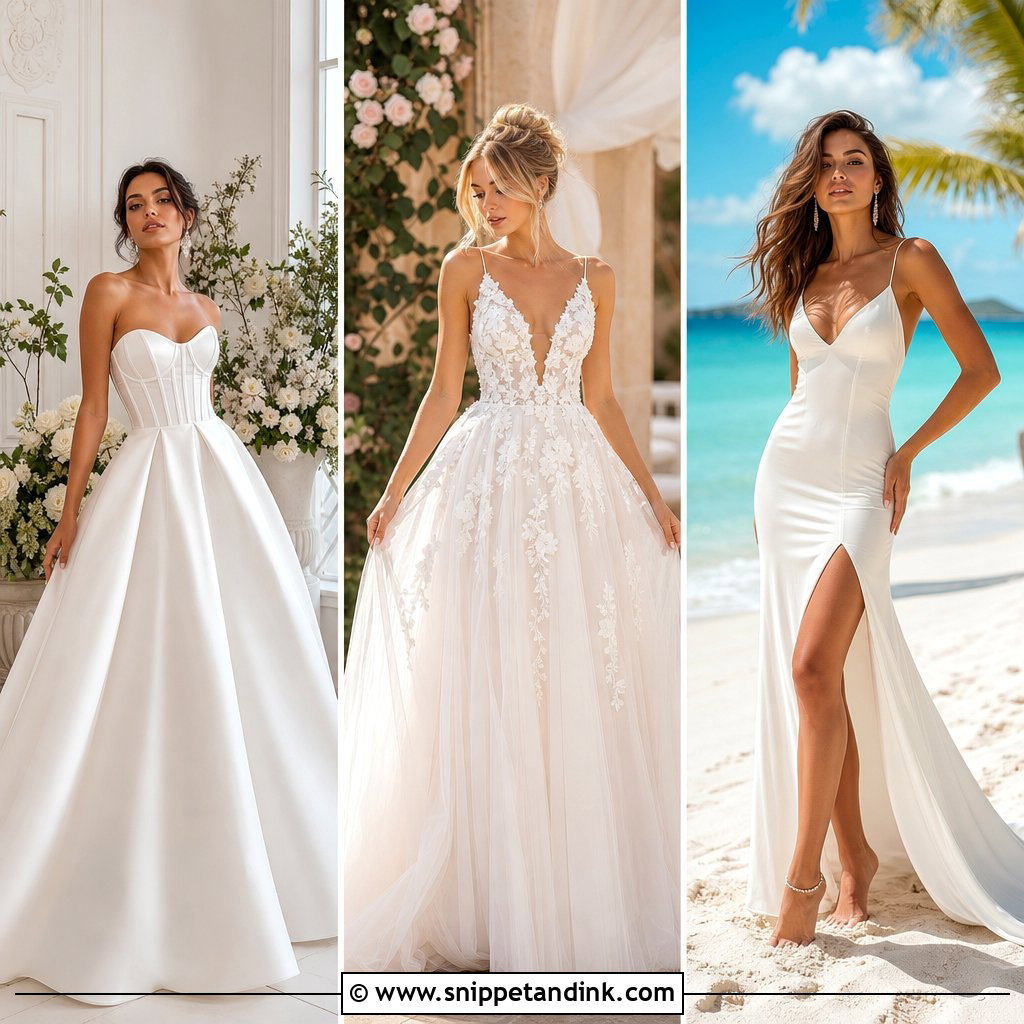
Detachable cap sleeves give you two looks from one gown, which is why I suggest them to brides torn between coverage for the ceremony and freedom for dancing. Start with a strapless or wide-strap dress that has attachment points hidden inside the bodice. Lace, beaded tulle or smooth satin all work when they match something already on the gown. Wear them with the veil, pearl earrings and classic pumps for the vows, then take them off for a cleaner neckline at the reception. Ask the designer or seamstress to show you how the snaps, loops or buttons work, and practice taking them off yourself. Afterward, store the sleeves flat in a labeled bag with the gown so they don’t crush or go missing.
What a Seamstress Can Change on a Cap Sleeve, and What She Can’t
Brides often expect sleeves to be the easy part of alterations. With cap sleeves it’s often the opposite, because the sleeve, the shoulder seam and the neckline all meet in a small area. Change one and the other two move.
Usually straightforward versus genuinely difficult
- Lifting the shoulder seam a little to stop a sleeve sliding off is a routine fix on most gowns.
- Narrowing or widening the sleeve opening is possible on plain fabric; on lace it usually means unpicking and resetting the motifs by hand.
- Adding cap sleeves to a strapless gown can be done when there’s matching lace or fabric to work with, and detachable versions are often the cleaner choice.
- Moving a neckline, or raising an armhole that was cut too low, is hard and sometimes not possible without visible seams.
Order early enough that alterations aren’t rushed. Gowns made to order commonly take several months to arrive, and I’d plan on two or three fittings spread over the last couple of months before the wedding, with the final one close enough that your weight and posture won’t change much.
Packing the Sleeves Away After the Wedding
Small sleeves crush easily. When the gown goes back in its bag, I stuff each cap sleeve lightly with acid-free tissue so it keeps its shape, and hang the dress by its inner hanging loops rather than the sleeves, which will stretch under the weight of a full skirt. Lace and beaded sleeves pick up makeup and spray tan at the edge more than anywhere else, so point those spots out to the cleaner when you send the gown for preservation.
Raise Your Arms Before You Say Yes to the Dress
Everything I check on a cap sleeve gown comes back to one question: does the dress still look right when you move? Look at how the sleeve fabric meets the bodice, how the neckline frames your face, and how much movement the silhouette lets you have. Then let shoes, jewelry, veil and hair support those details rather than cover them. Walk, sit, hug and raise your arms at every fitting, because a sleeve that pinches or slides will pull your attention all day, however pretty it looks on the hanger. Good alterations can move a shoulder line by a few millimeters and change the whole fit. Lace, satin, chiffon and crepe all have a cap sleeve version here, so start with the fabric that suits your venue and season, then narrow by neckline.
You'll Like These Ideas:



Leave a Reply