
Most brides walk into a fitting room with a picture in mind and walk out in a different silhouette, because fabric and fit behave differently on a real body than on a hanger. That is why I start every styling session with four questions: what shape suits your frame, what fabric suits your venue, how formal the day is, and how much you want to move. Below are twenty frocks I’d genuinely put in front of a bride, from timeless gowns to sculpted corsets, slips and two-in-one designs, each with the shoes, veil and jewelry I’d pair with it. Some suit a ballroom, some a courthouse or a beach, and a few can switch between the two. Read them as starting points, then try the shapes on before you fall for a photo.
A Shop Appointment Plan That Keeps You From Ordering in a Panic
Most made-to-order wedding frocks take several months to arrive, and alterations need their own block of time after that, so I tell brides to start trying on roughly nine to twelve months before the wedding. Ordering later is possible, but it often means paying rush fees or limiting yourself to samples and ready-to-wear. Lead times vary a lot between designers, so ask each shop for theirs in writing.
Treat the first appointment as research rather than shopping. I’d try at least one silhouette you’re sure you’ll hate, because the shape a bride rules out on paper is often the one that suits her best in person.
- Bring a strapless bra or the shapewear you expect to wear, and shoes close to your wedding heel height.
- Bring one or two people whose opinion you trust, not a crowd; five voices usually ends in confusion.
- Photograph yourself from the side and back, not just the front, so you can compare later.
- Ask what the price includes: bustle, hemming and sleeve changes are often extra.
- Note the sample size you tried, since bridal sizing usually runs smaller than high-street sizing.
Once you order, plan the first fitting about two to three months before the wedding and the final one two to three weeks out. Expect two or three fittings in total, more for corsets and anything bias-cut.
1. A-Line Wedding Frock
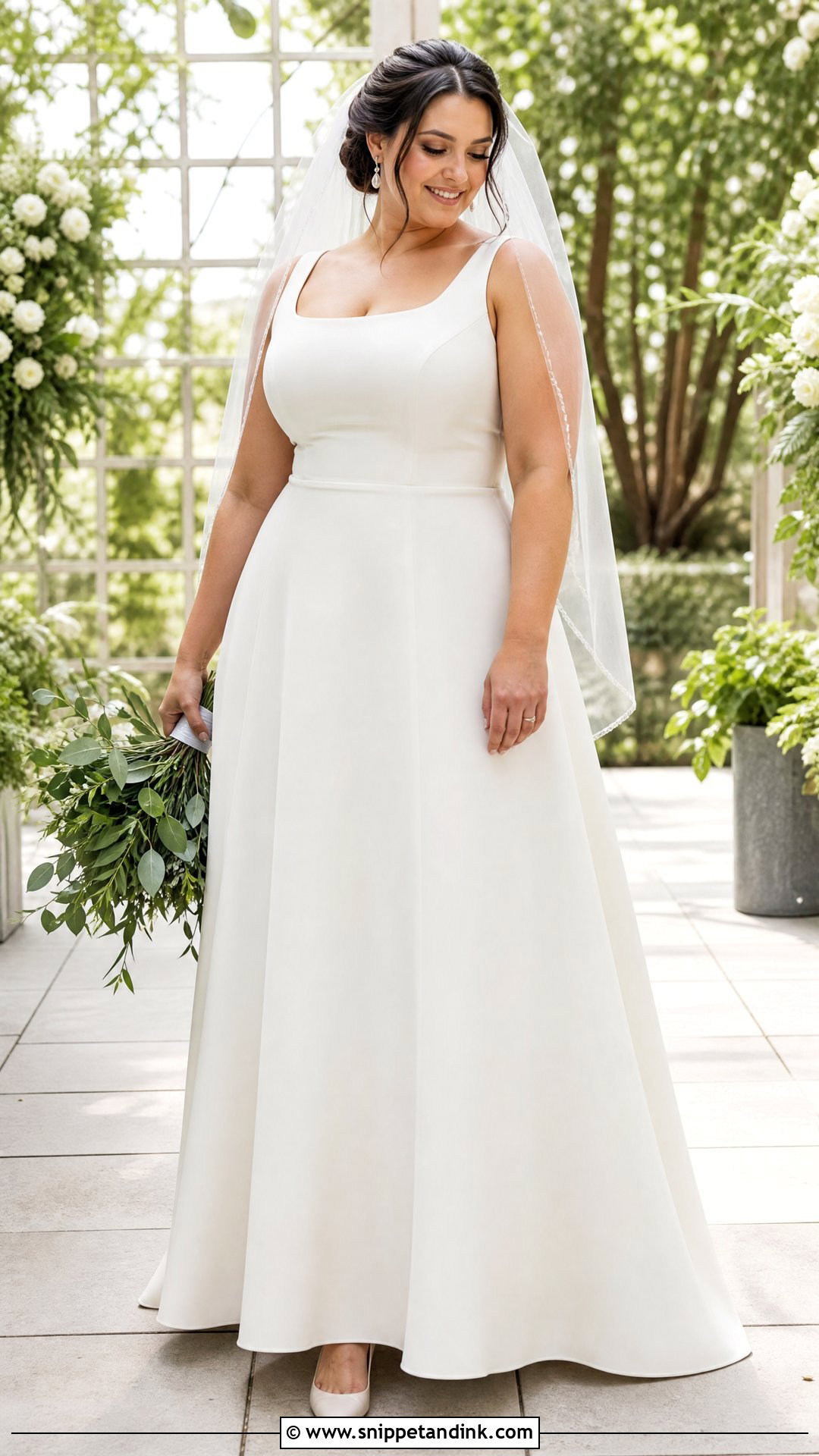
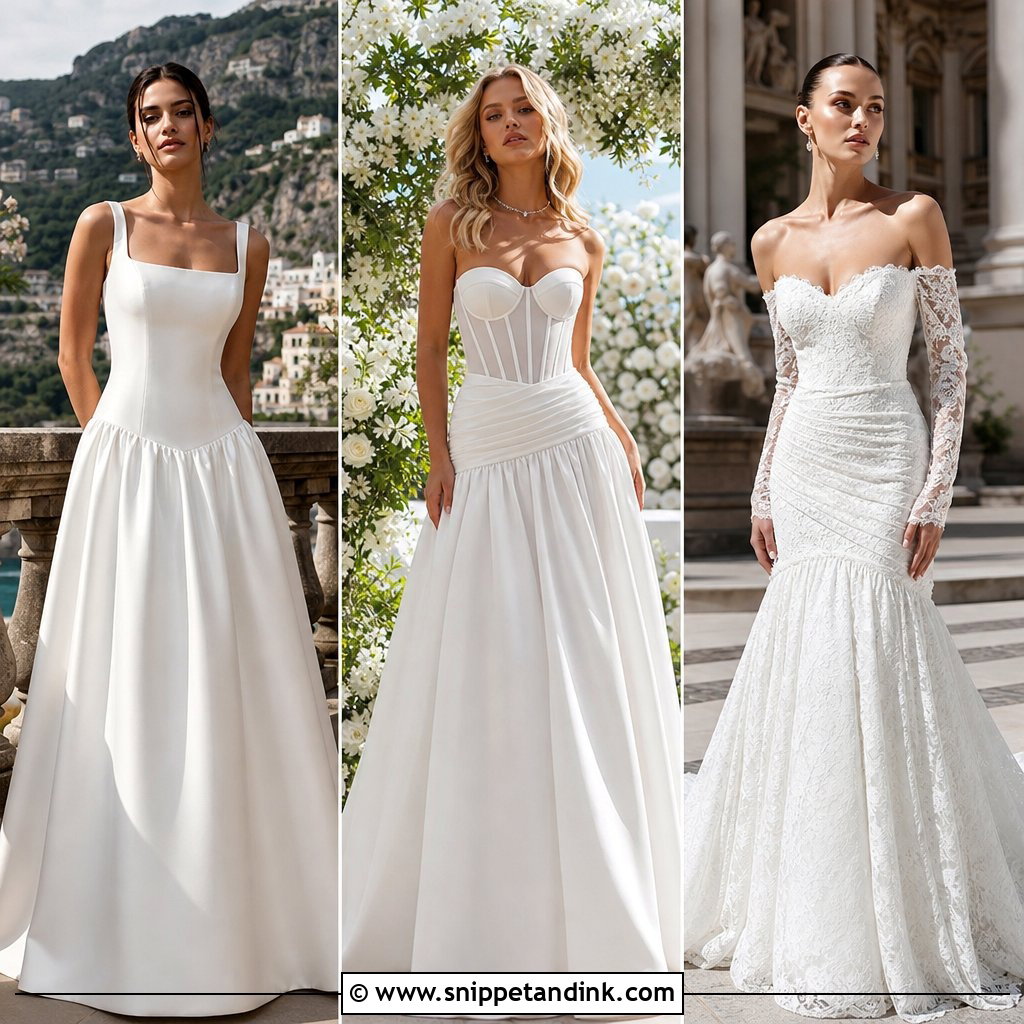
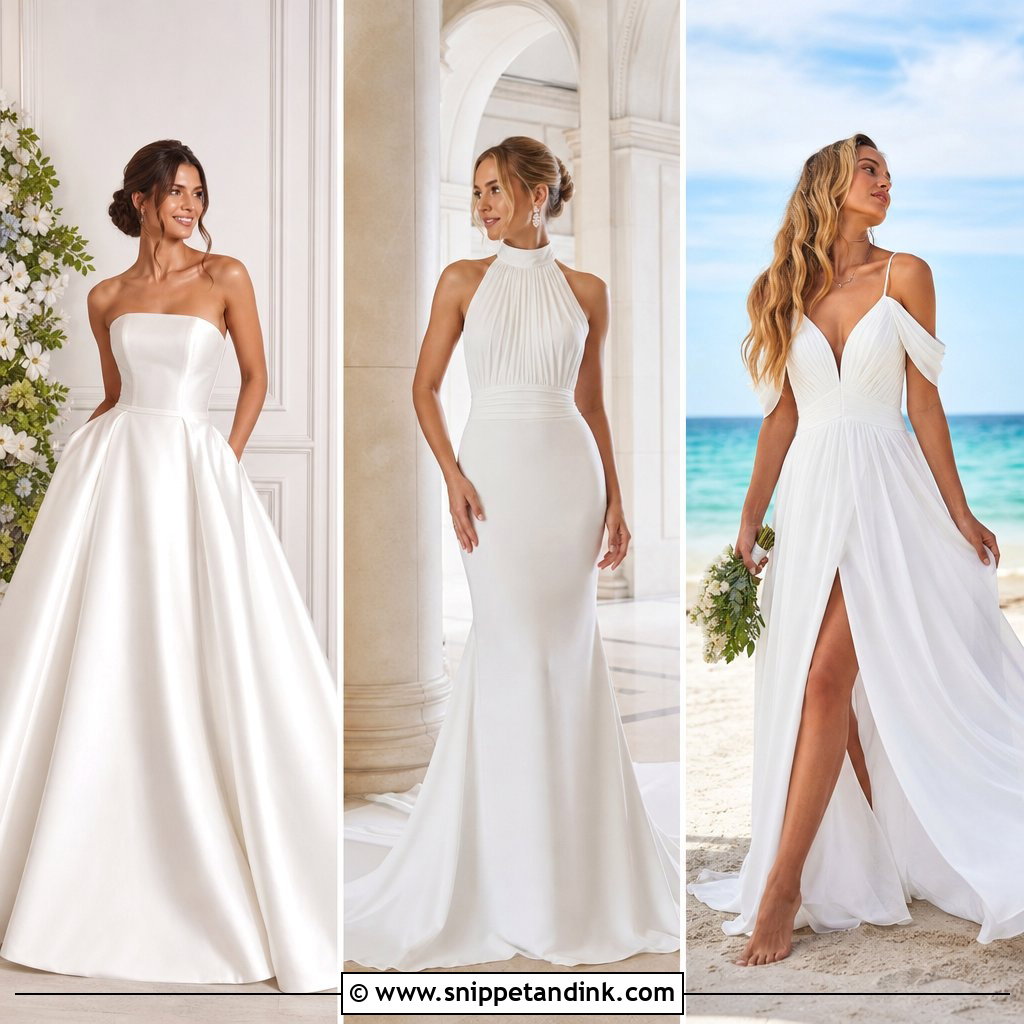
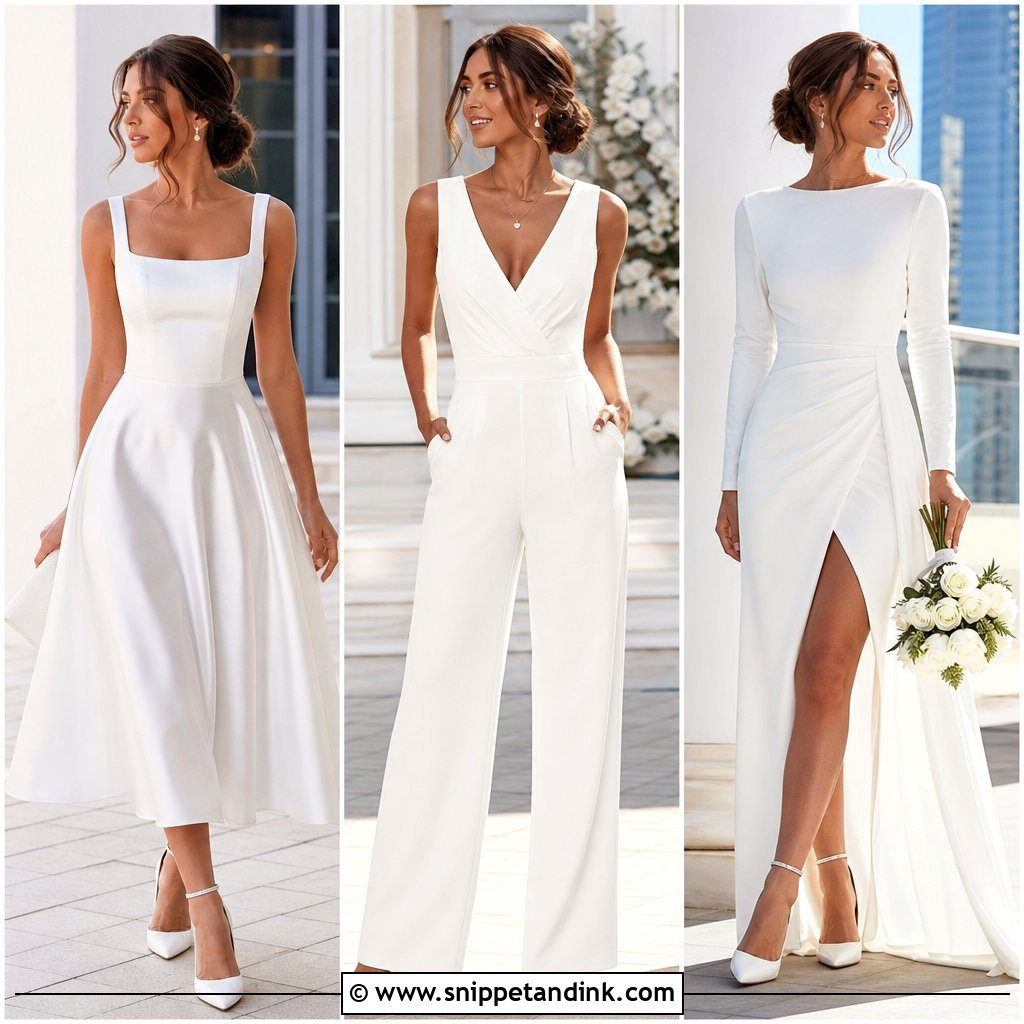
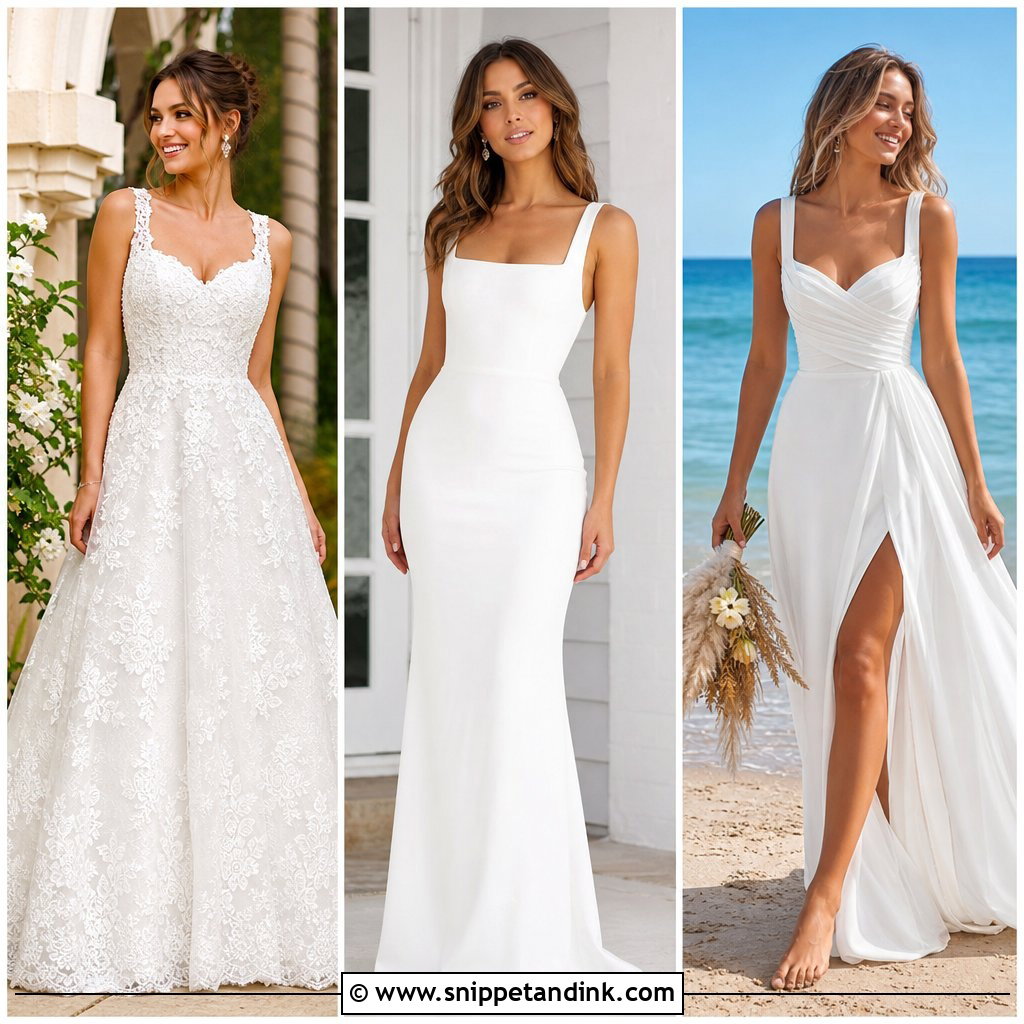
The A-line is the shape I pull first for a bride who isn’t sure what she wants, because it skims the hips instead of gripping them and forgives a lot. The detail that makes or breaks it is the waist seam: off-the-rack dresses place it at a standard height, and on a short or long torso that seam lands in the wrong spot. I always ask the seamstress to move it to your natural waist. Ivory crepe gives a clean line indoors; chiffon or tulle moves better in a breeze outside. Pointed pumps, a fingertip veil and pearl drops keep it classic, and illusion sleeves add coverage without changing the shape.
2. Satin Ball Gown Wedding Frock
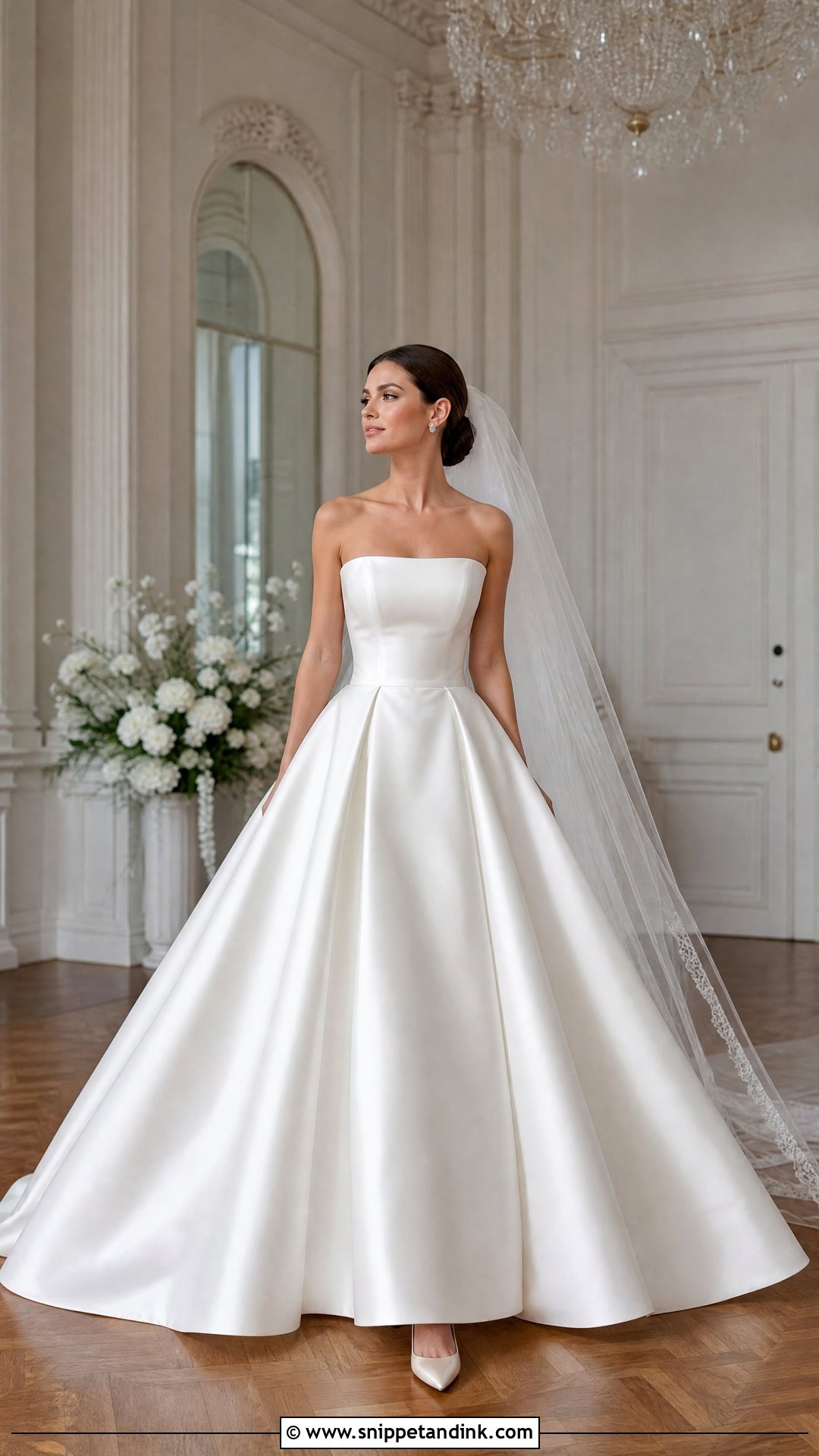
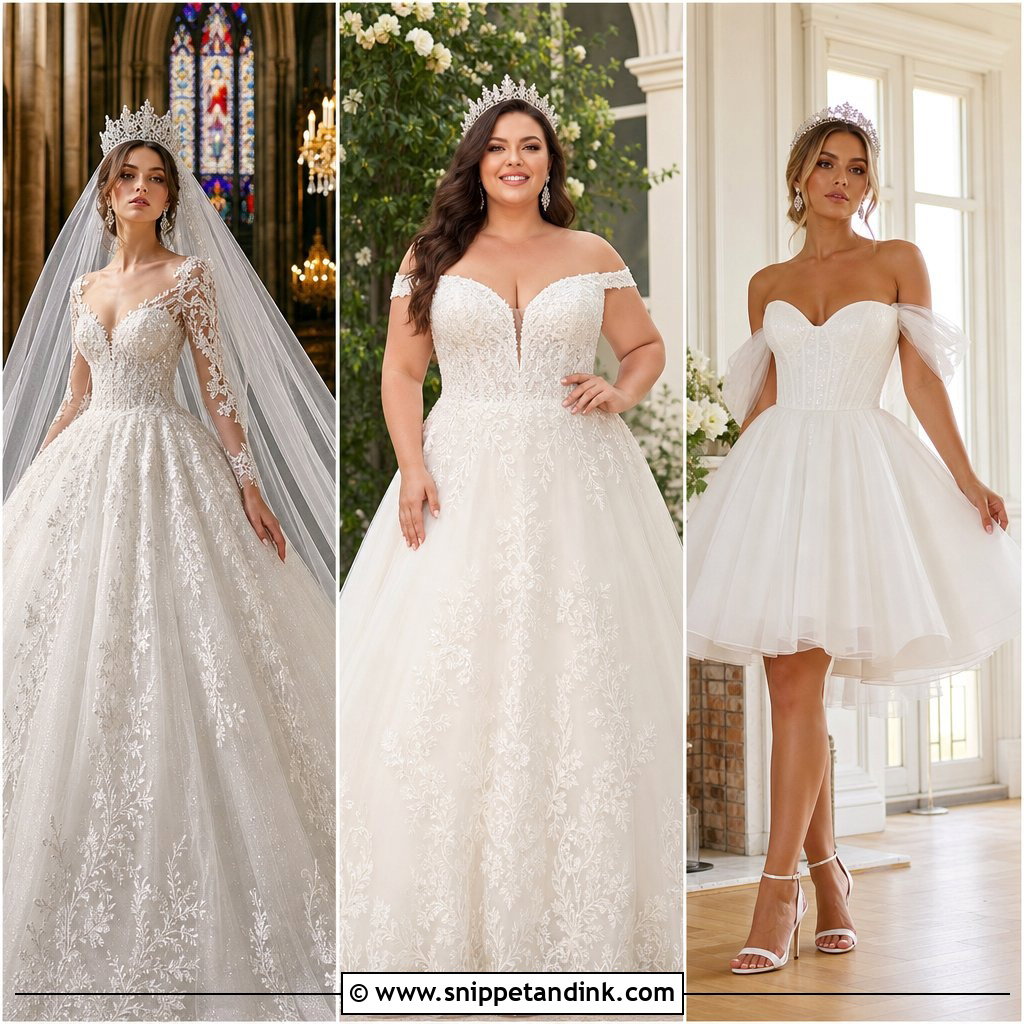
A satin ball gown lives or dies by its fabric weight. Thin polyester satin collapses by the reception, so I steer brides toward matte duchess satin or mikado, which hold a full skirt on their own with far less petticoat underneath. Box pleats at the waist give volume without bulk across the stomach. Keep the jewelry to crystal studs, since the satin itself carries the look, and wear your hair in a polished low bun so the structured veil has somewhere secure to sit. Two things I insist on: hidden pockets and a bustle that has been tested by whoever will fasten it on the day.
3. Lace Long Sleeve Wedding Frock
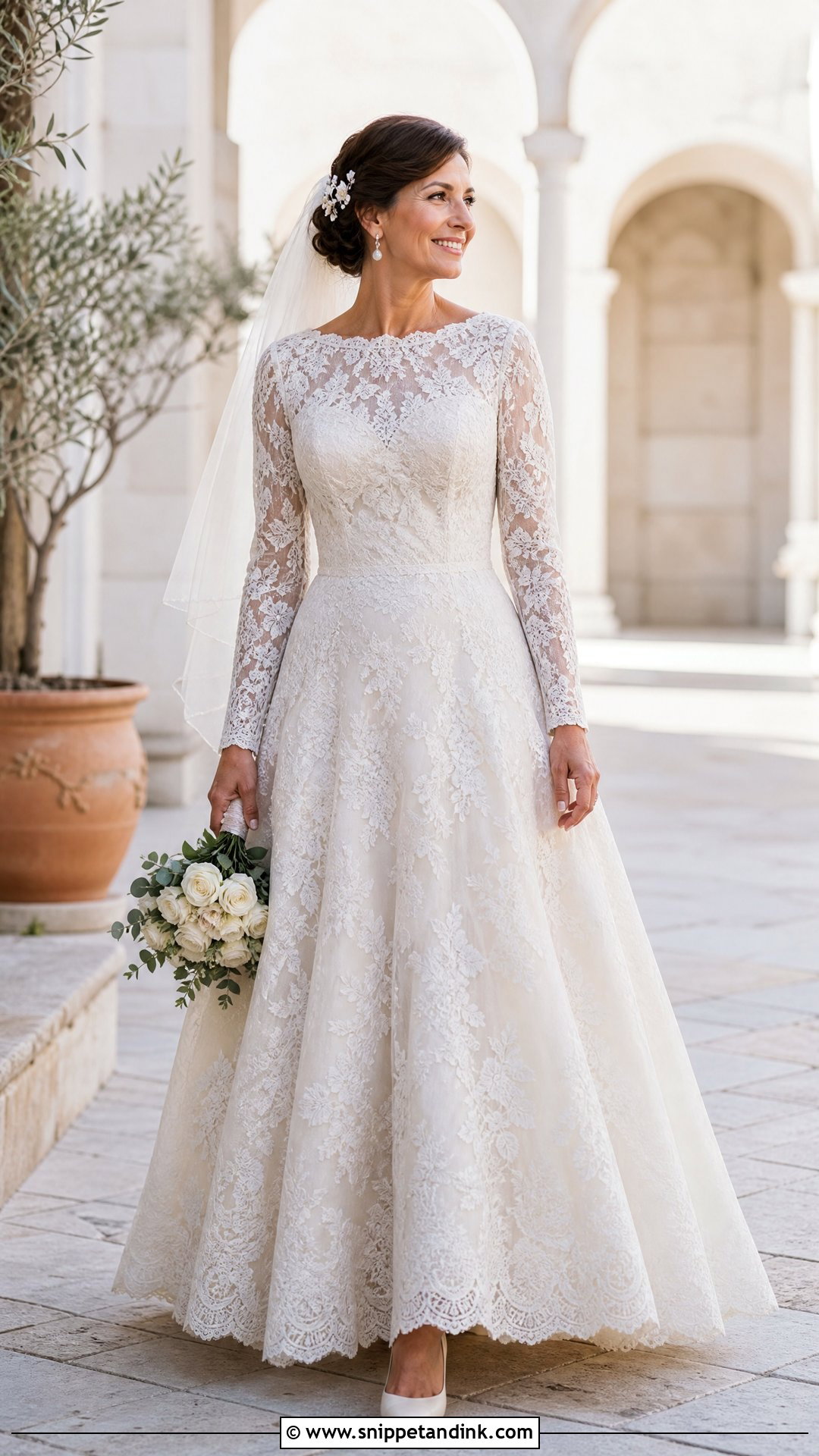
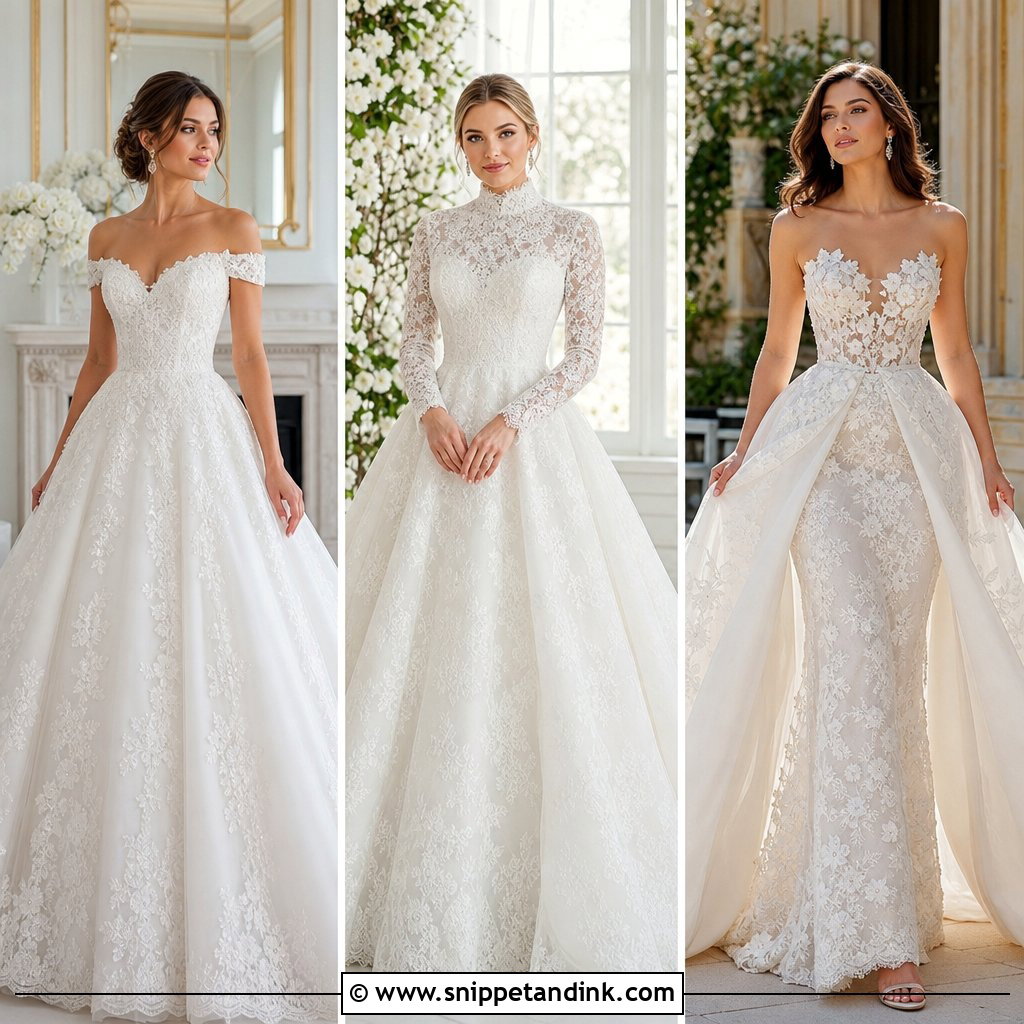
Lace sleeves give coverage and warmth, but the sleeve fit is where I see the most trouble. Loose cuffs look borrowed, and lace cut too tight across the upper arm stops you from hugging anyone. On a wedding frock like this, the lace should run continuously from bodice to wrist rather than looking like a separate jacket, and the bodice needs its own lining for support. With a busy lace pattern I’d skip the necklace entirely and choose small pearl earrings and floral pins. Summer brides should ask for open-work lace over a breathable lining, because heavy corded lace gets hot fast.
4. Square Neck Wedding Frock
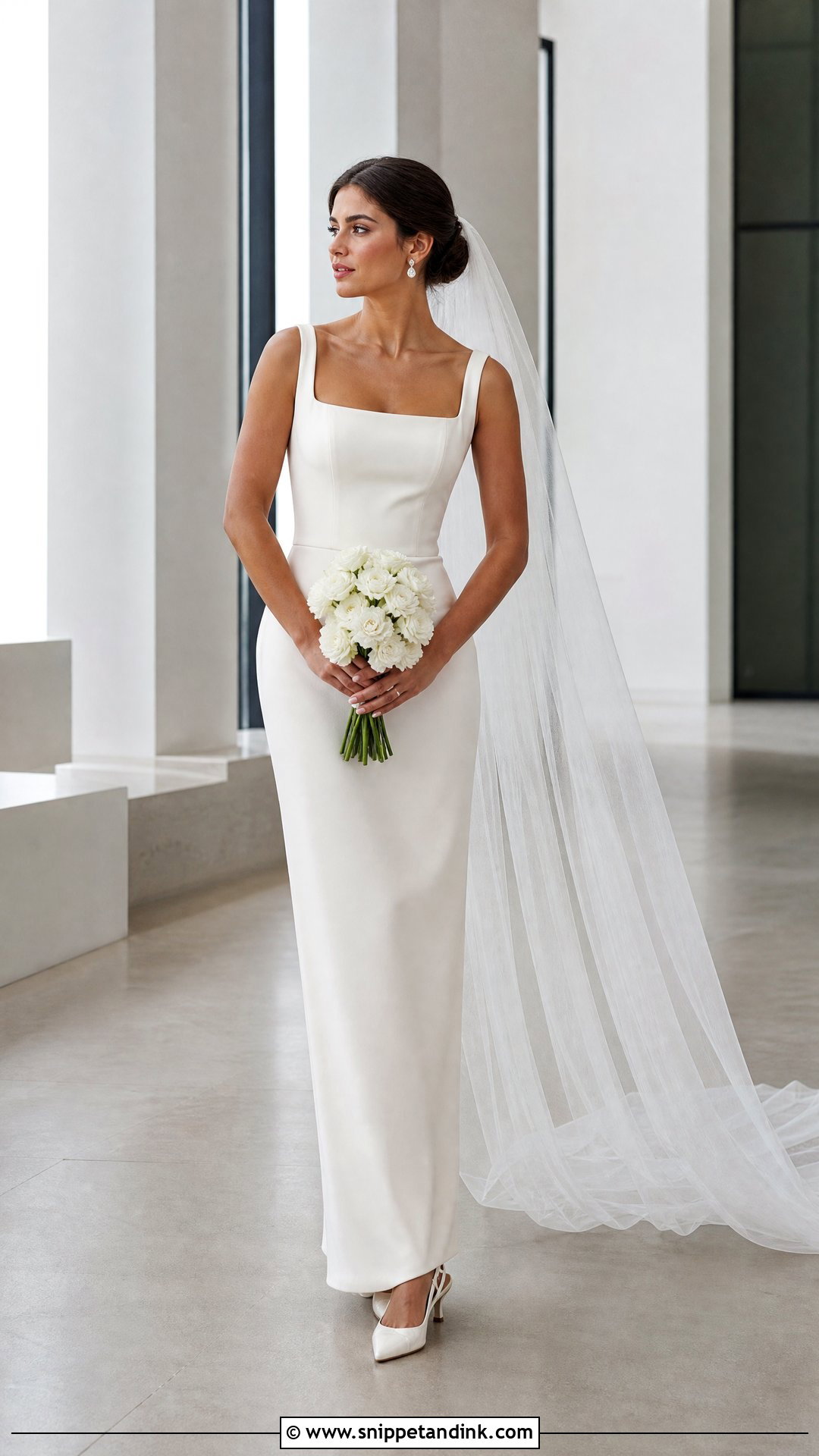
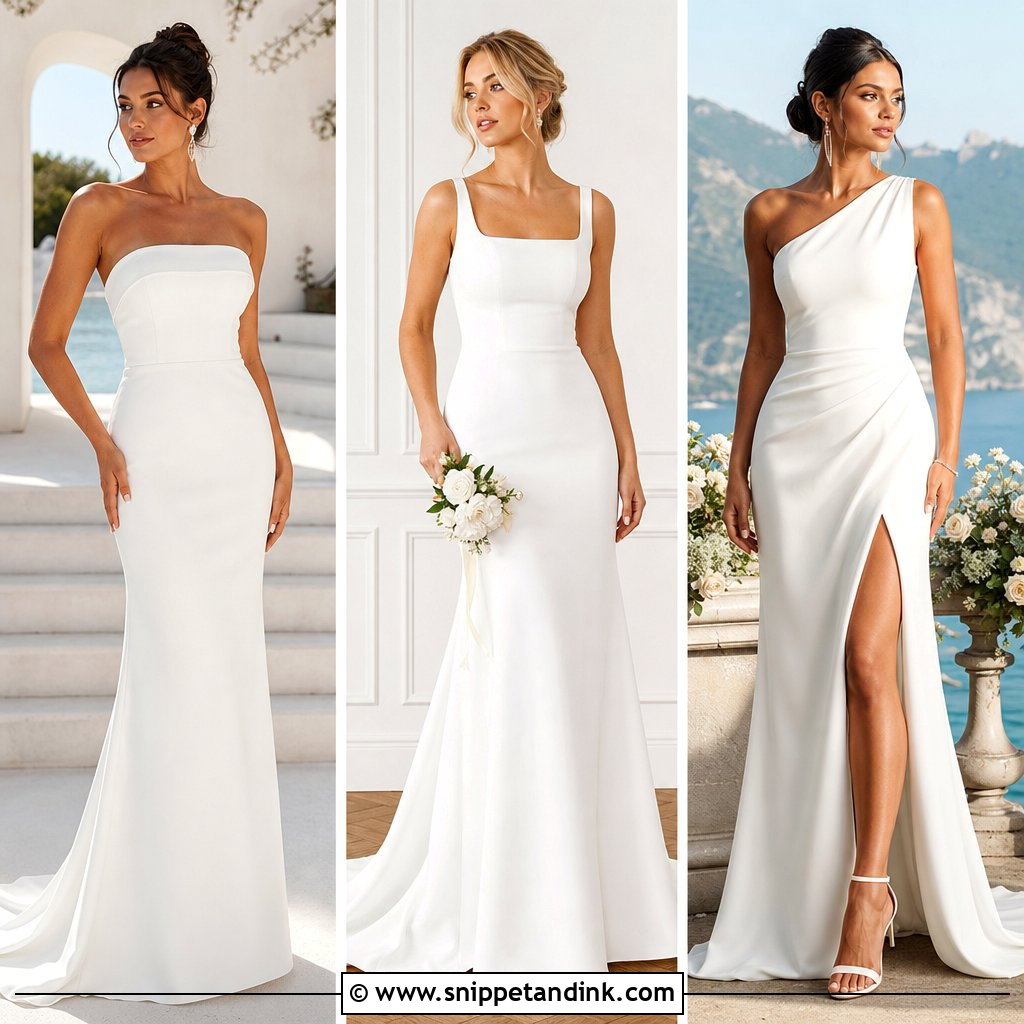
I like a square neck on brides with defined collarbones; it frames the shoulders without the plunge of a V. The corners are the part to watch. At every fitting I check them from the side and back, because a square neckline that gapes even slightly when you lean forward will show it in every candid photo. Fluid crepe in a column reads modern, satin in an A-line reads more formal. A neat chignon and short drops suit it, and if you add a pendant, keep it fine so it doesn’t fight the straight line of the neckline.
5. Off Shoulder Wedding Frock
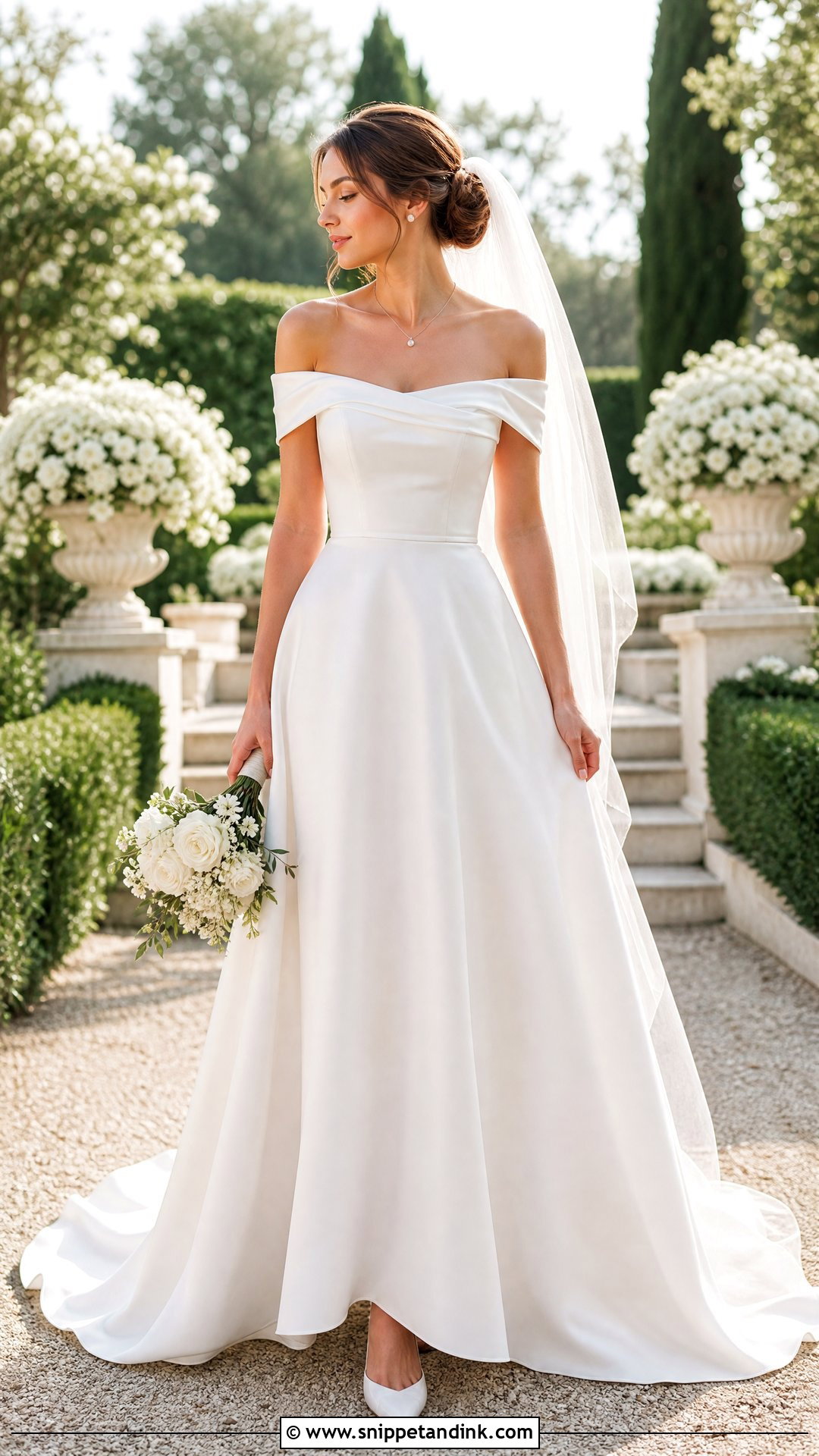
Off-the-shoulder sleeves look soft, yet they hold nothing up. The bodice has to be built to stay in place by itself, with boning and a waist stay, or you’ll spend the evening tugging it up. At the fitting I have brides lift both arms as if hugging someone taller, sit, then walk across the room; if the sleeves ride up or dig in, they need adjusting. A low textured bun and a veil anchored beneath it keep the shoulders clear for photos. If you dance a lot, detachable draped straps are the honest compromise.
6. Corset Bodice Wedding Frock
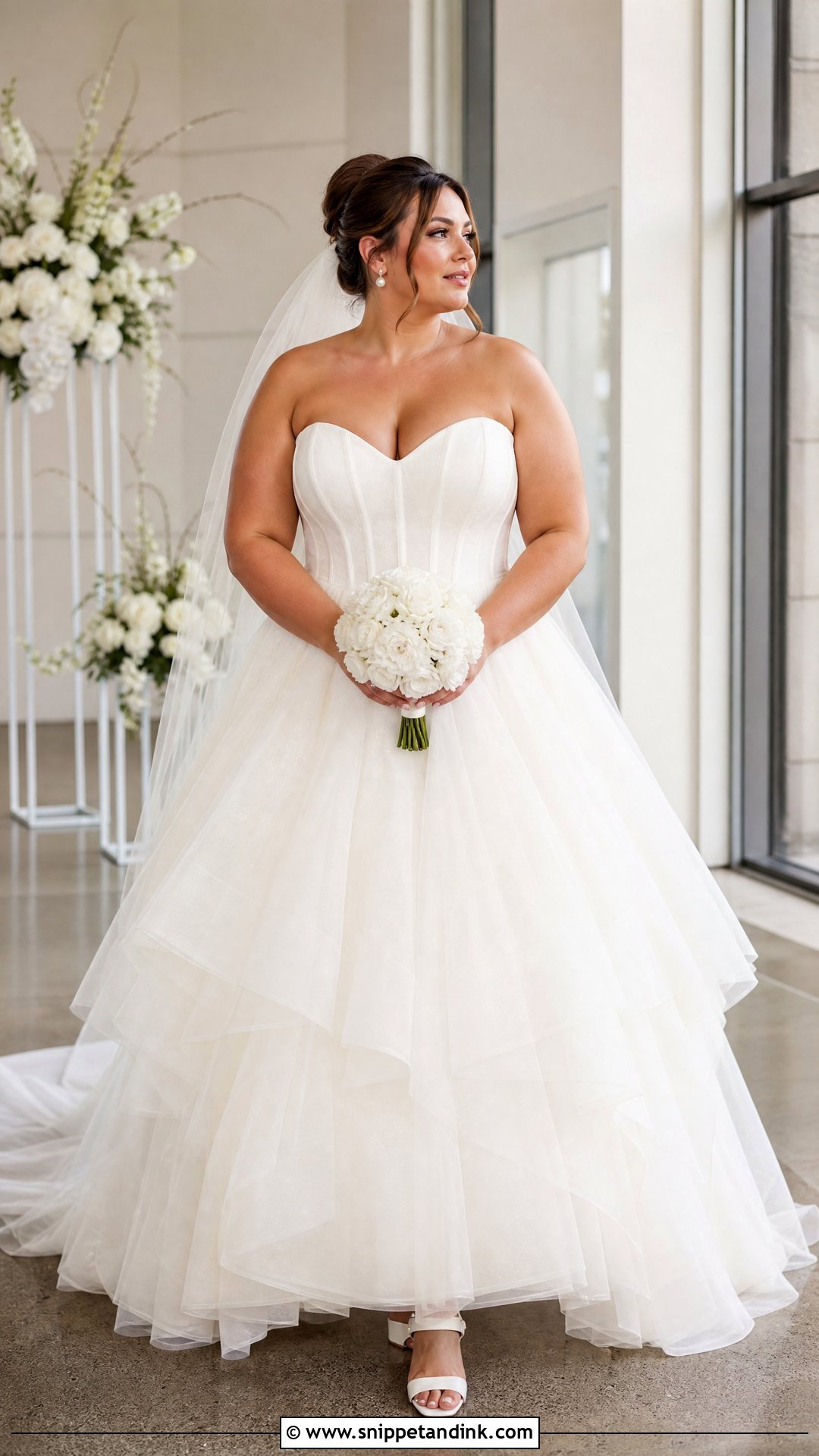
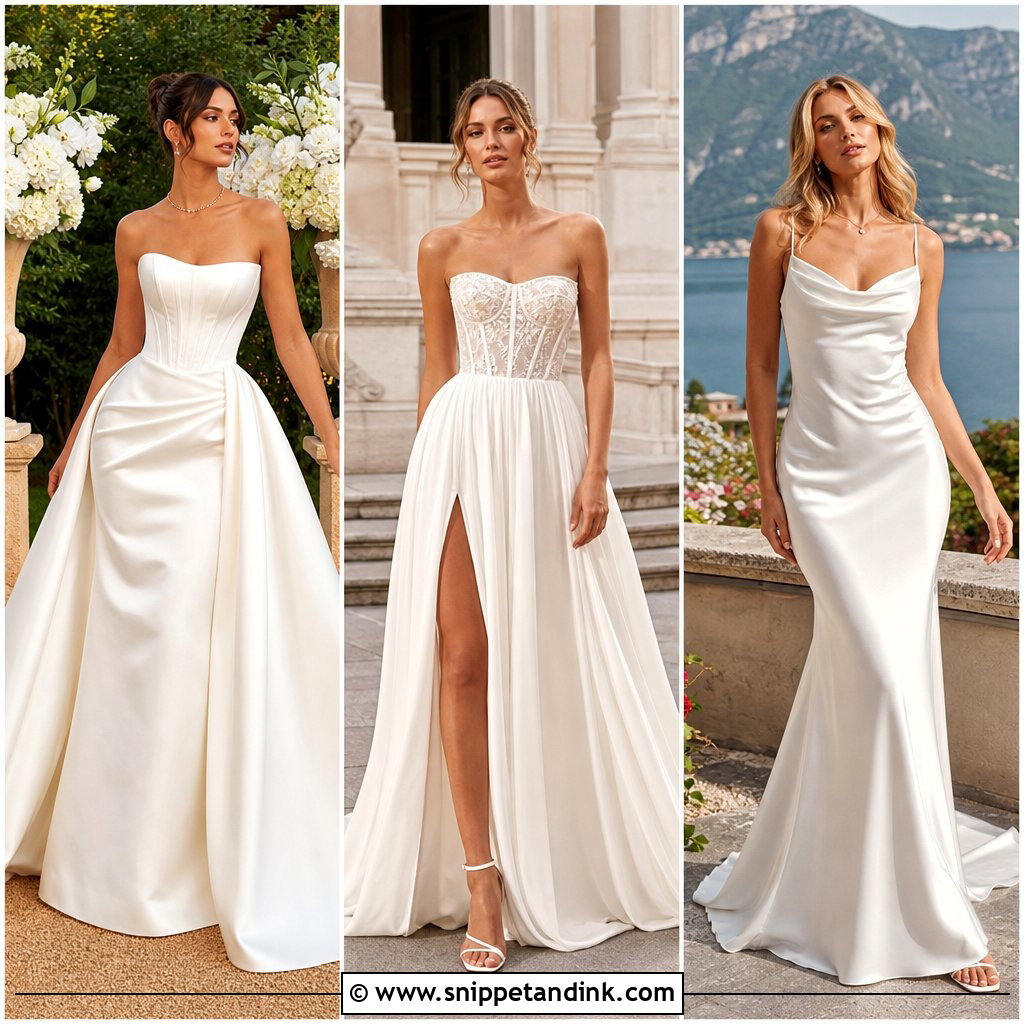
Corset bodices have gone from underwear details to the main event, with curved seaming and covered boning on show instead of heavy beading. The structure is the appeal, but I’m strict about comfort here: if you can’t take a full breath or sit down for dinner, the fit is wrong, not your body. A lace-up back gives you some room to adjust if your weight shifts before the wedding, while a hidden zip gives a smoother line. The cups, waist and boning channels must line up with your own proportions, so budget time for at least two fittings. A soft tulle skirt balances the hard lines; a sleek column skirt sharpens them.
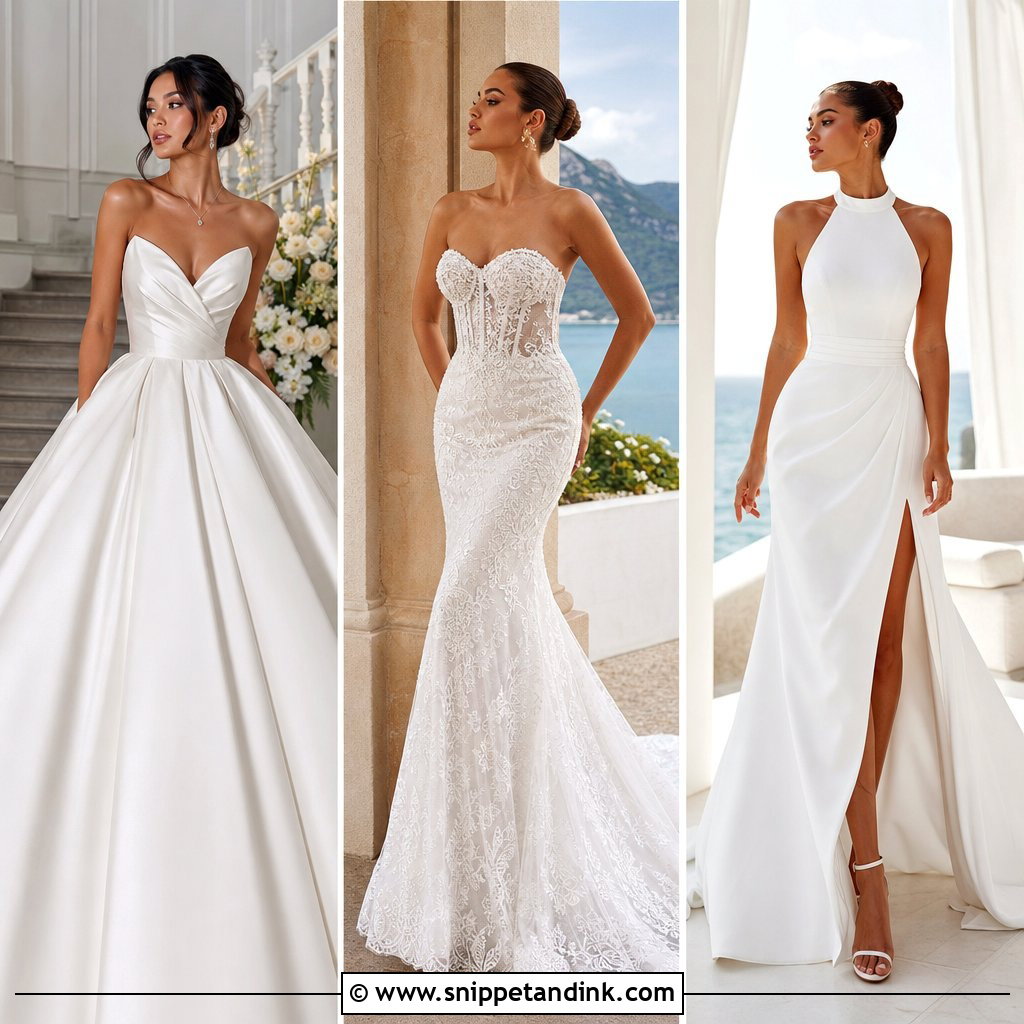
7. Basque Waist Wedding Frock
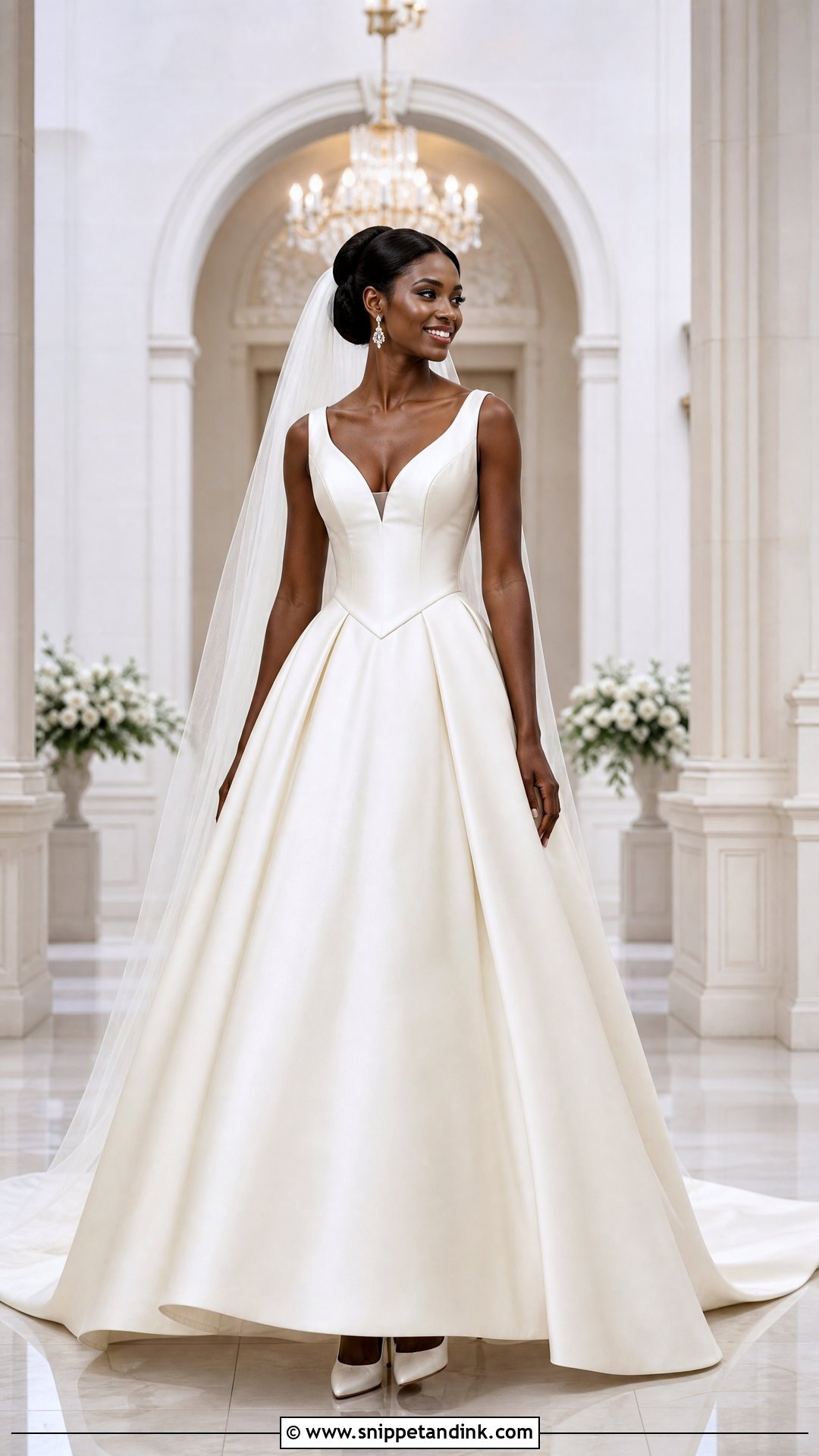
The basque waist dips into a V below your natural waist, which lengthens the torso and makes a full skirt look deliberate rather than puffy. It’s back in a big way in bridal ranges, usually on a structured bodice. Where that V point lands matters more than anything else on this dress, and a basque waist wedding frock bought off the rack rarely puts it in the right spot for you. I have the seamstress pin it on you while you stand naturally. Matte satin gives it drama, layered tulle softens it, and a narrow A-line version suits a bride who wants the waistline without the volume.
8. Mermaid Wedding Frock
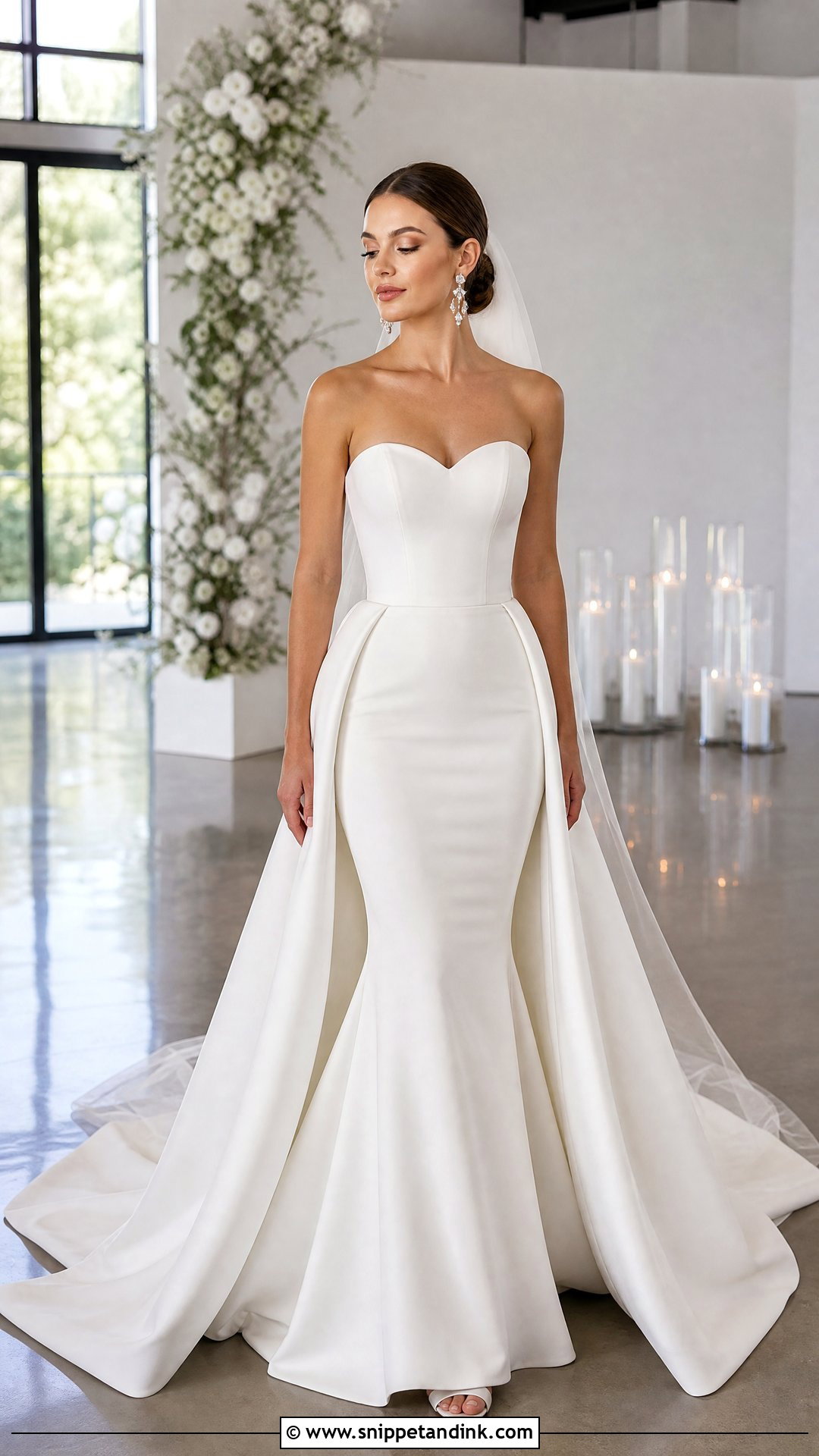
Mermaid frocks are the ones I see brides regret only when the flare starts too low. If it begins at the knee, you’ll shuffle all night and struggle on stairs. During the fitting, take several full strides and sit as you would at dinner; the flare should give your knees room to move. Stretch crepe gives a clean line, lace adds texture and hides the odd crease. With a shape this strong, I keep the bouquet compact and the earrings as the one statement piece. A detachable overskirt is worth considering if you want ceremony drama and a fitted reception look.
9. Slip Wedding Frock
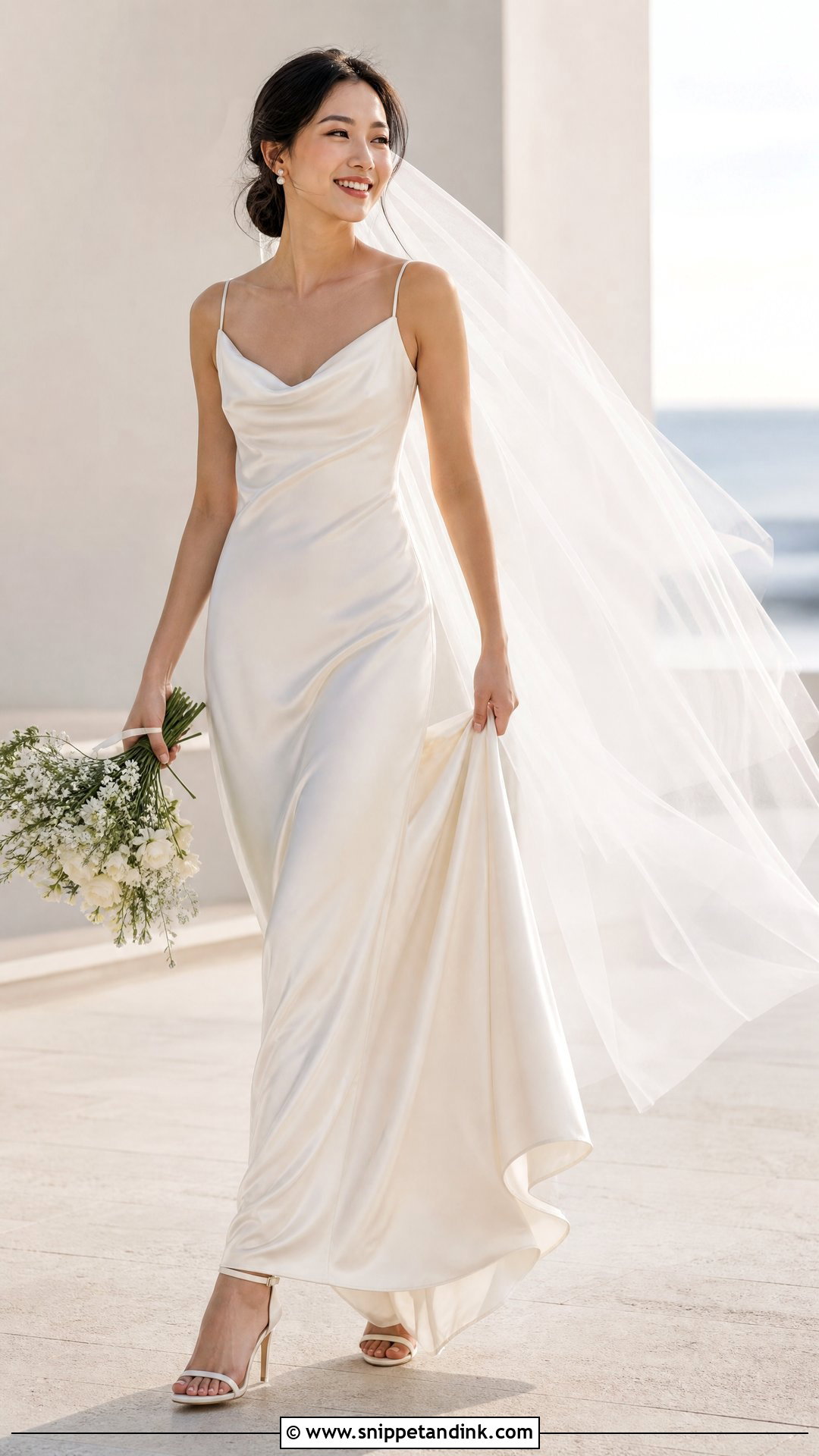
Slip dresses look simple, which is exactly why they are unforgiving. Bias-cut silk clings to every seam and line underneath, so the right undergarments matter as much as the dress, and I always have brides bring them to the first fitting. A good slip has a lining that stops the fabric sticking to skin and a hem finished by someone who knows bias fabric, since it drops and twists if rushed. Ankle-strap heels and small studs keep it clean. If you want more coverage in a church, a sheer long-sleeve topper or a chiffon cape does the job without hiding the line of the dress.
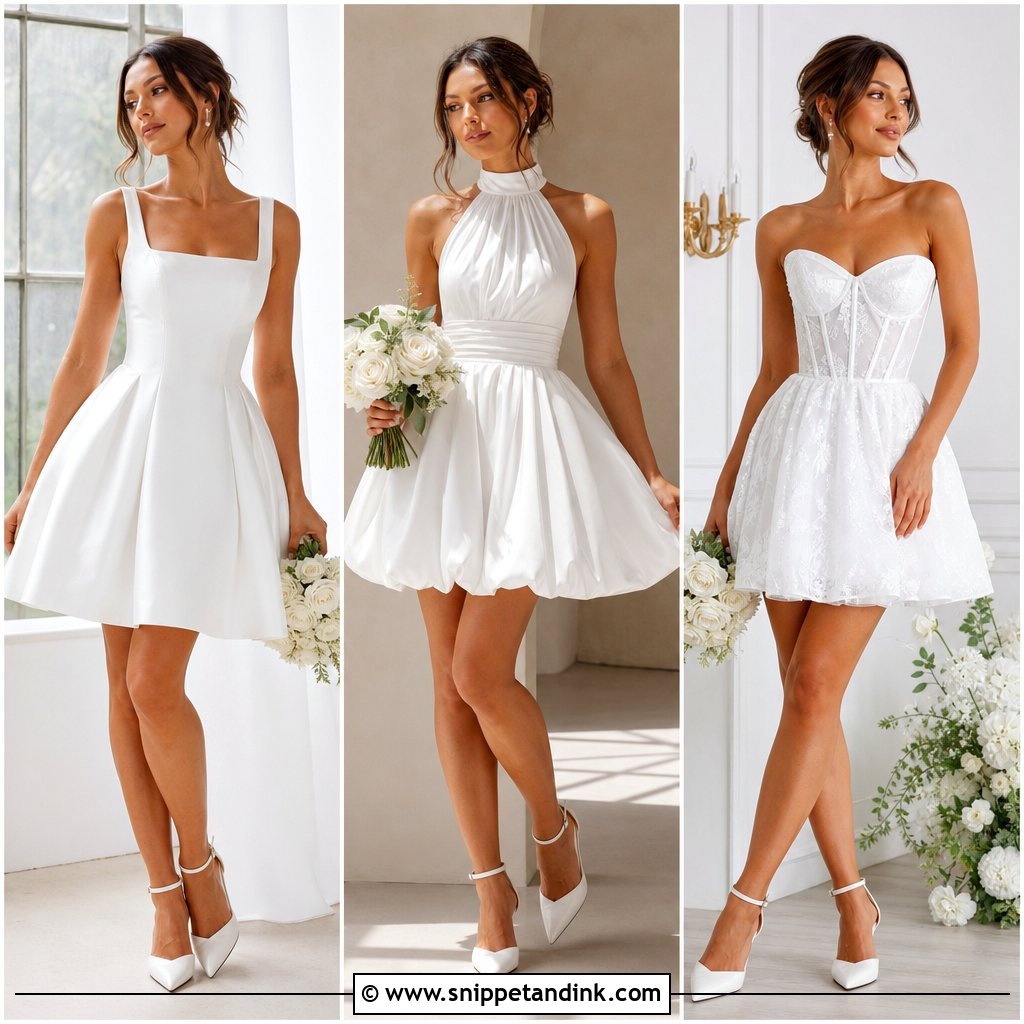
10. Tea Length Wedding Frock
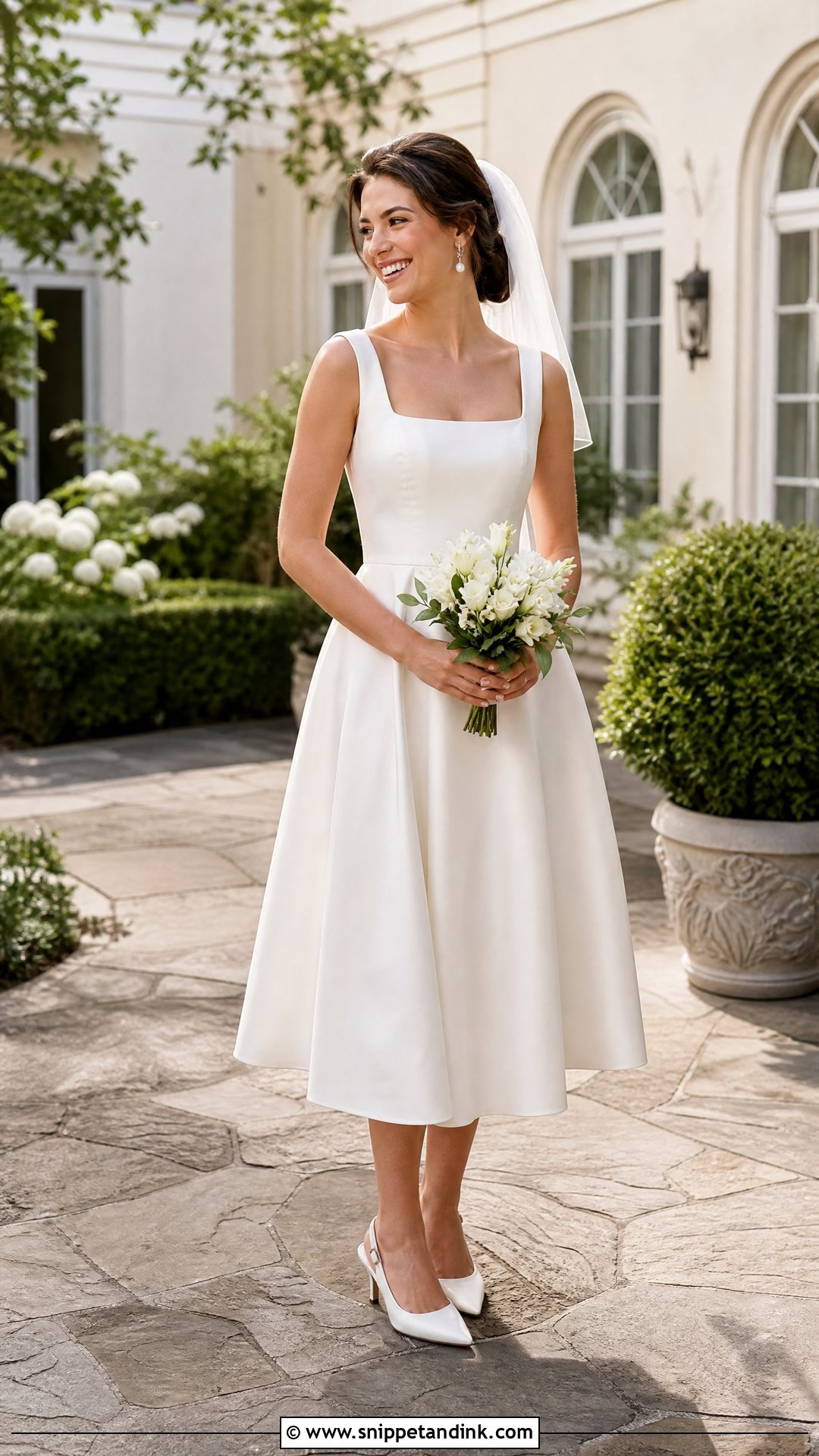
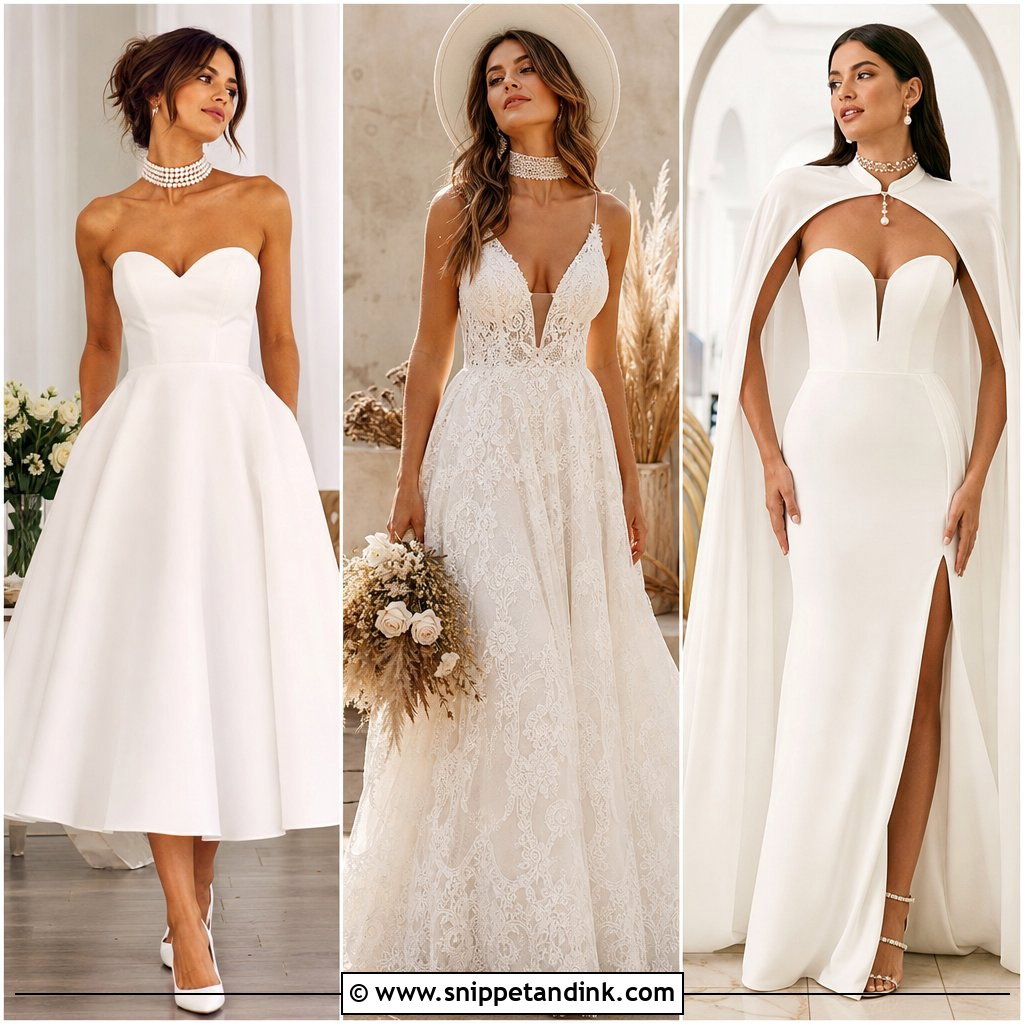
Tea length falls between the knee and ankle, which puts your shoes on display all day, so pick the shoes before the final hem. I have seen a half-inch heel change make a tea-length skirt look wrong, and that is why I insist the hem is set while you are wearing the actual pair. A fitted bodice and flared skirt in satin, organza or jacquard reads vintage with slingbacks and a short veil; a minimalist square neck with pointed heels reads current. A soft petticoat adds a little lift, but too much and the dress starts to look like a costume.
11. Short Wedding Frock
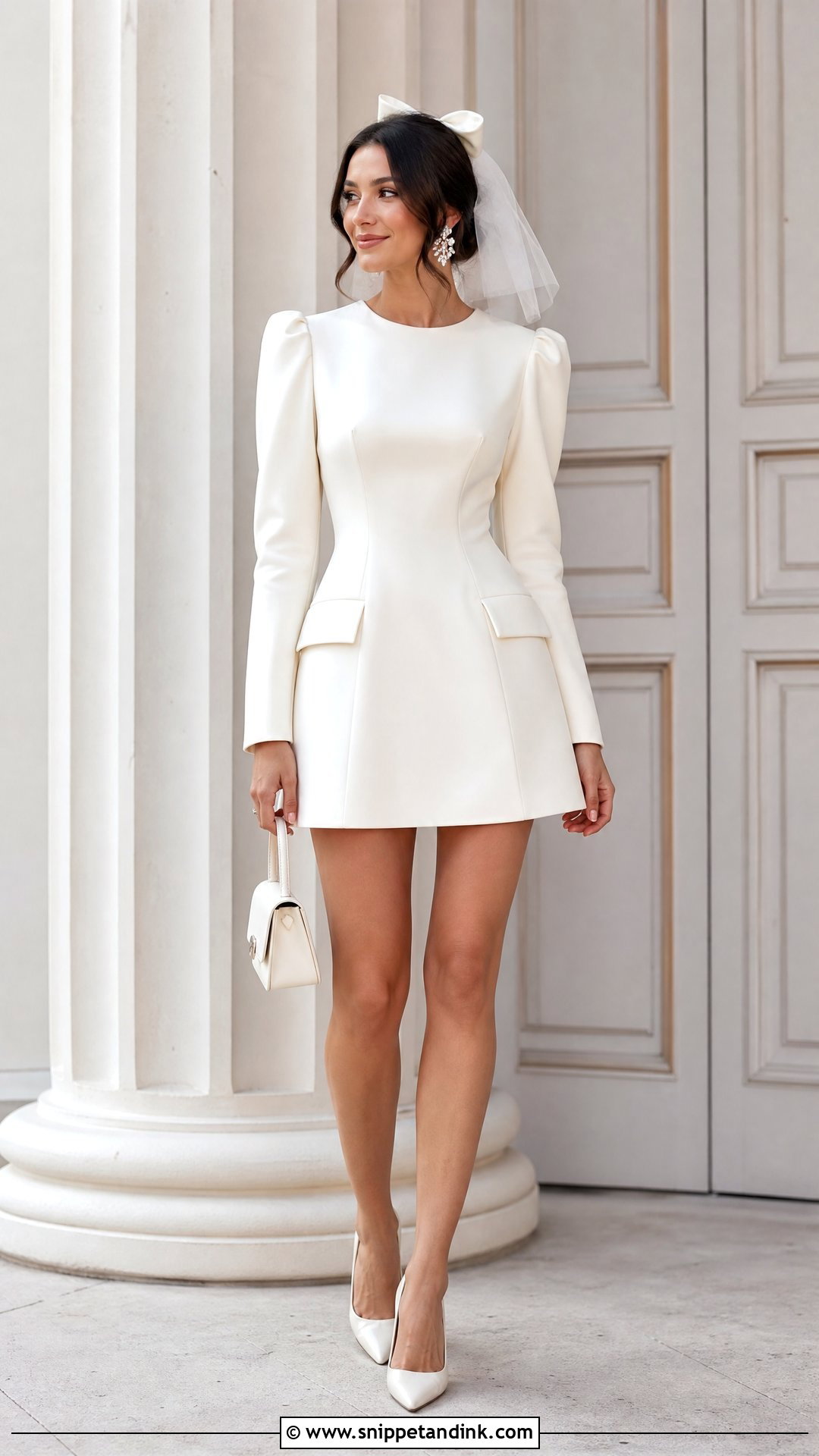
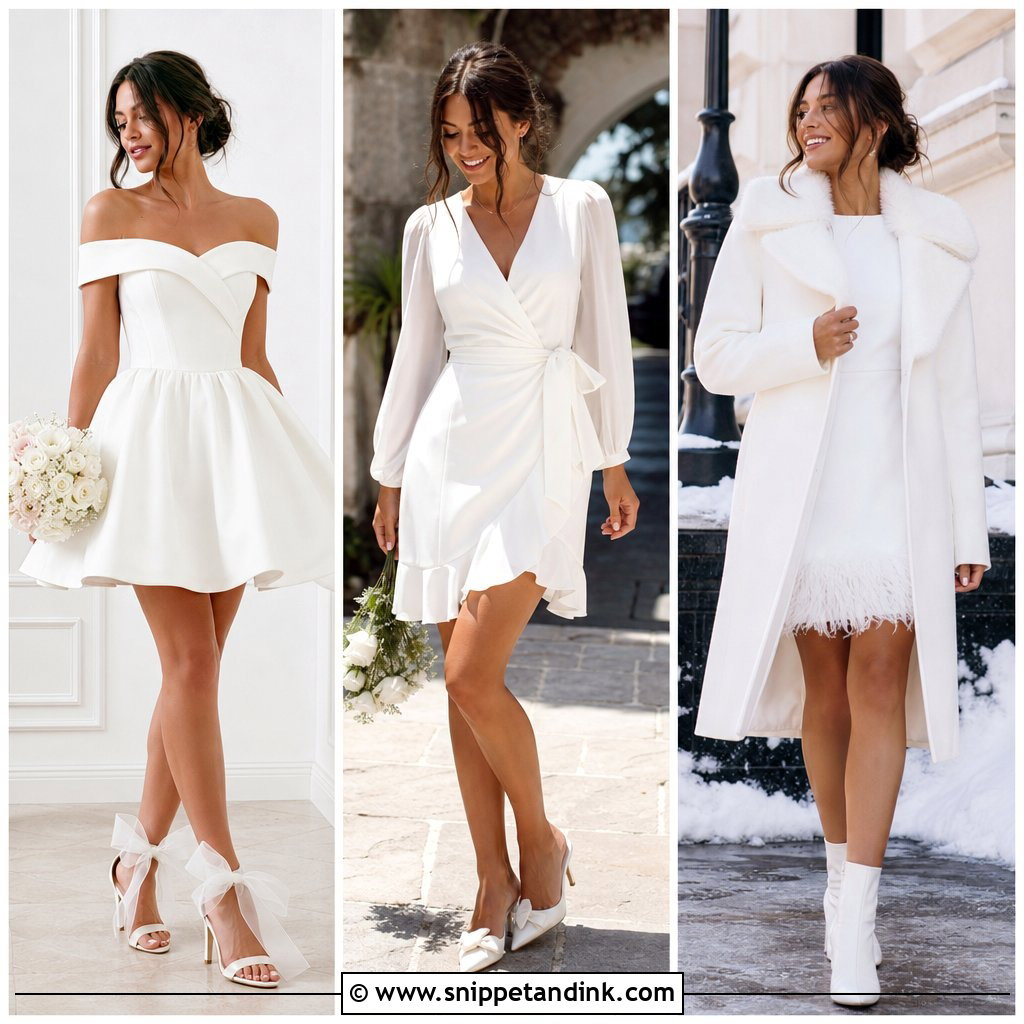
A short frock makes sense for a civil ceremony or as a reception change, and I like it most when the cut is tailored. The risk is that a very short hem plus big sleeves plus a bow plus a statement bag starts to look like a party dress rather than a bridal one. Choose one detail and keep everything else clean. Sit down and climb a few stairs in it at the fitting; minis ride up more than you expect. Long sleeves or a cropped jacket add coverage for a register office, and a well-made short dress is one of the few bridal pieces you can genuinely wear again.
12. Puff Sleeve Wedding Frock
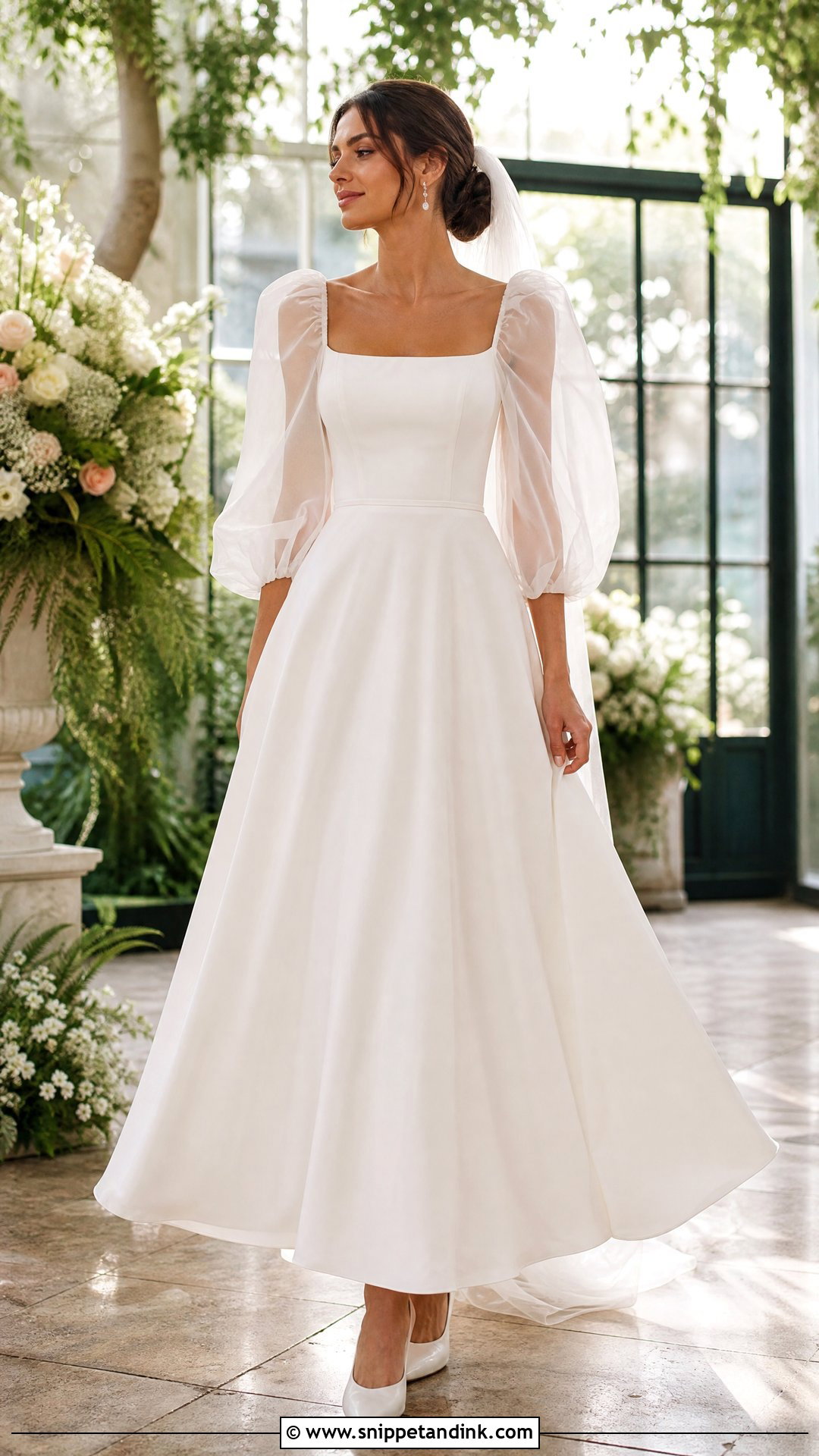
Puff sleeves are all about scale. I judge the size against your shoulders and the width of the skirt, not against a rule, and I usually suggest a bride tries a smaller sleeve than she thinks she wants first. Organza holds its puff; chiffon droops softly and needs less structure. The elastic or band at the sleeve edge is what usually goes wrong: too tight and it pinches by the reception, too loose and it slides down the arm. Wear the veil behind the sleeves rather than over them, and consider detachable versions if you want a sleeker evening look.
13. 3D Floral Wedding Frock
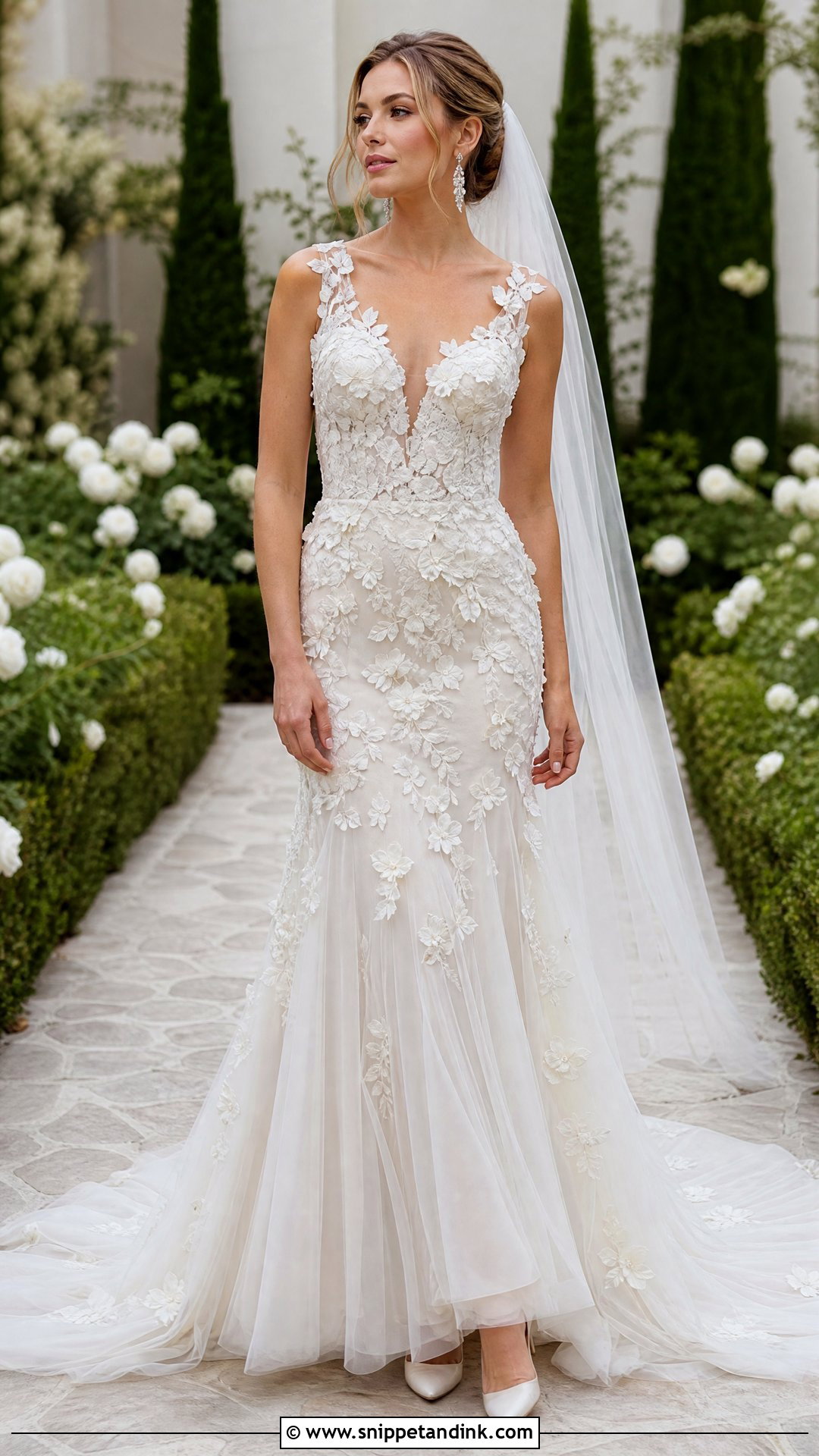
Three-dimensional flowers give a frock texture that shows up in close-up detail shots in a way flat lace never does. You’ll find them as tiny scattered blooms or as larger appliqués worked across the bodice and train. The thing I check is where the flowers sit when you sit down: a cluster on the hip or at the waist seam can press into you all through dinner. Keep the veil plain and the shoes simple so the flowers have no competition. If you want the detail without the bulk, concentrate the appliqués on the straps or the train edge.
14. Pearl Wedding Frock
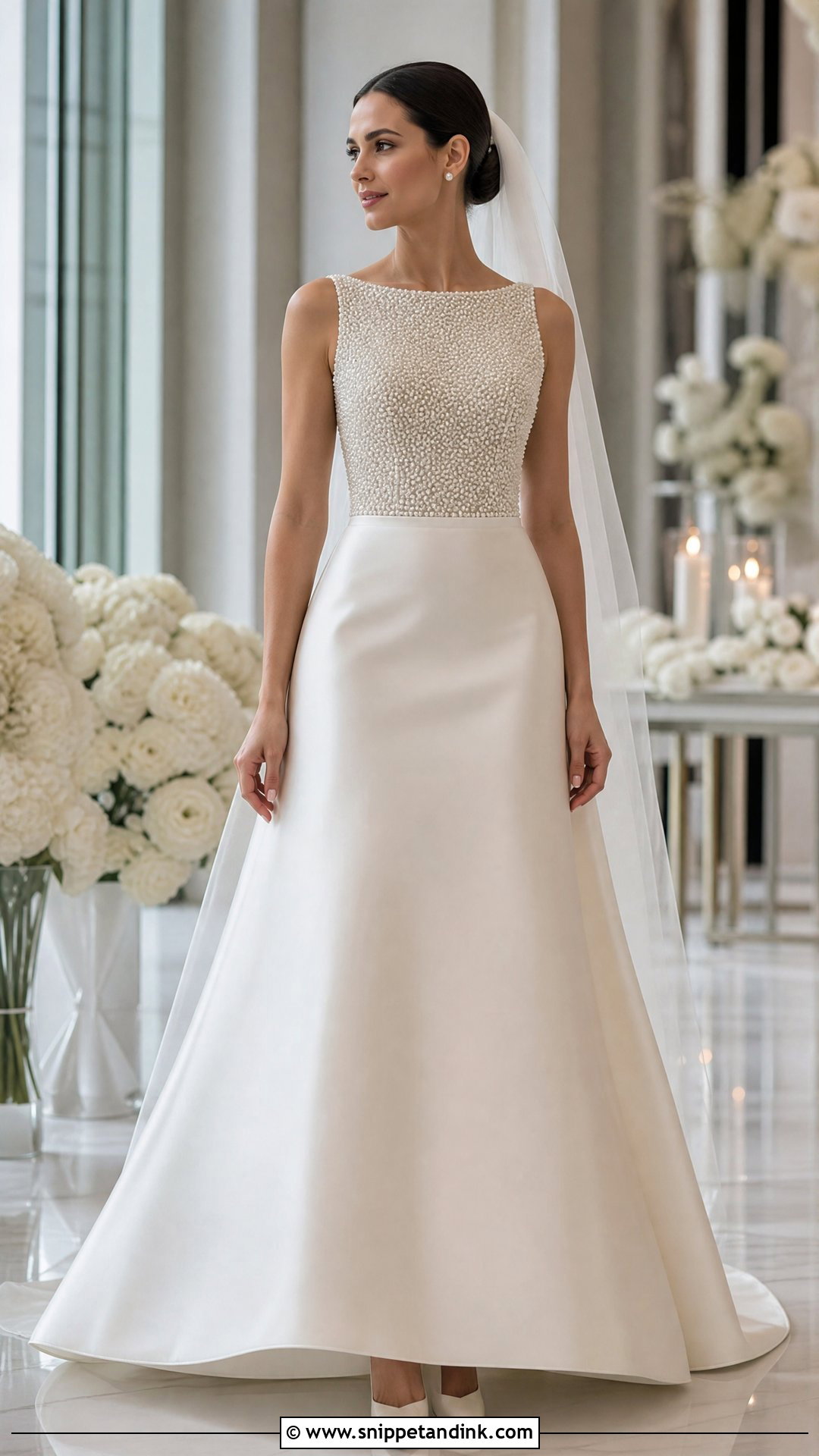
Pearls give a soft glow instead of the hard sparkle of crystals, which is why I like them on brides who find sequins too much. They might be scattered across a sheer overlay or massed on the bodice and fading out down the skirt. Don’t double up with a pearl necklace, pearl earrings and a pearl veil all together; one small pair of earrings is plenty. Before the wedding I go over every pearl near the underarms, seat and waist, because those are the spots where threads rub loose. A soft lining behind the beadwork also stops the stitching scratching your skin by evening.
15. Drop Waist Wedding Frock
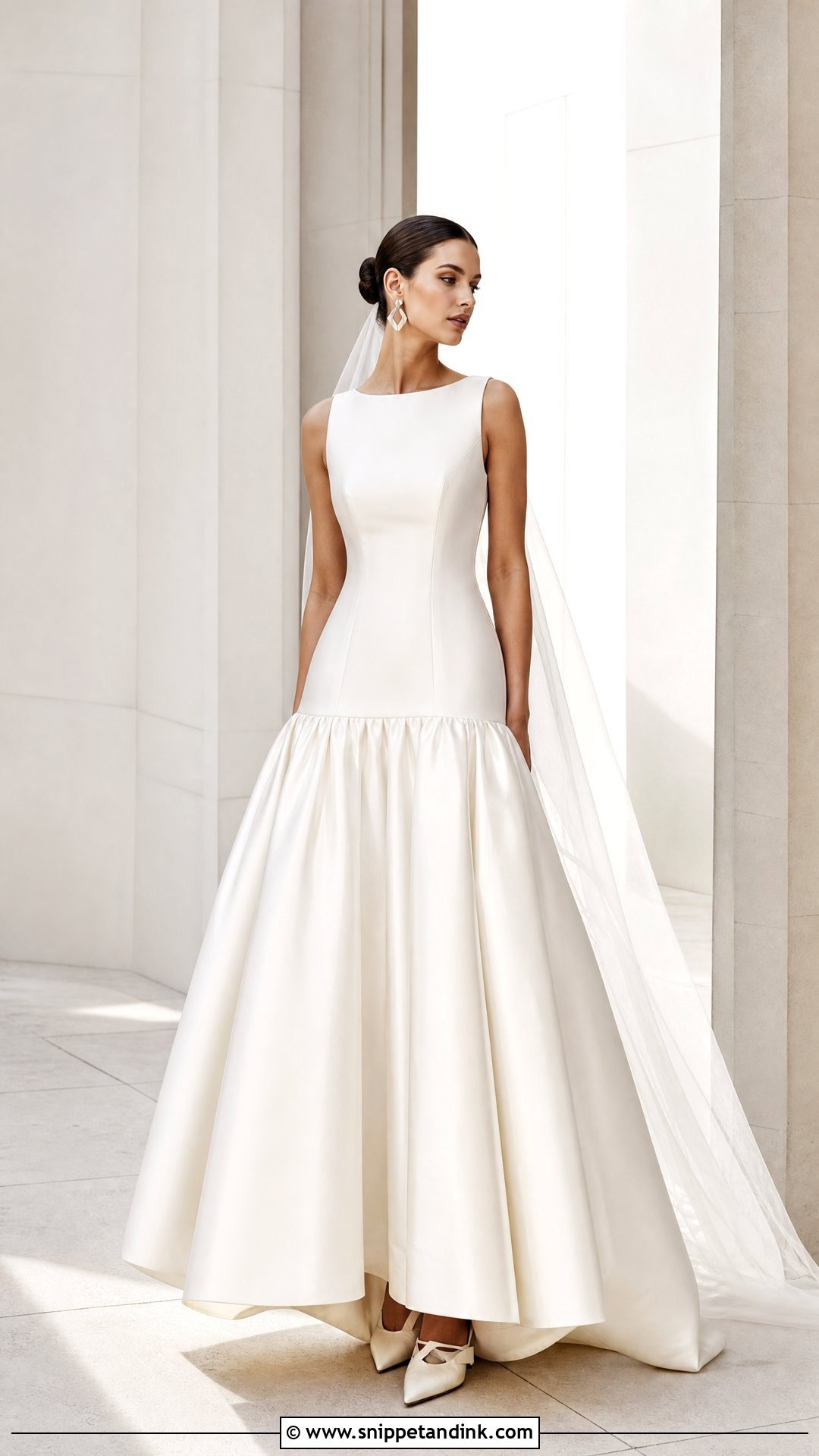
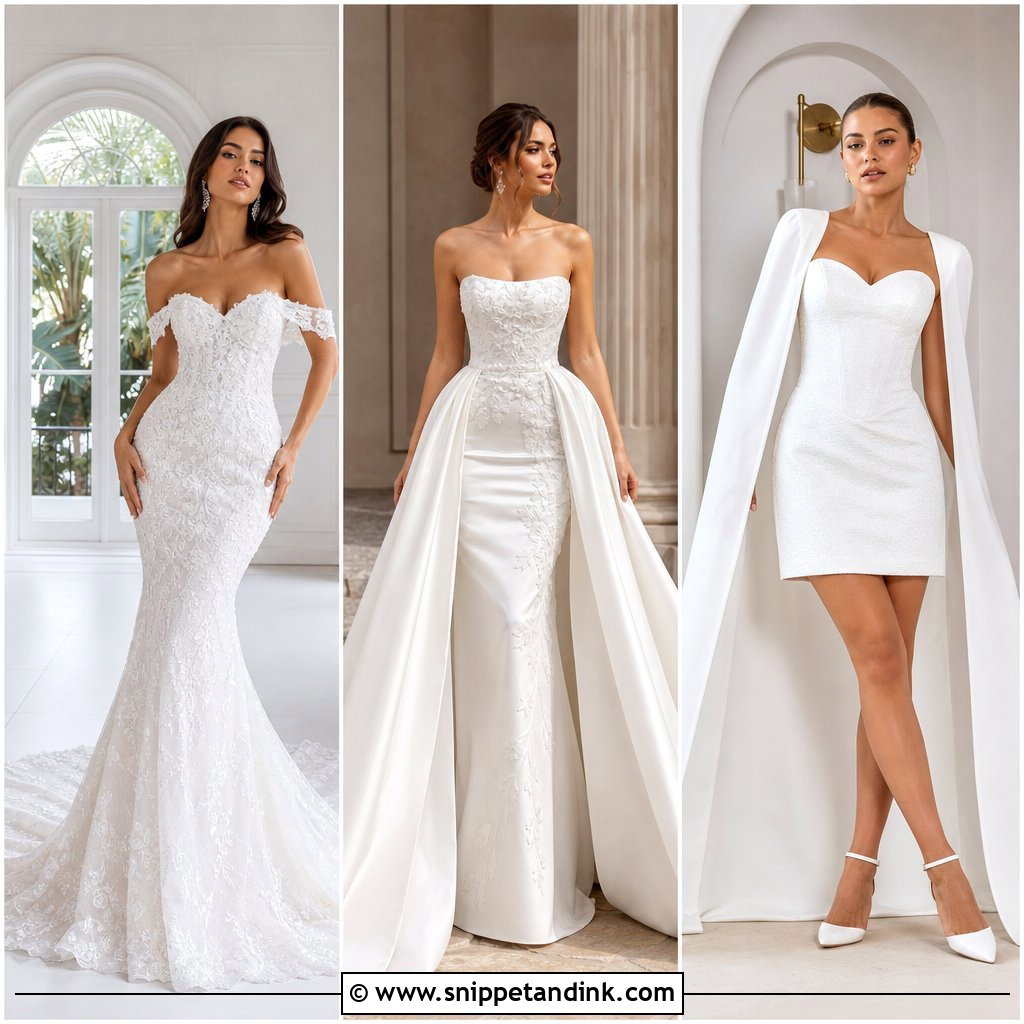
A drop waist moves the skirt seam down toward the hips, which makes the torso look long and the skirt seem to burst out below it. That seam position is exactly what makes it tricky: if it sits a fraction too low, it pulls when you sit. On petite brides I raise the drop point slightly so the legs don’t look shortened; taller brides can carry a longer bodice. The fabric needs body to hold that transition, so I’d choose structured satin, crisp taffeta or smooth mikado over anything soft. Watch for horizontal pulling across the bodice at fittings; it means the seam is in the wrong place.
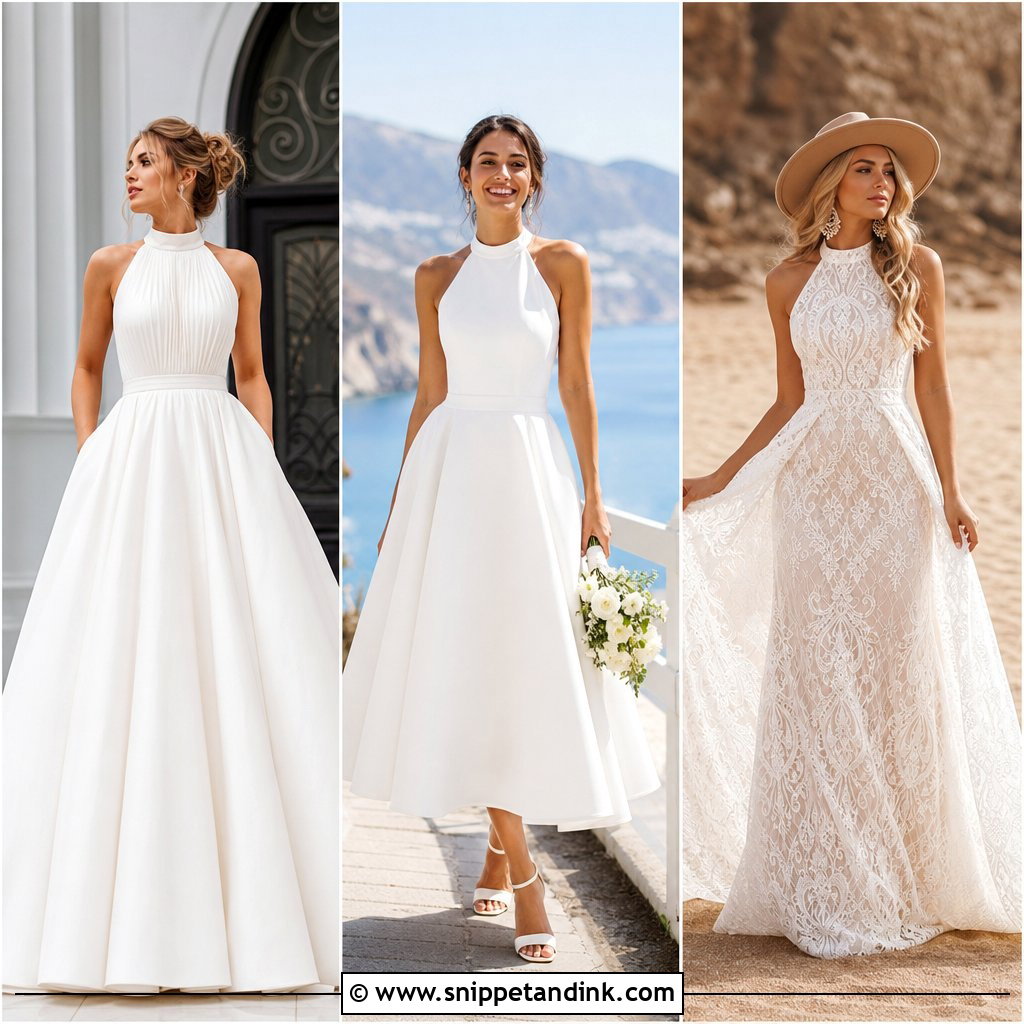
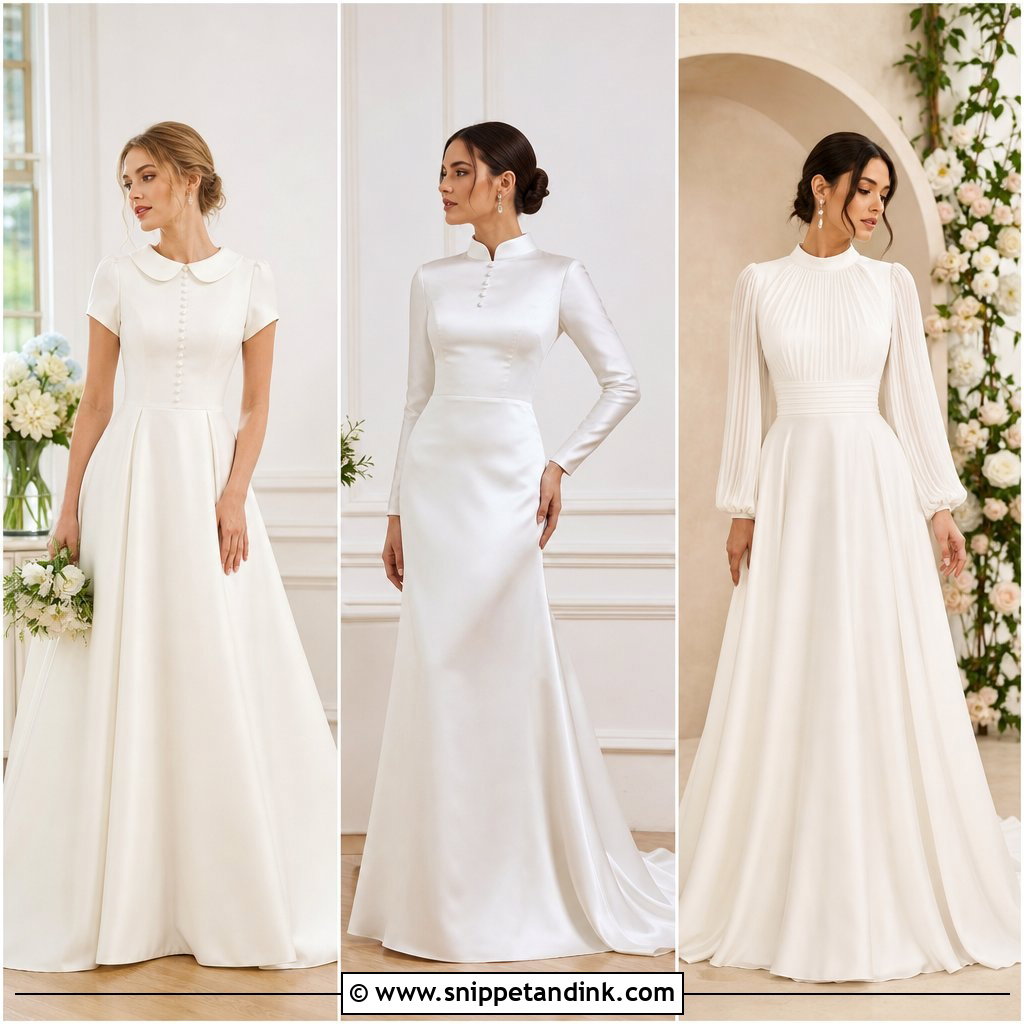
16. High Neck Wedding Frock
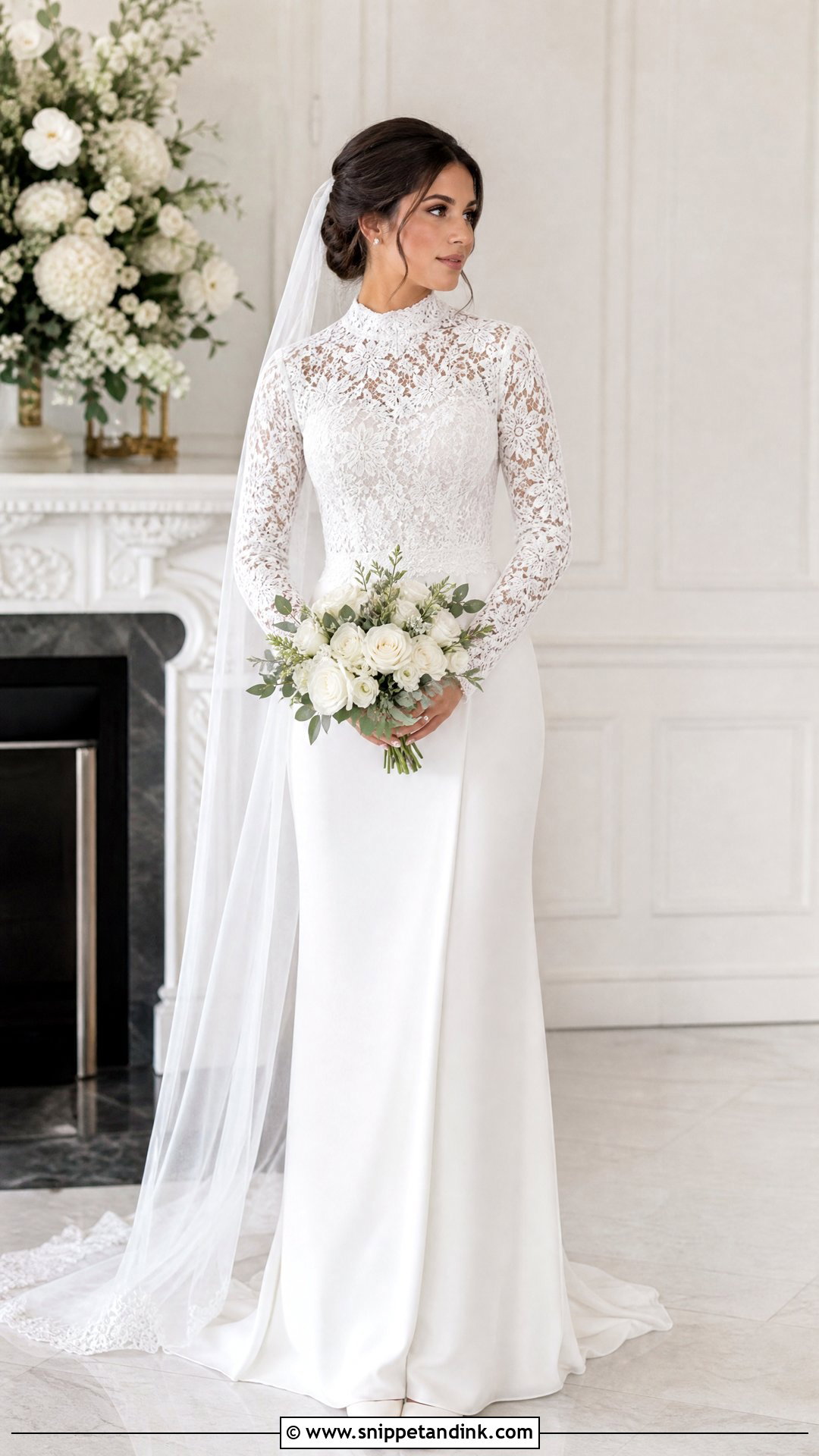
High necks are my go-to for a bride who wants coverage and a very clean front. Lace looks romantic, crepe looks minimal, and sheer organza over a lined bodice sits somewhere in between. Skip the necklace and pin the veil under the hair so nothing crowds the collar. What I check most closely is the inside of that collar: a scratchy seam rubbing the neck through a long ceremony and three hours of photos is miserable. Ask for a soft finish inside, and make sure you can turn your head fully. A keyhole or buttoned back adds interest without disturbing the front.
17. Cape Wedding Frock
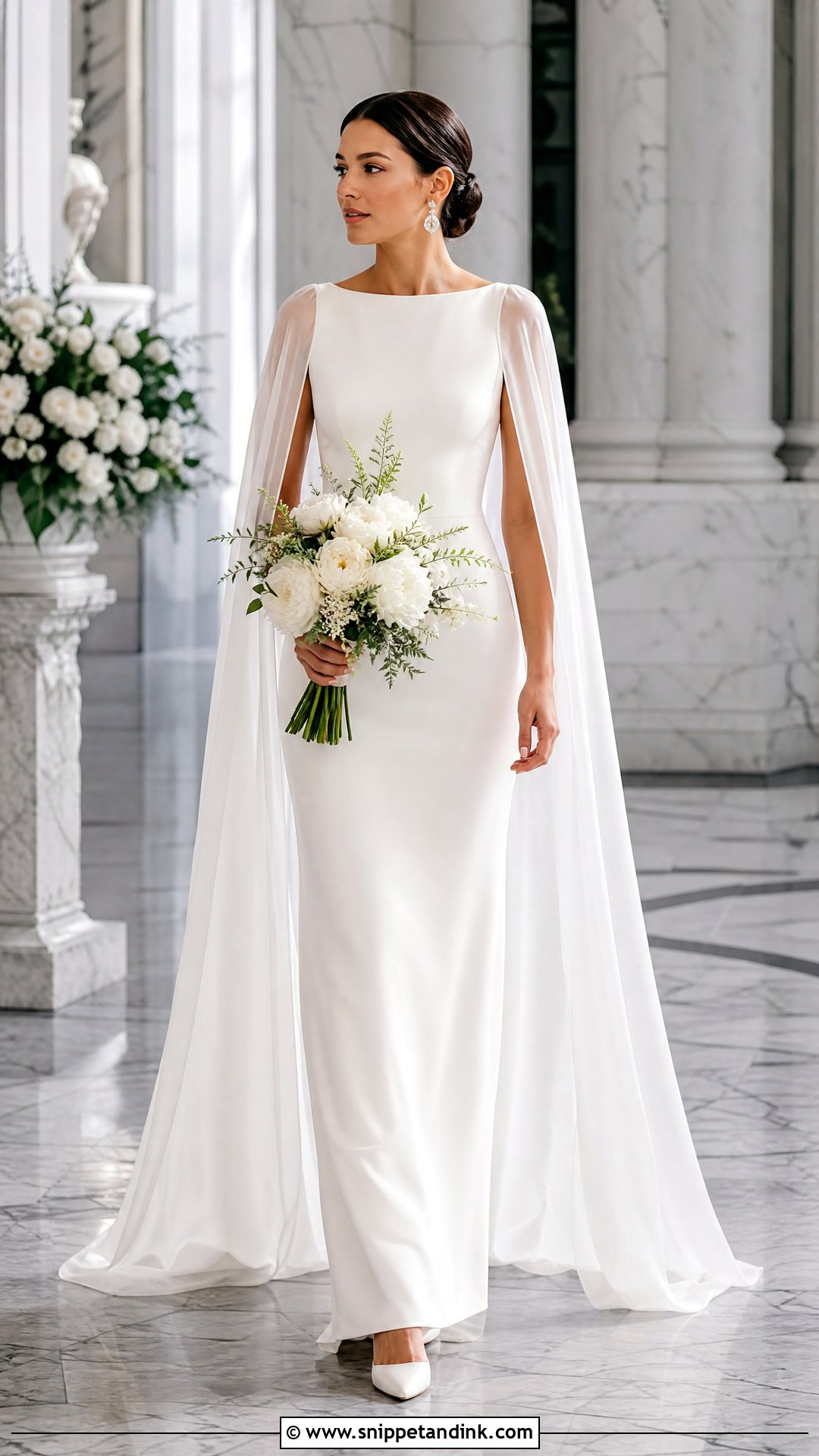
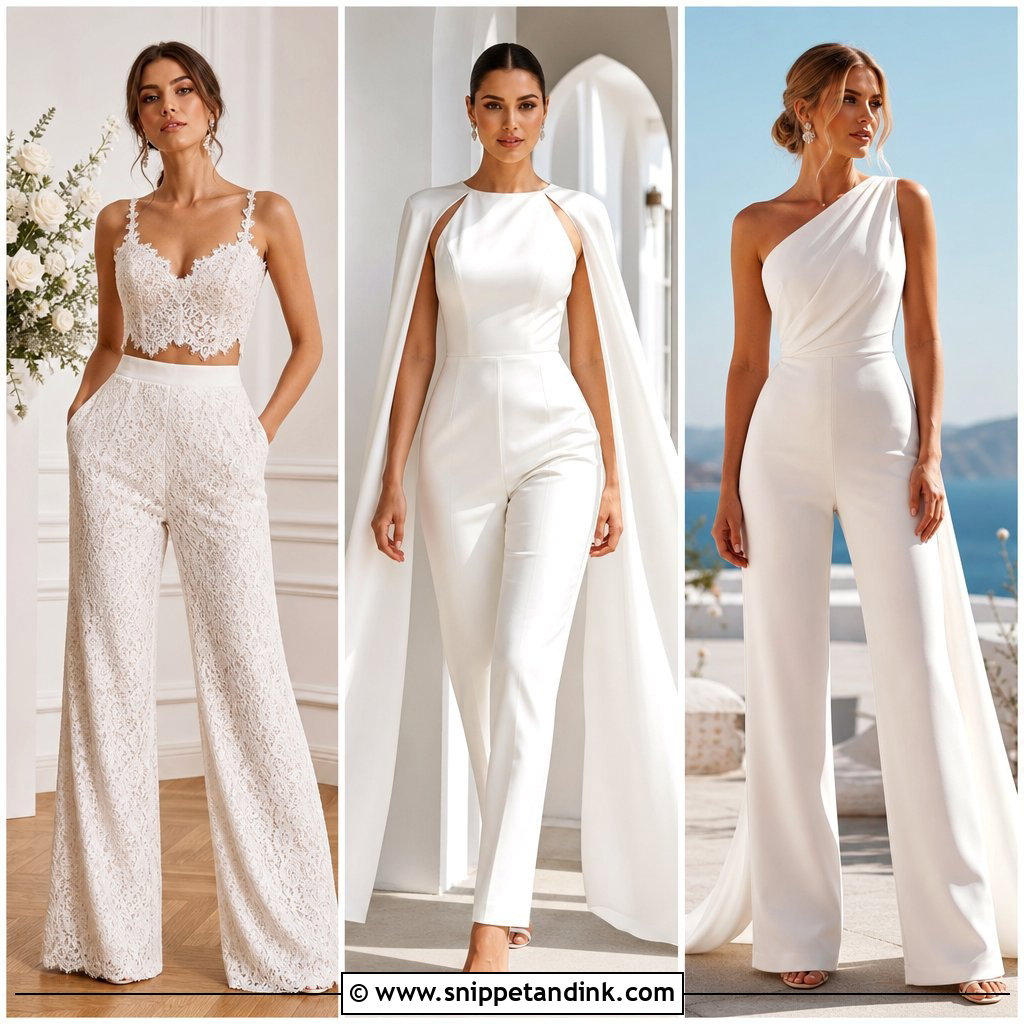
A cape gives you the movement of a veil with a bit more presence, and it suits a plain crepe column especially well. I’d advise against wearing a detailed veil with it, since the two layers tangle and compete in every walking shot. A cape fastened at the shoulders frames the dress; one attached at the neckline covers more. Test the fastening by walking briskly and turning around, because a cape that slips to one side keeps pulling the neckline off-centre. Make sure it detaches easily, too, as most brides want their arms free by the first dance.
18. Asymmetrical Wedding Frock
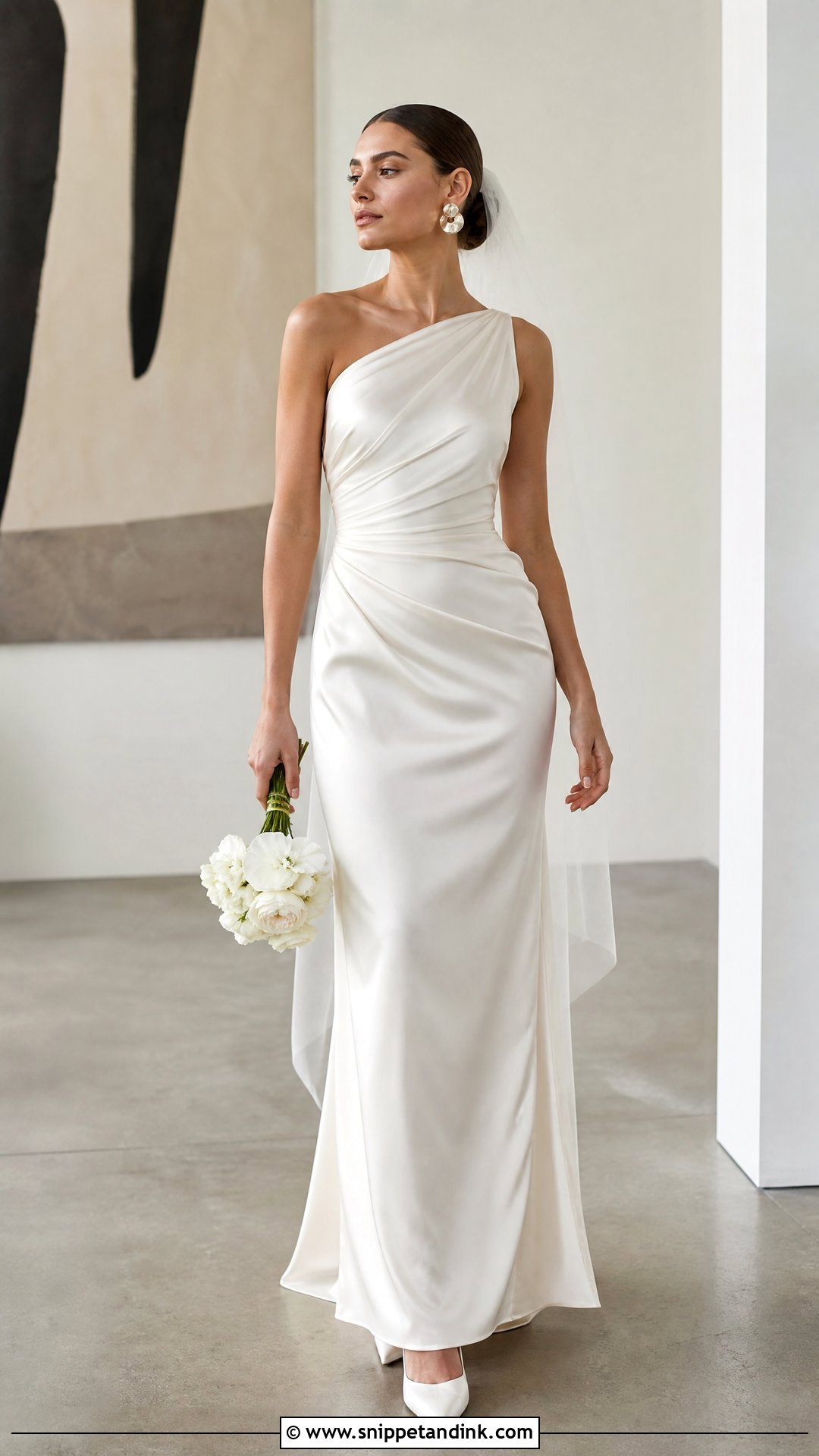
Asymmetry is one strong idea, and it only reads well when it stays one idea. A one-shoulder neckline, a diagonal drape or an uneven overskirt: pick one. An asymmetrical wedding frock with one shoulder needs a strap fitted firmly enough that it doesn’t slide when you raise your arm, which is the first test I do. Angled construction can look balanced from the front and lopsided from the side, so I always check it in a three-way mirror. A sleek bun and sculptural earrings suit the one-shoulder column; a diagonal bodice on an A-line handles a soft train.
19. Modest Wedding Frock
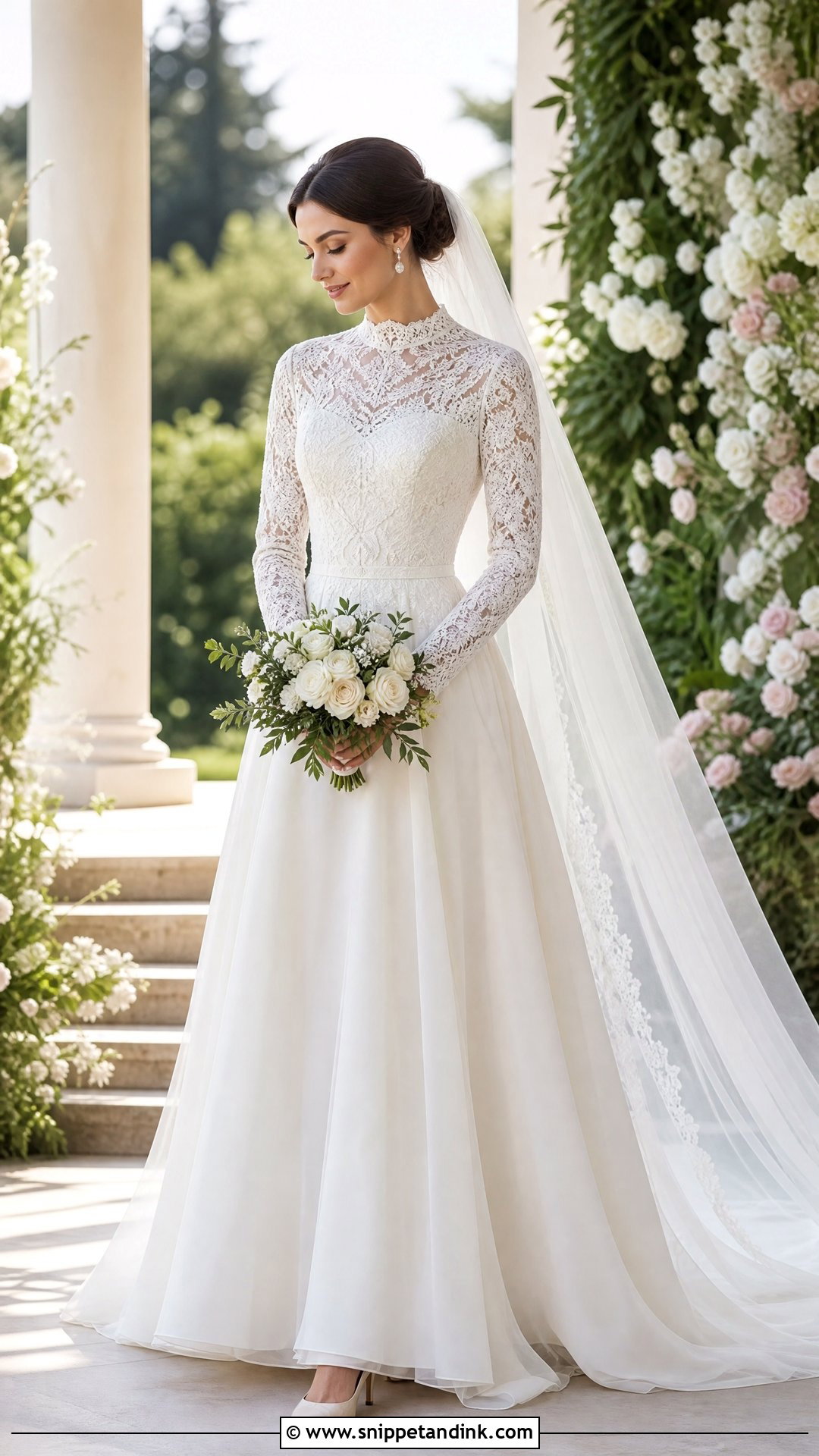
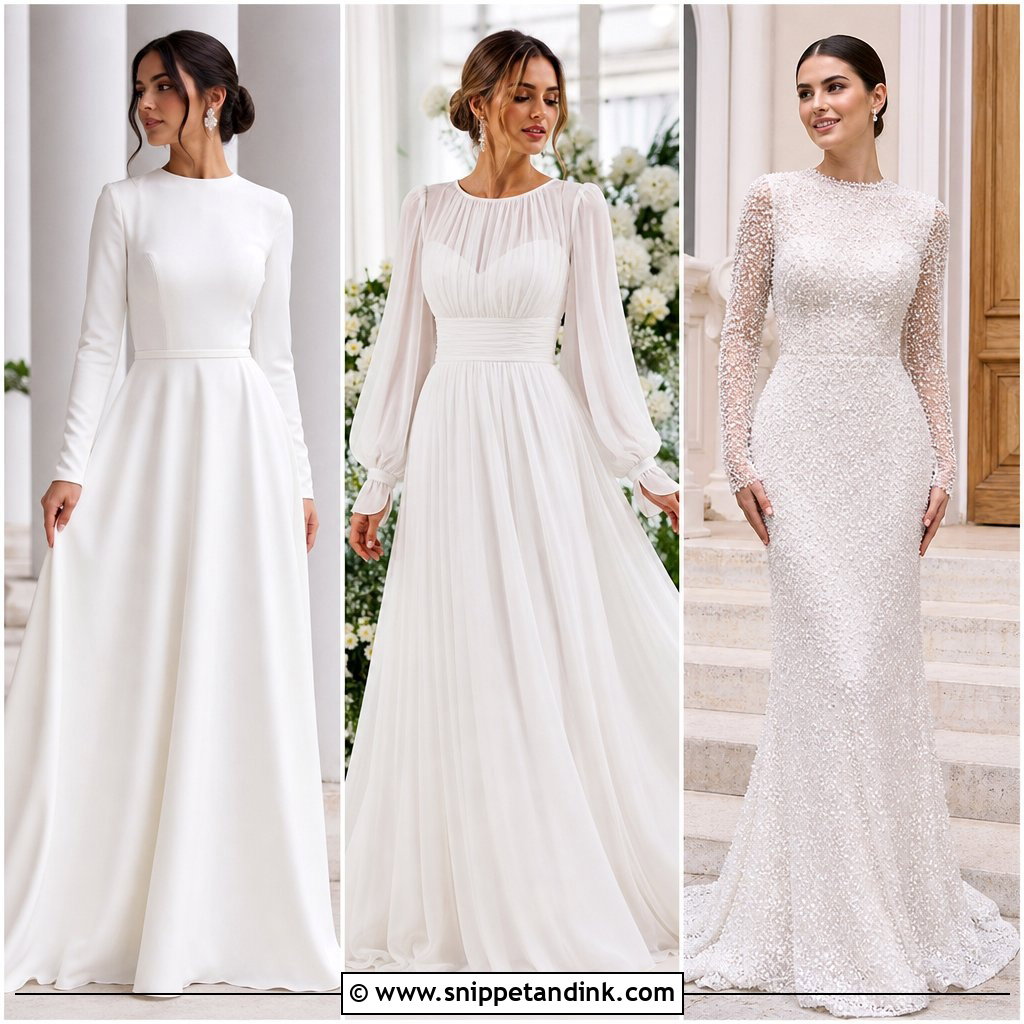
Coverage works best when it was part of the original design. Sleeves and a raised neckline sewn onto a strapless gown afterwards often sit awkwardly, so I start modest brides with dresses cut with sleeves and lining from the start. A lined lace bodice, long sleeves and an A-line skirt is the classic route; smooth satin with covered buttons is the minimal one. Check the cuffs and neckline while sitting and lifting your arms, because coverage that restricts movement is the most common complaint I hear. A long veil and low bun finish it quietly.
20. Convertible Wedding Frock
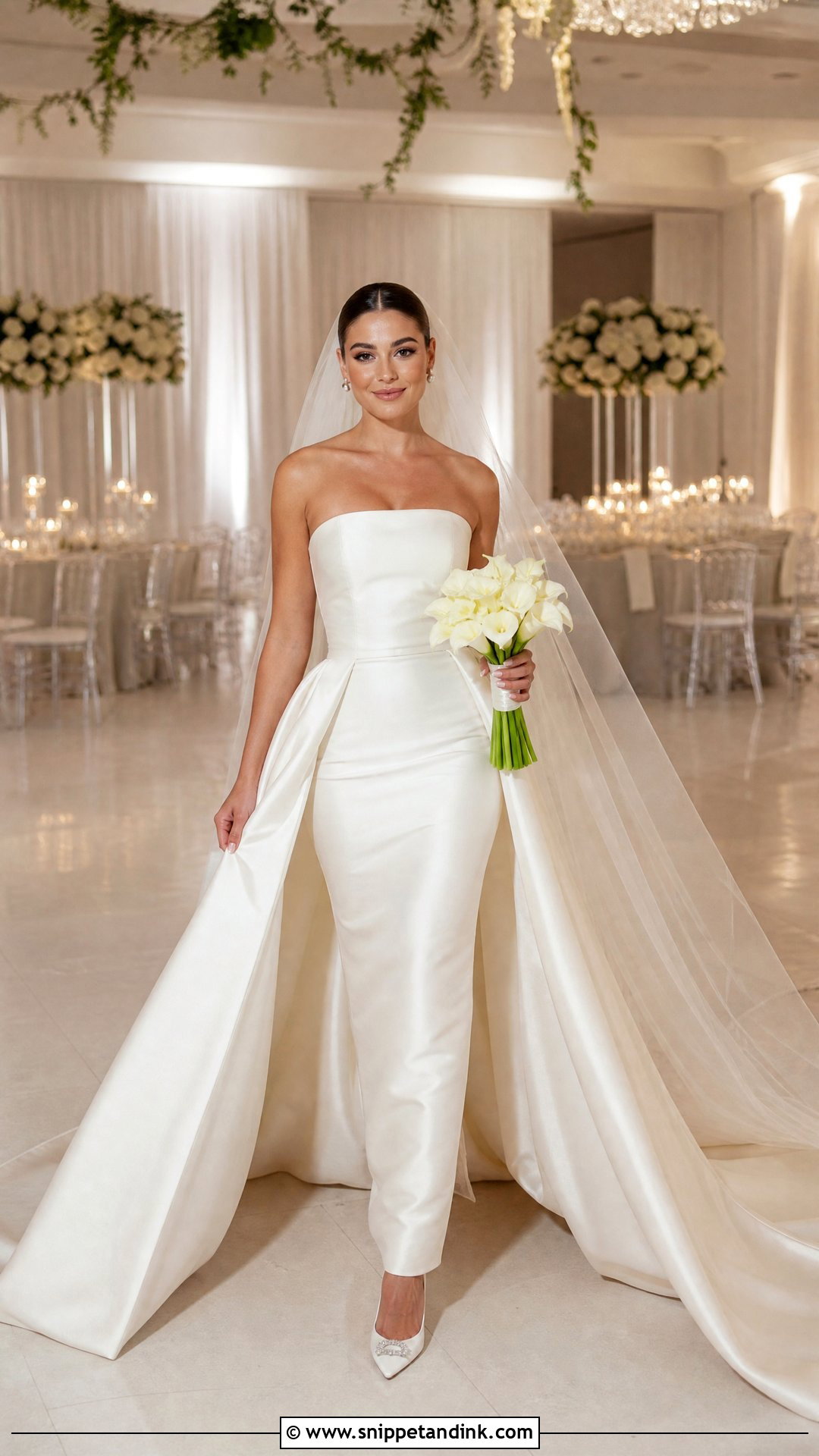
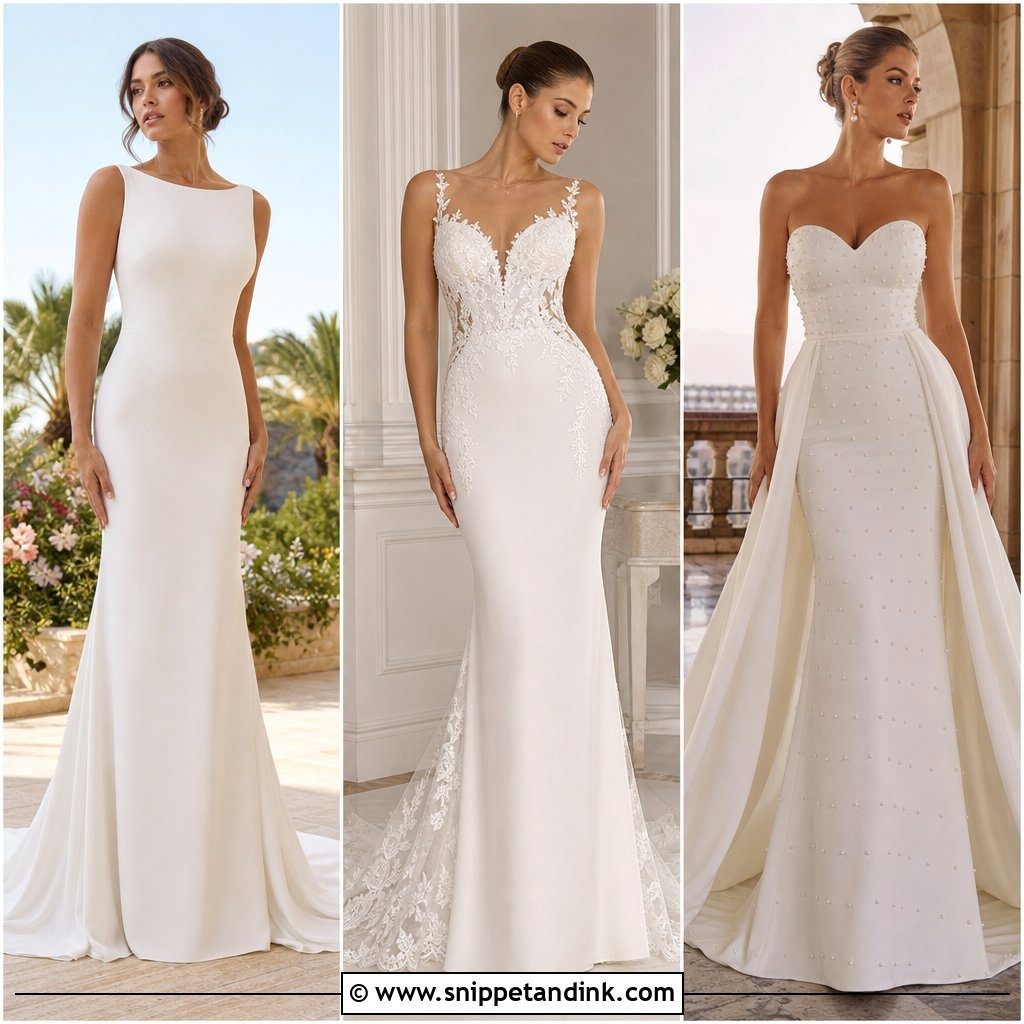
A convertible wedding frock gives you two finished looks without buying a second gown. The base is usually a fitted column or mini, with a detachable overskirt, sleeves, cape or train layered on for the ceremony. The fastenings are what I scrutinize: hooks, snaps and buttons must disappear completely once the extra piece is off, or the second look seems unfinished. Practise the change with whoever will help you on the day, ideally twice, and time it. Swap to smaller earrings and block heels after, and the reception version feels like its own outfit.
What Each Fabric Looks Like by Hour Eight
In a fitting room every frock looks fresh. The real test is what it looks like after a car ride, a sit-down dinner and a few hours of dancing, and that comes down to fabric.
Satin and mikado
Heavier satins hold their shape well but show creases across the lap after you sit. I suggest standing for the car ride where possible, or at least spreading the skirt out rather than sitting on it bunched. A small travel steamer in the getting-ready bag helps between ceremony and reception.
Crepe and stretch crepe
Crepe resists wrinkles better than almost anything else in bridal, which is why I recommend it for long days and destination weddings. Its weakness is that it shows sweat marks and undergarment lines in heat, so a smooth, flat layer underneath matters.
Lace, tulle and chiffon
These forgive creasing but snag easily. Watch rough stone walls, bark and the hook-and-loop fastenings on guests’ bags. Tulle hems gather dust and grass outdoors, which shows up most on a long train, so a bustle that lifts it off the ground after the ceremony is worth having.
After the wedding, get the frock to a cleaner who handles bridal wear within a few weeks. Sugar from champagne and cake dries clear and can turn yellow later, even if the dress looks clean today.
The Frock That Passes the Sit, Step and Hug Test
The frock I’d want you to end up in is the one you forget you’re wearing by the third hour. Use the shapes above to narrow your list, then try them in at least two fabrics, because satin and crepe can make the same silhouette feel like two different dresses. Bring your wedding shoes and undergarments to every fitting. Sit, climb a step, lift your arms and hug the person who came with you. If the dress still looks right after all of that, it will look right in the photos, too.
You'll Like These Ideas:


Leave a Reply