
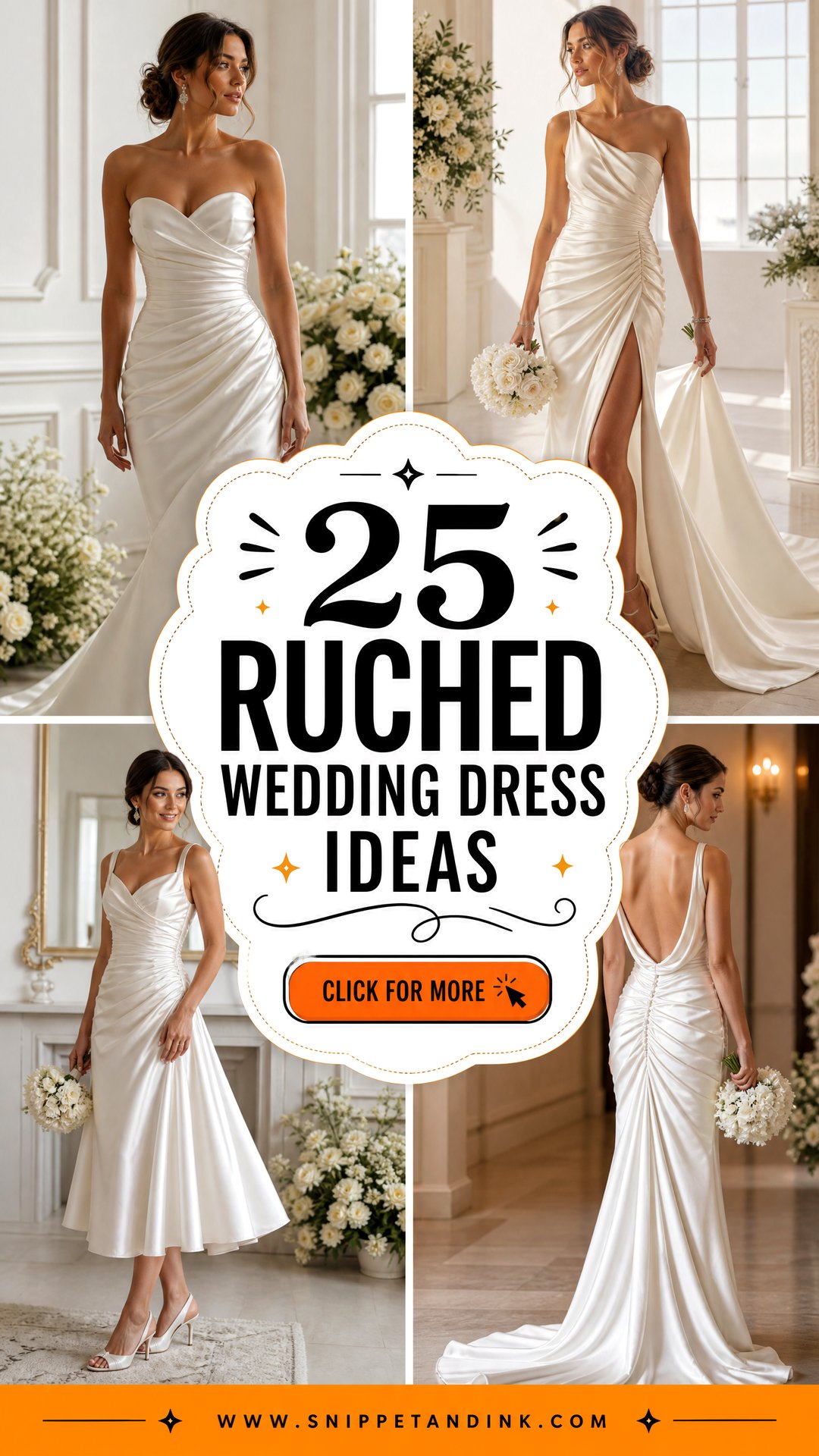
Ruching is gathered fabric, and it does a lot of quiet work on a wedding dress. It defines a waist, softens a close fit, hides the small creases you get from sitting, and adds volume without a single bead. Bridal designers now pair it with corset bodices, drop waists, sculpted satin, soft tulle and full ball skirts, so there is a ruched gown for a ballroom, a garden or a beach. What I watch for is direction and density: where the gathers run and how much fabric is in them changes the shape of your body in the mirror more than any neckline. Here are 25 ruched styles and how I’d finish each one, from shoes to veil.
Gathers Stitched Down or Left to Drape? Read the Ruching Before You Try It On
Not all ruching is built the same way, and the construction decides how the gown fits and how easily it can be altered. When I pull a ruched gown for a bride, I turn it inside out first.
- Fixed ruching is gathered and stitched onto a fitted lining. It holds its pattern all day and gives real shaping, which suits corset bodices and mermaid hips.
- Floating or draped ruching is caught only at the seams, so the fabric moves more freely. It is softer and more flattering on a relaxed silhouette, but it can shift or flatten after hours of wear.
- Elastic or shirred ruching gathers with stretch thread. It is comfortable and forgiving, more common on simpler and reception dresses than on formal gowns.
Alterations are the reason to know this. Taking in a ruched bodice often means unpicking and re-gathering every fold so the pattern still lines up, which takes a skilled seamstress and more time than a plain seam. Letting out is limited by how much seam allowance is hidden underneath. Buy a ruched gown in the size that fits your largest measurement and ask the shop up front what alterations it allows.
1. Strapless Satin Ruched Wedding Dress
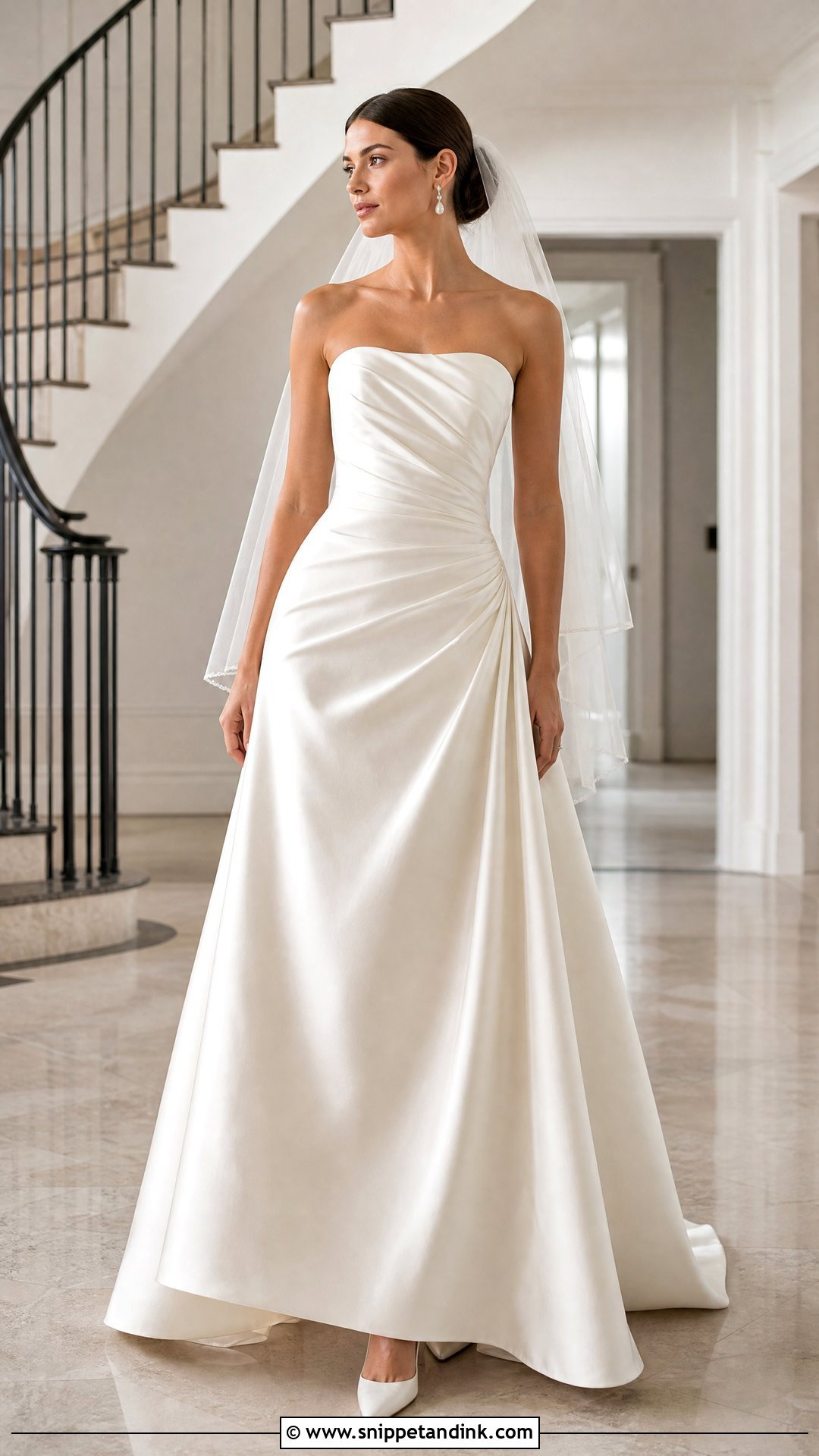
Diagonal ruching across a strapless satin bodice is one of the most flattering lines in bridal wear, because the gathers pull the eye from bust to waist in one sweep. Pair it with an A-line or gently fitted skirt, a fingertip veil with a narrow satin edge, pearl drops and pointed ivory pumps. A sleek low bun keeps the neckline clear. Strapless satin must grip at the ribcage, not the bust, so I check that the waist stay is snug before anything else. For cooler weather, a cropped satin wrap that matches the gown is better than a cardigan. Finish with a structured ivory clutch and a compact bouquet of white roses or seasonal flowers.
2. Off Shoulder Ruched Wedding Dress
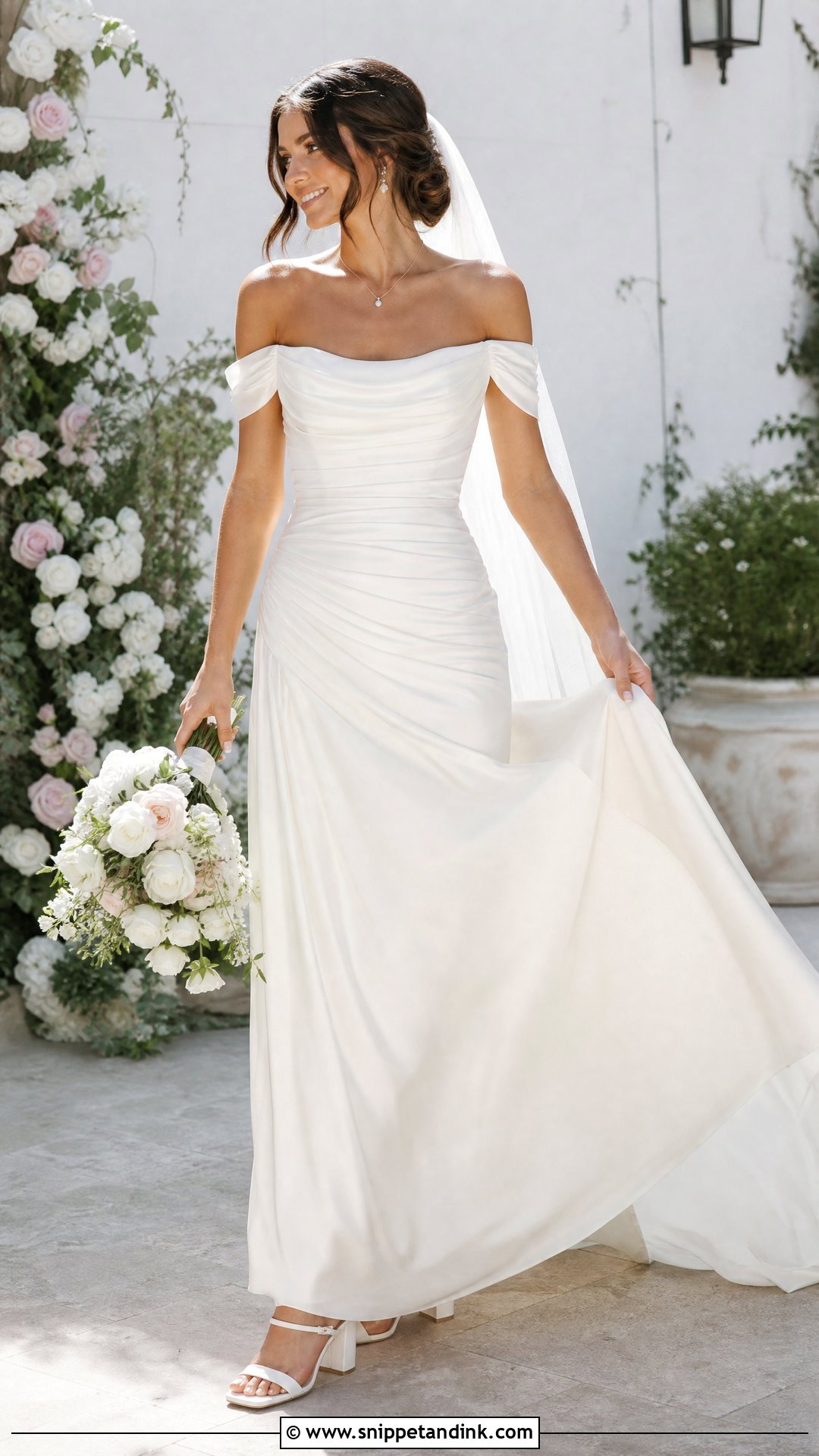
Gathered folds at an off-the-shoulder neckline frame the face and collarbones softly. The risk is slippage, so look for internal construction such as boning or silicone grip tape that holds the neckline while you move. A fitted bodice into a soft A-line balances shape and comfort. A delicate pendant, small crystal earrings and a sheer chapel veil placed under a loose chignon suit it. I’d steer you to ivory block-heel sandals over narrow heels for a long day, and a light wrap for outdoor photos. A rounded bouquet and softly defined makeup finish it.
3. Long Sleeve Ruched Wedding Dress
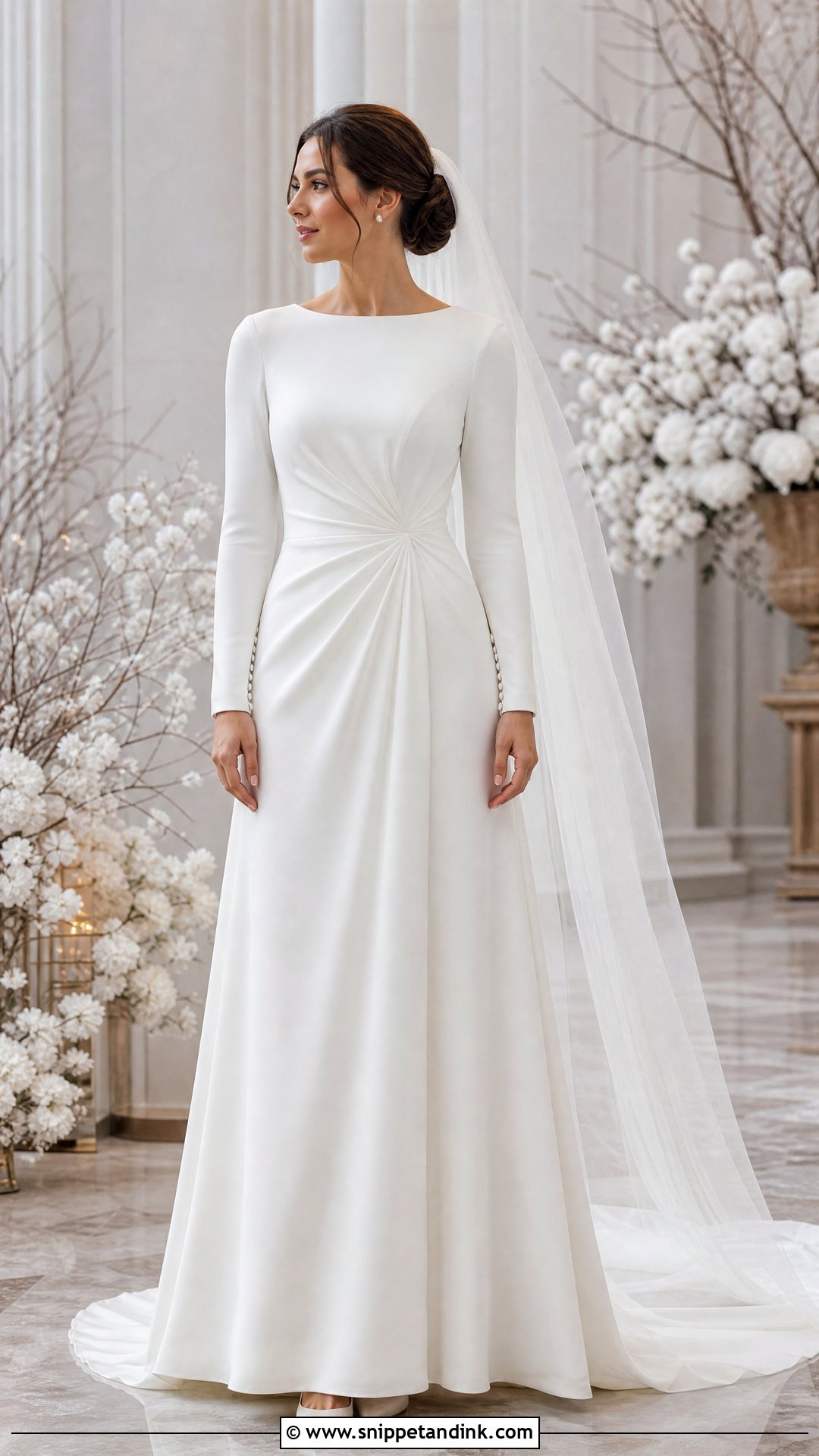
Long sleeves with ruching at the waist give coverage while keeping the figure defined. Sheer tulle sleeves with gathered cuffs feel airy; fitted crepe sleeves look minimal. Keep the skirt smooth so the gathers at the waist stay the focus. Pearl studs, a cathedral veil and closed-toe ivory heels complete it, with a low twisted bun to stop the outfit looking too buttoned-up. For winter, a faux-fur stole in soft ivory matches better than stark white, which makes an ivory gown look yellow beside it. A structured bouquet with greenery adds contrast.
4. Ruched Corset Wedding Dress
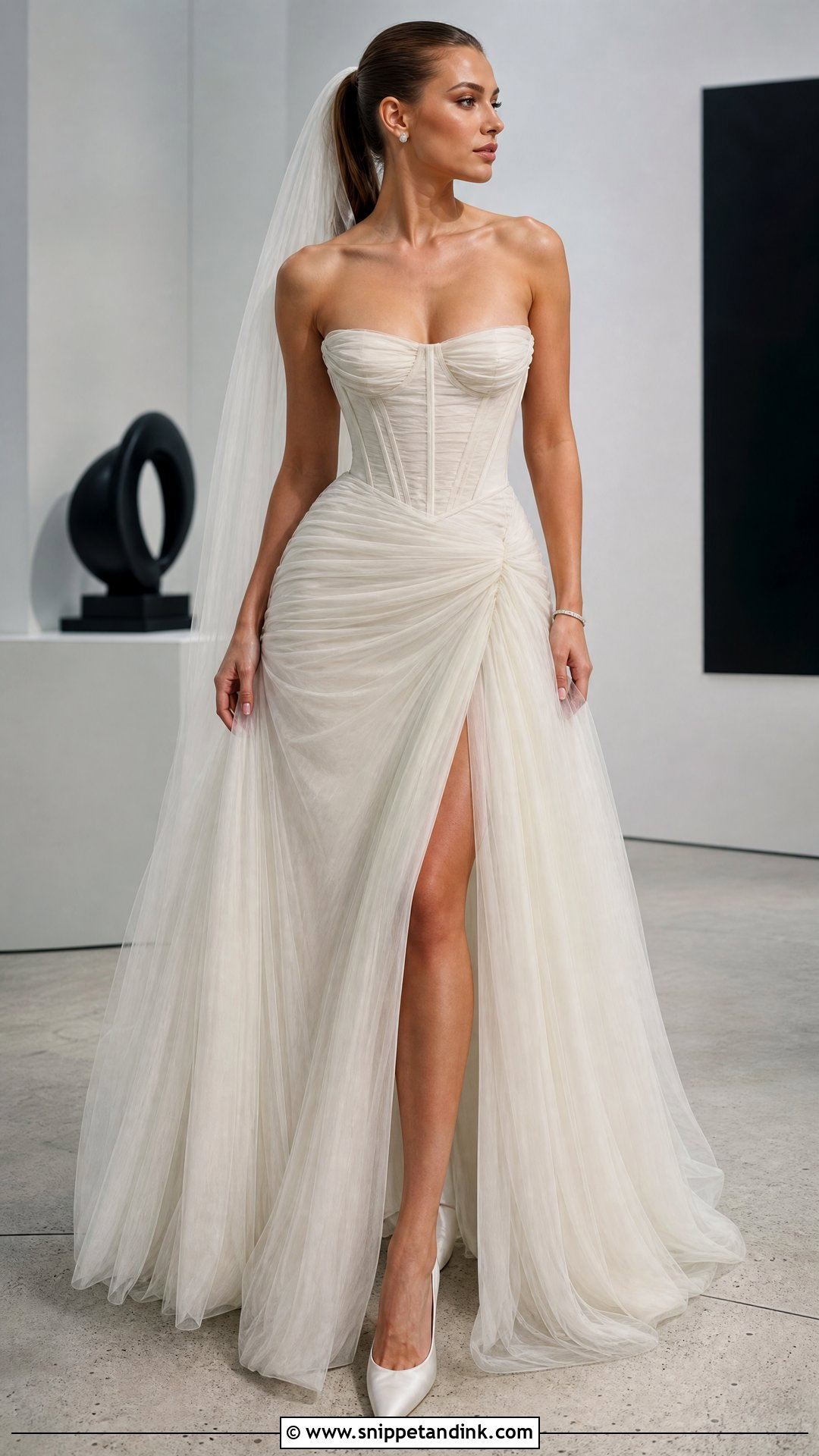
Visible structure under soft gathers is what makes a ruched corset gown look current. Boning beneath tulle, chiffon or satin defines the waist without stiffness, and a flowing skirt balances the fitted top. I check where the boning ends; when it runs too long, it presses into the hips when you sit. A plain chapel veil, crystal studs and a slim tennis bracelet let the corset lead. Pointed pumps lengthen the line, a small top-handle bag is practical, and a textured updo or polished ponytail shows the bodice. Lofts, museums and city hotels suit it.
5. A Line Ruched Wedding Dress
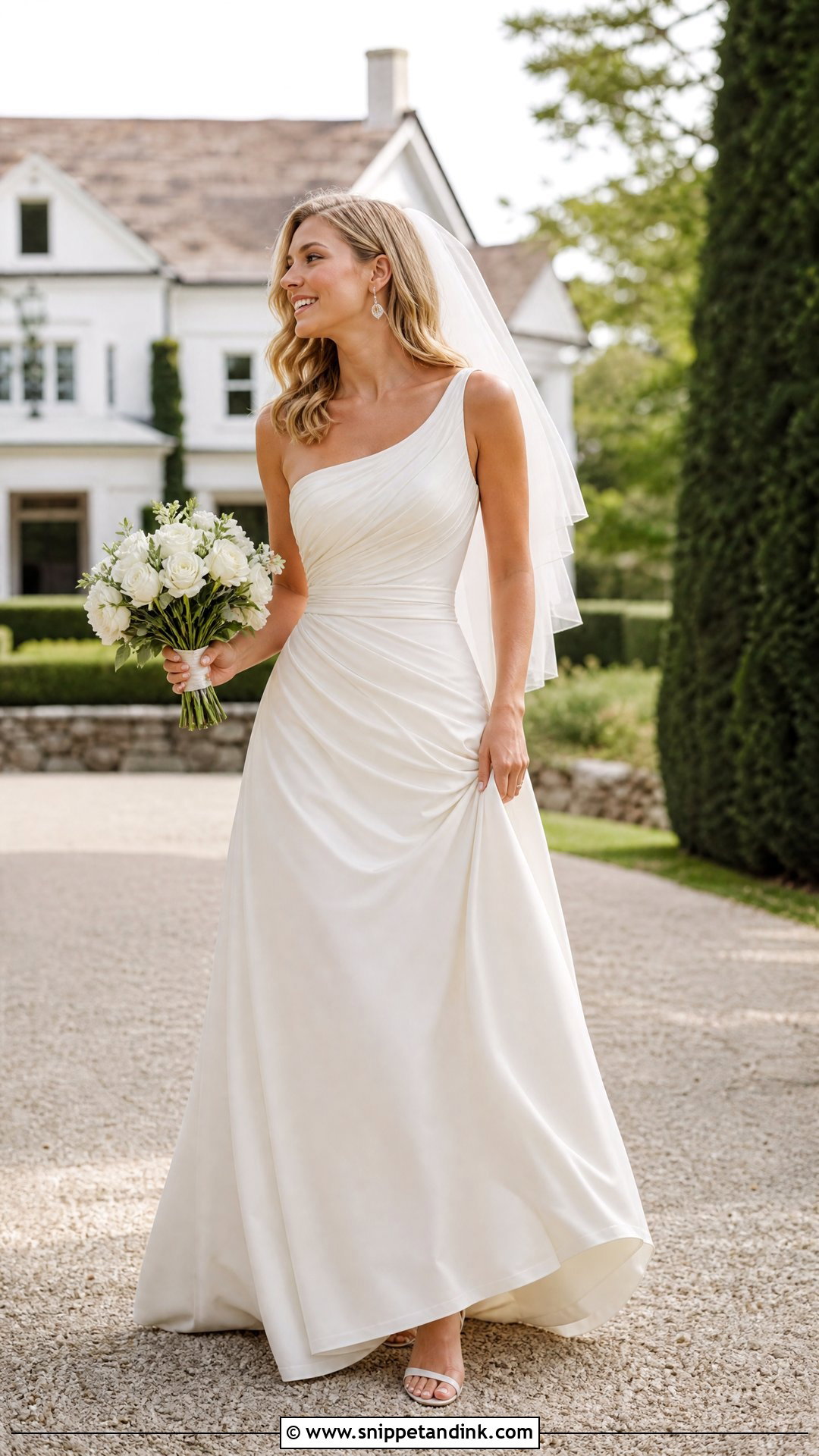
An A-line with ruching is my default suggestion for a bride who wants definition and freedom in equal parts. The gathers can cross the bodice diagonally, gather at the centre front or wrap a wide waistband before the skirt opens out. Keep the styling light: a single-layer veil, pearl earrings and low slingback heels you can dance in. A soft updo or shoulder-length waves suit it, plus a small floral hairpin if the gown is plain. Choose a medium bouquet and a compact clutch that don’t hide the waist. It adapts to almost any venue with a change of accessories.
6. Mermaid Ruched Wedding Dress
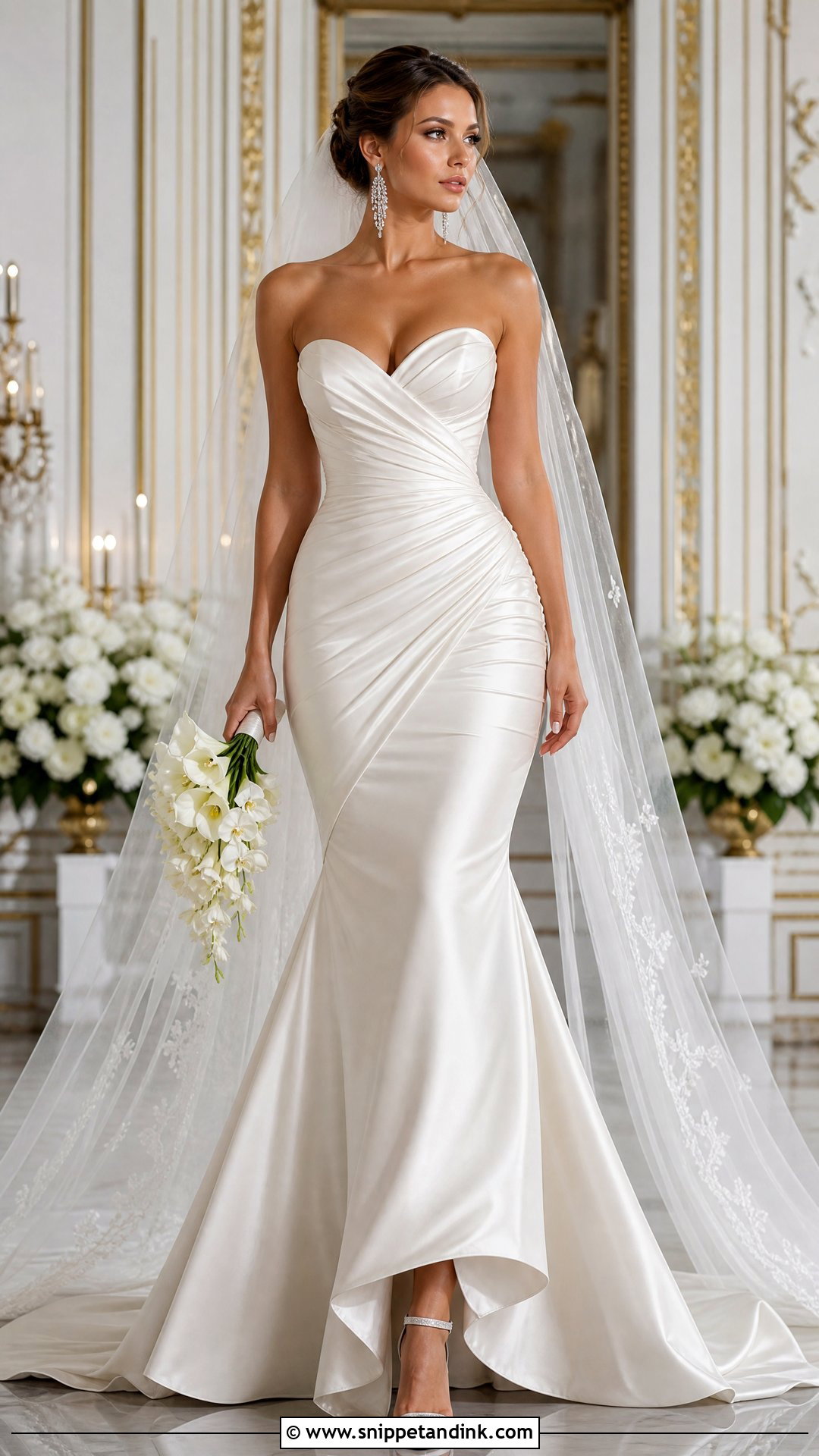
Ruching through the bodice, waist and hips makes a mermaid gown more forgiving than a plain one, because the gathers disguise small lumps and seated creases. Stretch satin or lined tulle lets you sit and dance. Long crystal earrings, a plain cathedral veil and heels with secure ankle straps suit it, with hair swept back off the neckline. Keep the bouquet narrow and slightly elongated. For the evening, a sheer detachable cape falling behind the skirt adds drama. I’d still test the flare point by climbing a step at a fitting.
7. Ball Gown Ruched Wedding Dress
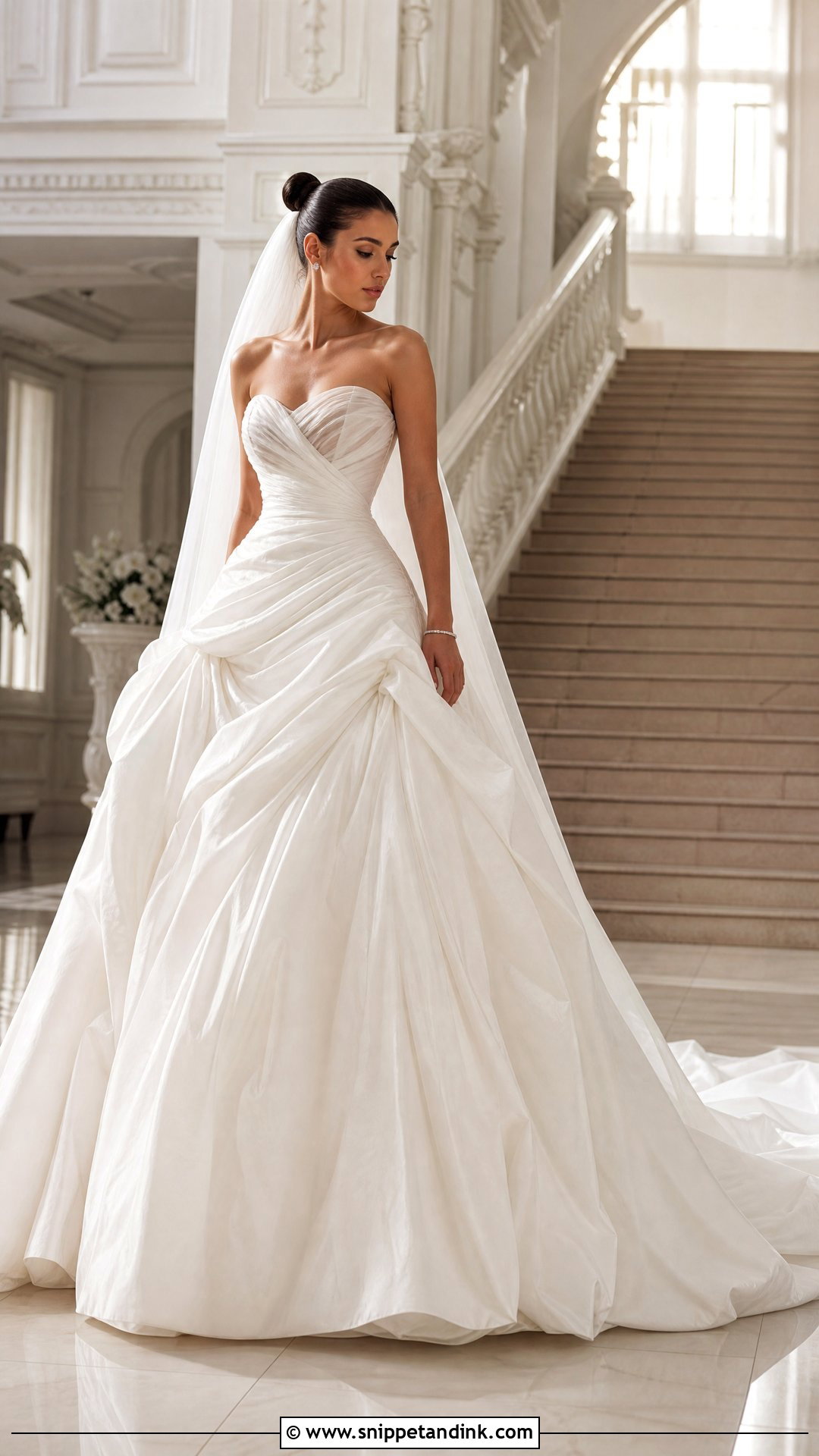
Ruched satin on a ball gown bodice looks architectural; gathered tulle looks romantic. Either way, the full skirt already brings the volume, so I control everything else: classic studs, a narrow bracelet, a simple veil without a heavy lace border. Platform pumps add height and stay hidden. A smooth bun or a waved half-up style depending on the neckline, and a small bouquet so the whole silhouette doesn’t get too big. Give it a venue with space for the skirt to move.
8. Sheath Ruched Wedding Dress
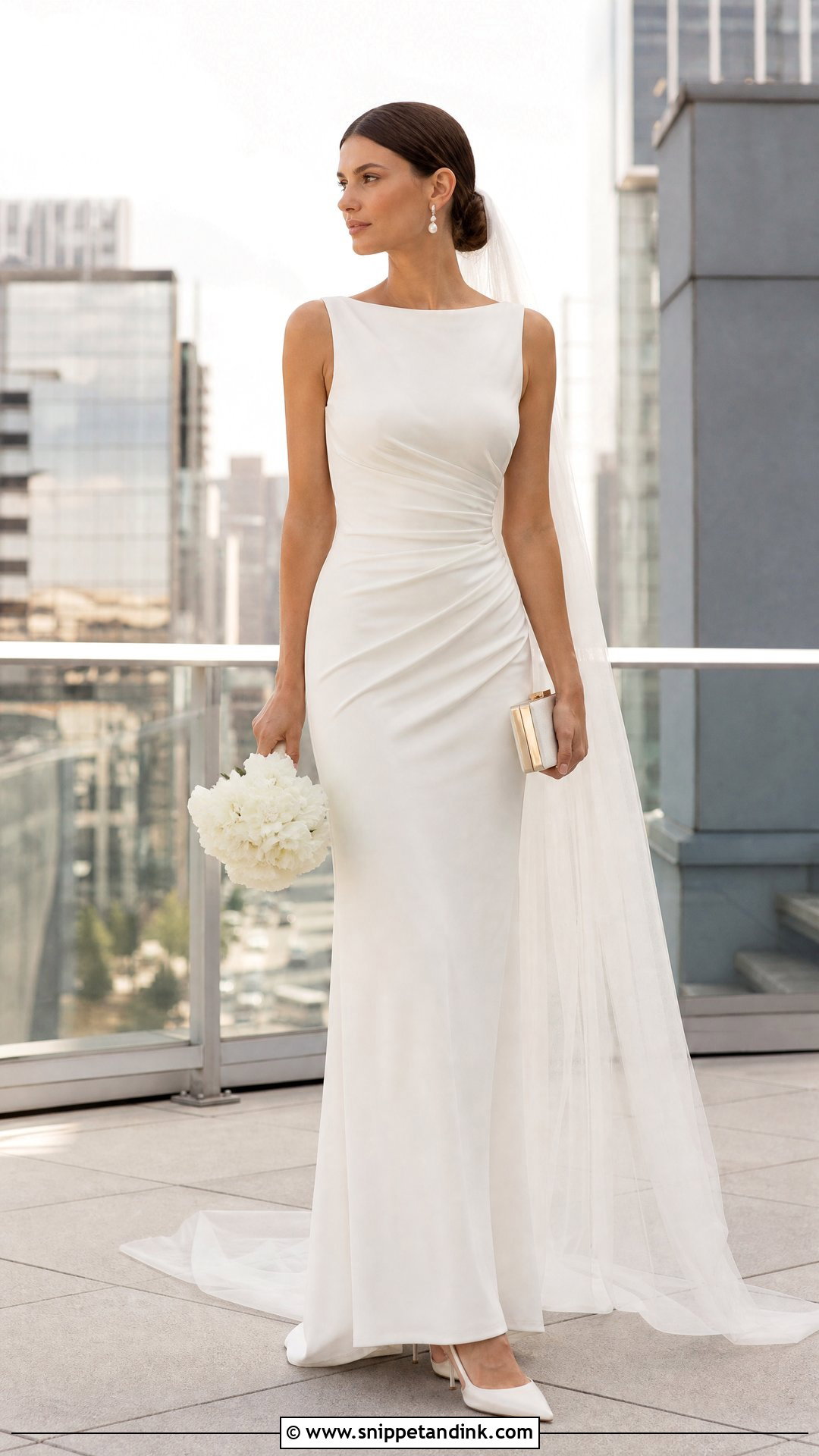
A sheath gown with soft ruching follows the body without the flare of a mermaid. Gathers at the waist or hip add definition while the rest falls straight. Minimalist drop earrings, a low bun and a narrow floor-length veil complete it. I prefer pointed slingbacks to backless mules here; mules slip on a polished floor and change how you walk. A small bouquet with clean stems and a satin clutch keep the modern feel. Courthouse ceremonies, restaurants, galleries and rooftops are its territory.
9. One Shoulder Ruched Wedding Dress
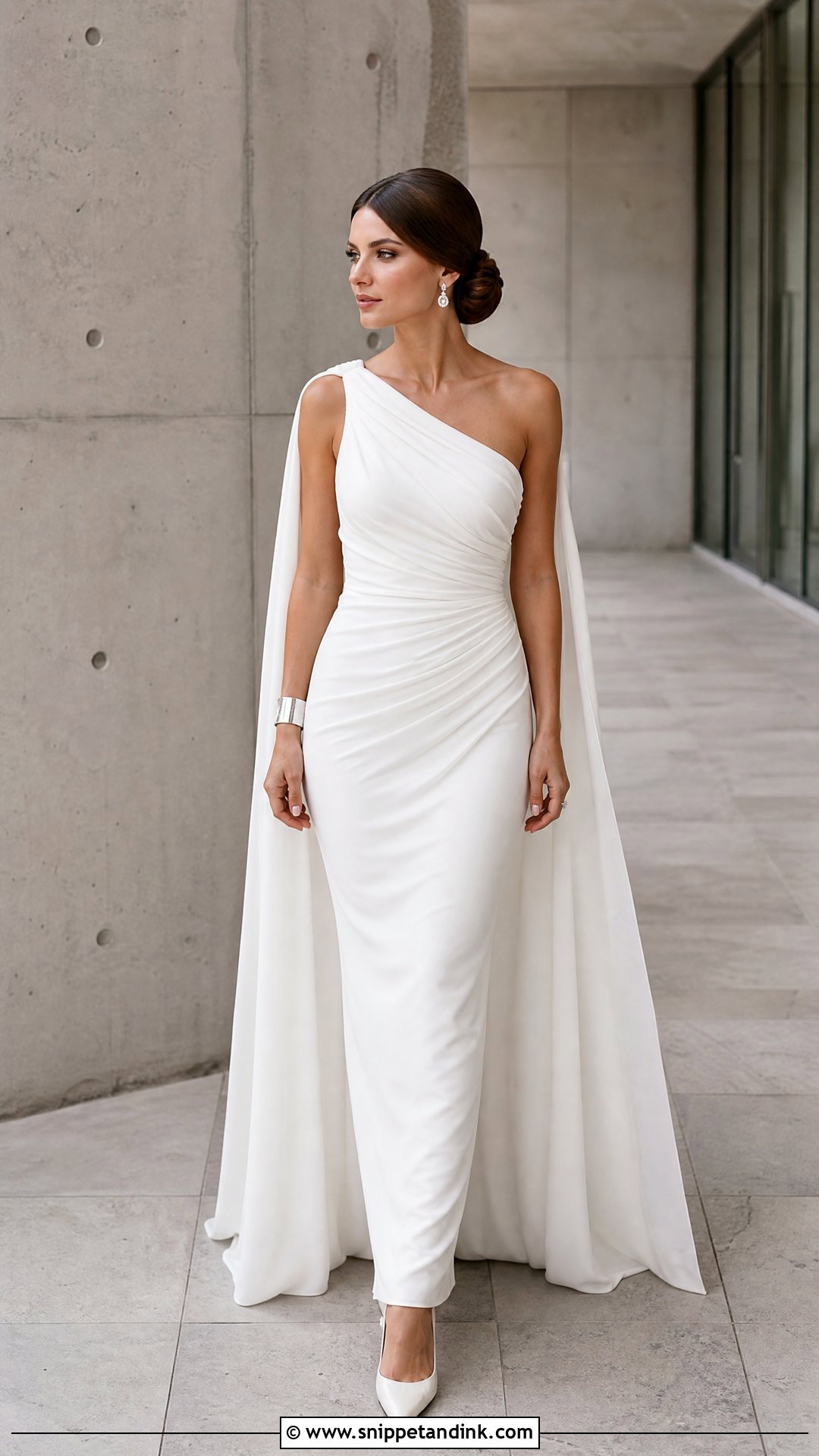
The asymmetry of a one-shoulder ruched wedding dress is decoration enough. Gathers that start at the shoulder and run diagonally to the waist look cohesive. Skip the necklace; medium drop earrings and a simple bracelet on the bare arm balance it. A sleek bun or side-parted ponytail suits the line, as do pointed ivory heels. Instead of a traditional veil, try a light shoulder cape fixed at the back, or a short veil under the hairstyle. One thing to test: a single strap carries all the bodice’s weight, so it must be anchored firmly or it slides toward the arm.
10. Sweetheart Ruched Wedding Dress
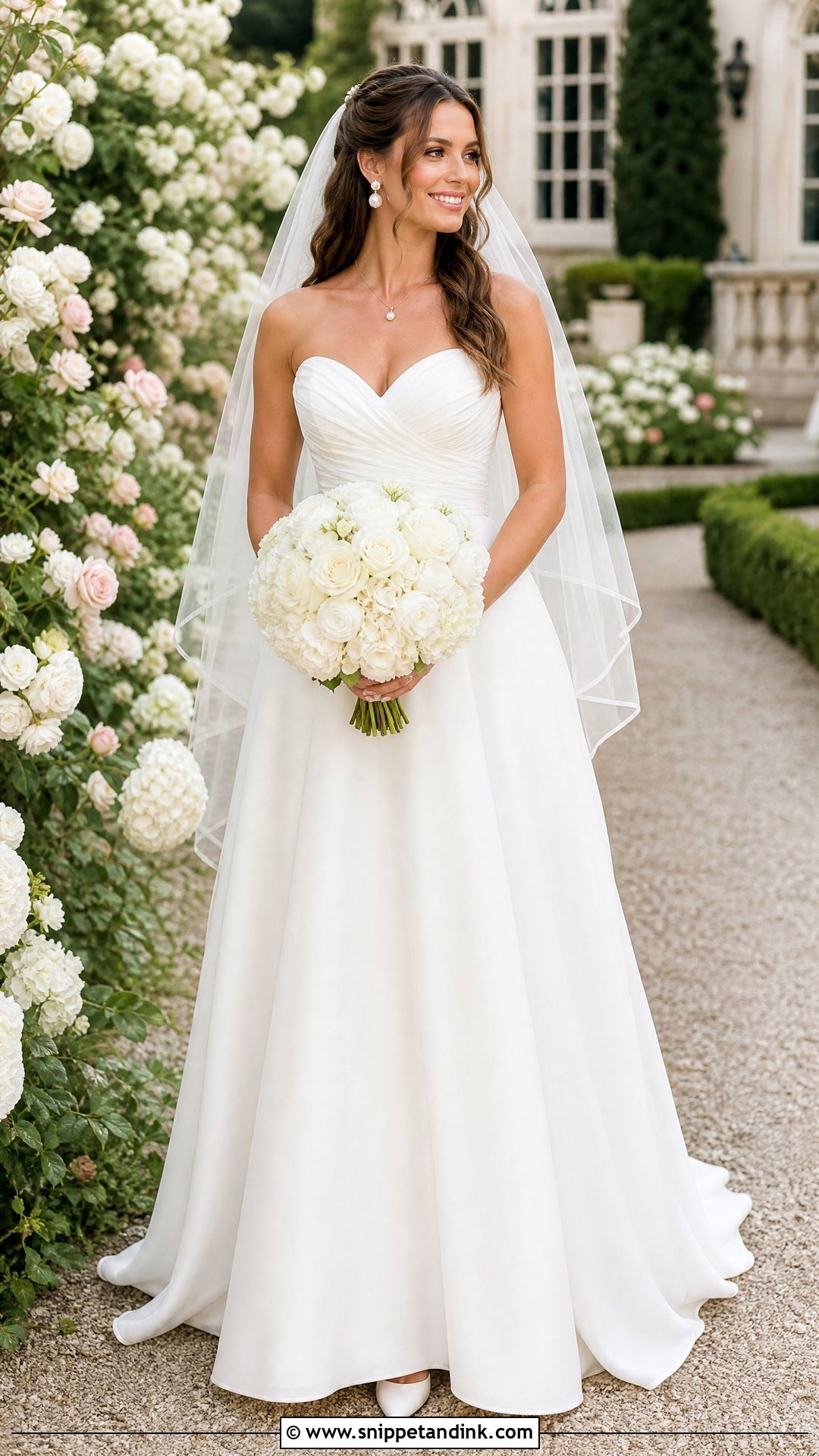
Fine gathers matter more than anything on a sweetheart neckline and ruched bodice. Bulky folds at the bust look heavy; fine ones shape and support. An A-line or fit-and-flare skirt continues the line. A delicate pendant, pearl-and-crystal earrings and a fingertip veil suit it, with soft waves, a half-up style or a low chignon. Closed-toe pumps for a traditional finish or block-heel sandals outdoors. A rounded bouquet with subtle greenery echoes the curve of the bodice.
11. Square Neck Ruched Wedding Dress
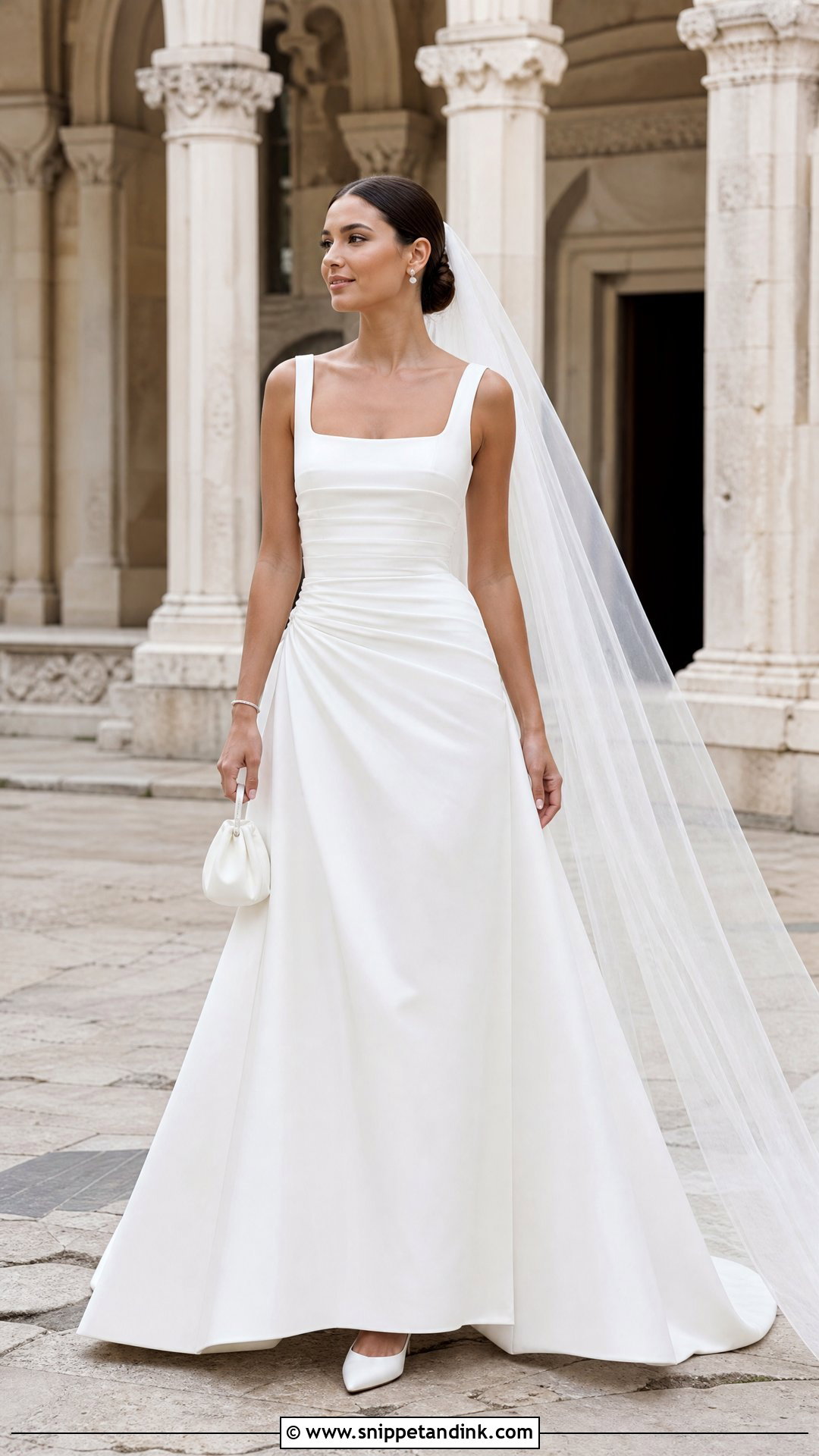
Vertical or lightly crossed gathers suit a square neck best, since heavy diagonal ruching fights with its straight lines. Wide straps add support and frame the shoulders. A short pearl necklace or just sculptural studs, a low centre-parted bun, and a plain cathedral veil for length. Pointed pumps, a slim bracelet and a structured mini bag for the reception. Keep the bouquet simple and white. Historic buildings, galleries and courtyards suit it.
12. Halter Ruched Wedding Dress
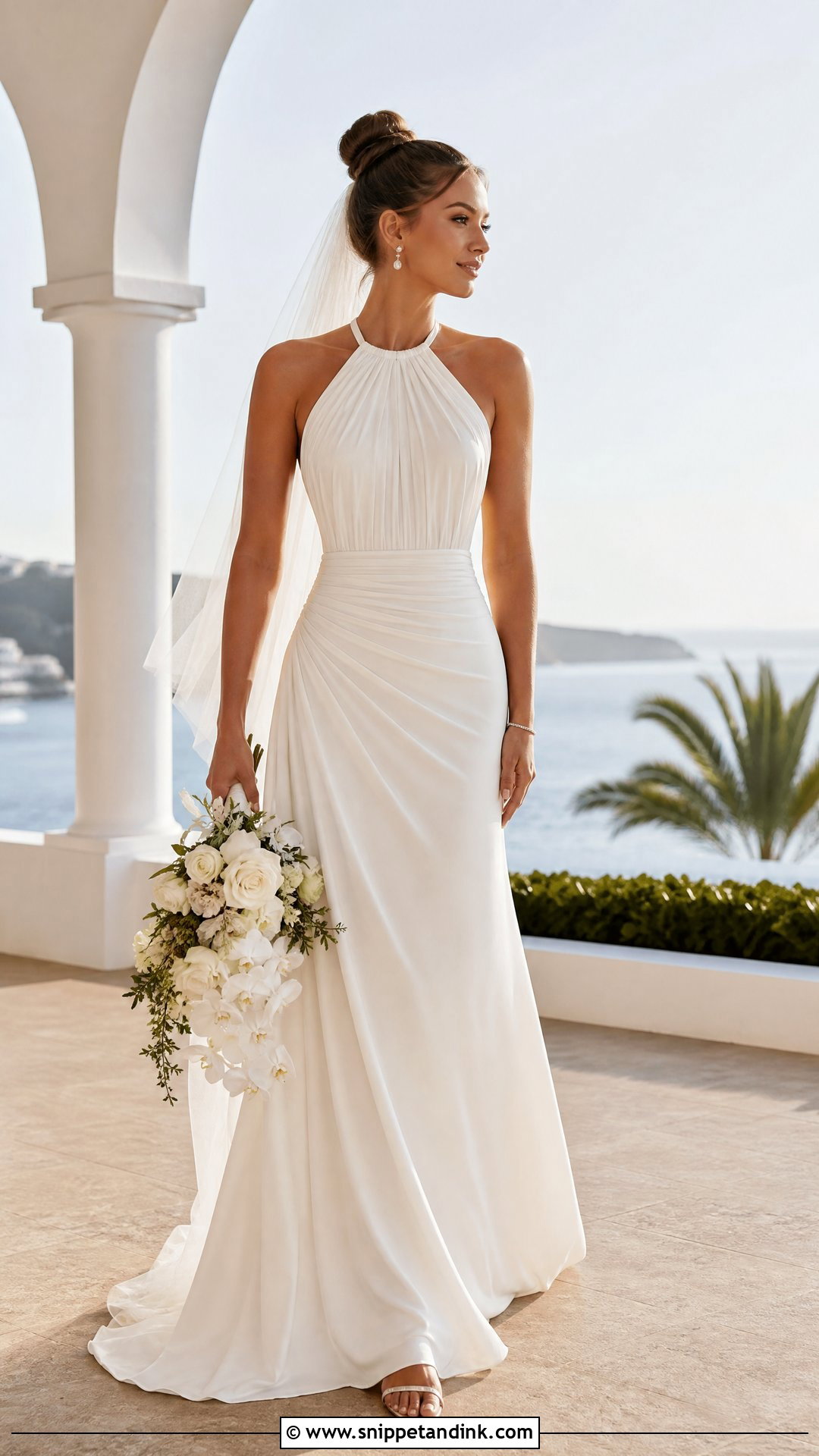
Halters draw the eye upward and lengthen the body, which is useful on a petite bride. Gathers can radiate from the neckline or wrap the waist diagonally. Leave the neck bare and wear small drop earrings. A high bun, polished ponytail or braided updo shows the shoulder line. Strappy ivory sandals, a narrow bracelet, a light veil fixed under the hair and a crescent bouquet complete it. Halter straps sit on the back of the neck; if the bodice is heavy, I have the weight taken by an inner corset, or you’ll feel it by the speeches.
13. V Neck Ruched Wedding Dress
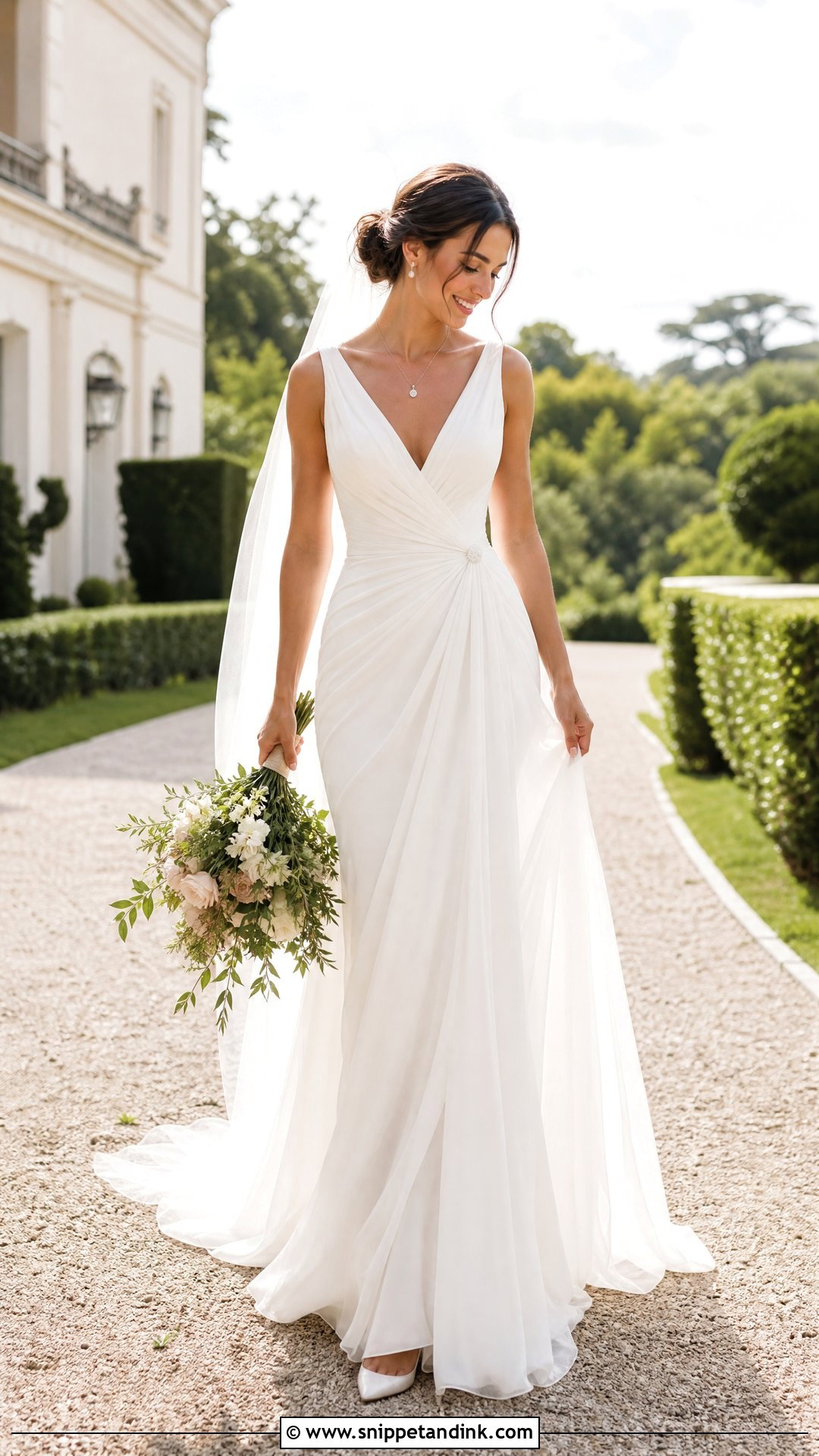
The V-neck lengthens the bodice, and waist gathers ease it into an A-line, sheath or flowing chiffon skirt. A small pendant that follows the V, understated earrings and a simple bracelet are enough. A low textured bun keeps the neckline open and anchors a fingertip or chapel veil. Almond-toe heels feel softer than sharp points; outdoors, go for a wider heel that won’t sink into grass. A loose hand-tied bouquet finishes it. It moves easily between gardens, barns, beaches and traditional spaces.
14. Drop Waist Ruched Wedding Dress
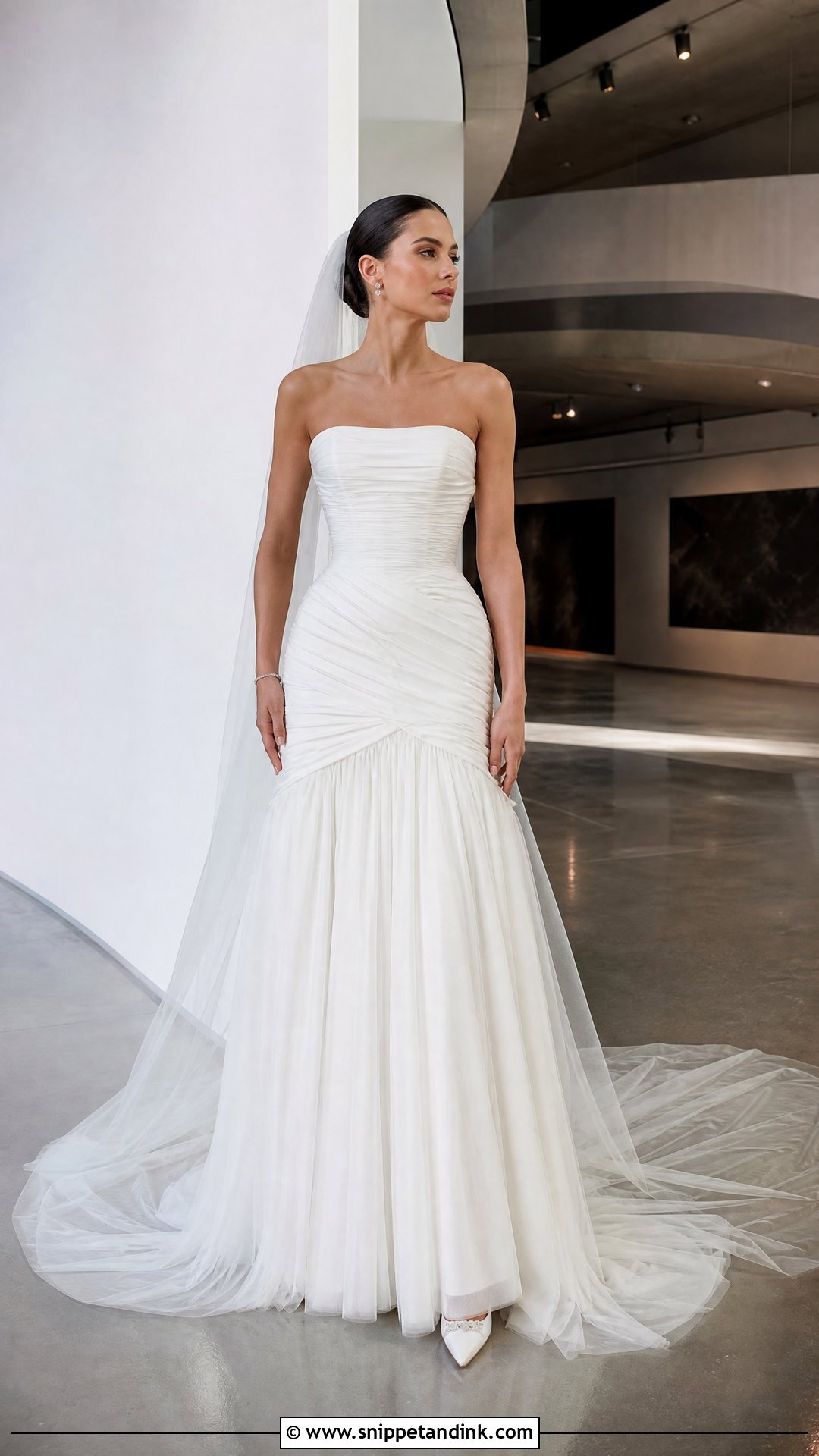
Dropping the waist below its natural line lengthens the torso and gives the ruching room to show. Soft tulle or silk-like chiffon gathers look romantic; structured satin gives stronger definition. On a short torso, I’d be cautious, since a dropped waist can shorten the legs. Stud earrings, a narrow bracelet and a plain cathedral veil keep it streamlined, with pointed pumps and a small structured bouquet that doesn’t hide the waistline. Wear your hair up so the whole bodice shows. Galleries and luxury hotels with clean backdrops suit it.


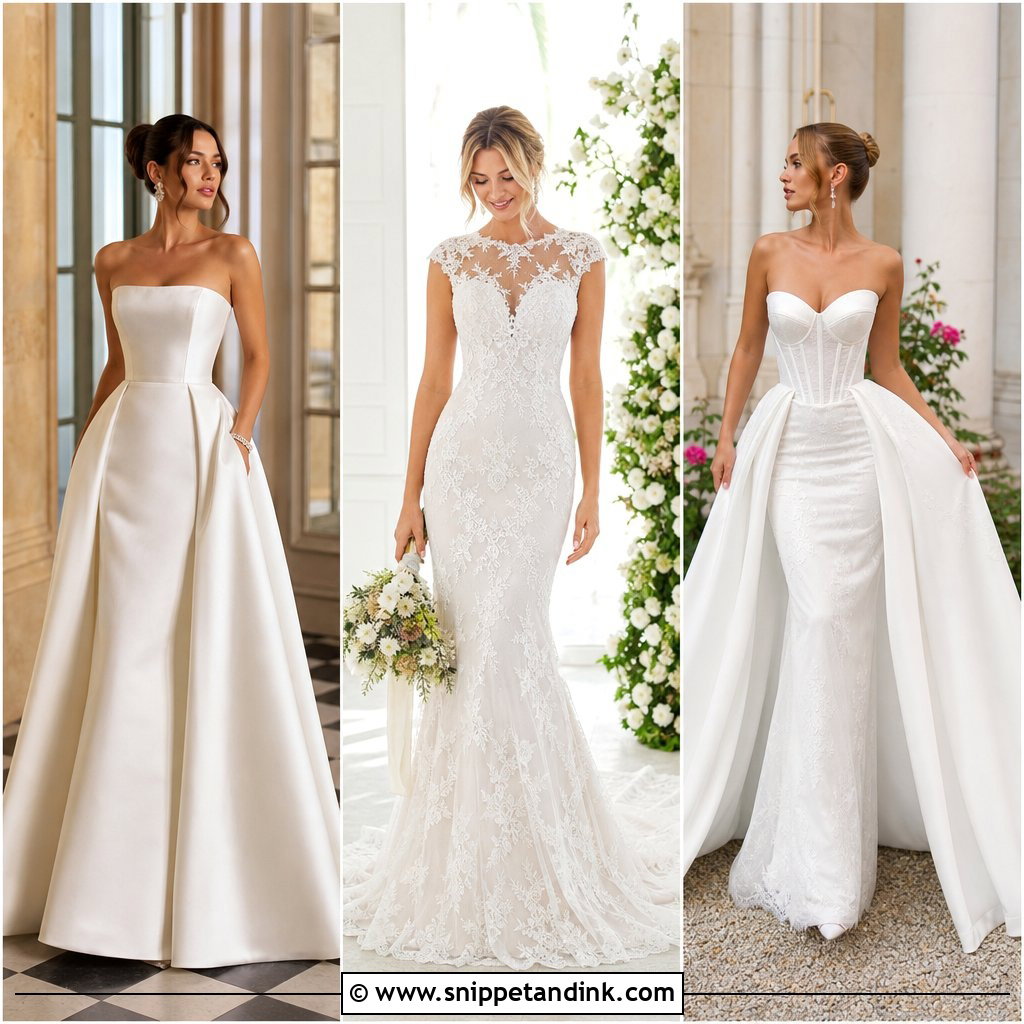
15. Basque Waist Ruched Wedding Dress
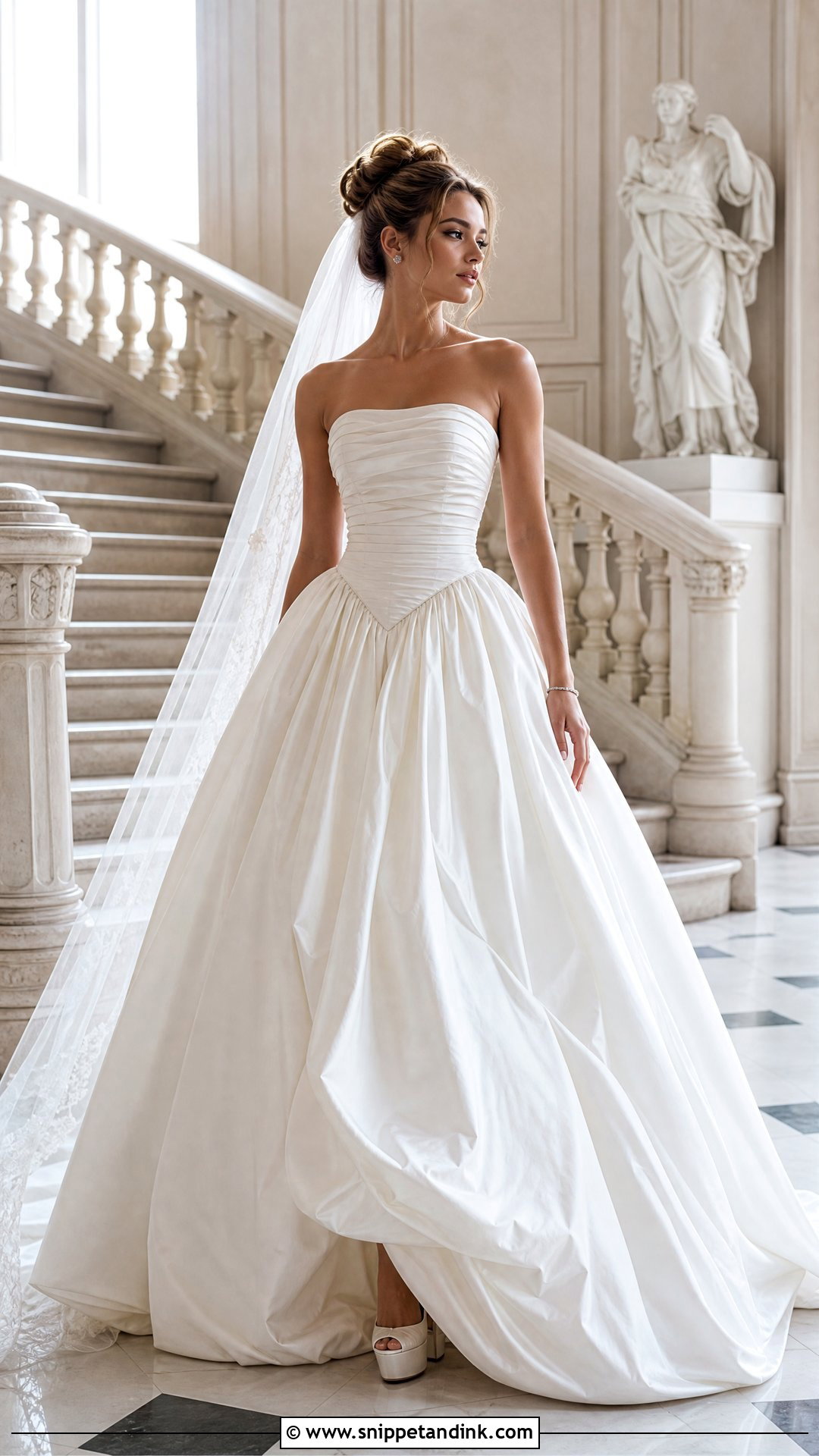
Controlled diagonal gathers meeting neatly at the point of a basque waist make one of the most dramatic transitions from bodice to full skirt. Where those gathers meet is where I look first; if they don’t align at the point, it shows in every photo. A strapless or off-the-shoulder neckline balances the long bodice. Crystal studs, a delicate bracelet and a cathedral veil without heavy trim. Platform heels give height under the skirt with more stability than stilettos. A smooth bun or sculpted updo and a compact bouquet so the point stays visible. Ballrooms and grand staircases suit it.
16. Side Ruched Wedding Dress With Slit
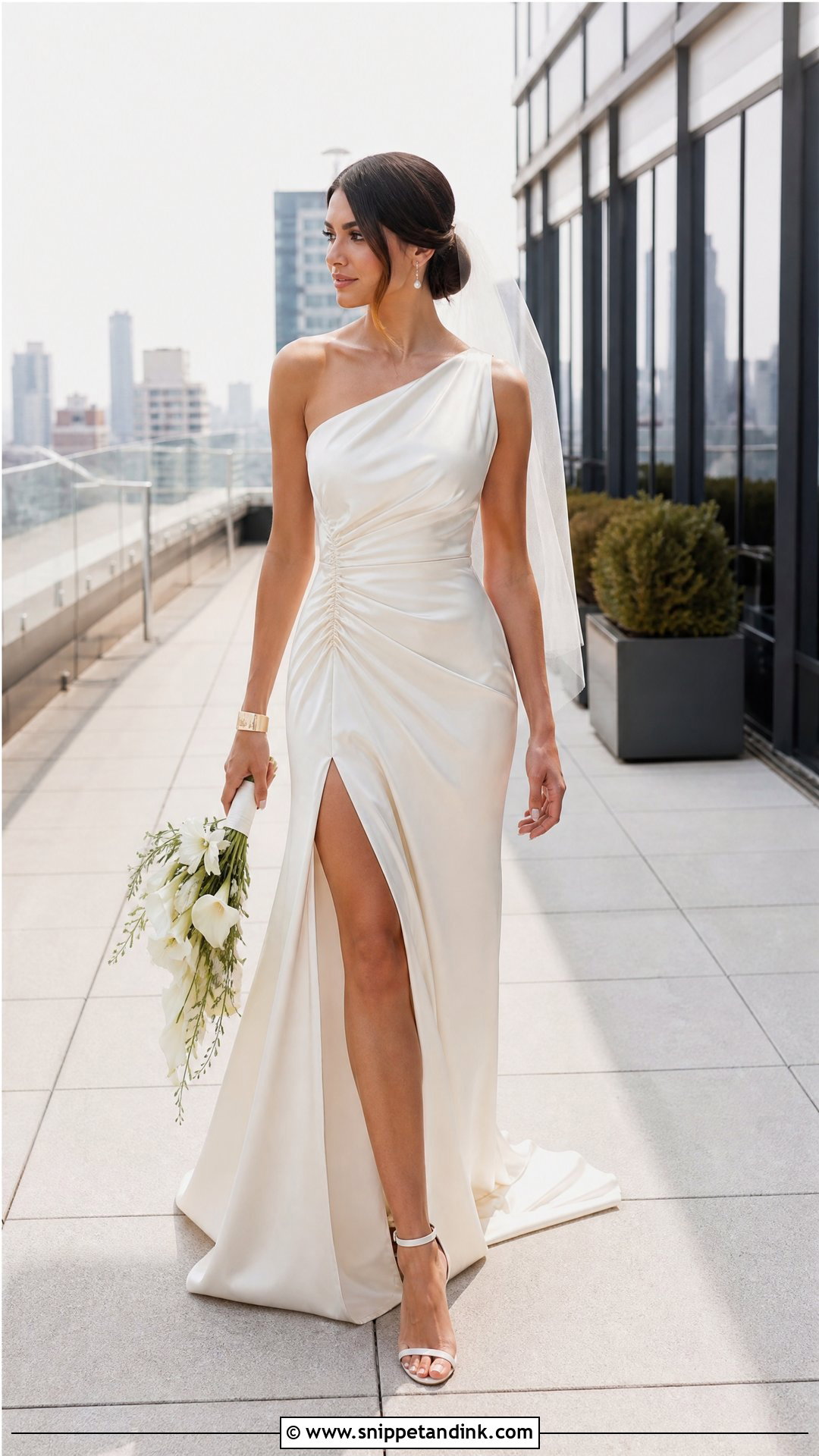
Side ruching that sweeps from the waist toward one hip lets a slit blend into the skirt naturally. Tightly gathering the whole skirt would restrict walking, so I look for gathers concentrated at the hip. The shoes will show, so choose elegant ankle-strap heels. Drop earrings, a smooth cuff and a plain fingertip veil balance it, with a side-parted bun echoing the asymmetry. Carry the bouquet on the side away from the slit. Check the slit height while sitting; it opens further than you think.
17. Tulle Ruched Wedding Dress
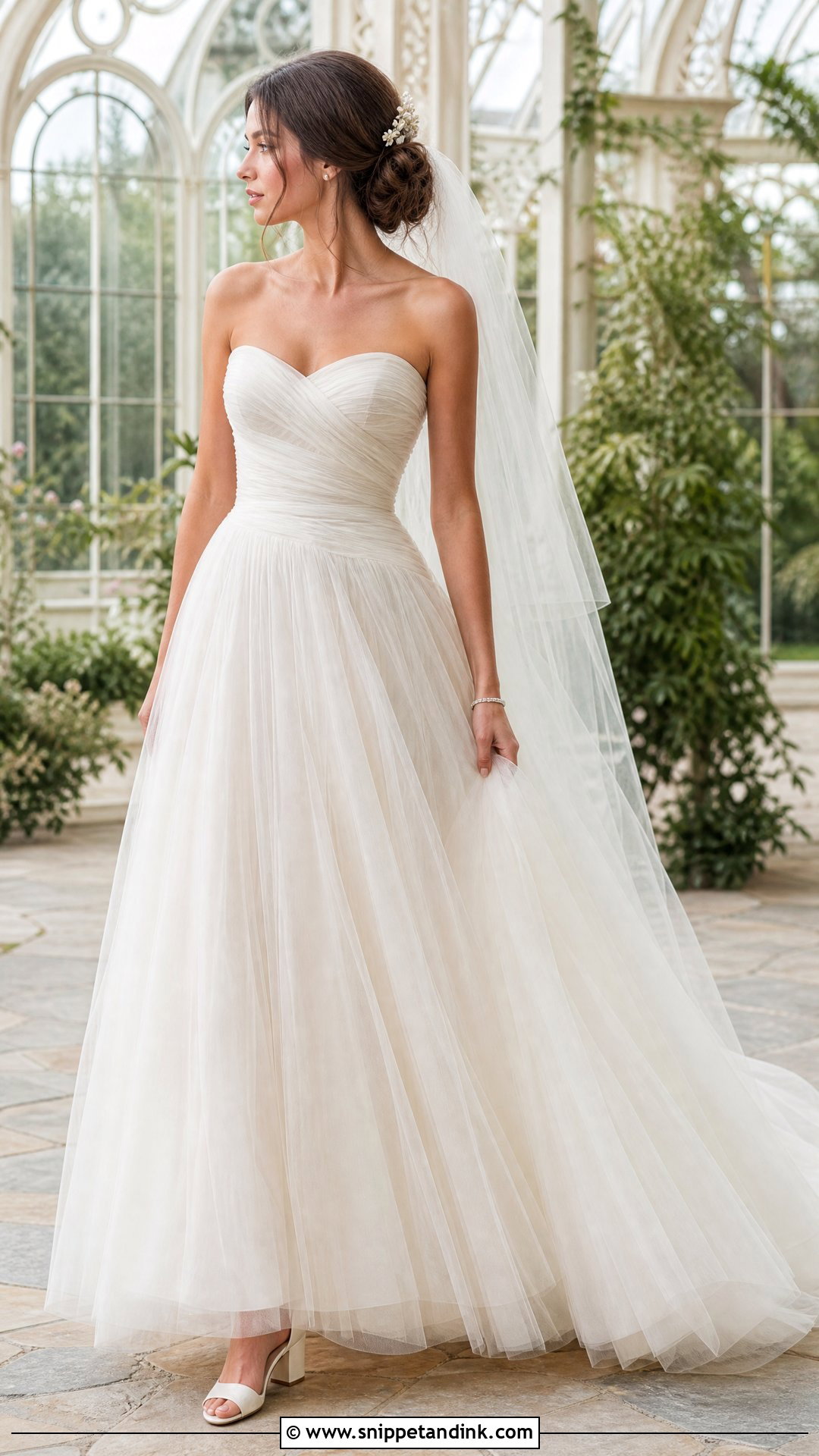
Ruched tulle gives texture without the heaviness of thick satin folds. A gathered tulle bodice over an airy A-line or ball skirt moves as you walk. Pearl studs, a fine bracelet and a soft single-layer veil keep it light; ivory block heels or embellished flats depending on the venue. A loose low bun with a few face-framing pieces, plus a subtle floral comb if the dress has no beading. Tulle bodices can flatten when you hug and lean, so a firm lining underneath helps the gathers keep their shape. A garden-style bouquet finishes it.
18. Lace Ruched Wedding Dress
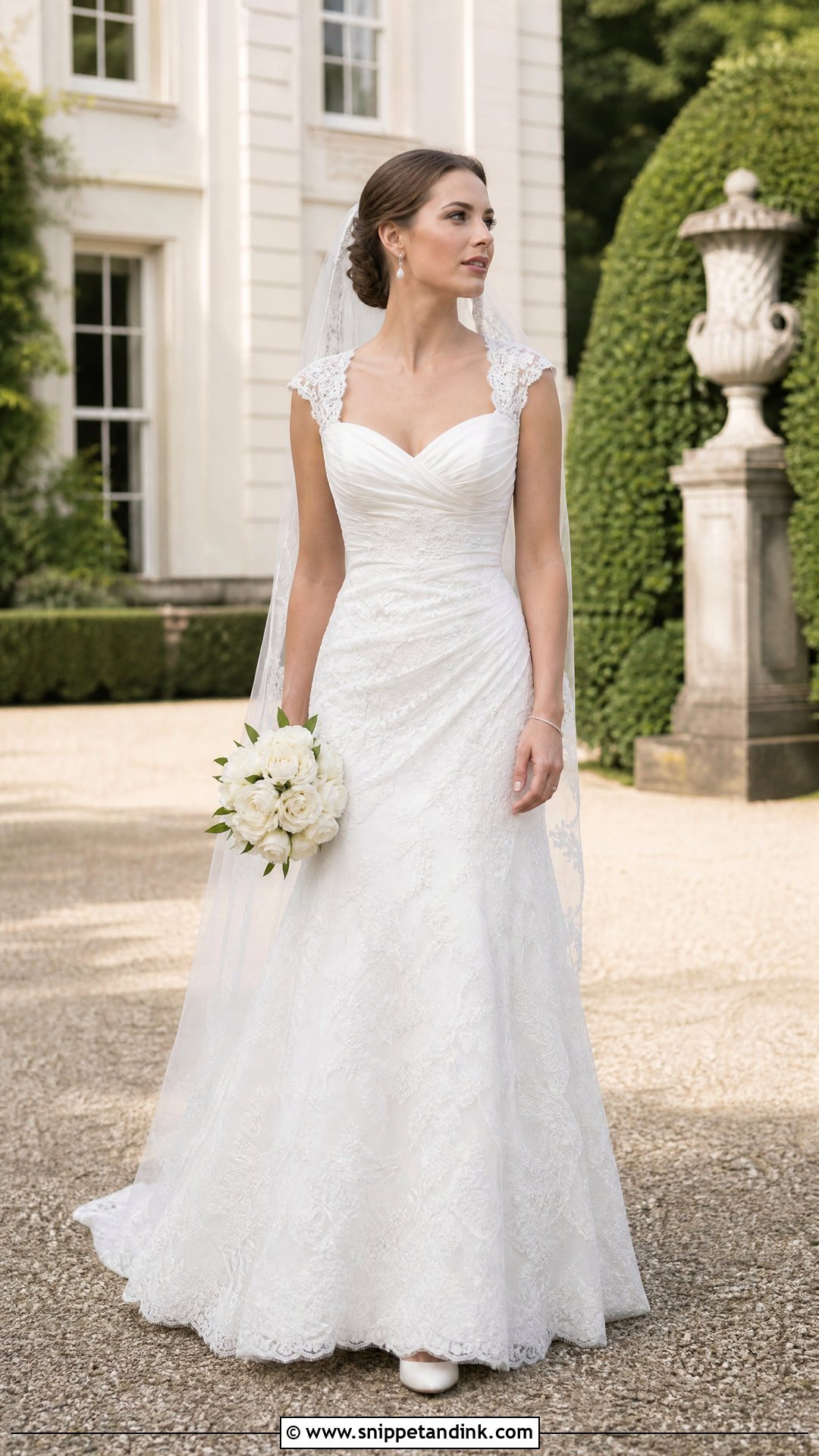
Lace and ruching both add texture, so one should lead. A lace skirt with a softly gathered satin bodice works, as does a ruched tulle overlay with carefully placed lace appliqué. With fabric this detailed, I avoid heavy jewelry: small pearl drops, a thin bracelet and a veil with a narrow lace edge. Closed-toe pumps for tradition or low block heels in a garden. A low chignon keeps it from looking busy, and a bouquet of simple white blooms with little greenery completes it.
19. Chiffon Ruched Beach Wedding Dress
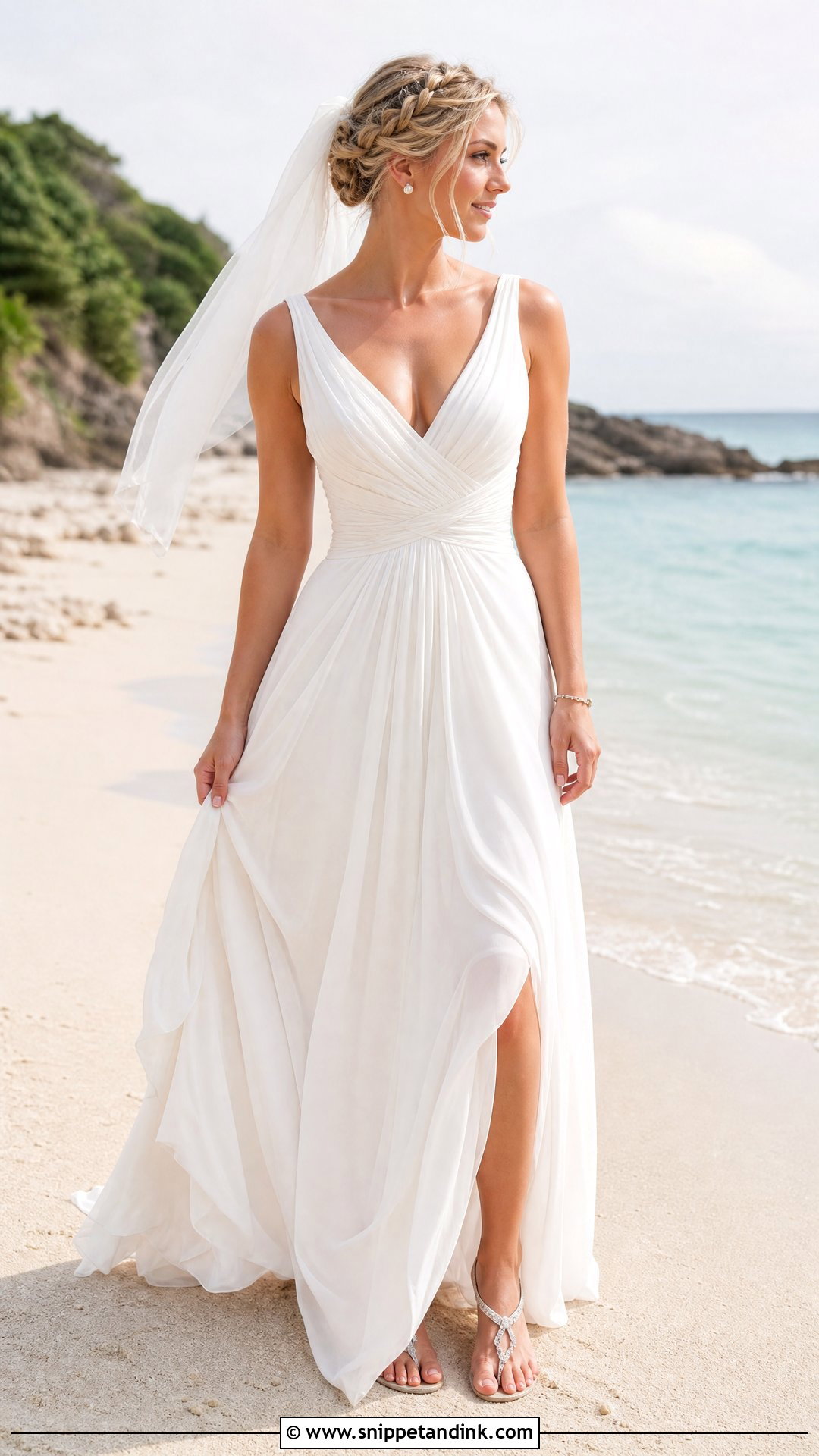
Chiffon makes ruching relaxed and fluid, which is right for a beach. A V-neck or strapless gown with bodice gathers and a loose skirt that moves in the wind. Flat embellished sandals, low wedges or barefoot sandals depending on the surface. Keep jewelry to pearl studs and a fine bracelet. A loose braided updo controls the hair in wind. I’d swap a long veil for a fingertip veil or floral comb, since long tulle drags sand and catches on everything. Chiffon frays easily at the hem, so check it hasn’t been left raw before a sandy ceremony.

20. Ruched Mini Wedding Dress
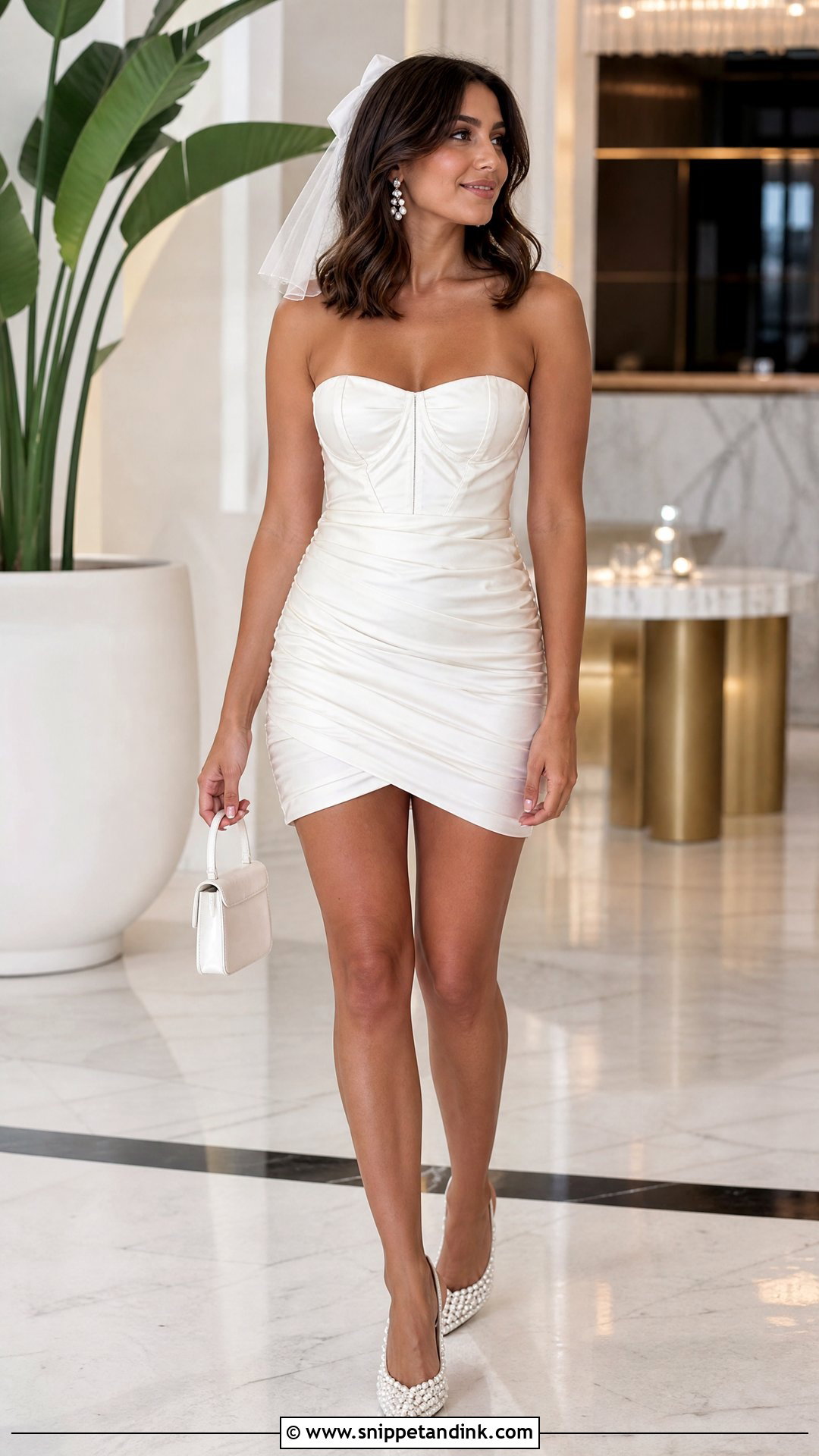
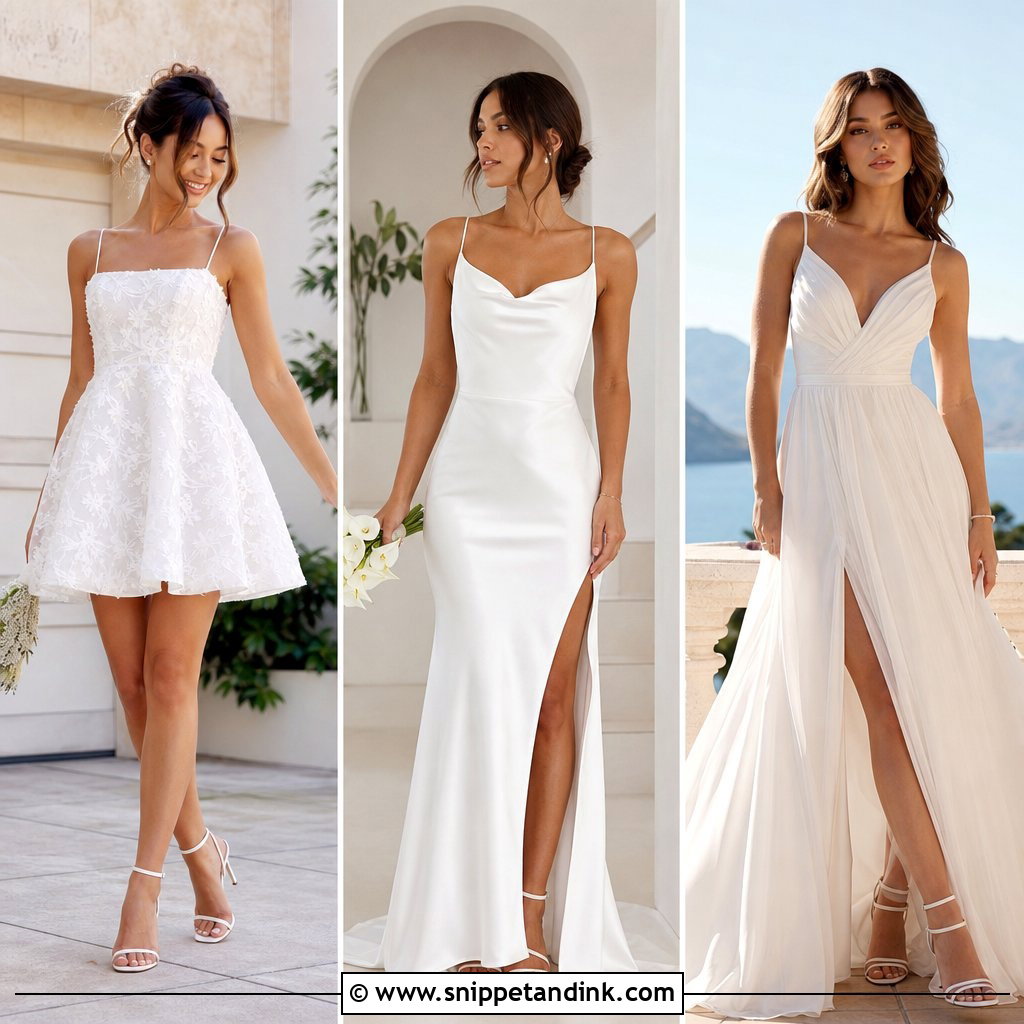
A ruched mini suits a civil ceremony, a reception change or an after-party. Structured strapless, long-sleeve tulle or off-the-shoulder, depending on the season. The hemline puts your shoes on display, so choose embellished pumps, satin slingbacks or block-heel sandals you can stand in for hours. Statement earrings and a short veil, bow veil or sleek headband keep it bridal. A compact top-handle bag, plus a neat bun or bouncy shoulder-length waves. I’d do a sitting test in the mirror; ruched minis ride up more than you’d expect.
21. Tea Length Ruched Wedding Dress
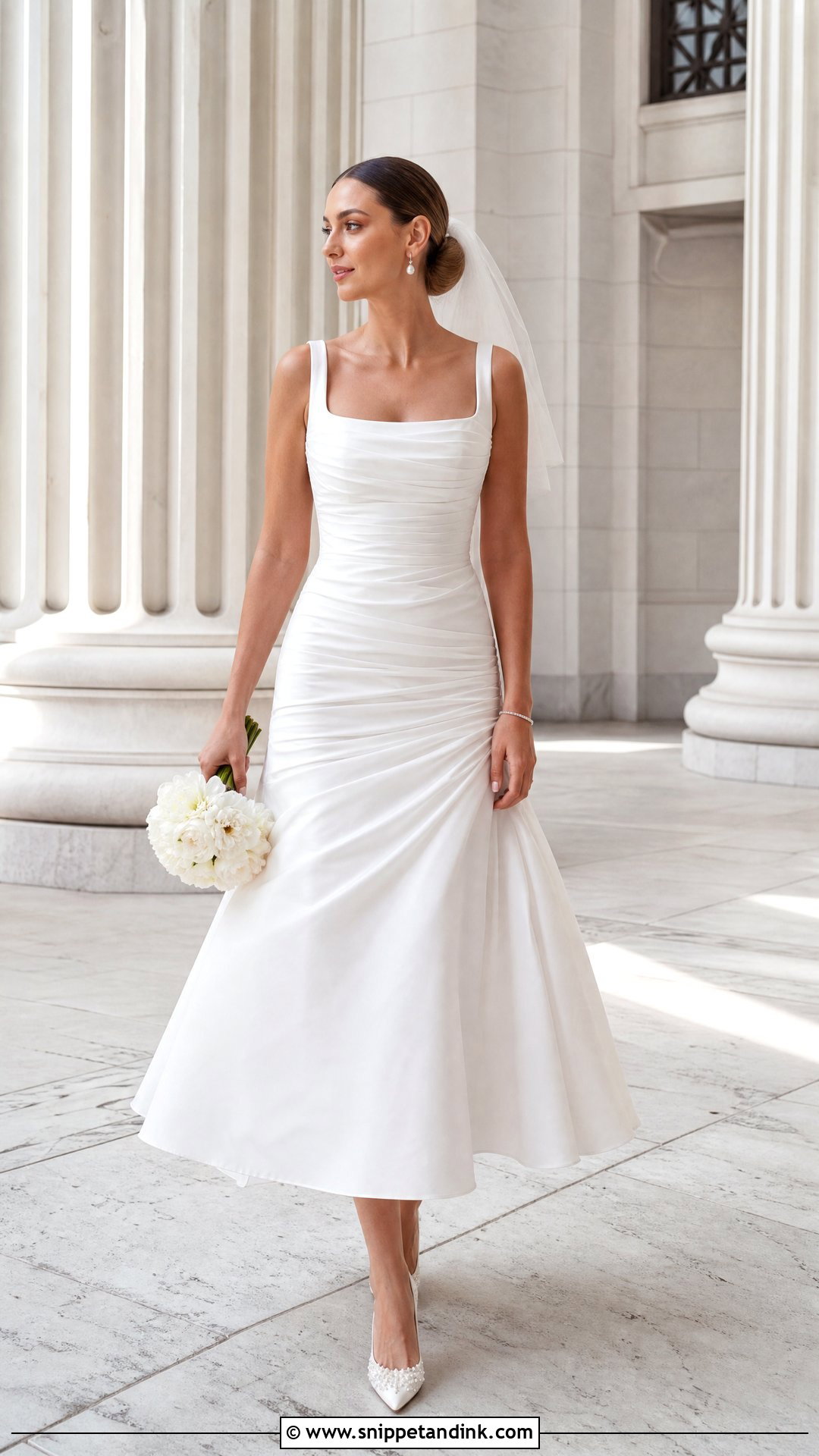
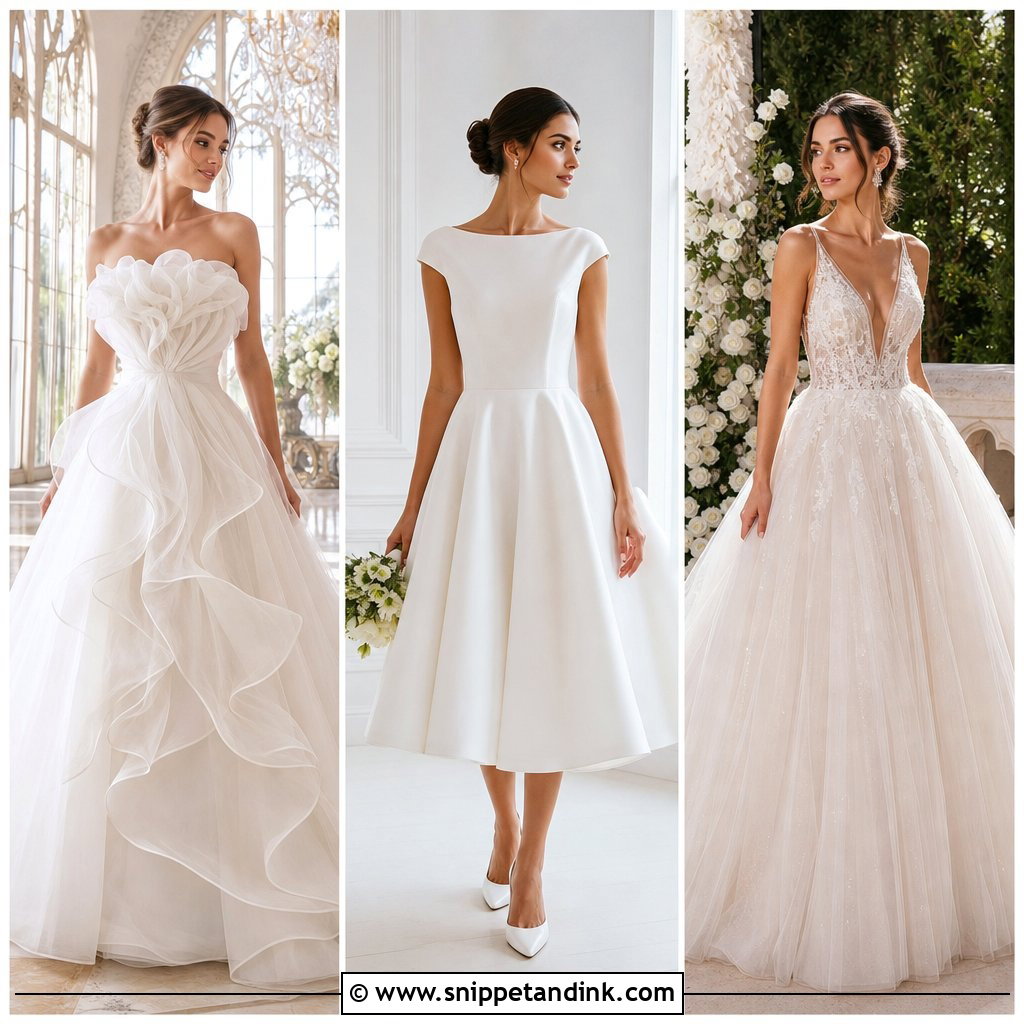
Tea length, ending between knee and ankle, sits between a formal gown and a mini. A fitted gathered bodice and fuller skirt put your shoes in the frame, so pointed slingbacks, pearl-covered pumps or supportive ankle-strap heels are worth choosing carefully. A short veil, birdcage or simple headband suits the proportion better than floor length. Pearl drops and a small bracelet, a compact bouquet that doesn’t cover the waist, and a smooth low bun or curled bob. Courthouses, daytime receptions and restaurants are its natural setting.
22. Plus Size Ruched Wedding Dress
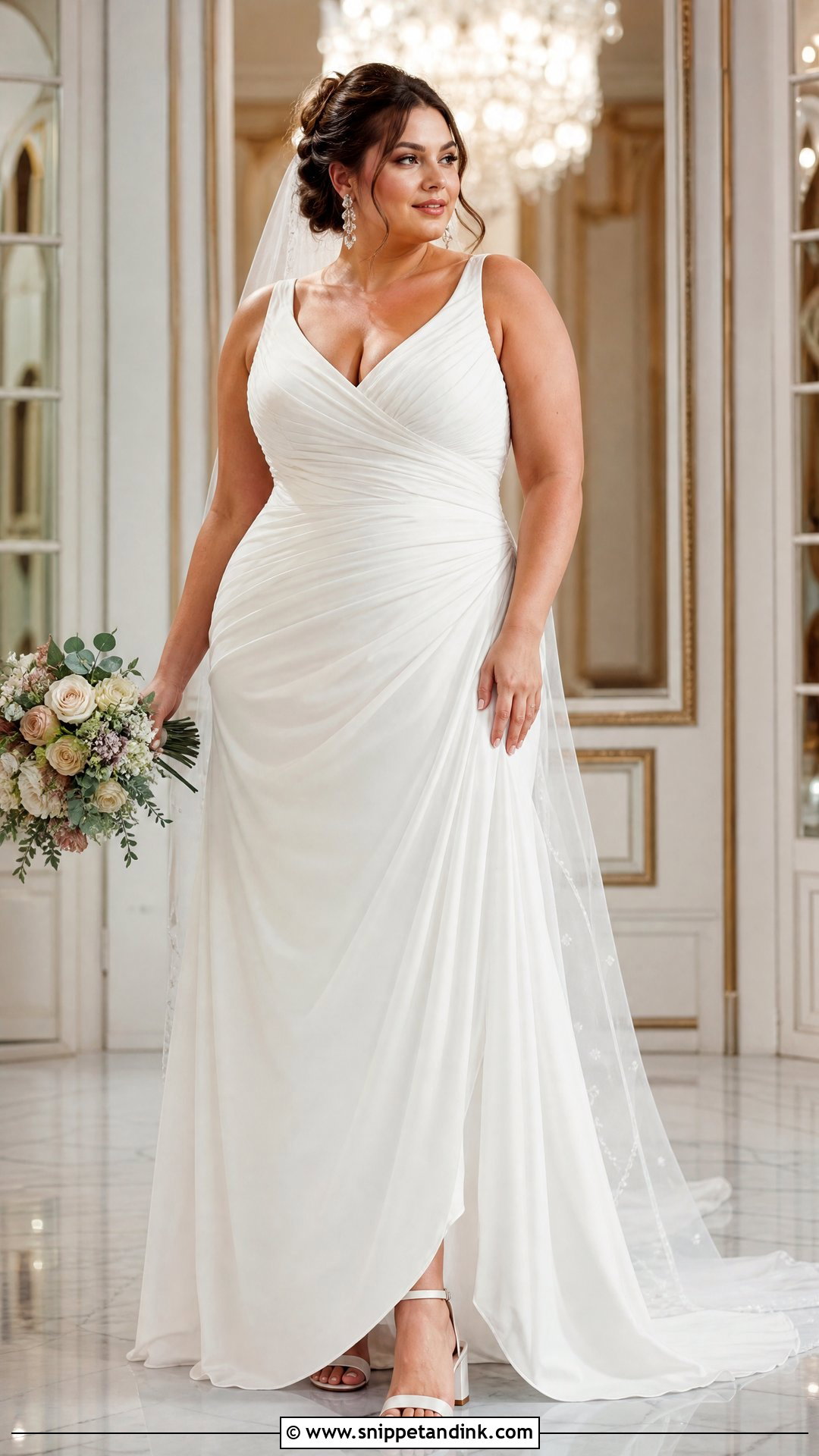
Support and freedom of movement come first in a plus-size ruched gown. A wrap-style bodice, corset construction or diagonal waist ruching can all work, depending on the shape you like. Wide straps or off-the-shoulder sleeves add coverage while keeping an elegant neckline. Stable block heels, statement earrings and a veil fixed under a soft updo complete it. With a fitted gown, I confirm that the lining has stretch and that you can sit comfortably. With an A-line, keep the bouquet medium so it suits the gown’s scale. Ruching is one of the most forgiving details for curves, and I’d let your preference guide it rather than any rule about body shape.
23. Maternity Ruched Wedding Dress
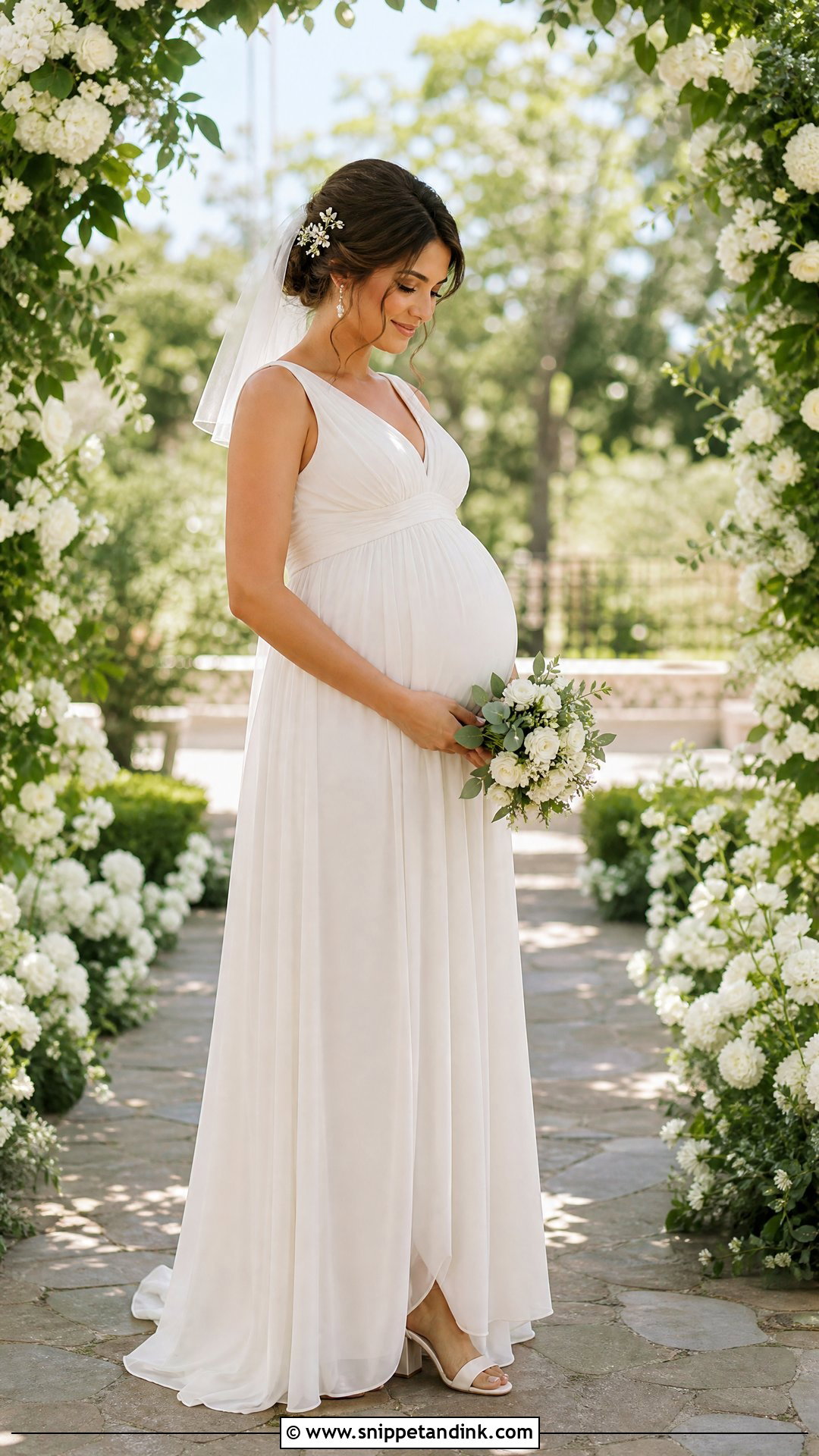
Ruching earns its place on a maternity wedding dress because gathers expand without looking stretched. An empire waist in gathered chiffon, stretch jersey or lined tulle gives room through the middle without bulk. A V-neck or gently draped off-the-shoulder bodice balances the top. Low block heels, elegant flats or supportive sandals depending on the venue and how far along you are. Light earrings, a simple hair comb, a short veil and a loose updo. A small bouquet keeps weight down. Book the final fitting as close to the wedding as your seamstress allows, since your shape can change week to week.
24. Low Back Ruched Wedding Dress
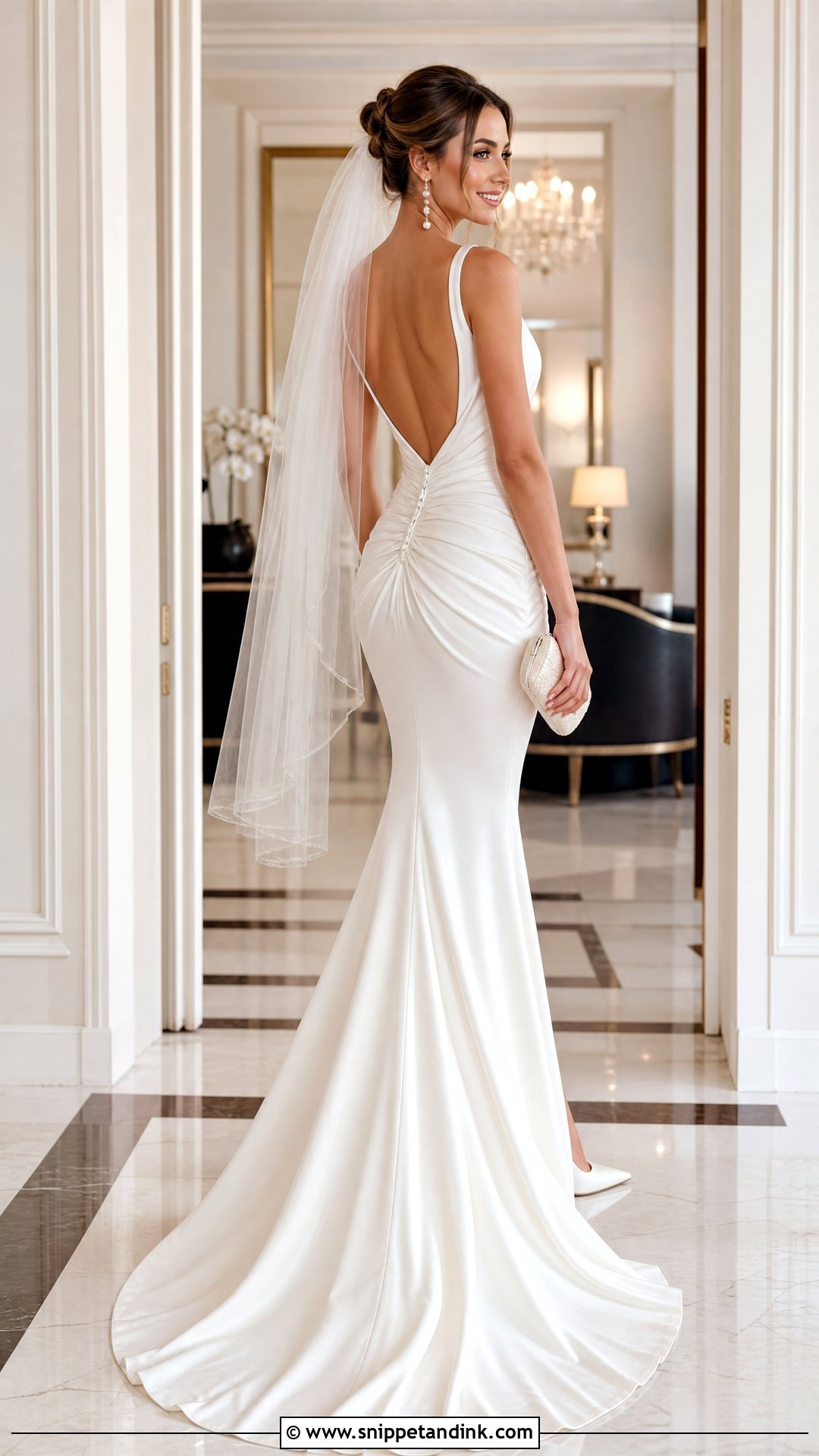
Ruching around the waist and hips gives a low-back gown structure without cluttering the open back. Secure straps or internal construction are essential; I check the gown stays in place when you lift your arms to hug. An updo or side-swept hair keeps the back visible. A back necklace adds detail, but skip it if there are covered buttons or draping. A removable veil lets you show the back after the ceremony. Drop earrings, pointed ivory heels, a slim clutch and a narrow bouquet complete it.

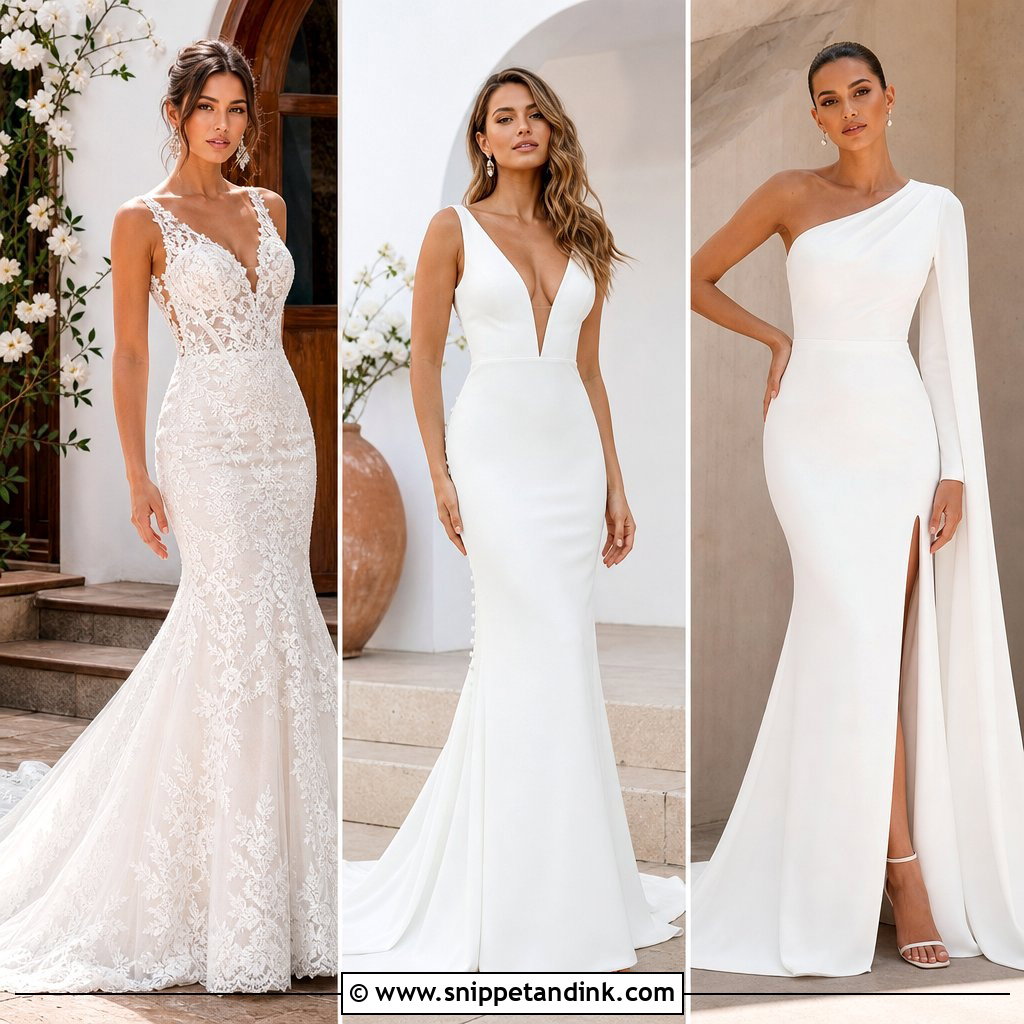

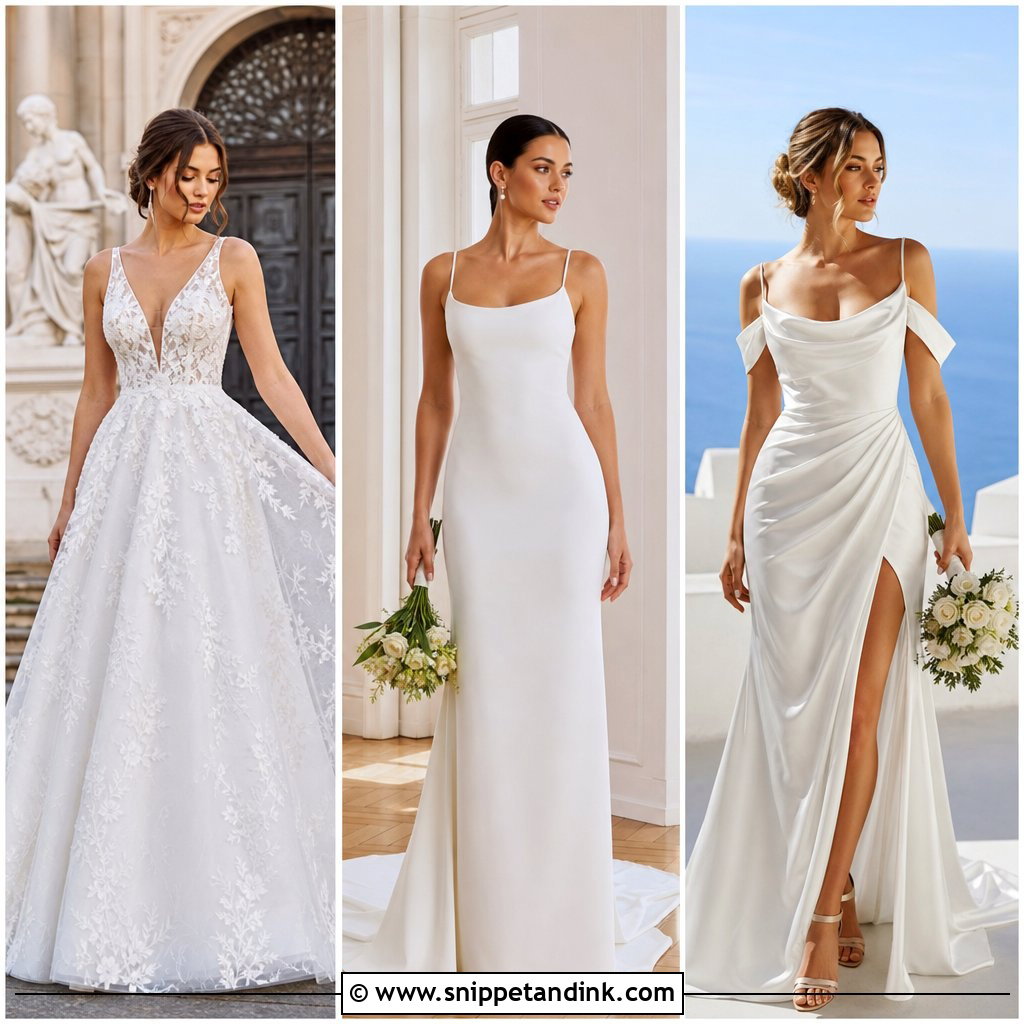
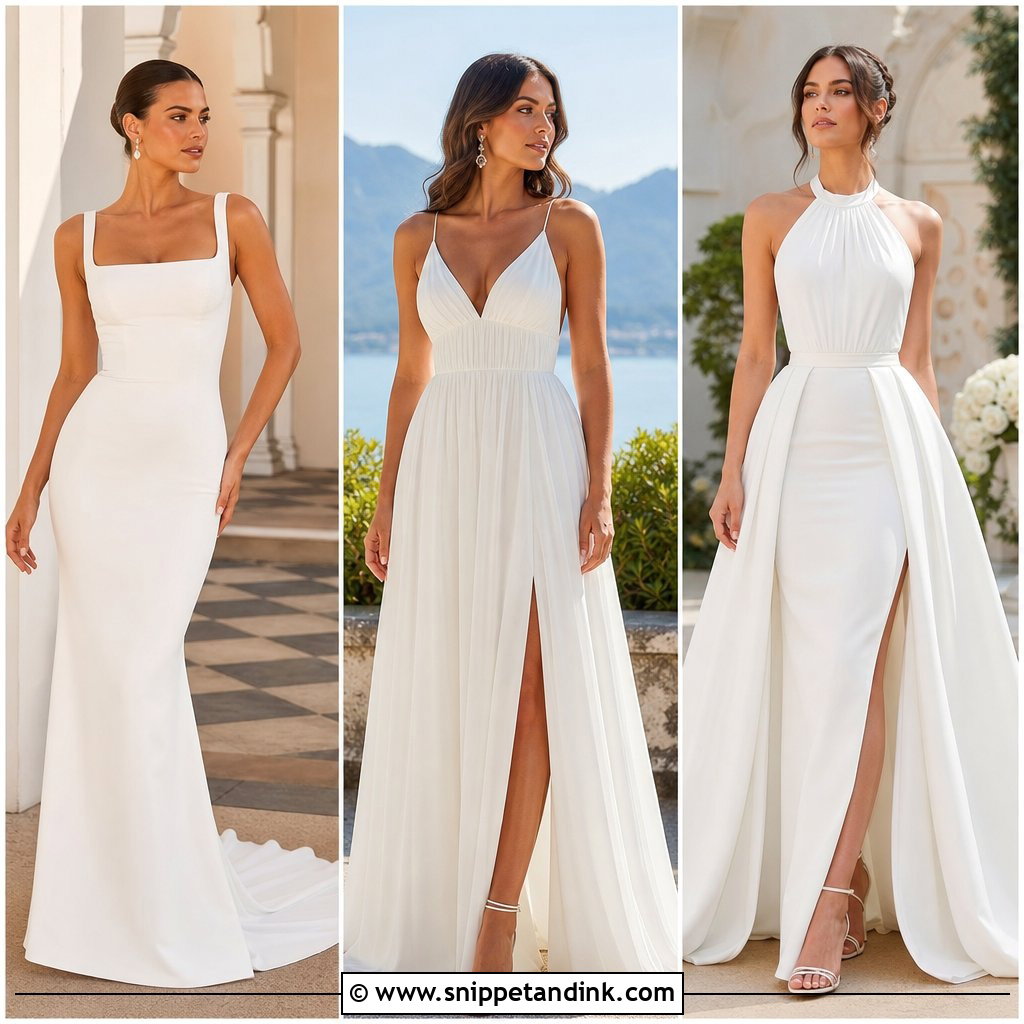
25. Ruched Wedding Dress With Detachable Overskirt
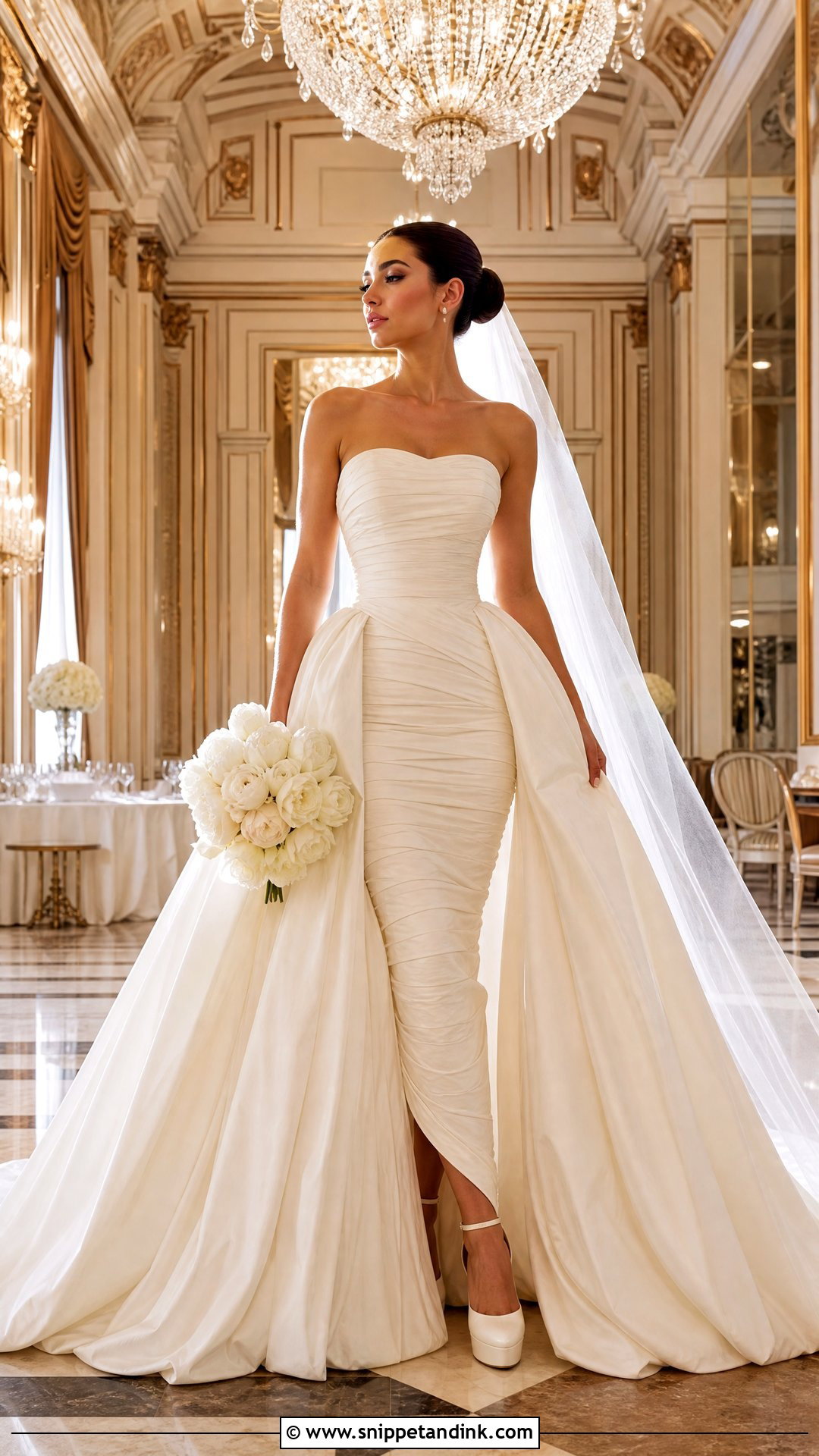
One gown, two looks: a detachable overskirt in full tulle, organza, or matching satin overskirt goes over a structured corset or fitted satin base for the ceremony. A cathedral veil, pearl earrings and platform pumps for the entrance. After photographs, the overskirt comes off and a shorter veil, crystal comb or statement earrings take over. Keep a clutch and backup shoes nearby. The base dress must look finished on its own, with clean seams and a proper hem or train, so I check it alone at the fitting before the overskirt goes on.
Steaming Folds Without Flattening Them
Ruching is good at hiding creases, but travel and a garment bag can still crush the folds flat. Never iron gathers; you’ll press permanent lines into them. I steam a ruched bodice from the inside, holding the steamer a short distance from the fabric and letting the gathers relax back into place, then shape them by hand.
Satin can water-mark from a spitting steamer, so test on a hidden seam allowance first and keep a cloth over the nozzle. Chiffon and tulle need only a few seconds. Hang the gown by its inside loops the night before, with enough room in the wardrobe that nothing presses against the bodice, and most folds will settle on their own by morning.
On the day, I keep a small handheld steamer, a white cotton cloth and a few safety pins in the kit. If a fold drops loose from its stitching, a pin placed from the inside holds it until the photographs are done.
Where the Gathers Fall Decides the Look
Ruching can define a corset bodice, soften a fitted skirt, shape an A-line or give chiffon and tulle movement, and the version that works is the one that fits securely. Once you have the dress, build everything around its neckline, fabric, venue and amount of detail. Keep the jewelry simple so the folds show, pick shoes and a veil you can manage all day, and adjust the hair and accessories until the outfit looks like yours.
You'll Like These Ideas:






Leave a Reply