
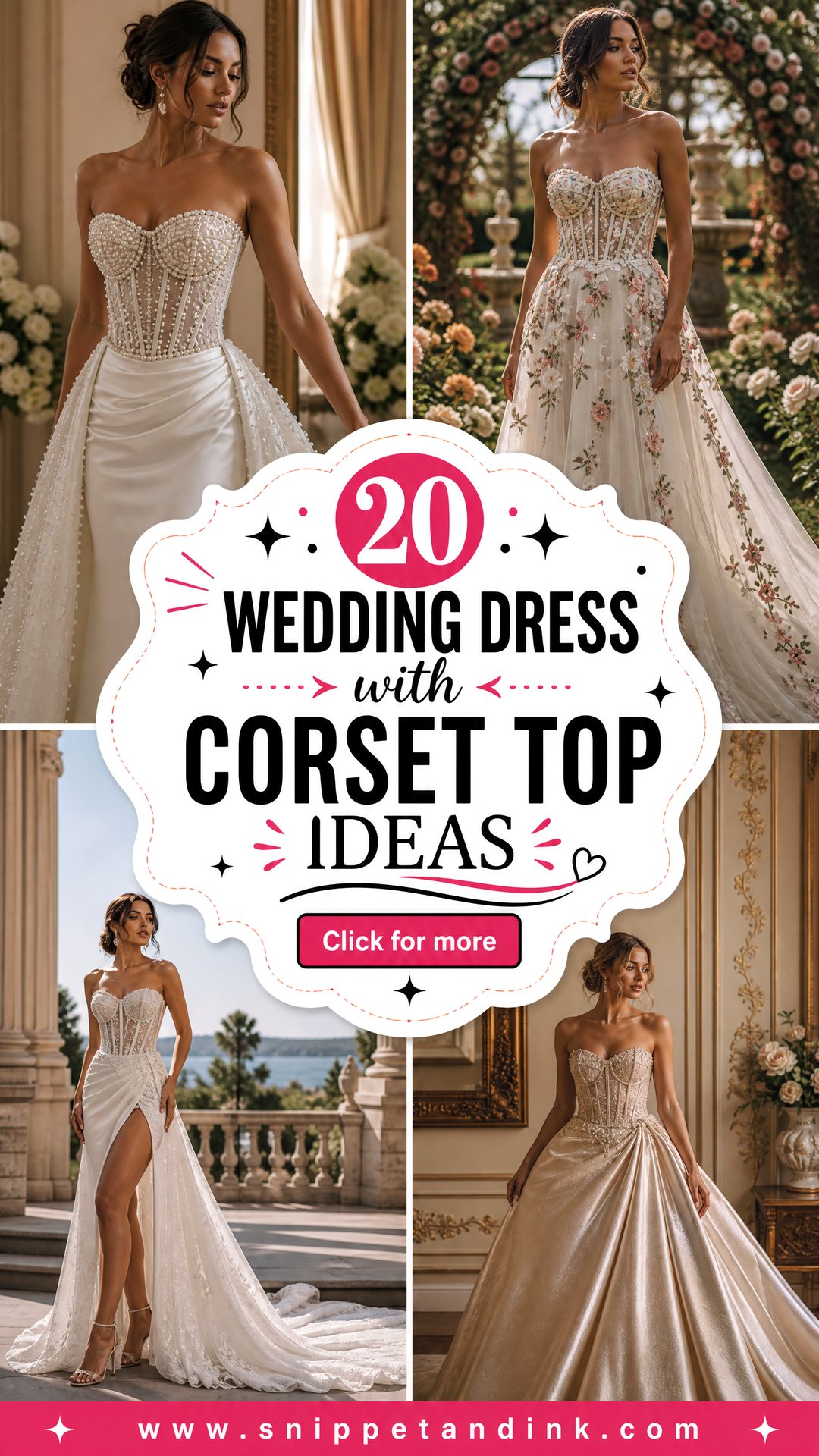
Corset bodices are back because they do two jobs at once: they shape the waist and they hold everything up without straps. Modern versions go well beyond lace-up backs. You’ll see visible boning, sculpted Basque waists, sheer panels, pearl work and smooth satin, on ball gowns, mermaids, A-lines and bridal separates. The neckline, skirt and fabric decide whether a corset reads classic, minimal or glamorous. What all of them share is that fit is everything. A corset that’s half an inch off either gapes at the top or presses at the ribs, and I spend more fitting time on corset bodices than on any other style. The twenty looks below each come with the shoes, veil and hair that suit them, plus the fitting check I’d make.
Real Corsetry Versus a Boned Bodice
Two dresses labelled “corset top” can be built very differently, and the difference decides how much support you’ll get. These are the questions I ask a shop before a bride tries anything on.
- What are the bones made of? Flexible plastic boning shapes the fabric but gives little lift, and it can warp from body heat. Spiral steel bends with you and holds its line; flat steel is firmest at the center front and back.
- How does it close? A lace-up back can be adjusted on the day if your weight shifts in the final weeks. A zip is quicker but leaves no room for change.
- Is there a waist tape inside? A firm band sewn at the waist carries the weight of the skirt so the bodice isn’t dragged down by it. Heavy ball gowns need one.
- Are cups built in? Most corset bodices are designed to be worn without a bra. If you need more support, a seamstress can sew cups in more neatly than any strapless bra can manage.
None of this shows in photos of the dress, which is why it’s worth asking. A properly built corset feels snug and secure; a decorative one feels fine for twenty minutes and then starts to slide.
1. Satin Corset Top Ball Gown Wedding Dress
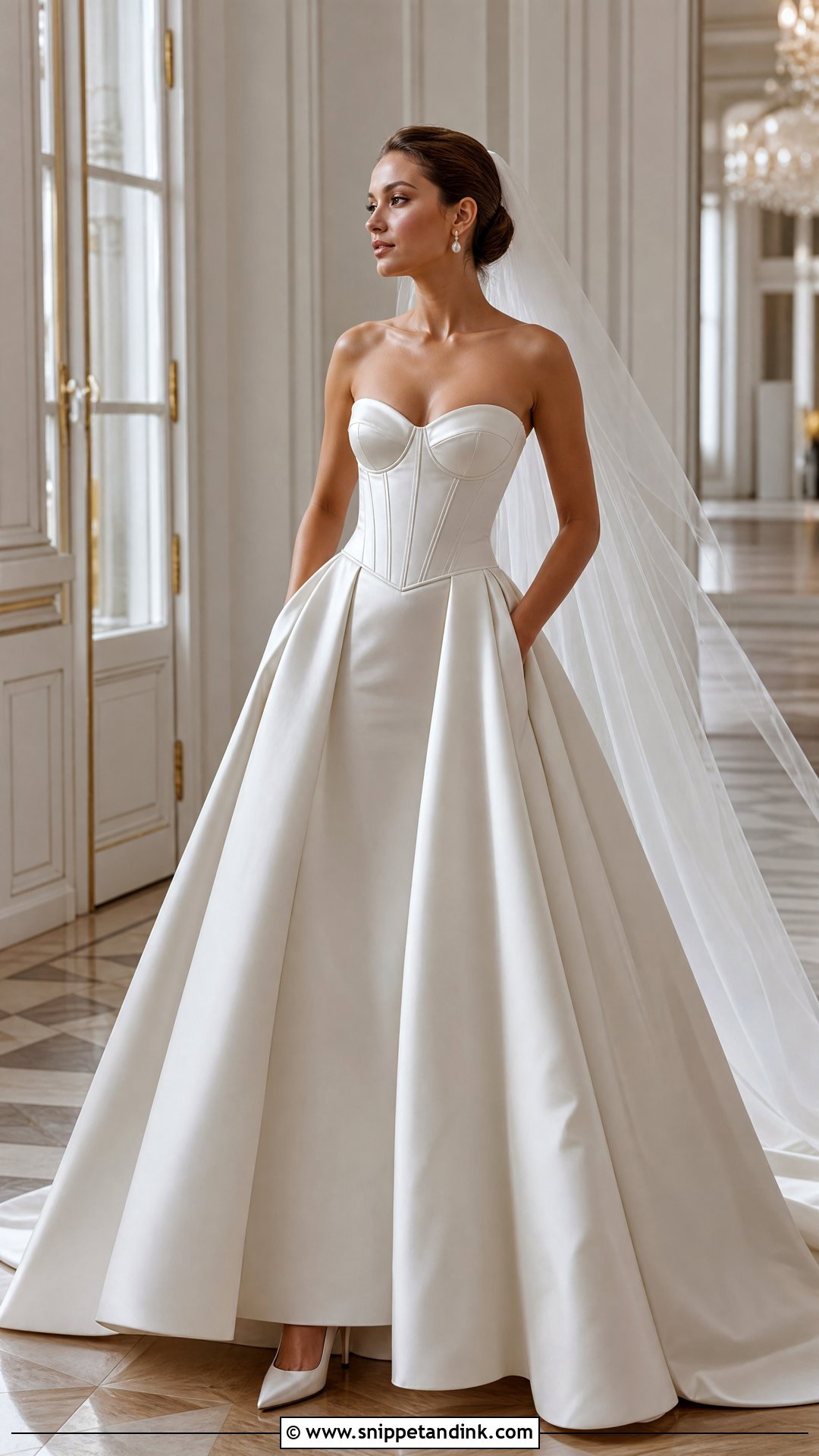
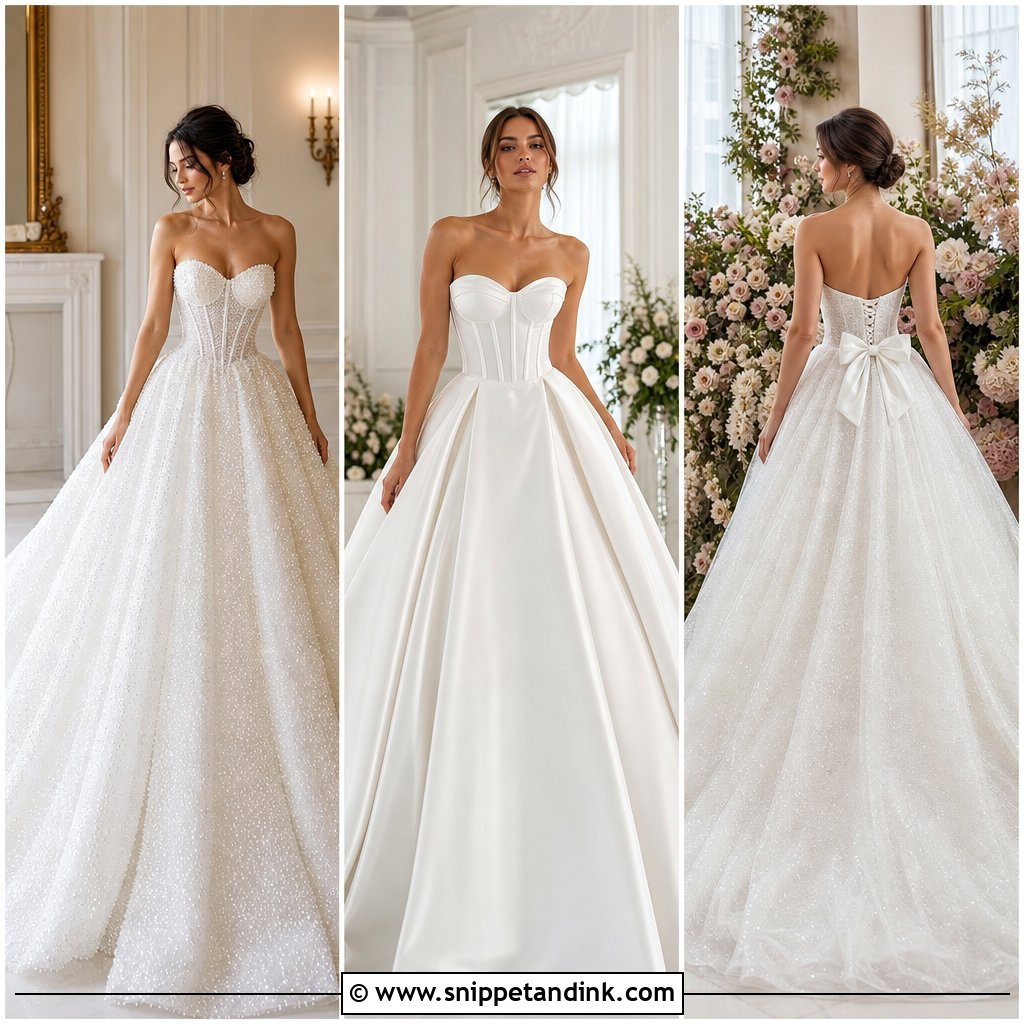
Satin corset, full ball gown skirt: the most formal version, and the one that needs the strongest fabric. Mikado or heavy satin holds both the bodice shape and the pleats without needing beading to fill it out. Look for smooth covered boning, a softly curved neckline and a waist seam that flows straight into structured pleats. Pointed ivory pumps, pearl drops, a cathedral veil with a plain edge and a sleek low bun keep attention on the bodice. It suits ballrooms and hotels. At your fitting, sit, walk and raise your arms while the seamstress watches the top edge. A satin bodice that’s even slightly loose will show a ripple across the bust the moment you lift your bouquet.
2. Lace Corset Top A-Line Wedding Dress
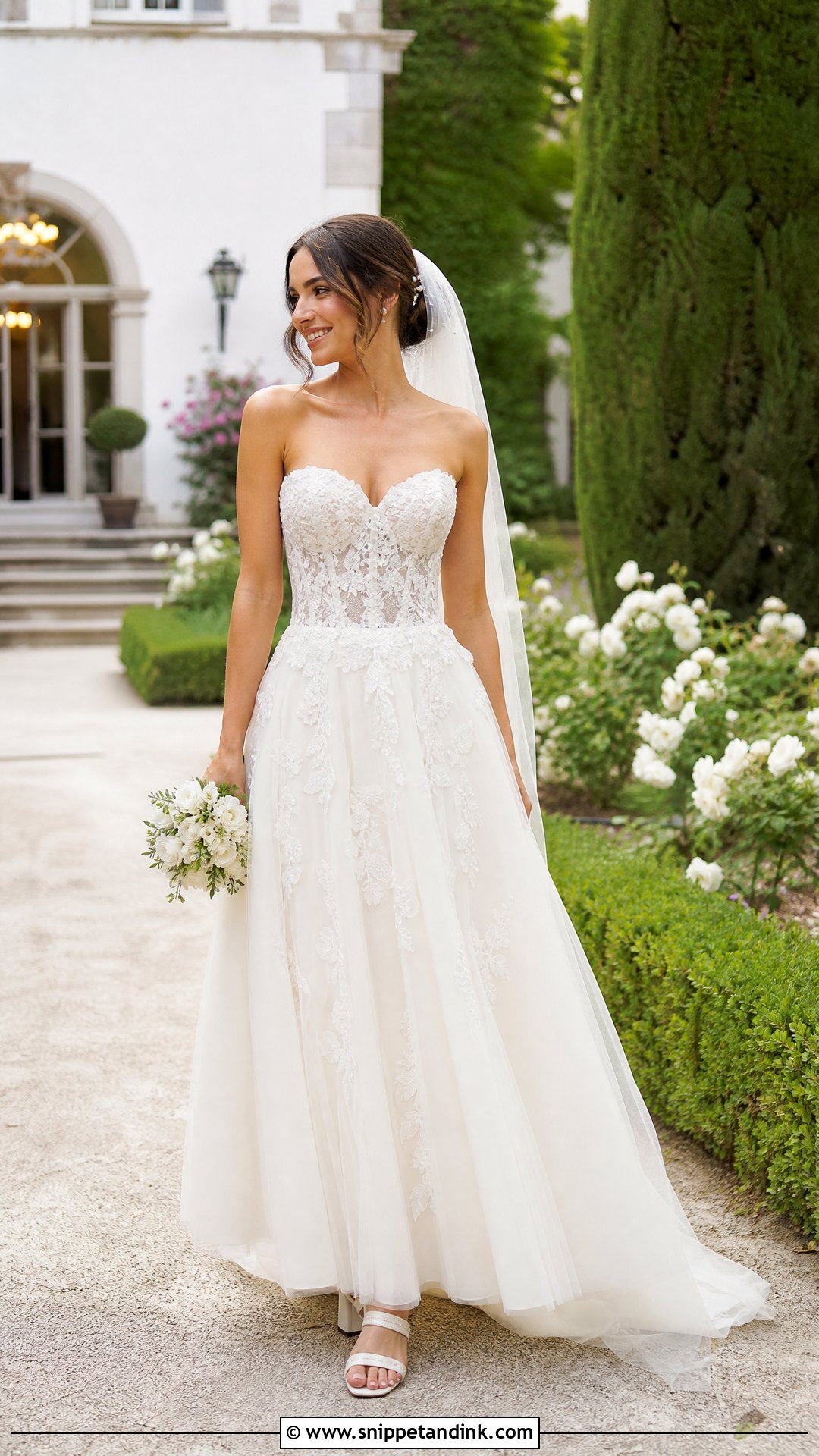
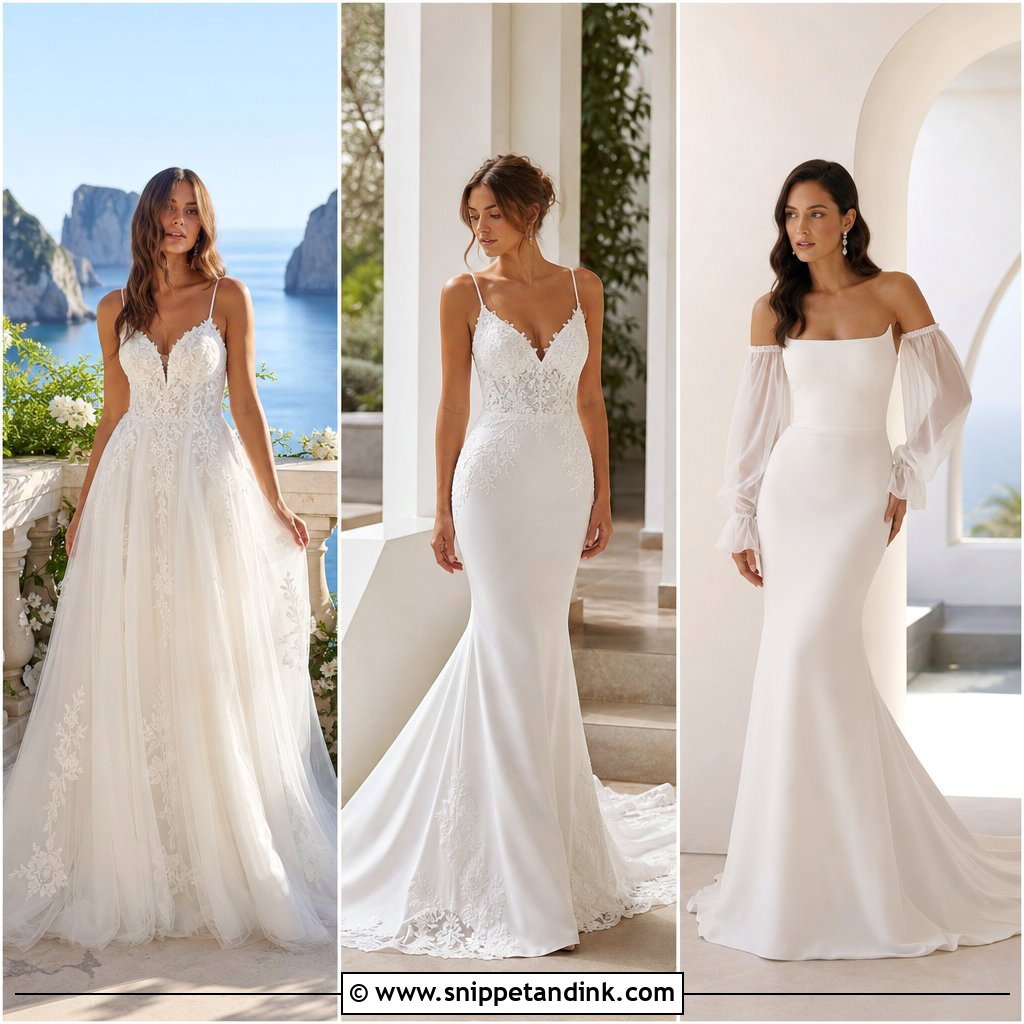
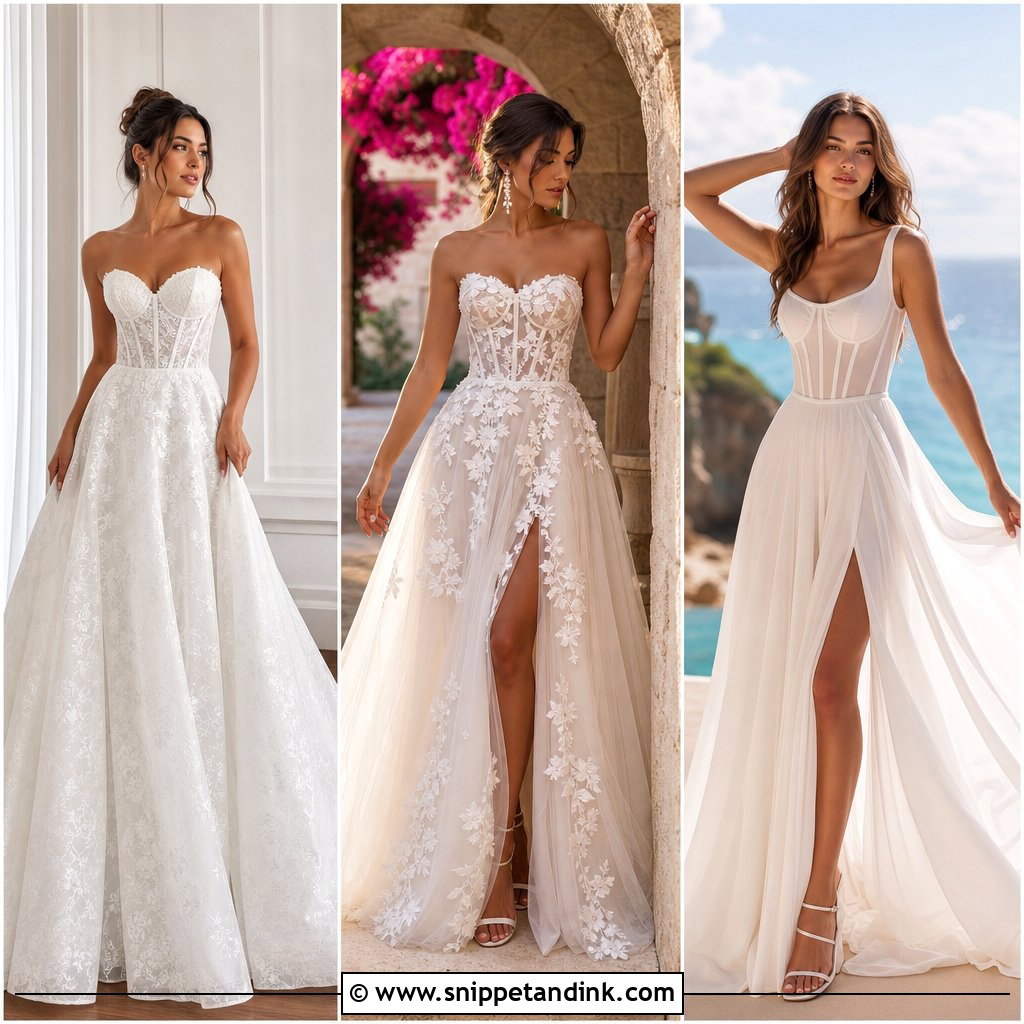
Lace takes the hard edges off a corset. With an A-line skirt, the whole dress feels lighter and works for formal and relaxed weddings alike. The detail that separates a good lace corset from an average one is continuity: floral appliqués should travel from the bodice across the waist seam onto the skirt, so the dress doesn’t look like two halves. A sweetheart neckline adds romance, and lined cups give coverage under sheer lace. Pearl hairpins, a fingertip veil, low block heels and white seasonal flowers suit it. The lace already provides texture, so leave the jewelry simple.
3. Basque Waist Corset Wedding Dress
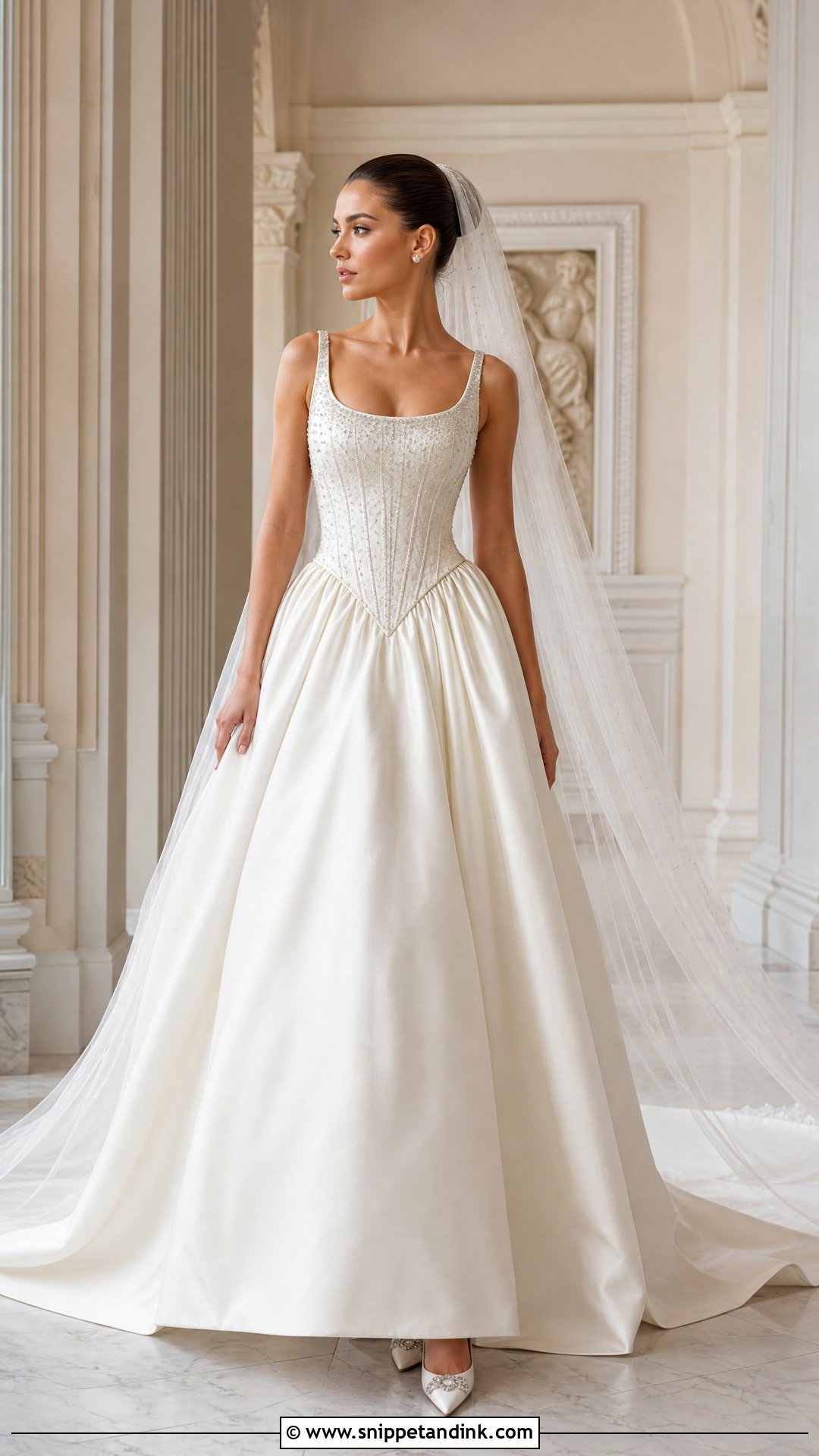
A Basque waist drops below the natural waist and usually ends in a soft point at the center front. That longer line flows into a full skirt without the sharp break of a straight waist seam, which is why it suits ball gowns so well. It also lengthens a short torso. On a long torso, though, the point can make the legs look shorter, so check the proportion in a full-length mirror. Matte satin feels refined; embroidered lace is more romantic. A softly scooped neckline balances the long bodice. Add a sheer veil, crystal studs, pointed heels and a neat bun, and skip any oversized necklace. Sit down at every fitting: the point is the first thing to fold or dig in when you’re seated.
4. Strapless Corset Mermaid Wedding Dress
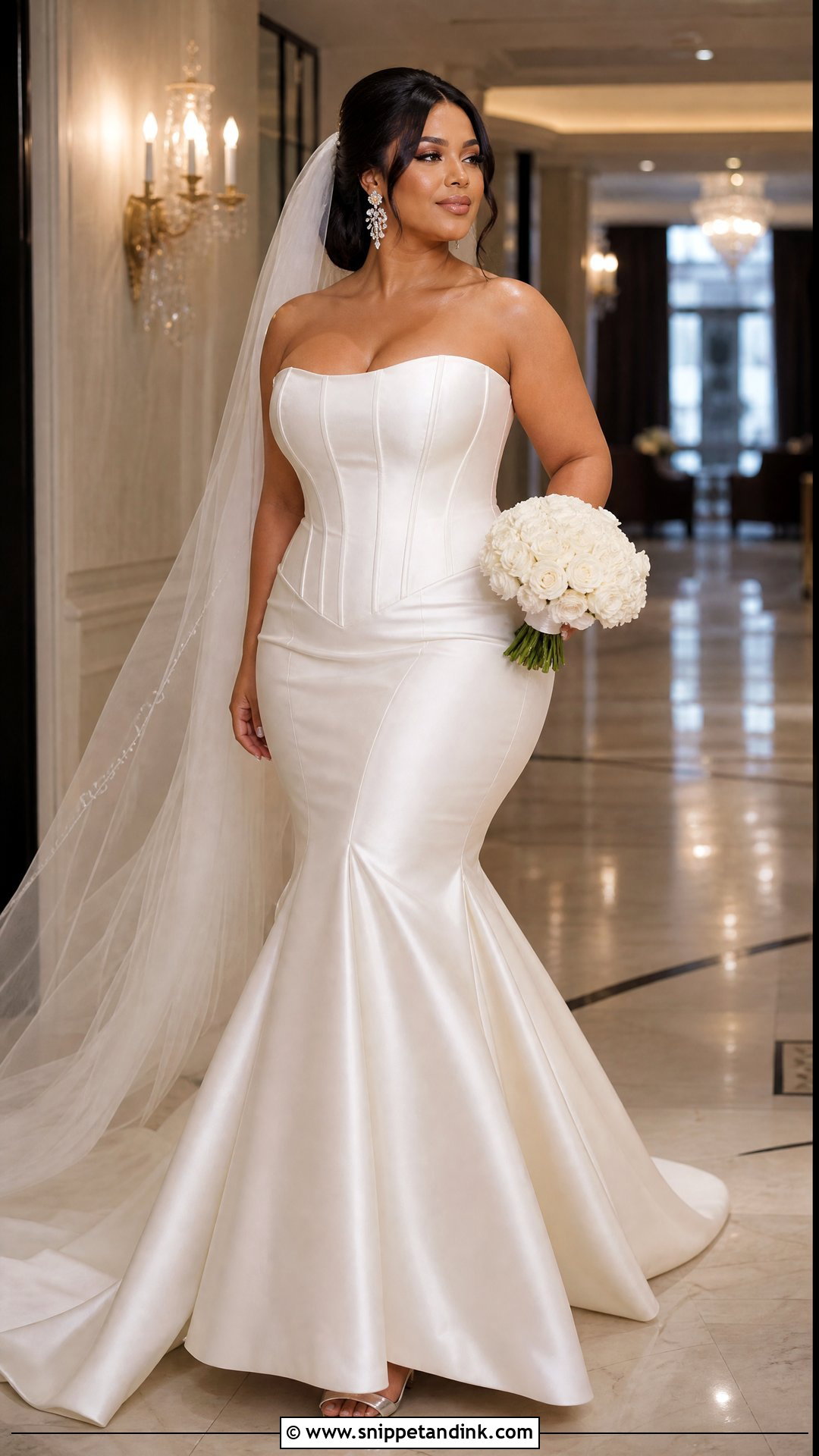
This is the most demanding combination on the list to wear. A strapless corset defines the upper body while the mermaid skirt hugs the hips and flares at the knee, so you’re fitted tightly from bust to knee. Stretch crepe, satin or lined lace gives the cleanest result, and a gently rounded neckline holds more securely than a deep plunge through hours of hugging. Metallic ivory sandals, a chapel veil, sculptural earrings and a side-parted style suit it, with a plain bouquet. Practice full steps, stairs and sitting during alterations. I’d advise against this one if your venue has lots of steps or a long walk on grass.
5. Long Sleeve Lace Corset Wedding Dress
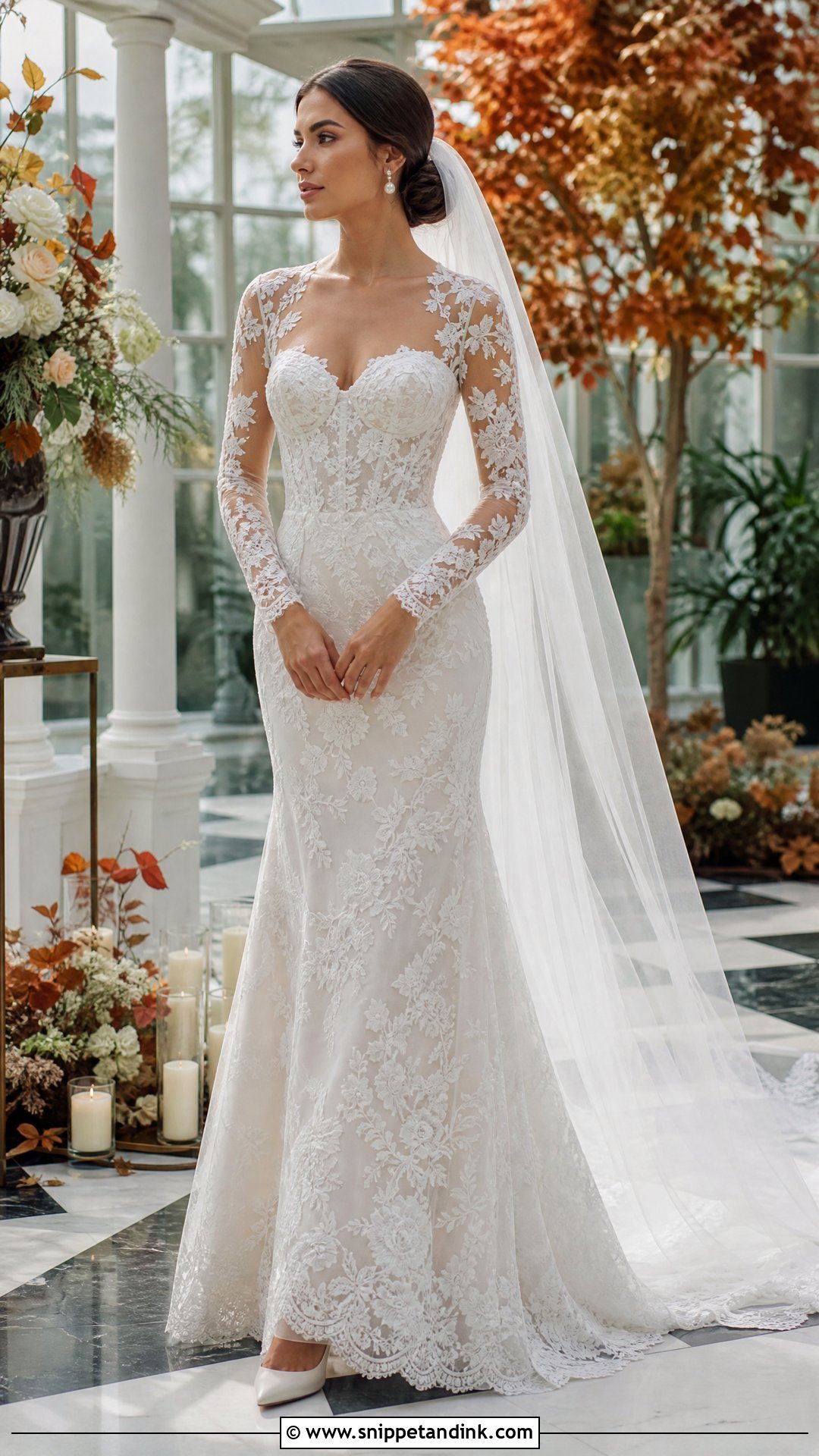
Long lace sleeves soften a structured corset and add coverage, but only if the sleeves are made from flexible illusion mesh. Stiff lace sleeves on a boned bodice fight each other every time you lift an arm. Place appliqués around the shoulders, wrists and bodice, and let the corset flow into an A-line or gently flared skirt. Closed-toe pumps, a fine-edged veil, small pearls and a low textured chignon finish it. Ask for a lining close to your skin tone; a stark white lining behind ivory lace looks flat and hides the pattern. Fall and winter suit this best, though lightweight lace works for a cool spring day.
6. Off-the-Shoulder Corset Wedding Dress
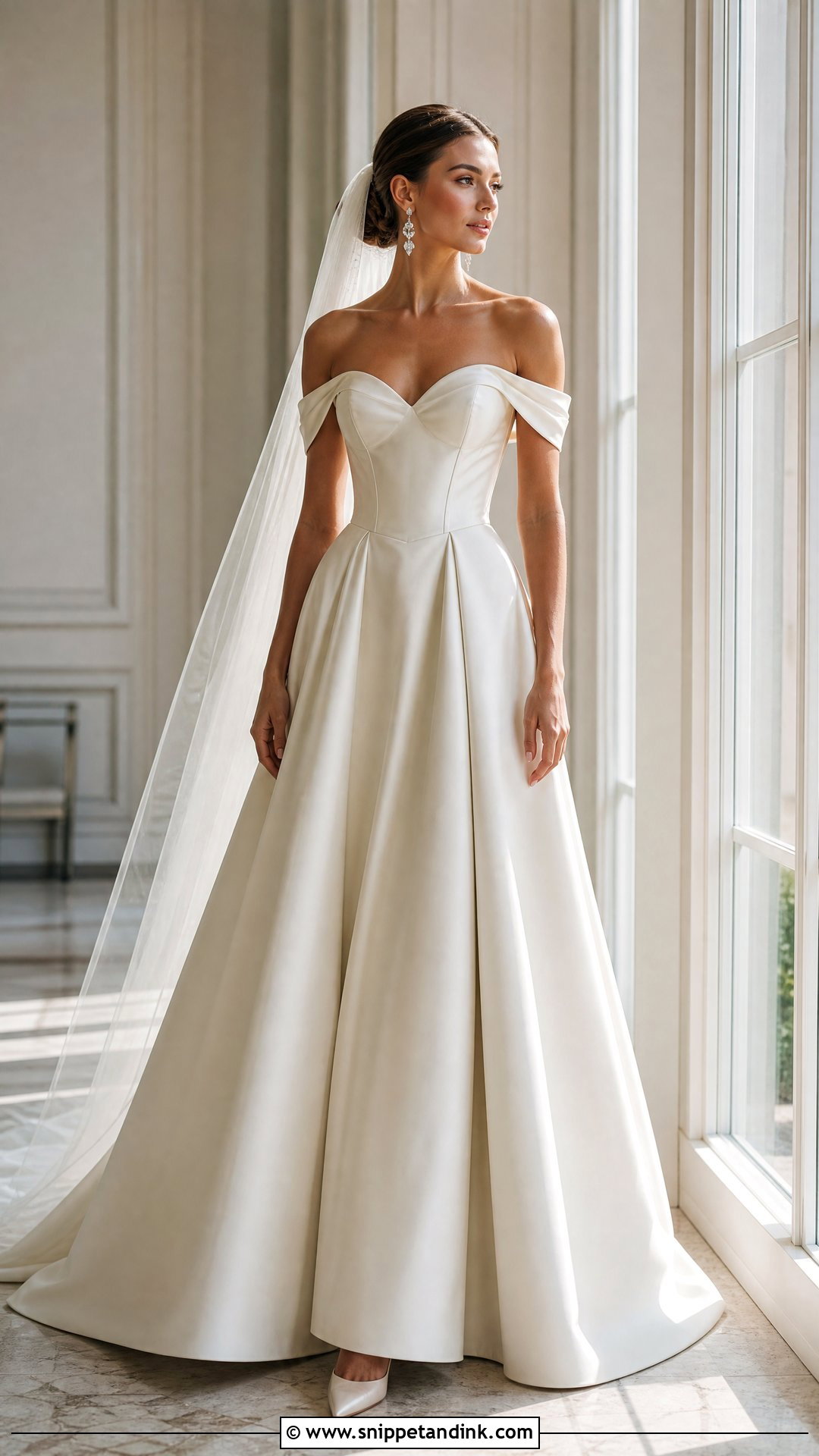
Off-the-shoulder pieces frame the collarbone while the corset does the actual work of holding the dress up. Draped satin bands look formal; detachable lace sleeves feel softer. Pair the top with an A-line or fuller ball gown skirt to balance the open neckline. Wear a short pendant or nothing at the neck, depending on how much detail the bodice carries, plus drop earrings, ivory heels and a long veil beneath a polished updo. The question I always put to the seamstress: are these sleeves holding anything up? They shouldn’t be. If the bodice relies on them, they’ll slide or pinch every time you raise your arms.
7. Sheer Boned Corset Wedding Dress
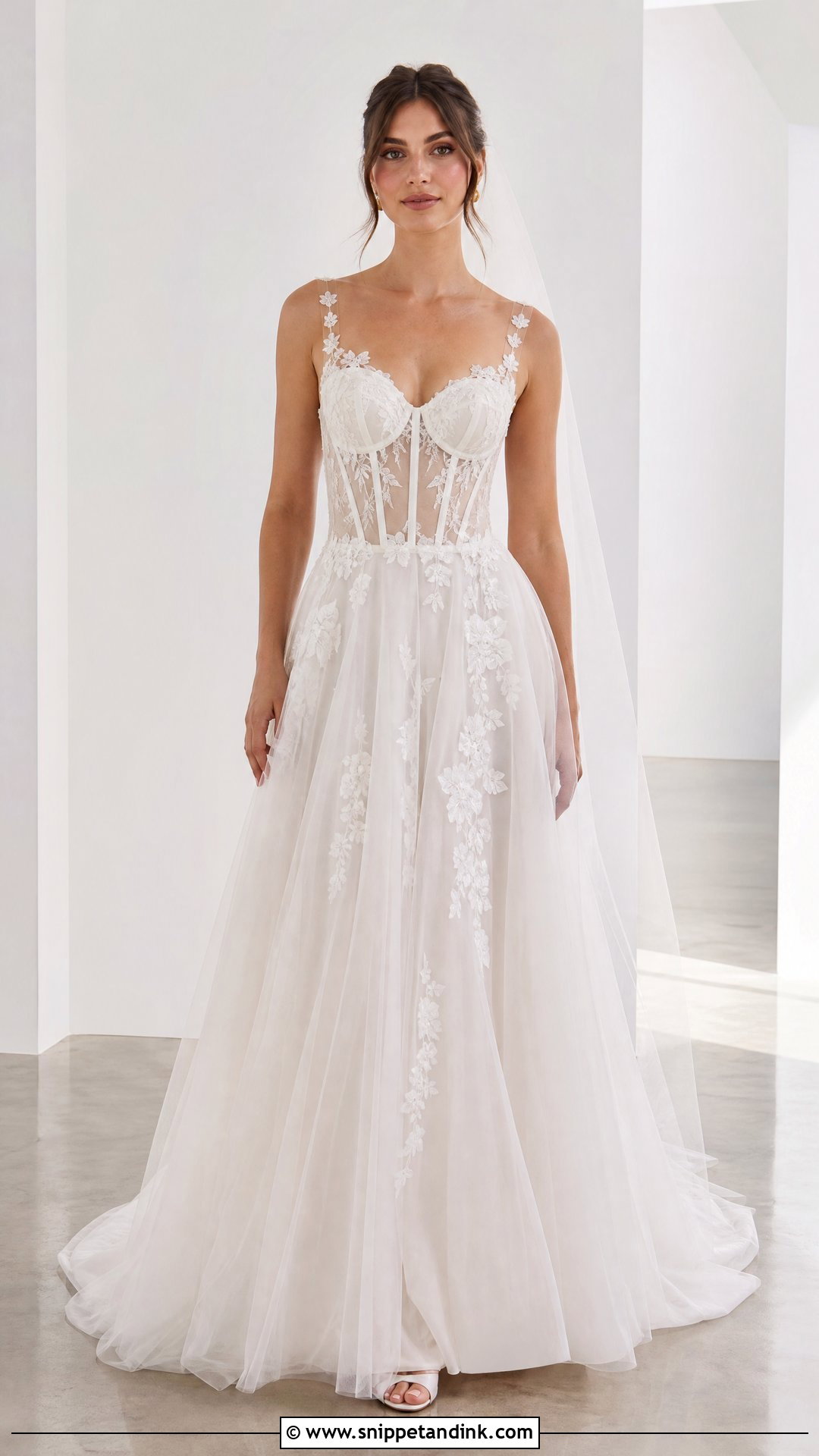
Visible boning under sheer tulle shows the construction on purpose, and it reads very modern. To keep it bridal, look for well-placed lace appliqués, lined cups and smooth paneling through the waist, with a soft tulle A-line skirt for contrast. Minimal earrings, satin pumps, a plain veil and makeup with one defined feature suit it. Avoid heavily embellished accessories, which clash with the visible structure. If you’d like more coverage, ask for extra appliqués, a raised neckline or a custom lining. Sheer bodices are unforgiving at the final fitting: every bone must run straight without twisting, because any warp shows straight through the tulle.
8. Square Neck Corset Wedding Dress
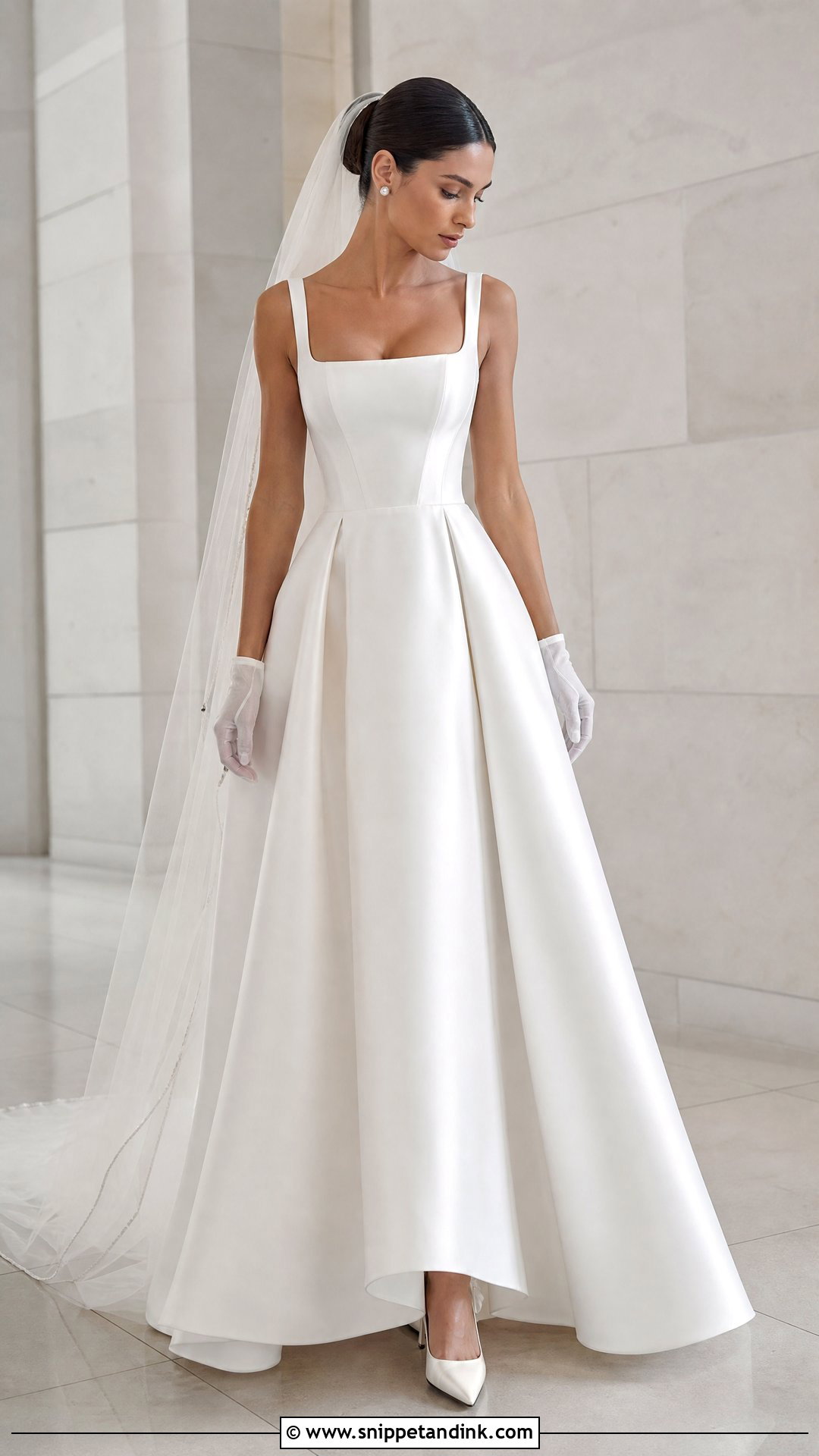
Square necklines suit a corset because the straight top edge echoes the vertical lines of the boning. Wide straps add security and balance the structure, which makes this a comfortable pick if strapless worries you. Pair it with a softly pleated satin skirt, an A-line or a fitted crepe skirt with a short train. Pearl studs, a sleek bun, pointed pumps and a chapel veil suit it, and short gloves add a quiet vintage nod. Leave the neckline bare or wear a fine chain. At the fitting, watch the corners: they should lie flat against the chest, not lift when you breathe in, and the straps shouldn’t cut into your shoulders.
9. Sweetheart Corset Top Princess Wedding Dress
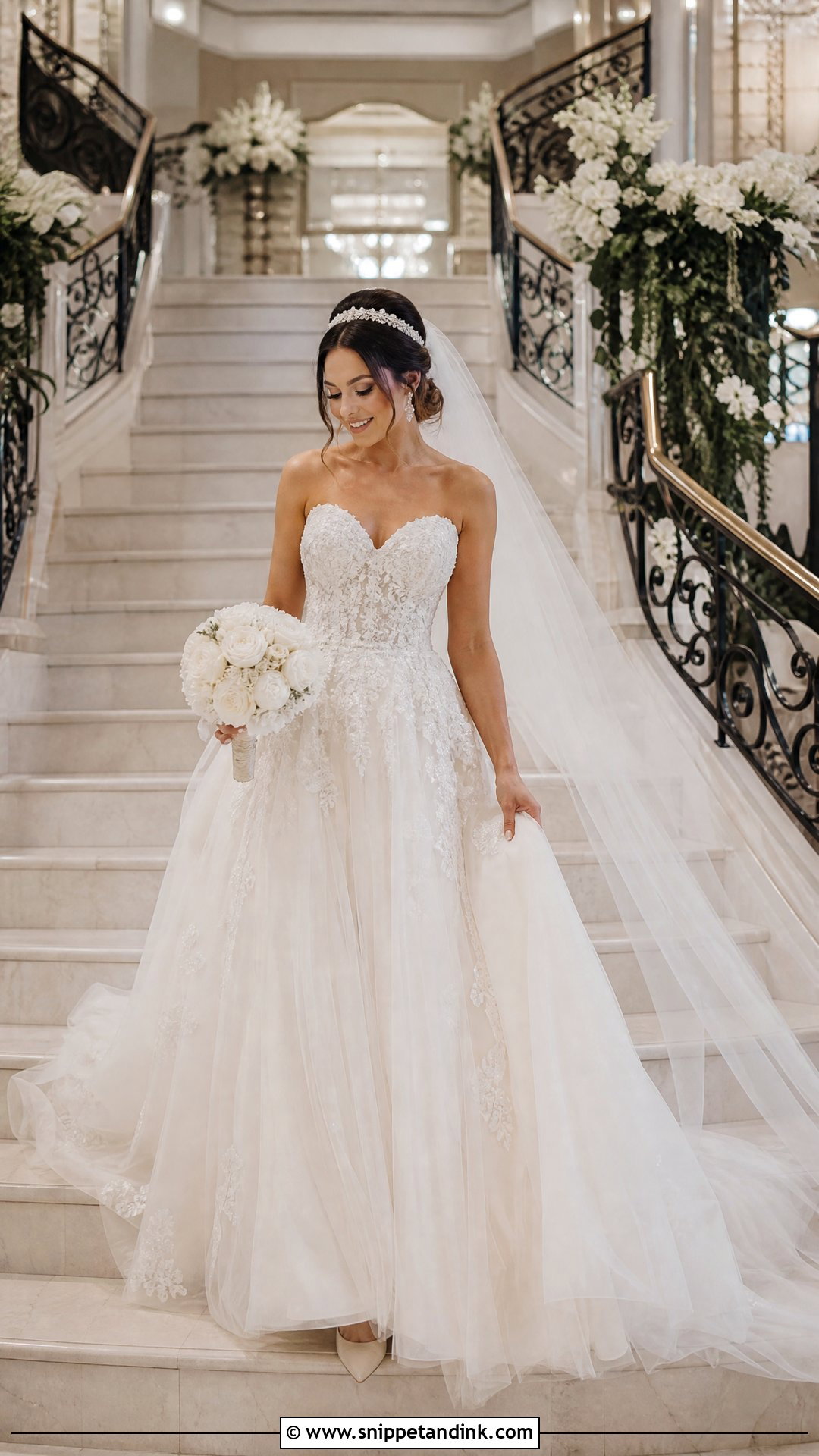
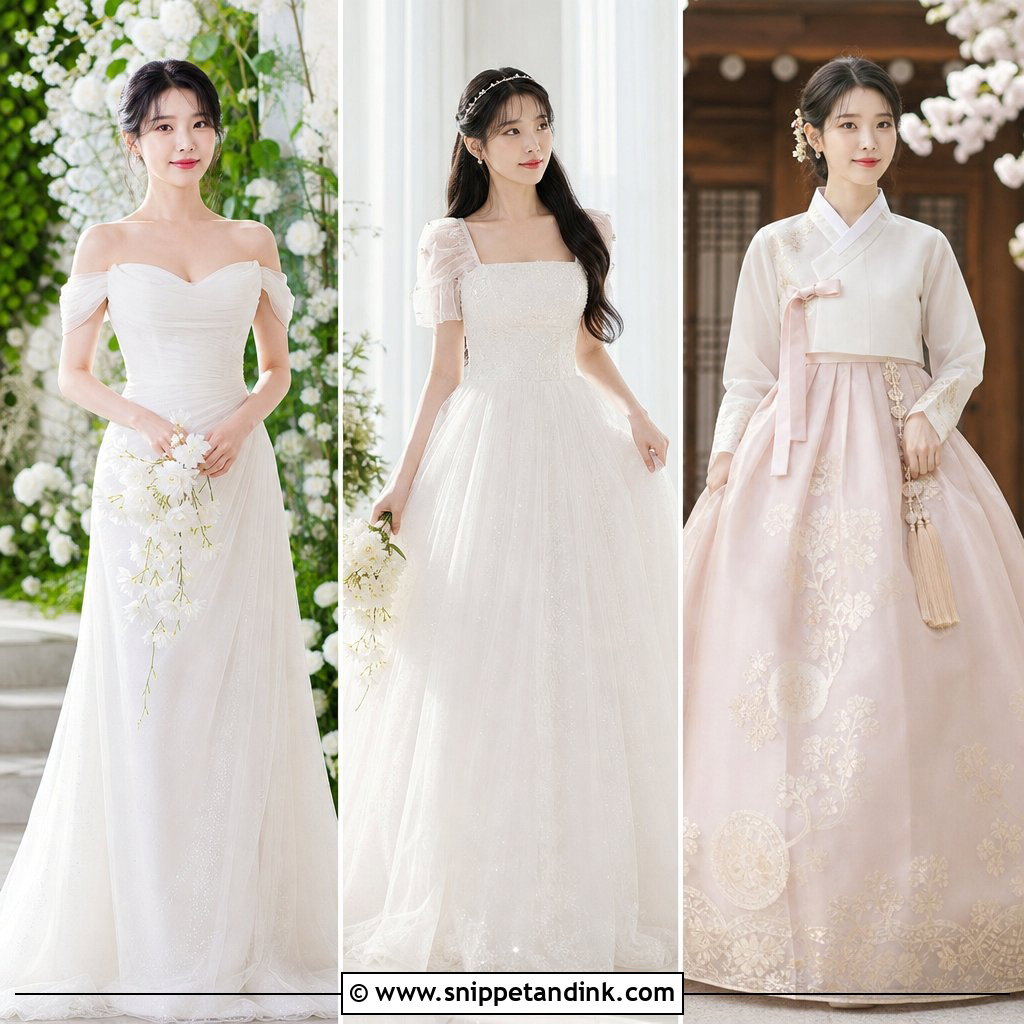
Sweetheart corset top and full princess skirt is the combination most brides picture when they hear “corset gown.” The curved neckline shapes the bust and the fitted waist leads into tulle or satin layers. Scattered appliqués soften it; plain fabric looks cleaner. A sparkling headband, delicate earrings, closed-toe heels and a long veil extending past the train complete it. A fitted underskirt or hoop controls the volume and stops the layers wrapping around your legs. Test the bodice without the veil and accessories. If you’re tugging it up within five minutes of standing in the shop, it needs taking in, not more fashion tape.
10. Pearl Corset Top Wedding Dress
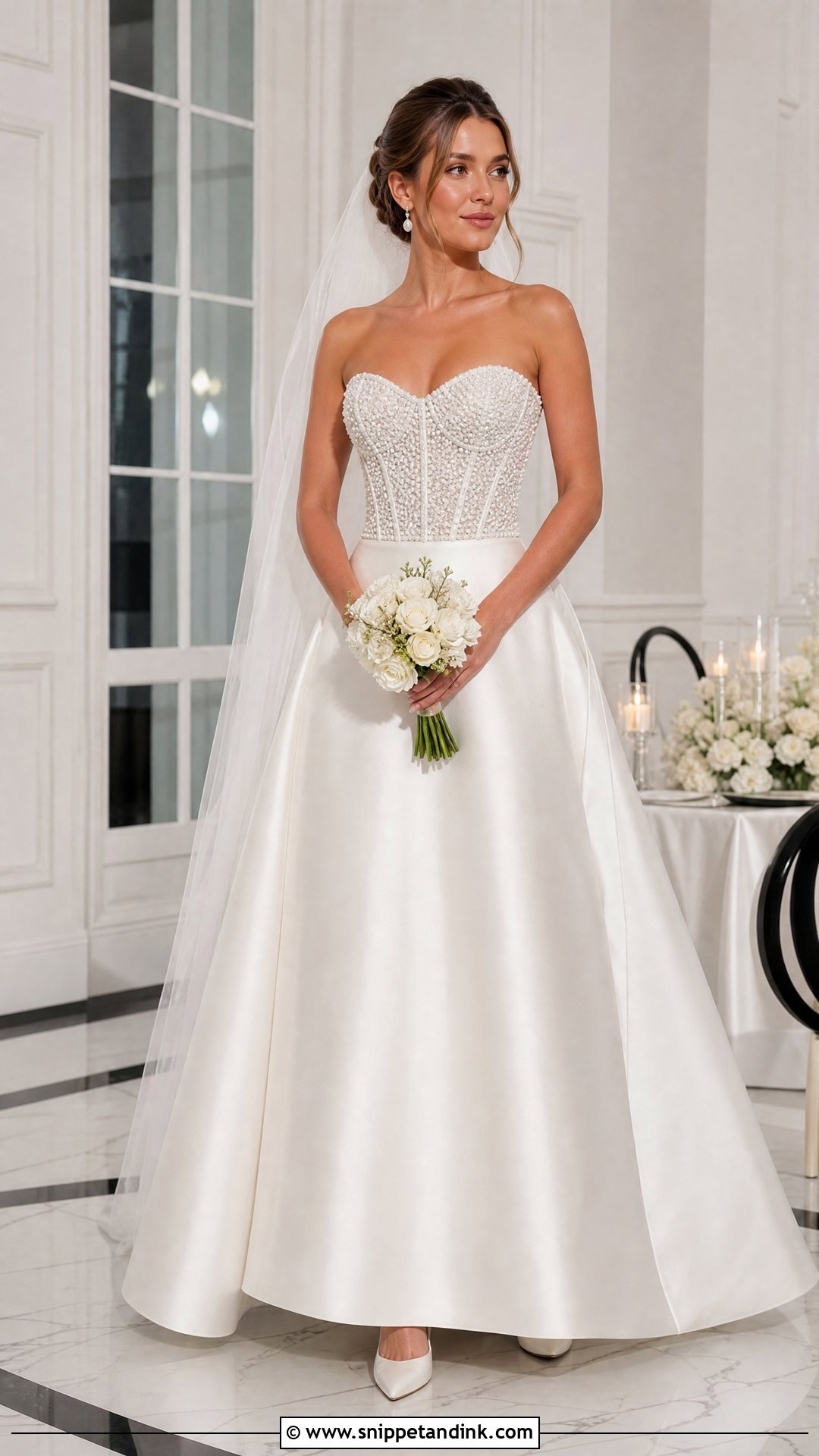
Pearls give a corset texture without the sharp sparkle of crystal, which makes them easier to wear in daylight. They can be scattered over visible boning, concentrated along the neckline or worked into floral appliqués. Balance the busy bodice with a smooth satin skirt or simple tulle. Pearl drops, a plain veil, ivory heels, a compact bouquet and a soft updo keep the neckline on show. Check the underarm area closely; raised pearls there rub your inner arm raw by evening. Your seamstress can remove or flatten them and secure any loose beads before the wedding.
11. Floral Corset Top Garden Wedding Dress
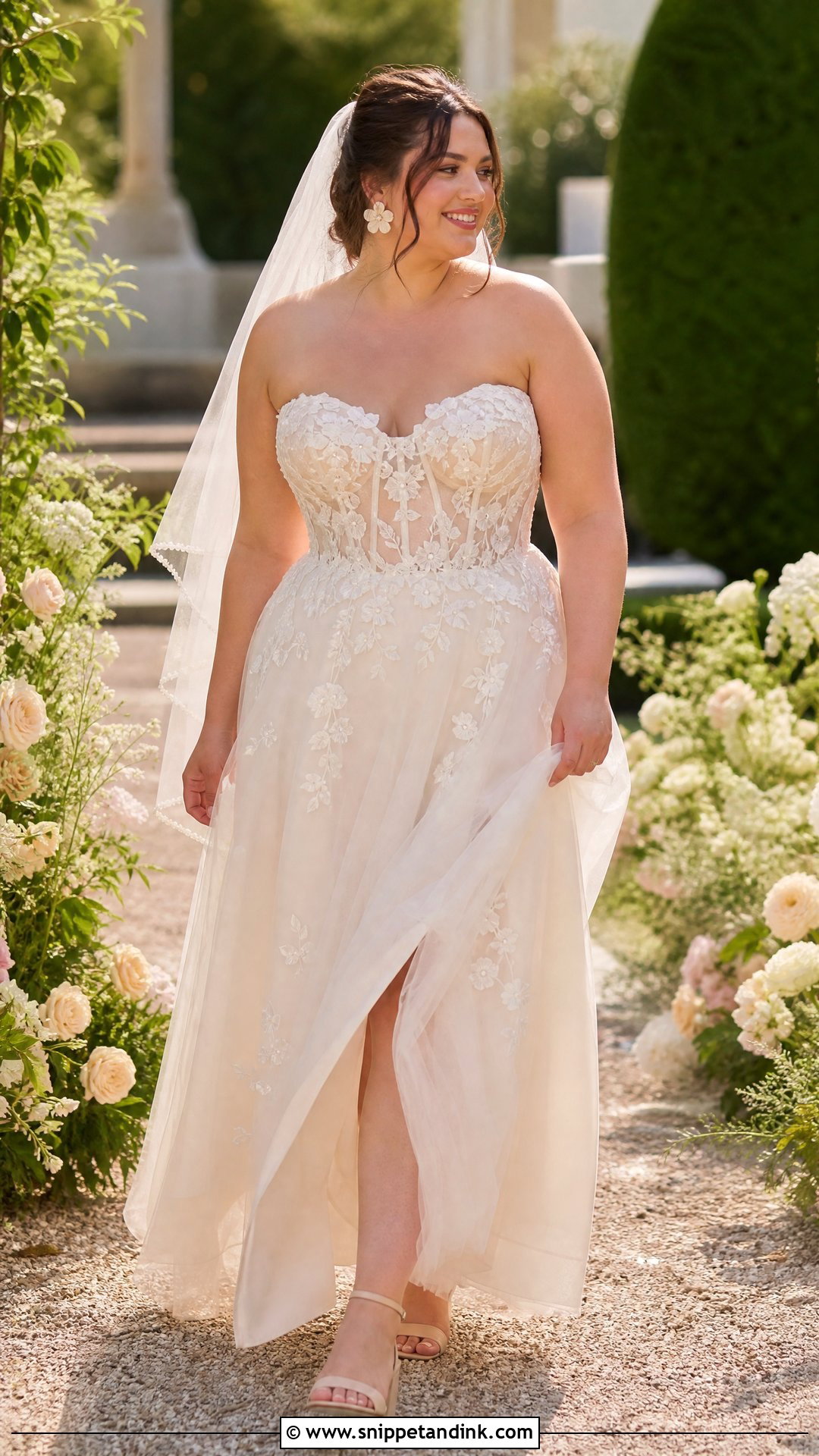
Garden weddings and floral corsets are an easy match, especially when the appliqués trail lightly onto a light A-line skirt. Choose embroidered vines, small dimensional flowers or tonal lace rather than dense decoration that adds heat and weight. A champagne or soft ivory lining helps white flowers stand out. Block-heel sandals, small flower earrings, a fingertip veil and loosely gathered hair suit it, with greenery and pale blooms in the bouquet. Keep the train short if you’ll be on grass. A boned bodice in summer sun gets warm quickly, so the breathable skirt and a shaded spot before the ceremony both matter.
12. Minimalist Corset Top Column Wedding Dress
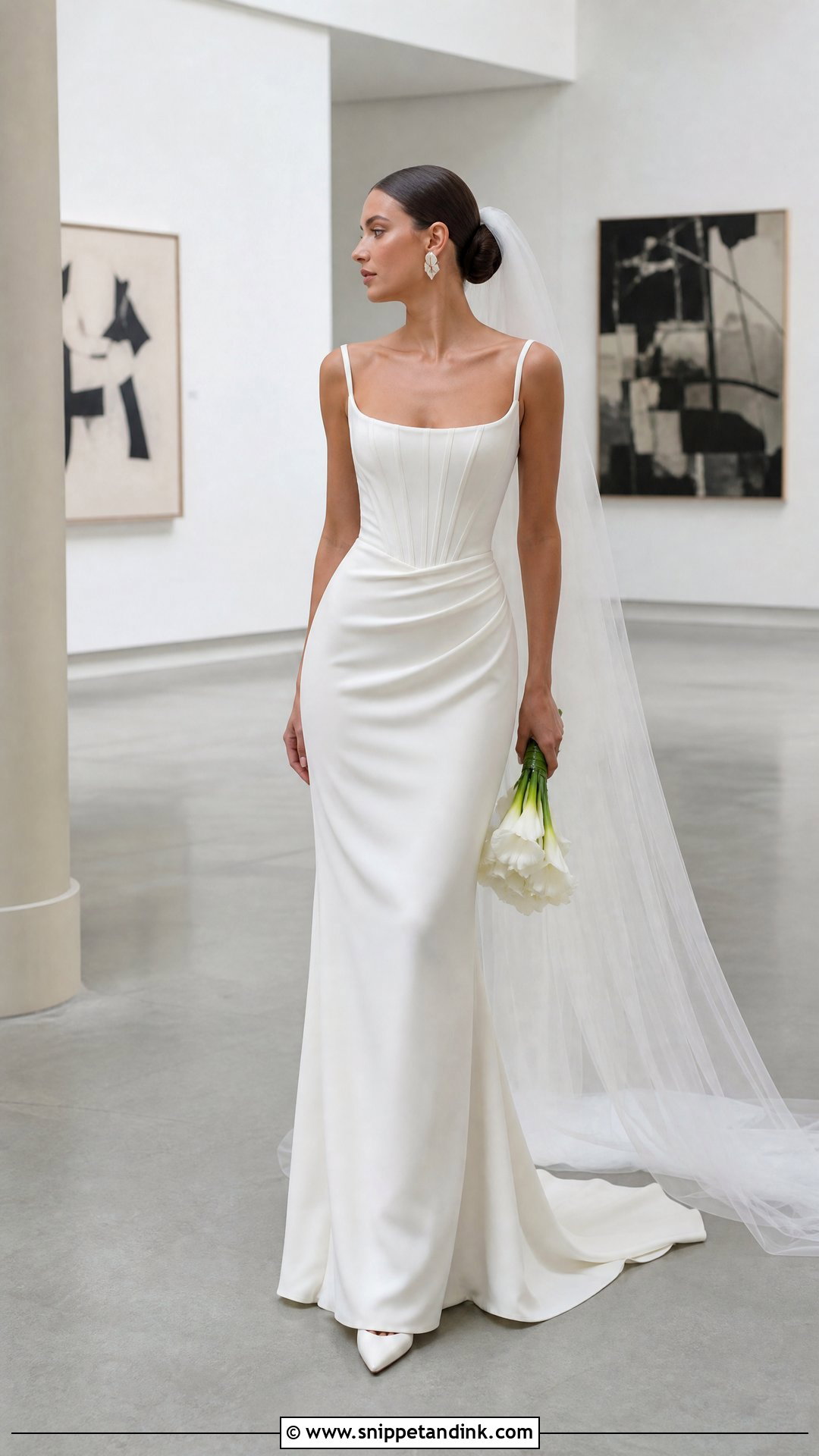
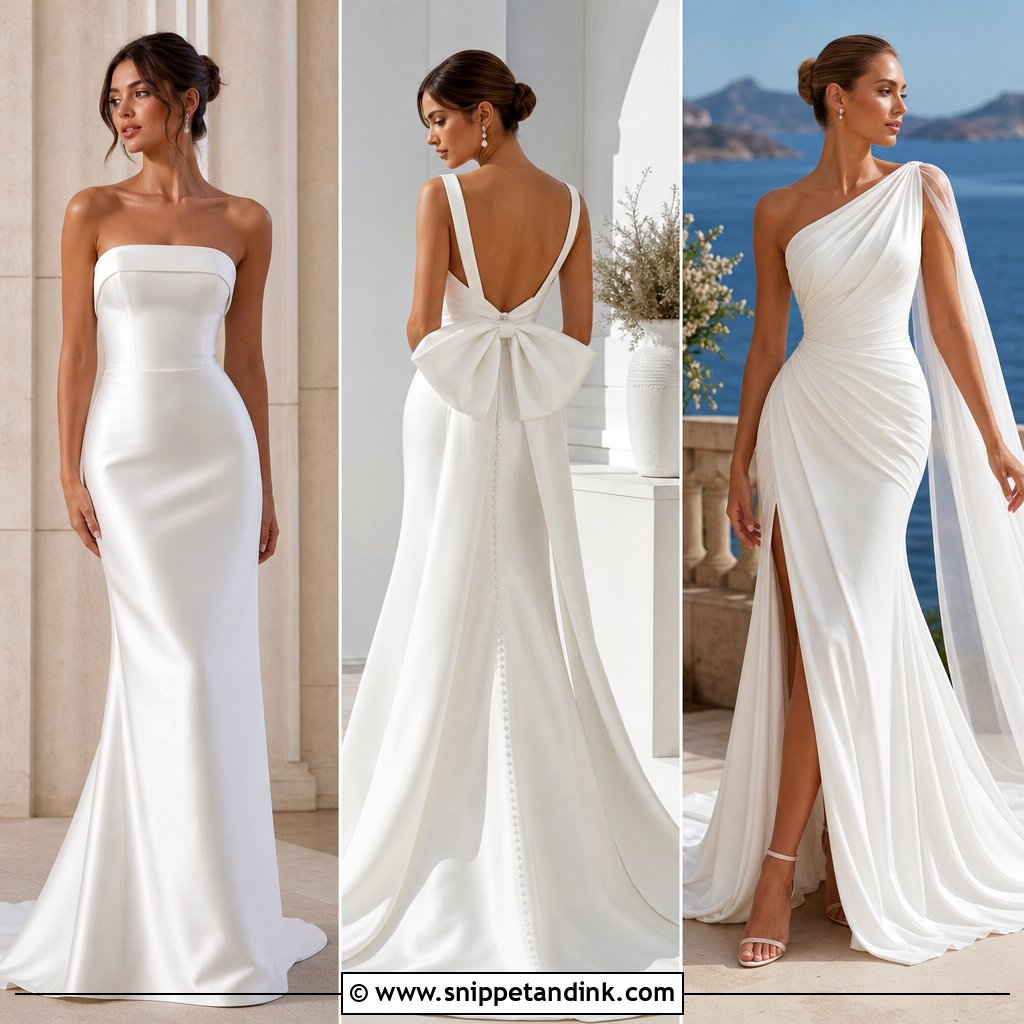
Strip away decoration and the corset’s construction becomes the design. A smooth satin or crepe gown with covered boning, a straight or softly scooped neckline and a narrow column skirt is about as clean as bridal gets. A small back slit or slight flare lets you walk without breaking the line. Sculptural earrings, pointed pumps, a sleek bun, a plain cathedral veil and a single-flower bouquet suit it. Plain fabric shows every seam, so tailoring has to be exact. My test: the corset should lie flat at the waist with no wrinkles, and the skirt should skim the hips without pulling when you sit.
13. Corset Top Wedding Dress With Detachable Sleeves
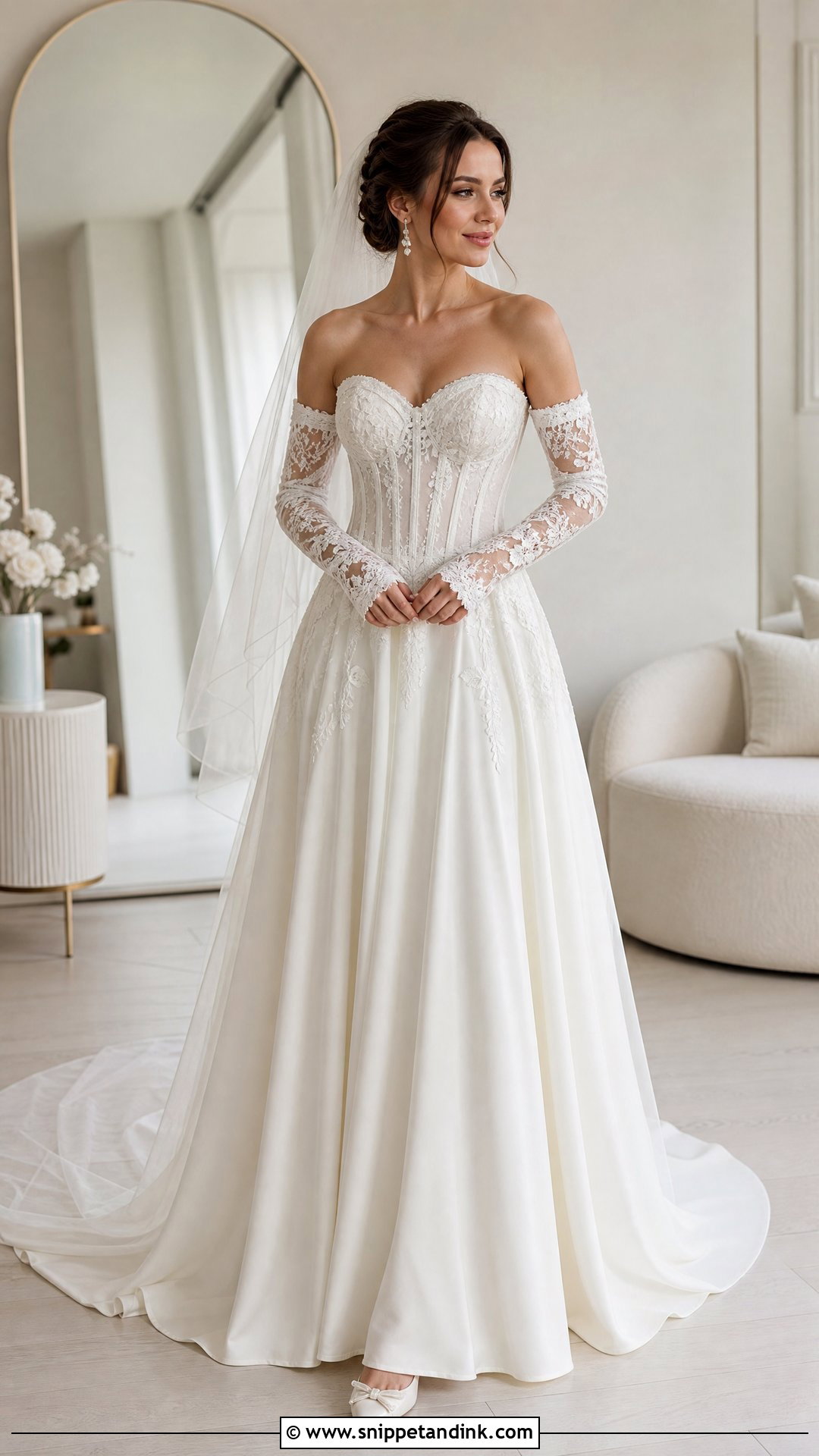
Detachable sleeves give you two looks from one dress: fitted lace sleeves or soft off-the-shoulder drapes for the ceremony, then a clean strapless bodice at the reception. Ask how the sleeves attach. Discreet hooks or snaps sewn inside the bodice edge are best; anything that leaves visible loops when removed spoils the strapless look. An A-line skirt keeps it versatile, and a polished updo, drop earrings, low heels and a chapel veil work with both versions. Bag and label the sleeves once they’re off. Practice the change at a fitting with whoever will help you, so it takes two minutes, not twenty.
14. Corset Top Wedding Dress With Overskirt
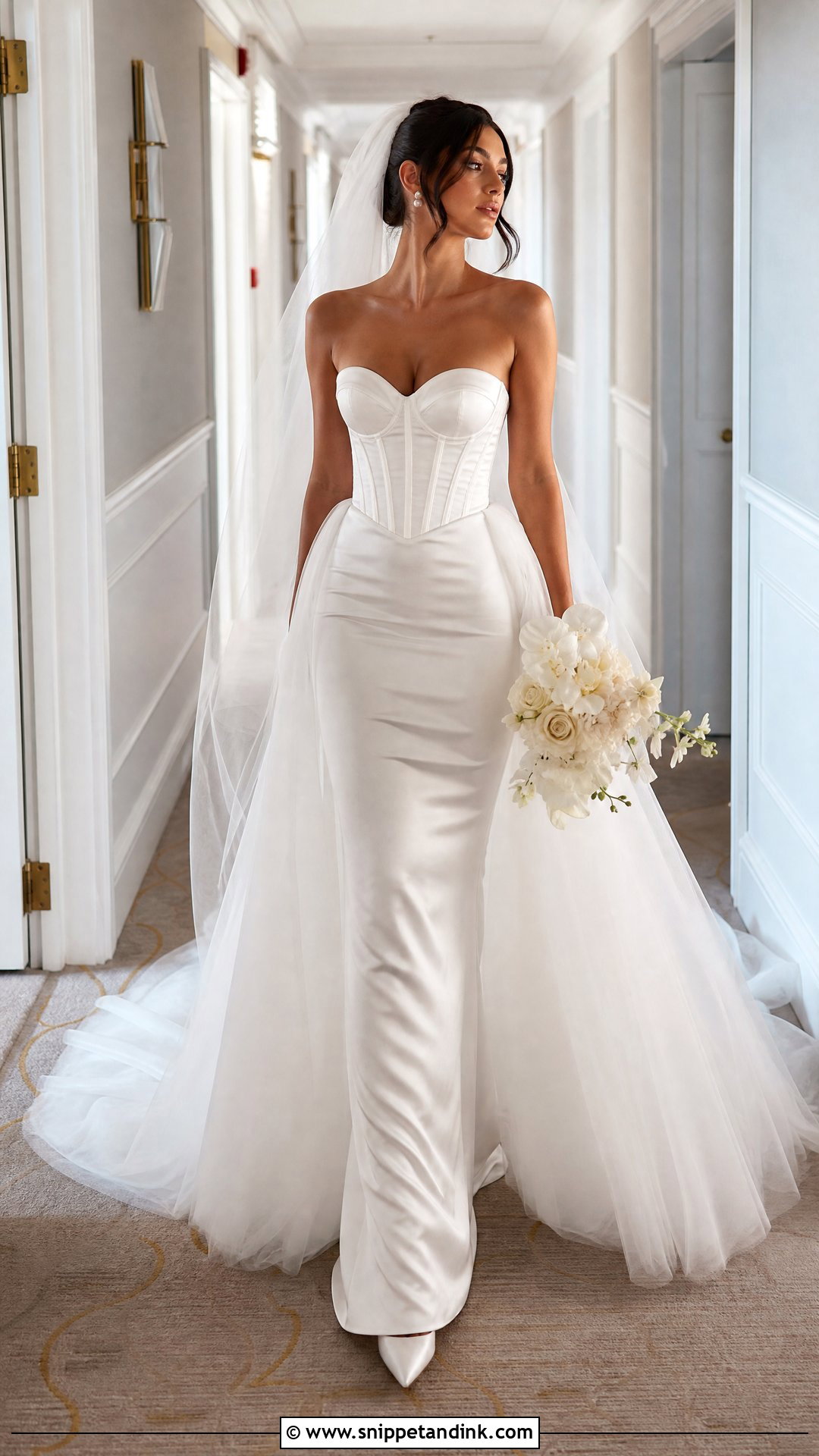
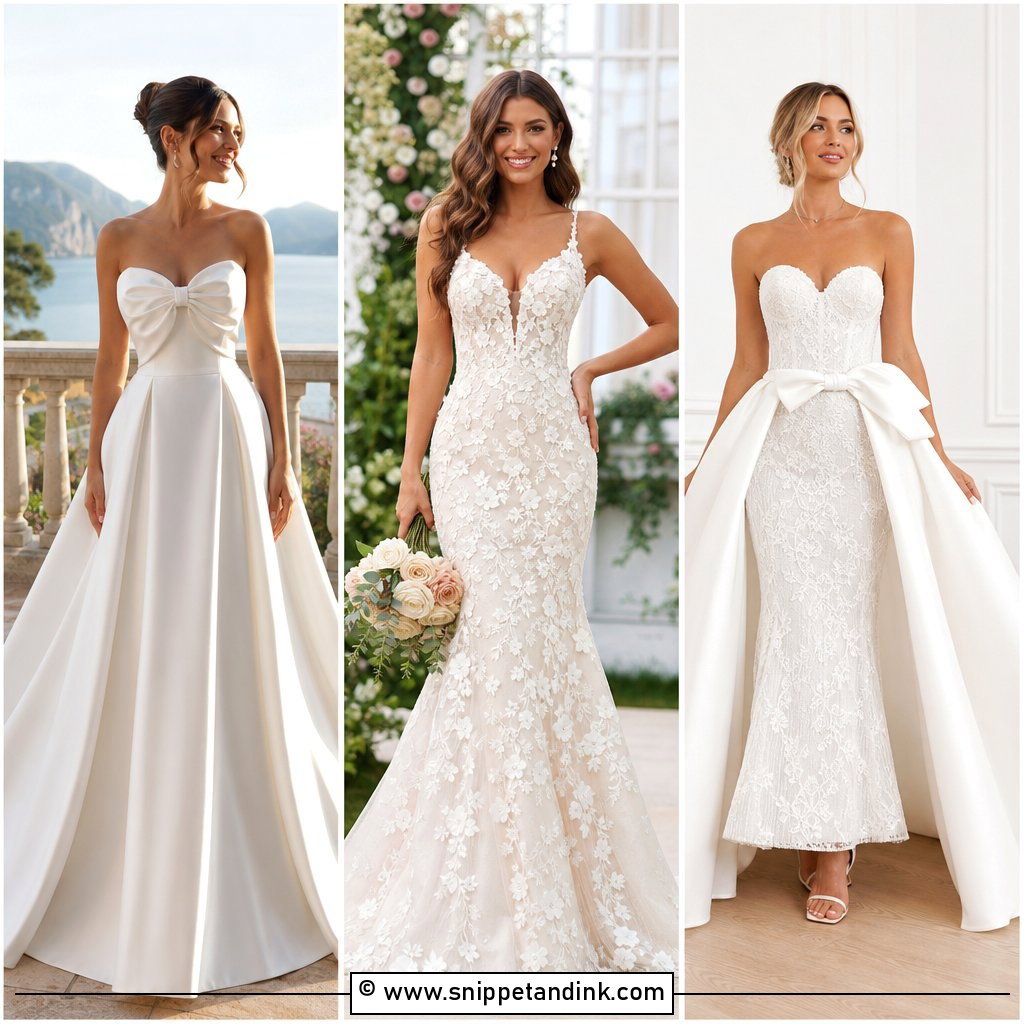
A detachable overskirt gives you ceremony volume, then a slimmer silhouette for dancing. Start with a structured bodice over a crepe, lace or satin column, and add a full tulle or satin overskirt that fastens at the waist without hiding the corset’s best details. Pair the ceremony version with a long veil, pearl earrings and classic pumps; for the reception, drop the overskirt and veil and switch to statement earrings if you like. Overskirts are surprisingly heavy, and that weight hangs from the corset waist. Ask whether the fastening is reinforced, and check that the underdress has a finished waist that looks complete on its own.
15. Corset Top Wedding Dress With High Slit
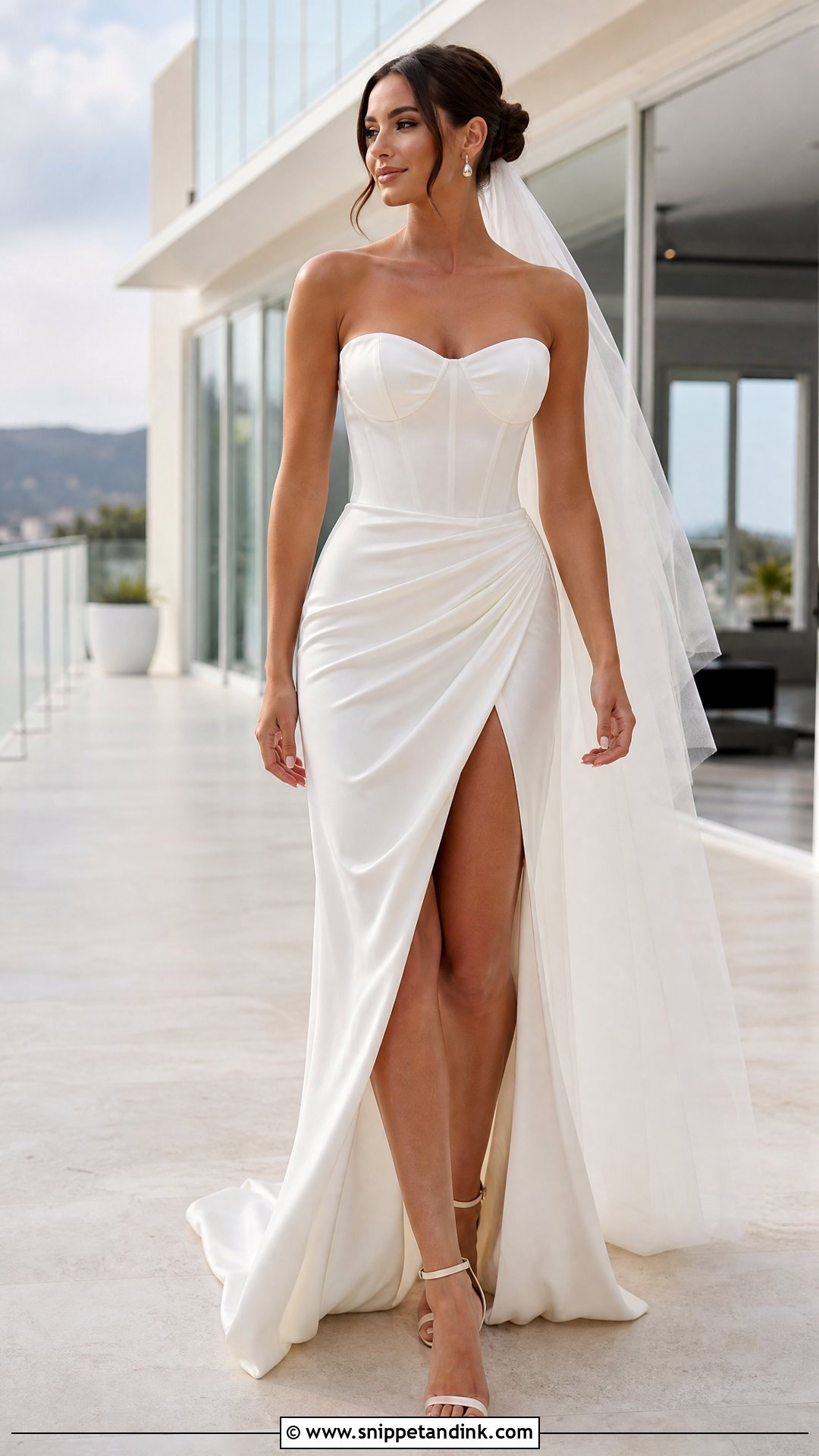
A high slit adds an edge, and a secure corset keeps it from looking like eveningwear. The skirt fabric should drape smoothly. Soft satin or crepe works, and both need enough overlap that the slit doesn’t swing open on every step. Sit, climb stairs and walk outside at a fitting to find the right height. Ankle-strap sandals that you can actually stand in, streamlined earrings, a plain veil and a smooth updo complete it. Keep detail to one area: a clean corset top, controlled draping and one well-fitted slit look sharper than embellishment everywhere.
16. Two-Piece Corset Top Wedding Dress
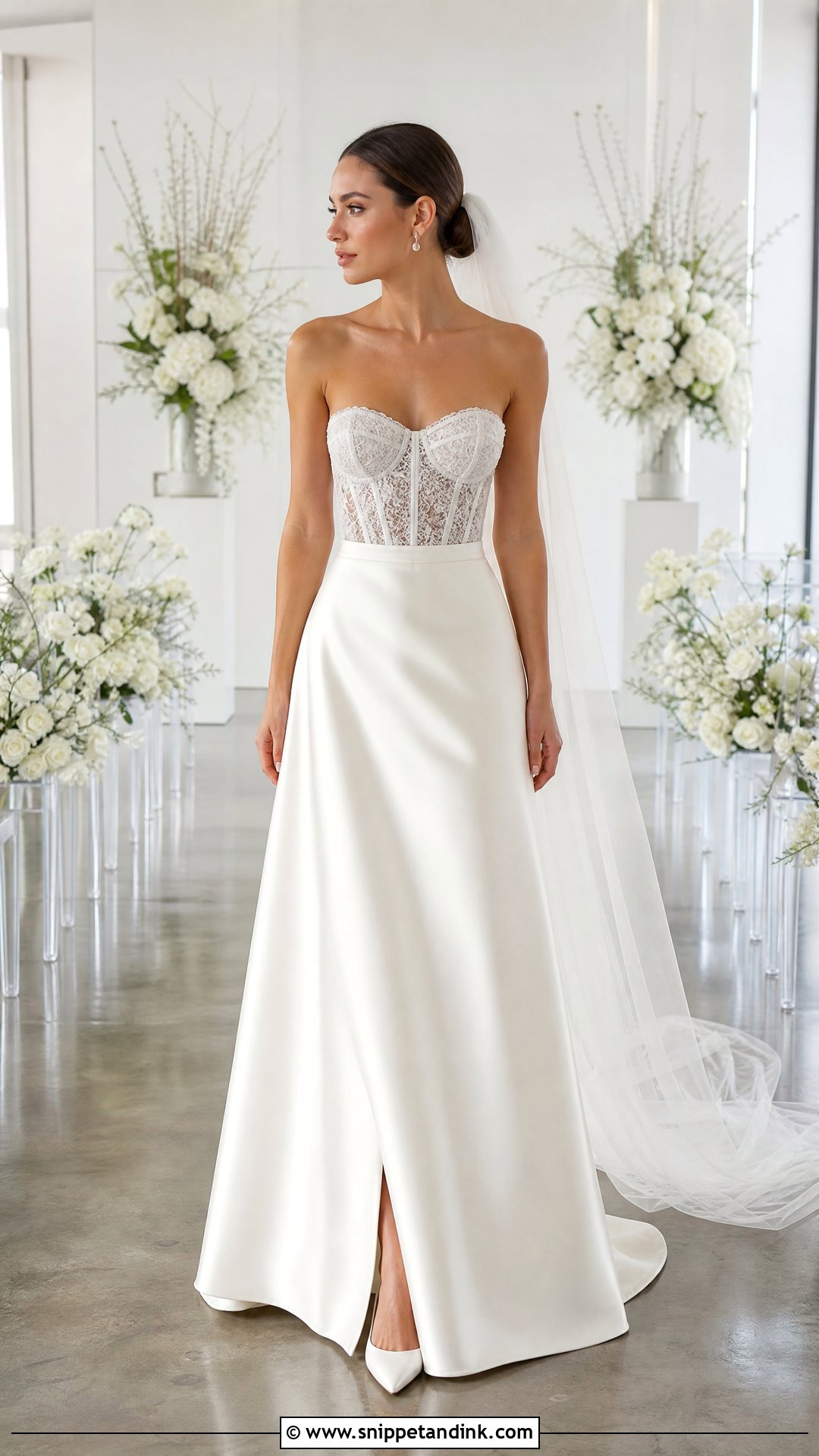
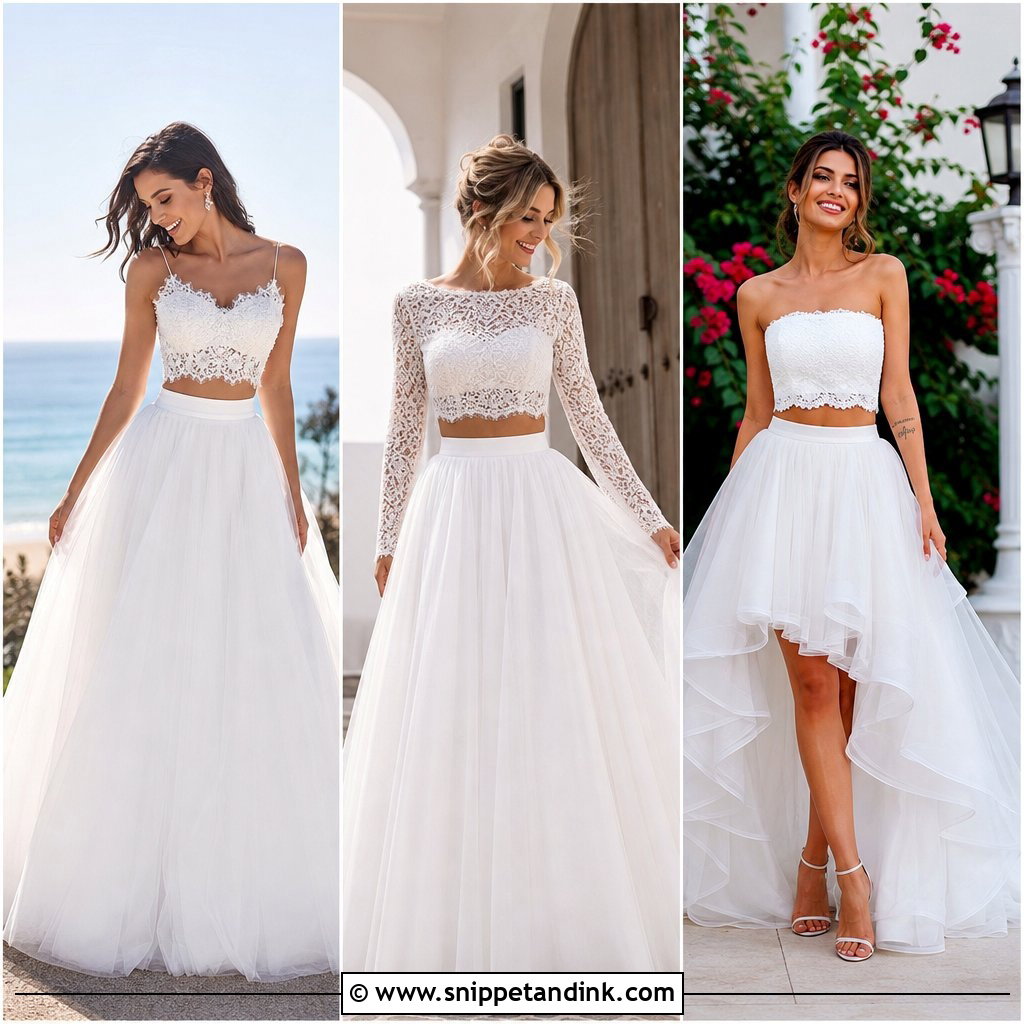
Separates give you flexibility: a corset top and bridal skirt that look like one gown, but can be swapped. Matching fabric gives a single unbroken line, while a lace bodice over a plain satin skirt adds quiet contrast. A high-waisted A-line or ball gown skirt should meet the bottom of the corset so no gap appears when you raise your arms. Pointed heels, a long veil, simple earrings and a structured hairstyle suit it. Watch for bulk where the skirt waistband sits under the bodice; a thick band shows as a ridge through satin. Hidden snaps keep both pieces aligned. Later in the evening, you can trade the skirt for tailored pants or something shorter and keep the same top.
17. Embroidered Corset Top Boho Wedding Dress
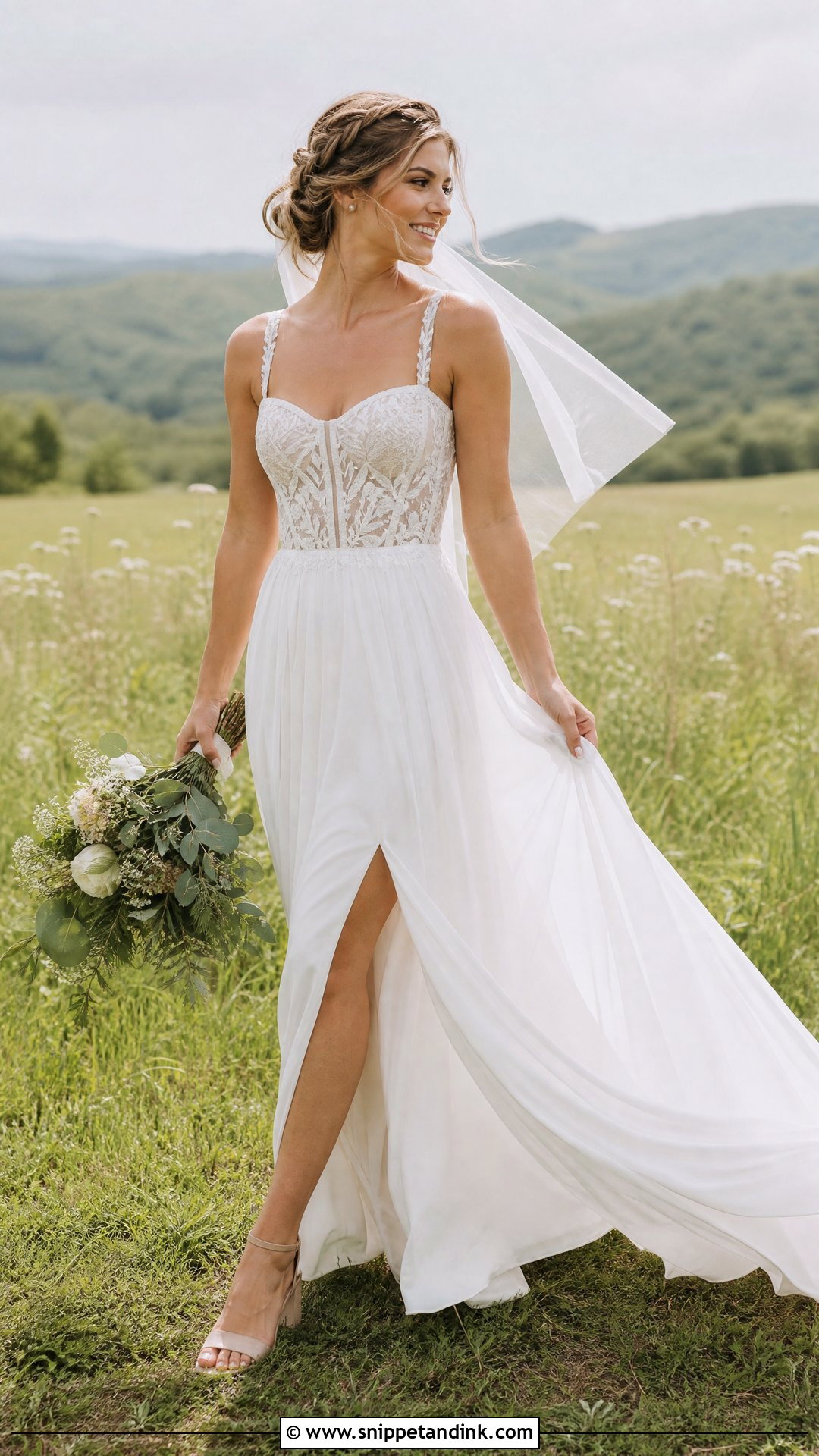
Embroidery and flexible boning turn a corset into something relaxed enough for a bohemian dress. Look for botanical patterns and tonal threadwork rather than crystals, with a flowing chiffon or soft tulle skirt. Wider straps or removable flutter sleeves add coverage. Ask for spiral steel or flexible boning; rigid flat bones look stiff against a skirt that’s meant to move in the breeze. Low block heels, small gold or pearl earrings, a loose braided updo and a light veil suit it, and greenery-heavy bouquets match the embroidery. A moderate train is easier at outdoor or destination venues.
18. Corset Top Tea-Length Wedding Dress
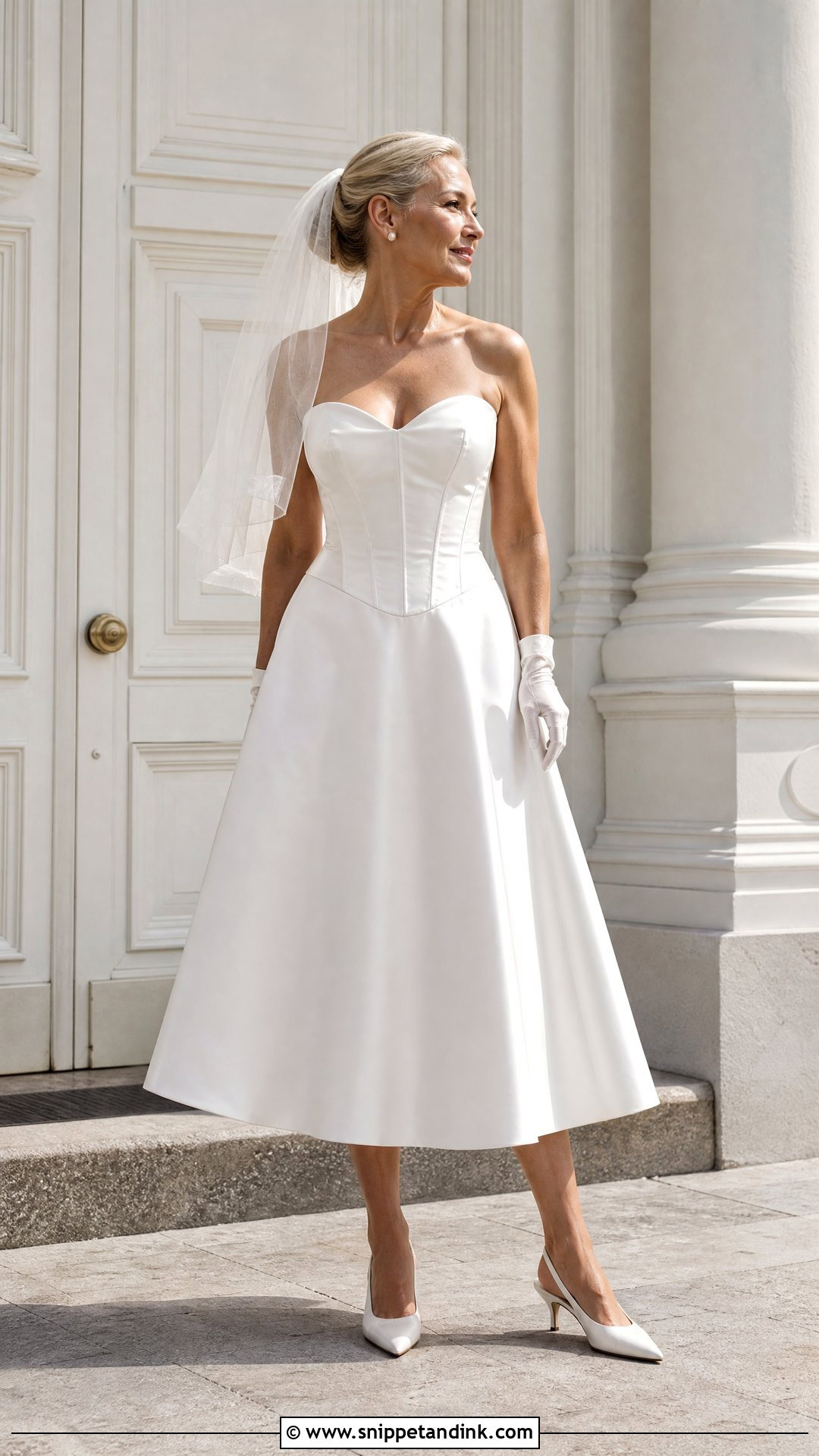
Tea length and a corset top bring structure and play together. Choose a hem between knee and ankle and a fitted satin, lace or embroidered bodice, with a softly flared skirt that makes the shoes part of the outfit. Pointed pumps, slingbacks or embellished low heels work, with short gloves and a shoulder-length veil, pearl studs and a neat bun. This suits courthouse ceremonies and daytime celebrations. The skirt needs enough body to hold its shape, usually a layer of crinoline or stiff tulle underneath, but not so much that it feels like a costume. Keep the corset sleek so the short silhouette looks deliberate.
19. Corset Top Wedding Dress With Bow Back
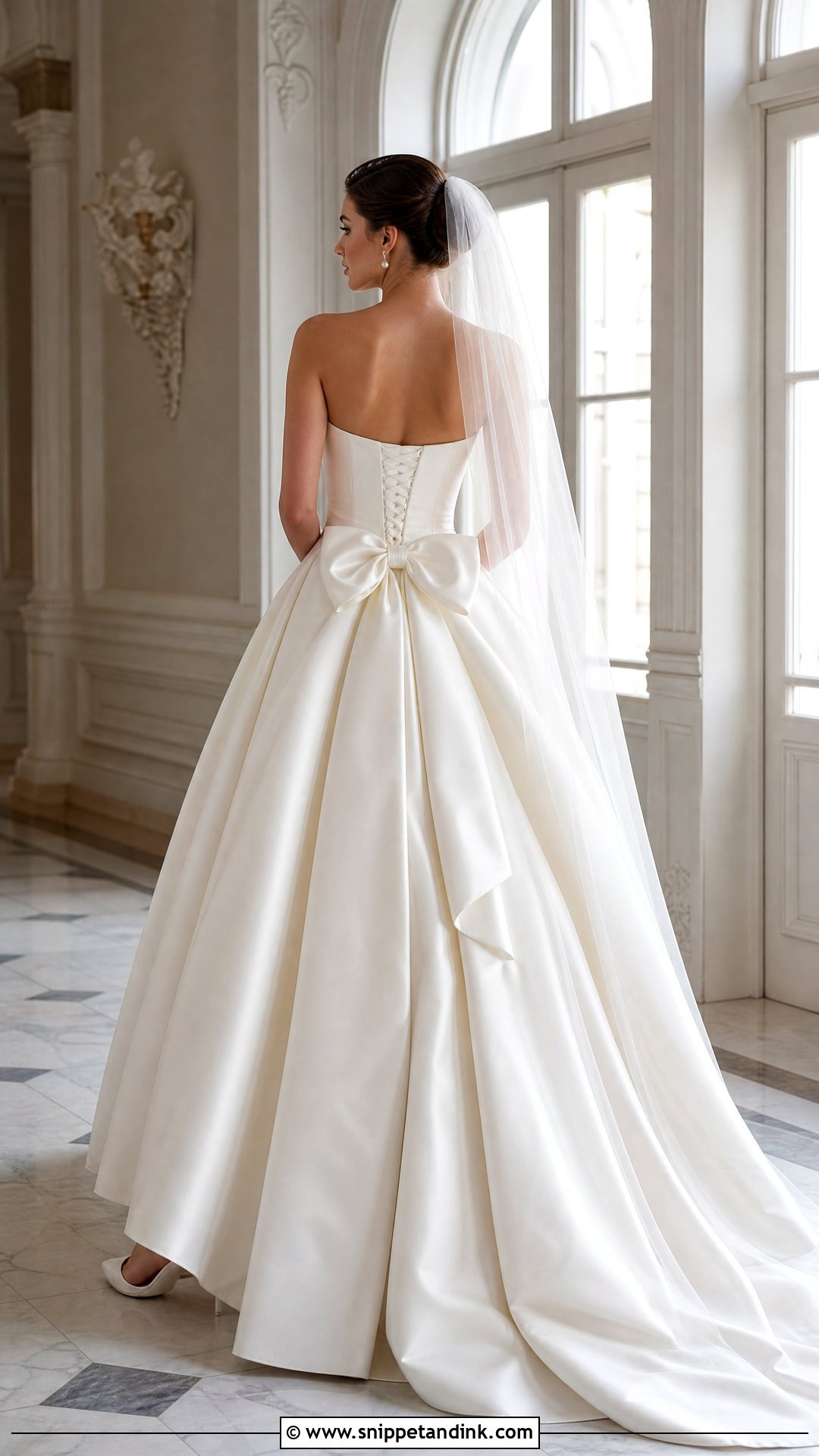
A bow at the back gives guests something to look at during the ceremony, when they mostly see you from behind. Pick a structured satin bodice with a lace-up or concealed closure, and a detachable bow at the waist. Long tails flowing into the train are dramatic; a compact bow is cleaner. Keep the front quiet with pearl studs, closed-toe pumps and a smooth veil, and wear your hair up. Check where the bow sits against the lacing. If it covers the laces only partly, the back looks unfinished, so ask the seamstress to center it over the closure. A removable bow also makes sitting through dinner more comfortable.




20. Champagne Corset Top Wedding Dress
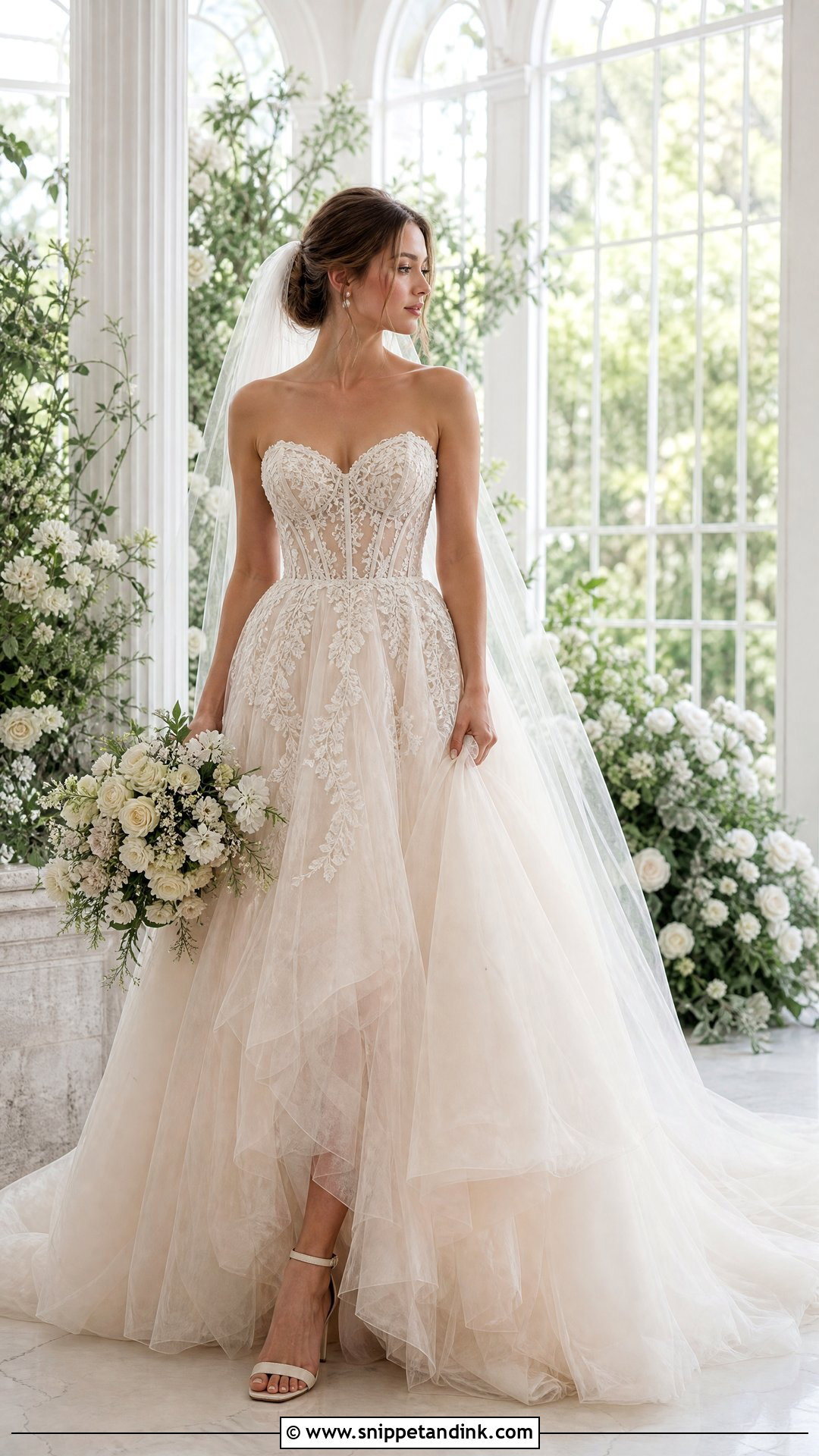
Champagne under ivory lace is a trick dressmakers use to make appliqués, boning and embroidery stand out; on plain white, those details flatten. A full tulle skirt keeps it soft, fitted lace adds drama and smooth satin reads modern. Neutral ivory shoes, warm-toned pearls, a sheer ivory veil and natural makeup suit the undertone. Stark white accessories can make champagne look dingy beside them. View the whole outfit in daylight and under warm indoor light before deciding, because champagne shifts from pale gold to almost pink depending on the bulbs. It gives depth without stepping into bold color.
How a Corset Bodice Changes Over a Long Wedding Day
A corset that felt right at nine in the morning won’t feel the same at nine at night. Knowing what changes helps you plan around it instead of suffering through it.
The first hour
Laces and fabric relax as they warm to your body. If your dress laces up, have the person who dresses you tighten it once more after about half an hour, before photos start. Make sure that person has practiced at a fitting; lacing evenly from the middle outward takes a little skill.
Dinner
Smaller bites, sitting tall and avoiding fizzy drinks make a real difference in a fitted bodice. Some brides ask to have the laces loosened slightly before the meal and retightened before the first dance; plan this with your attendant ahead of time.
Dancing and the bathroom
Bodice tops can ride up when you raise your arms, so do a quick check in the mirror between songs. Bathroom trips in a corset gown need a helper for the skirt, and a bustle that’s easy to drop. Learn both at your last fitting, not in the venue restroom.
Can You Breathe, Sit and Dance in It?
That’s the real test for any corset gown, more than how it looks standing still in the shop. Think about the whole outfit, not just the bodice: skirt shape, neckline, fabric, veil, shoes and hair should all point the same way. Alterations matter more here than with almost any other style, because the boning, cups, waist and closure all have to hold without pressing. Wear your actual undergarments and shoes to every fitting, and move the way you will on the day before you approve the final fit. Minimal satin and embroidered garden dresses alike can feel supportive and personal once that fit is right.
You'll Like These Ideas:




Leave a Reply