
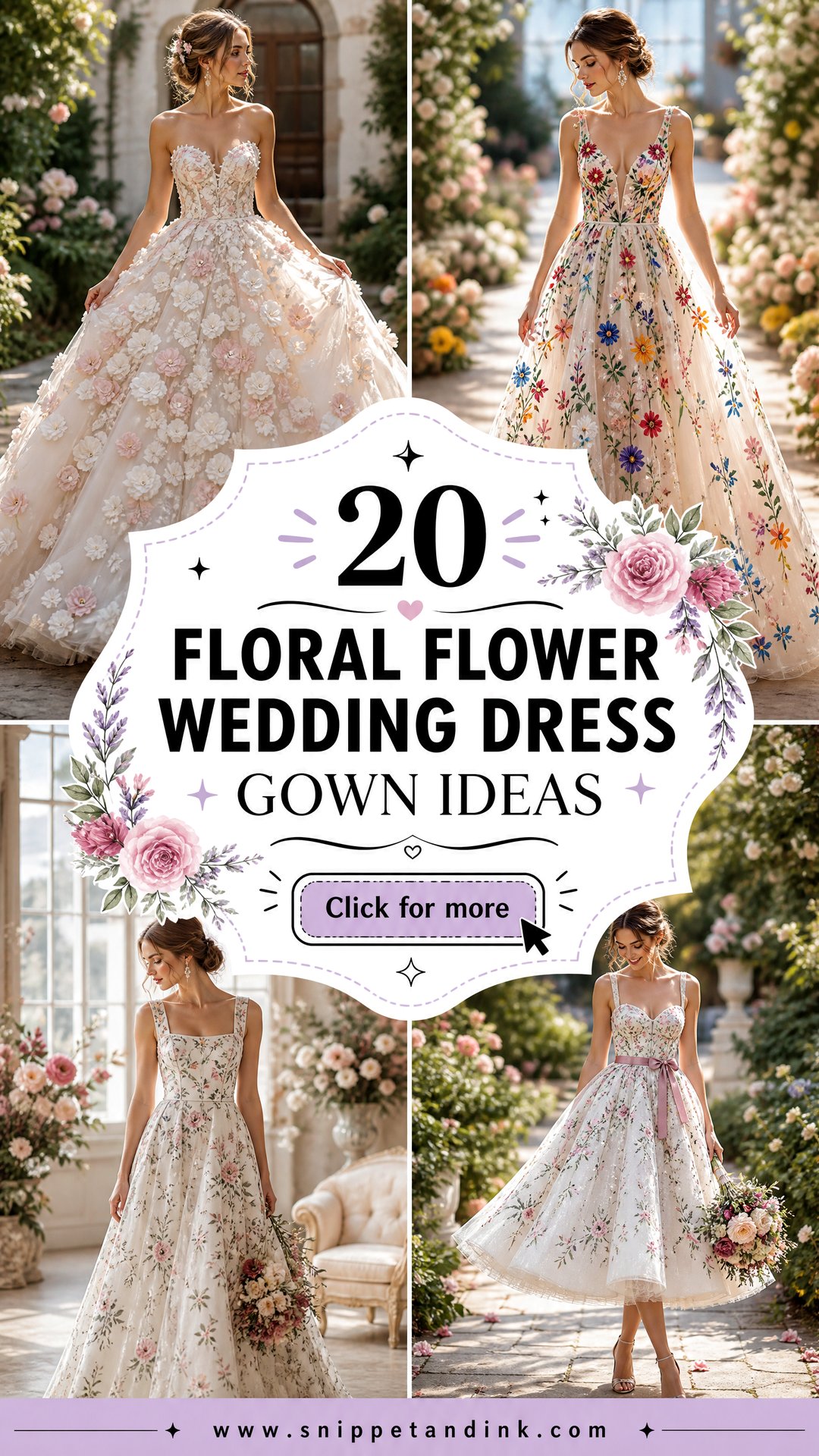
Flowers on a wedding dress can mean almost anything: delicate lace vines, colored thread embroidery, sculpted organza petals or a pattern woven straight into the cloth. Each one behaves differently once you’re wearing it for twelve hours, and that’s the part I spend most of my time on with clients. A wildflower-embroidered tulle feels easy at a garden ceremony; oversized roses and a cathedral train need a ballroom with room to move. Below are the floral gowns I pull most, how I’d style each, and the construction detail I check before anyone says yes.
Glued or Stitched? Turn the Bodice Inside Out
Before I let anyone fall for a floral gown, I flip the skirt and the bodice lining back and look at how the flowers are attached. Hand-stitched appliqués show small, even tacking stitches through the backing fabric. Glued ones feel stiff and slightly crunchy behind the motif, and the edges start lifting after a few hours of body heat and movement. Glue isn’t automatically bad on a budget dress, but it can’t be repaired neatly, while a loose stitched flower takes a seamstress minutes.
- Gently roll a petal edge between two fingers. It should flex back, not crack or leave residue.
- Look at where flowers cross seams. Good work stops the appliqué before the seam or sews through both layers cleanly.
- Check flowers near the zip or buttons; poorly placed ones snag every time the dress is fastened.
- Ask if spare appliqués come with the gown. Many makers include a few for repairs, and they’re useful if a petal tears on the day.
1. 3D Floral Appliqué Wedding Ball Gown
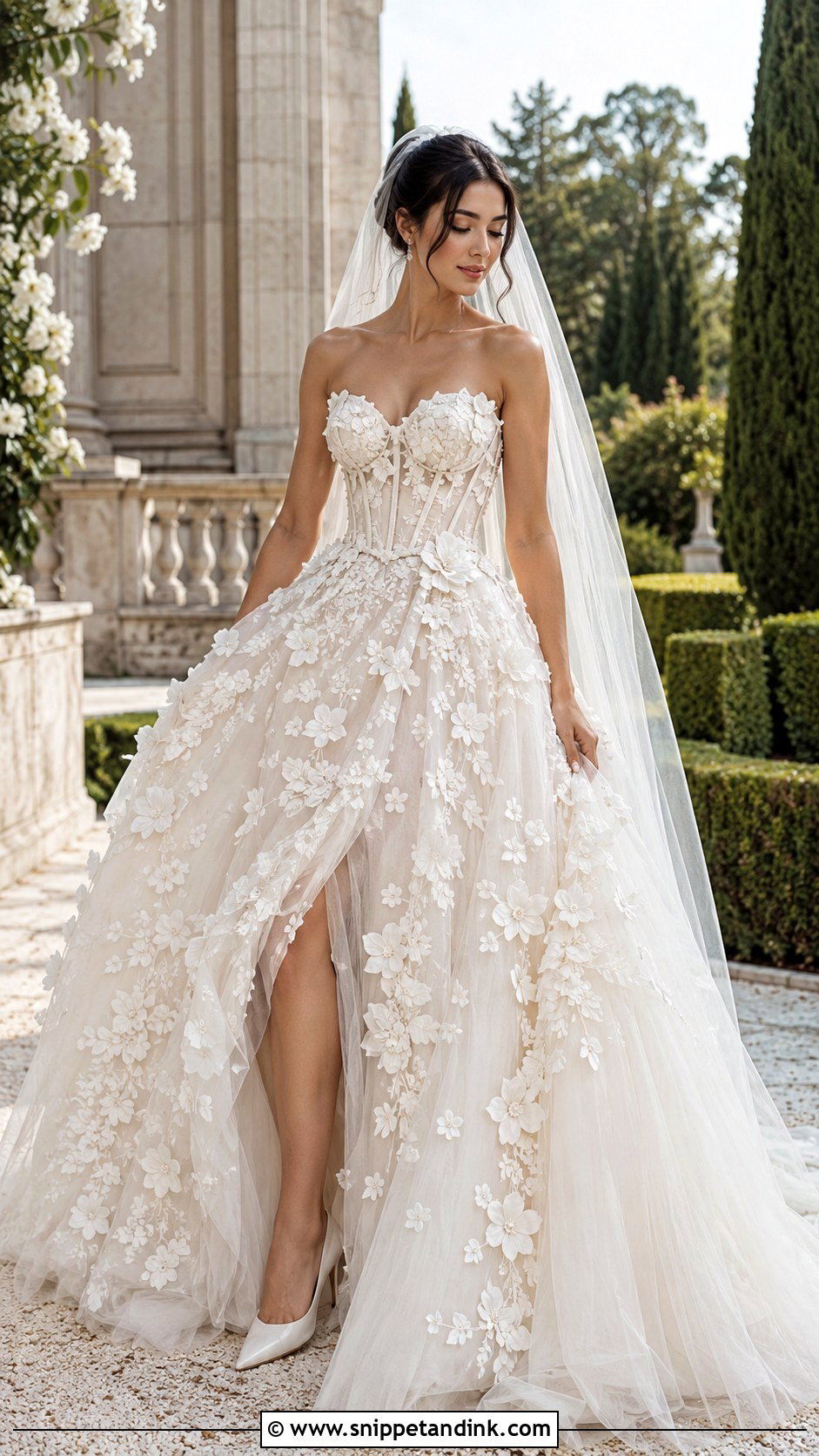
Layered organza flowers on an ivory tulle ball gown give you volume and real texture, especially when they cluster at the bodice and loosen toward the hem. Underneath, you want a corset interior that holds the waist, because the flowers add weight to the top. Strapless or sweetheart necklines give the petals space. I’d keep everything else plain: pointed ivory pumps, pearl drops, a fingertip veil and a small, mostly green bouquet that won’t hide the bodice. Ask your seamstress to re-tack the flowers along the waist and hem, where arms and feet brush them all night.
2. Colorful Floral Embroidered A-Line Wedding Dress
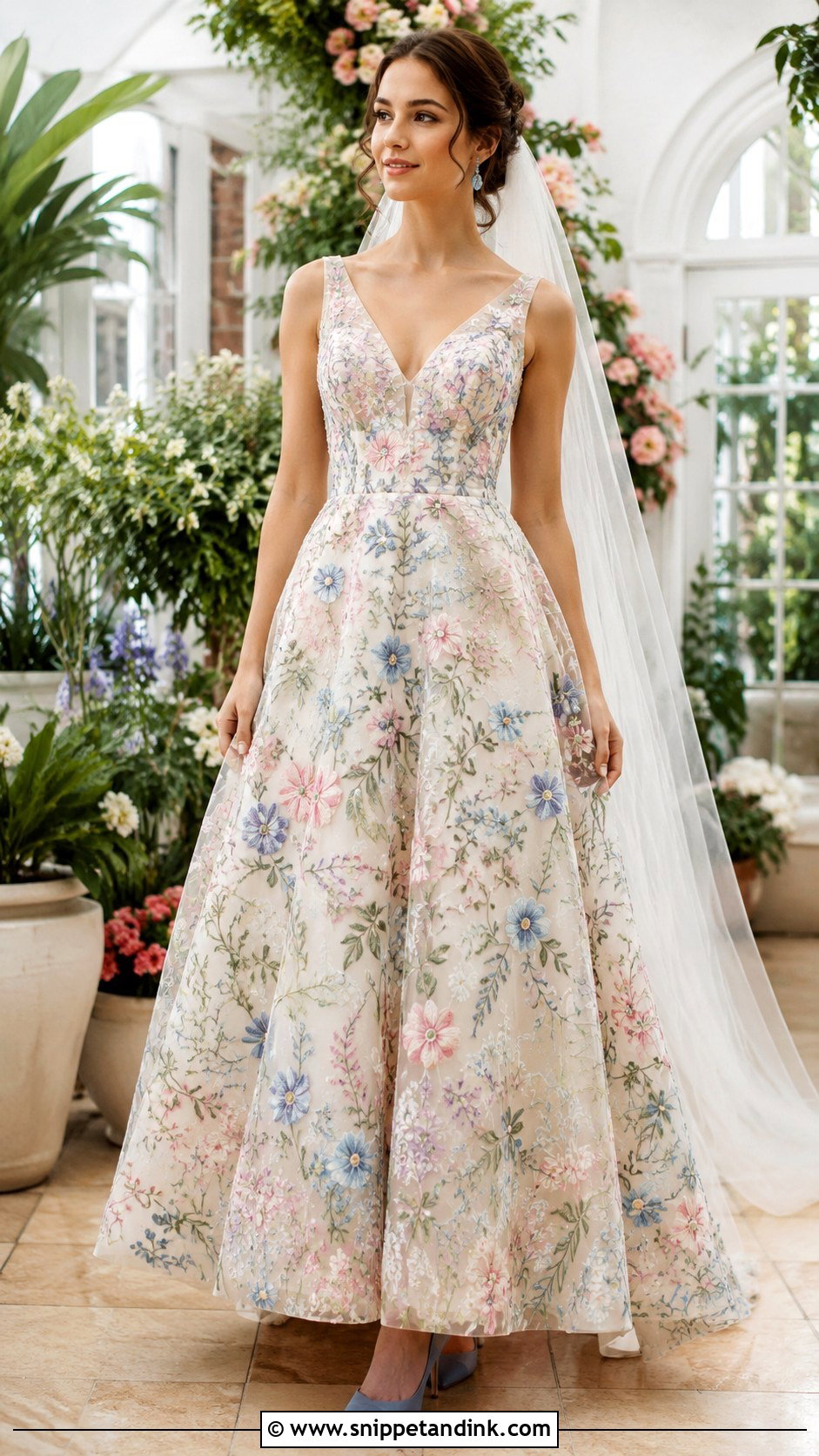
Colorful flower embroidery turns a plain A-line into something closer to an artwork, with pink, blue, lavender and green stitching over ivory or a nude lining. The rule I give every bride with this dress: take one thread color for your accessories, not all of them. Dusty blue heels or a lavender ribbon on the bouquet is enough. A sheer veil with a plain edge stops it fighting the stitching. Spring gardens and conservatories suit it. Before ordering, look at the embroidery from the side and back too, since a heavy motif landing right at the hip can widen it.
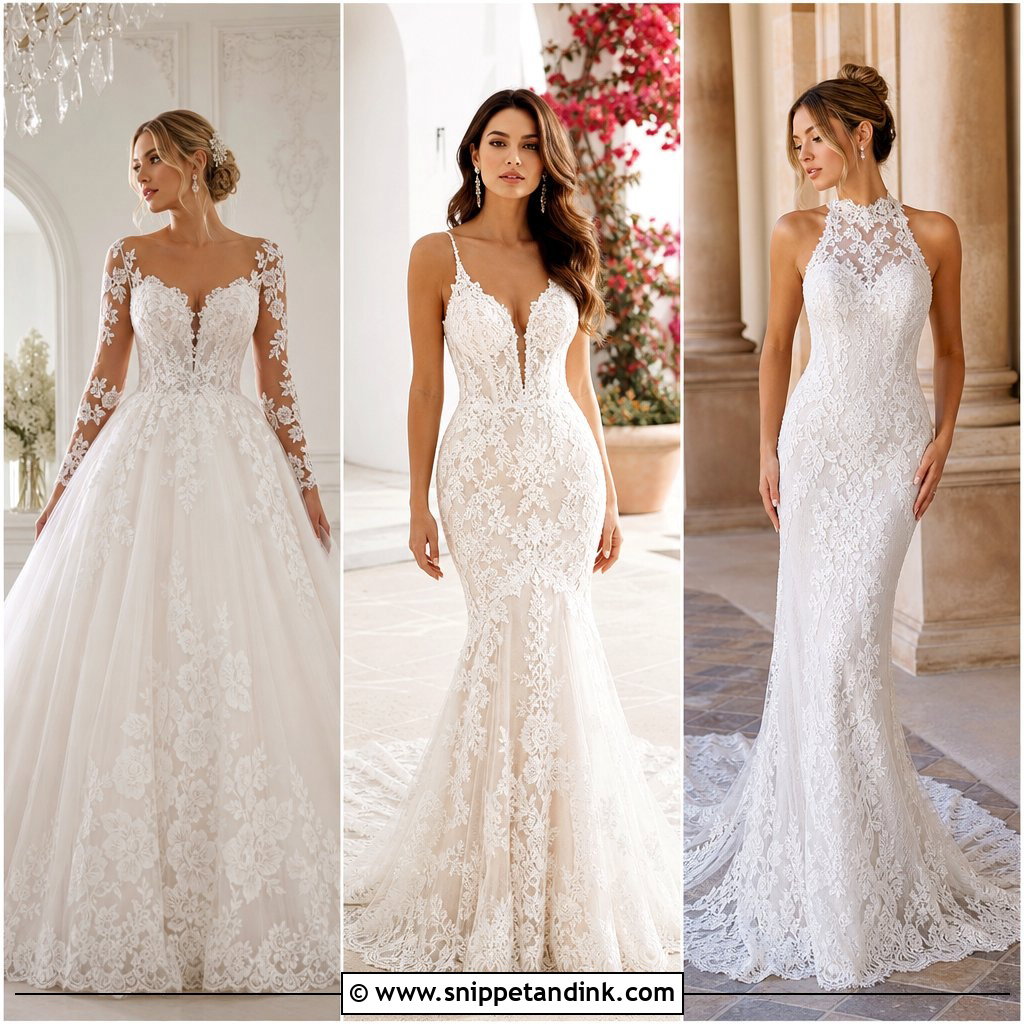
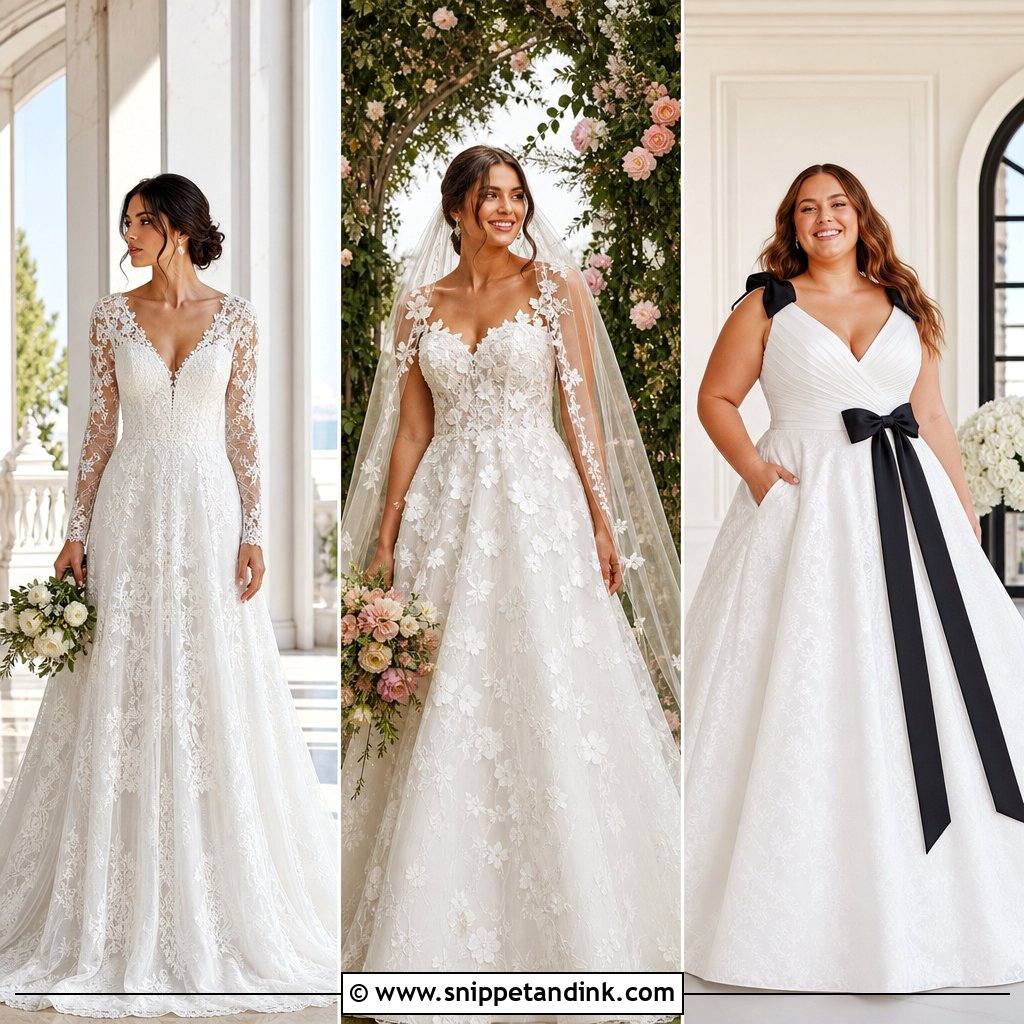
3. Long Sleeve Floral Lace Wedding Dress
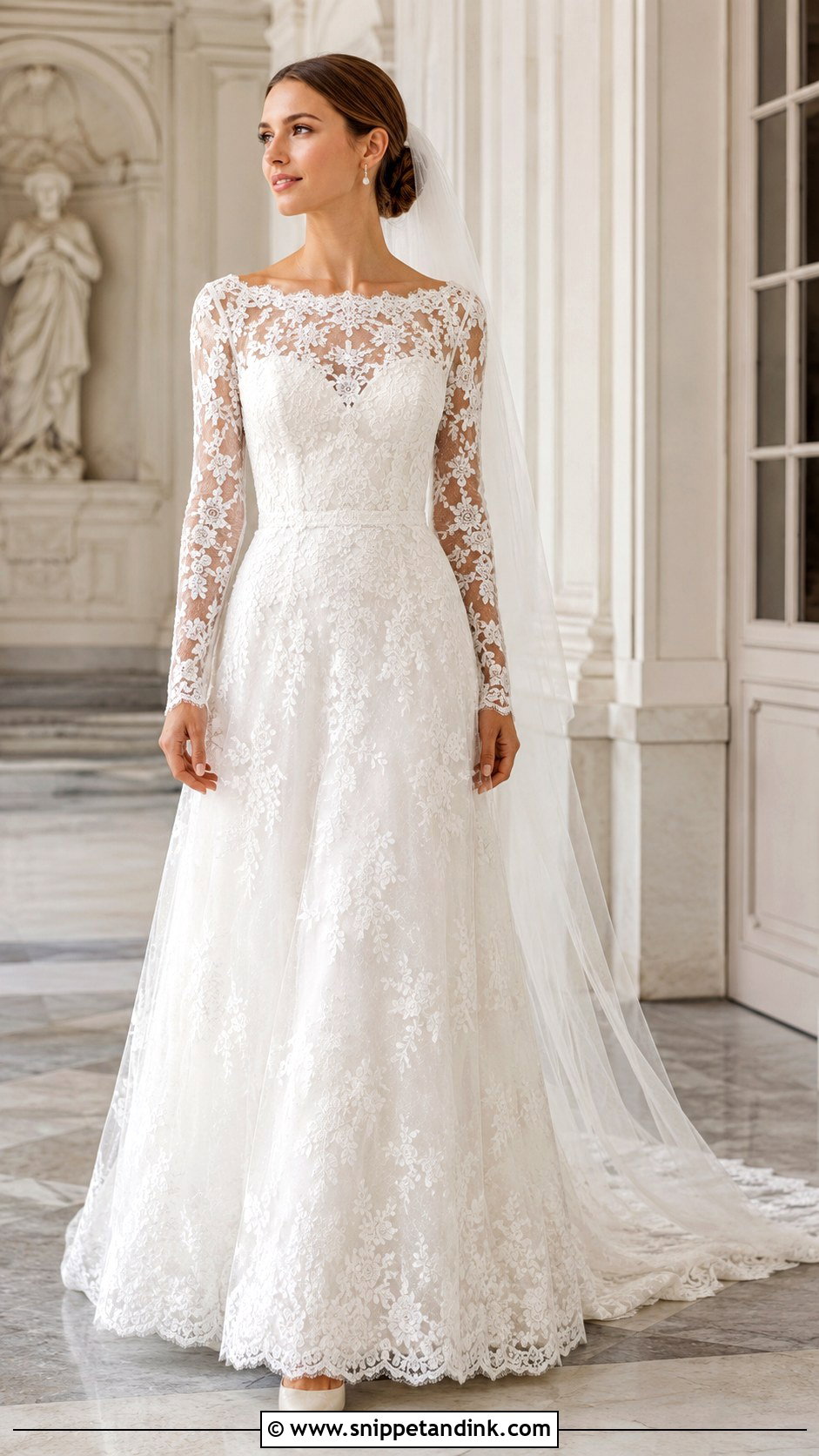
Long lace sleeves are where I see the most fitting trouble. Sheer illusion sleeves with placed lace motifs look delicate, but lace has almost no stretch, so the sleeve must be cut with room at the elbow and underarm. Lift and bend your arms at every fitting. If the shoulders pull, the sleeve needs to be reset. An A-line skirt, a bateau or gentle V neckline, closed satin pumps, a low chignon and small pearl earrings complete it. A narrow chapel veil shouldn’t hide the sleeves entirely, and for cooler days I’d pick a smooth wrap over a knit one, which snags on lace.
4. Blush Floral Tulle Wedding Gown
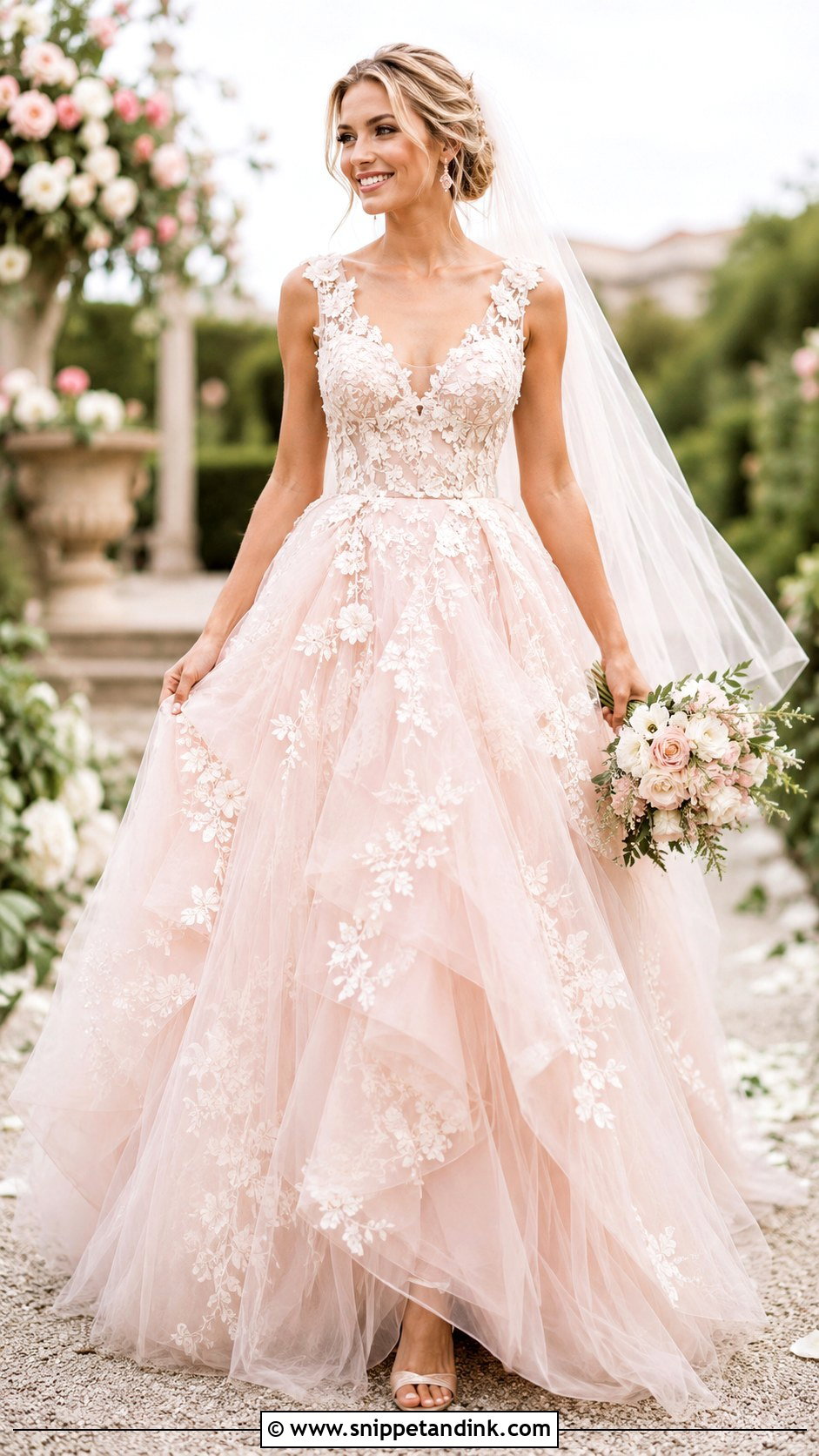
Blush tulle reads unmistakably bridal while giving the white flowers on top something to stand out against. Ivory appliqués over a pale pink underlay show every vine and petal far more clearly than white on white. A plunging neckline feels modern, and a soft curve gives more coverage. Champagne heels, rose quartz earrings and a sheer ivory veil keep it gentle, with cream flowers and muted greenery. Blush shifts with light more than any other bridal color, so I look at it by a window and under warm bulbs before deciding; some linings go peach indoors.
5. Strapless Rose Floral Wedding Ball Gown
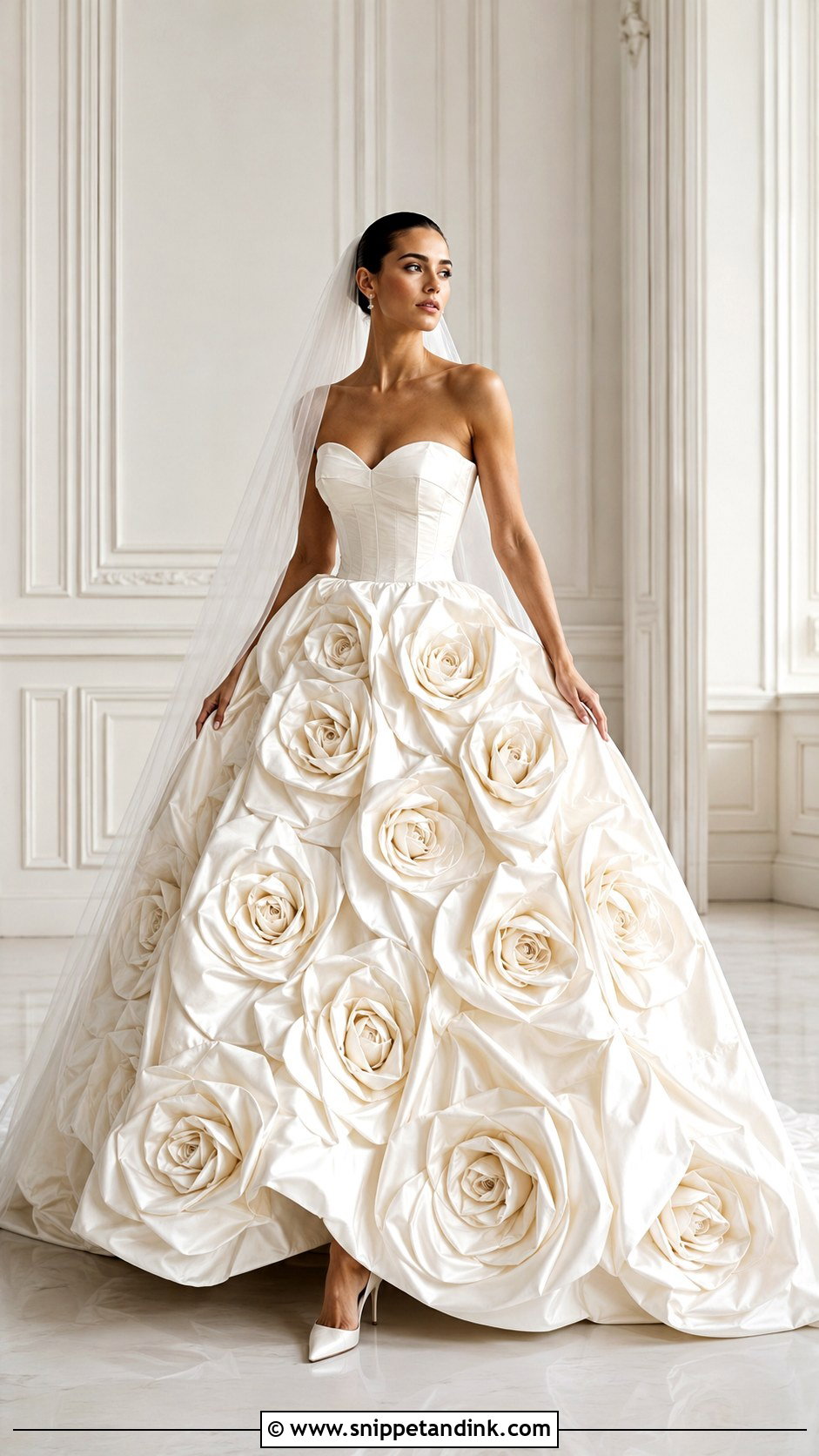
Oversized fabric roses are pure drama, and the dress has to be engineered for them. Put the heaviest flowers on the bodice and upper skirt and let the lower layers stay light, otherwise the skirt drags. Internal boning and a structured neckline are essential here. Sleek hair, crystal studs, pointed pumps and a plain cathedral veil let the roses speak. Skip the flower crown entirely, and carry one flower variety with little greenery. Practice sitting and walking, and have the bustle built with extra attachment points, since the rose weight pulls on them.
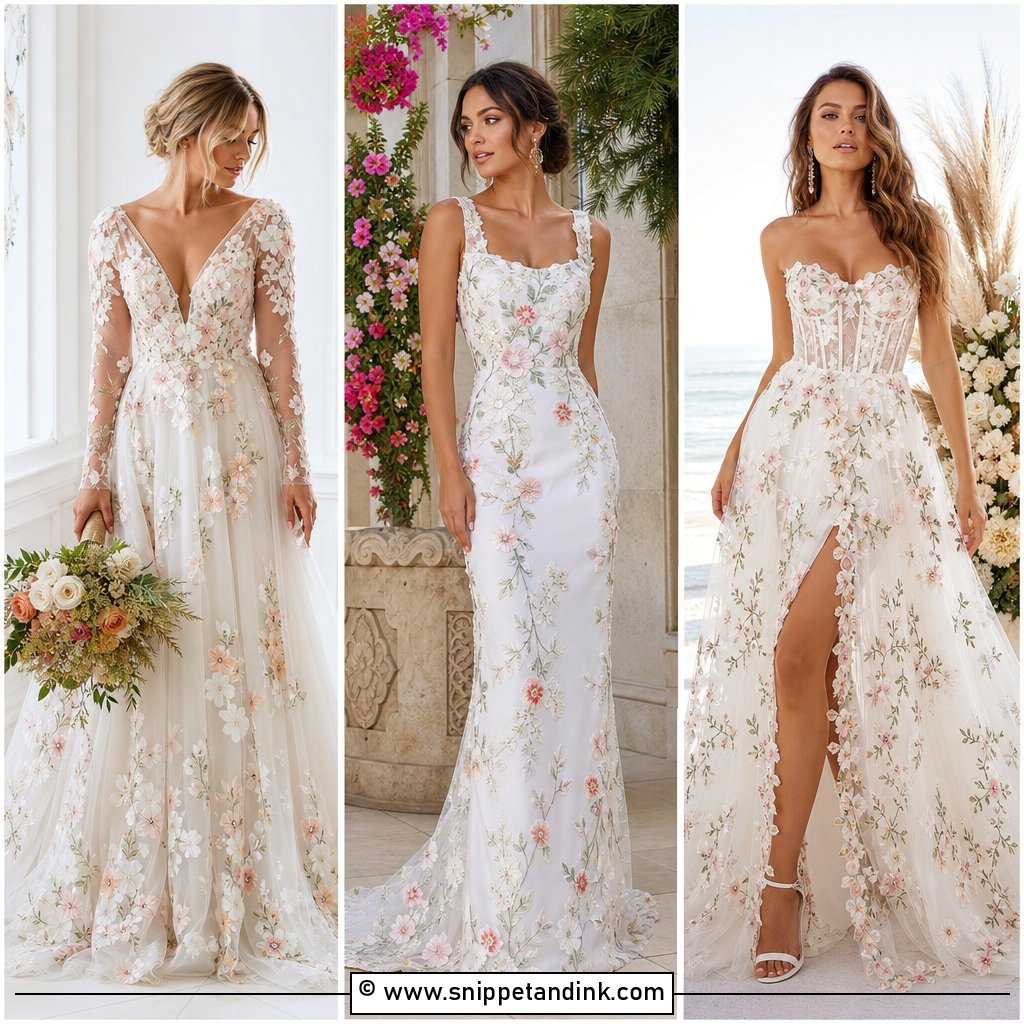
6. Wildflower Embroidered Garden Wedding Dress
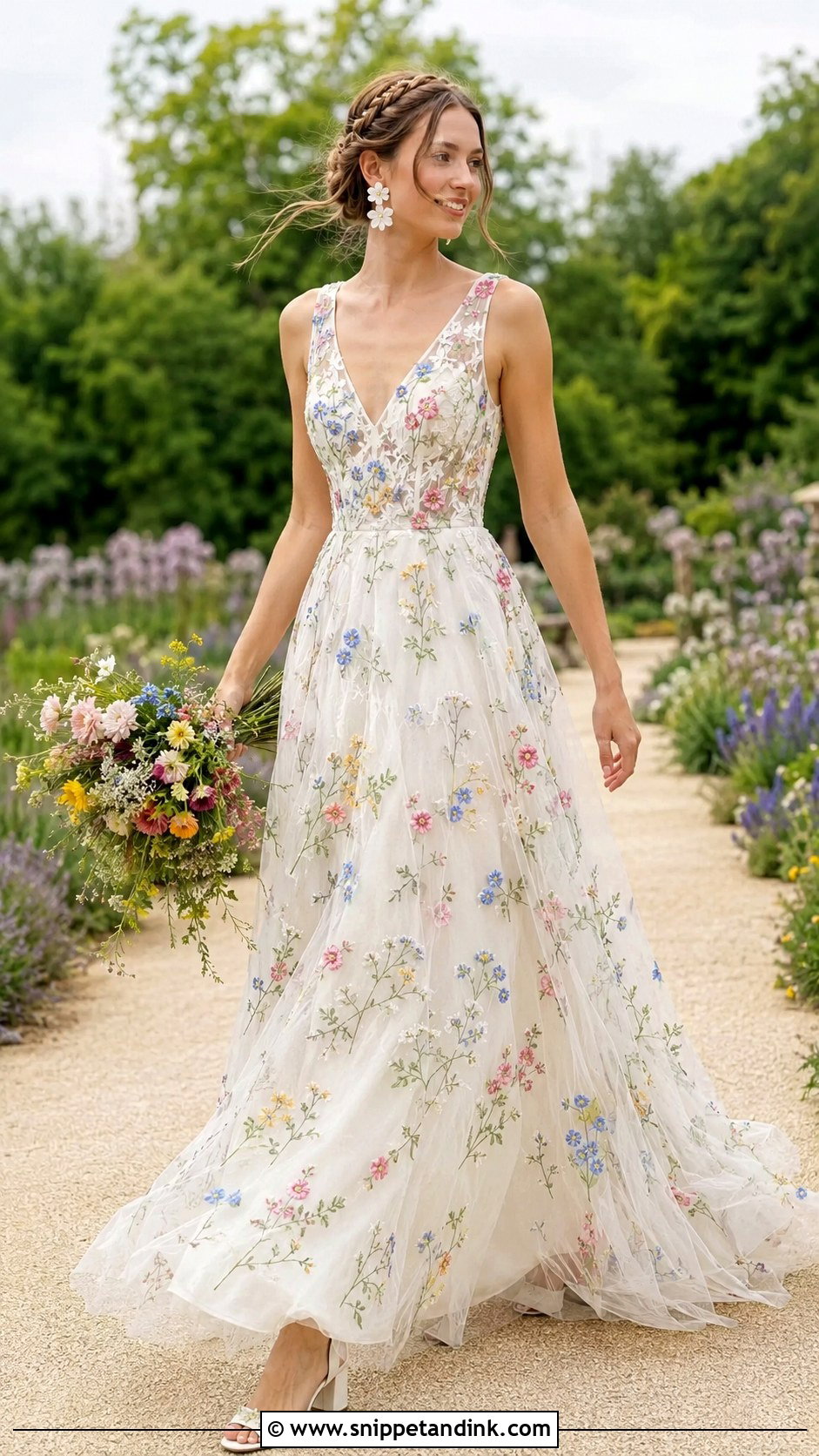
Scattered embroidered wildflowers in soft yellow, blue, pink and green feel relaxed and slightly storybook, and they work best when the spacing looks random rather than mirrored. An airy A-line with a fitted bodice and light tulle skirt lets them move. I’d go with block heels for lawns, small flower-shaped earrings and a loose braided updo. Either a plain veil or one with a few widely spaced motifs suits it, depending on how dense the dress is. A loose bouquet that repeats only two or three of the dress colors looks considered. If you want the embroidery brighter, ask for a lining close to your skin tone; ivory linings mute it.
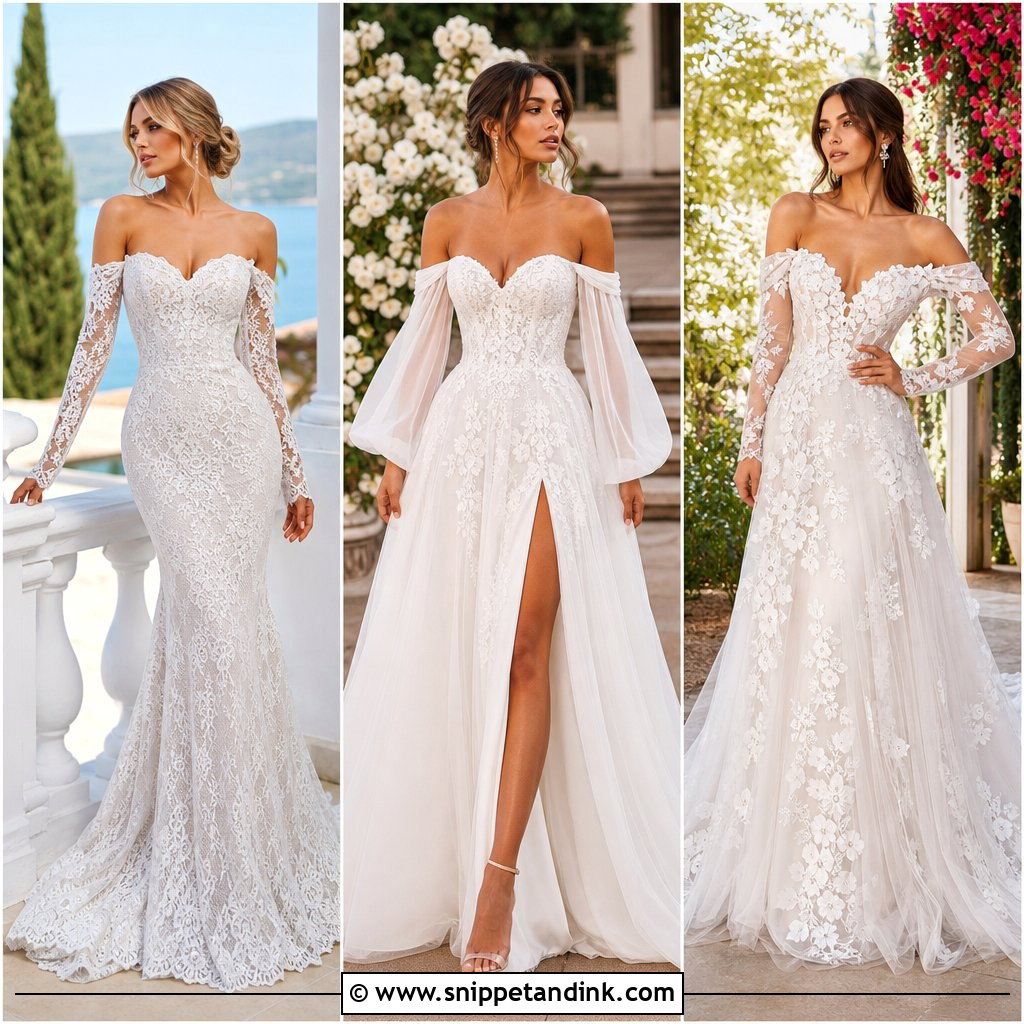
7. Off Shoulder Floral Lace Wedding Gown
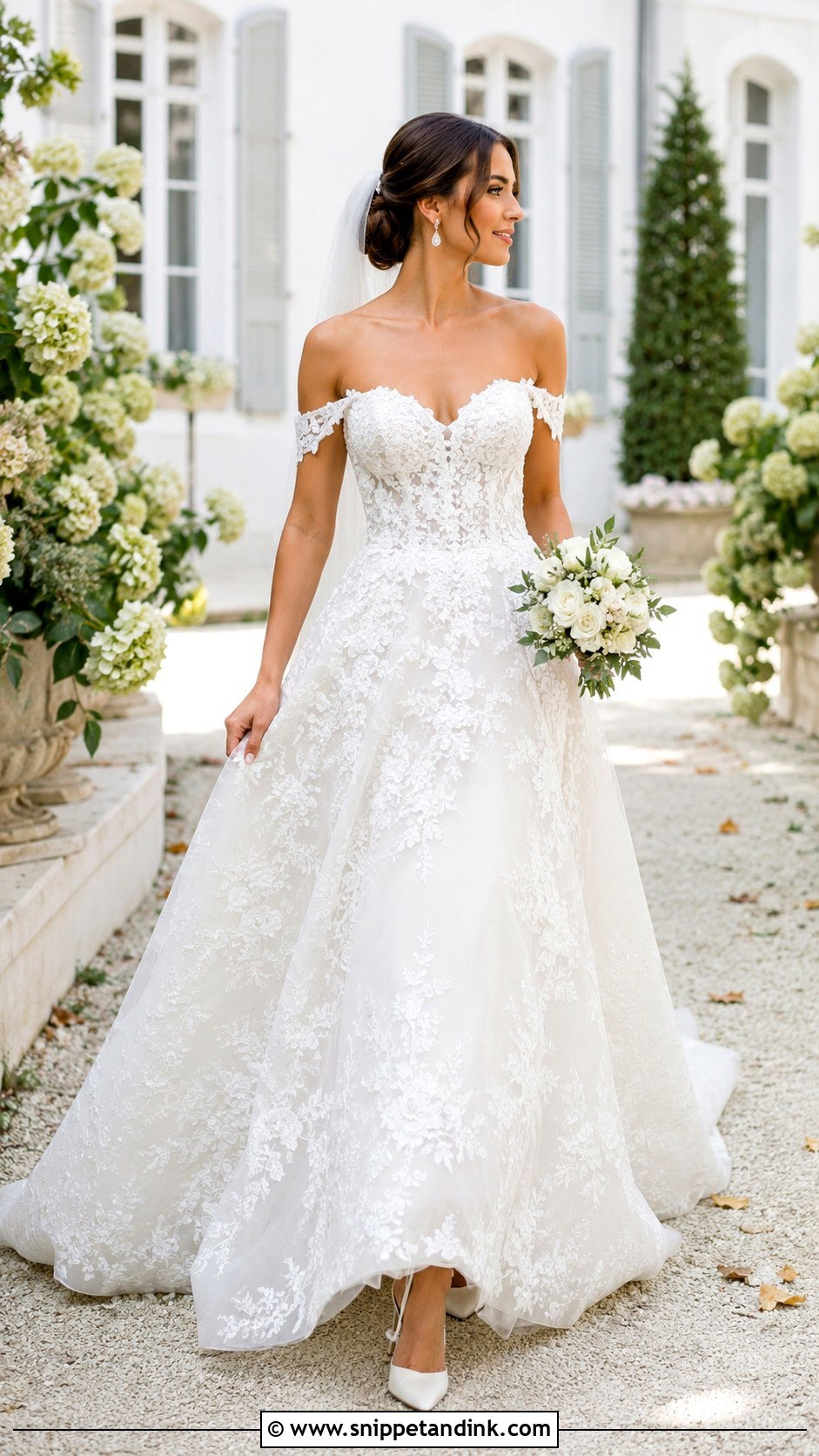
Off-shoulder lace straps frame the collarbones, but they also hold up part of the bodice, so their placement on the upper arm decides how much you can move. A structured bodice and full A-line skirt balance the open neckline and give more freedom than a fitted skirt would. A polished low bun, teardrop earrings, a fine bracelet and ivory slingbacks suit it, with the veil attached beneath the bun. Hold the bouquet below the waist in photos so it doesn’t cover the lace. In fittings, hug, reach and raise your arms. The straps should stay put without biting.
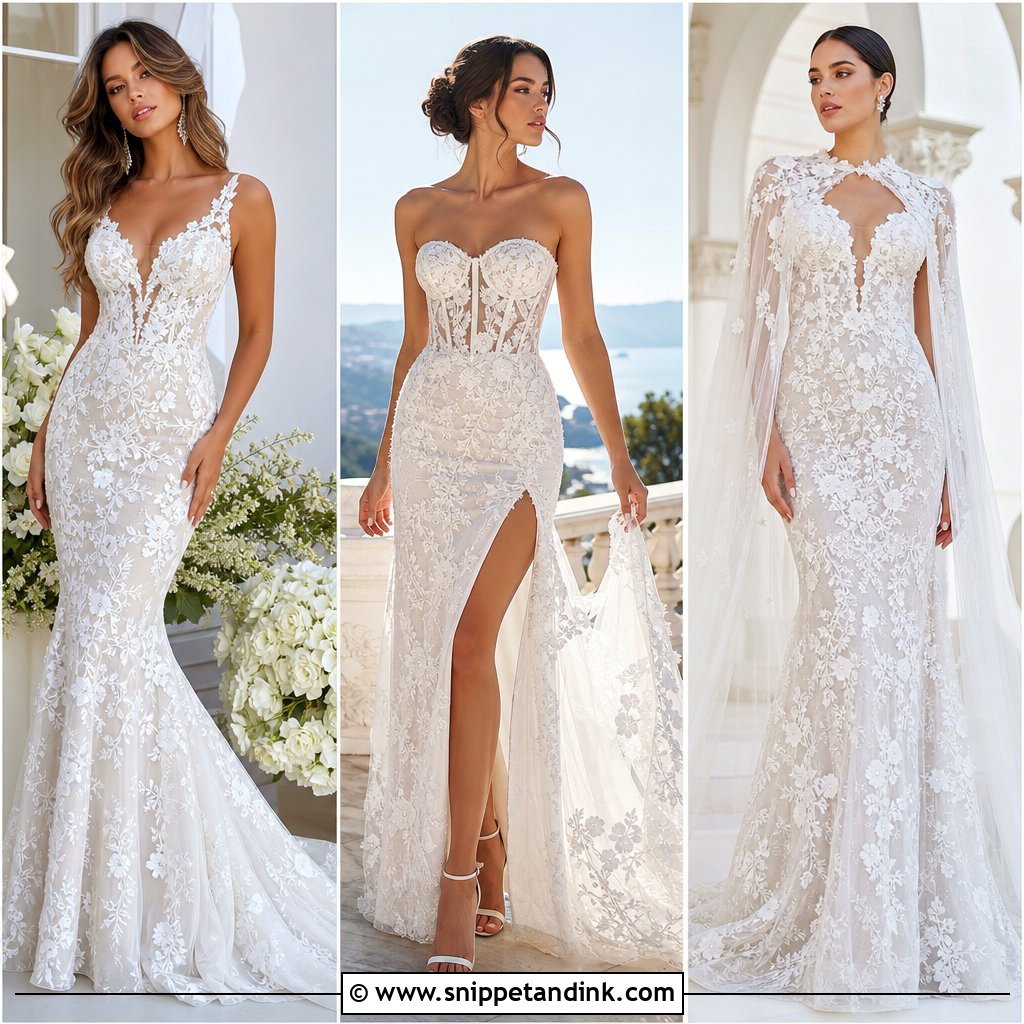
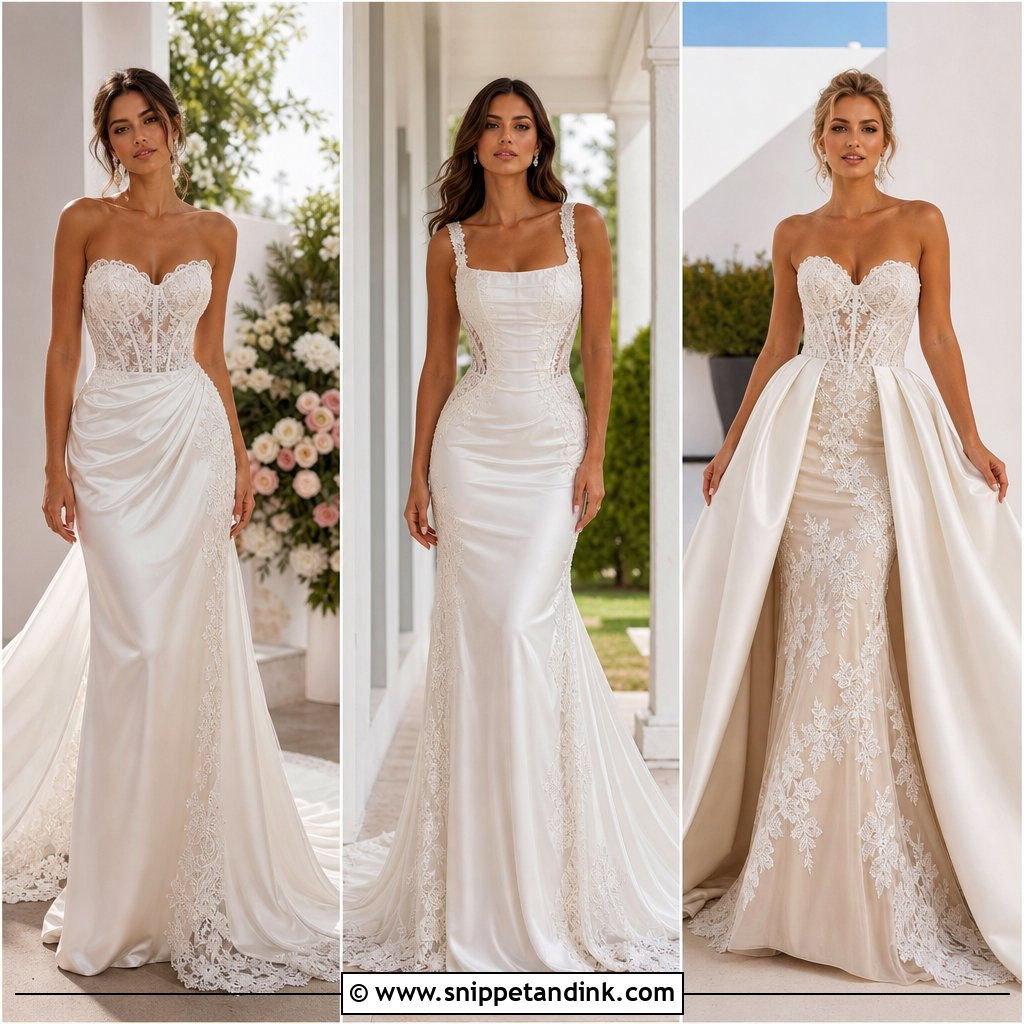
8. Floral Mermaid Wedding Dress
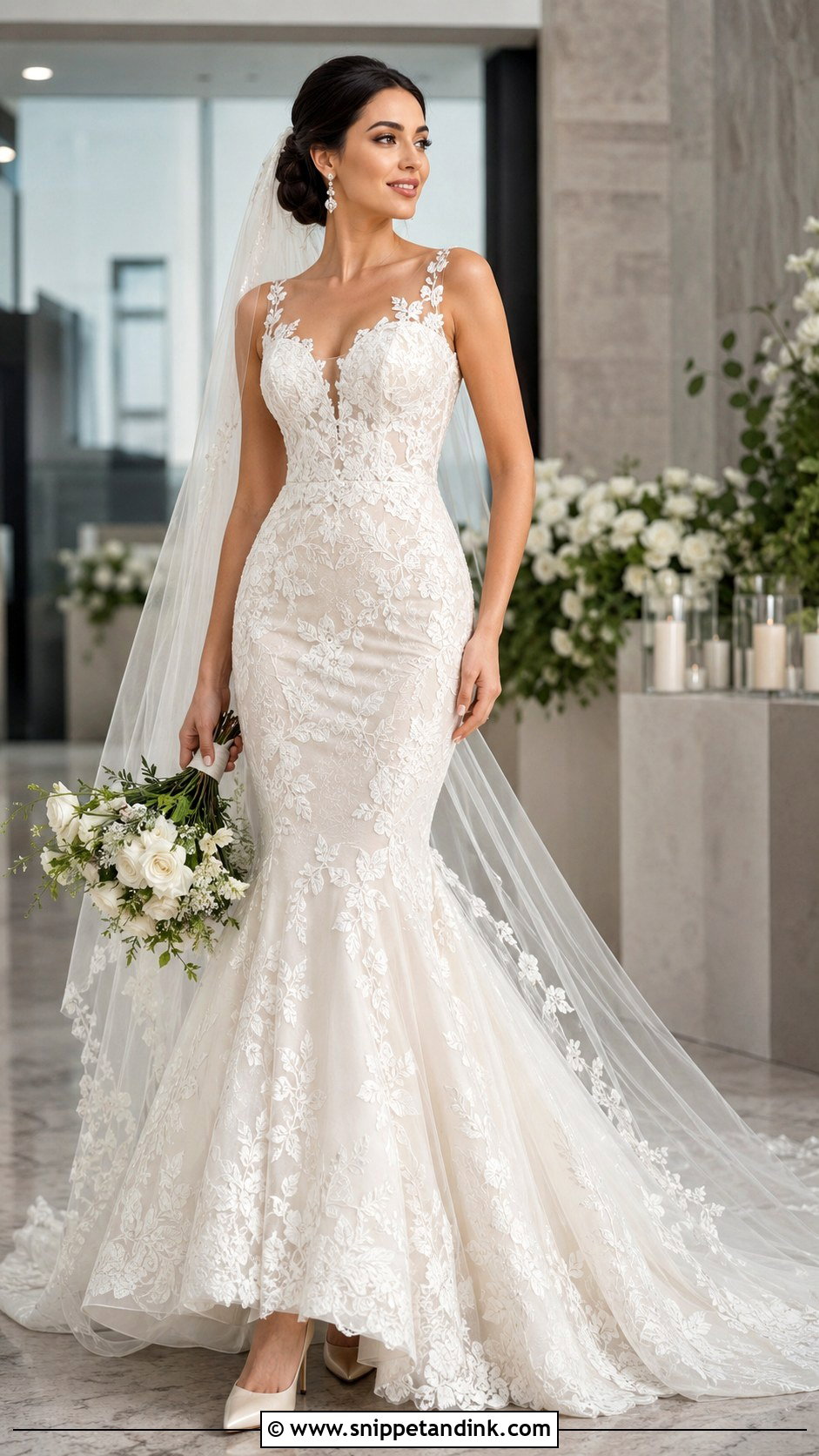
On a mermaid, lace placement can lengthen or shorten you. Motifs running vertically down the body draw the eye along; a band of heavy lace across the hips does the opposite. Appliqués concentrated at the neckline and the flare define the shape well. Mid-height pumps, drop earrings, a light veil just past the train and a smooth updo keep the back visible, and a slim bouquet keeps the waist in view. Sit, climb a few stairs and take full strides at the fitting. If you’re shuffling, ask about raising the flare point or adding stretch lining under the lace.
9. Square Neck Floral A-Line Wedding Dress
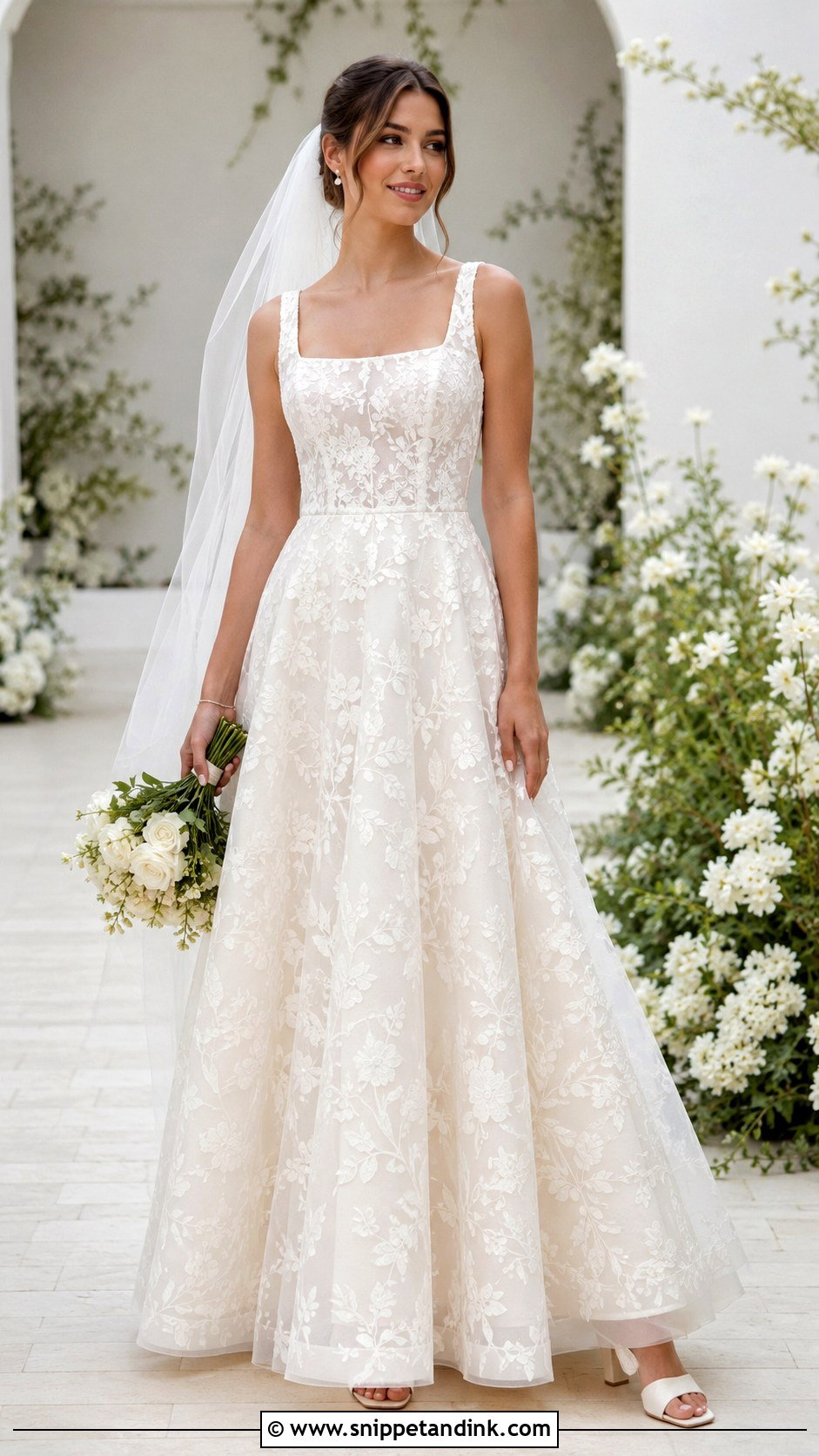
Wide straps on a square neck are a gift for anyone who wants to wear a normal or longline bra. Pair them with a defined waist and a skirt where the floral motifs fade out toward the hem, which keeps the bottom light. Pearl studs, a neat bun, ivory block heels and a chapel veil with a simple border are enough, with a compact white and green bouquet that echoes the clean lines. It moves comfortably between a modern venue and a traditional ballroom. During alterations, I watch the neckline as you move your arms: square necks gape at the corners if the bodice is even slightly loose.
10. Floral Corset Wedding Ball Gown
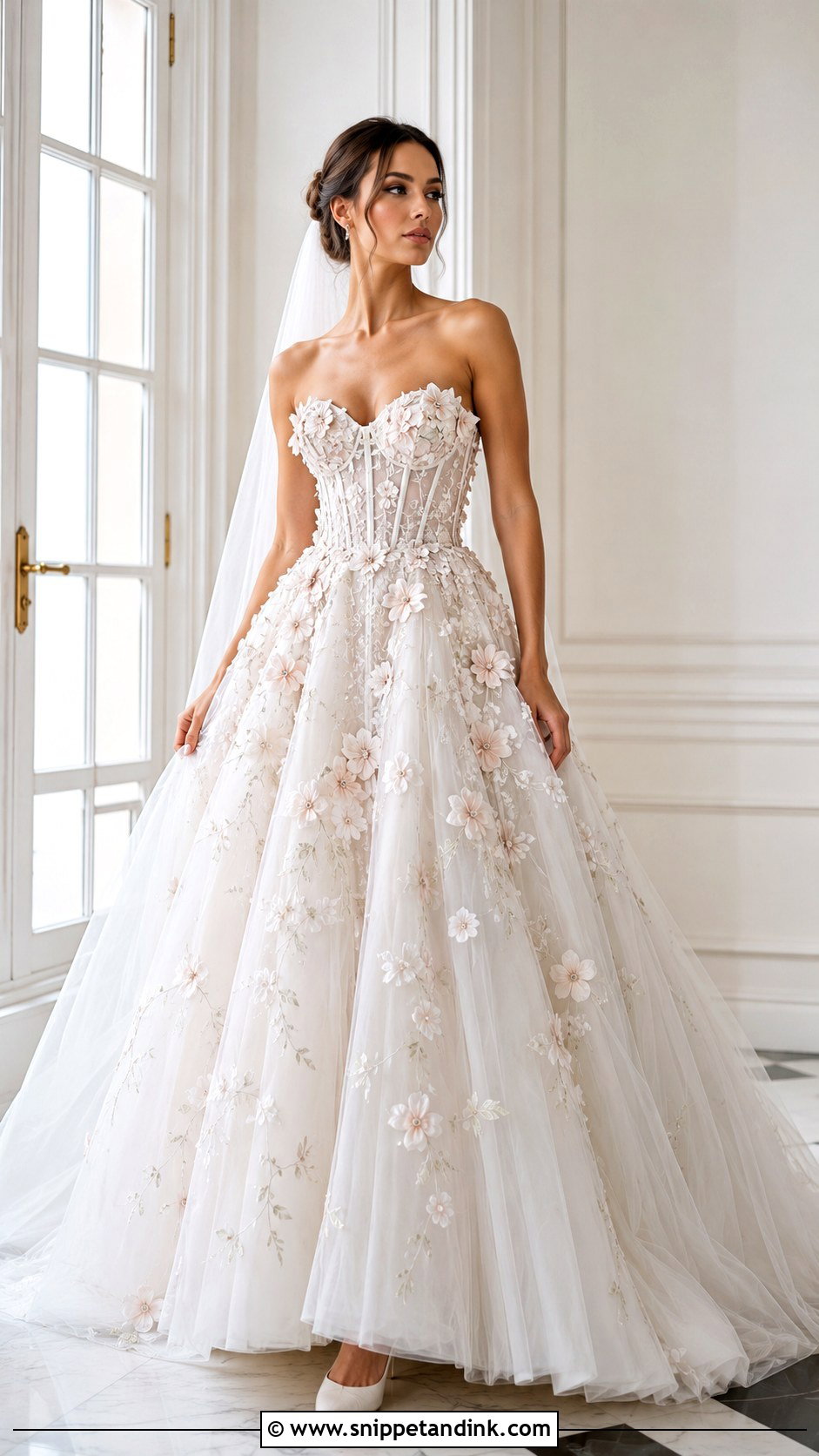
A boned bodice covered in embroidered vines or 3D flowers shows its structure on purpose, and the full tulle skirt softens it. Lined corsets read traditional; sheer ones with visible boning look more current but leave nowhere to hide an ill-fitting seam. Choose smooth accessories rather than more pattern: a plain veil, small gemstone earrings and satin pumps. A low ponytail or bun keeps the lacing in view. My test at fittings is simple. Breathe deeply, sit, and pretend to eat. If any of those feel tight now, they’ll feel worse after dinner.
11. Floral Wedding Dress With Cape
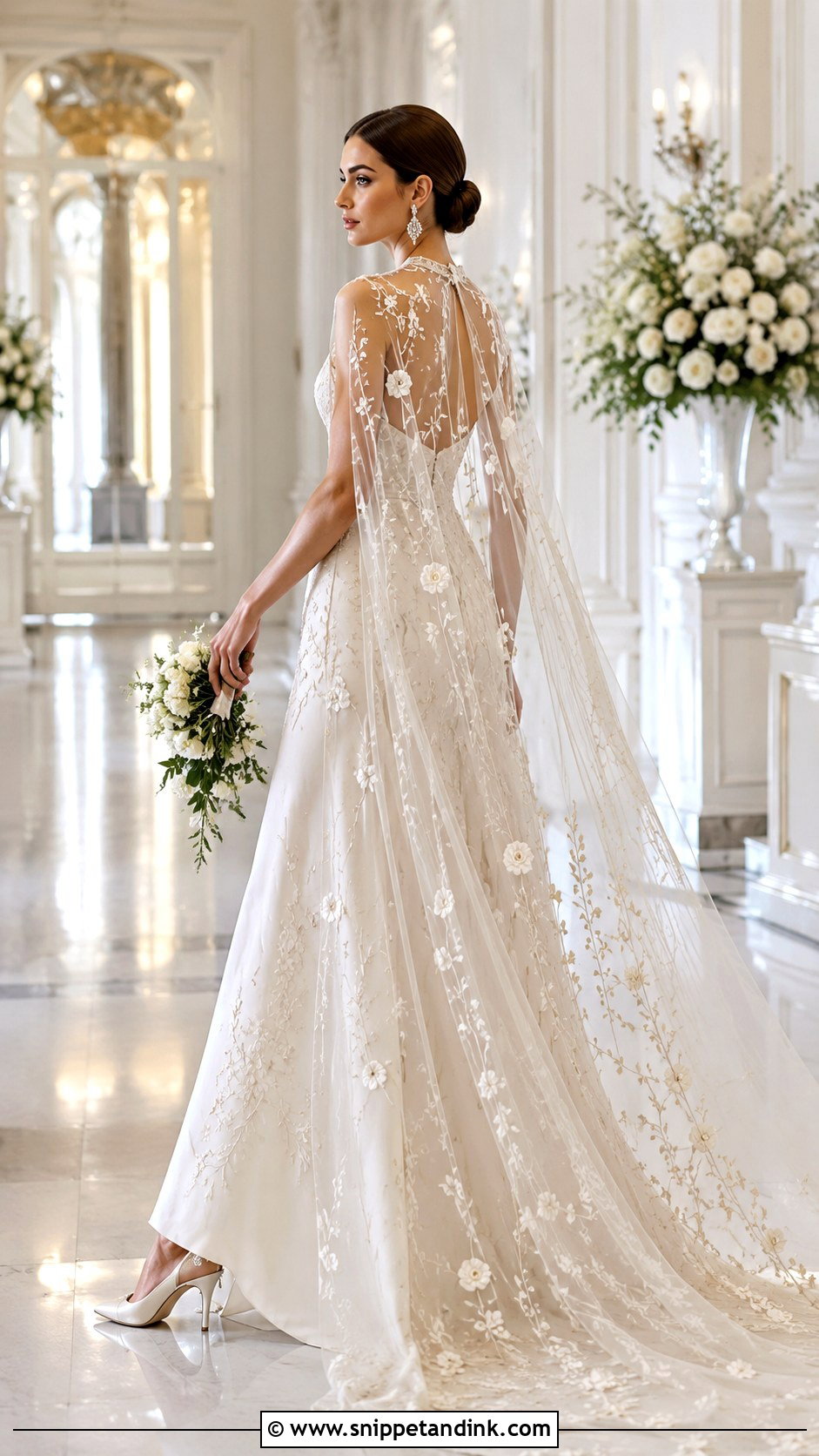
A cape gives ceremony drama without a veil, and on a floral gown it can carry the same vines around the shoulders and scattered blossoms down its length. Start with a streamlined A-line or column with subtle embroidery so the two don’t compete. Pointed heels and small crystal earrings add no extra weight. Keep the hair smooth and clear of the attachment points. A narrow bouquet won’t crush the cape against the dress. Make sure it comes off quickly for dinner; covered snaps or small hooks hold firm and stay invisible in close photographs.
12. Floral Wedding Dress With Detachable Sleeves
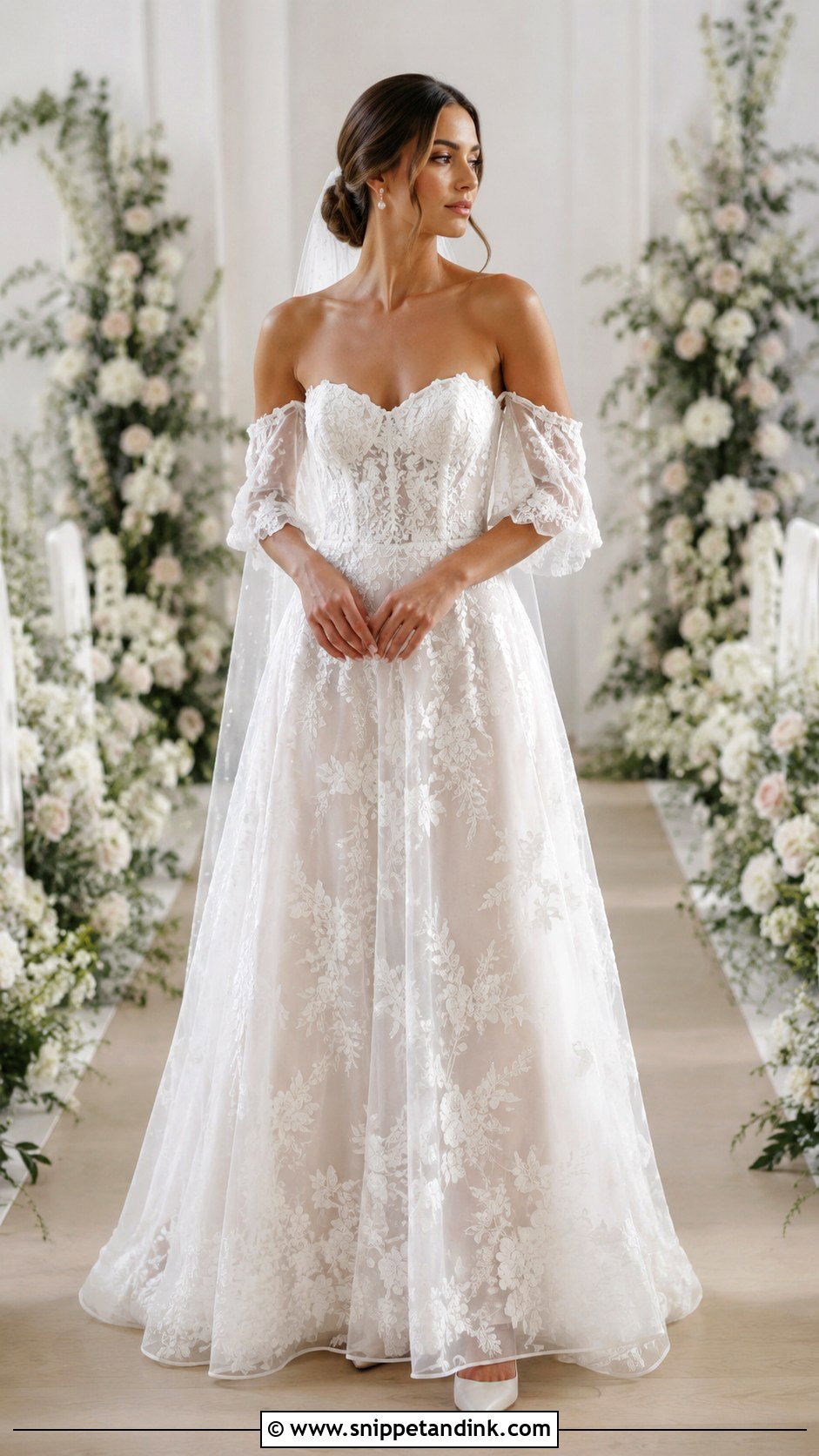
Detachable sleeves give you two outfits from one dress: embroidered tulle off-the-shoulder sleeves for the ceremony, then a clean strapless or sleeveless gown for the party. With the sleeves on, I’d keep pearl earrings, a low bun, closed heels and a plain veil; once they’re off, swap in statement earrings or a fine bracelet. A floral A-line suits this best. Check that the attachments stay hidden when you move, and have a bridesmaid practice removing them and laying them flat in tissue, since crumpled tulle appliqués don’t recover well.
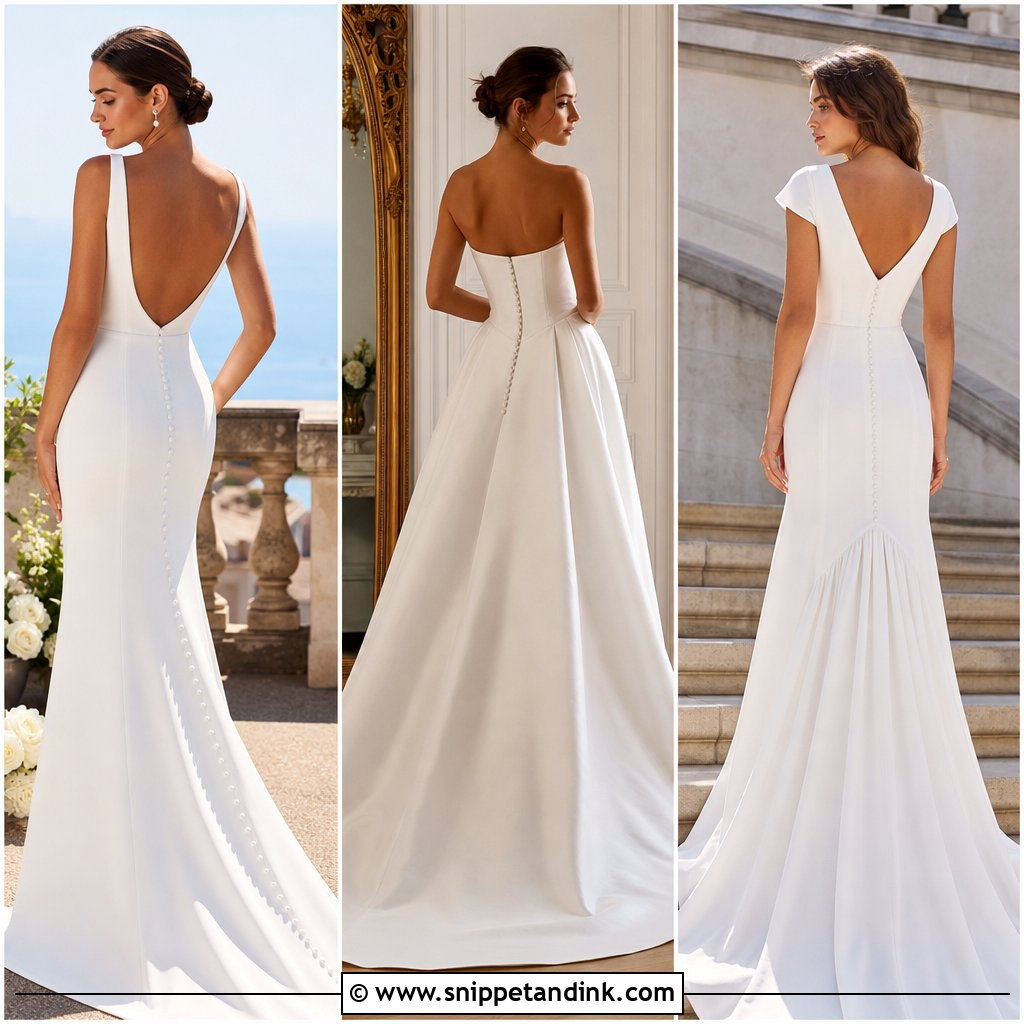
13. Minimalist Crepe Wedding Dress With Floral Appliqués
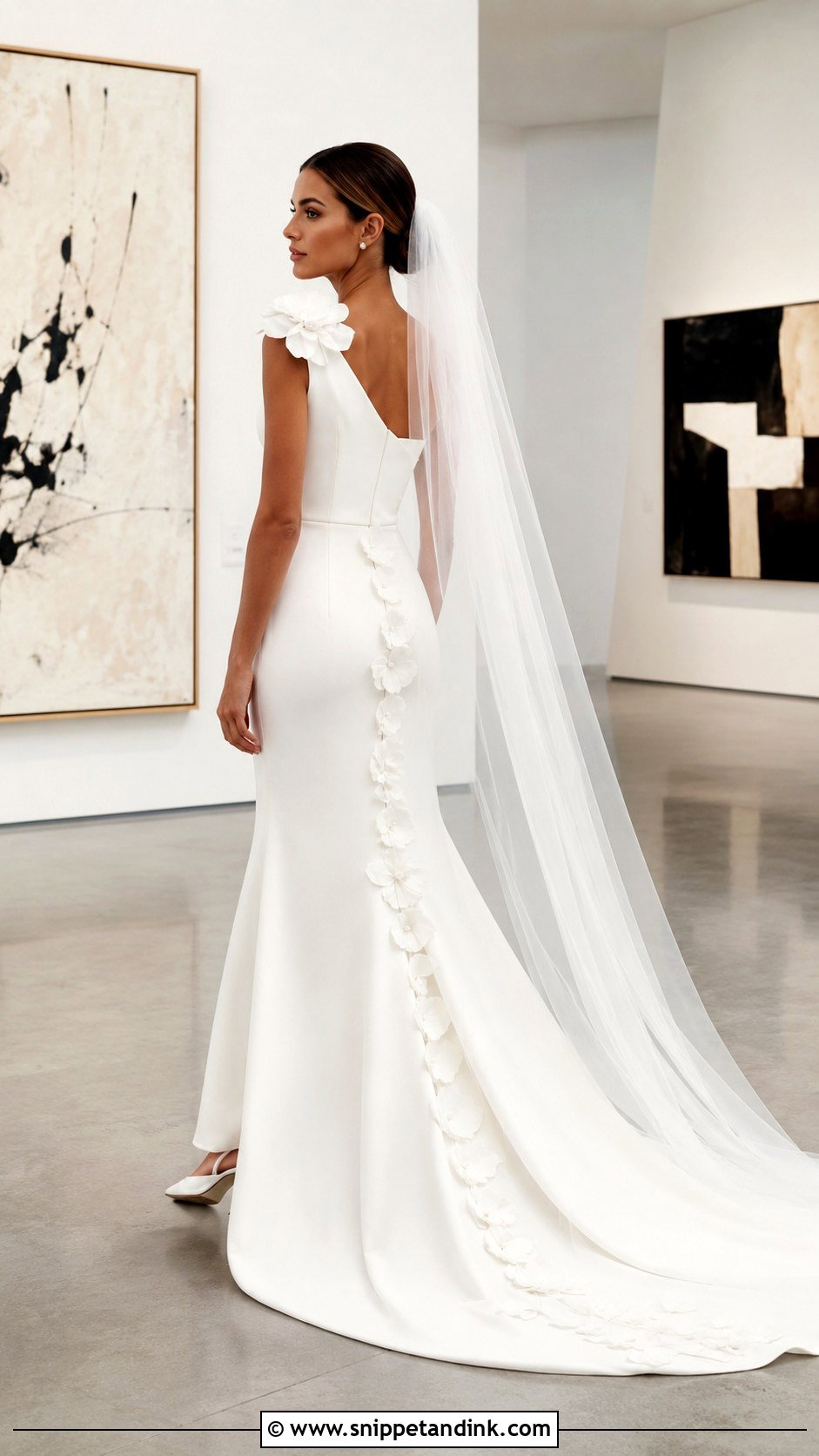
Crepe with only a few flowers is my favorite way to do floral for a bride who otherwise likes things plain. One sculpted bloom at the shoulder or a trail of petals down the back is enough on a clean column or fit-and-flare. Ivory pumps, pearl studs, a smooth bun, a plain chapel veil and a small white bouquet keep it minimal for city venues and galleries. Crepe shows every fit flaw, so bring your exact undergarments and shoes to every fitting and look at the gown in daylight as well as indoor light.
14. Tea Length Floral Wedding Dress
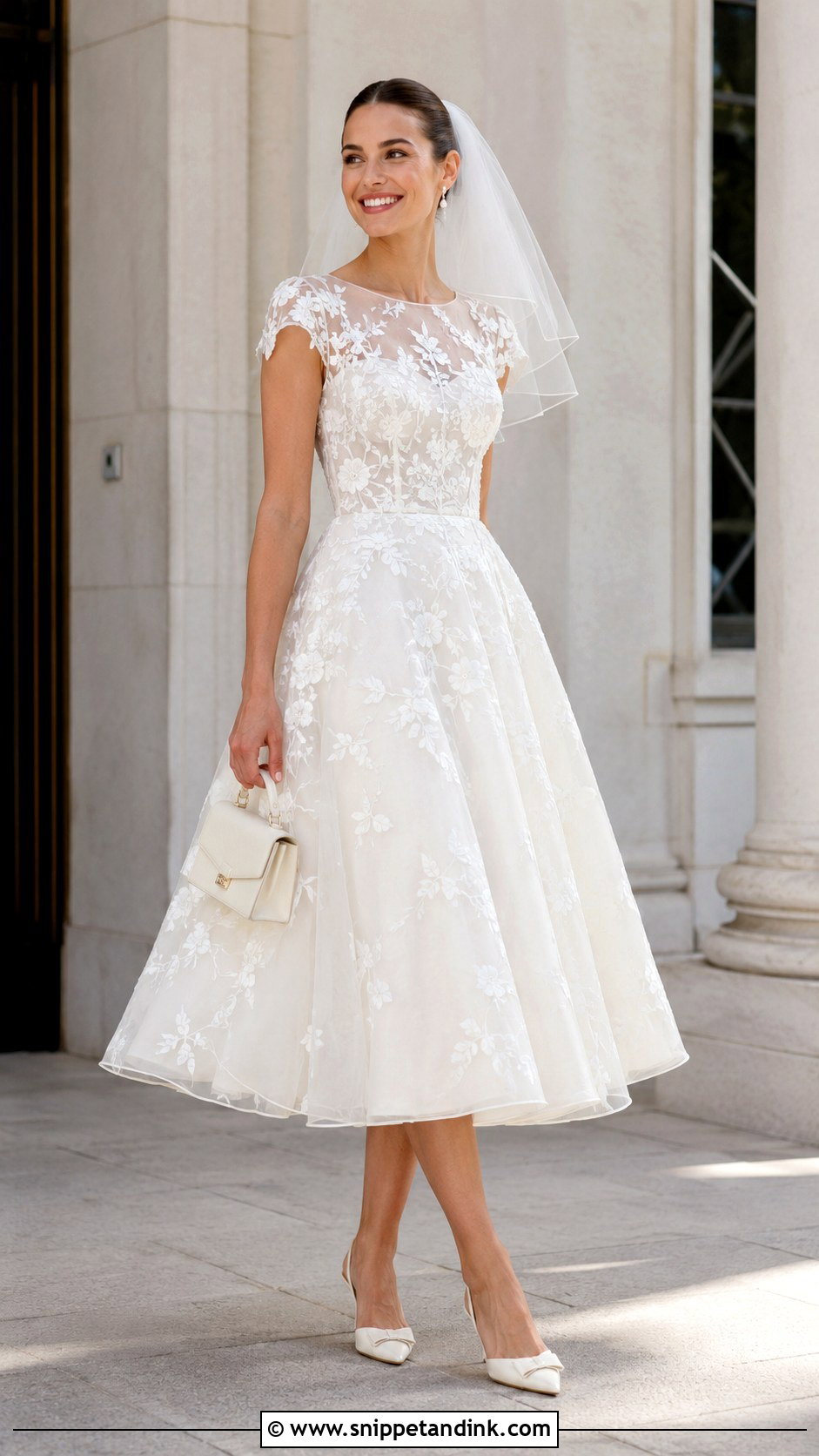
Tea length is cheerful and practical, and it’s the floral dress I suggest most for courthouse ceremonies and daytime parties. A fitted bodice and full skirt ending between knee and ankle is the classic shape. Floral jacquard, embroidered organza or appliquéd tulle keeps it clearly bridal. Your shoes are on show, so polished slingbacks, embellished flats or block heels matter more than usual. A small structured bag, pearl earrings and a short veil or hair bow suit the proportion. Set the hem in your exact shoes; I avoid letting it end at the widest part of the calf.



15. Boho Floral Chiffon Wedding Gown
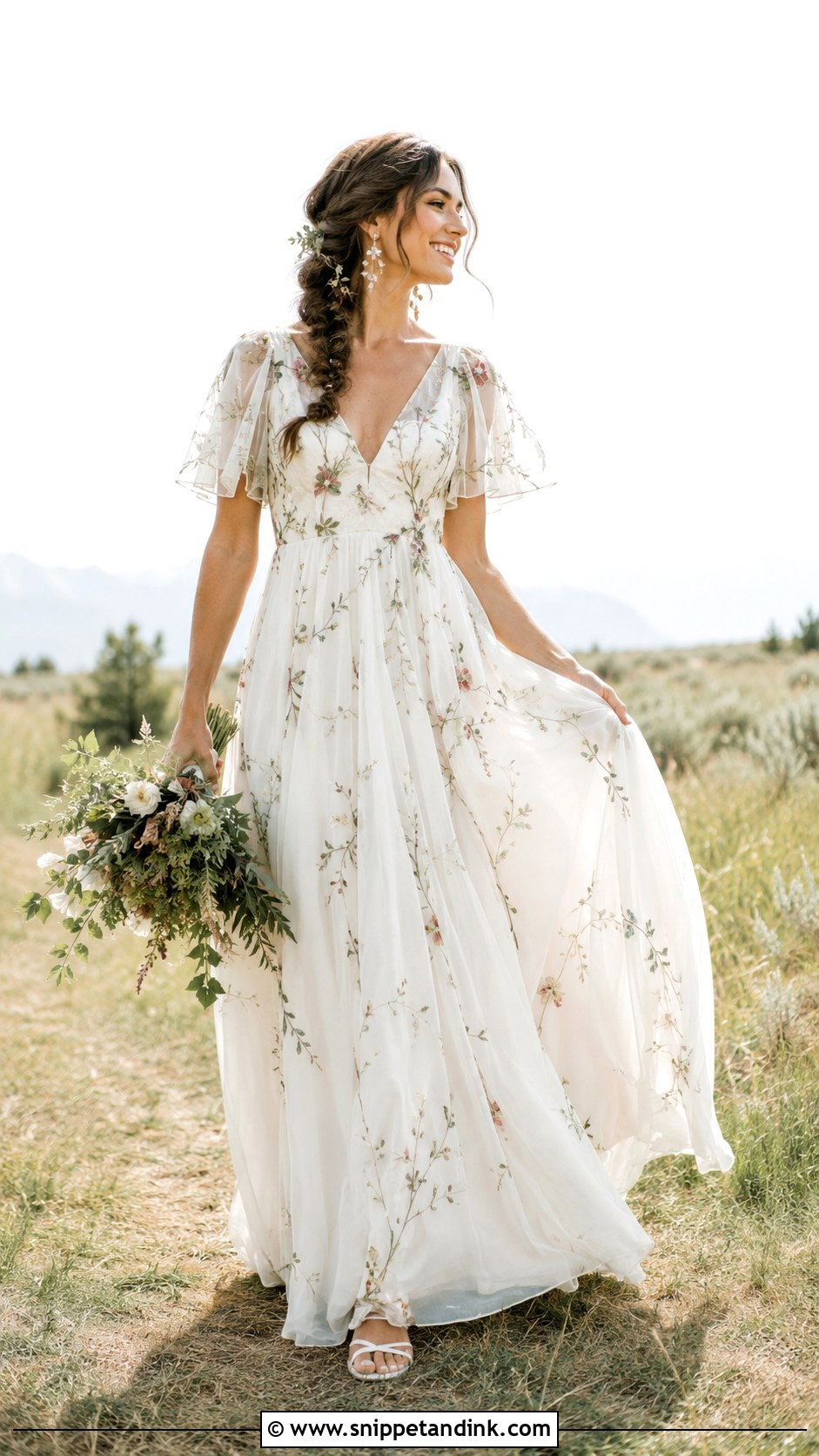
Light chiffon with delicate embroidery is the comfortable choice for beaches, meadows and barns. An empire or softly defined waist, flutter sleeves and a skirt that lifts in a breeze give it the boho feel, with vines around the neckline and sleeve edges. I’d pair low block heels or supportive sandals, botanical earrings and a loose braid, with either a light veil tucked under it or a simple floral comb. A natural bouquet with mixed greenery suits it. Chiffon is sheer and wind-catching, so ask for a smooth lining and small weights sewn into the hem if gusts are likely.
16. Vintage Floral Jacquard Wedding Dress
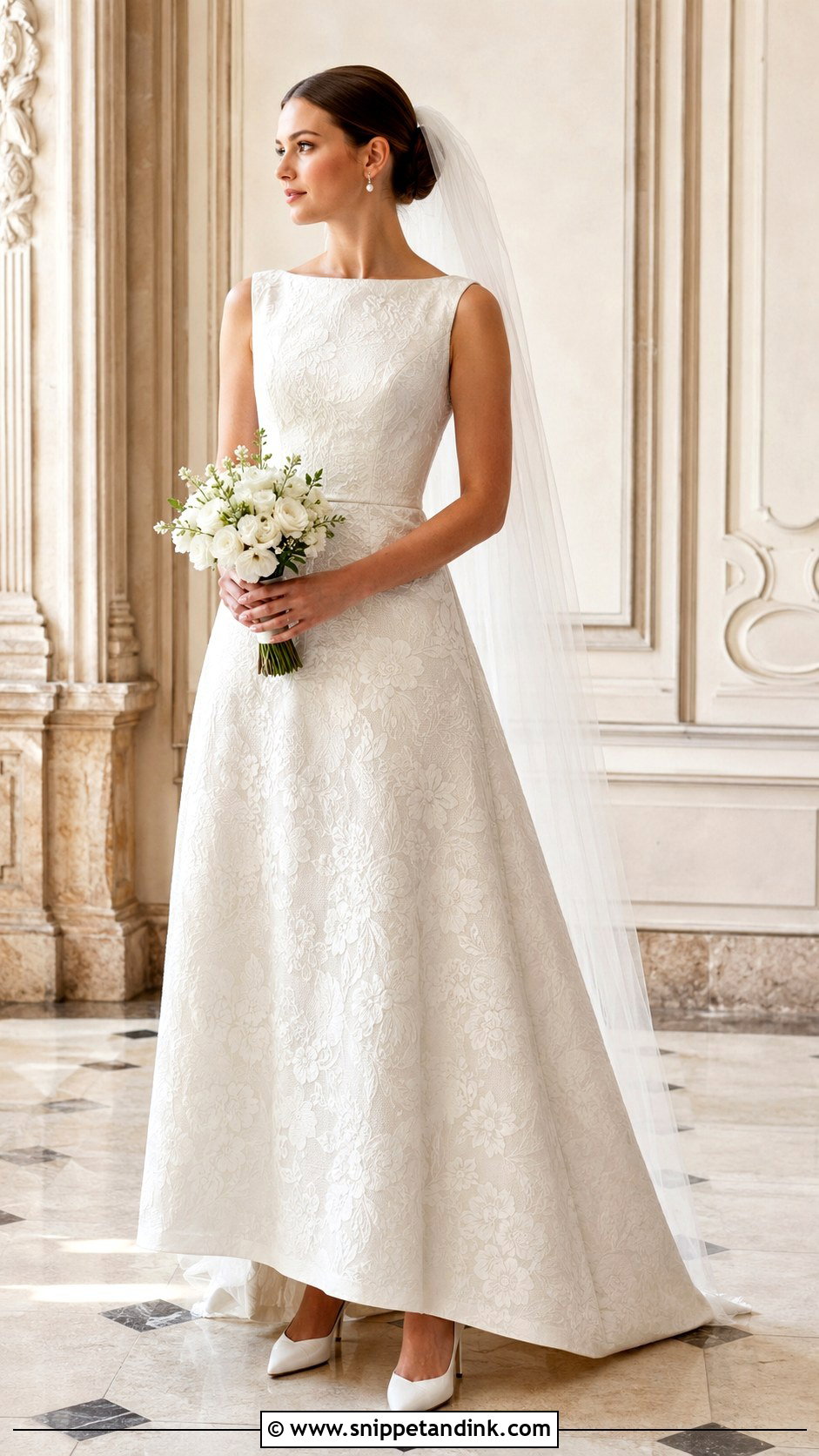
Jacquard weaves the flowers into the fabric itself, so the pattern catches light rather than sitting on top. It suits a bateau-neck A-line, a square-neck ball gown or a tailored tea-length dress, and covered buttons down the back push the vintage feel further. Pearl earrings, a neat chignon, pointed pumps and a simple veil, with a compact white bouquet, finish it. Jacquard is warmer and heavier than chiffon, which makes it my go-to for autumn and winter. Stiffness varies a lot between mills, though, so sit, turn and climb stairs before buying.
17. Blue Floral Embroidered Wedding Gown
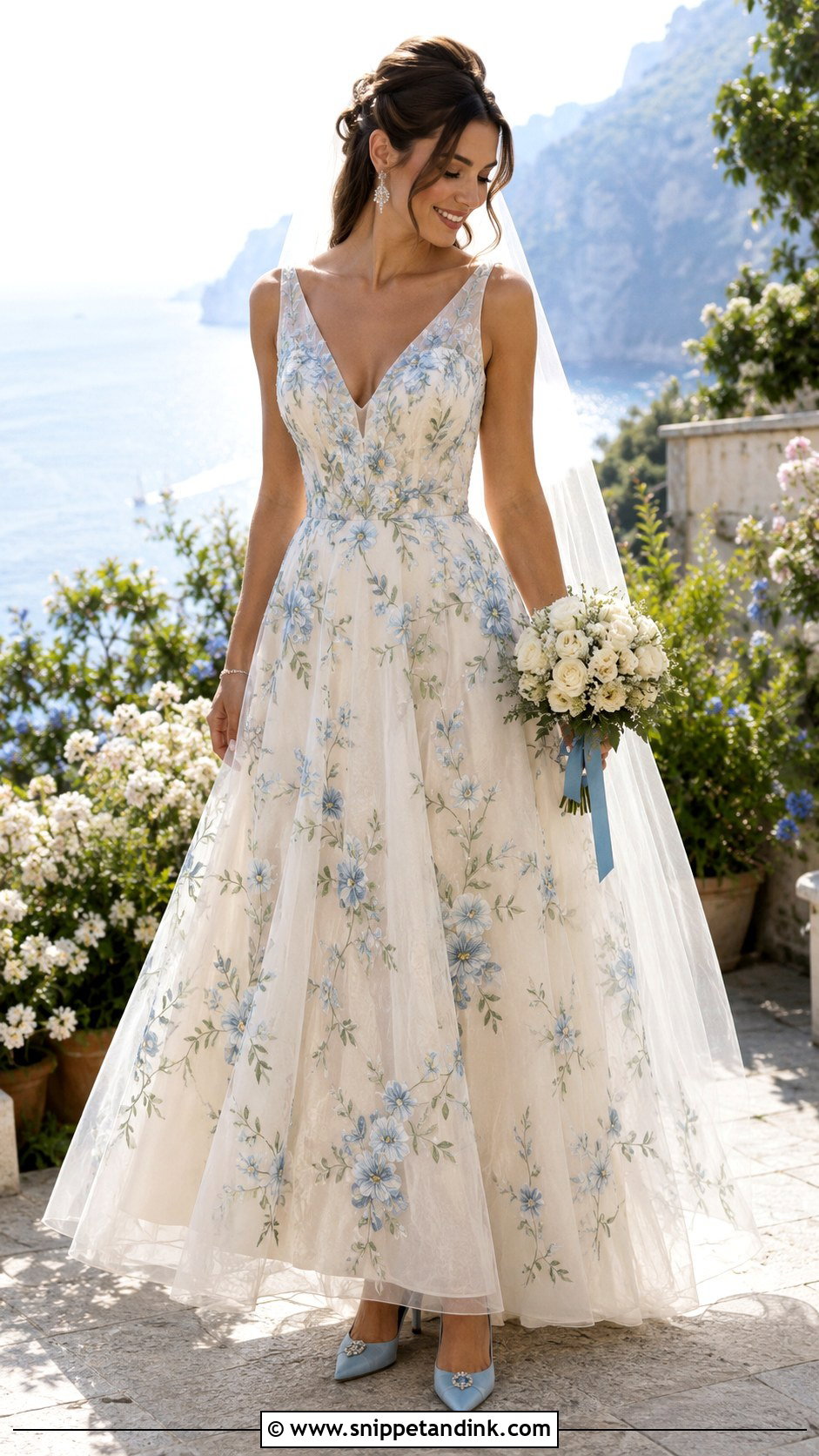
Blue embroidery is the color I’m asked about most, often because it doubles as something blue. Fine powder-blue vines look subtle; blue, green and white flowers together give stronger contrast. An A-line gives the stitching enough surface to show. Silver earrings, pale blue heels and a plain ivory veil work, with a blue ribbon on a white bouquet. Repeat the shade once or twice, not on every accessory. When everything matches the embroidery, the outfit tips into costume and the dress loses its focus.
18. Plus Size Floral Wedding Ball Gown
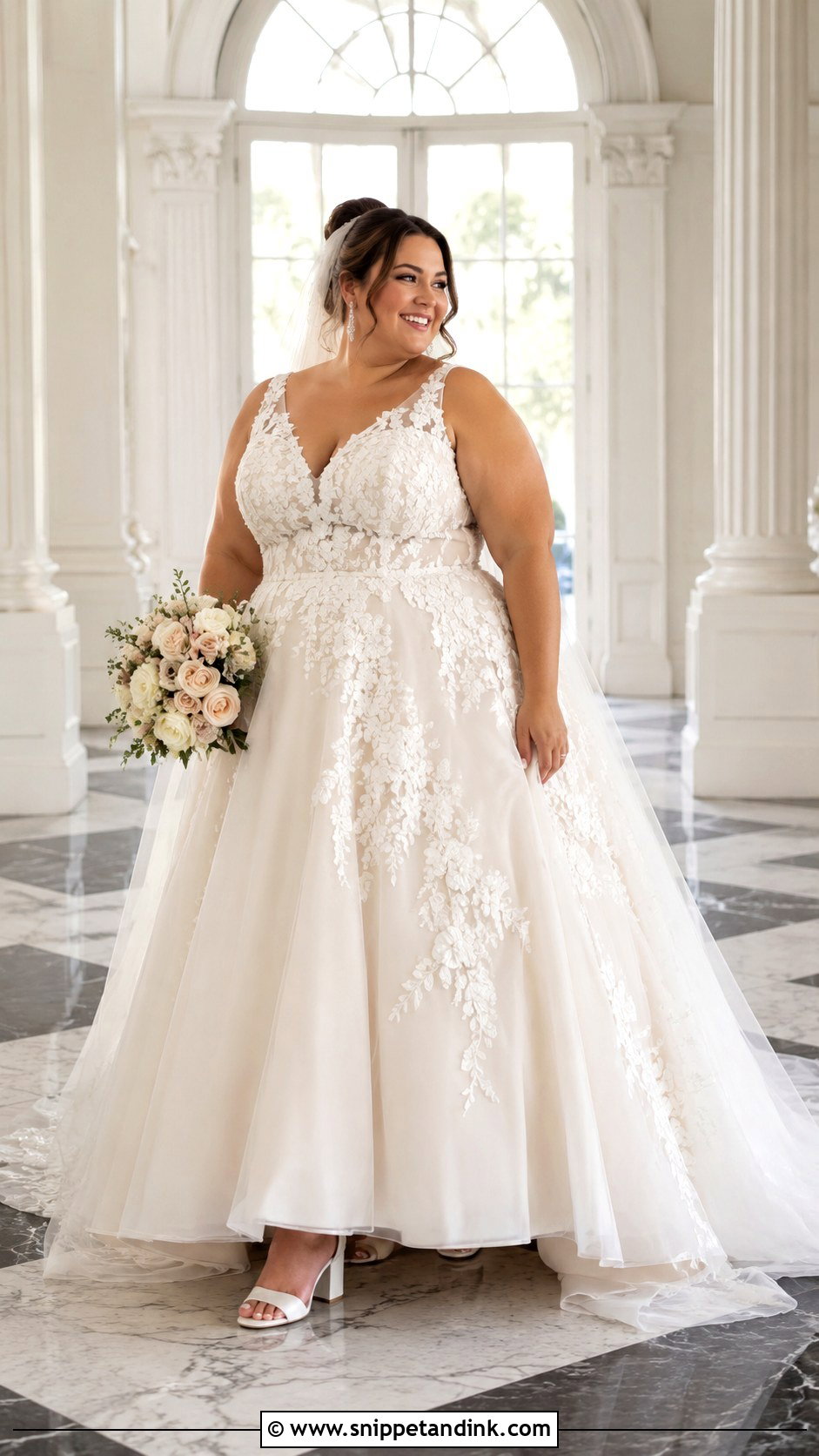
For plus-size brides, a floral ball gown can be one of the most supportive options, as long as it’s built for it. I look for comfortable boning, wider straps and a defined natural waist, with an A-line or moderate ball skirt that adds fullness without extra bulk. Appliqués running diagonally or vertically guide the eye through the whole shape. Stable block heels, good undergarments, drop earrings and a light veil suit it, with a medium bouquet held below the waist. Ask whether the sample in the shop is constructed the same way as the dress in your size, because sometimes it isn’t. Then check bust support, side seams and armholes at every fitting.
19. Modest Floral Wedding Dress
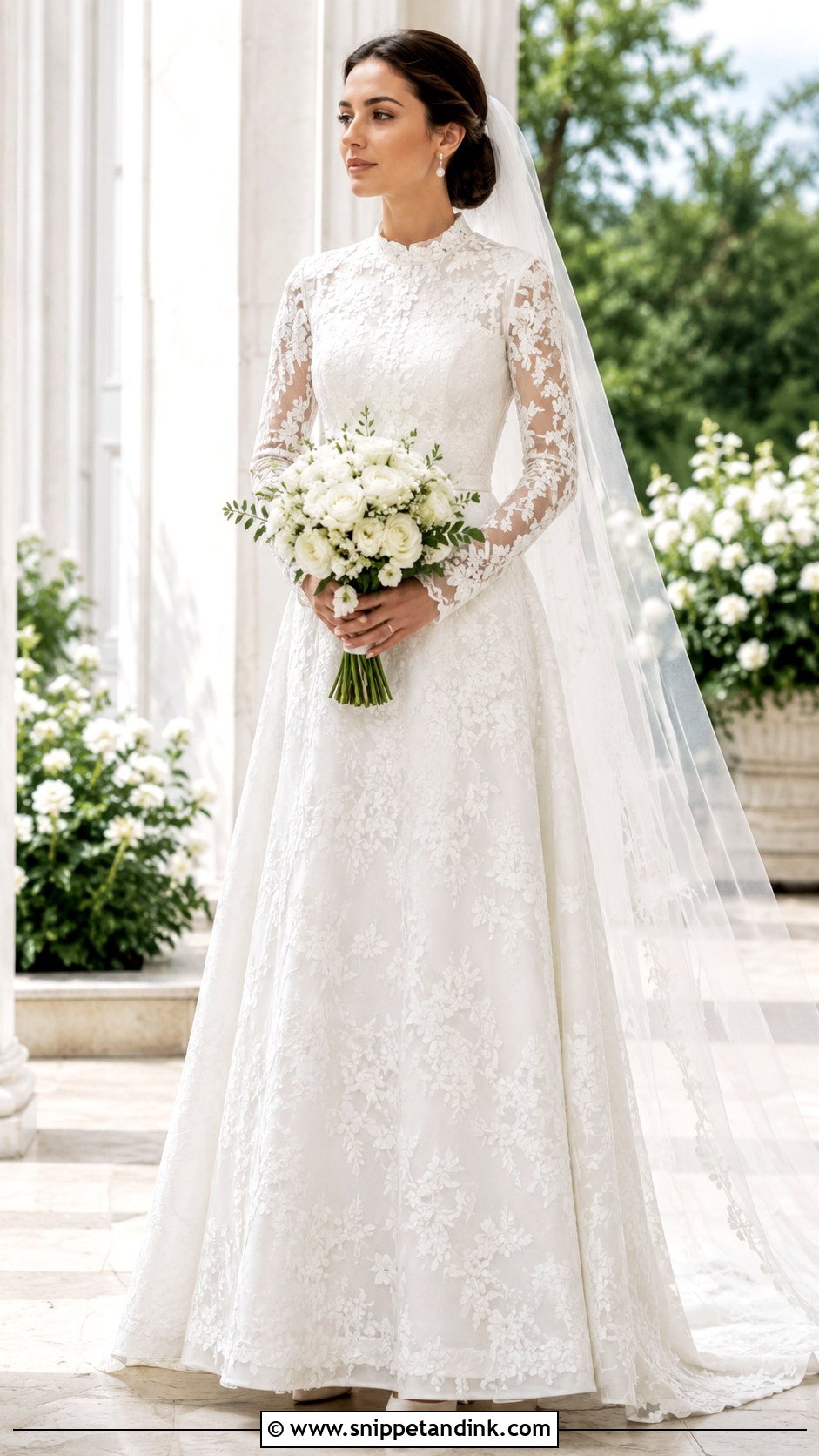
Floral lace and embroidered tulle keep a covered gown from feeling severe. A high neckline, lined bodice, long sleeves and flowing A-line skirt give full coverage. If the outer layer is sheer, ask for lining through the bodice and sleeves in ivory or a shade close to your skin, and check it under a camera flash, which can see through thin linings. Closed pumps, pearl earrings, a low bun and a chapel veil complete it, with a structured bouquet for definition. Turn your head and bend your elbows at fittings; the sleeves need a little ease or they’ll ride up.


20. Floral Wedding Dress With Cathedral Train
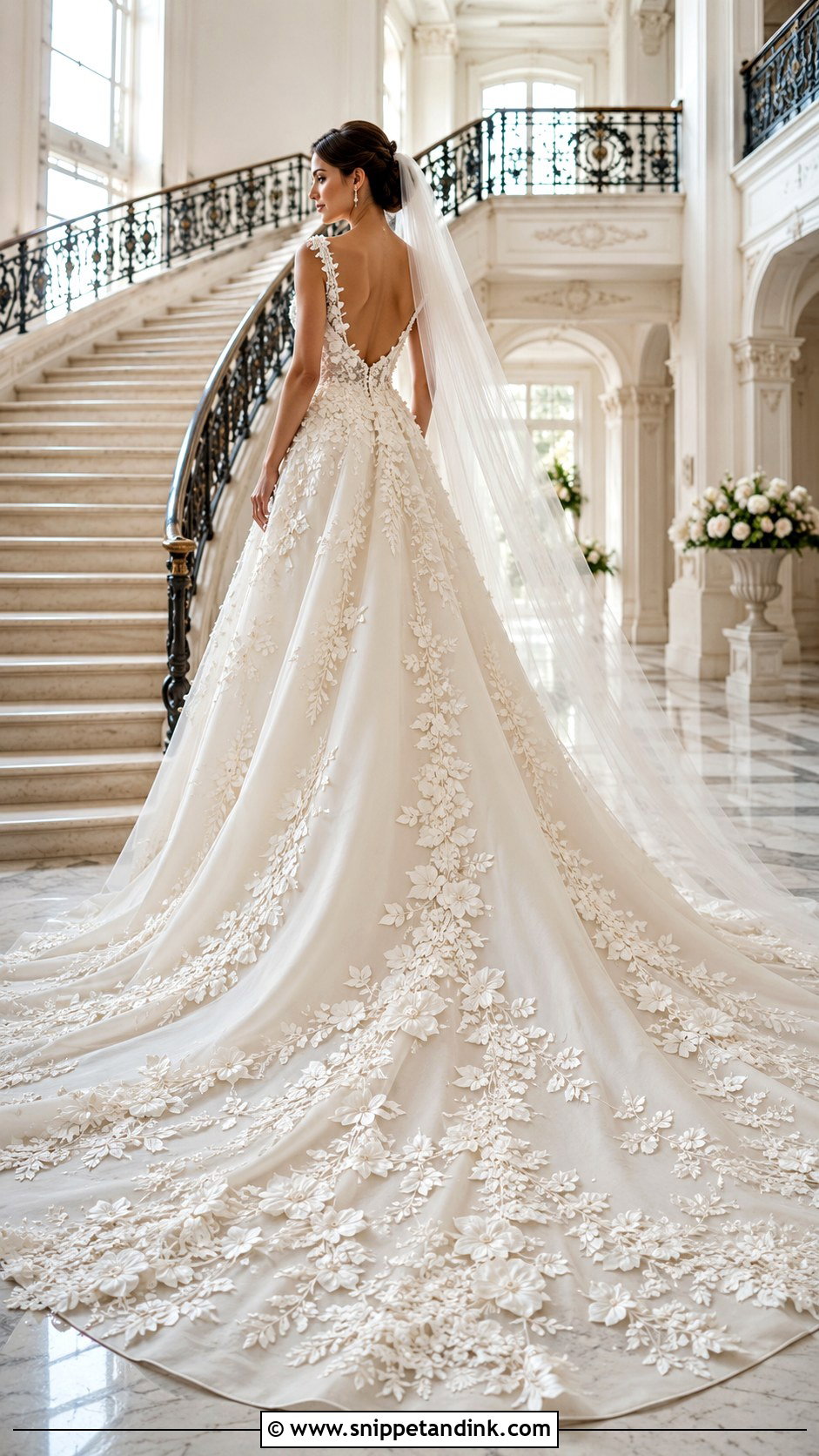
A cathedral train with appliqués running unbroken from bodice to hem gives guests a long view of the pattern as you walk away from them. An A-line, fit-and-flare or ball gown all carry it. The veil should be clearly shorter than the train or long enough to pass it. Secure pumps, understated earrings, an updo and a compact bouquet keep the front tidy. You need a wide aisle and space for portraits. Plan a strong bustle, and name one person whose job is to spread, lift and fasten the train all day.
Steam, Tissue and a Dark Closet for 3D Petals
Flowers are the part of a floral gown that suffers most, before and after the wedding. Never press an iron onto appliqués. I steam from the inside of the skirt or hold a handheld steamer a hand’s width away so the petals relax without going flat, and I fluff any crushed ones with my fingers while they’re still warm.
For storage, the dress should hang by its inner hanger loops, not the shoulders, so the weight of a heavy skirt doesn’t pull the bodice flowers out of shape. If it’s folded into a box after cleaning, acid-free tissue goes between every fold and under raised petals. Keep it somewhere cool and dark: colored embroidery fades in daylight over the years, and plastic garment bags trap moisture that yellows ivory tulle.
When a flower comes loose on the day
Put a needle pre-threaded in ivory, a few safety pins and the spare appliqués in the emergency kit. A quick tack through the center of the flower holds until the end of the night; save the proper repair for the cleaner.
Petals Should Survive the Dance Floor Too
Floral detail suits nearly every shape, season and venue; the choice is really about how much texture you want to live with all day. Dimensional flowers bring couture drama, embroidered wildflowers bring color and personality, and lace, jacquard, chiffon, crepe and tulle each set a different mood, so compare fabric as carefully as silhouette. Keep the veil, shoes, hair and jewelry from covering the flowers you paid for. And look at every option from the front, side and back, in daylight and lamplight, before deciding.
You'll Like These Ideas:








Leave a Reply