
Every dress below is made from tulle, the fine net that gives a wedding gown soft movement, airy layers or real volume without dense weight. It shows up in A-lines, ball gowns, mermaids, tea-length skirts and pared-back modern shapes, and it carries lace appliqués, embroidery, beading, ruffles and fine sparkle well. Tulle also varies more than most brides realize, from crisp and full to soft and fluid. When I help someone choose, we start with proportions, venue, season and how much skirt she wants to manage, and the decoration comes last. Here are twenty complete looks, from classic ivory to blush.
Silk Tulle, Nylon Net and Why the Label Matters
Two gowns can both say “tulle” on the tag and feel nothing alike. Before you fall for a silhouette, it helps to know what the net is made of, because the fiber decides how much volume you get, how soft it feels and how it survives the day.
- Silk tulle is very soft and drapes close to the body. It gives a floaty, low-volume skirt and suits veils and slim silhouettes. It is also the most delicate and usually the most expensive.
- Nylon tulle is the common bridal choice. It ranges from soft to fairly crisp, builds volume well and resists snags better than silk.
- Polyester tulle is usually stiffer and cheaper. It holds big shapes but can feel scratchy against bare skin unless the gown is well lined.
- Soft English-style net has a finer, rounder mesh and a gentle hand, often used for veils and layered skirts that need to move.
When I touch a sample, I crush a handful of the skirt in my fist and let go. Good tulle springs back with few creases. Cheaper net stays crumpled, and that’s how it will look after an hour in a car.
For a full ball gown, crisper nylon or polyester layers under a soft top layer gives both shape and a gentle surface. For a slip-like or boho dress, softer net is the better match.
1. A-Line Tulle Wedding Dress
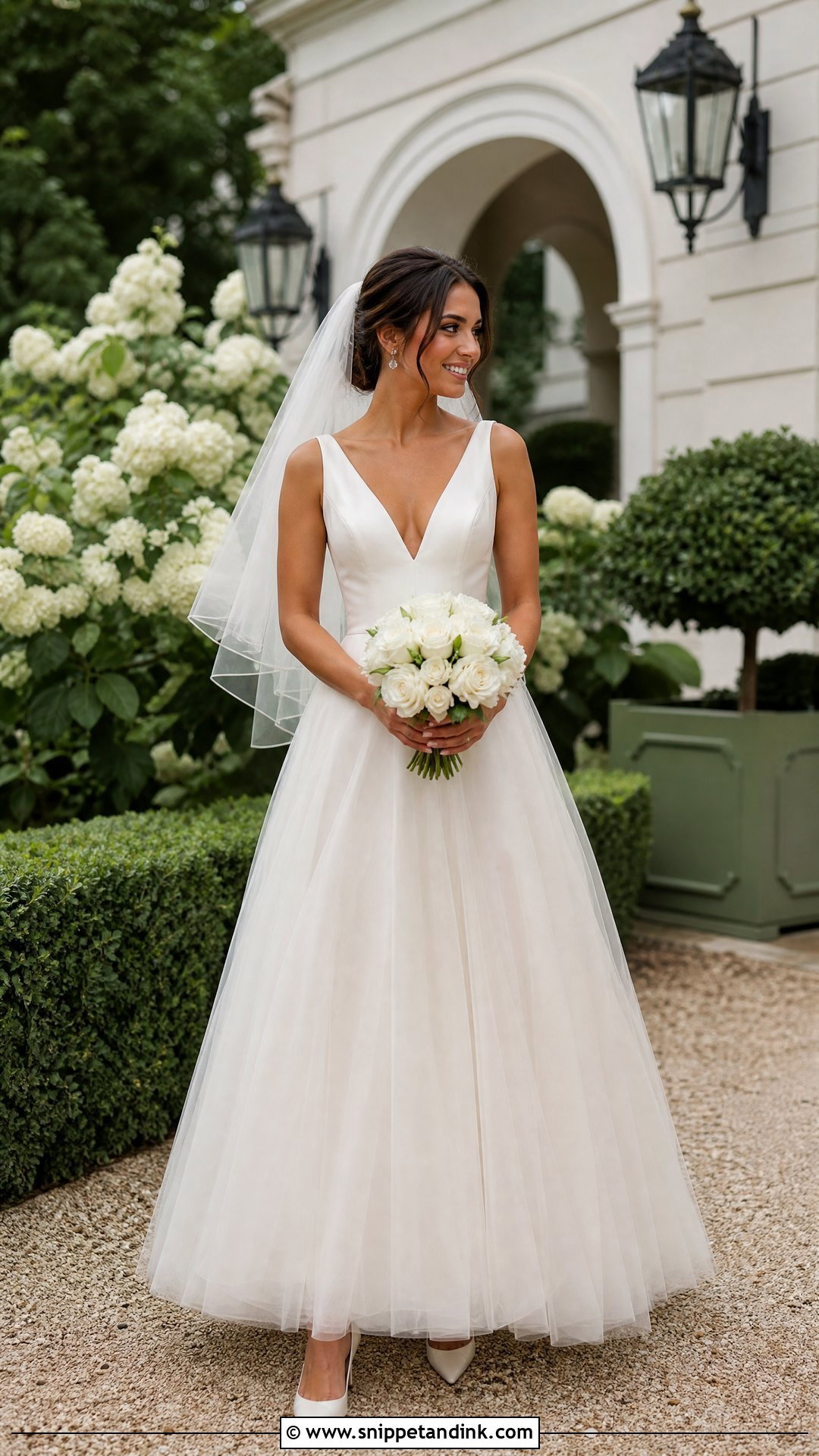
The A-line is where I’d send most brides first. A fitted bodice at the natural waist and a skirt that widens gently toward the floor flatter a wide range of figures and suit gardens, ballrooms and estates alike. A V-neck lengthens; wider straps support. Pearl drops, a fingertip veil, pointed ivory heels, a compact white bouquet and a low bun or loose waves complete it. At alterations, watch the lowest tulle layer. It should clear the floor in your actual shoes so you can walk without kicking the hem, while the top layers keep their length.
2. Tulle Ball Gown Wedding Dress
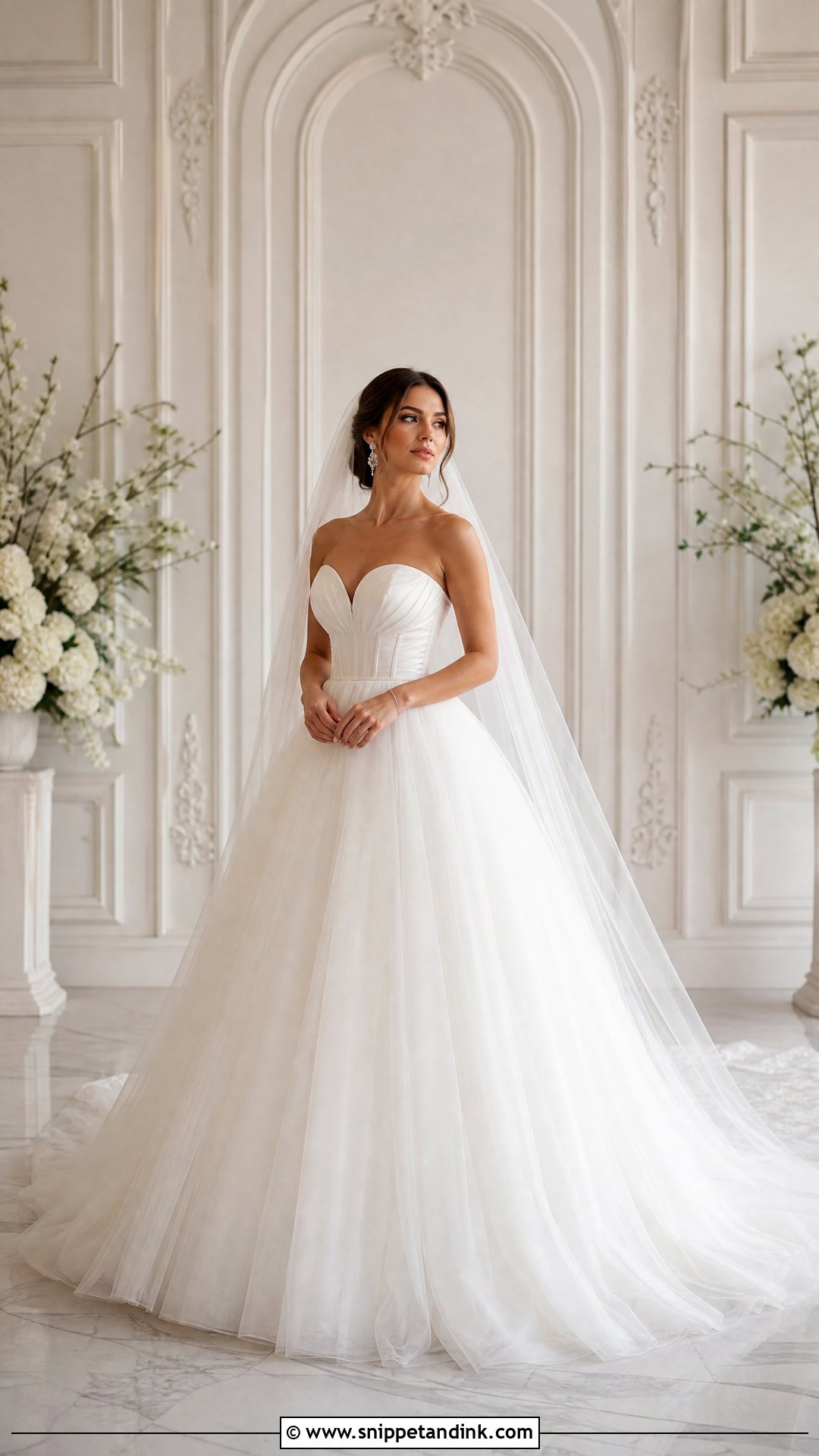
Tulle is the fabric that makes a ball gown possible without making it unbearable, because layers of net build volume far more lightly than dense satin. A basque or natural waist defines the middle before the skirt opens. A cathedral veil, crystal studs and block heels hidden under the hem keep you steady, and an updo shows off the bodice. Let the skirt be the statement with a simple bouquet. I always ask the tailor for a strong bustle on these; a full tulle train is heavy enough to tug at the waist all evening if it isn’t lifted.
3. Lace Tulle Wedding Dress
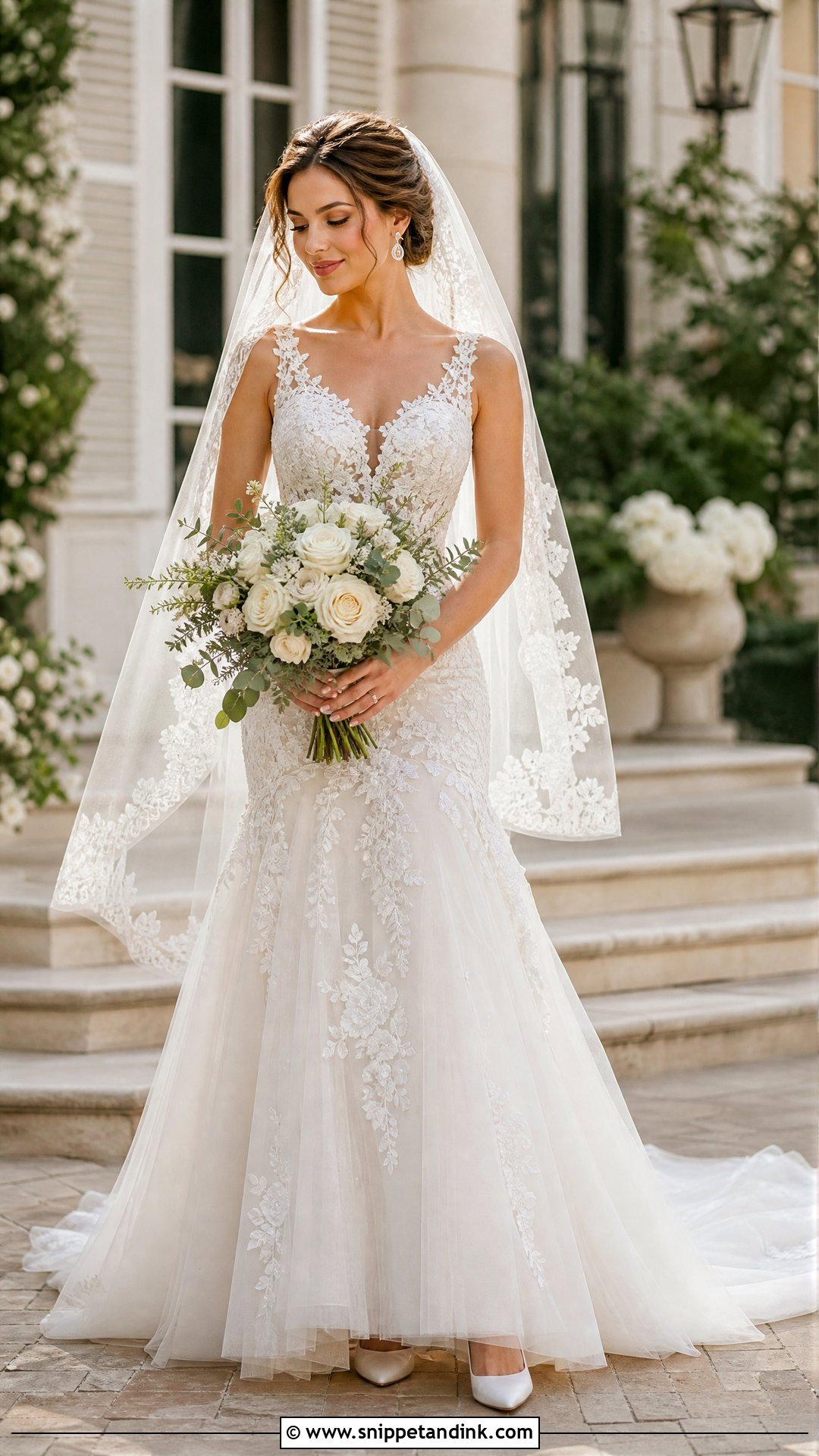
Lace over tulle gives texture without losing the airiness. The placements I like run from a fitted lace bodice into appliqués scattered down the skirt, so the dress reads as one piece rather than a top and a separate skirt. A lace-edged veil, small pearl earrings, satin pumps and a bouquet of white roses and greenery suit it, with loose waves or a textured chignon. Skip an ornate necklace if the lace is busy. At fittings, check appliqués at the waist and hips. A seamstress can move them by hand to flatter your shape, and a smooth lining keeps scratchy net off your skin.
4. Long Sleeve Tulle Wedding Dress
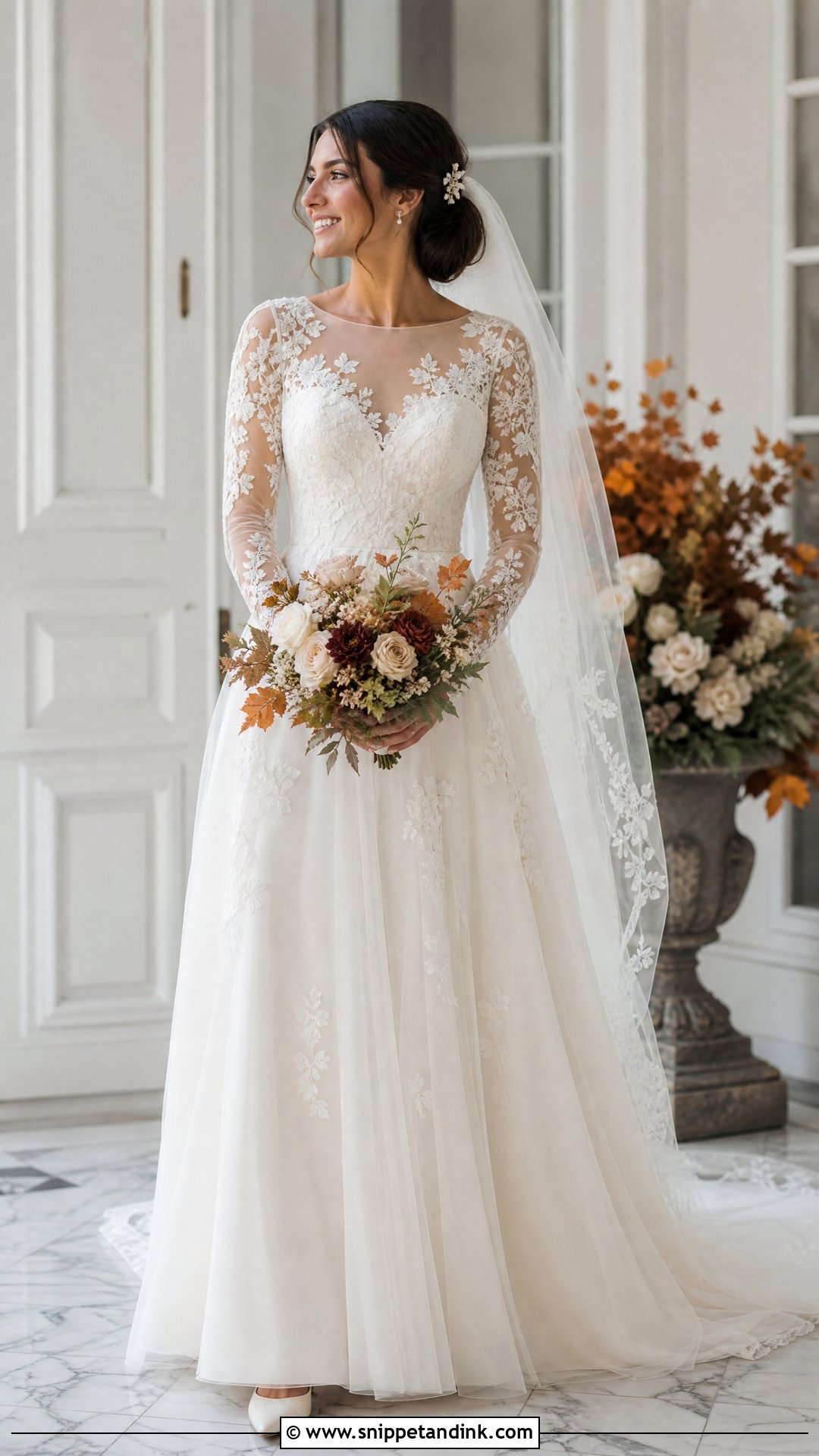
Sheer sleeves are one of tulle’s best uses, since the net is strong enough to carry appliqués yet barely shows. Illusion sleeves decorated with lace link neckline, bodice and skirt. An A-line or softly gathered skirt keeps movement easy; closed pumps, a chapel veil and pearl pins in a low bun complete it. It suits fall and winter. Comfort depends on the lining and embroidery, so at the fitting I ask brides to bend their elbows and reach up. The sleeves should move without pulling across the shoulders or pressing under the arms.
5. Off The Shoulder Tulle Wedding Dress
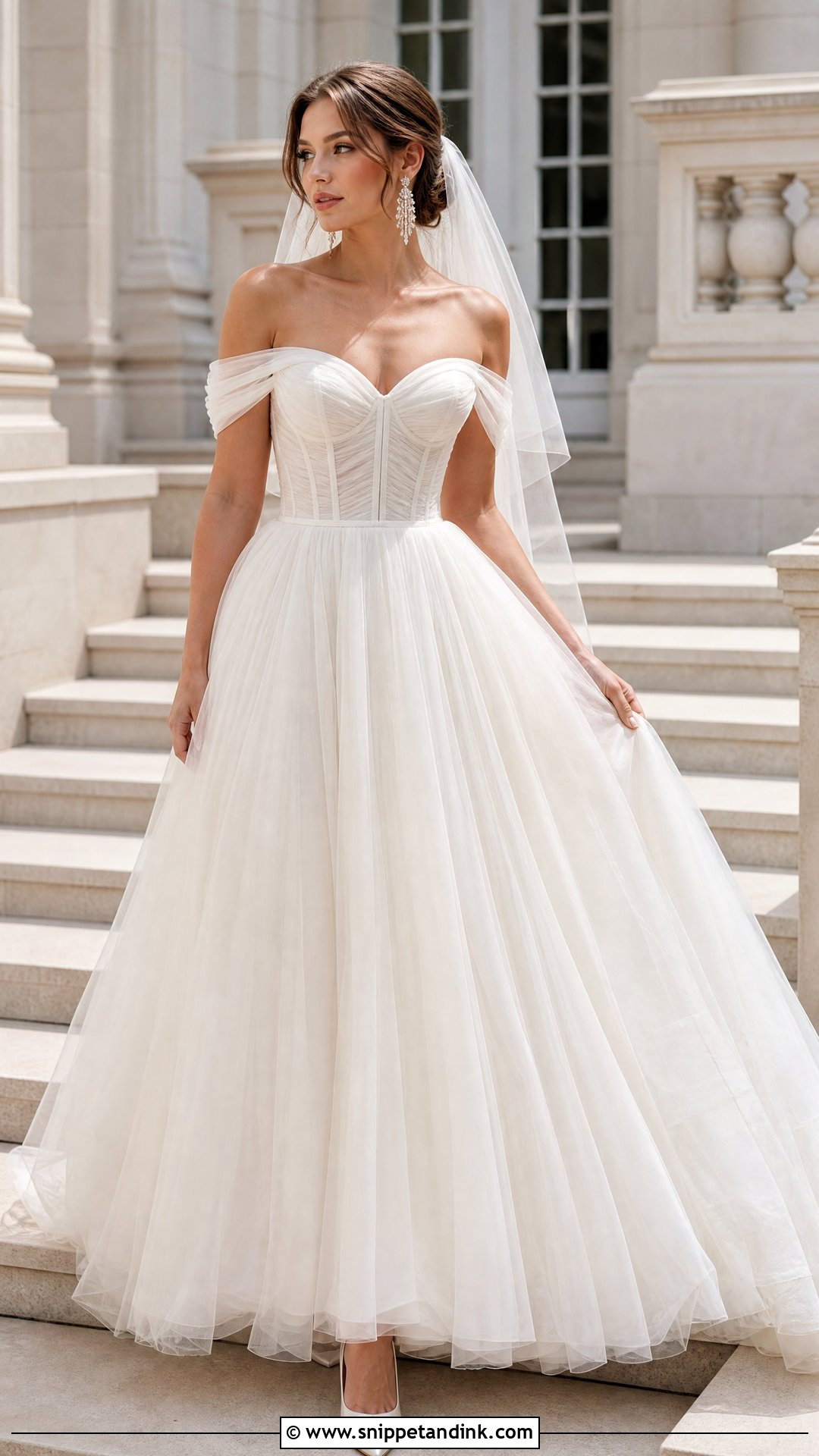
Off-the-shoulder tulle bands look soft, but they only stay put if the corset underneath does the work. A supportive bodice with draped bands resting on the upper arms, a full A-line skirt, a medium veil, crystal earrings and pointed satin heels make the look. Sweep the hair back; loose curls catch on tulle. If the draping already frames the shoulders, leave the necklace off. At the fitting, sit, walk and raise your arms. If the bands creep up or dig in, a seamstress can add discreet elastic or internal support so you’re not tugging at them all night.
6. Strapless Tulle Wedding Dress
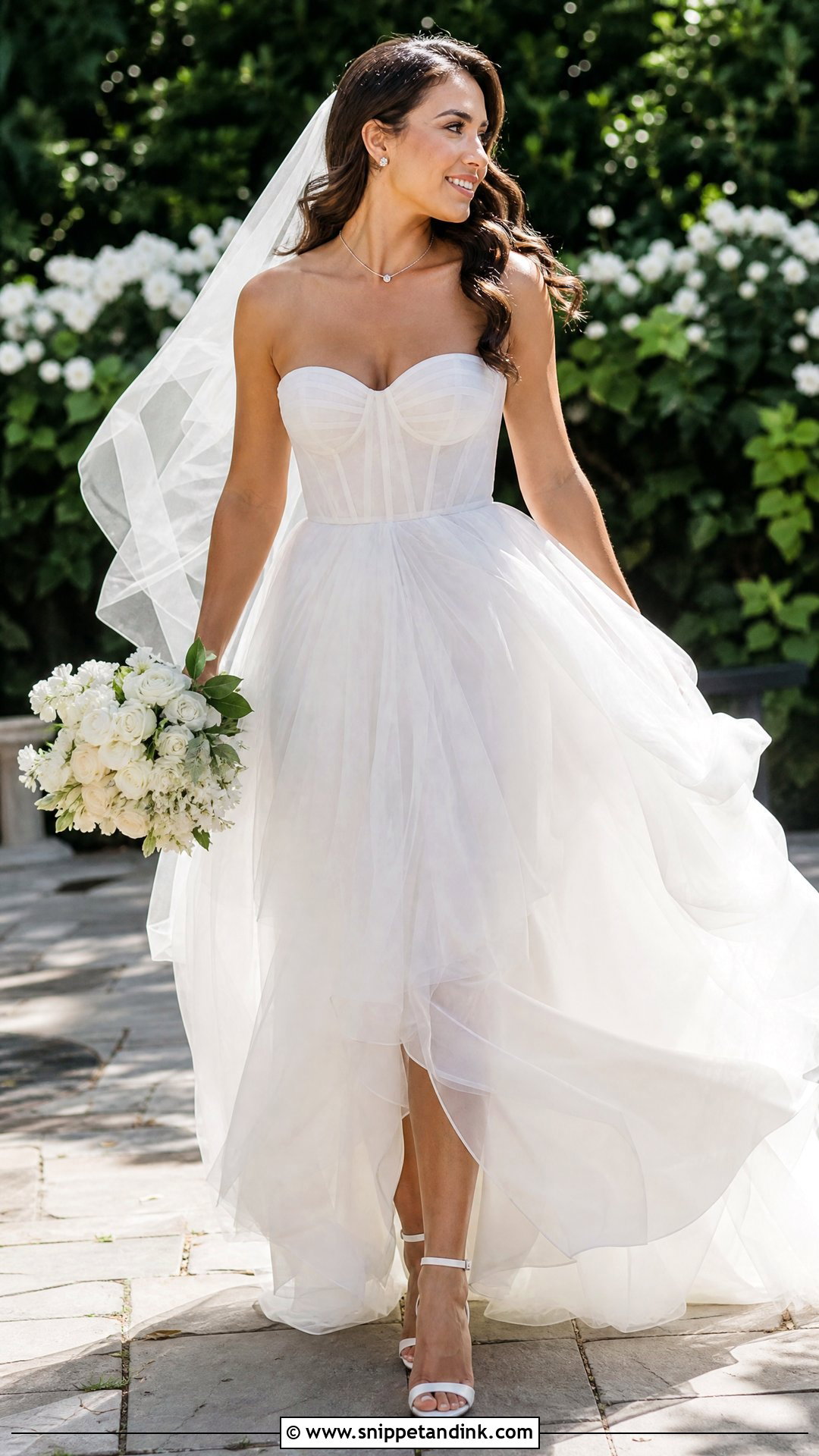
Strapless tulle is the classic bridal outline: a structured sweetheart or straight-across bodice above a layered, moving skirt. It works for a formal ceremony or a relaxed outdoor one. A delicate necklace, studs, an airy veil and ivory heels with ankle straps finish it; a polished bun reads formal, soft waves relaxed. The fit is everything here. The bodice must stay up without hurting, so ask about boning, cups and an internal waist stay. Those hidden pieces are what stop you hitching the dress up in every candid photo.
7. Sweetheart Tulle Wedding Dress
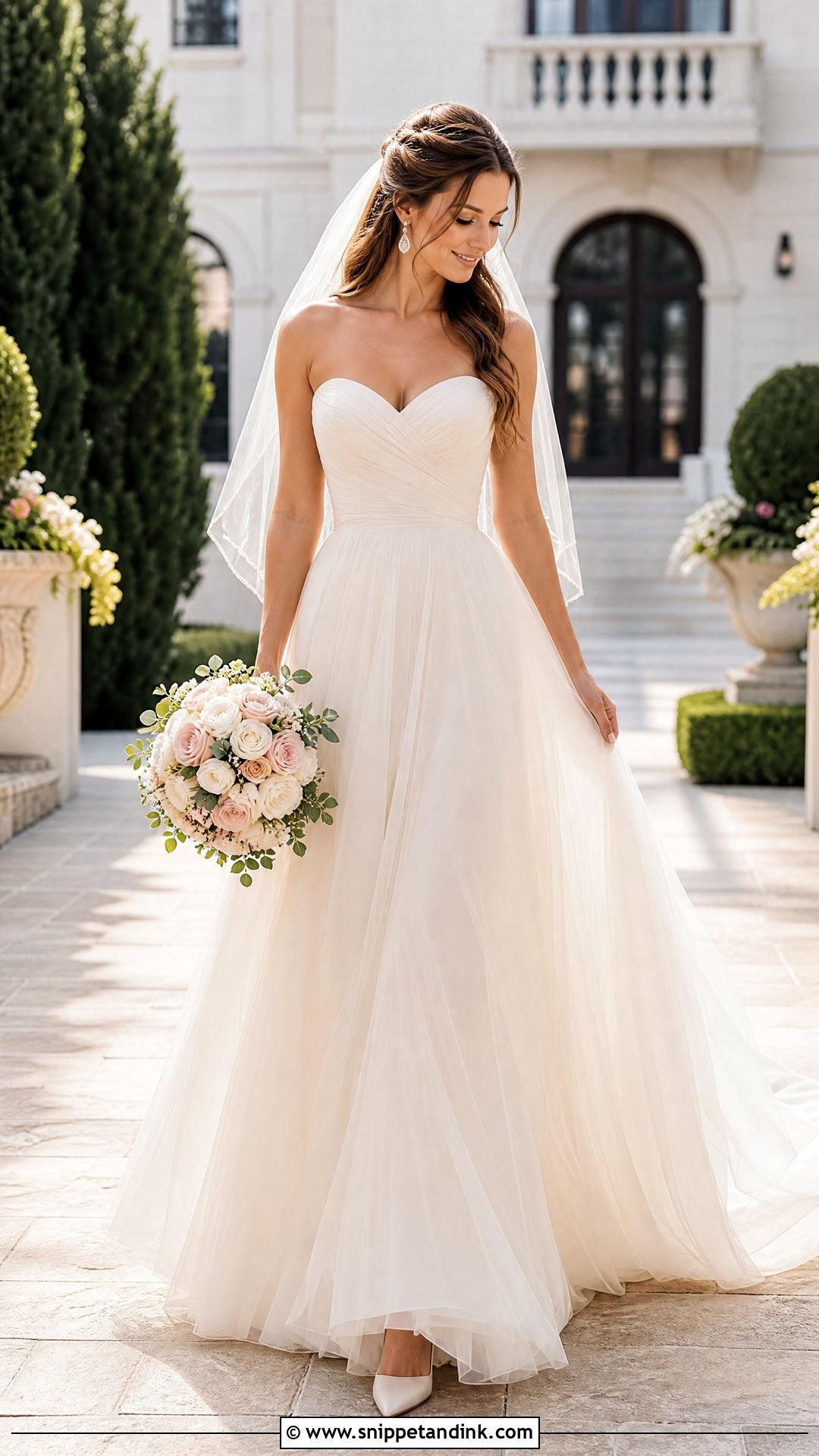
A sweetheart neckline softens a fitted bodice, especially with light ruching across the bust or lace that continues below the waist. A layered A-line gives movement without ball-gown width. Fingertip veil, teardrop earrings, ivory pumps, a rounded bouquet and a half-up style keep it approachable. For more coverage, add detachable tulle straps or a matching sheer topper for the ceremony. I check that both sides of the sweetheart sit level and stay supportive as you walk, sit and dance. Fashion tape is a backup, never the plan.
8. Corset Tulle Wedding Dress
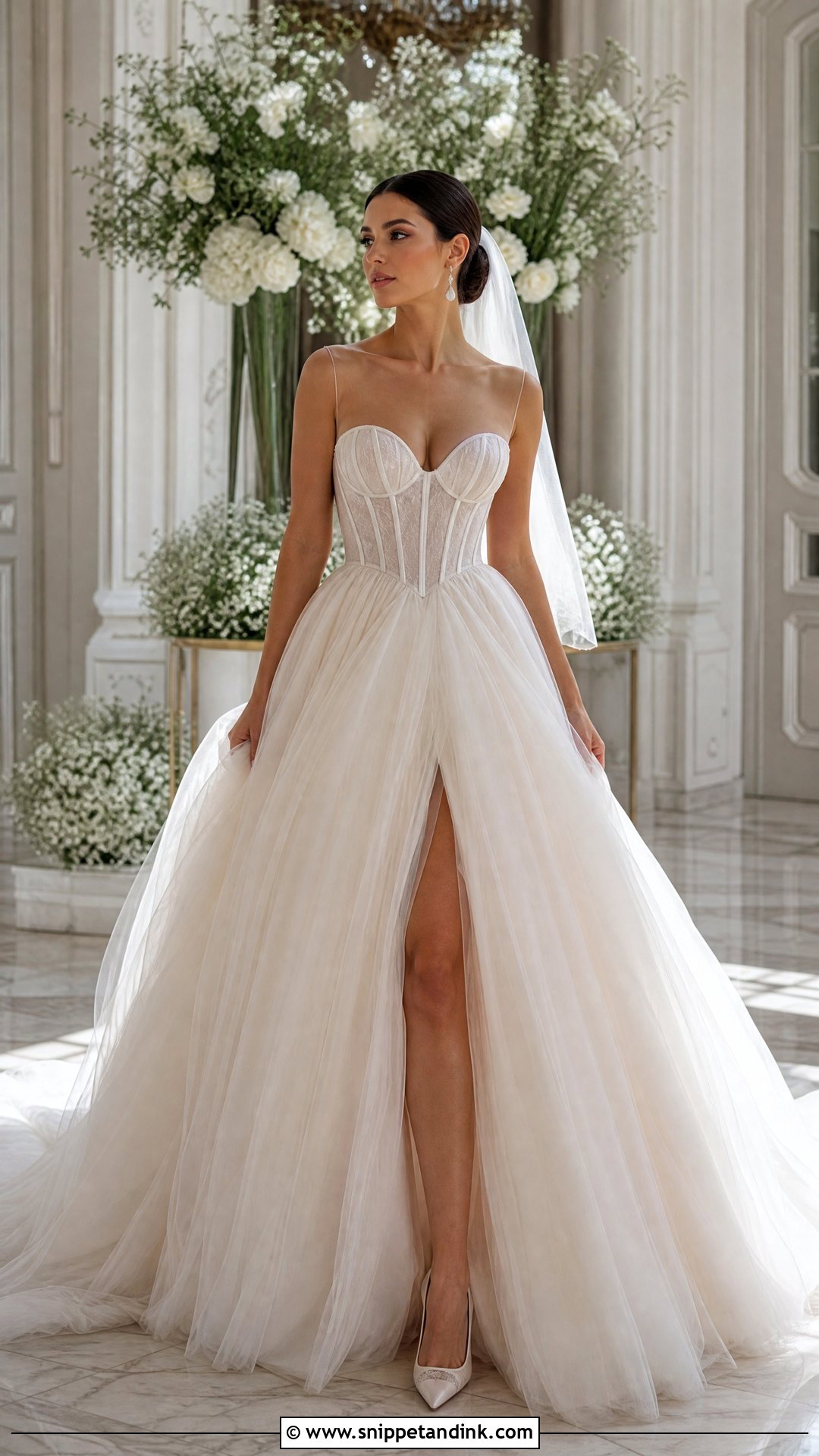
With a corset tulle gown, fit matters more than tightness. Supportive boning, well-placed cups and lined panels or illusion sections should hold you, and a basque waist eases the line into the tulle. A simple veil, drop earrings, pointed heels and a neat low bun keep the accessories quiet. My test is simple: breathe deeply, sit, and imagine a full dinner. If any of that feels like pressure, it’s too tight. Ask whether the lacing can be loosened during the day. A good corset supports your body; it shouldn’t fight it.
9. Beaded Tulle Wedding Dress
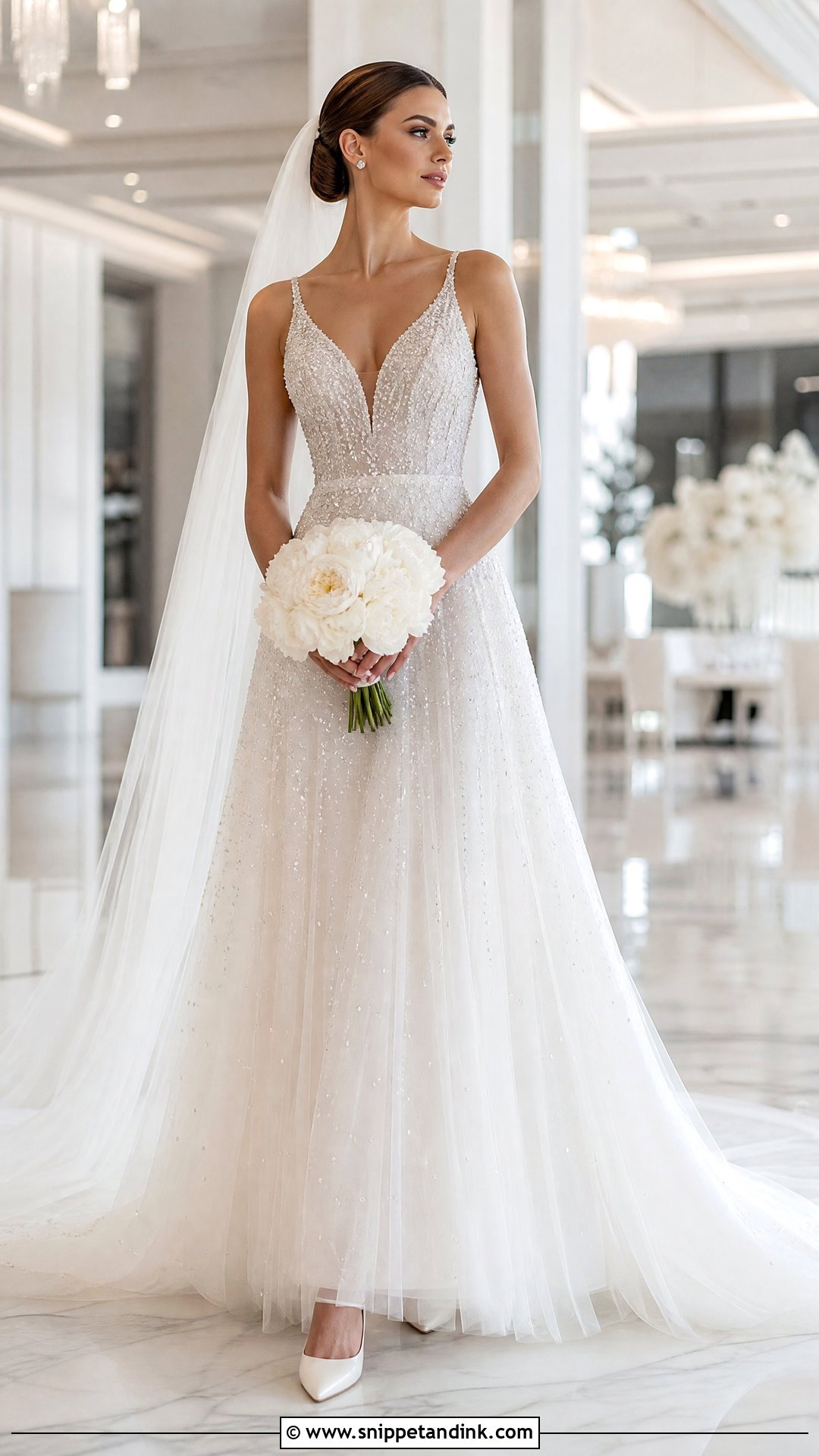
Scattered beads give tulle a gentle shimmer that comes alive in daylight. I prefer beading concentrated on the bodice and thinning out down the skirt; even coverage can look heavy. Crystal studs, metallic or ivory heels, a plain veil and a sleek bun keep it clean. Before buying, I gently pull at a few beads to see how securely they’re sewn, because beads on fine net can come loose and leave small holes. Also lift the skirt and feel the weight. A heavily beaded tulle gown can be much heavier than its floaty look suggests.
10. Glitter Tulle Wedding Dress
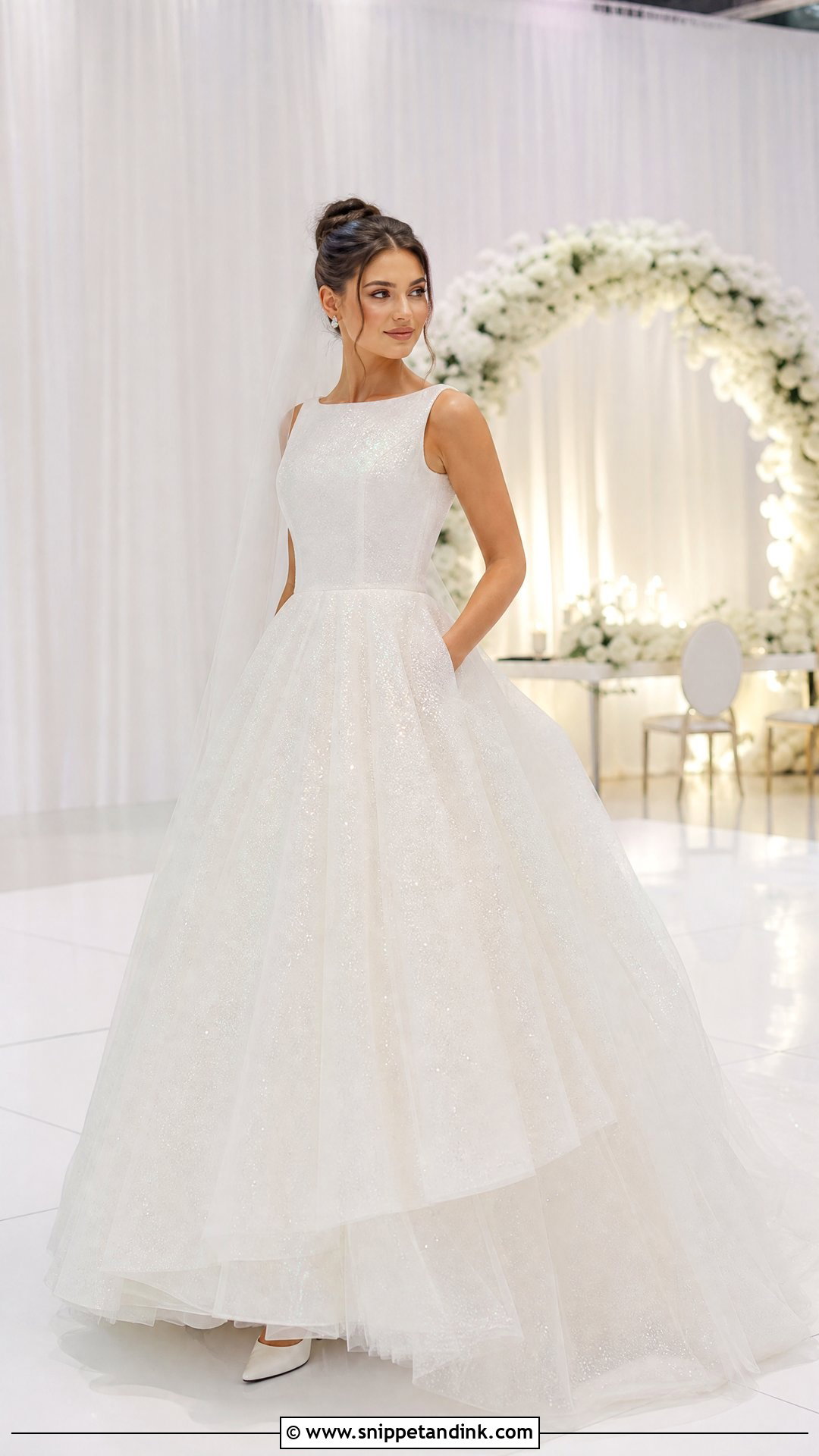
Glitter tulle gives a soft glow without large crystals. Fine sparkle spread evenly through an A-line or ball gown skirt, paired with a clean fitted bodice, lets the shimmer lead. Small crystal earrings, a plain cathedral veil, closed pumps, a polished updo and a simple bouquet complete it. Look at the gown in daylight and under warm indoor light, since sparkle changes a lot between the two. Then rub a hand gently over the skirt. If glitter comes off on your palm, it’ll come off on your partner’s suit and every hug.
11. Floral Tulle Wedding Dress
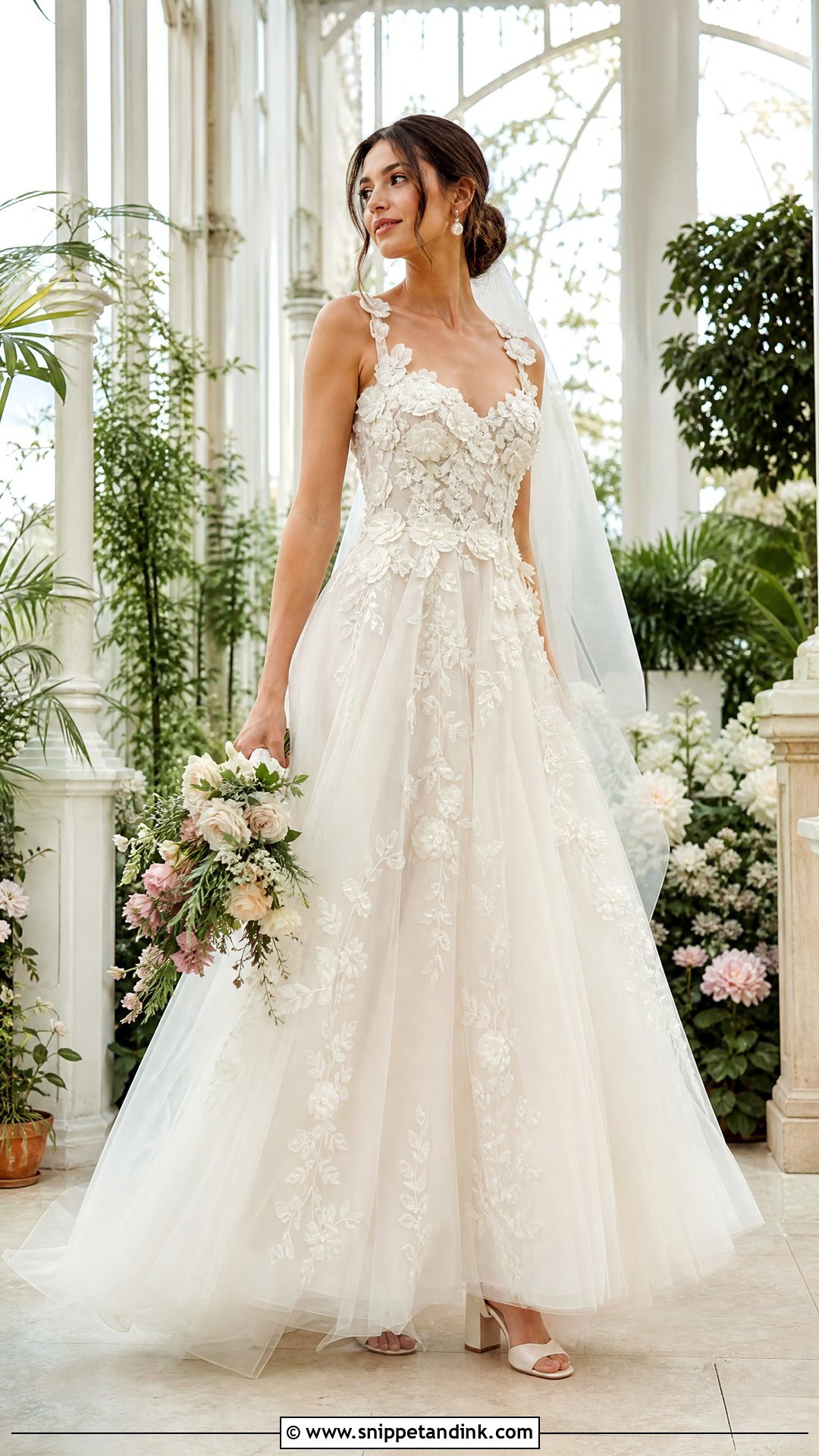
Gardens, conservatories and outdoor estates suit floral tulle best. Raised flowers or embroidered vines across the bodice and scattered lightly down the skirt work when some plain tulle shows between them. Pearl earrings, a sheer veil, block heels and a loose low bun go well. Pick a bouquet that complements the gown rather than copying every embroidered color. Tulle is a good backdrop for dimensional flowers because it’s sheer and soft. At fittings, I look at how the flowers fall at the waist, bust and seams; a bloom sitting right on the bust point rarely flatters.
12. Tiered Tulle Wedding Dress
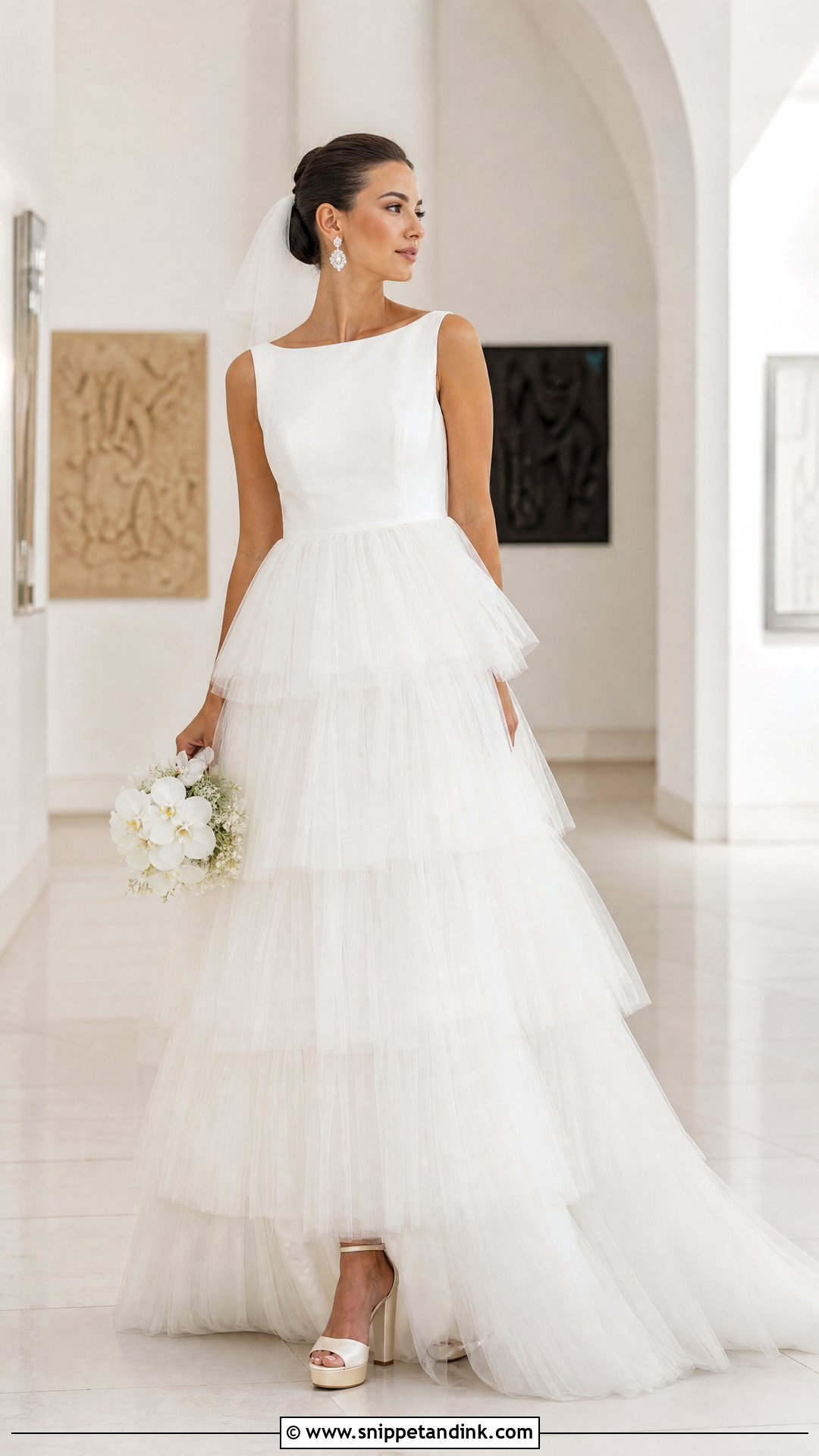
Tiers make the skirt move when you walk or turn. Broad, soft tiers look romantic; narrow ones give more texture. A fitted, fairly plain bodice balances the volume. A short veil, statement earrings, platform heels and a smooth updo suit it, and I’d skip embellished gloves or a big bouquet. Where the first tier starts makes a real difference. A seam at the widest part of the hips adds width there, while starting it lower draws the eye down and lengthens the silhouette, so try both before committing.
13. Ruffled Tulle Wedding Dress
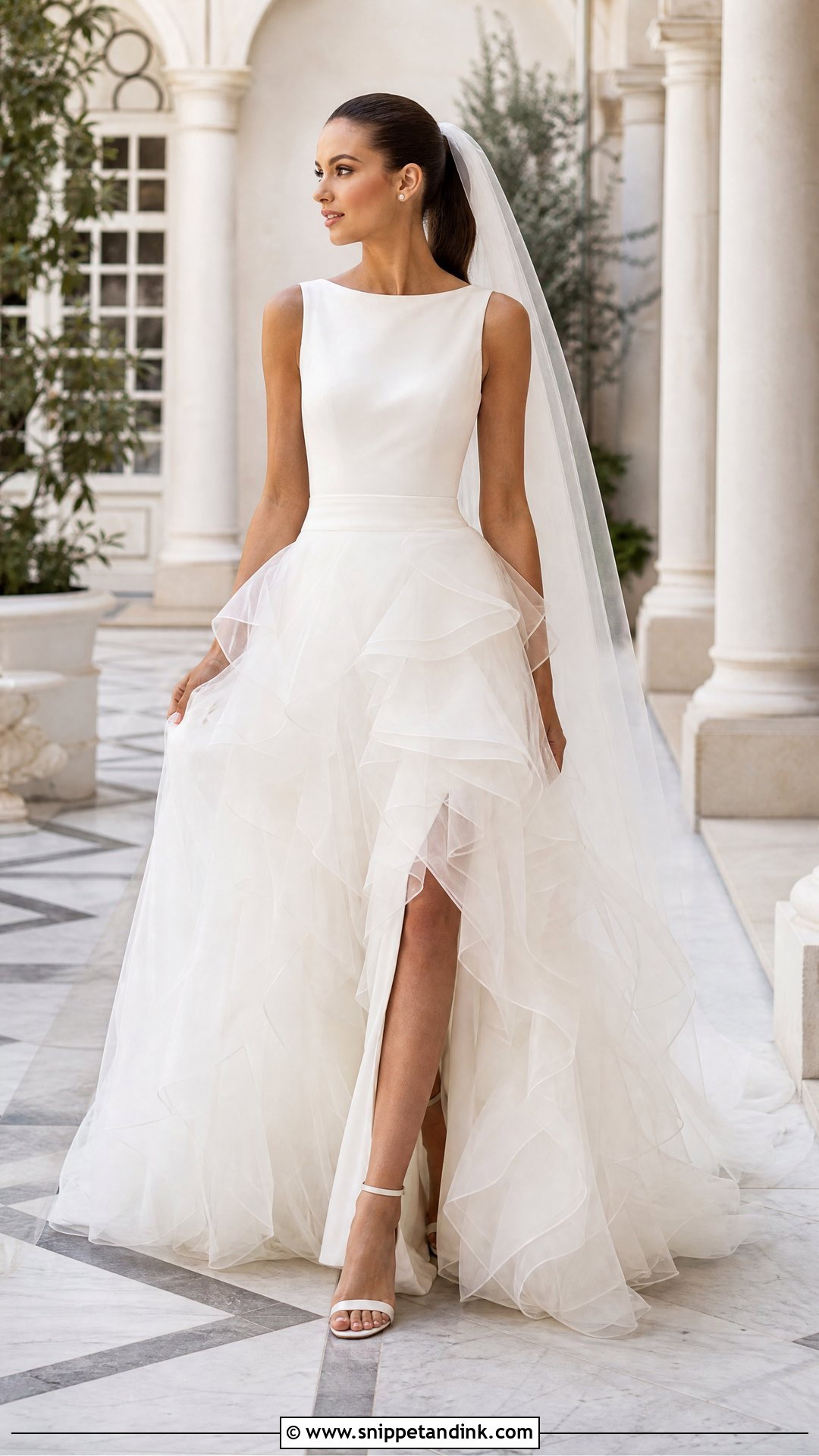
Cascading ruffles feel dramatic and a little playful. Ruffles starting below the waist or hips, depending on how much volume you want, sit under a fitted bodice; diagonal or waterfall arrangements look lighter than straight horizontal rows. Simple studs, a plain veil, supportive heels and a sleek bun or ponytail let the skirt move. Before choosing it, walk fast, turn, sit and take stairs. Ruffles catch under shoes when the hem is long. Ask your seamstress for a bustle that lifts the train without crushing the ruffles, and you’ll enjoy the dress all night.
14. Mermaid Tulle Wedding Dress
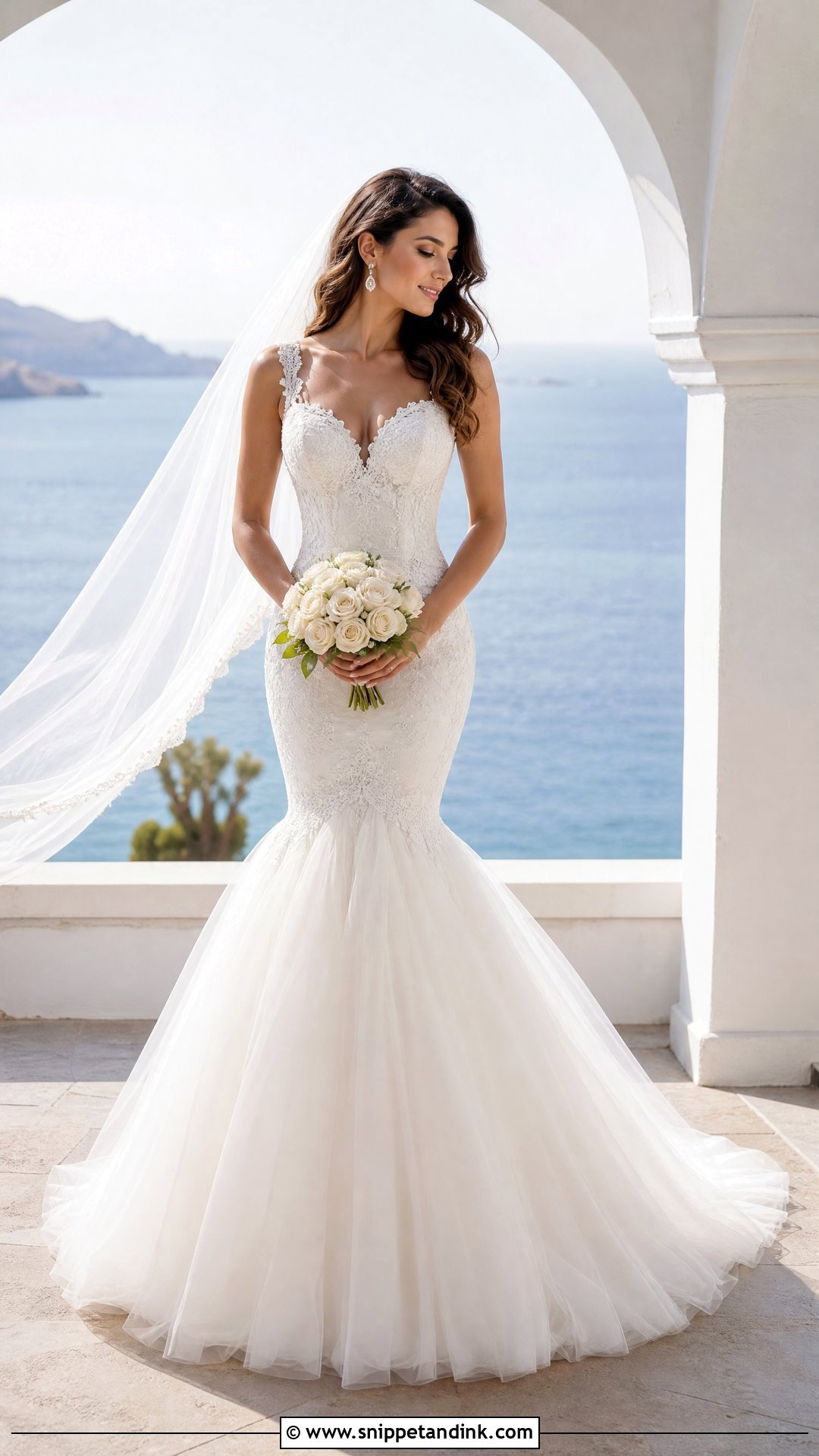
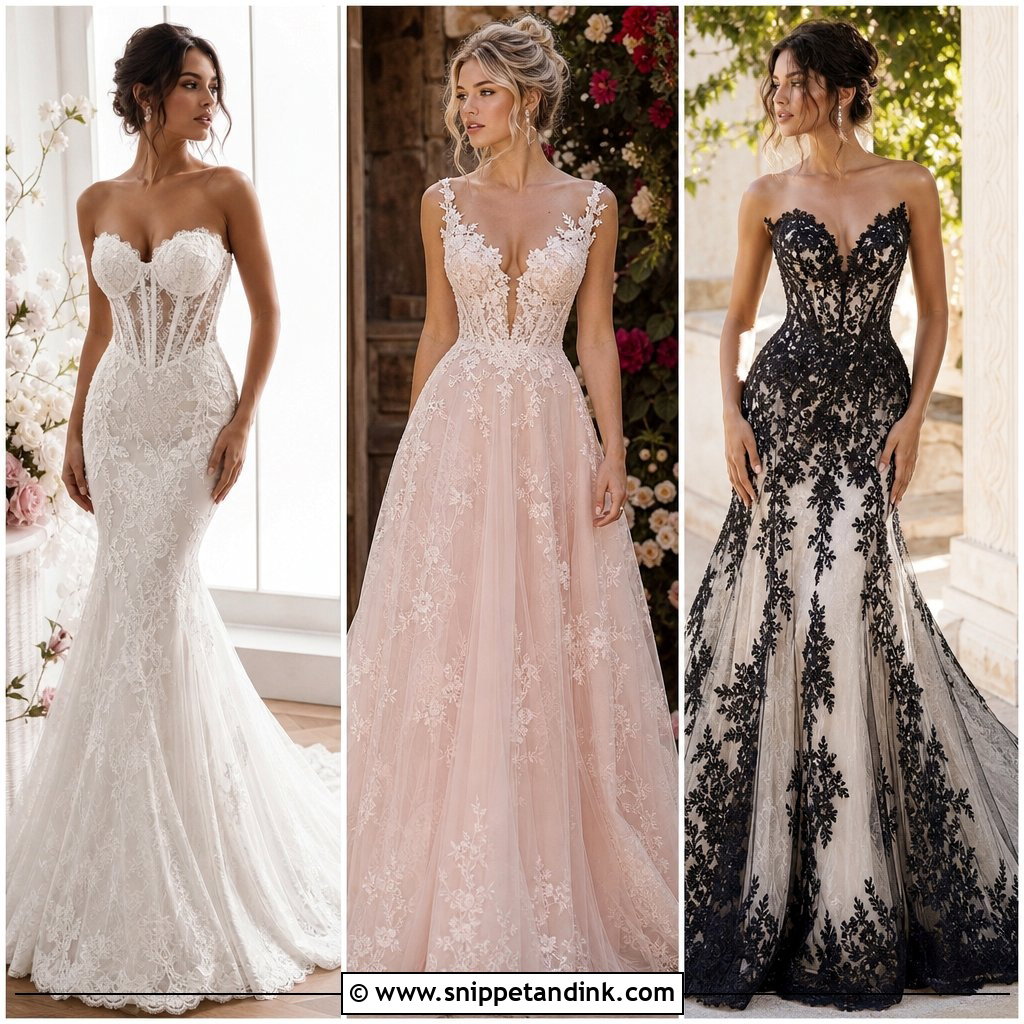
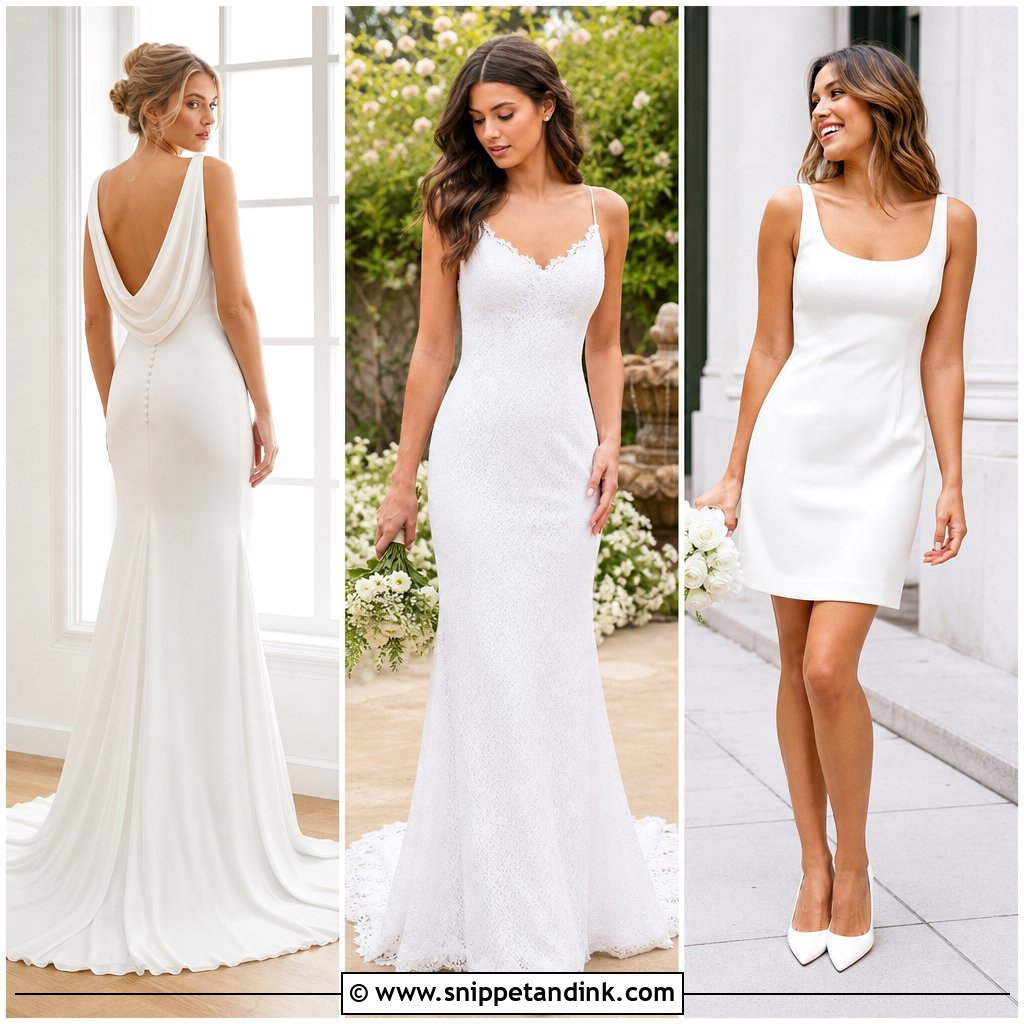
A mermaid hugs the bodice and hips before opening near the knee, and a tulle flare softens what can otherwise feel severe. Choose a supportive neckline, a smooth lining and a flare at or just above the knee. A chapel veil, drop earrings, pointed pumps, side-swept waves and a small structured bouquet suit it. Mermaid and fishtail gowns emphasize curves or suggest them. That said, I’d never let shape beat comfort. Take full steps, sit and climb stairs at the fitting. If your stride is cut short, ask for more room at the knee or try a softer trumpet.
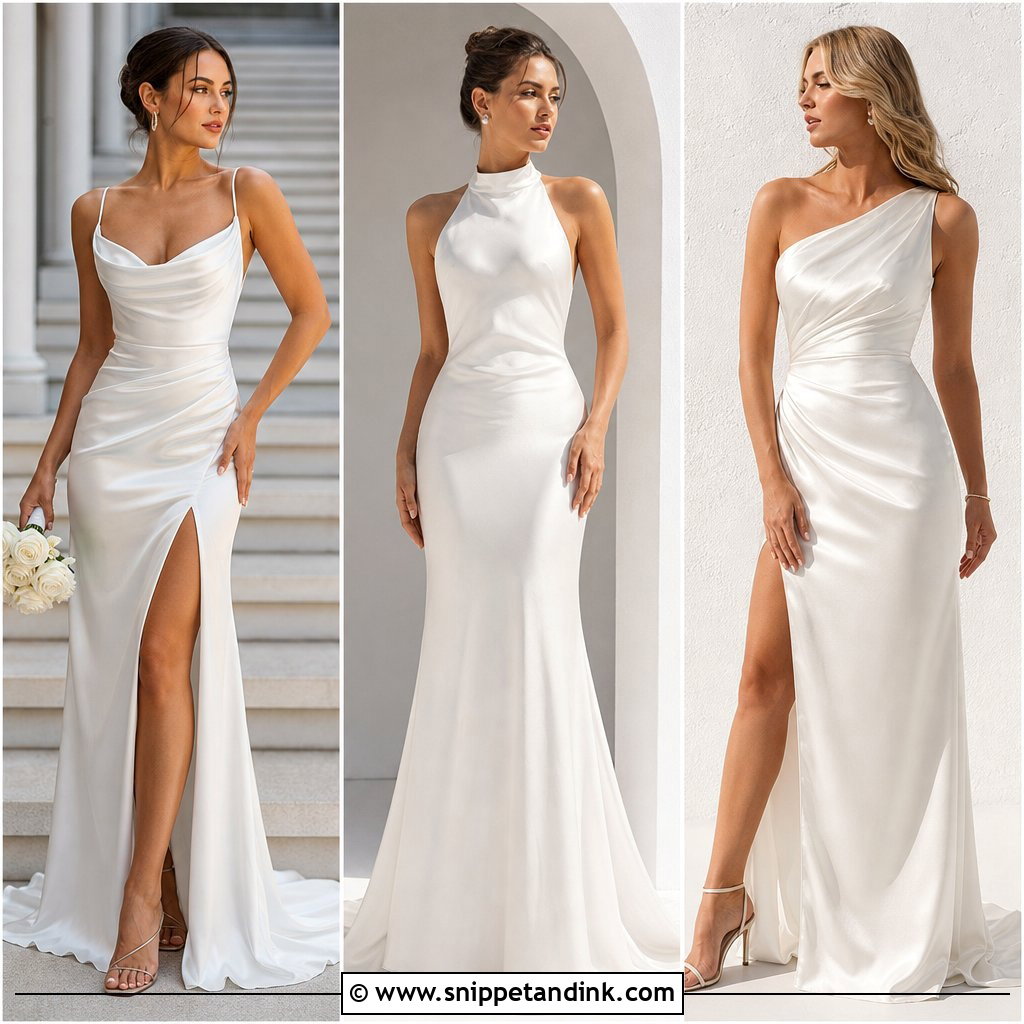
15. Minimalist Tulle Wedding Dress
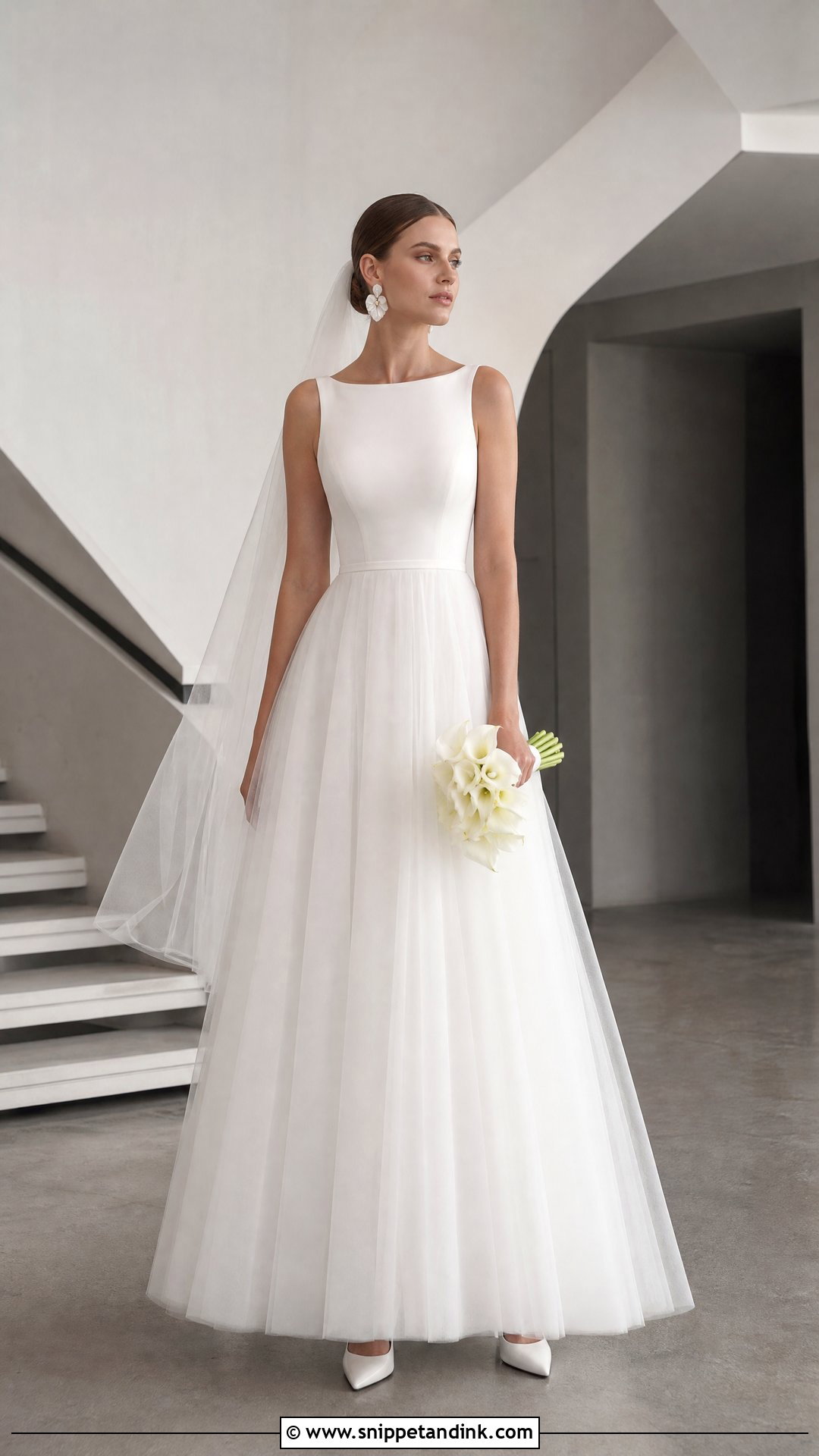
Tulle can be minimal. A smooth bodice, a defined waist and an unembellished skirt with controlled volume rely on good fabric and precise sewing, because simple dresses show every seam. Sculptural earrings, a plain veil, sleek pumps, a low center-parted bun and a single-variety bouquet keep it clean. The detail I always check is color: the lining shows through the tulle, so a slightly different lining shade changes the gown’s whole tone. Compare them in daylight; photos will exaggerate any mismatch.
16. Tea Length Tulle Wedding Dress
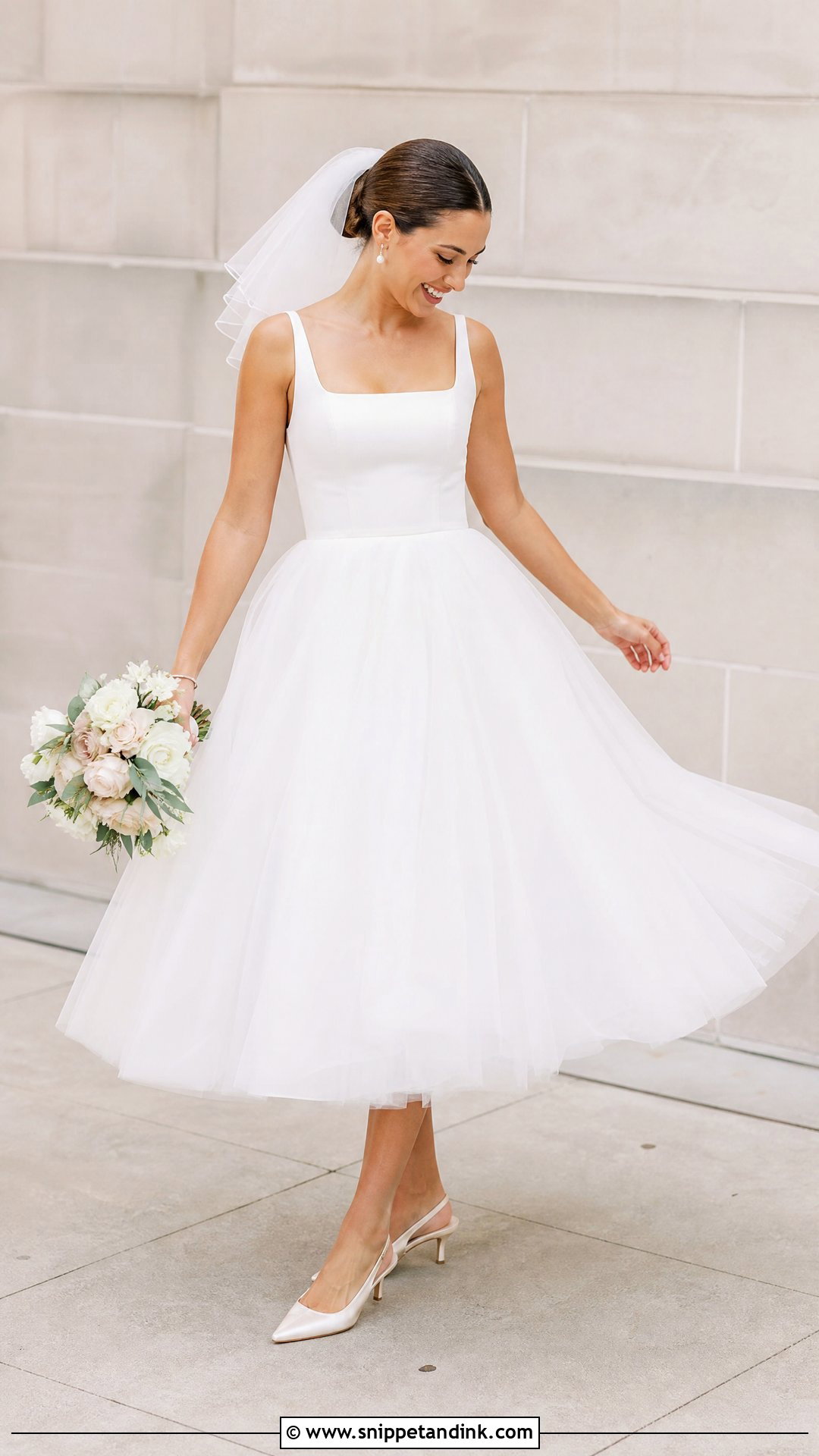
Tea length is cheerful and practical for a courthouse, a brunch or a small daytime wedding. A fitted bodice over a layered skirt ending between knee and ankle shows the shoes, so pick pumps, slingbacks or embellished flats you can stand in for hours. A birdcage or short veil, pearl earrings and a neat bun finish it, and a defined waist keeps the shorter shape from looking casual. Sit down in it at the fitting: several tulle layers can lift higher than you expect. The hem should land at the slimmest point of your calf.
17. Blush Tulle Wedding Dress
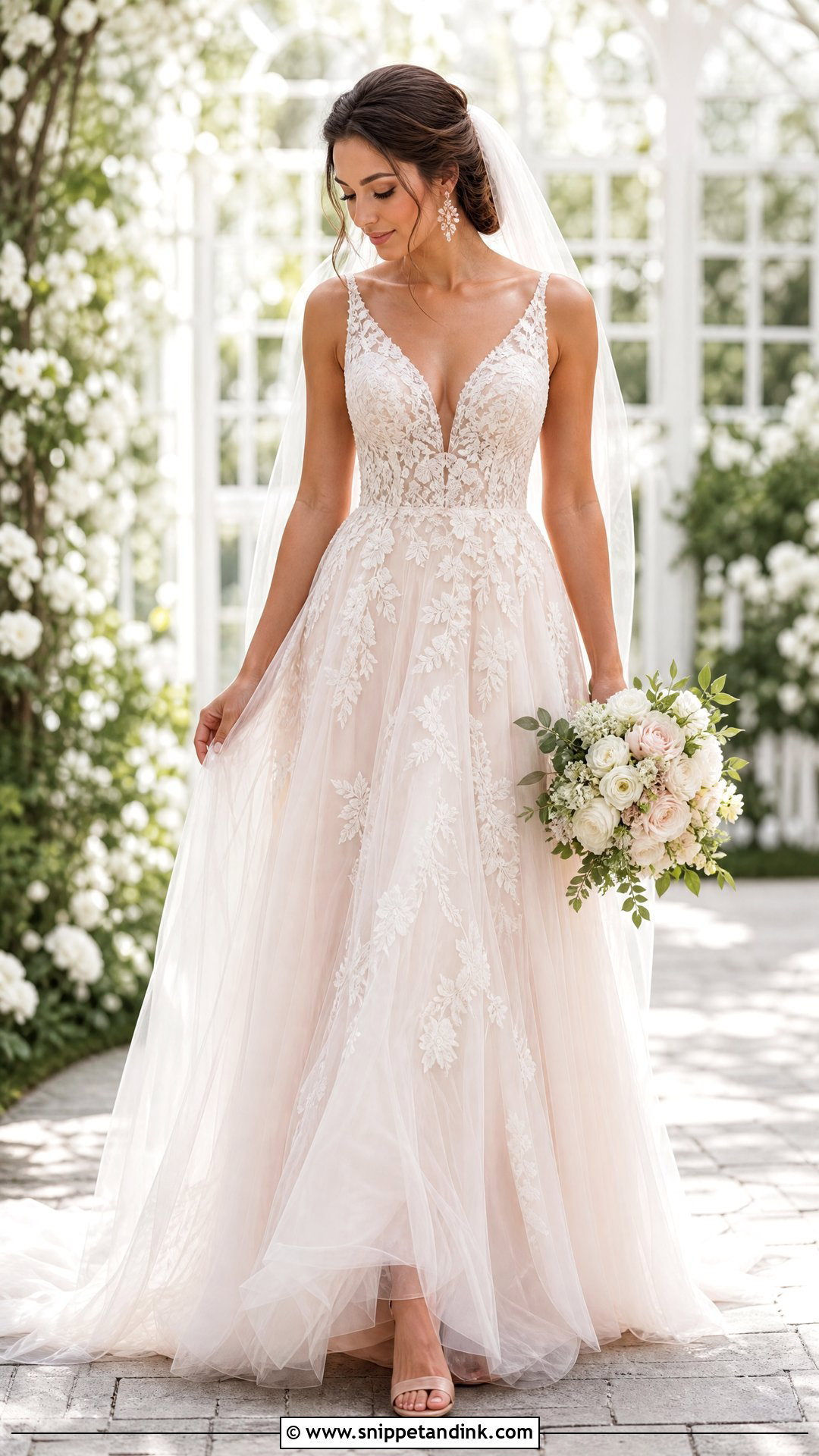
Blush tulle is usually built in layers: a pale pink or nude lining under ivory tulle, which softens the color into something subtle. A fitted lace bodice and flowing A-line keep it classic. Rose-gold earrings, nude or blush heels, an ivory veil and cream and muted pink flowers complete it. View the dress in daylight and indoor light before deciding, since blush linings can drift toward peach, beige or pink depending on surroundings. I hold the fabric near the bride’s face too; some blushes warm the skin and others wash it out.
18. Boho Tulle Wedding Dress
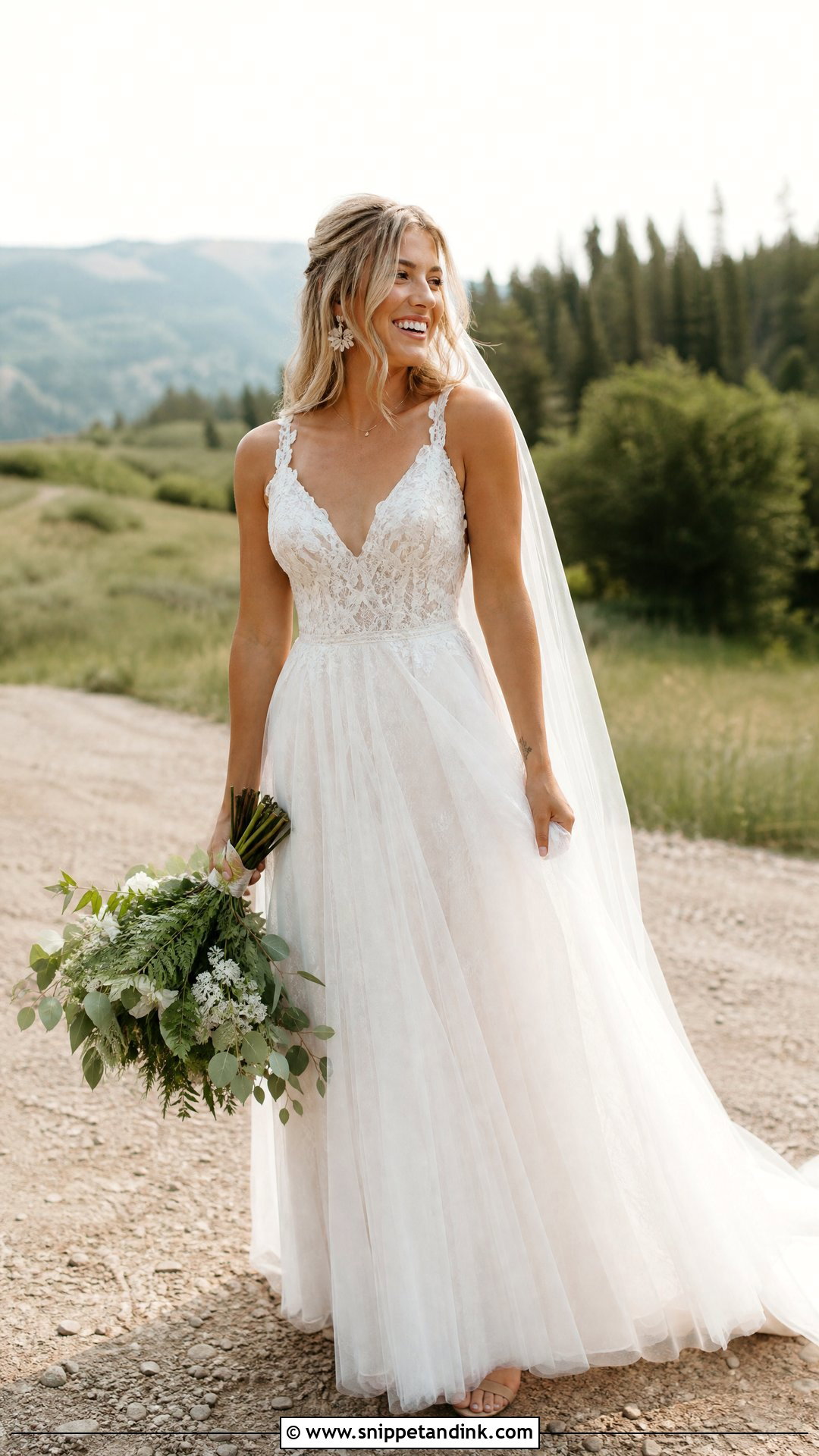
Boho tulle means lightweight and easy: an A-line skirt, embroidered lace, comfortable straps and a natural waist, not a structured ball gown. Low block heels or refined flats, small floral earrings, a soft veil and loose textured waves suit outdoor ceremonies, with a bouquet of greenery and seasonal flowers. The embroidery and tulle already give plenty to look at, so go easy on accessories. Outdoors, tulle picks up leaves and twigs. A shorter train, a practical bustle or a slightly raised front hem keeps it manageable without losing the free movement.
19. Plus Size Tulle Wedding Dress
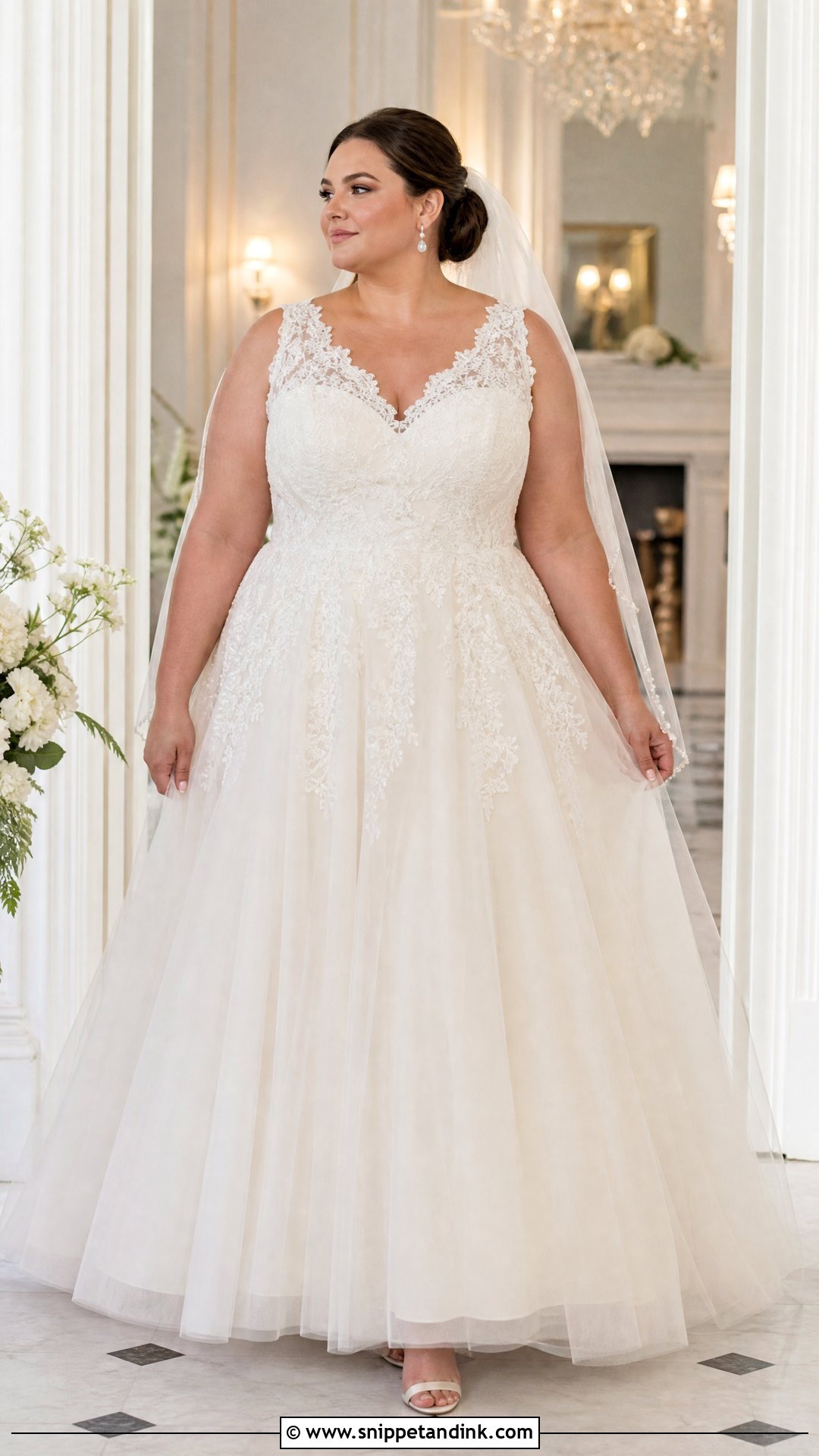
Support and proportion come first in a plus-size tulle gown. An A-line with internal boning, wider straps and a defined waist, plus soft layers that fall smoothly rather than stiff net that adds bulk, is my usual starting point. Lace at the neckline draws attention up, and spaced appliqués link the skirt to the bodice. Supportive block heels, pearl earrings, a fingertip veil and a low bun finish it. Sleeved and structured tulle designs exist too. Ask to try samples in your size where possible; clipped-on samples distort the waist, neckline and appliqué placement.

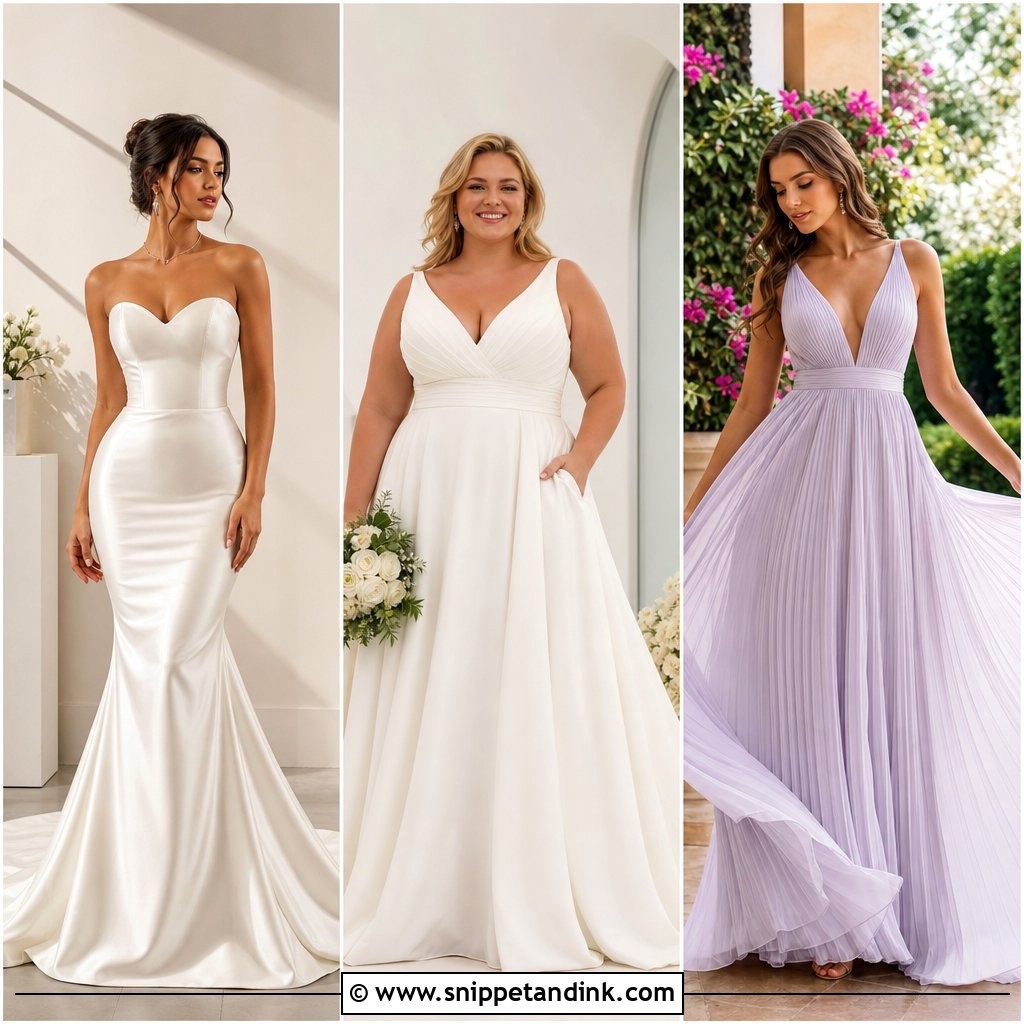
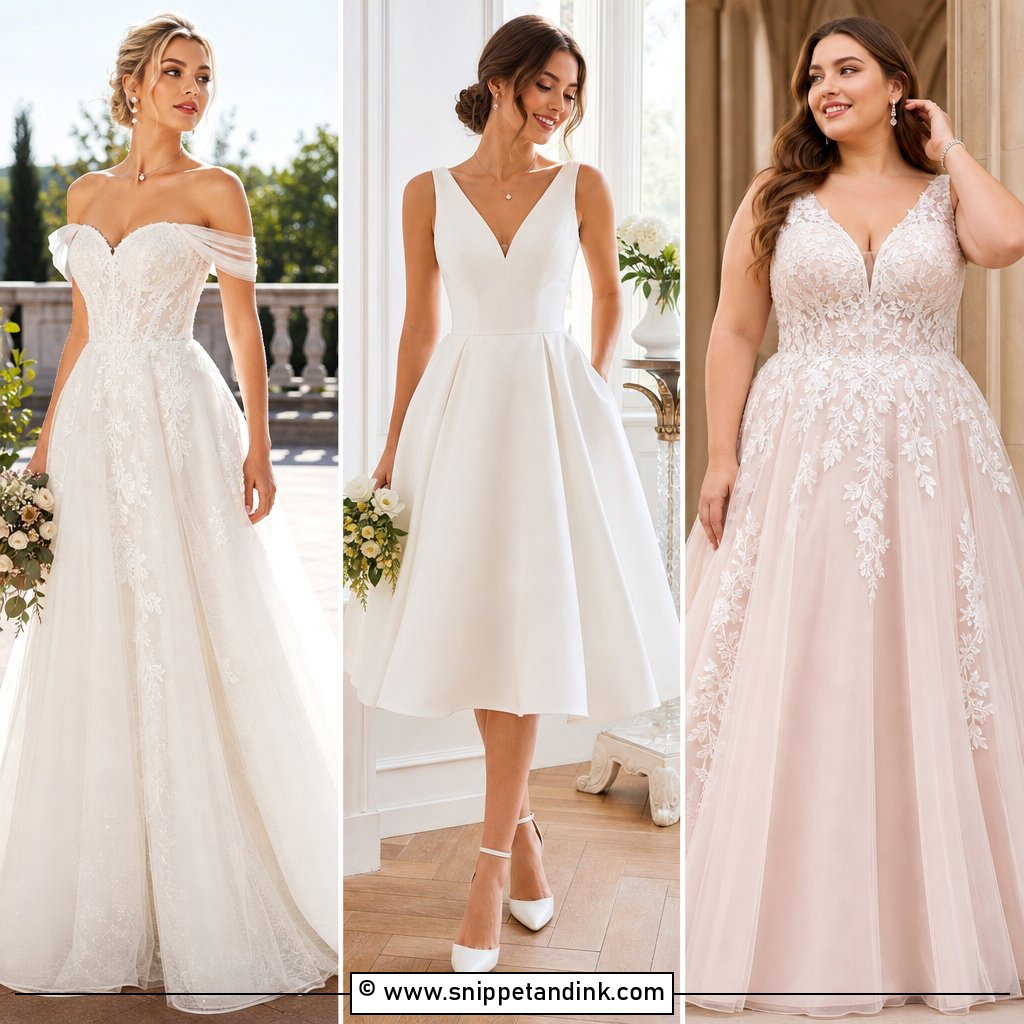
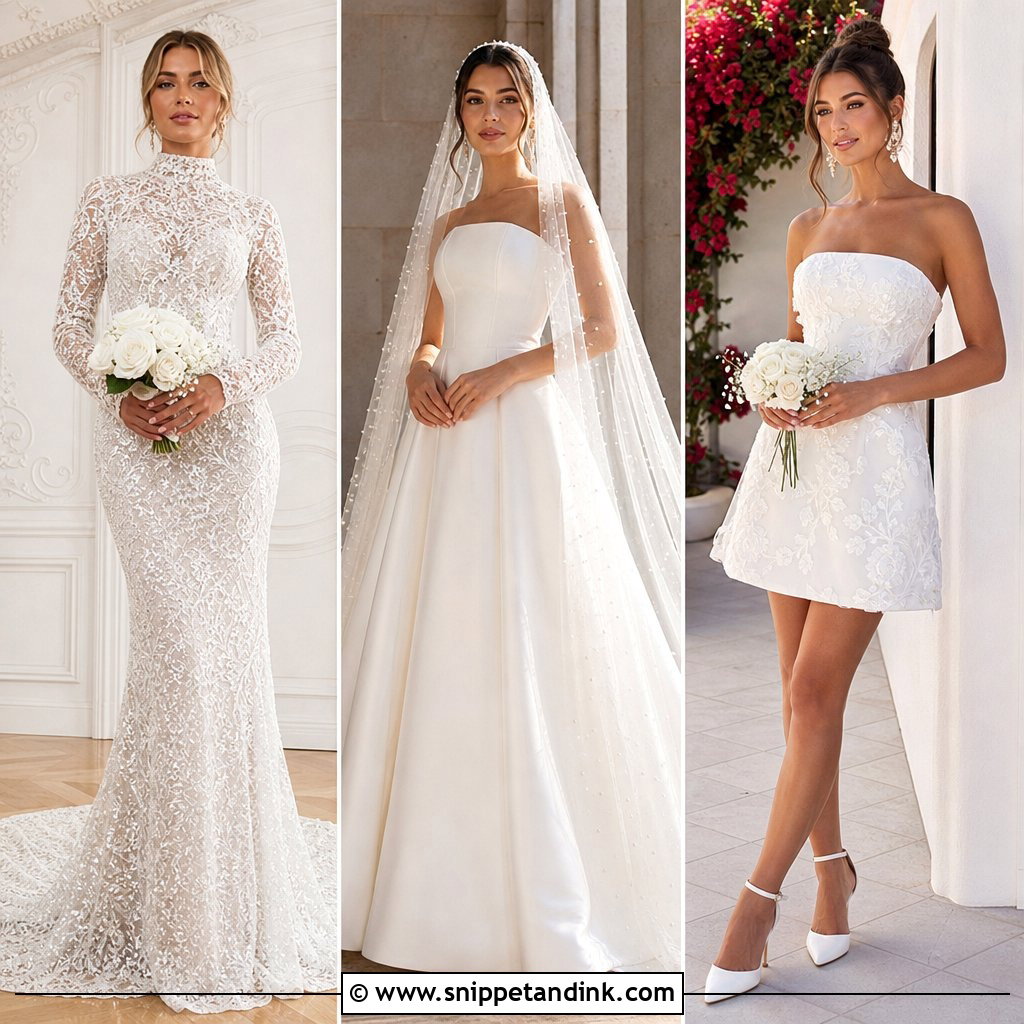
20. Tulle Wedding Dress With Detachable Overskirt
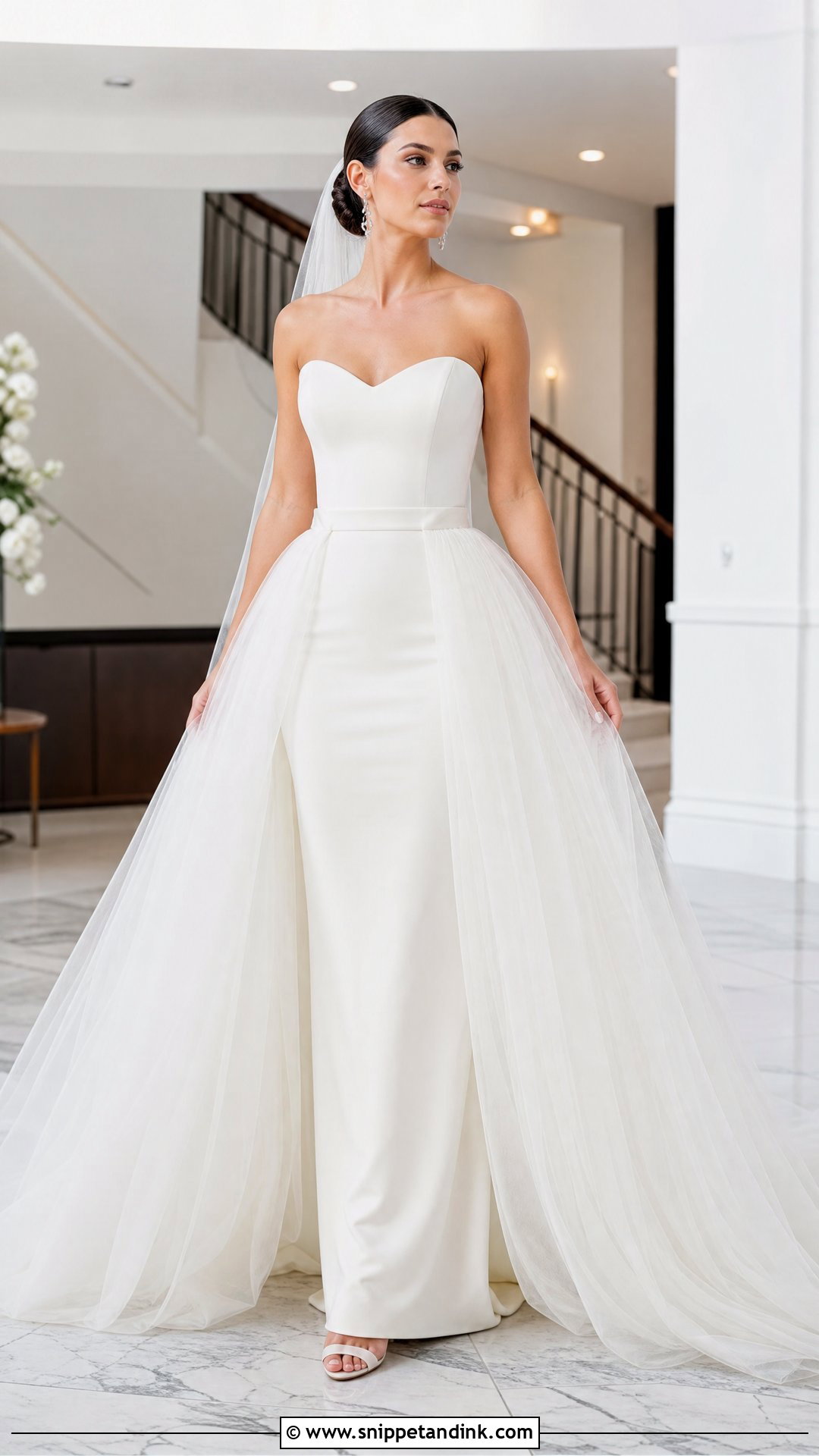
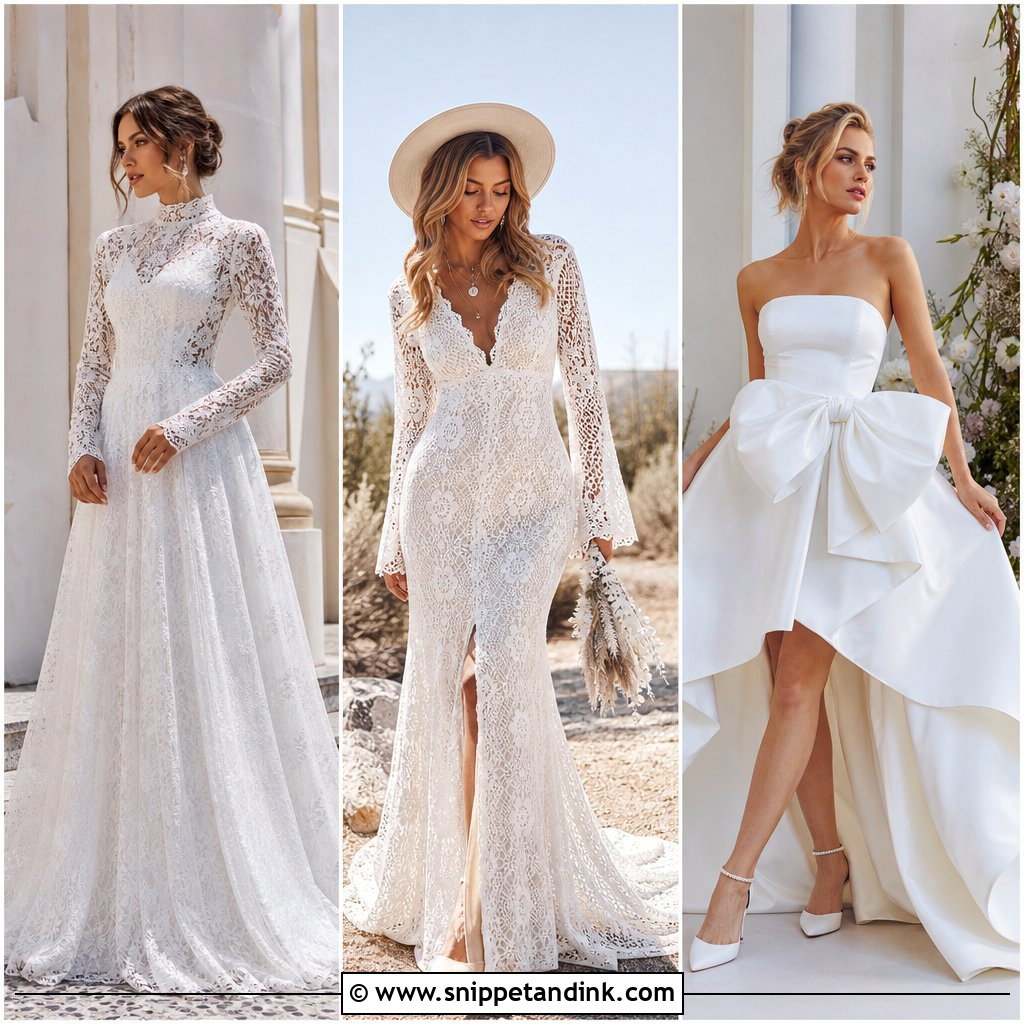
A detachable tulle overskirt gives you two silhouettes. Underneath sits a fitted column, sheath or mermaid, often in satin; the full tulle overskirt goes on for the ceremony and comes off for the reception. Convertible earrings, comfortable heels and a veil that suits both versions complete it. The attachment needs to be secure yet simple for one trusted helper. I look at the waistband too: it should blend into the base gown rather than look like a separate belt. Practise the change before the day.
Steaming, Snags and Static in a Tulle Skirt
Tulle is light, but it’s also fussy on the day. A little preparation keeps it looking fresh from the getting-ready photos to the last song.
Before you get dressed
Hang the gown as soon as it reaches the venue and steam it from the inside, holding the steamer a few inches away. Never put an iron on tulle; synthetic net can melt in seconds. Give the layers time to drop and relax after steaming.
During the day
- If a thread snags, don’t pull it. Snip the loop carefully with small scissors or tuck it inside the layer.
- Static can make tulle cling to tights or the lining. A light mist of anti-static spray on the inside of the skirt, tested on a hidden spot first, usually helps.
- In the car, sit on the back of the skirt with the front spread over your lap so the layers aren’t crushed under you.
- Watch for velcro on bags, watches and coats; it grabs tulle instantly.
Give your maid of honor a small emergency kit: sharp scissors, a few safety pins in ivory, clear thread and a needle. Most tulle problems take two minutes to fix if someone has the tools.
Tulle Rewards Patience at Every Fitting
No single tulle silhouette suits every bride. What works for you depends on proportions, internal support, fabric quality and the venue. Try an A-line, a ball gown, a mermaid, a tea-length and a detachable design at least once. At every fitting, walk, sit, turn and raise your arms. Before committing, weigh up the finished weight, train length, shoes, veil and bustle. Minimal ivory, raised flowers, soft sparkle or big ruffles can all look right when the tailoring is careful.
You'll Like These Ideas:





Leave a Reply