
Historical wedding dresses show how women dressed for marriage as money, manners and fashion shifted around them. Medieval long sleeves, the Regency empire waist, Victorian lace, Edwardian high necks, 1920s beading and the 1950s tea-length skirt all still turn up on modern bridal rails, usually in pieces: a corset line here, a sleeve or a pearl-edged veil there. As a bridal stylist, the question I hear most about these eras isn’t which one is prettiest. It’s which one a bride can actually walk, sit, eat and dance in for a full day. So alongside each of the looks below I’ve noted what the silhouette asks of your body and your venue, and where a reproduction tends to go wrong.
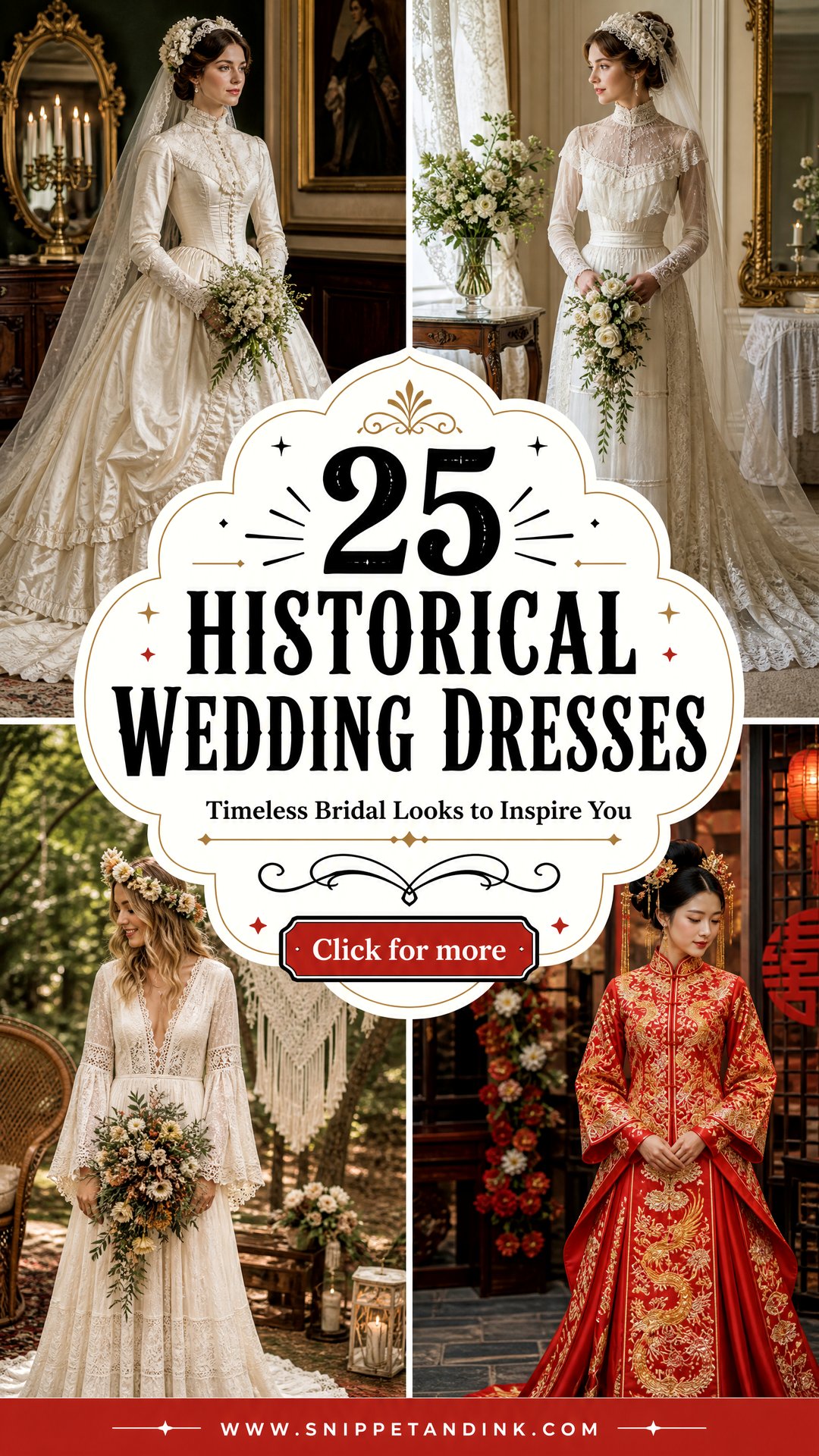
Wearing a Period Silhouette So It Reads as Bridal, Not Fancy Dress
Most historical looks go wrong the same way: every element comes from one era, head to toe, and the bride ends up looking like a museum mannequin. At fittings I work from a simple rule of one strong period signal on a modern base.
- Pick the single feature that defines the era for you, such as the Regency waistline, the Tudor square neck or the Victorian bustle, and keep that one accurate.
- Let everything you can’t see be modern. A hidden zip, contemporary fabric weights, modern underwear and comfortable shoes never show in photos.
- Choose the understructure before the gown. Hoops, petticoats, bustle pads and corsets change your measurements, so the dress has to be fitted over them, not over a slip.
- Match hair and headpiece to the era but keep the makeup current. Full period makeup is usually what tips a look into dressing up.
Then test the practical things at your second fitting. Sit in an ordinary chair, climb a step, raise both arms as if hugging someone and walk the length of the room. Boned and corseted eras like Tudor, Baroque and late Victorian usually need more fittings than you’d plan for a modern gown, because the bodice settles differently once it’s laced. Lighter shapes like Regency, 1930s and 1990s are far quicker to finish.
1. Medieval Wedding Dress
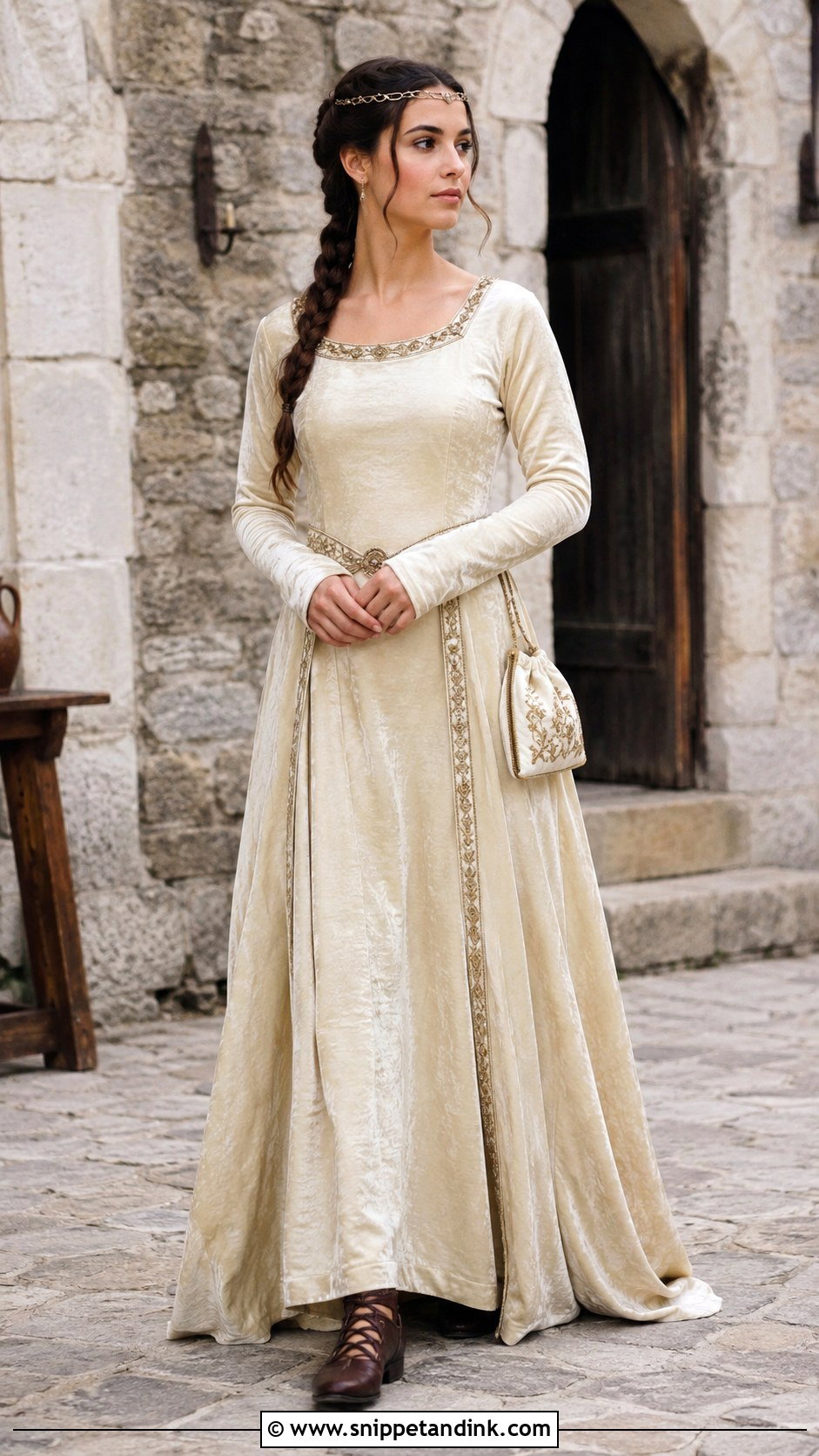
Medieval brides rarely wore white. Deep blue, red, green, gold or cream signalled a family’s wealth or a personal meaning, so color is fair game here. The shape is a long gown with fitted sleeves, a high or square neckline and a full skirt that swings as you walk. In velvet or brocade, those fitted sleeves are where I see trouble at fittings: cut tight to the wrist with no gusset, they stop you lifting your arms to hug anyone. Ask for an underarm gusset or a slightly fuller sleeve head. Linen and wool are lighter options, and a braided style, simple veil, metal circlet, soft leather shoes and a small embroidered pouch finish it.
2. Renaissance Wedding Dress
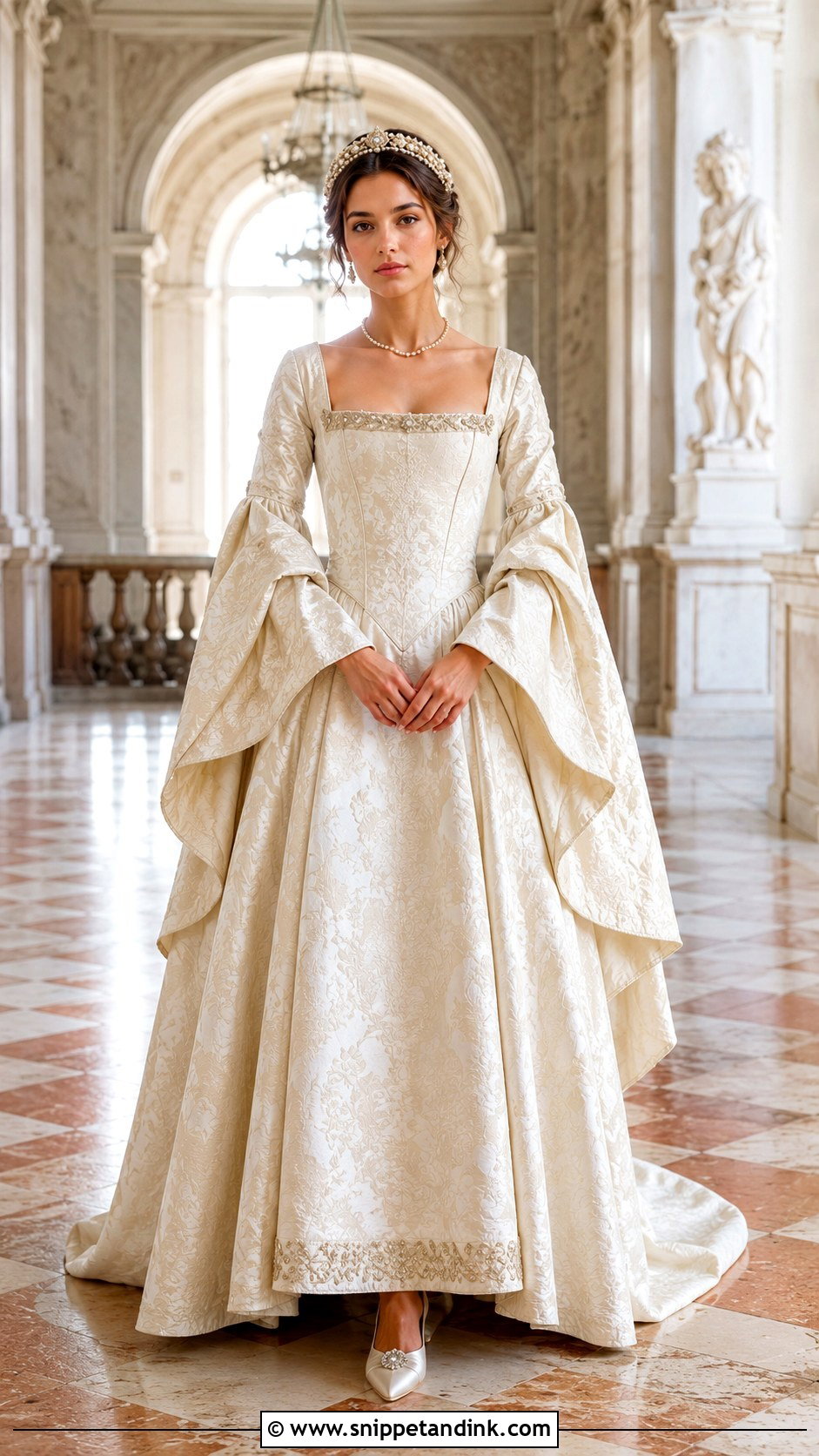
Square neckline, fitted bodice, wide sleeves and a full skirt in heavy fabric: the Renaissance gown is built for volume. Cream, ivory, gold, burgundy and soft green all sit comfortably in the period. The line between portrait and costume usually comes down to restraint. I keep the embroidery, brocade or lace trim to the bodice and sleeves and leave the skirt plainer, so the eye has somewhere to rest. Pearls, a jeweled hairpiece, a long veil and delicate slippers complete it. One practical warning: wide sleeves plus a wide skirt make you very broad in a narrow church aisle, so walk the route before you commit.
3. Tudor Wedding Dress
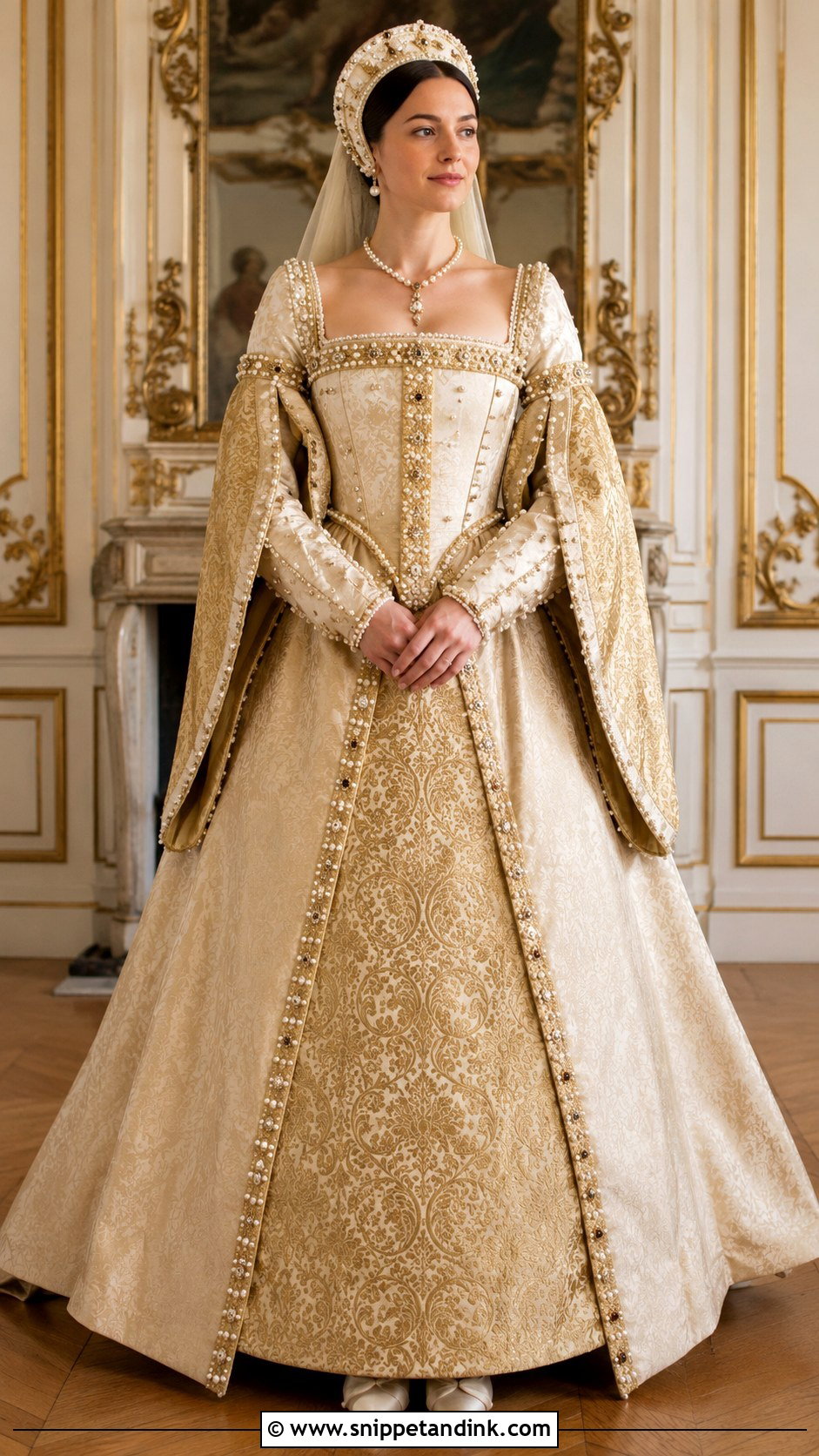
A Tudor wedding dress is recognizable from across a room, mostly because of its geometry: fitted bodice, wide square neckline, dramatic sleeves and heavy skirt panels, topped with a French hood or jeweled headpiece. For a softer bridal take I’d use ivory brocade with gold embroidery and pearl accents, plus a long veil to frame the face. The French hood is the piece to test early. It sits back on the head and needs a firm base underneath, so your hairstylist should see it at the trial, not on the morning. Pointed shoes or plain satin flats keep the look grounded. Nobody should choose this expecting airy and light.
4. Baroque Wedding Dress
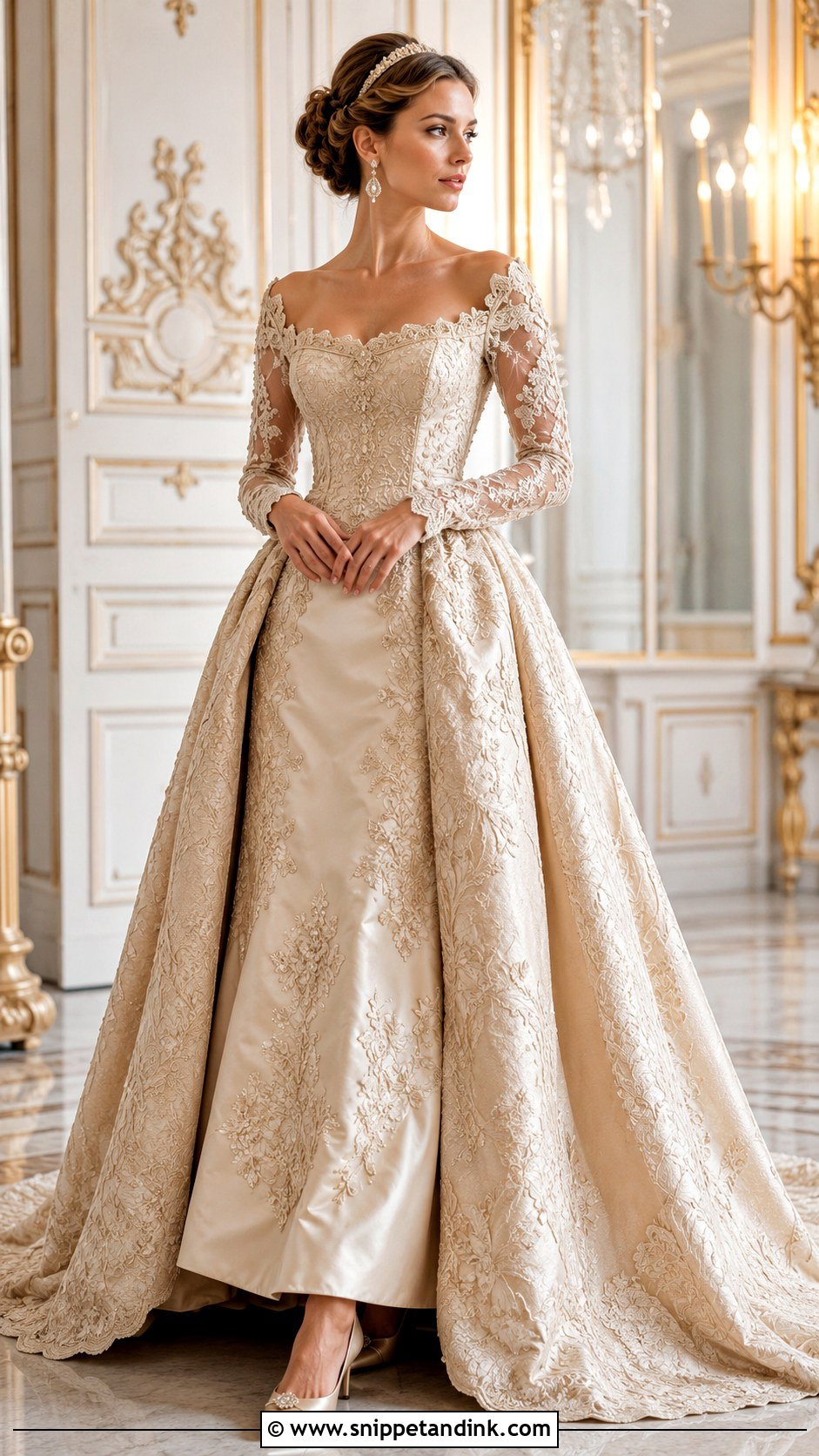
Baroque bridal style depends on movement and texture. A flat, stiff version just looks like a theater rental. The usual build is a fitted bodice, wide neckline, full overskirt, rich embroidery and sleeves finished with lace or ribbon, in ivory, champagne, pale gold or blush. Wide necklines like this slide off the shoulder the moment you raise your arms, so I ask the seamstress for a discreet strap or a silicone grip along the inner edge. Pearl drops, a curled updo, heeled satin shoes and a small fan-style accessory finish the look. Ornate rooms and formal portraits suit it far better than a barn.
5. Georgian Wedding Dress
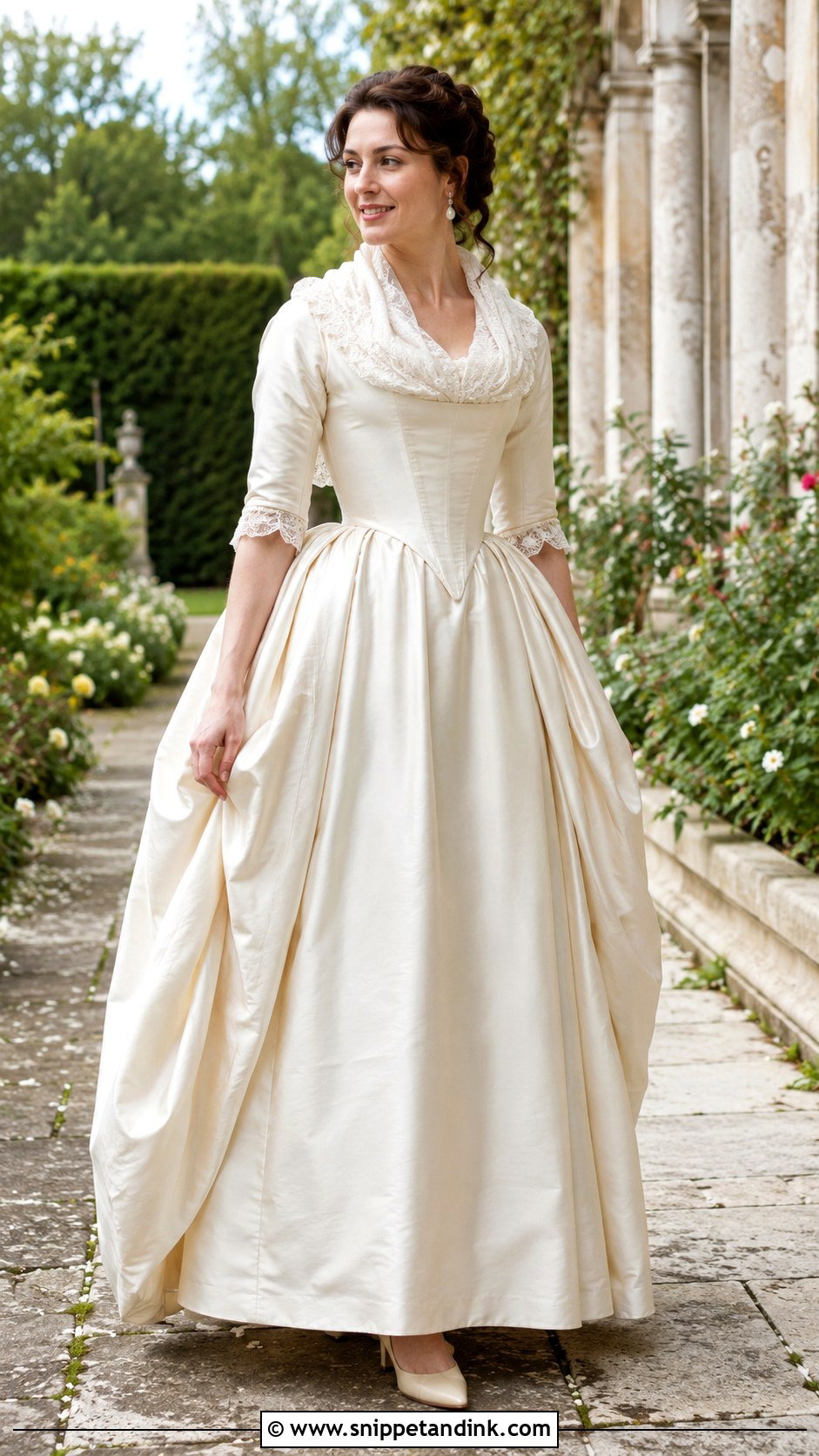
White wasn’t the default in the eighteenth century. Pale blue, ivory, silver and floral silks were all worn, which gives a Georgian look more color freedom than most. Expect a fitted bodice, elbow-length sleeves, a wide skirt and a robe-style overskirt, ideally in soft silk, embroidered cotton or light brocade so it never feels heavy. The detail I’d never skip is the lace fichu at the neckline. It softens the bodice and reads as genuinely period rather than modern. Low heels, pearl earrings and a little powdered-style volume at the crown complete the shape. Elbow sleeves leave your forearms and hands on show, so plan bracelets and rings with that in mind.
6. Regency Wedding Dress
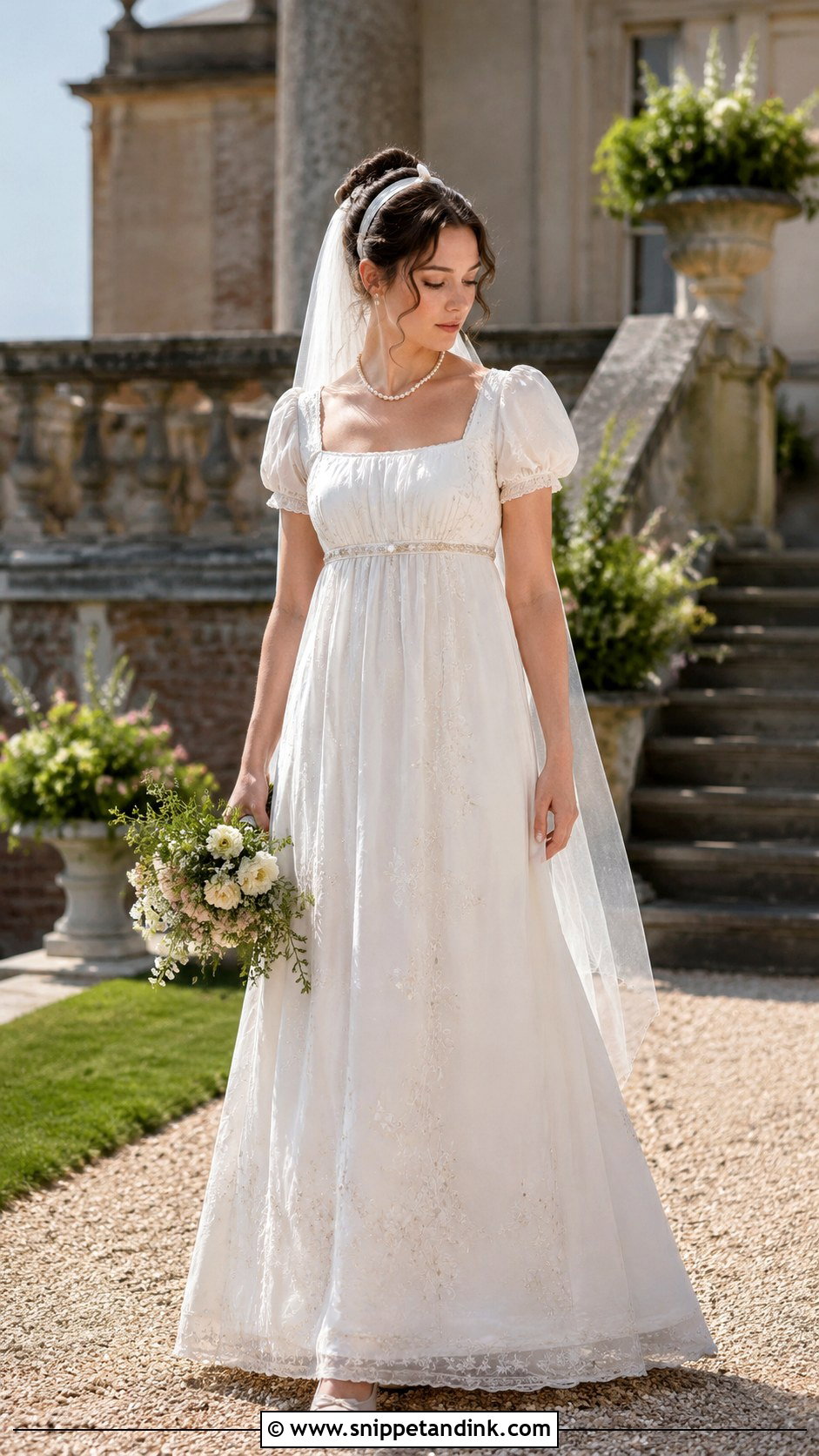
A Regency wedding dress puts the waist just under the bust and lets a soft column fall from there. Short puff sleeves, gloves, flat slippers and a ribboned hairstyle or simple veil are the classic pieces, with muslin, cotton voile and fine silk giving that airy feel. Of everything on this list, this is the dress I’d hand to a bride who wants period romance and has never worn structure. The catch is transparency. Fine muslin is sheer, so you need a slip close to your skin tone; a bright white slip under white muslin glows in flash photos. A small pearl necklace or pendant is all the jewelry it needs.
7. Queen Victoria Wedding Dress
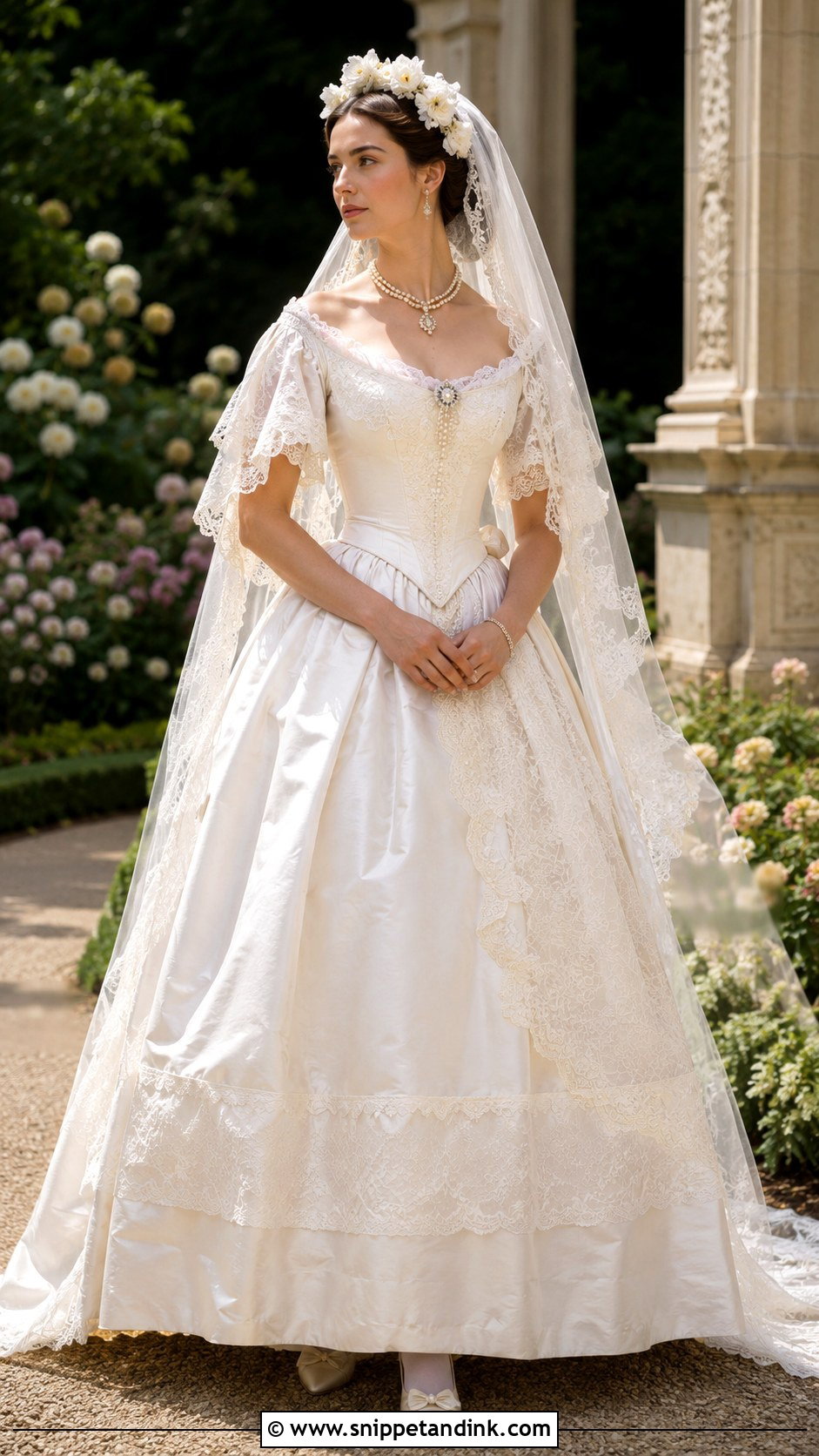
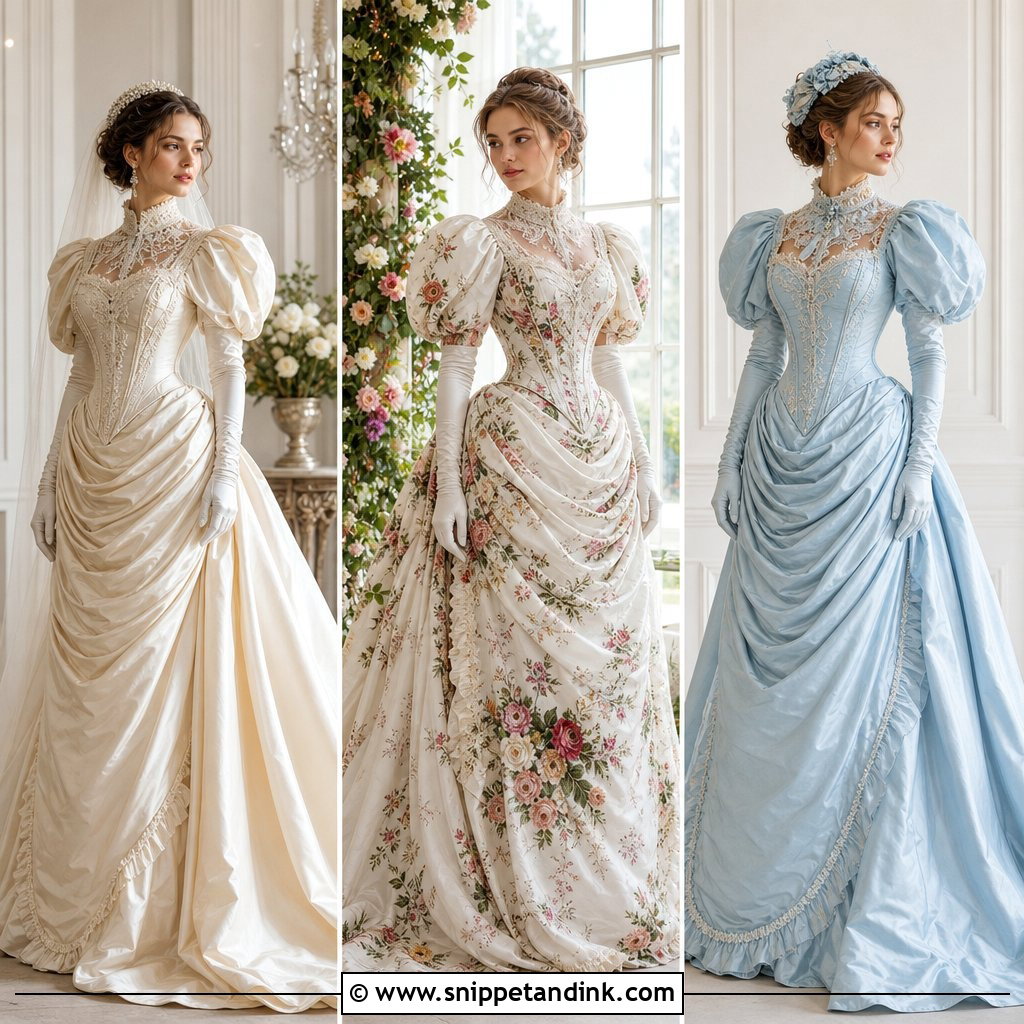
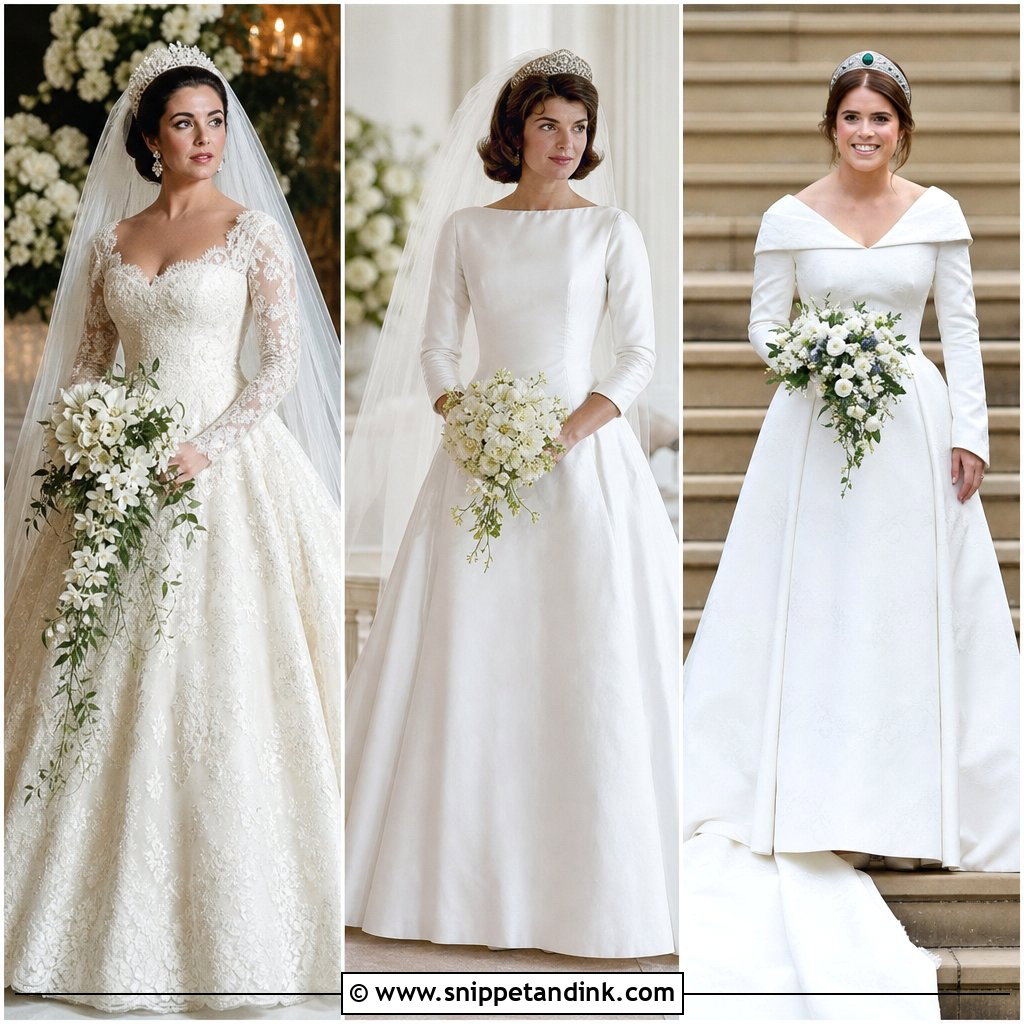
Victoria’s 1840 white satin and lace gown helped make white the default for Western brides. A Queen Victoria wedding dress today usually means a fitted bodice, full skirt, lace trim, long veil and a delicate floral headpiece, with ivory satin shoes, pearls and a bouquet of simple pale flowers. Where I’d be careful: bodices of that decade sat low and wide across the shoulders, which limits how high you can lift your arms. A modern version can keep the outline while cutting the armhole a touch higher. Craftsmanship and royal history are what make this the reference so many brides start from.
8. Early Victorian Wedding Dress
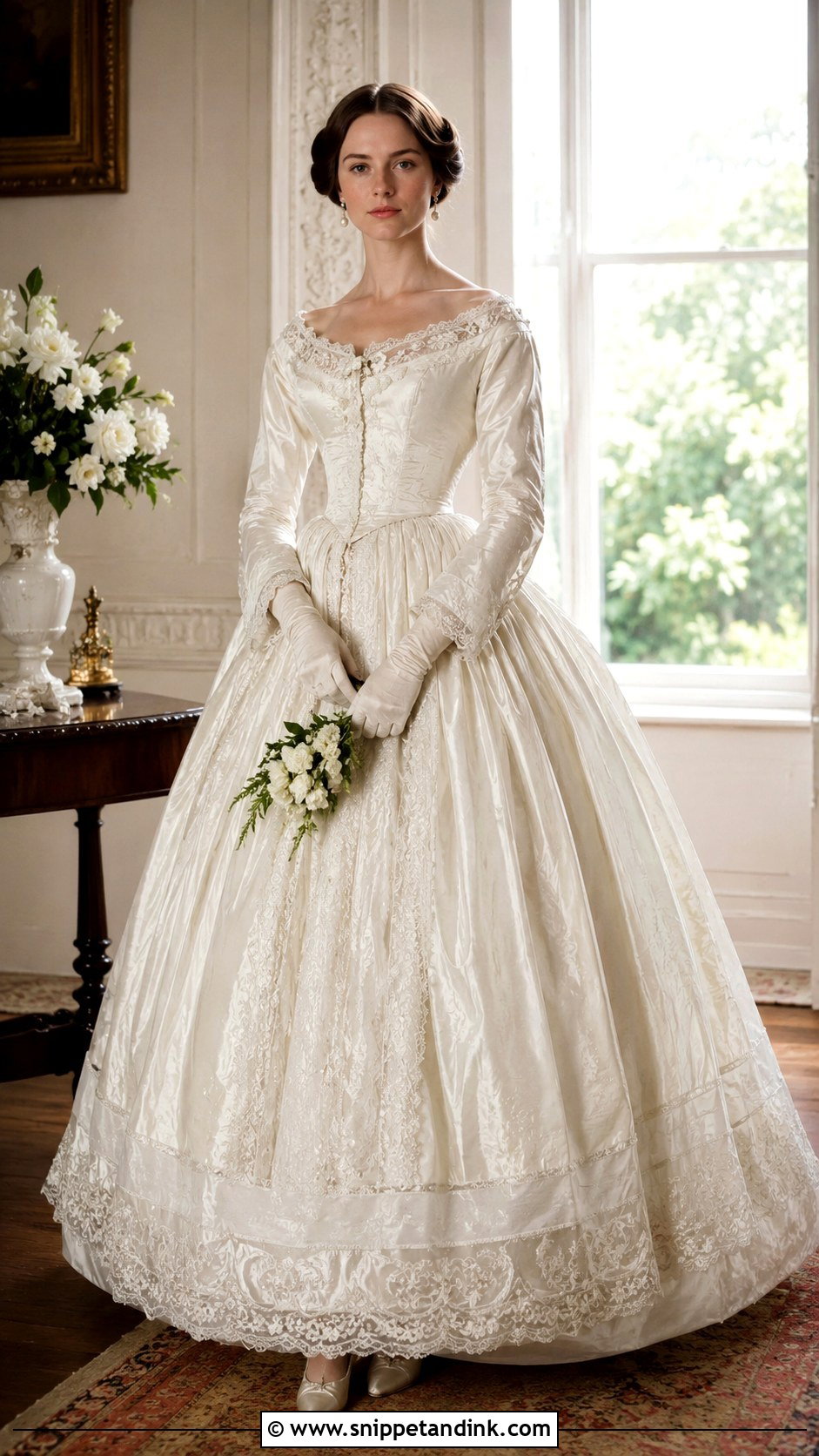
Sloped shoulders, a natural waist, long sleeves and a bell-shaped skirt give the early Victorian bride a modest, formal outline. White, ivory, cream and soft gray all suit it, and lace trim, covered buttons and a long veil carry most of the period feeling. Those covered buttons deserve a practical thought. Twenty or thirty tiny loops down the back take a long time to fasten, so I either add a hidden zip underneath or have a bridesmaid practice at the final fitting. Satin slippers, a small brooch, pearl earrings and a neat center-parted style finish it. It’s quieter than the later Victorian gowns, and that restraint is the point.
9. Civil War Era Wedding Dress
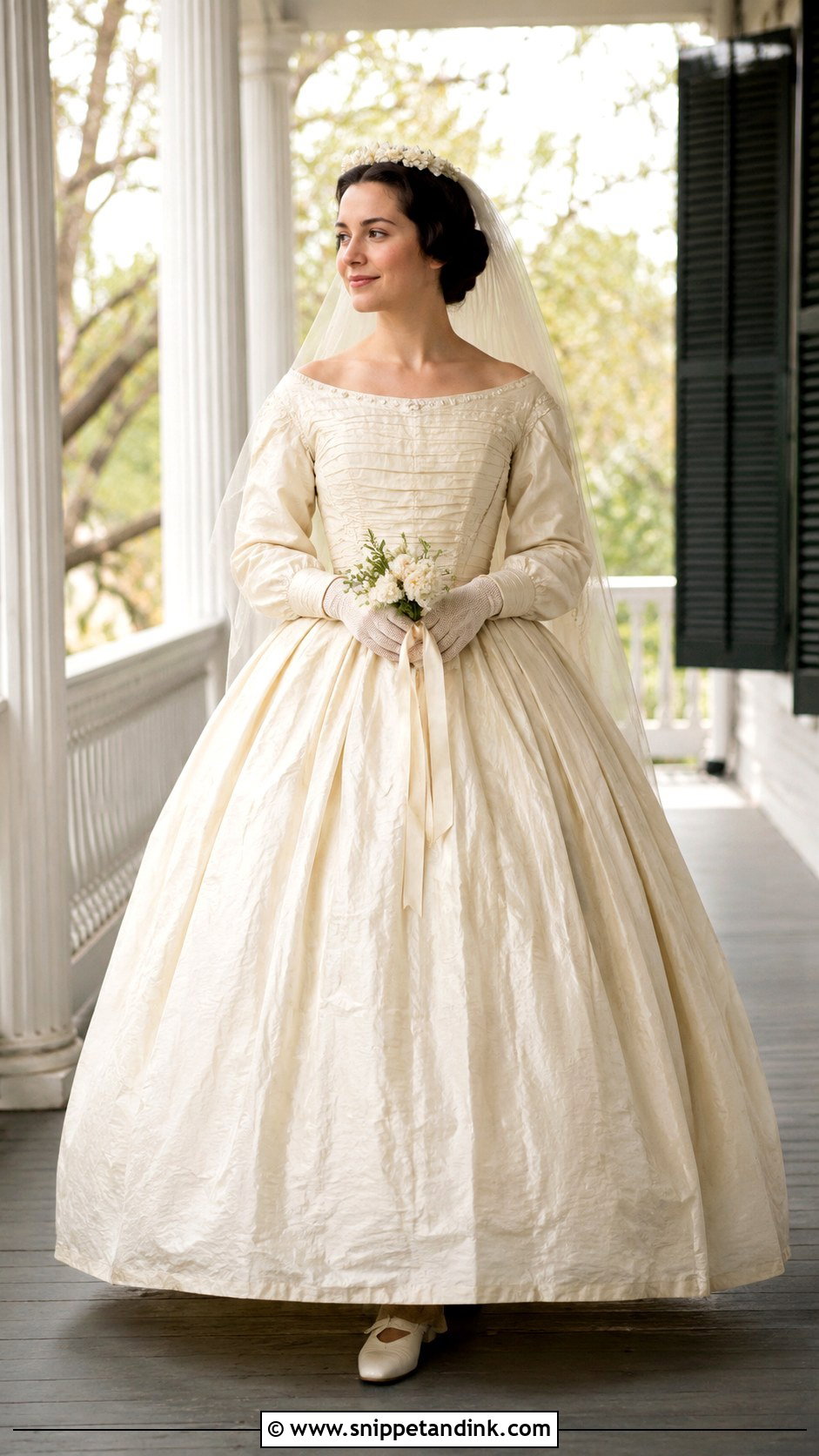
Plenty of 1860s brides married in their best dress rather than a gown worn once, so a soft color or subtle print is actually more authentic here than pure white. The outline is a fitted bodice with dropped shoulders and long sleeves over a wide, rounded skirt held out by petticoats. For a bridal version, ivory cotton, silk or light taffeta works. Nearly all that width comes from the understructure, and I always tell brides to choose the hoop or petticoats first and fit the dress over them, never the other way round. Sitting in a wide skirt takes practice too. Low shoes, gloves, a small floral headpiece and simple jewelry complete it.
10. Late Victorian Bustle Wedding Dress
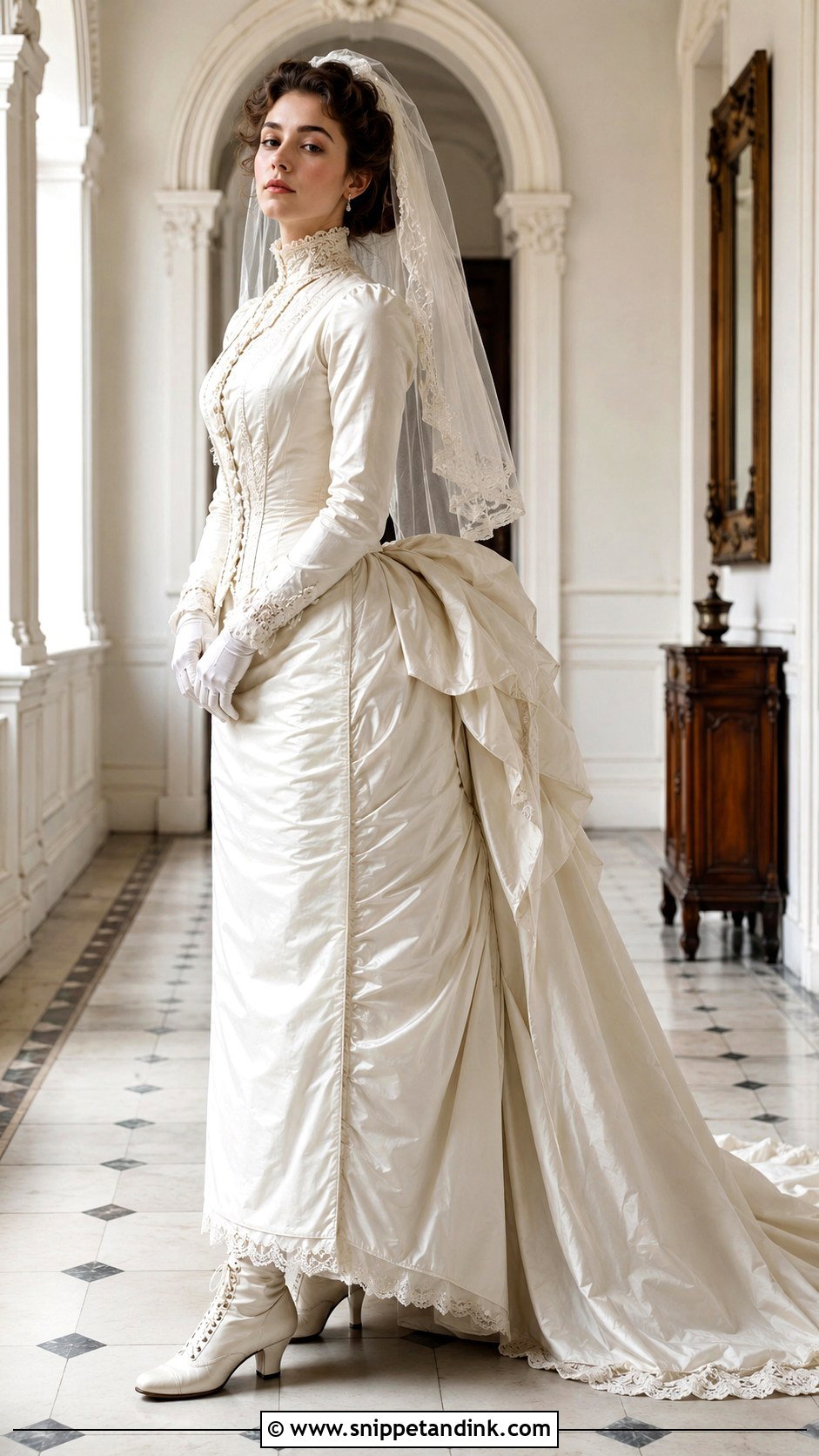
Everything interesting on a late Victorian bustle gown happens at the back. The front is narrow, the bodice fitted with a high neckline and long sleeves, and then a bustle or train builds up behind, worked in lace, satin, silk faille and decorative buttons. Indoors, that back view becomes your entrance shot. Outdoors on grass, a train collects everything it touches. Ask your seamstress for a bustle system of hooks or ribbon loops so the train lifts for the reception, and have someone learn it at the final fitting. Gloves, a structured veil, pearl earrings and lace-up boots or satin heels finish the outline.
11. Gibson Girl Wedding Dress
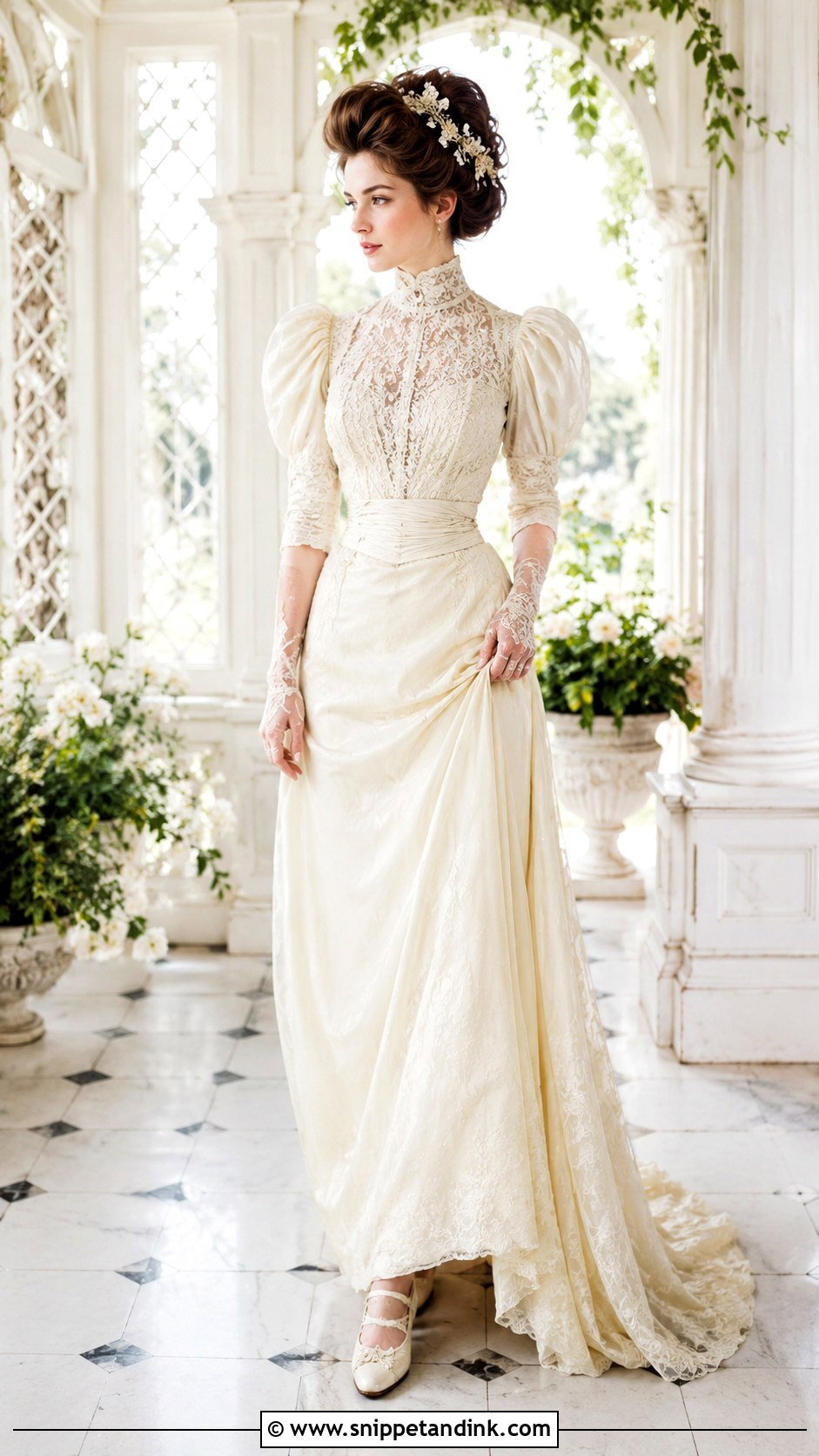
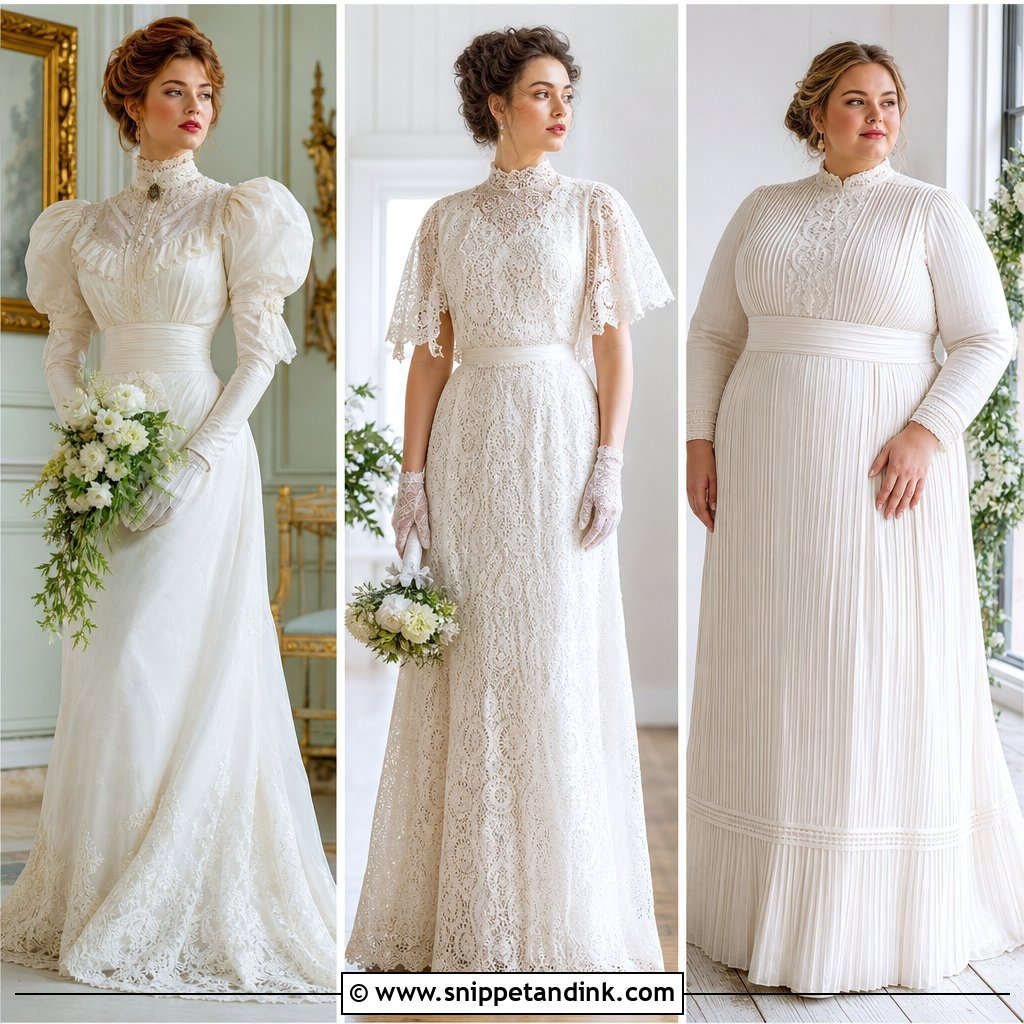
The Gibson Girl look is about height. A high-neck lace bodice, slightly puffed sleeves, a defined waist and a floor-length skirt are all topped with a full, rolled updo, and ivory lace over silk gives texture without weight. The hair is half the silhouette here. That pompadour volume usually needs padding or backcombing to hold, so bring reference pictures to your hair trial early. A small floral comb, lace gloves and dainty heels complete it. Garden settings, historic houses and daytime ceremonies suit it best.
12. Edwardian Wedding Dress
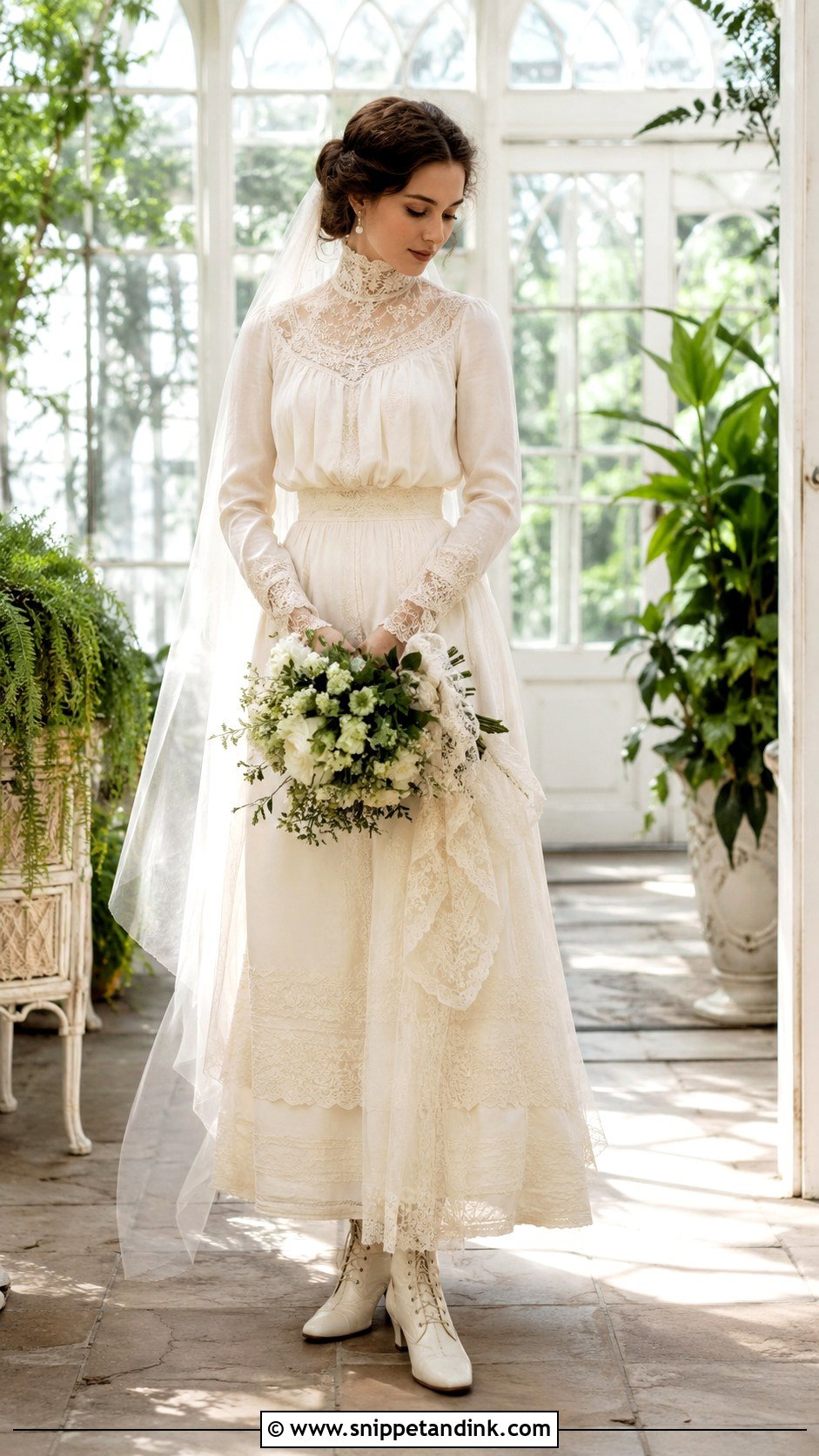
Lace, pearls, embroidery and light silk defined the Edwardian bride, cut into a high neckline, long sleeves, a soft blouse-like bodice, a defined waist and a gently flowing skirt. You get full coverage without severity. The high lace collar is the part I test by asking a bride to turn her head side to side at the fitting. If the boning or lace scratches under the jaw, have it lined with silk tulle, because you’ll be wearing it all day. A long veil, pearl earrings, a lace-trimmed bouquet wrap and delicate boots or heels suit it.
13. 1910s Wedding Dress
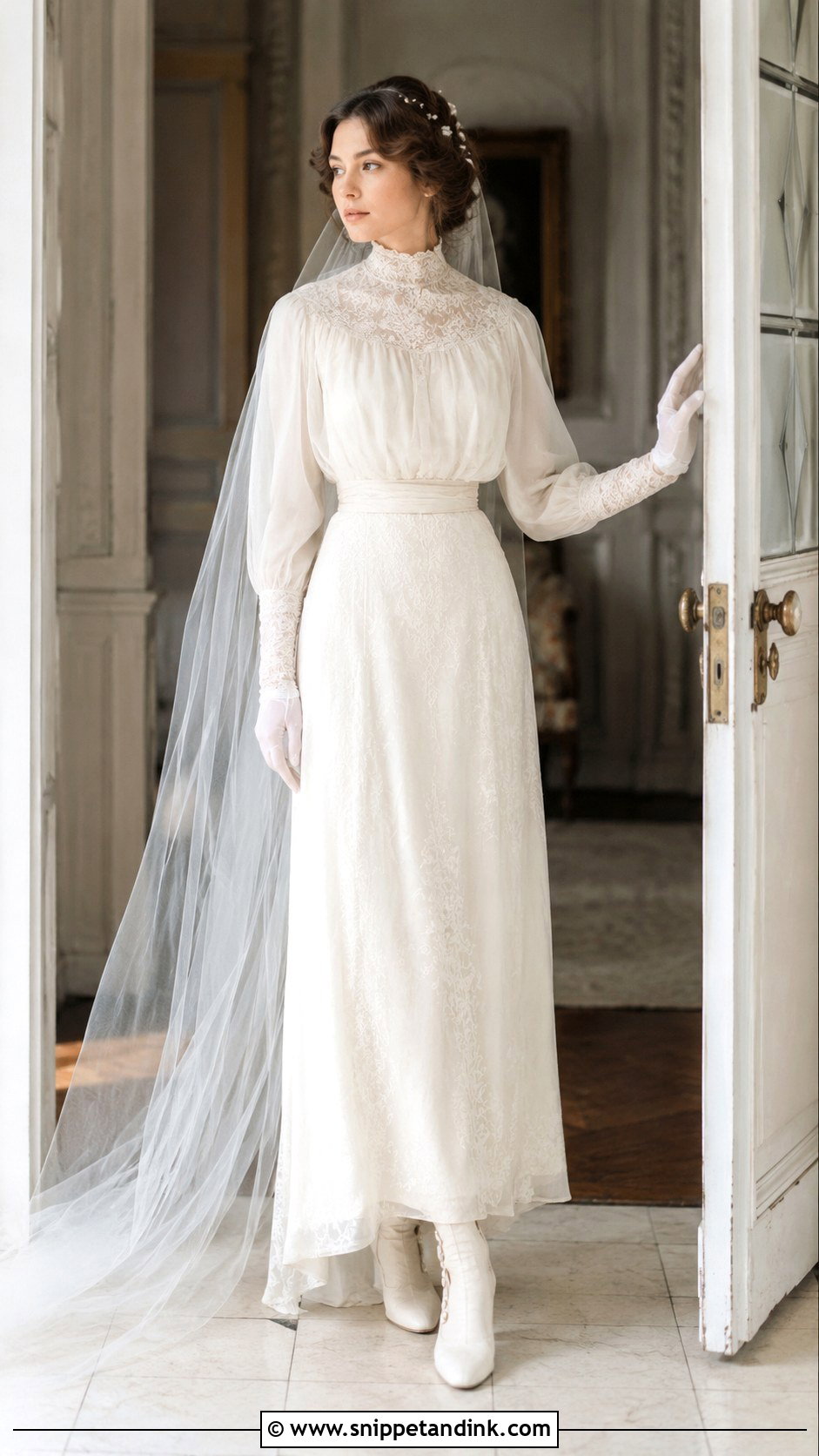
The 1910s gown sits between Edwardian softness and the plainer lines that followed. The bodice loosens, the waist rises and the skirt narrows to skim the body, while necklines stay high and lacy and sleeves stay long. Silk, lace, chiffon and netting suit it. A narrow hem limits your stride more than most brides expect, especially on stairs, so I check the walk in the exact shoes you’ll wear before the hem is finished. Pearl hair pins, a long veil, soft gloves and buttoned boots complete the look. It moves more freely than anything earlier on this list while staying modest.
14. 1920s Wedding Dress
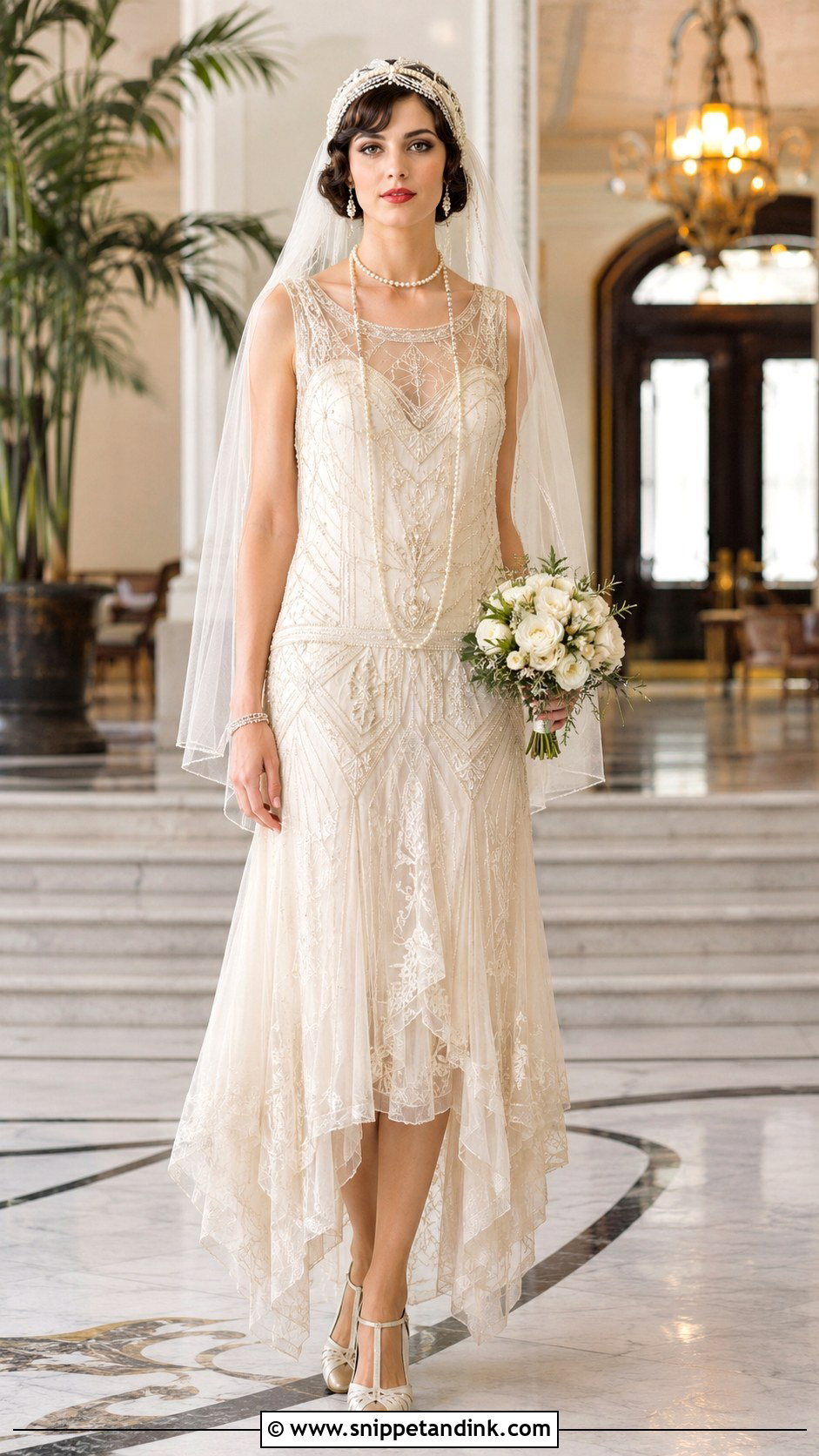
Dropped waist, straight silhouette, sheer overlay and beadwork, often with a shorter or uneven hem: this is the Art Deco bride of the 1920s. Ivory, champagne, silver and soft blush all suit the era. Bead weight is what I watch. Heavily beaded chiffon can stretch under its own weight on a hanger, so it should be stored flat or loosely folded, and any loose threads re-secured before the day. A cloche-style veil, T-strap heels, pearls and a small bouquet complete it. Because there’s no corset, it’s an easy dress to dance in, which suits city weddings, historic hotels and evening receptions.
15. 1930s Wedding Dress
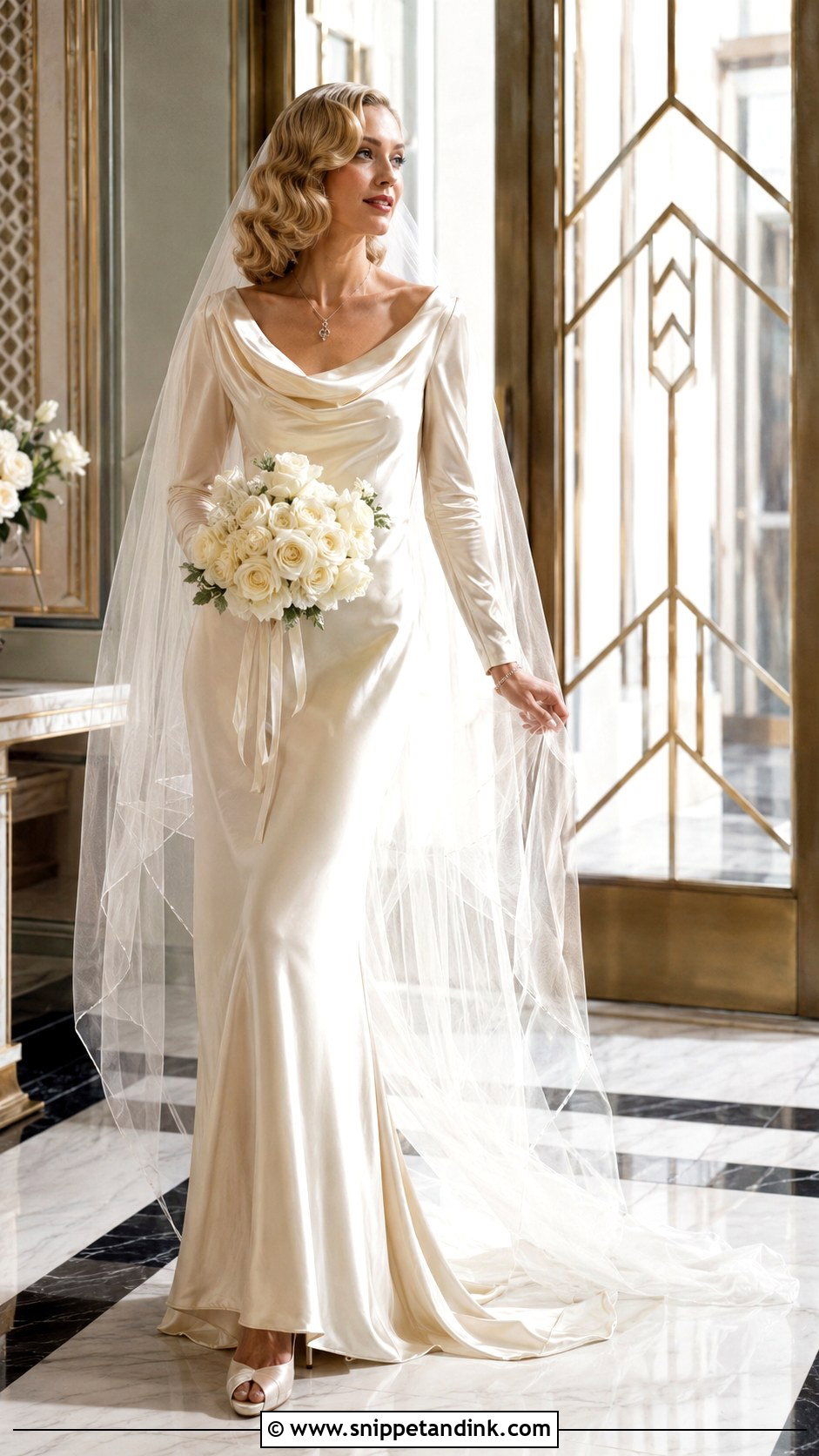
Bias cutting is what gives a 1930s gown its liquid movement. Cut on the diagonal grain, satin or silk crepe falls close to the body rather than standing away from it, usually with long or flutter sleeves, a cowl neckline and a long veil. The honest trade-off is that bias satin shows everything underneath. Smooth, flat underwear and a careful fitting matter more with this dress than any other here, and it isn’t forgiving if you’d rather skim over your hips. Peep-toe heels, a small clutch, soft waves and delicate jewelry finish it. No big skirt, just drape and a quiet shine.
16. 1940s Wedding Dress
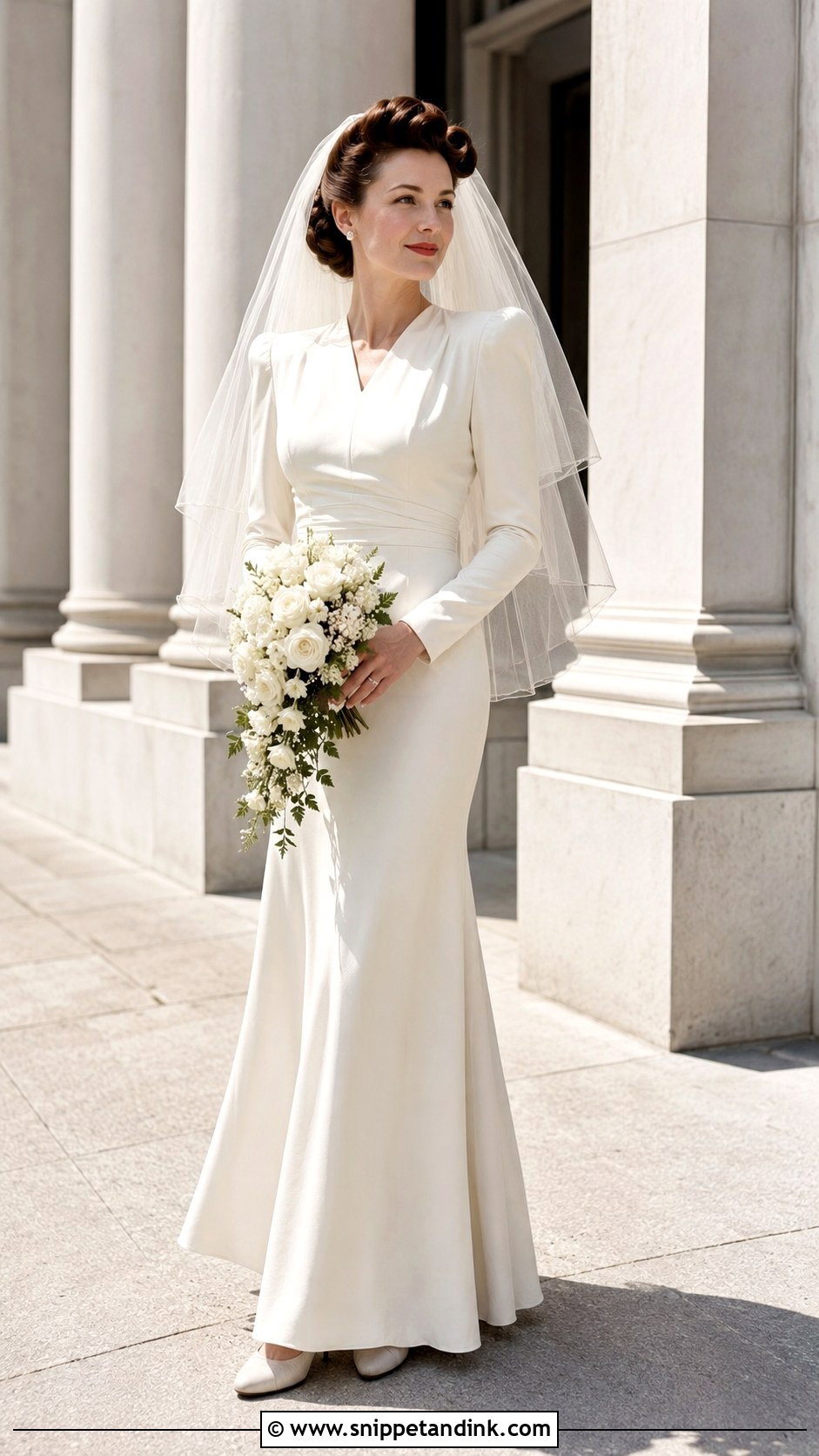
Wartime shortages pushed brides toward simplicity, which is why a 1940s wedding dress looks tailored and restrained: strong shoulders, long sleeves, a fitted waist and an A-line or gently flared skirt. Rayon, satin and crepe with lace accents all fit the period. Some brides married in suits, so an ivory skirt suit is a historically sound choice. I keep the shoulder pads but scale them down, because a full-size period pad on a modern frame can look boxy in photos. A fingertip veil, low heels, red or soft rose lipstick and a small structured bouquet complete it.
17. 1950s Tea Length Wedding Dress
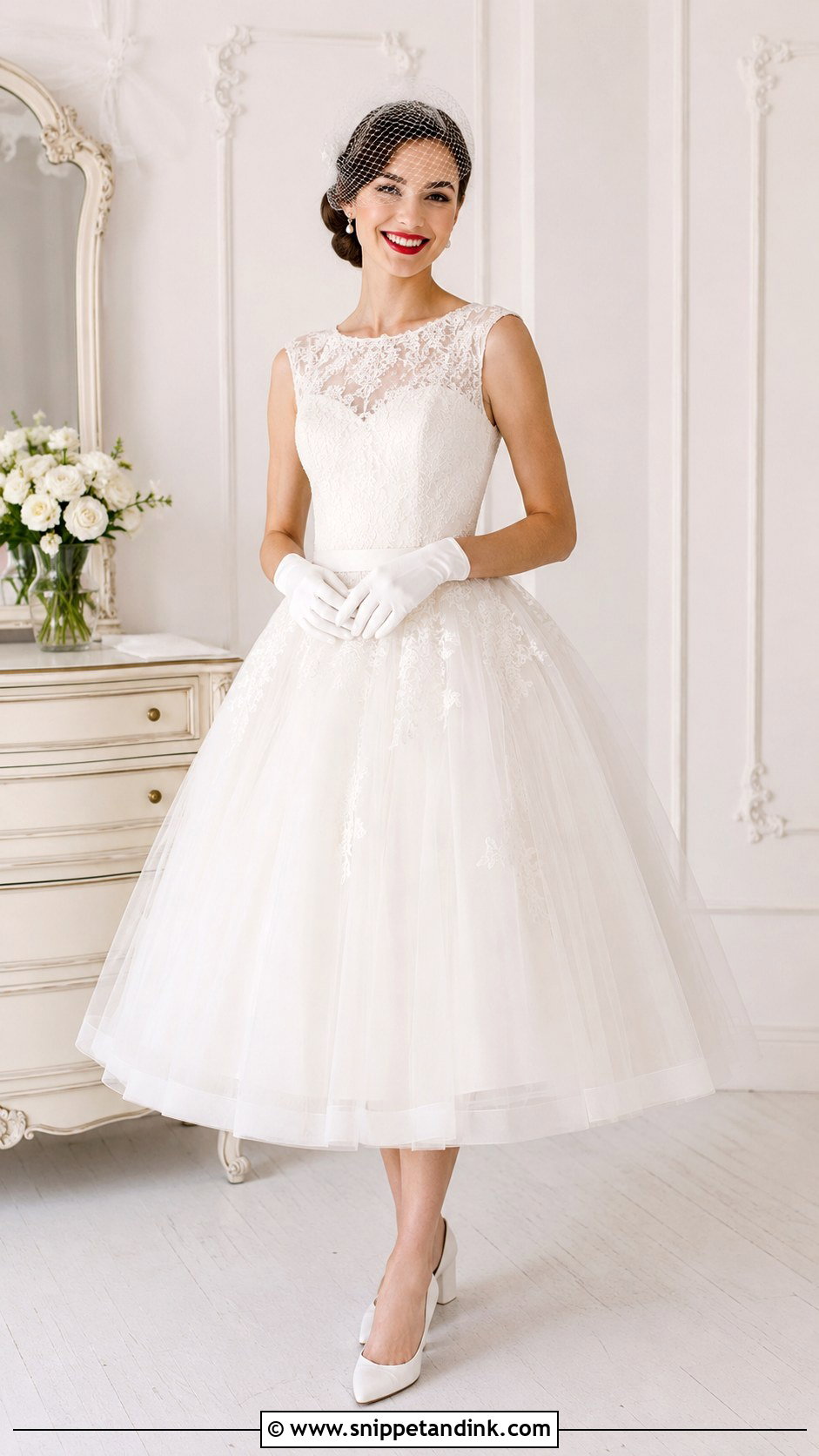
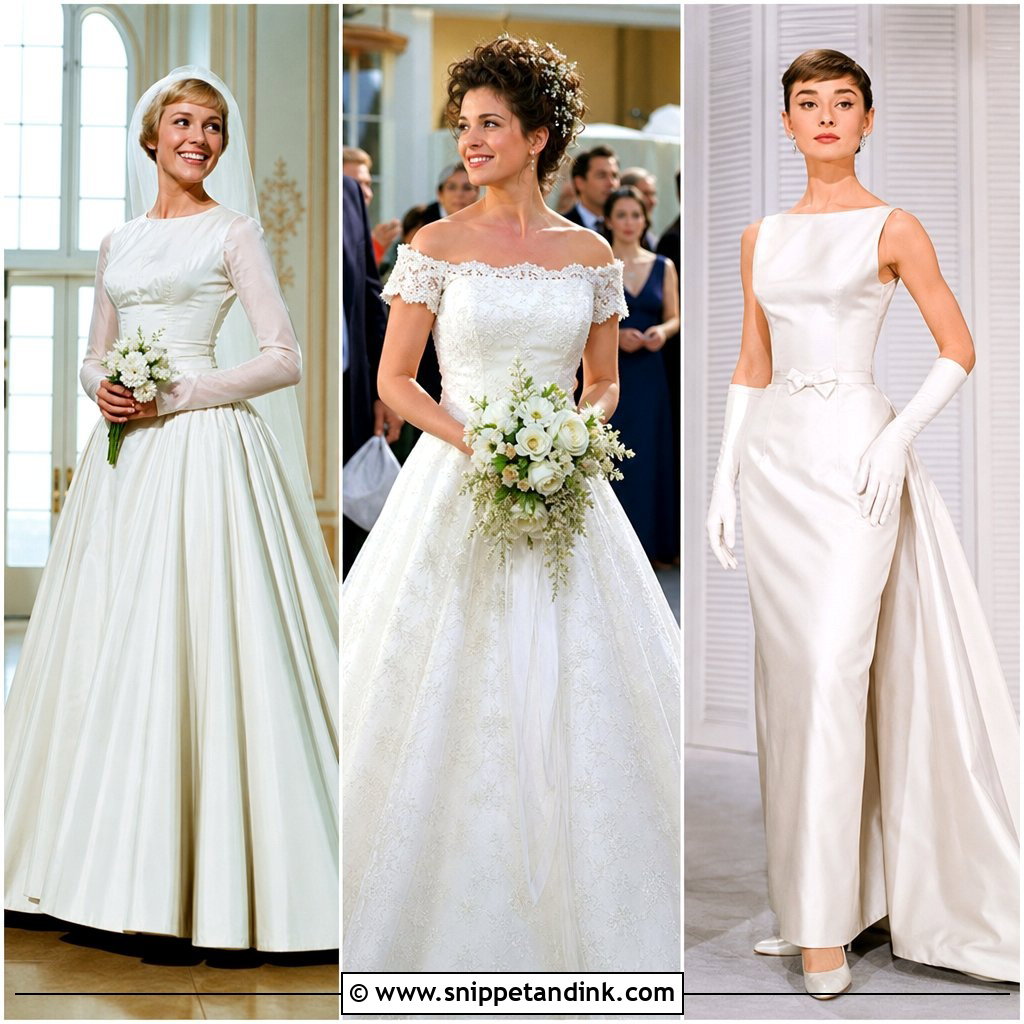
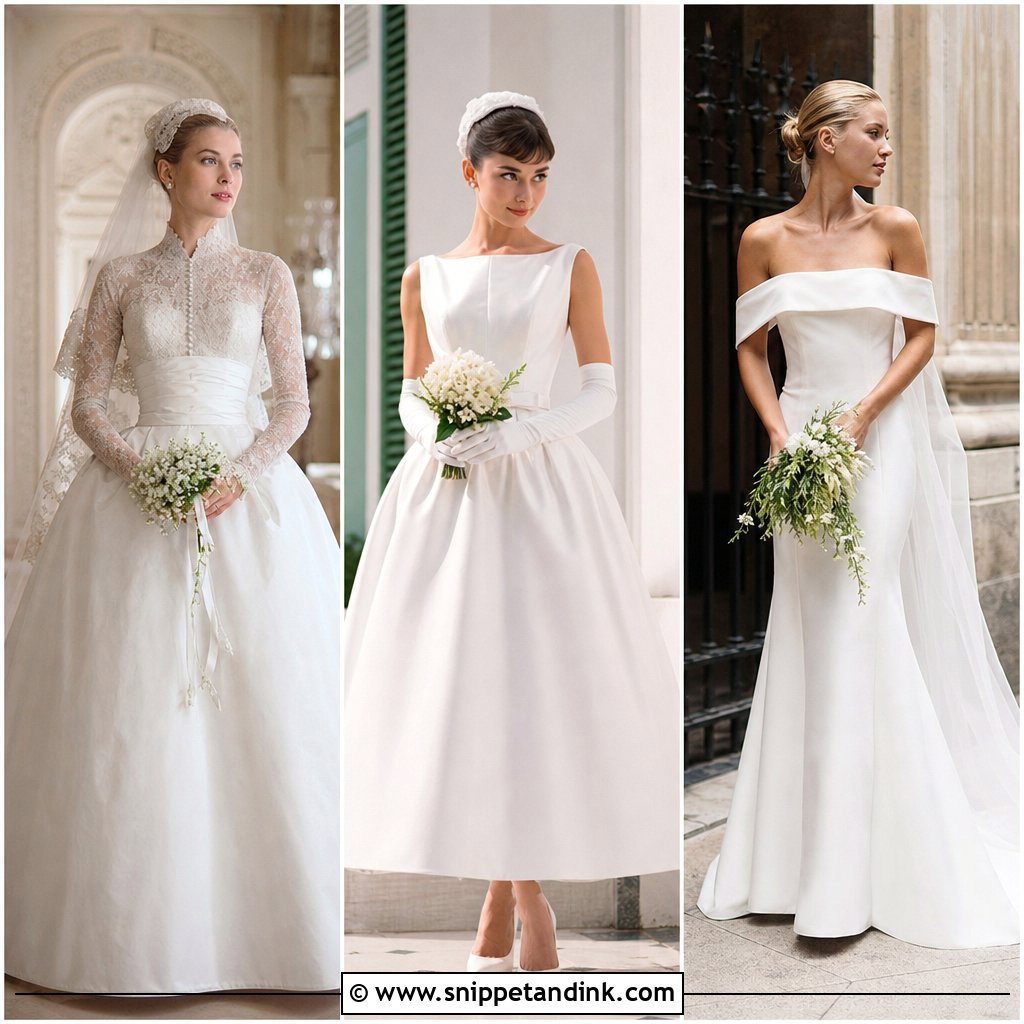
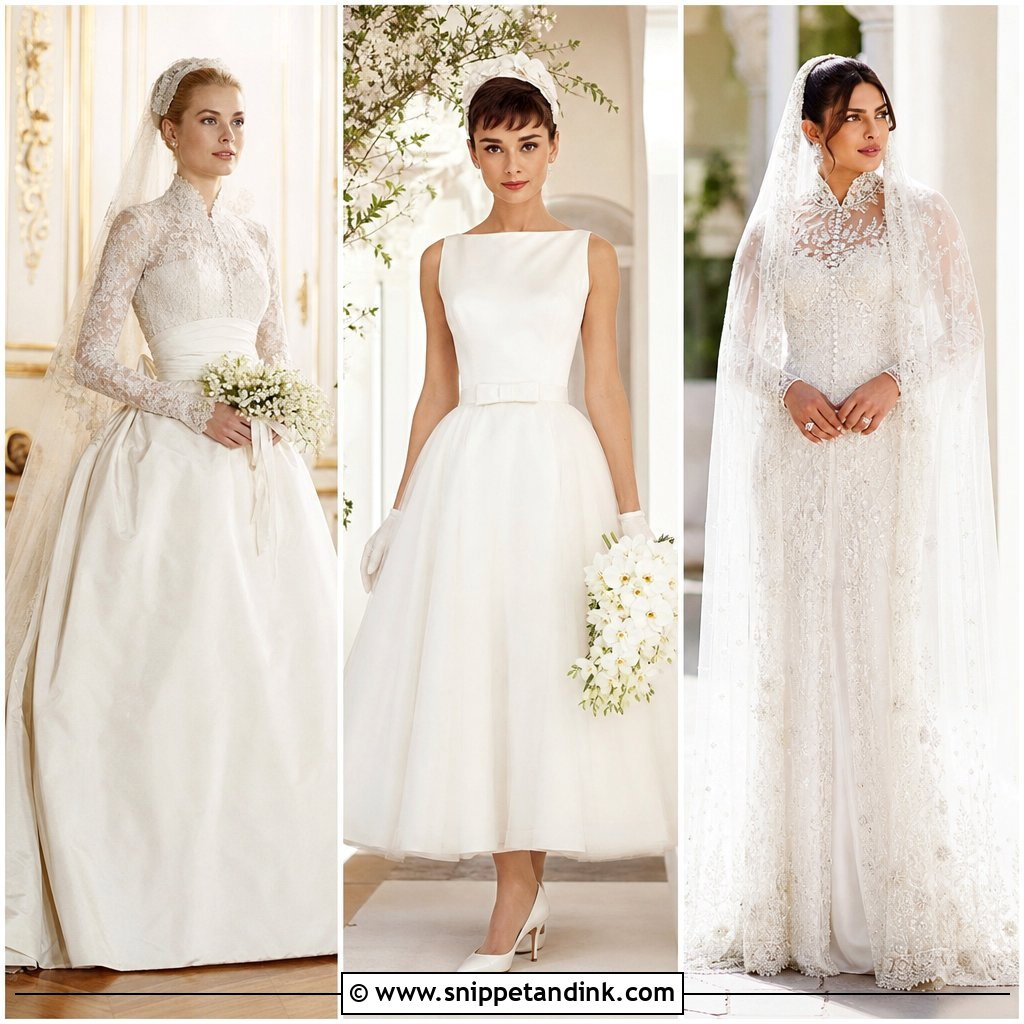
A tea-length skirt shows your shoes, so in a 1950s look they become part of the dress. The outline is a fitted bodice, defined waist and full midi skirt, with short sleeves or a bateau neckline and a petticoat underneath for shape. Lace, tulle, satin and organza all suit it. I set the petticoat length at the fitting too: if it peeks below the hem when you sit or twirl, the clean line is gone. Pointed pumps, short gloves, pearl earrings and a birdcage veil complete the look. It’s cheerful and easy to move in without losing bridal impact.
18. 1960s Mod Wedding Dress
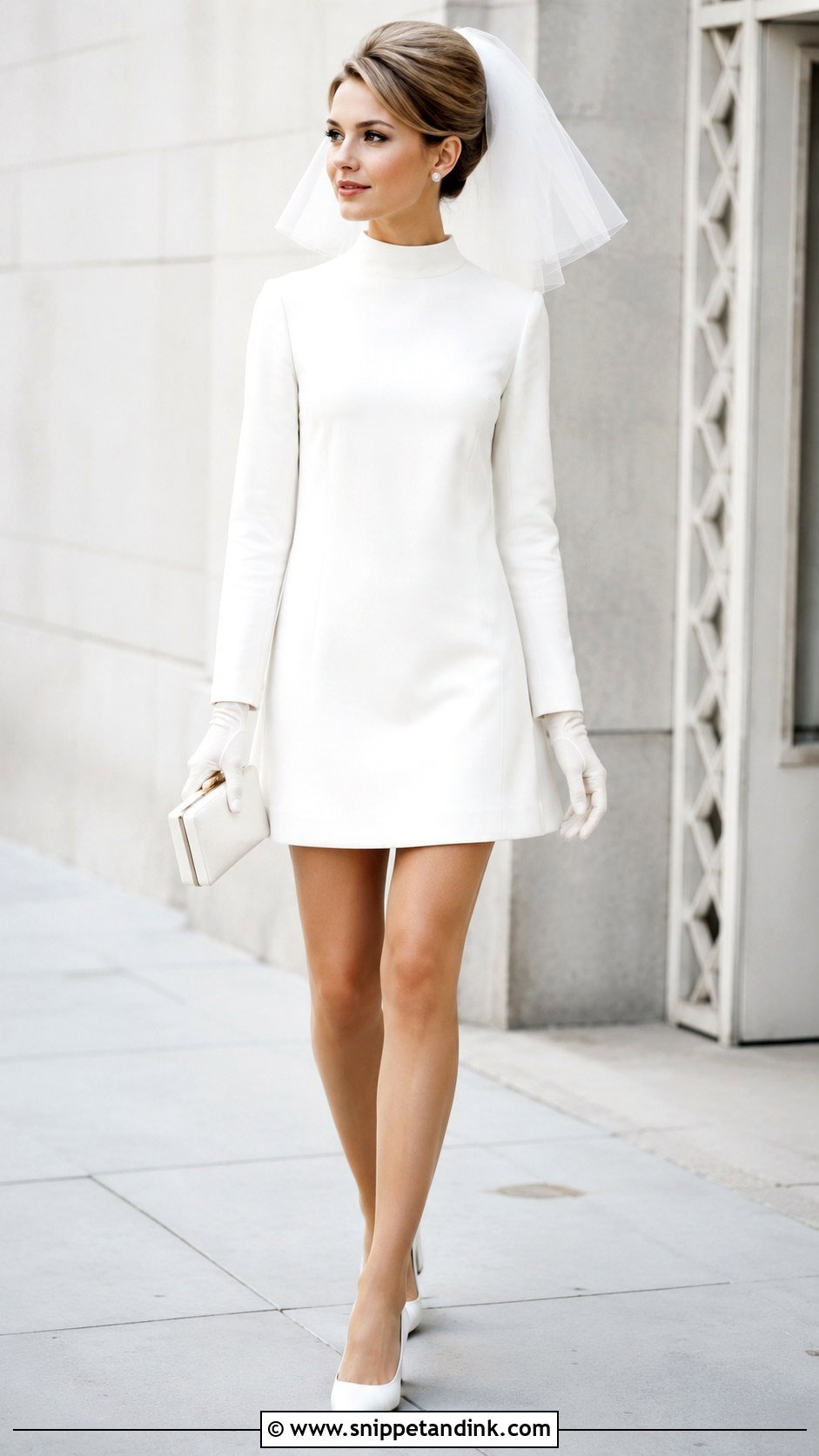
A 1960s mod wedding dress is short and sharp: a mini or above-the-knee shift, long sleeves, a high neckline, block heels and a short veil or pillbox hat. Crepe, satin and structured cotton hold that crisp shape, and pearl studs, white gloves and a small box clutch finish it. A shift has no waist seam to hide behind, so the fit across the hips and where the hem lands against your knee decide whether it looks youthful or simply casual. I pin that hem with the bride standing in her actual shoes. Courthouse ceremonies, city weddings and small celebrations are where it shines.
19. 1970s Bohemian Wedding Dress
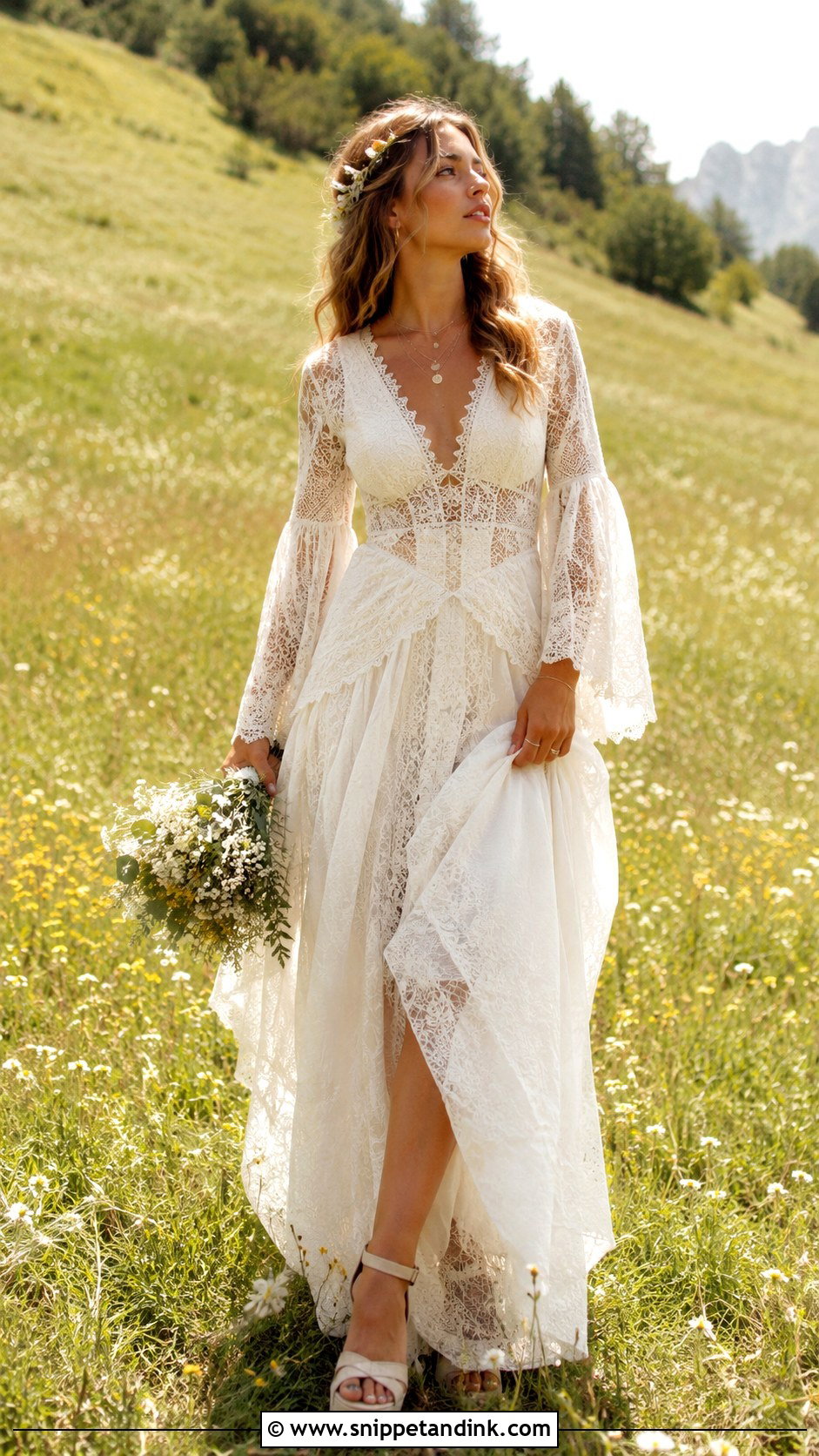
Bell sleeves, a high waist, crochet details and a flowing lace or cotton skirt give the 1970s gown its relaxed shape, best in ivory, cream or natural white. It should look loose, never overbuilt. Those bell sleeves are lovely in a meadow and a nuisance at dinner, where they drag across plates and snag on bouquet stems, so I sometimes suggest a lighter chiffon sleeve in place of heavy lace. Loose waves, a flower crown or ribbon, platform sandals and layered fine jewelry finish it. Outdoor and garden ceremonies are its natural home.
20. 1980s Princess Wedding Dress
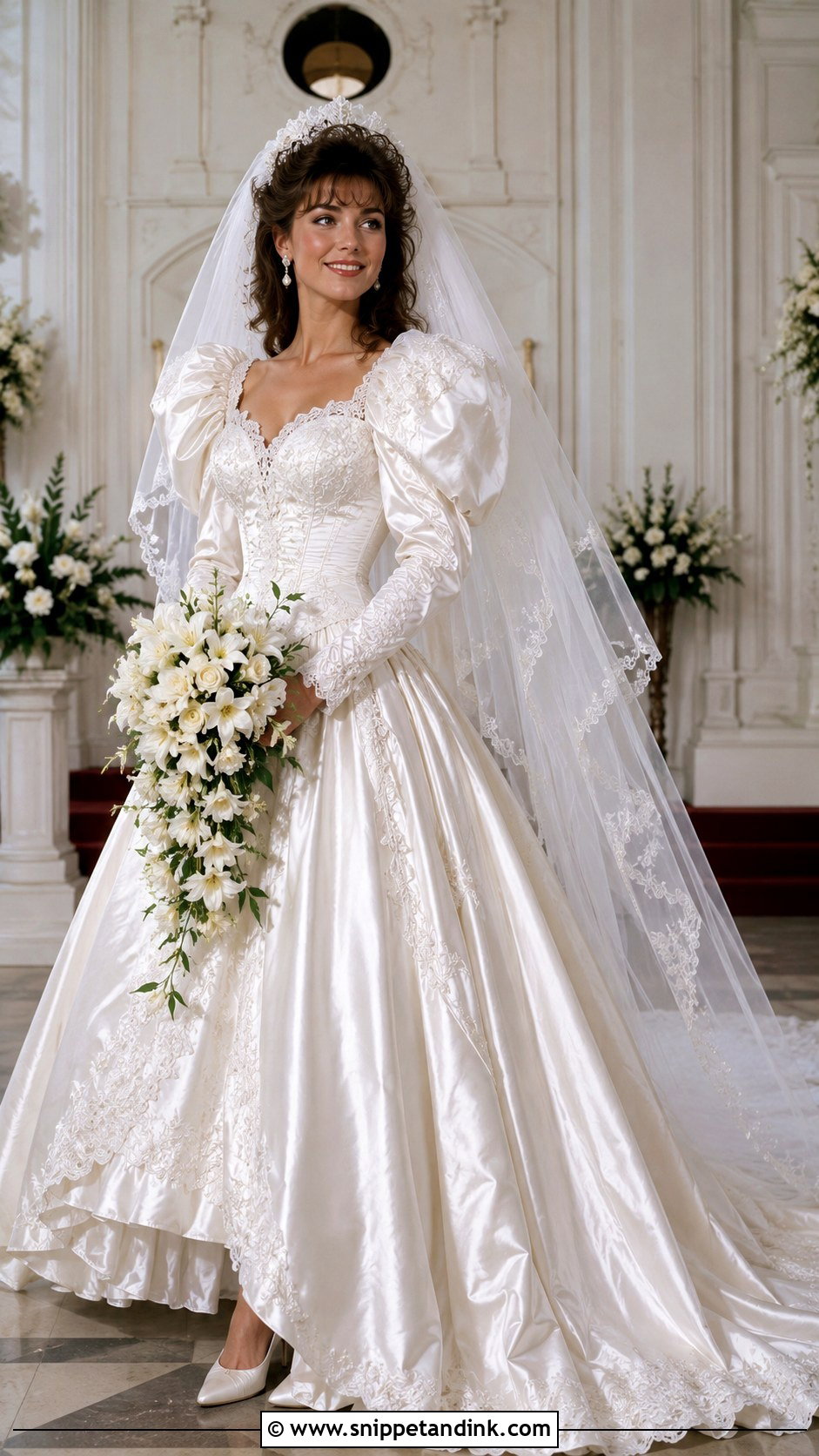
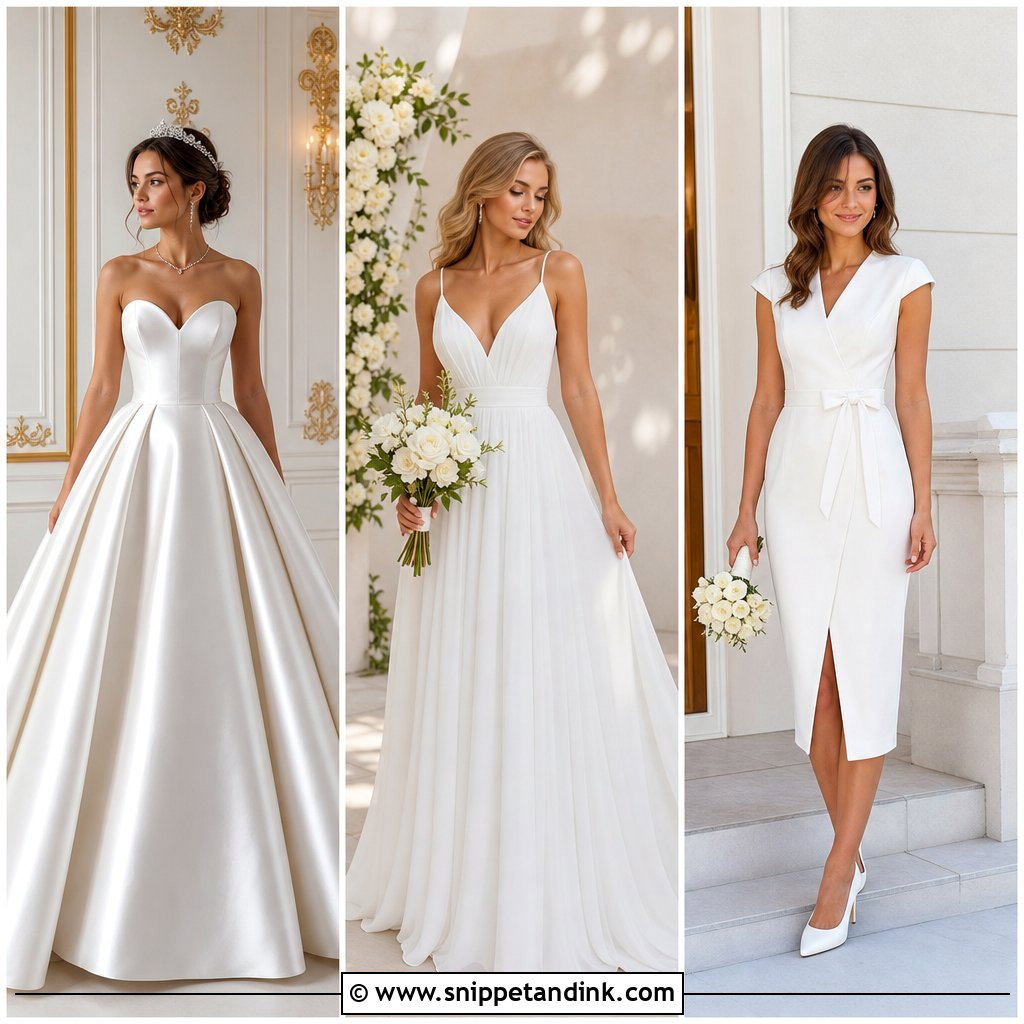
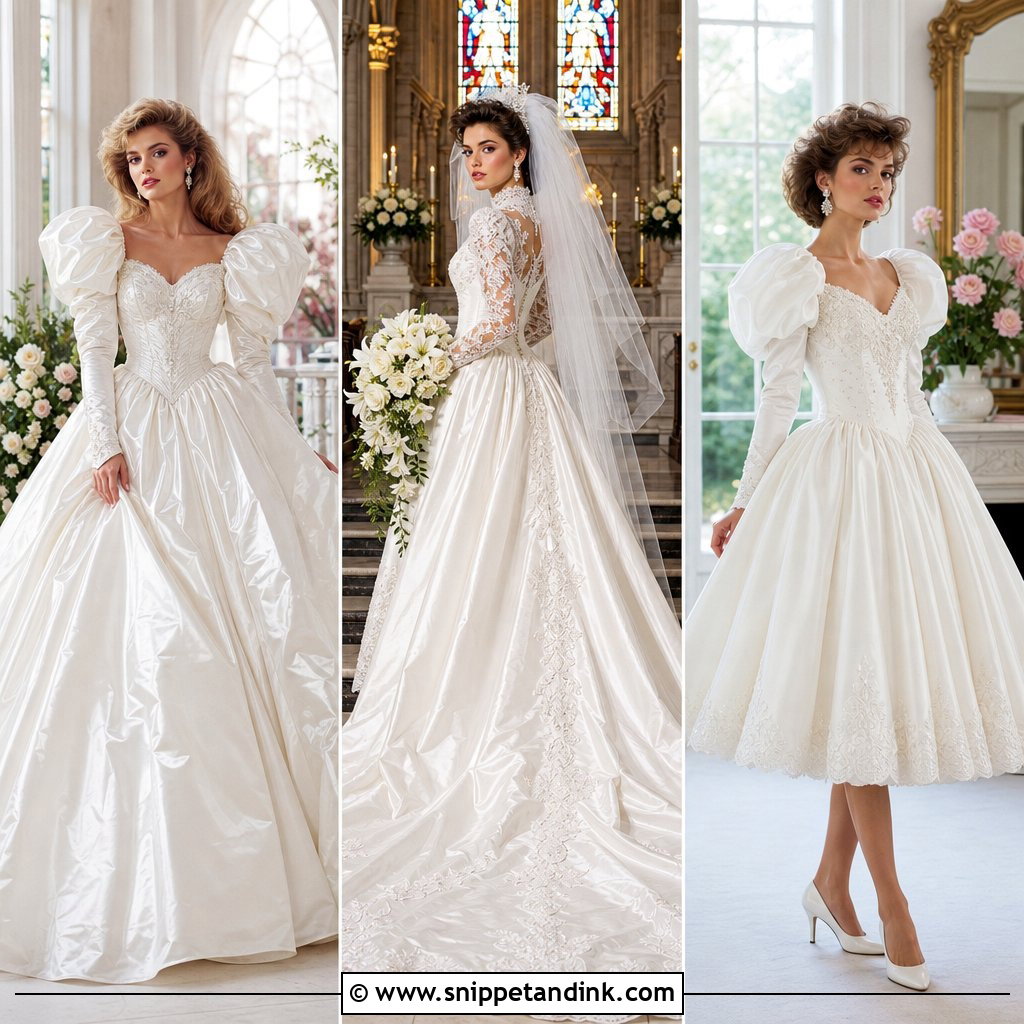
Puff sleeves, a fitted bodice, full skirt, long train, lace appliqué and a dramatic veil: the 1980s princess dress is volume on purpose, built from satin, taffeta, organza and lace. Taffeta rustles and creases wherever you sit, so expect lines across the lap after the ceremony; a quick steam before portraits fixes most of them. To stop it tipping into costume, I keep the makeup clean and the accessories refined, with pearl earrings, classic pumps, a structured bouquet and softly styled hair. It was made for a grand entrance and still delivers one.
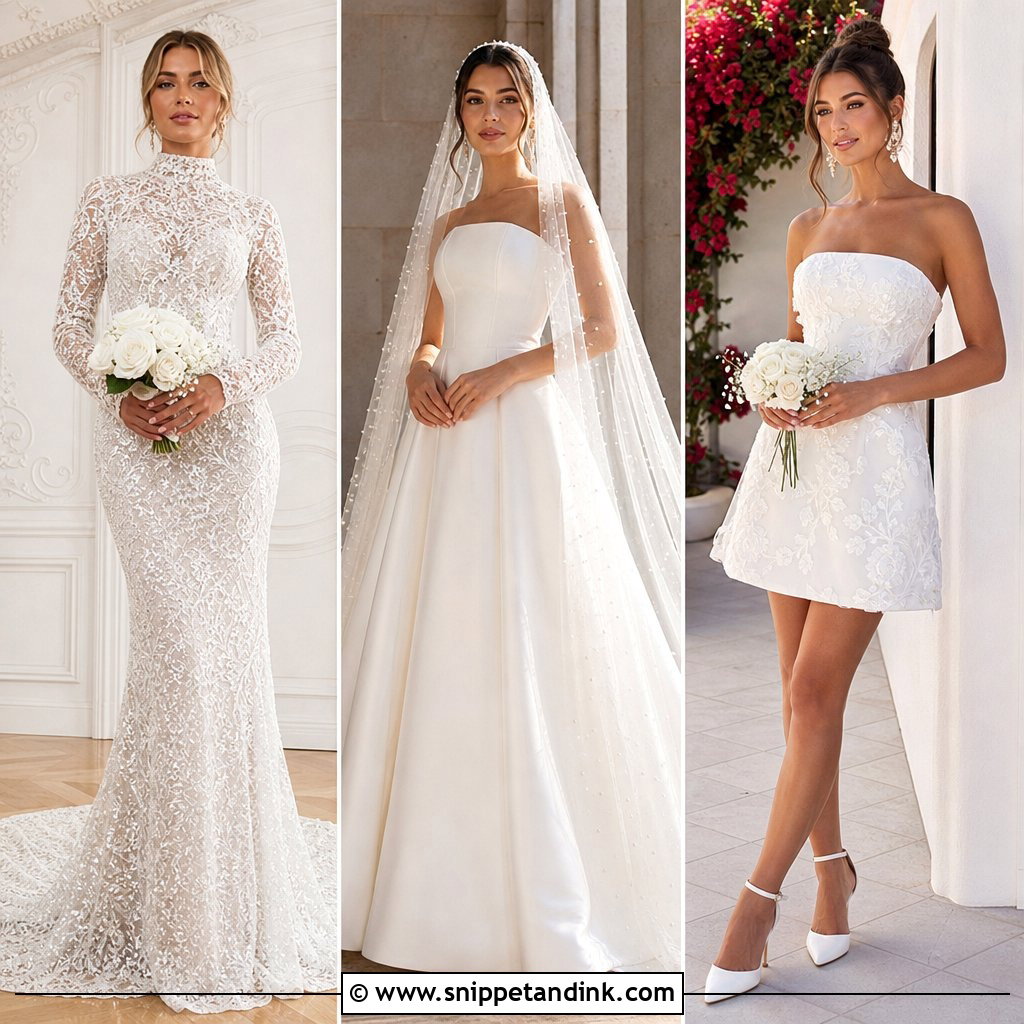
21. 1990s Minimal Wedding Dress
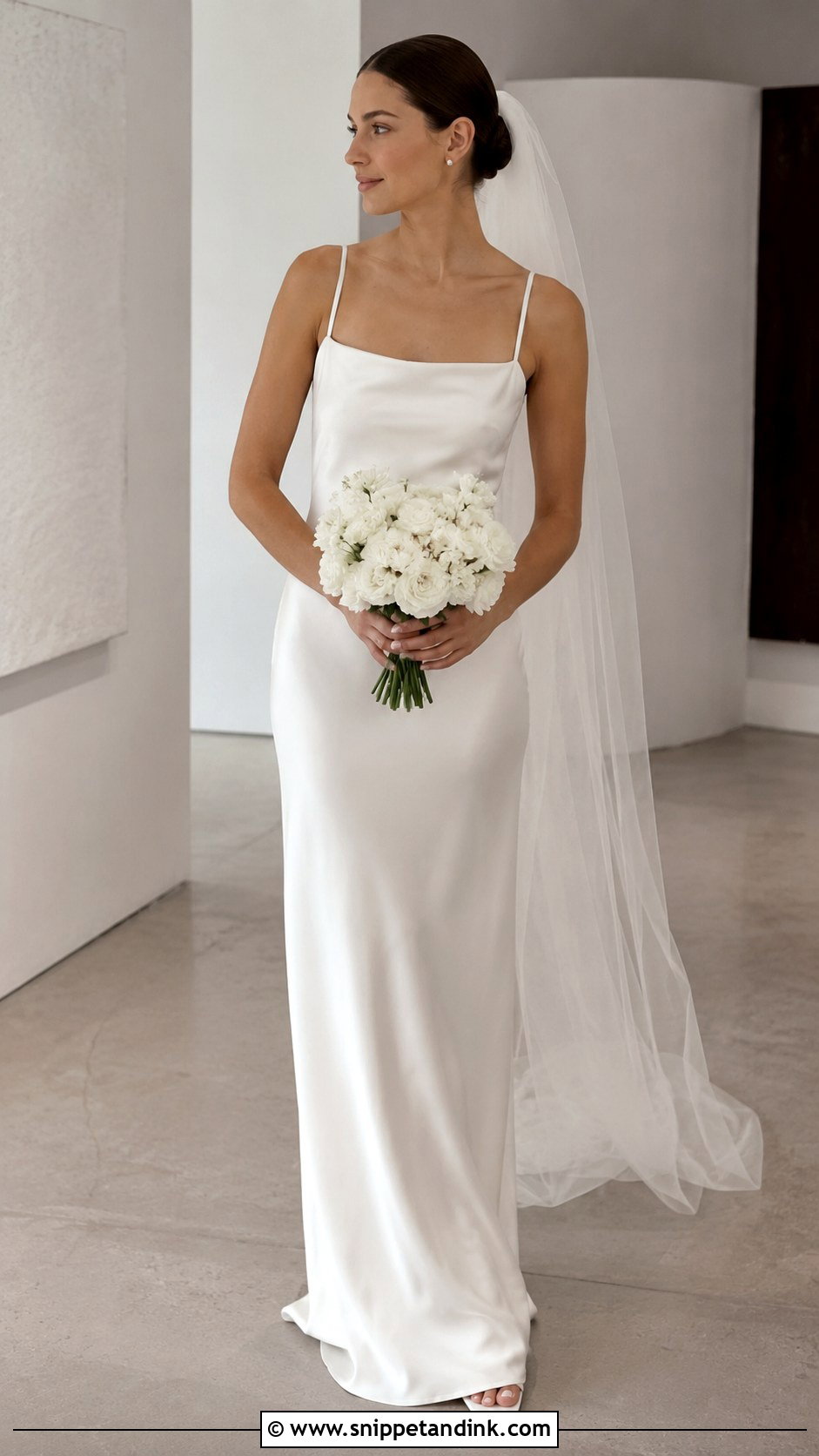
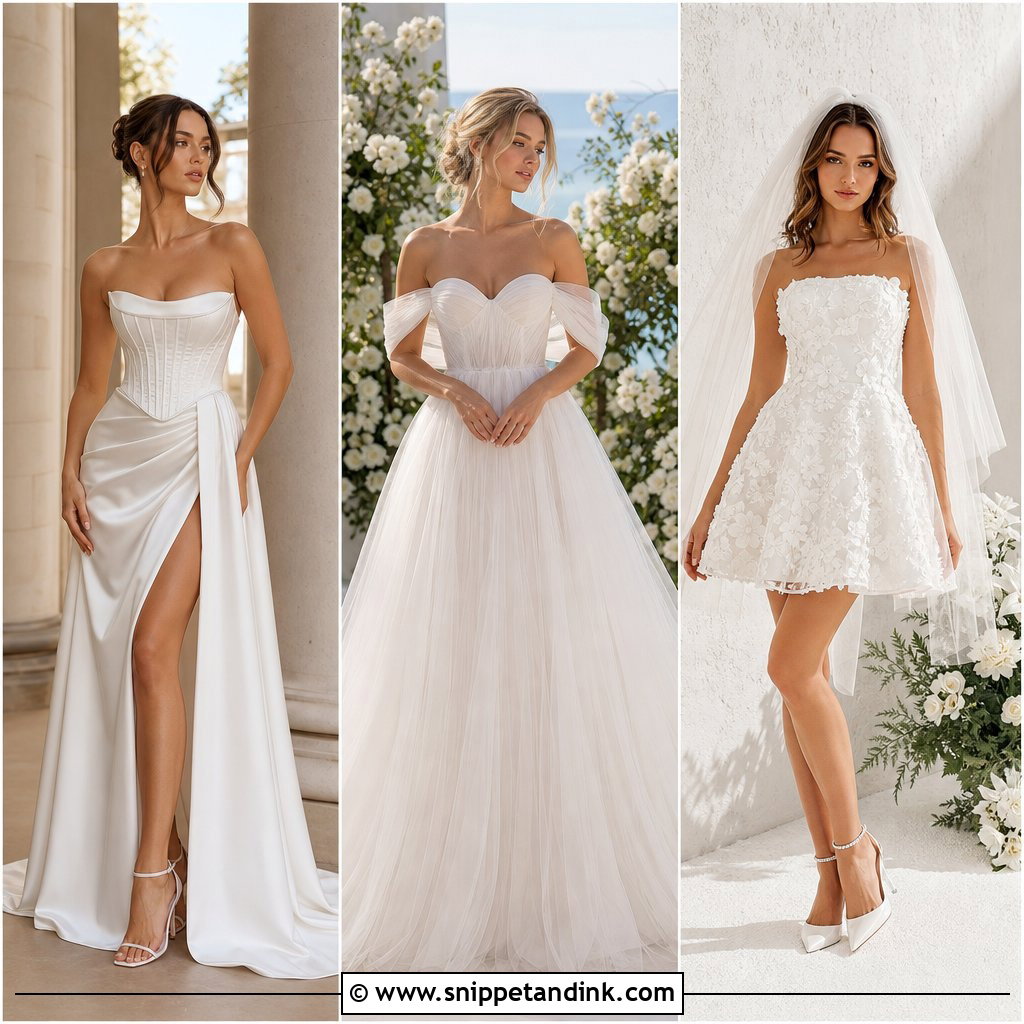
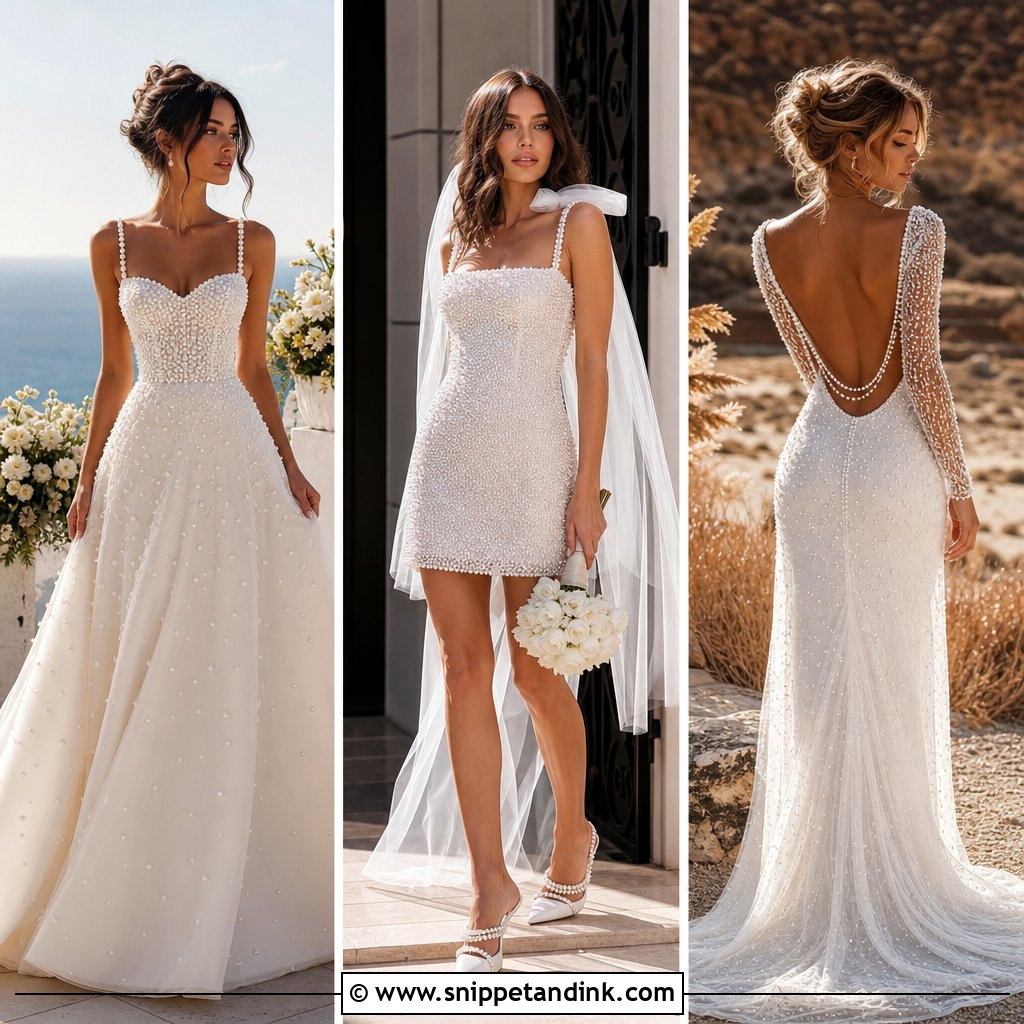
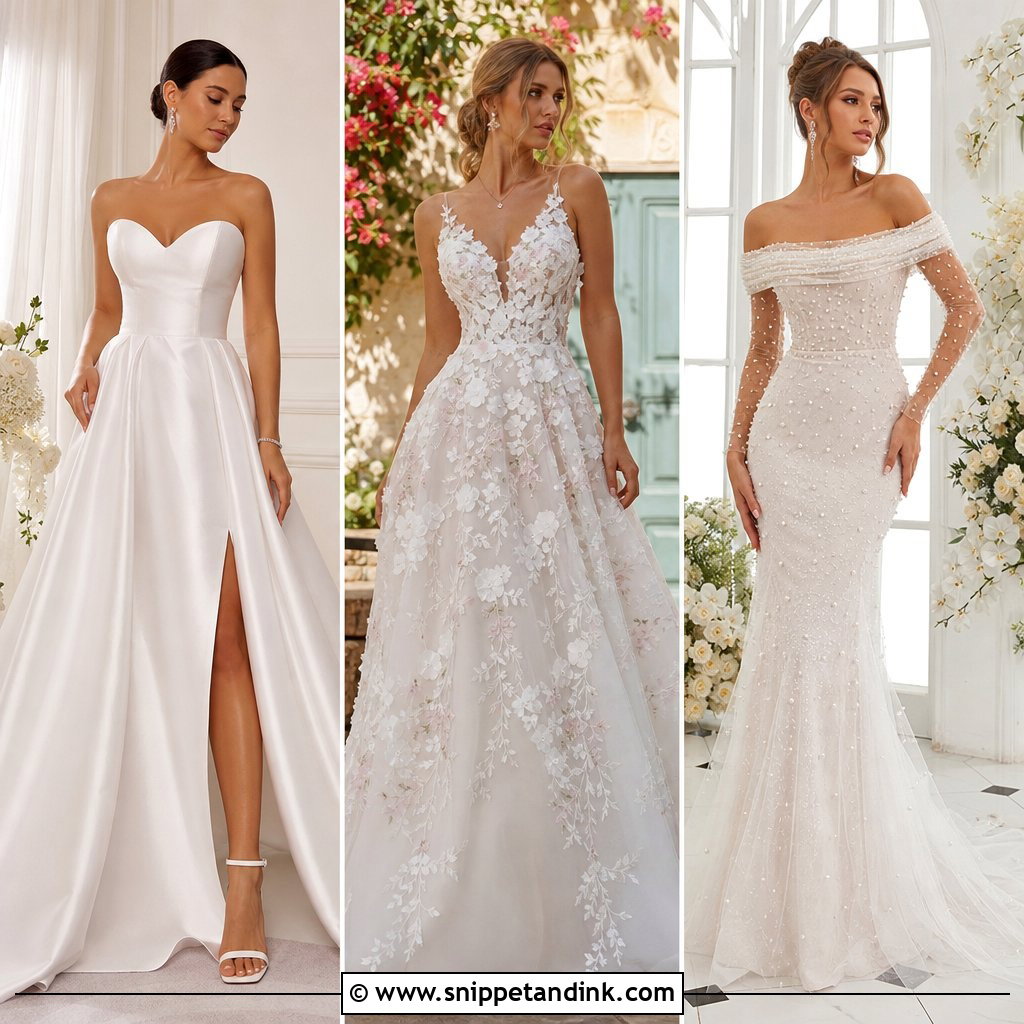
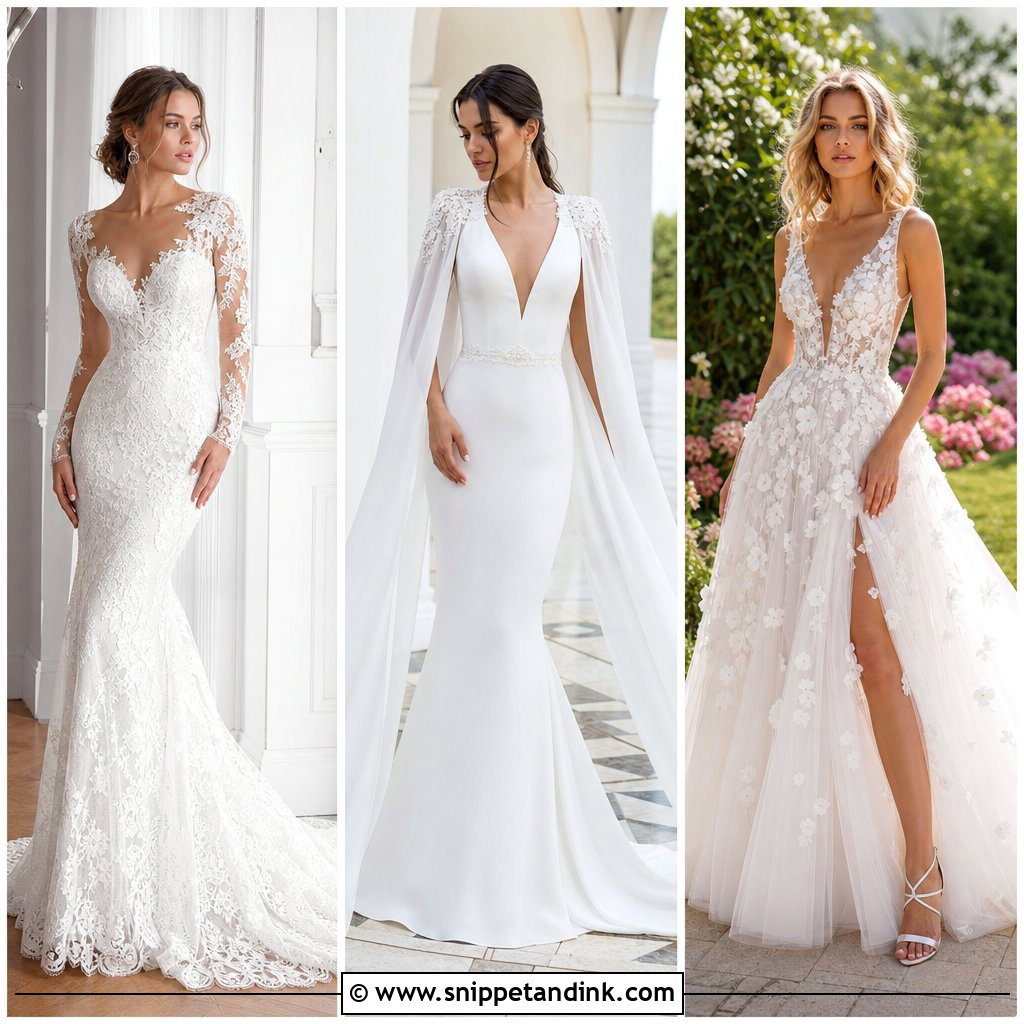
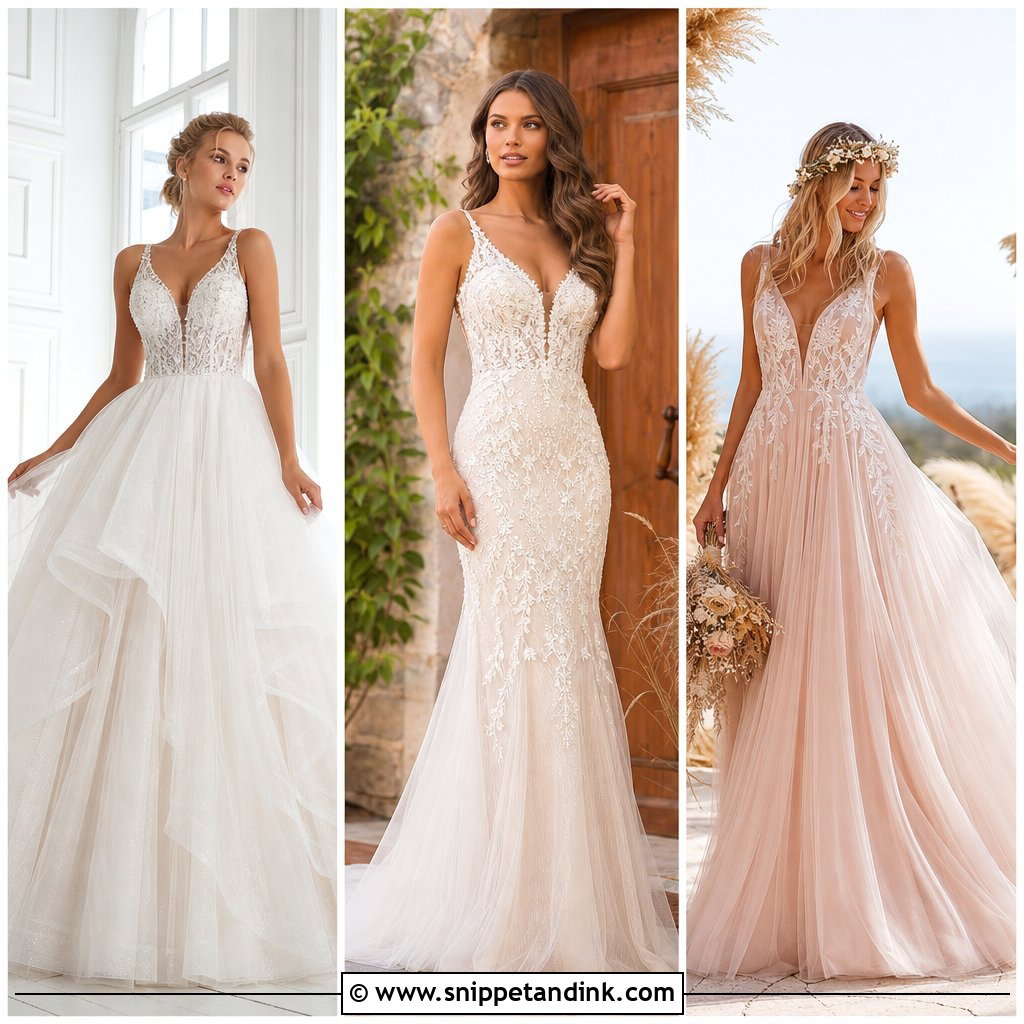
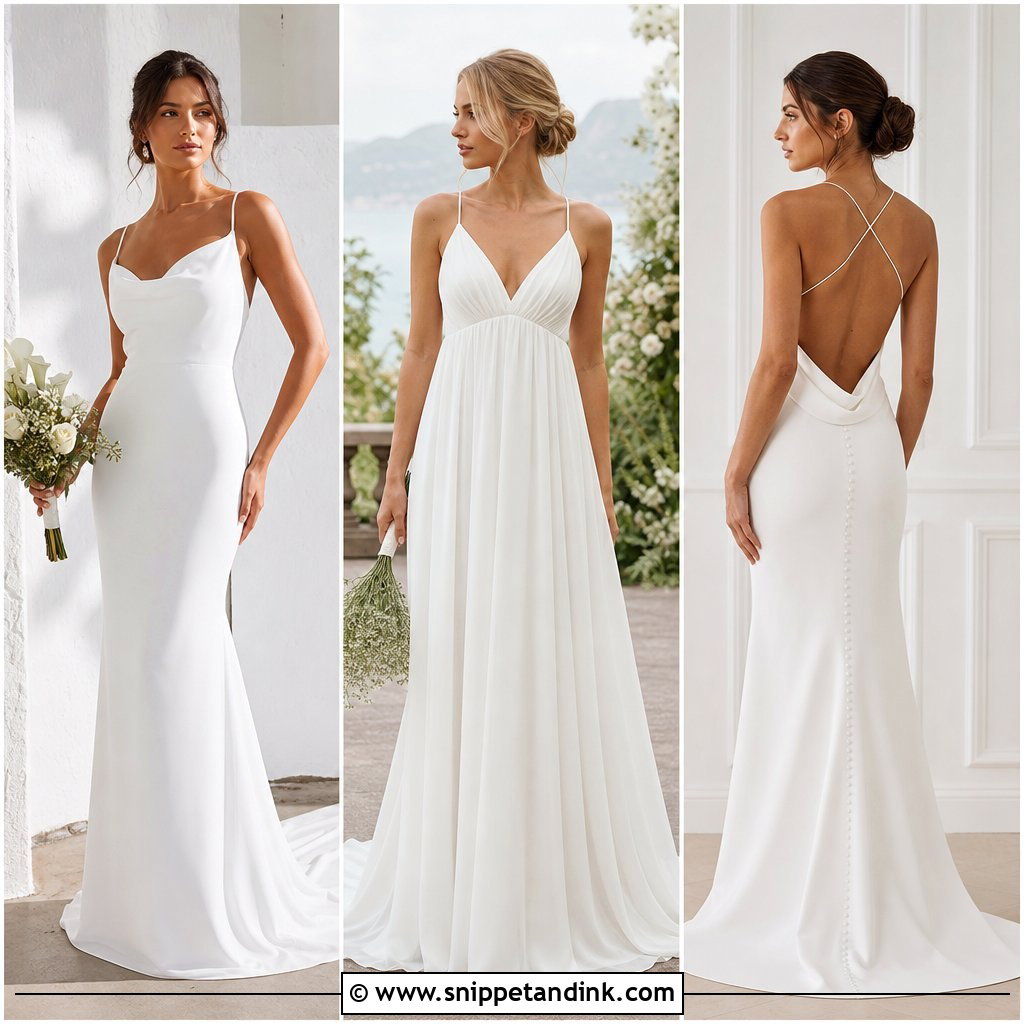
The 1990s slip dress works by subtraction. Satin, a square neckline, thin straps, a column silhouette and barely-there heels, with no heavy beading, big skirt or dramatic sleeve to hide behind. A sheer veil, small pearl studs, a smooth bun and a simple bouquet keep it clean. Because fit and fabric do all the work, I’m fussy about satin weight. A thin, cheap satin shows every seam and ripple, while a heavier silk or crepe-back satin hangs straight and reads expensive. It looks current even though it’s three decades old.
22. Ancient Greek Wedding Dress
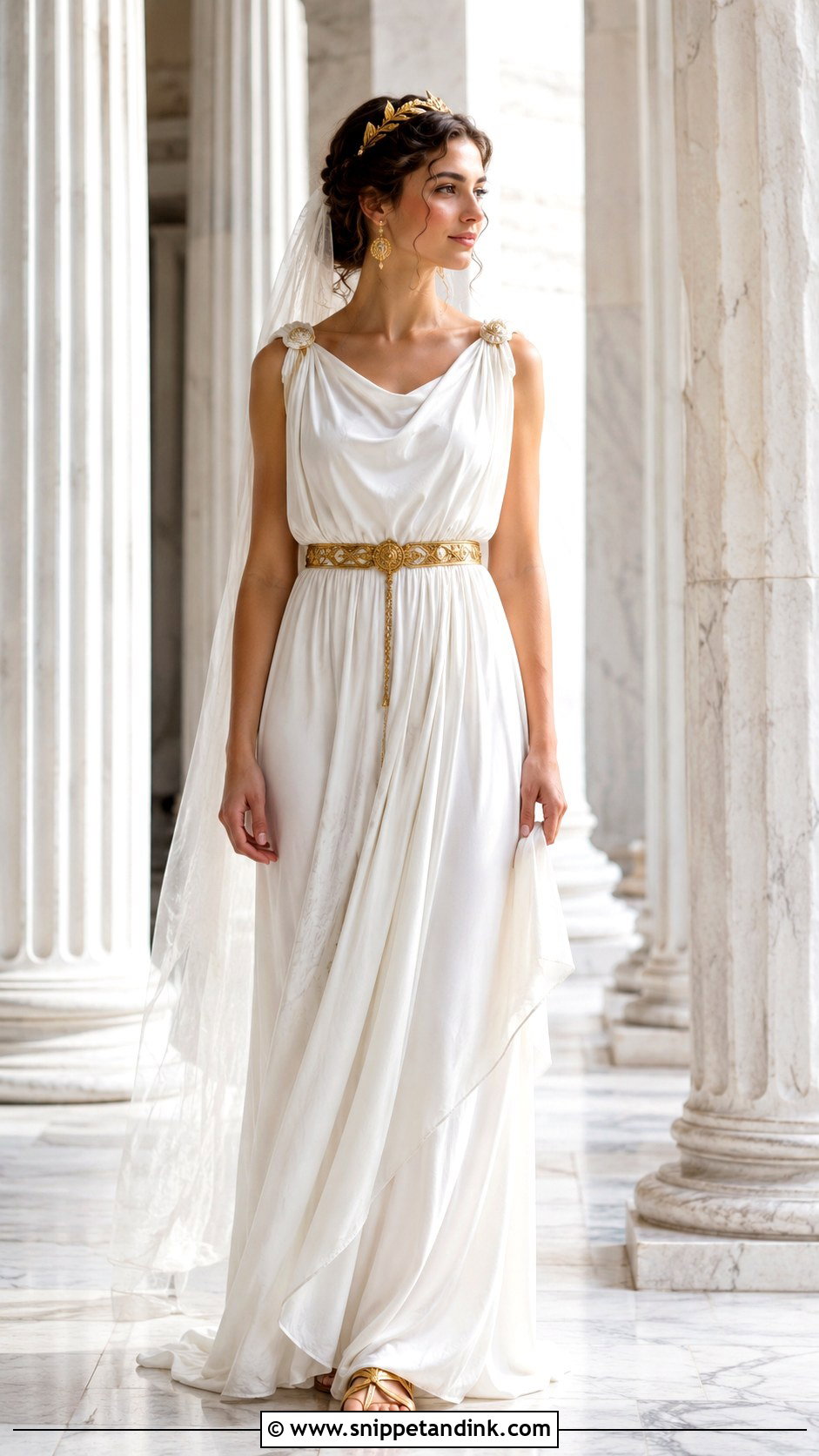
Ancient Greek dress was wrapped and pinned, not tailored, and that’s the quality a bridal version has to keep. Think a white or ivory column gown gathered at the shoulders and belted at the waist, with flat sandals, gold jewelry and a soft veil or head wrap. Lightweight linen, silk or chiffon gives the drape. The gathered shoulders carry the weight of the whole skirt, so I check the fastening is properly anchored underneath; a decorative brooch on its own will pull and pucker the fabric. A gold arm cuff, braids and a laurel-style hairpiece finish it without overdoing anything.
23. Ancient Roman Wedding Dress
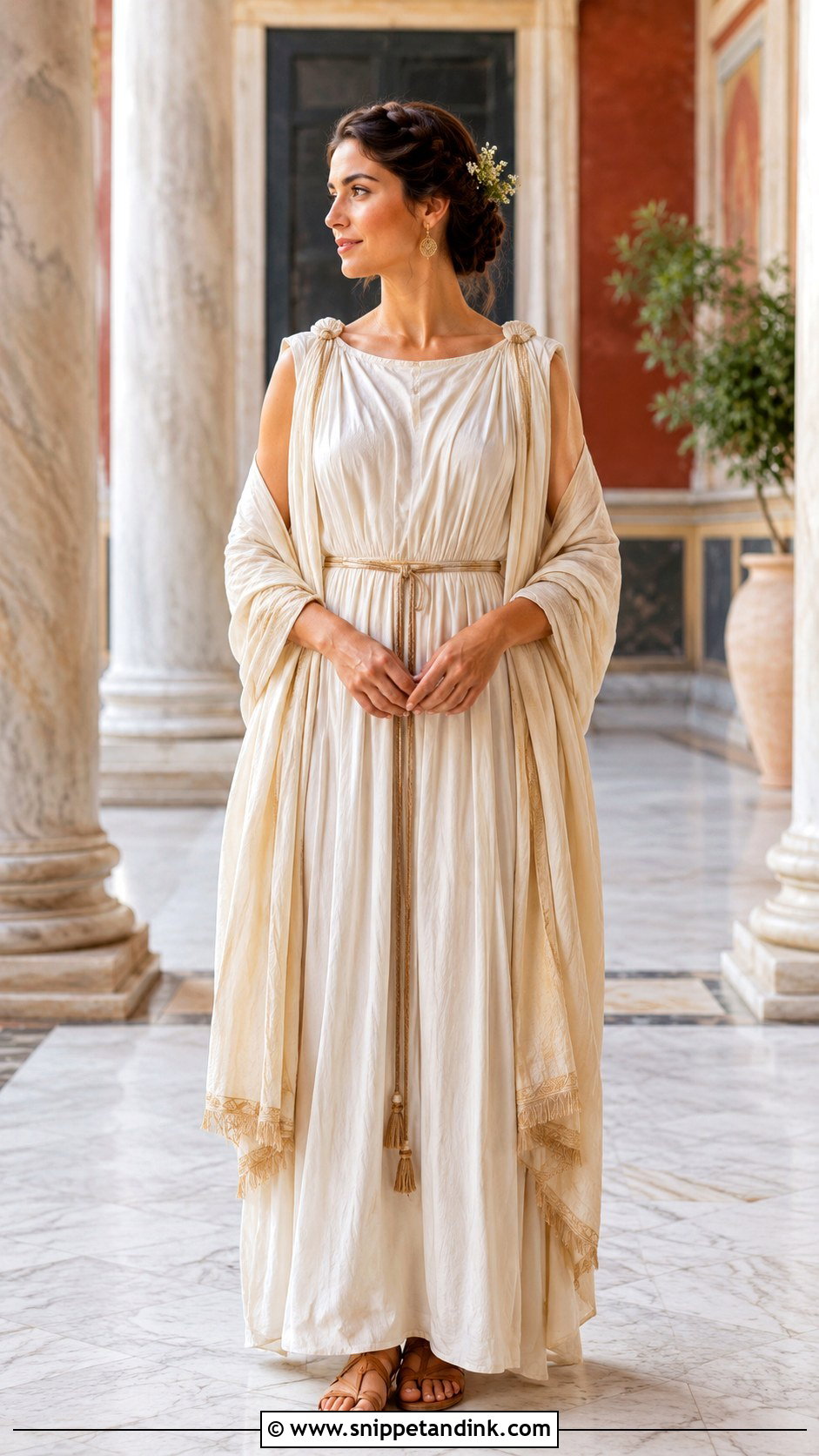
Roman brides traditionally wore a flame-colored veil, which is why warm ivory, saffron-inspired gold and soft cream all suit this look. The gown is a long tunic shape, belted, with fabric gathered at the shoulders or waist and a soft shawl over it, plus sandals and gold accessories. Keep the column comfortable rather than fitted. The dignity comes from proportion and the way the fabric moves when you walk. A braided updo, delicate earrings and a small floral arrangement are all it needs. If you want an ancient-world reference with very little decoration, this is the plainest option here.
24. Traditional Chinese Red Wedding Dress
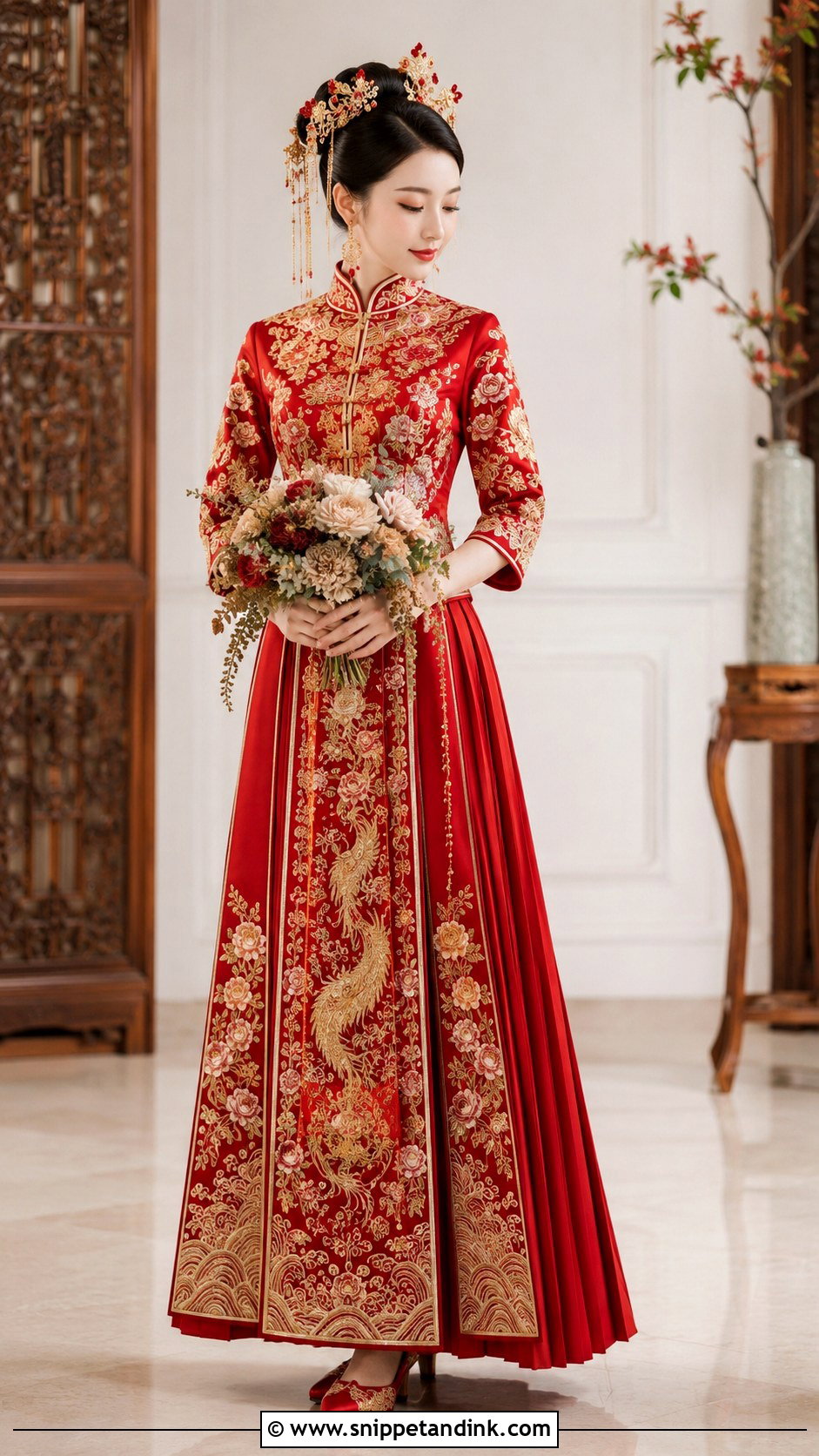
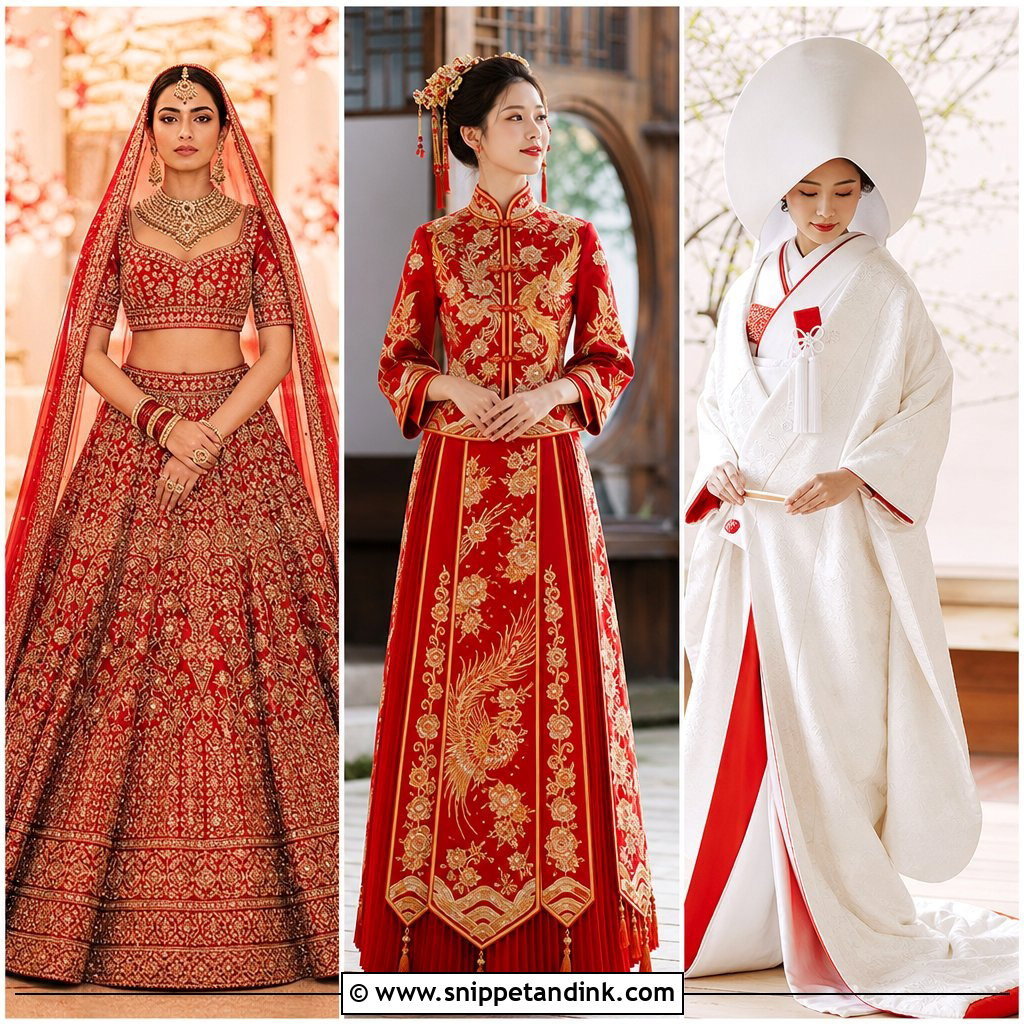
Red is traditionally associated with luck and joy, and gold embroidery adds richness and meaning, so in this dress the color and the threadwork carry the symbolism. The outfit usually has a high collar, a fitted or straight silhouette, gold embroidery, matching shoes and ornate hair accessories. Dense gold threadwork is stiff and dislikes being folded, so I keep it on a padded hanger and steam from a distance rather than pressing it. A sleek updo, gold earrings and a structured bouquet in soft neutrals let the embroidery lead. If you’re honoring your heritage, ask the elders in your family which details matter most to them before you order.
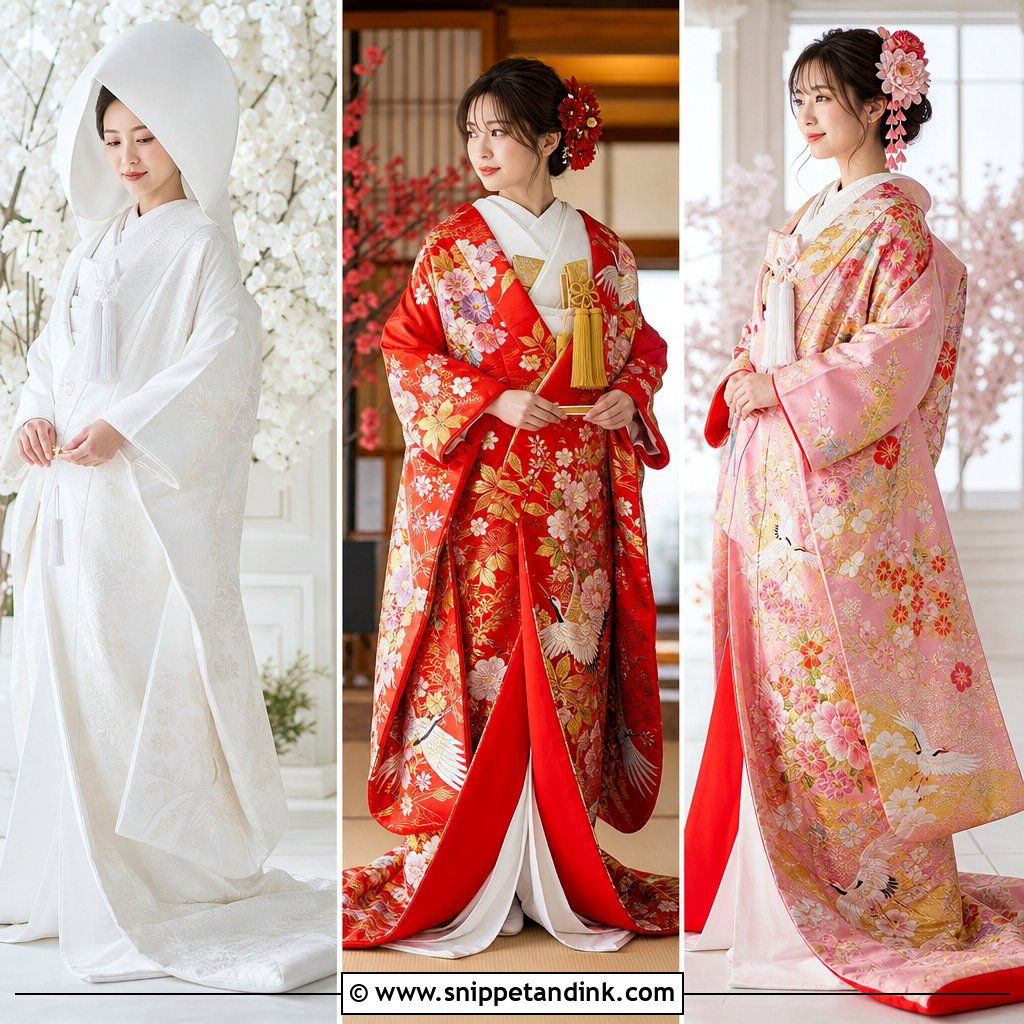
25. Traditional Japanese Wedding Kimono
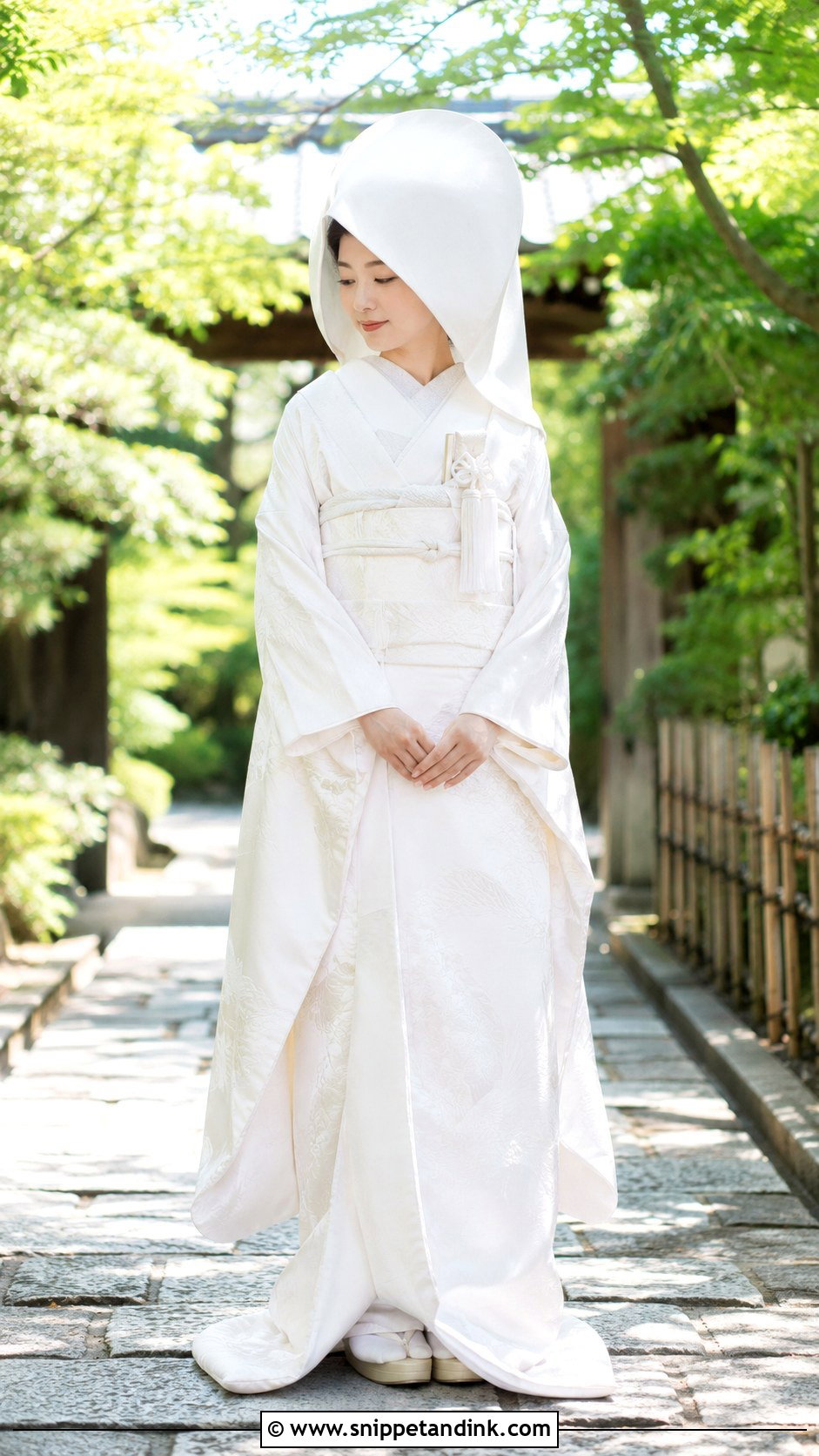
White in a traditional Japanese wedding kimono can symbolize purity and readiness for a new chapter of life. The white shiromuku is worn with a structured obi, traditional sandals and a formal head covering or hair ornament. Nothing here hugs the body; the effect comes from clean lines, fabric quality and slow, dignified movement. A full shiromuku is layered and heavy, and putting one on is skilled work usually done by a trained dresser, which is why modern versions often keep the layered look in lighter fabric. Minimal jewelry and refined makeup keep the garment the focus.
Antique Gown or New Reproduction? What Old Fabric Can Take
A genuine antique dress is tempting, and now and then it works. Go in knowing three things before you buy one.
It probably won’t fit as labeled
Many antique bodices were cut to be worn over a corset, and sizing has changed a great deal, so a dress that measures right on paper often won’t close. Taking an old gown in is usually possible. Letting one out often isn’t, since there’s very little seam allowance and the hidden fabric has faded differently from the outside.
Silk and lace age in ways you can’t reverse
Silk from the late 1800s was often weighted with metallic salts to make it heavier and more rustling. Over time that silk splits along the grain, known as shattering, and it can only be supported, never mended. Old lace and cotton yellow and turn brittle along fold lines. Hold the dress up to the light and gently check the stress points under the arms and around the waist before you fall for it.
Cleaning and storing it afterward
An antique should never go to an ordinary dry cleaner. Find a textile conservator or a bridal cleaner who handles vintage pieces. At home, pad the folds with acid-free tissue, cover the dress in breathable cotton or muslin rather than plastic, and keep it somewhere cool and dark, not the attic. A reproduction avoids all of this, which is why most brides who want an era look end up in a new gown built to an old pattern.
Which Century Suits Your Venue and Your Shoulders?
Lace, veils, embroidery, sleeves, trains, silk, pearls and structured bodices keep turning up at modern weddings because they still carry meaning. Some of these eras are regal and heavy, others light and practical. My advice is to work backward from the day itself. A barn or a beach rules out most hooped and bustled skirts, while a cathedral can carry them. Then think about how long you’ll be standing, whether you plan to dance, and what your shoulders and arms need to do. The era that passes those tests, from a medieval gown to a 1990s slip, is the one that will feel like yours rather than borrowed.
You'll Like These Ideas:


Leave a Reply