
Couture is less about how big a gown is and more about how closely it was built around one body. Hand-applied lace, draping that was pinned on a person rather than a form, corsetry cut to a real ribcage: those are the things I look for when a bride tells me she wants a couture feel. Sometimes that ends up as a plain silk column with tailoring you can’t fault. Sometimes it is a ball gown carpeted in appliqué. The ideas below cover both ends, and I’ve added what I’d check at a fitting for each one, because a detail that photographs well on a hanger can behave very differently once you sit, turn and dance in it.
Telling Real Couture From a Couture Look
Strictly speaking, haute couture is a protected label in France, used only by houses that meet a strict set of rules about hand work and made-to-measure production. Almost every bride who asks me for a couture gown means something slightly different: a dress cut and finished to her body with a lot of hand work, whether it comes from a bridal atelier, an independent designer or a made-to-measure line.
When I’m judging how close a gown gets, I turn it inside out. These are the signs I look for:
- A toile (a mock-up in plain cotton) made and fitted on you before the real fabric is cut.
- Lace and appliqué stitched by hand at the edges, so you can’t see a seam line through the motif.
- Boning and an inner corset built into the bodice, not sewn onto the lining afterwards.
- Generous seam allowances, which mean the dress can be let out later if your body changes before the date.
- Hems finished by hand rather than run through an overlocker.
A dress can be lovely without all of these. Knowing which ones you are paying for helps you compare a quote honestly.
1. Lace Haute Couture Wedding Dress
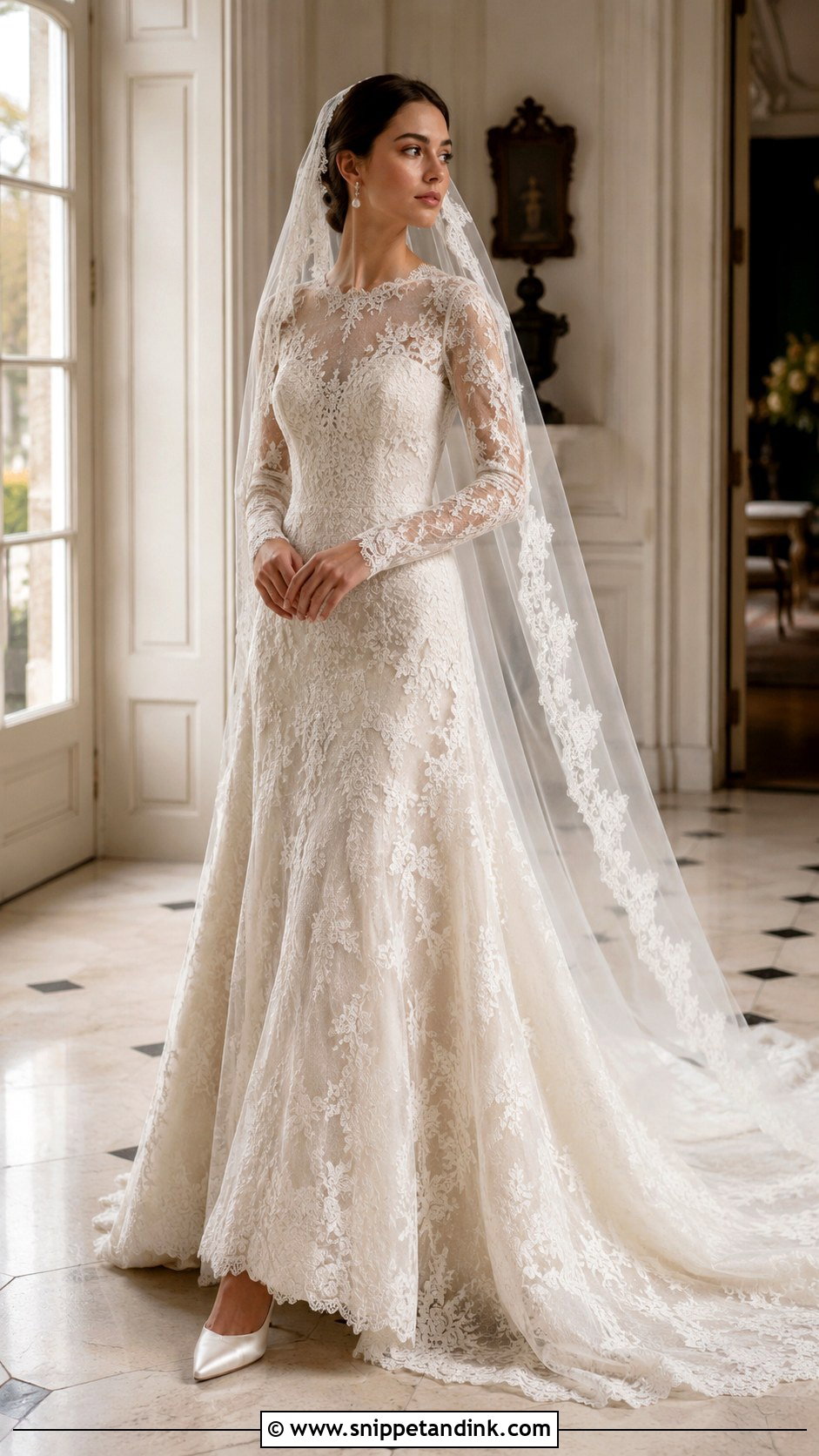
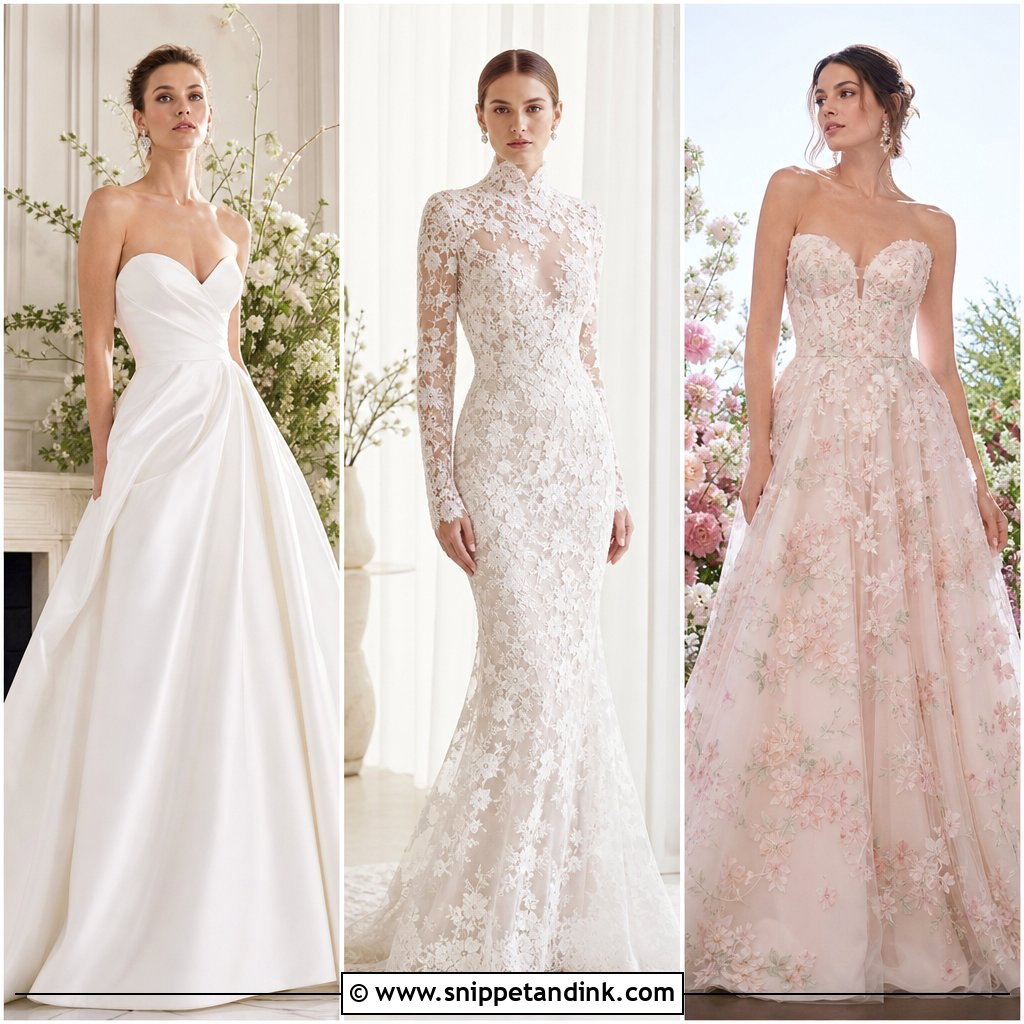
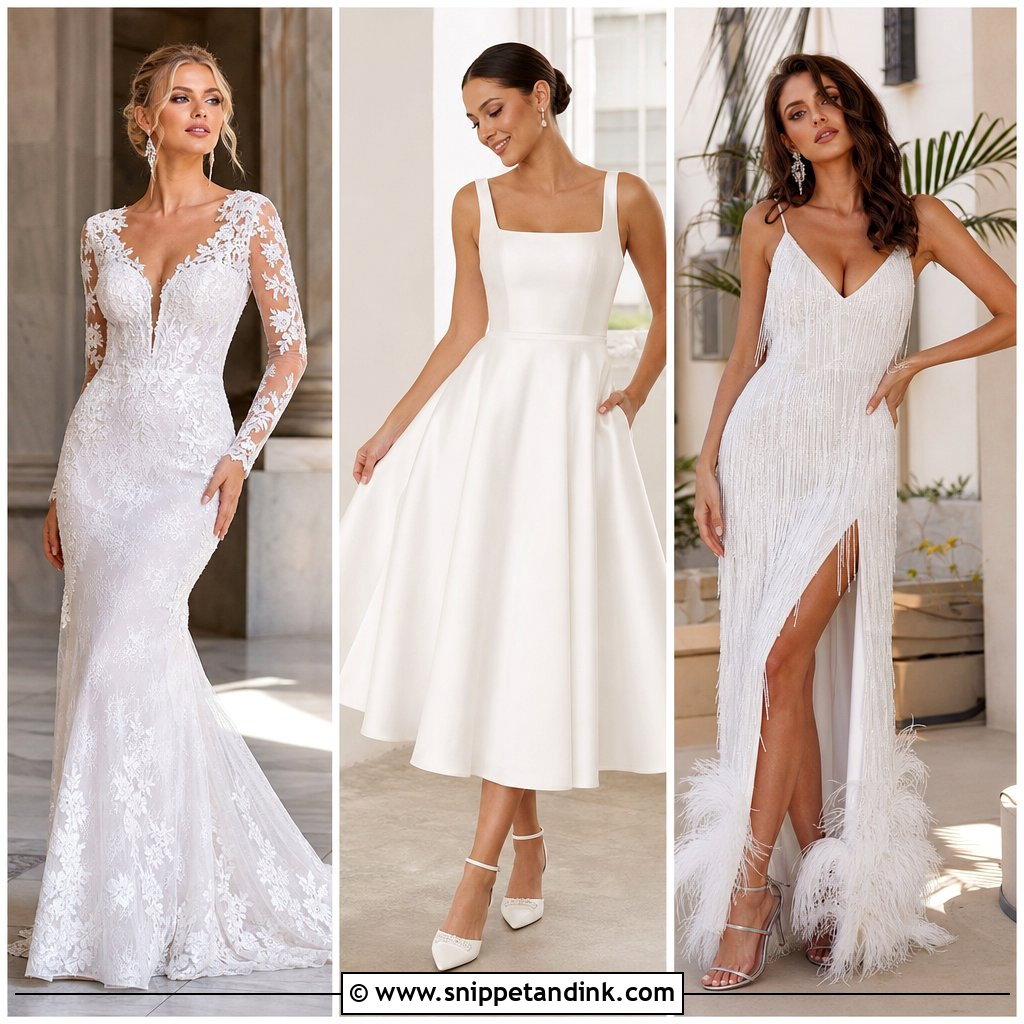
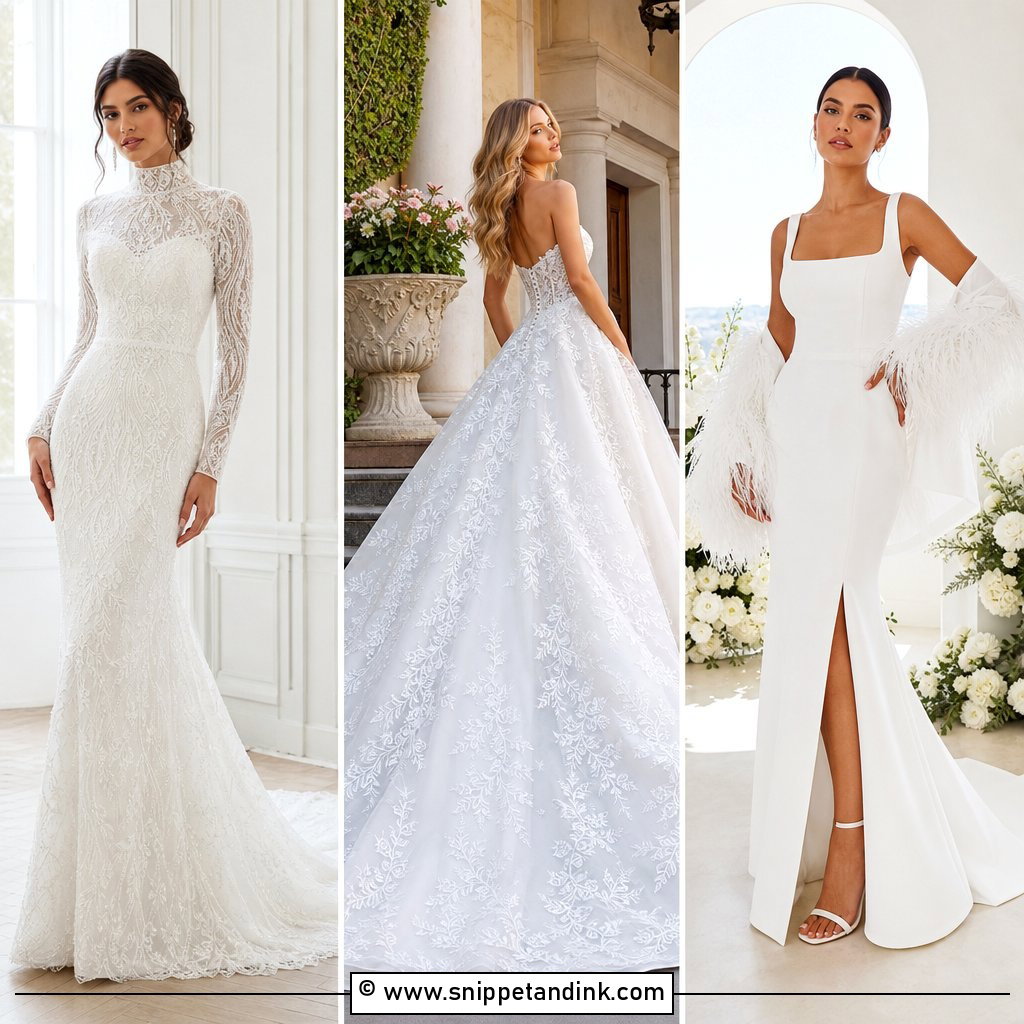
Good couture lace is cut around its motifs, not stamped across the dress in one sheet. Ask to see the seams: on a well-made bodice the lace is overlapped and hand-stitched so the pattern carries across the join without a visible line. A fitted corset under sheer lace sleeves reads classic, and ivory lace over a nude lining or a high neck with a clean chapel train keeps it from looking dated. I keep the jewelry to pearl earrings and edge the veil in a matching scrap of the gown’s lace. It sits naturally in an estate garden or a hotel ballroom.
2. Sculptural Ball Gown Wedding Dress
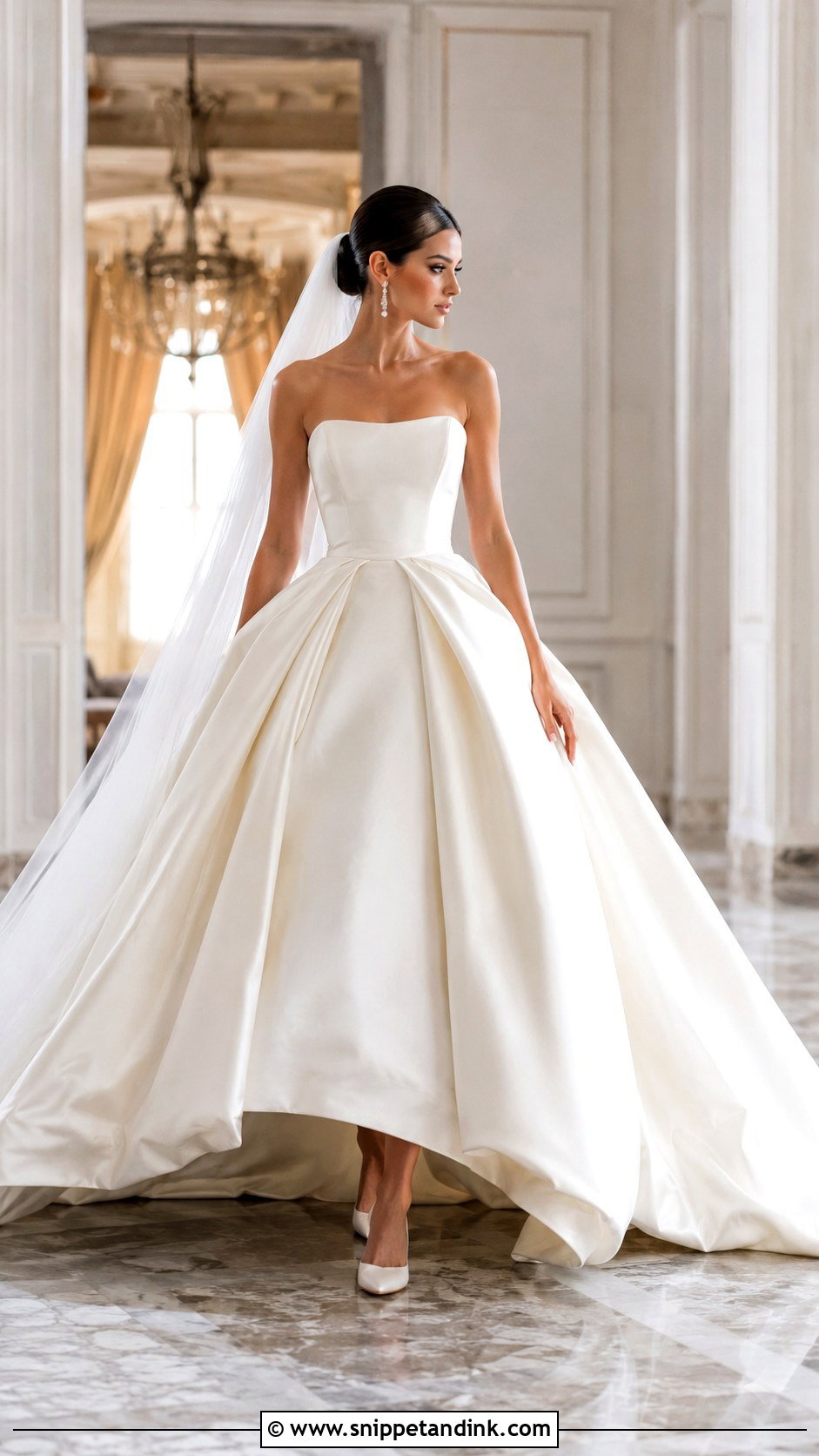
Here the shape does the work. A structured bodice, a hard waist and a skirt in silk mikado, gazar or organza will hold volume on its own, and the best ones look architectural but still graceful. What people don’t expect is the weight: a full mikado skirt can be heavy enough that a long ceremony on your feet is tiring, so I always have brides stand in it for twenty minutes at a fitting. A straight neckline or an off-the-shoulder fold keeps it current. Pair it with a sleek bun and a long plain veil, and save it for a grand venue or an evening black-tie ceremony where the scale makes sense.
3. Draped Silk Wedding Dress
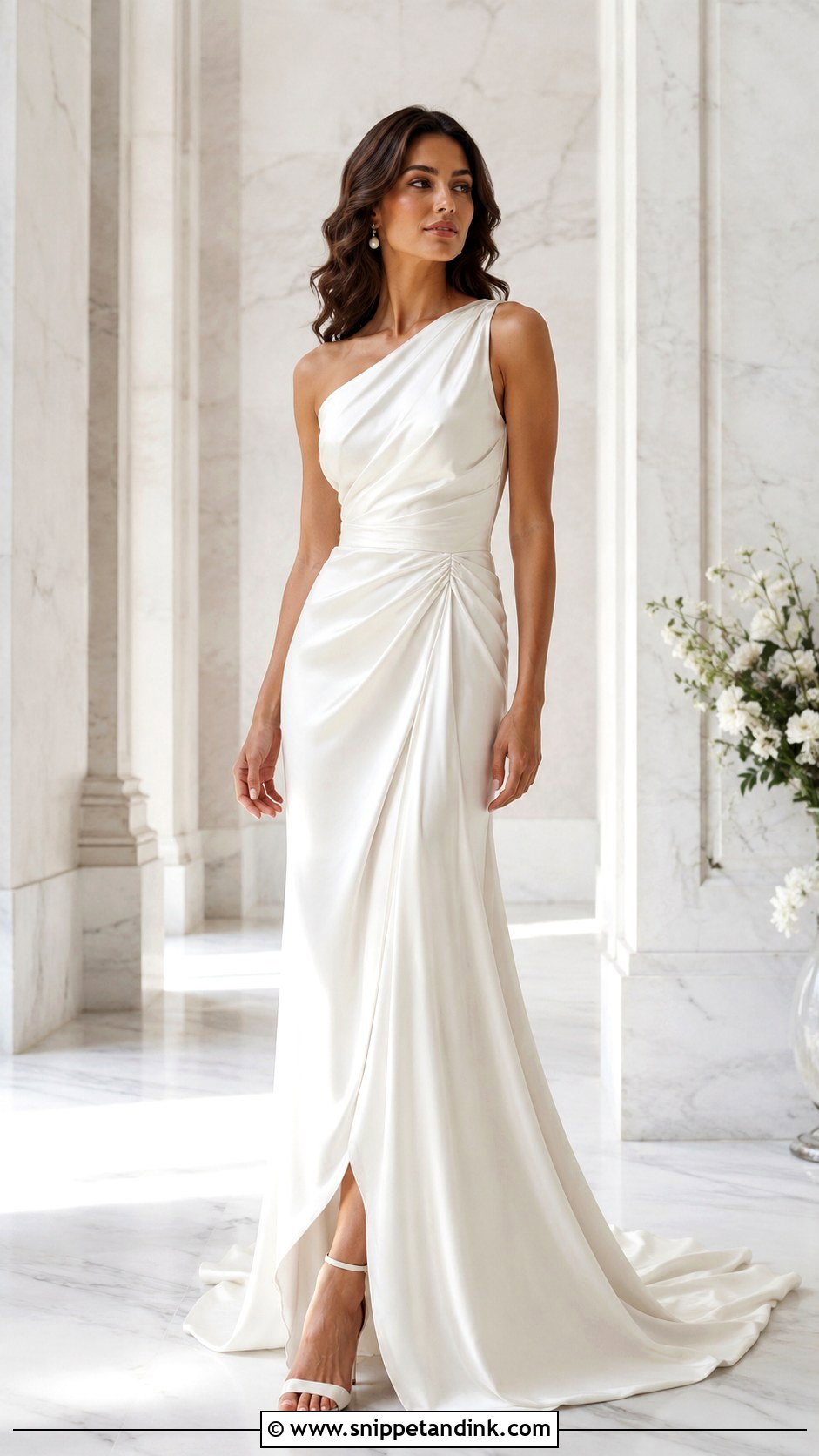
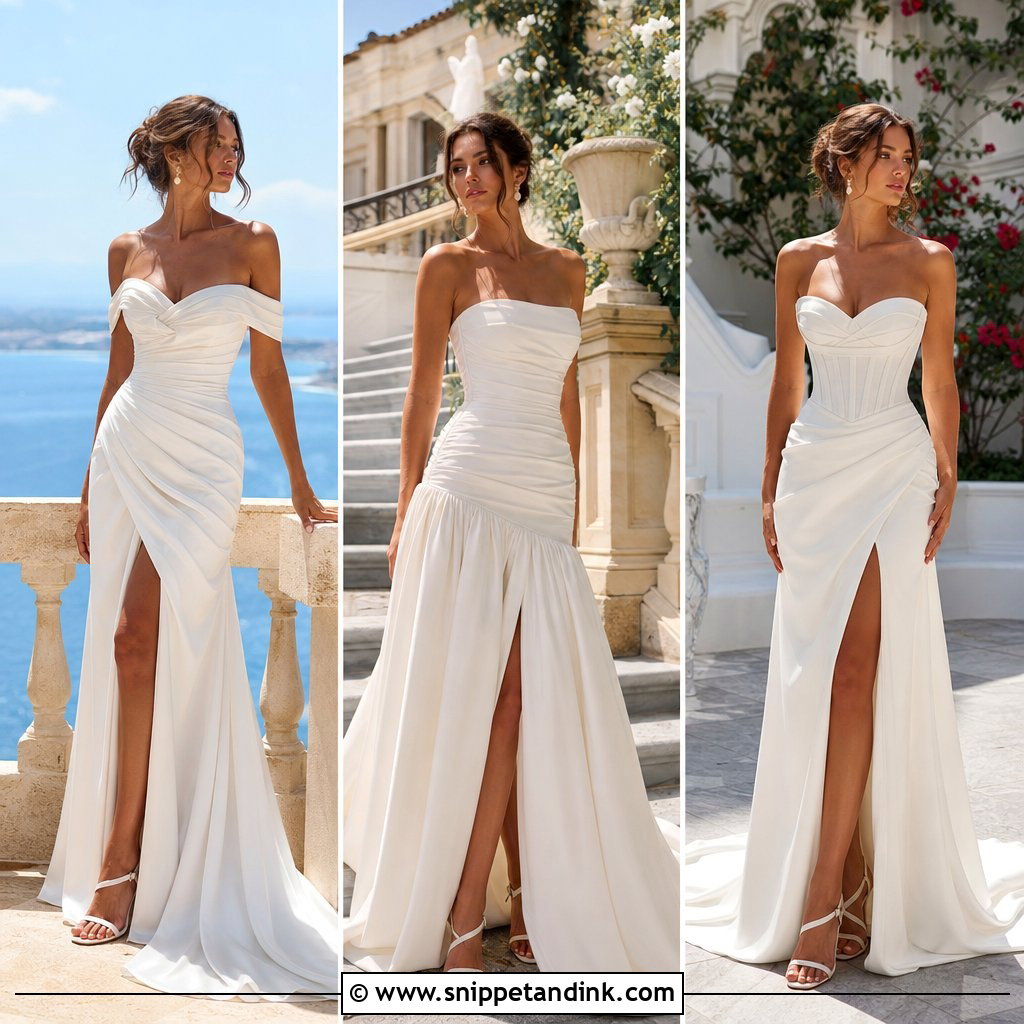
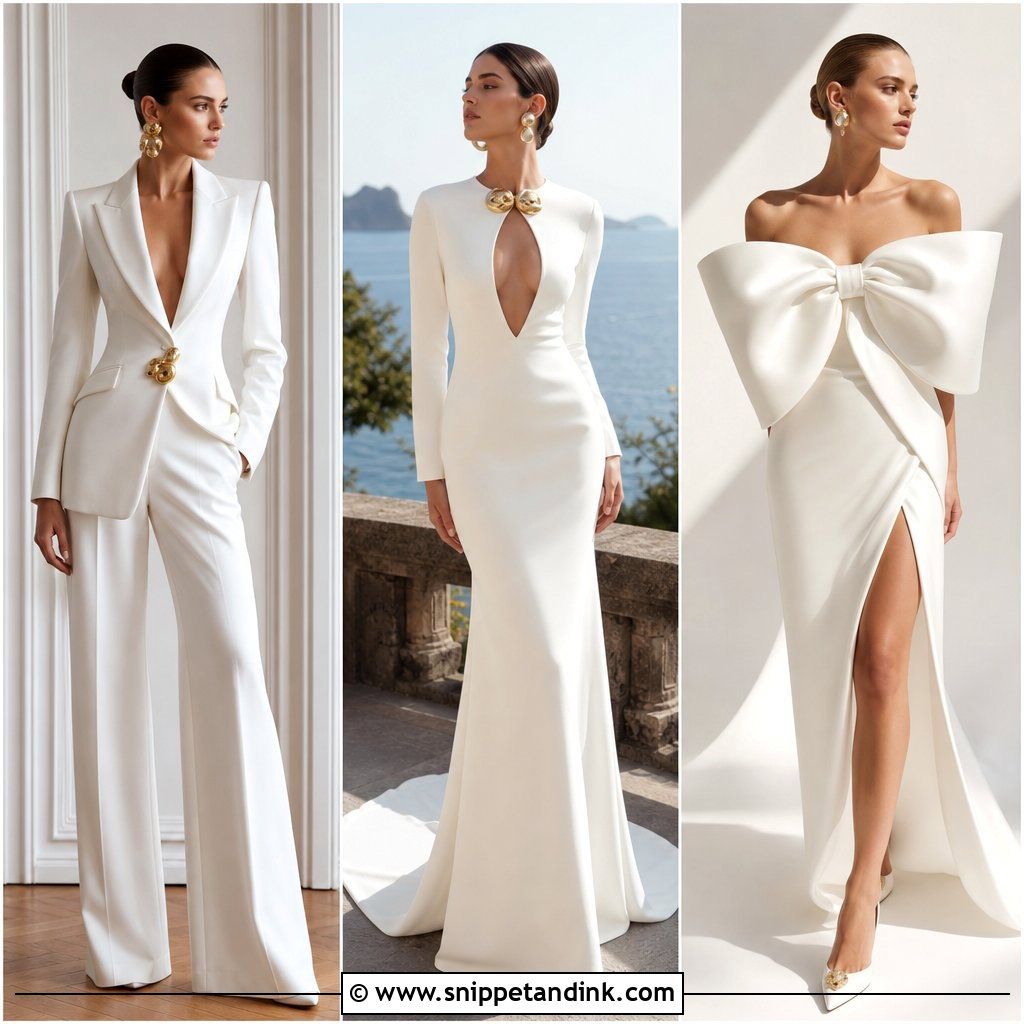
Drape is the hardest thing to fake. Bias-cut silk charmeuse shows every bump in the lining and every line of underwear, so this gown lives or dies on construction and on what you wear beneath it. A gathered waist, an asymmetrical neckline and a train that glides behind you rather than fanning out are the signatures. Crepe is the forgiving choice if you are nervous about cling. Keep the jewelry minimal; the fabric is the ornament.
4. Corset Haute Couture Wedding Dress
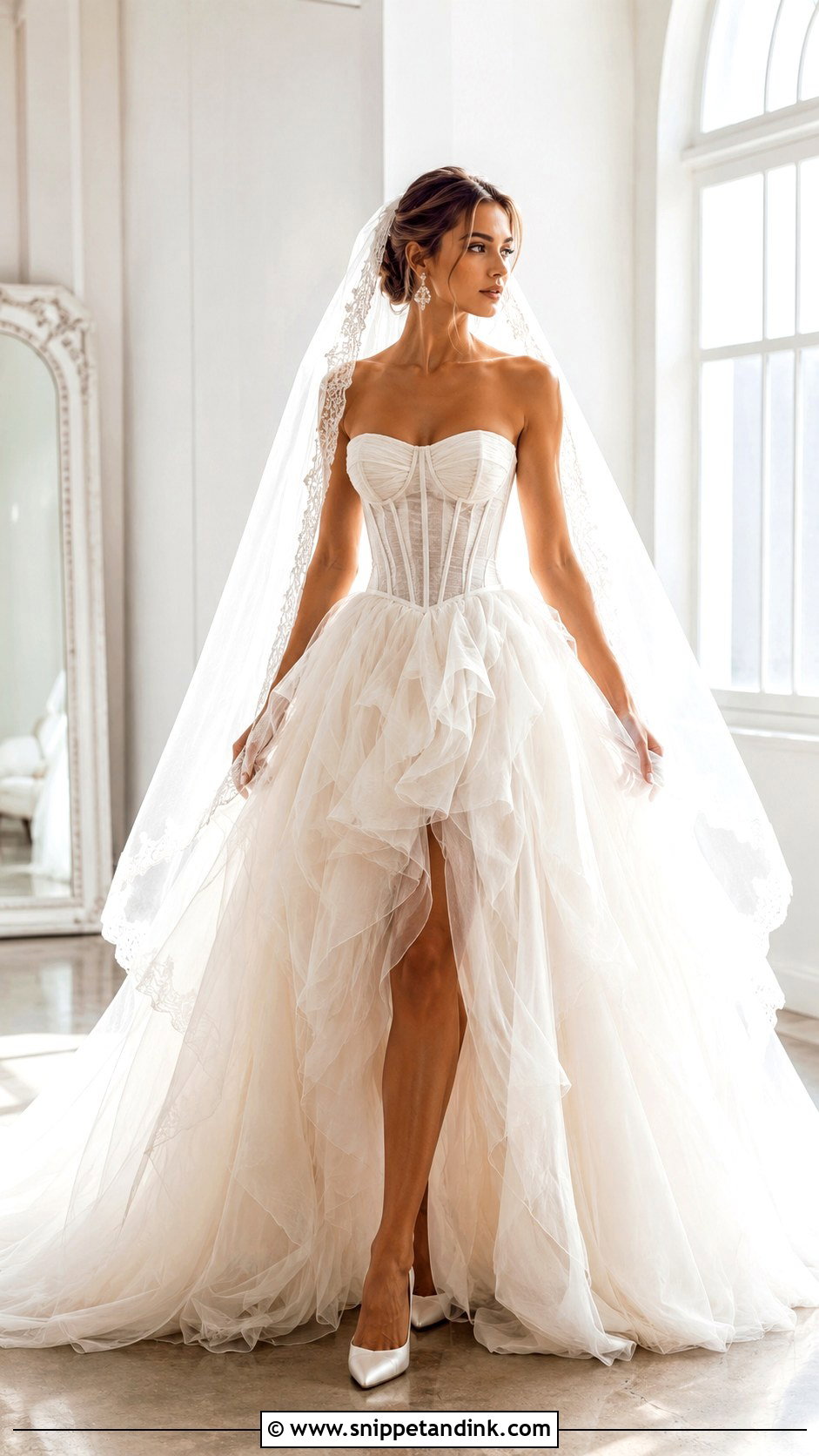
A properly boned bodice should hold you up without the dress needing straps, and you should still be able to breathe and eat. The test I use is simple: sit down, lean forward to sign something, and lift both arms. If the boning digs at the hip or the top edge gapes when you lean, it needs adjusting. Exposed boning reads fashion-forward; covered boning feels traditional. Over a full tulle skirt it softens, over fitted satin it turns sleek. When the structure is visible, I keep accessories clean so the eye stays on the craft: a cathedral veil and small earrings are plenty.
5. Floral Appliqué Wedding Dress
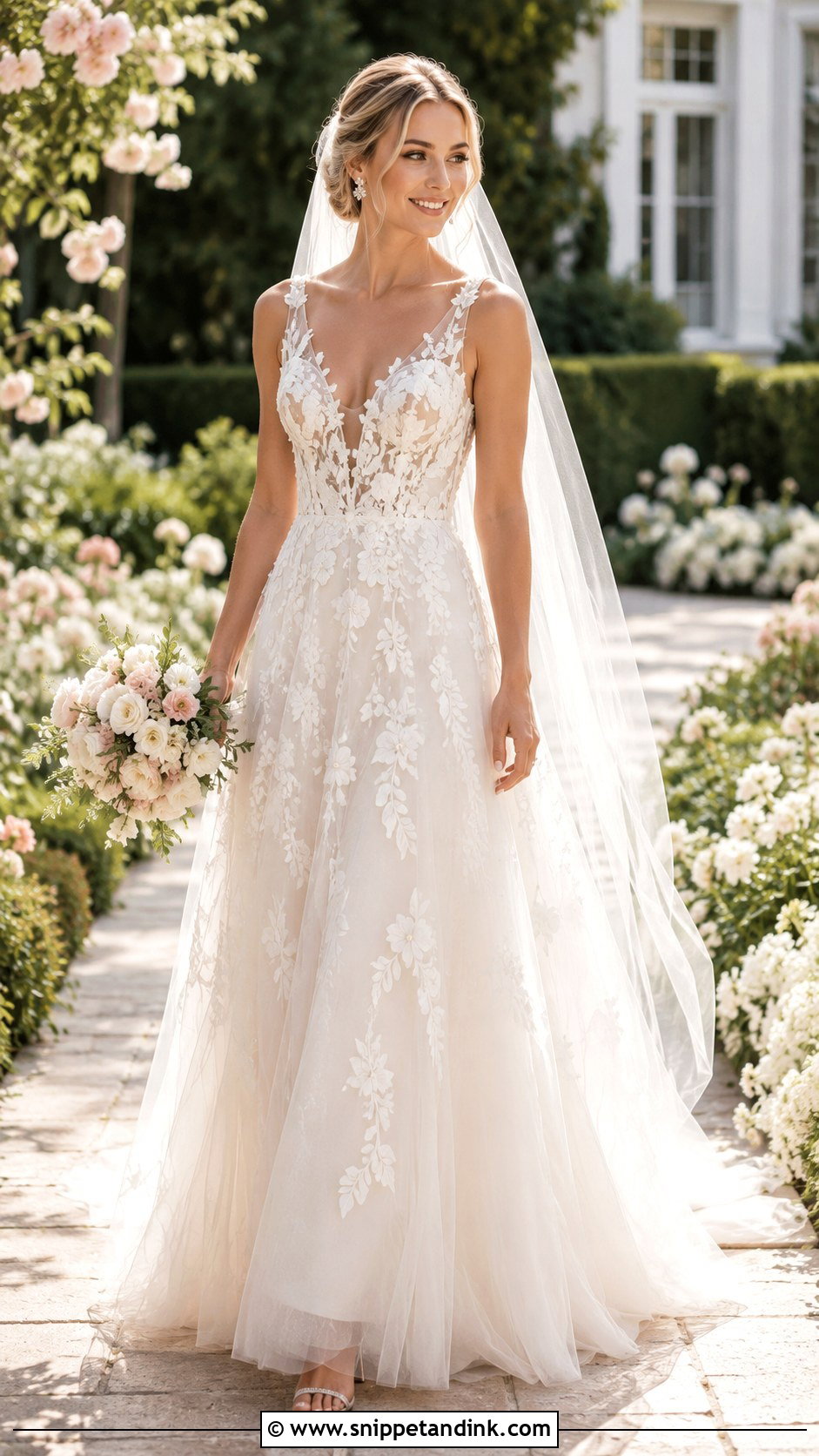
Three-dimensional petals, embroidered vines and hand-placed blossoms are what separate couture appliqué from printed florals. They sit best on tulle or organza, where the background almost disappears. One practical warning: raised petals near the underarm and inner elbow catch on each other and fray during a long day of hugging, so I suggest keeping the heaviest clusters on the skirt and shoulders. Ivory on a blush lining feels romantic; ivory on white is the classic read. Skip the necklace and let the neckline breathe. Spring garden weddings suit it well.
6. Beaded Haute Couture Wedding Dress
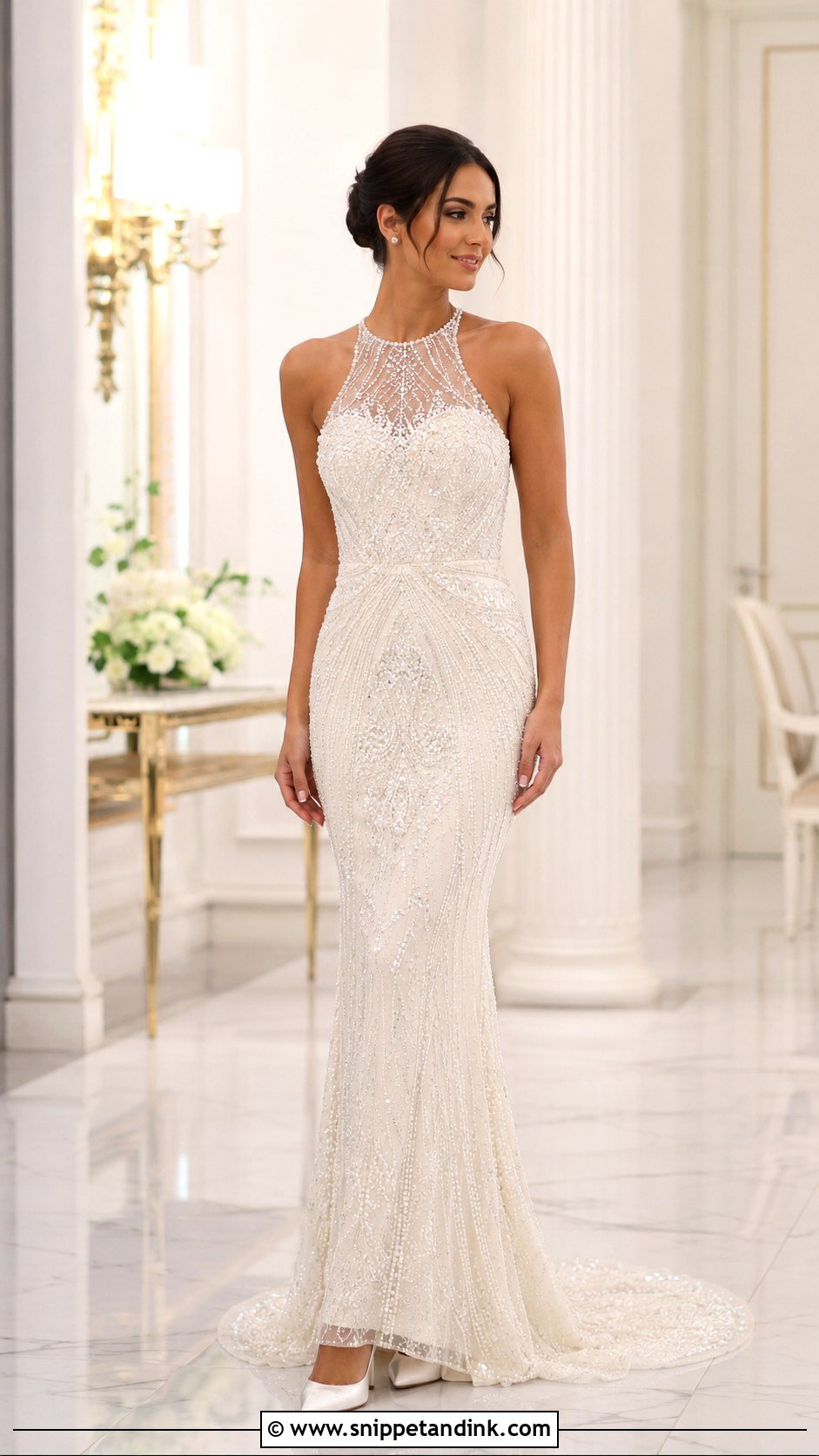
I prefer beading that follows the lines of the gown: a crystal vine along a seam, pearl trails down the skirt, silver threadwork outlining the waist. Covering every inch adds real weight and stiffens the fabric, so it rarely moves the way you hoped. On a fitted sheath or soft mermaid the sparkle stays refined. Beads catch flash and candlelight in the evening, which is where this one shines. Crystal studs and a smooth updo are all it needs.
7. Mermaid Haute Couture Wedding Dress
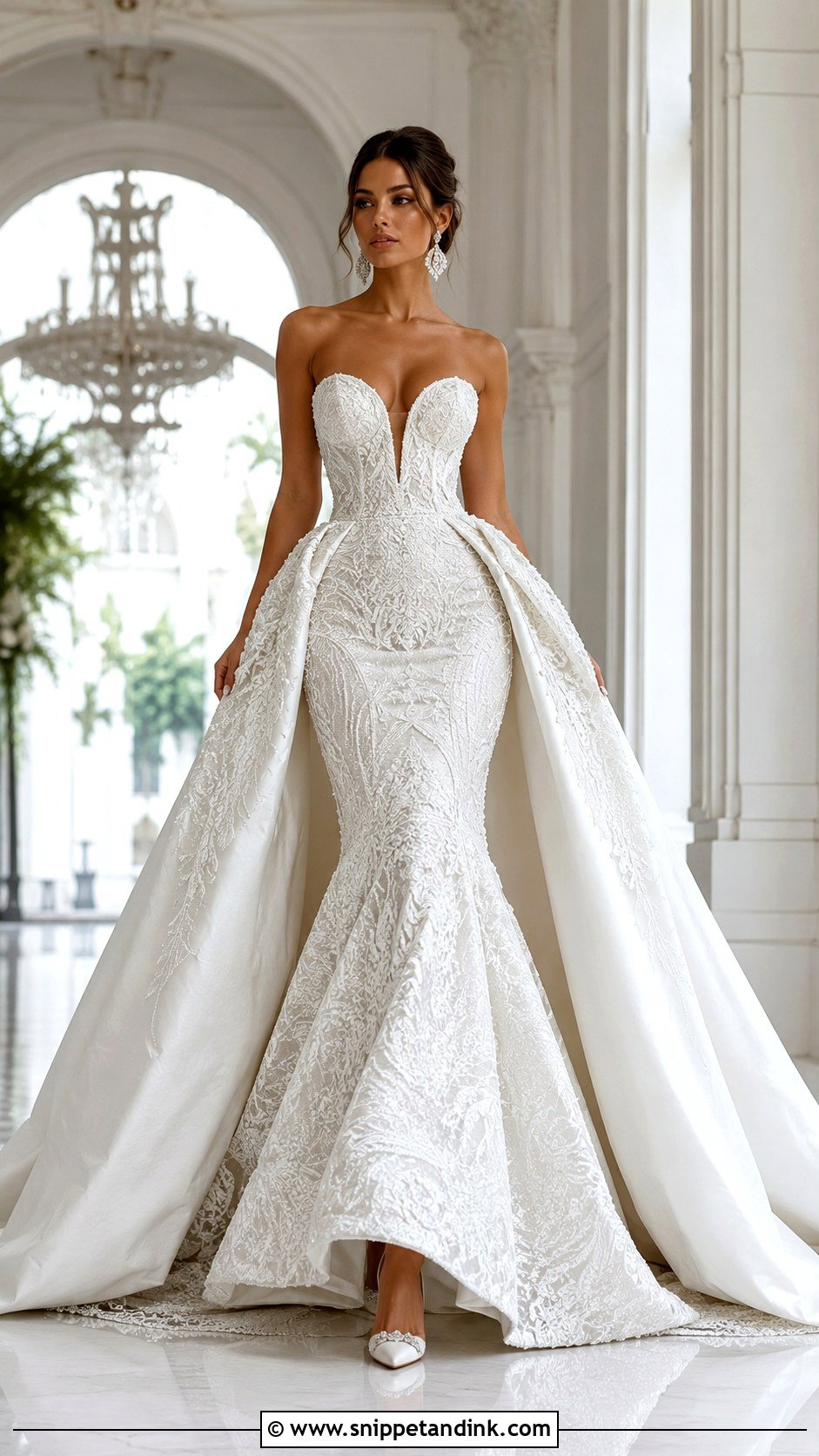
The whole look depends on where the flare starts. Set it at the knee and you will walk normally; set it too low and you’ll shuffle all night. In a couture build the bodice and hip are sculpted to you, so take the fittings seriously and practise climbing a step in it. Lace, satin, crepe and embroidered tulle all work. A detachable overskirt or long train gives you the ceremony drama, and taking it off later frees you to dance. Strapless or off-the-shoulder necklines suit the shape, and sleek hair with statement earrings finishes it.
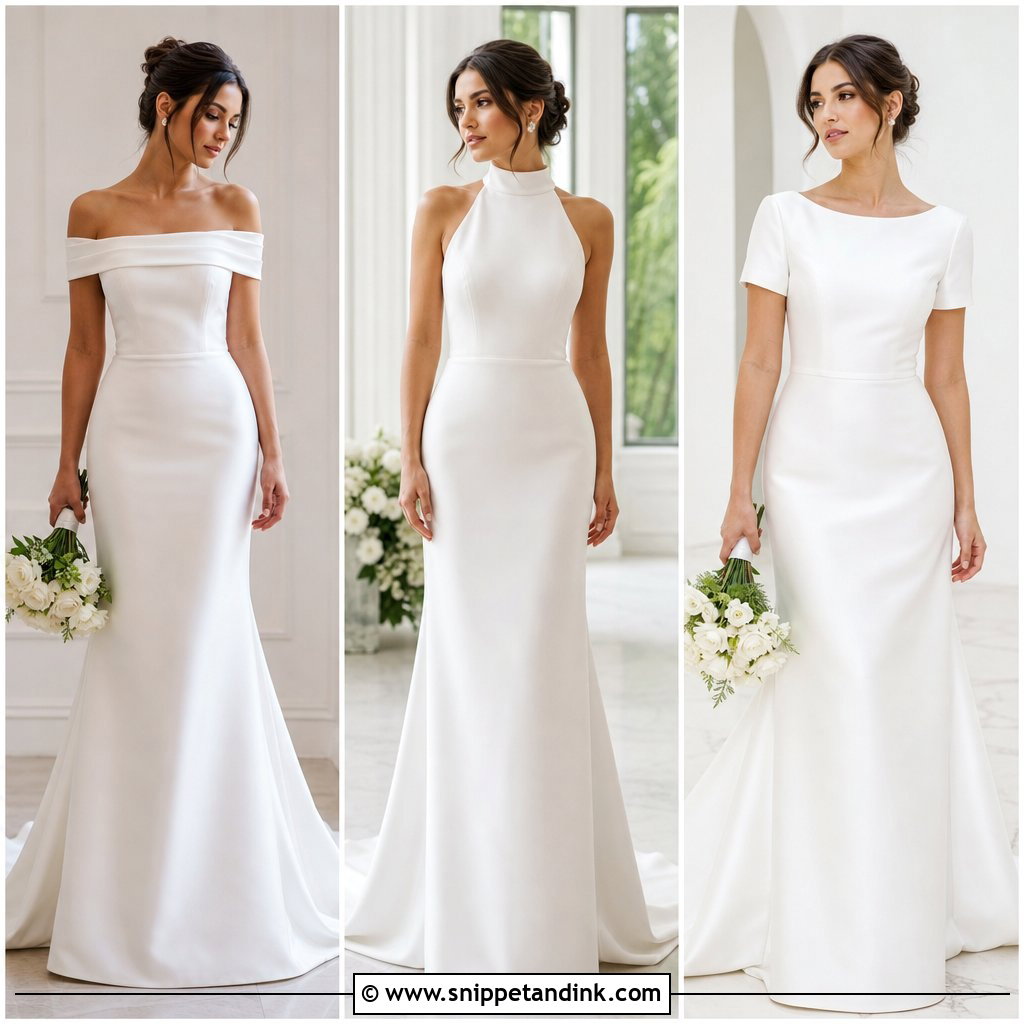
8. High Neck Couture Wedding Dress
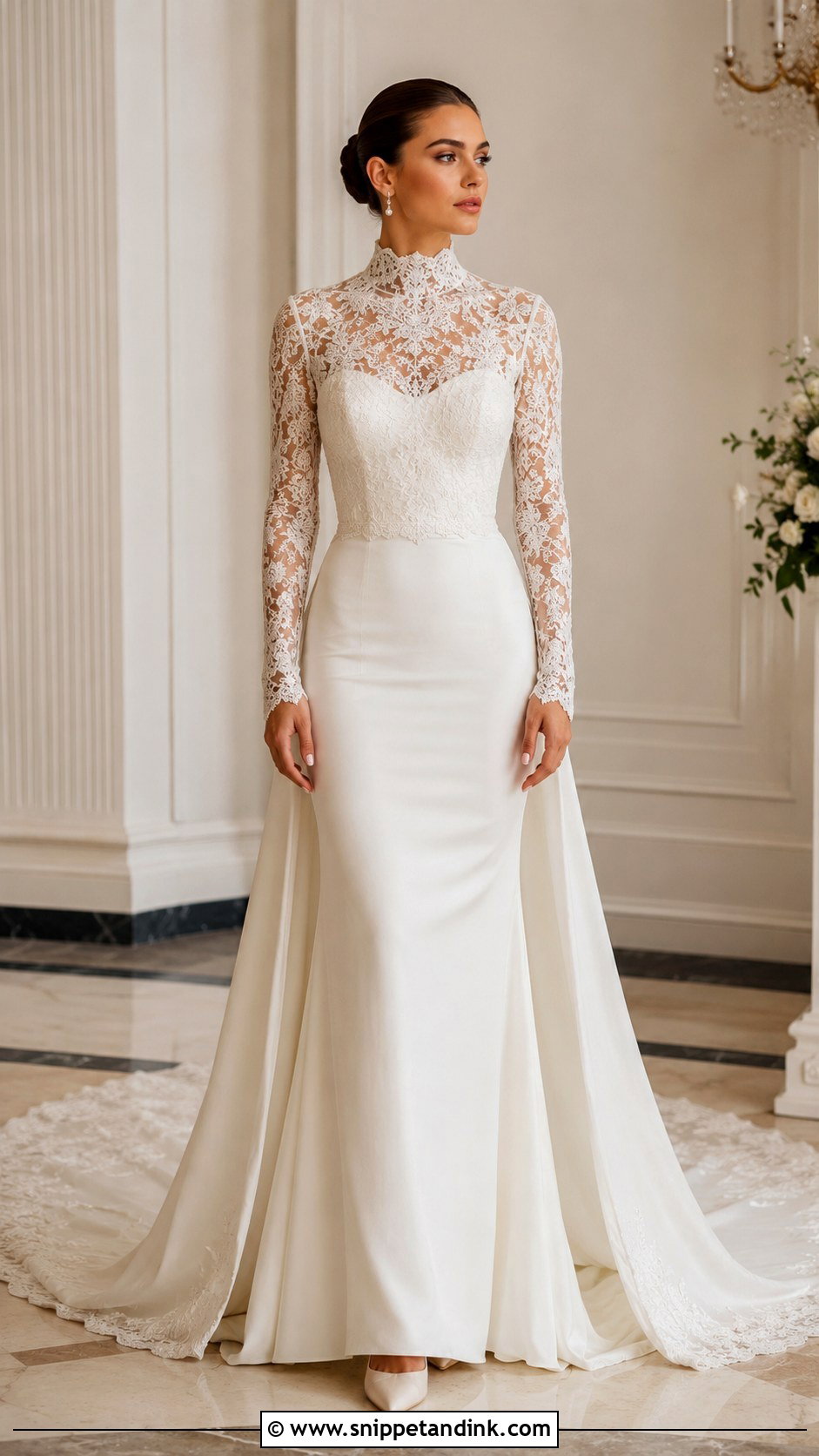
Coverage with real impact: a high neck in sheer lace, embroidered tulle, crepe or satin, often with long sleeves and a clean, fluid skirt. A sheer neck with fine floral embroidery softens it, and a structured mock-neck column with a long train sharpens it. The fit at the throat matters more than people think. Too snug and you will feel it every time you swallow; a good seamstress leaves room for a finger. Pull your hair back so the neckline is visible, and add pearl drops if you want any jewelry at all.
9. Off The Shoulder Couture Wedding Dress
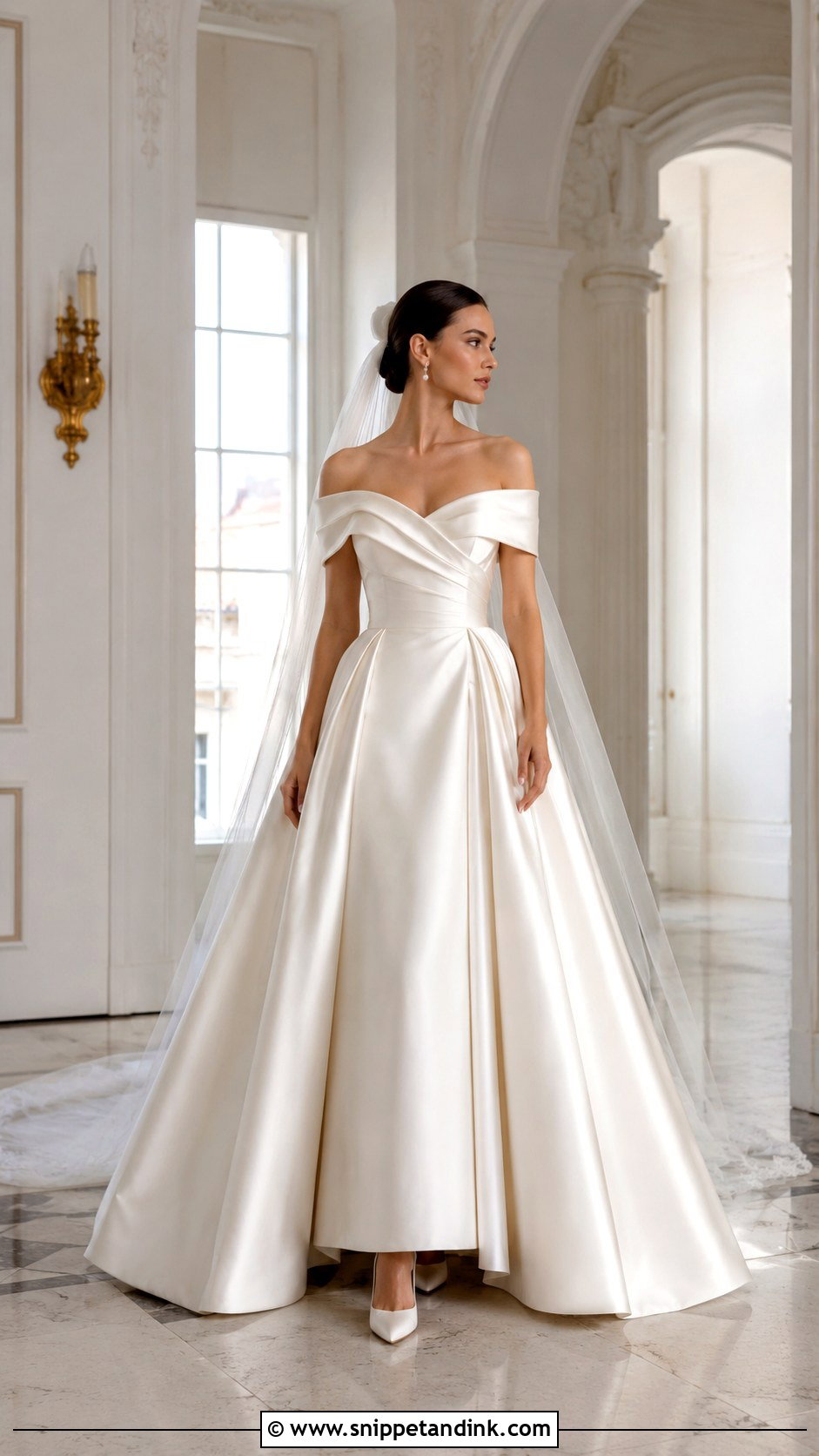
Off-the-shoulder necklines fail in one specific way: the sleeves creep up or slide down when you raise your arms. In a couture build the bodice carries all the support, often with a grip band inside, so the fold can stay where it was placed. It might be soft and romantic or shaped like a sculpted band of fabric, on a ball gown, mermaid or clean A-line. Satin and mikado hold the fold crisply; lace and tulle soften it. A low bun and pearl earrings are all I’d add, and I’d skip the necklace when the neckline already has strong shape.
10. Long Sleeve Haute Couture Wedding Dress
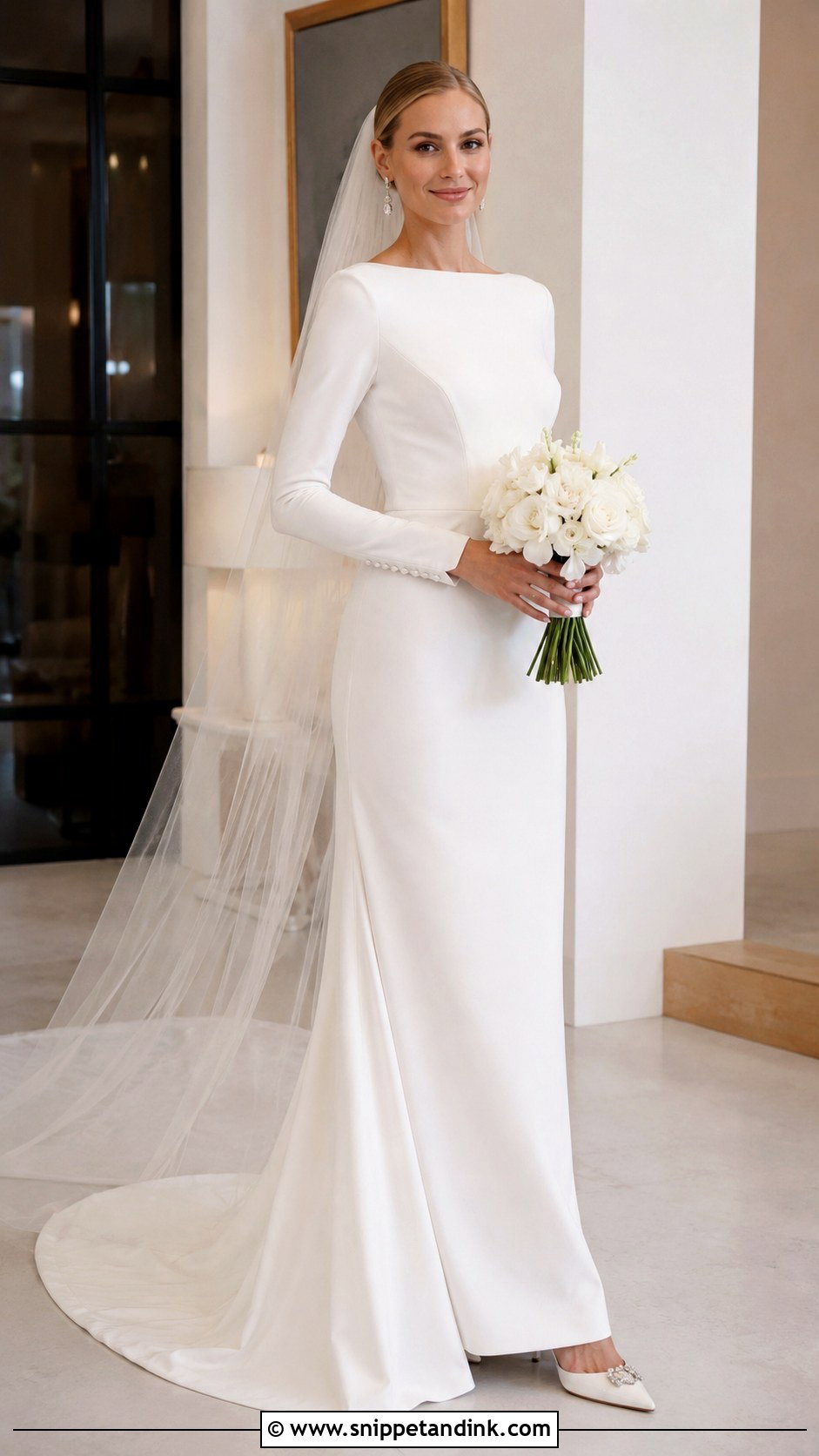
Fabric decides whether long sleeves feel right for your season. Sheer lace stays cool enough for late spring; satin or mikado with fitted sleeves is what I’d put a winter bride in. Couture detail tends to show up at the edges: covered buttons up the wrist, embroidered cuffs, a little beading. Long sleeves also balance plunging necklines and open backs, which is why the two are so often paired. Check that you can lift your arms to hug someone without the whole bodice rising. Classic pumps and a smooth veil keep the attention on the sleeve.
11. Sheer Sleeve Wedding Dress
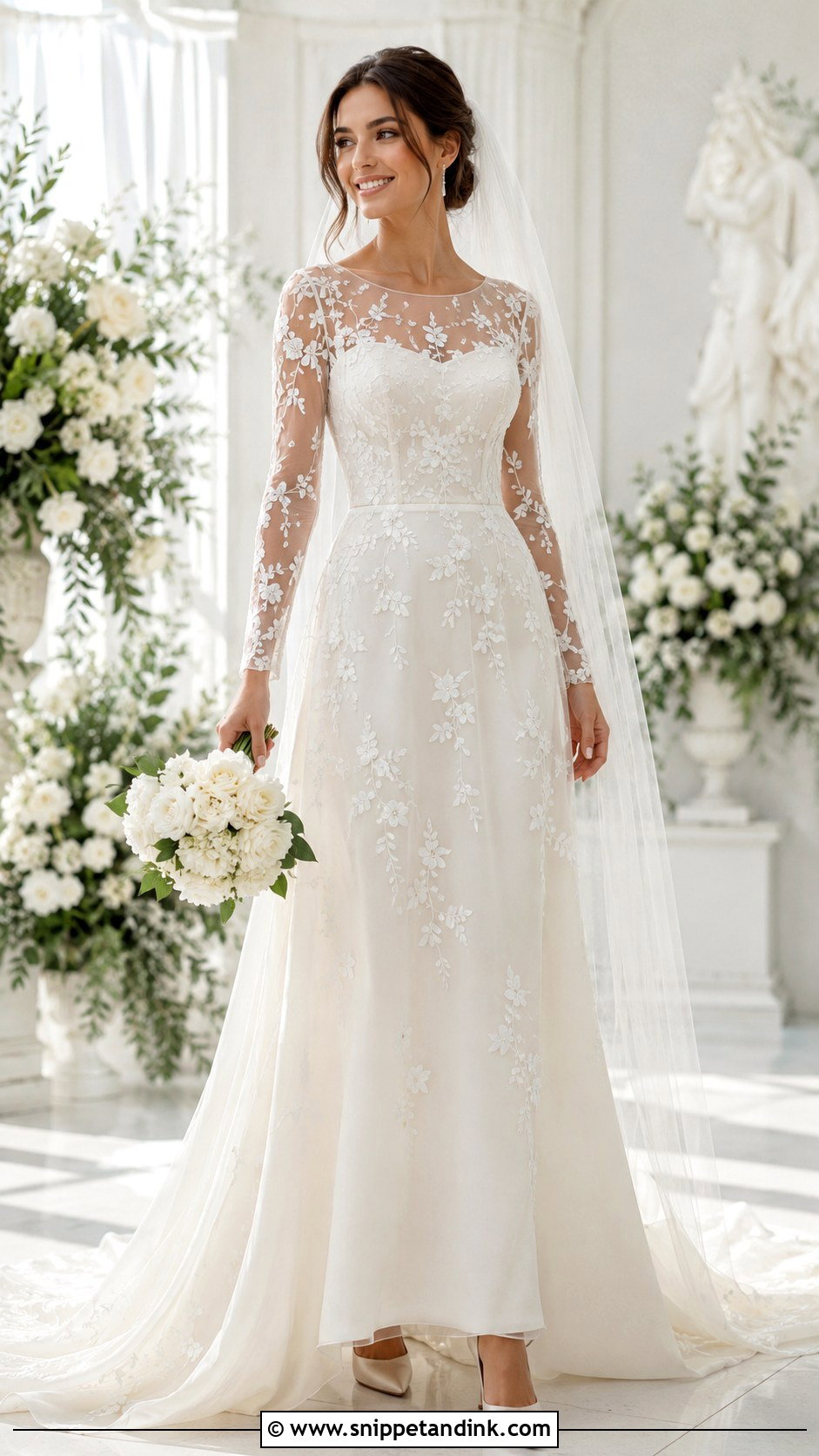
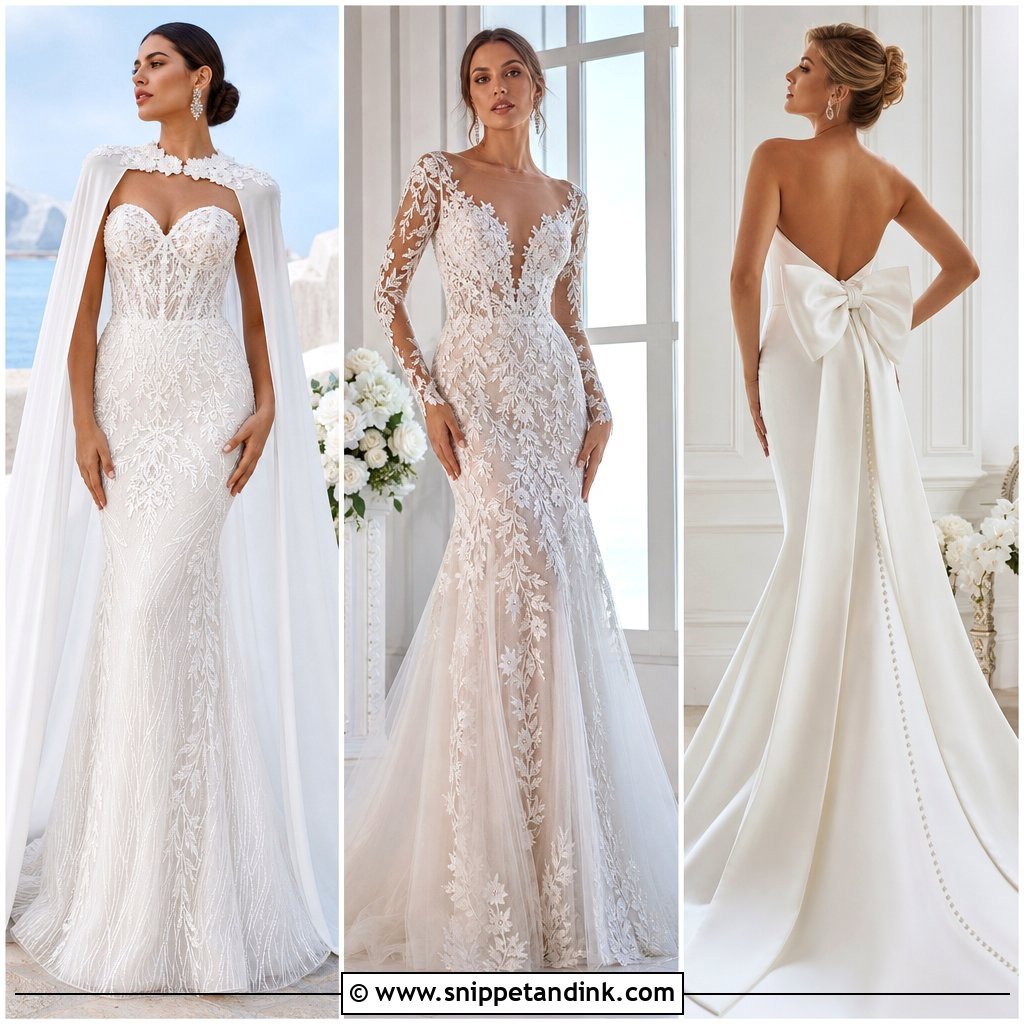
Illusion mesh and fine tulle sleeves give coverage that barely registers. The couture touch is detail that seems to float on bare skin: tiny pearls, a scatter of appliqué, a lace motif placed just so. Matching the mesh to your skin tone is the step most people skip, and it is the difference between invisible and obviously netted in photographs. Keep the bodice and veil plain if the sleeves are the main event. A soft updo shows off the shoulders.
12. Cape Haute Couture Wedding Dress
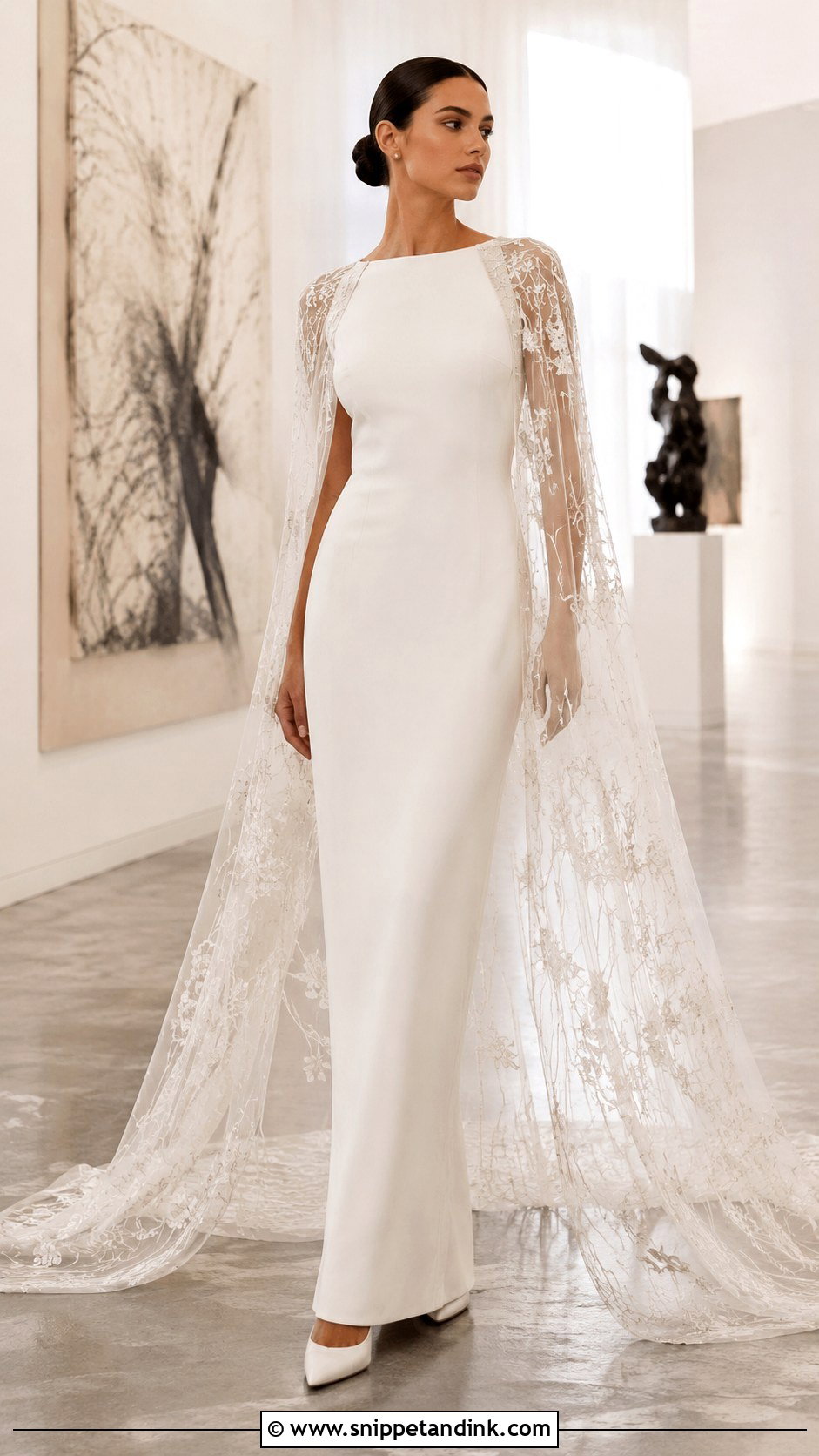
A cape can replace a veil entirely, and it gives you a runway-inspired finish that a veil doesn’t. Sheer embroidered capes read romantic; satin or crepe feels modern and strong. Attachment matters here. A cape that starts at the shoulders frames you; one that begins at the back neckline is cleaner but pulls backward when it is long, so I ask for a hidden loop or snap at the shoulder blade to keep it from choking you. Pair it with a column or minimalist dress that needs one dramatic layer, and keep earrings and hair simple.
13. Detachable Train Wedding Dress
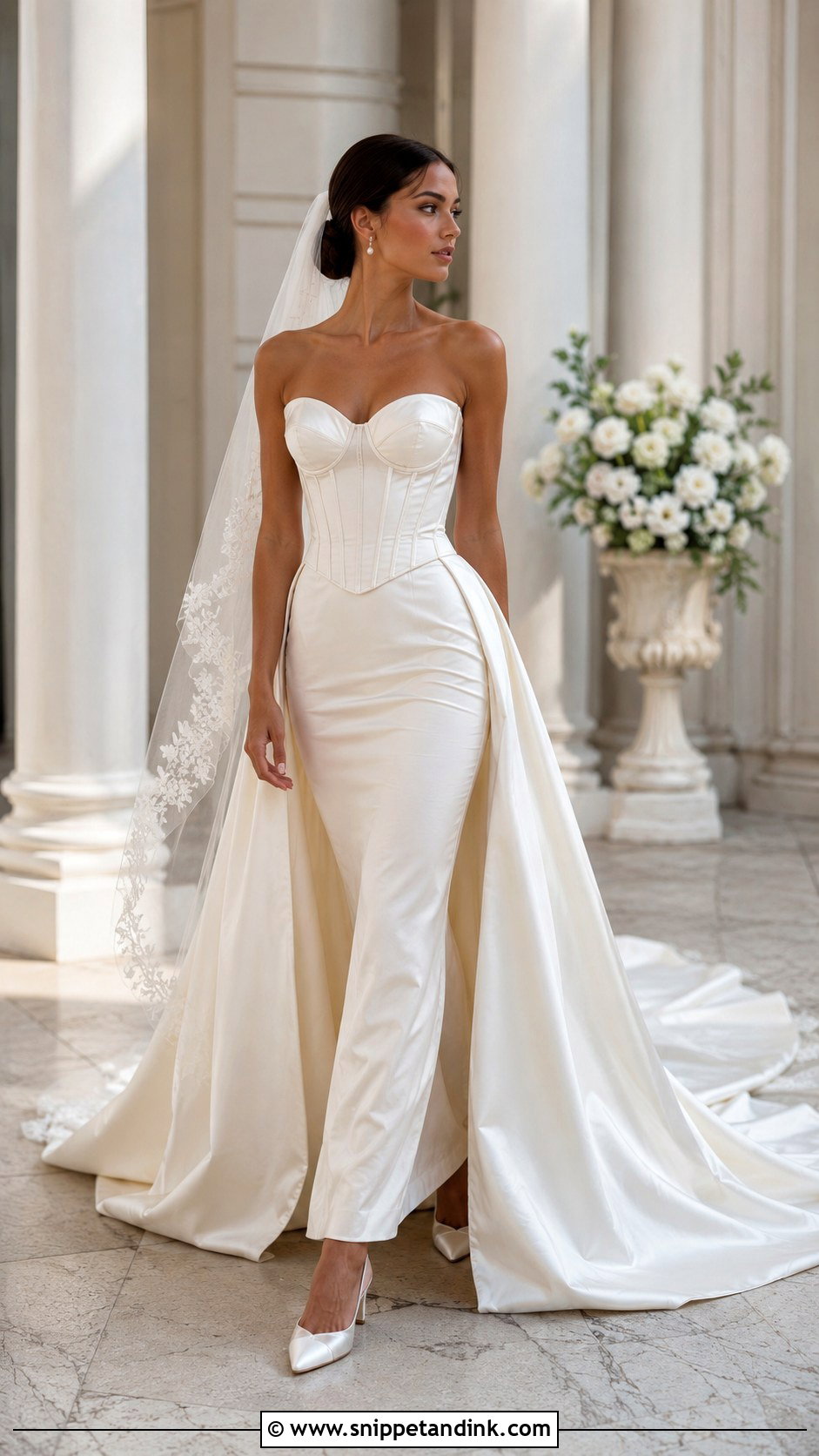
Two looks in one dress: the train adds formality down the aisle and comes off for the reception. Couture versions use a silk overskirt, a lace train, a beaded panel or a big bow attachment. The detail I’d examine closely is how it fastens. Hooks and thread loops hidden in a seam are reliable; a row of exposed snaps shows in photographs. Have your maid of honour practise the removal at the last fitting so it takes a minute, not twenty. Swap the veil for statement earrings or a hair piece once the train is off.
14. Minimalist Couture Wedding Dress
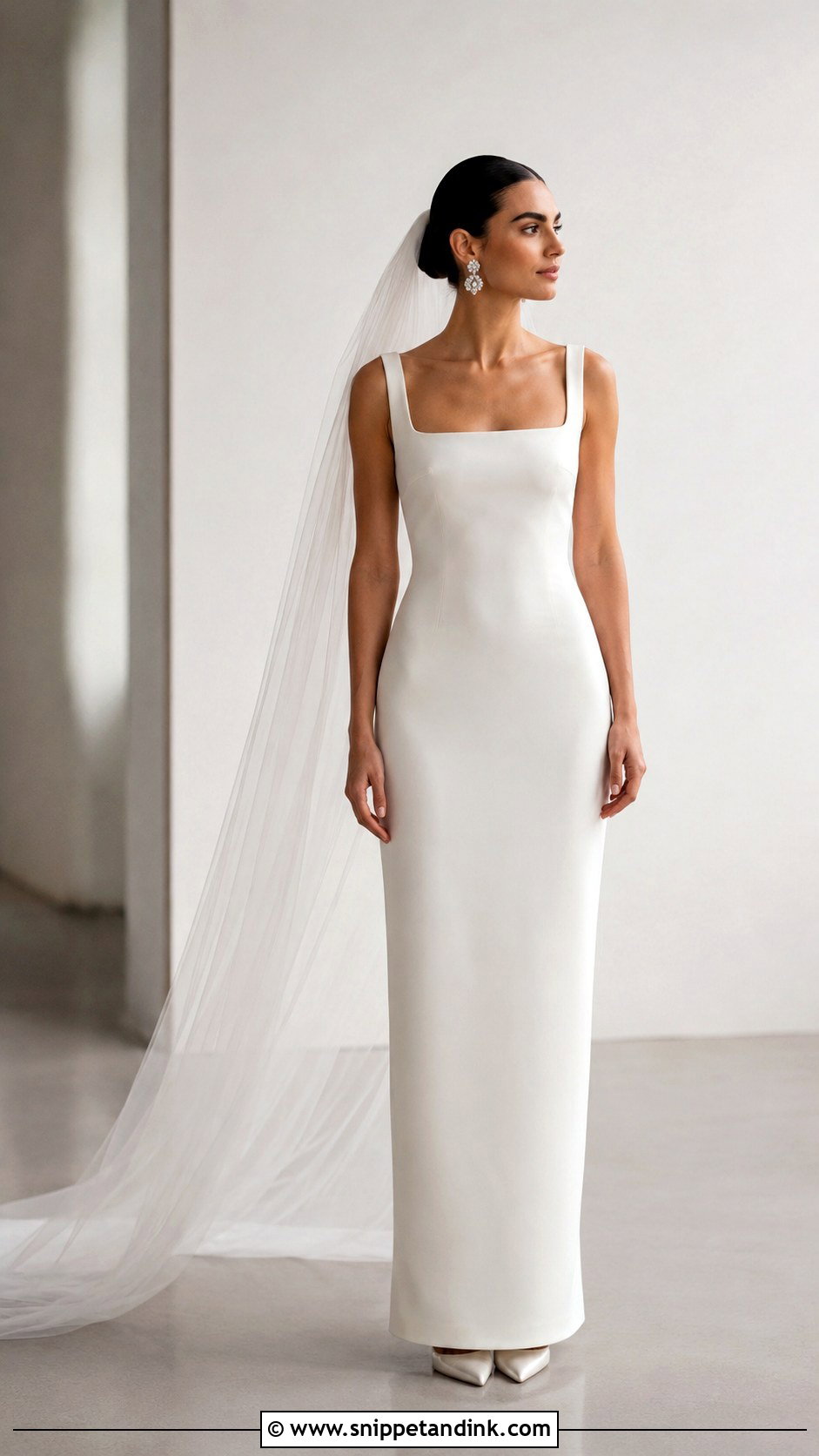
With nothing to hide behind, every seam is on show. A silk crepe column, a satin slip or a structured mikado A-line only reads as couture when the neckline lies flat, the proportions suit your frame and the hem falls exactly at the floor in your shoes. That is why I tell minimalist brides to bring their wedding shoes to every fitting. Personality comes from styling instead: sculptural earrings, a sleek bun, a long unembellished veil. City venues and modern spaces suit it.
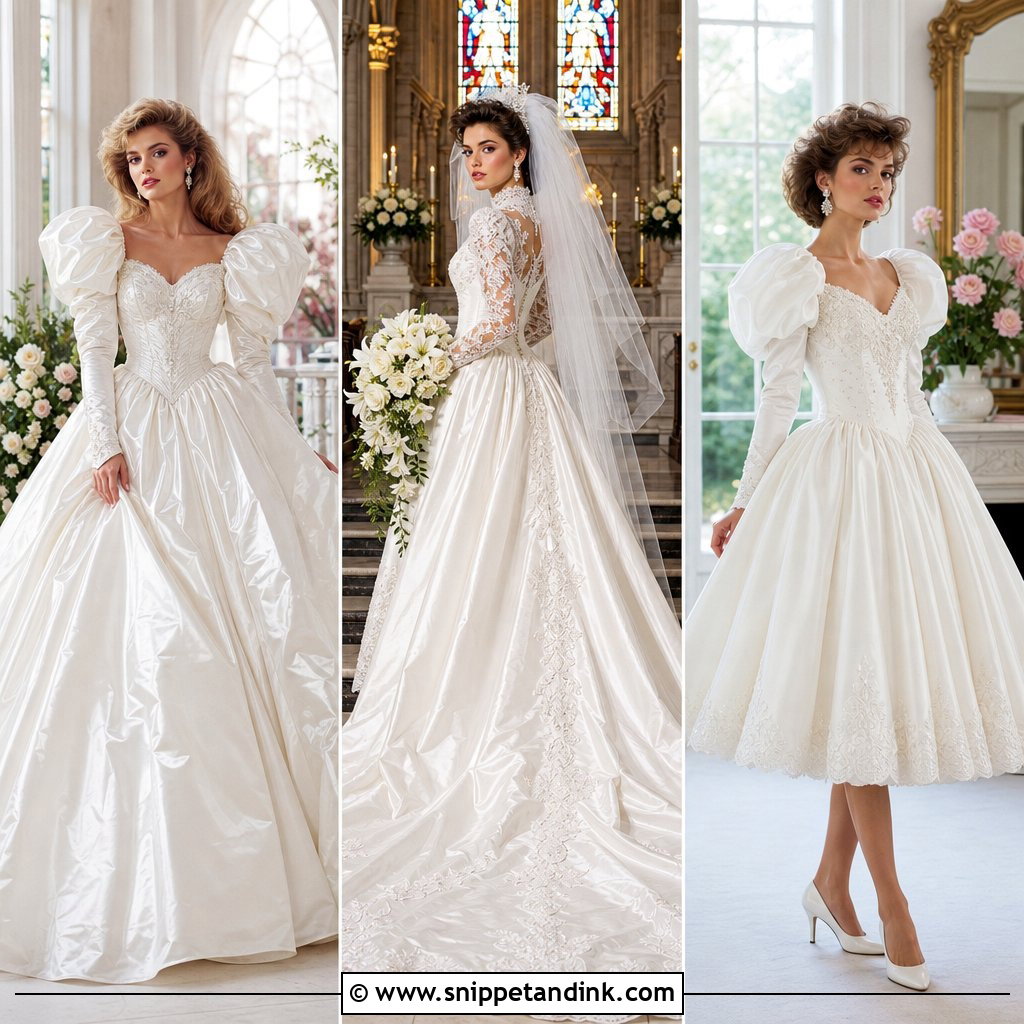

15. Pearl Embellished Wedding Dress
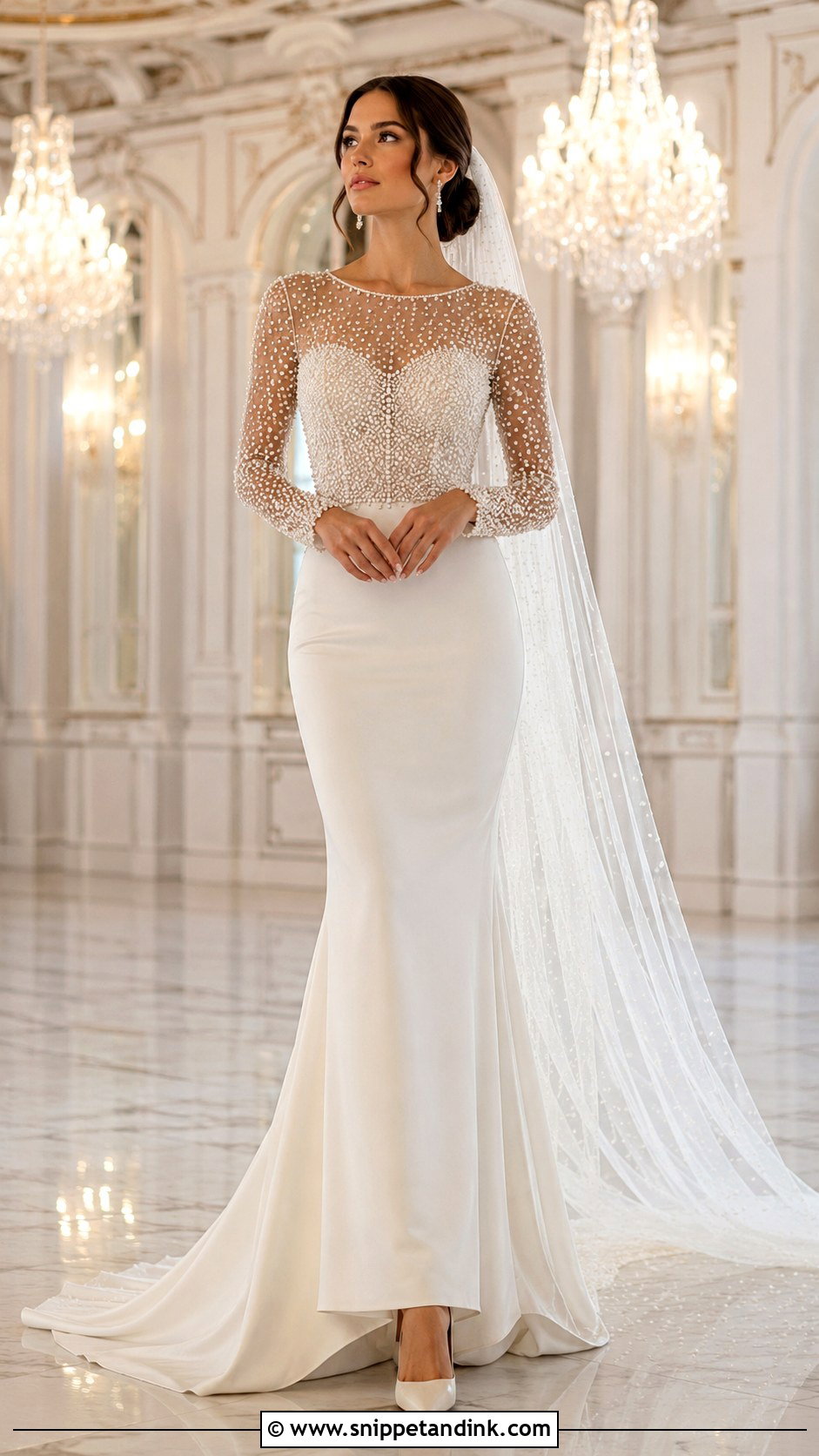
Mixing pearl sizes is the trick that makes this feel couture: a scatter of small, medium and large reads as natural texture, while uniform pearls look flat and machine-made. They can sit across sheer sleeves, along the bodice or as trim on the veil. Pearls are heavy in quantity, so a fully covered skirt needs a strong underlayer to stop it sagging between fittings. Wear pearl studs, or nothing at all if the gown is already busy near your face. Ballrooms and coastal ceremonies both suit it.
16. Feather Trim Wedding Dress
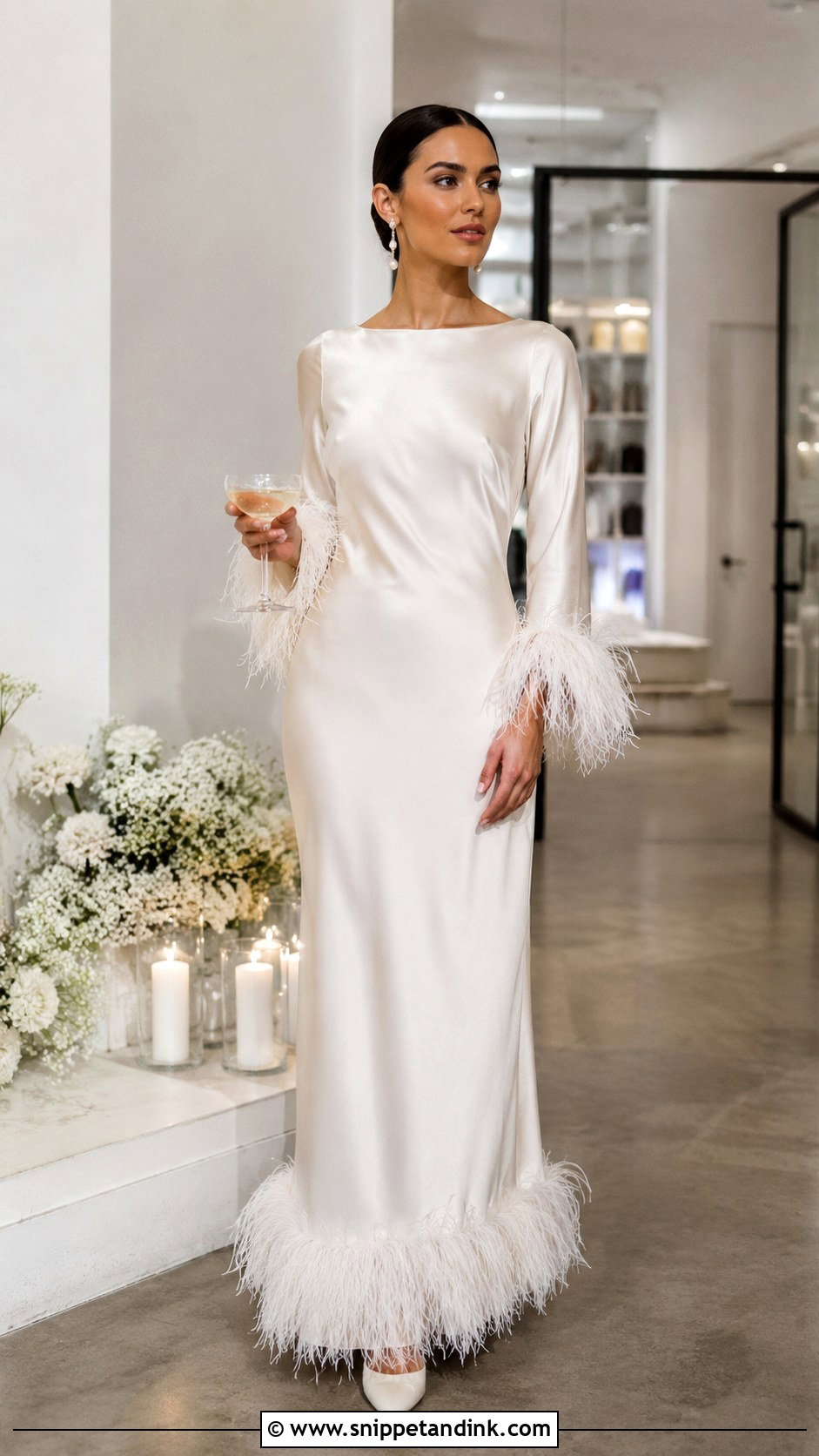
Restraint is everything with feathers. A cuff, a feathered hem, a light neckline or a detachable feather cape will look glamorous; too much and it tips into costume. Ostrich feathers also hate humidity and rain, going limp and clumping, so I’d think twice for a beach or tropical venue. Put them on a clean silhouette, such as a satin column, a crepe sheath or a mini for the reception, and keep everything else sleek so the trim stays the focus. It works best as a second outfit or a reception entrance.
17. Bow Detail Wedding Dress
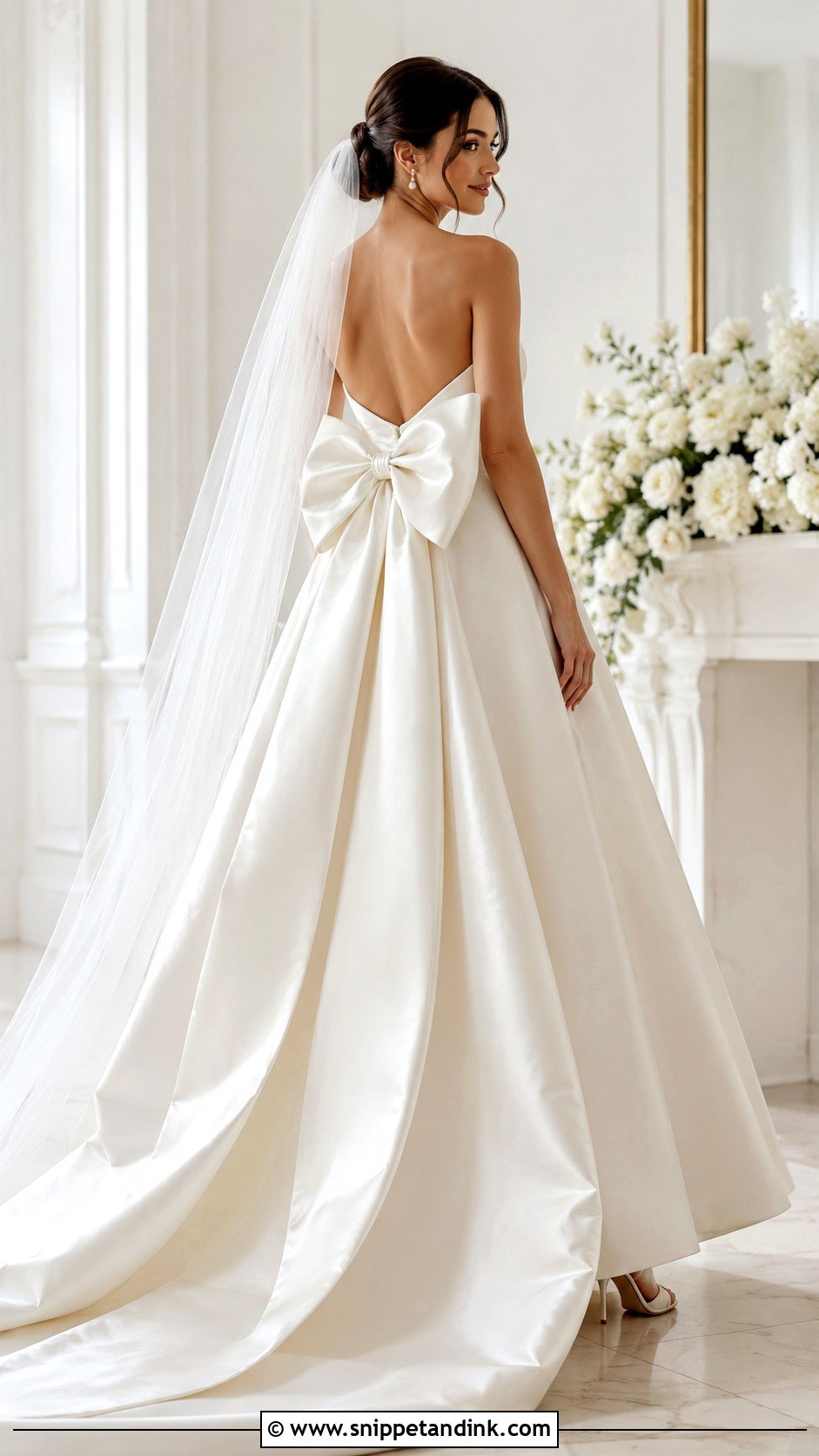
Placement changes the whole character. A large back bow with long tails is pure couture and reads from the far end of an aisle; a small bow at the neckline feels sweeter and more vintage; a bow at the waist defines an A-line or ball gown. Choose one and commit, because two or three bows start to fight. Stiff fabrics like satin, mikado and organza hold the loops; softer silks flop by the reception unless the bow is interfaced. A simple veil and understated jewelry let it be the focal point.
18. Tea Length Couture Wedding Dress
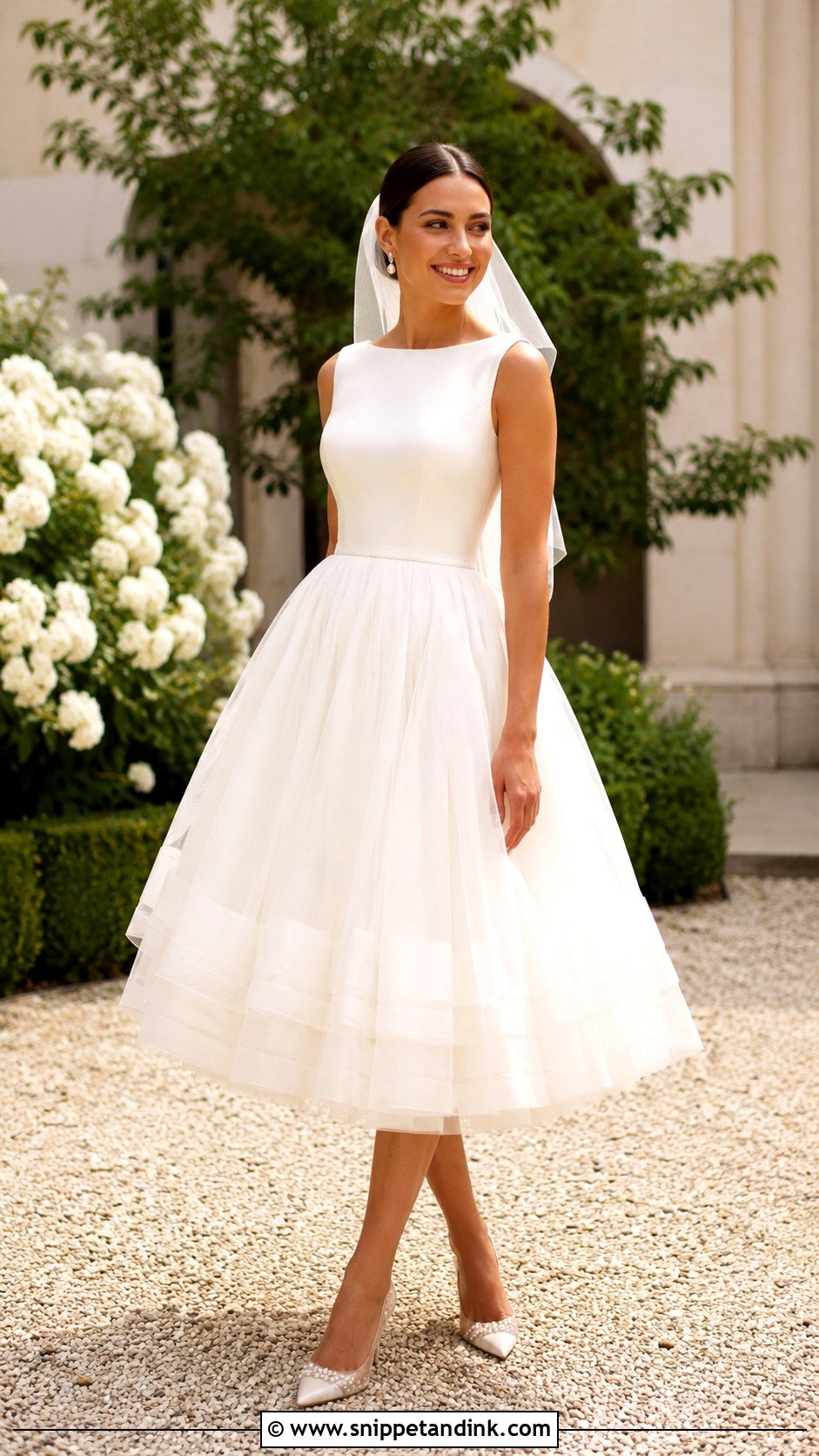
The hem falls somewhere between knee and ankle, which means your shoes are part of the outfit and you can actually move. To keep it feeling couture rather than casual, the bodice needs real structure and the skirt needs rich fabric, hand-finished lace or proper layering underneath. I like it for courthouse weddings, garden ceremonies and reception changes. Pointed pumps or slingbacks suit the length. A birdcage veil leans vintage; a clean shoulder-length veil keeps it modern.
19. Short Haute Couture Wedding Dress
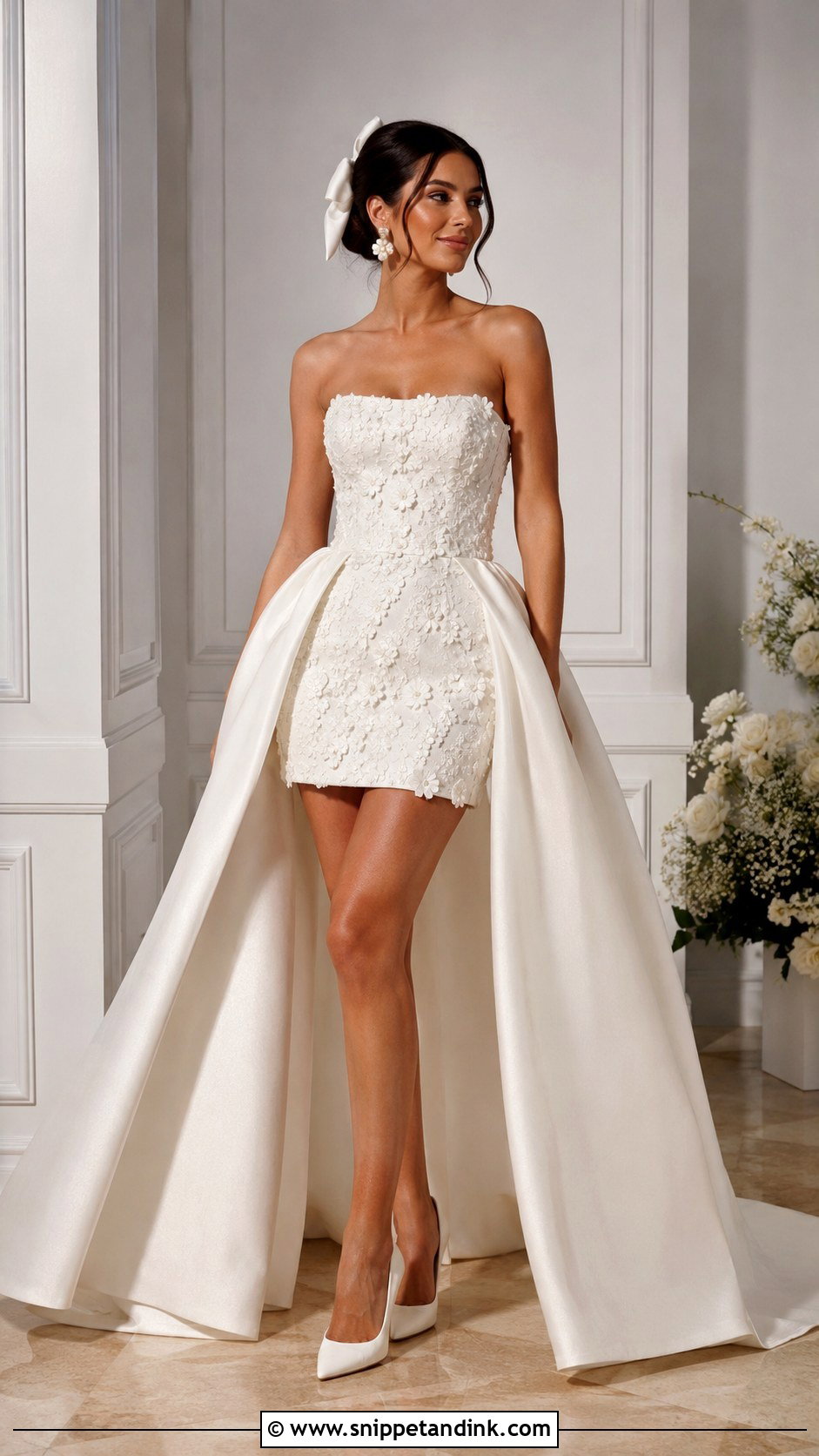
A short haute couture wedding dress still has to look bridal, and that comes from fabric and construction rather than length. A structured mini with a dramatic overskirt, a feather hem, a bow back or hand-applied flowers all do it. The fit has to be close; a short dress that is even slightly loose starts to look like a party frock. Civil ceremonies, after-parties and second receptions are its natural home. Sheer gloves, pearl earrings or a sleek hair bow add polish.


20. Crochet Lace Wedding Dress
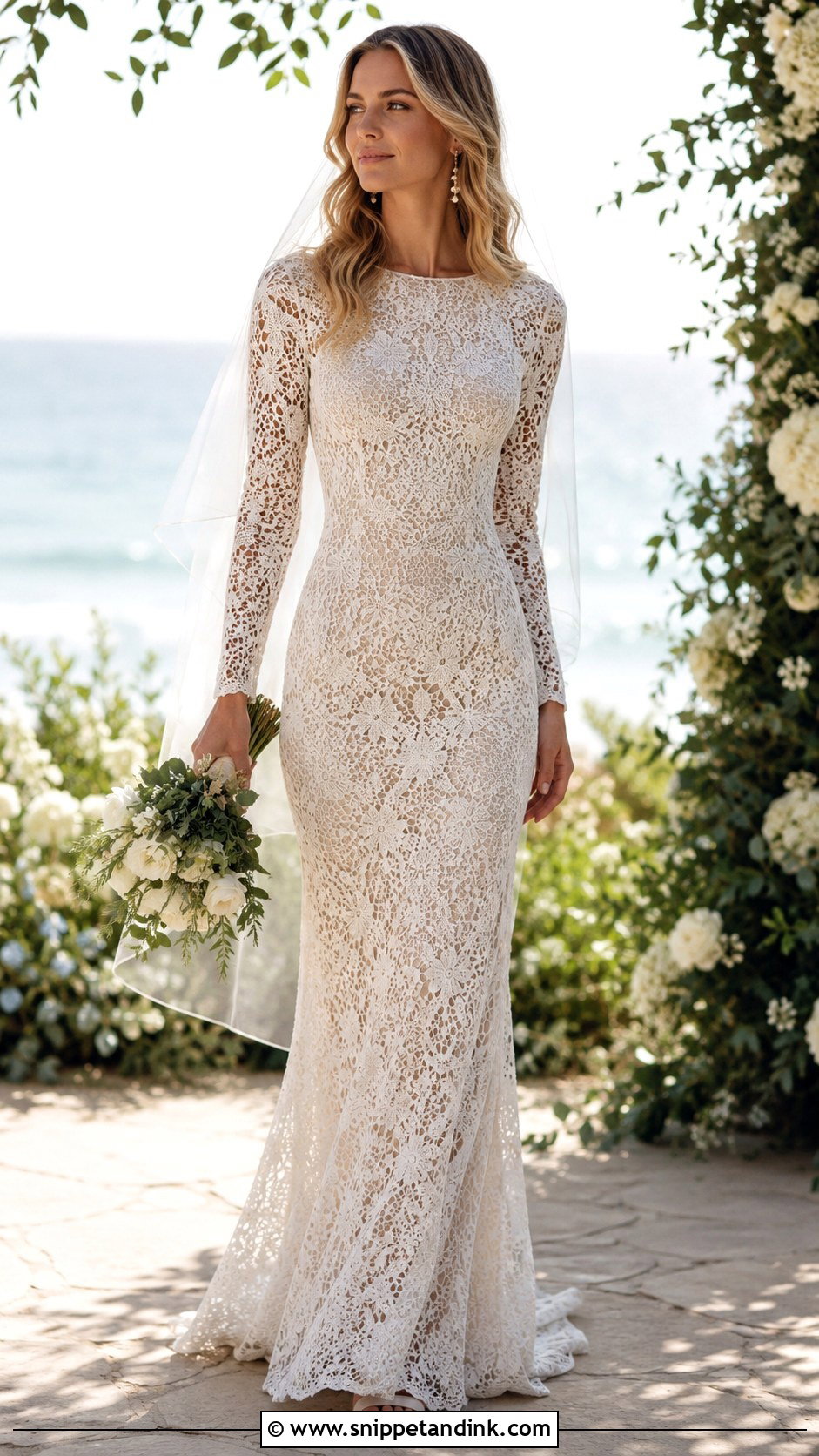
Crochet lace is chunky and open, so the lining underneath matters as much as the lace. A smooth, well-fitted slip stops the texture from looking homespun. Shape through the bodice and waist should be built into the lining, not pulled in by the lace, which stretches and bags over a long day. A slim A-line, sheath or long sleeve suits it. Soft waves and sandals or satin heels fit a beach or destination ceremony. The couture part is placement and the quality of the work.
21. Embroidered Tulle Wedding Dress
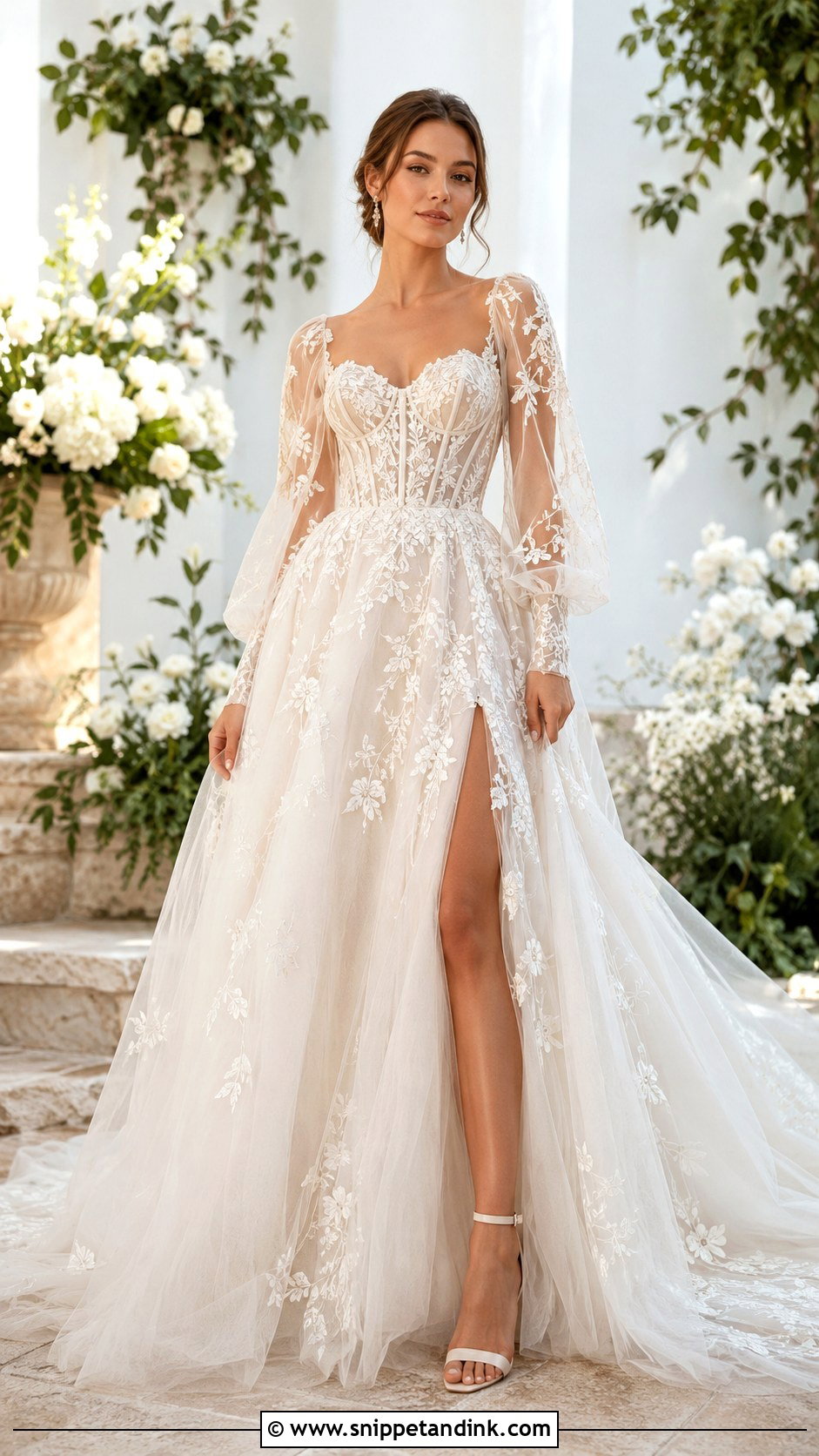
Tulle gives softness and embroidery gives depth: vines, florals, stars, pearls or metallic thread worked across bodice and skirt. Tulle snags on rough surfaces like brick, stone and bark, and once a thread pulls, the embroidery around it can pucker. I’d warn anyone planning an outdoor portrait session on a rustic venue. Ivory on ivory reads softest; a pale champagne lining underneath gives contrast. Thin earrings and a soft veil are enough.
22. Two Piece Couture Wedding Dress
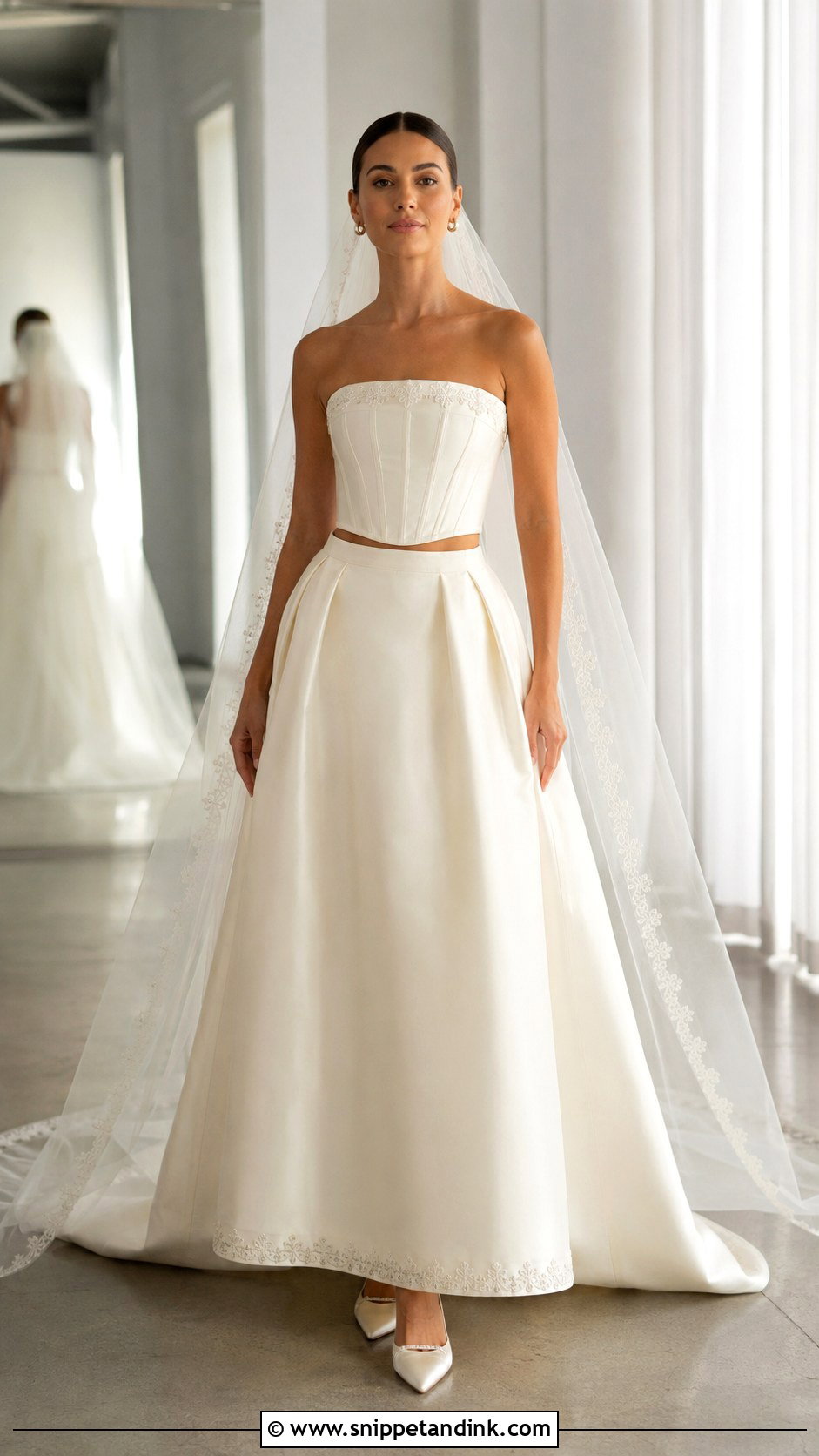
A corset top with a full skirt, a lace blouse over satin, a cropped jacket over a column: two-piece bridal gives you structure and individuality. It only works when the pieces clearly belong together, so I tie them with matching fabric, embroidery, buttons or trim. Ask your seamstress to set a hidden hook between the top and skirt so the waist doesn’t shift when you raise your arms. You can also wear the pieces again separately afterwards, which few gowns allow. Clean heels and minimal jewelry keep it modern.
23. Couture Bridal Suit Dress
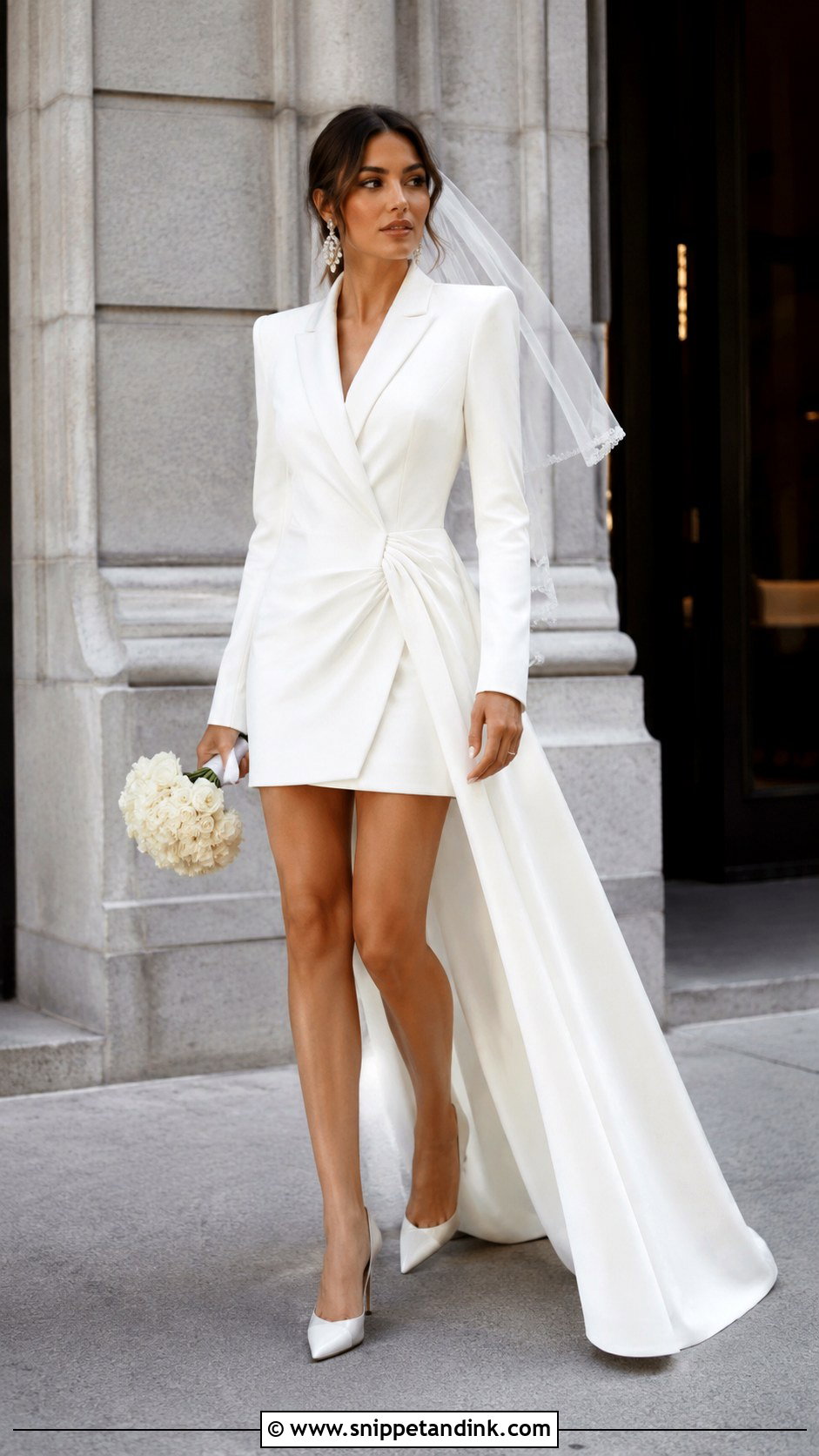
Tailoring brings a different kind of confidence: a blazer dress, a long tuxedo gown, a tailored suit with a train, or a structured jacket over a silk skirt. The fabric needs to be good enough to hold a sharp shoulder: wool silk, satin or heavy crepe in white, ivory or soft cream. Covered buttons and a defined waist make it read polished. Shoulder fit is the one thing that is hard to alter later, so get it right at the first fitting. A short veil or cape brings back some softness.
24. Color Tint Couture Wedding Dress
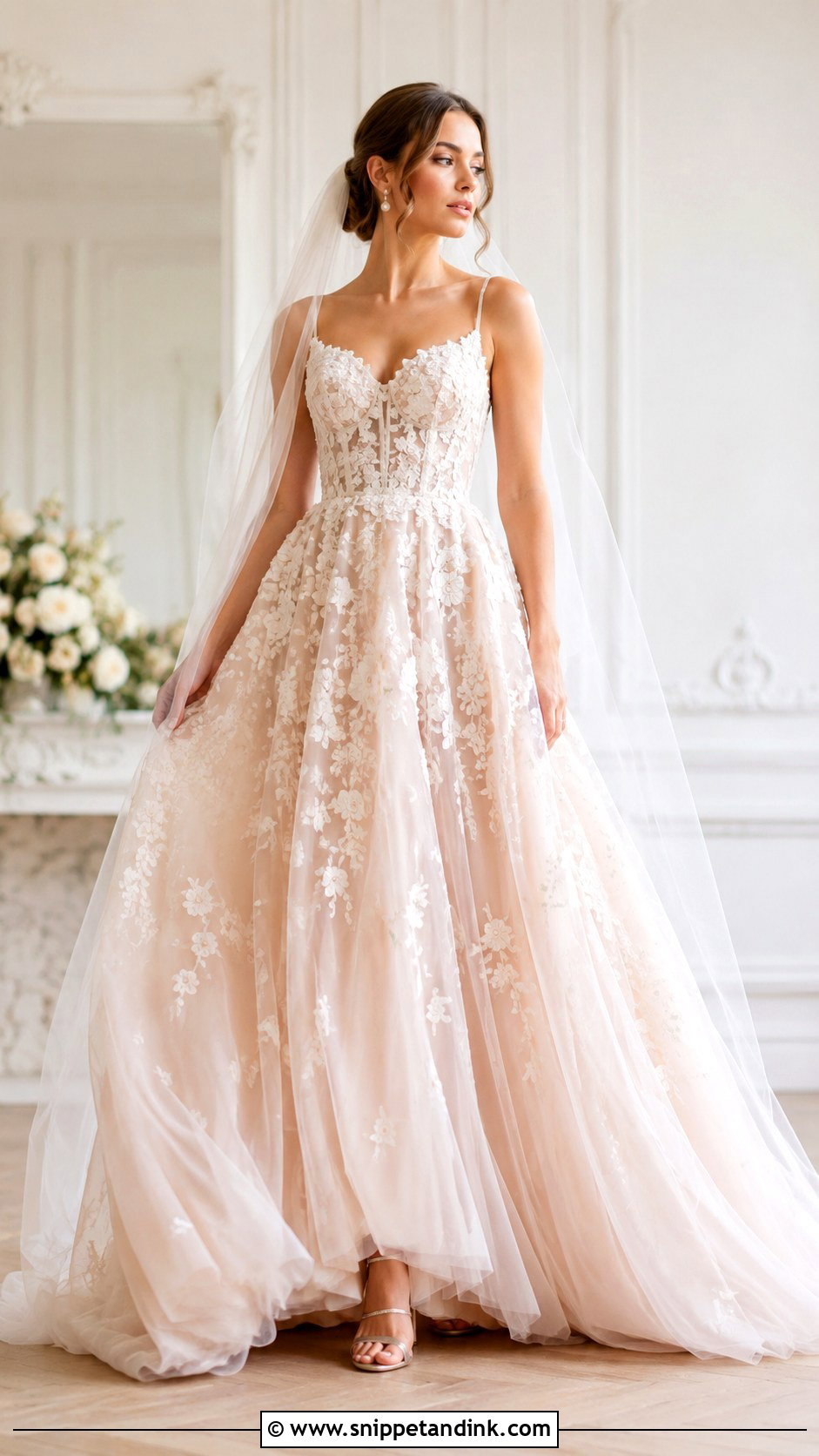
Tinted gowns are less of a risk than they sound. Blush, champagne, pale blue, silver and warm ivory add depth, and the color can live in the lining, embroidery, overskirt, sash or veil rather than the whole dress. A blush underlay beneath ivory lace is the easiest version. For more drama, try pale blue tulle or champagne satin with fine beading. Always check a tint in daylight and under warm indoor light, because champagne can turn yellow under tungsten bulbs. Soft metallics or pearls keep the palette calm.
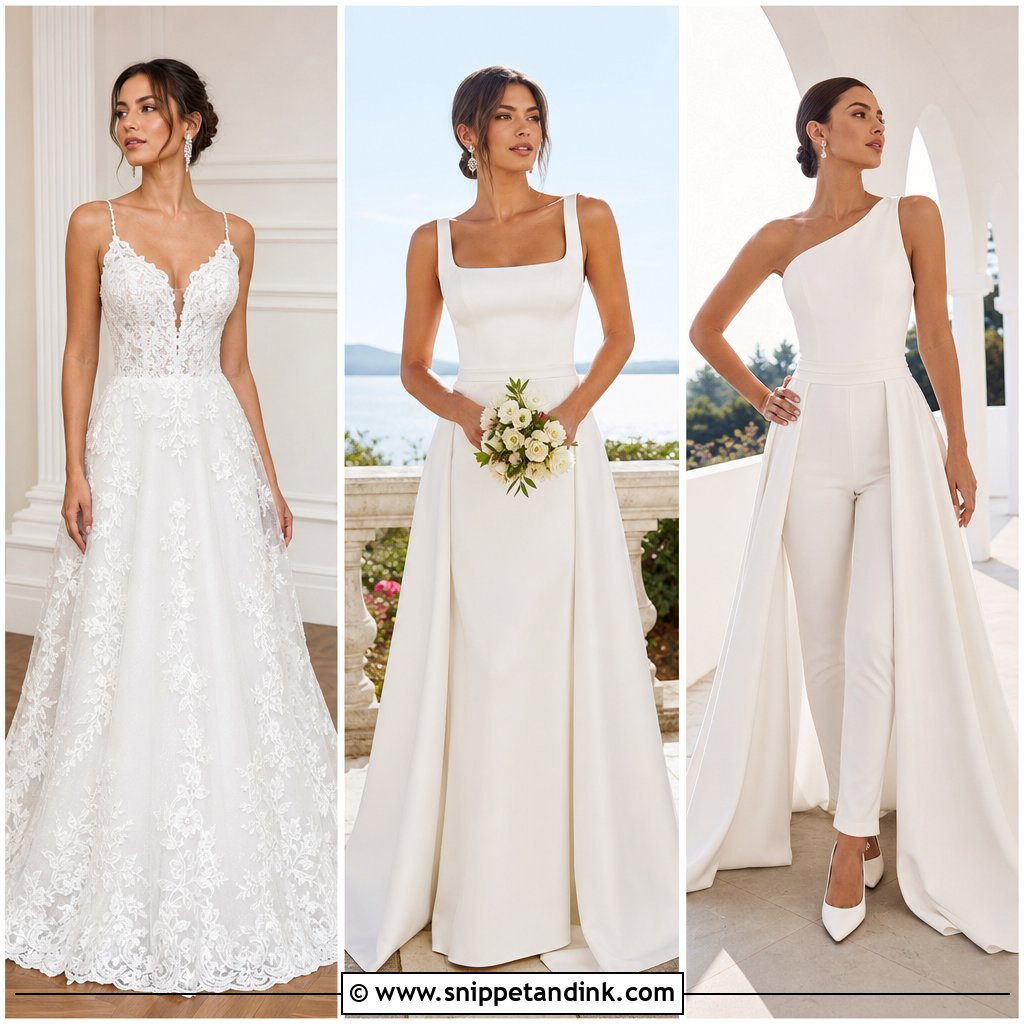
25. Overskirt Haute Couture Wedding Dress
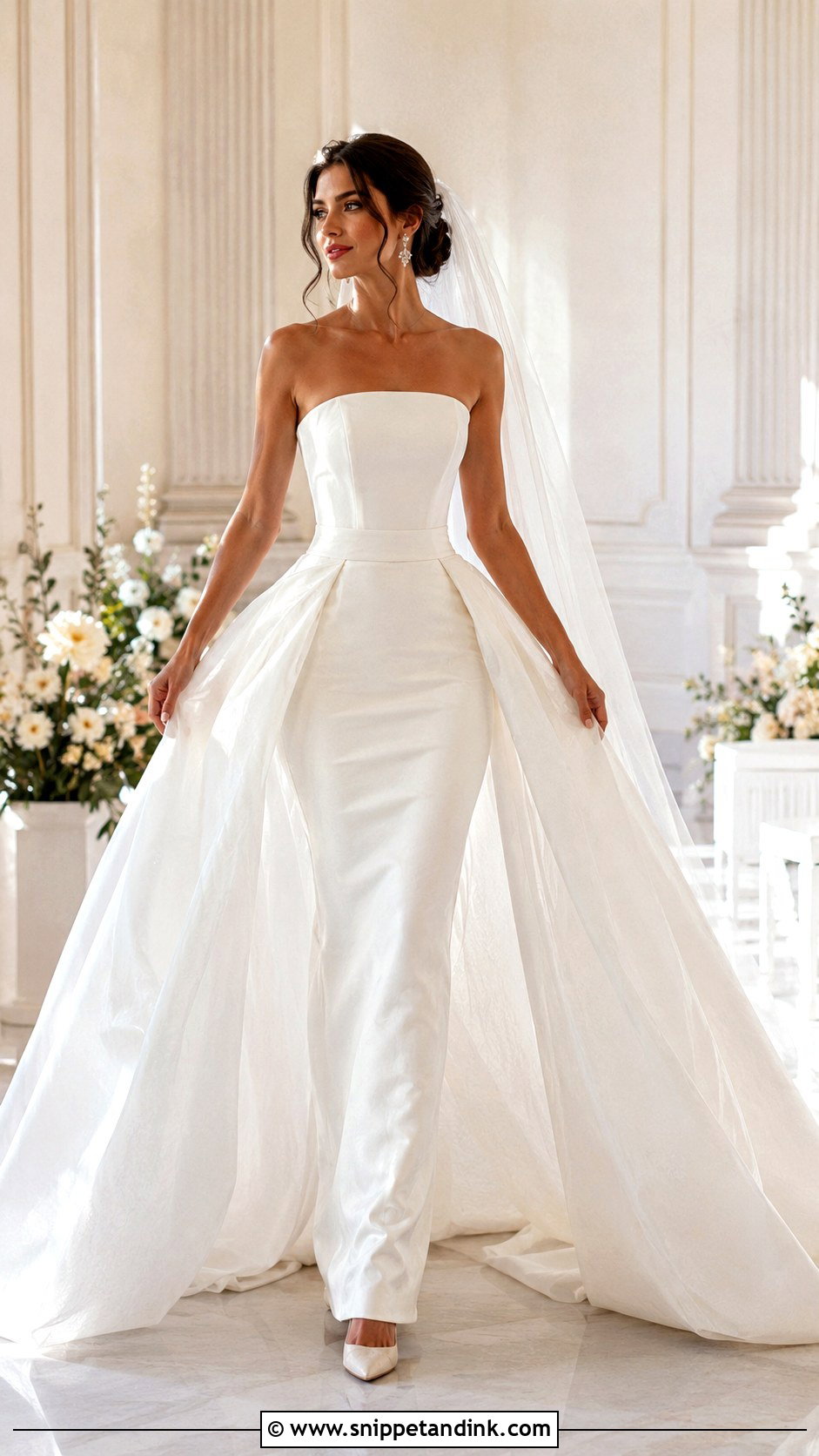
An overskirt gives you ball-gown drama over a column, mermaid or mini base, and you can take it off for the reception. Tulle, organza, mikado and lace each give a different effect: sheer feels romantic, and a structured satin overskirt feels grand and architectural. The waistband is what gives a cheap one away. It should sit flat on the base gown without a ridge, and the fabrics should match in shade under flash. Pick jewelry that works with both versions so you don’t need to change it.
How Many Fittings a Made-to-Measure Gown Needs
Made-to-measure takes longer than buying off the rack, and the calendar catches people out. I’d start talking to a designer nine to twelve months out. Lead times vary a lot between ateliers, and heavy embroidery or beading pushes them later.
- Measurements and a design meeting, where fabrics and swatches are chosen.
- Toile fitting, where the shape is corrected in cheap cotton before anything precious is cut.
- Two or three fittings in the real fabric, adjusting the bodice, length and train.
- A final fitting two to three weeks before the wedding, with your shoes, underwear and any jewelry you plan to wear.
Try not to change shape dramatically during this period. A good bodice can be taken in, but a fully beaded one is slow and expensive to rework.
Bustles, Steaming and What Happens to the Dress Afterwards
A heavy train needs a bustle, and there are several kinds. A French bustle tucks the fabric under; an over bustle hooks it up in swags. Choose the one that suits your fabric, then have whoever will do it on the day practise at the final fitting.
Travel with the gown hanging in a breathable cotton bag, never plastic, and steam silk from the inside at a low setting. Many couture fabrics water-mark if they are steamed directly. After the wedding, get it to a specialist cleaner within a few weeks, because sugar from drinks is invisible at first and turns brown as it oxidises. Then store it flat in an acid-free box, away from light.
A Gown That Has to Move With You
A couture gown has to work while you walk, sit, turn and dance, not only while you stand still at a fitting. Get the fabric, fit and silhouette right first, then add the lace, draping, corsetry, beading, pearls or capes that suit you. A grand ball gown and a plain silk column can both feel made for you if they were built carefully. Start with the one that felt like you the moment you saw it, and test it hard at every fitting.
You'll Like These Ideas:




Leave a Reply