
Bridal shops this year are full of Basque and drop waists, corset bodices, three-dimensional flowers, convertible layers, bows and clean architectural shapes. I like plenty of them. But a trend only works on you if the gown also handles your venue, your season and a full day of walking, sitting and dancing. For each of the twenty gowns below I’ve listed the silhouette, neckline, accessories and shoes I’d pair with it, plus the fitting check I’d do before you say yes.
Reading Your Torso Before You Commit to a Waistline
Half the gowns in this list are defined by where the waist sits: Basque, drop, natural or raised. Before I pull a single dress, I look at two lengths on the bride, shoulder to natural waist and natural waist to hip, because those proportions tell me which waistline will flatter her and which will fight her.
A short torso
A deep Basque point or a long drop waist cuts the body where there isn’t room for it, and the legs can look shorter. A shallower V, a natural waist or a slightly raised seam gives back length. Vertical seams running up the bodice help too.
A long torso
This is where the drop waist earns its place. The long bodice uses the length you already have, and a Basque point balances it without stealing from the legs.
Fuller hips
A Basque point that starts at the natural waist and dips gently draws the eye down the center and lets the skirt release over the hip. A tight drop waist does the opposite: it grips the widest part of the hip, which is exactly where the skirt should be opening.
Then sit down. Every waistline below the natural waist meets your thighs when you sit, and boning that feels fine standing can dig in on a chair. I’d rather a bride learns that at the first appointment than the last.
1. Basque Waist Wedding Gown
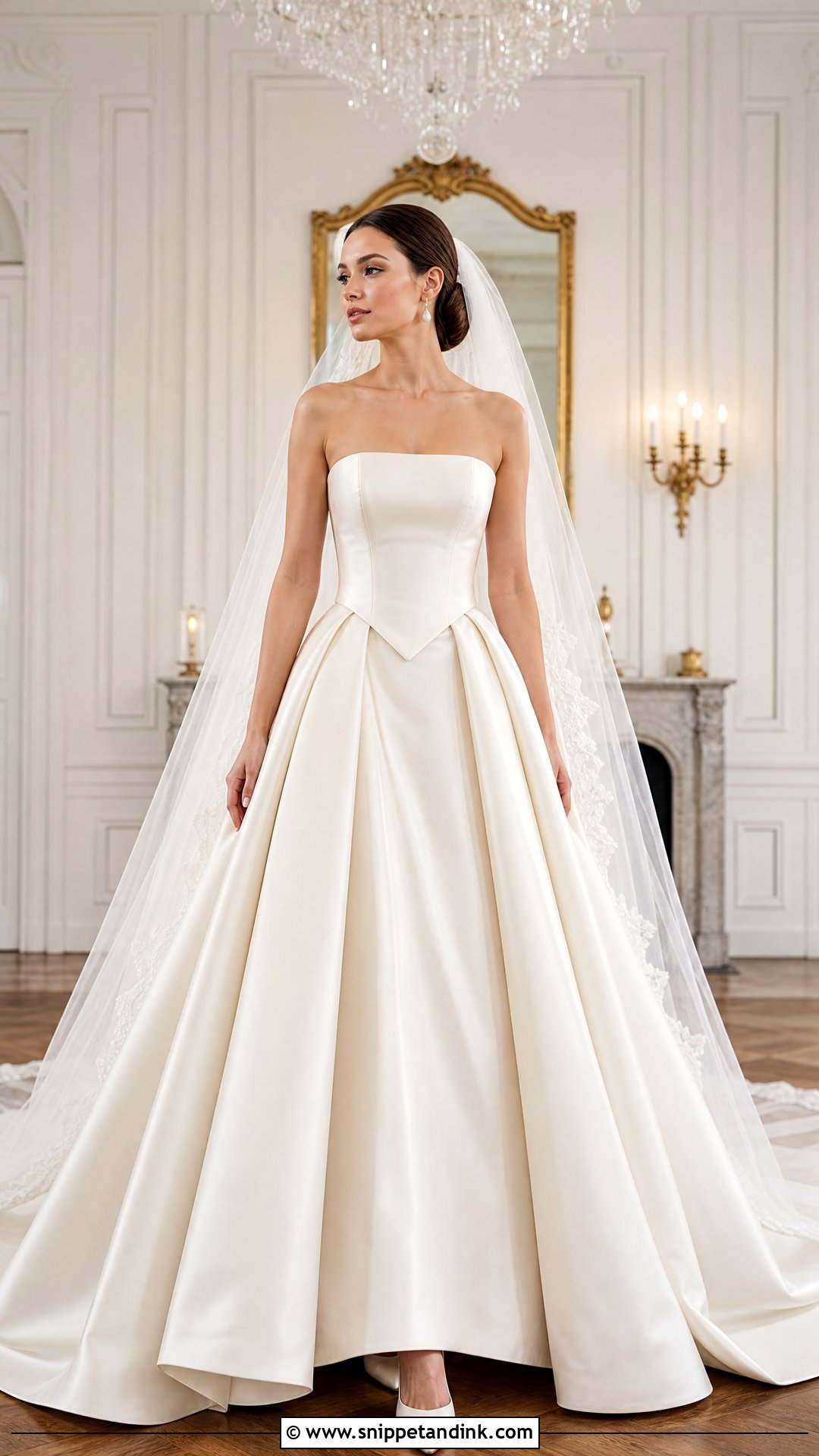
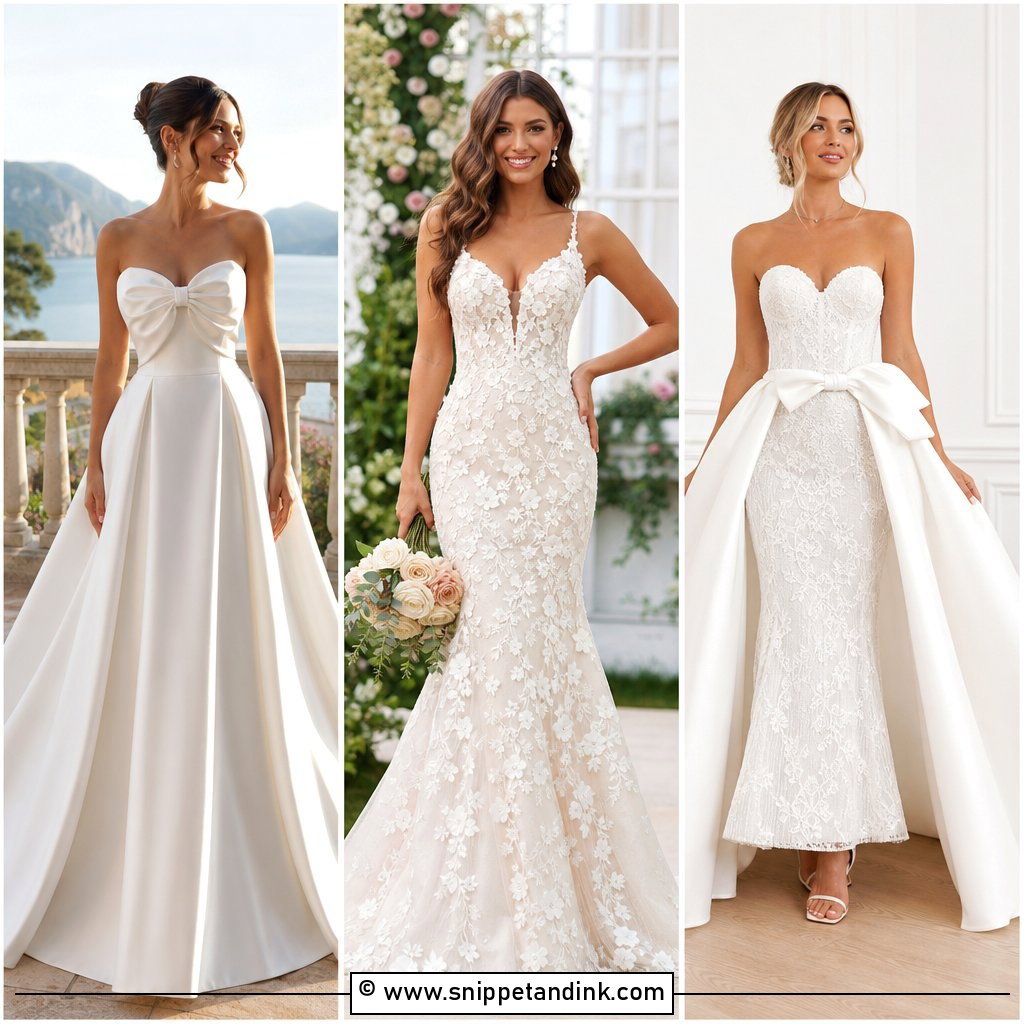
The point of a Basque waist sits a few inches below your natural waist, so where that V lands on your body decides everything. On a short torso a deep point can swallow the hips, and I’d ask for a shallower dip. In ivory satin with a strapless neckline and a full pleated skirt, internal boning keeps the front smooth, while pearl drops, a cathedral veil, closed-toe pumps and a low bun leave the waist construction on show. Ballrooms and historic estates suit its scale. At fittings, sit down fully: a long bodice can press into the tops of the thighs, and that’s the moment you find out.
2. Drop Waist Satin Wedding Gown
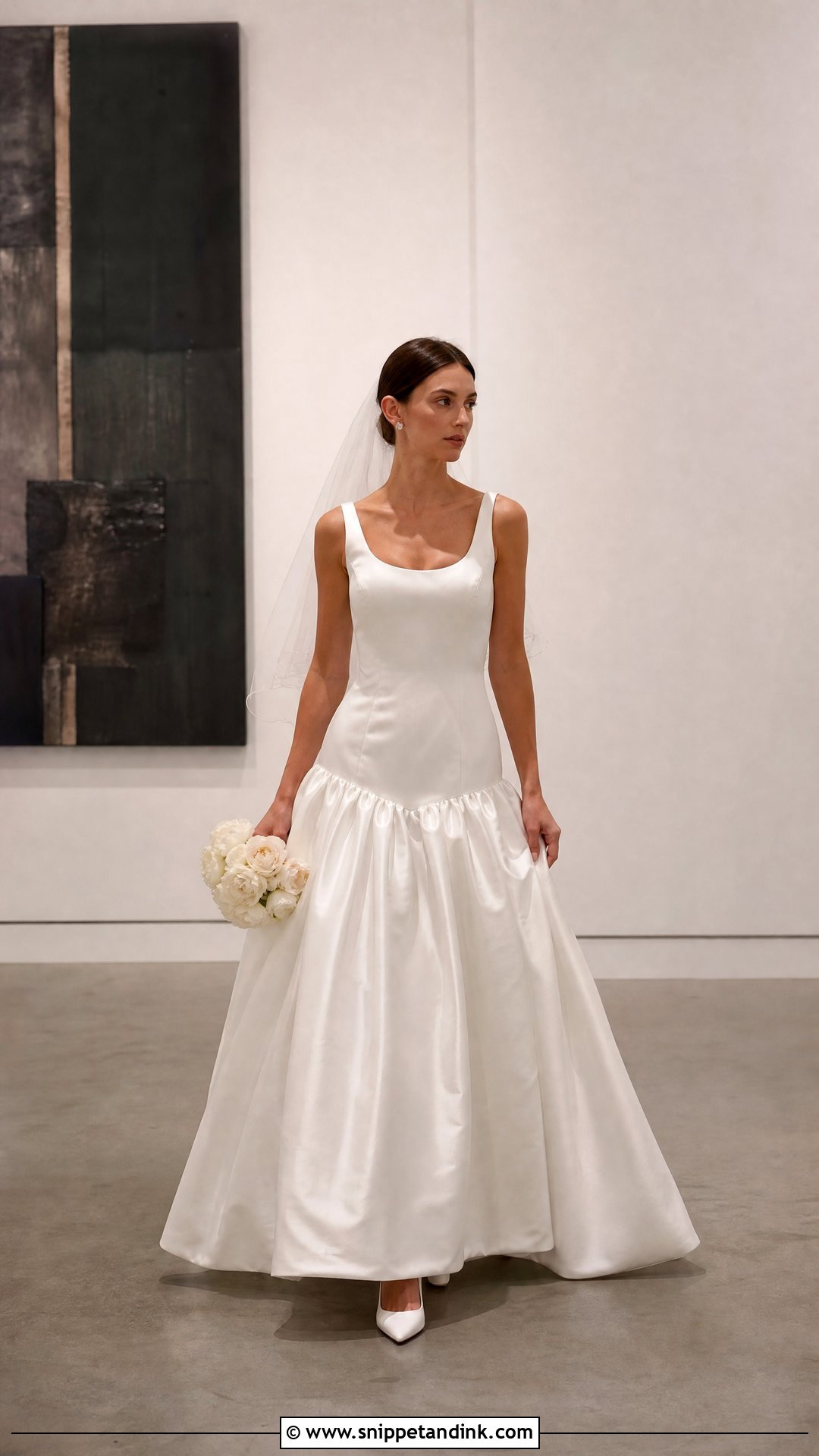
A drop waist runs smoothly to the hips before the skirt opens, with none of the sharp V of a Basque. That long line flatters only if the skirt starts in the right place, so I mark the seam with pins on the bride’s own body instead of trusting a size chart. A scoop or straight neckline keeps it modern; add a fingertip veil, crystal studs, pointed white heels and a compact bouquet. Smooth satin like this belongs in hotels, galleries and formal city rooms. Keep the hair neat, because the seams are the detail.
3. Corset Lace A-Line Wedding Gown
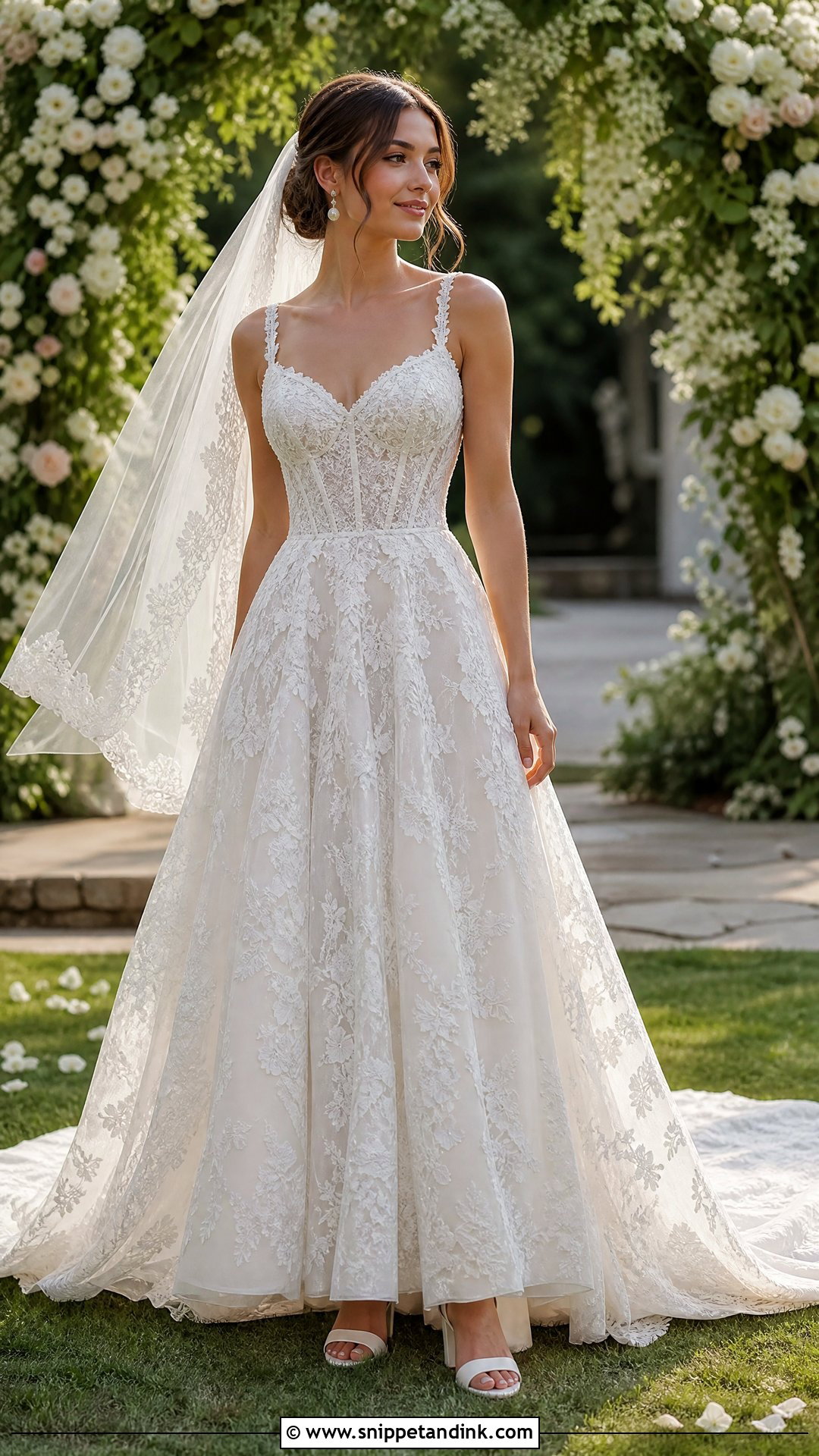
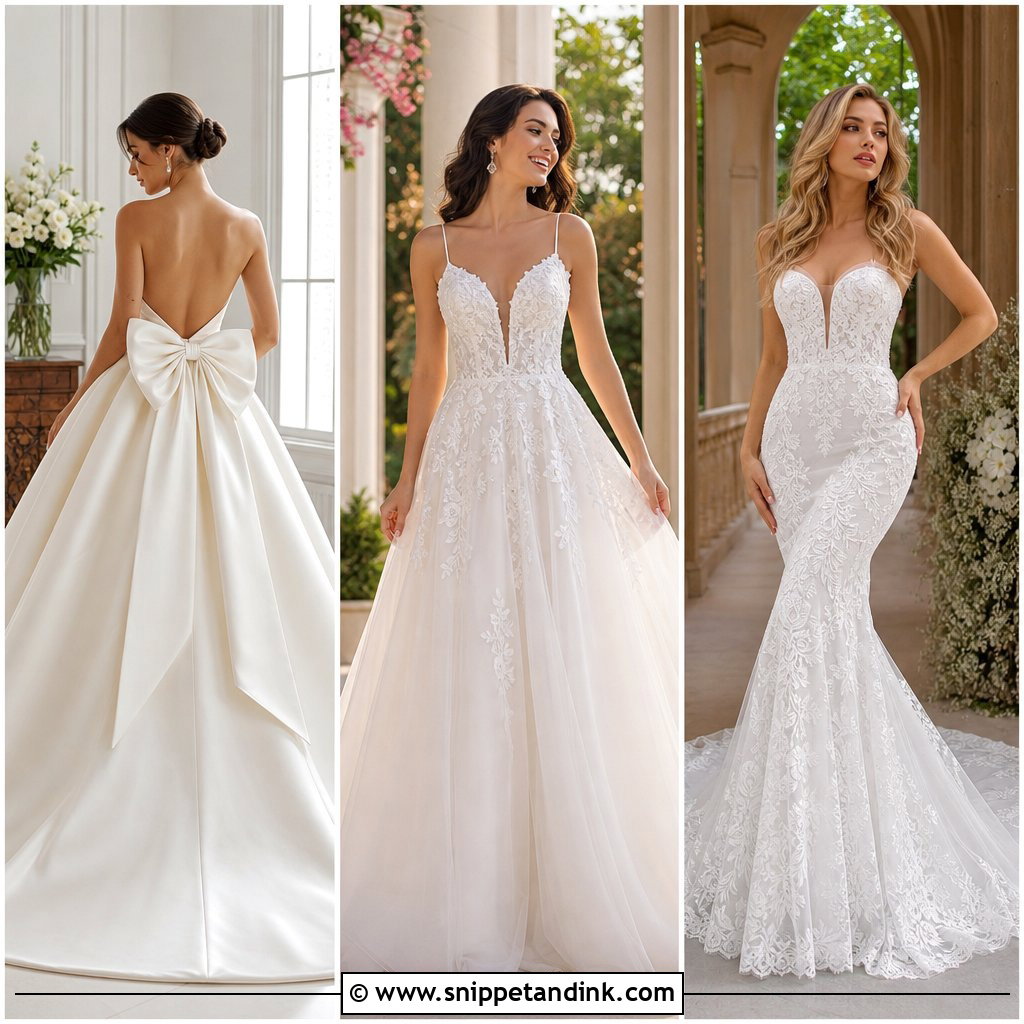
The first thing I check on a corset-style lace bodice is whether the bones are sewn into proper channels or just tacked to the lining. Channeled bones stay flat after hours of sitting; tacked ones start to show. Look for defined cups, delicate straps and lace that carries on into the A-line skirt. A lined bodice gives coverage, while a sheer one deliberately shows the corset seams. A lace-trimmed veil, small pearls, ivory block heels and loose waves or a textured low bun keep it relaxed enough for gardens and country estates. Ask the seamstress to match the lace motifs across the side seams, because a broken flower pattern is obvious in close-ups.
4. Strapless Mikado Ball Gown
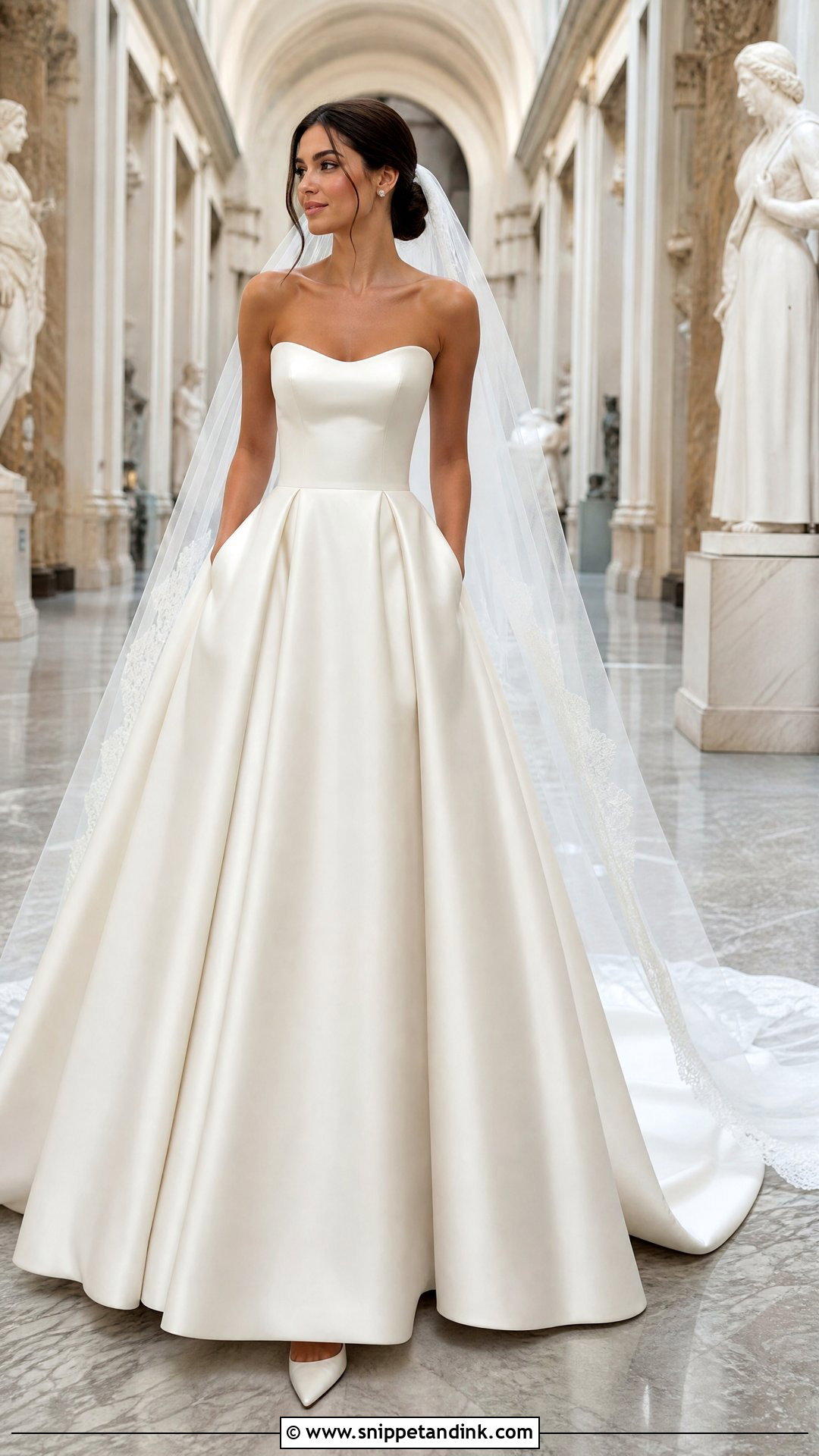
Crisp Mikado fabric is a heavy, slightly ribbed weave that holds its own shape, which is why a strapless ball gown in it barely needs embellishment. That same stiffness means it creases sharply where you sit, so I always bring a handheld steamer on the day. Choose a curved, supportive neckline, a fitted waist, deep pockets and covered buttons down the back, then add a cathedral veil, simple studs, pointed satin pumps and a neat chignon. A thin tennis necklace is the one extra I’d allow. Raise your arms at the fitting. If the bodice slides, it needs taking in or a silicone grip band.
5. Long Sleeve Chantilly Lace Wedding Gown
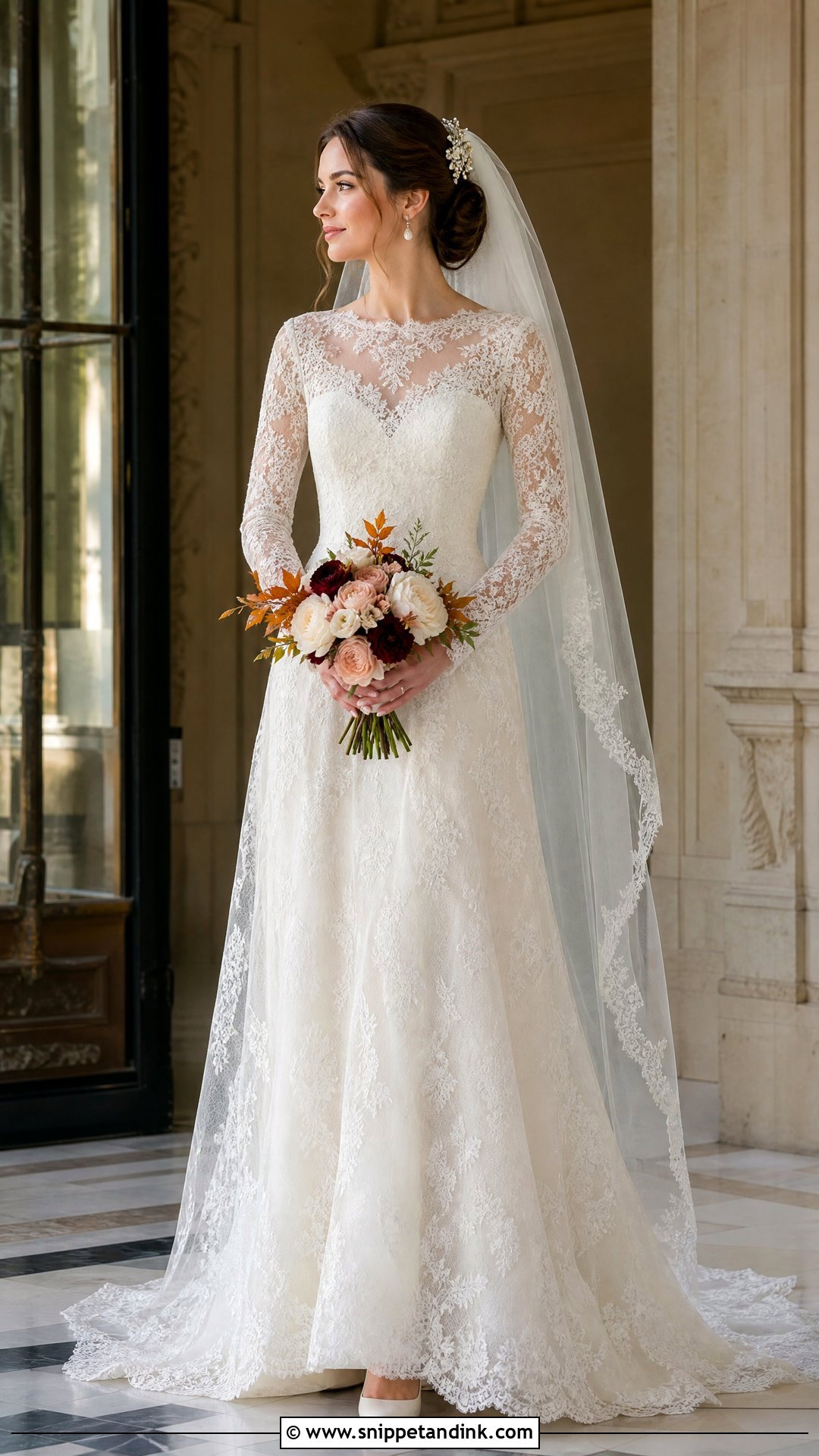
Chantilly is a fine, flat lace with delicate outlined motifs, and on a long sleeve it gives a fall or winter bride coverage without bulk. A bateau or gentle scoop neckline leaves the pattern room to show, and slightly sheer sleeves contrast with a smoothly lined bodice. Pearl earrings, a small comb, ivory pumps and a tulle veil edged in matching lace are plenty. The weak spot is the armhole. Chantilly has very little give, so a tightly cut sleeve stops you hugging anyone or lifting your bouquet, and I ask for a little extra ease across the back of the shoulder.
6. Off The Shoulder Satin Wedding Gown
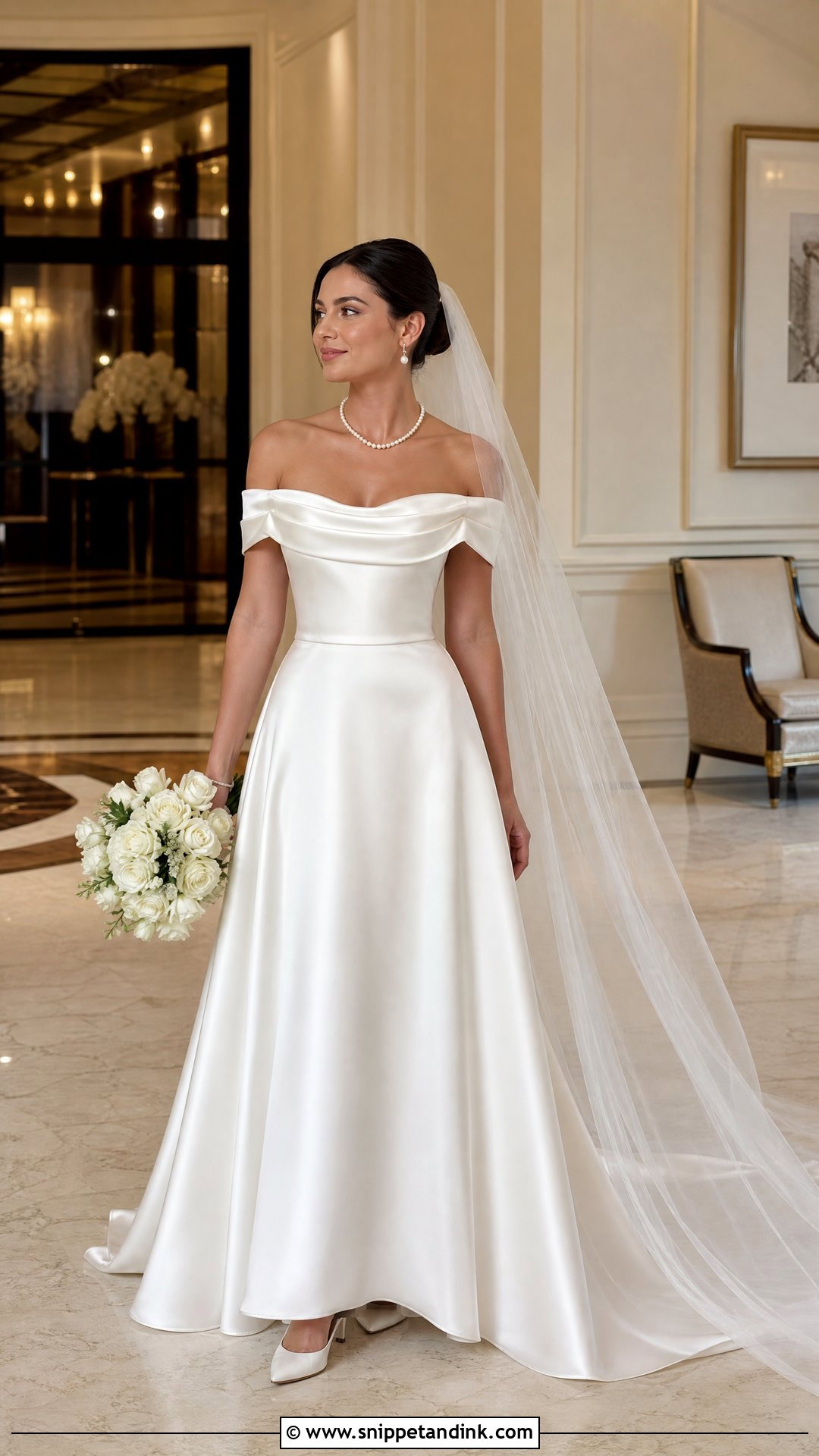
Folded satin bands across the upper arms do the job of sleeves while leaving the collarbone open. They carry no weight, though. The fitted bodice and a defined waist have to hold the gown up on their own, which is why the bodice fit matters more here than the bands. I pair it with a short pearl necklace, matching earrings, a low bun, a long plain veil and closed-toe slingbacks, which are kinder to walk in than tall pumps. Hug someone at your fitting. If the bands ride up toward your shoulders, a seamstress can anchor them to the bodice with a discreet elastic.
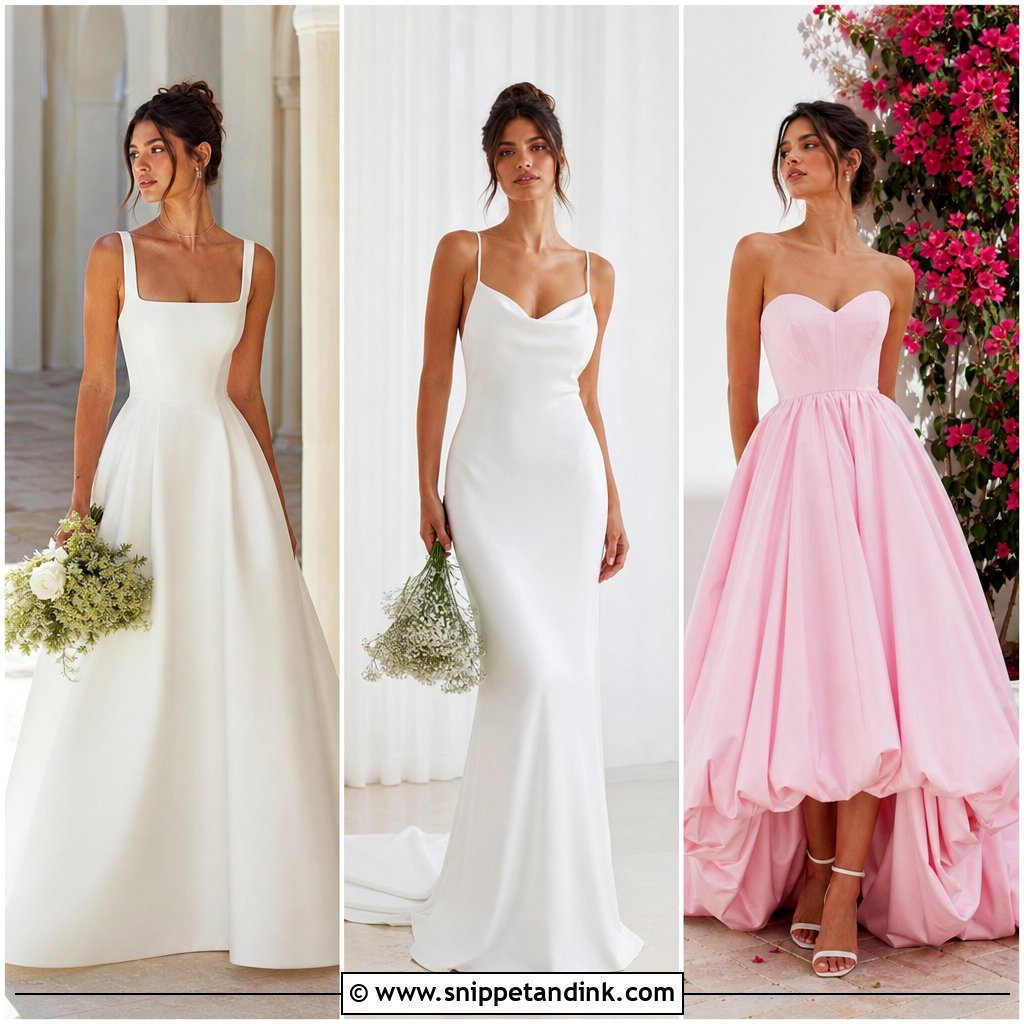
7. Square Neck Column Wedding Gown
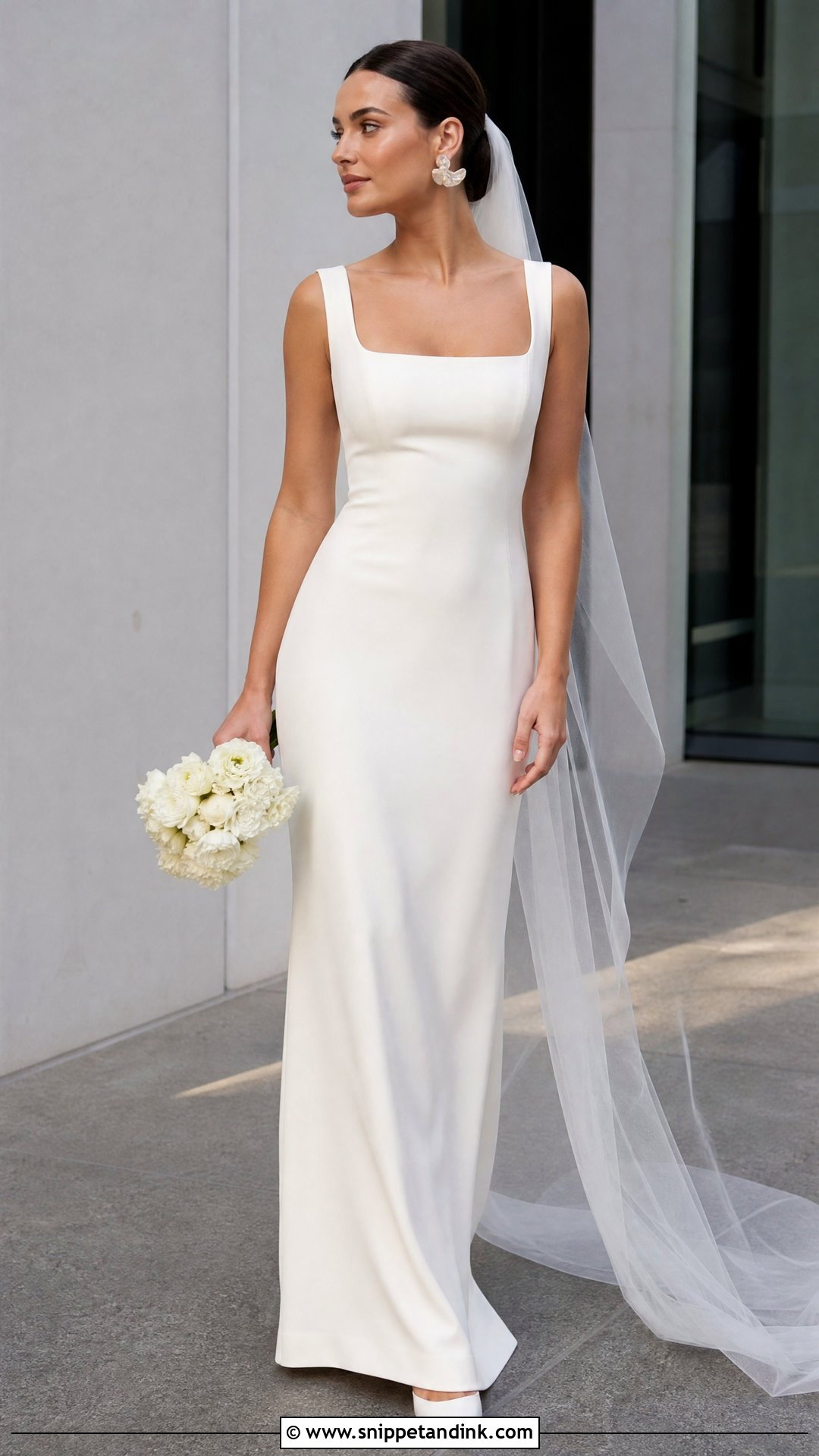
Heavyweight crepe or matte satin is what keeps a square neck column from looking like a slip; thin fabric shows every line underneath. Wide straps, a tailored bodice and a skirt that drops straight to the floor are the whole design, with a low square back or a row of covered buttons for interest. Sculptural earrings, a sleek veil, pointed heels, a small white bouquet and a center-parted bun suit courthouses, rooftops and galleries. The honest downside is stride length. A straight column limits your steps, so I ask for a hidden back slit or a stretch lining before the hem is set.
8. Halter Neck Crepe Wedding Gown
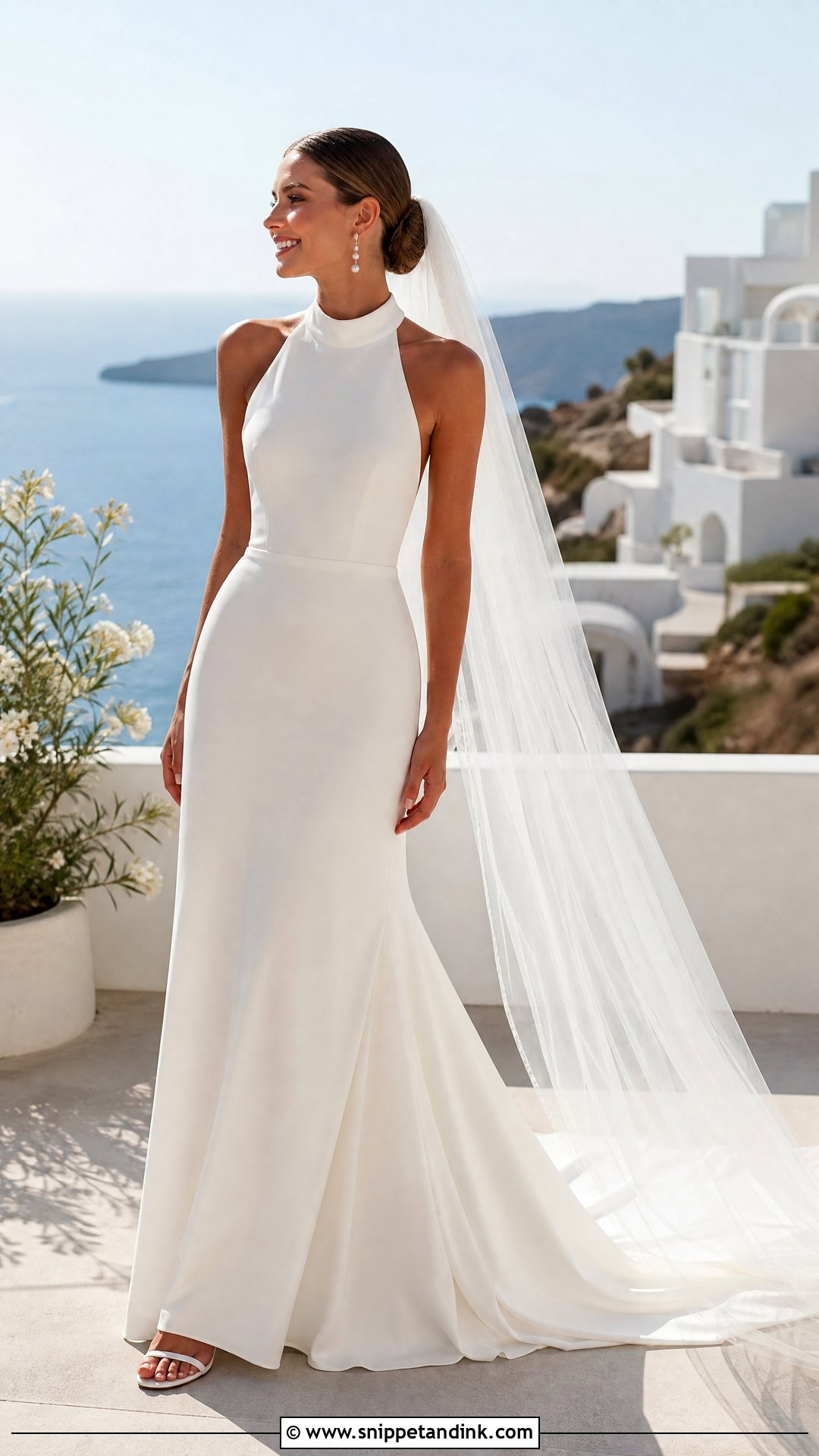
A halter is supported from the neck, and that changes what I check at a trial: not how it feels when you first put it on, but whether the strap pulls after an hour. Smooth crepe with a high front, open back and fluid skirt keeps it streamlined, and built-in cups plus a snug waist take load off the neck. Wear drop earrings, a low bun, white leather sandals and a narrow cathedral veil pinned beneath the hair. Skip the necklace. Brides with broad shoulders tend to love this cut at resorts and coastal venues; on very narrow shoulders it can look pinched, so try a wider halter band.
9. 3D Floral Wedding Gown
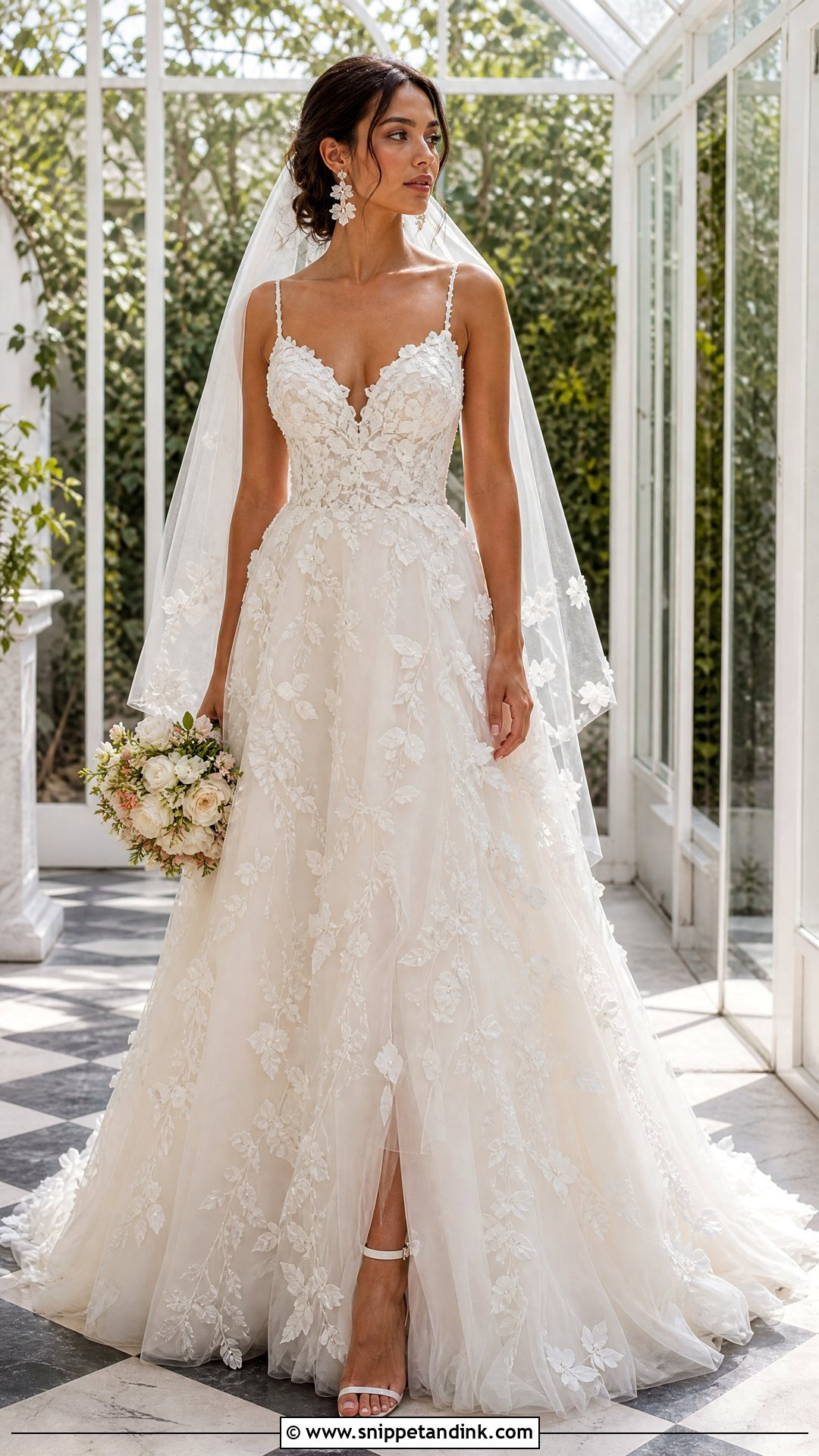
Three-dimensional appliqués are hand-tacked, and the ones at the waist, armholes and hem wear first. I inspect those areas and ask the shop to reinforce any loose petals before the final fitting. On an A-line with slender straps, flowers set over light tulle look as if they’re drifting, either in ivory or with faint blush accents. Floral studs, ankle-strap heels, a sheer fingertip veil and a loose low bun keep the rest quiet. Carry a simple bouquet; big blooms in your hands compete with the blooms on your skirt. Gardens, conservatories and spring dates suit it best.
10. Pearl Beaded Wedding Gown
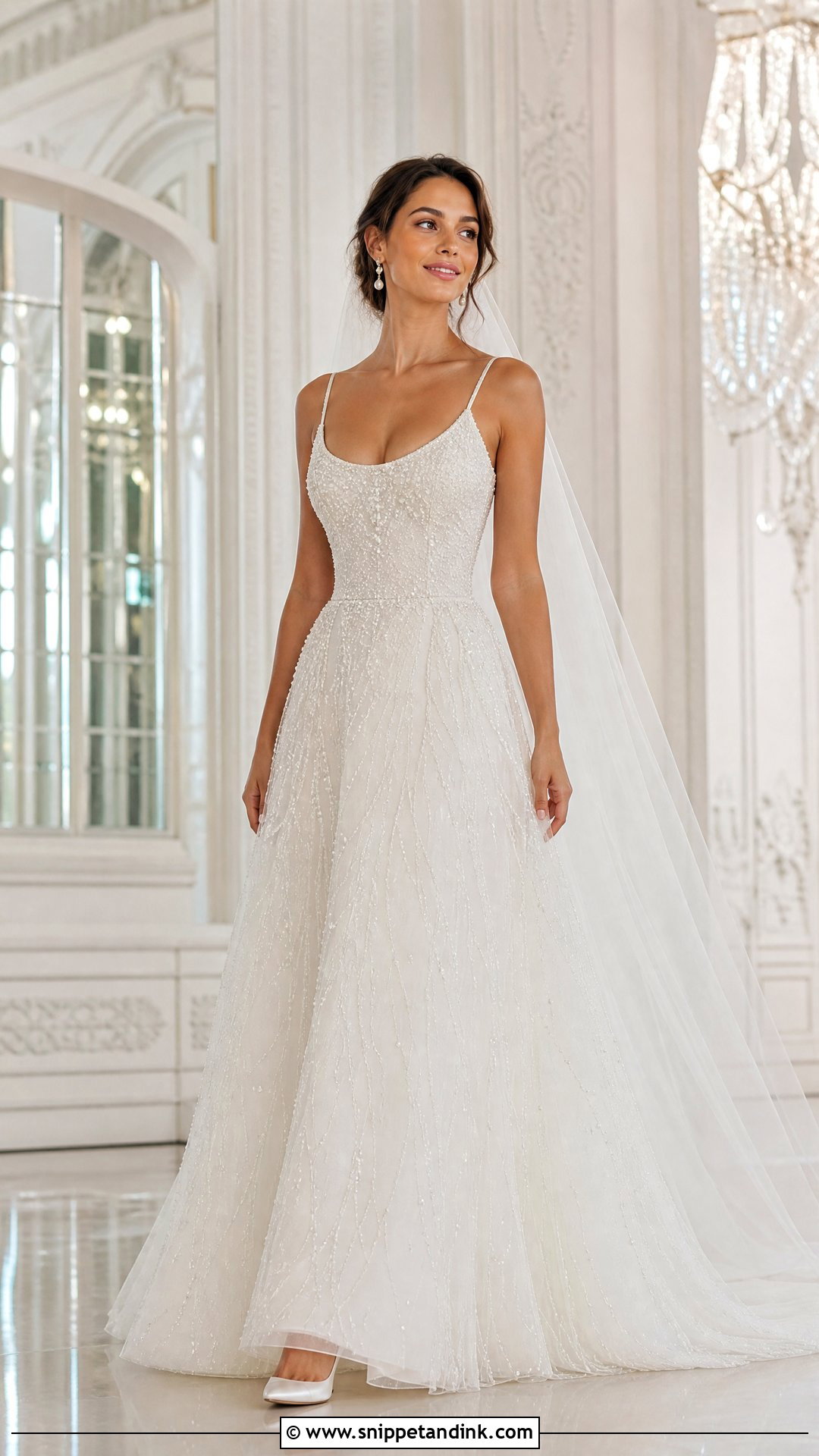
Pearls reflect light softly, so a beaded gown glows rather than sparkles under a camera flash. Scattered over tulle on a fitted sheath or gentle A-line, with a scoop neck and thin straps, they need a light lining for coverage. Keep jewelry to pearl earrings, then a plain veil, satin pumps and a smooth bun. Before you buy, I’d check whether the beads catch on the veil when you turn and whether they scratch the inside of your arms. Ask about storage too. A heavily beaded gown hung by its straps stretches over time, so it should be folded flat in acid-free tissue.
11. Convertible Overskirt Wedding Gown
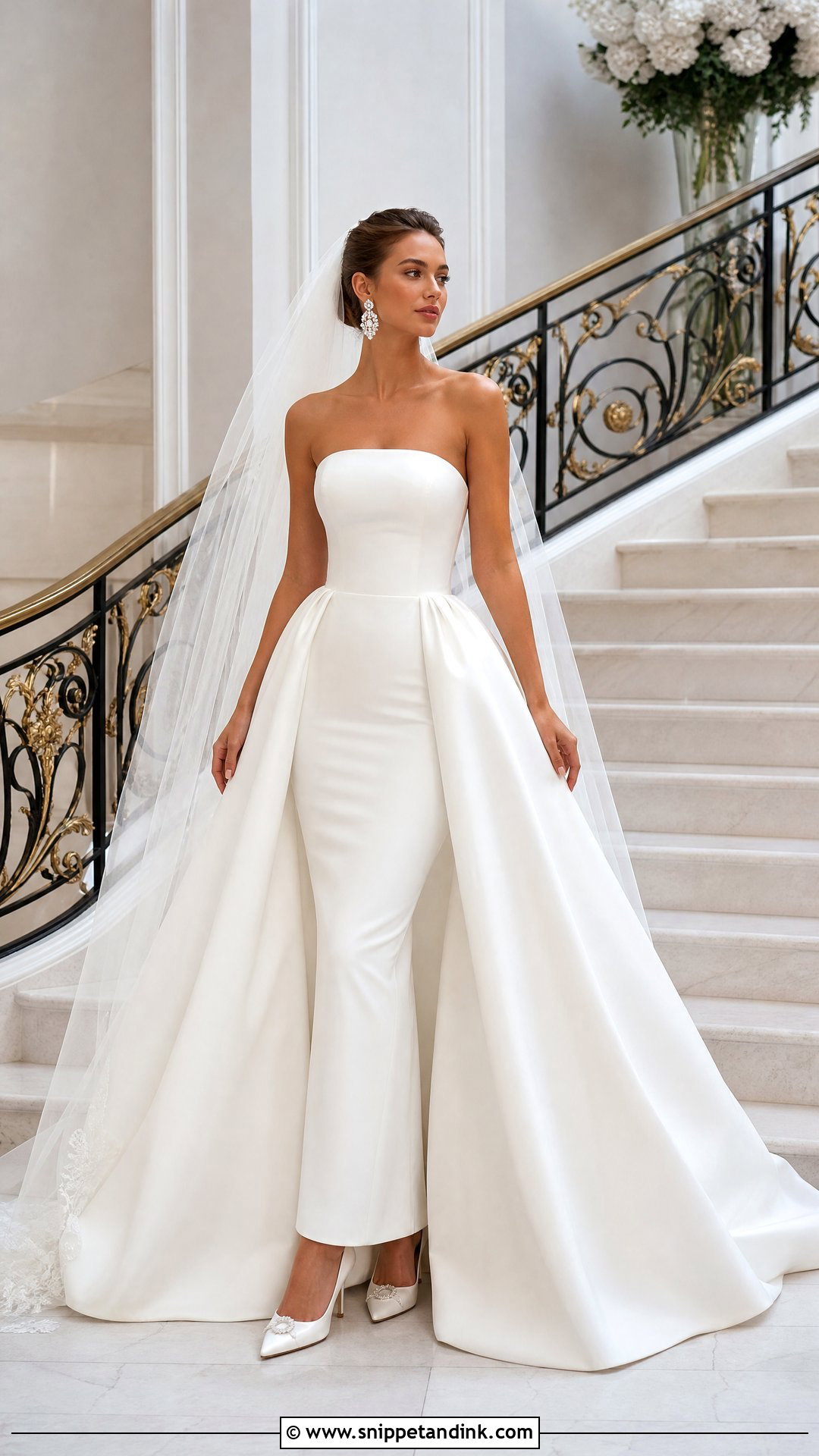
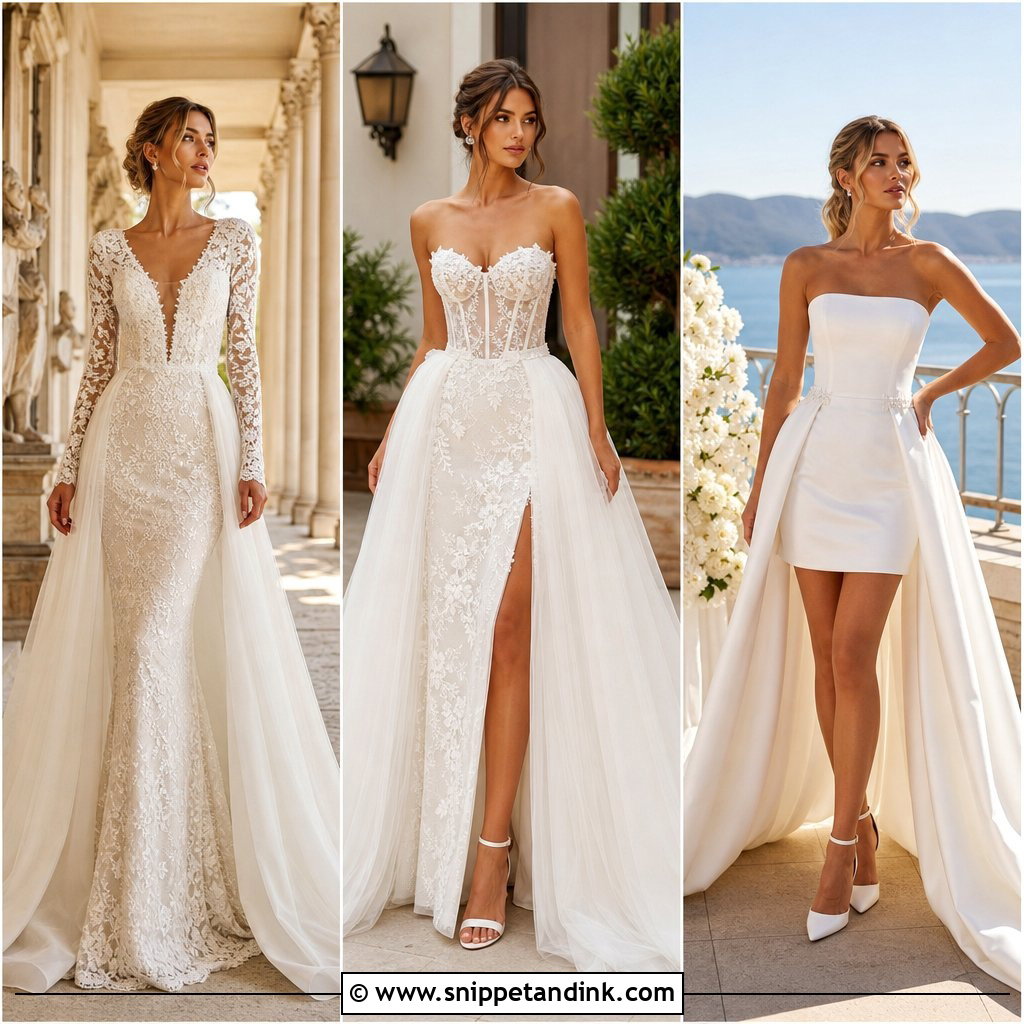
A convertible overskirt wedding gown gives you two looks without a second dress. The base is a fitted crepe column or mermaid with a clean strapless bodice, and a detachable satin or organza overskirt turns it into a ball gown for the ceremony. Wear a cathedral veil, statement earrings and pointed pumps first, then lose the overskirt and veil and add a jeweled hairpin and slingbacks. Most overskirts close with hooks, snaps or a hidden zip, and they are fiddly with nervous hands. At the last fitting I have whoever will help you practice taking it off while the seamstress watches.
12. Bow Back Wedding Gown
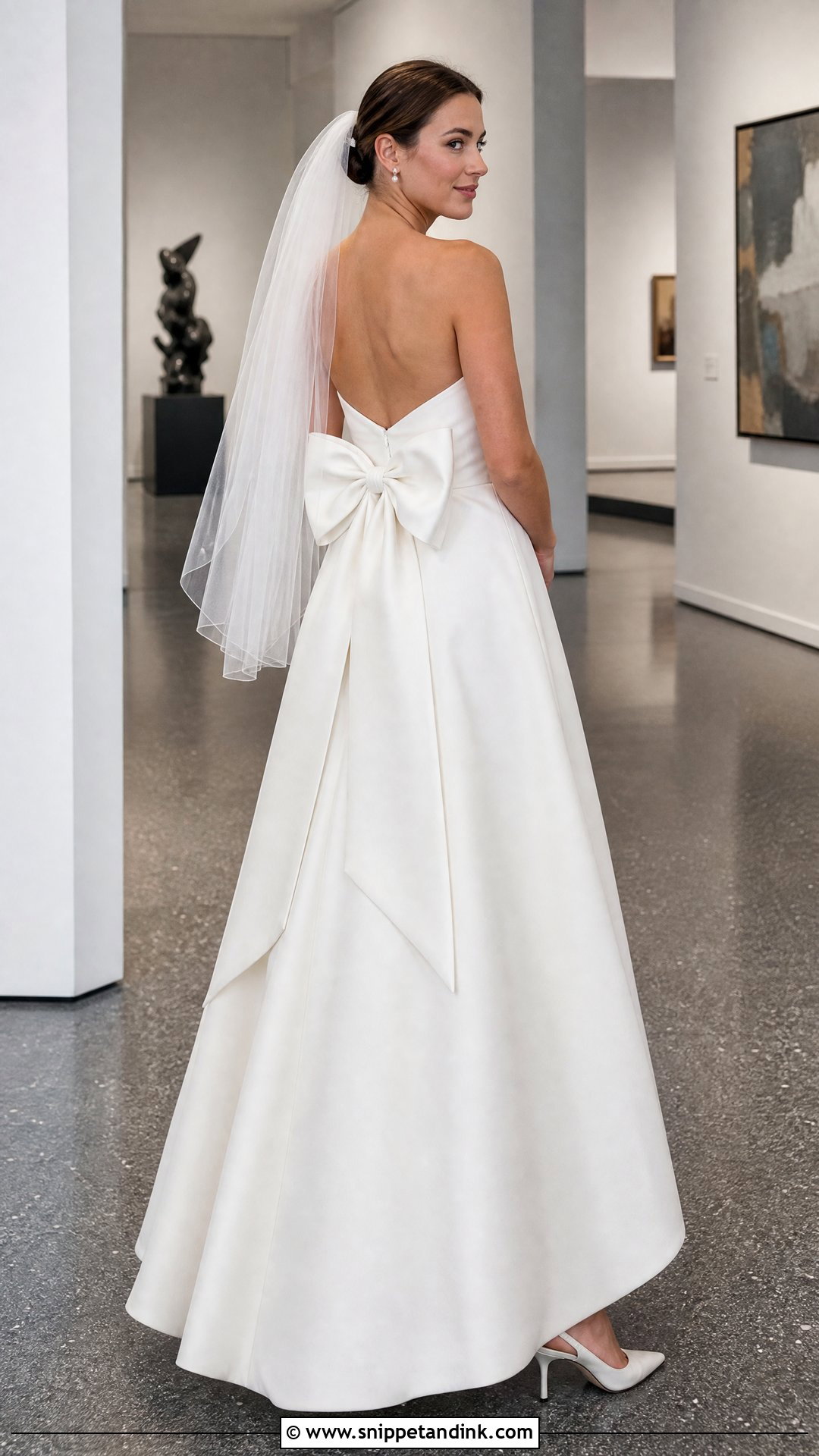
One structured bow is the entire point of interest, so the strapless satin column or A-line underneath should stay plain. Long tails toward the train add drama; a smaller bow reads more restrained. My worry is weight. A large satin bow drags the back of a strapless bodice down unless it’s stitched to the boning rather than the outer fabric, so ask how it’s attached. Pearl studs, pointed slingbacks, a polished updo and a veil sheer enough to show the bow complete it. If it detaches, taking it off for the reception makes dancing easier.
13. Tea Length Wedding Gown
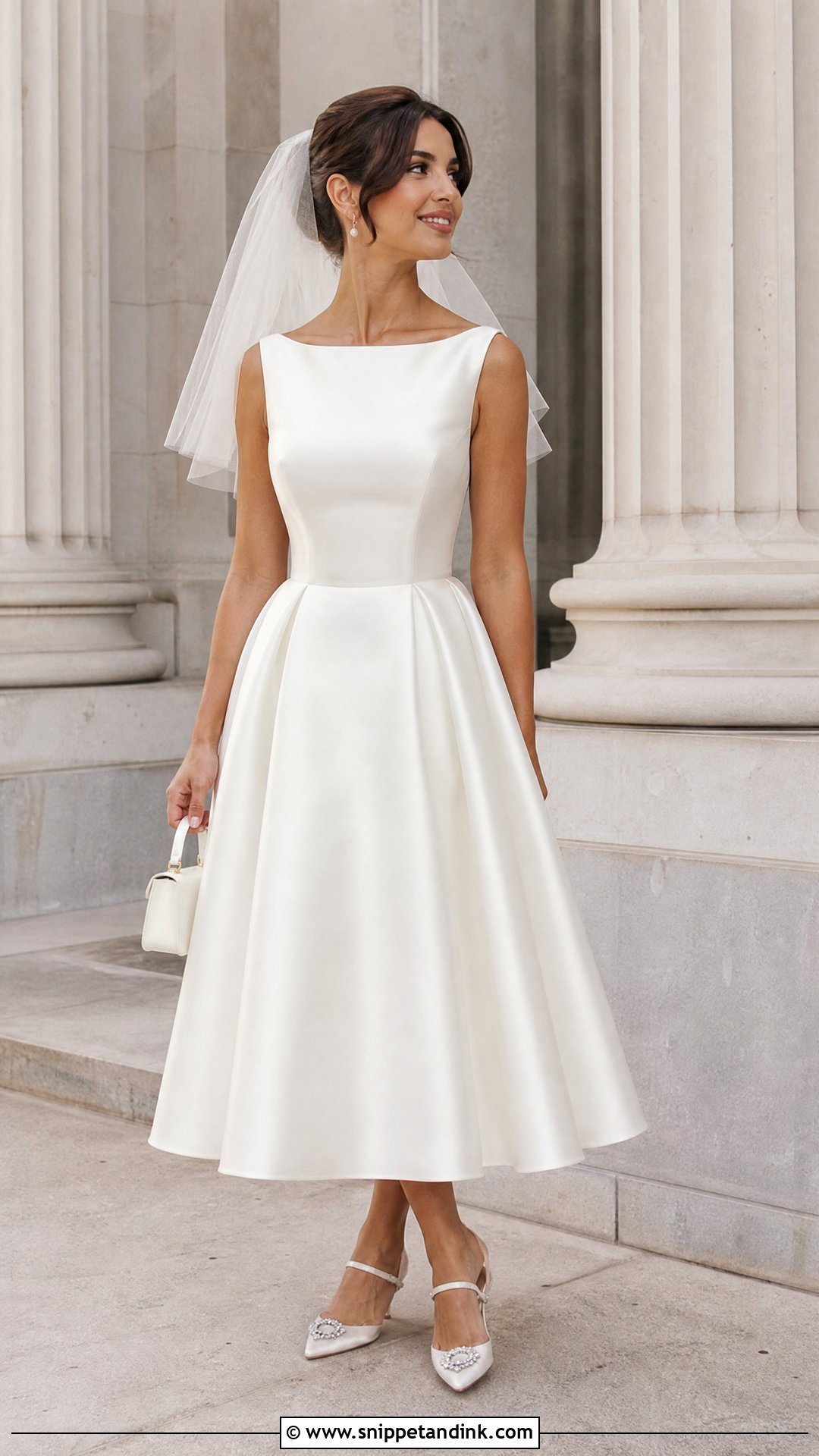
Tea length ends between knee and ankle, which makes it practical for courthouse and daytime weddings and one of the easiest lengths to dance in. A structured satin dress with a fitted bodice and full skirt takes a bateau, square or sweetheart neckline, and because your shoes show, pointed slingbacks or embellished flats become part of the outfit. Add a short veil, pearls and a small structured bag. Bring the actual wedding shoes to every hemming appointment, since half an inch of heel moves the hem visibly. A crisp petticoat adds volume, but test it sitting down; too stiff and it pushes the skirt up like a costume.
14. High Neck Vintage Lace Wedding Gown
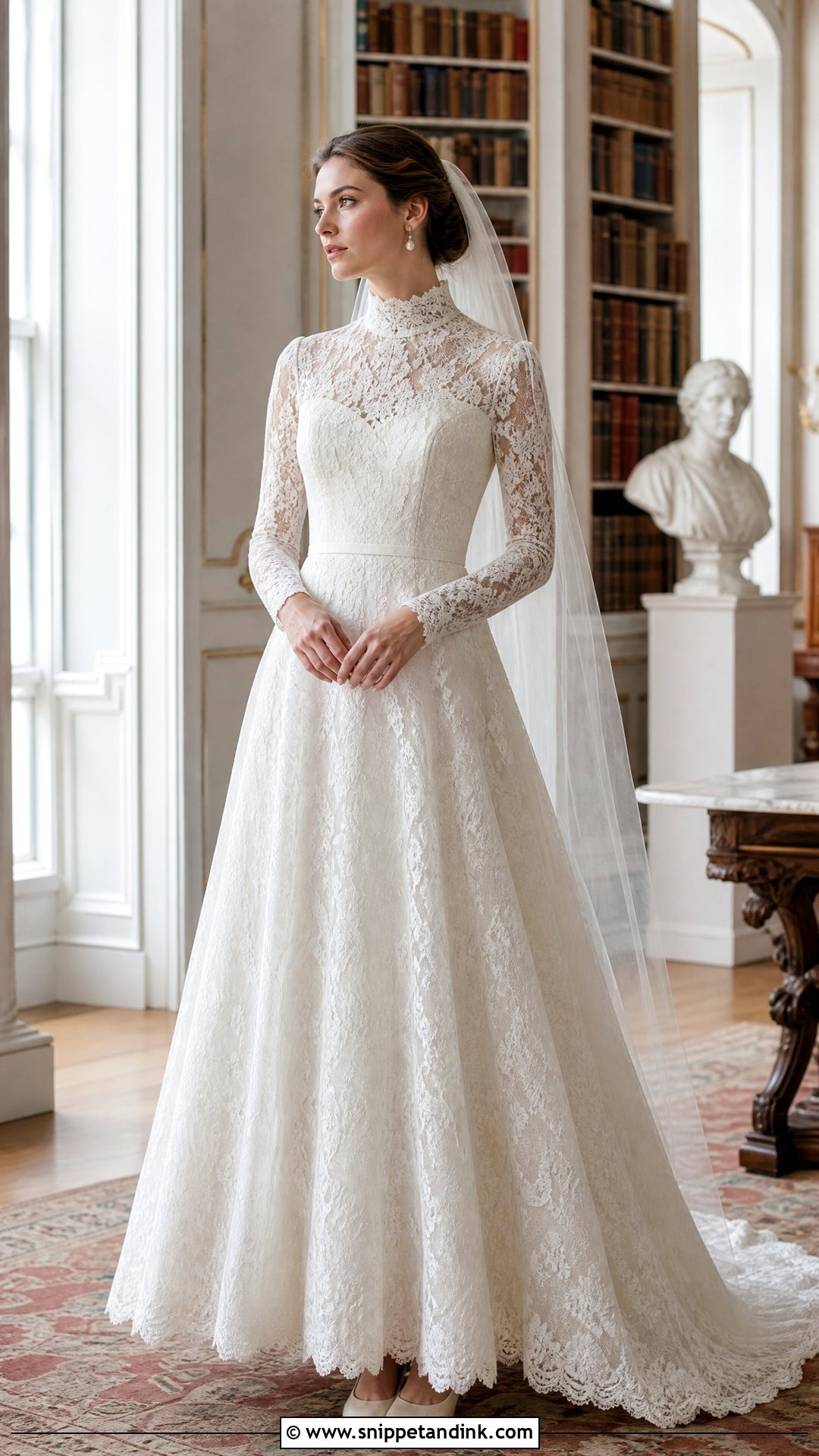
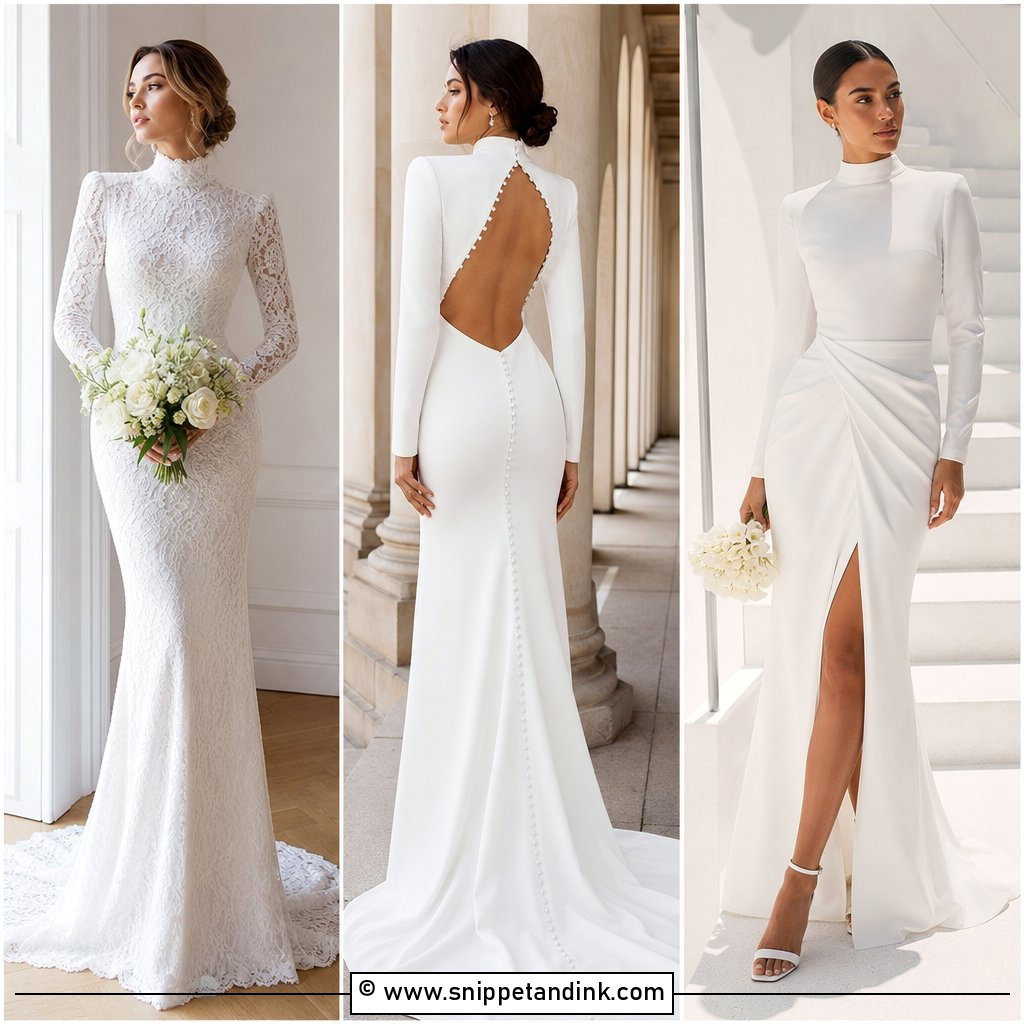
High necklines are where tailoring shows most. A raised collar that’s even slightly tight presses when you turn to look at your partner, so I have brides turn and nod at every fitting. Look for a fitted bodice, sheer lace yoke, long sleeves and a flowing A-line skirt. Covered buttons at the cuffs and down the back finish it. Pearl drops, ivory closed-toe heels and a plain veil set below a low chignon suit historic homes, libraries and autumn ceremonies. No necklace here; the collar is the jewelry.
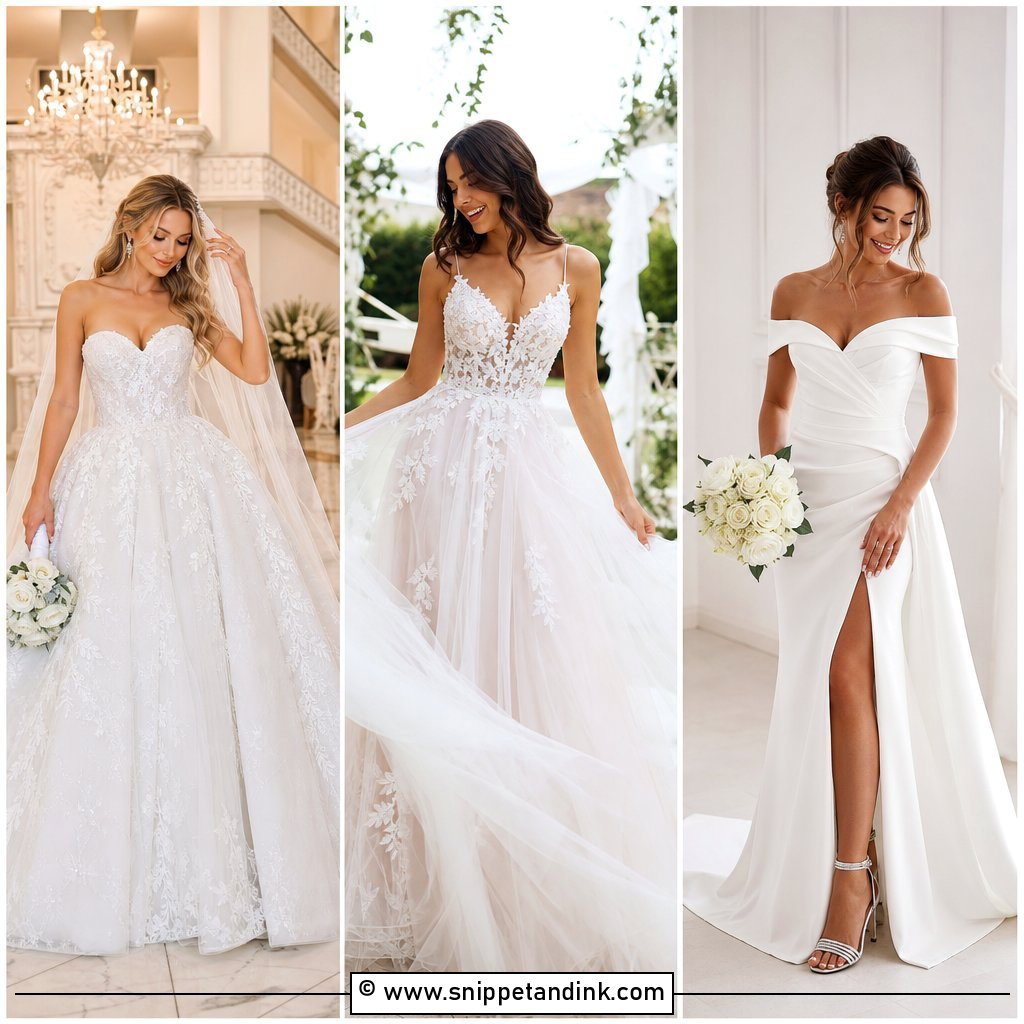

15. Mermaid Wedding Gown With Detachable Sleeves
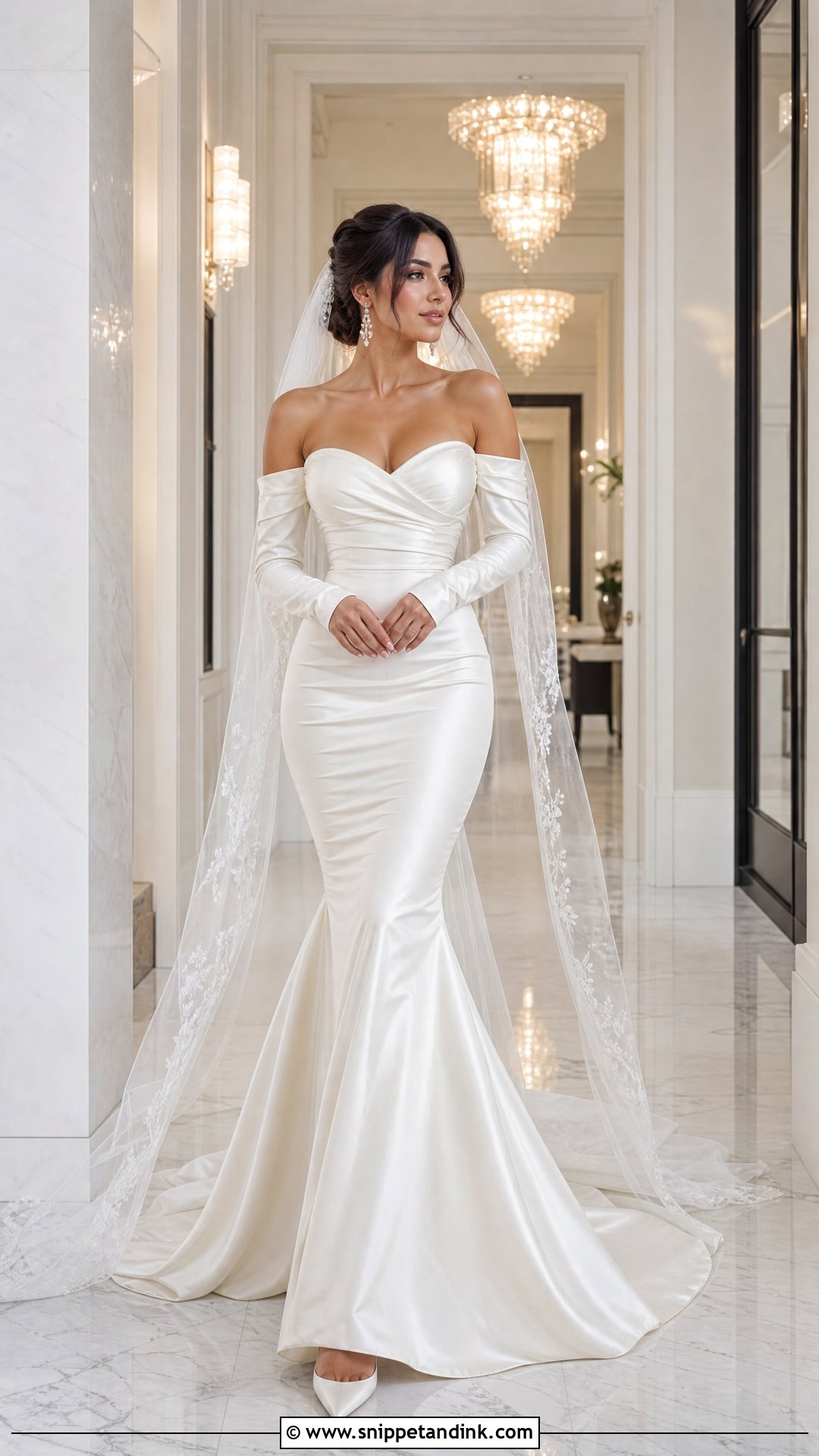
With any mermaid the real question is where the flare starts. Set it too low and you can’t climb steps, so I have brides walk a short staircase in the fitting room before the seamstress commits. A fitted satin or lace body with removable off-the-shoulder or lace sleeves gives you a covered ceremony look, worn with a long veil, drop earrings and pointed heels. Later, drop the sleeves and veil and switch to a jeweled comb and lower shoes for the hotel ballroom. Check that the attachment loops disappear once the sleeves come off, because they show in every reception photo.
16. Cape Sleeve Wedding Gown
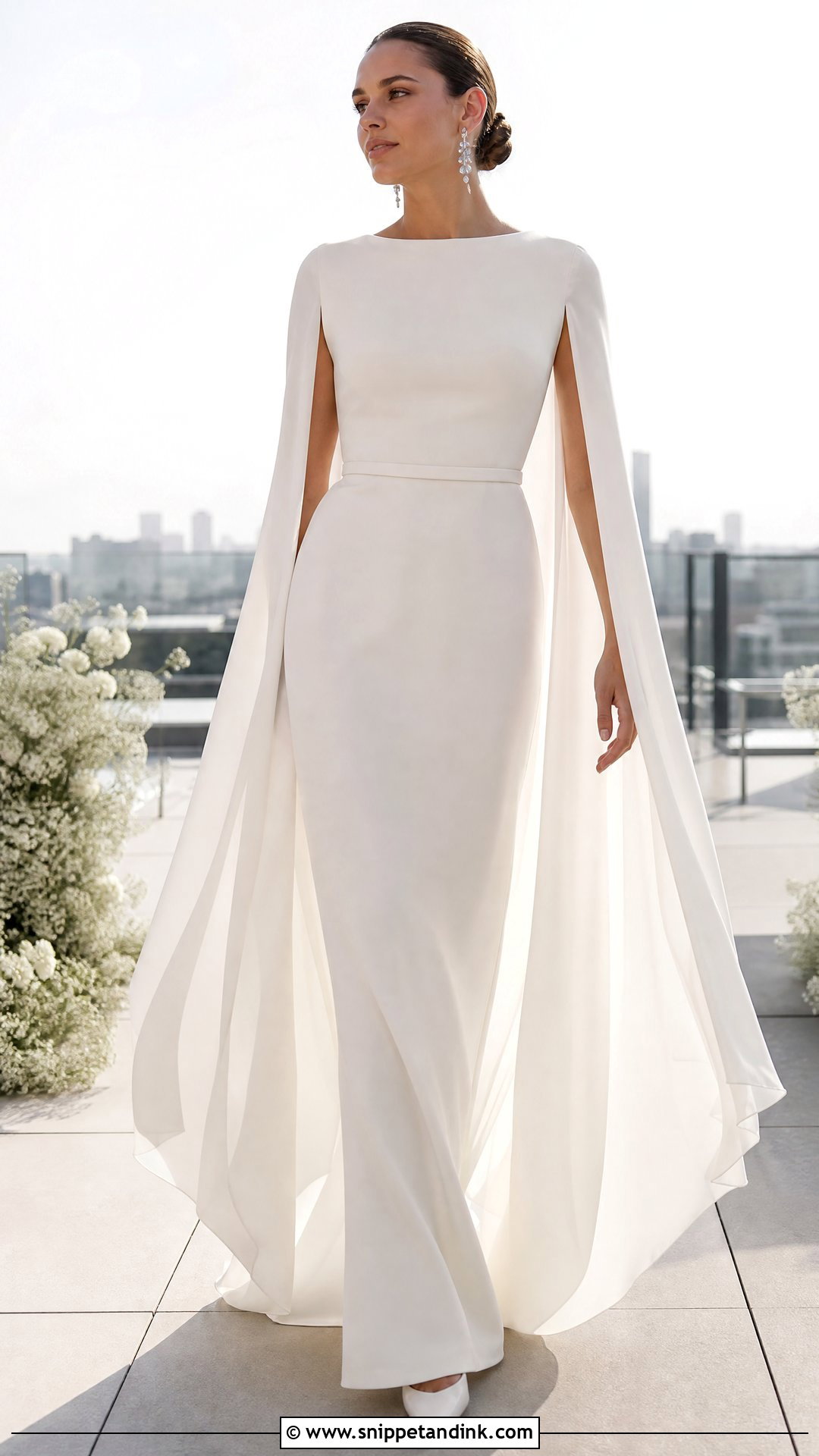
Cape panels fall from the shoulders and move as you walk, giving coverage without anything fitted around the arms. Chiffon makes that movement soft; structured crepe or satin makes it architectural. On a clean column gown I’d skip the veil entirely so the cape has the back to itself, then add crystal studs, a sleek bun, pointed heels and a narrow belt if the line feels too straight. Measure the cape while wearing your shoes. Too long and it catches on bouquet stems and gets stepped on going downstairs.
17. One Shoulder Draped Wedding Gown
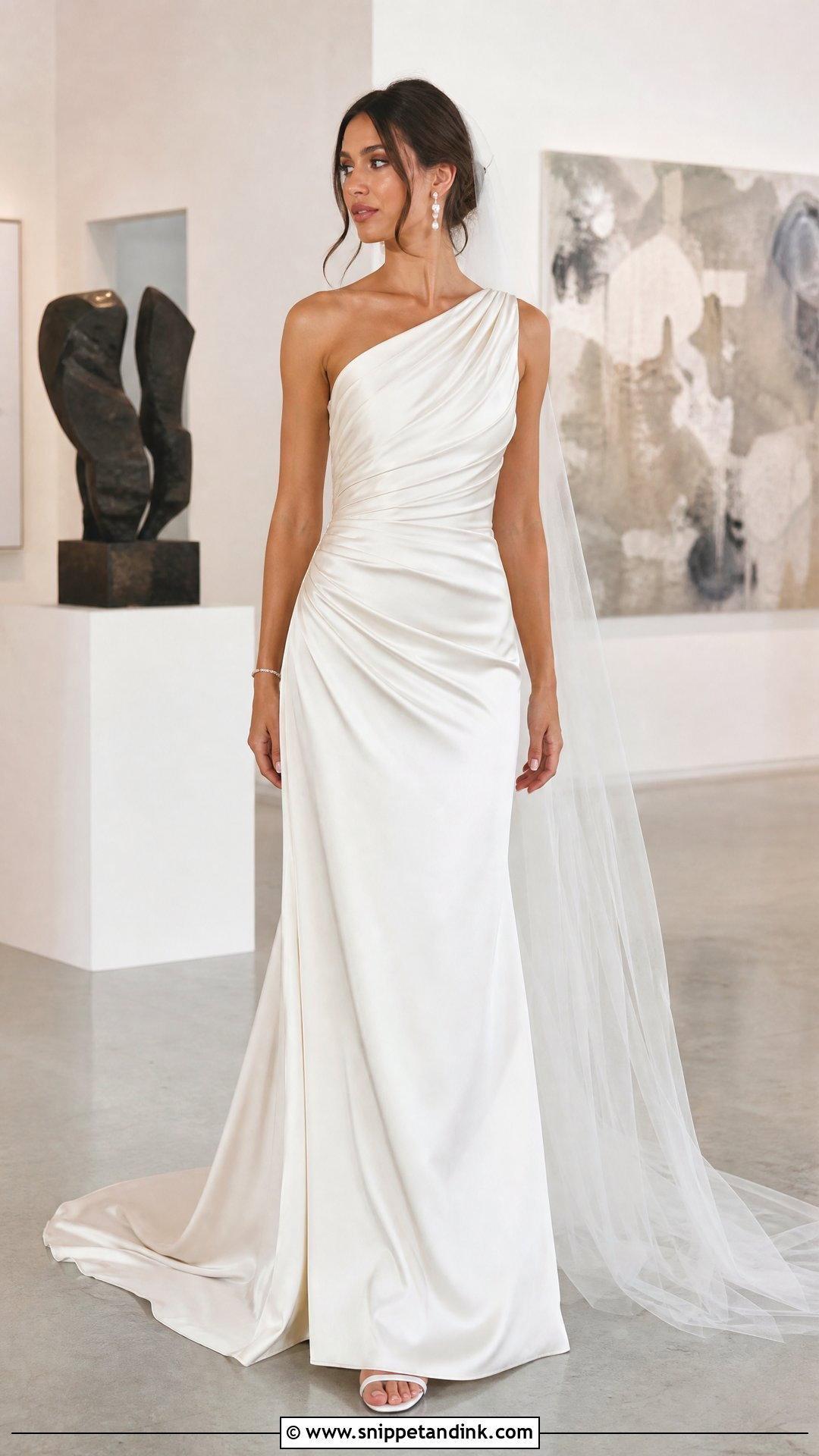
Diagonal draping across the bodice gives a one-shoulder gown its interest without any beading or lace. Fluid satin or crepe, a defined waist and a softly fitted skirt keep it clean. The neckline is asymmetrical, so I use a single statement earring or very small drops, a low bun parted toward the bare side, a slim bracelet and white heeled sandals, with any veil attached at the back. The fitting test is raising both arms. A one-shoulder bodice tends to twist toward the strap, and the seamstress corrects that at the underarm seam.
18. Blush Floral Wedding Gown
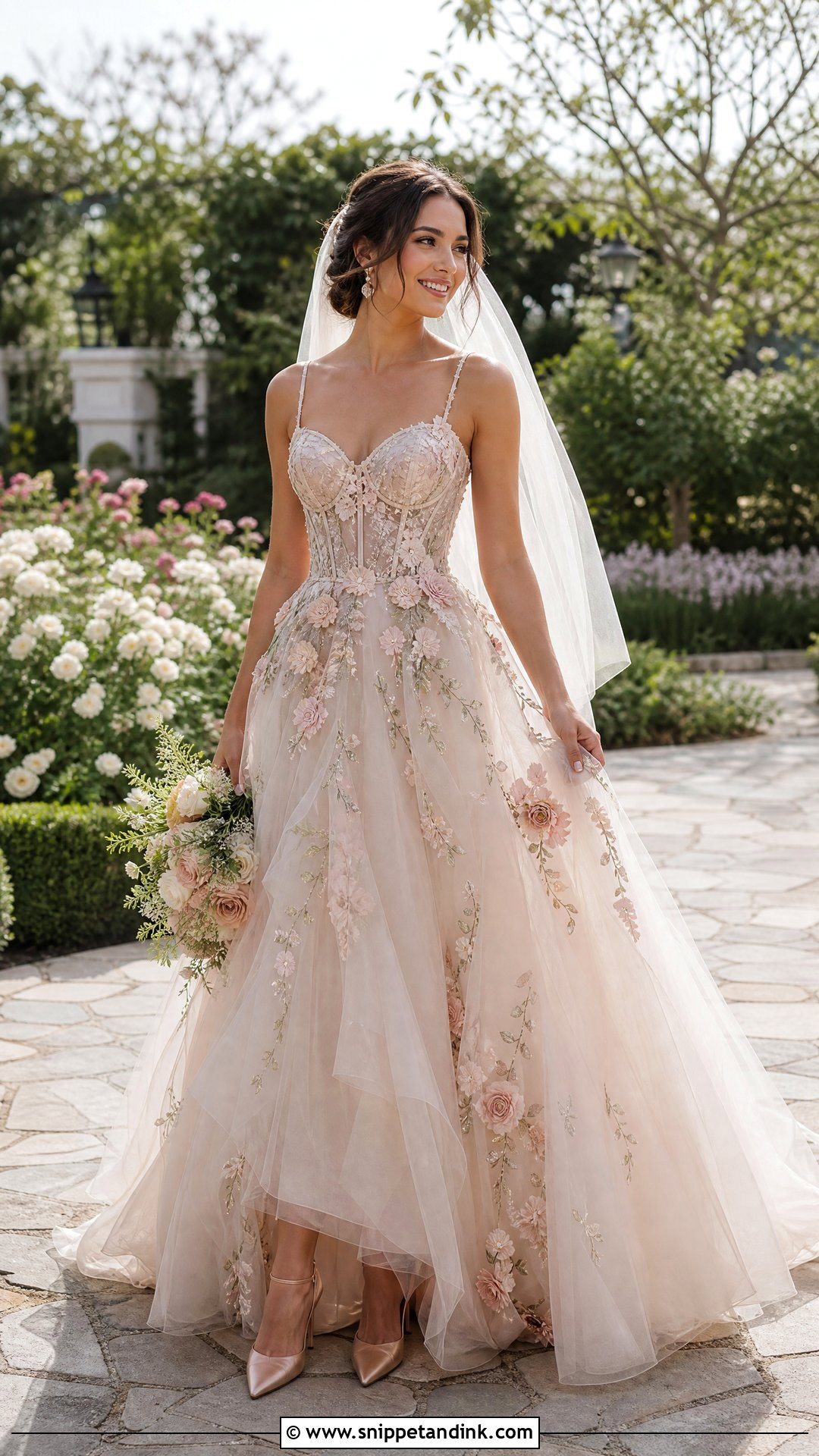
Blush is the gentlest way I know to add color and still read as bridal. A pale blush or soft ivory tulle base with embroidered vines and muted appliqués sits over a structured bodice, delicate straps and a layered A-line skirt. Rose-gold earrings, neutral satin heels, a sheer ivory veil and a loose bun with a small floral comb go with it, and the bouquet should complement the gown in cream, pink and green rather than match it. Look at the fabric by a window and again under warm indoor bulbs. Pale blush can read almost white outdoors and peachy under tungsten light, and you want to know which version you’re buying.
19. Plus Size Structured A-Line Wedding Gown
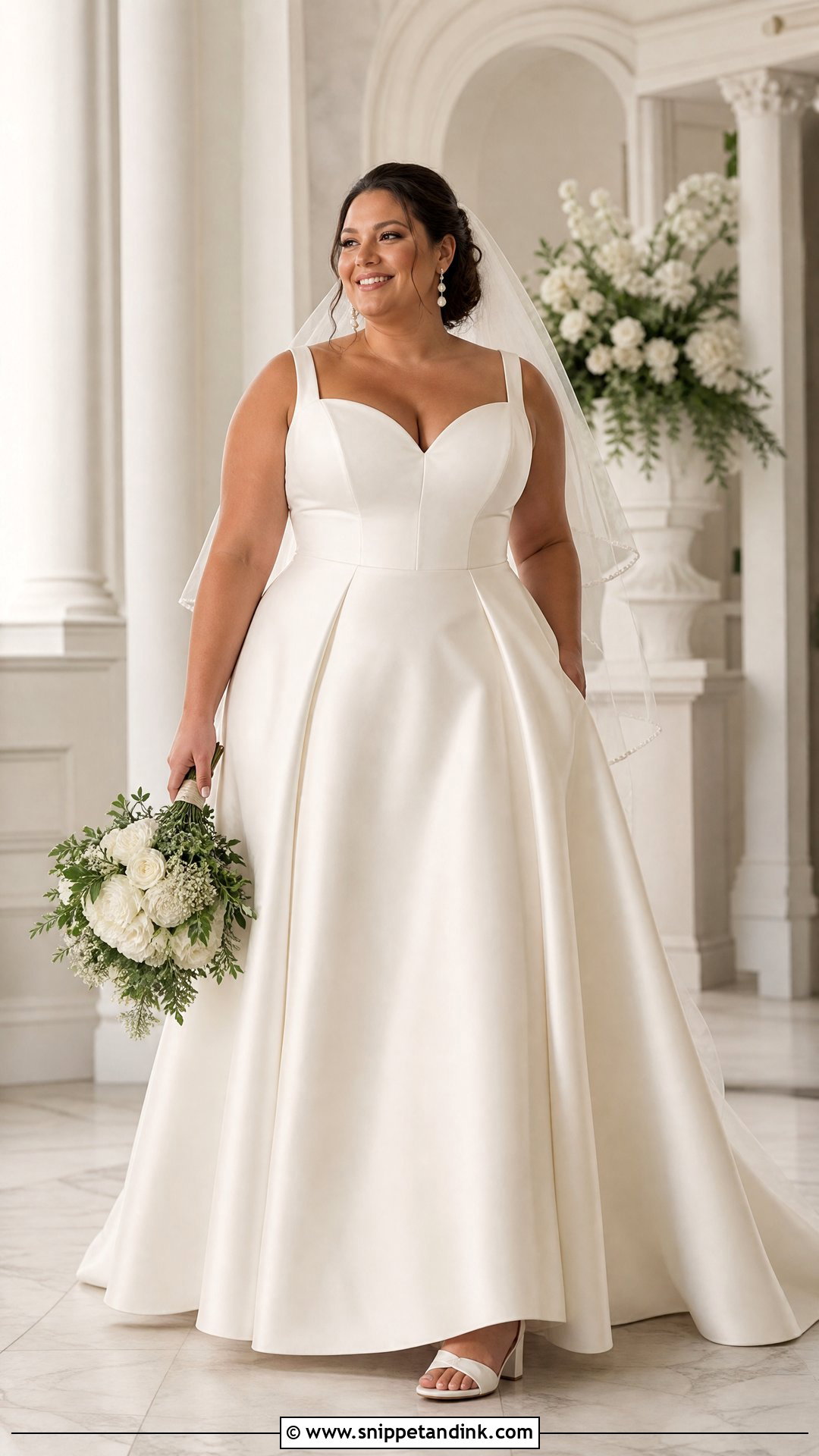
Support in a structured A-line should come from the gown, not from shapewear added later. I look for built-in boning, real cups, and wide straps or secure off-the-shoulder bands, with matte satin or lined lace flowing smoothly from the waist and a curved or sweetheart neckline to frame the face. Add a fingertip veil, pearl earrings, block heels and a neat updo. Ask the shop for samples in your actual size; a smaller sample clipped at the back tells you very little about how the bust and waist really sit. Choose undergarments only after your seamstress has seen how the gown is built, because a well-boned bodice often needs less underneath than you’d expect.

20. Modest Satin Wedding Gown
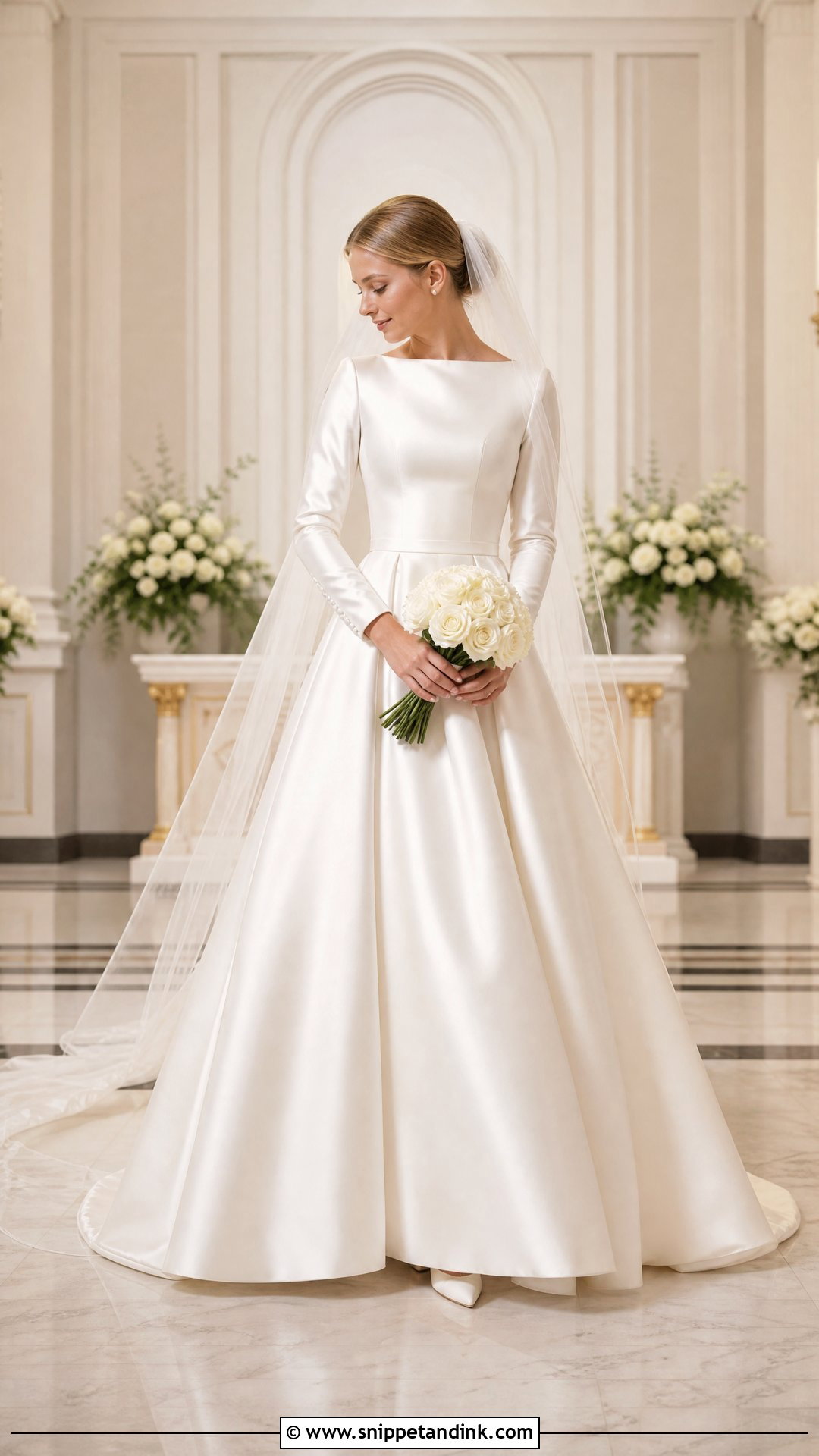
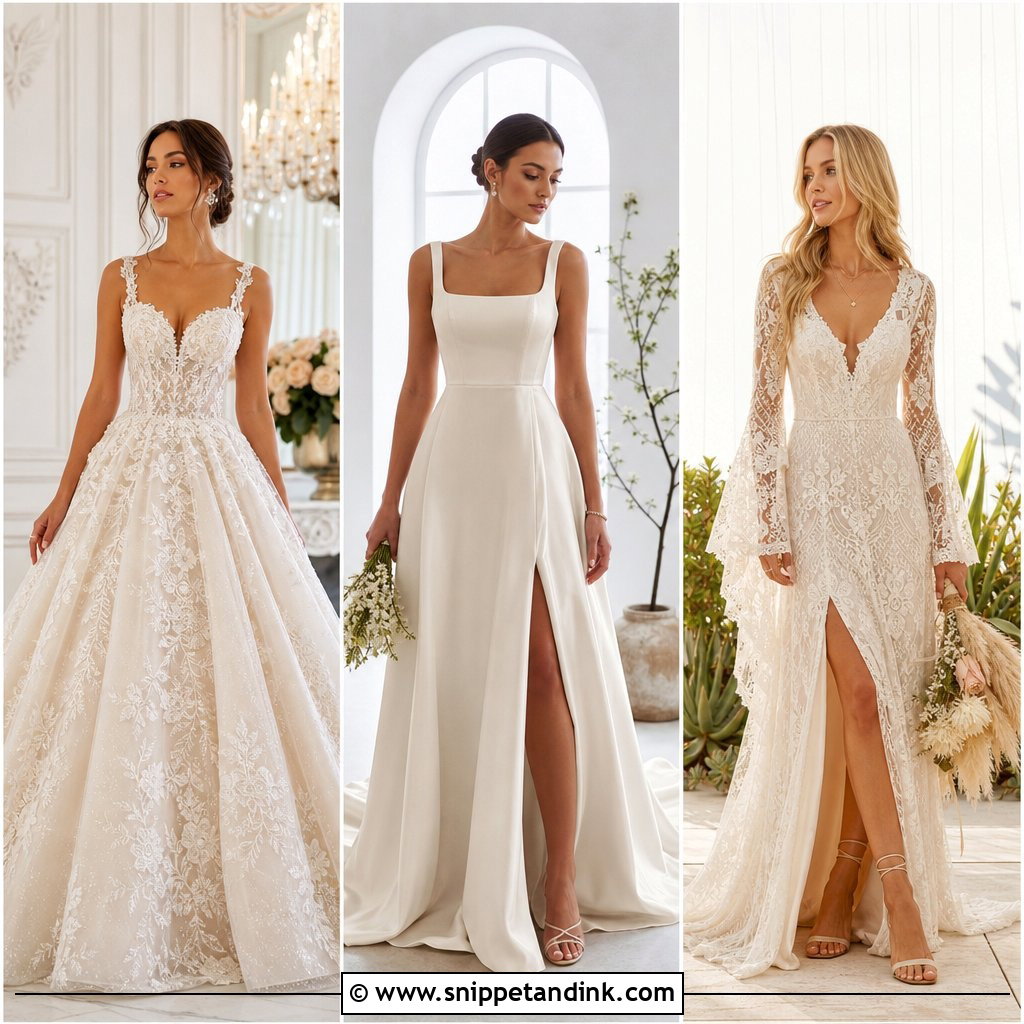
A modest gown in good satin can look completely current. I like an A-line with a bateau or high scoop neckline, fitted long sleeves, a natural waist and a full skirt with pockets, plus covered buttons along the cuffs and back and a chapel train. Pearl studs, a cathedral veil, closed-toe pumps and a smooth low bun keep attention on the cut. My main concern is heat. Satin with a synthetic lining gets warm under long sleeves, so ask whether a breathable lining is possible. A seamstress can also raise the neckline, narrow the wrists or add back coverage to meet your requirements.
A Realistic Calendar From First Appointment to Final Pressing
Trend-led gowns are usually made to order, and structured ones need more fitting time than a soft slip. These are the windows I plan around. Designers and shops differ, so confirm the dates on your own order.
- Nine to twelve months out: start trying on. Many made-to-order gowns take four to six months to arrive, and heavy beading or custom changes can add more.
- When you order: ask for the expected arrival date in writing, and ask what a rush fee costs before you ever need one.
- Eight to twelve weeks before: first alteration fitting. Corset bodices, detachable sleeves and convertible skirts often need three fittings rather than two.
- About two weeks out: the final fitting. Bring whoever will bustle your train or remove an overskirt, and let them practice while the seamstress watches.
- Wedding week: have the gown professionally pressed, then hang it from its inner hanging loops, never its straps.
If you’re marrying in under six months, sample sales and off-the-rack stock are your friends. Columns and plain satin A-lines, two of the easier shapes on this list, are often available to buy and wear straight away.
Satin, Crepe and Mikado Each Misbehave Differently
Satin creases where you sit and picks up a shine wherever it’s rubbed, so I steam it right before the ceremony and keep a small steamer at the venue for the reception. Mikado creases sharply but holds its overall shape. Crepe is the most forgiving; it barely wrinkles and moves with you, though it shows seams and undergarment lines, so smooth underwear matters. Lace and tulle hide small marks but snag on ring prongs and bracelet clasps, which is why I tape over sharp settings during the getting-ready rush.
Afterward, get the gown professionally cleaned within a few weeks. Champagne and frosting can be invisible on the night, yet the sugar in them oxidizes and turns brown in storage months later.
Trends Start the Search, Fit Settles It
Basque waists, sculpted flowers, bows and convertible skirts all mark a gown as 2025, and that’s fine as long as the fit underneath is right. Start with the silhouette you feel at ease in, then weigh fabric, neckline, support and venue. Bring your shoes and undergarments to every fitting and practice sitting, walking and lifting your arms. Treat the trends as a starting point. The gown worth keeping is the one that fits properly and still looks like you when you open the album years from now.
You'll Like These Ideas:










Leave a Reply