
Age rules about wedding dresses are long out of date. What matters later in life is what matters at any age: a silhouette that supports your body, fabric that stays comfortable for hours, and coverage you choose because you like it rather than because you feel you should. When I start an appointment, I ask how a bride wants to feel sitting at dinner and on the dance floor before we look at a single gown. Supportive underwear, good tailoring and light accessories change the result more than the dress itself does. The styles below run from floor-length lace to relaxed midis, with notes on fit and fabric for each.
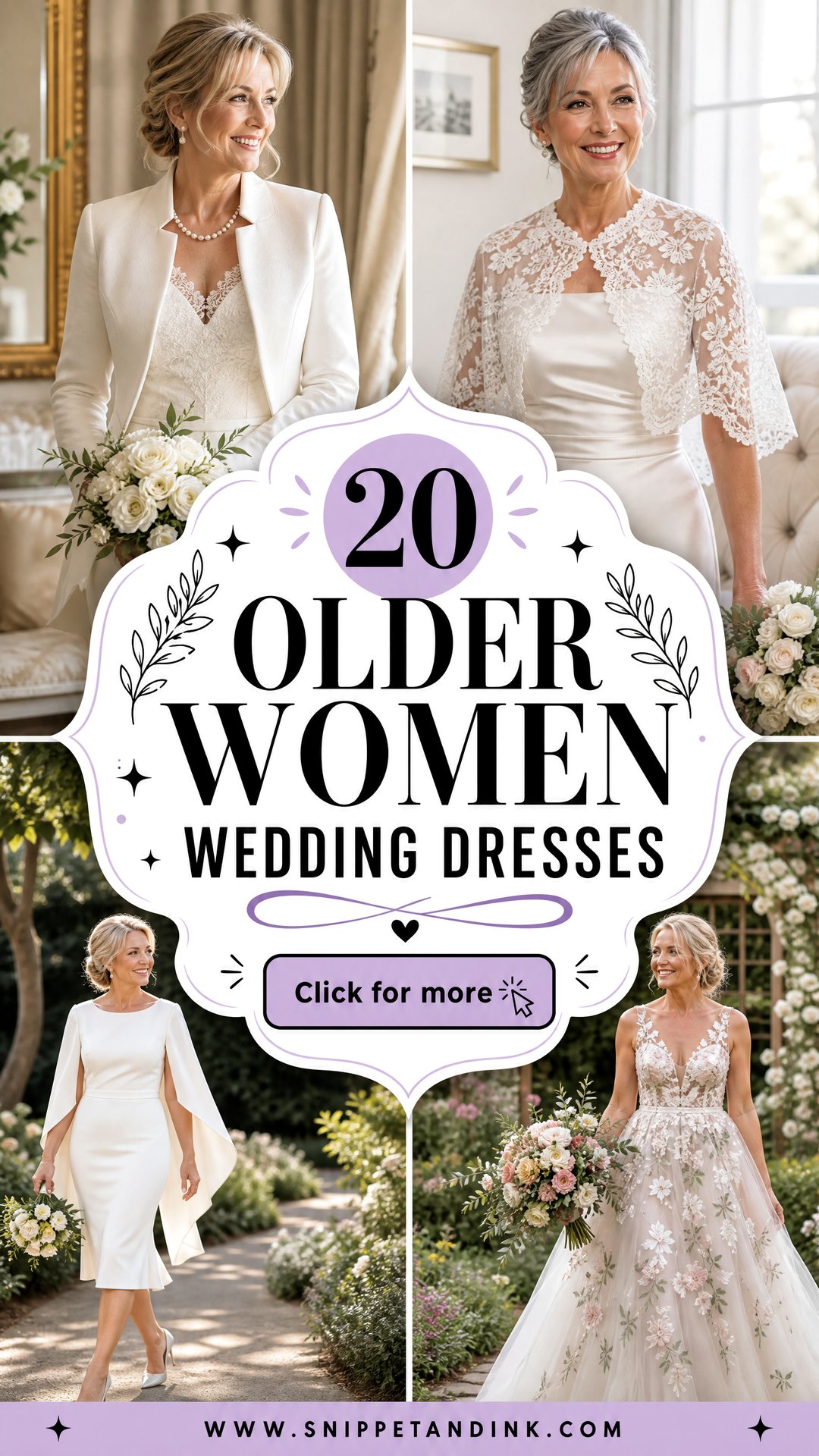
Planning the Bridal Shop Visit Around Your Own Body
Sample gowns in most bridal shops come in only a size or two and are clipped at the back to fit whoever tries them on, so the first look in the mirror rarely tells you much. I prepare brides for that before they walk in, and a few habits make the appointment far more useful.
- Wear the bra you plan to wear, or a strapless longline one. Every neckline sits differently over it.
- Bring shoes at the heel height you’ll actually wear, so hems and proportions read correctly.
- Ask to see each gown clipped and unclipped. Clipped shows the shape it can have; unclipped shows how the fabric hangs.
- Sit down in every dress you’re serious about. Necklines gape and waists pinch in ways standing never reveals.
Made-to-order gowns often take several months to arrive, and alterations need a few more weeks with two or three fittings, so start looking earlier than feels necessary. If time is short, try off-the-rack bridal and the occasionwear sections of department stores, where many of the column, jacket and midi styles below are sold ready to wear.
1. A-Line Lace Wedding Dress With Sleeves
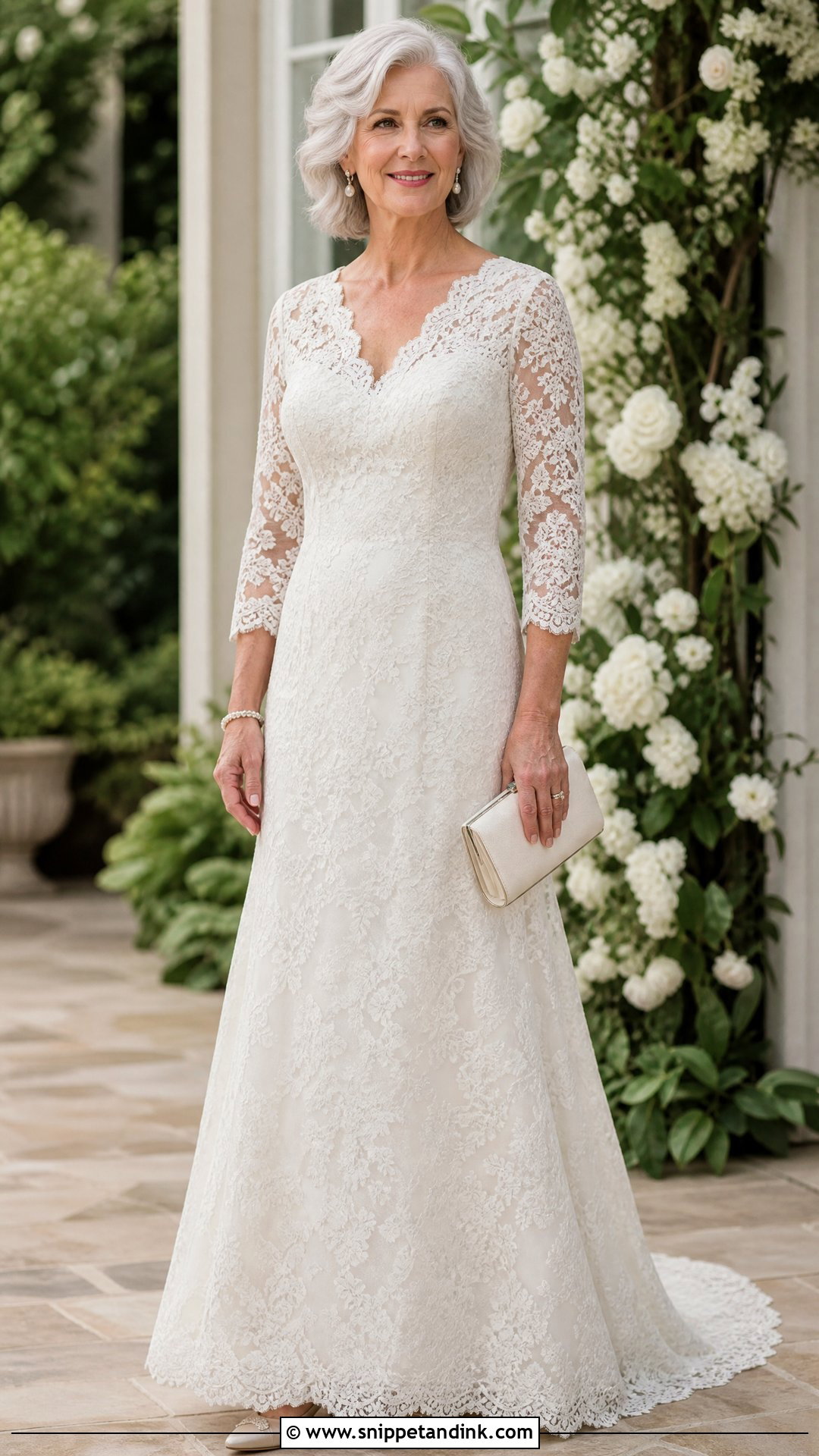
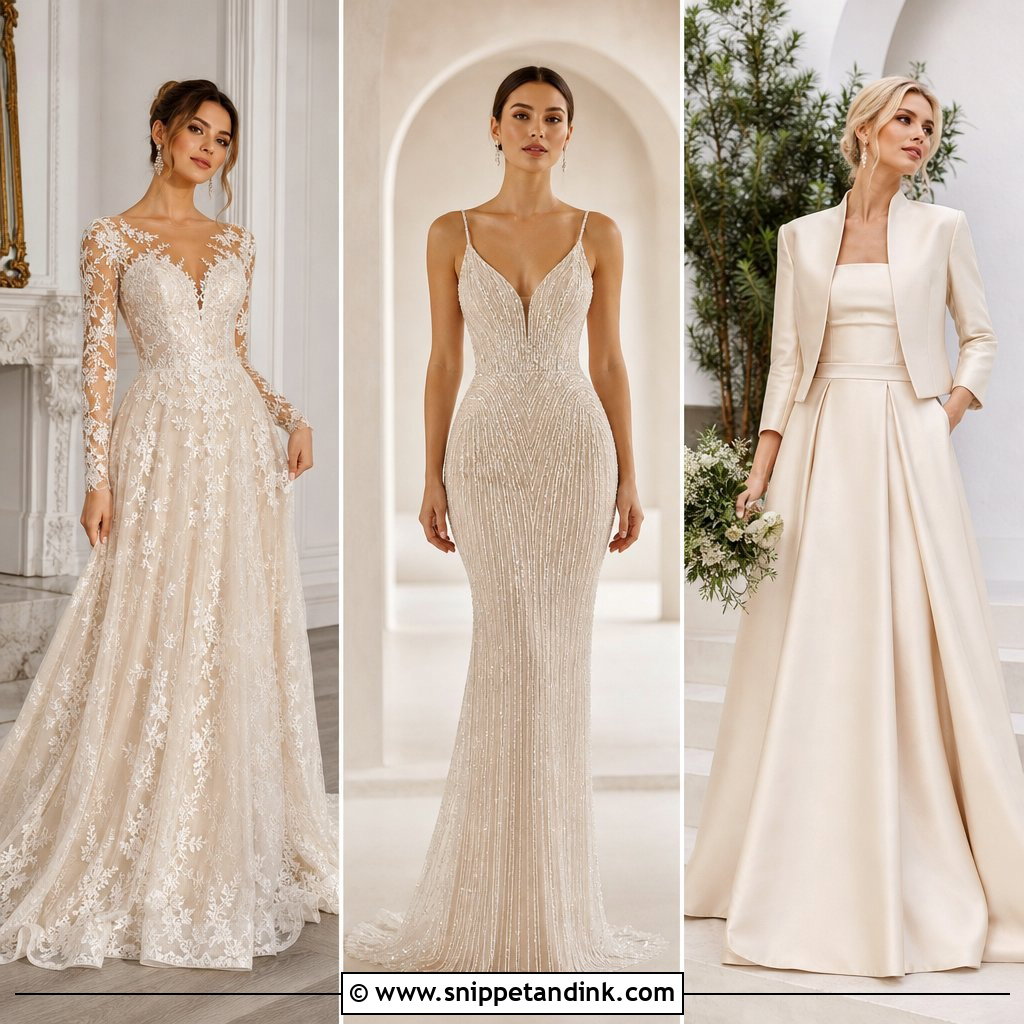
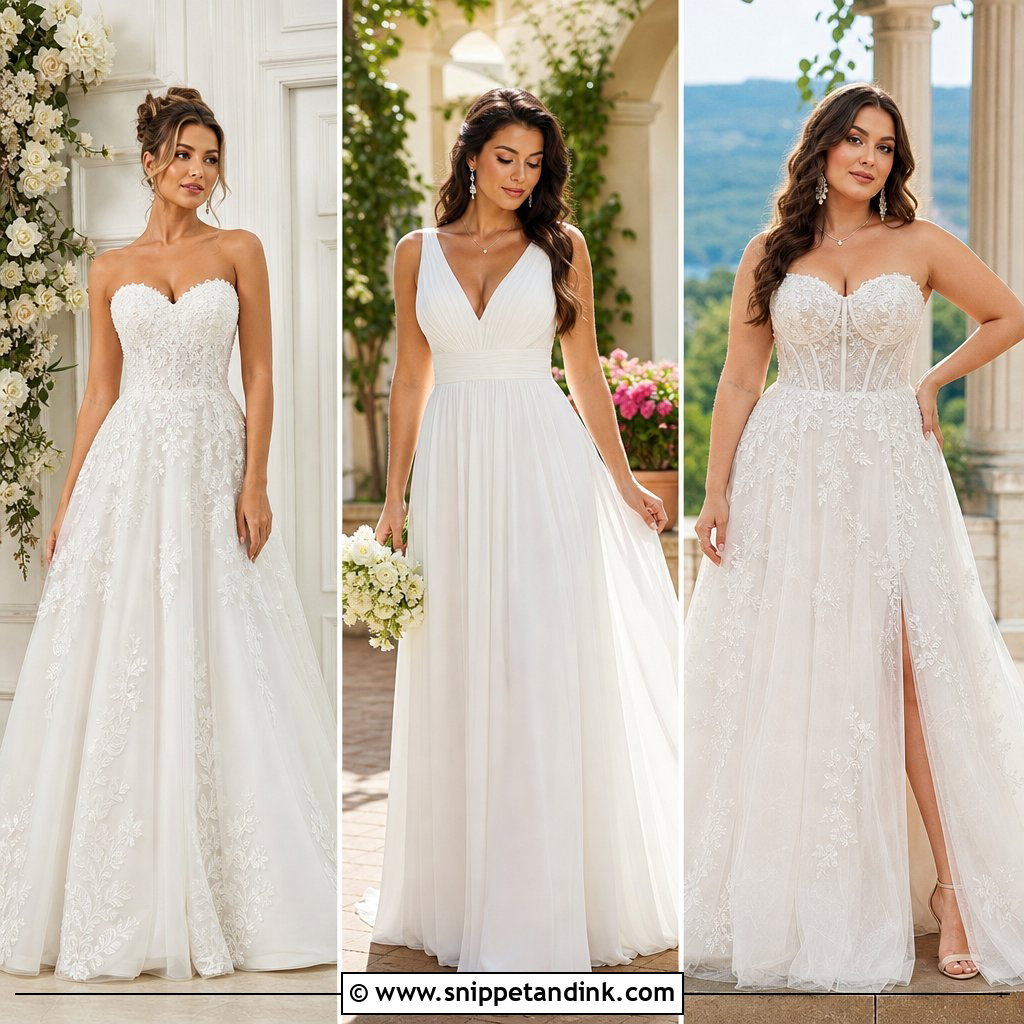
A-line is the shape I pull first for most brides, because the fitted bodice marks the waist and the skirt clears the hips without clinging. In lace, pick a soft one over a comfortable lining; stiff, heavily corded lace stands away from the body and adds bulk. Three-quarter sleeves cover the upper arm and stop just where a bracelet would sit. A V-neck lengthens the upper body, while a bateau neck feels more traditional. Pearl earrings, low ivory heels and a small structured clutch, then a fingertip veil or delicate comb. Formal venues, garden ceremonies and indoor receptions all suit it.
2. Chiffon Empire Waist Wedding Dress
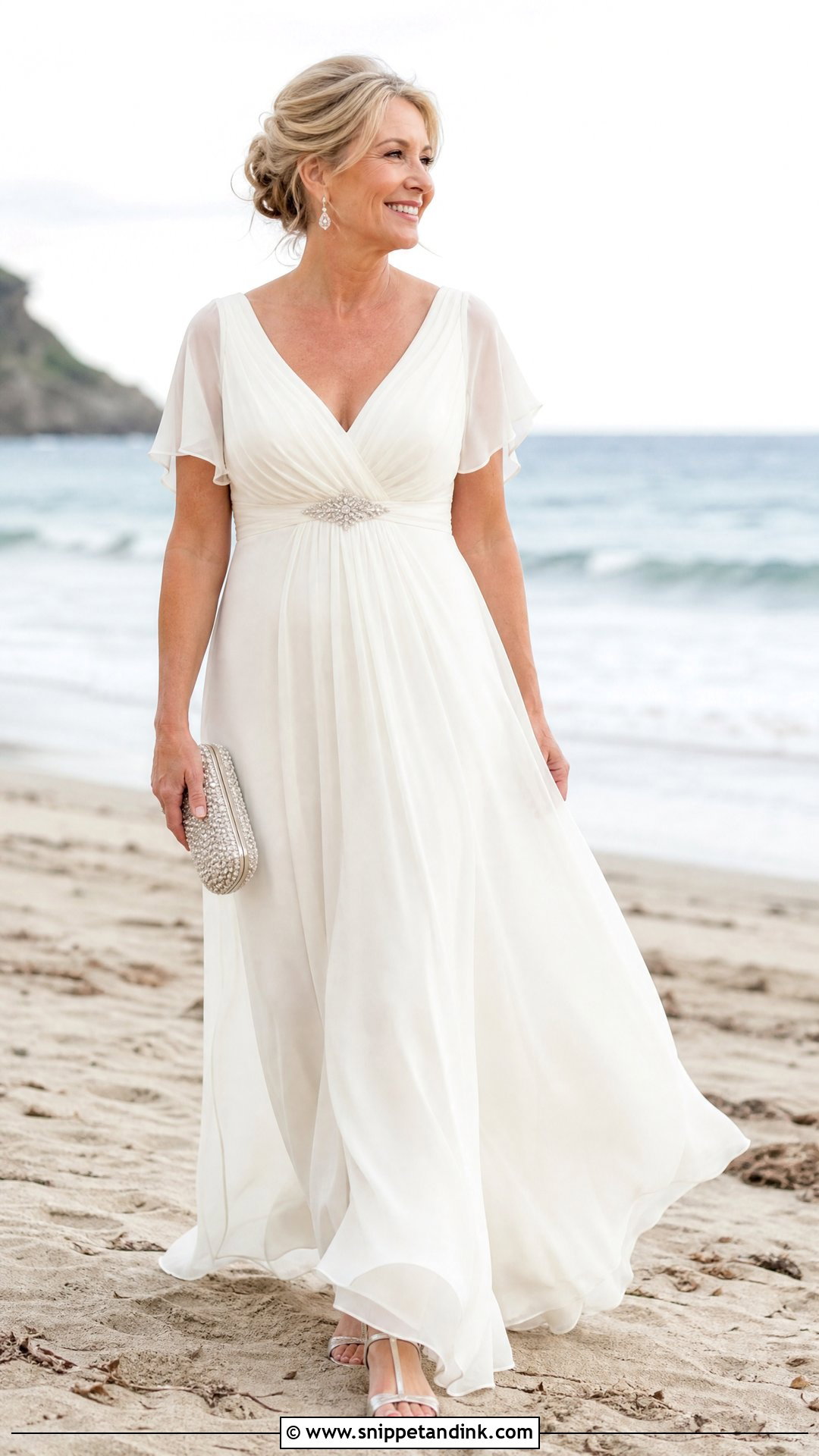
Chiffon is the coolest fabric to wear on a hot day, and it moves with the slightest breeze. An empire waist wedding dress fits just under the bust, then falls into a fluid skirt that skims rather than grips the middle. I look for a softly draped bodice with flutter sleeves or sheer three-quarter sleeves, and I check the inside for a built-in support panel; without one, chiffon can slip and shift around the bust. Metallic kitten heels, a beaded clutch and small drop earrings go with it, and a loose updo keeps the neckline clear. Beach weddings, outdoor ceremonies and destination celebrations are where it makes the most sense.
3. Tea-Length Lace Wedding Dress
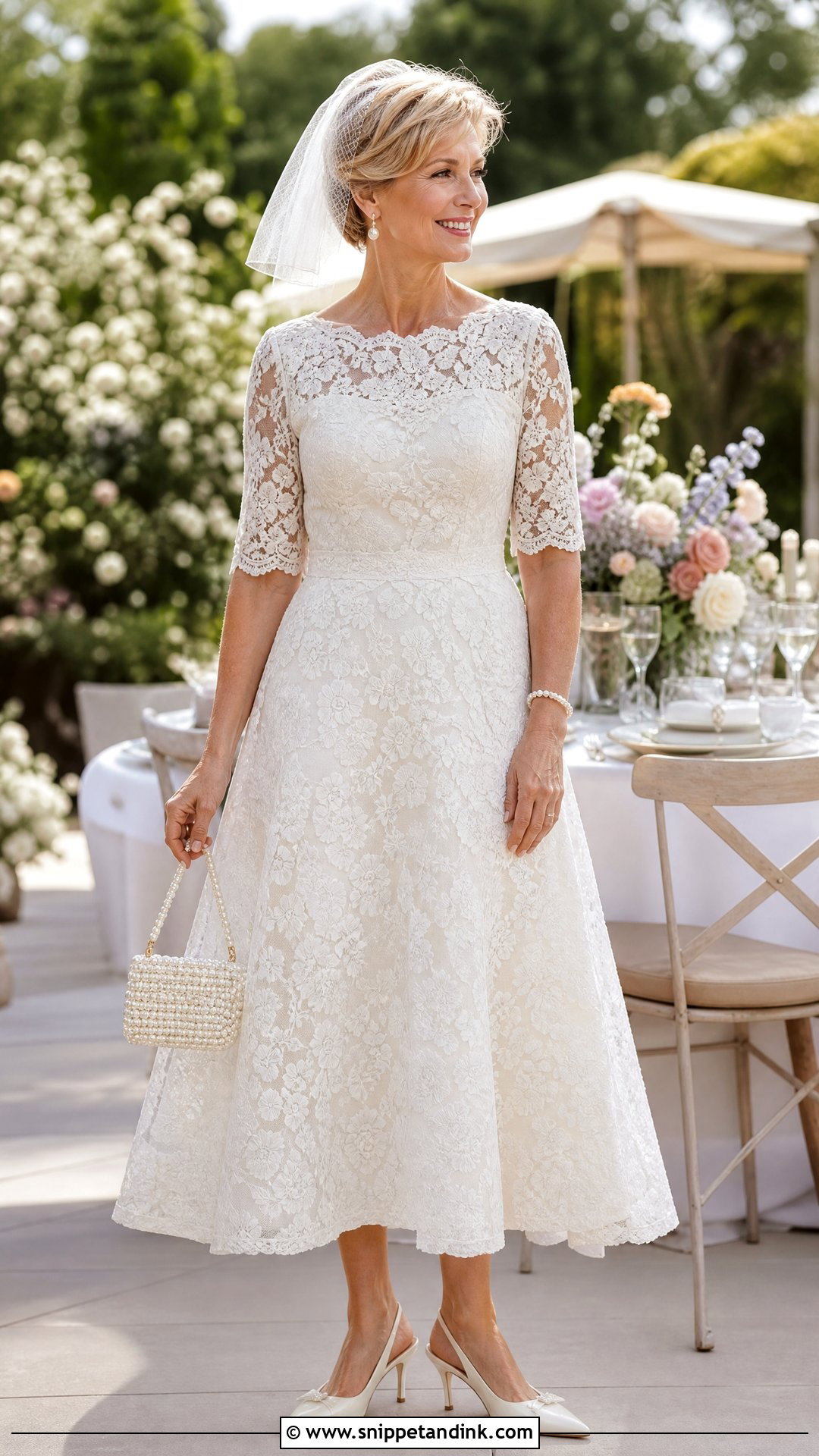
Tea length sits between knee and ankle, so your shoes become part of the outfit. Choose a softly structured bodice with elbow-length sleeves and a gently defined waist; an ivory lining under floral lace gives the pattern depth. Pointed slingback heels, a compact pearl bag and a short veil or decorative headband are a good match, and if you’d rather wear flats, embellished ballet shoes are perfectly bridal here. I like this length for brides who’ll spend the day on their feet greeting people, because there’s no hem to lift or trip over. Courthouse ceremonies, brunch receptions, garden weddings and small gatherings all suit it.
4. Crepe Sheath Wedding Dress
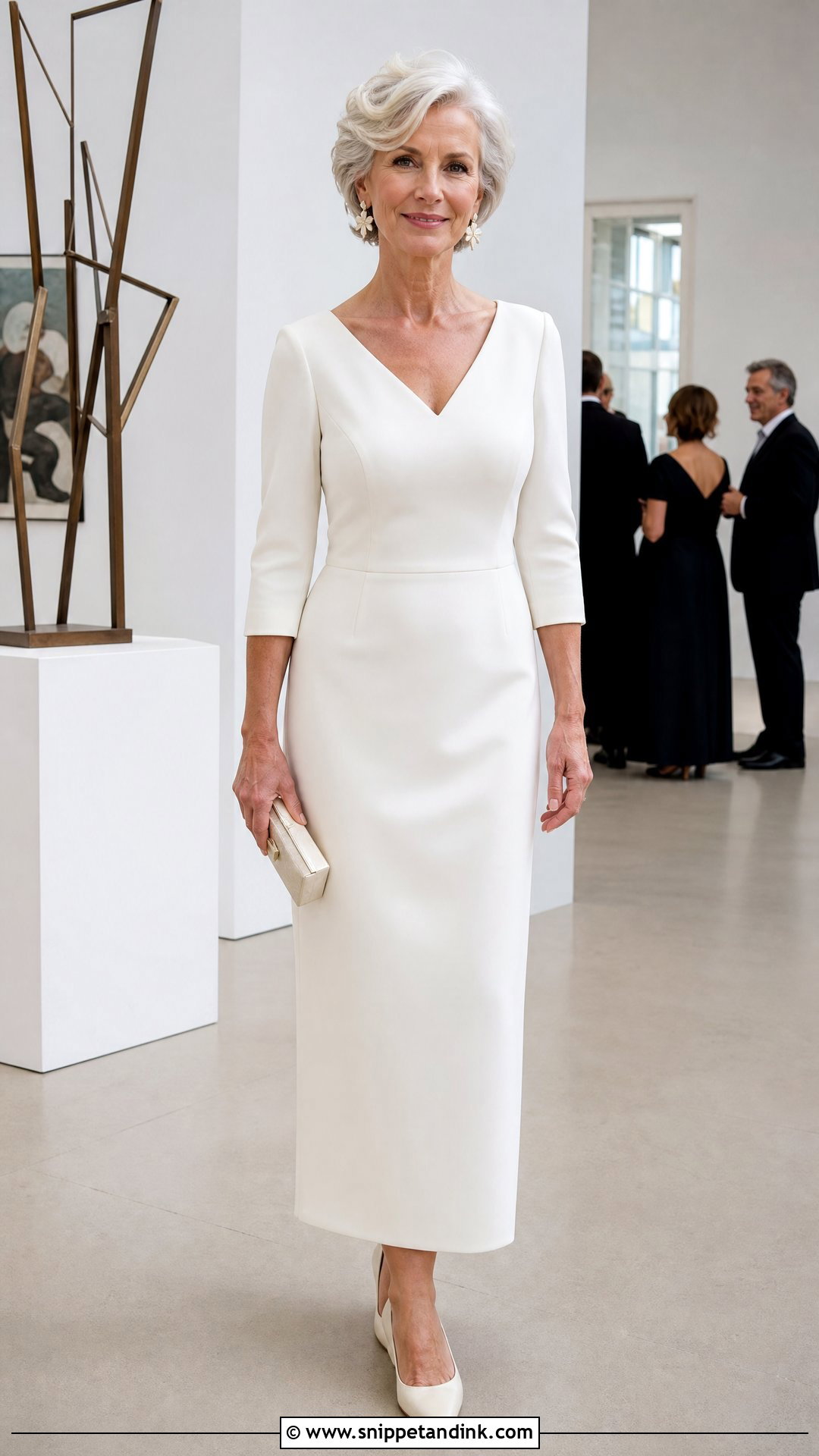
A sheath shows everything, so the fabric has to do some of the supporting. I’d go for heavy stretch crepe with light internal structure, because thin crepe clings at the stomach and reveals every line underneath. The dress should skim rather than cling, with a soft V-neck, three-quarter sleeves and subtle waist seams for shape. Pointed ivory pumps, sculptural earrings and a sleek clutch finish it. A detachable chapel-length veil gives the ceremony some drama and comes off for dinner. Hotels, rooftops, galleries and city venues, where clean tailoring carries the look, suit it best.
5. Satin Column Wedding Dress With Cape
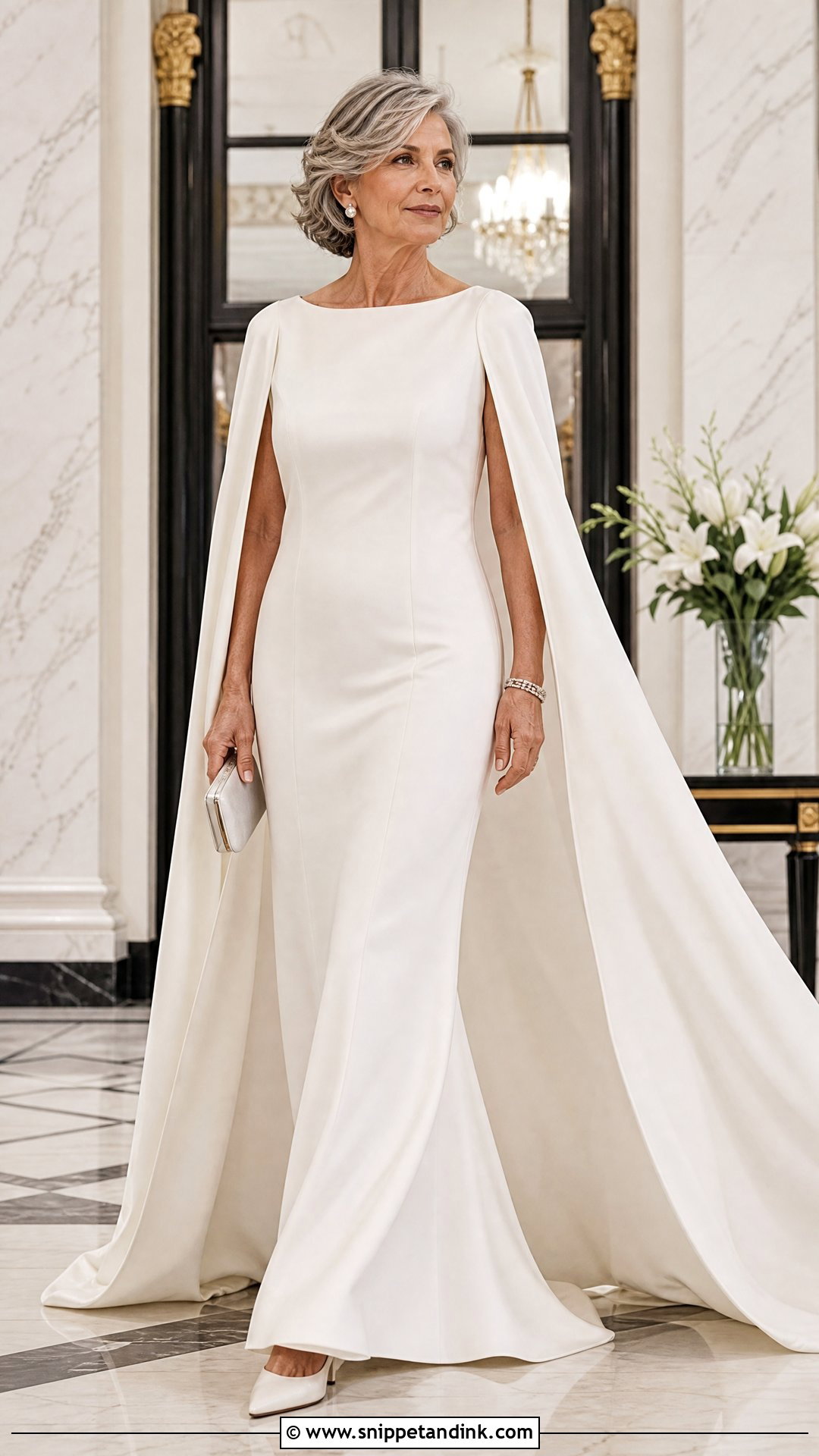
Want coverage without fitted sleeves? A matching cape over a satin column covers the shoulders and adds a bit of drama, and you can still move your arms freely. The column itself is sleek and straight. Choose matte or softly lustrous satin, since high-shine satin highlights every crease from sitting. A bateau neckline or shallow V-neck lets the cape stay the main detail. Pearl studs, a silver bracelet, low pointed heels and a structured evening bag are enough. I’d skip the veil entirely, because a veil and a cape tangle at the shoulders and neither falls properly in photos. Evening ceremonies and formal indoor venues suit it.
6. Long-Sleeve Illusion Lace Wedding Dress
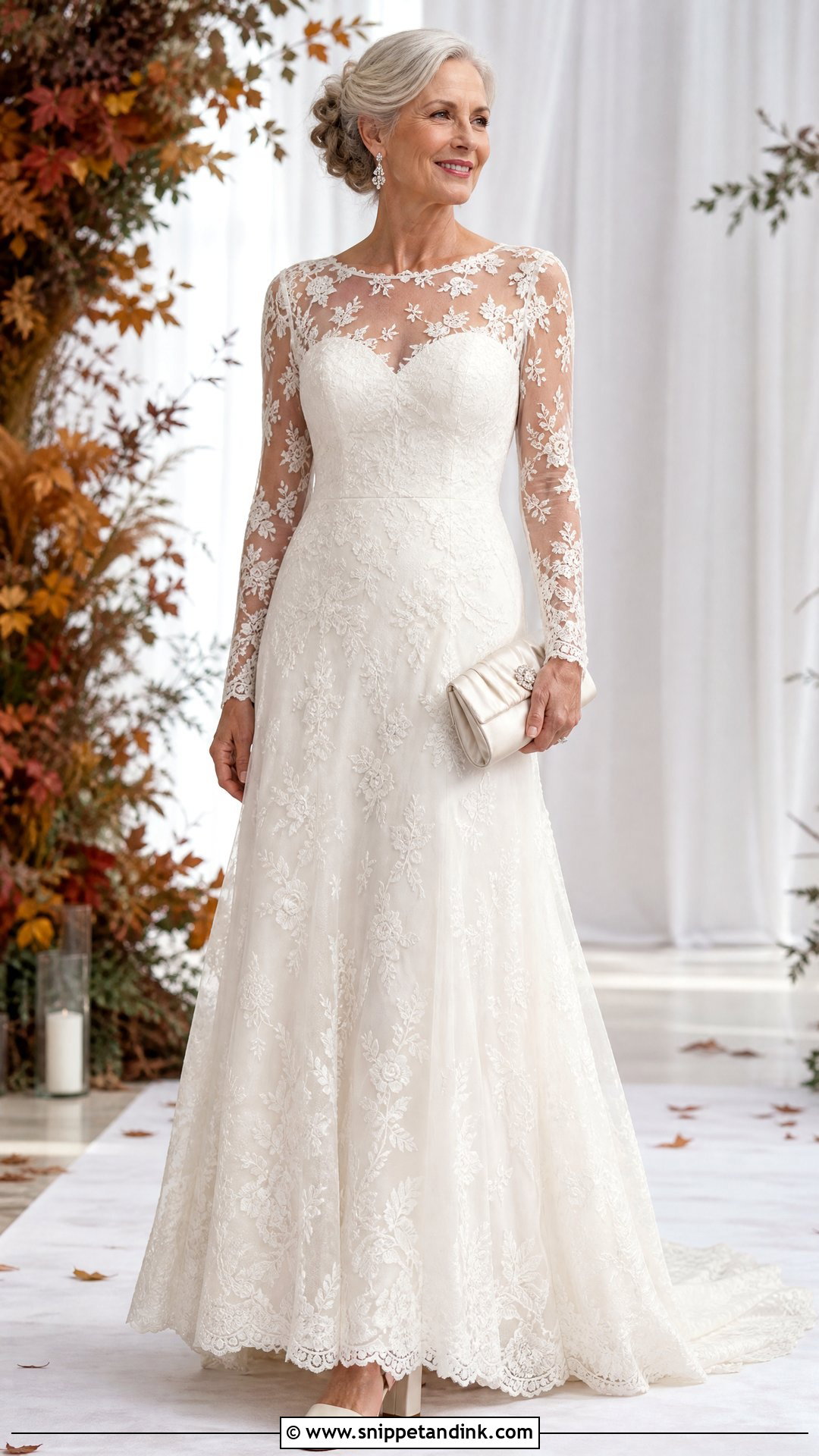
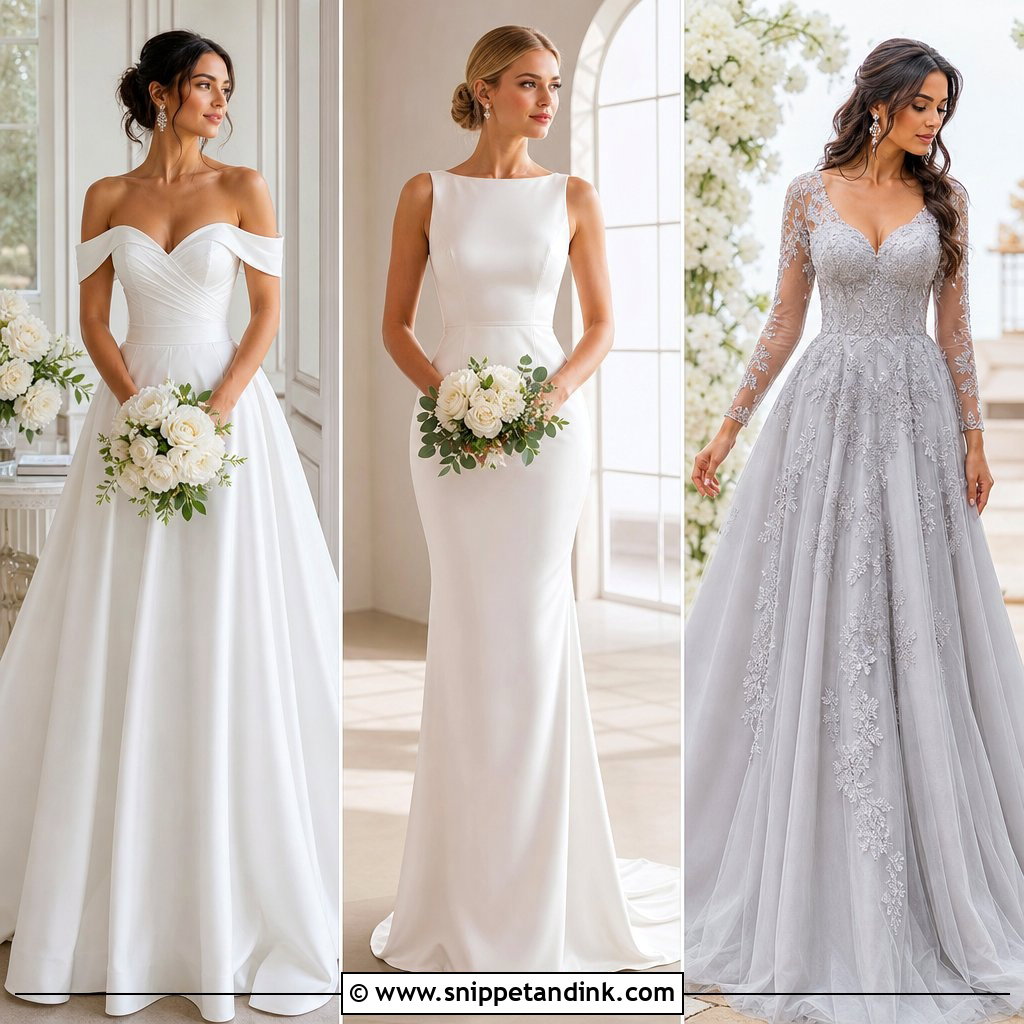
Illusion sleeves are lace appliqués on fine mesh, and the mesh is what makes or breaks them. I hold it against the bride’s inner wrist in daylight: if it’s pinker or paler than her skin, it shows as a sleeve instead of disappearing, and the lace no longer seems to float. Look for a lined bodice and a flowing A-line or fit-and-flare skirt, with covered buttons down the back. Crystal drop earrings, ivory block heels and a small satin clutch suit it, with a low chignon and a simple veil so the bodice doesn’t get busy. Fall celebrations, formal venues and evening ceremonies suit it.
7. Off-the-Shoulder A-Line Wedding Dress
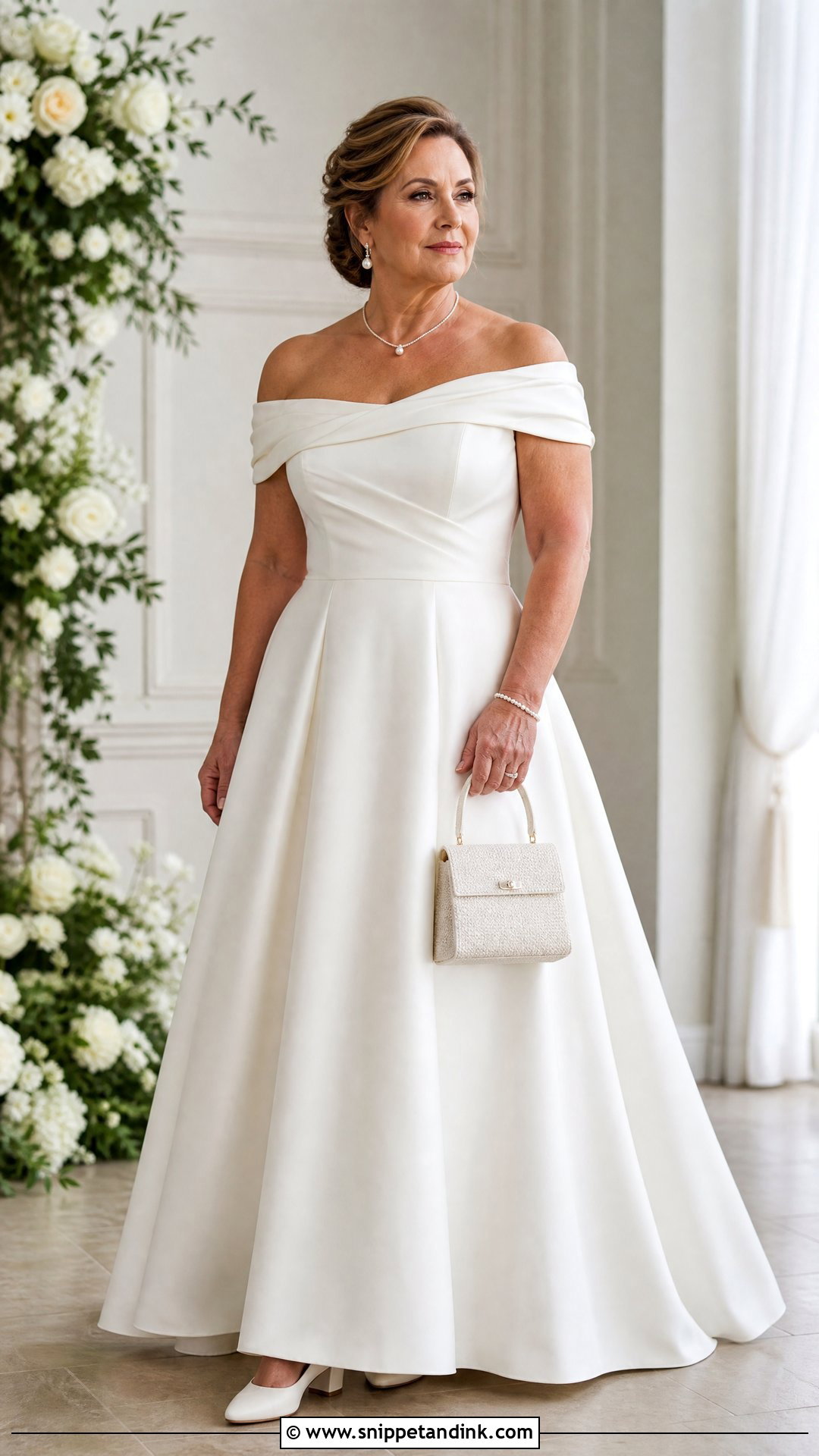
Off-the-shoulder necklines have one common failure: they creep up when you raise your arms. The gown needs structured boning and wide internal straps so the folded neckline stays across the upper arms, and I have brides hug and wave at the fitting to test it. A smooth skirt in mikado, crepe or satin keeps the whole thing refined rather than ornate. Add a short necklace, pearl earrings, low block heels and a compact top-handle bag, with soft shoulder-length hair or a neat updo framing the neckline. You get a little glamour, and the structure keeps you comfortable all day.
8. V-Neck Draped Wedding Dress
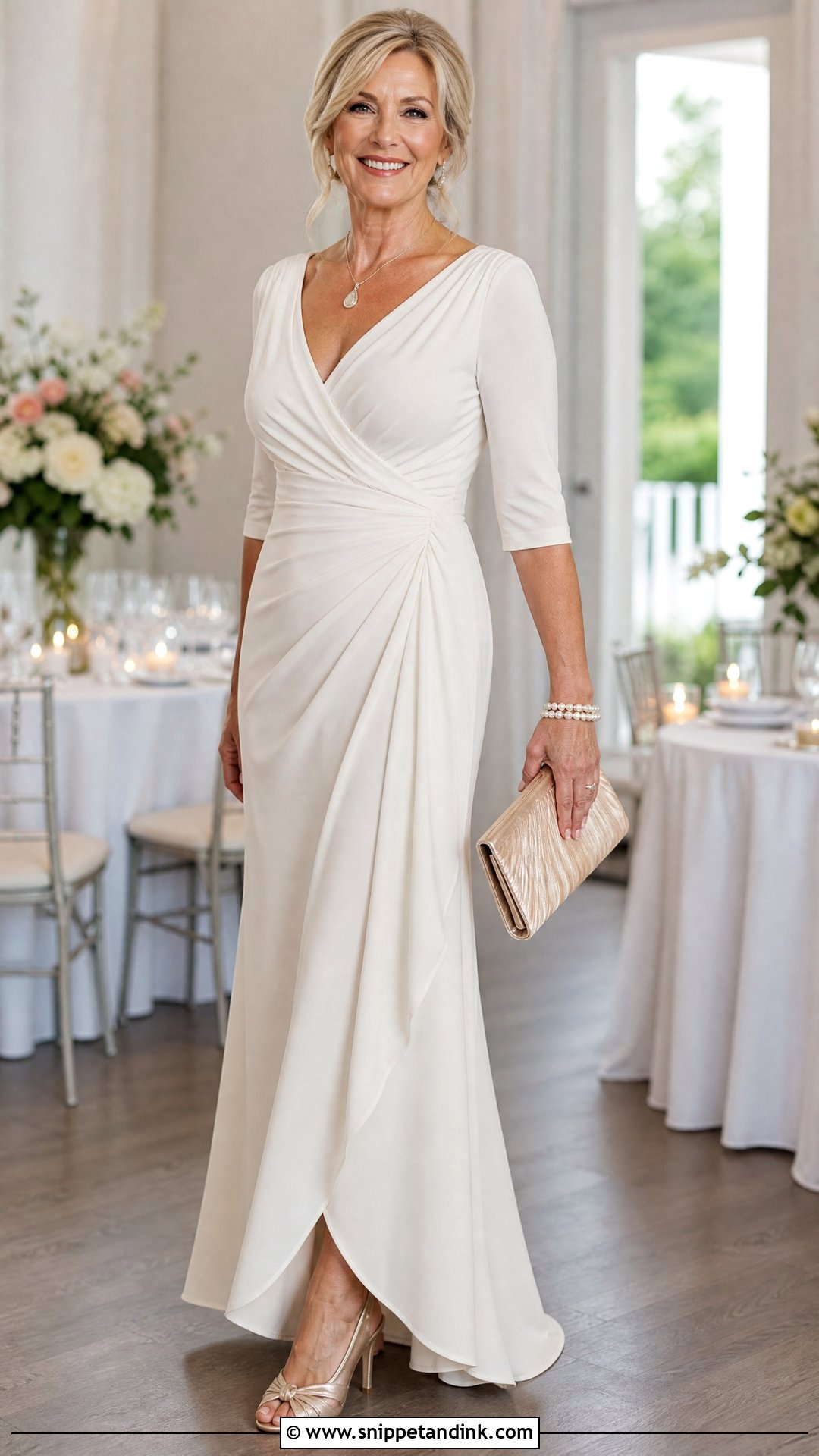
Diagonal ruching across a bodice does what shapewear does, without the squeeze. A V-neck gown with sewn-in gathers gives definition and helps the fabric fall smoothly over the waist. I steer brides toward a wrap-style bodice that’s stitched in place rather than a true wrap, which loosens and gapes as the day goes on. Elbow-length sleeves and a lightly flared skirt keep the proportions balanced. A delicate pendant, pearl bracelet, champagne heels and a small pleated clutch, with hair swept back to show the neckline. It suits many body shapes, day or evening.
9. High-Neck Lace Wedding Dress
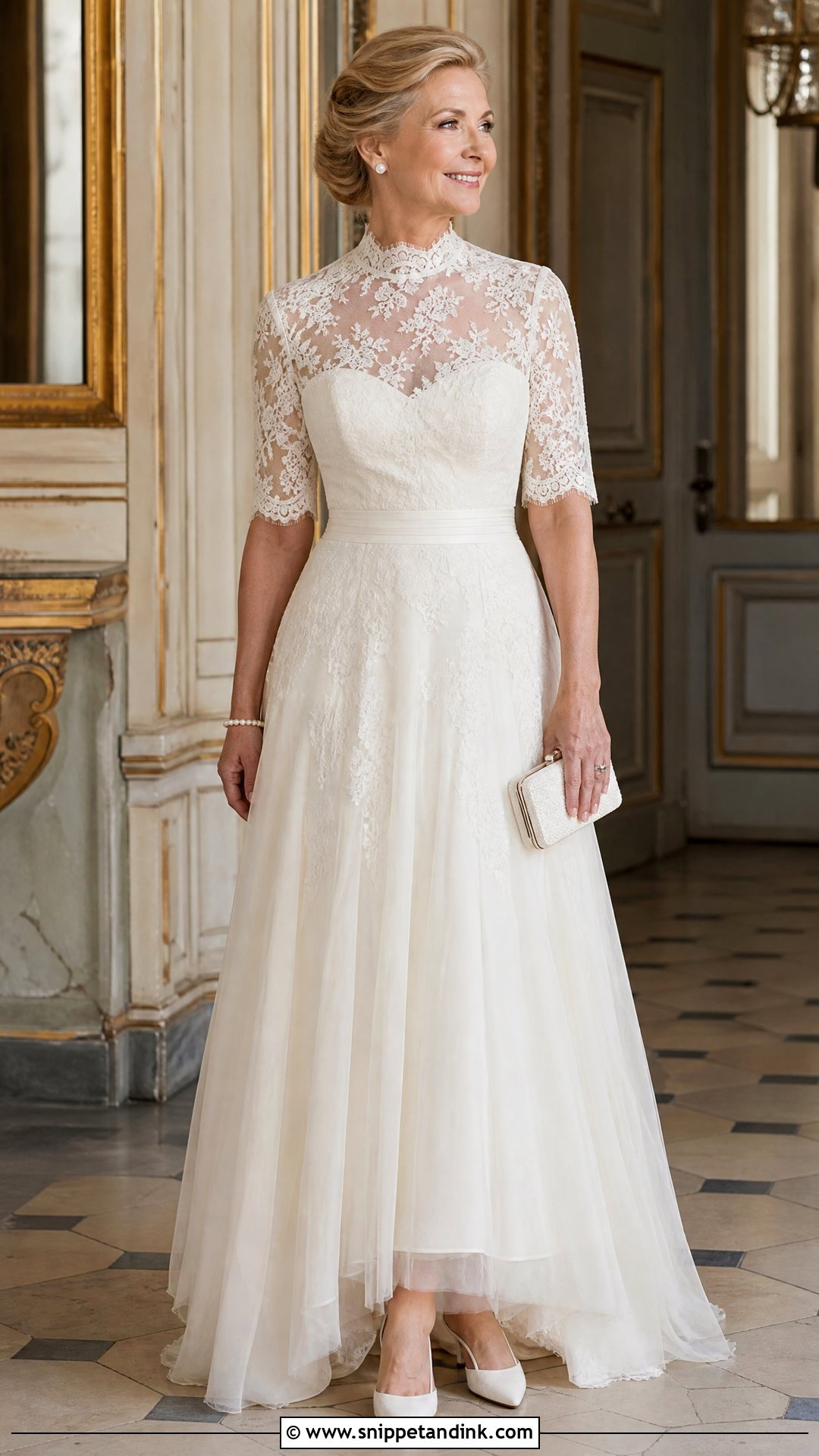
Covered but not heavy: the trick with a high-neck lace dress is a sheer lace neckline over a sweetheart or scoop lining, so the solid fabric stops lower and the throat stays light. A fitted waist and gently flowing skirt balance all that coverage on top. Cap, elbow or sheer long sleeves can work depending on the season. Pearl studs, a low bun, pointed slingbacks and a small ivory clutch suit it. Leave off the necklace, because the neckline already is one. A slim bracelet or an heirloom ring is a better place for something sentimental. Formal ceremonies, historic venues and vintage-minded brides suit it.
10. Blush A-Line Wedding Dress
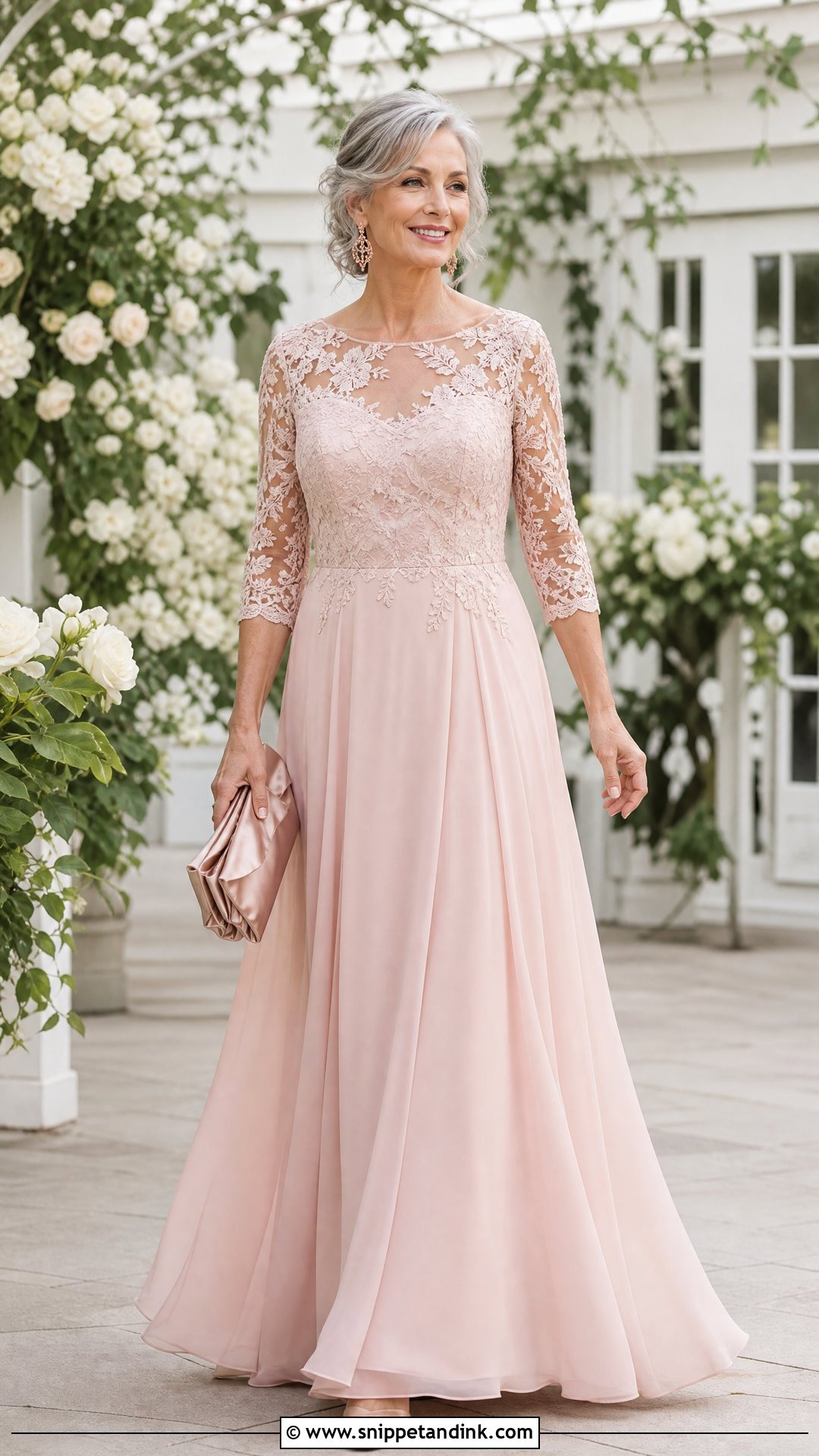
Bright white can look harsh against some skin, and blush is the soft alternative I suggest most often. Dusty rose, pale pink and pink-beige still read as bridal while adding warmth near the face. Choose a flowing A-line skirt with a lace, beaded or lightly draped bodice, plus three-quarter sleeves or a sheer matching cape if you’d like coverage. Rose-gold earrings, neutral heels and a satin clutch in the same tonal family go with it. Ask your florist for ivory, blush and muted greenery, which sit with the dress rather than against it. Second weddings, garden celebrations and vow renewals are natural homes for it.
11. Champagne Beaded Wedding Dress
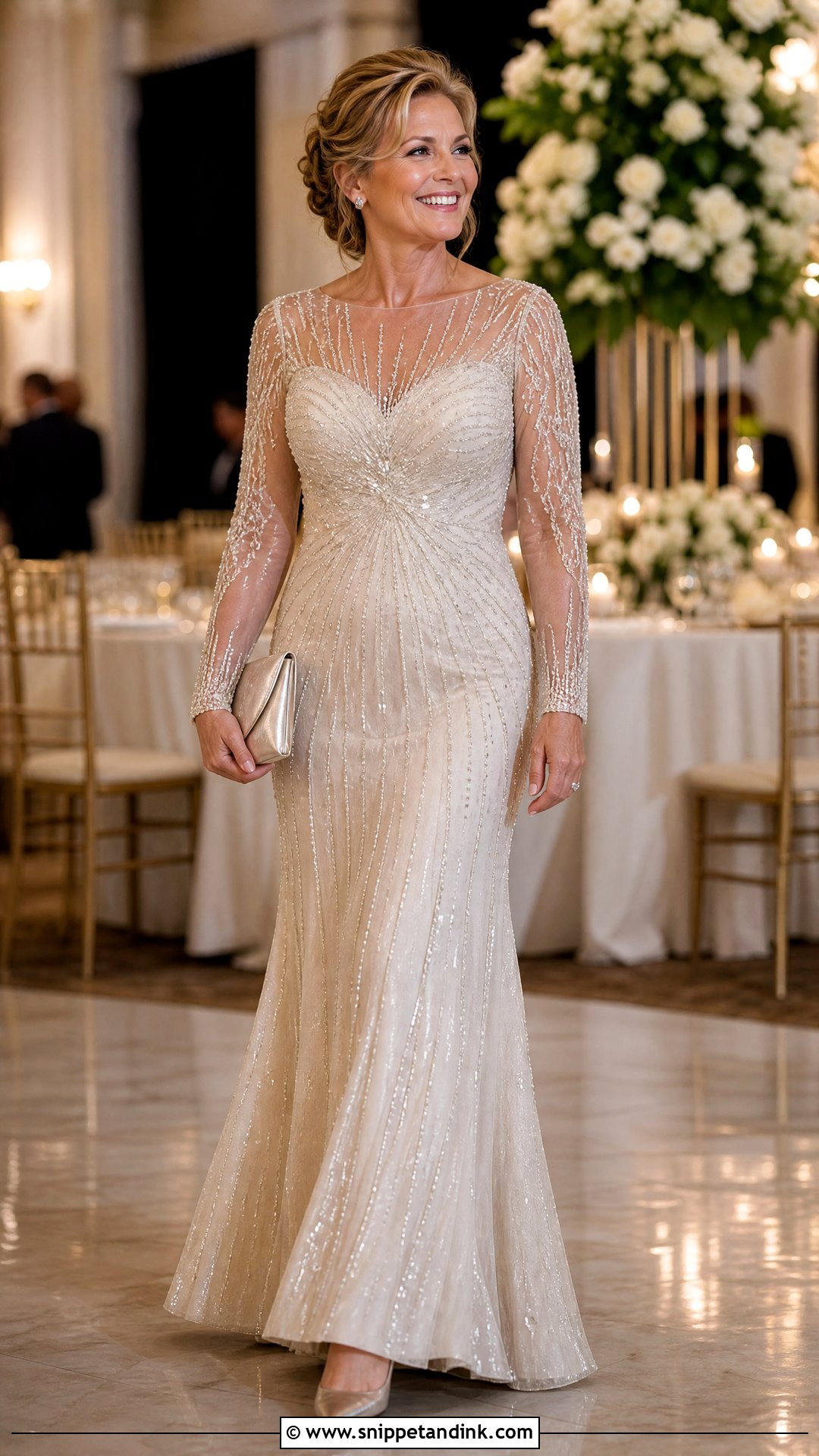
Champagne is warmer than ivory, so beading on it glows rather than glitters. Choose a column or gently flared silhouette with a lined bodice and sheer embellished sleeves. Placement matters: vertical lines of beads lengthen the body, while beading concentrated at the neckline pulls the eye up to your face. Before ordering, I lift the sleeves to feel their weight, because heavily beaded sleeves drag at the shoulder seam over a long evening. Simple metallic pumps, crystal studs and a plain satin clutch, with smooth hair and luminous makeup to keep it balanced. A sheer champagne wrap adds coverage. Formal receptions, hotels and after-sunset celebrations suit it.
12. Floral Embroidered Wedding Dress
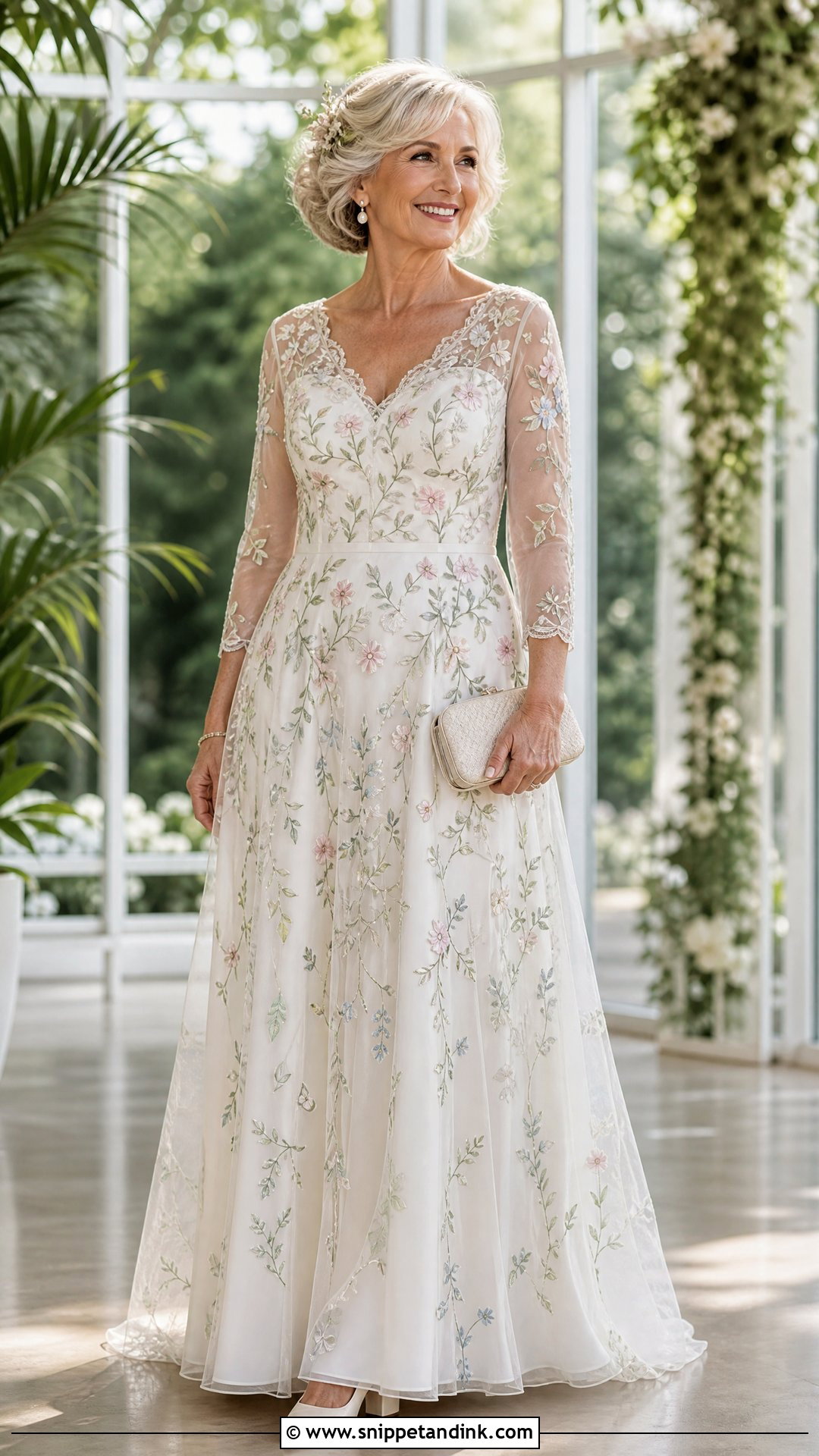
Embroidery gives a dress texture and a link to the season. Ivory thread looks traditional; soft pastel flowers are more expressive. Keep the shape simple, an A-line skirt with a fitted, lined bodice, so the embroidery isn’t fighting the cut, and let sheer sleeves scattered with motifs cover the arms lightly. Pearl earrings, ivory block heels and a small fabric-covered clutch, and perhaps a flower comb or understated hair vine. I’d stop there. Matching every accessory to the embroidery looks overly coordinated and hides the handwork. Botanical venues, spring ceremonies and outdoor celebrations suit it.
13. Wedding Dress With Matching Jacket
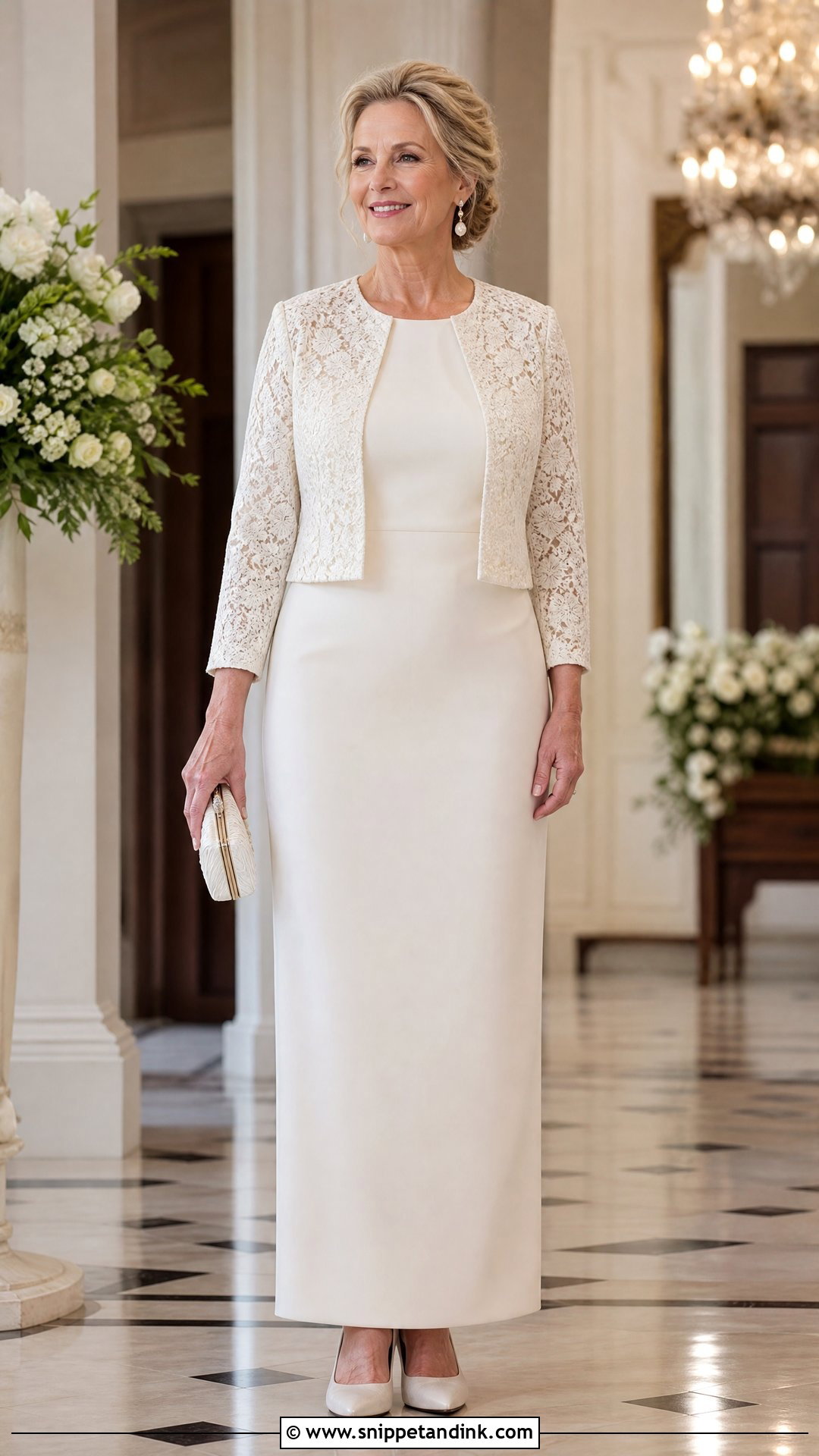
A dress and jacket together make the most adaptable outfit here. Start with a simple sleeveless or short-sleeve column in crepe, satin or chiffon, then add a cropped lace, beaded or tailored jacket finishing near the natural waist. That length marks the waist while covering arms and shoulders. I check the jacket two ways at the fitting: buttoned, it should lie flat without pulling, and open, it should hang straight rather than swinging back. Low pumps, pearl drops and a structured clutch, and the jacket comes off for the reception. Transitional weather and air-conditioned venues, which can turn chilly during a long dinner, are where it pays off.
14. Satin Wedding Dress With Lace Topper
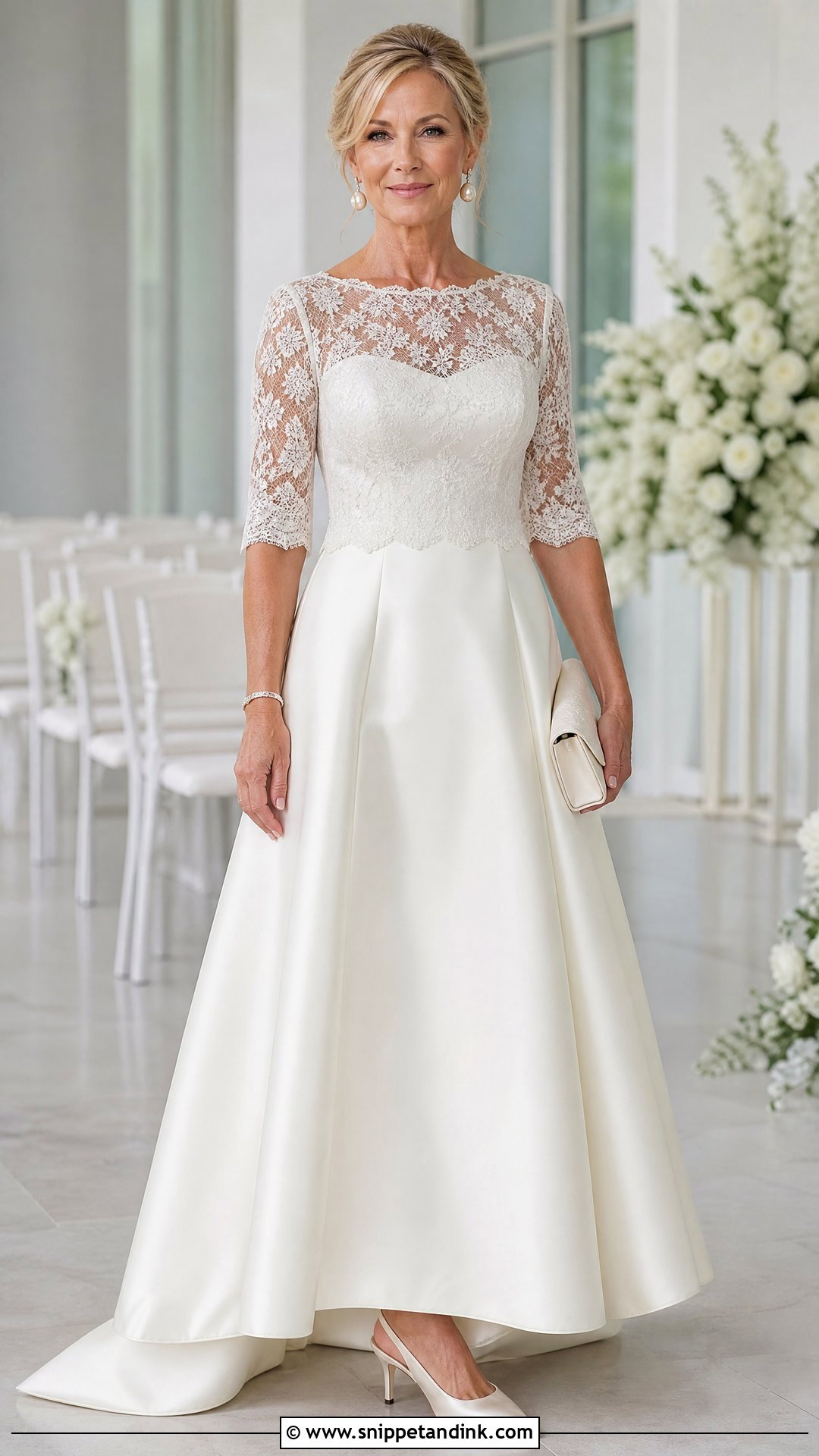
A lace topper turns a plain satin dress into a ceremony dress, then comes off for the party. Underneath goes a clean slip, sheath or A-line with wide straps and a supportive bodice; on top, a fitted lace layer with elbow or long sleeves and a neckline that agrees with the one below. Where the topper ends matters most. At the waist, or blending into the skirt without bunching, it looks deliberate, but if it stops mid-stomach I send it back. Pearl earrings, a narrow bracelet, satin slingbacks and a soft envelope clutch complete it. Traditional coverage at the altar, a sleeker look later, and only one dress to buy.
15. Midi Wedding Dress With Cape Sleeves
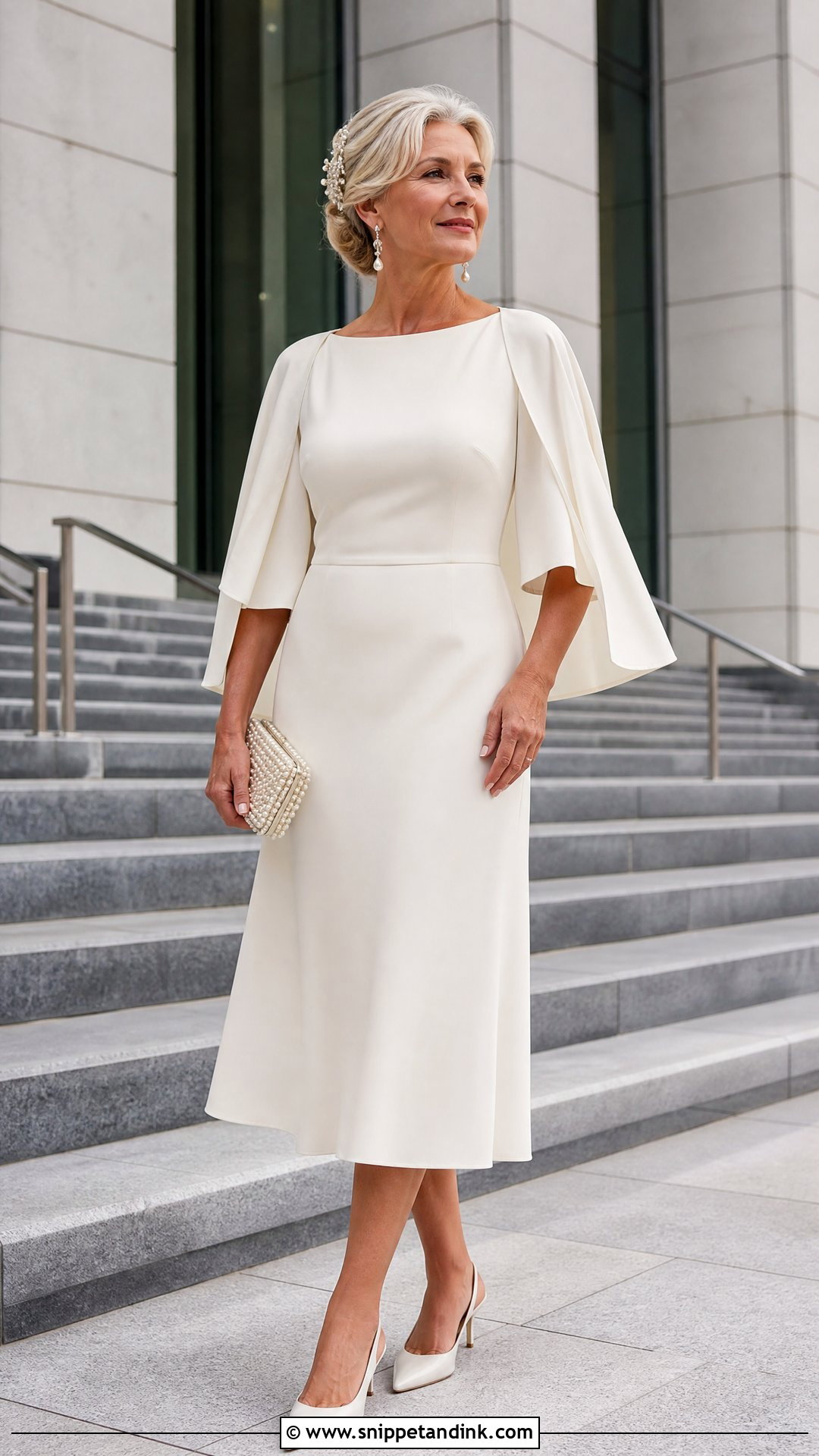
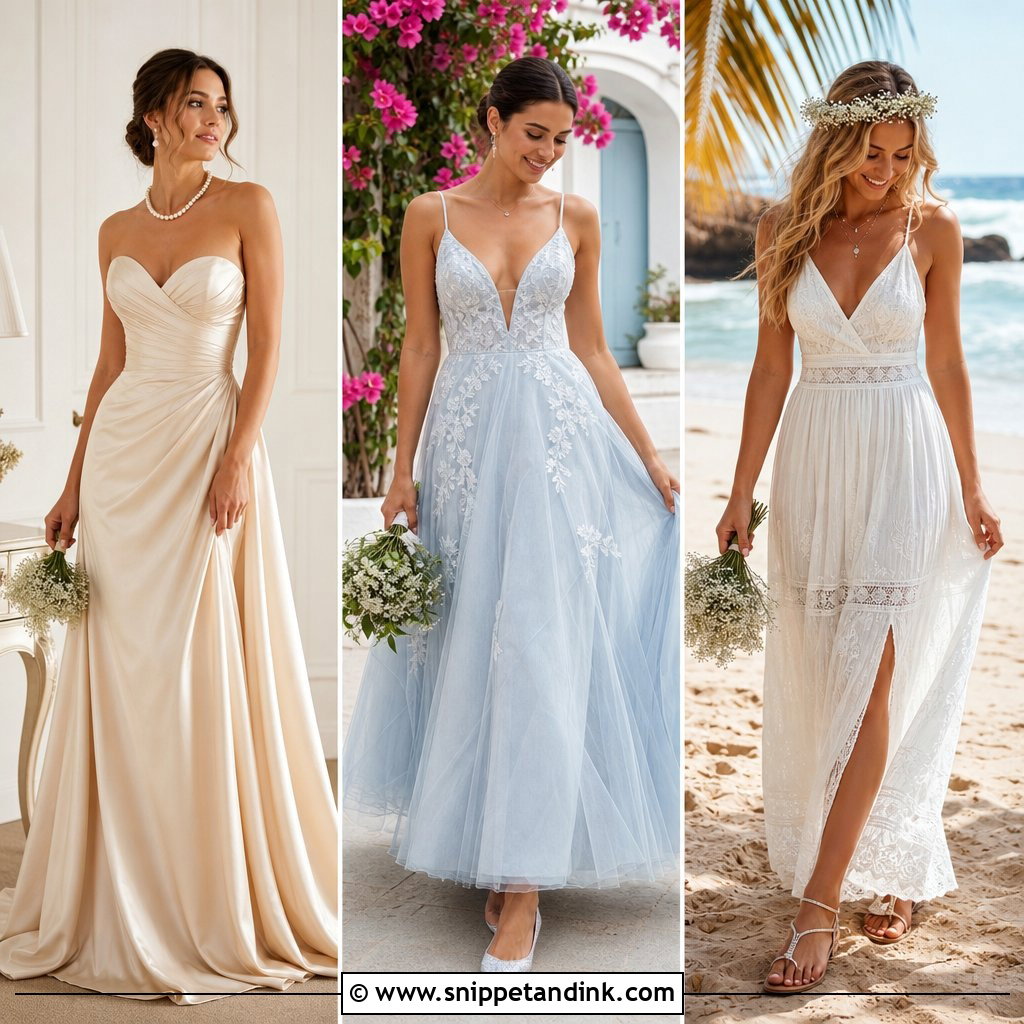
A midi wedding dress with cape sleeves looks polished without the weight of a floor-length skirt; the hem usually lands around mid-calf. Choose a softly fitted bodice with cape sleeves falling from the shoulders to the elbow or wrist, in crepe or chiffon, which drape without bulk. Mid-calf is the widest part of the leg on many women, so I move the hem an inch up or down until it falls where the leg narrows. Pointed slingbacks, a pearl-trimmed clutch and drop earrings, with a small birdcage veil or jeweled comb. Courthouse weddings, dinner celebrations and destination ceremonies suit it.
16. Plus-Size Ruched Wedding Dress
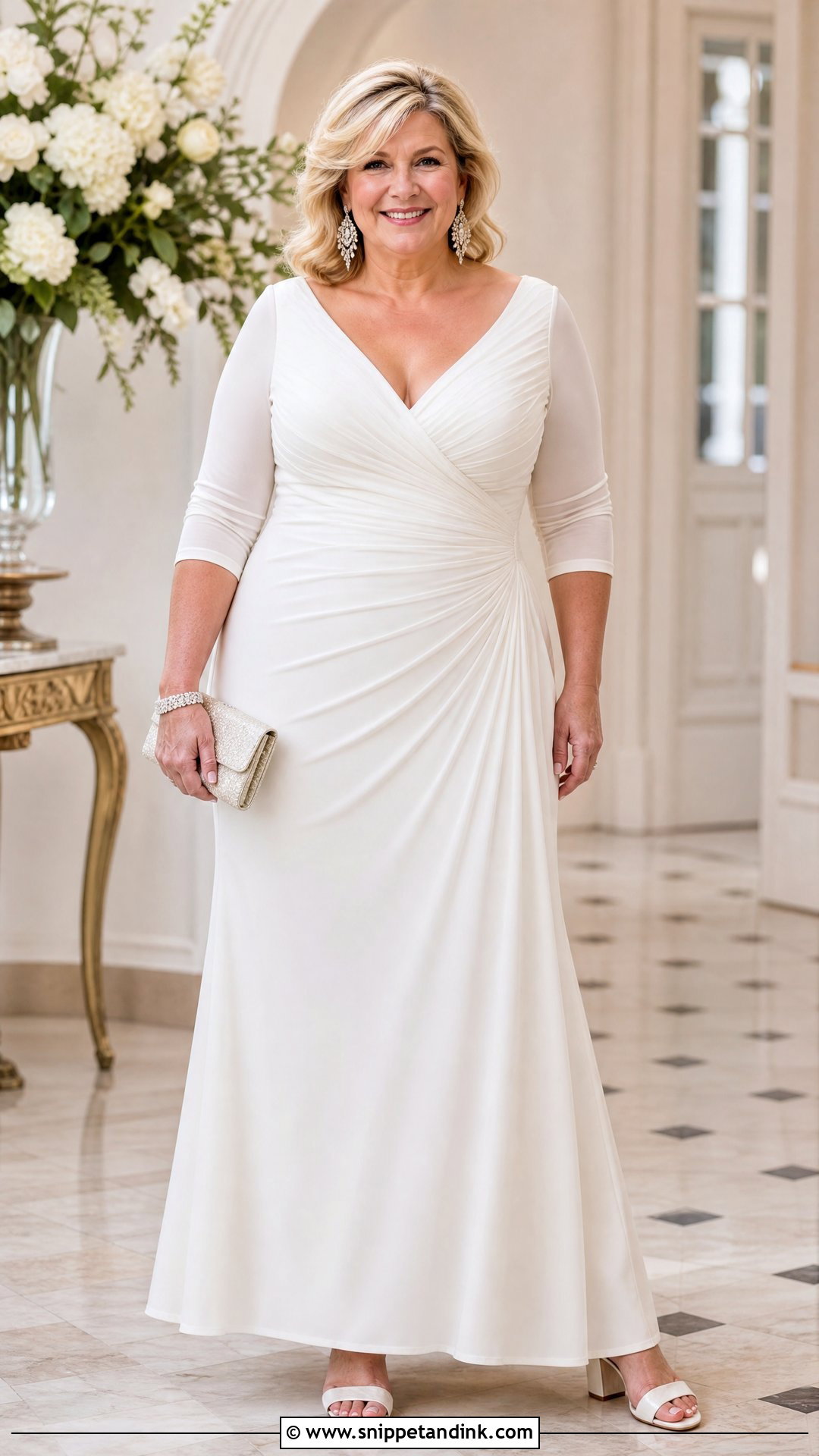
Ruching works on a plus-size gown when it is diagonal and spread out; gathers bunched in one spot add volume exactly where you don’t want it. Look for diagonal gathers across the bodice or waist, a stable V-neck, wider shoulder coverage and an A-line or softly flared skirt. Stretch crepe, lined chiffon and matte jersey move with you and stay smooth. Supportive block heels, chandelier earrings and a structured clutch suit it. Alterations are especially worthwhile here, because a good seamstress can adjust the bust, waist, sleeve opening and hem separately rather than sizing the whole dress to the largest measurement. It should feel secure, never tight.
17. Petite High-Low Wedding Dress
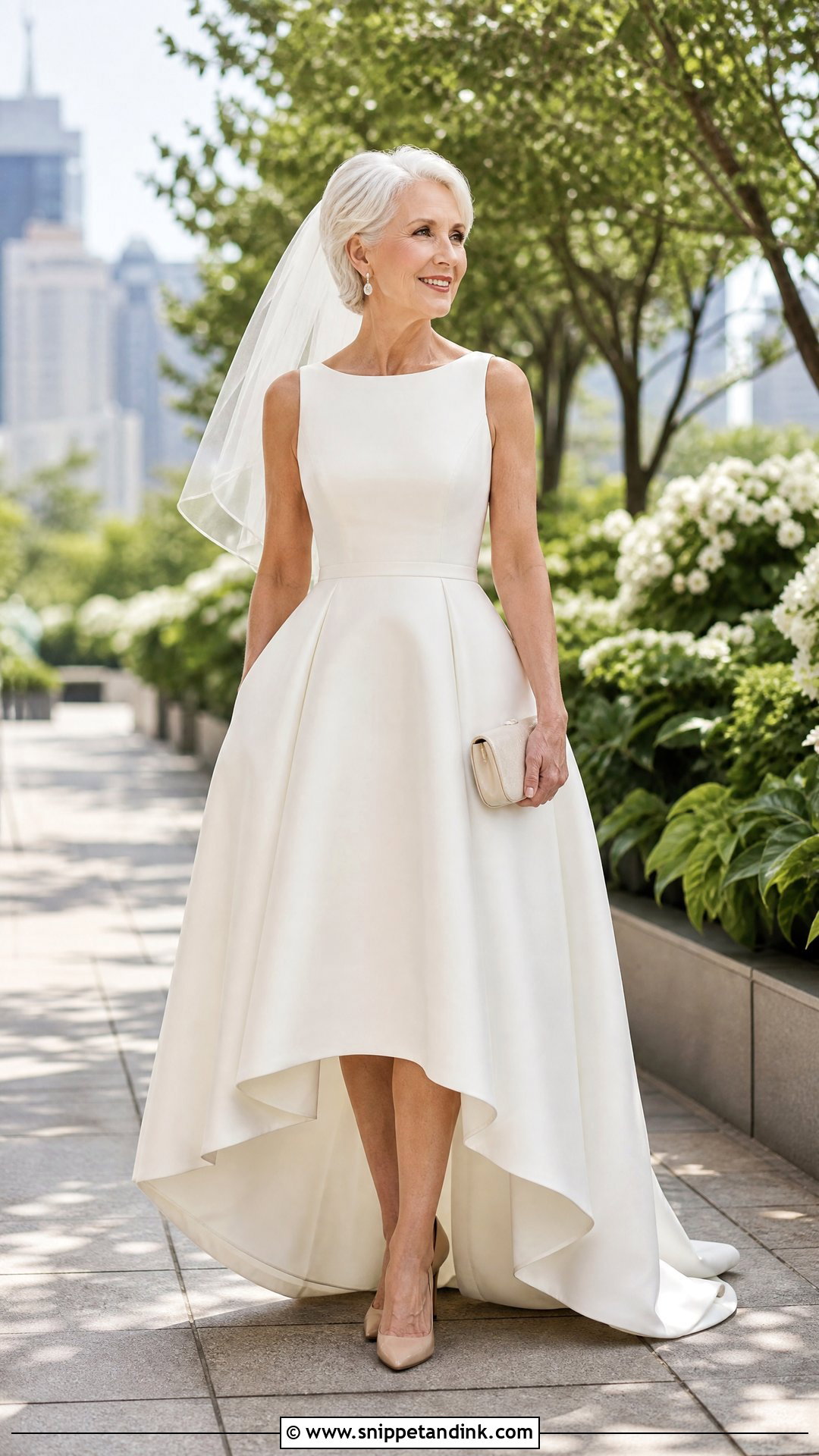
Showing the ankle stops a full skirt from swallowing a petite bride, which is why a high-low hem can work so well. Keep the difference between front and back subtle, since a dramatic dip starts to look like a costume cut. A fitted bodice, defined natural waist and streamlined skirt in soft mikado, crepe or light satin give length while still moving easily. Pointed nude or ivory heels extend the leg line. Add small drop earrings, a compact clutch and a short veil, kept above the shortest point of the hem so the two don’t compete. City ceremonies, garden venues and relaxed receptions suit it.
18. Beach Chiffon Wedding Dress
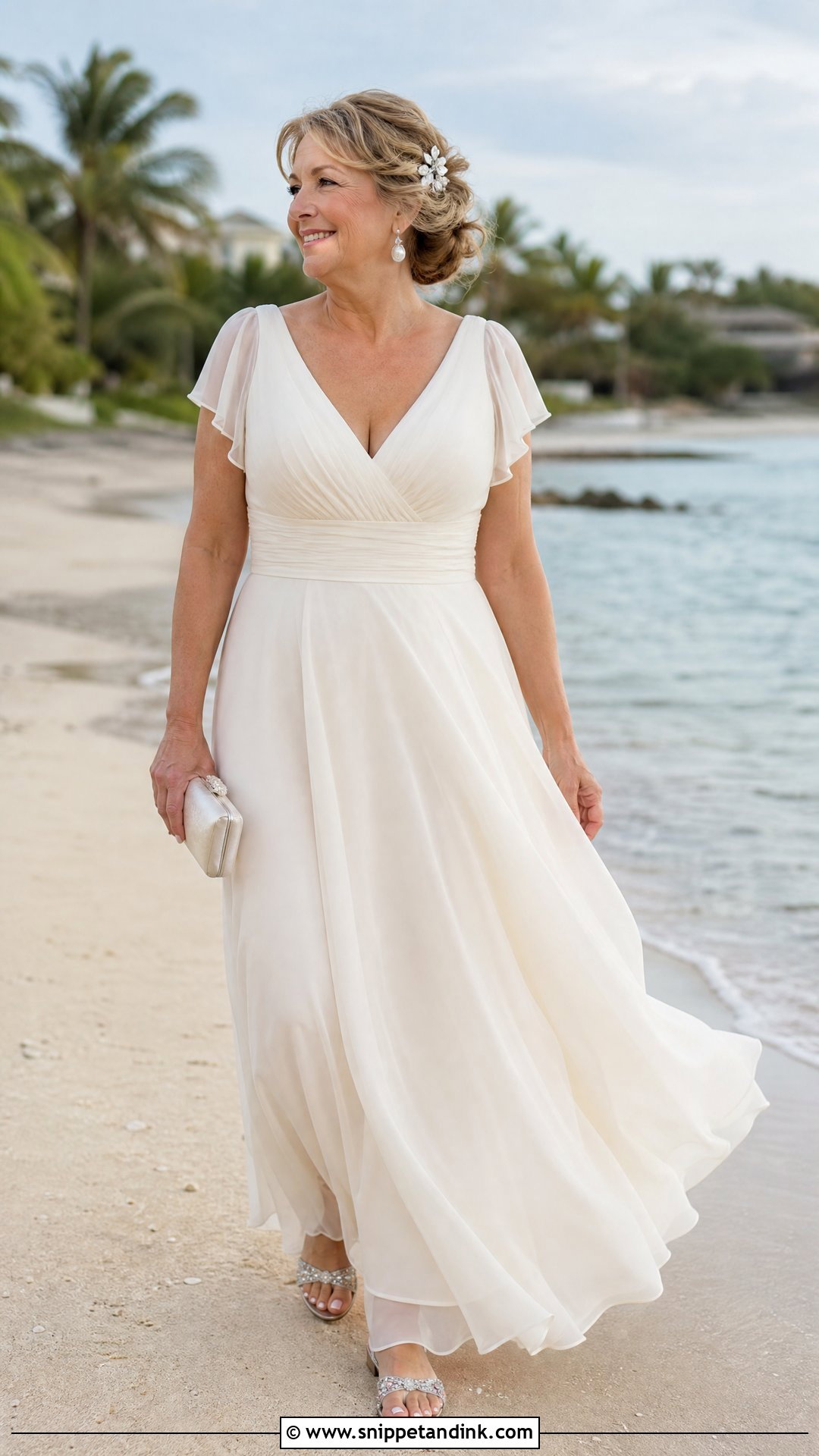
Wind is what to plan for on a beach. A lined chiffon gown with a softly fitted bodice, wide straps and a flowing A-line skirt moves well without blowing about too much. Skip long trains, heavy beading and loose ties, which collect sand and drag through wet patches. Flutter sleeves or a sheer capelet give light coverage. Embellished flat sandals, pearl earrings and a small woven or satin clutch finish it. A long veil on a windy shore ends up wrapped around your face in half the photos, so I usually suggest a floral hair comb instead. It all lets you walk comfortably on sand for the whole celebration.
19. Garden Floral Appliqué Wedding Dress
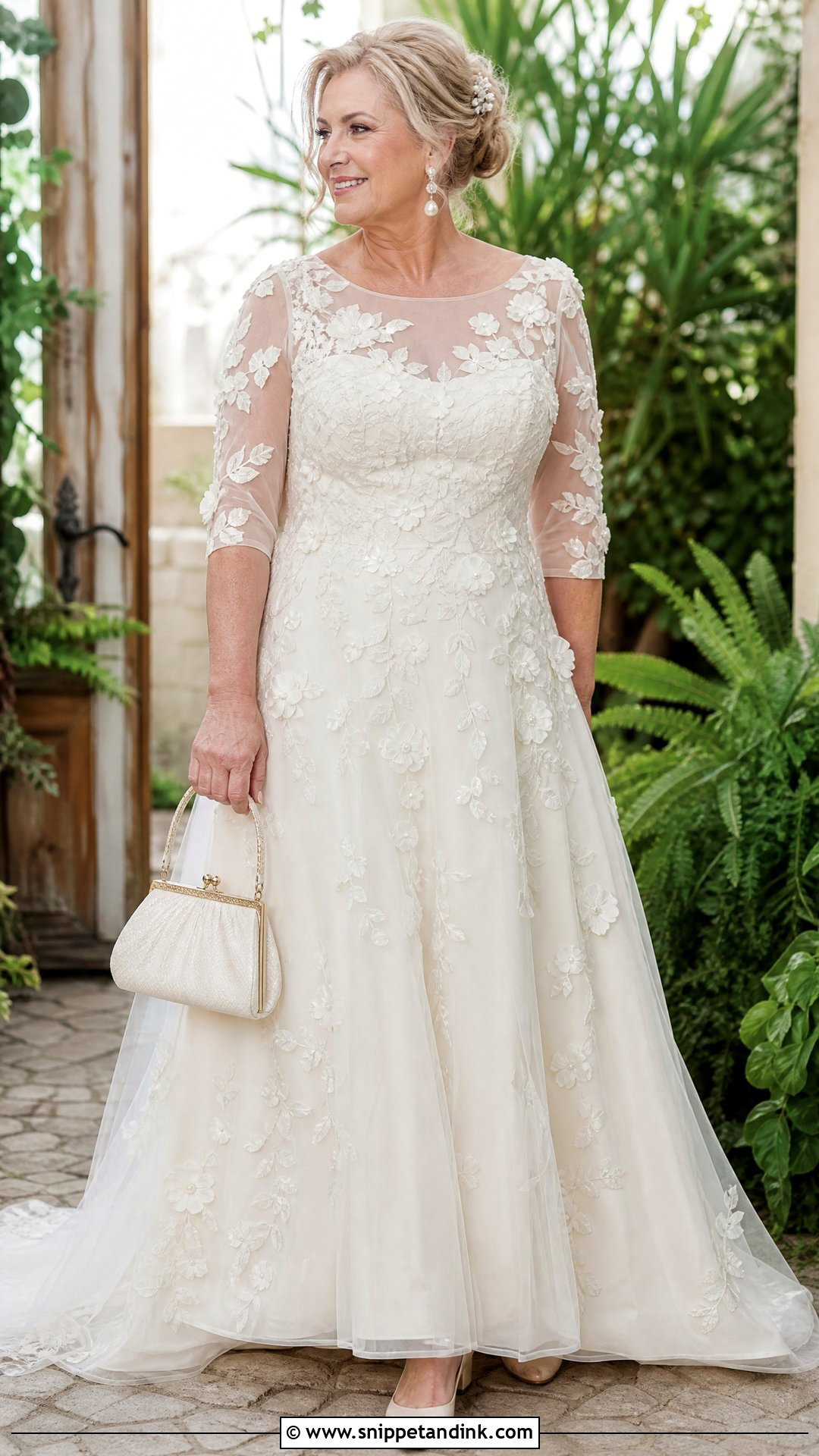
Three-dimensional appliqués give a garden dress depth. The best ones concentrate the flowers on the bodice and scatter them gradually down an A-line skirt, so the eye moves downward naturally. A light ivory lining keeps them visible, and sheer elbow sleeves cover the arms without hiding the design. Keep the silhouette simple. Low block heels are essential on grass, since a stiletto sinks straight into a lawn during the ceremony. Pearl earrings, a small ivory bag and a loose updo with a delicate floral comb complete it. Spring and summer ceremonies outdoors in daylight suit it.



20. Winter Long-Sleeve Wedding Dress
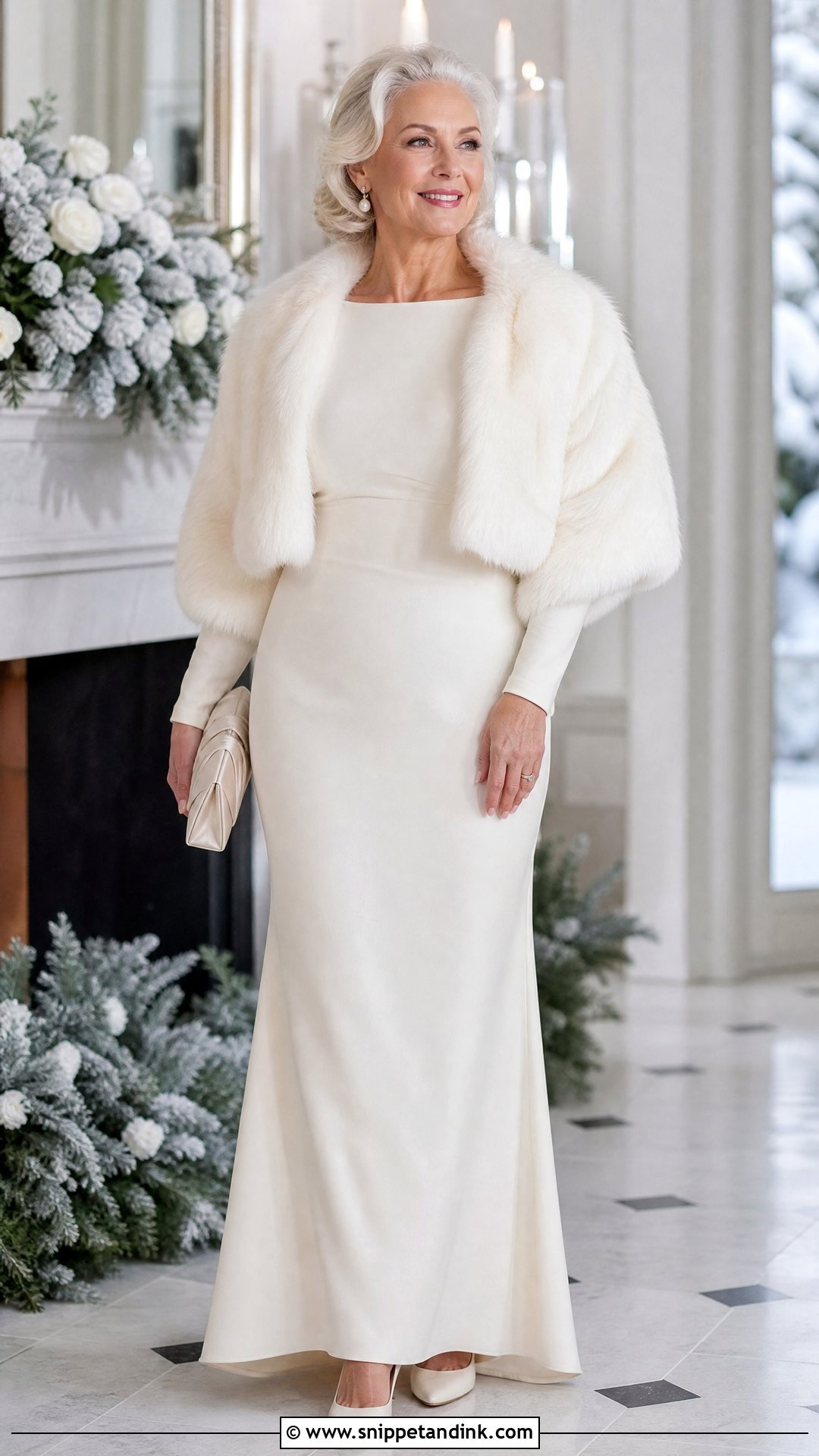
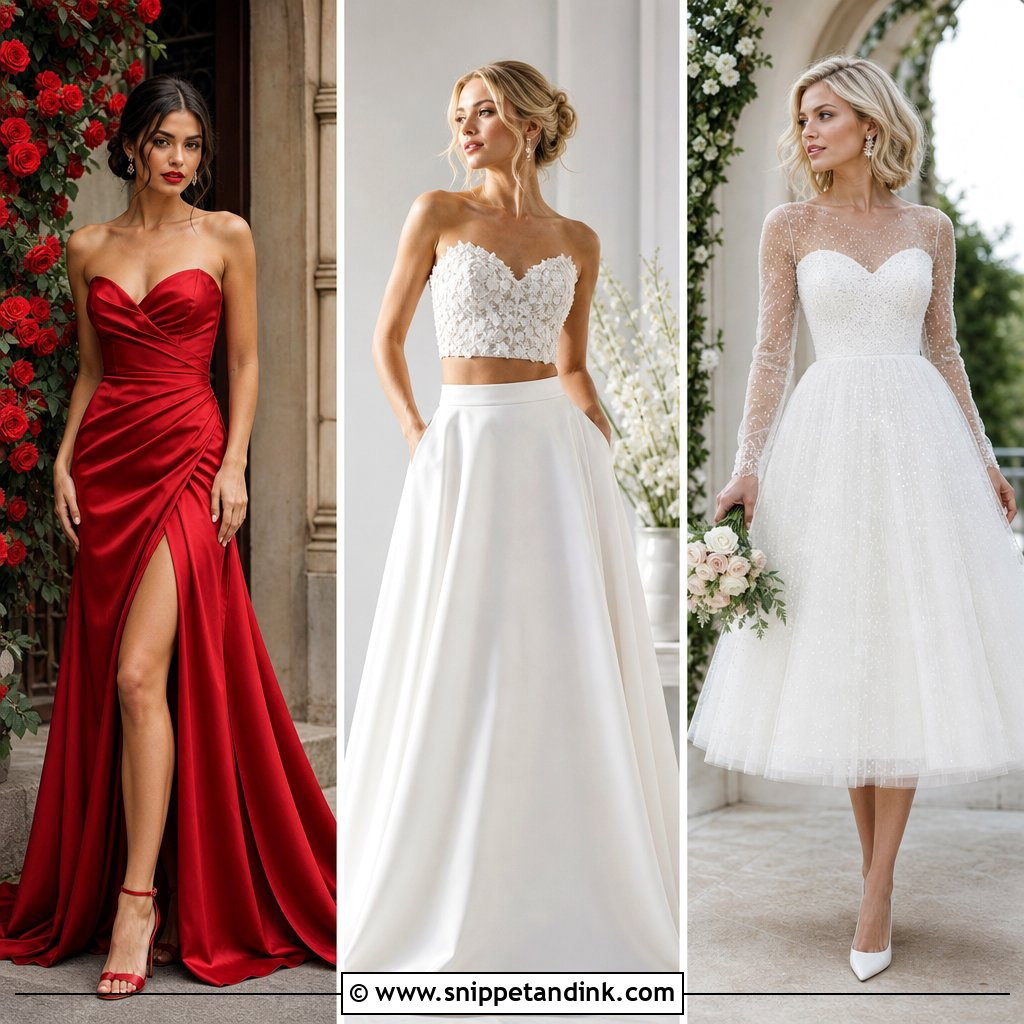
Cold weather lets you use heavier fabrics and real layers. Choose a long-sleeve gown in crepe, satin or lined lace, with a fitted bodice and a floor-length skirt; a bateau or modest V-neck balances the covered arms and frames the face. For outdoor photos and travel between venues, add a cropped faux-fur wrap, tailored cape or satin coat. Keep that outer layer ivory or close to the dress shade, because a stark white coat over an ivory gown makes the gown look dingy. Closed-toe pumps, pearl earrings and a velvet or satin clutch finish it. You stay warm and covered without needing a heavy, overdecorated dress.
Is Bright White Still Right the Second Time Around?
Yes, if you love it. No rule says a second wedding, or a first one later in life, calls for color or a short dress. What I’d think about instead is how the shade sits against your skin.
Ivory, champagne and soft white
Stark optical white has a cool, blue cast that can deepen shadows under the eyes in daylight. Ivory and soft white are warmer and kinder to mature skin, and champagne or blush warm it further. Hold each fabric under your chin by a window and look at your face, not at the dress.
Veils, trains and grandchildren
Wear a veil if you want one; a birdcage, a fingertip length or a comb with a short tulle fall all suit a later wedding. A long train is fine at a formal venue, but ask for a bustle so you can move freely once the photos are done. If grown children or grandchildren are part of the ceremony, test how the gown lets you bend for a hug, hold a small hand and sit beside them. That kind of ease shows in every candid picture.
Comfort Is the Most Flattering Detail of All
Age doesn’t decide the right gown. The right one supports your body, fits the celebration and lets you forget about it once the music starts. The Older Women Wedding Dresses above run from traditional lace to modern crepe, soft color, removable layers and shorter hems. Start with the shape and fabric that feel natural to you, then let tailoring refine the neckline, waist, sleeves and length. Add stable shoes and accessories that support the dress instead of competing with it, and you’ll be free to enjoy every part of the day.
You'll Like These Ideas:










Leave a Reply