
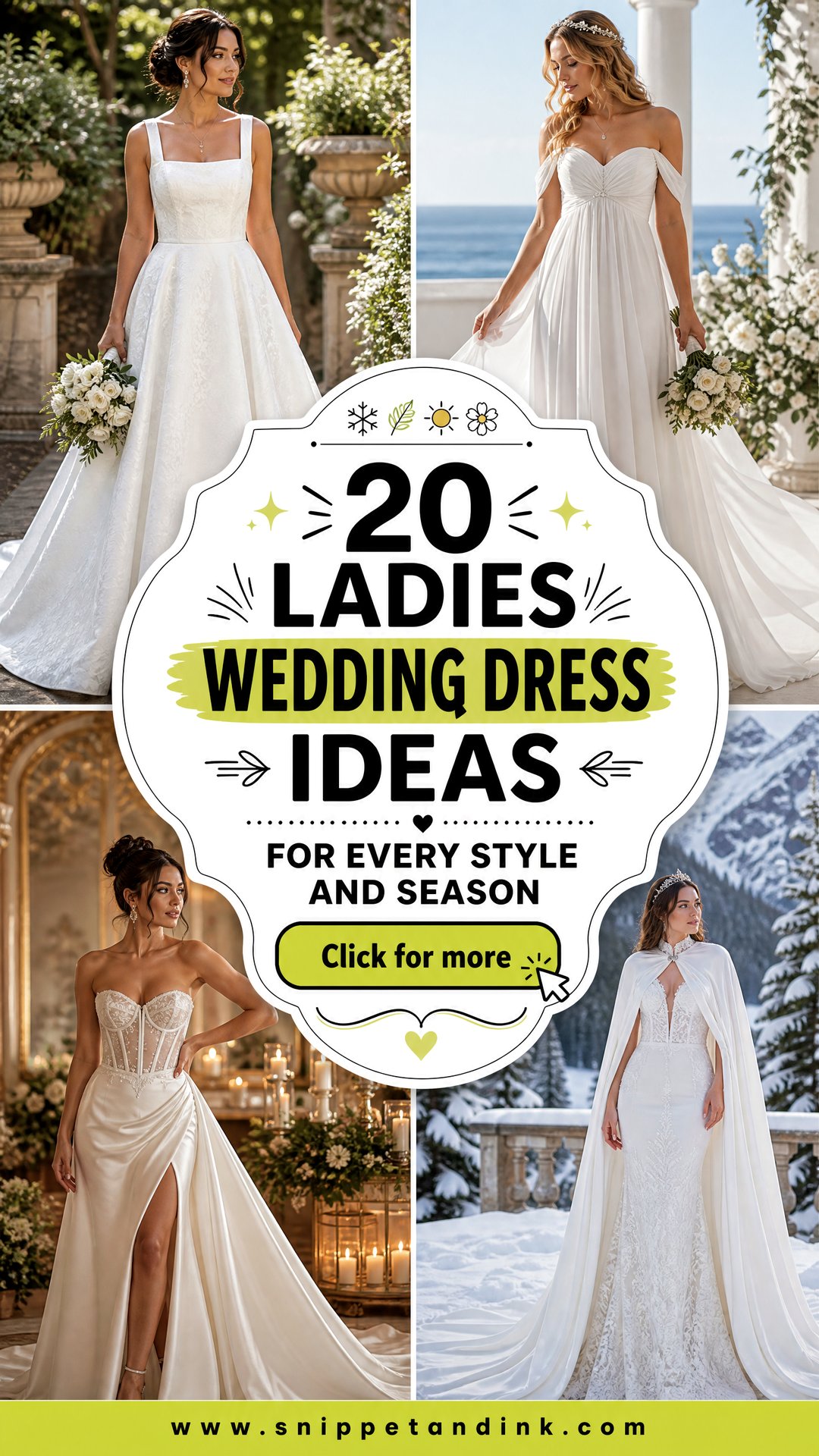
Brides usually arrive at a fitting room with a picture of one detail, a neckline or a sleeve, and leave having bought a completely different shape. That’s normal. A gown is a whole outfit, and the skirt, fabric weight, shoes and veil change how a neckline looks on you more than the neckline itself does. The twenty dresses below run from full ball gowns to beach chiffon, fitted mermaids, modest long sleeves and short reception dresses. Basque waists, sculpted necklines, three-dimensional florals and detachable pieces are all very much in bridal collections right now, and I’ve included them. For each, I’ve noted how I’d style it and what I’d check before you say yes.
What Happens at a First Bridal Appointment
Most appointments last somewhere between an hour and ninety minutes, and you’ll usually try on between five and ten dresses. Samples come in one or two sizes and are clipped to fit, so judge the shape and fabric, not the exact fit.
Bring a strapless bra in a nude close to your skin tone, smooth underwear and shoes roughly the height you plan to wear. Two or three people whose opinions you trust is plenty. A big group usually means a lot of conflicting advice and a bride who leaves more confused than she came.
Try at least one shape you’re convinced you’ll hate. I see it again and again: the bride who swears she isn’t a ball gown person and lights up in one, or the reverse. Your consultant can tell a lot from your reaction to a silhouette you didn’t expect to like. Take photos from the back and side as well as the front, and write down the designer and style number before you leave.
1. A-Line Lace Wedding Dress
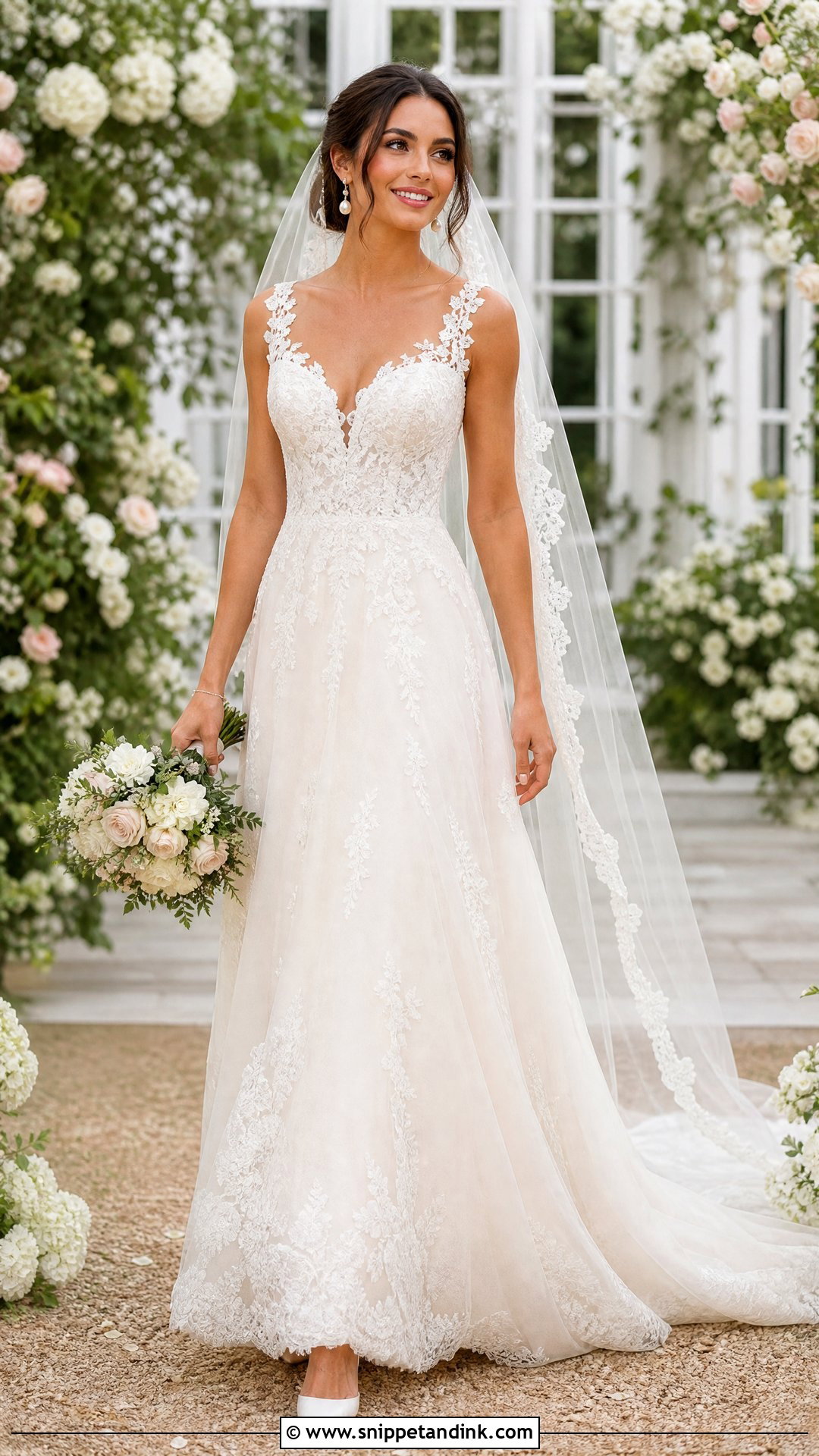
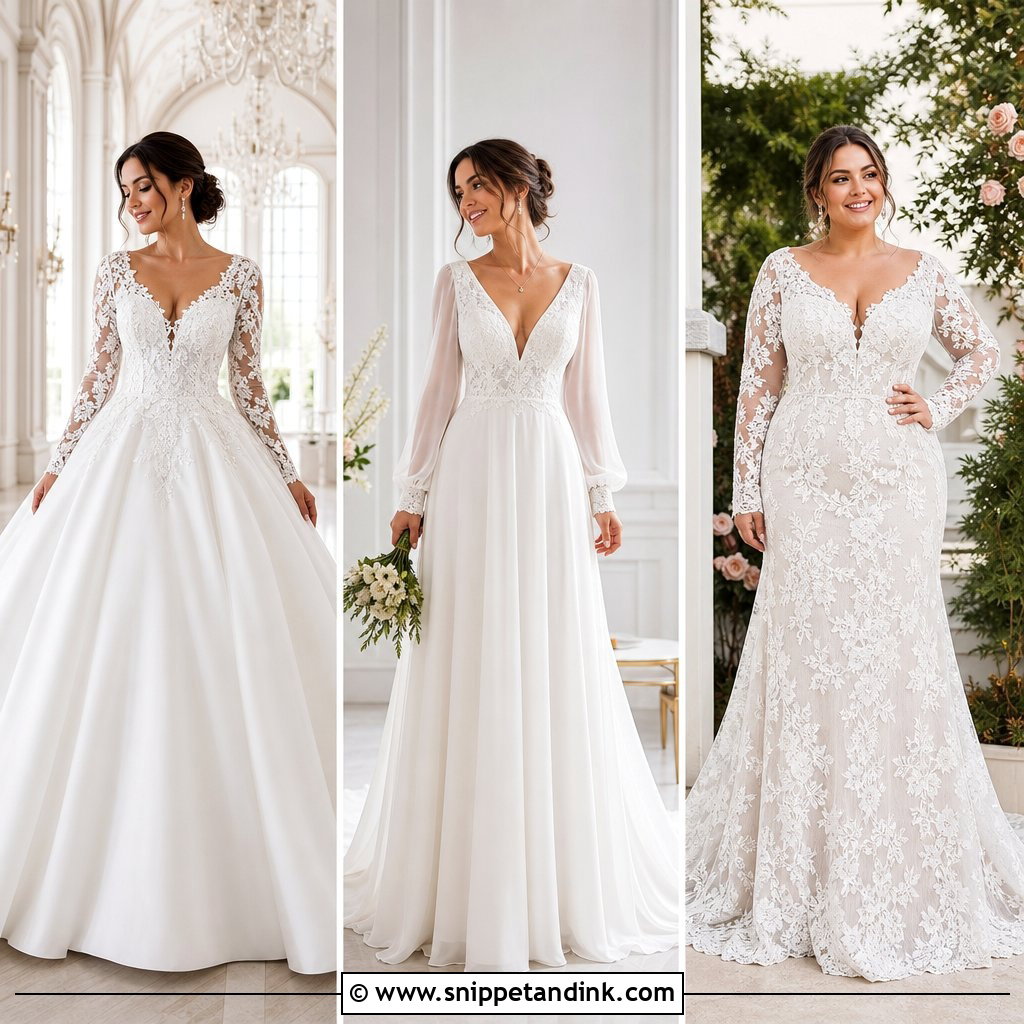
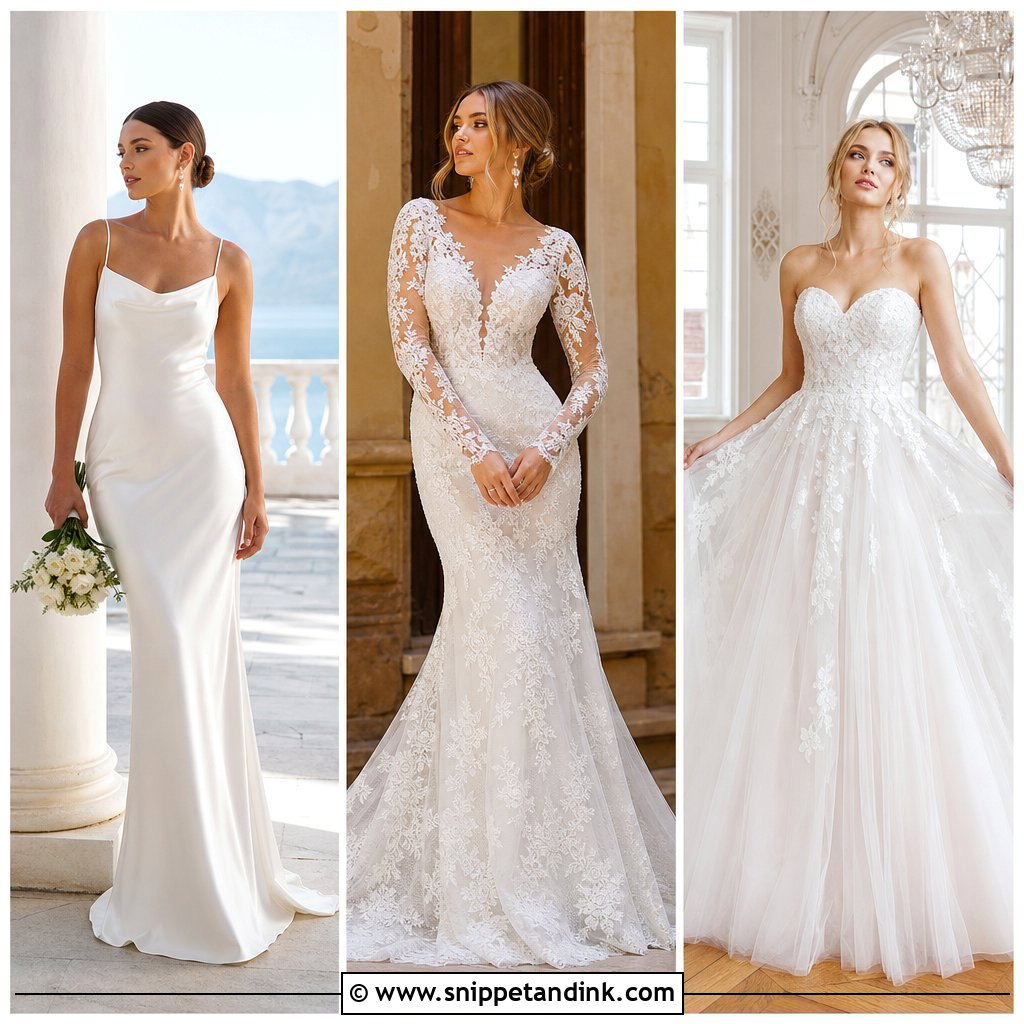
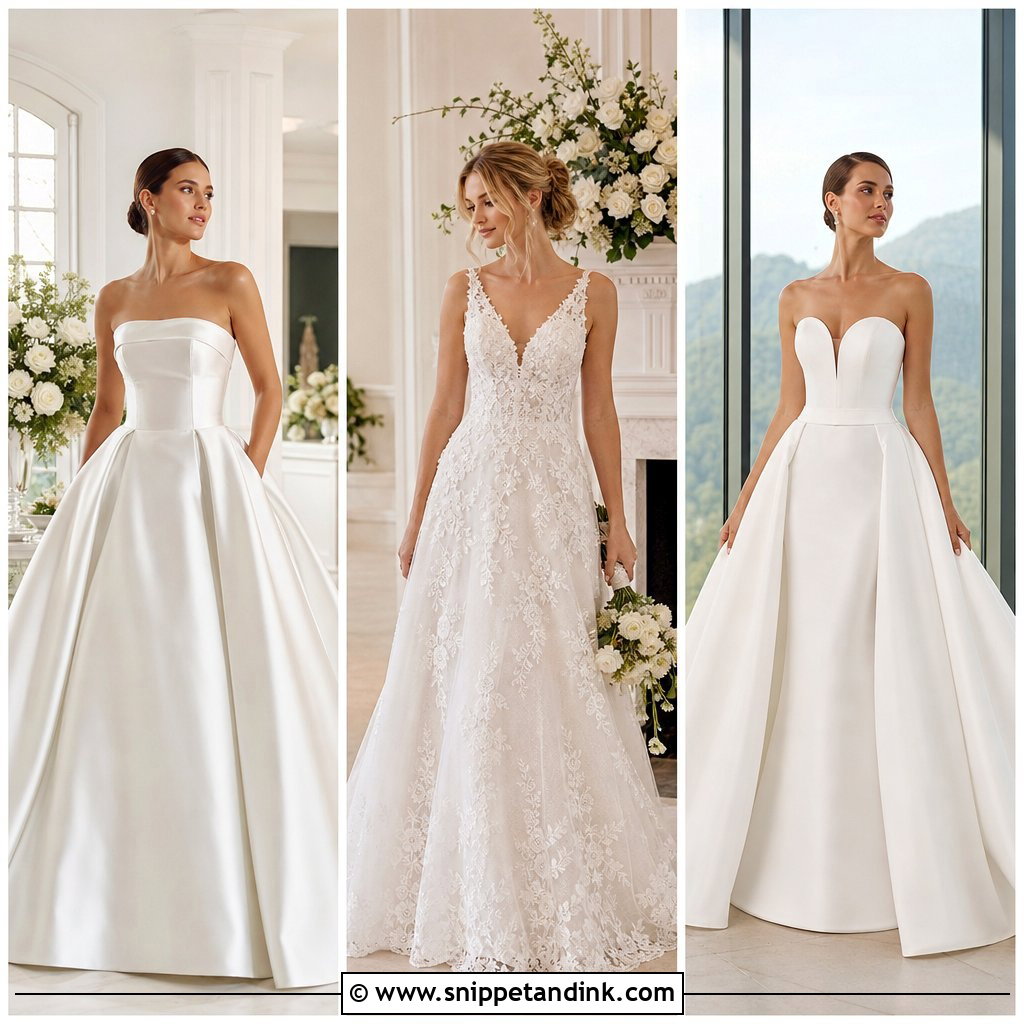
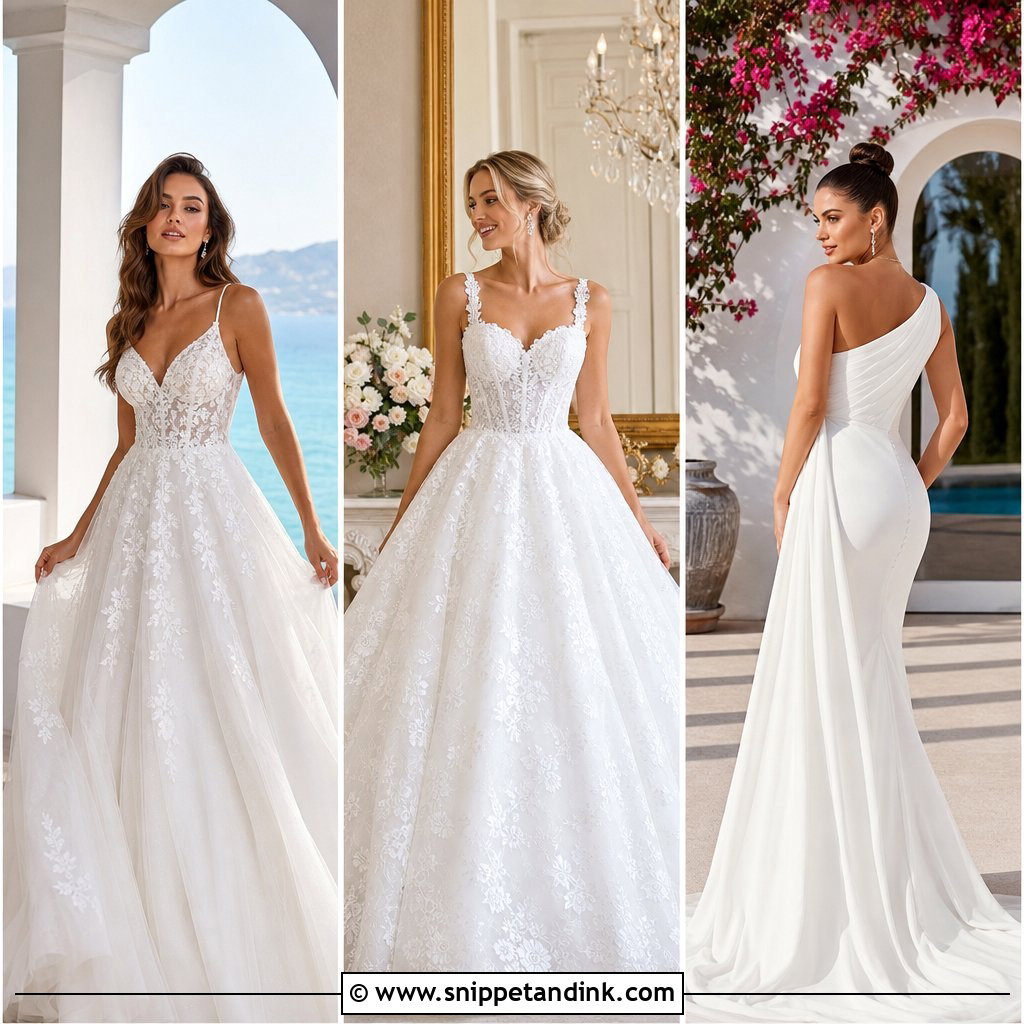
If you’re unsure where to start, start here. An A-line flatters almost everyone because it skims the hips and lets the waist do the shaping. A fitted bodice with supportive straps and floral lace over the skirt gives texture without weight. Pointed ivory pumps, pearl drops and a fingertip veil with a narrow lace edge finish it, along with a compact bouquet. A slim satin belt adds definition if the bodice is soft. Shoulders and hem are where alterations matter most; a strap set a quarter-inch too wide will slip all night.
2. Satin Ball Gown Wedding Dress
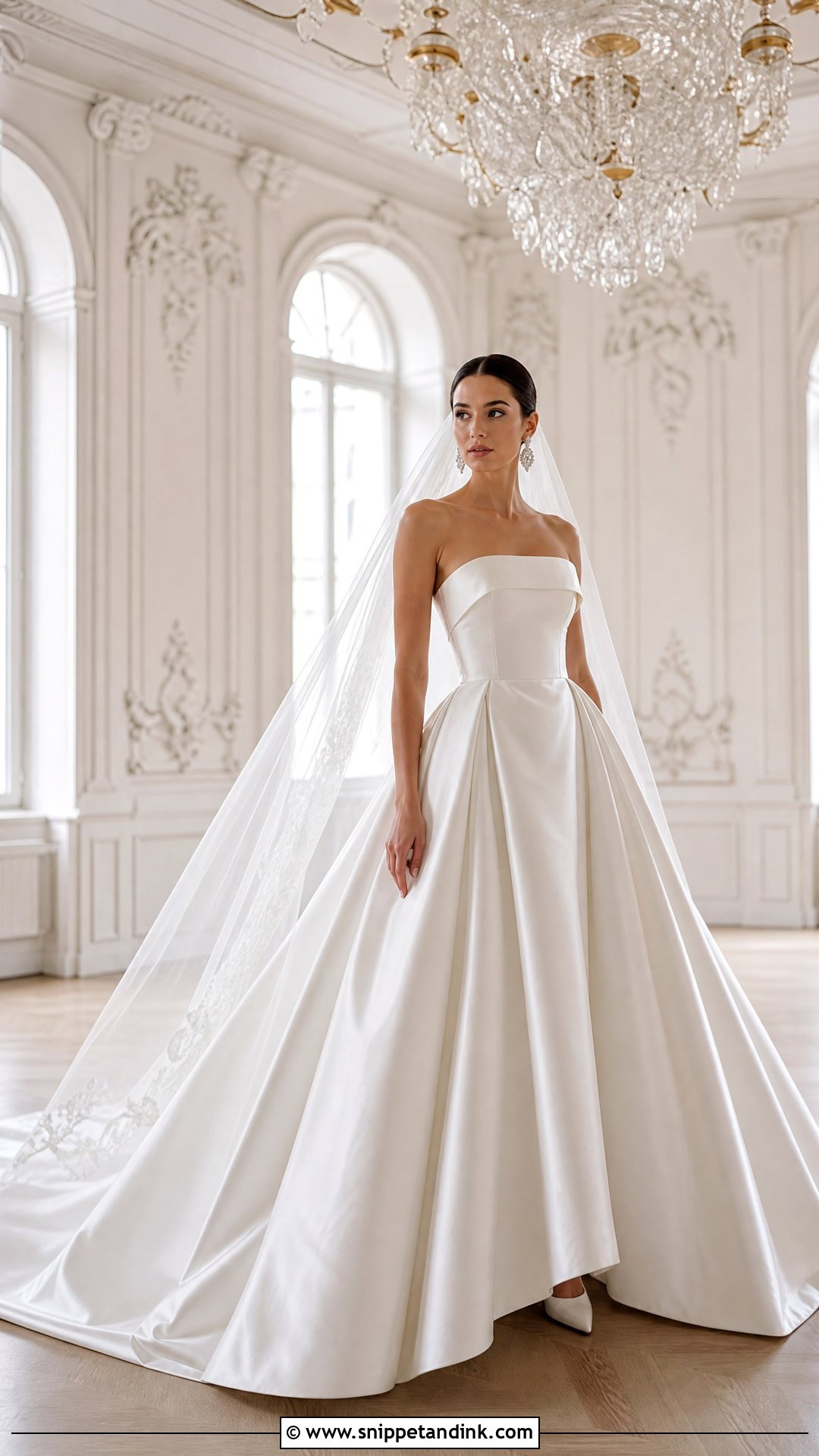
A satin ball gown makes the most traditional entrance there is. The structure comes from a boned bodice and from the petticoat or crinoline under the skirt, so ask what’s inside before you judge the shape. Look for clean seams and discreet pockets. Crystal earrings, a cathedral veil and closed satin heels, with a sleek bun or waved updo. Keep the jewellery simple; satin already reflects a lot of light. Plan the bustle early. A heavy satin train needs several strong bustle points, or it drops halfway through the reception.
3. Minimalist Crepe Wedding Dress
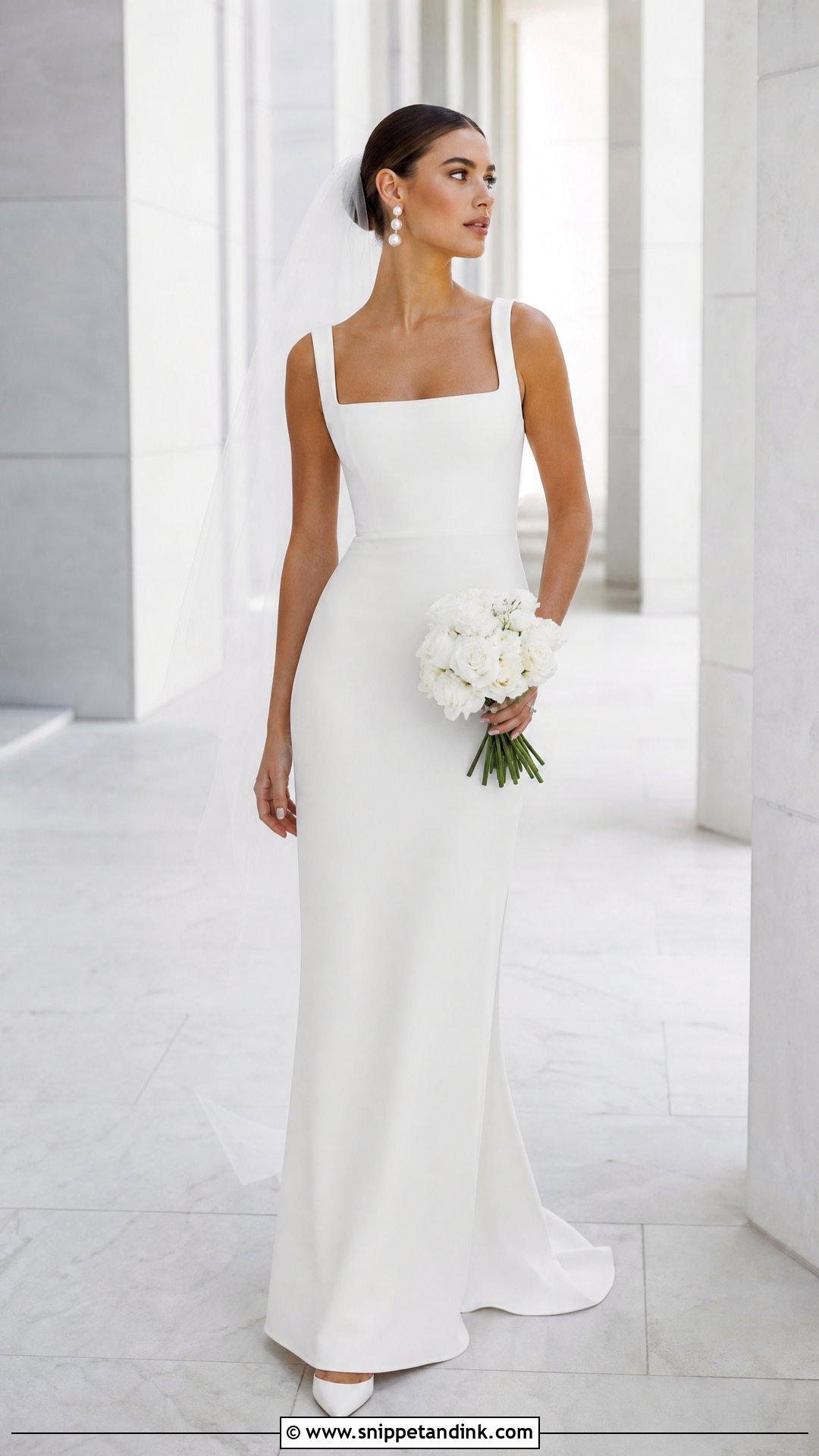
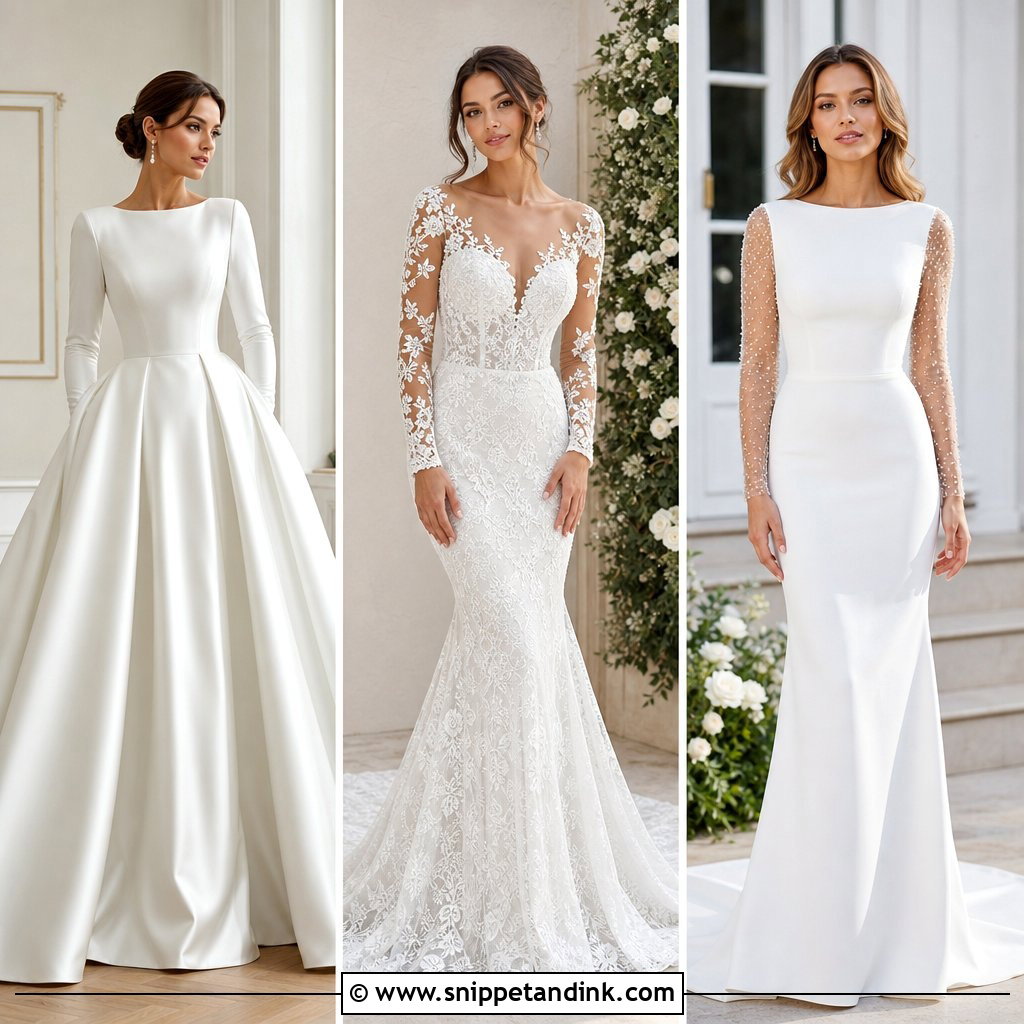
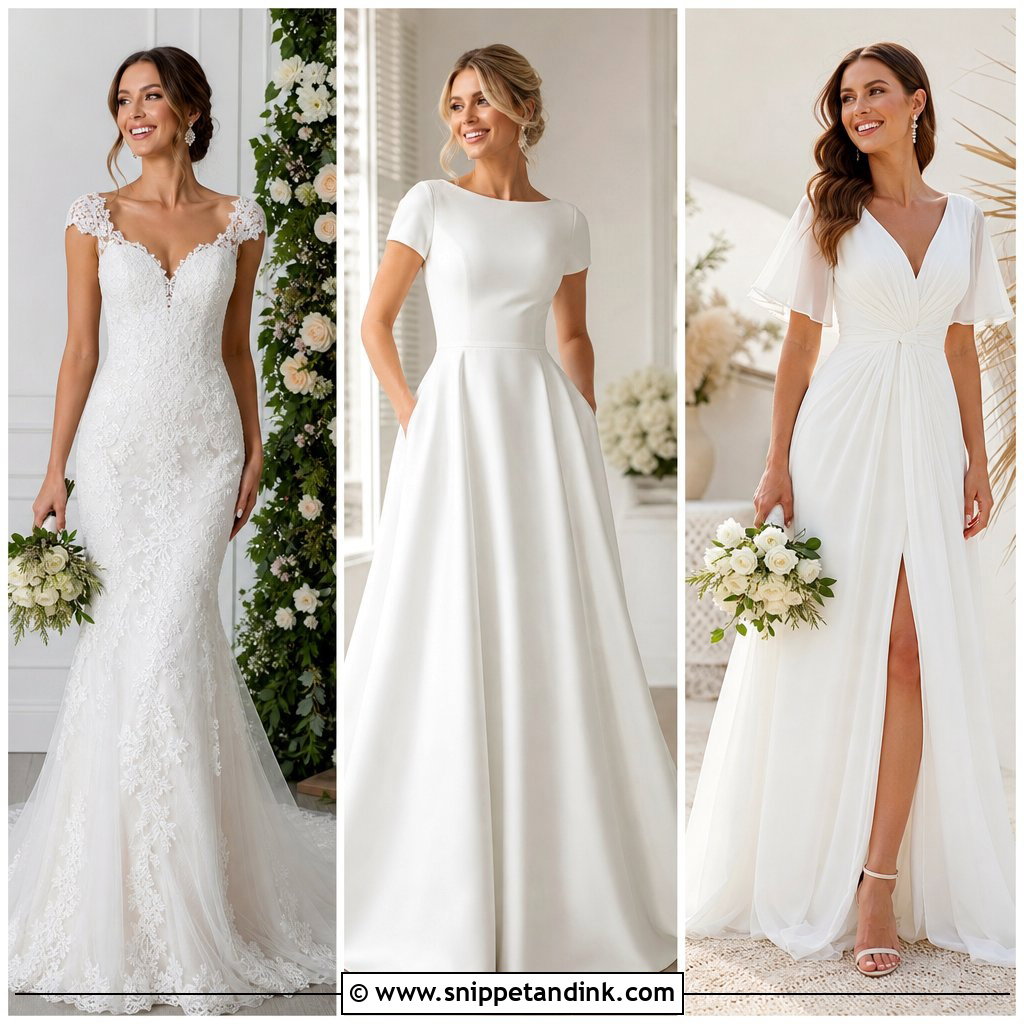
Minimal crepe is the dress where tailoring shows most. A square, bateau or soft scoop neckline gives shape without decoration, and the fabric drapes well when the waist and hem are right. Sculptural pearl earrings, pointed pumps and a plain tulle veil, with a low bun and natural makeup. A detachable overskirt or sheer cape can add ceremony drama. I’d pay for the heavier crepe if there’s a choice. Thin crepe shows every seam allowance and undergarment edge, and no amount of steaming fixes that.
4. Mermaid Wedding Dress
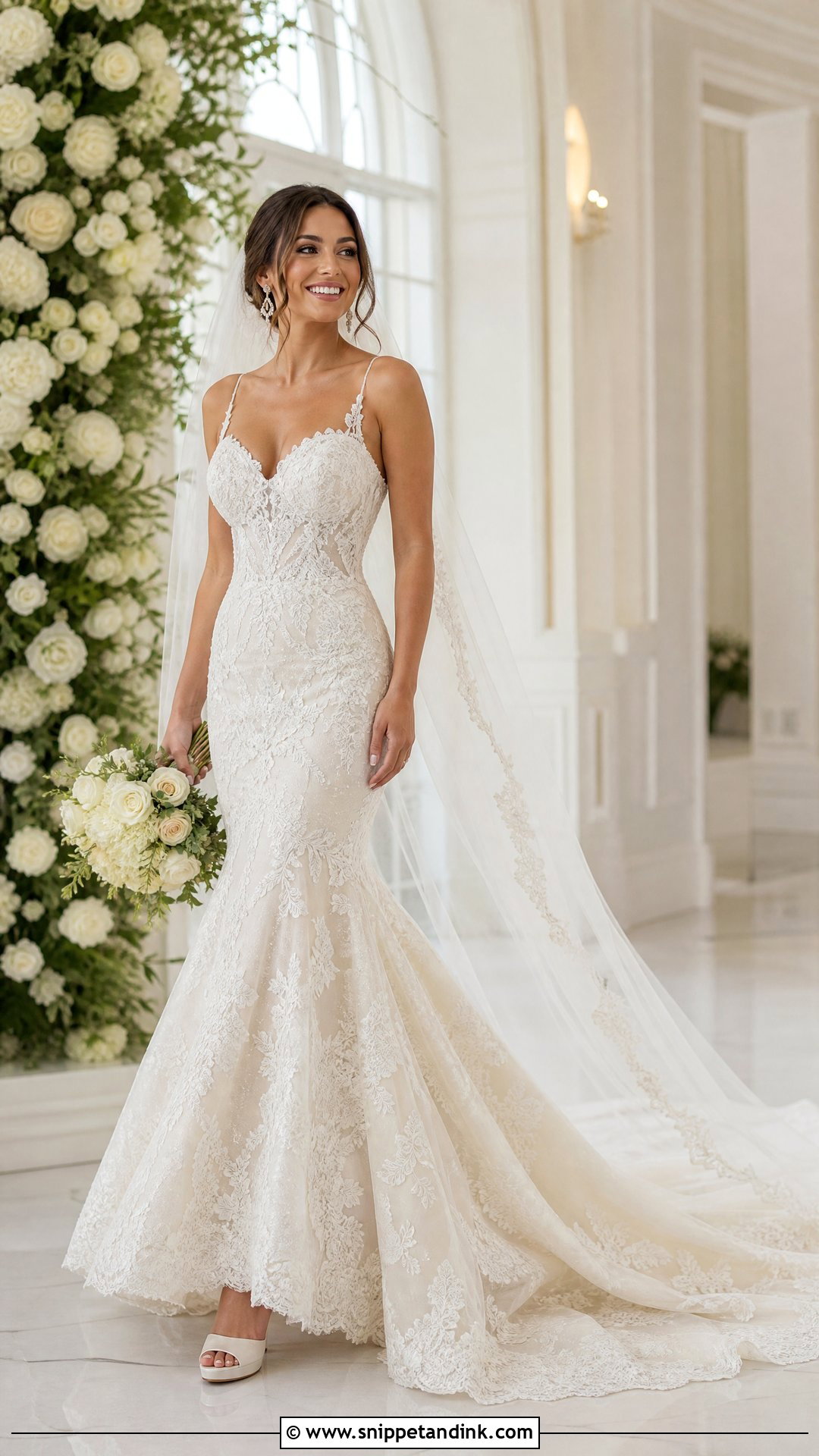
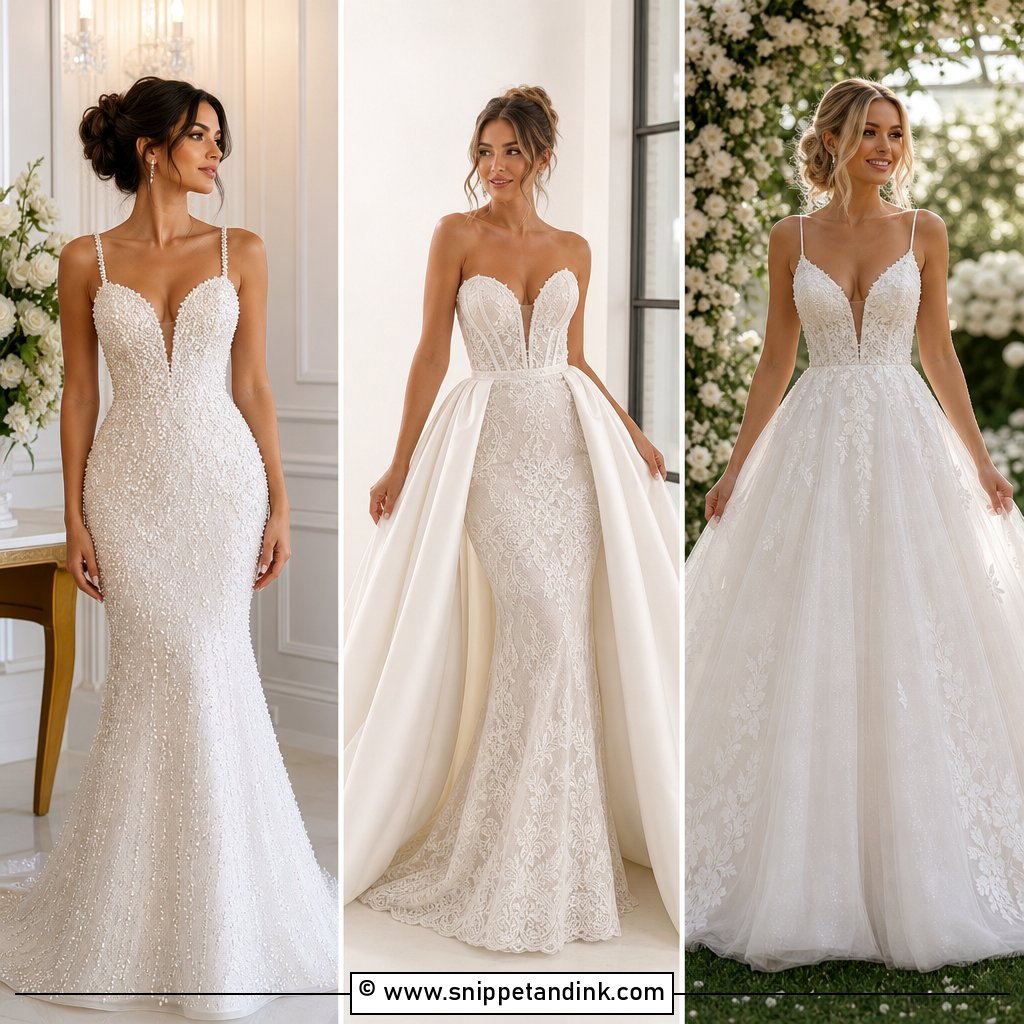
Mermaid gowns follow the body to the knee and then flare. Stretch crepe gives a smooth finish; lace adds texture and hides small fit ripples better. Delicate drops, a long veil and comfortable heels at the exact height the hem was cut for. Where the flare starts matters most. Set it too high and the shape loses drama, too low and you’ll shuffle. At fittings, walk normally, take stairs and sit in an ordinary chair. A fitted skirt needs a well-planned bustle, because loose trains on mermaids get stepped on constantly.
5. Off-Shoulder Wedding Dress
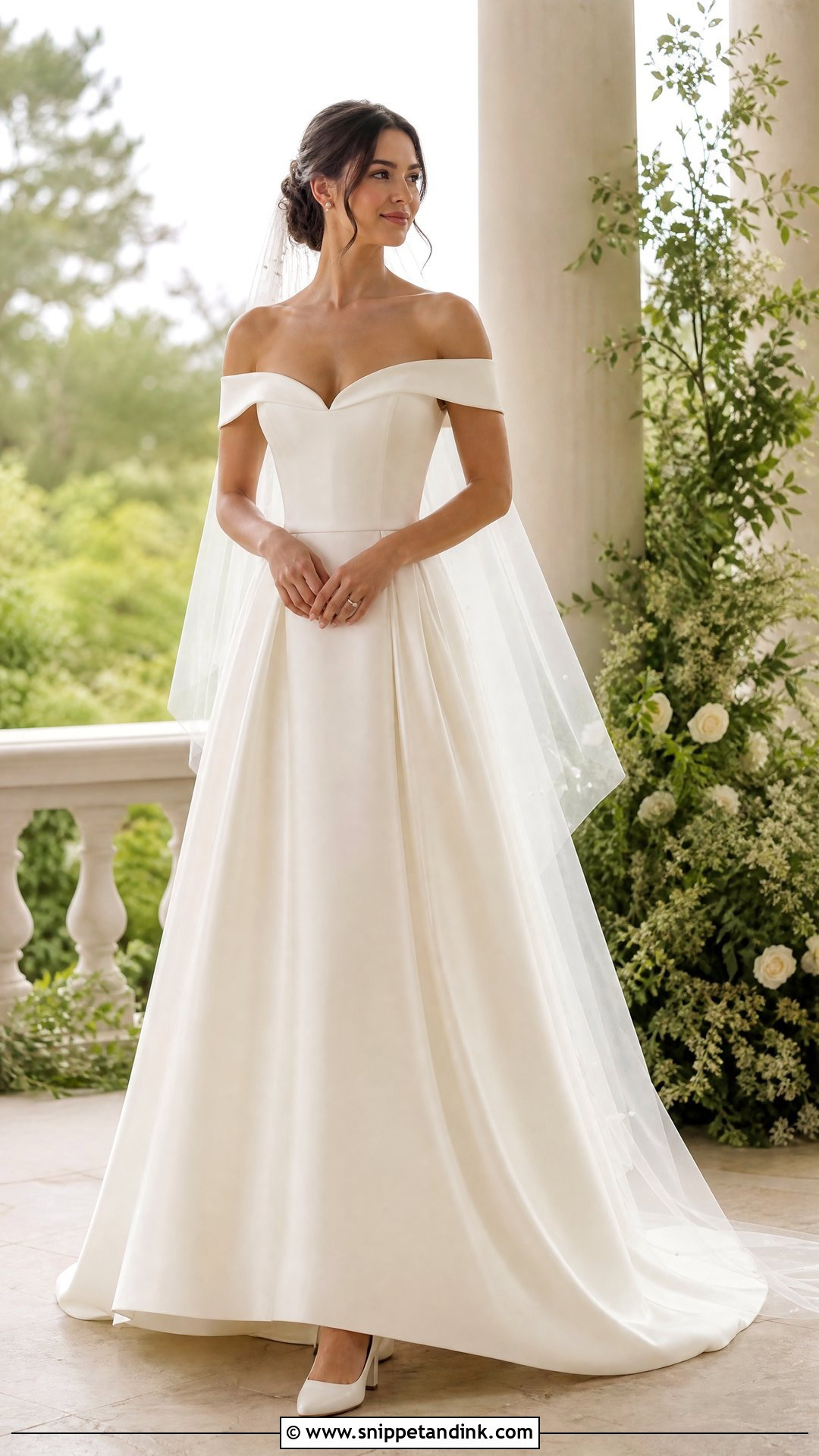
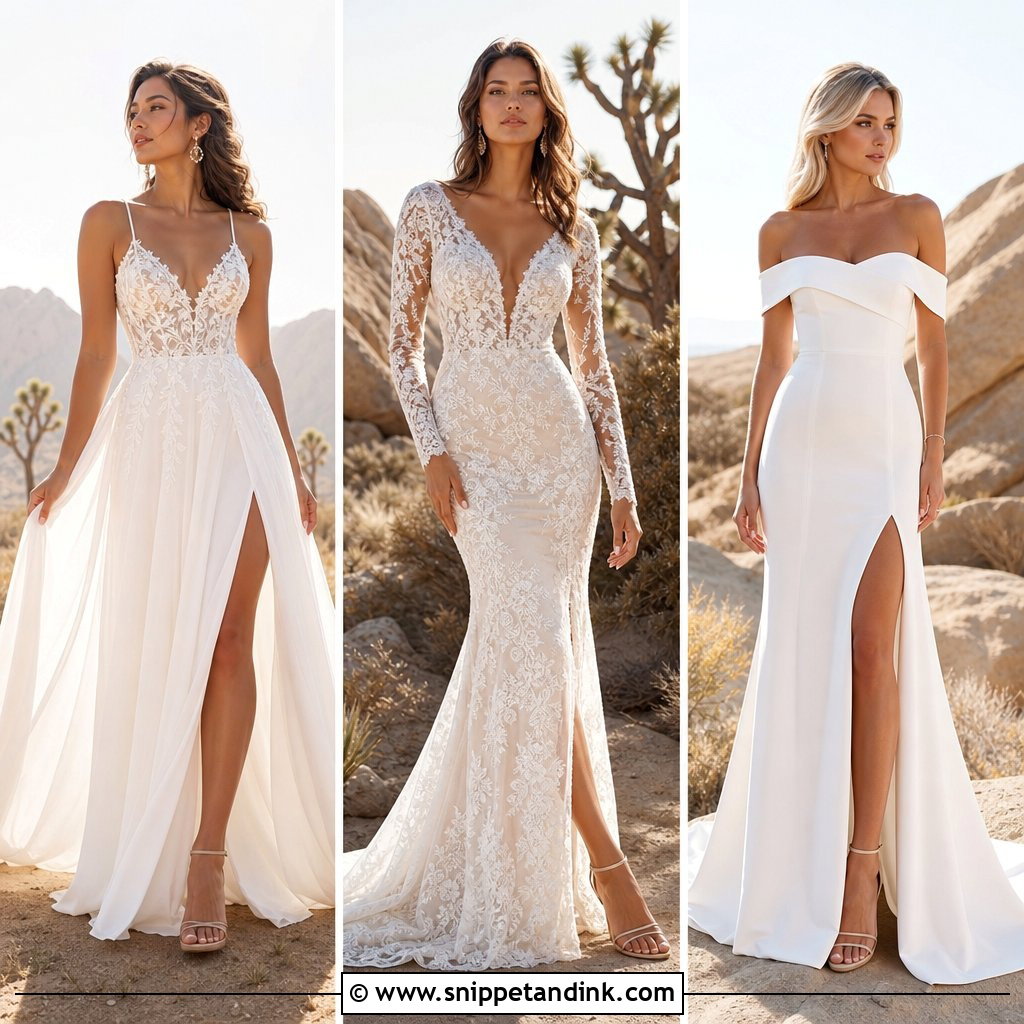
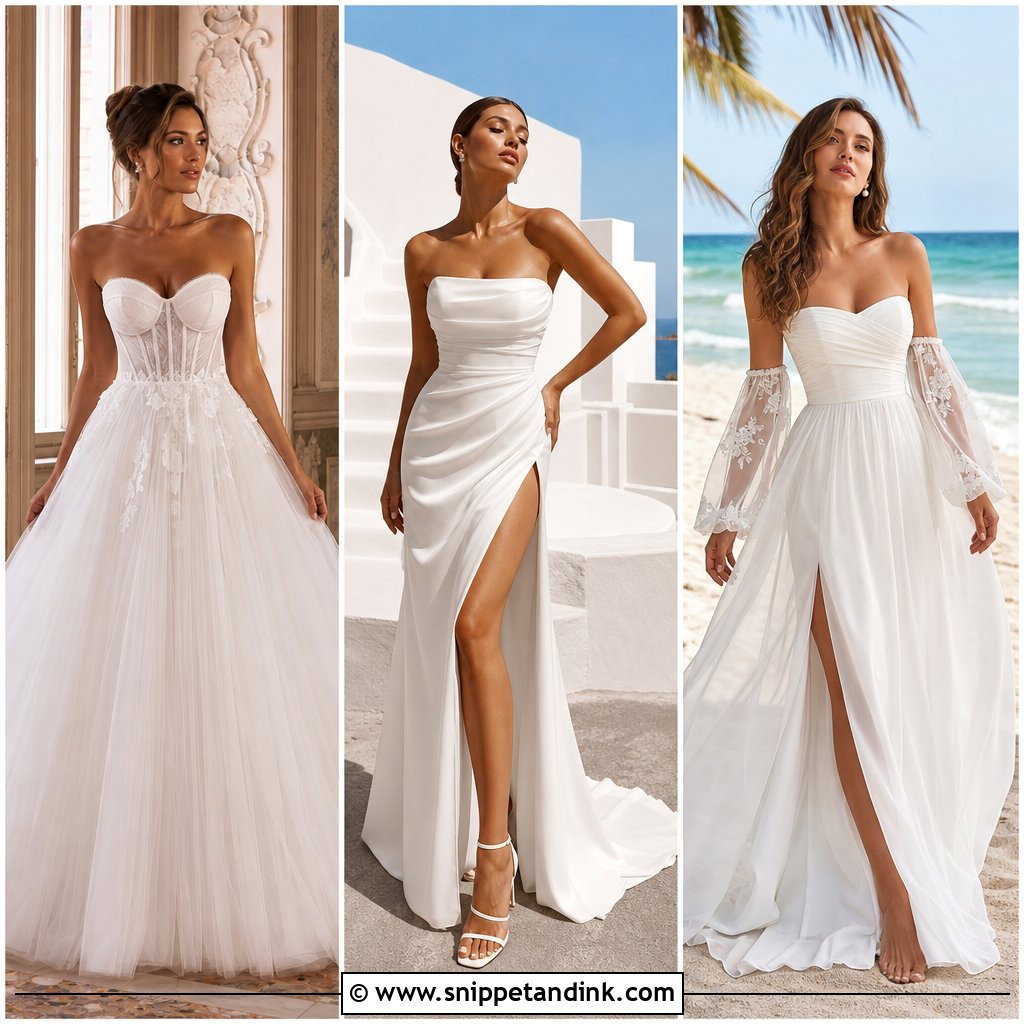
Off-shoulder necklines frame the collarbone, and they can sit on a ball skirt, an A-line or slim crepe. The internal structure is what I look at first: a band with grip tape or boning keeps the neckline in place when you raise your arms. A fine pendant or pearl studs, and a gathered veil set under a low updo. Closed heels for formal venues, block sandals outdoors. Skip the necklace if the neckline is beaded. Then hug someone in the fitting room. If the sleeves pin your arms down, they need loosening.
6. Long-Sleeve Lace Wedding Dress
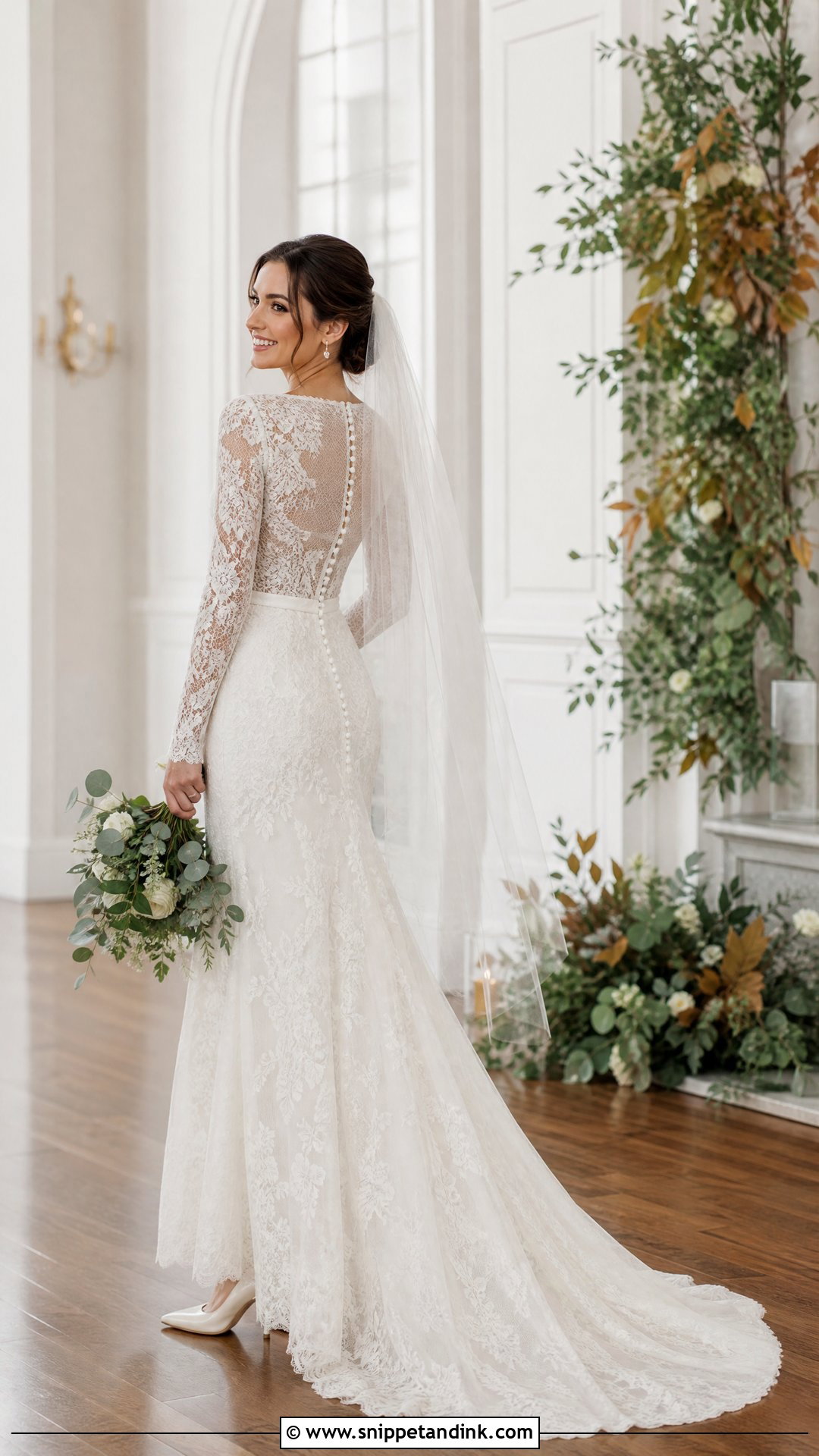
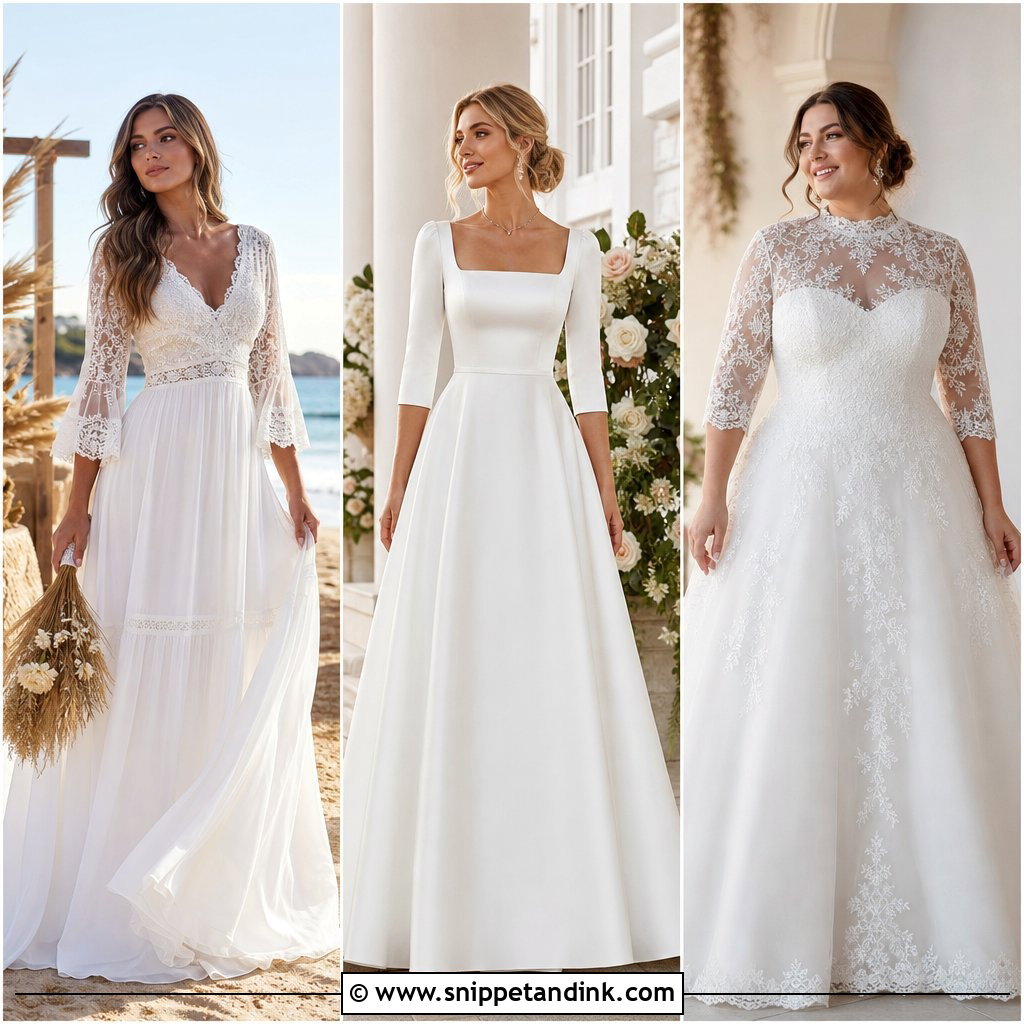
Long lace sleeves give coverage without losing detail. Illusion sleeves feel lighter; lined sleeves read more modest and are warmer. A defined waist, an A-line skirt and covered buttons down the back are a traditional combination. Pearl earrings, ivory pumps and a chapel veil with a plain edge so the lace pattern isn’t doubled up. Season decides the weight. Light lace suits spring, while denser lace over satin lining is kinder in a cold church.
7. Square-Neck Wedding Dress
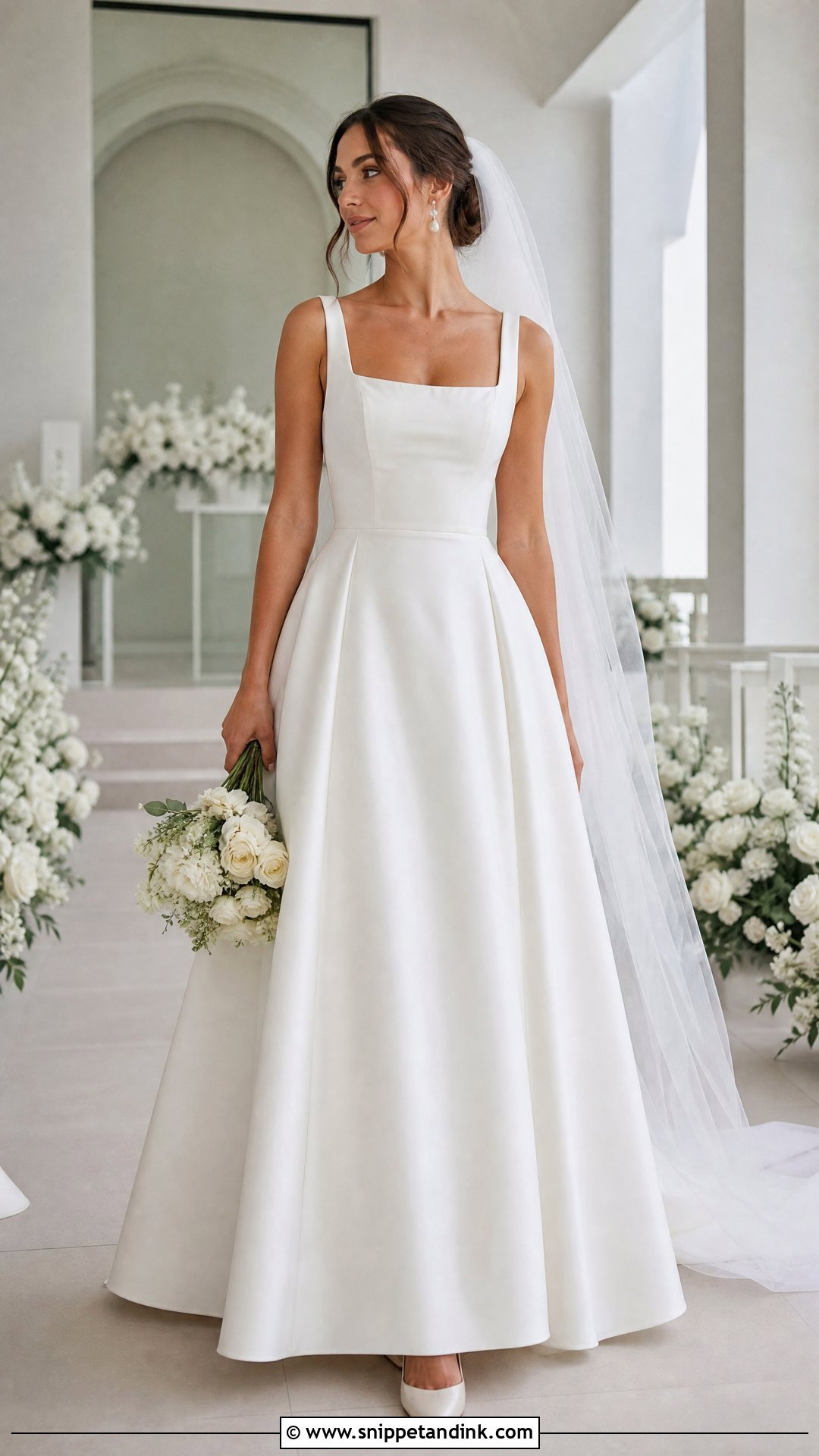
Square necks look architectural and suit a wide range of strap widths, from fitted sleeves to thin straps. Pair with an A-line satin skirt for a classic feel or a slim crepe skirt for something modern. Pearl drops, a fine bracelet, pointed ivory heels and a lightly structured veil. The corners are where it goes wrong: if the bodice is even slightly loose, they gape outward when you sit. Ask your tailor to pin it while you’re seated and turning, not just standing still.
8. Basque-Waist Wedding Dress
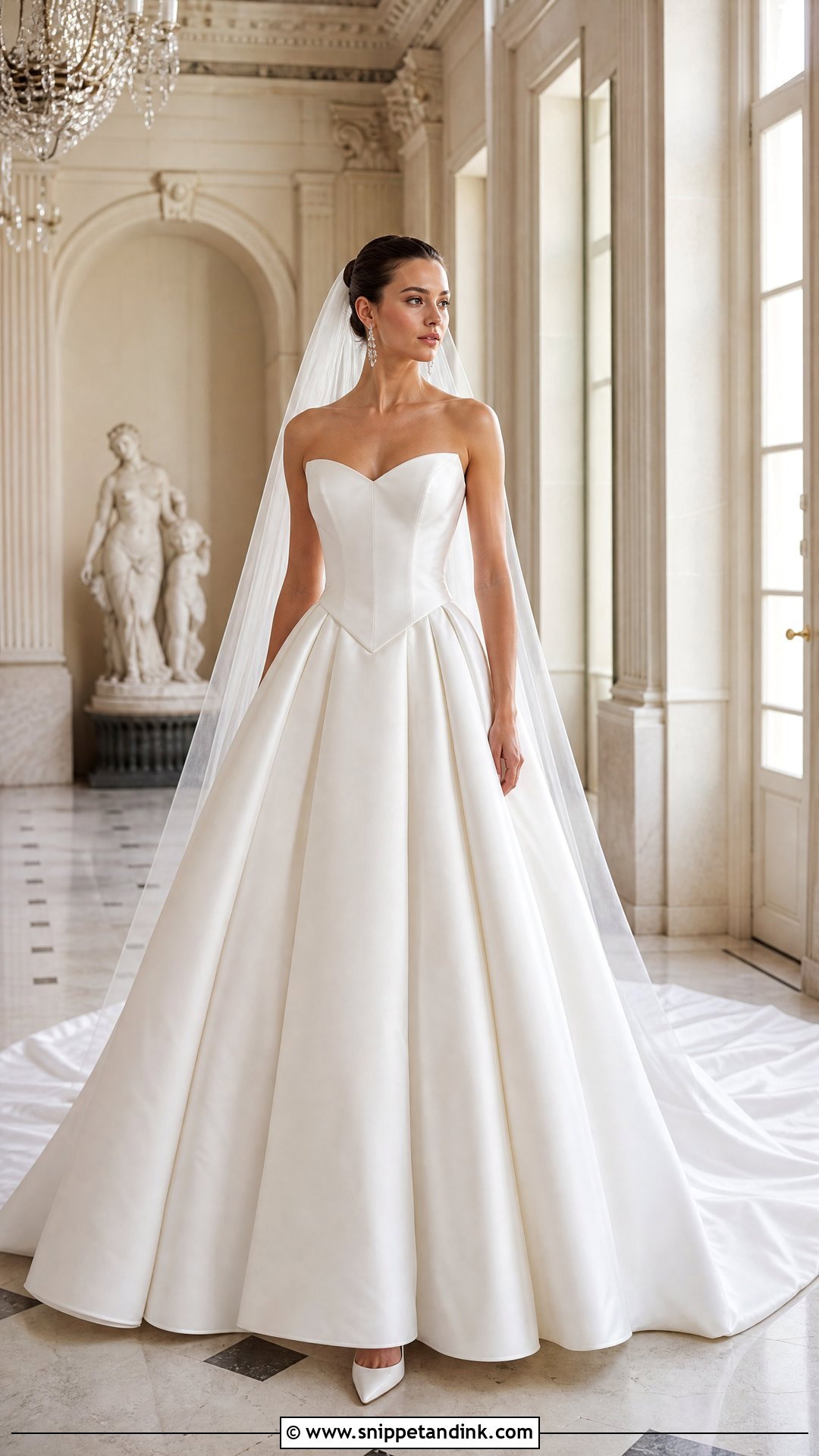
A basque waist dips into a point below the natural waistline, which lengthens the torso and suits a full satin, tulle or organza skirt. It’s a historic shape that bridal designers have brought firmly back into current collections. Cathedral veil, delicate earrings, classic satin pumps. Keep the bodice decoration restrained so the waistline stays the feature. During alterations, sit down and look in a mirror: the point should lie flat, not fold up or press into your stomach. A corset foundation helps, but you still need to breathe and eat.
9. Empire-Waist Chiffon Wedding Dress
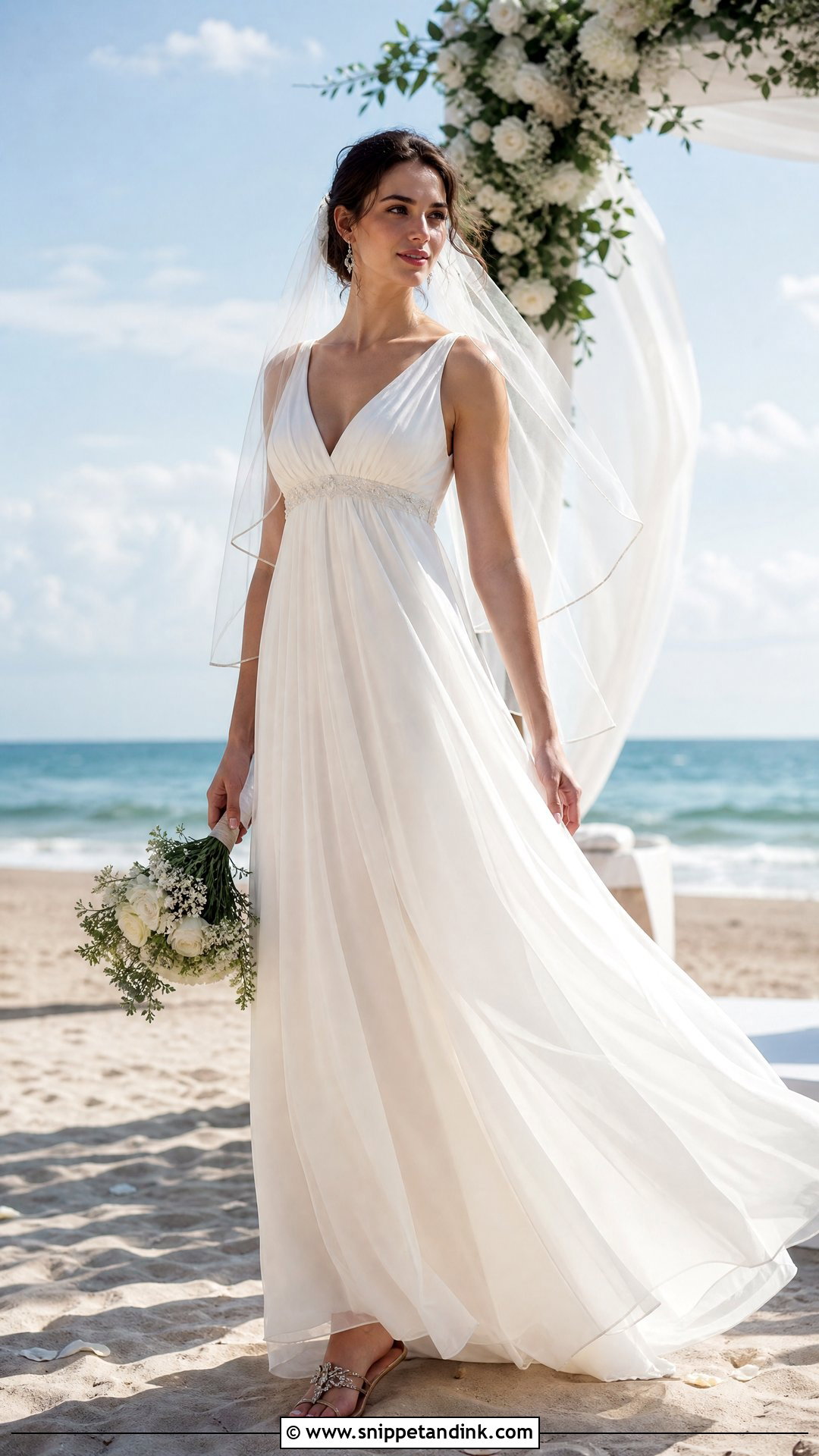
Empire waists sit just under the bust and let the skirt fall loose, which makes them comfortable in heat and kind to anyone who doesn’t want structure at the natural waist. Layered chiffon over a secure lining keeps it airy without going sheer in sunlight. Low block heels or embellished flat sandals, delicate earrings and a light fingertip veil, with a loose updo. The under-bust seam needs to sit exactly right; if it rides up when you move, it pulls the whole dress out of line. Keep the train modest for sand or grass.
10. Tea-Length Wedding Dress
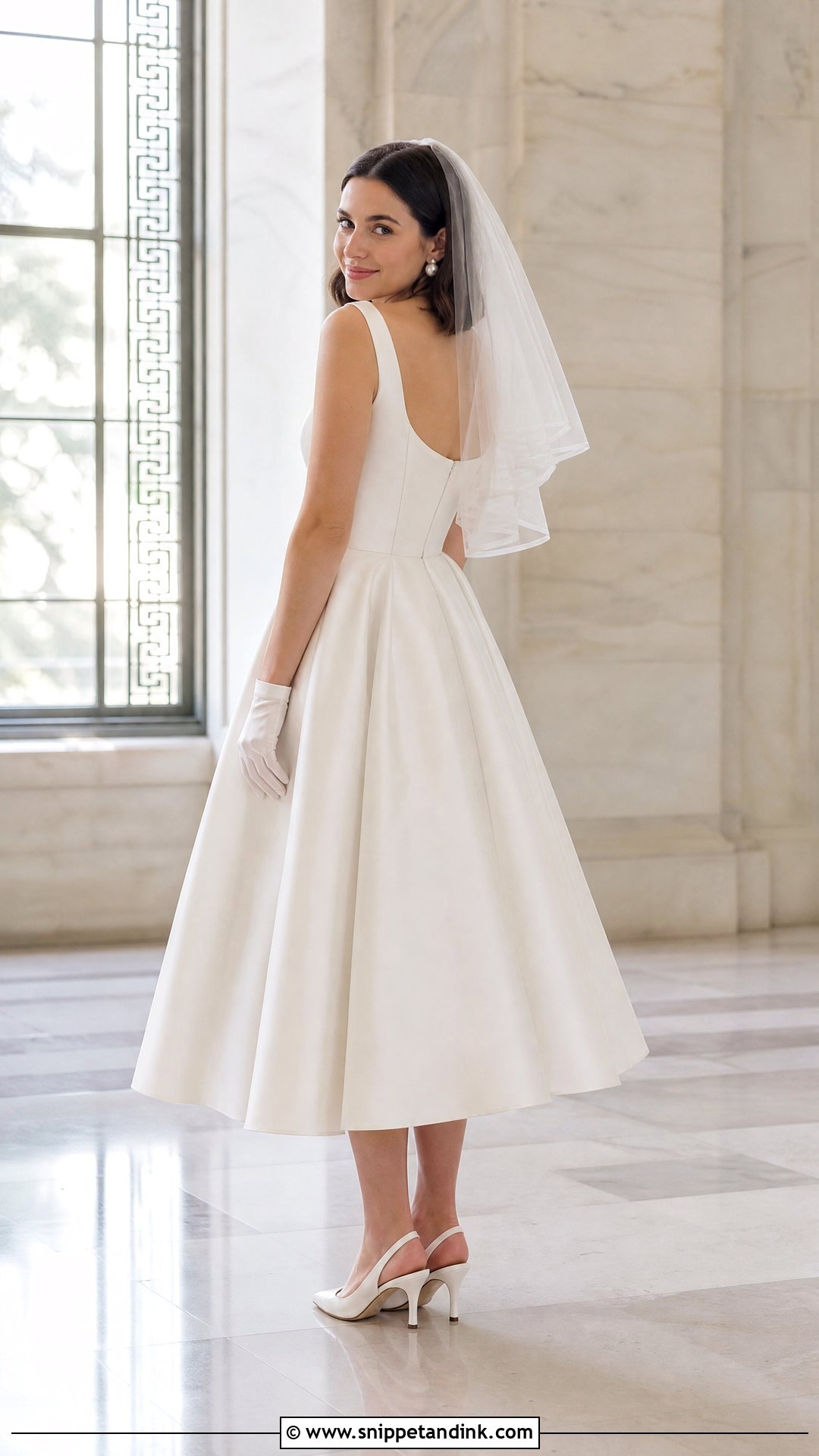
Tea length lands between knee and ankle, so the shoes become part of the dress. A fitted bodice with a full skirt gives a 1950s-inspired shape; a plain A-line reads quieter. Pointed pumps, slingbacks or bridal flats, pearl studs, and short gloves or a birdcage veil if you like the retro direction. The skirt should hold its shape without looking stiff, which usually means a light petticoat. Check the hem from every side in a three-way mirror. A shorter hem shows unevenness far more than a floor-length one.
11. Bridal Mini Wedding Dress
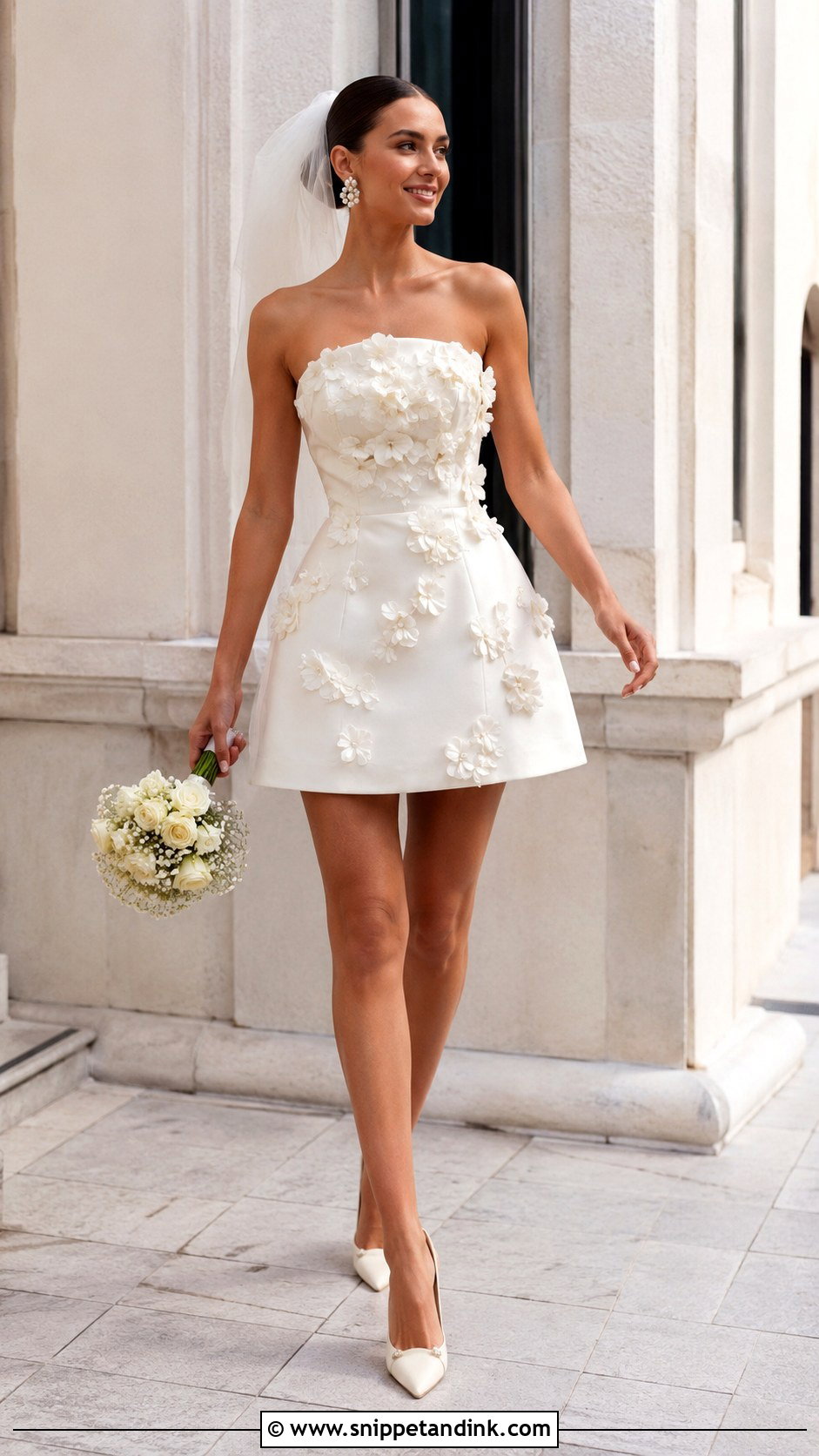
A bridal mini suits a civil ceremony or a reception change. To keep it from looking like an ordinary party dress, look for something structured: pearl detail, three-dimensional flowers or a big bow. Balance the short hem with a modest neckline. Pointed slingbacks, ankle-strap heels or crystal flats, statement earrings and a short veil. Sheer tights work for a winter date. Sit, bend and dance in it before buying, and wear smoothing shorts underneath; you’ll be photographed from every angle, including low ones on the dance floor.
12. Boho Lace Wedding Dress
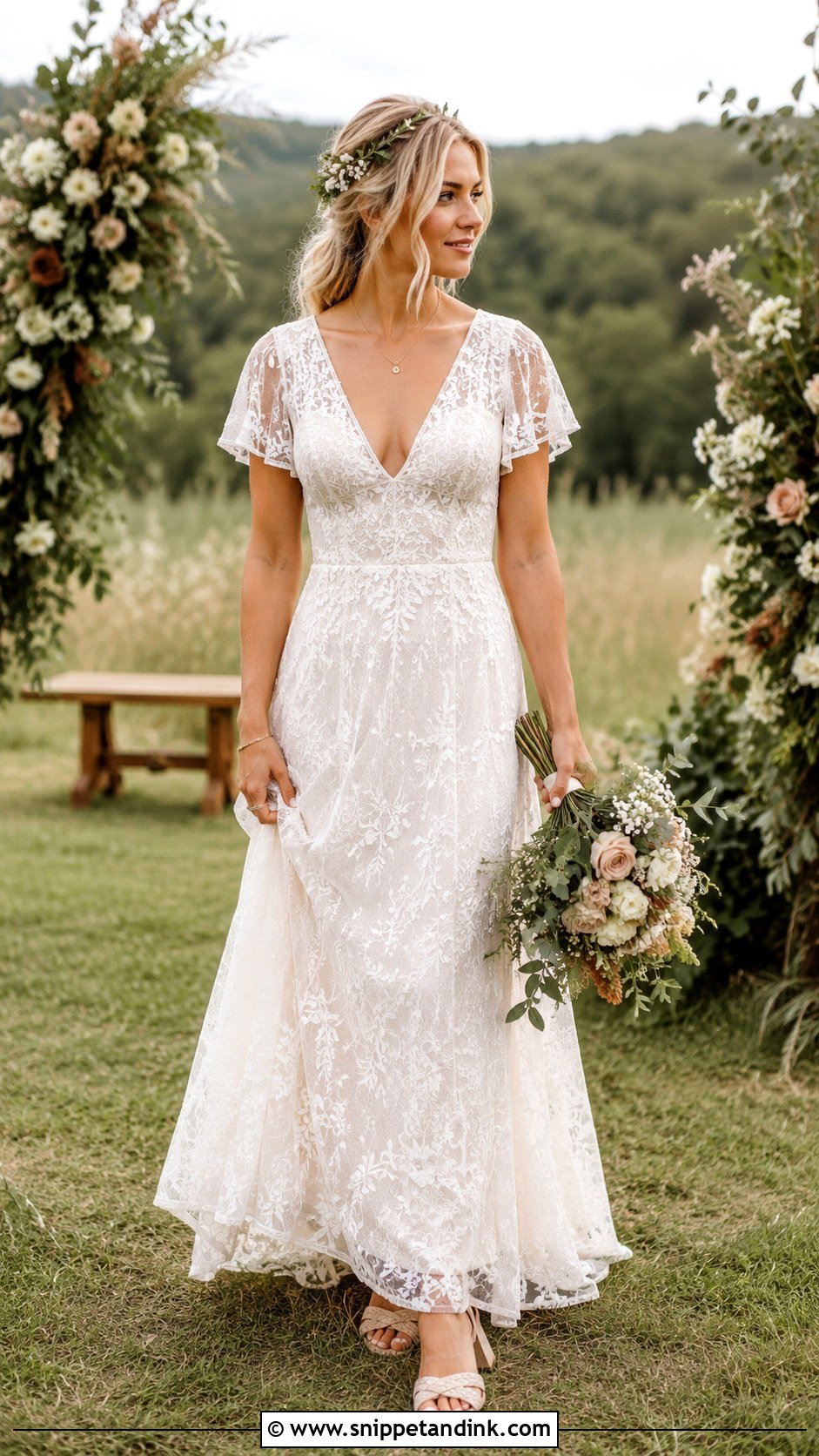
Boho lace works when it moves. An A-line or sheath silhouette in botanical lace, with flutter sleeves or an open back, should skim the body rather than grip it. Block-heel sandals, fine gold jewellery and a simple veil or floral comb, with a loose braided updo. For meadows, woods or beaches, choose a short train and a sturdy lining; delicate linings snag on twigs and grass seed. Hold back on extras. Intricate lace with a neutral bouquet and plain shoes looks far more considered than lace plus fringe plus feathers.
13. Floral Appliqué Wedding Dress
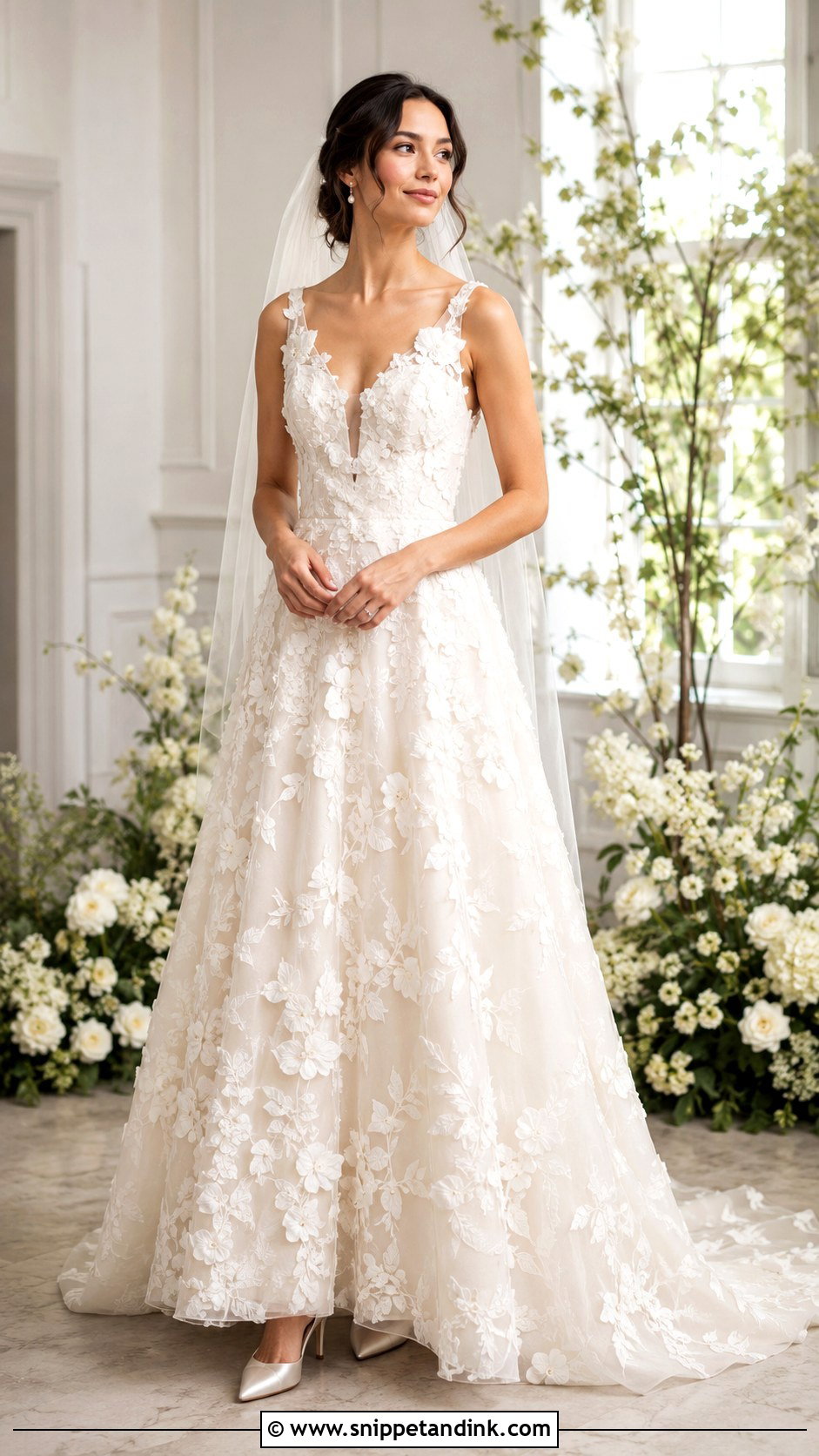
Appliqué flowers add depth, scattered for a delicate look or larger blooms for drama. An A-line or ball skirt gives them room to be seen. Pearl earrings, satin heels and a plain veil keep it calm, and repeating one of the flowers in the bouquet ties it together. Before buying, check where the appliqués sit at the waist, under the arms and on the back of the skirt where you sit. Loose petal edges catch on veils and bracelets. Ask that any lifting edges are tacked down during alterations.
14. Corset Bodice Wedding Dress
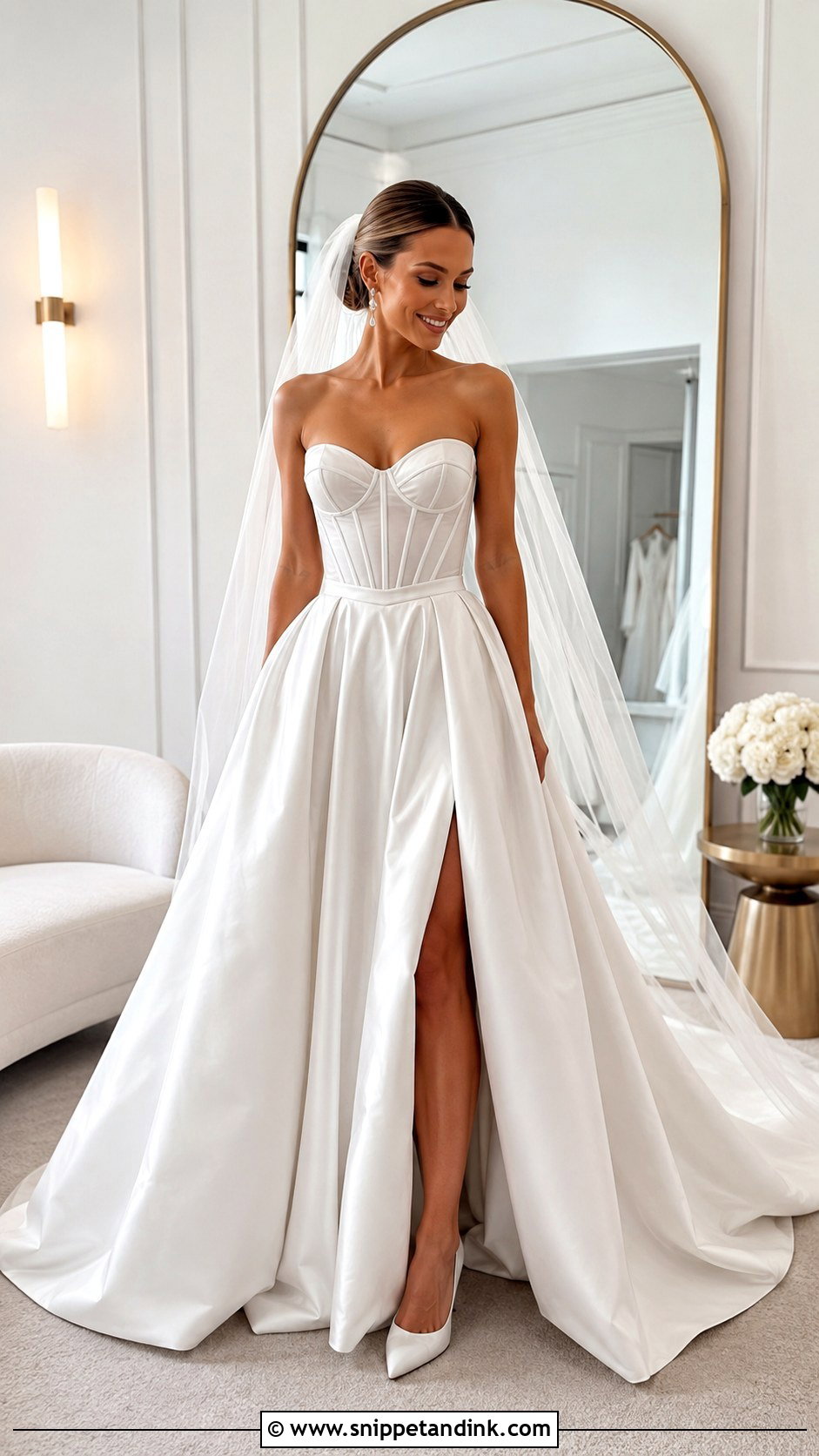
Corset bodices are back in a big way, with exposed boning, lace panels or draped satin. A full skirt makes it romantic; a fitted one makes it sharp. Drop earrings, a simple veil and pointed satin heels, without a busy necklace fighting the boning lines. Proper sizing matters more than tightness. I’d always rather see a corset adjusted at the cups and side seams than cinched hard at the back. You should be able to sit through dinner and laugh without pain.
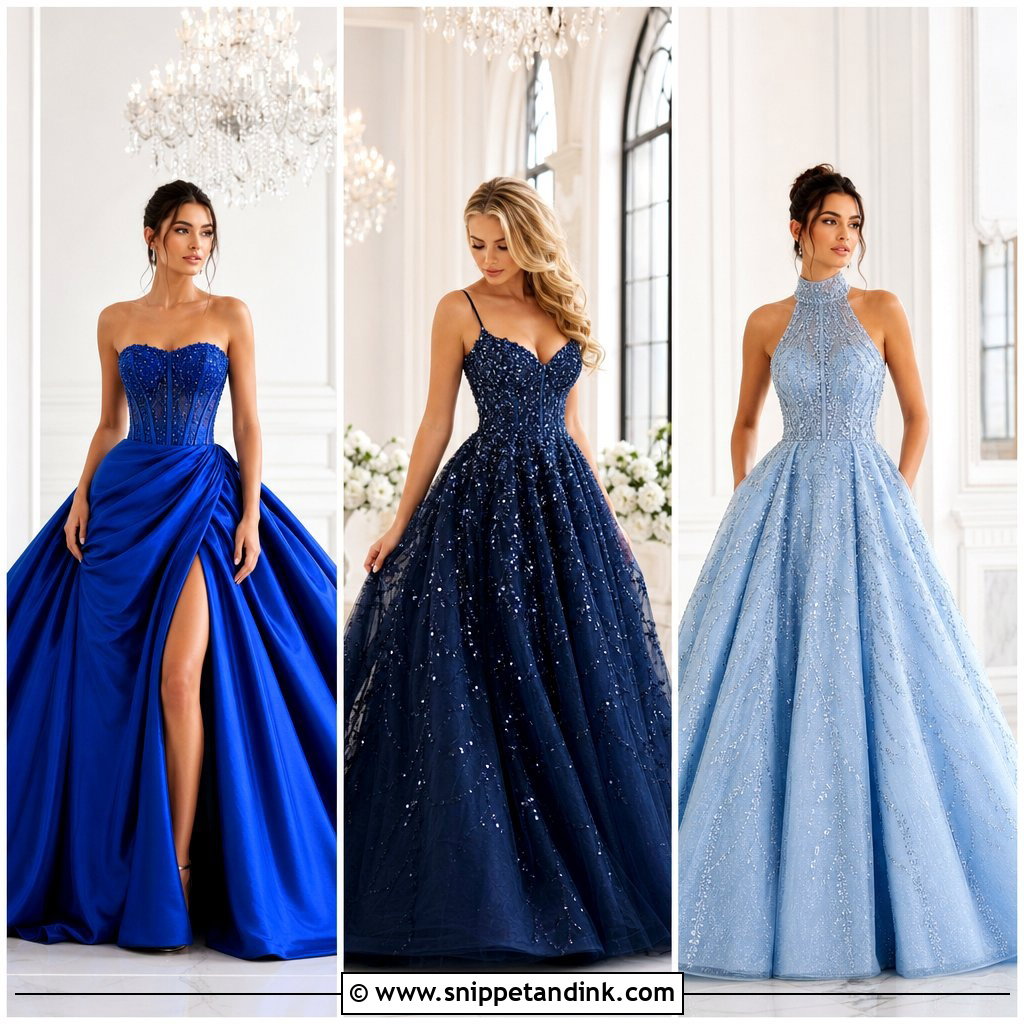
15. High-Neck Wedding Dress
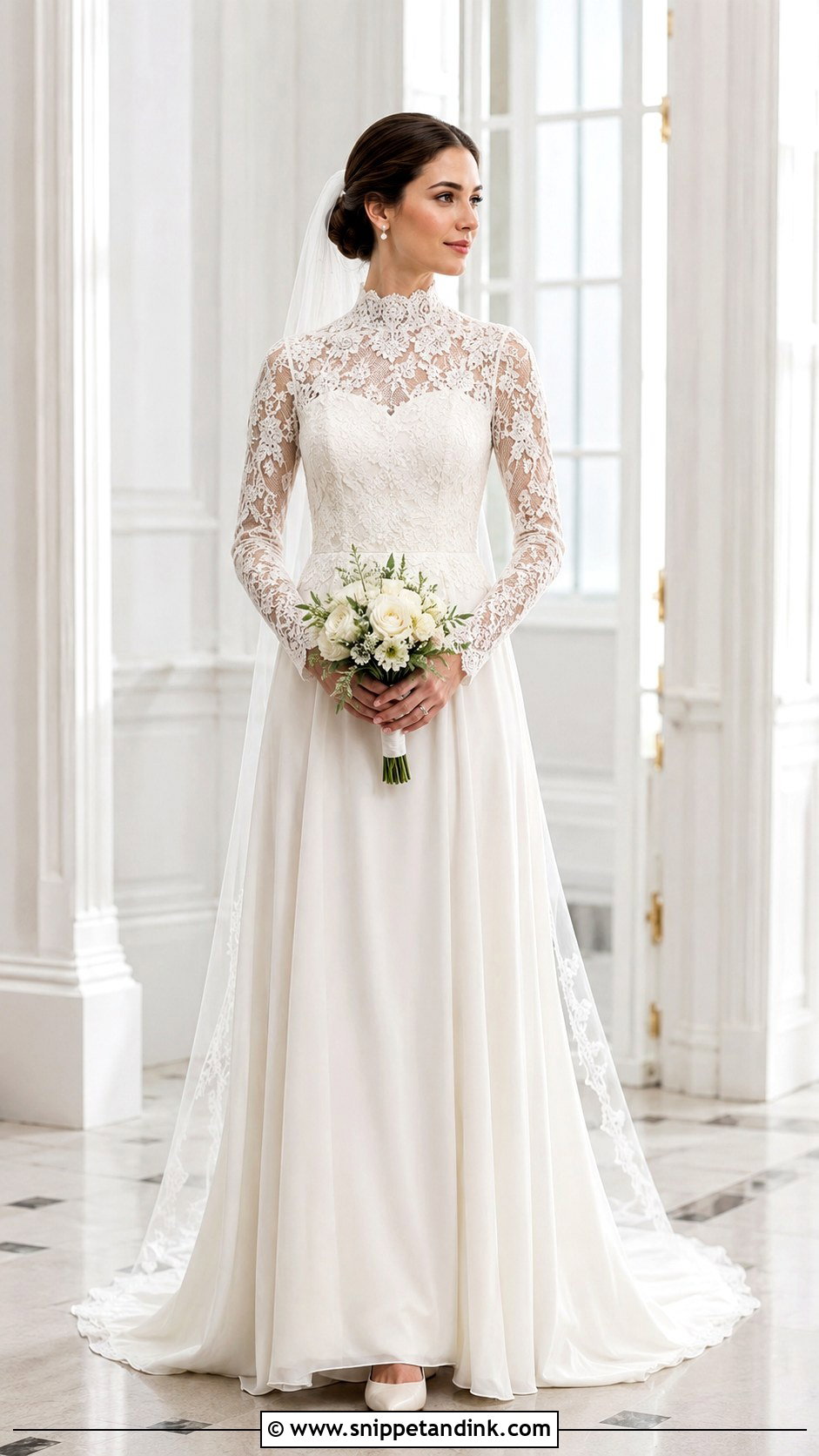
High necks feel polished and modern. Sheer lace looks delicate; crepe or satin looks cleaner. They work sleeveless or with fitted long sleeves. Small earrings, a bracelet, plain ivory heels, and hair up so the collar shows. Attach the veil under the bun rather than on top so it doesn’t crowd the neckline. Two things to test: turning your head fully without the collar pulling, and running a finger round the inside edge for scratchy seams. A soft binding there makes a long day much easier.
16. One-Shoulder Wedding Dress
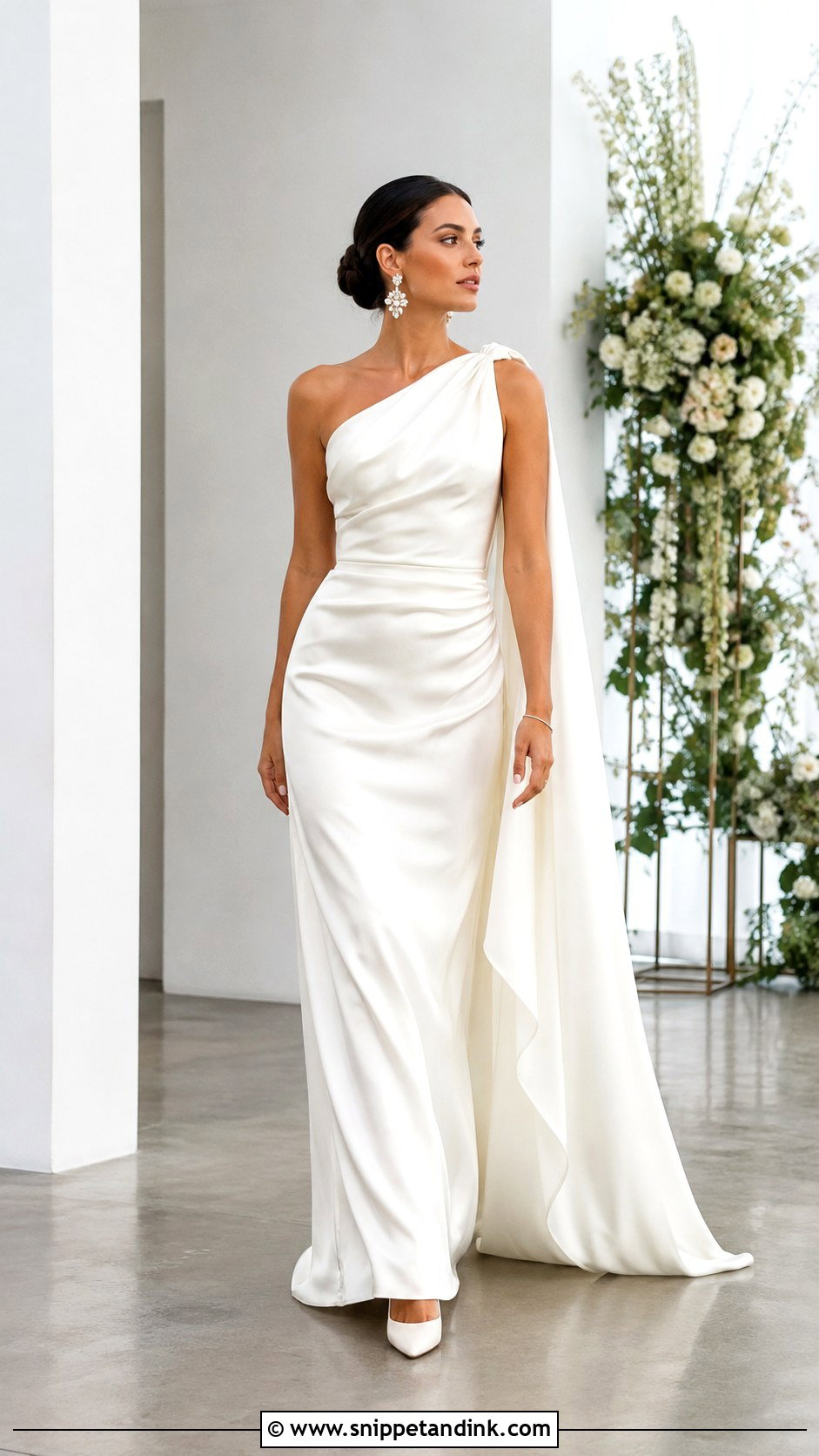
One-shoulder gowns give an asymmetric line. Choose soft draping for a Grecian effect or structured satin for a sharper result, over a column, A-line or fitted skirt. Statement earrings, a sleek bracelet and metallic or ivory heels, no necklace. A low bun or a deep side part keeps the shoulder visible. The bare side is the risk. Without enough internal support it gapes at the underarm or slides down when you dance, so test with your arms up.
17. Blush Wedding Dress
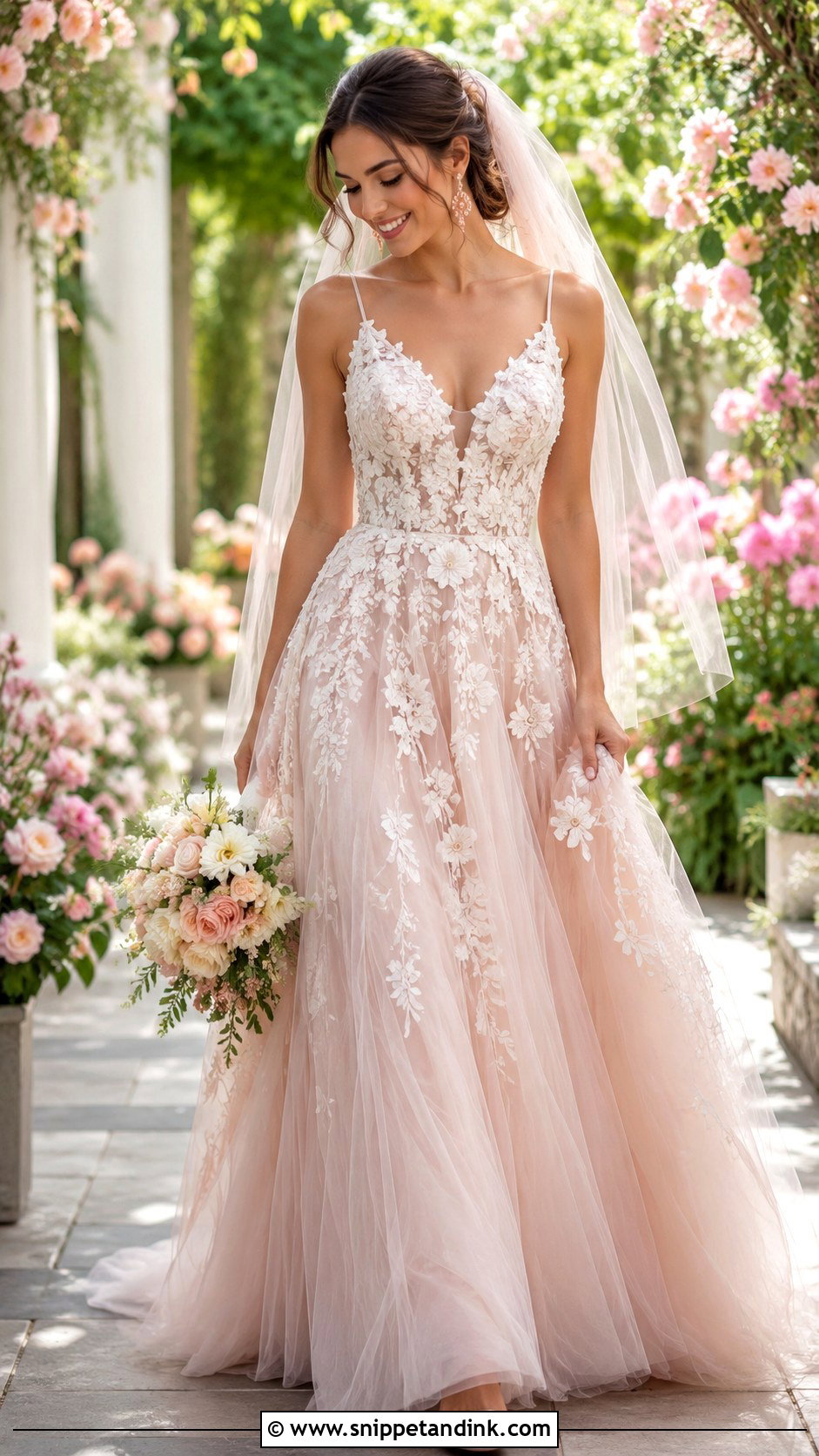
Blush gowns are still unmistakably bridal, and a pale pink or nude lining actually makes lace and appliqué patterns easier to see than plain white does. Choose a shade that suits your undertone: cooler pinks for cool skin, peachy blush for warm. Champagne heels, rose-gold earrings, a sheer ivory or blush veil, and cream flowers with muted greenery. Photograph every option by a window. Bridal salon lighting is warm and forgiving, and the same dress can look grey-pink outdoors. Match the lining, tulle and veil so you aren’t wearing three slightly different pinks.
18. Wedding Dress With Cape
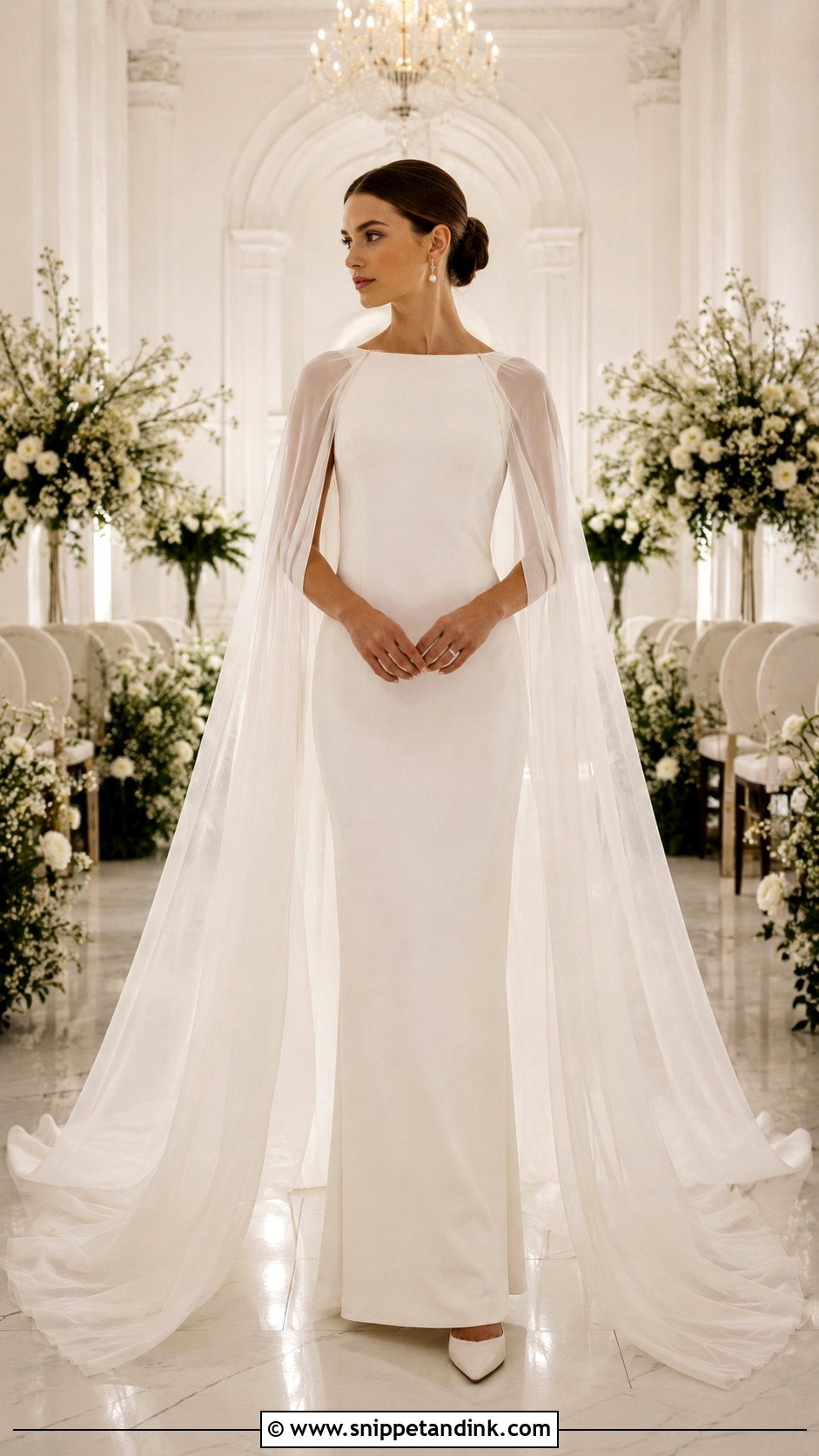
A cape gives ceremony drama without a veil. Sheer tulle floats; crepe or satin covers more. Wear it over a simple column, sheath or A-line so the layers don’t compete. Pearl earrings, pointed pumps and a low bun. The attachment point is what I check. A cape that hooks at the neckline can drag the whole dress backward as you walk, so I prefer shoulder attachments with a detachable option for dinner. Practise walking and turning in it, and make sure its length doesn’t tangle with the train in doorways.
19. Detachable Overskirt Wedding Dress
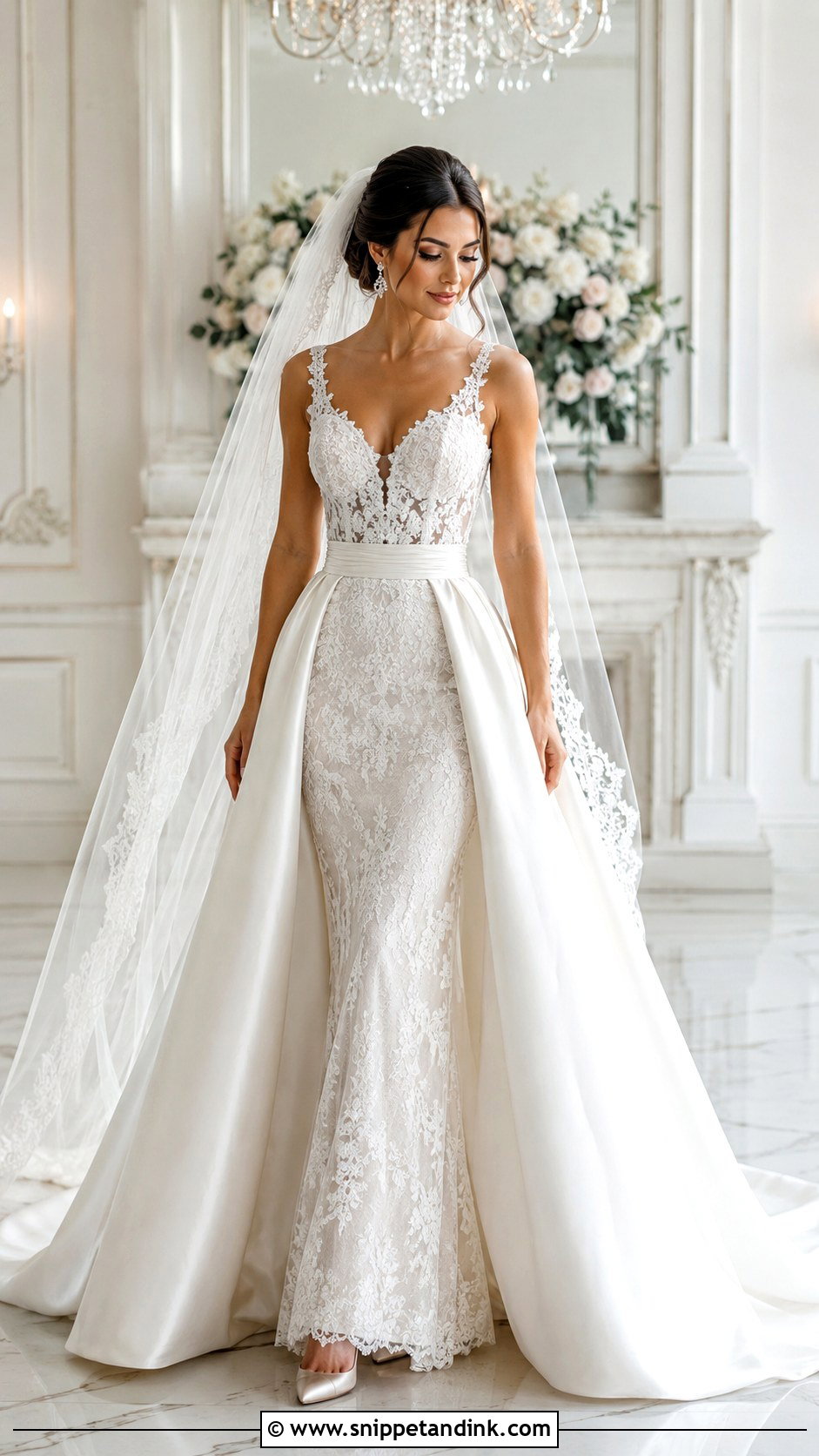
A detachable overskirt wedding dress gives you two looks without changing outfits. The overskirt goes over a fitted crepe, lace or satin gown for the ceremony and comes off for the party. Look for a secure waistband with hidden fasteners and fabric that matches the base gown closely in colour, since ivory varies a lot between mills. A long veil and classic heels for the ceremony; statement earrings or a shorter veil afterward. If both layers have trains, each needs its own bustle plan.
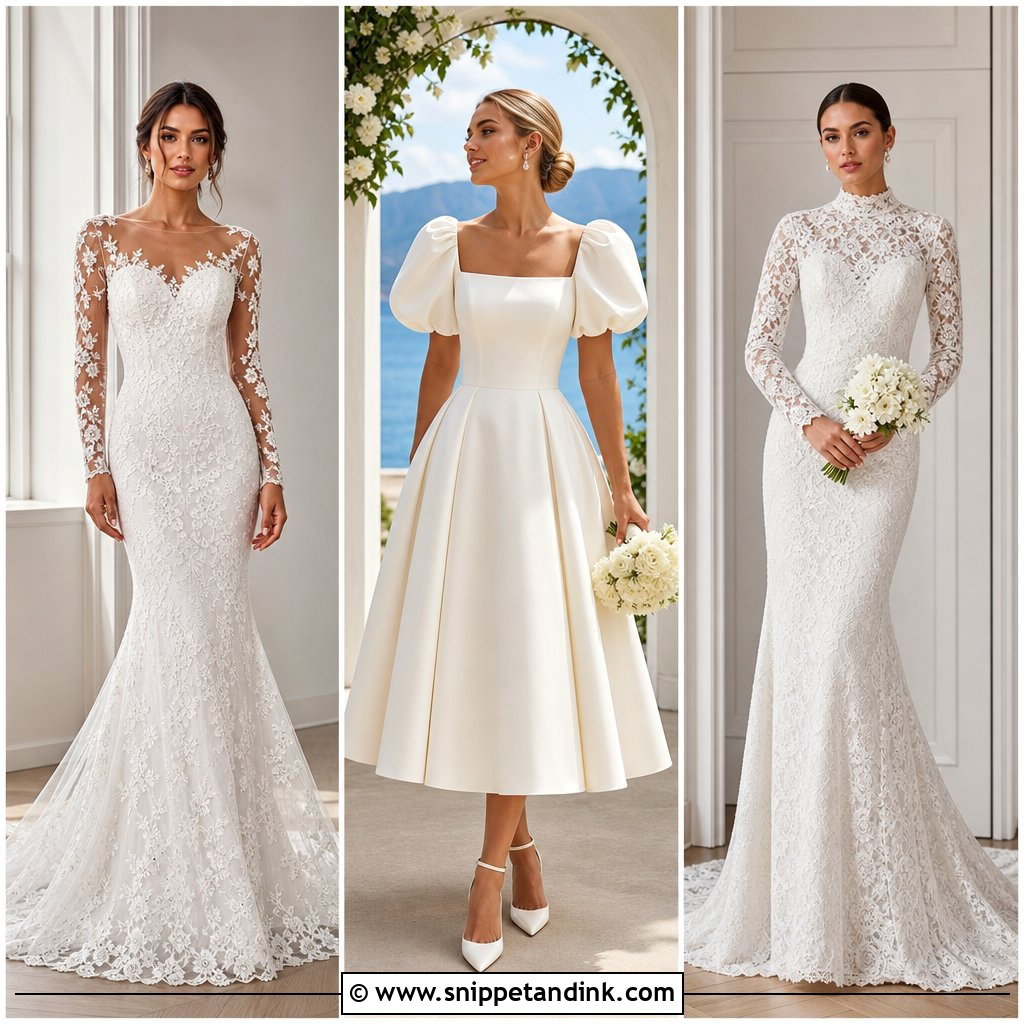
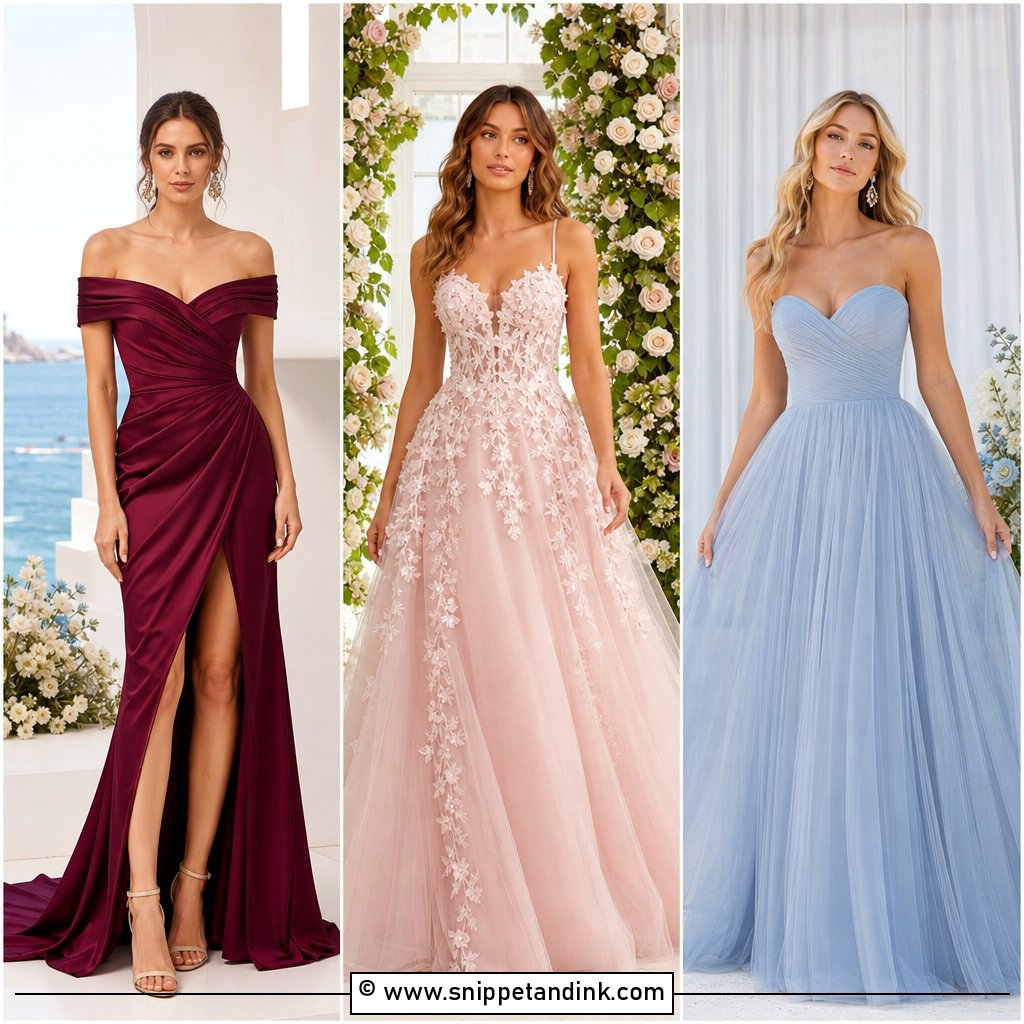
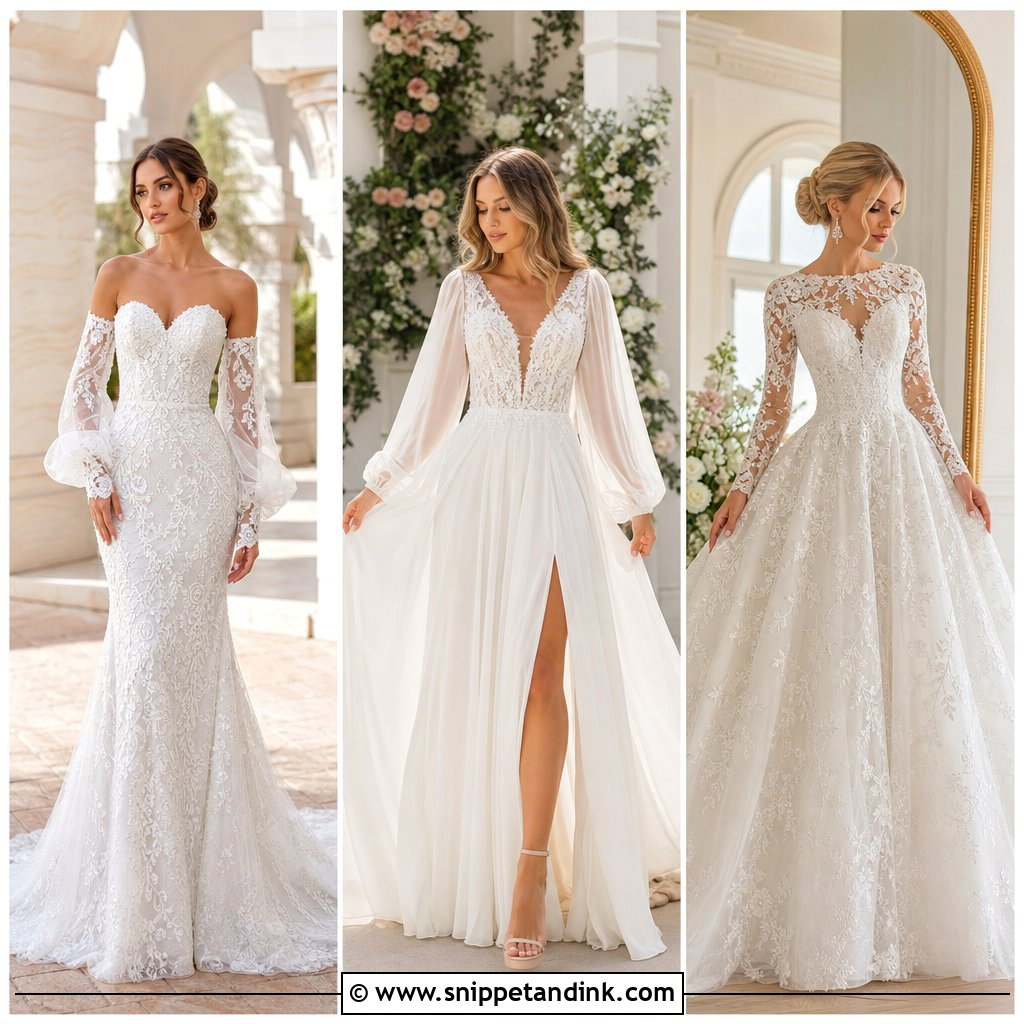

20. Reception Wedding Dress
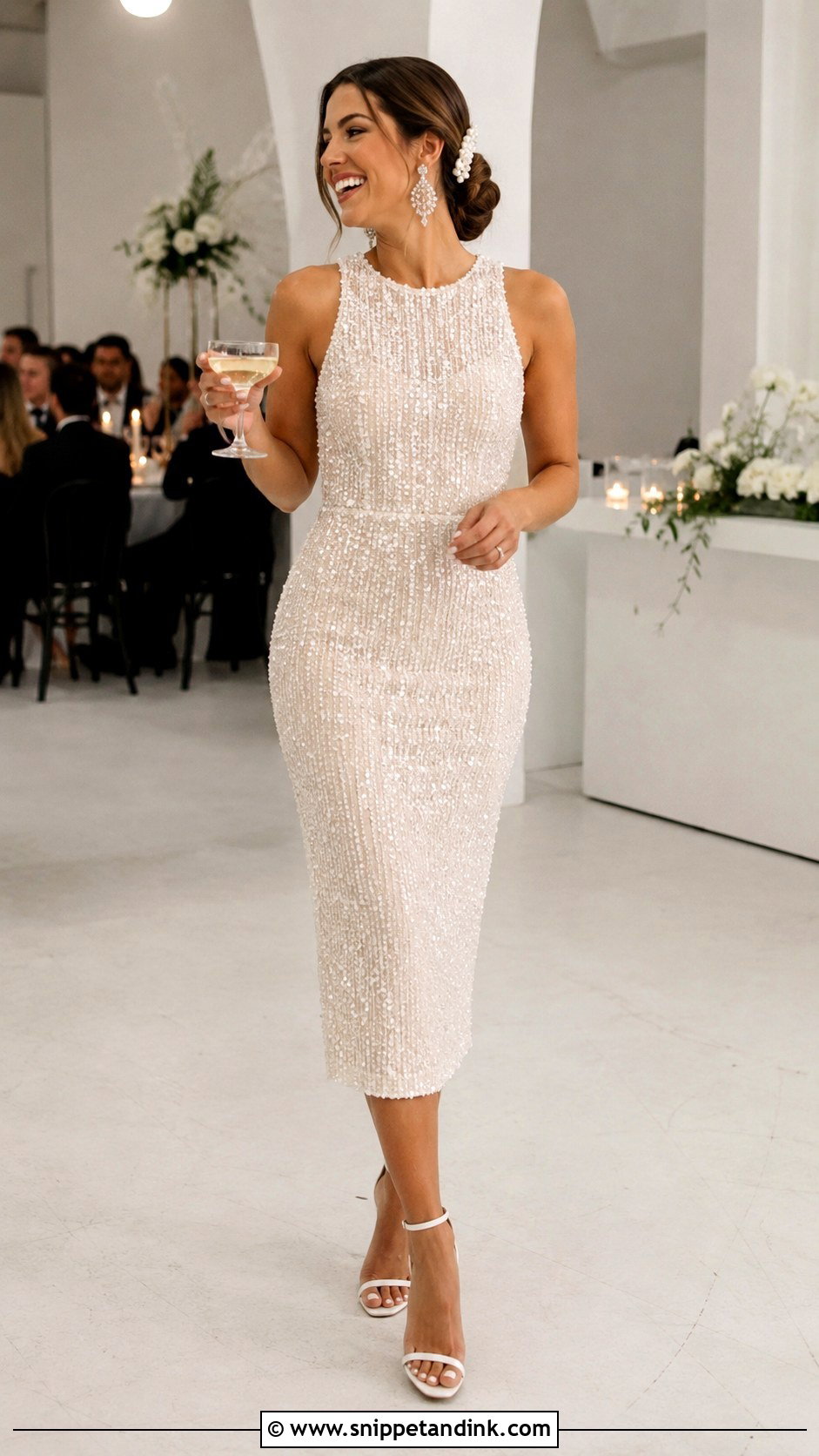
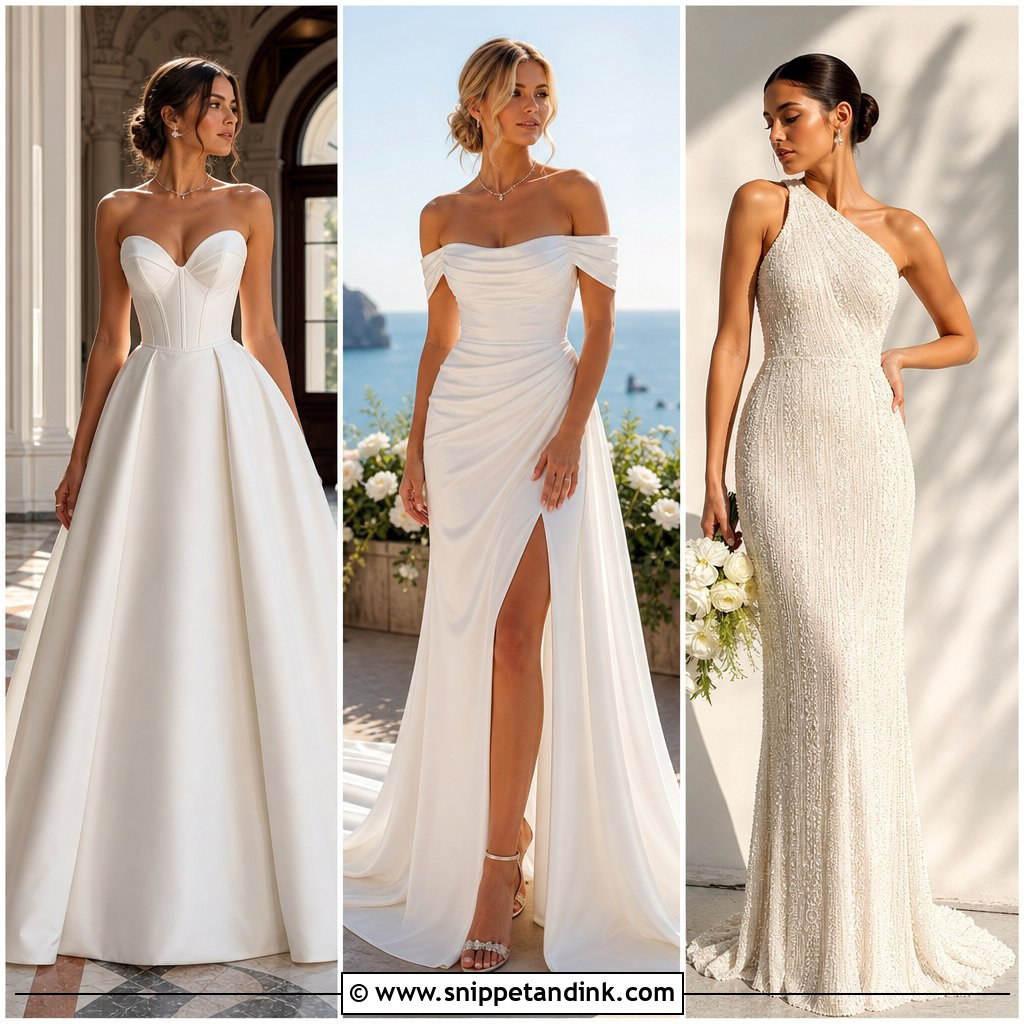
Reception dresses should be easy: easy to get into, easy to dance in. A beaded midi, feather-trimmed mini, slip dress or fitted ankle length can all work if there’s one statement detail and solid construction. Crystal flats, block heels or embellished trainers replace ceremony shoes without looking like an afterthought. Bold earrings, a small clutch and a hair accessory that stays put. Avoid complicated fastenings; you’ll be changing in a hurry with limited help. Try the whole outfit together, underwear and shoes included, at least once before the day.
The Months Between Ordering and Wearing It
Most bridal gowns are made to order rather than pulled off a rack, which is why timing catches people out. Production times vary a lot by designer and season, so treat these as typical rather than fixed.
- Around nine to twelve months before: start shopping. That leaves room to order without paying a rush fee.
- Production commonly takes four to eight months. Ask the shop for the expected arrival date in writing.
- Roughly two to three months before: first fitting. Alterations usually need two or three appointments.
- One to two weeks before: final fitting, with your shoes, underwear and jewellery. Bring the person who’ll help you dress and bustle the train, so they can learn it.
- Collection: have it pressed, then hang it in a breathable bag in a cool, dark spot. Keep it out of plastic, which traps moisture.
Short on time? Sample sales, off-the-rack collections and reception or civil dresses can be bought and altered within a few weeks. Expect fewer size and colour choices, and book a seamstress the same week you buy.
Sit, Walk, Then Say Yes
A dress that looks wonderful on a hanger isn’t necessarily the right one. It should fit your body, let you move, suit your venue and match how you want to feel. Treat the gowns above as a starting point, then compare fabrics, necklines and skirt shapes in person, ideally with your planned shoes and underwear. Sit, walk, turn and raise your arms before you decide. Good alterations turn a dress into your dress. Whichever fabric you land on, give comfort the same weight as the mirror.
You'll Like These Ideas:





Leave a Reply