
A Basque waist is the bodice seam that drops below your natural waist and finishes in a V or a soft U, and it changes how a whole gown reads. It came out of corset-era dressmaking, and you’ll now find it on satin ball gowns, lace sheaths and modern corsetry alike. Below are twenty ways I’d dress it, drawing on Victorian, Edwardian, Renaissance and mid-century references, with the neckline, sleeves, skirt, veil, shoes and jewelry worked out for each. Read them with your venue in mind, because a deep point that looks right on a ballroom staircase can feel like costume in a small garden.
How Deep the Point Should Sit on Your Body
The depth of the V is the single decision that changes this silhouette most, and it’s the one I spend longest on in a fitting room. A deep point, dropping a few inches below the navel, lengthens a short torso and makes a full skirt look grander. On a long torso it can make the legs look shorter, so a shallower point or a soft U usually sits better.
Hips matter too. Because the seam sits on or near the hip bone, it draws the eye there. If you’d rather not emphasise your hips, a U shape with a skirt that starts gathering at the seam is kinder than a sharp V into a pleated skirt.
- Petite or short-waisted: a deeper V with a vertical seam line through the bodice adds length.
- Long-waisted: keep the point modest, or the skirt starts too low and the proportions look off.
- Fuller bust: look for internal boning plus a built-in cup; the point needs a firm bodice above it or it buckles.
- Straight figure: a sharper V with a gathered skirt creates the curve the fabric alone won’t.
Try on the same dress with the point pinned at two heights before you commit. Seeing the difference in a mirror settles the question faster than any sketch.
1. Victorian Lace Basque Waist Wedding Dress
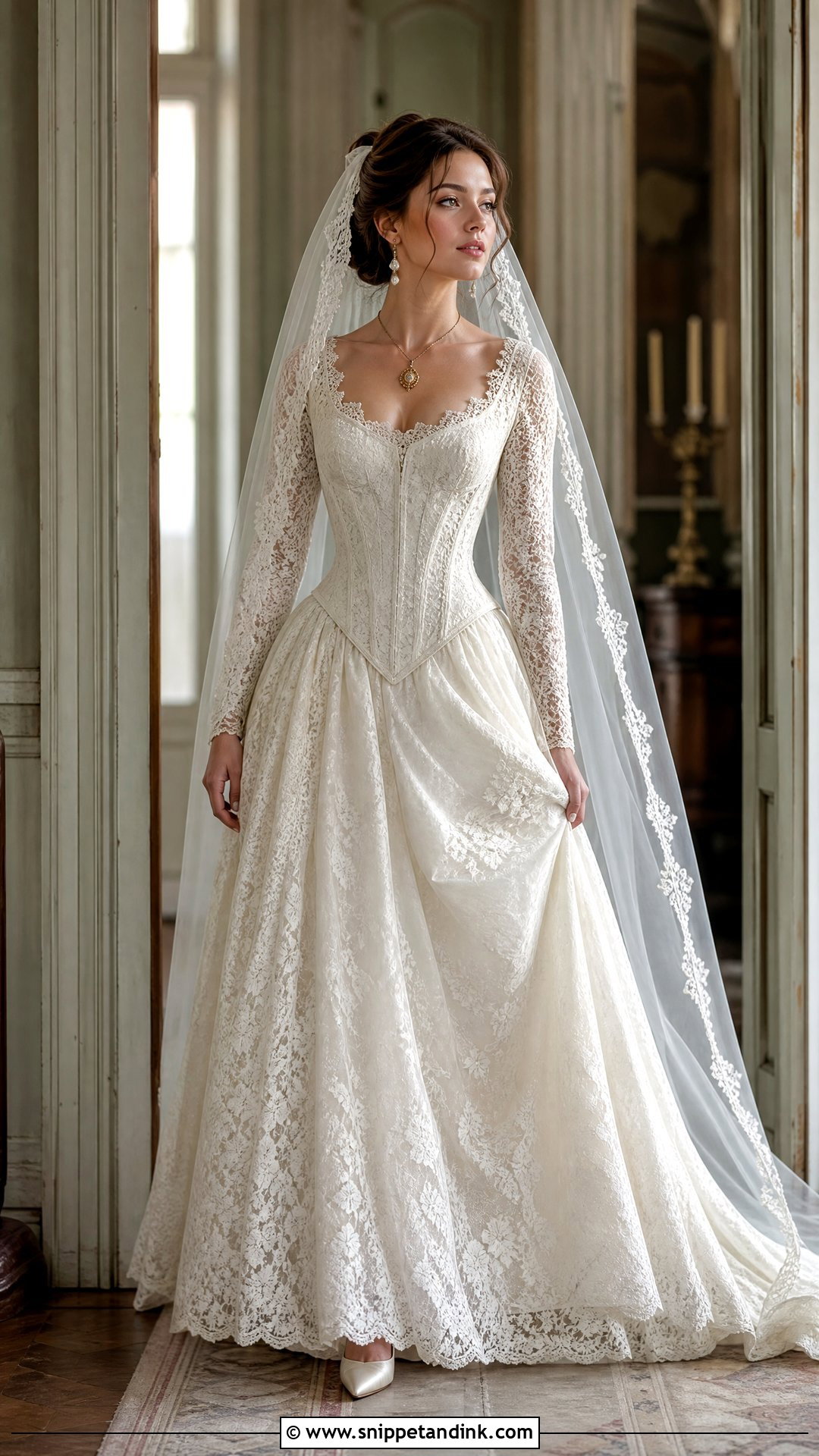
Lace does the decorating here, so you rarely need sparkle on top of it. A Victorian lace Basque waist wedding dress works best with a structured bodice covered in floral lace, a gently pointed waist, a full ivory skirt, long fitted sleeves and a modest scoop neck. At fittings I ask the seamstress to place the strongest motifs right along the waist seam; if a busy patch of lace lands there, the point disappears in photos. Pearl drops, a lace-edged cathedral veil and ivory satin pumps keep it traditional, and a low chignon with a few loose waves leaves the high back of the bodice visible.
2. Satin Ball Gown Basque Waist Wedding Dress
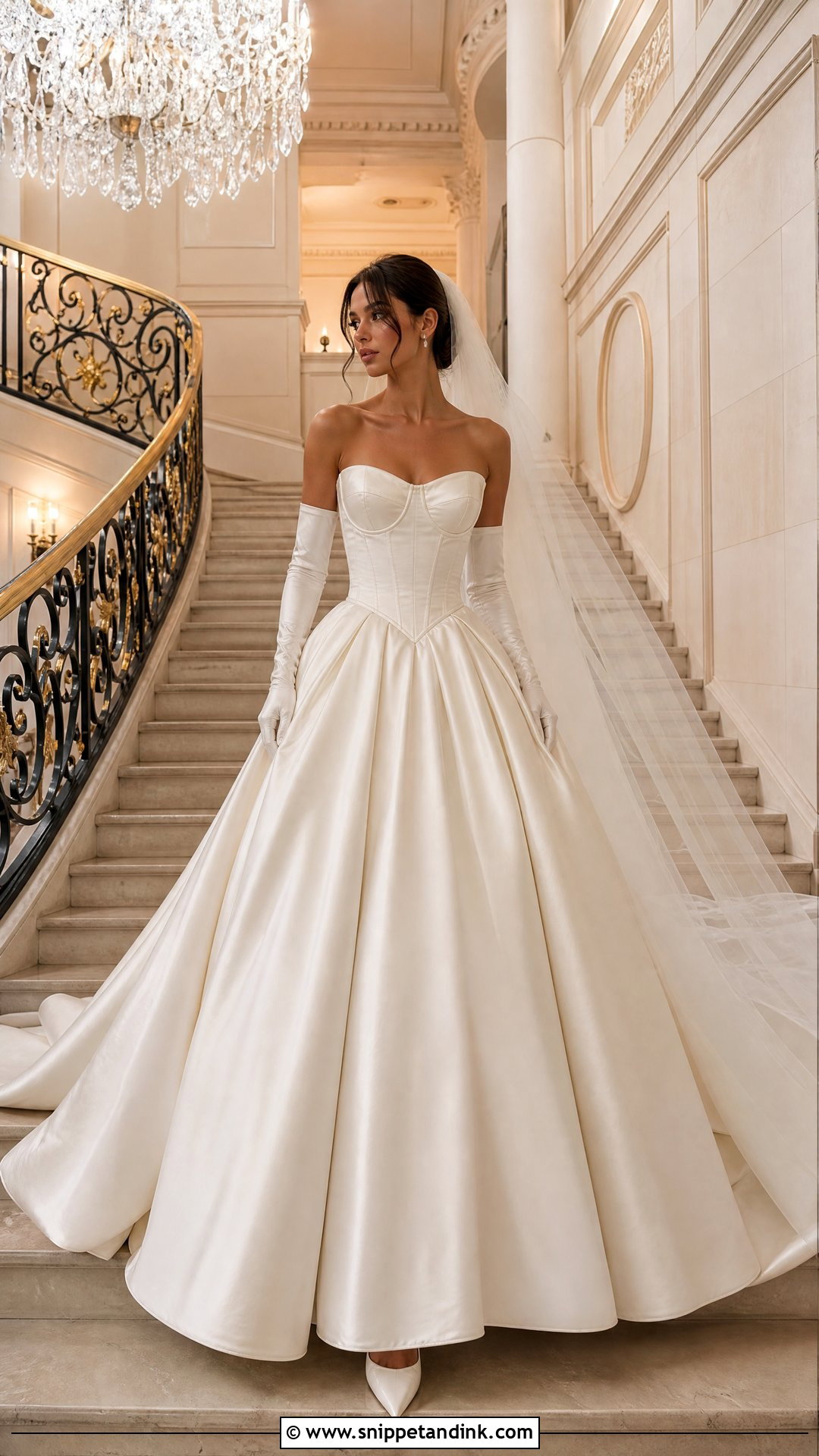
Satin hides nothing, which is exactly why I love it on this silhouette and also why I’m fussy about the fit. A strapless corset bodice with a pronounced V and a gathered ball gown skirt shows every seam, so any ripple at the point means the boning needs adjusting before the hem is touched. Covered buttons down the back give it age without breaking the clean surface. I’d pair it with pointed satin heels, pearl studs and elbow gloves, add a structured cathedral veil, and skip a big necklace: a sculpted neckline already frames the collarbone. A bracelet or a family brooch is plenty.
3. Edwardian Long Sleeve Basque Waist Wedding Dress
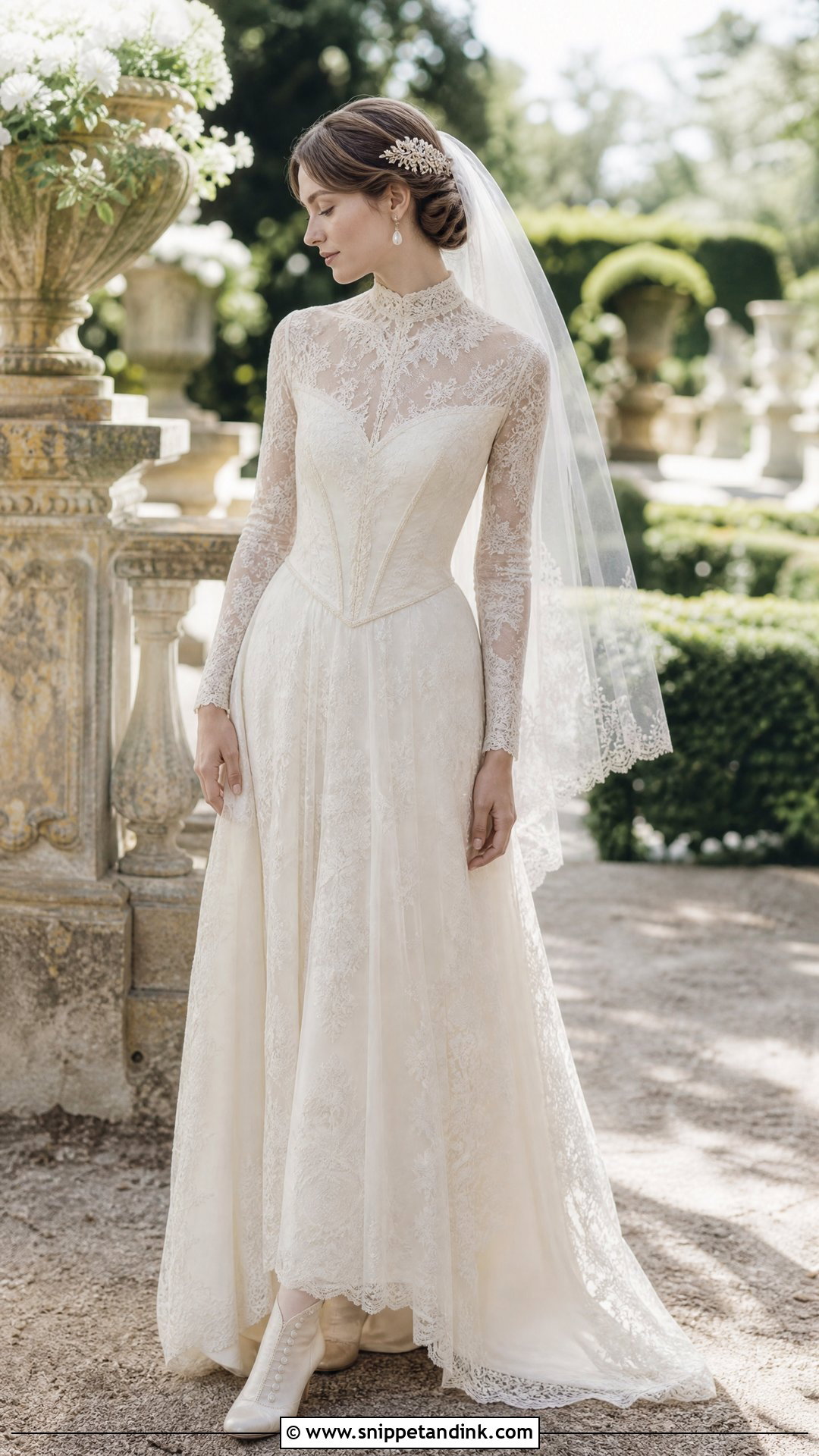
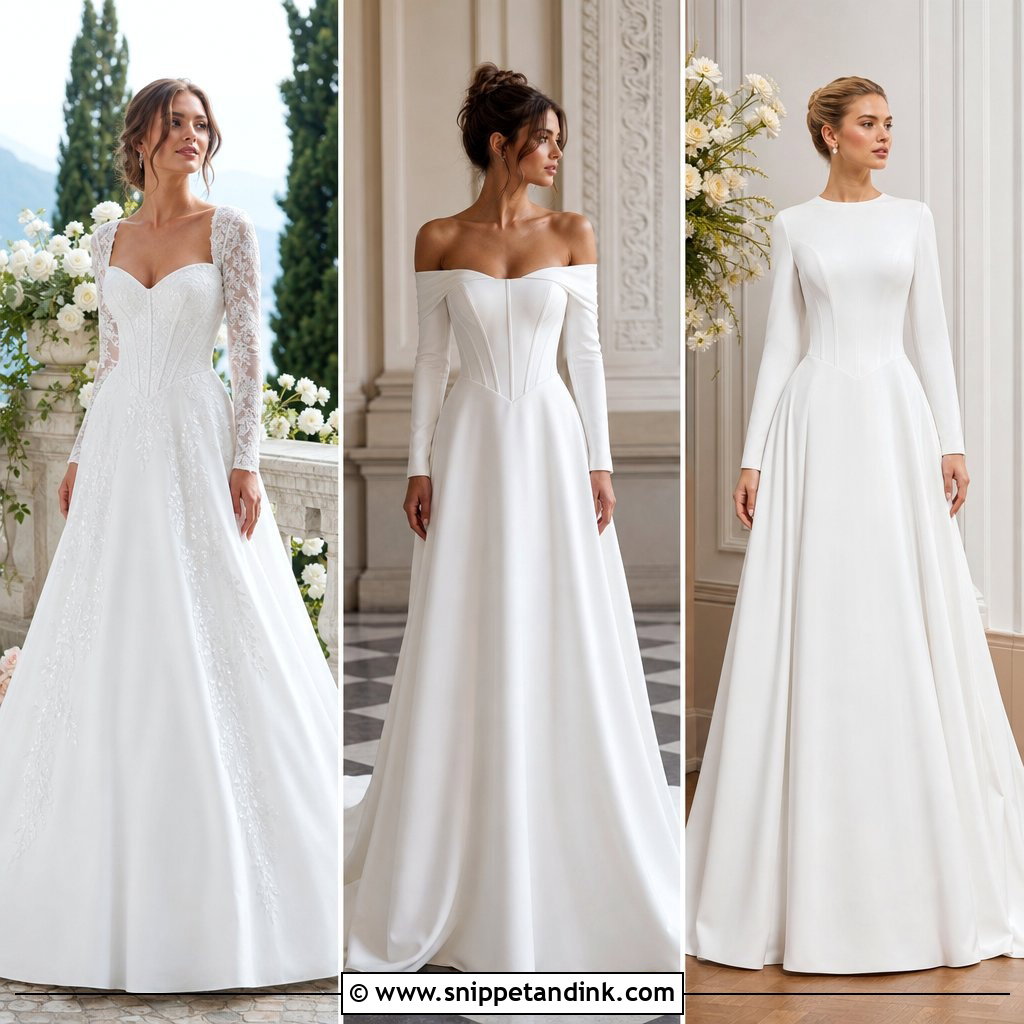
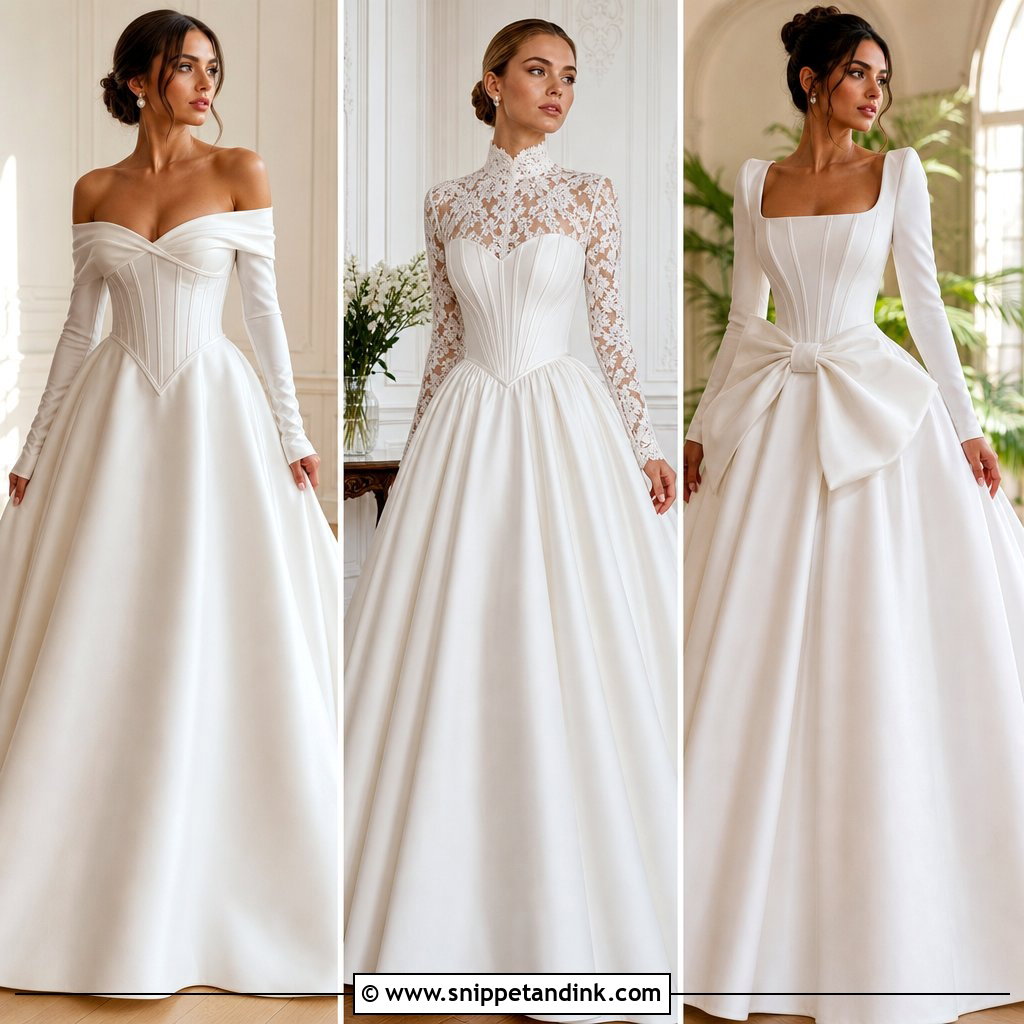
Edwardian dressing was softer than Victorian, so I keep the boning light here. Think a high illusion neckline, fitted lace sleeves and a bodice that dips just below the natural waist, then a flowing A-line skirt so the outfit never tips into costume. Ivory, soft white or pale champagne gives that aged look. Long lace sleeves can feel warm under lights, so ask for a breathable tulle base rather than a lined sleeve. Buttoned ankle-strap shoes, a fingertip lace veil and a loose low bun with a floral comb finish it, and it suits fall ceremonies in old houses where guests see the lace up close.
4. Off Shoulder Basque Waist Wedding Dress
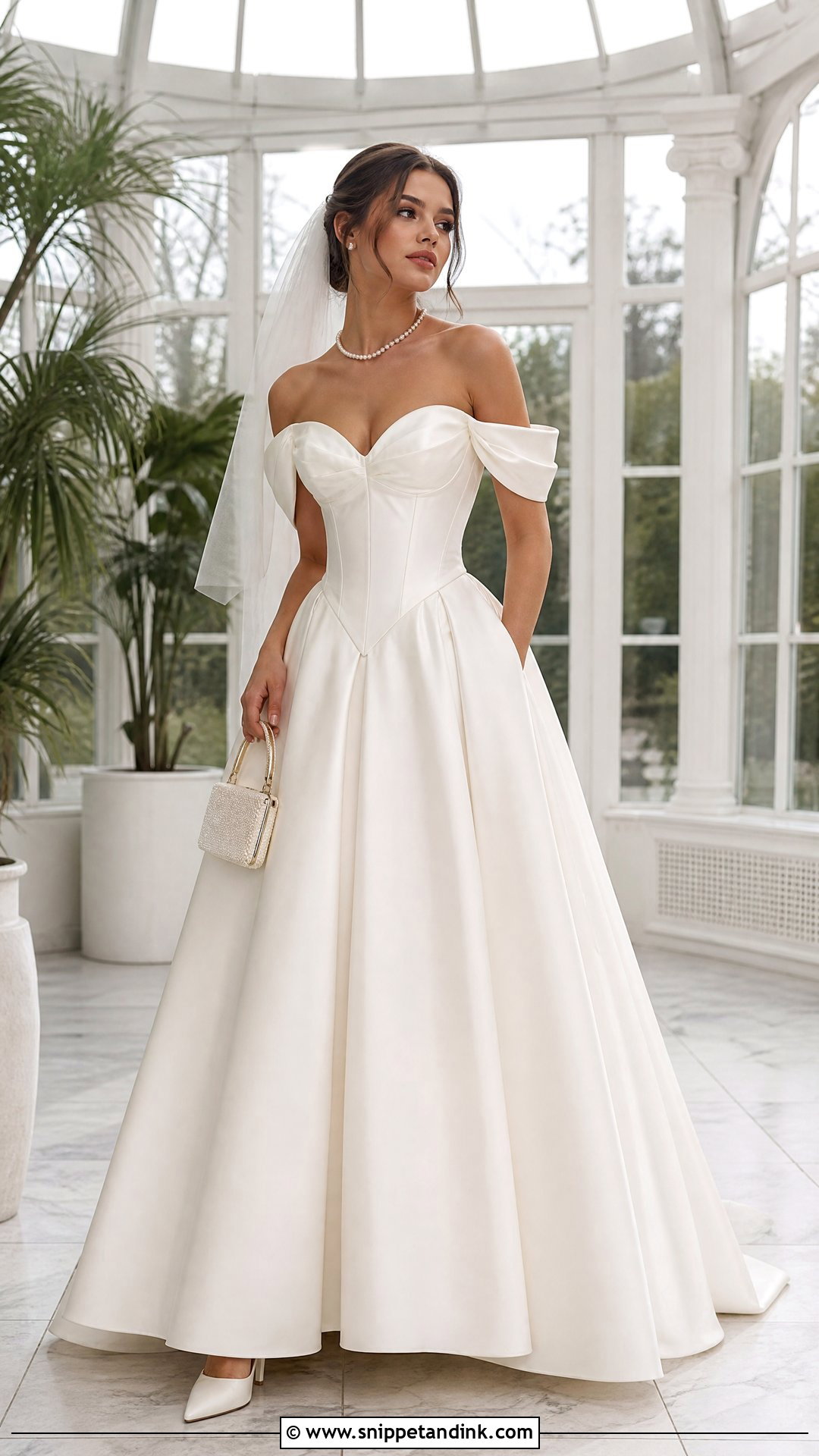
Off-shoulder sleeves are the part of this gown I test hardest. Draped satin resting just below the shoulder, a gentle sweetheart and a pointed waist into a full skirt can look relaxed and structured at once, but if the sleeves sit too tight you won’t be able to lift your arms to hug anyone. At the fitting, raise both arms to shoulder height before anything is finalised. The open neckline takes a short pearl strand or an antique pendant well. Closed-toe ivory pumps, a plain tulle veil and loose waves that echo the curved line suit an estate or a candlelit ballroom.
5. Sweetheart Corset Basque Waist Wedding Dress
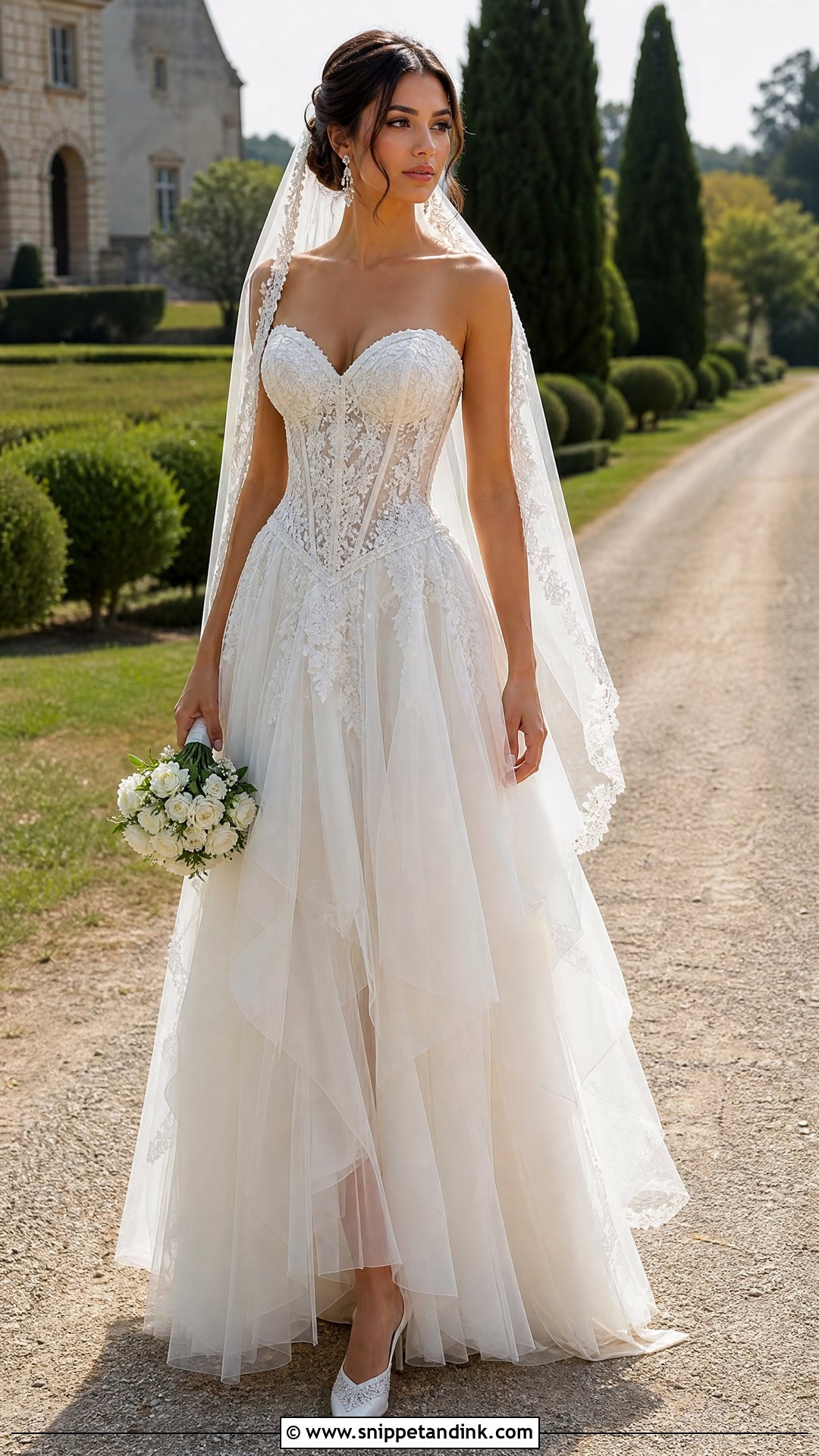
This is the classic hourglass, and it depends on what’s inside the bodice. Visible seamwork, secure internal boning and a low point that runs smoothly into a layered tulle skirt are the essentials; lace appliqués over the panels soften the structure. If you want the historical finish, a lace-up back is worth it for a practical reason too: it lets you or your stylist fine-tune the fit on the morning if your weight has shifted since the last fitting. Add a lace-trimmed veil, crystal drops, ivory slingbacks, a trailing bouquet and curls swept to one side for an old-world hotel or a country estate.
6. Square Neck Basque Waist Wedding Dress
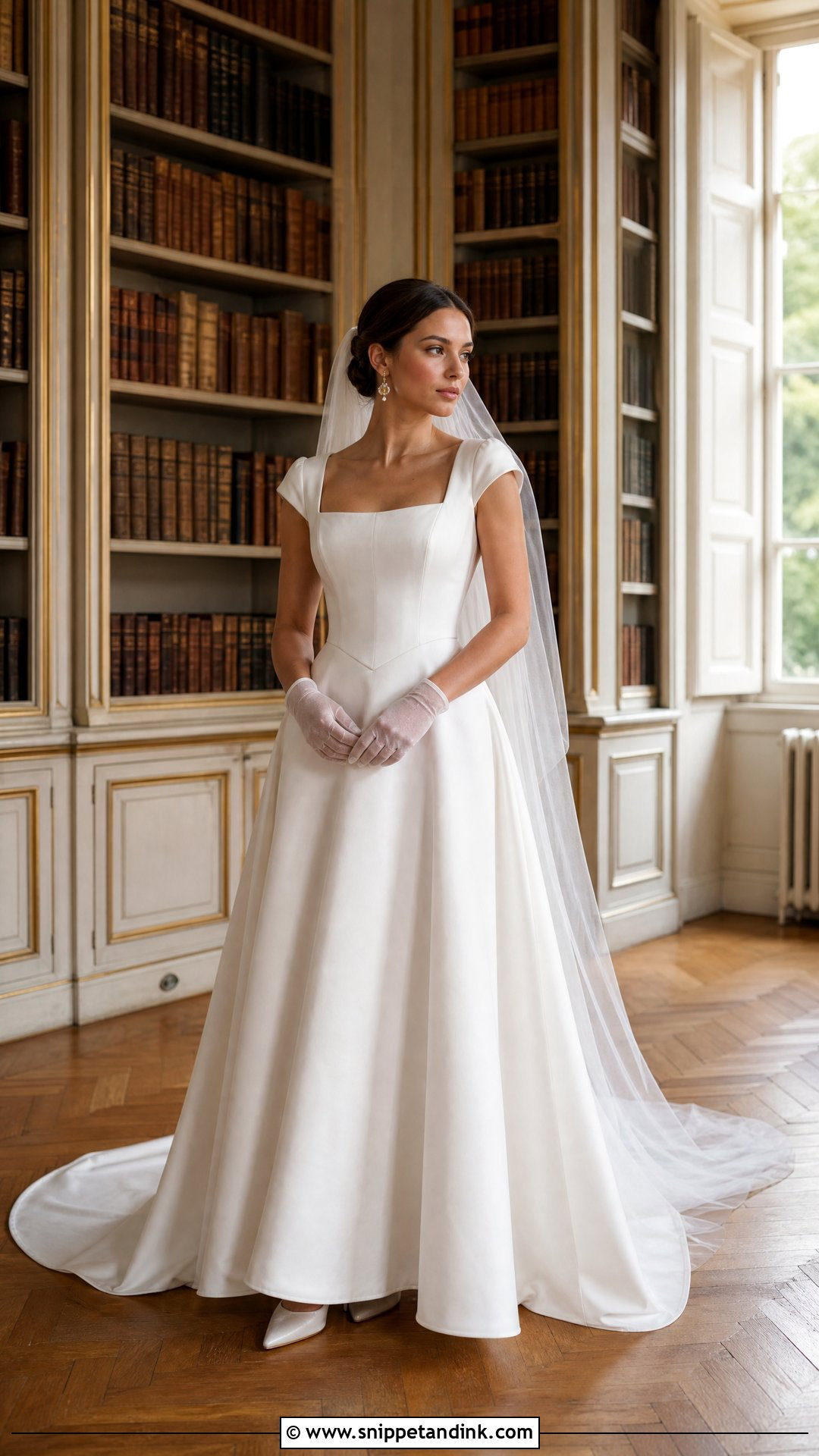
A square neckline and a pointed waist are two strong straight lines, and together they make one of the most restrained versions on this list. A satin or silk bodice frames the collarbone, the point defines the waist, and an A-line skirt opens from there. Choose narrow straps or short cap sleeves depending on how much coverage you want. I keep the bouquet compact (white roses or calla lilies) because a loose, trailing shape fights all that geometry. Pearl-and-gold earrings, low satin heels, short gloves and a chapel veil tucked under a polished bun work in museums, libraries and courthouses year round.
7. High Neck Lace Basque Waist Wedding Dress
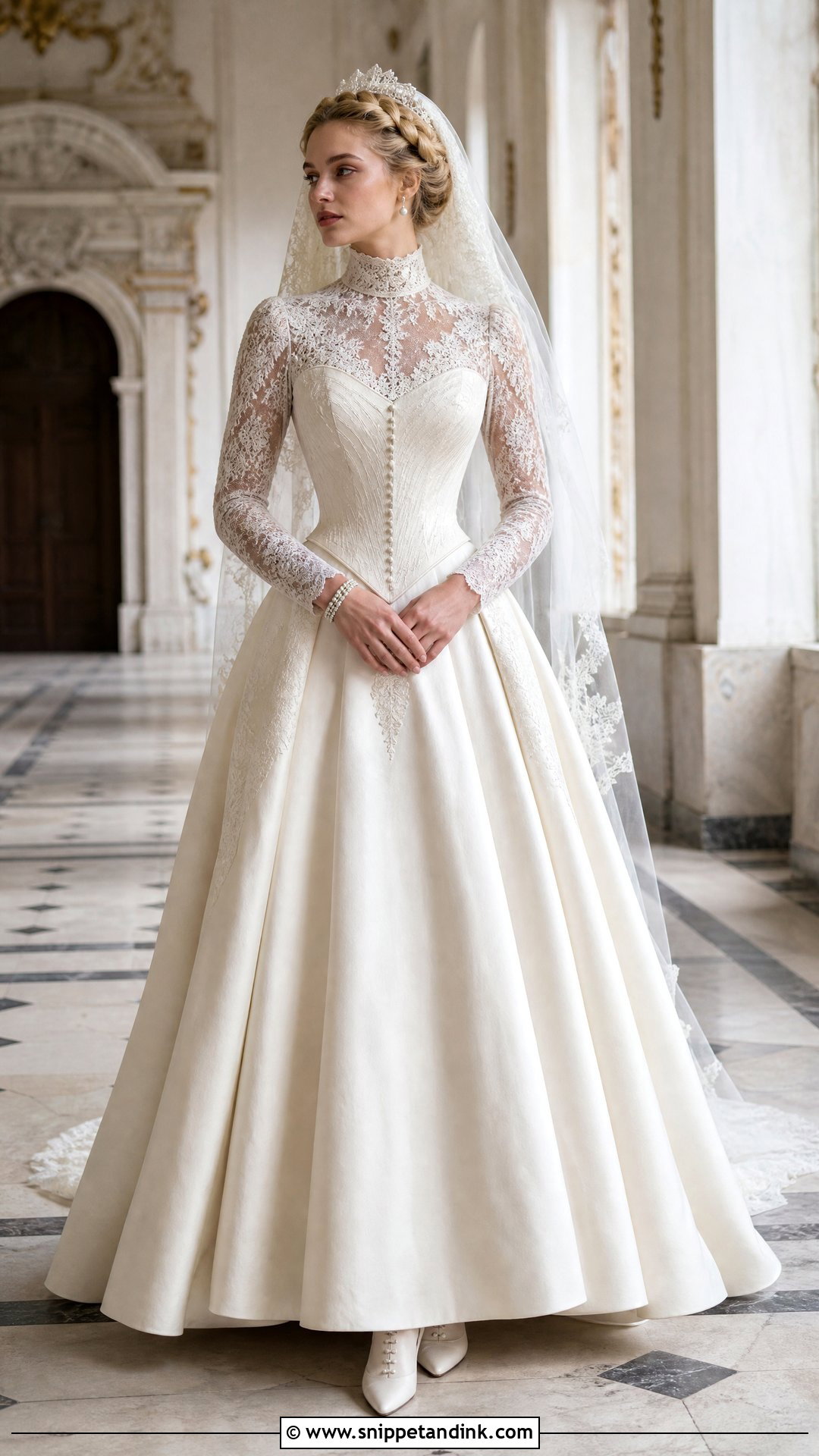
Coverage from neckline to hem gives you detail everywhere, so the trick is placing the veil. A sheer lace yoke over a lined sweetheart bodice adds depth, with fitted sleeves, a sharply defined waist and a softly flared skirt with a train you can actually manage. I slide a lace-edged veil under a low braided bun rather than on the crown, so the back of the bodice isn’t buried. The high neck needs little jewelry: studs, an heirloom bracelet and buttoned ivory shoes. It leans strongly Victorian and is happiest in cooler weather and traditional venues.
8. Puff Sleeve Basque Waist Wedding Dress
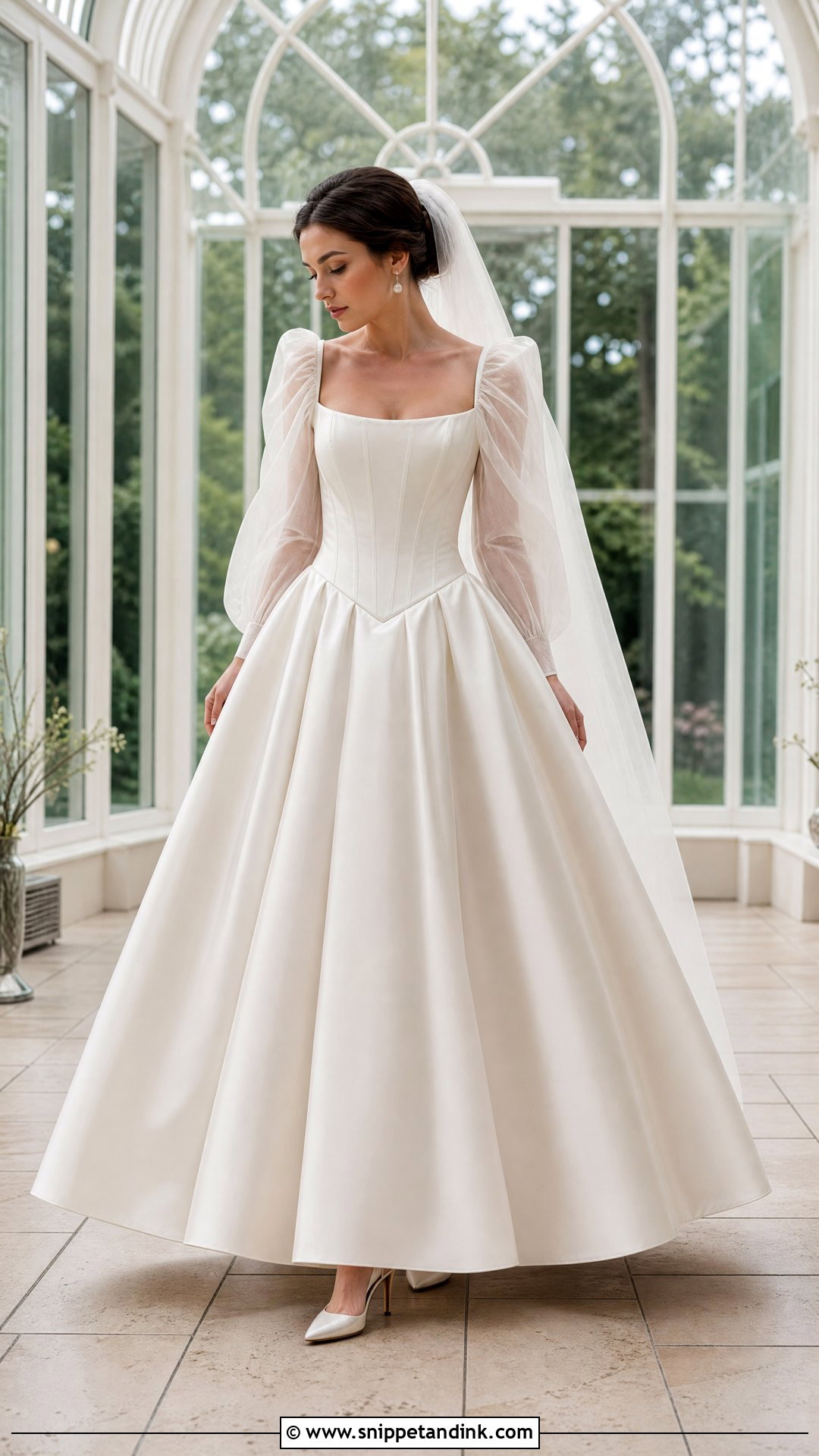
Puff sleeves give this silhouette its most playful version. I like sheer organza gathered at the shoulder and narrowing to the wrist, paired with a corseted bodice, a pointed waist and a full skirt in matte satin or layered tulle. Everything else has to stay quiet, or the sleeves start to look theatrical. One thing to check: organza puffs crush in a garment bag and under a coat, so ask your seamstress how to steam them back up, or pack the dress with tissue in the sleeves. Detachable sleeves give you a second look later. Pearl earrings, ivory block heels, a chapel veil and a soft updo suit spring or early fall gardens.
9. Tea Length Basque Waist Wedding Dress
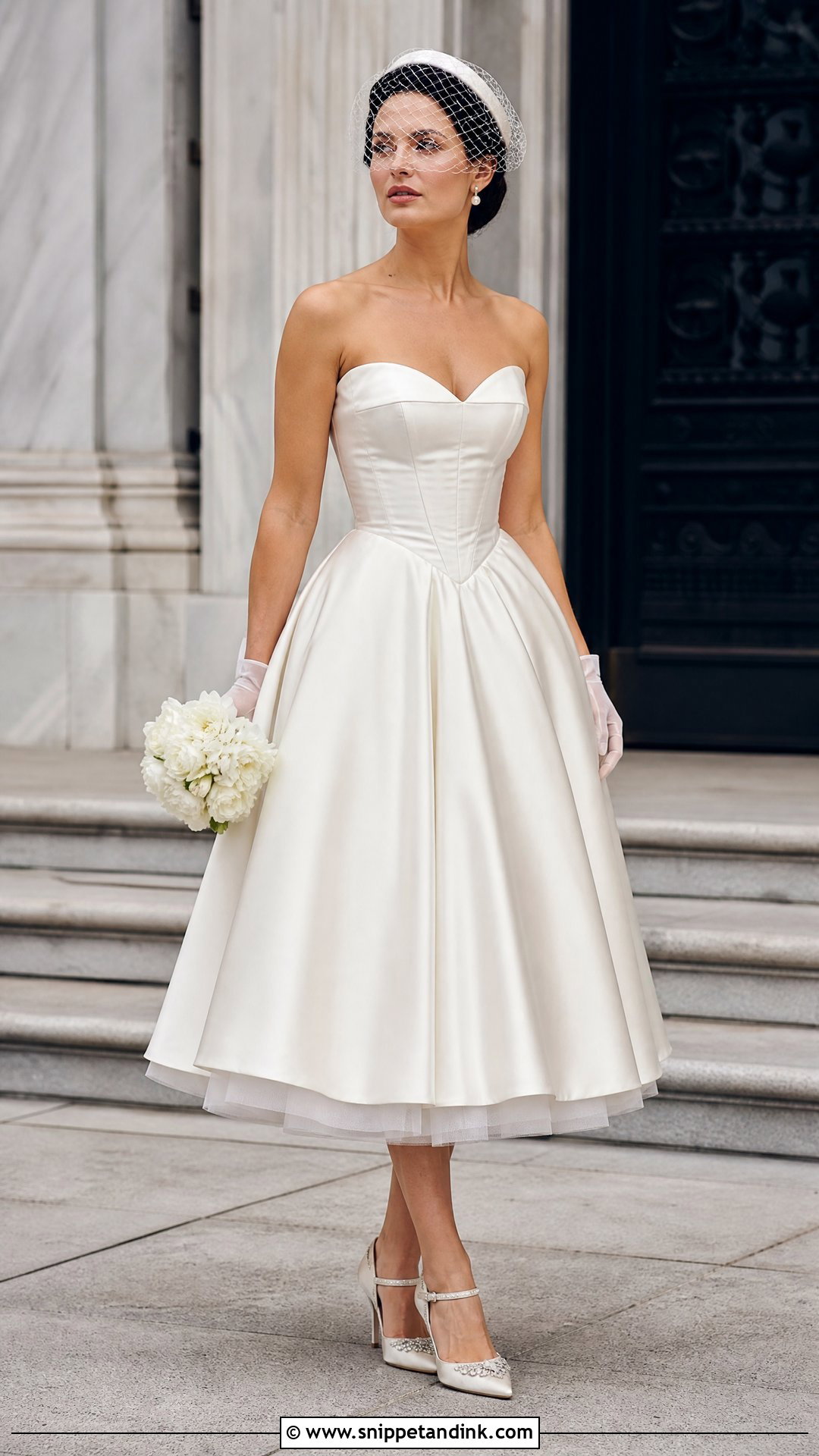
Hemlines between knee and ankle change everything about the accessories. A tea length Basque waist wedding dress keeps the structure but lightens the whole look, with a fitted lace or satin bodice, a shallow V and a petticoat for controlled fullness. Because your shoes are on show all day, they deserve as much thought as the veil: pointed pumps, embellished Mary Janes or ankle straps, broken in beforehand. A birdcage veil, short gloves and a French twist give a retro finish. Keep the bouquet small. It’s the version I’d suggest for courthouse or daytime weddings where a long train would just get in the way.
10. Brocade Basque Waist Wedding Dress
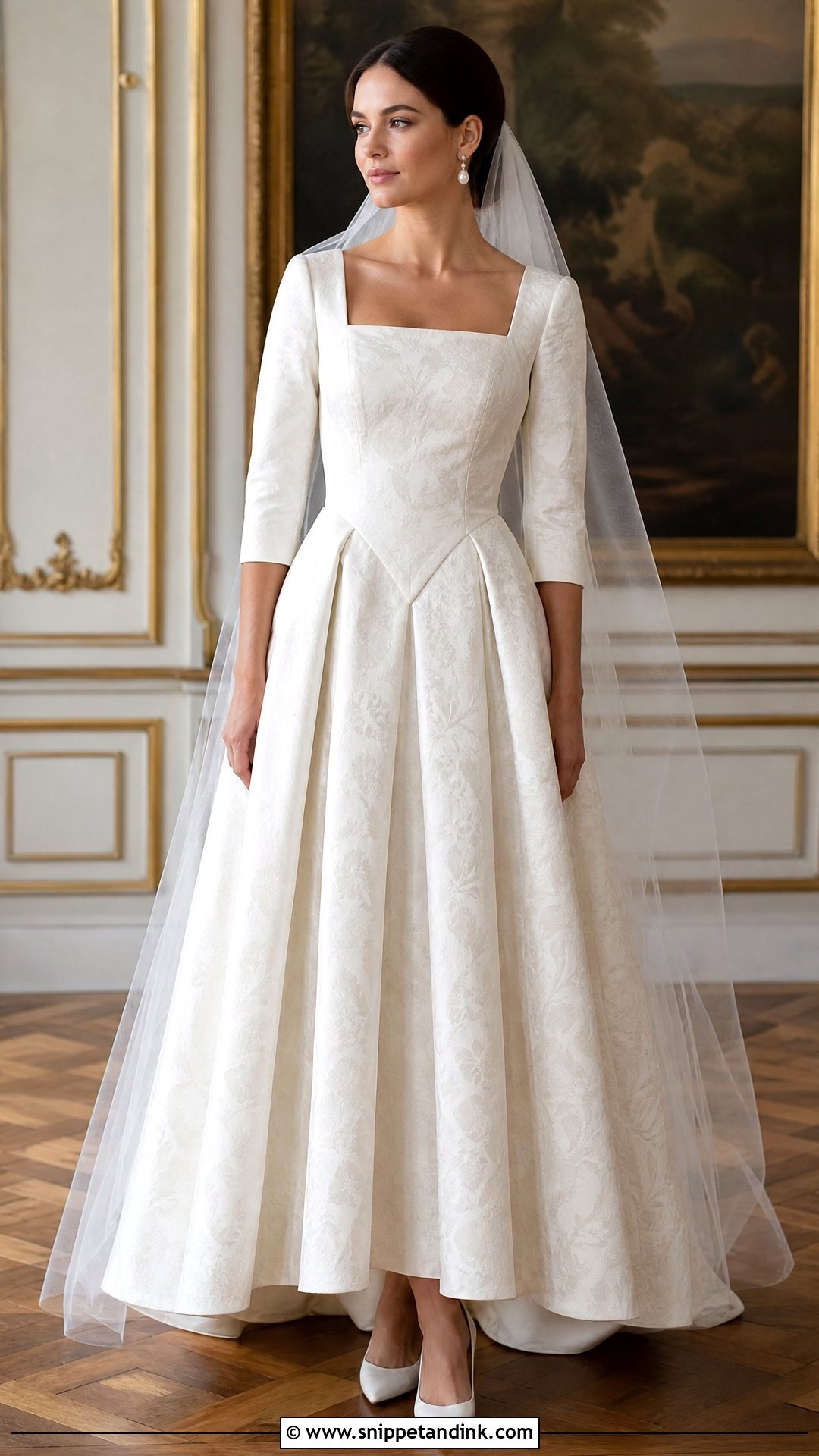
Brocade can go theatrical fast, so pattern scale is my first question. Pick a subtle floral or damask pattern, and a fitted bodice, pointed waist and box-pleated skirt will show the weave clearly. The cloth is stiff, which helps the point hold its shape, but it also means the waist seam can feel firm when you sit for dinner, so practise sitting at your fitting. Add a square or curved neckline, covered buttons and three-quarter sleeves. Plain ivory pumps, pearl earrings, a simple tulle veil and a smooth low bun keep the fabric in charge. It suits cooler months and formal evening venues.
11. Pearl Beaded Basque Waist Wedding Dress
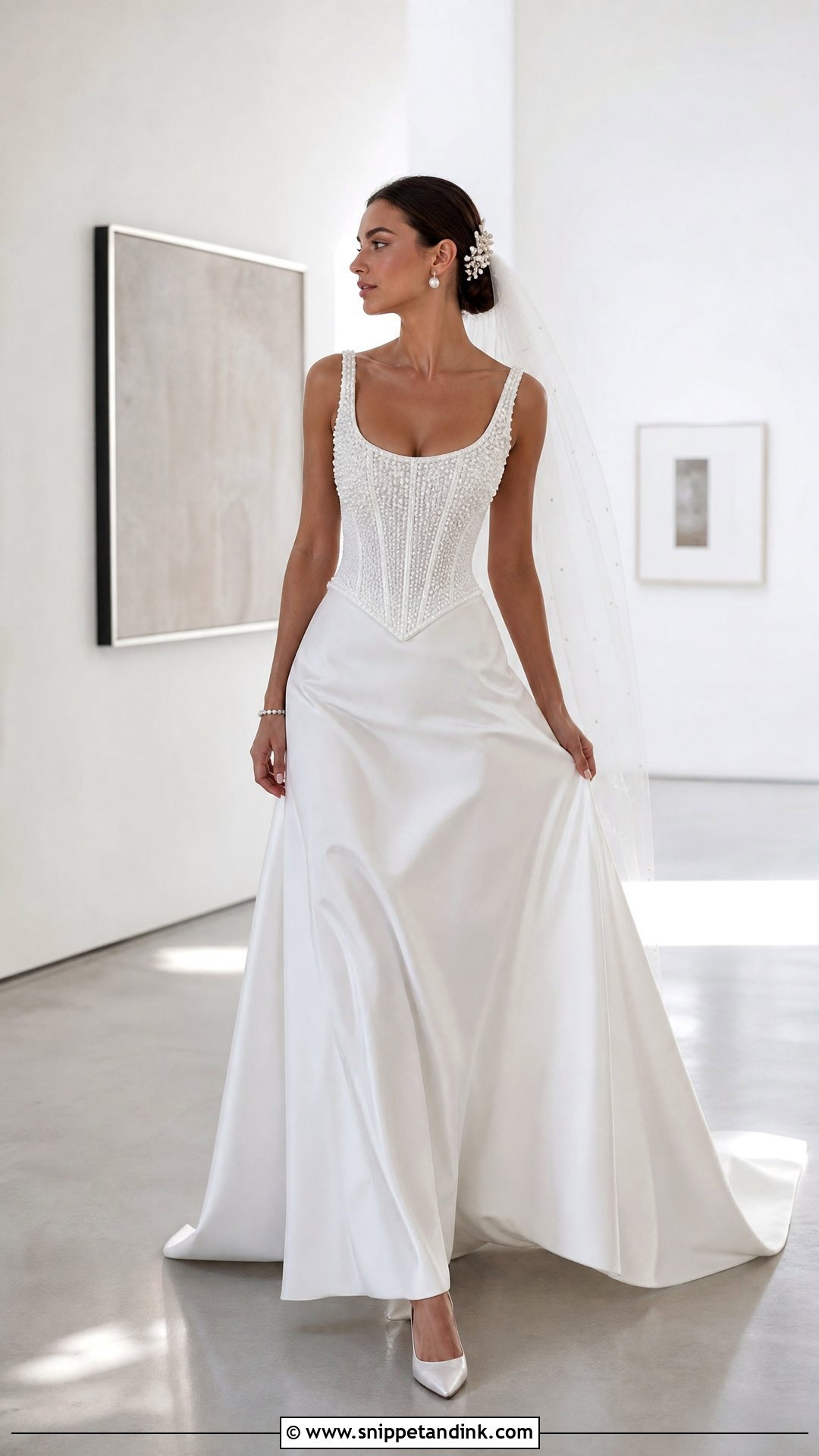
Pearls look richest when they thin out as they move down. On a pearl beaded Basque waist wedding dress, I’d have them scattered densely across the corset and fading toward the point and skirt, which pulls the eye to the tailoring. Beading adds weight, so check that the bodice still sits flat at the point after a full day’s wear test; heavy embellishment can drag a soft bodice down. A scoop or sweetheart neck suits pearl drops and a fine bracelet, with satin heels, a fingertip veil and a pearl comb above a low bun. Skip bold accessories and balance the textured top with plain satin or light tulle.
12. Cathedral Train Basque Waist Wedding Dress
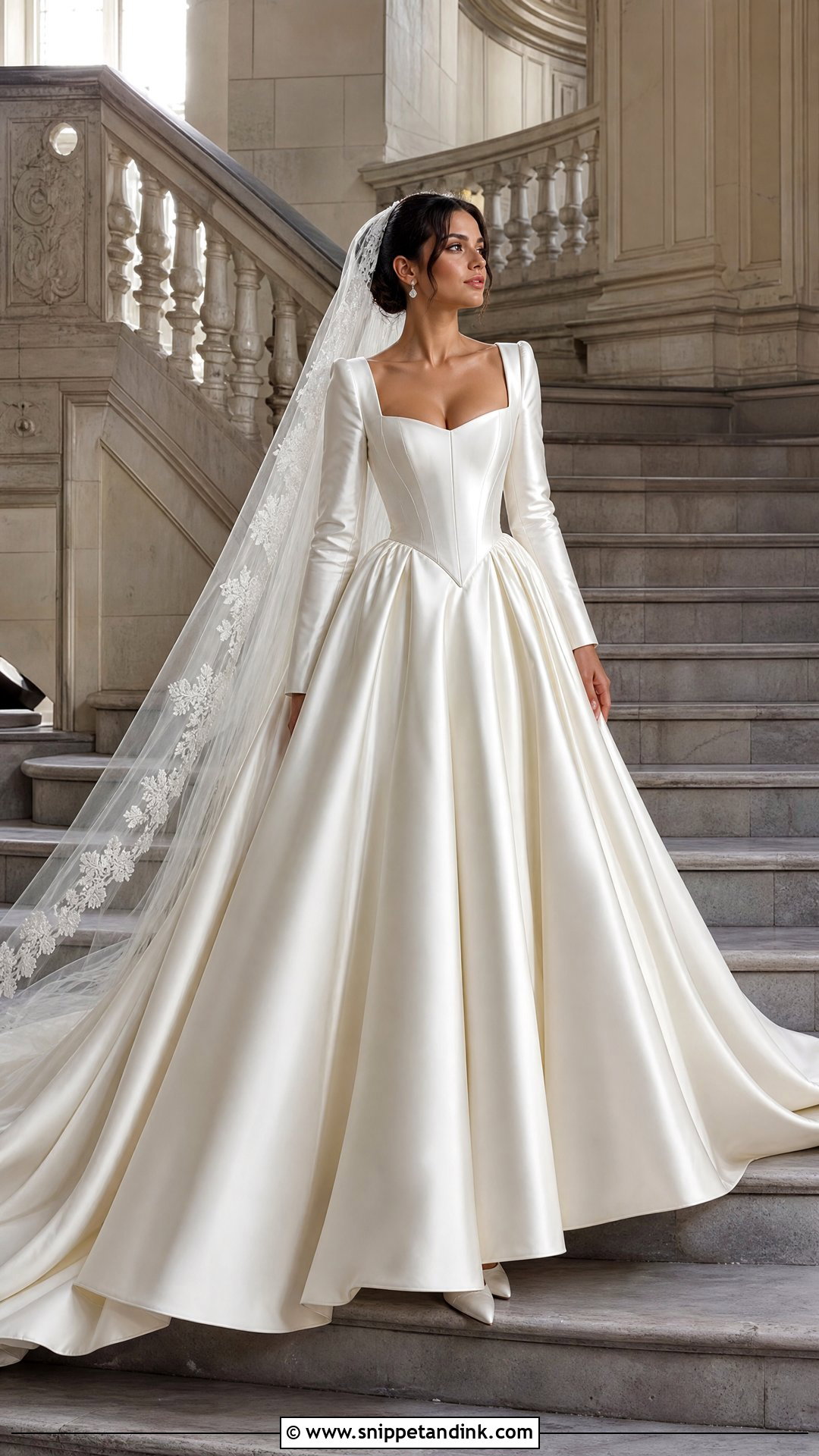
A cathedral train is the most ceremonial option here, and the most work. Start with a structured satin bodice in a deep point and a full skirt flowing into the train, with lace appliqués along the edge so the front stays clean. Hidden shoes should be comfortable closed-toe heels, since no one sees them anyway. The bustle is where I’d spend fitting time: ask for enough hook or button points that it holds through dancing, and have whoever will bustle you practise it at the last fitting. Add a cathedral veil, small studs and a polished updo. You’ll need grand staircases and big rooms to give it space.
13. Cape Veil Basque Waist Wedding Dress
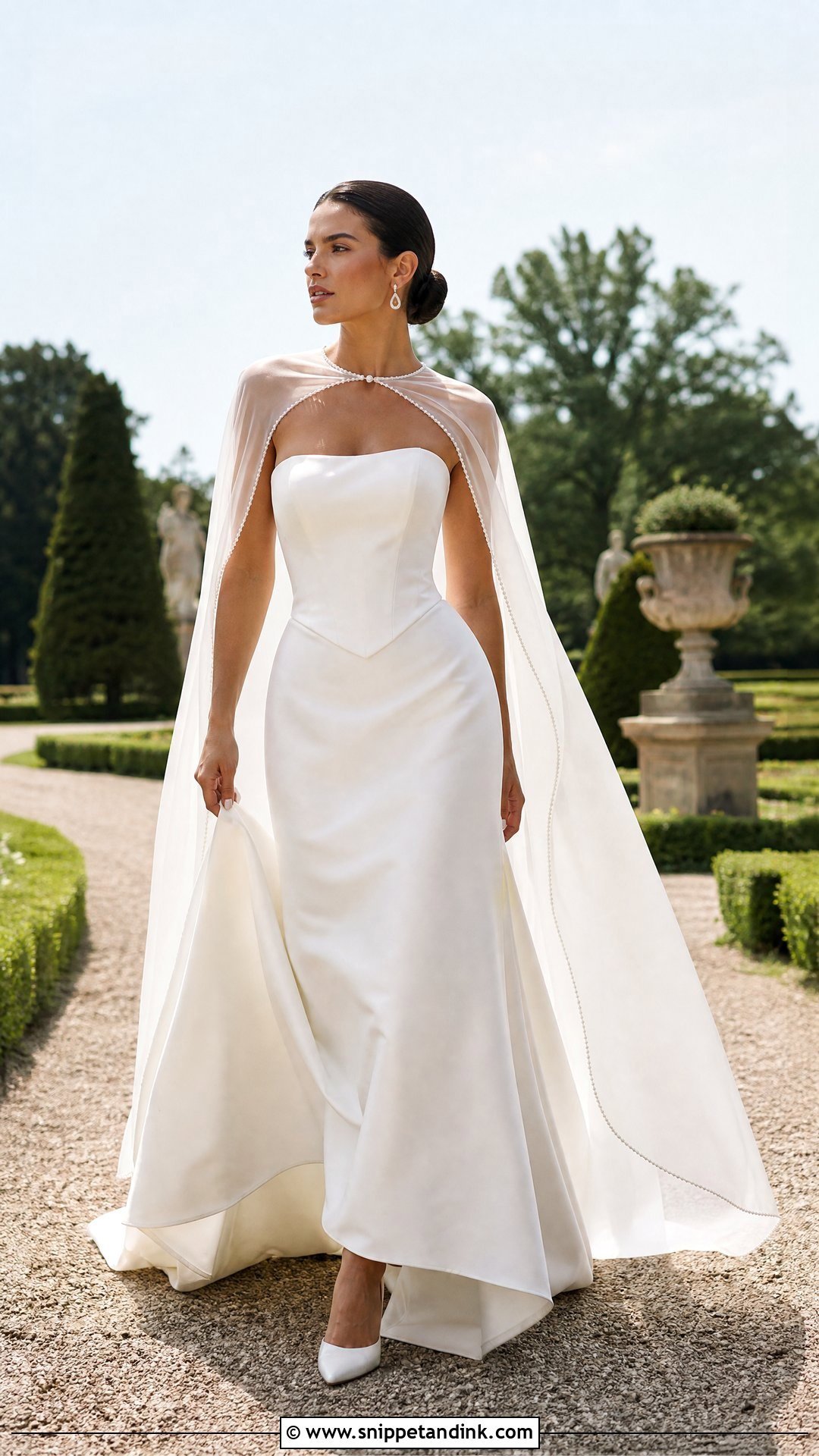
Swapping a head veil for a cape keeps the bodice completely visible. Choose a sleeveless or strapless satin gown with a clean point and a gently flared skirt, then attach a sheer cape at the shoulders so it falls behind the arms toward the train, perhaps with fine lace edging or small pearls. The attachment points matter: pinned too far forward, the cape drags the neckline down as you walk. It gives light shoulder cover for a religious ceremony and catches a breeze outdoors. Delicate earrings, pointed ivory heels and a smooth low bun are all it needs.
14. Detachable Sleeve Basque Waist Wedding Dress
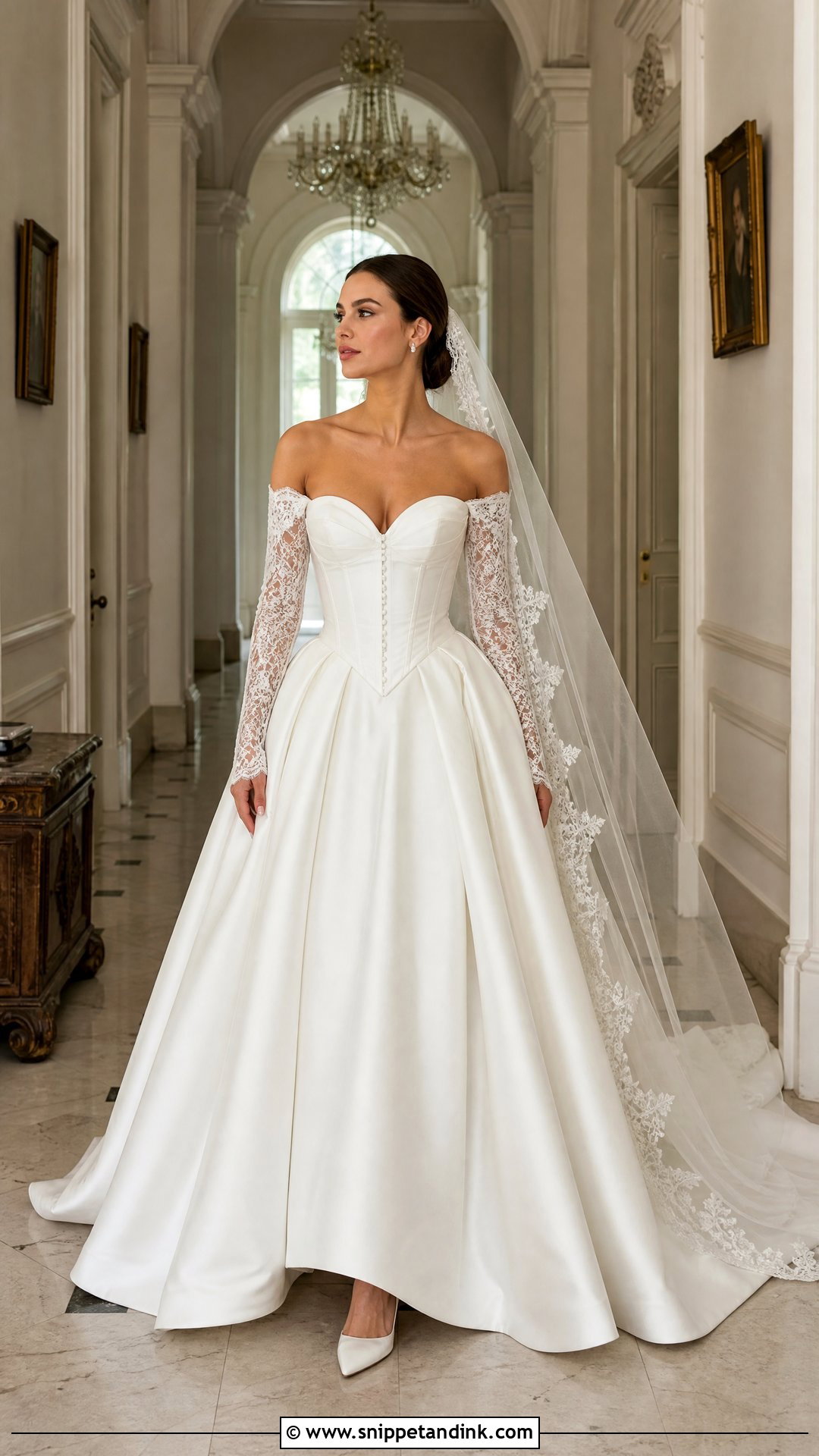
Two looks from one gown is the selling point here. Start with a strapless corset gown, a sweetheart neckline, a pointed waist and a full satin or tulle skirt, then add fitted lace sleeves or soft off-shoulder cuffs with covered buttons for the ceremony and take them off for the reception. I ask for hidden snaps or thread loops rather than hooks, because hooks show through lace and catch on hair. Pearl earrings, satin pumps and a lace-edged veil work with both versions, and a low bun keeps the shoulders clear so the change is obvious. It solves the problem of a covered ceremony and a hot dance floor.


15. Bustle Back Basque Waist Wedding Dress
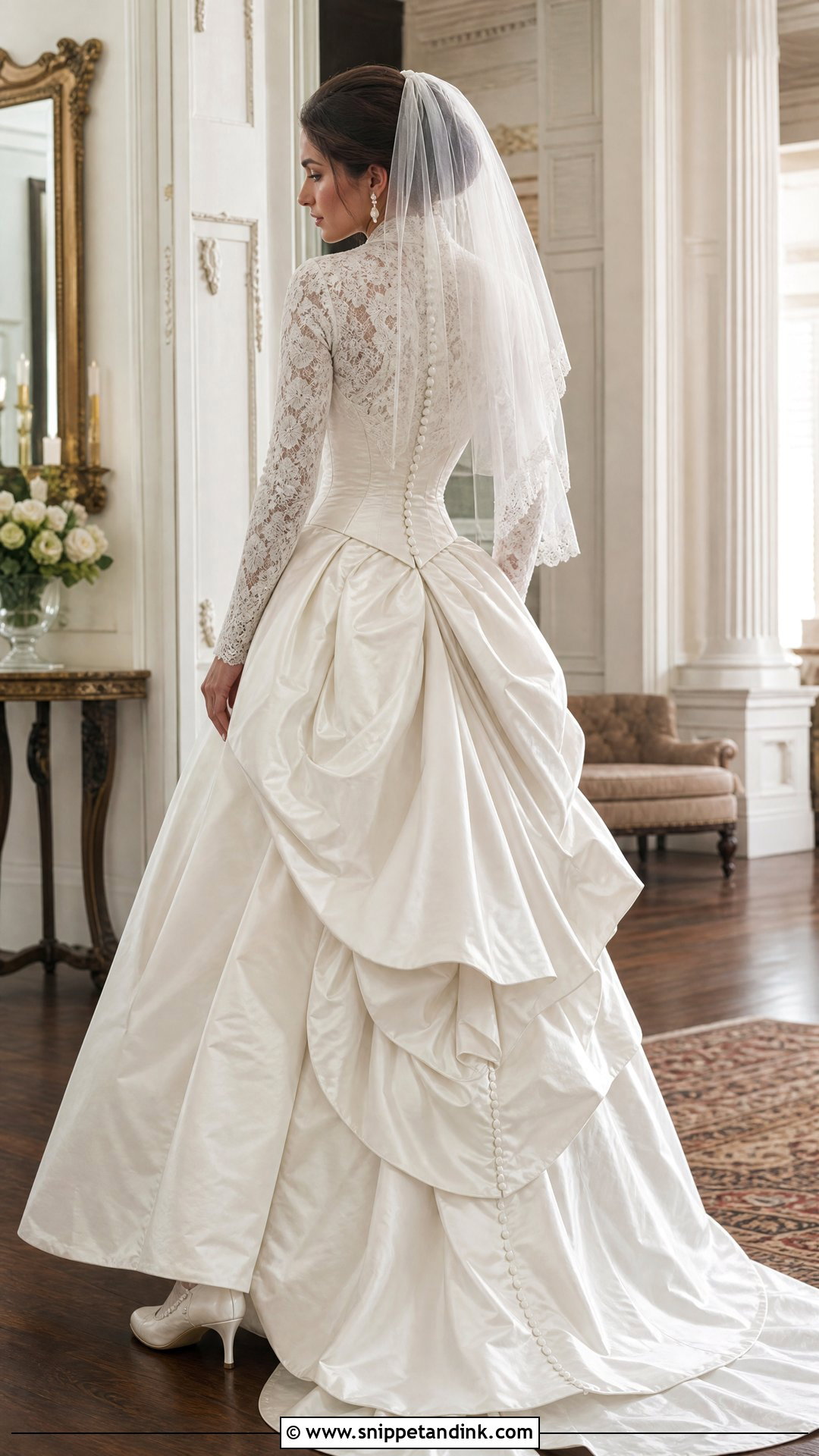
Volume at the back is what makes this one read as truly Victorian. The bodice keeps its pointed front waist, and the shaping continues into a skirt gathered behind in soft folds or layered drapes. Keep the bustle wearable, not exaggerated, and sit down in it at every fitting: gathered fabric at the back can make chairs awkward, and you want to know before dinner whether it needs releasing. A scoop neckline, fitted sleeves and covered buttons support the history, with lace-up ivory boots or buttoned heels, pearl earrings, a fingertip veil and hair up so the back stays in view.
16. Champagne Basque Waist Wedding Dress
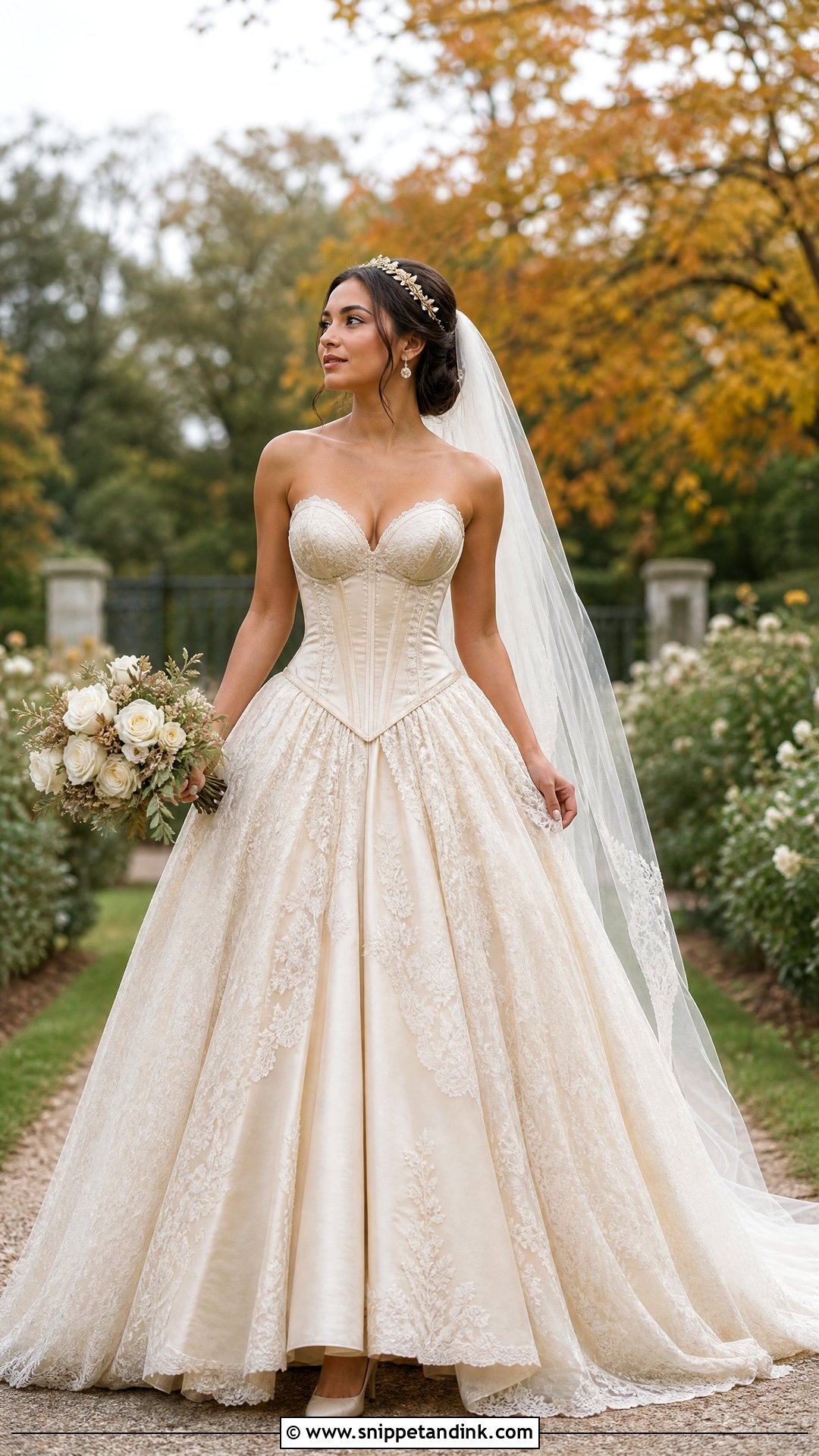
Champagne is a tone I always ask brides to see in daylight first. In silk satin, tulle or lace, a pale beige-gold shade reads antique and warm; go too deep or metallic and it starts to look like a bridesmaid colour. Under warm venue bulbs it can turn yellow, under cool daylight almost grey, so look at a swatch in both. A corseted bodice, gentle sweetheart neckline and pointed waist add definition, and an ivory lace overlay gives subtle contrast. Neutral satin shoes, warm pearls, muted gold hair pieces and white and cream flowers keep it fresh for autumn or a softly decorated garden.
17. Floral Embroidered Basque Waist Wedding Dress
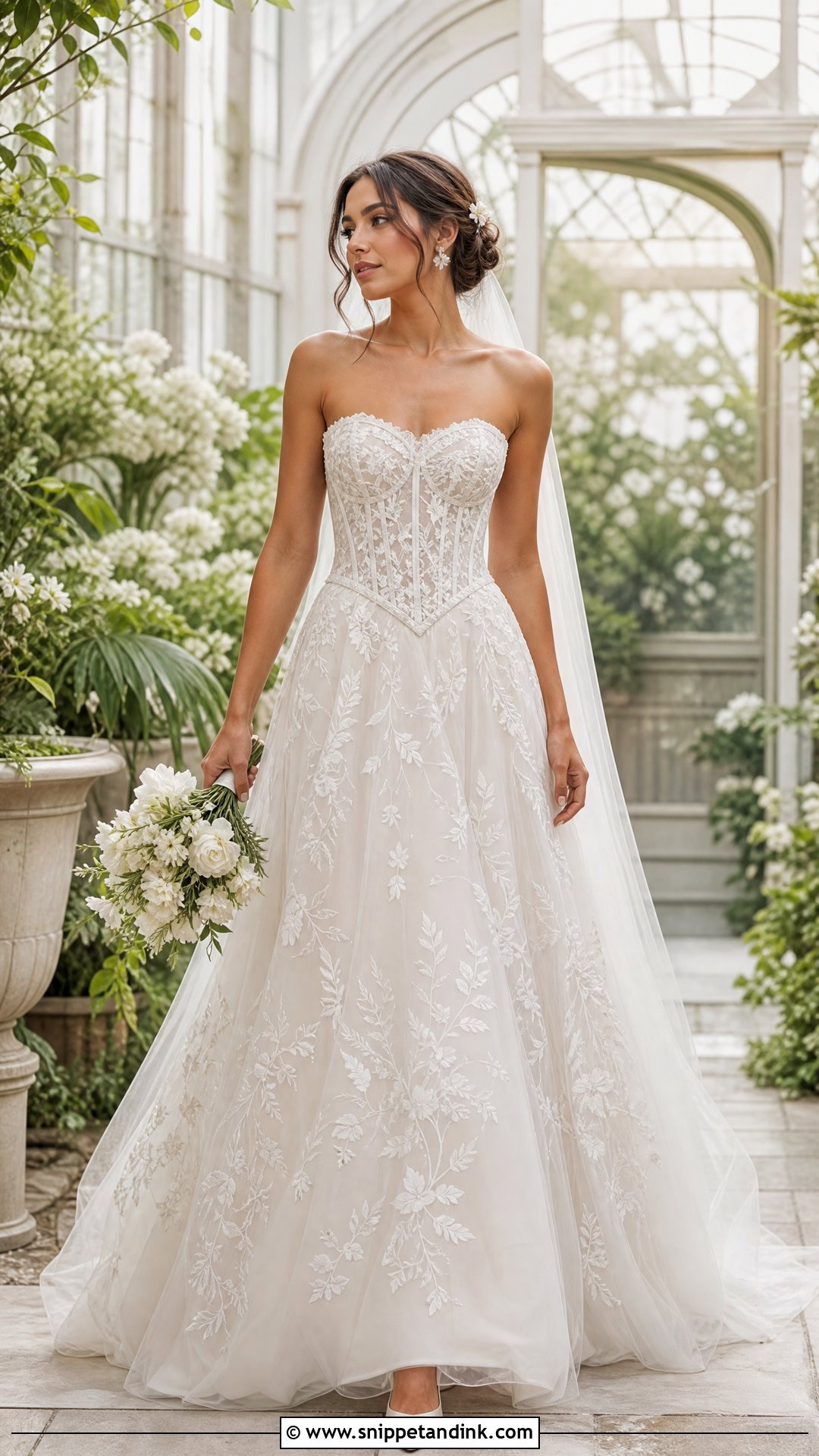
Embroidery softens all that architecture, but it needs editing. I’d choose a sheer overlay with ivory flowers across the corset that thin out onto the skirt, and keep dense motifs off the lowest edge of the point; embroidery stitched right on the seam blurs the shape you paid for. A strapless or fine-strap neckline stops the surface getting busy. Simple satin heels, small floral earrings and a plain tulle veil are enough. Tuck a few tiny blossoms into a loose chignon, and choose bouquet flowers that suit the embroidery rather than copy it. Spring gardens and conservatories suit it best.
18. Winter Velvet Basque Waist Wedding Dress
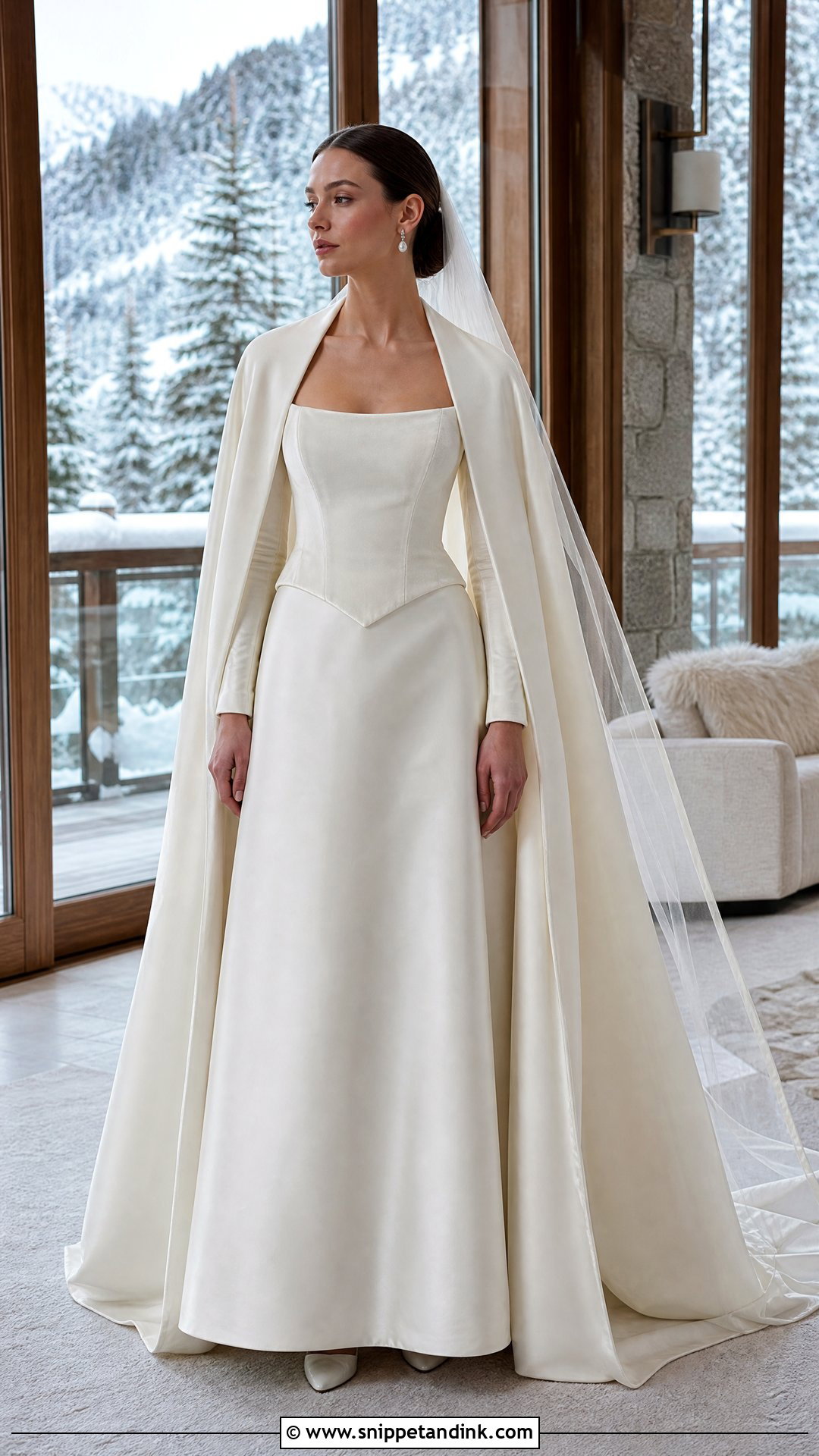
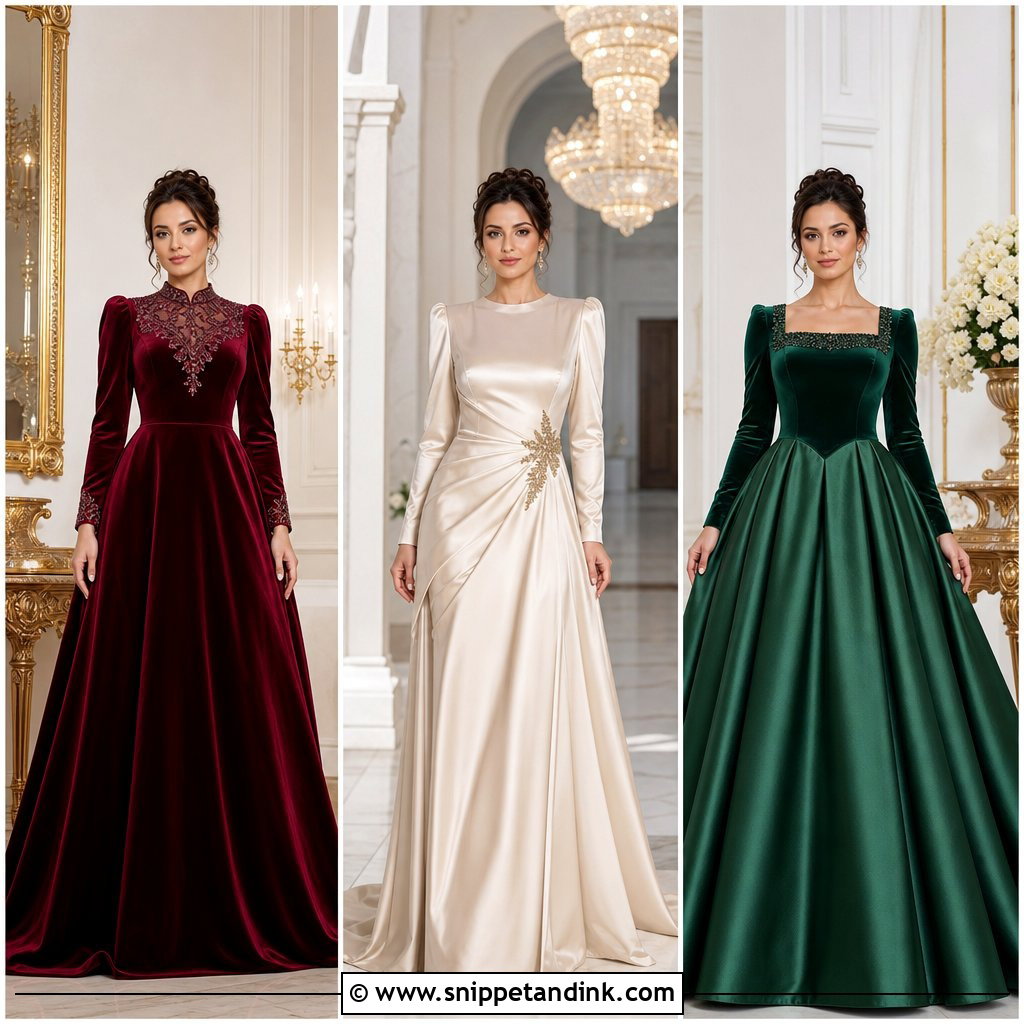
Velvet is the winter answer, but only in bridal weight. Ivory or cream bridal velvet is lighter than upholstery-style cloth, and with a long-sleeve bodice, square neck, pointed waist and smooth A-line skirt with a short train it drapes rather than drags. Velvet has a nap, so the panels must all be cut in the same direction or they’ll look like two shades in photographs; inspect the finished gown from several angles. Add pearl drops, closed-toe satin pumps, a sheer veil with narrow velvet trim and an ivory cape for outdoor portraits. A sleek low bun or pinned waves suit grand halls and mountain lodges.
19. Two Piece Basque Waist Wedding Dress
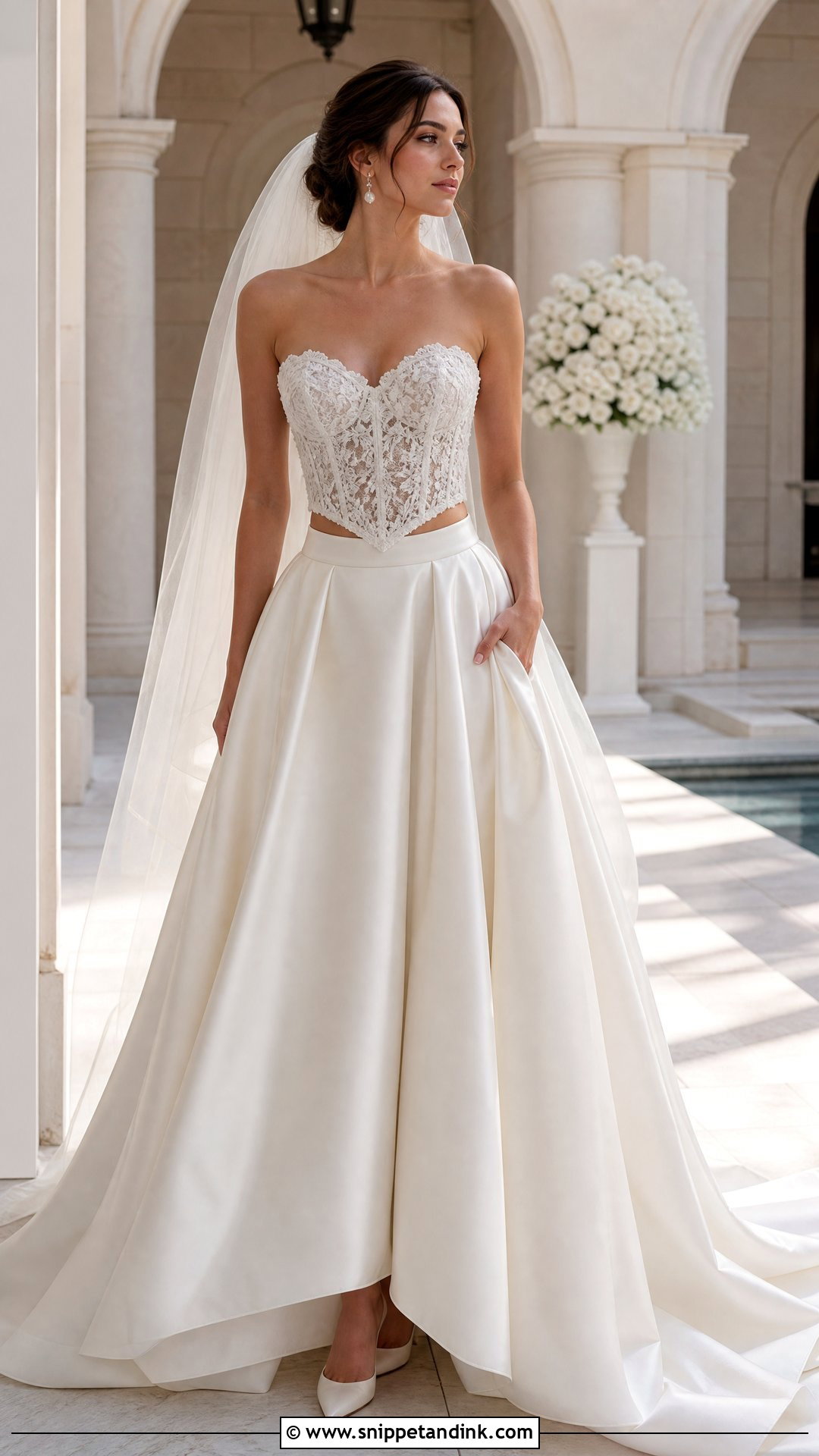
Separates give you vintage corsetry with real flexibility. A structured bodice that extends into its own point sits over a high-waisted ball gown or A-line skirt; matching satin looks like one gown, while a lace top and plain skirt give contrast. The overlap is the thing to test: lift your arms and turn at the fitting, and if any gap appears at the waist, ask for a longer bodice or a hook-and-bar closure on the skirt. Pearl earrings, ivory heels and a chapel veil work for the ceremony, and swapping to a tea-length skirt later lightens it for dancing. It suits destination weddings and brides who want to wear pieces again.


20. Minimalist Vintage Basque Waist Wedding Dress
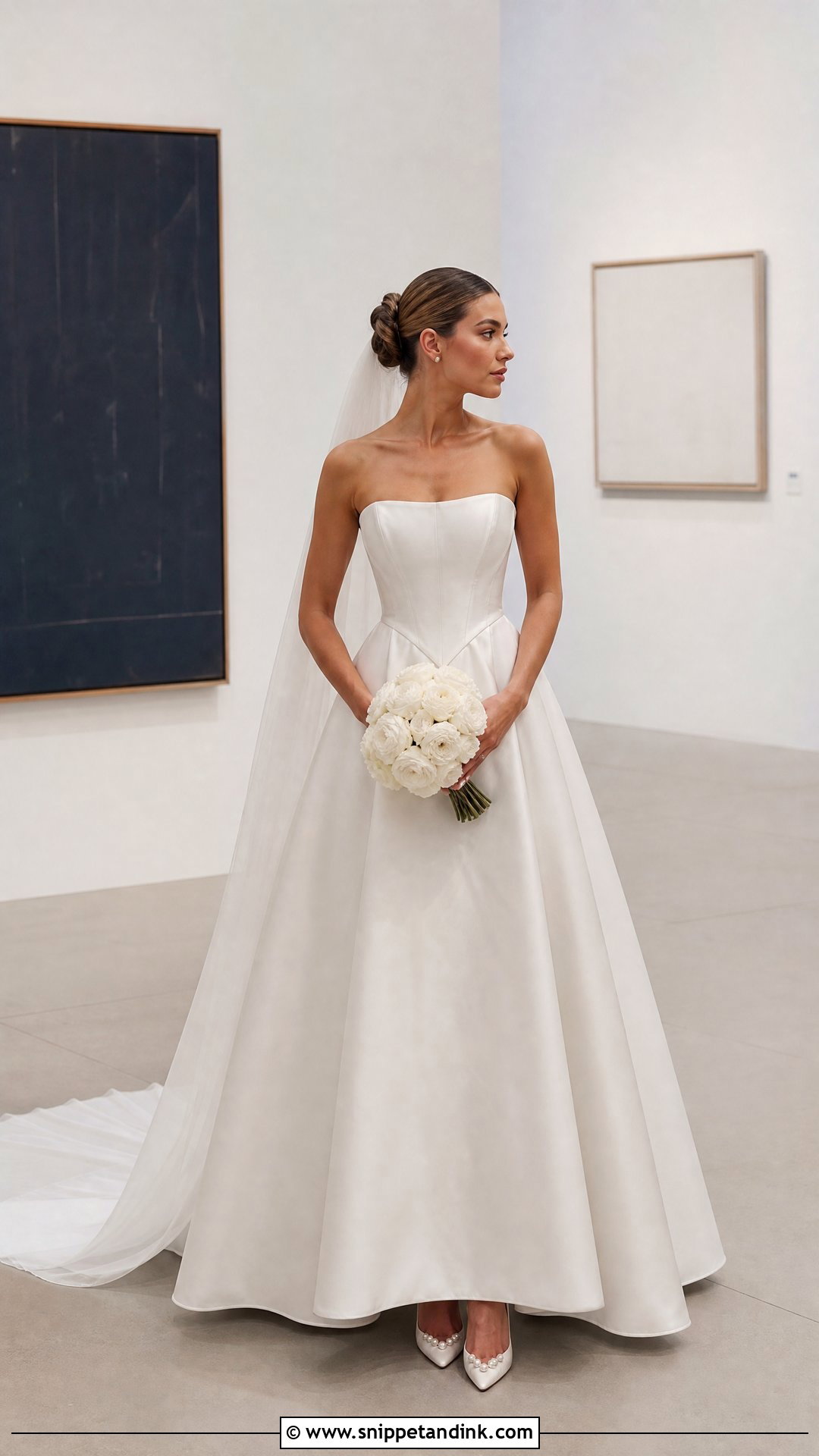
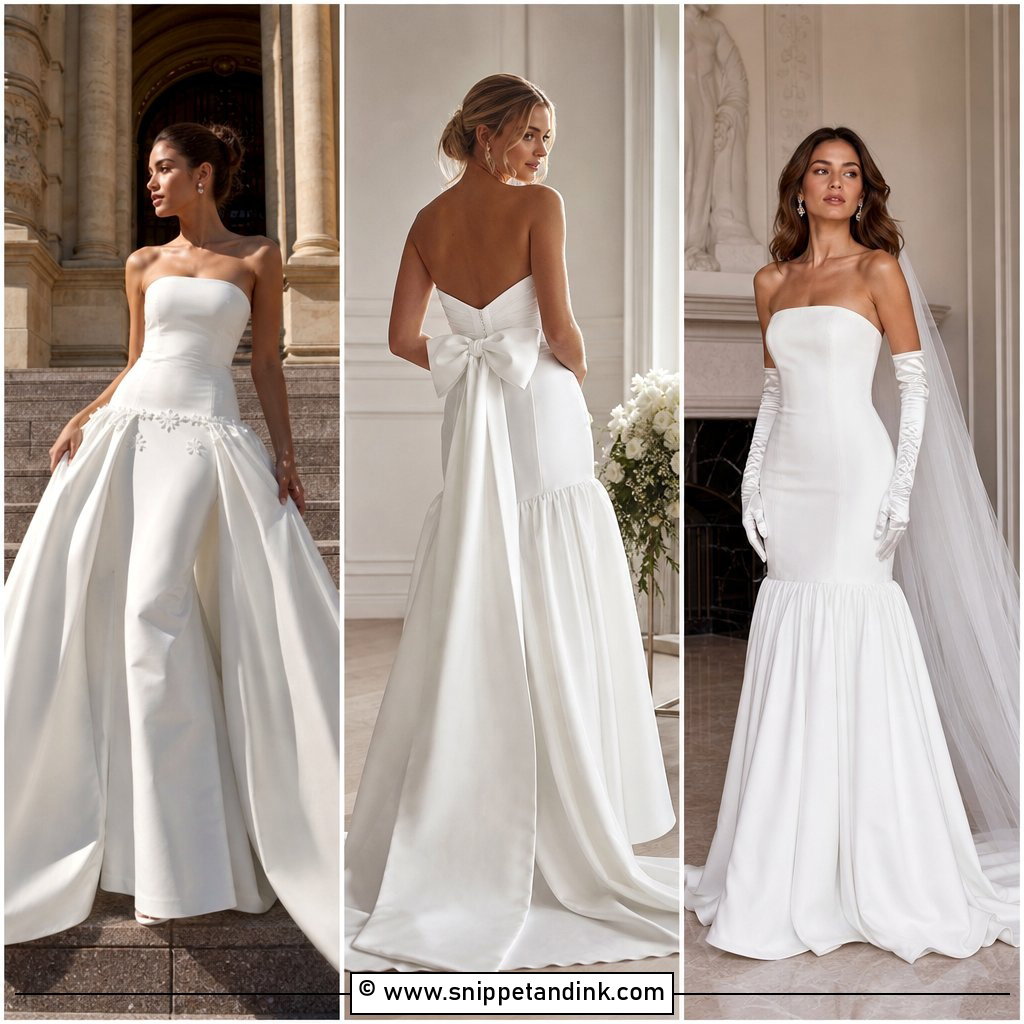
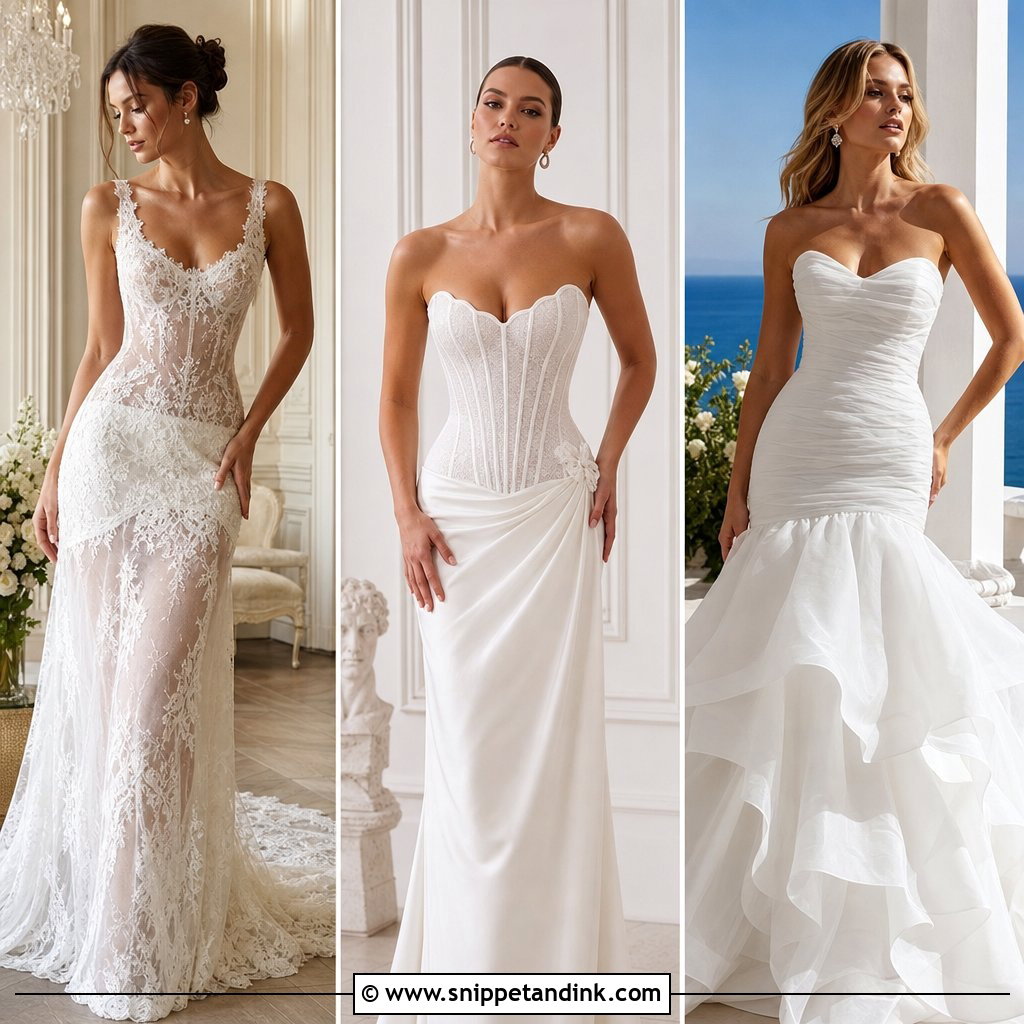
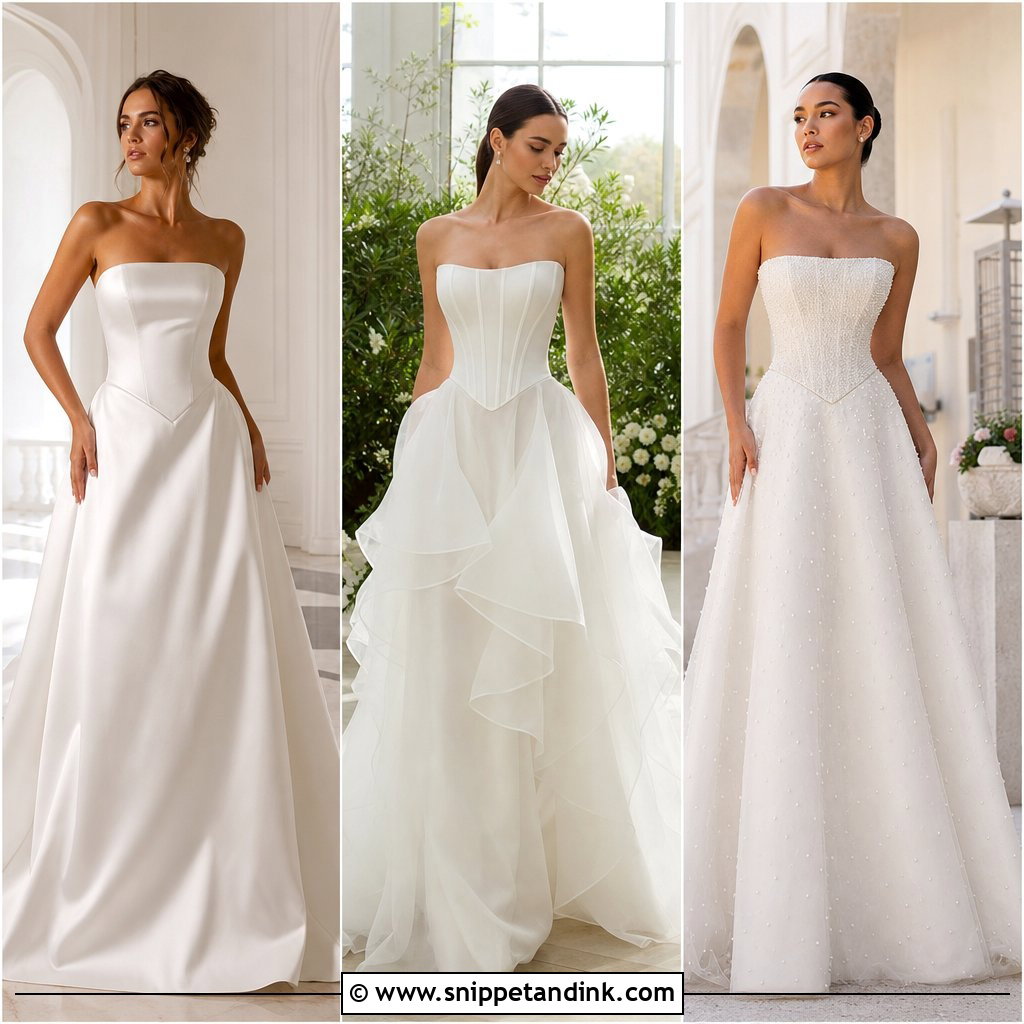
Without lace or pearls, the tailoring has nowhere to hide. Smooth silk or matte satin, precise corset seams, a clean strapless neckline and a sharp V-shaped waist into a full A-line skirt let the construction be the decoration. That means alterations are the whole job: a slightly crooked seam or a dimple at the point shows on a plain gown in a way it never would under lace, so budget for an extra fitting. Pearl studs, pointed satin pumps, a plain cathedral veil, a sculpted bun and a monochrome white bouquet complete it for galleries, hotels and clean modern spaces.
What Happens to a Dropped Waist at Your Fittings
A dropped waist is harder to alter than a natural one, because the seam is cut on an angle and sits over the curve of the hip. Taking it in or letting it out changes where the point lands, so plan on at least three fittings and start roughly two to three months before the wedding. Bring the actual shoes and underwear to every one, since a heel height or a different bra moves everything.
Tests I ask every bride to do in the gown
- Sit on a hard chair for a few minutes. The point should flex rather than dig into your thighs; if it bites, a little less boning at the tip usually helps.
- Raise both arms as if for a hug. The bodice shouldn’t ride up and leave a gap above the seam.
- Walk, then climb a step. A full skirt sewn onto an angled seam can tip forward if the balance is wrong.
- Eat something. A corset fitted on an empty stomach at a morning fitting can feel very different after a wedding dinner.
If you’re ordering from a vintage seller or an older gown in the family, check the seam allowance inside the bodice first. Older garments often have little spare fabric at the waist, which limits how much a seamstress can let them out.
Underpinnings That Keep the Point Crisp
Most of the shape you see comes from what’s underneath. A boned bodice with a waist stay, a sturdy grosgrain band sewn inside at the waist, takes strain off the zip and stops the point creeping upward through the day. Under a full skirt, a hoop or a stiff petticoat holds the fabric away from the seam so it doesn’t collapse into folds below the V.
Keep shapewear simple. A longline bra without seams or a plain slip is usually enough, and bulky waist shapers can actually spoil the line by adding a ridge exactly where the seam sits. Wear your chosen underpinnings for an afternoon before the final fitting to make sure nothing pinches by hour four.
So Which Point Suits Your Torso and Your Venue?
Every gown here shares the same dropped point, yet lace sleeves, satin, brocade, embroidery and detachable pieces each give it a different personality. When you compare them, look first at how deep the point sits on your torso, how much support the bodice gives, how much skirt your venue can hold and what the weather will do. Leave real time for alterations around the torso and hips, because the point only looks right when it’s placed exactly. And borrow from history without dressing as one era head to toe; the version that feels like you will always photograph better than a perfect reproduction.
You'll Like These Ideas:





Leave a Reply