
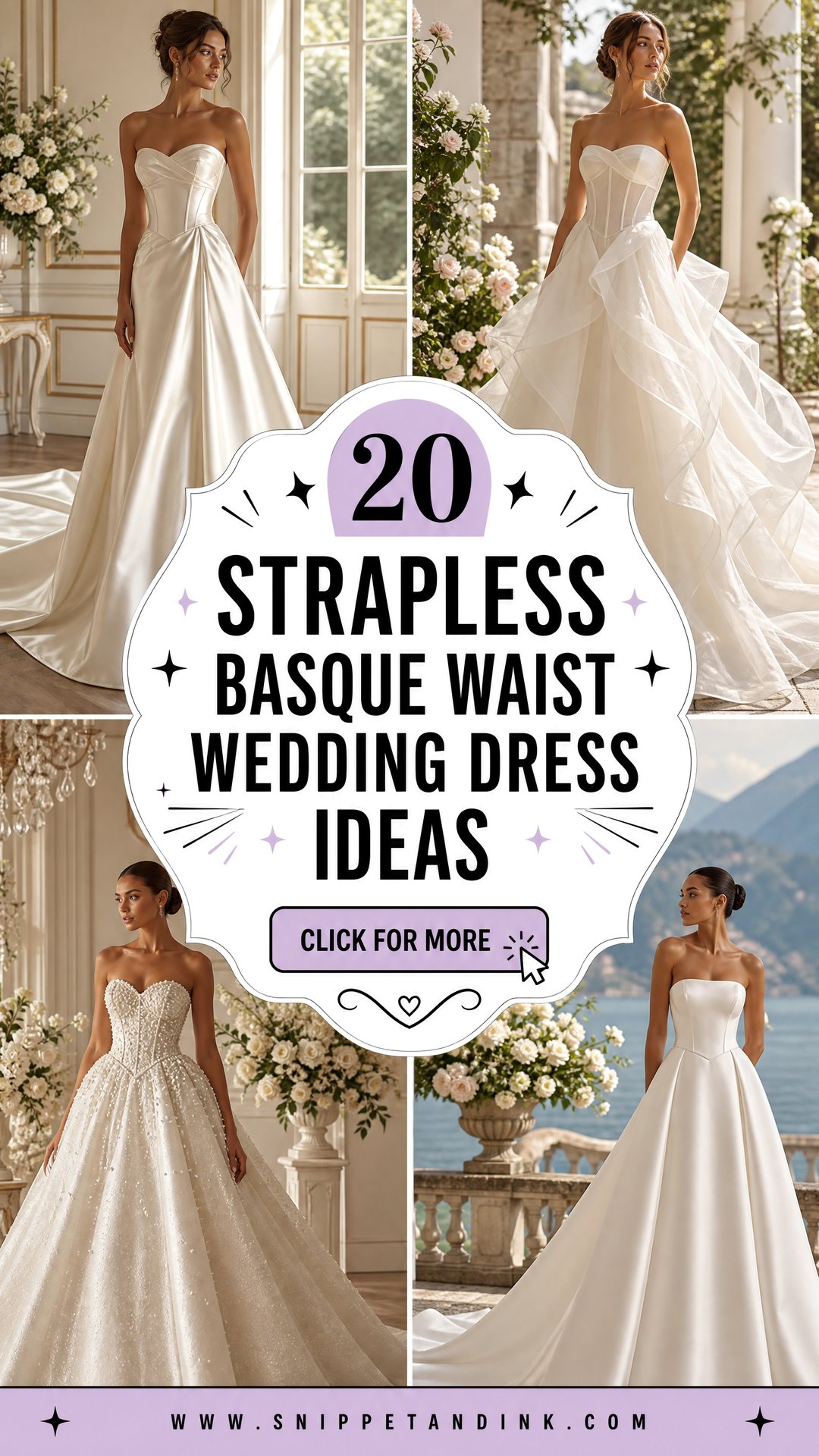
Where the Point Should Land on Your Torso
A Basque waist sits below your natural waist and dips to a V at center front. How deep that V goes changes the whole effect, and it’s the first thing I adjust in my head when a bride steps onto the pedestal.
A short torso usually looks best with a shallow point, an inch or two below the natural waist, because a deep V can make the bodice look like it’s swallowing the skirt. A long torso can carry a deeper point. If you’re fuller through the hips, a point that ends just above the widest part of the hip slims the line; one that ends right on it draws the eye there instead.
- Find your natural waist by bending sideways; the crease is the spot.
- Stand in front of a mirror in the sample and look at where the tip falls relative to that crease and your hip bone.
- Sit down. A point that’s too long will dig into your lap or fold upward.
- Ask the consultant whether the depth of the V can be changed. On many gowns it can’t, because the skirt is cut to meet it.
That last point matters more than anything else on this page. Hems, side seams and cups can be adjusted fairly easily. Moving the point usually means re-cutting the skirt’s waist seam, which is costly and not always possible on lace or beaded fabric.
1. Satin Strapless Basque Waist Wedding Dress
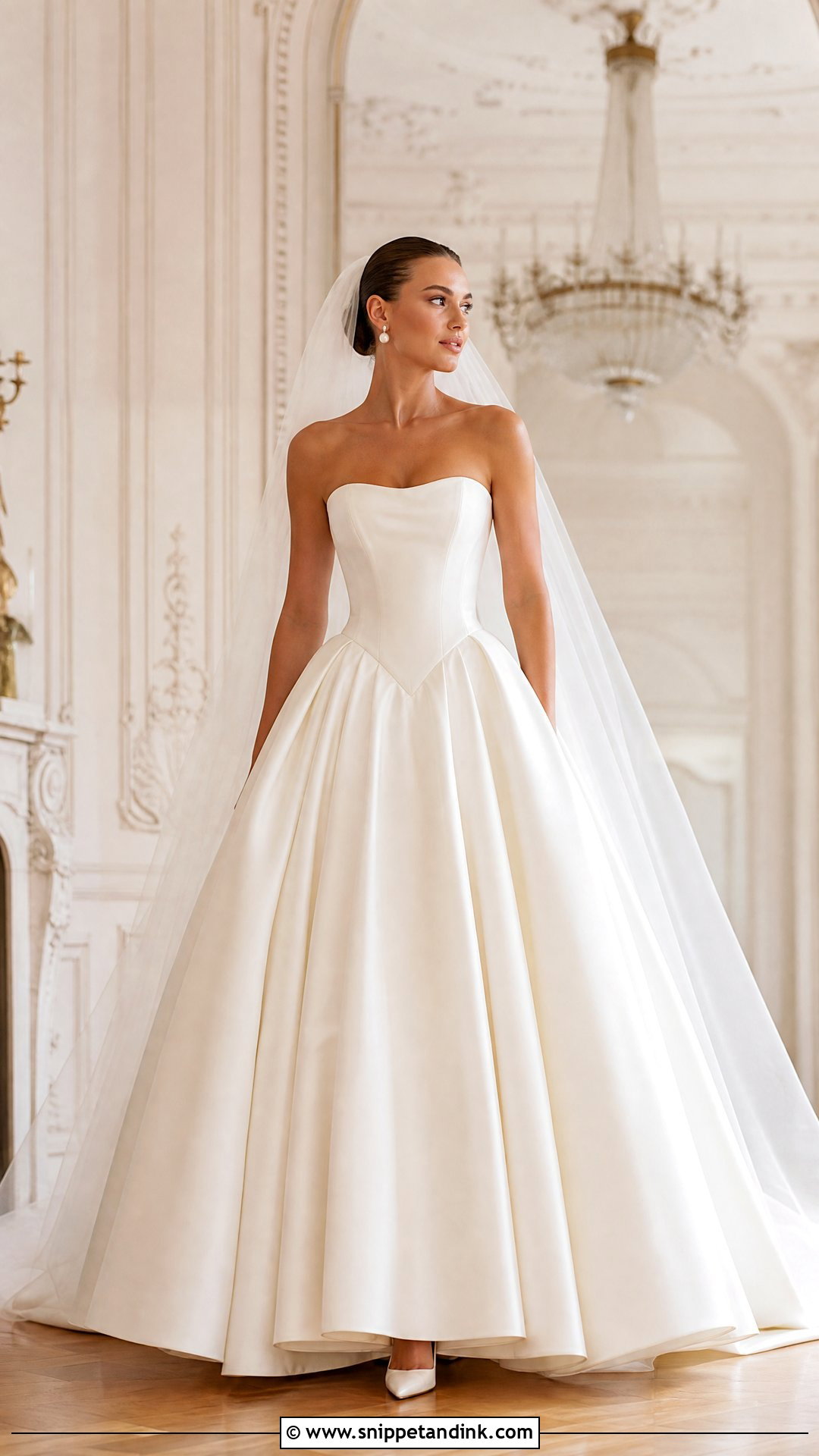
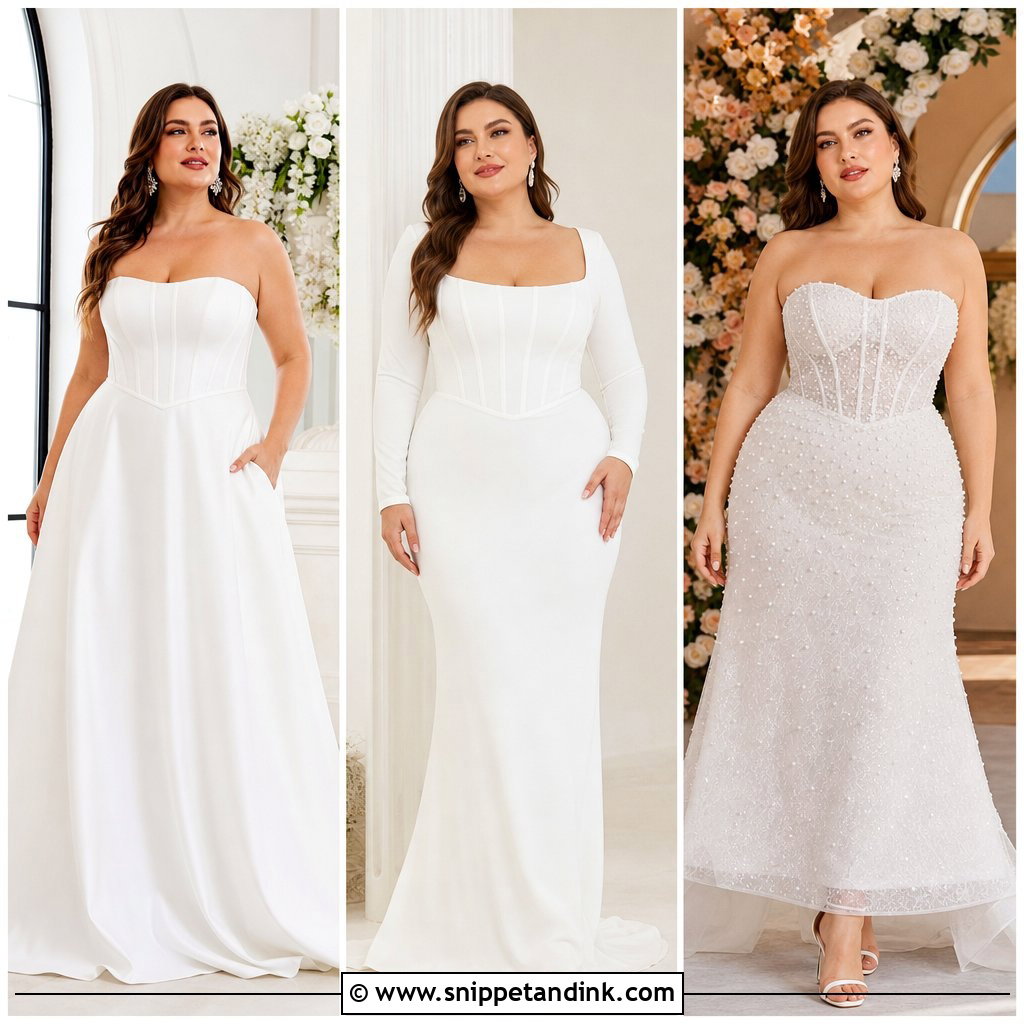
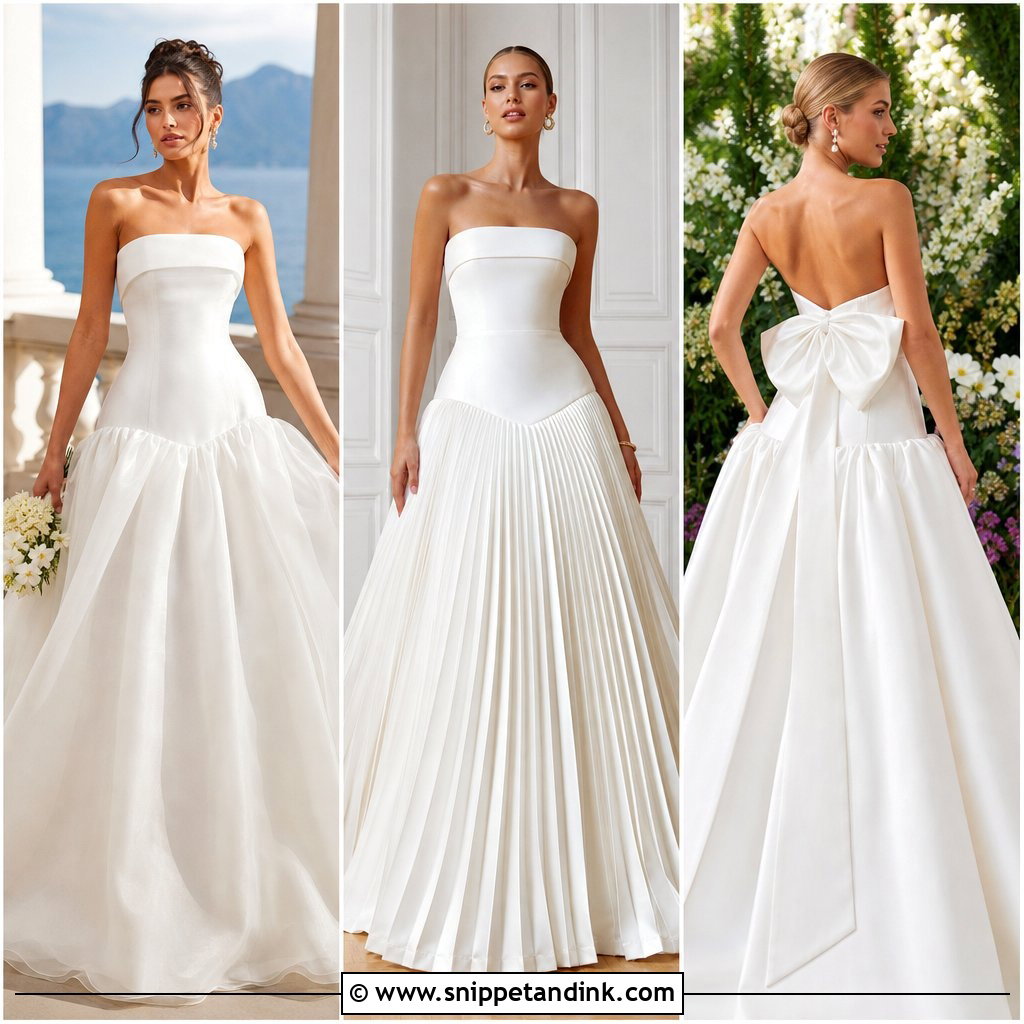
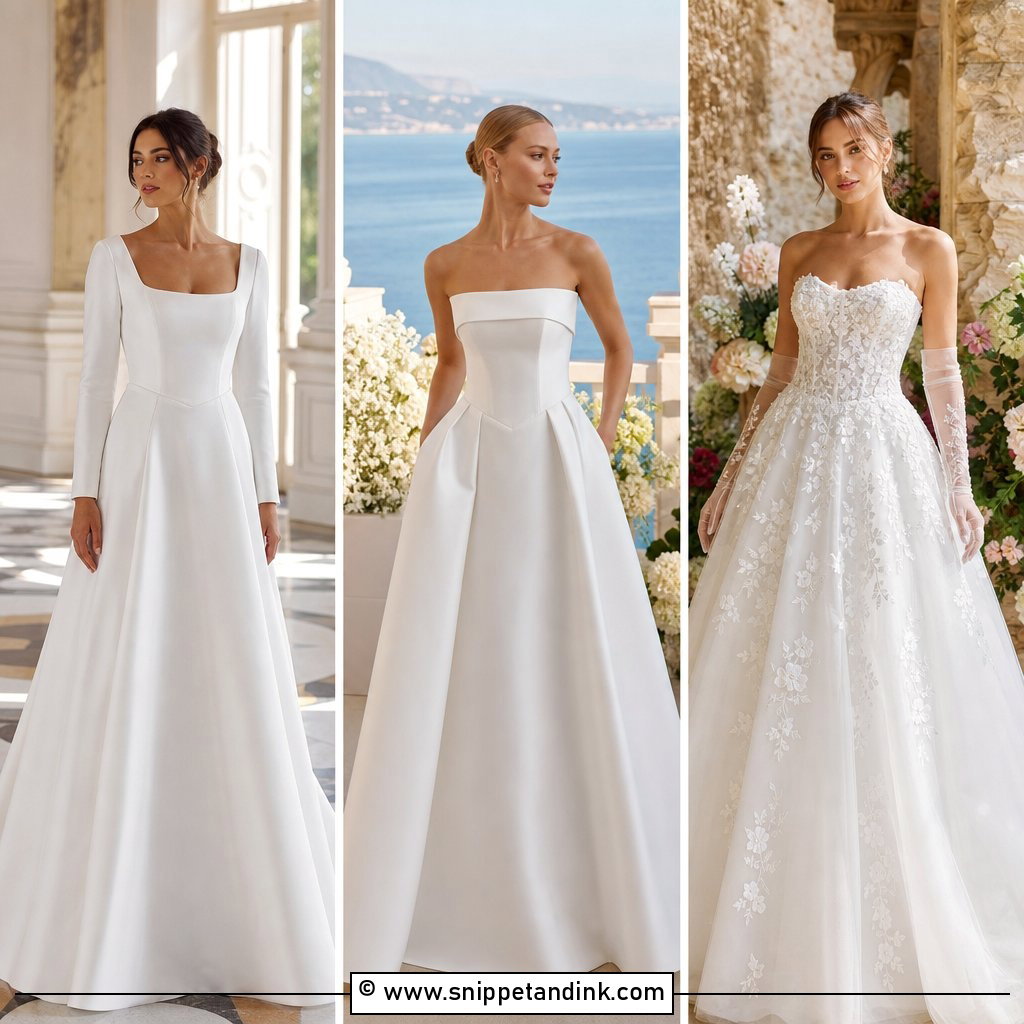
Plain satin is the honest test of a Basque waist. With no lace or beading to distract, the point at center front has to be cut and sewn precisely, and you’ll see straight away if it twists. I like a softly curved neckline here, concealed boning and a full skirt shaped with gentle box pleats rather than gathers, which keeps the hip line flat. Pearl drops, a sleek low bun, pointed ivory pumps and a cathedral veil are all it needs. Skip the necklace and carry a compact bouquet of white flowers if you want it to look modern. At alterations, walk and raise your arms: the bodice should stay put without pinching at the ribs.
2. Lace Strapless Basque Waist Wedding Dress
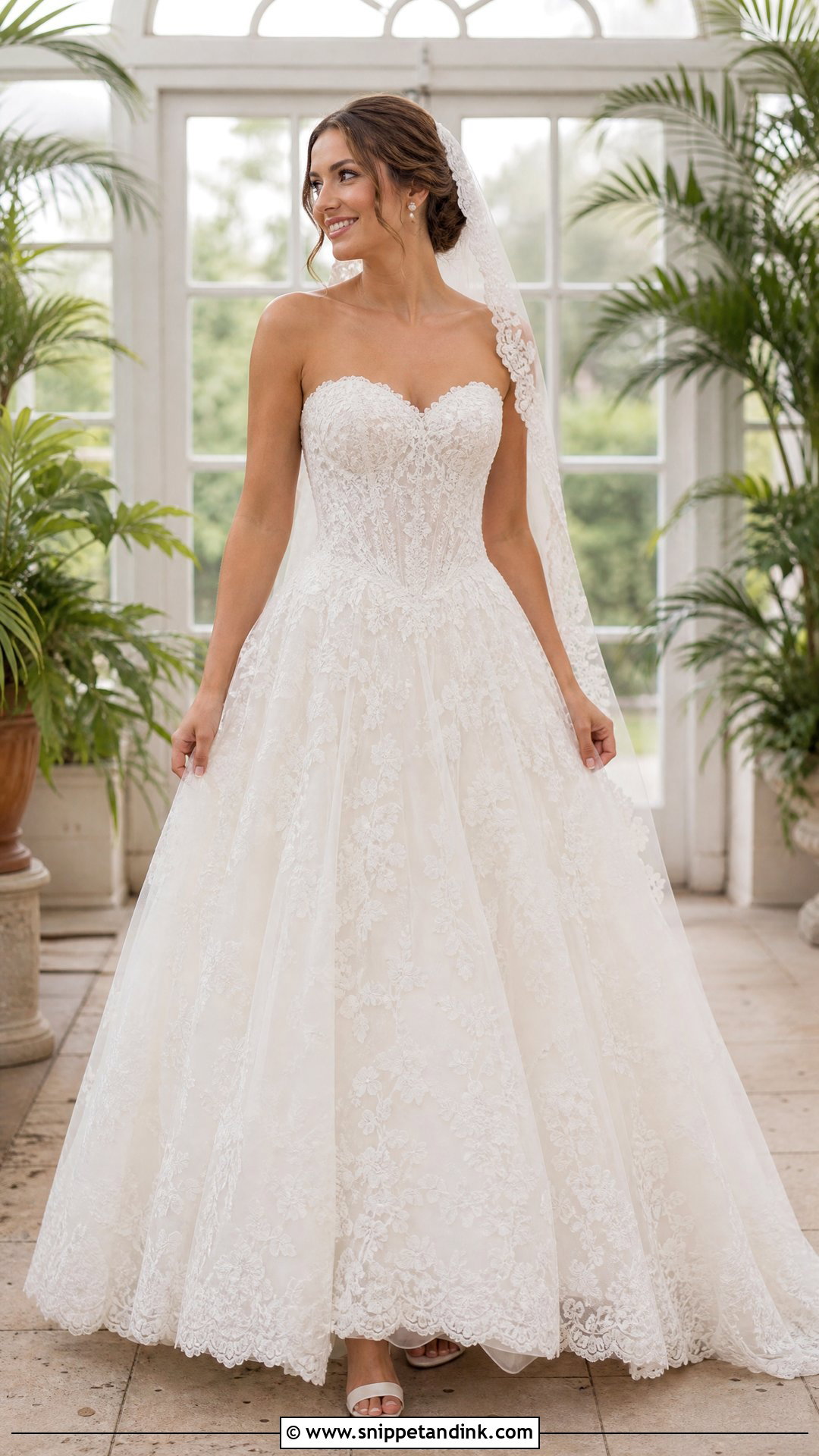
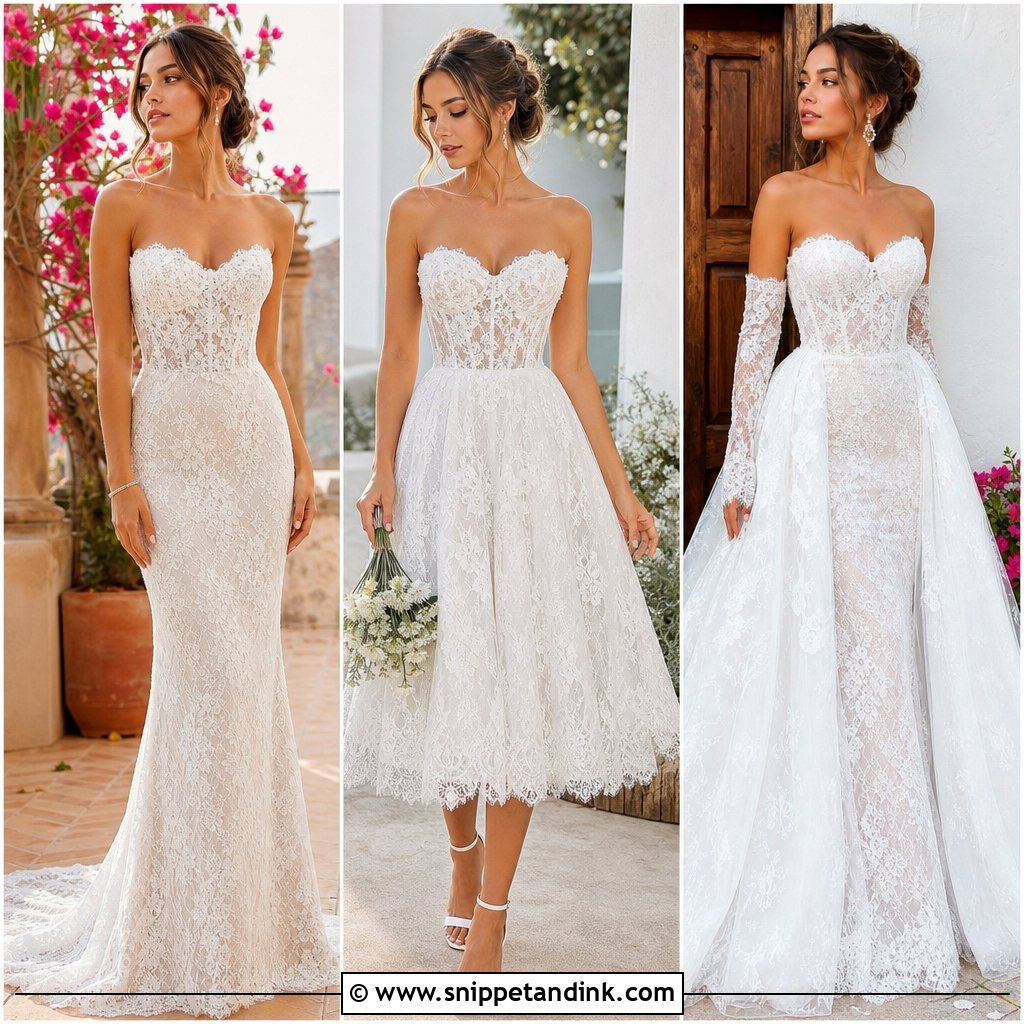
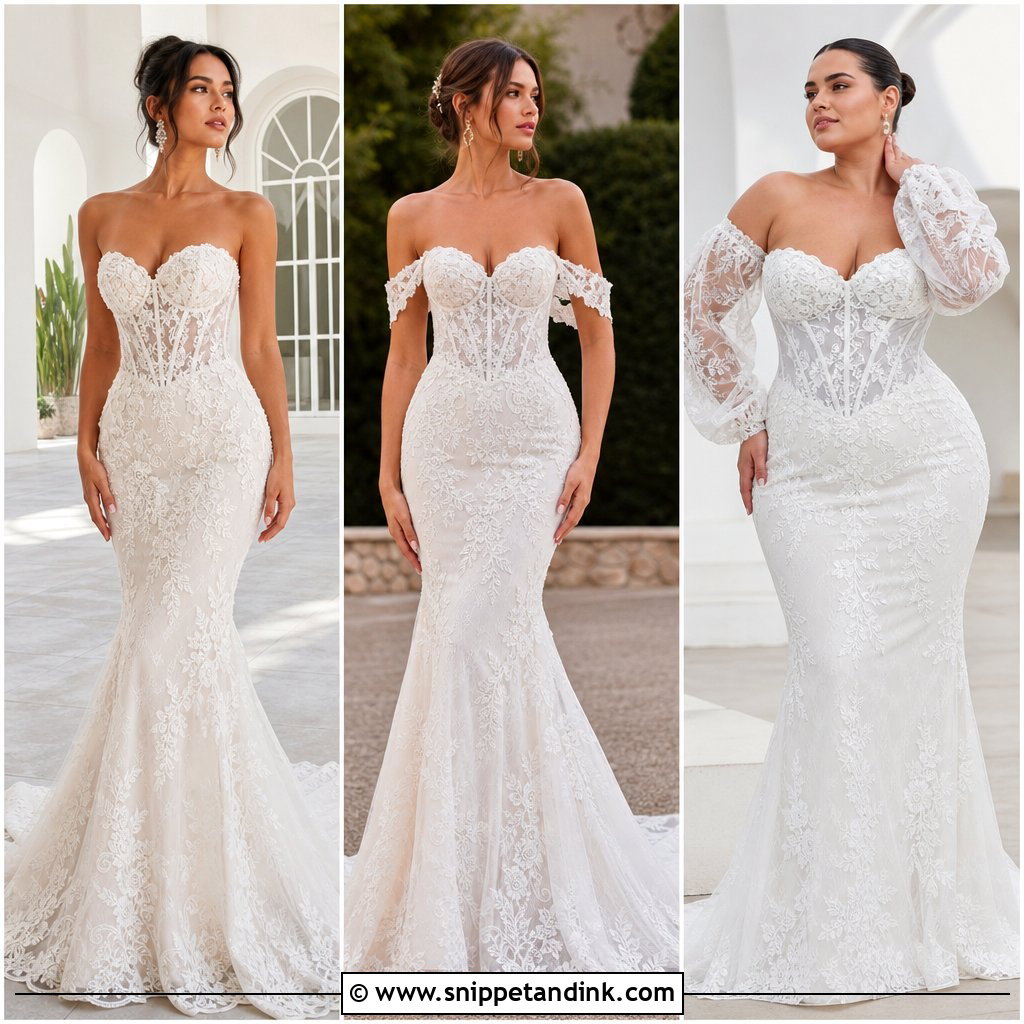
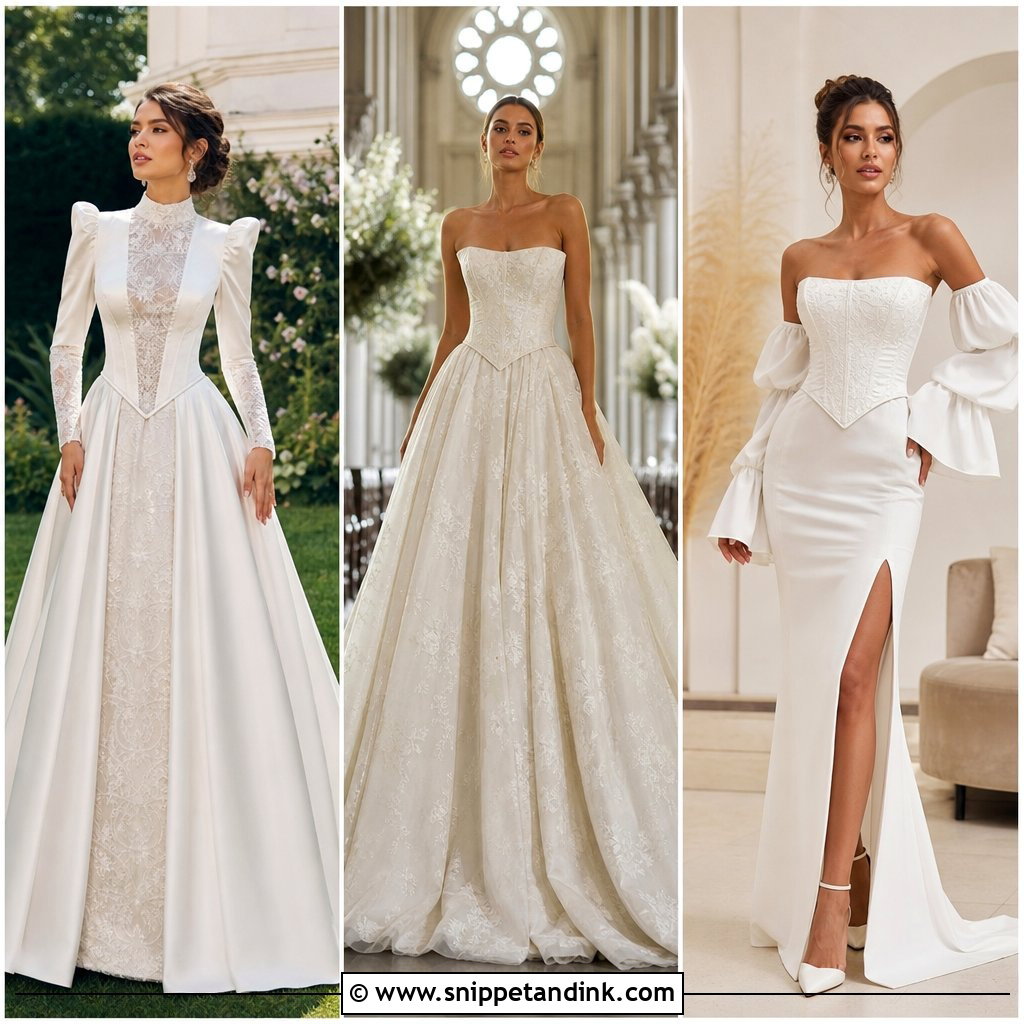
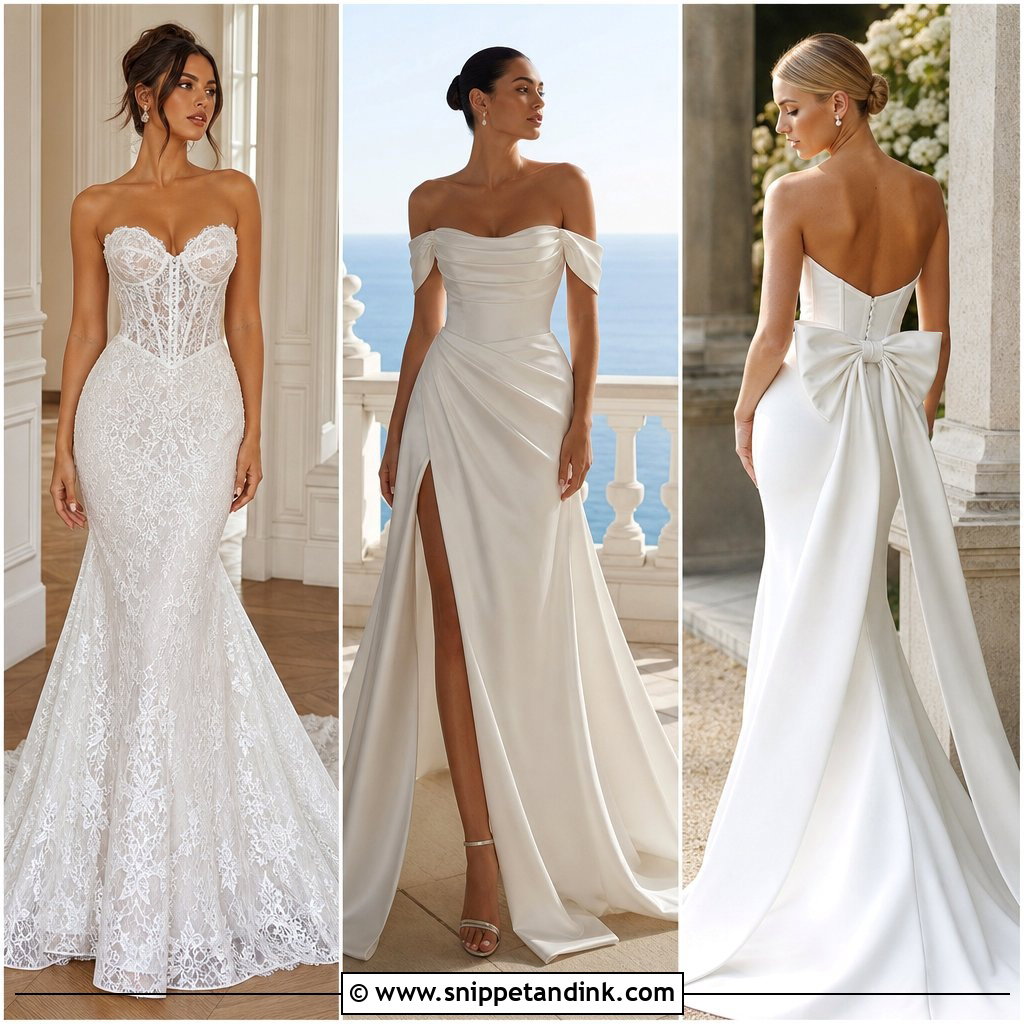
Lace softens the hard line of the point, but only if the pattern behaves at the waist seam. The best lace Basque gowns have motifs cut out and laid across that seam by hand, so the bodice and skirt read as one piece instead of two fabrics meeting at a V. A scalloped strapless edge echoes the texture without extra beading. I’d pair it with small pearl studs, a lace-trimmed veil, satin block heels for steadiness and a loose low chignon. Lace over a light nude lining gives more depth than lace over bright white. Look hard at the point itself; it’s where cheap lace placement shows first.
3. Sweetheart Strapless Basque Waist Wedding Dress
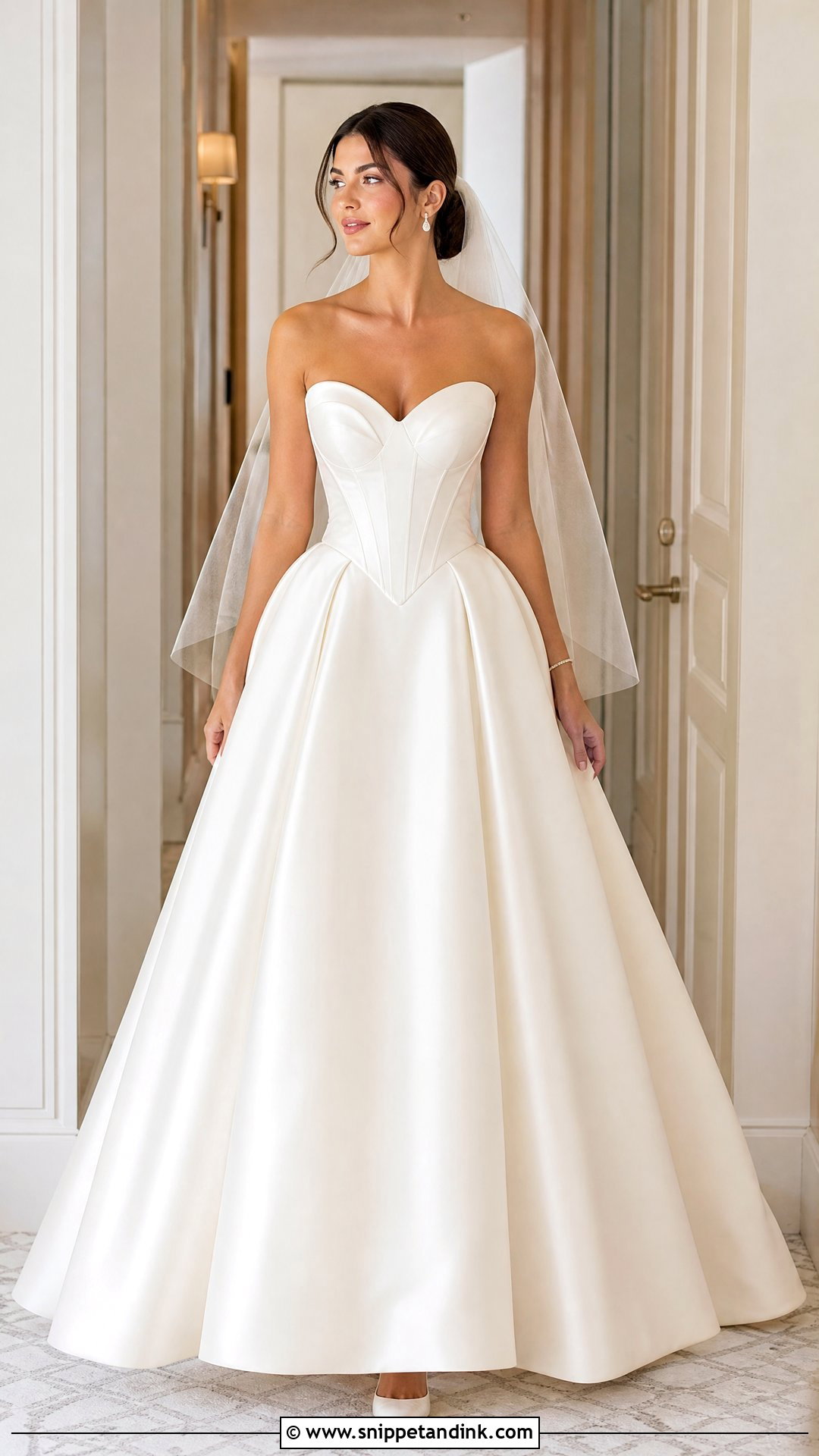
The curves of a sweetheart neckline and the downward point of a Basque waist mirror each other, which is why this pairing looks balanced on so many figures. A structured ball gown skirt makes it traditional; a softer A-line is easier to move in all night. Add a fingertip veil, crystal earrings, closed-toe satin heels and a fine bracelet, leaving the neckline bare. If you’d like more coverage, ask for the sweetheart curve to be raised slightly. I check this neckline seated and mid-dance, because that’s when a sweetheart gapes. Proper cups and firm internal boning are not optional here.
4. Corset Strapless Basque Waist Wedding Dress
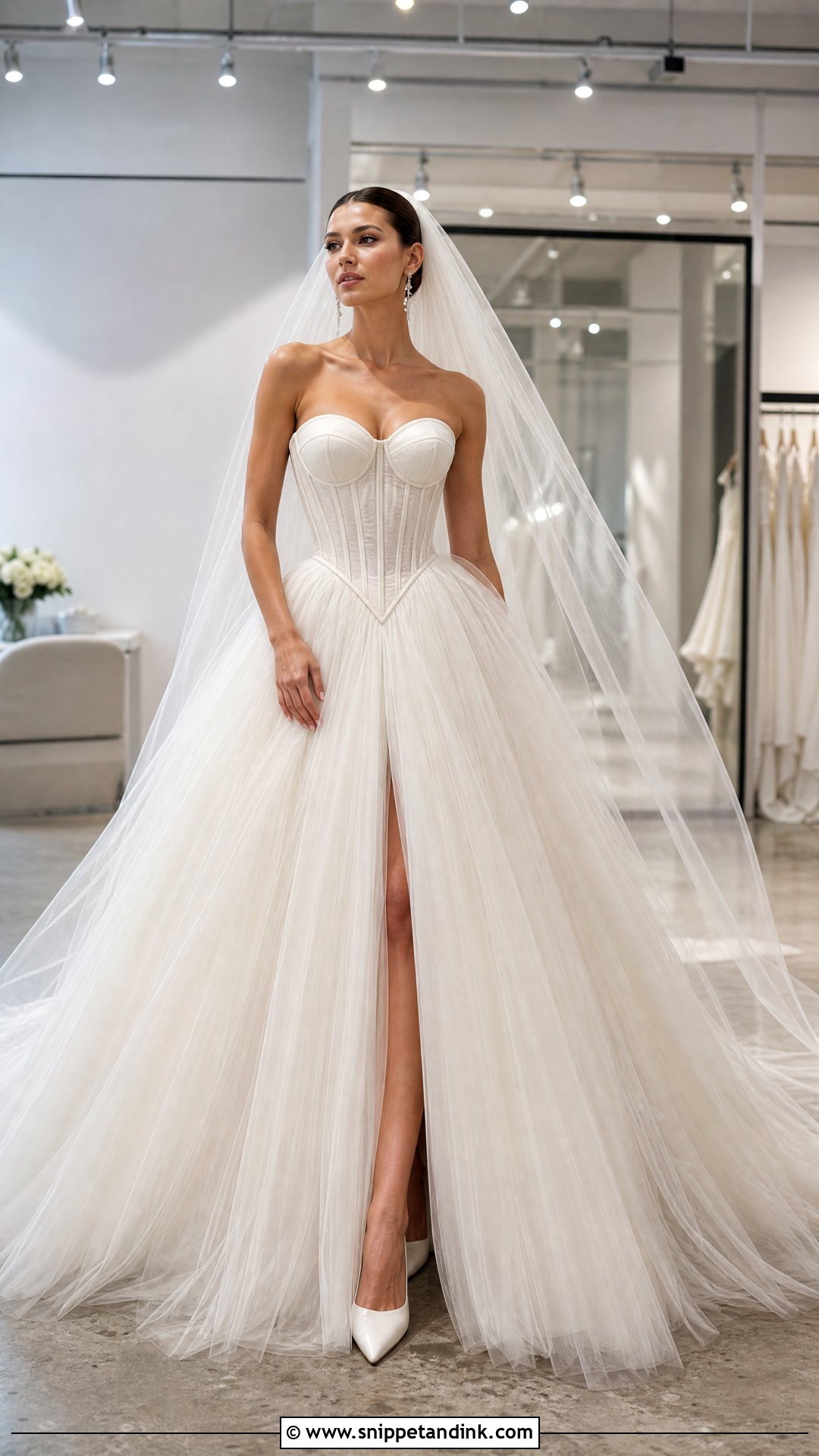
Exposed corset construction makes the boning part of the design, so the vertical channels lead the eye straight down to the point. That’s also its weakness: every channel shows if it’s even slightly off-line. Choose a bodice lined in matching fabric if you’d rather it wasn’t sheer. A voluminous tulle or satin skirt balances the fitted top. Style it with a sheer cathedral veil, crystal studs, simple ivory heels and smooth hair, a center-parted bun or polished waves. When you try it on, bend sideways. Spiral steel boning flexes with you; rigid plastic boning tends to dig in and warp over a long day.
5. Mikado Strapless Basque Waist Wedding Dress
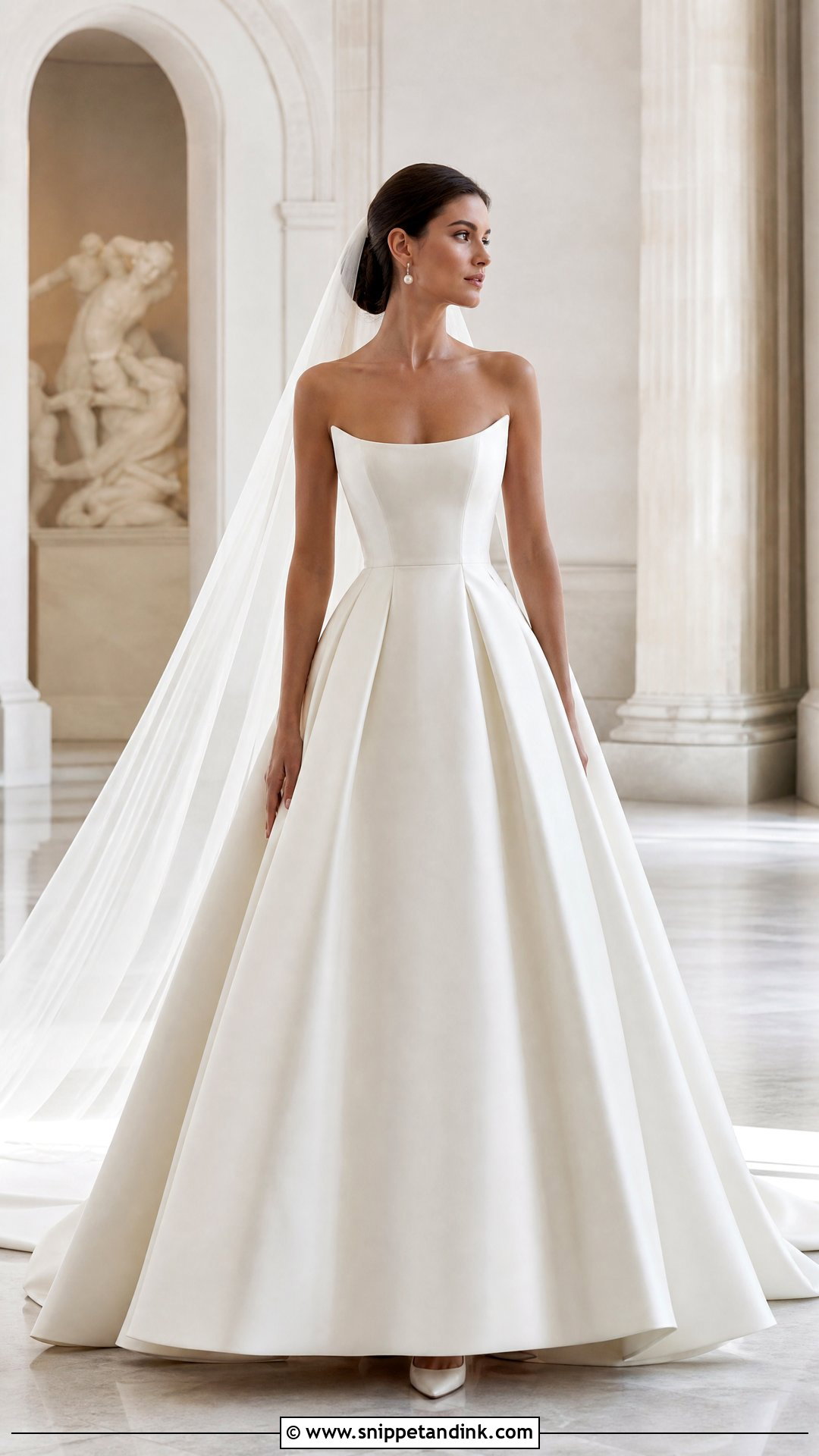
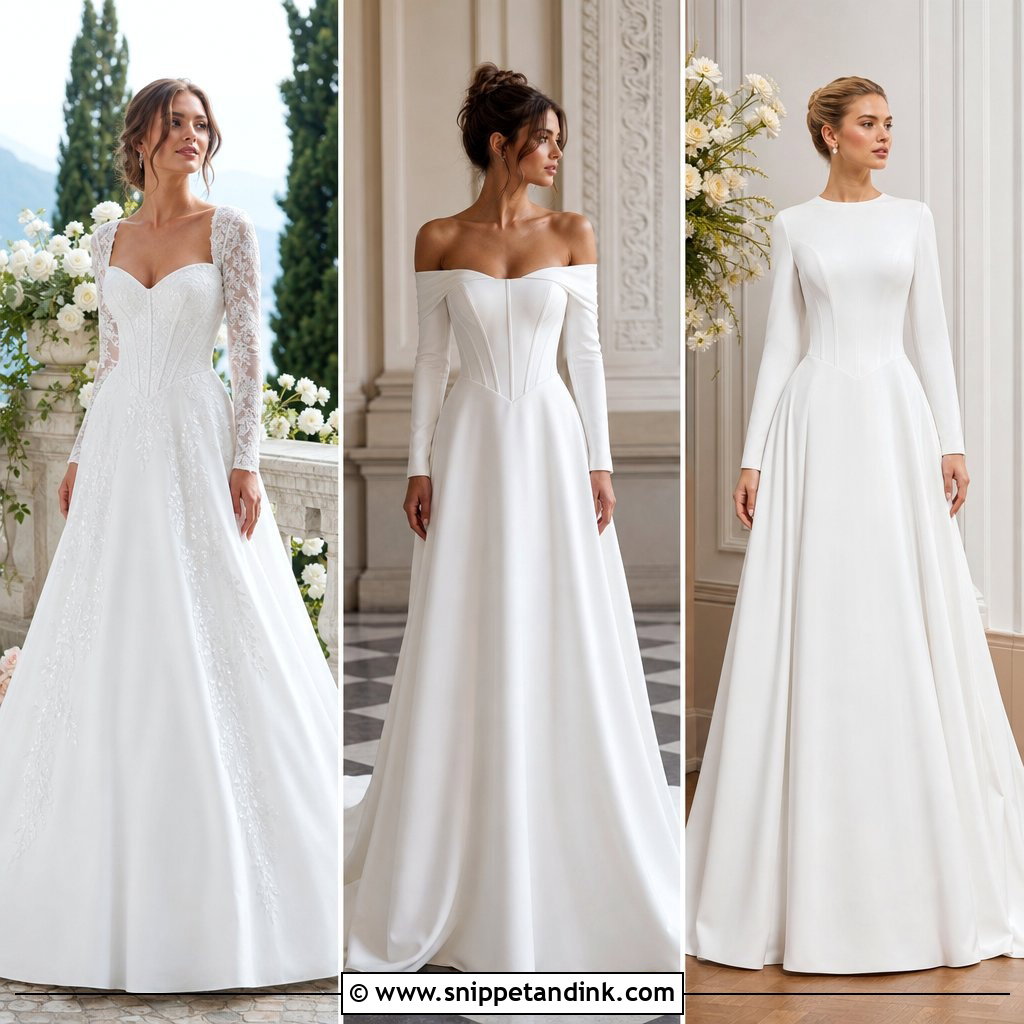
Crisp Mikado fabric holds a sculpted bodice and an architectural skirt better than almost anything else, so the point stays razor-sharp all day. A clean scoop or straight neckline suits it, and a row of covered buttons down the back adds detail without fuss. Pearl earrings, a structured veil, pointed pumps and a tidy bouquet complete it. I keep the pleating moderate at the hips. Mikado already has volume, and extra gathers at the waist only widen you where the point is trying to slim you. The hem should just skim the floor in your wedding shoes, so take them to every fitting.
6. Tulle Strapless Basque Waist Wedding Dress
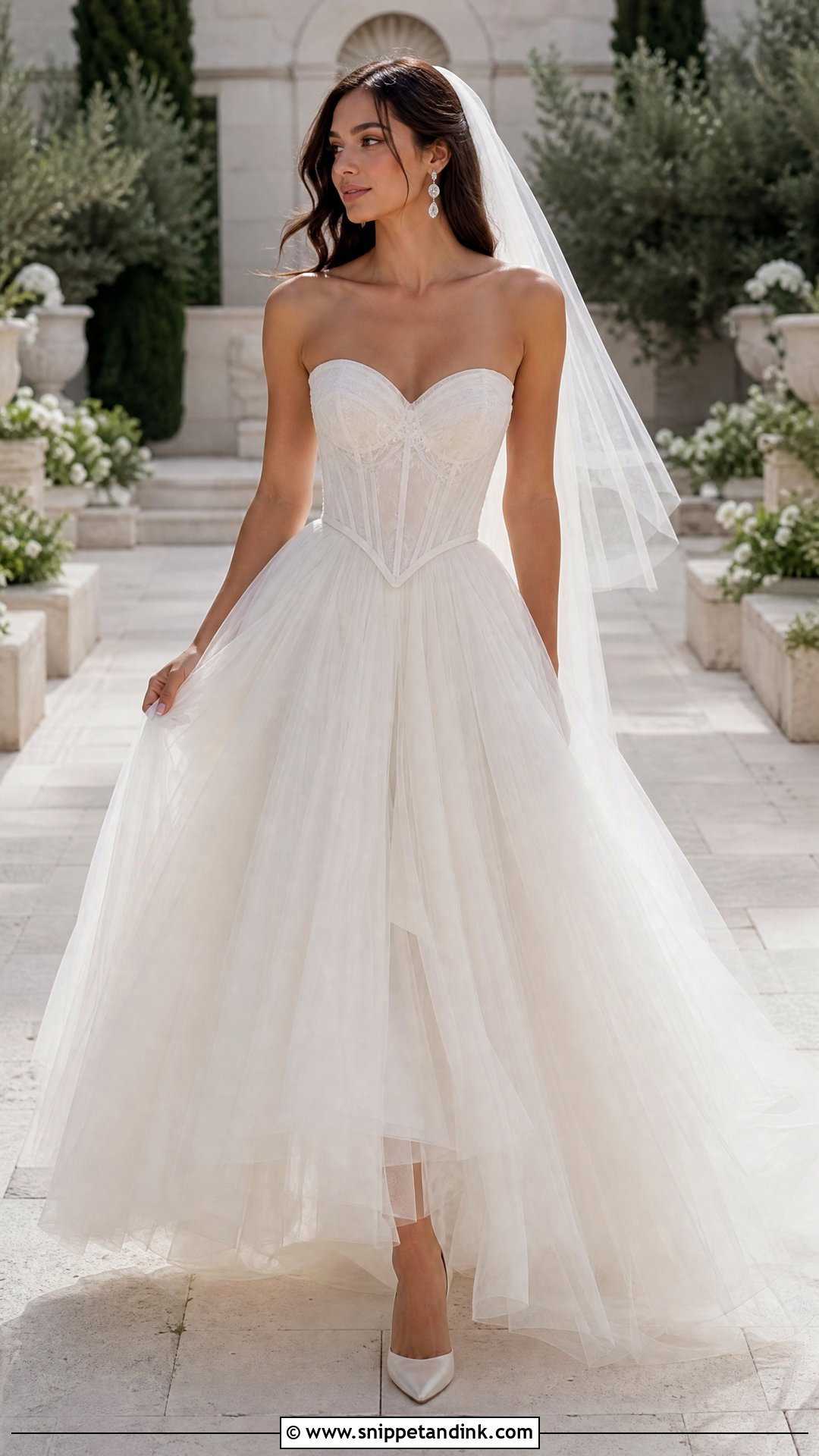
Tulle makes a Basque waist feel lighter and easier to wear through a long reception. The thing I look for is how the volume starts. A skirt that puffs out abruptly at the point looks like a separate petticoat; one that builds gradually lets the V flow into the layers. Crystal drops, ivory heels hidden under the hem, a light fingertip veil and a textured updo or soft waves suit the movement. A thin beaded edge along a plain tulle neckline adds just enough definition. Squeeze a handful of the skirt in the shop. Soft bridal tulle springs back and moves; cheap stiff tulle crunches when you sit.
7. Organza Strapless Basque Waist Wedding Dress
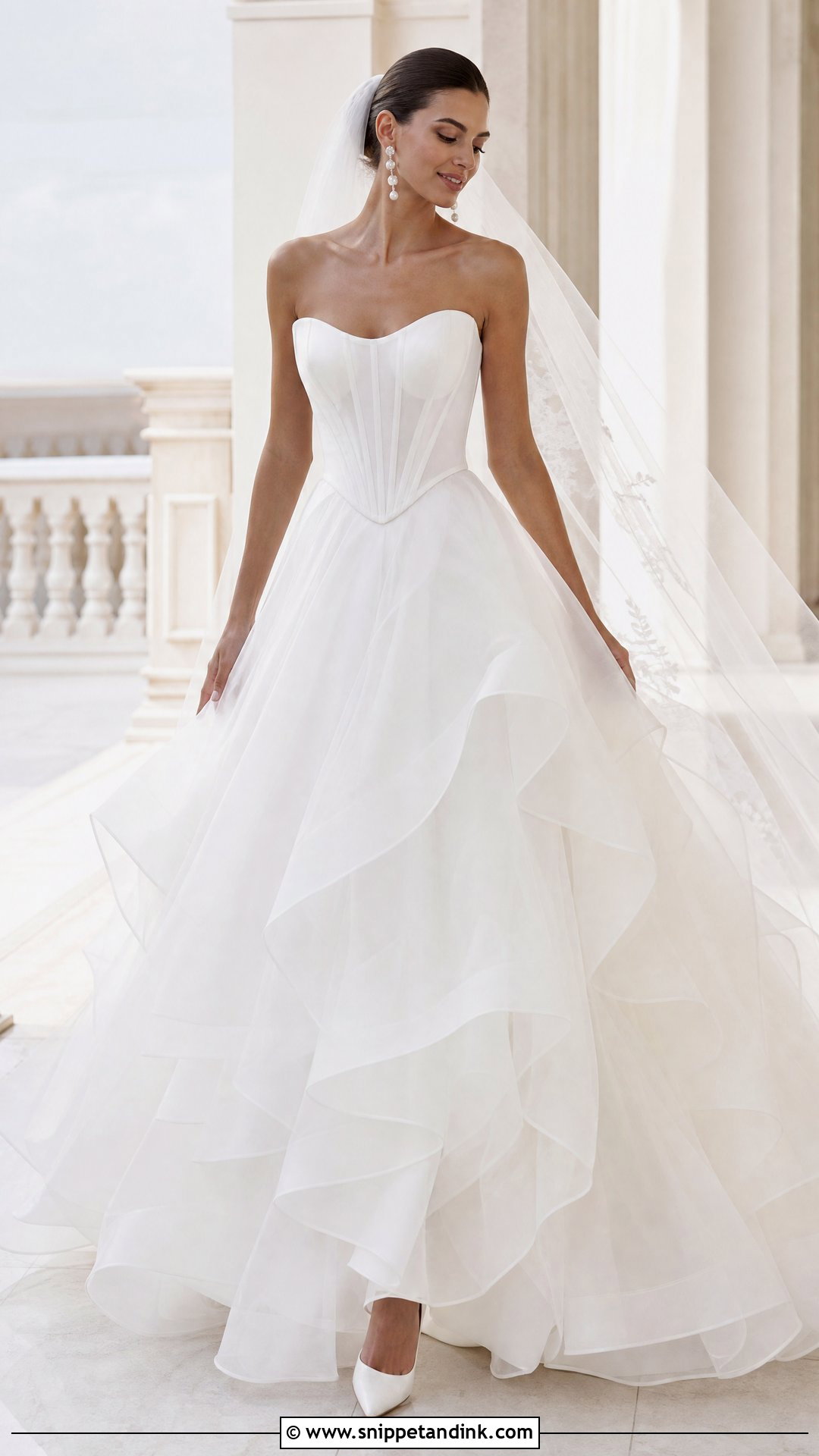
What if you want ball gown volume without the weight? Organza is my answer. It has body and a slight translucency, and it’s noticeably lighter than satin of the same fullness. A gently curved Basque waist on a structured bodice keeps the shape refined, with soft pleats or panels adding depth below. A cathedral veil, pearl-and-crystal earrings, satin pumps and a simple bouquet finish it, with a clean low bun. Organza is crisp, so it can bunch over the hips if it’s gathered too tightly; check the fall from the side and back. A soft lining underneath stops it being see-through and scratchy against the legs.
8. Draped Strapless Basque Waist Wedding Dress
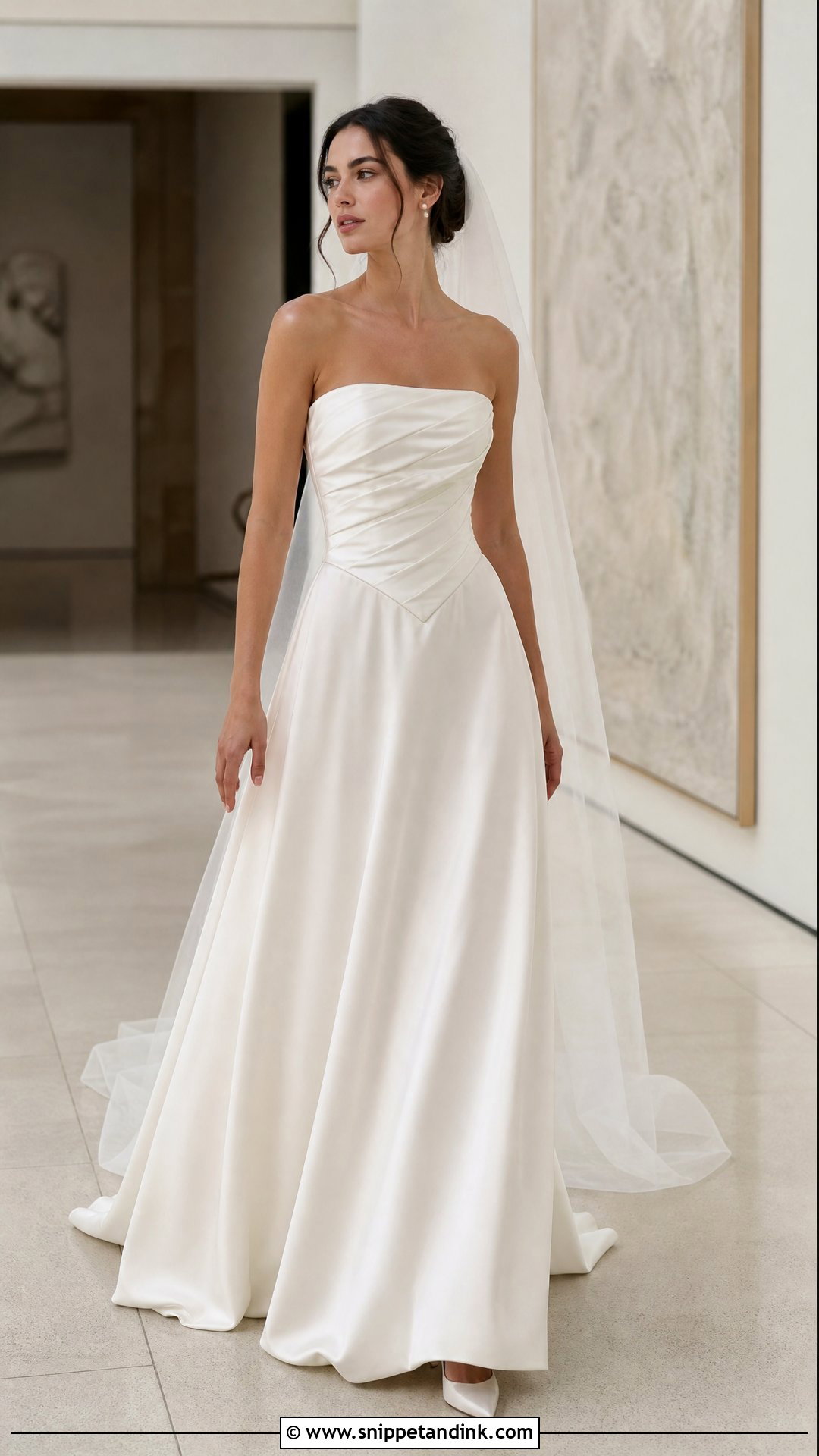
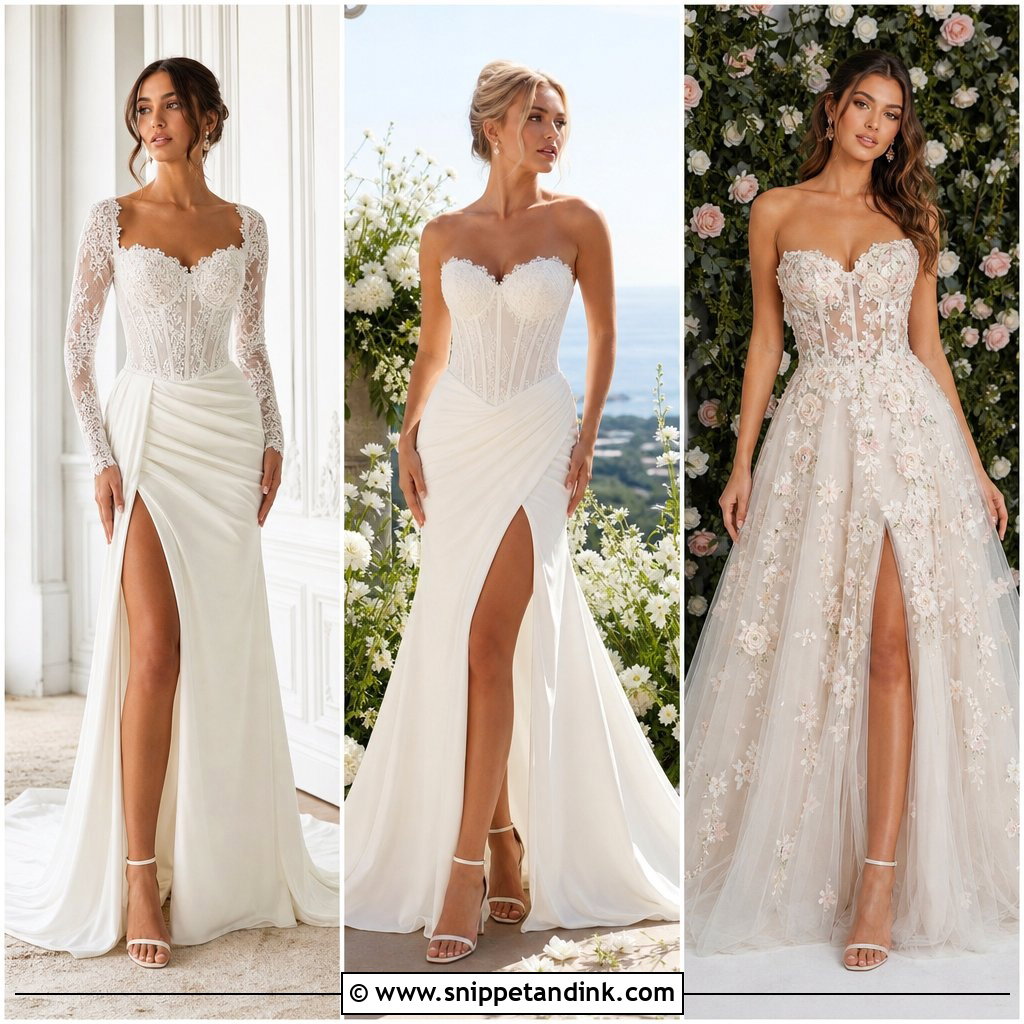
Diagonal folds across the torso that meet exactly at the point are one of my favorite details, and one of the hardest to alter. Draped satin or silk-like fabric needs to gather cleanly without bulk. A flowing A-line keeps it graceful, while a full skirt makes the entrance bigger. Minimal drop earrings, pointed heels, a long plain veil and a side-parted bun or polished waves follow the curve of the folds. Ask your tailor to stitch the drape in place at intervals so it doesn’t twist when you move. Keep the bouquet small, or it will sit right over the detail you chose.
9. Pearl Strapless Basque Waist Wedding Dress
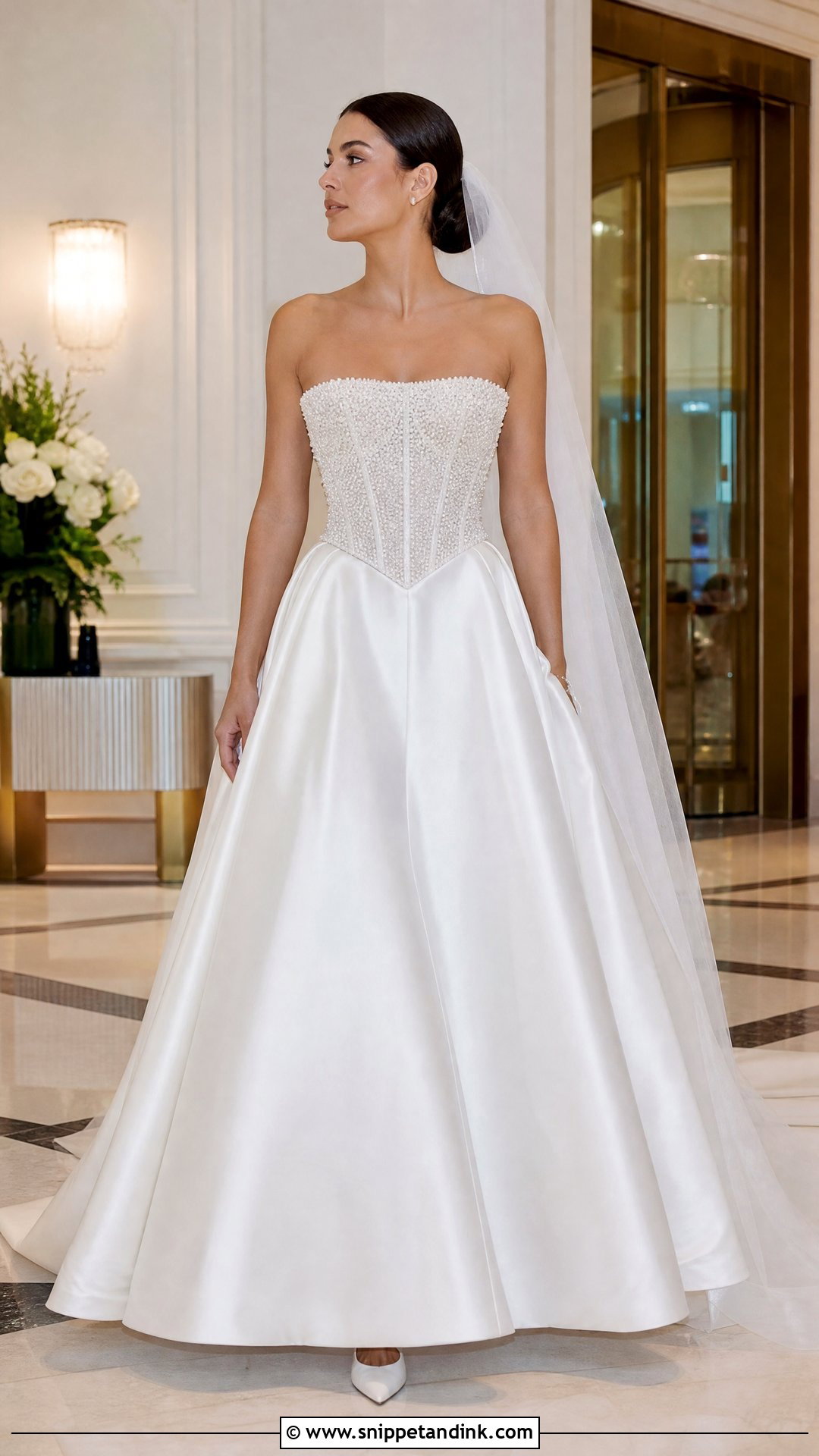
Pick one placement for the pearls and commit to it. A fully pearled bodice, a pearl-traced neckline or pearls scattering down the skirt each work on their own, but stacking all three looks heavy. My favorite is a pearl corset over a clean satin skirt, since the contrast stops right at the point and sharpens it. Simple pearl studs, a plain veil, ivory pumps and a neat updo finish it, with no necklace competing. Check that the pearls near the underarm are sewn flat. A smooth lining along the top edge stops them chafing during a long day.
10. Beaded Strapless Basque Waist Wedding Dress
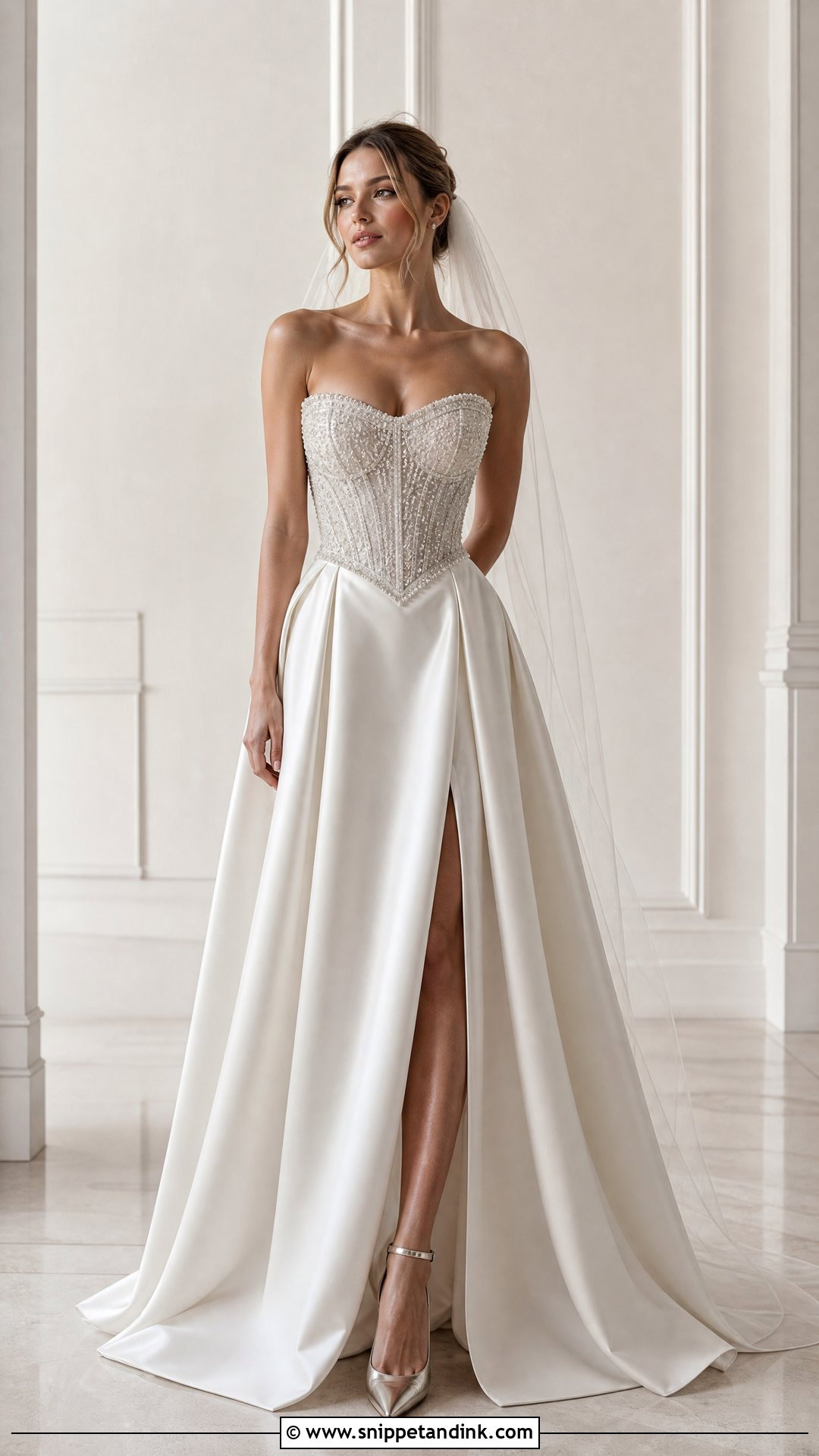
Beading that follows the corset seams pulls the eye toward the waist; beading scattered randomly just glitters. I prefer a lightly beaded bodice over a plain skirt. Crystal studs, a sleek veil, metallic or ivory heels and a low bun with a clean center part keep it controlled. Look at it under daylight and under warm indoor lights, as beadwork can shift from silver to gold between the two. The heavier the beading, the more the gown relies on a firm inner waistband. Without one, that weight hangs from the neckline and drags it down by evening.
11. Floral Appliqué Strapless Basque Waist Wedding Dress
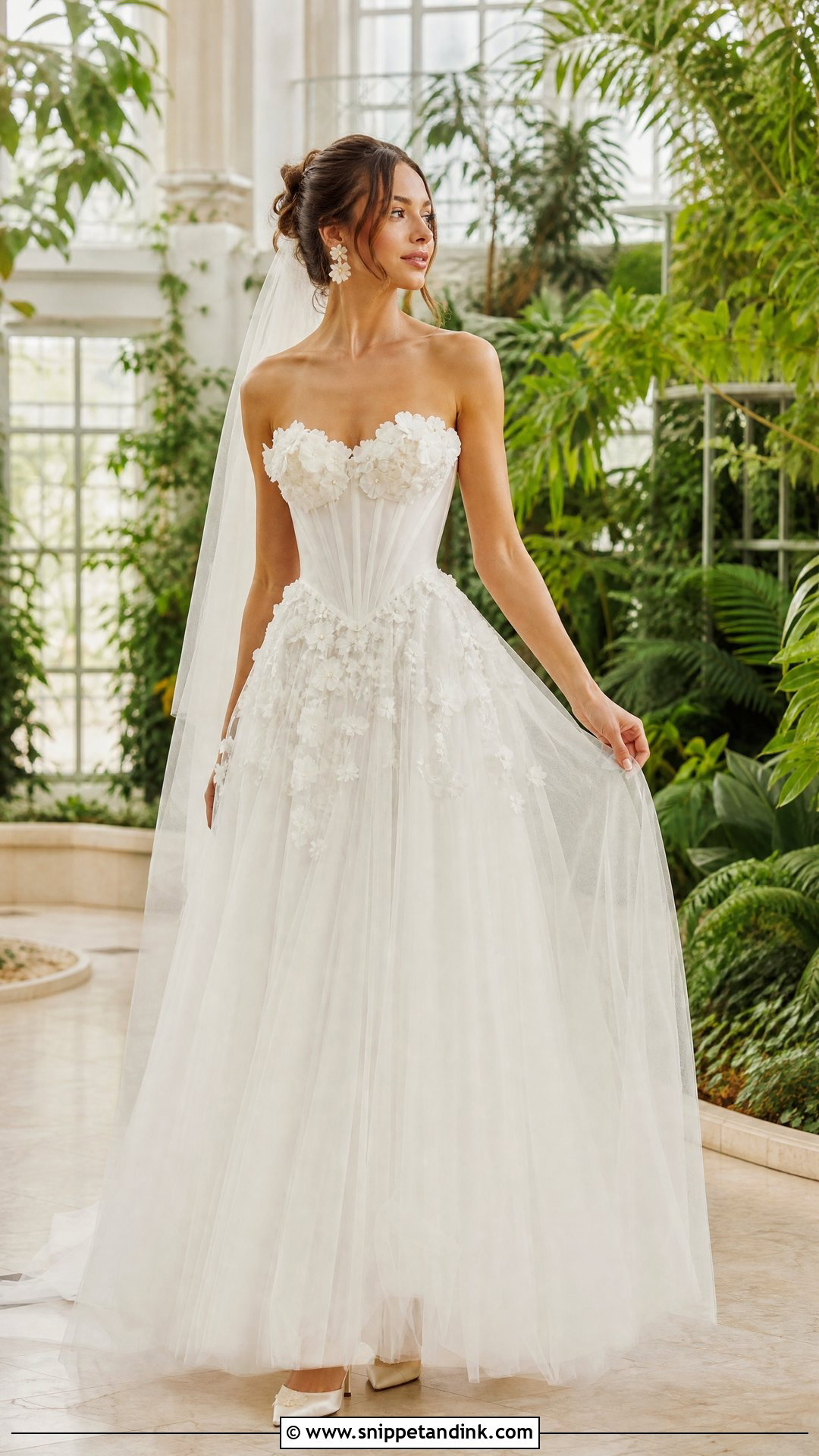
Floral appliqués placed thick at the neckline and tapering toward the point do a clever thing: they frame the bust and then narrow the eye to the waist. On the skirt, the scattered flowers should thin out near the hem. Floral-inspired earrings, soft ivory heels, a sheer veil with minimal edging and a loose low bun are enough. One rule I hold to: one detailed focal point. Big appliqués plus heavy jewelry plus an embroidered veil cancel each other out. During fittings, rub your inner arms against the bodice. Stiff appliqué edges near the armpit can scratch through a full evening.
12. Jacquard Strapless Basque Waist Wedding Dress
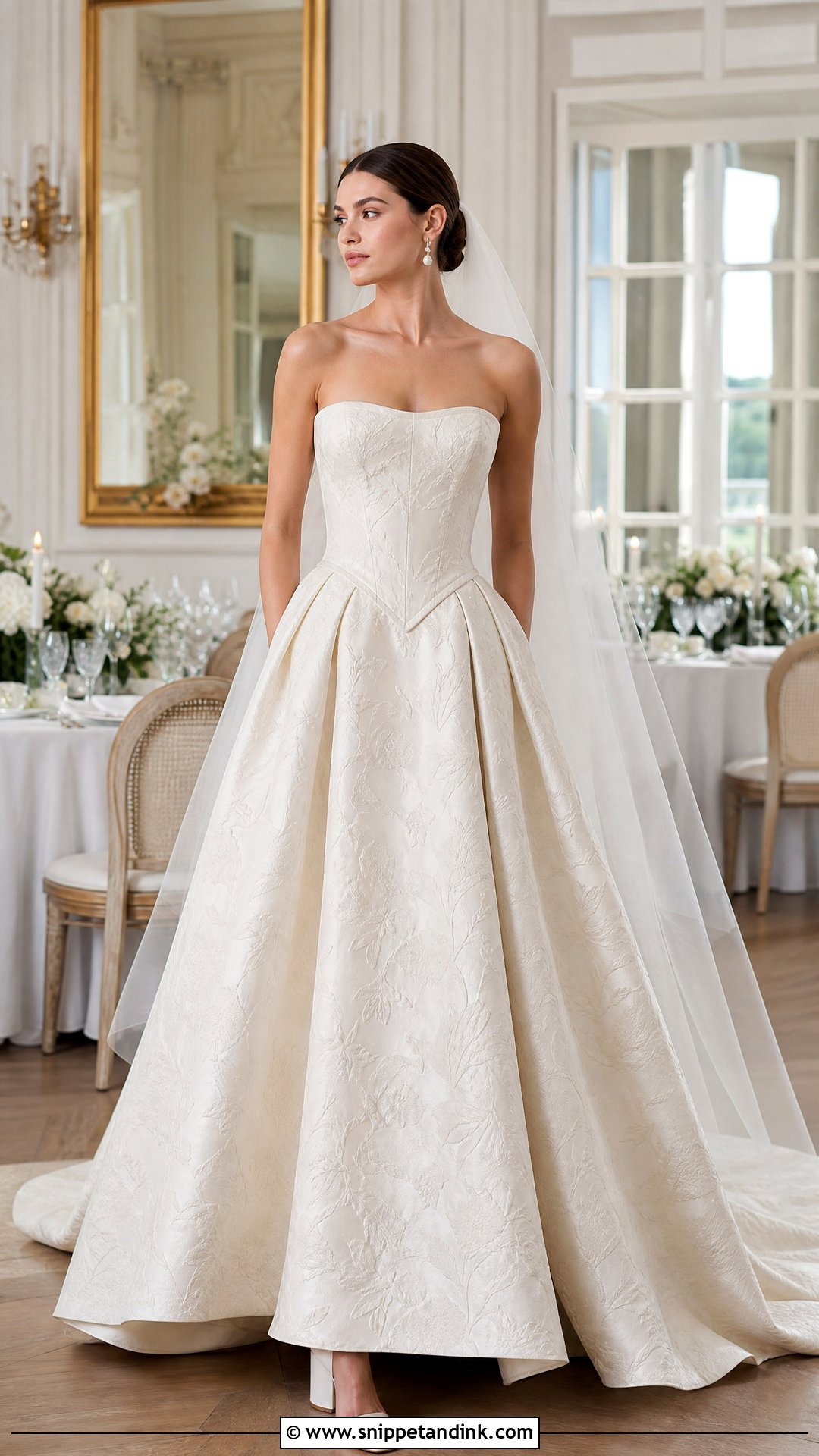
Jacquard puts the pattern into the weave, which suits a bride who wants interest but dislikes beads and lace. A subtle floral or abstract jacquard on a firm strapless bodice gives the point a clean edge, and a pleated ball gown skirt shows off the fabric’s body. Simple pearl earrings, ivory block heels and a plain veil leave the pattern alone. A smooth bun or half-up style keeps it polished. It’s a substantial fabric, so think about the venue in July before choosing it. A good maker will also match the pattern where it meets at the V.
13. Bow Strapless Basque Waist Wedding Dress
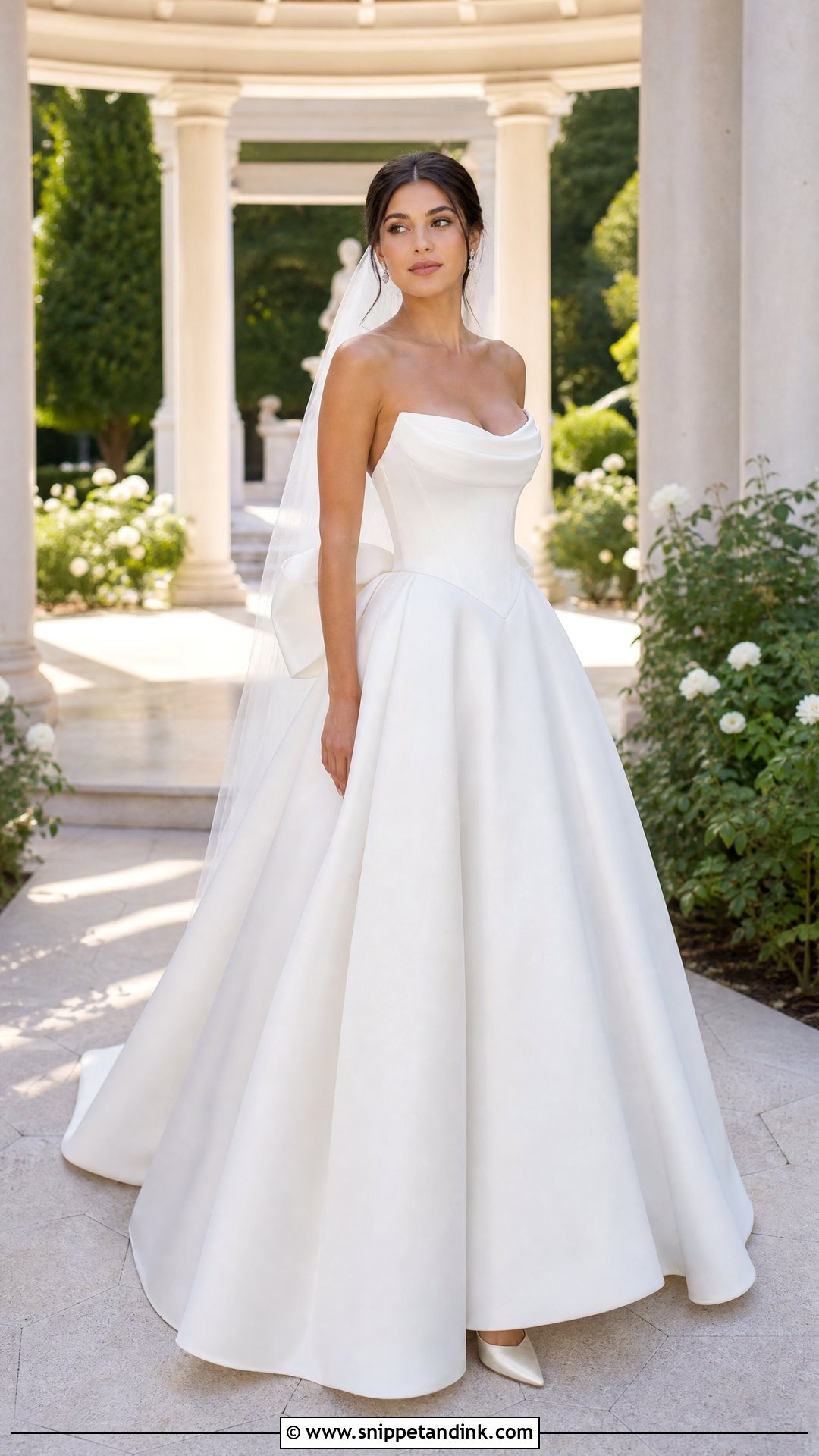
A statement bow on an otherwise plain Basque gown is a bit of fun on a serious silhouette. At the back waist it reads classic; a removable bow above the train gives you a lighter reception look. Keep the front simple with a curved neckline and smooth satin bodice, and choose a full A-line skirt so the bow doesn’t overpower you. Small crystal earrings, pointed satin heels, a single-layer veil and a polished updo complete it. I always sit the bride down in it. A large bow can push the bodice forward against a chair back, which tilts the neckline.
14. Detachable Overskirt Strapless Basque Waist Wedding Dress
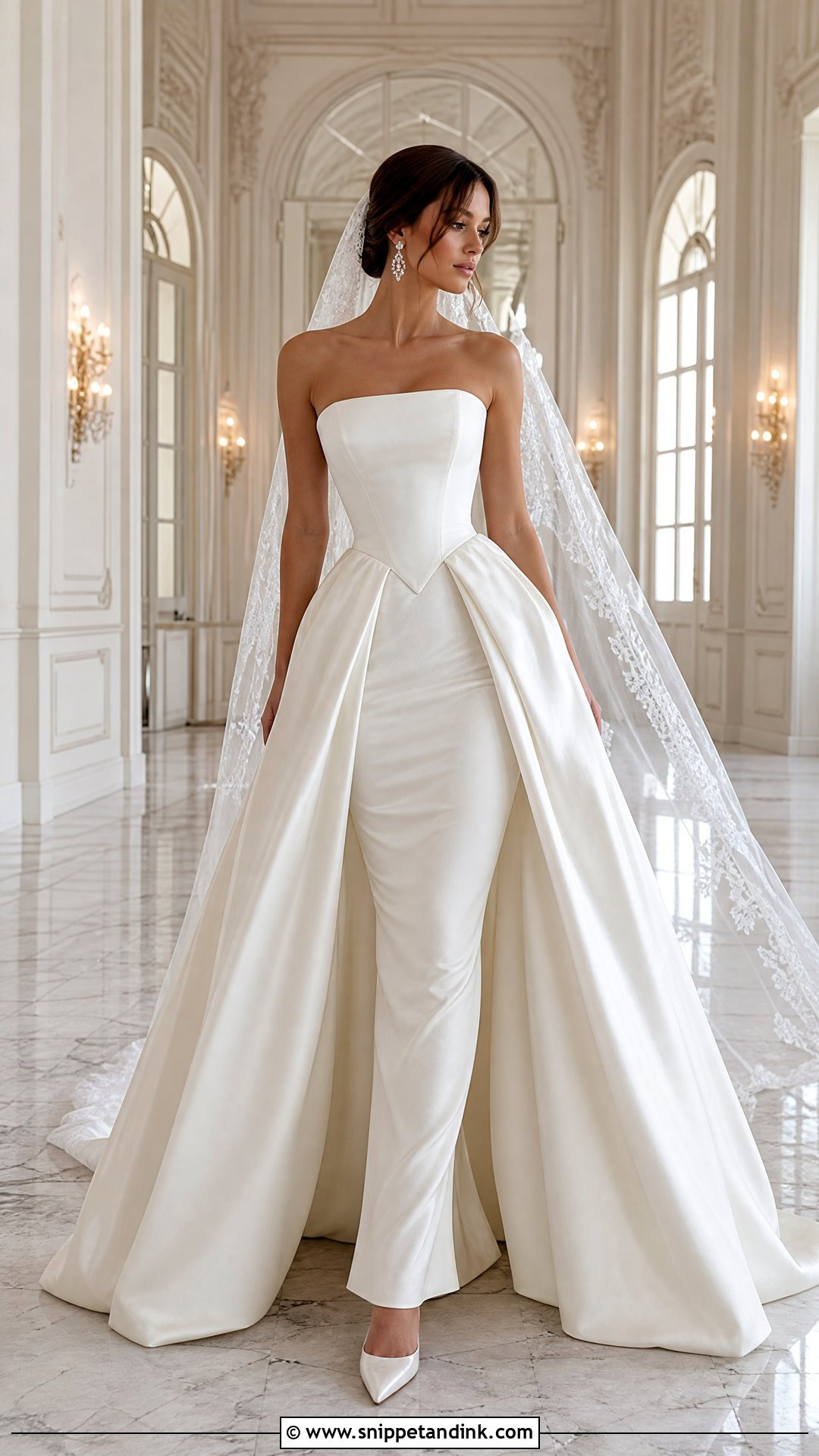
A detachable overskirt gives you two dresses’ worth of looks from one fitting schedule. Start with a fitted strapless gown and a sharp point, then add a full satin, organza or tulle overskirt for the ceremony and remove it for a slimmer reception silhouette. Long veil, drop earrings and pointed heels suit the big version; a statement bracelet freshens the second. The fastening needs to hide under a narrow belt or fabric panel, which on a Basque waist means it should follow the V rather than cut straight across. Rehearse the removal with your helper before the day.
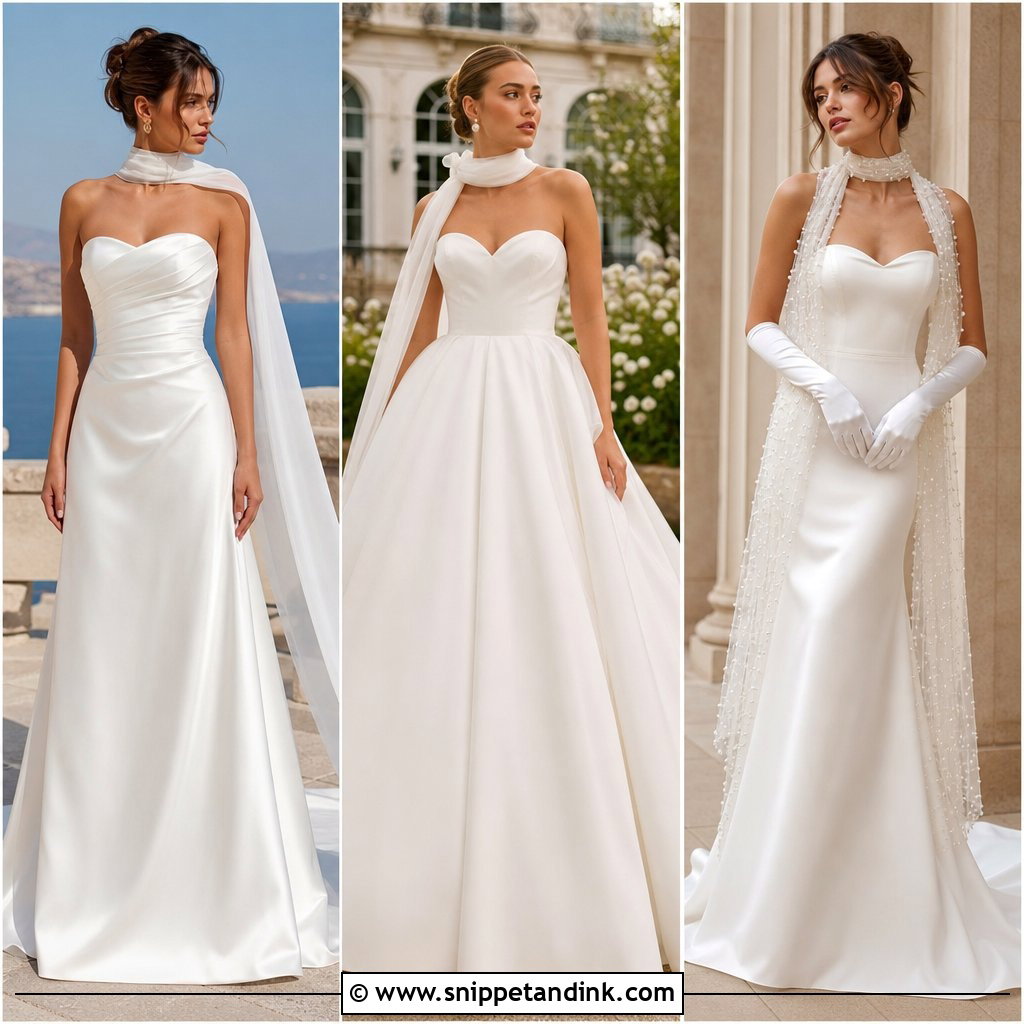

15. Mermaid Strapless Basque Waist Wedding Dress
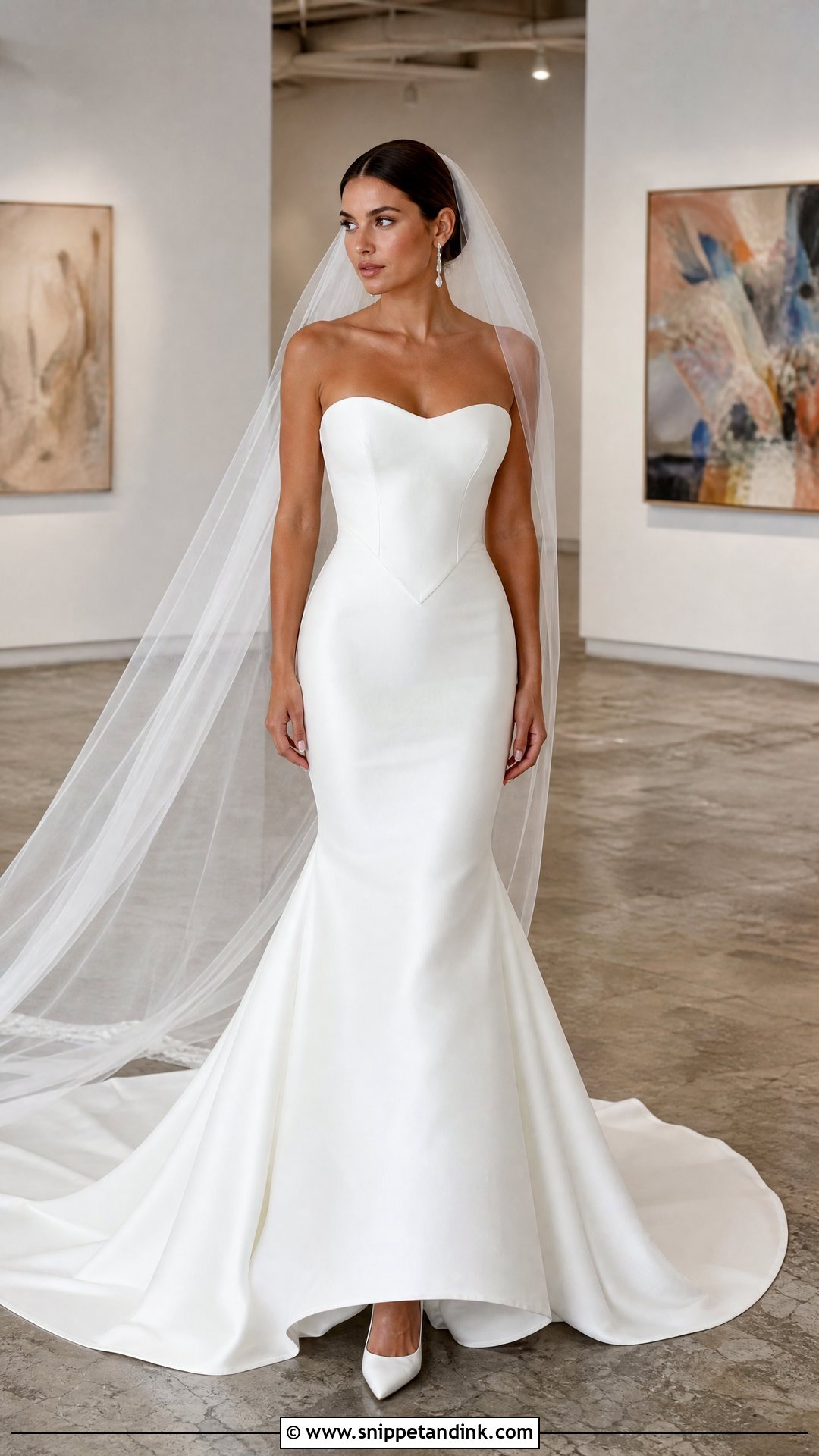
A mermaid skirt under a Basque point gives the sharpest hourglass of anything here, and it’s the least forgiving to walk in. Choose a bodice with strong internal support and a flare that starts at or just below the knee. Stretch crepe moves most, satin holds the most shape, lace sits between the two. Streamlined earrings, pointed pumps, a veil that runs past the train and either soft waves or a sleek bun work with it. Take normal steps, sit and climb a few stairs at your fitting. If you can’t, ask for a higher flare or more room through the thigh; a dress you shuffle in never looks right in motion.
16. A-Line Strapless Basque Waist Wedding Dress
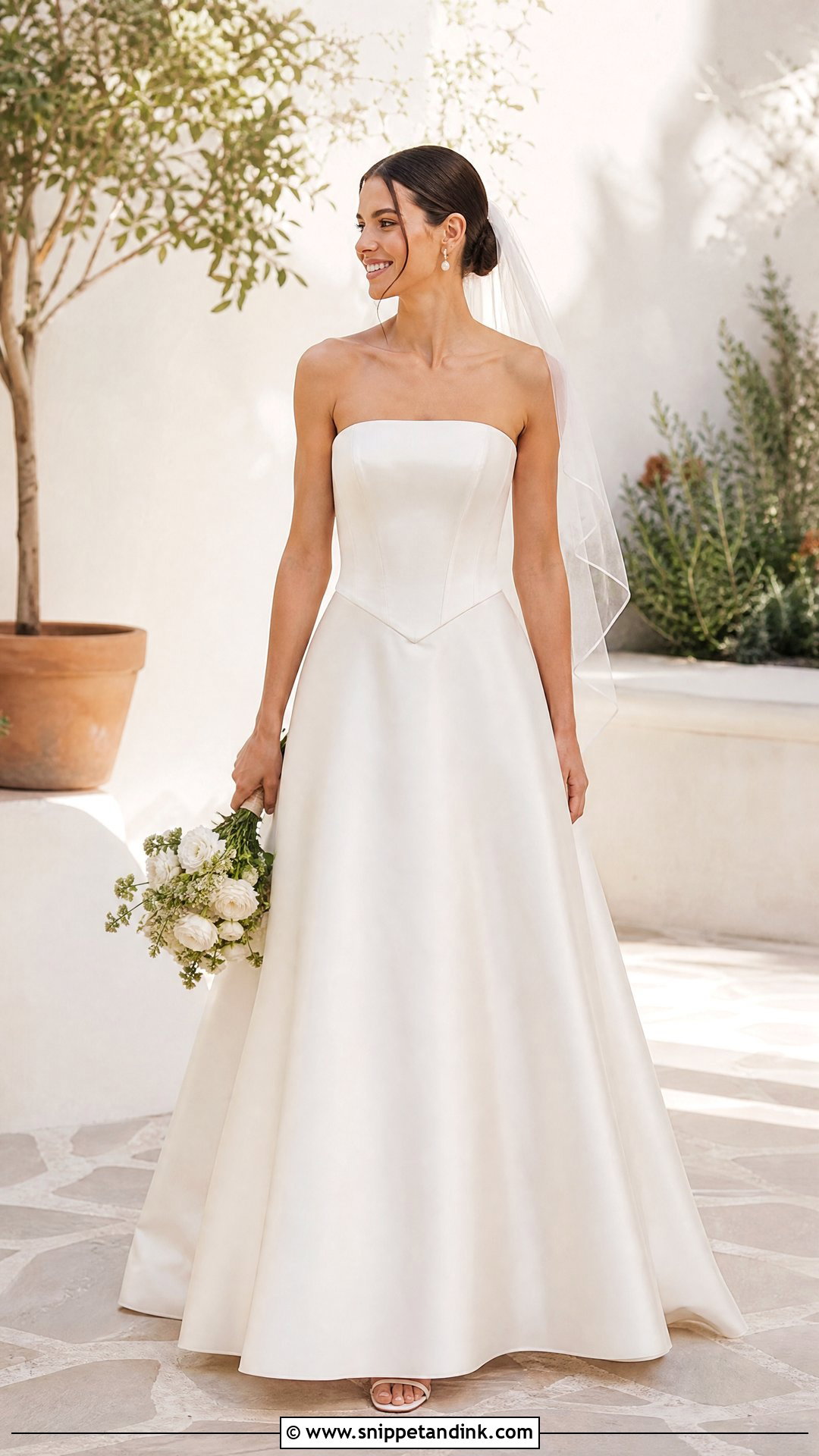
For many of my brides, the A-line is the most comfortable way to wear a Basque waist. The skirt falls gradually from the point, so there’s movement without bulk. A smooth satin, crepe or lace bodice with a moderate point suits most venues. Add a fingertip veil, pearl earrings, block heels, a medium bouquet and a half-up style that keeps the neckline visible. Watch exactly where the skirt starts to widen. Too close to the point and it bunches at the hip; a little lower and the line runs clean. A light lining and a short train that bustles easily keep it practical on the dance floor.
17. Minimalist Strapless Basque Waist Wedding Dress
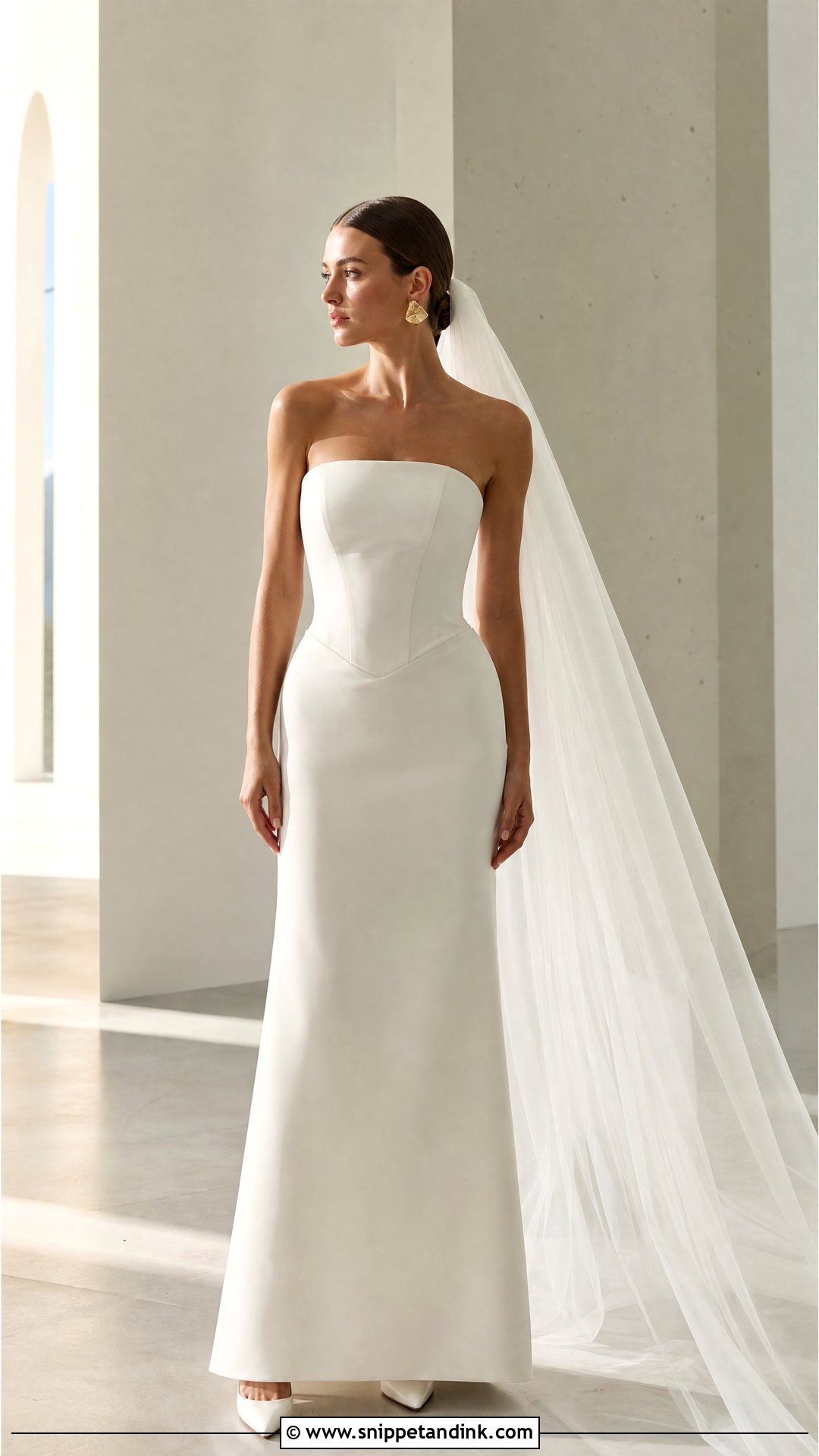
Minimal gowns expose the tailoring. In matte satin or crepe with no decoration, the neckline edge, the symmetry of the point and the way fabric falls over the hips are all anyone sees, so alterations need to be excellent. A straight or soft scoop neckline keeps it modern. Sculptural earrings, a sleek low bun, pointed ivory heels, a plain cathedral veil and a single-variety bouquet suit it. If you want one detail without changing the character, covered back buttons or a narrow detachable bow are the two I’d add.
18. Square Neck Strapless Basque Waist Wedding Dress
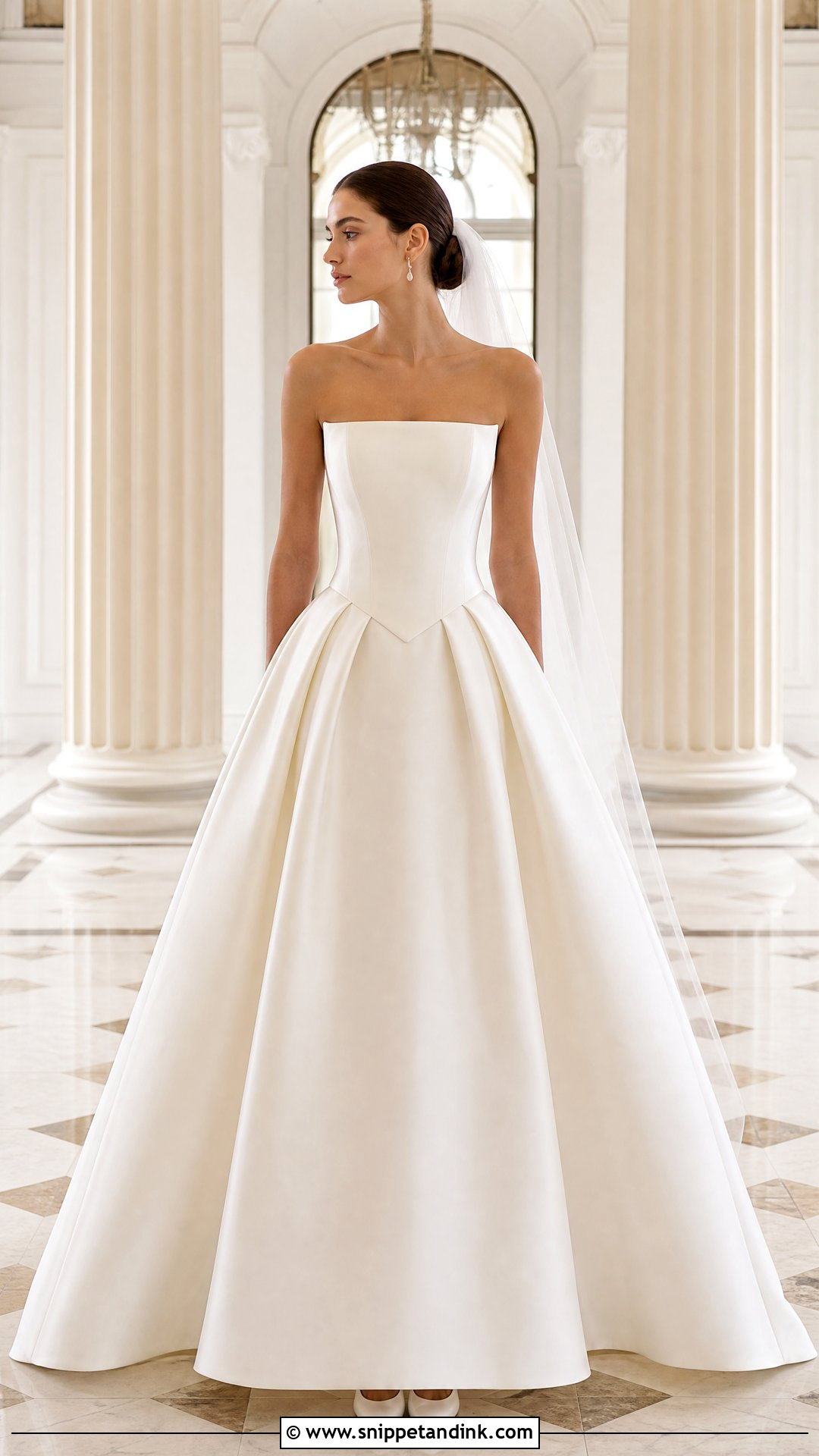
A strapless square neckline gives straight lines across the chest that contrast with the V at the waist. It’s distinctive and unforgiving. Select a satin or Mikado bodice with boning placed specifically to hold those corners up. A pleated A-line or ball gown skirt balances it. Small drops, a sleek updo, a simple veil and closed-toe pumps finish it, with no necklace. The corners are where it fails: if they tilt or collapse, the bodice needs side support or custom cups. I fit square necklines with the bride’s arms moving, not just standing still.
19. Cat Eye Strapless Basque Waist Wedding Dress
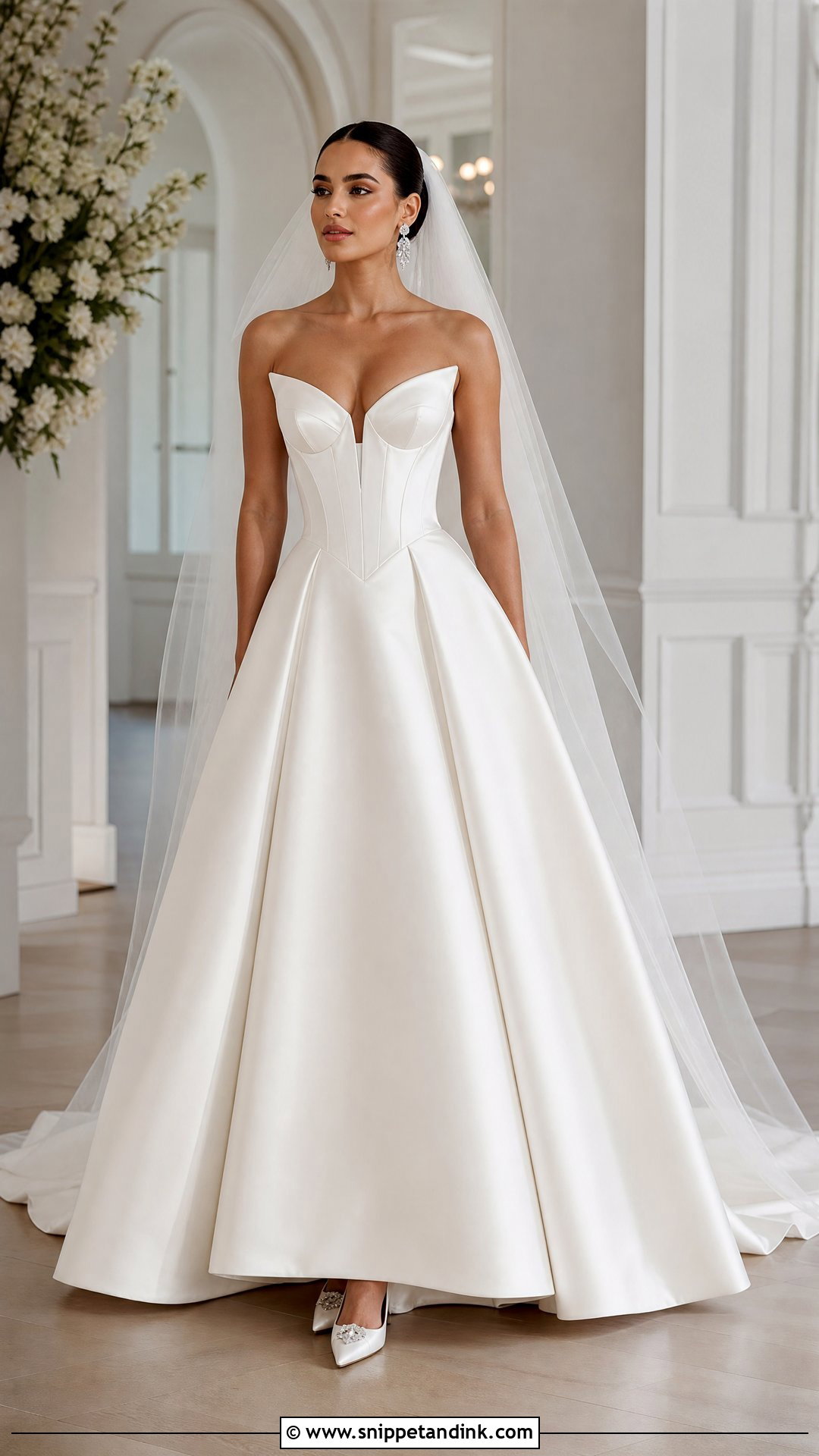
Cat-eye corners point up while the Basque waist points down, so the bodice looks like it’s drawn with two sharp strokes. Smooth satin gives the crispest line; lace makes it softer and easier to wear. A full skirt adds drama, and an A-line keeps it manageable. Small crystal earrings, a plain veil, ivory heels, a structured bouquet and hair swept back off the neckline suit it. Those raised points need reinforcement, but they shouldn’t press into your skin. Check the dress from the side and seated; that’s when a cat-eye edge can poke outward.
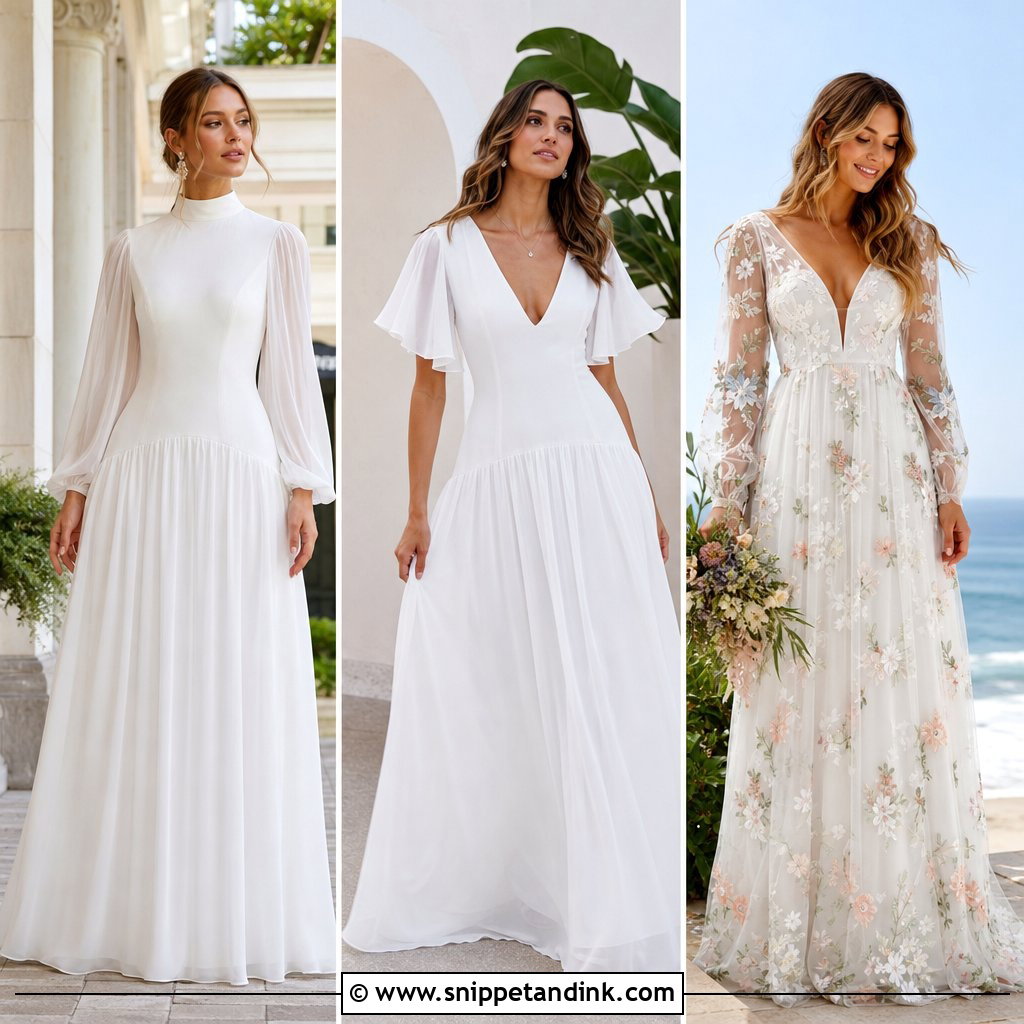
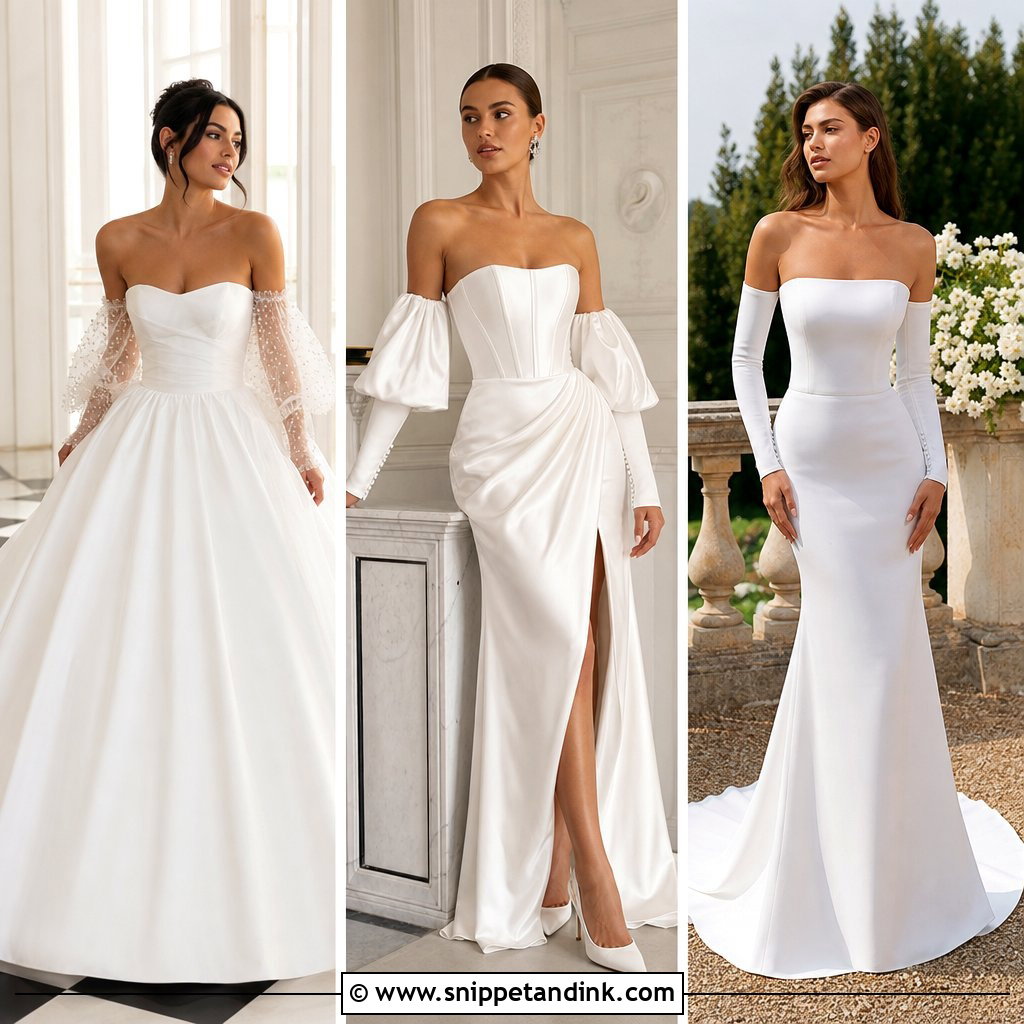

20. Plus Size Strapless Basque Waist Wedding Dress
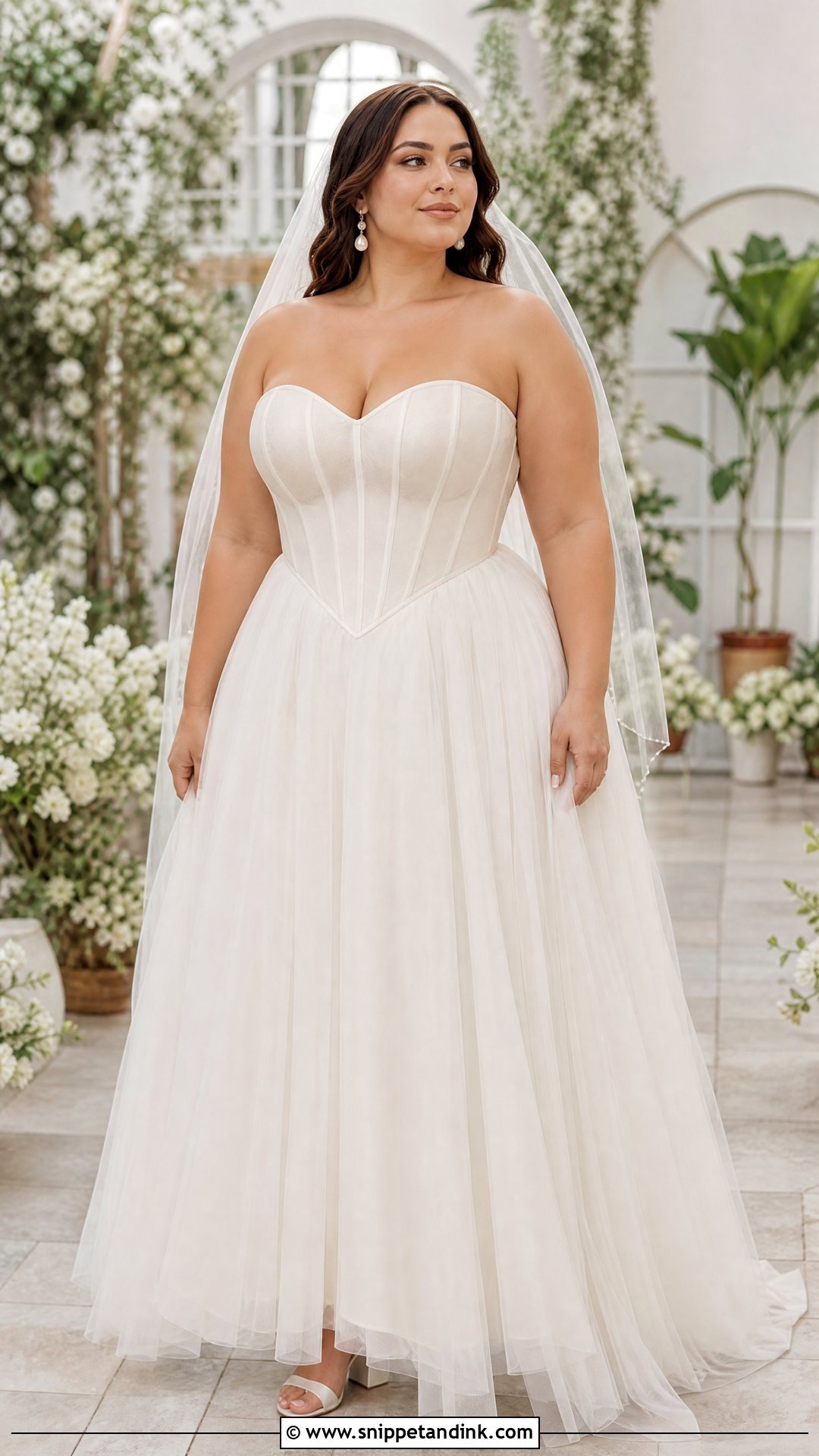
A Basque waist is one of the most flattering structured shapes I fit on curvy brides, because the point draws the eye downward and defines the waist without cinching it flat. Look for supportive cups, flexible boning, a secure inner waistband and enough back coverage to feel comfortable. A moderate point is usually easier to wear than a very deep V. An A-line, a soft ball gown or a flowing tulle skirt all work, depending on how much volume you want. Supportive block heels, pearl earrings, a bouquet in proportion and a veil that suits the train complete it. Bridal sizing runs small and varies wildly, so go by measurements, and ask whether the sample can be safely clipped at the appointment. Good alterations shape the dress to you, never the other way round.
Timing an Order for a Structured Gown
Corseted bridal gowns are usually made to order, and production often takes four to six months before the dress even arrives at the salon. Add two or three fittings on top, and I’d want a bride ordering about nine months to a year ahead if she can. Shorter timelines are possible with rush fees or sample gowns, but they leave little room if the bodice needs significant work.
What actually happens at each fitting
The first fitting deals with the bodice: side seams, cup position, and how firmly the ribcage is held. The second fixes the hem and any bustle. The last is a check in full outfit, shoes, jewelry and veil included, so you can see the whole look and practice the bustle with the person who’ll do it on the day.
A pointed waist adds one more thing to watch: the hem. Because the skirt starts lower at center front, the front hem can sit slightly differently from the sides, and an experienced seamstress will level it while you stand in your real shoes. Don’t let anyone rush that step.
One Silhouette, Many Ways to Wear It
The Basque waist is a single shape with a surprising range. Satin and Mikado keep it sharp, while lace, tulle, appliqués and pearls soften it, and overskirts, removable bows and A-line skirts make it easier to live in. What matters most isn’t how it looks on the pedestal. It’s how it holds when you walk, sit, raise your arms and dance. Bring your shoes and undergarments to every fitting and try every fastening before the day. With the right fabric and tailoring, a strapless Basque waist gown feels secure and entirely yours.
You'll Like These Ideas:



Leave a Reply