
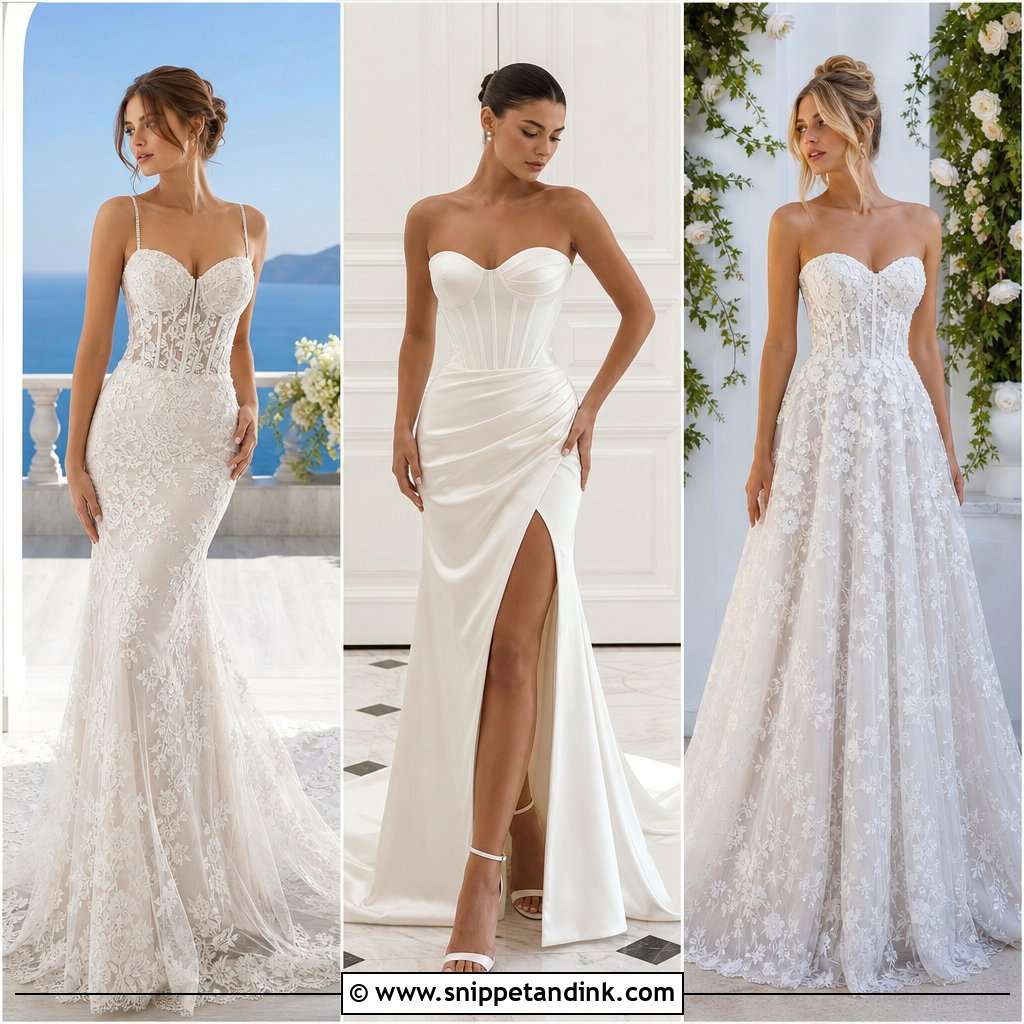
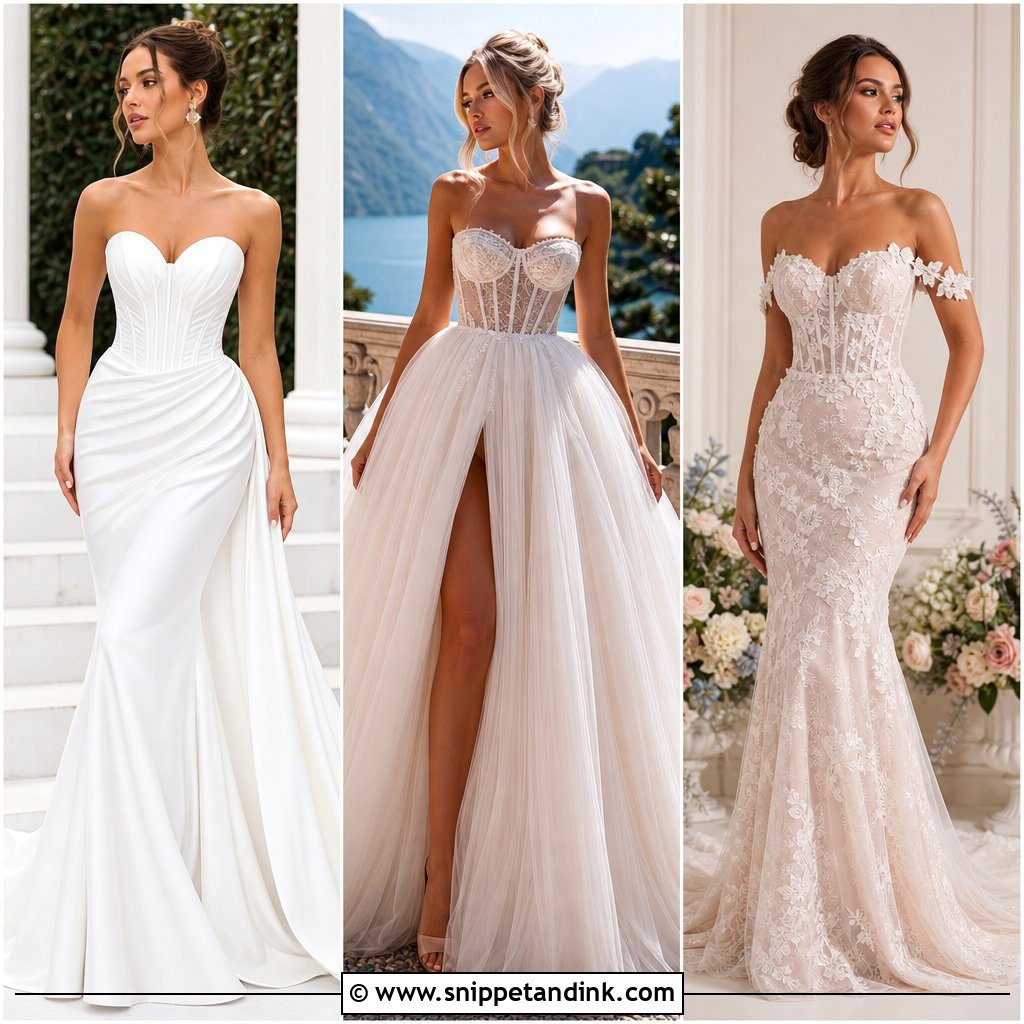
A Basque waist is a bodice that runs past your natural waist and finishes in a V or U point, so the skirt starts lower and the torso reads longer. It’s an old shape, but designers now cut it into satin ball gowns, lace corsets, mermaid skirts and very plain crepe. In fittings I treat the point as the anchor of the whole outfit: the neckline, the veil and even the bouquet size get decided around it. Below are twenty versions I’d happily put a bride in, each with the styling I’d pair with it and the fitting detail I’d watch.
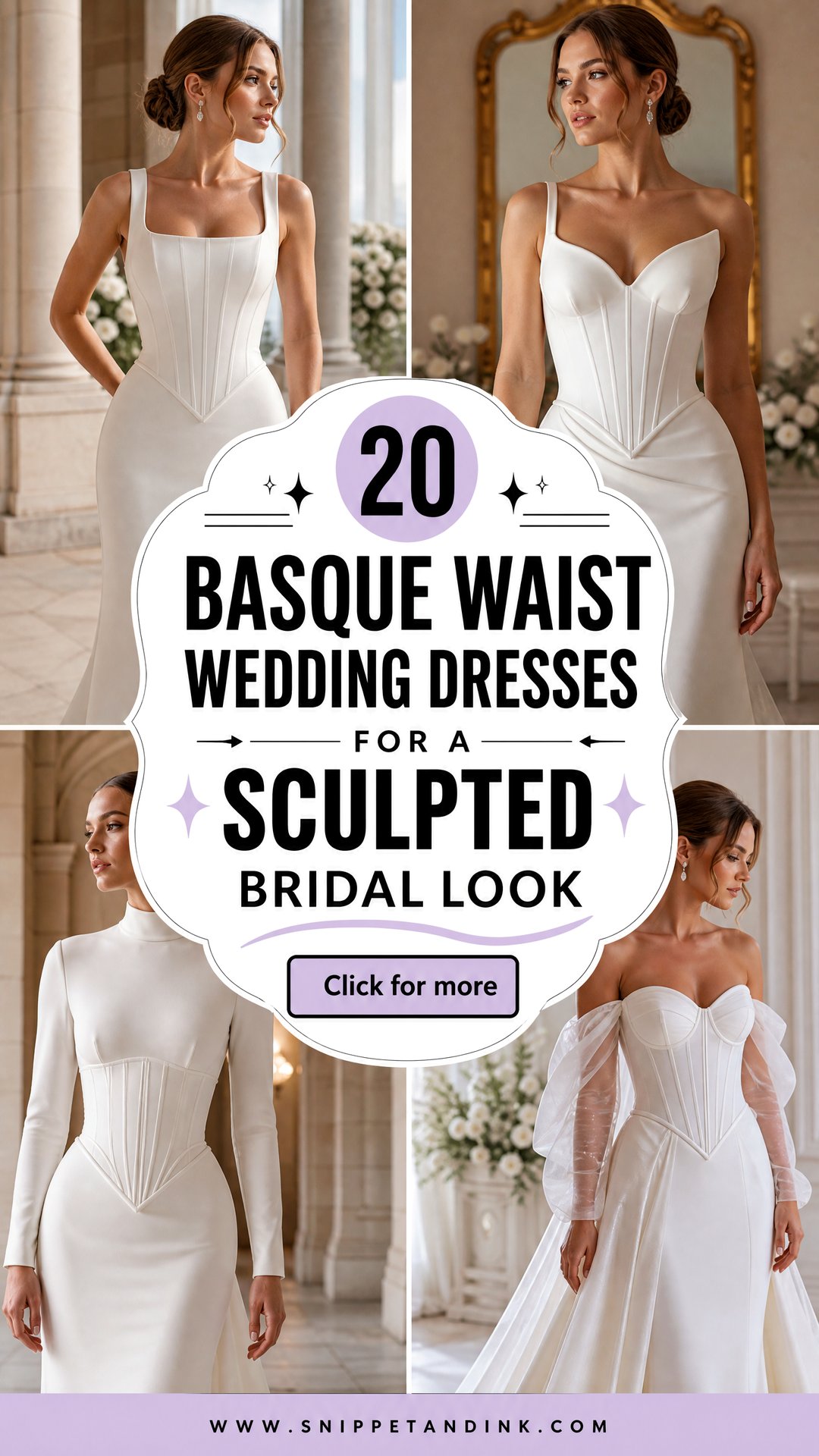
Where the Point of a Basque Waist Should Land on You
The first thing I check when a bride steps into a Basque gown is the tip of the V. On most bodies it looks right a little below the navel and roughly at the top of the hip bones. Too high and it reads as a normal waist with a mistake in it; too low and the bodice looks long while the legs seem shorter.
A few honest guidelines from the fitting room:
- Shorter torsos usually look best with a shallow V. A deep U or a sharp drop can cut you in half visually.
- Long torsos can carry a deeper point, and it’s one of the few silhouettes that makes length look intentional.
- If your hips are fuller than your bust, a ball gown skirt starting at the point balances you. A mermaid skirt from the same point can exaggerate the difference.
- Sit down in the sample. A point that pokes into your lap when seated is too long or too stiff for you, and a seamstress can usually soften or shorten it.
Bring the bra or bodysuit you plan to wear, even to the first appointment. Shapewear can move your waist by a surprising amount, and the point should be placed on the body you’ll actually be wearing it on.
1. Strapless Satin Basque Waist Wedding Dress
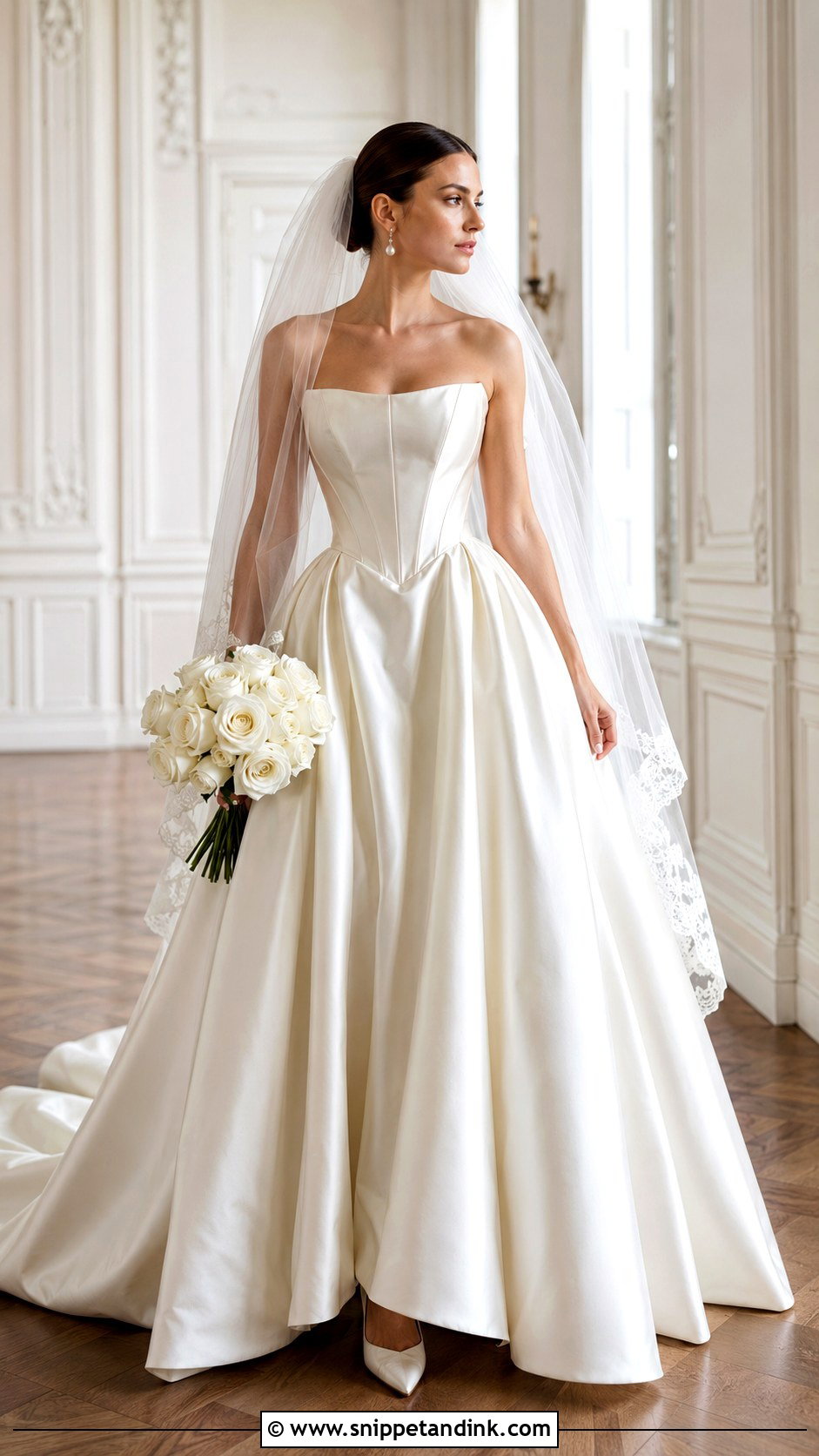
Satin hides nothing, which is exactly why it suits this waist. Every bodice seam and the dip of the point show clearly, so the gown needs very little decoration to look regal. I keep the styling spare: pearl drops, a single-layer cathedral veil, ivory pointed pumps and a tight bunch of white roses or callas. Skip the necklace. On strapless satin the thing I check first is the top edge when you lean forward to sign the register; if it gapes, ask for extra boning or sewn-in cups before you ask for anything else. Ballrooms and hotel venues suit it best.
2. Sweetheart Corset Basque Waist Wedding Dress
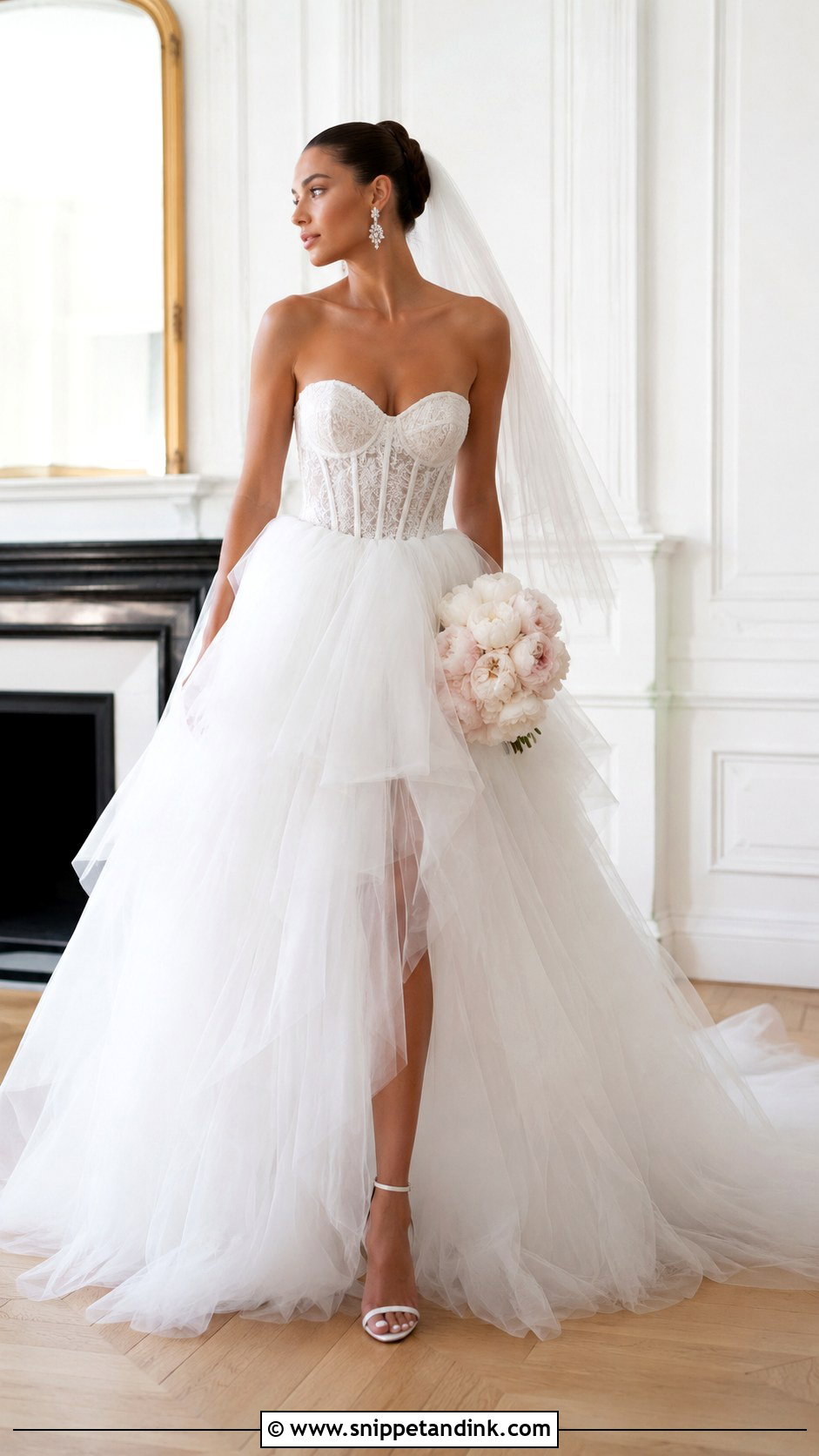
A sweetheart neckline softens the hard geometry of a corseted Basque, since the two curves above answer the single point below. Look for shaped cups, proper boning and a lace-up back over a layered tulle skirt; lacing gives a seamstress a little room if your weight shifts before the day. With this much happening in the bodice I go quiet on jewelry: small crystal earrings, a fingertip veil, satin ankle straps and loose peonies. At the final fitting I ask brides to sit, walk and lift both arms over their head, because corset lacing that feels fine standing can bite once you’re seated at dinner.
3. Long Sleeve Lace Basque Waist Wedding Dress
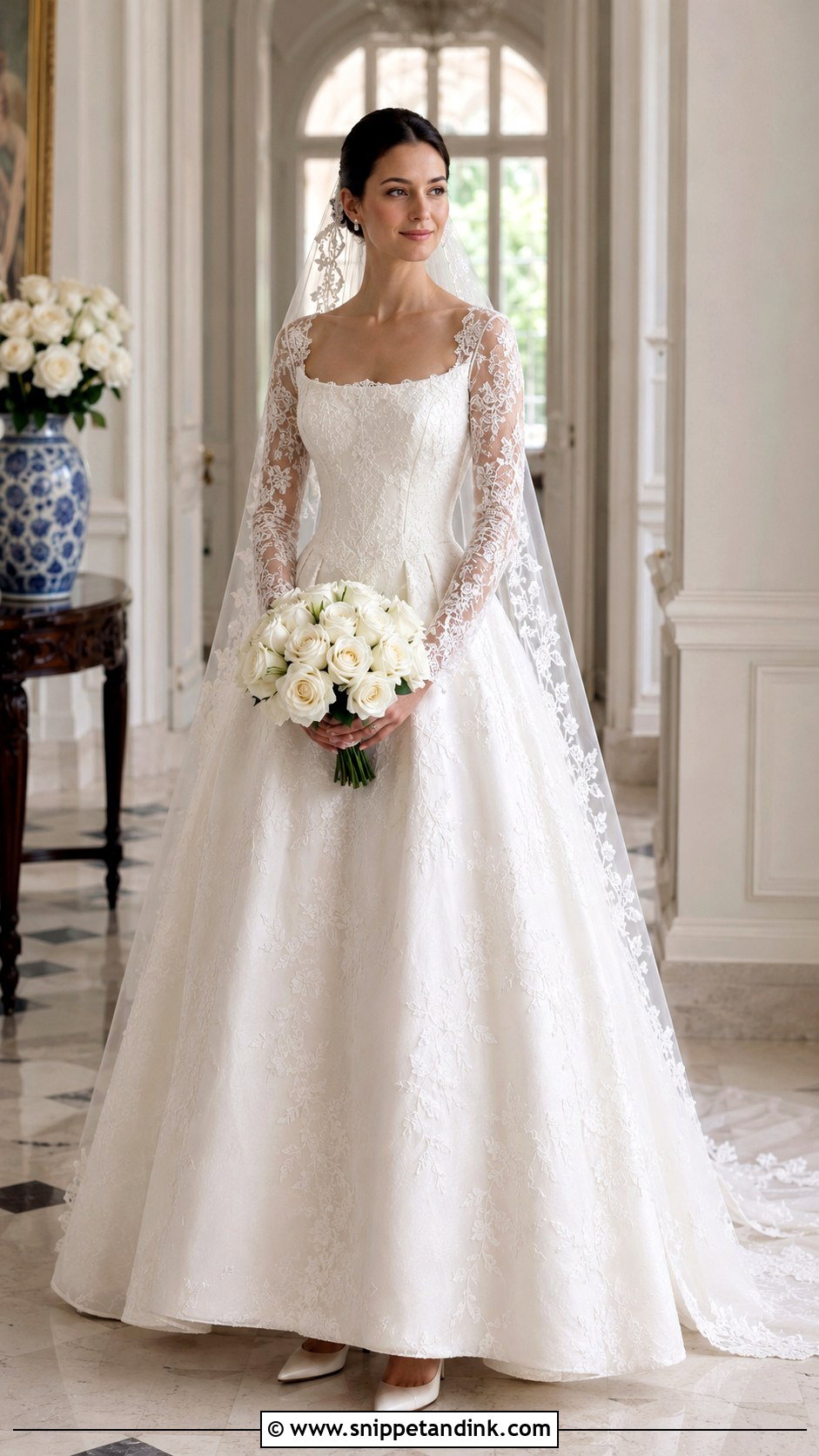
Sheer lace sleeves change how this silhouette feels: more chapel than ballroom. I like the appliqués to drift over the point and onto the skirt instead of stopping hard at the seam, which keeps the waist from looking pasted on. A full skirt or a controlled A-line both work. Pearl studs, an embroidered chapel veil and closed-toe heels finish it, with the hair in a low chignon so it doesn’t snag the lace. The fitting detail people miss is sleeve ease. Bend your elbow and hug someone during the fitting; if the lace pulls at the shoulder seam, it will strain all day.
4. Off The Shoulder Basque Waist Wedding Dress
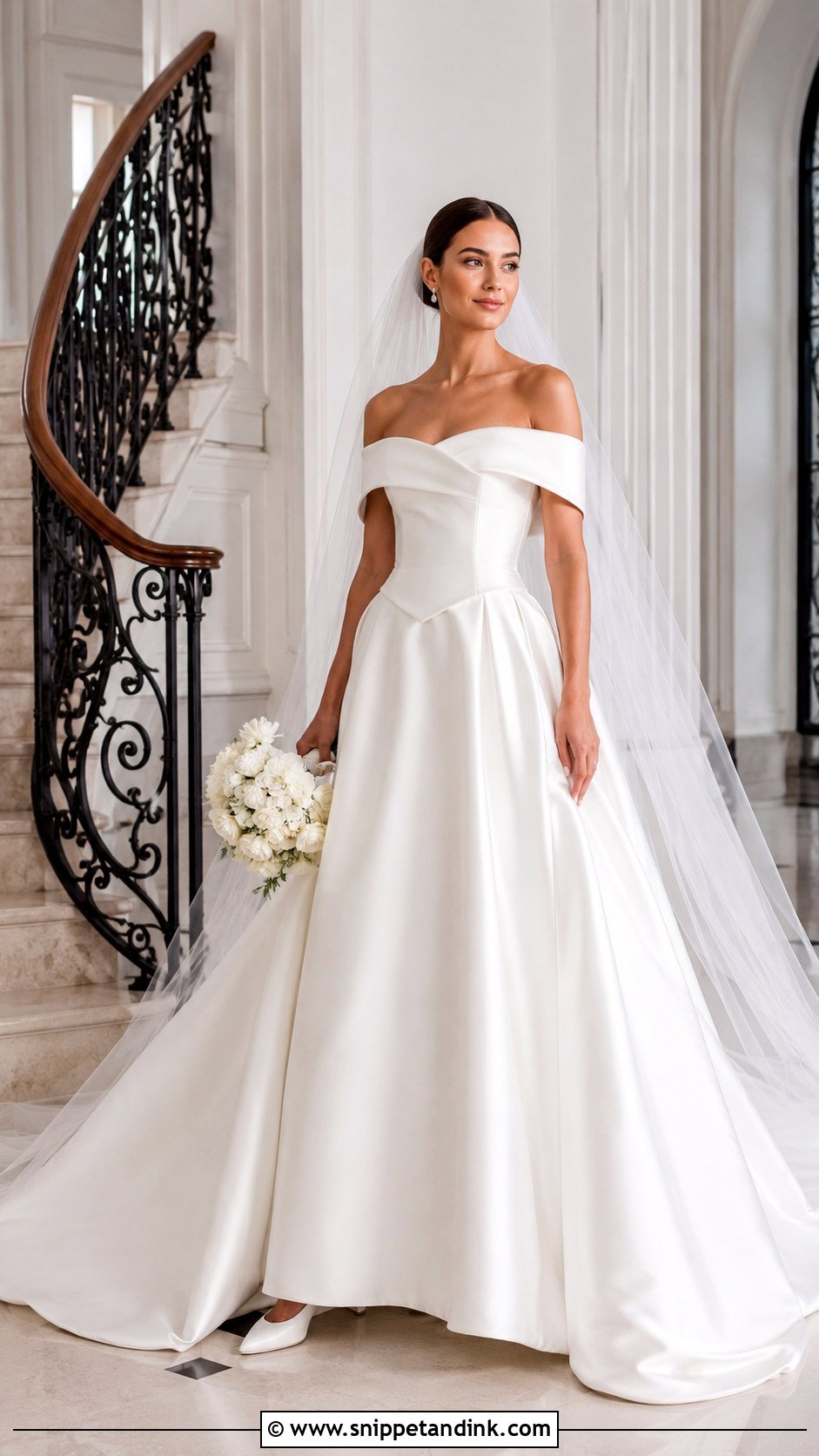
Off-the-shoulder bands need a fabric with some backbone. Mikado or a heavy satin holds the fold crisp, while soft crepe tends to collapse and creep upward as you move your arms. Over a corseted bodice and a sweeping ball gown skirt the collarbones and the point frame each other nicely. I’d add small studs, a plain cathedral veil and pointed pumps, then a rounded bouquet of ranunculus and roses. Keep the hair off the shoulders. Ask your seamstress about clear elastic or a small tack hidden inside the band, because hugging guests is what usually drags these sleeves out of place.
5. Square Neck Basque Waist Wedding Dress
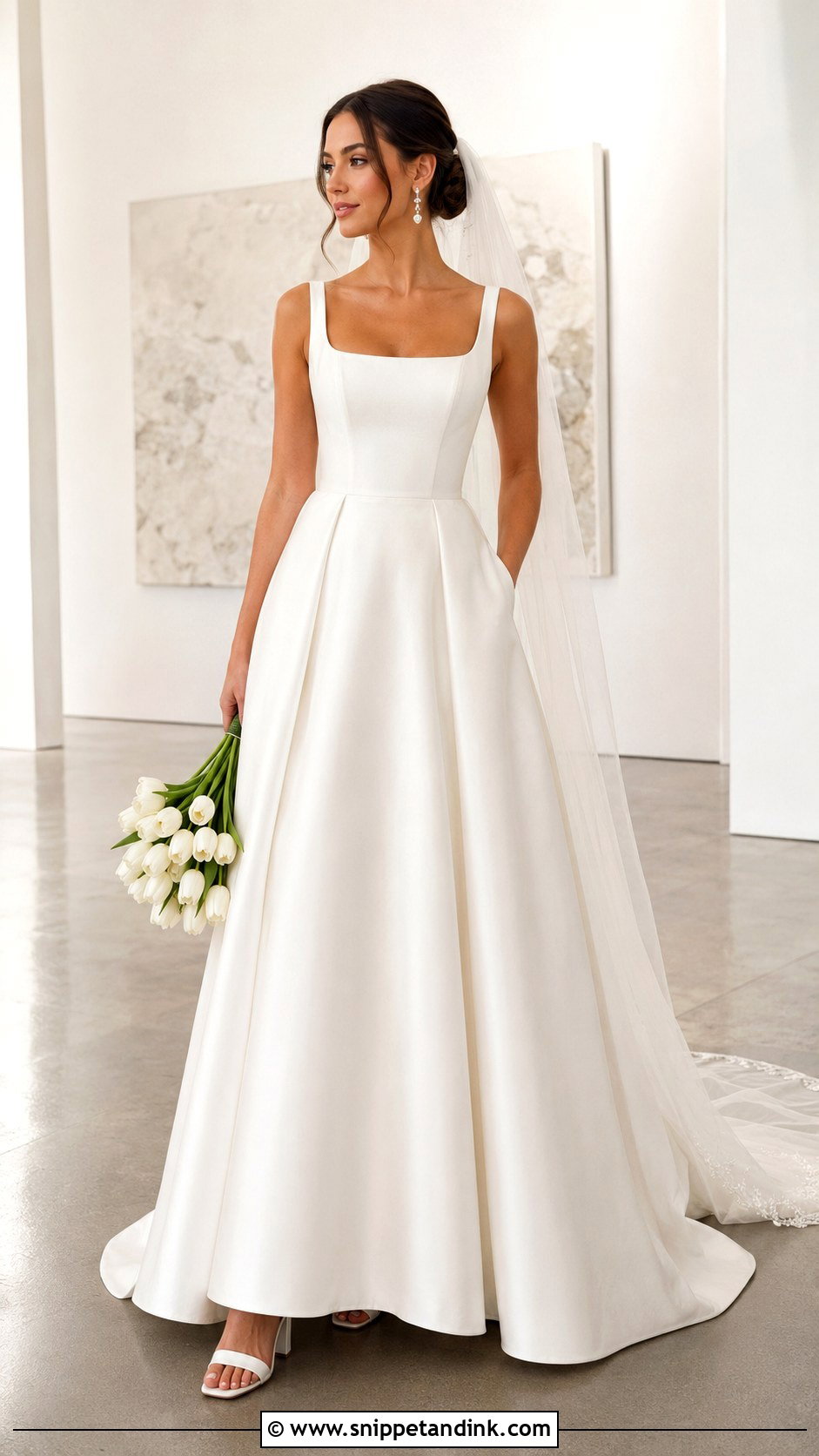
Square necks feel modern on a Basque bodice, and the slim straps are more than decoration: they stop a strapless top from slipping and keep the point centered. Matte satin or Mikado holds the straight line best. Add a softly pleated A-line skirt, and yes, pockets. I style it plainly with a narrow chapel veil, pearl-and-crystal earrings, block-heel sandals and a few white tulips. Strap length is the alteration that matters most here. Even a small difference left to right tilts the neckline and pushes the point off your center line, which shows in every front-facing photo.
6. Beaded Corset Basque Waist Wedding Dress
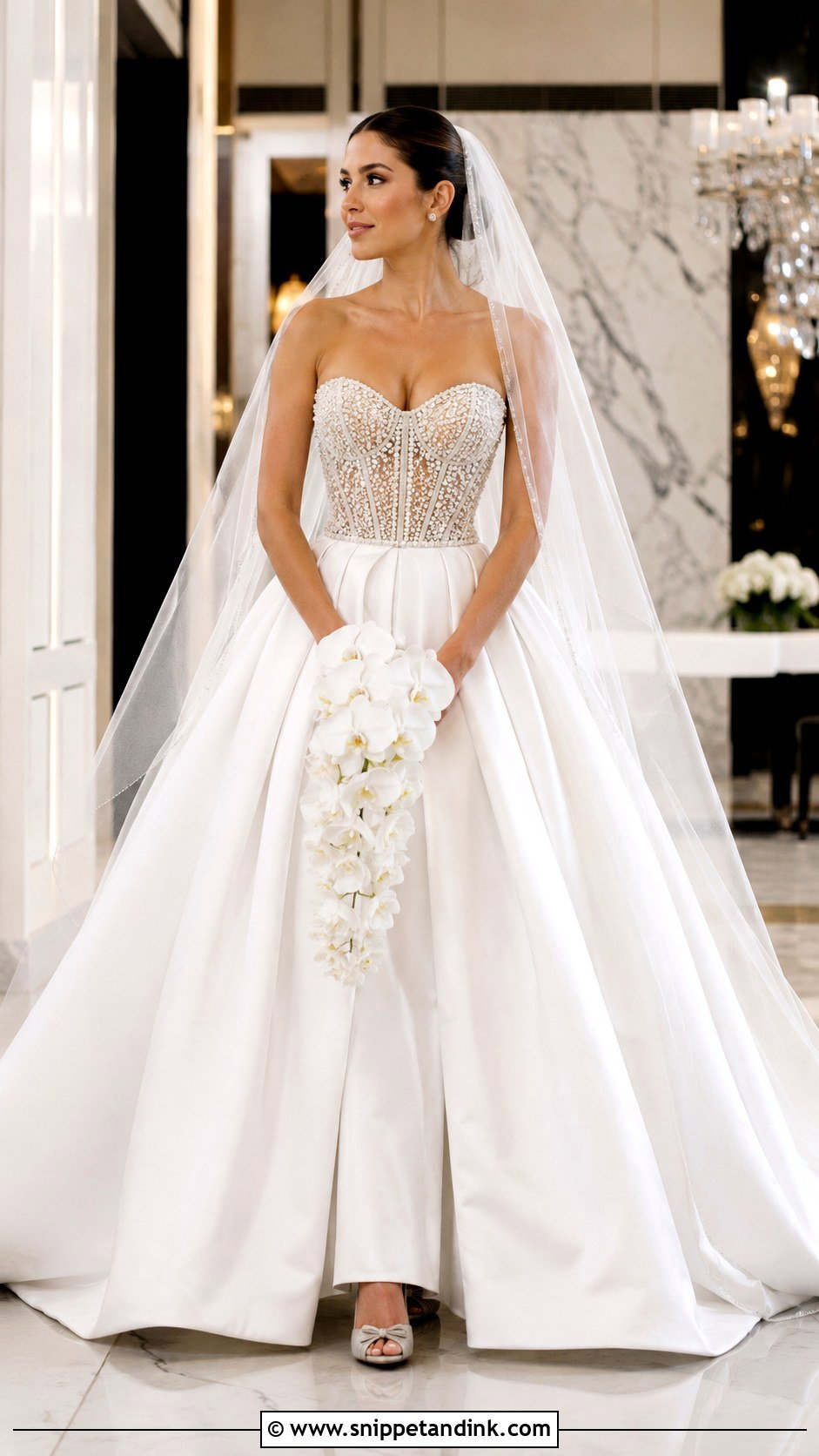
Beading that’s concentrated on the corset and fades toward a plain skirt keeps the waist readable. When pearls and crystals run all the way to the hem, the point disappears into the sparkle. Heavily beaded bodices are also noticeably heavier than people expect, and that weight drags down on the waist seam over a long day. I always look inside before anything else: a firm waist stay, steel or spiral boning and well-placed cups carry the load so your shoulders don’t. Keep the rest simple: studs, a sheer fingertip veil, metallic ivory heels, a low twisted bun and a restrained orchid bouquet.
7. Floral Applique Basque Waist Wedding Dress
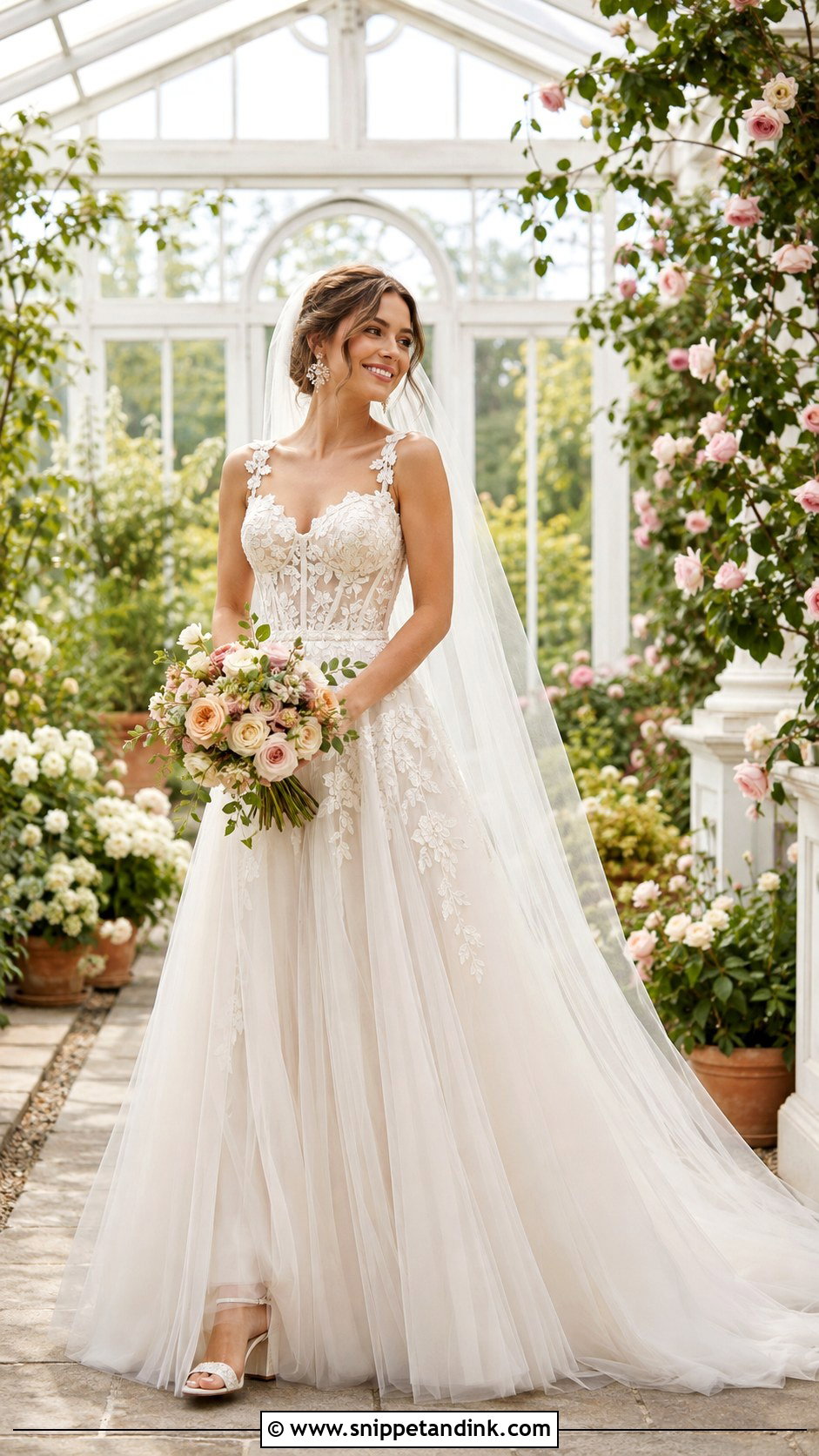
Three-dimensional appliqués suit an outdoor wedding because they catch side light and move a little in a breeze. The placement I look for starts dense on the bodice, crosses the point and then scatters thinly down an A-line tulle skirt, so the hem stays light. Floral studs, a soft-edged chapel veil and ivory block heels make sense on lawns and stone paths, where stilettos sink. A loose bouquet of garden roses and sweet peas carries the botanical theme. I’d stop jewelry there. One practical note: raised flowers catch on bouquet wire and veil combs, so do a test hold during your fitting.
8. Simple Crepe Basque Waist Wedding Dress
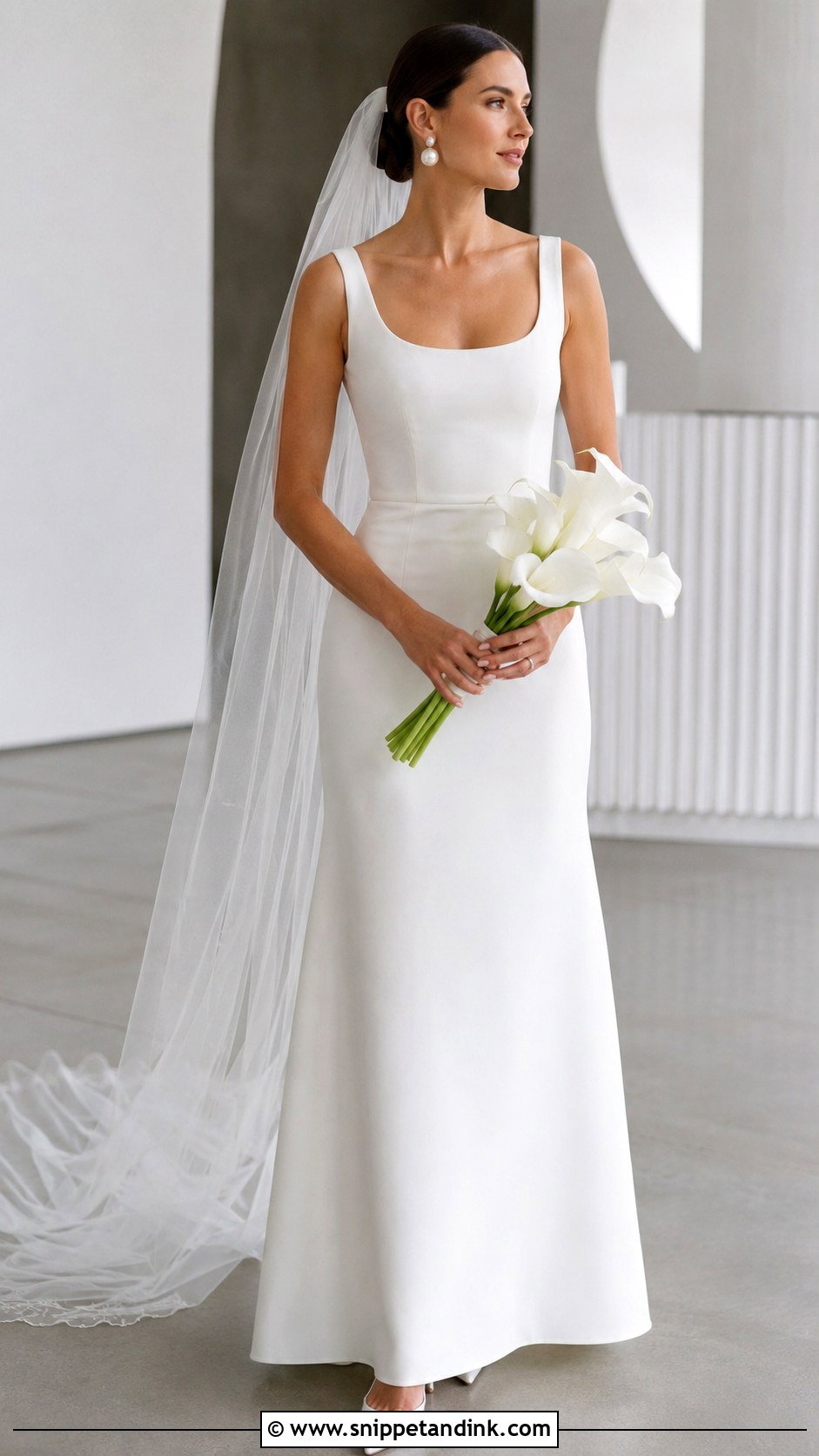
Crepe is the honest fabric. With no texture to hide behind, the Basque line comes entirely from seam placement, so the cut has to be precise. A straight or gently scooped neck, wide straps and covered buttons down a smooth back are all it needs. I’d style it with sculptural pearl earrings, slingbacks, a plain cathedral veil and callas. Crepe also shows every ridge underneath, so wear your exact undergarments to every fitting. I ask the seamstress to check the gown by a window as well as under shop lights, because bright daylight is where panty lines and pulling seams appear.
9. Mermaid Basque Waist Wedding Dress
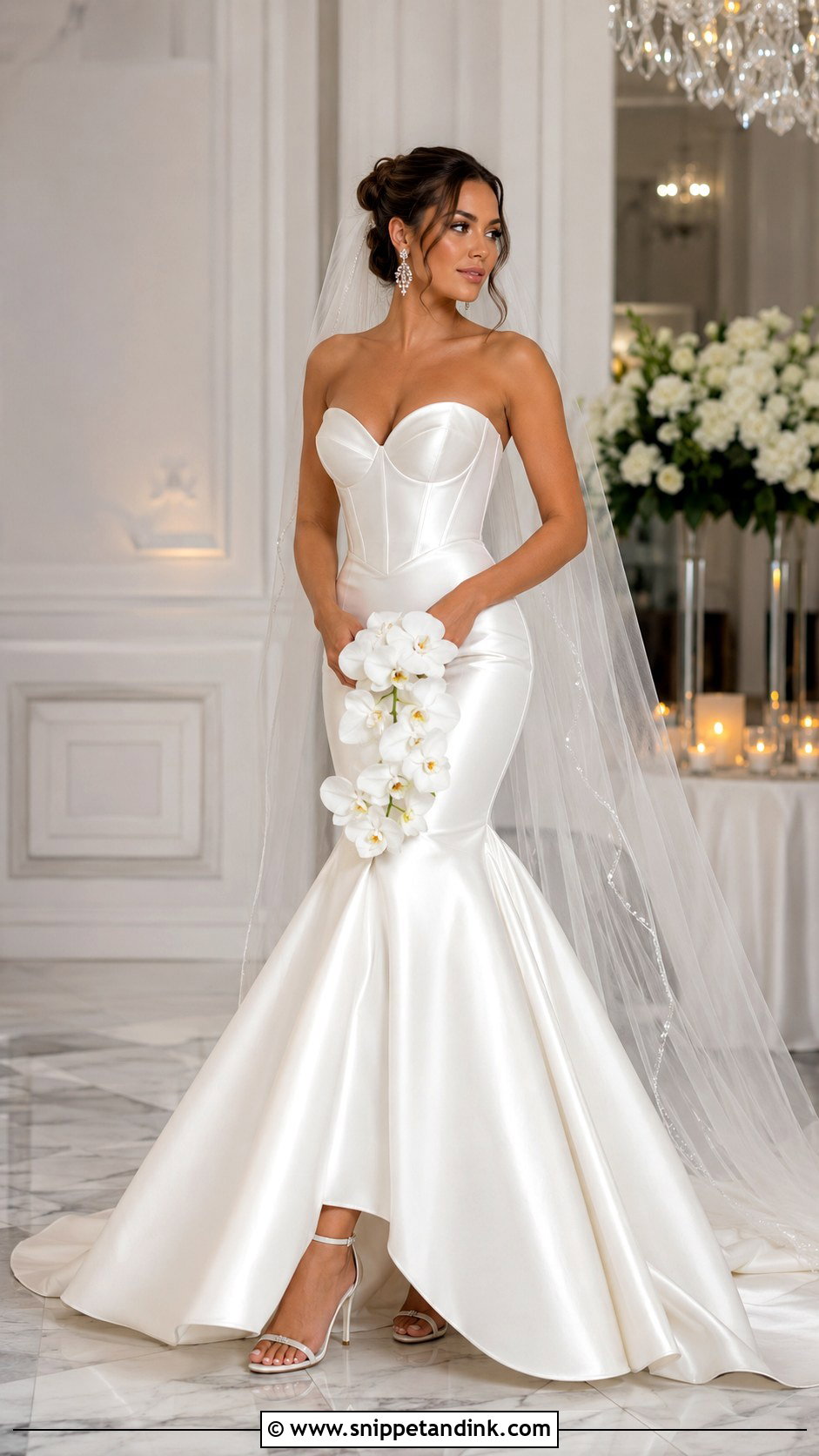
Stretch satin or lined crepe lets the fitted bodice and elongated waist run straight through the hips before the skirt opens near the knee. That long, unbroken line is the whole appeal. A strapless sweetheart or a shallow scoop keeps the top quiet. Crystal drops, a simple chapel veil and pointed heels with an ankle strap go with it, plus a slim orchid or calla bouquet. Before any hem is cut I make brides take the stairs and their full walking stride. If the flare starts too high you’ll shuffle all night. A detachable overskirt is a good fix if you want volume for the aisle.
10. Cat Eye Neckline Basque Waist Wedding Dress
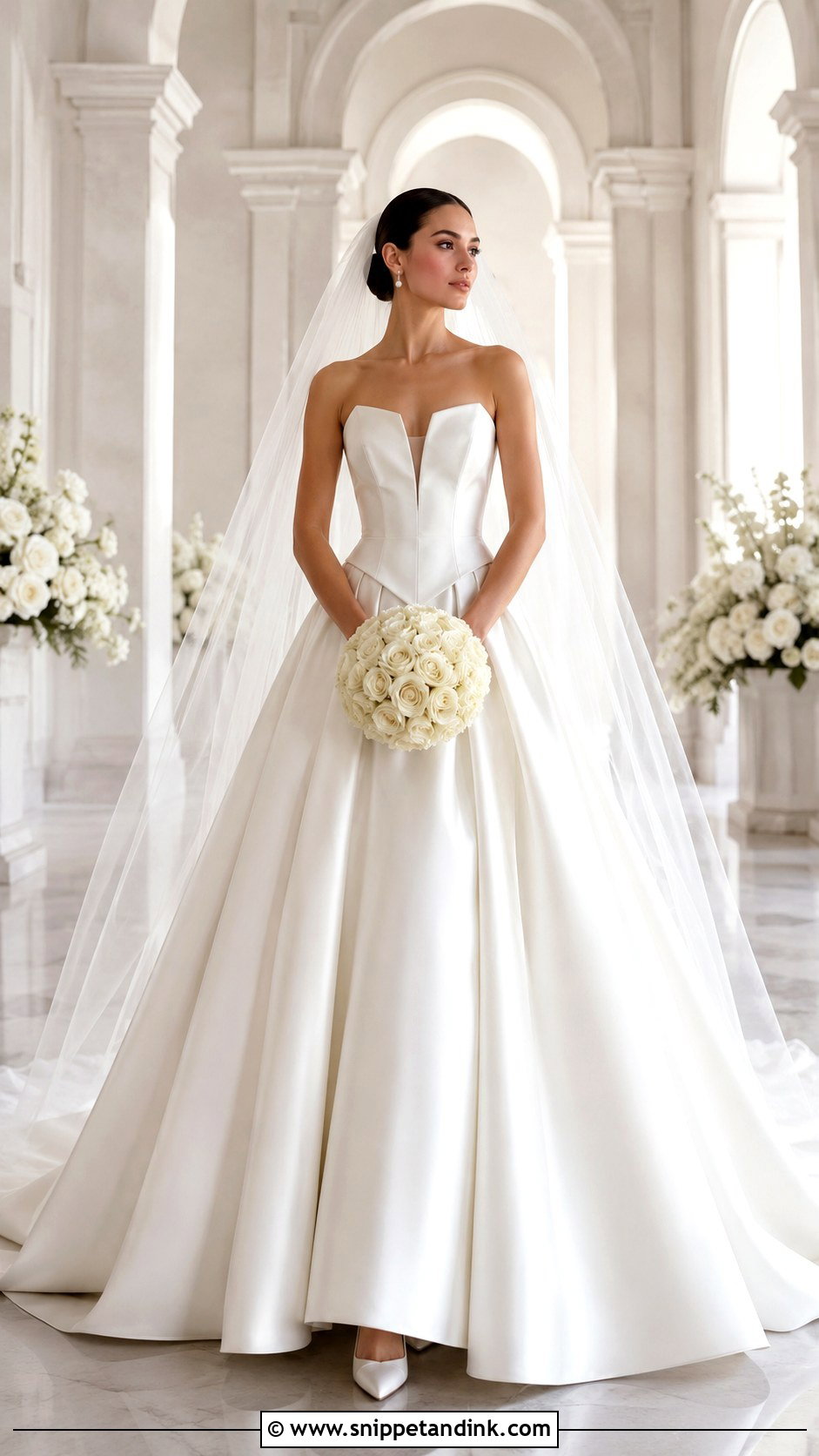
A cat-eye neckline rises to two points while the waist drops to one, and the mirror effect is very graphic on a strapless satin ball gown. It’s not a softening choice. I keep the extras modest: small pearls, a single-tier cathedral veil, moderate ivory pumps, a centered chignon and a round bouquet of roses to calm all the angles. No necklace; the bodice frames you already. At the last fitting I check both peaks sit at exactly the same height and that the side boning isn’t pressing into the underarm, where it rubs raw by evening. Staircases and architectural venues suit it.
11. Scoop Neck Basque Waist Wedding Dress
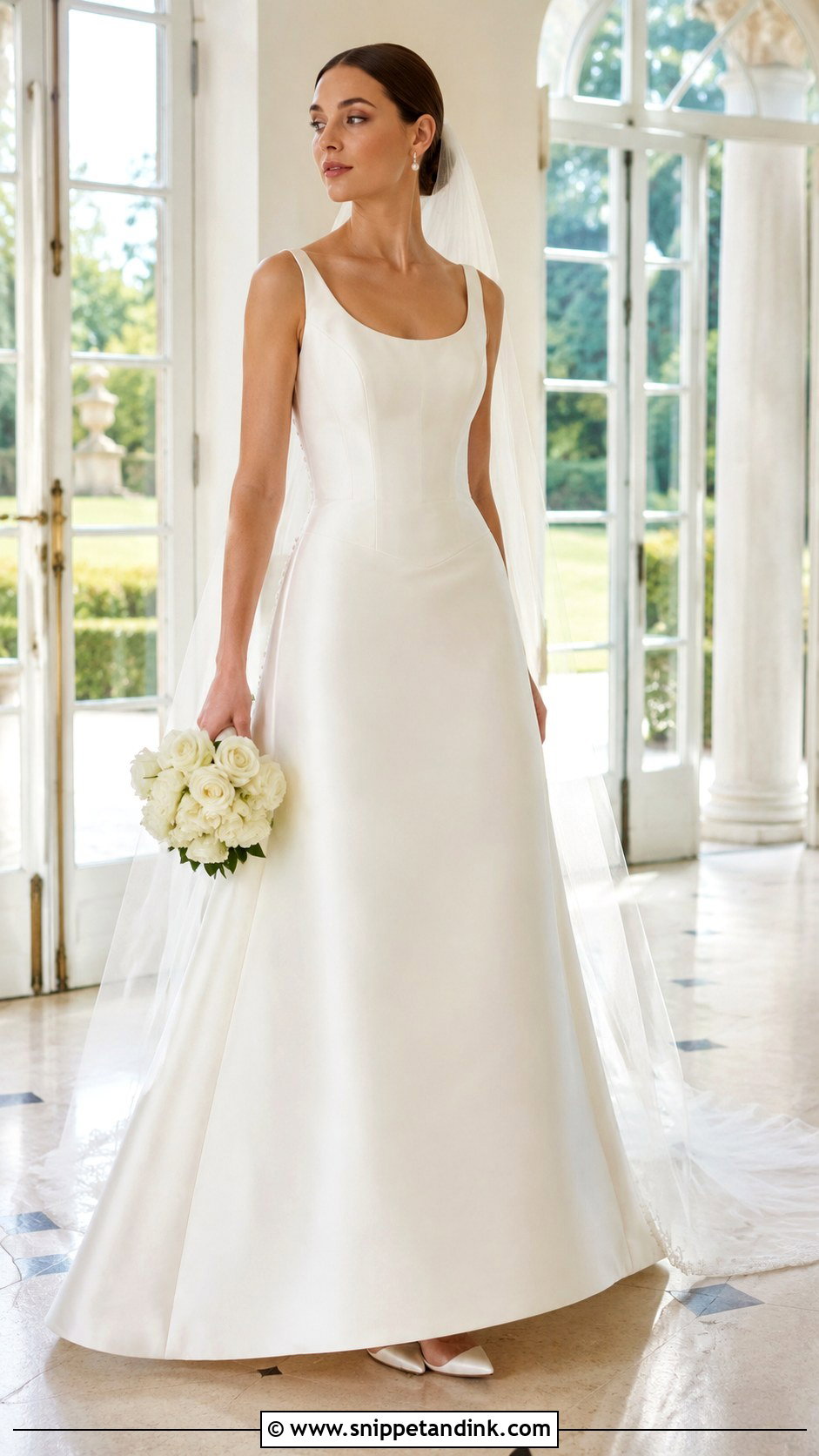
Of all the necklines here, the scoop is the gentlest partner for a structured waist. Silk or luminous satin with wide straps, subtle corset seams and an A-line skirt that falls in heavy folds keeps it classic. Covered back buttons are enough decoration. I’d pair pearl drops, a light chapel veil, low satin heels and roses mixed with whatever is in season, then a smooth half-up style. A short strand of pearls can work, but leave clear skin between the strand and the neckline or the two edges fight. It’s one of the easiest of the twenty to wear from ceremony to dance floor.
12. High Neck Basque Waist Wedding Dress
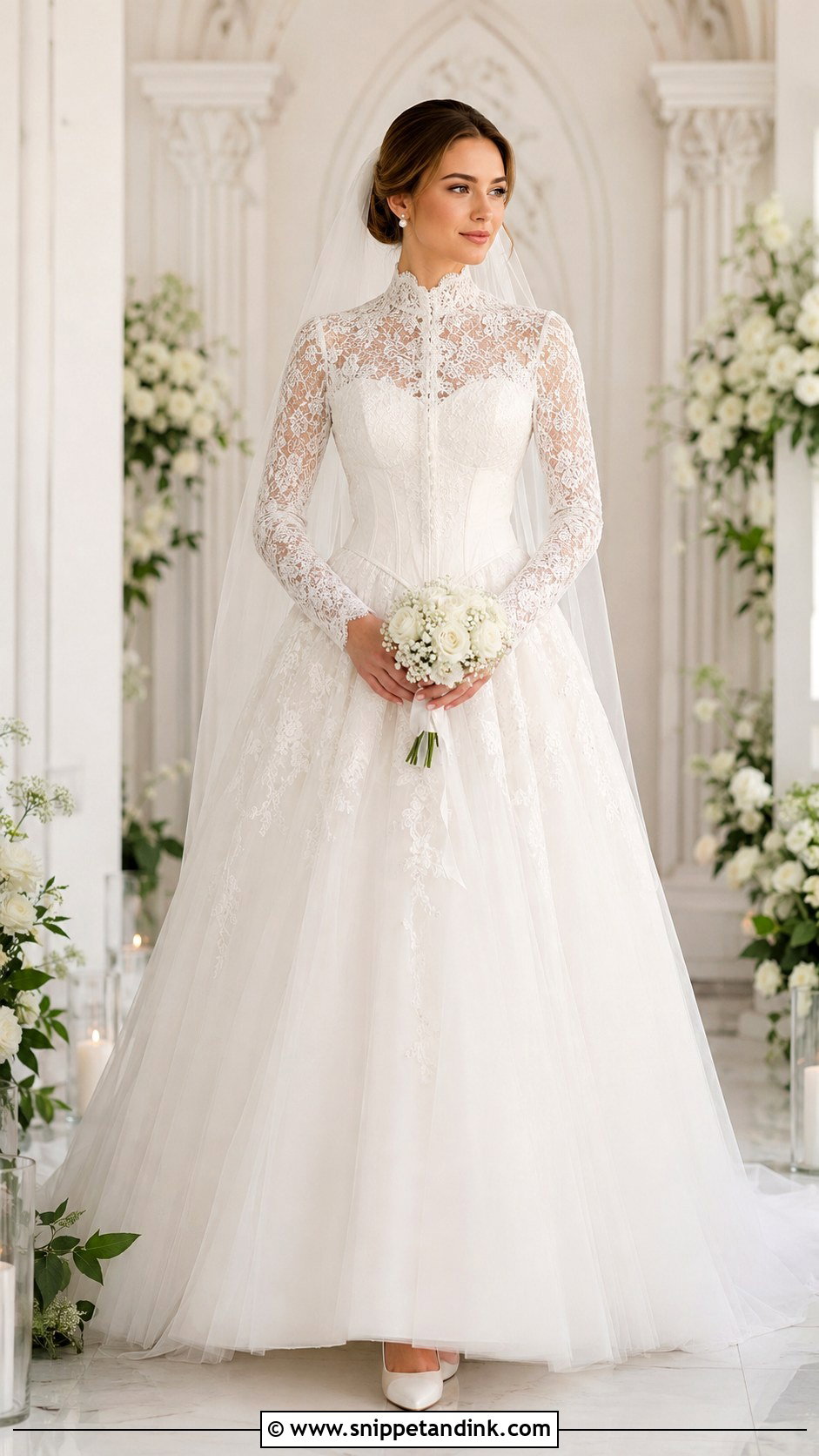
A high lace neck can make a covered bodice look boxy, and the pointed waist is what rescues it by pulling the eye down into a narrow V. I’d pair lace over a lined corset with long fitted sleeves and a tulle or light satin skirt. Pearl studs, an unembellished chapel veil, closed satin pumps and a low bun keep the collar visible from the back. A small rose bouquet is plenty. Collars are where discomfort hides. If the lace edge touches your throat when you swallow or turn your head, have it lowered slightly now, not on the morning.
13. Detachable Sleeve Basque Waist Wedding Dress
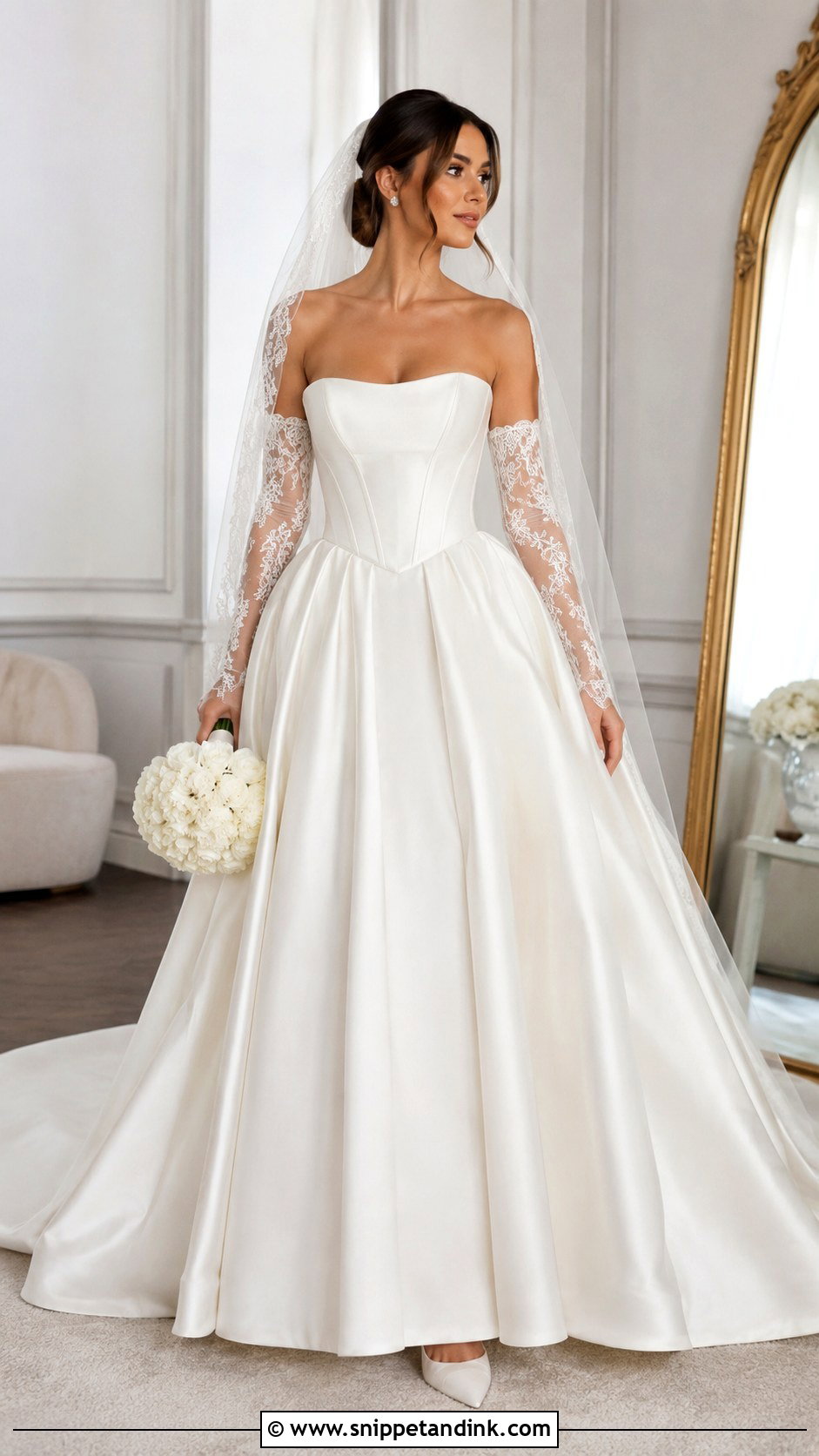
Detachable sleeves give you a ceremony look and a reception look from one gown. Lace sleeves or draped off-the-shoulder bands clip onto a strapless corset for the vows, then come off for dancing. A satin or Mikado ball gown skirt carries both versions well. I’d keep everything else neutral enough to suit both: crystal studs, fingertip veil, pointed ivory heels and a low updo. When the change actually happens, small hooks or snaps beat tiny buttons every time. Have the tailor make the attachment strong and simple, and show one bridesmaid how it works. Bring a labeled garment bag for the sleeves.
14. Basque Waist Wedding Dress With Scarf
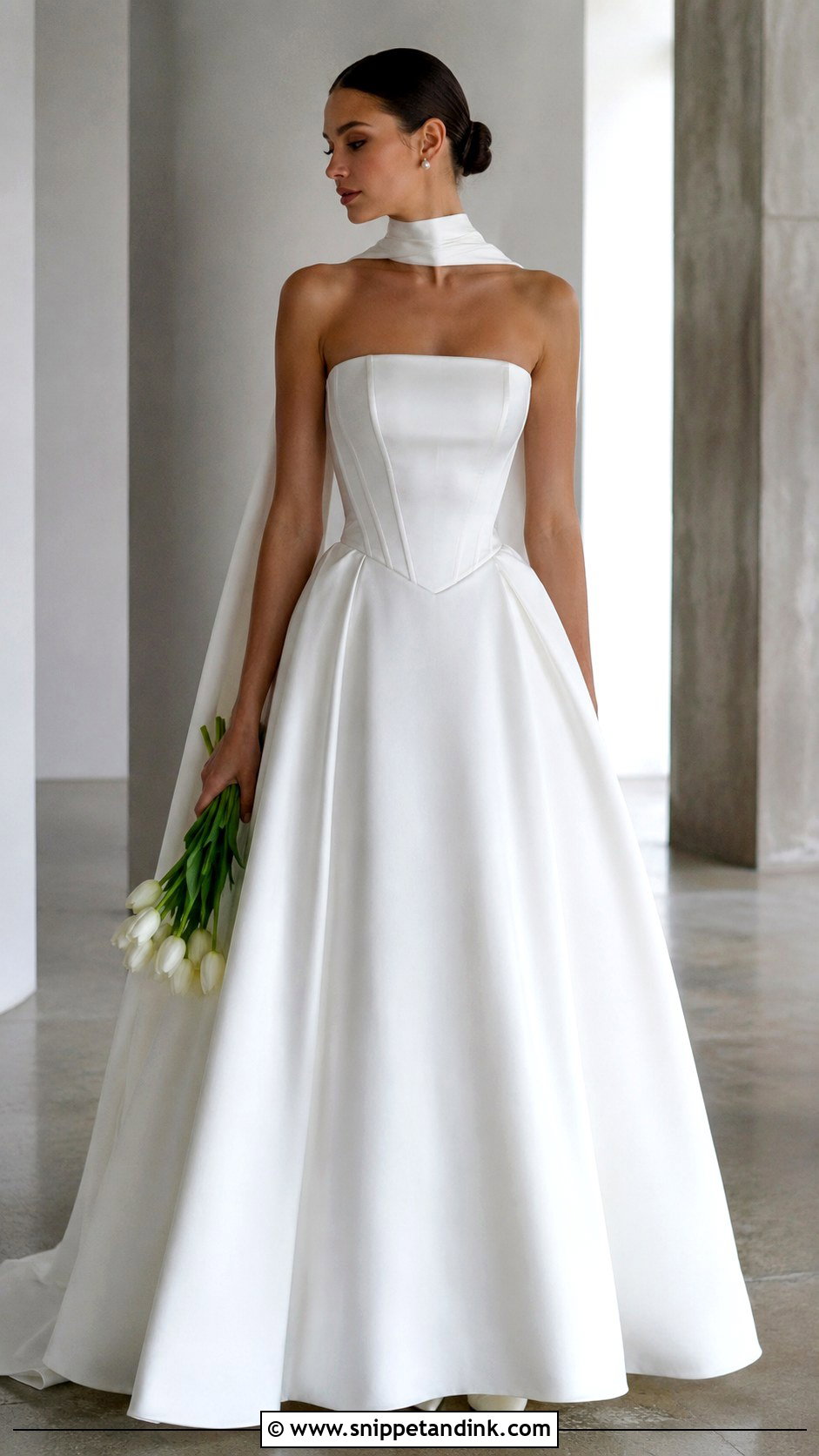
A narrow scarf cut from the gown’s own satin is an editorial trick, and on a plain strapless Basque it’s often the only accessory you need. Let the ends hang down the back or fall over one shoulder, but never across the point. Pearl studs, sleek pumps and a low bun keep it clean. I’d choose a short blusher or no veil at all, since a scarf plus a long veil piles too many layers at the neck. A few tulips or callas finish it. Ask for a hidden snap or two to fix the scarf to the bodice; satin on satin slides constantly.

15. Jacquard Basque Waist Wedding Dress
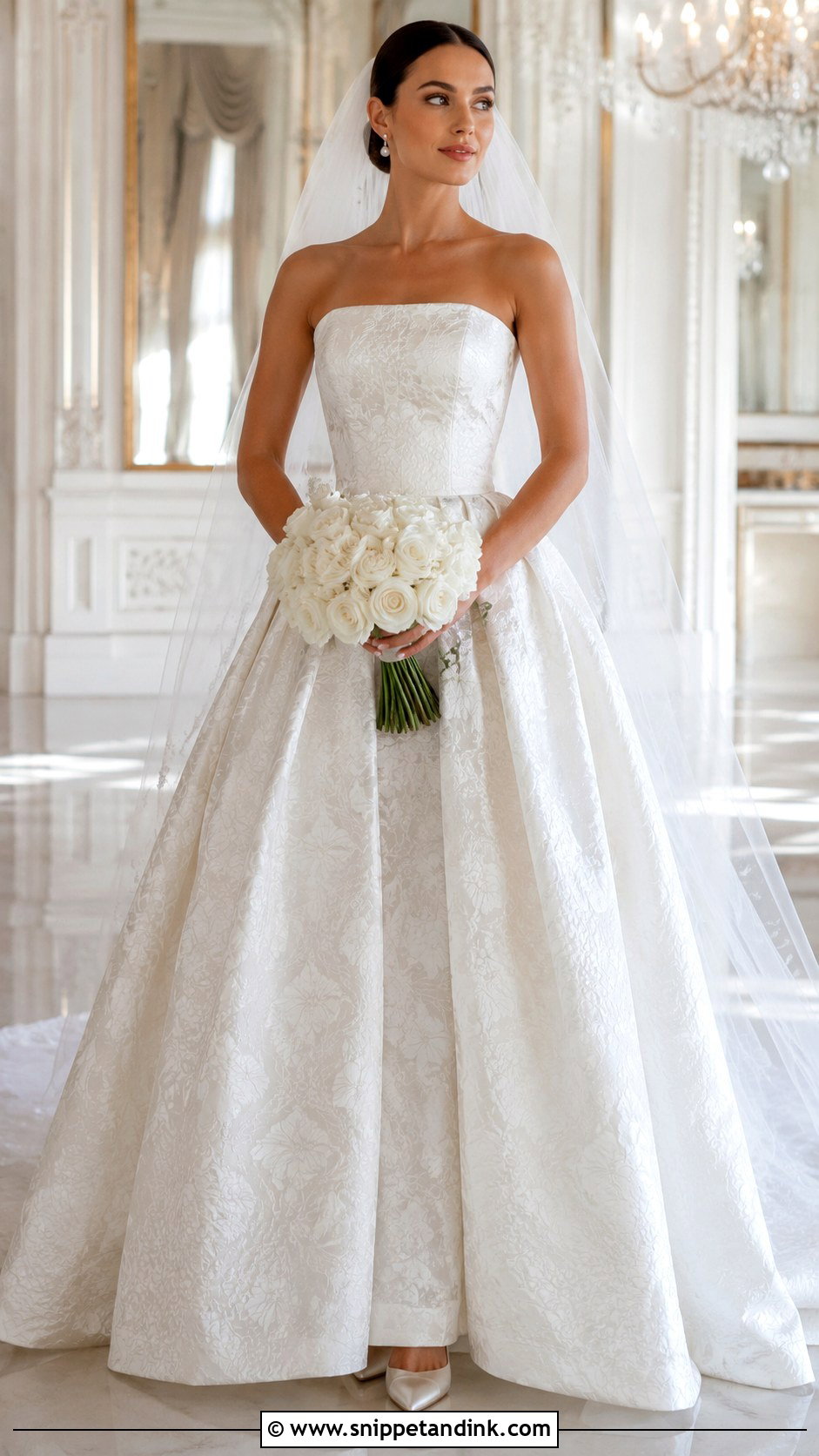
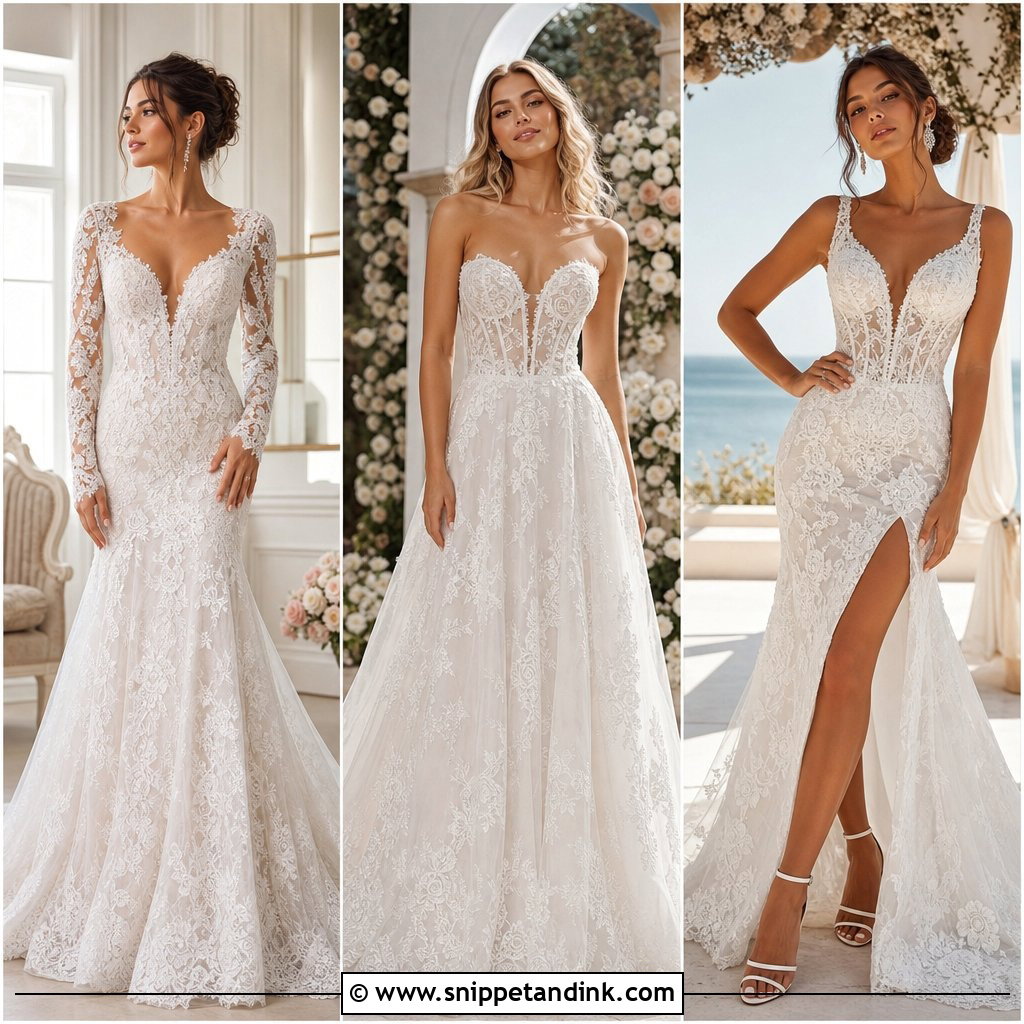
Floral jacquard brings pattern woven into the cloth, so you get texture without a single bead. It suits a strapless ball gown with a straight neckline and box pleats, and it wants classic accessories: pearl earrings, ivory satin pumps and a cathedral veil with a narrow edge. A structured rose bouquet and a clean chignon stop it feeling ornate. Jacquard is a warm, heavy cloth, so I’d hesitate for a summer garden. The fitting check I always do is pattern matching at the waist seams. If a large motif is chopped off at the point, the bodice looks accidental rather than sculpted.
16. Tea Length Basque Waist Wedding Dress
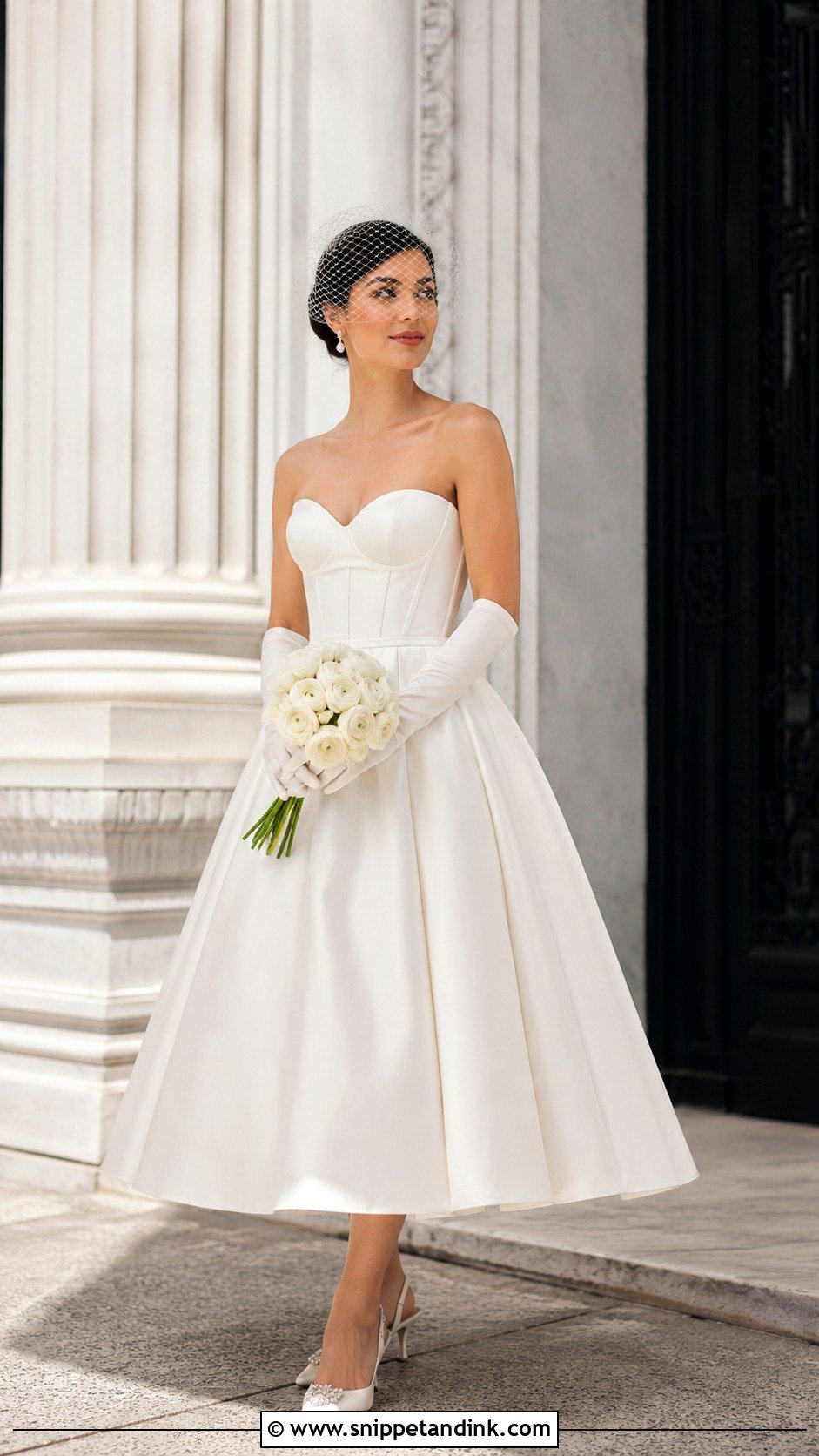
Tea length gives this formal waist a lighter, slightly vintage mood, with the skirt ending between knee and ankle. Shoes suddenly matter because everyone sees them, so I’d pick ivory slingbacks or an embellished pump you’d be pleased to be photographed in. Pearl earrings, wrist gloves and a birdcage veil lean into the retro side; a short-stemmed bouquet keeps proportions right. Hair can be a smooth bun or a curled bob. Always have the hem set while wearing the actual shoes, since heel height changes where the skirt lands. Courthouse ceremonies and daytime restaurant receptions suit this length well.
17. Plus Size Basque Waist Wedding Dress
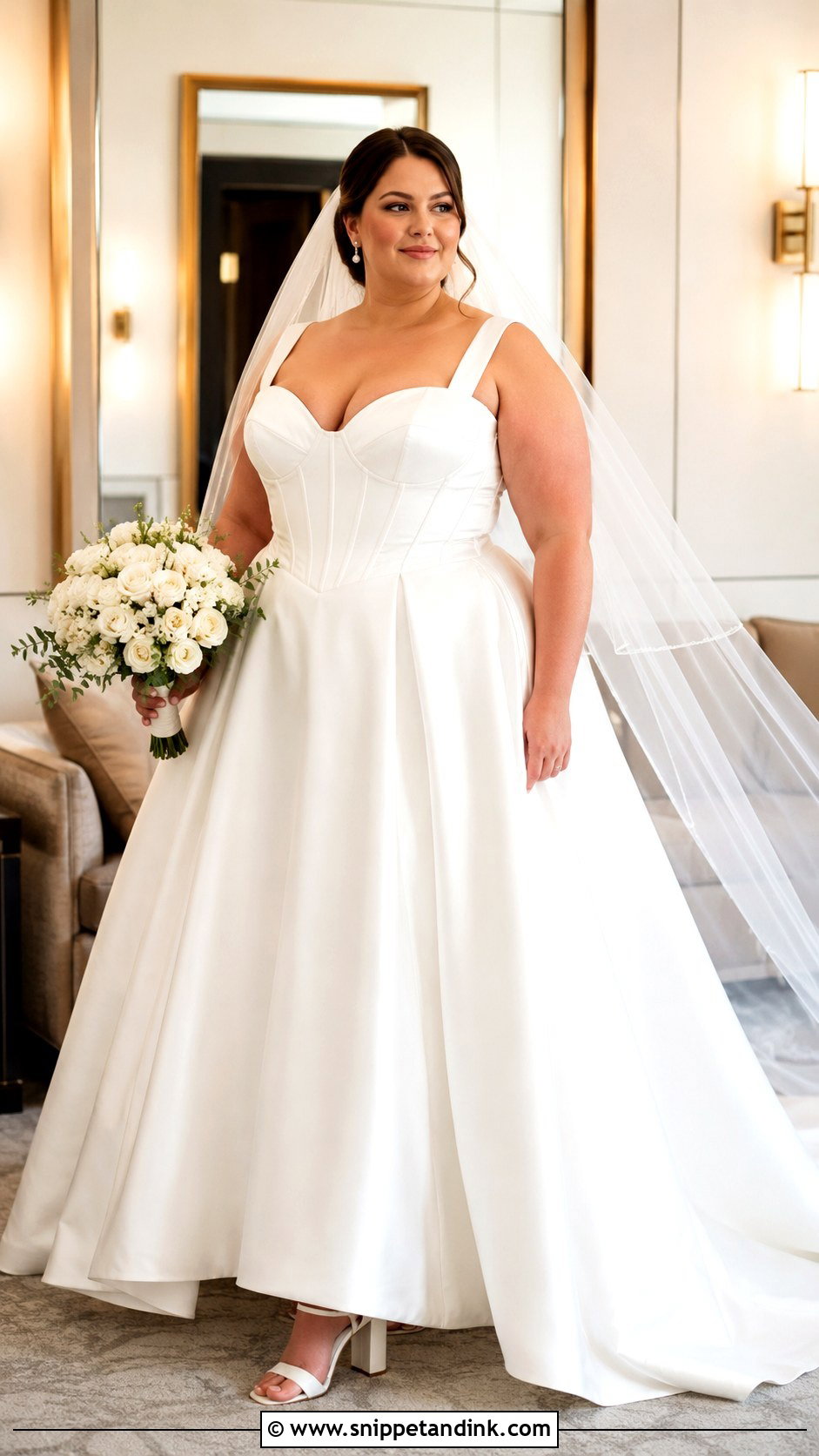
Support is the first thing I assess on a plus-size Basque gown, and it should come from construction rather than squeezing. Look for a lined corset, substantial boning, an adjustable lace-up or extended back closure and a smooth transition at the point. A sweetheart neckline and full satin or tulle skirt gives balanced proportions, and wide detachable straps are worth having as an option. Ask the salon for a sample in or near your size; clipping a tiny sample tells you nothing about where the point will really fall. If you can’t breathe deeply or sit comfortably, the fit needs work.
18. Petite Basque Waist Wedding Dress
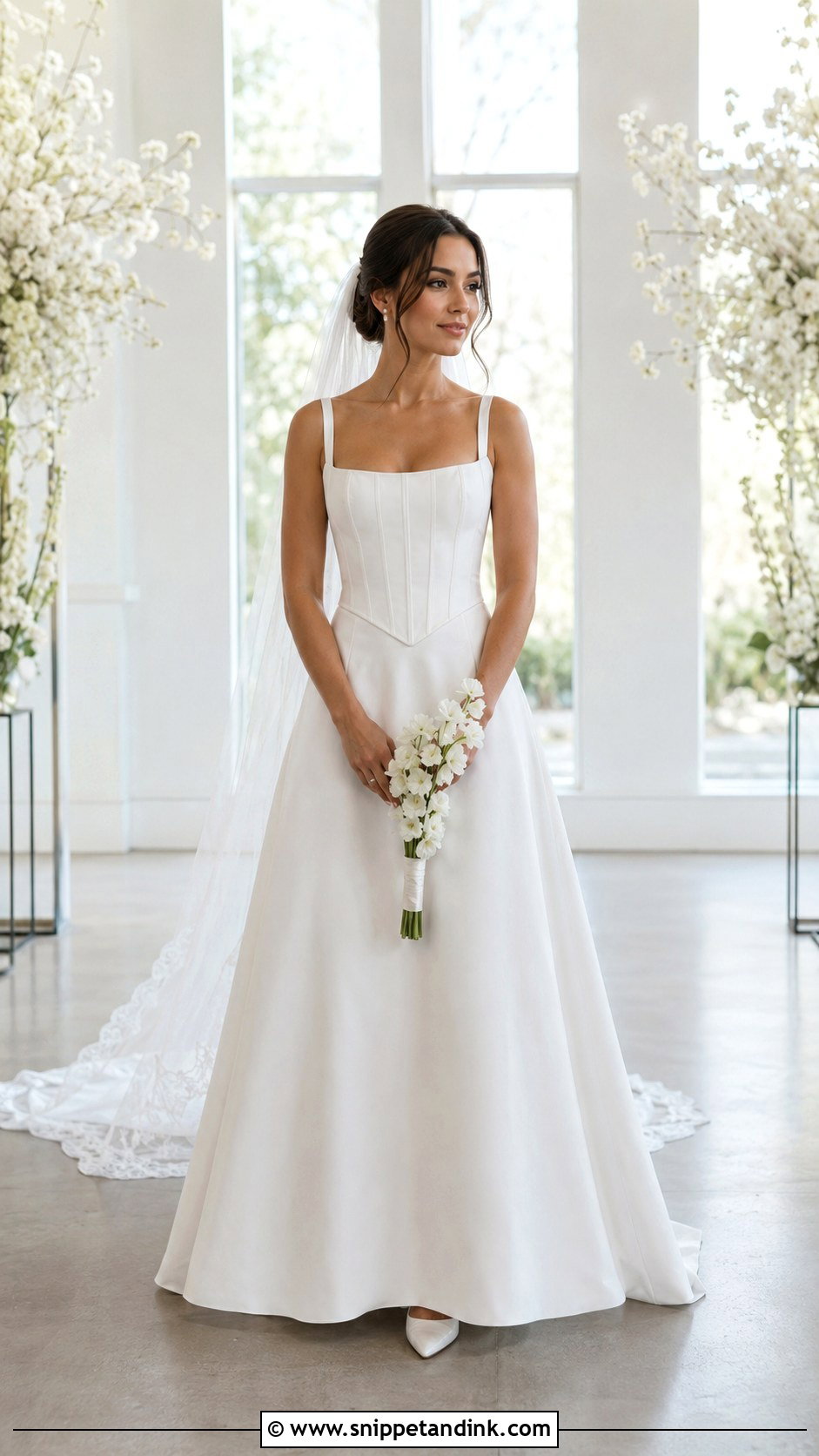
On a petite frame a deep point can swallow the torso, so I usually steer toward a shallower V, a compact corset bodice and a controlled A-line rather than layer after layer of stiff tulle. A sweetheart or square neck opens the chest, and narrow straps help. Pointed toes, small pearls, a slim bouquet and a chapel veil add length without bulk; a high bun helps too. Don’t judge the waist depth on a sample hemmed for someone taller. Ask whether the designer cuts petite proportions; if not, a skilled alterations specialist can shorten the bodice and rebalance the point.
19. Champagne Basque Waist Wedding Dress
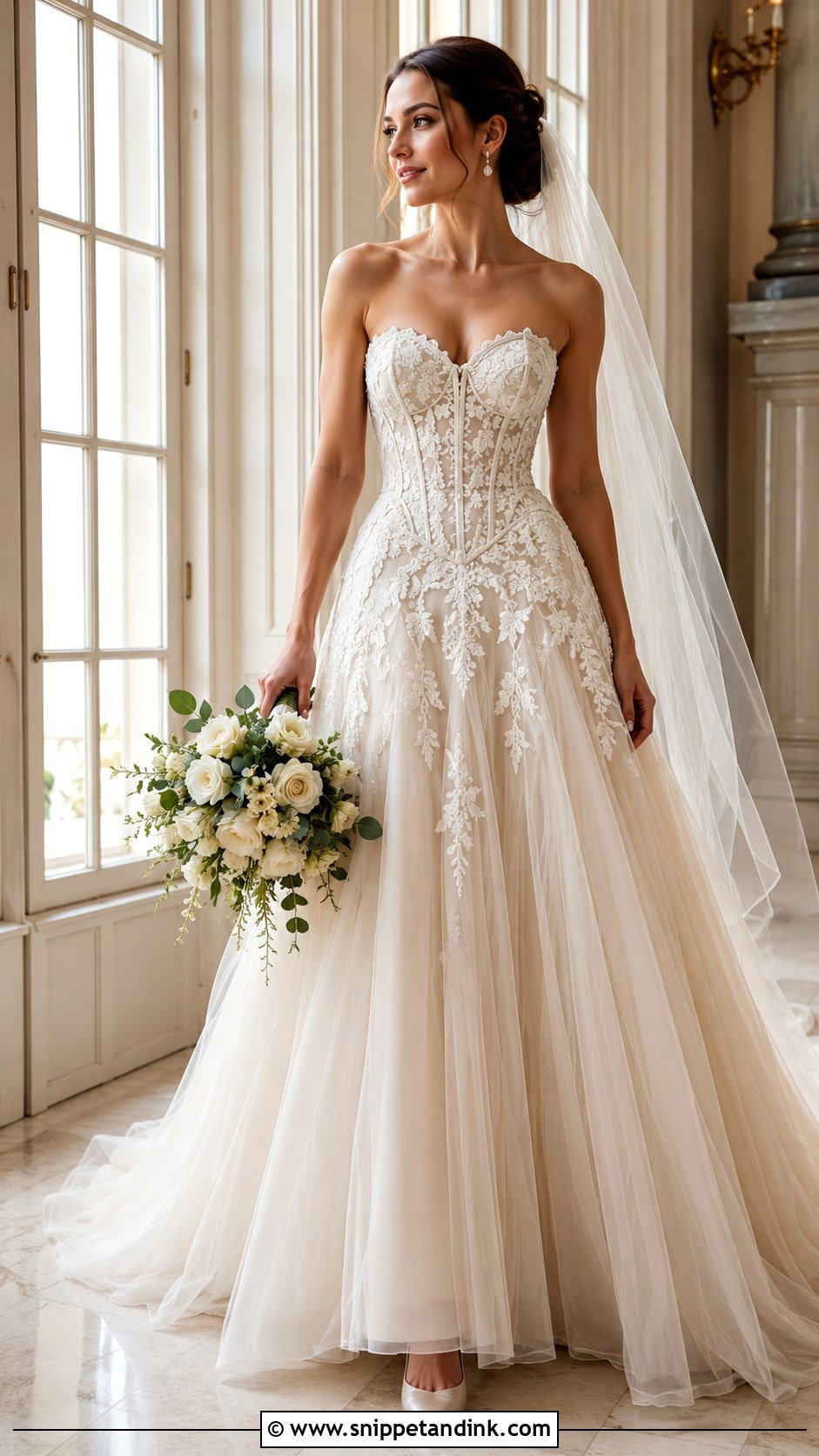
Champagne under ivory lace gives the bodice depth, and it still reads as bridal. The lace pattern and the corset seams stand out more against a warm lining than against white. Carry the tone into the skirt under ivory tulle, wear champagne satin heels and pearl earrings, and choose a sheer ivory veil so you don’t stack competing shades. White and cream flowers tie it together. The thing I always insist on is seeing the colour in three lights: daylight, warm indoor bulbs and a phone photo. Champagne can turn pink, grey or flesh-toned depending on the venue and the camera.

20. Cathedral Train Basque Waist Wedding Dress
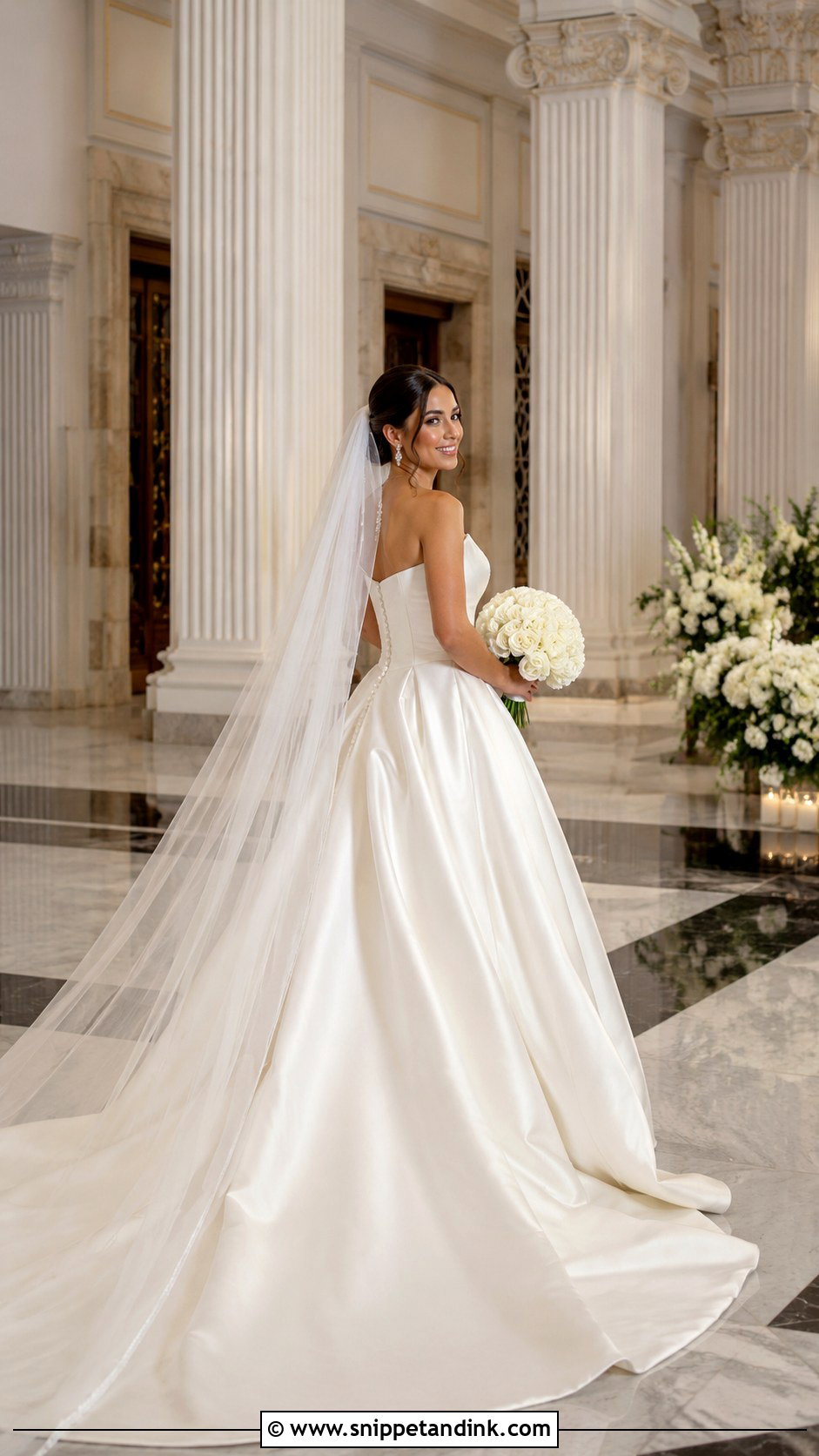
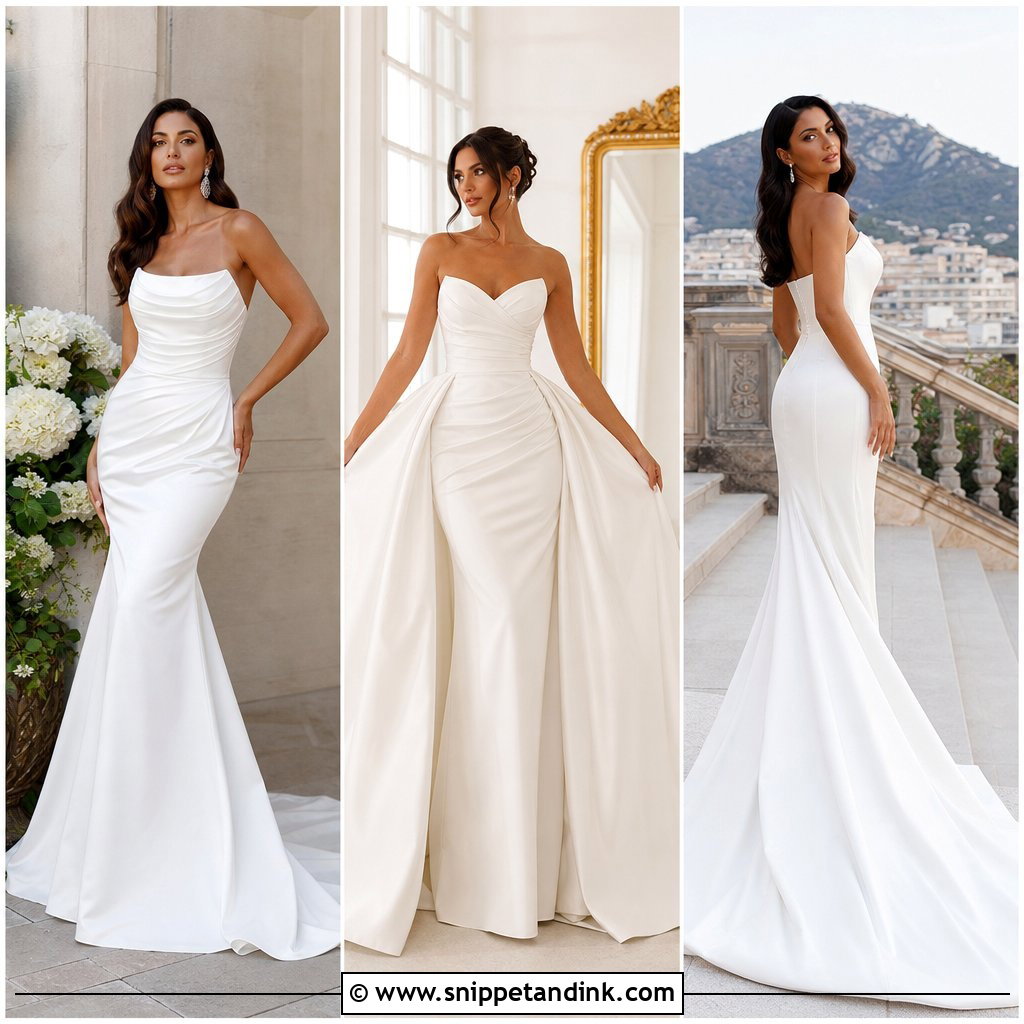
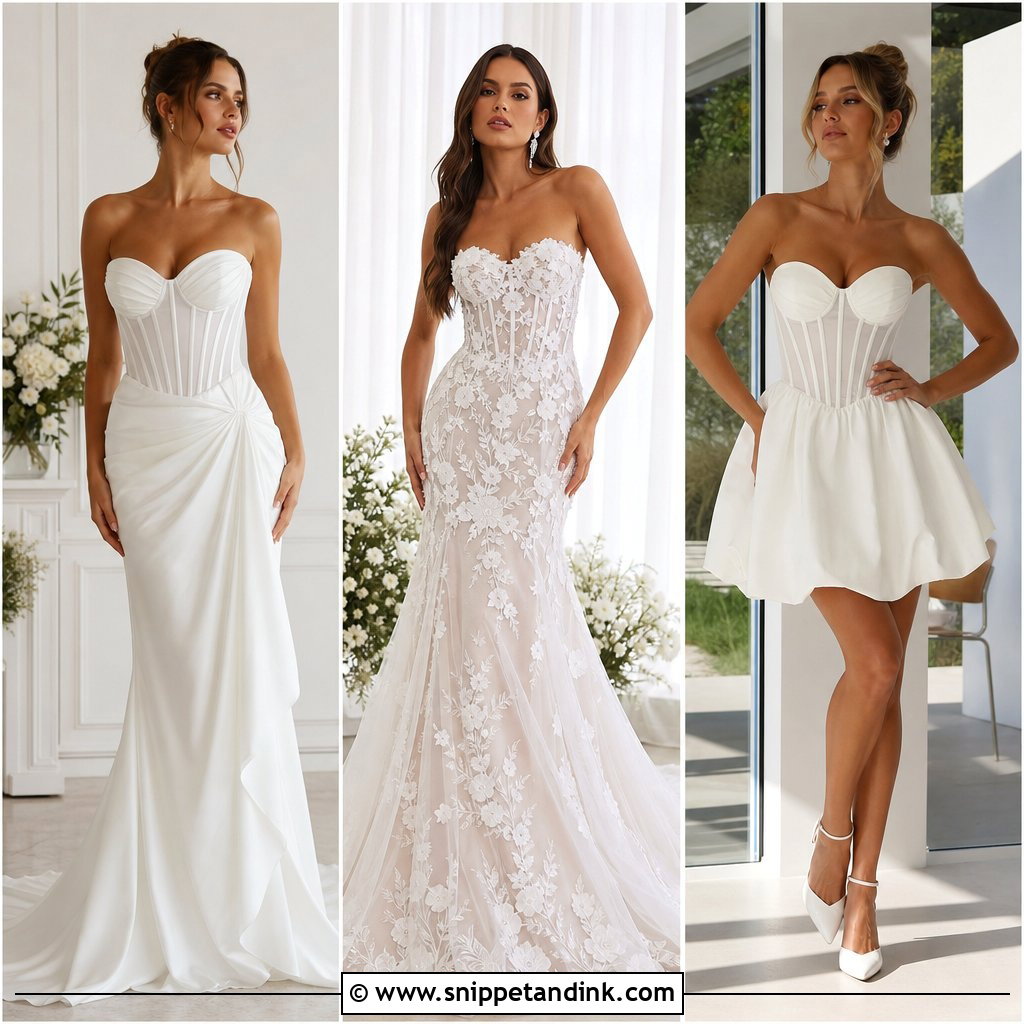
A cathedral train turns the back of the gown into the main event. Mikado, satin or lace all work over a fitted corset, and a strapless sweetheart neckline keeps the front simple while covered buttons lead the eye down to the train. Add a cathedral veil, fine crystal earrings, stable pumps and a structured bouquet held low enough not to hide the point. A polished updo suits the scale. The bustle is the bit I’d plan hardest: get it sewn securely, teach two people to fasten it, and photograph each hook step on a phone before the day.
Ten Hours in a Boned Bodice: What to Plan For
These gowns are built, not draped, and the structure that makes the waist look sharp in the mirror is the same thing you’ll feel at hour eight. I’d rather a bride know that before the day than discover it at dinner.
Eating and sitting
A corset that’s fitted tightly while you’re standing and hungry will feel very different after a three-course meal. I ask for the final fitting to be done a little more forgiving than the bride wants, usually about a finger’s width at the lacing. Sit on a hard chair for ten minutes during that fitting; boning digs in at the hips and under the arms when you’re seated, not when you’re posing.
Heat and humidity
Satin and Mikado don’t breathe, and a fully lined corset is warm. For a summer or outdoor wedding I’d lean toward lighter tulle skirts, a lining in cotton or silk rather than polyester, and some shade before the photos. Blotting papers and a cool drink between portraits help more than anything else.
After the wedding
Never hang a heavy Basque gown by its straps for weeks; the weight stretches the bodice and the point starts to droop. Use the inner hanging loops sewn into the waist seam, or store it flat in an acid-free box, and get stains cleaned quickly since sugar marks from drinks turn brown with time.
The Pointed Waist Works When the Rest Stays Quiet
Satin gives drama, lace and jacquard give texture, and the neckline decides whether the point feels vintage, modern or romantic. What all twenty share is a bodice that has to be fitted properly or it shows. Bring your real shoes and underwear to every alteration, sit and eat in the gown before the last fitting, and rehearse the bustle or sleeve change with whoever will help on the day. Then let the earrings, veil and flowers frame the waist instead of covering it.
You'll Like These Ideas:










Leave a Reply