
A princess gown is mostly engineering. The fitted bodice has to hold you up, the skirt has to keep its shape for twelve hours, and the whole thing has to get through doorways, cars and a dance floor. Get those right and the romance takes care of itself. The twenty looks below run from plain satin to sparkling tulle, long lace sleeves, color and a detachable overskirt, with notes on shape for petite and plus-size brides. For each one I’ve added the veil, shoes and bouquet I’d put with it and the fitting point I’d watch. Use them to find your dream bridal look, then bring the shortlist to a fitting room.
What Actually Holds a Ball Gown Skirt Out
The volume in a princess skirt comes from what’s underneath, and the choice affects how the dress feels far more than brides expect. Ask the salon what each gown uses before you fall for it.
- Layered tulle or net petticoats: soft, light and quiet when you walk. They compress when you sit, which makes chairs and cars easier.
- A hoop or crinoline: rigid rings give the widest, roundest shape and keep the skirt off your legs, which is cooler. The catch is sitting, since the front can lift, and narrow doorways.
- Horsehair braid at the hem: a stiff band sewn into the edge that makes the hem flare and hold a curve without adding much weight. Common on satin and organza.
My honest advice: if your day includes a car ride, a small venue or a lot of sitting, choose tulle layers over a hoop. If the room is big and you mostly stand, a hoop gives the most dramatic silhouette. Many gowns can take a separate petticoat, so try the same dress over two different ones.
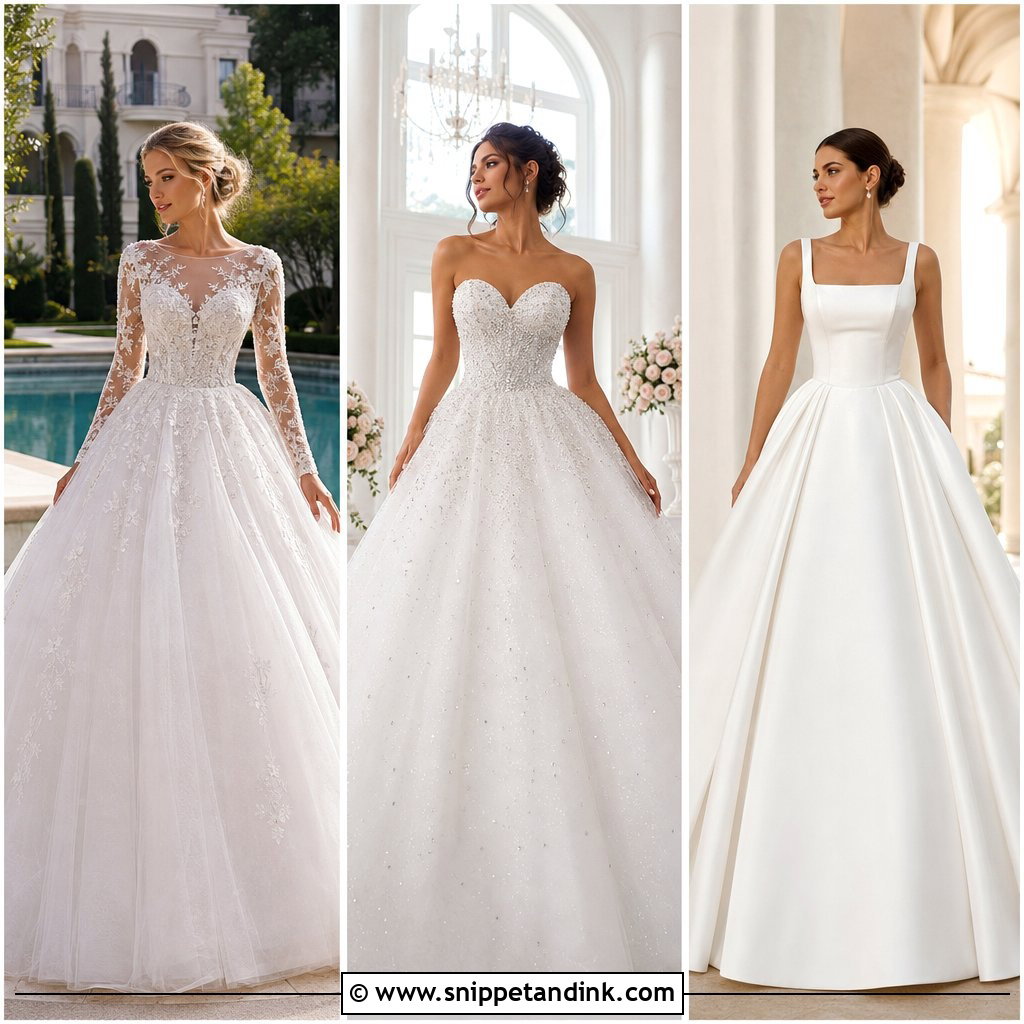
1. Classic Satin Princess Wedding Dress
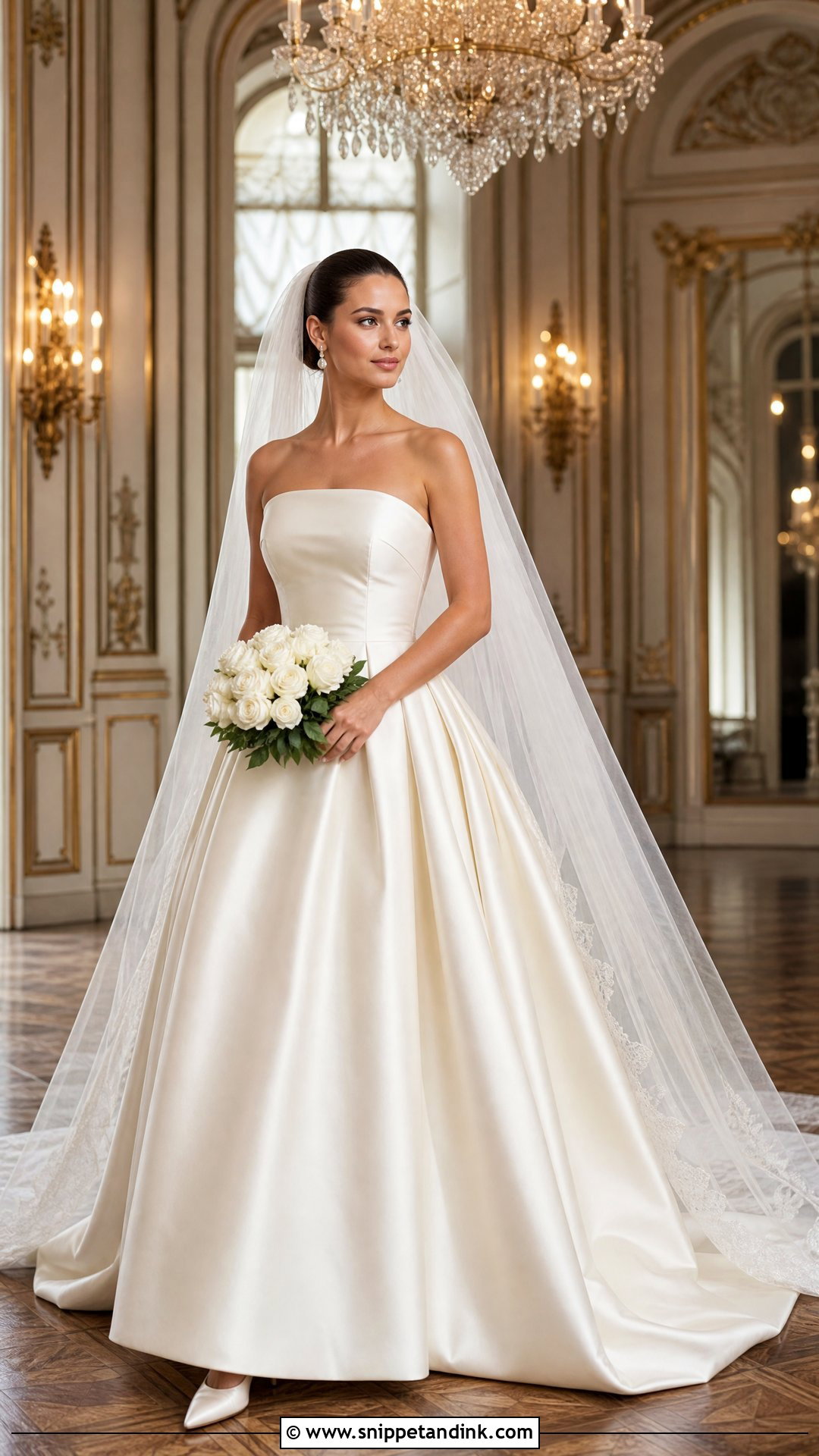
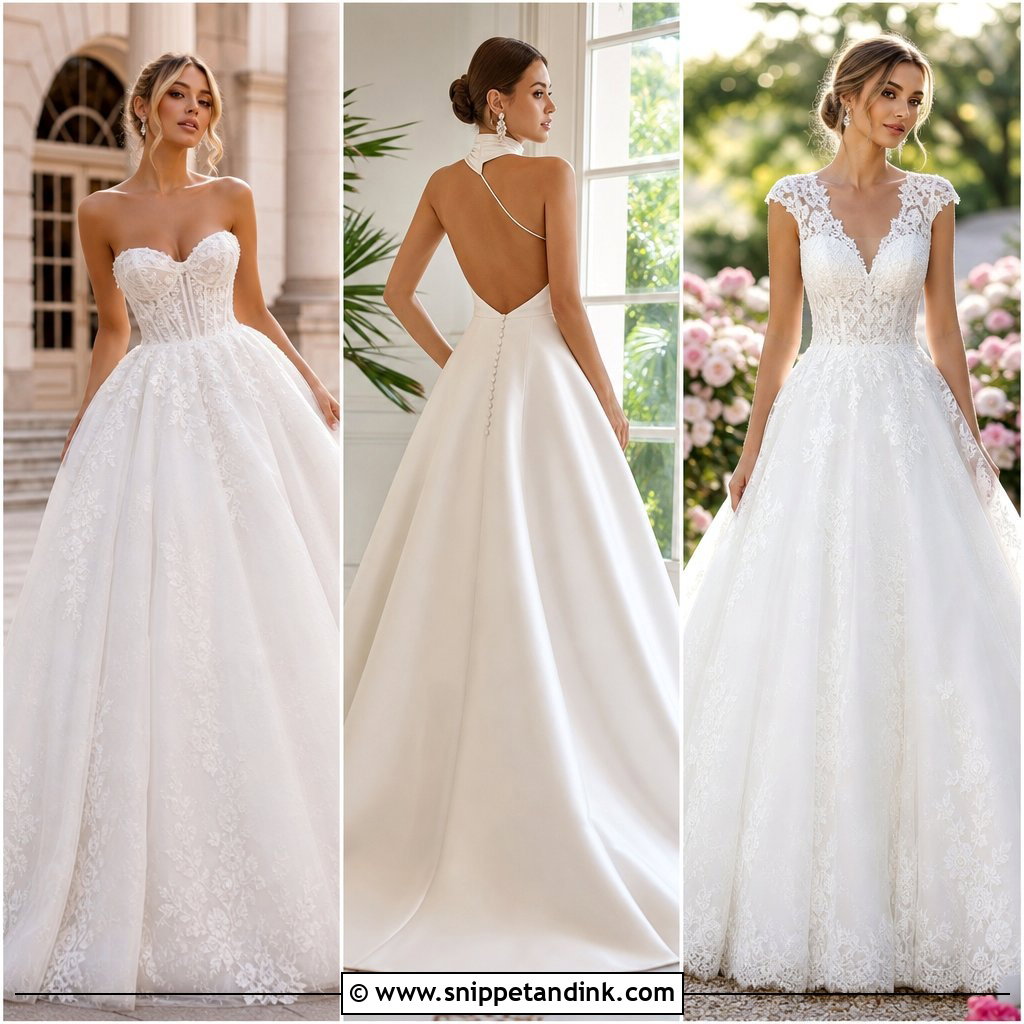
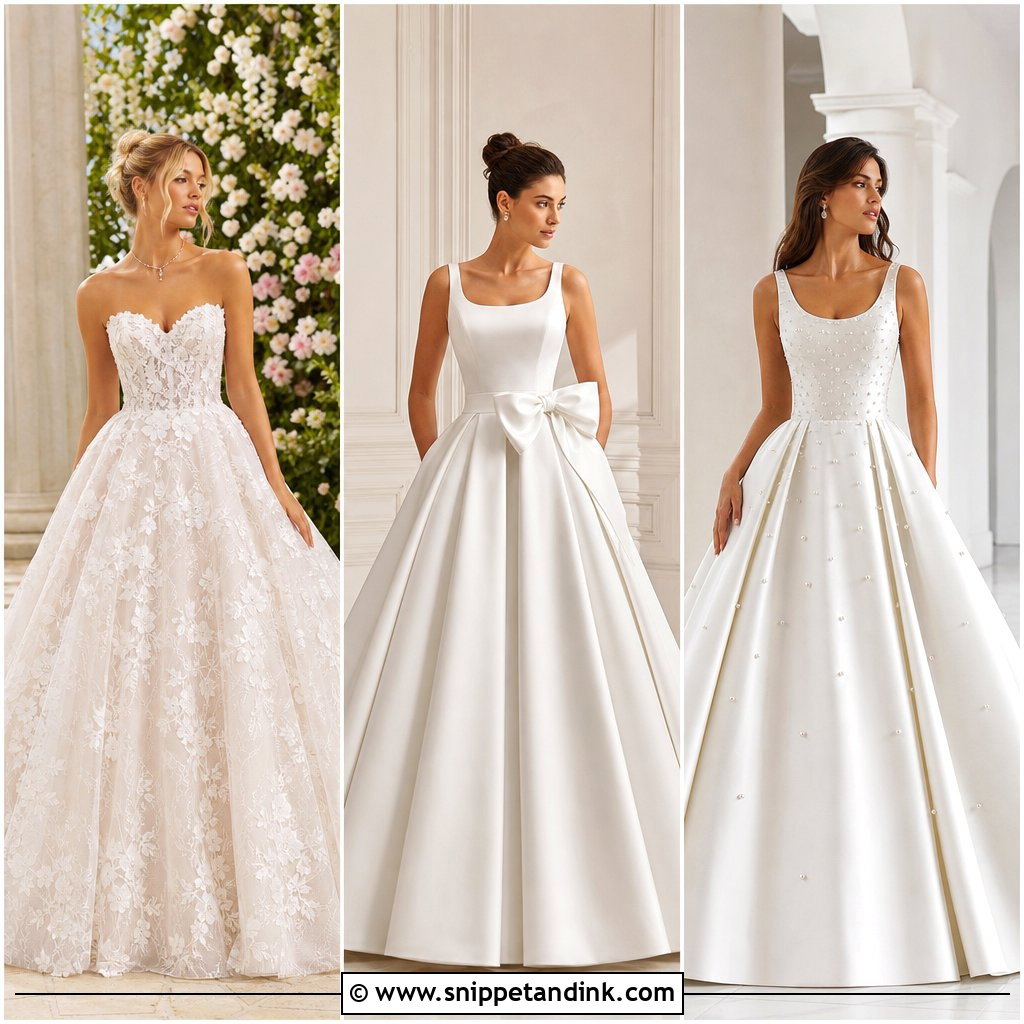
Satin ball gowns with no decoration rely completely on cut, which is why they look expensive when done well. The skirt should be pleated into the waist so it stands away from the body on its own, not because of an enormous petticoat. A fitted bodice, a strapless or softly curved neckline and covered buttons down the back are all it needs. Pearl drops, pointed satin pumps and a plain cathedral veil match its restraint, and a structured bouquet of white roses or callas suits the clean finish. Wear the hair low and smooth so the neckline stays the focus in a ballroom or hotel.
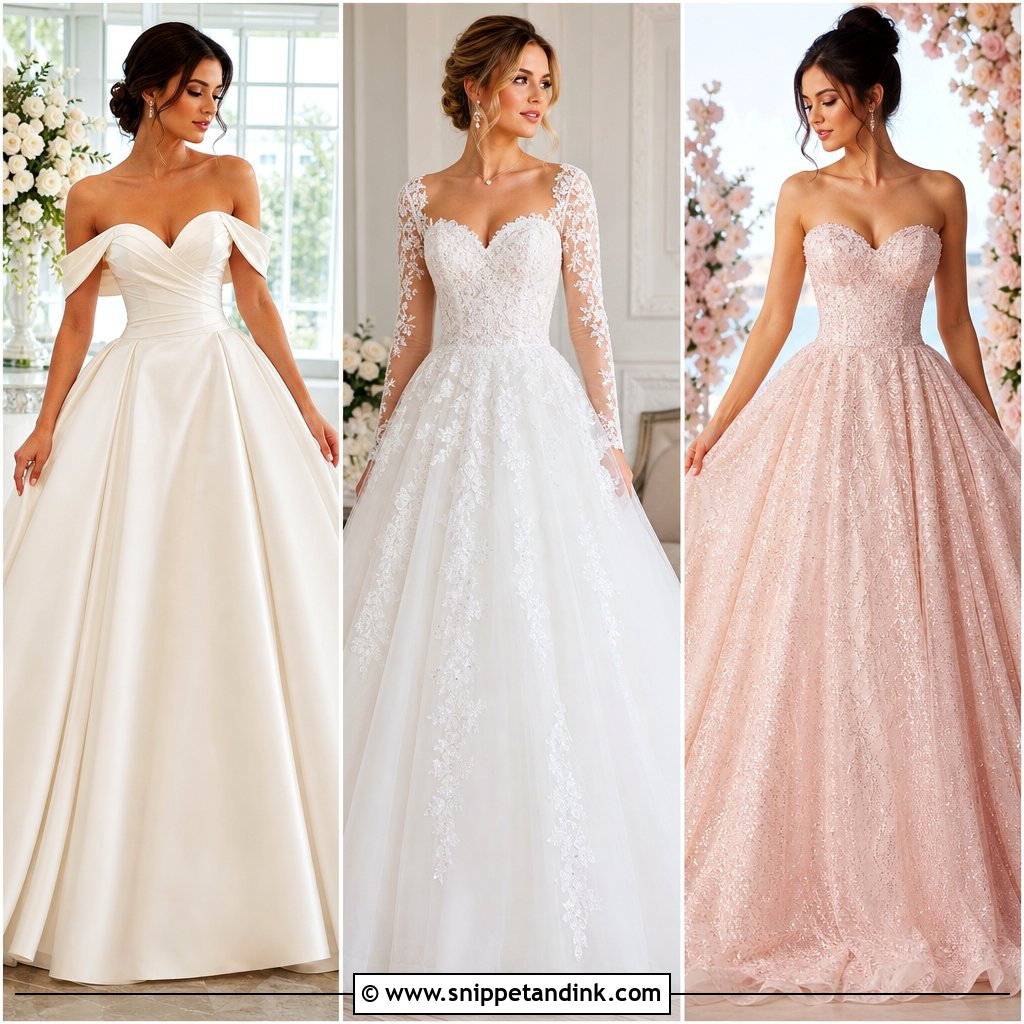
2. Long Sleeve Lace Princess Wedding Dress
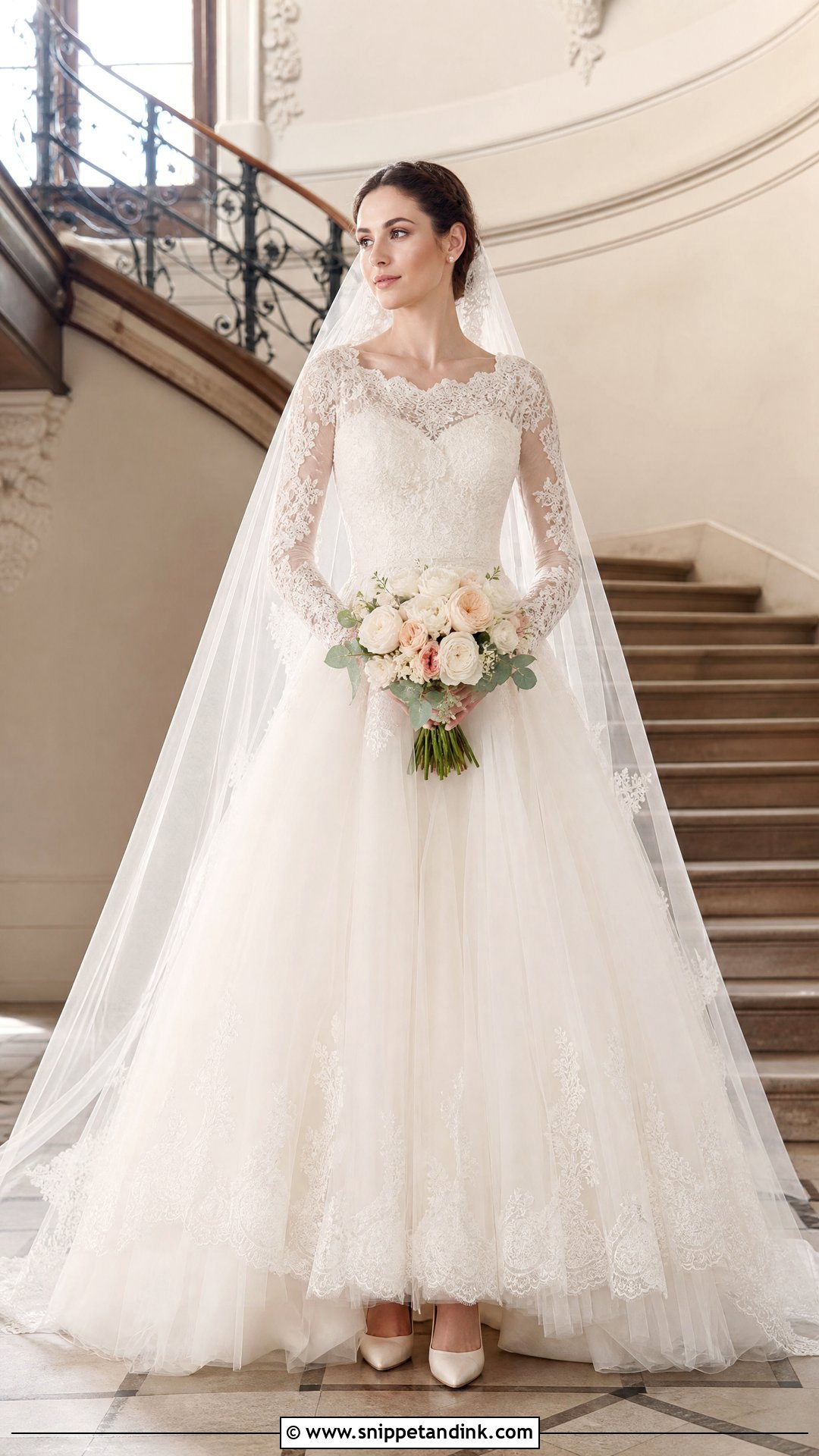
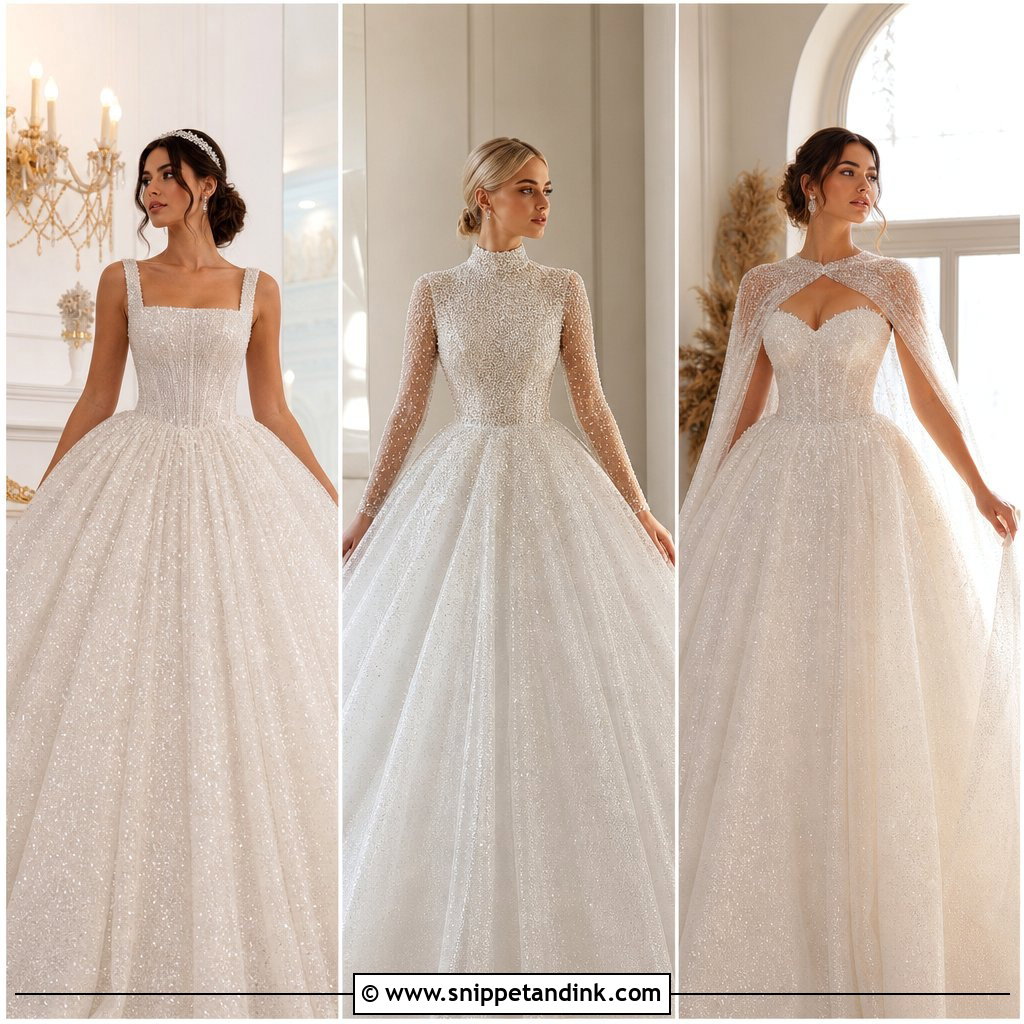
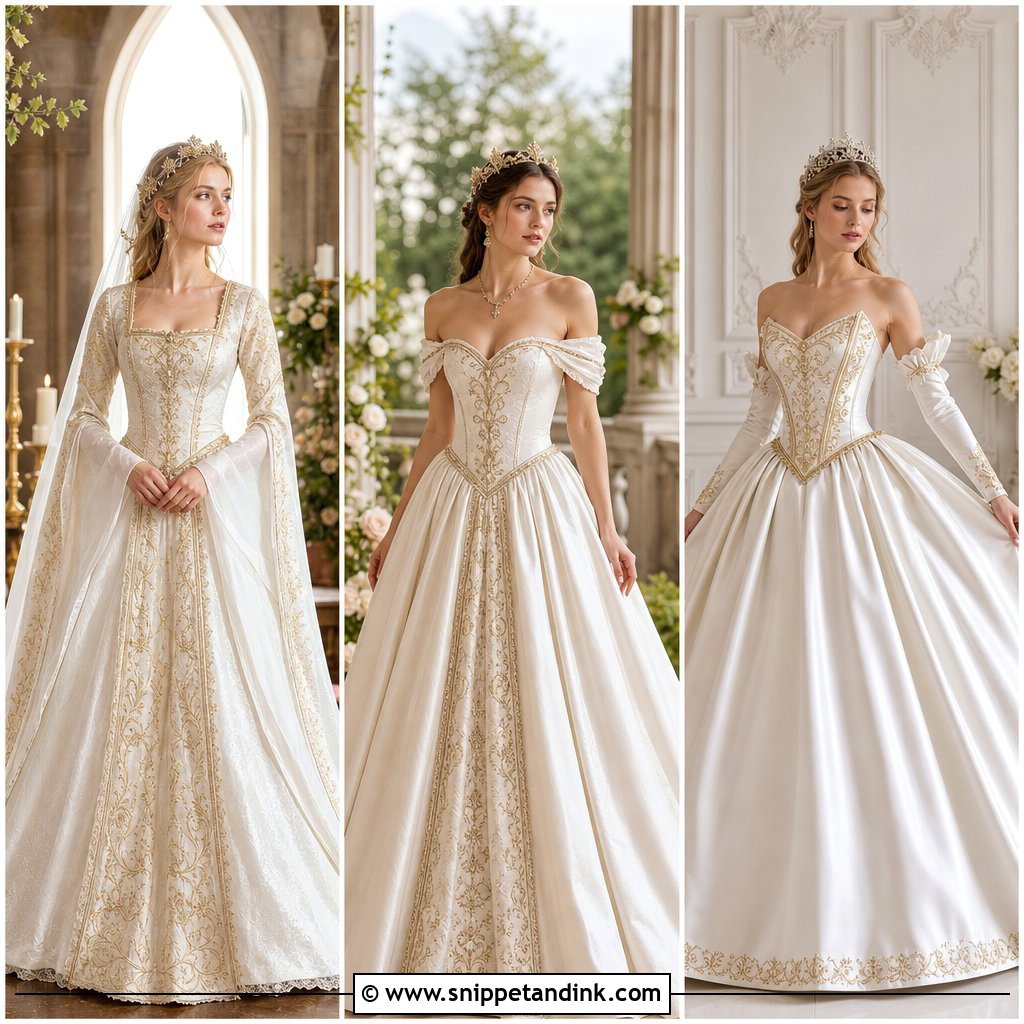
Long lace sleeves on a full skirt can look heavy unless the volume underneath is tulle rather than layers of lining. That is what I look for first. The bodice can carry sheer sleeves, floral motifs and a scalloped neckline; the skirt stays light. Choose a veil with lace trim that relates to the dress without copying it, since identical lace makes both look flat. Ivory pumps, small pearl studs and a loose chignon or soft waves suit it, with white garden roses and pale greenery. Cool seasons and historic rooms, where guests see the lace up close, show it best.
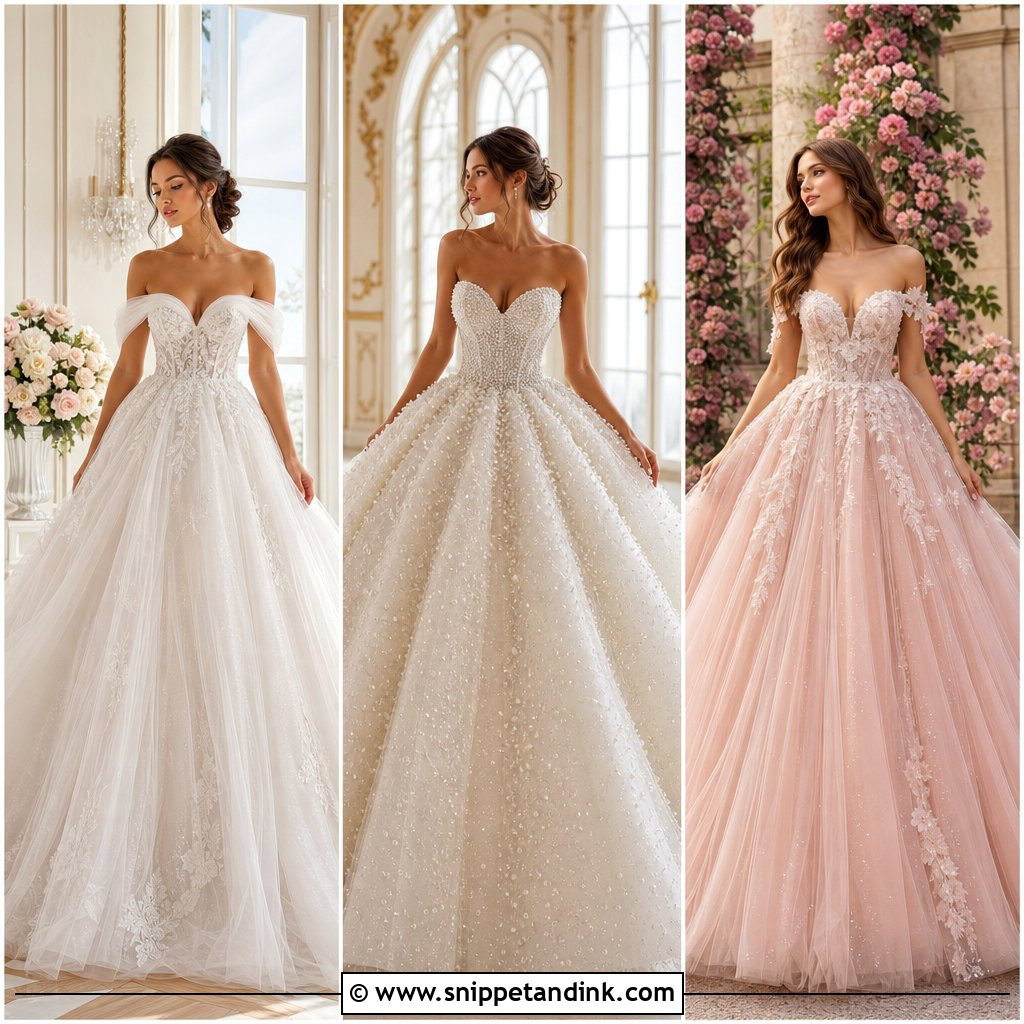
3. Off Shoulder Princess Wedding Dress
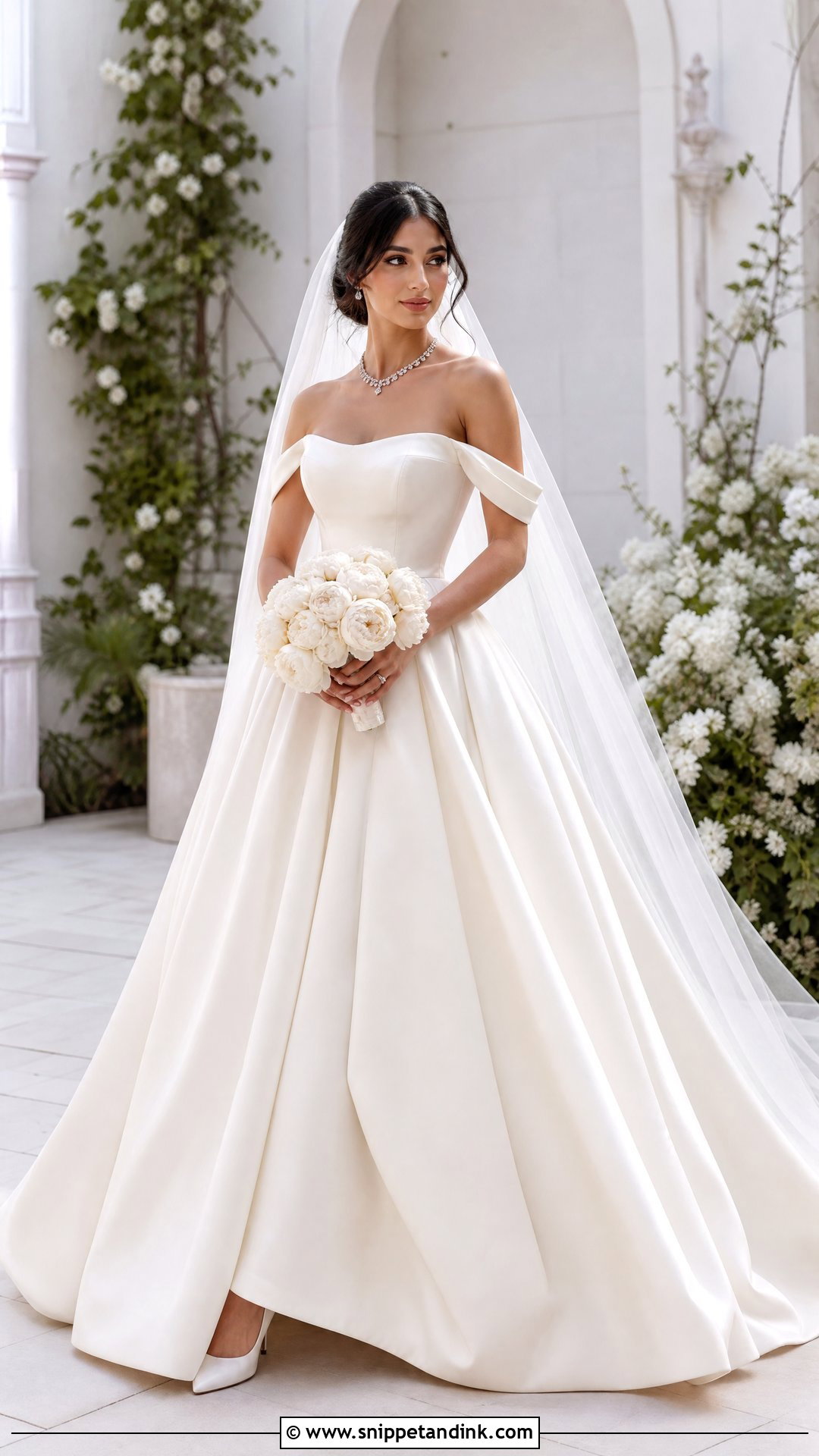
Off-shoulder bodices on a big skirt need real inner structure, because the weight of the skirt pulls down on everything above it. Without boning and a firm waist stay, the neckline slides by the reception. Look for soft fabric draped across the shoulders over a supportive bodice, then a full tulle or satin skirt. A fine crystal necklace with small earrings shows off the collarbones. Pointed heels vanish under the hem. A fingertip veil keeps the shoulders visible, a cathedral veil adds formality. Ivory peonies and roses in a round bouquet suit a garden or a light-filled estate.
4. Sweetheart Corset Princess Wedding Dress
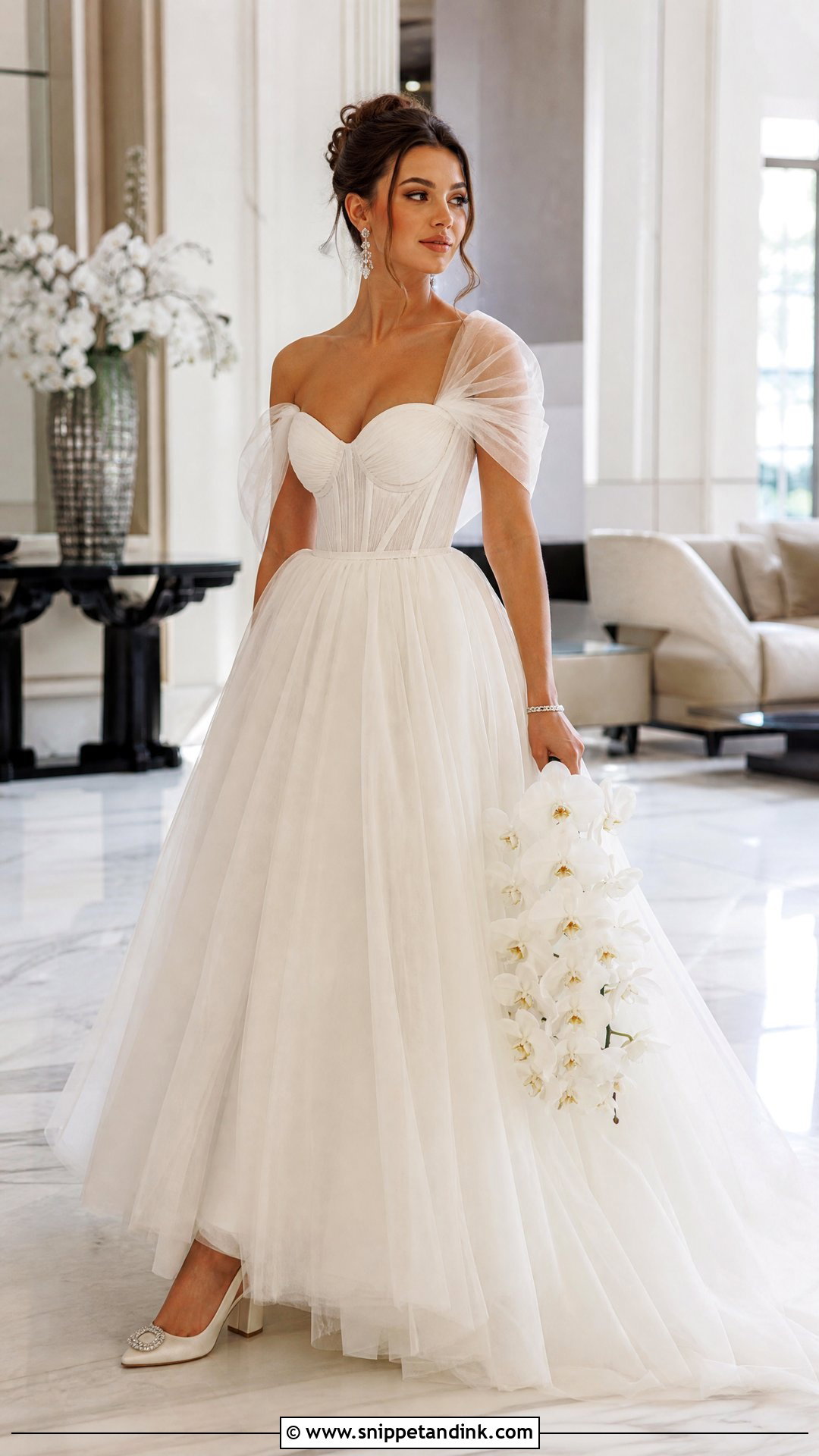
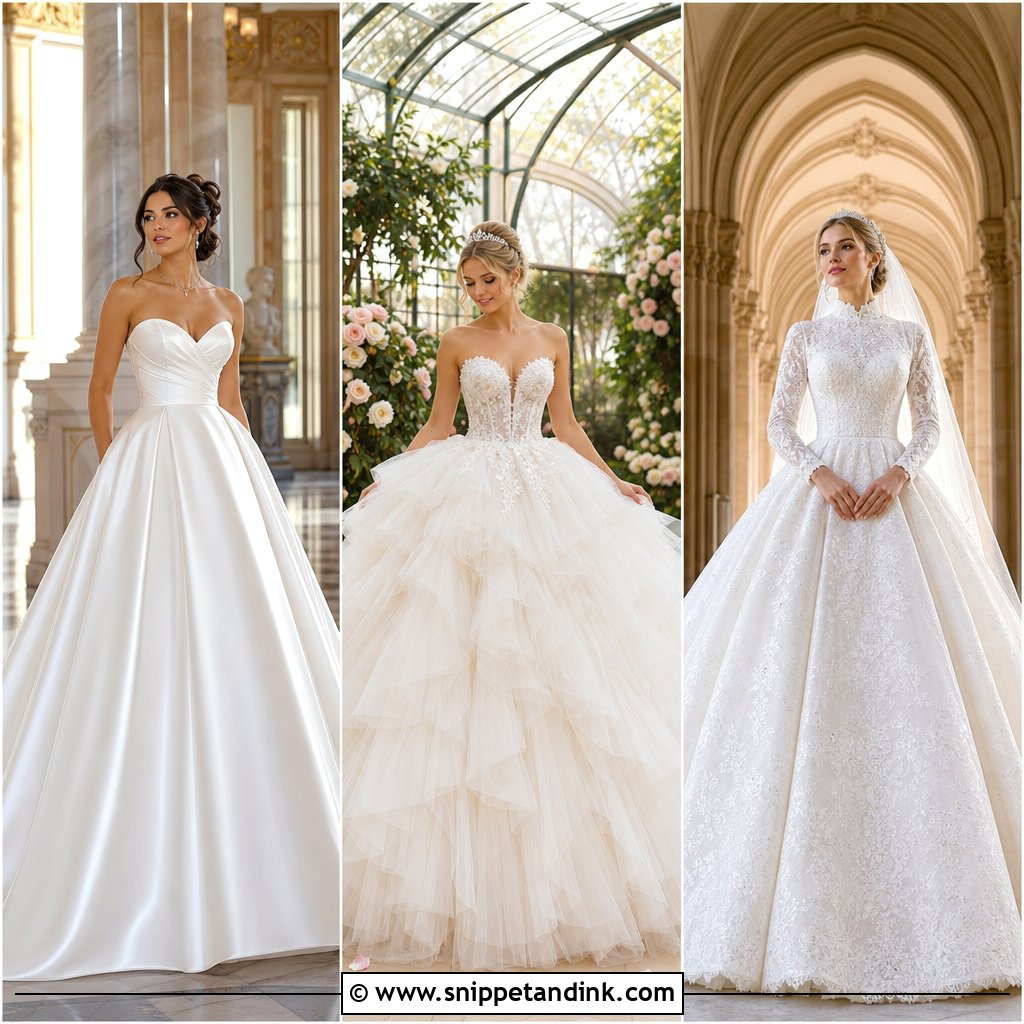
The sweetheart corset is the most fitted top on this list, so it is also the least forgiving. A good one is built with boning placed along your seams and laced so it can be tightened on the morning; a poor one gaps at the top edge when you breathe in. It pairs with fairy-tale volume below: layered tulle for air, satin for formality. A detachable sheer shoulder wrap covers the arms for a religious ceremony. Crystal earrings, a tennis bracelet, block-heel pumps, a medium veil and a loose updo keep attention on the bodice, with a cascade of orchids and roses.
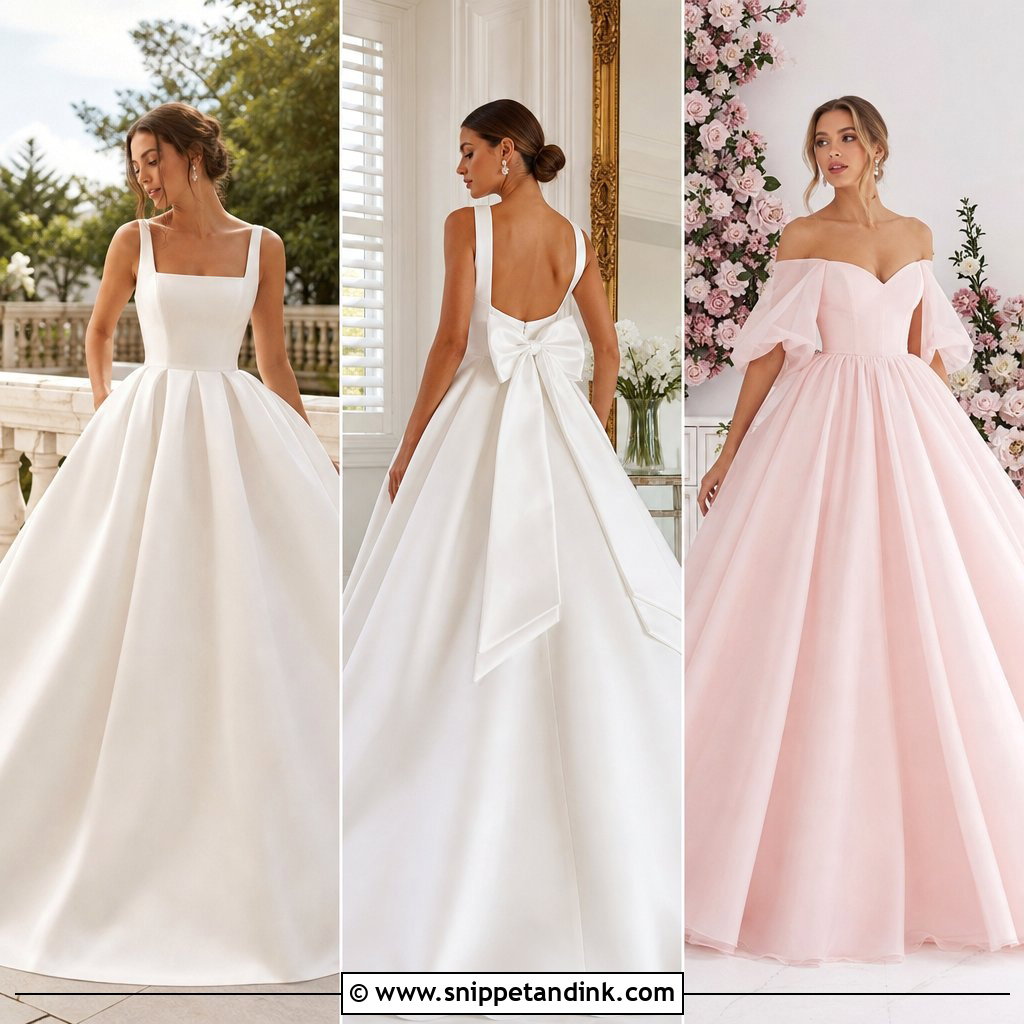
5. Square Neck Princess Wedding Dress
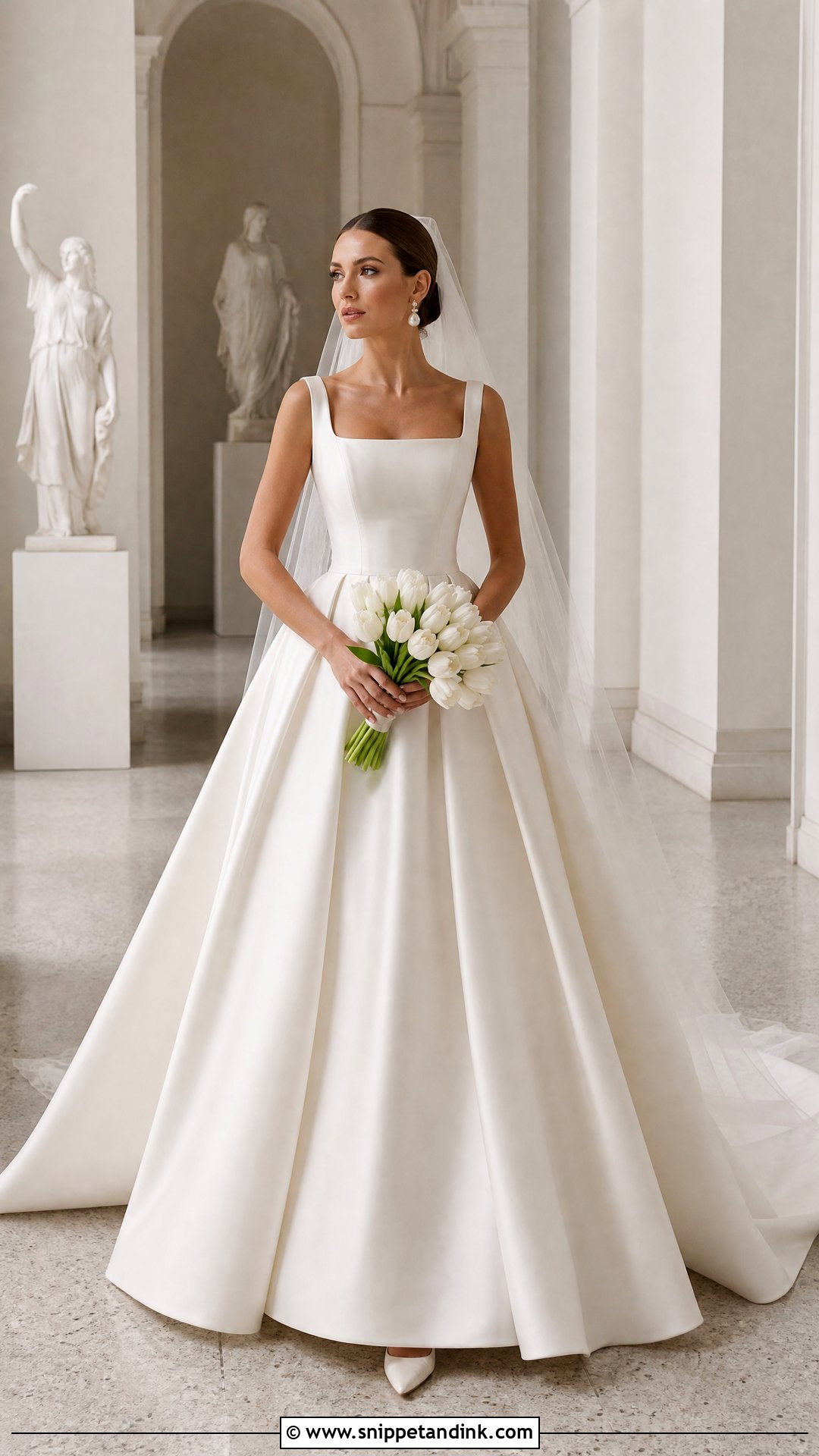
Square necklines are cleaner and more covered than a sweetheart, and they look sharpest in a fabric with body. Mikado is my choice here: it is stiff enough to keep the neckline straight and the deep pleats crisp. Wide straps, a fitted waist and a full skirt complete the shape. A sleek bun, pearl earrings and a narrow cathedral veil fixed under the hair keep it modern; a small top-handle bag works for the reception. White tulips or roses in a simple bouquet echo the lines. It suits a hotel, a gallery or a pared-back venue.
6. Basque Waist Princess Wedding Dress
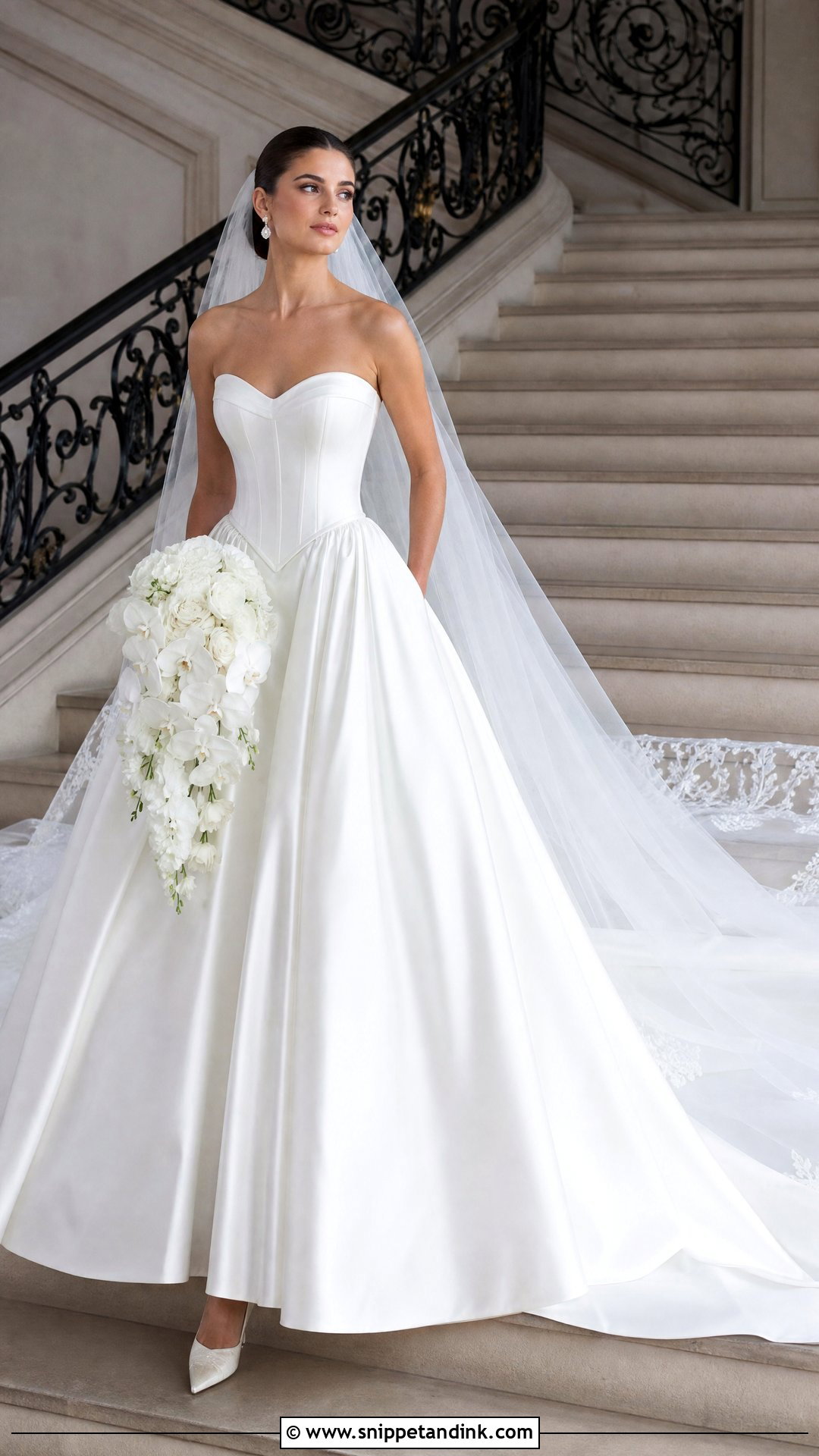
A basque waist dips into a point below the natural waistline, which lengthens the torso before the skirt bursts out. I find it flatters short-waisted brides especially, though the point has to be placed for your body, not the sample’s. Smooth satin looks royal; embroidered fabric adds texture. Strapless keeps it balanced, off-shoulder straps soften it. Satin heels with padded insoles, teardrop earrings, a cathedral veil and a tidy bun suit a venue with a long aisle or a staircase, where the skirt has room. A slightly cascading bouquet follows the vertical line.
7. Sparkly Tulle Princess Wedding Dress
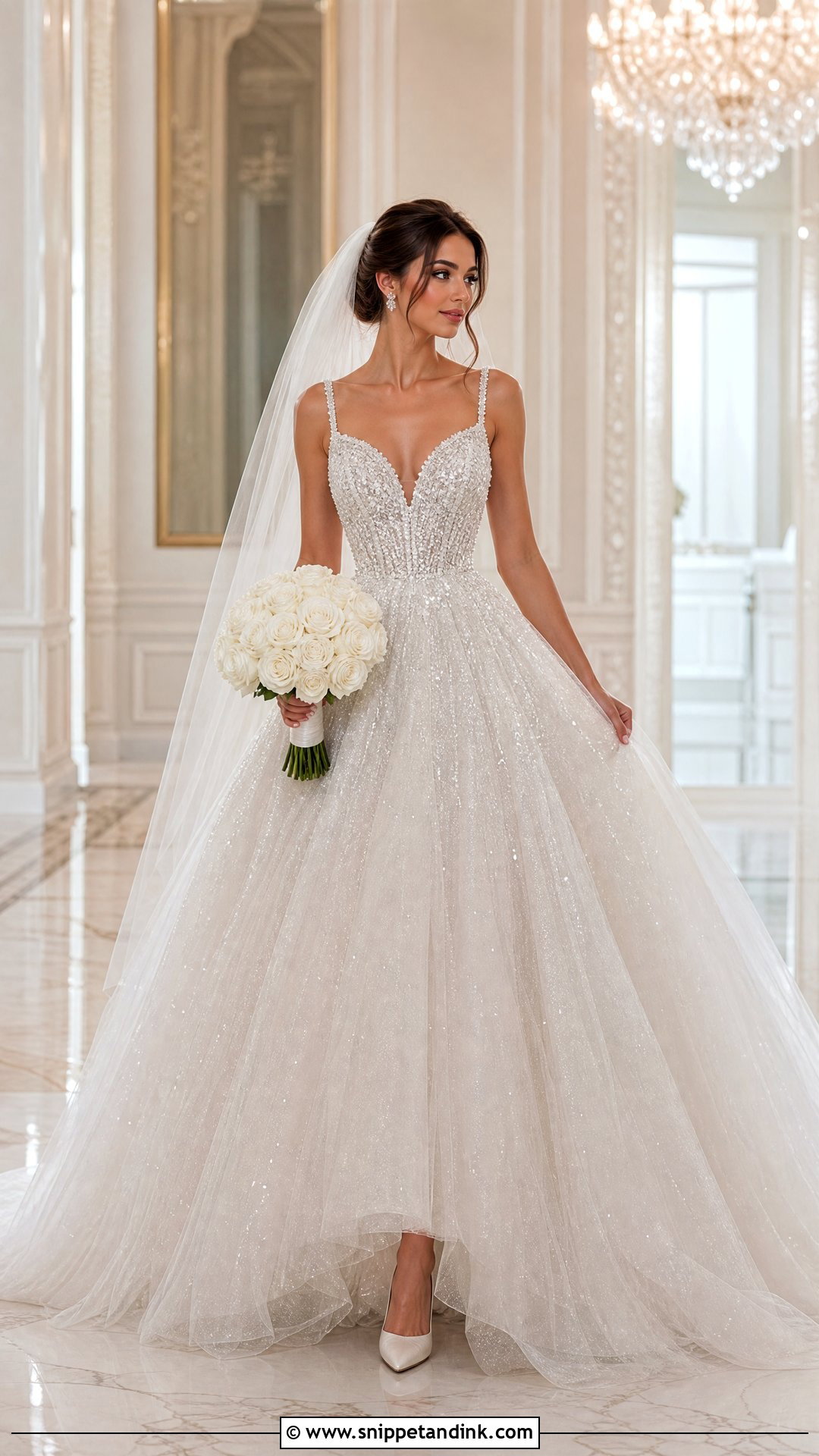
Sparkle on tulle works when it is scattered, thinning out as it travels down the skirt; solid crystal on every layer starts to look theatrical. Several soft layers of tulle give volume while still moving. The rule I follow with a shimmering gown is one source of shine. Crystal studs, a narrow bracelet and plain ivory heels are enough, and the veil should have a clean edge with no beading. A loose bun or polished waves and white roses tied with silk ribbon finish it. Evening receptions and candlelit ballrooms catch the glints best.
8. Floral Applique Princess Wedding Dress
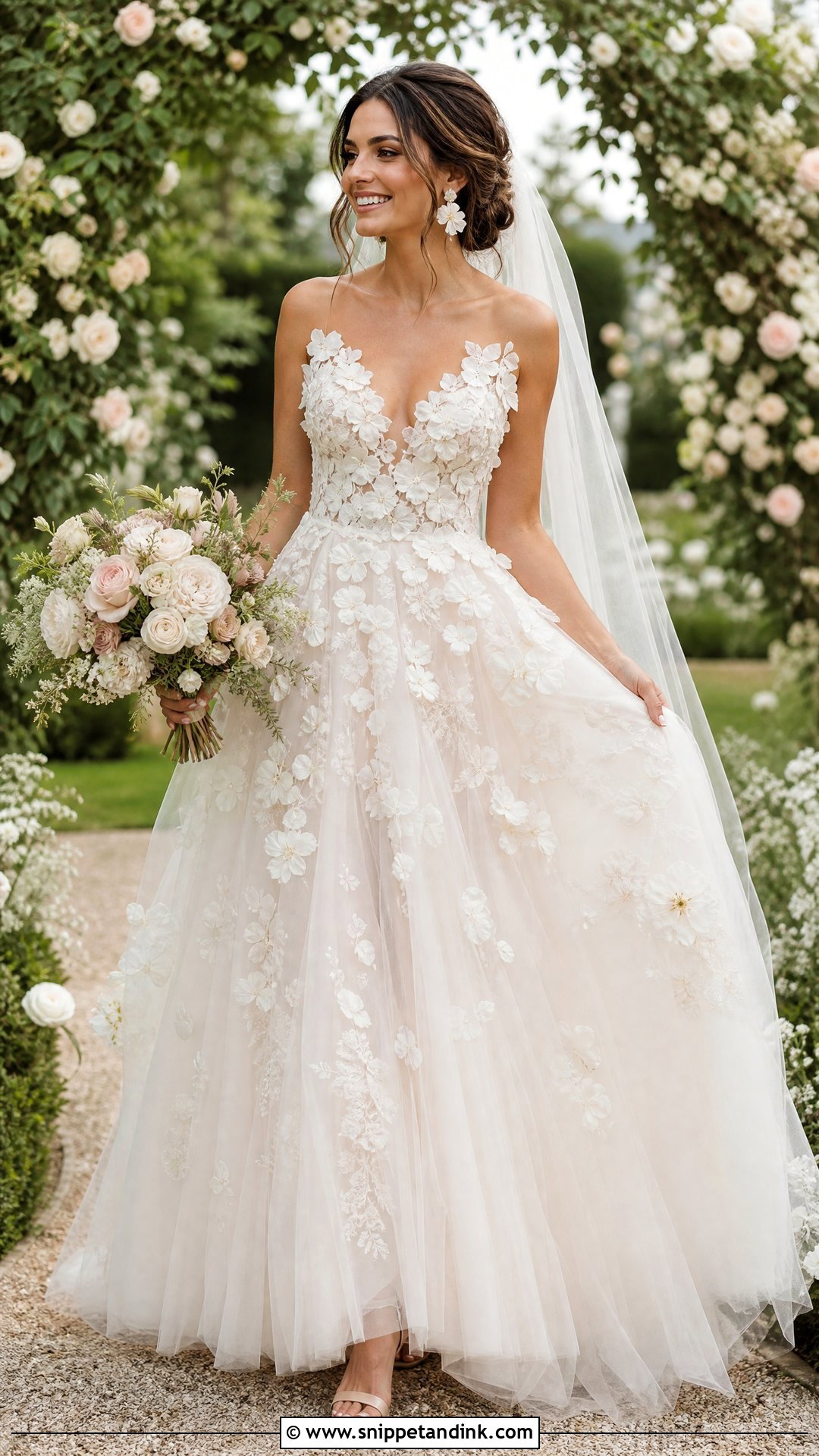
Raised flowers on a full skirt suit a garden wedding because they echo what is growing around you. The appliqués should sit thickest on the bodice and scatter lightly down the tulle. Ivory flowers give quiet texture; a touch of blush or pale blue makes a floral applique princess wedding dress more personal. Keep the veil mostly sheer, with a few matching motifs near the edge. Floral earrings, plain heels and soft waves or a textured bun are plenty. I’d limit the floral theme to the dress and bouquet of garden roses and ranunculus; flower crowns and floral shoes on top make it busy.
9. Pearl Embellished Princess Wedding Dress
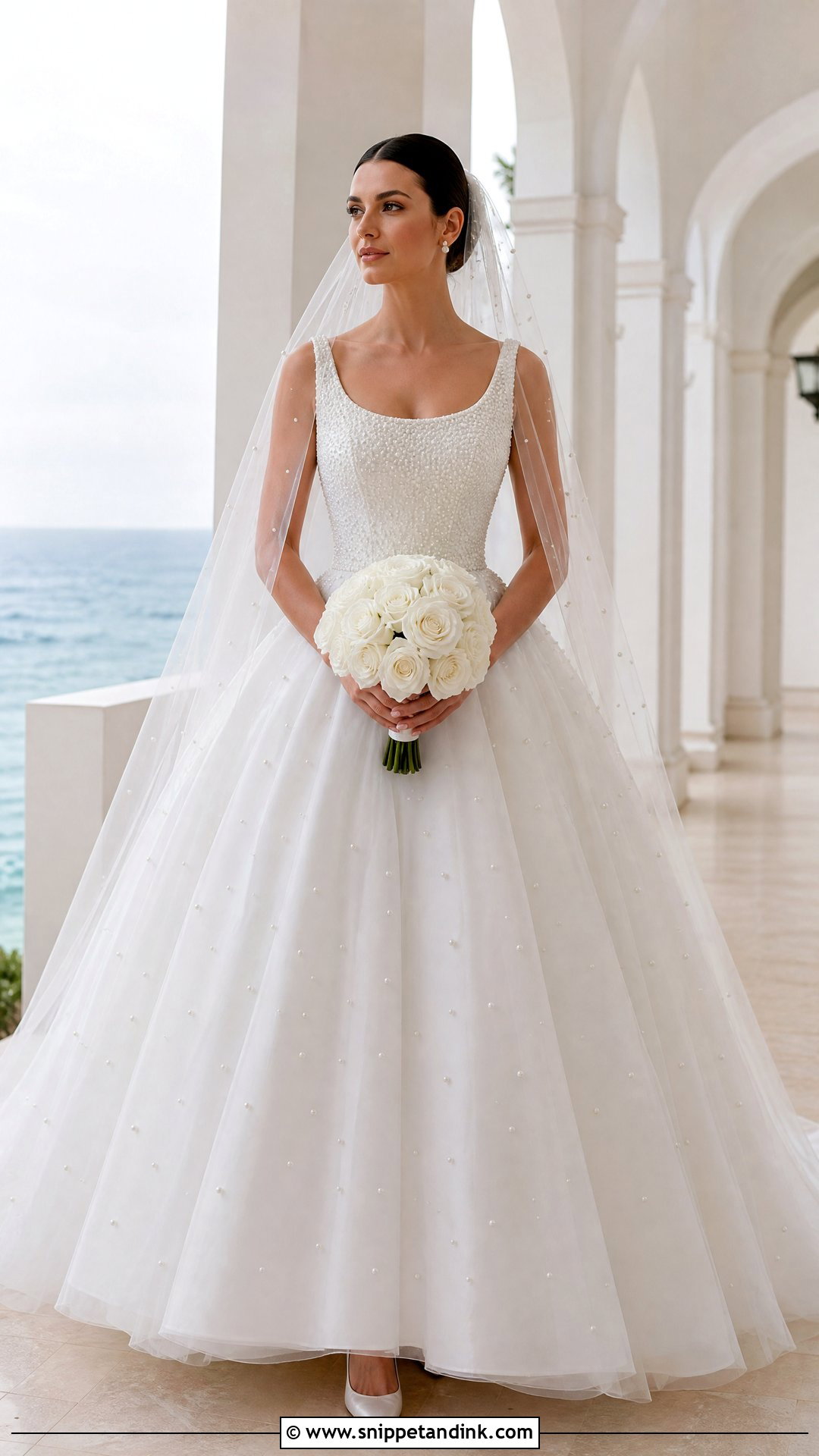
Where the pearls sit changes the whole dress. Concentrated on the bodice and thinning down the skirt, they pull the eye up to your face; spread evenly, they make a full skirt look heavier. A scoop or sweetheart neckline suits the round shapes. Pearl studs, satin pumps and a sheer fingertip veil are enough. If the bodice is richly beaded, I’d skip the pearl necklace and wear a simple bracelet or a family ring instead. A sleek low bun and white roses keep it clean, for a formal indoor or coastal wedding with a neutral palette.
10. Bow Back Princess Wedding Dress
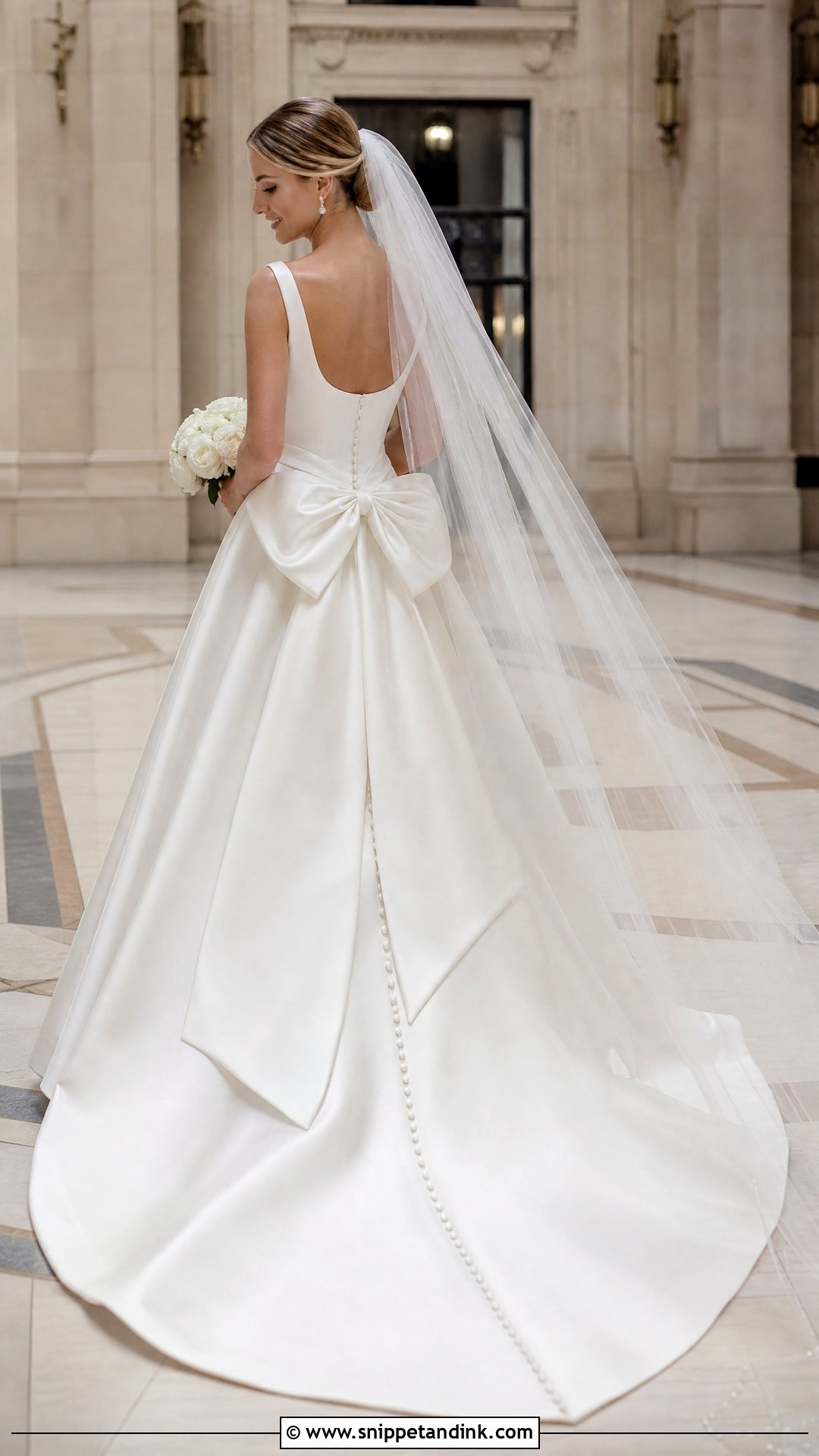
A bow at the back means most of the impact happens as you walk away, down the aisle and in portraits, while the front stays simple. Proportion is what I spend the time on. A bow that’s too big swallows a short bride; too small looks like an afterthought against a wide skirt. Clean satin, a fitted bodice and a structured bow at the waist or upper train work best, and a removable one makes dancing easier. Pearl earrings, a smooth bun and a sheer veil long enough to pass the bow without hiding it, plus pointed pumps and a compact bouquet.
11. Cape Sleeve Princess Wedding Dress
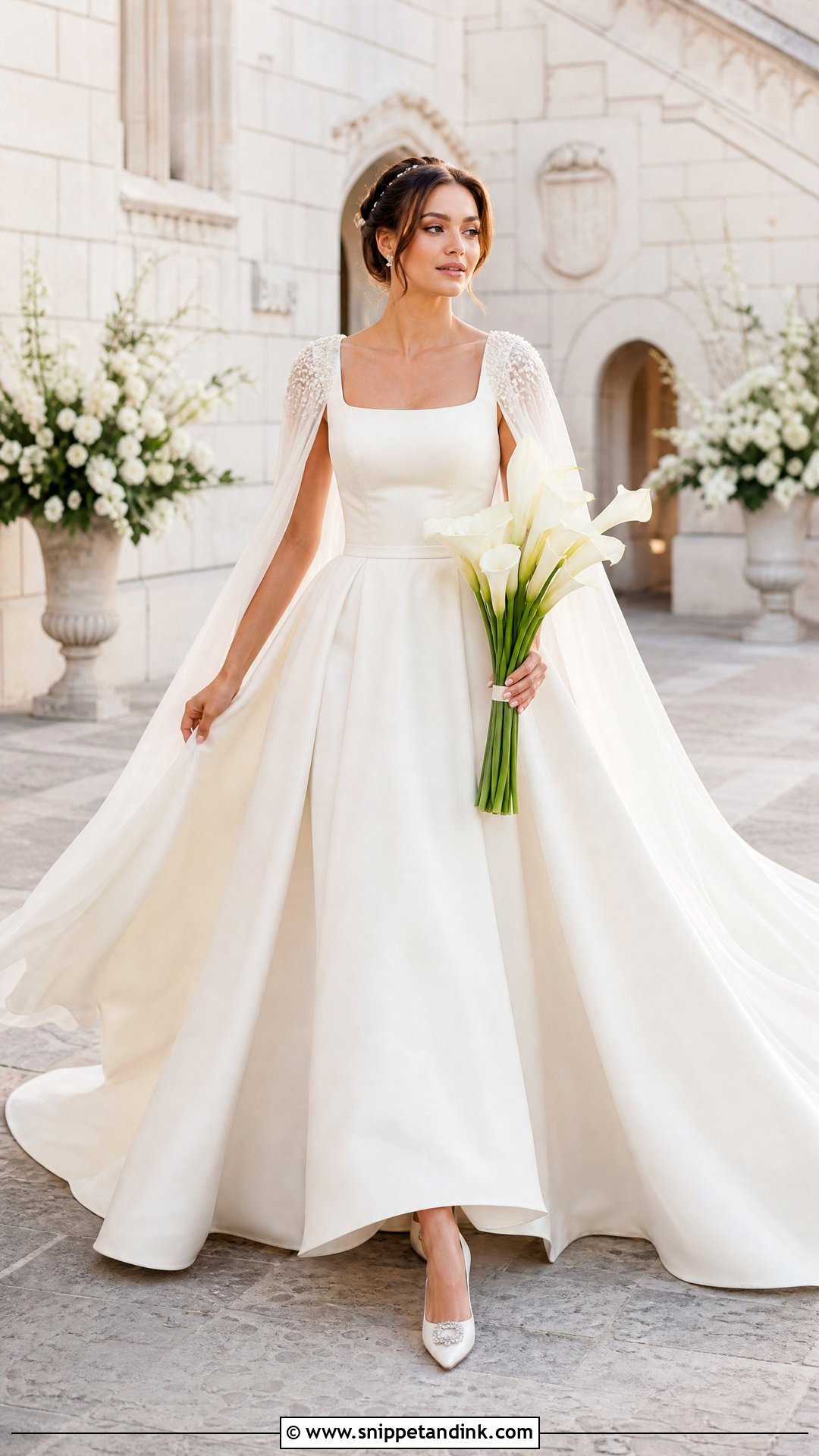
Capes give drama without fitted sleeves around the arms, which I appreciate on a heavy gown because it keeps the shoulders free to move. A lightweight chiffon or tulle cape attached at the shoulders should float behind the dress and leave the skirt visible. Keep the neckline simple, a bateau, square or soft V. If the cape becomes a long train, drop the veil; two trailing layers compete. Crystal studs, pointed satin heels and a polished updo suit it, with tall calla lilies or white roses for a castle or a formal hall.
12. Puff Sleeve Princess Wedding Dress
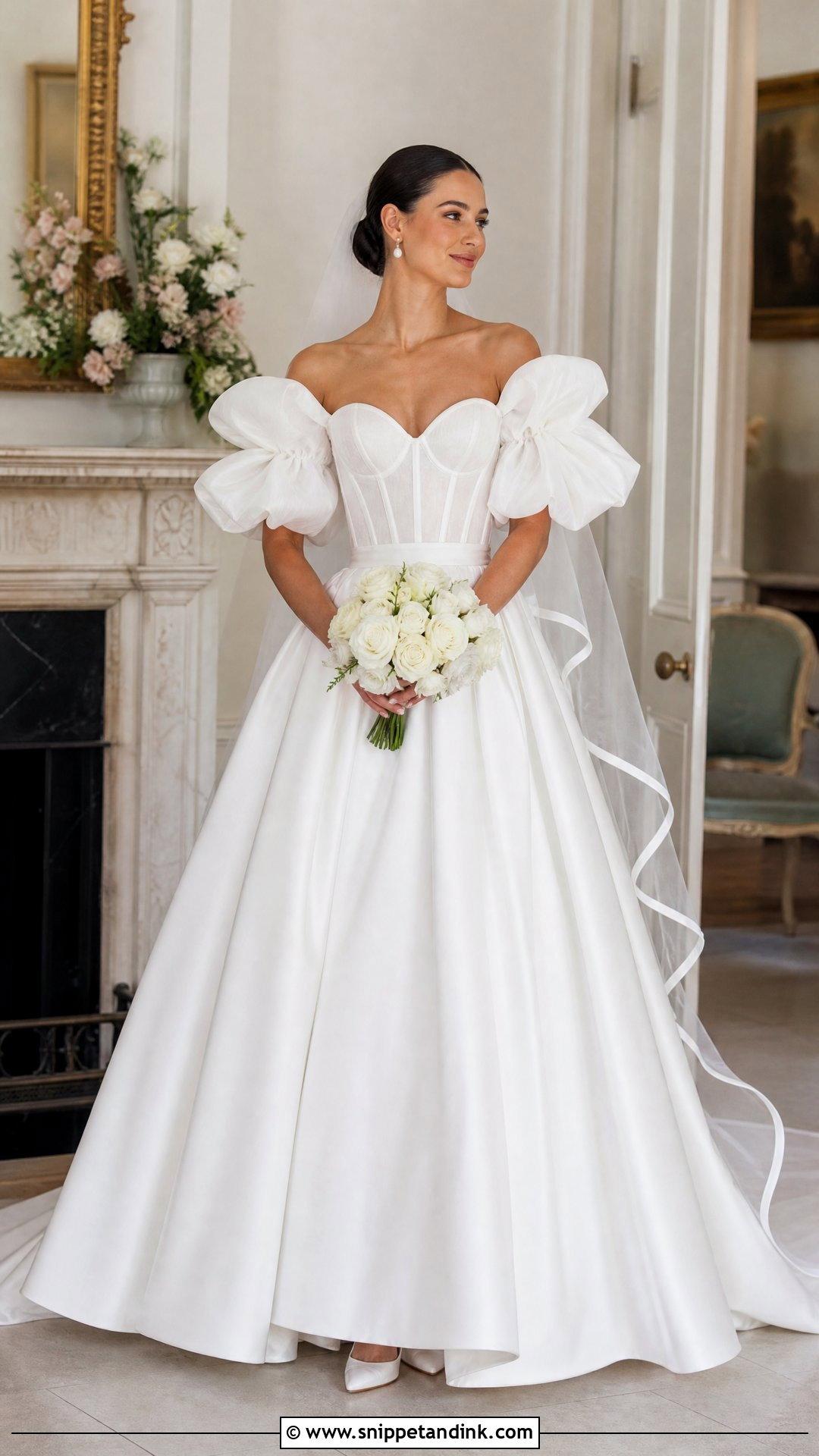
Puff sleeves add width at the shoulder, and that balances a wide skirt nicely. The risk is a loose, costume look, so I always pair them with a firm corset bodice and a defined waist. Detachable organza sleeves give you a choice on the day; fitted sleeves with volume only at the top are more streamlined. Pearl drops, a ribbon-edged veil, closed-toe satin pumps and a low bun with a side part keep the focus up. Carry a compact bouquet. A huge arrangement competes with the sleeves, and the upper body starts to look crowded.
13. High Neck Princess Wedding Dress
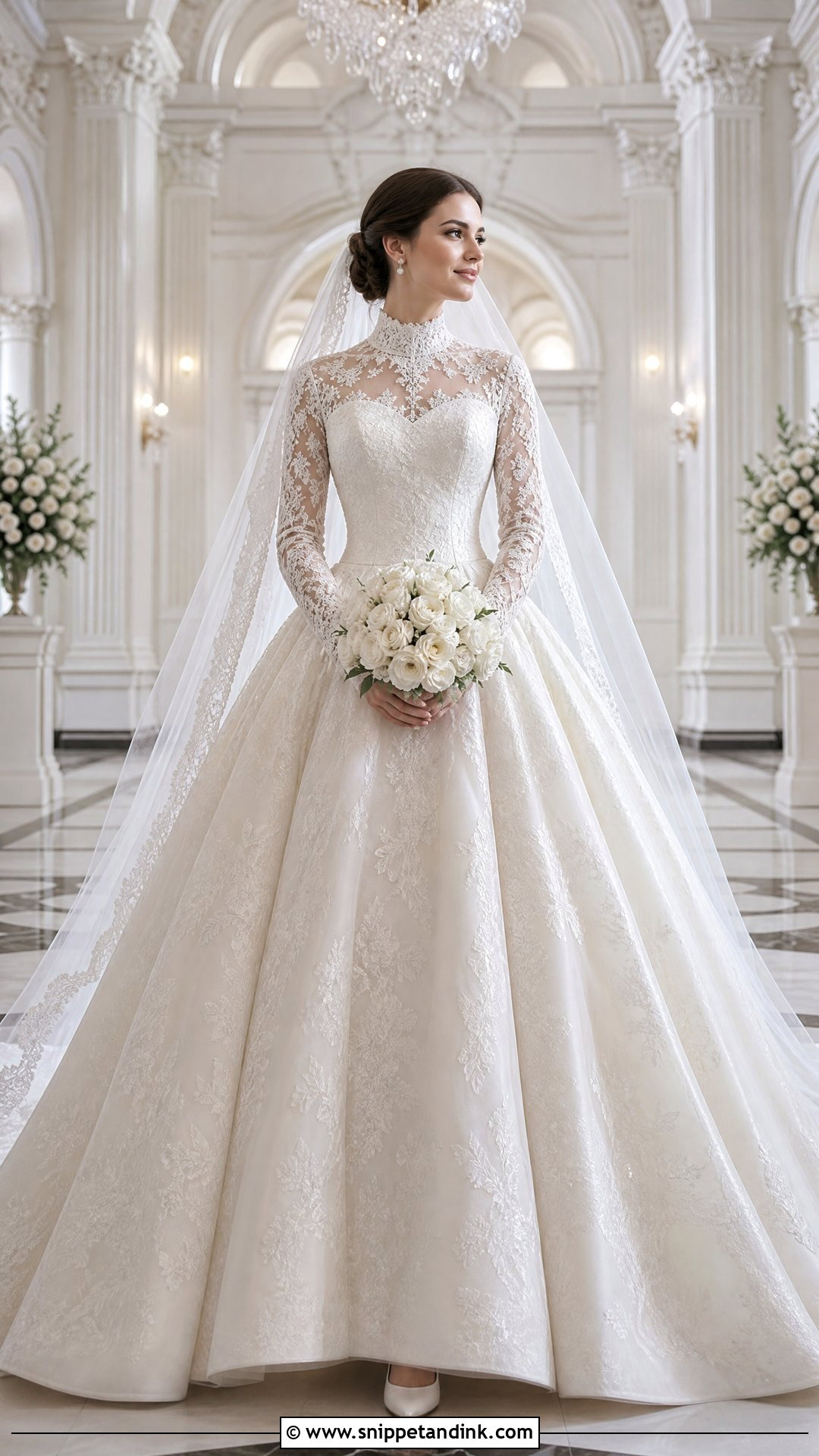
High necks give coverage while still letting a full skirt feel festive. An illusion neckline of fine lace, embroidery or seed pearls over a fitted bodice is the usual build. Long sleeves make it fully modest; a sleeveless version is lighter for summer. I’d ask for a breathable lining and sleeves set with enough room to lift the arms, since a high neck plus long sleeves traps heat fast under lights. Small earrings, an elegant bun and a long veil fixed low at the back keep it calm. No necklace, no large hairpiece. Winter venues and grand halls suit it.
14. Blush Pink Princess Wedding Dress
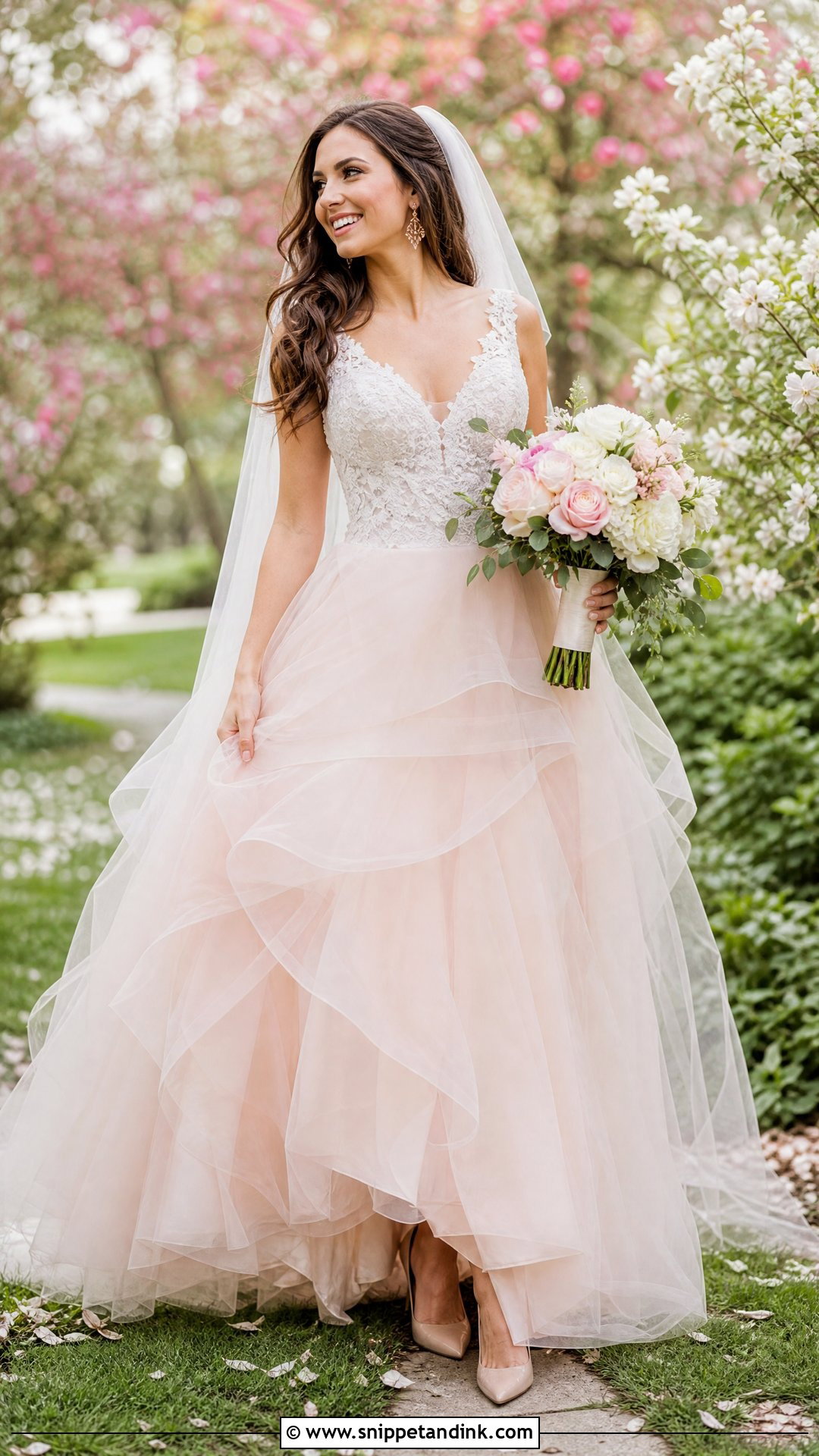
Blush works best when the color sits under the surface, in the lower layers of tulle, so it glows through rather than reading as pink fabric. A fitted bodice with ivory lace appliqués over a full blush skirt keeps it bridal. Rose-gold earrings, neutral pumps and a sheer ivory veil let the color show. A bouquet of cream, pale pink and muted peach ties the palette together, with soft waves or a low bun. Test the shade in daylight and your venue’s lighting, next to your makeup; some blushes turn grey under cool bulbs.

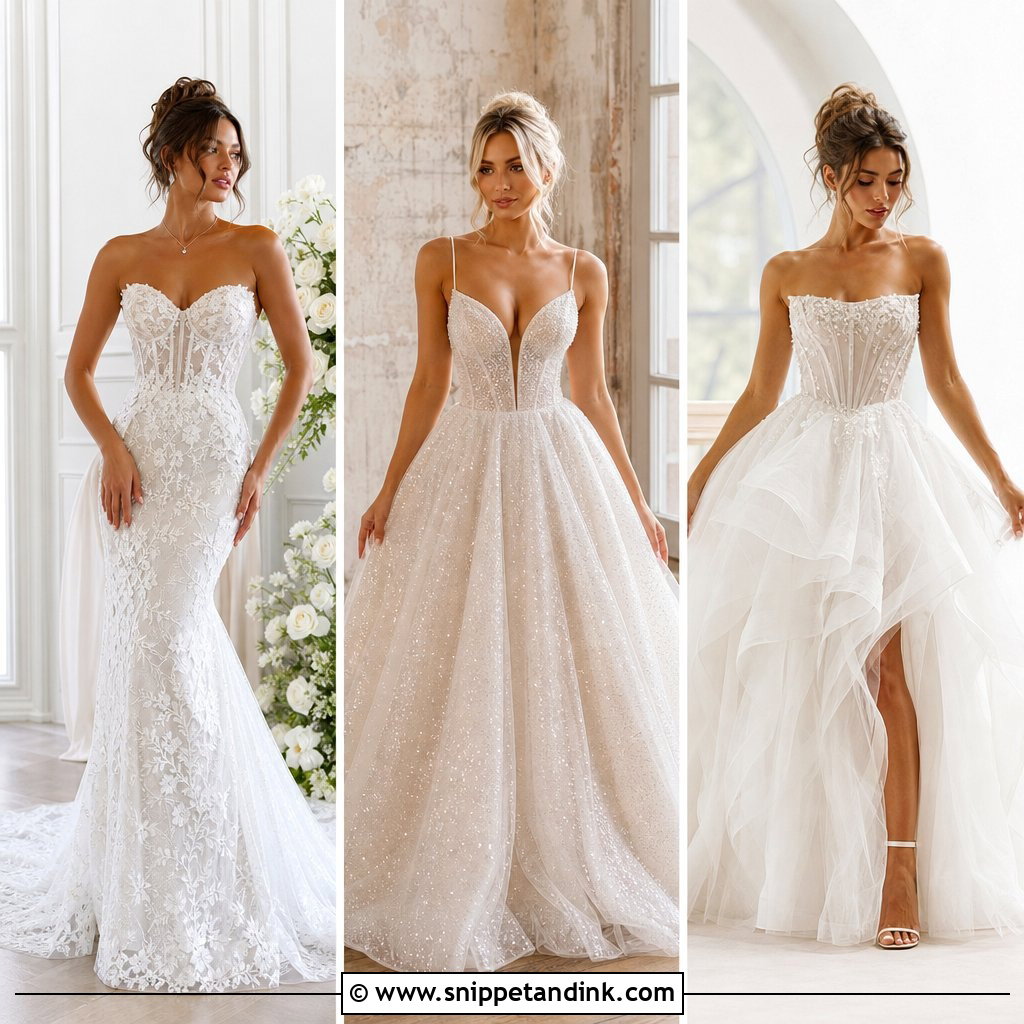

15. Champagne Princess Wedding Dress
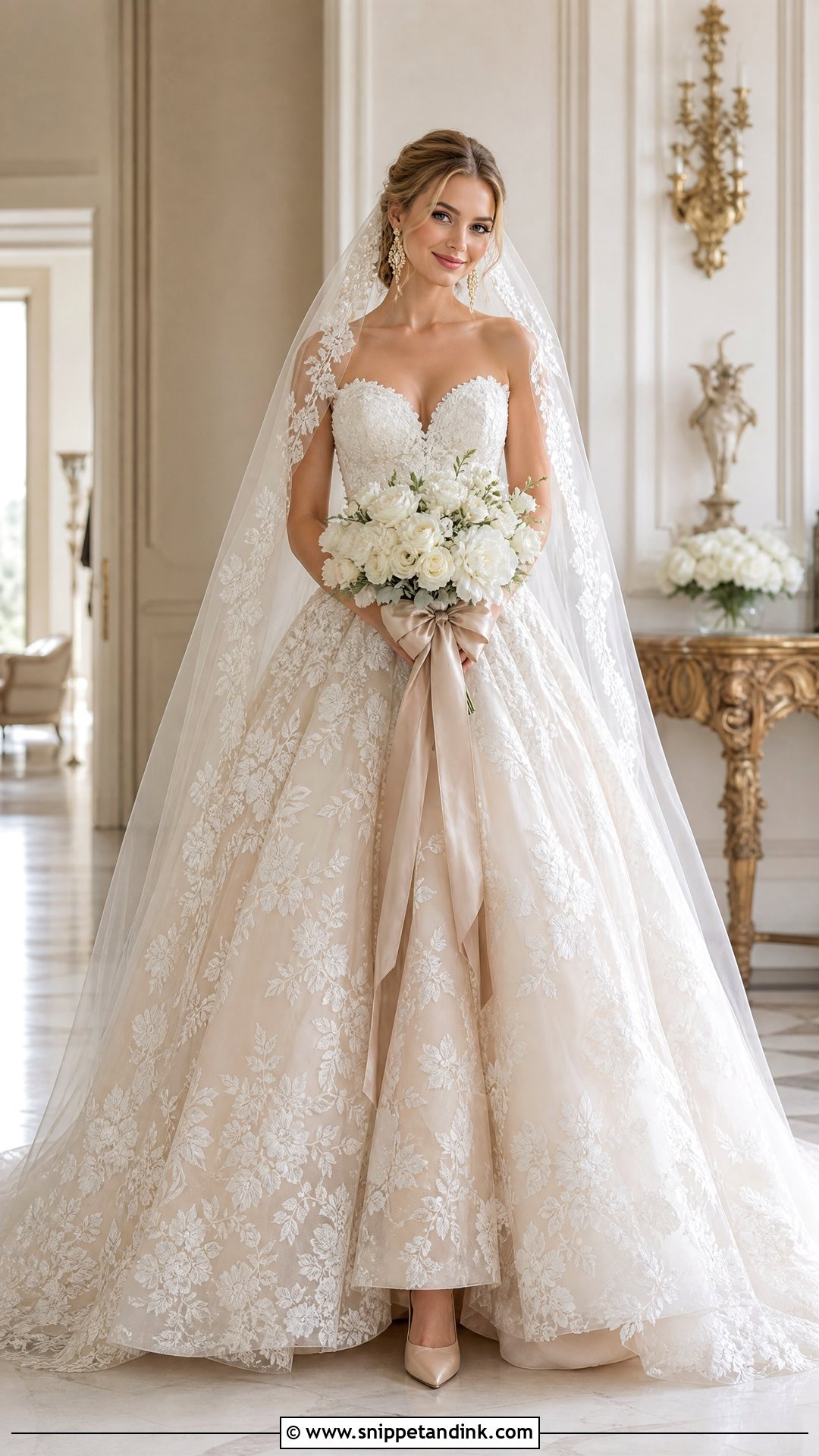
Champagne lining under ivory lace adds warmth and makes the lace pattern stand out, because the darker layer shows through the gaps in the motif. It is also kinder to some skin tones than stark white. A sweetheart or soft V bodice and a full layered skirt suit it. Gold-toned earrings, champagne pumps and an ivory veil with a narrow embroidered edge keep it from going fully monochrome, and white flowers tied with beige ribbon help too. Neutral makeup with a soft rose lip works well. Look at fabric swatches under several kinds of light before you commit.
16. Cathedral Train Princess Wedding Dress
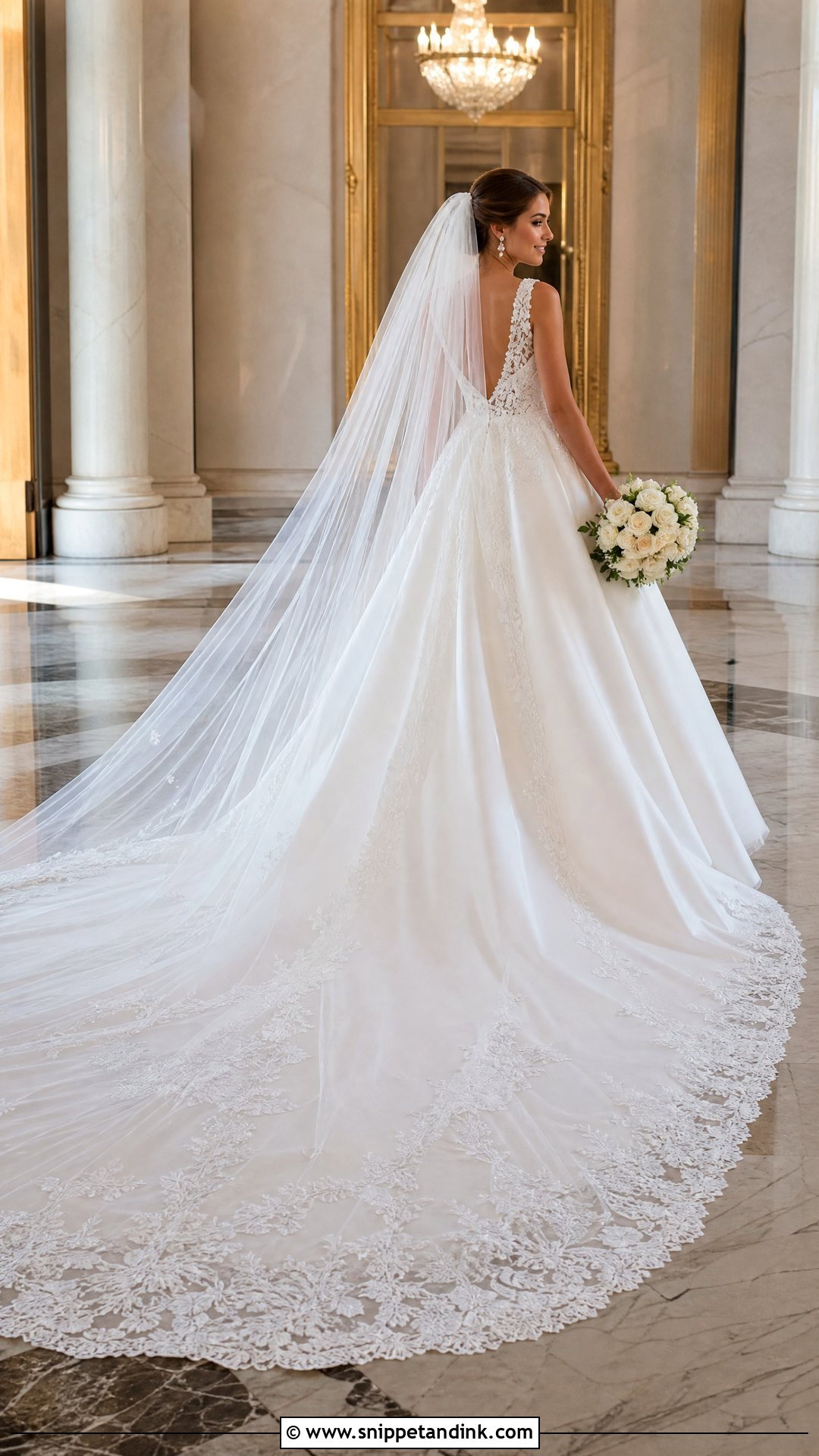
A cathedral train is about the aisle moment, and then it is about logistics for the rest of the night. The skirt should flow smoothly into a well-shaped train, with lace edging, covered buttons or appliqués to show its length in photos. A veil slightly longer than the train balances the line. Pearl or crystal earrings and a fine bracelet are enough, and closed-toe heels will barely be seen. The bustle is non-negotiable. Ask your seamstress for a strong one with enough points to hold the weight, and practise it before the wedding.
17. Detachable Overskirt Princess Wedding Dress
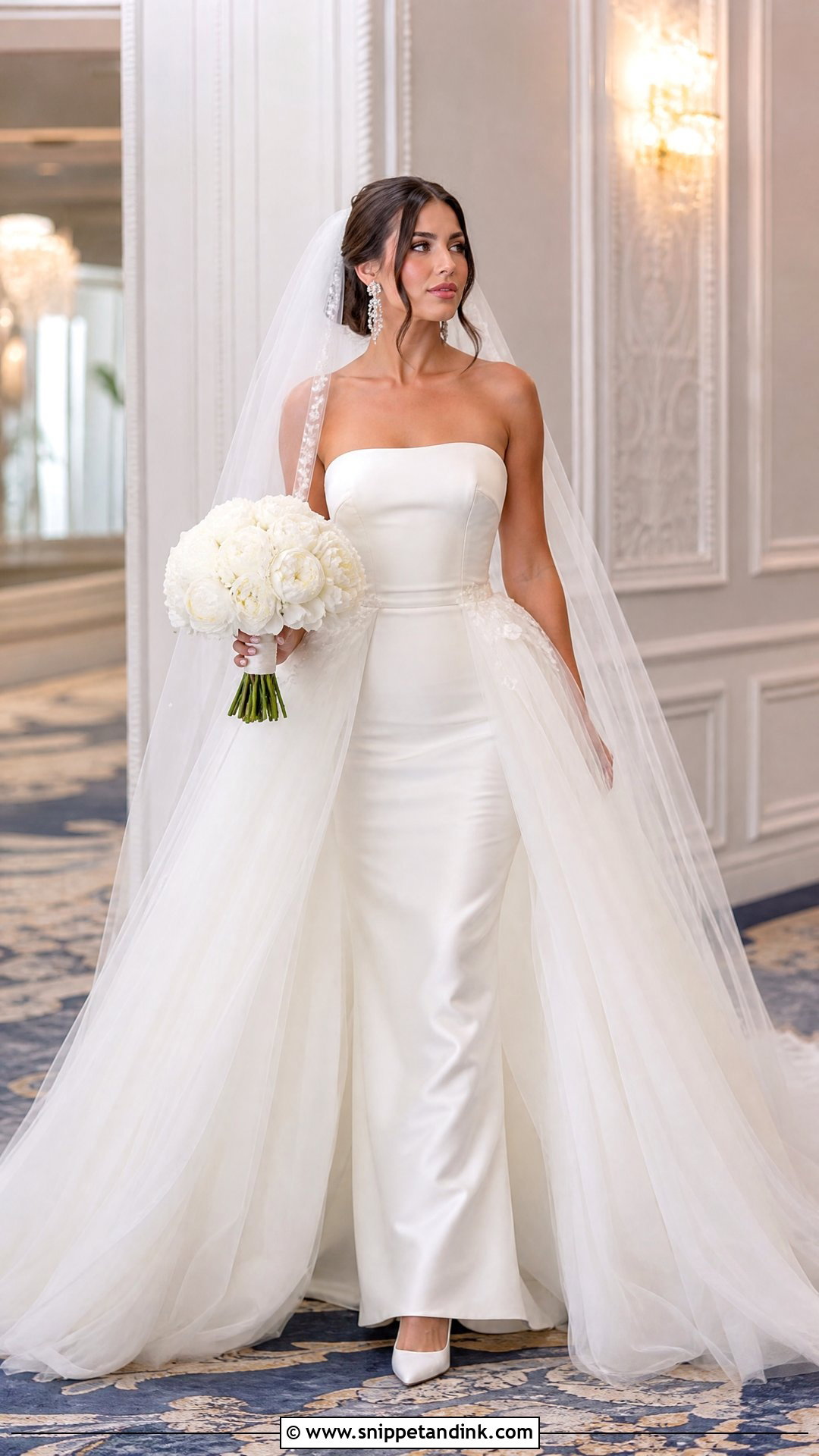
A detachable overskirt lets you walk the aisle in full princess volume and dance in something far lighter. A fitted gown sits underneath, and a tulle, satin or organza overskirt fastens over it for the ceremony. The join is what I check: it should sit flat at the natural waist with no ridge showing through. A cathedral veil, sparkling earrings and pointed pumps suit the ceremony version; a shorter veil or jeweled comb freshens the reception look. Practise taking the overskirt off at home so the change takes minutes, not half an hour.
18. Minimalist Princess Wedding Dress
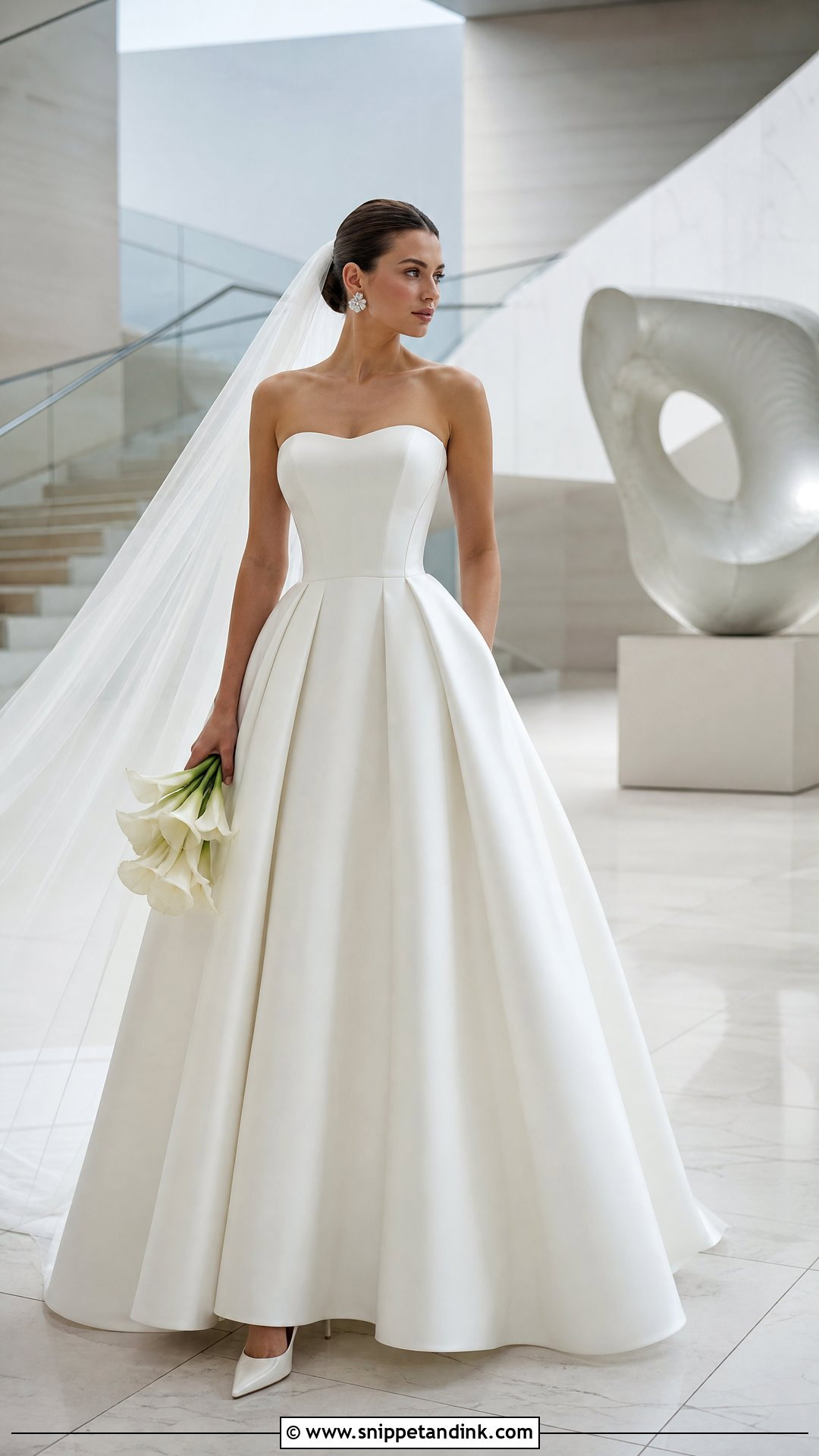
Without lace, crystals or embroidery, a full skirt depends on fabric and seams. Smooth mikado or matte satin, a structured bodice, precise seams and a clean neckline are the whole design, and deep pleats give it volume. Every fitting flaw shows on a plain gown, so this is where I’d put the alterations budget. Sculptural earrings, a sleek bun, simple pointed heels and a plain cathedral veil keep the mood. A bouquet of one flower, white roses or callas, matches the restraint, in a museum, a modern estate or a contemporary hotel.
19. Plus Size Princess Wedding Dress
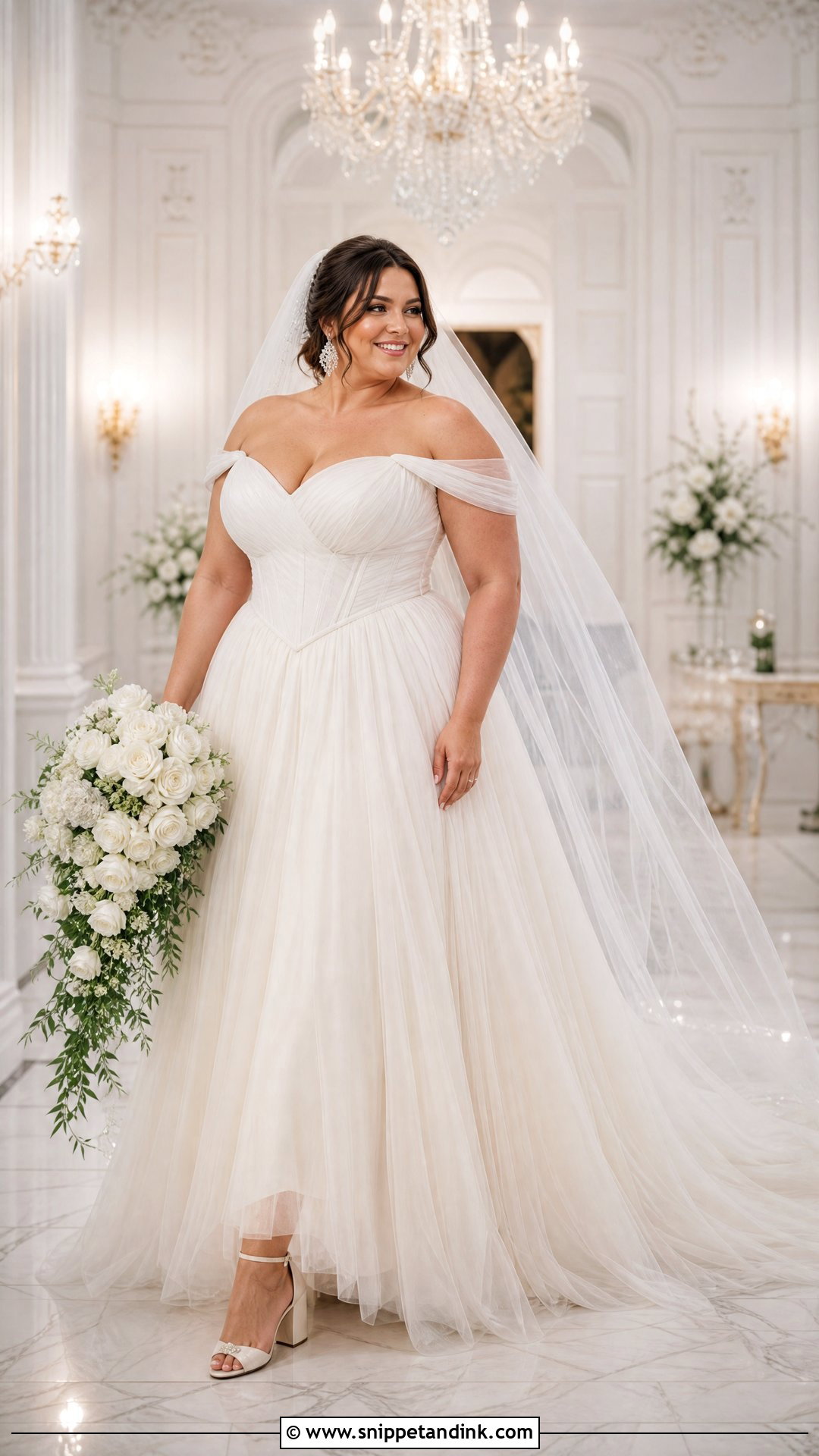
Support first, then shape. For plus-size brides in a full skirt, I look at the bodice construction before anything: firm boning, lacing that adjusts, wide straps or supportive off-shoulder sleeves. A natural or basque waist leads into layers of tulle, and lighter skirt fabrics give volume without weight on the hips. Block heels, statement earrings and a veil fixed to a secure hairstyle finish it, with a medium cascade that doesn’t hide the waist. Ignore the size label; the alterations are what make the fit. You should be able to sit, raise your arms and breathe fully.

20. Petite Princess Wedding Dress
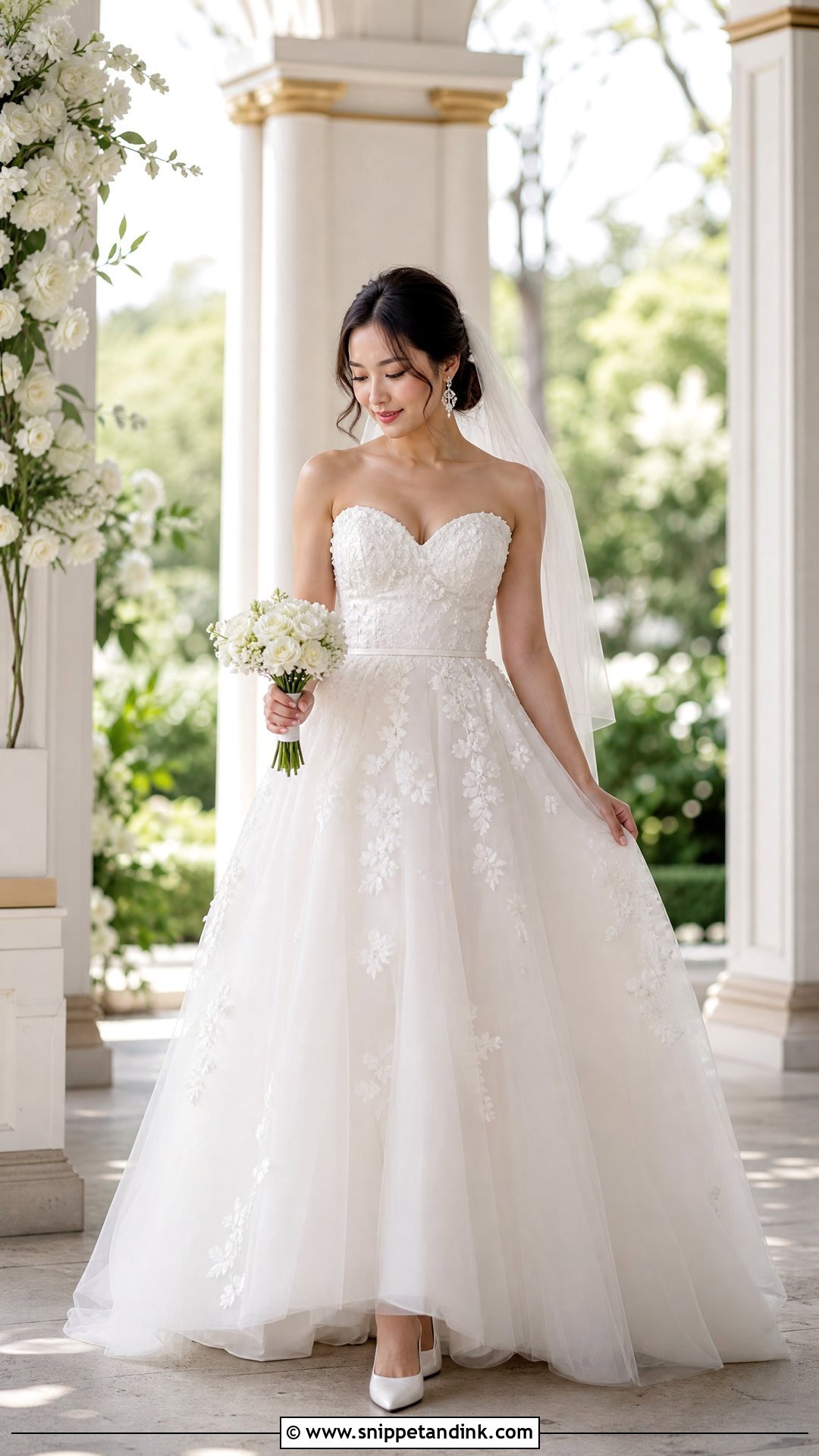
Petite brides can wear a princess gown; it just needs scaling. I’d look for a slightly raised waist, a fitted bodice and a skirt of light tulle rather than several heavy layers, which can overwhelm a shorter frame. A V-neck or sweetheart opens up the upper body. Keep appliqués small and concentrated. Pointed heels, small earrings, a narrow veil that draws a long vertical line and a high or mid-height bun add lift. Carry a compact bouquet. Expect hemming, and possibly narrowing the skirt, so the dress frames you rather than swallowing you.
Doorways, Car Seats and the Restroom in a Big Skirt
A full skirt takes up far more room than it seems in a fitting room mirror, and the day is full of narrow spaces. I talk brides through these before the wedding so nothing comes as a shock.
Getting in and out of the car
Sit down first, backwards, then swing your legs in while a helper feeds the skirt in after you. A larger car with a wide door makes it far easier. Getting out reverses the steps: legs first, then stand while someone lifts the skirt clear.
The bustle and the restroom
Ask your seamstress which bustle suits the gown. An over-bustle hooks the train up onto the back of the skirt; an under-bustle tucks it beneath with ties, which suits heavy satin. Learn it at the final fitting along with the person who’ll do it. For the restroom, the usual method is to face the toilet, gather the skirt up in front of you, and have one helper hold the back layers clear.
A Full Skirt Only Works If You Can Move in It
Princess gowns range from plain satin to beaded, colored and convertible, and the fabric and silhouette decide which. Start with a bodice that fits and supports you; the veil, jewelry, shoes, hair and bouquet can be built around it afterwards. The venue and season matter, but they shouldn’t overrule what you actually love. Good tailoring is what makes a ready-made ball gown look made for you. From sparkling tulle and lace to smooth satin and detachable overskirts, pick the shape you can carry with ease all day, and build the rest of the look around it.
You'll Like These Ideas:







Leave a Reply