
Most brides walk into their first appointment knowing what they like in photos and very little about how fabric behaves on a body. That gap is where I spend my time. A satin ball gown and a silk slip can both be right; they just ask completely different things of your venue, your underwear and your seamstress. Below are twenty bridal dresses, from structured mikado to bias-cut silk and a short civil-ceremony mini, each with the veil, shoes and jewelry I’d style it with and the fitting detail that usually decides whether it works. The gown you’ll be happiest in is rarely the most elaborate one on the rail.
A Shopping and Fitting Calendar That Leaves Room to Breathe
The most stressful gown story I hear is a dress that arrived too late for proper alterations. Many bridal gowns are made to order after you place your order, and production times vary widely between designers, so I plan backwards from the wedding date.
- Start trying on gowns around nine to twelve months ahead. That gives time to compare shops without pressure.
- Order roughly six to nine months before the wedding. Ask the shop for its expected delivery window in writing.
- Book alterations so the first fitting lands about two to three months out. Most gowns need two or three fittings.
- Have the final fitting a week or two before the wedding, with the exact shoes and underwear you will wear.
- Collect the gown steamed and bagged, and ask whoever is helping you dress to come to that last fitting to learn the bustle.
If your timeline is shorter, ask about sample gowns or ready-to-wear lines, which can be bought off the rail and altered. Rush fees for faster production exist at some shops, but they vary and are not always possible.
1. Satin Ball Gown Bridal Dress
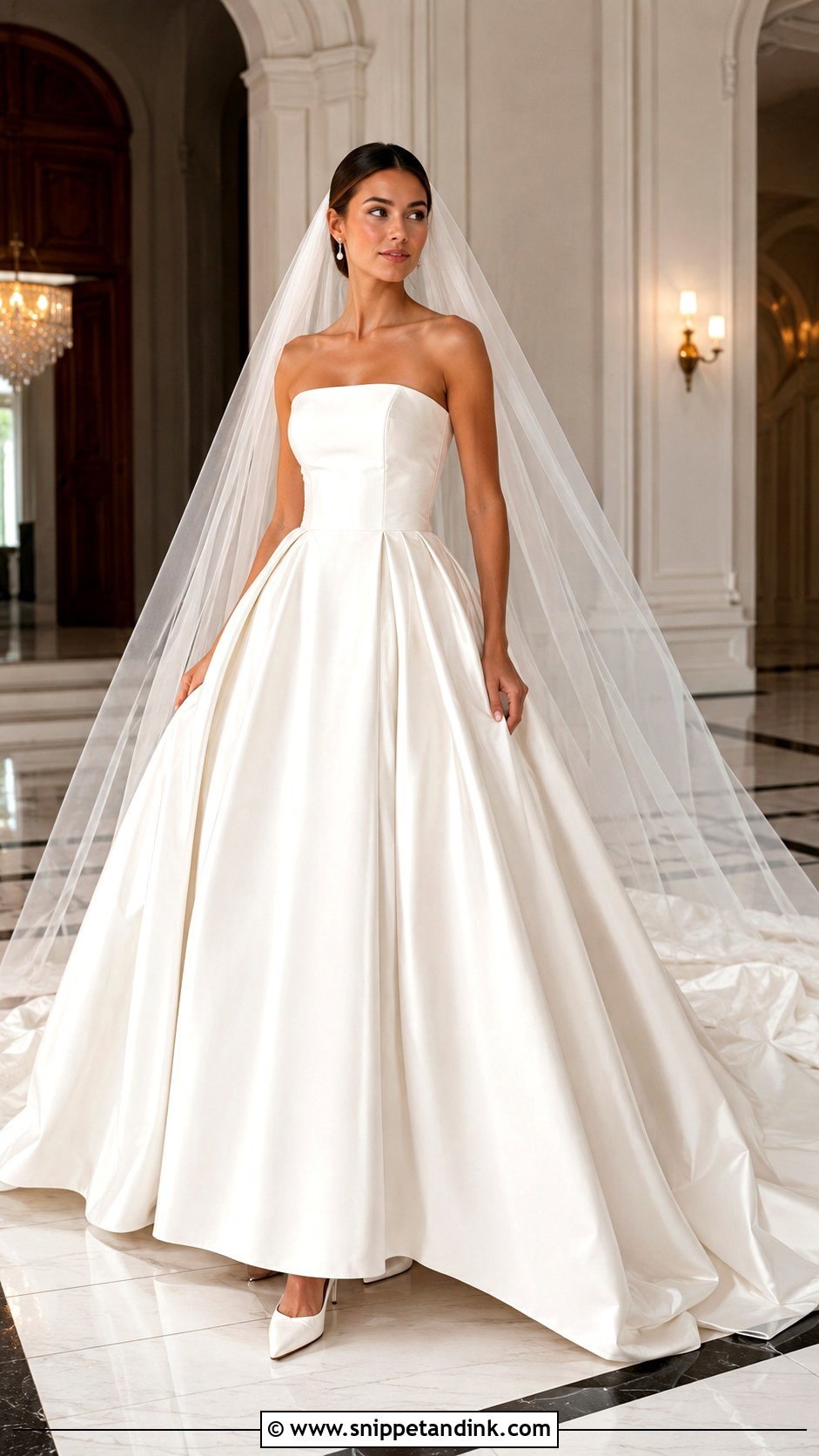
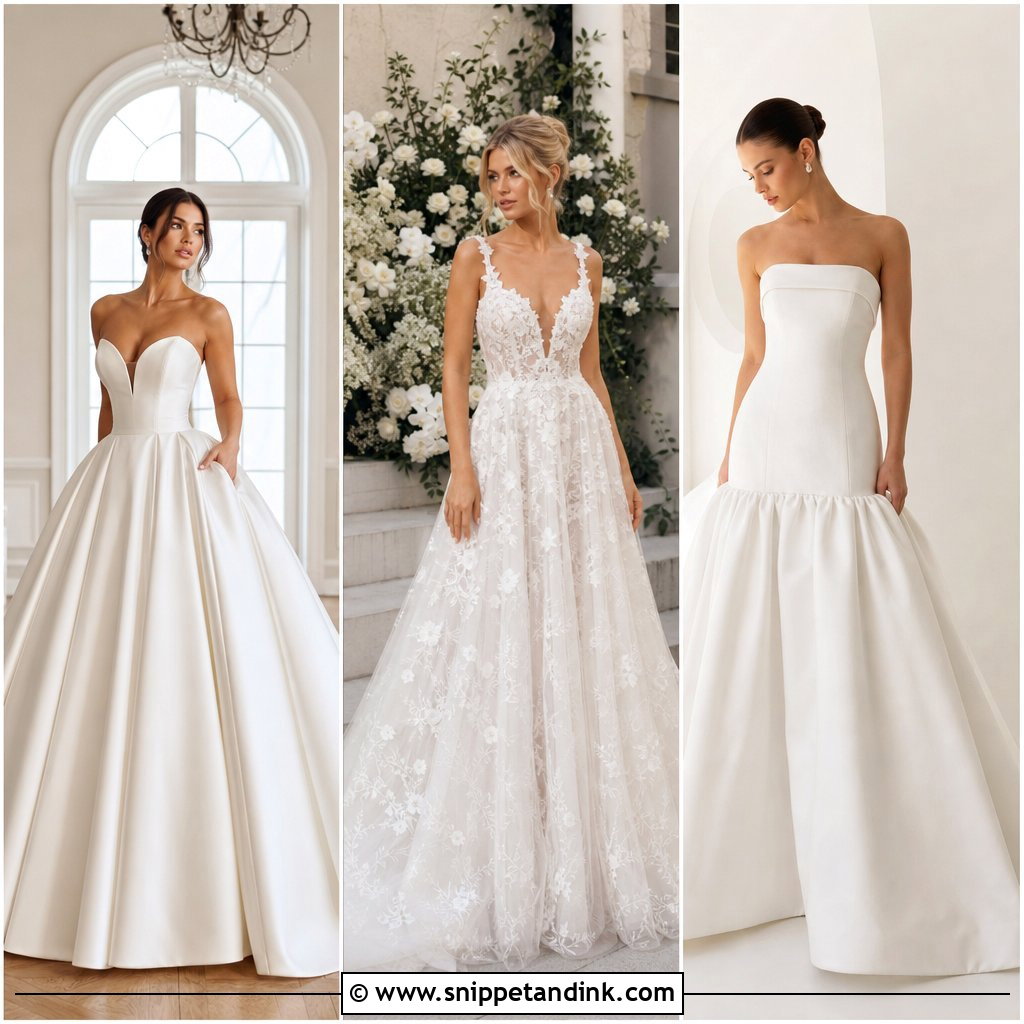
Structured satin or mikado is what keeps a ball gown skirt standing out all day; softer satins collapse by the reception. I check the internal boning first, since a strapless bodice holding up a heavy skirt needs real support. A strapless or softly scooped neckline keeps it balanced. Style it with a cathedral veil, pearl studs and pointed ivory pumps, and skip the necklace or keep it fine. On petite brides, I ask the seamstress to reduce the skirt circumference so the gown doesn’t wear you. A concealed bustle lifts the train for dancing.
2. Lace A-Line Bridal Dress
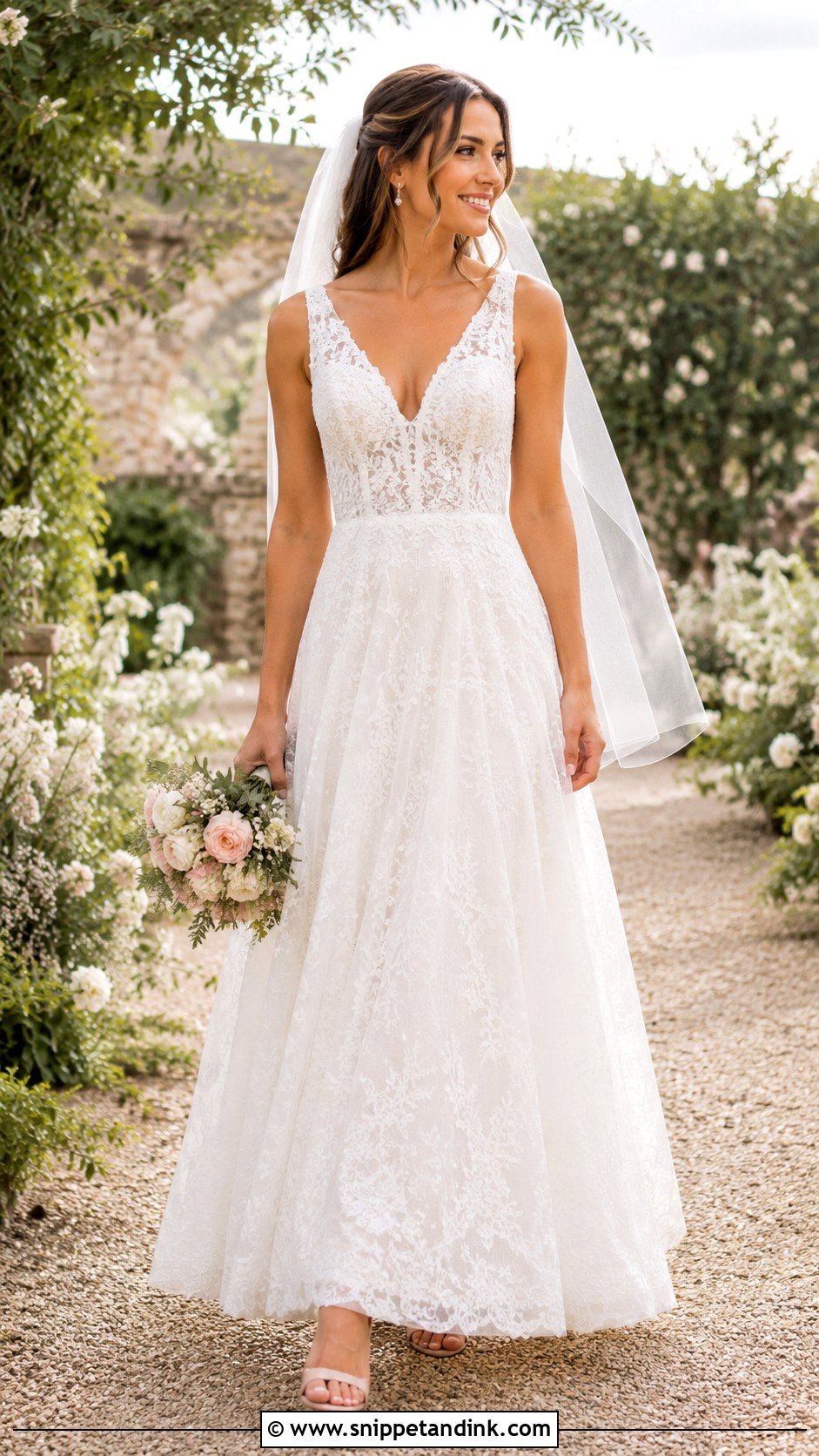
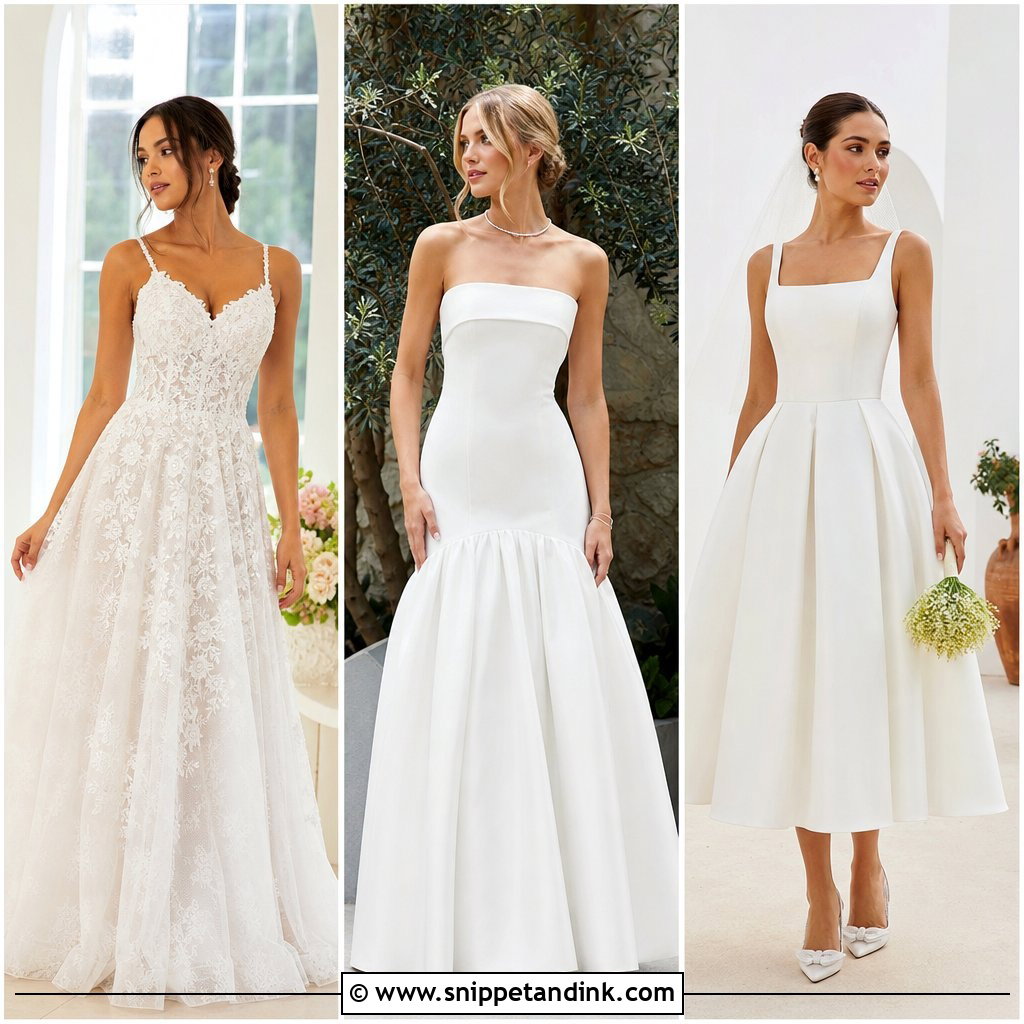
An A-line gives you a defined waist without the weight of a full skirt, which is why I suggest it to brides who want to dance for hours. Floral lace over a supportive lining adds texture while keeping the dress light. A V-neck lengthens the torso; bateau and scoop give more cover. A fingertip veil, small crystal earrings and low block heels suit it, especially on lawns where stilettos sink. A loose chignon or soft waves match the relaxed shape. It’s my default suggestion for garden and estate weddings.
3. Long Sleeve Crepe Bridal Dress
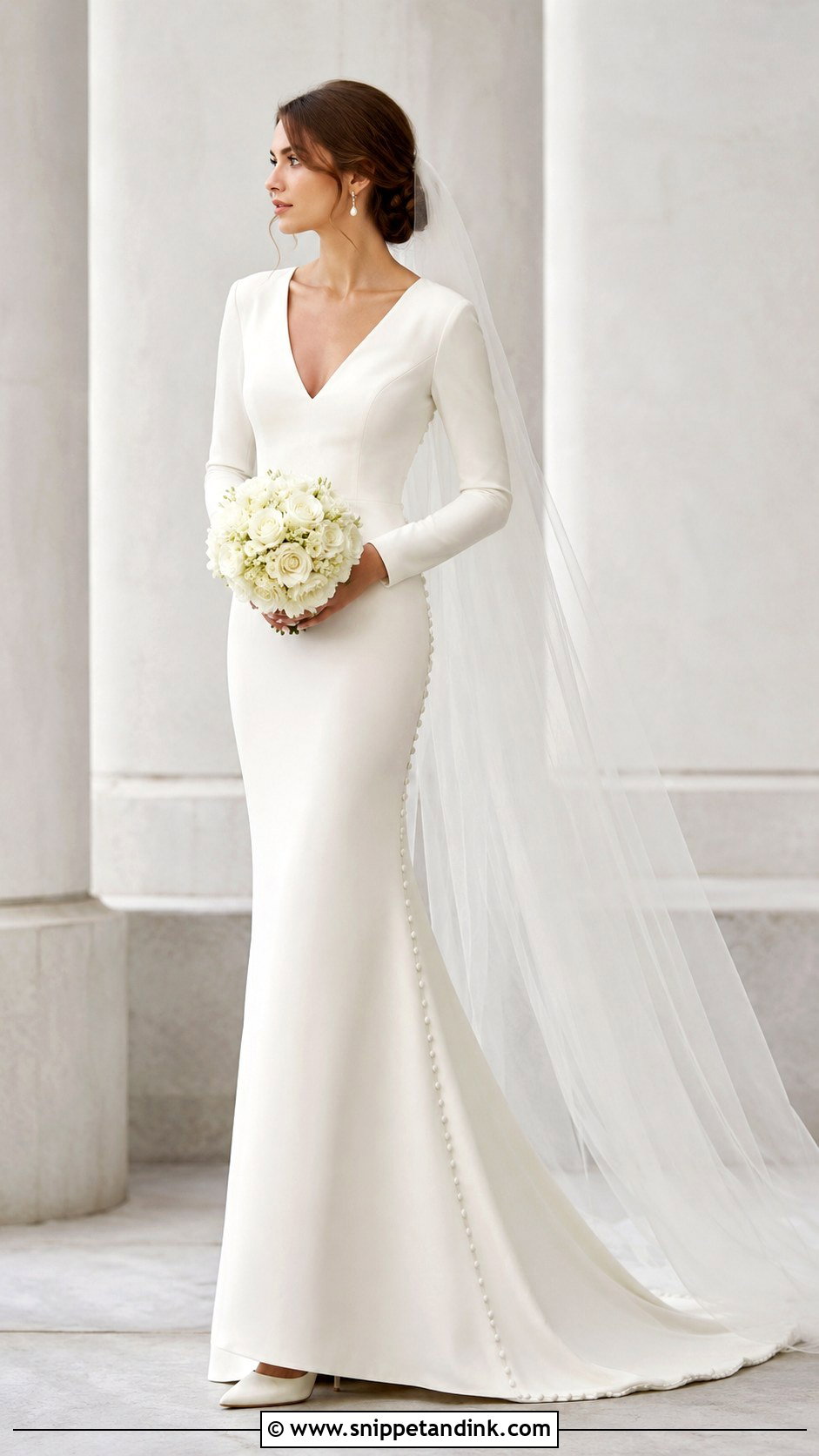
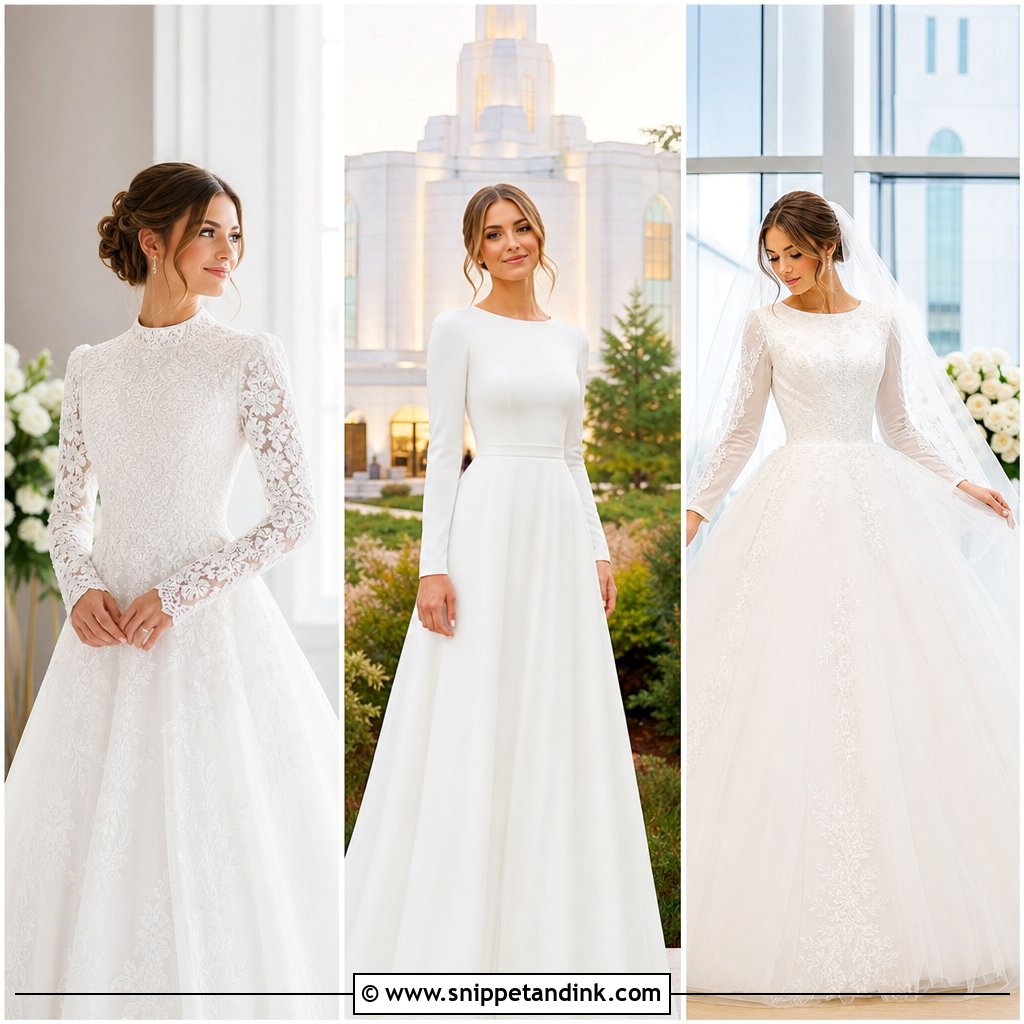
Crepe is honest fabric. It follows the body closely and shows every line underneath, so seam-free underwear and careful tailoring aren’t optional. In return, you get a clean, matte finish that looks modern in cool weather and formal rooms. Fitted sleeves with covered buttons are classic; a slightly flared cuff feels newer. A square, scoop or modest V keeps all that coverage from looking heavy. Pearl drops, a sleek low bun, closed pumps and a chapel veil complete a simple, polished look.
4. Strapless Mikado Bridal Dress
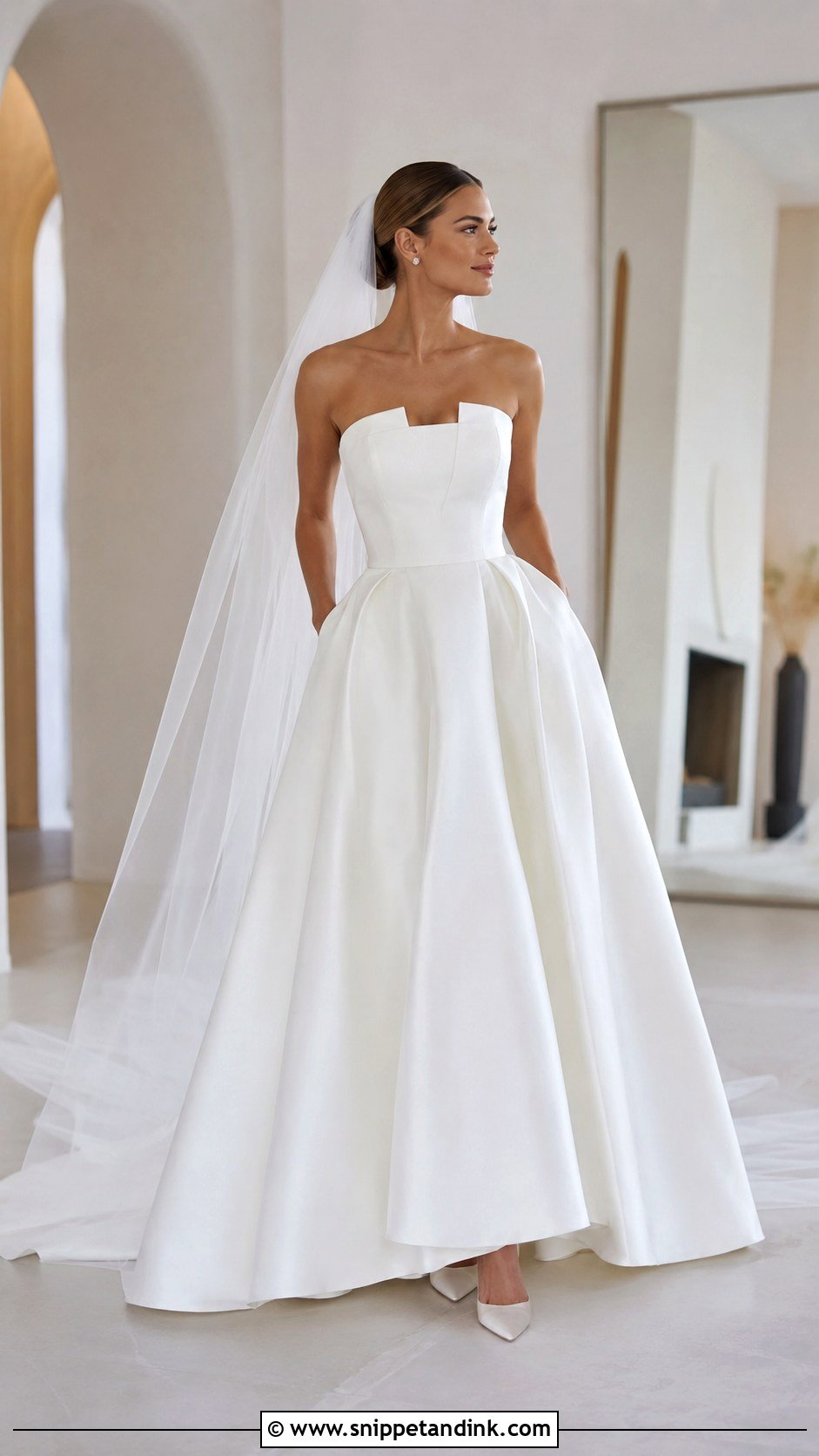
Mikado holds a fold like paper, which makes it the fabric for a strapless bodice with no decoration at all. Straight necklines feel minimal; a gentle curve softens the shoulders. If you worry about the bodice slipping, ask your seamstress to add interior straps or extra boning, both standard alterations. A smooth chignon, a long plain veil and bright studs suit it, with pointed pumps and a small white bouquet. Ask about pockets; mikado holds them without bulging. When the fit is precise, this dress needs nothing else.
5. Basque Waist Corset Bridal Dress
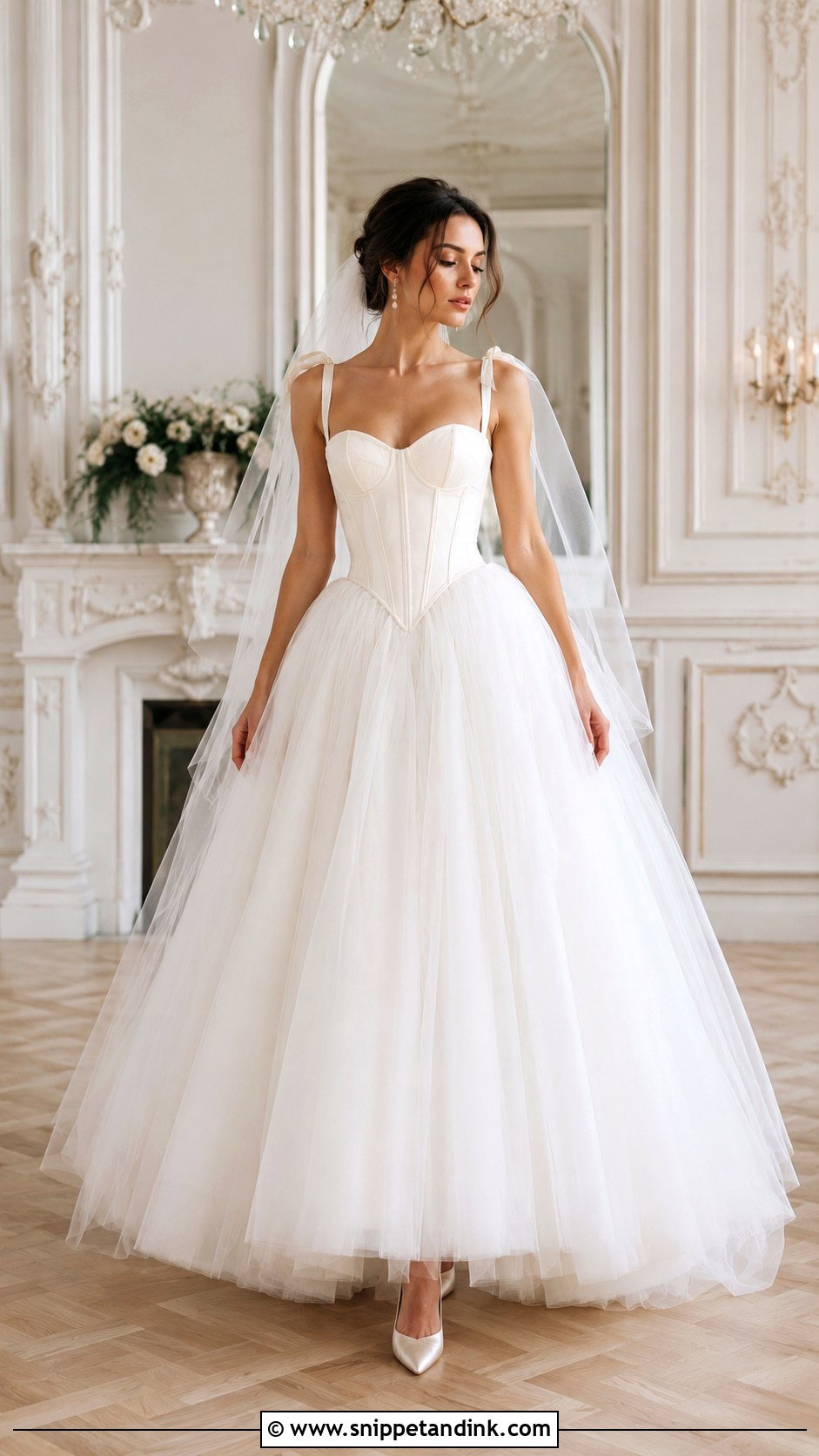
A basque waist dips into a V below the natural waist, and it lengthens the torso more than any other bodice shape. The fit at that point decides everything. If the point sits too low, it digs in when you sit; too high, it loses the effect. I insist on secure boning and a smooth lining so you can breathe and eat. A full satin or tulle skirt gives drama; a slimmer skirt softens it. A strapless neckline shows the construction, and detachable straps add security. Keep jewelry to a simple veil and fine drop earrings.
6. Off Shoulder Tulle Bridal Dress
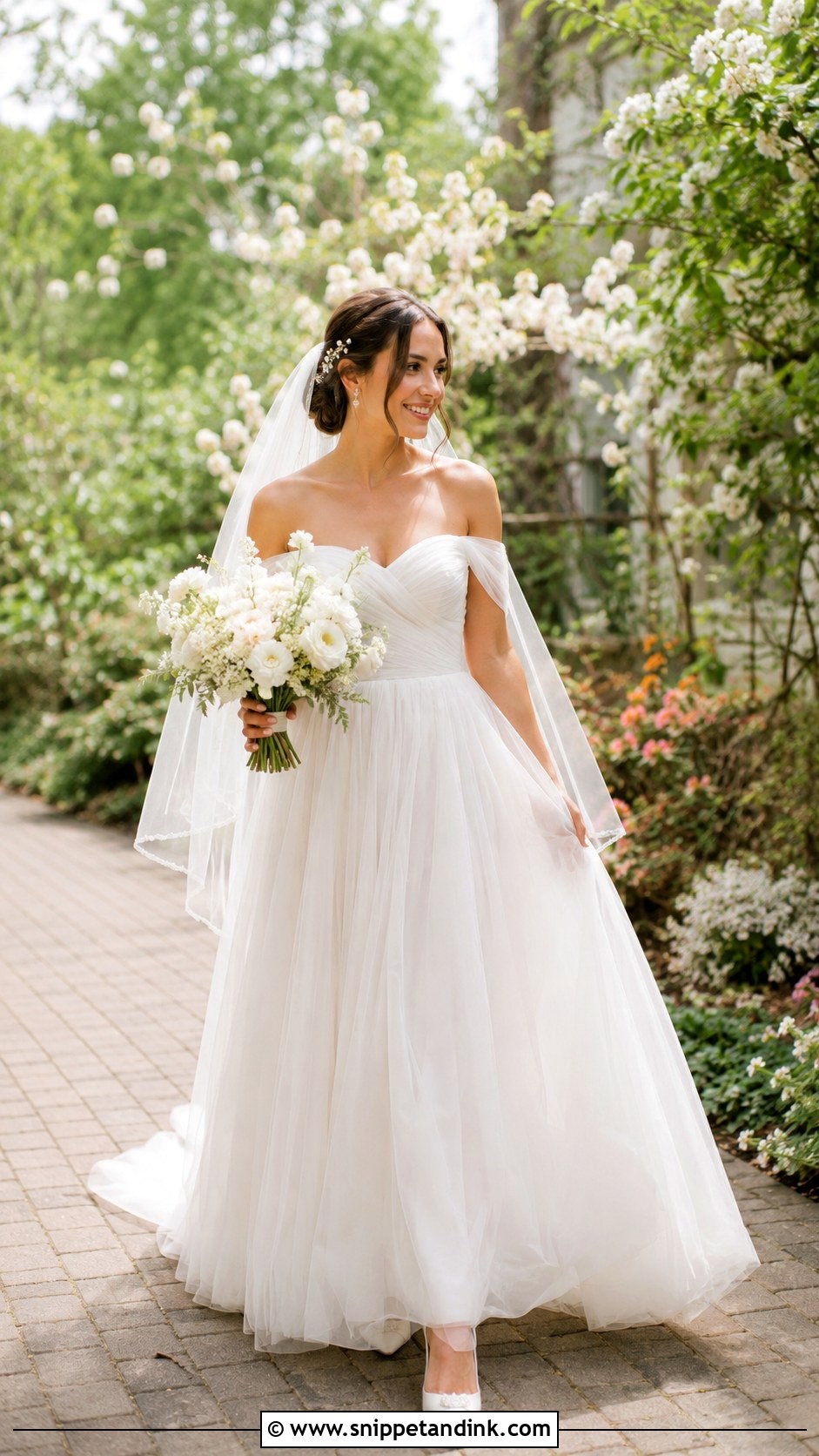
Off-the-shoulder necklines show the collarbone, but they also limit how high you can lift your arms, which you’ll notice during the first hug. I always test that at a fitting. Fine, light tulle floats; a soft lining keeps it from scratching. A gently fitted waist balances the skirt volume. A sheer fingertip veil, floral hairpins and low heels hidden under the hem suit it. Keep jewelry to a short pendant or small drops. Detachable off-shoulder straps give you full movement later. It suits spring and summer with natural makeup.
7. Square Neck Satin Bridal Dress
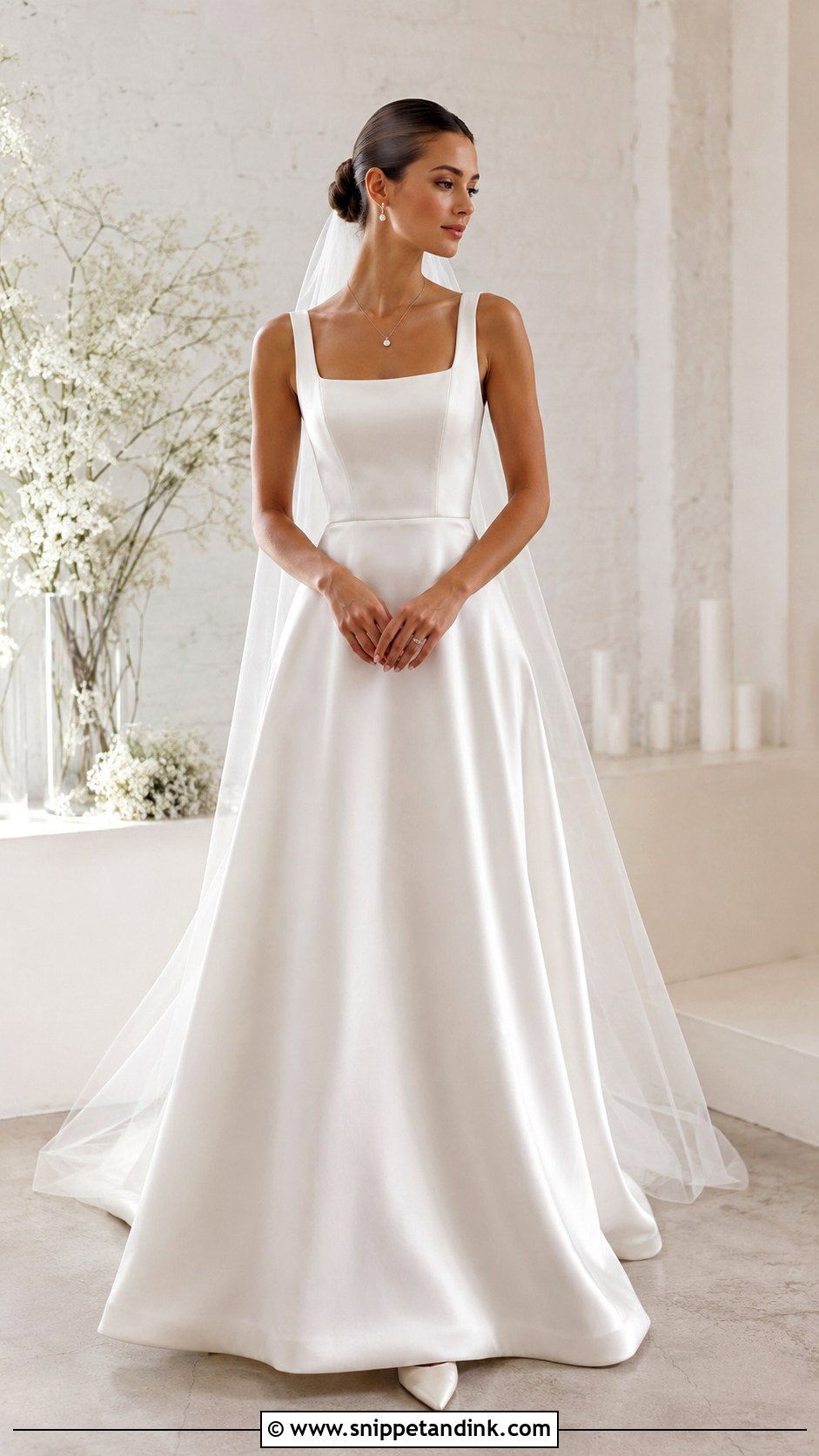
Satin forgives nothing at the bust and waist, so a square neck satin gown lives or dies on its tailoring. Gaps at the neckline edge are the usual problem. The straight line frames the collarbone well and works with short sleeves, wide straps or no sleeves at all. An A-line or soft flare keeps proportions balanced. Add a slim pendant, pearl earrings and a sheer veil with minimal edging, with a sleek bun to show the neckline. Short gloves add a vintage note. Almond-toe shoes echo the square shape more gently than a sharp point.
8. High Neck Lace Bridal Dress
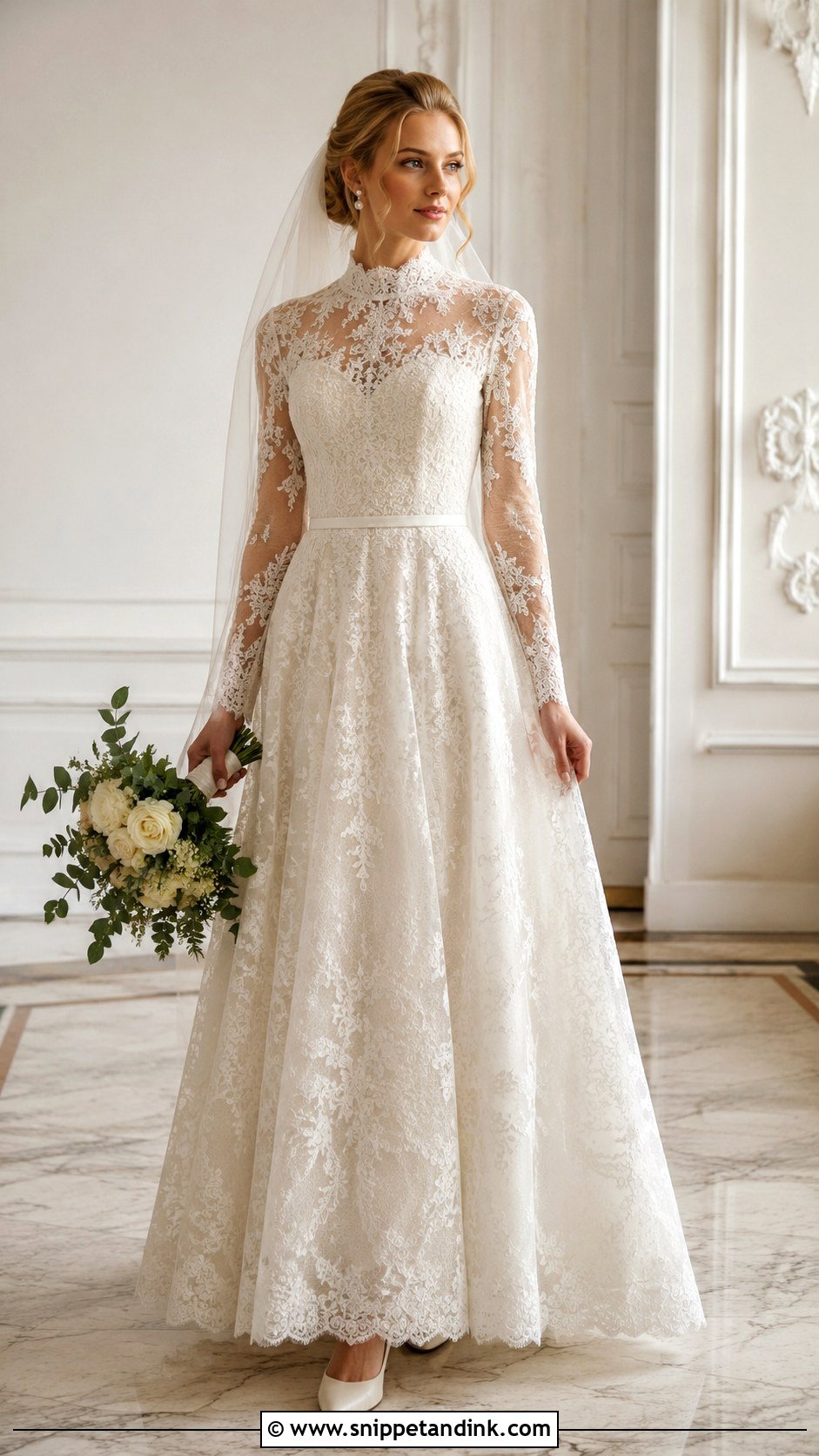
A high neck can feel heavy unless the lace is placed over sheer tulle, so I usually suggest an illusion lace yoke rather than solid lining at the throat. Long fitted sleeves make it formal; sleeveless suits warm weather. A defined waist and a flowing skirt stop the coverage on top from overpowering you. No necklace. Choose pearl or crystal earrings, a neat updo and a veil attached under the hairstyle so it doesn’t crowd the collar. Watch the lace placement at the shoulders; motifs cut off mid-flower at the seam look unfinished in close-ups.
9. Mermaid Bridal Dress With Train
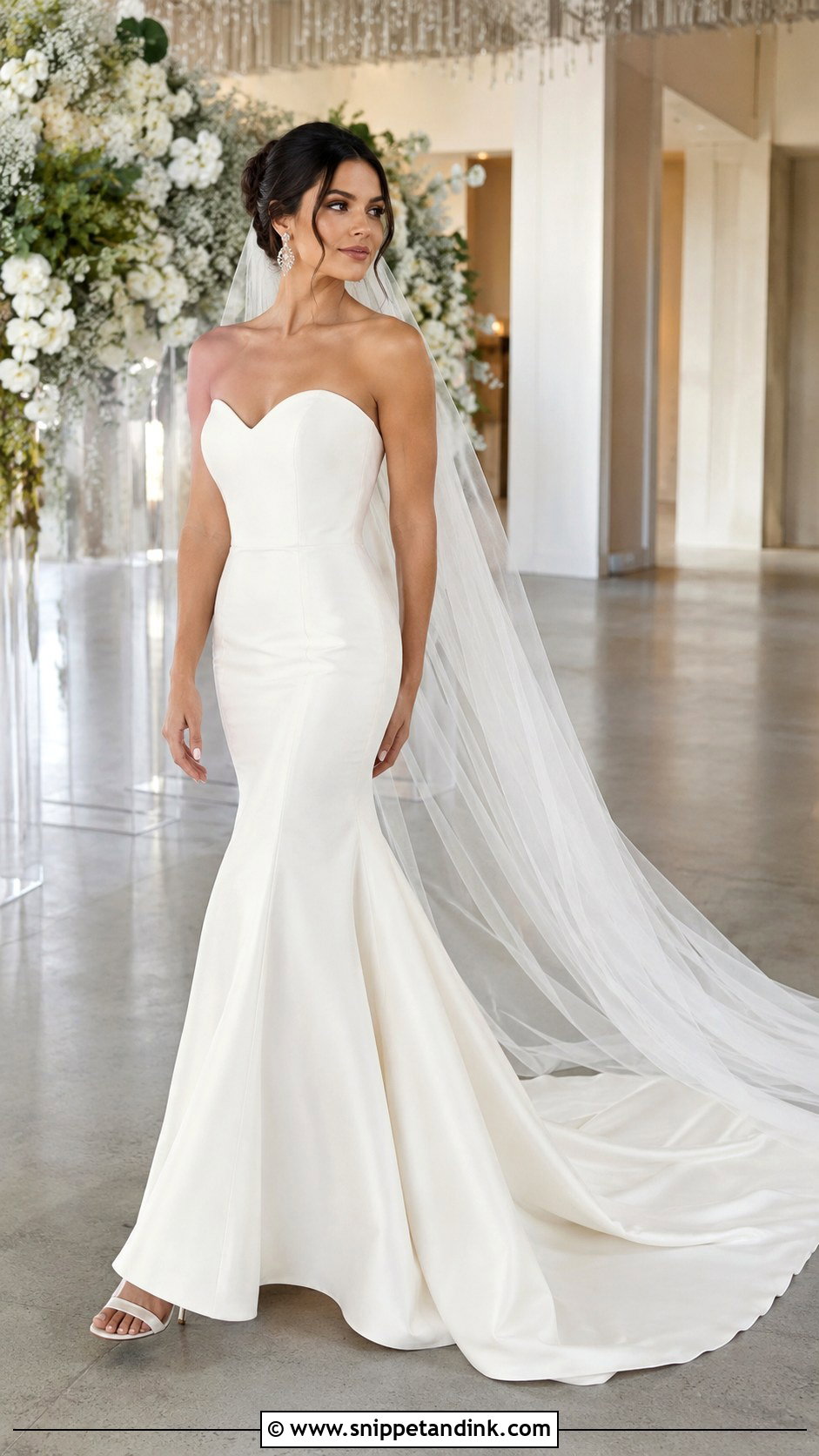
Where the flare starts is the whole fit of a mermaid gown. Standard sizing places it around the knee, but on a shorter bride I often move it up so she can climb stairs and walk freely. Stretch crepe moves with you; satin gives a firmer, sculpted line. A sweetheart or off-shoulder neckline draws the eye up and balances the fitted skirt. A chapel veil, statement earrings and supportive heels suit it, with little else. Plan a secure bustle for the train, because a mermaid train trails behind you from the knee down.
10. Minimalist Sheath Bridal Dress
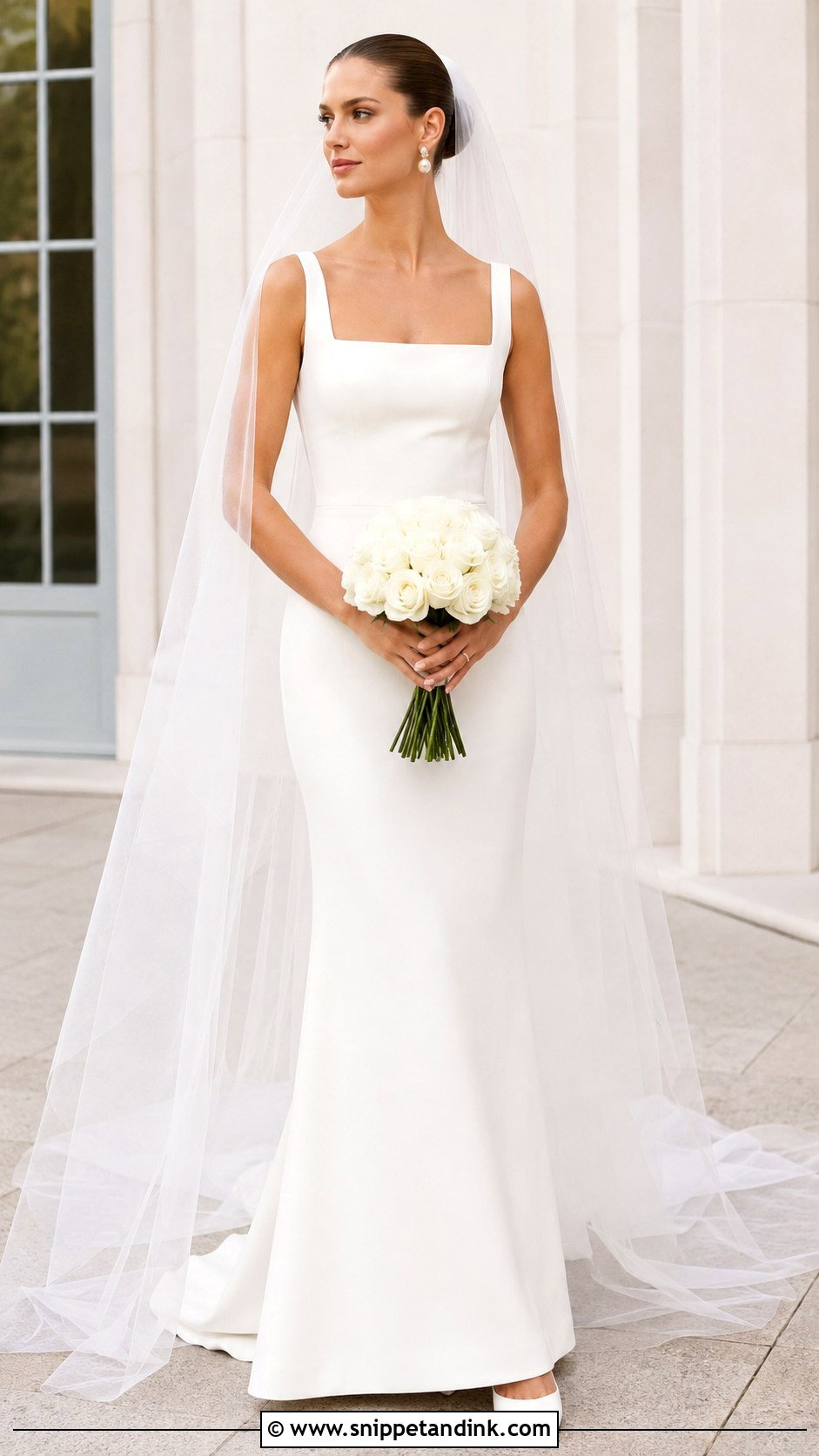
A minimalist sheath bridal dress has nowhere to hide a poor fit, which is exactly why I love it when the alterations are right. It sits close to the body without a mermaid’s flare. Matte crepe, soft satin and heavy silk all have enough body to keep it crisp. Choose a cowl, boat or square neck depending on coverage. Sculptural earrings, a sleek bun, pointed pumps and a plain cathedral veil add ceremony without fuss. Budget for at least two fittings; with no embellishment, every pucker shows.
11. Silk Slip Bridal Dress
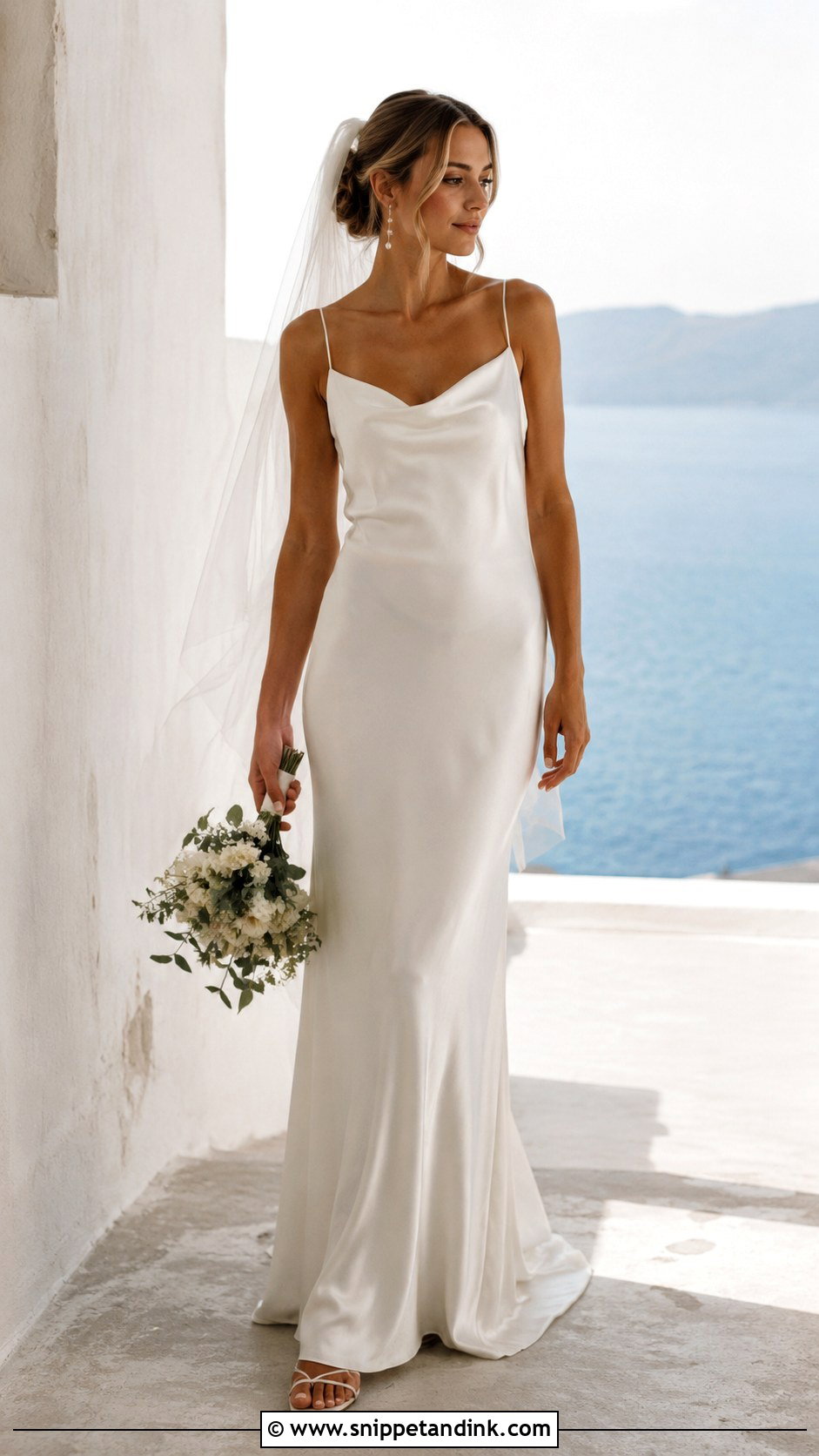
Bias-cut silk is cut diagonally across the weave so it stretches and skims the body. That stretch is also why it shows every seam and underwear line. Choose a lined version if you want more support. Look at it in daylight before you decide, since shop lighting flatters silk. A sheer veil, delicate earrings and strappy heels suit it, with a smooth low bun or soft waves. For a church or cooler venue, add a tailored blazer or a lace topper for the ceremony. Silk marks with water, so carry tissues and avoid dabbing spills at the table.
12. Tea Length Bridal Dress
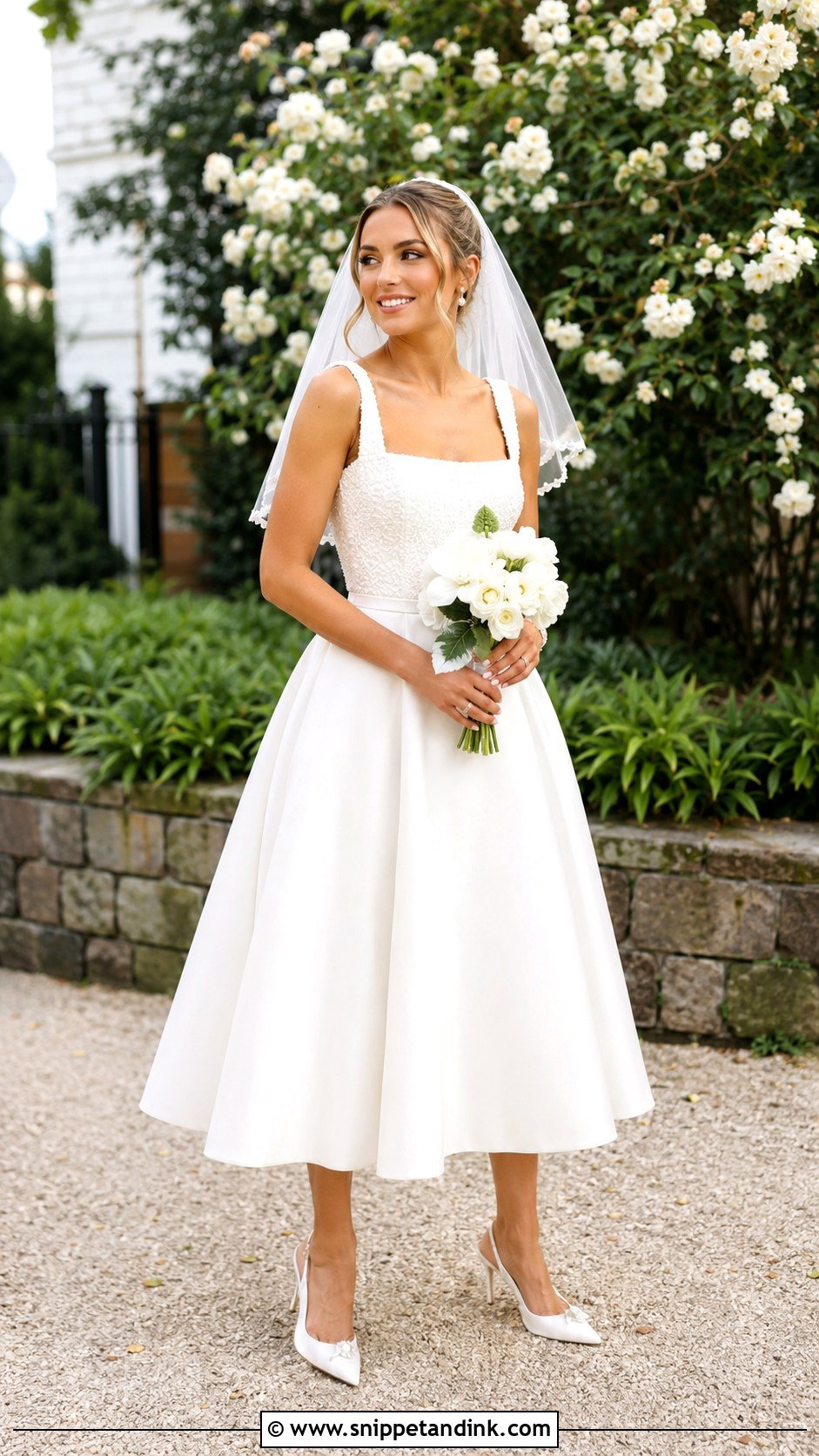
Tea length ends between knee and ankle, which means your shoes are part of the look. Pick them early and take them to every fitting. A fitted bodice and full skirt are classic; a straighter cut feels modern. Pointed pumps, slingbacks or polished block heels all work. A short veil, pearl earrings and a compact bouquet keep the proportions right. On petite brides, I set the hem so it avoids the widest part of the calf. No bustle needed, and nothing to step on at the courthouse, a garden party or a daytime reception.
13. Bridal Mini Dress With Veil
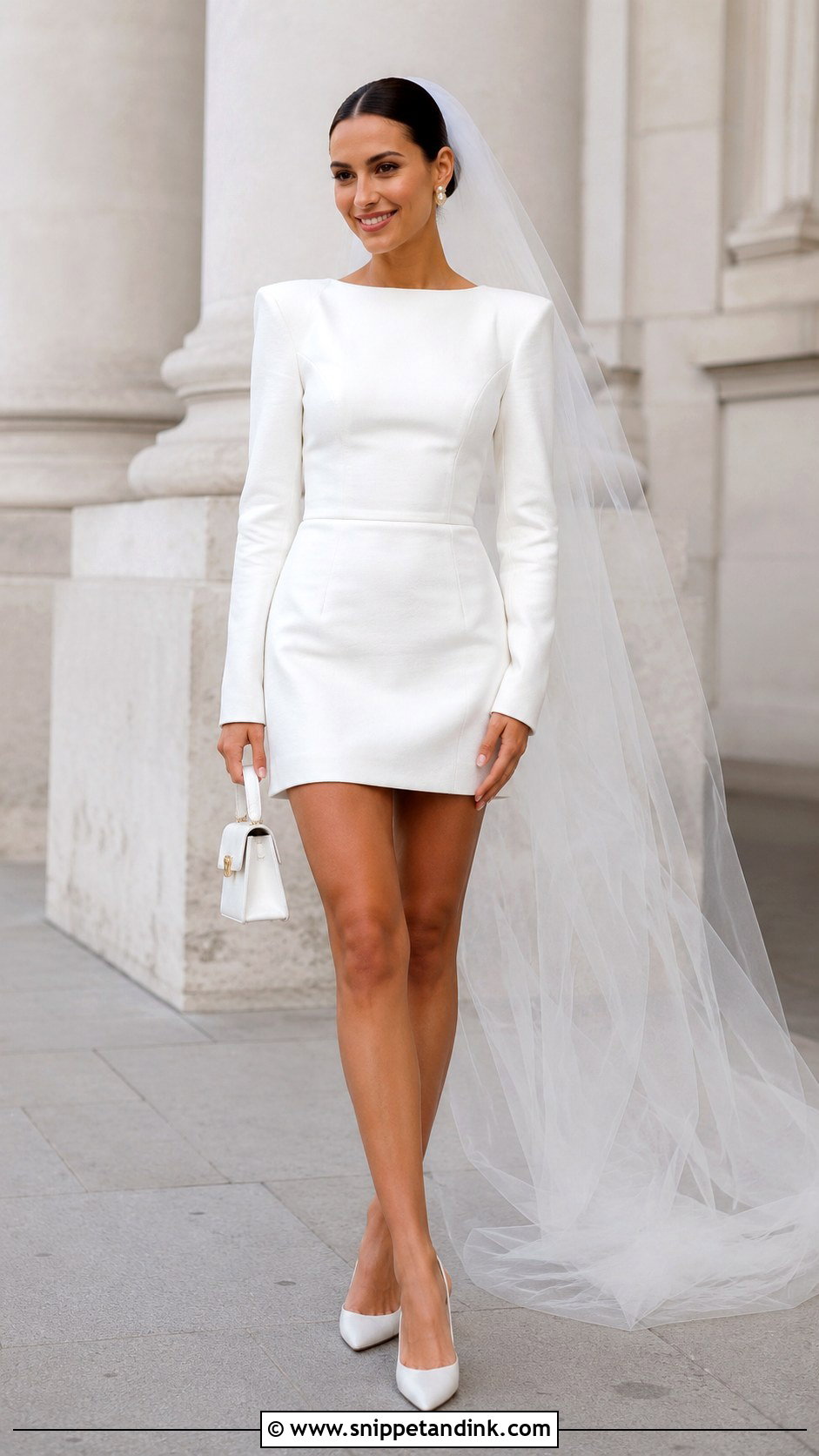
A bridal mini works for a civil ceremony, a reception change or a relaxed party, and the fabric is what makes it read as bridal: satin, crepe, lace or a textured weave. A shift, sheath or flared shape all work. If the hem feels short, balance it with a higher neckline or sleeves. I love it under a long sheer veil; the contrast is the point. Sit down in front of a mirror before you buy, because minis ride up more than you expect. Pointed flats or low slingbacks are as polished as pumps.
14. Floral Appliqué Bridal Dress
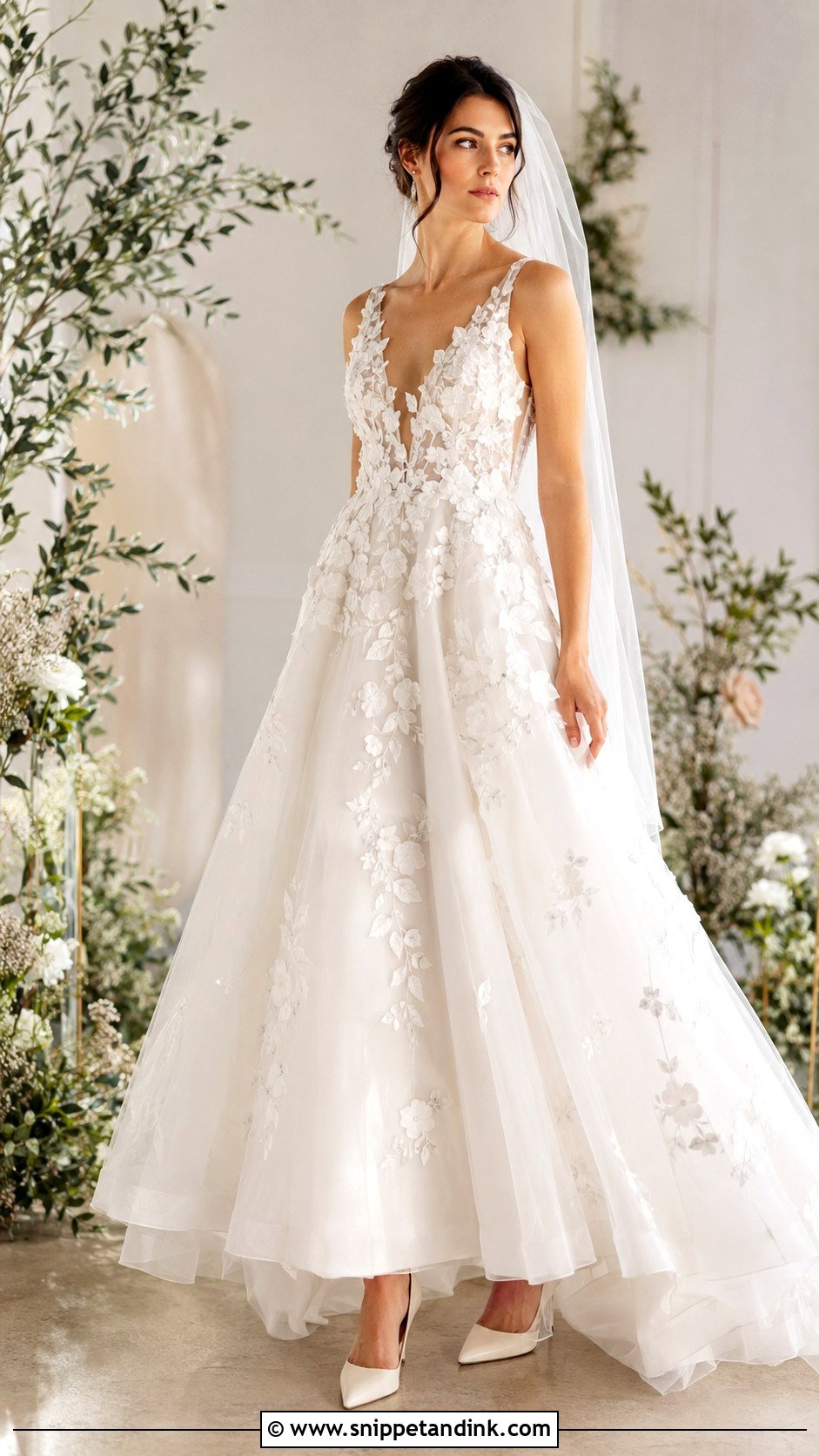
Raised appliqués catch on things, and the first thing they catch on is the veil. I check where the flowers sit against the arms and the back before anything else. They can be scattered over a tulle skirt or massed at the bodice and waist. Ivory-on-ivory gives a subtle result; blush or champagne accents add depth. Keep the silhouette simple so the flowers have room. A plain veil, small earrings and satin or mesh pumps suit it, with loosely pinned hair.
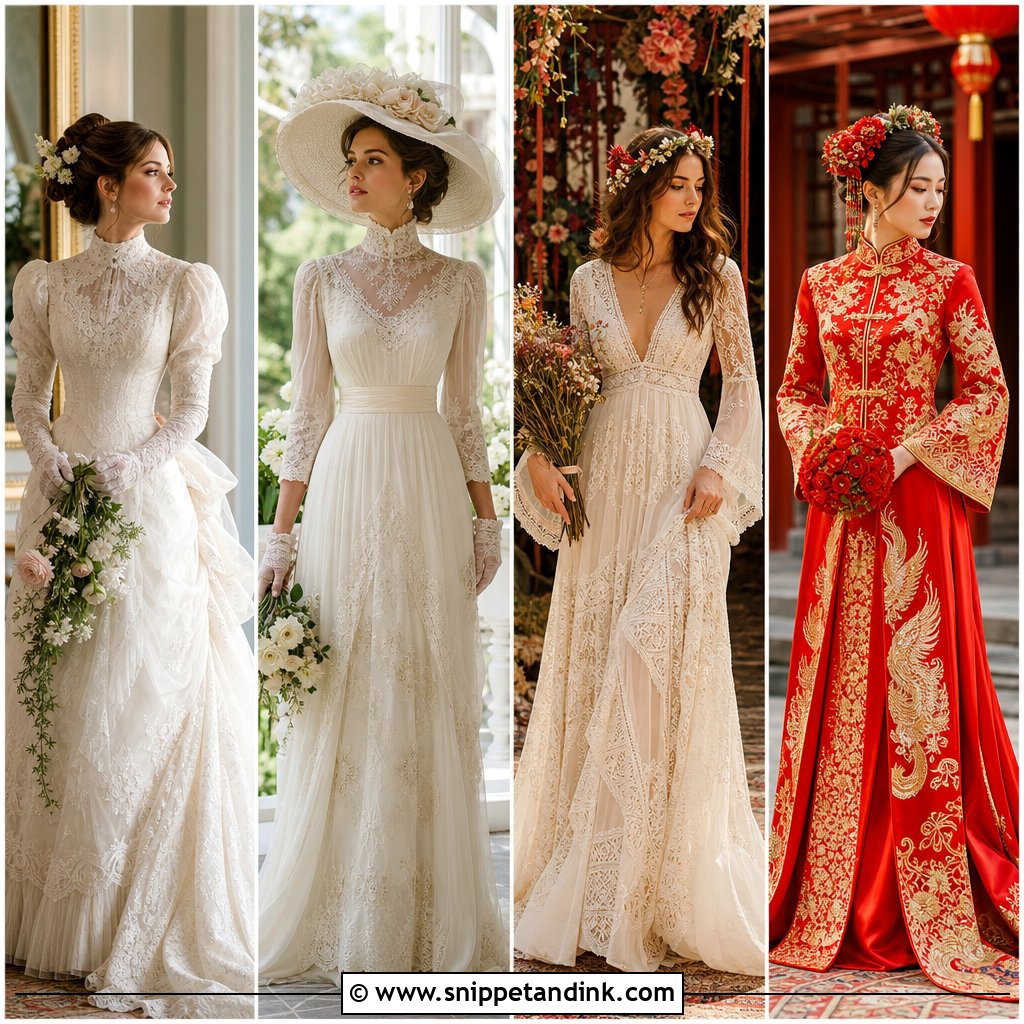
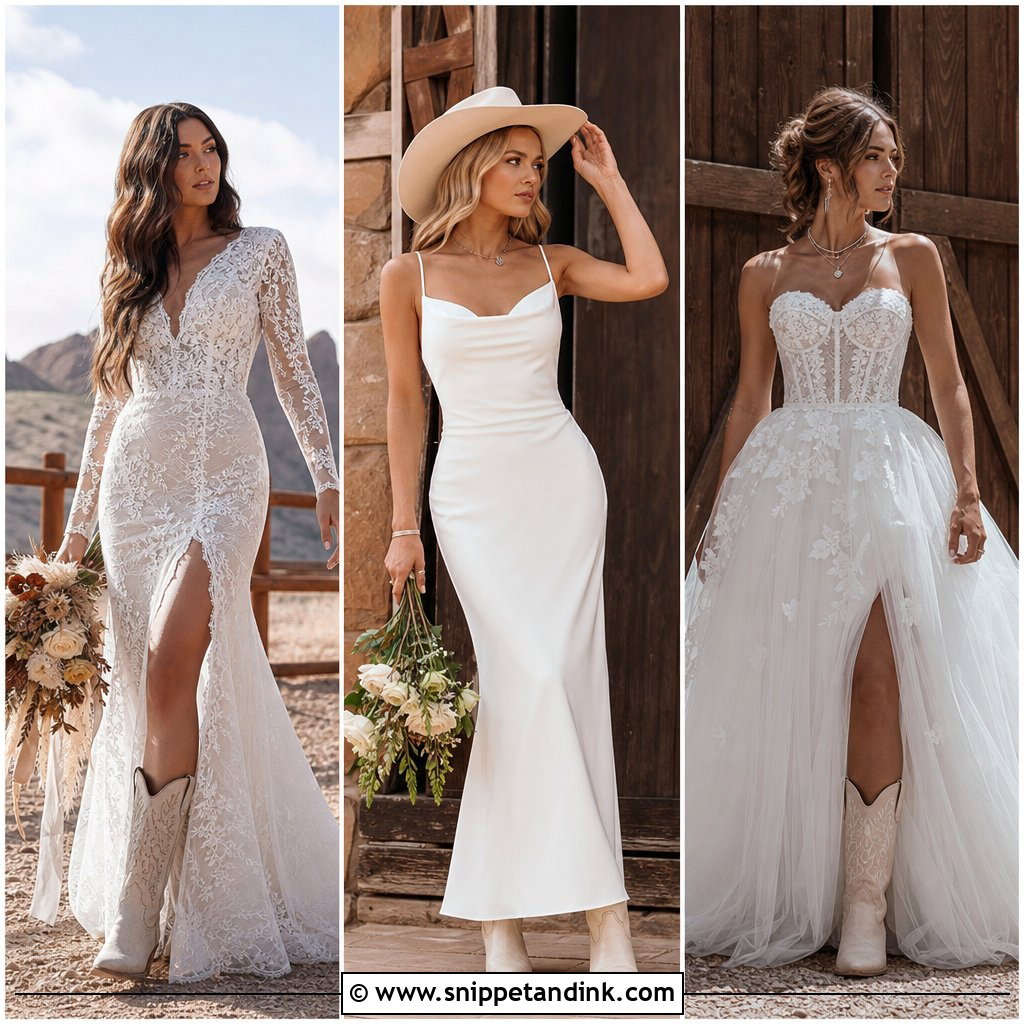
15. Pearl Beaded Bridal Dress
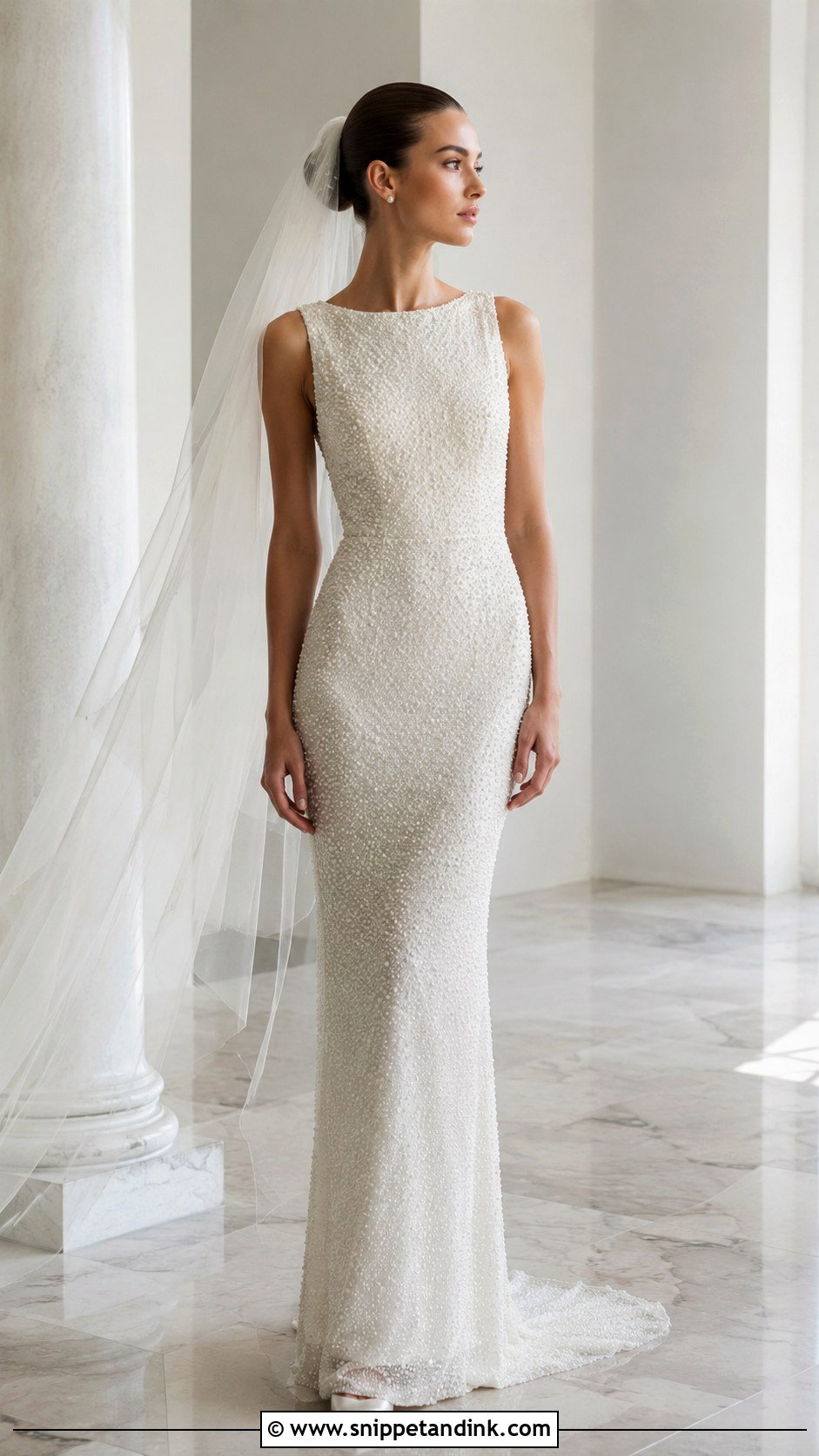
Pearls give a soft glow rather than the sharp points of light crystals throw, and they photograph more gently under flash. Dense pearl beading is heavy, though, so walk and sit in the gown before you commit. A column or A-line keeps the embellishment from looking excessive. Pearl studs, a clean veil and understated satin shoes are enough. Don’t stack a pearl necklace and bracelet on top. Ask the shop whether spare pearls come with the dress; your seamstress will need them if she has to move a seam.
16. Bow Back Bridal Dress
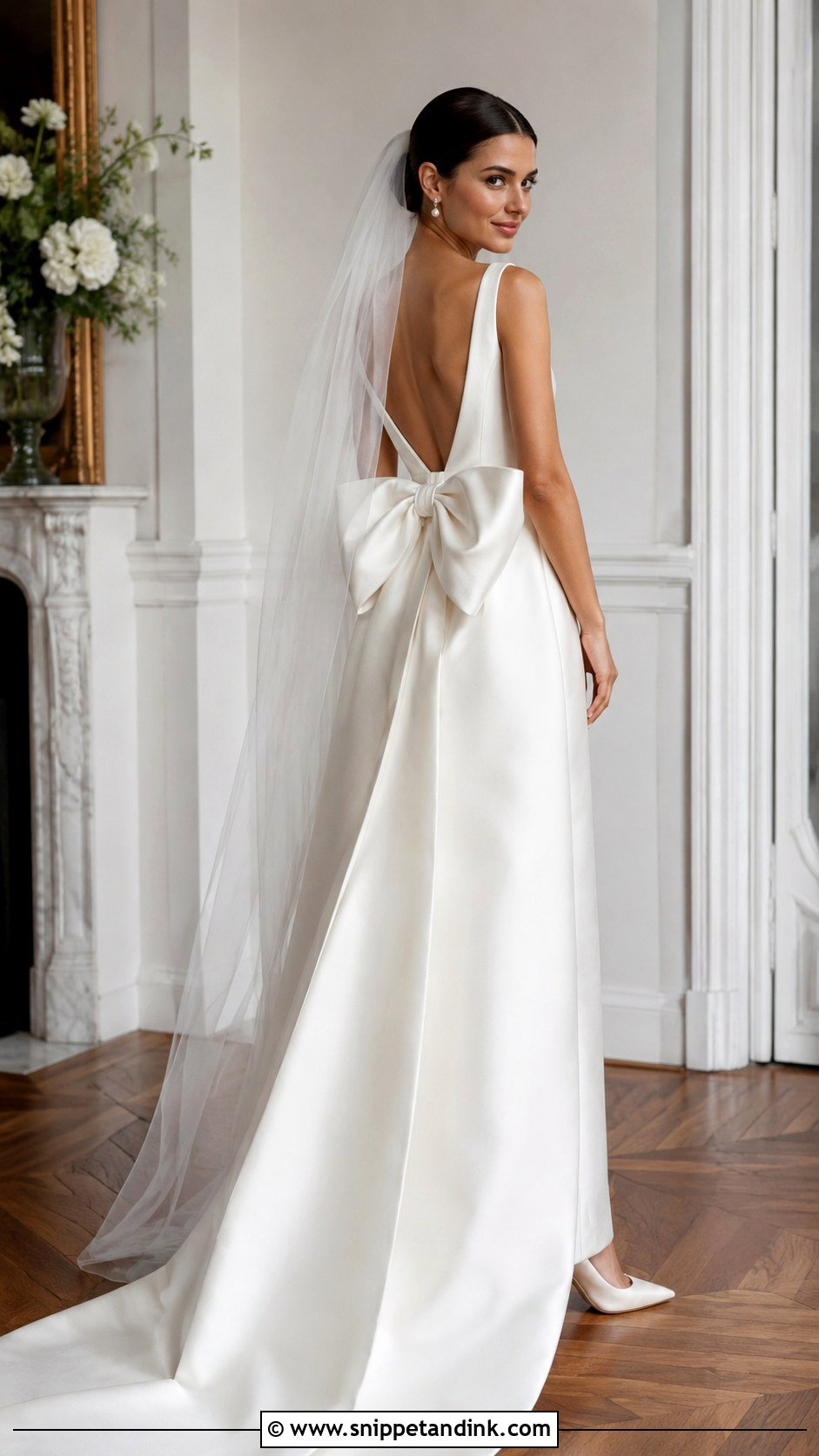
A bow back gives you a striking exit view and keeps the front clean. It can sit at the waist, shoulder or upper back. Mikado holds a crisp sculptural bow; satin gives softer folds. A column, sheath or simple ball gown gives it room. Most veils cover a back bow during the ceremony, so plan to remove the veil for portraits and the reception. Check that the bow doesn’t press into your back when seated, or get in the way of bustling. Detachable bows solve both problems.
17. Cape Sleeve Bridal Dress
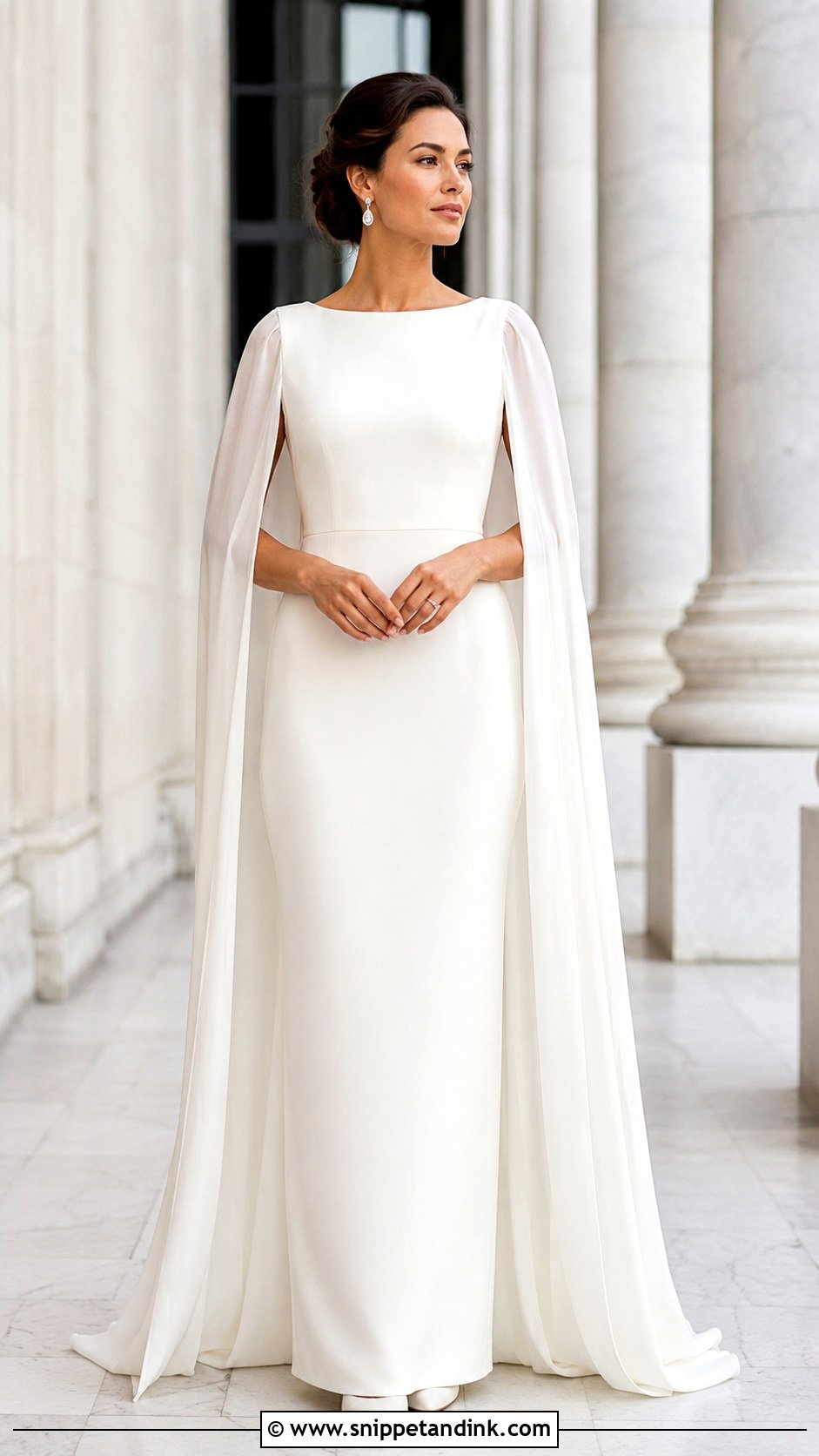
Cape sleeves give coverage without the restriction of fitted sleeves, so you can raise your arms freely. The cape can fall from the shoulders, fix at the neckline or run into a train. Chiffon moves in the lightest breeze; lace is heavier and steadier. Keep the gown underneath simple, a column or A-line, so the layers don’t bulk up. Drop earrings, a smooth updo and closed heels suit it, and a veil is optional. Outdoors, test it in wind; a long chiffon cape can wrap around you mid-vow.
18. Bridal Dress With Detachable Overskirt
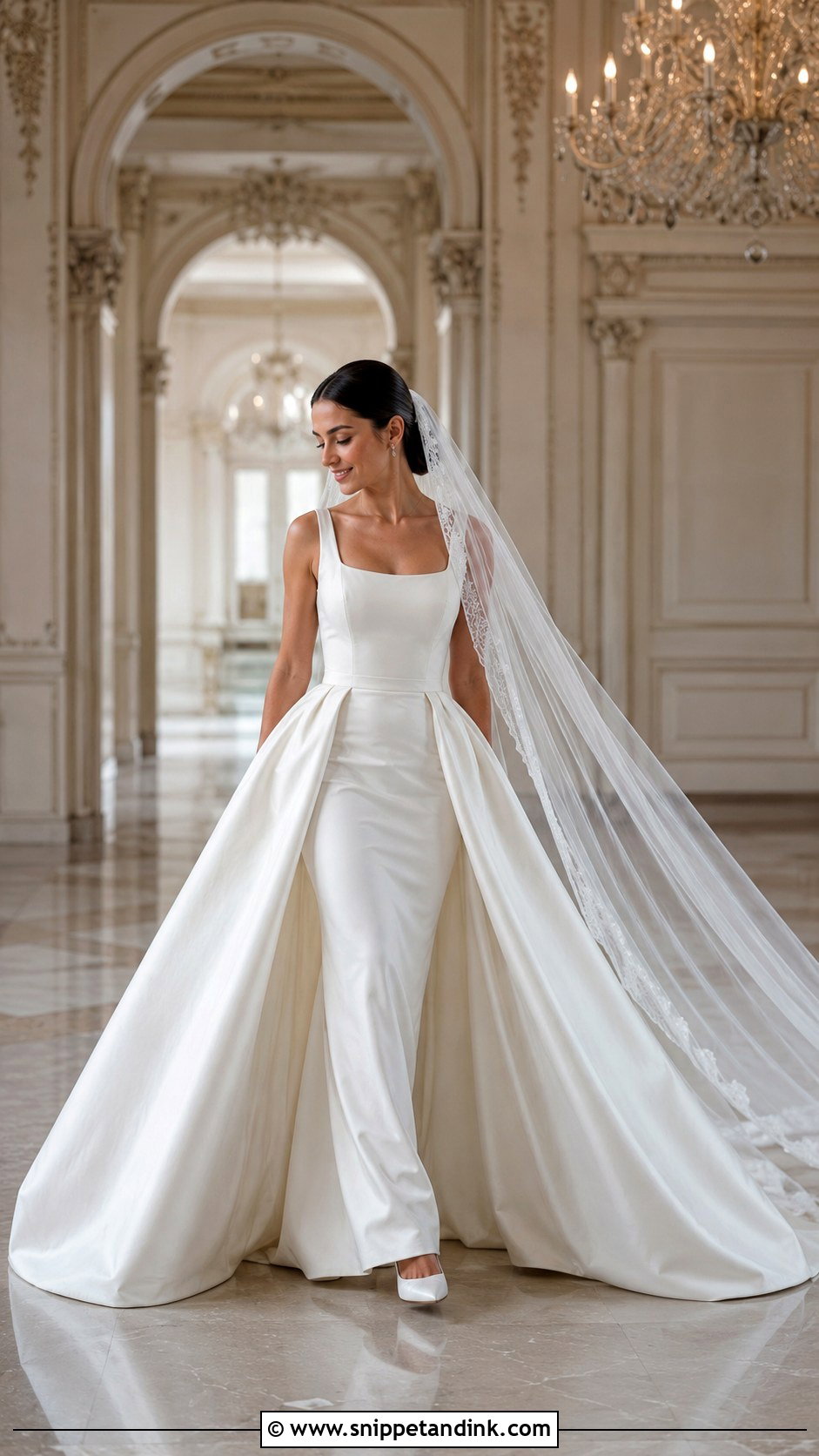
A detachable overskirt gives you a ball gown for the ceremony and a sheath, column, or fitted dress underneath for the party. Tulle gives airy volume; satin and mikado give structure. The attachment is where I focus at fittings: hooks or a waistband that shows at the back ruins the clean line underneath. A long veil, studs and supportive pumps suit the ceremony look; after the change, switch to statement earrings or a shorter veil. Practise the removal with whoever will help you, before the wedding.
19. Blush Tulle Bridal Dress
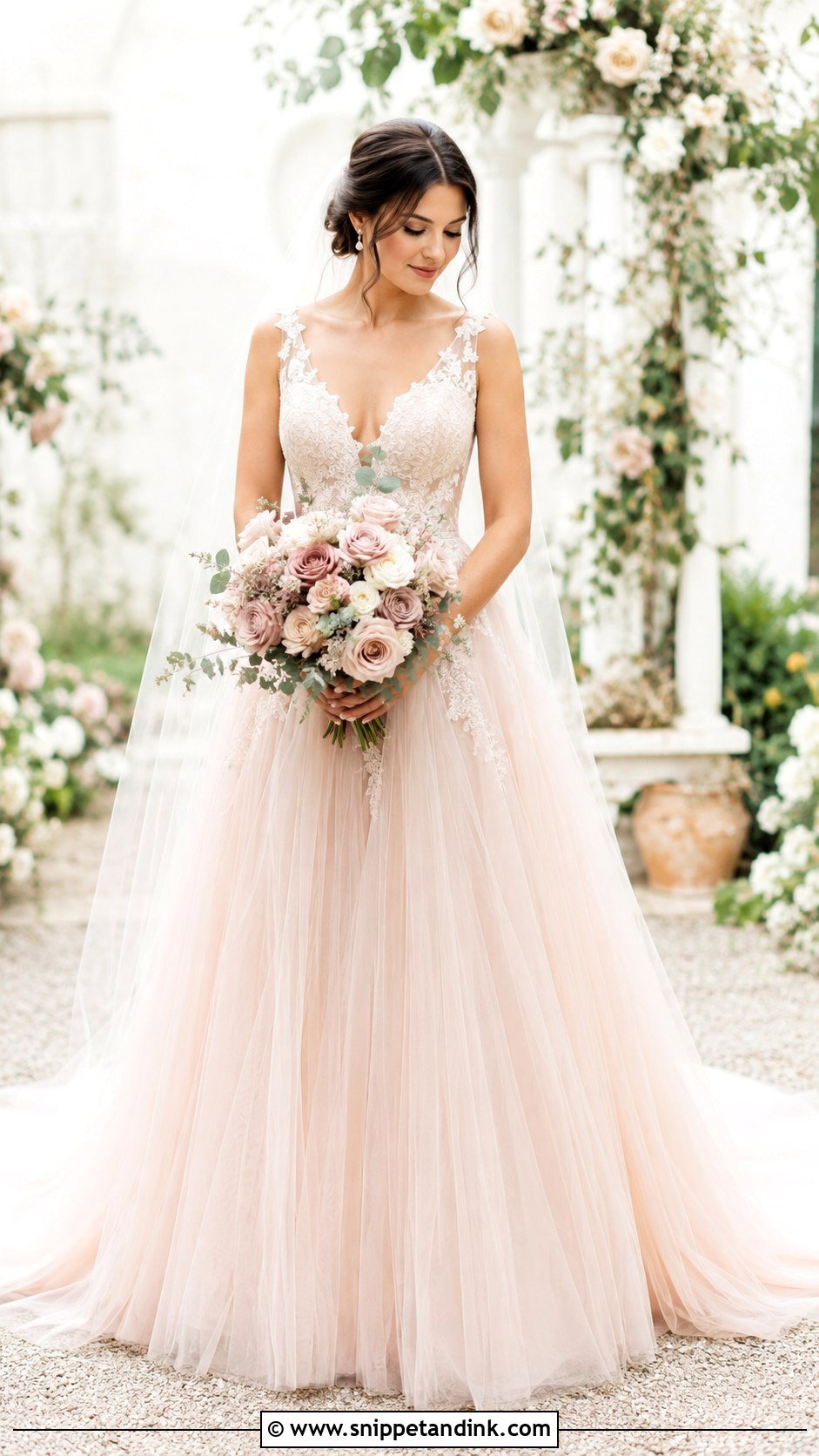
Blush reads differently on every skin tone. On some brides it looks like warm ivory, on others distinctly pink. Test the colour against your skin by a window, not in the shop. Soft pink, nude and champagne undertones add depth under lace and layered tulle. A fitted bodice with a flowing A-line keeps it graceful. Ivory shoes, rose gold or pearl earrings and a veil in a matching tone finish it. Mixing a bright white veil with a blush gown makes both look off, so match the whites carefully. White and muted pink flowers suit the dress.


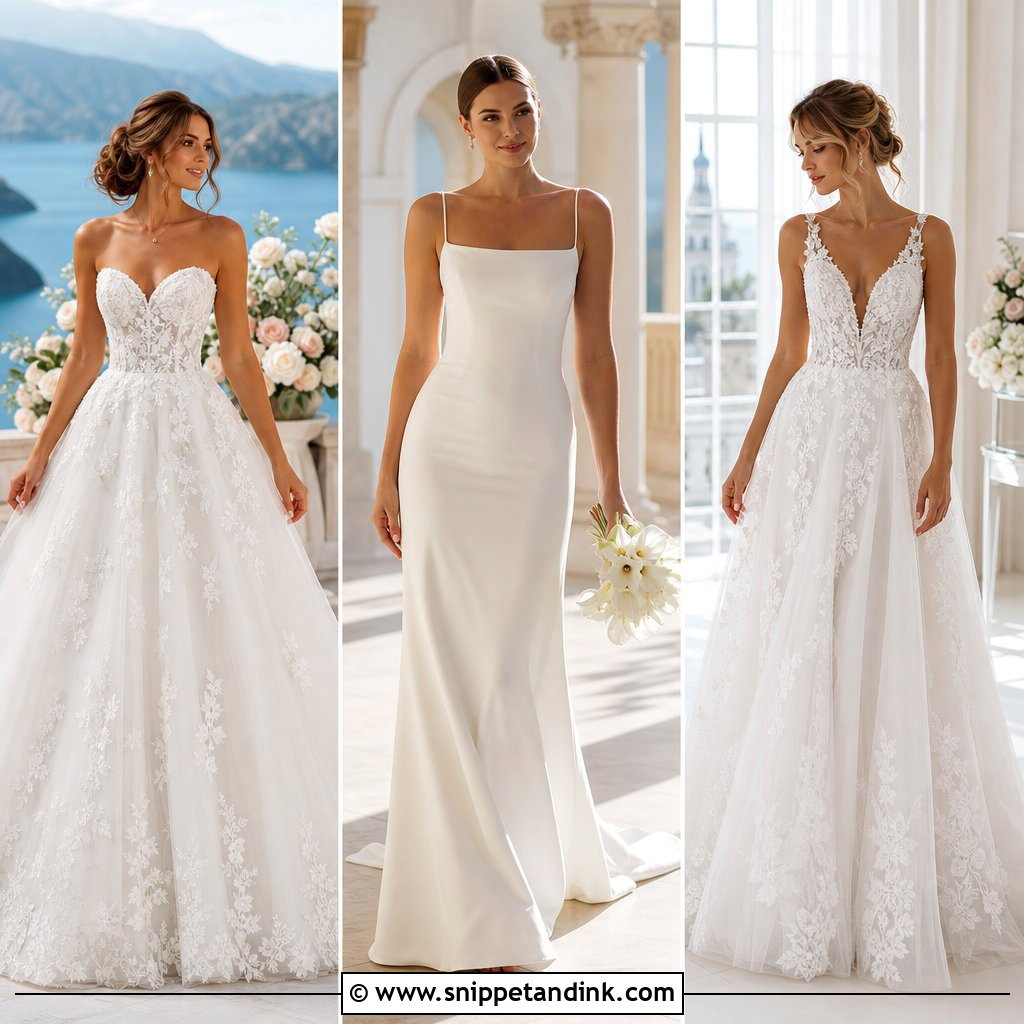
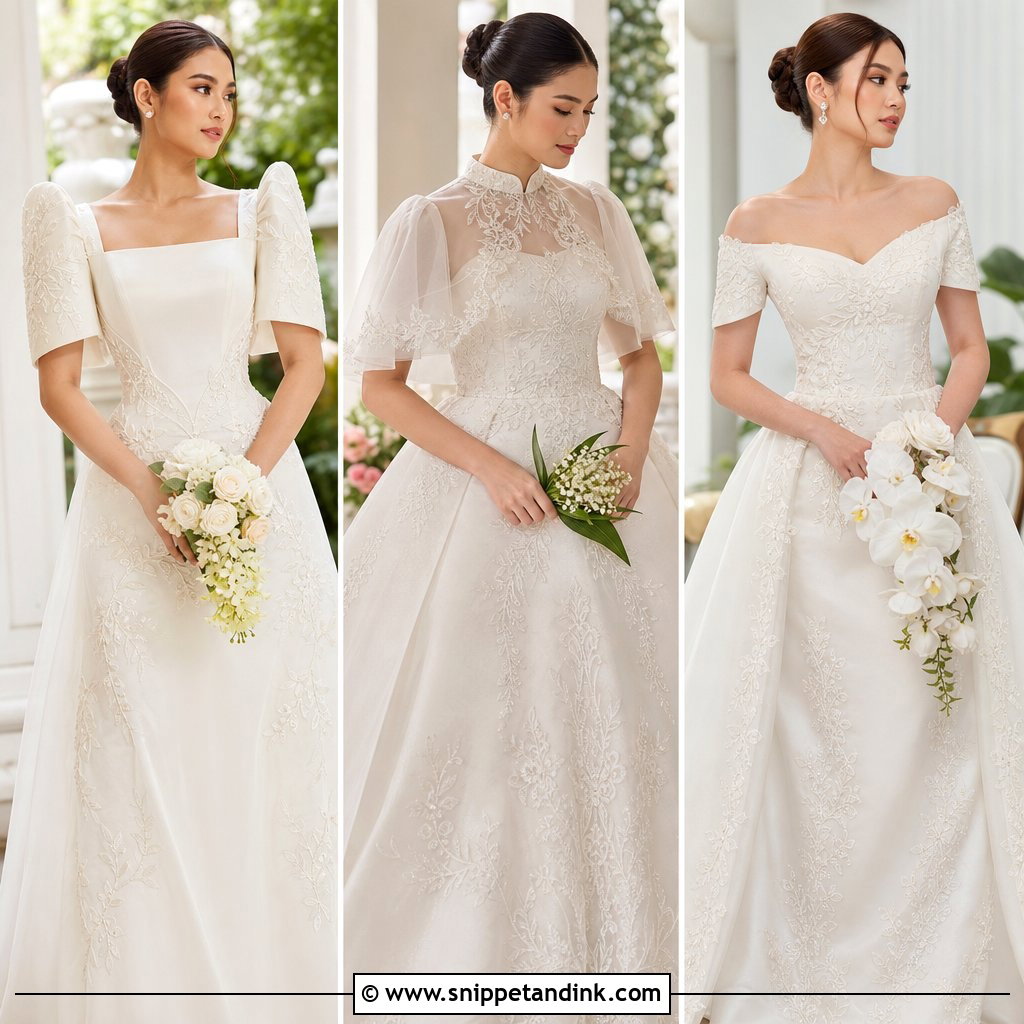
20. Column Bridal Dress With Draped Neckline
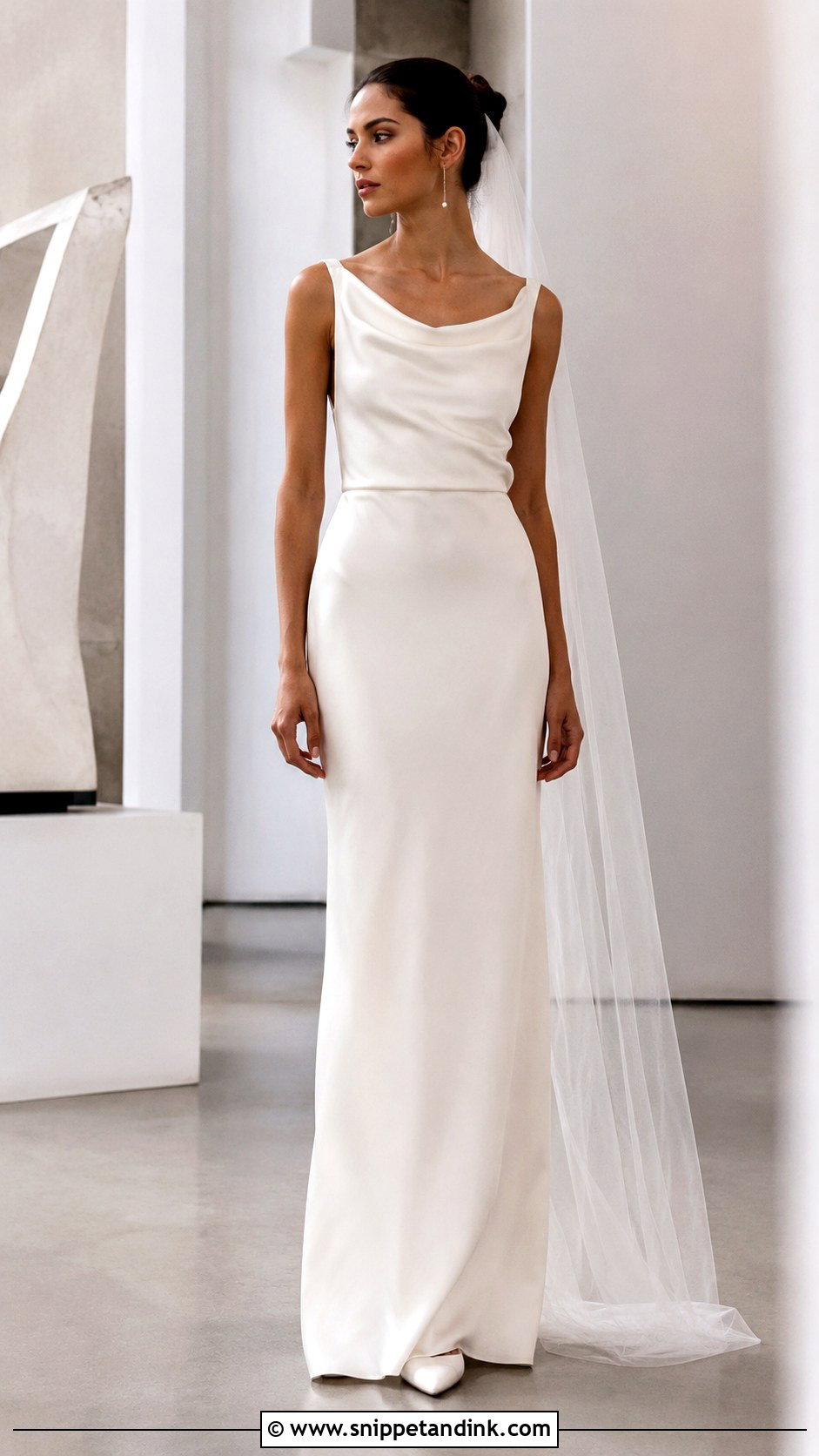
Draping is skilled work, and on a column dress it is the only real detail, so look closely at how the folds sit at the neckline. Silk, satin and smooth crepe all fold naturally. If you need support, choose a draped overlay on a structured inner bodice. The skirt falls fairly straight from the hip, so walk in it before final alterations; a column hem that is too narrow shortens your stride. Long earrings, pointed pumps, an updo and a narrow veil that follows the dress keep the line long.
The Underwear Each Fabric Asks For
Half the gowns on this list change completely depending on what’s underneath, and brides often leave it until the final fitting. Buy foundations early and wear them to every fitting, because a seamstress fits the dress to your shape in them.
Silk, crepe and satin
These show every edge. Choose laser-cut, seam-free underwear in a shade close to your skin, not white, which can show through ivory. A smooth shaping slip can help a bias-cut dress fall evenly.
Structured and boned bodices
Mikado, corset and basque styles often have cups sewn in. Ask your seamstress whether you need a bra at all; adding one under built-in boning can push the bodice out of line.
Low backs, off-shoulder and slip straps
Adhesive or low-back bras work for some brides and not for others. Test any adhesive style for a full evening before the wedding, since heat and dancing loosen them. Cups can also be sewn directly into the gown, which is often the most secure solution.
Try the Shape That Scares You at Least Once
A good wedding dress balances how it looks with how it feels after eight hours. Start with the silhouettes that make you feel confident, then think about your venue, climate, shoes and formality. Try at least one shape you would have ruled out from photos; dresses often look completely different on a body than on a hanger. Sit, walk and lift your arms in every gown you consider. Careful alterations and a few well-chosen accessories make whichever dress you choose feel like yours.
You'll Like These Ideas:




Leave a Reply