
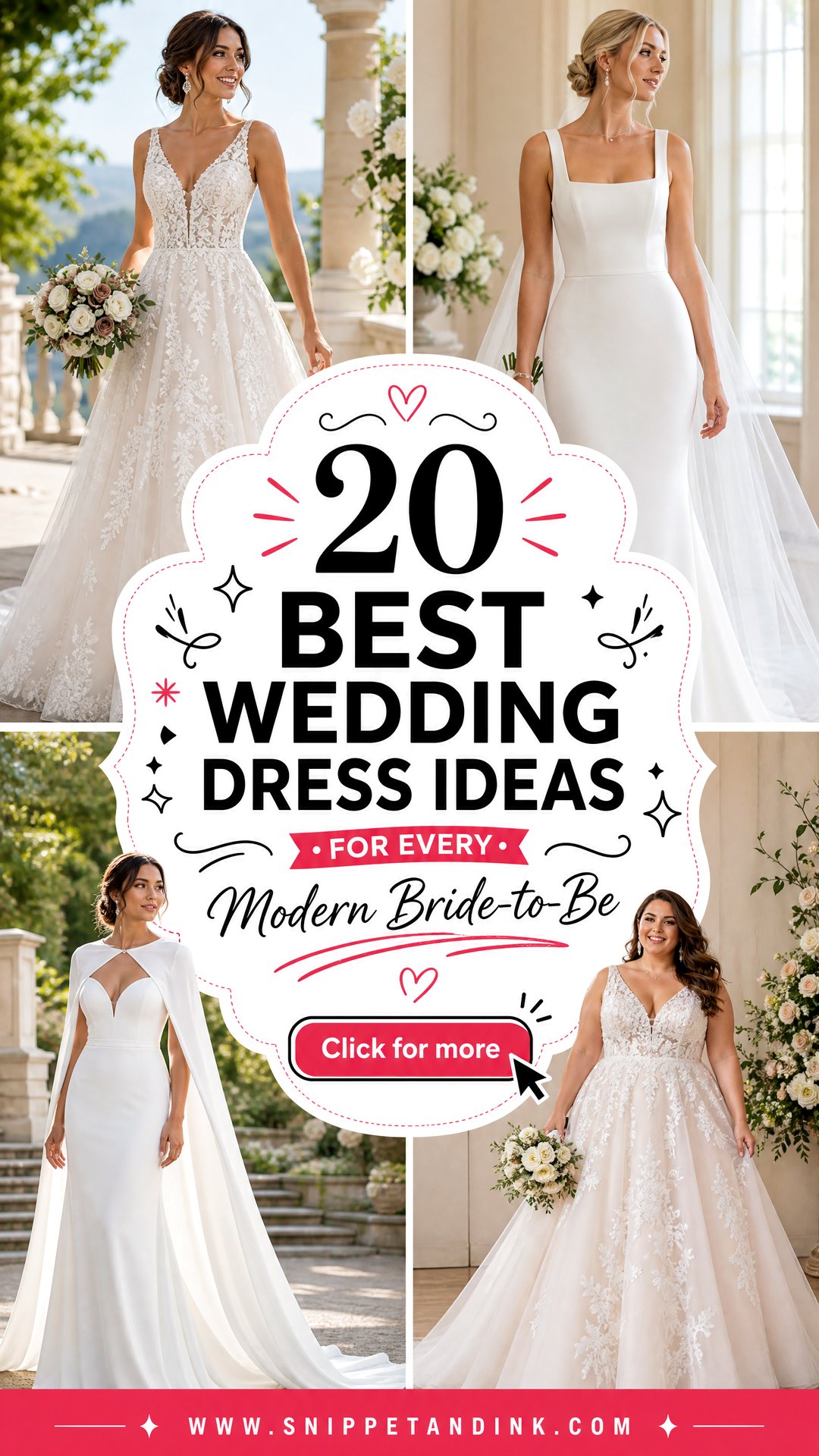
A neckline photographed on its own tells you very little. I’d rather a bride compare whole outfits, gown plus veil plus shoes, because that’s how the dress will actually be seen. The gowns below mix shapes that have been around for decades with details that are popular right now: romantic lace, dimensional flowers, basque waists, square necklines, bows and very plain minimal cuts. For each, I’ve added the veil, shoes and jewelry I’d style it with. Keep your venue, season and how formal the day is in mind as you scroll, and note which outlines you keep coming back to before you book a salon.
Fabric Weight Against the Weather on Your Date
Silhouette gets all the attention, but fabric decides how you feel at hour six. I always ask for the forecast range for the month before I pull dresses.
- Hot or humid: chiffon, organza, soft tulle and lightweight crepe. Heavy satin and lined lace trap heat, and duchess satin can show damp marks.
- Cool or cold: mikado, heavier satin, velvet details and long lace sleeves, plus a coat or cape for outdoor photos.
- Mixed day and night outdoors: a lighter gown with a removable cover-up is easier than a warm dress you can’t escape at noon.
- Long travel to the venue: crepe and lace recover from creasing better than plain silk satin, which marks where you sit.
When I’m unsure, I ask the shop for a fabric swatch and scrunch it in my hand for a few seconds. How it looks afterward is a fair preview of the back of the skirt after the ceremony.
1. A-Line Lace Wedding Dress
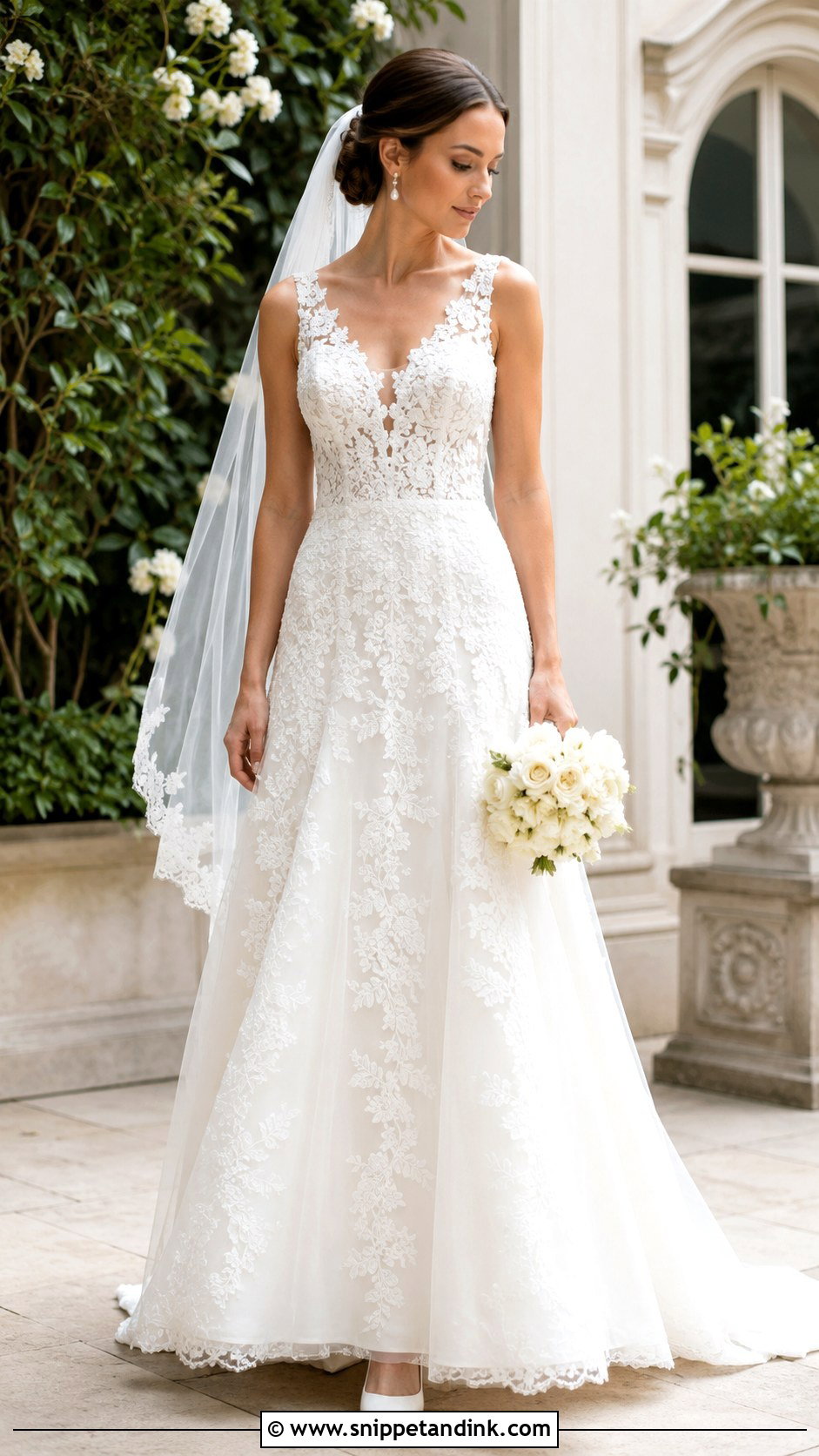
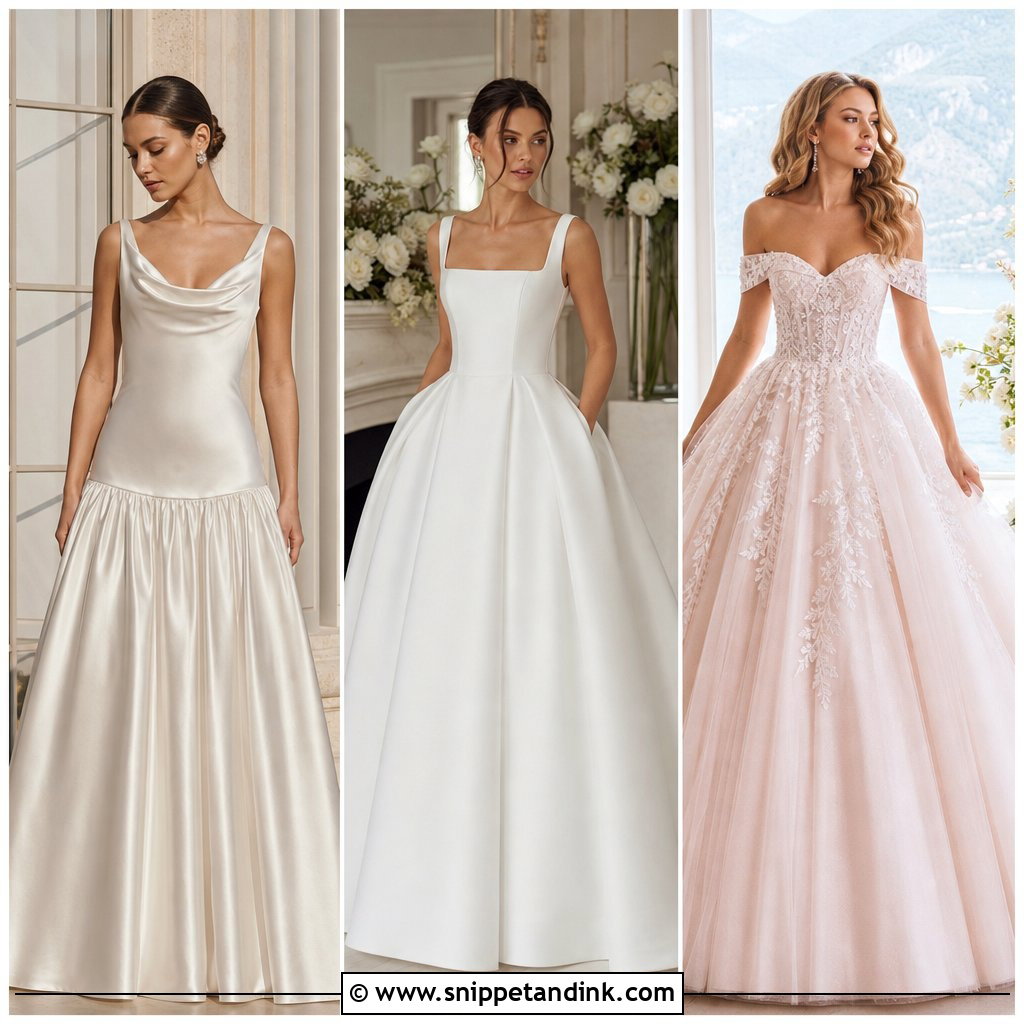
Lace on an A-line is about the safest romantic choice there is, and it’s forgiving in fittings because the skirt hides small adjustments. I look for a fitted bodice with supportive straps or a soft curved neckline, and a skirt falling from the natural waist over a light tulle layer that moves without puffing. Floral lace shows texture well in photos. Style it with a fingertip veil, pearl drops and pointed ivory pumps, and keep the bouquet compact so it doesn’t cover the lace. For a lawn ceremony, choose a shorter train and add heel protectors so you’re not sinking.
2. Satin Ball Gown Wedding Dress
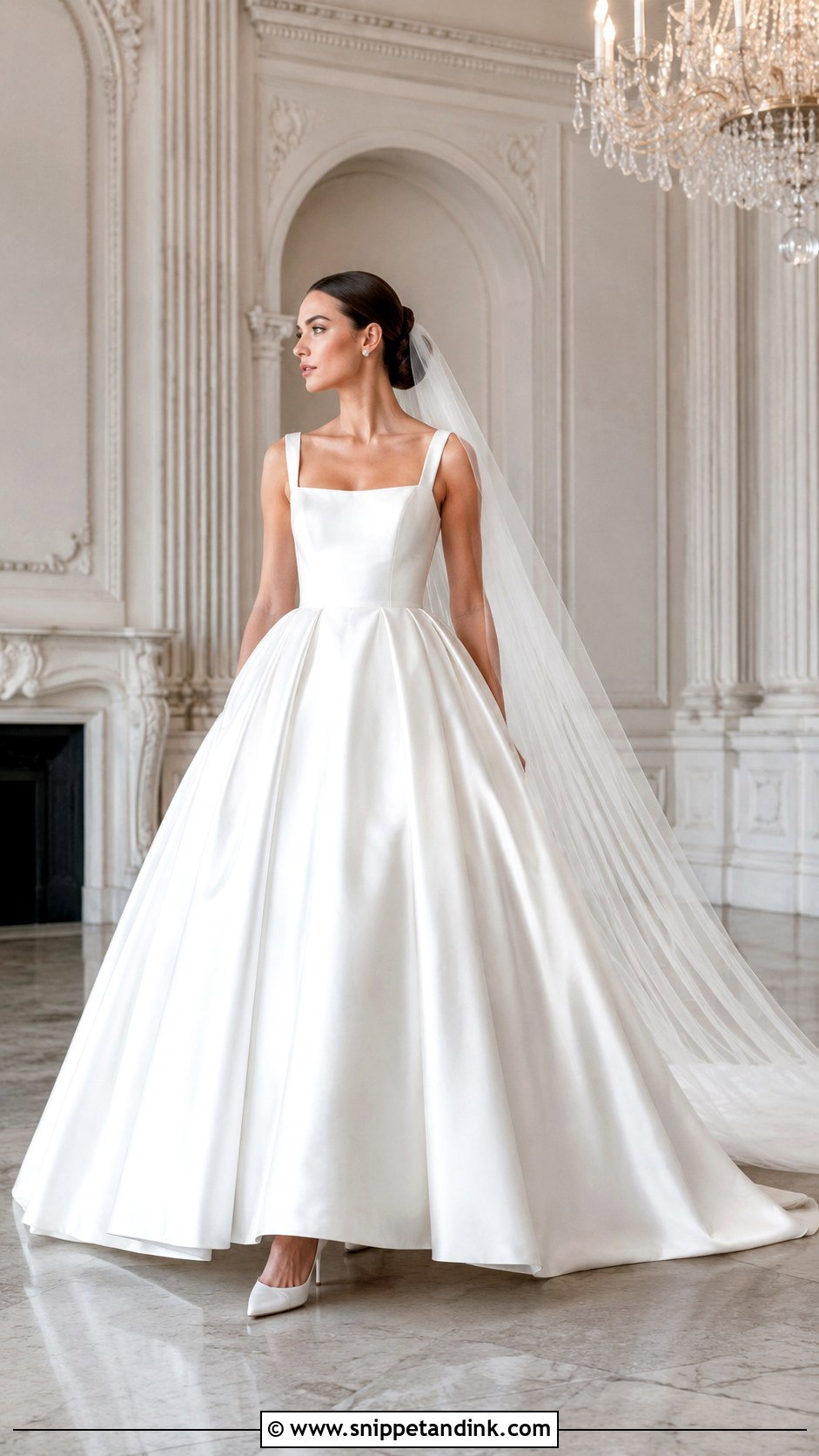
Satin ball gowns stand up on their own. Structured satin or Mikado fabric holds the skirt in a sculpted shape, and the fitted bodice does the work at the waist under a strapless, scoop or square neckline. Wear a cathedral veil for the ceremony and take it off before dancing. Crystal studs, a sleek bun and closed-toe satin heels are enough. Fair warning from the fitting room: a full satin skirt is heavy and warm, and it needs space at the table and in the car. Sit, walk and turn in it before you commit.
3. Square Neck Wedding Dress
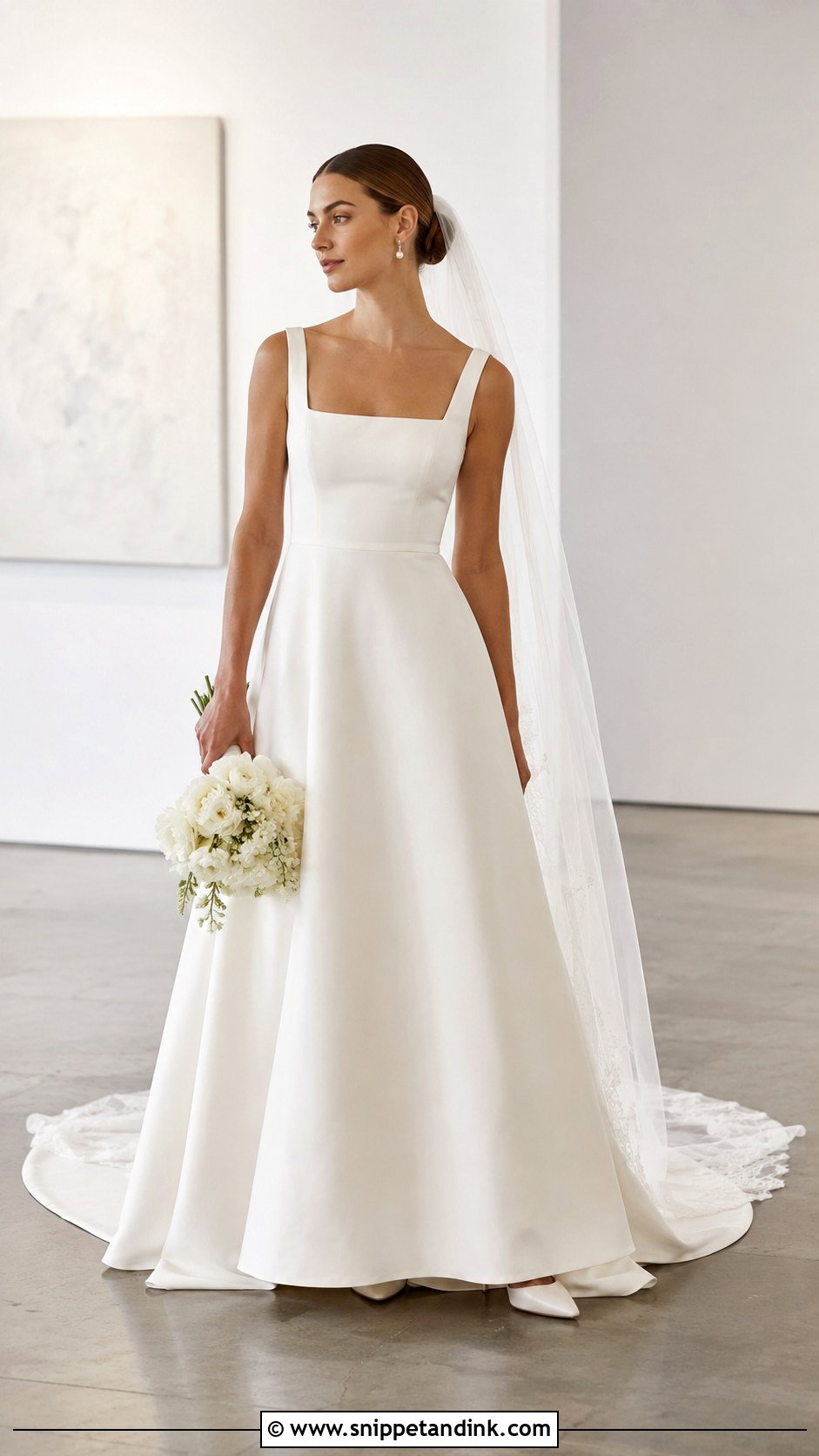
Wide straps are what make a square neck work. Thin ones let the corners of the neckline sag, and then the straight line you wanted turns into a slight curve. Pair the bodice with an A-line or softly fitted skirt in matte satin, crepe or lace. A narrow chapel veil, small pearl earrings and low block heels finish it, with a neat chignon keeping the neckline clear. If you want more coverage, ask about detachable fitted sleeves. It reads modern without losing the traditional feel.
4. Off-the-Shoulder Wedding Dress
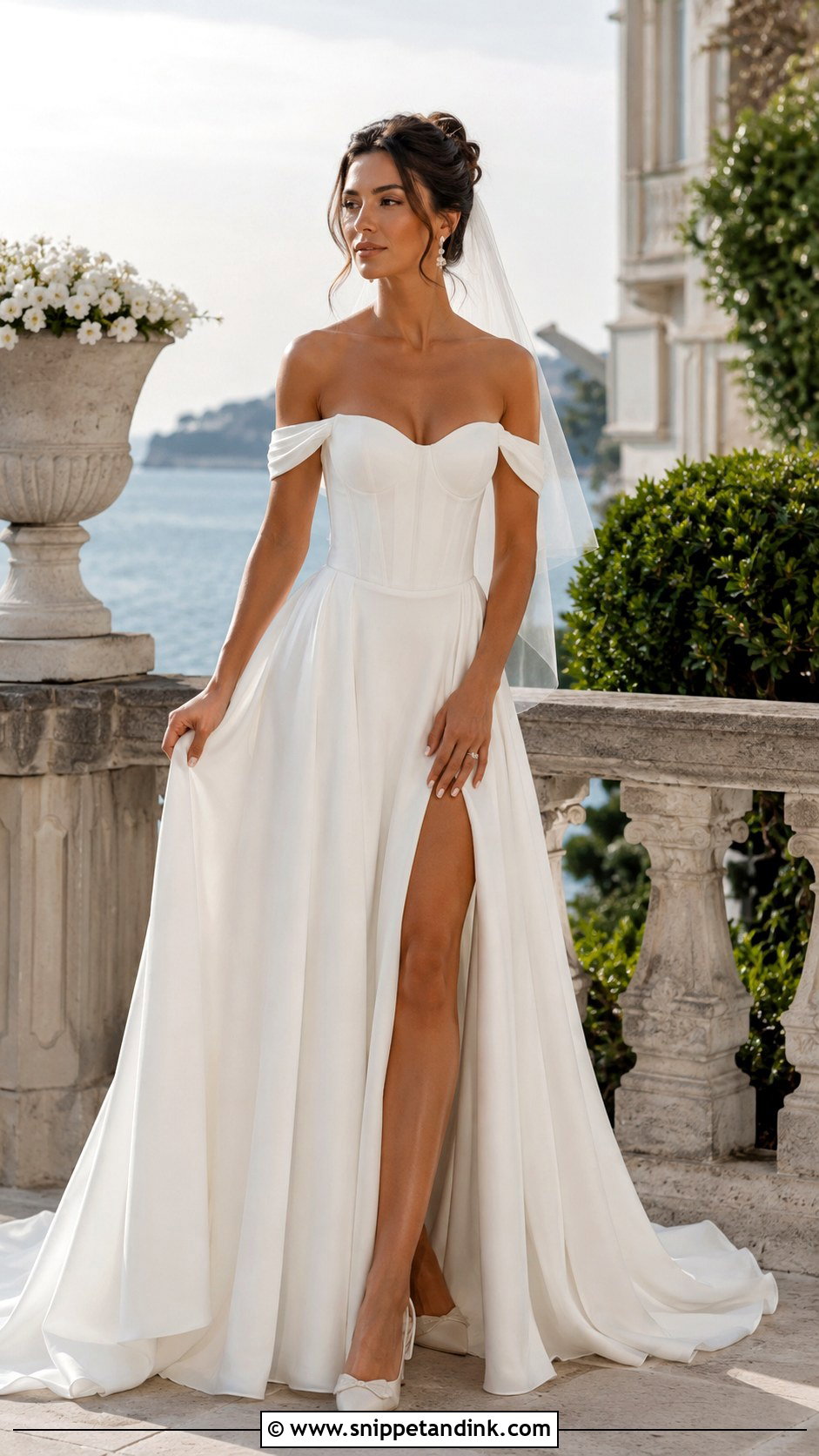
An off-the-shoulder dress lives or dies by its sleeve bands. Stiff ones pin your arms to your sides; flexible ones let you hug and throw a bouquet. I always have the bride raise both arms and hug me during fittings, and adjust from there. A structured corset bodice gives support, and an A-line or full skirt balances the open neckline. A simple updo, fine drop earrings and ivory slingbacks suit it, with a medium-length veil. Add a necklace only if there’s real space between the neckline and your chin.
5. Basque Waist Wedding Dress
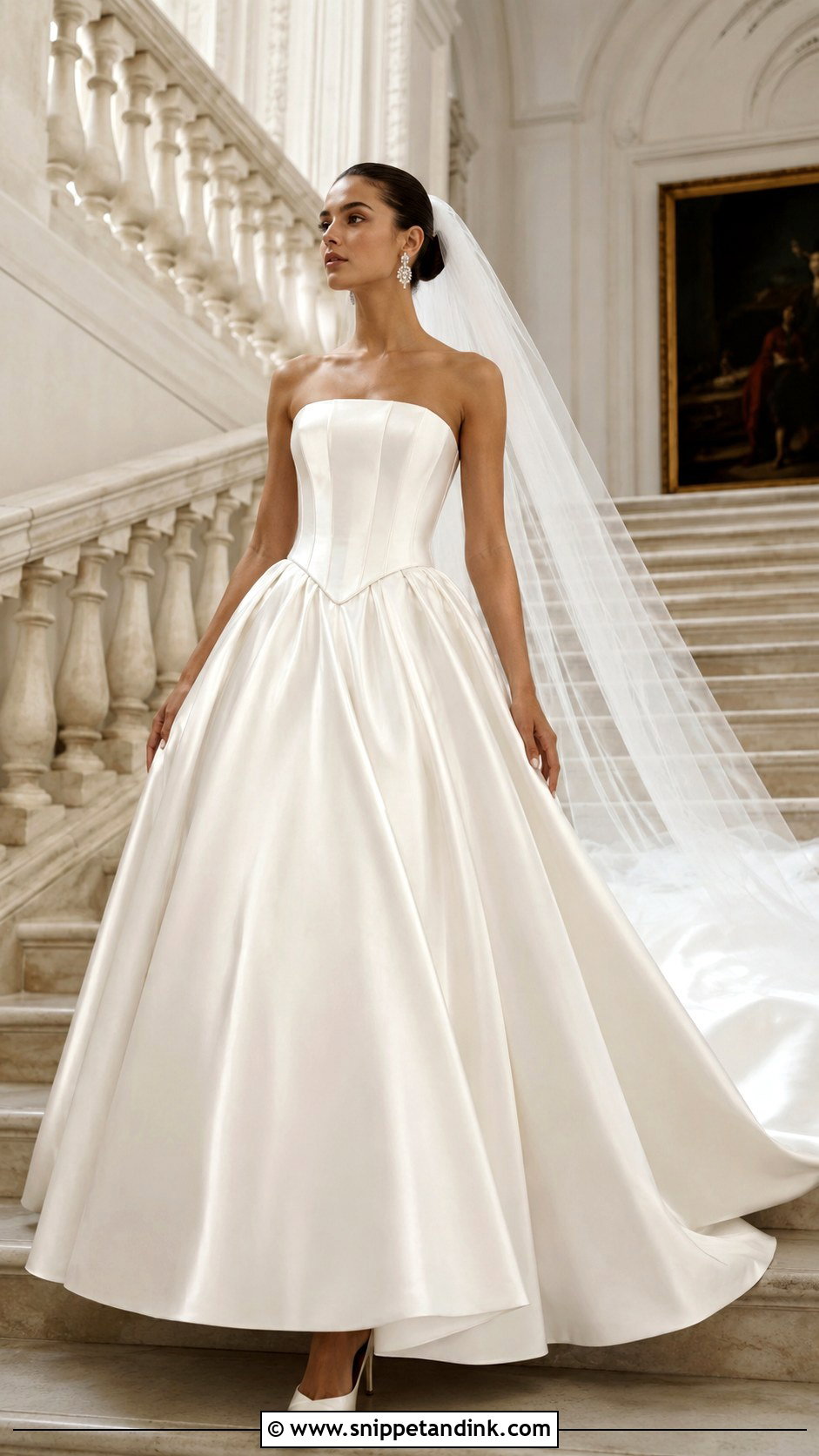
A basque waist wedding dress dips below the natural waist into a point, which lengthens the torso and gives a regal outline. It sits best over a full satin, organza or layered tulle skirt. Construction is everything here: I look for proper corsetry so the point lies flat and doesn’t buckle when you sit. A long plain veil, crystal earrings, pointed pumps and a sleek bun or polished waves complete it. Keep the rest of the details quiet. The waistline already does the talking.
6. Mermaid Wedding Dress
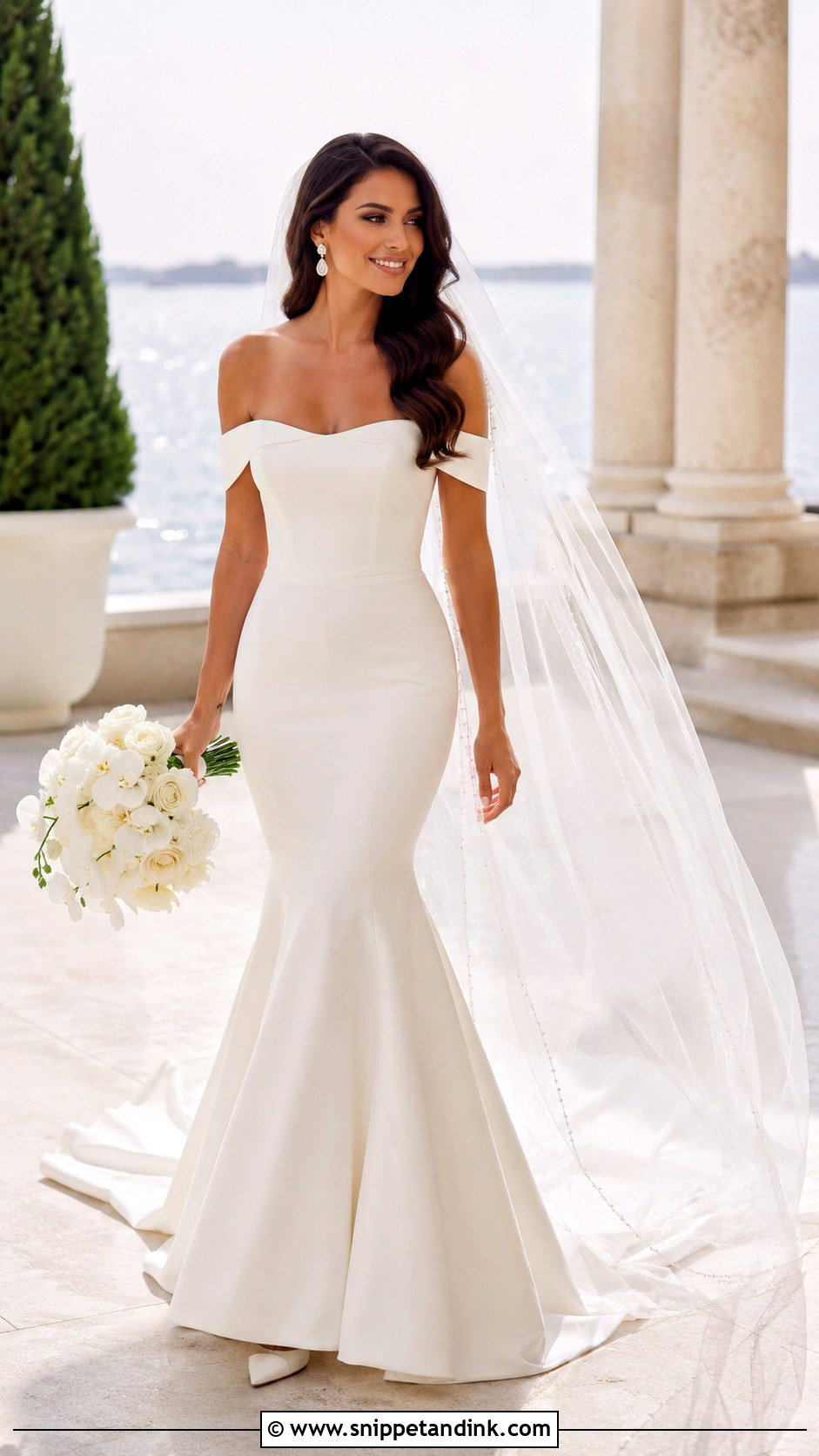
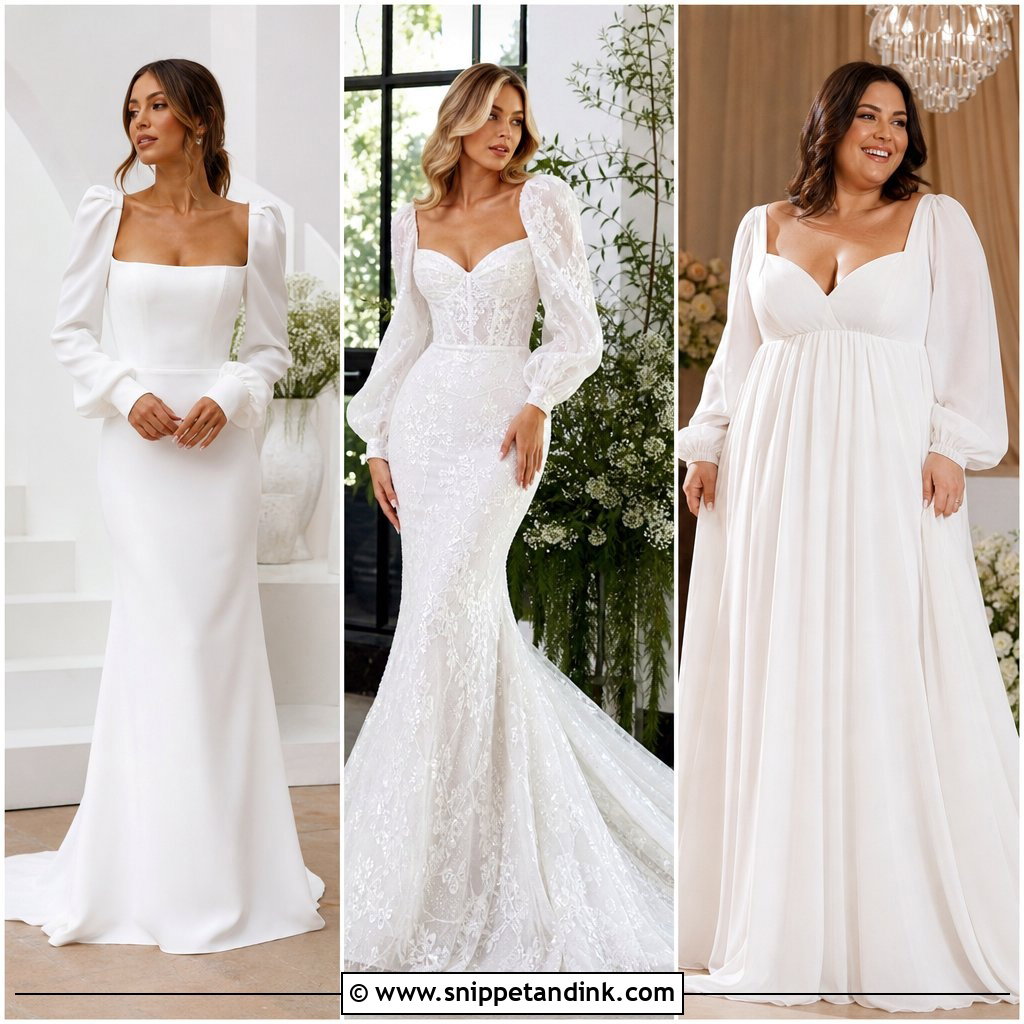
Mermaid gowns fit through the bodice and hips and flare near the knee. Stretch crepe is what I’d suggest for a bride who wants the shape but also wants to dance, since it gives with the body; lace and beading look more glamorous but move less. Wear secure heels you’ve already broken in, a simple chapel veil and statement earrings, and consider a side-swept style to show off the neckline and back. During alterations, test your stride and sit down every time. It’s made for formal evening receptions and waterfront venues with some glamour to them.
7. Minimalist Slip Wedding Dress
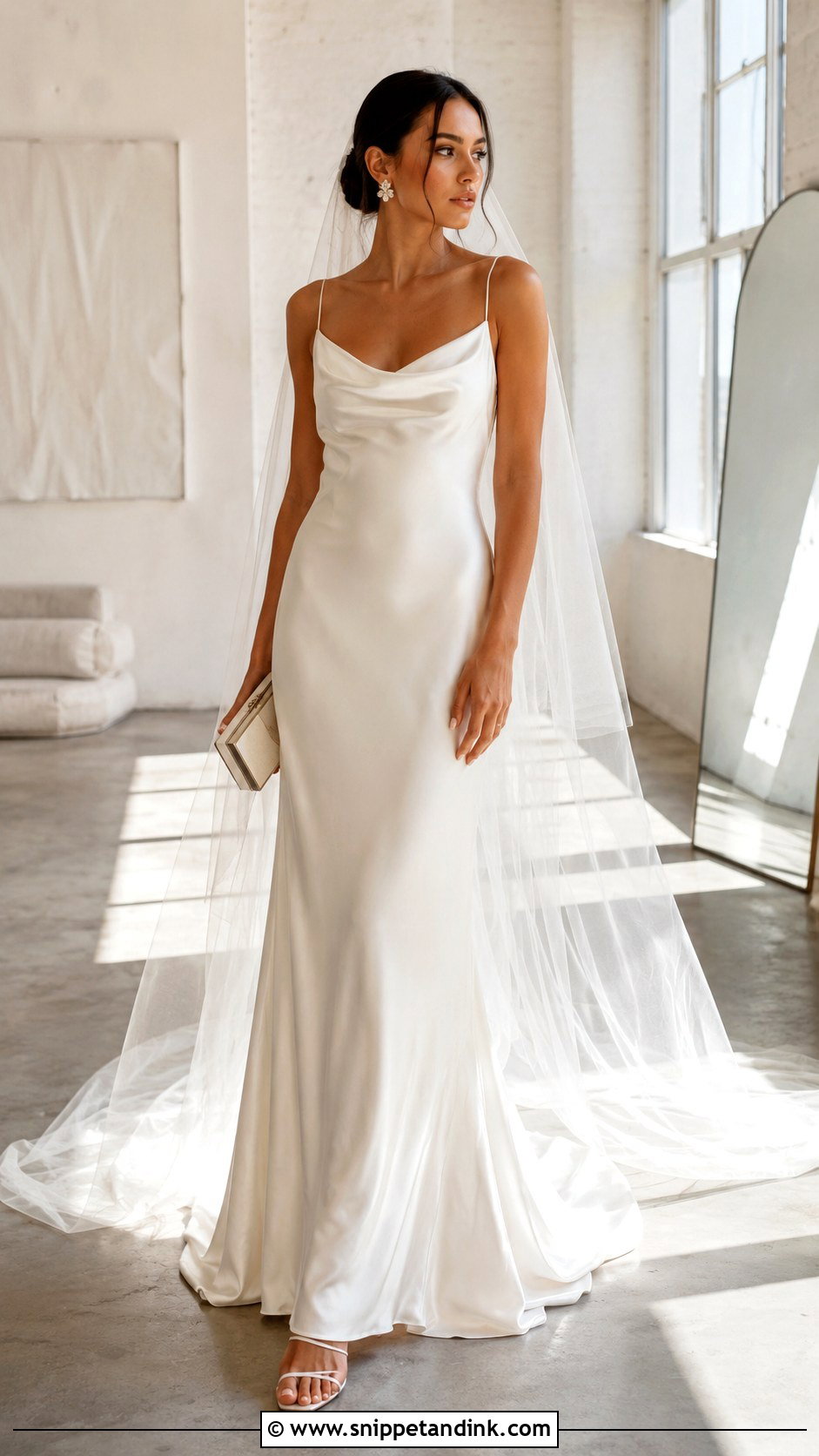
The plainer a dress is, the better the fabric needs to be. A thin satin slip shows every seam and every line beneath it, so I look for substantial silk, satin or crepe that skims without clinging. A draped neckline feels relaxed; a straight or square one looks structured. A sheer cathedral veil gives ceremony drama, and taking it off reveals the clean shape. Sculptural earrings, strappy ivory heels and a small clutch for later are all you need. Smooth, well-fitted undergarments and precise tailoring are not optional with this one.
8. Long Sleeve Lace Wedding Dress
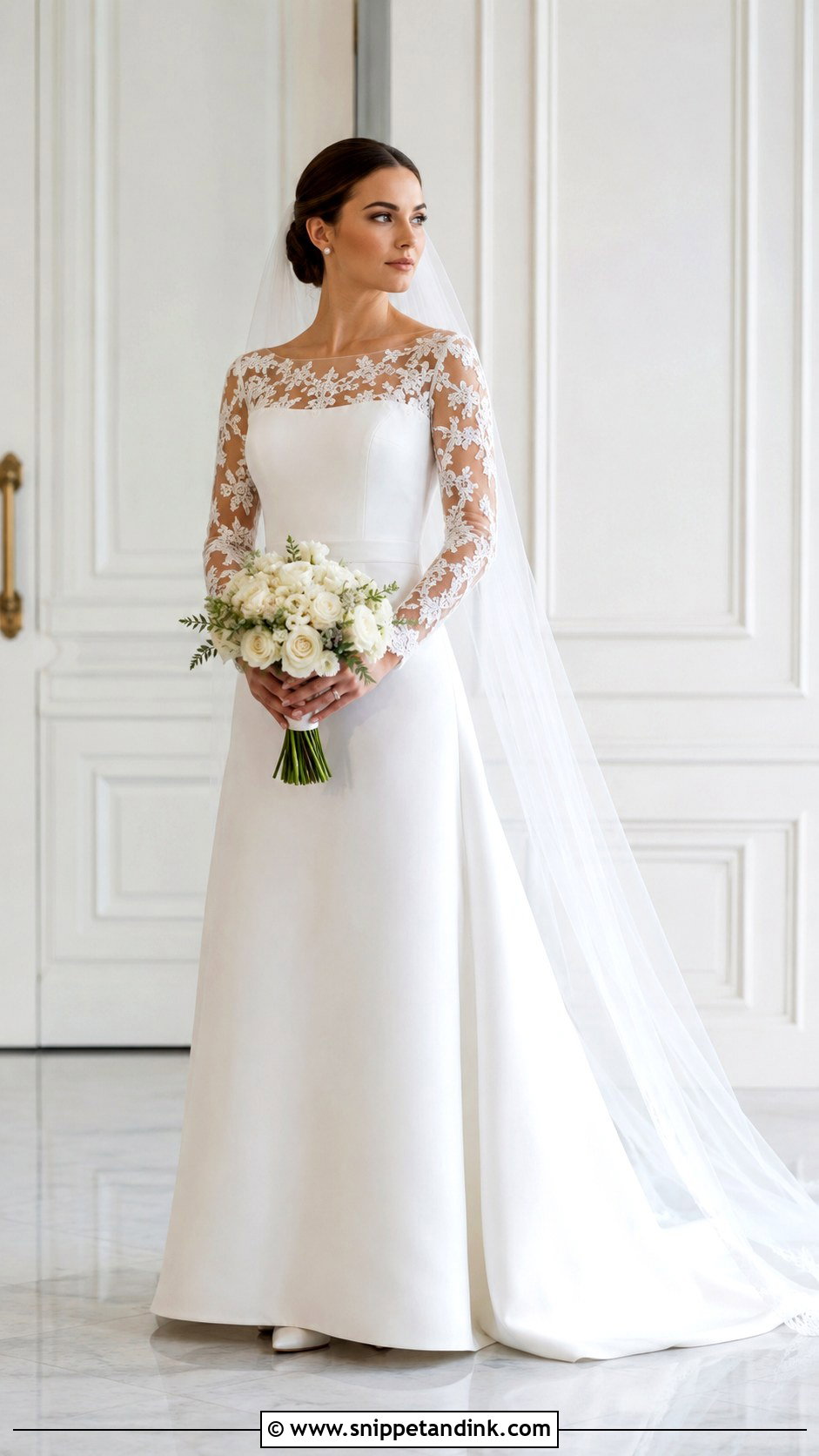
Lace sleeves come two ways. Illusion sleeves with floral appliqué look delicate; fully lined lace looks more modest and a little heavier. Balance either with a clean A-line or a fitted crepe body so the whole outfit doesn’t feel weighed down. A simple tulle veil, pearl studs, closed-toe pumps and a low bun keep the sleeve pattern visible. For a cold day, a tailored ivory coat for outdoor photos is smarter than a shawl. Check that the cuffs let you move your hands freely, signing a register included.
9. 3D Floral Wedding Dress
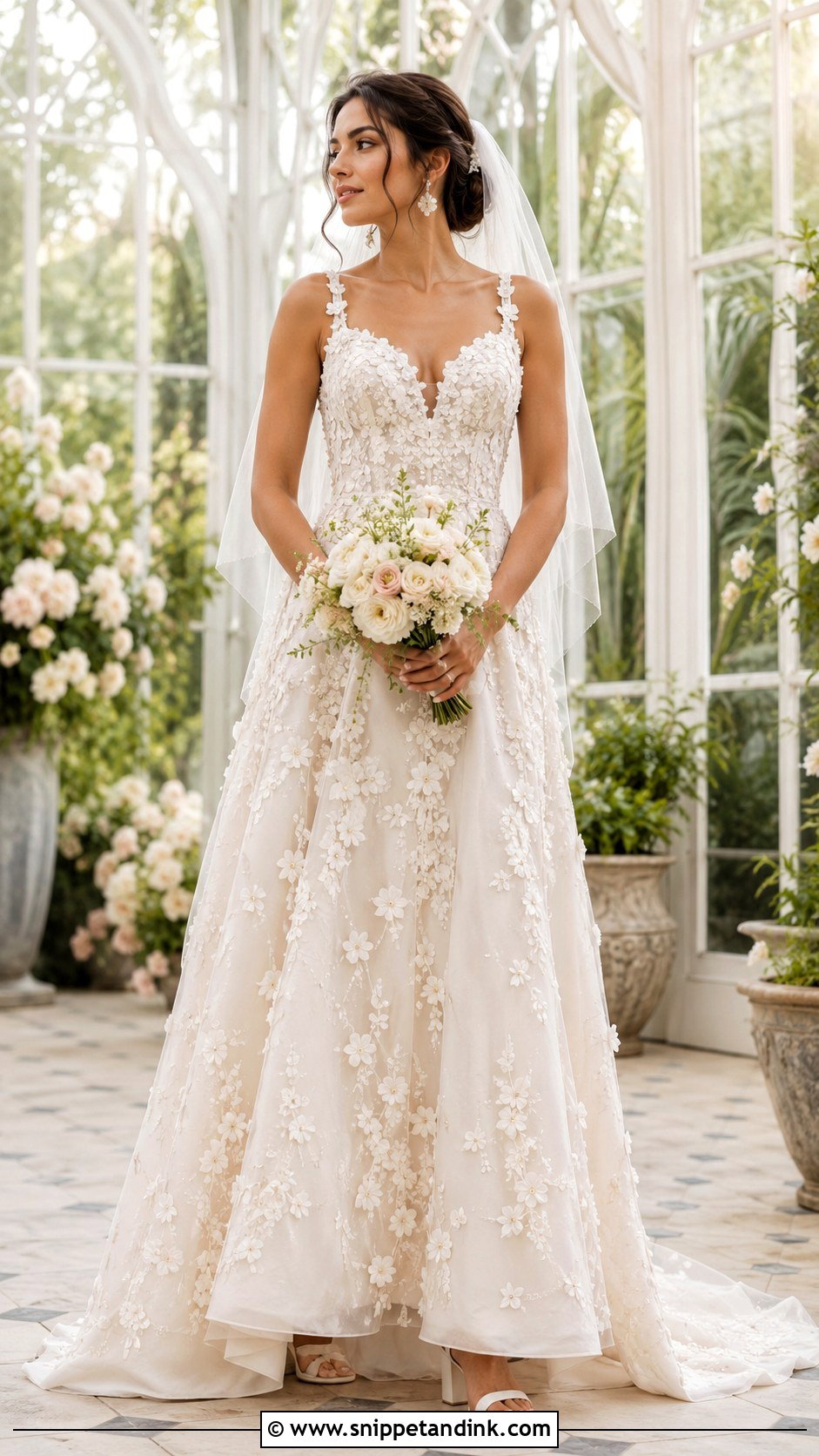
Dimensional flowers are fragile, and that’s the first thing I tell a bride who loves them. The best placement scatters appliqués across the bodice and lets them trail gradually onto an A-line skirt, which balances well in photos. Since the dress is already decorative, keep everything else plain: a fingertip veil, small crystal earrings, ivory pumps or block-heel sandals, a loose low bun. A bouquet with fewer flower varieties stops it competing with the gown. Inspect every appliqué for loose stitching before the day, and keep a needle and matching thread in the emergency kit.
10. Tea-Length Wedding Dress
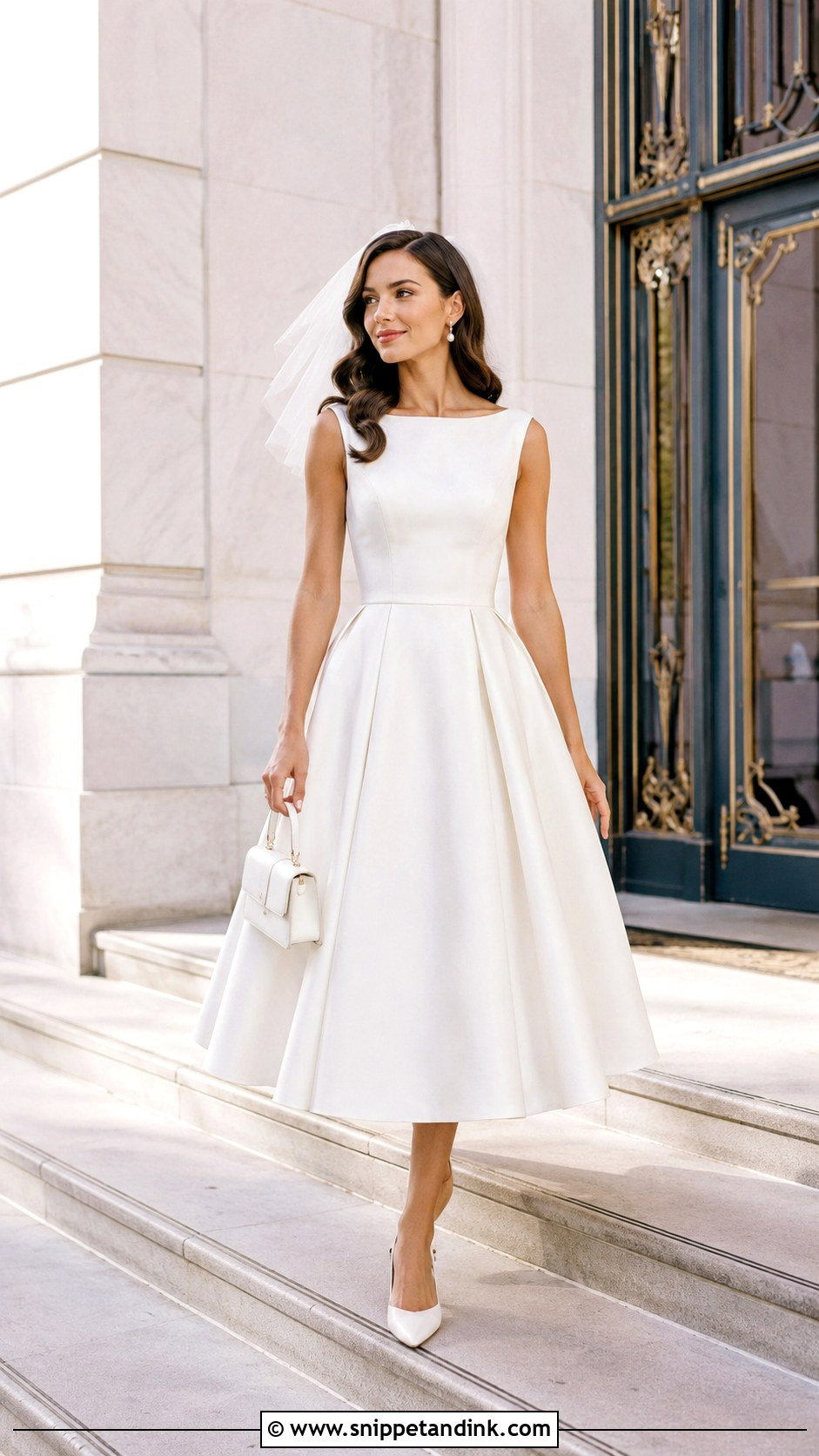
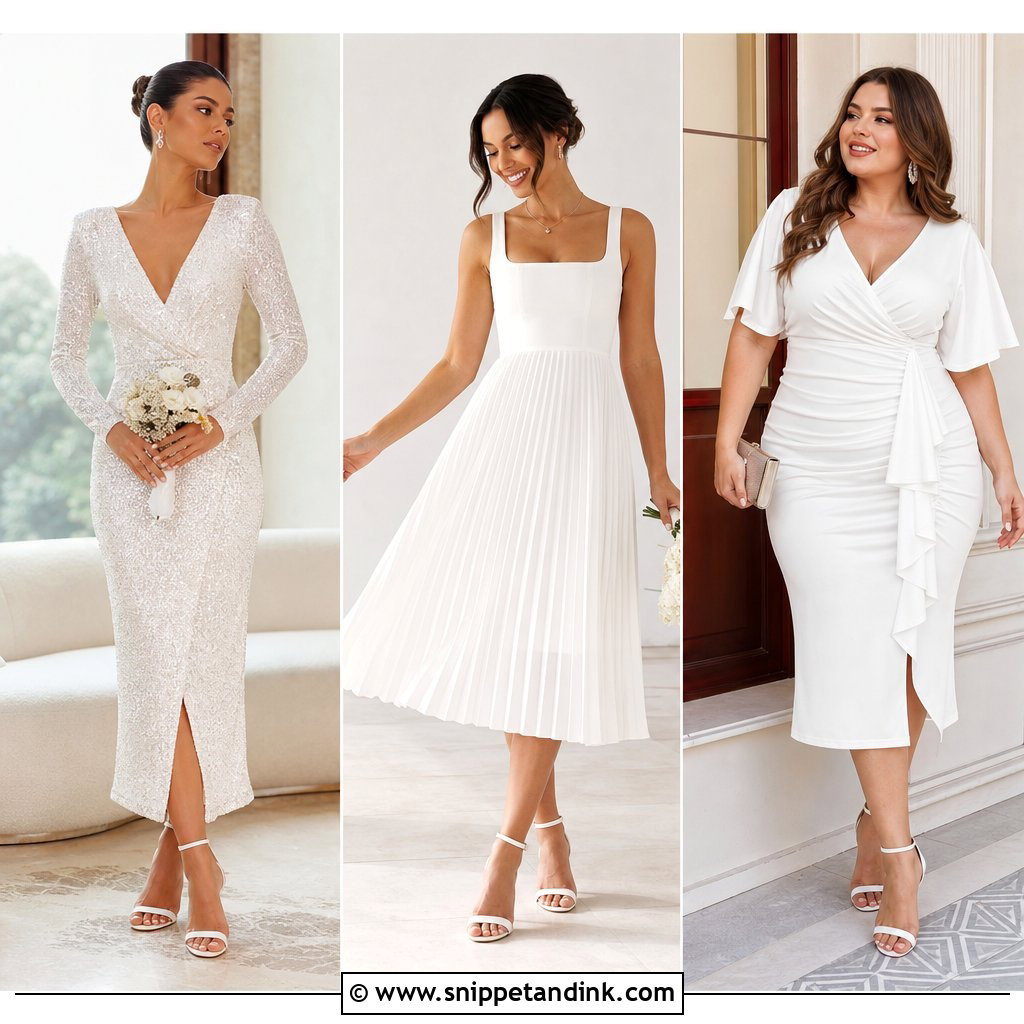
Tea length brings back a vintage feel and makes moving around easy, with the hem landing somewhere between knee and ankle. That puts shoes front and center, so I’d treat them as half the outfit. A fitted bodice with a bateau, square or sweetheart neckline suits it, with pointed pumps, slingbacks or comfortable block heels. A birdcage or short tulle veil is in proportion; a long cathedral is not. Pearl earrings, a structured mini bag and polished waves finish the look. Set the hem with your actual wedding shoes on, since heel height changes where it falls.
11. Mini Wedding Dress
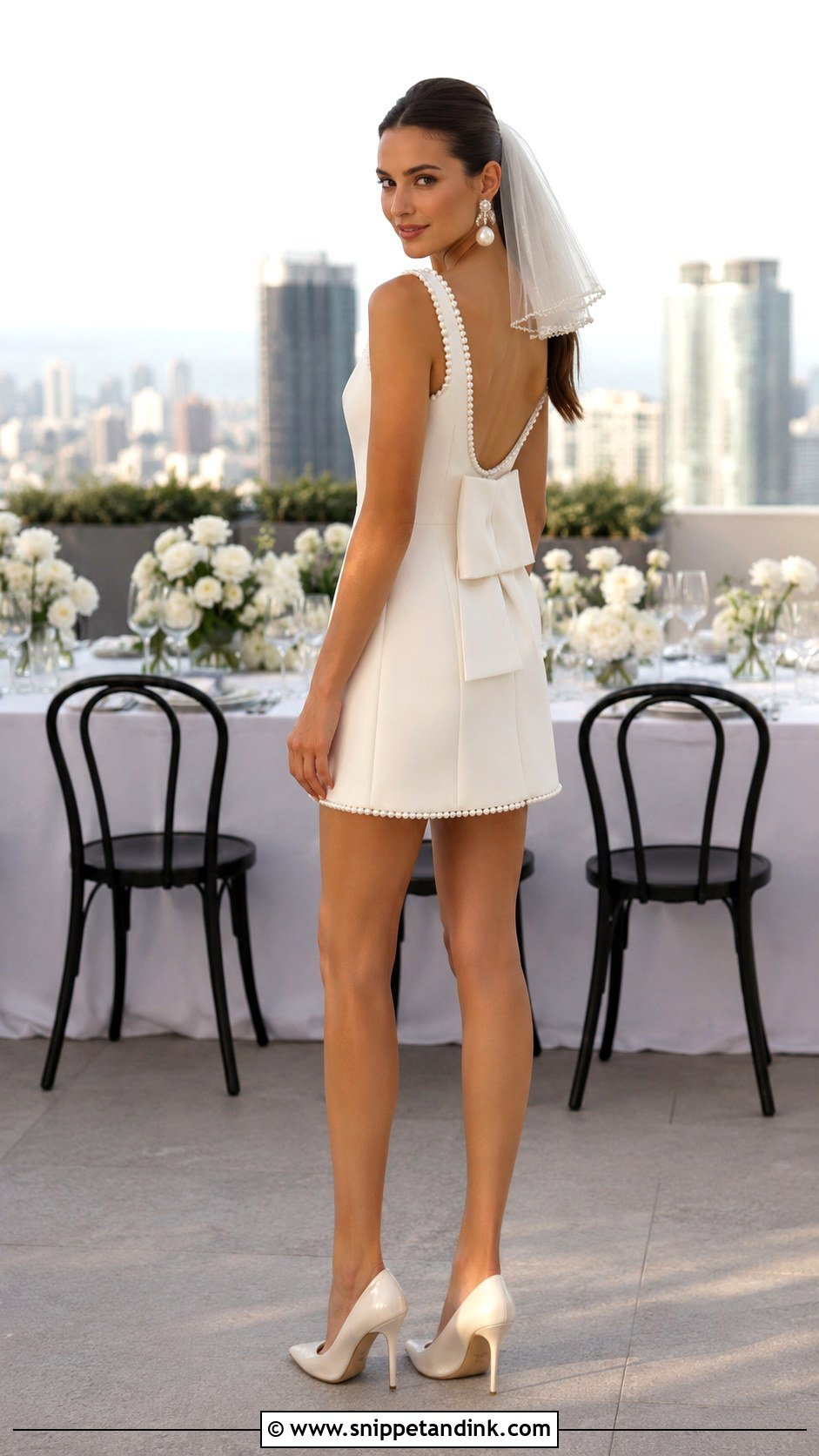
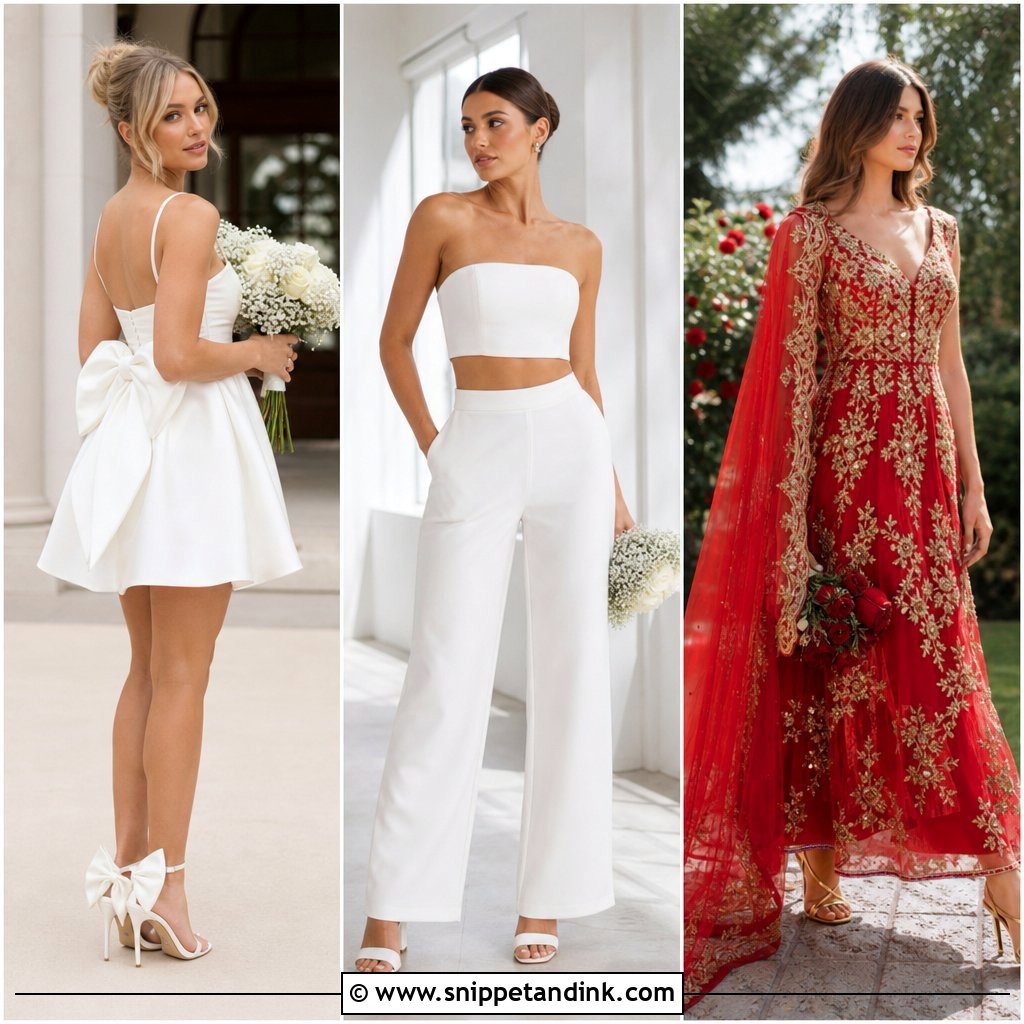
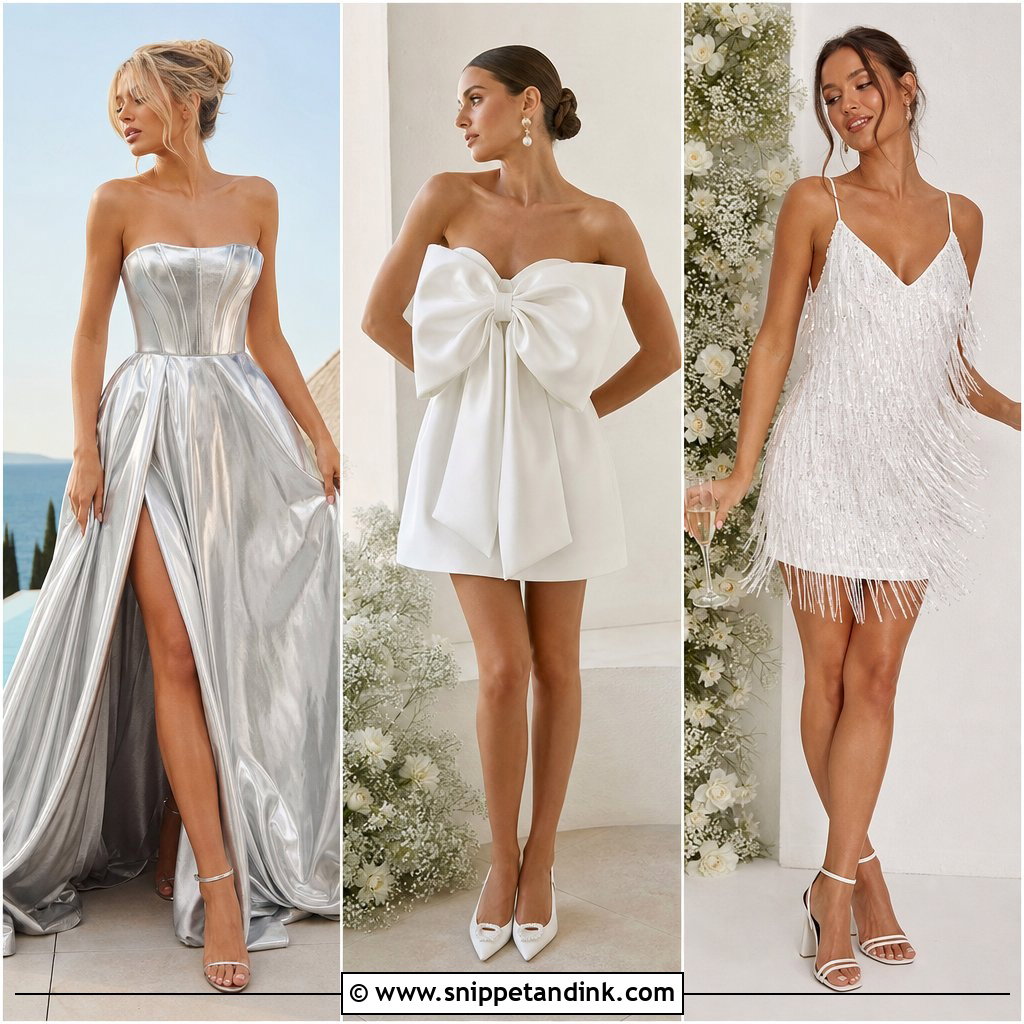
A mini can be a ceremony dress or a quick change for the reception. What keeps it bridal is detail: a bow, pearl trim, floral appliqué or a detachable overskirt. Balance the short hem with a refined neckline and good fabric rather than piling on decoration. Pointed pumps, sheer tights if it’s cold, statement earrings and a short veil complete it, with a sleek ponytail or smooth bun. Sit and walk in it during fittings to make sure the hem stays put. It suits a courthouse, a rooftop or a restaurant reception.
12. High-Low Wedding Dress With Overskirt
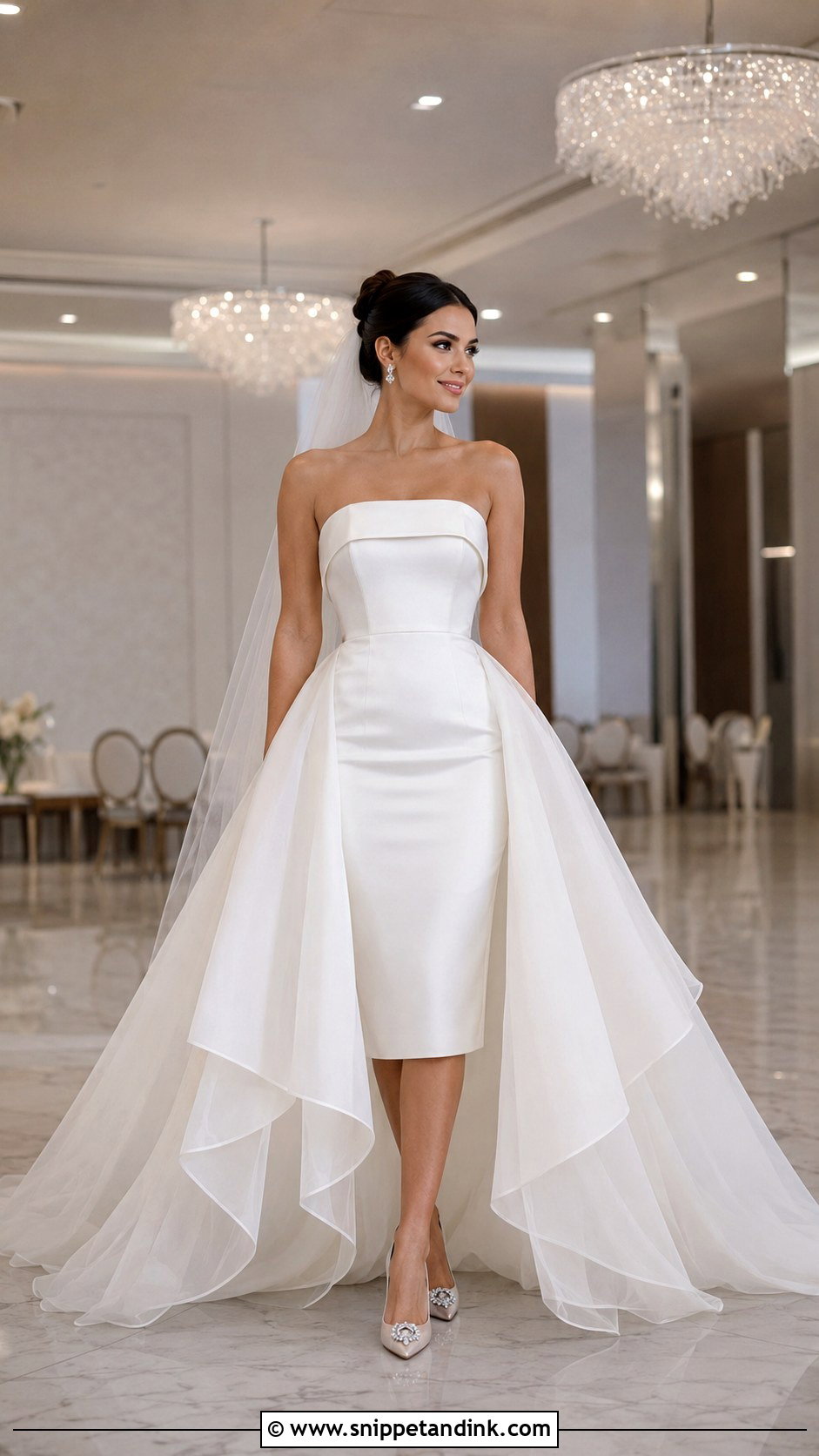
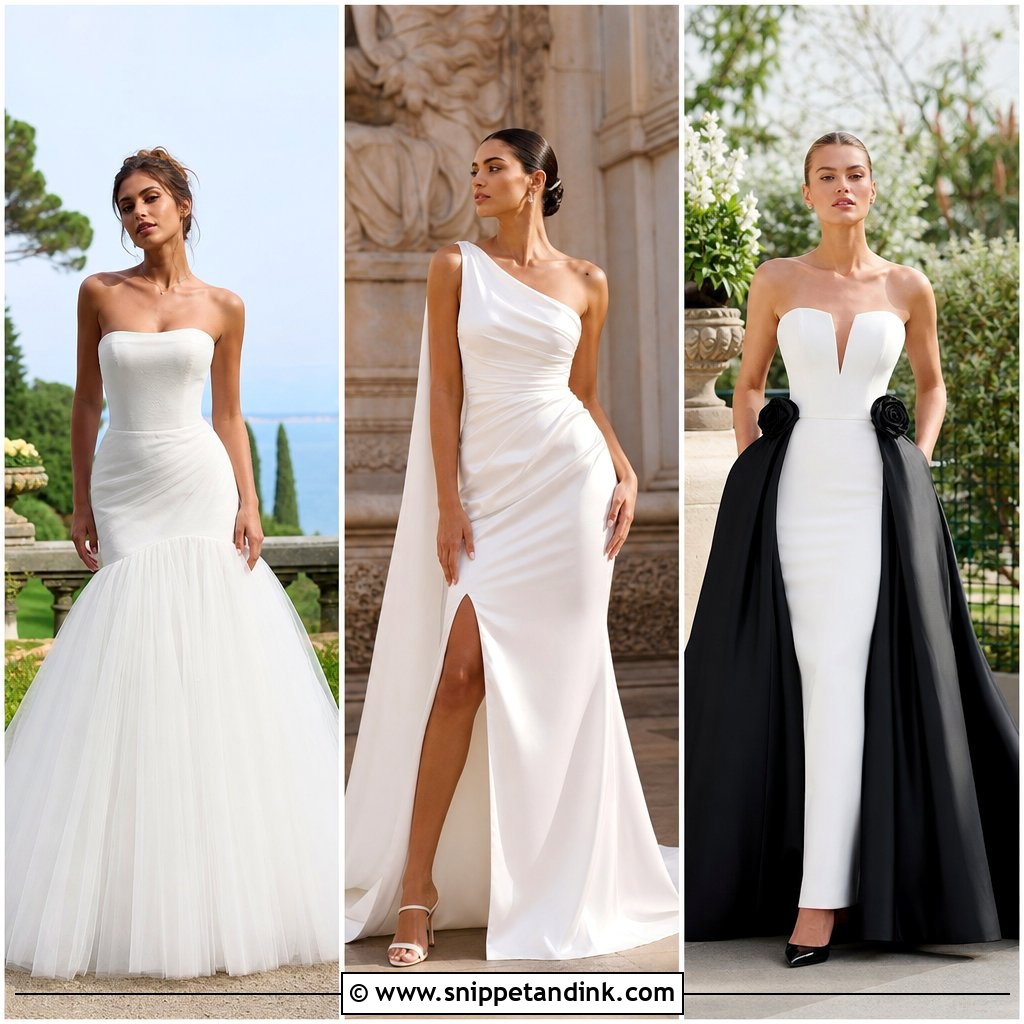
Two silhouettes in one outfit: the short front shows your shoes, and the long back or detachable overskirt gives the ceremony its sweep. Start with a structured mini or midi base and add a light organza or satin overskirt you can take off after photos. Embellished pumps, medium earrings and a simple veil work, as long as the veil doesn’t tangle with the layered hem. Keep the hair secure, since there’s a lot of movement already. Practice removing and reattaching the overskirt at least once before the day, with the person who’ll help you.
13. Empire Waist Chiffon Wedding Dress
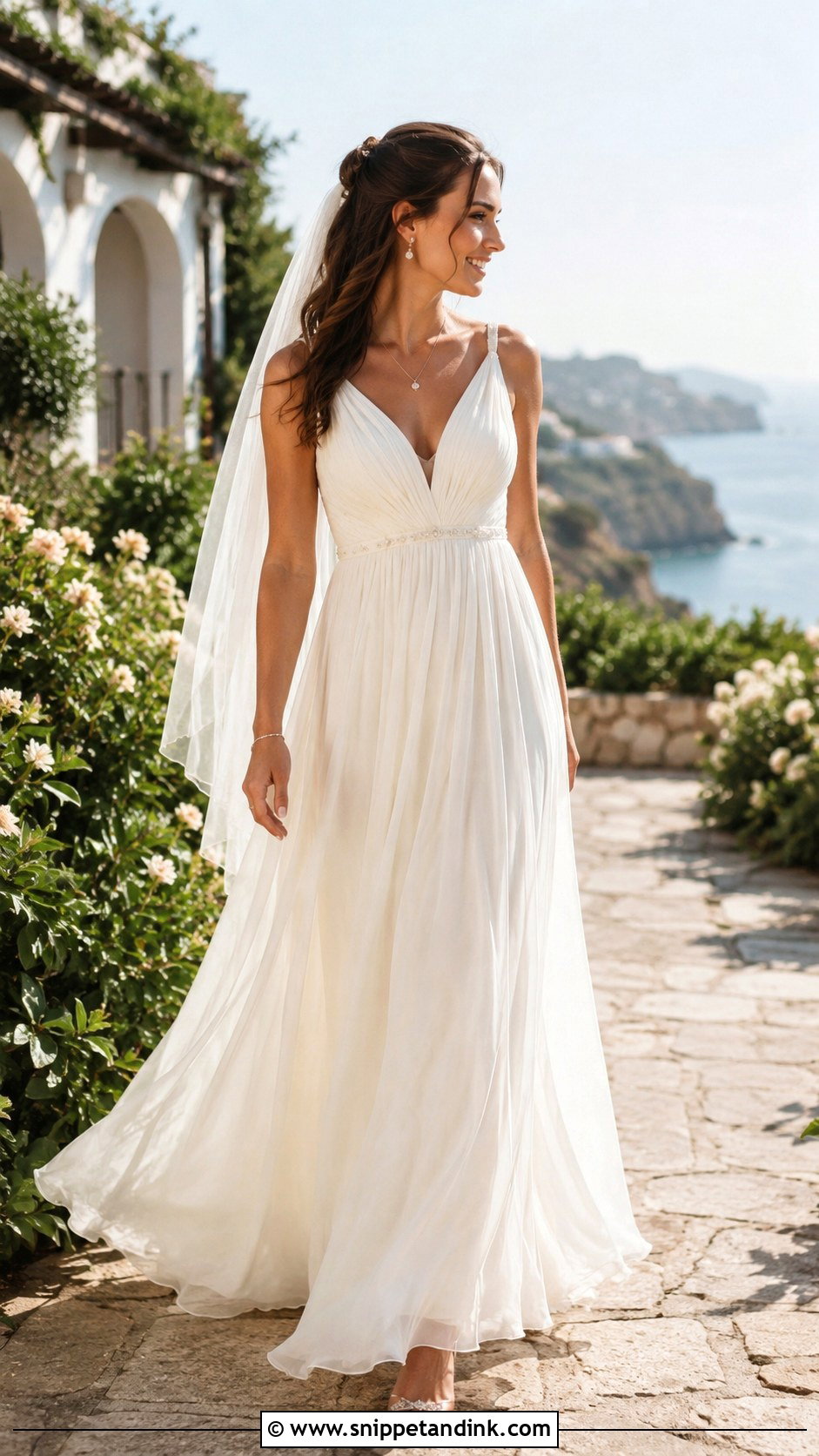
An empire waist chiffon wedding dress sits just below the bust and floats from there. I suggest it often for heat and outdoor ceremonies, because chiffon breathes and nothing presses on the waist. A supportive bodice with wide straps, flutter sleeves or a modest V-neck gives structure up top. Flat embellished sandals, low block heels or wedges handle uneven ground. A narrow veil and fine gold or pearl jewelry keep it light, and a half-up style holds better in wind than a full loose blowout. Chiffon frays and snags easily, so have the hem measured with your wedding shoes and handle it gently.
14. Crepe Column Wedding Dress
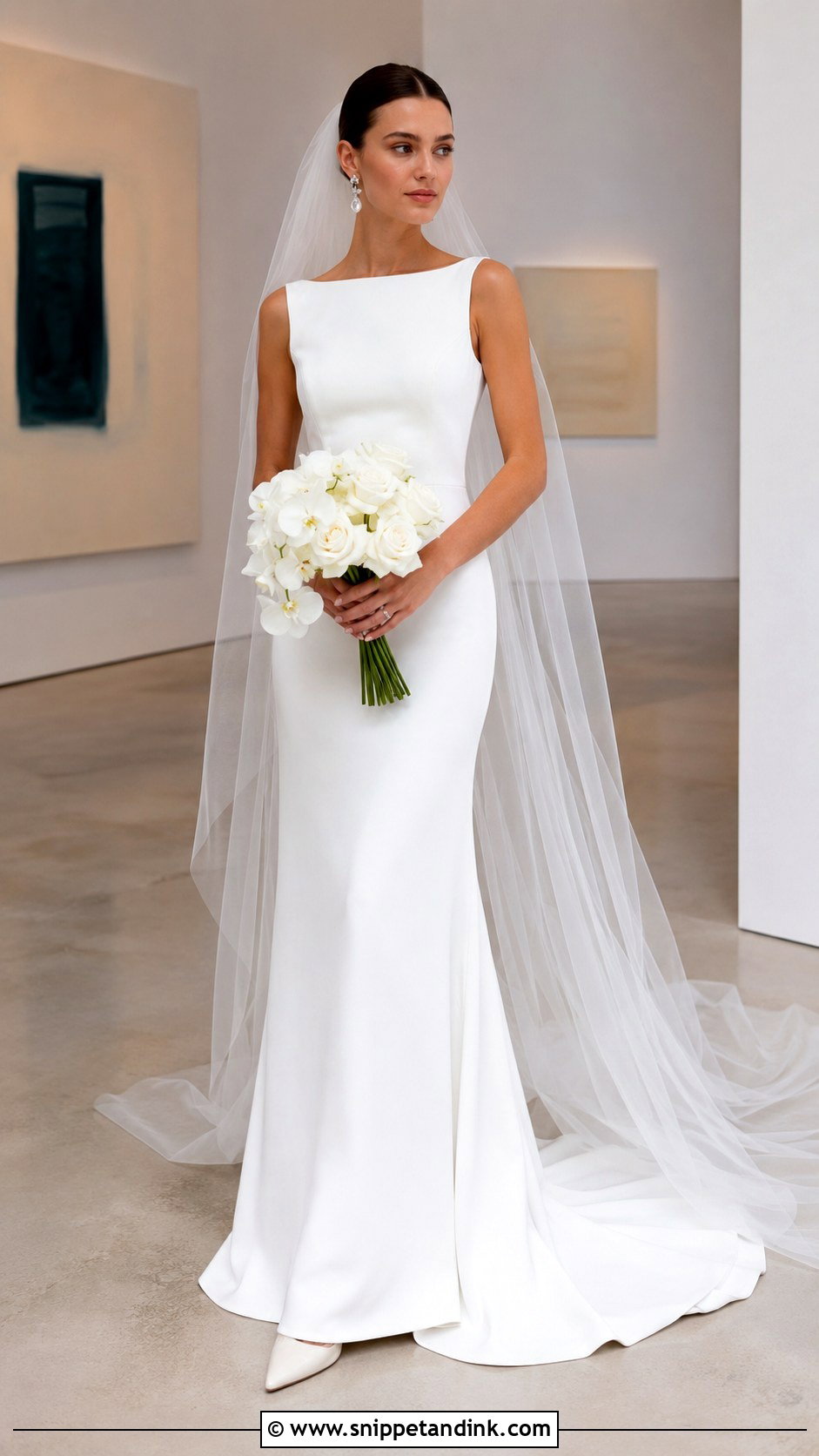
A crepe column needs weight in the fabric. Too light and it clings and shows every crease; heavy enough and it falls in one clean line. I check for a well-built bodice, defined waist seams, and a back vent or slight flare at the hem so you can actually walk. A bateau, scoop or asymmetric neckline adds interest without breaking the line. Add a long sheer veil, modern drop earrings, pointed pumps and a structured bouquet. Shapewear is your choice, though properly fitted undergarments do change how crepe sits.
15. One-Shoulder Wedding Dress
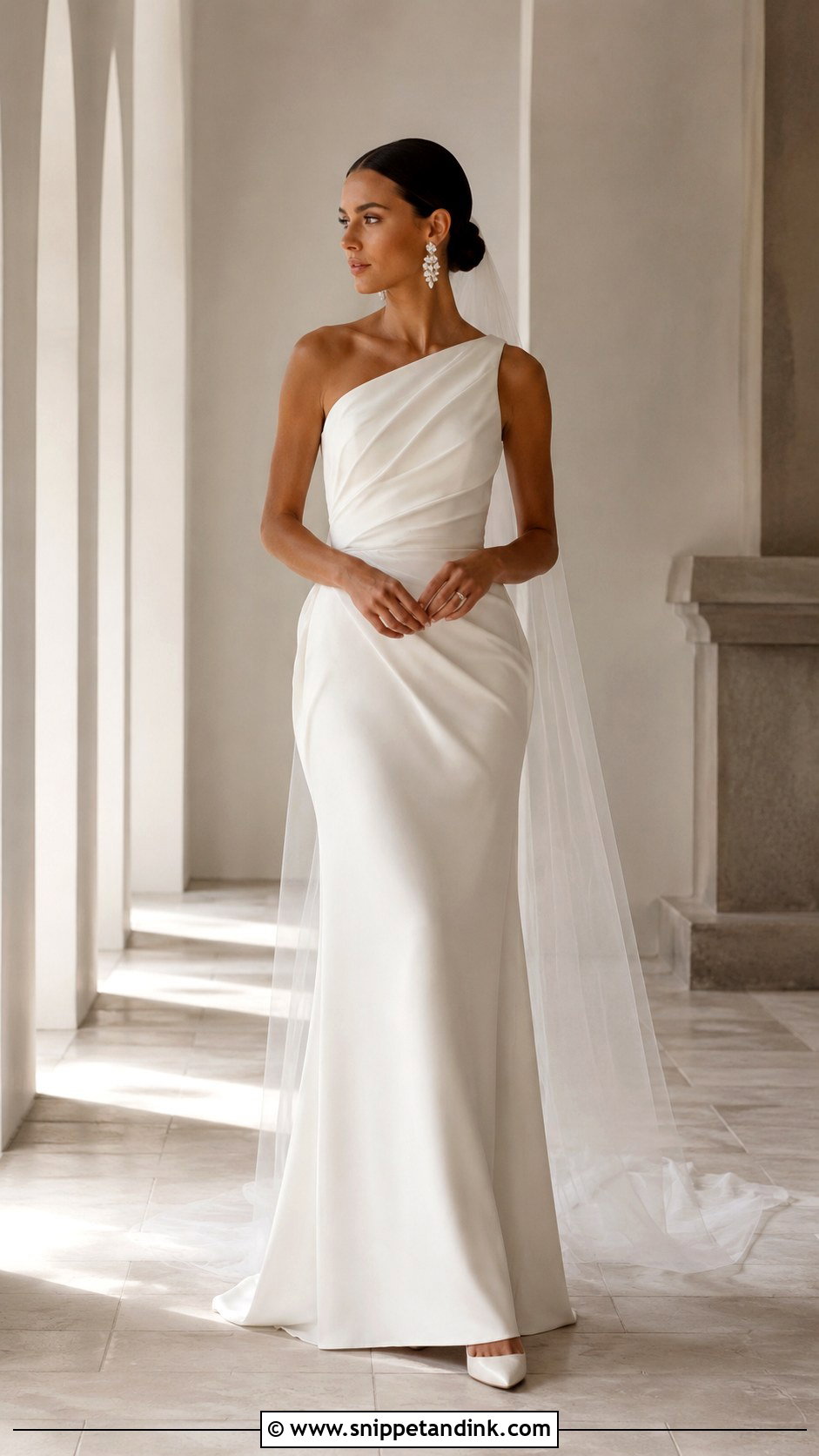
One shoulder means one side carries the weight of the bodice, so the strap must be anchored properly and the bodice boned to stay level. I watch it from the front, side and back at every fitting, because a one-shoulder bodice that shifts even slightly looks crooked in photos. A fitted crepe column looks sleek; a fuller satin skirt adds drama. Skip the necklace and wear statement earrings. A simple low bun, pointed ivory heels and a plain chapel veil attached below the hair finish it, with a long-stemmed bouquet.
16. Cape Sleeve Wedding Dress
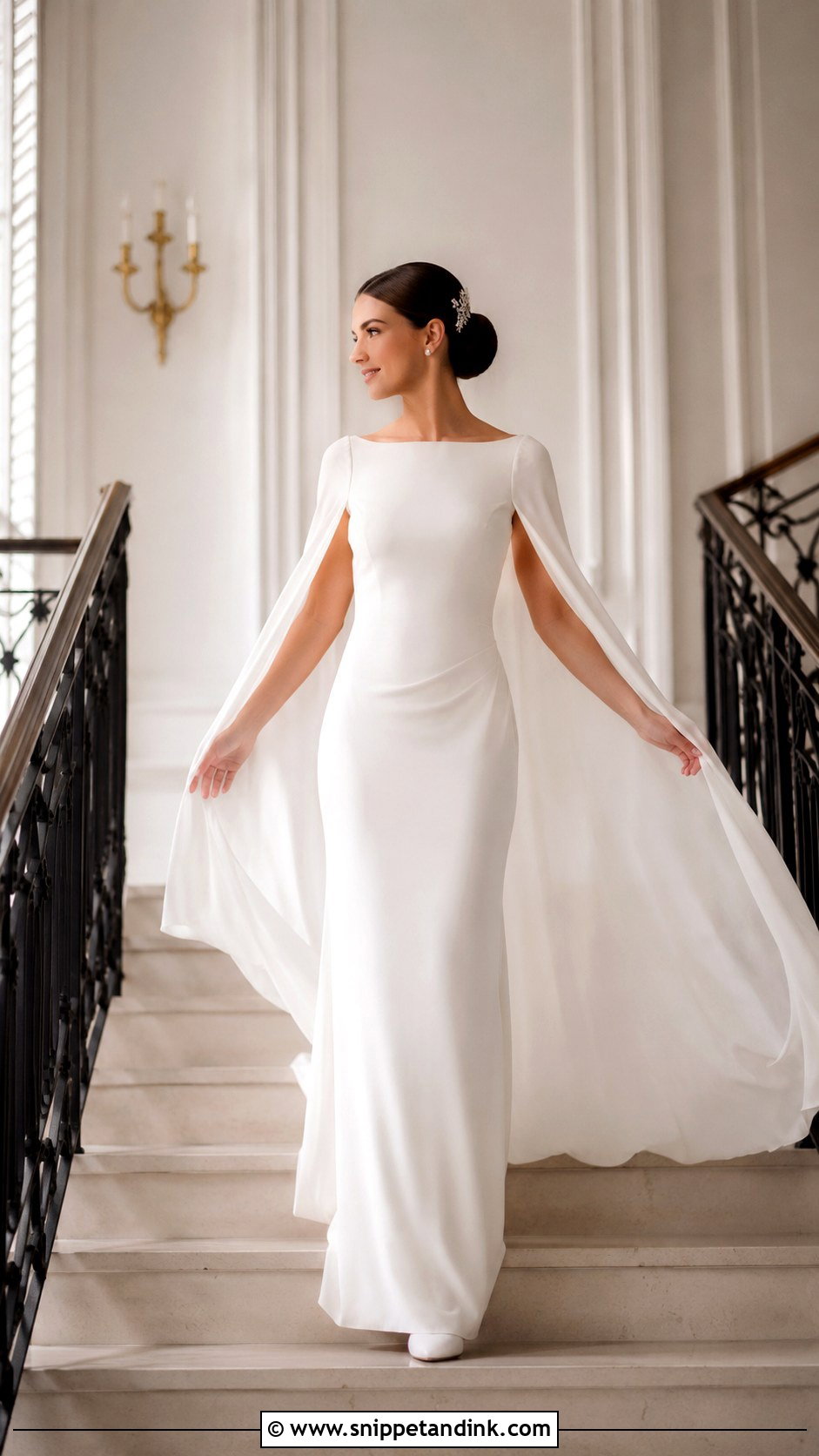
Cape sleeves move beautifully and give soft coverage across shoulders and arms. The cape can be sewn to the neckline or be a removable layer over a simple column or A-line. Choose chiffon, tulle or organza so it floats rather than dragging the dress back. With a long cape, I usually drop the veil and use a decorative comb instead, since two long sheer layers tangle. A sleek hairstyle helps for the same reason. Stud earrings and closed-toe pumps are enough. Walk outdoors in it before deciding; wind catches a cape like a sail.
17. Bow Back Wedding Dress
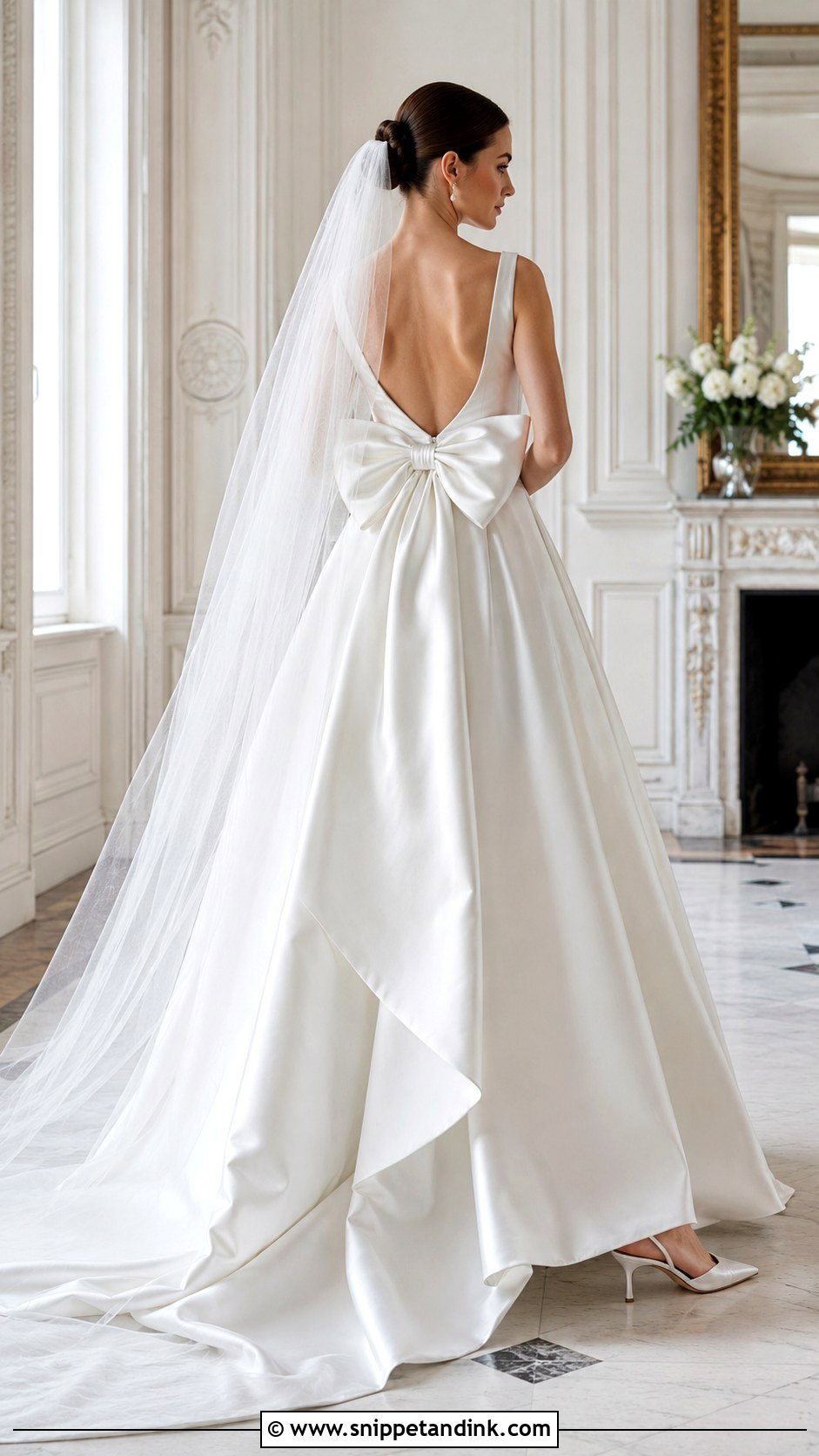
Guests see your back for the entire ceremony, which is why I like a bow back. Pick a structured satin A-line or fitted column with a bow at the waist, shoulders or upper back, ideally removable, and keep the front fairly plain. Use a sheer veil so the bow shows through, or anchor the veil below a polished bun. Pearl earrings and pointed satin heels finish it. Ask your seamstress to check how the bow interacts with the bustle and zip. A big bow at the waist can sit exactly where the bustle points need to go.
18. Floral Embroidered Wedding Dress
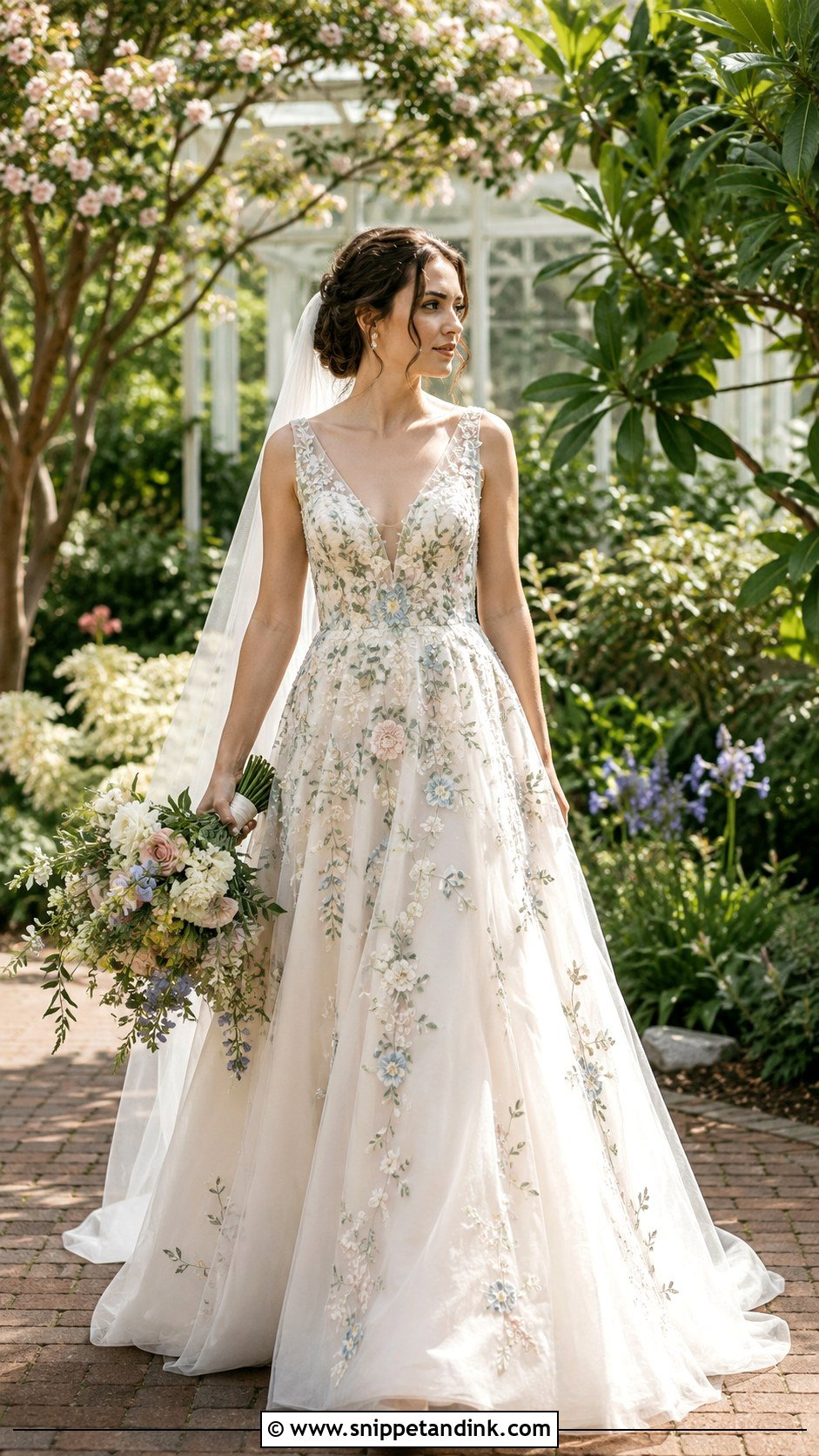
Embroidered flowers bring color in without losing the bridal feel: soft blue, blush, green or pastels across an ivory bodice, trailing lightly onto the skirt. I suggest choosing flowers tied to your season or palette so it looks considered. Keep the rest neutral with a plain veil, simple earrings and ivory shoes. The bouquet should complement the embroidery, not copy every stitched color, or the two blur together in photos. Soft waves or a low textured bun suit it. It’s a strong option for a botanical venue or a bride who doesn’t want plain white.
19. Plus Size A-Line Wedding Dress
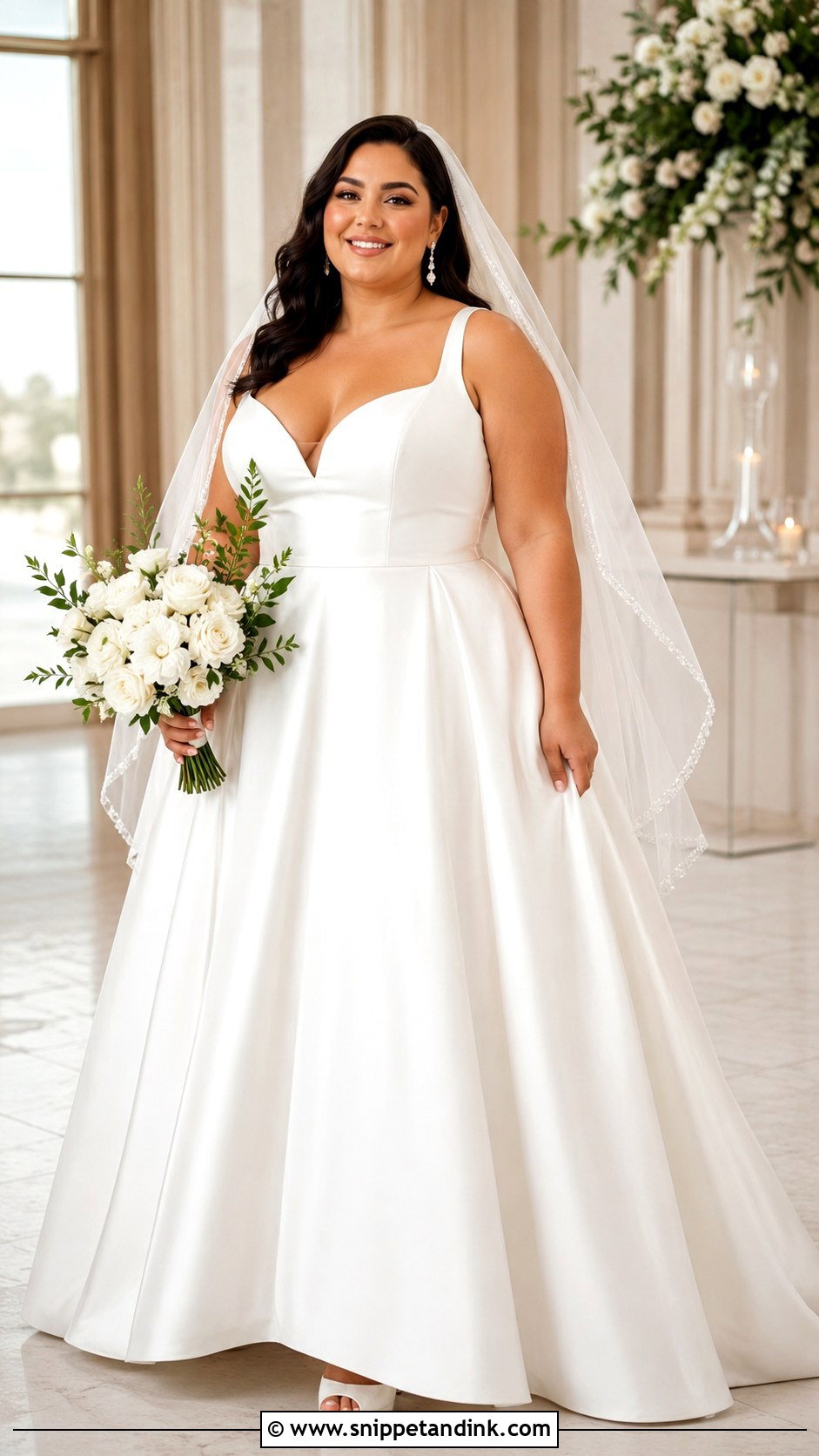
With a plus size A-line wedding dress, I focus on construction, not on rules about which shapes a bride is allowed to wear. A structured bodice, supportive straps and professionally placed cups keep the gown secure without tugging all night. Satin looks smooth and formal; lace adds texture. A fingertip veil, balanced drop earrings and comfortable block heels finish it, with whatever size bouquet you like. Ask for alterations that follow your shape rather than squeezing it, and sit, walk and dance at the final fitting.




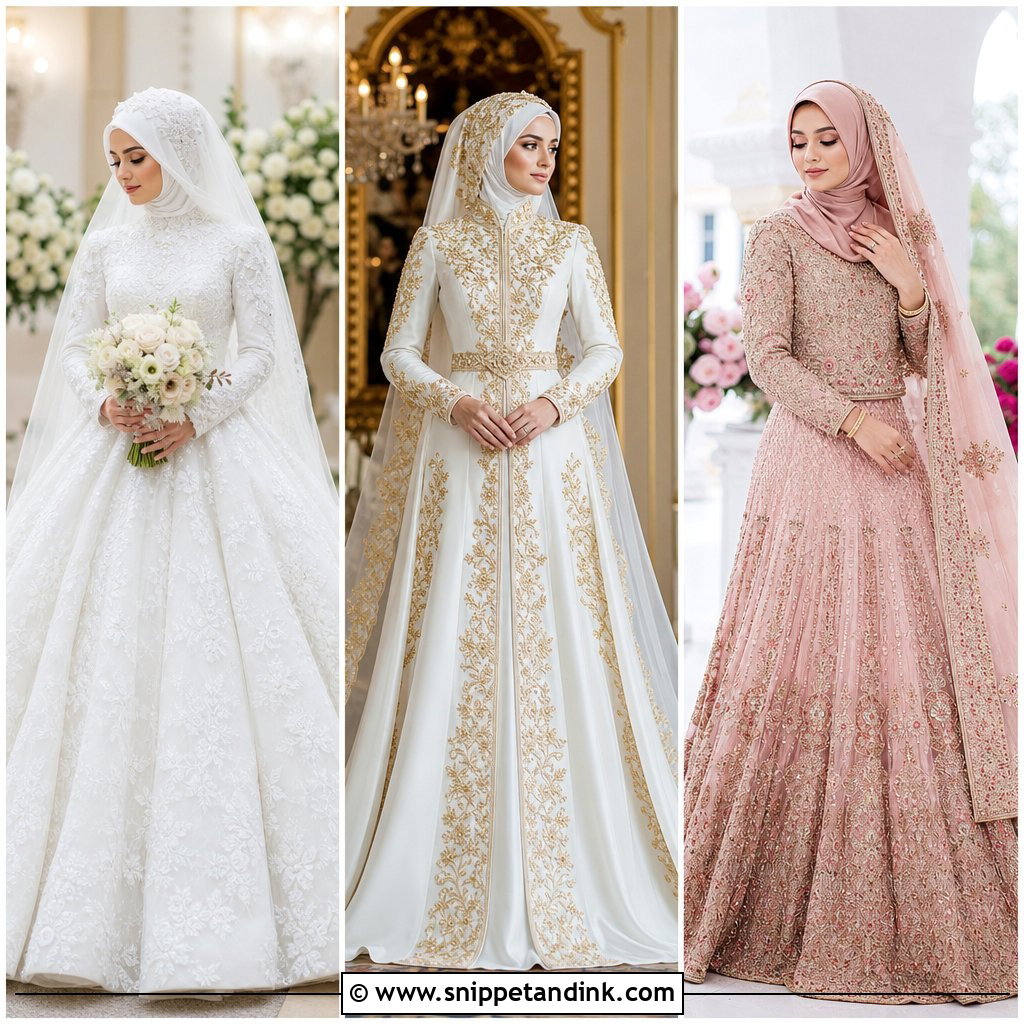
20. High Neck Wedding Dress
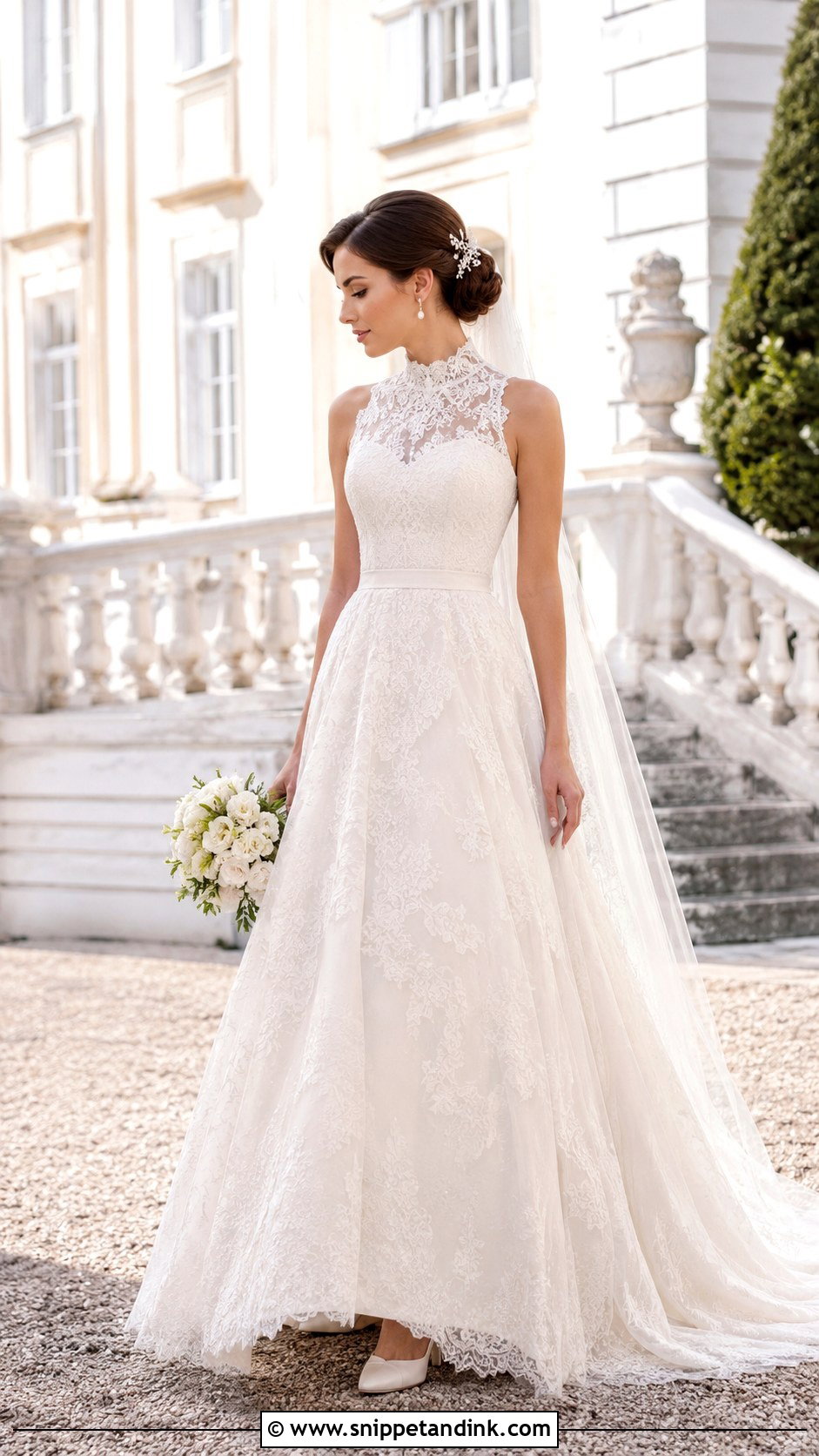
A high neck frames the face, so I treat the hair and earrings as part of the neckline. Delicate lace reads romantic; smooth crepe or satin reads current. A fitted bodice over an A-line or column skirt keeps it balanced. Skip necklaces and wear pearl studs, crystal drops or a hair comb. A low bun shows the collar, with the veil anchored beneath it so there’s no bulk at the shoulders. An open or buttoned back gives guests something to look at during the vows. It’s a good cool-season choice.
Bustles, Hooks and Who Fastens Them
Any gown with a train needs a bustle for the reception, and the type changes the look. An over-bustle lifts the train up and hooks it to the back of the skirt, which shows off lace and gives a draped effect. An under-bustle, often called a French bustle, tucks the train underneath and ties it with ribbons, so the outside looks smooth and full. A ballroom bustle lifts the train all the way round so the hem looks floor-length, which is the most dance-friendly but takes the most points.
Bring the person who’ll do it to your last fitting and have the seamstress teach them, not you. I ask for color-coded or numbered ribbons on under-bustles, and I suggest filming it on a phone. A rushed bustle in a dim corridor is how trains end up uneven for the first dance.
Costs That Sit Outside the Dress Price
The price tag is rarely the final number. Alterations can add a meaningful amount, especially for hemming layered skirts, adding a bustle or reshaping a bodice, and shops charge very differently, so ask for an estimate at your first fitting. Then add the veil, undergarments, shoes, steaming before the day and cleaning afterward. I suggest setting a slice of the dress budget aside for these from the start, so a gown at the top of your range doesn’t leave nothing for a proper fit.
Bring Your Shoes to Every Fitting
A wedding dress has four jobs: look right, support you, suit the setting and let you enjoy the day. Treat these gowns as a starting point, then compare fabrics, necklines, proportions and accessories in person. Bring your intended shoes and undergarments to fittings whenever you can. Walk, sit, turn and lift your arms before deciding. Good alterations turn a promising dress into one that fits securely. And if a trend doesn’t feel like you, leave it; the outfit that matches your personality is the one you’ll be glad to see in the album.
You'll Like These Ideas:





Leave a Reply