
Heavy beading and layered tulle can cover a lot. A simple dress covers nothing, which is exactly why I love dressing brides in one: when the fabric is good and the tailoring is precise, the bride is what you see. Streamlined slips, sculptural columns, clean minis and softly draped gowns all belong here, and between them there’s a fit for a garden, a formal hall, a courthouse, a beach or a dinner for twelve. For each dress I’ve added the shoes, jewelry, veil, flowers and hair I’d actually put with it, so the whole outfit stays polished without tipping into overdone.
Sand, Grass or Stone Steps: Matching Hem and Heel to the Ground
The setting changes which simple dress works far more than the style board does. Before I show a bride a single gown, I ask what she’ll be standing on, how far she’ll walk, and whether there are stairs. Those three answers rule out more dresses than any taste question.
- Beach: skip long trains, which drag wet sand and get heavy fast. An ankle-length hem or a short sweep, flat sandals or bare feet, and a fabric that won’t spot if it gets damp.
- Lawn and garden: stiletto heels sink. Block heels or heel protectors, and a hem taken up a little so it clears damp grass.
- Courthouse and city hall: you’ll stand in queues and on hard floors, often for longer than planned. A midi or tea length with a comfortable heel is the practical answer.
- Churches and historic venues: stone stairs and long aisles favour a skirt you can manage with one hand, and some places expect covered shoulders, so ask before buying and plan a jacket or wrap if needed.
Bring the actual shoes to every fitting. The hem is set to the shoe, and switching from a heel to a flat sandal after the final fitting leaves an inch of dress on the floor.
1. Simple Satin Slip Wedding Dress
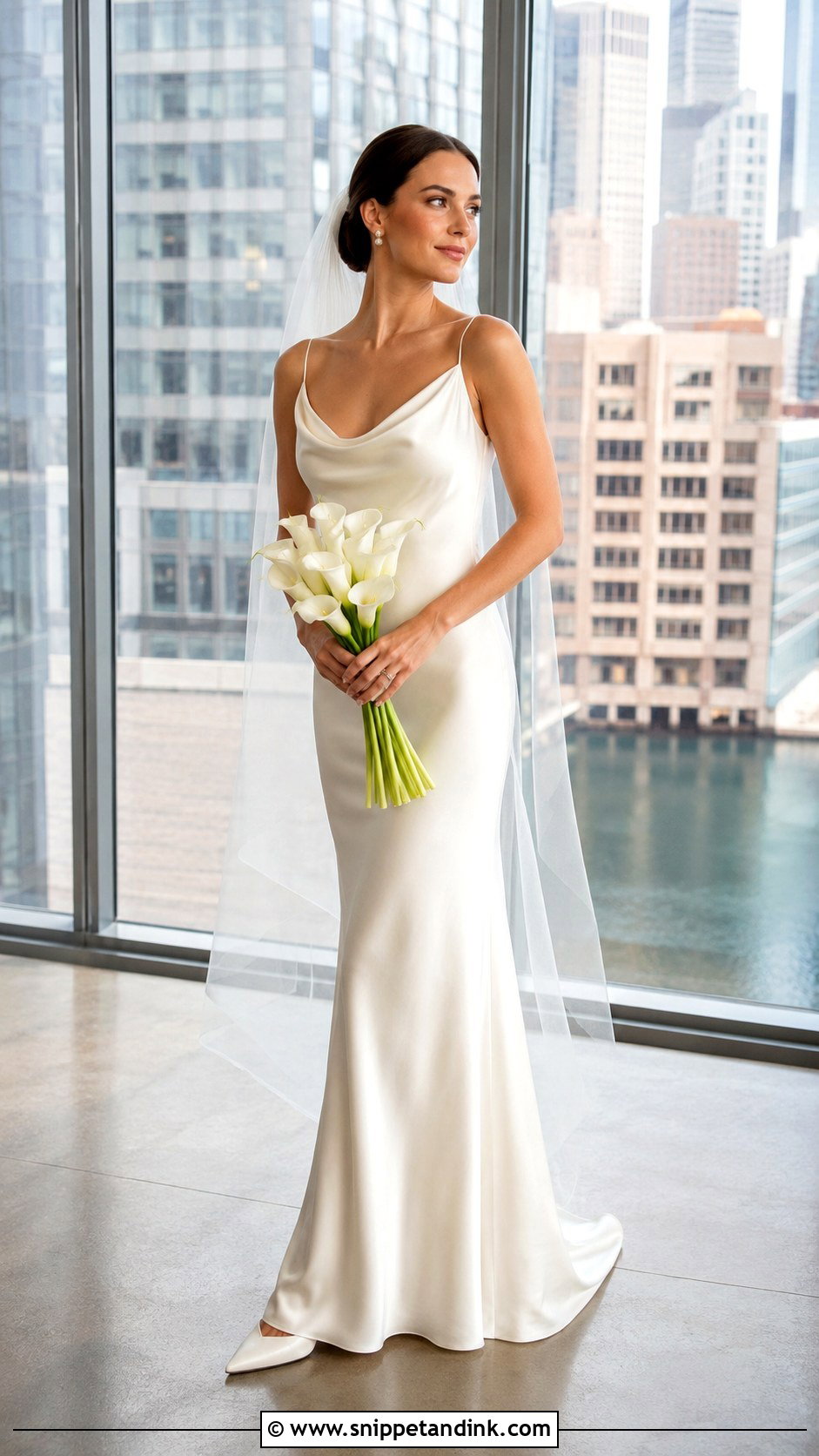
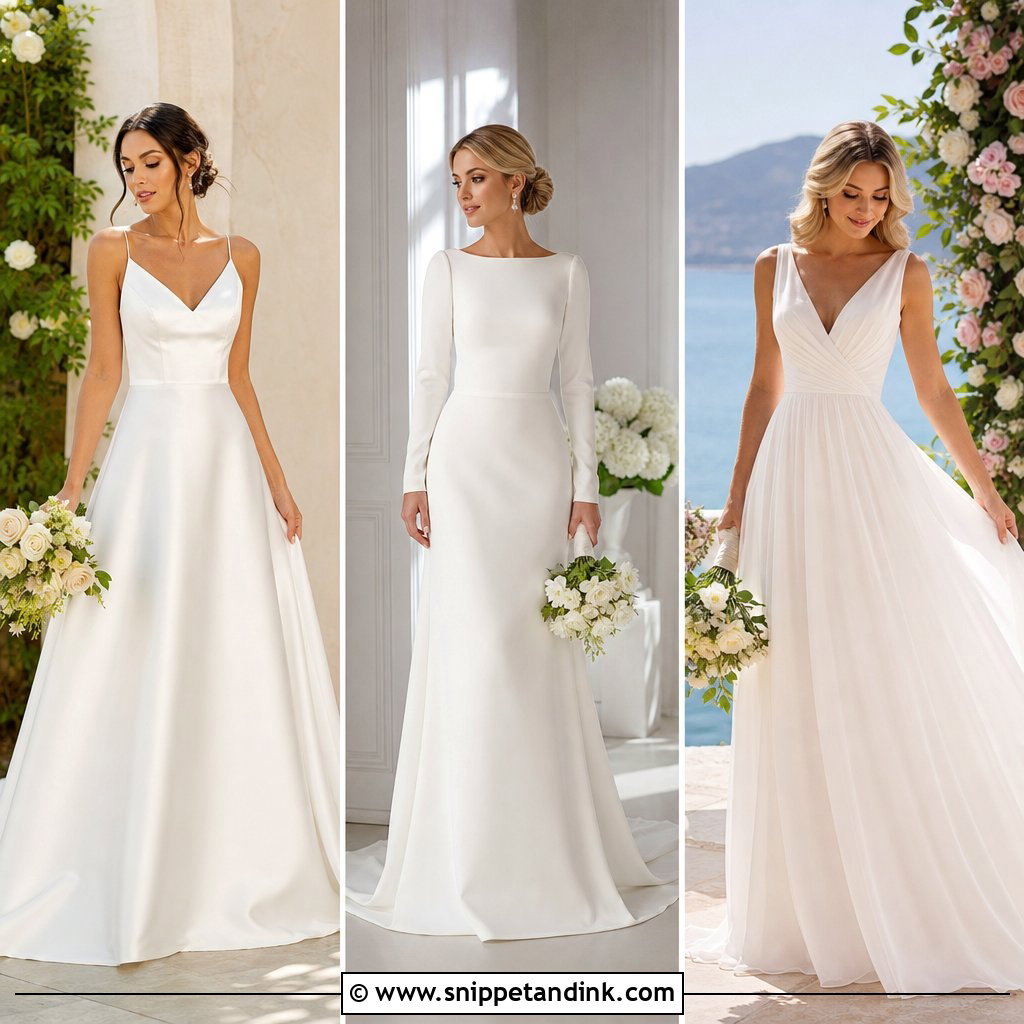
Satin slips look easy and aren’t. The fabric has to be heavy enough to skim rather than cling, so I steer brides toward a substantial satin or silk blend and away from anything you can see light through. A softly draped neckline and narrow straps keep it clean. Pointed ivory pumps, pearl drops and a raw-edge fingertip veil, with a neat low bun. White calla lilies or a few roses with little greenery. City venues, hotels, galleries and evening ceremonies suit it, and a cropped ivory blazer handles cooler moments and adds coverage for photos.
2. Strapless A-Line Wedding Dress
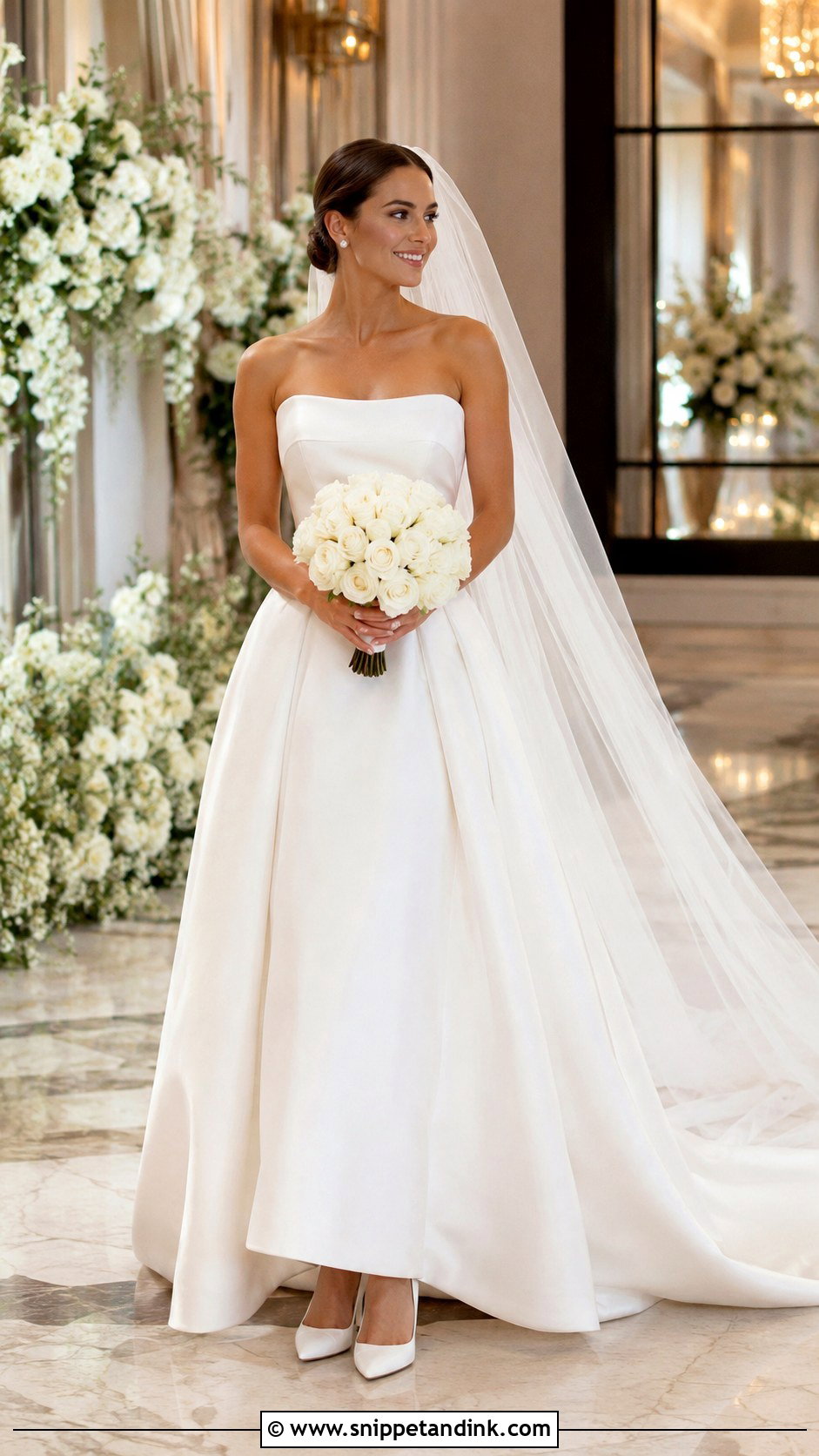
Strapless A-lines suit a lot of bodies because they mark the waist and then leave the hips alone. A structured bodice with light internal support and a skirt falling naturally from the waist is the build. Mikado, satin, and heavier crepe fabrics give a simple shape enough presence for a traditional ceremony. Closed-toe slingbacks, a fine tennis bracelet and small diamond or crystal studs; a chapel veil for the ceremony. Soft waves, a polished ponytail or a centre-parted bun all suit the open neckline. A rounded bouquet of white roses finishes it. If you’ve never worn strapless for a full day, walk around the shop for ten minutes before deciding.
3. Square Neck Crepe Wedding Dress
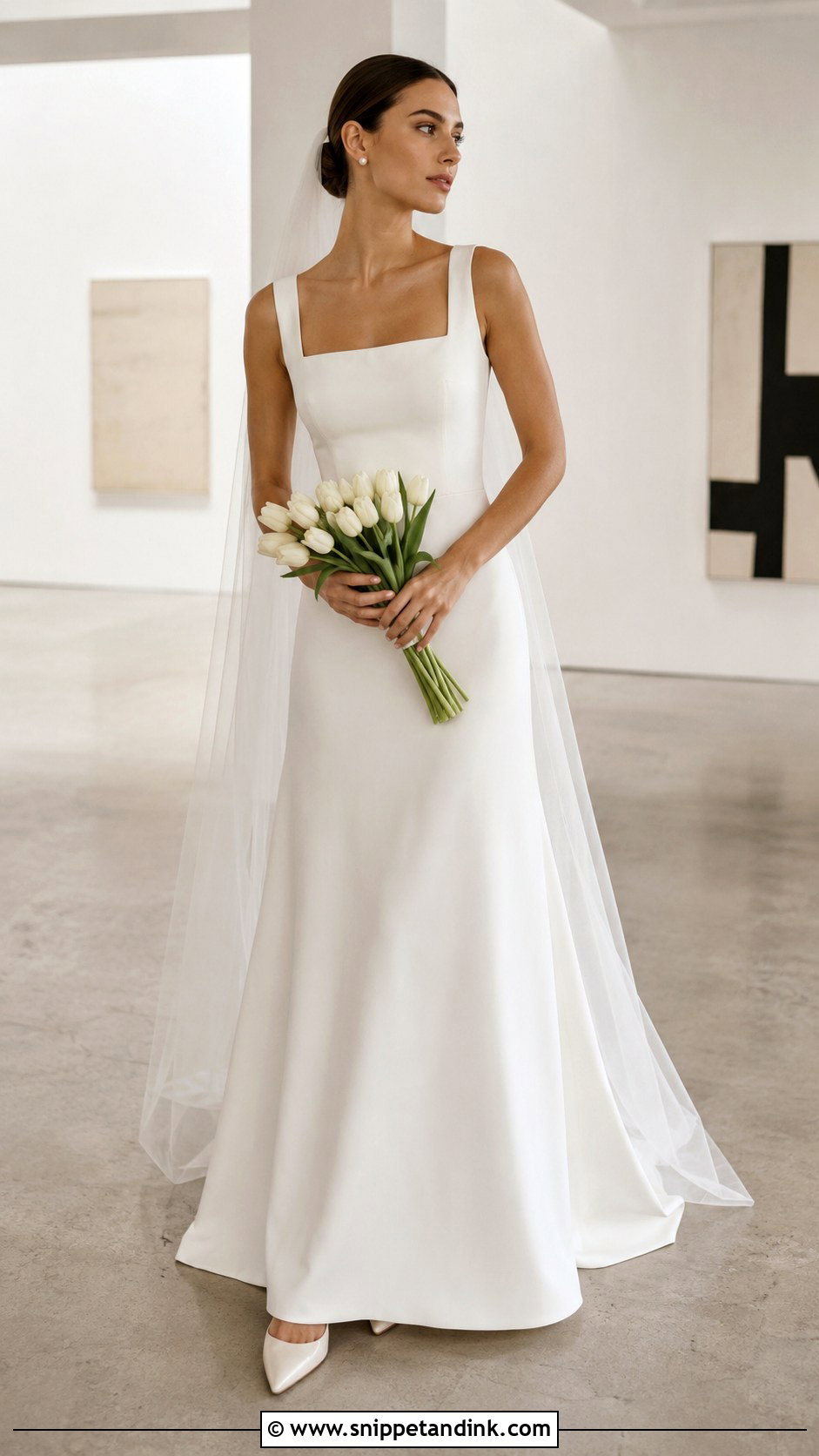
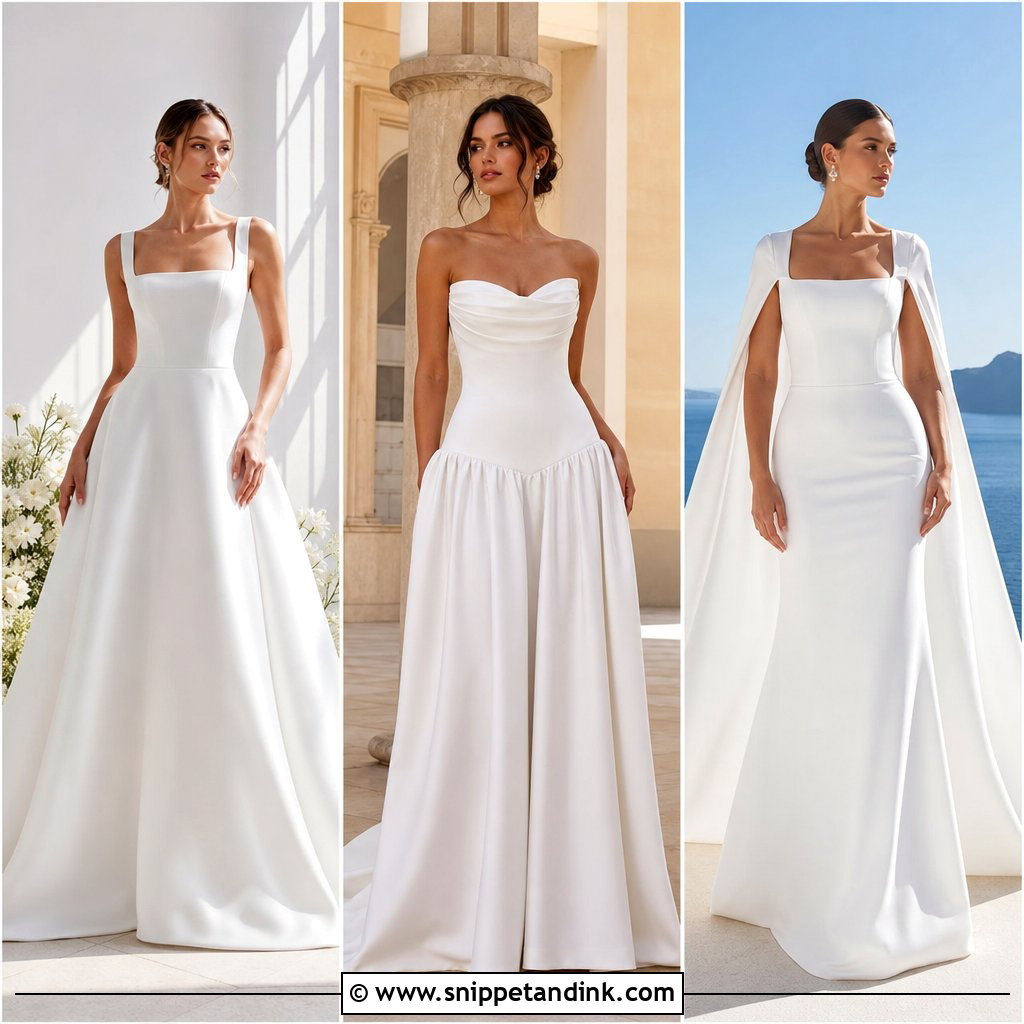
Matte crepe and a square neckline make an architectural pair. The flat surface means no shine to hide behind, so every line is visible, and that’s the appeal. A fitted bodice with wide straps and a straight or gently flared skirt; pointed pumps, pearl studs, a sleek low chignon and no necklace. A long narrow veil softens the structure. White tulips or ranunculus in a loose bunch. I’d put this in a loft, museum or contemporary ballroom. In alterations, the neckline’s top edge should run perfectly level; on crepe, even a slight dip at one corner shows.
4. Long Sleeve Column Wedding Dress
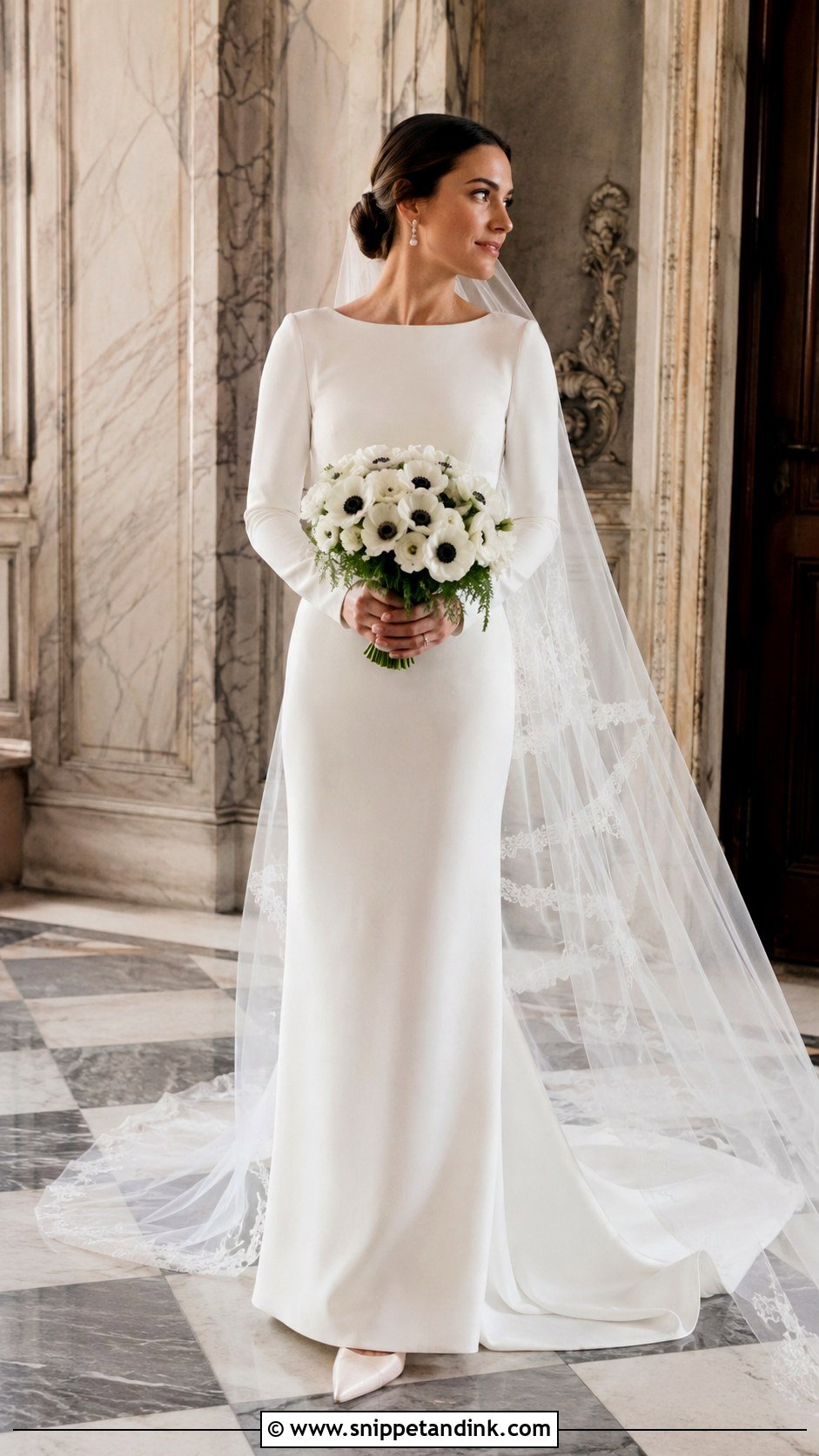
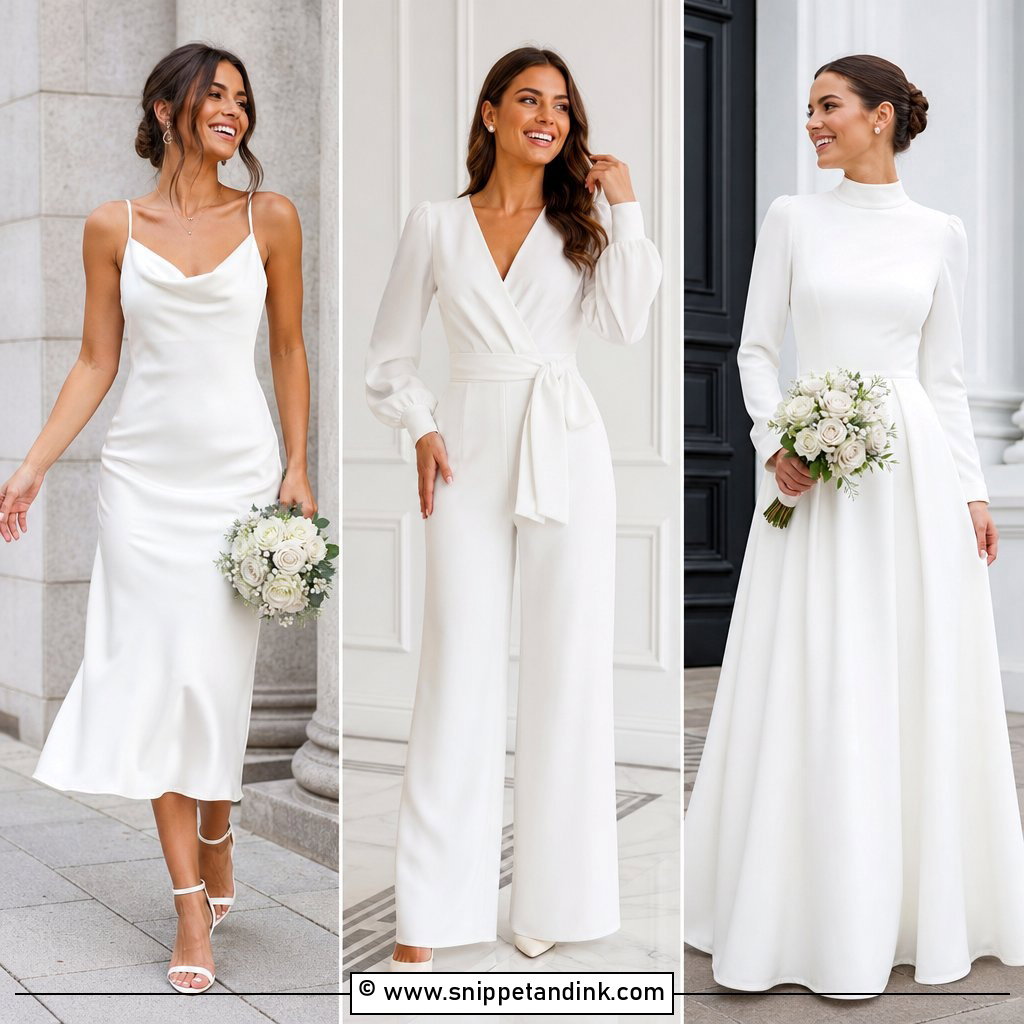
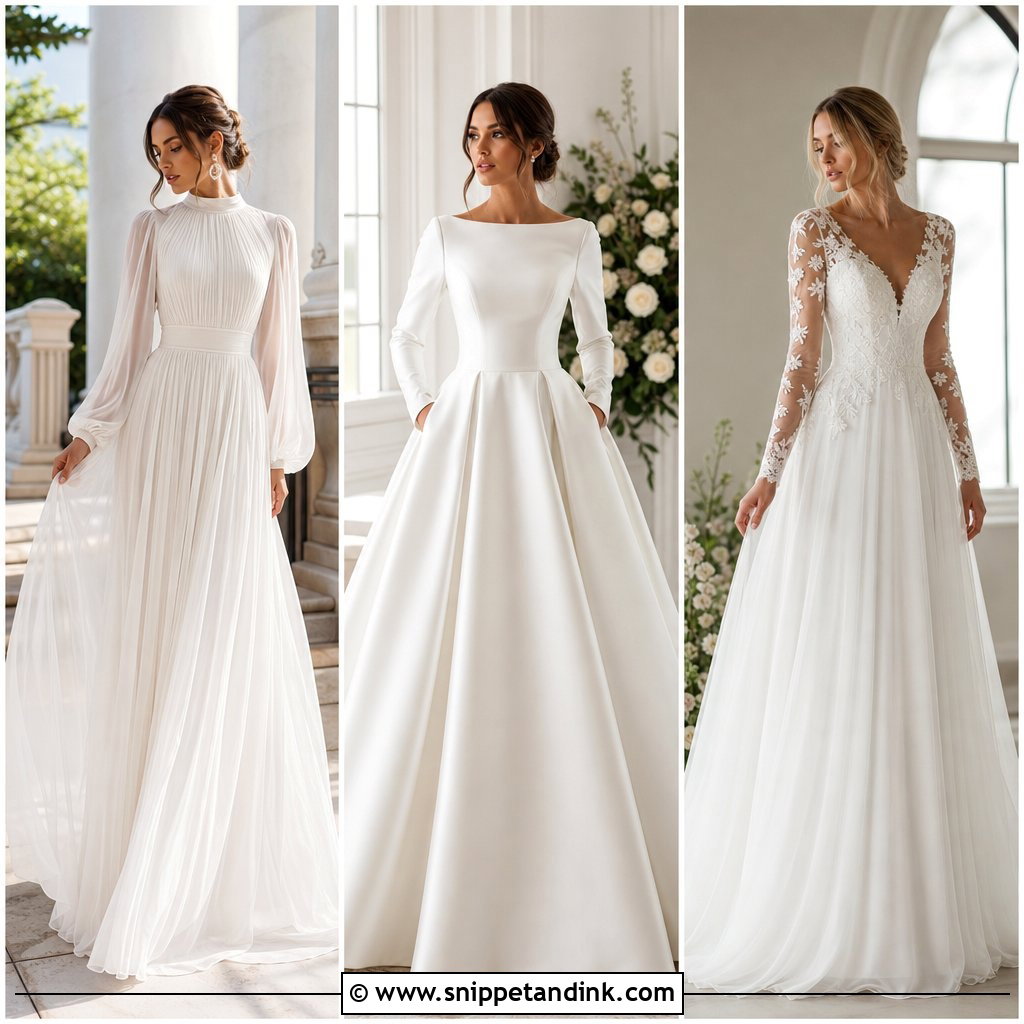
For a cool-weather ceremony, a long sleeve column is hard to beat. Fitted sleeves cover, the straight skirt adds height, and the line runs uninterrupted from shoulder to hem. Stretch crepe is the comfortable choice; satin-backed fabric looks more formal. A modest scoop, bateau or shallow V balances it. Ivory pointed pumps, delicate drops and a cathedral veil secured under a low bun; white anemones, roses or winter greenery. With arms covered and a narrow line, big necklaces look crowded. A column needs a slit or a little extra width at the hem, or historic-building staircases become a problem.
5. Bateau Neck Wedding Dress
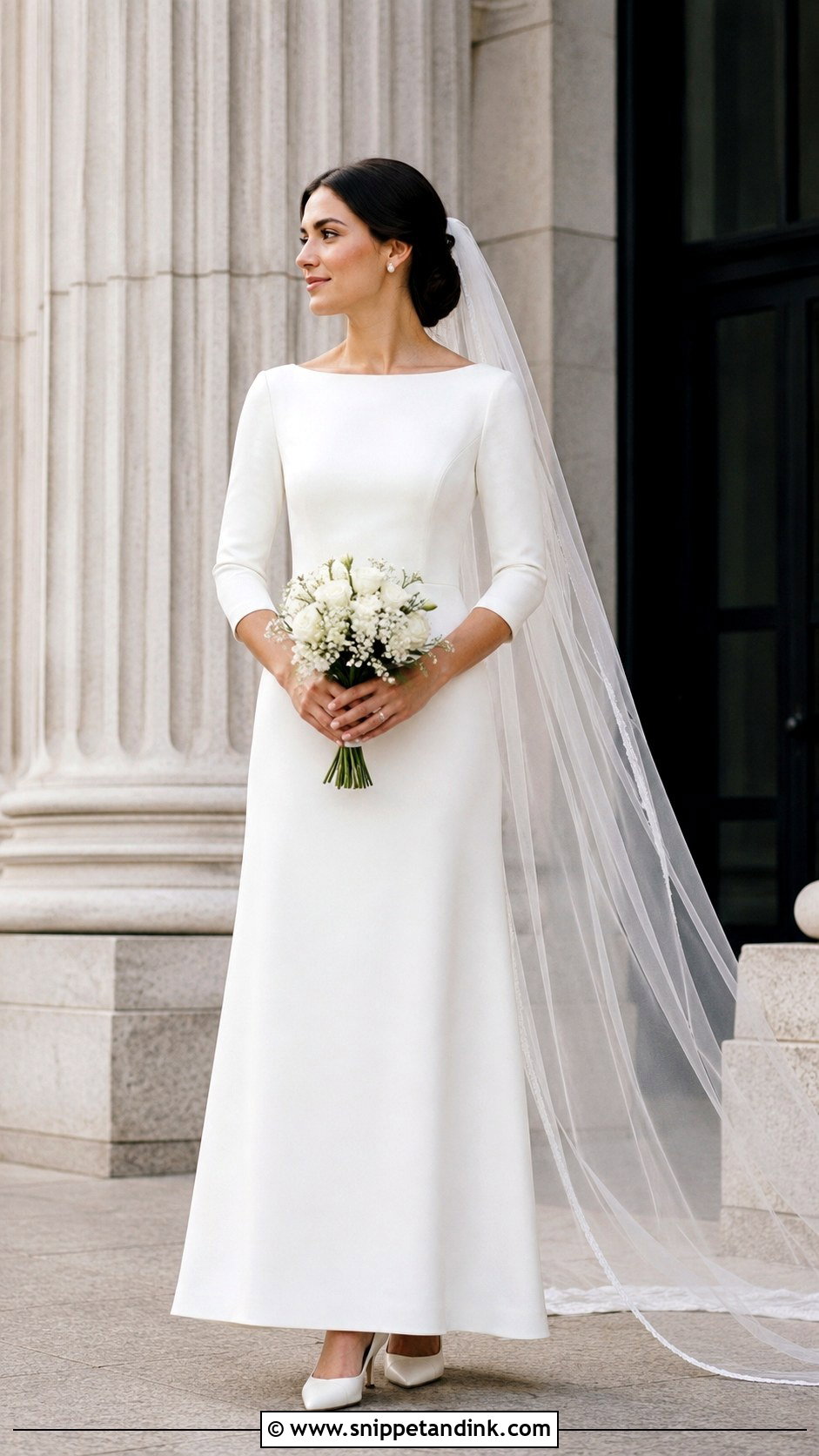
A bateau neck brings quiet sophistication by tracing the collarbone from shoulder to shoulder. A fitted bodice and a slim A-line or column in crepe, satin or silk faille keep it clean; three-quarter sleeves feel traditional, sleeveless feels fresh. Pearl button earrings, ivory kitten heels and a sheer chapel veil with no lace edging. A French twist or smooth low bun shows off the neckline, and lily of the valley or white sweet peas suit the mood. One fitting note: wide necklines often reveal bra straps, so I ask for small strap keepers sewn inside the shoulders.
6. Off Shoulder Satin Wedding Dress
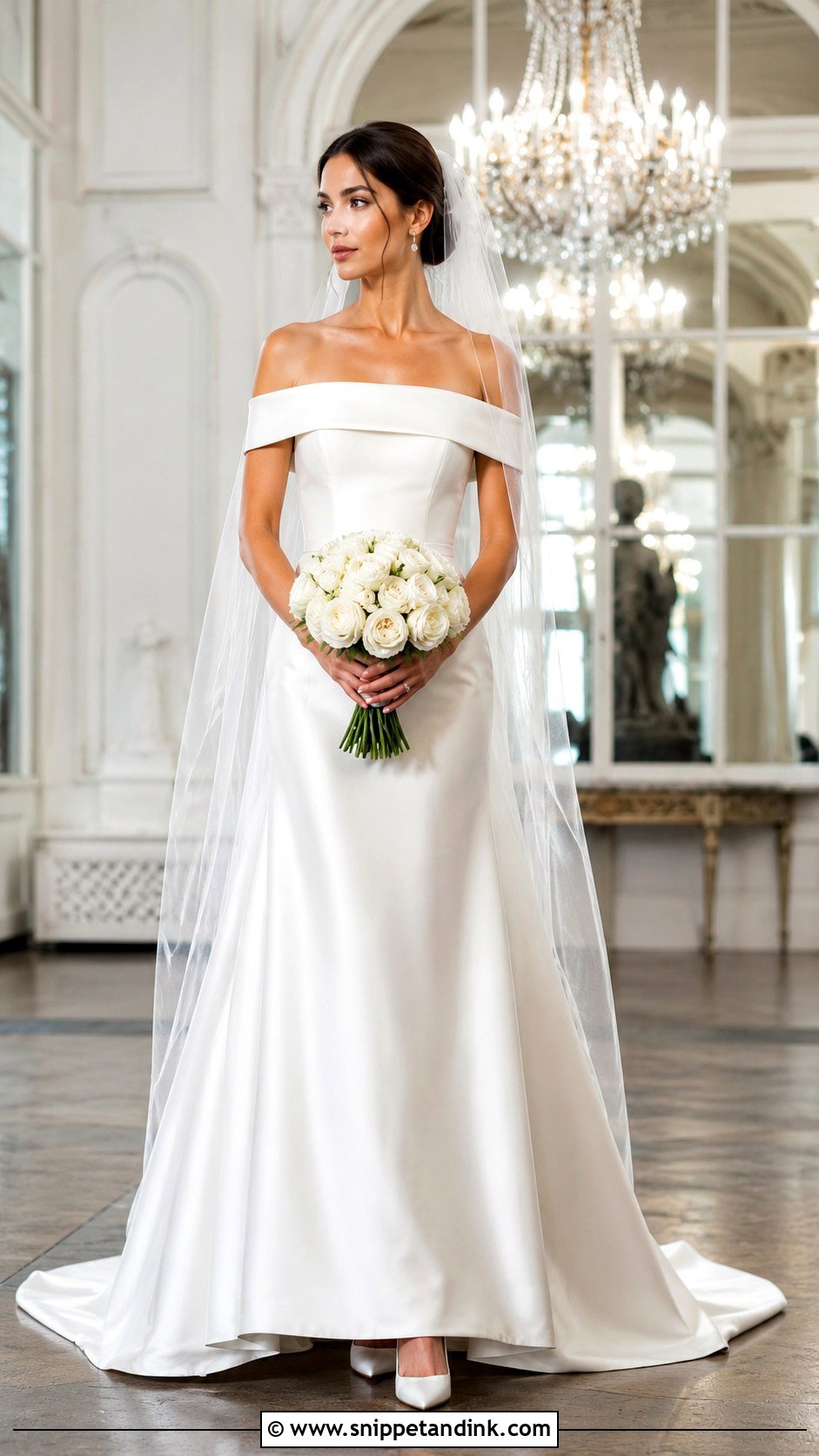
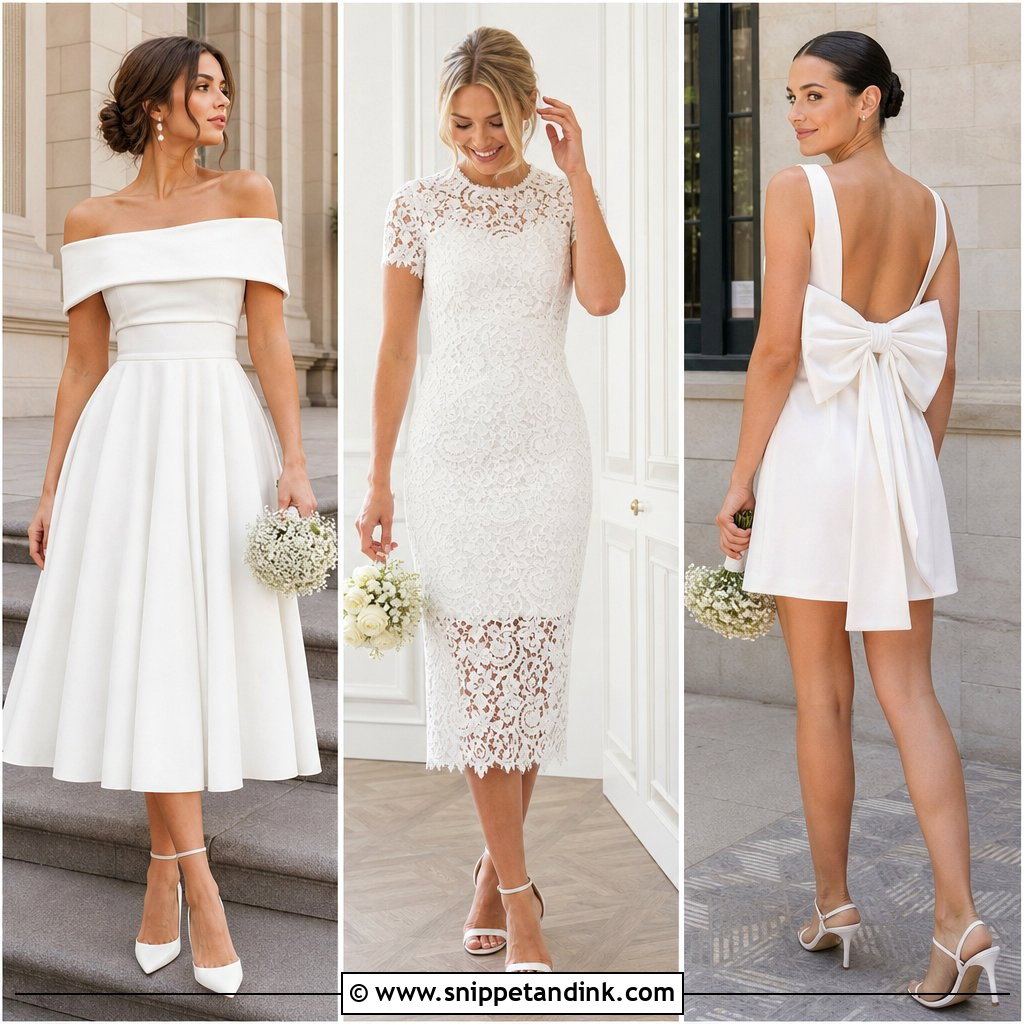
Off-the-shoulder satin is romance by shape alone. The folded band draws the eye to the shoulders and collarbone while a fitted waist keeps the line. A straight skirt looks sleek; a soft flare moves more. Teardrop earrings, a thin bracelet, pointed satin heels and a mid-length veil worn behind a low textured bun. White garden roses with pale greenery soften it. Before alterations begin, lift your arms as if hugging someone. If you can’t, the band sits too low, and that’s far easier to change before the bodice is fitted than after.
7. Halter Neck Wedding Dress
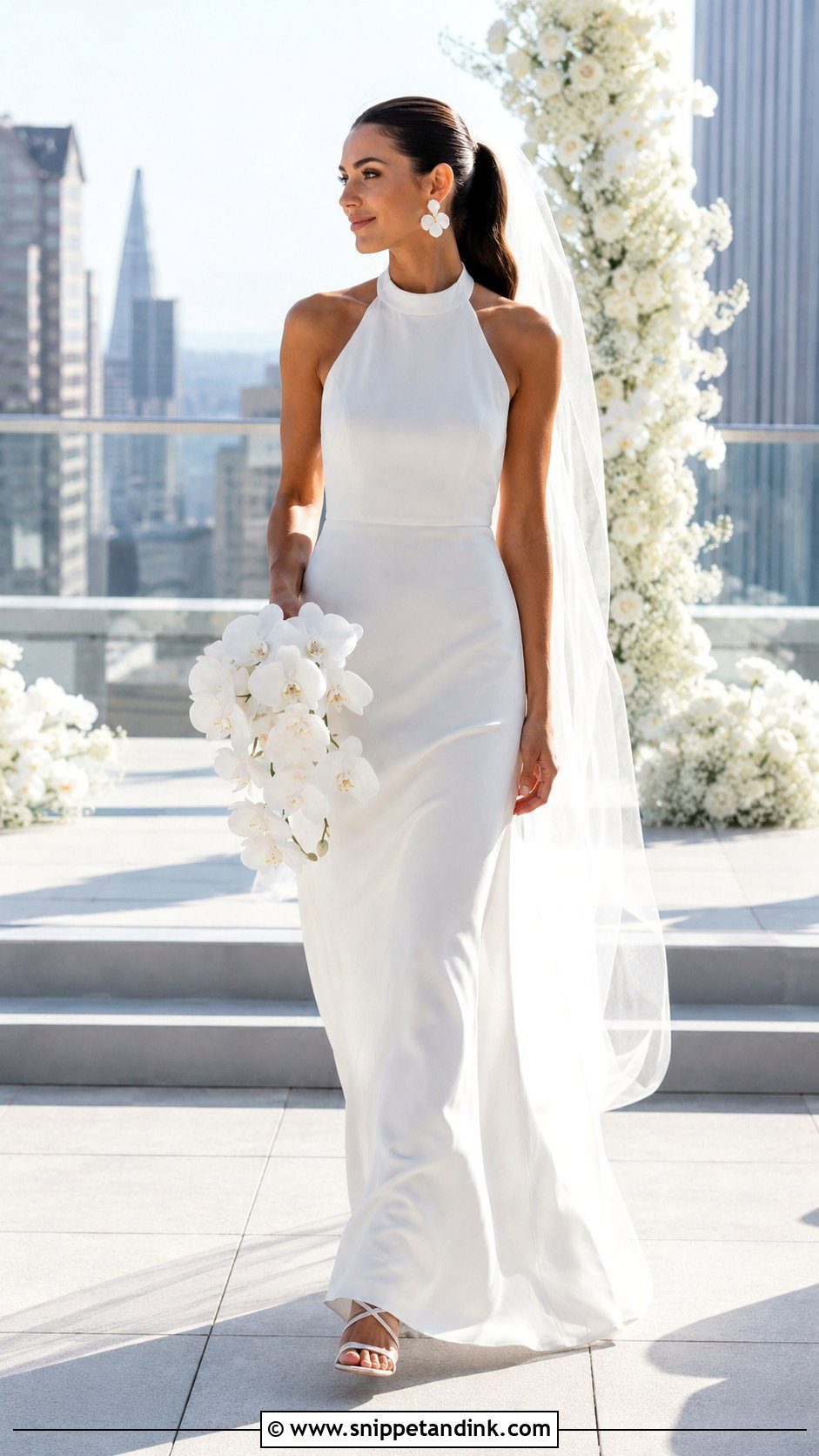
A halter neck wedding dress with a clean fitted bodice reads confident and modern. The neckline shows the shoulders and lengthens the upper body; a fluid column or softly fitted crepe skirt keeps it composed. Metallic or ivory sandals, small sculptural earrings and a compact clutch. Hair goes up or into a smooth ponytail. Swap a traditional veil for a sheer floor-length one fixed beneath the hair, or a plain organza scarf. Orchids or calla lilies in a narrow bunch. For a destination or rooftop wedding in heat, it’s one of the coolest shapes to wear, since the back and shoulders are open.
8. Cowl Neck Silk Wedding Dress
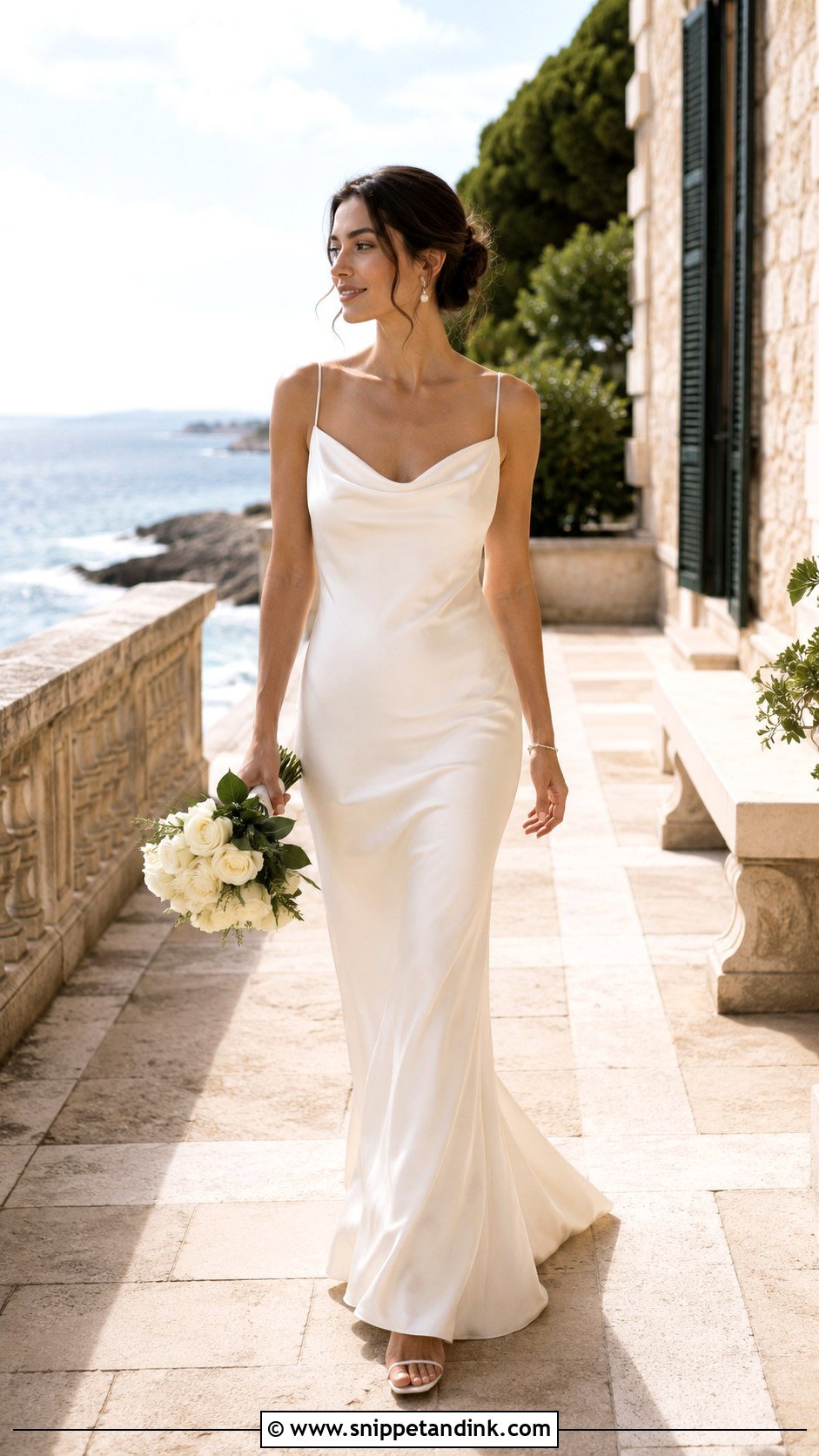
Silk cut on the bias does the shaping on a cowl neck dress, so there’s no boning and nothing rigid. A front cowl looks soft; a deep cowl back is a reveal as you walk away down the aisle. Slim ivory sandals, tiny pearl earrings and a delicate bracelet, with a loose bun or glossy shoulder-length waves. A plain sheer veil, or none, and a simple pearl pin. A small bouquet of white roses with trailing greenery. Silk marks with water, so for a beach wedding I’d keep the hem well above the wet sand and carry a dry cloth. Estates, gardens and small weddings with a relaxed dress code all suit it.
9. Cap Sleeve Midi Wedding Dress
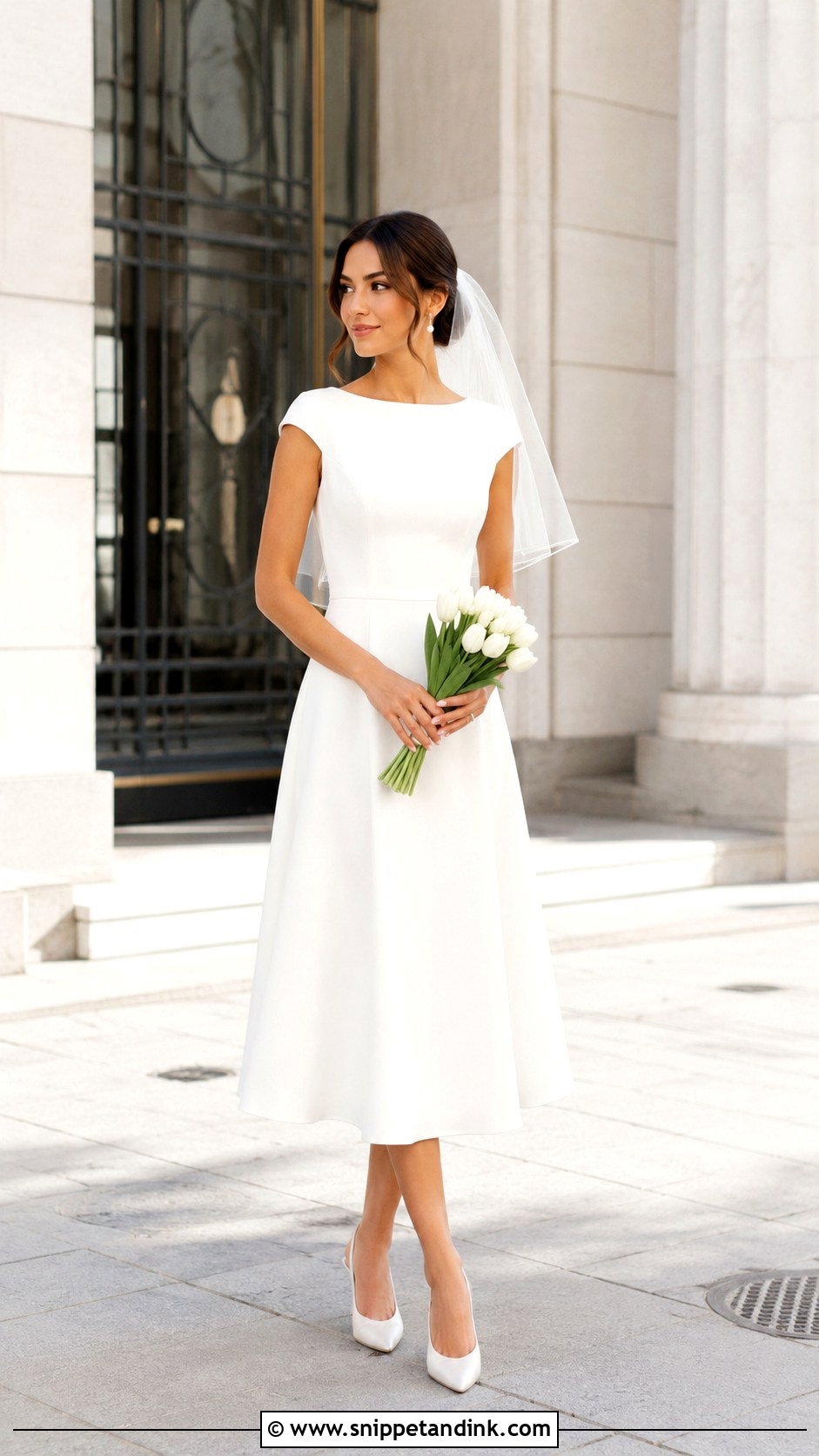
A cap sleeve midi is the dress I suggest most for a courthouse or a small daytime wedding. A fitted waist, a clean neckline and a hem between knee and ankle. Satin, structured crepe or a light jacquard keep the short length bridal. Pointed slingbacks, a small top-handle bag and pearl studs; a short veil, a birdcage or a structured hair bow. Soft waves or a tidy bun, depending on the neckline, and a compact bunch of tulips or roses. Cap sleeves can bite into the upper arm if they’re cut too snug, so check them with arms forward. And since the shoes are on view, buy a pair you’d happily wear again.
10. Simple Ball Gown Wedding Dress
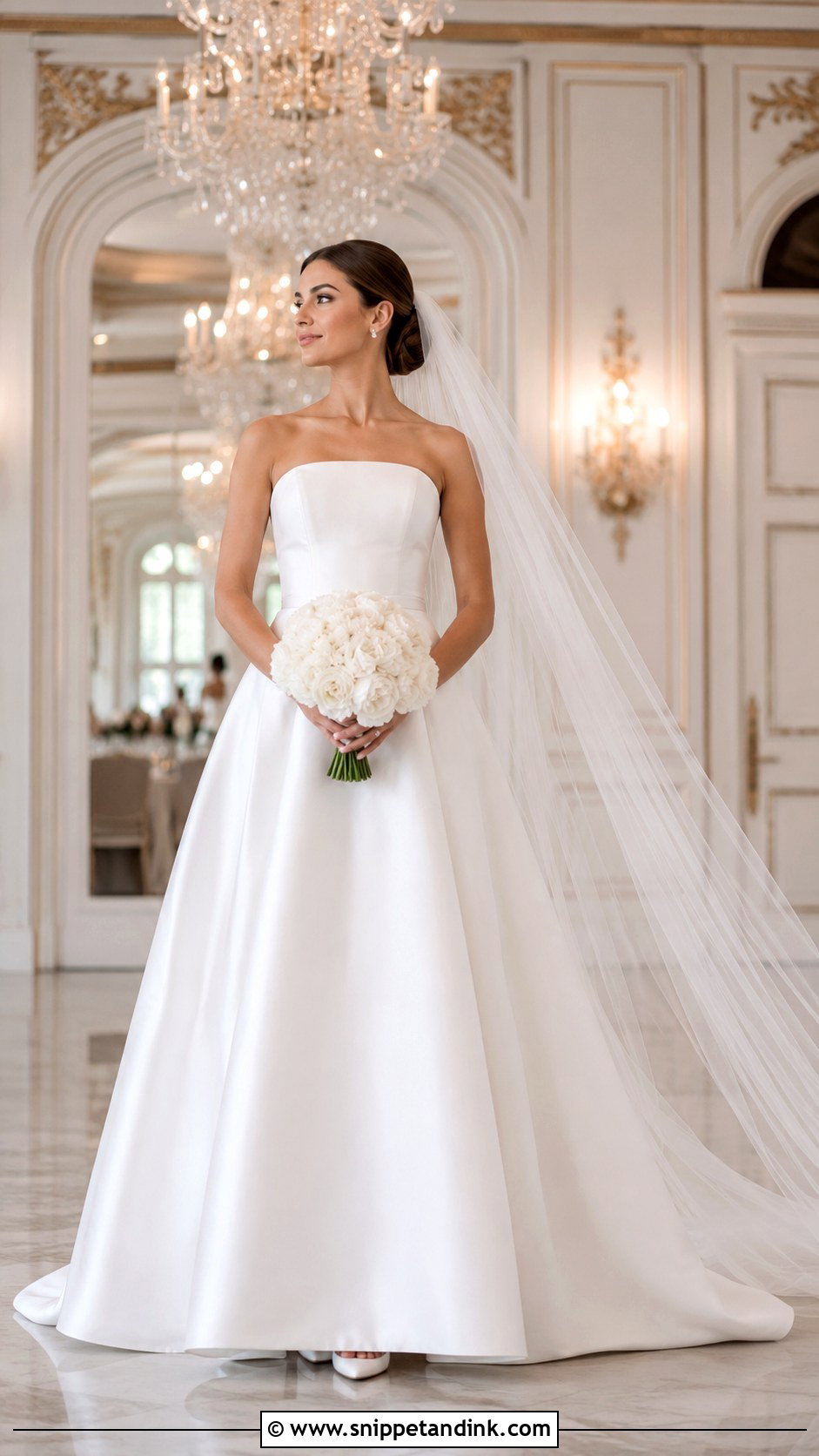
No lace, no crystals, still a ball gown. A fitted bodice, a defined waist and a smooth full skirt in mikado or satin give all the ceremony impact you need; the crisp fabric creates the volume. Understated studs, classic closed-toe pumps and a long plain-edged veil, with a sleek bun to keep it contemporary. A structured bouquet of white roses or peonies, not an oversized one. I’d add hidden pockets in alterations. A big skirt also needs a bustle that’s been tested before the day, and someone who knows how to work it.
11. High Neck Wedding Dress
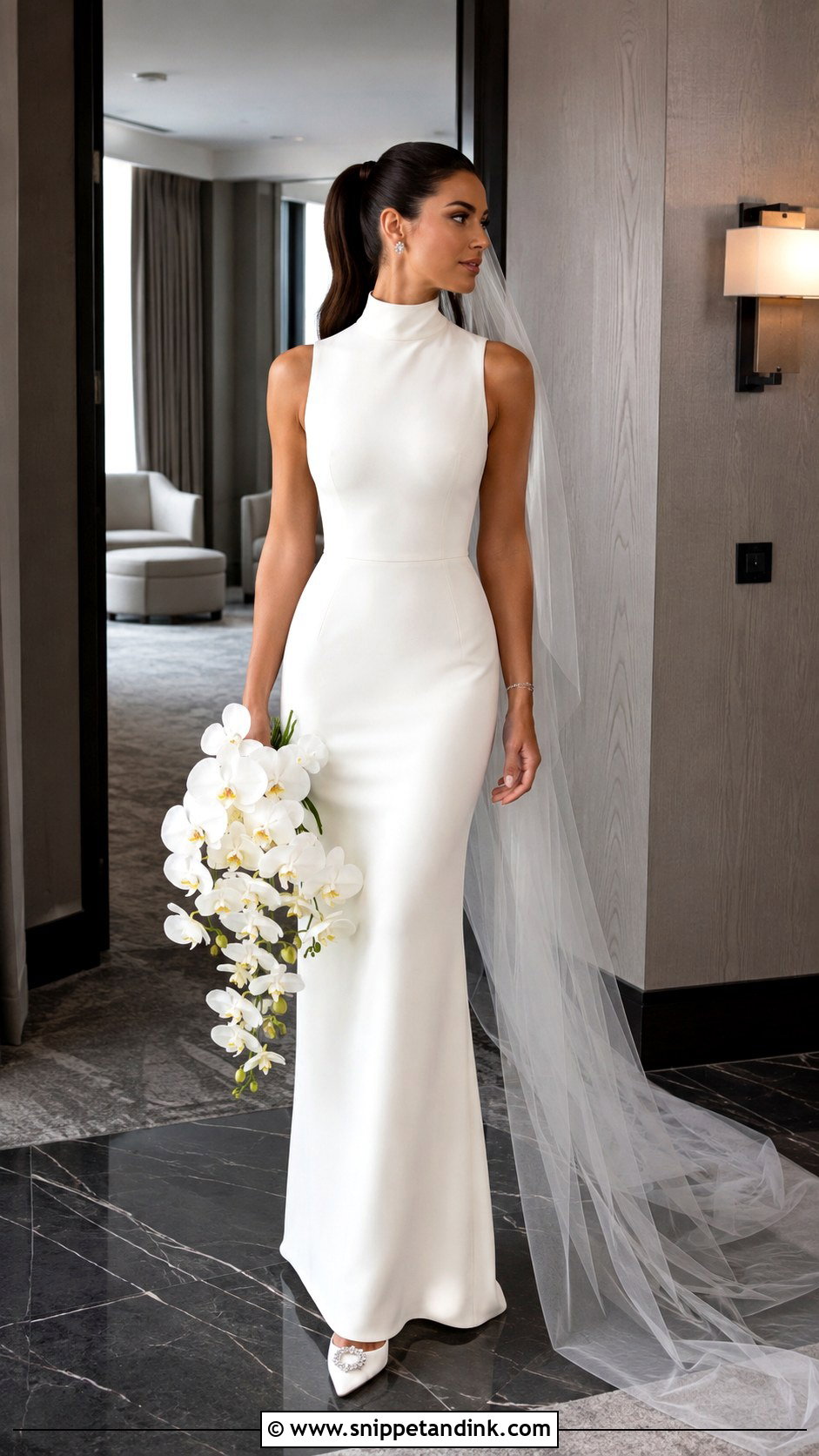
High necklines cover and lengthen at the same time. Sleeveless reads modern; fitted long sleeves read reserved. Keep the fabric smooth, crepe, silk or matte satin, so the neckline isn’t fighting texture, and pair it with a narrow column or soft flare. Pearl or crystal studs, pointed pumps, no necklace, and hair in a low bun or high polished ponytail. A long veil fixed under the hair falls softly behind. Orchids or calla lilies. The thing to test: look down at your bouquet and turn your head fully. A high collar that’s fine facing forward can press into the throat when you move.
12. Tea Length Wedding Dress
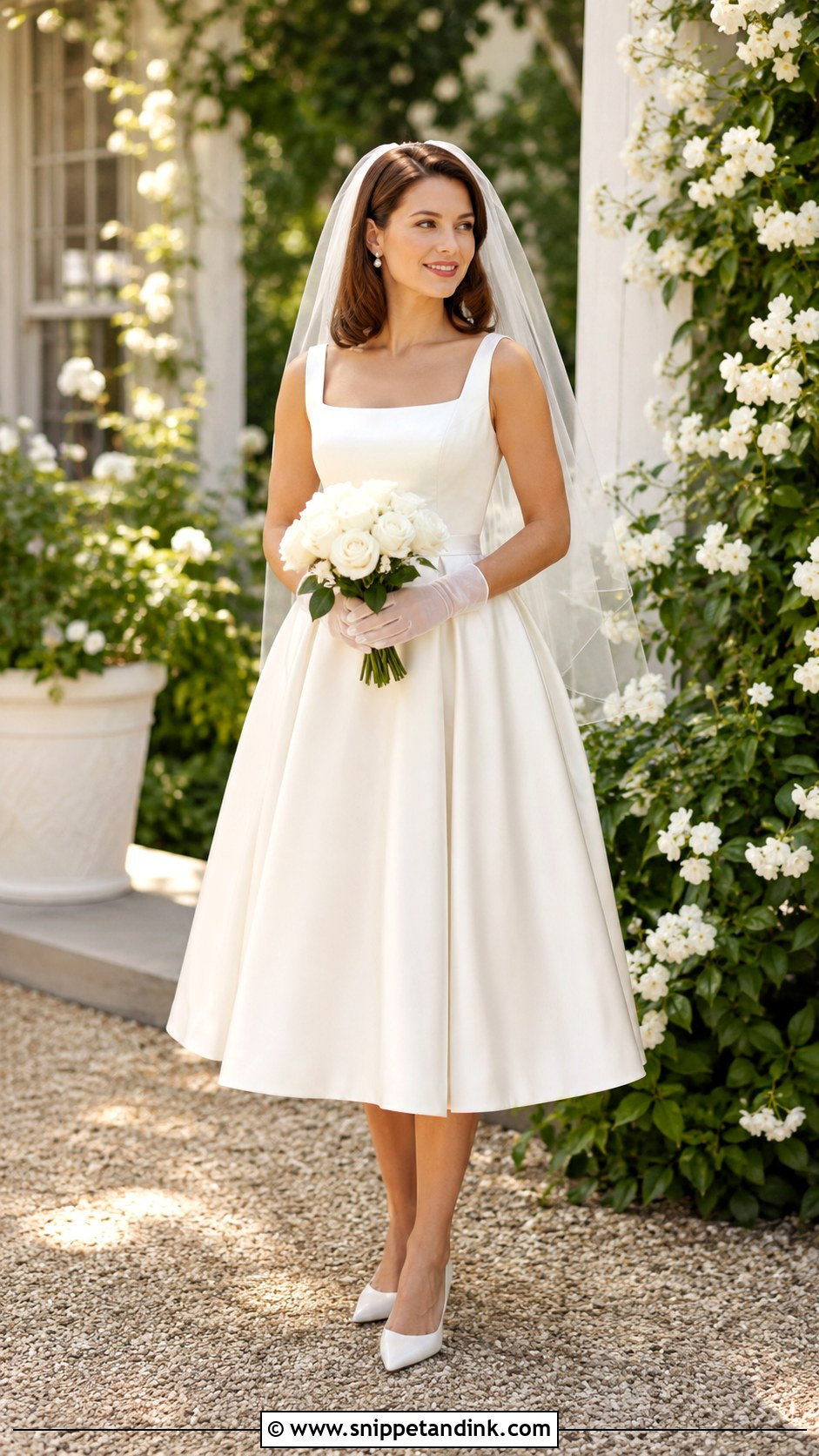
Tea length has a vintage feel but a practical shape. The skirt falls below the knee and above the ankle, so the shoes matter. A fitted bodice with a scoop, square or strapless neckline and a clean skirt with gentle volume; pointed pumps, slingbacks or low block heels in ivory satin. Pearl earrings, short gloves and a shoulder-length veil push it toward classic without becoming costume, as long as you pick two of the three, not all. Soft waves or a smooth bun, and a rounded bouquet of white roses. Courthouses, gardens, brunches and any reception where you want to move freely.
13. One Shoulder Wedding Dress
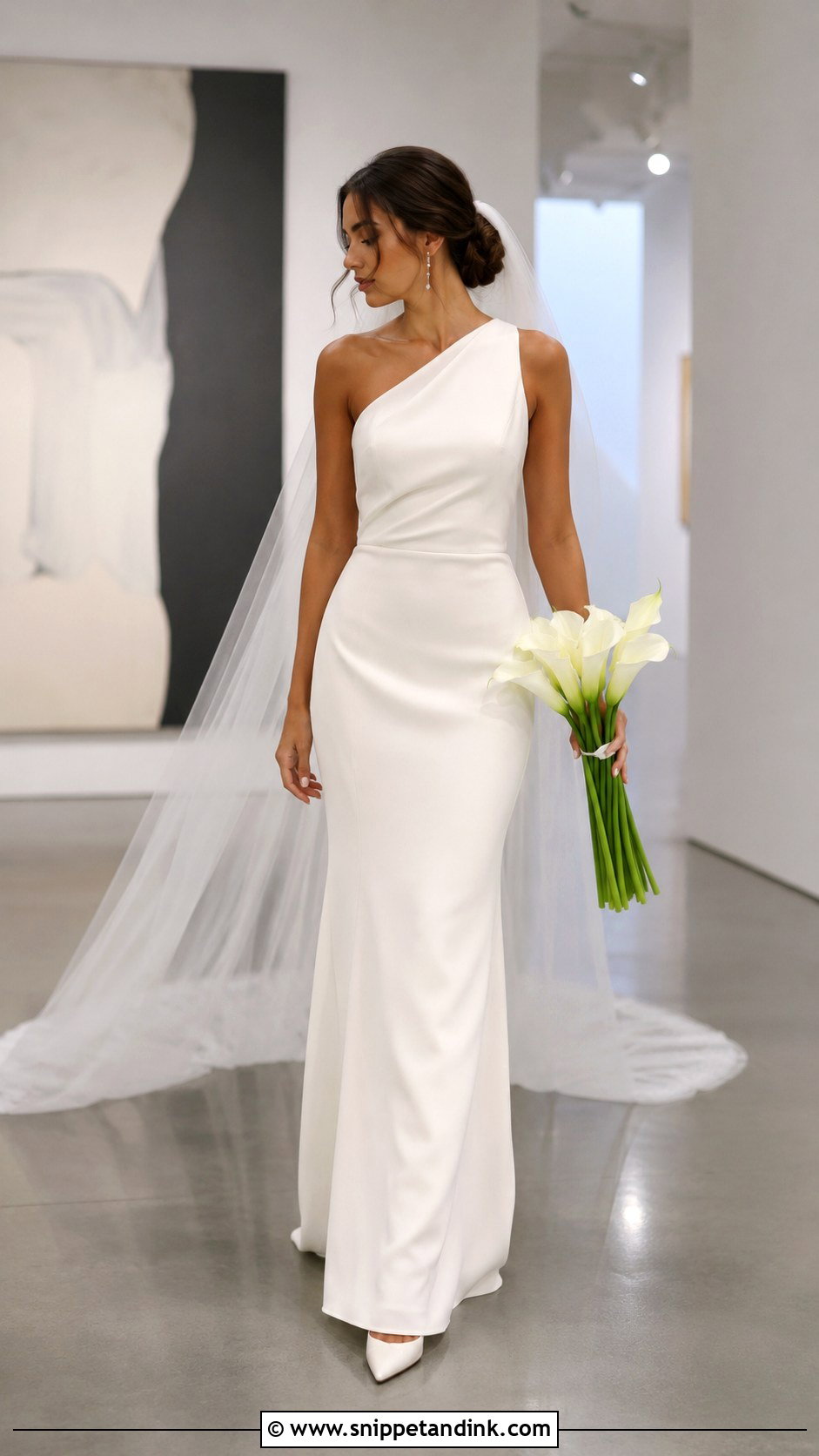
One clean strap, no ruffles, and the asymmetry becomes the only detail a dress needs. A fitted crepe column or softly draped satin gown works. Small drops, a slim bracelet and pointed ivory heels; a side-parted bun placed away from the strap balances the line. Fix a plain cathedral veil beneath the bun so the neckline stays visible from the front. White orchids or long-stemmed calla lilies suit rooftops, galleries and formal evenings. The single strap carries more weight than two would, so I check it stays put through a full arm stretch.
14. Draped Waist Wedding Dress
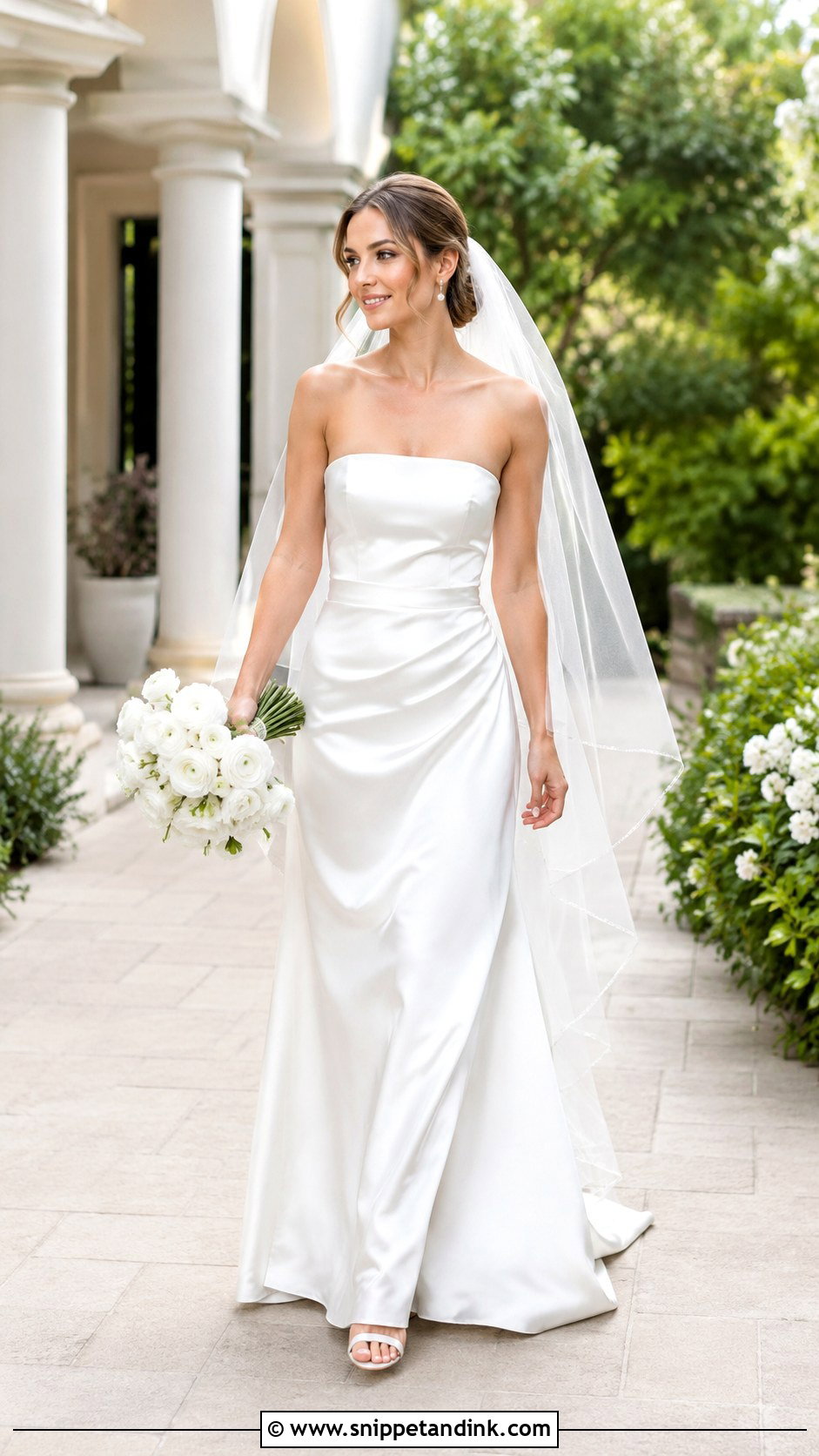
Draping across the waist adds texture and movement without a single bead, and it’s kind to the midsection: soft gathers define the waist while hiding small fit changes, which helps if your weight tends to shift in the months before a wedding. A satin or crepe gown with a straight or gentle A-line skirt. Minimalist sandals, pearl drops and a sheer fingertip veil, with a smooth low bun or relaxed chignon. White ranunculus and sweet peas, lightly arranged. No belt; it cuts across the folds. Gardens, hotels and coastal venues suit it.



15. Simple Mermaid Wedding Dress
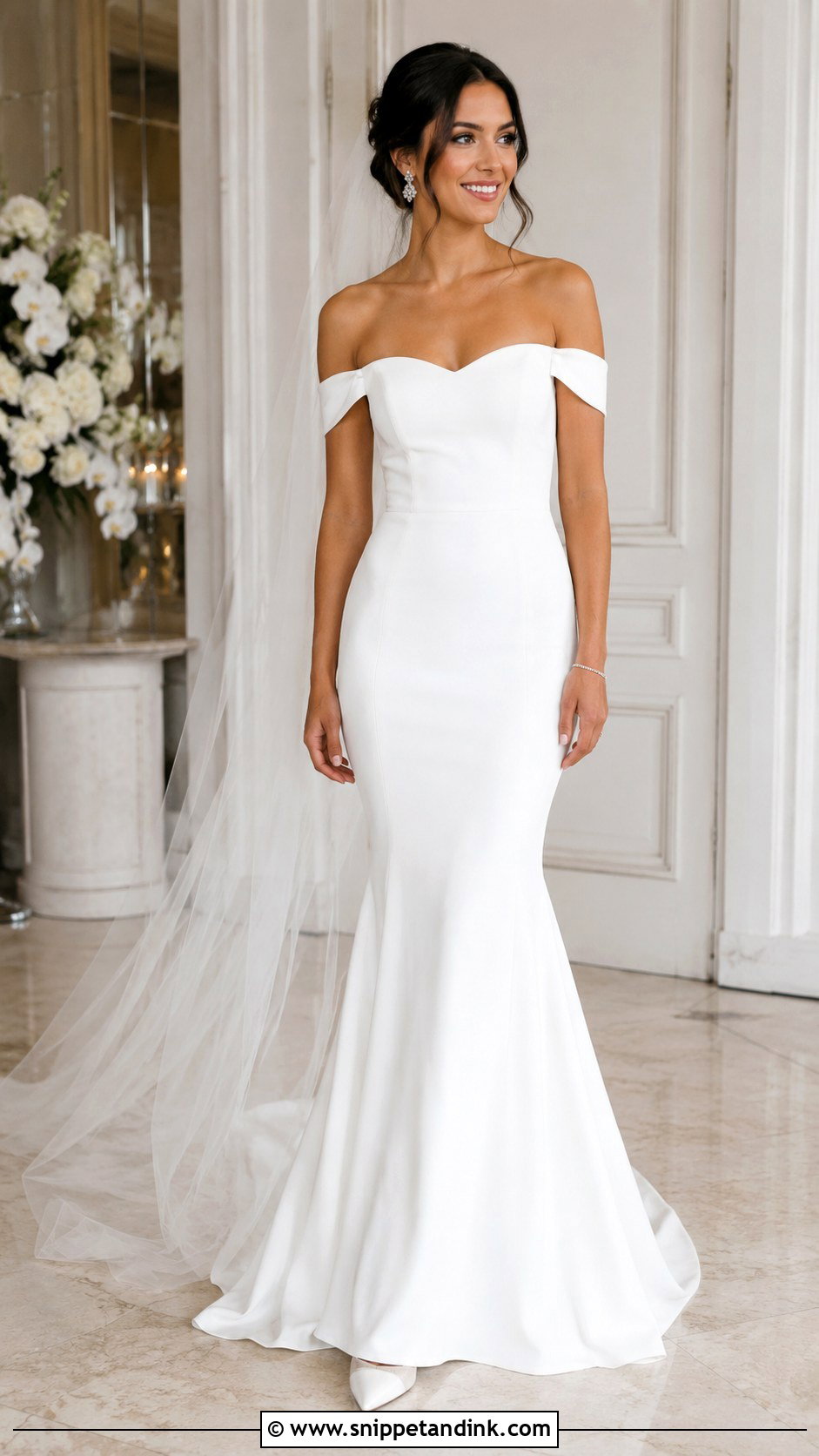
A mermaid without decoration is all about fit through the waist and hips. Stretch crepe forgives more than satin; satin looks sharper but shows every pull. The flare should start near the knee. A straight, scoop or off-shoulder neckline balances the lower half. Pointed pumps, small crystal earrings and a thin bracelet, with a long plain veil behind. Polished waves or a low bun depending on how much back you want to show, and a narrow bouquet of white roses or orchids. Test walking, sitting and a few stairs before the final alteration. If you can’t manage stairs without hitching the skirt, the flare point needs lowering.
16. Drop Waist Wedding Dress
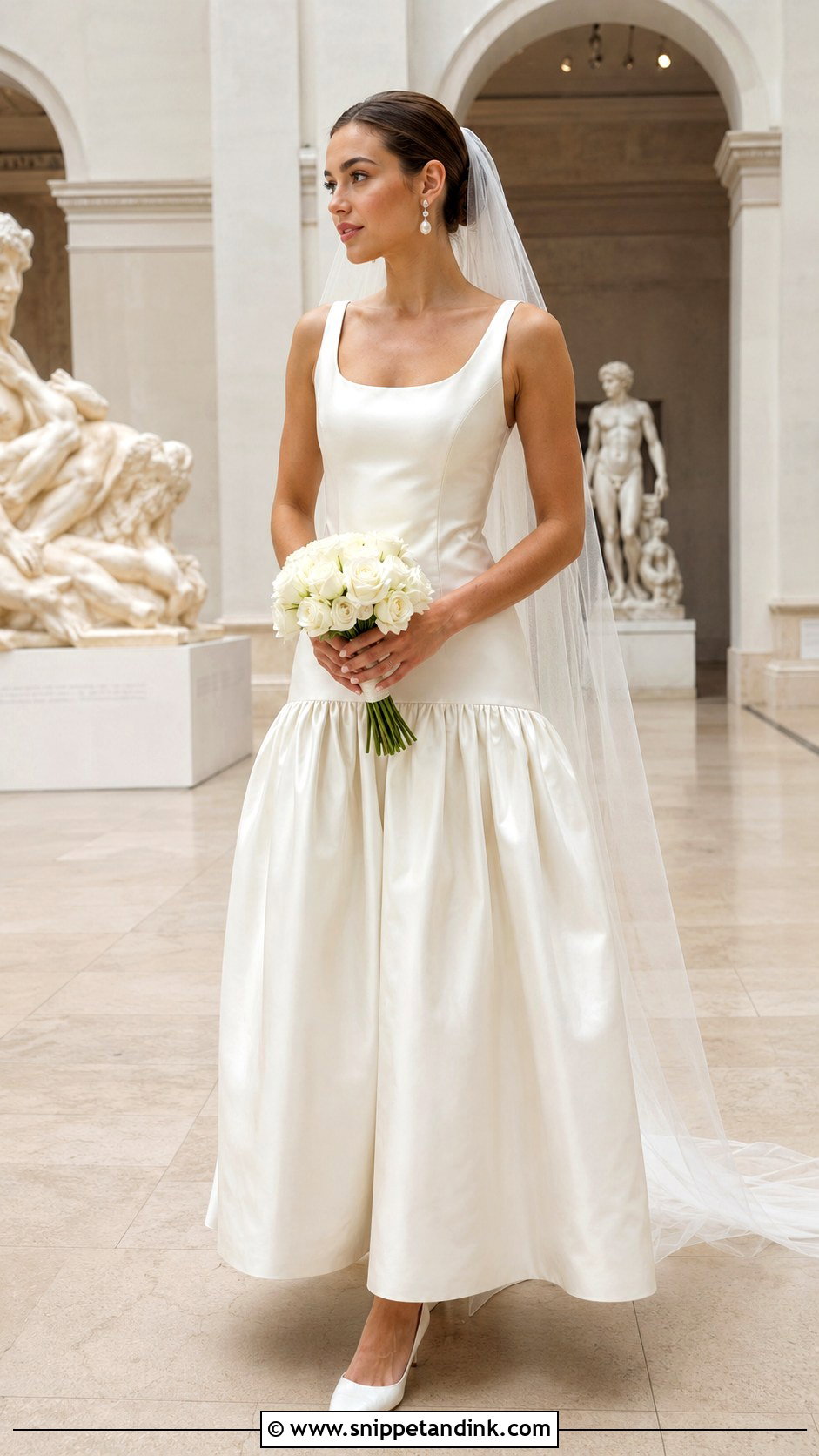
A drop waist runs a long bodice down to the upper hip before the skirt starts, which looks fashion-forward and stays simple. Structured satin or mikado holds it best, with a scoop, strapless or square neckline. A gathered skirt moves; a cleaner A-line looks architectural. Pointed pumps, sculptural pearl earrings, a sheer chapel veil and a sleek bun. A small bouquet rather than a cascade keeps the waist detail in view. Where that seam lands is very personal. I pin it on the bride at the first fitting, because an inch too low can widen the hips.
17. Backless Wedding Dress
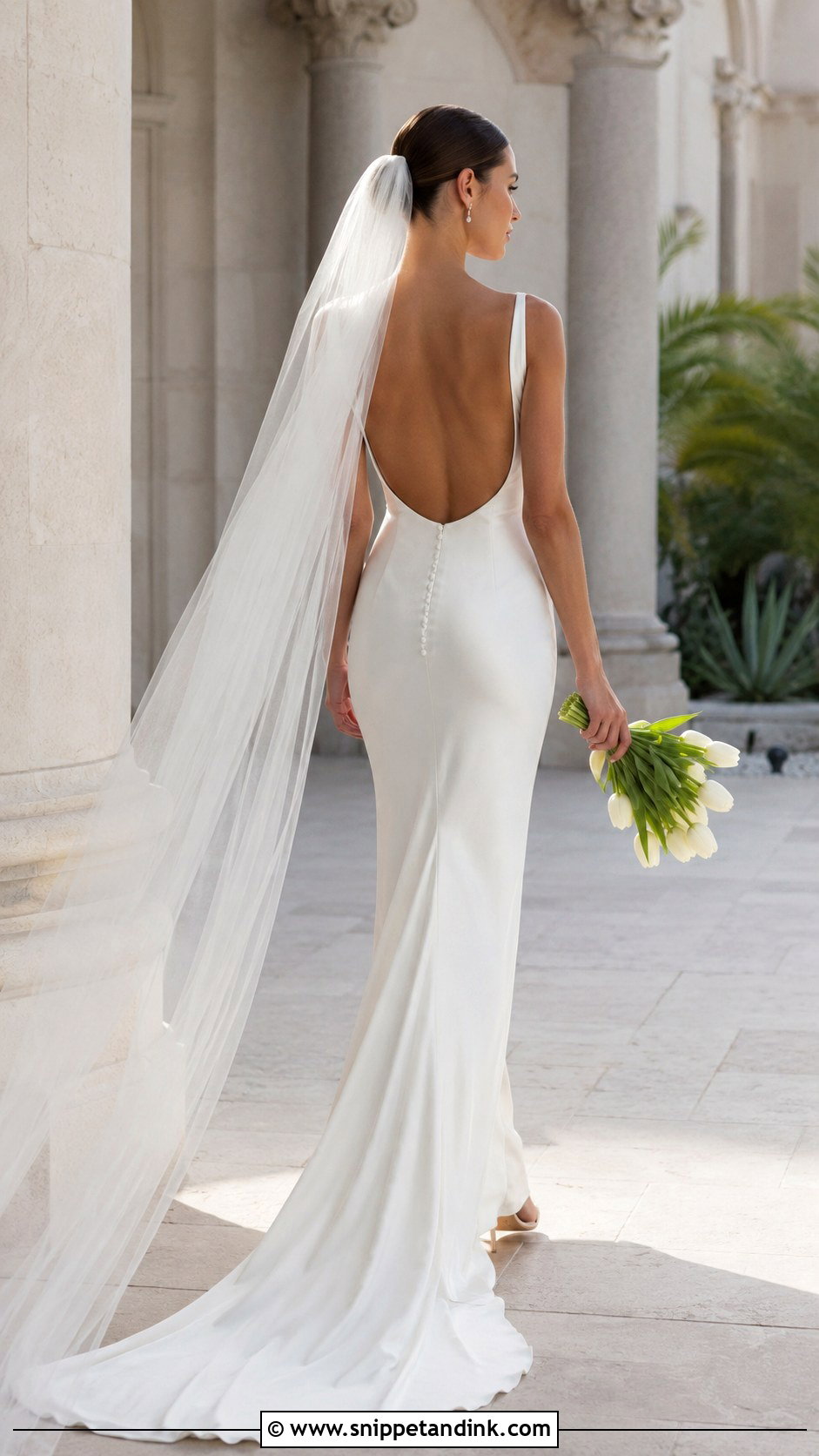
From the front, a backless wedding dress looks completely composed; the drama is all behind. A simple crepe or satin gown with a high bateau neck, narrow straps or a soft cowl front. The open back must sit flat without pulling at the side seams, and that depends on the bodice being fitted snugly at the ribs. Slim ivory heels, small studs and a long veil under an updo; when it comes off, a pearl pin or a fine comb adds a small detail. White tulips or calla lilies, no necklace. Sort out the support question before buying, since an ordinary bra won’t work.
18. Bridal Mini Dress
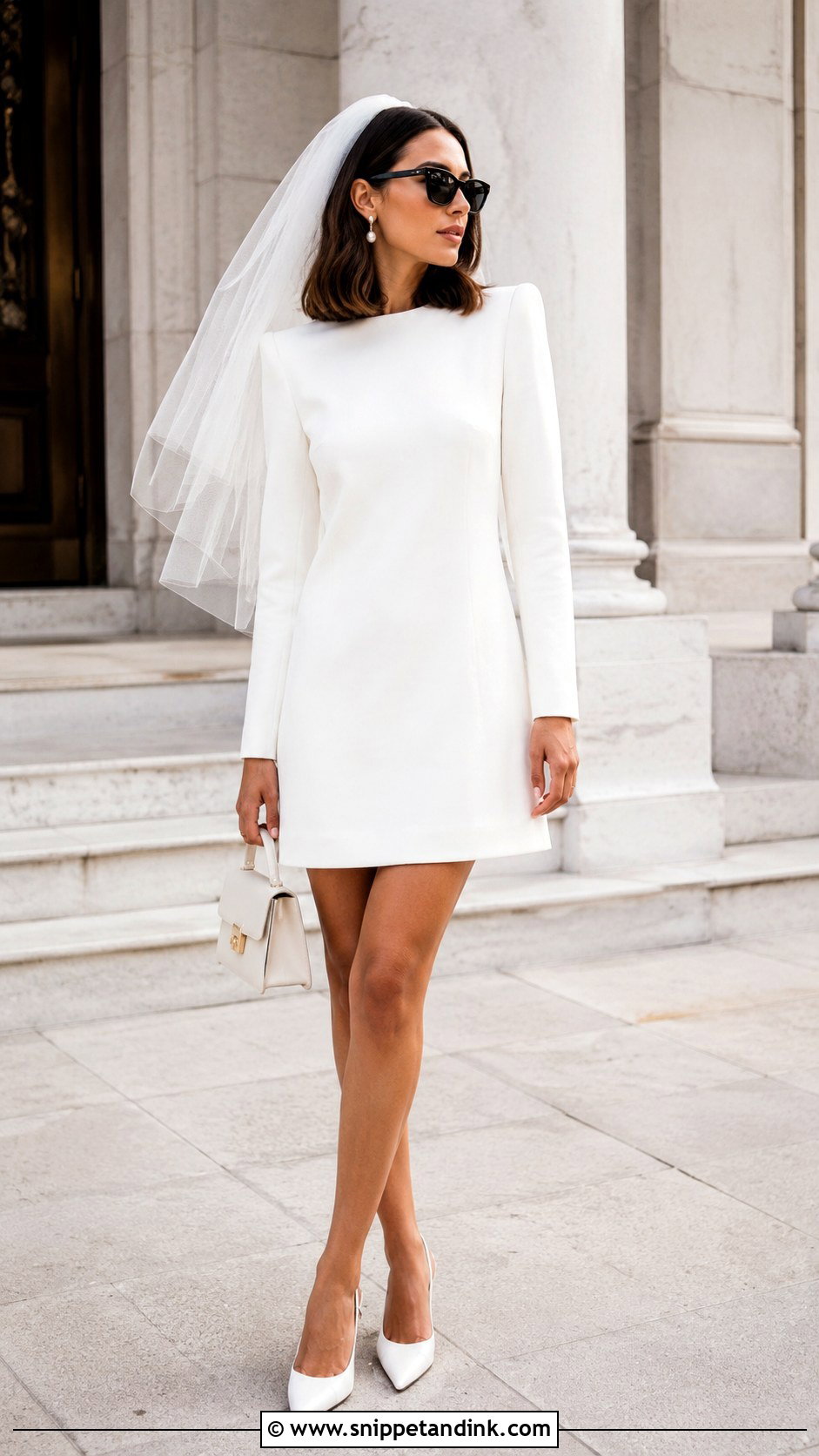
A mini can be classy when the fabric and tailoring are good. A structured shift, fitted sheath or simple A-line in satin, crepe or silk faille, balanced with a higher neckline, long sleeves or a tailored bodice. Pointed pumps, slingbacks or ankle straps; pearl earrings and a small top-handle bag. A shoulder-length veil, birdcage or neat bow makes it read bridal. A polished ponytail or softly curled bob. It’s my go-to for elopements, rehearsal dinners and a second look for dancing. Sit down in it at the fitting. Minis ride up when seated, and a hem that works standing can be too short in a chair.
19. Simple Wedding Dress With Cape
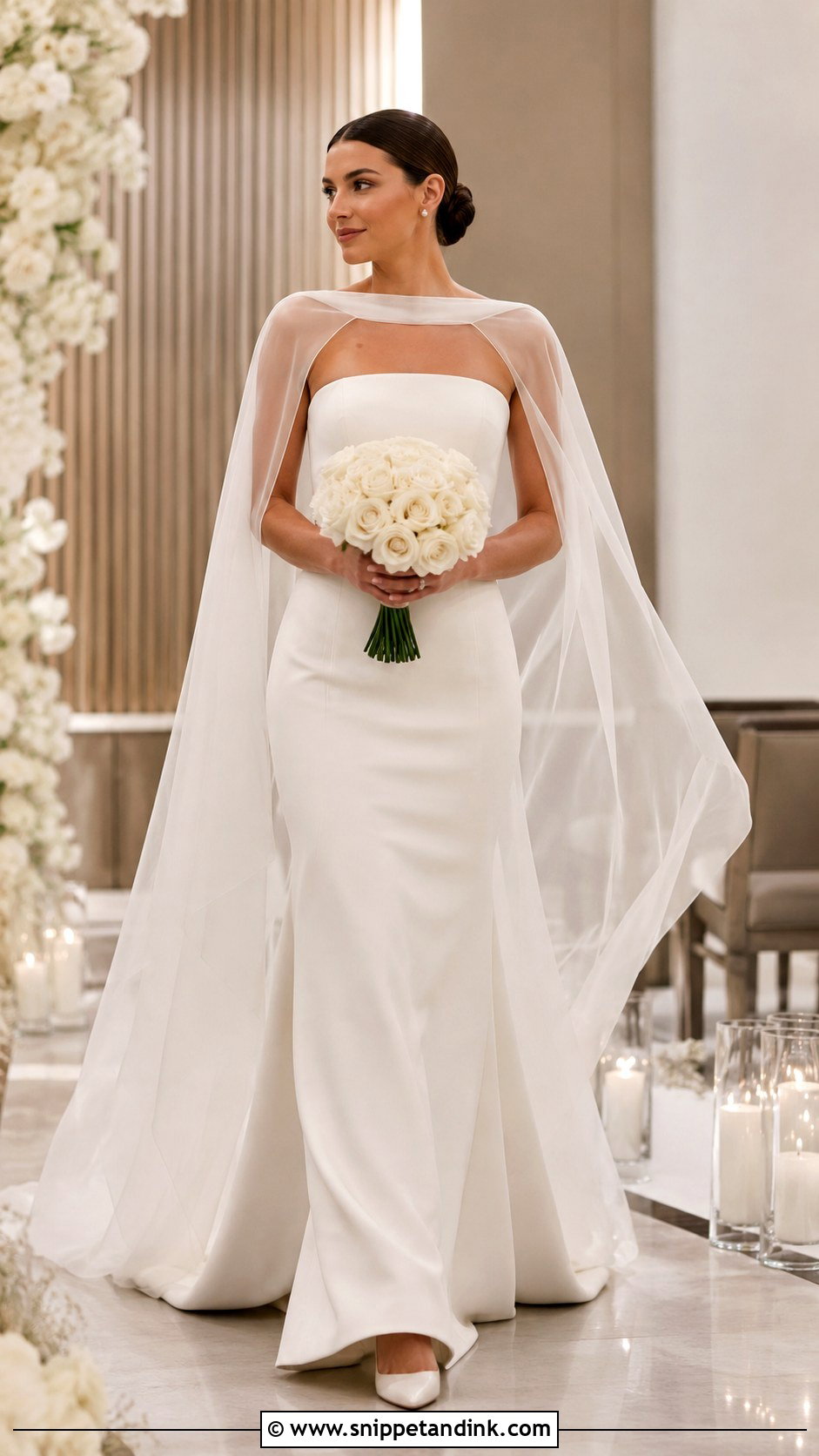
A cape gives coverage and an entrance with no embroidery at all. Start with a strapless, sleeveless or fitted column in smooth crepe or satin, and add a sheer floor-length cape fixed at the shoulders or neckline. It can replace the veil and moves well in photos. Pointed pumps, small pearl earrings and a polished low bun; white roses or anemones in a tidy shape. Shoulder attachments hold better than a single clasp at the throat, which tends to pull the cape backward. Make sure it comes off easily before the reception. Fall and winter suit it best.



20. Courthouse Shift Wedding Dress
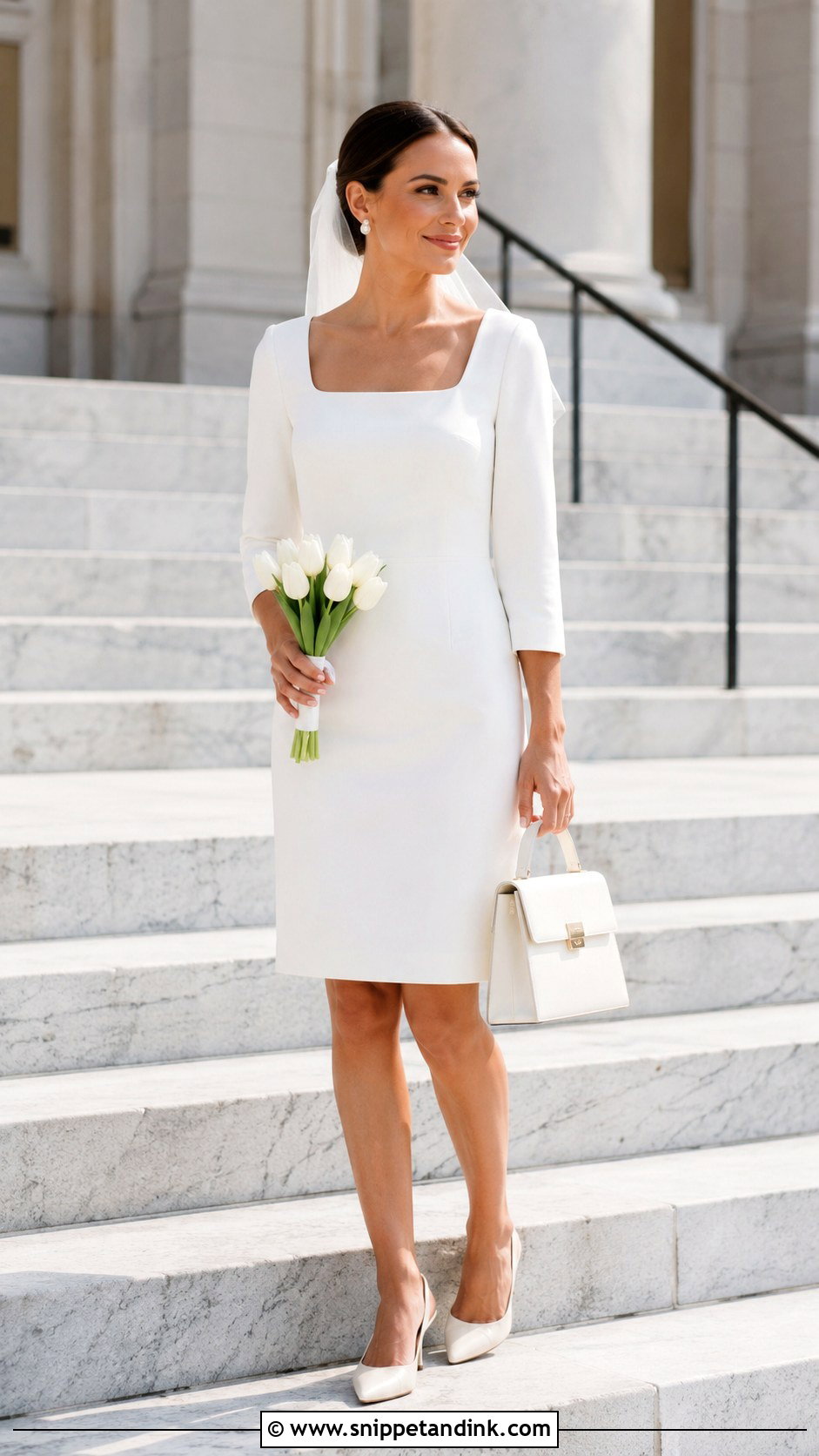
A courthouse shift wedding dress looks at home in a civil ceremony and carries on to lunch without a change. Knee-length or midi, clean seams, a bateau or square neckline and enough body to hold the shape. Sleeveless for warm weather, three-quarter sleeves for cooler months, and a tailored white coat in winter. Ivory slingbacks, pearl earrings and a small structured bag; a short veil, a pillbox-style headpiece or a hair bow. Keep the bouquet petite, because you’ll be holding it while signing paperwork and you’ll want a free hand.
Turning the Same Dress Into an Evening Look
A simple dress takes a change of accessories better than any embellished gown, so you can have a ceremony look and a party look without buying a second outfit. I plan the swap with the bride ahead of time and pack everything into one small bag for a bridesmaid.
- Take the veil out and change the hair: a low bun can become a sleek ponytail or loose waves in a few minutes if your stylist leaves you with a plan.
- Switch earrings from small studs to something with movement, since a plain neckline can carry a bolder pair by evening.
- Change into lower or more comfortable shoes once the formal photos are done; with a short hem, this is part of the look rather than a compromise.
- Add a bow, a satin belt or a cropped jacket if you want the second look to feel clearly different.
Keep the change short and plan it for a natural pause, such as between dinner and the first dance. If it needs a person to help with the hair, book that time with your stylist when you book the morning.
Plain Fabric, Precise Fit, Quiet Accessories
A simple dress puts construction, proportion and personal styling in charge. These 20 Classy Simple Bride Dress Ideas run from slips and ball gowns to minis, off-shoulder shapes and courthouse shifts, and the right one depends on your venue, season, comfort and how much you’ll move. Use alterations to settle the neckline, hem and waist, then add only the accessories that support the dress. A veil, comfortable shoes, a little jewelry and a bouquet in proportion are enough to make a plain gown entirely your own.
You'll Like These Ideas:







Leave a Reply