
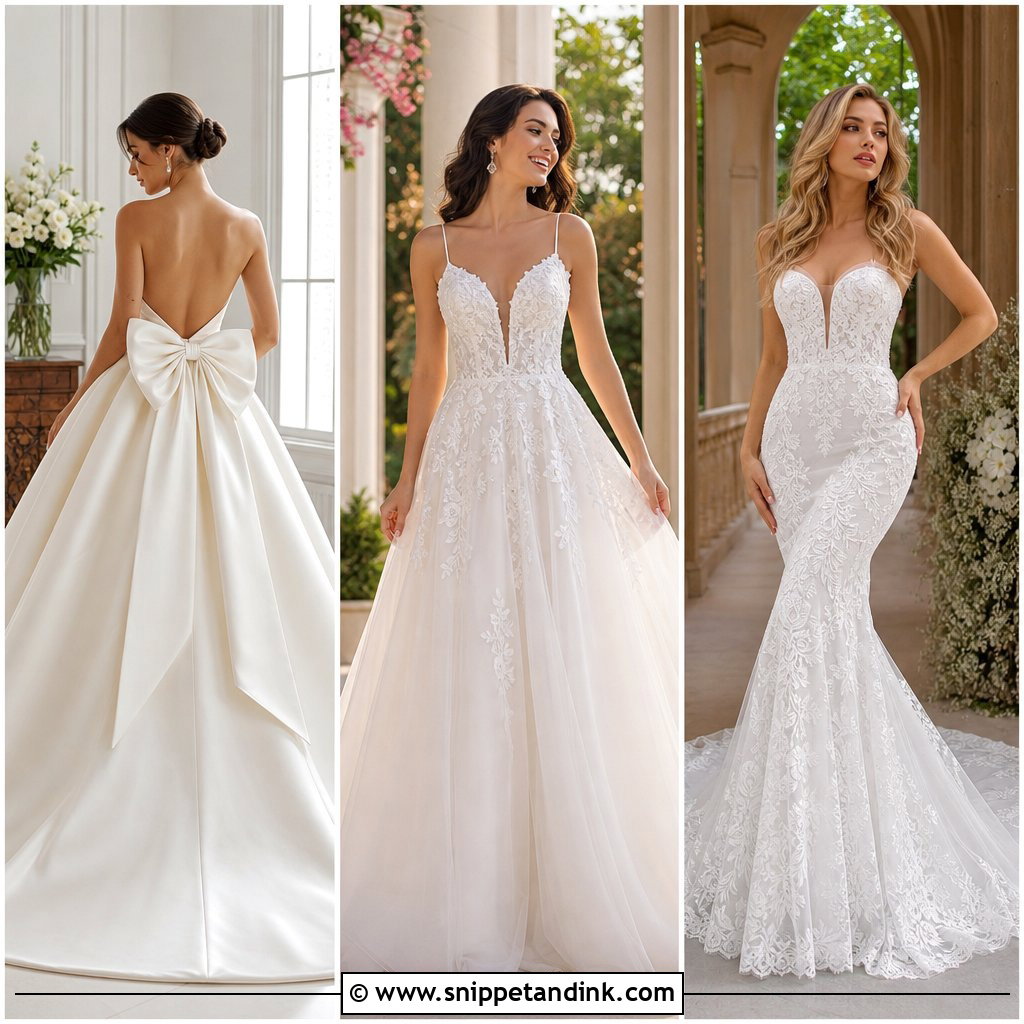
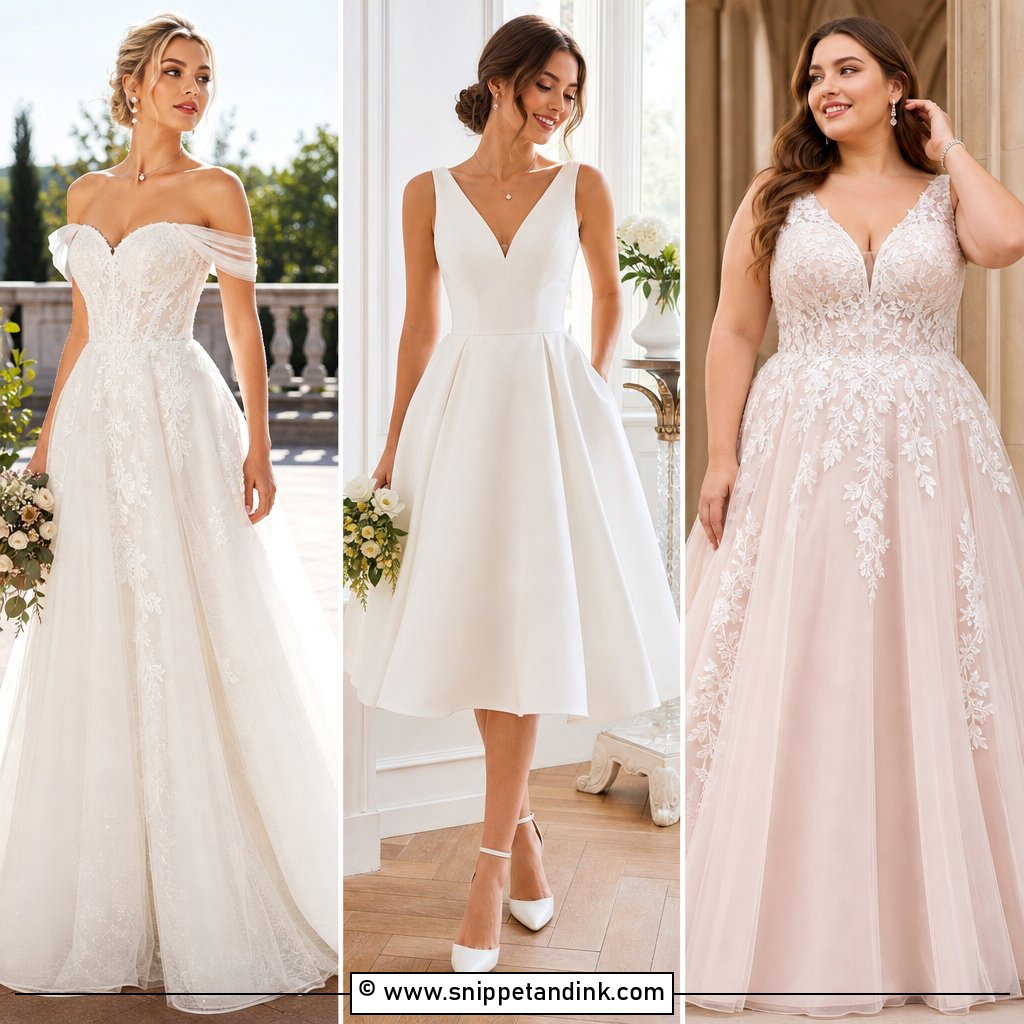
Comparing whole bridal looks is far easier than comparing a sleeve here and a neckline there. This collection runs from romantic ball gowns and clean columns to floral tulle, reception minis and versatile convertible silhouettes. The shapes I saw brides asking for most in 2025 were Basque and dropped waists, visible corsetry, three-dimensional flowers and pieces that come off, so one gown can change between ceremony and party. Every look below includes the veil, shoes, jewellery and the kind of venue it suits. Use them as a starting point, but judge each gown by proportion, comfort and how the fabric moves on you. A trend only earns its place if it flatters your body and feels like you.
From Saying Yes to the Final Fitting: A Realistic Timeline
Most bridal gowns are made to order after you choose them, not taken off a rail, and this catches brides out more than anything else. Production times vary by designer, but several months is normal, and anything faster usually means a rush fee or a sample dress. This is the order I plan with brides:
- Around nine to twelve months before: start appointments. Try very different shapes, even ones you think you’ll hate, because the silhouette you rule out on a hanger often surprises you on the body.
- Around eight months before: order, so production and delivery have a safe margin.
- Two to three months before: first alteration fitting, with your actual shoes and underwear.
- Four to six weeks before: second fitting for hem, bustle and fine adjustments.
- One to two weeks before: final fitting and pickup, with whoever will help you dress, so they learn the fastenings and the bustle.
Corsetry, detachable skirts and heavy beading all add alteration time. If you love one of those details, build in an extra fitting rather than hoping one will be enough.
1. Basque Waist Wedding Dress
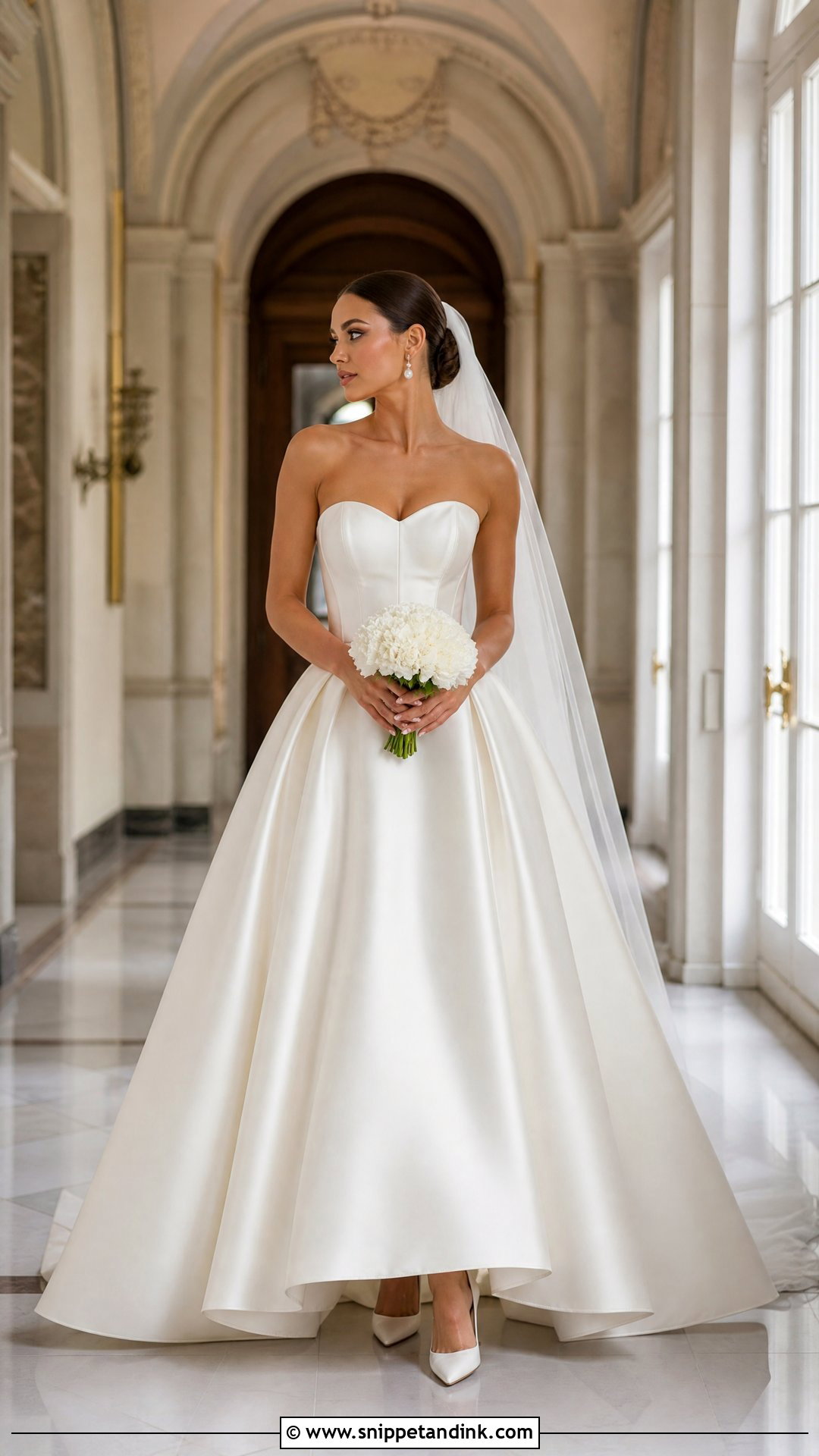
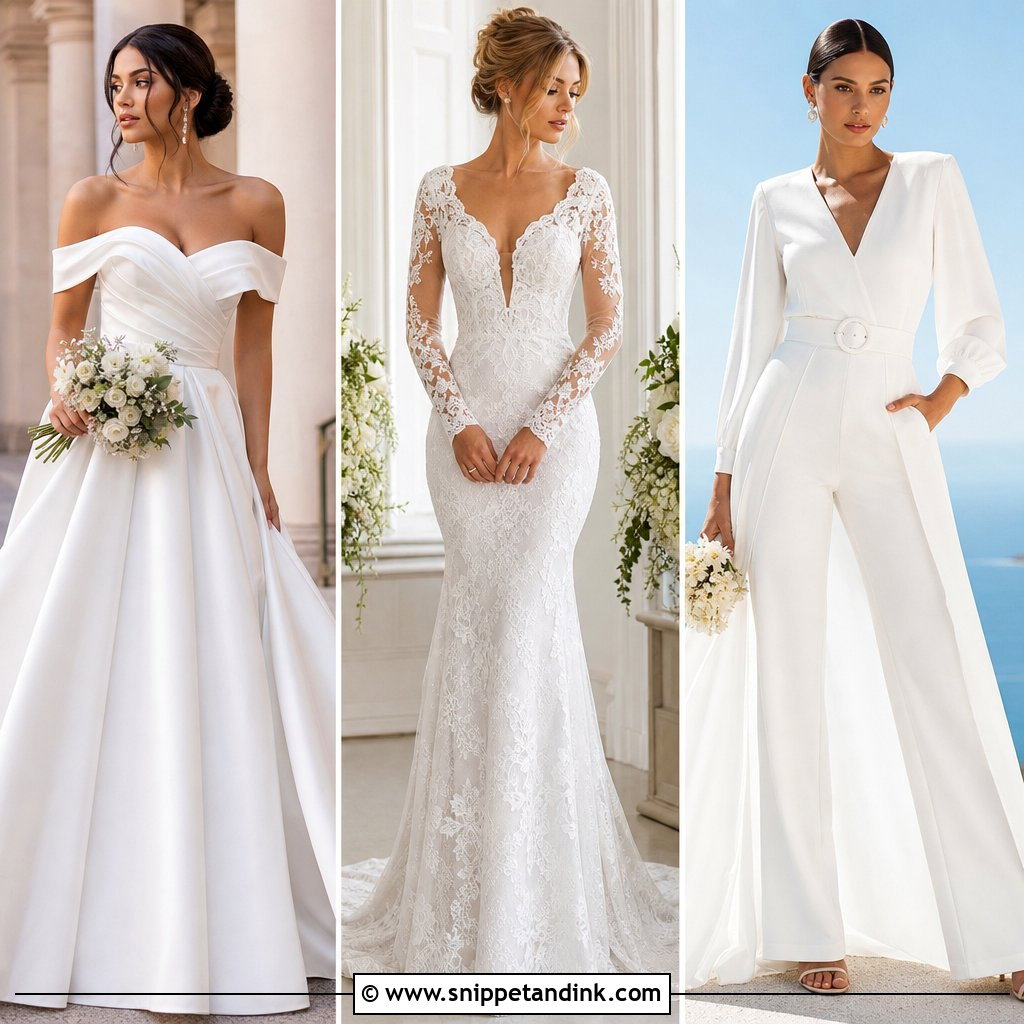
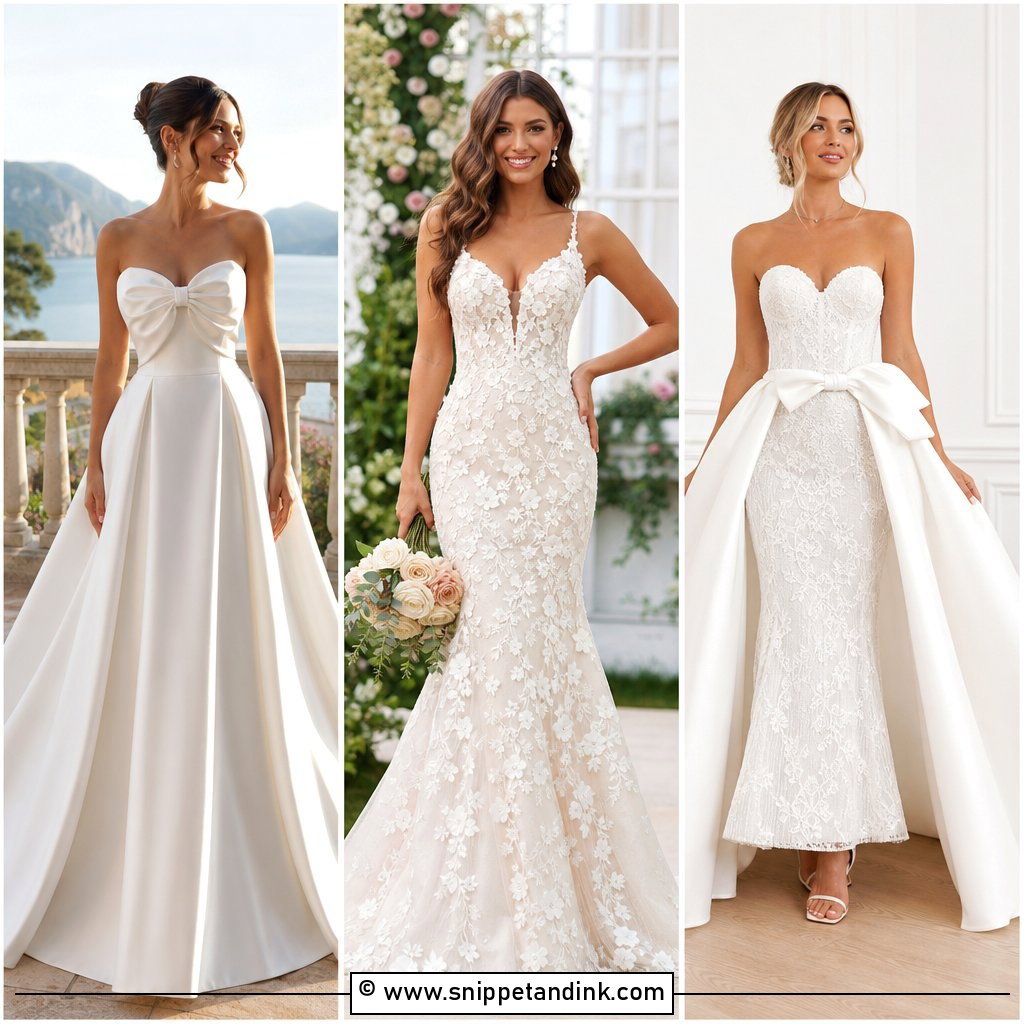
The Basque waist dips into a V or U below the natural waistline, and that long point is what makes a full skirt look so graceful. A structured satin ball gown with a strapless sweetheart neckline shows it off best, because there’s nothing above the waist to distract from the line. Keep the cathedral veil plain with a cut edge, and add pearl drops, pointed ivory pumps and a compact white bouquet. At a fitting, I watch the point of the basque when the bride sits. If the boning is too long for her torso, it digs into the top of the thighs, and that has to be shortened. Supportive should never mean painful. Ballrooms, estates and formal hotels suit it.
2. Drop Waist Satin Wedding Dress
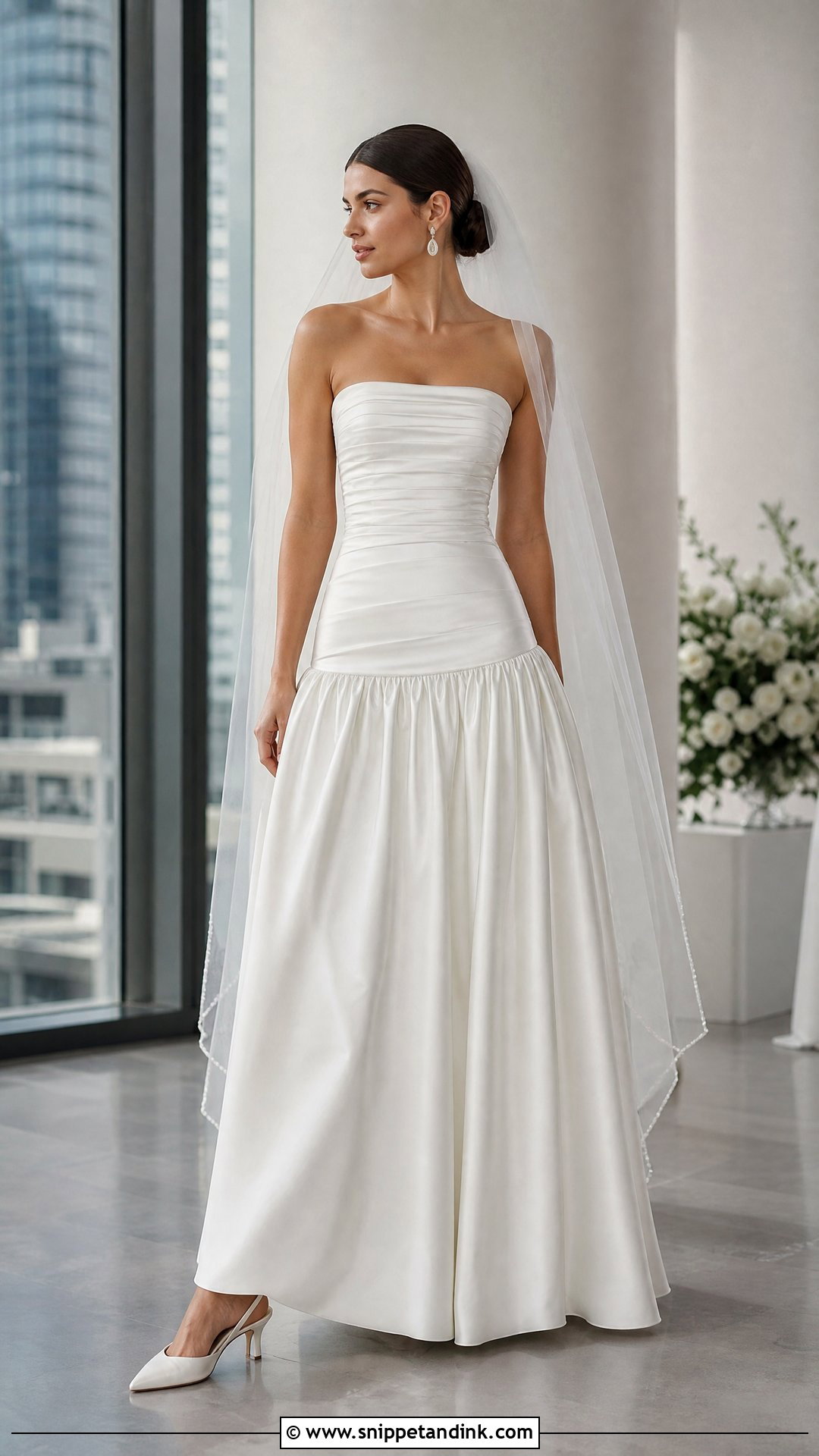
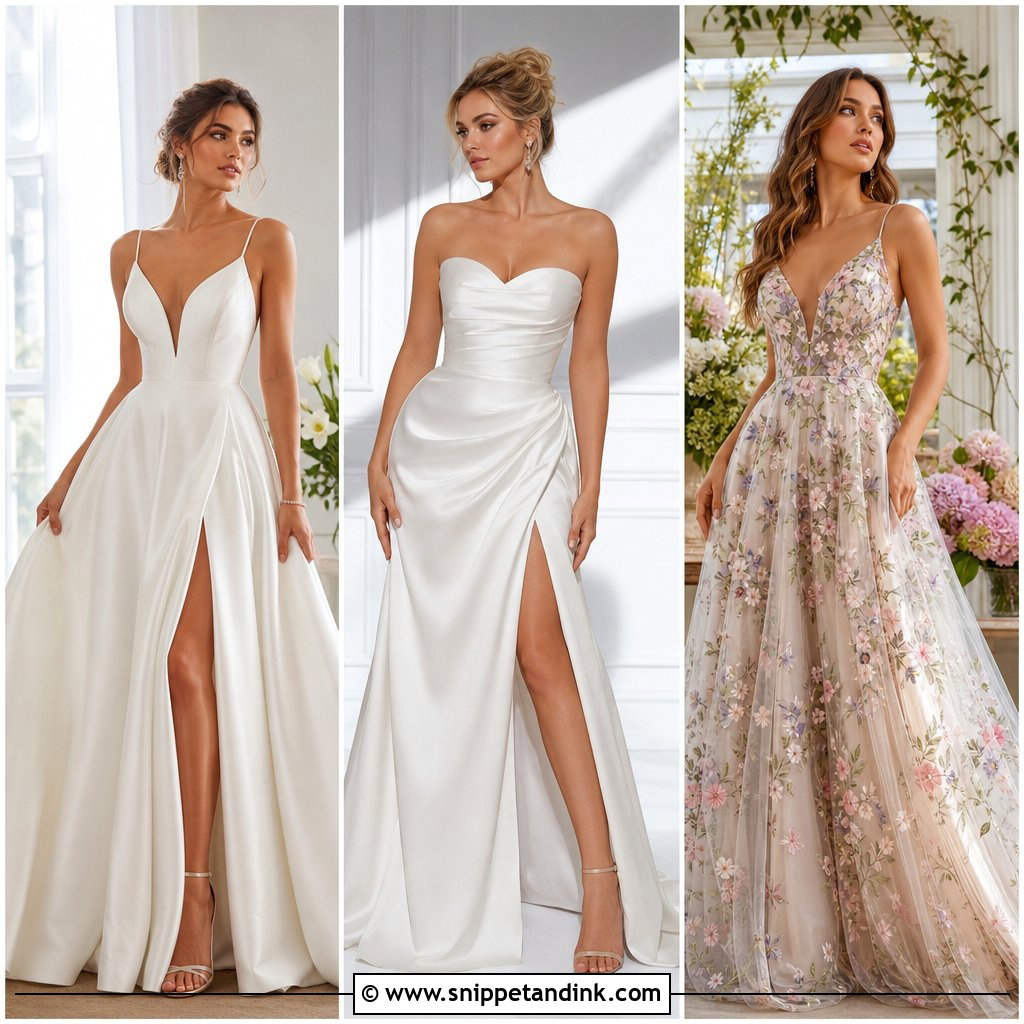
Picture smooth satin falling from a long, fitted bodice into a softly gathered skirt that starts near the upper hip. That’s the appeal of a drop waist: one long line and no beading needed. A strapless bodice with light ruching lets the fabric speak, finished with a sheer fingertip veil, sculptural earrings, satin slingbacks and a low bun that keeps the neckline clear. The honest drawback is mobility. Because the skirt starts lower, stride and the dip into a chair feel different, so I have brides walk briskly and sit several times in the shop. Modern ballrooms, galleries and minimal city venues show it at its best.
3. Corset Lace A-Line Wedding Dress
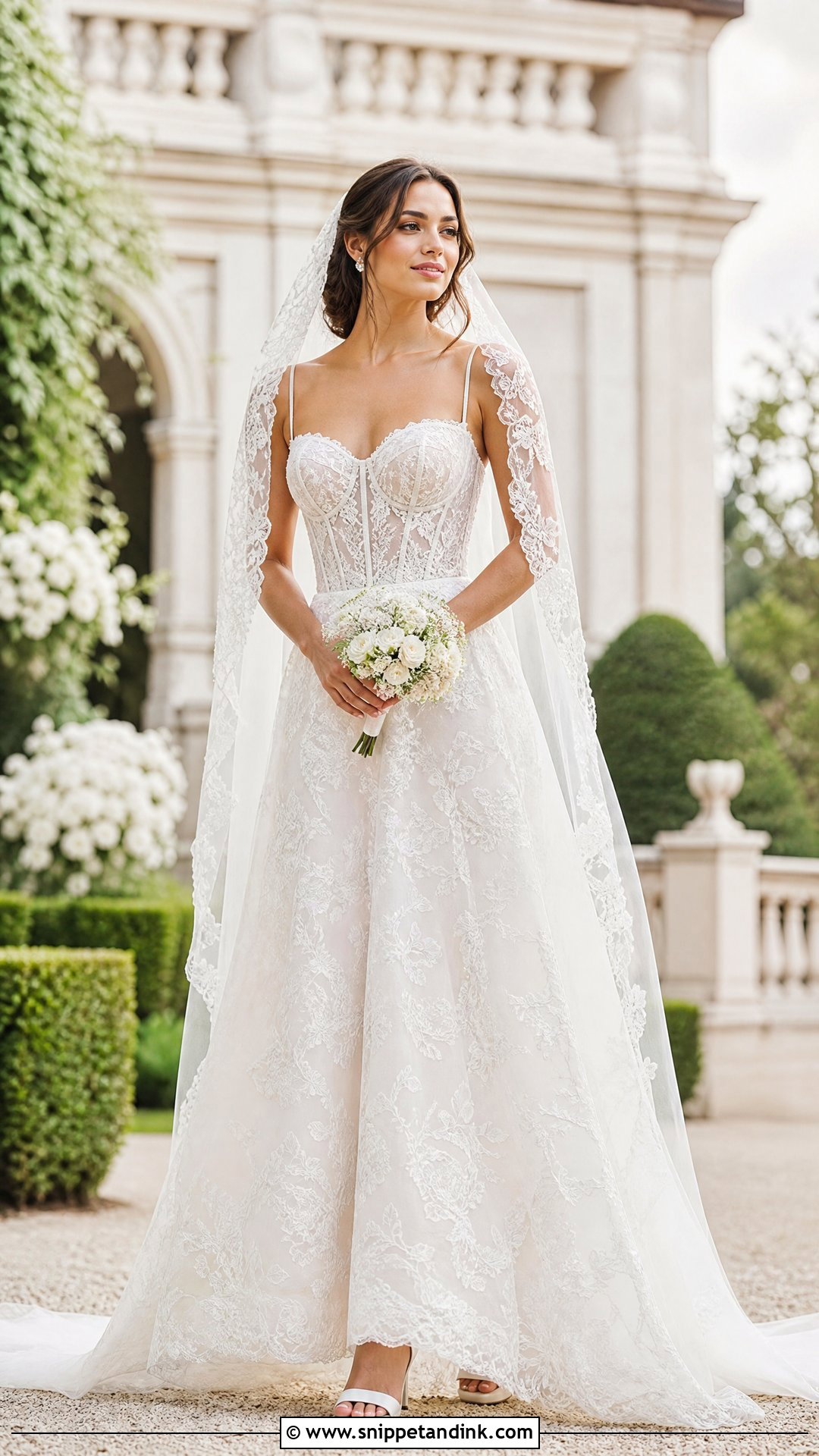
Visible corsetry makes lace look current rather than vintage. Choose an A-line with a lightly sheer bodice, built-in cups and floral lace that fades gradually down the skirt, so the top carries the shape and the wider skirt gives you room to move. A chapel-length veil with matching lace trim, small diamond studs, ivory block heels and a loose low bun complete it. If you want more coverage, ask for the bodice lining in a shade close to your skin; the standard nude in many salons is too pale for deeper complexions and shows as a grey patch in photos. Gardens, vineyards and estates suit it, as long as the lace is spaced rather than dense.
4. Square Neck Mikado Wedding Dress
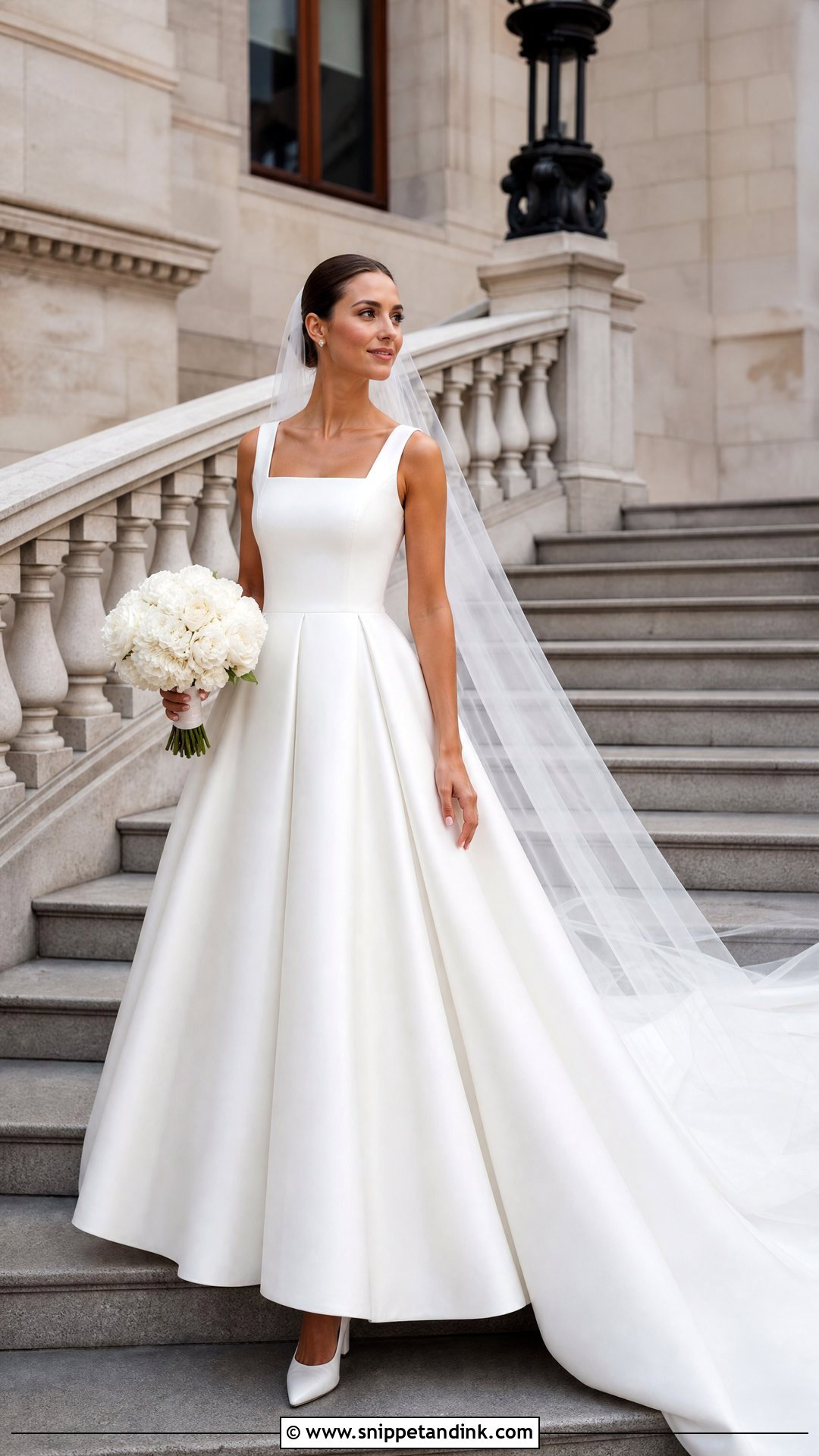
Mikado is a heavy, slightly stiff silk-blend weave, and that body is what lets a square-neck gown look architectural. A Mikado A-line with wide straps, a fitted waist and crisp pleats holds its shape with no crystals at all. Add a smooth cathedral veil, pearl studs, closed-toe ivory pumps and a polished chignon that echoes the neckline’s symmetry, with white flowers to keep it fresh. Square necks reveal any strap that sits wrong, so I check that the straps sit at the edge of the shoulder without cutting in or sliding off when the arms move. The weight suits cooler seasons, historic venues and grand staircases; in high summer heat it can feel like a coat.
5. Off Shoulder Ball Gown Wedding Dress
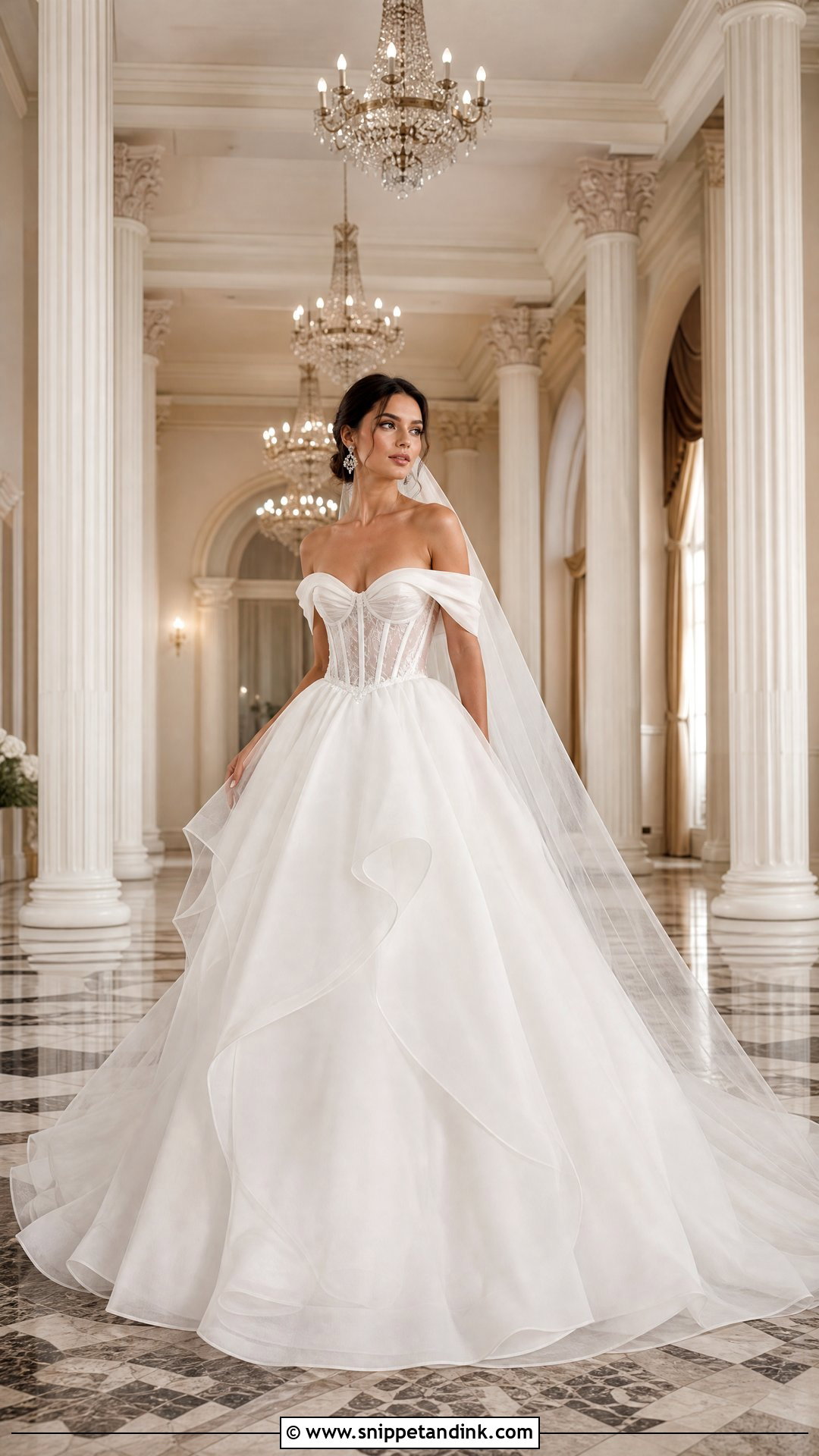
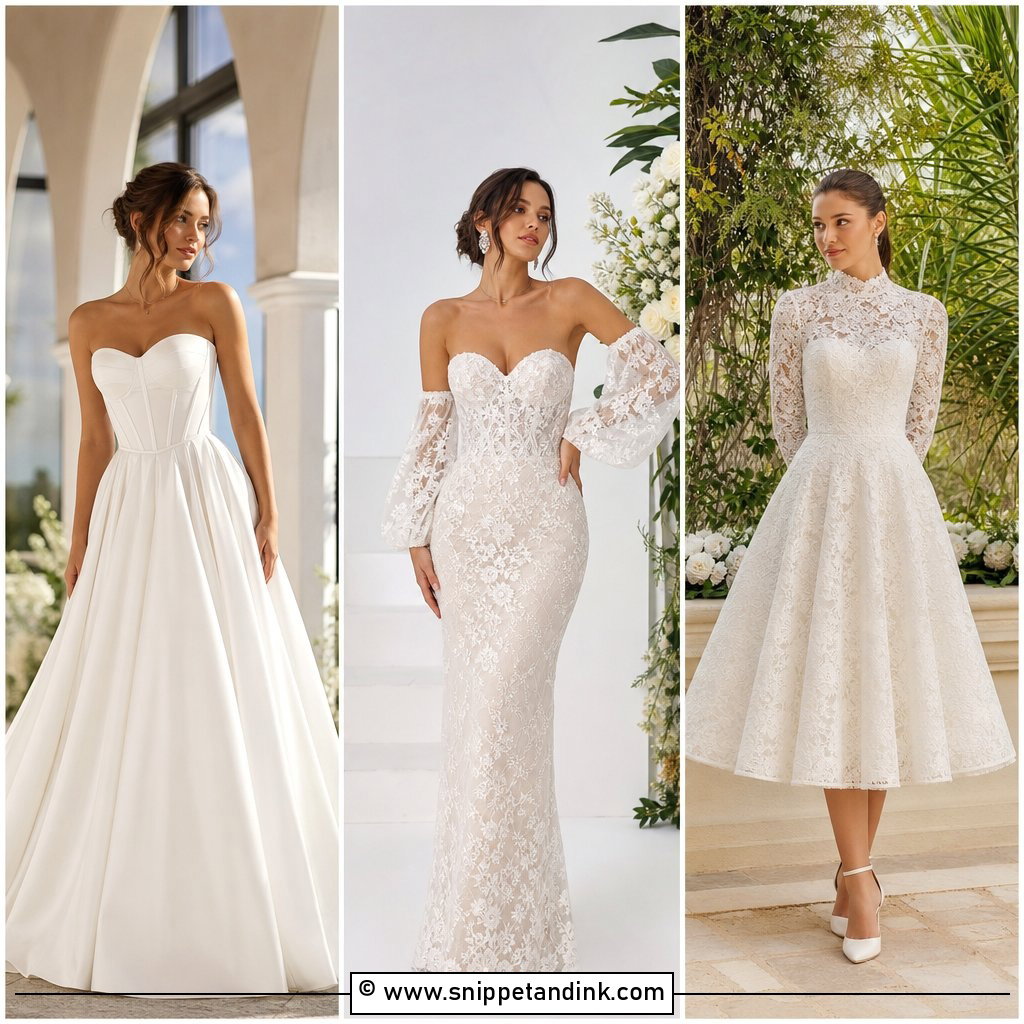
Off-the-shoulder sleeves soften a big ball gown so it looks graceful rather than heavy. Look for a structured corset bodice, gently draped sleeves and an organza skirt, since organza gives drama for less weight than layers of satin. A long sheer veil, crystal drops and comfortable platform heels hidden under the skirt finish it, with an updo that keeps hair from snagging on the sleeves. This is the neckline I’m strictest about in alterations. Sleeves set too low pin your arms to your sides, so you can’t hug anyone or lift your bouquet. Ballrooms, castle-style properties and wide aisles give the skirt space.
6. Floral Applique Tulle Wedding Dress
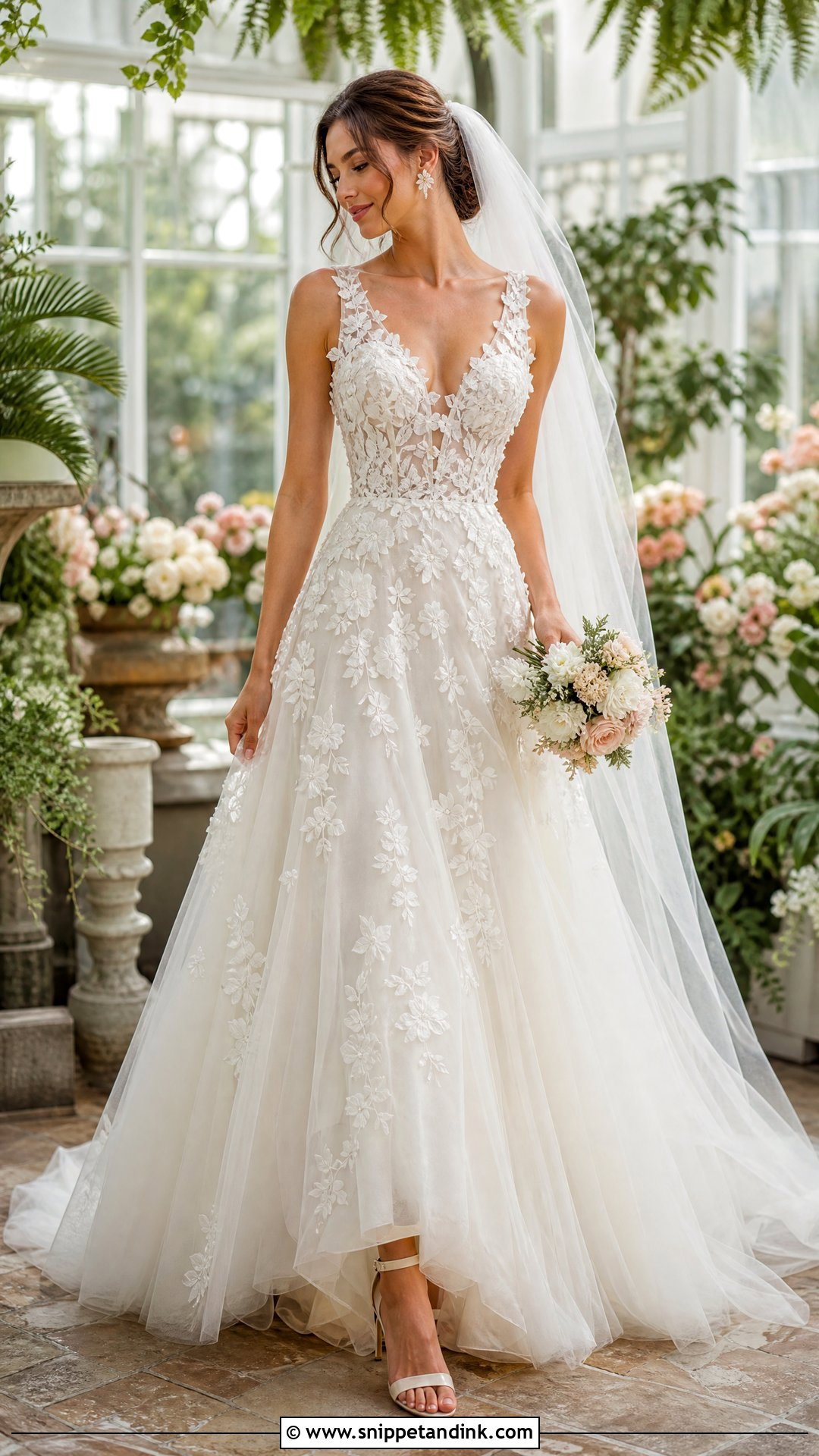
Three-dimensional flowers bring a garden indoors, but spacing is everything: scattered appliqués look romantic, while crowded ones tip into costume. A fitted bodice and soft A-line in tulle, with flowers in ivory, soft white or the palest blush, keeps it light. A raw-edge veil, floral studs, ankle-strap heels and a loose updo with a few face-framing pieces suit the texture, and a smaller, streamlined bouquet lets the dress lead. Raised petals catch on everything, so I check two places: under the arms, where they rub all day, and where the veil falls across the back. Spring gardens, conservatories and bright rooms suit it.
7. Minimalist Column Wedding Dress
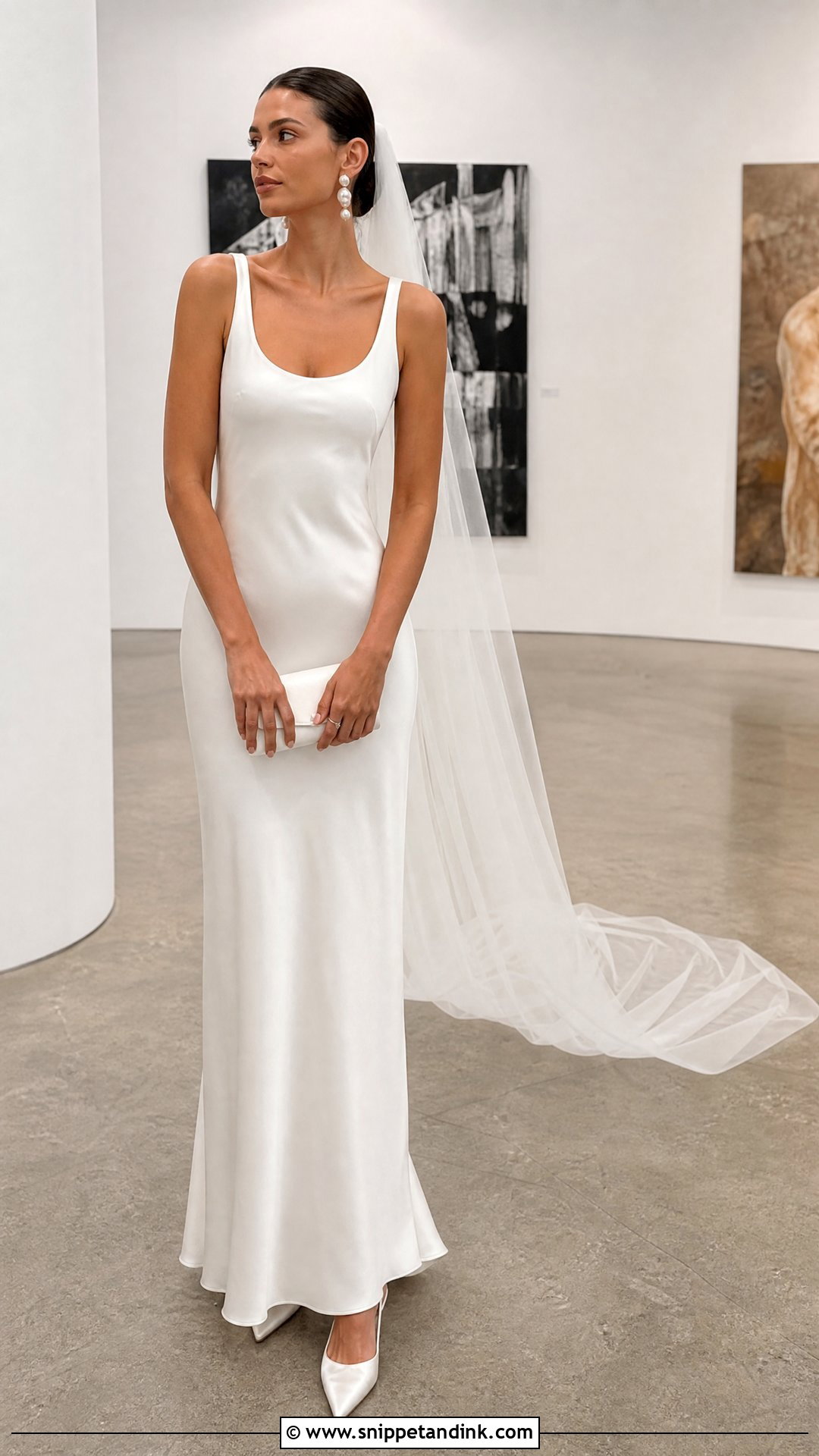
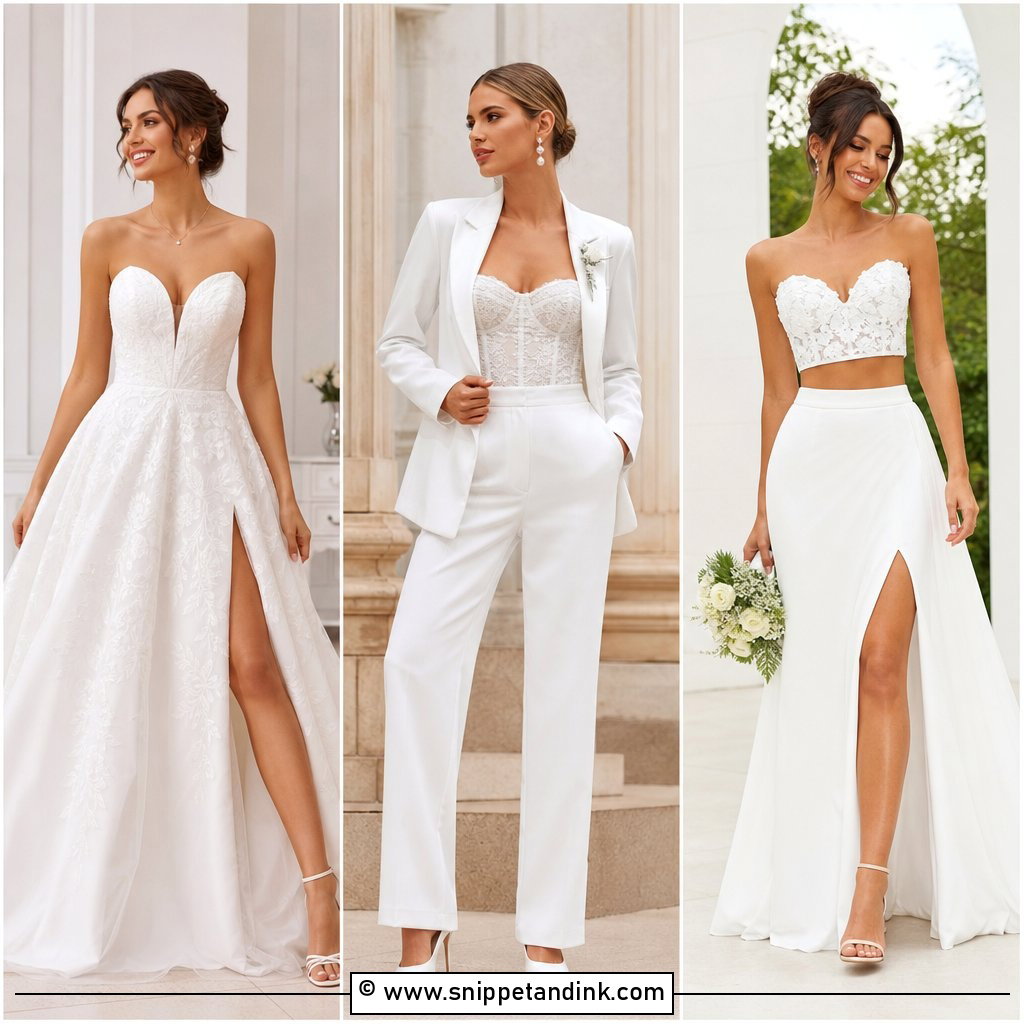
Sometimes the plainest gown makes the strongest impression. A column in silk crepe or satin follows the body without a big skirt, and a clean bateau, scoop, or straight neckline with precise seams and a modest train keeps it modern. A sleek bun, bold pearl earrings, pointed slingbacks and a narrow cathedral veil finish it, with a structured clutch for the reception. Plain fabric hides nothing, so this is the gown where tailoring and underwear matter most. I ask brides to bring their exact smooth, no-line underwear to the first fitting, because a visible line on silk crepe can’t be steamed away. Courthouses, city hotels and galleries suit it.
8. Long Sleeve Lace Wedding Dress
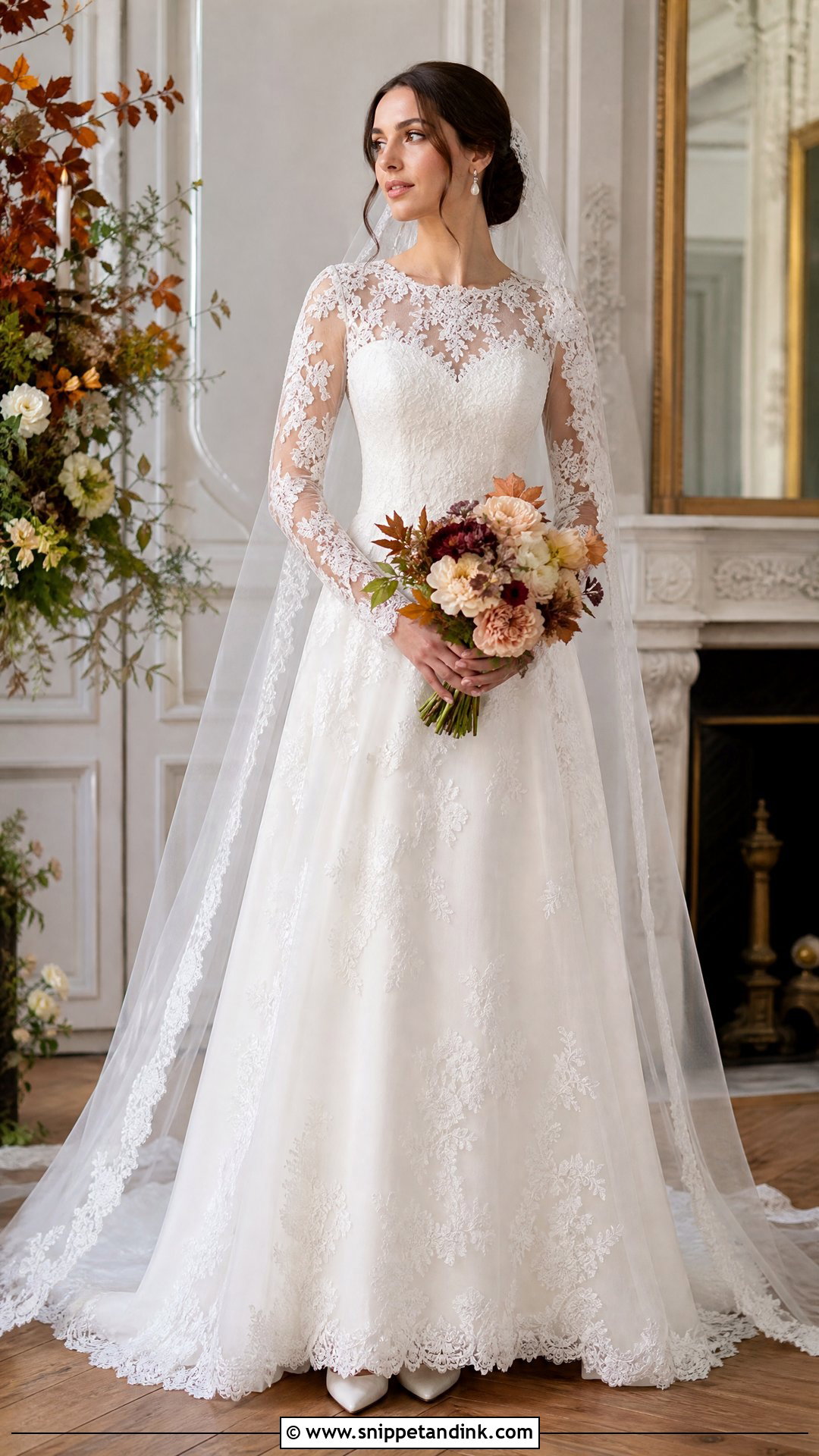
Long lace sleeves give coverage while keeping a gown light. Choose a fitted bodice with sheer sleeves and an A-line or soft fit-and-flare skirt, with covered buttons at the cuffs and down the back for traditional detail. A lace-edged chapel veil, pearl earrings, ivory pointed heels and a low twisted bun let the sleeves show. The cuff is where comfort lives or dies. If it’s tight at the wrist, you’ll feel it every time you reach for a glass, so I have brides rotate their wrists and lift their arms above their heads in the fitting. Lightweight lace wears more easily over a long day than dense embroidery. It suits fall, winter and early spring at estates and historic buildings.
9. Detachable Overskirt Wedding Dress
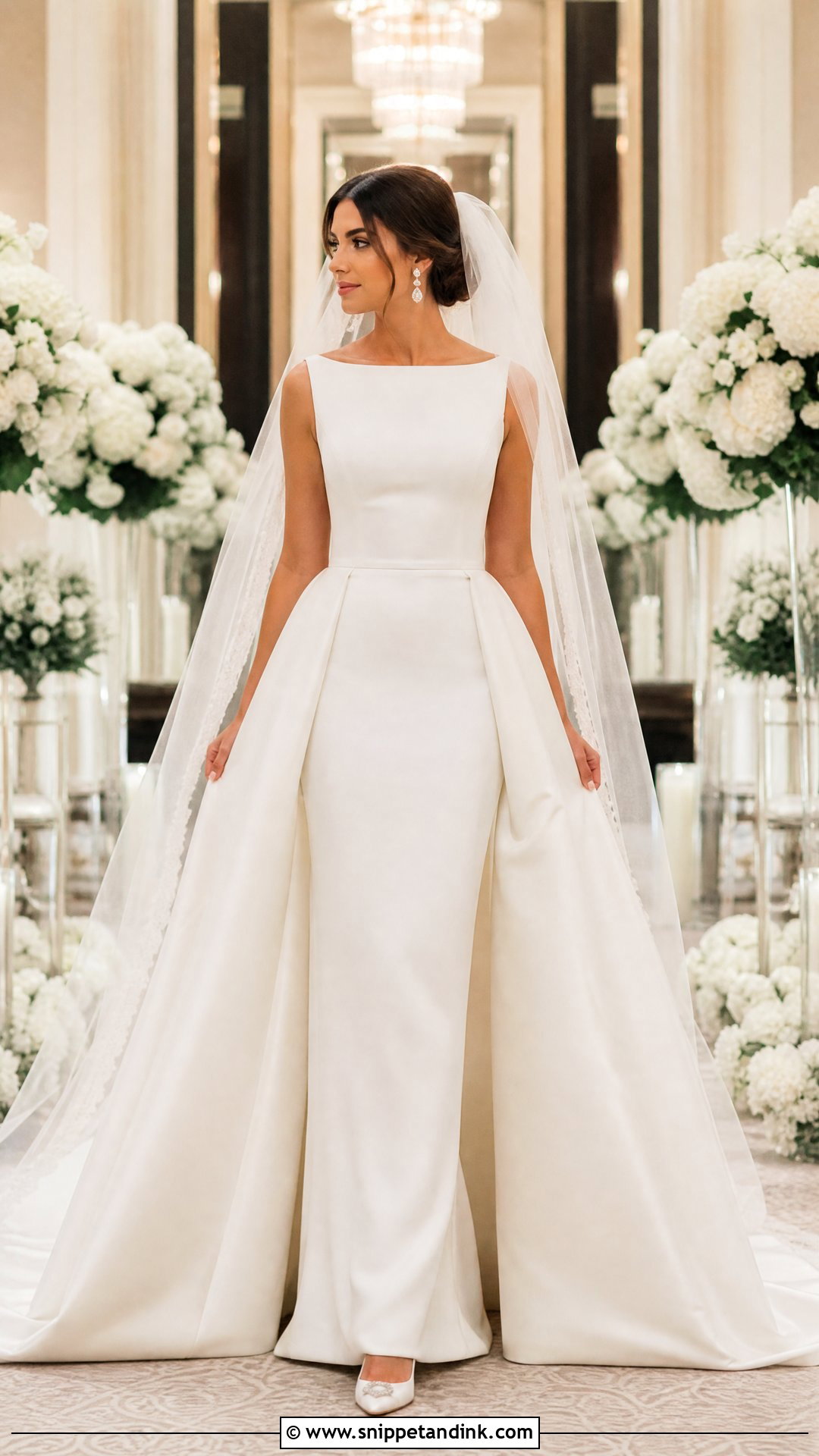
Can one dress give you two looks? A fitted crepe or lace gown with a detachable overskirt can. The overskirt fastens at the natural waist and opens at the front to reveal the base dress, so you get ceremony drama and a sleek reception outline. Wear it with a cathedral veil, crystal earrings and sleek heels, then after portraits remove the overskirt and veil and switch to statement earrings or a sparkling comb. Ask your seamstress to hide the attachment points so the gown looks finished both ways. I always have the bride’s helper practise taking the overskirt off at the last fitting. Hooks and snaps that take two minutes in a quiet shop can take ten in a crowded bridal suite.
10. Bridal Cape Wedding Dress
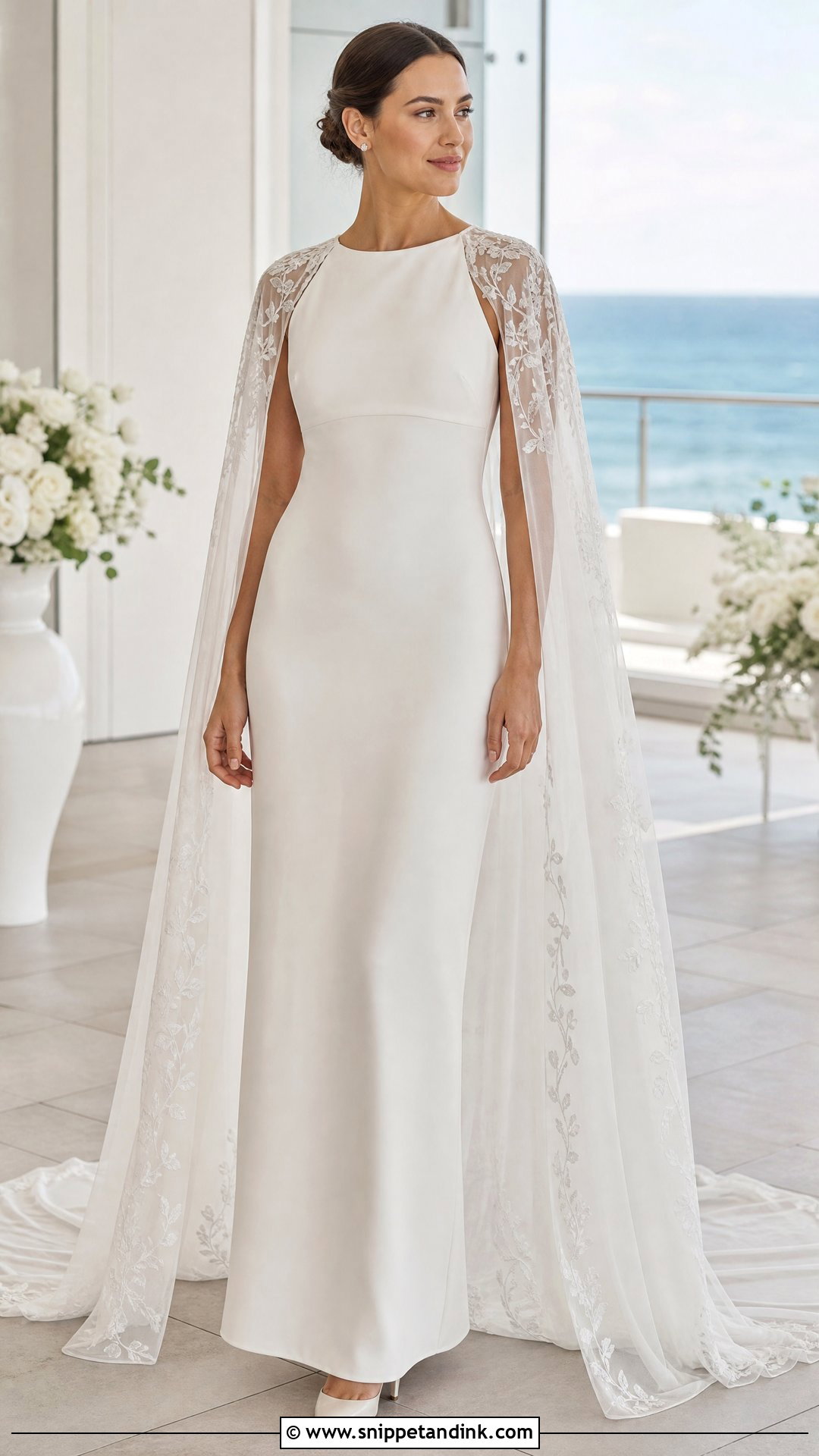
A cape can stand in for a veil and give a simple dress movement as you walk. Start with a clean sheath or A-line with a strapless or sleeveless neckline, then add a floor-length sheer cape attached at the shoulders, with light embroidery, pearls or a smooth finished edge. Polished pumps, small studs and a low bun finish it; skip the necklace so the attachment stays clean. Capes behave very differently in wind, and a breezy terrace can wrap one around your legs. During the fitting, I take brides outside or near a fan, and have them turn several times to see how it falls. It suits long aisles, coastal venues and modern hotels, and it comes off easily for the reception.
11. Pearl Embellished Wedding Dress
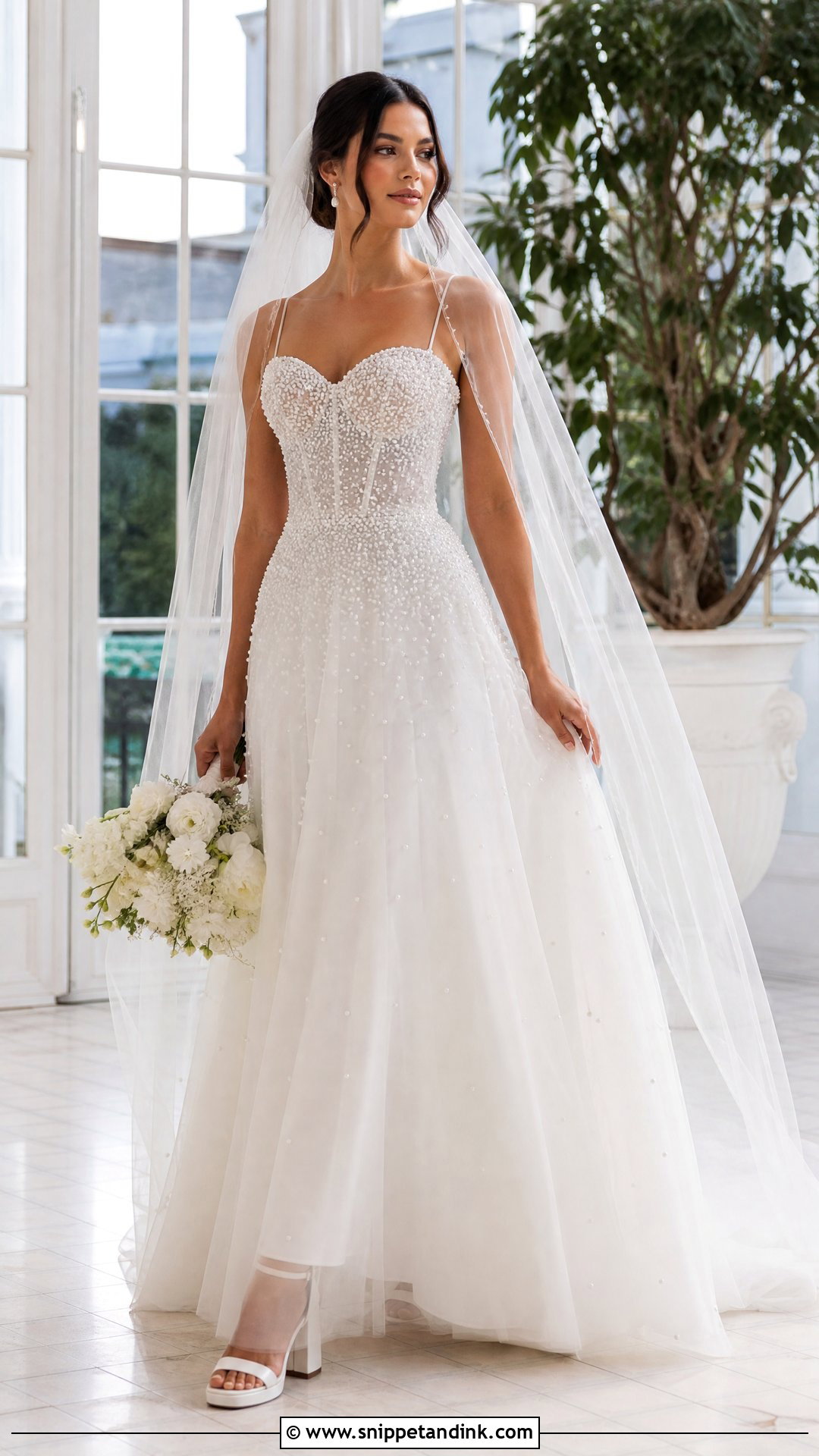
Pearls give soft dimension where crystals throw sharp sparkle. My favourite placement is dense scattering over a tulle bodice that thins out down an A-line skirt, so the weight and the visual interest stay near the face. A plain fingertip veil, pearl drops, satin block heels and a neat bun or waves tucked behind the ears let the work show. Run your hands over the inside of the arms, the waist and the back of the skirt before buying. Rough beadwork there scratches skin and catches on chairs, and loosely sewn pearls pop off when you dance. Ballrooms, conservatories and candlelit evening ceremonies suit it.
12. Halter Neck Wedding Dress
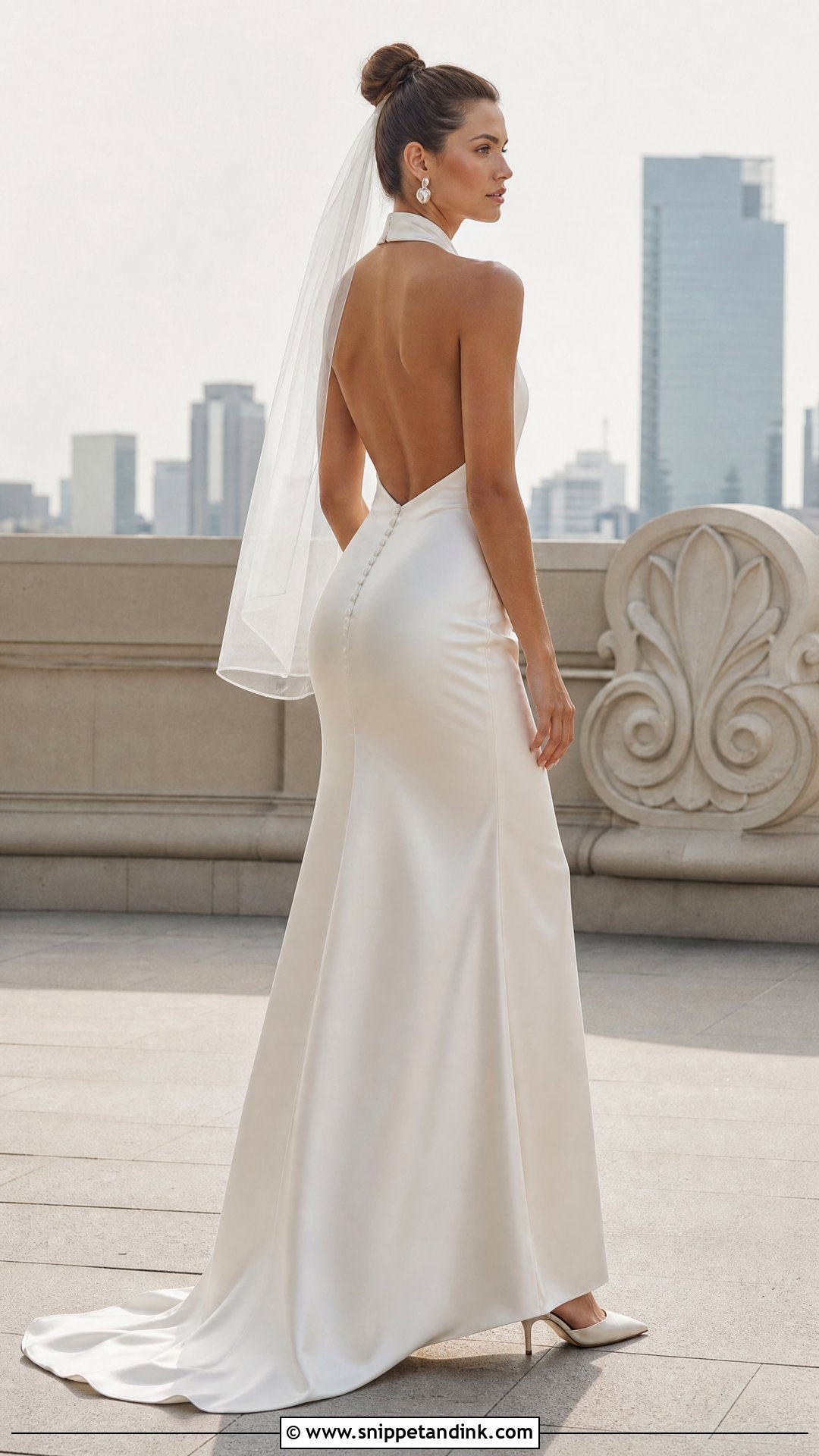
A halter draws the eye straight up to the shoulders and leaves an open back. Choose fluid satin or crepe with a fitted waist and a gently flared skirt; it needs no embellishment. A sleek ponytail or high bun, sculptural earrings and pointed ivory heels finish it, with no necklace. A narrow veil attached under the hairstyle softens it without breaking the line. The neck strap carries more of the dress’s weight than people expect, and a heavy skirt pulling on it gives some brides a headache by evening. I check that the closure feels secure without tugging when the bride sits. Tape can help on some designs, but the tailoring should do the real work. Rooftops and destination venues suit it.
13. High Neck Wedding Dress
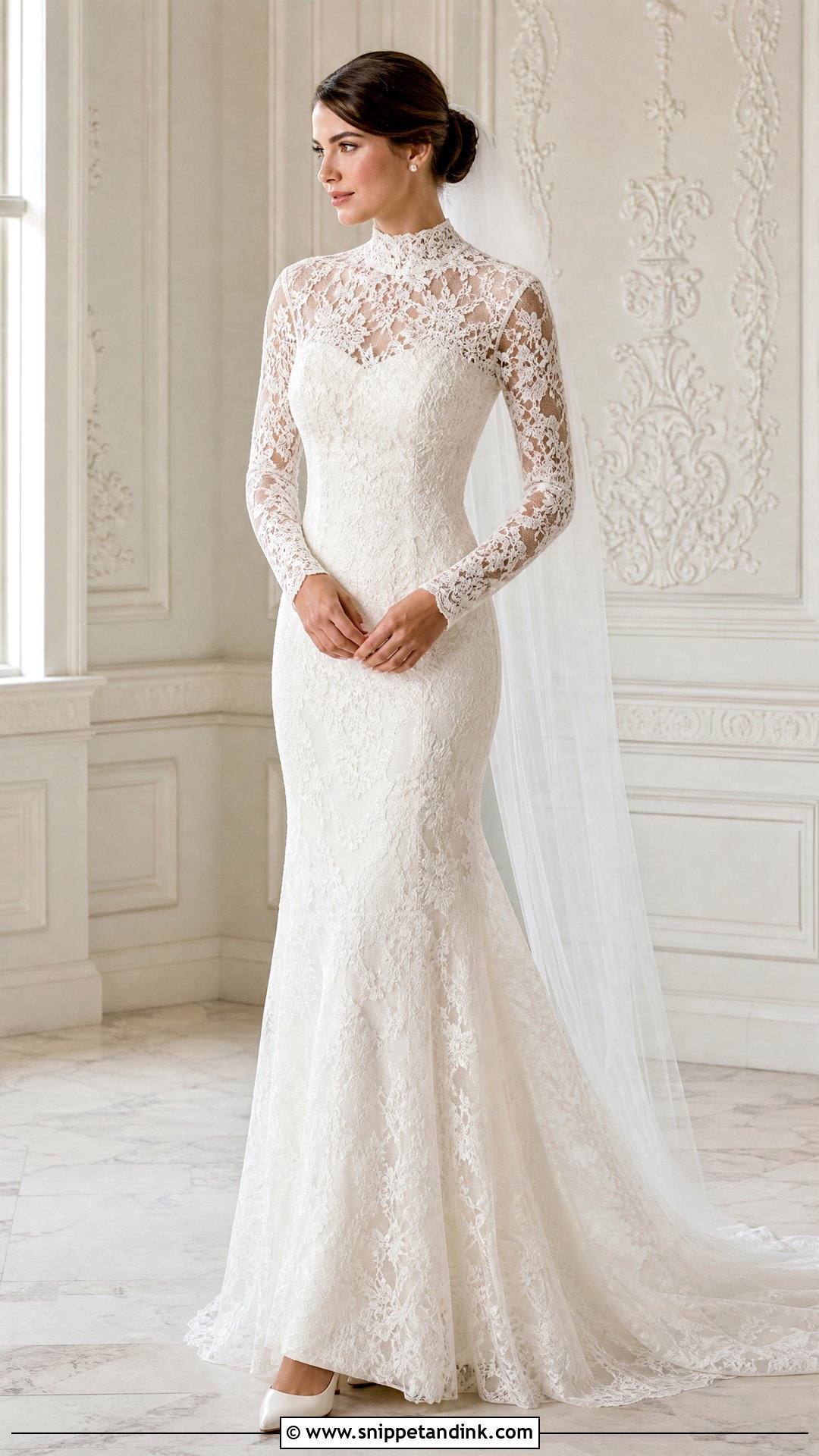
A high neck is the composed alternative to strapless and plunging styles. Look for lace or satin with a fitted upper body, defined waist and flowing skirt; sheer lace at the throat gives coverage without heaviness, while a satin high neck looks sharper and more minimal. Pearl studs, closed-toe pumps and a veil set under a smooth low bun complete it, with nothing round the neck. In fittings, I have brides turn their heads fully and bend forward. A collar that rubs the jaw or collapses when you look down is a problem over ten hours. Formal indoor weddings, historic properties and winter celebrations suit it.
14. Tea Length Wedding Dress
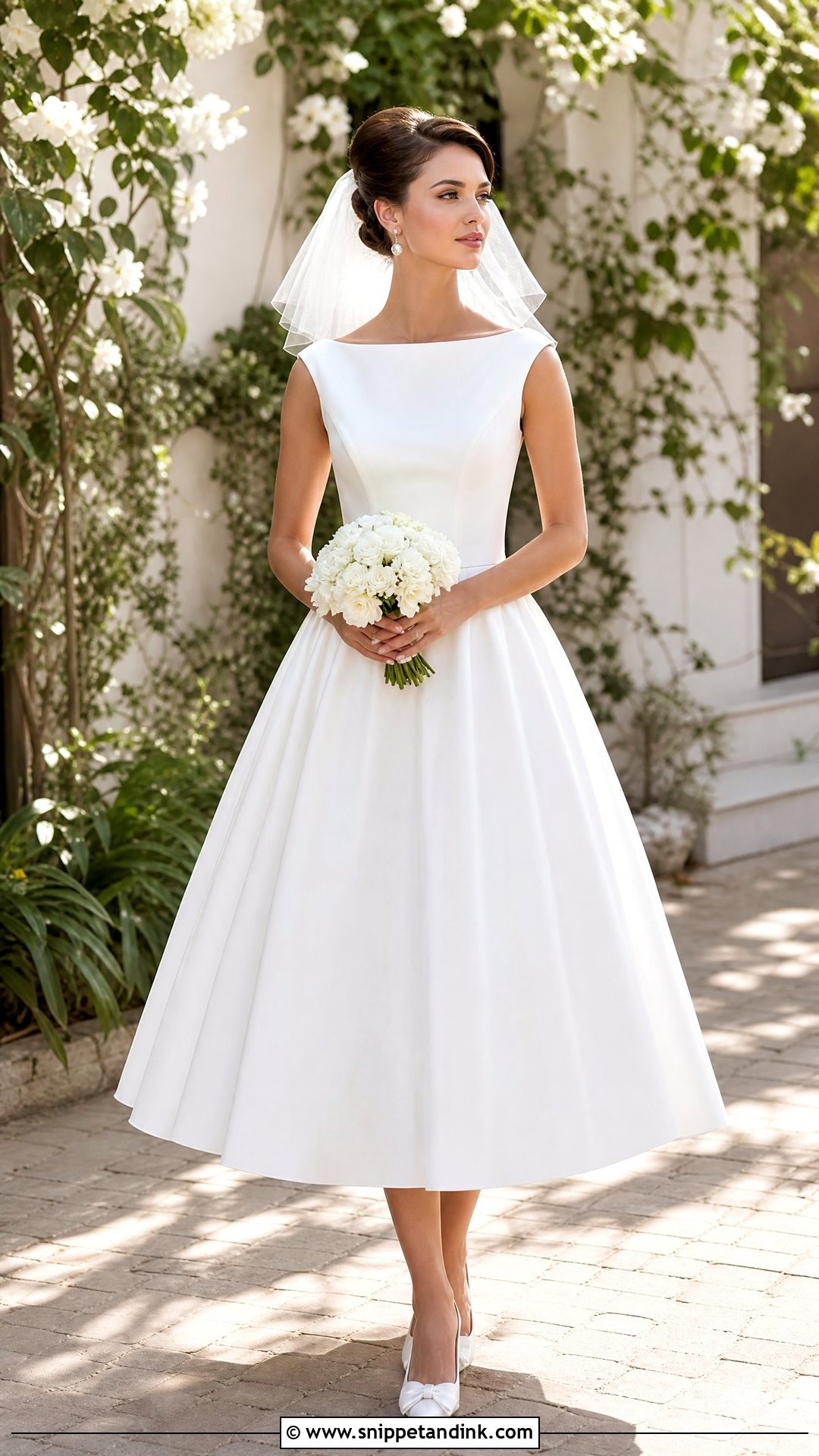
Tea length has a vintage feel and is the most practical skirt on this list for moving around. Choose a structured bodice with a bateau or sweetheart neckline and a full skirt ending between knee and ankle. The shoes are on show the whole day, so pointed pumps, bow heels or neat ankle straps deserve real thought. A short veil, pearl earrings and a compact bouquet keep the proportions balanced, and hidden pockets are a gift. Even half an inch changes the look, so I mark the hem with the final shoes on. Courthouses, brunch receptions and small garden venues suit it.

15. Mini Reception Wedding Dress
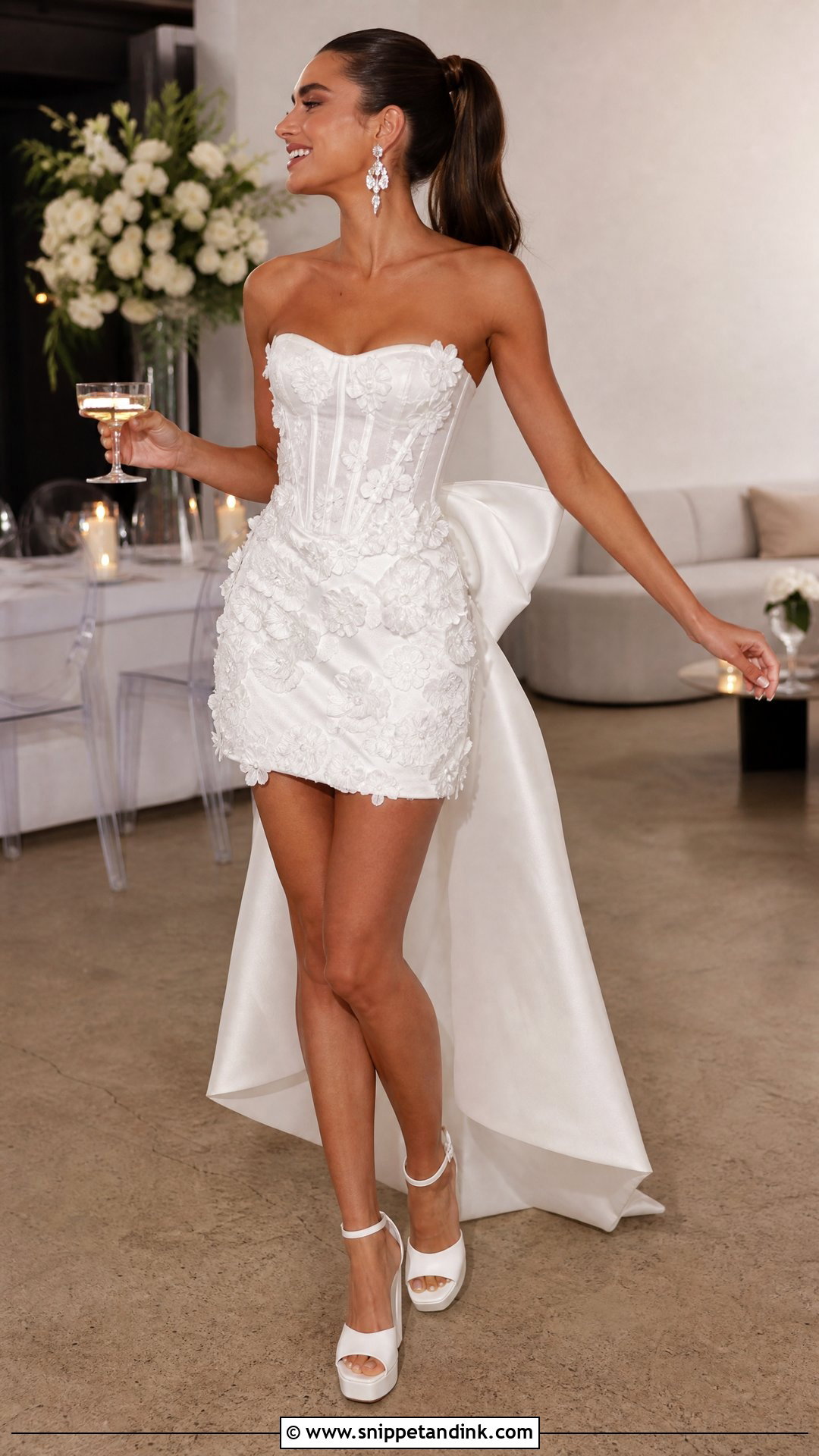
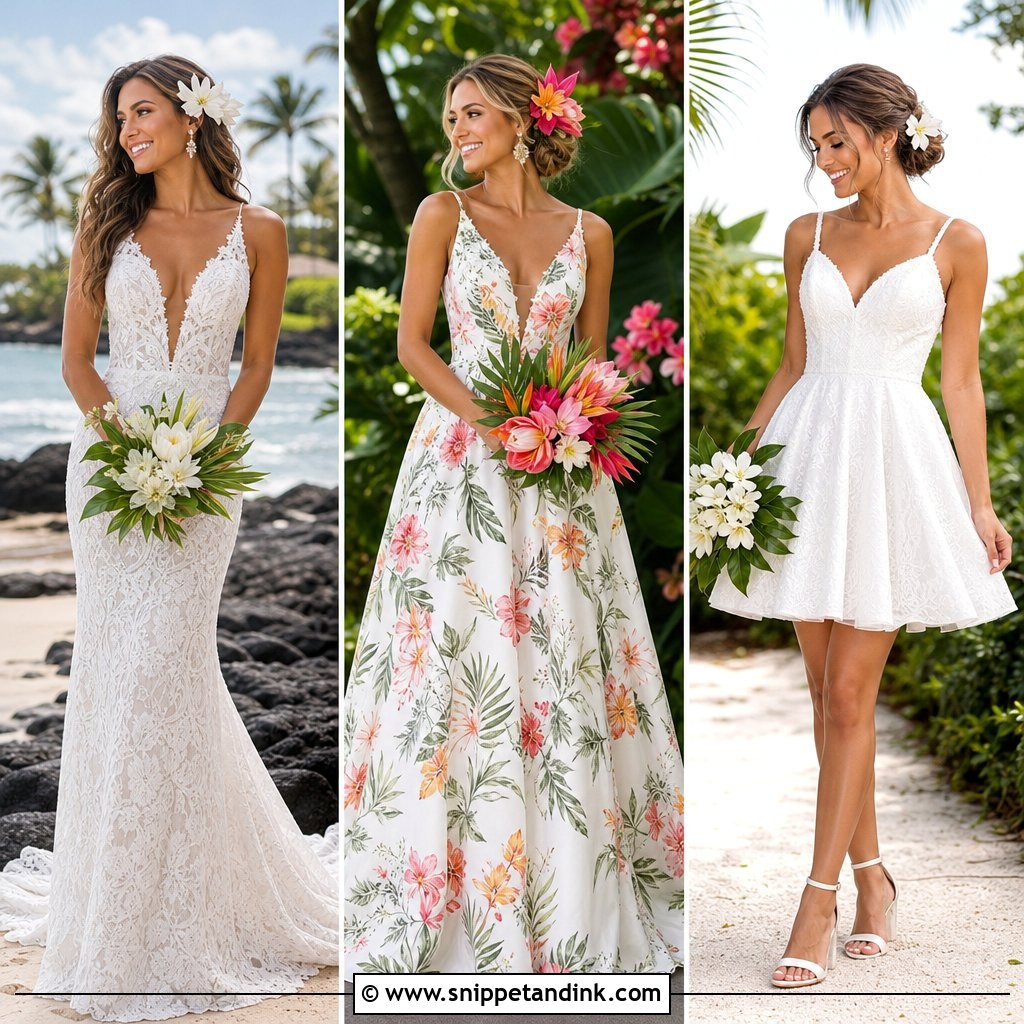
For dancing, a mini is the most practical second look you can choose. Pick a structured design with a corset bodice, a clean square neckline or dimensional floral appliqués, and balance the short hem with a grown-up detail such as a detachable bow, sheer sleeves or a small back train. Comfortable block heels, statement earrings and a polished ponytail suit it, with a tiny bag for essentials. Test it for movement: sit, walk and raise your arms. A structured mini can ride up fast, so built-in shorts or a smooth slip lining are worth asking for. It’s made for the reception, the after-party or a casual ceremony.
16. Blush Wedding Dress
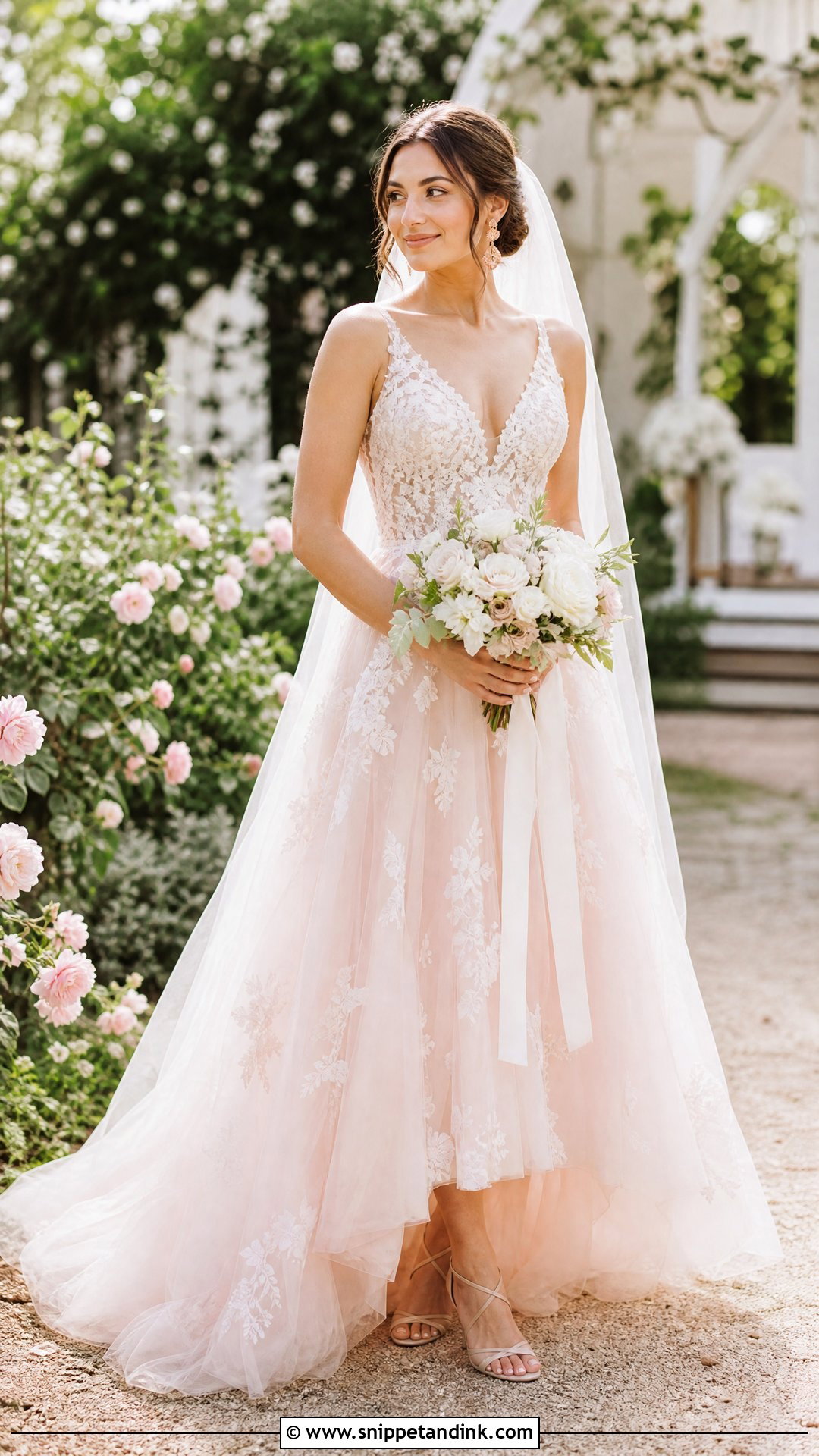
Blush gives gentle colour while keeping a bridal feel. The version I find most flattering puts pale blush tulle underneath ivory lace, which gives depth and lets the floral embroidery read clearly in photos. Champagne heels, rose-gold earrings and an ivory veil keep it from going too pink, with a white, blush and green bouquet. Blush changes a lot between daylight and warm indoor bulbs. View the actual fabric in both before ordering, and hold it near your face, since some blushes make fair skin look flushed and others turn beige against deeper skin. Gardens, estates and floral-heavy rooms suit it.
17. Black Bow Wedding Dress
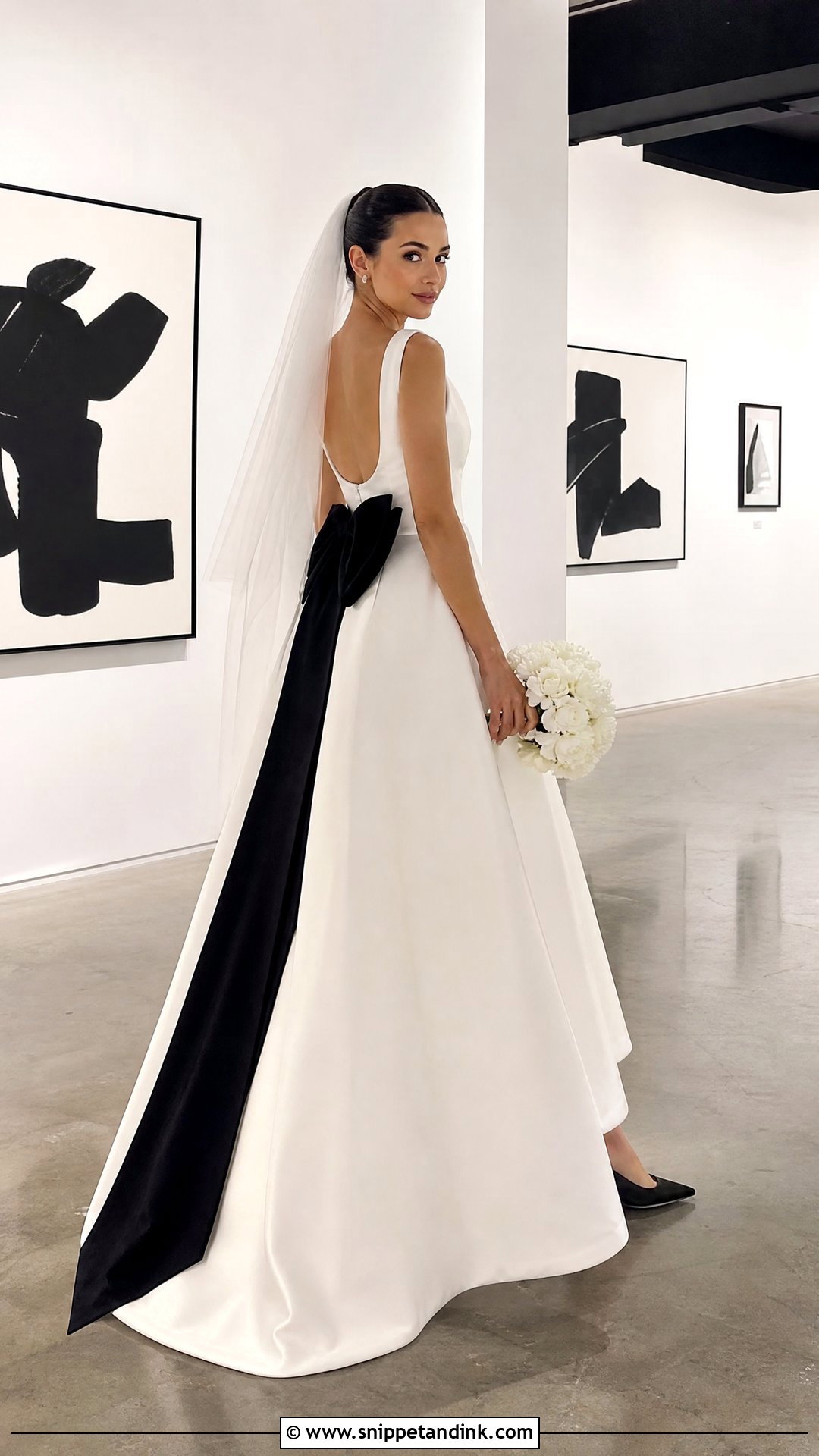
A black bow turns a white dress graphic without changing its bridal colour. Choose a clean ivory column or A-line with a removable black velvet bow at the waist, shoulder or back, and keep everything else simple so the contrast looks deliberate. Black pointed heels, diamond studs and a plain white veil balance it, and an oversized bow calls for sleek hair and a compact bouquet. My first check is colourfastness: dab the velvet with a damp white cloth before the wedding, because black dye bleeding onto ivory in a sweaty dance can’t be undone. Galleries, modern hotels and black-and-white weddings suit it.
18. Boho Chiffon Wedding Dress
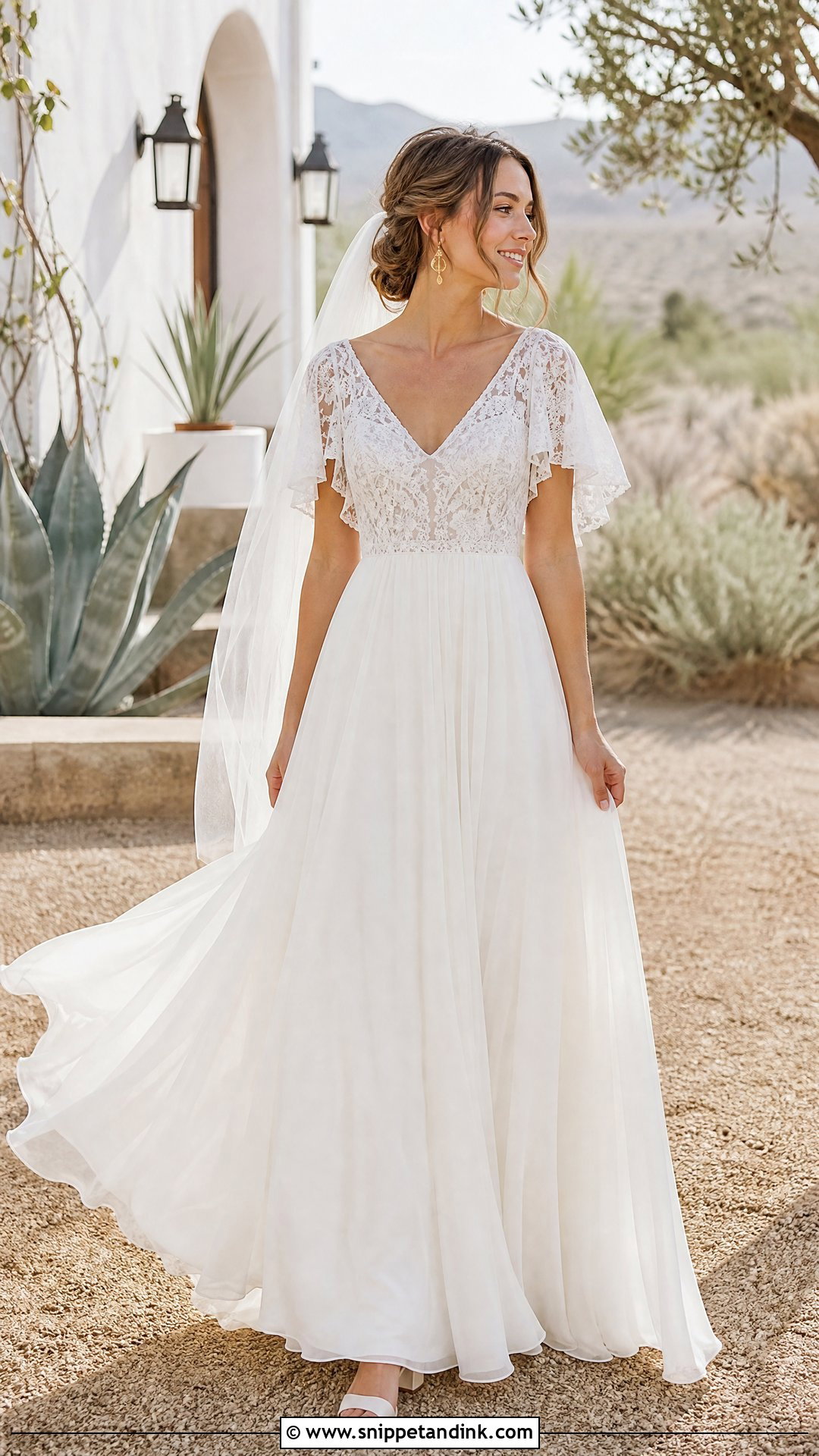
Chiffon moving in a breeze is the reason most brides choose a boho dress. Pick an A-line with a lined lace bodice, flutter sleeves and a light skirt that falls naturally from the waist, with low block heels or refined flats, fine gold earrings, a simple fingertip veil and a loose braided updo. Keep accessories light so they don’t fight the movement. Chiffon can go almost see-through in full sun, so I check it outdoors, not under shop lights, and add a lining where needed. It frays and snags on rough ground too, so a bustle after the ceremony protects the train. Beaches, woodland, desert venues and relaxed gardens suit it.
19. Mermaid Wedding Dress
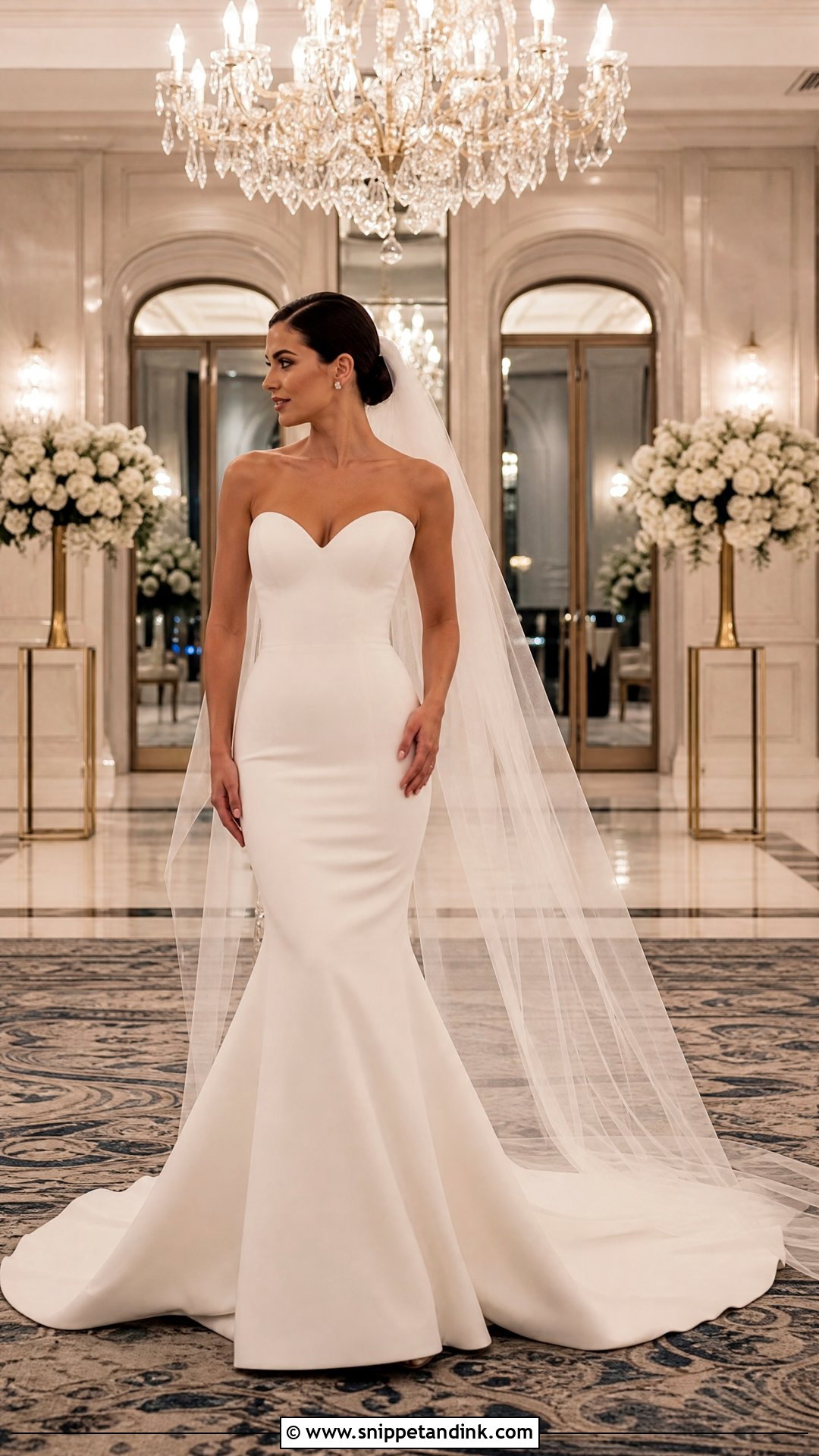
A mermaid fits close through the bodice and hips and flares near the knee. Crepe looks clean and modern, lace more romantic. A long sheer veil, sparkly studs, supportive platform heels and a side-parted low bun keep it sleek. Where the flare starts decides how well you can move: a flare at mid-knee lets you walk and dance, while a low flare looks dramatic and restricts stride. I ask brides to take full steps, sit and attempt a slow dance at the appointment, and to make sure the bustle is secure before the reception. Formal hotels, ballrooms and large indoor venues give the train room.


20. Asymmetrical Draped Wedding Dress
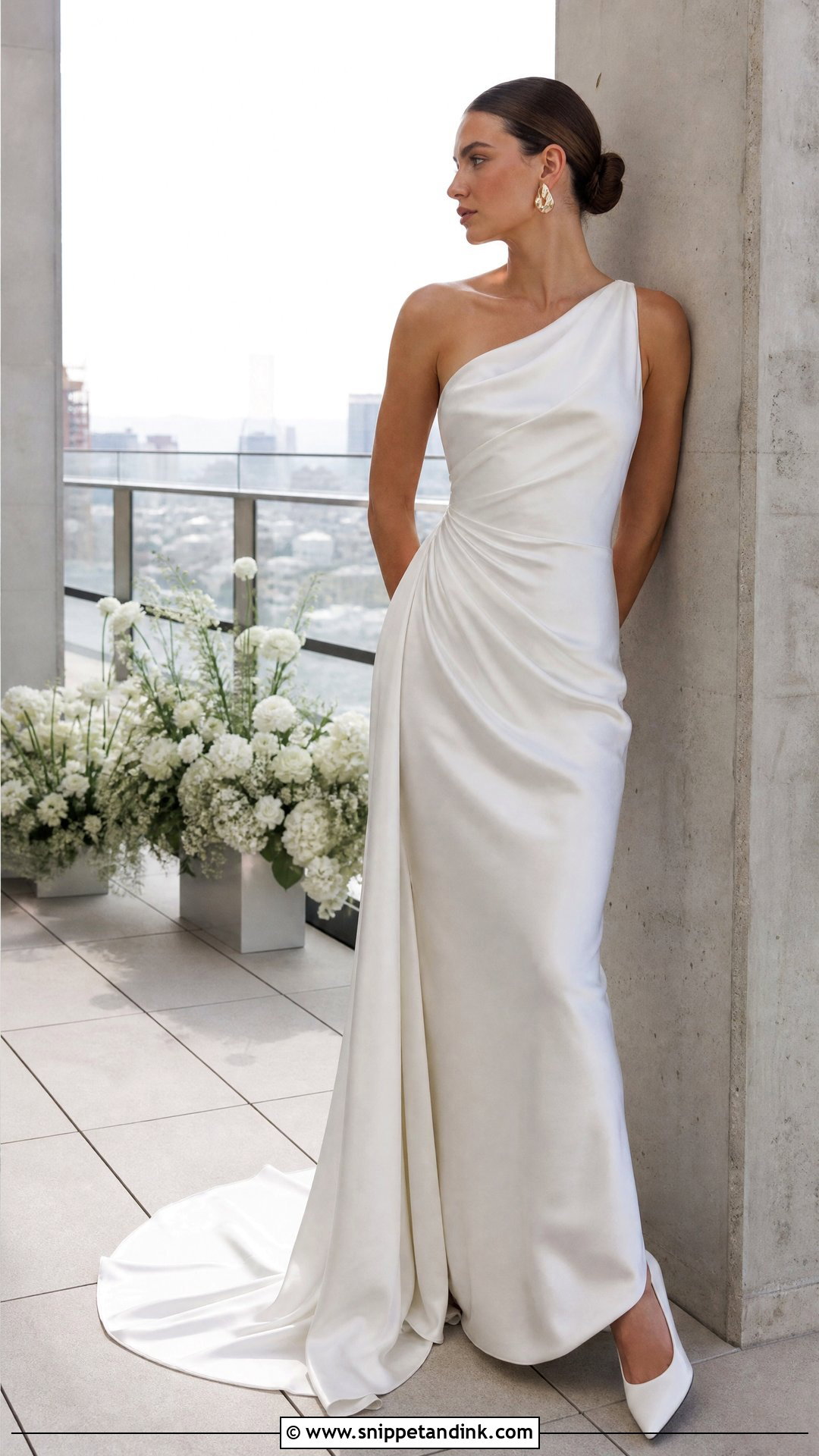
Diagonal draping and a one-shoulder neckline give a modern break from symmetry. Soft satin or crepe lets the folds fall cleanly, and a column or gently flared skirt with a side train adds movement. Sculptural earrings, sleek ivory heels and a low bun placed on the side away from the covered shoulder keep it balanced. A veil can work, but a polished hair piece often respects the neckline better. Drapes shift when you sit and move, so I look at every fold from the front, back and both sides during alterations, and ask the seamstress to tack the drape in place where it slips. Galleries, rooftops and minimal spaces suit it.
Your Torso Length Decides the Basque and Drop Waist
The two biggest waistlines of 2025 work very differently on different bodies, and brides are rarely told this. When I pull dresses for an appointment, I look first at where a bride’s natural waist sits compared with her hips, because it predicts which of these shapes will flatter her.
Long torso
A dropped waist or a deep Basque looks natural, since there’s room for the long bodice. You can carry a low point without it reaching the hip bones.
Short torso or petite frame
A very low waist can make the legs look shorter. A shallow Basque point, or a corset that dips only slightly, gives the same feel without cutting your height. A high neckline with a drop waist on a short torso can make the bodice look like it swallows you, so I’d pair it with a lower neckline.
Curvier hips
A Basque point that ends just above the widest part of the hip, with a full skirt from there, is often more flattering than a drop waist, which can sit right across the hips and add width. A good seamstress can also move the point up or down slightly to suit you, so it’s worth asking before you rule a style out.
The Gown Should Still Feel Like Yours at Midnight
The right gown supports your body, suits your venue, stays comfortable and reflects your taste from the first look to the last dance. Whatever direction pulls you, from classic and romantic to minimal, colourful or fashion-forward, start with the silhouettes that make you stand taller, then compare fabrics, necklines, trains and practical details. Bring your real shoes and underwear to every fitting, move as you will on the day and take photos from several angles. Good alterations change how even a simple dress looks and feels, so budget for them. A Basque waist ball gown, a floral tulle dress, a sleek column or a reception mini can all be right, as long as it’s the one that feels unmistakably yours.
You'll Like These Ideas:








Leave a Reply