
No silhouette is flattering by itself. In the fitting room, what I see making a bride look and feel her best is a dress that fits correctly, supports her properly and suits where she’s getting married. Bridal shops now stock everything from relaxed A-lines and sleek columns to sculpted corsets, drop waists and lace, so there’s no reason to squeeze yourself into a rule about body type. Alterations count as much as the design; moving a waist seam an inch or raising a strap can change the whole balance of a gown. Here are twenty shapes and necklines, with what each one does to your proportions and what I’d check before saying yes.
What Flattering Really Means in a Bridal Fitting Room
Sample dresses are usually one size, clipped at the back to fit whoever is trying them on. That makes it hard to judge a gown in the shop. These are the checks I run before deciding whether a shape suits someone.
Look at the shoulders and waist first
Most of what reads as flattering comes from two places: whether the shoulder line sits correctly and whether the waist is where your body actually bends. Hem length, bust fit and side seams can all be altered. A shoulder that’s badly cut or a waist seam in the wrong place is much harder to fix.
Use your phone, not only the mirror
- Take a photo from the side and from behind. Bridal shop mirrors are angled and lit kindly; a phone picture is closer to what a photographer will capture.
- Ask for the clips to be removed for one photo. You’ll see how the dress behaves before alteration, which shows how much work it needs.
- Sit in a chair for a minute. A dress that looks right standing but bunches or pinches when seated will annoy you through dinner.
And trust how it feels. A dress that makes you fidget with the neckline in the shop will make you fidget all day.
1. A-Line Wedding Dress
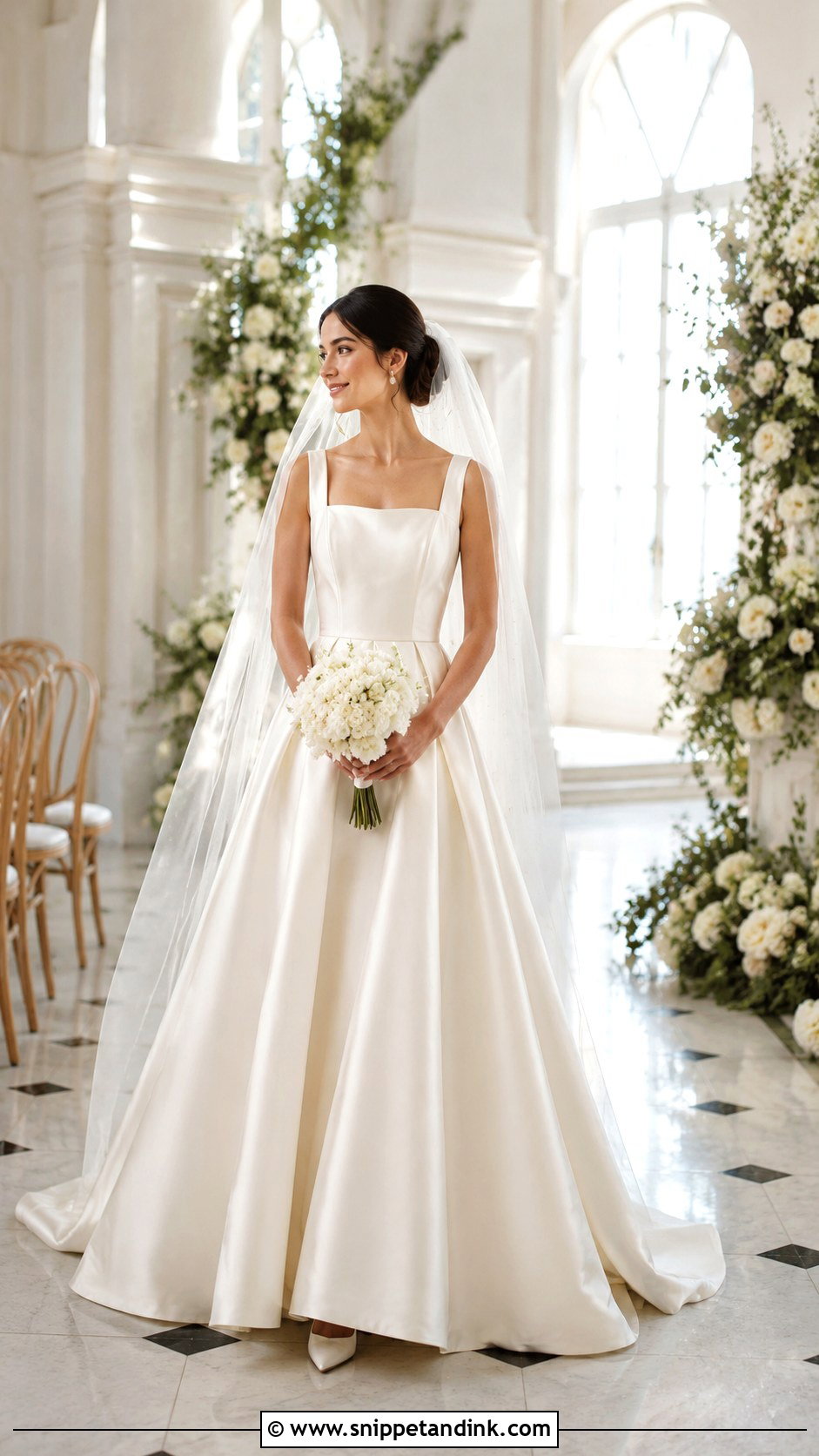
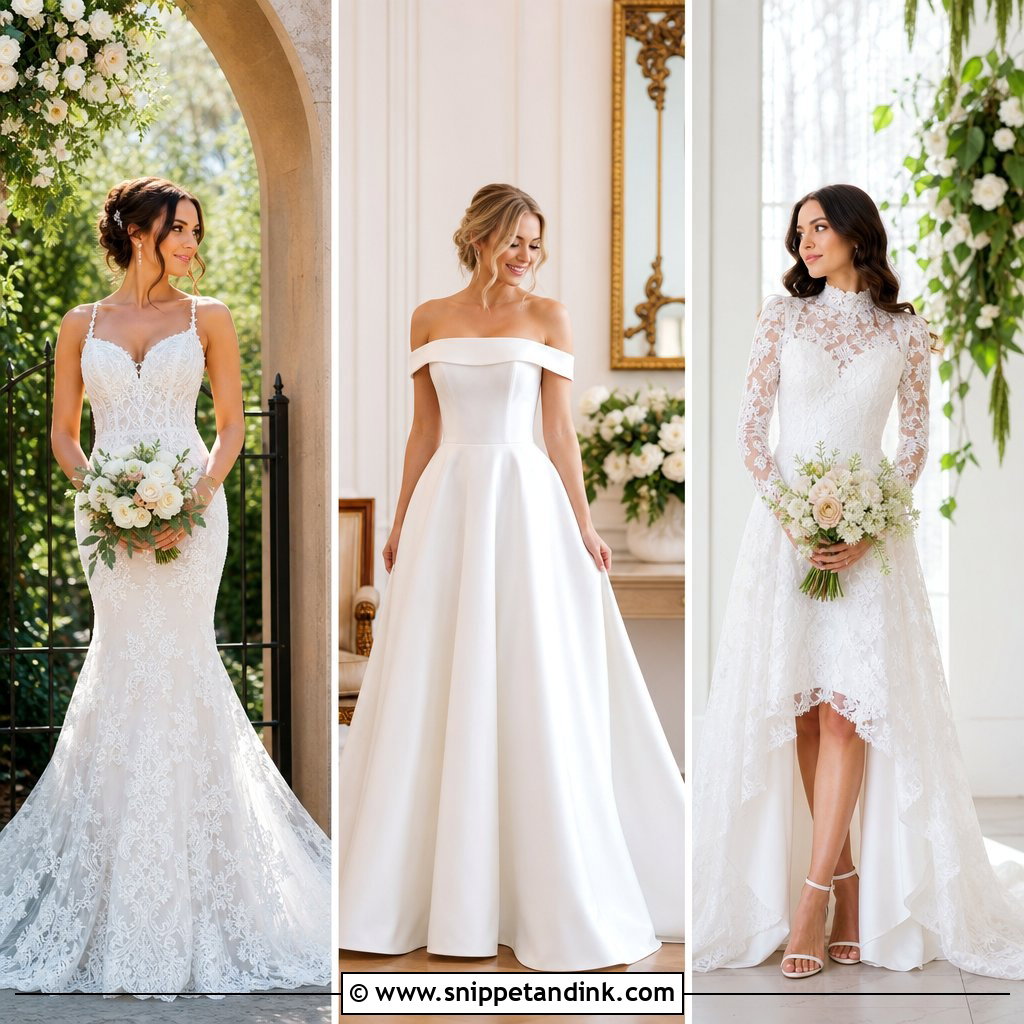
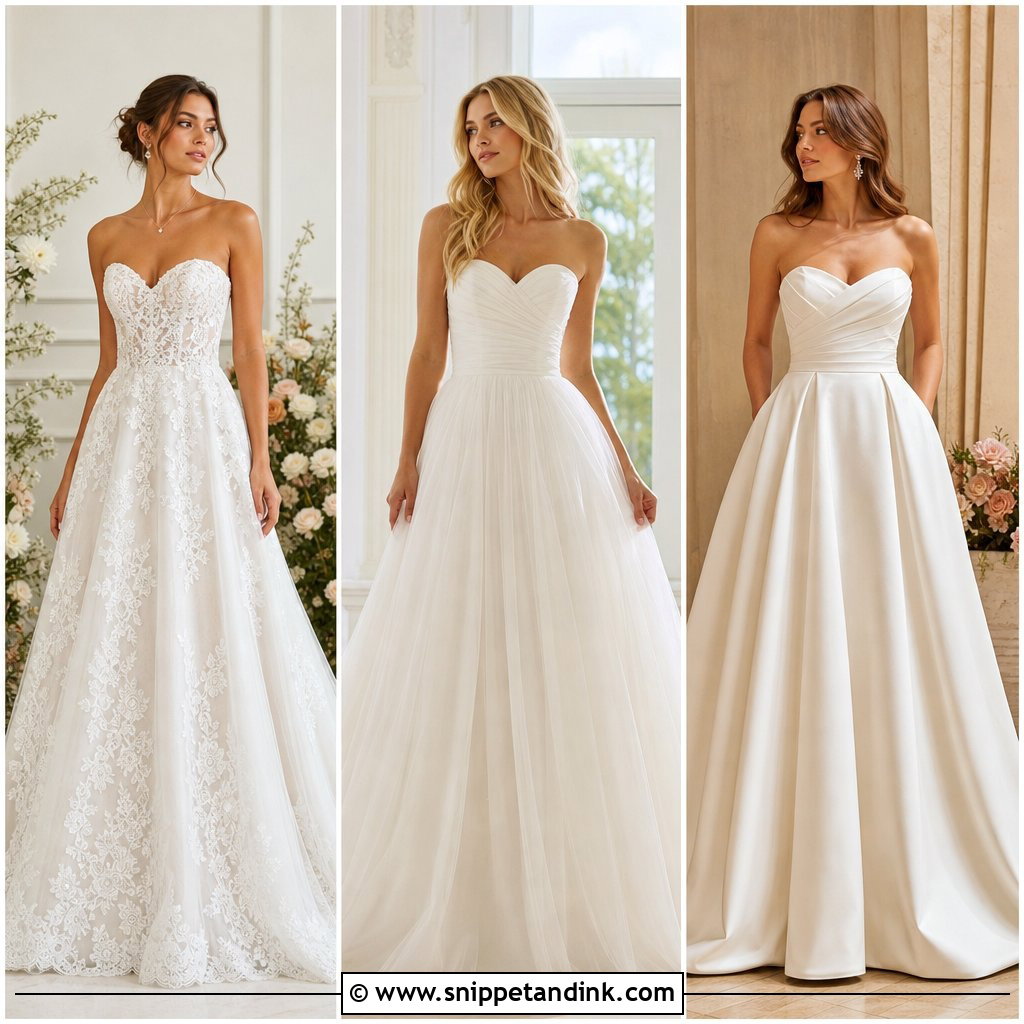
If I had to put every bride in one shape on day one, it would be A-line. The bodice follows the upper body and the skirt widens gradually, so the proportions balance without anything clinging. It works in satin, chiffon, lace or tulle. Pick a structured bodice for support, or a softer one for an outdoor ceremony. Pointed pumps, pearl earrings, a fingertip veil and a small bouquet keep it in proportion. At fittings, the waist seam should land where you feel most comfortable, which isn’t always your natural waist, and the skirt should fall without pulling across the hips.
2. Ball Gown Wedding Dress
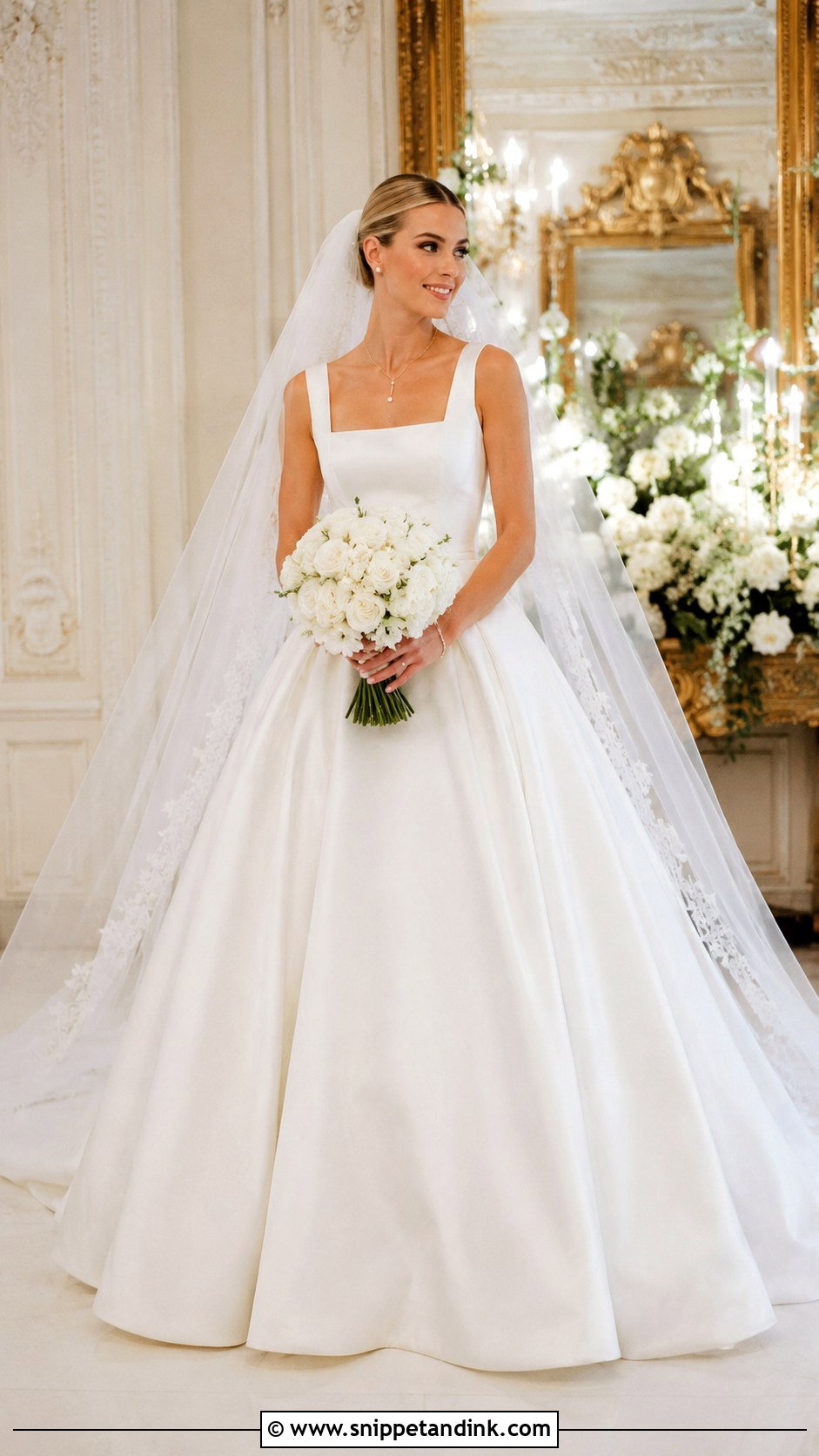
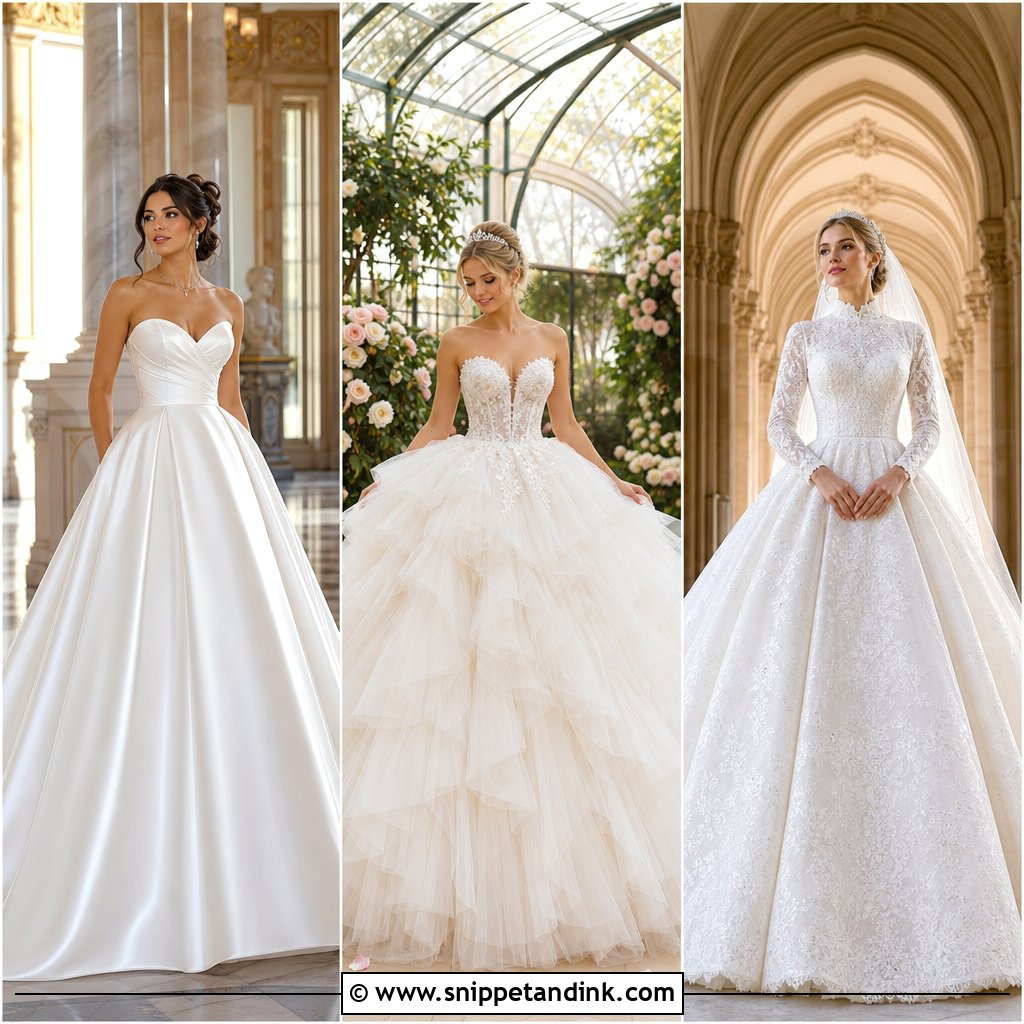
A ball gown gives the clearest waist on this list, because the full skirt makes everything above it look narrow by contrast. It also hides the lower half completely, which plenty of brides love. Mikado and satin give an architectural skirt; organza and tulle are softer and lighter. Scoop, sweetheart or square necklines keep the top open. Block heels hidden under the skirt, a simple pendant and a cathedral veil suit a grand ceremony. Big skirts are heavy, so I have brides walk the length of the shop twice. The hem must be set in the real shoes or you’ll kick it with every step.
3. Empire Waist Wedding Dress
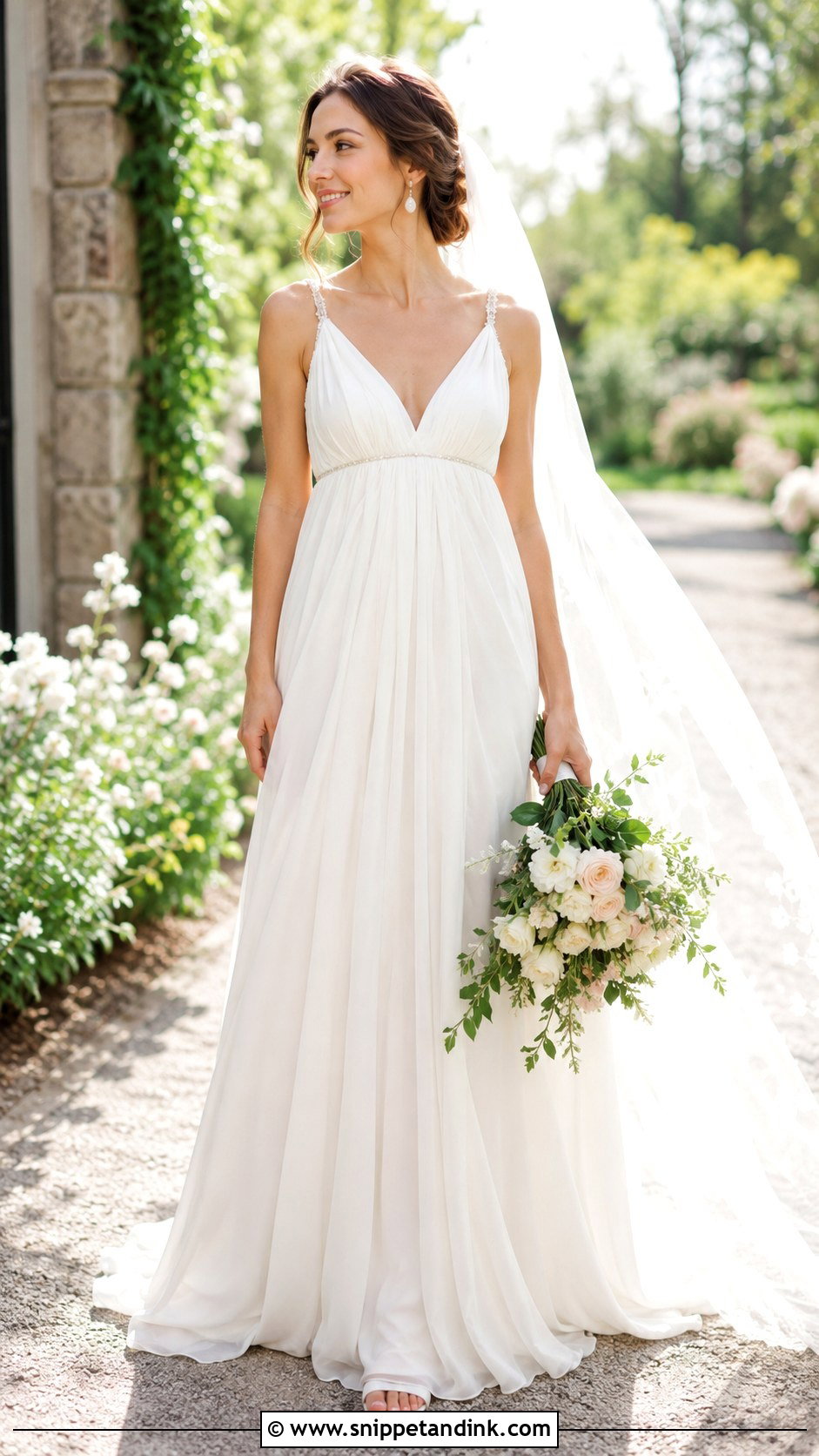
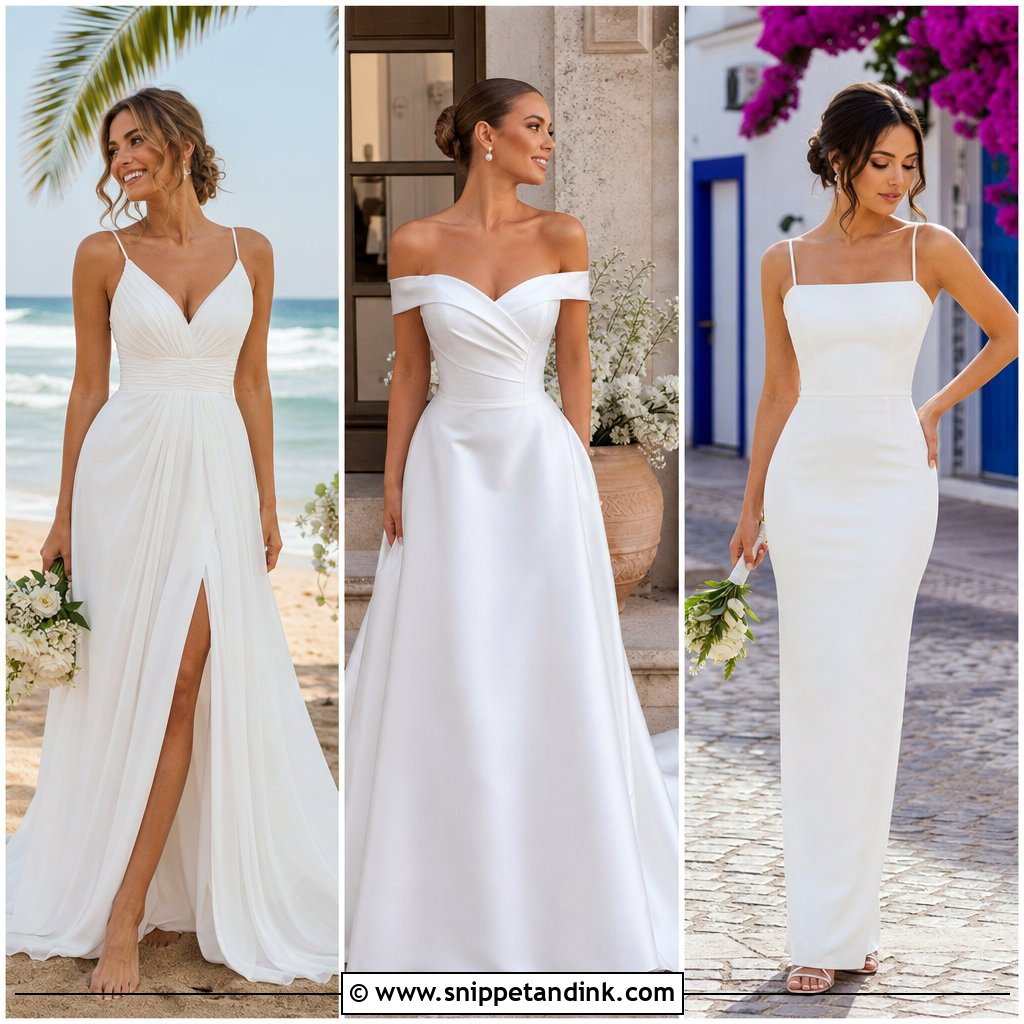
Fabric falling from just below the bust gives an empire dress its long, light look, and it doesn’t rely on a defined natural waist at all. That makes it comfortable for brides who don’t want anything snug around the middle, and for pregnant brides. Chiffon, silk georgette and fine tulle move best. A V-neck lengthens; a square neck adds a little structure. Low heels, pearl drops and an airy veil suit garden, beach and destination weddings. The raised seam has to sit exactly under the bust. A centimetre too low and the dress looks loose and shapeless rather than flowing.
4. Fit And Flare Wedding Dress
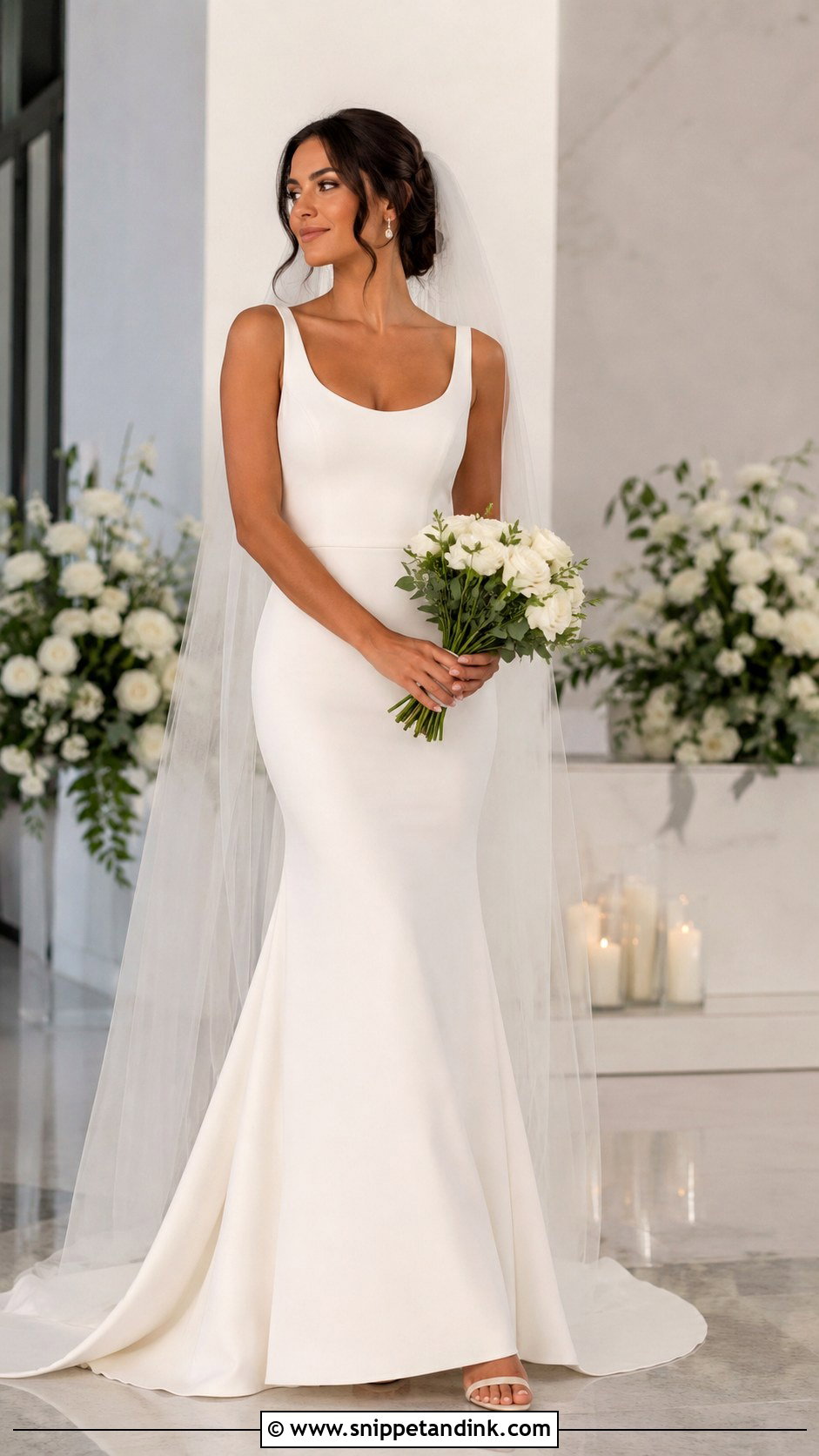
Fit-and-flare follows the torso and hips and widens around the lower thigh, so it gives shape without the restriction of a mermaid. Stretch crepe looks clean and modern; lace softens it. A chapel veil, slim heels and quiet earrings keep the line long. If you want to move more freely, ask for flexible lining, a slightly higher flare point or a back slit. Bring your shapewear to every fitting, since it changes the fit through the hip. A secure bustle makes the reception much easier once the train needs lifting.
5. Mermaid Wedding Dress
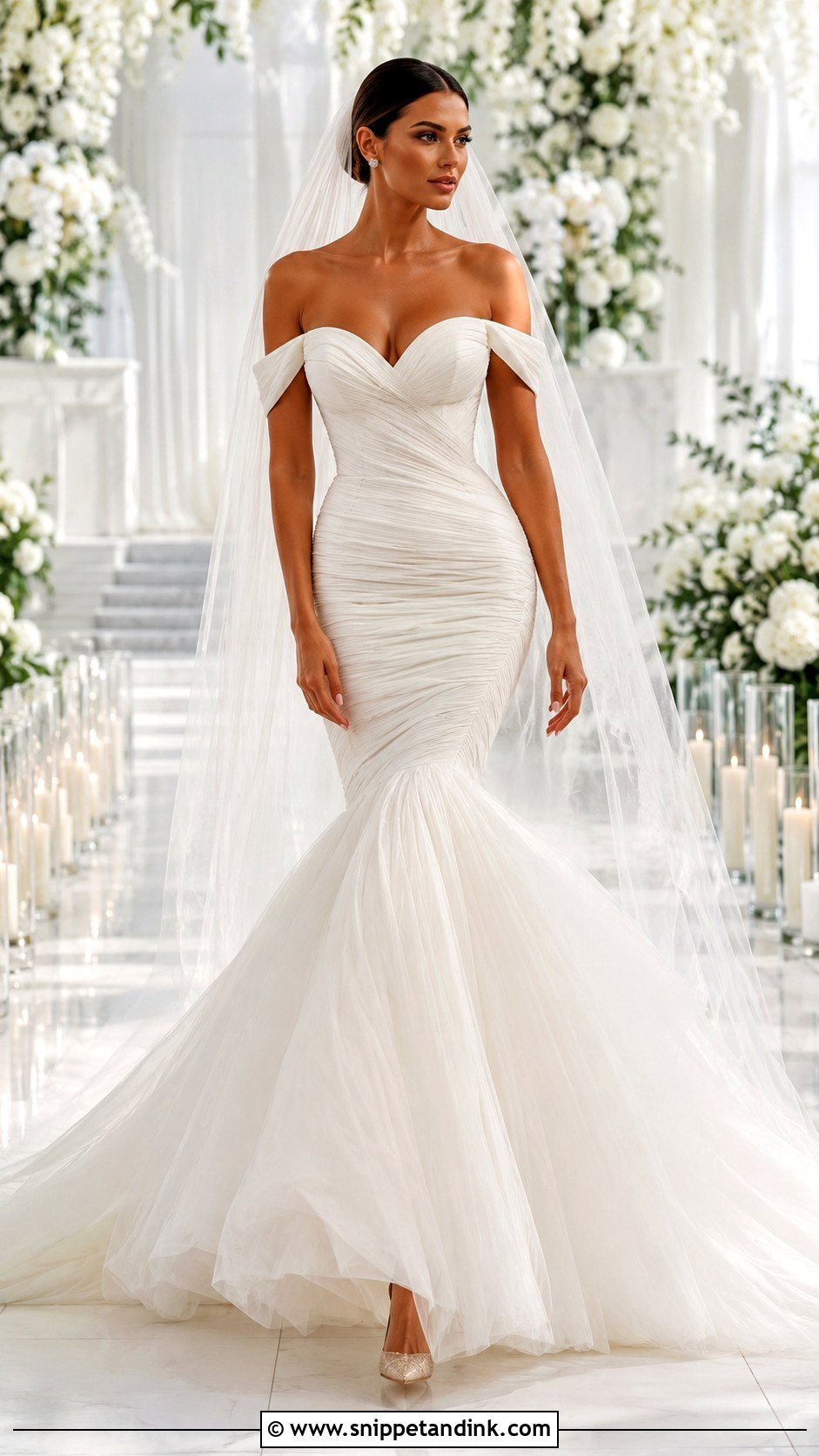
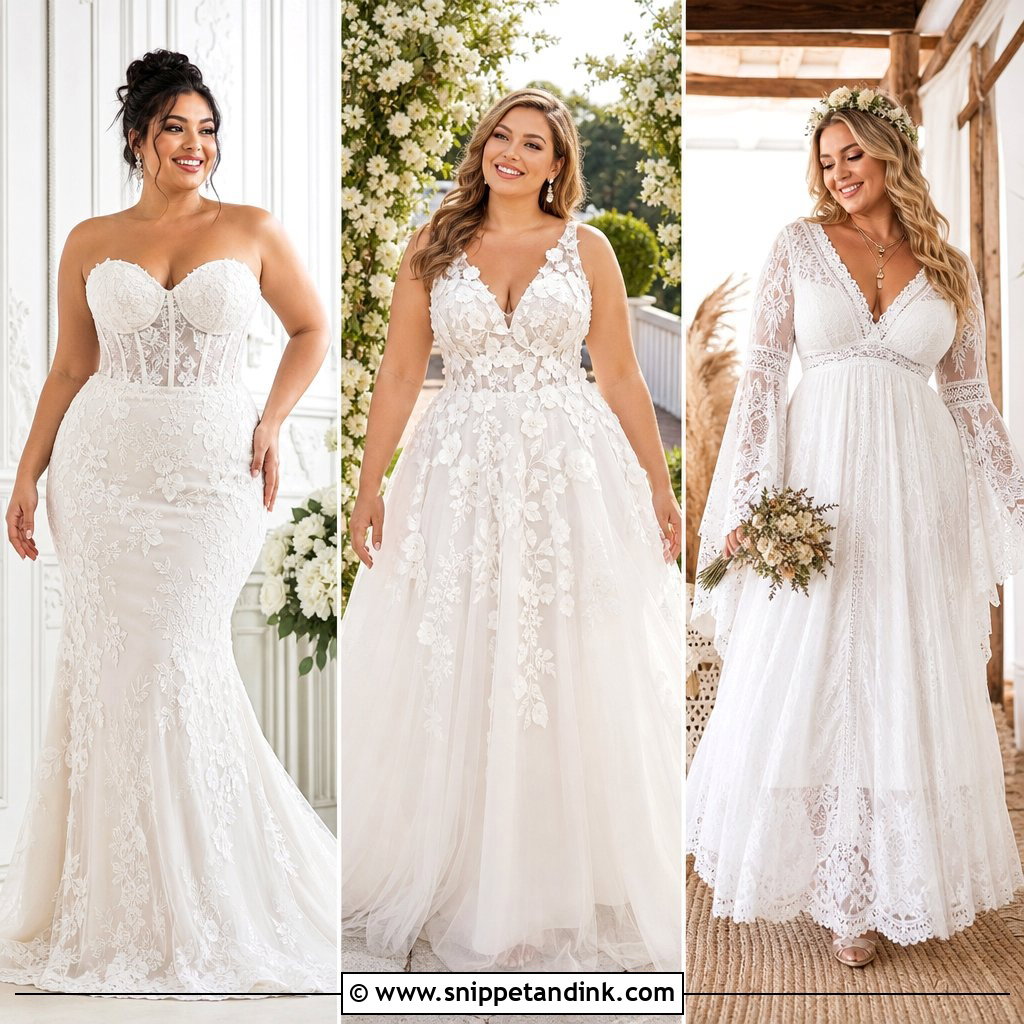
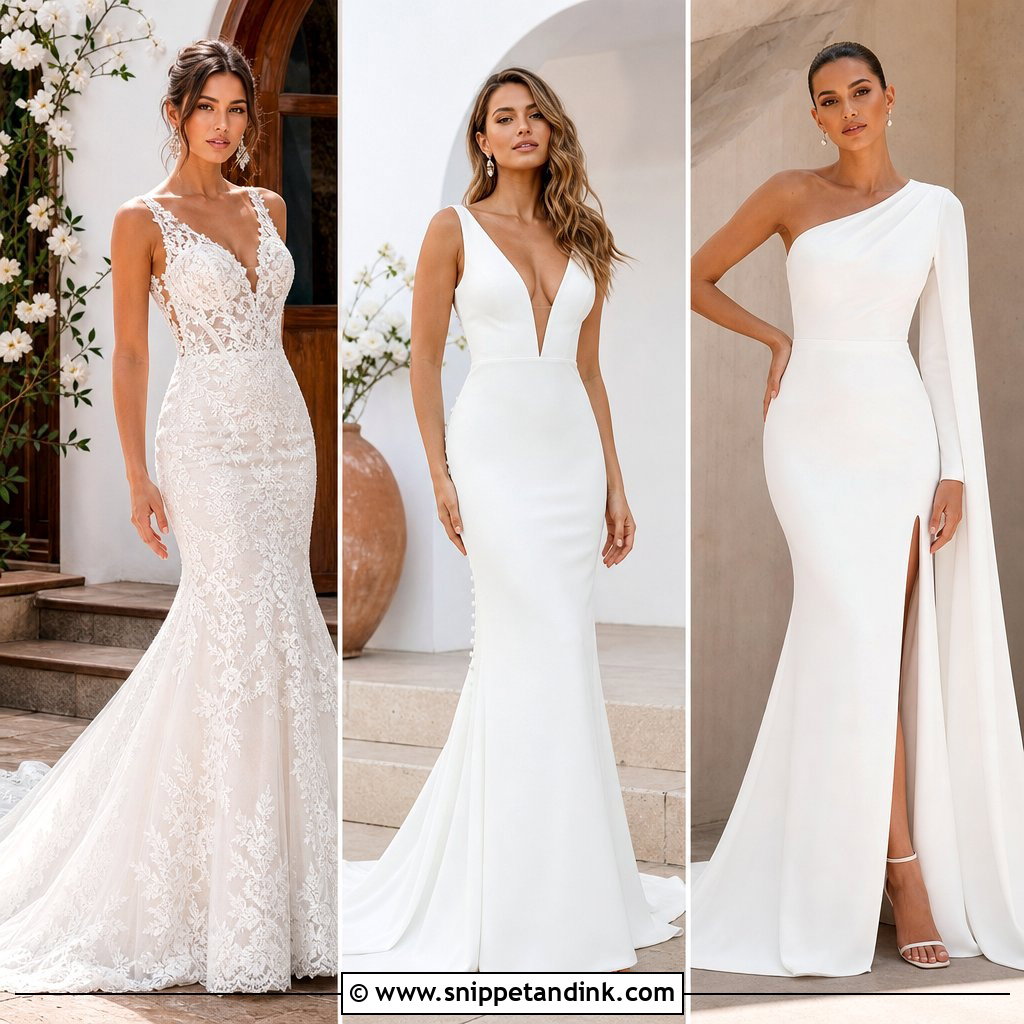
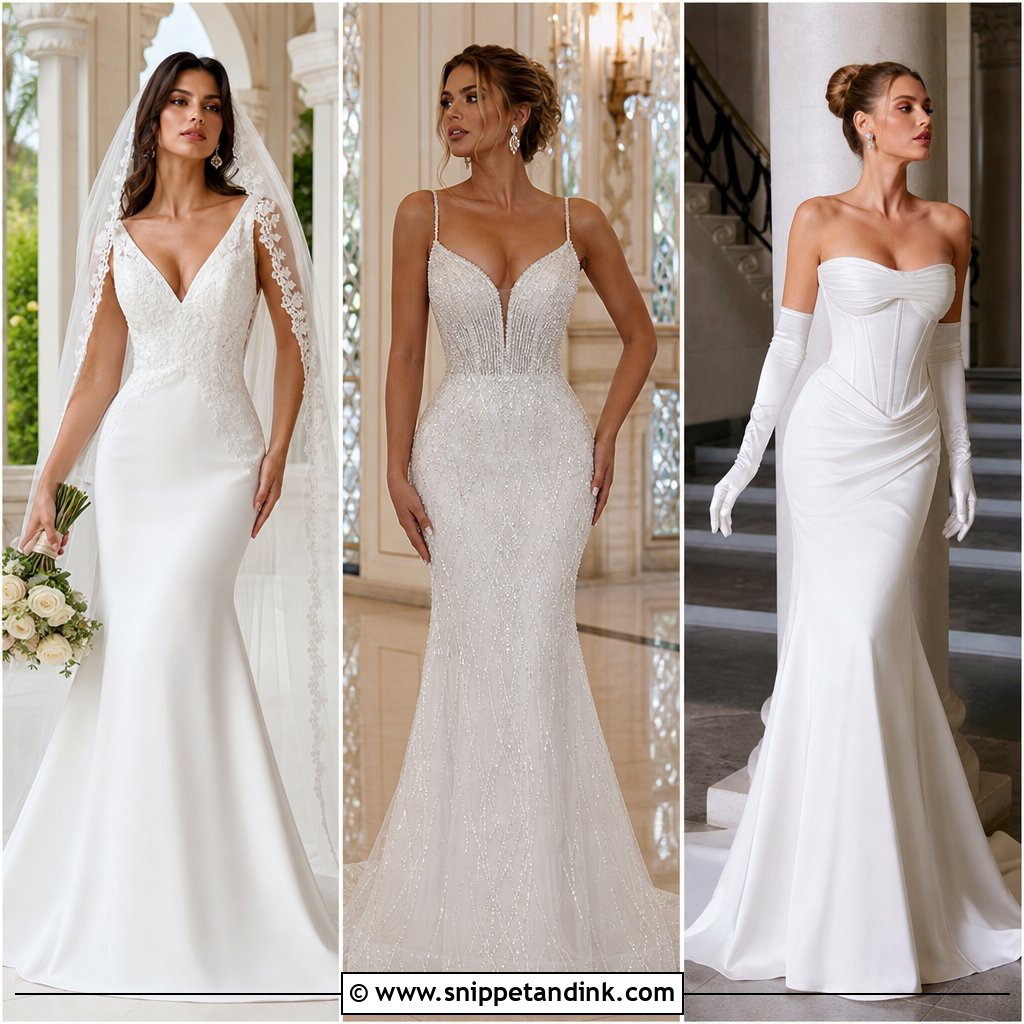
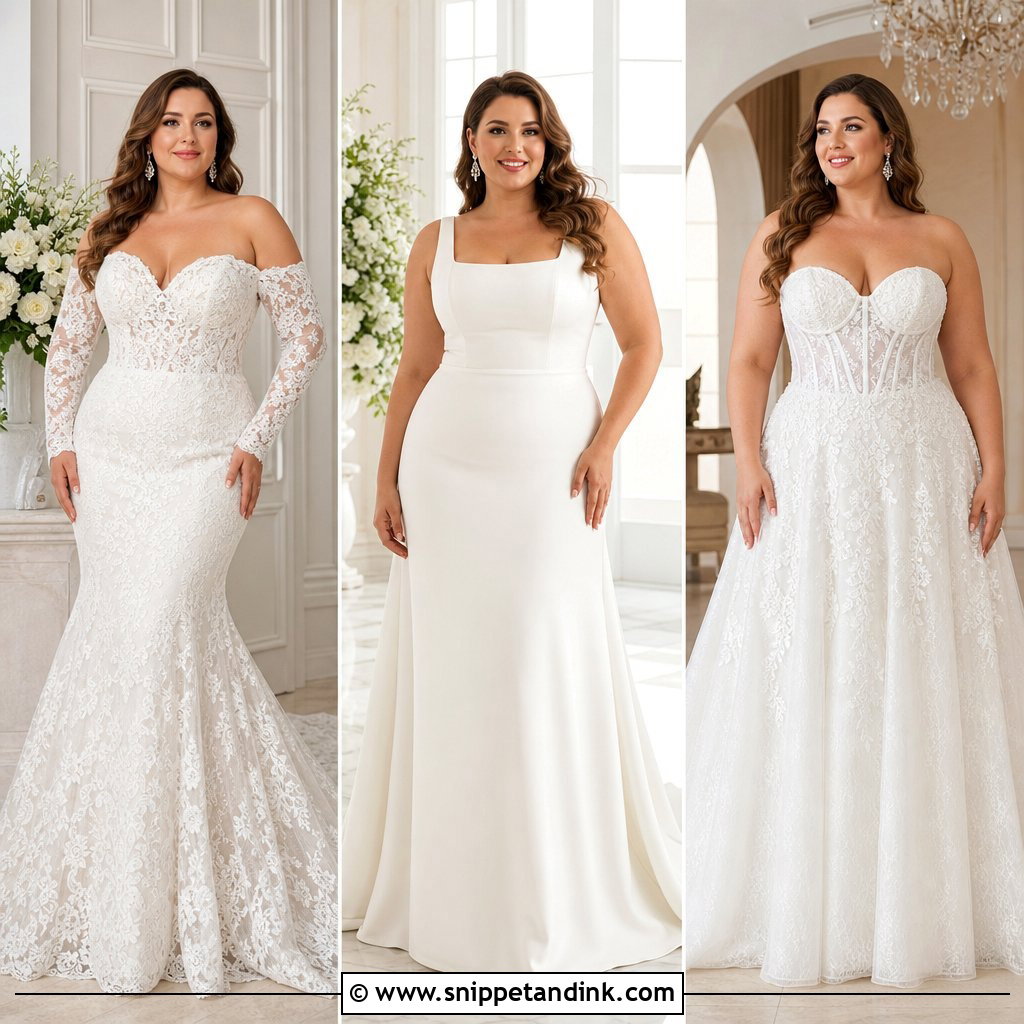
A mermaid fits close through bodice, waist, hips and thighs, then flares at or below the knee. That’s the most sculpted shape here and also the least forgiving to walk in. Structured satin makes the lower skirt bold; layered tulle softens it. A sweetheart neckline suits the curve, and detachable off-the-shoulder straps add coverage for the ceremony. Sleek heels, a long veil and studs keep it focused. Climb a step, sit and turn at the fitting. Brides who love it but dread dancing in it often change into a relaxed second dress for the evening, which I think is a sensible compromise.
6. Sheath Wedding Dress
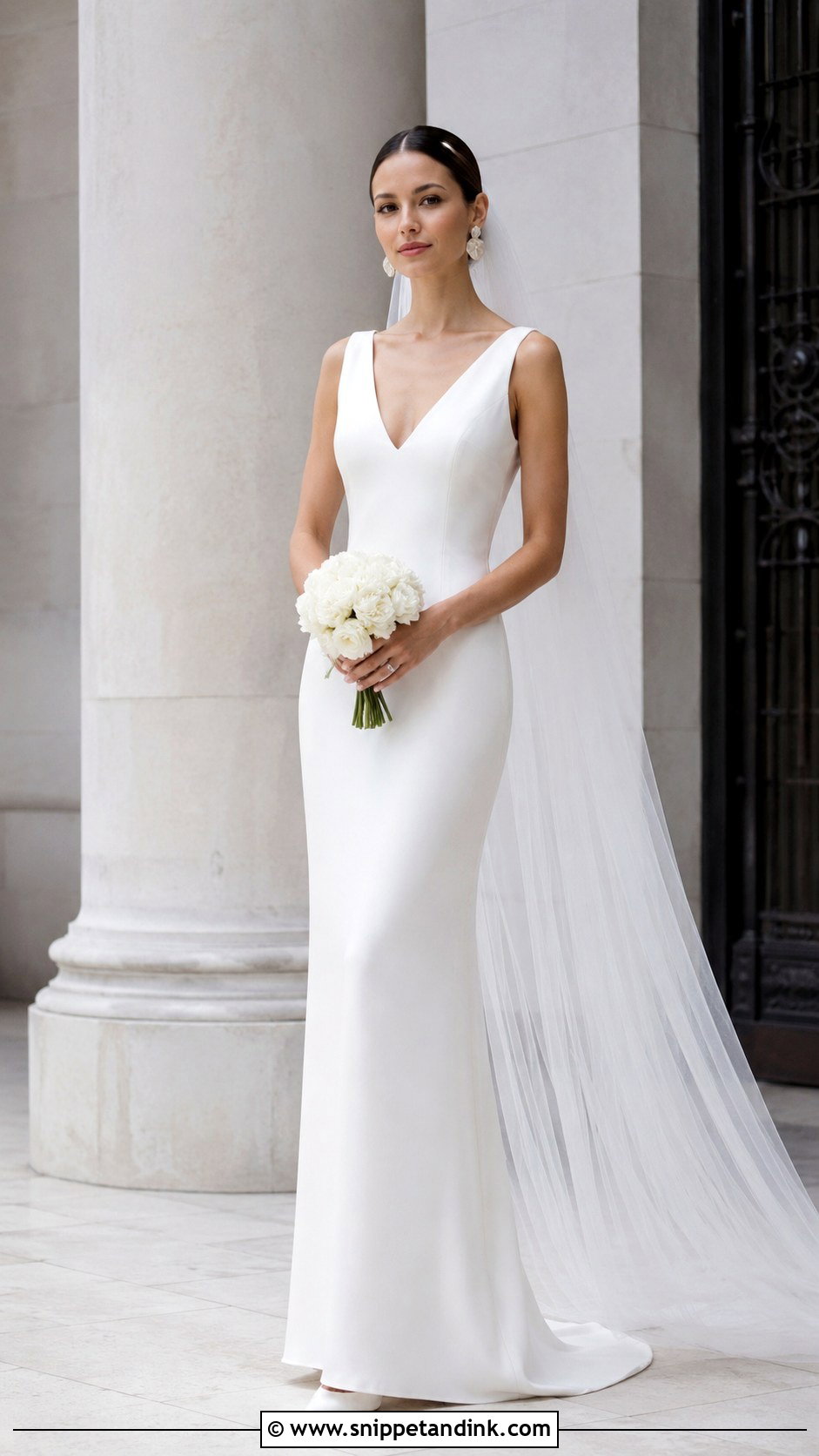
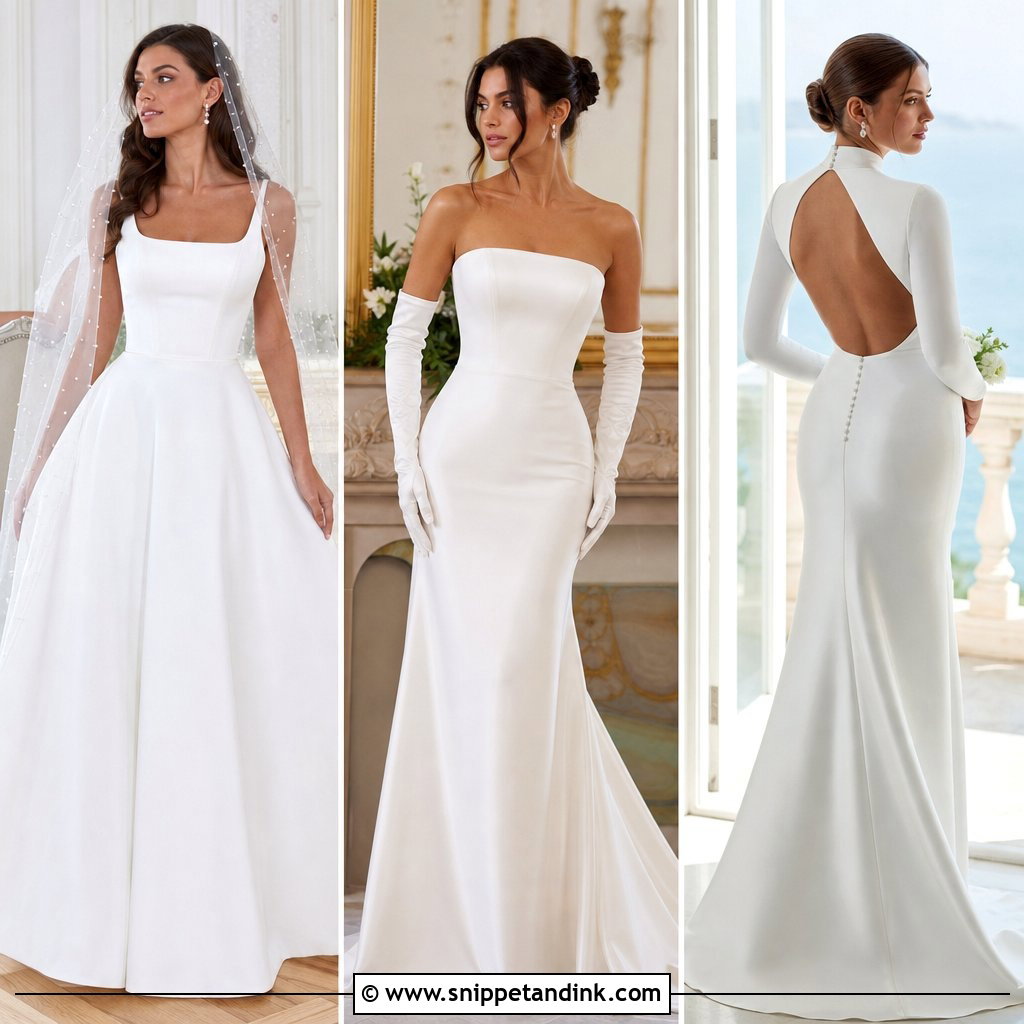
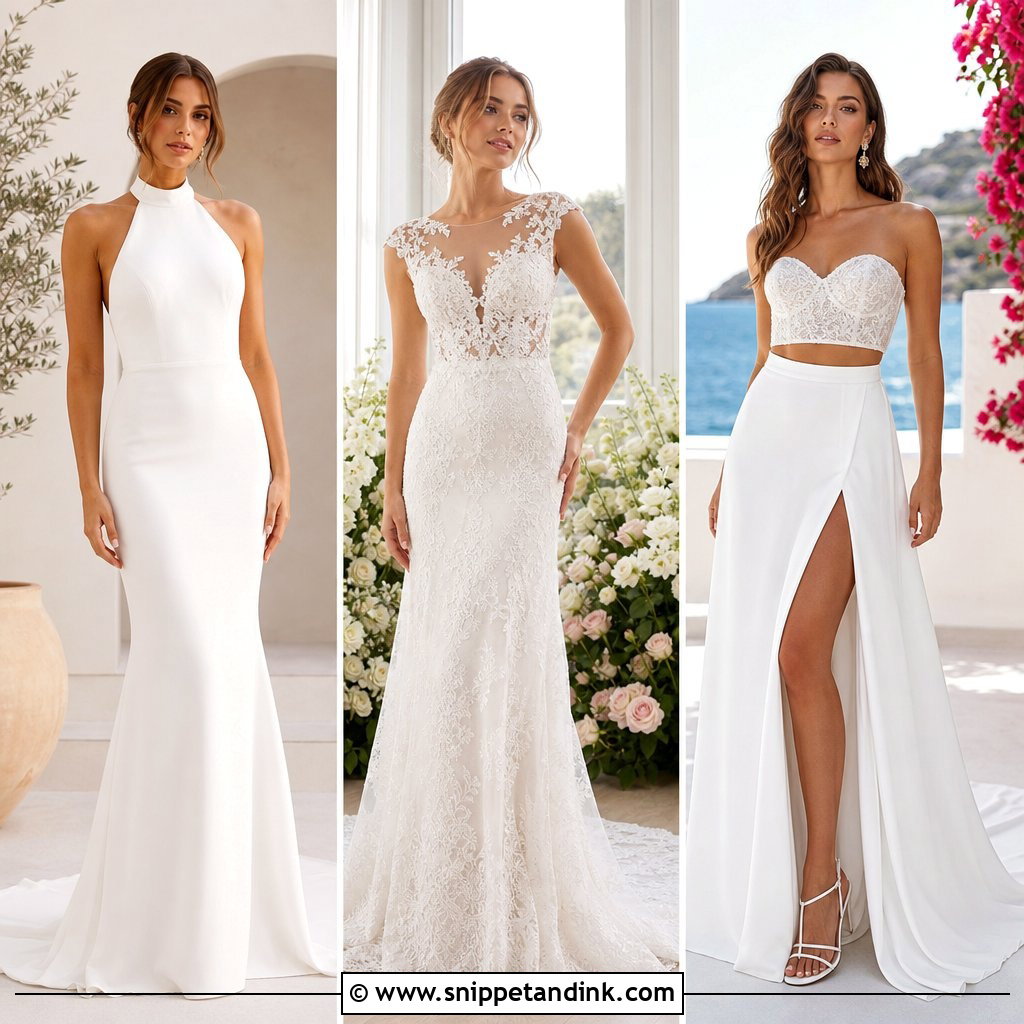
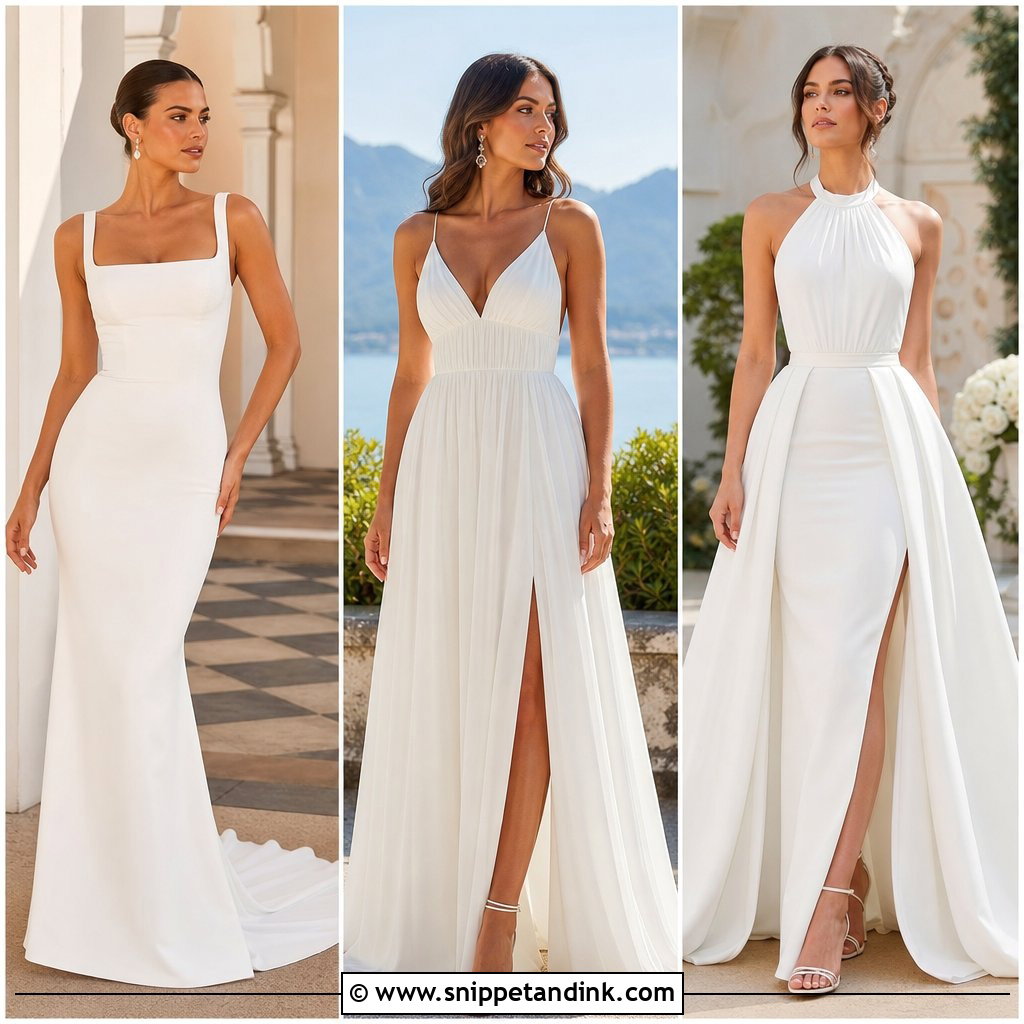
A sheath wedding dress falls close to the body with no wide skirt or flare, so it relies entirely on fit and fabric. Crepe, silk, satin and light embroidered lace drape well. A bateau or modest V-neck frames the face. Low pointed heels, a smooth chapel veil and sculptural earrings make it modern. The fabric should skim, not grip, especially across the seat, where a too-tight sheath shows horizontal strain lines in every photo. Smooth underwear matters. If you want a bigger entrance, a detachable overskirt adds volume for the aisle only.
7. Column Wedding Dress
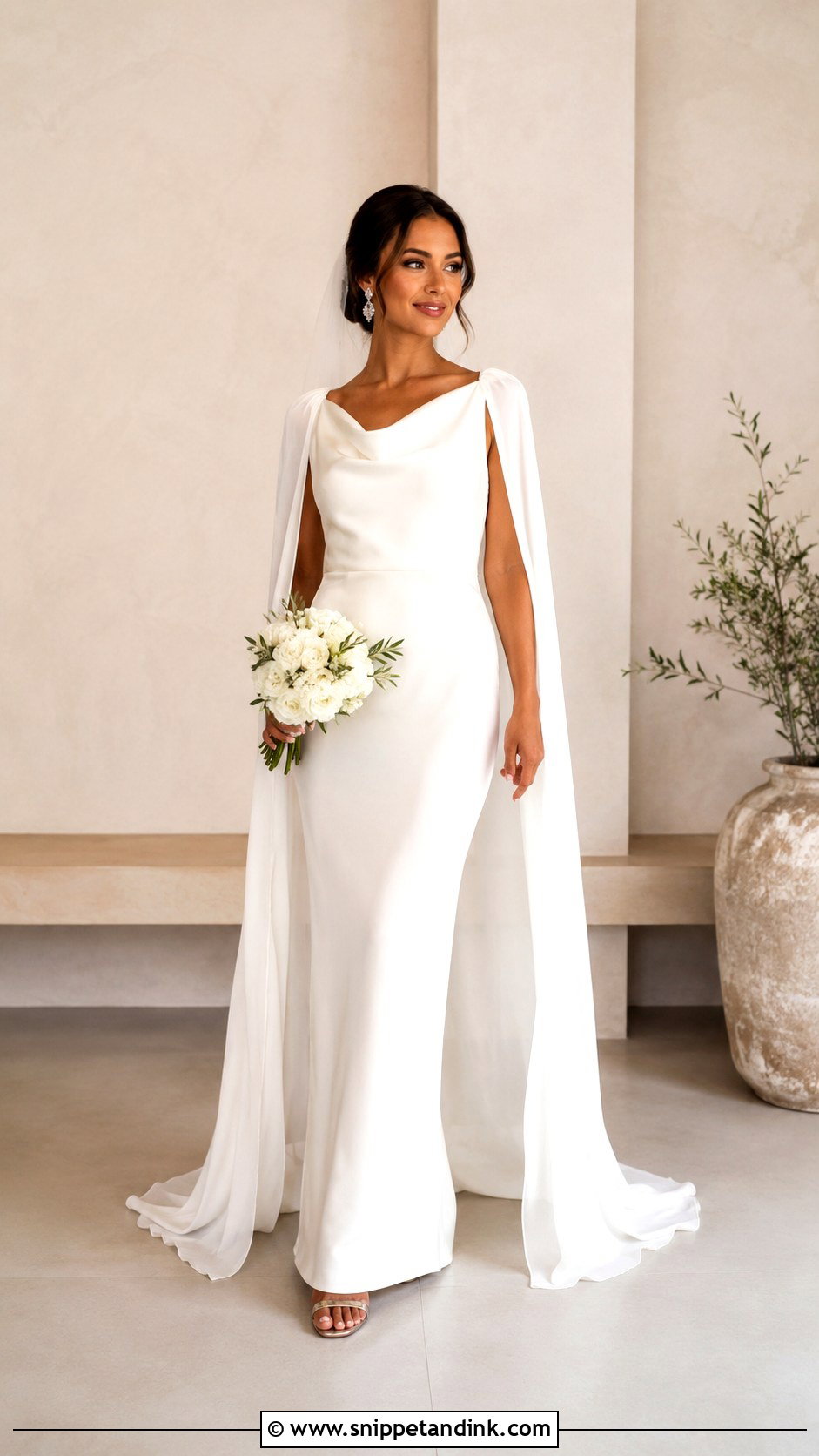
A column draws one straight line from neckline to hem, with a little more ease than a sheath. Heavy silk, satin or crepe hangs cleanly and gives the simple shape weight. A draped neckline or a single asymmetric shoulder adds interest. Metallic sandals, a narrow veil and a compact bouquet keep it sleek. Length is where columns go wrong. Too much fabric pools and breaks the vertical line; I ask for a hem that nearly touches the floor but shows the toe of the shoe, so you can walk safely. A removable cape or detachable train adds drama without hiding the shape.
8. Basque Waist Wedding Dress
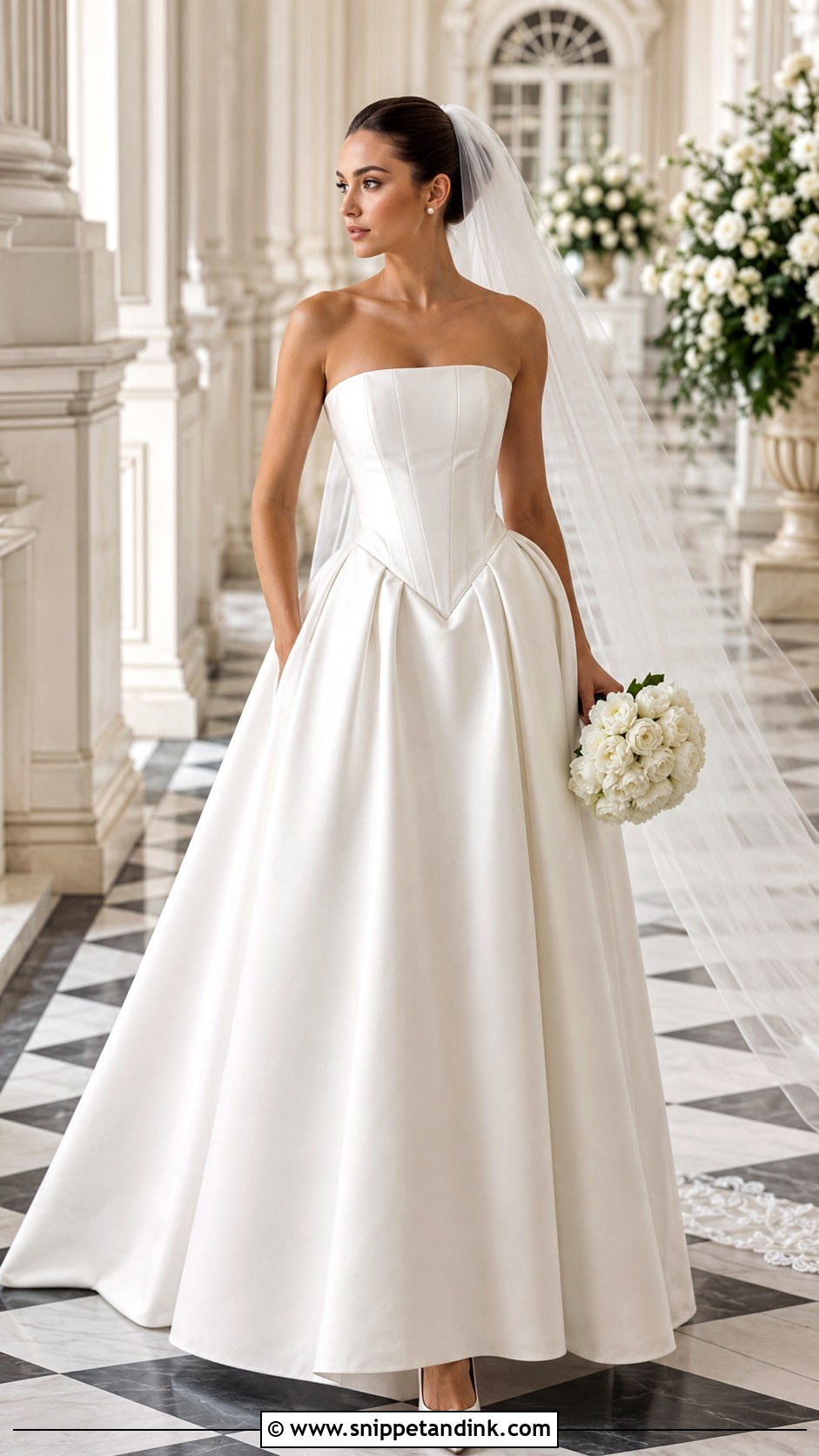
A basque waist dips into a V below the natural waist, drawing the eye to the centre of the torso and leading smoothly into a full or moderately flared skirt. It’s often paired with structured corsetry and soft draping. Matte satin looks refined; floral jacquard adds texture. A strapless neckline, pointed pumps, pearl studs and a long veil finish it. The point of the V has to sit exactly at your centre line, so custom alterations matter more here than on most shapes. Sit down at the fitting: a badly placed point folds or digs into the hips when seated.
9. Drop Waist Wedding Dress
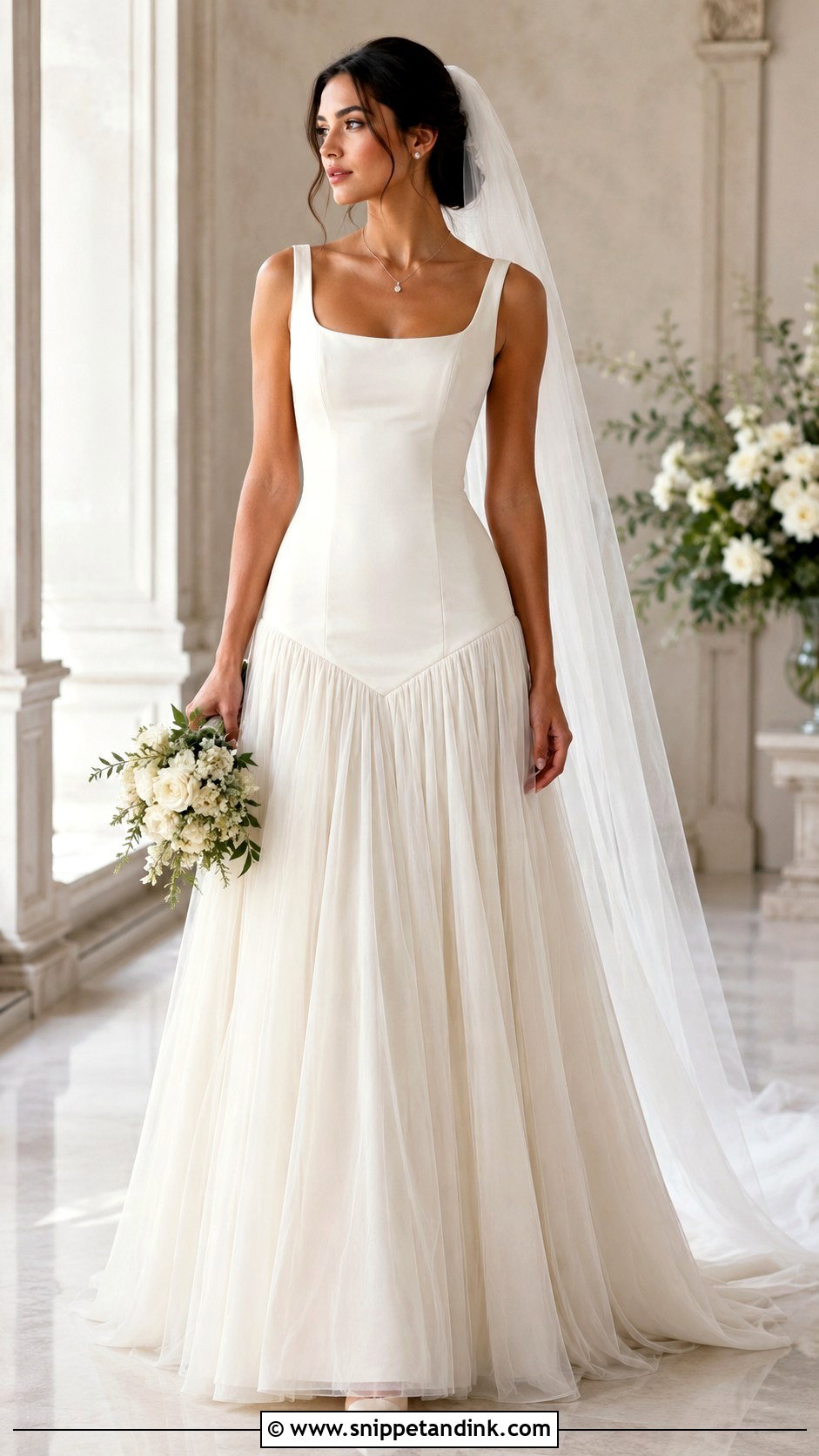
A drop waist extends the bodice below the natural waist before the skirt opens. A rounded seam is gentle; a V-shaped one is sharper. A flowing tulle skirt, satin pumps, a fine necklace and a simple veil balance the longer torso. The lower seam means comfort at the hips is everything. Shorter-torsoed brides usually look better with a subtle drop than a dramatic one, because a very low seam can make the legs look short. I check the seam from the front, the side and the back, since it often sits level from the front and dips behind.
10. Wrap Wedding Dress
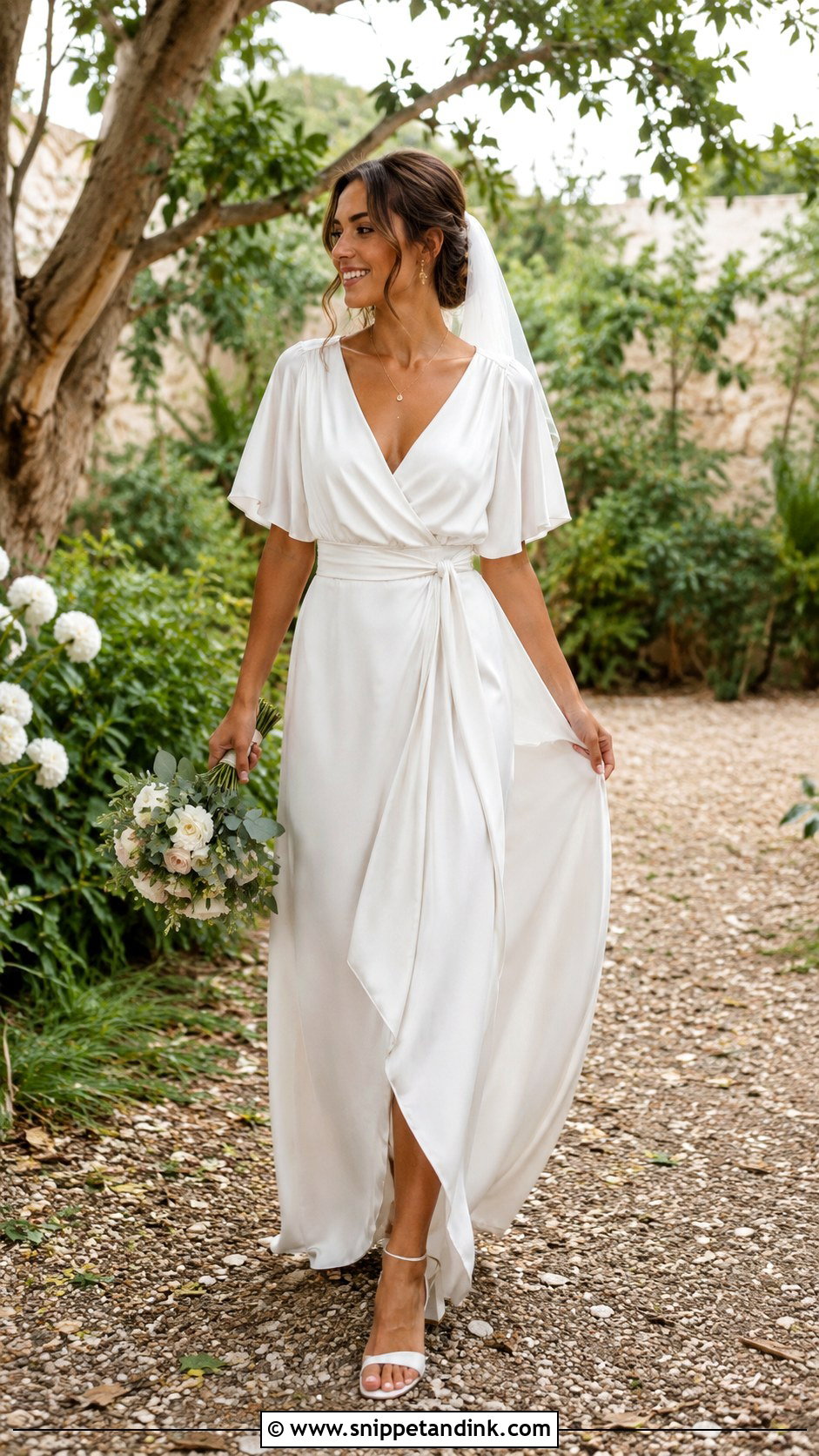
Diagonal lines across a wrap bodice define the waist and form a natural V-neck. Some bridal wraps genuinely tie; most use a fixed crossover, which I prefer for a wedding because it can’t loosen during dancing. Chiffon and silk suit relaxed celebrations; stretch crepe is crisper. Block-heel sandals, a short veil, a fine pendant and a loose seasonal bouquet go with it. If the V is too open, a hidden snap or a matching modesty panel fixes it. Bend, sit and raise your arms in it to make sure the overlap stays put. A soft draped sleeve balances the neckline in cooler weather.
11. Off Shoulder Wedding Dress
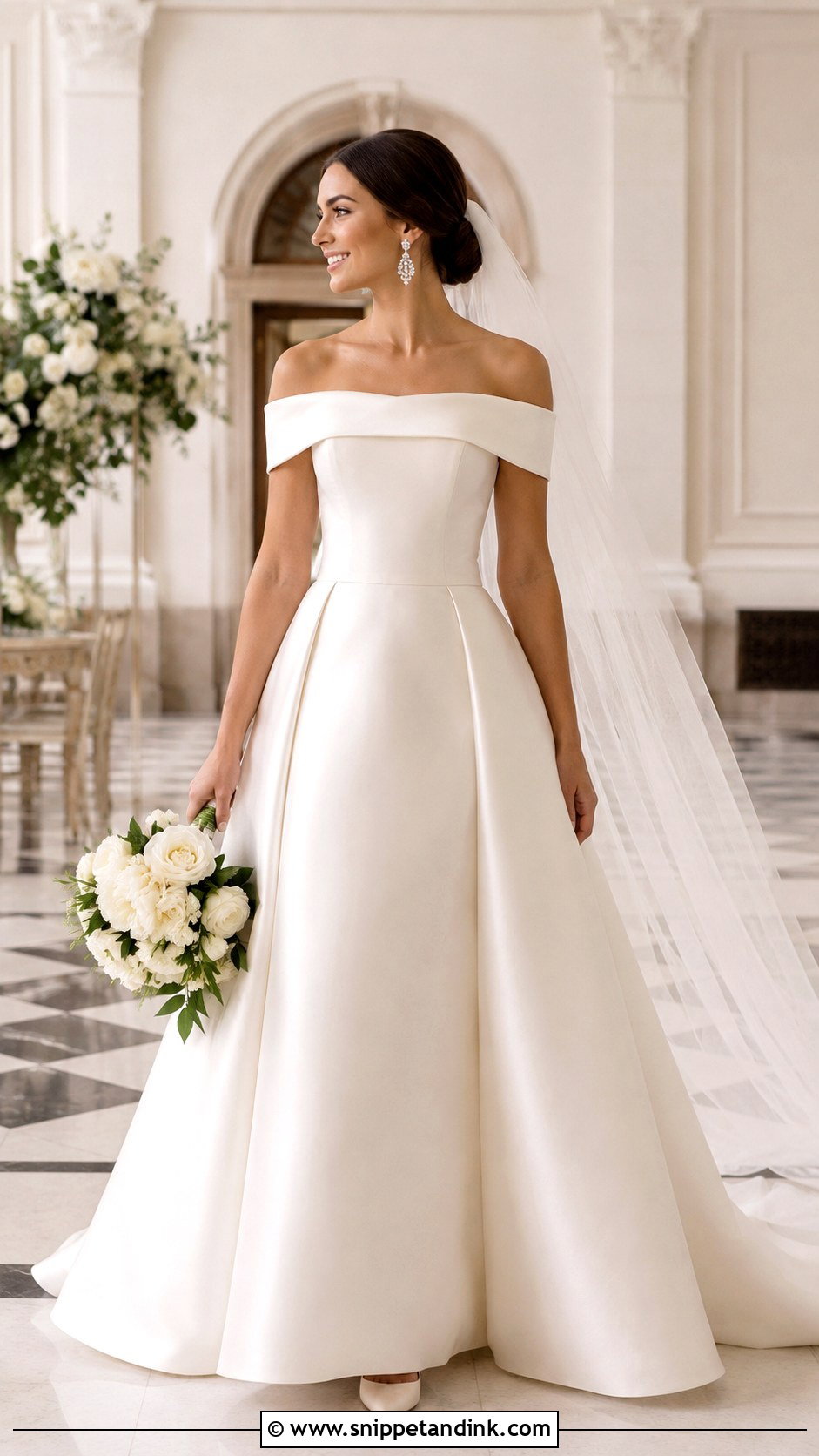
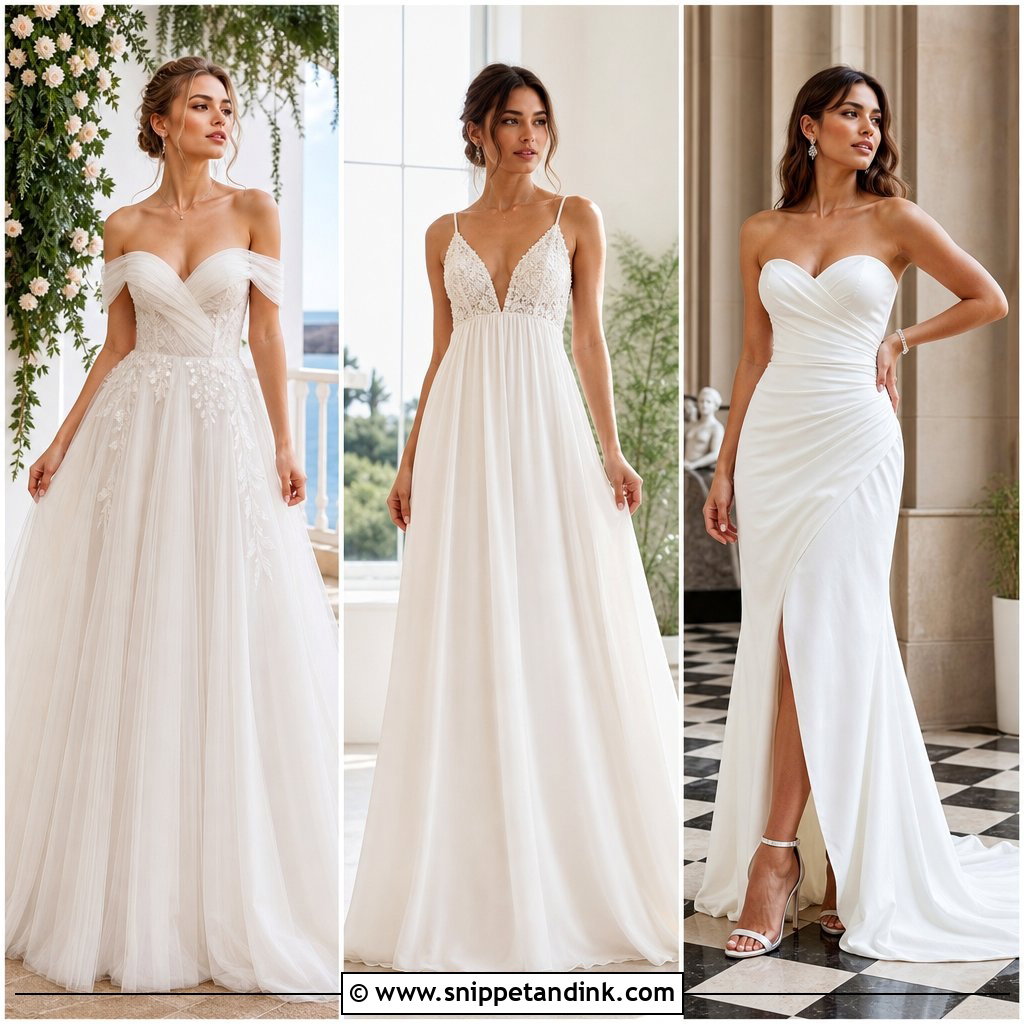
Off-the-shoulder draws attention to the collarbone and widens the shoulder line slightly, which balances fuller hips. It suits a fitted crepe dress, an A-line or a full ball gown. Structured bands look formal; draped tulle sleeves look softer. A collar-length necklace or statement earrings, comfortable pumps and a veil beneath a low bun complete it. The sleeves need to stay put without pinning your arms to your sides. Hug, reach and dance at the fitting, since loose bands creep up. Detachable sleeves let you take them off after the ceremony and keep the supportive bodice.
12. Square Neck Wedding Dress
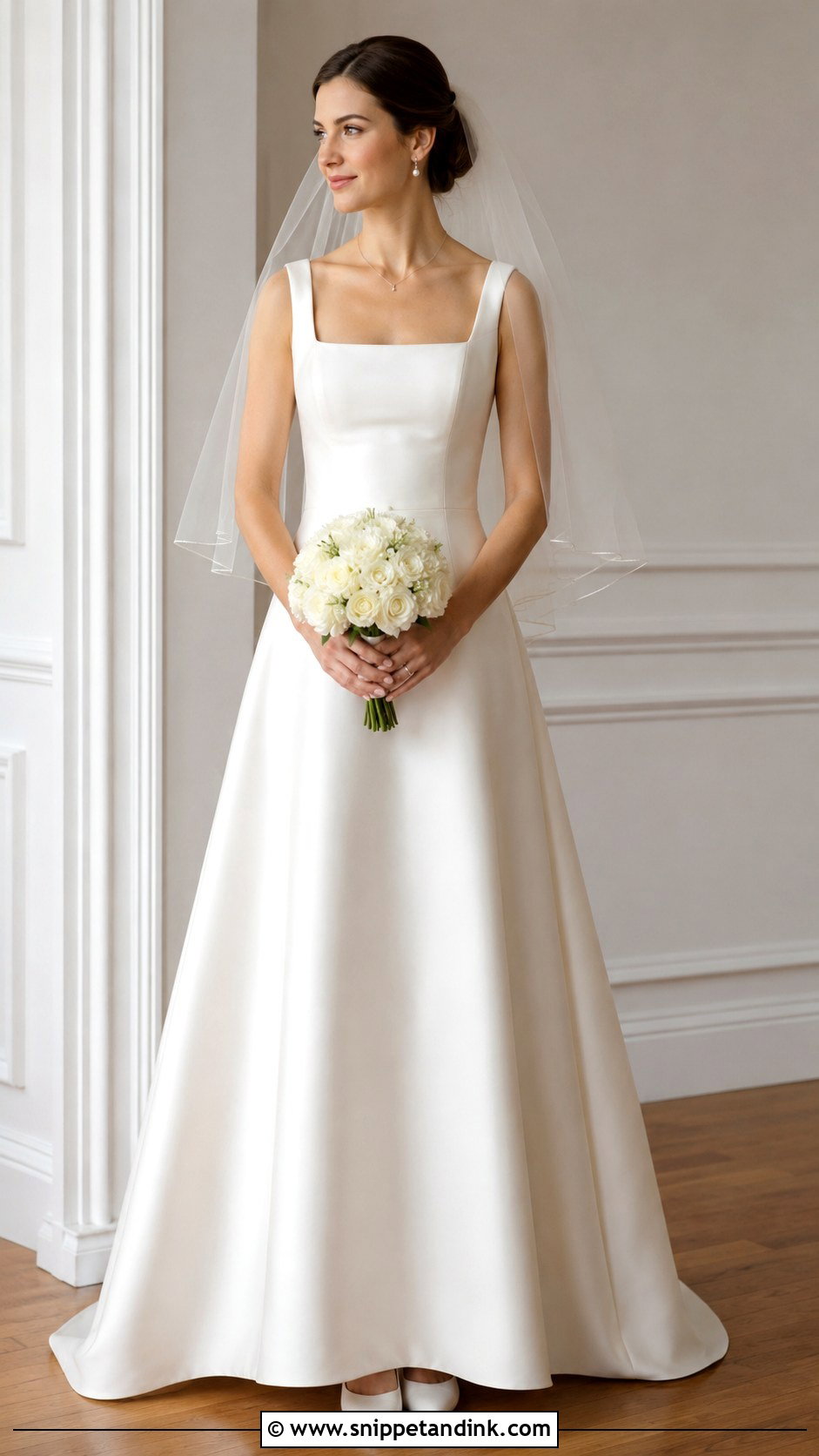
A square neckline gives clean structure and leaves neck and collarbone open. On an A-line it looks current; on a fitted dress it looks tailored. Wide straps leave room for real support inside, which makes the gown easier to wear for a long day. A fine chain, pearl earrings, low heels and a fingertip veil keep it cohesive; avoid a large necklace against the geometry. I check that the corners lie flat against the chest and don’t lift when the bride breathes in. If you need more bust support, ask whether cups, boning or a waist stay can be added without changing the outside.
13. V Neck Wedding Dress
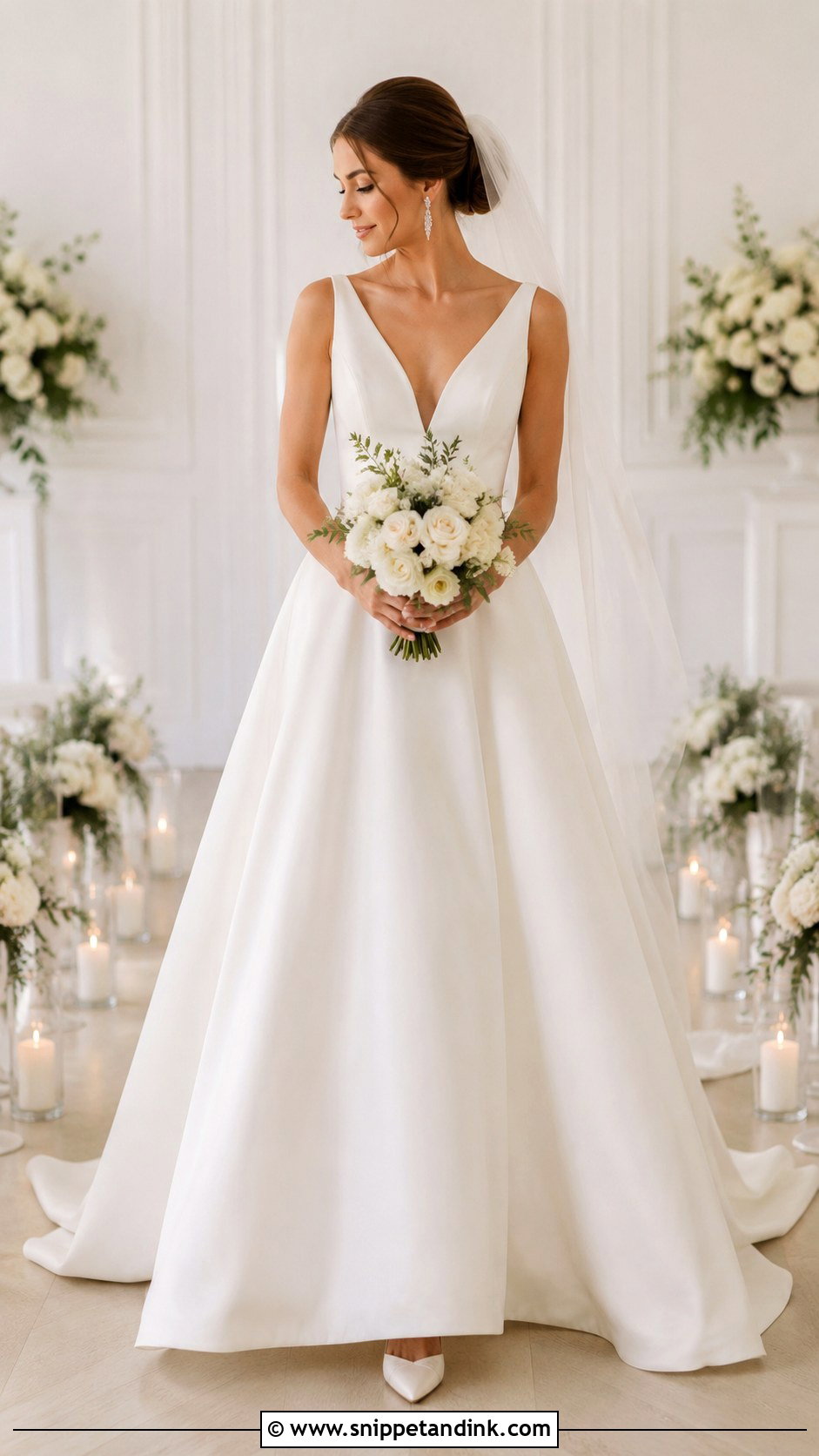
A V-neck draws the eye down the centre of the body and lengthens the neck. Depth can go from modest to plunging, so pick the level of coverage that feels secure. A wider V balances broad shoulders; a narrow one looks sharper. Pair an A-line version with drop earrings, pointed shoes and a soft chapel veil. Fuller busts need wide straps, real cups and firm bodice construction, not delicate fabric alone, and sheer mesh can stabilise a deep V. Lean forward at the fitting. If the edges lift or gape, the V needs taking in before anything else.
14. Sweetheart Wedding Dress
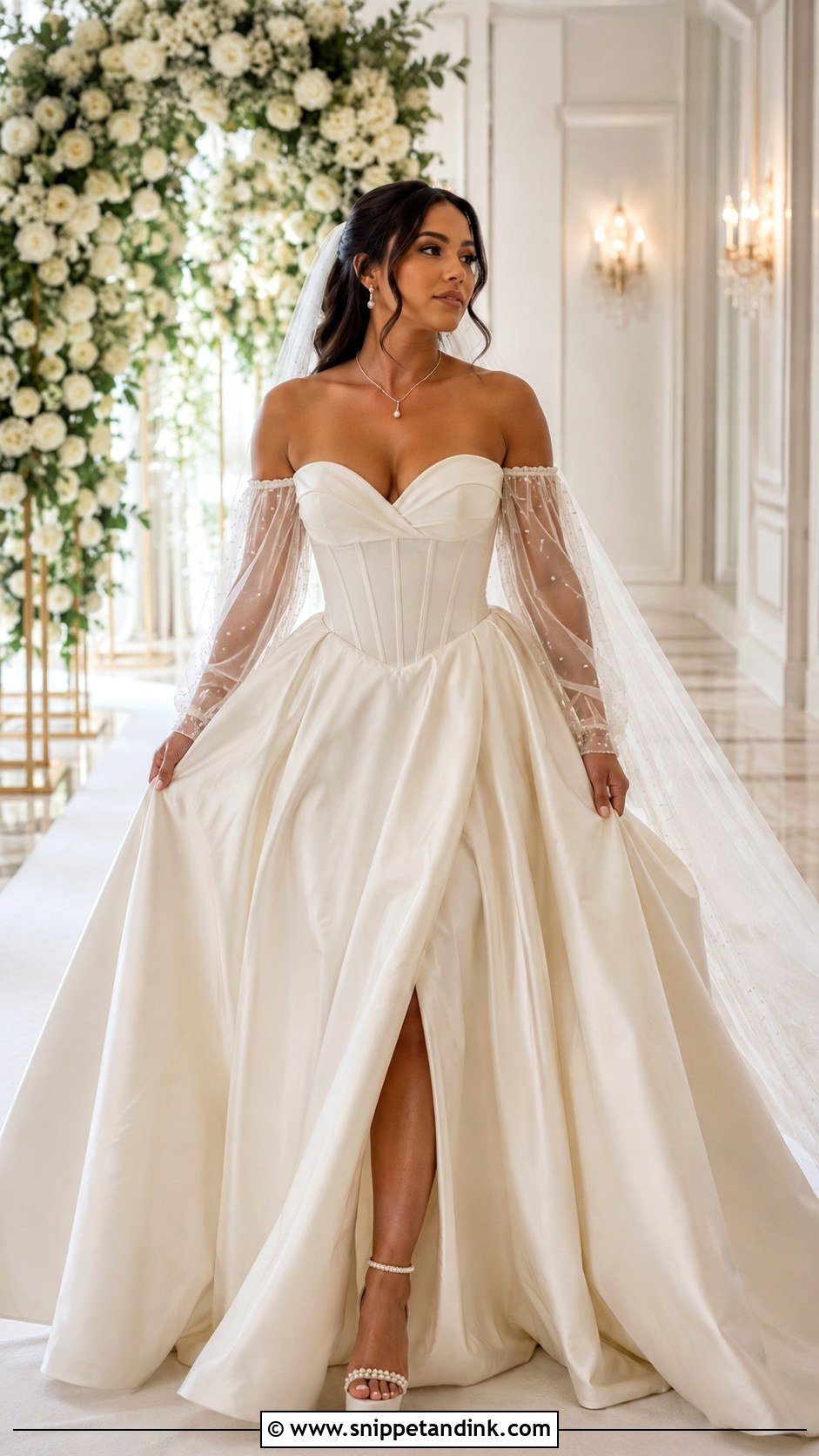
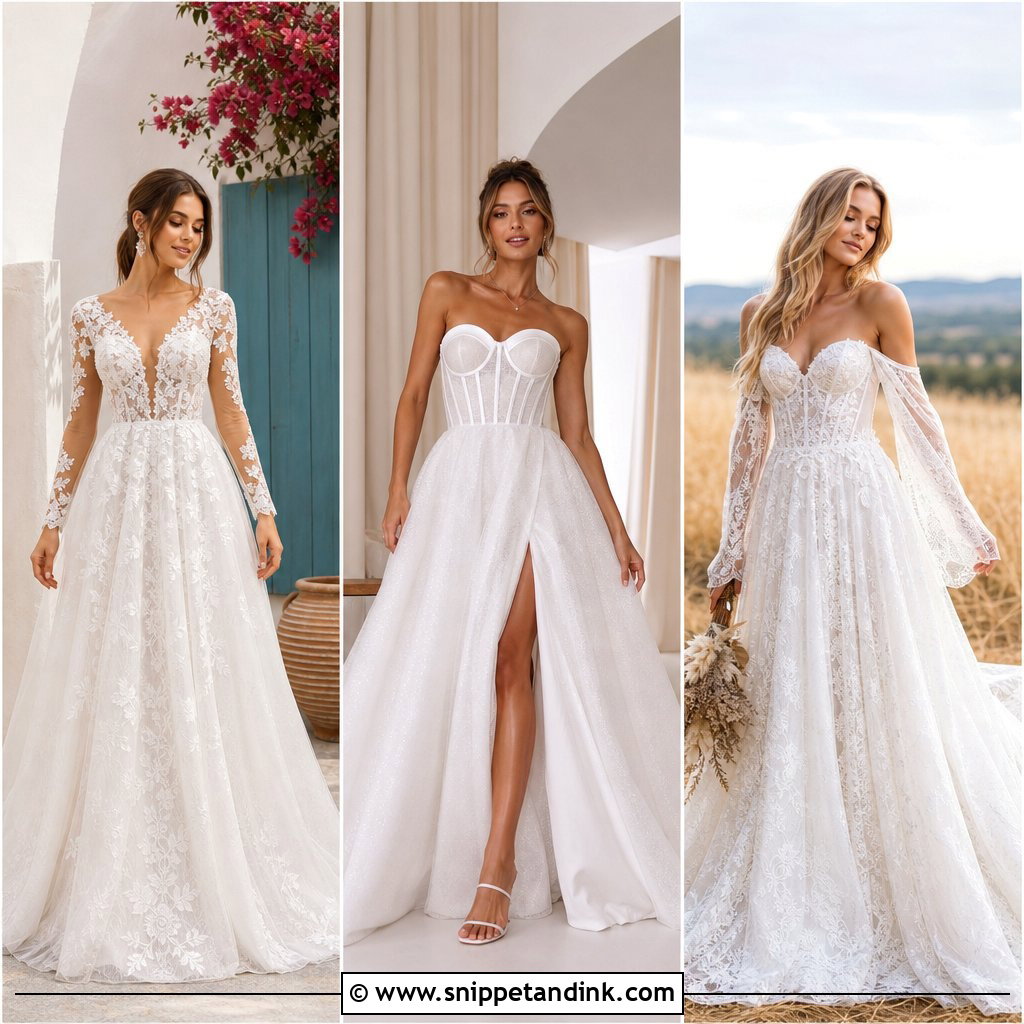
A sweetheart curves over the bust and dips in the centre, framing face, neck and shoulders. It works with corset bodices, fitted shapes and full skirts. For extra support, a moderate sweetheart with sturdy straps or detachable sleeves is easier to wear than a deep strapless one. A pendant necklace, pearl earrings, satin heels and a veil below a polished updo finish it. Cup placement and the centre dip decide whether it looks balanced or not, so have both checked carefully. A sheer lace panel can raise the neckline while keeping the curve.
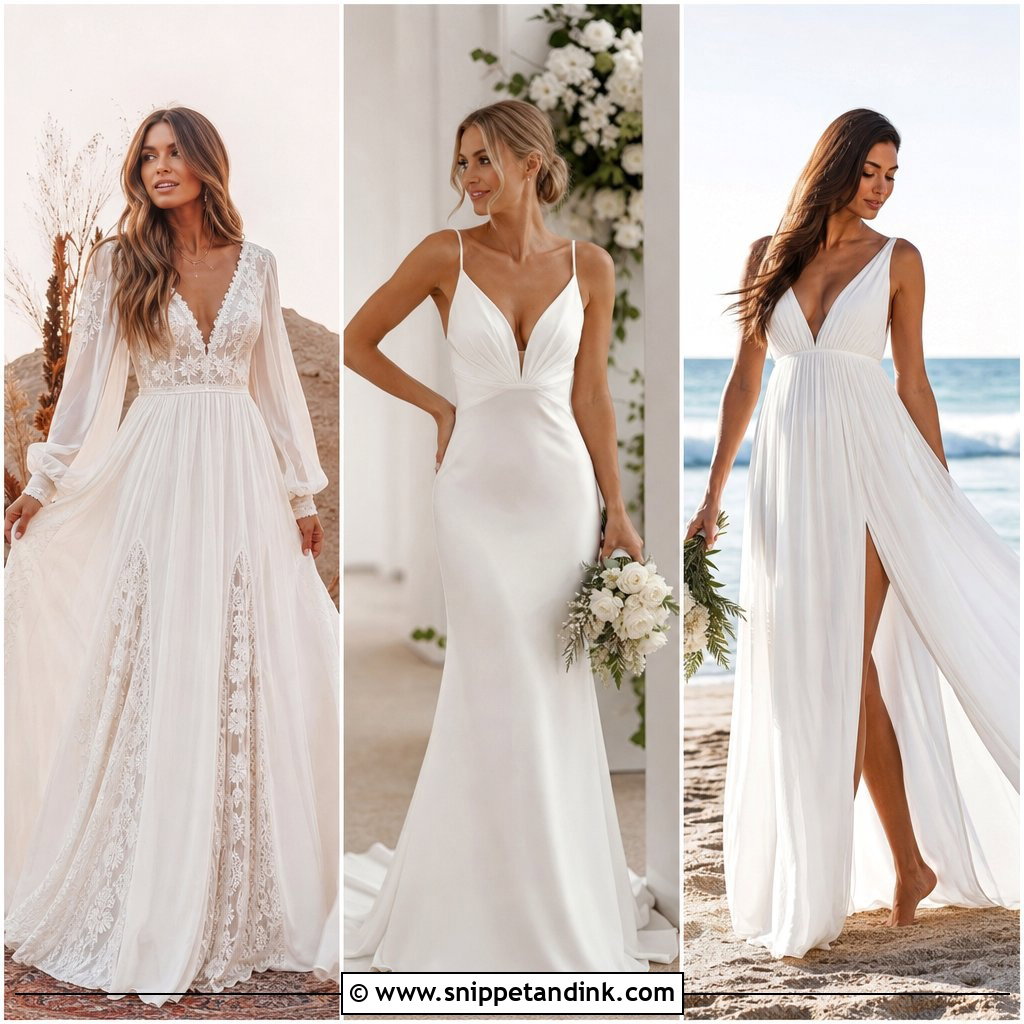
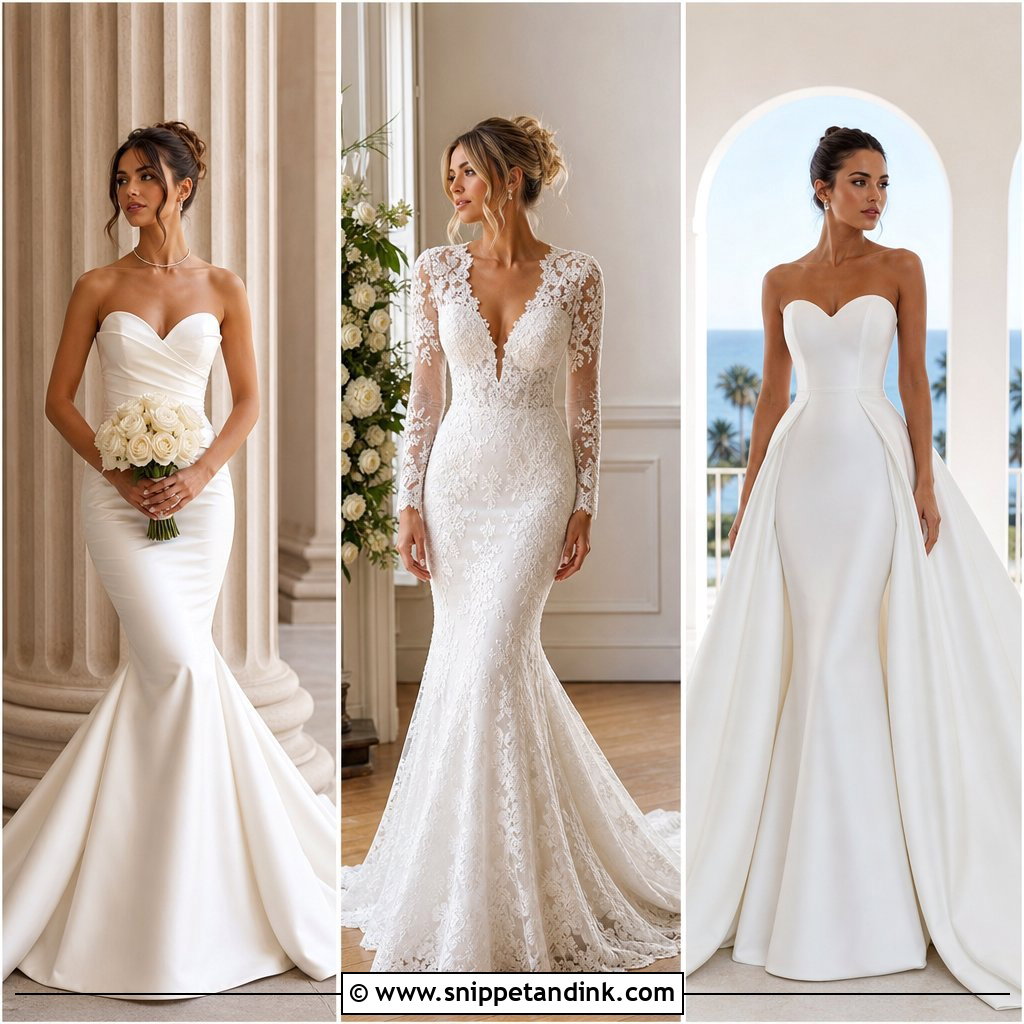
15. Long Sleeve Lace Wedding Dress
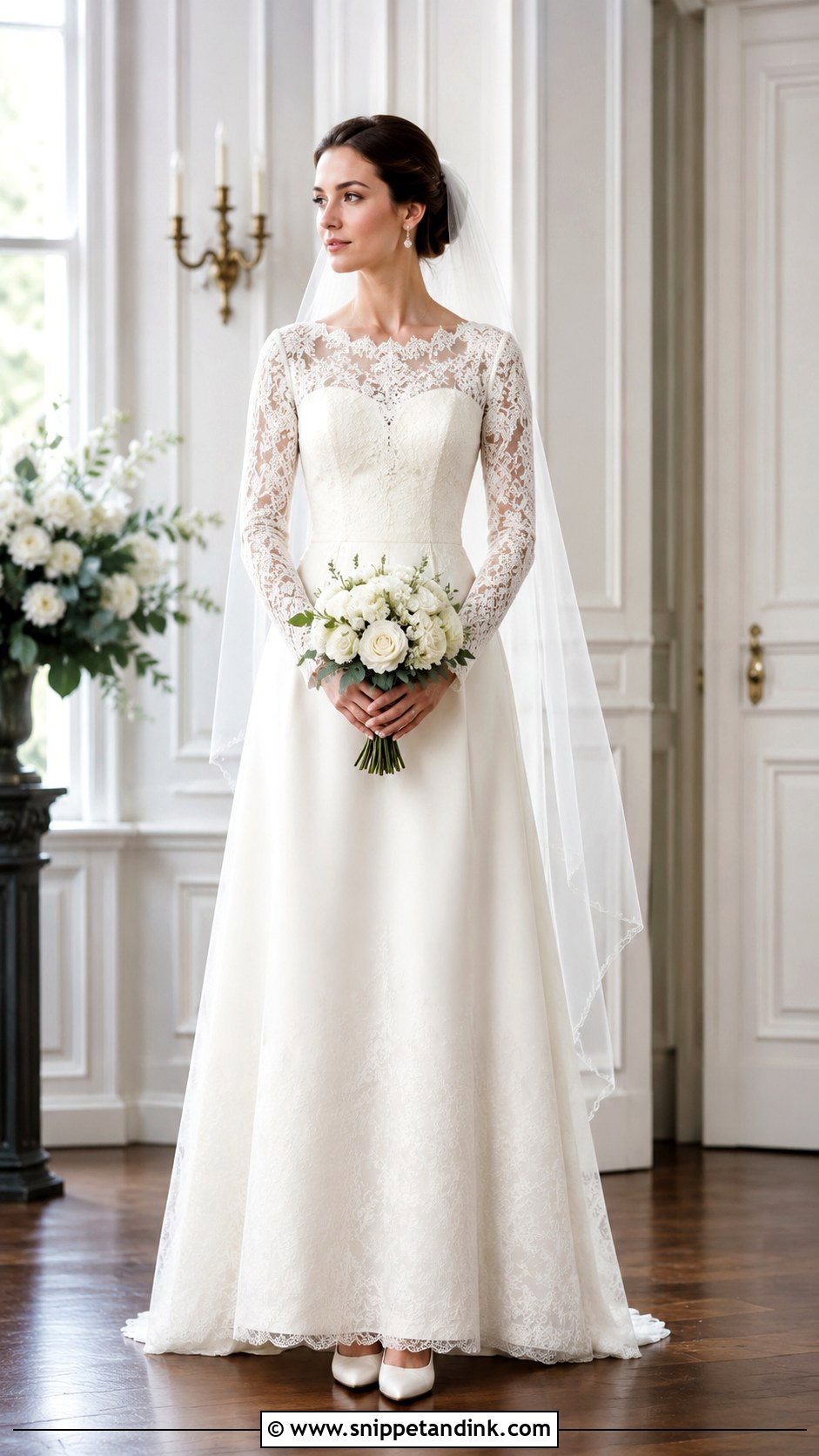
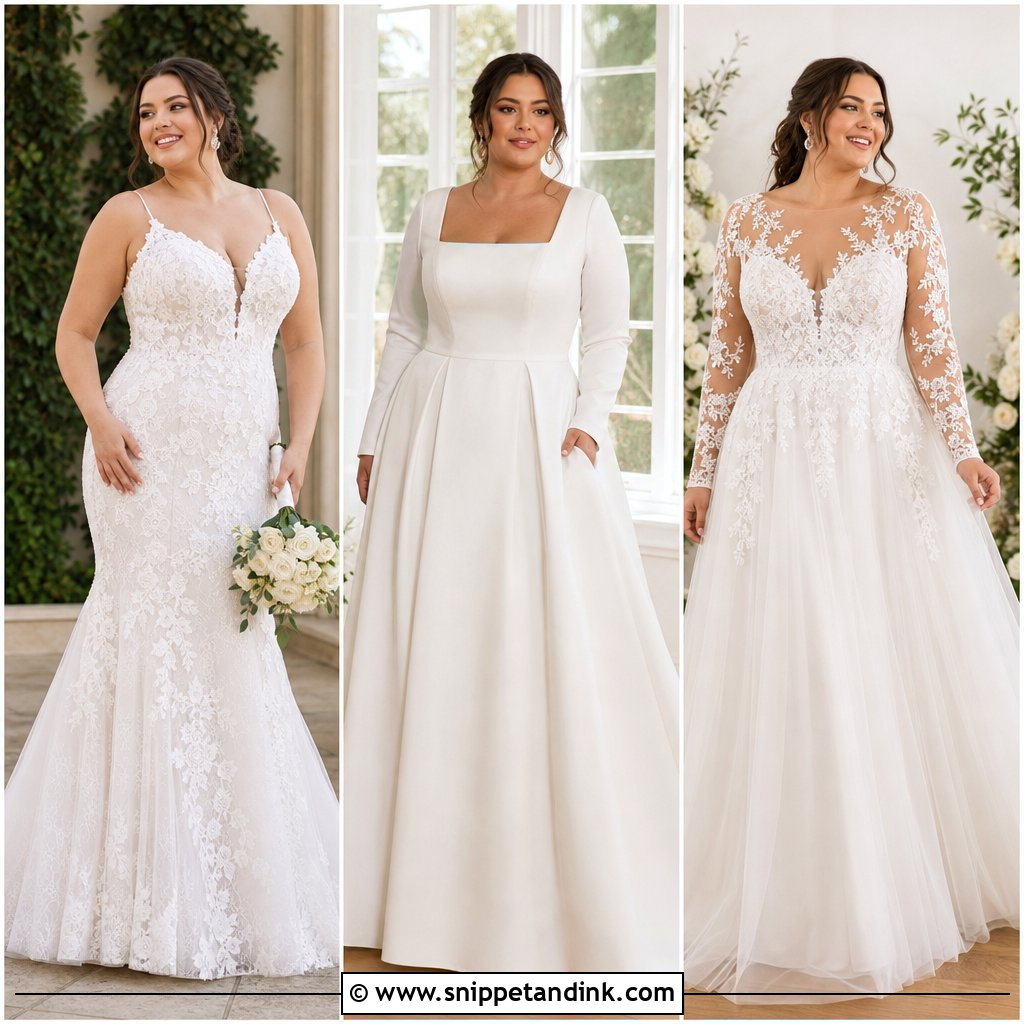
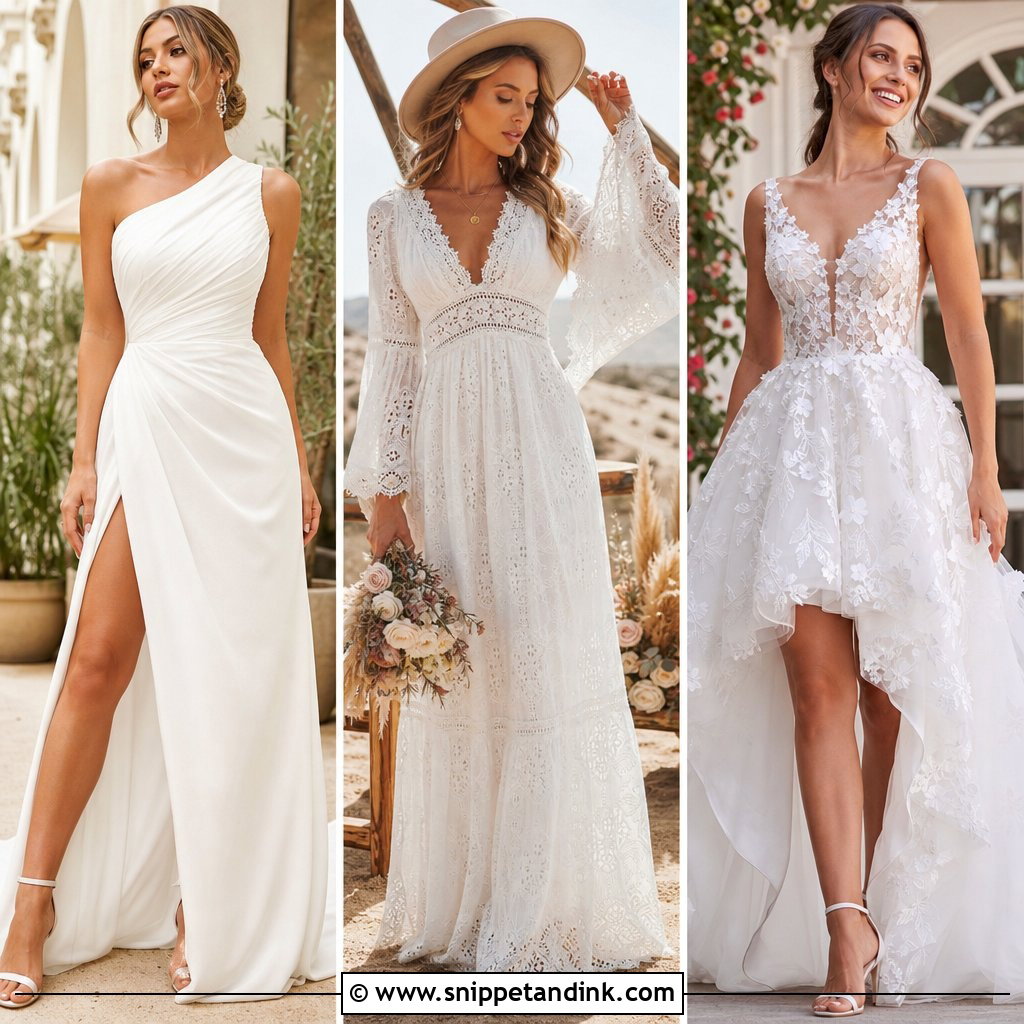
Fitted lace sleeves give coverage and texture together. An A-line or lightly fitted shape keeps all that lace from looking heavy, and a defined waist keeps the outline clear. An illusion neckline looks delicate; a fully lined bodice is more traditional. Closed pumps, small earrings and a plain tulle veil leave the lace in charge. Sleeve fit is where these dresses fail. I have brides bend their elbows, hold a bouquet at waist height and raise both arms; if the shoulders pull, the sleeves need easing. Open-pattern lace breathes better at warm venues.
16. Corset Wedding Dress
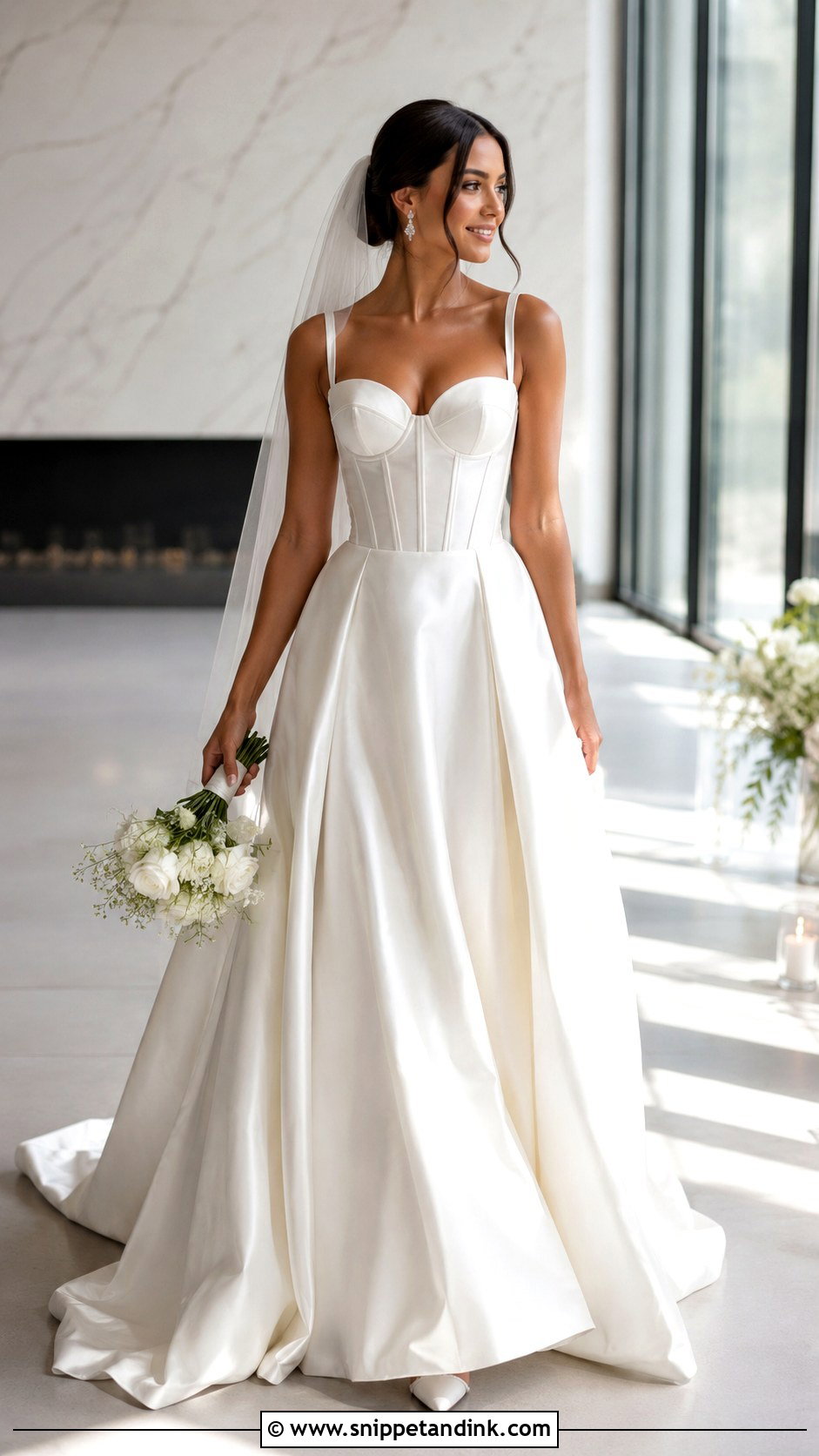
A corset dress shapes the bodice with visible structure: exposed boning, a lace-up back, or a long-line bodice extending toward the hips. Draped fabric, lace or a flowing skirt often softens the effect. Pair it with an A-line satin skirt, pointed pumps, small crystal earrings and a plain veil. A corset should feel secure and never painful. You should be able to breathe deeply and sit through dinner. Cups, boning and waist placement are specialist alterations. If visible corsetry feels too bold, look for the same internal structure hidden under smooth satin or embroidered lace.
17. Draped Satin Wedding Dress
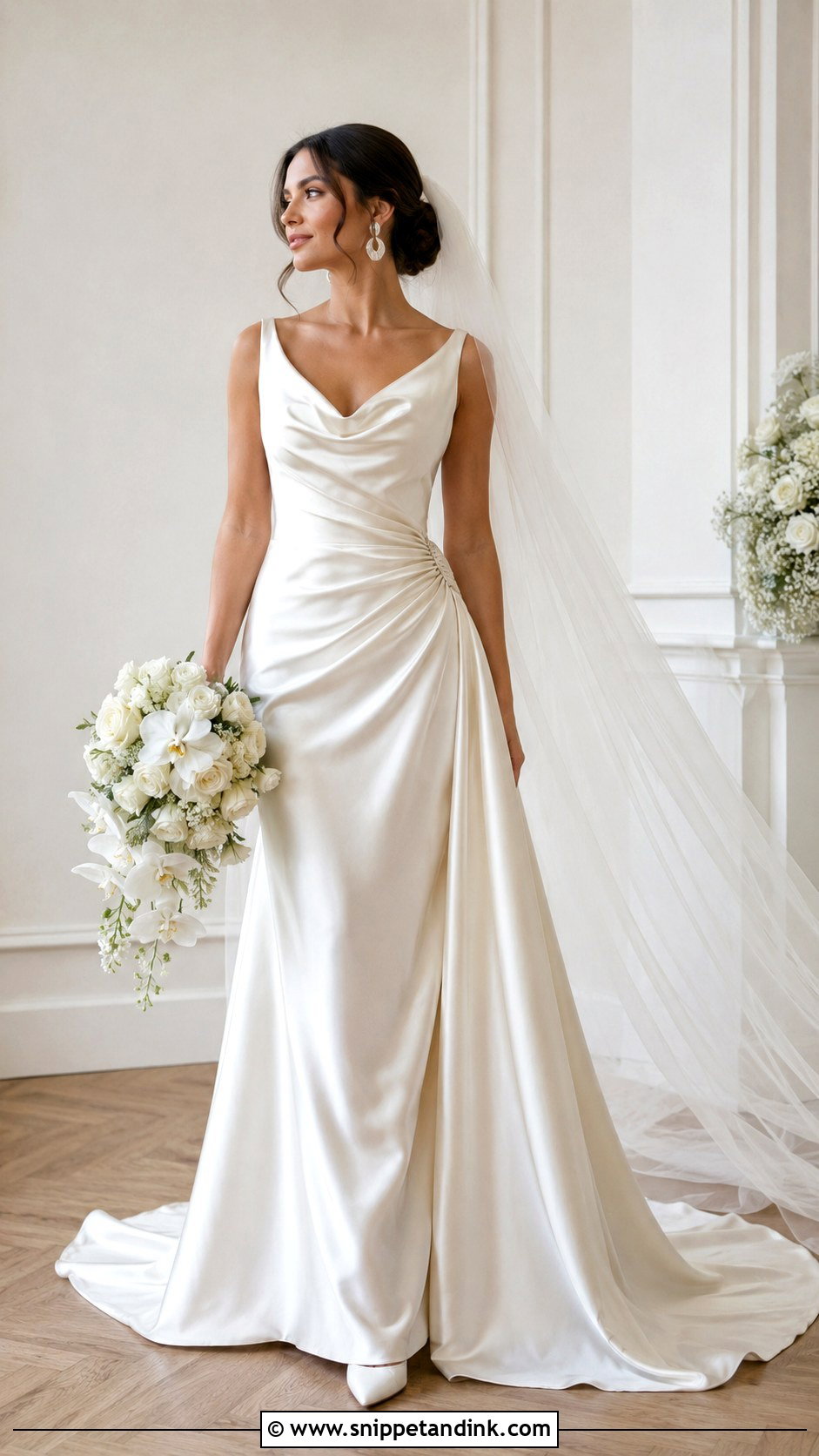
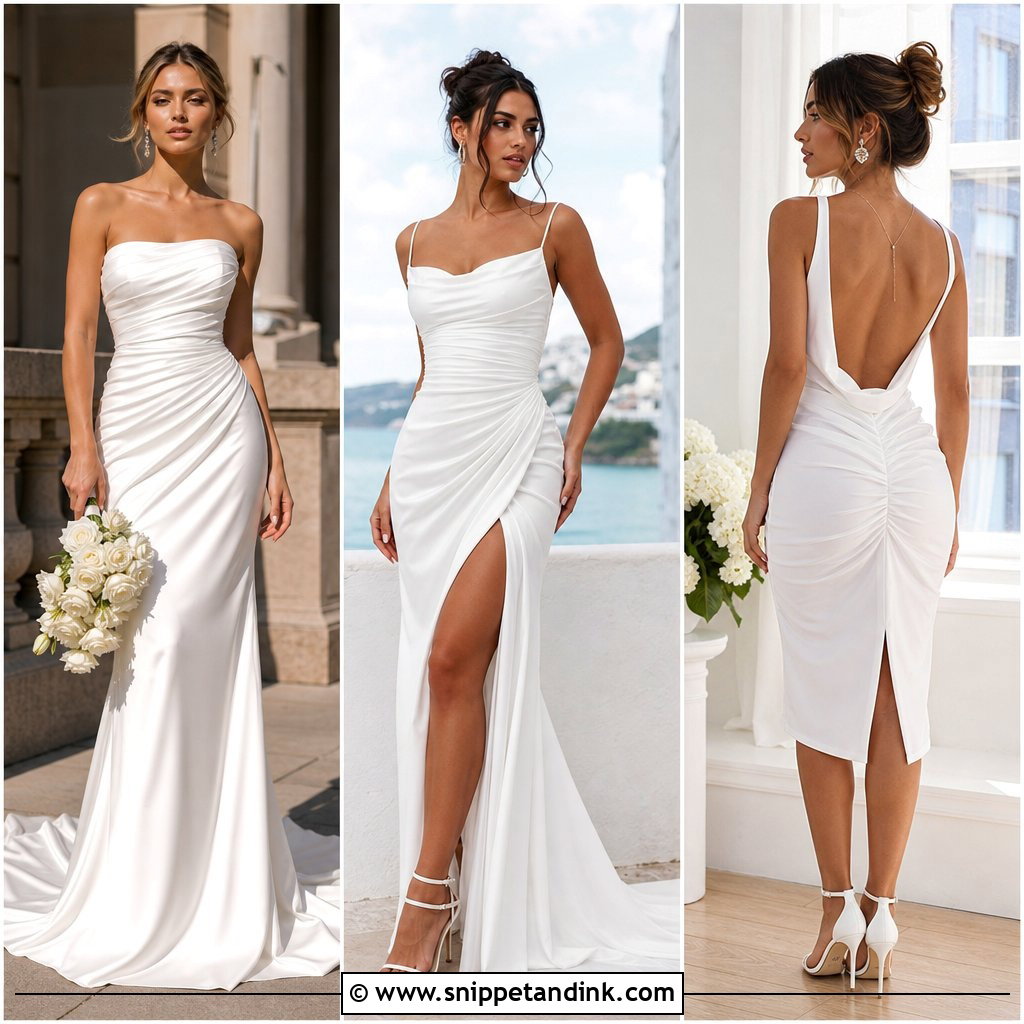
Folded satin catches light across its ridges, giving depth without embellishment. Ruching can run diagonally across the waist, gather at one hip or soften the neckline into a cowl. Where the drape gathers is where the eye goes, so place it where you want definition. Clean pumps, sculptural earrings, a smooth veil and a structured bouquet finish it. Satin shows any rough seam, so the finishing must be neat. A side drape can lead into a slit or flowing train; sit and climb stairs in it to check the slit doesn’t open further than you’d like.
18. Tea Length Wedding Dress
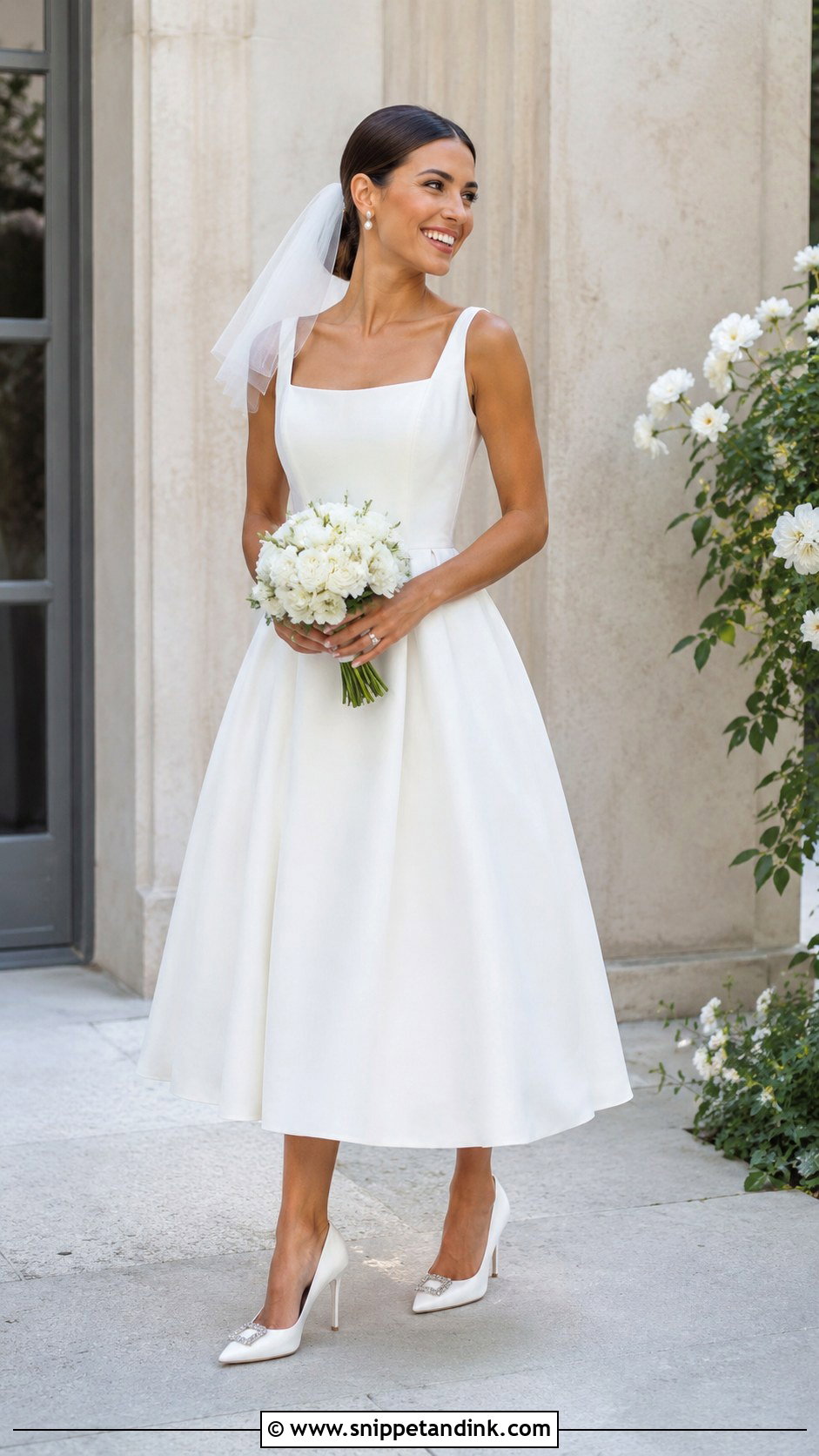
Tea length falls between knee and ankle and shows the shoes. It suits courthouse ceremonies, garden parties, receptions and brides who simply prefer a lighter dress. A fitted bodice with a flared skirt is classic; a clean midi sheath is modern. More brides are wearing a midi as a second look for the evening, too. Elegant pumps, a birdcage or short tulle veil and a compact bouquet complete it. The hem placement is everything because it’s so visible. Try a few lengths in your actual shoes; the narrowest part of the calf is usually the most balanced point.
19. High Neck Wedding Dress
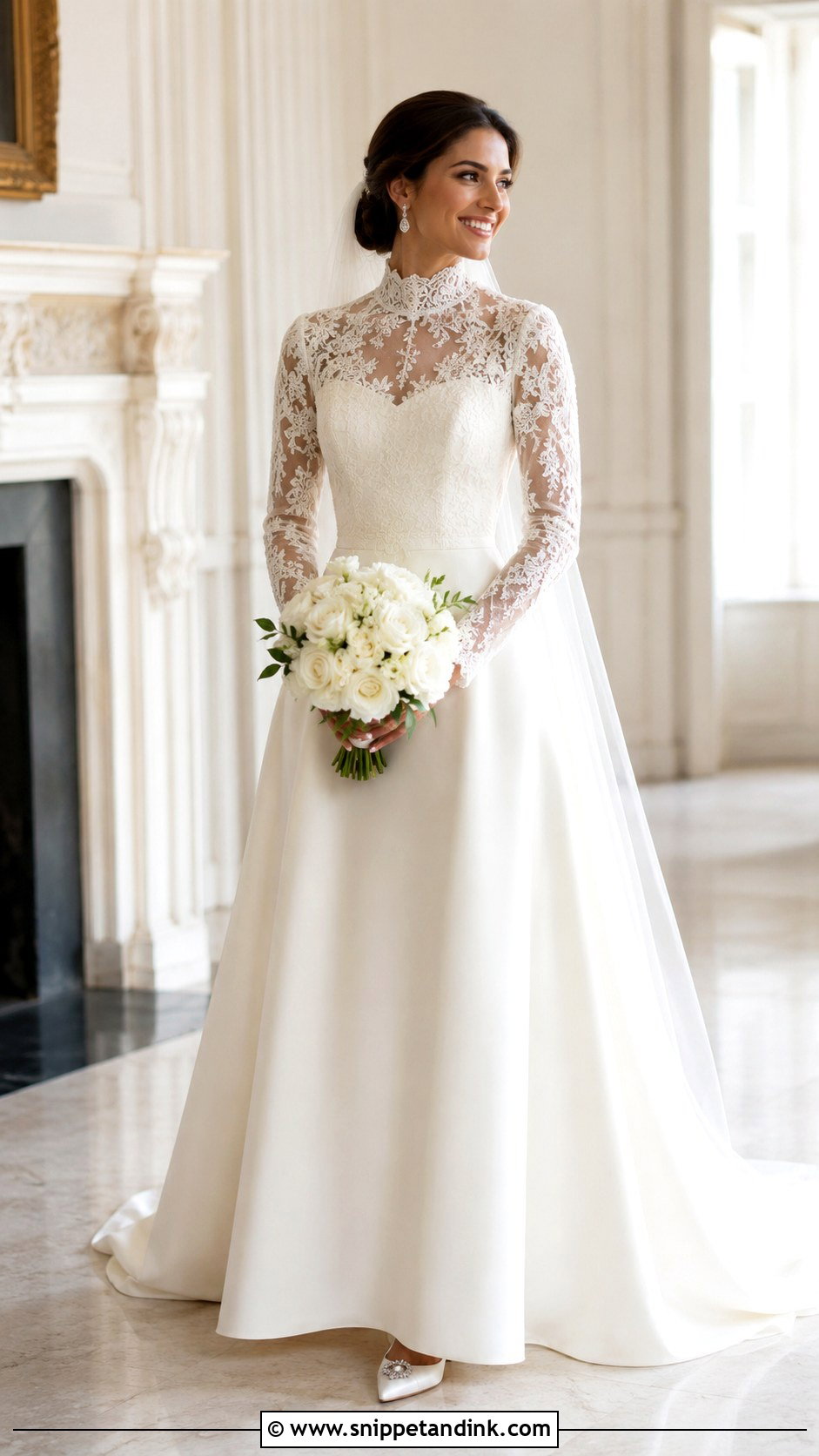
A high neck frames the face and covers the upper body without making the dress heavy. Soft lace reads romantic; smooth crepe or satin reads modern. Balance a covered front with an open back, a fitted waist or a flowing skirt. Skip the necklace and wear earrings, pointed shoes and a veil beneath an updo. Turn your head fully both ways at the fitting. A collar that rubs or folds will bother you for hours, and a light lining behind lace edges reduces itching. An illusion high neck gives the same outline with a softer, less restrictive feel.
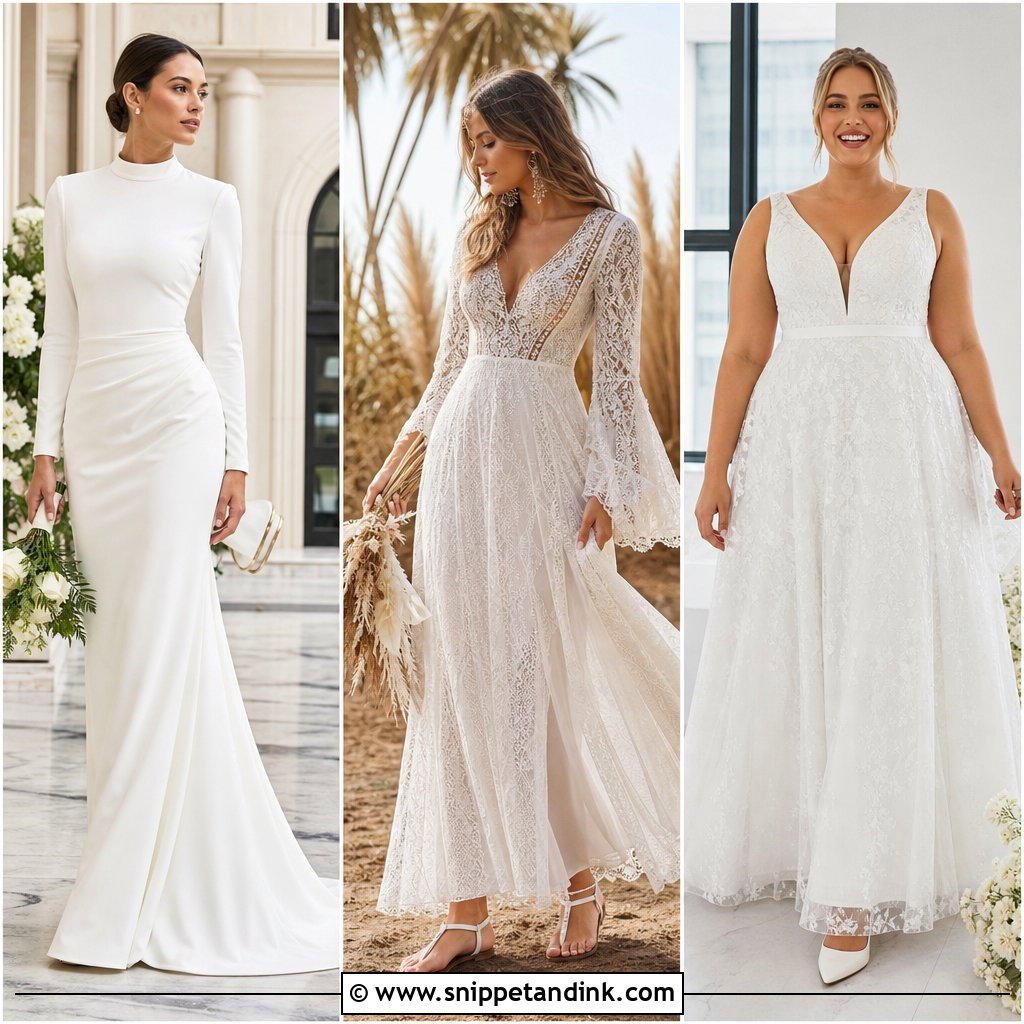
20. One Shoulder Wedding Dress
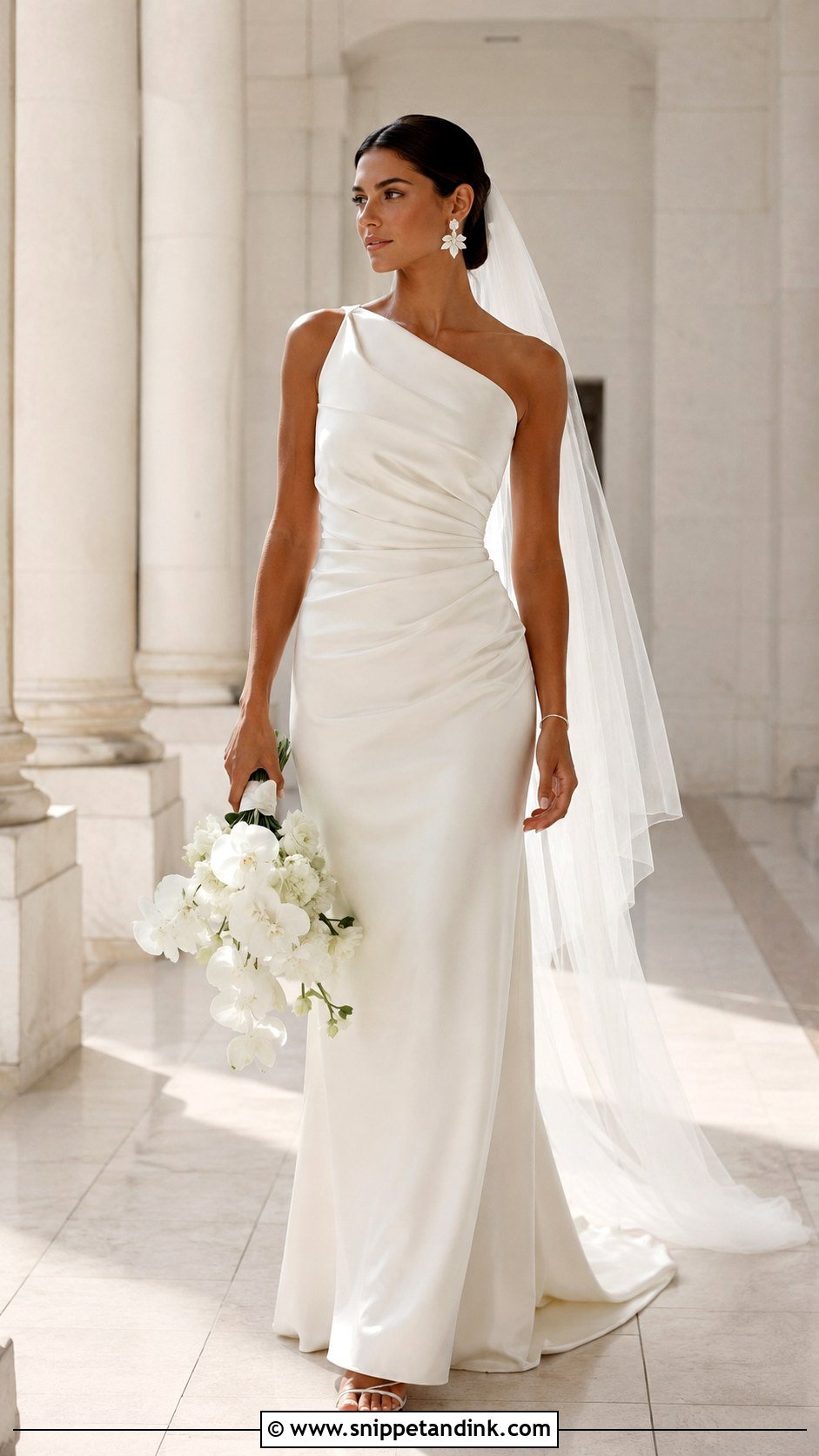
One shoulder uses asymmetry to create a strong focal point, and it suits a column, sheath or softly draped A-line. A wide strap supports more; a narrow strap looks delicate. Statement earrings, a sleek bracelet, simple heels and a veil attached low at the back keep it balanced. No necklace, since it fights the diagonal. The bare side needs internal support so it doesn’t slip as you move. Hold your bouquet at the fitting to make sure it doesn’t hide the shoulder line. Soft ruching at the waist can connect the asymmetric top to the skirt.
Three Fittings, Each With a Different Job
Alteration timelines vary by seamstress and how complex the dress is, but most gowns need around three fittings. Knowing what each one is for helps you bring the right things and ask the right questions.
- First fitting: the seamstress pins the main changes, such as taking in seams, shortening straps, marking the hem. Bring your exact shoes and underwear. This is the moment to mention anything you want added, like cups, straps or a bustle.
- Second fitting: check the changes on your body. Walk, sit, dance a few steps and raise your arms. Small adjustments are made now, and the bustle is usually fitted.
- Final fitting: the dress should be finished. Bring whoever will help you dress and bustle the train, so they can practise once while the seamstress watches.
Weight can shift in the run-up to a wedding, through stress or training. If yours changes noticeably between fittings, tell the seamstress rather than hoping it settles; a bodice taken in too early is easier to fix with notice than the week before.
So Which Silhouette Is Yours?
Forget fixed rules about body shape and start with how you want to move and how formal the day is. Narrow it to two or three silhouettes, then compare necklines, fabric, support and waist placement within them. Judge every dress with your shoes, veil, jewelry and underwear on, and walk, sit, turn and raise your arms before deciding. Good alterations can matter as much as the original design. The dress to keep is the one that makes you stand a little taller and stop thinking about what you’re wearing.
You'll Like These Ideas:


Leave a Reply