
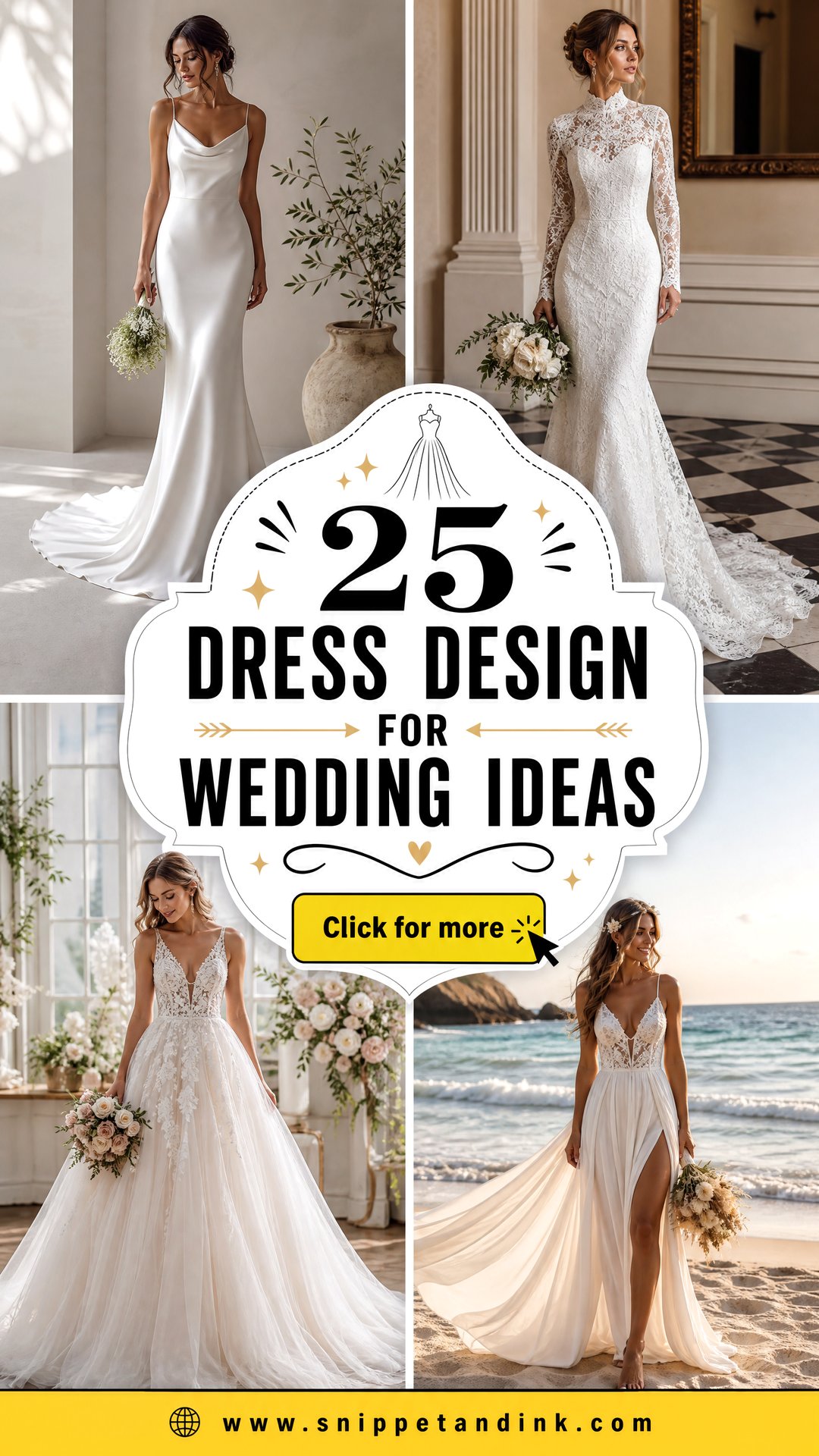
The most useful thing I can tell a bride at the start is that there’s no single wedding dress any more. Brides now wear ball gowns, slips, lace, tea length, minis, long sleeves, beach-ready chiffon and a second dress for the party, sometimes two of those in one day. Designers are leaning toward clean tailoring, lace texture, sculpted shapes, basque waists and drop waists, styles that should still look right in twenty years. What matters is fit for your venue, the way you move and the feel you want in photos. Below are 25 dress designs, each styled as a full outfit, so you can picture the whole look rather than just the hanger.
Off the Rack, Sample Sale or Made to Order?
How you buy a wedding dress affects your timeline as much as the design does, and brides often don’t realize there’s more than one route.
Made to order
The standard route at most bridal shops. You try a sample, the gown is produced in your size, then altered. It gives you the widest choice and a fresh dress, but production can take several months, so it needs the longest runway.
Off the rack and sample sales
You buy the actual dress in the shop, often at a discount, and take it home that day. Samples have been tried on many times, so inspect the hem, zip and beading closely and budget for cleaning and alterations. It’s a good route if you have a short engagement or a fixed budget and a common size.
Ready-to-wear and non-bridal
Many of the slips, minis, courthouse dresses and reception looks below are sold as ready-to-wear. They arrive quickly and usually need fewer fittings. The trade-off is less internal structure, so try them on with the exact underwear and shoes you’ll wear.
1. Lace Wedding Dress With Veil
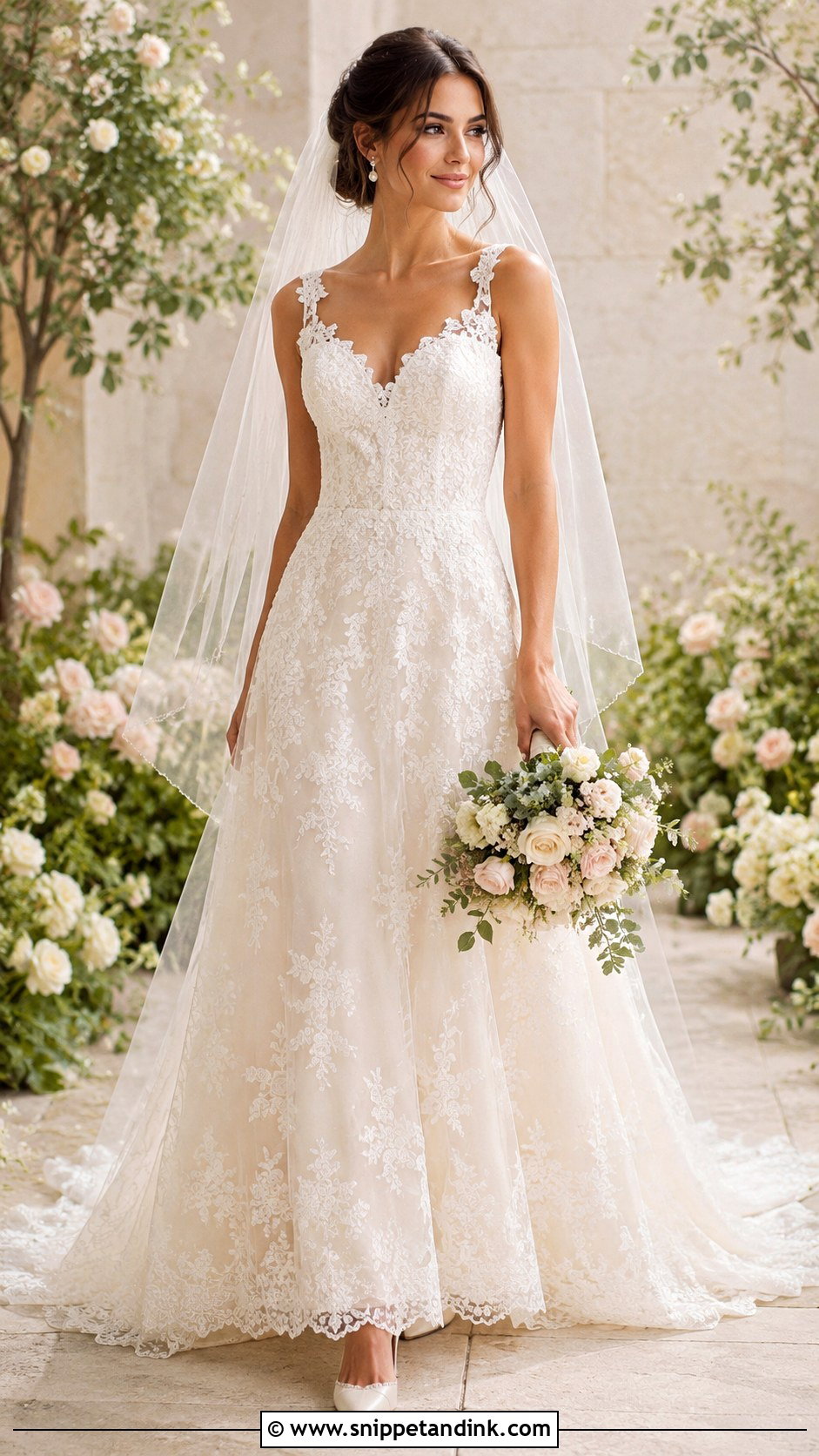
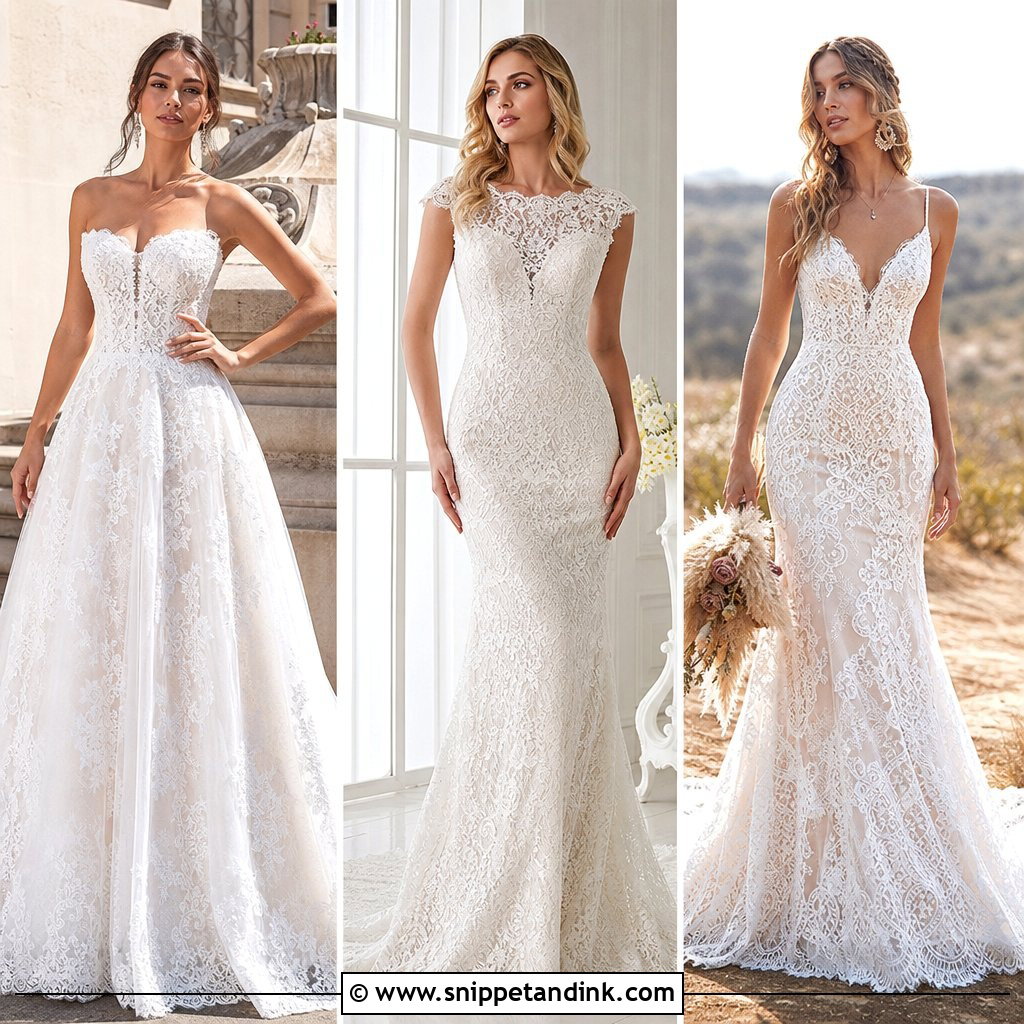
Lace with a veil is the look most people picture when they hear the word bride, and it holds up because it needs so little else. Allover lace suits a classic church; floral lace fits a garden; fine Chantilly is the softest. A fitted bodice over an A-line skirt defines the waist and lets you walk freely. My balancing rule is simple. Busy lace gets a plain veil, and a plainer gown can take a lace-edged one. Pearl earrings, soft waves and ivory or white heels complete it, matched to the lace’s shade rather than guessed.
2. Satin Ball Gown Wedding Dress
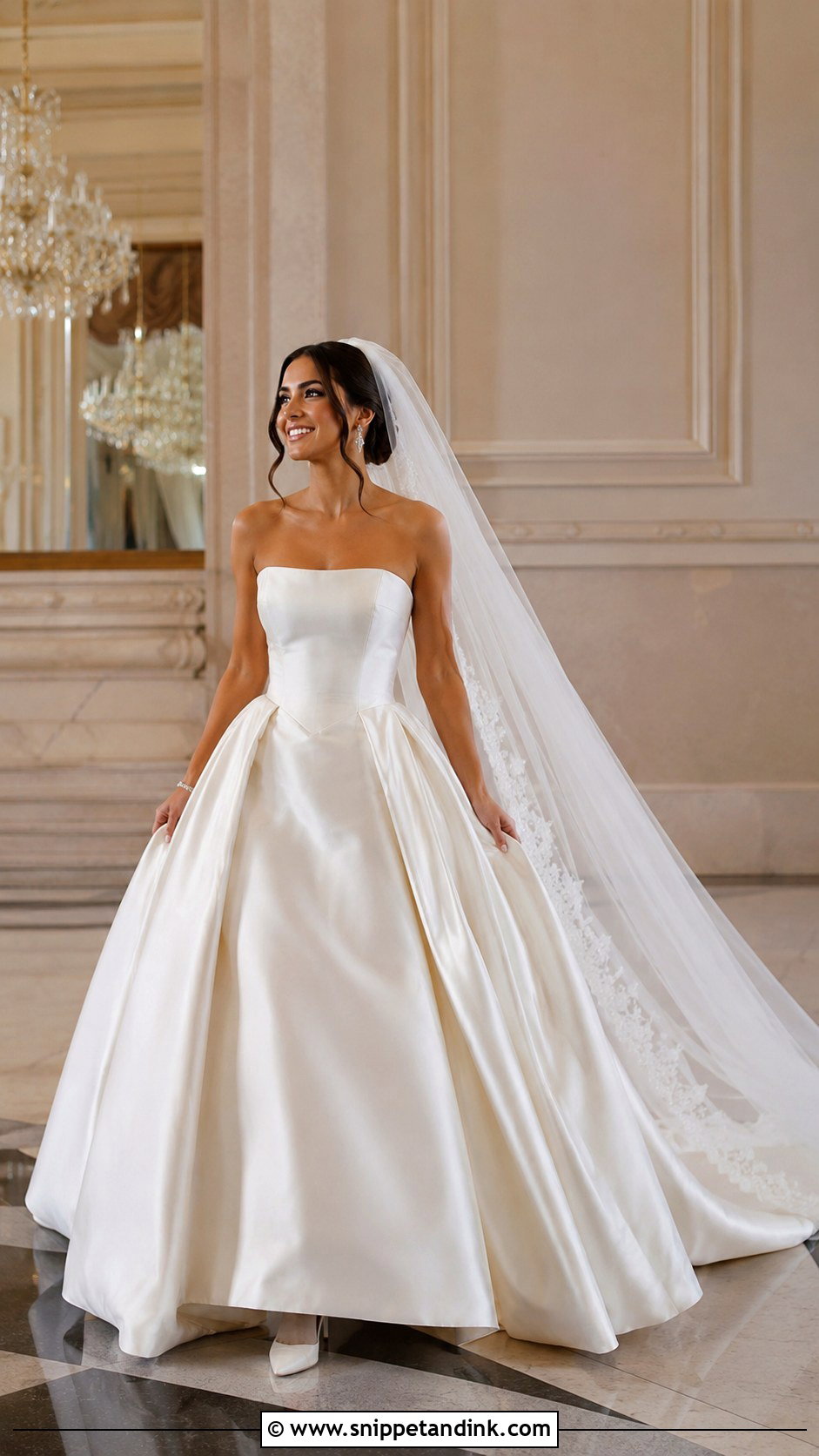
Satin and a full skirt make the most formal entrance on this list. The fabric gives structure, and the skirt fills a large room the way nothing else does. Strapless, scoop or off-shoulder bodices all work. Keep the seams clean and the embellishment minimal, because the weight of the satin is already plenty and decoration on top can make the whole gown look heavy. A cathedral veil, crystal drops and pointed satin pumps finish it for ballrooms, estates and evening ceremonies.
3. Off Shoulder Mermaid Wedding Dress
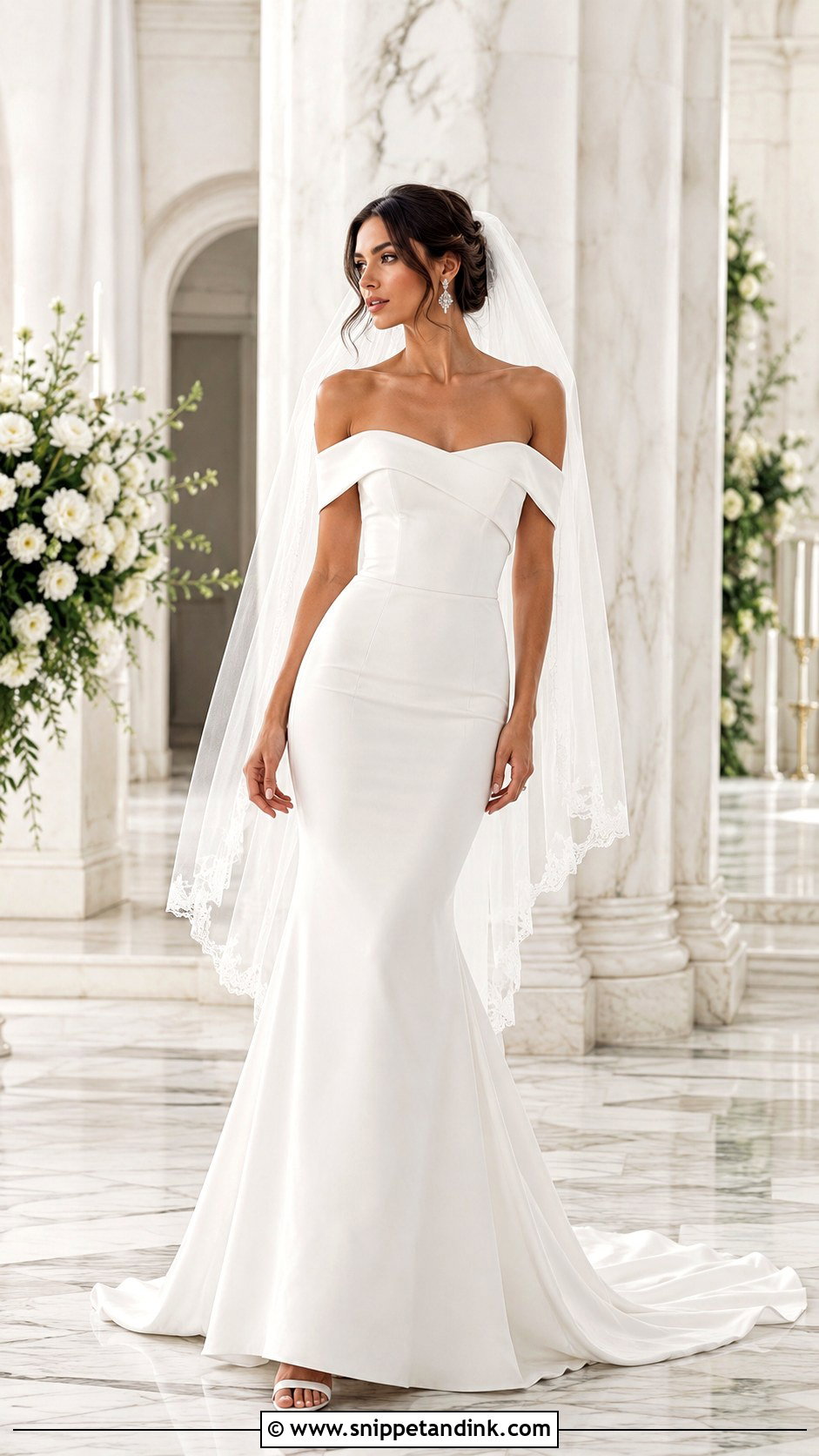
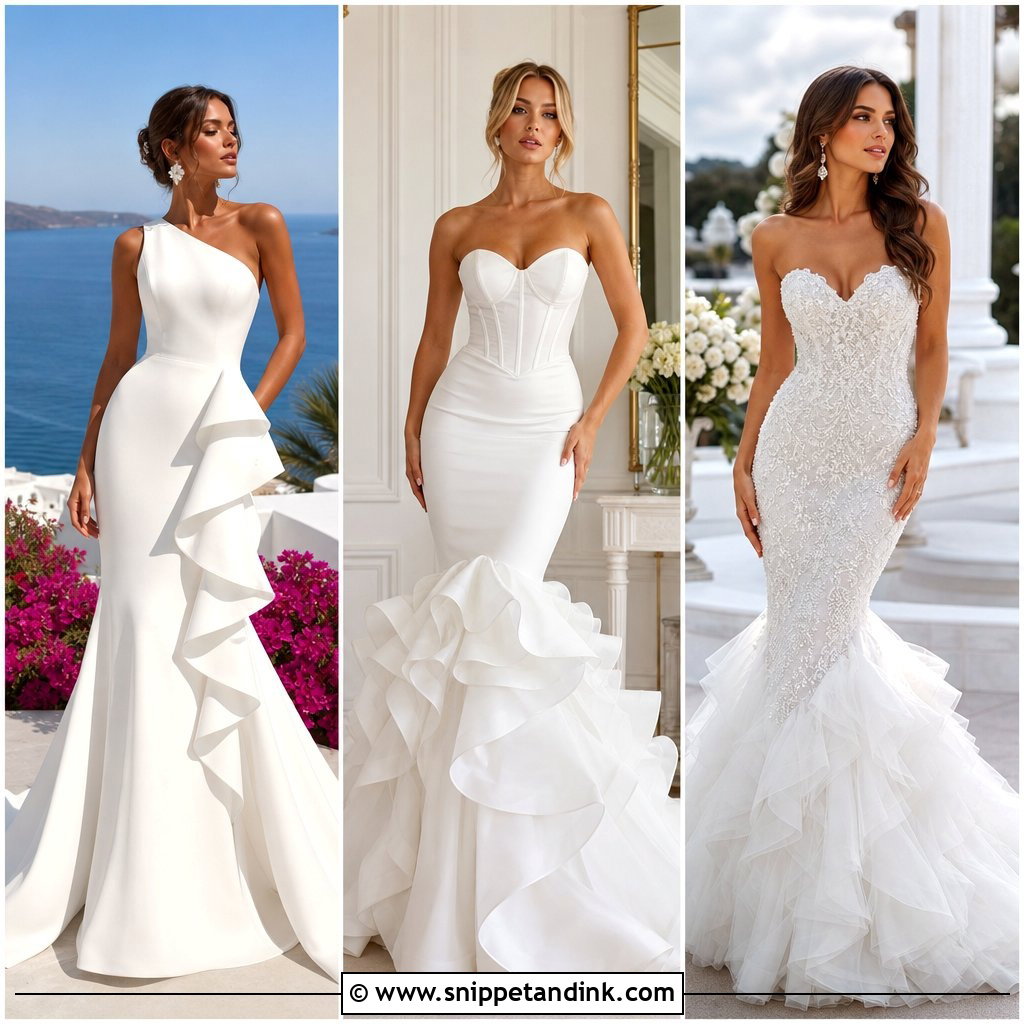
Off the shoulder on a mermaid shape is a confident combination. The neckline frames the collarbone, and the body of the dress follows the waist, hips and thighs before flaring near the knee. Crepe, lace, satin and mikado all suit it. I’d steer most brides toward stretch crepe here; a stiff mermaid makes it hard to climb steps or sit at dinner. A sleek low bun, statement earrings and simple heels keep attention on the line. For versatility, a fingertip veil or a detachable overskirt changes the look between ceremony and reception.
4. Minimal Slip Wedding Dress
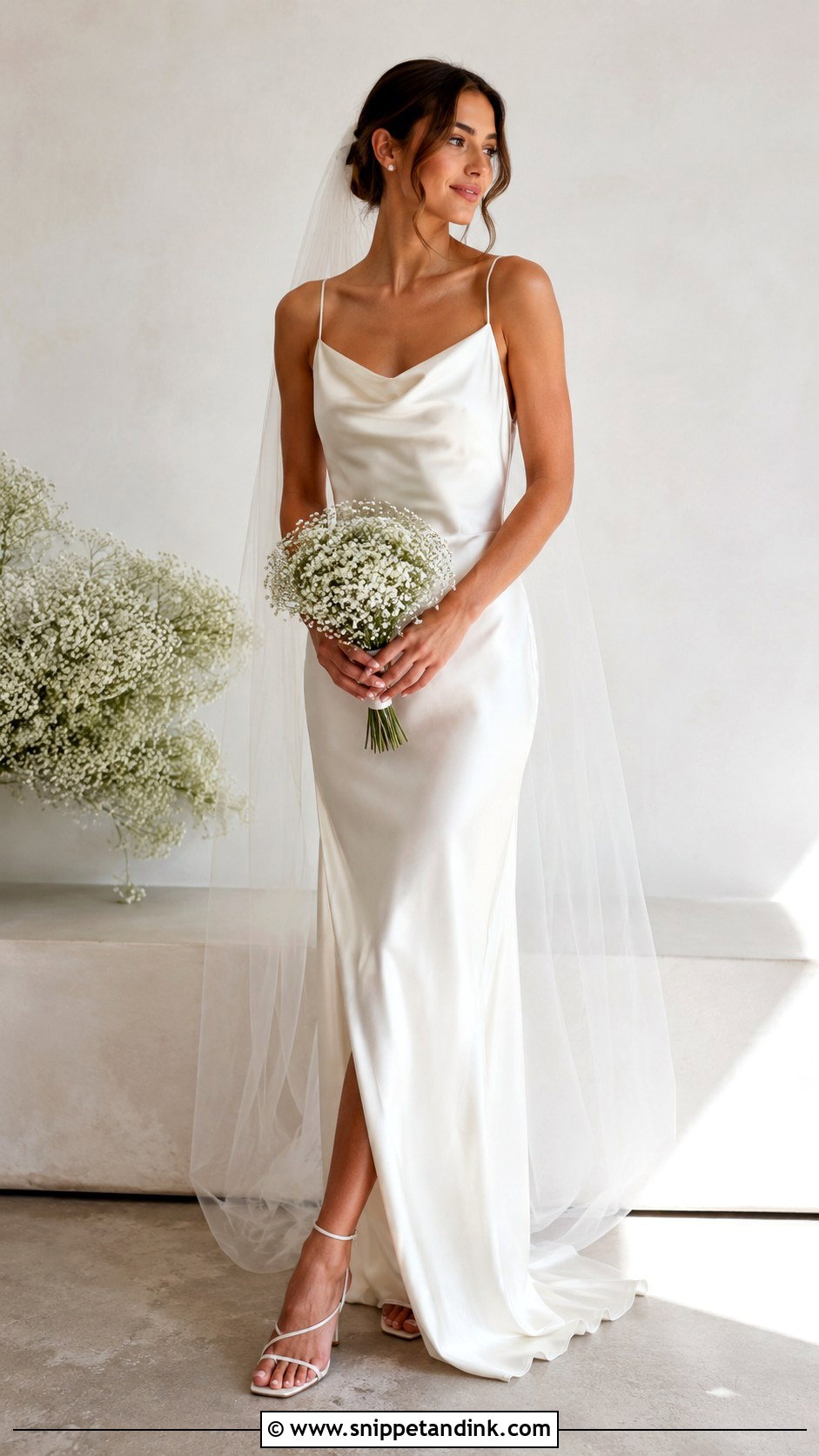
A slip dress is quiet: soft satin or silk, a slim column and fine straps. It suits intimate weddings, courthouse ceremonies and destinations. Because there’s nothing to distract the eye, fit is everything, and so is what’s underneath. Satin cut on the bias shows every line, so plan your underwear before the first fitting. Strappy heels, a smooth bun, pearl studs and a light veil keep it graceful, and a sheer cape, tailored blazer or lace bolero adds coverage for a cool evening.
5. Long Sleeve Crepe Wedding Dress
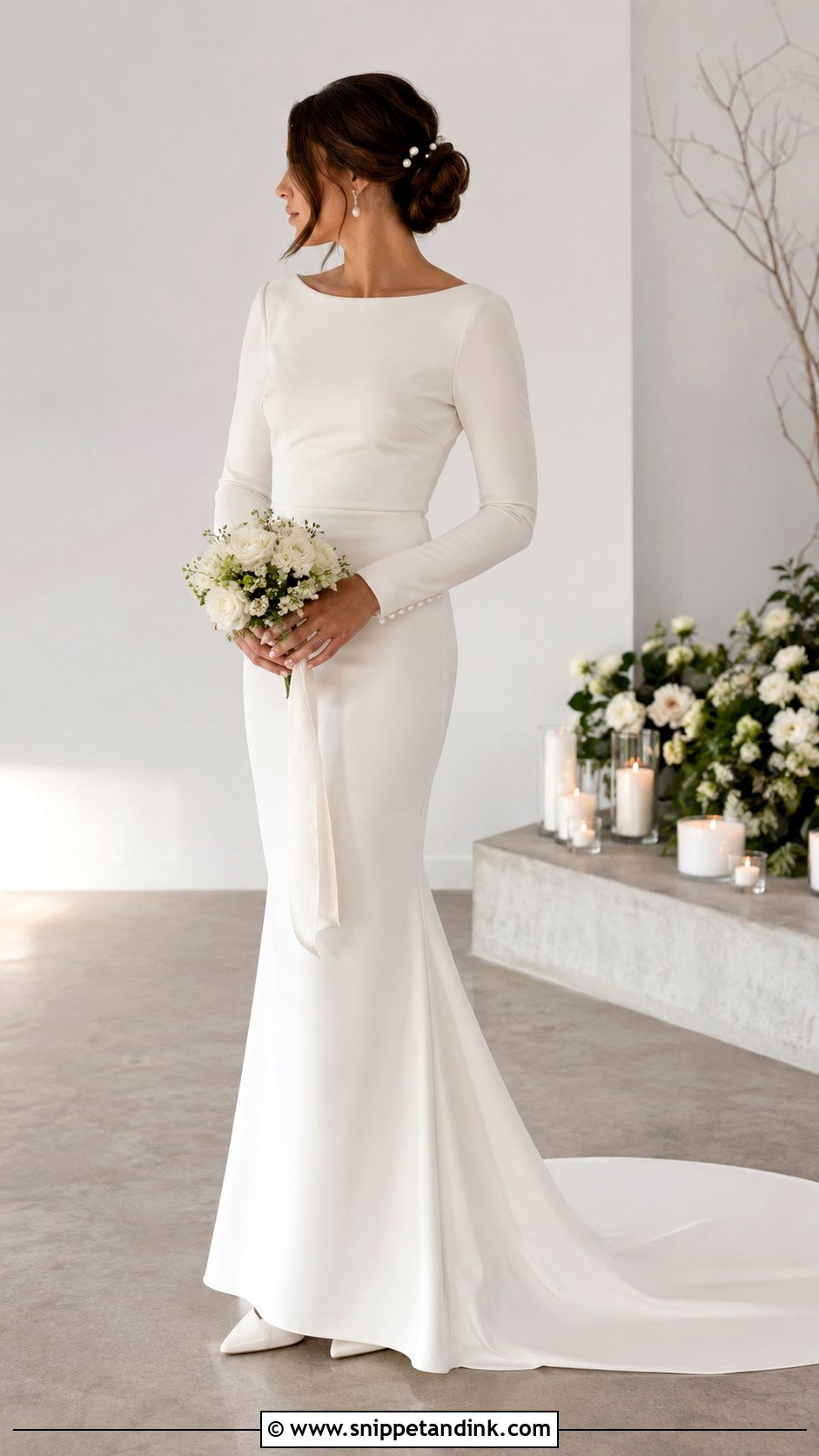
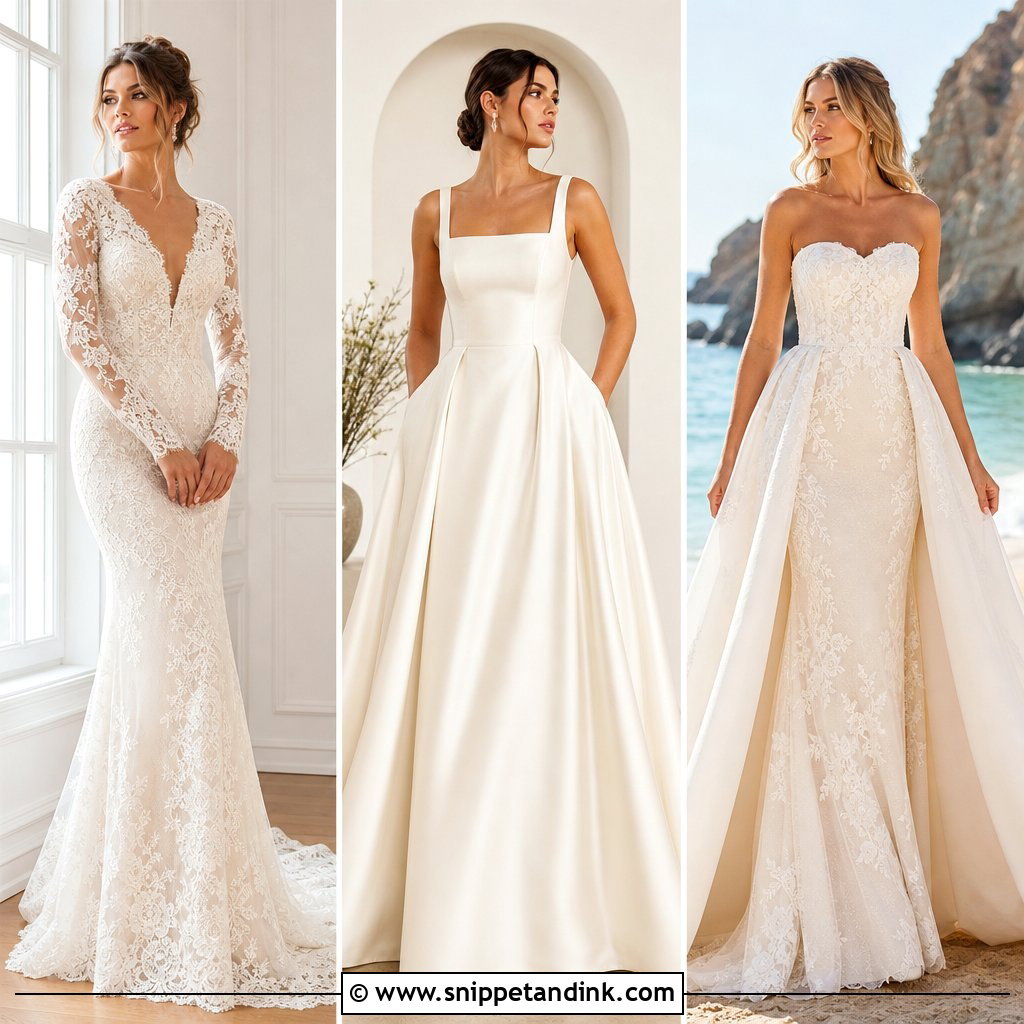
Crepe with long sleeves gives coverage and still looks modern. The fabric has a slight weight that falls cleanly over the body. A boat neck, square neck or deep V all work. The fitting point I always raise is sleeve length with your arms bent; fitted crepe sleeves can ride up when you hold a bouquet or reach for a glass. A low chignon, pearl hairpins and pointed heels finish it. For a little drama, look for a low back or buttons running down the train. It suits autumn, winter and formal indoor weddings.
6. Floral Embroidered Wedding Dress
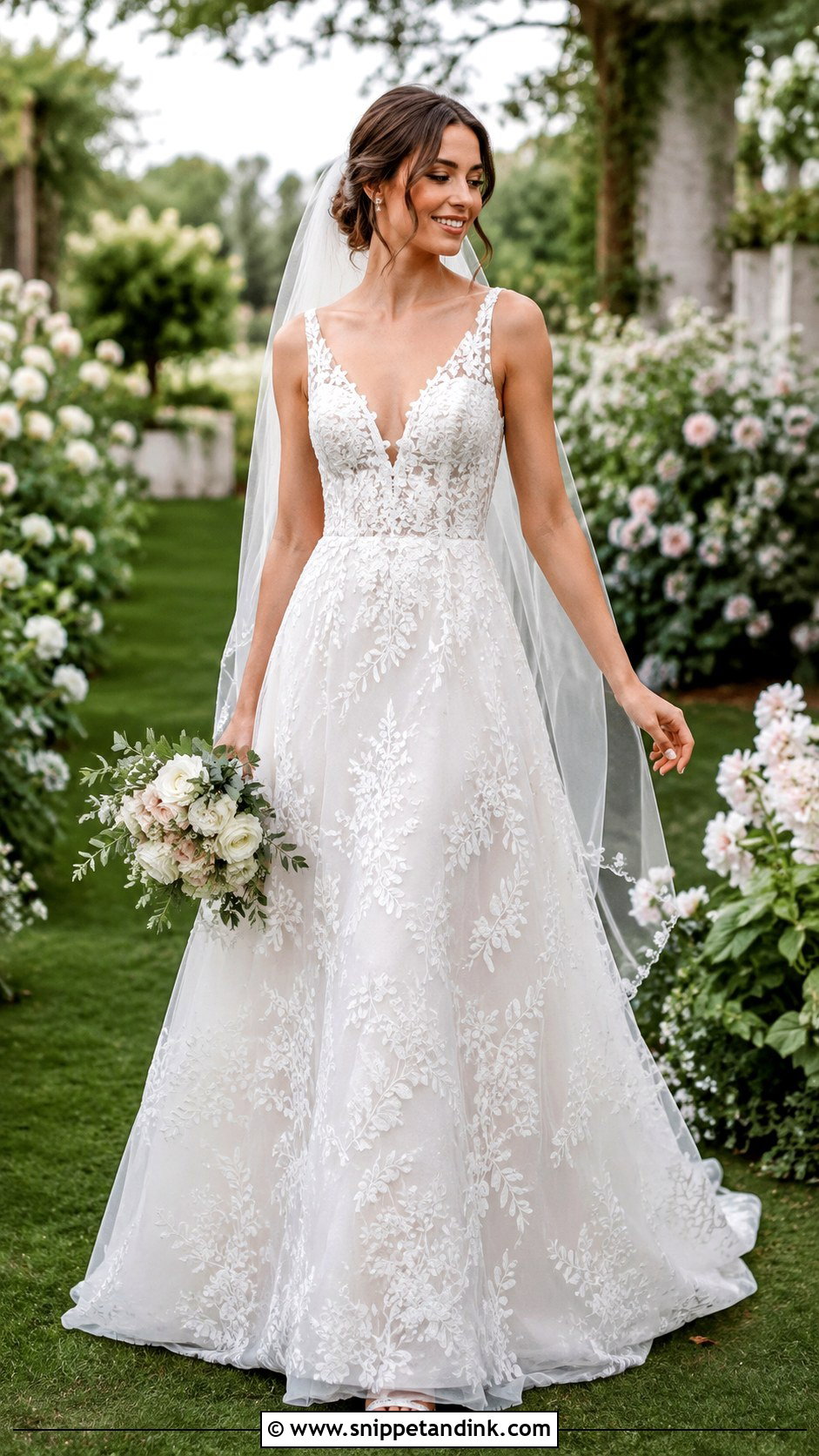
Embroidery gives texture without the noise of beading. It can be white on white, a soft pastel or dimensional with small appliqués. Look at the reverse of the fabric if the shop lets you, because neat backing and secured thread ends mean it won’t pull or unravel during a long day. An A-line or fit-and-flare keeps it wearable. A plain veil, soft curls, delicate earrings and barely-there heels suit it. If you want something personal, ask whether the motif can echo your bouquet or the season.
7. Drop Waist Wedding Dress
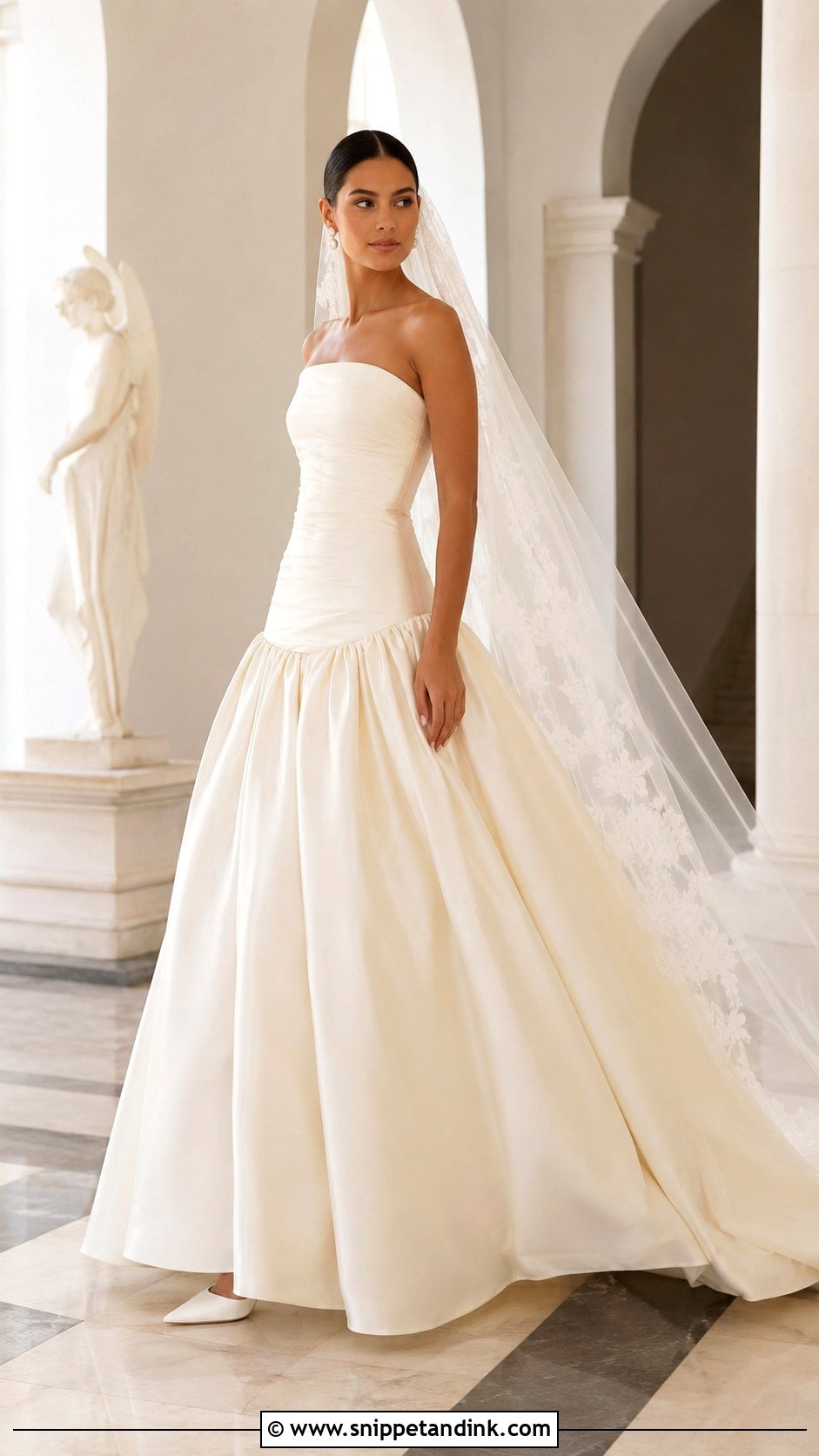
The waist sits lower than natural, which lengthens the torso and gives a sculpted, fashion-led line. It looks most striking in satin, taffeta, or structured mikado, with a full skirt, soft draping or a corset-style bodice. Height changes how it reads. On petite brides I keep the drop soft so the legs don’t look short; taller brides can carry a deeper, more dramatic version. Clean jewelry, a long veil and classic heels keep it balanced.
8. Basque Waist Wedding Dress
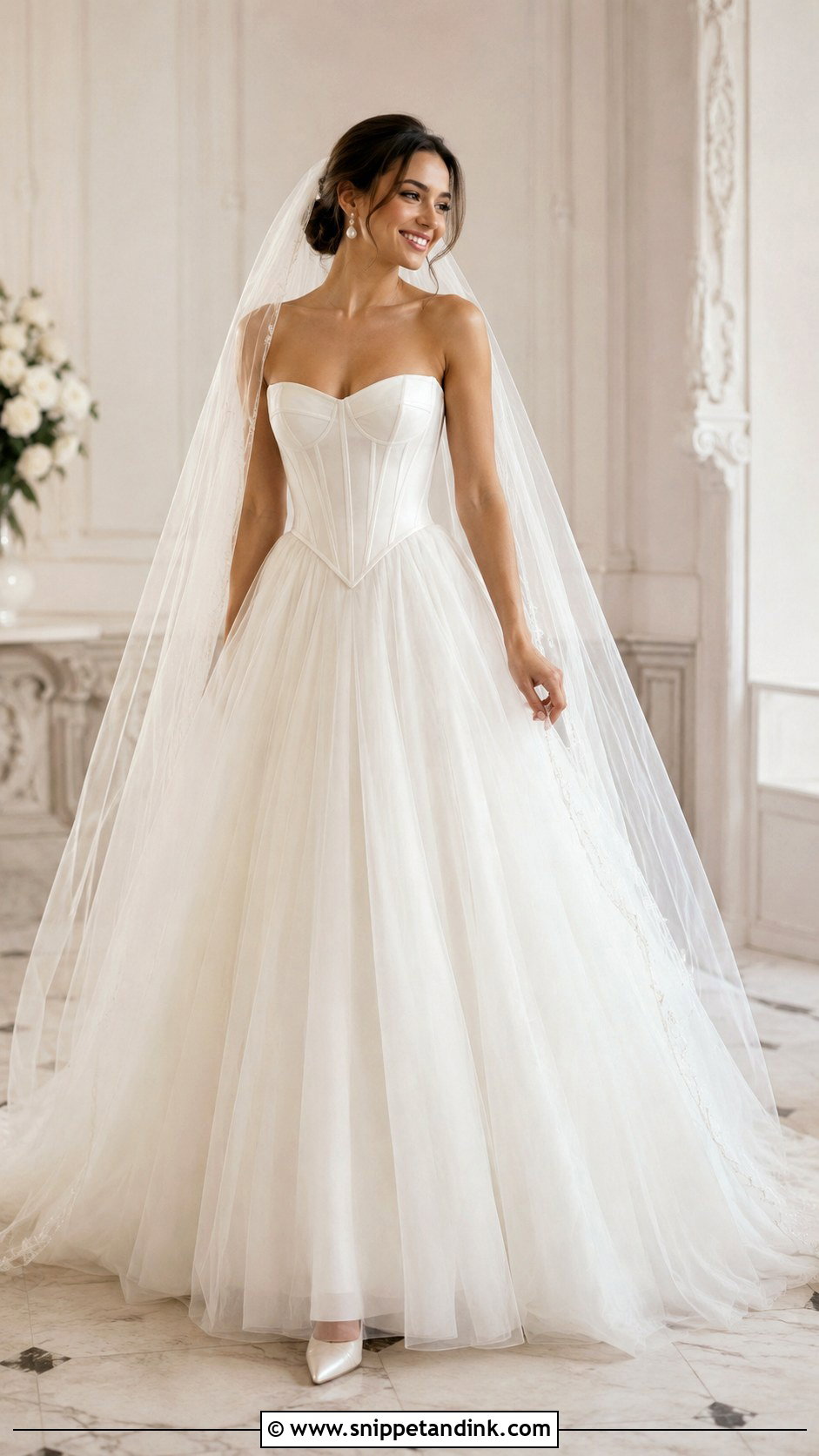
The waistline dips to a point at the center, which sculpts the body and gives a vintage note without looking dated. A full skirt, a corset bodice and a soft neckline suit it. The point needs to lie flat when you sit, so test it in a chair at your fitting. Satin looks regal, lace softer, tulle lighter. Pair it with a chapel veil, pearl earrings and elegant pumps for the ceremony.
9. Tea Length Wedding Dress
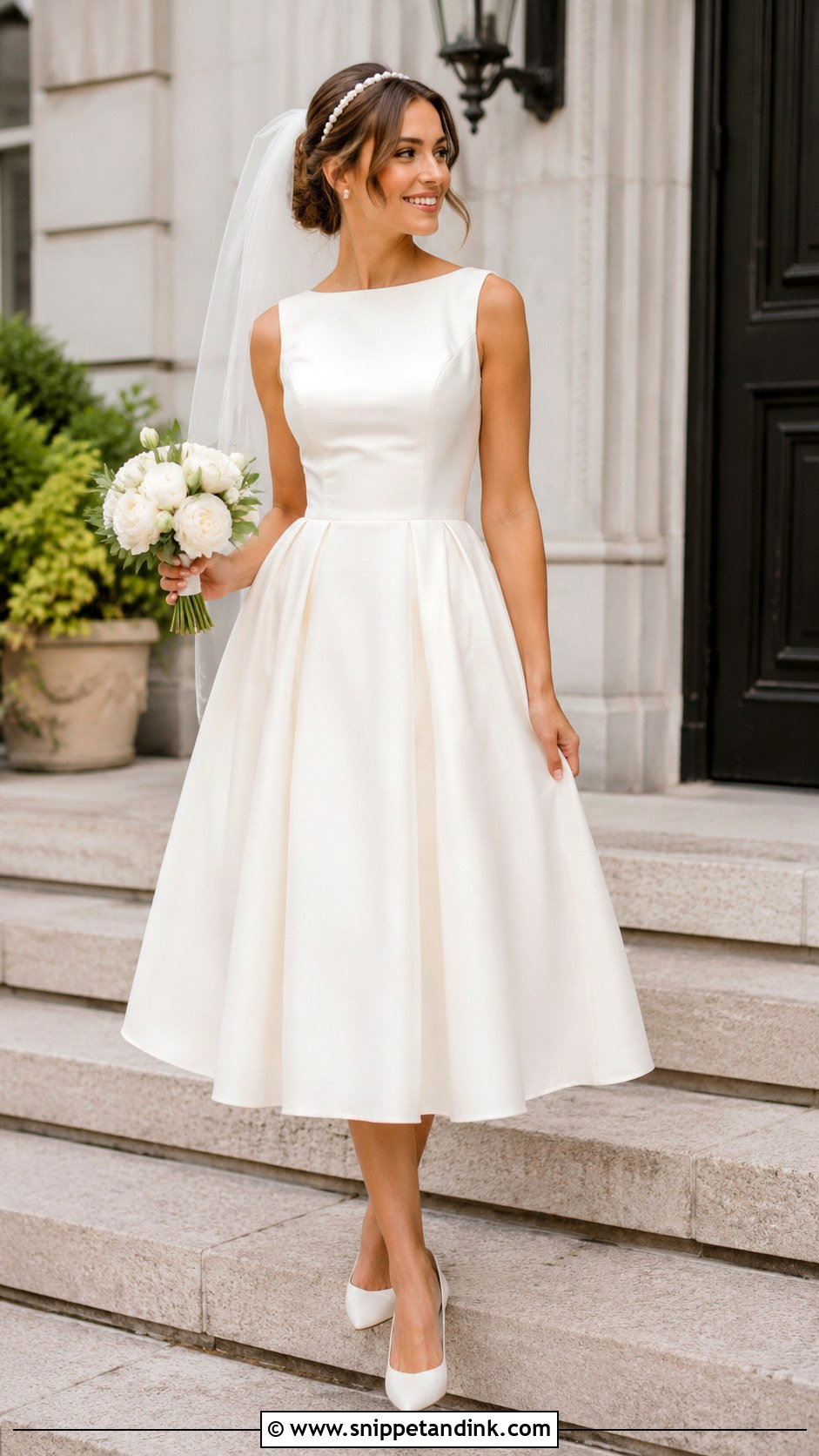
Tea length ends between knee and ankle, so you can walk, dance and show your shoes. It suits courthouse weddings, garden ceremonies and reception changes. The skirt needs enough volume to feel bridal, and the bodice should fit closely, or the dress drifts toward everyday party wear. Settle on your shoes before the hem is cut. Pointed pumps, slingbacks or embellished flats all work, with a short veil, a pearl headband or a structured bow to finish. It’s practical without looking it.
10. High Neck Wedding Dress
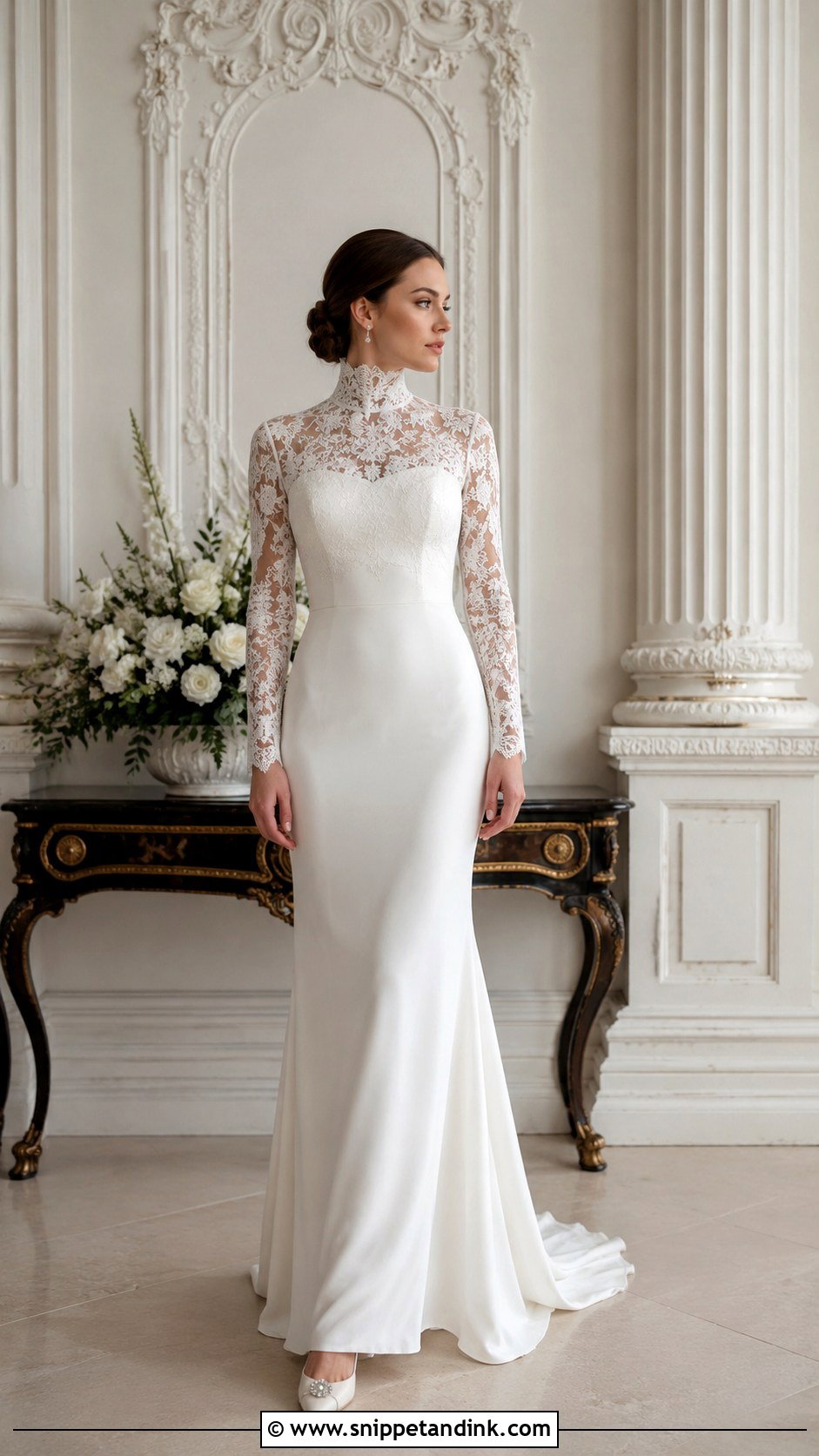
A high neck can look modern in crepe, romantic in lace or dramatic in satin. Over a fitted bodice with a flowing skirt it’s balanced; as a column it looks sleek and editorial. Keep the jewelry at the ears and wear your hair up so the neckline stays clear. If the collar feels tight when you turn your head, it needs adjusting, because it won’t feel looser after a few hours. Sheer lace or illusion fabric at the neck softens it. Cooler seasons and formal venues suit it best.
11. Square Neck Wedding Dress
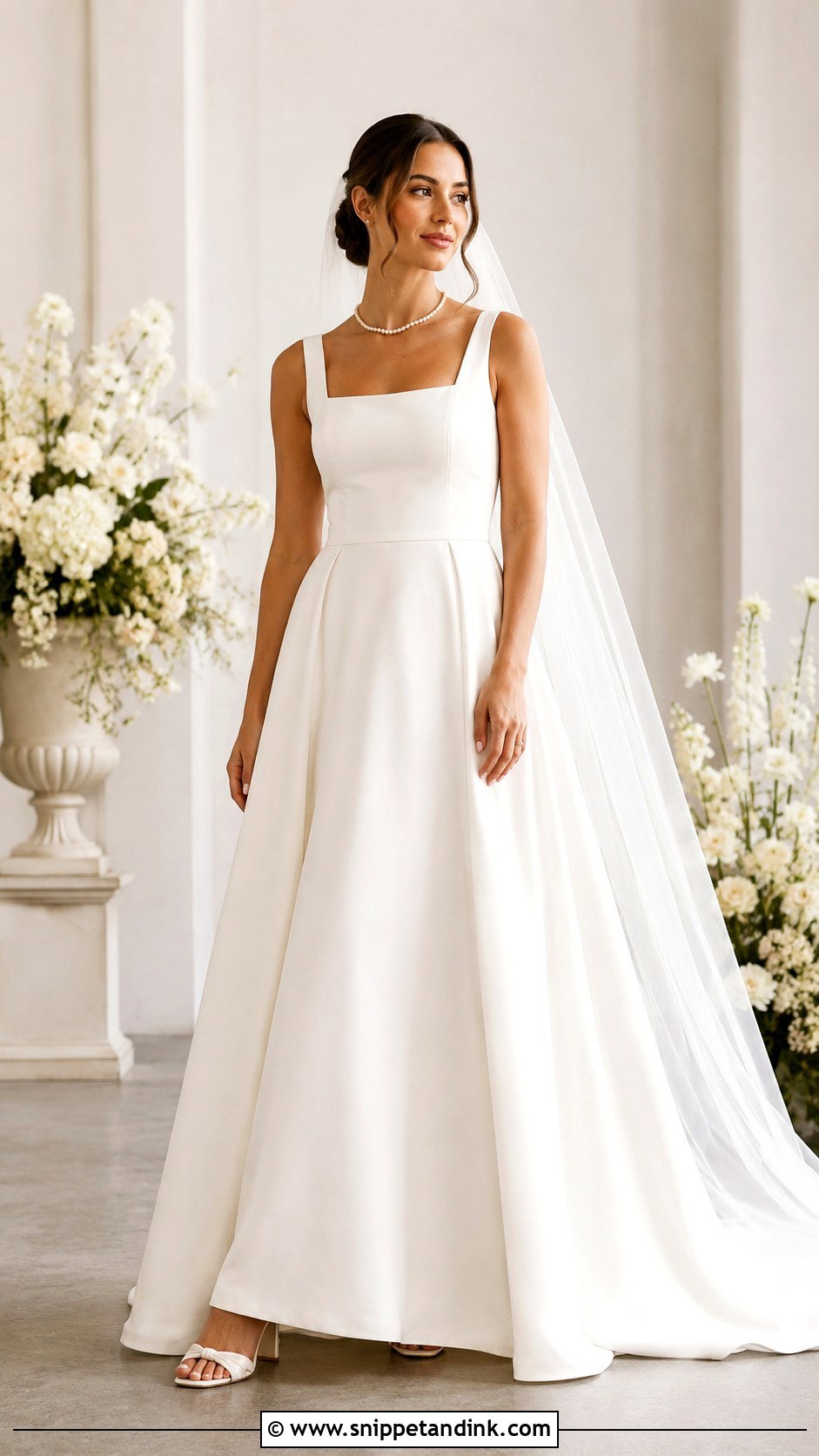
Straight lines across the chest open the neckline cleanly and work with straps, sleeves or a fitted bodice. It’s one of the easiest necklines to style. An A-line skirt keeps it soft, a fitted crepe one looks modern, and a ball gown brings drama. The corners are where fit shows first, so check that they lie flat as you move. A pearl necklace, low bun and satin heels suit it, and a clean veil won’t compete with its shape.
12. Corset Bodice Wedding Dress
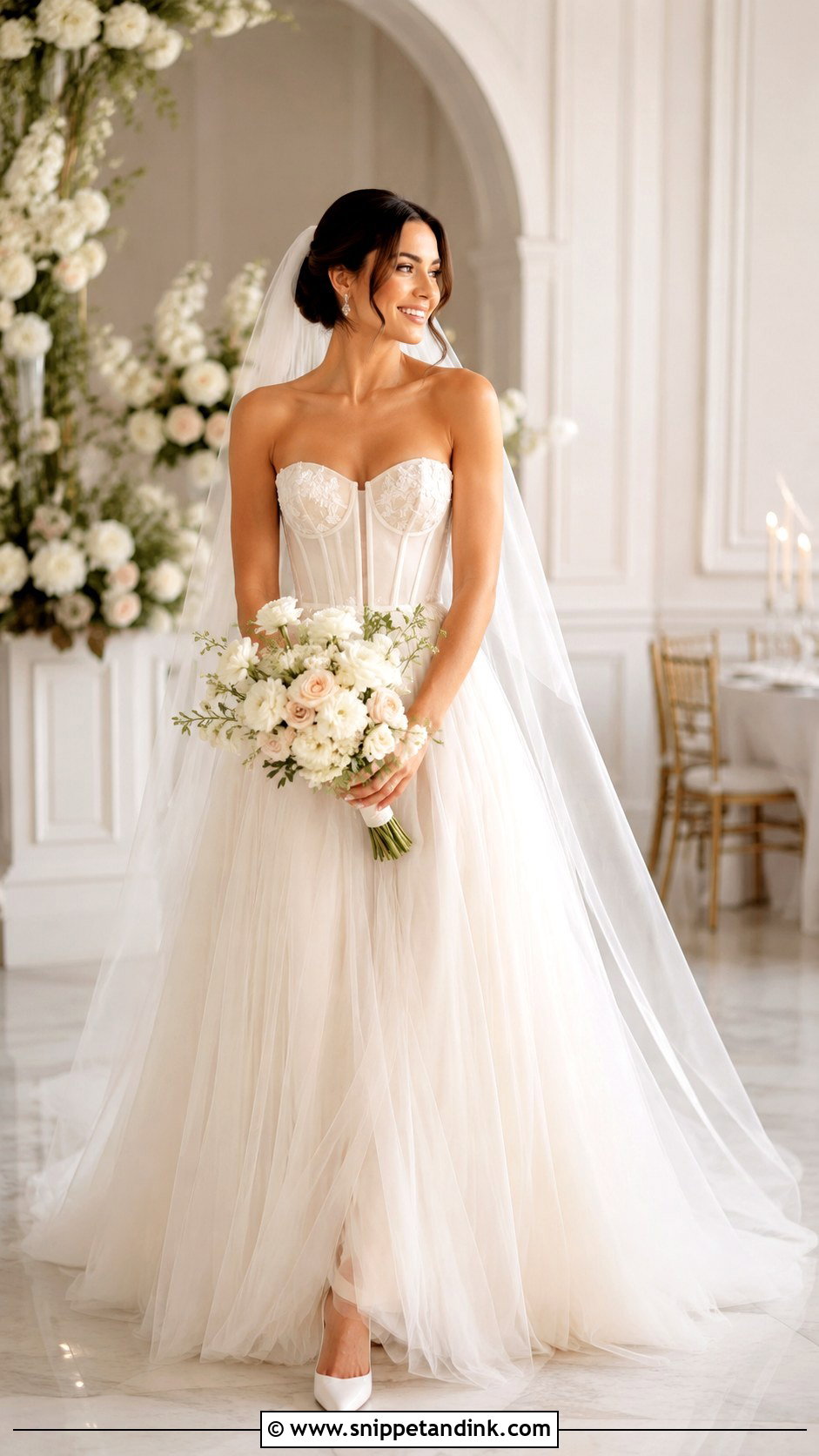
A corset bodice gives structure and support, and the skirt decides the mood. Lace corset over tulle feels soft; satin corset over a smooth A-line feels polished. Comfort comes from good construction, not tight lacing. A well-made bodice distributes the pressure along the boning so you can sit, eat and breathe. Match your shoes to the gown’s undertone, since ivory heels next to a white corset look off. Delicate earrings and a clean veil complete it, and the secure fit means no adjusting during the vows.
13. One Shoulder Wedding Dress
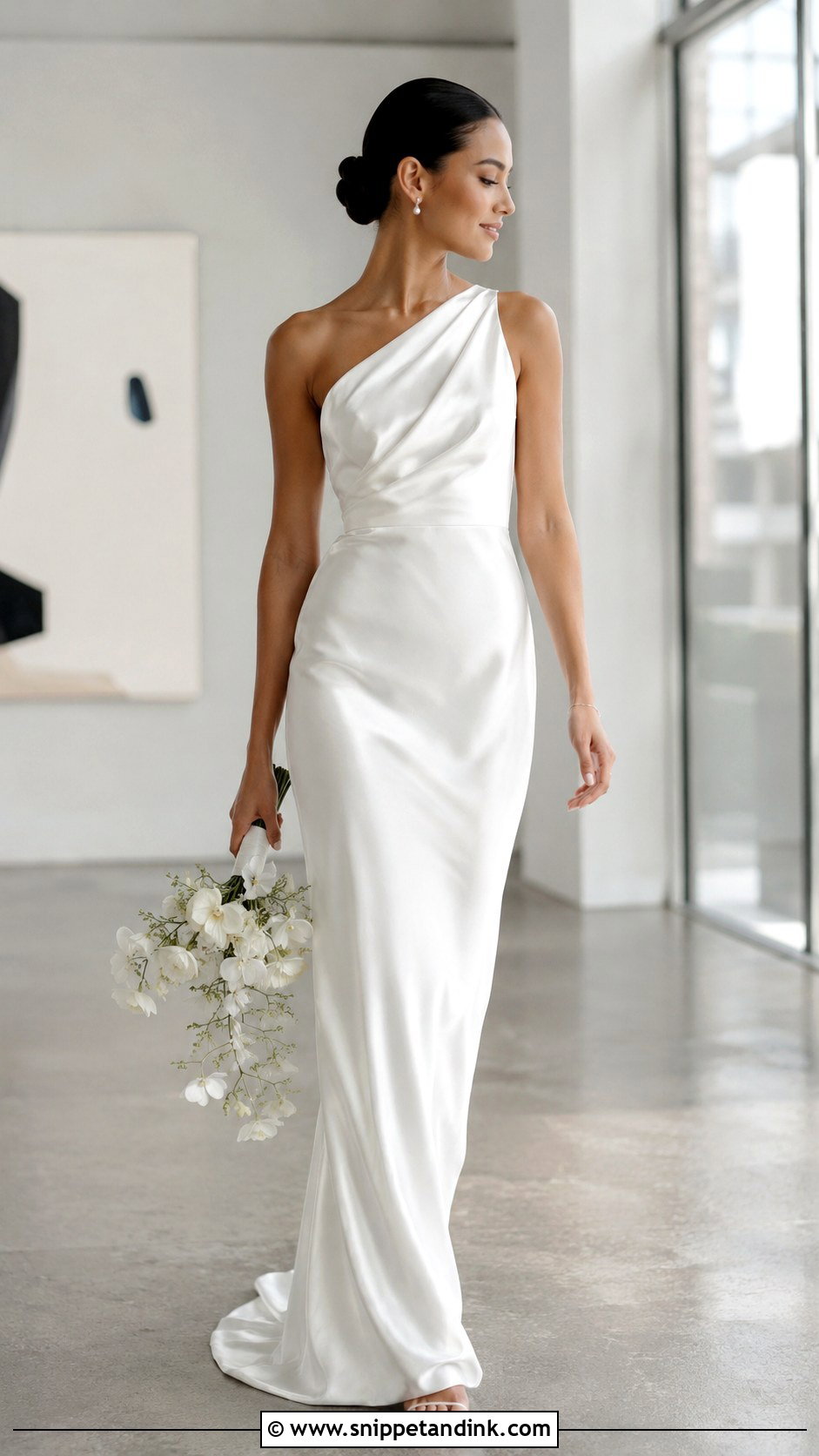
One bare shoulder gives a modern, formal look without needing decoration. Satin, crepe and draped chiffon all work. A column skirt suits a city wedding, while an A-line softens it. Wear one statement earring or simple studs, never a necklace. The asymmetry also changes how the bodice sits, so check in the mirror that it isn’t pulling diagonally across your chest. Strappy heels and smooth hair keep it balanced. Rooftops, museums and minimal reception spaces suit it.
14. Halter Neck Wedding Dress
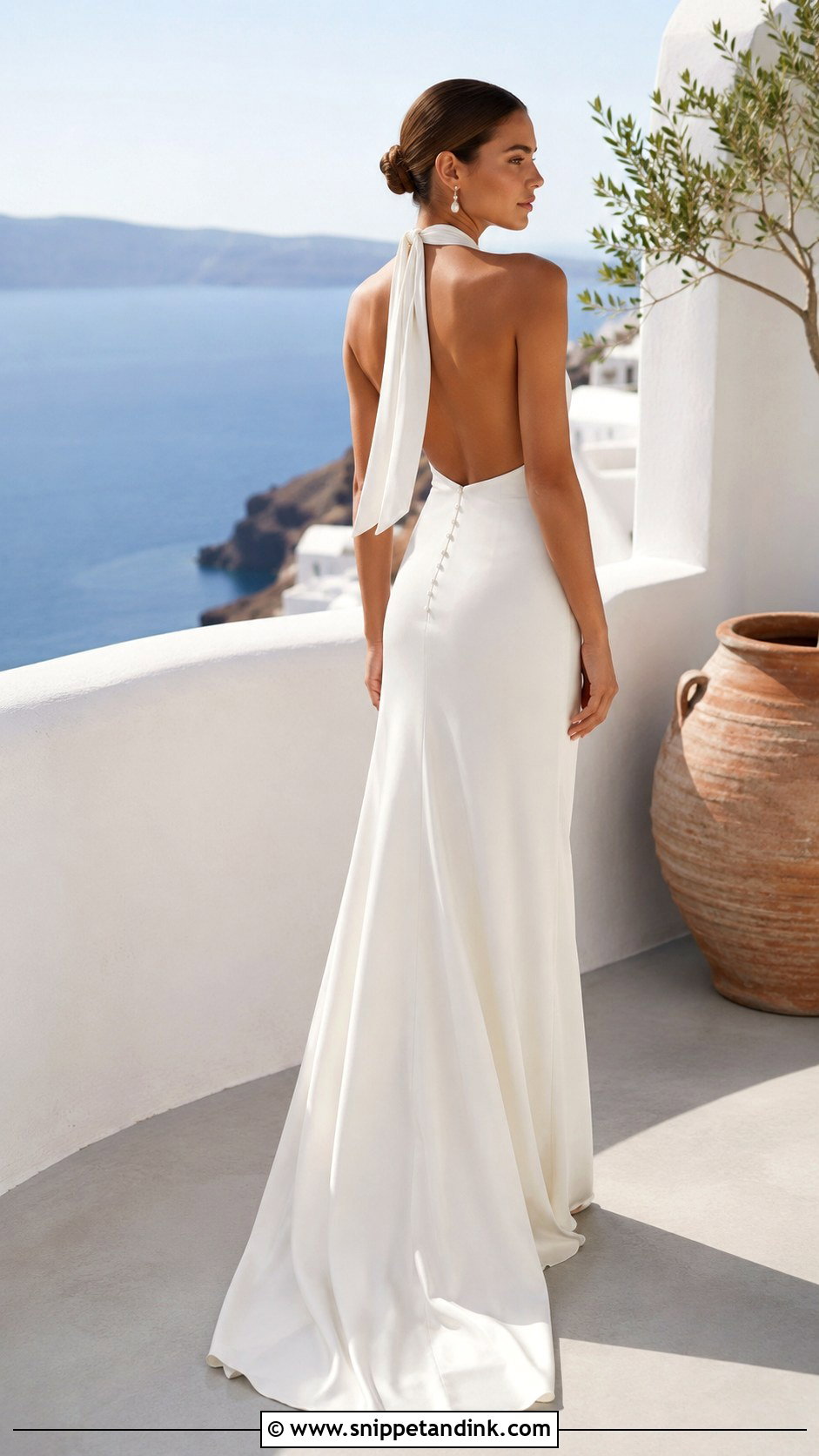
A halter lifts the eye to the shoulders and creates a long line from neck to hem. Silk keeps it minimal, satin makes it glamorous, crepe relaxes it. The weight of the dress hangs partly from the neck, so a heavy skirt on a halter can ache by evening. Choose a lighter skirt or ask your seamstress to anchor the bodice so it takes more of the load. A sleek bun, drop earrings and simple heels suit destination weddings and summer ceremonies. If the back is open, keep the tailoring tight and the jewelry minimal.


15. Sheer Sleeve Wedding Dress
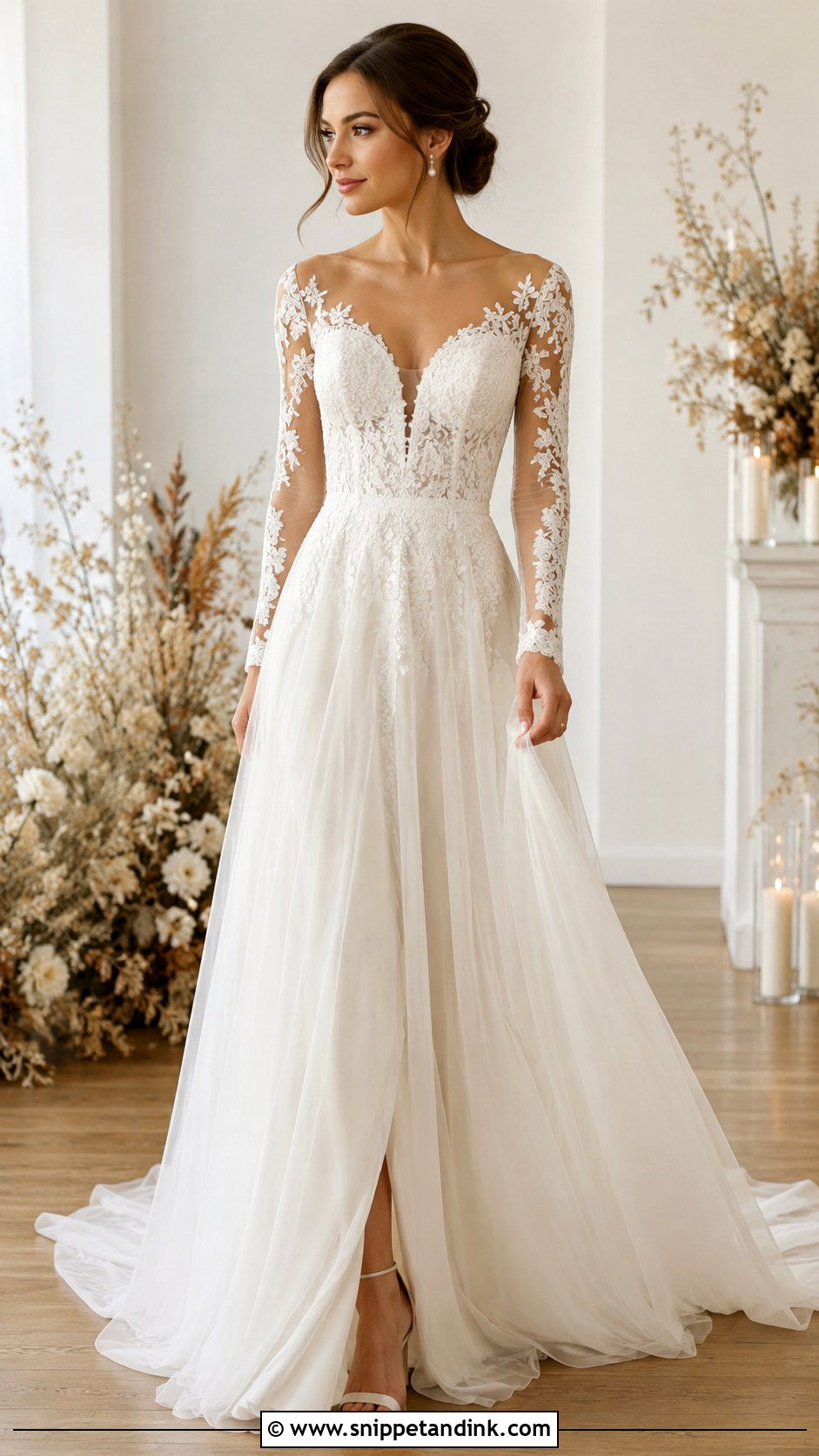
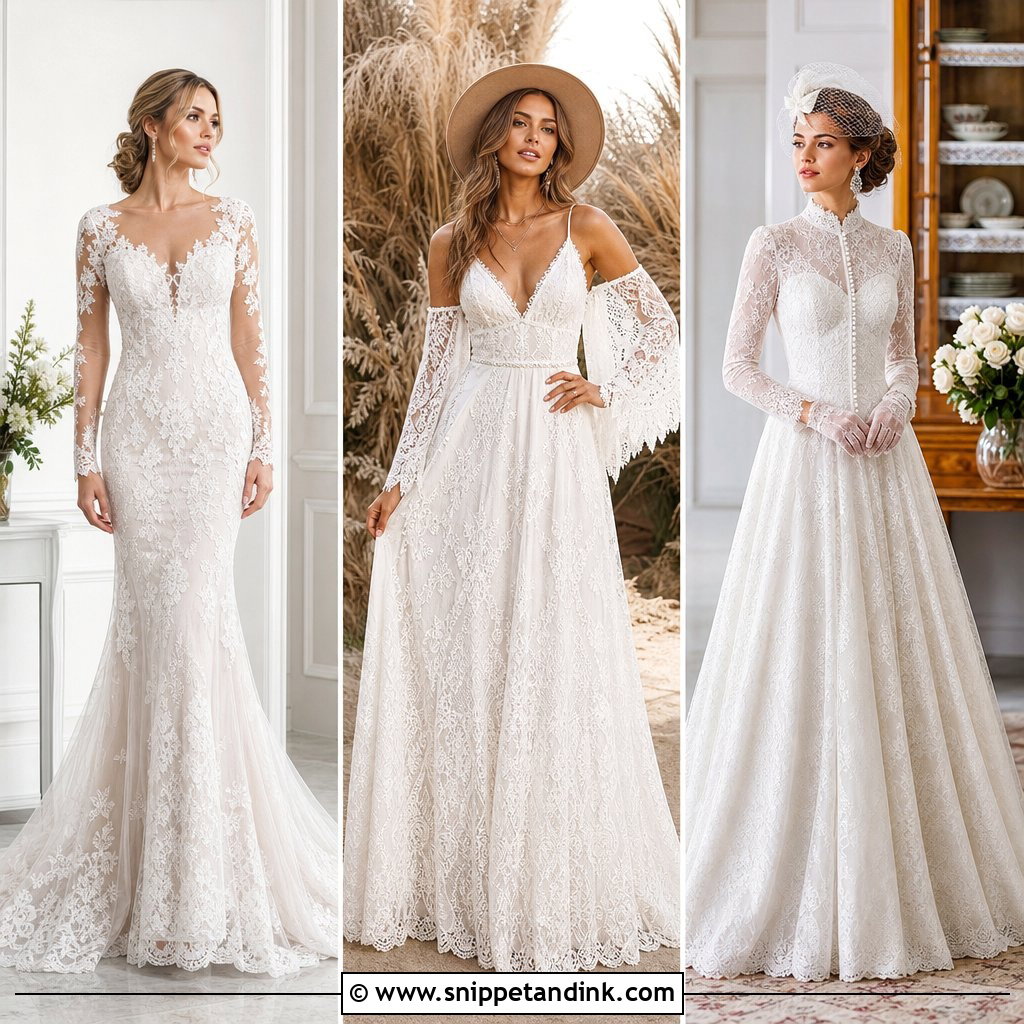
Sheer sleeves give coverage that still feels light. Illusion tulle, lace and embroidered mesh all soften the arms without bulk. Fitted sheer sleeves look classic; bishop sleeves, gathered at the cuff, add more romance. One practical note: illusion mesh comes in different skin-toned shades, and the right match makes it nearly invisible while the wrong one looks grey. Ask to see the options against your arm. Pearl earrings, soft makeup, ivory heels and a simple veil complete it for autumn through early spring.
16. Tulle A Line Wedding Dress
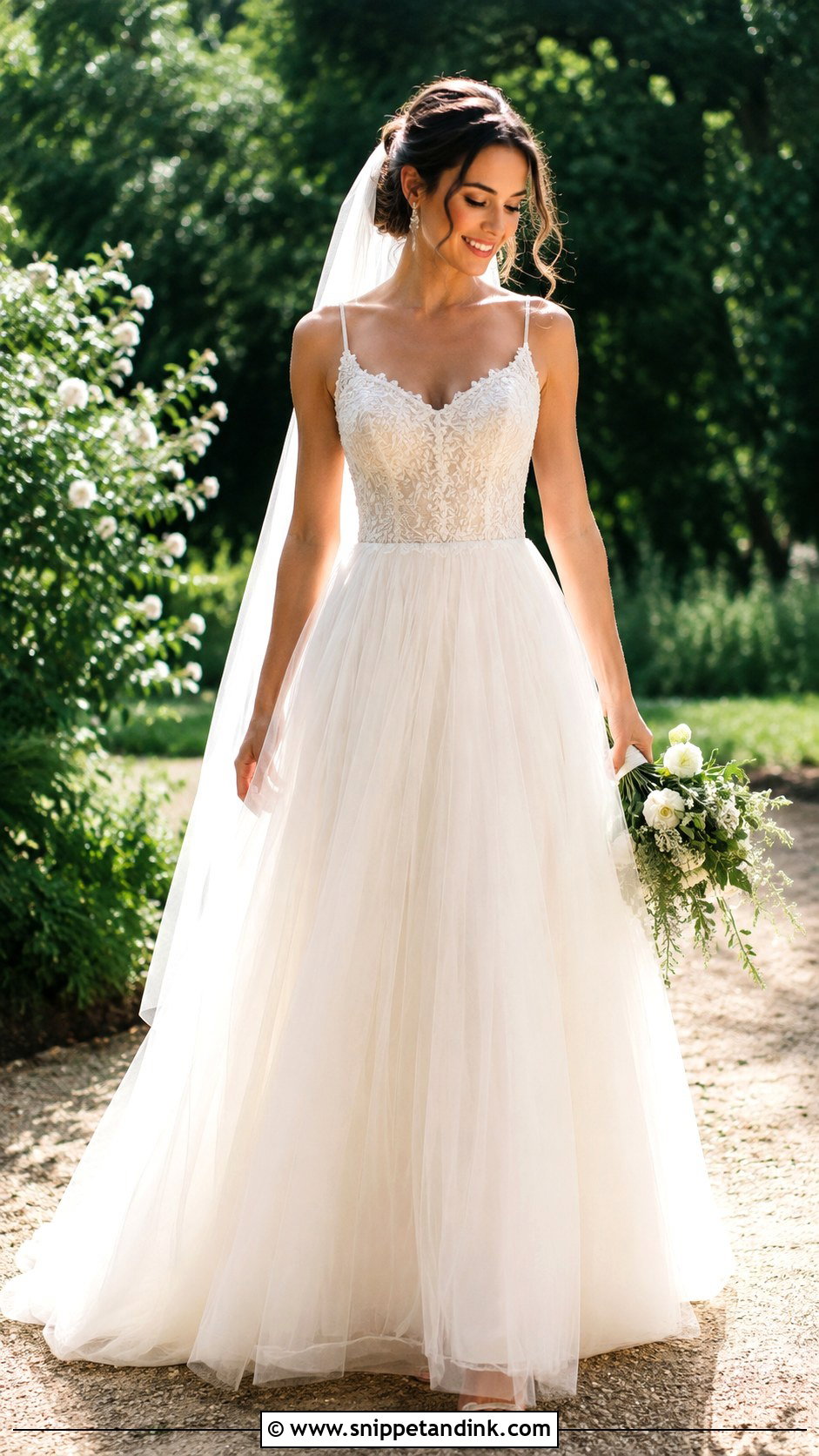
Tulle over a fitted bodice gives the skirt that floating quality while the waist stays defined. It’s one of the most forgiving shapes for different bodies. Plain tulle looks soft, layered tulle adds volume, and dotted tulle brings subtle texture. A lace bodice or floral appliqué adds detail if you want it. Tulle catches on rough surfaces, so I’d skip heavily textured bracelets. A veil, dainty earrings and comfortable heels or bridal flats suit outdoor ceremonies and gardens.
17. Beaded Wedding Dress
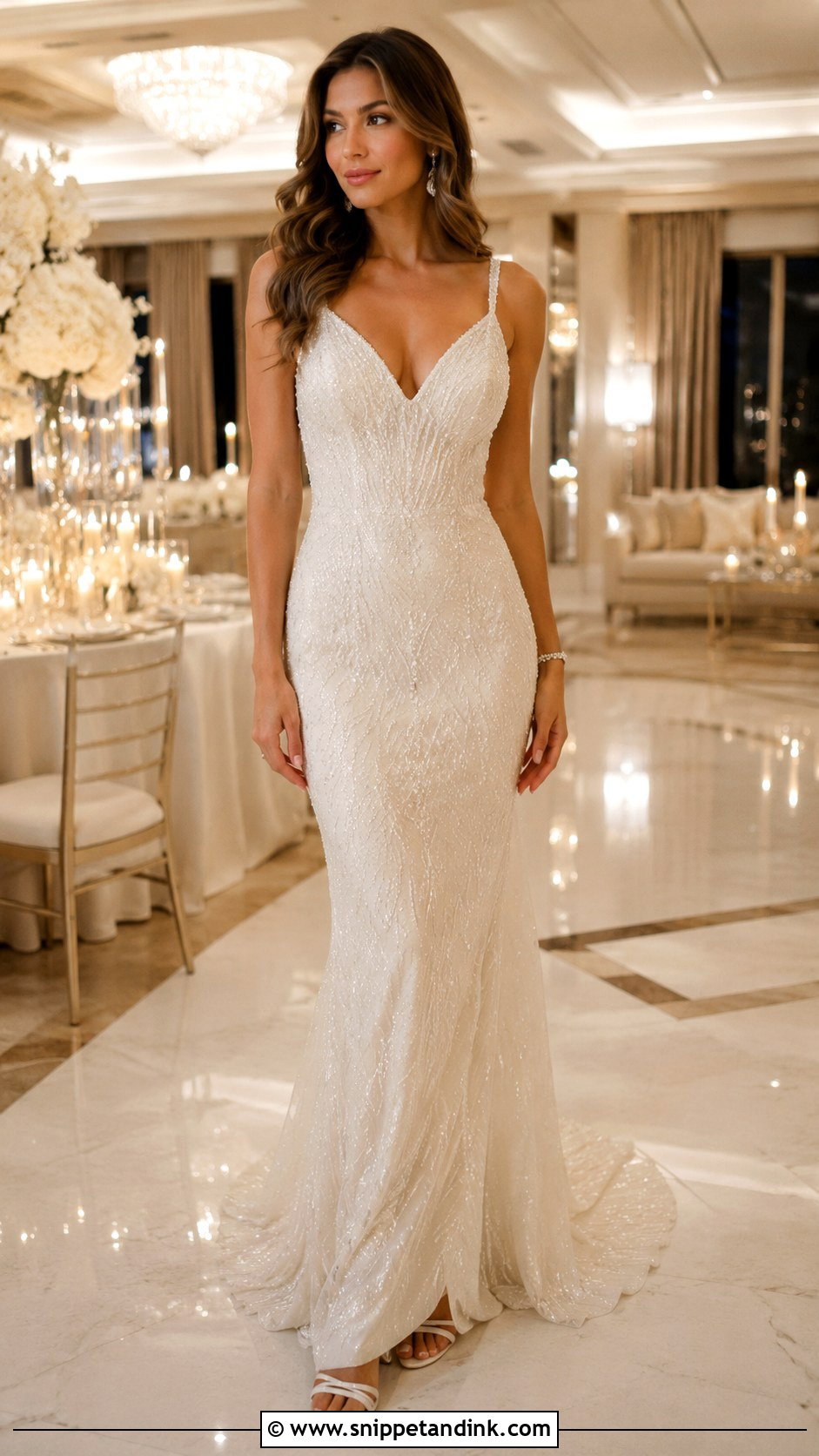
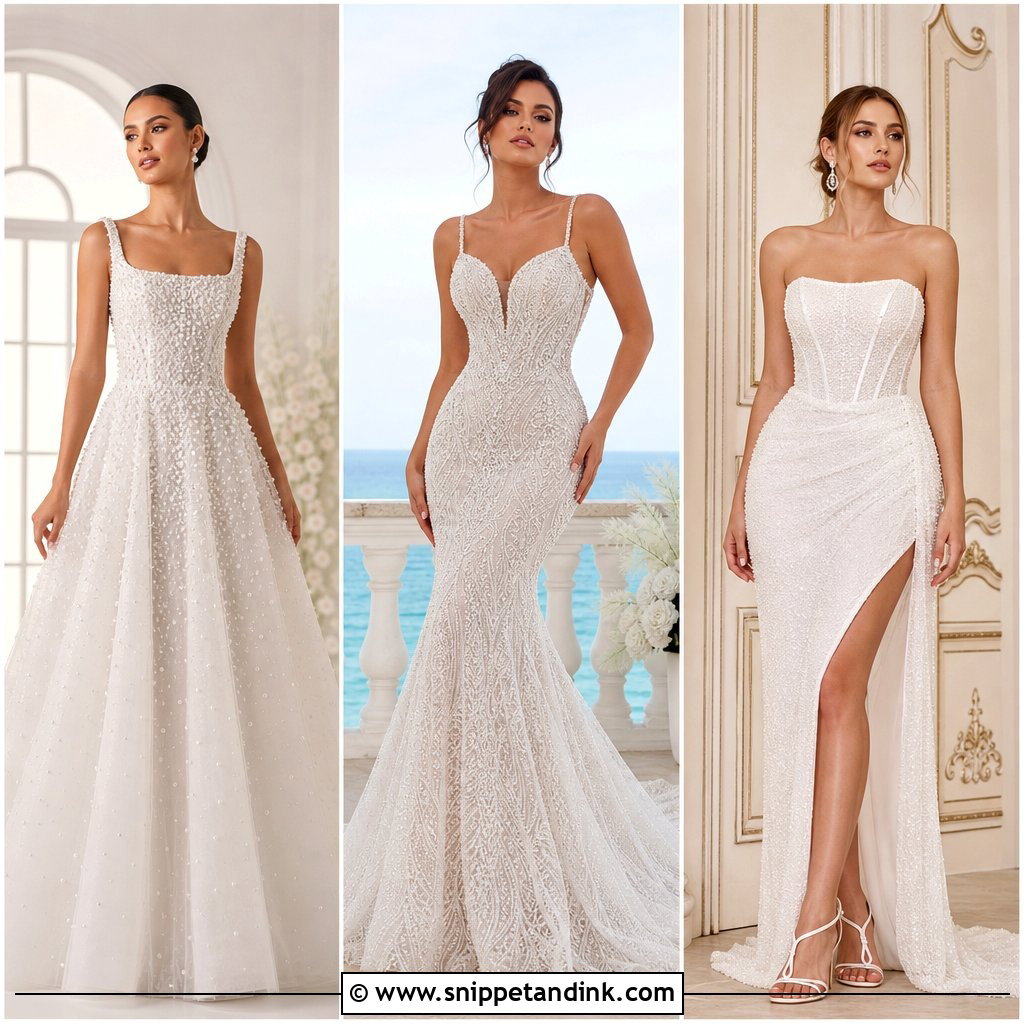
Beading can highlight the bodice, trace the waist or cover the whole gown. Evening weddings and hotel ballrooms suit it, because artificial light is where beads come alive. Heavy beading adds real weight, so wear the dress for a while in the shop and sit down in it. A fitted shape looks dramatic, while an A-line beaded gown feels more traditional. Keep the jewelry clean and the hair in soft waves, with satin heels. Ask how to bustle it without tearing the beadwork.
18. Bow Detail Wedding Dress
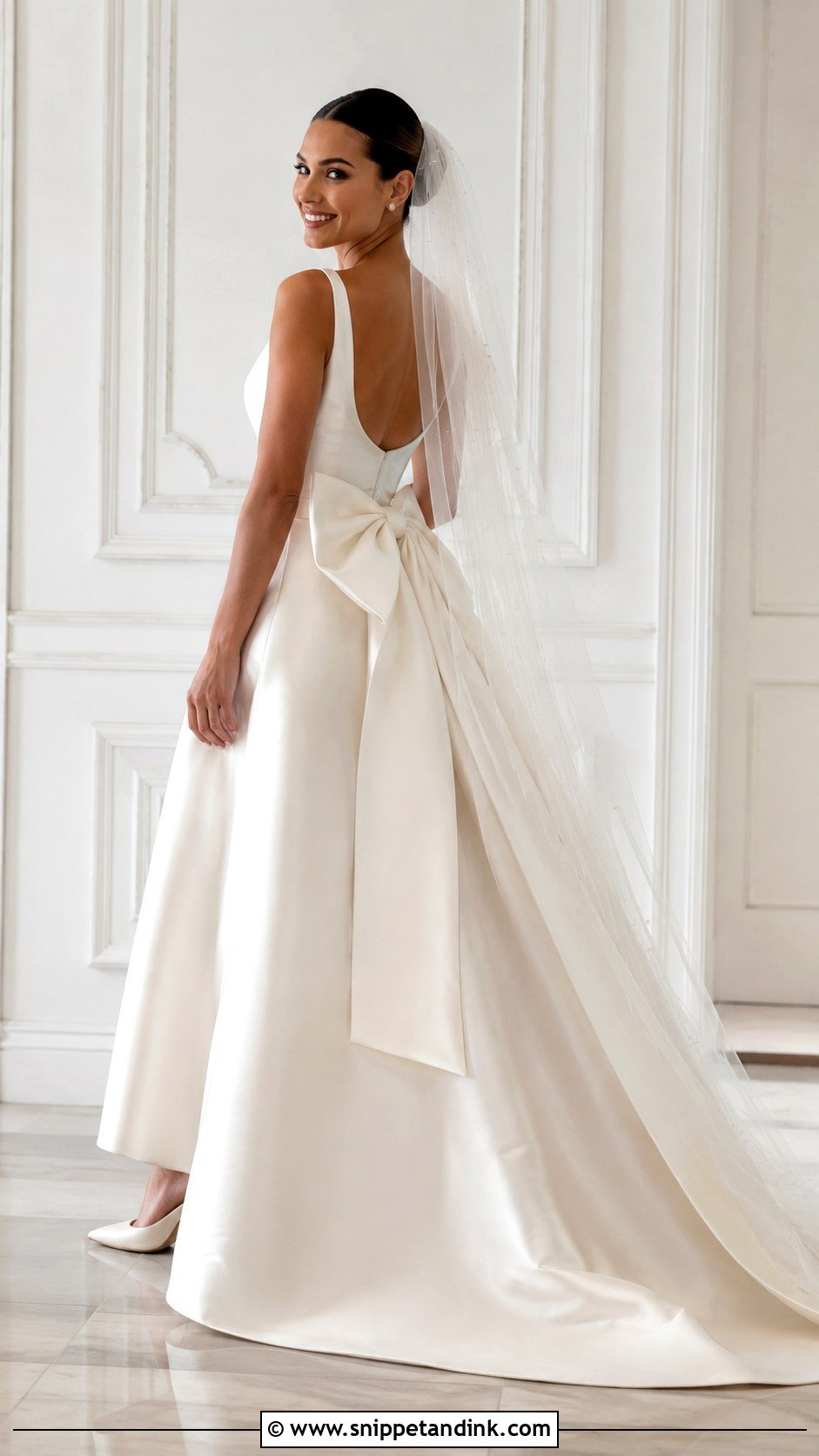
A bow can sit at the back waist, shoulder, neckline or train. Large bows look dramatic and modern; small ones look delicate. Structured fabrics like satin, mikado, taffeta and crepe hold a bow’s shape, while soft fabrics let it droop by evening. If the bow is large, skip oversized jewelry and let that one detail lead. Simple heels, pearl studs and a clean veil finish it. It’s the detail guests remember from behind during the vows.
19. Cape Wedding Dress
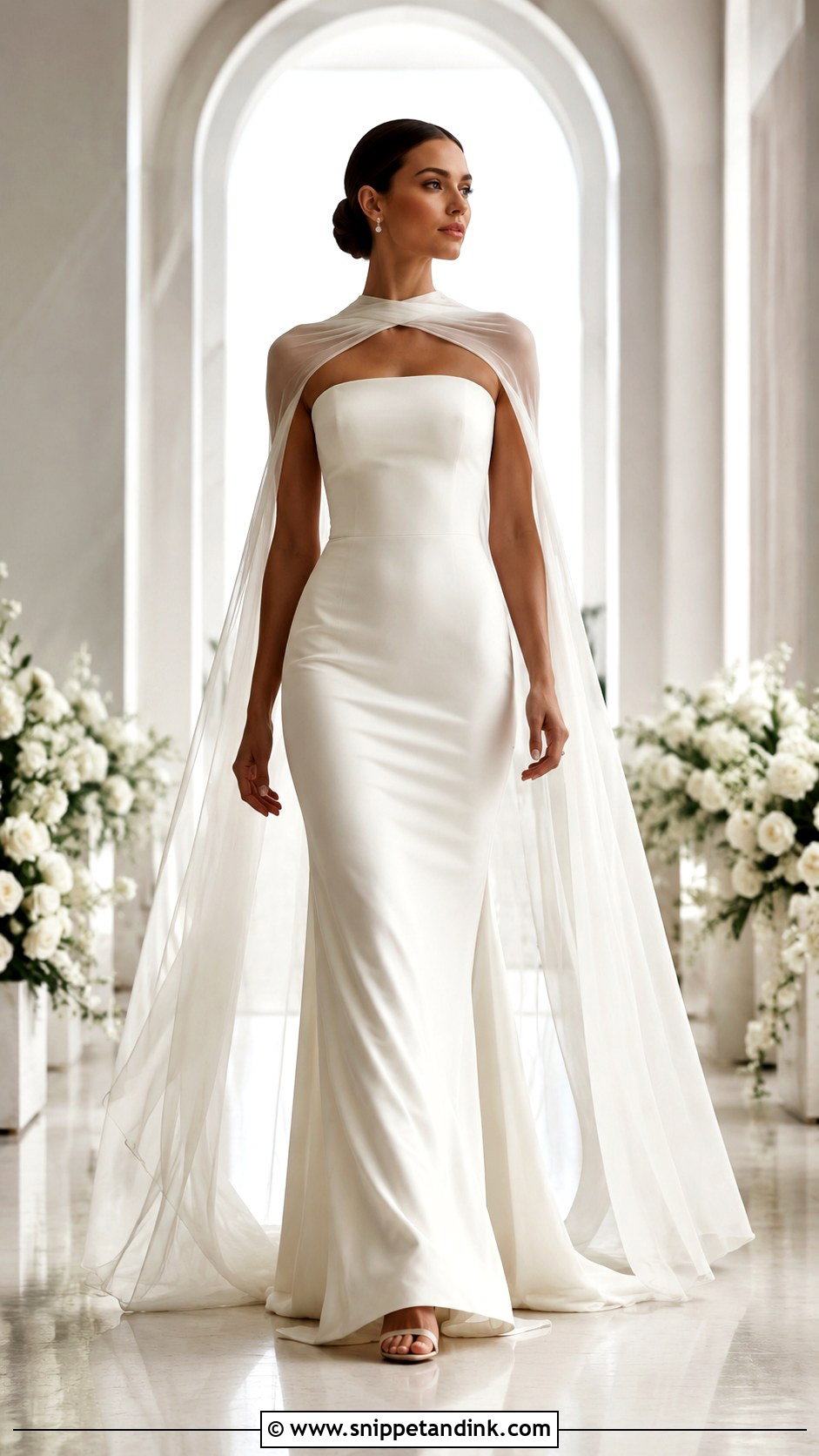
A cape gives movement and coverage and can stand in for the veil. Sheer, lace-trimmed, pearl-dotted or soft chiffon capes all sit well over strapless, square neck or simple column gowns. Choose a detachable one if you want the ceremony drama without carrying it through dinner. Watch how it fastens. A cape that pulls the neckline backward when it catches on something needs a better attachment. Sleek hair, minimal earrings and elegant heels keep the look modern.

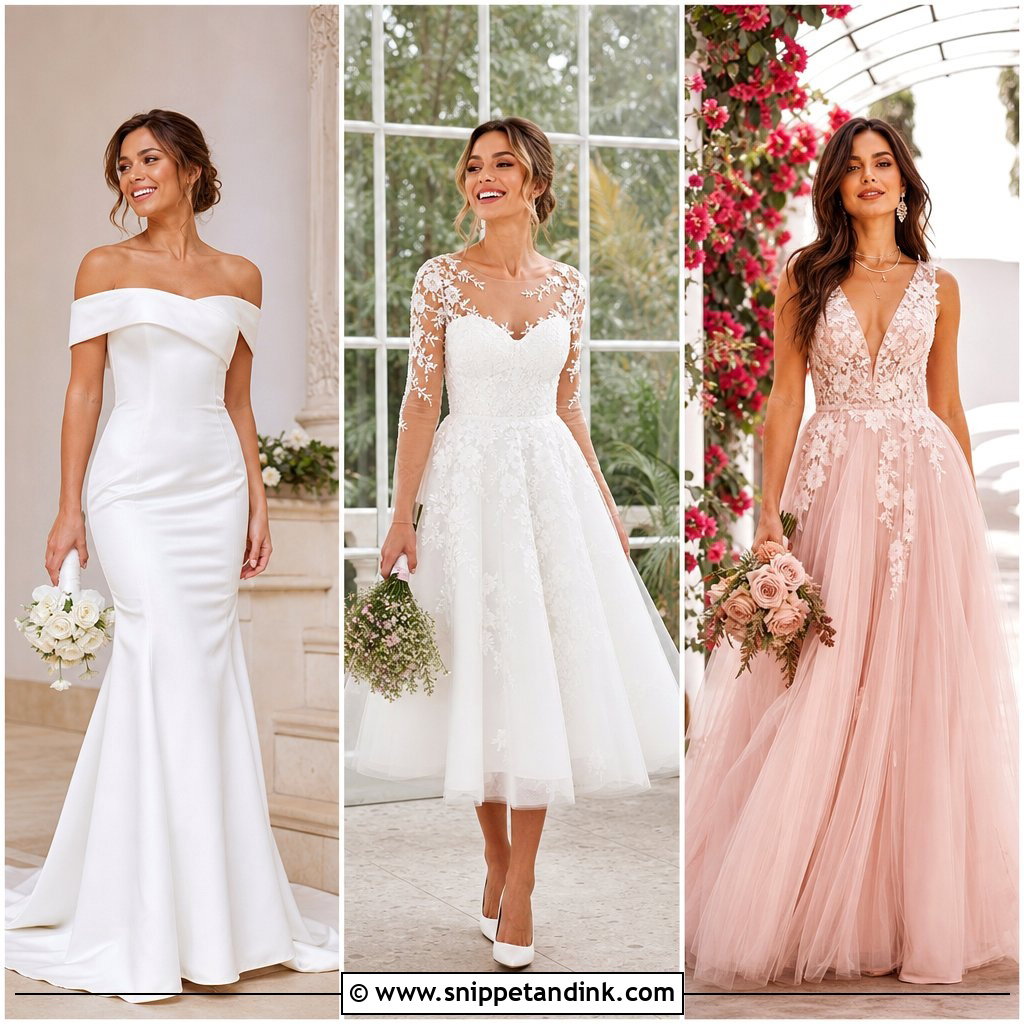
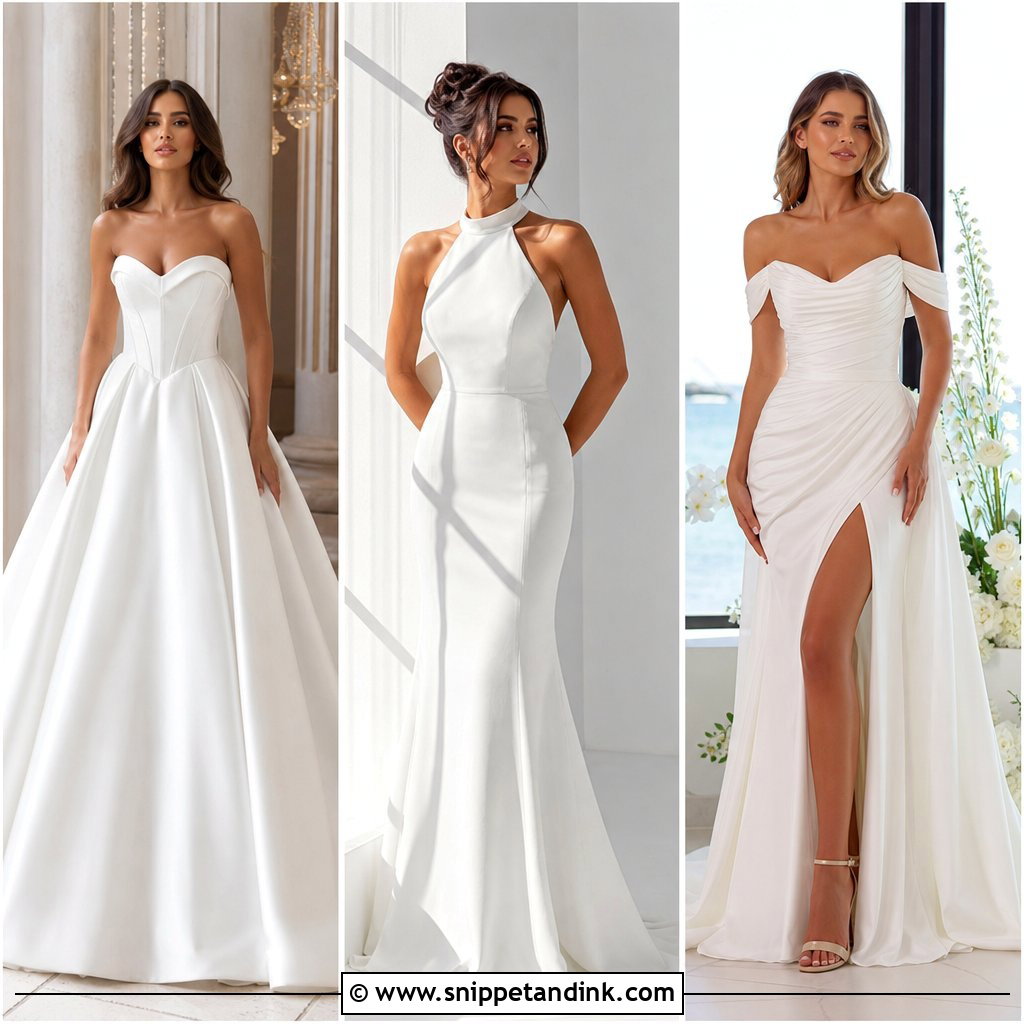


20. Short Wedding Dress
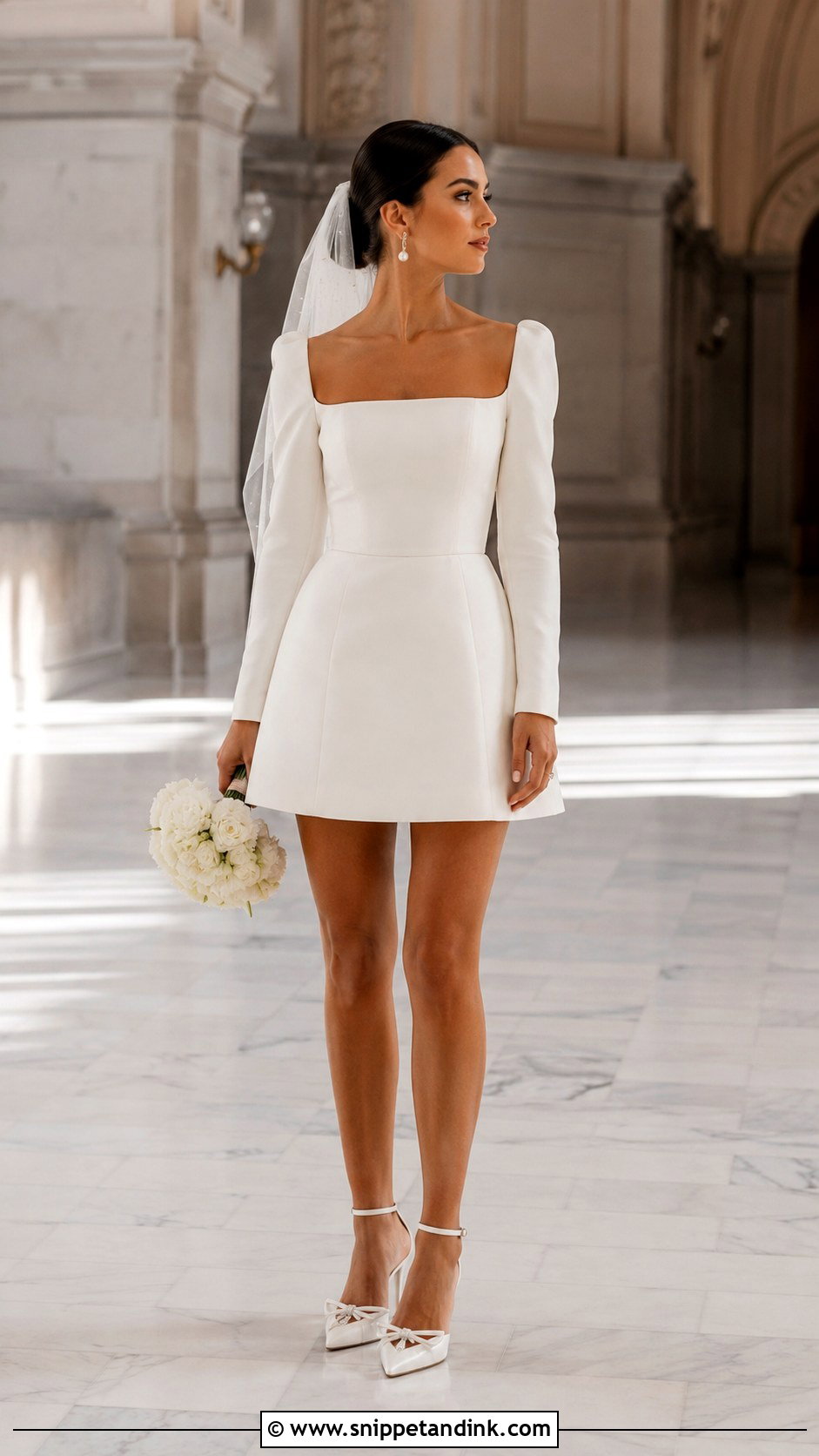
Short dresses work for civil ceremonies, reception changes and after-parties. A structured mini with long sleeves feels chic; a short lace dress feels sweet. With the hem up, shoes become the second half of the outfit, so choose a pair you can actually walk and dance in. A short dress needs sharper tailoring than a long one, because there’s less fabric to carry the bridal feel. Add a small veil, pearl earrings or a bridal headband. Warm weather and relaxed venues suit it most.
21. Two Piece Wedding Dress
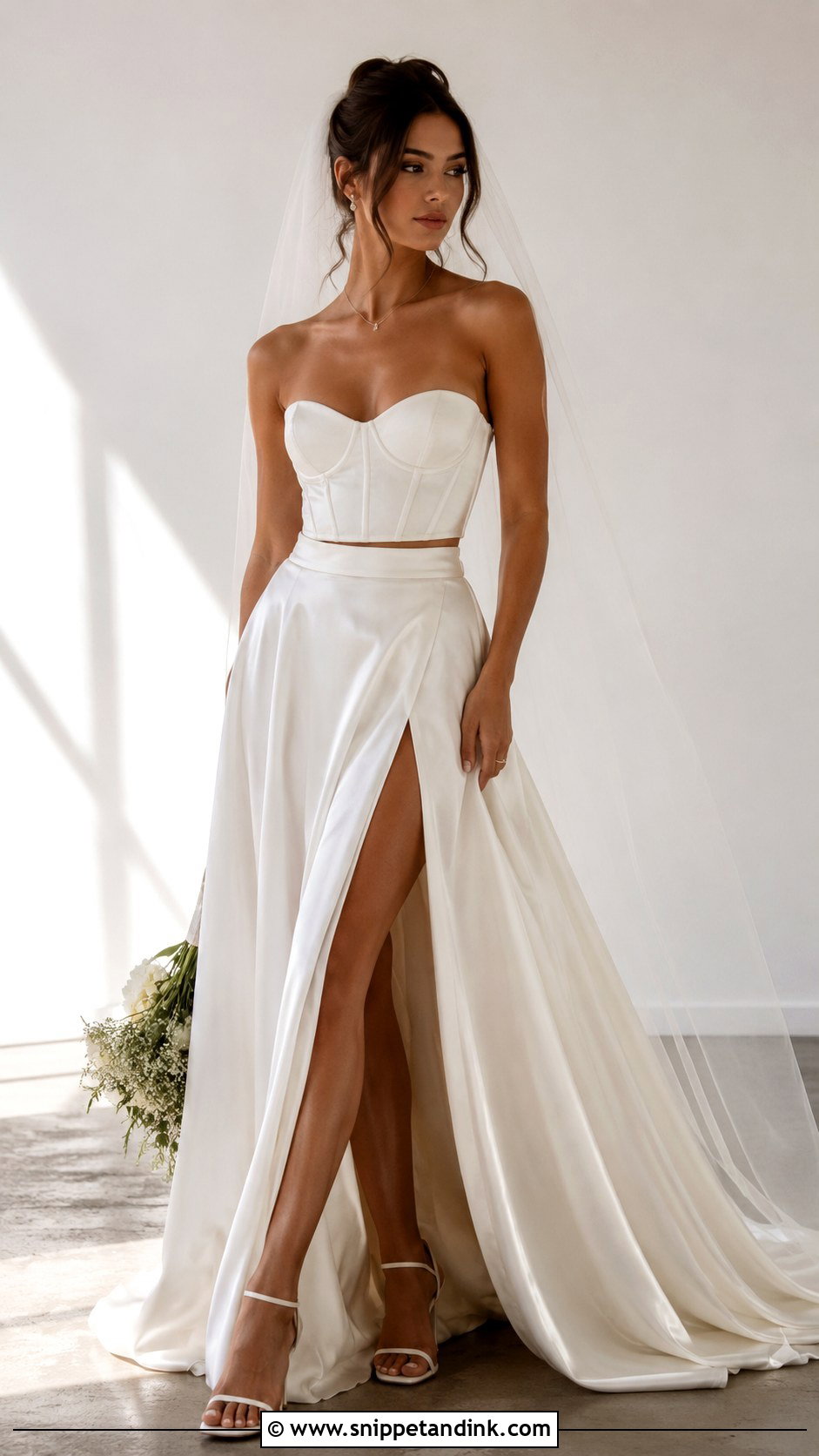
A two-piece might be a crop top and skirt, a corset with an overskirt or a structured top over sleek satin. It suits modern weddings and beach ceremonies. The practical advantage is fit, since top and bottom can be sized separately, which helps brides whose upper and lower measurements fall in different sizes. Keep the pieces matched in fabric, color or texture so the outfit looks intentional. Simple heels, delicate jewelry and a veil or hair bow finish it, and the top or skirt can be worn again later.
22. Convertible Wedding Dress
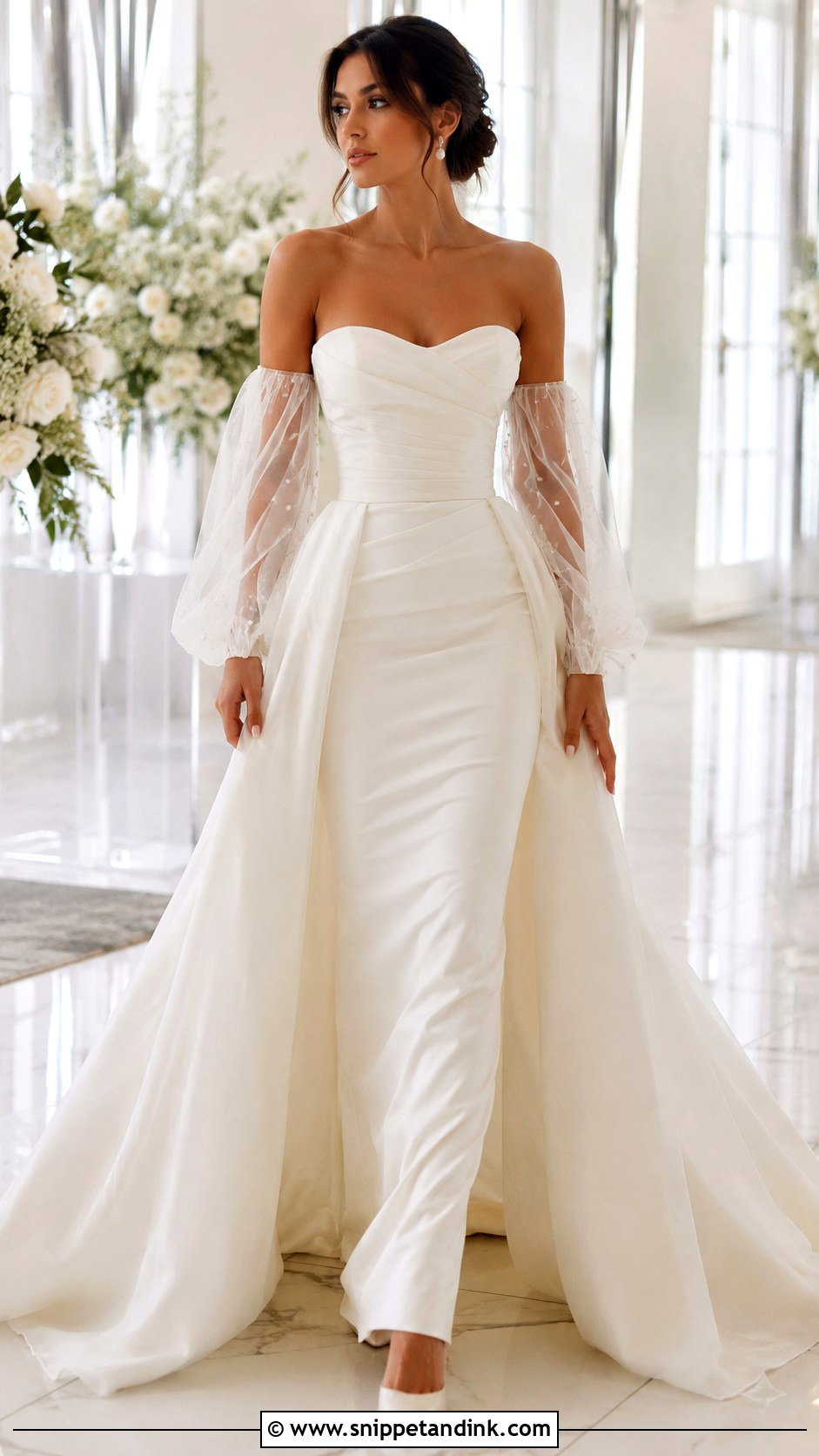
A convertible wedding dress gives you two looks without two full gowns. It might have a detachable overskirt, removable sleeves, a cape or a train that unhooks after the ceremony, so a ball gown at the vows becomes a fitted dress for the party. Choose accessories that suit both versions, like pearl earrings and classic heels. The test is whether the base looks finished without the extras. If you can see where something used to attach, the construction isn’t good enough.
23. Beach Wedding Dress
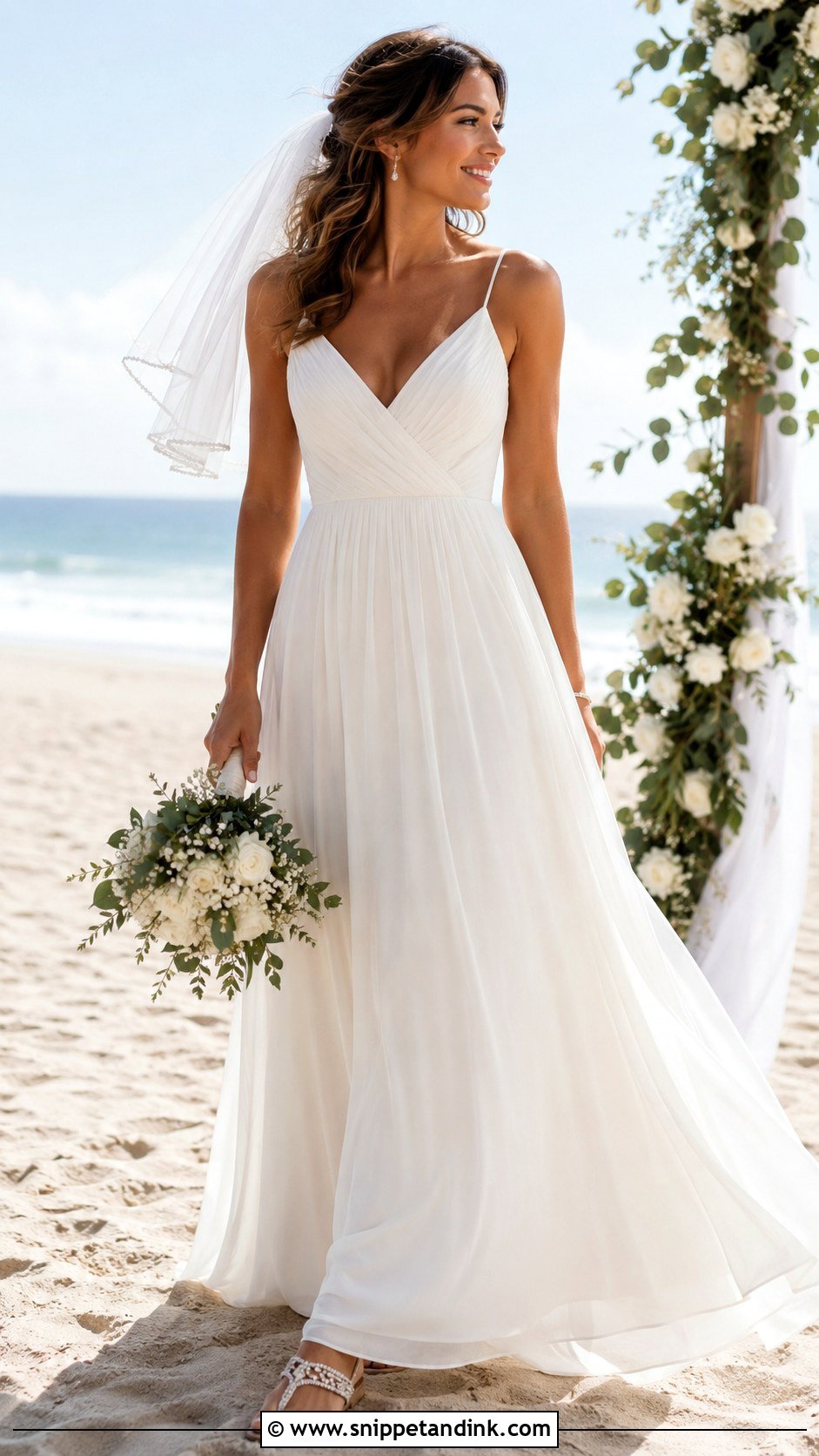
On a beach the dress has to breathe. Soft chiffon, crepe, organza or light lace beat heavy satin and beading, which get hot and drag in sand. A slip, a relaxed A-line or a simple halter design all work. Keep the veil short so the wind doesn’t wrap it around you, and skip long trains unless the ceremony is on firm decking. Flat sandals, shell-inspired earrings and soft waves suit it. Look at the fabric in direct sun before buying, as some thin whites turn see-through.
24. Courthouse Wedding Dress
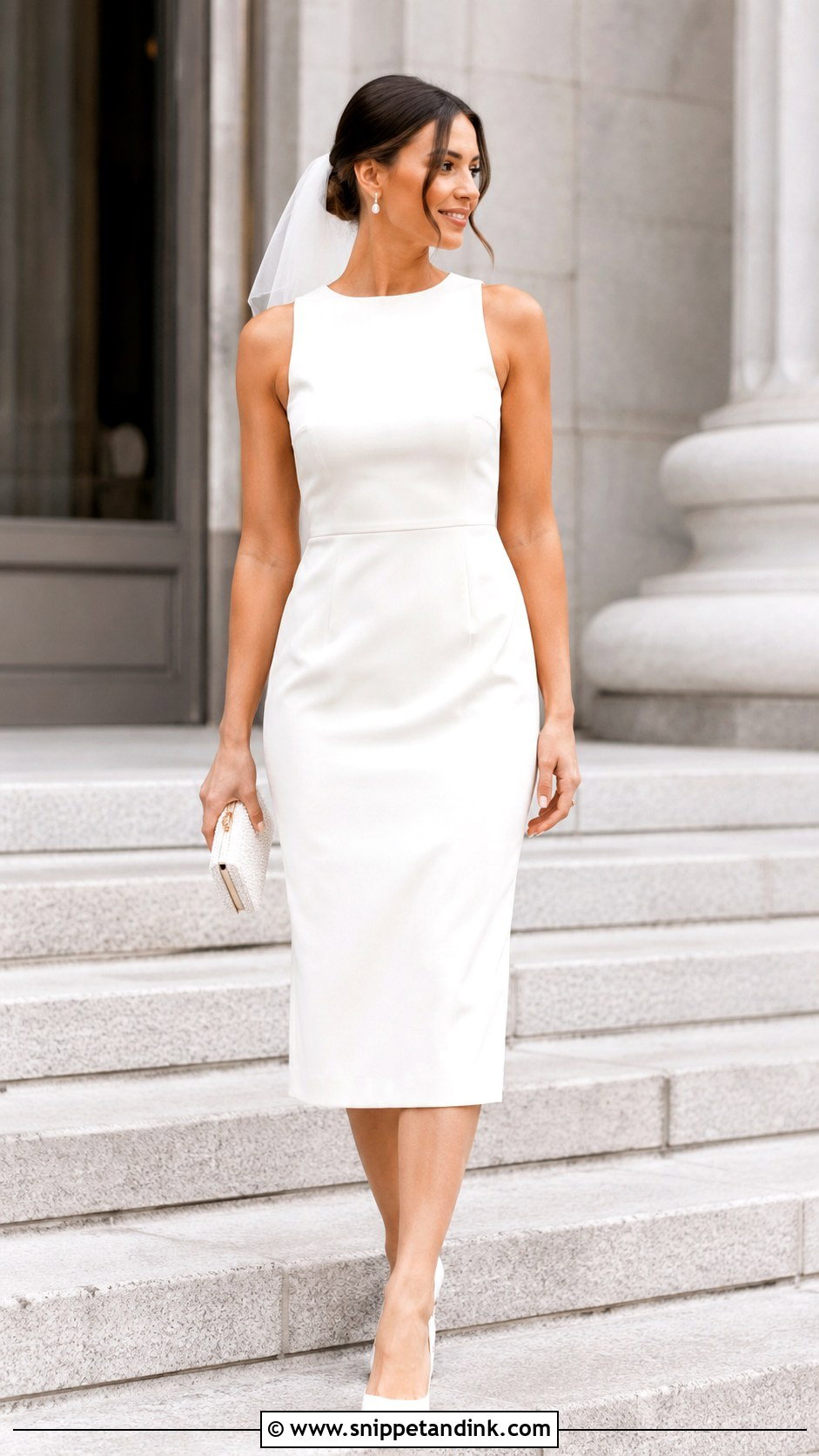
For a courthouse, think tailored: a sleek midi, a sharp mini, a simple slip or a structured blazer dress. White, ivory, cream and soft champagne all work. City steps and street corners are usually the backdrop for the photos, so the fit needs to look sharp from every side. A short veil or hair bow adds a bridal touch, with pointed pumps, a small bouquet, pearl earrings and a neat clutch. Clean lines matter more than detail here.
25. Reception Wedding Dress
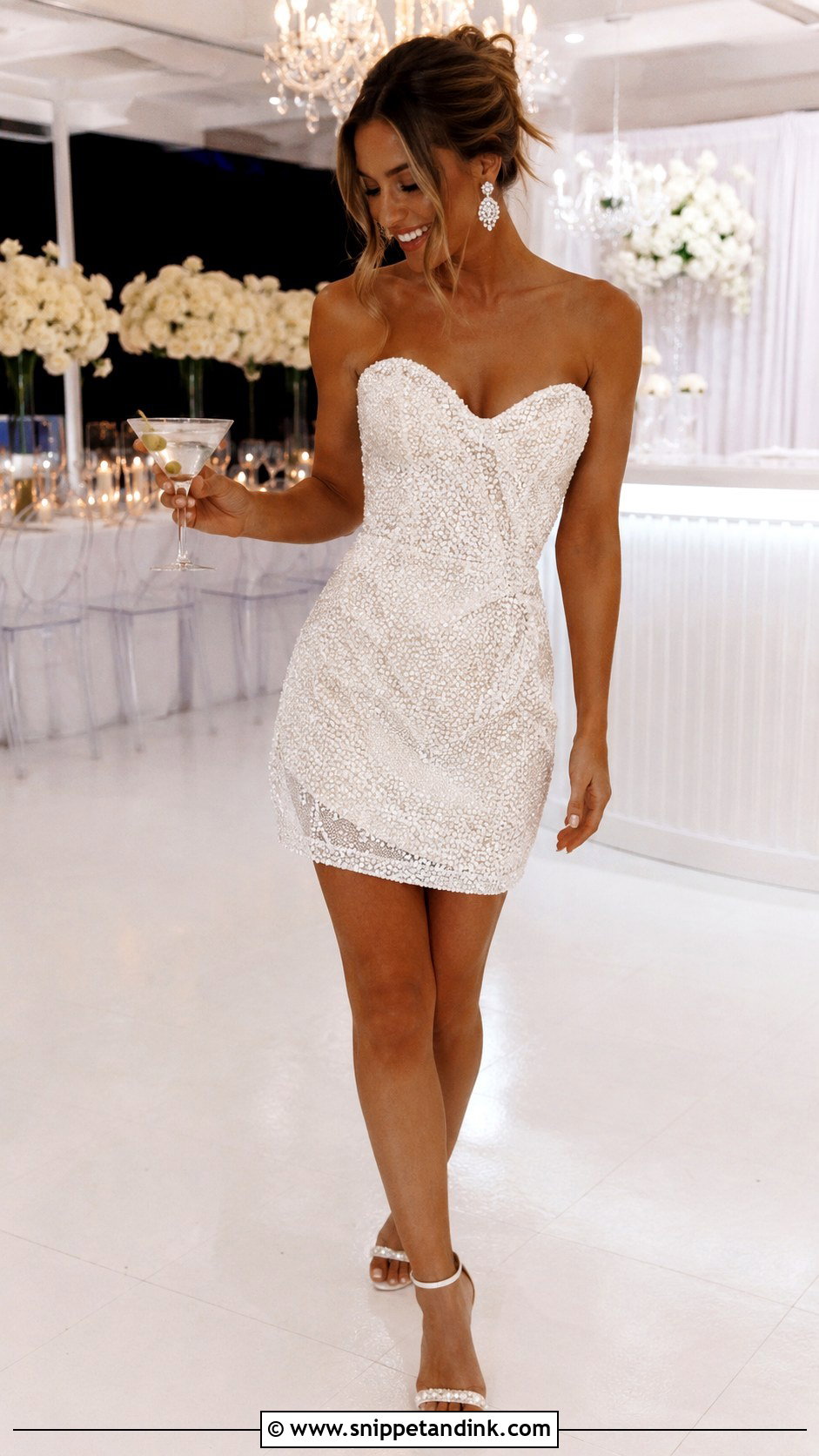
The reception dress is the one you dance in, so comfort leads. Brides choose shorter dresses, a feather-trim mini, a sleek satin slip, a beaded midi or a fitted gown with less train. I tell brides to make the second dress a contrast to the first. A classic ceremony gown leaves room for something playful, and a dramatic first dress pairs well with something clean. Comfortable heels, sparkly earrings and a smaller hair accessory finish it.
Planning the Change Into a Second Dress
Several designs here, from convertibles to reception dresses, depend on a costume change halfway through the day. It’s easy to underestimate. Give it a set slot in the schedule and a small crew.
- Pick the moment. Most brides change after dinner and before the first dance, or just before the party starts, so photos of both looks happen in good light.
- Allow more time than you think. Unlacing a corset, swapping shoes and adjusting hair can easily take twenty minutes or more.
- Choose a private room close to the reception, with a mirror and a hook high enough to hang a long gown.
- Assign one person to help you out of the first dress and another to hang it properly, not leave it on a chair.
- Plan the hair change too. Take out the veil, add a comb or clip, and keep pins and a small mirror in that room.
For a convertible dress, rehearse the removal at your final fitting with the person who will actually do it, and film it on your phone. Under reception lighting, with music playing, small hooks and hidden snaps are much harder to find.
Start With Where You’ll Be Standing
The design gets easier to choose once you stop chasing trends and picture the actual day: the venue, the season, how much you’ll move and how you want the photos to feel. A lace gown suits a romantic church ceremony; a slip suits a city wedding. A ball gown makes drama, while tea length or a short dress gives ease. Use the looks above to narrow the shape, fabric and styling, then trust the dress that lets you feel like yourself from the first look to the last dance.
You'll Like These Ideas:











Leave a Reply