
Most brides arrive at their first appointment with a mood rather than a dress in mind: something clean, something soft, something that feels like them. My job is to translate that mood into fabric, silhouette and construction, and to check it against the venue, the season and how many hours she will be on her feet. Right now I see a lot of clean minimalism, basque waists, sculptural shapes, pearls, lace, modern minis, colored undertones and versatile second looks. The 25 directions below are the ones I dress brides in most, each with the fitting notes I would give you in the room, because a dress that looks perfect on a hanger can behave very differently once you sit, dance and hug people in it.
Your First Gown Appointment Goes Better With the Right Bra and Shoes
An aesthetic is easier to find in a fitting room than on a phone screen, but only if the appointment is set up well. Here is how I like brides to arrive.
- Wear smooth nude underwear with no visible edges and a strapless bra, or none if your gowns will have built-in cups. A printed bra with straps changes how every neckline looks.
- Bring shoes close to the heel height you will actually wear. Samples are long, and the wrong height makes a column look sloppy and a ball gown look short.
- Save three pictures, not thirty. One dress you love, one venue shot, and one image of how you dress on a normal weekend tells me more than a huge board.
- Limit the group to two or three people whose opinion you trust. Big groups pull you toward a crowd-pleasing dress instead of yours.
Try at least one silhouette from outside your comfort zone. A bride convinced she is a slip-dress person sometimes finds that a structured square neck suits her far better, and you only learn that by putting it on.
1. Minimalist Bride Dress
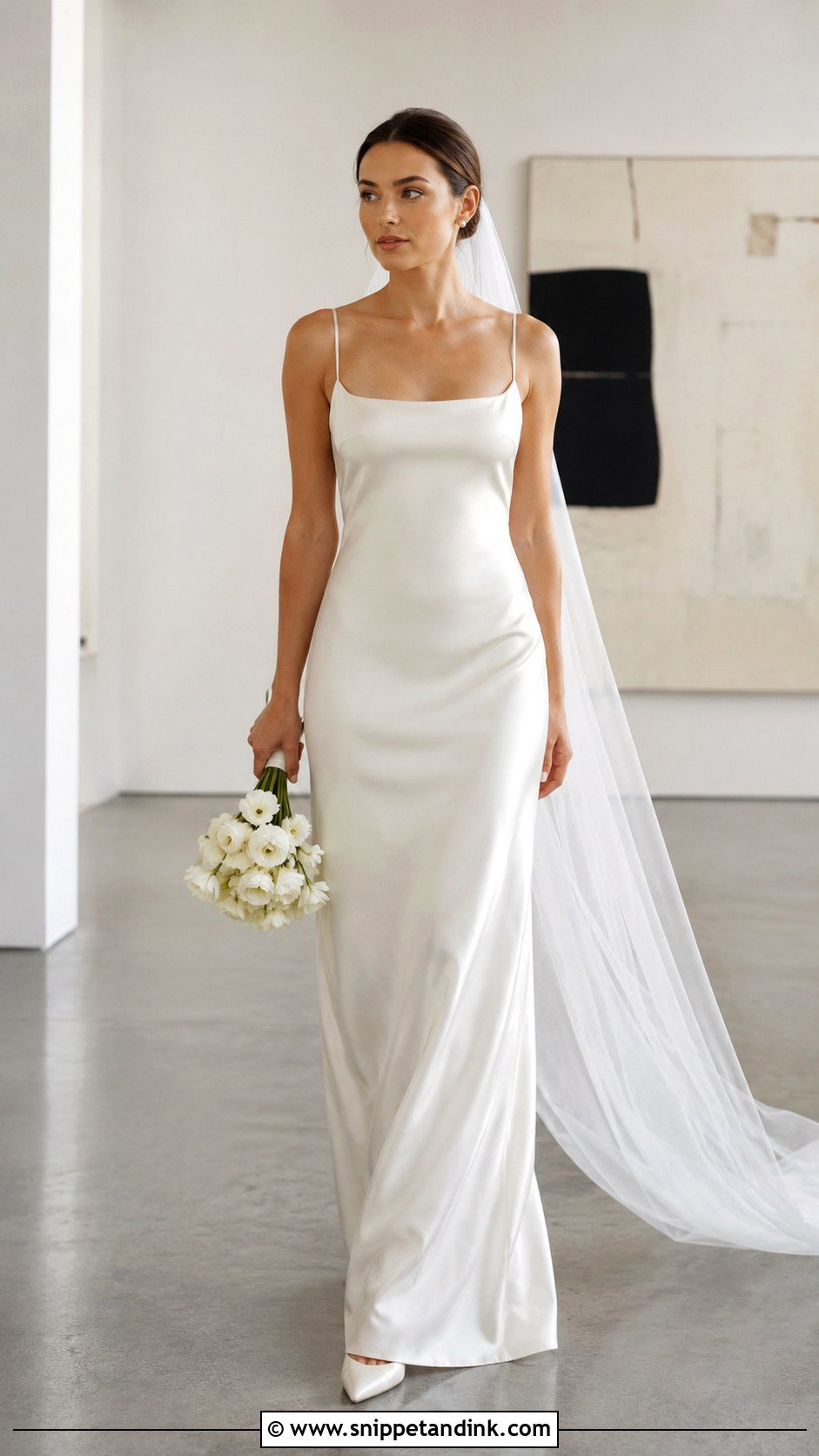
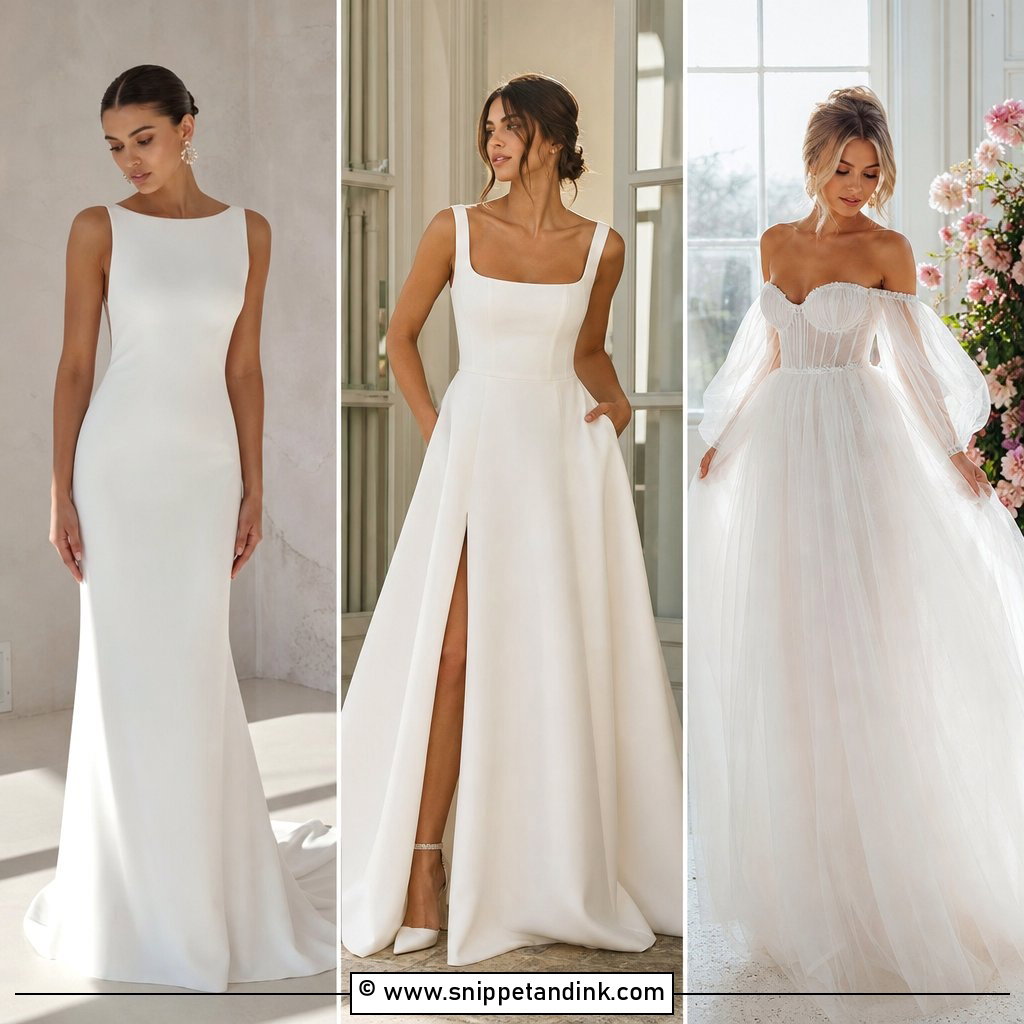
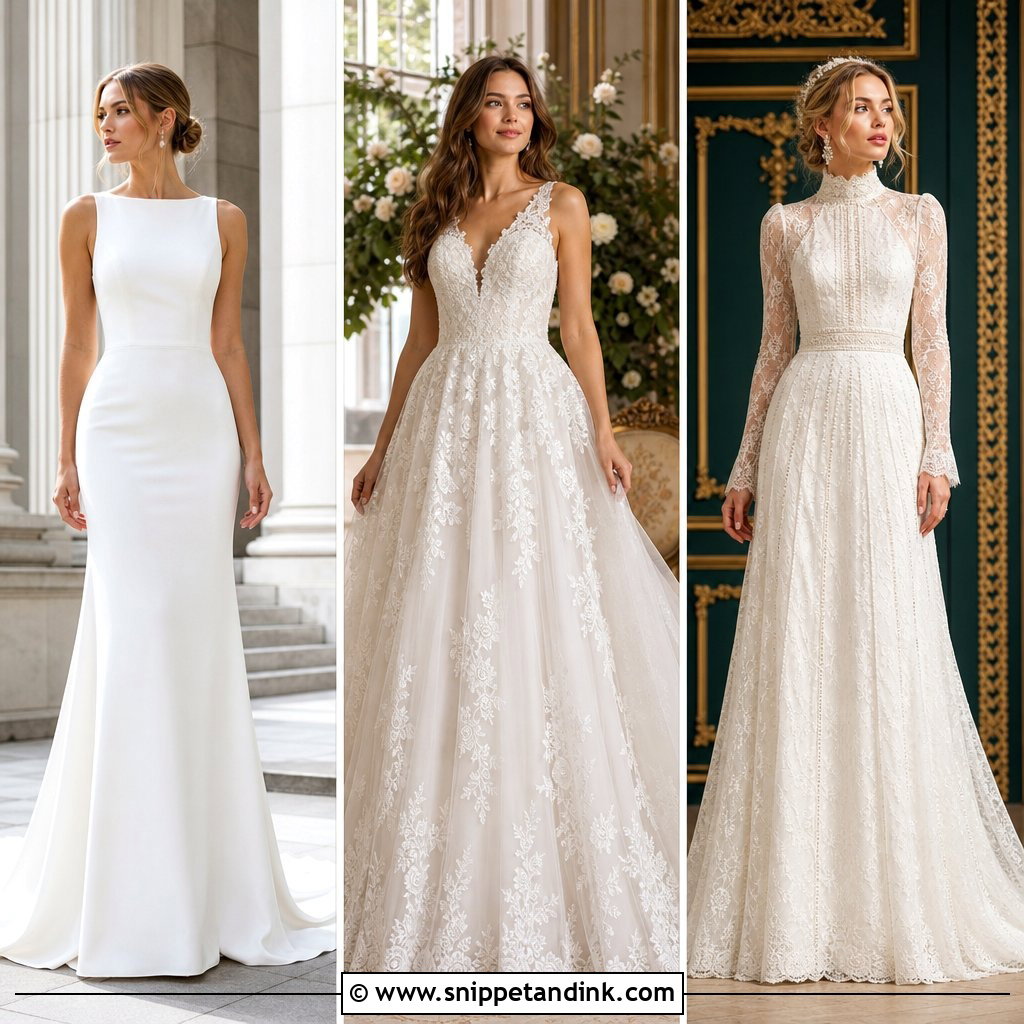
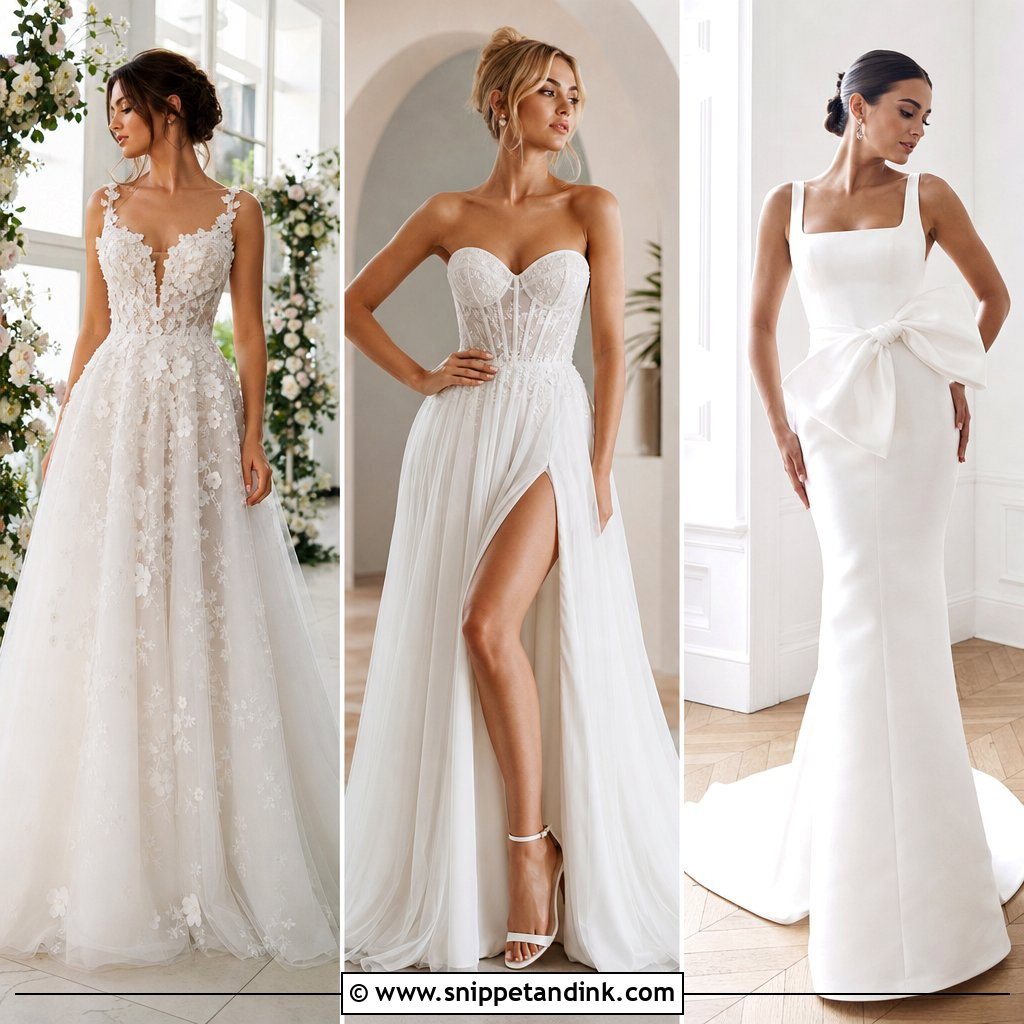
Minimalism is the hardest aesthetic to get right, because there is nothing to hide behind. A silk satin or crepe column with a straight neckline and slim straps shows every pull of a seam and every undergarment line, so I budget extra alteration time for these gowns. Heavy crepe skims the body more forgivingly than thin satin. Pointed ivory pumps, pearl studs, a sleek low bun and a plain cathedral veil keep the restraint going, and a structured bouquet of white orchids or calla lilies suits it. City venues, galleries and rooftops are where this look makes the most sense.
2. Classic Ball Gown Bride Dress
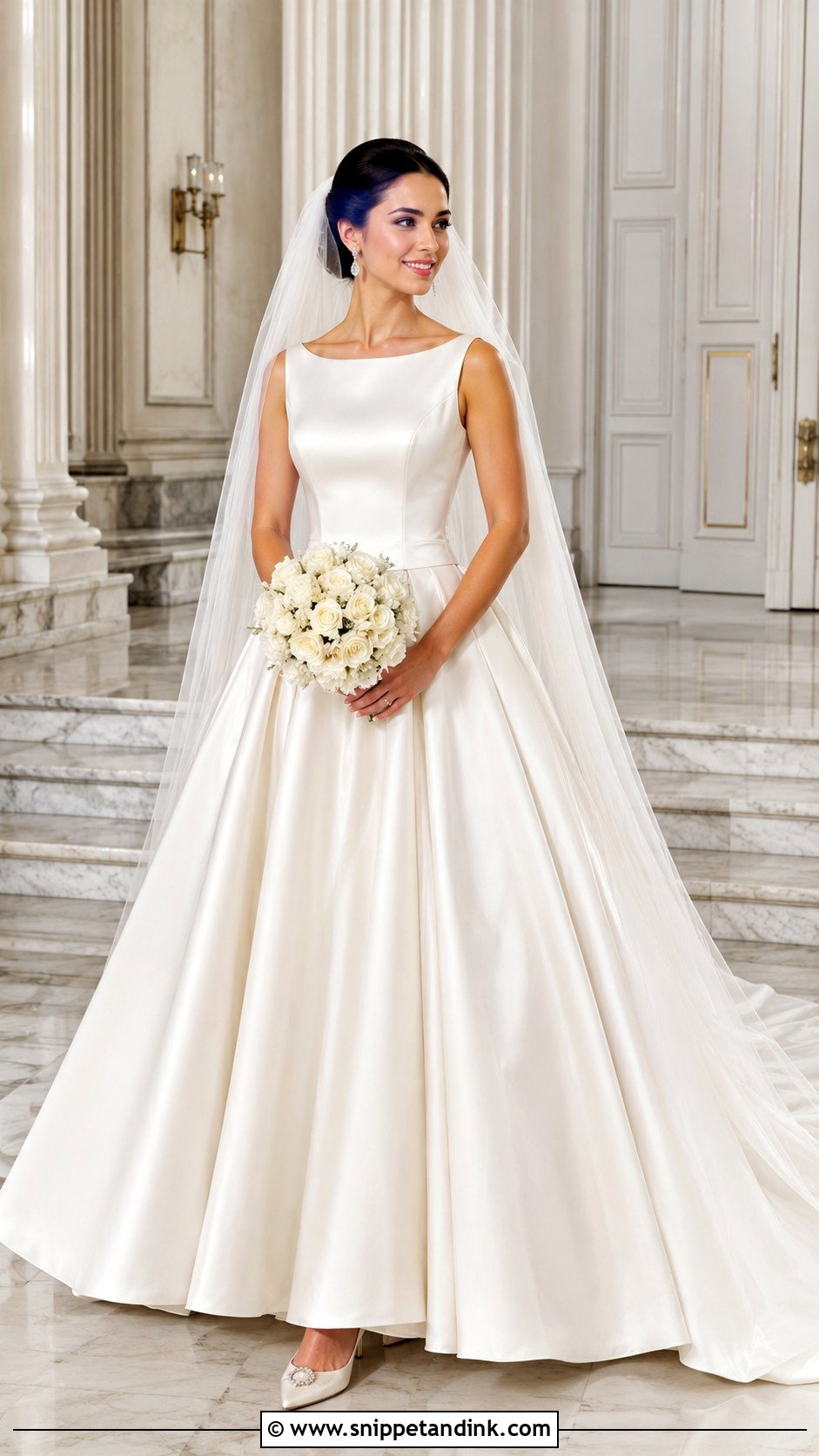
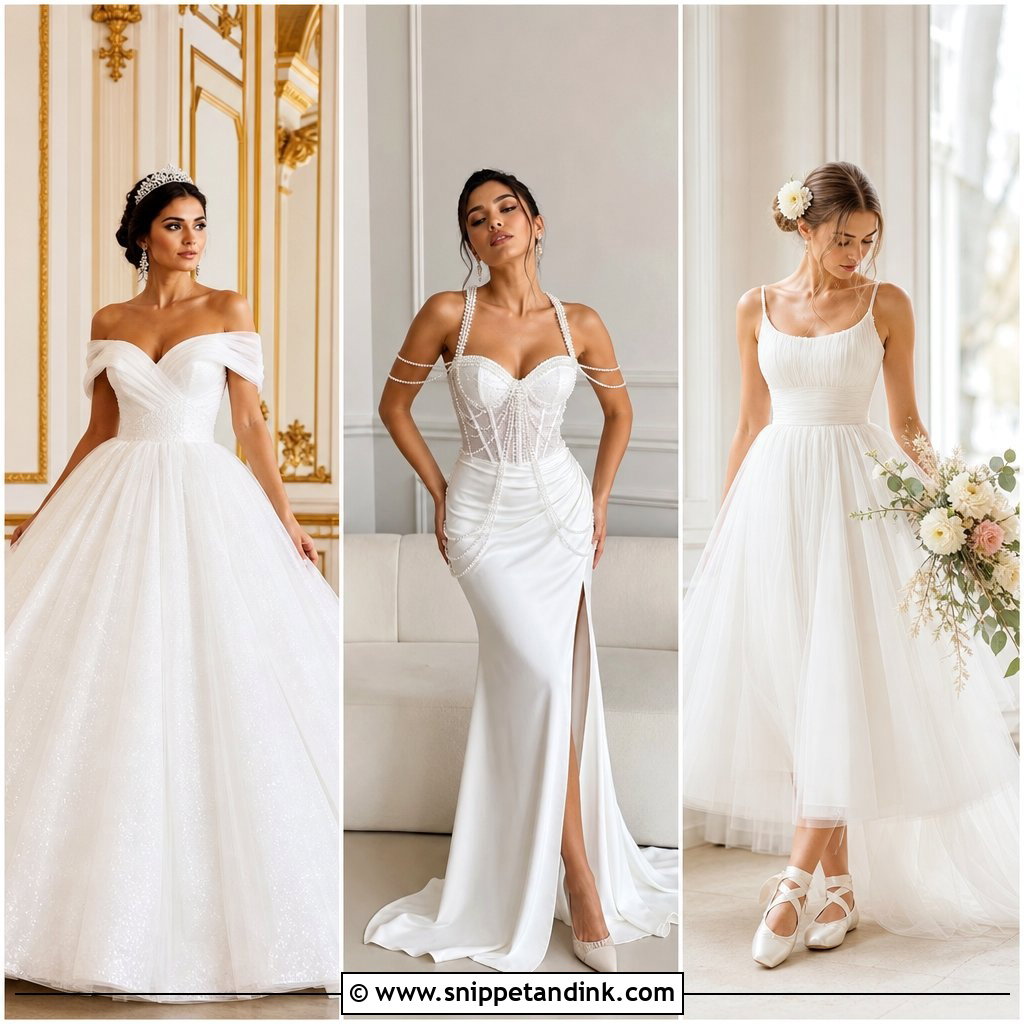
A ball gown makes the moment on its own. I look for a fitted bodice, a defined waist and a full skirt in mikado, satin or organza, which all hold volume differently: mikado stands crisp, organza floats, satin falls heavier. Strapless is traditional; off-the-shoulder sleeves soften it. A long veil, delicate drop earrings and closed-toe heels under the skirt. The thing brides do not expect is the weight, since a full mikado skirt with petticoat can be heavy by the reception, so ask how the gown is built before you commit. Clean construction looks fresher than heavy sparkle in a ballroom or estate.
3. Lace Bride Dress
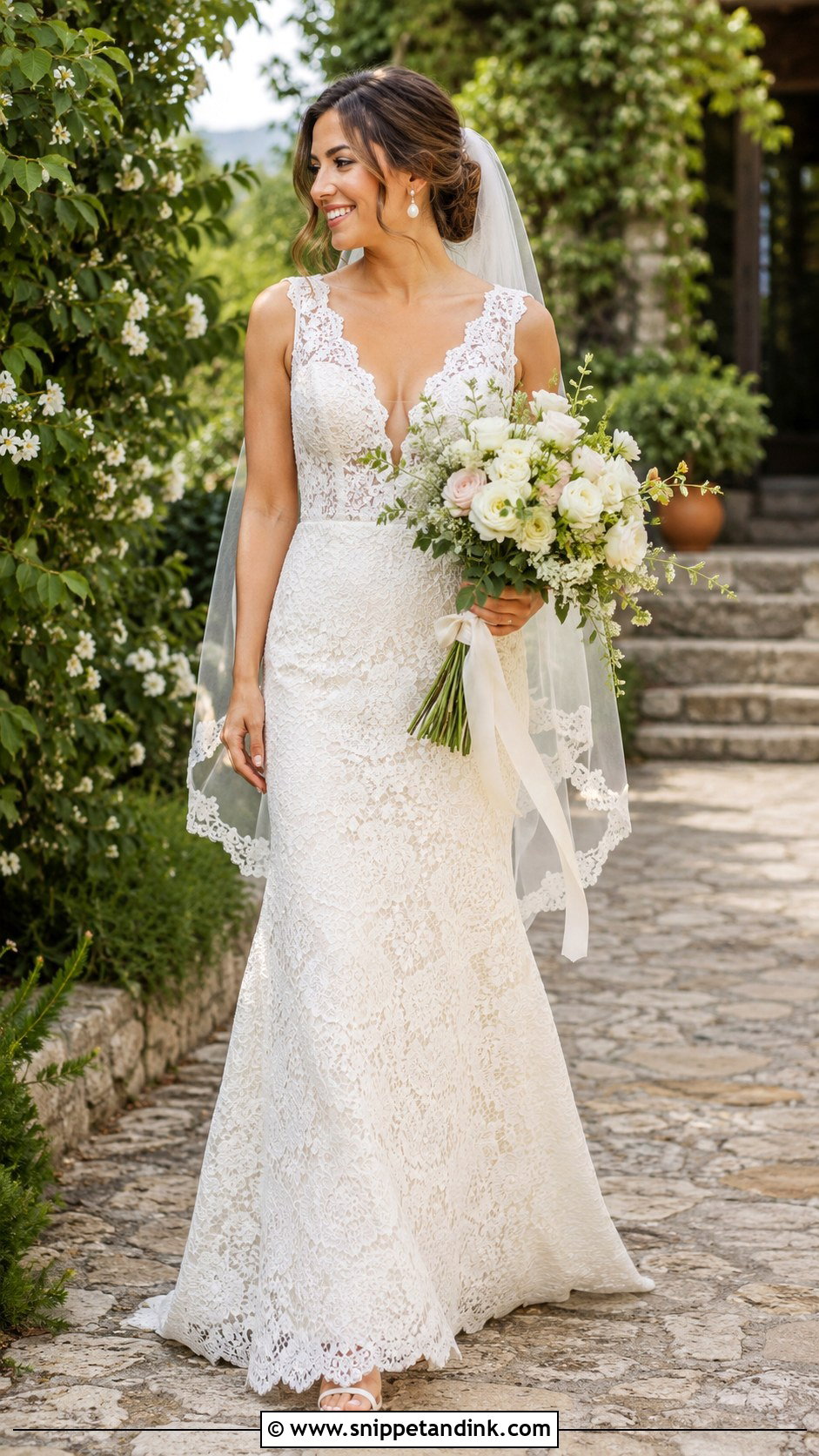
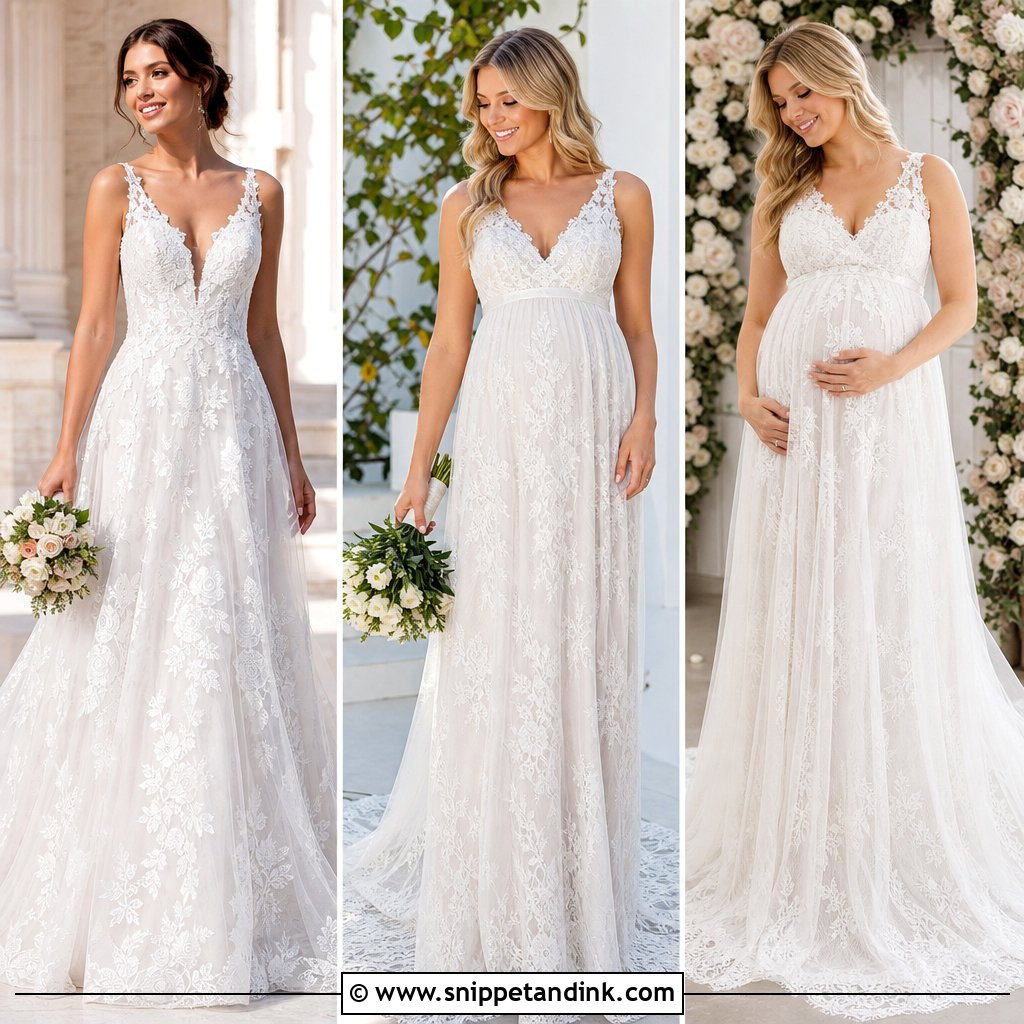
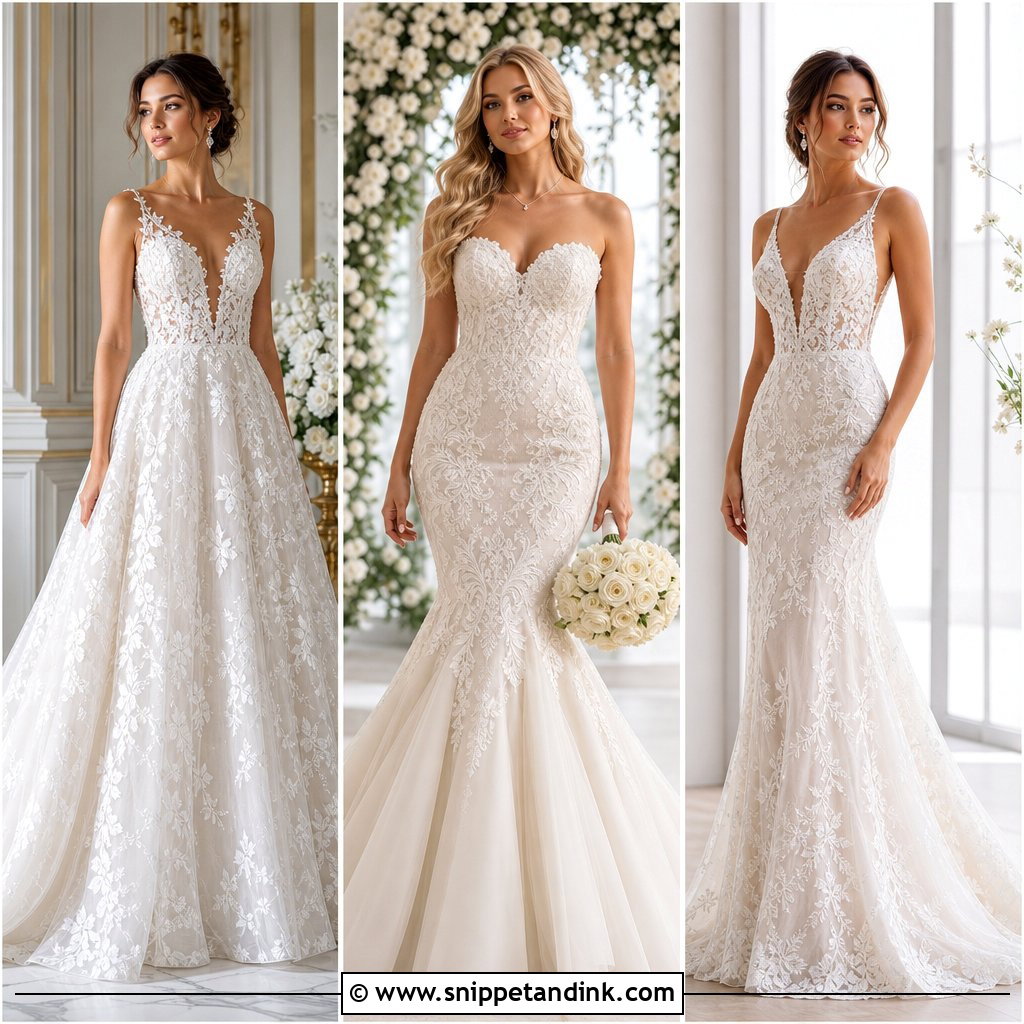
Lace is the most personal fabric in bridal because the pattern itself carries the mood. Fine floral Chantilly reads soft and garden-like; corded or re-embroidered lace has edge and depth. A fitted lace bodice over a flowing skirt is graceful, while a full lace sheath leans vintage. I always check the lace placement at the side seams: good gowns match motifs across the seam, cheap ones cut straight through a flower. Ivory heels, a fingertip veil, pearl earrings and a loose chignon. Let the lace be the only detail.
4. Satin Slip Bride Dress
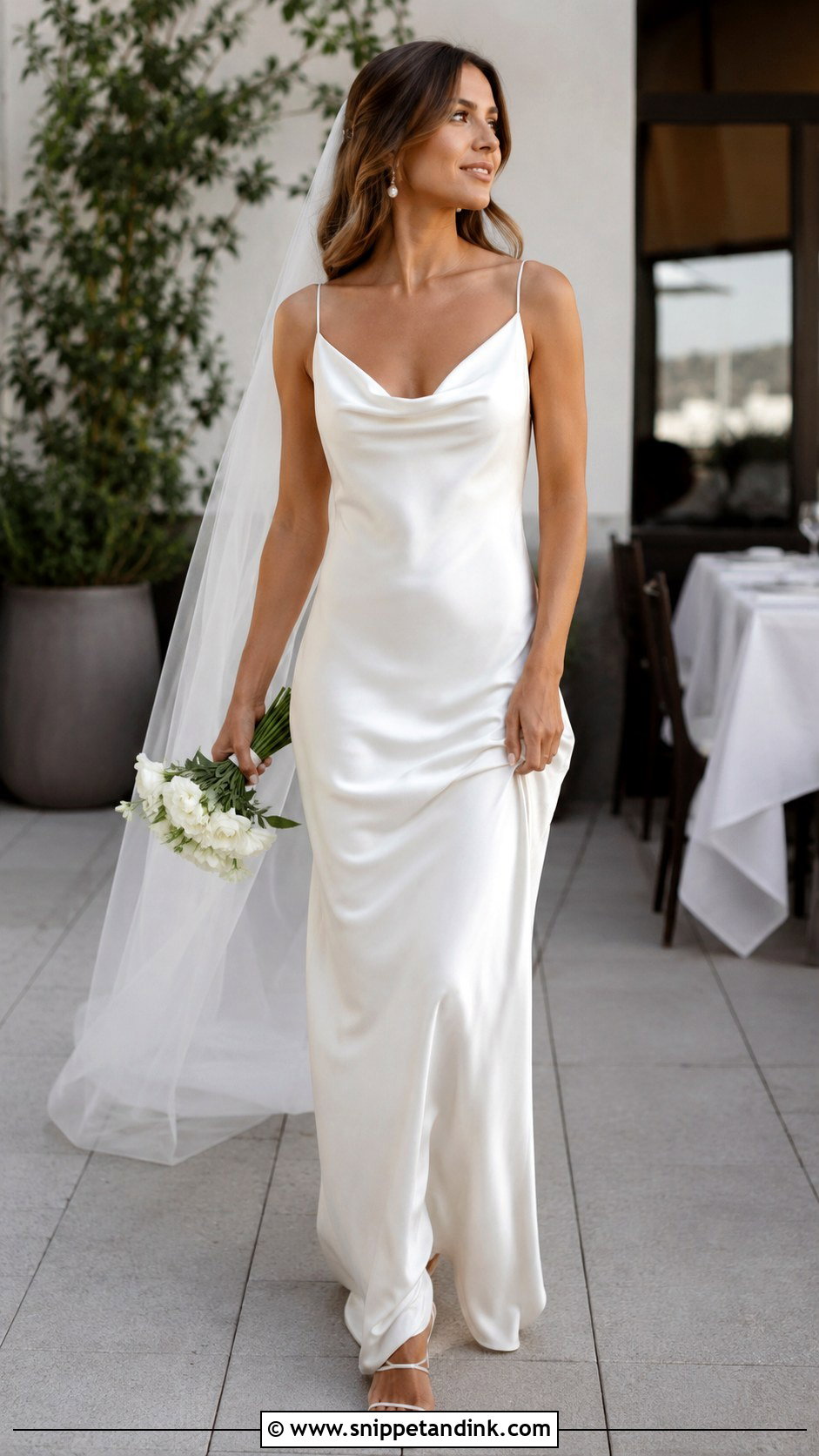
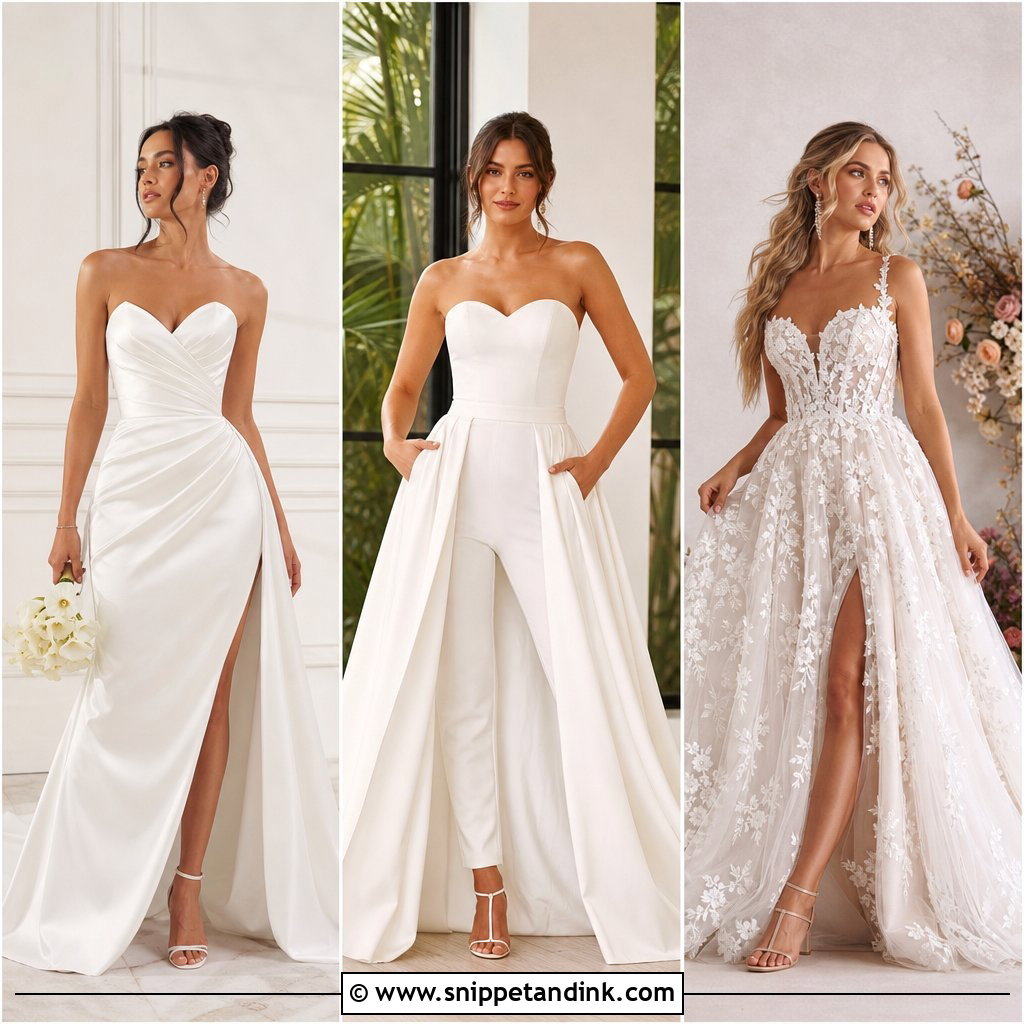
The slip is simple until you try one on. Bias-cut satin skims rather than hugs, which means it moves beautifully and also shows exactly what is underneath. I fit these over smooth, no-line shapewear or a built-in slip, and I warn brides that thin satin creases when seated and marks with water. Ivory, pearl white or champagne all suit the cut. Strappy heels, a soft veil, dainty earrings and a clean manicure; sheer gloves or a modern cape add character. Beach weddings, restaurant receptions and second looks are where it shines.
5. Princess Bride Dress
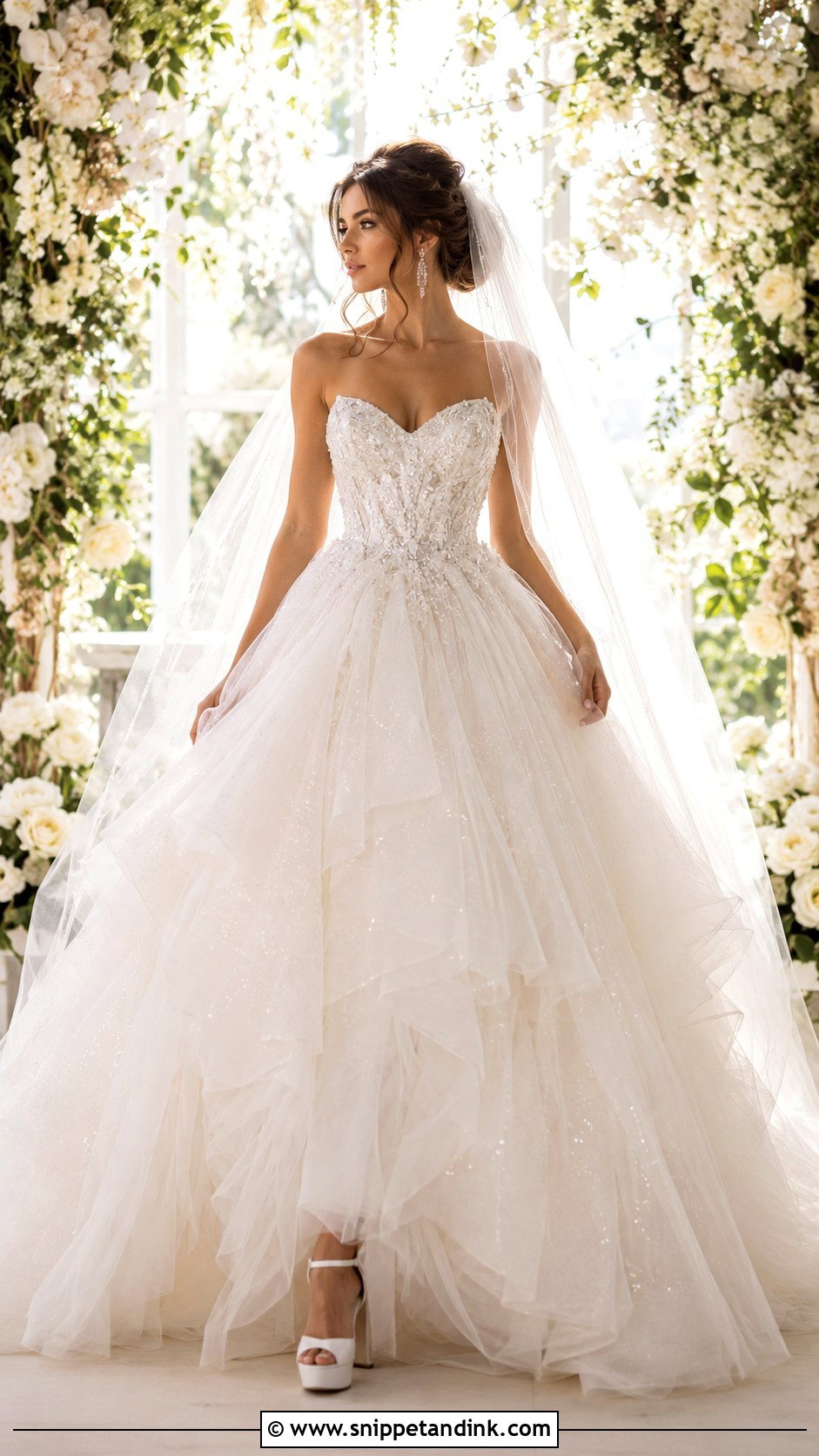
The princess gown is about volume and air. A fitted bodice over layers of soft tulle gives movement, and subtle shimmer or tiny floral appliqués keep it from reading too sweet. The waist should feel defined but not tight, because you will be eating in it. Layered tulle catches on velcro, rough stone and other people’s heels, so I tell brides to keep a bridesmaid near the hem at the venue. Crystal earrings, a long veil and platform heels for stable height, with a soft updo. Garden venues and grand hotels give it the space it needs.
6. Boho Bride Dress
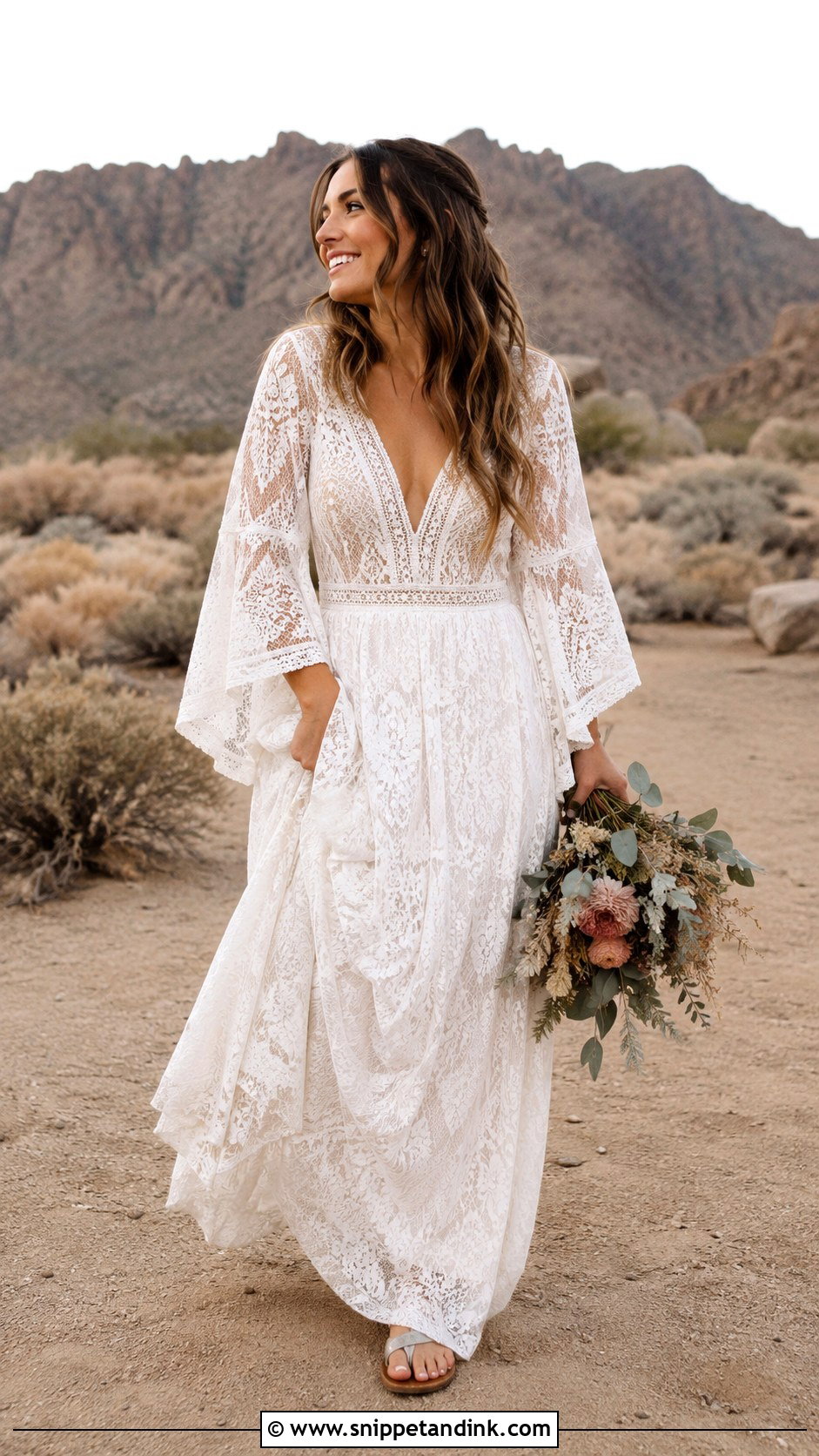
Boho dresses need to move, otherwise they look like costume. Flowing chiffon, soft lace, bell sleeves, crochet detail or a relaxed A-line all work. Barely-there sandals, loose waves, natural makeup and a bouquet of wildflowers or dried grasses suit the spirit; a floral comb or soft veil adds the bridal note. Bell sleeves are lovely in photos and awkward at dinner, so try eating with them at the fitting. Earthy accessories hold it together for desert, beach and backyard weddings.
7. Modern Corset Bride Dress
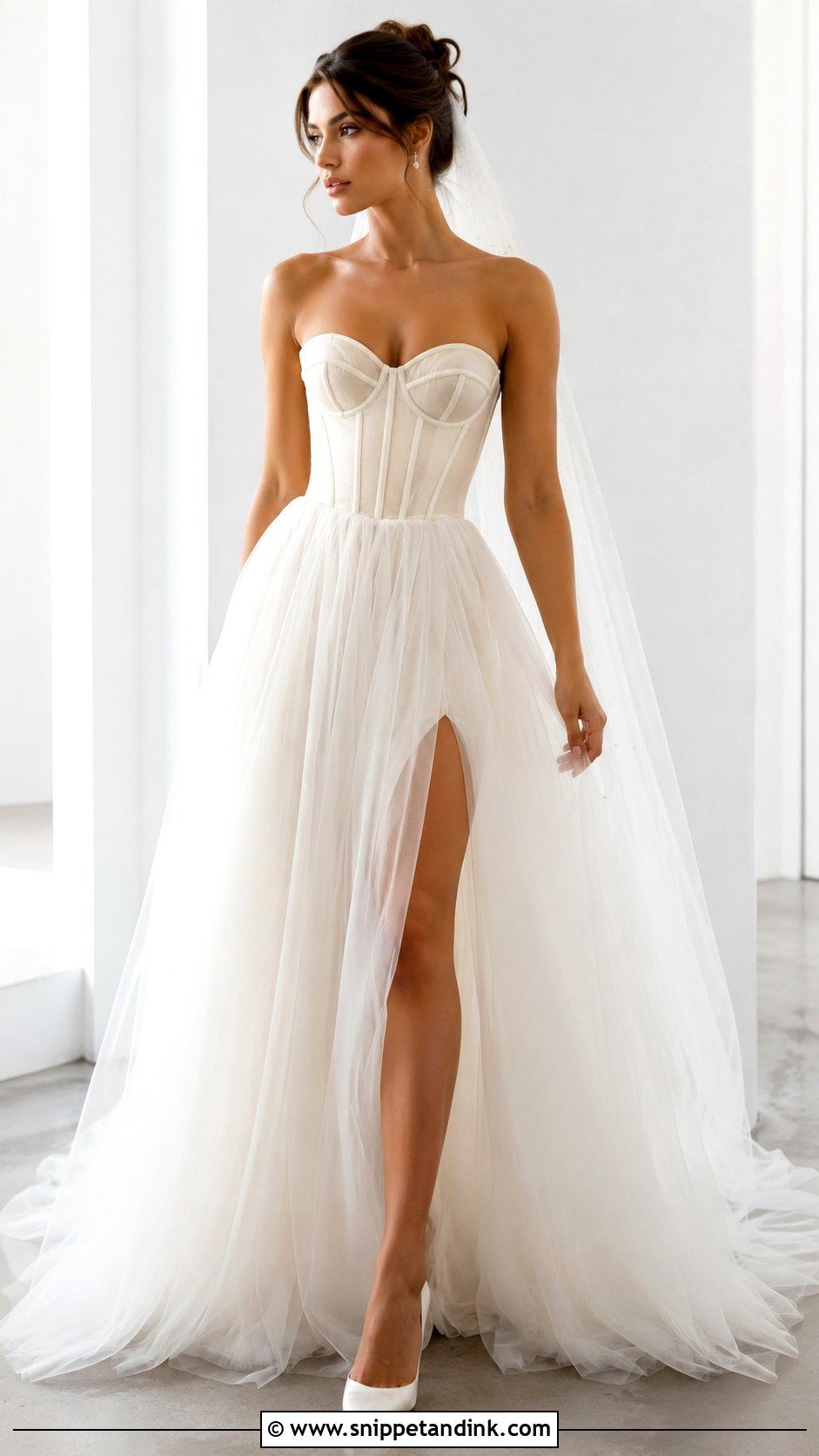
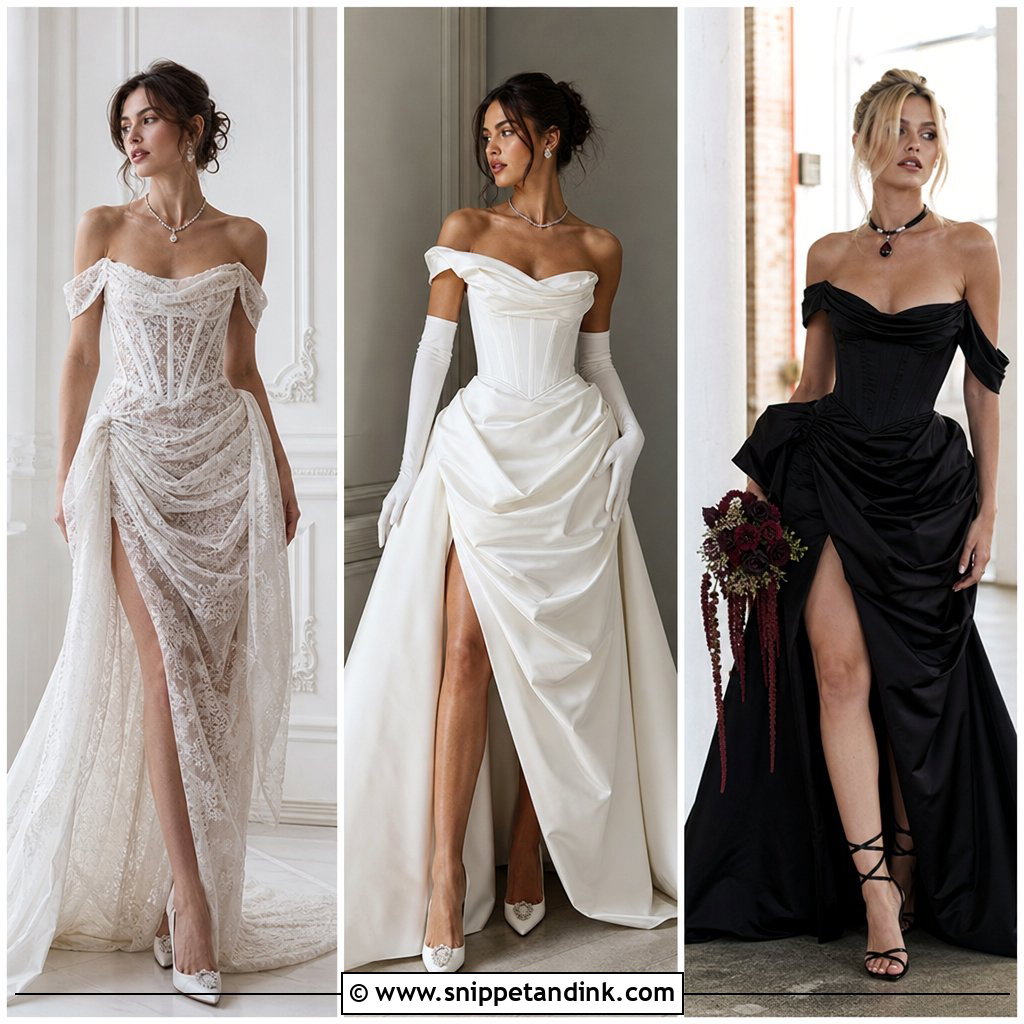
Corsetry is the craft detail I pay most attention to. Visible boning and a sculpted bodice look sharp, though only when the boning lies flat; spiral steel bends with you, while cheap plastic boning kinks and pokes through by evening. Pair the corset with an A-line skirt for romance or a column for a sleek line. Pointed heels, a clean veil, minimal jewelry and soft waves or a polished bun. Satin, tulle, organza and lace all suit it. The bodice should support you, not restrict your breathing; if you cannot take a full breath sitting, it needs letting out.
8. Basque Waist Bride Dress
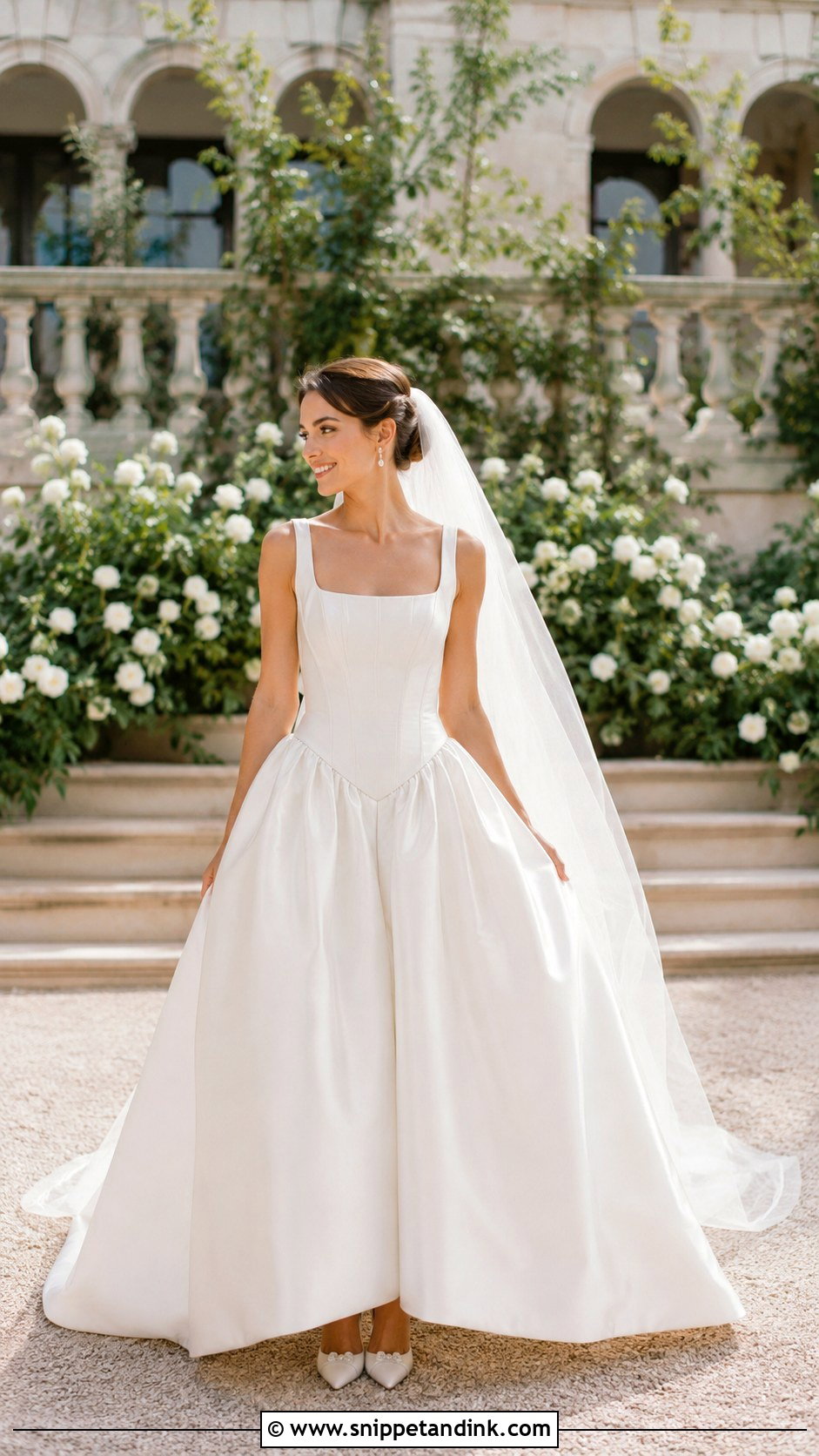
The basque waist dips into a V or U below the natural waist, which lengthens the torso and gives the vintage feel brides love about it. It suits a full skirt and structured bodice best. Satin looks regal, lace romantic, tulle lighter. I find it flatters short-waisted brides especially well, because the dip creates length that is not naturally there. Pearl earrings, a long veil and ivory heels; keep the bouquet simple and the hair soft so the waistline stays the feature.
9. Off Shoulder Bride Dress
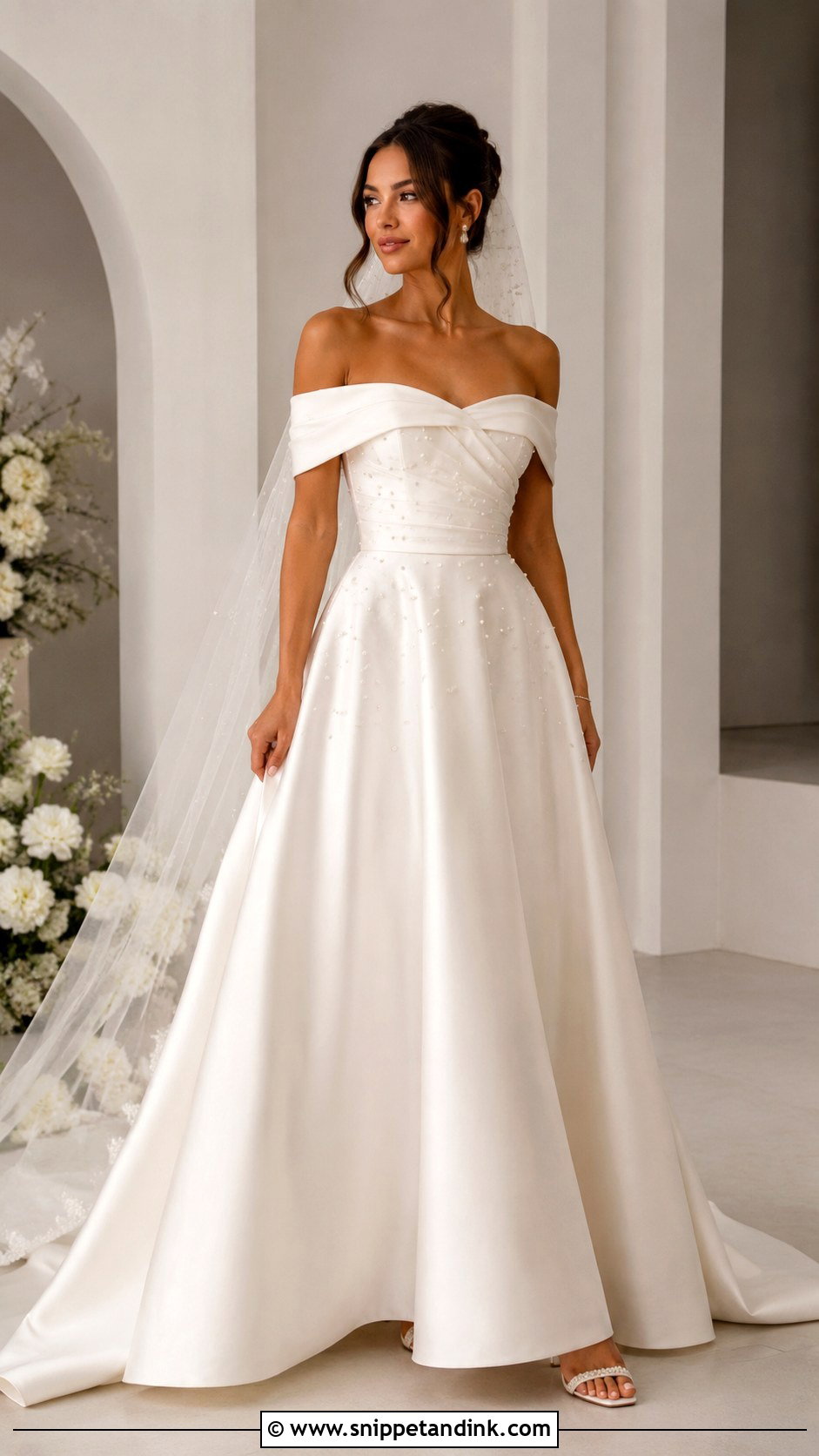
Off-the-shoulder necklines frame the collarbone while giving a little more coverage than strapless. A fitted mermaid adds drama, an A-line feels romantic, a clean satin gown looks modern. Pair it with a soft updo, pearl studs and a veil placed low at the back of the head. My fitting check here is the arms: raise them as if hugging someone. Many off-shoulder bands are too tight and pin the arms down, which shows in every candid photo of you reaching for someone. Hidden support through the bodice helps it stay put without that band doing all the work.
10. Long Sleeve Bride Dress
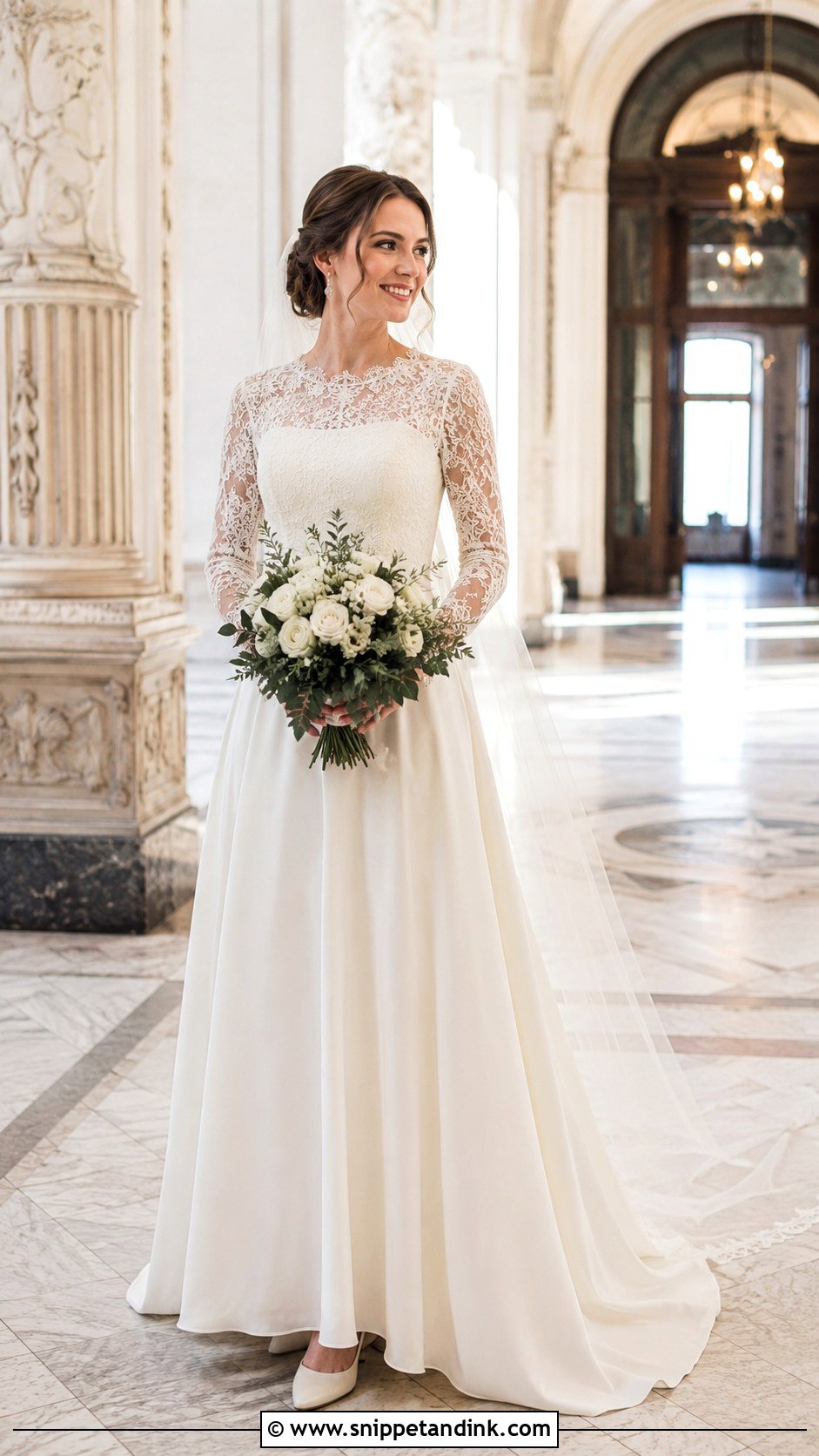
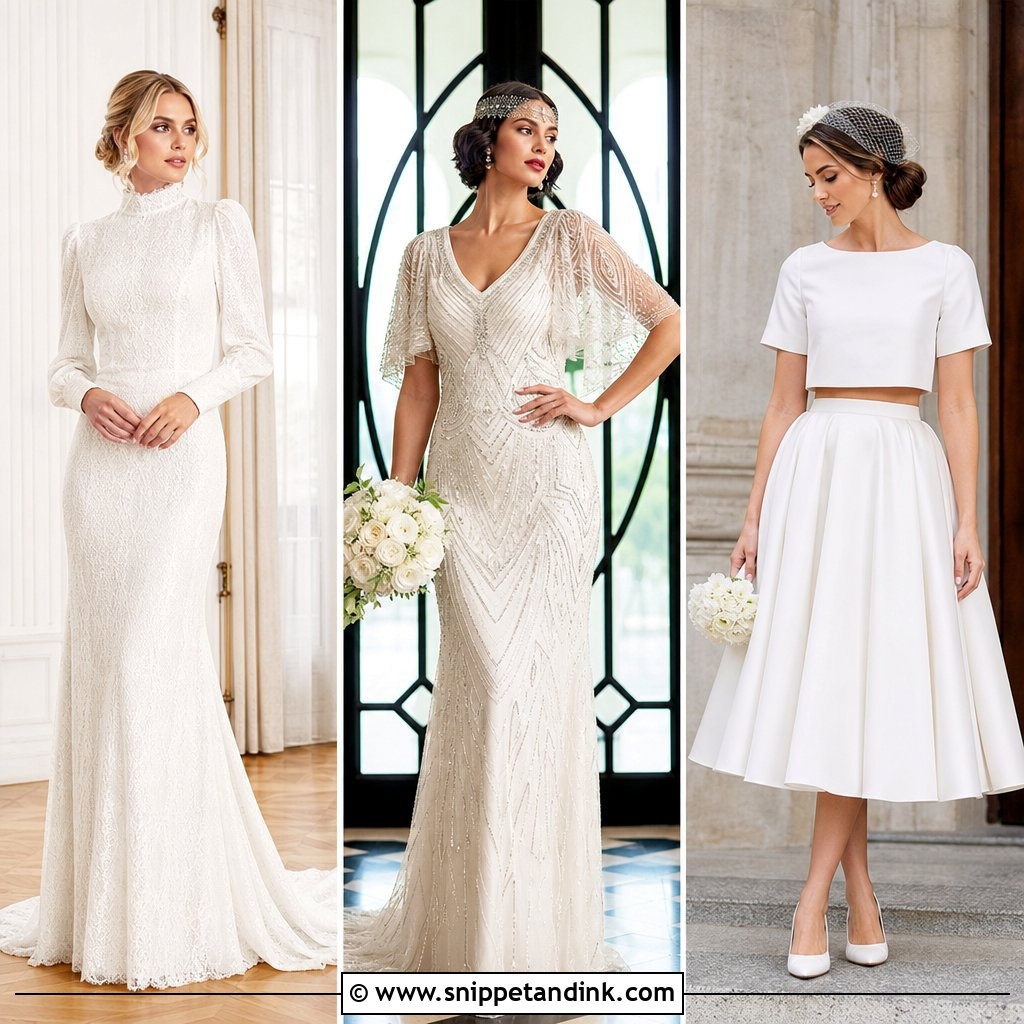
Long sleeves are the most practical bridal choice for a cool season, and they change how much jewelry you need, which is very little. Lace sleeves read romantic, sheer ones delicate, crepe sleeves clean and modern. A sheath, an A-line or a full skirt can all carry them. Closed-toe heels, a soft veil and refined jewelry. I make sure there is enough ease in the upper arm and at the armhole, since tight sleeves stop you lifting your arms for the first dance. Fall and winter weddings, historic venues and formal city ceremonies suit sleeves best.
11. High Neck Bride Dress
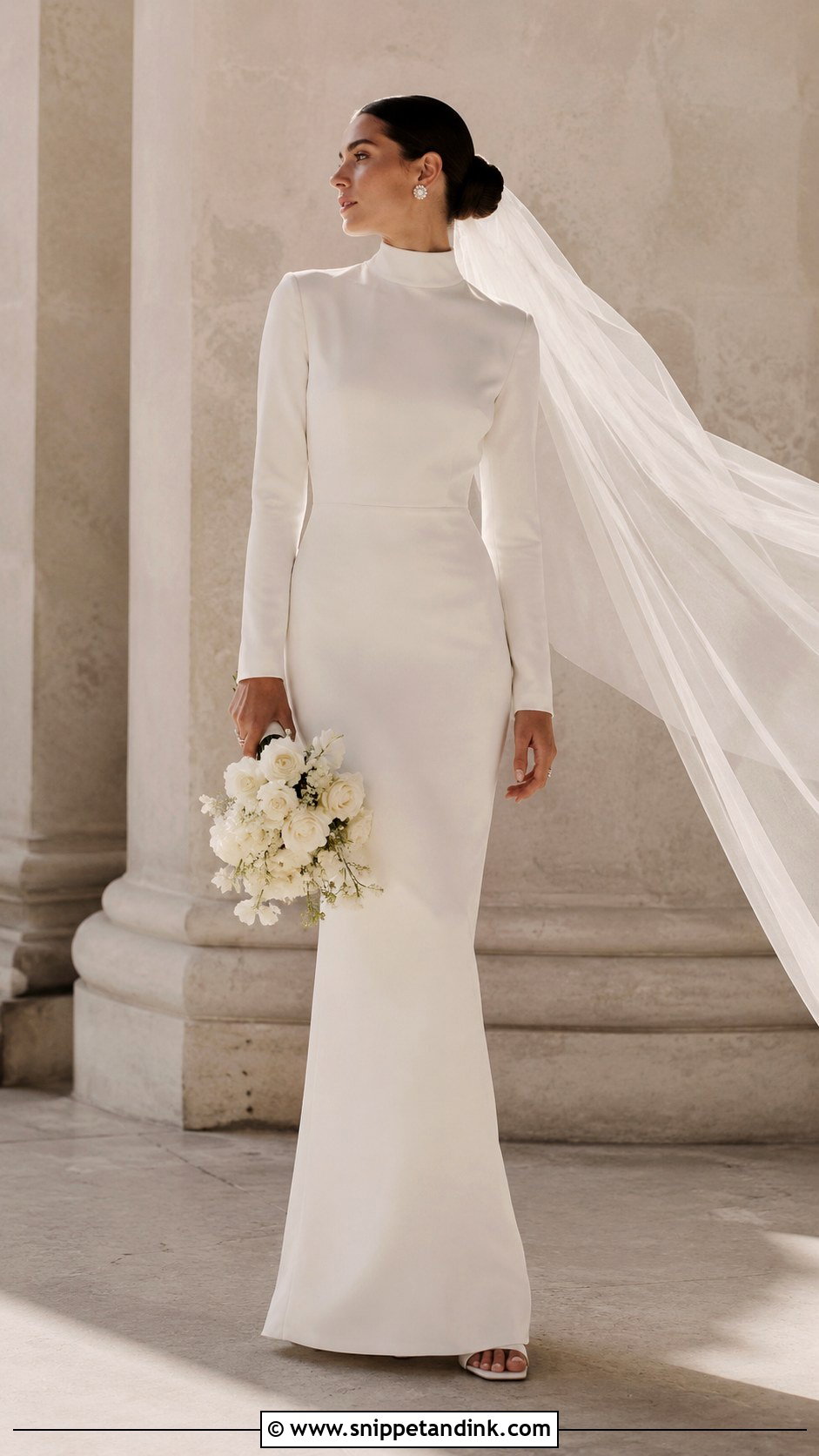
High necks are quietly dramatic. They give coverage while drawing a long line through the neck and shoulders. Lace looks romantic, satin editorial, crepe simple. Skip the necklace entirely and wear statement studs or a bracelet instead, with a sleek bun and simple heels. A long veil softens the structure. Brides with a shorter neck should try a high neck with an illusion yoke rather than solid fabric, which keeps the line without crowding the jaw. It suits formal ceremonies and modest brides who still want a fashion moment.
12. Square Neck Bride Dress
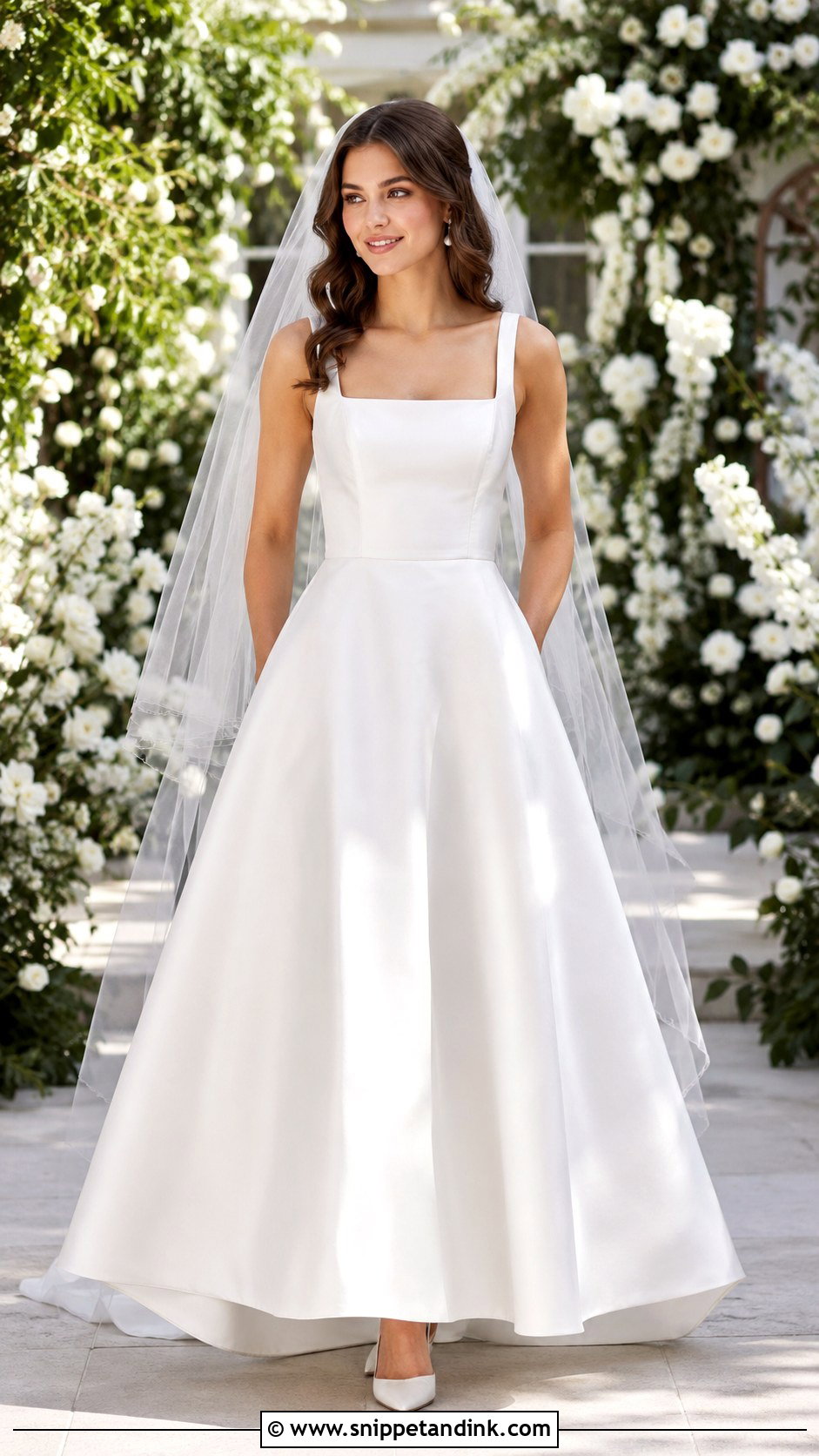
The square neck is one of the easiest necklines to wear, flattering on most bust sizes because the straight line frames the chest without plunging. It pairs with wide straps, long sleeves or a fitted bodice. A satin A-line feels classic; a crepe column feels minimal. Pearl earrings, a soft veil and simple ivory pumps, with a low bun or polished waves to keep the neckline visible. If you want structure without much drama, start your try-ons here.
13. Floral Applique Bride Dress
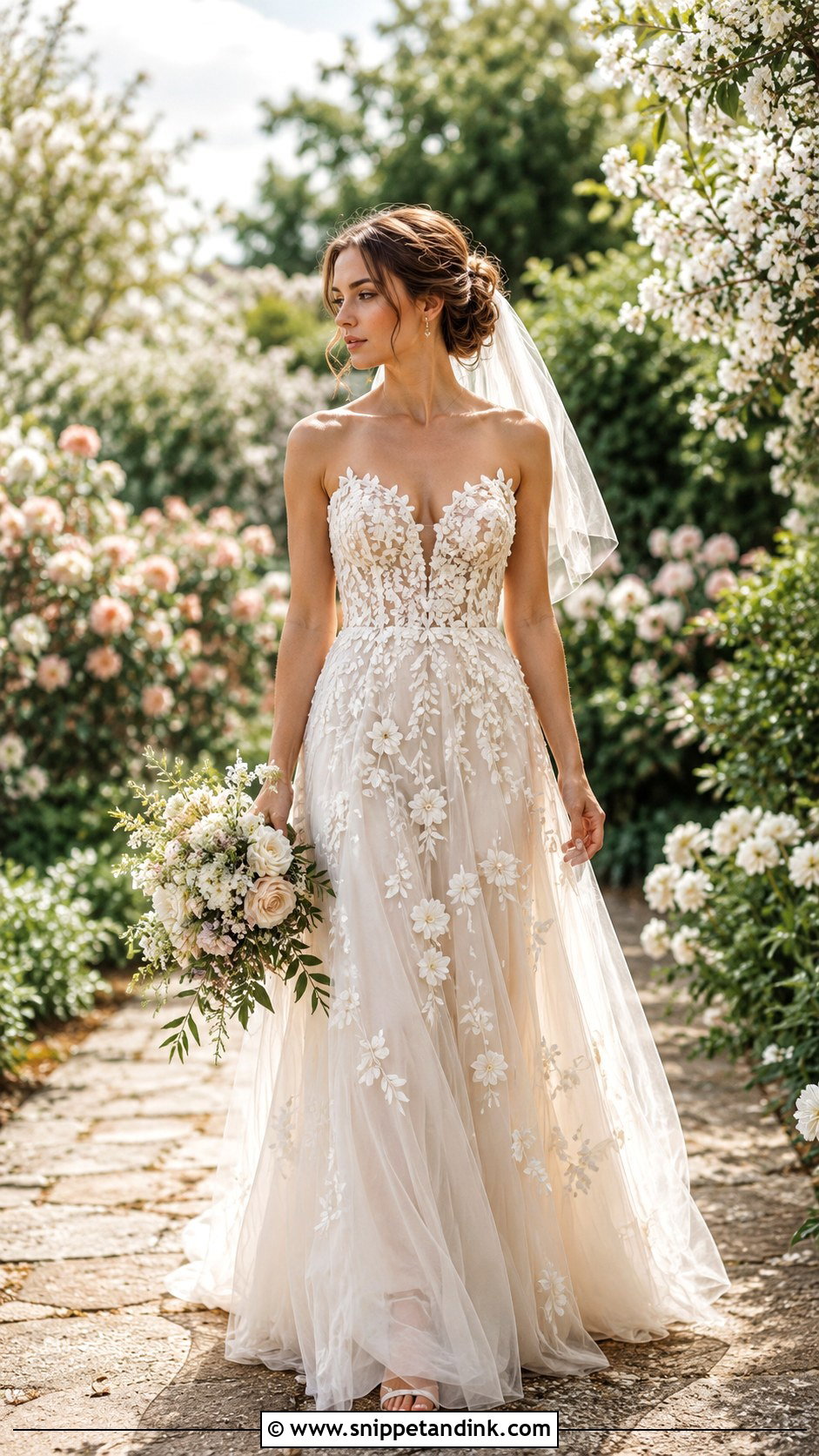
Appliqués add dimension that photographs from a distance, which flat lace cannot always do. A floral applique bride dress can carry tiny scattered blossoms or large three-dimensional flowers. Tulle with scattered flowers feels whimsical; a fitted gown with floral lace looks more polished. Ask how the flowers are attached. Hand-sewn appliqués survive a long day far better than glued ones, which can lift at the edges after hugs and dancing. Simple heels, small earrings, a quiet veil and a natural bouquet that echoes rather than competes.
14. Pearl Bride Dress
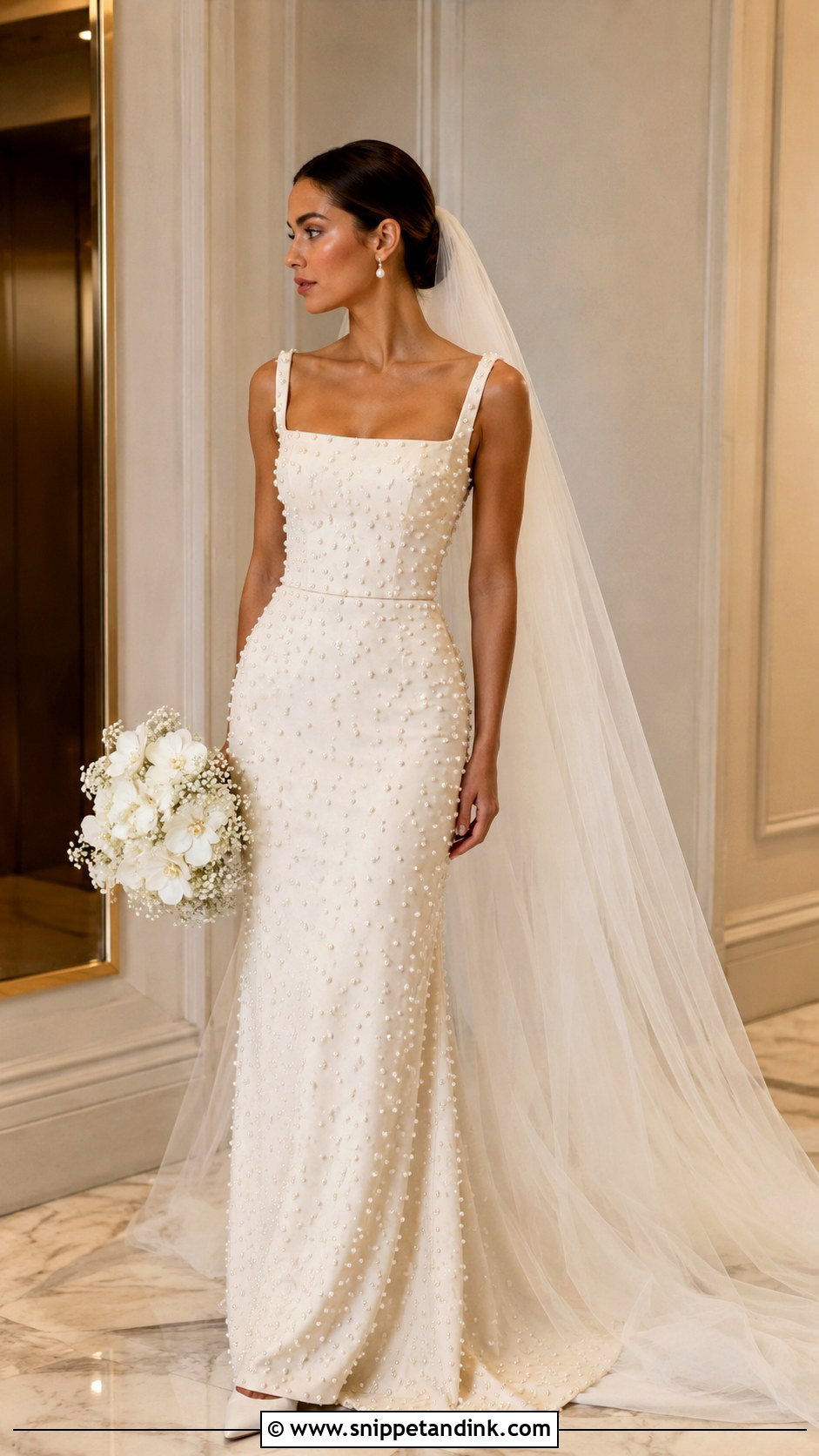
Pearls catch light softly instead of sparkling, which is why I like them for brides who find crystals too much. They can be scattered accents, straps, bodice work or allover texture. A simple silhouette keeps the pearls modern; a fuller gown leans glamorous. Pearl earrings, satin heels and a clean veil, and nothing more. Fully pearled bodices are heavy, so check the straps and the zip carry that weight comfortably. Hotel, coastal and formal indoor weddings all suit it.

15. Short Bride Dress
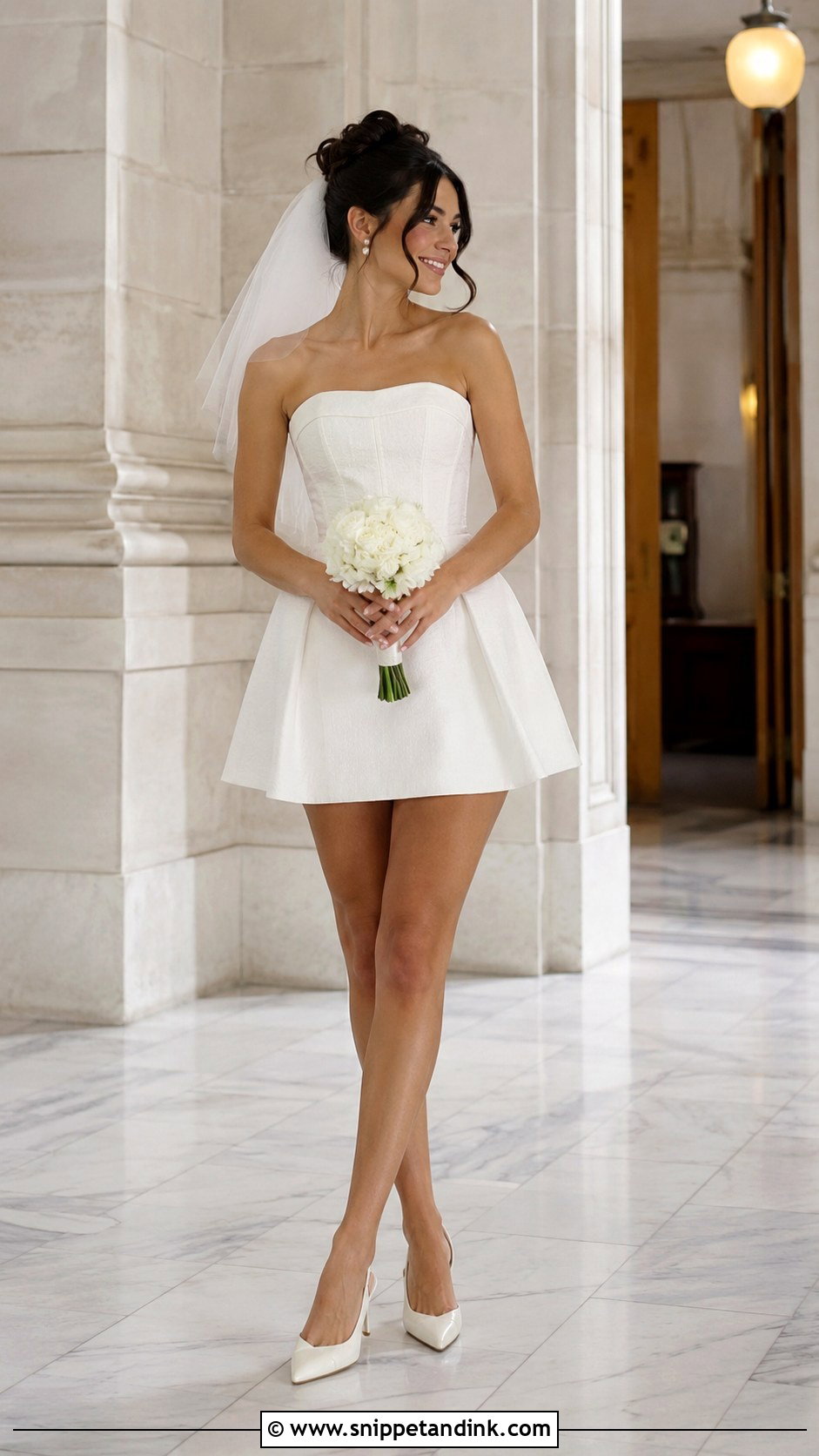
Short dresses are all about tailoring, since there is no skirt to hide an imperfect fit. A tailored mini, a tea-length gown or a structured short dress with a bow, feathers, pearls or clean satin all work. Pointed pumps, slingbacks or embellished flats; because your shoes are on show, make them special. Add a short veil, pearl earrings and a small bouquet. I hem minis with the bride seated, so the length stays decent when she sits for photos. Courthouses, brunches and reception changes are made for this look.
16. Bridal Jumpsuit
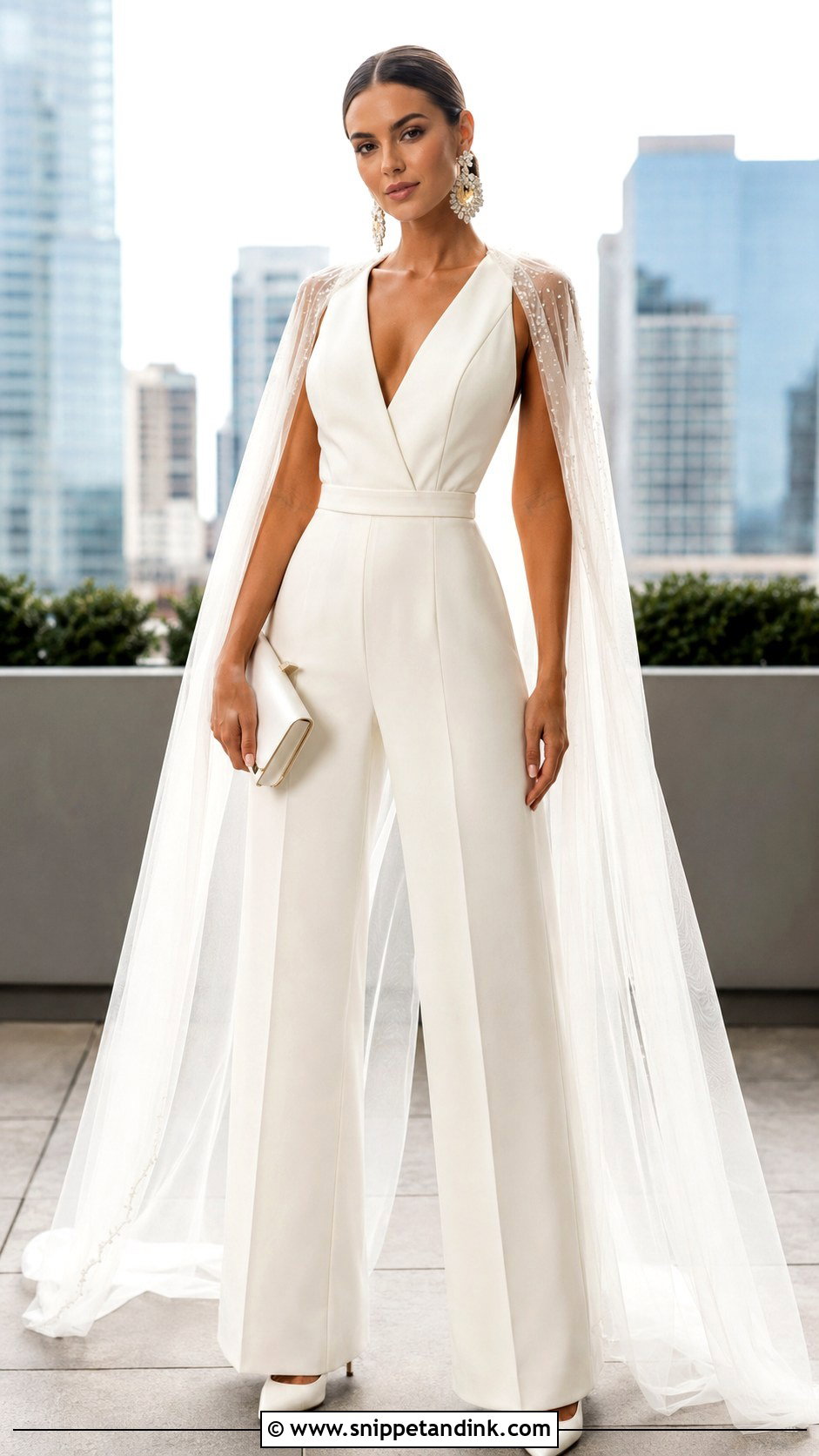
A bridal jumpsuit is sleek and practical, and the fit has to be exact. Wide legs, a tailored bodice and clean crepe are the usual recipe, with a detachable overskirt for ceremony drama. Pointed heels, a structured clutch, statement earrings and a polished bun; a birdcage veil or long cape brings in the bridal feel. The rise is what I check first. Too short in the body and it pulls uncomfortably when you sit or bend. Before you buy, ask how you will use the bathroom in it; a back zip you can reach matters more than it sounds.
17. Bridal Suit
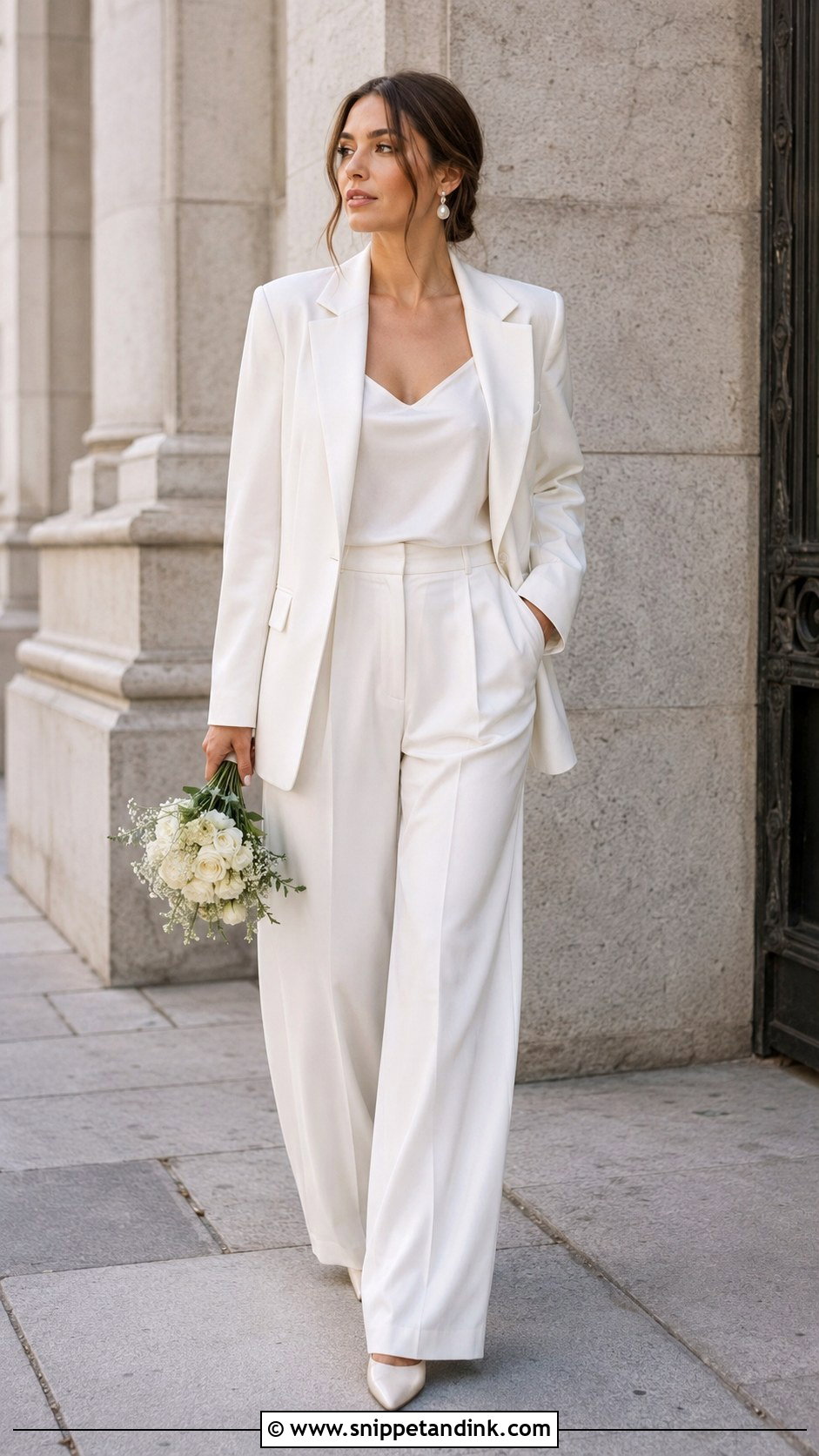
A bridal suit is confident and very comfortable. Pair an ivory blazer and tailored trousers with a silk camisole, pointed heels and refined jewelry. Double-breasted gives structure; a softer oversized cut feels relaxed. A veil, pearl earrings or a satin flower pin add the bridal detail. Keep the palette tonal, ivory, cream or soft white, so it looks deliberate. Ivory wool and crepe show creases from sitting, so I have brides steam the trousers right before the ceremony. Courthouses, elopements and modern receptions suit it best.
18. Two Piece Bride Dress
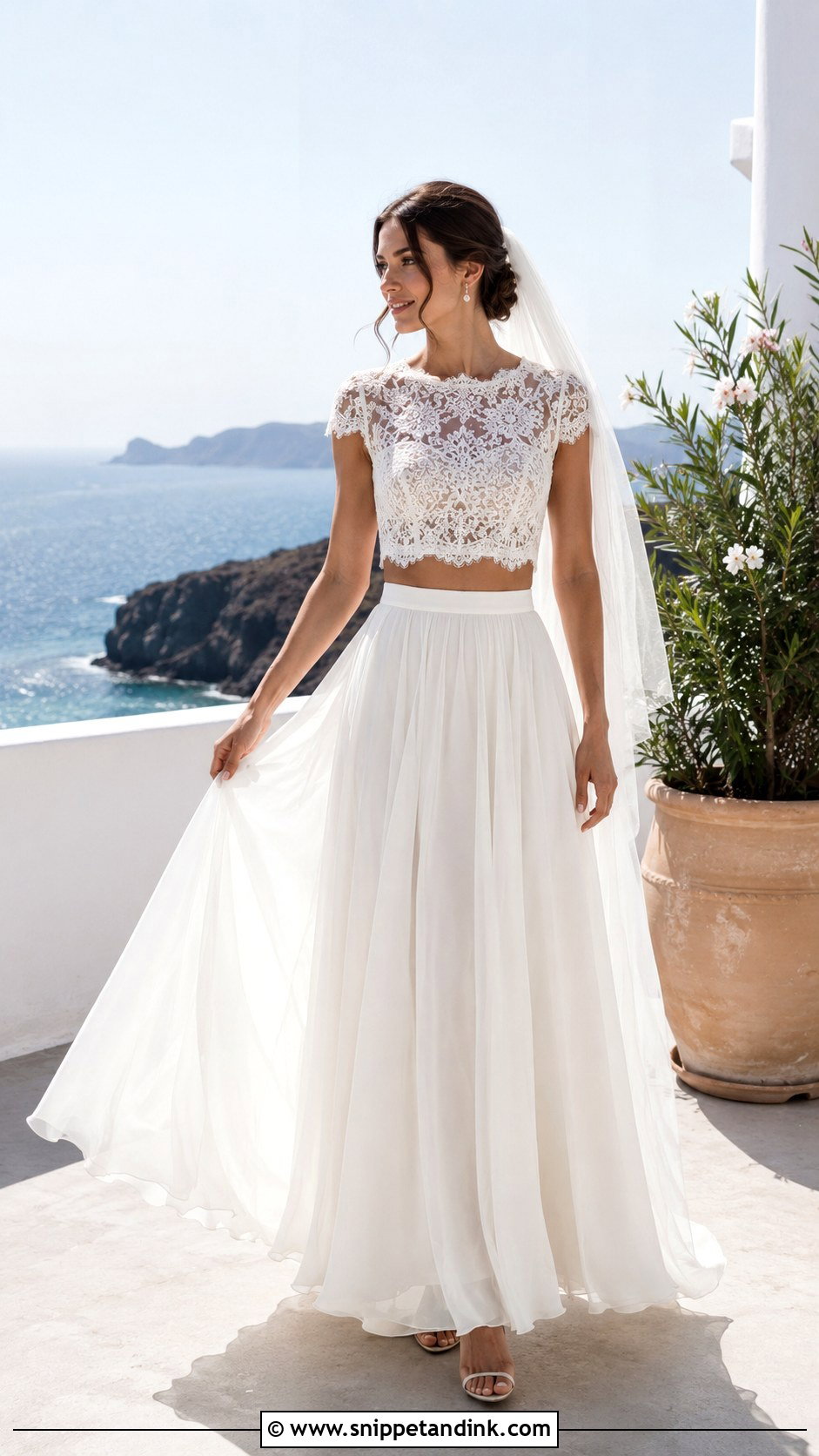
Two-piece gowns come down to proportion. A lace crop top with a high-waisted skirt, a satin bandeau with a full ball skirt, or a structured top with a slim column all work, as long as only one half carries the detail. A simple top lets the skirt go dramatic; a detailed top needs a cleaner skirt. Delicate heels, a veil and simple jewelry. I fit the top and skirt together so the gap stays the same when you move, and many brides prefer a skirt that meets the top with no skin at all. Both pieces can be worn again later.
19. Detachable Skirt Bride Dress
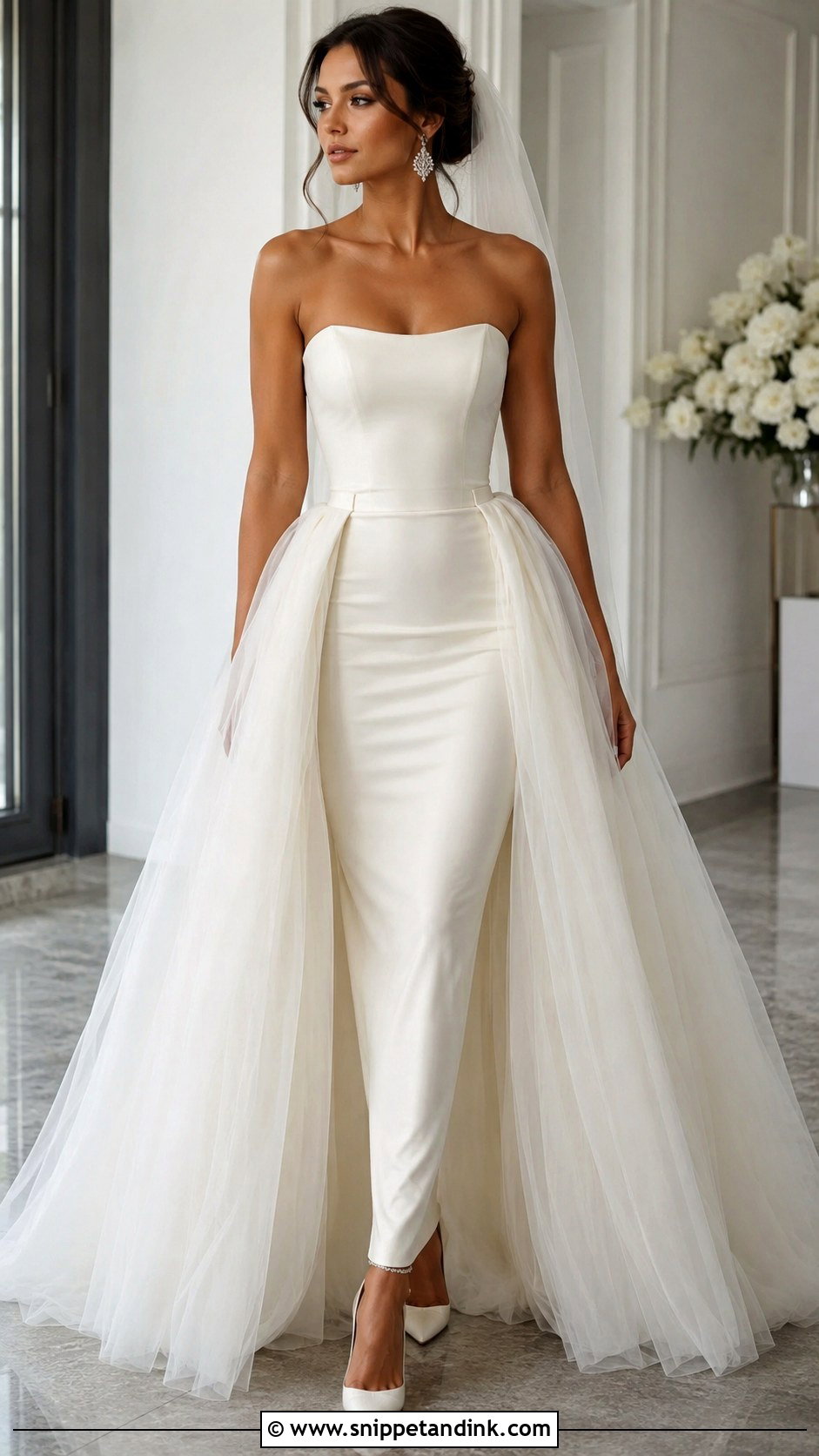
Two looks in one outfit: wear a full overskirt over a fitted gown, mini, jumpsuit or column for the ceremony, then take it off for the reception. Tulle feels soft, satin structured, organza airy. Secure heels, a veil for the ceremony, statement earrings for the second look. I make brides practice taking the overskirt off at the fitting, because some fasten with a row of hooks that needs a helper and two minutes. A detachable skirt is often cheaper than buying a full second dress.


20. Champagne Bride Dress
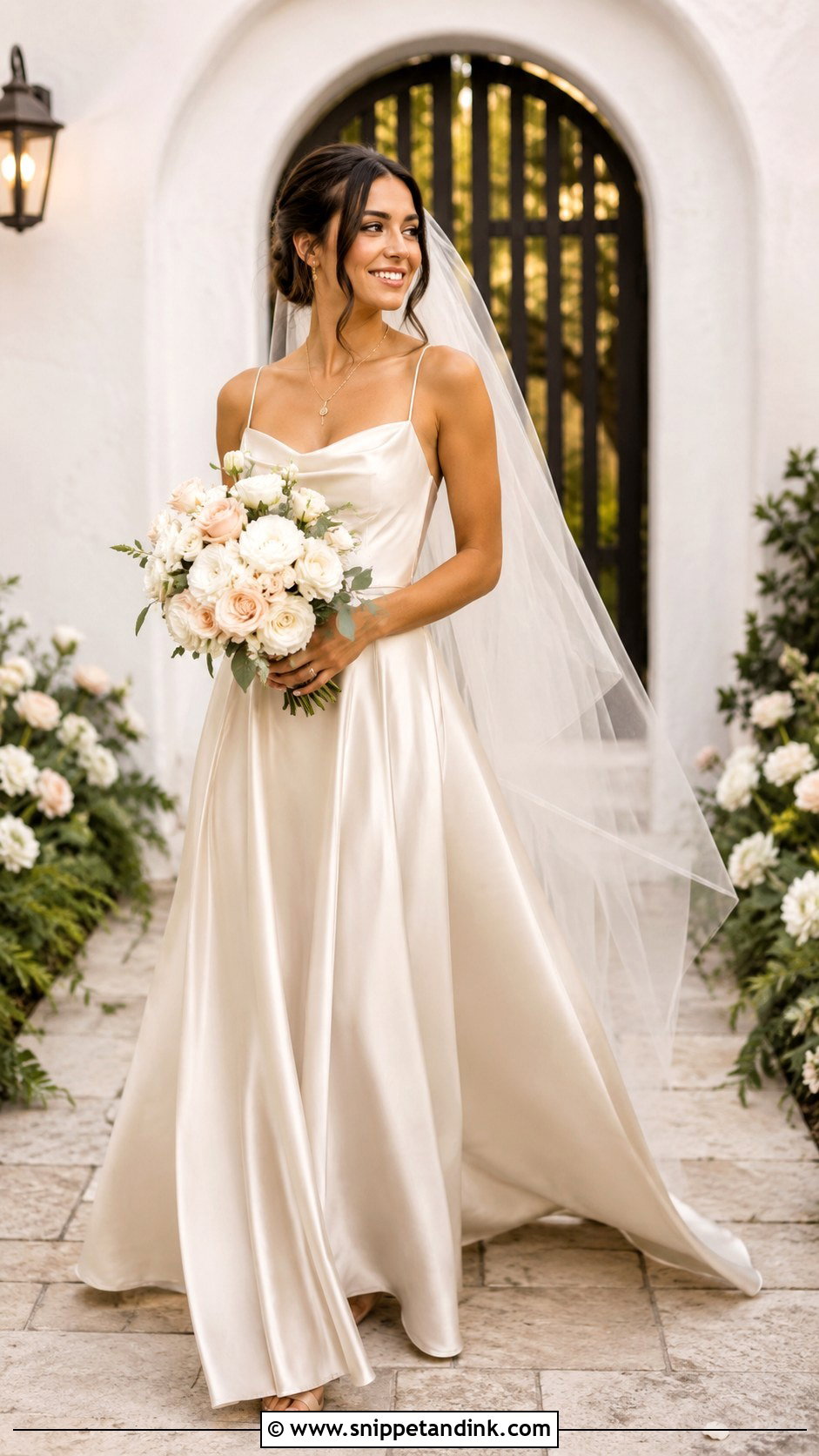
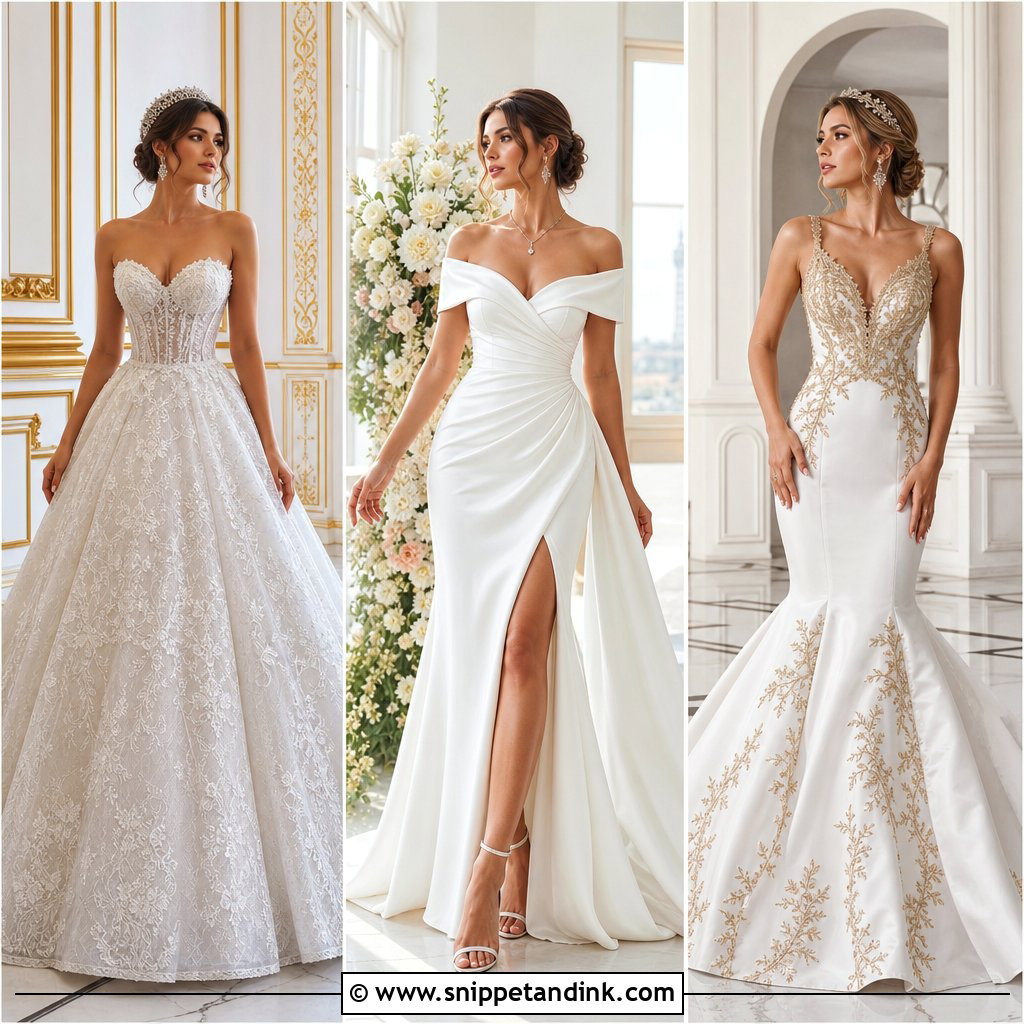
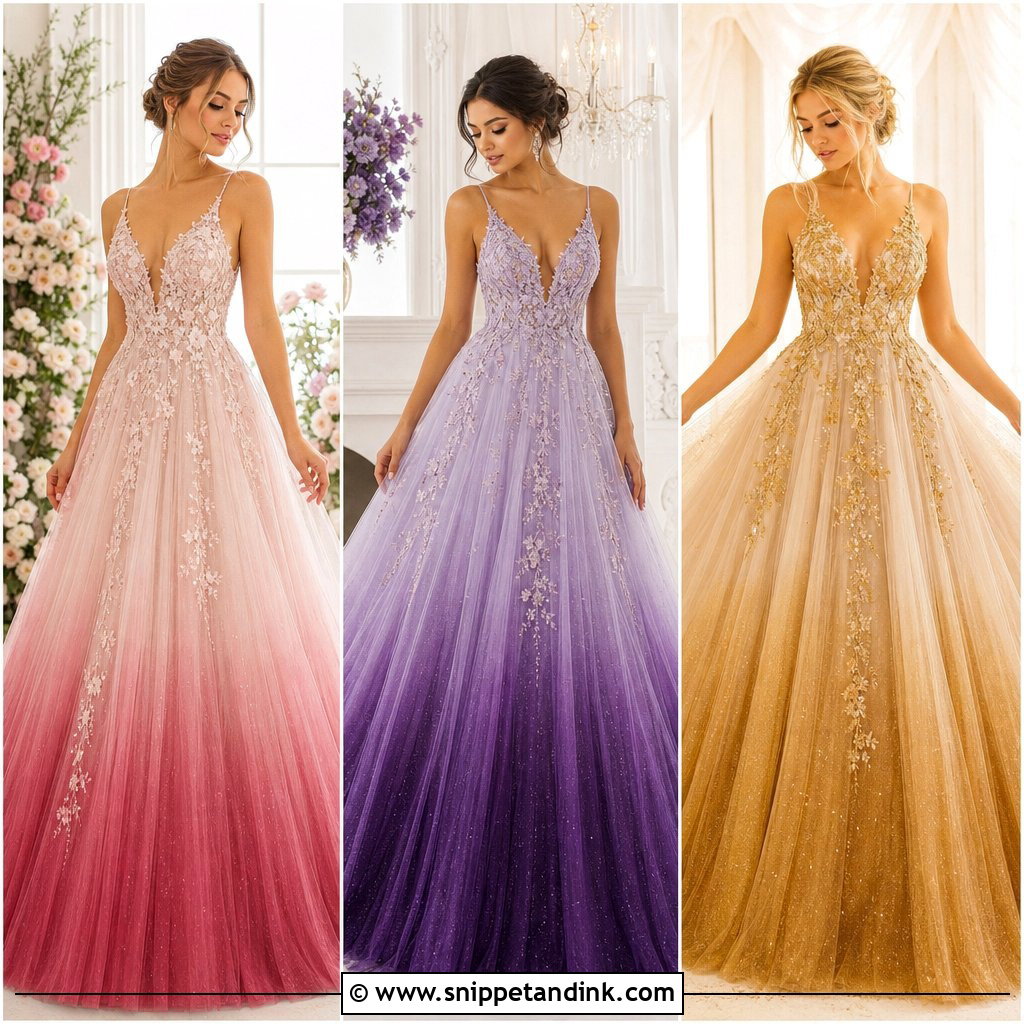
Champagne is the warm alternative to bright white, running from pale beige to soft gold. It flatters warm and olive undertones especially well, and it can wash out very fair, cool skin if the shade leans too yellow, so I hold several swatches to the face in daylight. Satin glows, tulle reads romantic, lace looks vintage. Nude or ivory heels, gold jewelry and a veil dyed to the same undertone; a mismatched white veil makes champagne look dirty. Cream, blush and peach flowers suit it.
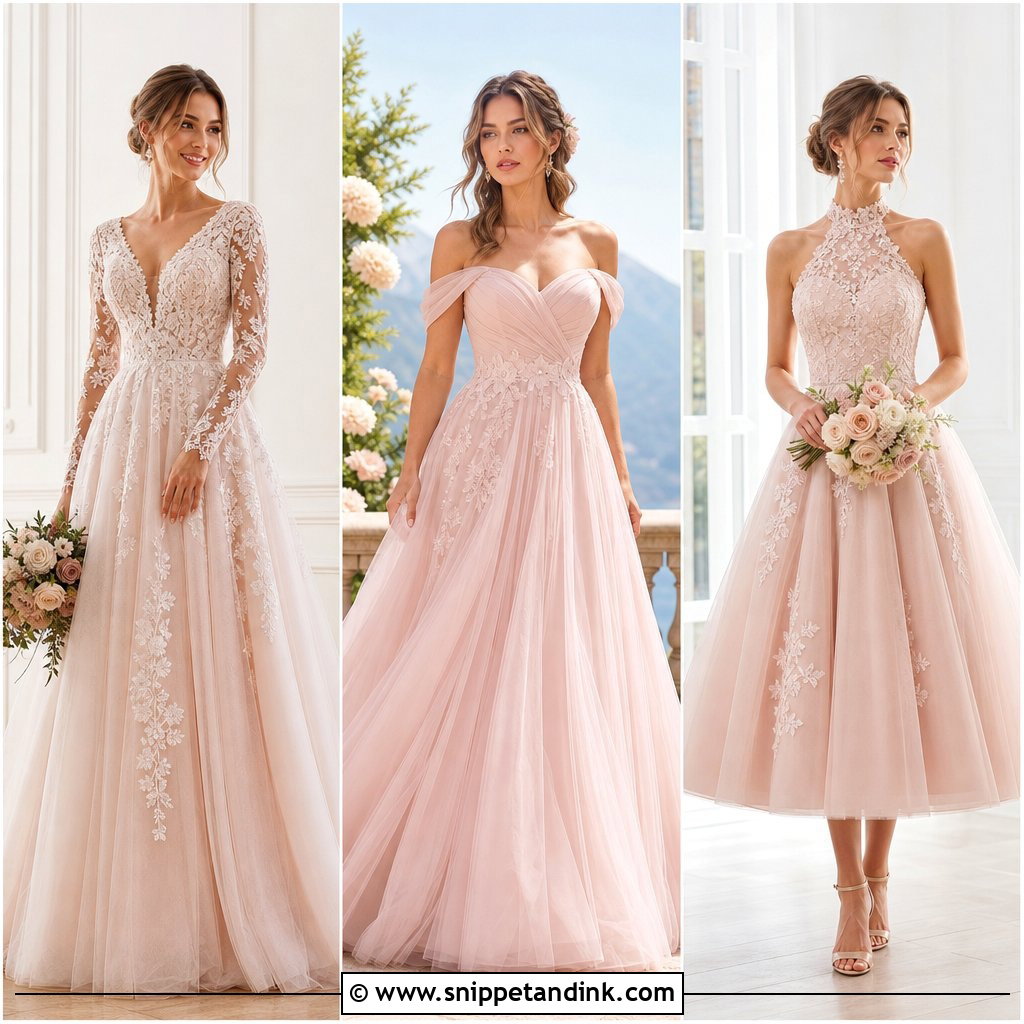
21. Blush Bride Dress
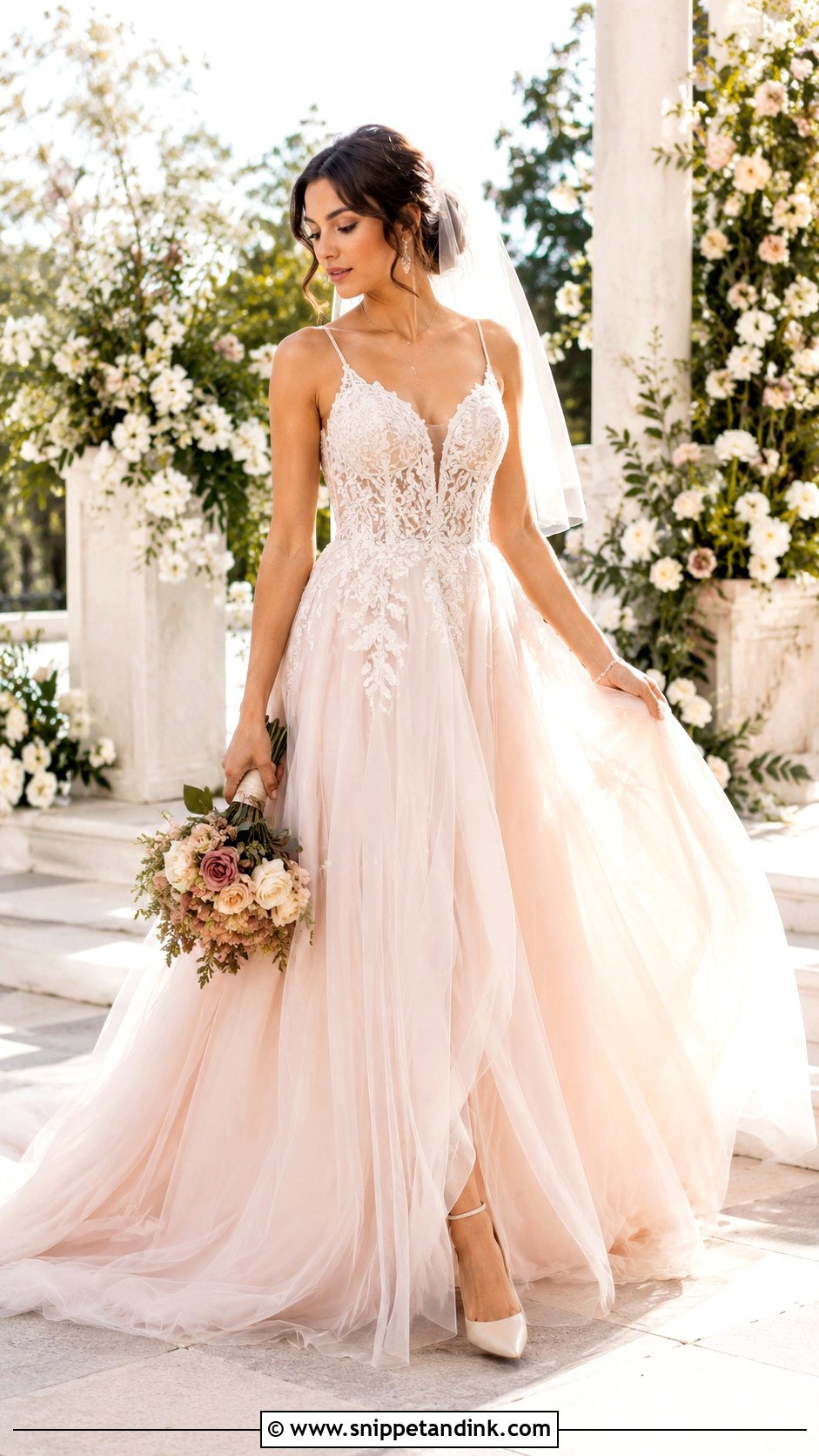
Blush can be barely there or clearly pink. In tulle, lace, chiffon or layered organza it looks soft. The trick I use with blush is a nude or champagne underlay beneath the pink tulle, which keeps the color sophisticated instead of sugary. Ivory heels, rose-gold jewelry and a veil matched to the undertone. Pale pink, cream and soft greenery in the bouquet. A refined silhouette and clean accessories keep it grown-up.
22. Blue Bride Dress
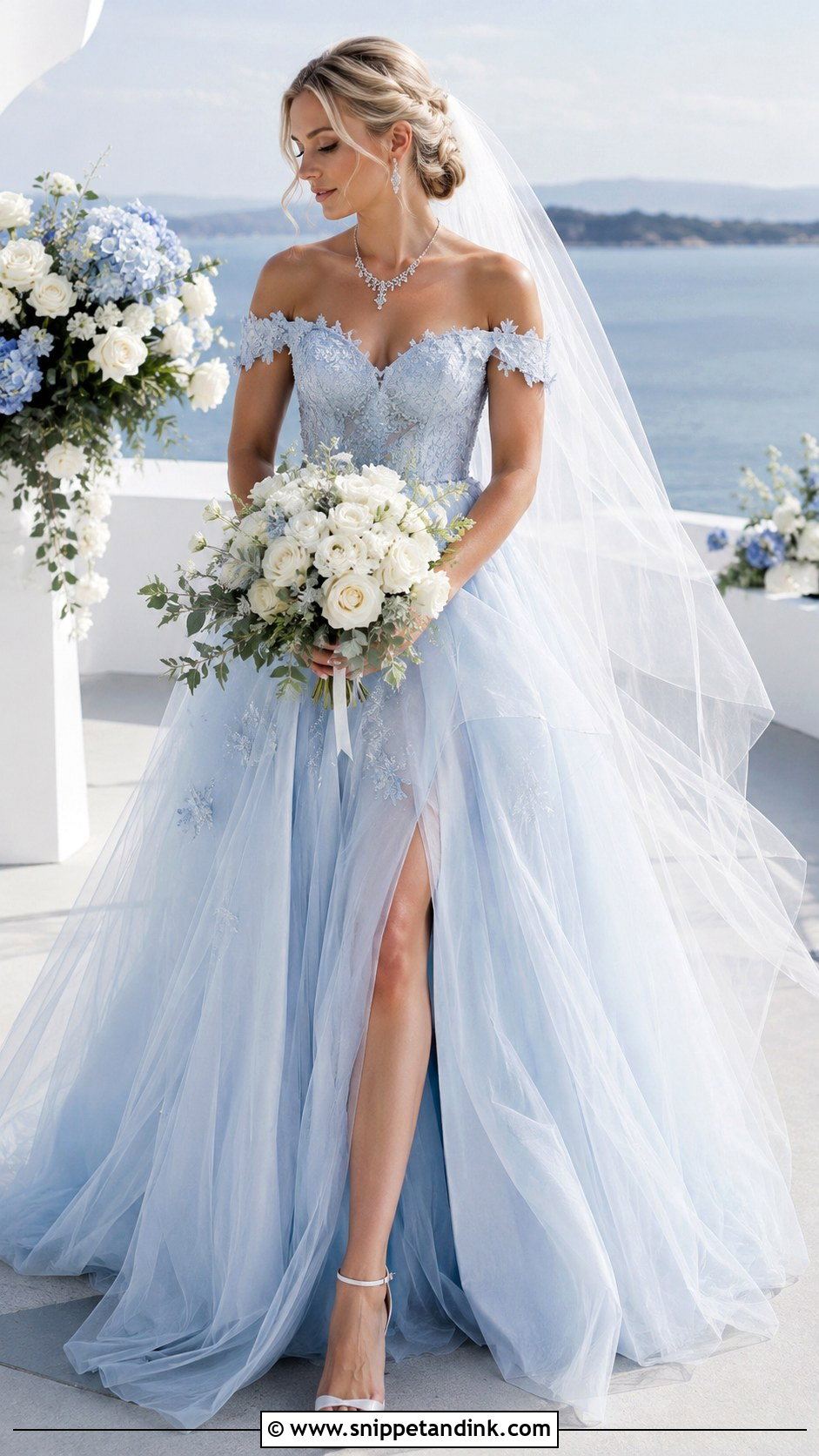
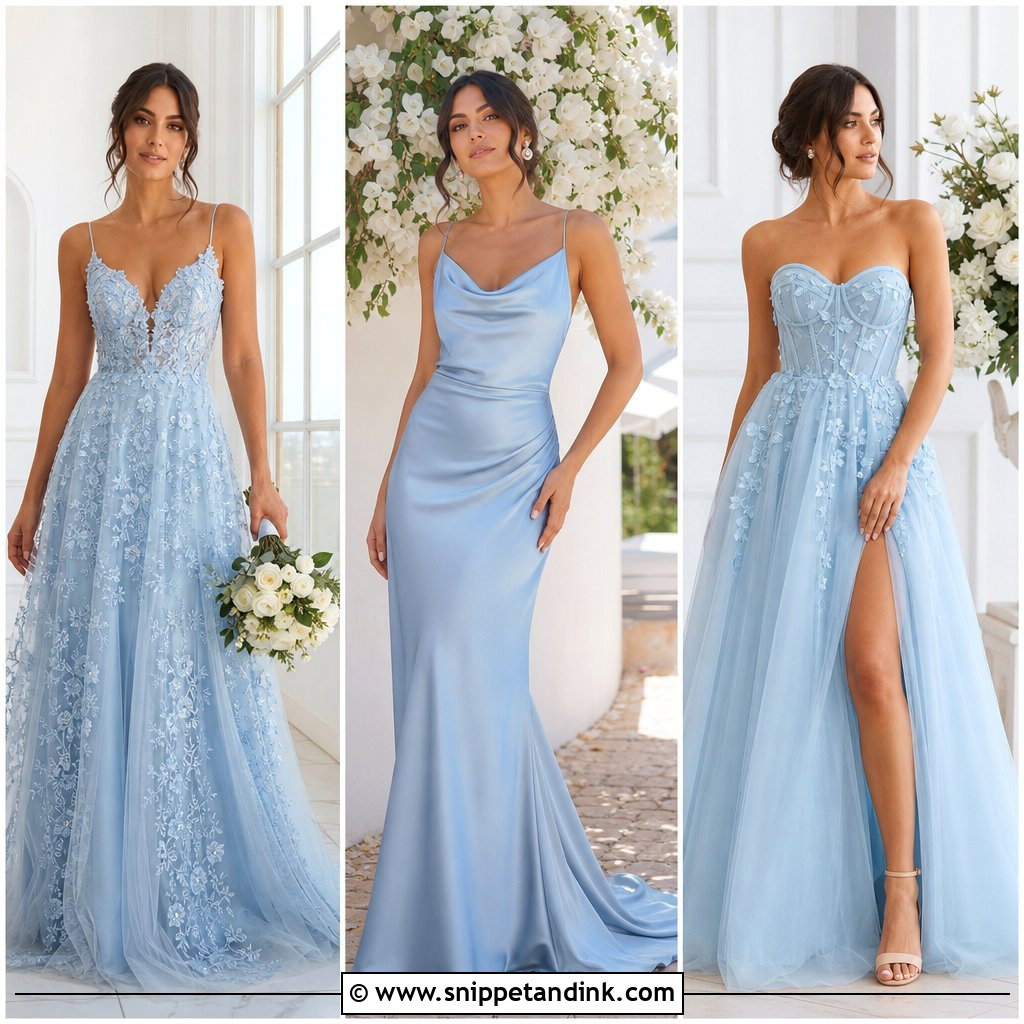
Blue reads fresh and still bridal when the shade is pale: icy, powder or blue-gray. Tulle feels dreamy, satin polished, chiffon flowing. Silver or pearl jewelry, ivory shoes and a delicate veil, with a white bouquet to keep it wedding-focused. Pale blue can look grey in shade and stronger in direct sun, so I view it outdoors and indoors before ordering. Coastal venues and winter weddings suit it especially well.
23. Vintage Bride Dress
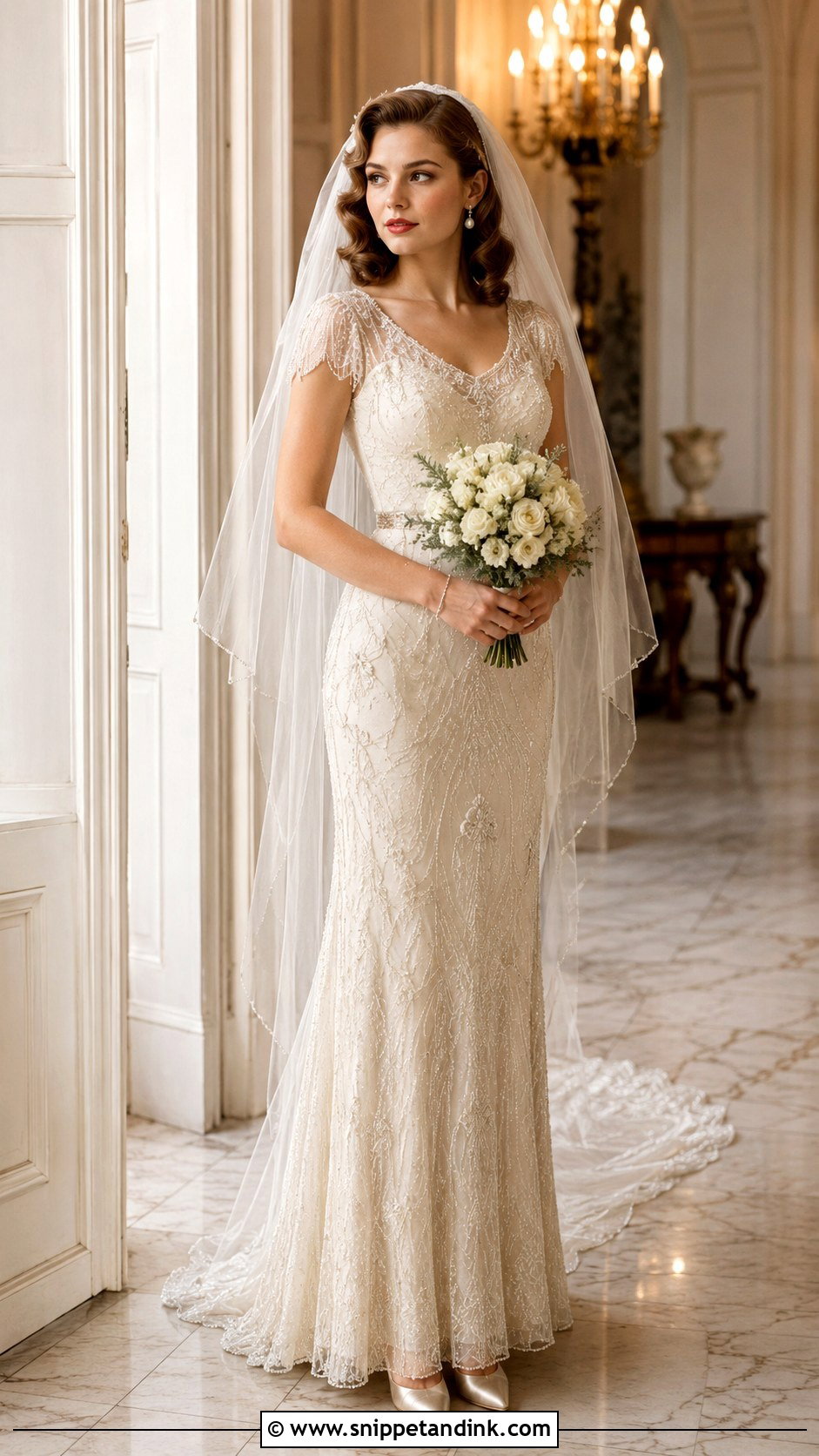
A vintage bride dress can mean a 1920s beaded gown, a 1950s tea-length, a 1970s lace-sleeve gown or a 1990s silk slip. Choose one era and keep everything else clean so it never looks like costume. Pearl earrings, satin pumps, a soft veil and classic makeup. With a true vintage gown, I have a specialist check the fabric before any alteration, because old silk can split along the seams and beaded weight can tear fragile chiffon. Historic venues and intimate weddings suit it.
24. Beach Bride Dress
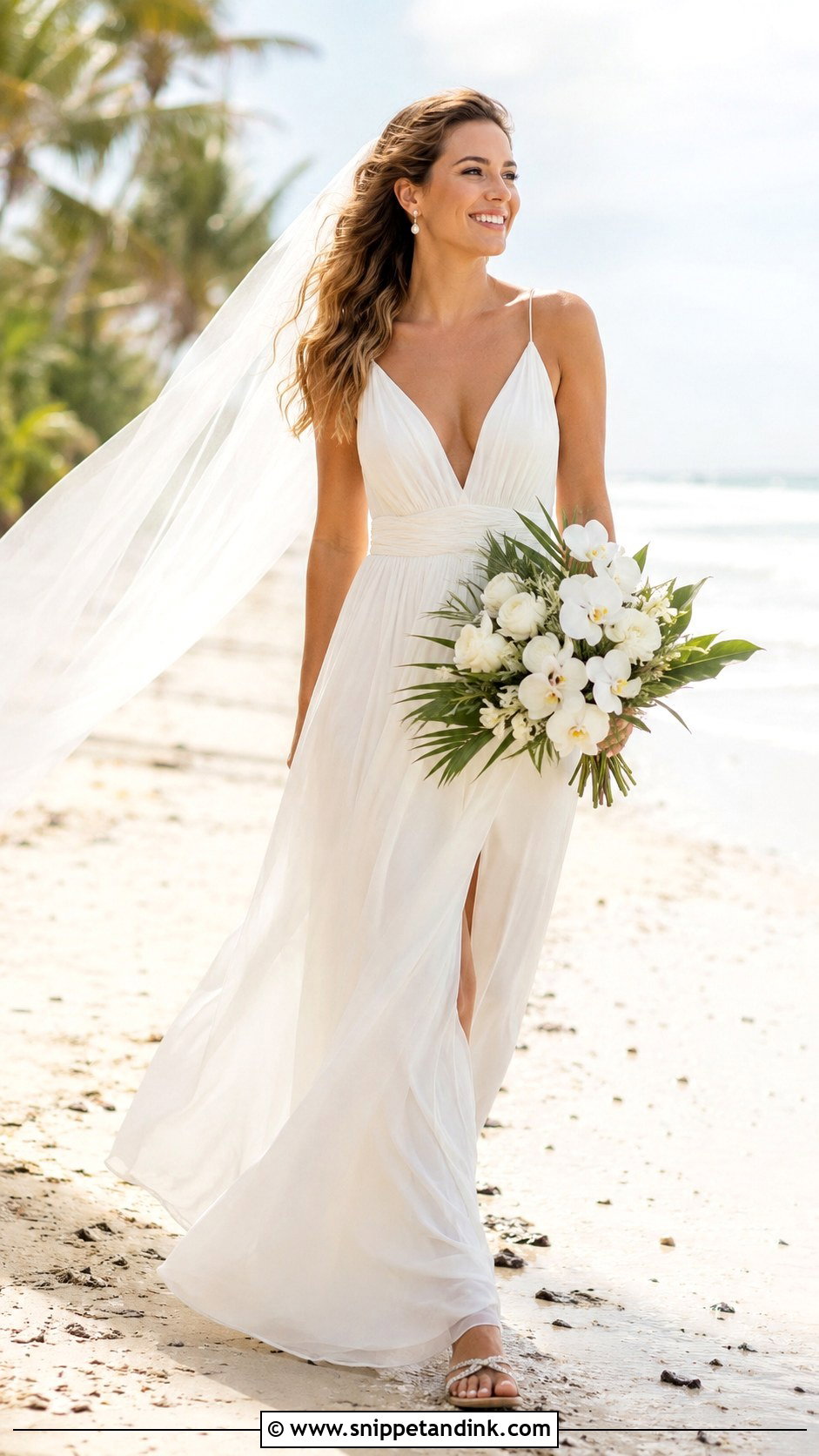
Sand and wind decide this dress for you. Chiffon, silk, crepe or soft lace move in the breeze without weighing you down, and a slip, relaxed A-line or simple sheath works near the water. Skip long trains entirely; they drag sand into every layer. Flat sandals, pearl earrings, loose waves and a lightweight veil or hair scarf. Hem a beach dress a little shorter than you would for a hard floor, because bare feet in sand lower you and the hem catches. White flowers with tropical greenery suit it.


25. Reception Bride Dress
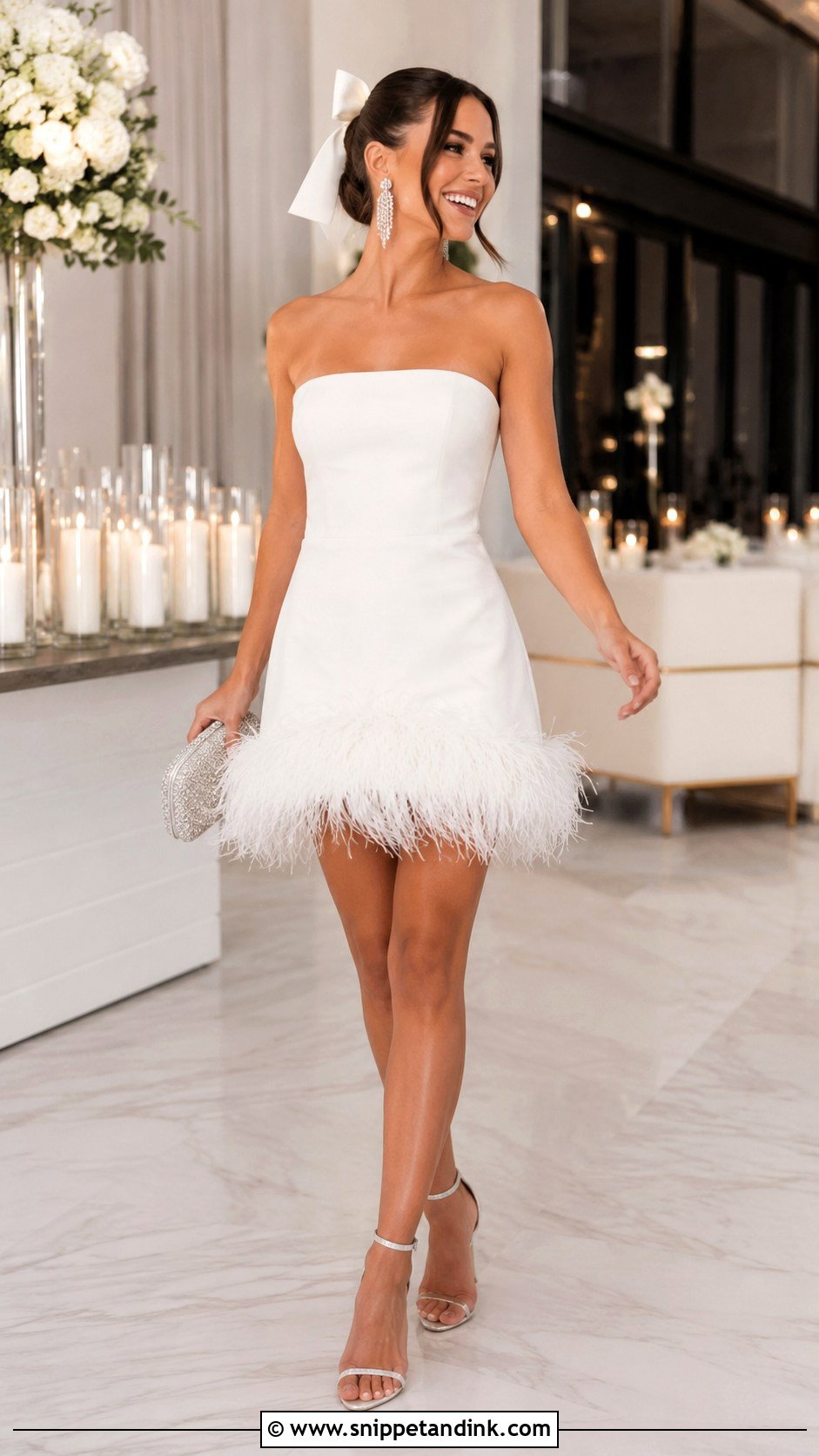
The reception dress exists for dancing. Minis, feather trims, satin slips, beaded midis and fitted jumpsuits all work. Comfortable heels, statement earrings and a small bag if needed; swap the long veil for a bow, headband or clip. It can be more playful than the ceremony gown and still clearly bridal. Plan the change with your planner, since even a quick change takes fifteen to twenty minutes once hair pins and jewelry are involved. If your main gown is heavy or hard to move in, this dress earns its cost.
A Realistic Calendar From First Try-On to Final Bustle
The aesthetic is the fun part; the calendar is what catches brides out. Most made-to-order gowns take several months to arrive after you order, and some designers quote longer for custom changes or busy seasons, so check the delivery promise in writing.
Nine to twelve months out
Start appointments. This leaves time for production, shipping delays and a calm alteration period. Short dresses, suits and off-the-rack gowns can be bought later, but tailoring still needs its window.
Two to three months out
First alteration fitting. Bring your real shoes and undergarments every time. Expect two or three fittings; heavily beaded, corseted or lace gowns often need more because the seamstress works around the detail.
The last fitting
Bring the person who will bustle your train and have them practice under supervision. Sit, walk, raise your arms and do a few dance steps. Ask how the gown should be steamed on the day, since satin, tulle and crepe each need different care.
Let the Venue Have a Vote, Not the Final Say
A wedding dress should feel good on you and make sense in the room you are getting married in. Bridal fashion now runs from minimalist satin to lace, colored gowns, minis, jumpsuits and full ball gowns. Weigh venue, season, comfort, photos, shoes and how much you need to move. Try on what you already love, and then try one shape you think you would never wear. The dress that surprises you in the mirror is often the one that ends up feeling the most like you.
You'll Like These Ideas:




Leave a Reply