
A classic gown is the one you can look at in twenty years without wincing. In my experience that comes down to enduring silhouettes and good fabric, with trends kept to the accessories. A-lines and ball gowns have stayed in bridal shops for generations for a reason, and the fabric decides how they behave. Satin and mikado hold a shape, crepe follows the body, chiffon floats, lace softens. What suits you depends on your proportions, the venue and how much you want to move. Each gown below comes as a full look, from shoes and veil to hair, along with the fitting point I’d watch for.
Ivory Is Not One Colour
Every brand names its shades differently, so the ivory in one shop can be the champagne in the next. Bright white suits deeper skin tones and very fair skin with cool undertones; most people look warmer and healthier in a soft ivory. Hold swatches against your face in daylight, not under the shop’s spotlights.
Once the gown is chosen, match everything else to it. Order the veil from the same shop or bring a fabric swatch, because a stark white veil over an ivory gown makes the gown look dingy and yellowed. Do the same with satin shoes.
The Calendar a Traditional Gown Runs On
Classic bridal gowns are usually made to order, and shops commonly ask for several months between ordering and delivery. Work back from your date:
- Order roughly eight to ten months ahead to leave room for delays.
- First fitting around two to three months before the wedding.
- Second fitting for adjustments, then a final fitting a couple of weeks out with your shoes and underwear.
- Collect the gown pressed, and hang it in its bag somewhere it won’t be crushed.
1. Classic Satin A-Line Wedding Dress
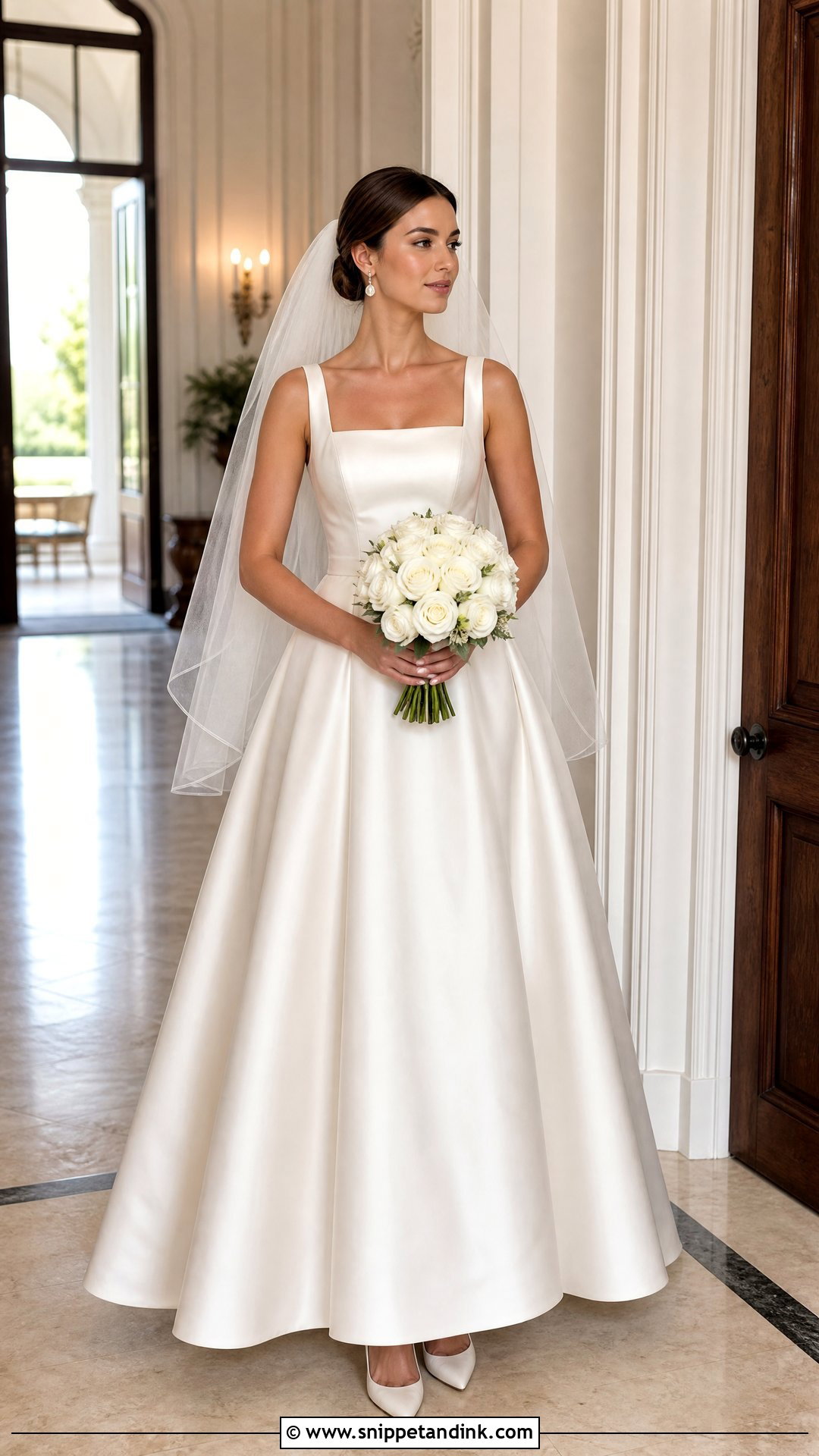
Satin A-lines are where I start most traditional brides, because the shape asks very little of you. A fitted bodice with a square or softly scooped neckline and a skirt that widens naturally from the waist gives definition without restriction. Smooth ivory satin needs no decoration. Pointed ivory pumps, pearl drops and a fingertip veil edged in narrow satin ribbon keep it clean, with a low chignon and a compact bouquet of white roses. Train length should follow your height: a modest sweep on petite brides, a longer chapel train on taller ones. Satin creases where you sit, so expect a quick steam after the ceremony.
2. Classic Mikado Ball Gown Wedding Dress
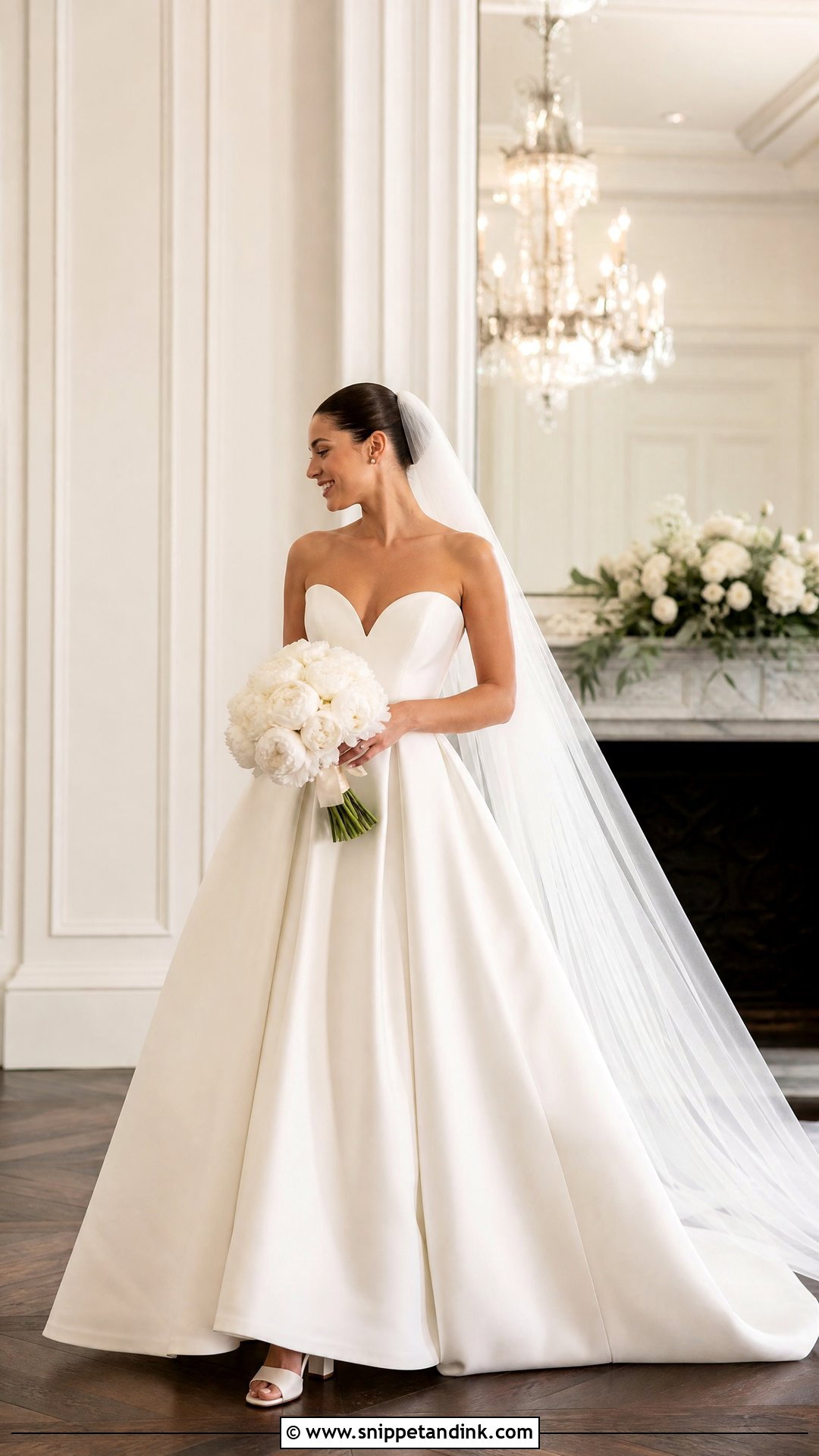
Crisp Mikado fabric is what makes a ball gown stand up on its own. It’s a heavy, slightly ribbed silk or silk blend that holds deep pleats all day without crushing. A structured bodice, natural waist and full pleated skirt suit it, and a subtle sweetheart neckline softens the scale. Pearl studs, satin block heels and a cathedral veil under a polished bun complete it, with peonies or garden roses in a generous bouquet. Mikado is unforgiving in a poor fit, because it doesn’t stretch or drape over a mistake, so bust and waist tailoring are essential. Ask about pockets; the fabric hides them well.
3. Classic Long Sleeve Lace Wedding Dress
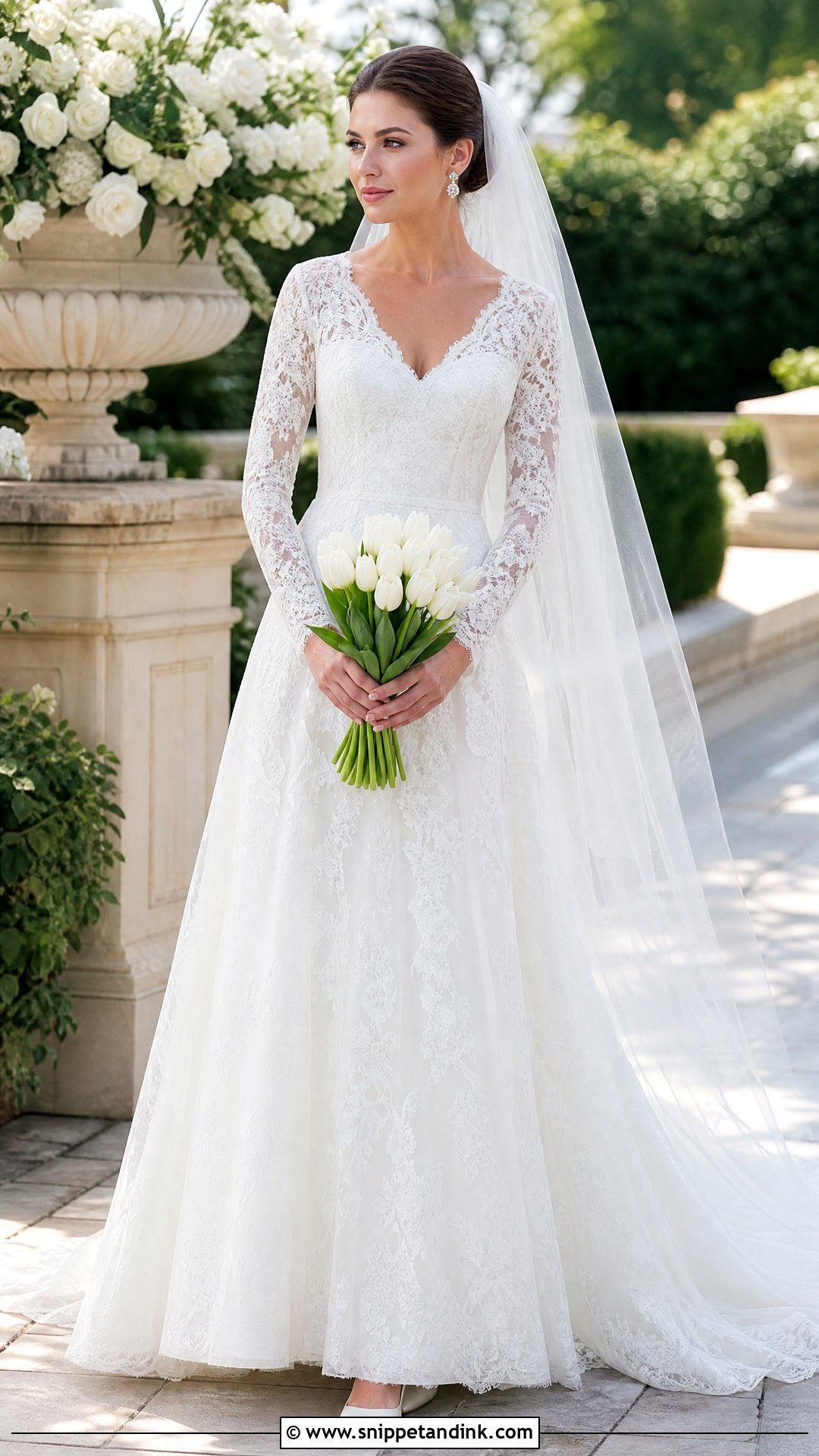
Long lace sleeves look romantic, but they’re the most fitting-sensitive detail on this list. An A-line with lace over the bodice and lightly onto the skirt is the classic version, and a soft V or bateau neckline stops the top half feeling buttoned up. For movement, choose stretch lace sleeves, a flexible lining or carefully placed illusion panels at the elbow. Closed-toe satin pumps, small crystal studs and a plain tulle veil let the lace lead. A loose low bun shows the neckline and back, and white tulips keep the bouquet fresh. Hug your mother at the fitting. If the sleeve seams strain, they need adjusting before anything else.
4. Classic Off Shoulder Ball Gown Wedding Dress
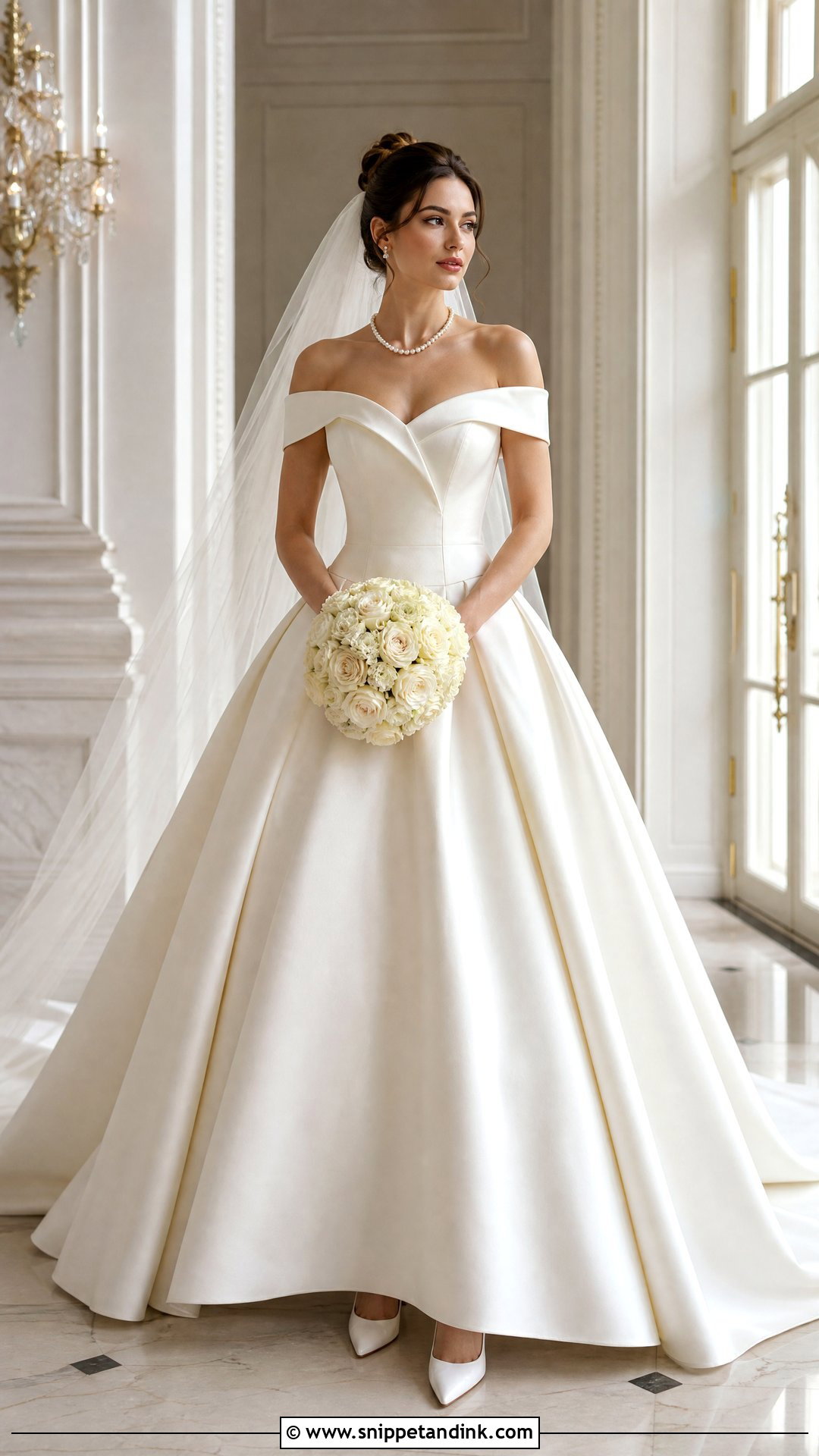
Off-the-shoulder ball gowns put the collarbones on show while keeping a formal shape, and everything depends on the support inside. I want a structured ivory bodice with boning and a gently folded neckline that grips without cutting in. A full satin or mikado skirt makes a striking contrast with bare shoulders. A fine pearl necklace and matching earrings, pointed satin heels and a long plain veil complete it, with a neat bun and a rounded bouquet of ivory roses. Raise your arms during fittings. You won’t get them above shoulder height in most of these, which matters for the first dance. Detachable straps offer a second look later.
5. Classic Crepe Sheath Wedding Dress
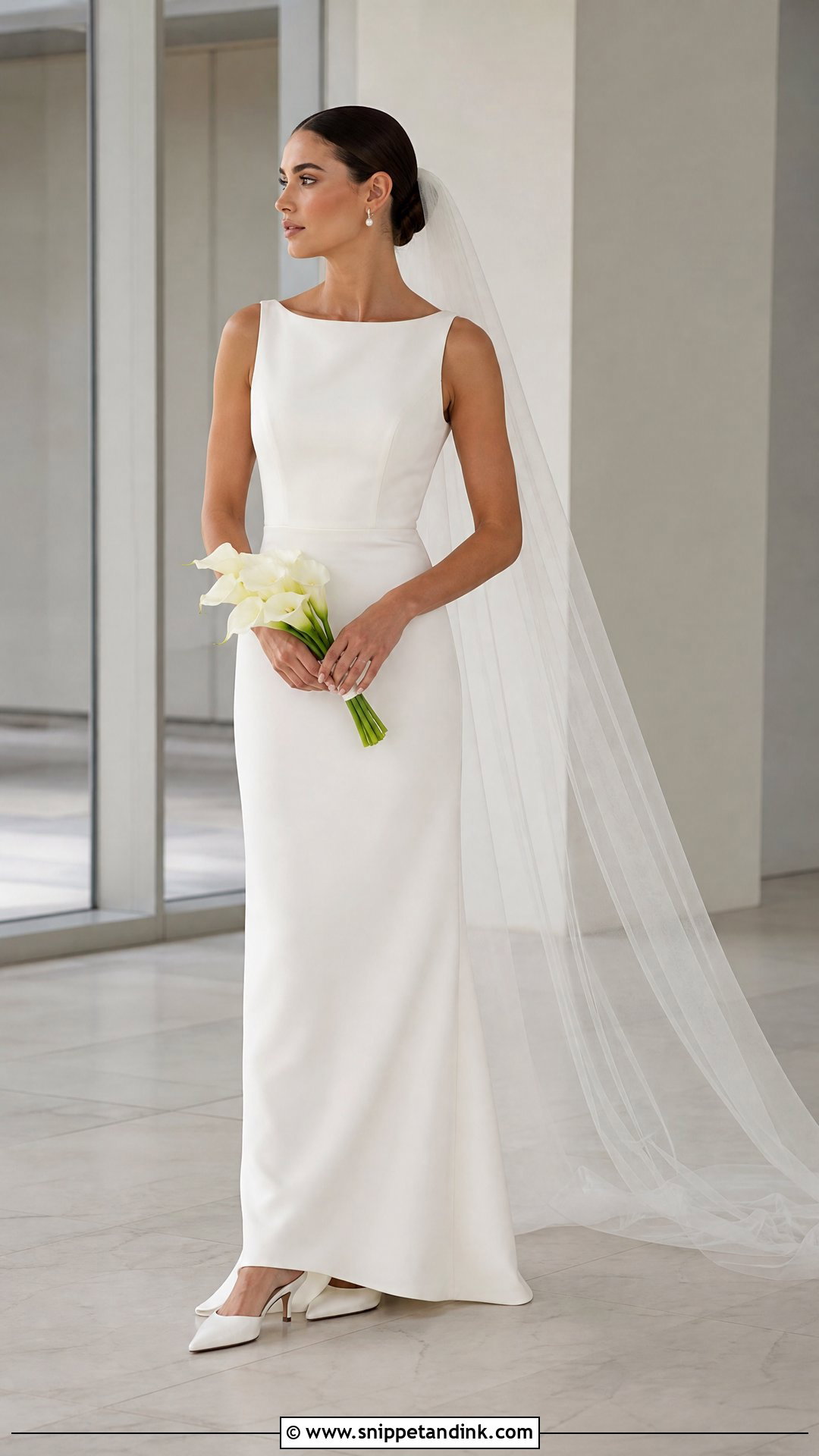
Crepe sheaths suit brides who would rather show the shape of the dress than its decoration. A bateau neckline, a fitted waist and a long skirt that falls close to the body are the classic form, with princess seams or darts doing the shaping. Pearl button earrings, pointed kitten heels and a narrow cathedral veil give contrast, and a sleek low bun and calla lilies keep the mood spare. Crepe follows every line, so quality underwear and precise alterations matter more here than on any full skirt. Fitted three-quarter sleeves add coverage.
6. Classic V-Neck A-Line Wedding Dress
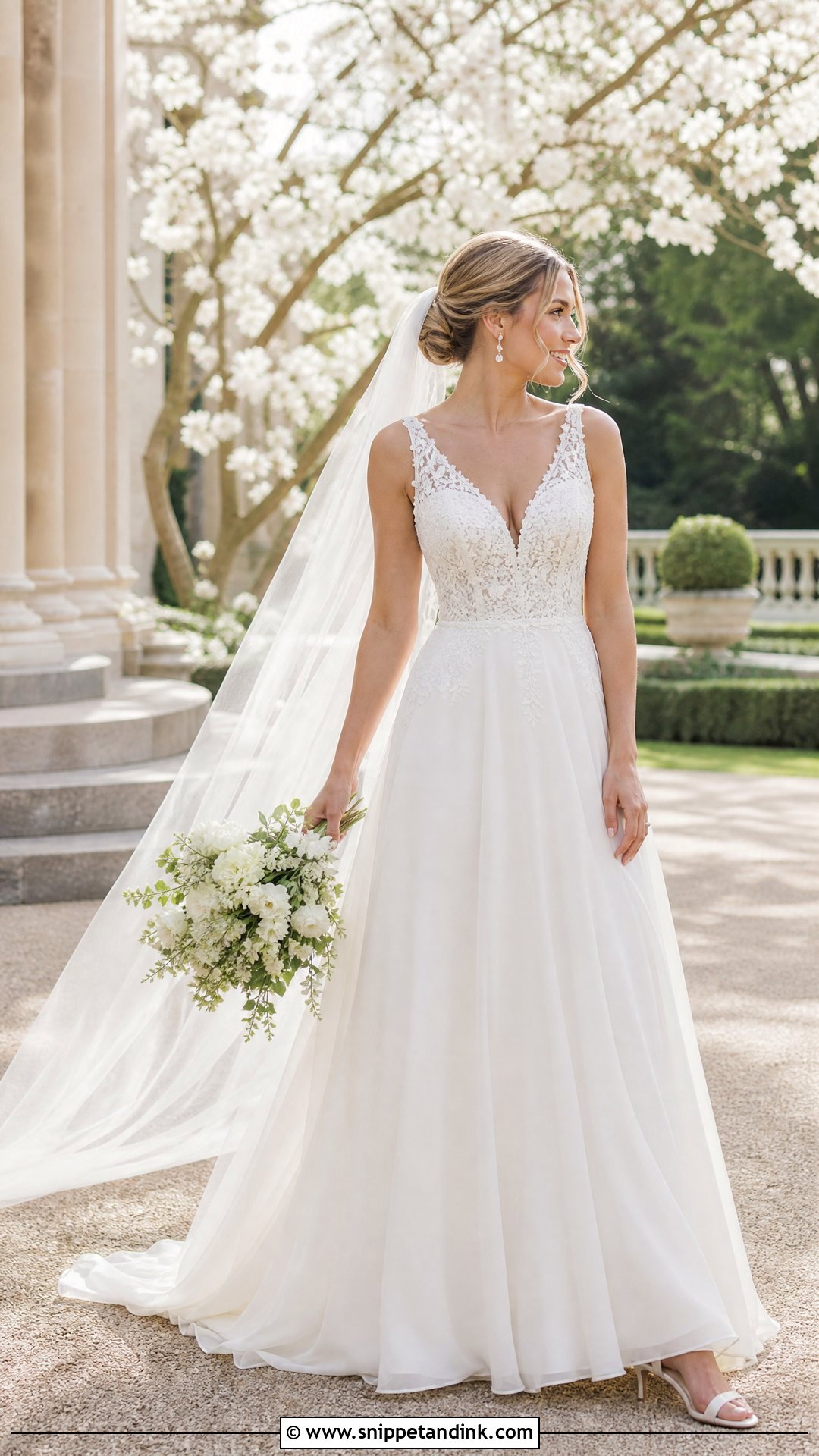
A V-neck A-line draws a long line from shoulder to waist, which suits almost every height. Choose a moderate depth that sits securely with the underwear you plan to wear. A satin or lace bodice over a chiffon skirt gives definition above and softness below. Drop earrings, ivory slingbacks and a chapel veil under a textured low bun suit it, with a loose bouquet of ranunculus and greenery. For more support, ask for wider straps or illusion mesh across the V. The flowing skirt is easy to dance in, so it’s a sensible pick for long receptions.
7. Classic Strapless Column Wedding Dress
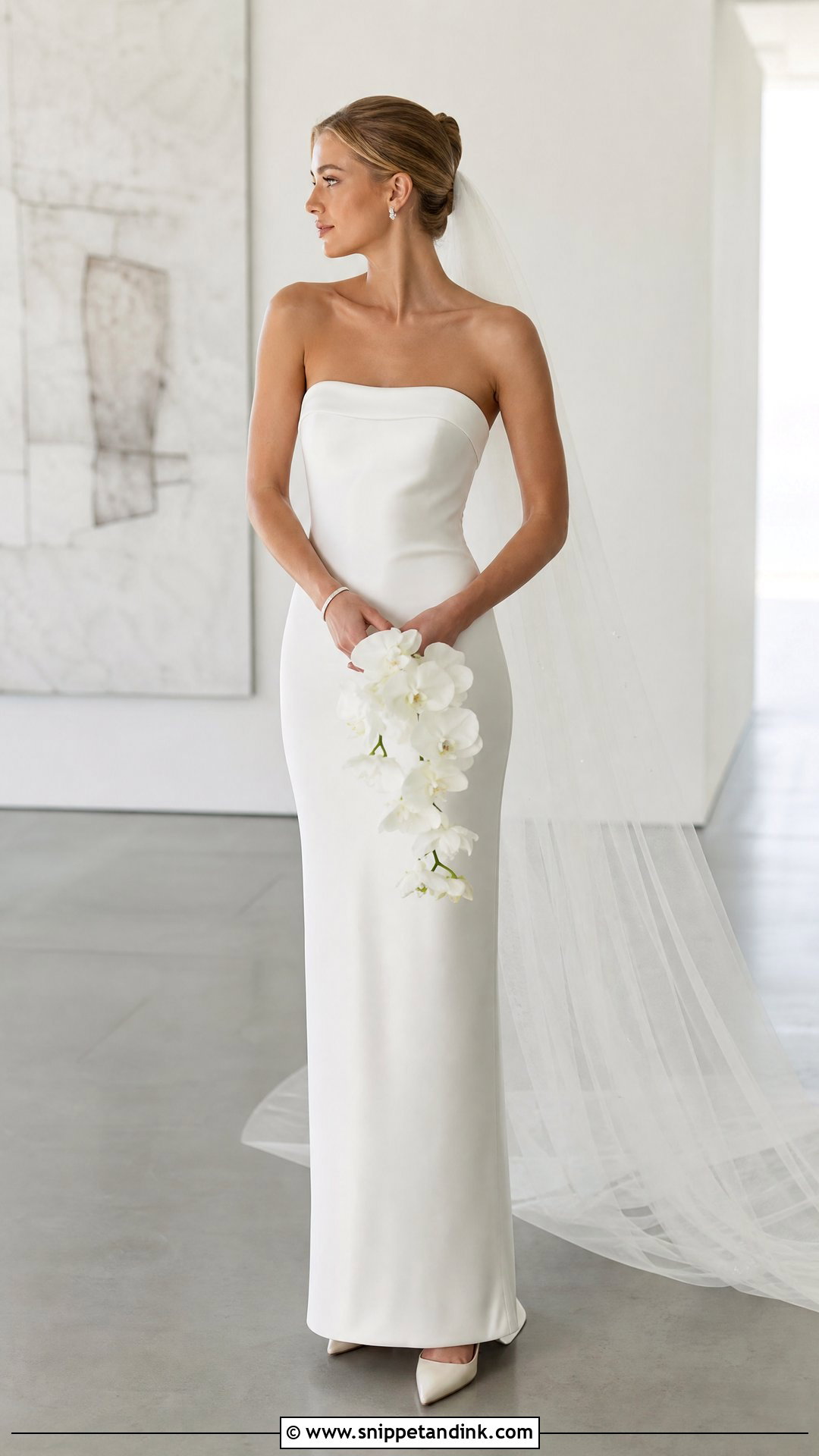
Strapless columns rely entirely on construction. Substantial satin or structured crepe, a softly curved neckline and internal boning should hold the bodice without you hitching it up. The skirt should skim the hips and fall straight. Crystal studs, a tennis bracelet, pointed pumps and a cathedral veil complete it, with a French twist and a narrow bouquet of orchids or long-stemmed roses. During fittings, sit, walk and dance. A strapless bodice stays up because it’s anchored at the waist, not because it’s tight at the top; a good seamstress adds a waist stay to do that job. A satin wrap covers you in the church.
8. Classic Basque Waist Ball Gown Wedding Dress
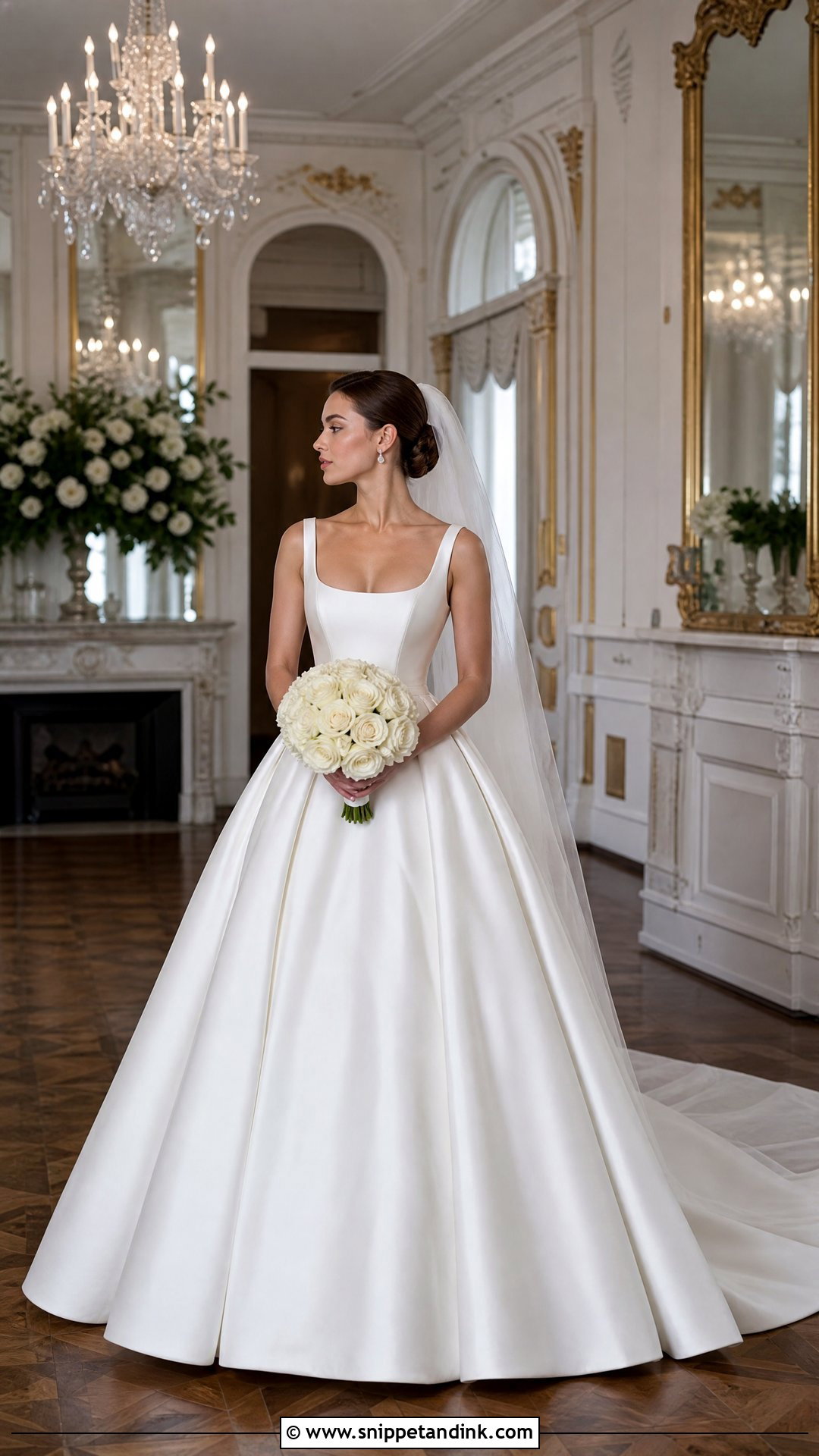
A basque waist ball gown dips to a gentle point at the centre front, which lengthens the torso and narrows the waist visually. Smooth satin or mikado shows that point clearly. A scooped neckline keeps it romantic rather than severe. Pearl-and-crystal earrings, rounded satin pumps and a long cut-edge veil suit it, with a smooth bun and a symmetrical bouquet. The point must sit where your torso actually ends. Too low and it cuts into you when seated, too high and it looks like a regular waist; I have it pinned with the bride sitting as well as standing. It belongs in a ballroom or grand house.
9. Classic High Neck Lace Wedding Dress
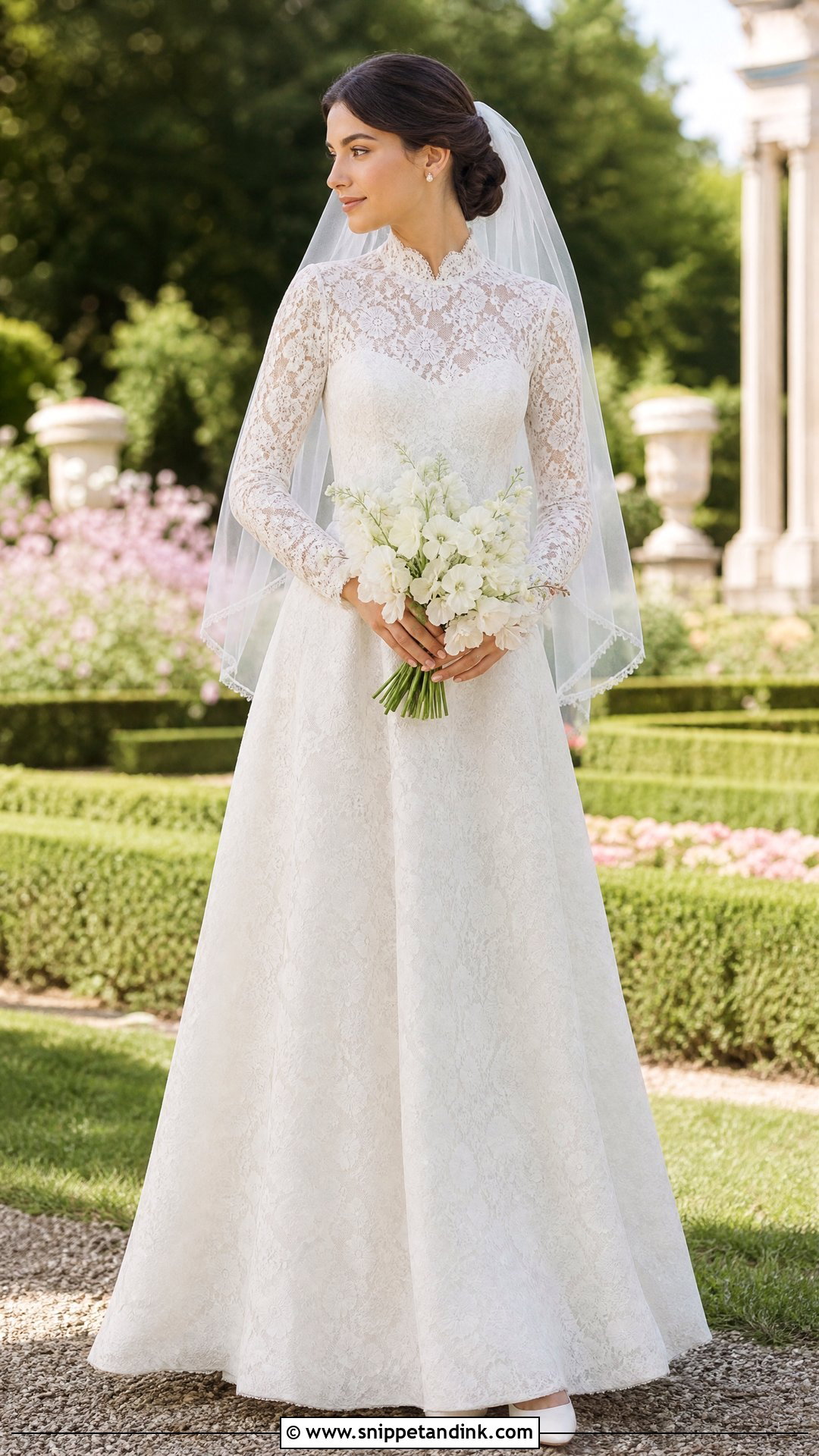
High-neck lace frames the face and covers the shoulders. A fitted lace bodice on a soft lining with an easy A-line skirt is the shape, and a small standing collar or rounded neckline only works when the lace is fine. Pearl studs, low satin heels and a plain fingertip veil set under the hair suit it, with a tidy low chignon and sweet peas or roses. Brides with shorter necks do better with a slightly lowered collar or a narrow illusion strip. Leave the necklace off; it fights the neckline.
10. Classic Cap Sleeve Fit And Flare Wedding Dress
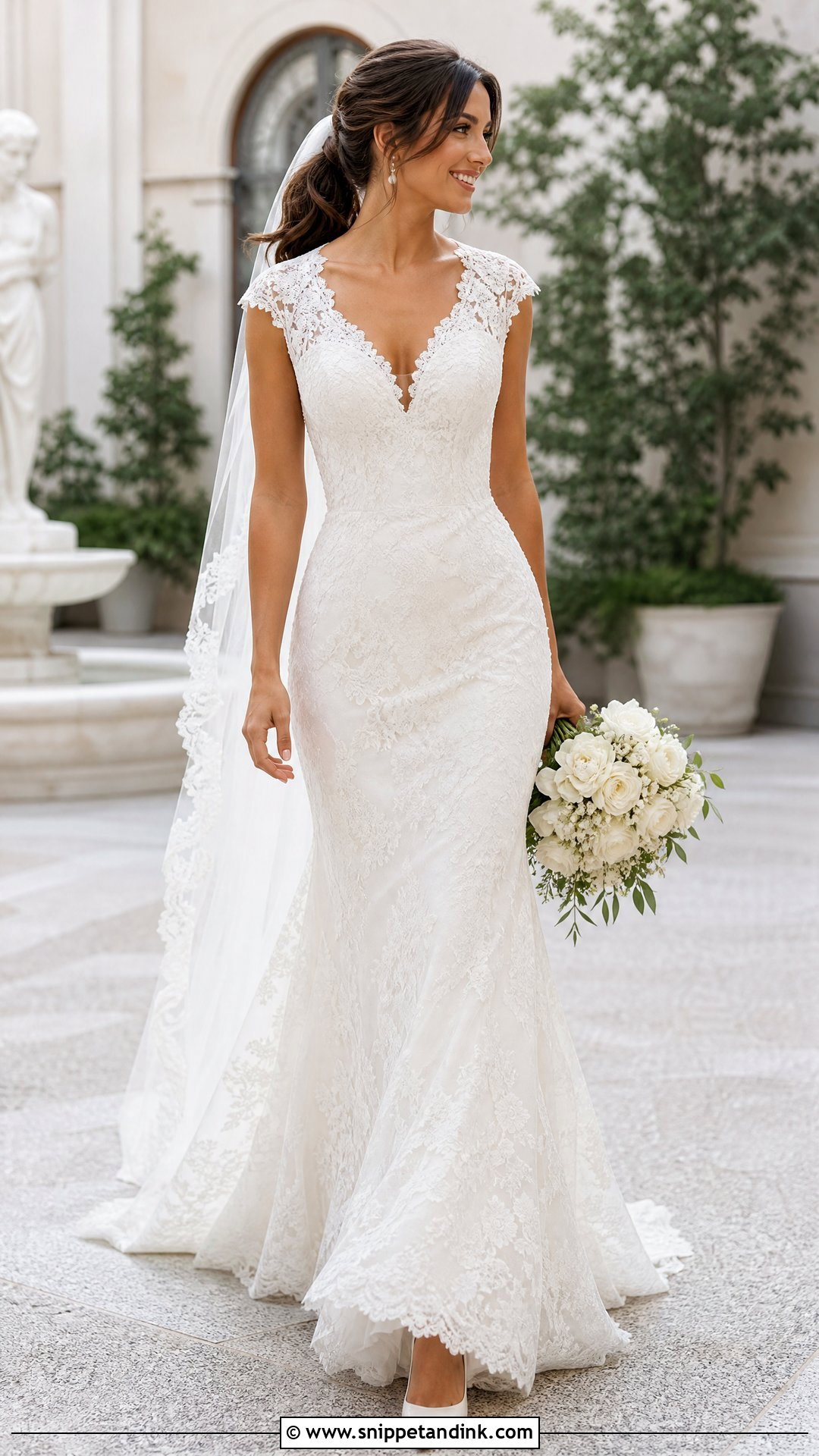
Cap sleeves give a little shoulder coverage without weighing down a fit-and-flare. Lace or satin that follows the body through the hips and opens above the knee is far easier to walk in than a true mermaid, which flares lower. Teardrop pearls, ivory pumps and a chapel veil with a narrow lace edge suit it, with soft waves in a low ponytail and a structured bouquet of roses and lisianthus. Cap sleeves sit on the edge of the shoulder, so lift your arms at the alterations appointment. If they pull, the armhole needs dropping a fraction.
11. Classic Portrait Collar Wedding Dress
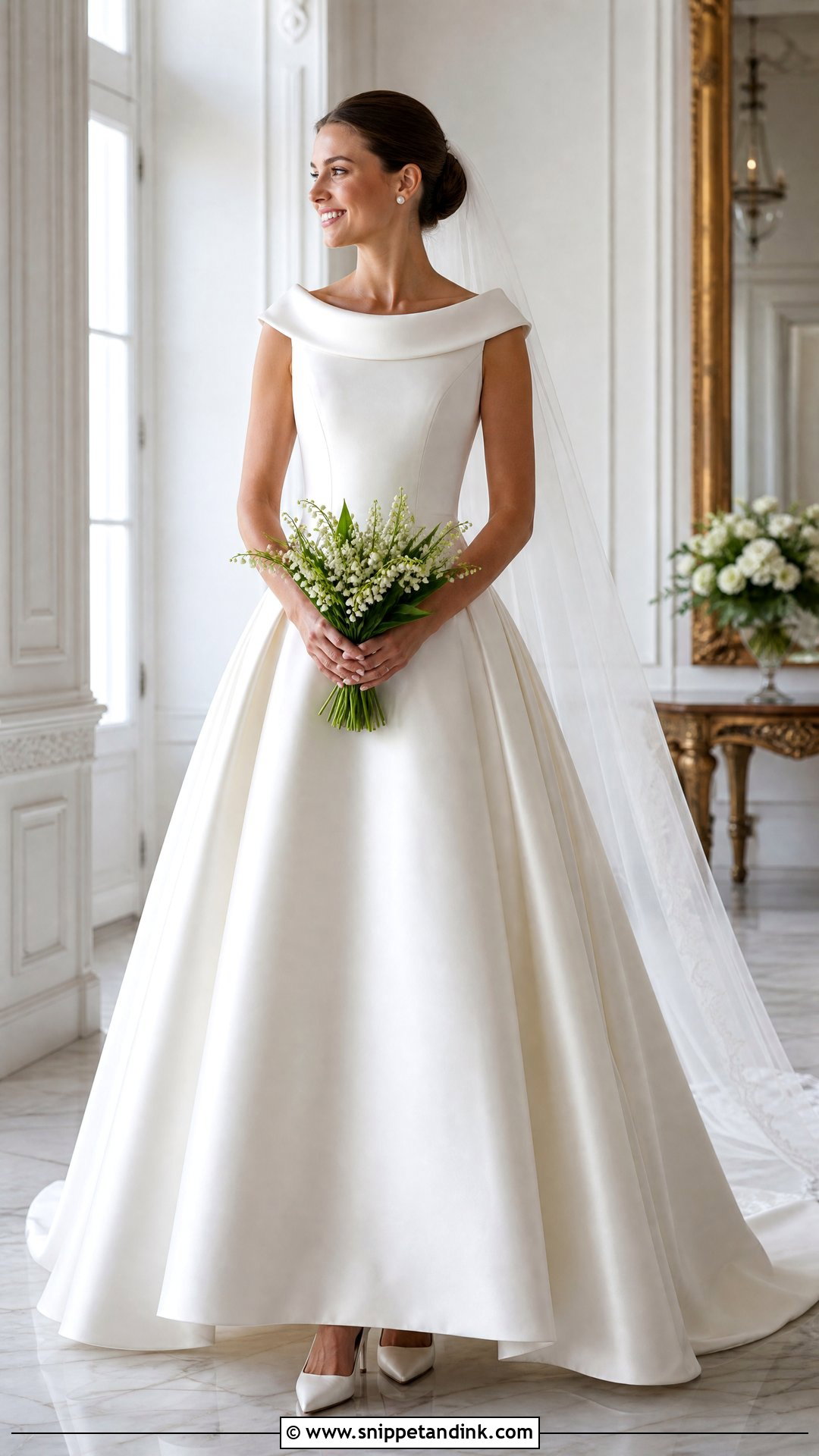
A portrait collar is a wide folded band around the shoulders, and it gives a plain gown real presence. Structured mikado in an A-line with a defined waist and lightly pleated skirt is the natural partner. Keep the bodice plain; the collar is the statement. Pearl studs, white satin heels and a plain cathedral veil under a classic bun complete it, with roses and lily of the valley. The band should lie flat across the shoulders when your arms are down and still let you hold a bouquet comfortably. Hidden straps add support. It’s at its best in formal portraits.
12. Classic Tea Length Wedding Dress
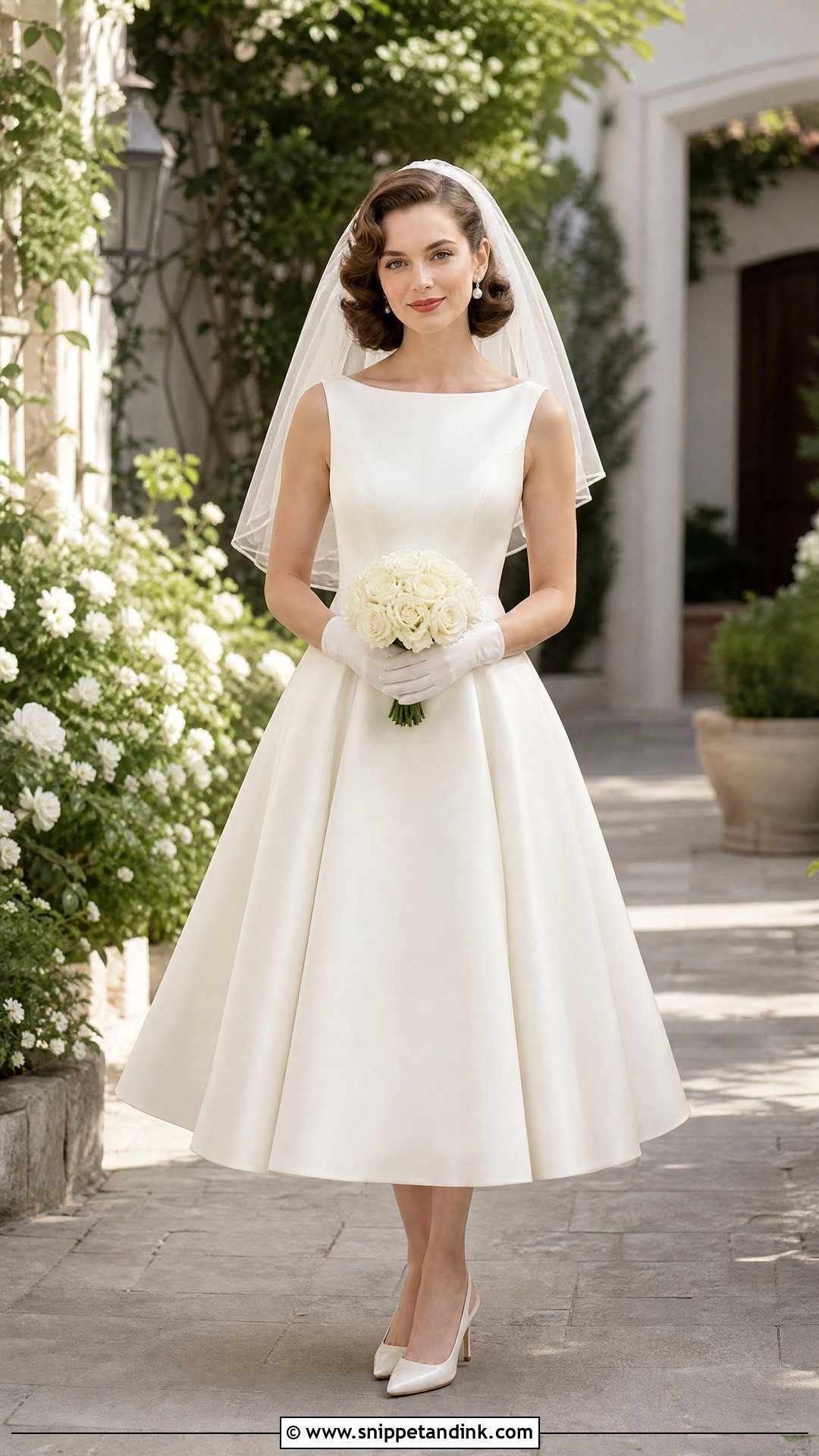
Tea length brings vintage charm and makes your shoes part of the look. A satin A-line with a fitted bodice, natural waist and a skirt ending between knee and ankle is the classic version, and a bateau or sweetheart neck keeps it bridal. Ivory slingbacks, pearl earrings, short gloves and a shoulder-length veil suit it, with a smooth bun or curled bob and roses tied in satin ribbon. The hem should end at the narrowest part of the lower leg. It’s comfortable for dancing and suits courthouse, garden and daytime weddings.
13. Classic Empire Waist Wedding Dress
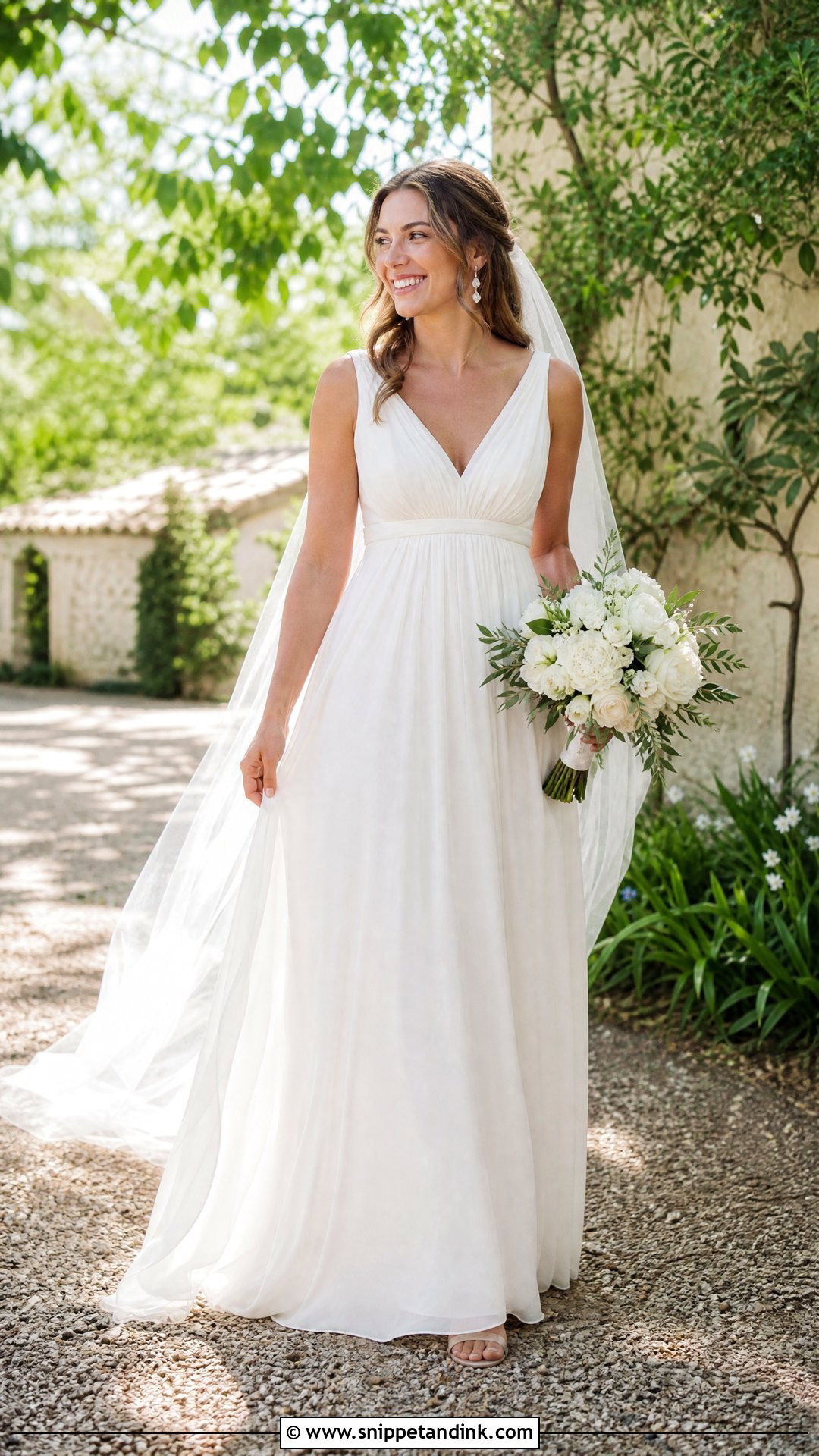
Empire waists sit just below the bust and then fall freely, so there’s no pressure on the natural waist at all. That’s why I suggest them for hot weather, pregnant brides and anyone who dislikes a fitted middle. Lightweight chiffon over a smooth lining moves without bulk, and a gathered V bodice with wider straps gives support. Pearl drops, low block heels and a chapel veil suit it, with loose waves pinned back and an airy bouquet of cosmos and roses. Too much ruching under the bust adds bulk, and a long train fights the light mood.
14. Classic Illusion Neckline Lace Wedding Dress
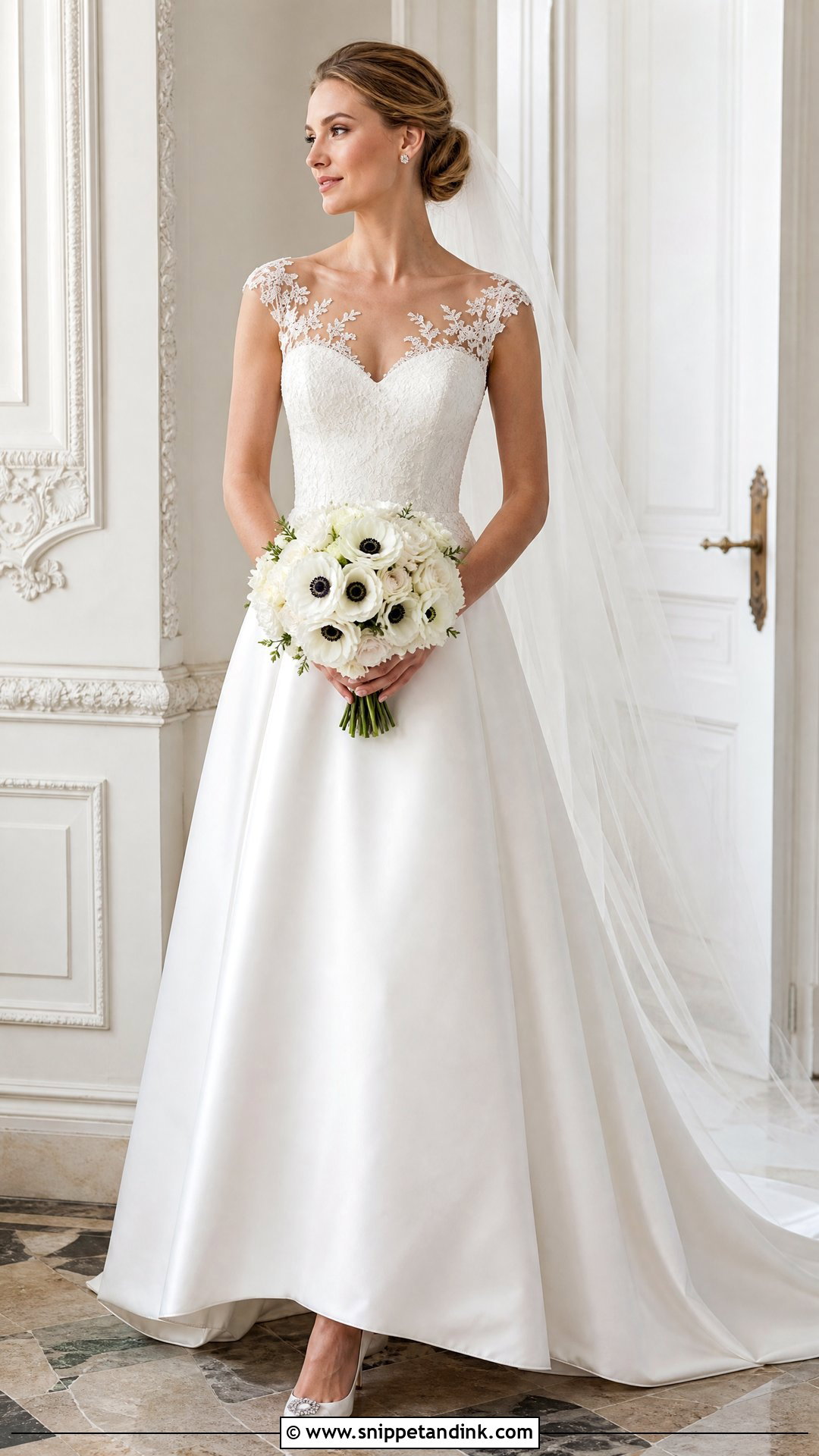
An illusion neckline lets lace appear to float on the skin, with fine tulle giving support and coverage. The usual construction is a sweetheart lining under the mesh with lace appliqués placed across it. The skirt can stay smooth satin or carry scattered lace. Small diamond or crystal studs, satin pumps and a plain veil longer than the train suit it, with a low twisted bun. Mesh colour is the detail I check most: it has to match your skin tone or it shows as a grey band in photos. Good tulle lies flat and doesn’t scratch.



15. Classic Satin Bow Back Wedding Dress
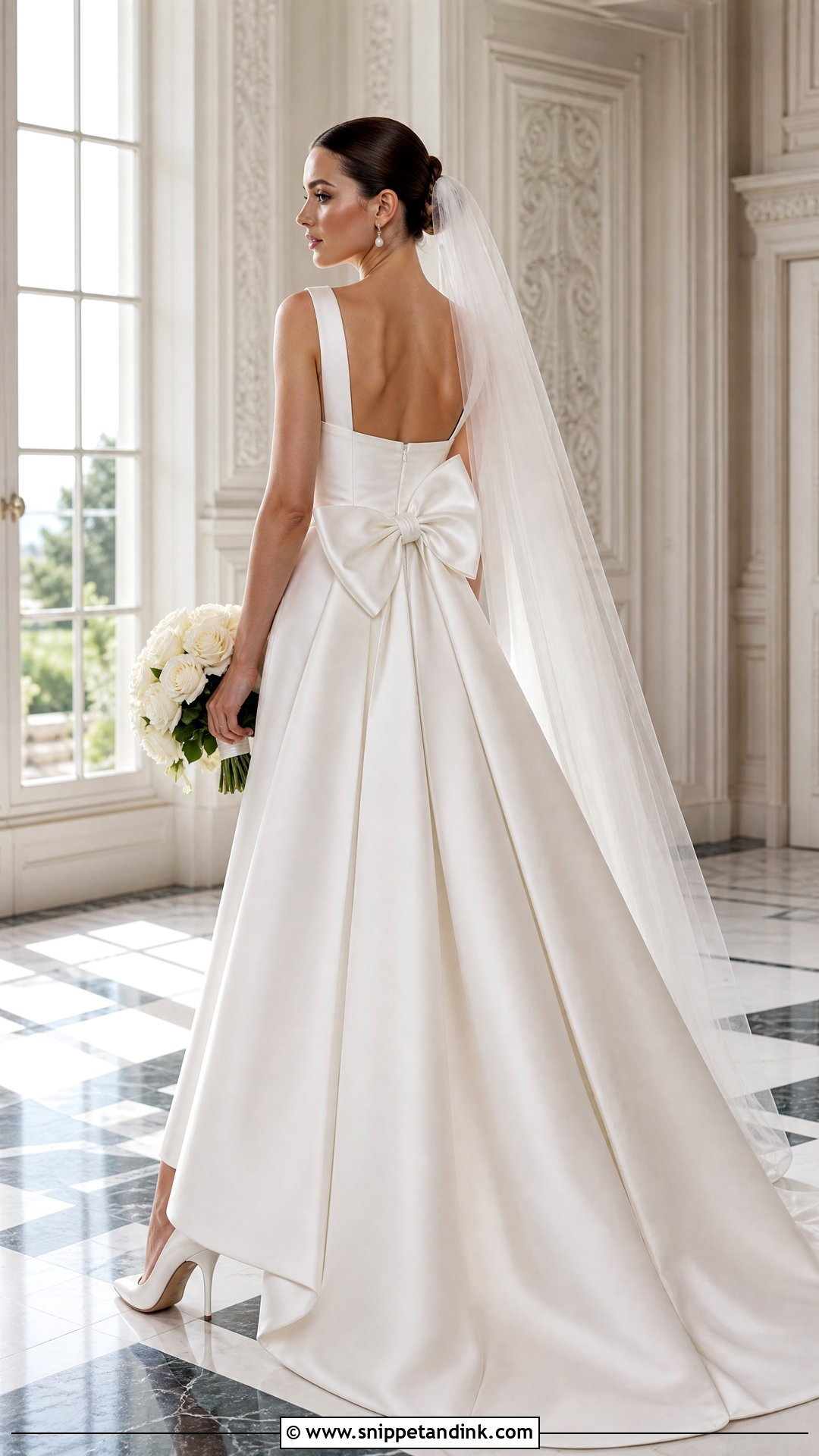
A satin bow at the back keeps the front plain and gives guests something to see during the vows. An A-line with a square neckline, wide straps and a structured waist is a good base. The bow should sit at the waist or lower back with tails that blend into the skirt. Pearl studs, pointed satin heels and a veil you’ll remove at the reception suit it, with a smooth bun and white roses. Ask if the bow is detachable, and check that the veil comb sits above it; a veil dragging across a bow crushes it by the end of the aisle.
16. Classic Pearl Beaded A-Line Wedding Dress
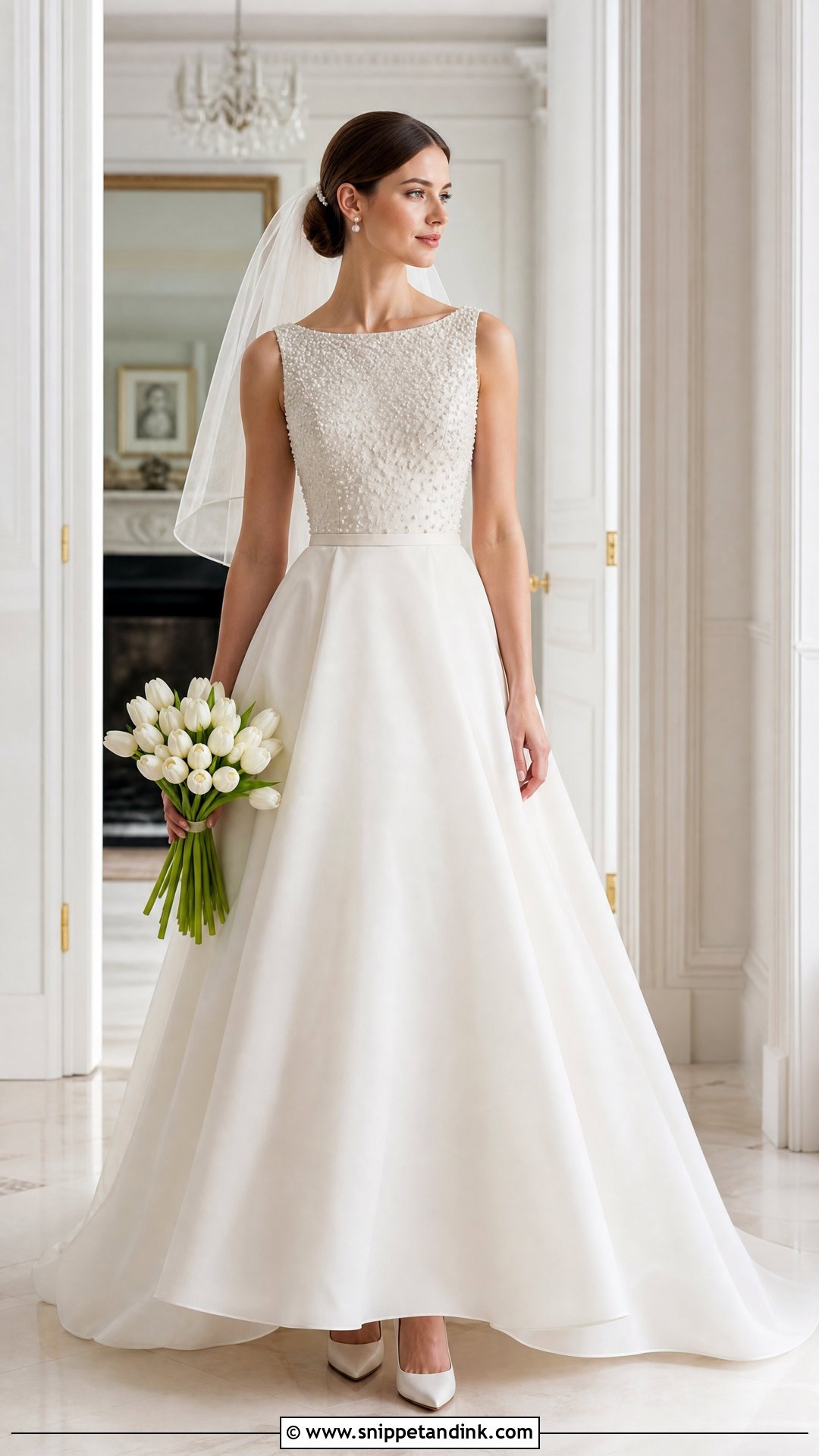
Pearls give a softer light than crystals. Concentrate them at the neckline and let them scatter toward the waist, then keep the organza or tulle skirt plain so the gown doesn’t look busy. Simple pearl earrings, ivory pumps and a plain fingertip veil echo the beading, with a low bun and one pearl pin. Run the veil over the bodice at the fitting. Pearls sewn on long threads catch tulle, and a snag on the day pulls the veil every time you turn.
17. Classic Drop Waist Satin Ball Gown
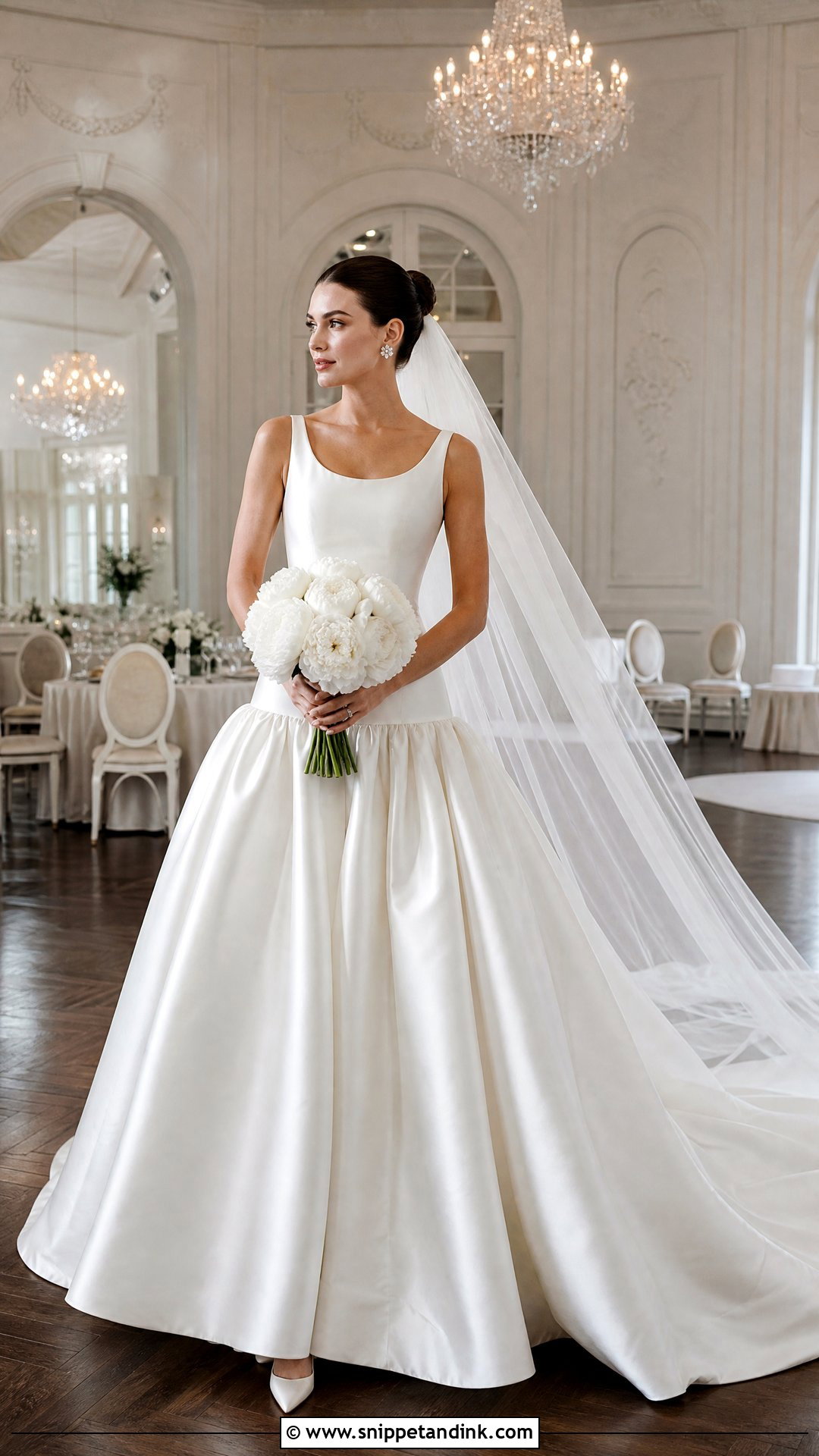
A drop waist extends the fitted bodice below the natural waist before the skirt releases, which gives a long, stately torso. Smooth satin or mikado holds the seam crisply. A straight or softly curved neckline balances the skirt. Crystal earrings, pointed satin shoes and a cathedral veil under an updo complete it, with peonies and little greenery. Petite brides should keep the drop subtle, while taller brides can carry a longer bodice. The lowered seam must follow your hips without pulling, which means fitting it seated as well as standing.
18. Classic Lace Trumpet Wedding Dress
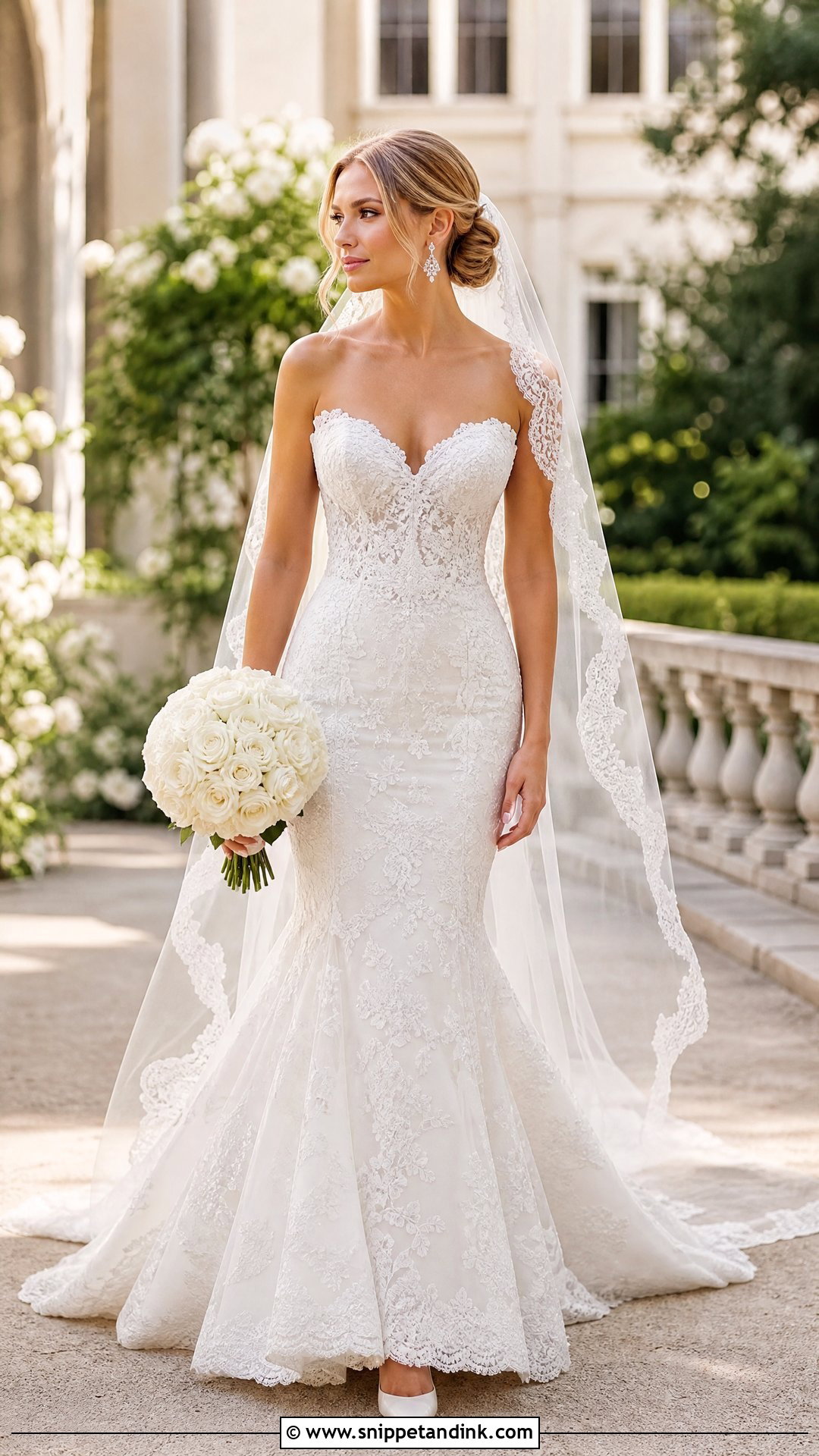
Trumpets follow the body to mid-thigh and then widen gradually, so you get curve definition with far more walking room than a mermaid. A supportive sweetheart or V-neck bodice with lace over ivory lining suits it. Crystal drops, pointed pumps and a chapel veil with a matching lace edge finish it, with a low side bun and an oval bouquet of roses and lisianthus. Practise steps at the fitting. Where the flare begins decides whether you can climb a church step without lifting the skirt.
19. Classic Square Neck Sheath Wedding Dress
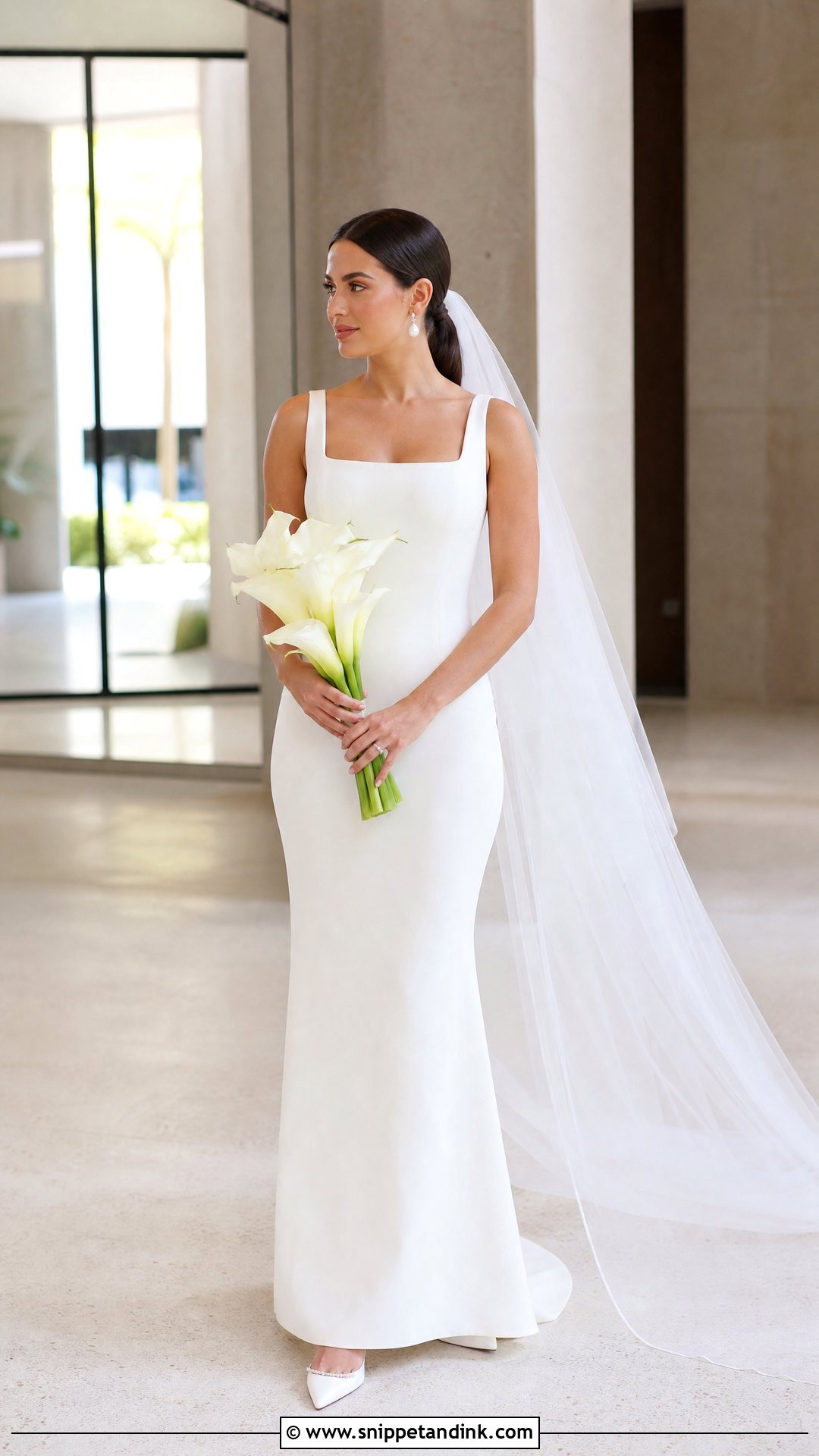
Square necks on a sheath give clean geometry around the collarbones. Substantial crepe or matte satin skims rather than clings, wide straps keep the neckline secure, and vertical seams carry the line to the hem. Pearl drops, ivory slingbacks and a long raw-edge veil suit it, with a sleek low ponytail and calla lilies or tulips. Covered buttons down the back add a traditional detail. With so little decoration, alterations at the waist and hips are what make it look intentional.



20. Classic Pleated Organza A-Line Wedding Dress
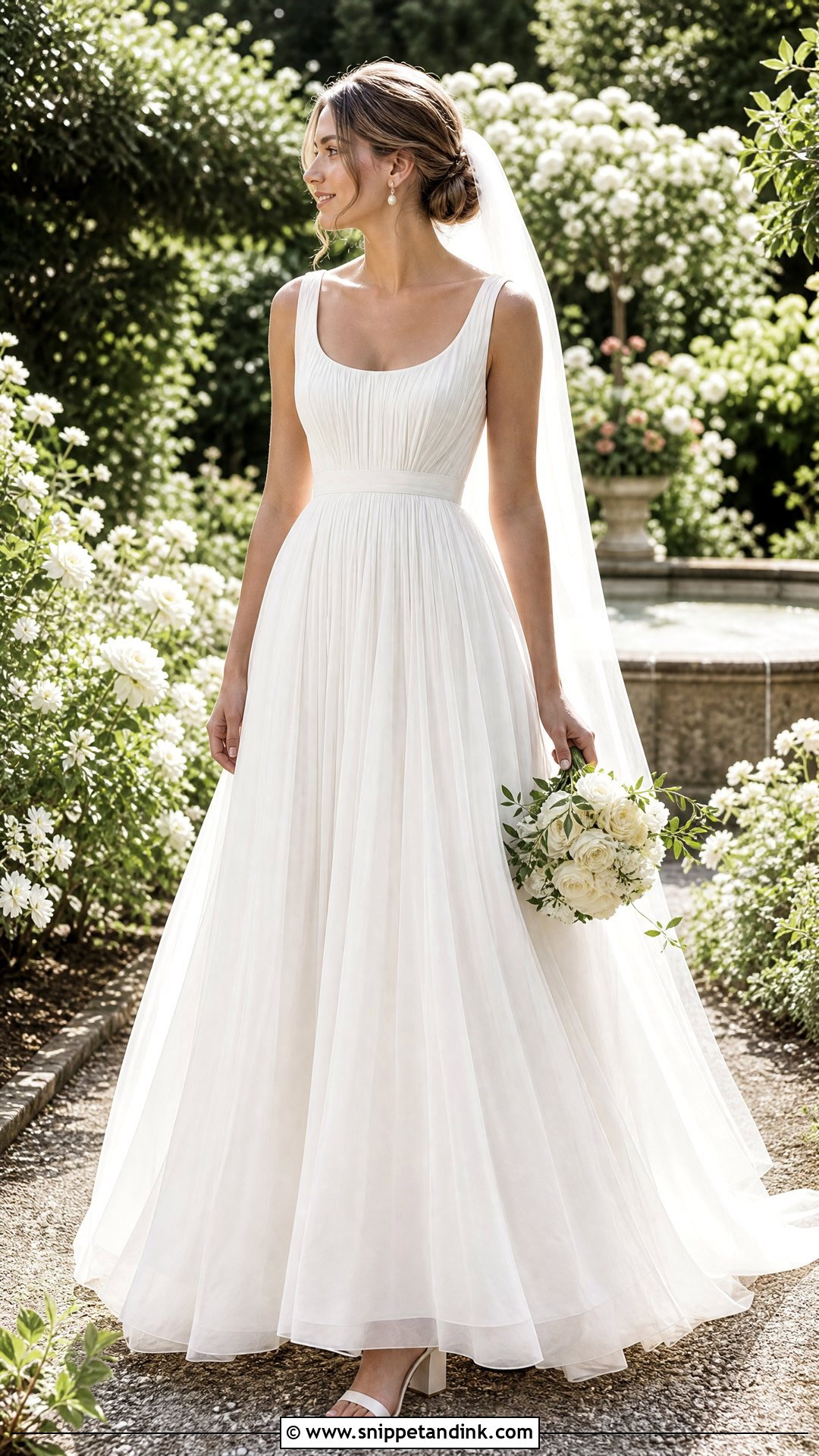
Pleated organza gives volume without weight. A fitted crossover or scooped bodice with a structured lining sits above fine pleats falling from the waist. Small pearl earrings, satin block heels and a chapel veil suit it, with soft waves in a low bun and garden roses. Organza is slightly sheer, so look at the gown in daylight and under bright indoor light before the lining is finalised; a second lining layer is a simple fix. It’s my choice for a spring or summer gown that still feels formal.
21. Classic Boat Neck Long Sleeve Wedding Dress
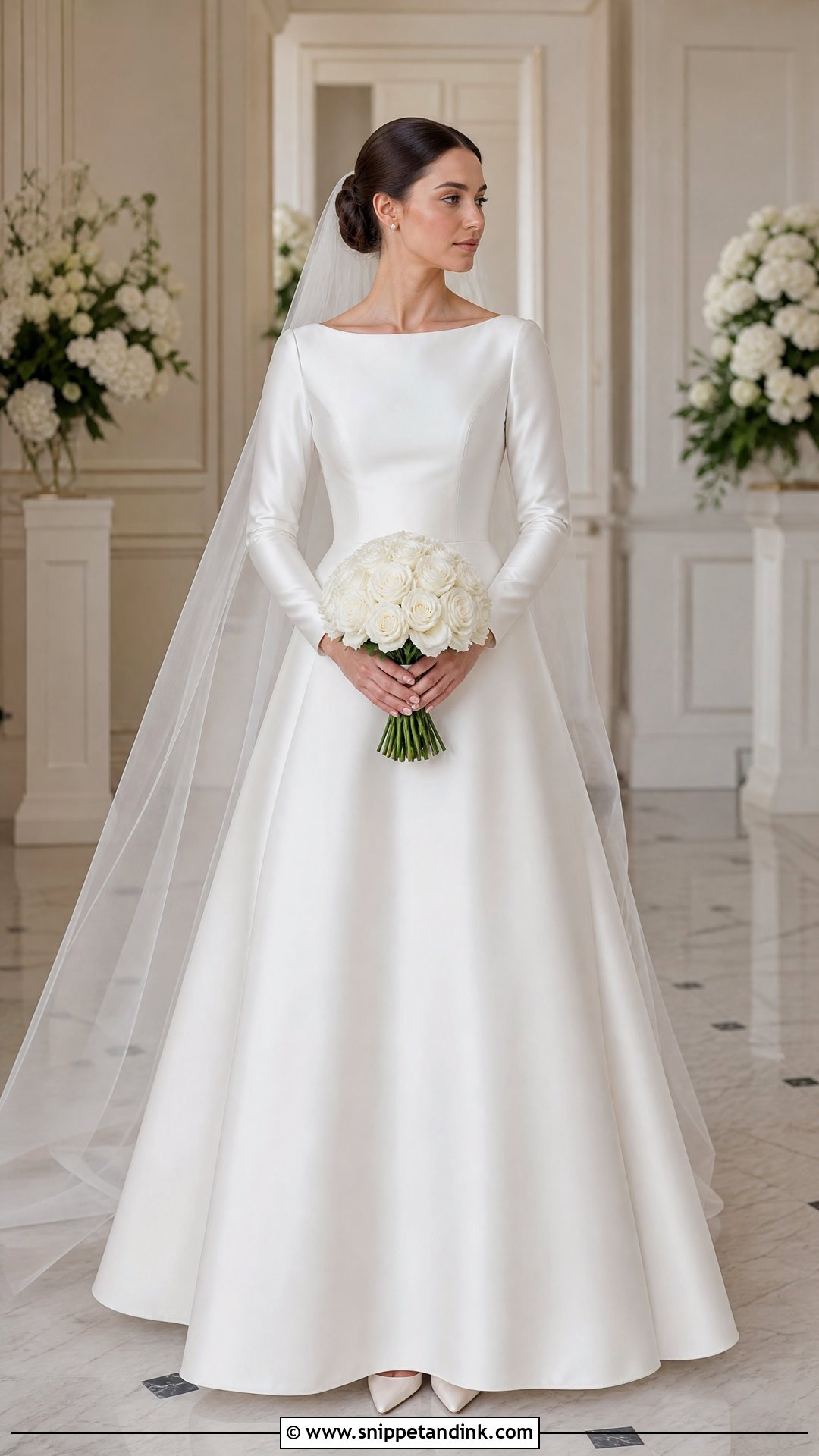
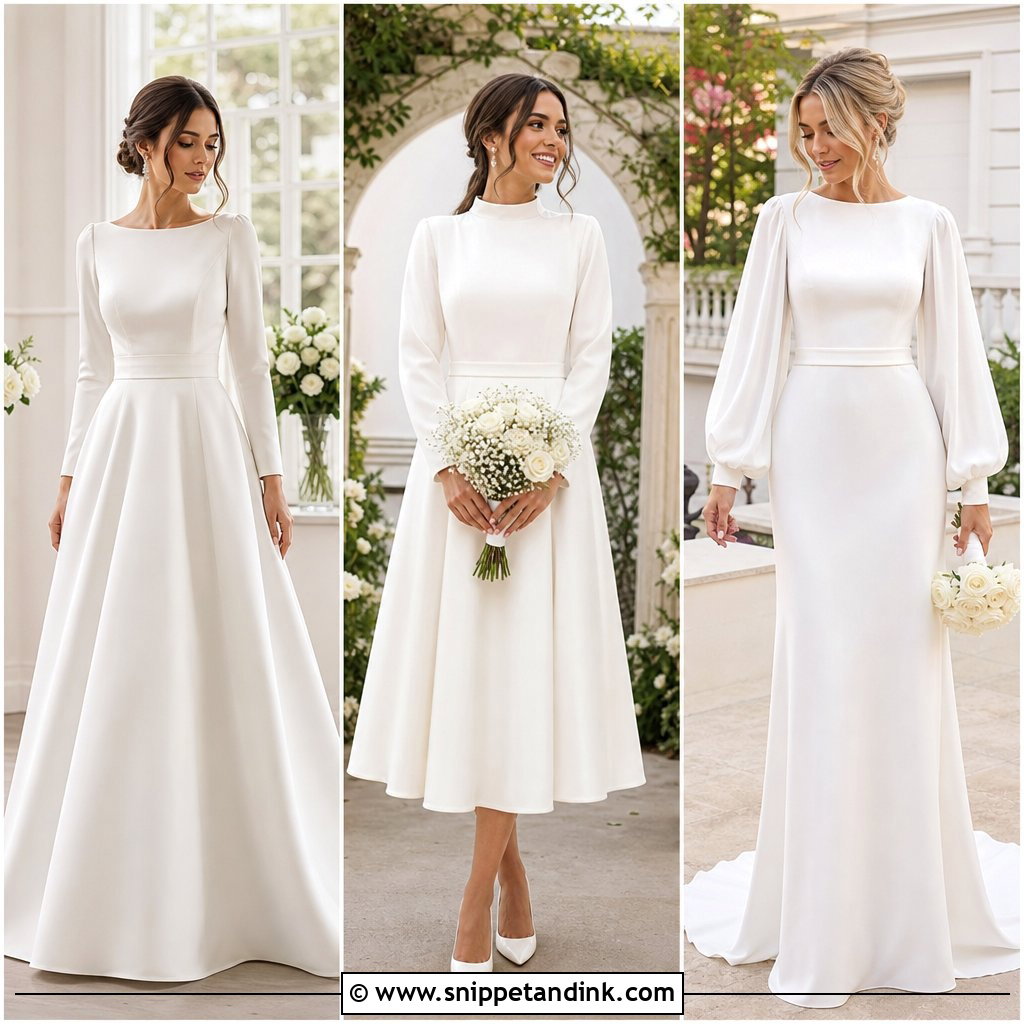
A boat neck with long sleeves draws a line across the shoulders and covers the arms. Smooth satin or crepe with lightly shaped sleeves and a defined A-line waist is classic, and covered buttons at the cuffs and down the back add detail without touching the front. Pearl studs, closed-toe pumps and a long plain veil suit it, with a centred low bun and a compact bouquet. Bend your elbows and reach forward at every fitting. Fitted sleeves with buttoned cuffs are the first place a satin gown restricts you. It suits autumn, winter and air-conditioned venues.
22. Classic Corset Bodice Wedding Dress
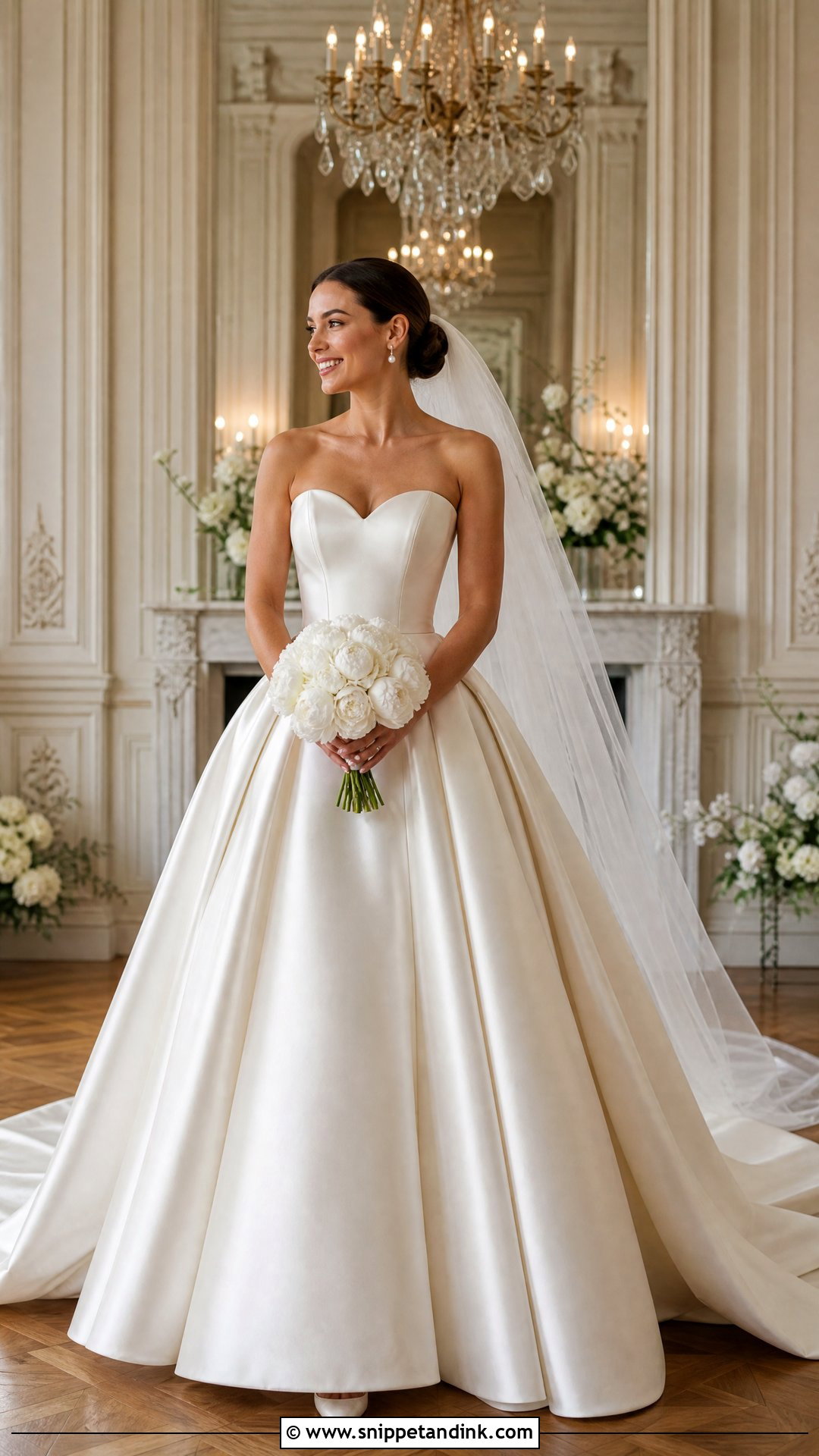
A corset bodice reads as classic when it’s well covered and well built. A satin ball gown with a curved neckline, internal boning and shaping seams, then a full pleated skirt, gives a balanced silhouette. Pearl drops, satin pumps and a cathedral veil under a neat bun suit it, with peonies and roses. The bodice must let you take a full breath and sit through dinner. Have it checked from every side, because lacing that looks even at the front can twist at the back.
23. Classic Scalloped Lace Wedding Dress
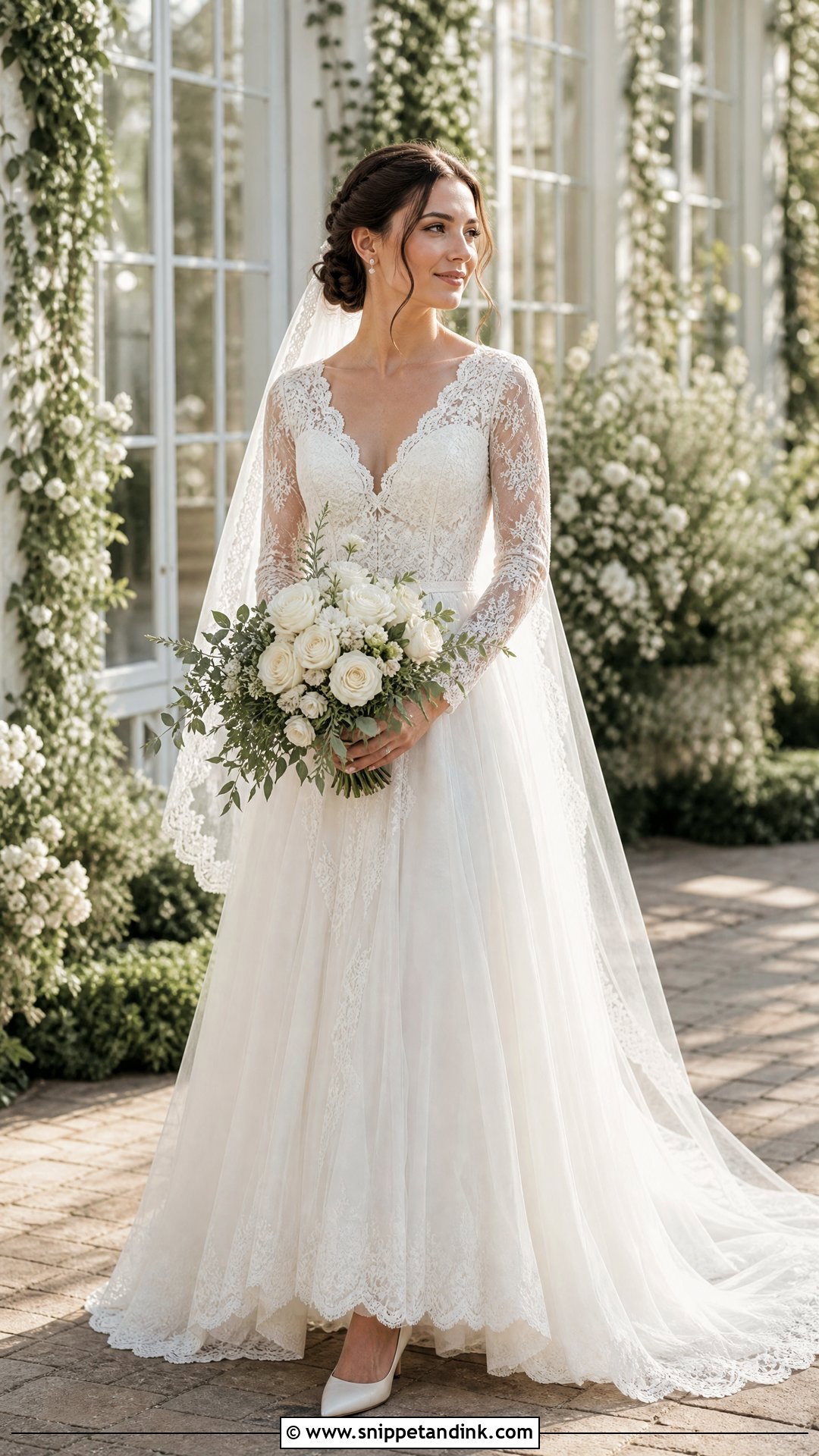
Scalloped lace edges a neckline softly. An A-line with a V or bateau outlined in eyelash or floral lace, carried onto sleeves or the upper bodice and then into chiffon or tulle, is the usual shape. Pearl studs, ivory pumps and a veil with a matching lace edge suit it, with a low braided bun and a loose bouquet of roses. Check that the scallops lie flat against the skin. Lace edges that flip outward usually need a fine invisible stitch at each point.
24. Classic Wedding Dress With Detachable Overskirt
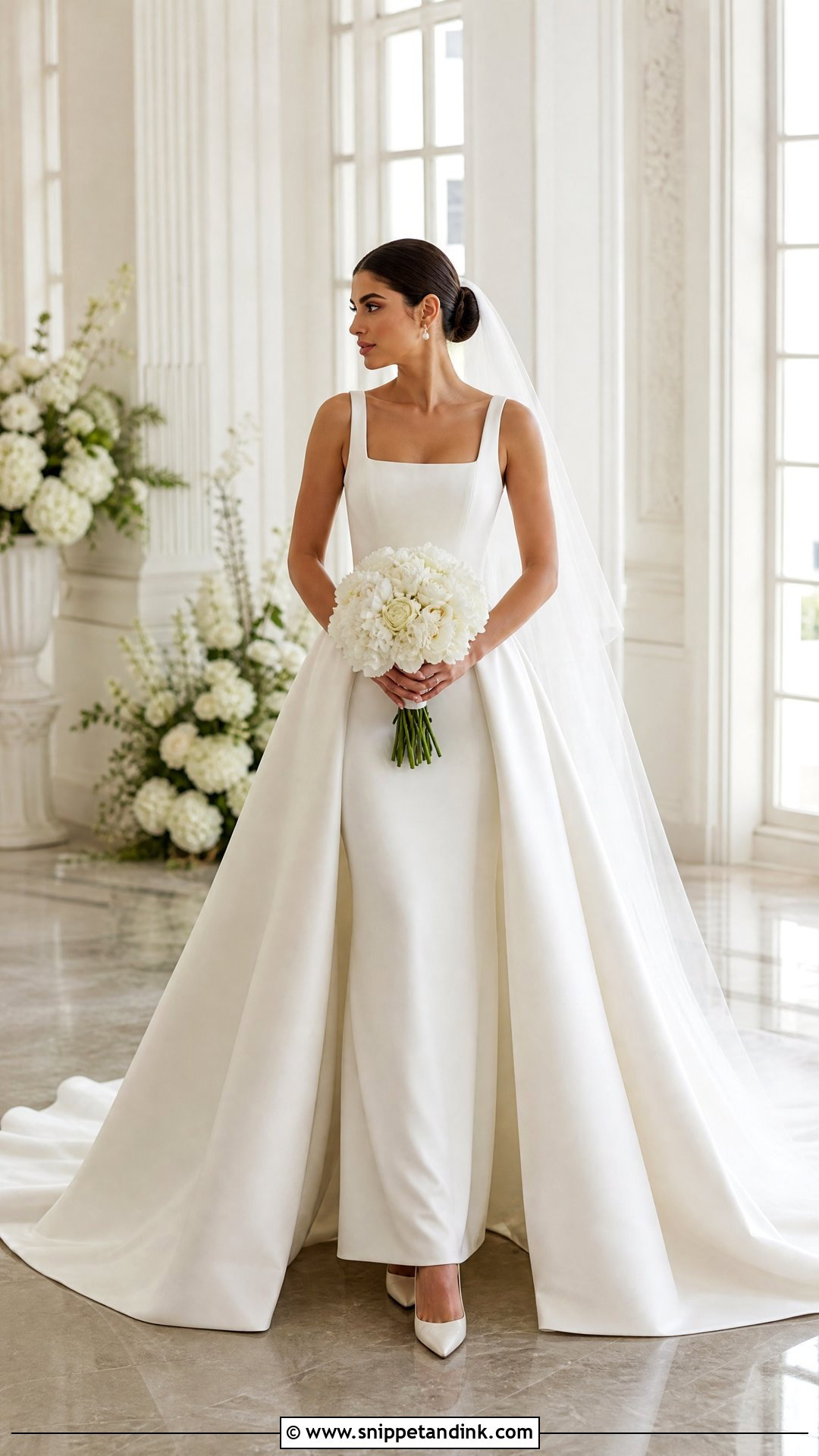
A detachable overskirt gives you two silhouettes from one gown. Start with a fitted satin or crepe column with a square or sweetheart neckline, then add a full A-line overskirt and train for the ceremony. Pearl earrings, pointed pumps and a long veil suit the formal version; afterwards the overskirt and veil come off for dancing. A sleek bun and structured bouquet work for both. Practise the removal with whoever will help you. Fastenings vary, and a tricky hook-and-eye set takes longer in a bathroom than you’d think.


25. Classic Silk Satin Bias Cut Wedding Dress
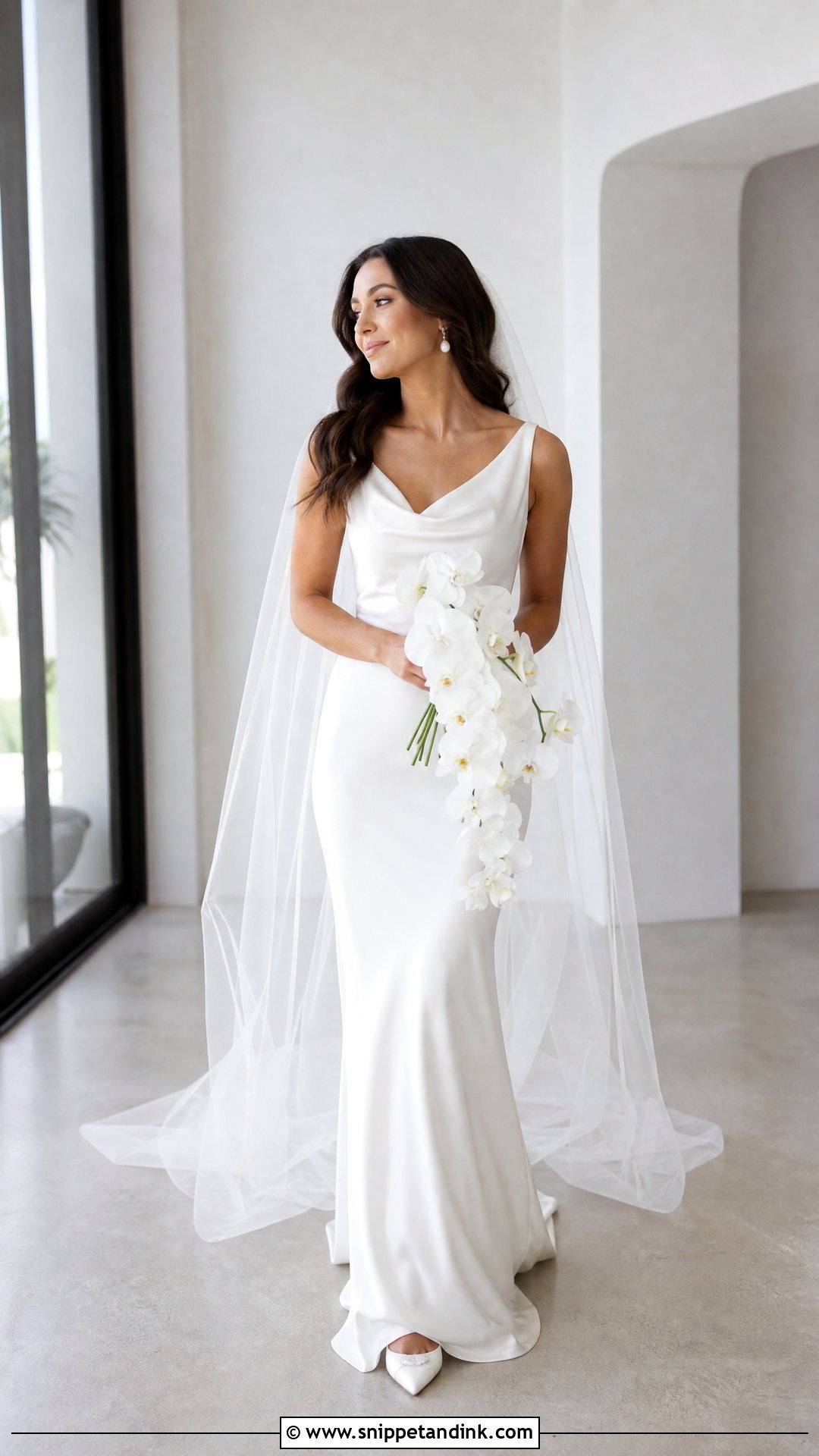
Silk satin cut on the bias moves like liquid and follows the body softly. A modest cowl, scoop or V with straps wide enough for your underwear is the classic form. It should fall over the body rather than grip. Pearl drops, satin kitten heels and a long sheer veil complete it, with brushed waves or a low twisted bun and orchids. Bias silk shows every seam and crease, so lining and alterations need a specialist. A light wrap or removable cape adds coverage. It’s luxurious with almost no decoration.
Trains Need a Plan for After the Aisle
A cathedral train is glorious for the walk and a nuisance at the reception. Every gown here with a train will need a bustle, and the type should be chosen with your seamstress while she can see the fabric. Heavy satin and mikado usually suit an over bustle hooked to the back; lace and chiffon often take an under bustle tied with ribbons. Have your mother or a bridesmaid at the last fitting to learn it, because hooks and numbered ribbons are fiddly in a crowded room.
Packing the Gown Away for the Next Bride in the Family
Classic gowns are the ones most often passed down, and how they spend their first year decides whether that’s possible. Get it professionally cleaned within a few weeks, even if it looks spotless. Sugary drinks and perspiration dry clear and then oxidise into brown marks that are much harder to remove later.
Store it folded in acid-free tissue inside an acid-free box, with tissue padding every fold so no sharp crease forms. Keep it somewhere cool, dark and dry, never in a loft or a damp basement, and avoid hanging a heavy satin or mikado gown for years, since the weight stretches the shoulders. Open the box once a year and refold along different lines.
Start With the Shape That Makes You Stand Taller
The gowns that stay memorable are the ones that suit the person in them. Shapes like these are timeless silhouettes that work across body types, venues and seasons, so start with the shape you feel most confident in: ball gown, A-line, trumpet or sheath. Then think about fabric, support at the neckline, how the sleeves move, train length and alterations. Plan shoes, jewelry, hair, veil and bouquet together, as one outfit. That head-to-toe view is what keeps a classic look from going stale in the photographs.
You'll Like These Ideas:








Leave a Reply