
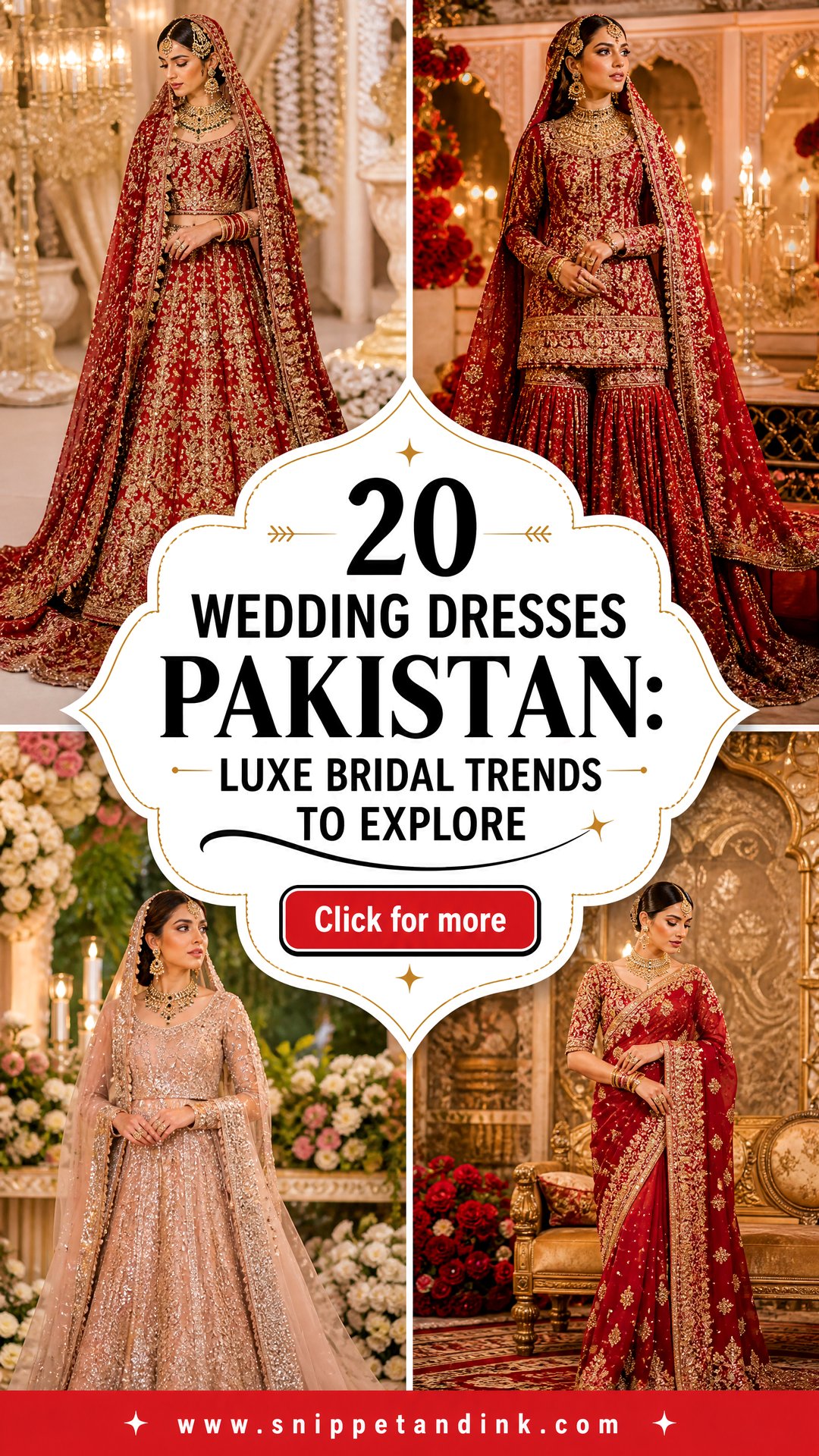
Pakistani bridal fashion asks more of a bride than almost any other wedding wardrobe, because you are dressing for up to five events: the mayun, the mehndi, the nikah, the barat and the walima. Red and maroon still own the barat, while ivory nikah outfits, pastel walima gowns and lighter constructions have become real options rather than compromises. I’ve written each look below as a complete outfit, from dupatta and jewelry down to shoes, with notes on how the fabric and handwork behave once you’re actually wearing them. Treat the colors and coverage as starting points and adjust them to your body, venue, season and family.
Ordering a Pakistani Bridal Wardrobe Without Running Out of Time
Hand embroidery is slow work. Zardozi, dabka and kora are stitched by hand, and a heavily worked barat outfit from a couture house or a skilled local karigar commonly needs several months, with longer queues before the main wedding season. I tell brides to order the barat outfit first, then the nikah and walima, and leave the mayun and mehndi for last because those can be found ready-made or made quickly.
- Around six months out: finalize the barat outfit and the dupatta design, since these carry the most handwork.
- Four to five months out: order nikah and walima outfits and agree on fitting dates in writing.
- Two to three months out: first fitting for the heavy pieces, with the shoes you’ll actually wear.
- Six to eight weeks out: mehndi and mayun outfits, jewelry choices locked so necklines can be adjusted.
- Two weeks out: final fitting, with every dupatta pinned exactly as it will be on the day.
Timelines vary a lot between designers and seasons, so ask for the dates in writing when you pay the advance. If a tailor can’t give you a first-fitting date, that is a warning sign.
1. Red Pakistani Bridal Lehenga
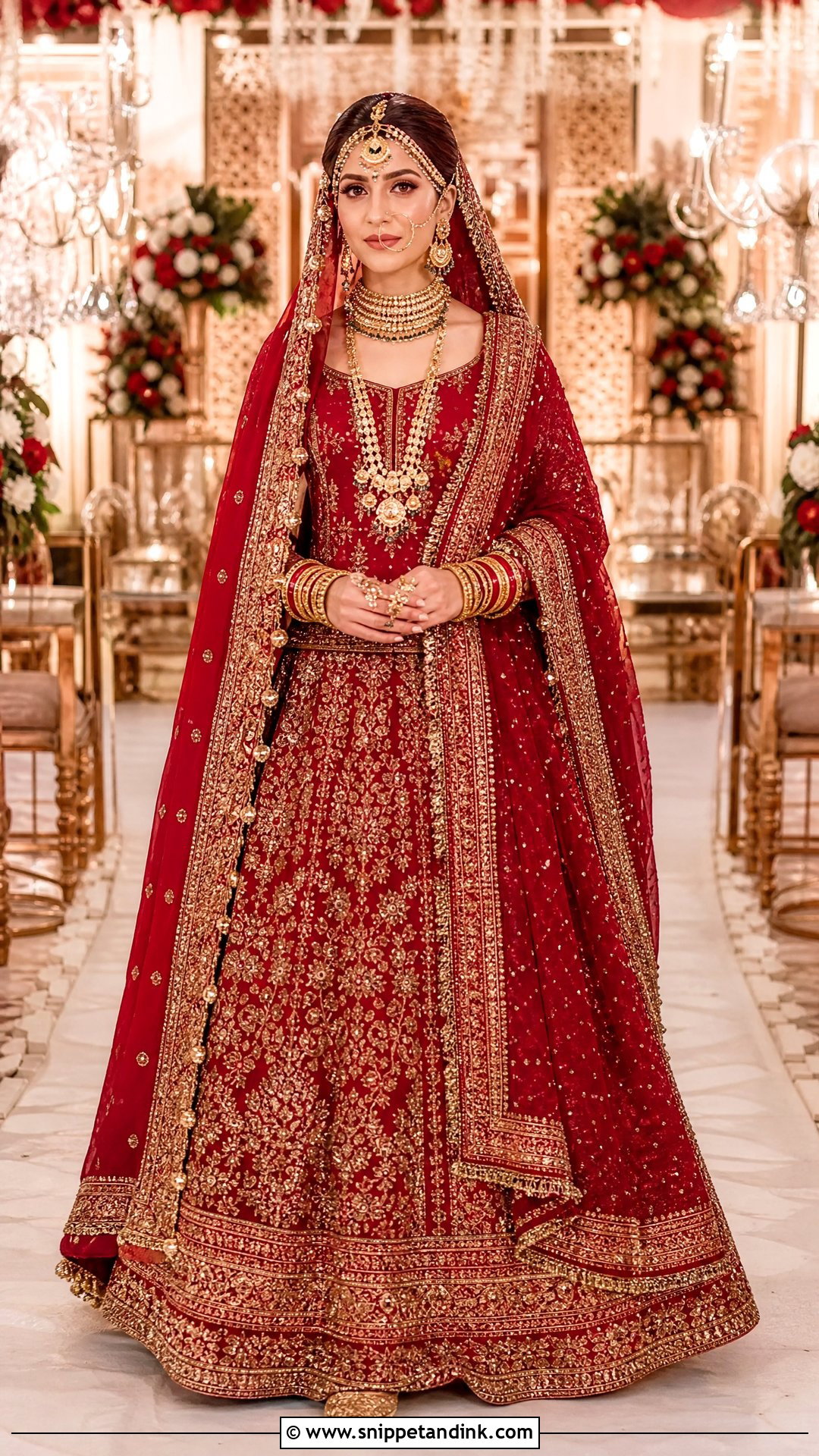
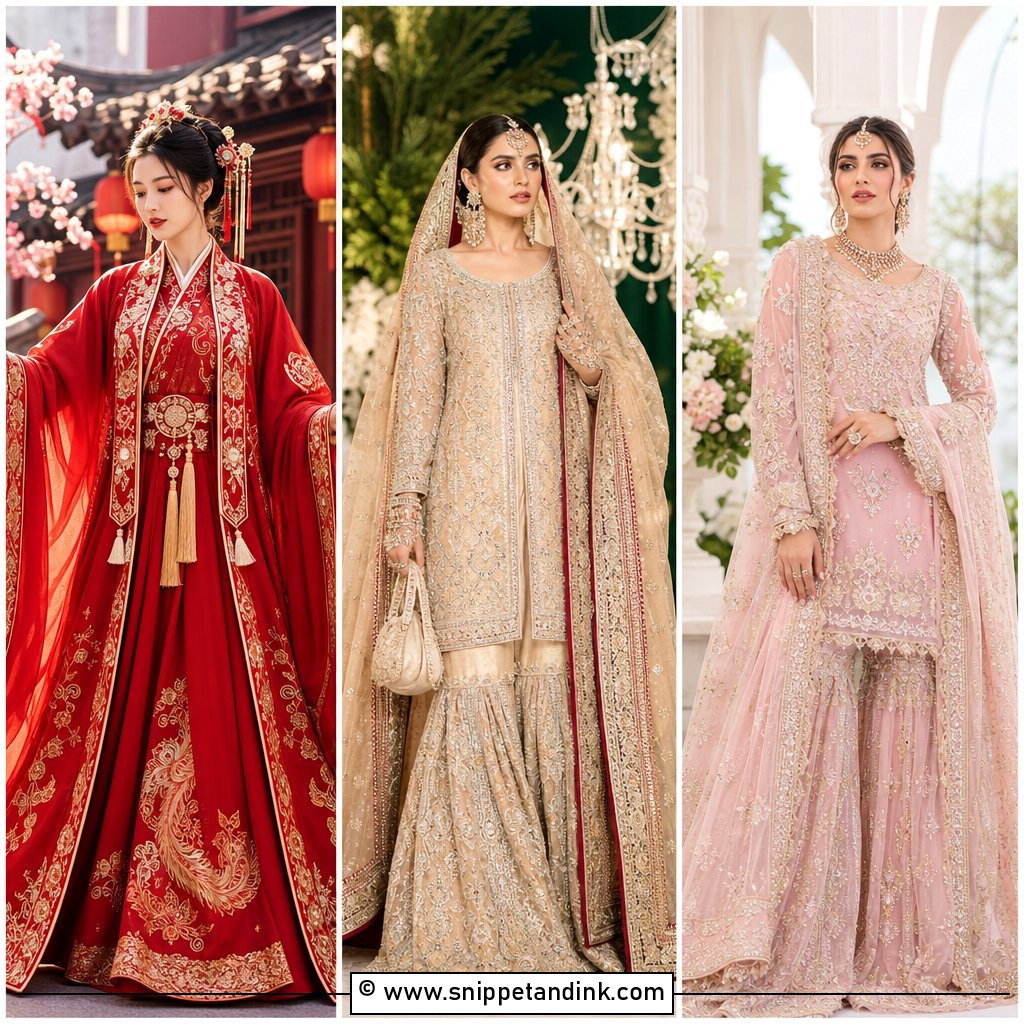
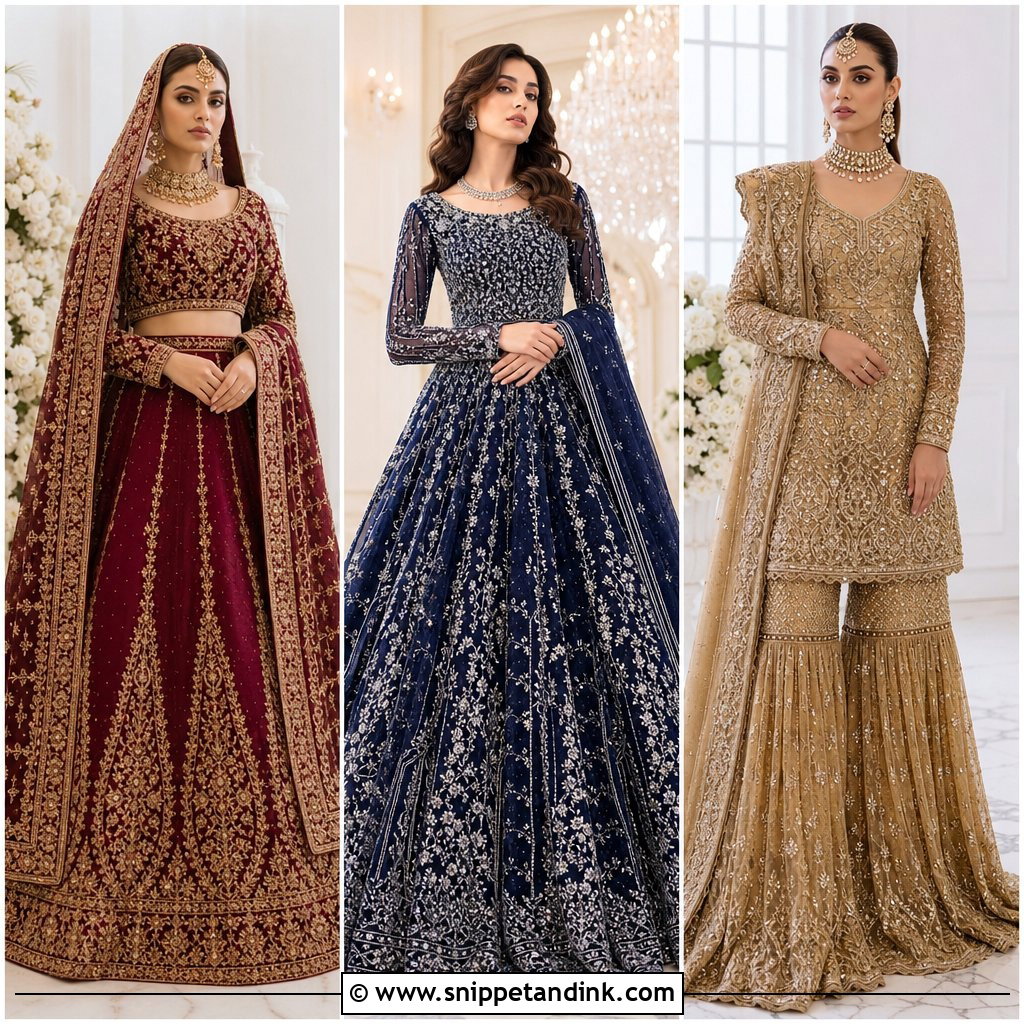
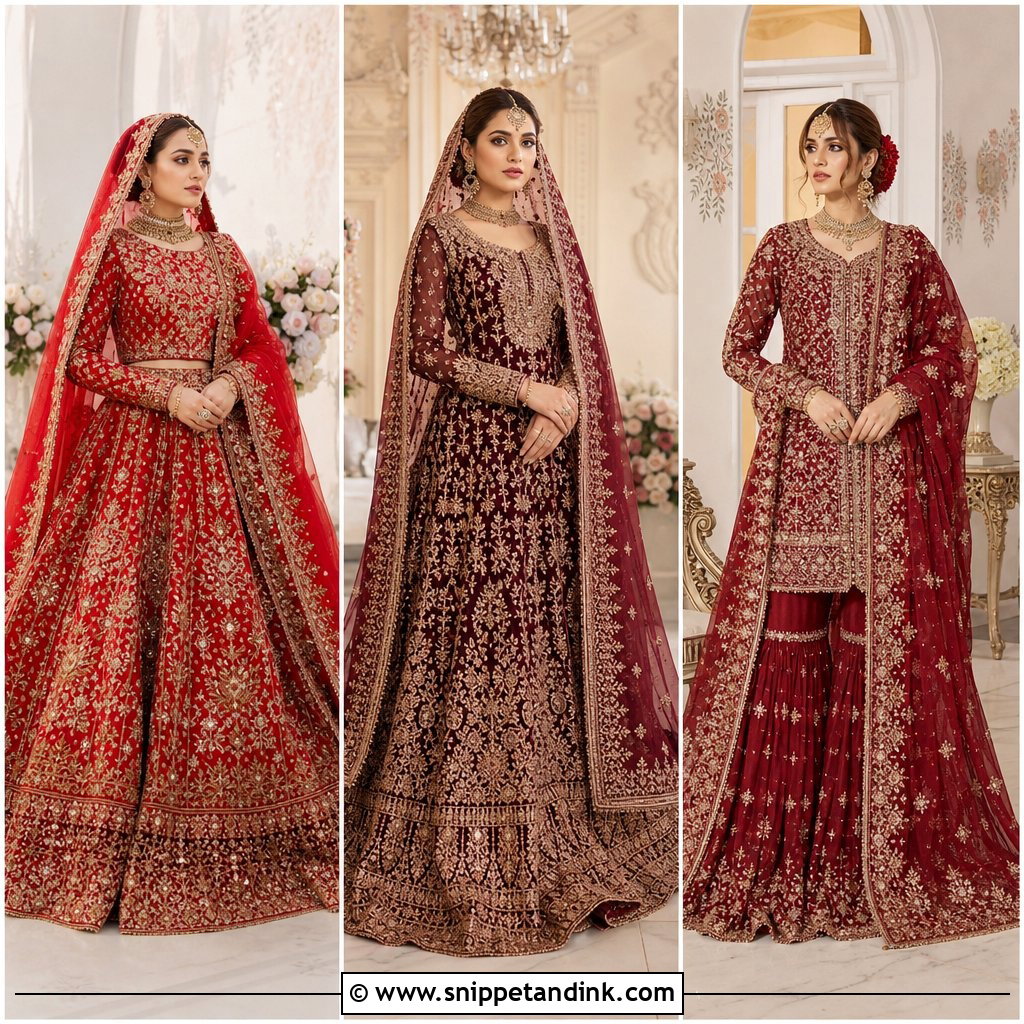
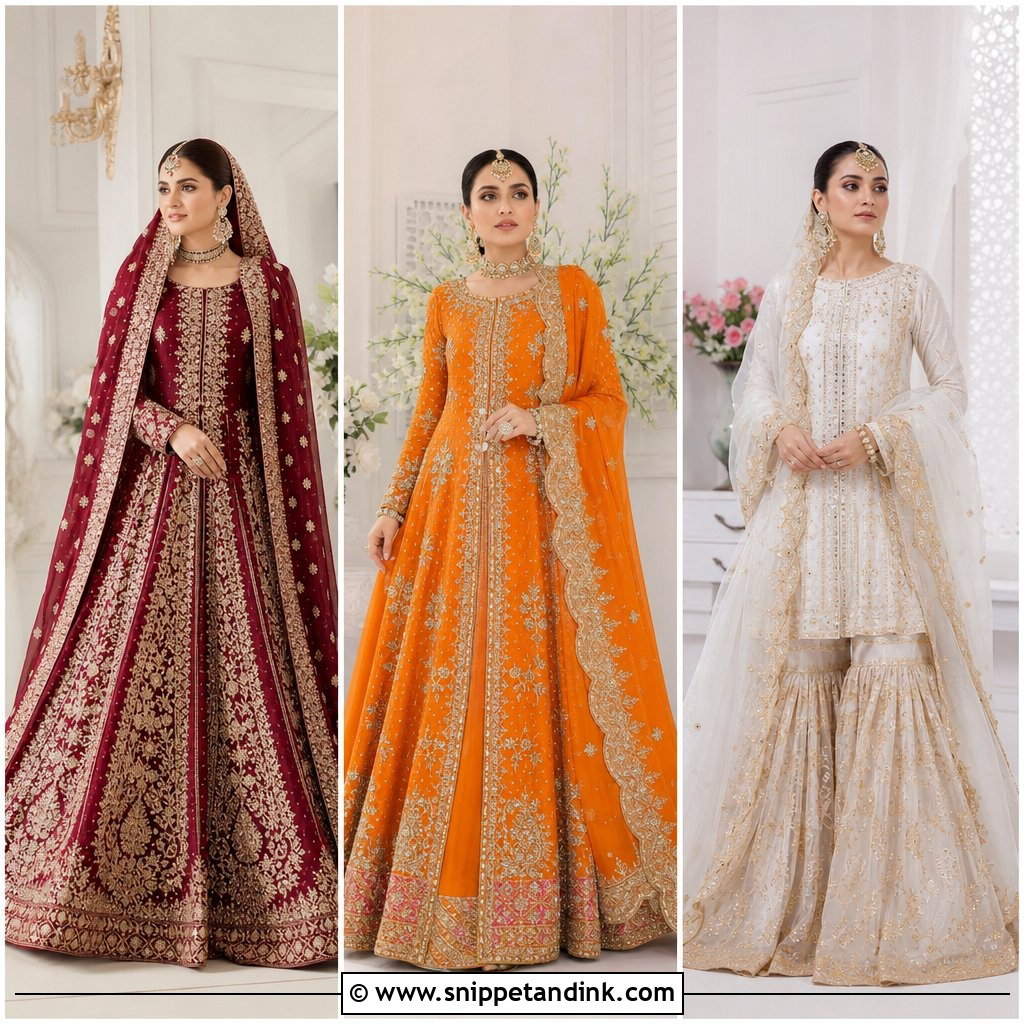
Red on the barat is the look most families picture first, and for good reason: raw silk, jamawar and velvet all hold deep red without going flat under hall lighting. I like antique gold zari, dabka and kora here because they add richness while letting some of the base fabric show. Wear a scalloped red dupatta over the head and a lighter second one across a shoulder, with a gold choker, long necklace, jhumkas, matha patti and bangles. The detail I always check at the final fitting is the blouse: once the full jewelry set is on, a neckline that felt fine alone can start digging in. Cushioned gold khussas underneath, defined eyes, a deep rose lip and a sleek bun that gives the dupatta pins something solid to grip.
2. Maroon Velvet Pakistani Bridal Lehenga
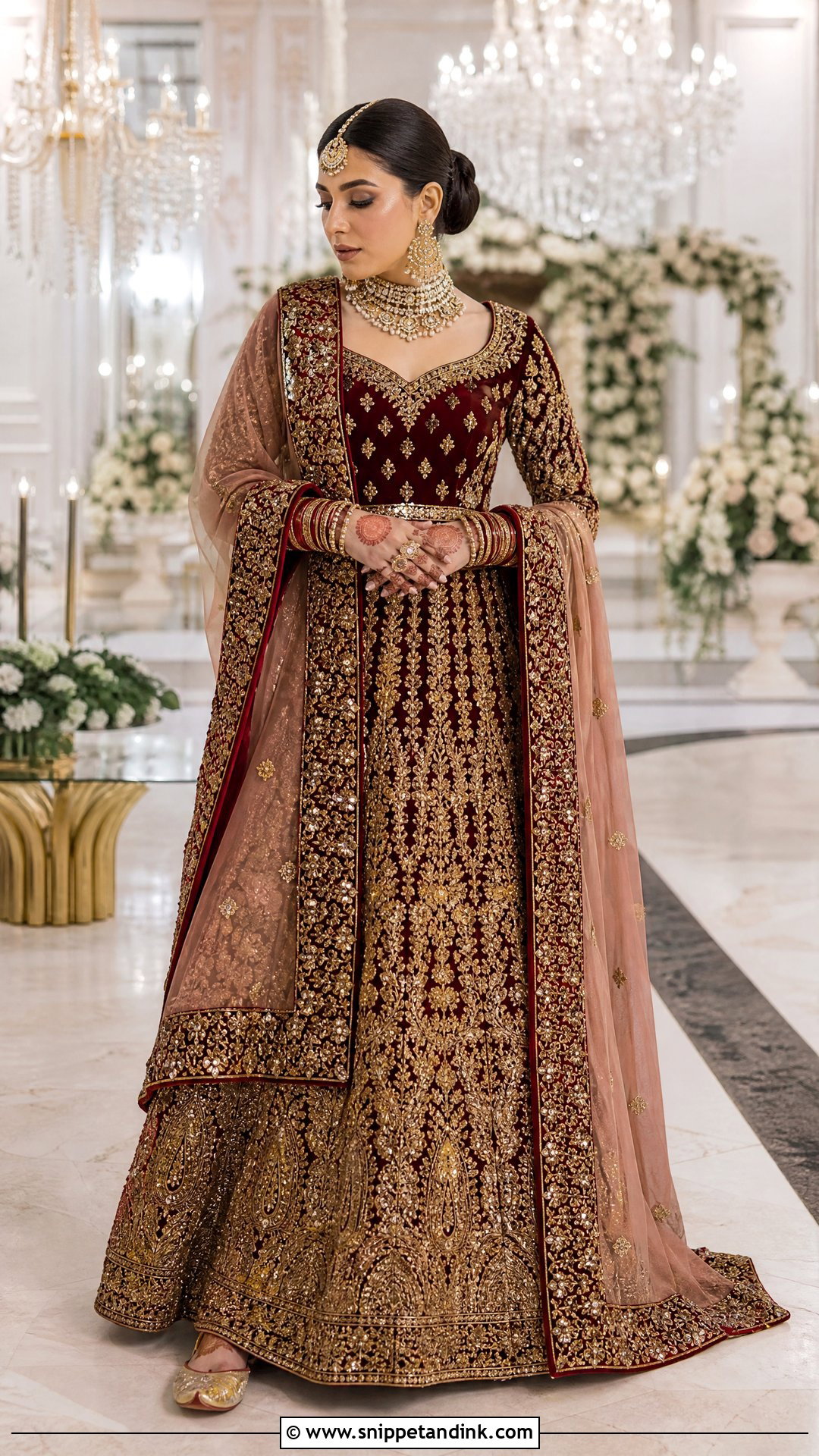
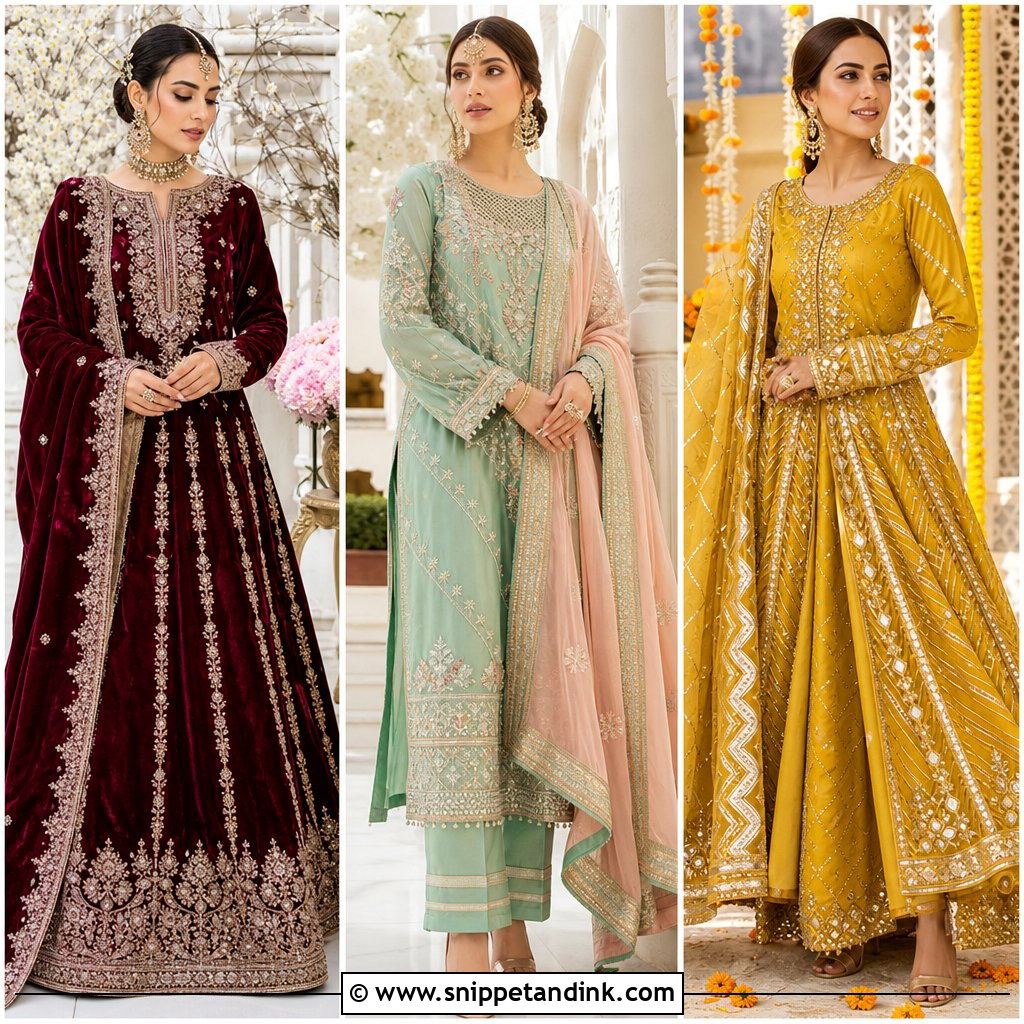
Velvet is a winter fabric, full stop. In a heated banquet hall or a cold-season marquee, a maroon velvet lehenga looks rich and keeps you comfortable; in a humid summer venue it becomes a sauna. Ask for a paneled skirt with controlled volume, because velvet adds weight fast and a fully gathered skirt can tip into exhausting. I usually suggest lighter embroidery at the waist and sleeves, where you bend and where you hug relatives. Pair it with a structured blouse, an organza dupatta with a wide border, polki jewelry, a statement nath, stacked bangles and gold khussas, then a low bun with a few soft strands at the face.
3. Gold Pakistani Bridal Gharara
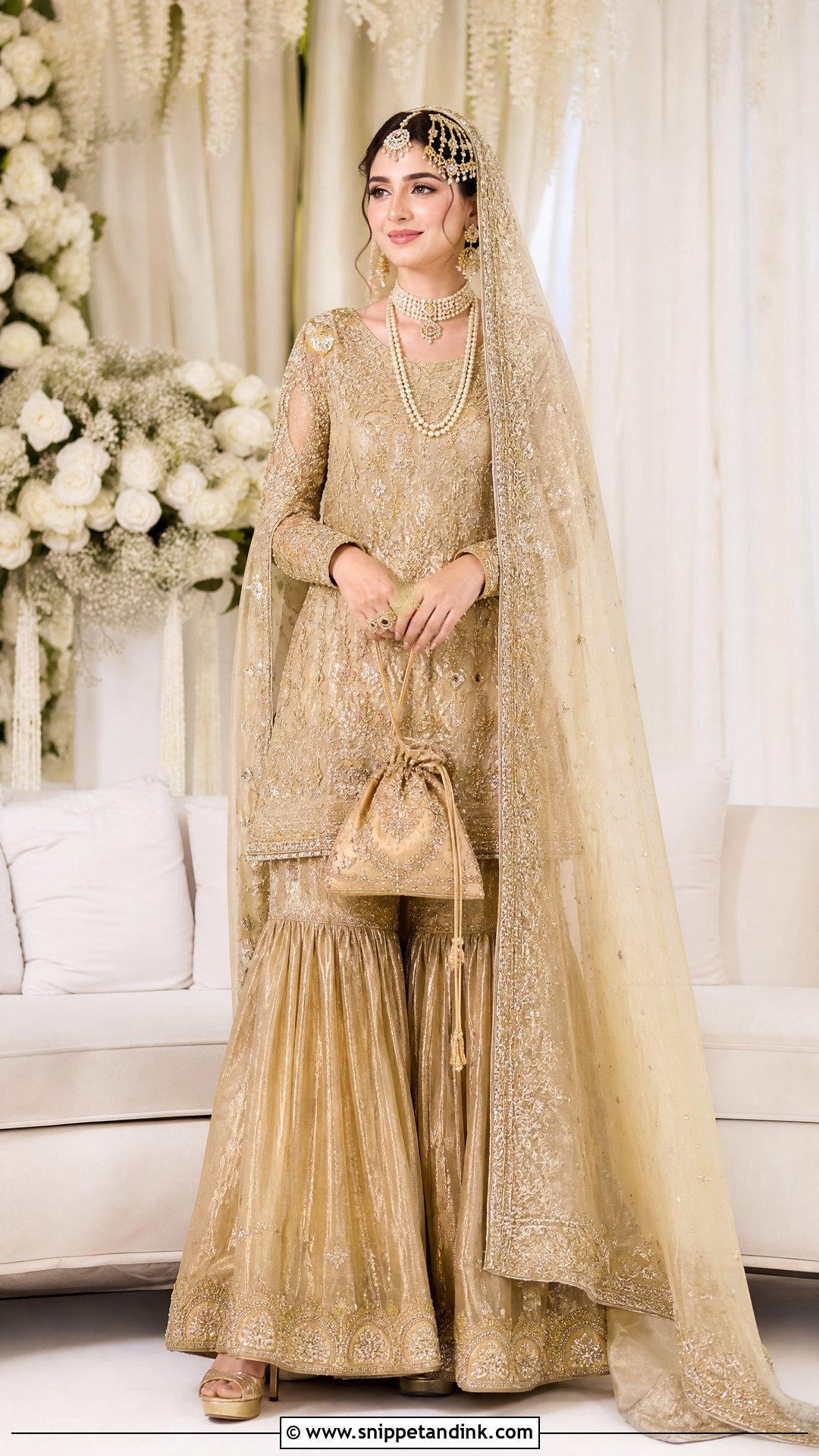
A gold gharara is the outfit I suggest to brides who love tradition but feel lost inside a lehenga. The shirt carries the handwork, usually tissue, brocade or silk with detail at the neckline, sleeves and hem, and the gharara flares out below the knee. All that metallic can look heavy in photographs, so I soften it with an ivory or pale gold dupatta. Pearl and kundan jewelry, a fine matha patti, an embroidered potli and comfortable gold heels finish it. The shirt length and how dense the embroidery is decide whether it reads as nikah, barat or an intimate daytime wedding.
4. Ivory Pakistani Nikah Dress
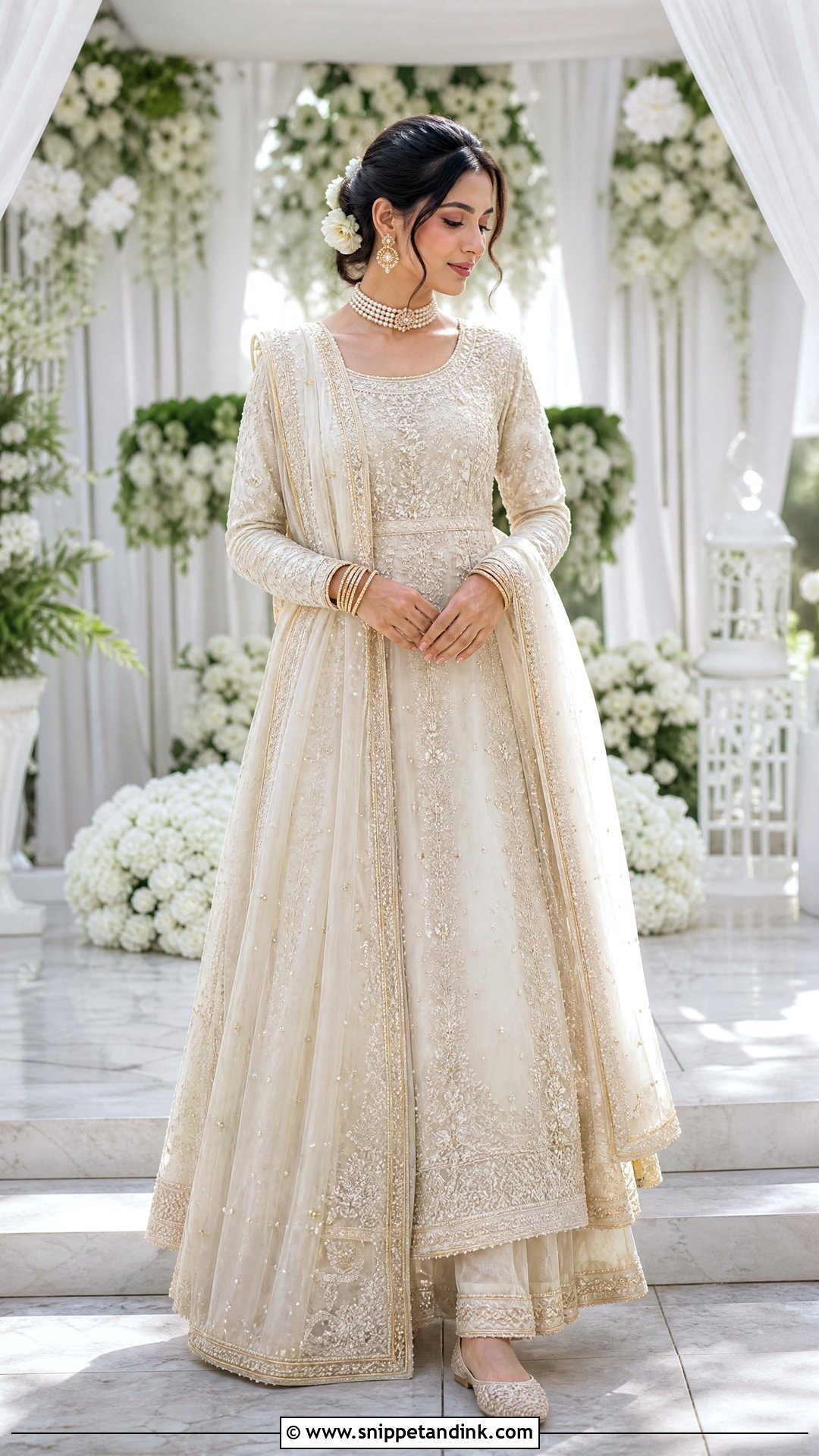
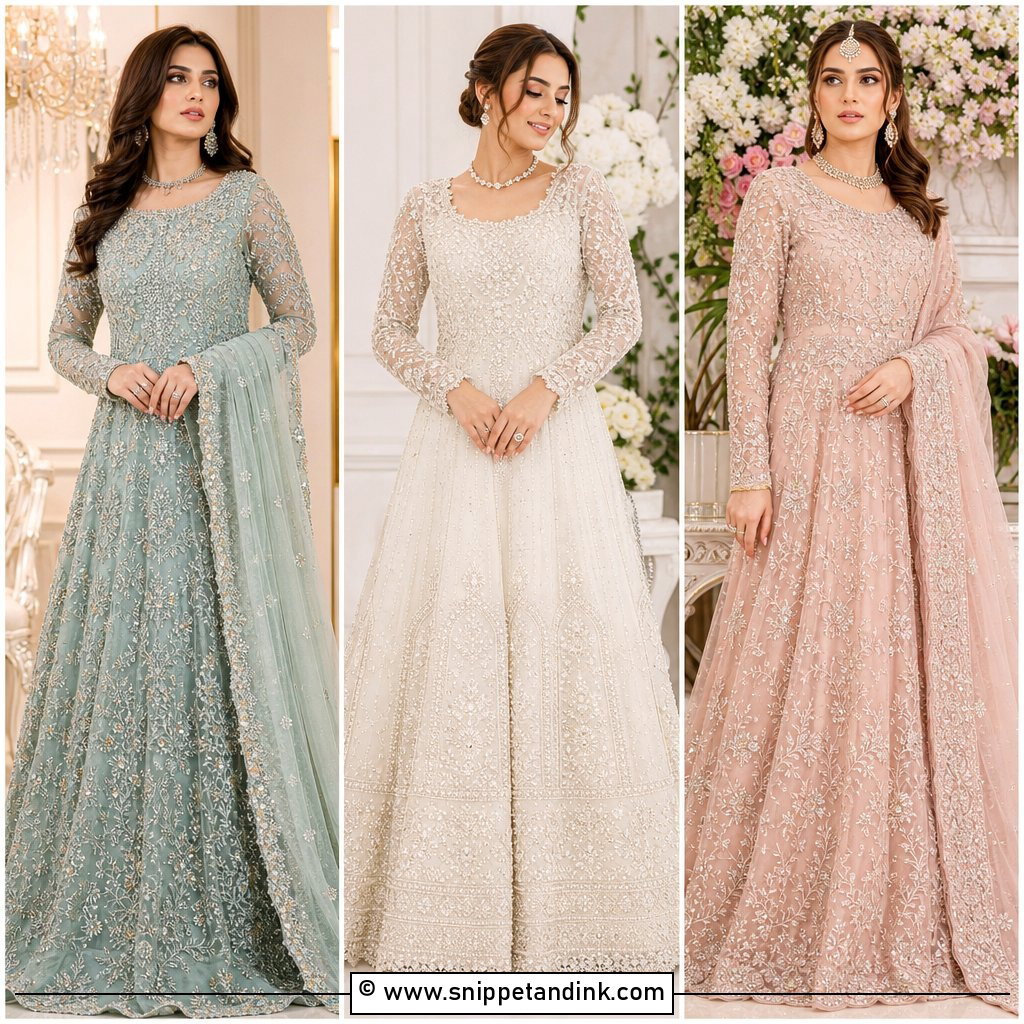
For a daytime nikah, ivory is calm and photographs cleanly in natural light. A long embroidered pishwas with a defined waist, full skirt and modest neckline gives you shape without bulk, and pearls, silver thread, crystals and pale gold details add depth while keeping the palette quiet. One honest warning: ivory shows every mark, so I keep a small stain kit and white chalk in the bag for this one. An ivory organza dupatta goes over the head, and a second sheer one can drape at the arms for a more formal feel. Pearl earrings, a delicate choker, slim bangles, embroidered flats, muted rose lips and a neat bun or soft waves under the veil keep it gentle.
5. White And Gold Pakistani Nikah Sharara
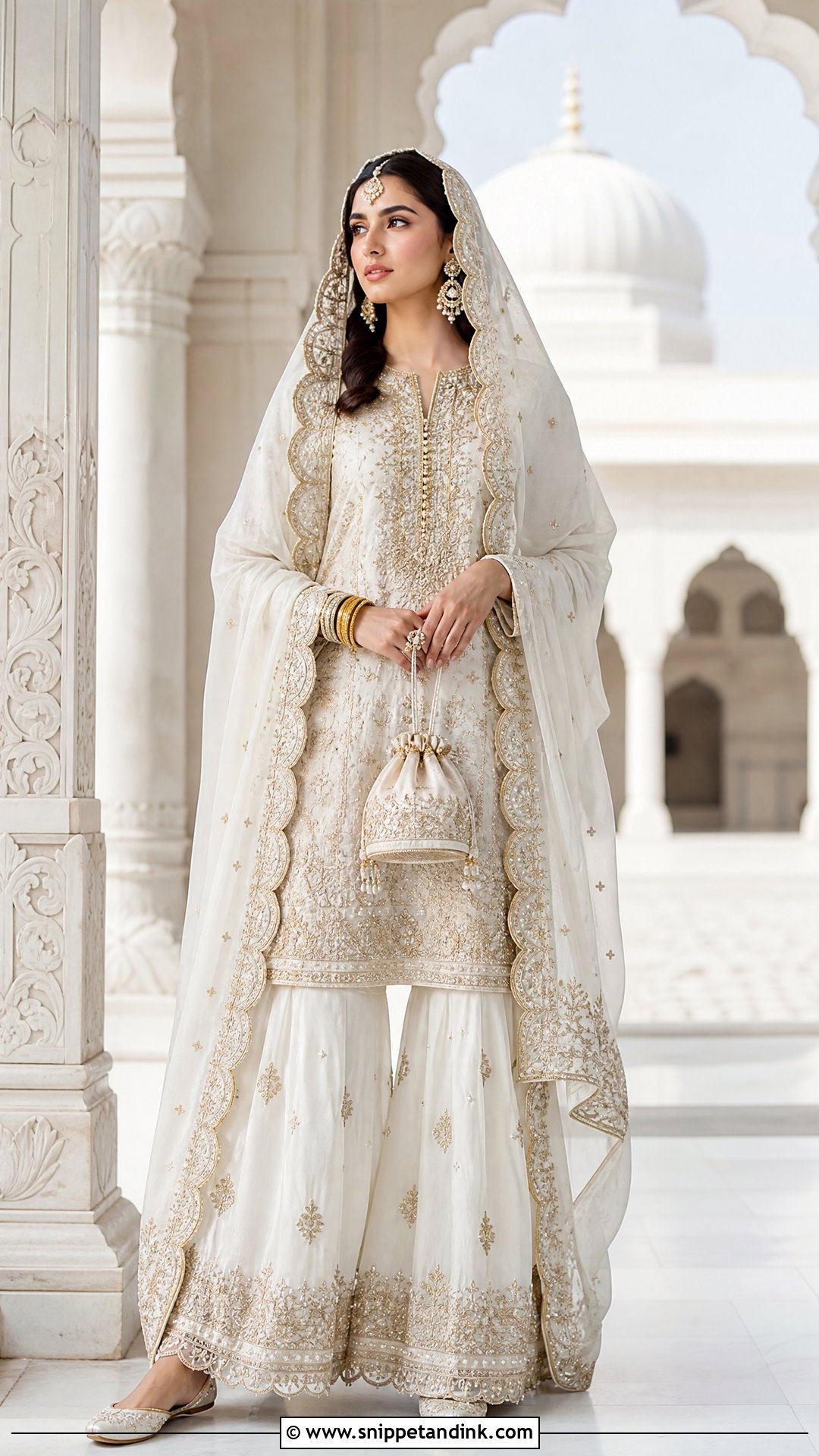
White and gold suits a smaller nikah at home, in a mosque or in a garden, because it feels festive without swamping a modest room. I’d pick a kameez at or just past the knee with tidy zardozi at the neckline and borders, over a wide sharara that lets you sit cross-legged on a floor setup without a struggle. The white dupatta with a gold scalloped edge needs firm pinning over the head, since the ceremony involves a lot of bowing and turning. Kundan earrings, a small maang tikka, gold bangles, ivory khussas and a structured potli in place of a handbag. Smooth hair, luminous skin, a wash of gold on the lids and a peach lip.
6. Blush Pink Pakistani Walima Gown
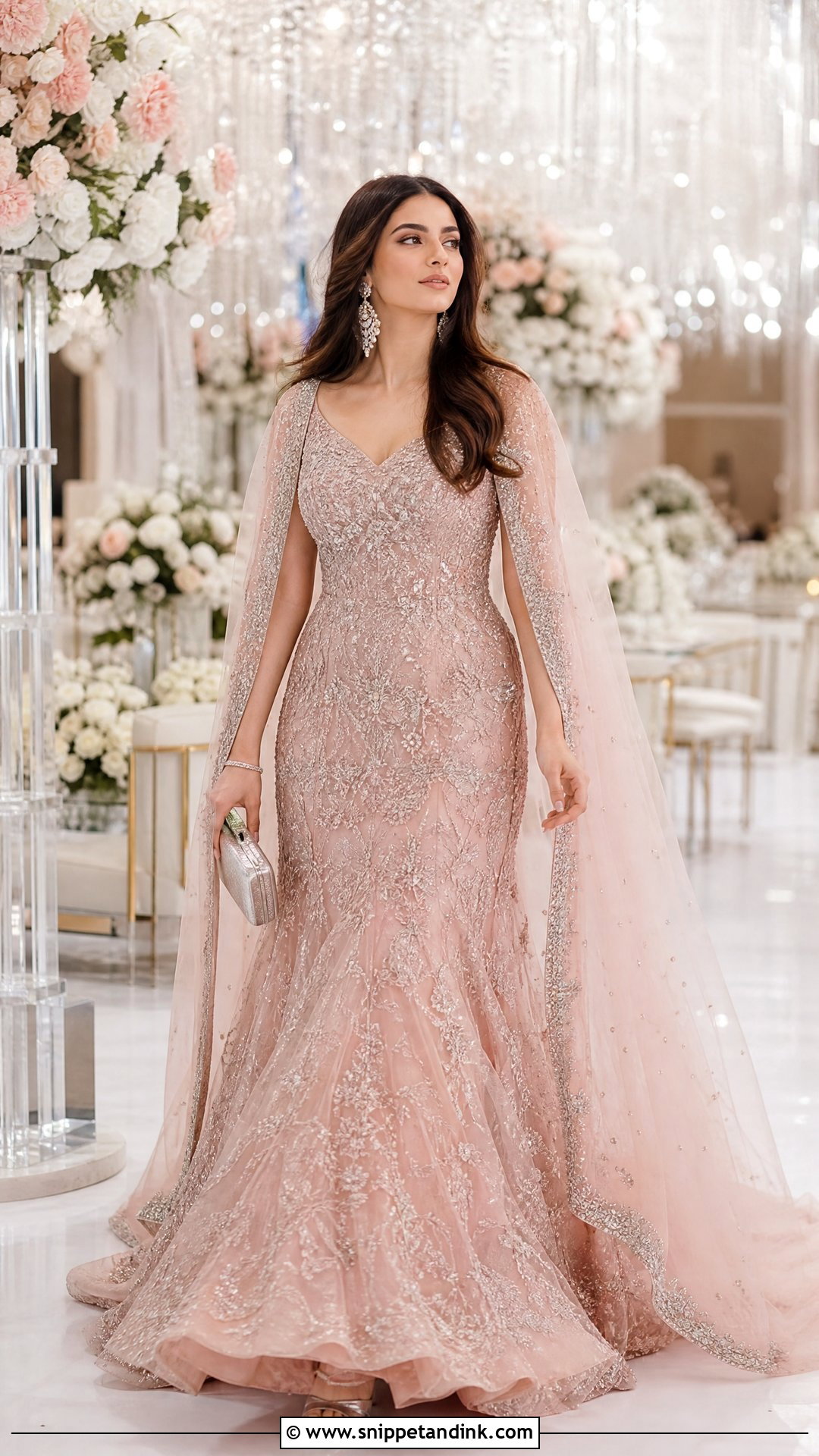
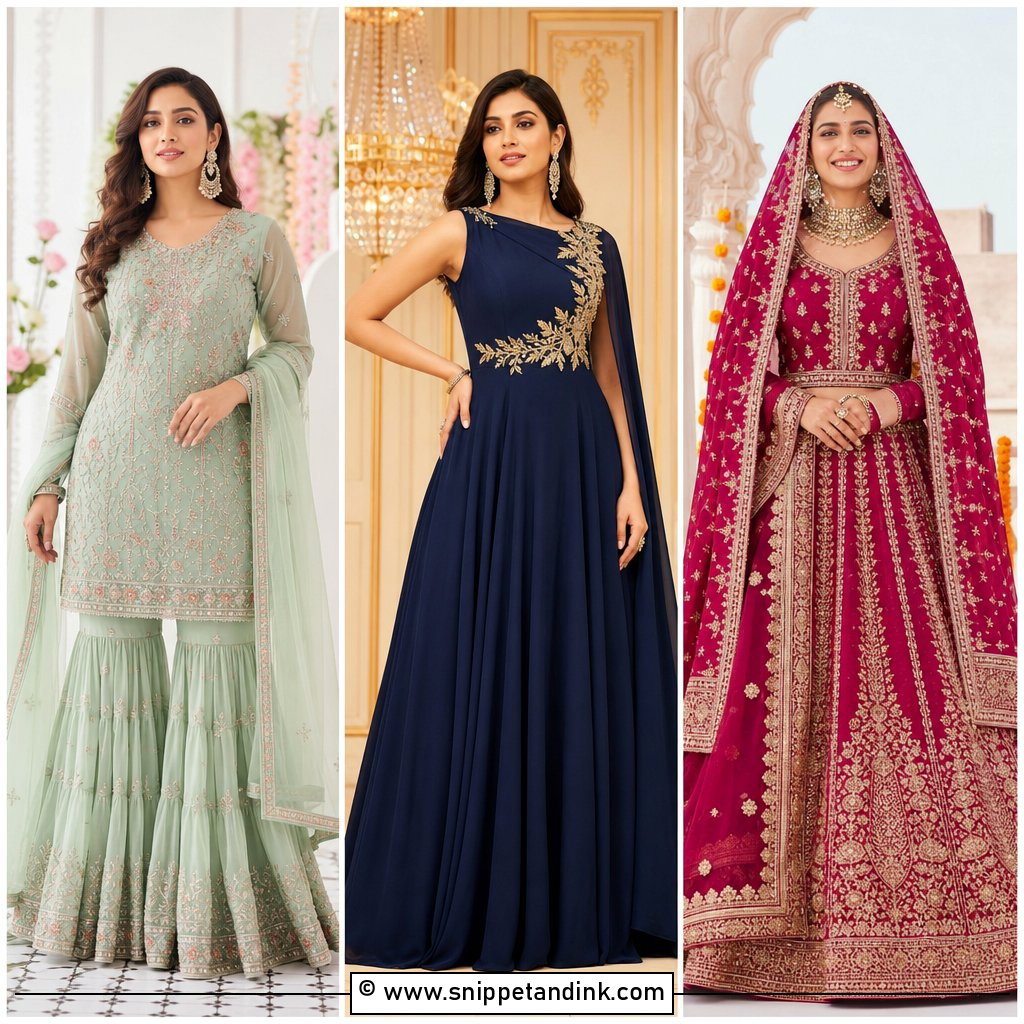
Blush pink is where many brides land for the walima once the heavy barat is behind them. A floor-length gown with a fitted bodice and a net overlay gives volume without the drag of dense embroidery, and silver or champagne embellishment keeps it light. Before you commit, check the pink in daylight and under warm bulbs: some blush shades turn peachy indoors. Drape a sheer blush dupatta over one shoulder or attach it like a cape. Crystal drops, a slim bracelet, metallic heels and a small silver clutch are enough. Loose waves or a low textured bun, rosy makeup and defined eyeliner keep your face readable across a reception hall.
7. Silver Gray Pakistani Walima Maxi
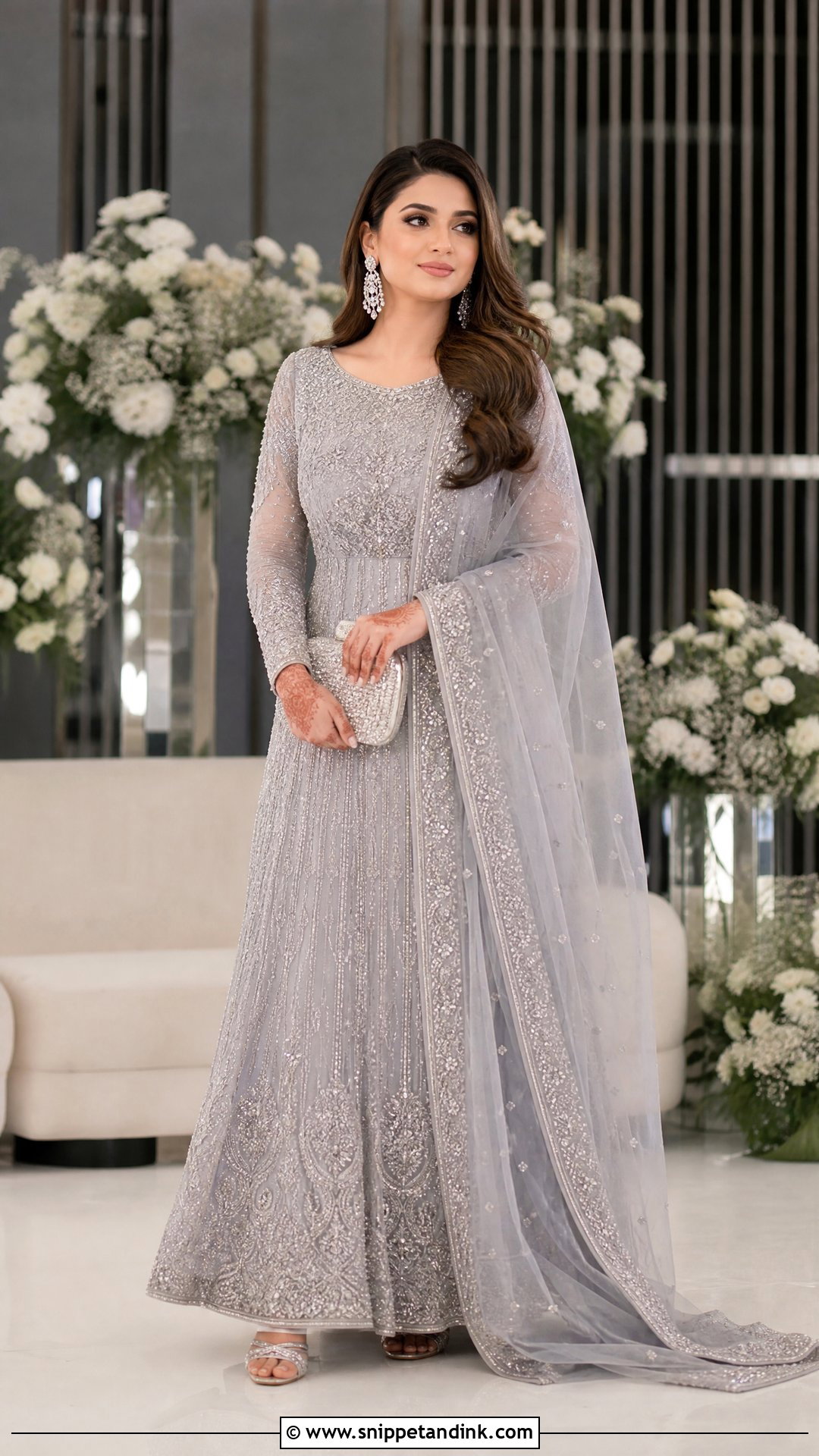
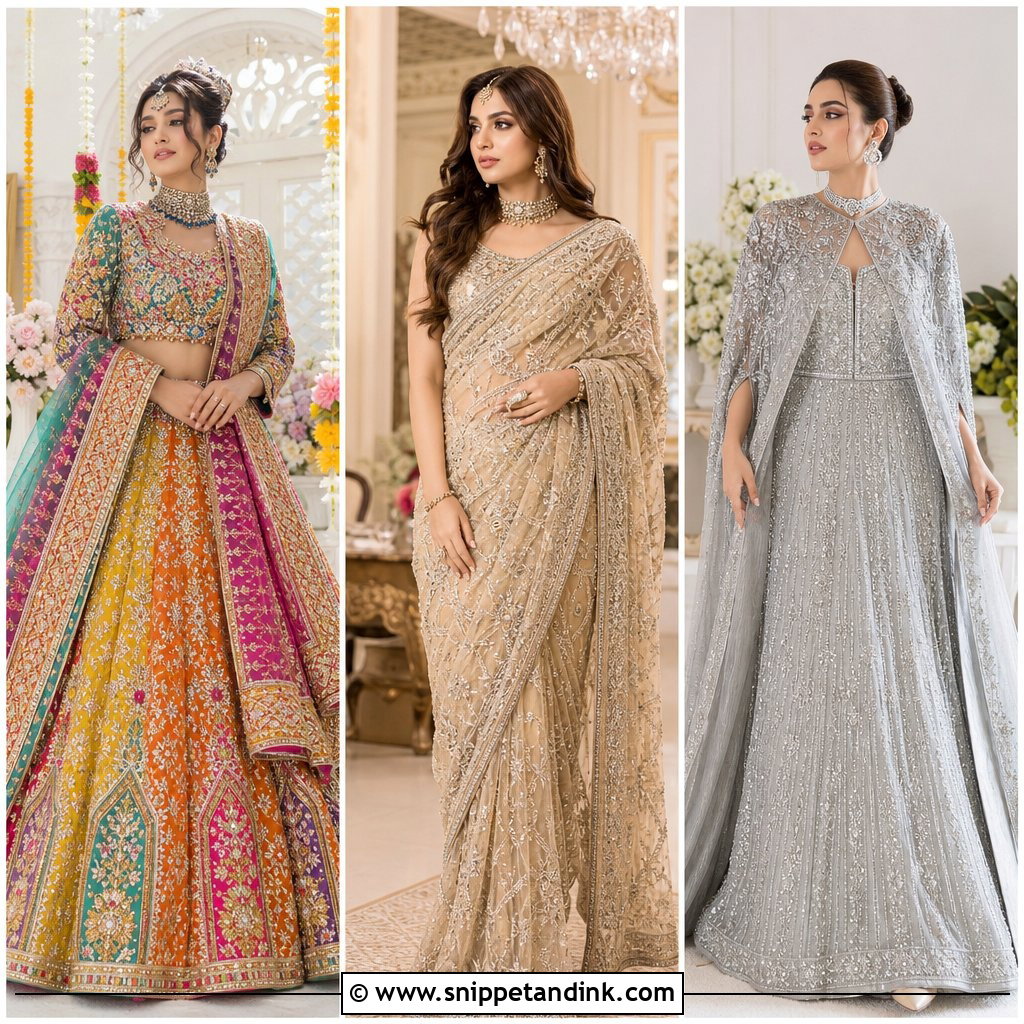
Silver gray is the walima choice for a bride who wants calm rather than color. The cut matters more than the shade: a fitted upper section and a skirt that opens gradually from the hip looks modern, whereas a gathered waist can make gray look heavy. Crystal, pearl and thread embroidery placed in a few deliberate spots catches ballroom light nicely. Add a sheer gray dupatta with a narrow embellished border, silver heels, a crystal clutch and chandelier earrings, with a necklace only if the neckline asks for one. Cool-toned makeup, soft smoky eyes and a dusty pink lip, with polished waves or a center-parted bun.
8. Champagne Pakistani Bridal Pishwas
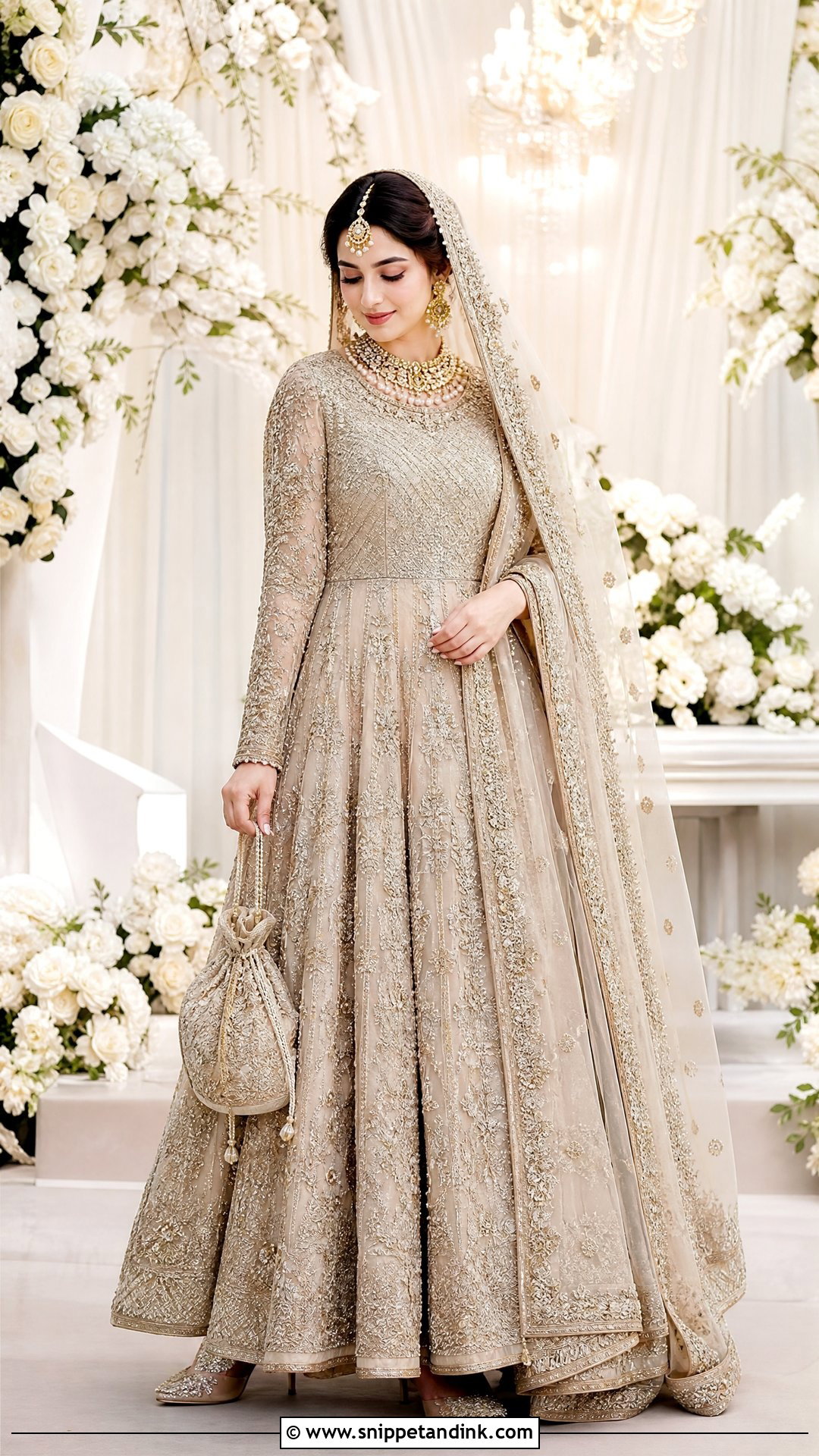
Champagne sits between ivory, beige and soft gold, so it flatters a wider range of skin tones than stark ivory does. A long pishwas in this shade can serve a nikah or walima depending on how much embroidery it carries. My rule with a monochrome outfit is to vary the texture: tonal thread, pearls and antique metallic details on a fitted bodice with full sleeves and a well-flared skirt give the camera something to read. A sheer champagne dupatta with a wide border, polki with pearl drops, embroidered heels, a small potli and a low bun with discreet hair accessories. Warm neutral makeup and a soft berry lip.
9. Emerald Green Pakistani Mehndi Lehenga
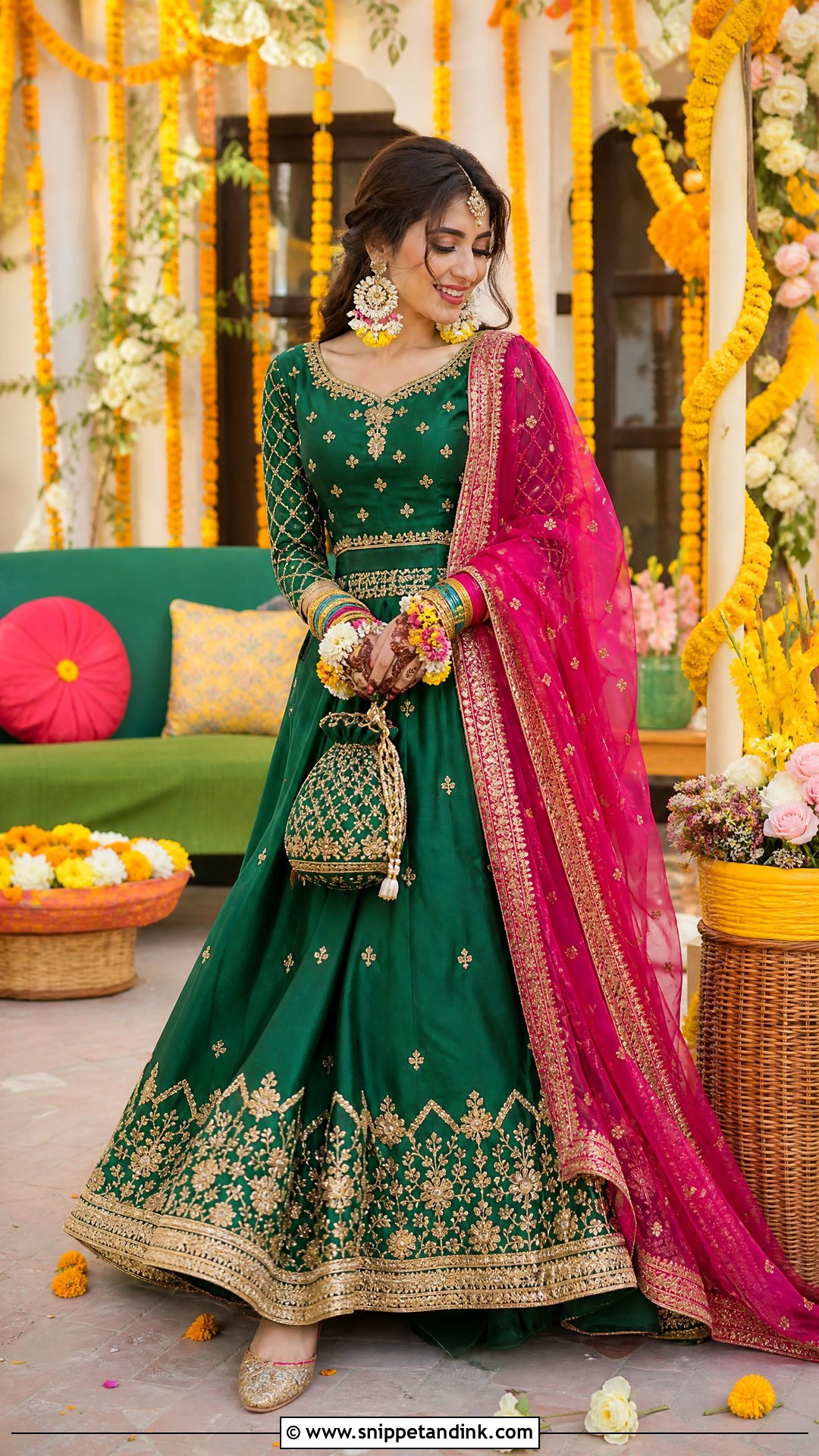
Emerald green sits comfortably with marigold and mixed-color mehndi decor without clashing. Choose silk or raw silk with gold borders and touches of pink, orange or turquoise thread. The blouse is the piece I fuss over for a mehndi, since you’ll be dancing and sitting on cushions for hours, so I ask the tailor for a little ease under the arms. A magenta or mustard dupatta brings back the traditional mehndi palette. Floral earrings, colorful bangles, a small maang tikka and embellished khussas, with a braid or low ponytail. Green or bronze accents on the eyes and a rosy lip, and a compact embroidered potli for your phone.
10. Mustard Yellow Pakistani Mehndi Sharara
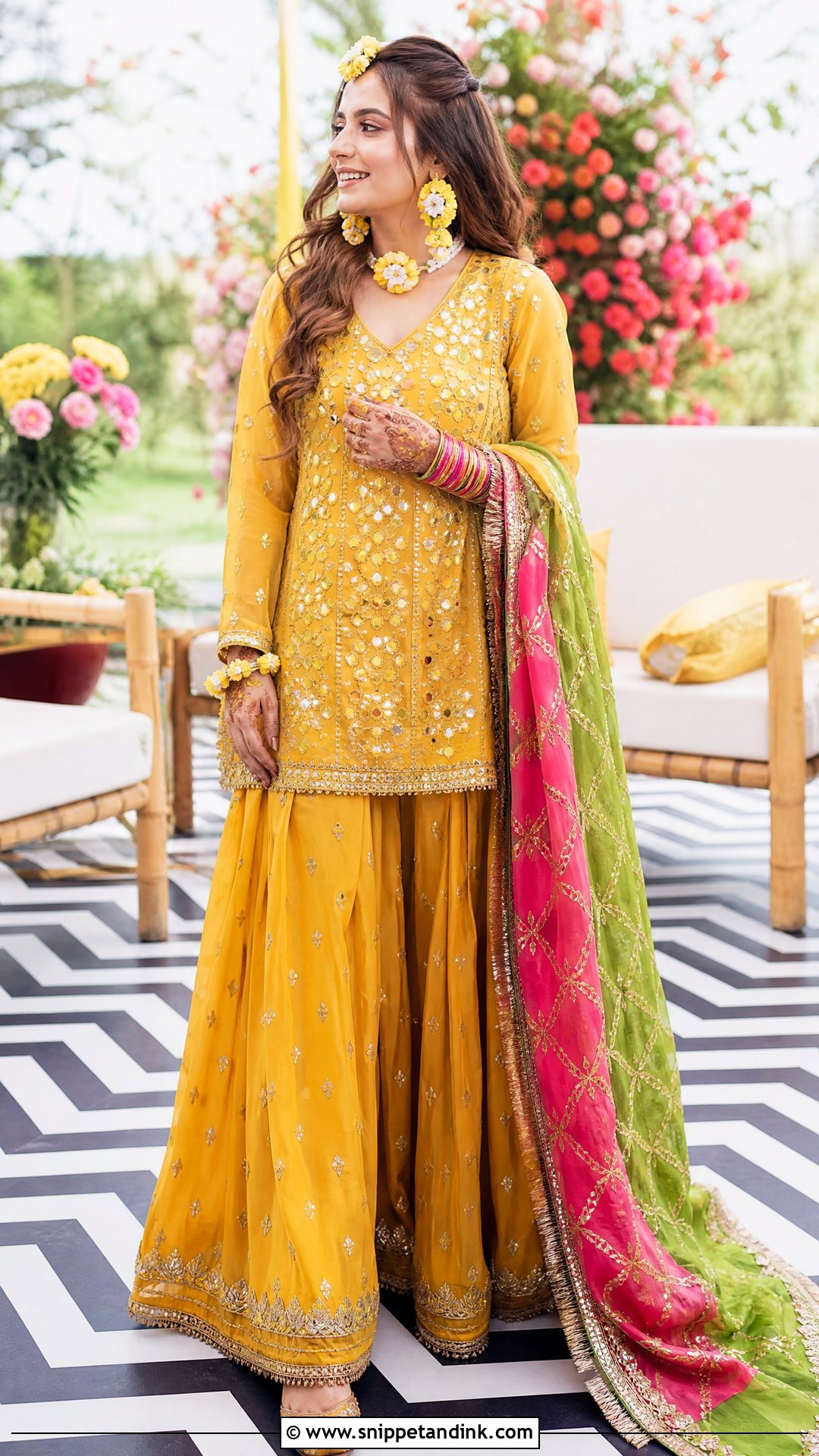
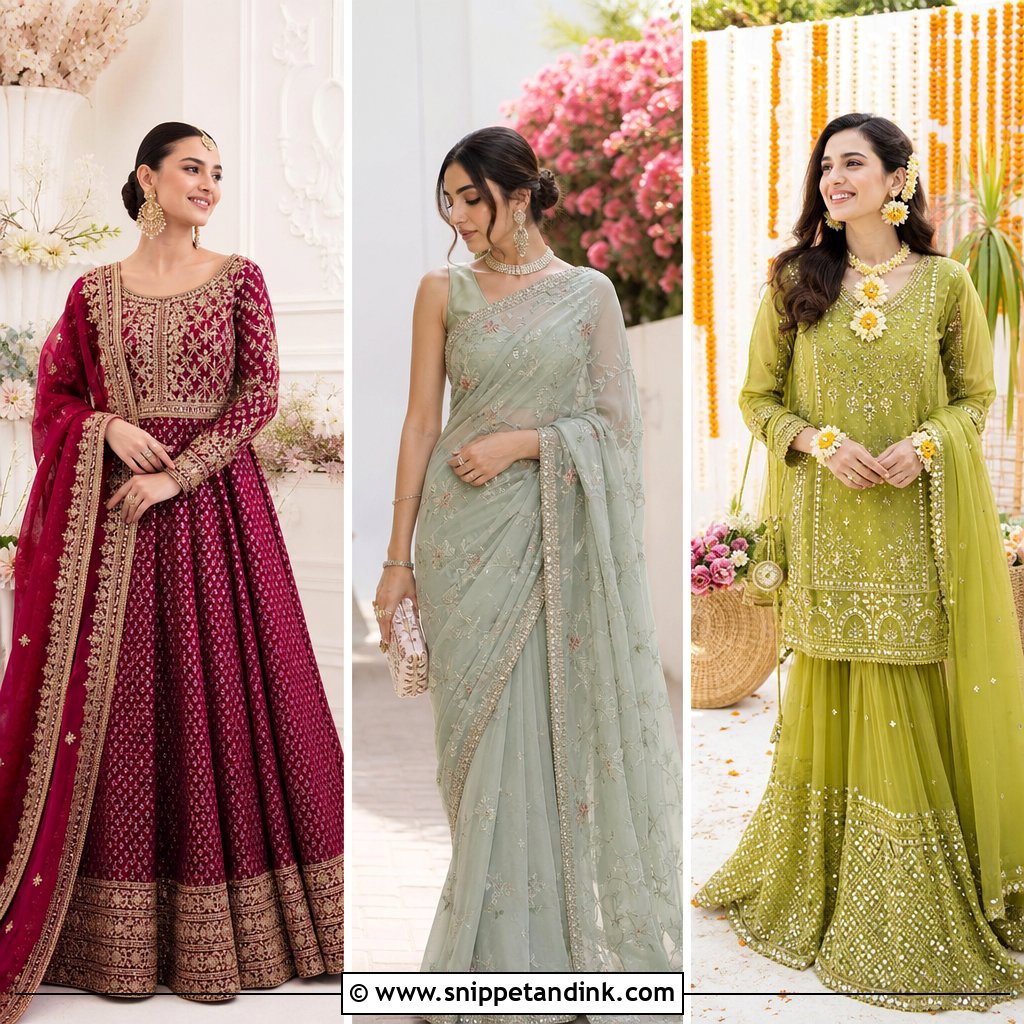
Mustard yellow belongs in daylight; under warm evening bulbs it can drift toward brown, so I keep it for lawn and courtyard mehndis. Build it on a short embroidered kameez and a flowing sharara with gold gota, mirror work or colored thread, then add one contrasting dupatta in green, pink or orange. Floral jewelry earns its place here because metal pieces get heavy over a long afternoon of dancing. Light earrings, stacked bangles and flat khussas you can actually stand in, plus a loose braid threaded with small flowers. Glowing skin, peach blush and a pink lip finish it.
11. Orange And Pink Pakistani Mayun Gharara
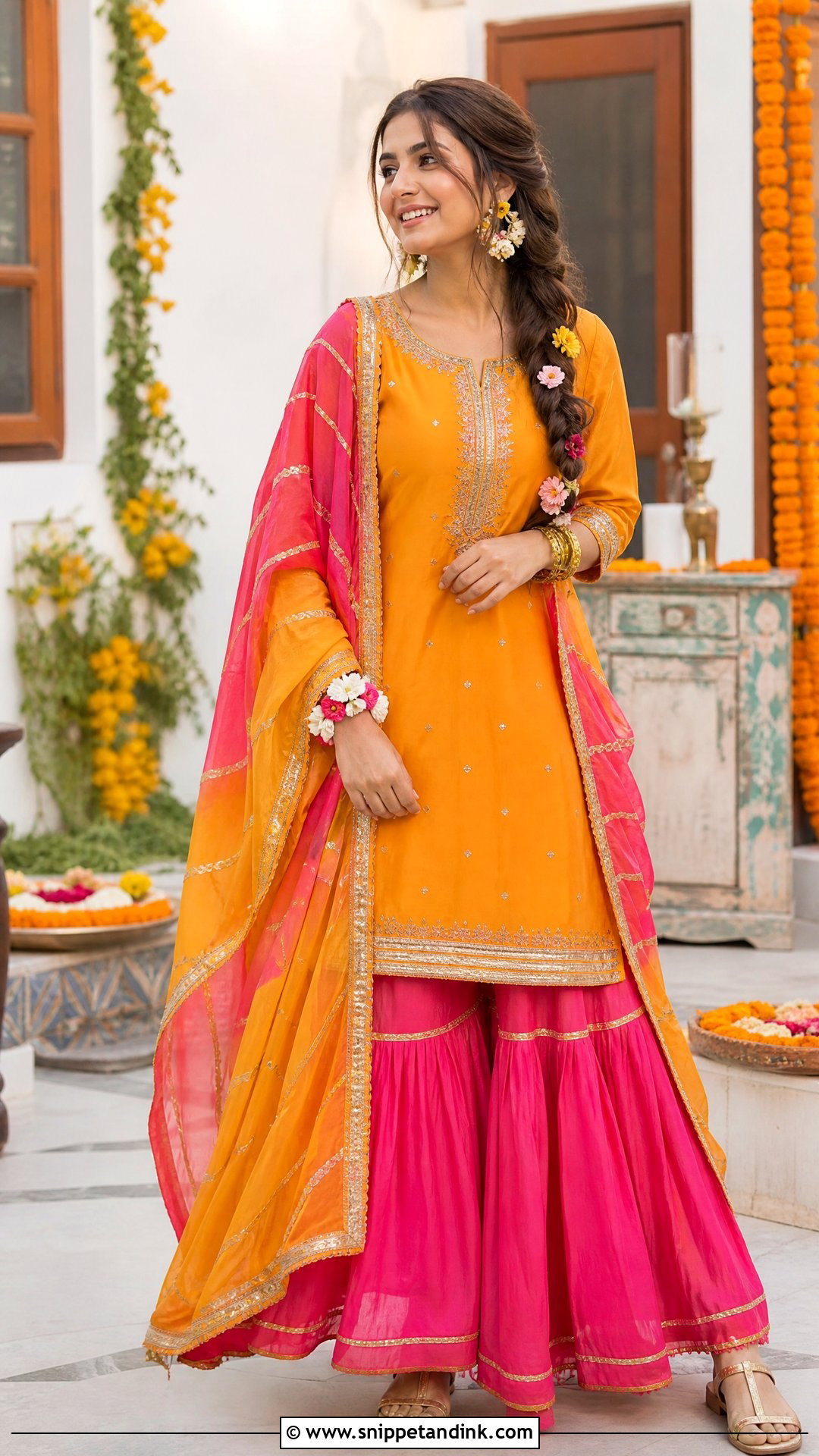
The mayun is the messiest event of the week, with turmeric paste, oil and plenty of hugging, so this is the one outfit I tell brides not to spend heavily on. An orange kameez with gota trim at the neckline, cuffs and hem against a bright pink gharara gives clear contrast, and a two-tone or bandhani-style dupatta ties the colors together. Haldi stains cotton and silk alike, so assume the outfit may not come out the same. Fresh flower earrings, a flower bracelet, delicate bangles and flat gold sandals or khussas. A side braid or relaxed low bun under a loosely placed dupatta, with waterproof mascara, peach blush and a tinted lip.
12. Multicolor Pakistani Mehndi Lehenga
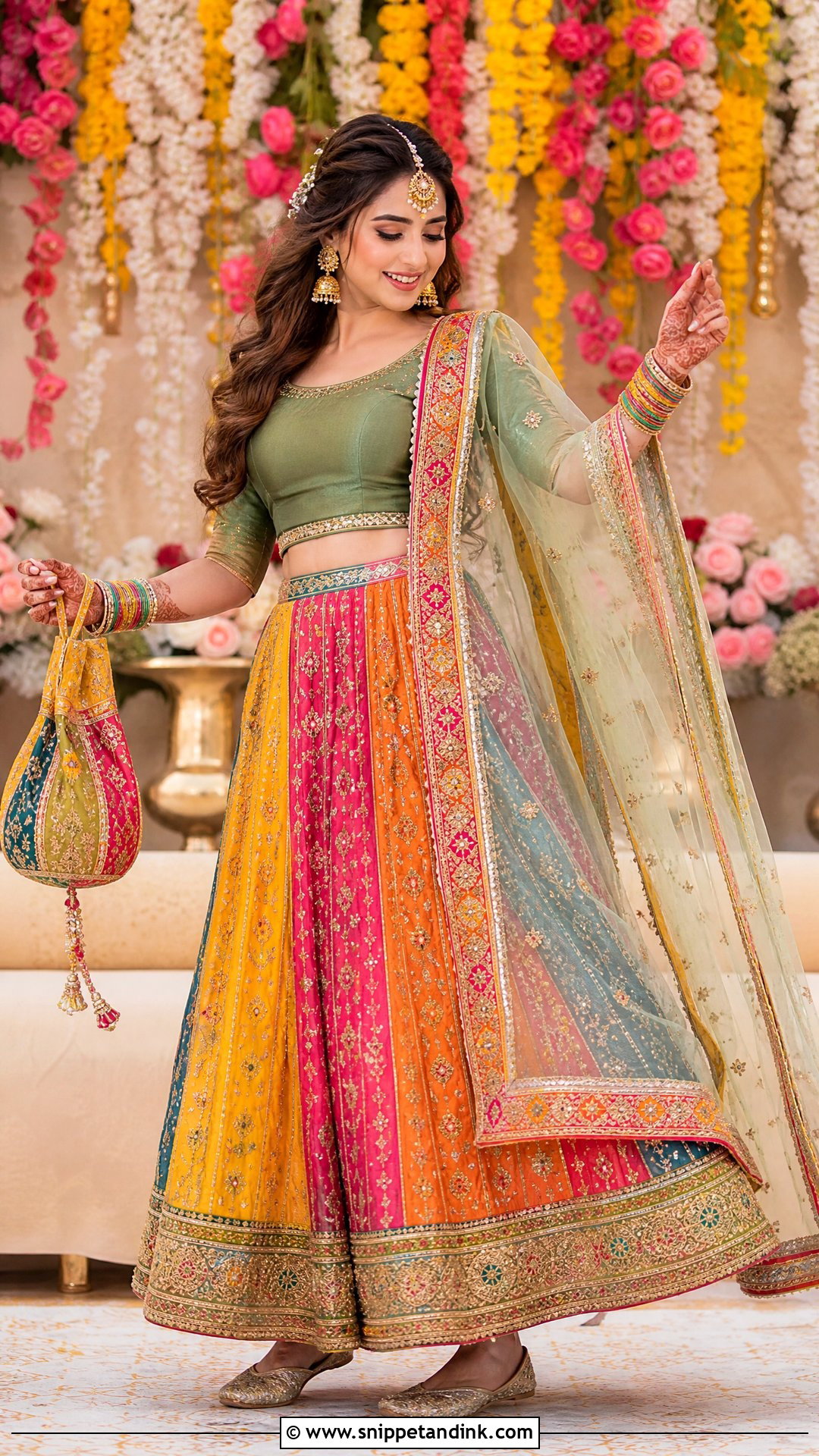
A multicolor lehenga is loud by design, so the work is in holding it together. I look for a paneled skirt in green, yellow, pink, orange and blue where the same gota or mirror work runs across every panel; that repetition is what stops it looking like five garments stitched together. The blouse should be solid, in one of the skirt’s main colors, and the dupatta sheer with only a narrow multicolor border. Light jhumkas, stacked bangles, a small tikka, metallic khussas and a potli cut from matching fabric. Keep the braid or ponytail secure and the makeup neutral with defined eyes so the colors do the talking.
13. Traditional Red Pakistani Bridal Gharara
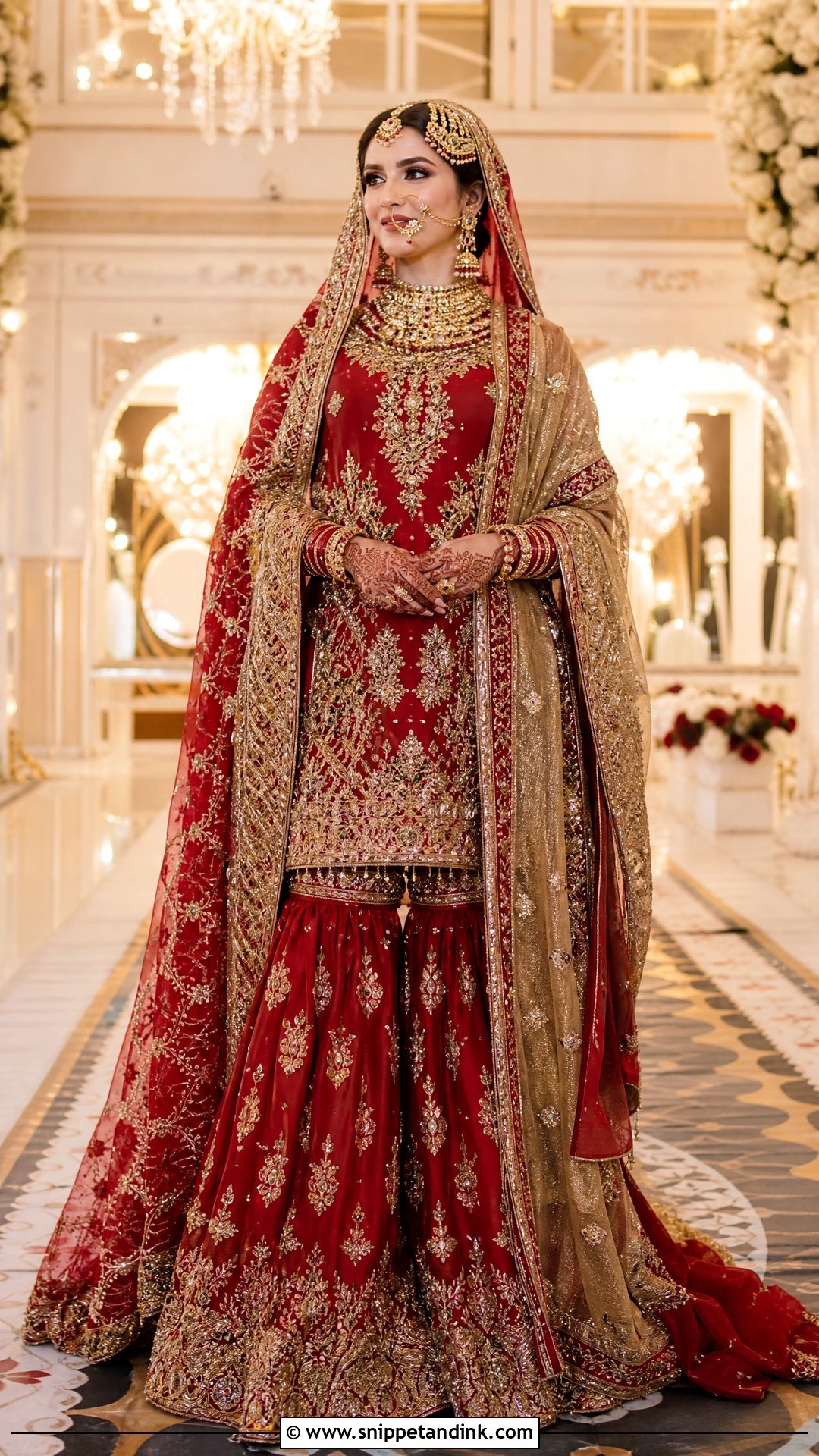
Here is the red gharara for a barat, and it relies entirely on the tailor. The gharara has to sit close above the knee before it opens into its structured flare; if that joint is cut loose, the whole silhouette collapses into wide trousers. Choose a long or mid-length shirt in raw silk, velvet or brocade with antique gold handwork, a heavily bordered red dupatta over the head and a lighter gold or tissue one across the body. Kundan, a matha patti, jhumkas, bangles and a nath complete the formal set. Concealed platform heels help lift those wide legs off the floor. A sleek bun and defined bridal makeup suit a bride who wants a ceremonial look that isn’t a lehenga.
14. Pastel Pink Pakistani Bridal Lehenga
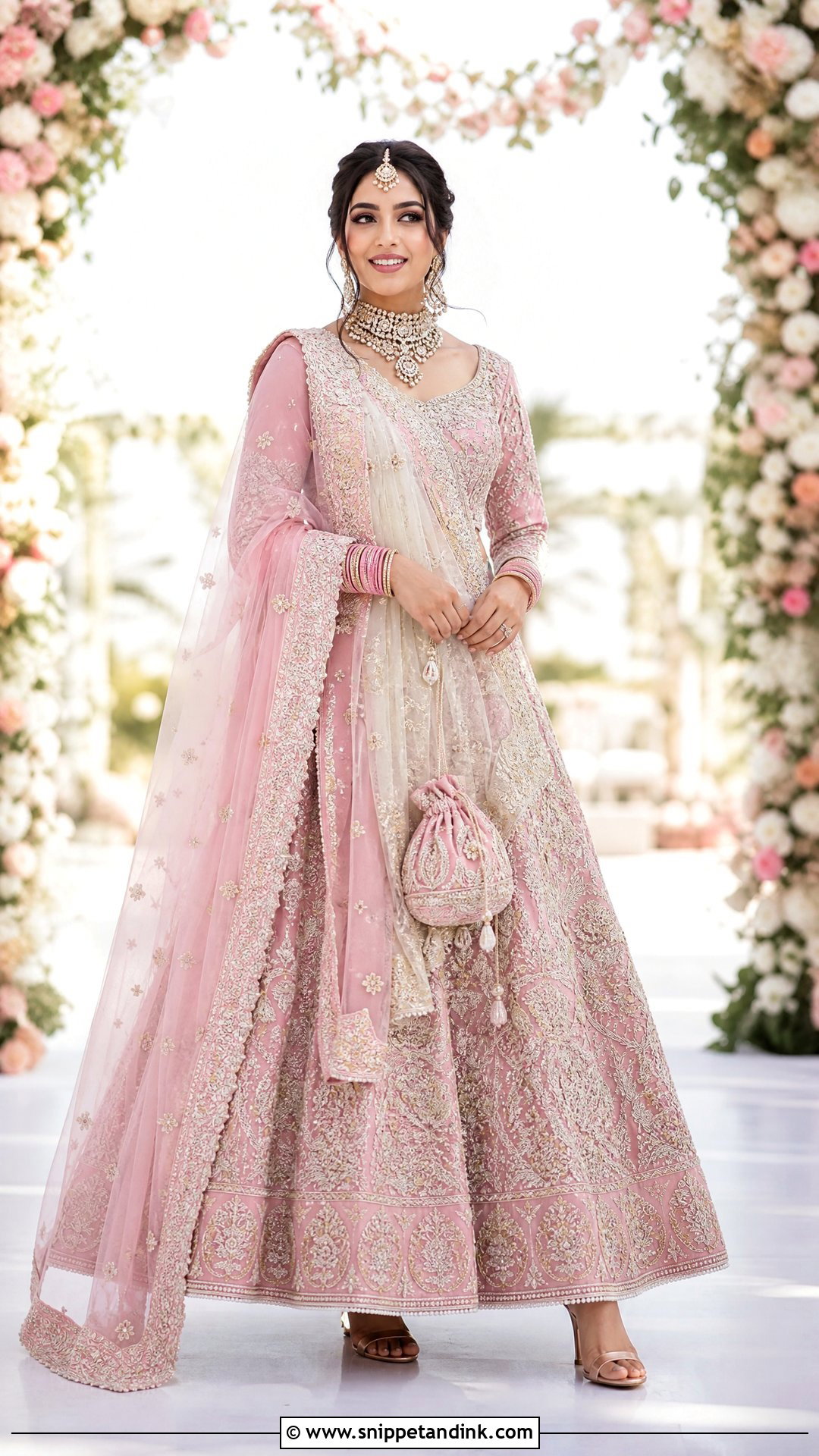
Pastel pink can carry a daylight nikah, an outdoor barat or a walima, but pale colors flatten easily in photographs. The fix is texture: silver, pearl and pale gold embellishment in a few tonal layers, so the fabric reads as detailed rather than plain. I prefer a blouse with a modest neckline and fitted sleeves to give the soft color some structure. Wear a matching dupatta over the head and, if you like layers, a lighter ivory one across a shoulder. Pearl and kundan jewelry, a small tikka, pink bangles and champagne heels, a neat low bun to anchor the veil, rosy makeup, soft brows and a mauve-pink lip.

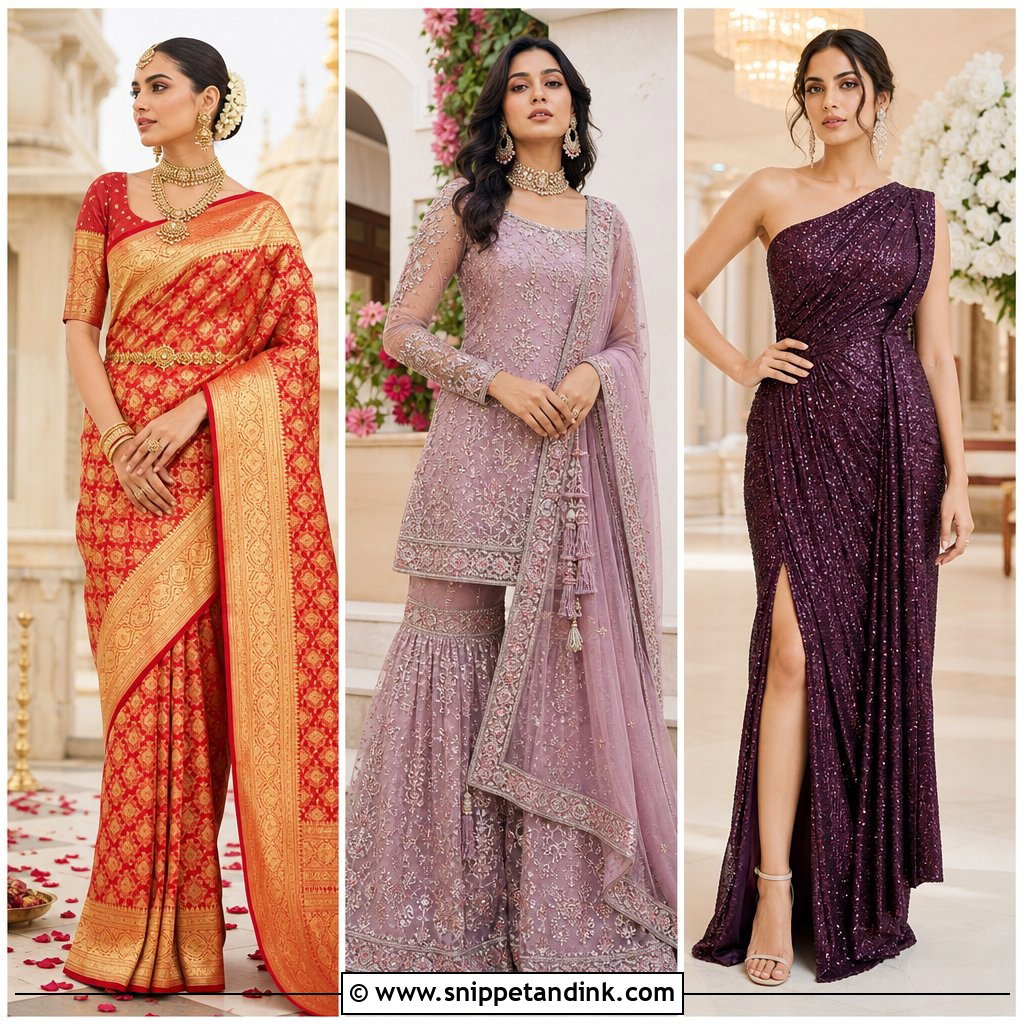
15. Lilac Pakistani Walima Gown
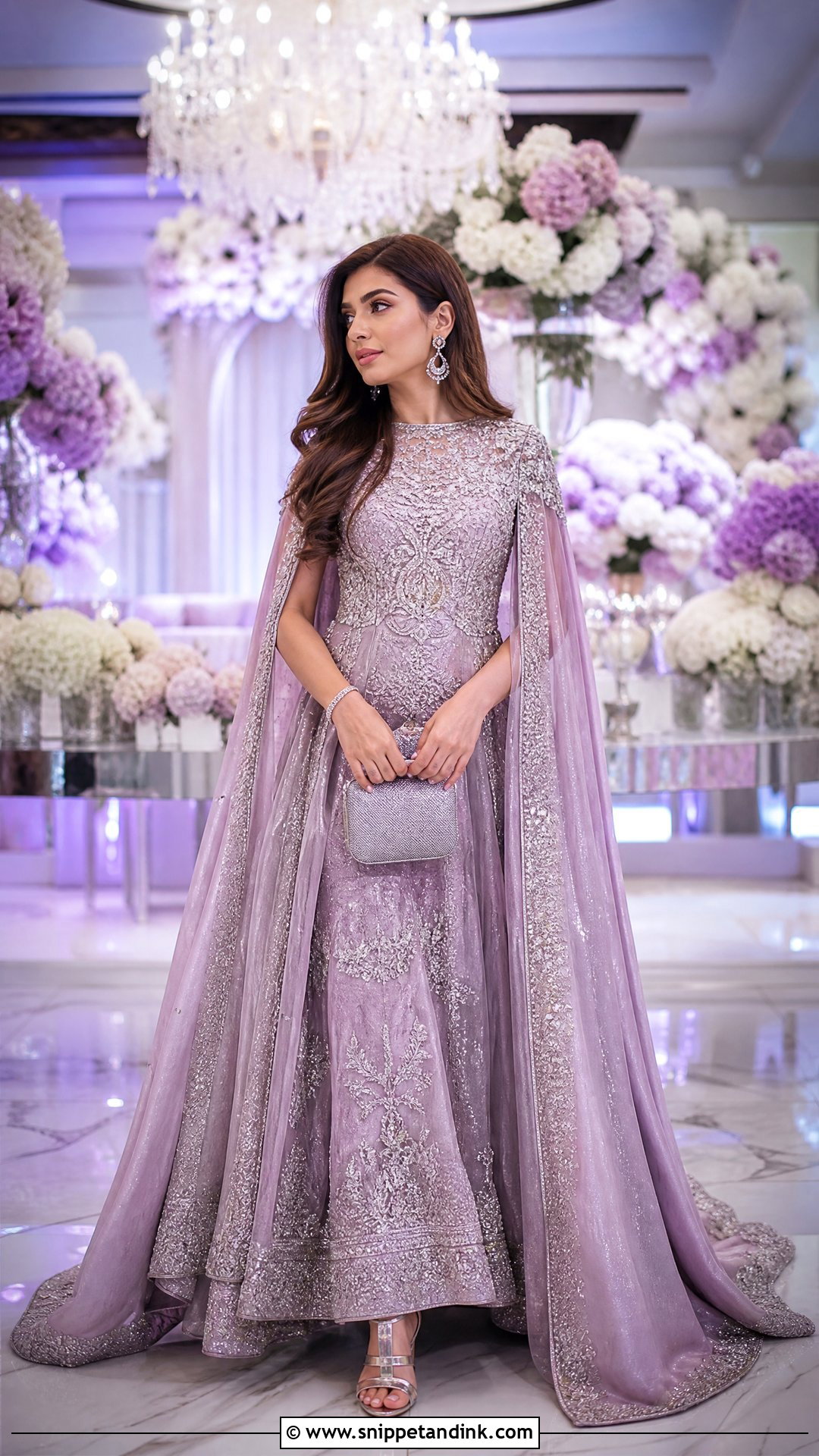
Lilac gives a graceful walima outfit some color without shouting. I go for a long gown or maxi with a shaped bodice, a fluid skirt and silver embroidery at the neckline, waist and hem, and I talk brides out of extra layers here. The walima means hours of standing to greet guests, and every extra layer of net adds heat and weight. A sheer lilac dupatta over the arms or fixed at one shoulder like a cape, crystal earrings, a tennis bracelet, silver heels and a compact clutch. Soft waves for a romantic finish or a polished bun for a formal one, with luminous skin, lavender-gray eyeshadow and a cool pink lip.
16. Navy Blue Pakistani Reception Lehenga
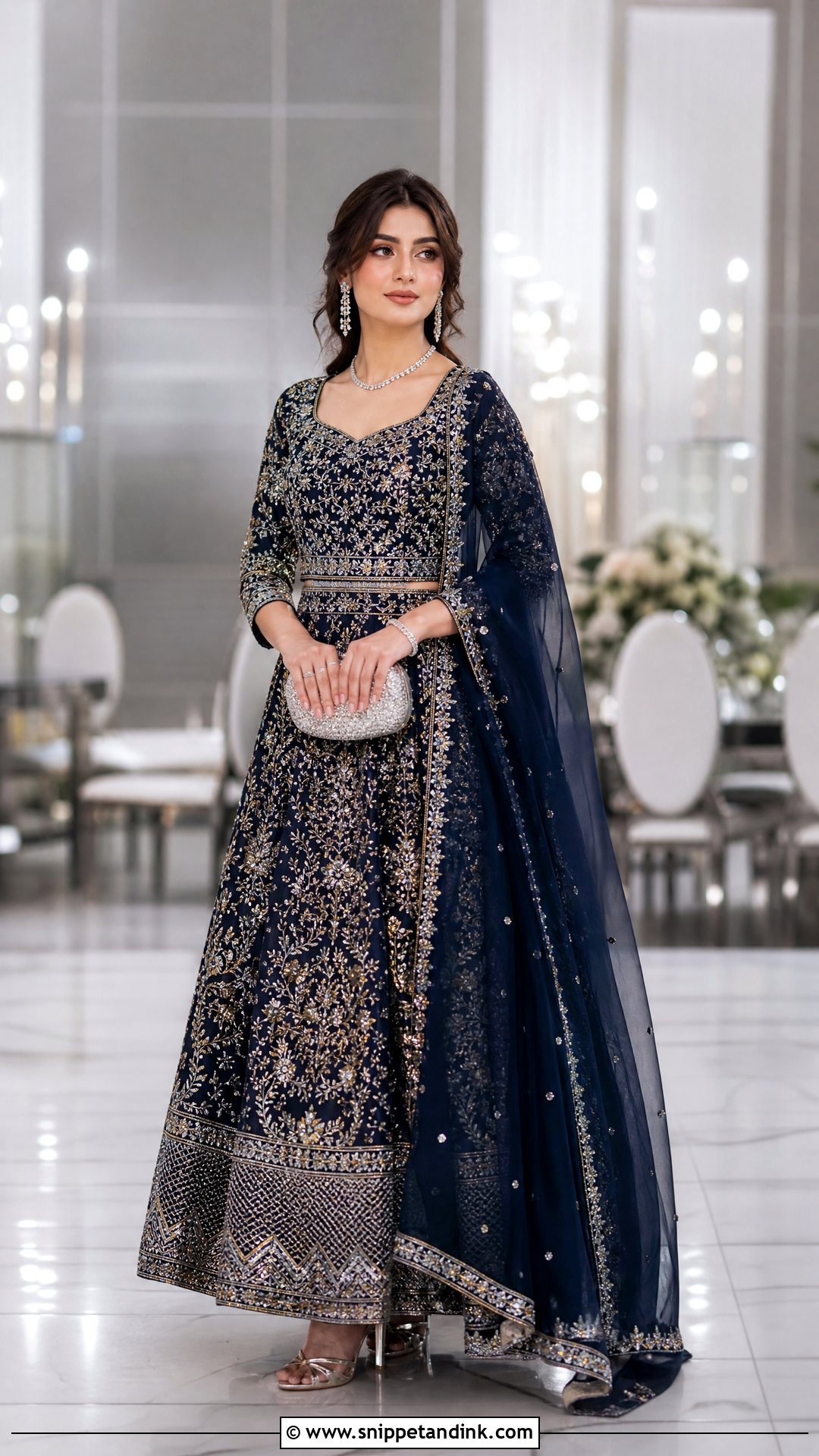
Navy is the evening reception color I trust most when the venue uses cool or LED lighting, because the dark base makes silver, gold or mixed-metal embroidery stand out sharply. A structured skirt with moderate flare and a fitted blouse with full or three-quarter sleeves keeps it modern. Keep the sheer navy dupatta lightly scattered with embellishment so it moves without hiding the work underneath. Diamond-style earrings, a slim necklace, metallic heels and a silver or navy clutch. A smooth ponytail, sculpted waves or low bun, defined eyes and a berry lip complete it.
17. Teal Pakistani Bridal Pishwas
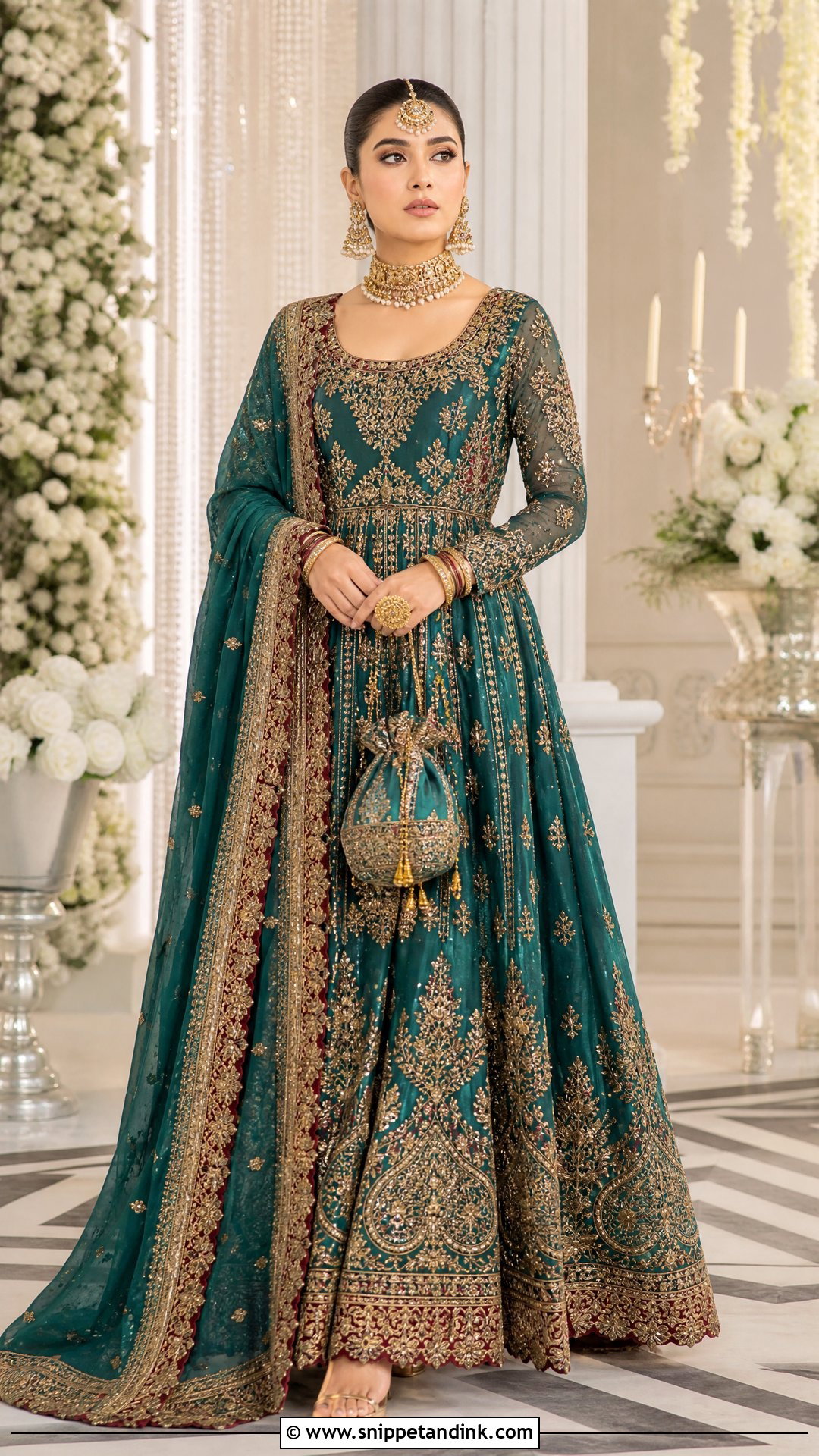
Teal is for the bride who wants a jewel tone on the barat but not red. It takes antique gold embroidery very well, and a few maroon or pink details add a welcome flash of contrast. Raw silk holds teal’s depth best; chiffon and organza make it lighter and slightly more blue, which is worth seeing in person before ordering. Choose a floor-length pishwas with a fitted waist and generous flare, and either a matching bordered dupatta over the head or a muted gold one for a richer layer. Antique jewelry, a statement tikka, bangles, a potli, gold heels, a center-parted bun under the dupatta, bronze eyes, warm blush and a deep rose lip.
18. Rust Pakistani Bridal Lehenga
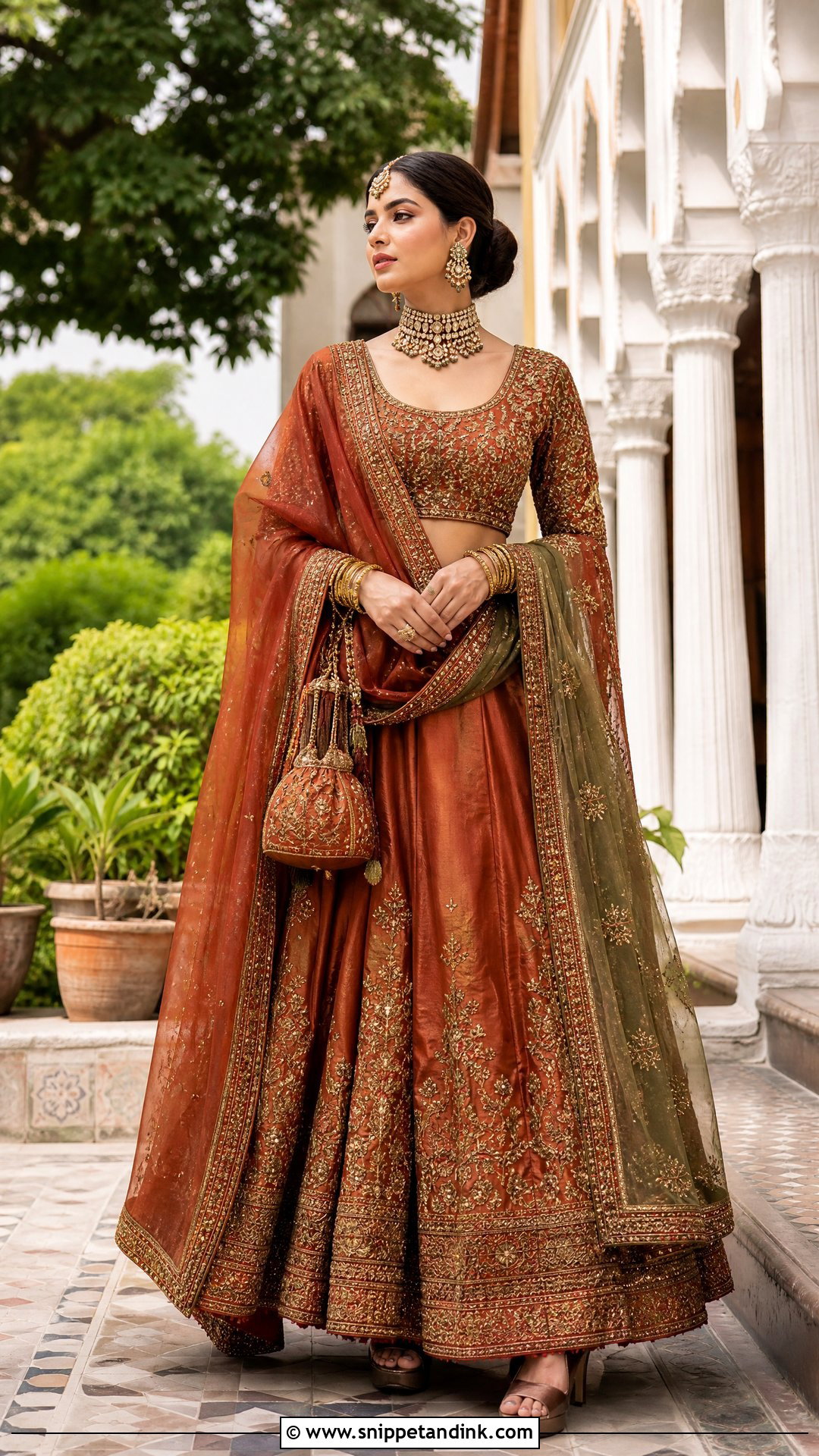
Rust is an autumn and winter color, and on the right skin tone it outshines red. Silk or velvet takes the shade best, with antique gold, copper and muted green details. I keep the skirt moderately flared so the strong color doesn’t overwhelm. A rust dupatta over the head and a second in olive, beige or deep red across one shoulder, with antique kundan, gold bangles, an embroidered potli and bronze heels you can stand in. A low bun with subtle floral accents, warm brown shadow, terracotta blush and a brick-red lip. It looks richest against neutral decor, old brickwork and greenery.
19. Organza Pakistani Bridal Maxi
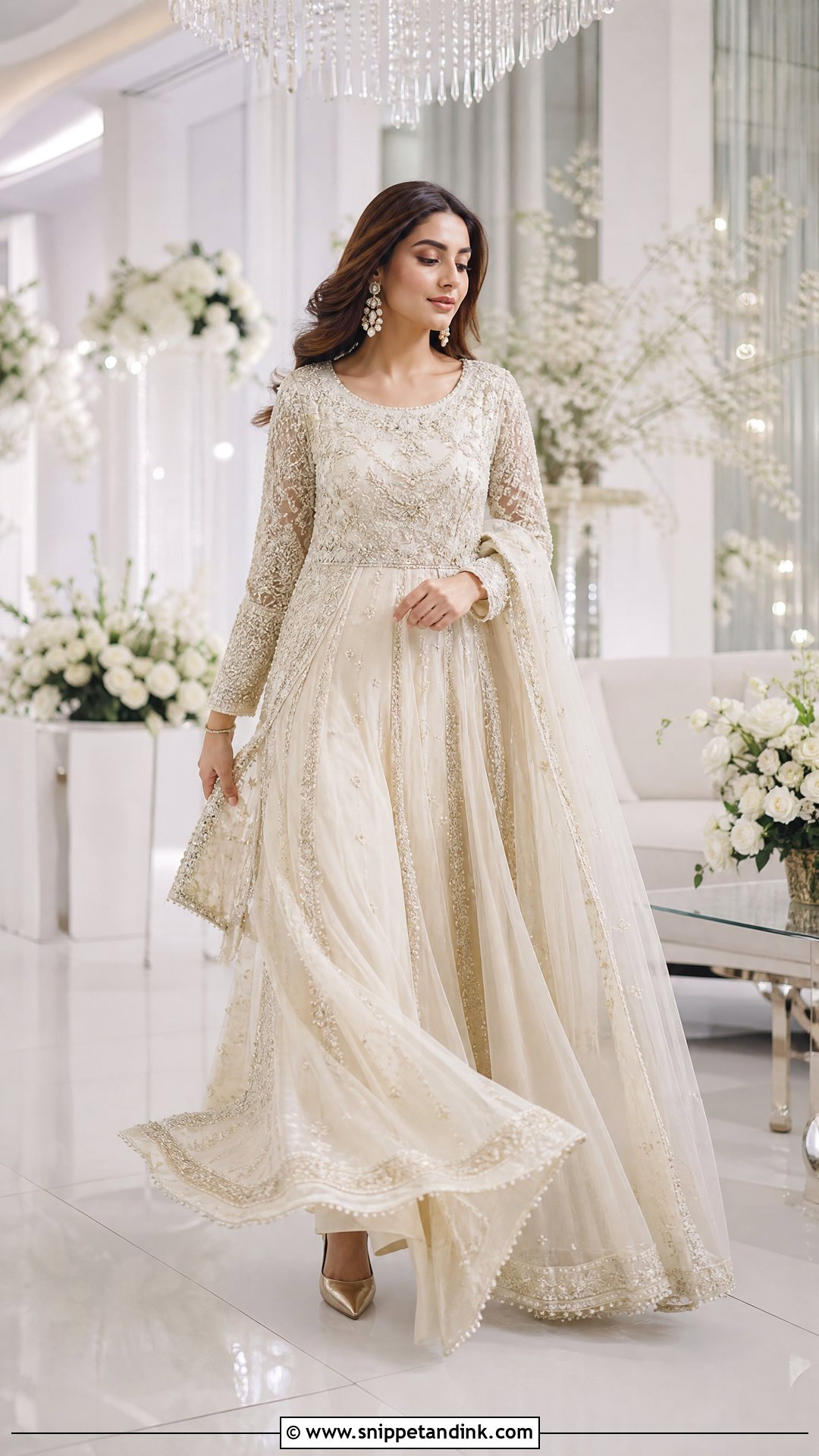
Organza gives volume and movement without the weight of heavier fabric, but it is sheer and it frays. The two things I check on any organza maxi are the bodice lining and the seam finishing, because a badly lined bodice turns transparent under a flash and loose seams snag on jewelry. Look for a defined waist, a layered skirt and embroidery placed at the neckline, sleeves, waist and border so the fabric between still shows. Ivory, powder blue, blush and champagne all suit a nikah or walima. A matching organza dupatta, crystal or pearl jewelry, pointed heels and a small beaded clutch, with a low bun or polished waves and soft but defined makeup.
20. Pakistani Bridal Saree
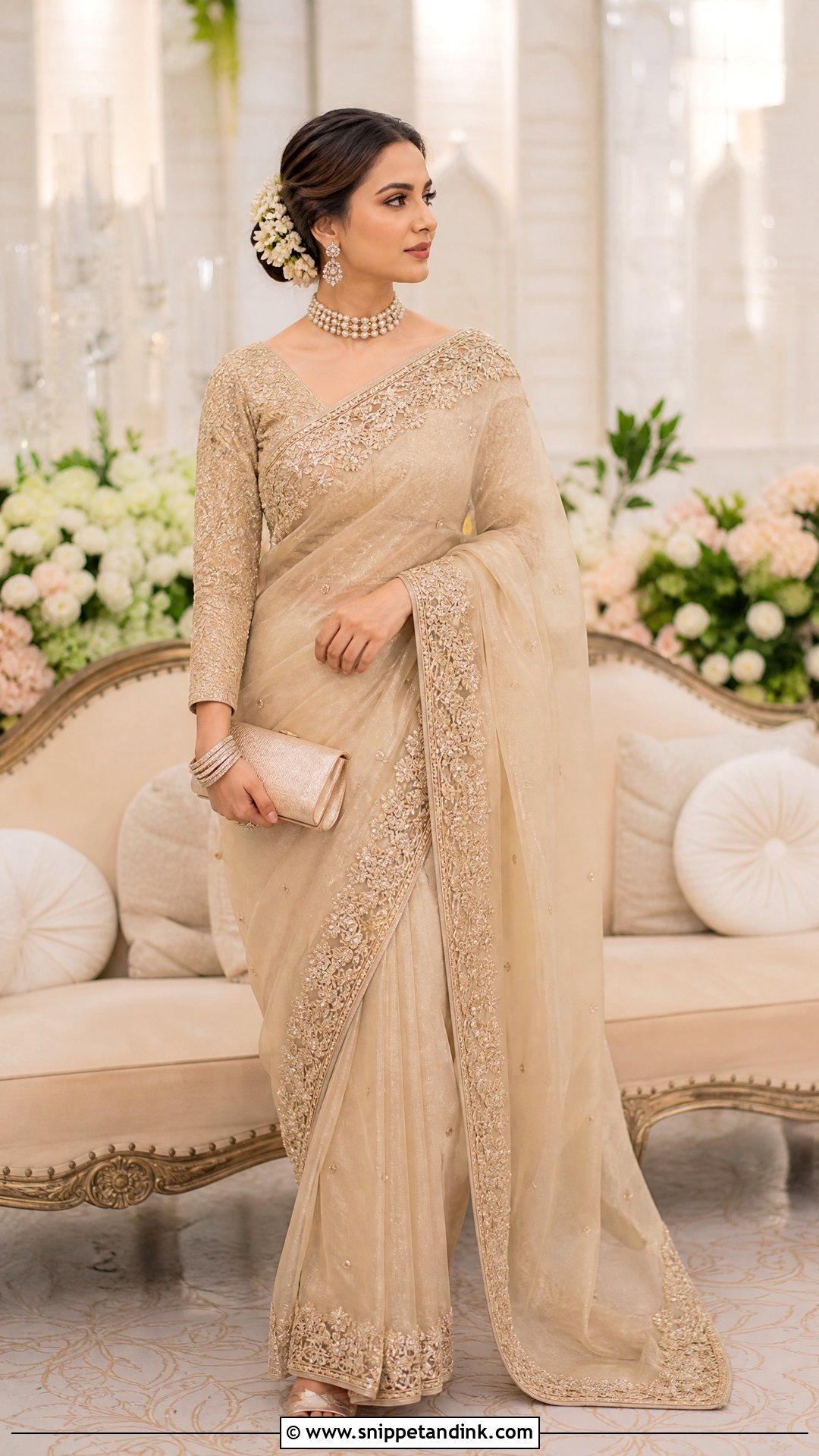
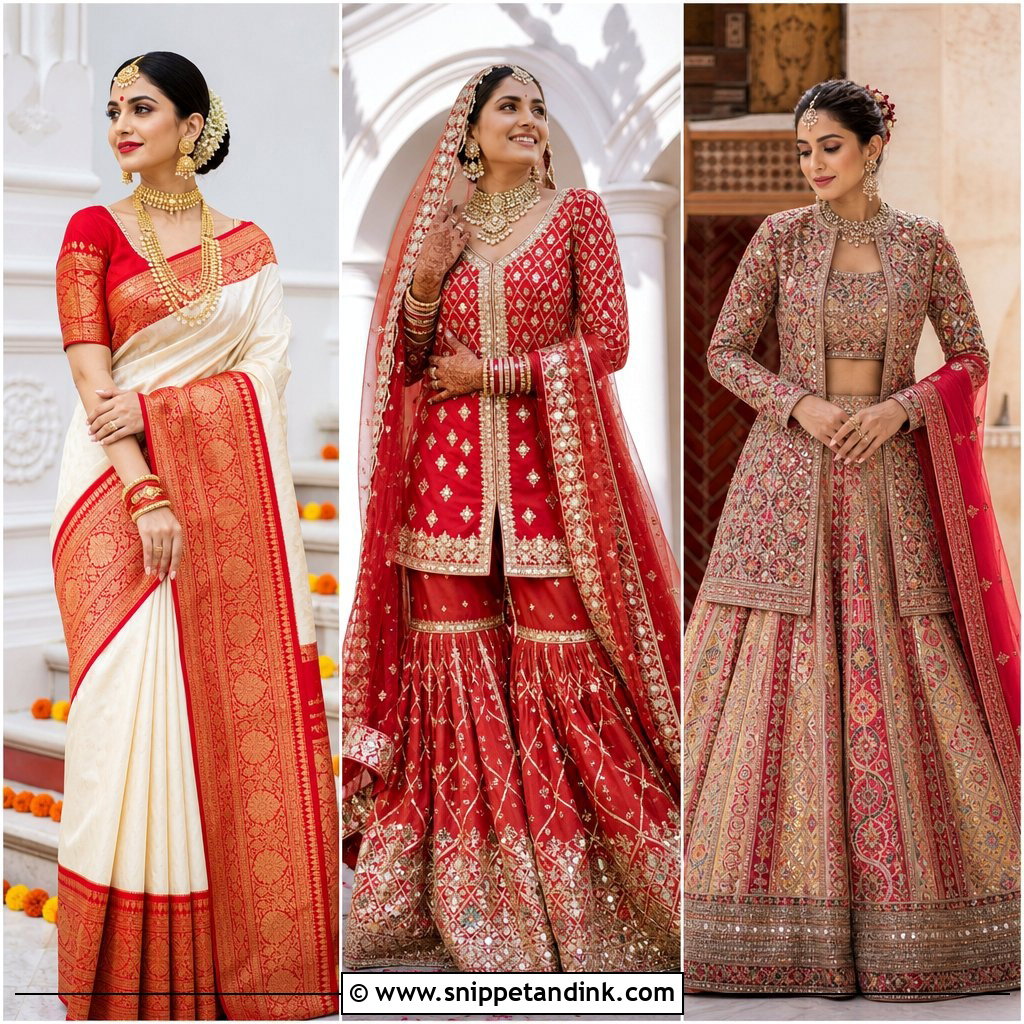
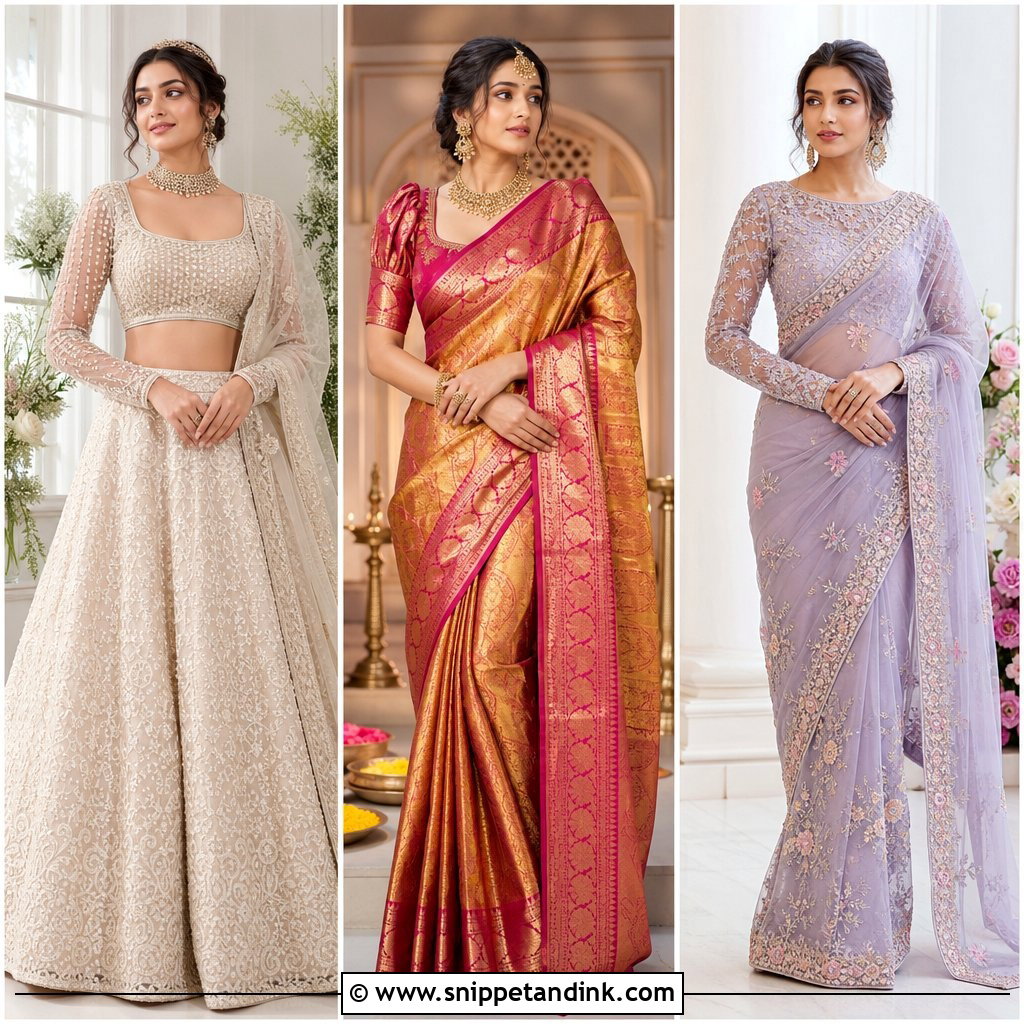
A bridal saree trades the volume of a lehenga, maxi or gharara for a long, fluid line. Silk, tissue, net and organza with an embroidered border all work; red and gold read traditional, while ivory, blush, silver or champagne suit a nikah or walima. Have the pleats and pallu pinned by someone experienced, because a saree draped in a hurry starts slipping halfway through the evening, and a well-fitted blouse is non-negotiable. A choker, earrings, bangles, metallic heels and a structured clutch, with a low bun dressed in small flowers that can also anchor a head covering. Defined eyes and a classic rose or red lip finish the drape.
The Dupatta Is Where Most Outfits Go Wrong
A heavily bordered dupatta can weigh as much as a small blouse, and it sits on your head for hours. I always have the hairstylist build a firm base, usually a bun or a padded section, before the dupatta goes on, then pin it at the crown and both sides with U-pins and bobby pins hidden under the border. Safety pins through embroidery leave holes and snag threads, so I keep them for the lining only.
For the second dupatta draped across the body, a small brooch or a couple of pins on the blouse shoulder stop it sliding off every time you raise your arms. Practice sitting, standing and turning your head in the full setup at a trial. If it already pulls at the hairline after twenty minutes, it will hurt by the rukhsati.
After the Walima: Airing and Storing Heavy Handwork
Embroidered bridal wear doesn’t belong in a plastic garment bag. Metallic zari tarnishes in trapped moisture, and plastic holds exactly that. Once the celebrations end, here is what I recommend:
- Air each outfit inside out on a padded hanger for a day before packing it away, away from direct sun.
- Send stains to a dry cleaner who handles bridal handwork, and point out the stains rather than hoping they spot them.
- Fold heavy lehengas flat with acid-free tissue in the folds instead of hanging them, because the weight of the embroidery stretches the waistband over months.
- Wrap in a soft cotton or muslin cloth and refold along different lines every few months so the creases don’t set into the fabric.
Velvet is the exception to folding: roll it loosely around tissue so the pile doesn’t crush.
Five Events Give One Wardrobe Five Different Jobs
Pakistani weddings ask a lot of one wardrobe: something sturdy and forgiving for the mayun and mehndi, something calm for the nikah, something ceremonial for the barat and something lighter for the walima. Let the venue, weather, timing and the number of hours you’ll be on your feet decide the fabric and embroidery weight, then let color follow. Most importantly, wear each complete outfit, with its shoes, jewelry and pinned dupatta, at least once before the final fitting. That is where length, movement and coverage problems show up while there’s still time to fix them.
You'll Like These Ideas:



Leave a Reply