
Colorful floral wedding cakes are the commissions I enjoy most, because the flowers do half the design work for me. A plain three-tier cake becomes the centerpiece of the room once the right blooms go on it, and those blooms can be fresh, sugar, pressed, painted or piped. What separates a good one from a busy one is restraint in the structure: clean tiers, a calm base color, and flowers placed with a plan. Below are twenty directions I’d happily build, with notes on how each one behaves once it leaves my kitchen.
Flowers That Are Safe to Put on a Cake (and Ones I Refuse)
A flower can look perfect on a tier and still be a bad idea next to food. Plenty of popular wedding flowers are toxic or are grown with pesticides that were never meant to be eaten, so before any fresh bloom goes near frosting, I check two things: what it is, and where it came from.
- Edible and easy to use: pansies, violas, calendula, cornflowers, nasturtiums and unsprayed garden roses.
- Decorative only, with stems wrapped and kept off the frosting: ranunculus, lisianthus, orchids and most garden roses from a florist.
- Never on the cake: lily of the valley, foxglove, hydrangea, sweet pea and oleander. Anything that drips sap, such as daffodils and euphorbia, stays off too.
Supermarket and wholesale flowers are usually treated, so I ask the florist to set aside unsprayed stems for the cake or I use sugar versions of anything risky. Every stem gets wrapped in floral tape and sits in a food-safe pick, and I remove all the flowers before the cake is cut so nothing ends up on a guest’s plate.
1. Colorful Fresh Flower Wedding Cake
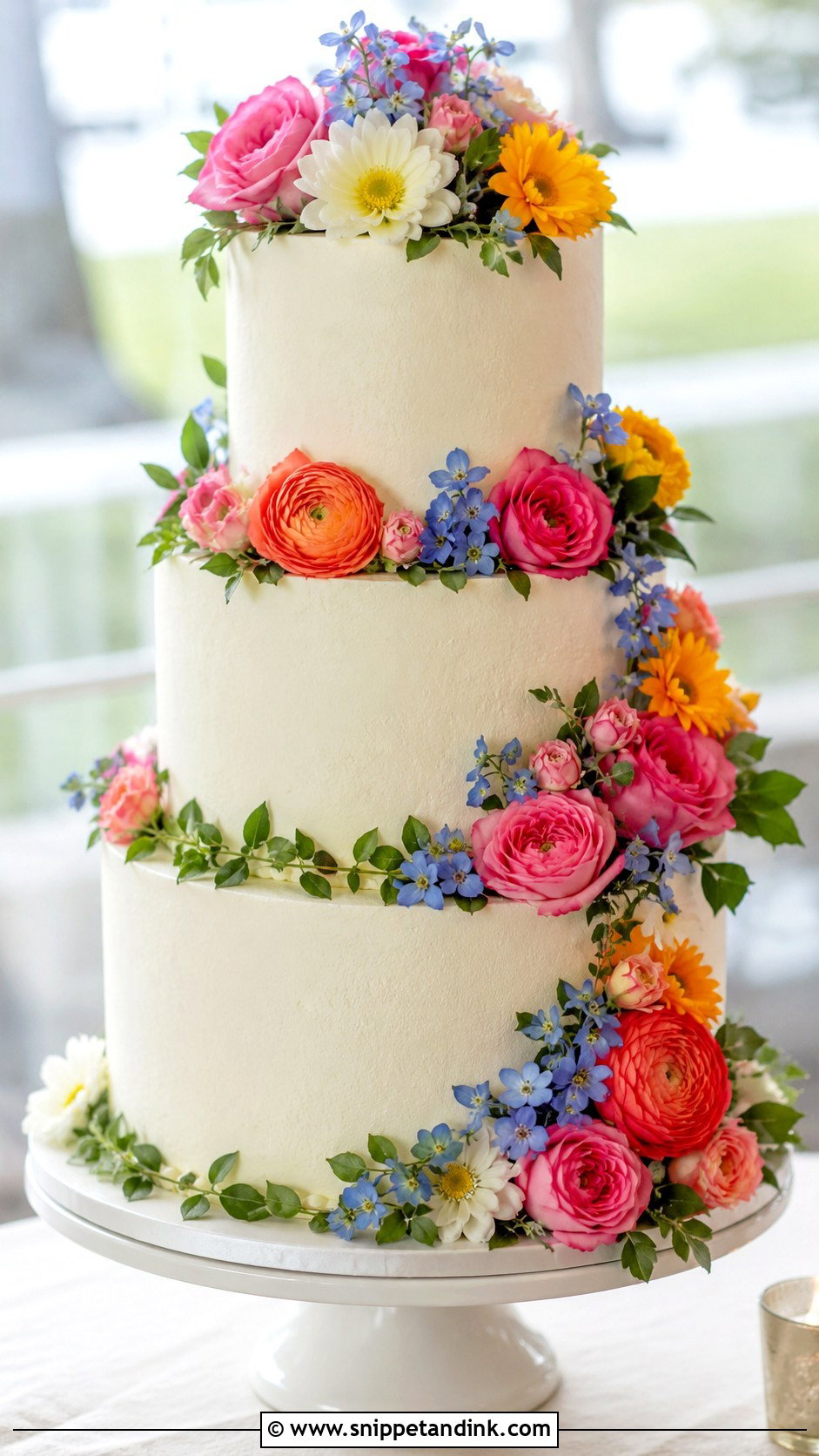
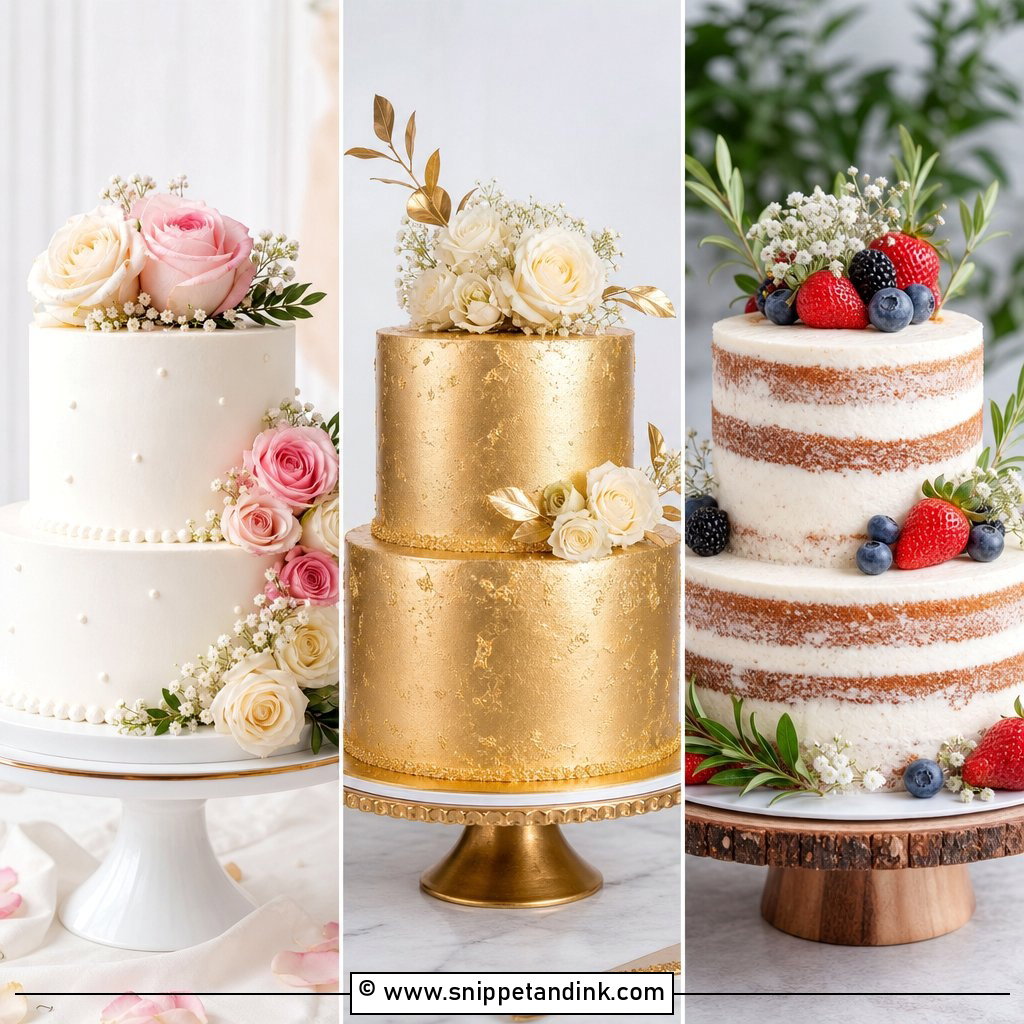
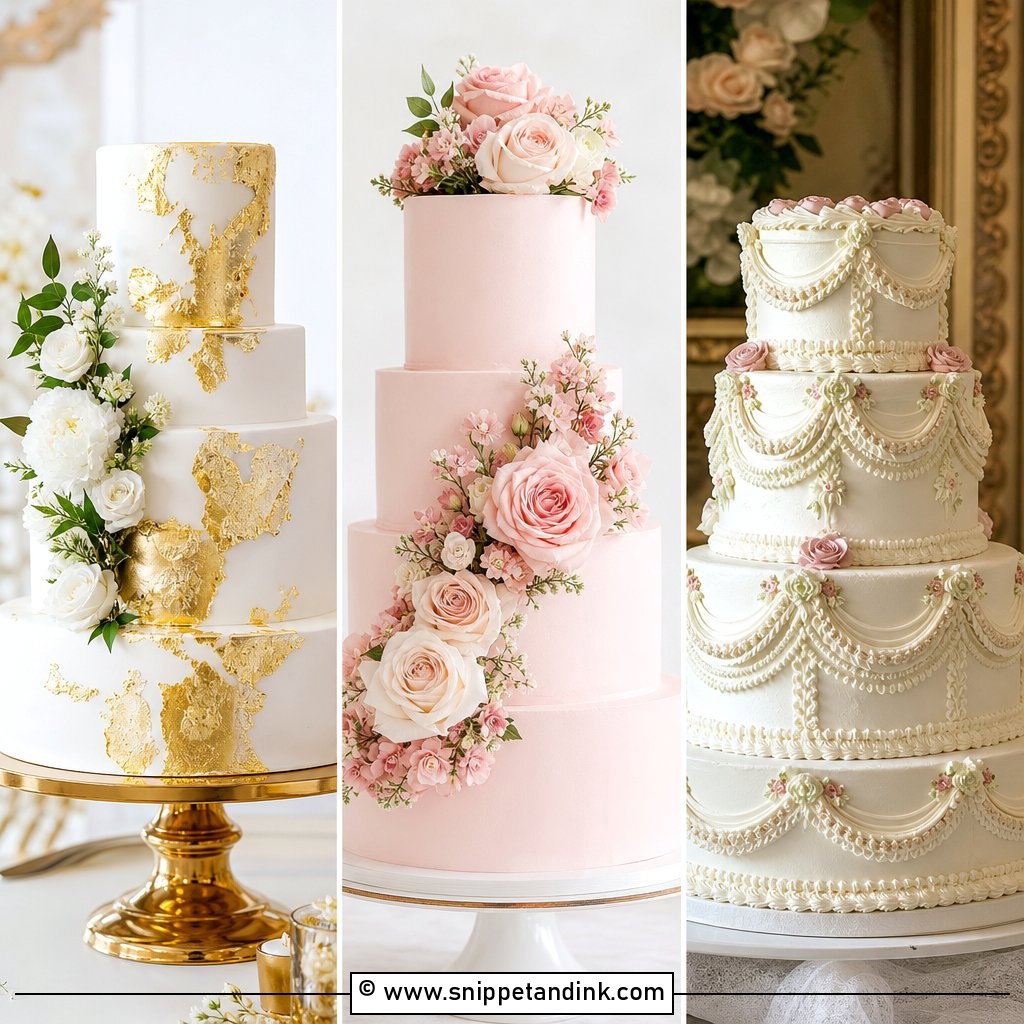
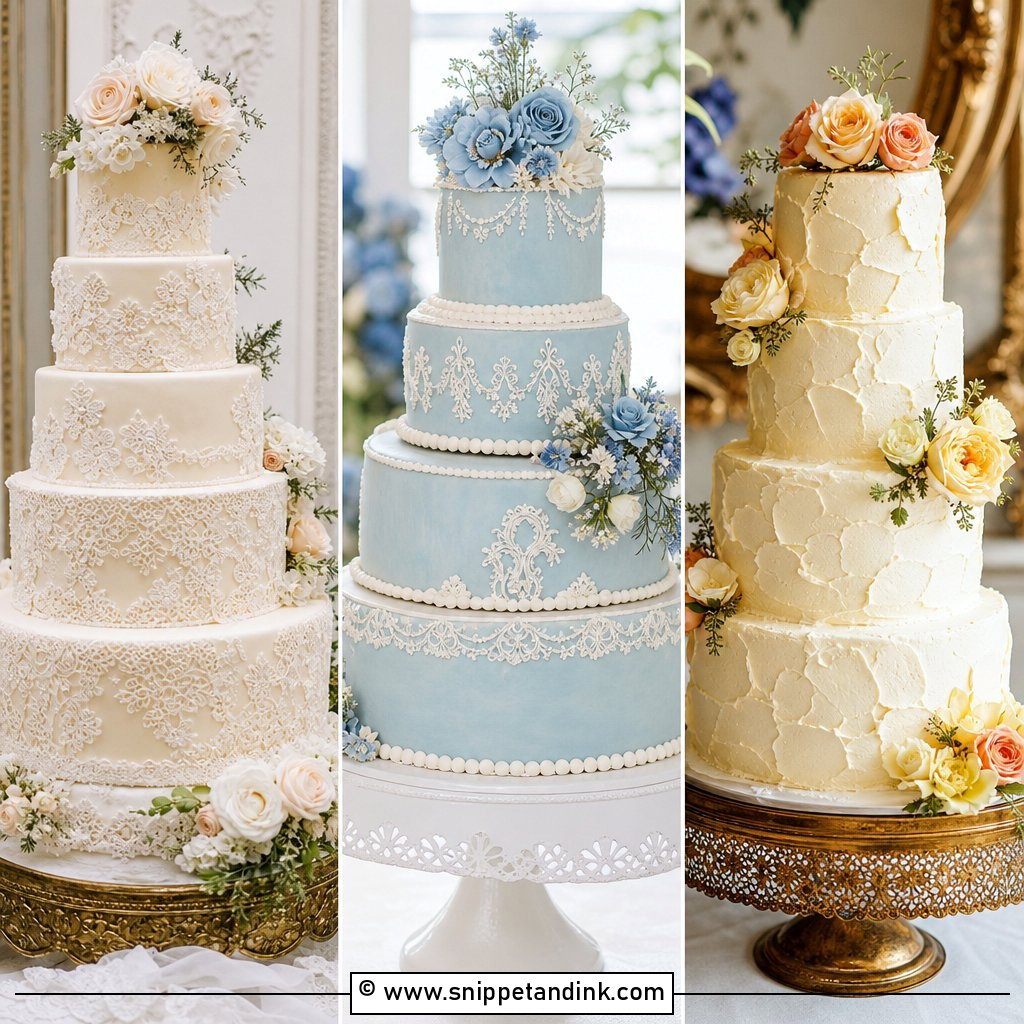
Fresh blooms are the fastest way to bring a cake to life, and the ivory or pale blush buttercream underneath is what lets pink roses, coral ranunculus or blue delphinium read clearly from across the room. The flowers can sit between tiers, trail down one side or gather at the base. The detail couples rarely think about is the stem. I never let a cut stem touch frosting directly; it gets wrapped in floral tape and sits in a food-safe pick or a plastic straw, and the florist and I agree beforehand on blooms that haven’t been sprayed.
2. Colorful Sugar Flower Wedding Cake
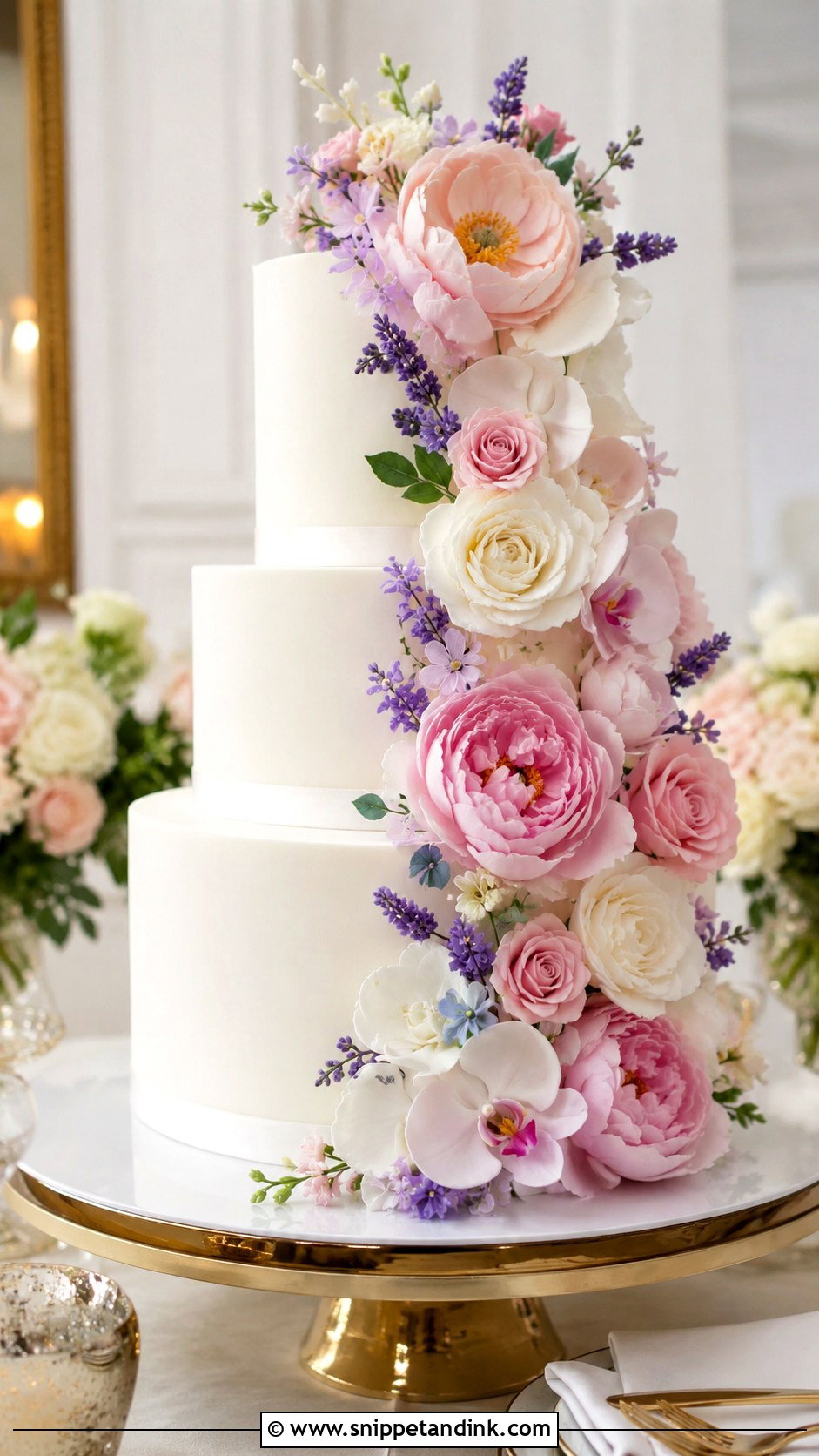
Sugar flowers give you peonies in October and poppies in a ballroom with no worry about wilting. I can tint every petal to the exact shade of the bridesmaid dresses, which fresh flowers will never promise. They sit best on fondant, where the smooth surface shows off each petal. The trade-off is time: a large sugar peony takes hours to wire and dry, so this style needs ordering well ahead, and the flowers are decorative rather than something you’d want to bite into.
3. Colorful Buttercream Flower Wedding Cake
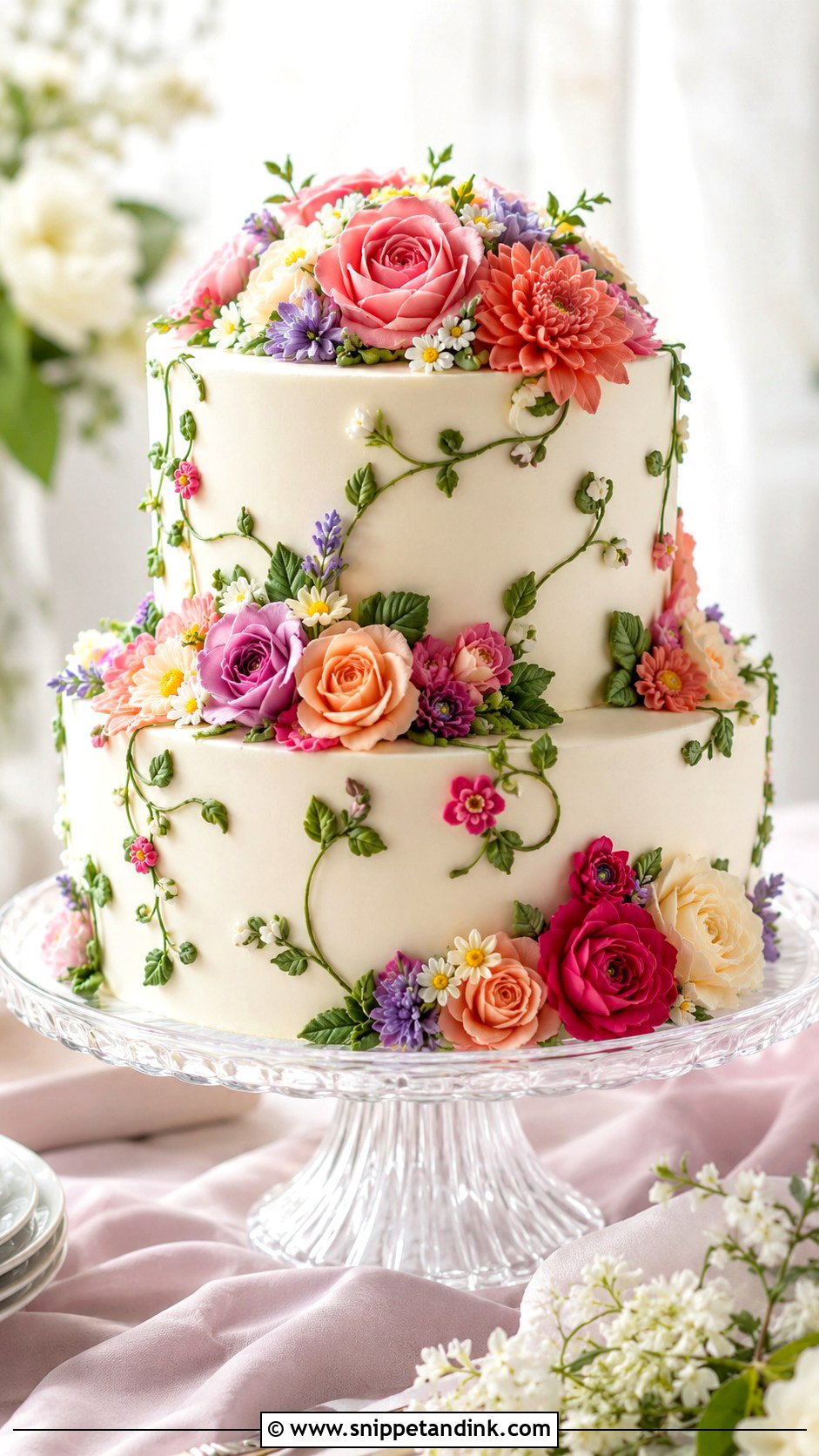
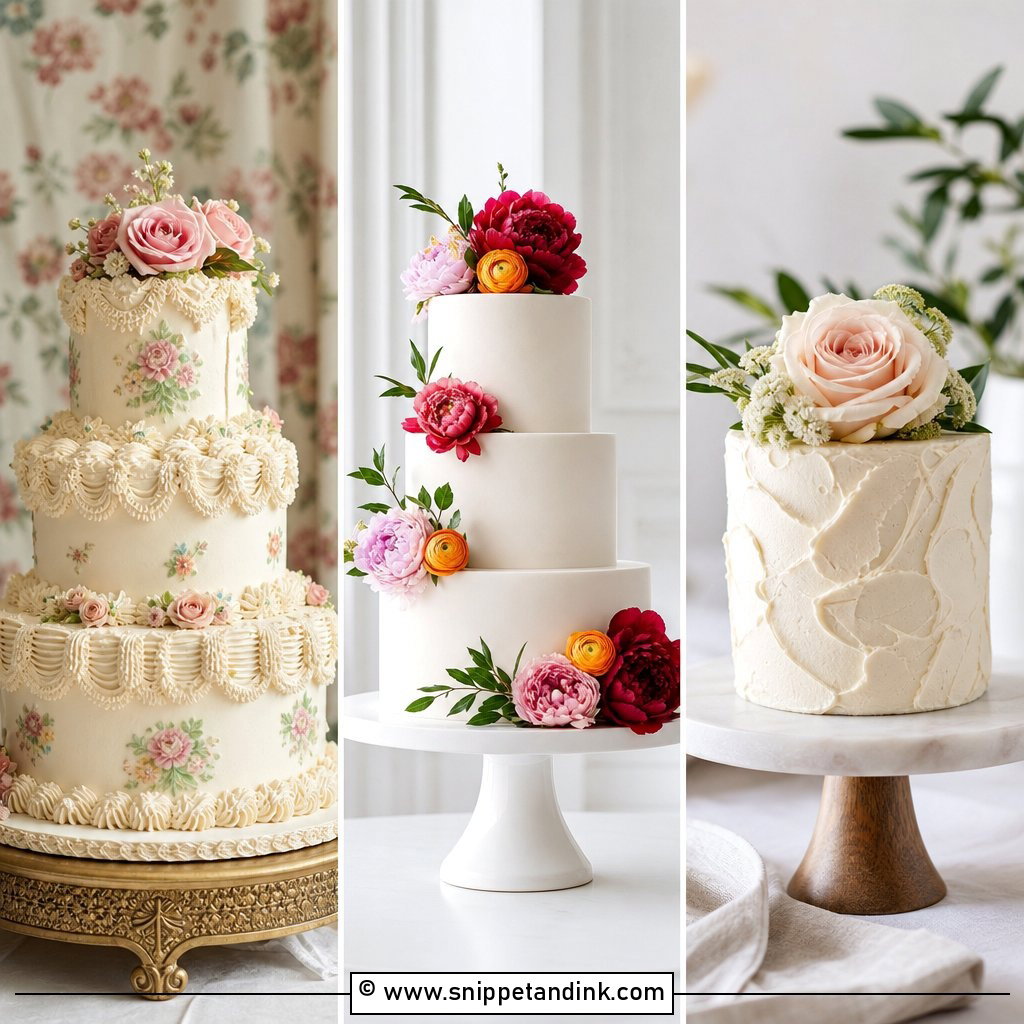
A colorful buttercream flower wedding cake is fully edible, which is why I recommend it to couples who are nervous about fresh stems near food. Roses, dahlias and small fillers are piped straight onto the tiers with tinted icing. The frosting choice matters more than people expect. Swiss meringue pipes silky petals but softens in a warm tent, while a crusting American buttercream holds its edges better outdoors and tastes noticeably sweeter. I cluster the piped flowers at the front of a two or three-tier cake so the camera gets the fullest view.
4. Colorful Pressed Flower Wedding Cake
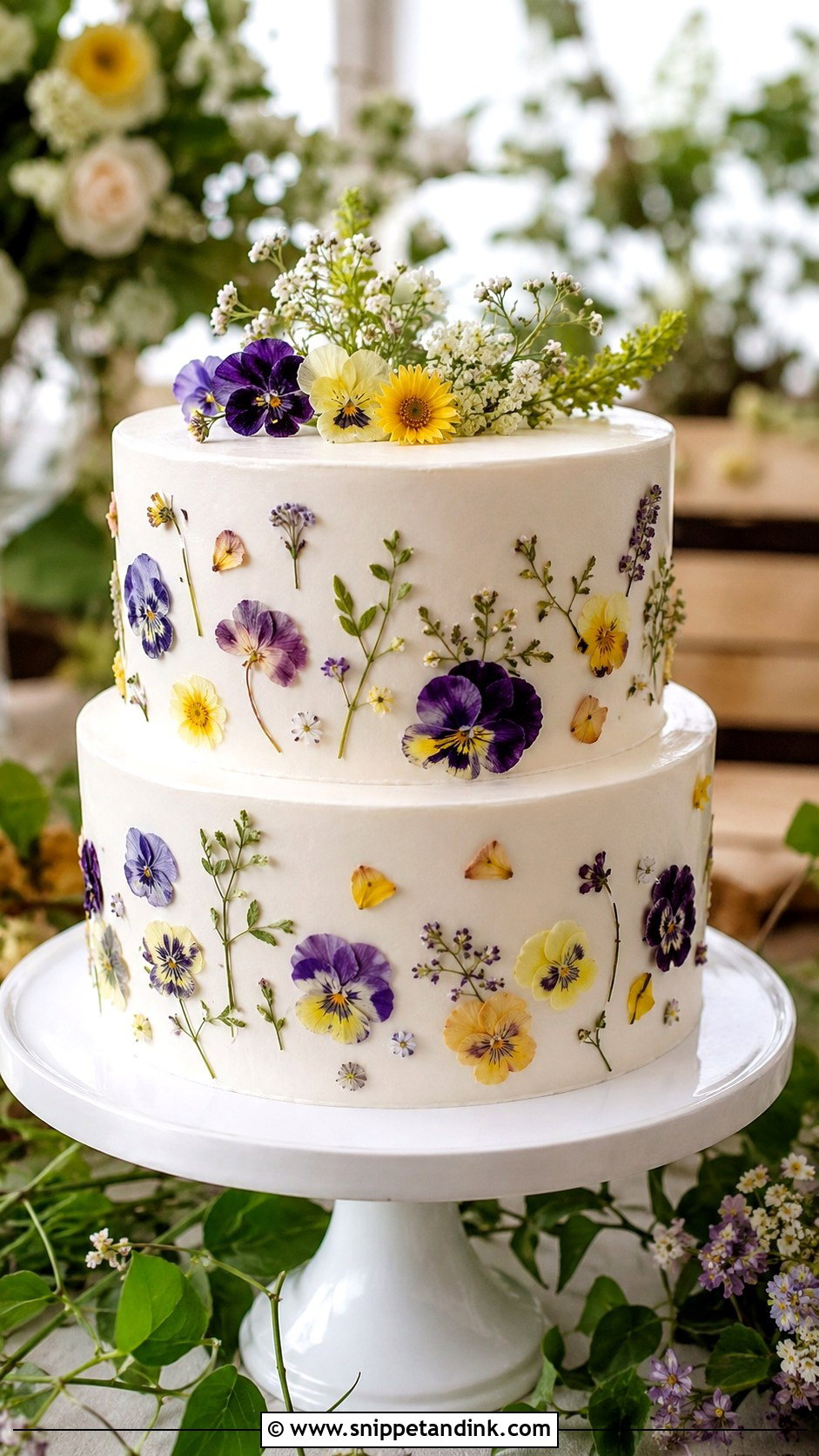
Pressed petals look like a botanical print wrapped around each tier, and they feel lighter than a heavy cascade. Pansies, violas, calendula and small herb leaves all press well and keep much of their color. Spacing is the whole skill here; I lay out the pattern on parchment first so the tier doesn’t end up crowded on one side. Expect the petals to fade slightly where the room is bright, and keep the sponge simple, vanilla, lemon or almond, so the design stays the focus.
5. Colorful Wildflower Wedding Cake
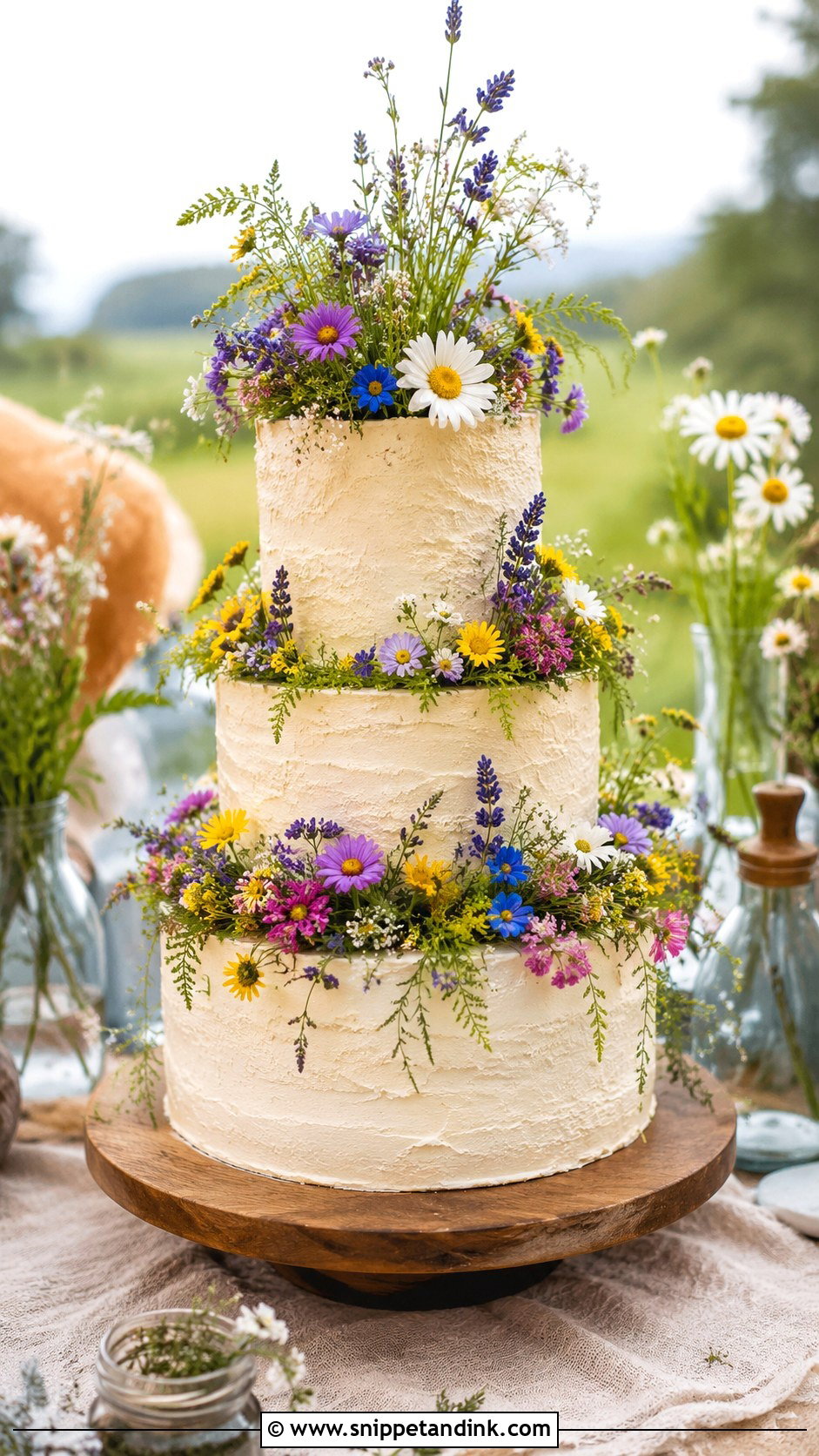
Wildflower cakes suit barns, backyards and mountain venues because nothing about them is meant to look formal. Small mixed blooms go on in loose clusters, as if picked from a meadow, over a textured buttercream that hides small imperfections. I deliberately place the flowers unevenly and tuck in tiny buds and greenery between them. Real wildflowers are where I’m strictest about safety, since several common meadow plants are toxic, so I’ll often swap in edible look-alikes or sugar versions. Honey or lavender sponge suits the mood.
6. Colorful Cascading Flower Wedding Cake
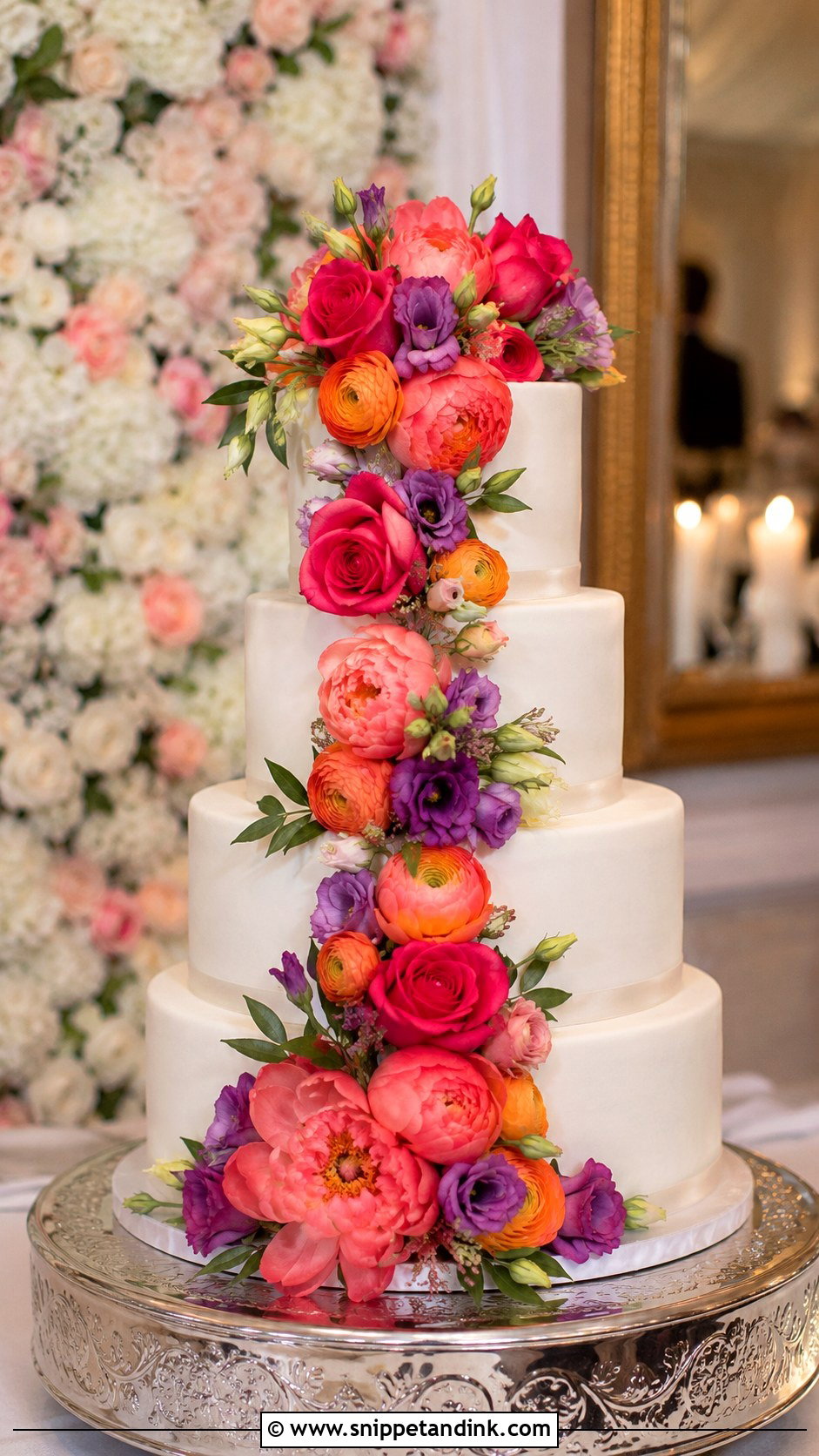
A colorful cascading flower wedding cake gives you drama with nothing more than a tall stack of round tiers and a line of flowers flowing from top to base. Mixing bloom sizes is what keeps the cascade from looking like a strip of stickers. Hot pink, coral and orange make it bold; peach and lavender keep it soft. A full cascade adds real weight to one side of the cake, so I build the tiers with dowels and a center support and attach the heaviest flowers lower down. Smooth frosting lets the movement read.
7. Colorful Floral Drip Wedding Cake
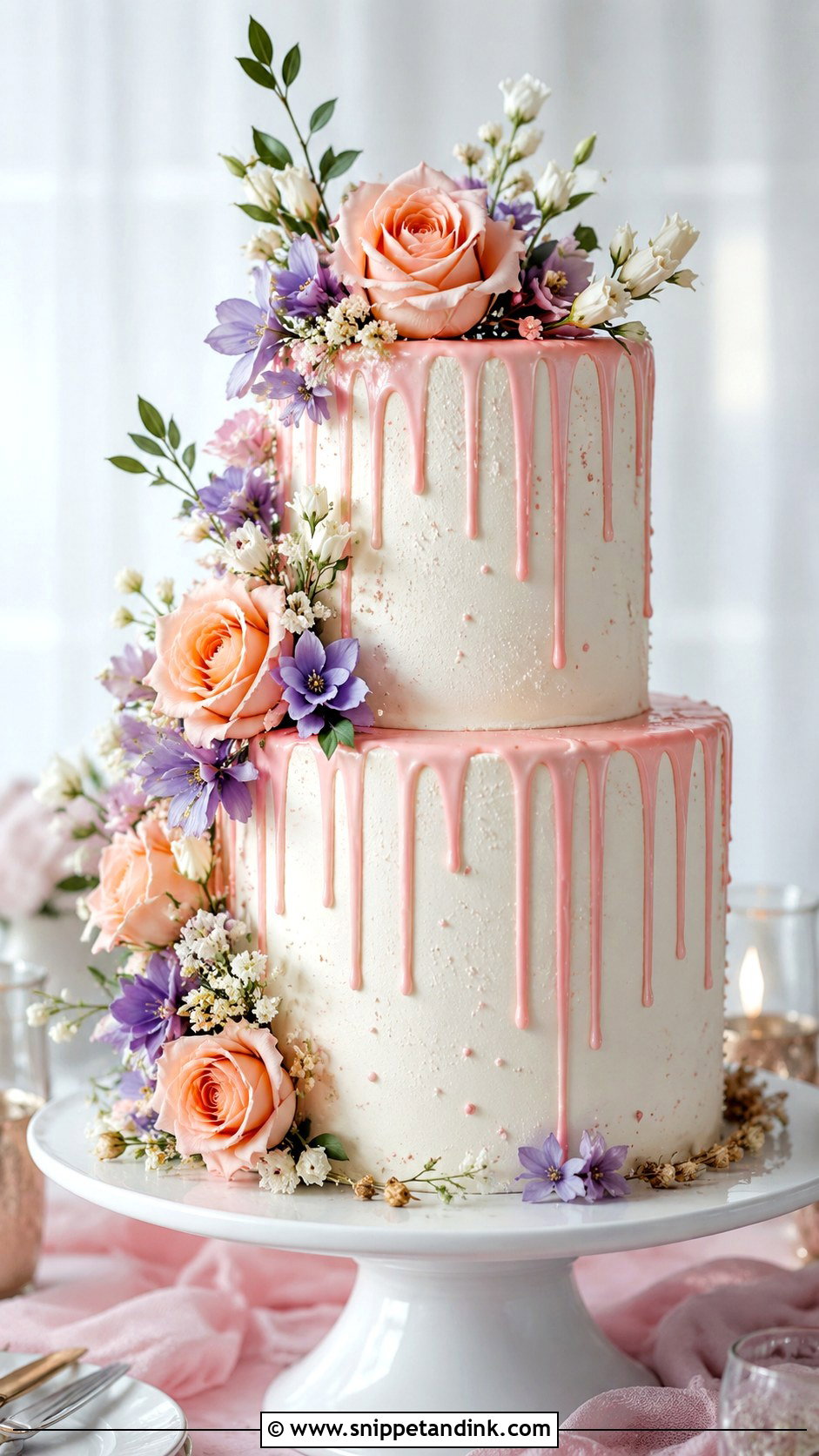
Drips are where I see the most homemade-looking results, usually because the ganache went on too warm and ran to the board. Tinted white chocolate needs to be just warm enough to flow, and I test one drip on a chilled tier before doing the whole cake. Done neatly and glossy, a peach or lavender drip with flowers along one side reads modern without losing the wedding feel. Vanilla raspberry and lemon elderflower are the pairings I suggest most.
8. Colorful Floral Watercolor Wedding Cake
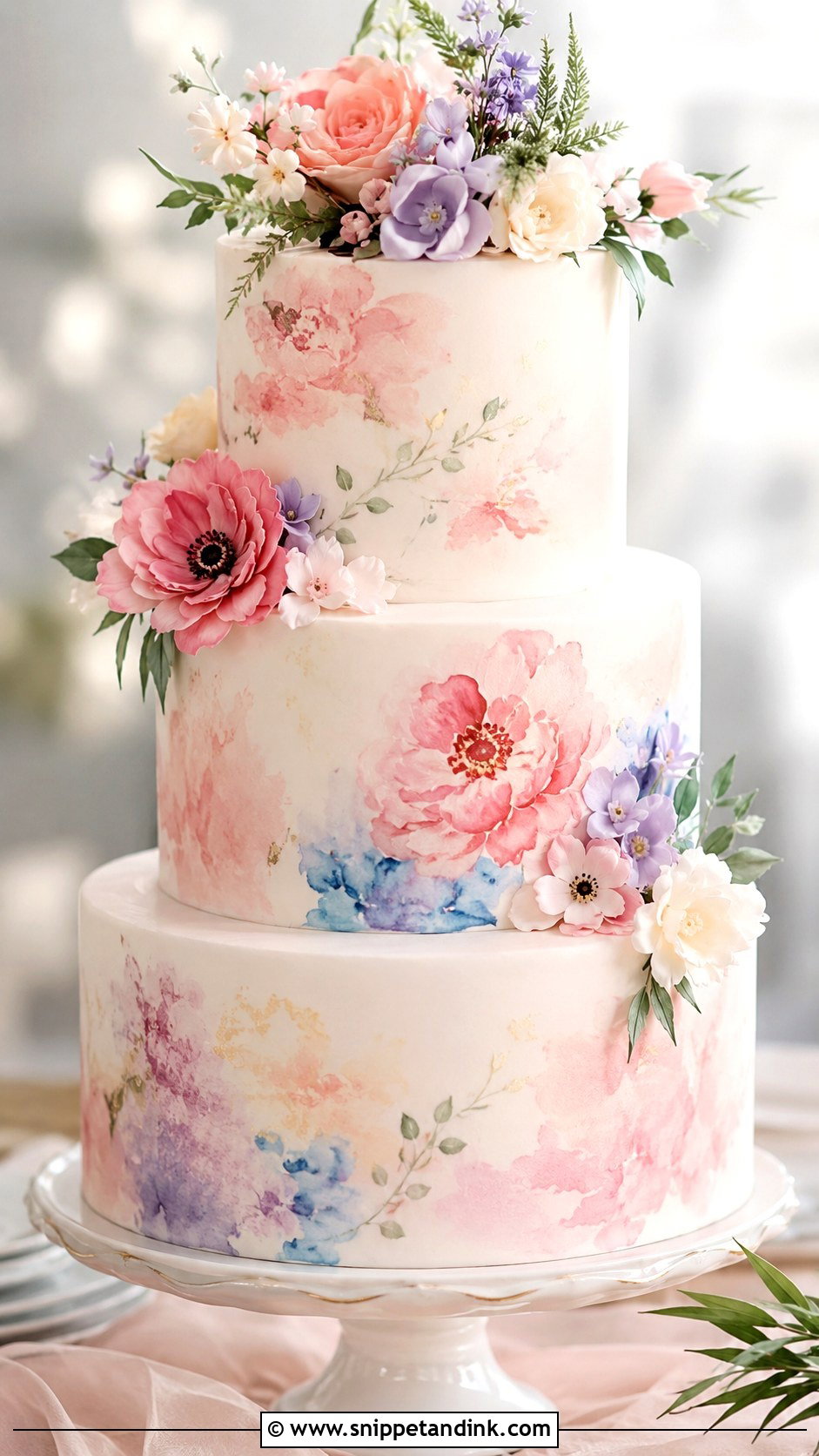
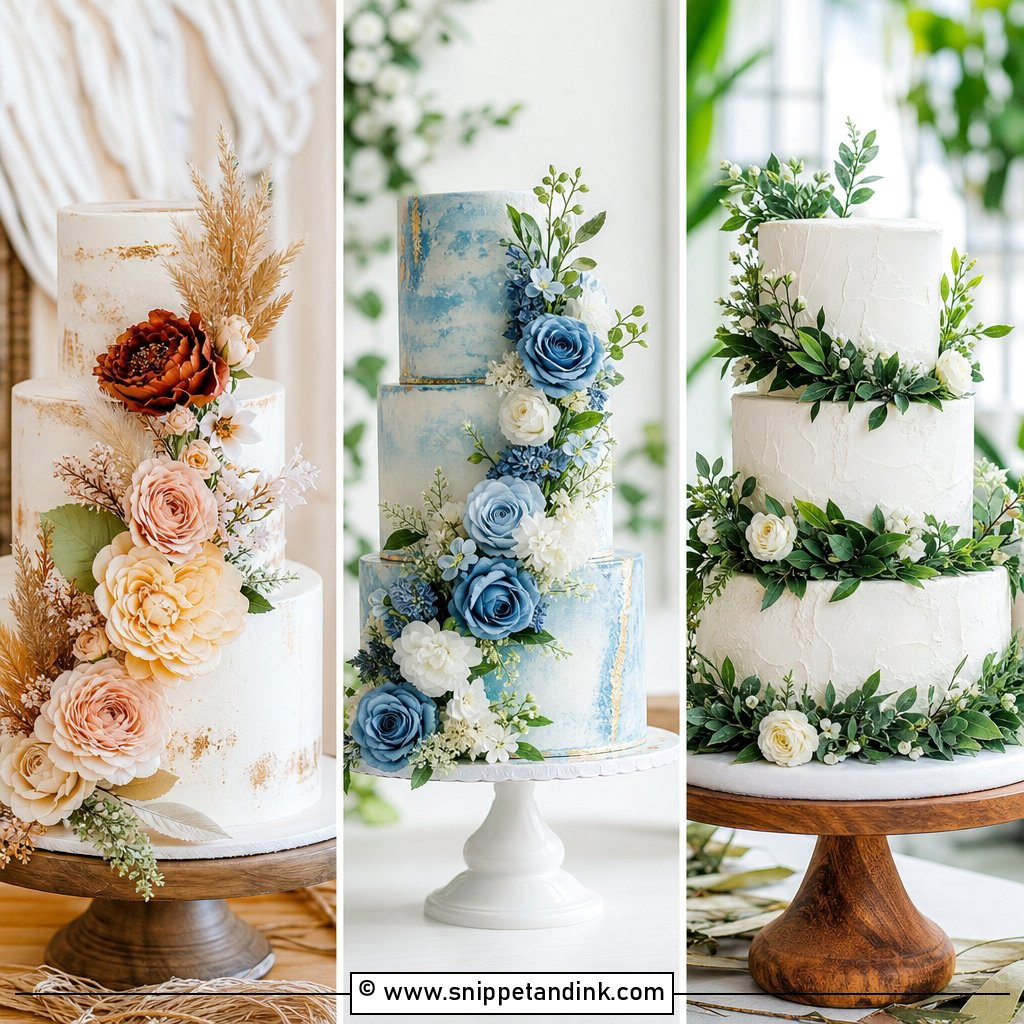
Watercolor tiers look like a painted canvas, with soft washes of pink, peach or blue brushed on and a few painted, sugar or fresh flowers on top. It gives you lots of color without much decoration. Painting on fondant is the easier route because the color stays where I put it; on buttercream I have to work quickly over a chilled surface or the edges blur. Matching the washes to the invitations or the bridesmaid dresses ties it into the rest of the day.
9. Colorful Floral Ombre Wedding Cake
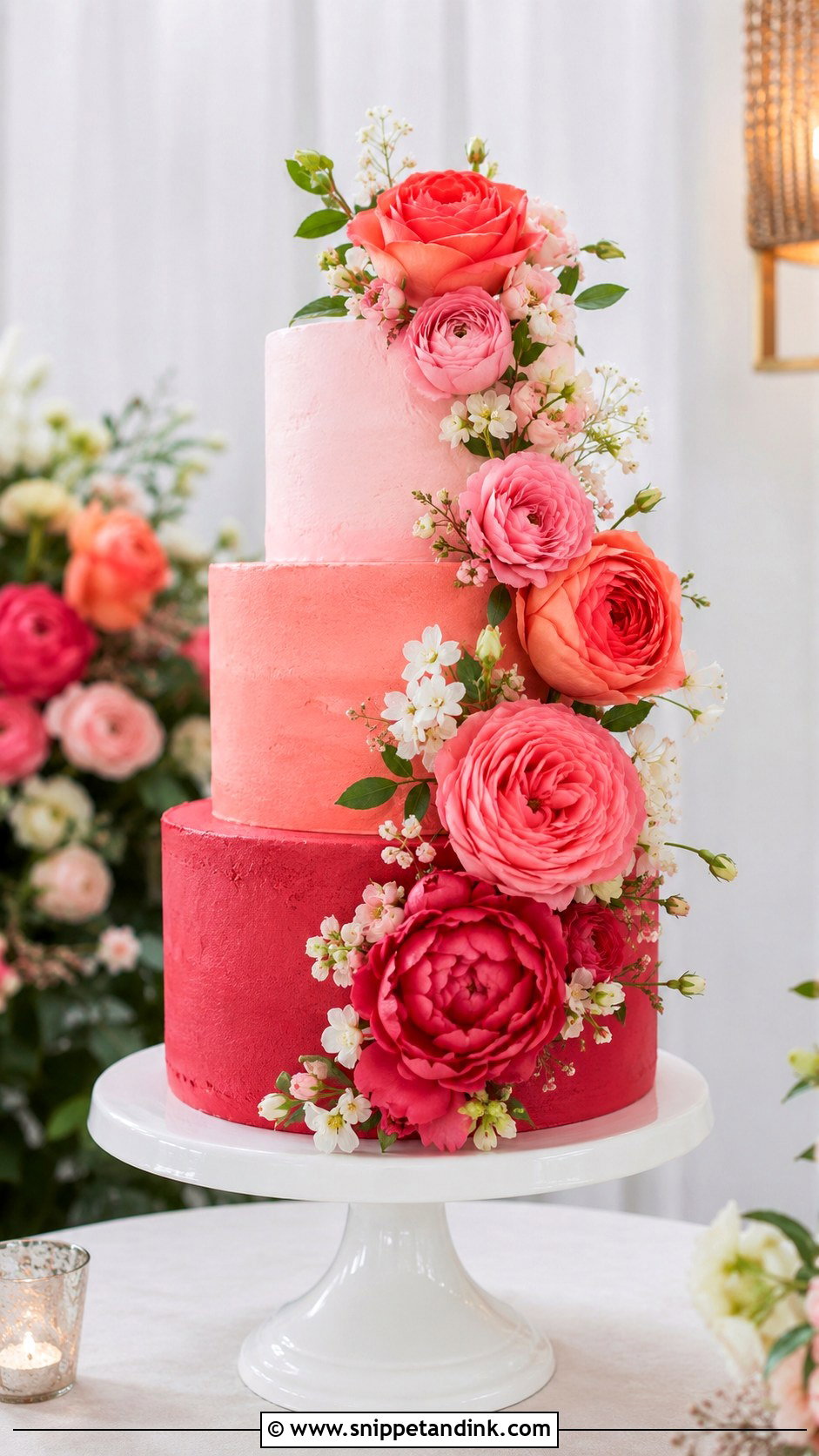
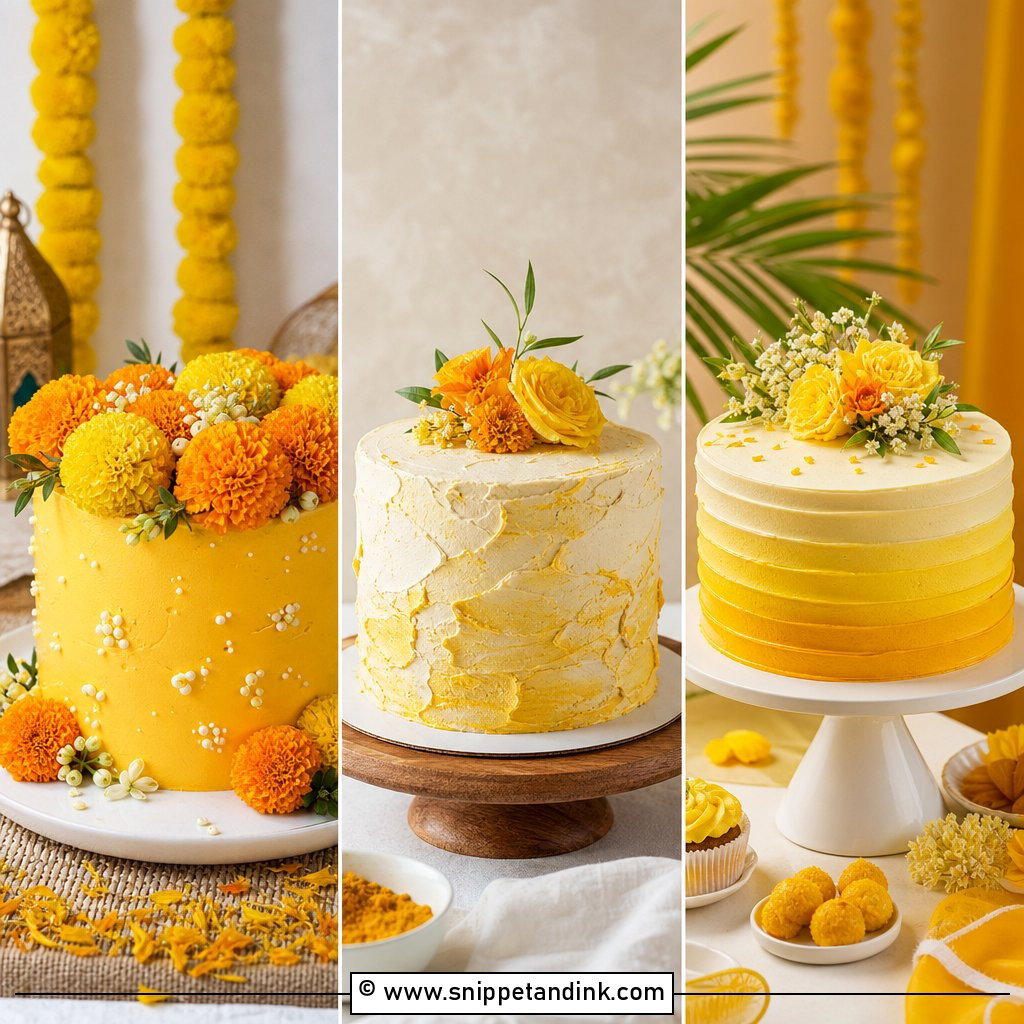
Ombre builds the color into the cake itself, fading tier by tier from blush to coral or pale yellow to orange. Getting even steps between shades is harder than it looks, so I mix every tier’s buttercream at once from the same base batch and check them side by side in daylight. A few small scattered flowers keep it soft. A cluster at the top and base makes it bolder. The deepest tier should always sit at the bottom, or the cake looks top-heavy.
10. Colorful Floral Naked Wedding Cake
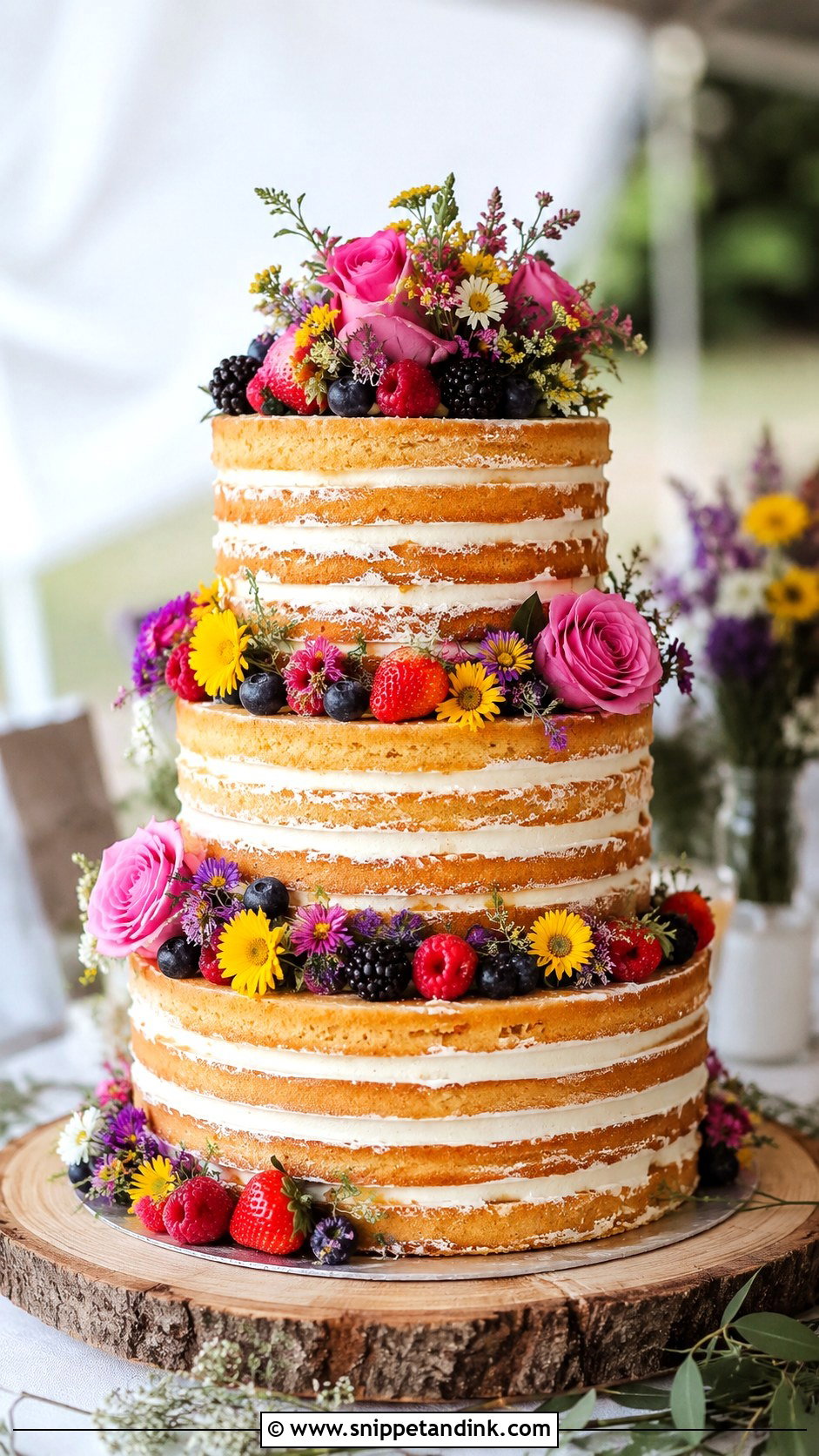
Naked cakes show their layers, so the bake and the filling have nowhere to hide, and I’d steer you away from one if the cake has to sit out for hours on a hot day, since the exposed sponge dries fast. With a short display time, the bare sides and bright flowers bring the palette forward with almost no icing. Vanilla, carrot and berry-filled layers look the most appetizing when cut open. Neat, level fillings matter far more here than on a frosted cake.
11. Colorful Floral Semi Naked Wedding Cake
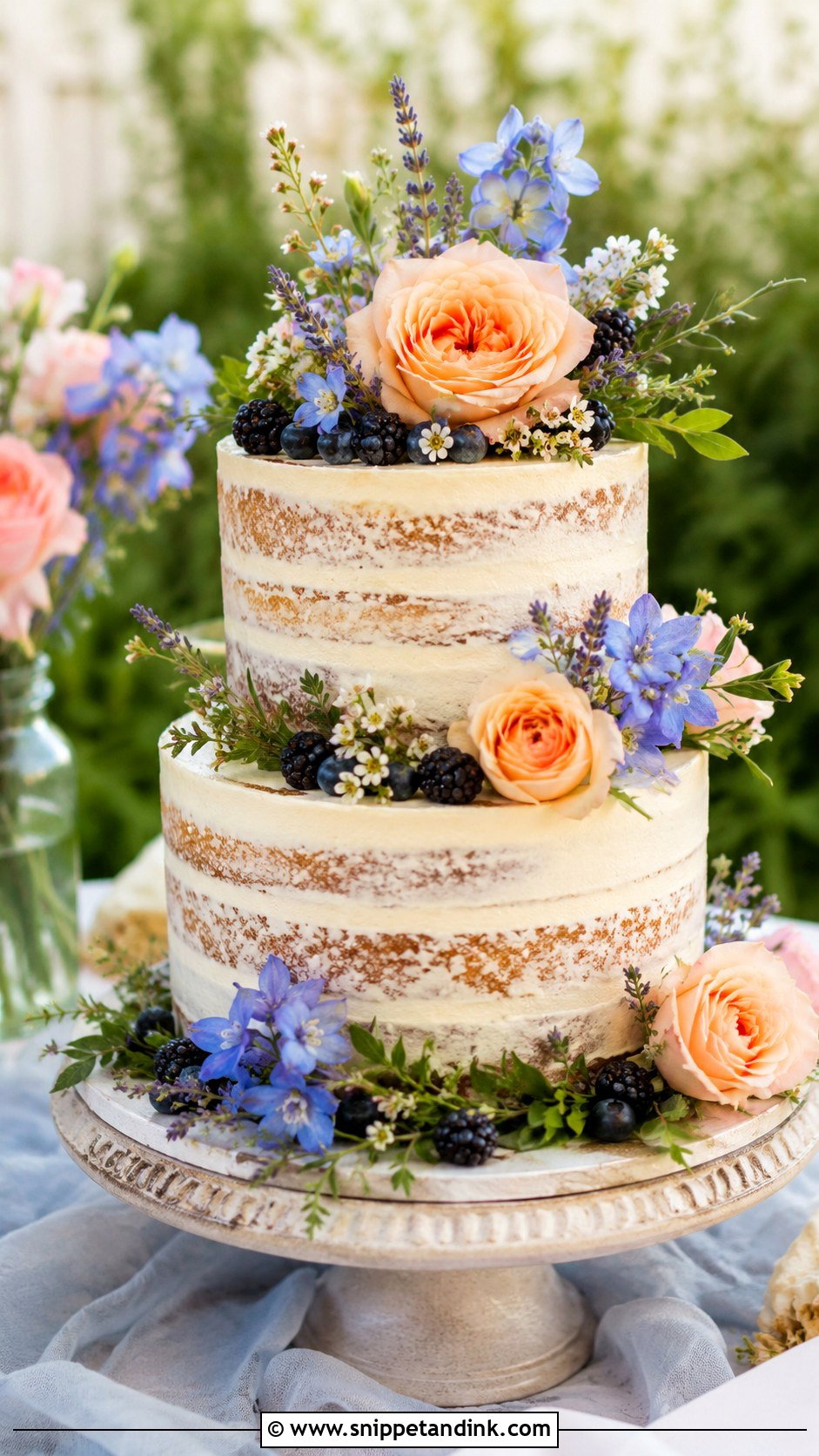
A semi naked finish is my compromise for couples who like the rustic feel but want a tidier edge. A thin scraped coat of buttercream lets the sponge peek through while sealing in more moisture than a fully naked cake. Flowers soften the edges, small greenery fills the gaps, and berries or citrus slices tie in nicely. It suits garden ceremonies and relaxed venues, and it’s forgiving if the cake sits out a little longer.
12. Colorful Floral Sheet Wedding Cake
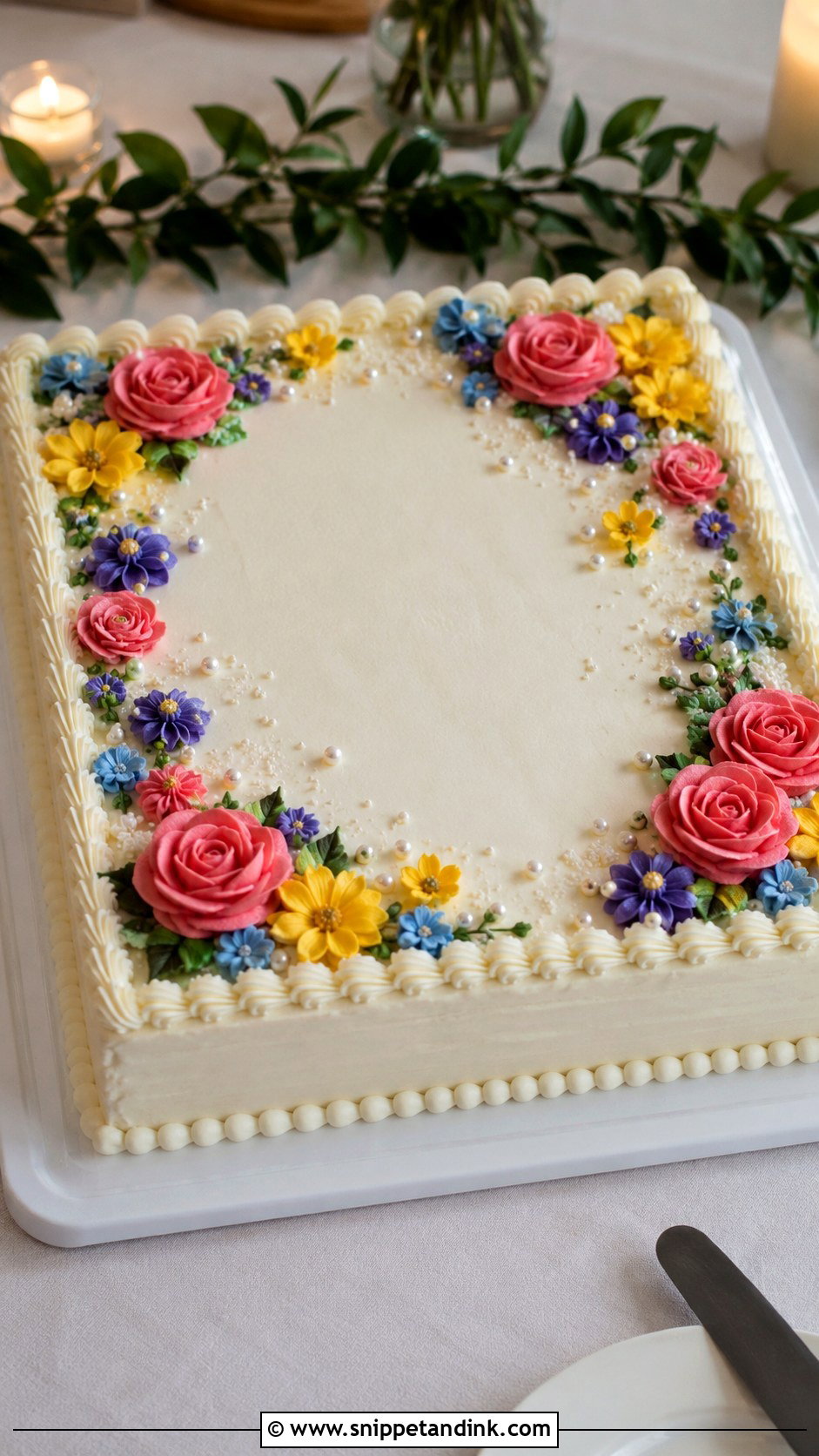
A colorful floral sheet wedding cake deserves more respect than it gets. For a big guest list it’s the most practical thing I make, and it cuts into neat, even portions without stacking or dowels. Piped flowers, pressed petals or fresh clusters on the corners stop it looking plain. I ask couples to agree a serving plan with the caterer in advance, because the knife lines decide where the decoration should and shouldn’t go.
13. Colorful Floral Cupcake Wedding Cake
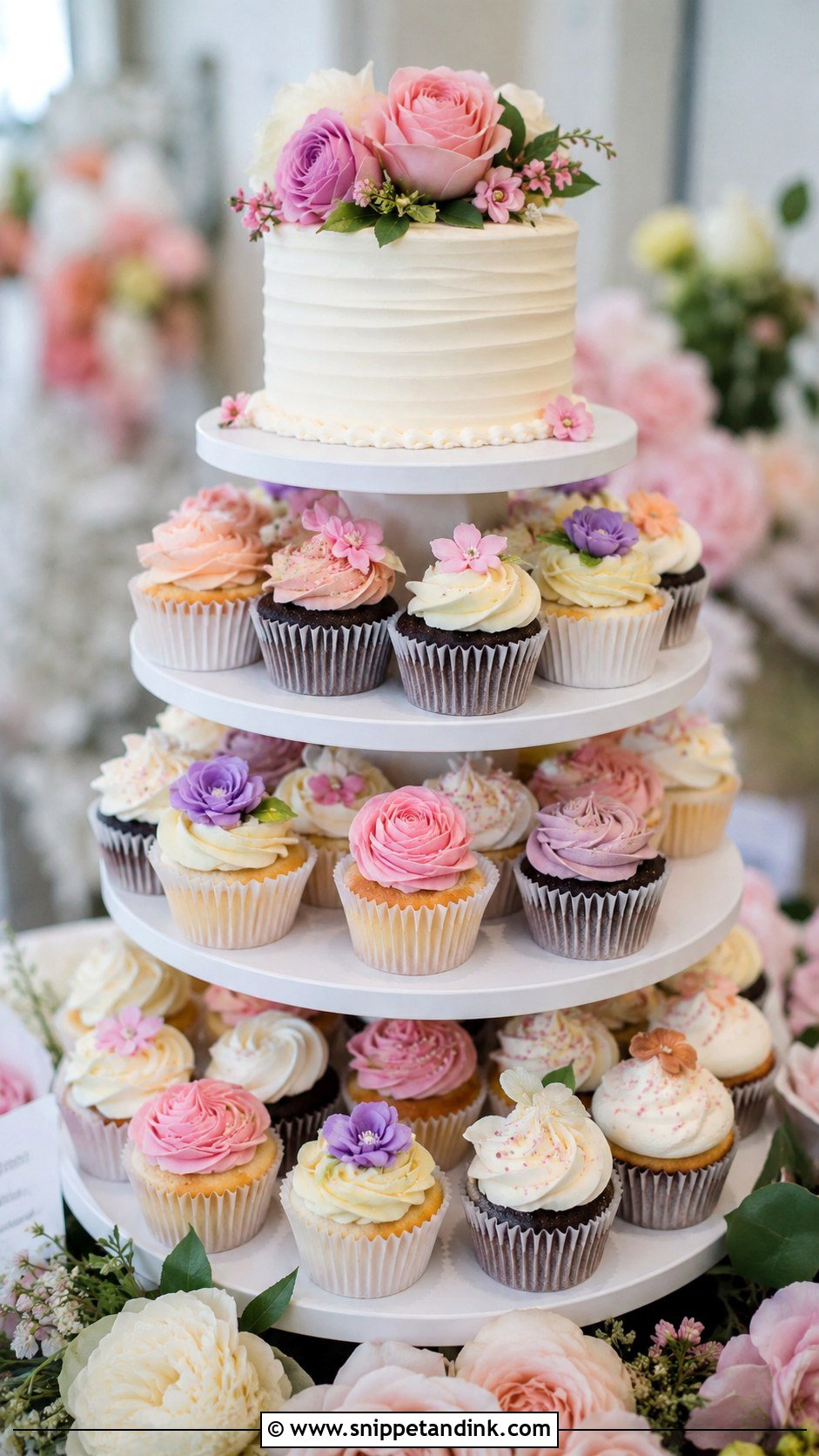
Cupcake towers are easy to serve and give lots of visual variety: a small cutting cake on top, then rows of cupcakes each topped with a piped flower, an edible petal or a sugar blossom. You can offer vanilla, chocolate, lemon and red velvet, as long as the frosting colors tie together. The weak spot is the stand. Outdoors, a tall tier of cupcakes catches wind and sun, so I keep the stand low and shaded and bring the flower toppers separately to finish on site.
14. Colorful Floral Heart Wedding Cake
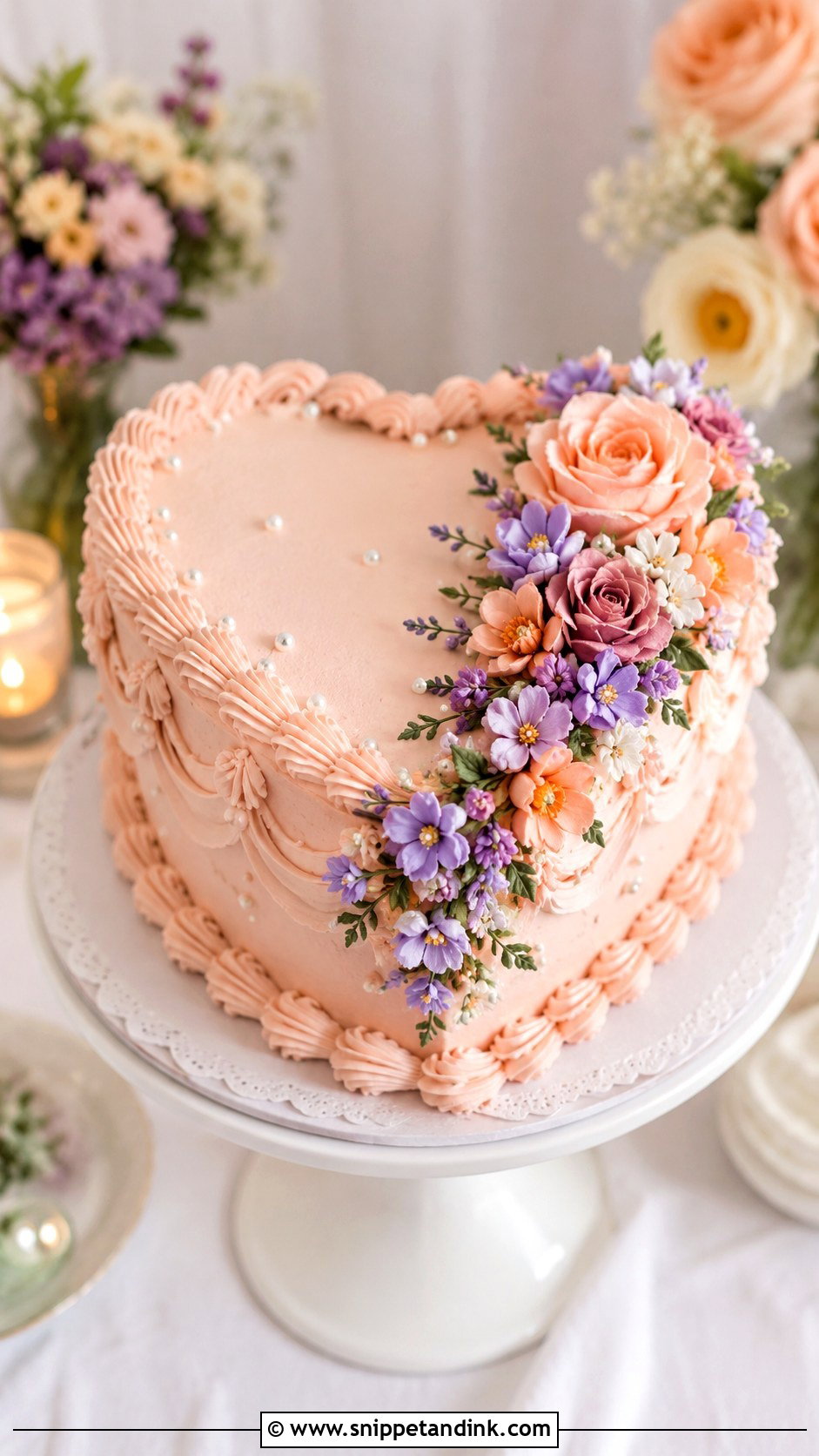
Heart cakes are having a real moment, especially for sweetheart tables and small receptions, and the vintage piped border is what makes them look wedding-ready rather than novelty. I pipe the border in white or a pastel buttercream and then let colorful sugar flowers or piped roses sweep across one side. Heart tins are tricky to level and frost cleanly at the point, so one tier is usually the sensible limit. Pair it with cupcakes or a sheet cake if you need more servings.
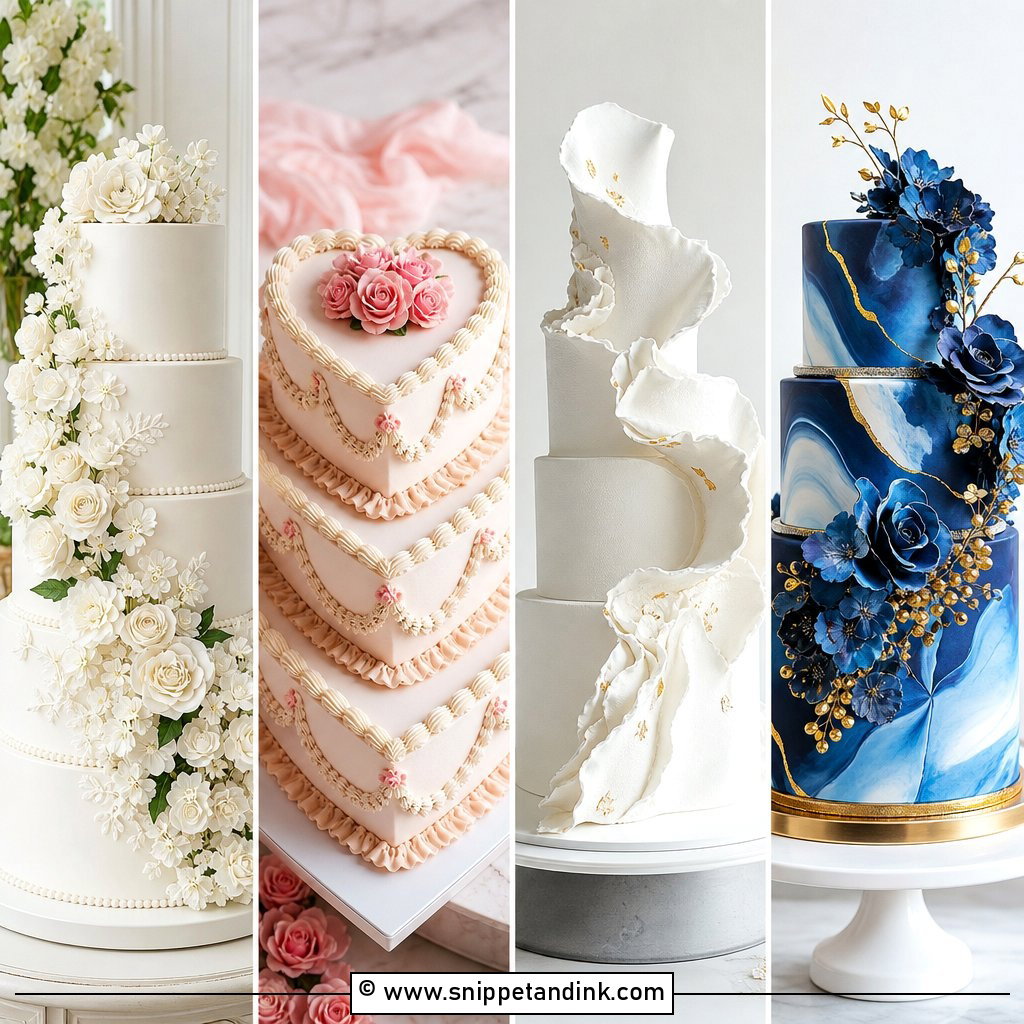
15. Colorful Floral Round Wedding Cake
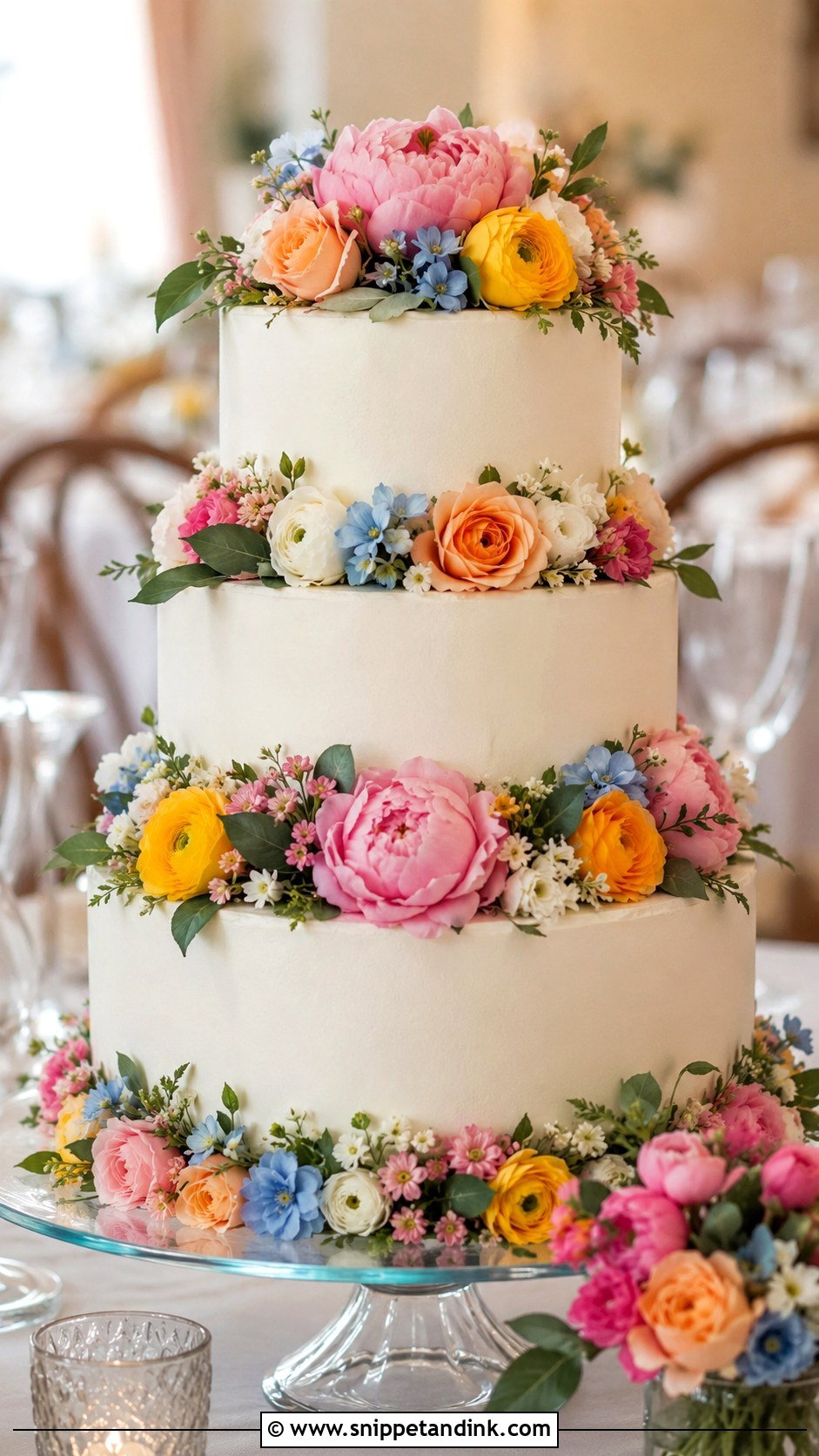
Round tiers are the shape I’d suggest if you’re undecided, since they scale up and down so easily and every venue suits them. Smooth ivory buttercream with a few clusters keeps it quiet; blooms around every tier make it full. My rule for color on round cakes is simple: one main flower color, one accent and some greenery. More than that and the eye doesn’t know where to land.
16. Colorful Floral Square Wedding Cake
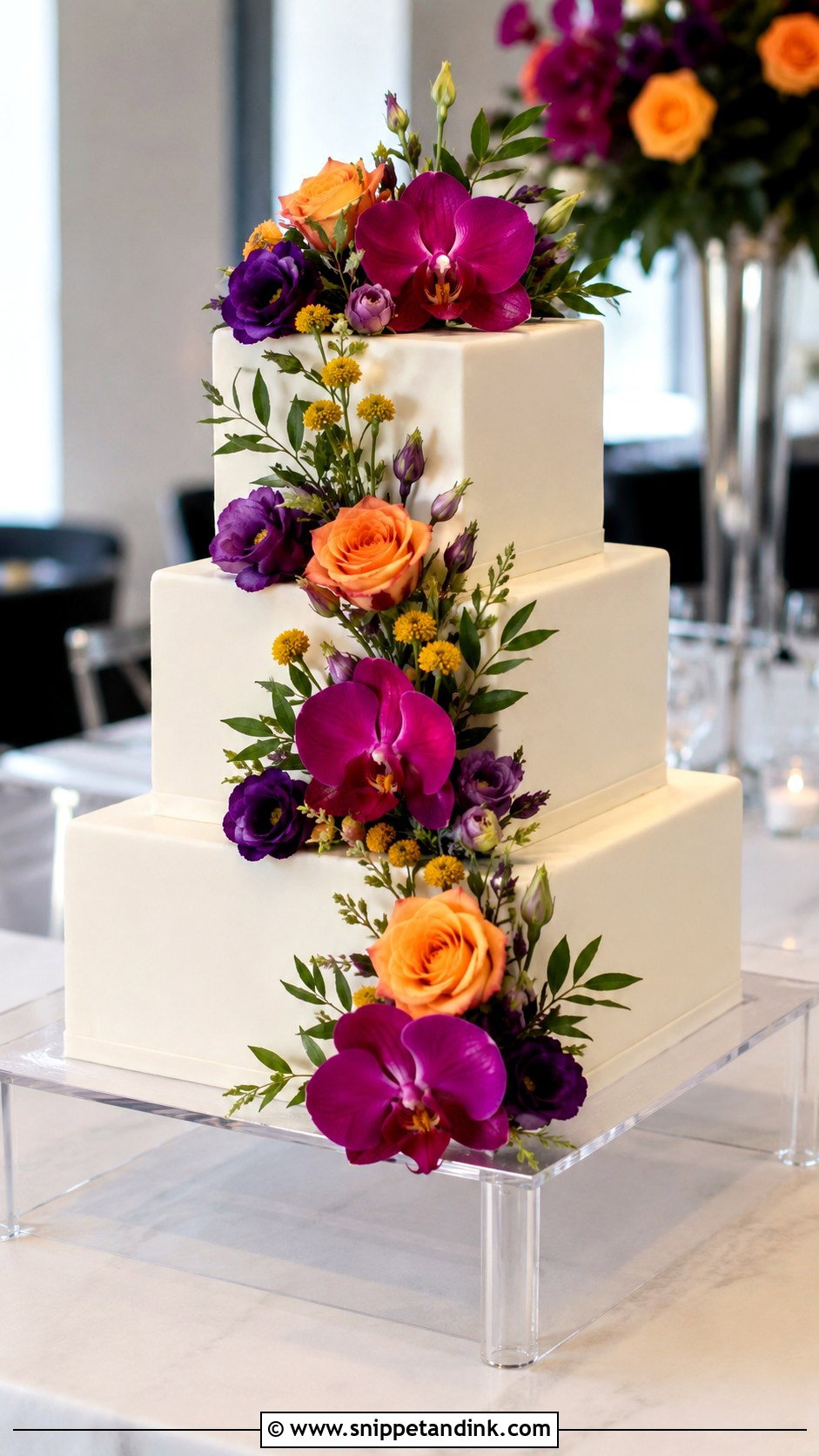
Square tiers look crisp and modern, and the flowers keep those hard edges from feeling cold. I build squares in fondant or very firm buttercream, because the corners are the first thing to slump in a warm room. Floral clusters on opposite corners balance the shape, and bright blooms stand out sharply against white, ivory, pale green or soft blue. They’re heavier than round tiers of the same width and serve more guests, which is worth knowing when you work out the size.
17. Colorful Floral Garden Wedding Cake
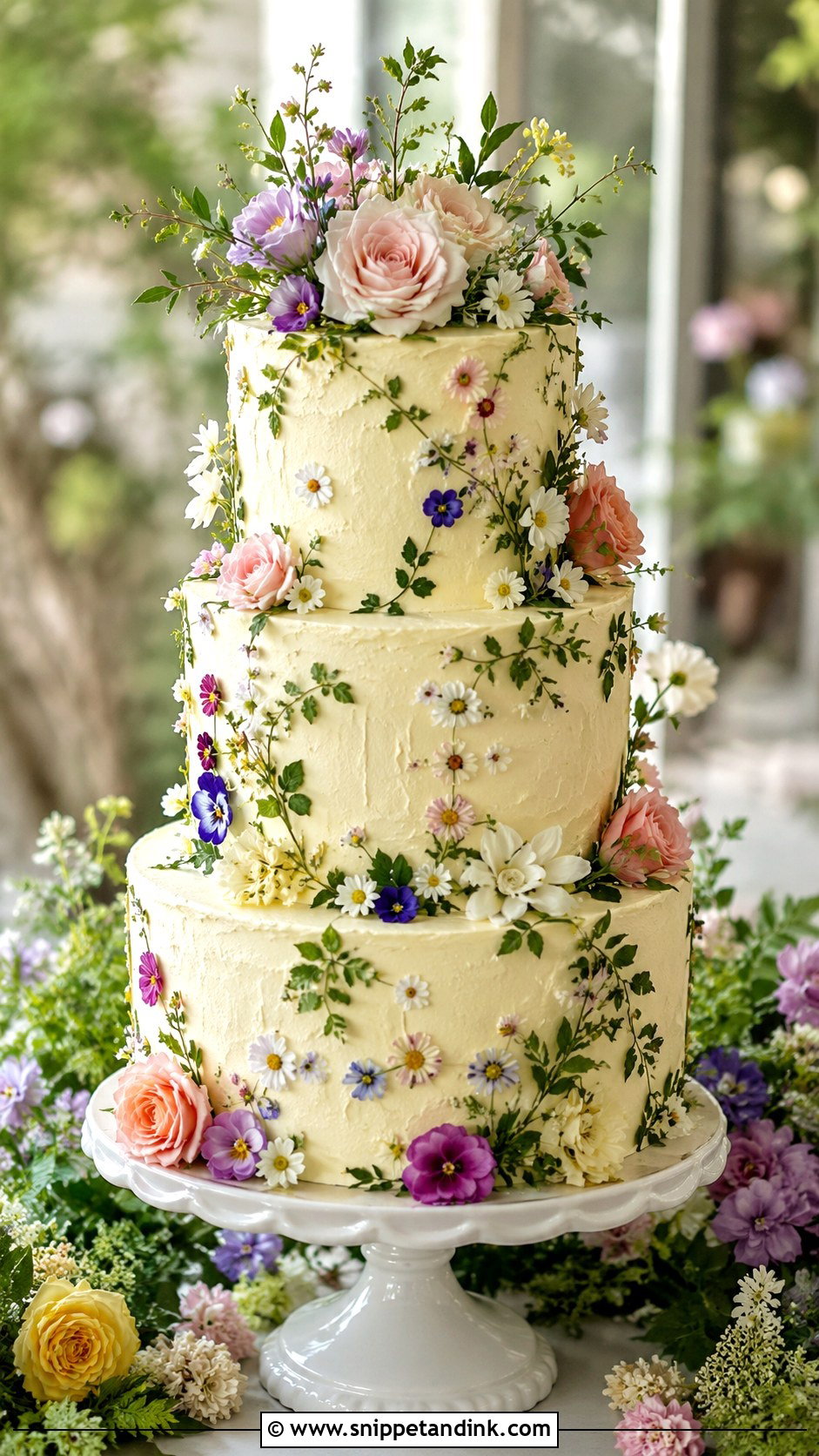
This one should look like a small flower bed on a cake stand, with blooms growing up and around the tiers rather than parked on top. Depth comes from varying flower sizes and tucking greenery between them. Soft buttercream texture keeps it natural, and small sugar flowers or edible petals add fine detail. I ask the florist for a list of the actual wedding flowers early, so the cake reads as part of the same garden as the bouquets.
18. Colorful Tropical Flower Wedding Cake
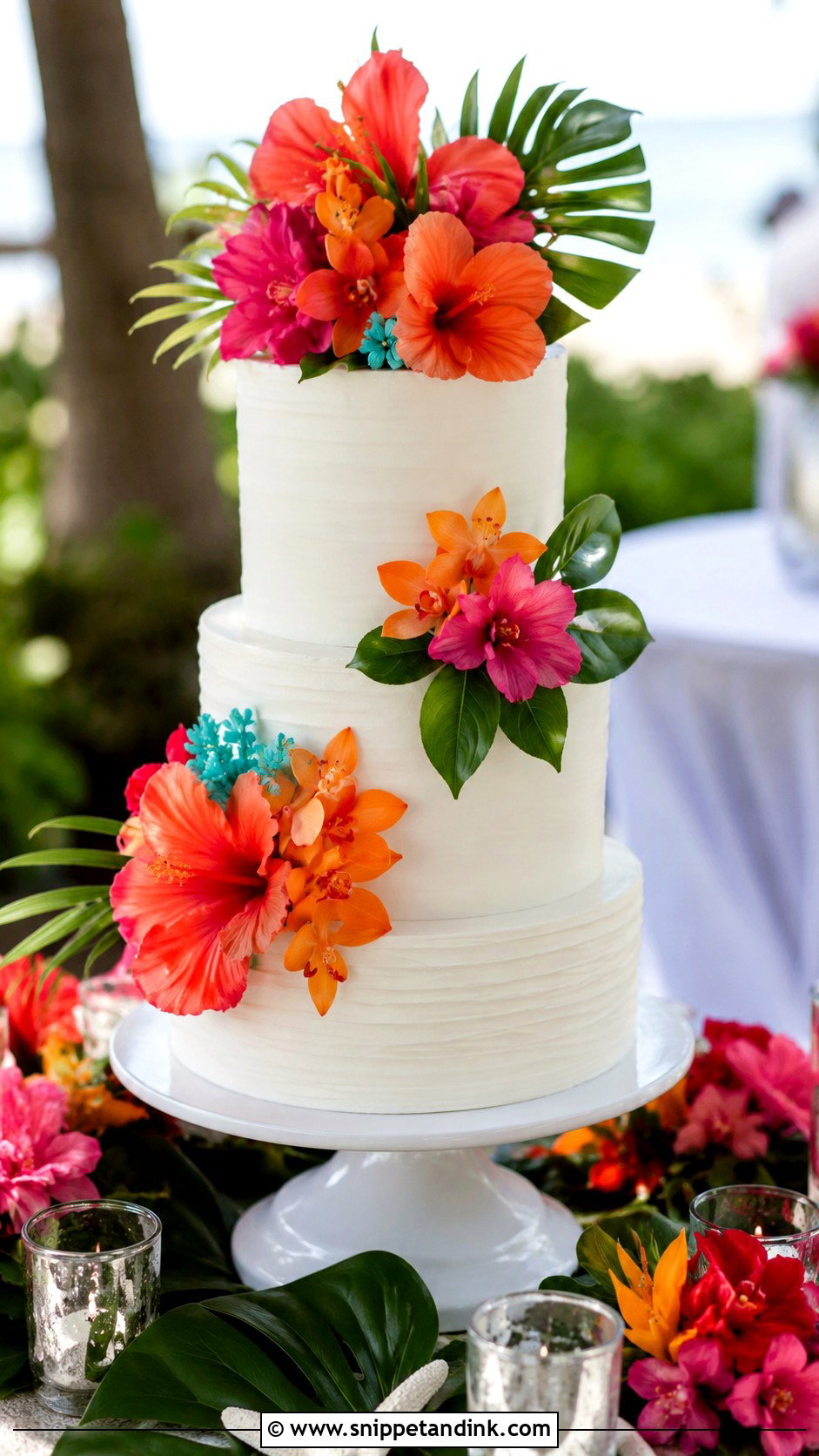
Tropical cakes need confident arranging: big shapes, strong color blocking, nothing timid. Hibiscus, orchids, anthurium-inspired sugar flowers and bold leaves in coral, fuchsia and aqua carry it. A white base gives the most contrast, though a pale sunset tone works too. Beach heat is the real problem with this style. I’d use a sturdy ganache or firm buttercream under fondant and keep the cake indoors until close to cutting. Coconut, mango or passion fruit fillings suit the look.
19. Colorful Floral Gold Wedding Cake
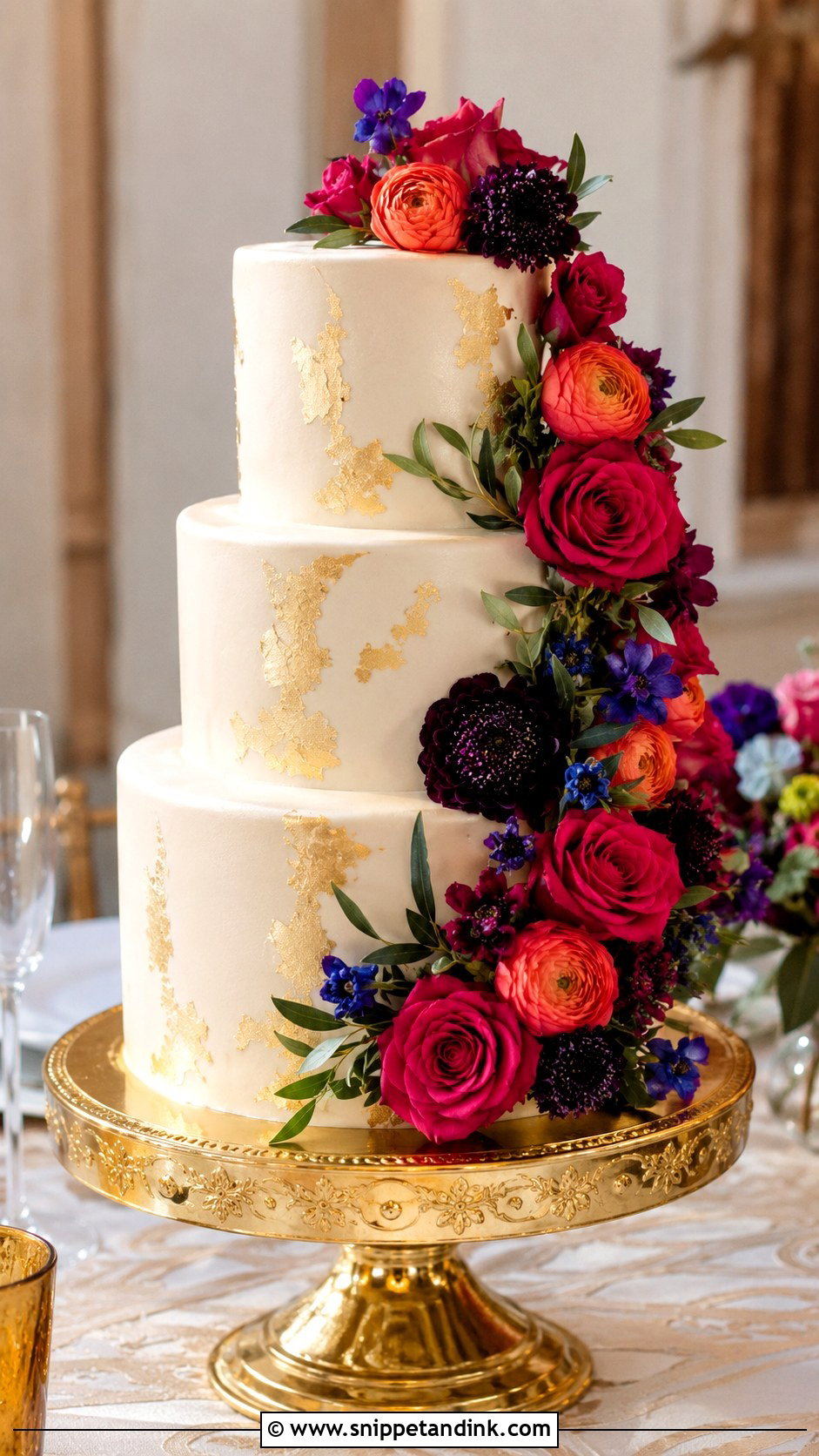
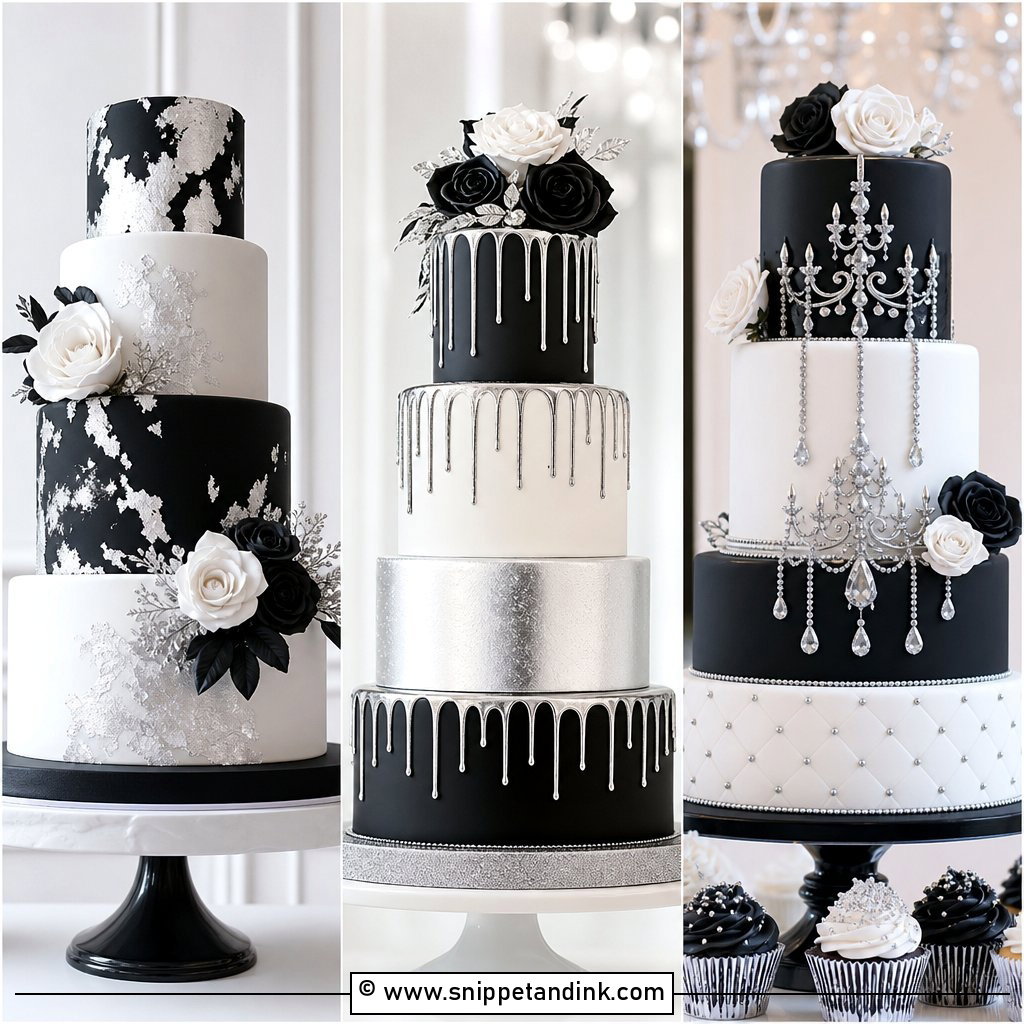
Gold makes a floral cake formal, applied as edible leaf, painted accents or a thin metallic drip. Jewel-toned blooms like magenta, plum, red, coral and deep blue look richest against it, though blush and peach work for a softer version. I use gold sparingly, on one band or the edges of a few petals, because a fully gilded tier competes with the flowers. Make sure your baker uses edible gold on anything that will be eaten; some lustre dusts are labeled for decoration only.
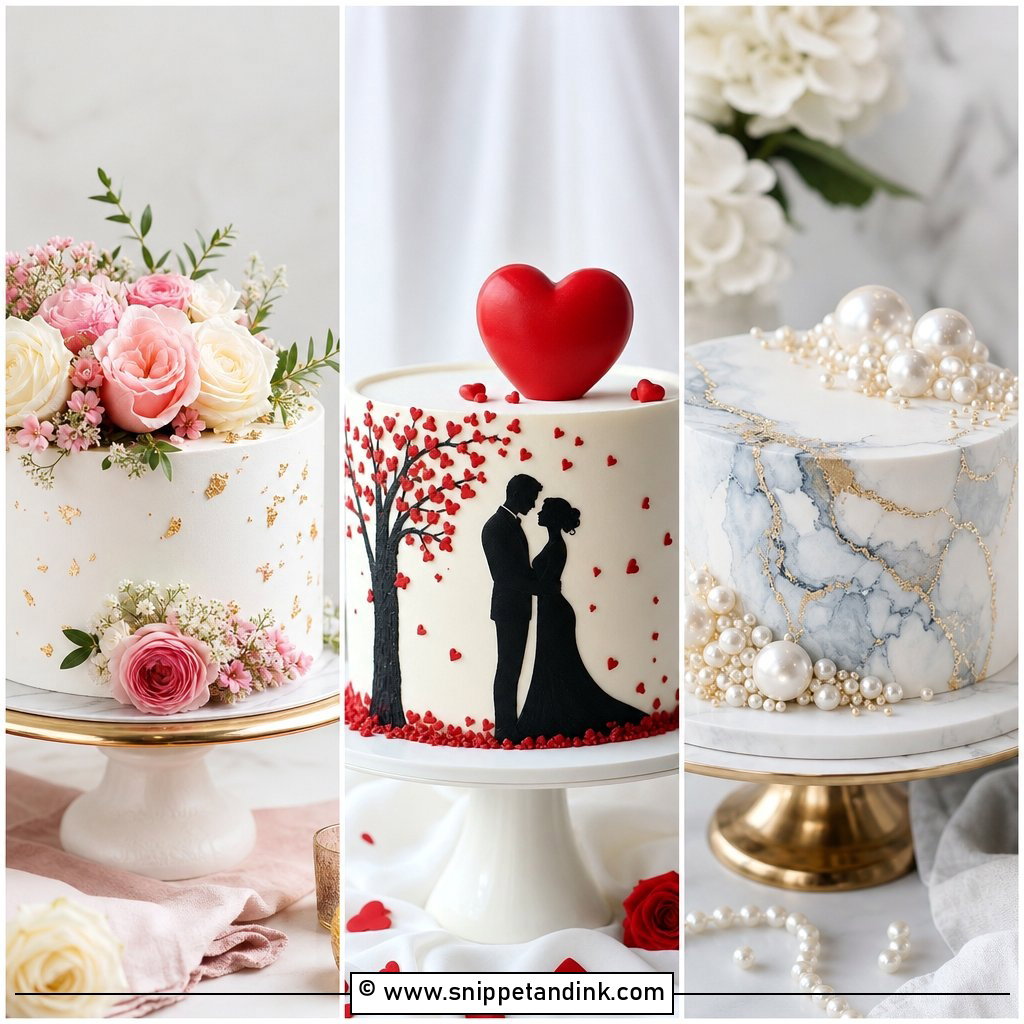
20. Colorful Floral Mini Wedding Cake
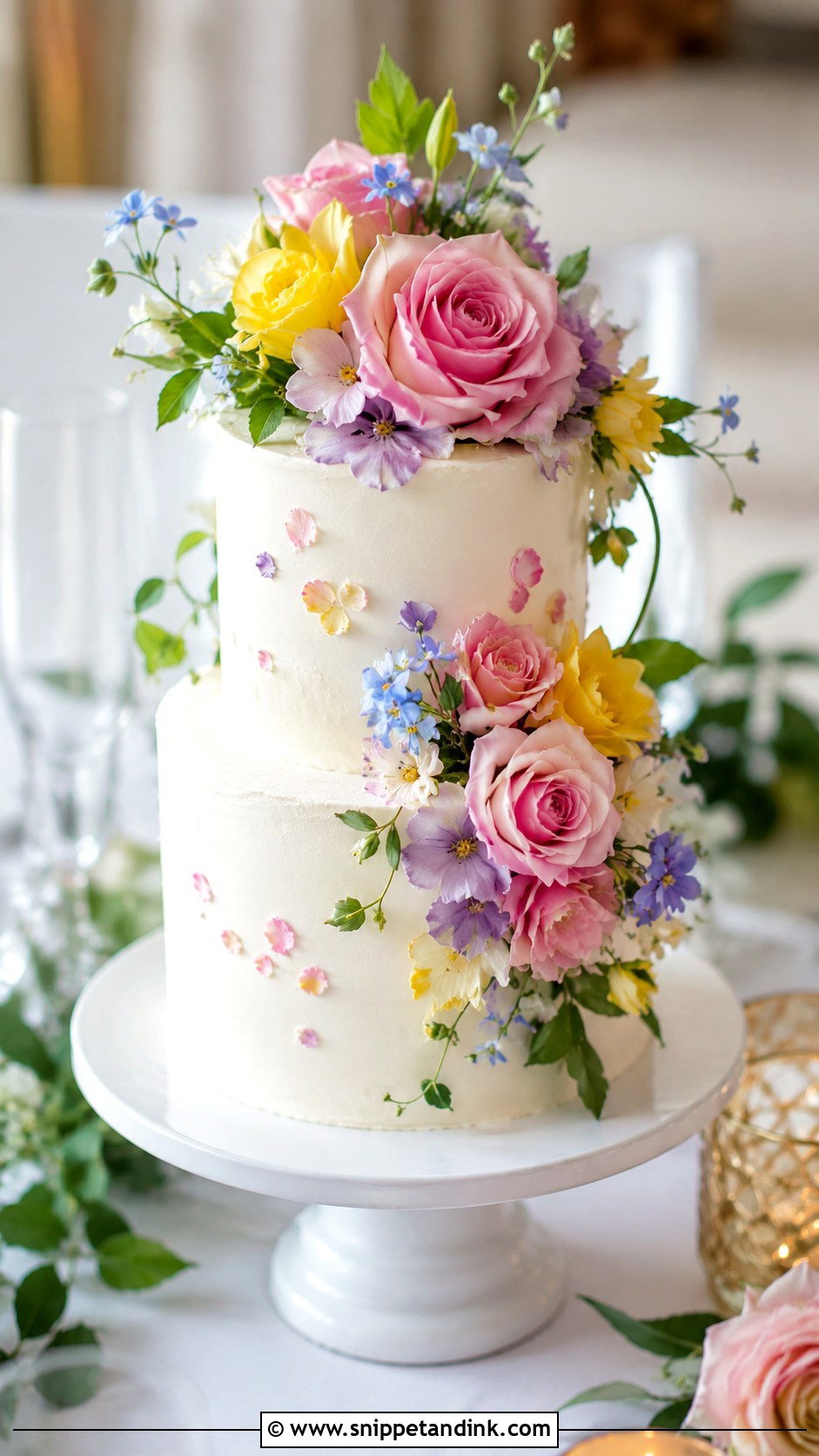
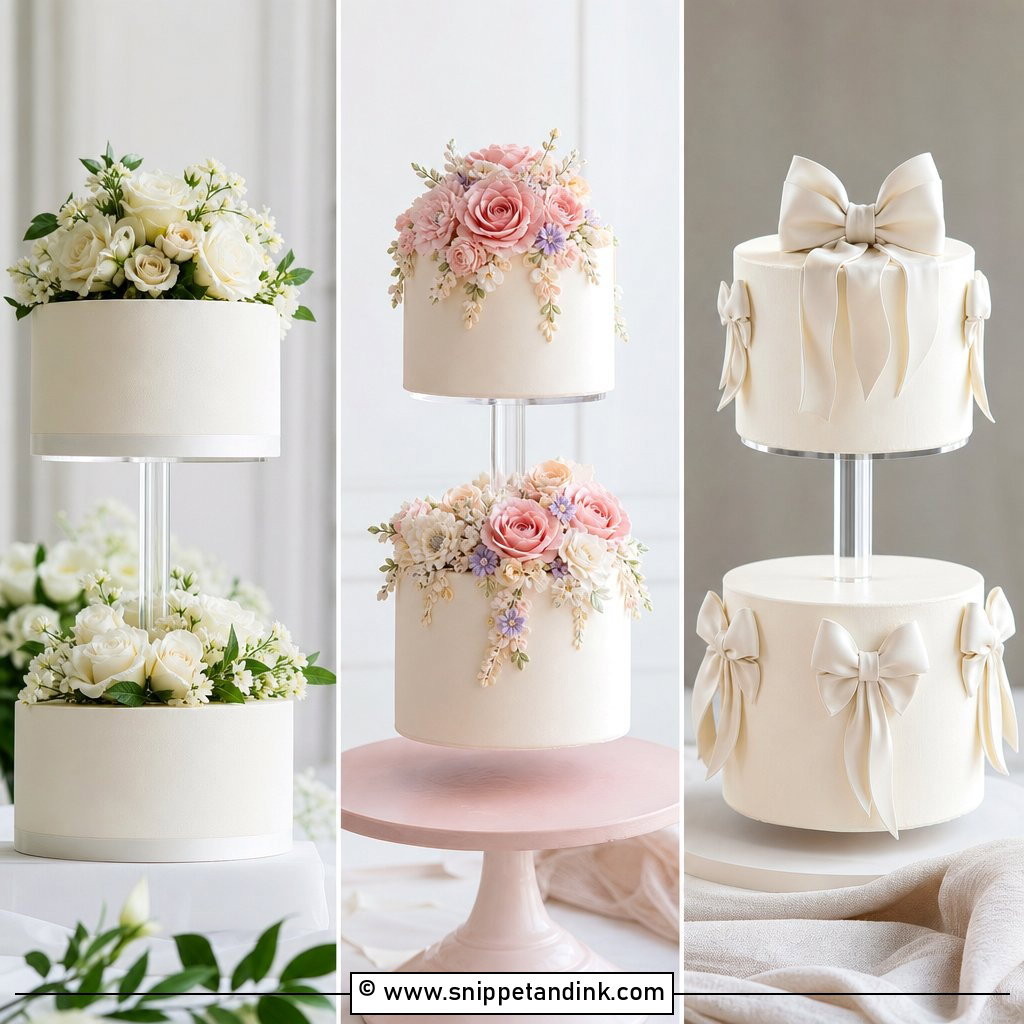
Mini cakes are made for elopements and micro weddings, and they can still feel considered with one or two tiers. One strong floral moment is enough: a top cluster, a side spray or a small pressed pattern. Anything more crowds a cake this size. A raised stand surrounded by petals and candles gives it height in photos. Small cakes are also where I encourage couples to be adventurous with flavor, pistachio rose or lemon raspberry, since nobody is feeding two hundred people from it.
Why Bright Cake Colors Fade, Bleed or Turn Bitter
Colored frosting doesn’t behave like paint on a wall. A few things happen to it between my kitchen and your reception, and knowing them ahead makes the conversation with your baker much easier.
Sunlight is hard on purples and blues
Lavender, violet and some blues fade noticeably under strong daylight, sometimes turning greyish or pink after an afternoon by a window. If your cake will stand outside or in a glass room, I’ll either keep it shaded or lean on sugar or fresh flowers for those shades instead of tinted icing.
Deep reds take a lot of coloring
True red, black and deep navy buttercream need so much gel color that the taste can turn slightly bitter and the color can stain lips. I usually keep those dark shades to accents, piped flowers or a fondant band rather than a whole tier.
Humidity makes colors bleed
In a humid room, strong colors can creep into white buttercream, and sugar flowers absorb moisture and droop. That’s why I attach fresh flowers on site, deliver sugar flowers in a sealed box, and ask for the cake table to be set away from heaters, sunny windows and the dance floor lights.
Start With the Base Color, Then Let One Flower Lead
Every cake above works because someone made decisions in the right order: shape, frosting finish, flower type, then palette, and only then the extras. Fresh flowers look natural, sugar flowers hold any season, piped flowers are fully edible and pressed ones feel handmade. Bring your florist’s flower list and a photo of your venue lighting to the tasting, and your baker can tell you quickly which of these will still look right when the cake is finally cut.
You'll Like These Ideas:





Leave a Reply