
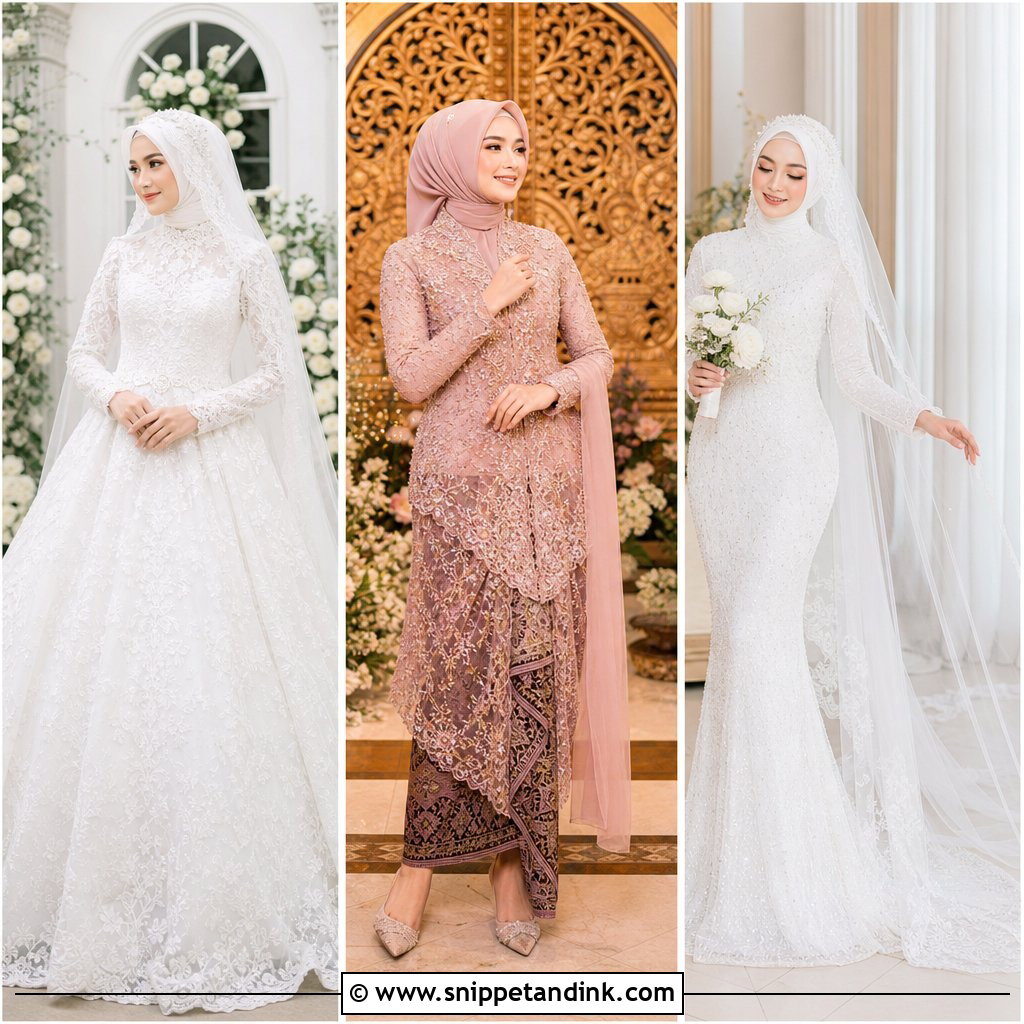
A gown that looks right on the hanger can be wrong for the room, the season or the way you move, so I start every fitting by asking where the wedding is and how long the day runs. The styles below range from classic ball gowns and lace to tailoring, short dresses and versatile separates. Brides now have far more than one silhouette to consider: columns, jumpsuits, pantsuits, minis and high-low hems hang on the same rails as full skirts, and pointed basque waists, sculpted necklines, textured fabrics and convertible pieces are turning up in more collections. Treat any trend as a starting point. What decides the dress is how it moves, what it needs from alterations and undergarments, and how it looks from behind, because that’s the view guests have during the ceremony.
Letting the Venue Narrow the Silhouette Before the Trend Does
The quickest way to cut a long list of shapes down is to answer a few practical questions first. I ask every bride these before I pull a single gown.
How far will you walk, and on what?
Stone steps, lawn, sand and a long hotel corridor all change what’s comfortable. Long trains and narrow columns struggle on uneven ground, while tea-length, high-low and chiffon cope far better.
How warm will it be?
Heavy satin and lined lace sleeves are hard work in summer heat. Crepe and chiffon breathe more, and a mini or a slip is coolest of all.
How big is the room?
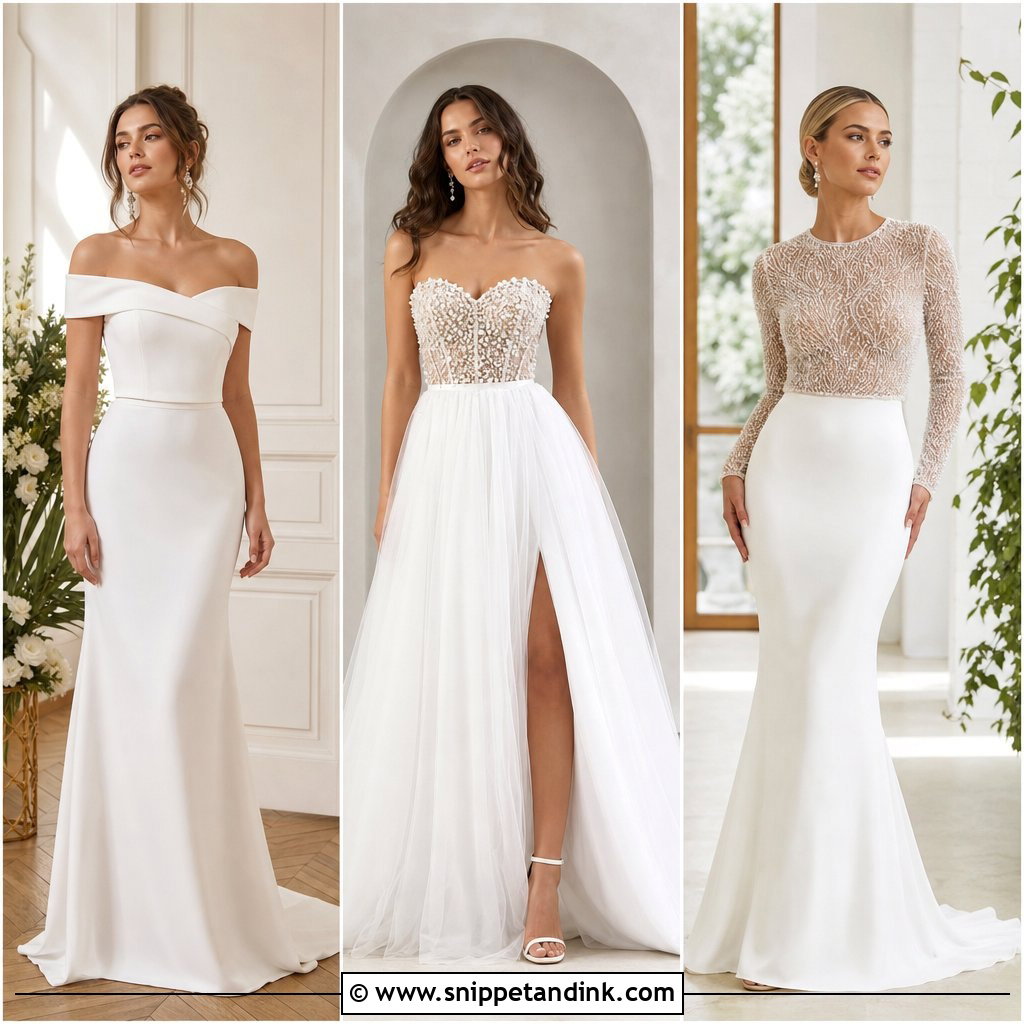
A ball gown fills a ballroom and overwhelms a registry office. A slim column can look underdressed in a cathedral unless a long veil adds length behind it.
1. A-Line Bridal Gown
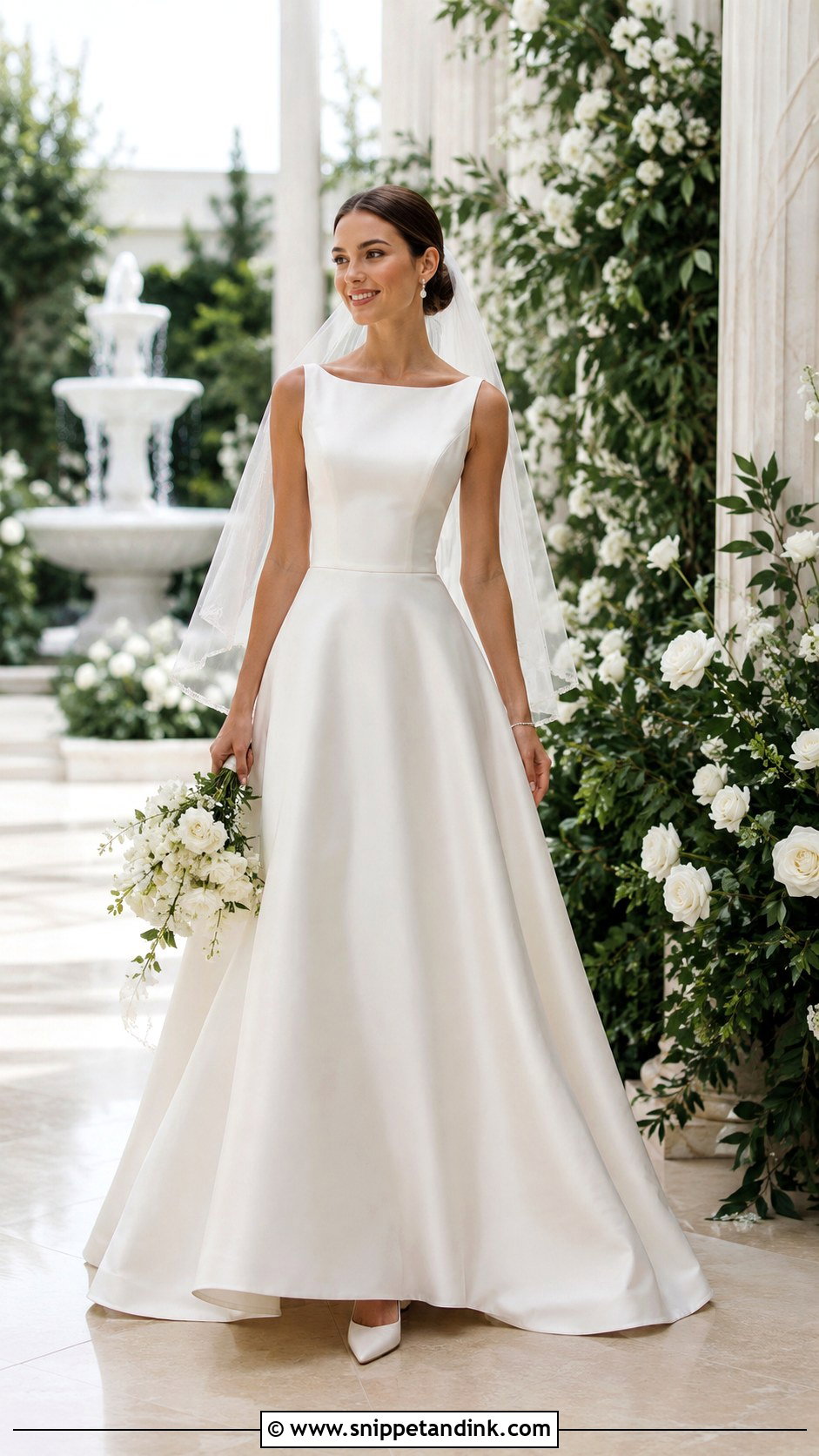
Nearly every bride I dress tries an A-line, and it suits the most venues with the least fuss. The bodice fits close and the skirt widens gradually from the natural waist, so you can walk and sit without managing volume. Satin holds the shape crisply; chiffon or tulle softens it for warm months. I’d finish it with pointed pumps, pearl studs and a fingertip veil edged in narrow satin, plus a low bun to keep the neckline clear. On a petite frame, ask for fewer tulle layers, since a very full A-line can swallow a short torso. And if you’re switching to flats later, tell your seamstress now, because a hem set for high heels will drag on the floor once you’re in flats.
2. Satin Ball Gown Bridal Look
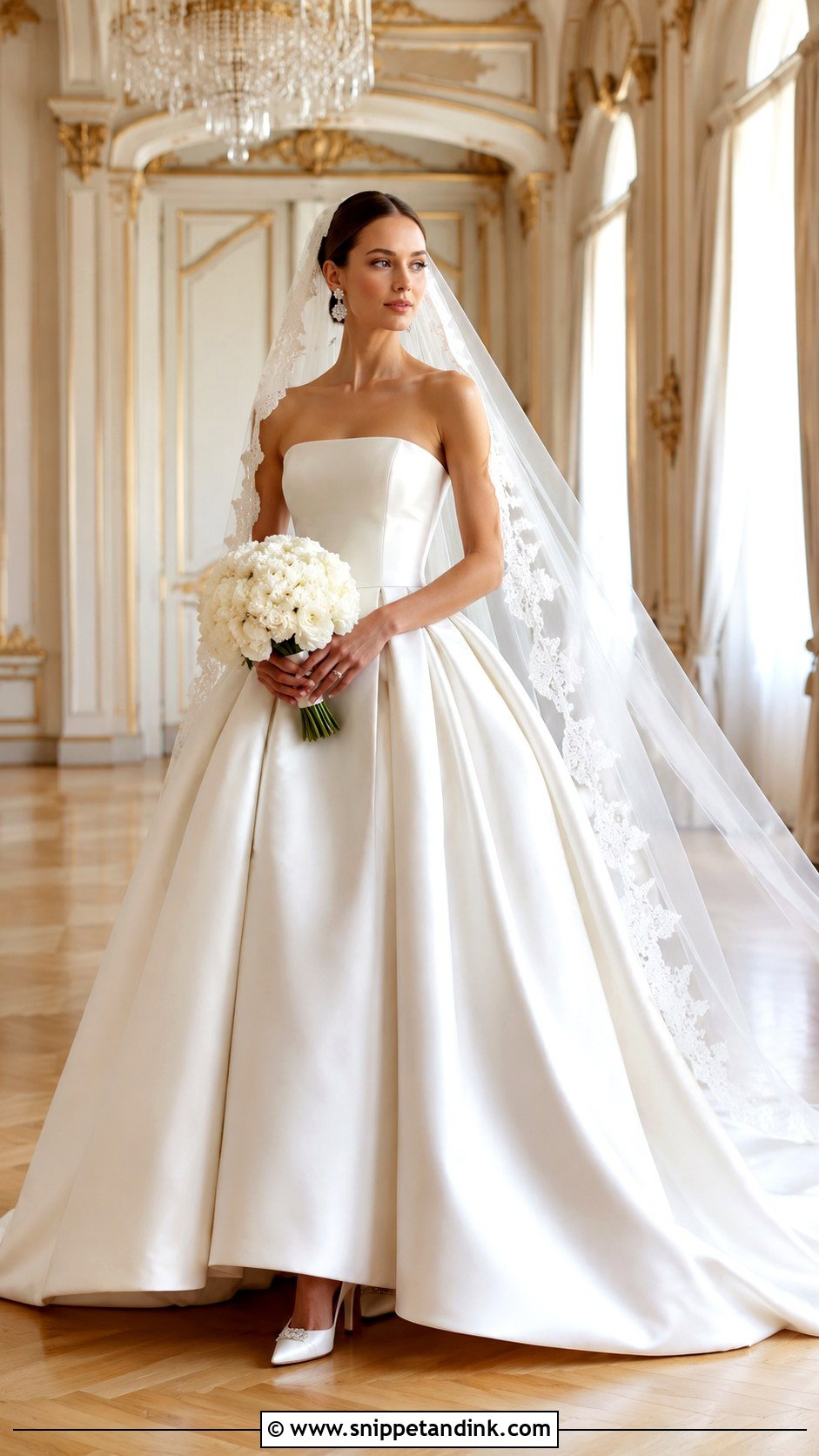
A satin ball gown is the most formal entrance on this list, and it needs a room big enough to hold it. Look for a structured bodice, a defined waist and a full skirt in heavy satin or mikado. Keep the neckline clean, strapless or a scoop, or the shape starts to look busy. Drop earrings, closed-toe heels and a cathedral veil running past the train finish it, with a sleek chignon that echoes the sheen of the fabric. One honest note: a full satin skirt is heavy, and by the reception plenty of brides feel it in their lower back. Ask for a sturdy bustle and practice it at your last fitting. Carry a compact bouquet; the skirt is already doing the work.
3. Lace Mermaid Bridal Gown
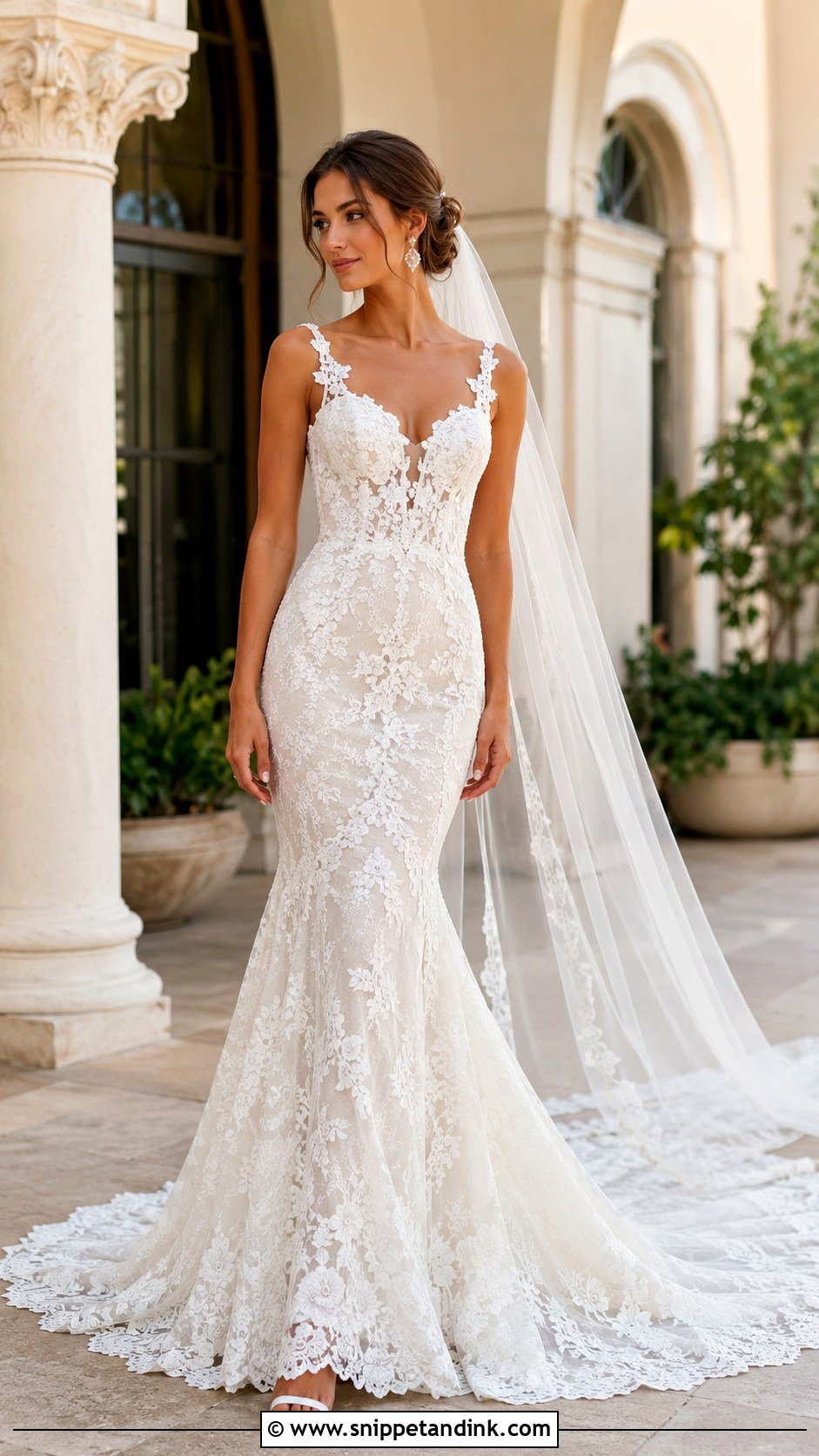
Mermaid gowns sit close through the hips and flare at or just below the knee, and that flare point decides whether you can walk. Set too low, it has you shuffling. I check it with the bride taking full strides and climbing a few steps before any hemming happens. Internal boning and a stretch lining make sitting and dancing possible. Floral lace softens the silhouette, while geometric lace gives a sharper finish. Slim heeled sandals, small earrings and a sheer chapel veil let the lace pattern show through, and side-parted waves balance the fitted shape. Ask about a detachable lace train too, since a mermaid train can be awkward to bustle without bunching the flare.
4. Crepe Fit-and-Flare Bridal Dress
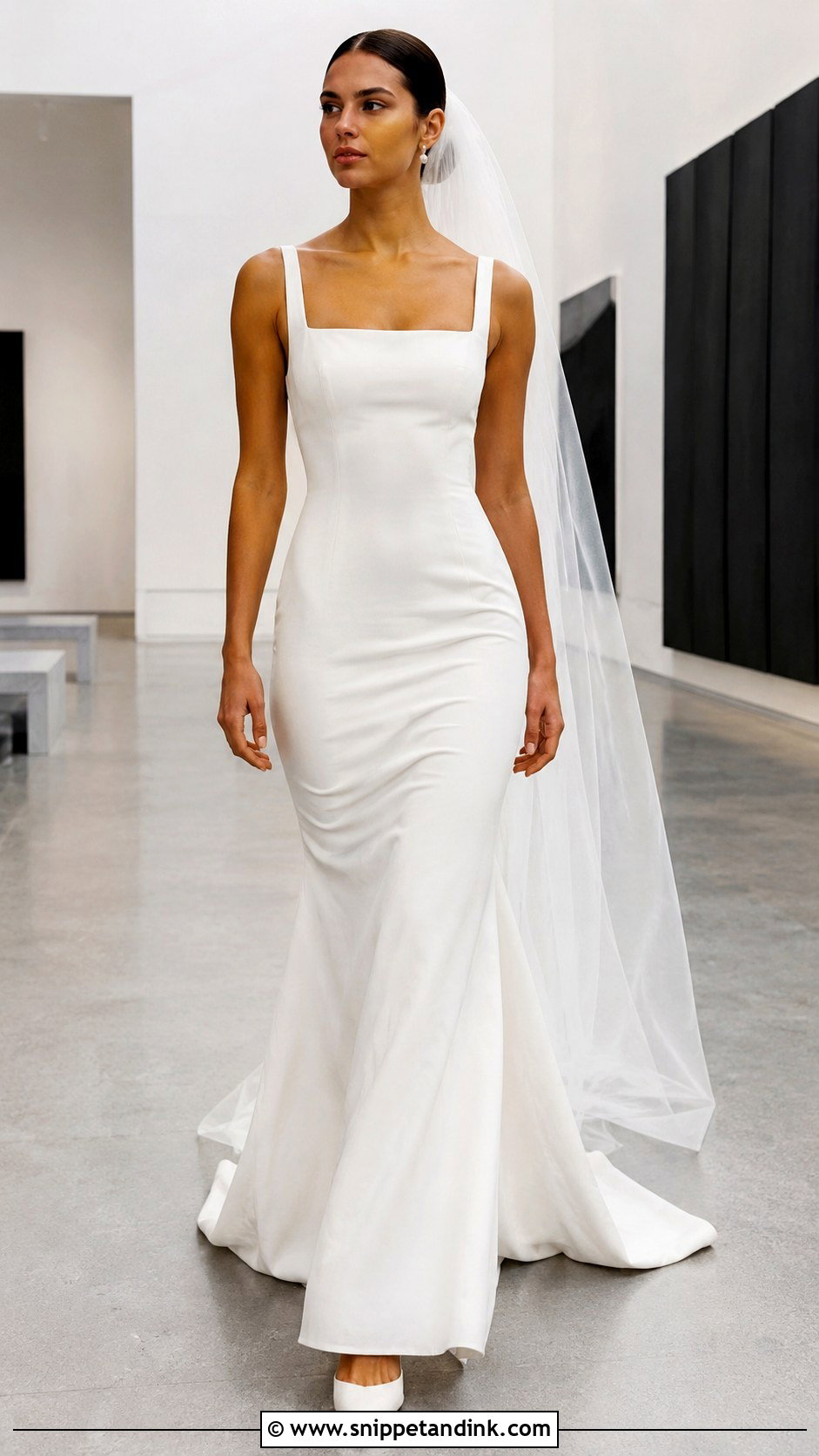
Crepe hides nothing, which is both its appeal and its risk. On a fit-and-flare that follows the bodice and hips before opening into a modest skirt, every seam and undergarment line will show, so I fit crepe gowns with the bride’s actual underwear on and don’t sign off until the hip reads smooth. Square, bateau or soft V necklines change the coverage and support. Pointed pumps lengthen the line, and pearl earrings with a small structured bag keep it minimal. Wear a long sheer veil for the ceremony, then take it out to show a sleek low ponytail at the reception. Skip padded or lace-trimmed bras with this fabric; a smooth bonded style is what disappears under it.
5. Silk Slip Bridal Dress
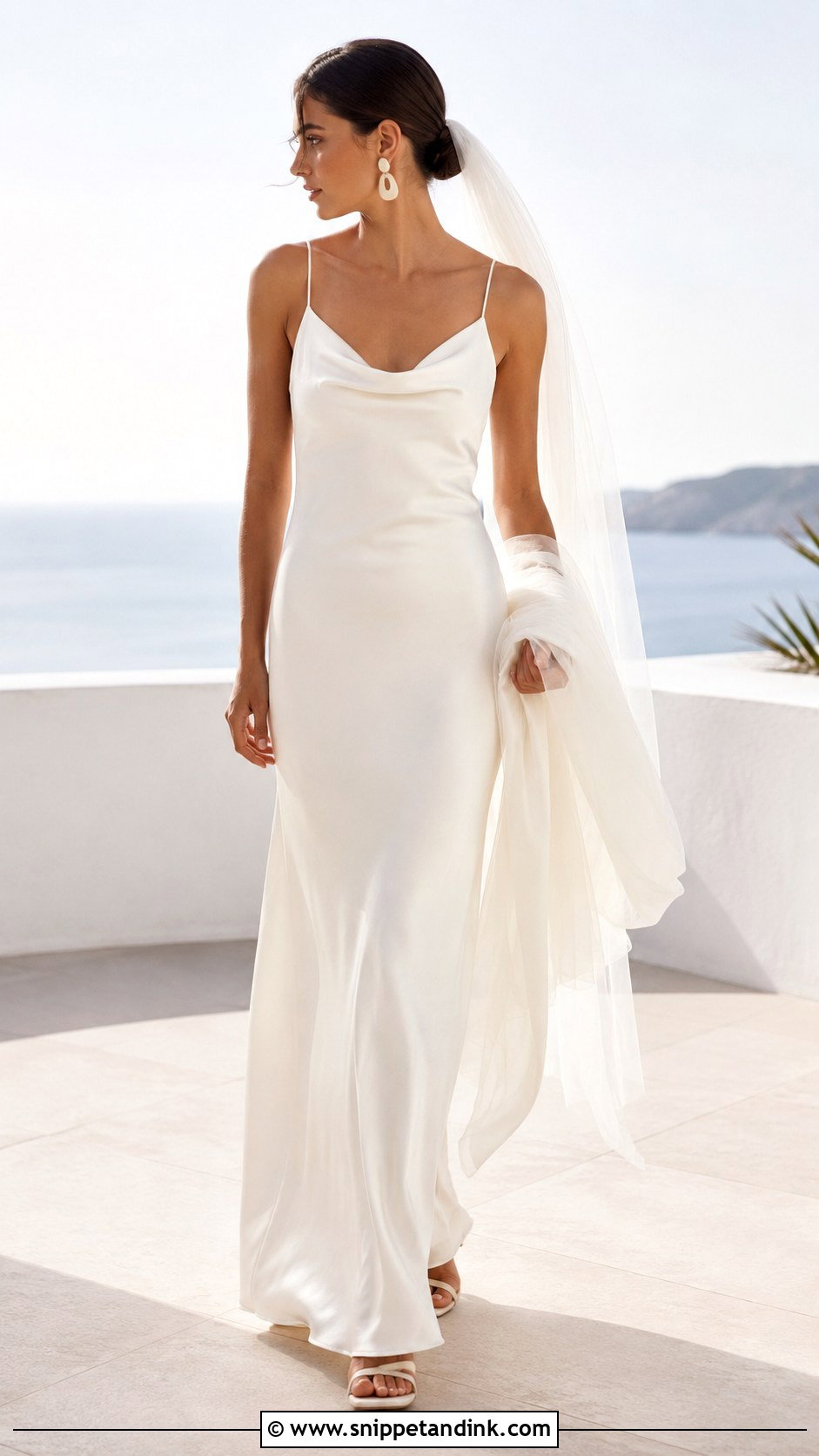
A silk slip moves like nothing else on this list, and it’s also the least forgiving. Bias-cut silk skims the body, while straight-cut silk clings. I always ask for adjustable straps, because a small change in strap length moves the whole neckline. Low satin sandals, sculptural earrings and a light veil pinned under a loose bun suit the narrow shape. For cooler evenings, a wrap or a tailored ivory coat covers your arms without hiding the dress. Silk also marks easily. A drop of water or a damp hand can leave a spot, and creases from a long car ride stay visible. Test several foundation pieces before the final fitting, and keep the makeup natural and the bouquet small.
6. Long-Sleeve Lace Bridal Gown
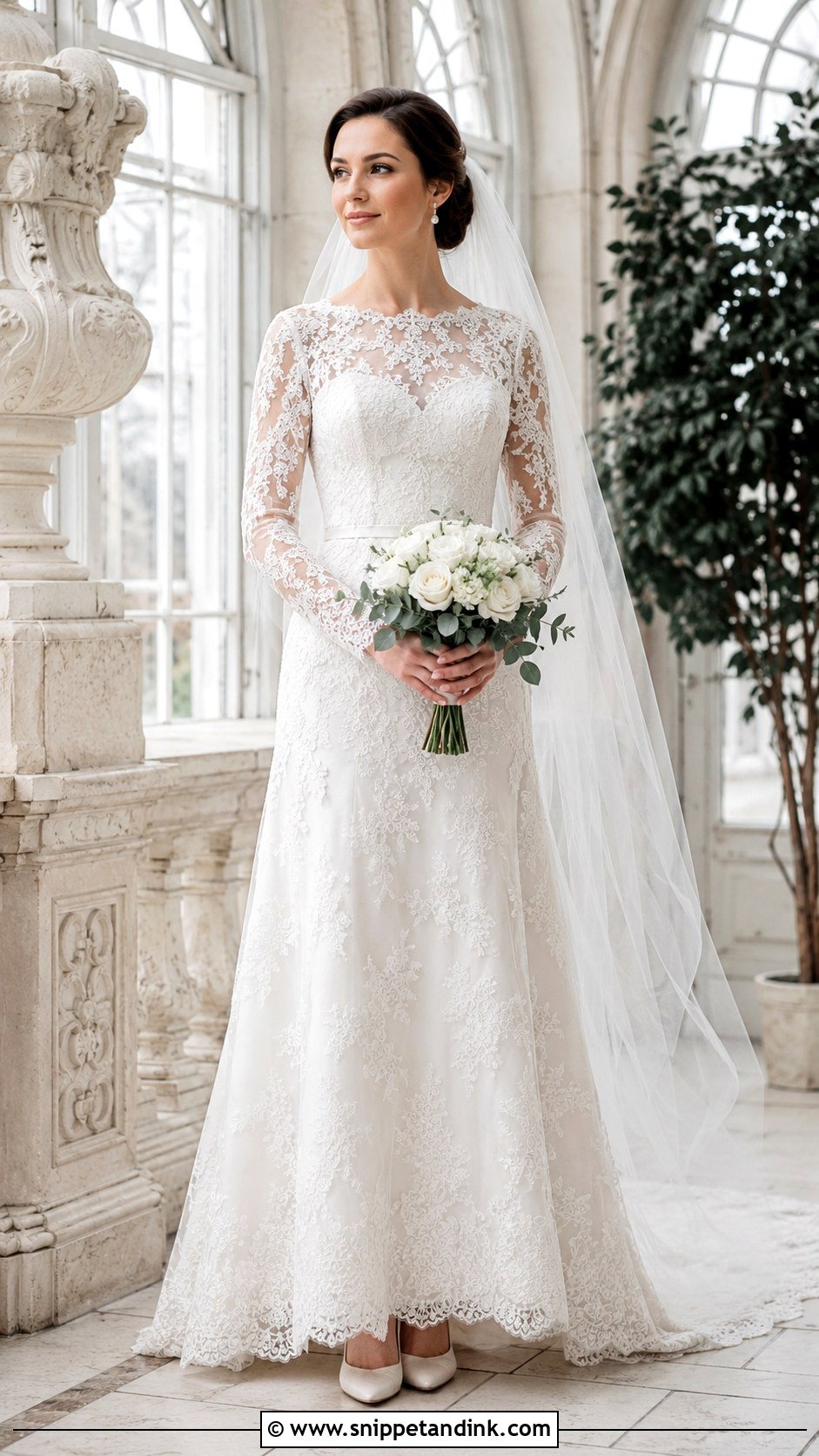
Long lace sleeves are lovely in cool weather, but they’re the part of a gown I fit most carefully. Lace has little stretch, so a sleeve that looks fine with arms at your sides can pull at the elbow or across the back when you lift them to hug someone. Raise your arms, reach forward and mime a bouquet toss at every fitting. Sheer sleeves keep the gown light; lined ones feel more covered and structured. Pair them with a fitted bodice and an A-line or softly flared skirt, closed-toe heels, pearl drops and a plain tulle veil, and wear an updo so the sleeves and back stay visible. Outdoors in winter, add an ivory wool cape or a cropped faux-fur jacket and take it off once you’re inside.
7. Basque-Waist Bridal Gown
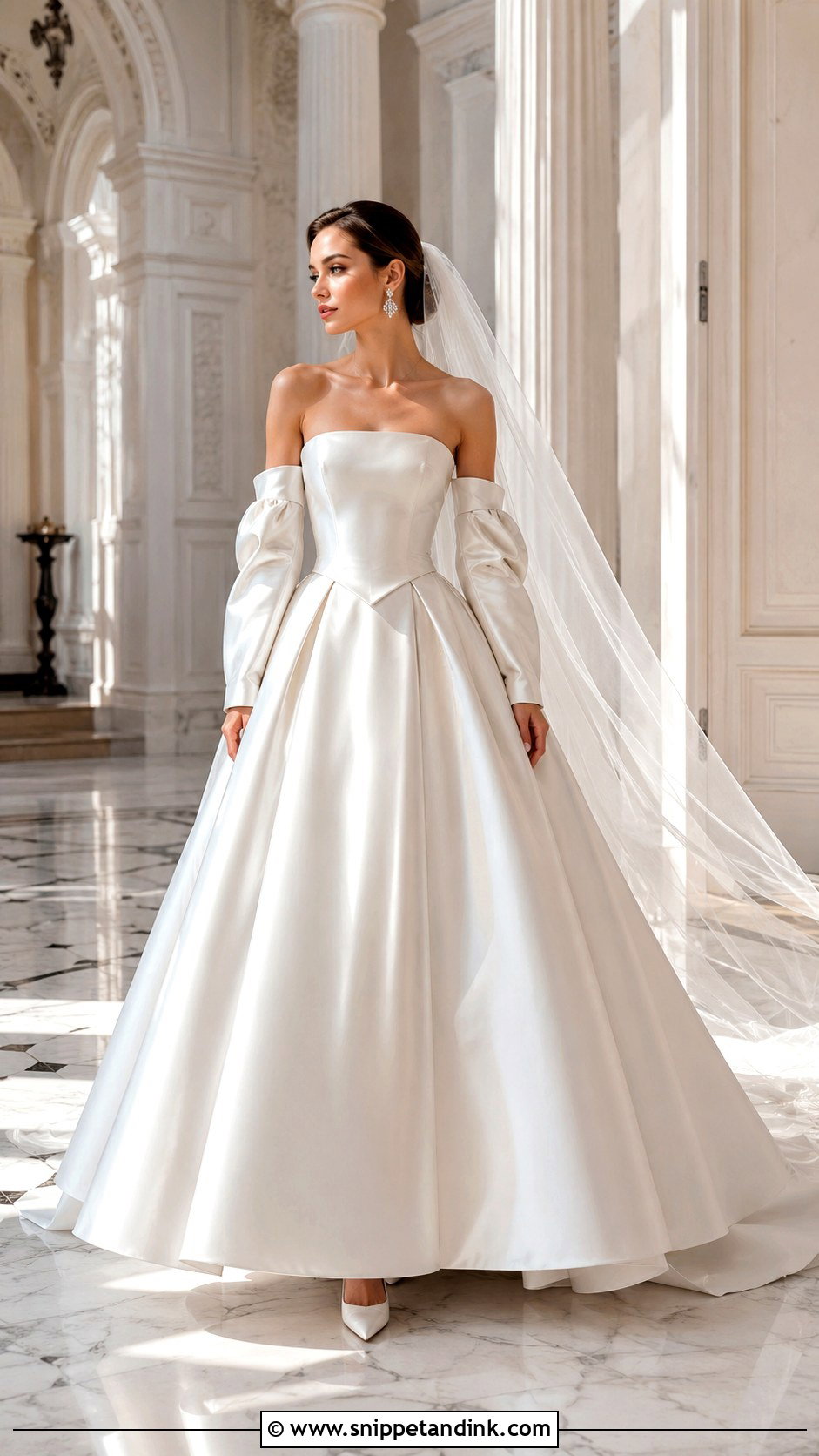
The pointed basque waist is showing up in many current collections, and it’s unforgiving about placement. The point should sit just below your natural waist and aim straight down the center. If your torso is longer or shorter than the sample’s, it can land on a hip bone or ride up. That’s an alteration job, not a size choice, so buy by fit rather than the label. Pair the bodice with a full satin or tulle skirt. Strapless shows off the construction, and detachable off-the-shoulder sleeves add coverage for the ceremony. Classic pumps, a cathedral veil and small crystal earrings finish it. Keep the bouquet moderate, since an oversized one held at the waist covers the very detail you chose the gown for.
8. Square-Neck Column Bridal Dress
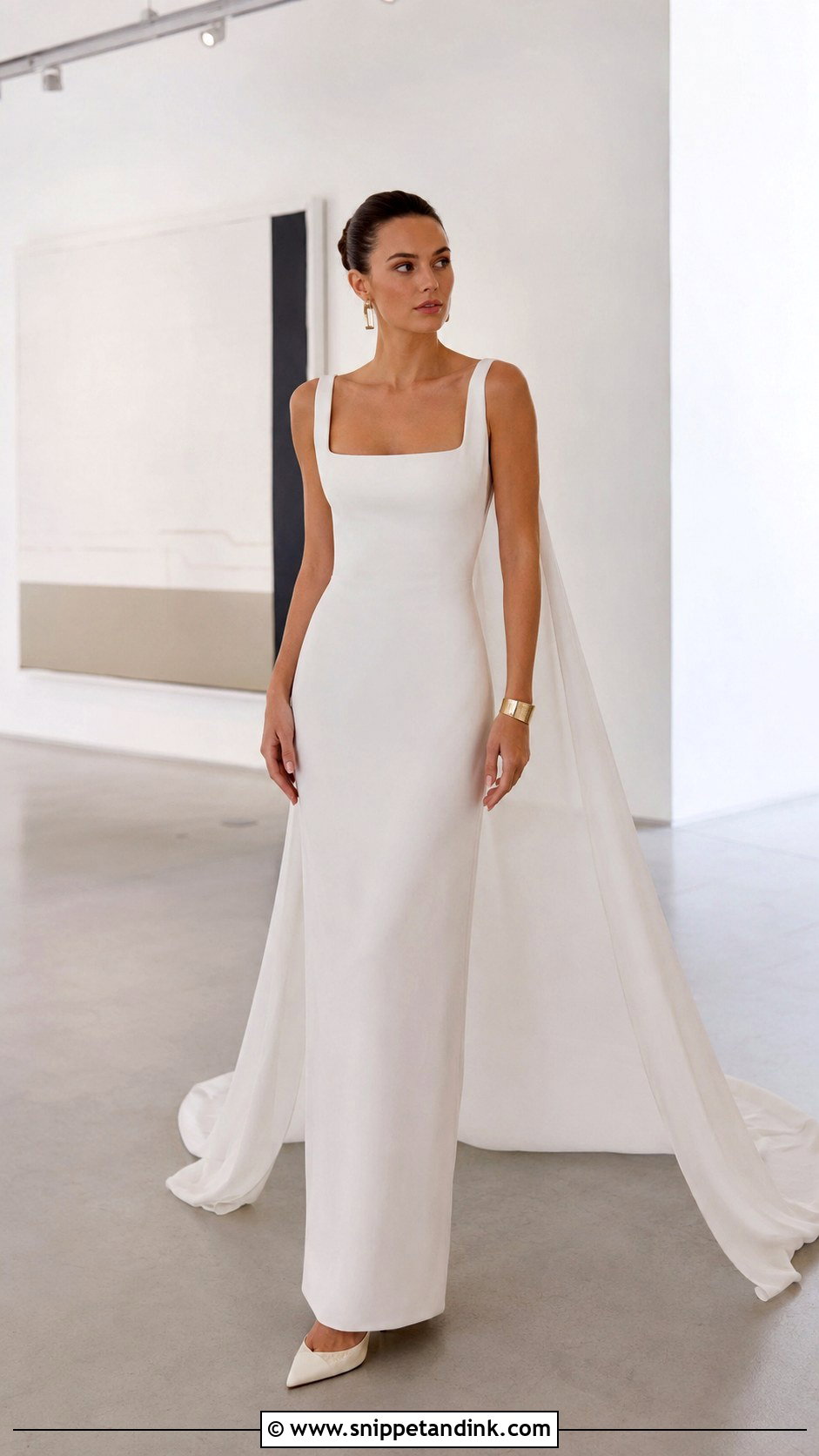
Columns read modern in a gallery, rooftop or city venue, and a square neckline adds structure across the collarbone. Heavier crepe gives a smooth surface; satin brings sheen and a little more swing. The catch with a straight skirt is your stride. If there’s no slit or kick pleat, I have brides walk the length of the salon at their normal pace, because a column cut too narrow forces small steps all day. Pointed slingbacks, geometric earrings and a narrow cuff carry the clean lines. A sleek bun or tucked bob keeps the neckline clear, and a long plain veil or detachable back cape adds ceremony presence. A wrist loop handles a short train after dinner.
9. Off-the-Shoulder Bridal Gown
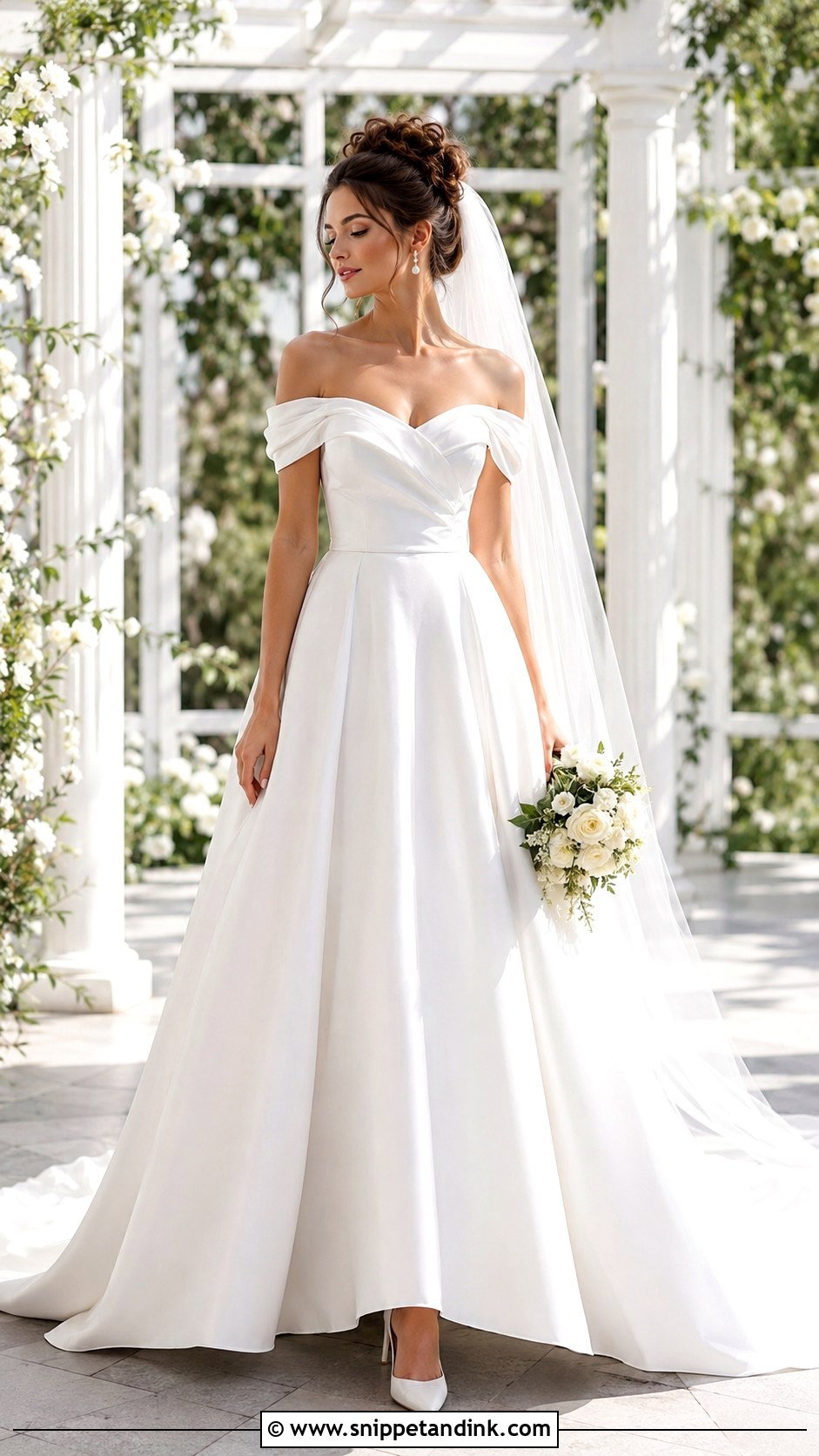
Off-the-shoulder sleeves frame the neckline, but they restrict your arms more than almost any other detail. Raise them, sit down, hug your mother. If the sleeves slide up or dig in, the band needs adjusting, or the sleeves should be detachable so they come off before dancing. Choose the base by how much structure you want, from A-line to ball gown. Satin sleeves look polished; gathered tulle or lace looks lighter. A short pendant, pearl earrings and heeled sandals suit the shape, with a low textured bun so hair doesn’t spill over the shoulders. Pin a chapel veil beneath the bun for one continuous line.
10. High-Neck Minimalist Bridal Gown
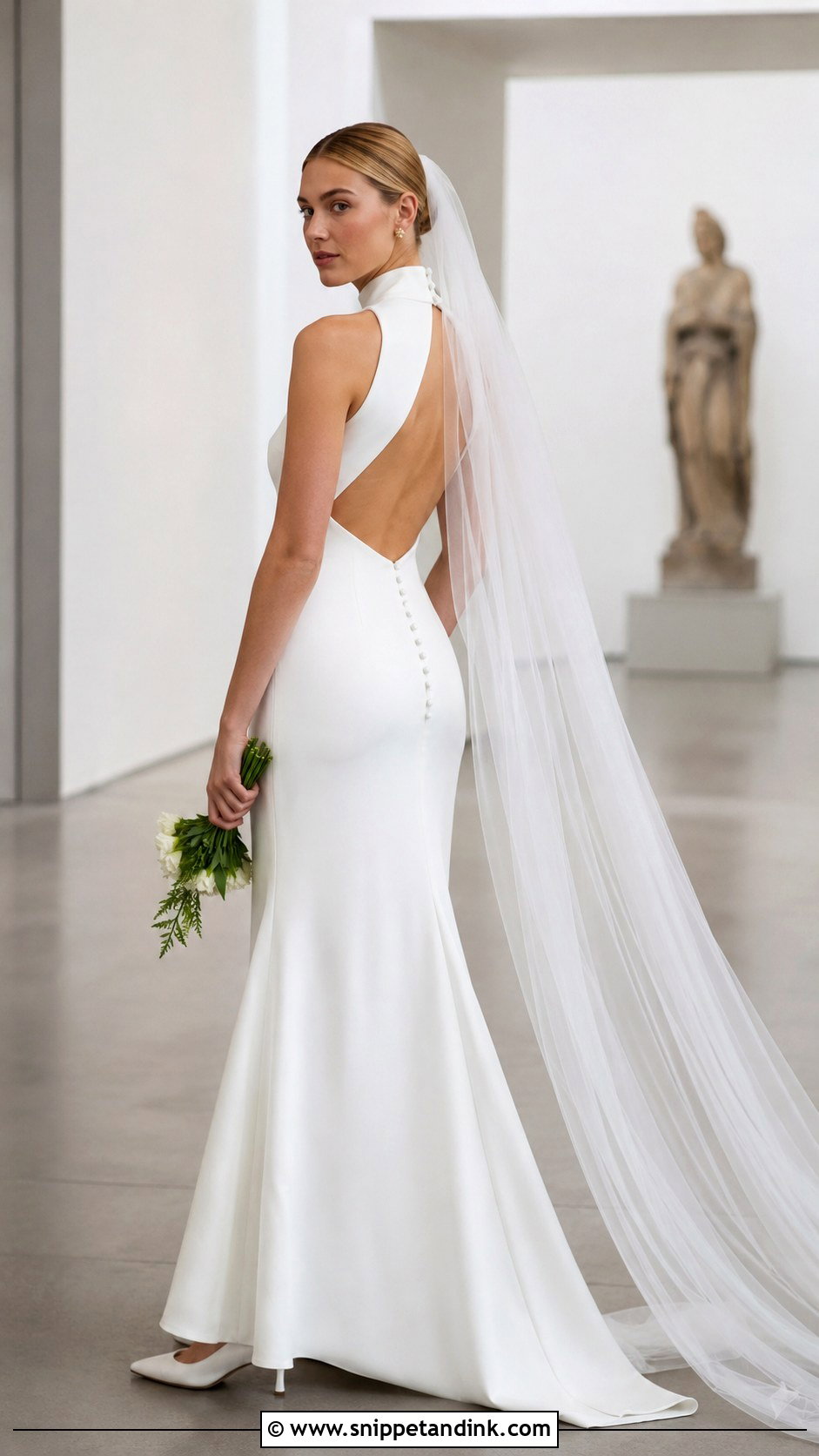
Can a high neckline feel modest and modern at once? In matte crepe or smooth satin, yes. Choose a column or gently flared shape with clean seams, a defined waist and an open or buttoned back for contrast. Sleek pumps, metallic studs and a structured clutch suit it better than ornate jewelry, and a middle-parted bun keeps the collar clear. The collar is where I spend the fitting. Sit down, turn your head fully both ways and look down at your bouquet; if the neckline presses on your throat, it will feel worse after hours of photos. With so little decoration, fabric quality and precise tailoring carry the whole gown.
11. Tea-Length Bridal Dress
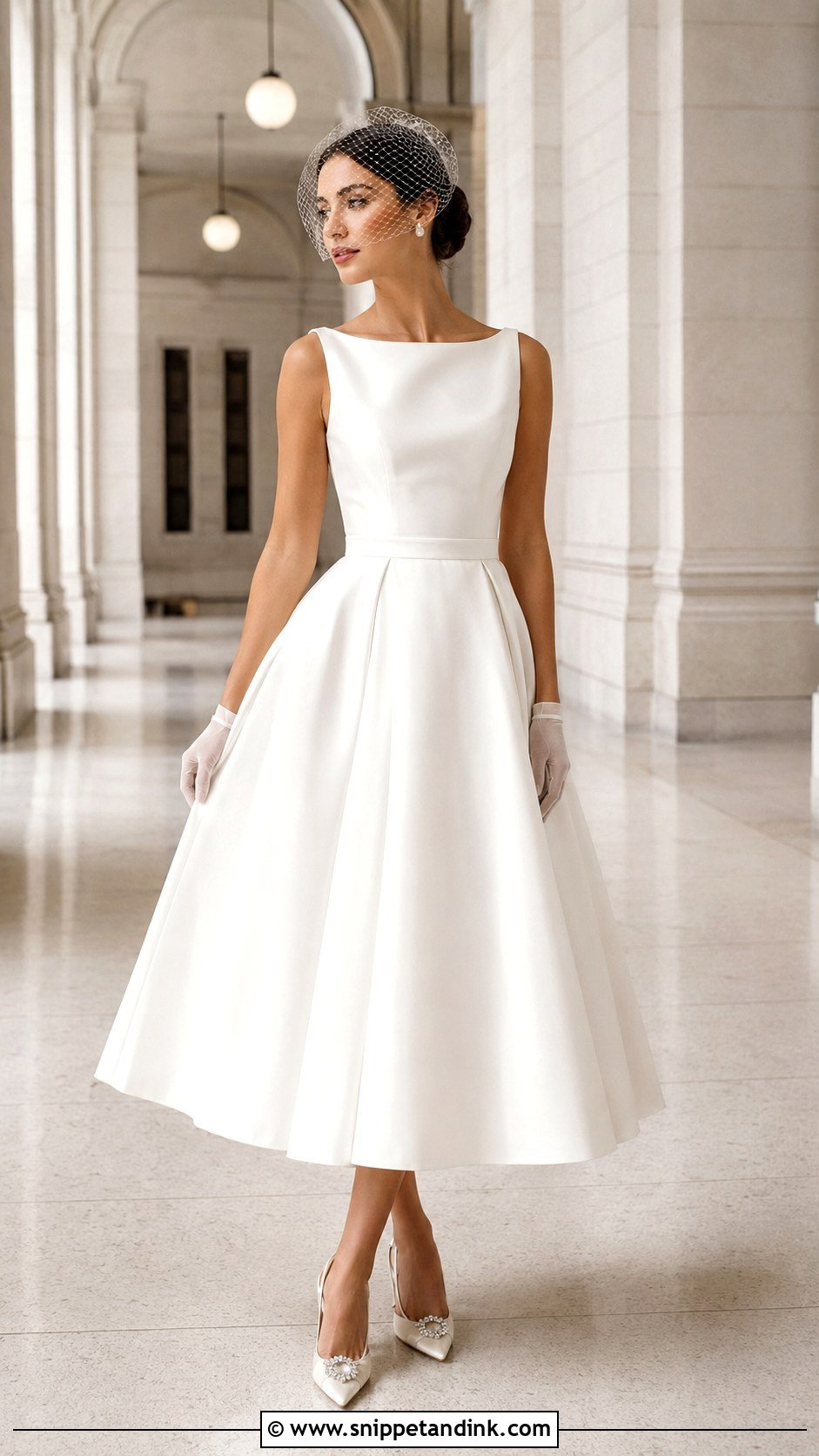
Tea length falls between knee and ankle, which makes it easy for courthouse ceremonies, garden receptions and daytime weddings. A fitted bodice with a softly full skirt keeps it classic and puts your shoes on show, so choose a pair you can stand in: pointed pumps, embellished slingbacks or block heels. Short gloves, pearl studs and a birdcage veil lean vintage without tipping into costume, while plain satin and a small structured bag make it modern. The hem is everything here. I mark it at the narrowest part of the lower leg, because ending at the widest part of the calf visually shortens the leg. A smooth bun or a neat bob finishes it.
12. Mini Bridal Dress With Veil
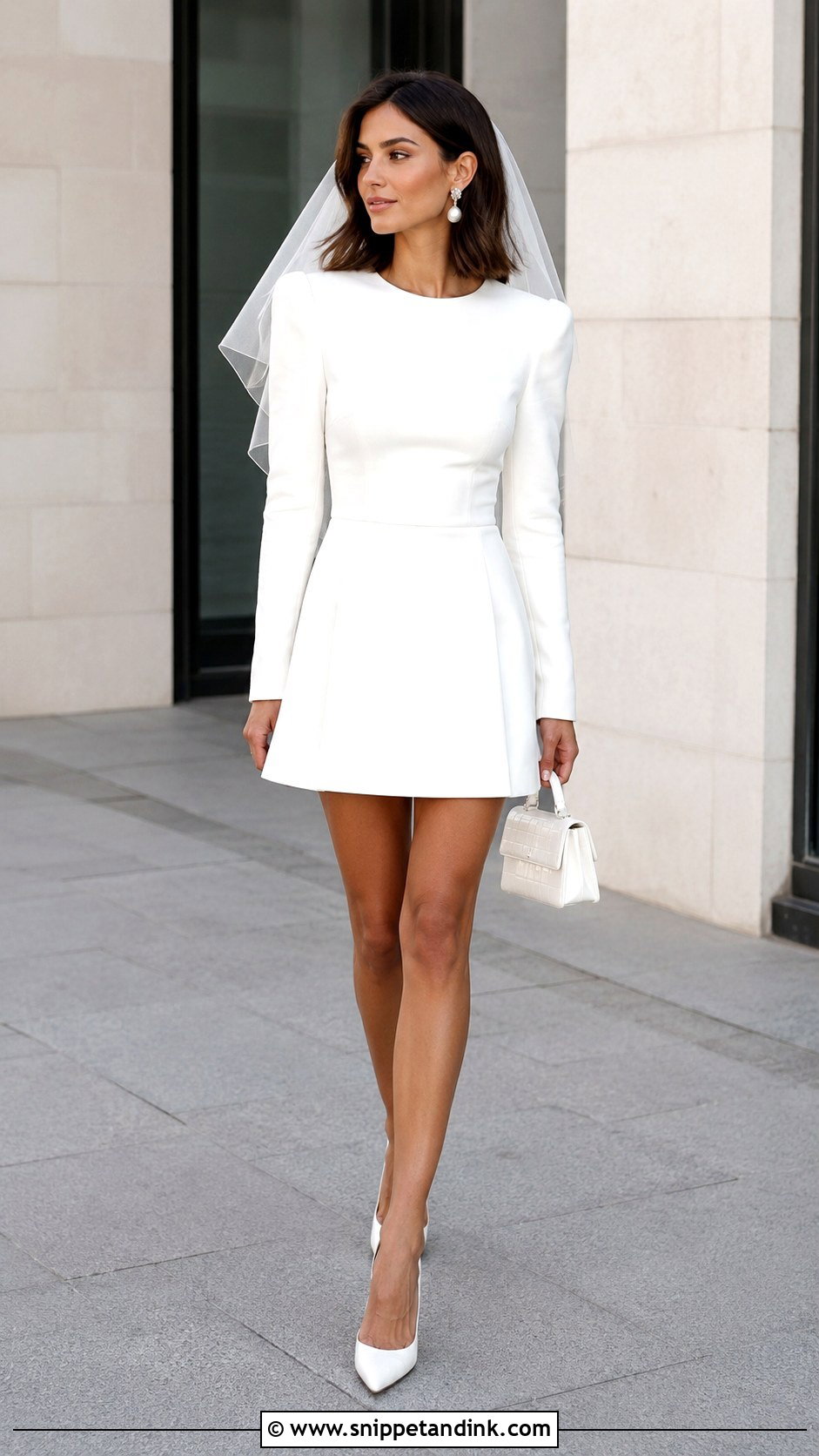
A white mini suits a civil ceremony, a reception change or a wedding weekend party, and the veil is what makes it read as bridal instead of a white cocktail dress. Fingertip or shoulder length both sit well with a short hem. Give the dress structure: a tailored shift, a long-sleeve A-line or a corseted mini with a modest neckline. Shoes depend on the floor, from pointed pumps to block-heel sandals or dressy flats. One check worth doing is sitting in front of a mirror at the fitting, since a mini rides up noticeably when seated and you’ll sit through dinner and toasts. Built-in shorts help on the dance floor. Statement earrings and a small top-handle bag are plenty, with a polished ponytail to finish.
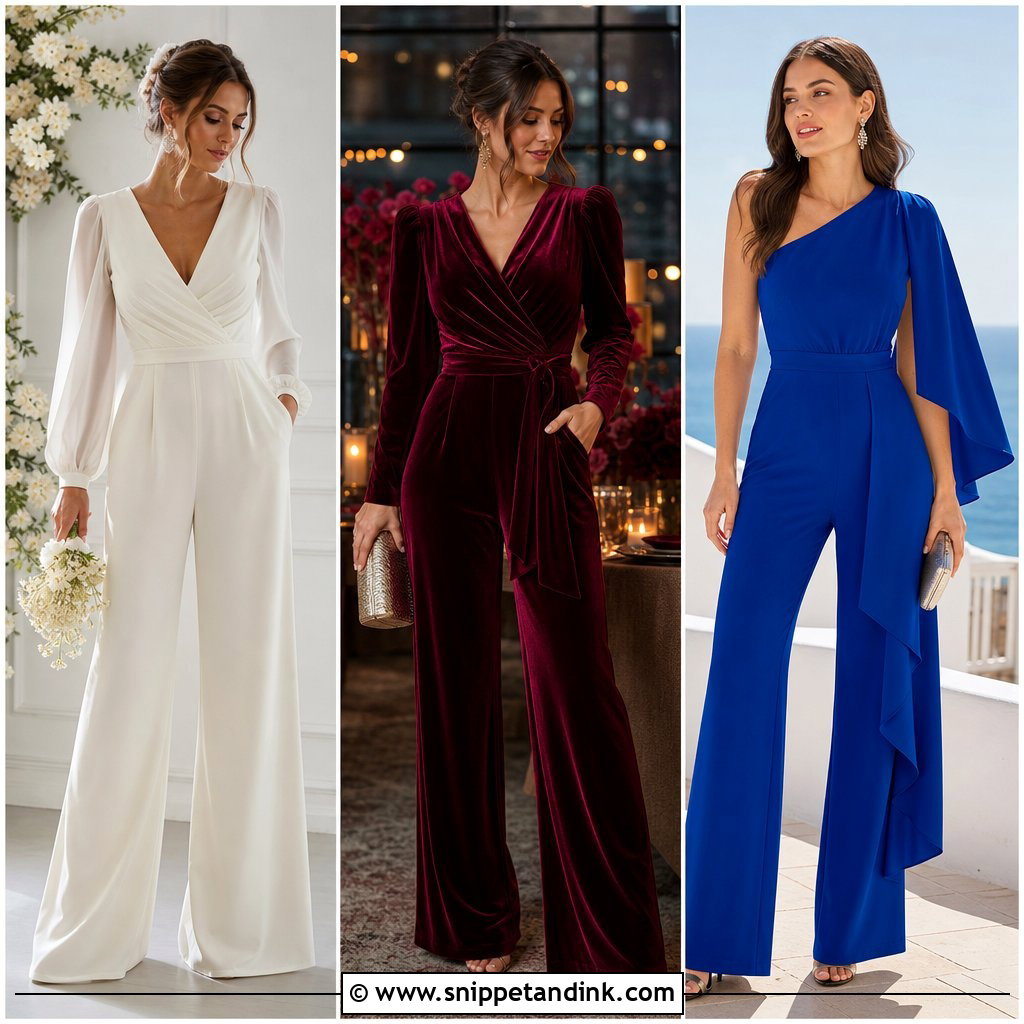
13. Bridal Jumpsuit With Cape
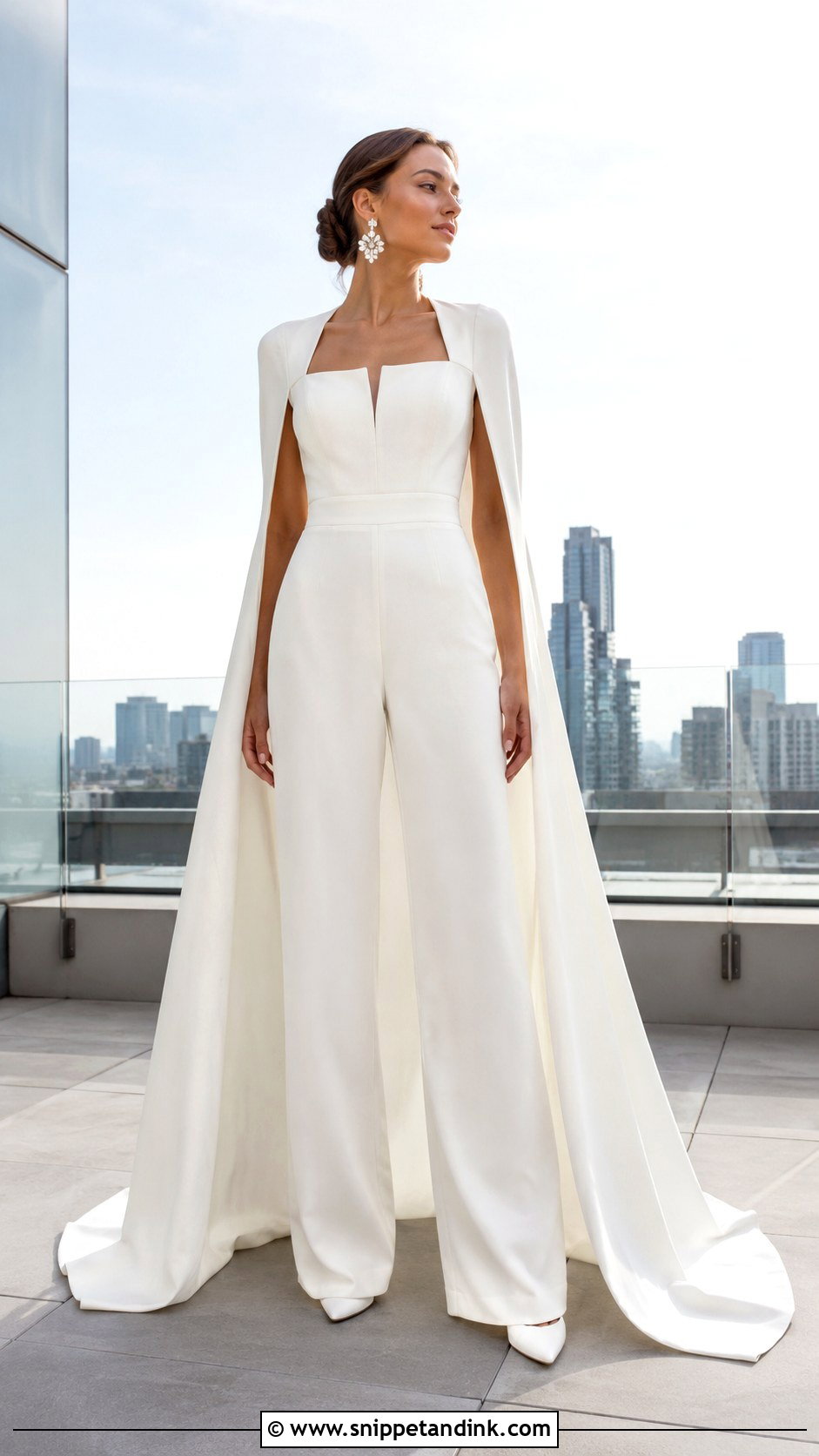
A bridal jumpsuit gives you sharp tailoring in one piece, with a defined waist, a supportive bodice and wide or straight legs that break cleanly over your shoes. Crepe is matte and quiet; satin is fluid and more evening. A detachable floor-length cape adds ceremony drama and comes off for the reception. Pointed pumps, sculptural earrings and a slim clutch keep it uncluttered. Settle your shoe height before the first fitting, since every trouser hem depends on it. Then do the less romantic check: how long it takes to get out of for the restroom. A back zip you can’t reach alone means a bridesmaid on standby all night.
14. White Bridal Pantsuit
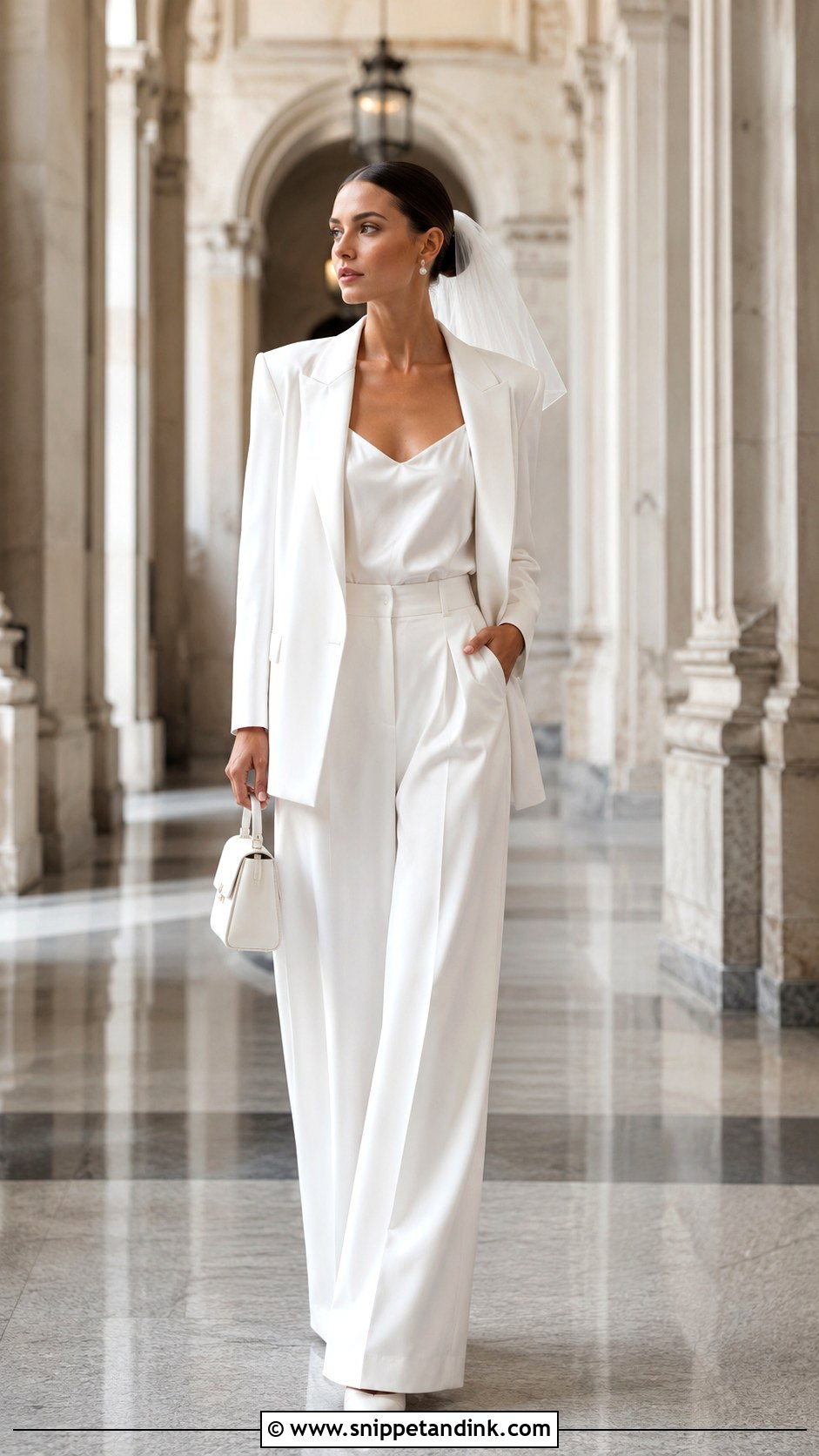
A white bridal pantsuit is comfortable and sharp, and it adapts from city hall to a black-tie evening. Choose a fitted or softly oversized blazer over high-waisted trousers, with a silk camisole, corset top or buttoned vest underneath. Wide legs look dramatic; cigarette trousers look neater. Pointed heels, pearl studs and a small structured bag finish it, and a short veil or sleek hair bow makes it clearly a wedding outfit. Have the trousers hemmed in your final shoes and the sleeves cut to show a little wrist. Compare every white piece in daylight before you buy. A bright white blazer beside an ivory camisole looks like a mistake once it’s photographed.
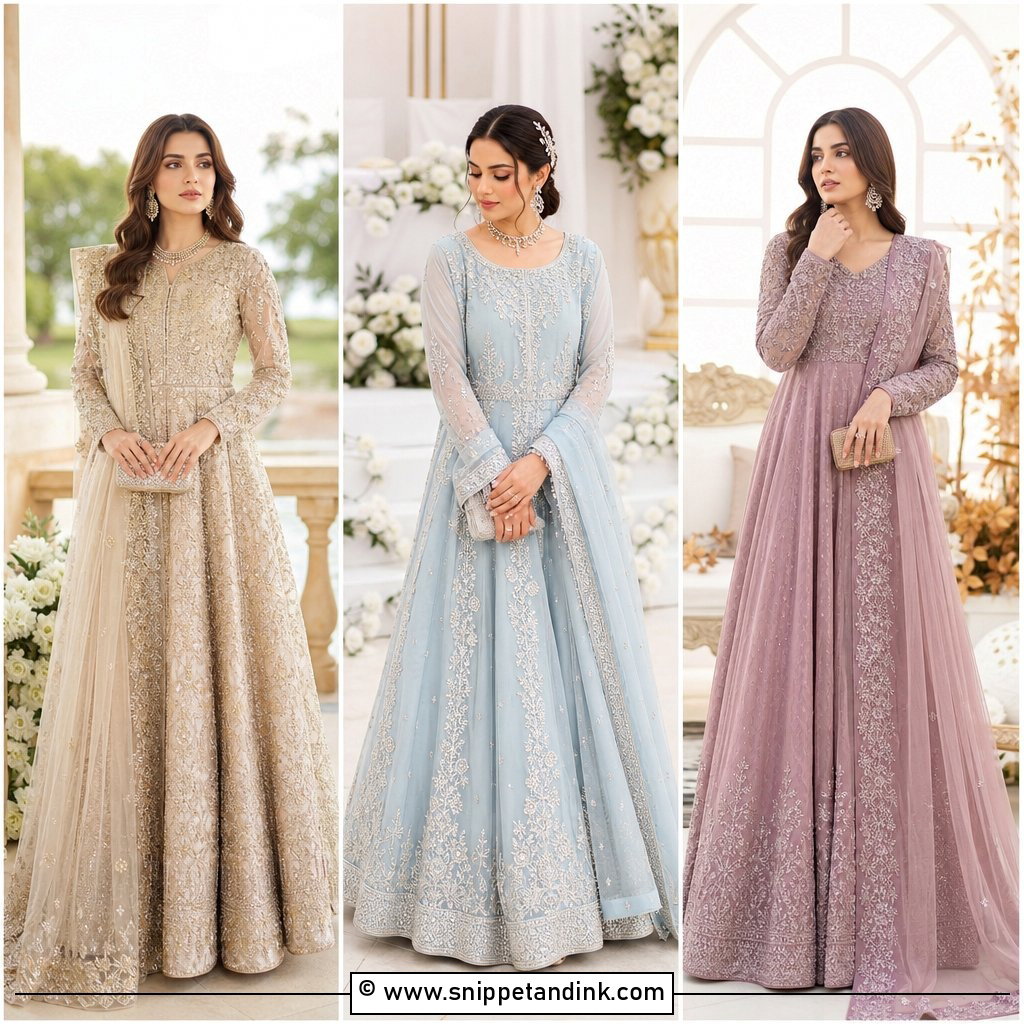
15. Two-Piece Bridal Skirt Set
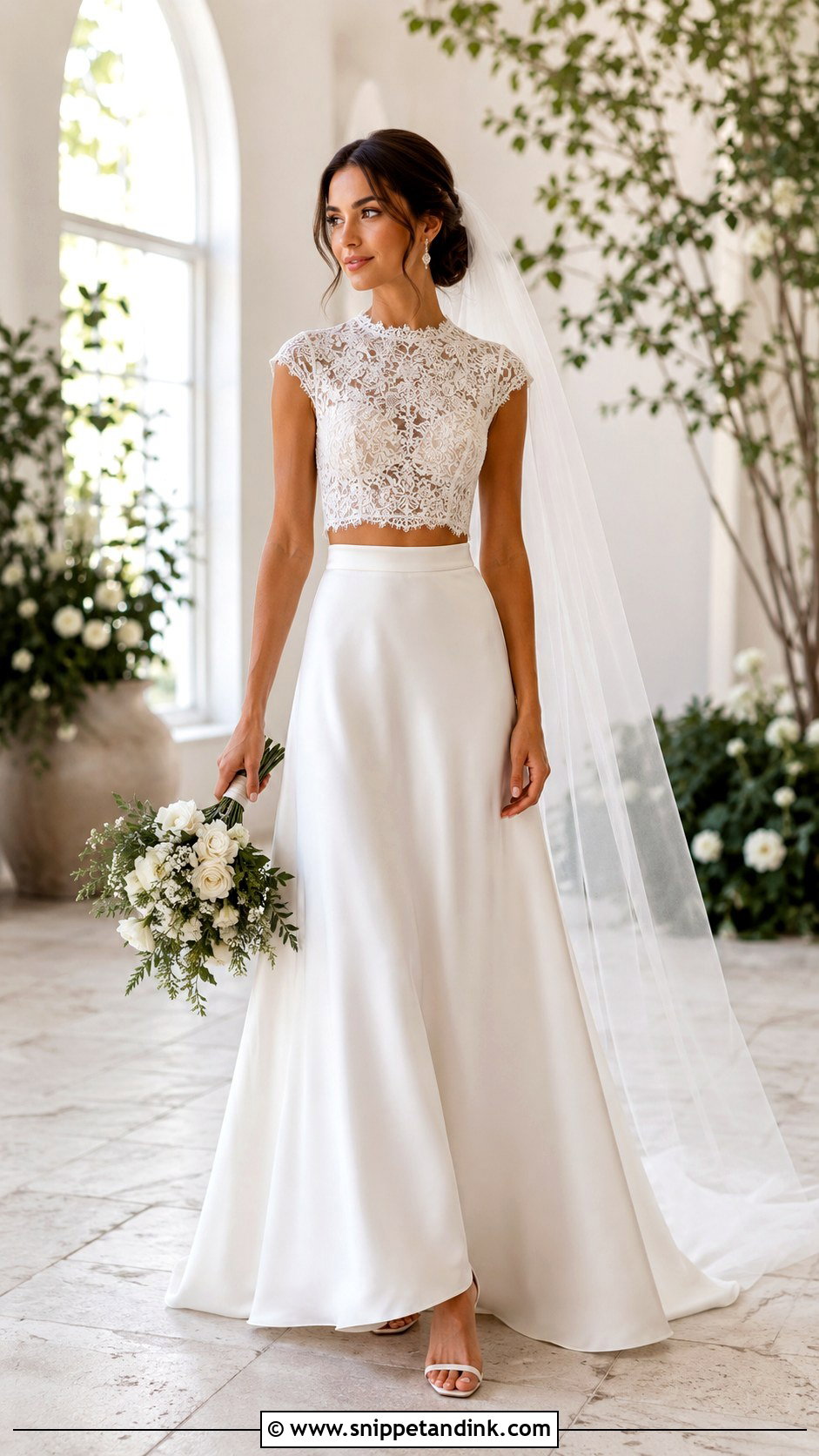
Separates let you mix texture and coverage, and they’re the easiest bridal outfit to alter or rewear later. Pair a fitted lace or satin top with a high-waisted A-line skirt so only a narrow strip of skin shows, or choose pieces that meet completely at the waist. Balance works by contrast: a plain satin skirt under an embellished top, a lace skirt under a simple one. Slim heels, delicate earrings and a plain chapel veil suit both versions. Waves keep it relaxed, and a bun makes it formal. The problem I see most is the top riding up when the bride lifts her arms, so ask your tailor for hidden hooks or a grip band that keeps both pieces aligned all day.
16. Boho Chiffon Bridal Gown
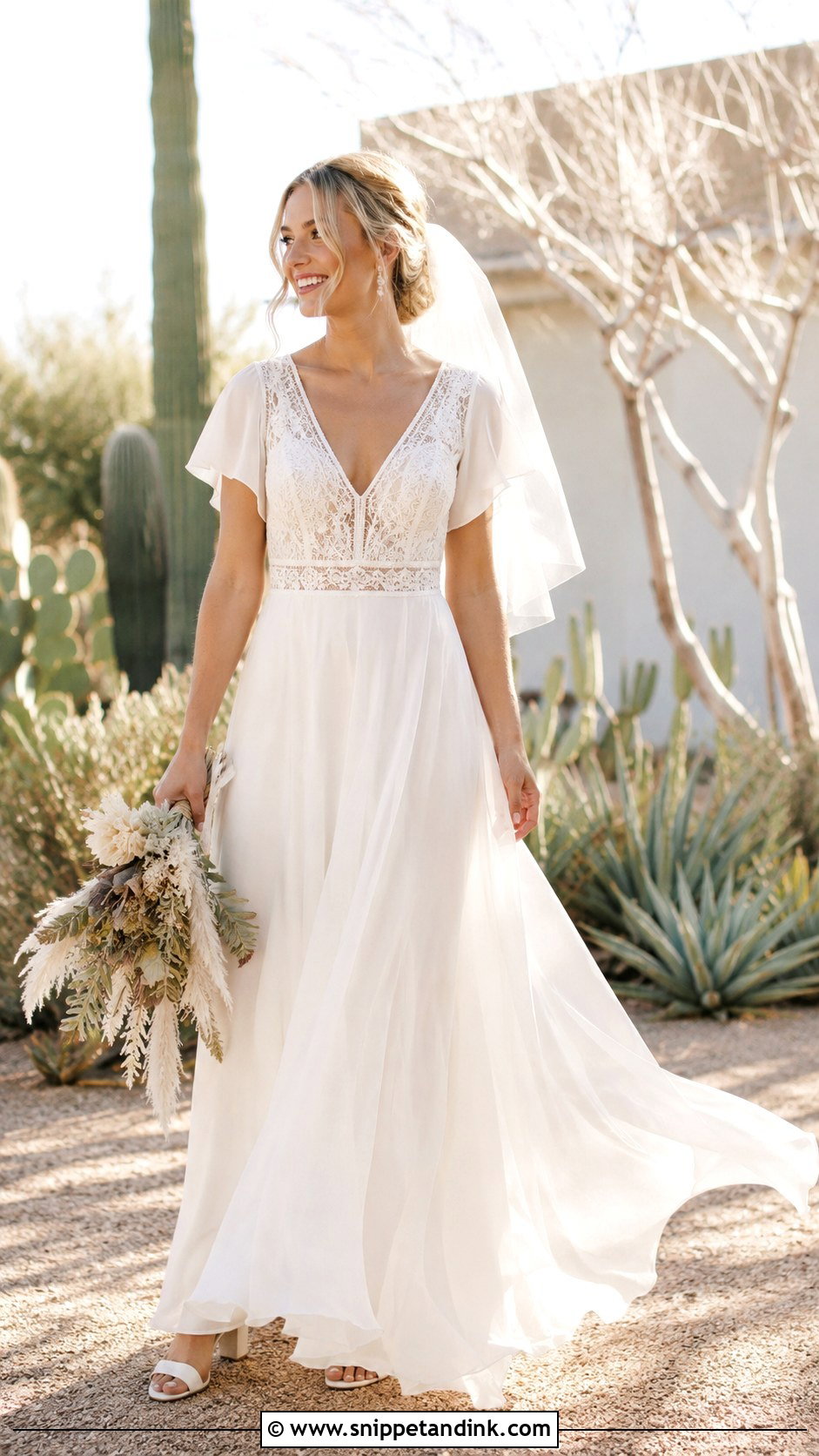
Chiffon is the fabric I suggest most for a relaxed outdoor wedding, because it moves without heavy structure. Pick a loose A-line or empire shape with lace panels, flutter sleeves or a gathered skirt. It suits outdoor, desert, woodland, and coastal settings, though wind will catch it, so plan a veil that can be anchored firmly. Choose low block heels, dressy flats or clean ankle boots for the ground, then add a light veil, delicate drop earrings and a loose braided updo. Keep fringe and extras minimal. Chiffon can turn sheer in sunlight, so check the lining by a window rather than under salon lights. A hidden bustle and a reinforced hem will save it on grass and sand.
17. Drop-Waist Bridal Dress
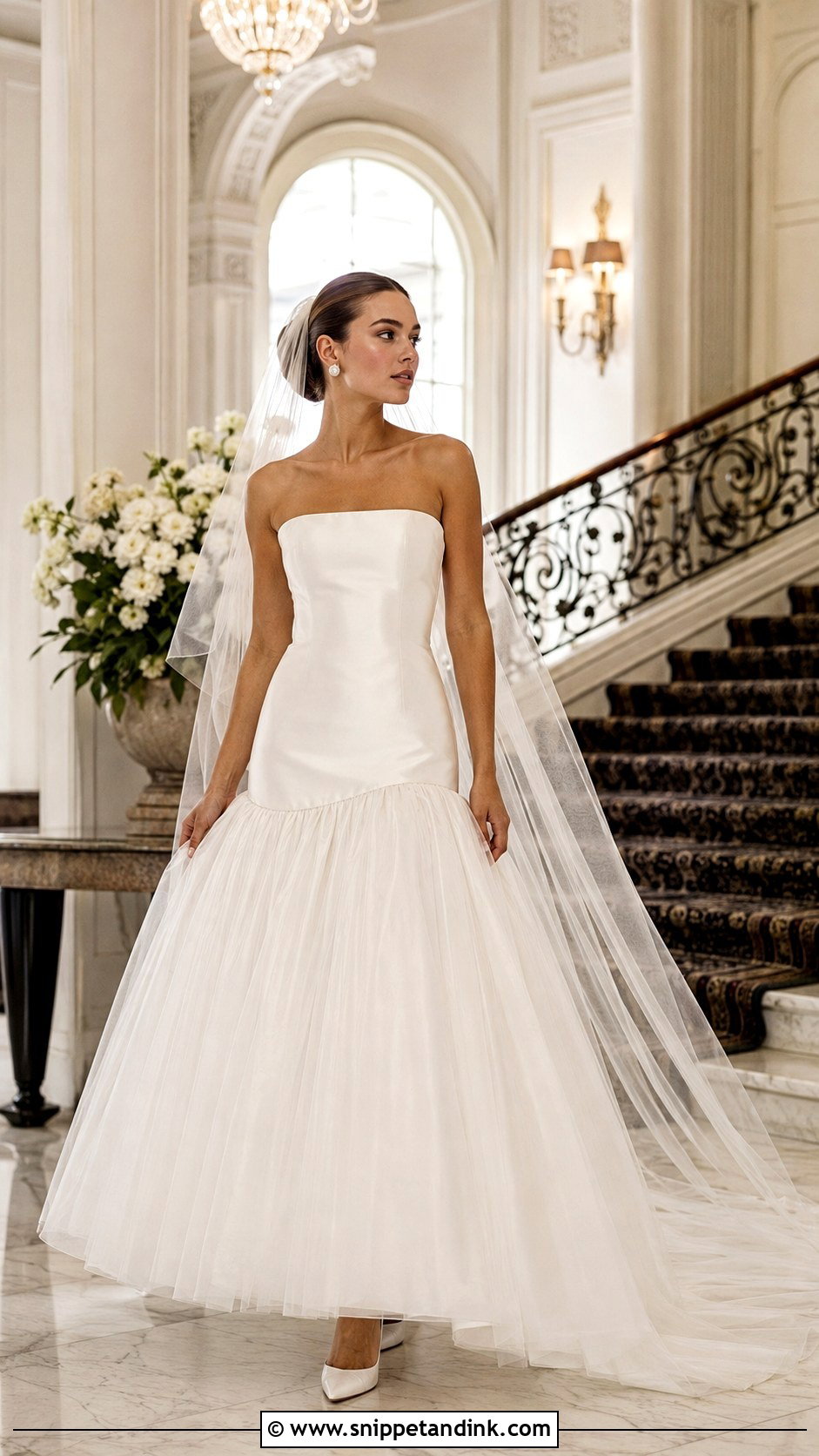
A drop waist runs the fitted bodice past the natural waist toward the hip before the skirt opens, giving a fashion-led shape with a hint of vintage. It suits a longer torso best. On a short torso the skirt can start too low and make the legs look shorter, which is worth seeing in a full mirror before you commit. Structured satin keeps the line crisp; layered tulle softens it. A straight, scoop or strapless neckline keeps the unusual waist easy to read. Pointed pumps, bold studs and a long sheer veil complete it. Plan detailed fittings so the bodice hugs your torso without stopping you from sitting or bending.
18. Floral Appliqué Bridal Gown
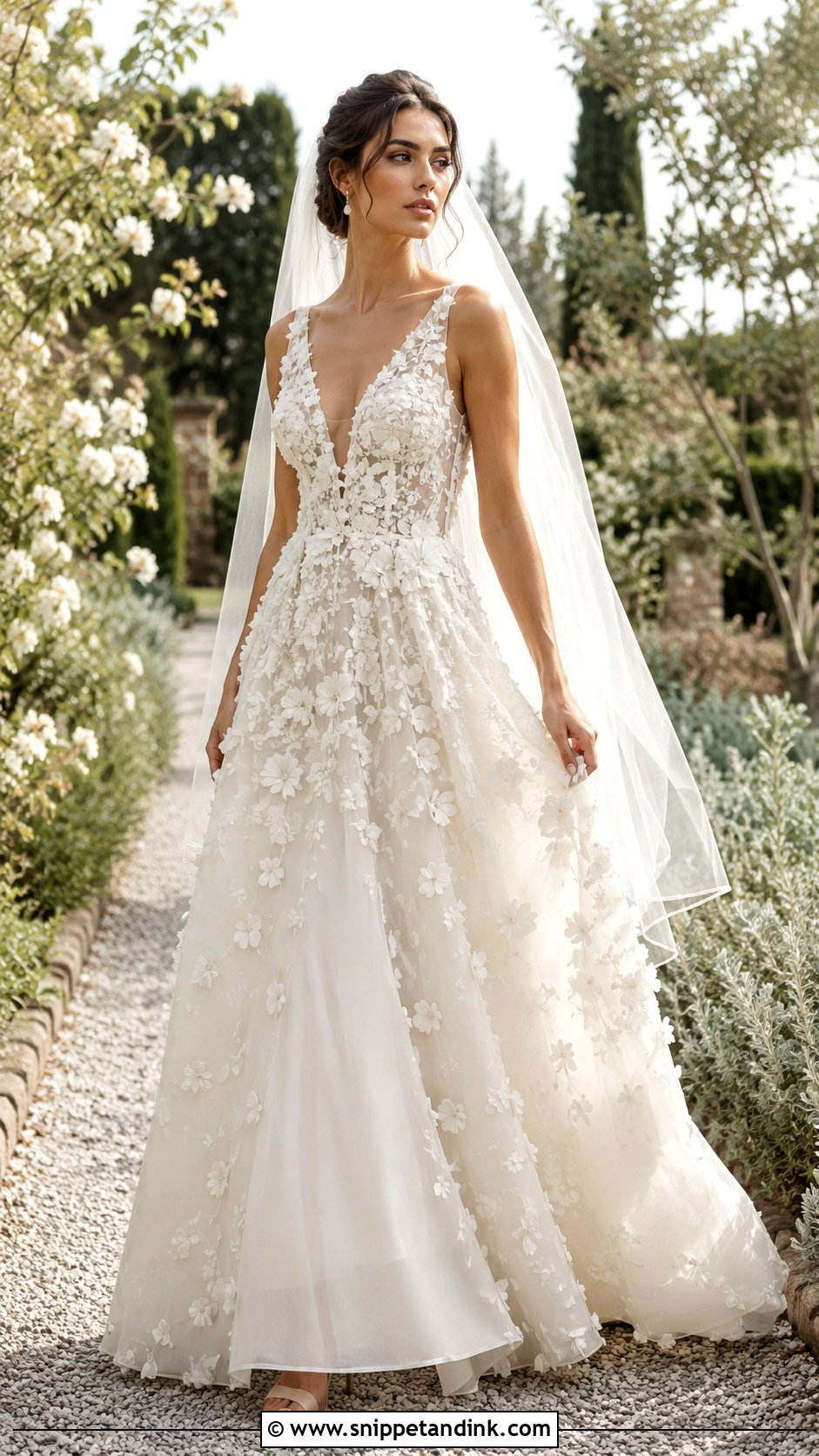
Raised flowers can turn a plain A-line, column or fit-and-flare into something romantic and textured. Concentrated on the bodice they create a clear focal point, while trailing onto the skirt they feel more like a garden. Pair the gown with neutral heels, small pearl earrings and a plain veil, because a lace-edged veil fights the appliqués. A loose bun or smooth half-up style suits the organic design. Watch the underarms and inner arms. Stiff embroidered edges and beading there can scratch skin by the end of the evening, and a seamstress can move or soften a few motifs. Keep the bouquet restrained so it doesn’t hide the detail.
19. High-Low Bridal Dress
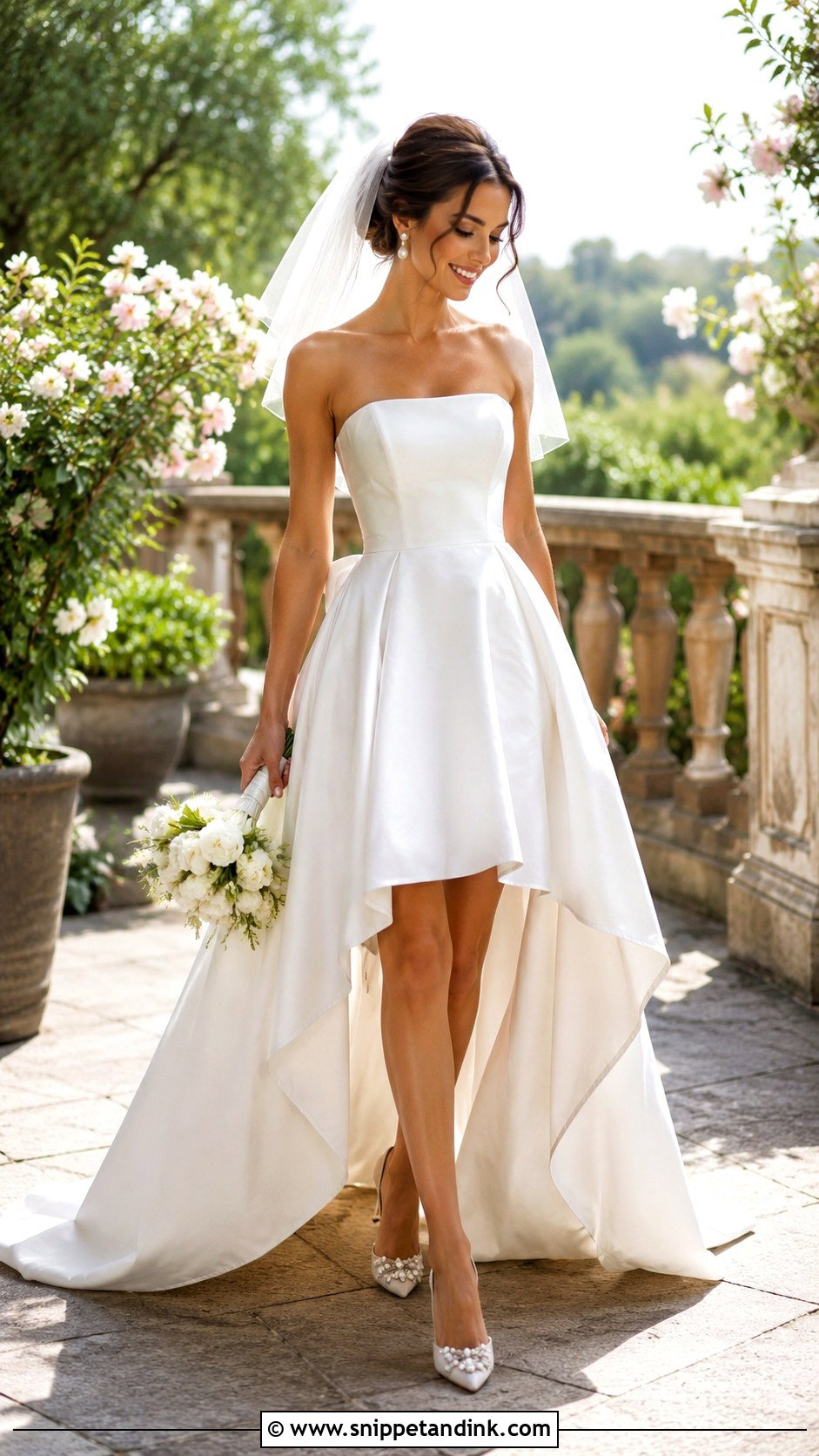
A high-low hem is shorter in front and long at the back, so your shoes become part of the outfit. Embellished pumps, sandals or a colored heel tied to one other accessory all work. Satin looks polished, and layered tulle feels lighter. Keep the bodice simple to balance the uneven hem, then add pearl earrings, a short veil and a compact bouquet. Front length is the judgment call. Too short and it reads as a cocktail dress; too long and your toe catches it on stairs. Somewhere between the knee and mid-calf tends to look deliberate, but have the bride walk, turn, sit and take stairs before the final fitting either way.
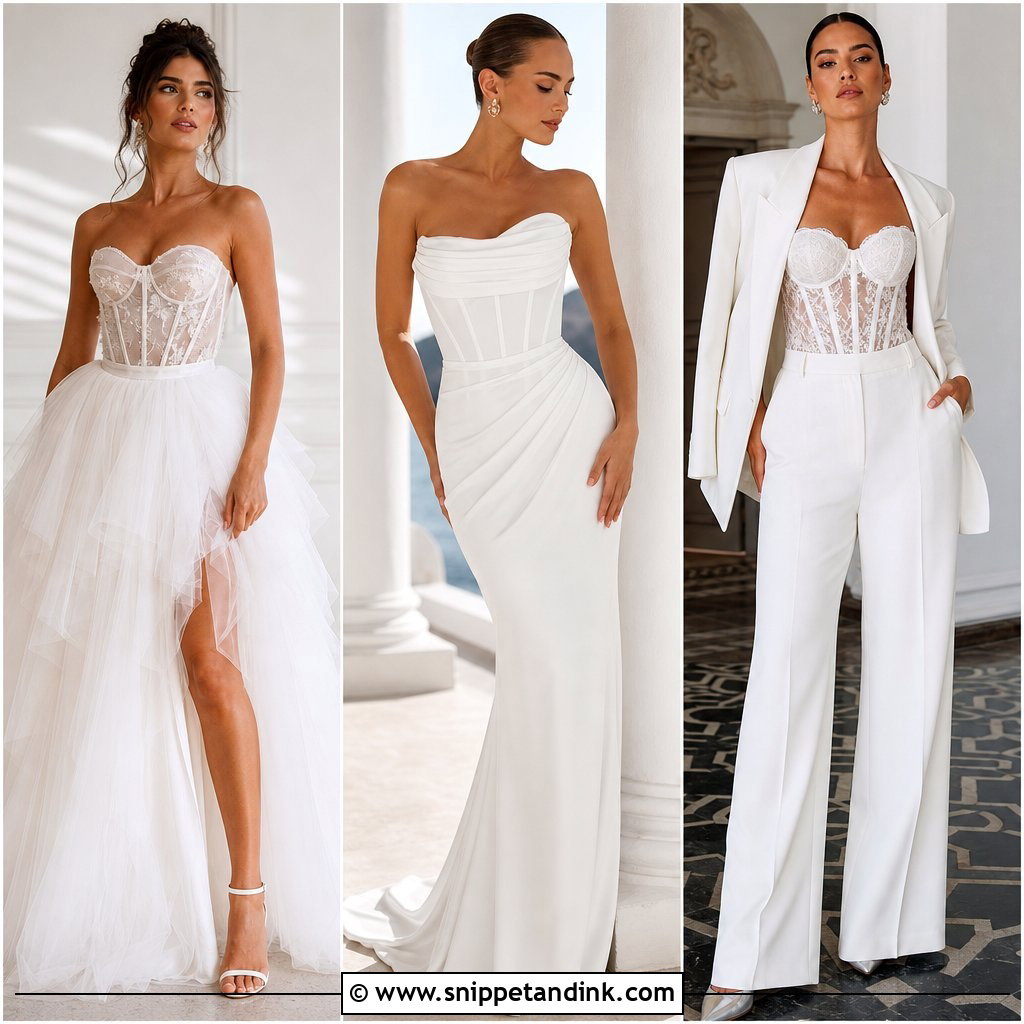

20. Convertible Bridal Gown With Overskirt
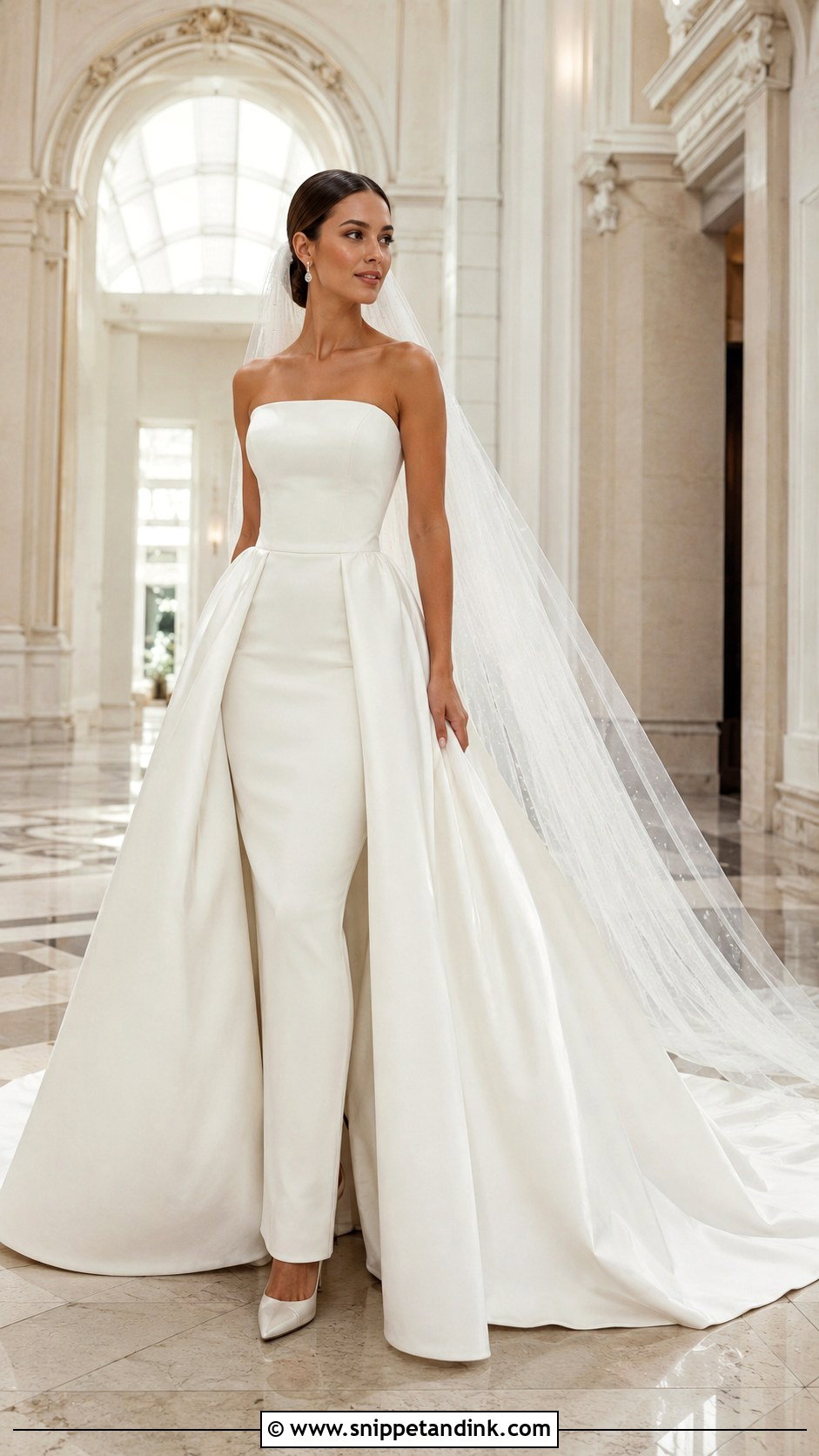
A convertible gown gives you two looks without buying a second dress. Start with a fitted column, mini or fit-and-flare, then add a full satin or tulle overskirt for the ceremony, with the volume and train that come with it. Take it off for the reception and you’re in something you can dance in. A long veil, classic heels and understated earrings suit the first look; statement earrings or embellished flats suit the second. The waistband is the weak point. It has to fasten securely and lie flat from the front, sides and back, so I check it from every angle under bright light. Practice the change with whoever will help you, because doing it for the first time in a venue restroom is stressful.
How Crepe, Satin, Lace and Chiffon Look by the Last Dance
Each fabric changes through a long day in its own way, and it helps to know what you’re signing up for before the deposit.
- Crepe barely creases and hides light wear, but it shows every undergarment line and any dampness at the underarms.
- Satin holds structure and sheen. Seated creases across the lap show up in evening photos, and heavy satin traps heat.
- Lace forgives creasing and small marks. Its risk is snagging on bracelets, bouquet wire and rough walls.
- Chiffon and tulle stay light and cool, but hems pick up dirt and grass quickly, and tulle can tear when someone steps on it.
- Silk drapes fluidly, yet water spots and car-ride creases are hard to hide.
Have the gown steamed close to the date and pack a handheld steamer for a morning touch-up. If your fabric creases easily, ask the photographer to take full-length portraits early, before the long sit-down dinner.
Bustles and the Hem Conversation at Your Final Fitting
Any gown with a train needs a bustle, and the type matters. An over bustle hooks the train up onto the back of the skirt. An under, or French, bustle tucks it beneath with ribbon ties. A ballroom bustle lifts it evenly all around so the skirt looks floor-length. Heavy satin and delicate lace favor different methods, and your seamstress will tell you what the fabric allows.
Bring whoever will do it on the day to that last fitting. Numbered, color-coded ribbons take minutes. Ribbons nobody has seen before can take twenty, with the bride standing in a hallway while the band starts.
Bring the Shoes, Sit Down, Then Decide
No gown is right just because it’s new or dramatic. It has to support your body, suit the venue and let you move from the first photo to the last dance. Save a handful of silhouettes before you shop, then try at least one you’d have skipped, since brides are often surprised by a shape they doubted. Bring the shoes and undergarments you plan to wear, sit and walk in every contender, and set aside budget for alterations. Then pick the outfit that still looks like you, not a costume borrowed for one day.
You'll Like These Ideas:




Leave a Reply