
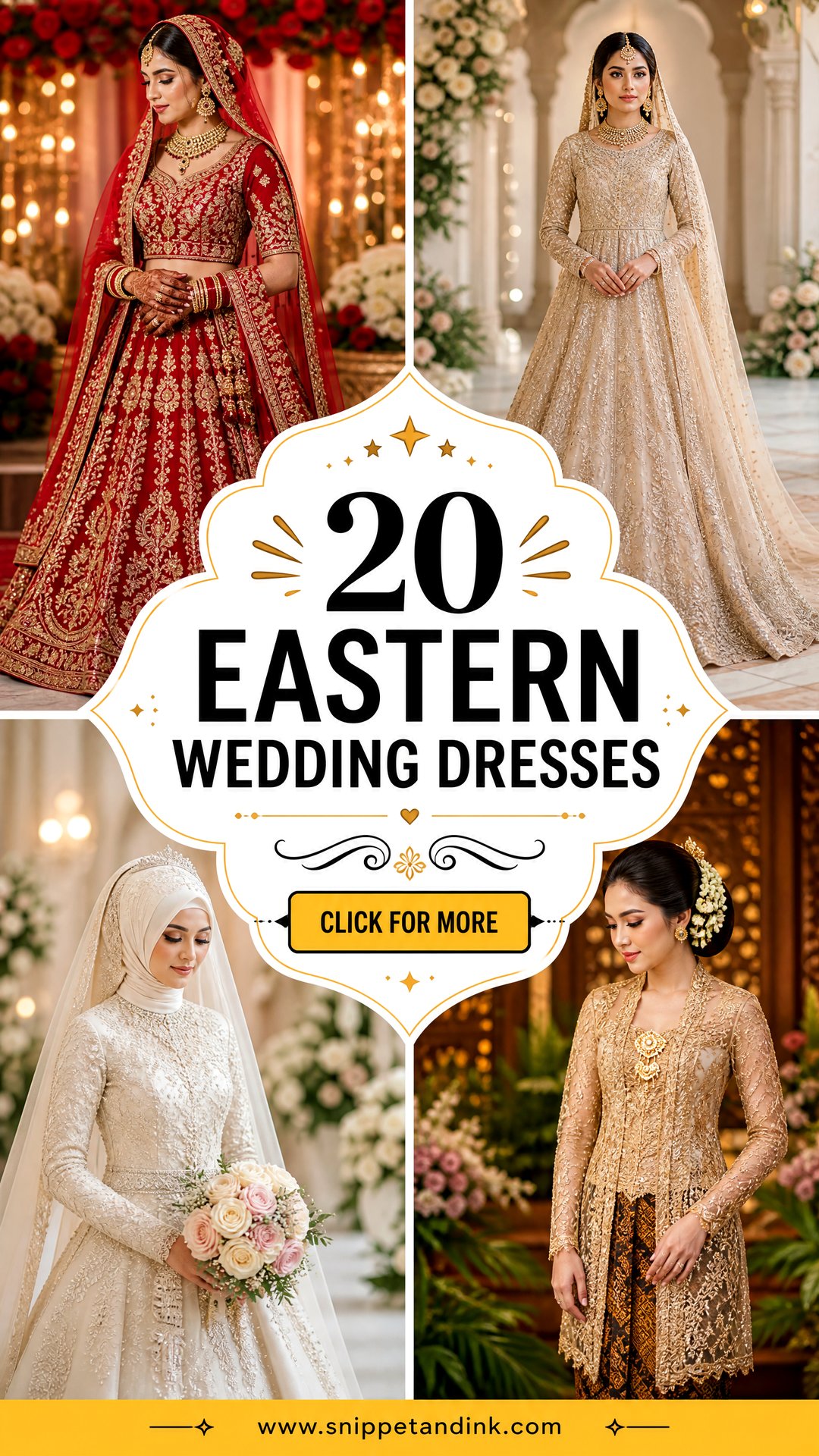
Bridalwear from South Asia, East and Southeast Asia and Middle Eastern traditions asks more of a stylist than a white gown does. There’s more color, heavier handwork, draping that has to be done in a particular order, and a set of customs behind almost every accessory. Below are twenty complete looks, from lehengas and sarees to the kaftan, qipao, hanbok and ao dai, each with the shoes, jewelry and head coverings I’d pair with it. The current direction I see at fittings is lighter construction and personal color choices that still keep the ceremony’s weight. One thing I say to every bride before we start: customs vary by region and by family, so the relatives and dressers who know your tradition get the final word on what’s worn and how.
The Weight of Zari, Beads and Silk Across a Long Ceremony
The first thing I check on any heavily worked bridal outfit is how much it weighs and where that weight sits. A fully embroidered lehenga, a beaded ball gown or a layered kimono can feel manageable for ten minutes in a showroom and exhausting after four hours of rituals. Brides almost never ask about weight, and it’s the complaint I hear most at the end of the night.
- Ask the designer to weigh the finished skirt. If it feels heavy on a hanger, it will feel heavier on your hips.
- Request a canvas or wide grosgrain waistband with a hook-and-bar closure; it spreads the load better than a drawstring.
- Embroidery concentrated at the hem and neckline is easier to carry than an all-over pattern.
- Plan seated rituals with a firm chair or cushion so the skirt can be spread out instead of bunched under you.
- For sarees and draped outfits, use more safety pins than you think you need, hidden on the inside, so the drape isn’t held by tension alone.
If you love an outfit that is genuinely heavy, keep it for the main ceremony and plan a lighter change for dancing and dinner. No one will think less of the first look because you changed.
1. Red Bridal Lehenga Wedding Dress
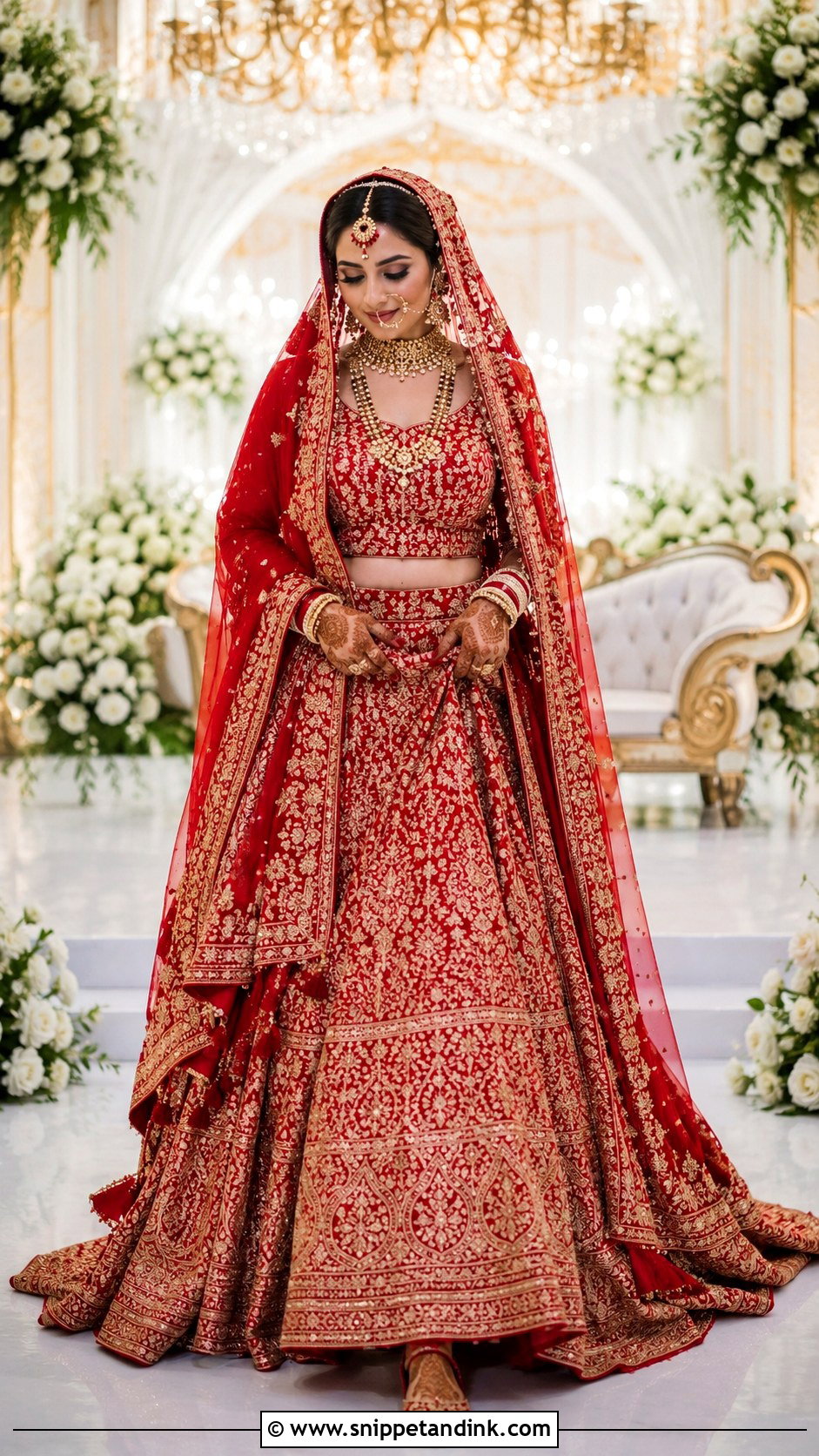
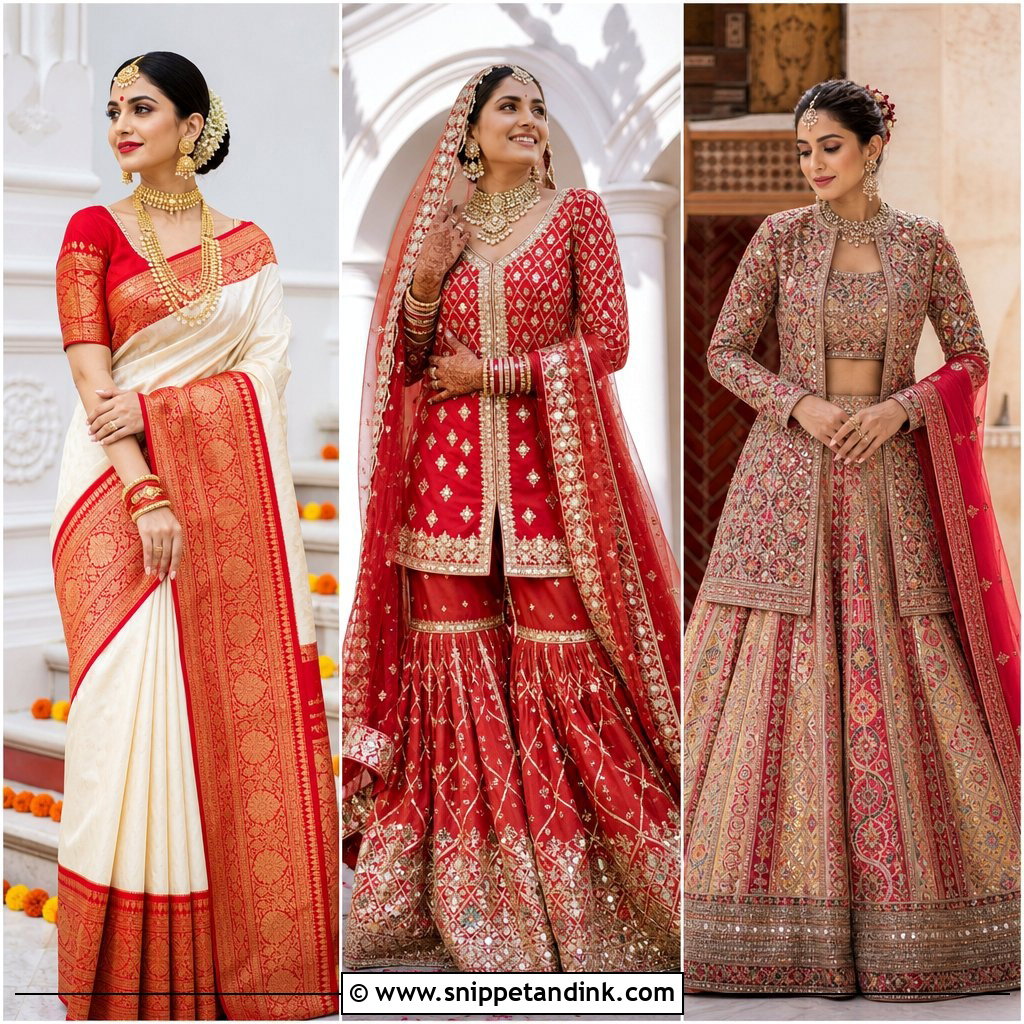
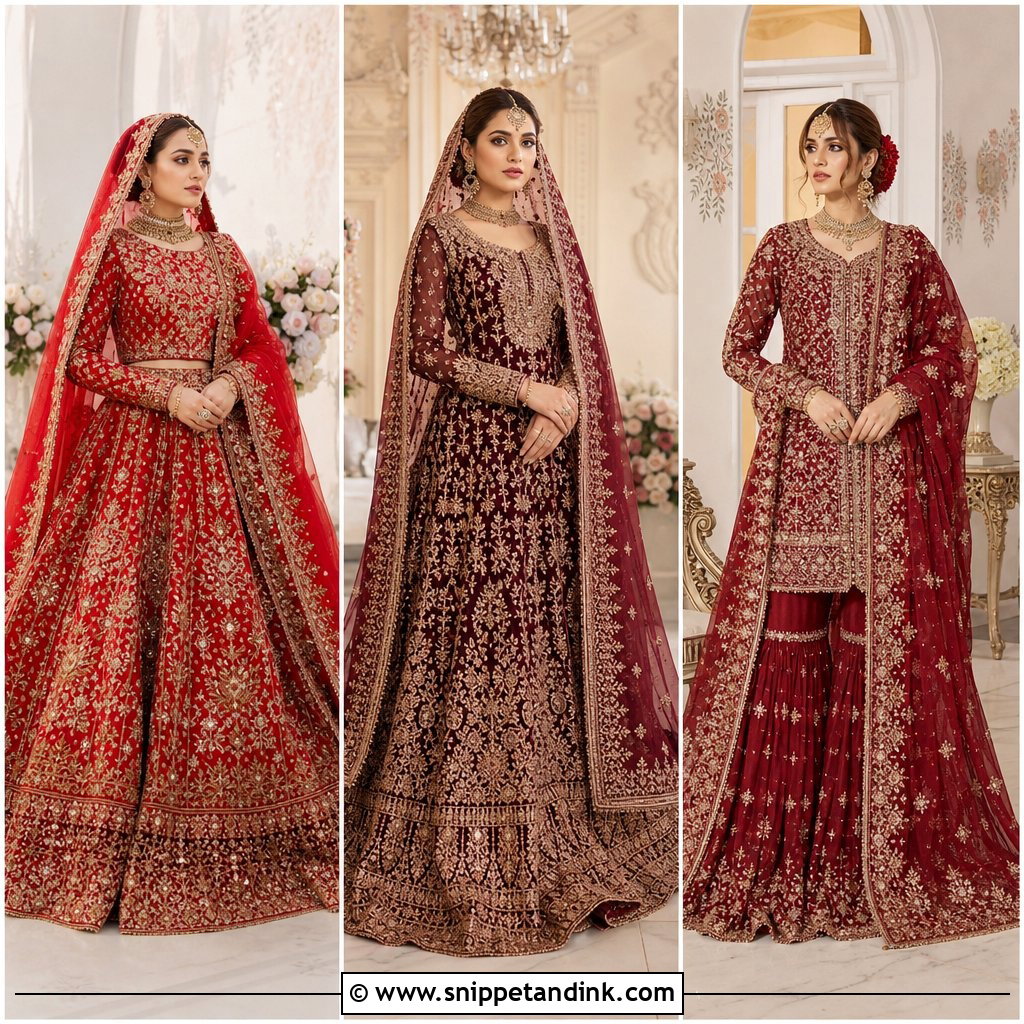
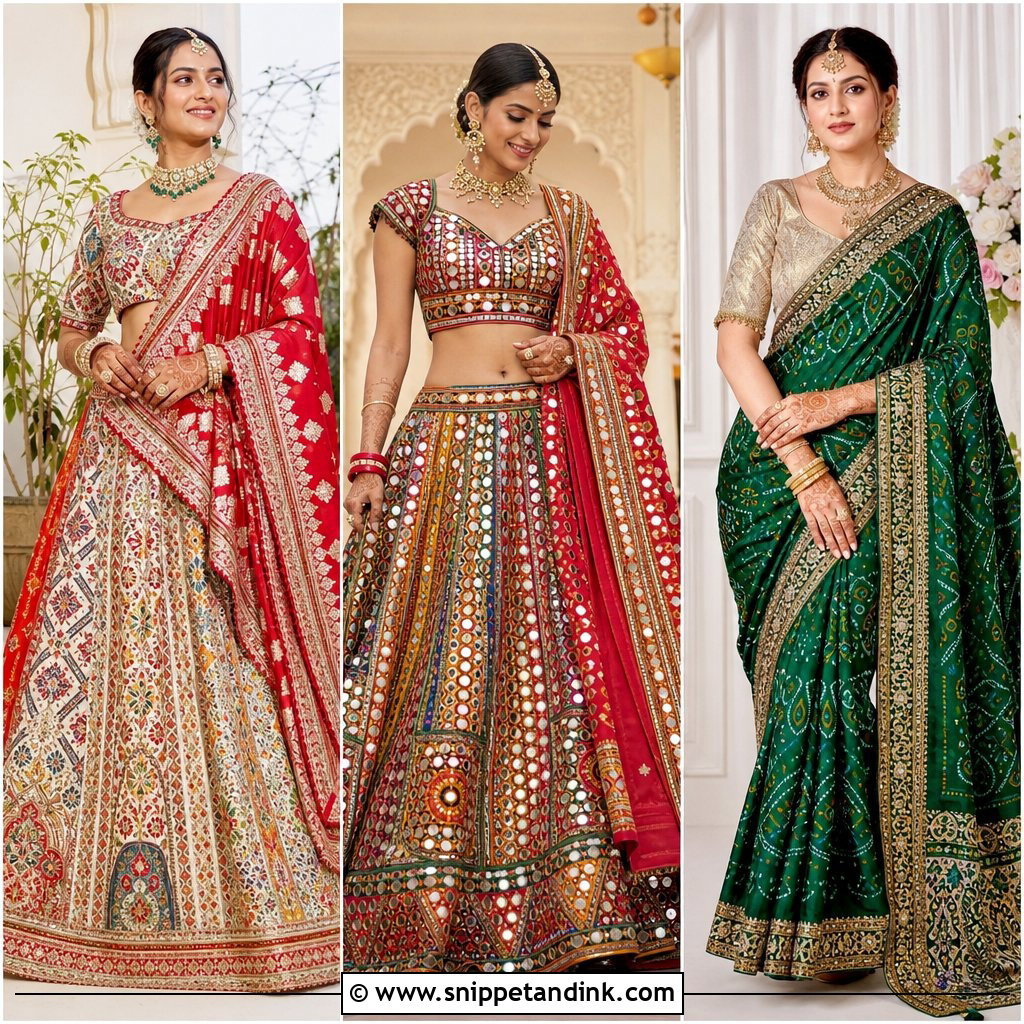
Red is still the color most South Asian families expect for the main ceremony, and a full lehenga skirt is where the embroidery budget goes: zari, sequins, beads or thread. Balance it with a fitted blouse that gives you the coverage you’re comfortable with, because a heavy skirt pulls the eye down and a skimpy top can look unfinished. I usually pin one dupatta over the head and across a shoulder, and use a lighter second one at the waist for a traditional South Asian wedding celebration. Choker, longer necklace, earrings, bangles and a maang tikka if your customs include it. Embroidered juttis are far kinder than narrow heels over a long ceremony. On makeup, pick a lip that works with the red of the fabric rather than a second, competing red.
2. Ivory Bridal Lehenga Wedding Dress
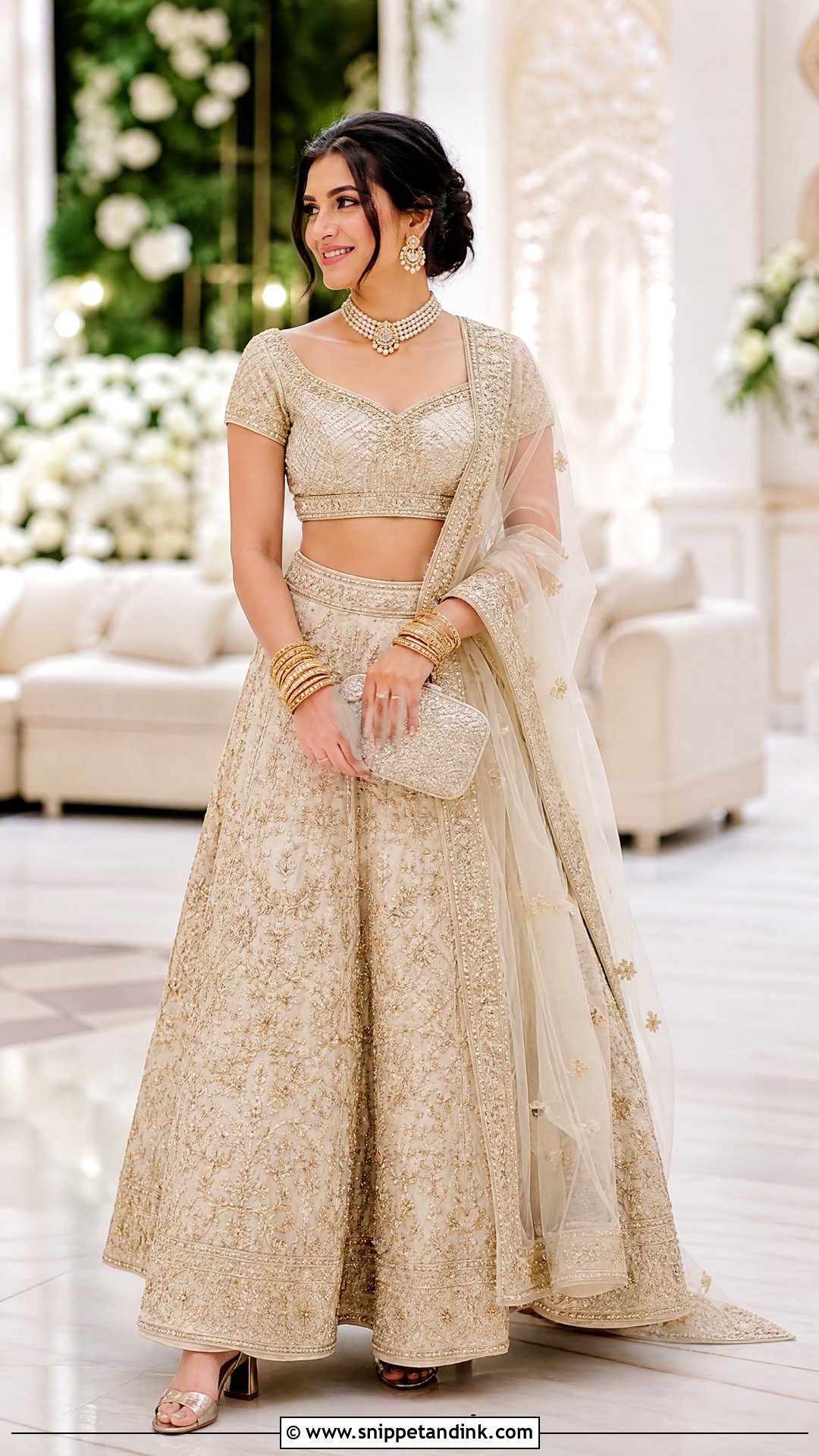
Ivory lehengas are calmer and, honestly, harder to get right. Antique-gold embroidery, small pearls or tonal floral appliqués keep the fabric from looking plain, and a structured blouse with a modest neckline balances the volume. A sheer dupatta frames the face. Gold earrings, a pearl choker, stacked bangles and an embroidered clutch complete it, with metallic sandals or low block heels underneath. The reason I’d look at a swatch at the venue first is that ivory shifts: warm under indoor tungsten light, cooler and greyer outside. Softly warm makeup stops the outfit washing you out.
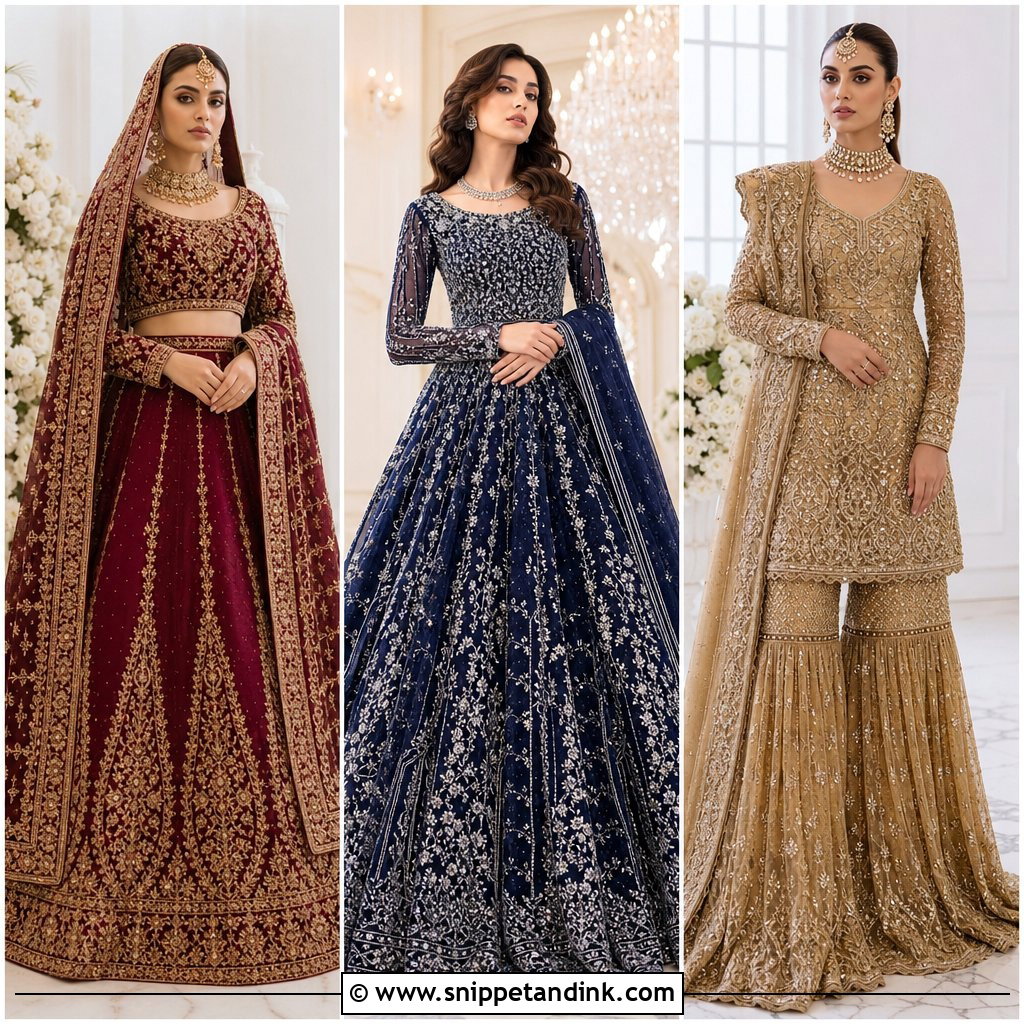
3. Pakistani Pishwas Wedding Dress
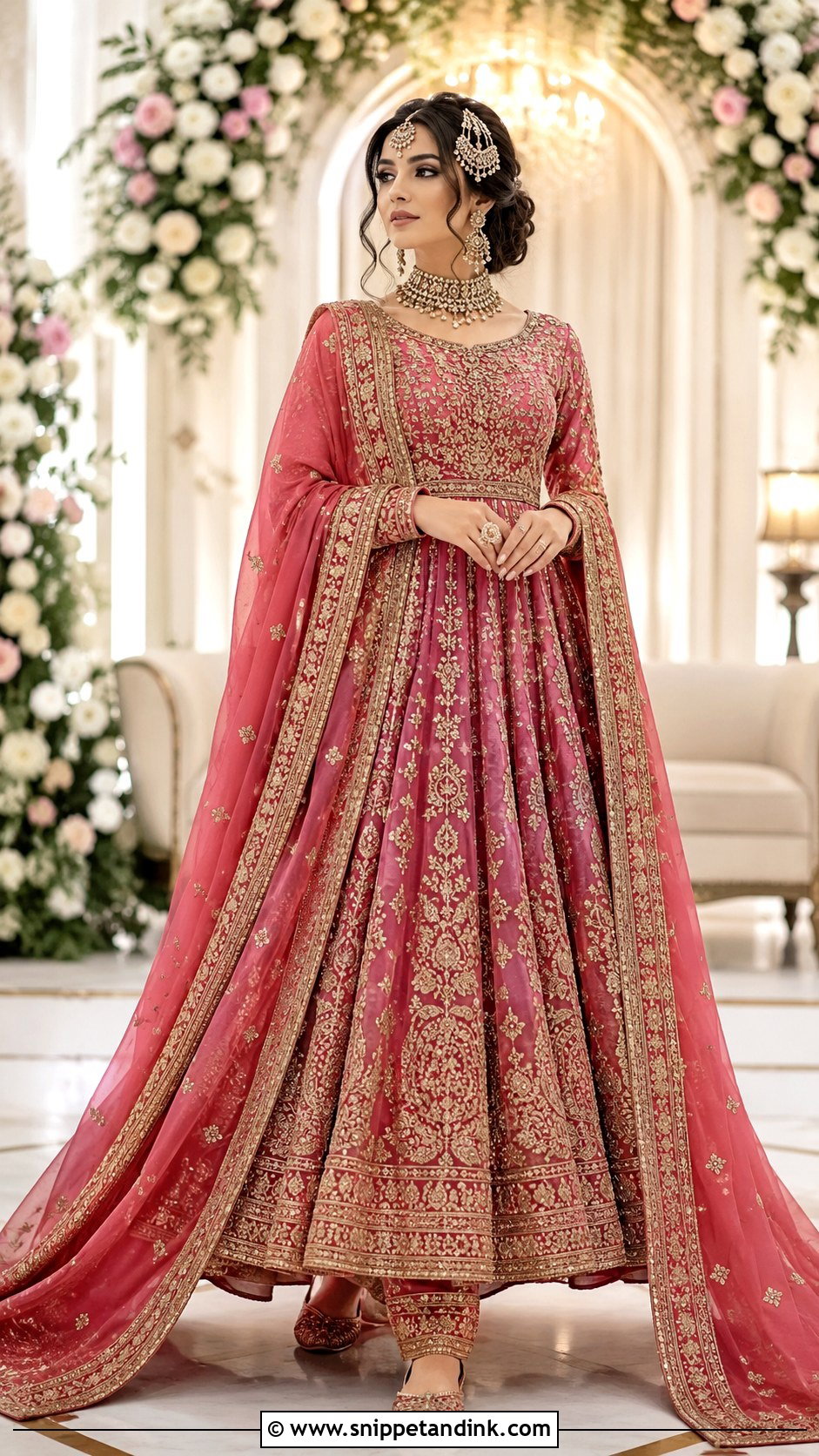
The pishwas is a long, fitted bodice that opens into a very full skirt, and it moves more gracefully than almost anything else on this list. Deep red, dusty rose, emerald and ivory are all common, with the family’s preference often settling it. I like embroidery concentrated at the neck, sleeves and hem, which leaves the middle of the skirt lighter and easier to carry. It goes over matching trousers, with a wide embellished dupatta on the head or shoulders, traditional earrings, a necklace, bangles and a hair ornament. Cushioned khussas hide under the long hem. That skirt needs room, so practice walking, turning and sitting before the day, including getting into a car.
4. Bridal Sharara Wedding Dress
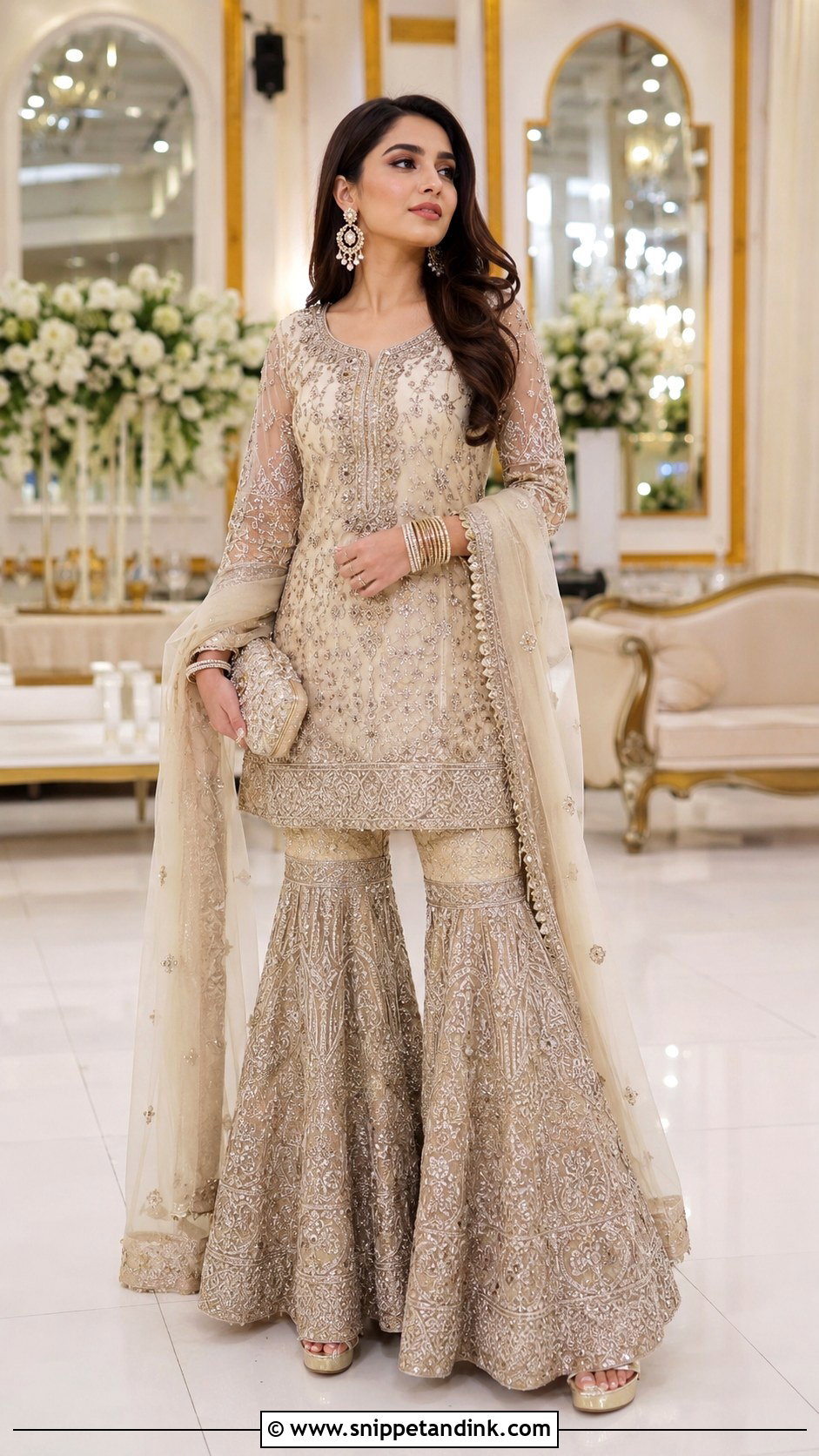
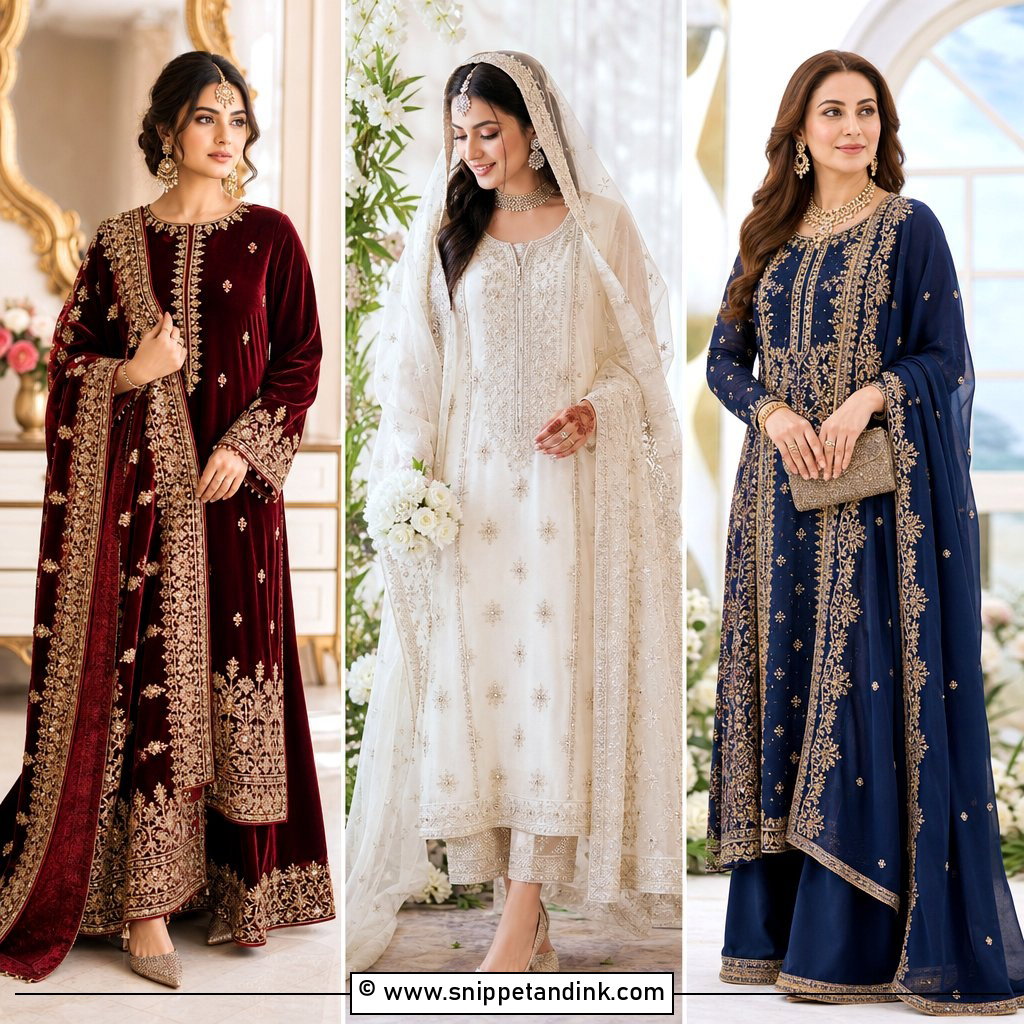
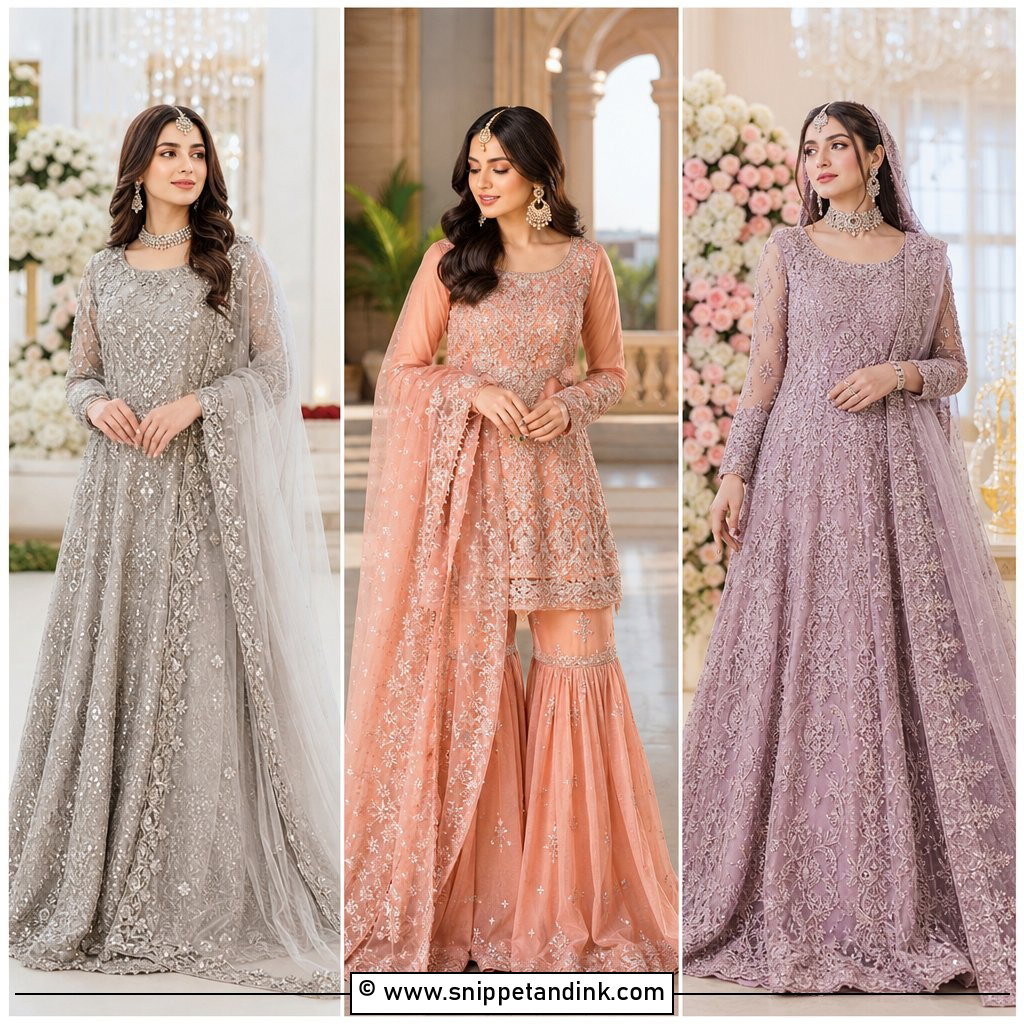
Sharara trousers flare from the waist or upper thigh, and the hem length is the fitting detail I fuss over most. Shoes decide it: platform sandals or supportive block heels lift the hems off the floor, so wear them to every fitting. The set pairs a decorated tunic with those wide trousers, and the embroidery should be consistent across both pieces. A long tunic gives a modest, flowing line; a short one shows off the trouser shape. Add a matching dupatta, drop earrings, stacked bangles and an embellished clutch. It’s a popular choice for a nikah or reception. Sit down in it before the final alteration, checking the waist, knees and inner seams.
5. Bridal Gharara Wedding Dress
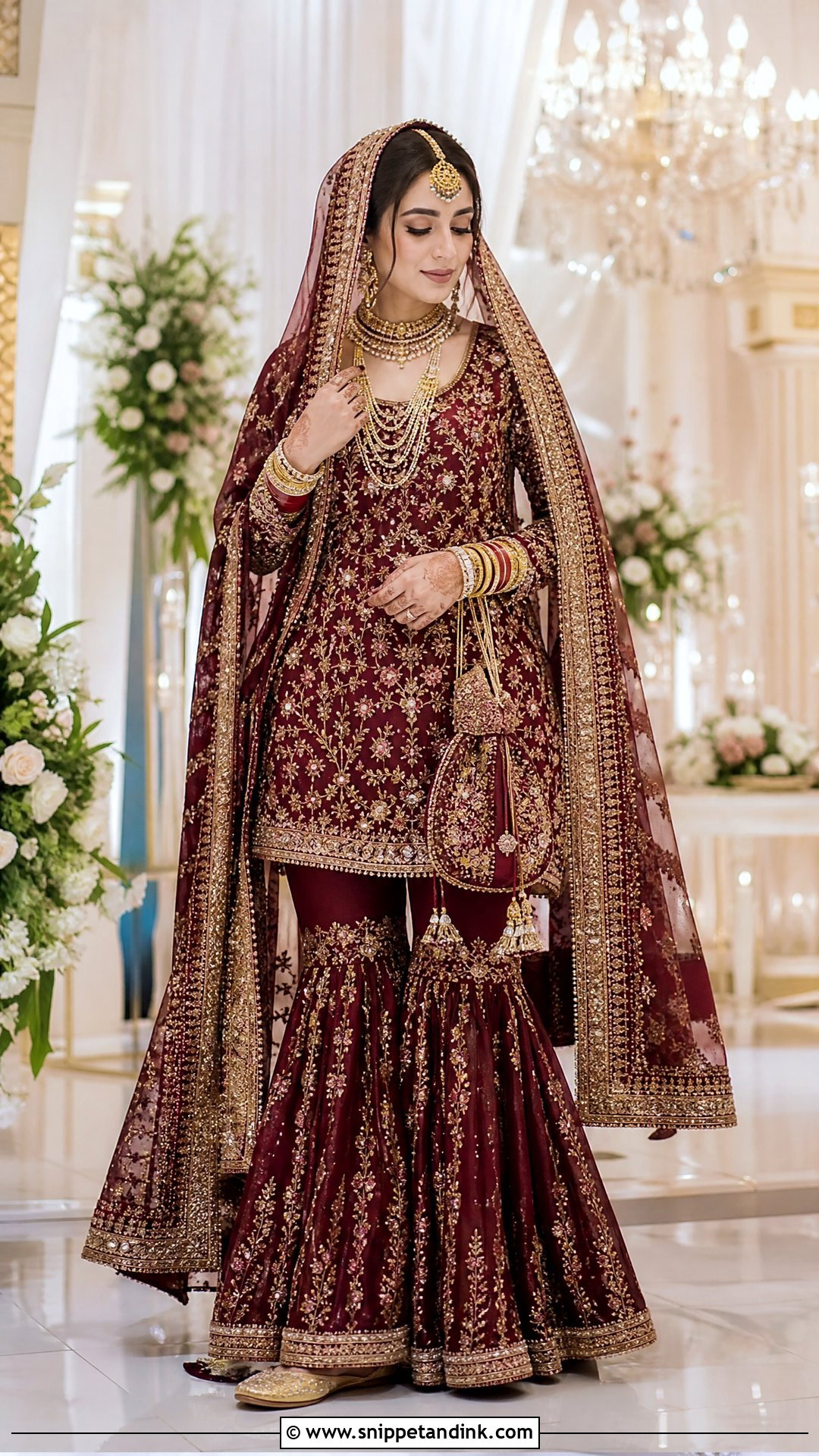
Gharara is easy to confuse with sharara, but the knee is what separates them: fitted through the upper leg, a gathered joint at the knee, then the dramatic flare. That knee seam is the risk. Cut too tight, it stops a bride from climbing stairs or sitting comfortably, so I have the tailor measure it with the knee bent. An embroidered short or mid-length kurti shows the construction off. Maroon, crimson, bottle green and gold feel opulent for an evening, while ivory or blush is softer for daytime. Drape the dupatta over the head and down one arm, and finish with a statement necklace, earrings, bangles and comfortable khussas.
6. Bridal Anarkali Wedding Dress
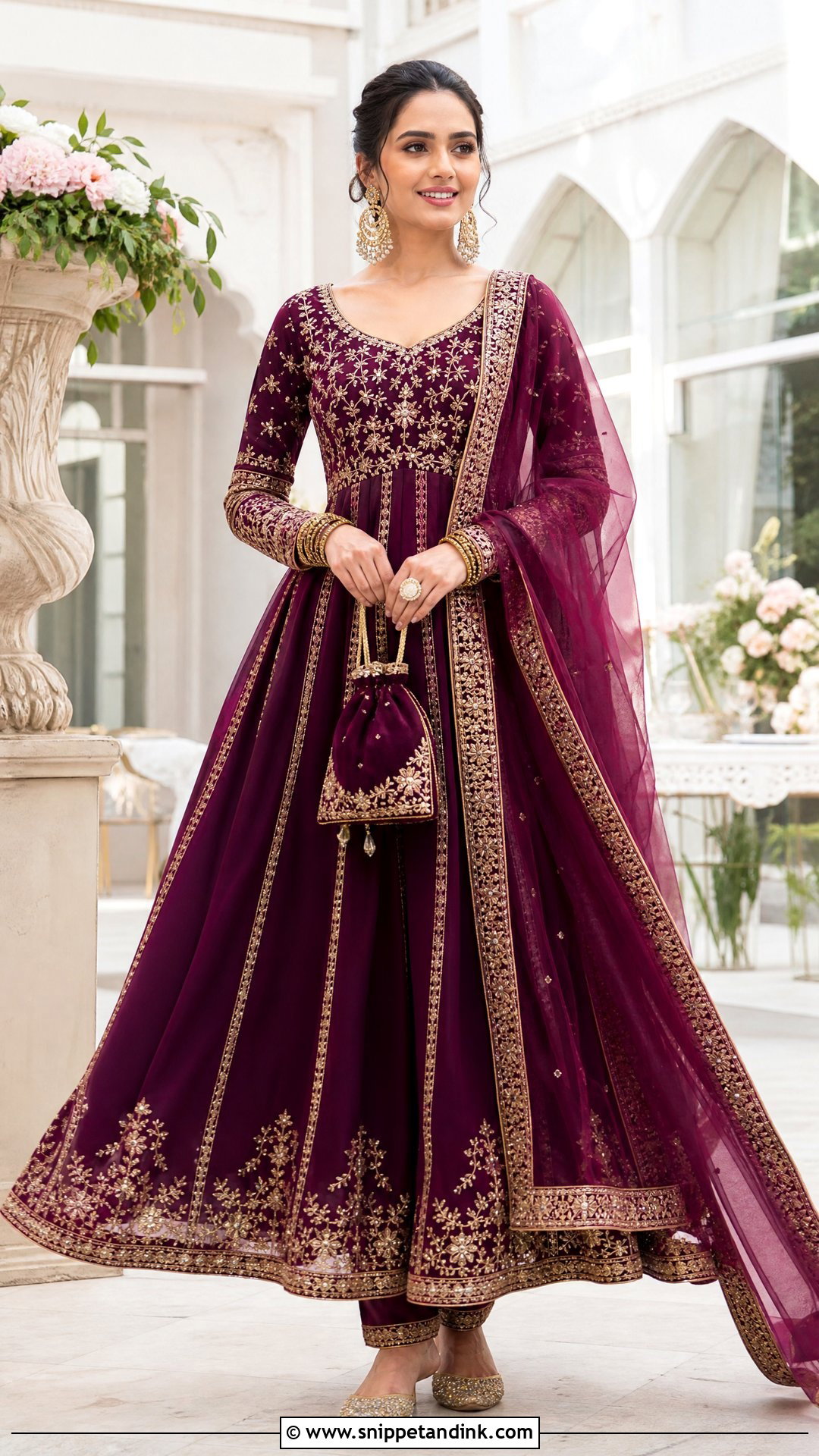
An anarkali gives you the sweep of a gown with the detail of Eastern bridalwear. The panels should open from a fitted bodice into controlled volume, not bulk. Fabric follows the season: velvet for winter, silk blends, organza or light net when it’s warm. Wear narrow matching trousers and a sheer embroidered dupatta over the hair or both shoulders, with chandelier earrings, bangles, a potli bag and low metallic heels. The waist seam gives shape but shouldn’t press into you after a meal. One thing I always check on the inside: a proper lining, because the back of heavy embroidery scratches badly against skin over a long evening.
7. Banarasi Saree Wedding Dress
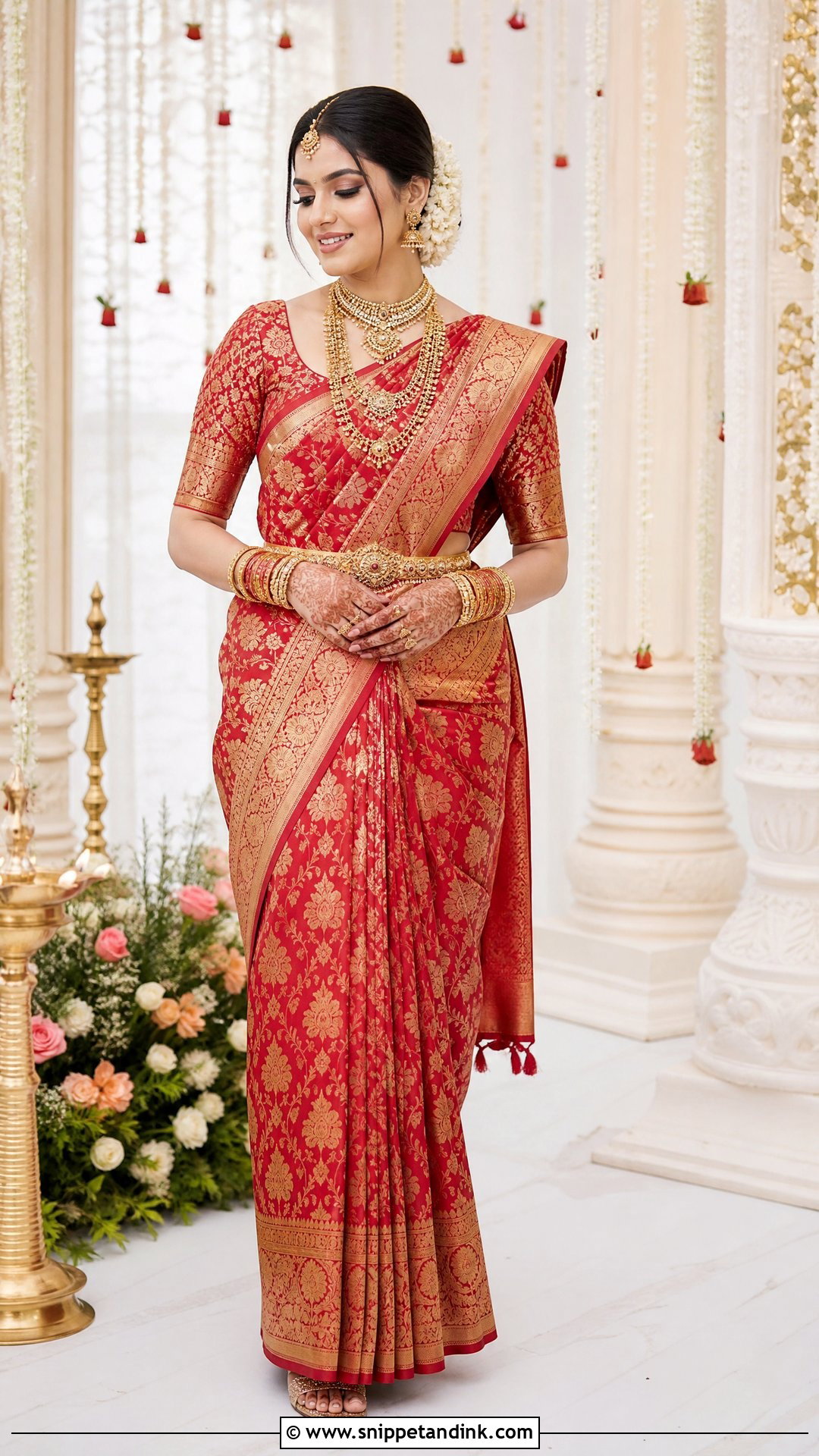
What makes a Banarasi distinctive is the woven pattern, which sits in the silk itself rather than being stitched on. Red, magenta, green and gold are the traditional strong choices, and ivory with a metallic border is quieter. Fit the blouse well and echo one color or motif from the saree in it. Even pleats and a pallu pinned firmly at the shoulder stop shifting during the rituals. Add a necklace, earrings, bangles and flowers or decorative pins in the hair, with low heels or embellished sandals. I insist the blouse and petticoat are fitted together, since the petticoat’s waist is what holds every pleat in place.
8. Kanjeevaram Saree Wedding Dress
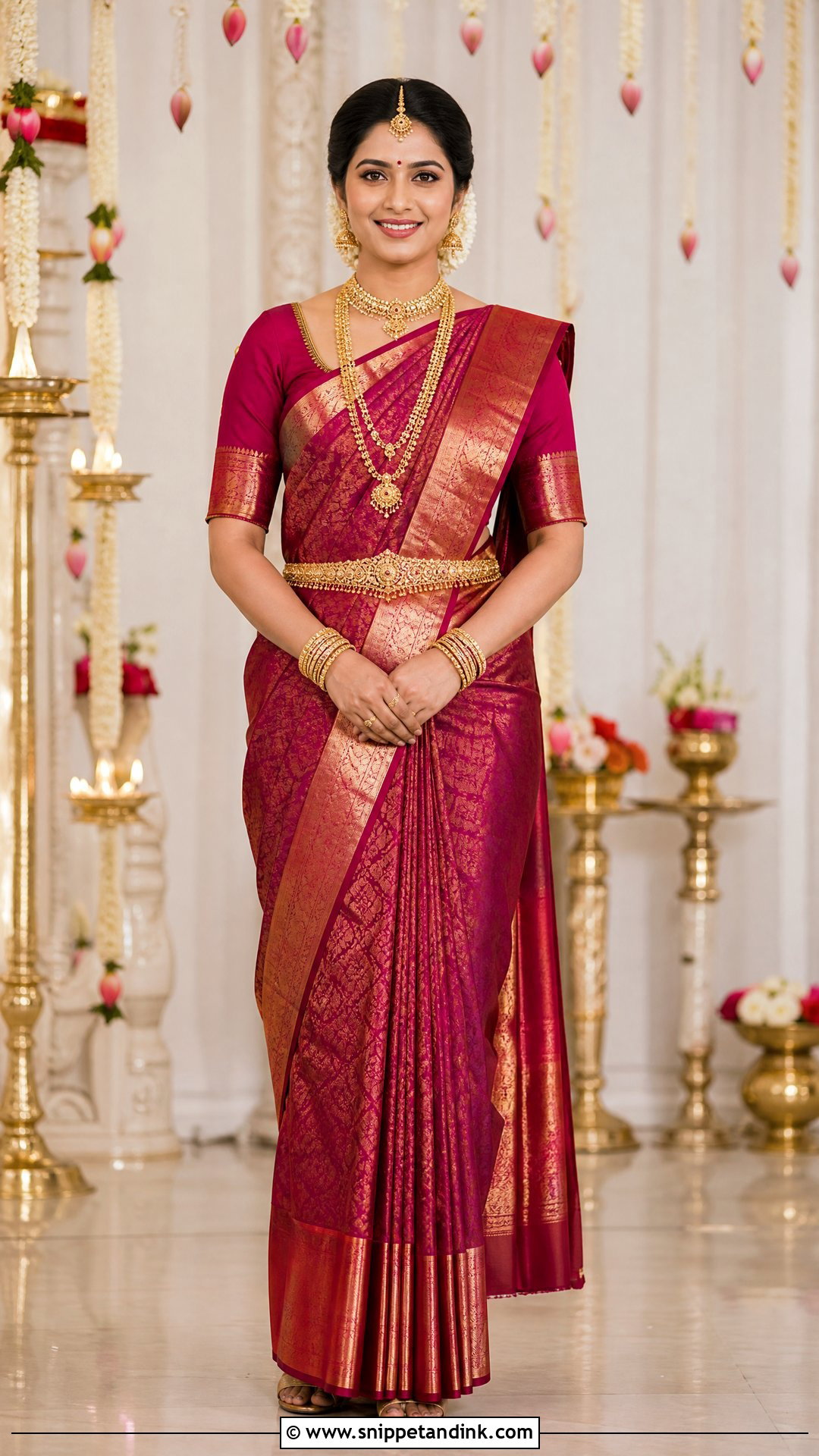
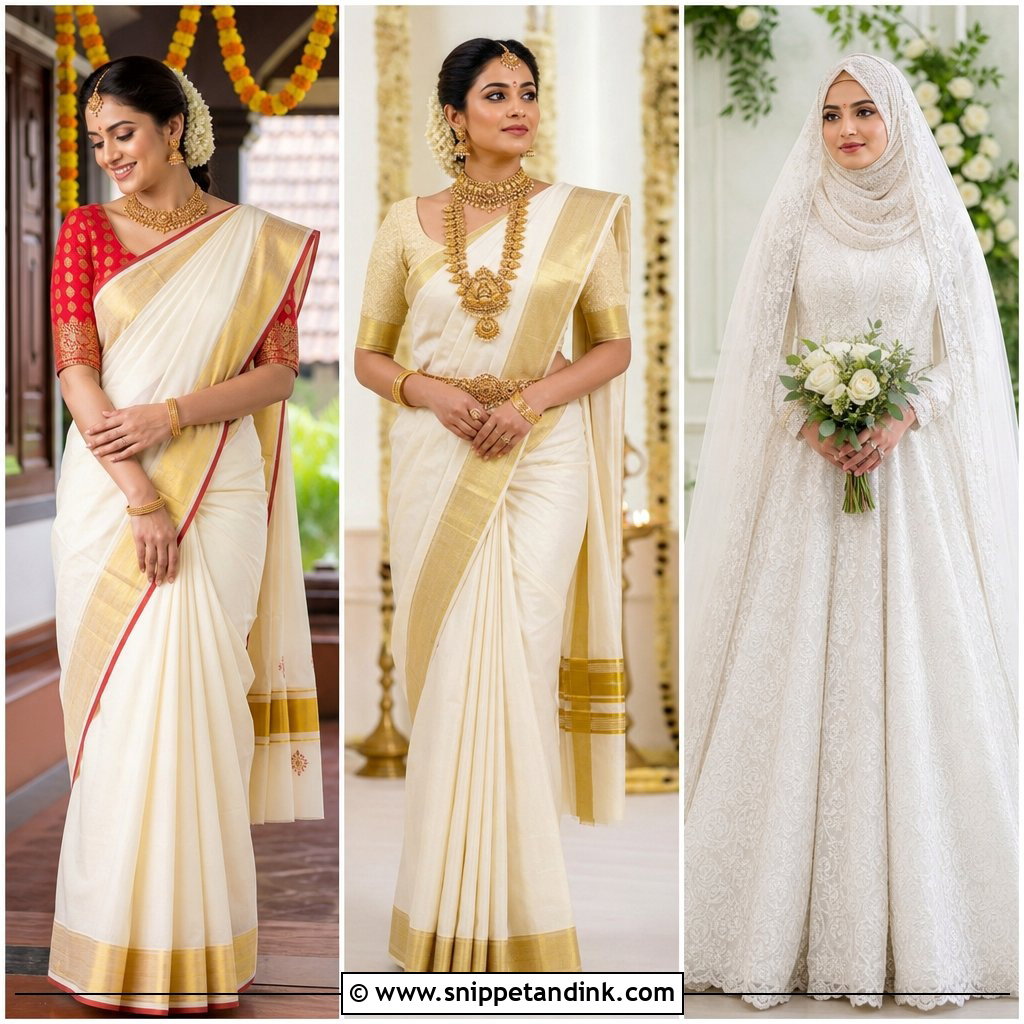
Kanjeevaram silk is heavy and holds its own structure, so the saree needs fewer extra layers than you’d expect. A jewel-toned body with a contrasting woven border is the classic, and the blouse can match either the body or the border. Drape the pallu so the motifs remain visible in photographs. Gold necklaces, jhumkas, bangles, a waist belt and flowers around a braid or bun complete it. That silk is warm in hot weather, so I ask for a breathable blouse lining and skip extra underskirts. Pin the pleats well; you’ll be walking, greeting guests and moving through ceremonial steps for hours.
9. Arabic Beaded Ball Gown Wedding Dress
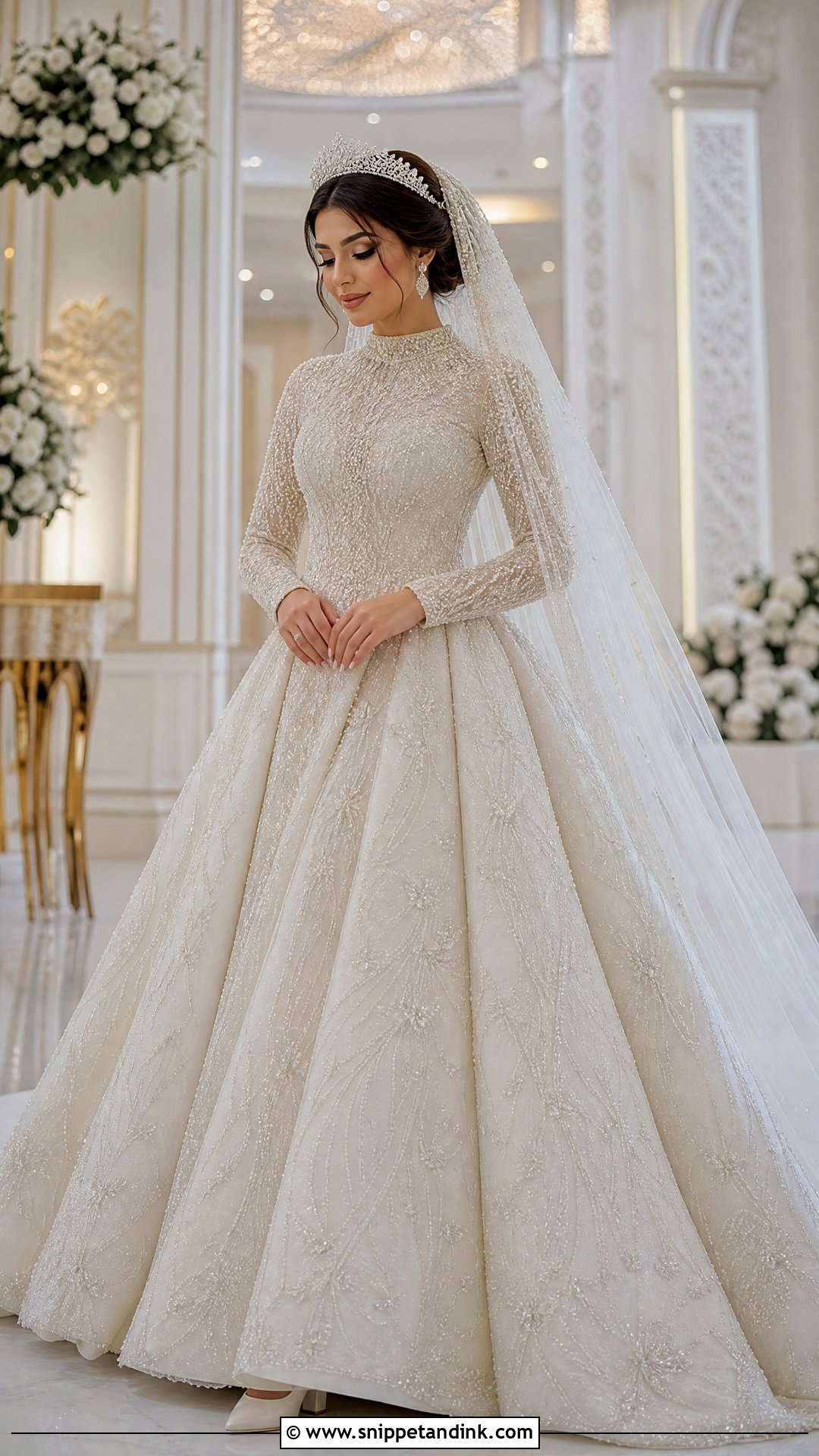
Beadwork is heavy, and on a full ball gown it can drag delicate fabric out of shape. So before I admire the crystals, I turn the gown inside out to check for a supportive inner corset and reinforced seams. The style itself is an ivory, pearl or champagne gown with a defined waist, full skirt and carefully placed beading, often with long sleeves and a higher neckline for a modest finish. A cathedral veil with a matching border, sparkling earrings, a fine tiara and closed-toe pumps or stable block heels finish it. Keep the bouquet small so it doesn’t cover the bodice. A detachable overskirt or train lets you move freely at the reception after a grand entrance.
10. Modest Hijab Wedding Dress
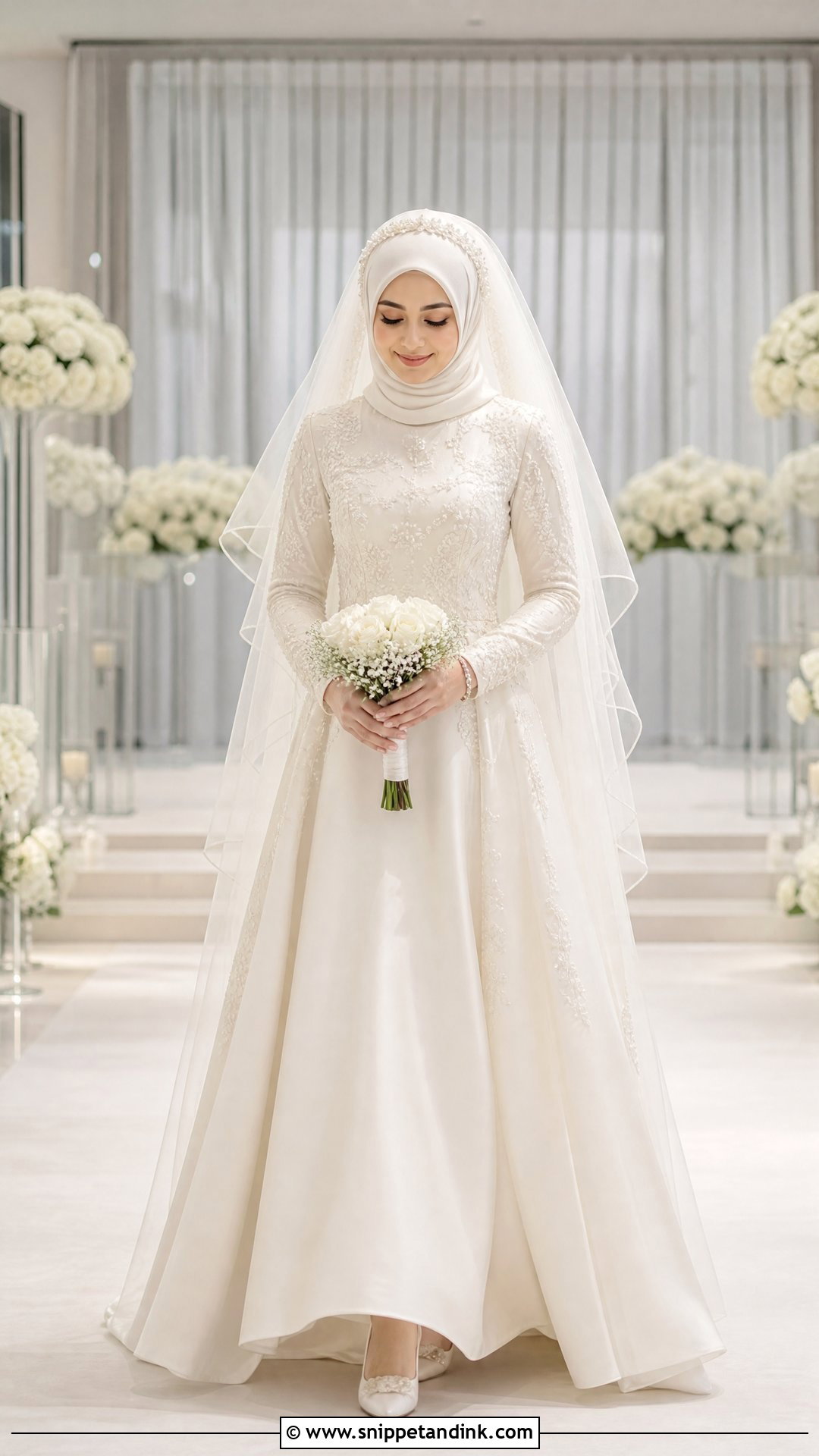
With a hijab bridal look, I treat the head covering and gown as one outfit from the first fitting. Start with a fully lined gown with long sleeves, a comfortable neckline and an opaque bodice; lace, pearls, tonal beading or embroidered panels give detail without sheer sections. For the hijab, matte chiffon over an undercap is easy to pin and doesn’t slide. A delicate veil can go over the top for ceremony volume. Drop earrings if visible, a bracelet, a small bouquet and comfortable closed-toe heels finish it. Bring the hijab, undercap and veil to the fitting, along with the pins you’ll use, so we can see where layers pull or slip.
11. Moroccan Kaftan Wedding Dress
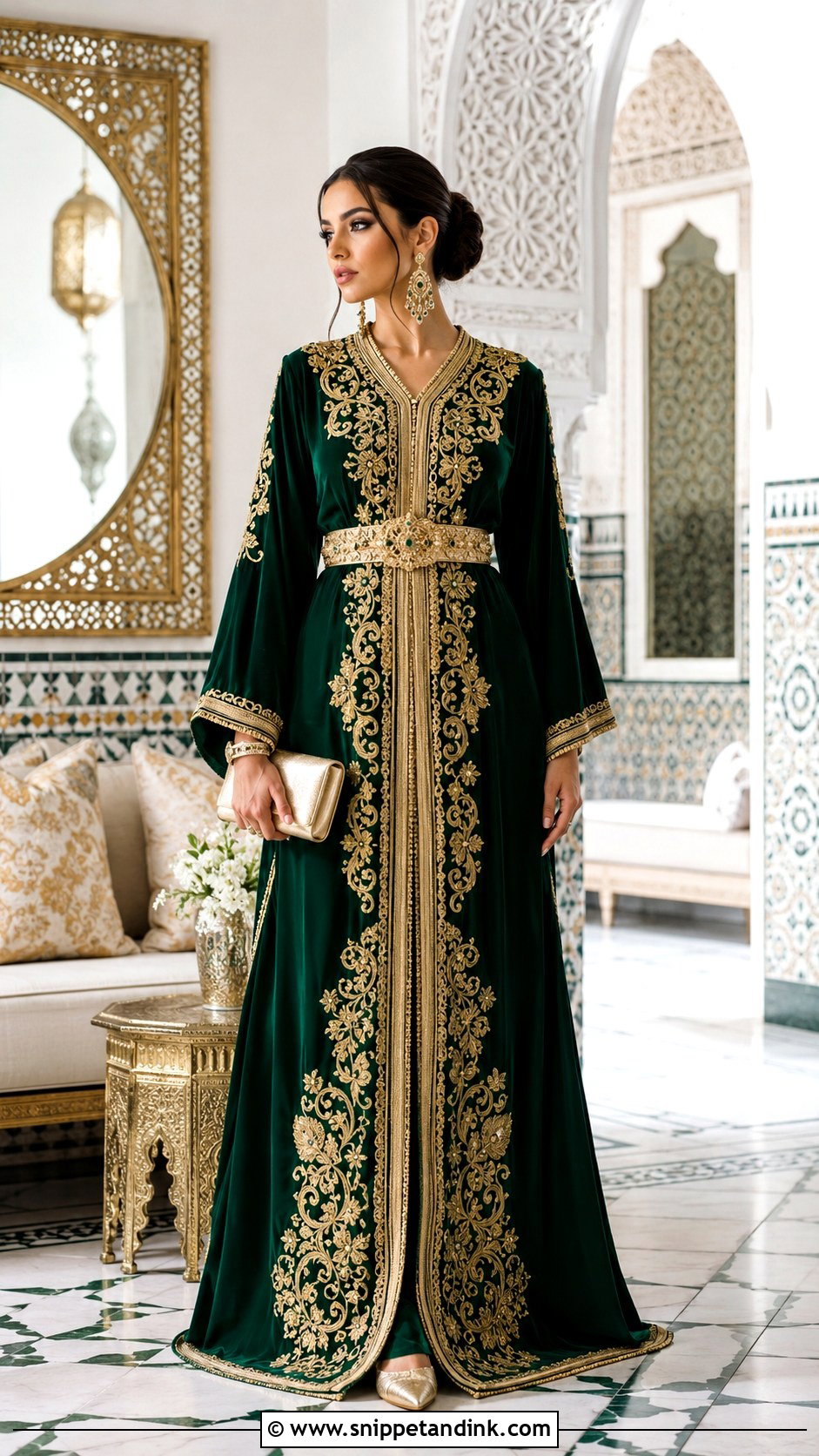
A Moroccan kaftan wedding dress is a column of color edged with metallic embroidery and trim at the neckline, sleeves and front opening. Ivory, emerald, burgundy, blush and royal blue are all worn, depending on the event and on which of the several bridal outfits it is. The belt does the shaping; I have it fitted while the bride is seated, because that’s when it digs. Pointed metallic slippers, statement earrings, a bracelet and a structured clutch complete it, with a sleek updo or softly draped head covering. Hem it so the shoes just show as you walk, which keeps you from treading on the front.
12. Turkish Embroidered Wedding Dress
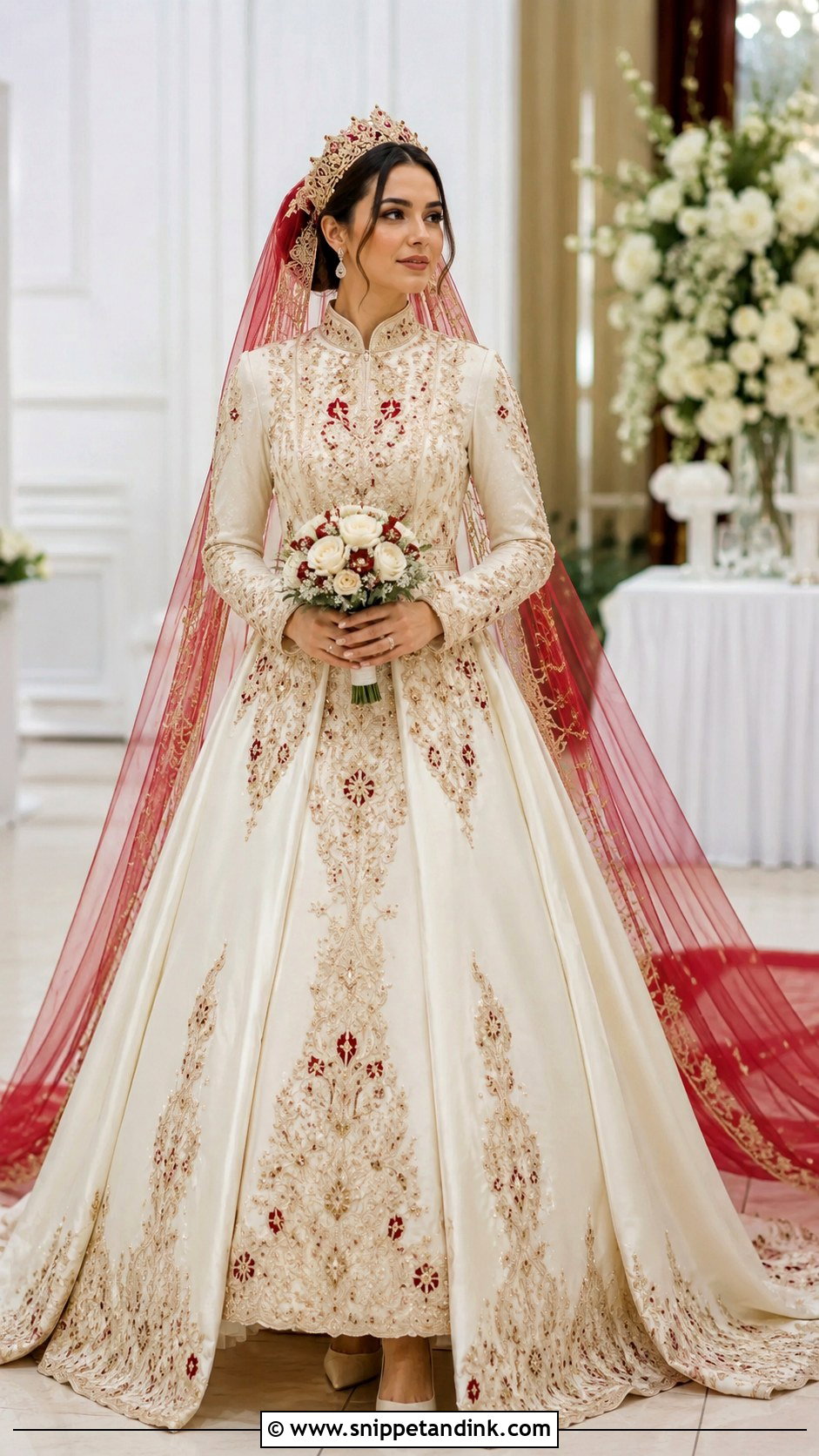
The Turkish version I see most often is a contemporary ivory gown with red, gold or silver ornamental embroidery at the neckline, waist, cuffs or train. A red veil or sash adds a traditional accent, and in many families the red sash tied around the bride’s waist before she leaves home carries its own meaning, so check with yours. Pearl earrings, a refined headpiece, pointed pumps and a compact bouquet finish it. If several outfit customs are planned, detachable accessories make quick changes easier. I check embroidery symmetry from across the room, since a motif a few centimeters off-center shows in full-length photos. Sleeve openings need room to raise your arms.
13. Red Qipao Wedding Dress
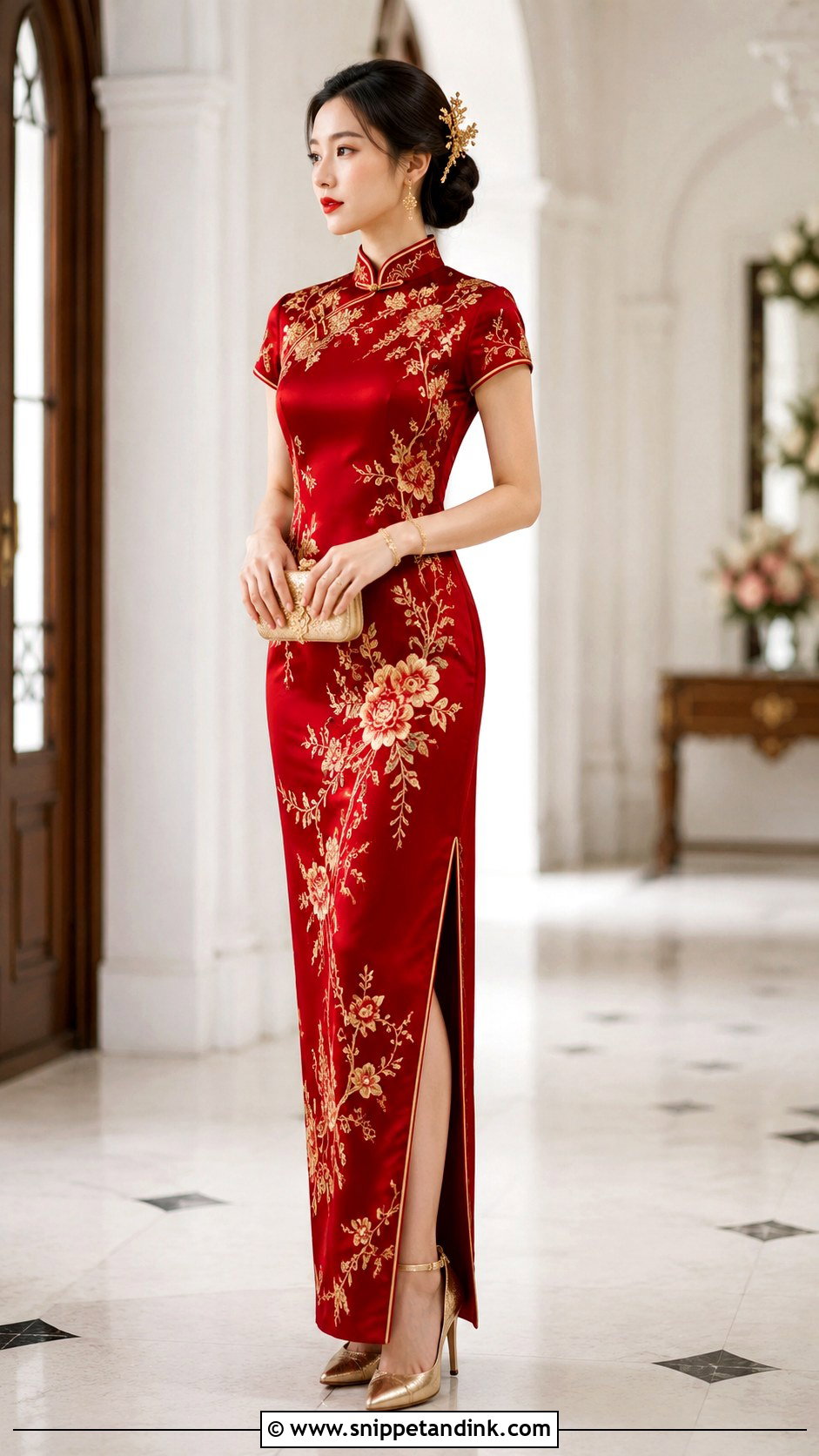
A qipao follows the body closely, which means tailoring decides everything. The red floor-length version with a mandarin collar, shaped waist and side slits is the wedding classic, with gold embroidery of flowers, phoenixes or geometric motifs. If it pulls across the hips or chest, horizontal creases appear immediately, and I’d rather let a seam out than have you hold your breath. Check the slit height by sitting and climbing a step. Gold earrings, a simple bracelet, red or metallic heels and a small structured clutch complete it, with a polished bun and decorative pins so the collar line stays visible.
14. Chinese Xiuhe Wedding Dress
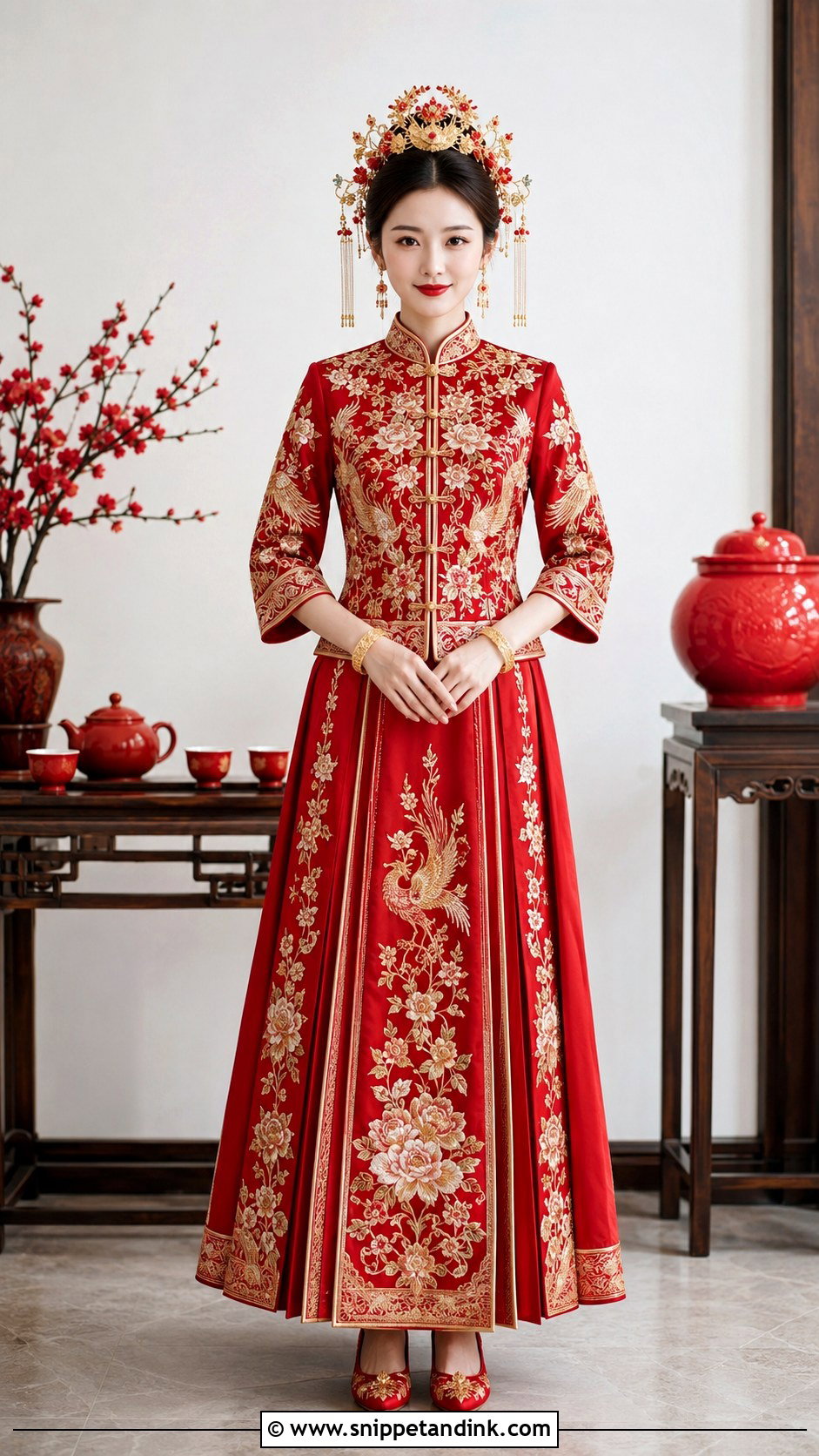
Xiuhe is a two-piece of jacket and skirt, usually red and dense with gold embroidery, and it’s often worn for the tea ceremony or a family celebration in a multi-outfit wedding. The shoulders are where I start: the jacket should sit smoothly and close without squashing the embroidery flat. The skirt reaches the shoes but leaves space for natural steps. Gold jewelry, embroidered red shoes, hairpins and a bridal headpiece if appropriate complete it. Keep everything else restrained because the fabric carries plenty already. Many of the motifs are symbolic, so ask relatives who know the tradition before adding or swapping pieces.
15. Korean Hanbok Wedding Dress
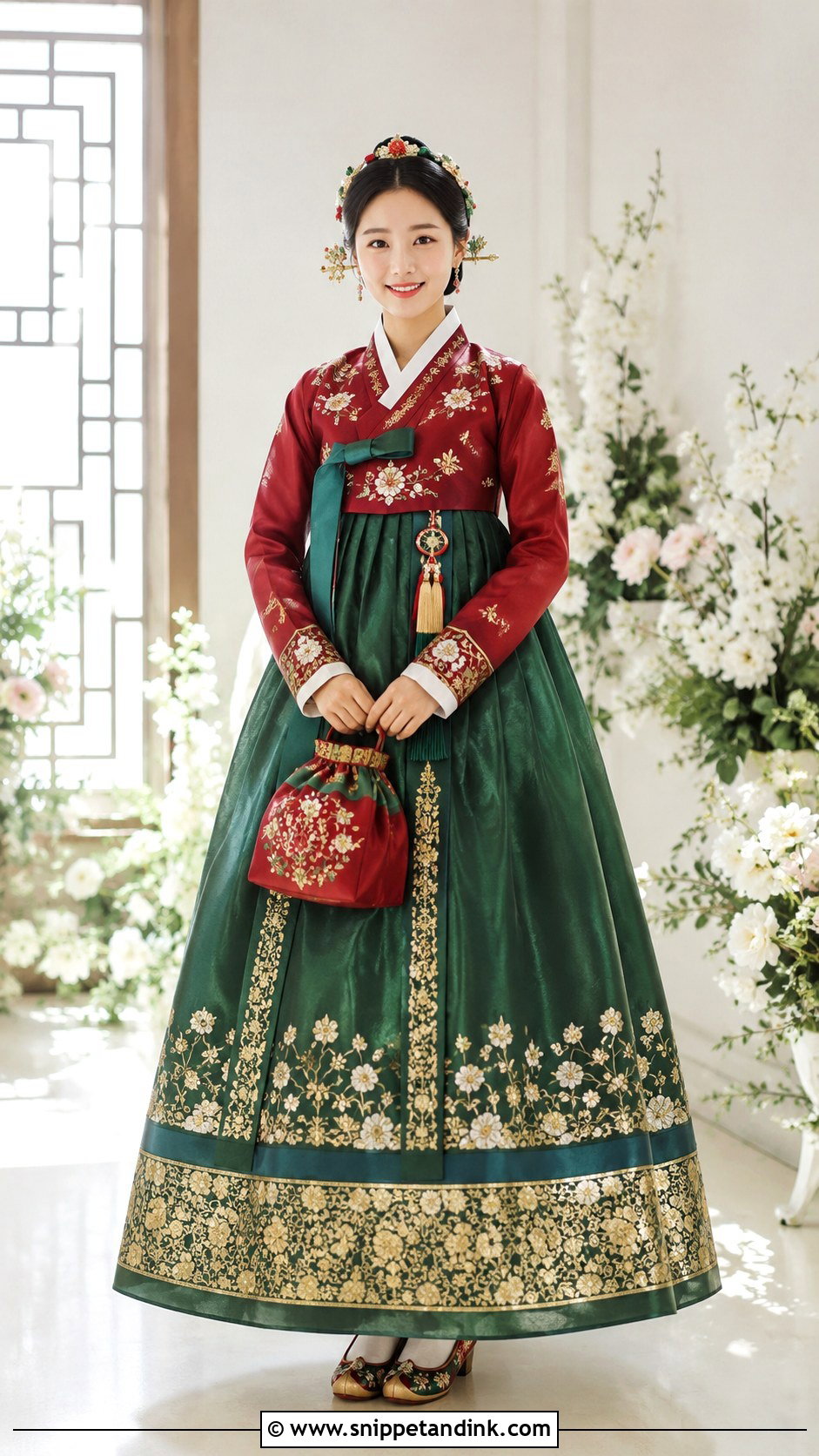
A Korean hanbok wedding dress is built from a short jacket, the jeogori, over a full, high-waisted skirt, the chima. Colors range from vivid red and green to pastels or modern combinations. The jeogori should sit neatly at the shoulders and the chima should fall smoothly rather than stand stiffly. Add traditional-style hair accessories, delicate earrings, embroidered shoes and a small ceremonial bag if suitable. Makeup should stay fresh so it doesn’t overpower the color blocking. The layering order matters, which is why I’d book an experienced hanbok dresser. You’ll be bowing in it, so test that before the day.
16. Japanese Shiromuku Wedding Dress
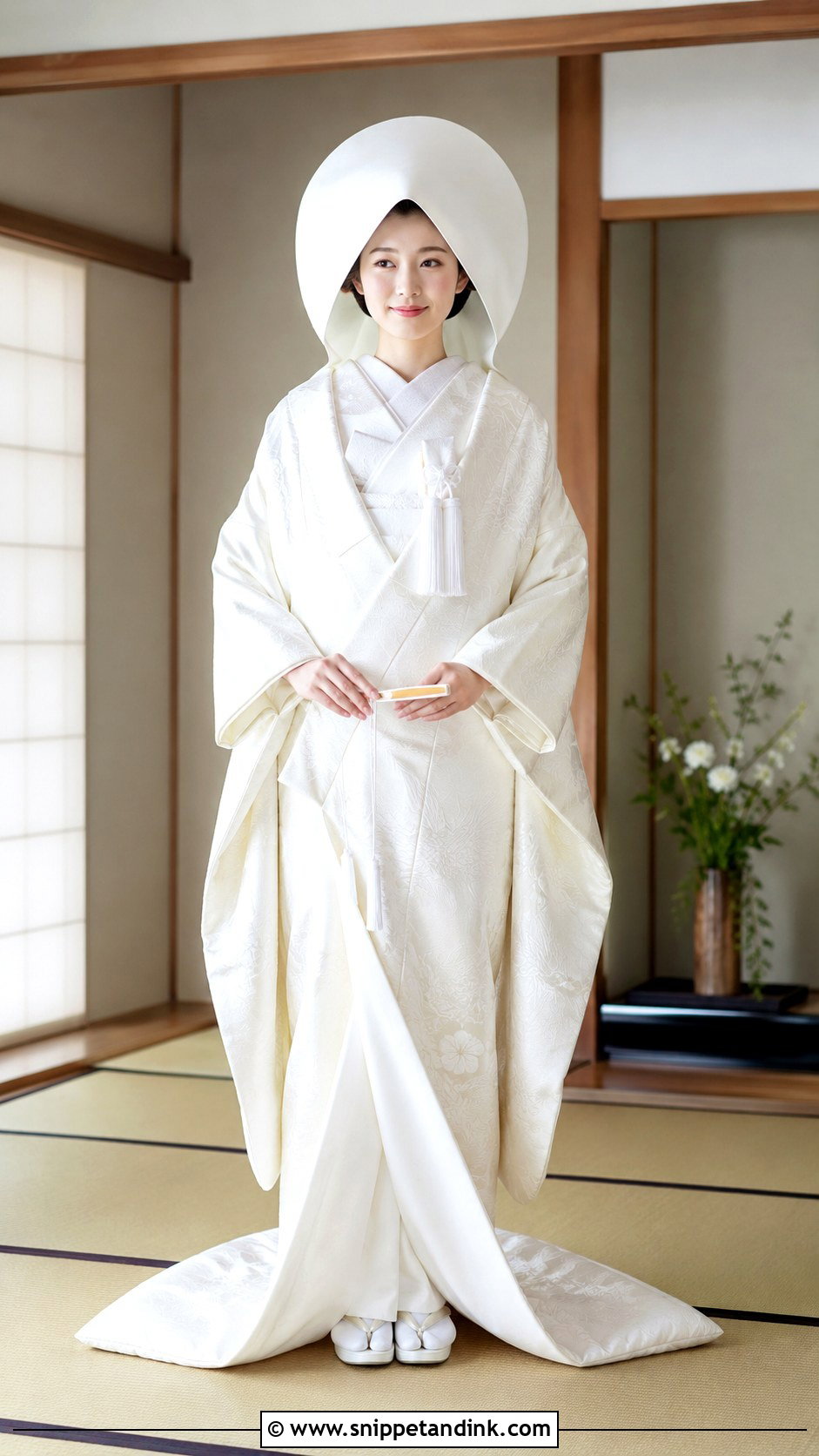
The shiromuku is an all-white, multi-layered kimono, and the interest lies in woven pattern and texture rather than color. A Japanese shiromuku wedding dress needs professional dressing; the layers are tied in sequence, and an amateur job loosens within an hour. White accessories, traditional footwear and a headpiece chosen with the dresser complete it. Jewelry is kept minimal. Makeup has to hold up under bright photography while respecting the ceremonial look. The steps are short in a kimono, so walk in it beforehand. A colorful reception kimono or a modern gown makes a good second look.
17. Vietnamese Ao Dai Wedding Dress
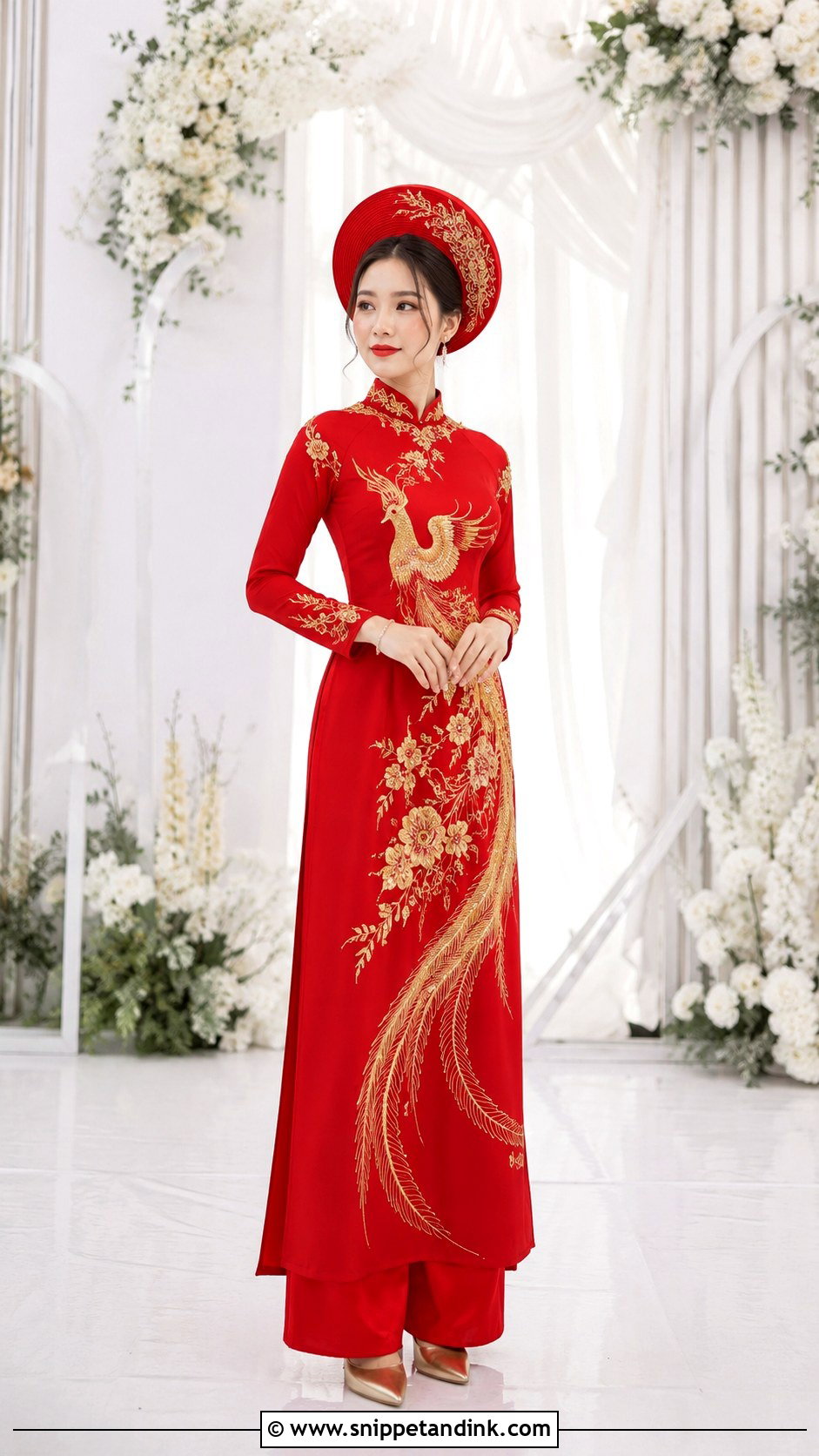
A Vietnamese ao dai wedding dress is one long line: a fitted tunic with side panels that open over wide trousers. Red is the most traditional bridal color, with white, blush and gold as softer options. Embroidered silk or brocade holds the tunic’s shape. The trousers should reach the top of the shoes so the panels move freely. A matching khăn đóng headdress when appropriate, delicate earrings, a bracelet and low heels complete it. Ao dai is cut close, and the fitting point I watch is the side opening at the waist, which gapes if the tunic is too tight. Keep any added cape or train light so the silhouette stays readable.
18. Indonesian Kebaya Wedding Dress
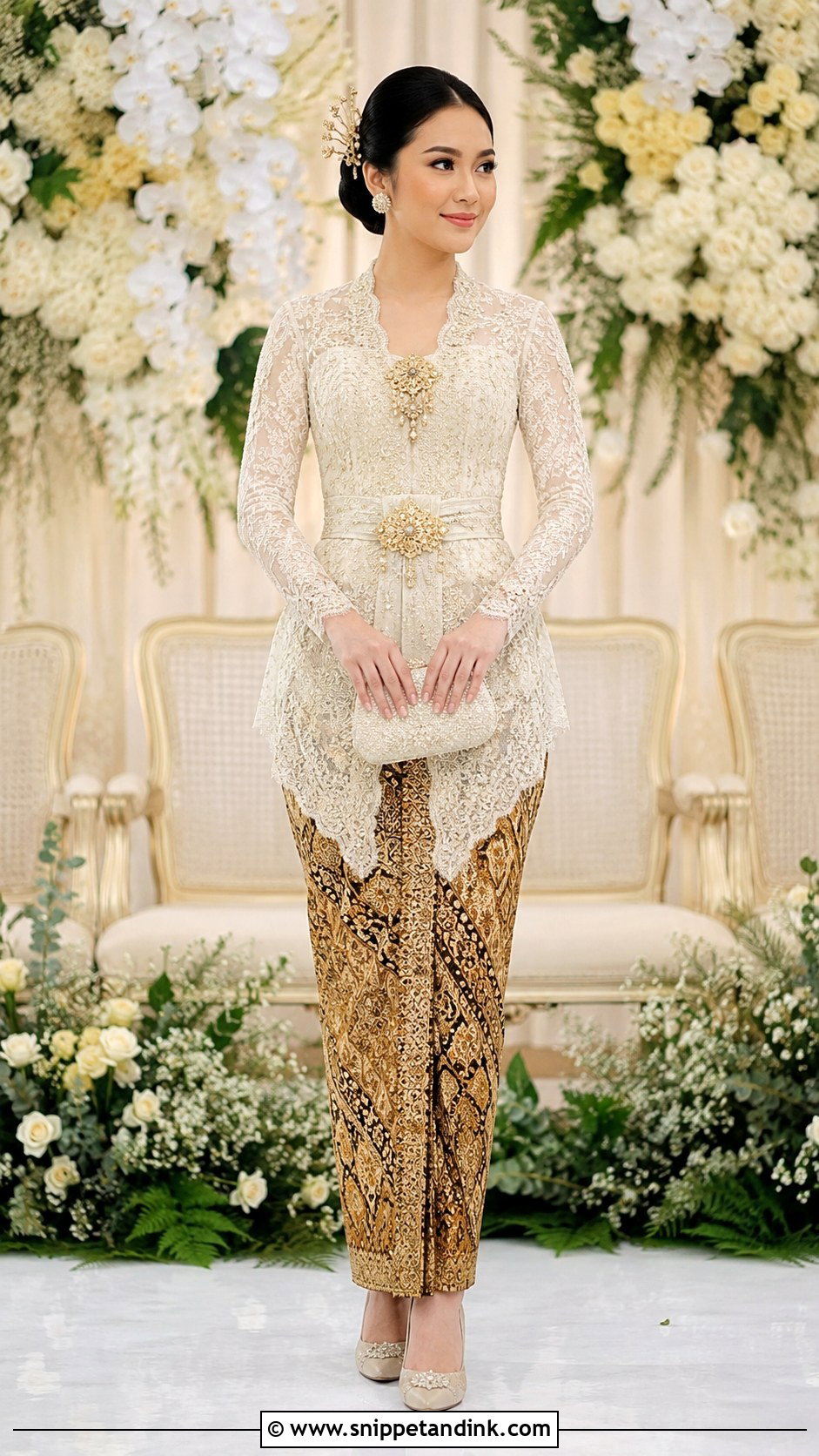
Kebaya styles change from island to island, so the first question I ask is which heritage the bride is dressing for and whether a family elder or dresser will advise. The look pairs a fitted embroidered top with a long batik or songket skirt. An opaque lining close to the kebaya’s color gives coverage while showing off the lace. The skirt is wrapped and secured, with enough room for small steps. A decorative waist detail, hair ornaments, earrings, a small clutch and coordinated shoes finish it, with a polished bun showing the neckline. Test it standing, seated and kneeling if your ceremony includes it.
19. Malaysian Baju Kurung Wedding Dress
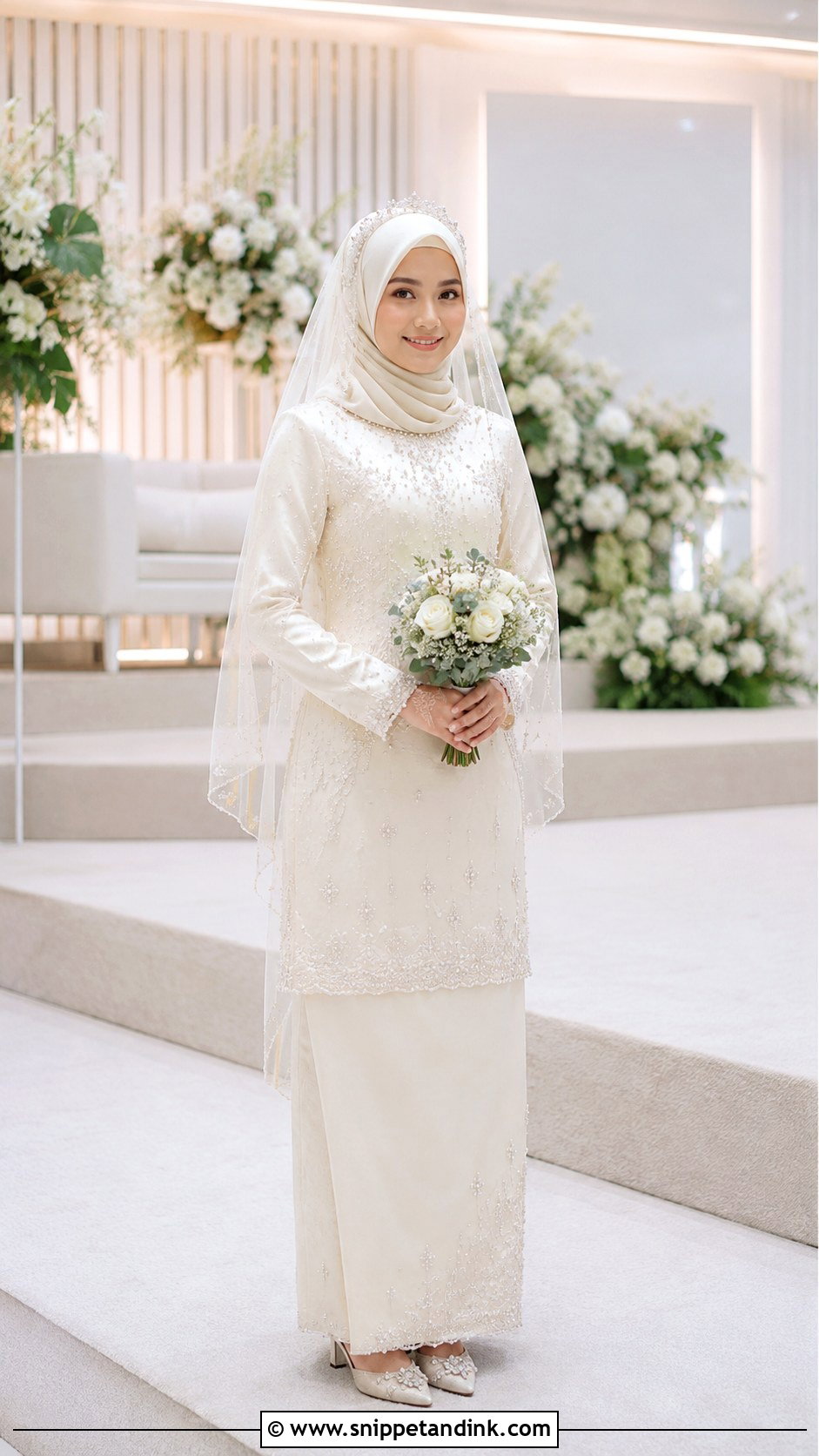
Baju kurung is modest by design: a long tunic over a matching floor-length skirt. Ivory, pastel pink, emerald and blue all read as bridal with beadwork, lace or metallic embroidery. The tunic should fall straight without clinging, and the skirt needs a walking pleat or enough width for steps. Pair it with a coordinating hijab or neat hairstyle, a veil or delicate headpiece, earrings, a small bouquet and closed-toe heels or embellished flats. Celebrations in Malaysia are often warm and long, so I always ask for a breathable cotton or voile lining rather than polyester when several layers are involved.
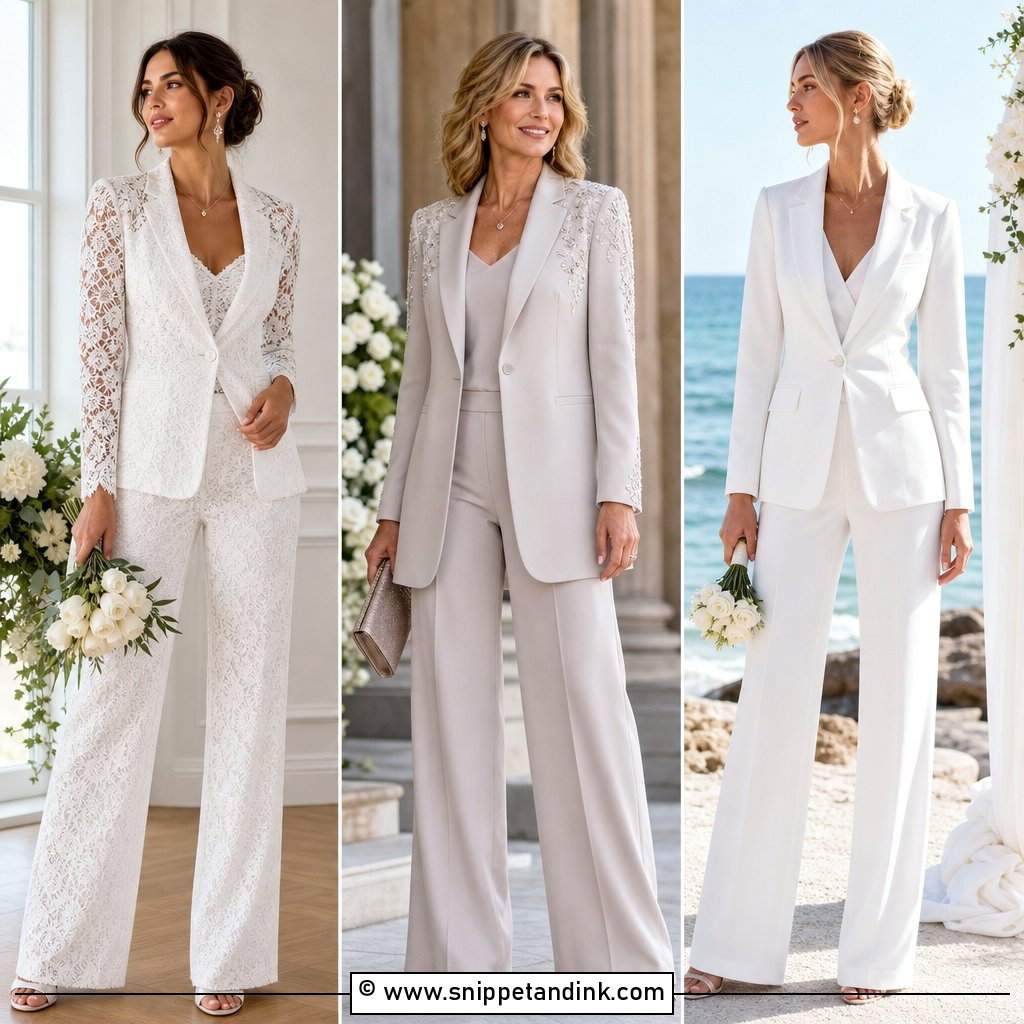
20. Thai Chut Thai Wedding Dress
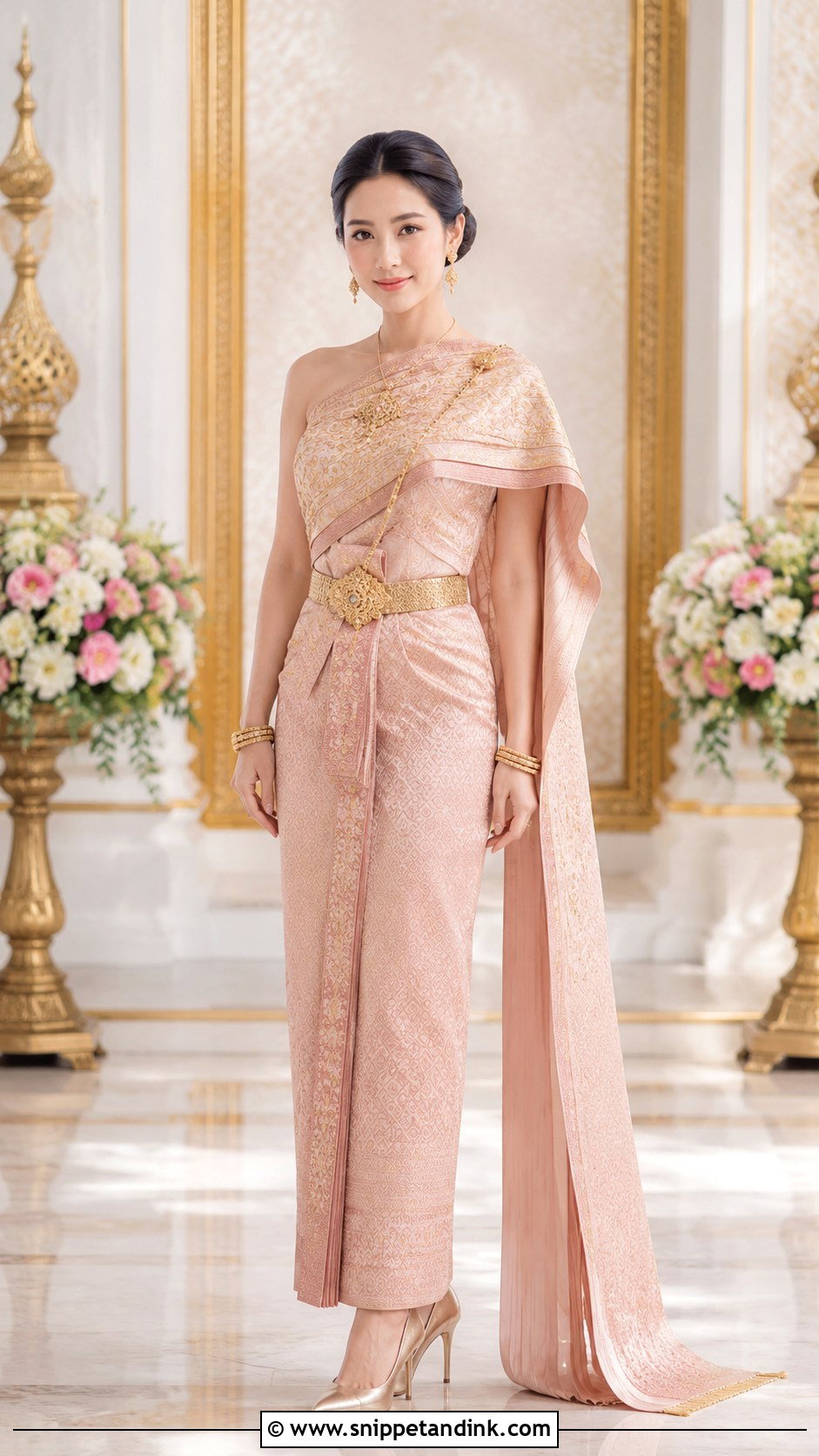
There are several formal chut thai styles, and they aren’t interchangeable, so the version should be chosen with someone who knows which suits the ceremony. Most combine a fitted top, a wrapped skirt and a sash or shoulder drape in lustrous silk. Gold, ivory, blush and jewel tones work well in woven Thai silk. Complete it with gold jewelry, a decorative belt, earrings, a polished updo and metallic heels. Avoid unrelated embellishment, which hides the drape. The wrapped skirt is the part I worry about on a long day; have it fitted and pinned by someone experienced so it stays secure while you move.
Planning Several Outfits for Several Rituals
Many of the weddings in this list span more than one event: mehndi, nikah, walima, a tea ceremony, a henna night, a Western-style reception. Each outfit needs its own fitting, its own accessories and its own time to put on, and the change itself is where days run late.
Timing each change
A saree or a layered kimono takes far longer to dress than a gown with a zip, so ask your dresser for a realistic time and add a margin. I schedule changes when guests are eating, never in the gap before a ritual begins.
Packing one bag per outfit
Put each outfit’s jewelry, pins, shoes, undergarments and head covering in its own labeled bag. Mixed bags are how a dupatta pin or a hairpiece goes missing at the worst moment. A small kit of safety pins, fashion tape, a needle with matching thread and blotting papers covers most emergencies.
Wearing a Mother’s Saree or Kaftan Again
Heirloom bridalwear is common in these traditions, and I love working with it, but older silk needs care. Unfold it slowly and look along the old fold lines in daylight; silk can weaken or split exactly where it has been creased for years. Real zari may have tarnished, and that usually can’t be fully reversed at home, so ask a specialist cleaner before trying anything.
Alter by adding rather than cutting wherever possible. A new blouse can be made to match an old saree, a kaftan’s seams can often be let out from generous old allowances, and a fresh lining makes an old garment comfortable again. Keep any piece you remove, so the garment can be restored for the next person who wears it.
Respecting the Tradition Behind Each Garment
The look that people remember is the one that is comfortable and connected to the bride’s own family. Lehengas, sarees, gowns, kaftans, qipaos, hanboks and the rest all build a head-to-toe presentation the same way: start with the garment, then fit shoes, jewelry, veils and headwear around its color and construction. Book fittings with every layer in place and practice walking and sitting. Above all, treat each outfit as part of a specific custom rather than one broad Eastern style. If you do that, and leave enough time for tailoring, the clothes will carry you through every ritual of the day.
You'll Like These Ideas:


Leave a Reply