
Organza is a sheer fabric with a crisp hand: it stands away from the body instead of draping against it. That one property explains almost every look below. It gives a skirt volume without the weight of satin layers, holds a ruffle or a bow upright, and makes a sleeve look like a breath rather than a covering. Below are twenty organza looks for ceremonies, receptions, gardens and ballrooms, from full ball gowns and clean A-lines to floral textures, removable layers and short party dresses. For each one I’ve noted the shoes, jewellery, veils, and other finishing details that work with it, and where organza can let you down.
Silk Organza or Polyester? Squeeze a Corner First
Shops rarely spell it out, but organza comes in two main kinds. Silk organza is the traditional one: very fine, crisp yet soft to the touch, with a gentle sheen. Polyester organza looks similar at a distance, holds its shape even more stiffly and costs a good deal less, but it can be shinier and scratchier against skin.
Neither is wrong. They just behave differently, and I’ll happily dress a bride in either, and a few quick checks at the appointment tell you which you’re getting and how it will wear:
- Squeeze a hem corner in your fist for ten seconds, then let go. Silk organza creases and slowly relaxes; polyester often springs back but can keep sharp crease lines.
- Rub the fabric on the inside of your wrist. If it feels scratchy there, it will feel worse at the underarm by evening. Ask for the armhole seams to be bound in something soft.
- Look at it against a window. Cheaper organza can show a slight rainbow sheen or uneven weave when light passes through.
- Ask what’s underneath. Most organza skirts need a lining or petticoat, and that layer affects both the colour and the swish when you walk.
1. Strapless Organza Ball Gown
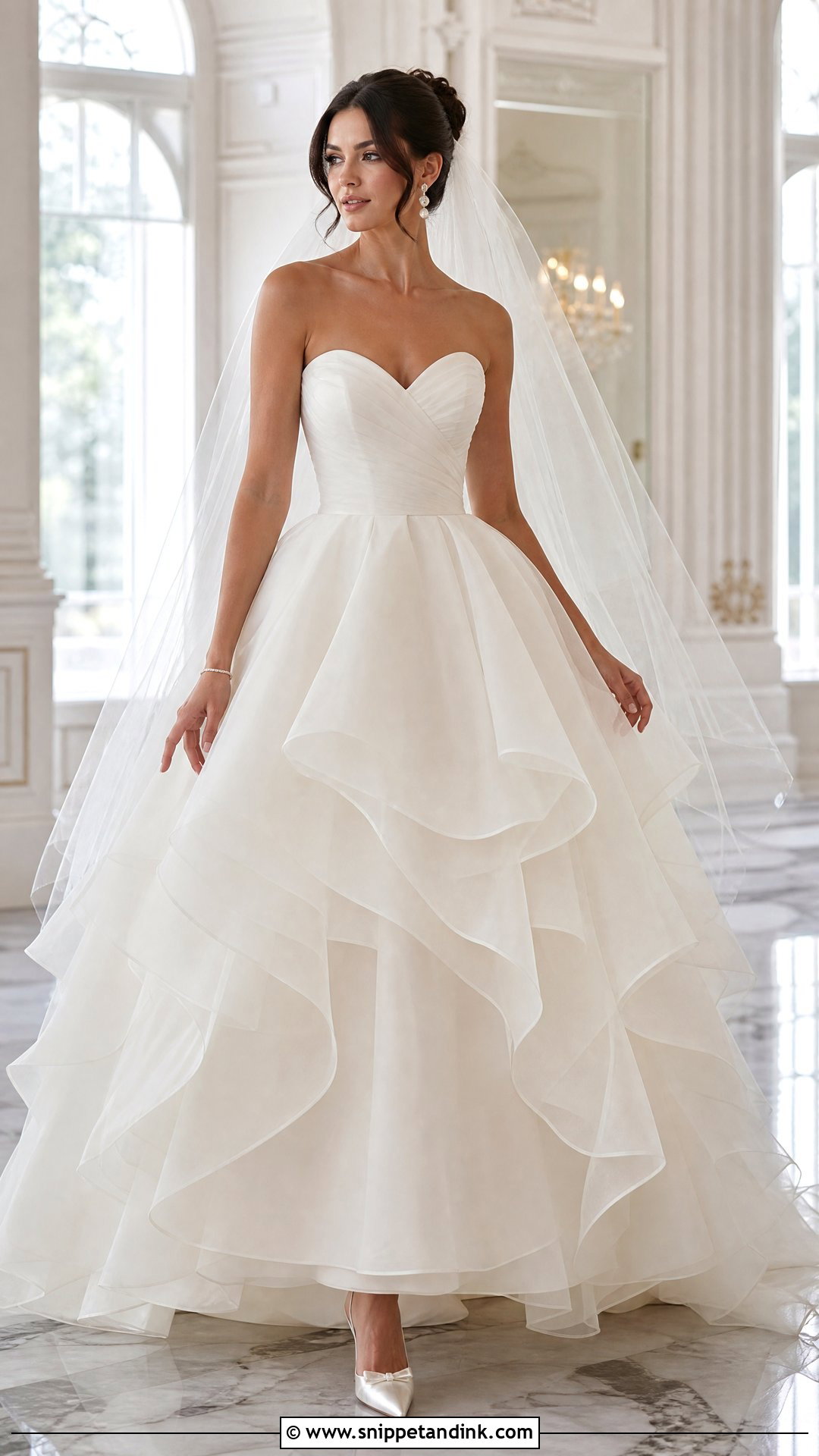
Strapless with a full organza skirt is the classic version, and the skirt is why it works: organza gives the volume of a ball gown at a fraction of the weight. A softly curved sweetheart neckline is the romantic choice; a straight neckline looks sharper. With that much skirt, the accessories should be small. Pearl drops, a thin tennis bracelet and a fingertip veil are enough. Satin pumps suit indoors; block heels are steadier on lawns. A low bun keeps the shoulders clear. The first thing I check is that the bodice is properly boned and fitted at the ribcage, not the bust, or the weight of the skirt will drag it down over the evening.
2. Basque Waist Organza Wedding Dress
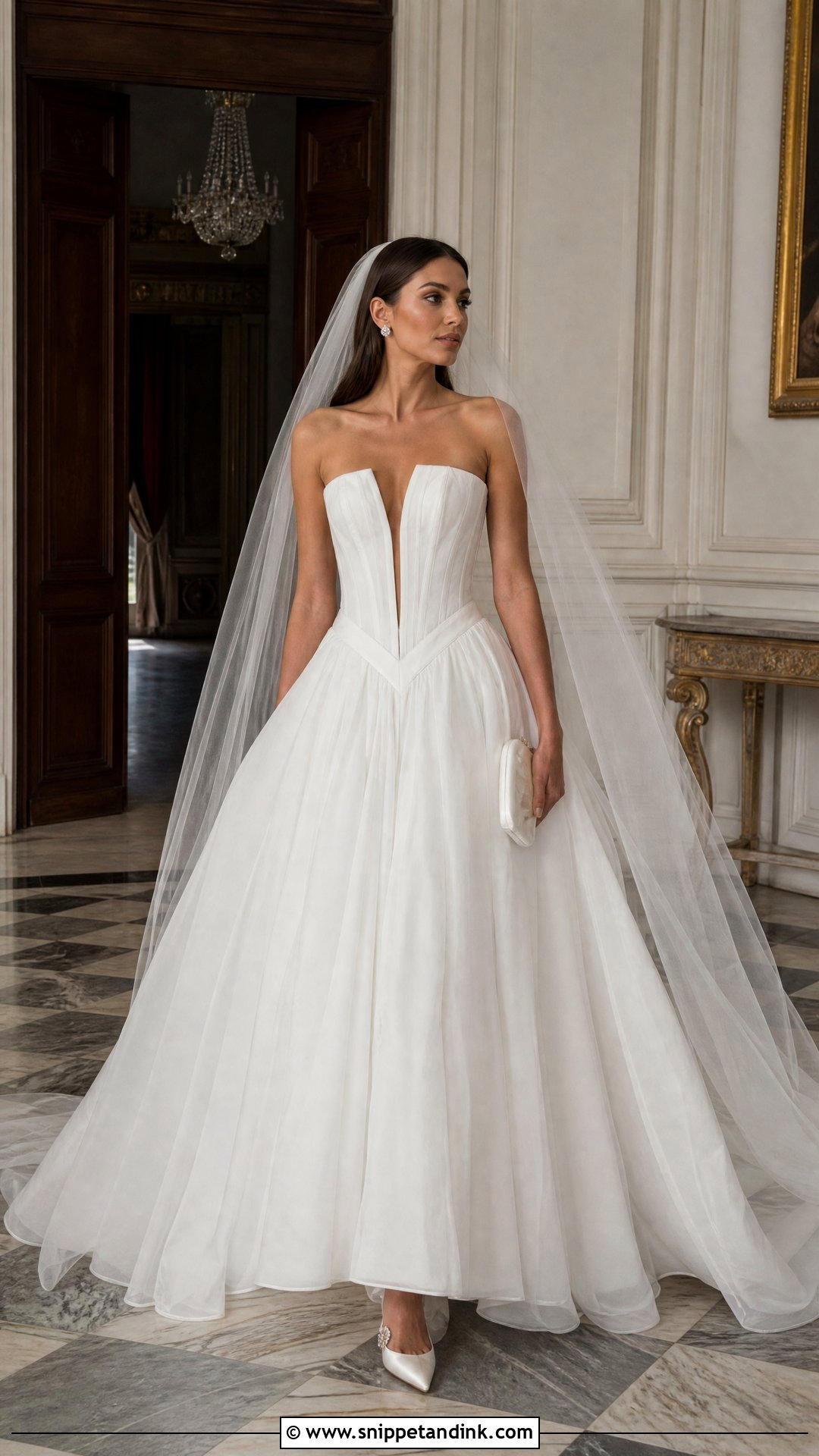
The basque waist dips into a V below the natural waistline, and it does two things at once: it lengthens the torso and hides the seam where a heavy skirt joins the bodice. A softly structured corset supports the point; without it, the V buckles when you sit. Smooth organza in the skirt keeps the whole dress clean. I’d attach a chapel veil below a sleek bun so it falls past the waist instead of over it. Small crystal studs, ivory pointed heels and a satin clutch finish it. Ballrooms, historic houses and formal hotels suit the architectural line. Short-waisted brides should try it before ruling it out; the dropped point often helps them most.
3. Off Shoulder Organza A Line Dress
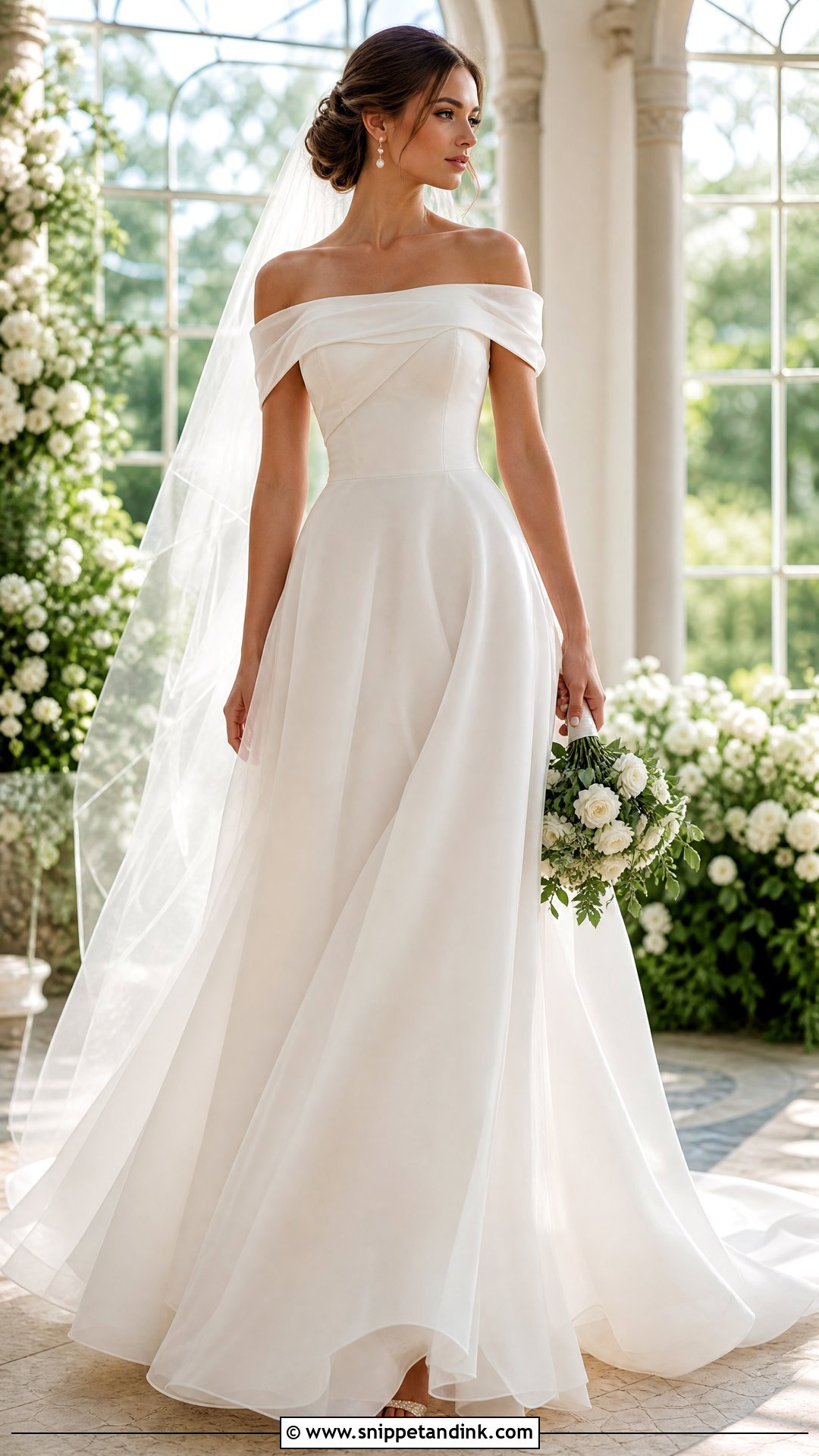
Off-the-shoulder organza usually comes as a folded band or as detachable puff sleeves sitting on the upper arm. Either way, check how high you can lift your arms in it, because a band that sits too low pins your elbows to your sides. A fitted bodice into a gently widening A-line keeps the proportions lighter than a ball gown. A fine pendant, pearl earrings and a single-layer veil are plenty. Low embellished heels or slingbacks make dancing easier. A loose chignon with a few face-framing pieces keeps it relaxed. Gardens, conservatories and bright rooms suit it, since organza glows a little when light comes through it.
4. Floral Organza Wedding Dress
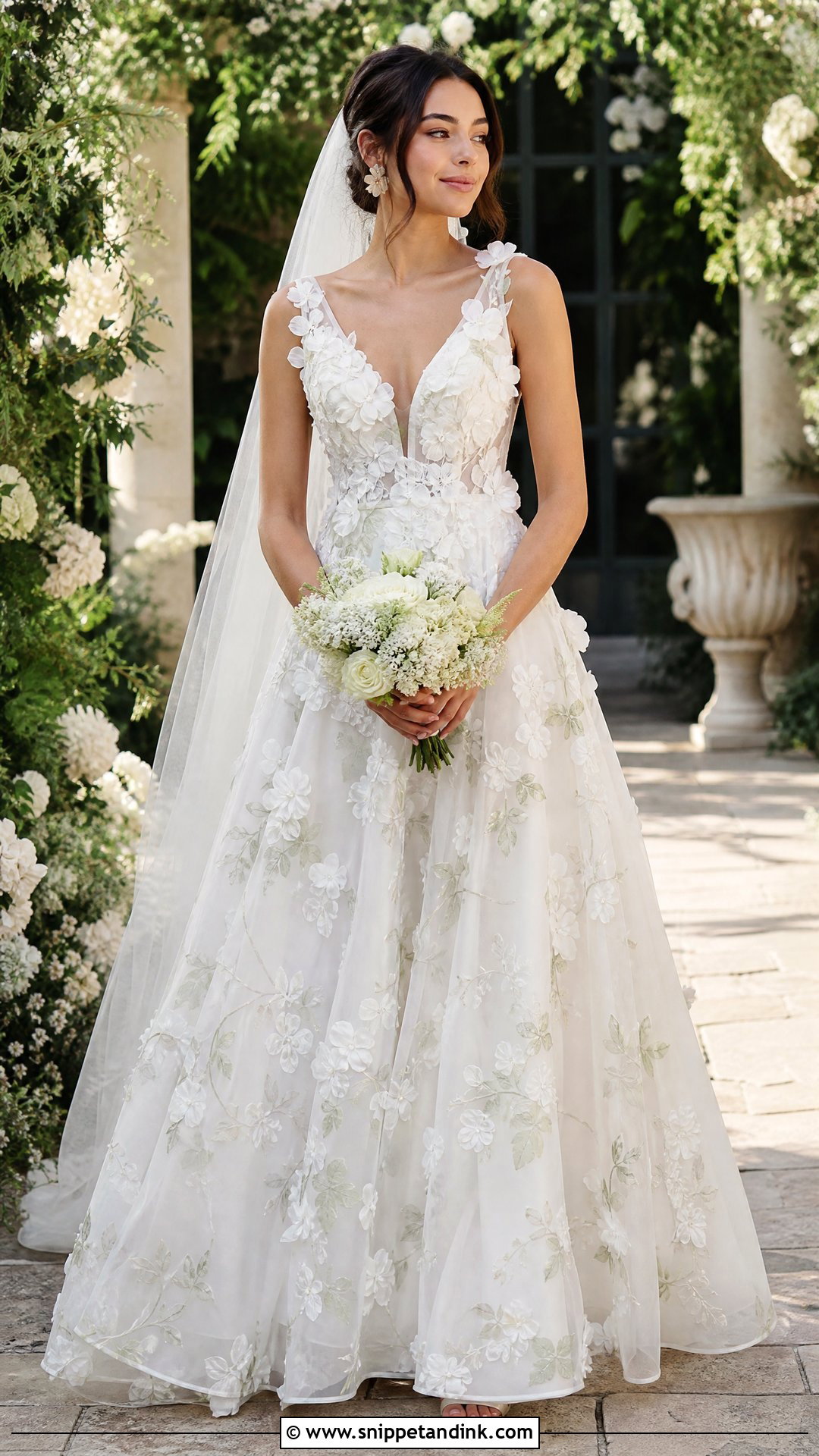
Three-dimensional flowers on organza look best concentrated on the bodice and thinning out down the skirt, so the eye has a place to start. An A-line or soft ball gown gives the flowers room. Because the fabric is already decorated, keep everything else plain: small floral studs, plain ivory heels, a sheer veil with almost no edging. A softly waved updo leaves the bodice visible. Choose a tidy bouquet in white, blush or pale green rather than a large one that hides the appliqués. Spring gardens and receptions full of greenery suit it. I always ask how the flowers are attached; hand-stitched ones survive a long day, glued ones sometimes don’t.
5. Ruched Organza Wedding Gown
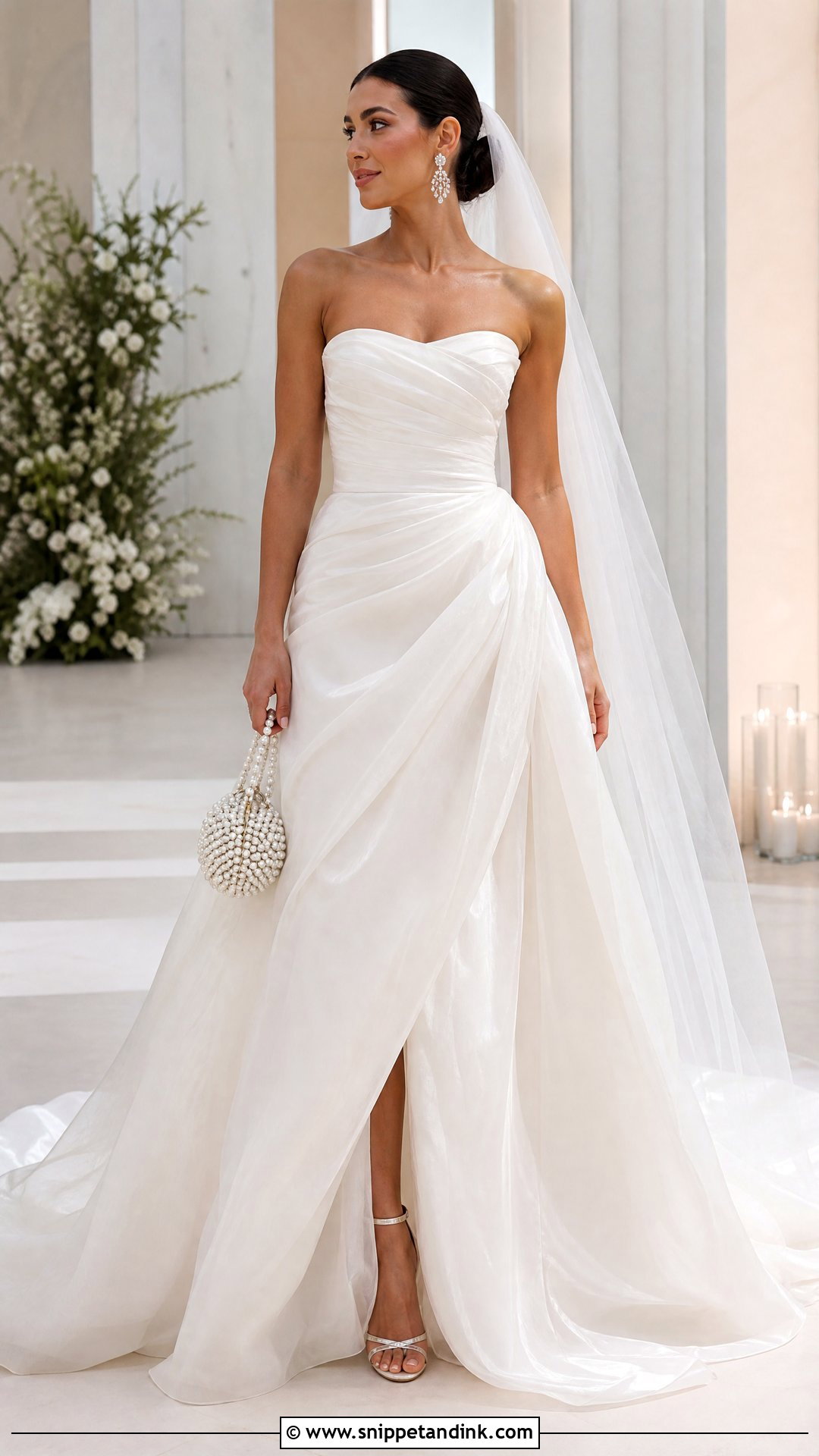
Ruching is gathered fabric stitched down in folds, and in organza it gives texture without lace or beading. A ruched bodice with a natural or dropped waist defines the shape while the skirt stays light. Diagonal folds lengthen the body; symmetrical gathers look more traditional. Pair it with crystal drops and a plain cathedral veil, which contrasts nicely with the texture. Metallic ivory sandals add a little shine, and a pearl bag can come out for the reception. Keep the hair controlled in a polished ponytail or a low twisted bun. Ruched organza is quite forgiving over the stomach, which is a big part of its appeal.
6. Square Neck Organza A Line Gown
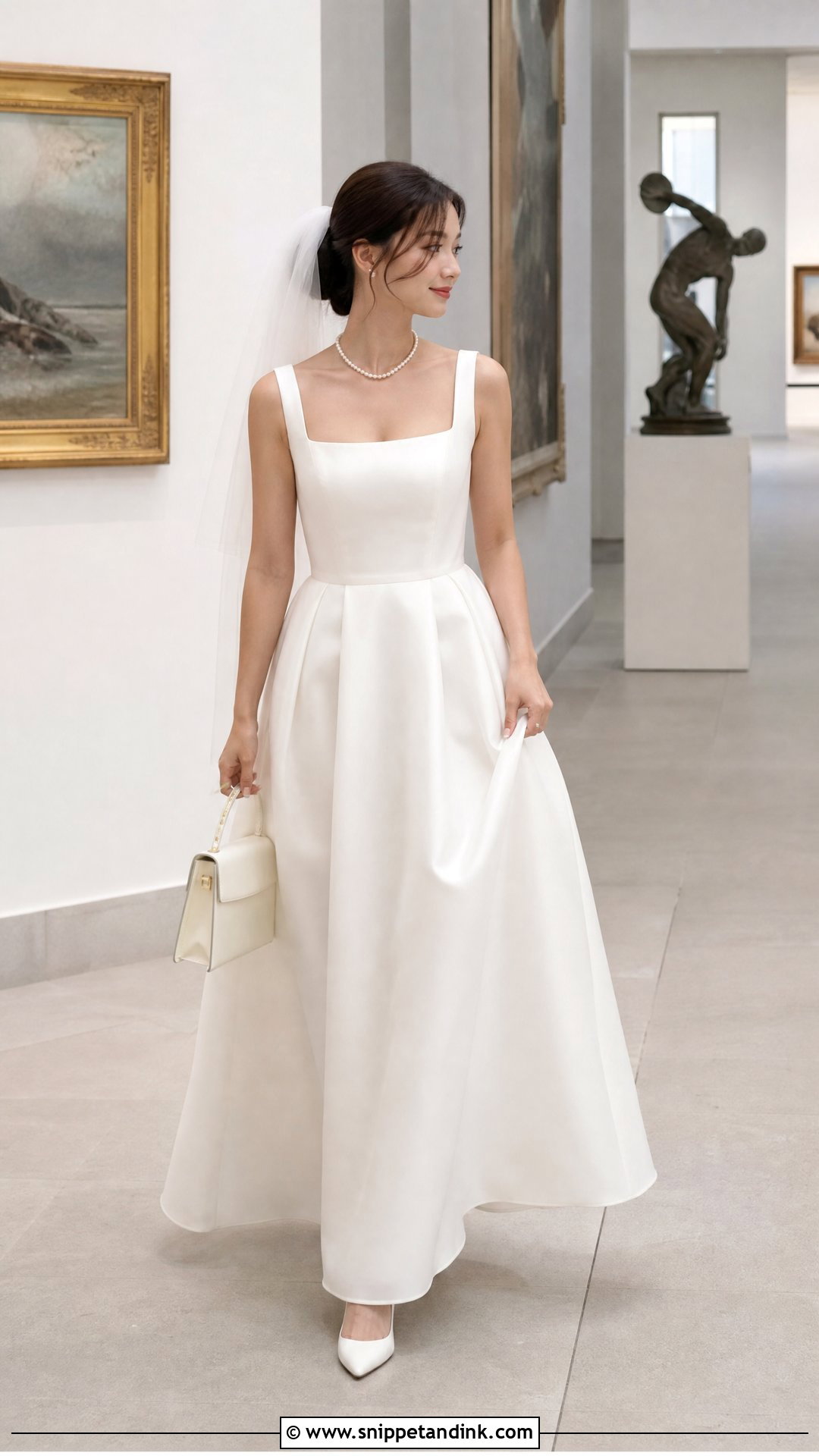
A square neckline on an organza A-line looks clean with a slight vintage edge. Wide straps carry the bodice comfortably and the open shape shows the collarbones. Keep the bodice smooth and the skirt softly pleated. A short strand of pearls sits inside the square neatly; if that’s too much, plain button earrings will do. Add a waist-length veil, low pointed pumps and a structured ivory bag. A French twist matches the tailored feel. City ceremonies, museums and daytime weddings suit it. Have the strap width checked against your bra or shoulder line, because a square neck shows any strap that sits even slightly wider.
7. Long Sleeve Organza Wedding Dress
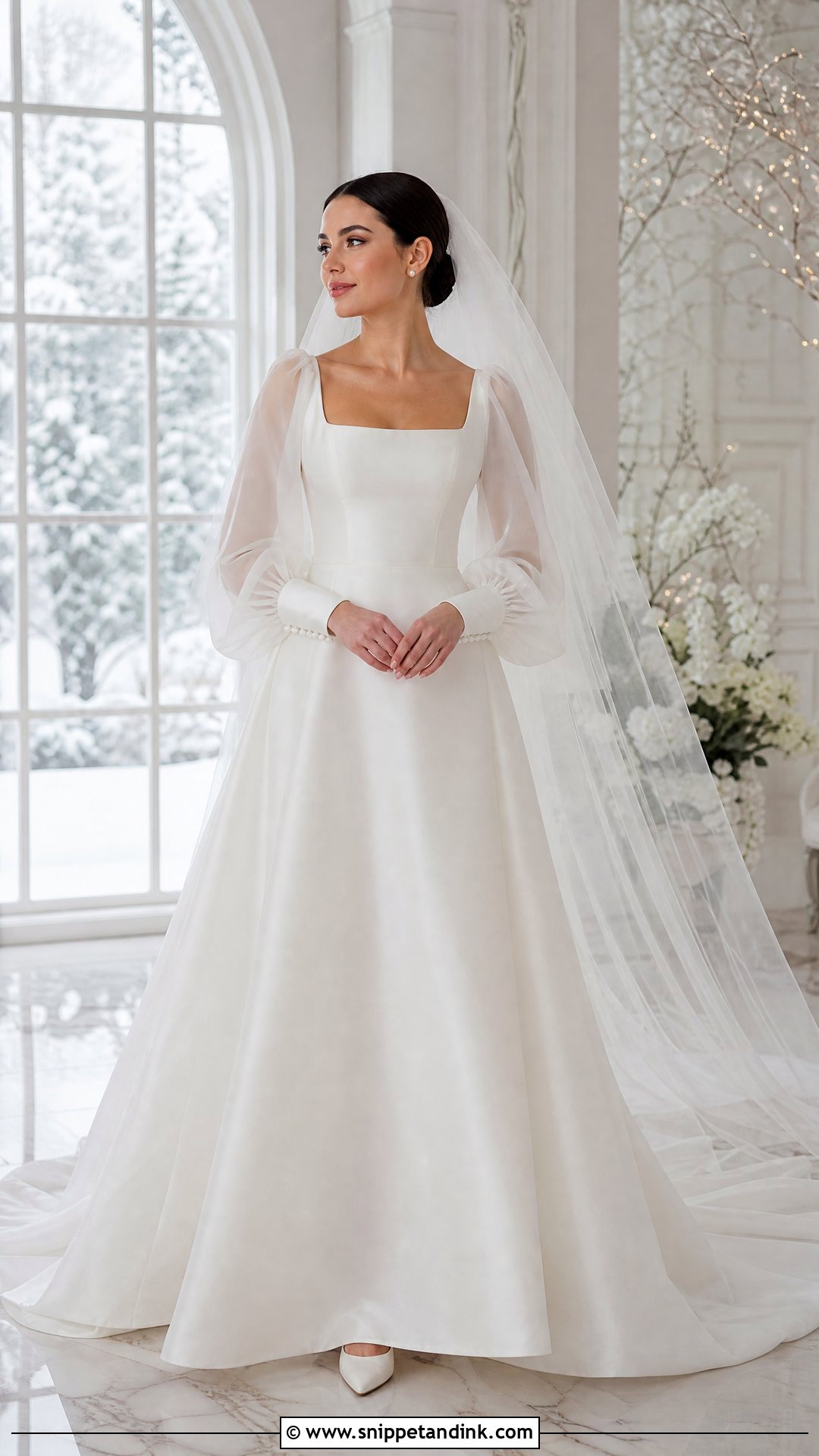
Sheer organza sleeves give coverage that still feels light, which is something lace can’t quite do. They can end in a fitted cuff, gather at the shoulder or close with a row of tiny covered buttons. Pair them with a structured bodice and a full A-line skirt so the top doesn’t look flimsy next to the volume. Skip the necklace and wear earrings so the neckline and sleeves stay clear. Closed pumps, a cathedral veil and a low bun finish it. In cold weather, add a tailored ivory coat between venues. One honest warning: organza sleeves aren’t warm. They cover, they don’t insulate, so plan for a heated venue in winter.
8. Organza Halter Wedding Dress
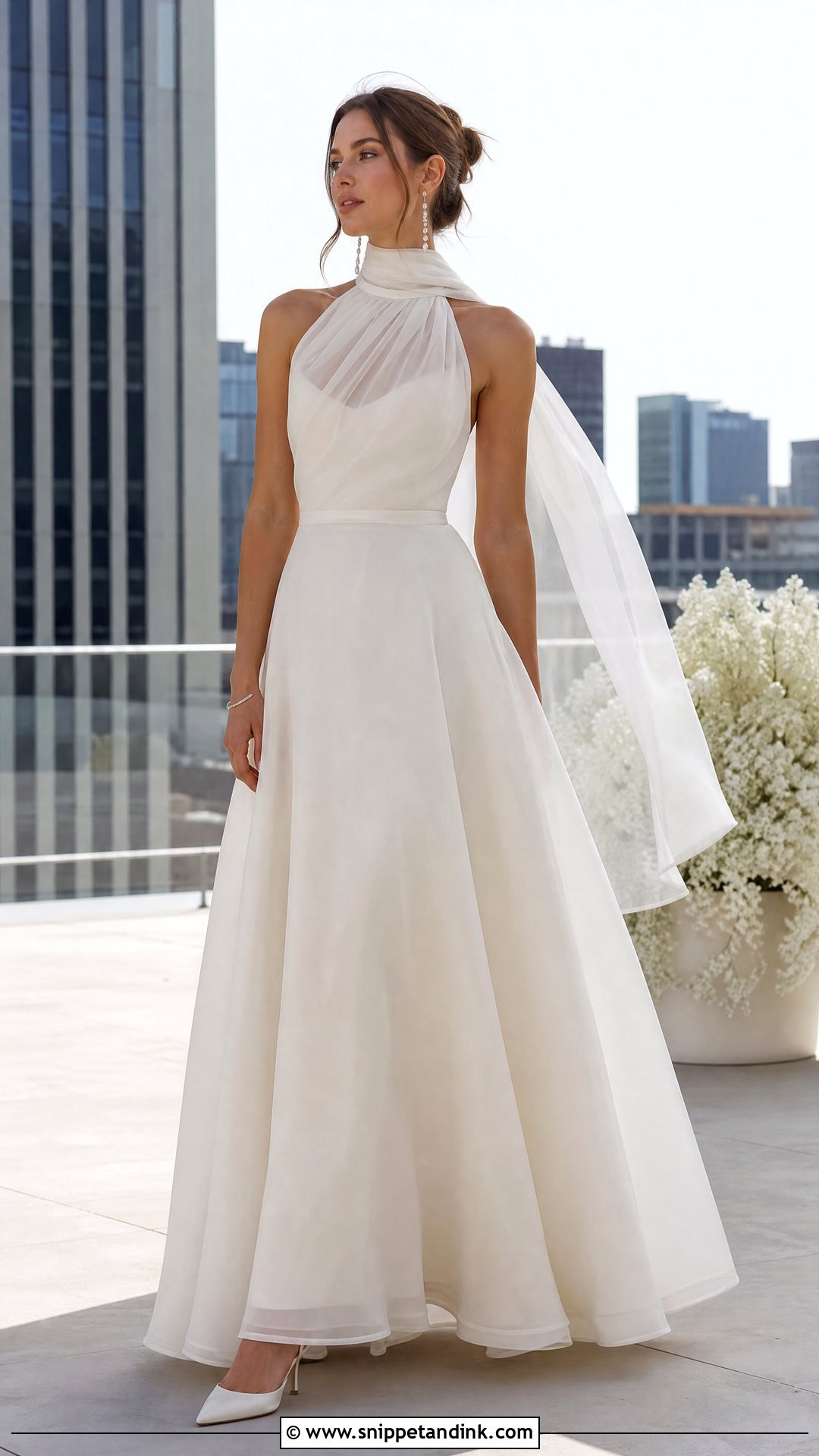
A halter puts the attention on the shoulders and back. A softly draped halter neckline, a defined waist and an A-line skirt balance structure and movement. If the back is low, insist on internal support: a waist stay and boning down the sides, or the bodice slides forward when you lean. Long earrings and a slim bracelet are enough; a necklace would crowd the halter. A sleek bun or high ponytail shows the full shape. Pointed mules or minimal ankle straps keep it modern. A clean tulle veil or a removable organza scarf finishes it, and galleries, rooftops and minimalist rooms are its natural setting.
9. One Shoulder Organza Wedding Gown
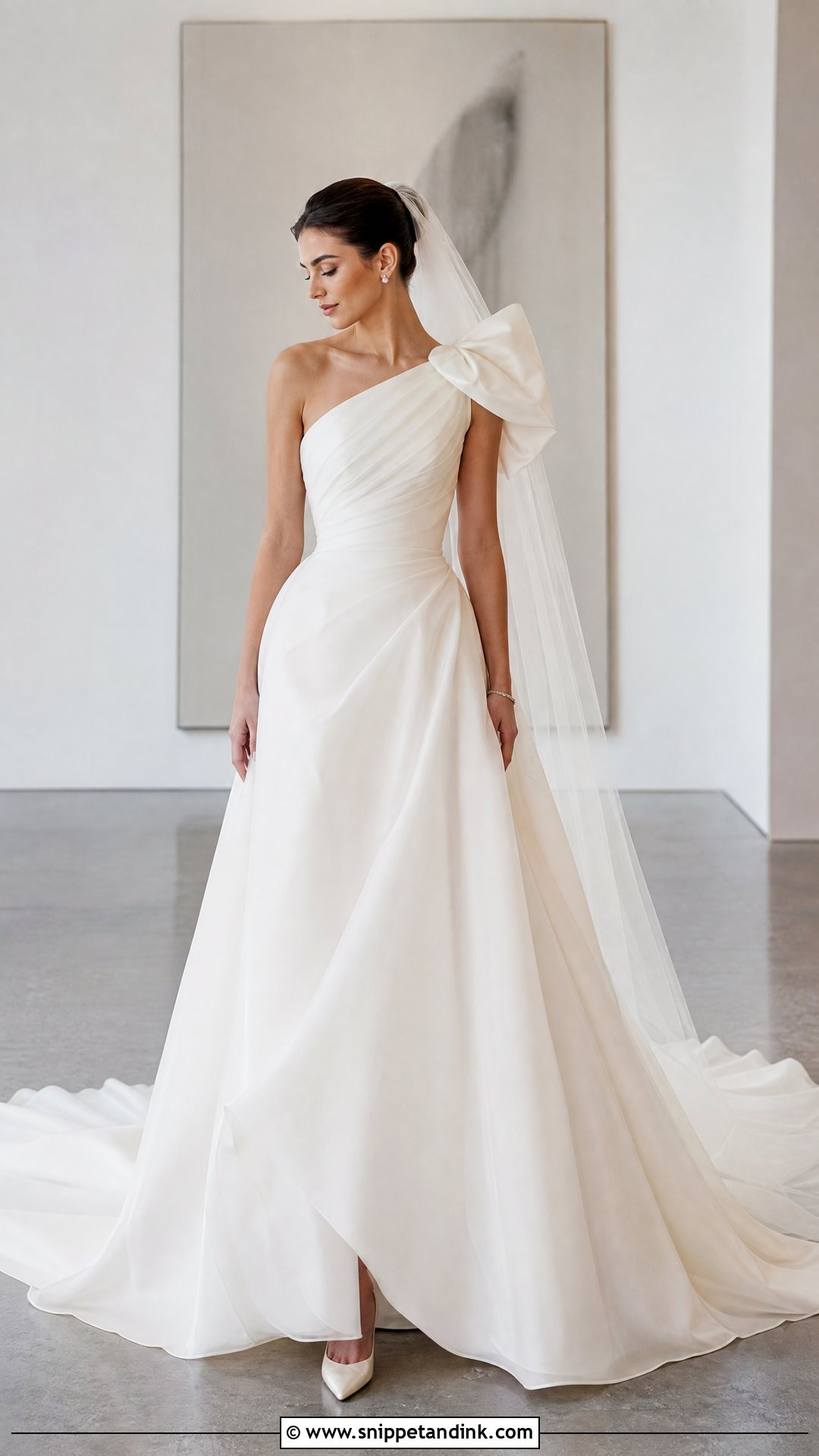
One-shoulder organza can carry real drama without a single bead, because the fabric holds a sculpted shoulder, a bow or a sweeping panel on its own. A fitted bodice with a full skirt balances the asymmetry. One pair of compact earrings and a bracelet on the opposite wrist keep things simple. Attach the veil beneath a smooth bun so it doesn’t fight the shoulder detail. Pointed ivory pumps and a satin clutch complete it. If the shoulder piece is large, carry a narrow bouquet; a wide one hides half of it. It works best for contemporary ceremonies and evening receptions.
10. High Neck Organza Bridal Gown
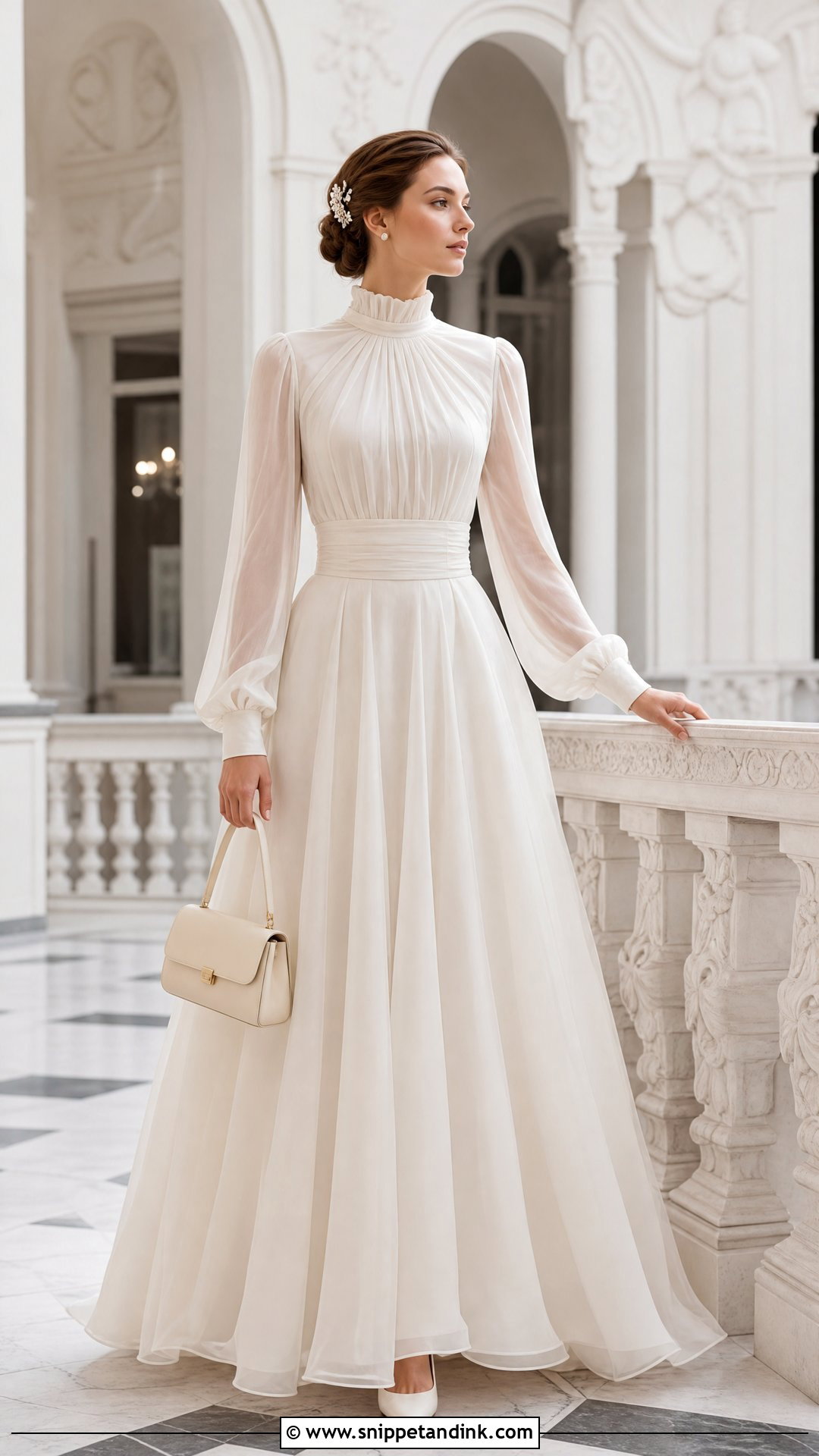
A high neck in organza looks formal and a little unexpected. The collar can be gathered, finely pleated or cut as a narrow stand. Balance the covered top with a defined waist and a moving skirt. No necklace here, just small pearl or diamond studs. A low bun, a small comb and a veil anchored below the hair keep the collar clear. Closed pointed heels and an ivory top-handle bag for arrival photos fit the mood. For a softer version, look for a sheer organza neck over a strapless lining, which covers while still showing skin through it. I check the collar with a finger’s width of room; a high neck you can feel when you swallow becomes the only thing you notice by evening.
11. Corset Organza Ball Gown
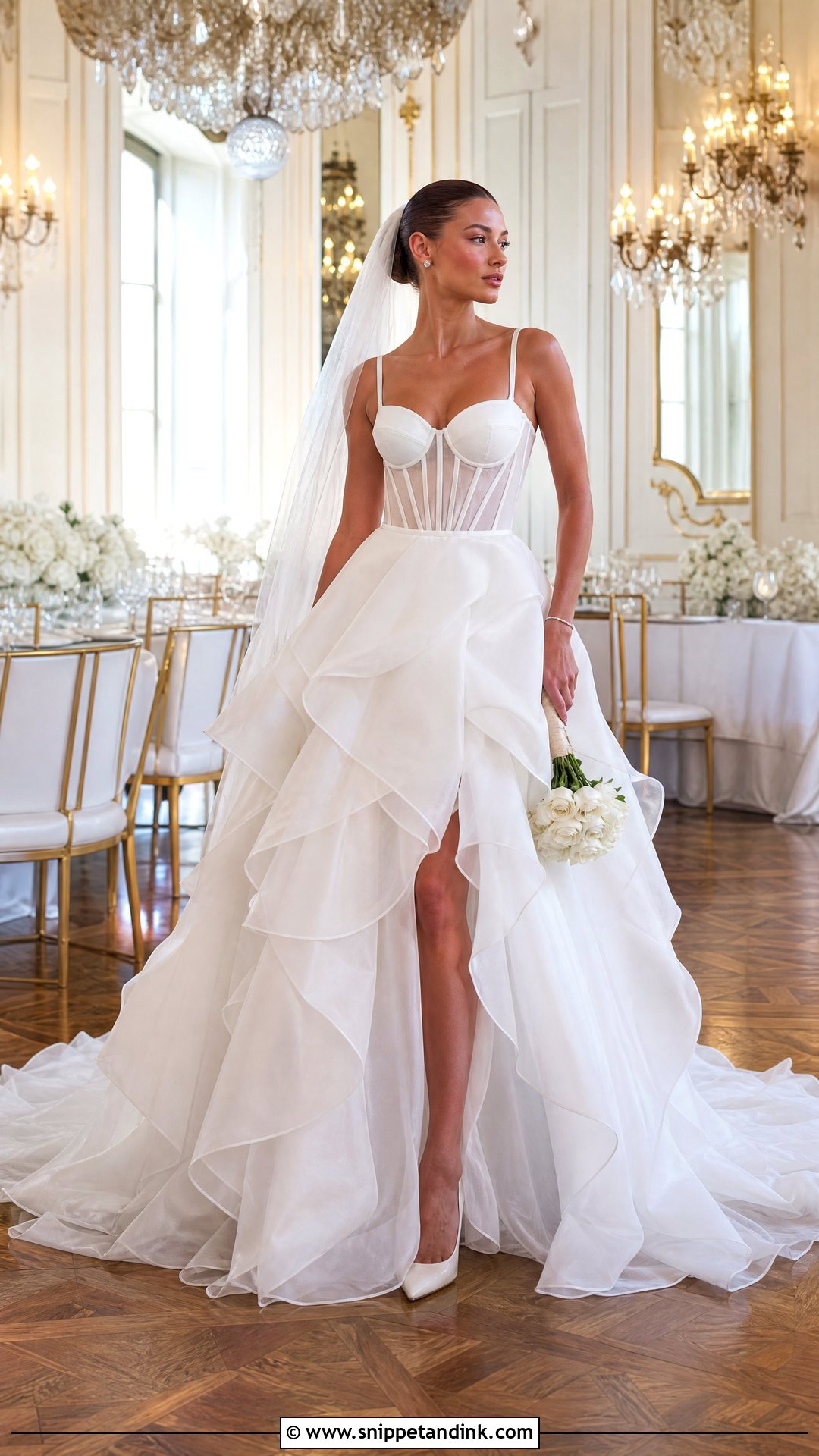
Visible boning channels on an organza bodice show the construction openly, and the contrast with a soft layered skirt is the whole point. The corset must fit: clean channels, real cups and a secure back, ideally lacing, which lets the fit adjust slightly across the day. A sheer cathedral veil lengthens the line without hiding the bodice. Crystal studs, a slim bracelet and pointed pumps are enough. Put the hair up; loose hair over a corset hides the work. A compact bouquet keeps the waist visible. It suits a grand venue, and in a smaller room I’d tone the accessories down further so the dress doesn’t swamp the space.
12. Ruffled Organza Wedding Dress
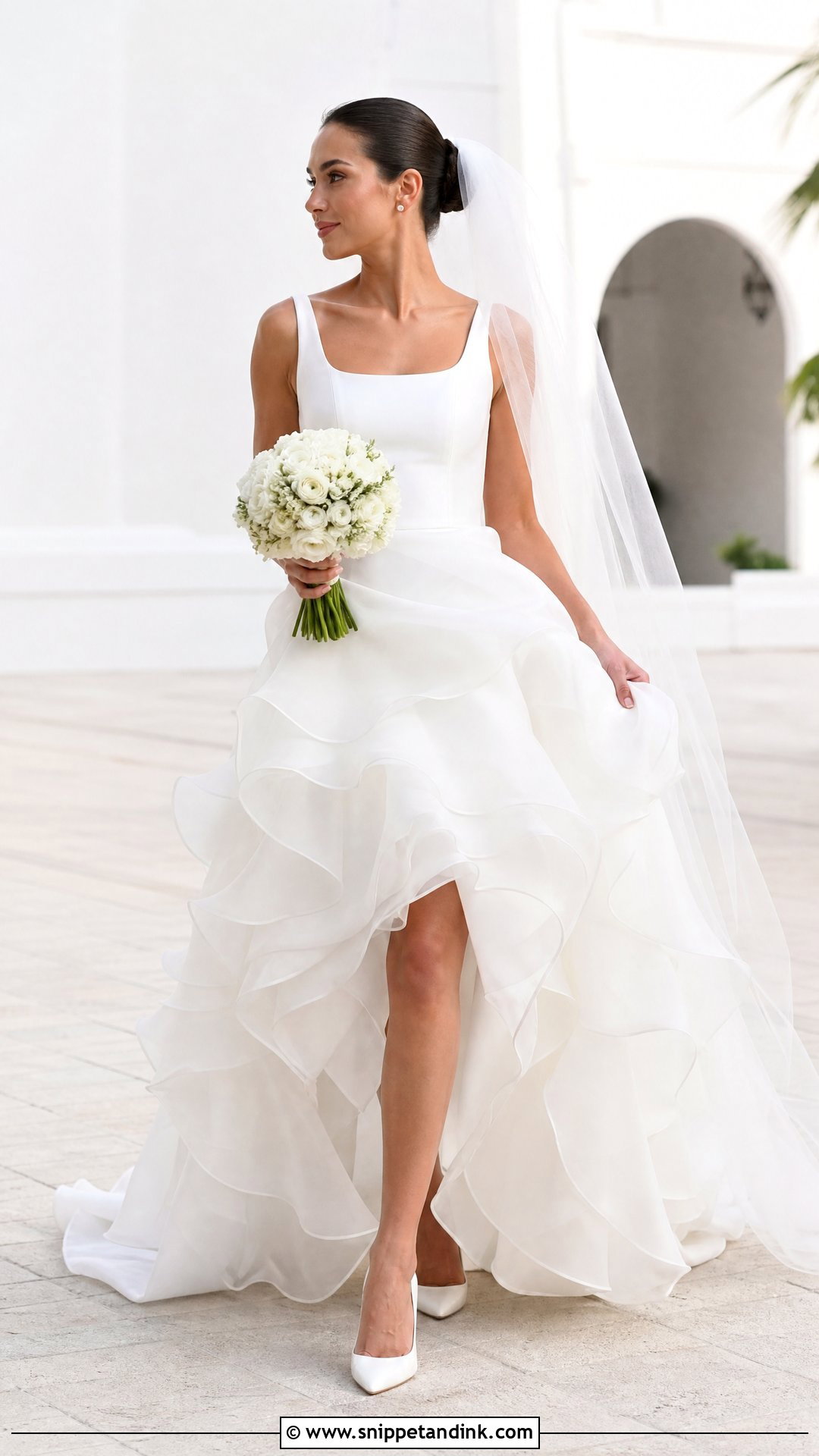
Ruffles in organza stand up and bounce, unlike chiffon ruffles that hang. Placement matters more than quantity: along the skirt, the neckline or one shoulder, not everywhere at once. Smooth satin heels, tiny studs and a plain veil with no lace or appliqué keep the rest calm, along with a sleek bun or controlled waves. Carry a compact, rounded bouquet. For dancing, ask for a bustle that lifts the lower tiers. The catch is width: a heavily ruffled skirt takes up a lot of room in a car, a doorway or a narrow aisle, so measure the route before falling for the biggest version.
13. Pleated Organza Wedding Gown
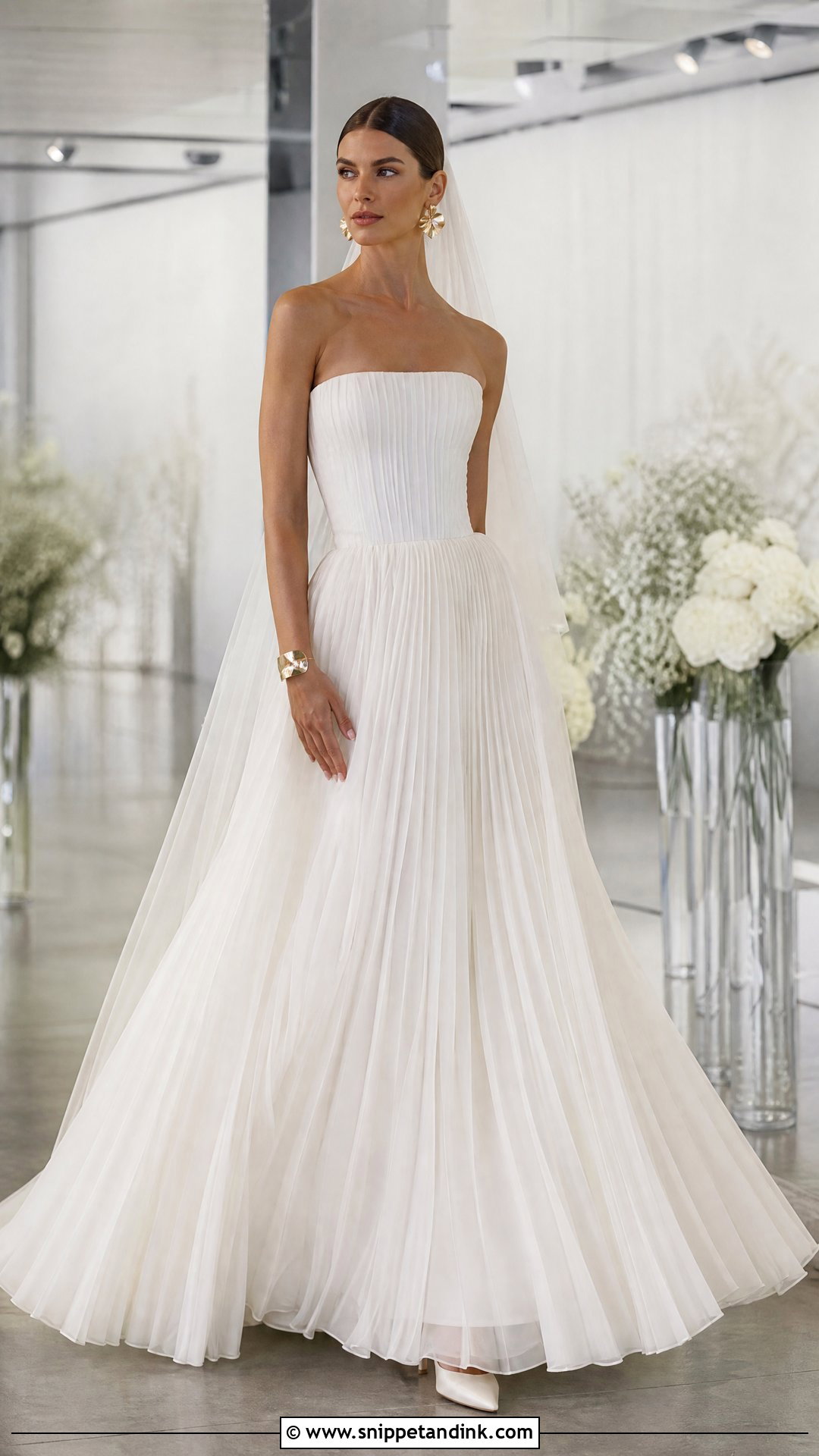
Pleated organza has a rhythm that photographs well in movement. Vertical pleats through bodice and skirt lengthen the body; accordion pleats confined to the lower skirt give drama when you walk. A simple strapless, square or halter neckline lets the pleating do the talking. Sculptural earrings, a smooth bracelet and clean pointed heels are all it needs, plus a narrow unedged veil. Wear the hair in a modern knot or a brushed-back ponytail. A metallic ivory clutch adds a little contrast at the reception. Pleats are heat-set into the fabric, so a dress like this should be steamed only by someone who knows not to press them out.
14. Organza Mermaid Wedding Dress
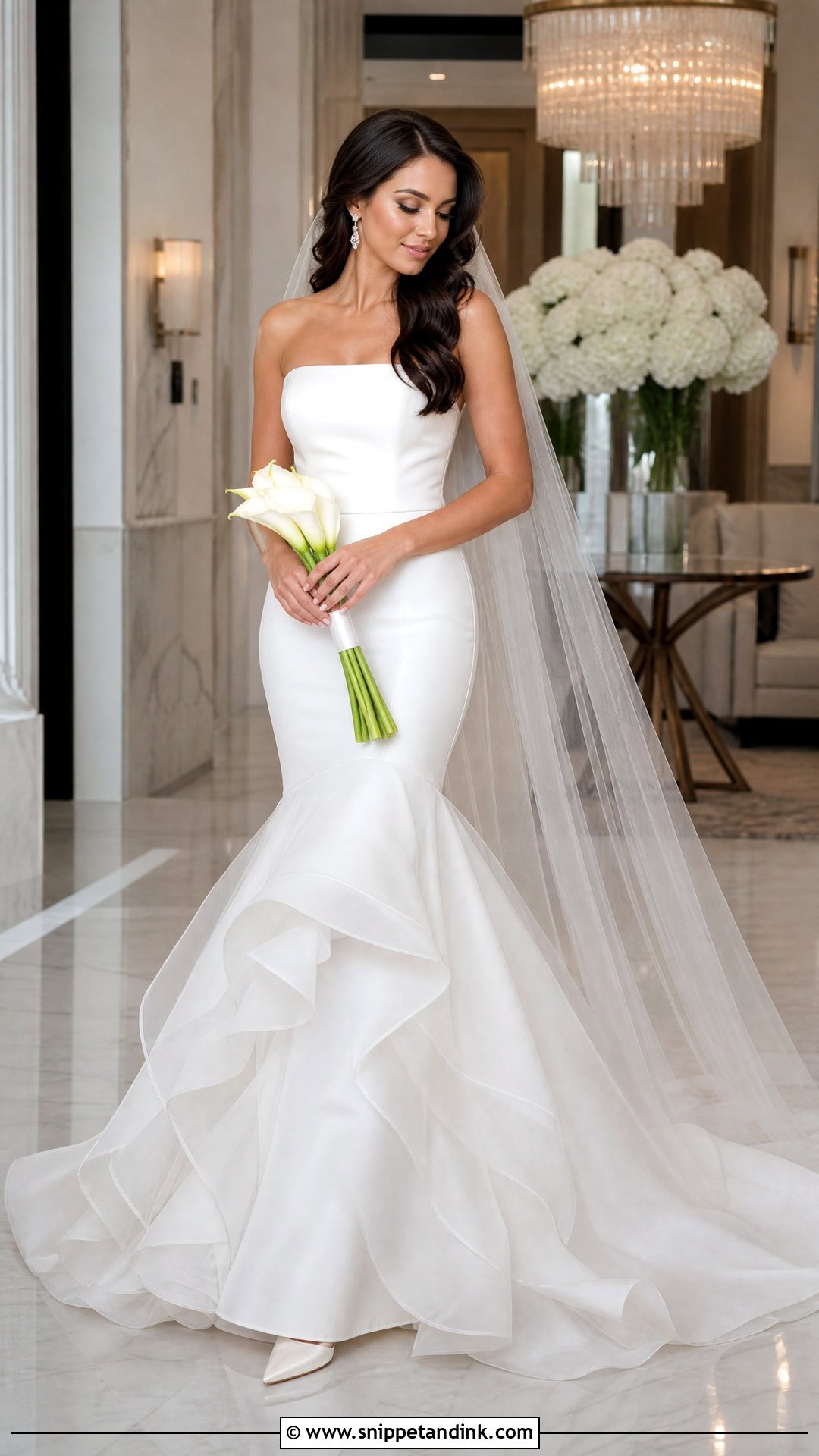
A mermaid in organza is lighter than the usual satin or crepe version, and the flare looks like a cloud rather than a weight. It depends entirely on good seaming and a supportive lining that follows your figure before opening near the knee. Drop earrings, a narrow cathedral veil and pointed heels extend the vertical line. Glossy waves behind the shoulders or a low bun both suit it, with a long-stemmed bouquet. At the fitting I have brides walk, sit and climb a step. If the flare starts too low you’ll be shuffling, and a seamstress can only raise it so far once the dress is cut.

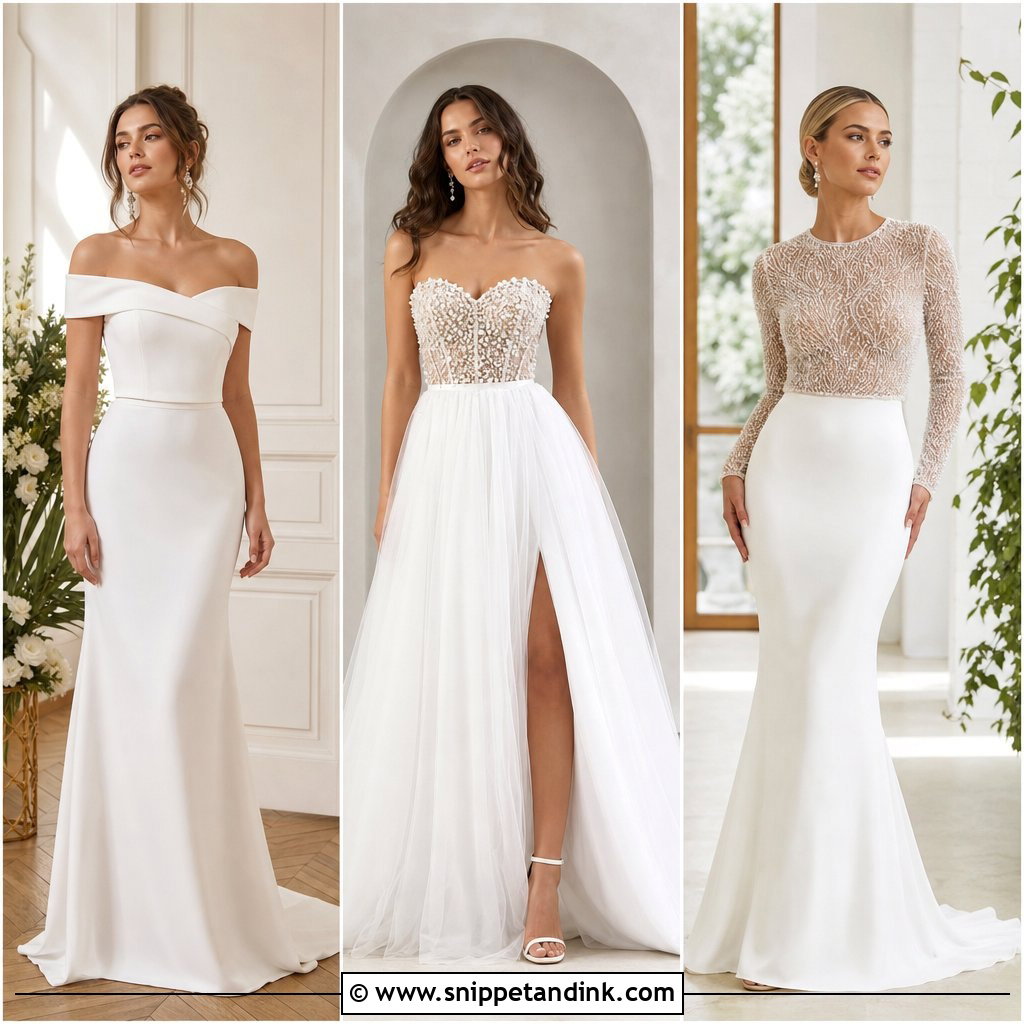

15. Tea Length Organza Wedding Dress
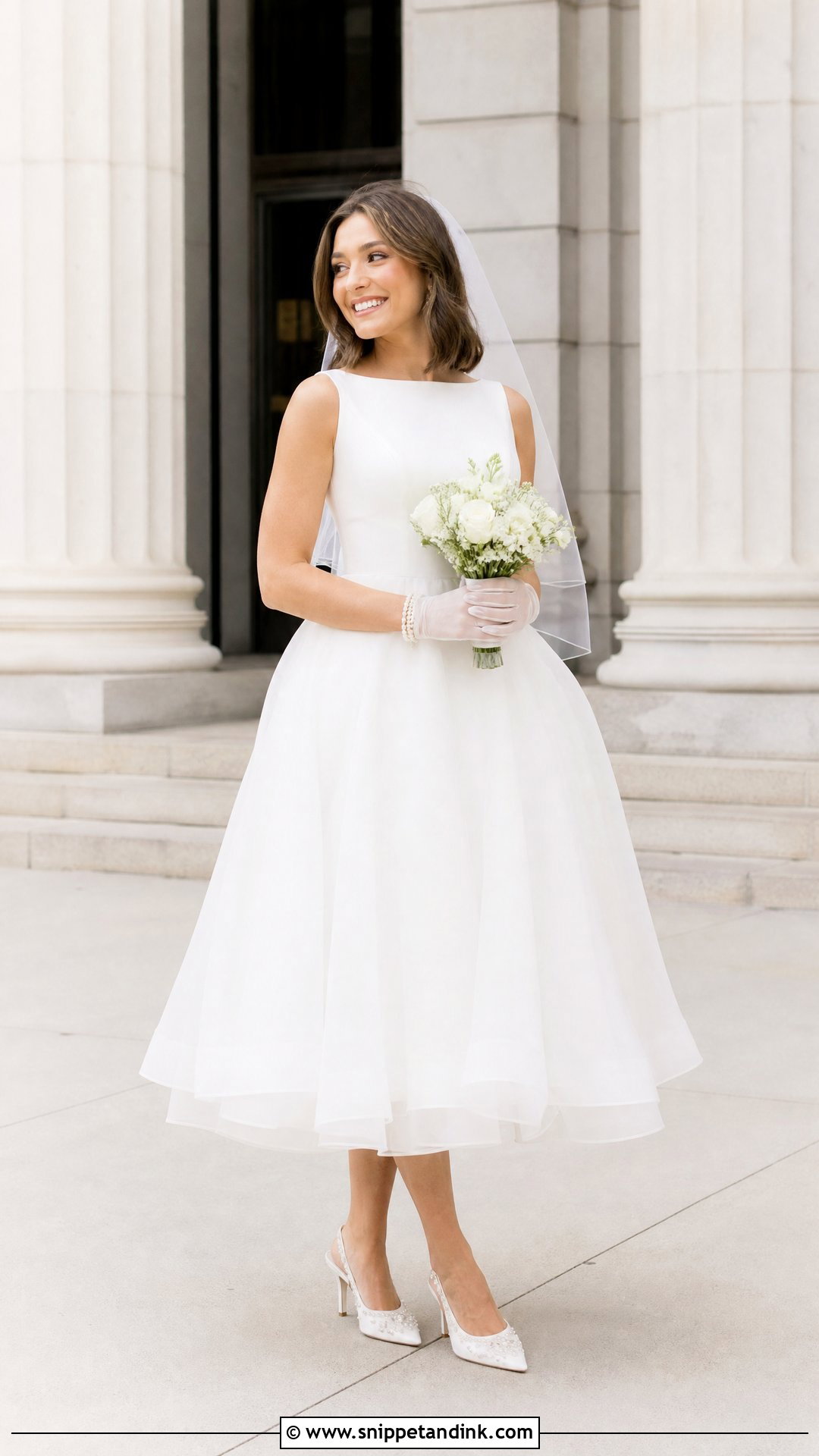
Tea-length organza is cheerful, and the shoes become part of the outfit. A fitted bodice with a skirt ending between knee and ankle, with layers for soft volume, is the shape. Pointed slingbacks, embellished pumps or block heels all work, depending on the venue. Short gloves add a retro touch; otherwise bare hands and a pearl bracelet. A birdcage veil, bow headband or shoulder-length veil suits the shorter proportions far better than a long train. Finish with a small structured bouquet and soft curls. Courthouses, daytime weddings and restaurant receptions suit it, and you can walk and dance without lifting a hem all night.
16. Organza Mini Reception Dress
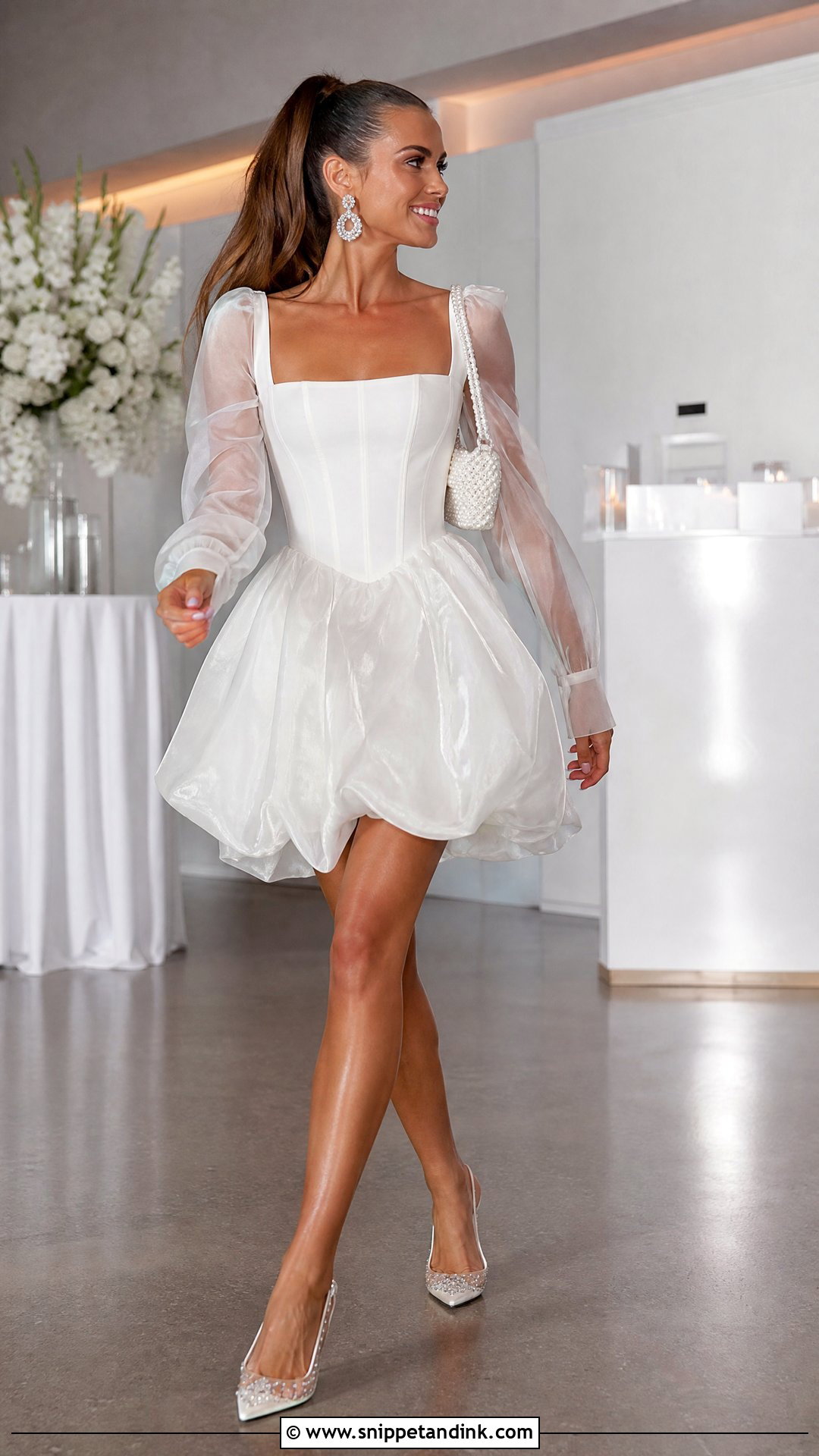
As a second dress, an organza mini lets you dance properly after hours in a full gown. A structured bodice with a bubble skirt, a flared hem or small tiers of ruffles is the usual shape. The short length puts the shoes on show, so crystal slingbacks, satin platforms or embellished flats are worth choosing carefully. Bold earrings and a compact shoulder bag work while the neckline stays plain. A high ponytail or smooth bun keeps it lively. For more coverage, add sheer long sleeves or a removable organza cape for the entrance. Change at a natural break, like after dinner, so you don’t miss the first dance getting dressed.
17. Wedding Dress With Organza Overskirt
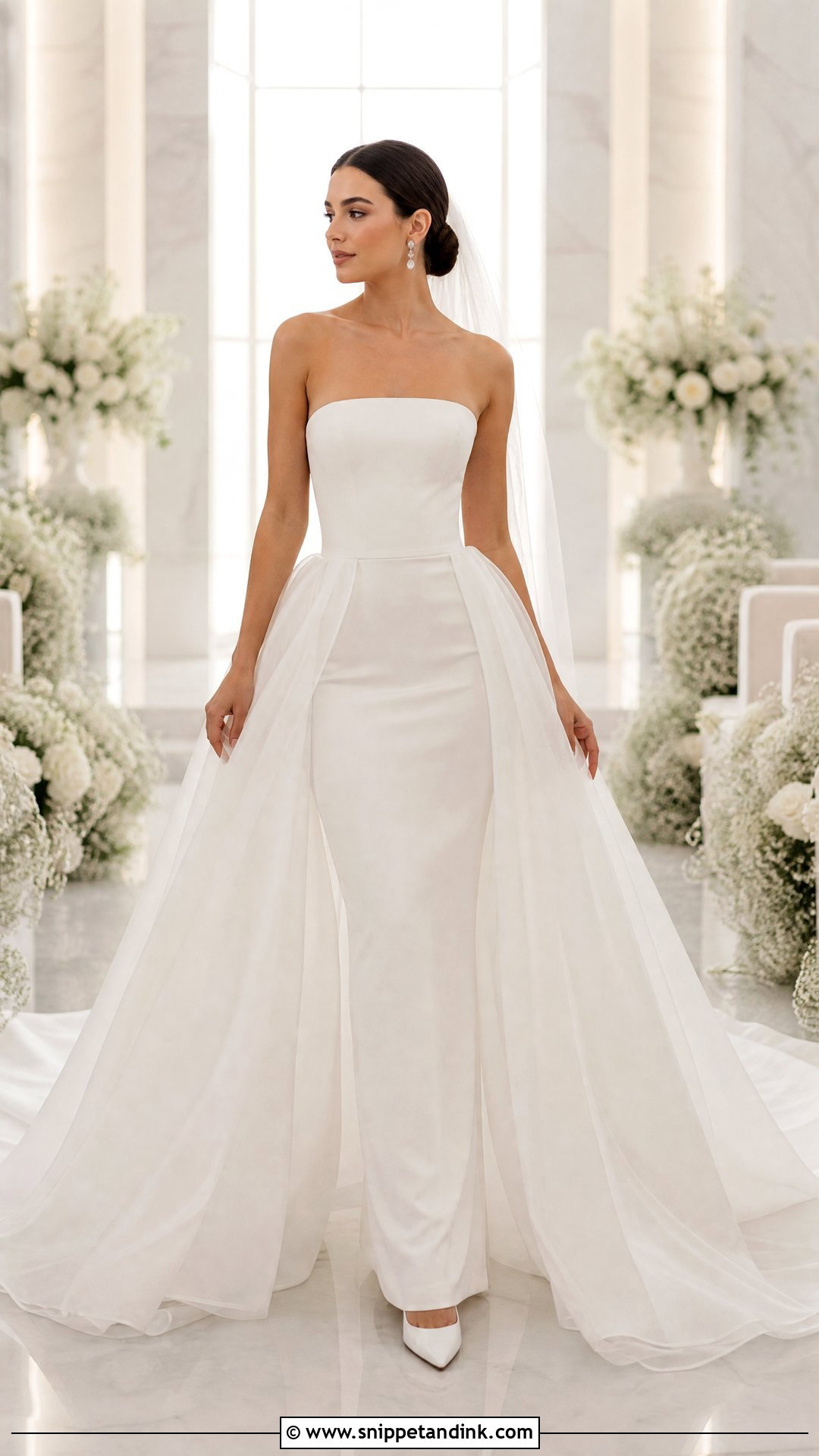
An organza overskirt turns one dress into two looks. Worn over a fitted column, sheath or crepe gown, it gives ceremony volume and a sweeping train; removed, it reveals the slim dress for dancing. Keep the same pointed pumps, small earrings and sleek low bun throughout so both versions feel connected. A long veil suits the ceremony look, and a pearl hair clip becomes the detail once veil and overskirt come off. The waistband has to sit perfectly flat with hidden fasteners, so practise the removal with whoever will help you on the day; overskirts with hooks are quicker than ones with many snaps.
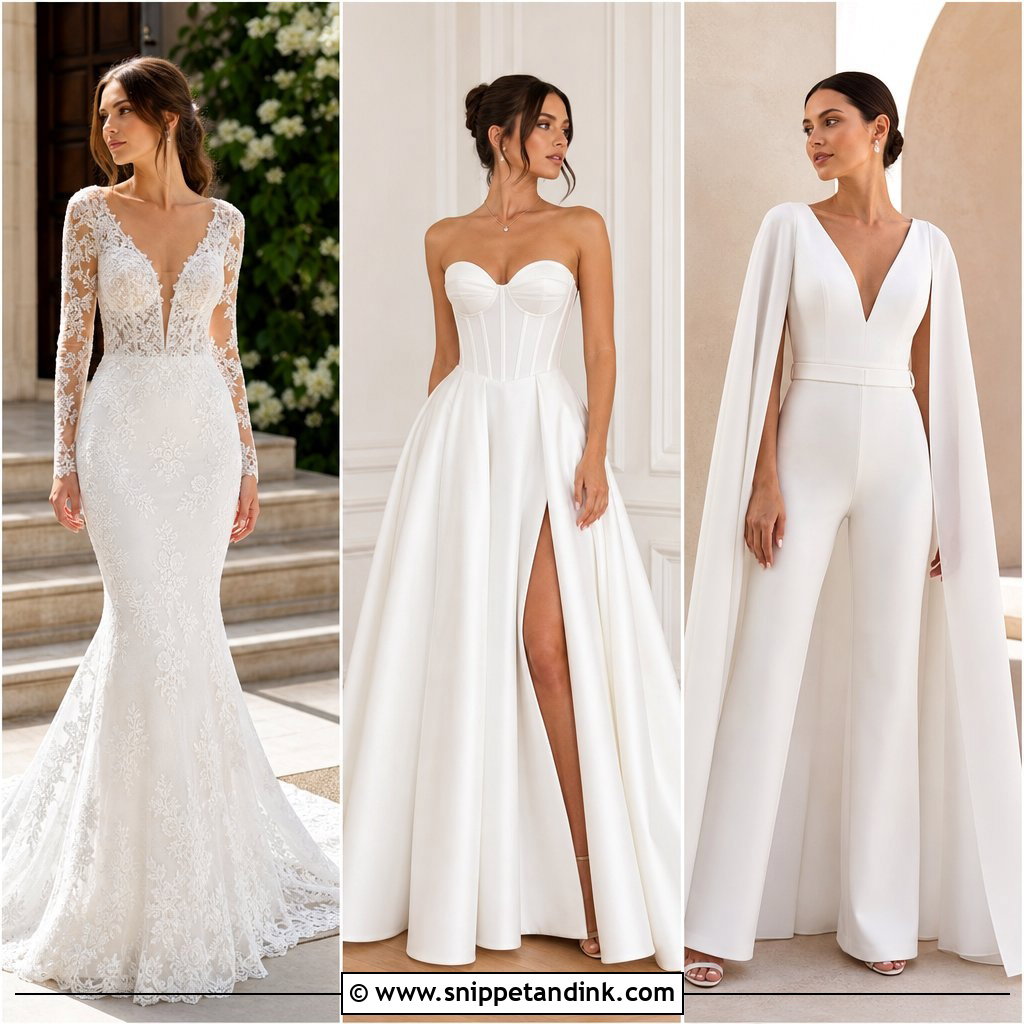
18. Organza Wedding Dress With Cape
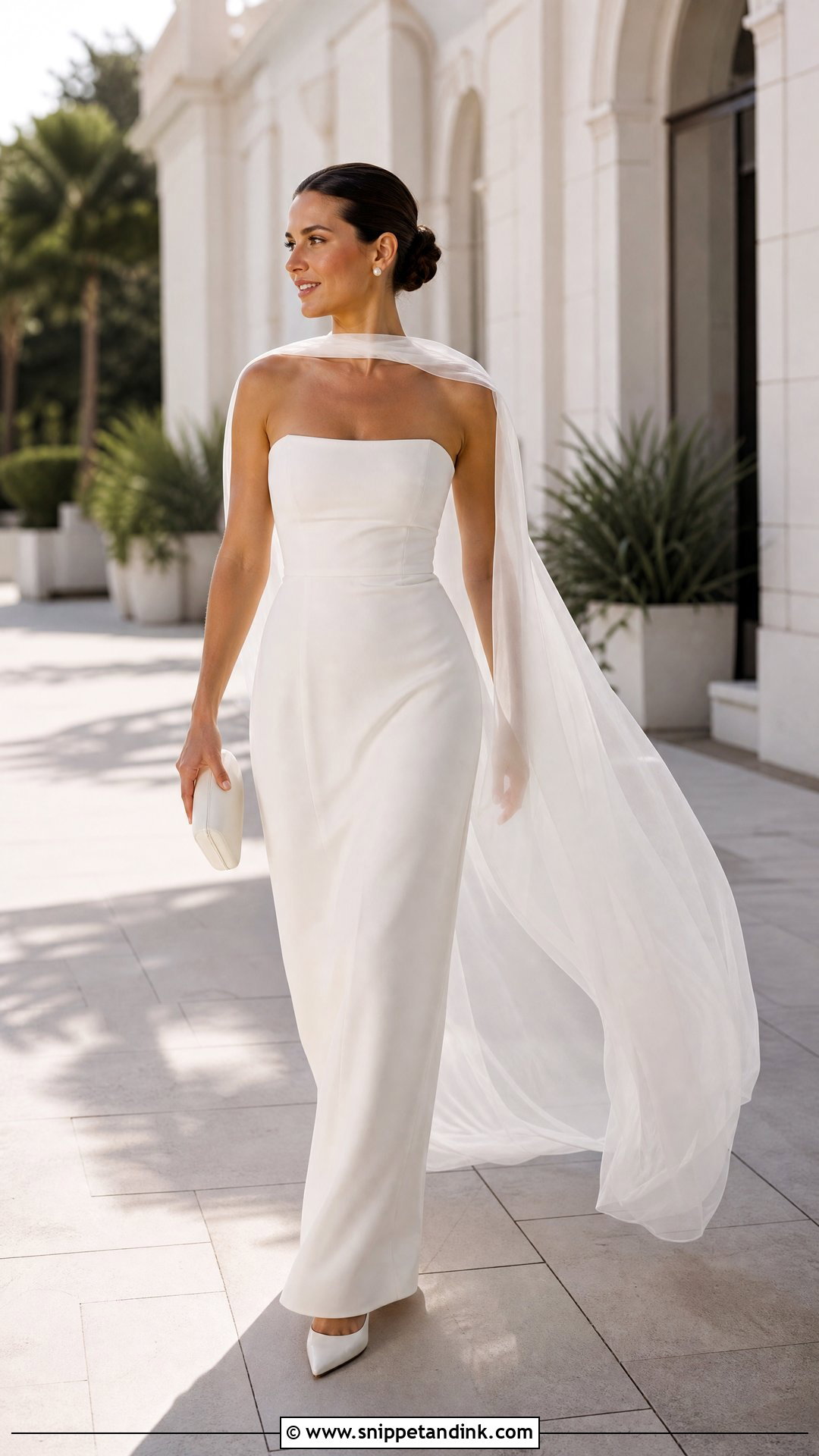
A sheer organza cape adds drama to a simple gown and can replace the veil. Pair a floor-length cape with a clean column, an understated A-line or a strapless organza dress. It can attach at the shoulders, wrap the neckline or fall from a narrow collar. Since it acts as the veil, keep headwear minimal. Pearl studs, pointed ivory heels and a smooth clutch finish it. A polished bun stops the cape from catching in loose hair and keeps its attachment points visible. Take it off for the reception if you like. On a windy day outdoors a long cape behaves like a sail, so have a clip ready to hold it at the hem for portraits.
19. Bow Back Organza Wedding Gown
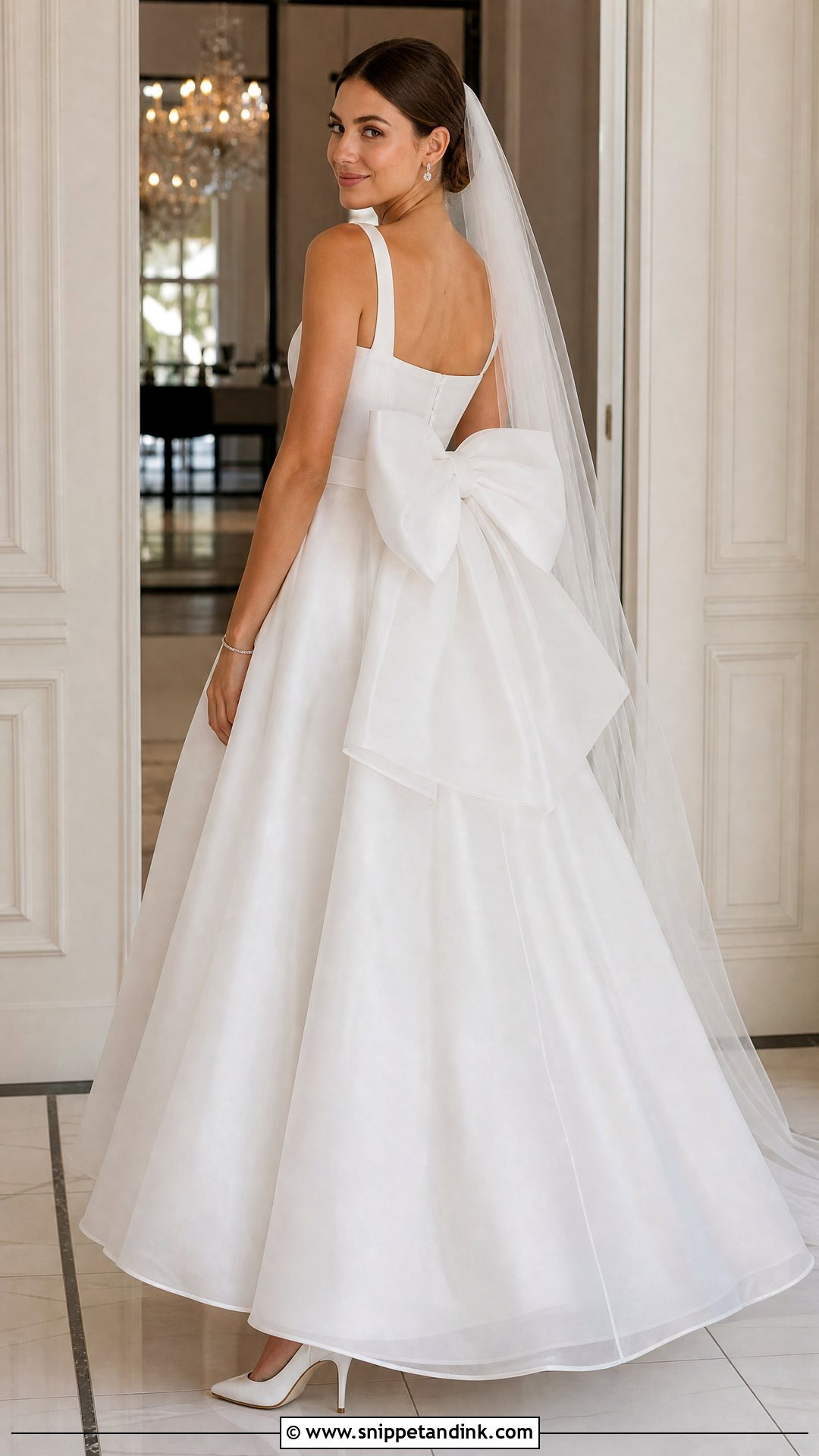
Organza is the best fabric for a big bow because it stands up without wire. A crisp oversized bow gives drama; a narrow one with long trailing tails is softer. Keep the front of the dress plain with a strapless, square or sleeveless bodice and a clean A-line skirt. Small earrings, a thin bracelet and pointed pumps are enough. I always pin the veil against the bow before the day: it can sit above or below, but it mustn’t flatten it. A neat updo keeps the back clear for the aisle walk. Remember you’ll sit on that bow at dinner, so ask whether it detaches or is reinforced enough to spring back.

20. Floral Print Organza Wedding Dress
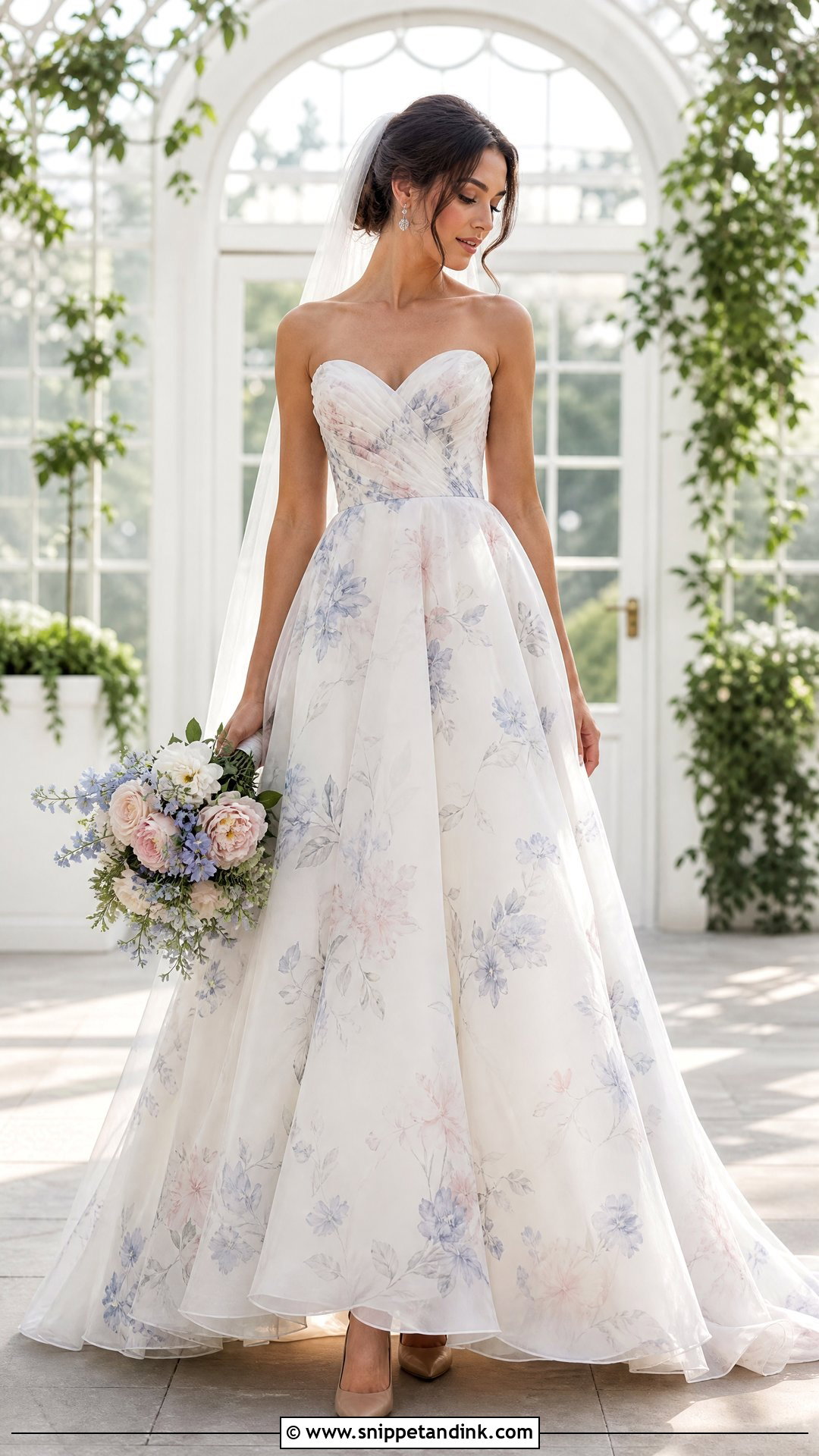
Printed organza brings colour in softly, because the sheer fabric lets ivory show around the motifs. Soft blue, blush, lavender or green botanicals on an ivory ground are the usual choices. A simple A-line gives the print space. Pick one or two shades from the print for the bouquet rather than trying to match all of them. Neutral ivory heels, small gemstone earrings and a plain veil hold it together. Loose waves, a low bun or a braided updo all suit it. Gardens, conservatories and artistic venues fit the mood. It’s a good step for someone who wants colour but still wants classic bridal proportions.
Organza on the Wedding Morning: Steam, Static and Snags
Organza travels badly and recovers well, as long as nobody takes an iron to it. Hang the dress the night before and steam it from the inside, keeping the steamer moving and a hand’s width away. Silk organza can water-spot, so test on an inside hem first and never let drips land on the outer layer.
Static is the other surprise. In dry winter air or air-conditioned rooms, sheer layers cling to tights, the lining and each other. A light mist of anti-static spray on the lining, not the organza, usually fixes it. Keep a small bottle in the emergency kit.
Things that pull threads
- Prong-set engagement rings and textured bracelets. Turn the ring inward when you lift the skirt.
- Beaded clutches, sequinned bridesmaid dresses and hook-and-loop tape on bags.
- Car seat belts and door edges. Sit on a clean sheet and gather the skirt onto your lap.
- Rough stone, wooden benches and brambles at outdoor venues. Check the aisle and the portrait spots.
A pulled thread in organza usually can’t be woven back, but a seamstress can often ease it to the inside so it’s invisible. Don’t cut it.
Light Enough to Dance In, Firm Enough to Hold a Shape
Organza can carry a ball gown, a sculpted corset, a tea-length dress or a removable cape, and that range comes from one quality: it holds shape without weight. Pick your silhouette with your setting, season and plans for the evening in mind. Look at how volume, neckline, train and texture work together, and let the accessories support them rather than add more. Then wear everything at a fitting, shoes, underwear, veil and jewellery included, and move in it the way you will on the day. If it still feels light after twenty minutes of walking and sitting, it’s the right one.
You'll Like These Ideas:



Leave a Reply