
An Indian shadi is really four or five events, from haldi and mehendi to the sangeet, the wedding and the reception, and each one wants something slightly different from what you wear. Sarees, lehengas, Anarkali suits, shararas and fusion sets all have a place, because each trades tradition, comfort and glamour in its own proportion. The looks below cover brides, sisters, relatives and guests, with notes on fabric, jewelry, shoes and dupattas. When someone asks me what to wear, my first questions are which function, indoors or out, and how long you’ll be on your feet. The answers narrow twenty options to three very quickly.
Guest, Sister or Bride: Reading the Color Etiquette
The same lehenga can be right for one person and wrong for another at the same wedding. I ask clients who they are to the couple before anything else, because a few unspoken rules still apply in many families.
- Heavy red bridal lehengas are usually left to the bride. A guest in deep red with full zardozi often ends up looking like a second bride in photos.
- White and black are avoided at many Hindu ceremonies, where they can carry associations with mourning. Christian and some South Indian weddings feel differently, so check with the family.
- Temples and gurdwaras expect covered shoulders, and gurdwaras expect a covered head for everyone, so carry a dupatta even if your outfit doesn’t need one.
- Close family often coordinates colors for a function. Ask before you buy, not after.
When in doubt, I’d choose jewel tones or pastels with moderate embroidery. They suit almost every event and every role.
1. Red Bridal Lehenga Shadi Dress
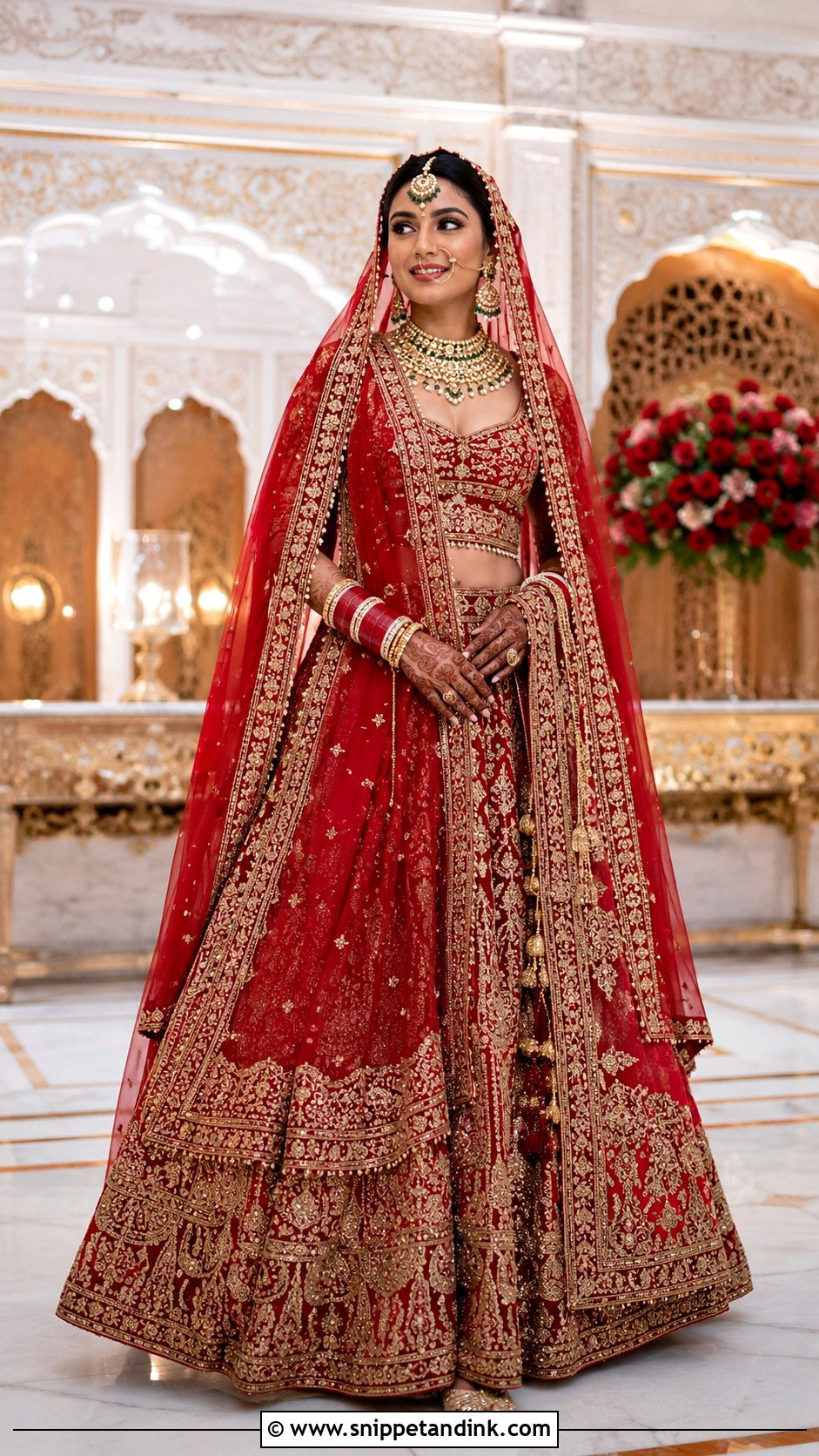
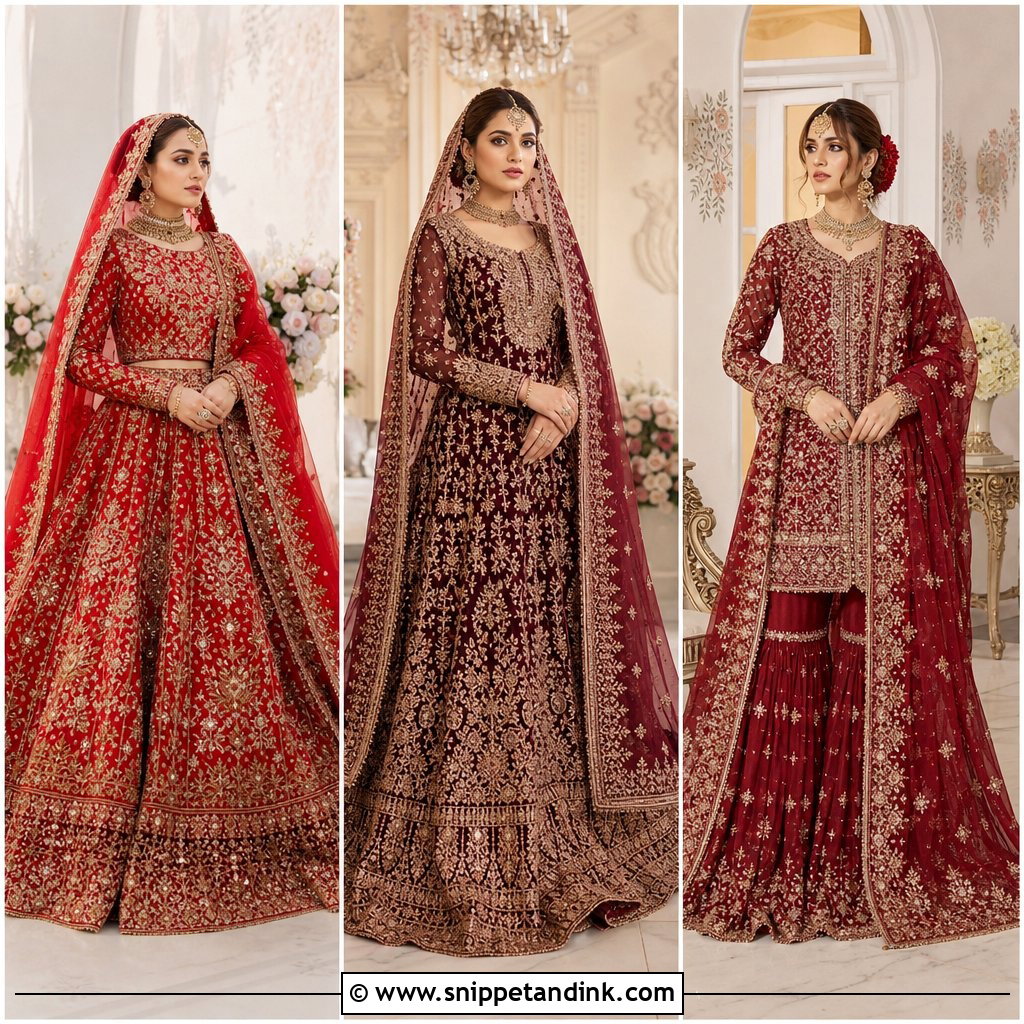
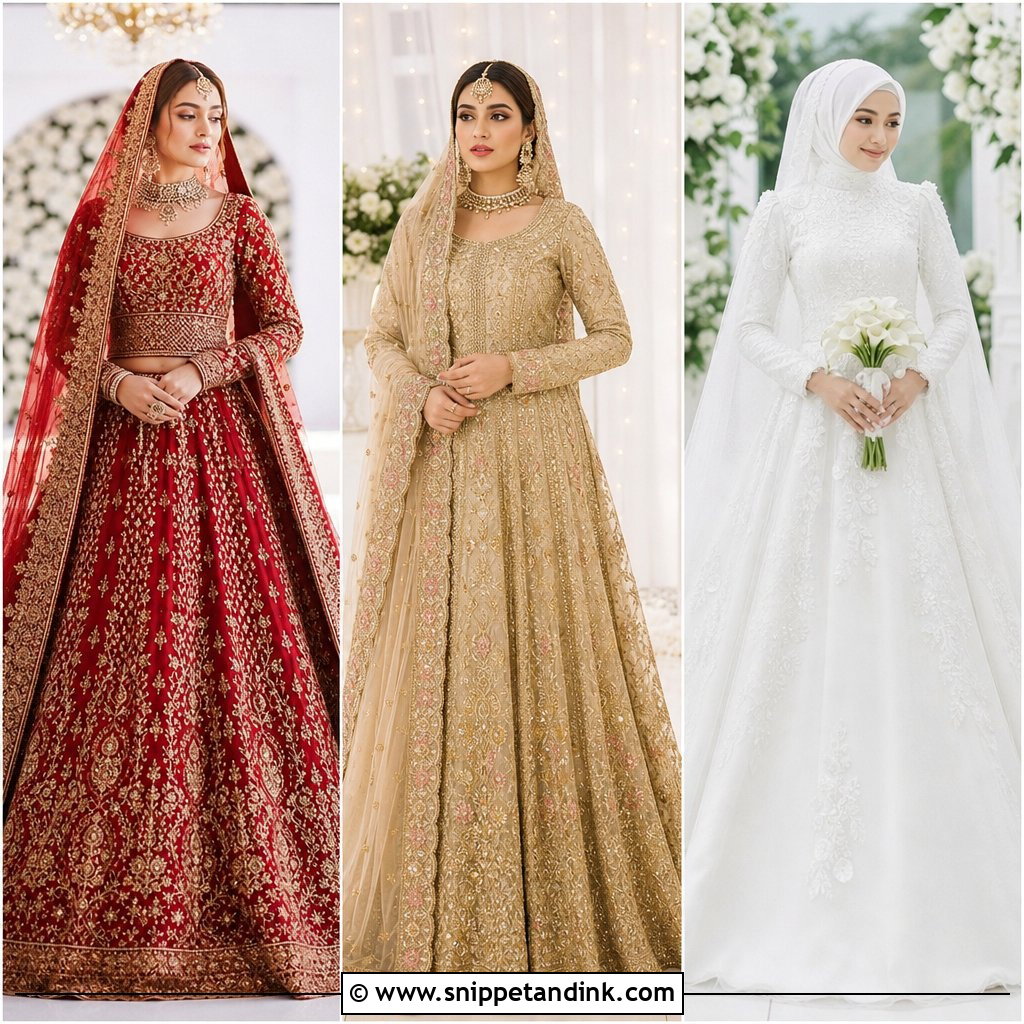
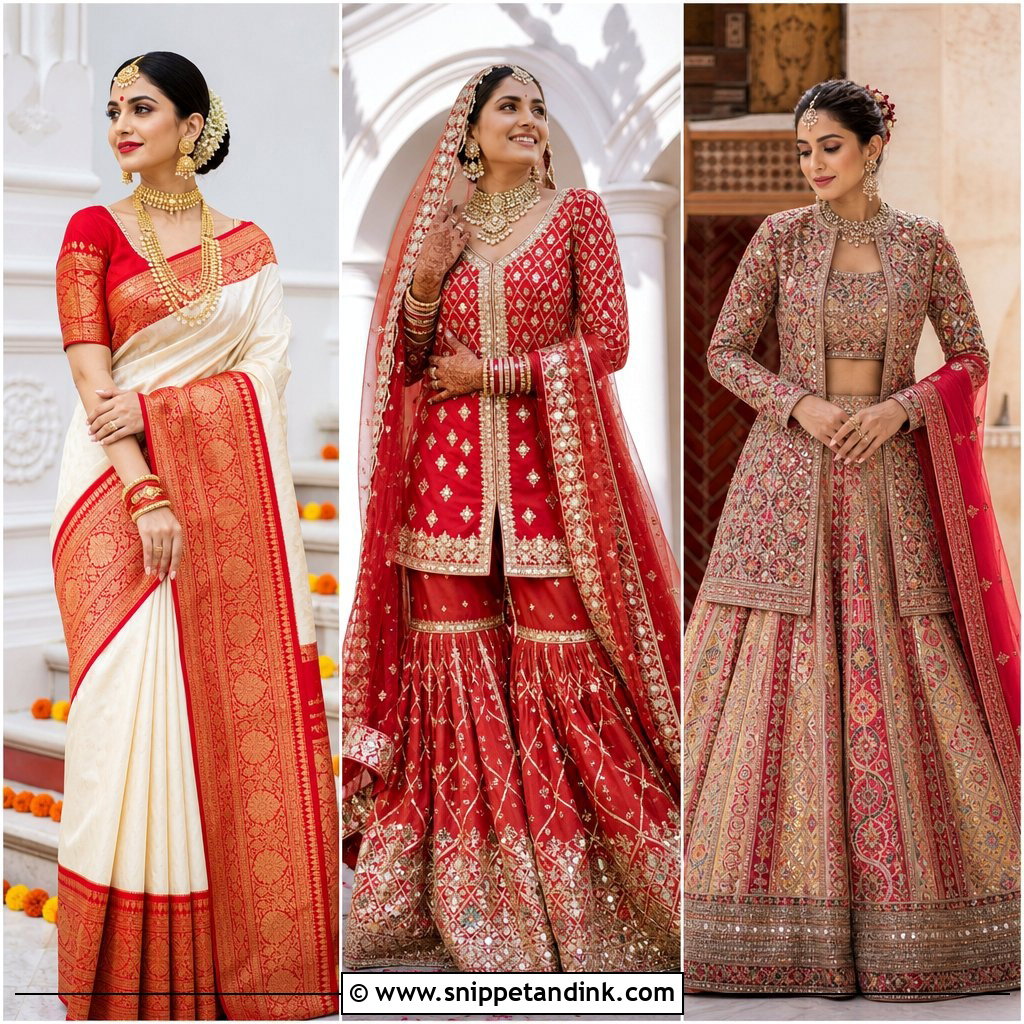
Nothing replaces a red bridal lehenga for many families, and the fabric choice is what decides how it behaves. Raw silk, velvet or structured brocade hold the skirt’s shape through hours of sitting; a soft georgette red collapses. Zardozi, dabka, sequins or threadwork add richness, but I’d keep some calm areas so it doesn’t read busy from every angle. A heavily worked border with lighter detailing through the middle is a smart compromise and much easier to carry. Fitted choli, a dupatta over the head or one shoulder, kundan choker, maang tikka and stacked bangles. Wear cushioned gold juttis underneath, because nobody sees your feet during the pheras.
2. Pastel Embroidered Lehenga Shadi Dress
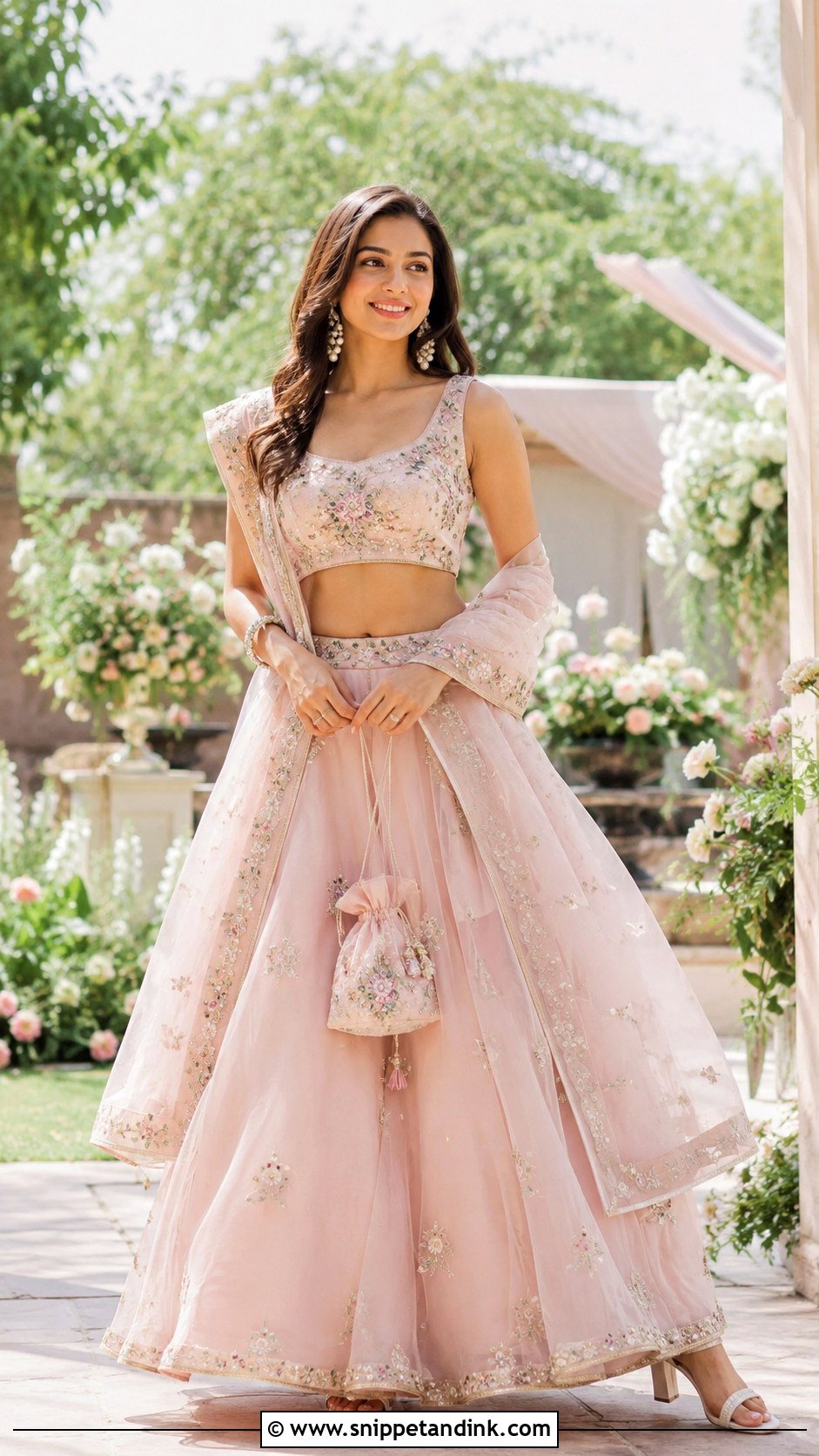
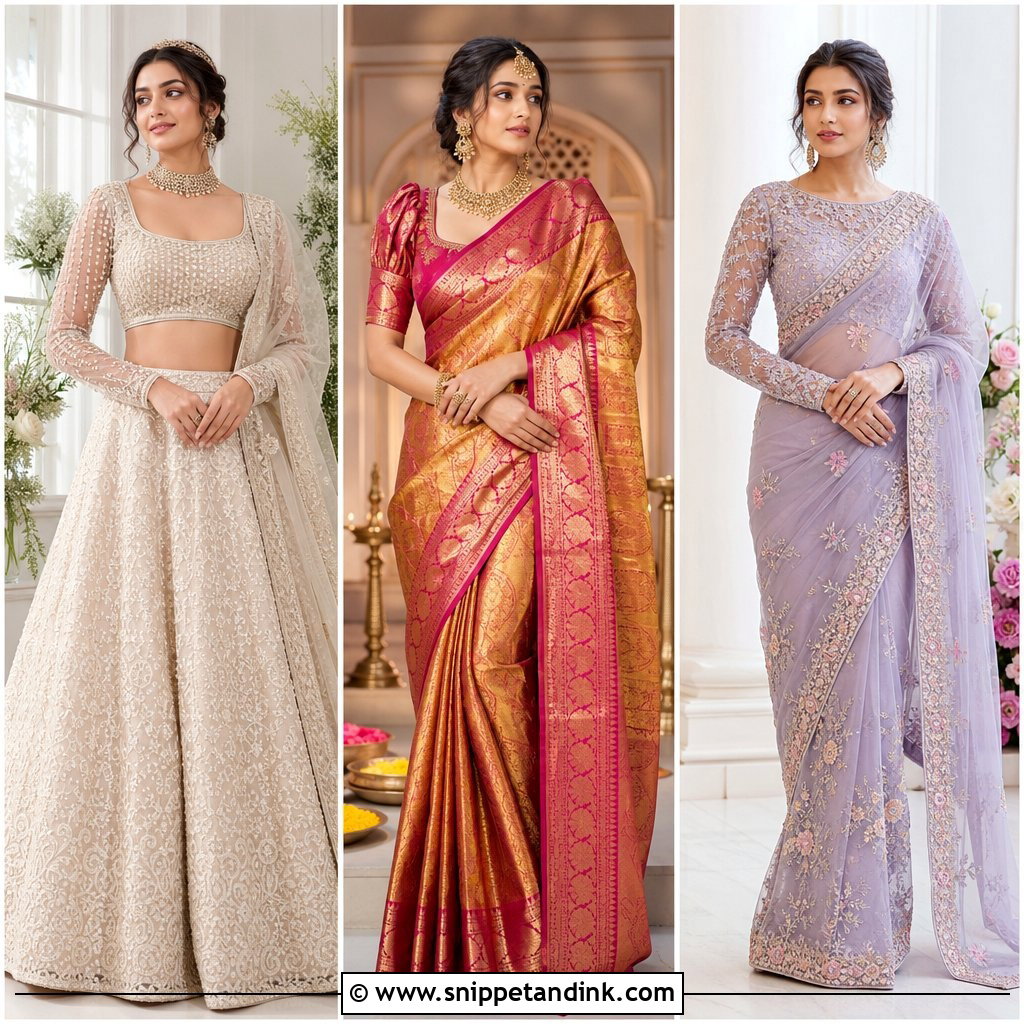
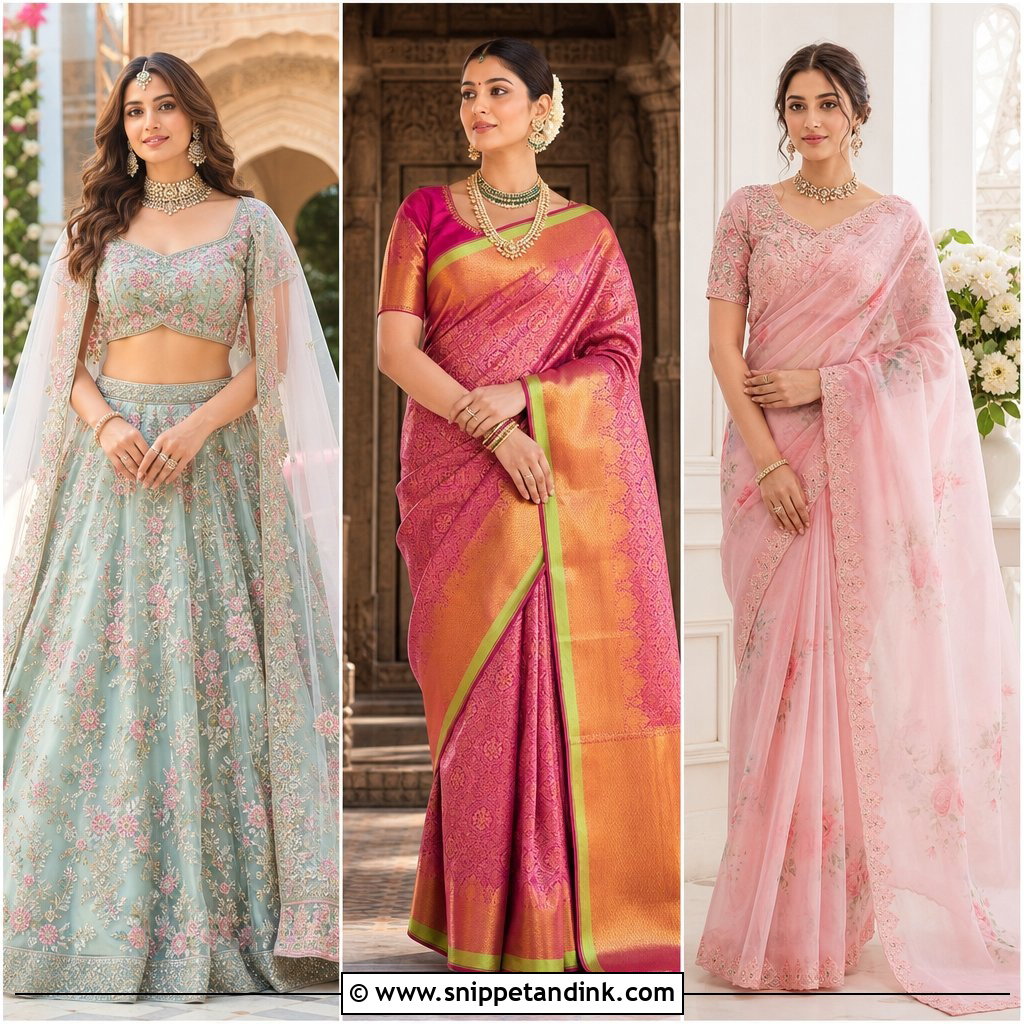
Pastel lehengas are the sister-and-bridesmaid outfit I recommend most for daytime and outdoor weddings. They feel dressed up without competing with the bride’s reds. Blush, mint, powder blue or lavender in organza, net or a silk blend, with floral threadwork, pearls or fine sequins. Choose a blouse with proper straps or sleeves; strapless cholis spend the whole baraat sliding down. Drape the dupatta over one shoulder, wear pearl earrings and a slim bracelet, and carry a small potli. If the skirt is heavily worked, the jewelry should step back. Metallic block heels sink less into lawn than stilettos.
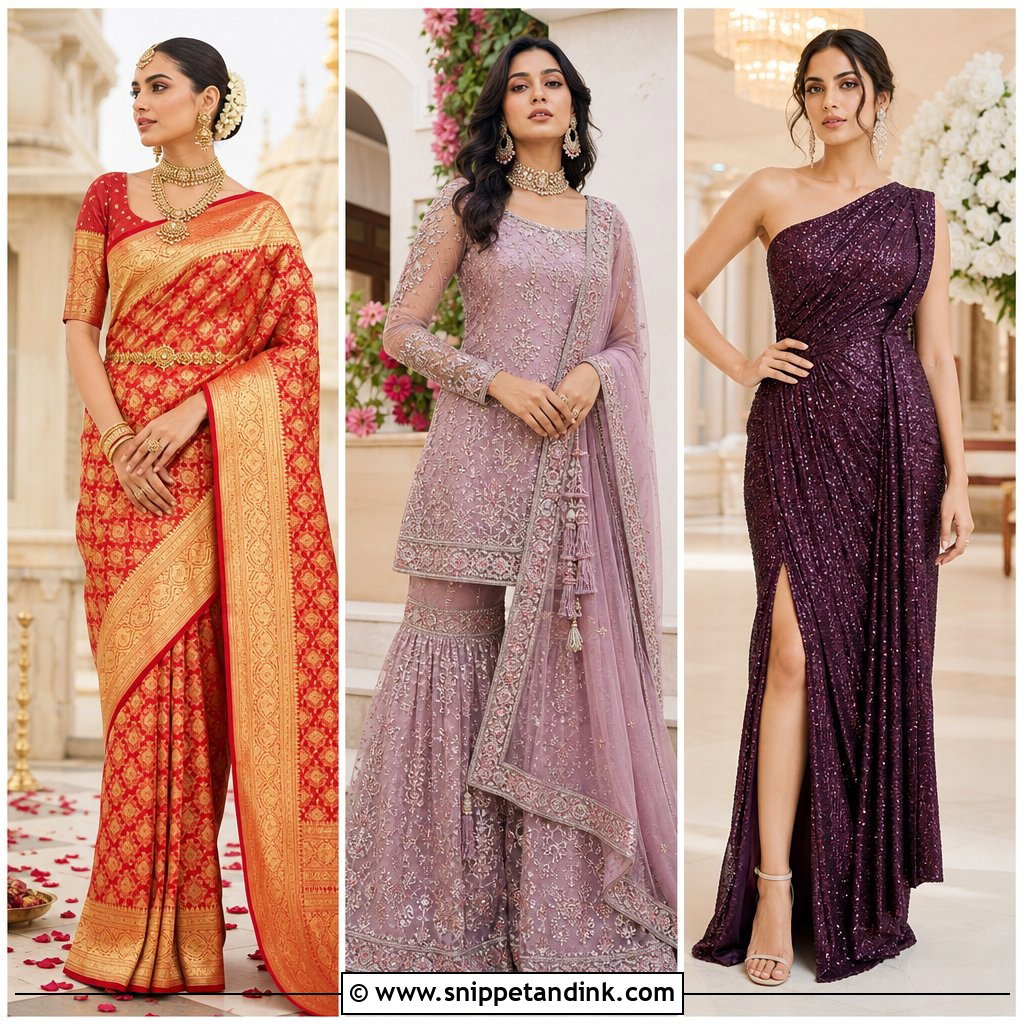
3. Banarasi Silk Saree Shadi Dress
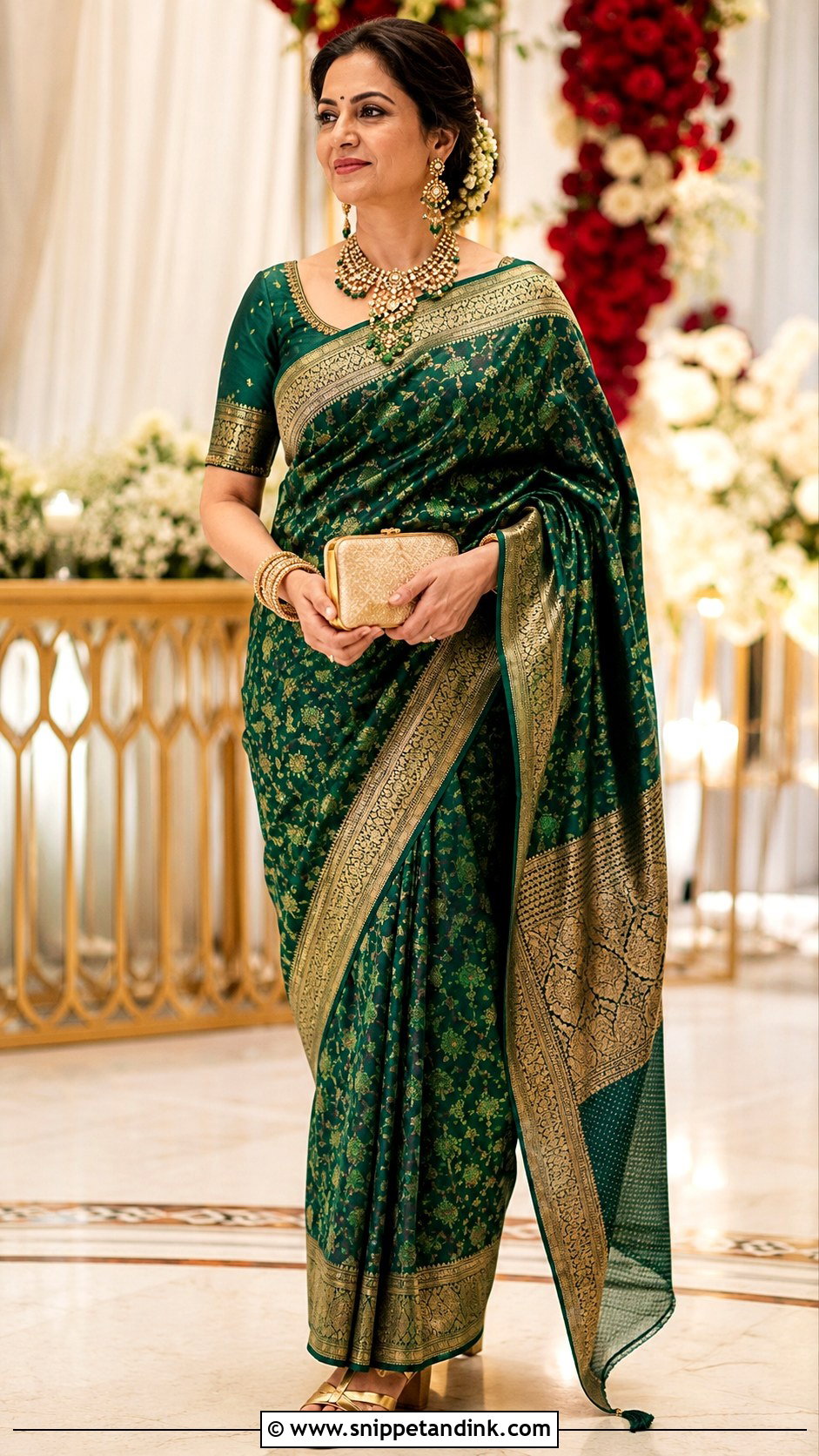
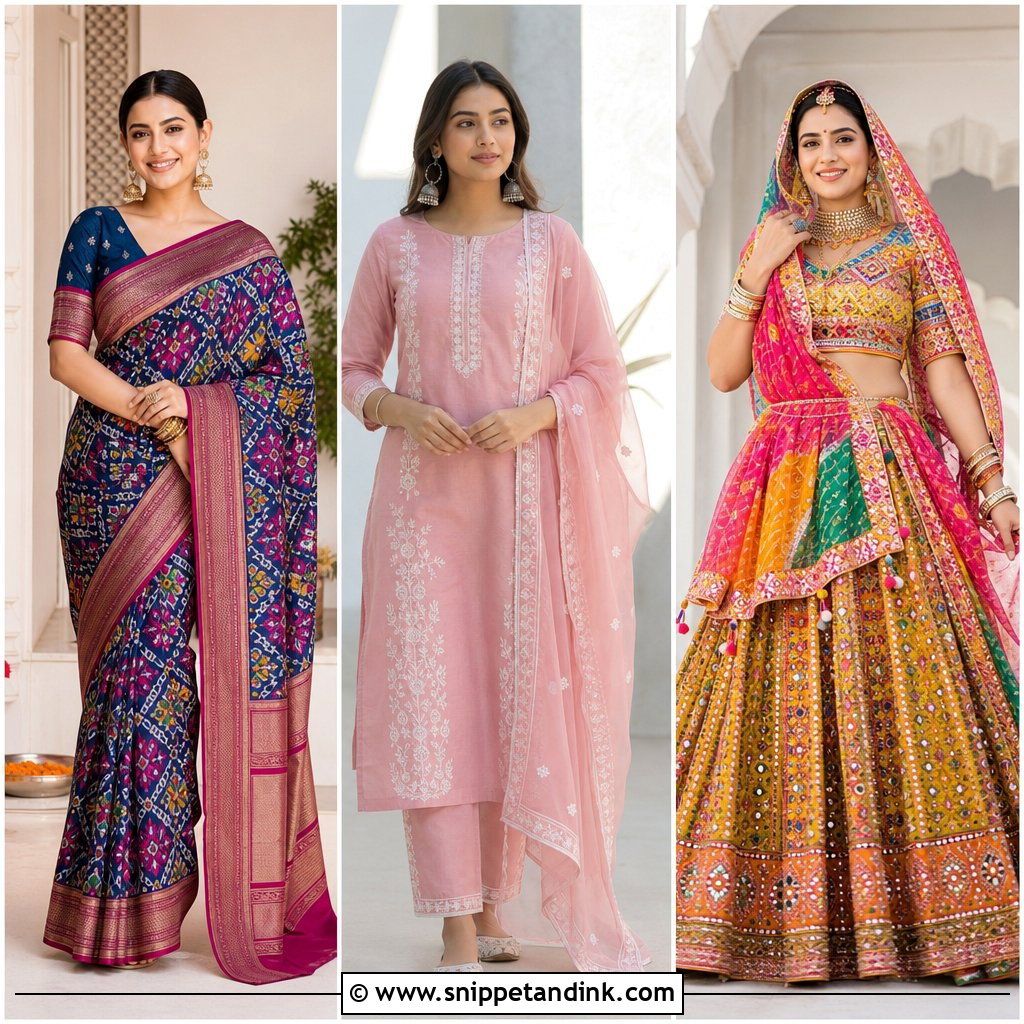
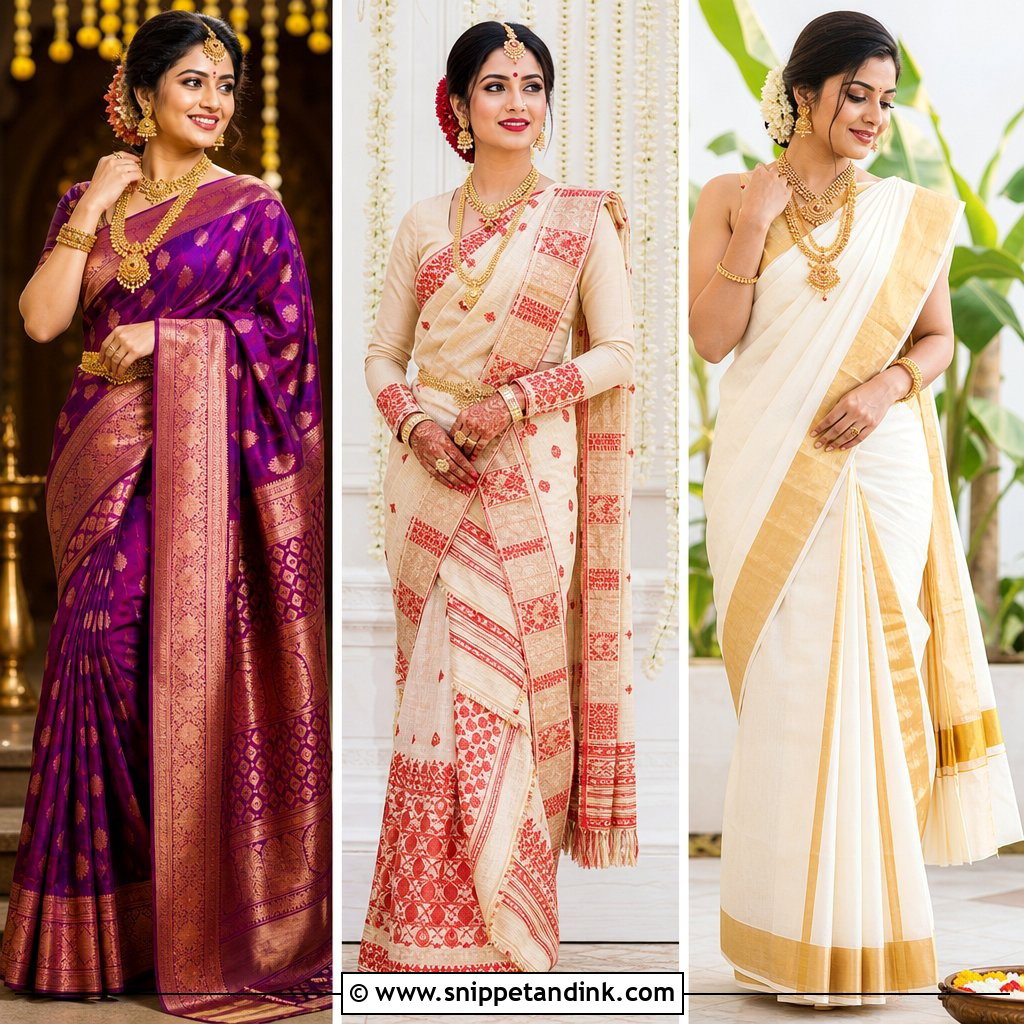
Banarasi silk glows under ceremony lights, especially in emerald, royal blue, magenta or deep purple, which make the zari stand out. Pair it with a fitted silk blouse in the same shade or a gold contrast, elbow-length sleeves, and a square or modest V-neck. Kundan necklace, jhumkas, bangles and a small bindi; a sleek bun with fresh flowers. Put your shoes on before you drape. The saree length is set at the floor in those heels, and if you switch shoes afterwards the hem either drags or shows your ankles. A concealed pin at the shoulder pleats keeps it in place between functions.
4. Kanjivaram Silk Saree Shadi Dress
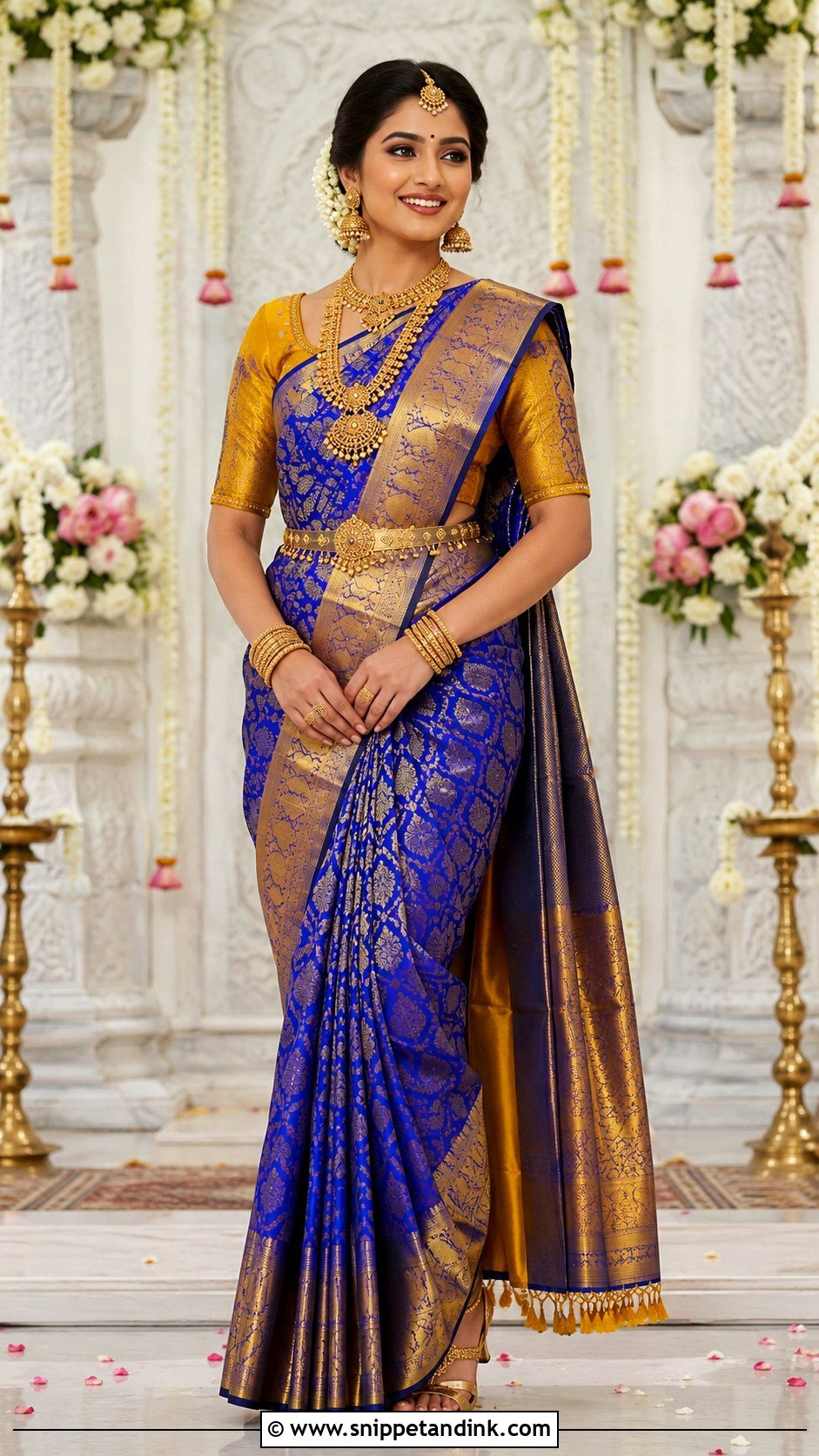
Kanjivaram silk is heavy and crisp, which gives those beautiful straight pleats and also means they won’t stay put without help. I pin them firmly at the waist and keep them even, otherwise the weight pulls the drape lopsided by evening. Classic contrasts work best: deep green with maroon, mustard with pink, royal blue with gold. An elbow-sleeve blouse matches the saree’s structure. Temple jewelry, gold jhumkas, layered necklaces, a braid or low bun with jasmine, and gold sandals or low slippers hidden under the hem. A structured clutch holds essentials without stealing from the pallu.
5. Floral Organza Saree Shadi Dress
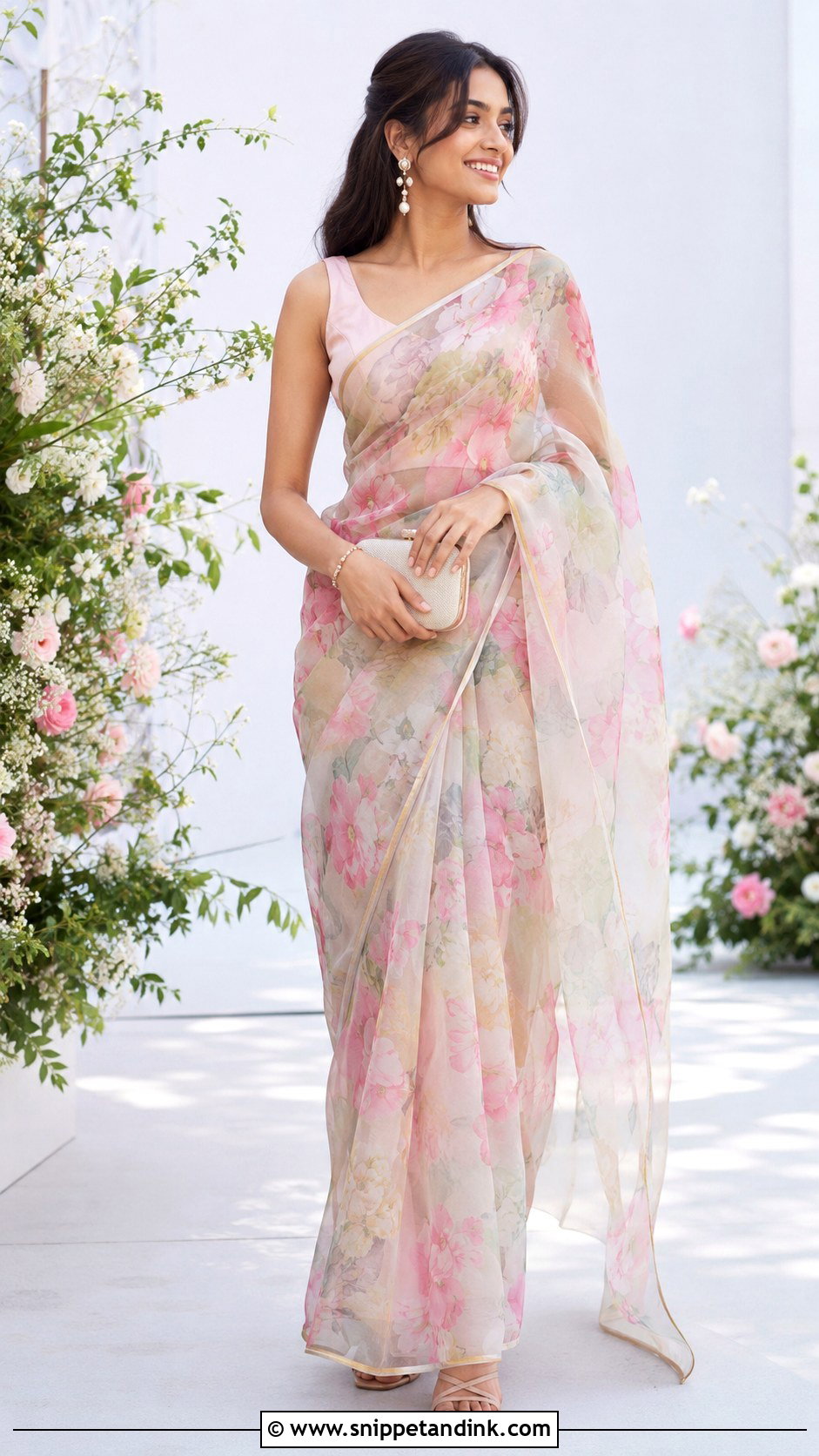
Organza gives a floral saree its lightness, and its crispness can also make you look wider than you are if the drape puffs out. A smooth petticoat in a slippery fabric, or light shapewear, lets it fall properly. Printed flowers, embroidered borders or scattered sequins on a pastel or bright base suit a garden wedding or daytime reception. Sleeveless, short-sleeve or a bustier-style blouse depends on the dress code. Keep the pallu open to show the print but pin it near the shoulder. Pearl drops, a fine bracelet, a box clutch and nude or metallic block heels. Soft waves keep it fresh.
6. Sequin Saree Shadi Dress
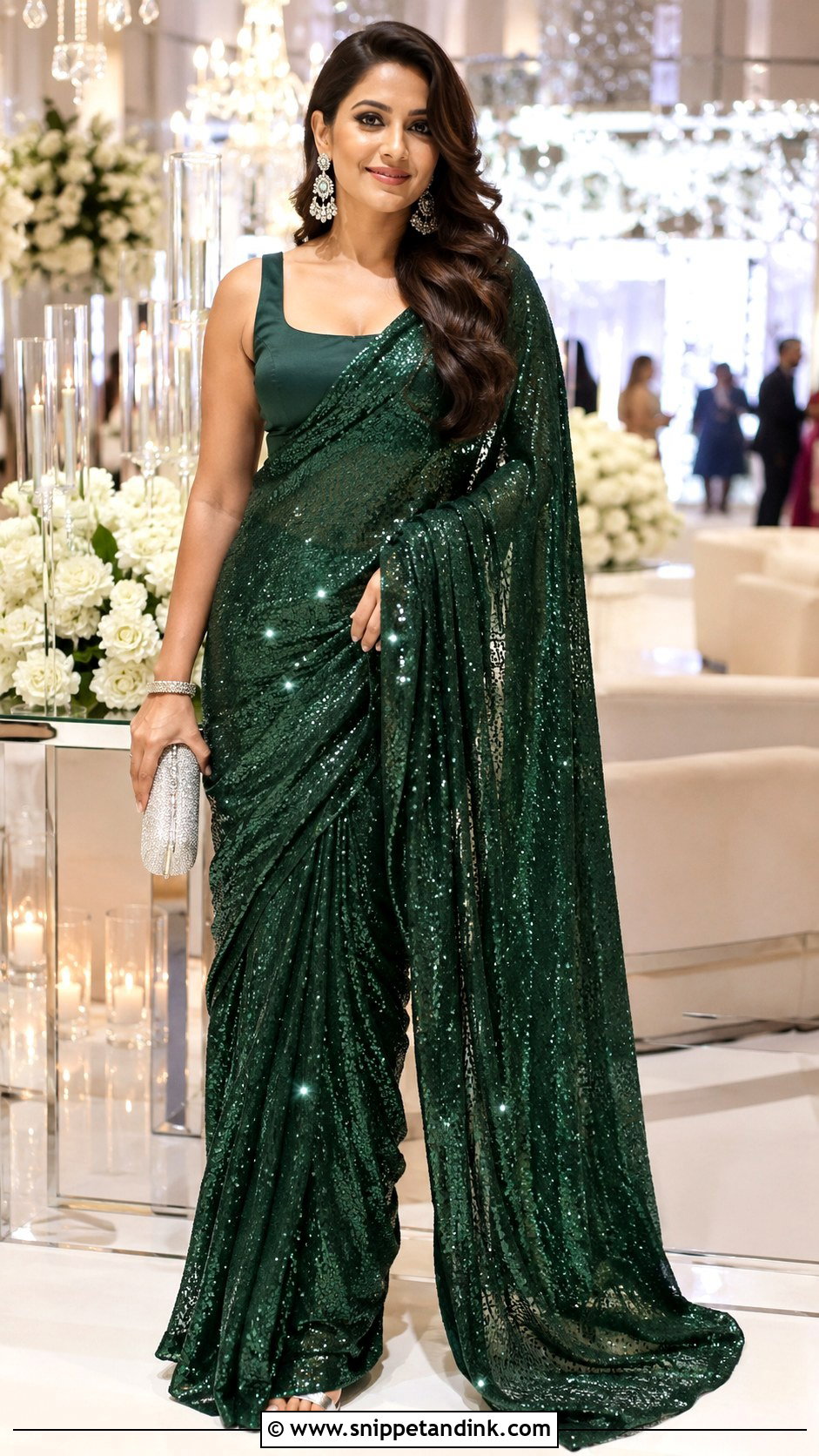
Sequin sarees are reception wear, and comfort is where they fail if you buy carelessly. Choose lightweight sequin fabric on a soft lining, and run your hand along the border before you buy; some sequin edges scratch the waist and inner arm all night. Navy, champagne, plum, emerald or dusty rose for evening. A monochrome blouse keeps it sleek, a contrasting velvet one adds depth, and either should fit comfortably since the saree already provides the shine. Statement earrings, no necklace if the neckline is detailed, a crystal clutch and metallic heels. Polished waves or a sleek bun.
7. Floor Length Anarkali Shadi Dress
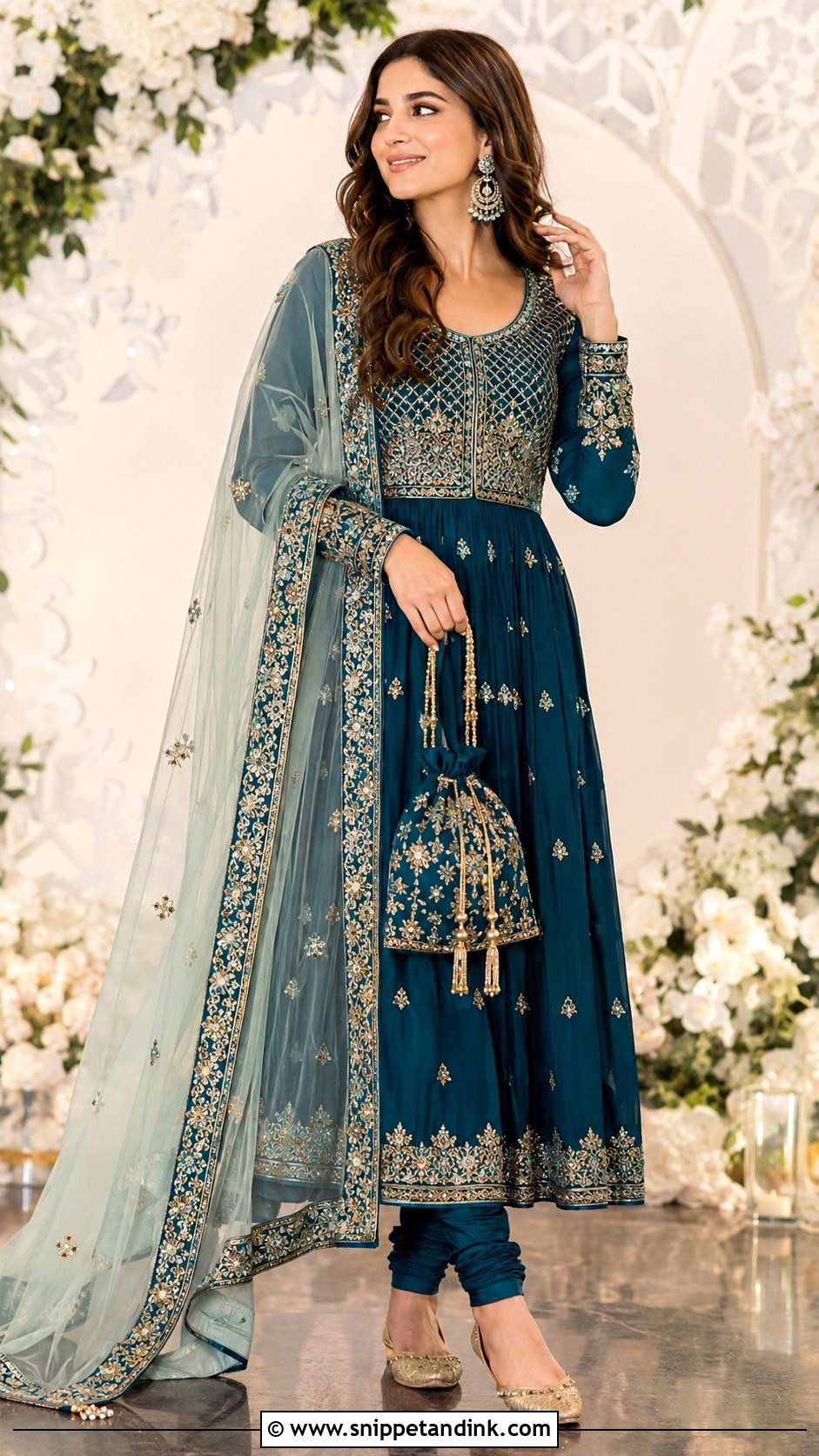
A floor-length Anarkali covers well and moves well, so it’s what I suggest to relatives who want to look formal and still dance at the sangeet. Silk, georgette or chiffon with a fitted bodice and a skirt starting near the natural waist, in teal, berry, sapphire or rose. Churidar pants, a light embroidered dupatta and long chandeliers or jhumkas. Proportion is everything: petite women look taller with smaller motifs and a slightly raised waistline, while taller women carry broad borders and fuller skirts. Keep the hem clear of the floor so nobody steps on it in a crowded hall.
8. Velvet Anarkali Shadi Dress
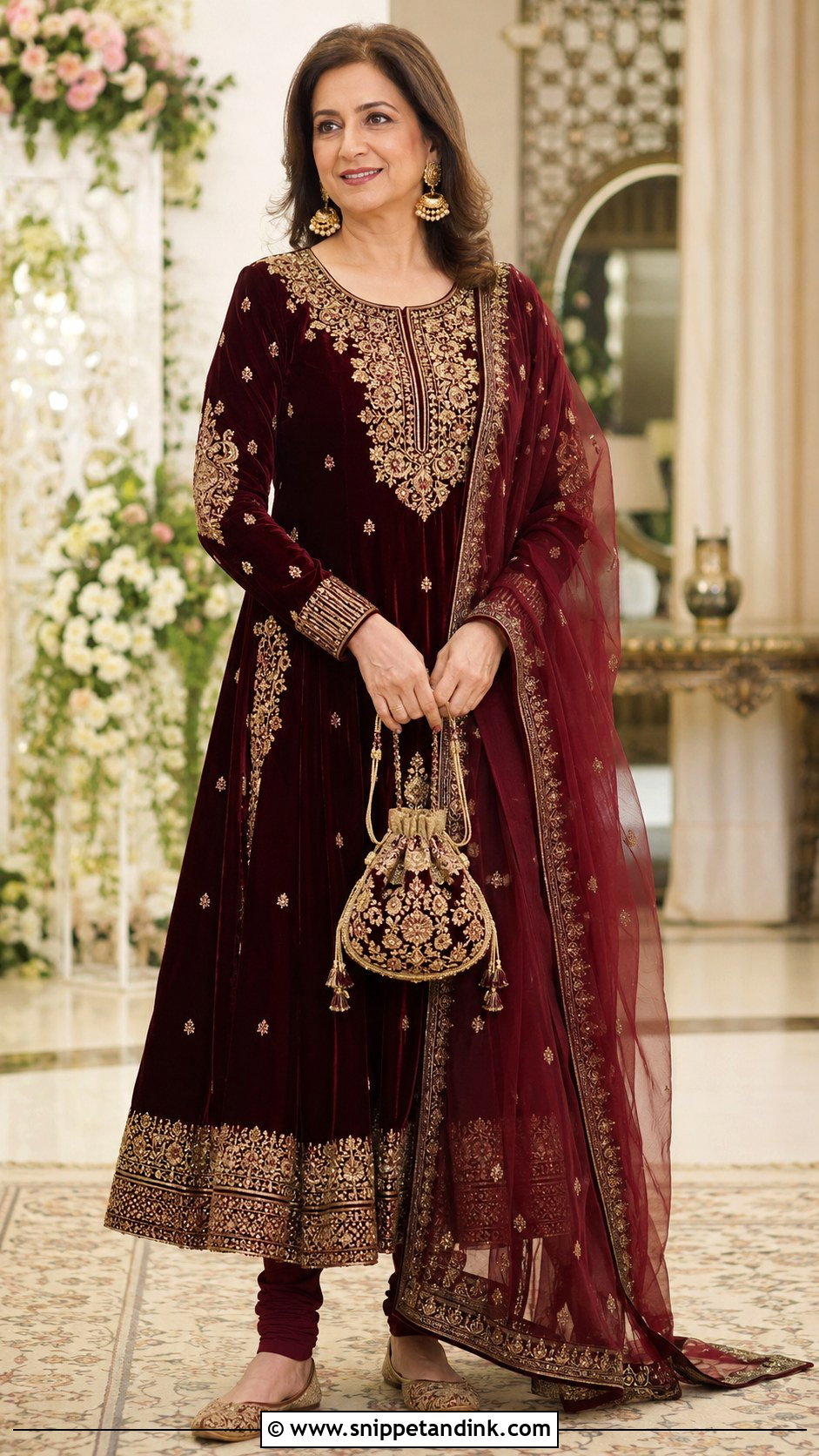
Velvet in winter, never in a warm venue. Wine, midnight blue, forest green or plum Anarkalis look rich, so selective embroidery at the neckline, cuffs and hem is enough. A princess-seam construction shapes the waist without extra layers and leaves room to move at the shoulders, which I check carefully because velvet doesn’t stretch. Narrow churidar, a net or organza dupatta instead of another heavy layer, antique gold earrings, a statement ring and an embroidered bag. Closed-toe juttis or stable block heels keep feet warm at an outdoor winter evening.
9. Gota Patti Sharara Shadi Dress
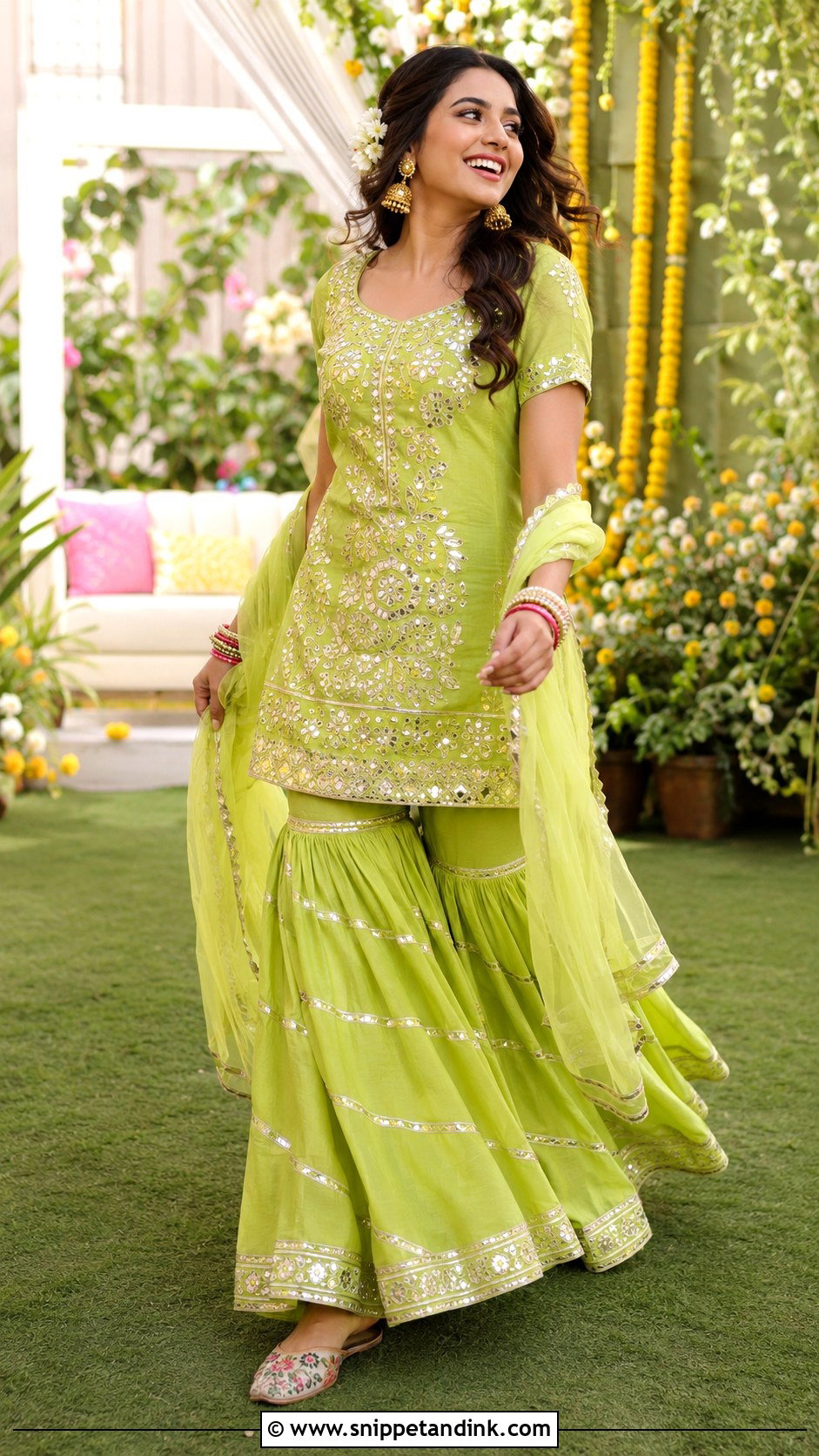
A gota patti sharara belongs at a mehendi, haldi or daytime sangeet, where bright colors like lime, marigold, fuchsia or coral shine in sunlight. The short kurti shows off the flare; a hip-length kurti with three-quarter sleeves gives more coverage if you prefer it. A light dupatta with a gota border, silver or gold jhumkas, colorful bangles and flat embellished juttis. Gota is metallic ribbon, so it’s light and doesn’t scratch the way heavy sequins can. Check the sharara hem sits above the floor in your actual shoes, because outdoor grass and steps catch a long hem straight away.
10. Embroidered Gharara Shadi Dress
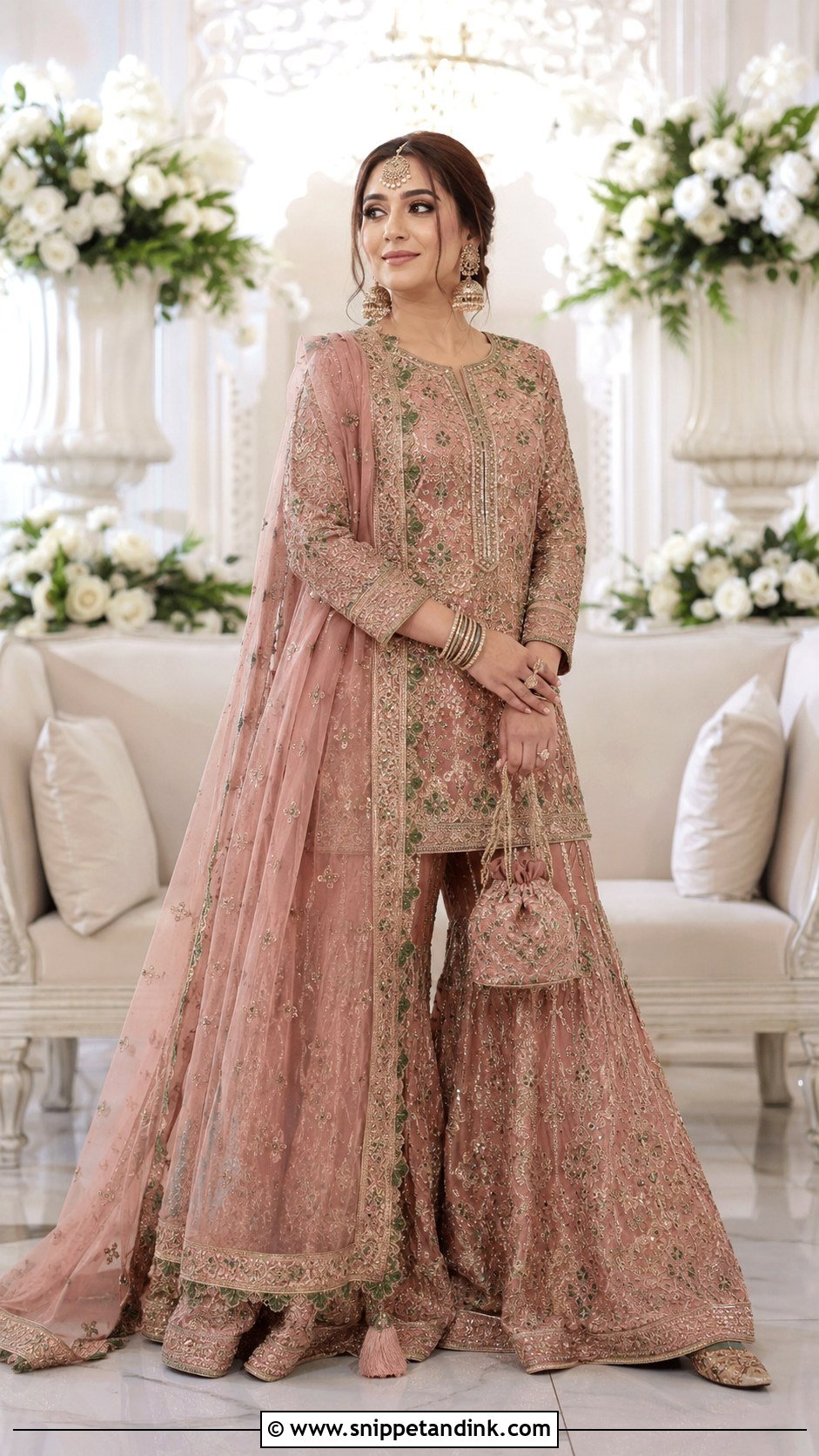
The gharara’s look comes from its construction: fitted through the upper legs, then a dramatic flare from the knee, usually with an embroidered band over the joint. For a nikah, mehendi or family wedding, pair it with a short embroidered kurti that ends above that knee seam so the gharara shape stays visible. Ivory with gold, rose with green, or maroon with antique work. A passa, jhumkas, slim bangles and an embellished potli suit its classic feel. Pointed juttis beat high heels here; the pants already have all the drama, and heels make the flare swing awkwardly.
11. Palazzo Suit Shadi Dress
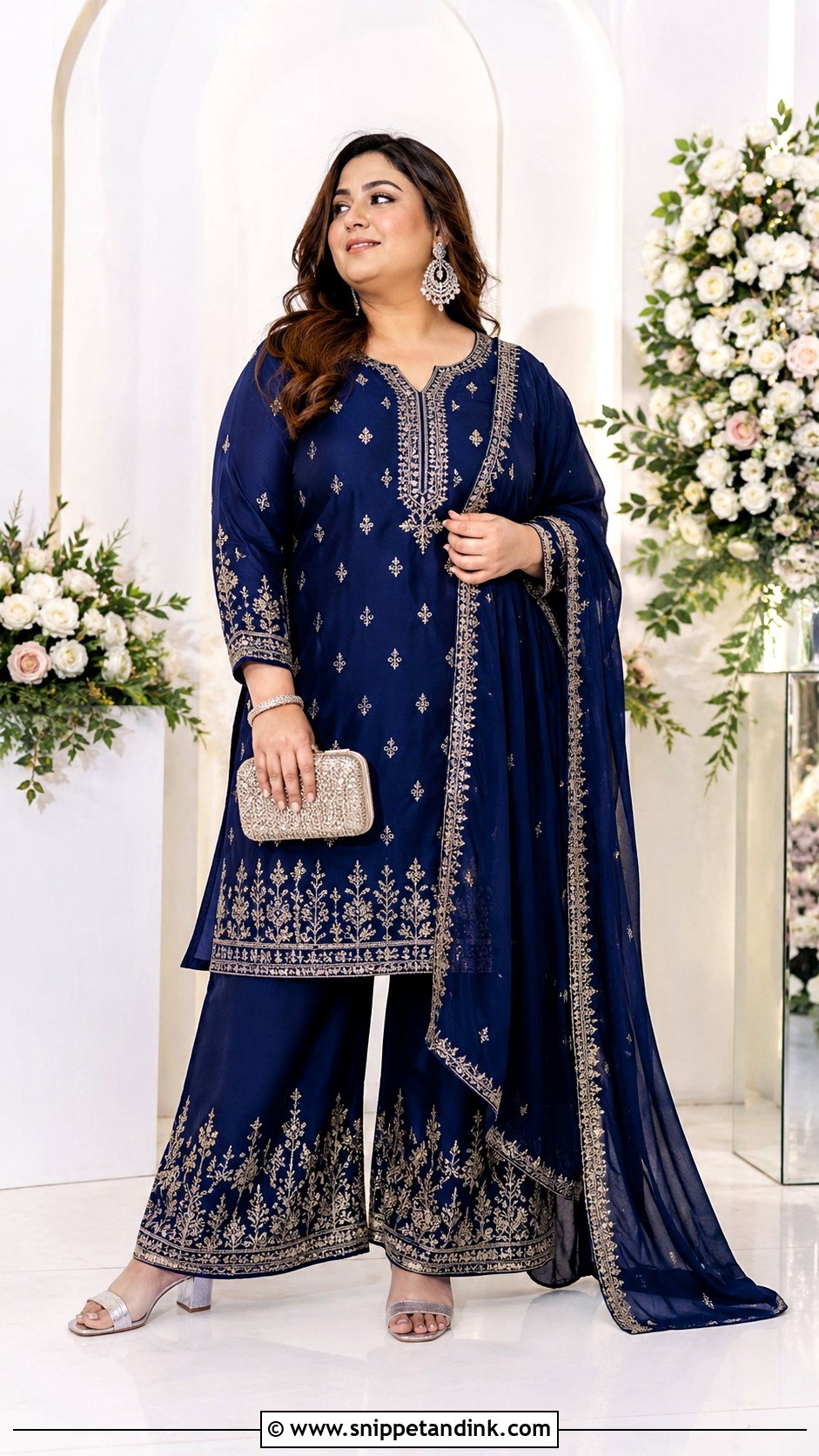
Palazzo suits are the comfortable choice for women who’d rather not wrestle a lehenga all day. Crepe, georgette or silk palazzos with a straight or slightly flared kurta and a dupatta with a decorative border, in jewel tones for evening or pastels outdoors. The proportion rule I use: the wider the palazzo, the shorter or more fitted the kurta, or the whole outfit turns into a column of fabric. A monochrome set lengthens the body. Statement earrings, a cuff, a structured clutch, block heels and smooth waves or a low ponytail finish it.
12. Patiala Suit Shadi Dress
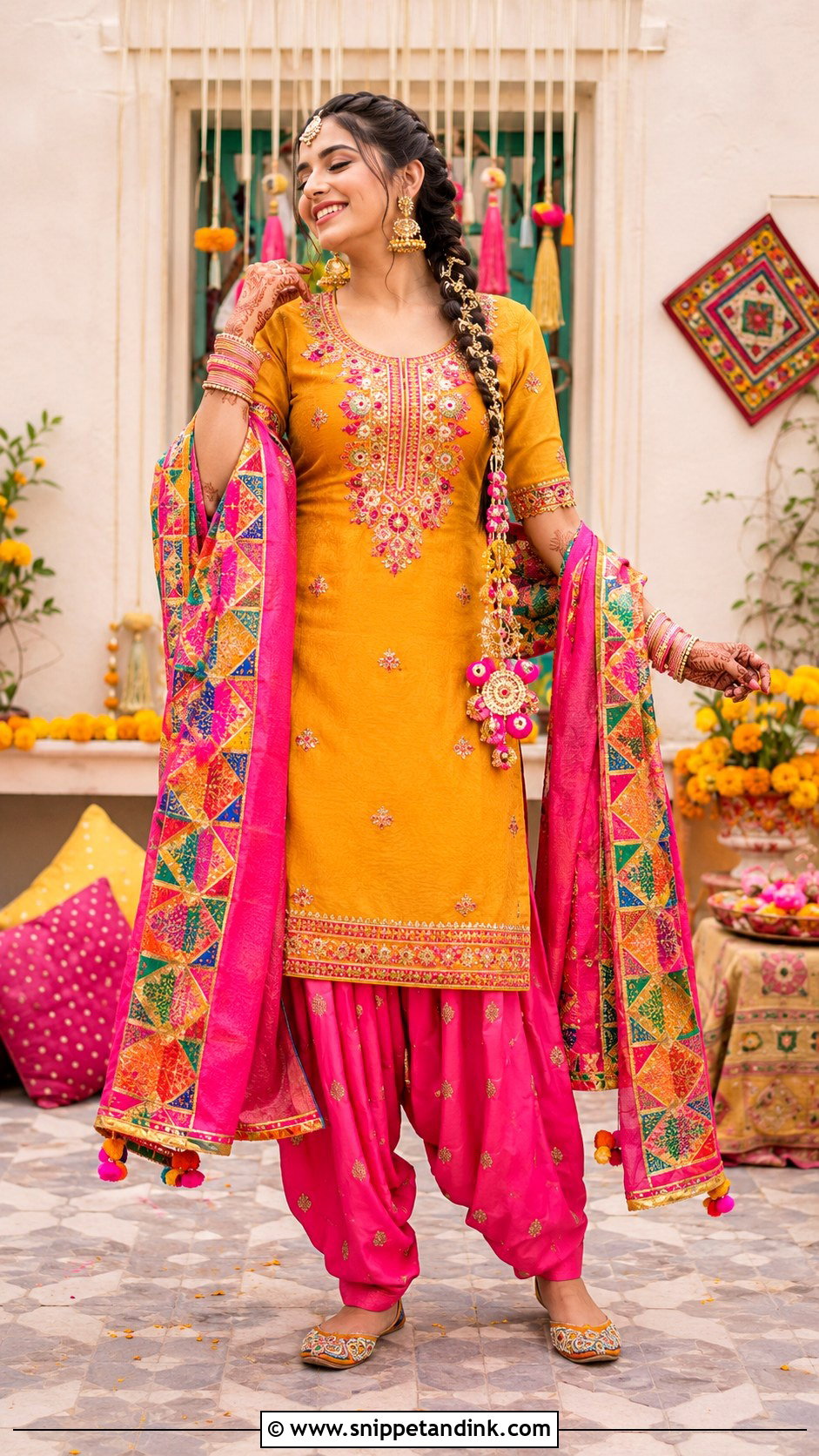
A colorful Patiala suit is made for haldi, mehendi and Punjabi celebrations where you’ll be dancing. A fitted, thigh-length kameez lets the pleated volume show; a long kameez hides it. Yellow with pink, green with orange or blue with magenta, and a phulkari dupatta for traditional texture. Jhumkas, glass bangles, a small bindi, Punjabi juttis, and a paranda braid or loose waves. There’s a lot of fabric in a Patiala salwar, often several meters, so I steer people toward breathable cotton-silk or light blends. Heavy silk in that quantity is hot by noon.
13. Churidar Suit Shadi Dress
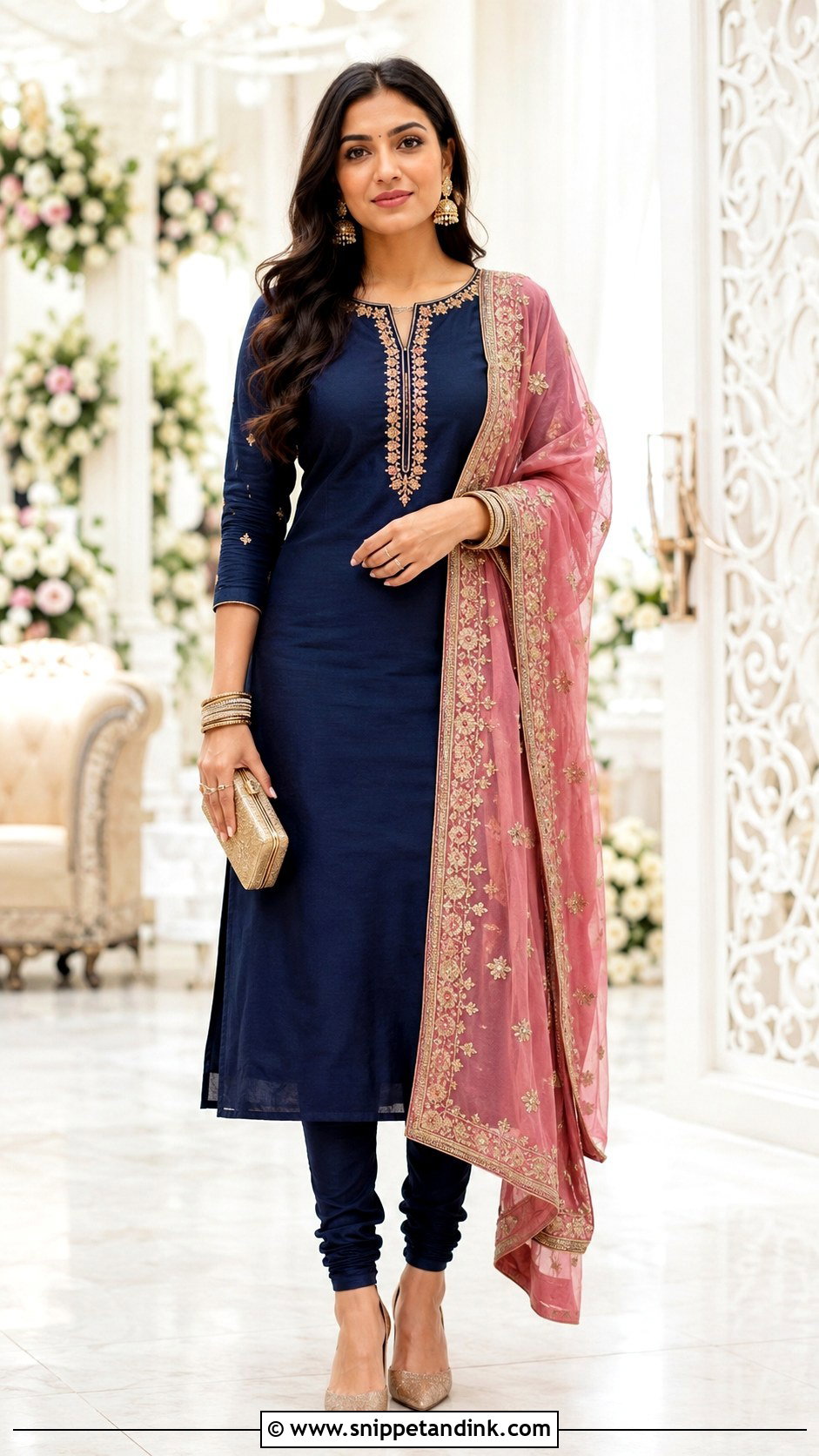
Churidar suits are the neat, simple option for guests who don’t want a lehenga or saree. A knee or calf-length kameez in silk, brocade or embroidered georgette over slim churidar, with a contrasting dupatta to make it formal: navy with pink, mustard with maroon, teal with gold. Medium jhumkas, stacked bangles, a small clutch and pointed flats or kitten heels. A straight kameez suits quieter ceremonies; a flared one moves better at the sangeet. The shoulders and armholes are where these suits pinch, so I check them by having the wearer hug someone and reach for a plate.
14. Jacket Lehenga Shadi Dress
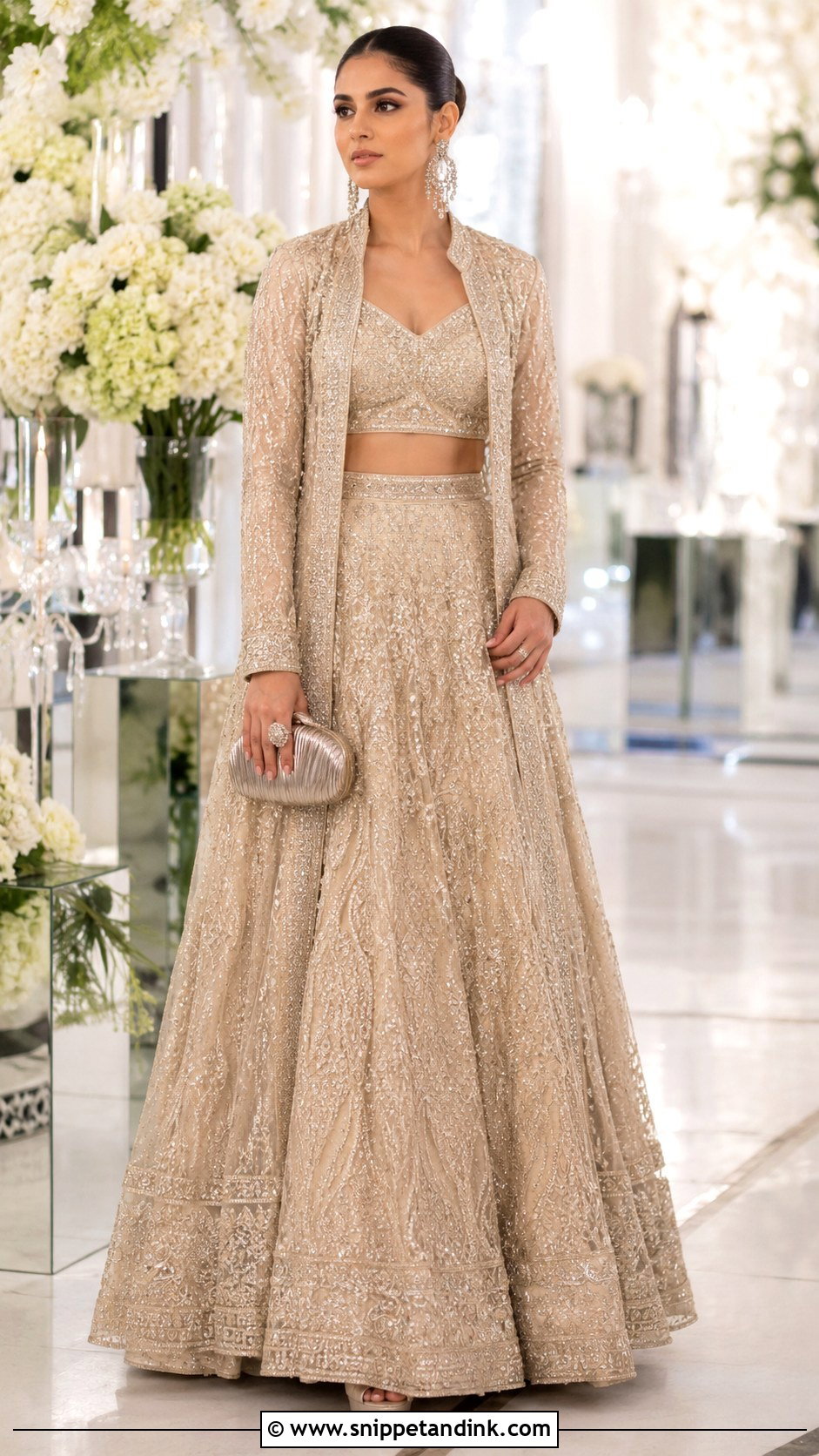
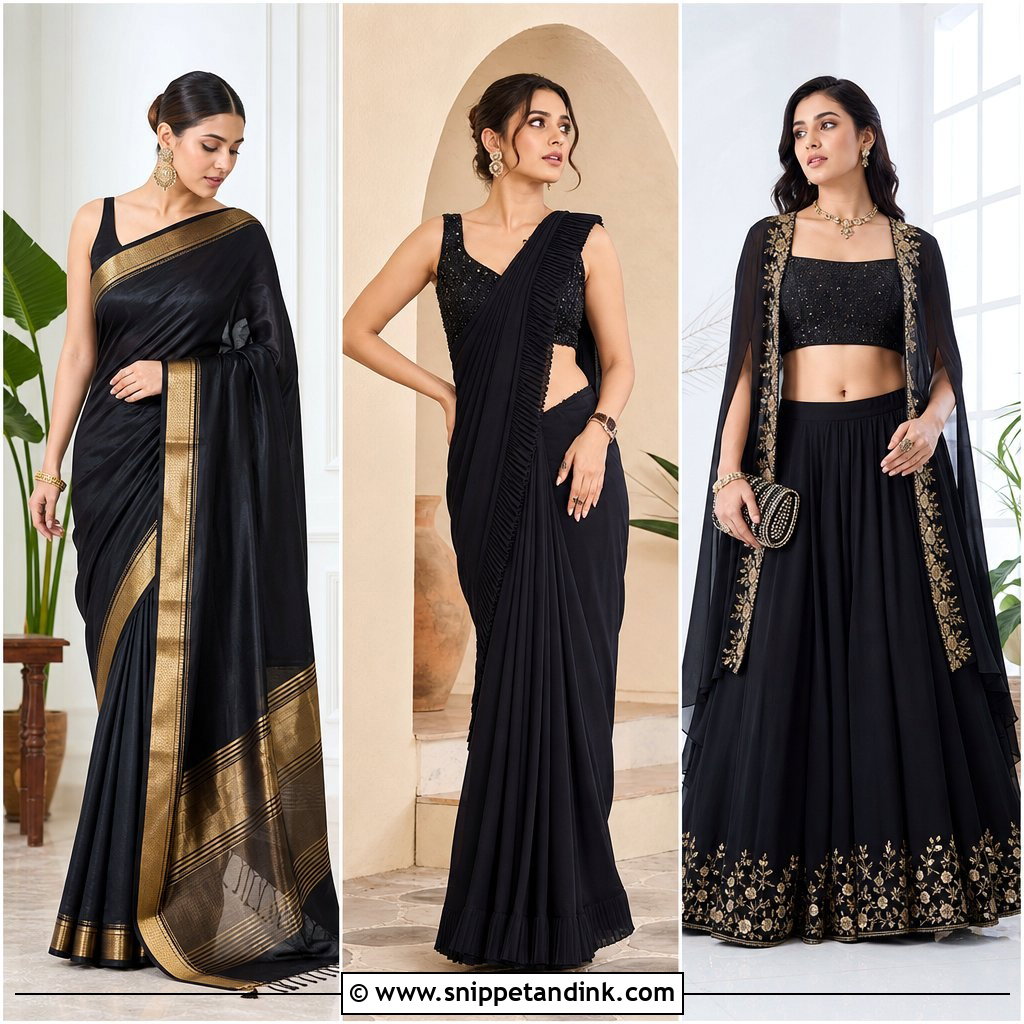
A jacket lehenga gives coverage and drama in one layer. Start with a plain or lightly embroidered lehenga and fitted blouse, then add a sheer floor-length jacket with threadwork, sequins or appliqué, worn open for long vertical lines. It suits receptions, sangeet nights and cool weather. For fuller busts, I’d pick a softly structured jacket without heavy chest embroidery, which adds visual bulk exactly where you don’t want it. Statement earrings, a cocktail ring and a sleek clutch are enough. Platform heels or cushioned juttis, and a low bun to keep the jacket’s shoulders visible.
15. Cape Lehenga Shadi Dress
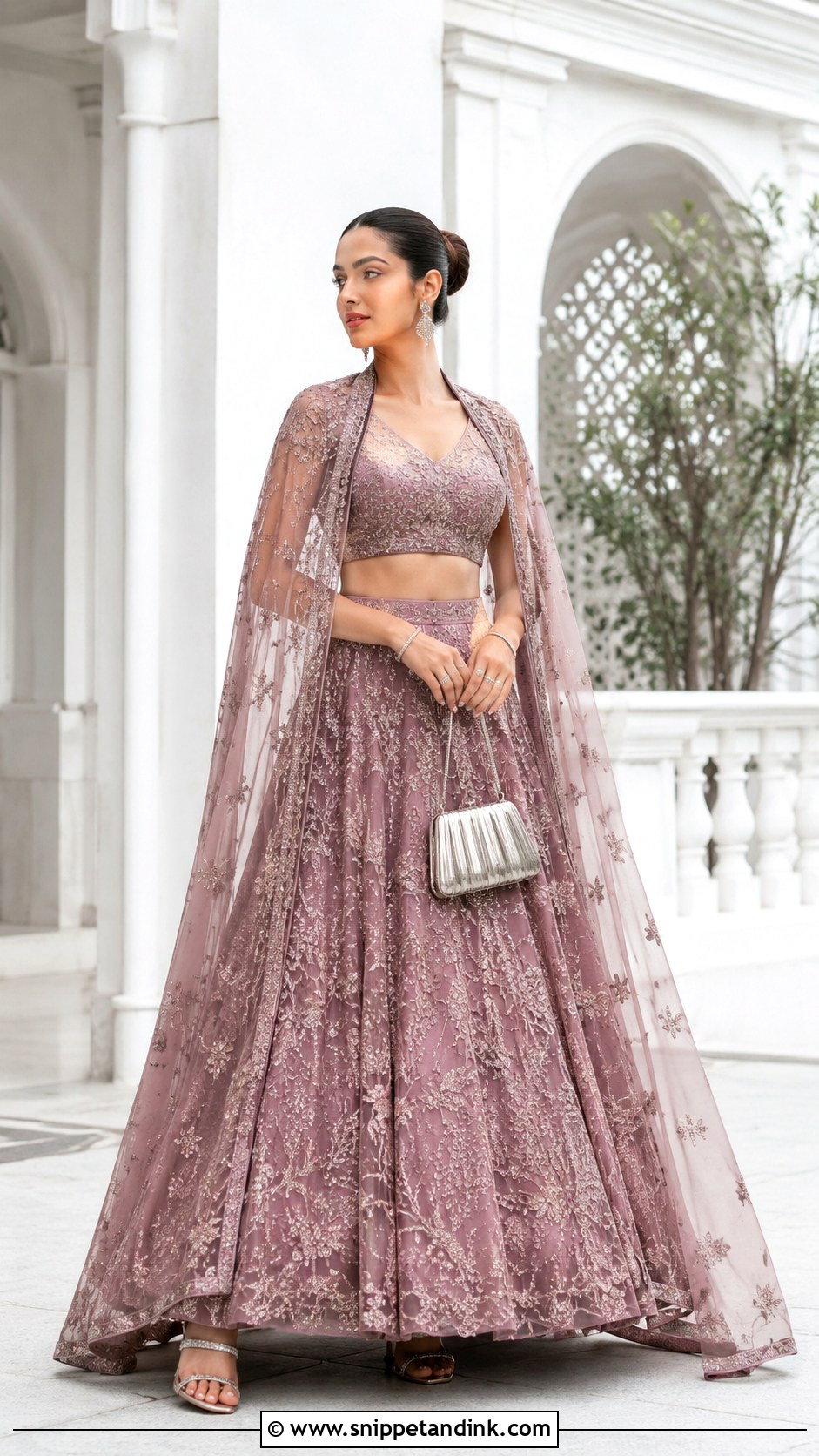
A cape lehenga swaps the dupatta for something that stays put. A flowing skirt, fitted blouse and a sheer embroidered cape, waist-length for definition or floor-length for drama, in pastel blue, mauve, emerald or champagne. It covers the arms without tight sleeves, which is a real comfort over a long evening. Because the cape moves around the shoulders, a necklace tangles; statement earrings work better. Hair should go up into a sleek bun, or the embellishment will snag it. A small metallic bag and heels that suit the skirt length.
16. Pre Draped Saree Shadi Dress
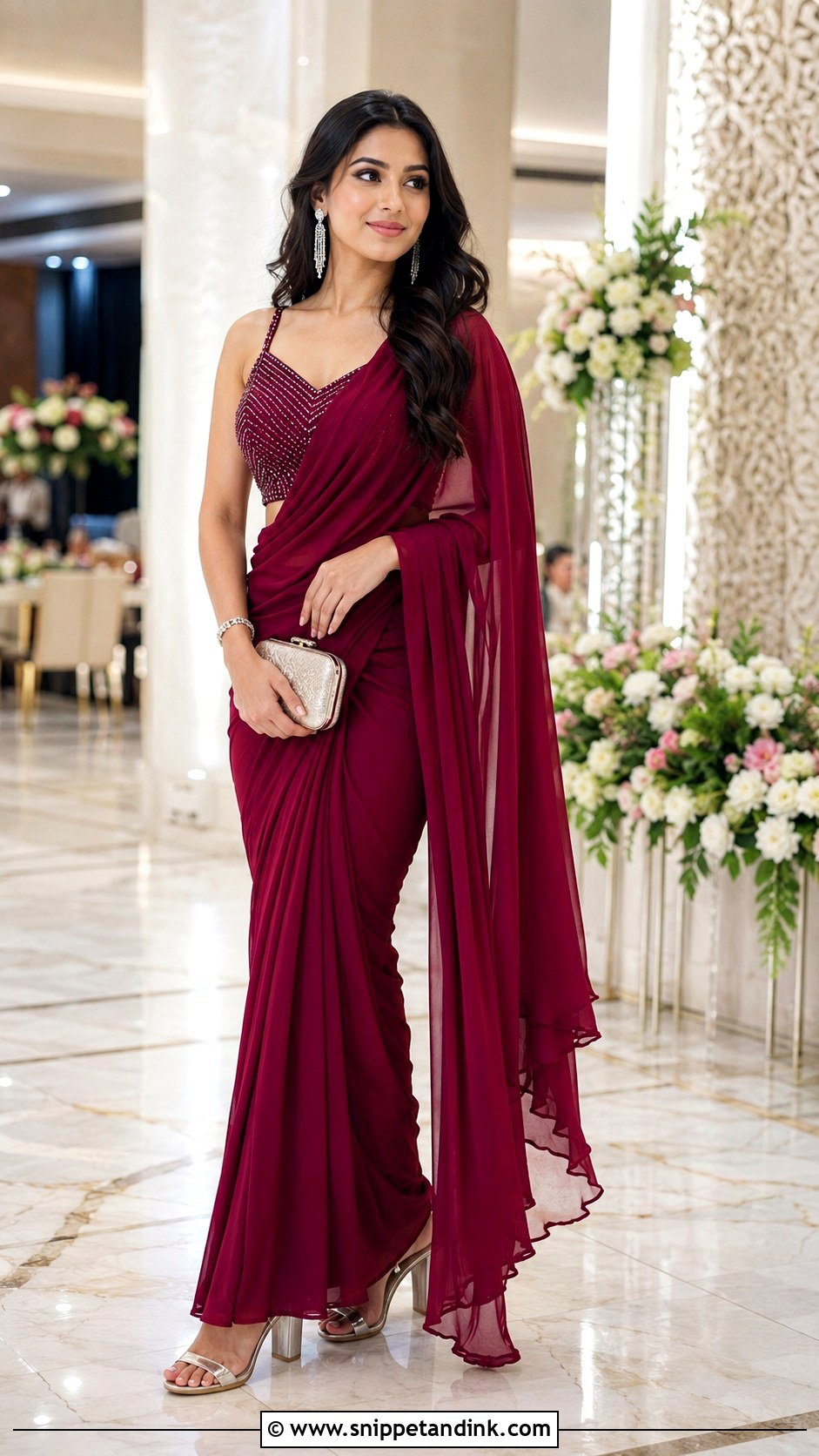
Pre-draped sarees are what I suggest for guests new to sarees or planning to dance until late. Ruched or pleated crepe, georgette or soft satin in deep green, berry, copper or midnight blue, with a structured blouse carrying embroidery or a little beadwork. Drop earrings, a slim bracelet and a compact clutch rather than heavy sets; metallic block heels. In the trial room, sit down and stand up a few times. Ready-made pleats sometimes ride up over the hips, and you want to discover that before the reception, not during it. Finish with a high ponytail or side-swept waves.
17. Indo Western Gown Shadi Dress
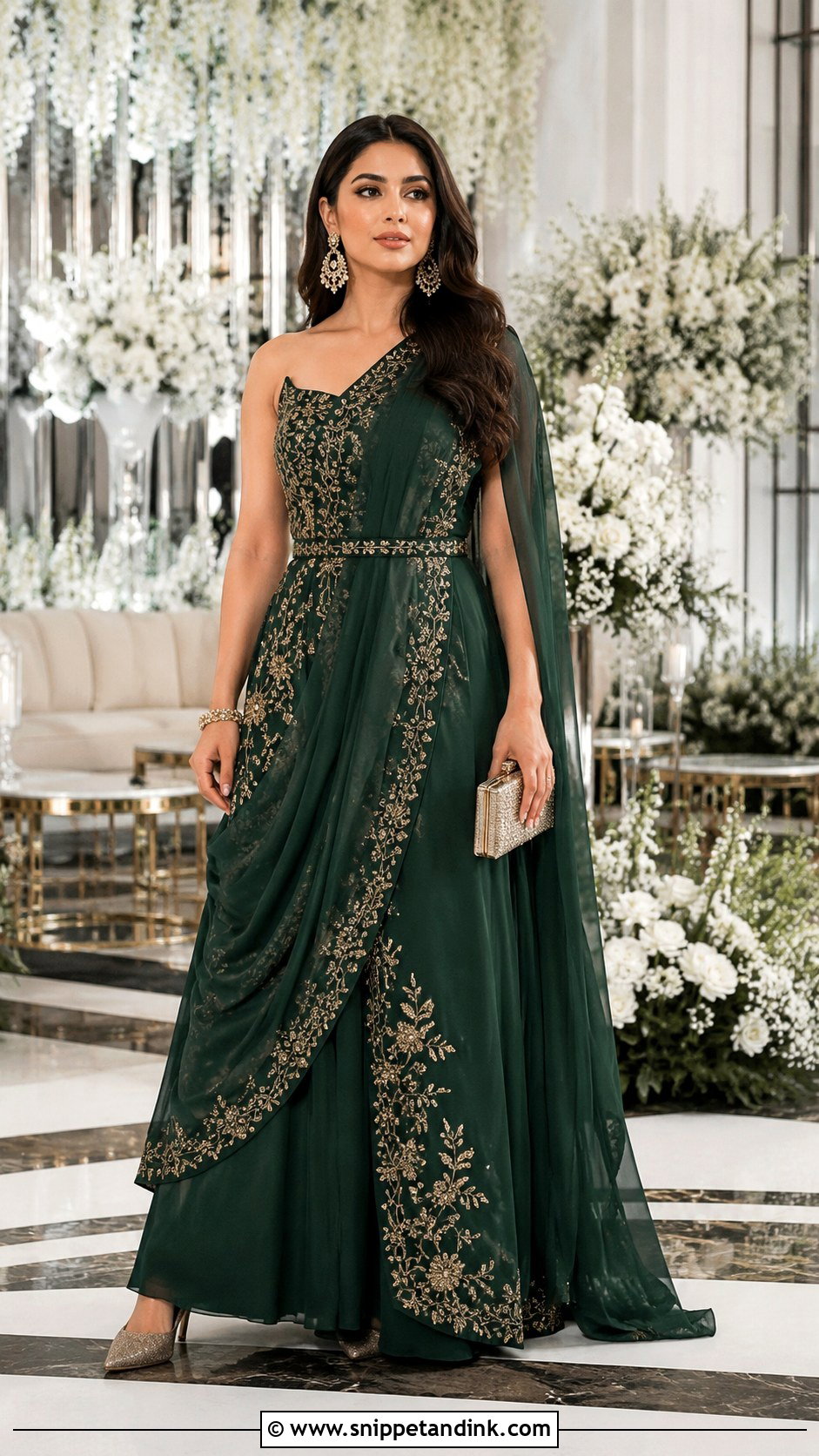
An Indo Western gown suits a reception that mixes Indian craft with formal evening wear, and it’s the easiest outfit here to manage, with no pants or dupatta to keep track of. Floor length, with zari, mirror work, beading or a saree-style draped panel, in emerald, burgundy, navy or muted gold. A defined waist and softly flared skirt let you walk freely. Pick the shoes before the hem is altered; changing heel height afterwards ruins the length. If the bodice is heavily worked, skip the necklace. Statement earrings, a bracelet, a box clutch, and curls, a sleek ponytail or a low bun.
18. Dhoti Pant Shadi Dress
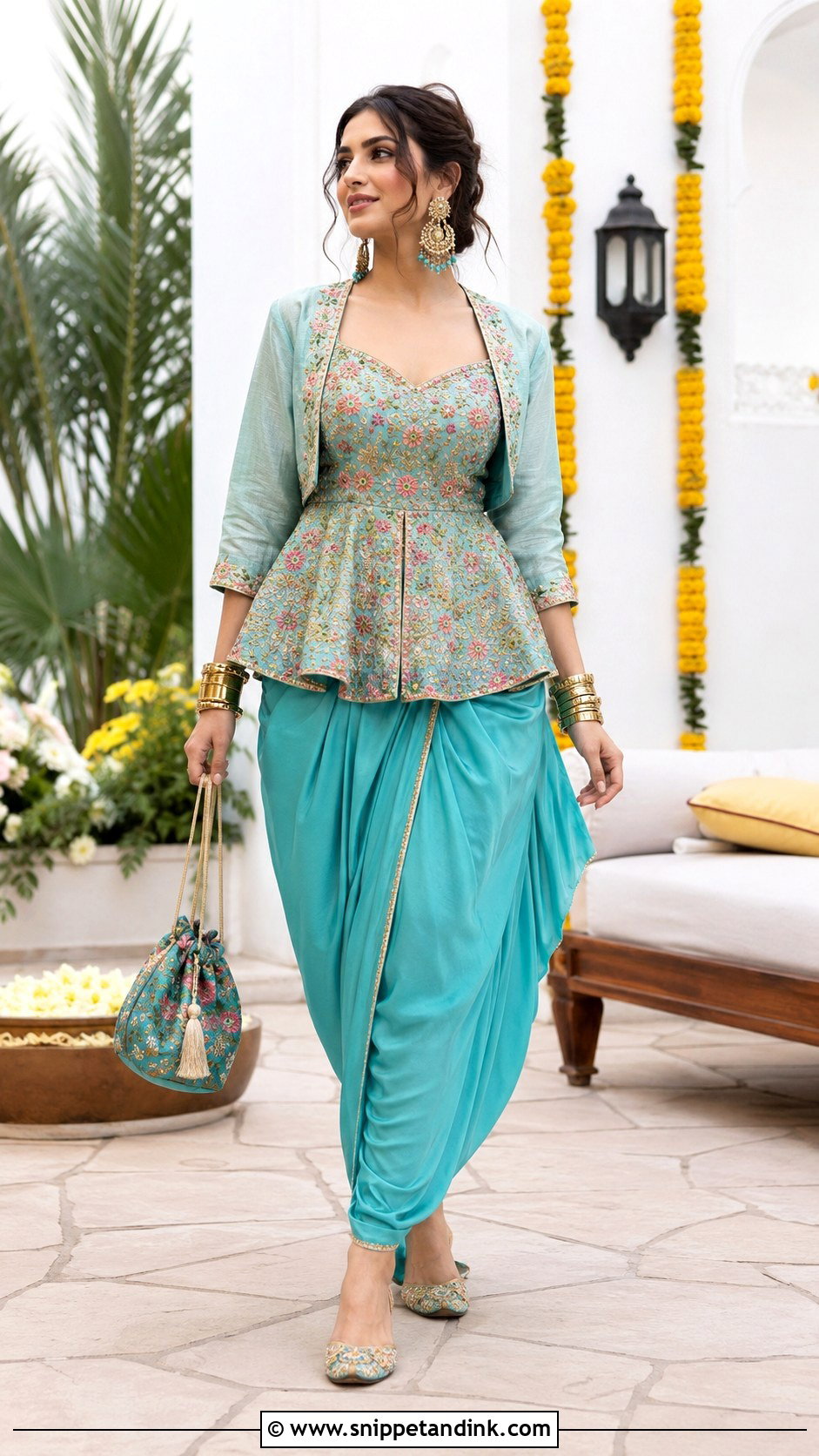
Dhoti pants are a fashion-forward choice for mehendi, sangeet or a relaxed destination event, and they look sloppy unless the tailoring is precise. Pleated dhoti pants with a fitted short kurta, peplum or embroidered crop top that ends near the waist or upper hip to balance the drape below. A structured jacket or light dupatta adds coverage. Mustard, turquoise, raspberry or ivory with metallic accents. Bold earrings, stacked cuffs and a small potli. Flats or low block heels, so the shoe doesn’t fight the tapered ankle. A high ponytail or braid keeps the line clean.
19. Peplum Lehenga Shadi Dress
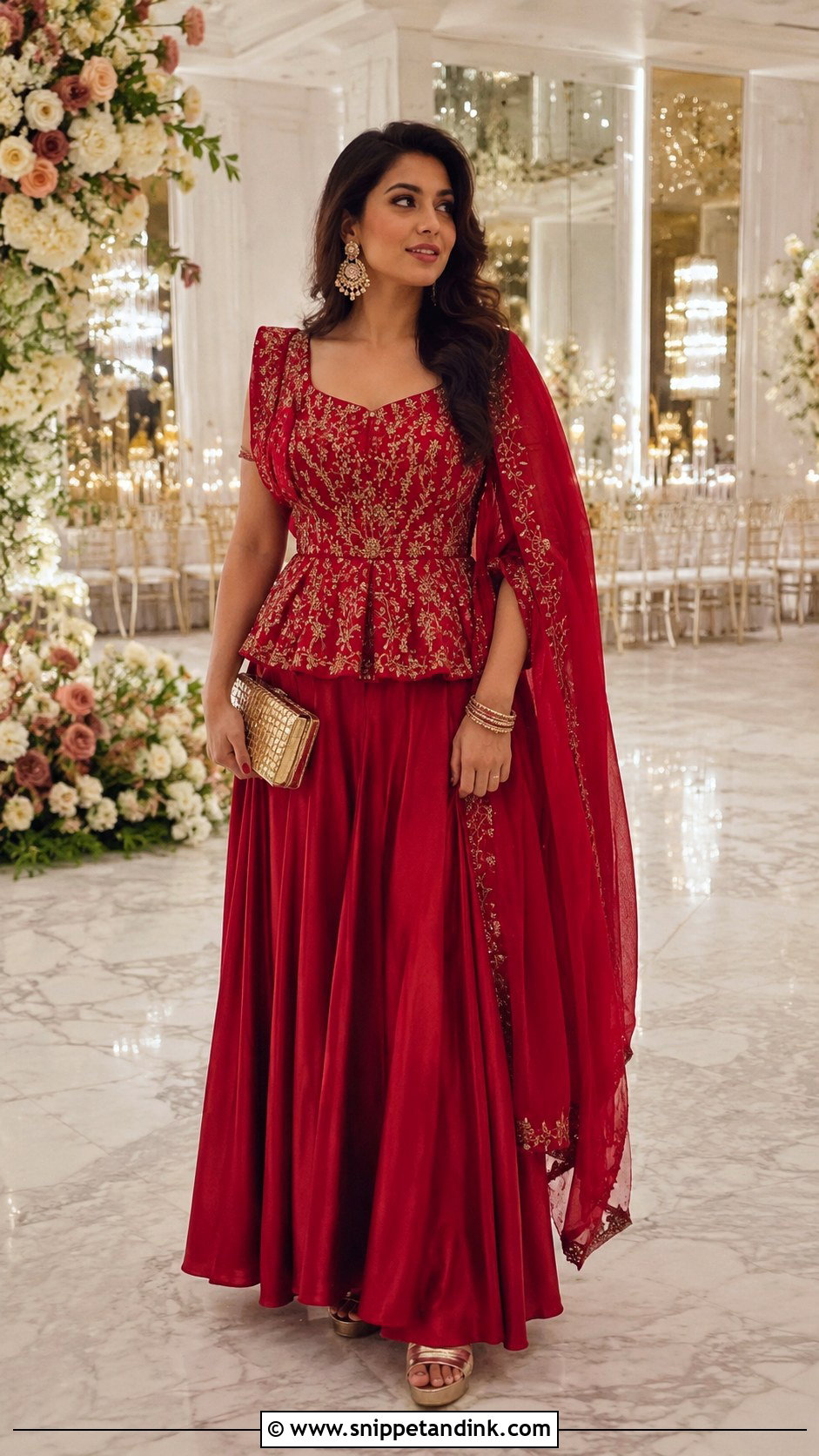
A peplum lehenga gives midsection coverage with a lehenga’s formality, and it suits women who feel exposed in a cropped choli. The peplum blouse defines the waist, then flares over a skirt in matching silk, georgette or organza. Ruby, teal, dusty pink or royal blue for the wedding or reception. Size the peplum to your height: a deep flare on a petite frame cuts the body in half. A light dupatta over one shoulder, or none if the sleeves are detailed. Chandelier earrings, slim bangles, a structured clutch and block heels for stability.
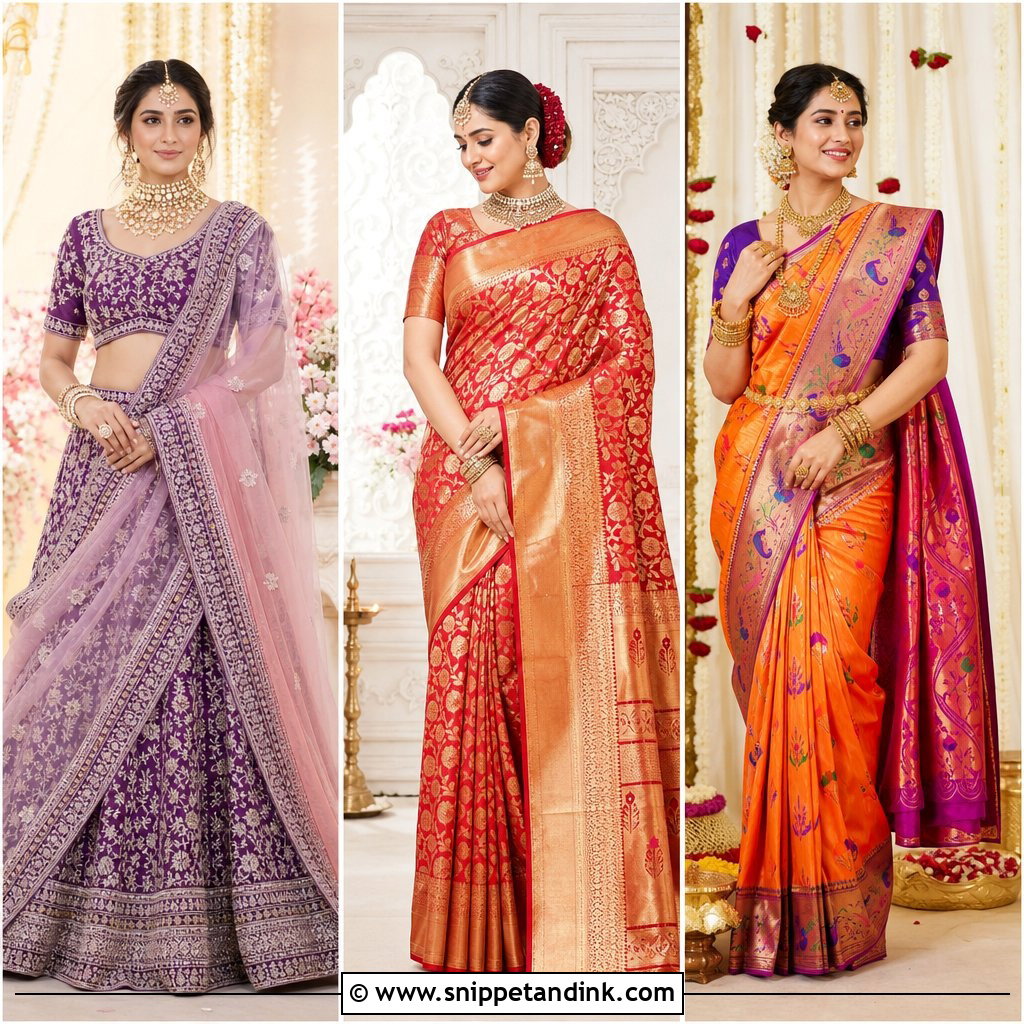
20. Chikankari Kurta Set Shadi Dress
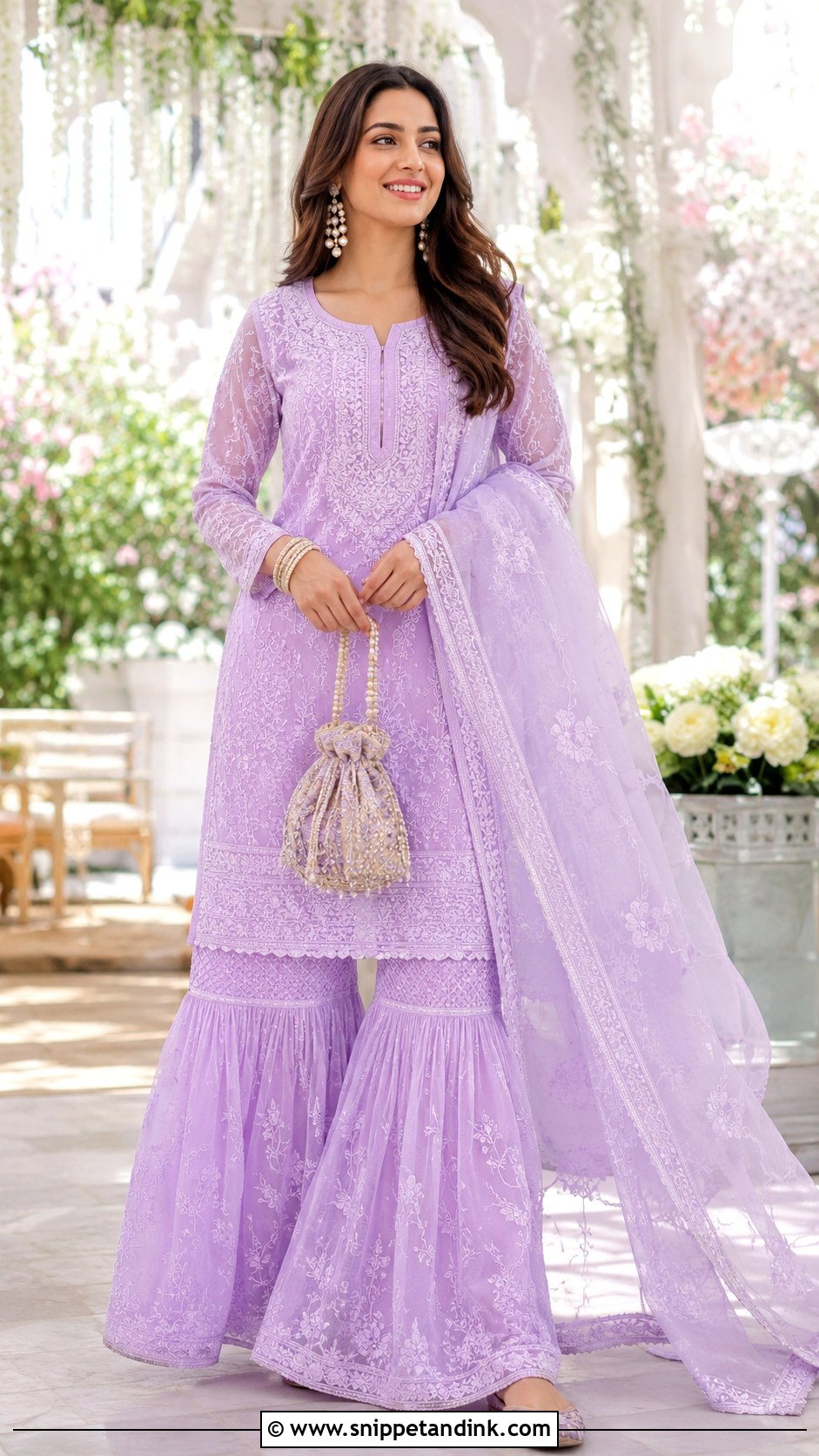
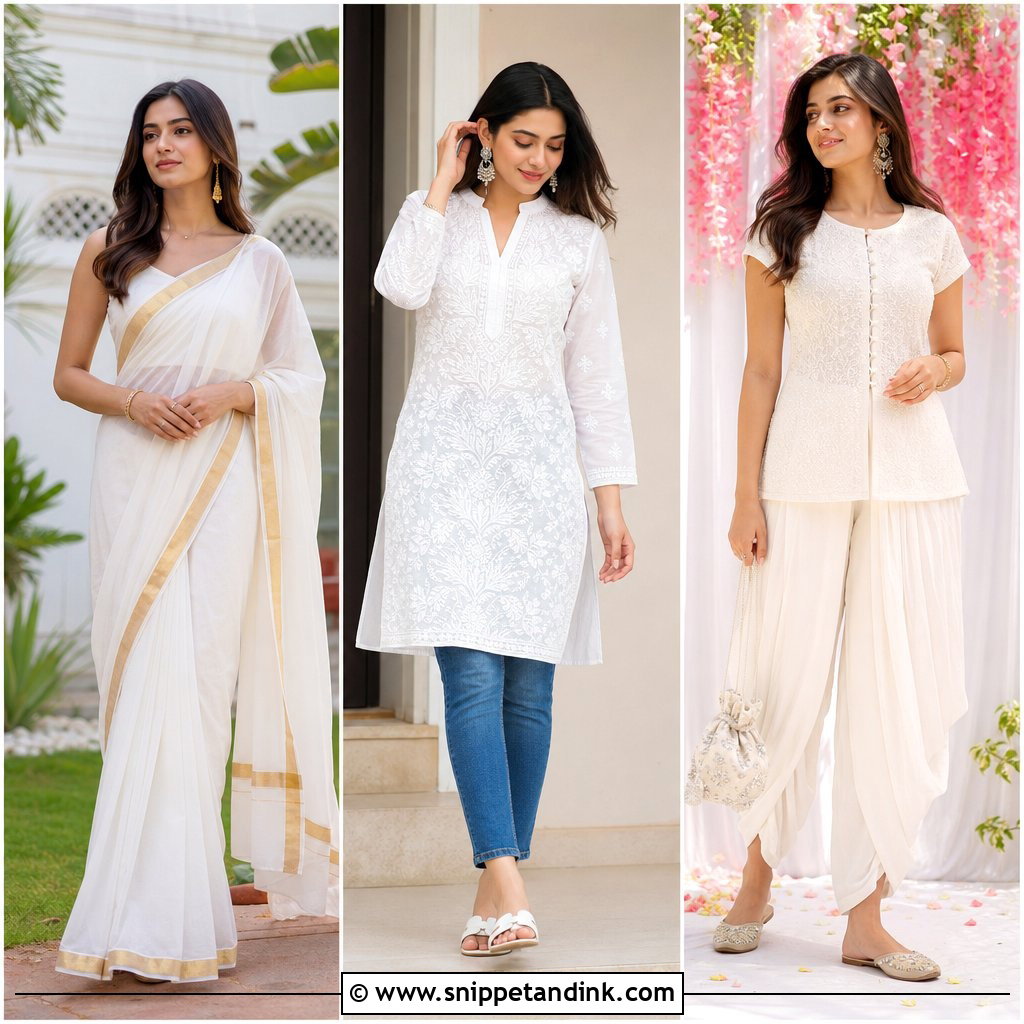
Chikankari is the quiet choice for a daytime wedding, mehendi lunch or an intimate family celebration. A long straight kurta in lavender, mint, blush, yellow or powder blue with matching palazzos or a sharara, and a light organza dupatta with a narrow border. Pearl earrings, slim bangles, a beaded potli, juttis or low block heels, and a loose braid or soft curls. Chikan is often worked on fine, sheer cotton or georgette, so lining matters; a lining in the same color keeps the shadow work visible, while a white slip under a colored kurta makes the embroidery disappear.
Draping a Saree So It Survives From Pheras to Reception
Most saree trouble on a wedding day starts in the first ten minutes of draping. I follow the same order every time, and it holds through sitting, dancing and hugging relatives.
- Put on the shoes you’ll wear all day before you start, so the hem is set at the right height.
- Tie the petticoat drawstring firmly at the waist, slightly off-center so the knot sits under the pleats, not on the hip bone.
- Make the front pleats even and fairly narrow, then pin them together at the top with one safety pin before tucking.
- Pin the pallu pleats at the shoulder from the inside, through the blouse seam, so the pin can’t be seen and the blouse takes the weight.
- Add one small pin at the hip where the pallu crosses, so it doesn’t swing open when you sit.
Silk sarees need more pins than chiffon because they’re heavier. Pack a few spares, a small mirror and a friend who knows how the pleats should look, since a quick re-tuck after the meal takes two minutes when someone helps.
One Wedding, Five Outfits, Zero Sore Feet
Indian wedding dressing runs from full bridal wear to easy guest outfits, and every one of these looks has its moment. Red lehengas and silk sarees carry the ceremony, while shararas, Anarkalis, palazzo suits and fusion gowns let you move. Match each outfit to the function, the season, the venue and what the invitation asks for. Fabric weight matters as much as color over a long day. Add shoes you can stand in, jewelry that doesn’t fight the neckline, draping that’s pinned properly and a bag that holds what you need. Then wear what lets you join in, because the best outfit at a wedding is the one you forget you’re wearing while you dance.
You'll Like These Ideas:


Leave a Reply