
A braid does a job in an updo that smooth hair can’t: it gives every pin something to grip. That’s why I reach for braids when a bride needs her hair to last from the first look to the last song. The plait locks sections together, the bun sits on top of that structure, and the whole thing moves less when you hug people. Crown braids, fishtails, rope twists and loose boho plaits all work on that same principle, they just look very different. Below are twenty I put up regularly, with notes on what each one asks of your hair and when I’d suggest a different route.
Matching the Braid Type to What Your Hair Actually Does
Before I suggest a braid, I run my fingers through a bride’s hair and watch how it behaves. Slippery, dense, springy and layered hair all braid differently, and the wrong pairing is why some braided updos look tired by lunchtime.
Very fine or slippery hair
Use a texture spray or dry shampoo on clean hair the night before, and on the day prep with a light mousse at the roots. Dutch braids work best because pancaking them makes them look twice as thick. Fishtails can look sparse here unless the sections are kept tiny.
Thick or very heavy hair
Weight is the issue. I’ll braid in smaller sections and spread the bun’s weight across two or three anchor points, so you don’t get that dragging ache at the nape by the reception. Large U-pins hold better than bobby pins on dense hair.
Curly and coily textures
Natural texture holds a braid better than almost anything. I’d usually braid it stretched rather than fully straightened, using a cream or light oil to define each section. Rope braids and twists suit coily hair especially well and protect the ends.
Layered cuts
Short layers pop out of a plait. A French or Dutch braid placed close to the scalp catches more of them than one hanging free. Whatever still pokes out gets a little pomade, never strong gel.
1. Crown Braid With Low Bun
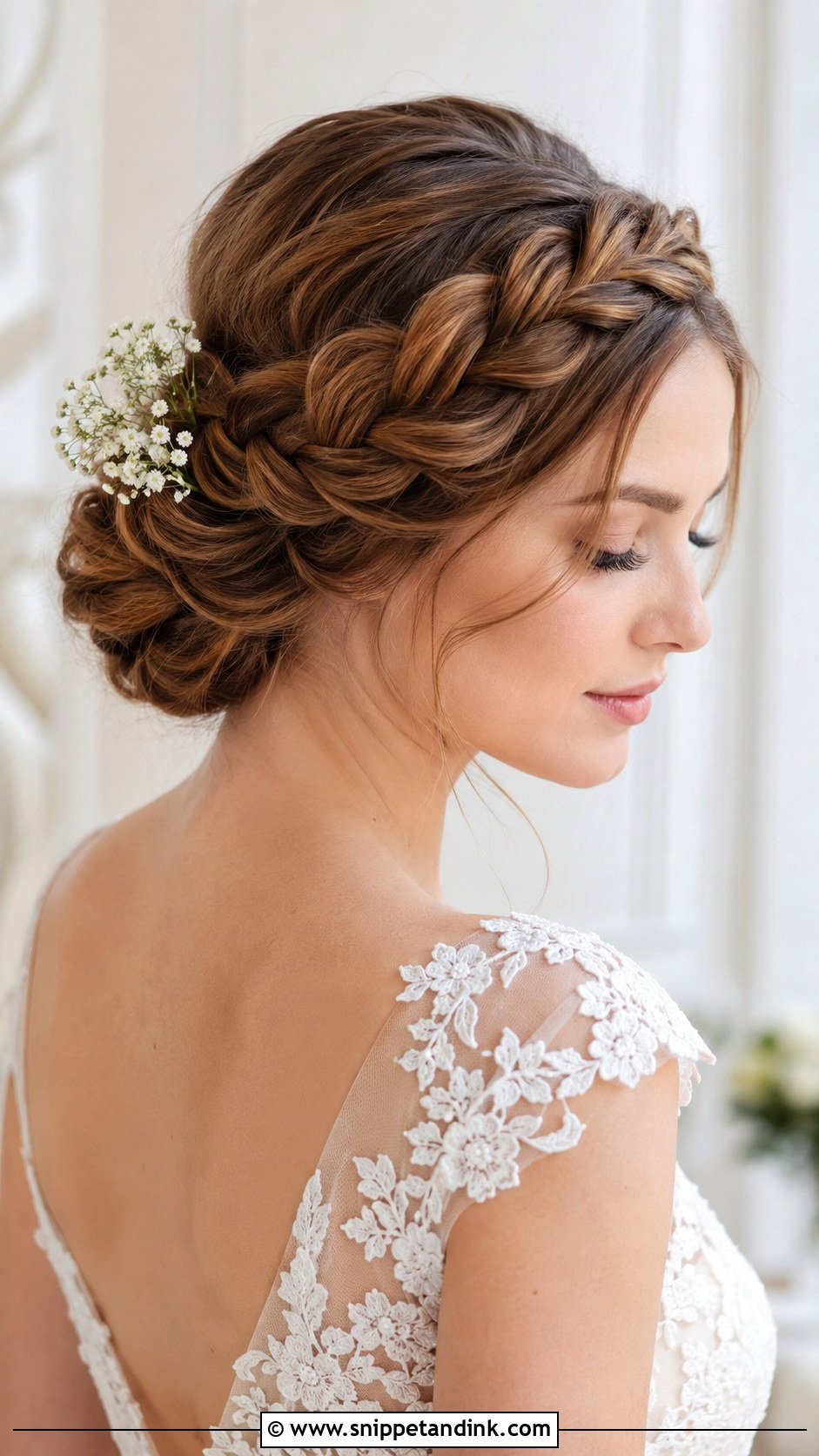
This is a halo of woven hair wrapped around the head and finished in a soft bun at the nape. It does the work of a tiara without the weight. The braid needs enough length to travel from one ear, over the top and back down, so I usually want hair past the shoulders; with a bob I’ll add a clip-in weft just for the braid. I pin the crown section with crossed bobby pins every few inches, because a halo that slides half an inch backwards looks lopsided in every front-on photo. Baby’s breath tucked along the plait is fine, but wire it, since loose stems fall out by the speeches.
2. Fishtail Braid Updo
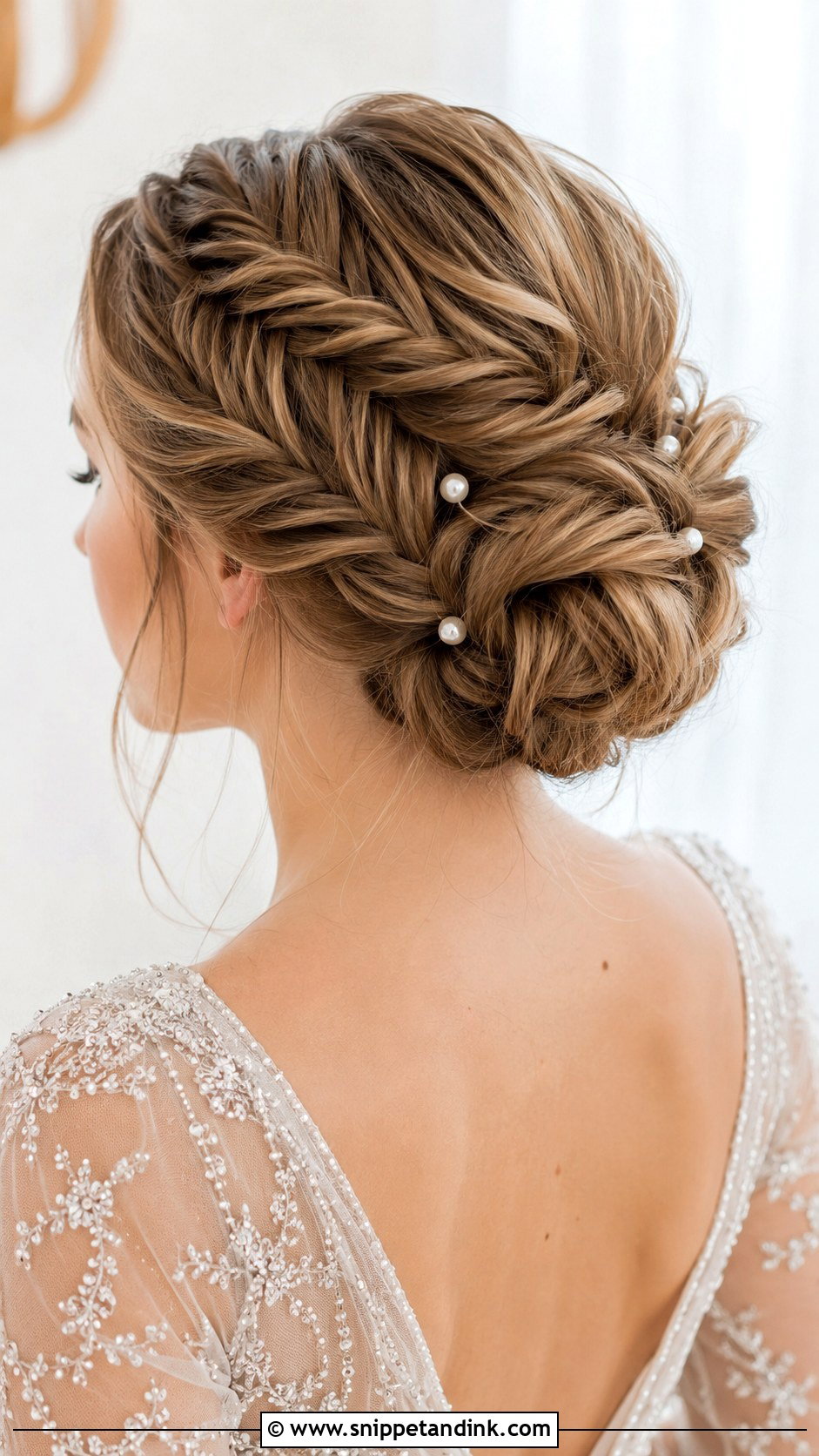
A fishtail is only two sections, crossed tiny pieces at a time, which is why it reads so detailed for how simple it is. Pinned up, it becomes the focal point of the whole style. I braid it tight first, secure the end, and only then pancake the edges outward; loosening before it’s anchored makes the pattern collapse. It hides the odd layer well, so it’s kind to hair that’s been cut into shape. Pearl pins or small blooms sit neatly in the gaps of the weave, and the tight pattern keeps its shape long after looser braids have gone fluffy.
3. Dutch Braid Crown Updo
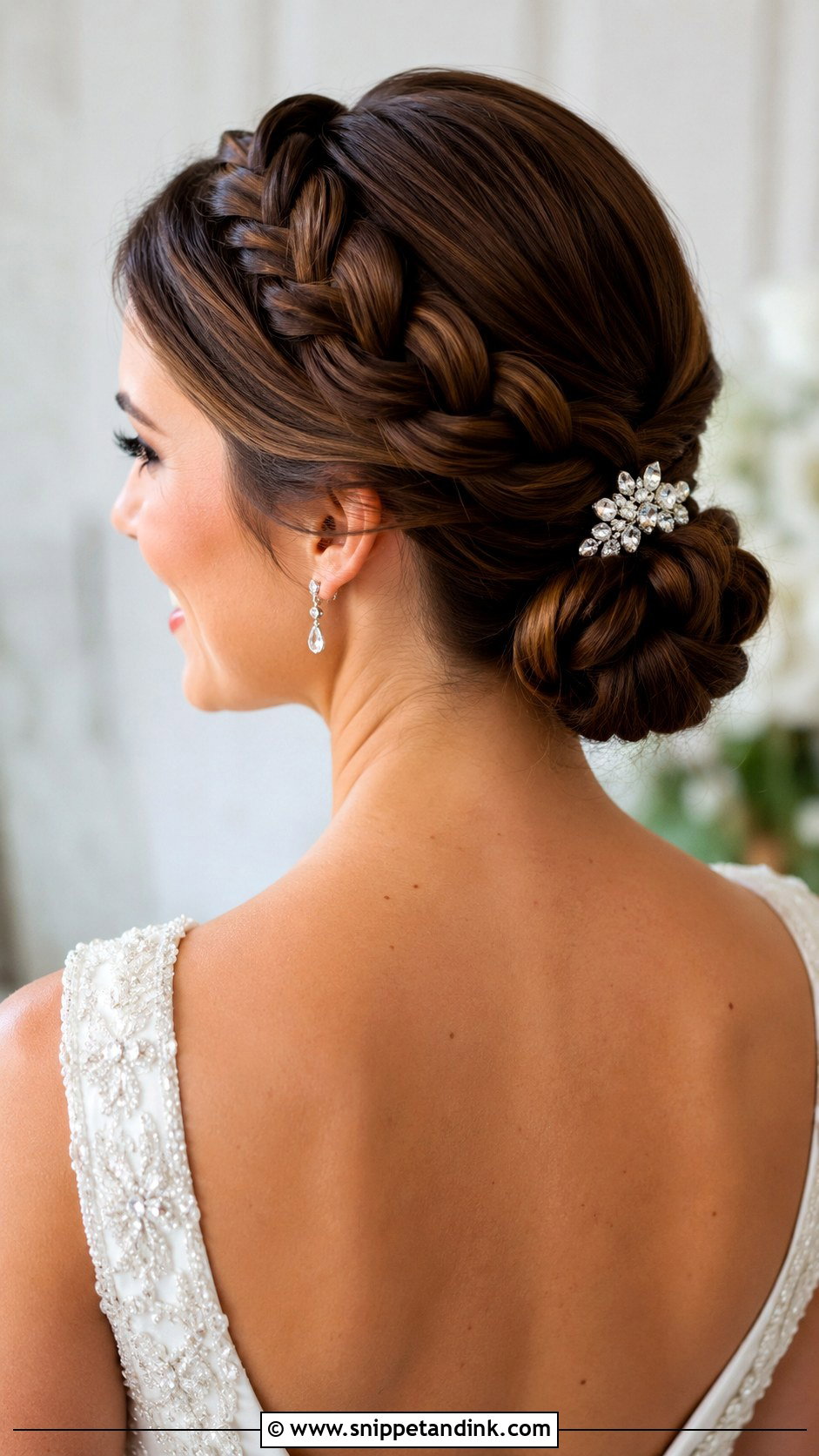
The Dutch braid is an inside-out French braid: you cross strands under rather than over, so the plait sits raised on top of the hair. Wrapped around the crown and finished in a low chignon, it gives real depth. On very fine hair the raised effect can look thin, so I’ll braid it, then gently pull the outer loops to widen it before spraying. Against a sleek, slicked base every twist reads clearly, even from the back row. A jeweled pin beside the bun is all it needs; anything more starts to compete with the braid itself.
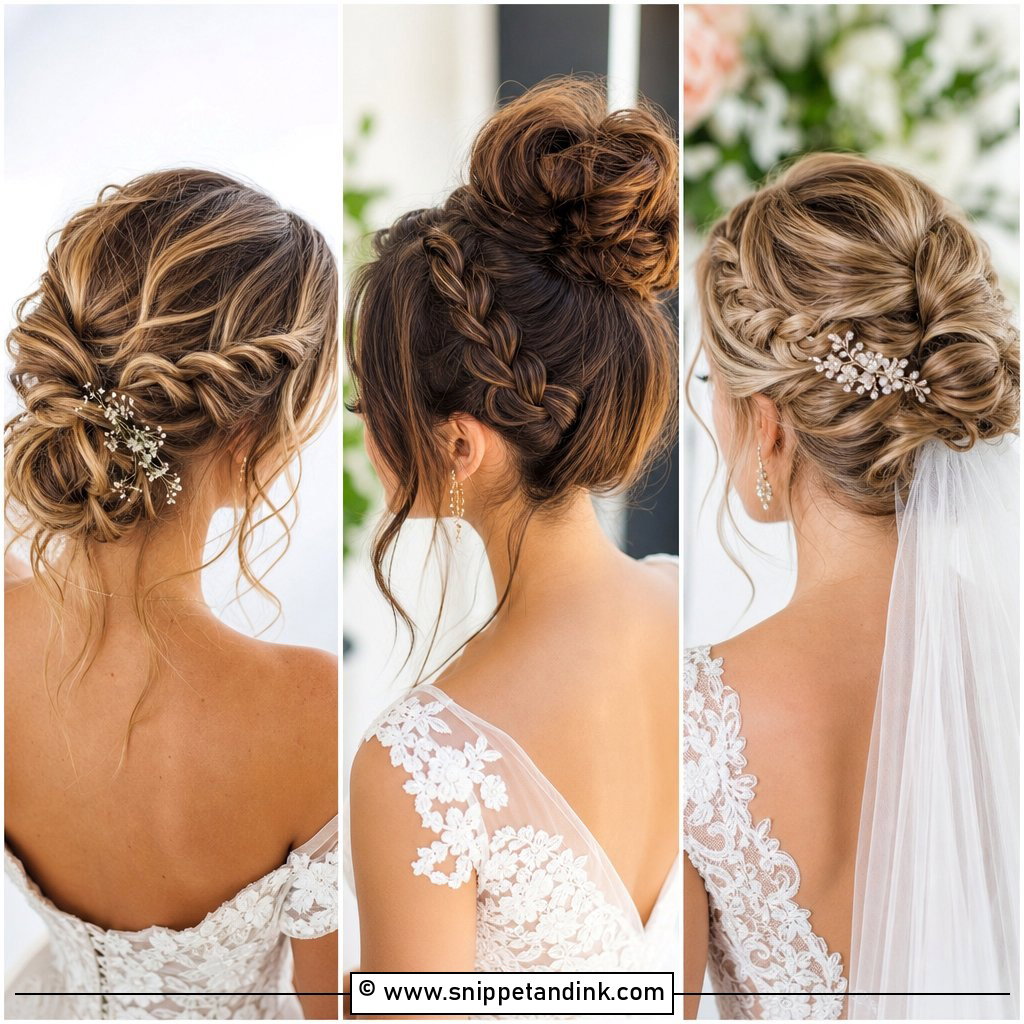
4. Braided Chignon
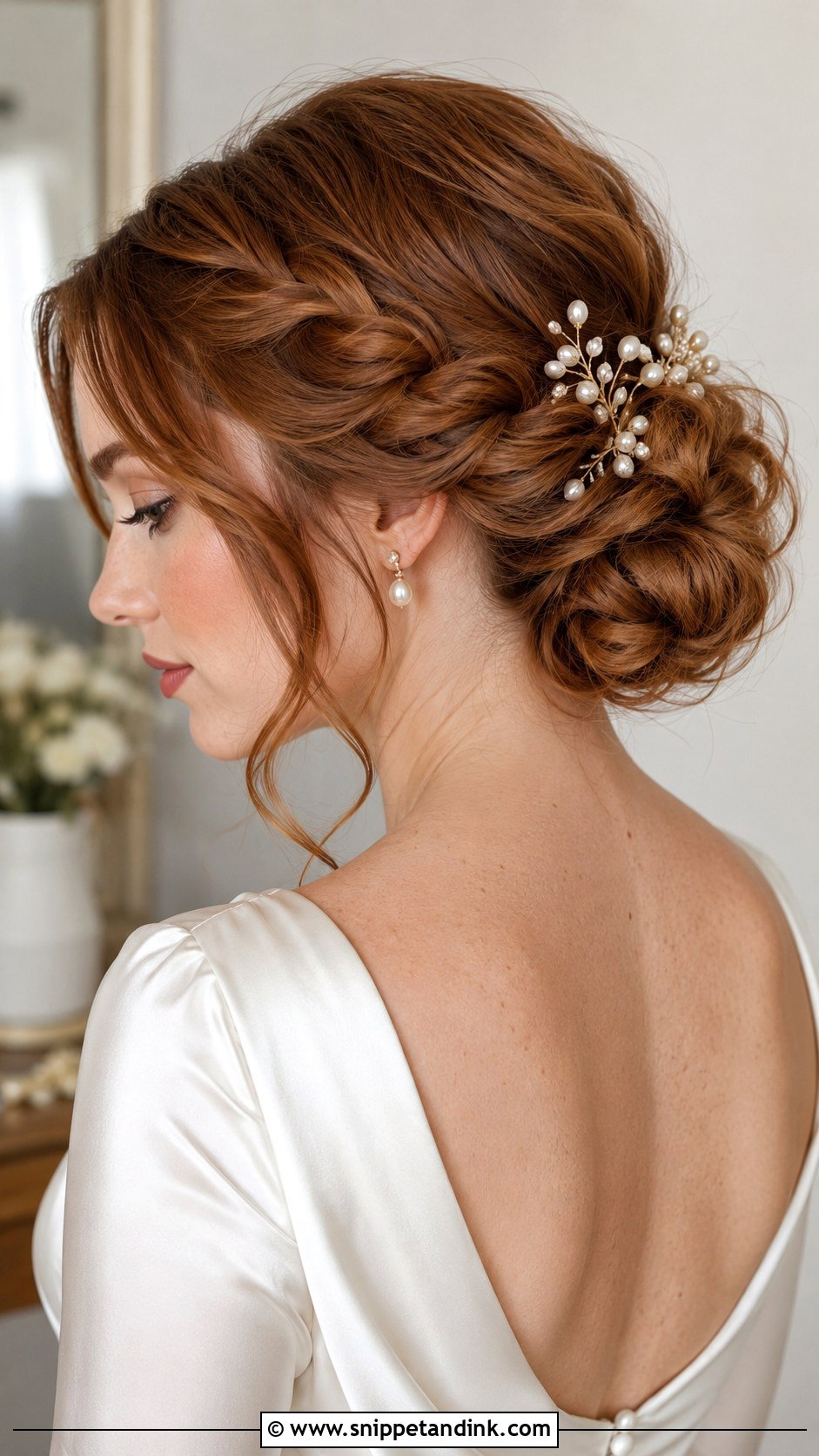
A chignon with plaits worked through it is the style I’d trust most for a long day. The bun sits low, the braids lock the loops in place, and there’s very little that can work loose while you dance. I build the bun on a small hidden ponytail so pins have a solid base, then wrap the braided sections around it. It suits a vintage lace gown as easily as a plain crepe column. Leave one or two face-framing pieces at most, because four or five tend to turn into straight strings by evening.
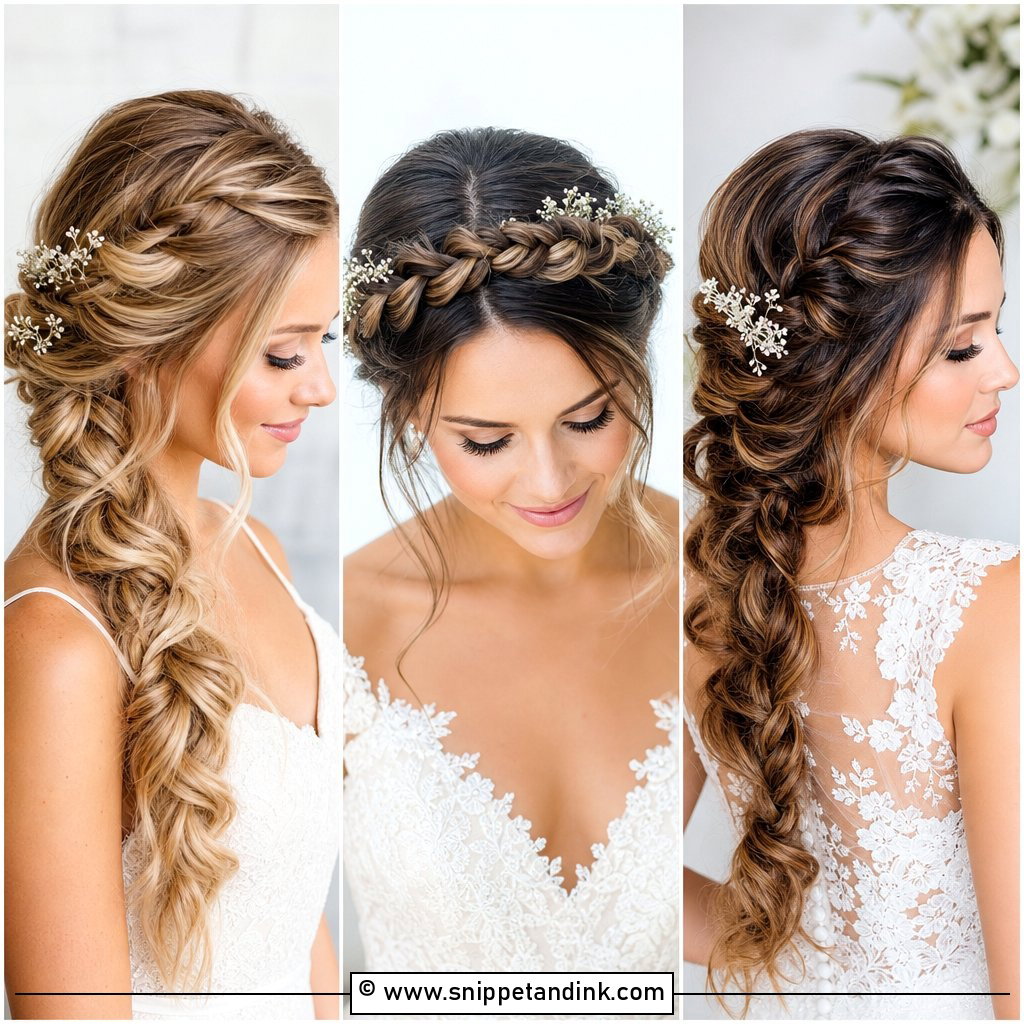
5. Side Swept Braid Updo
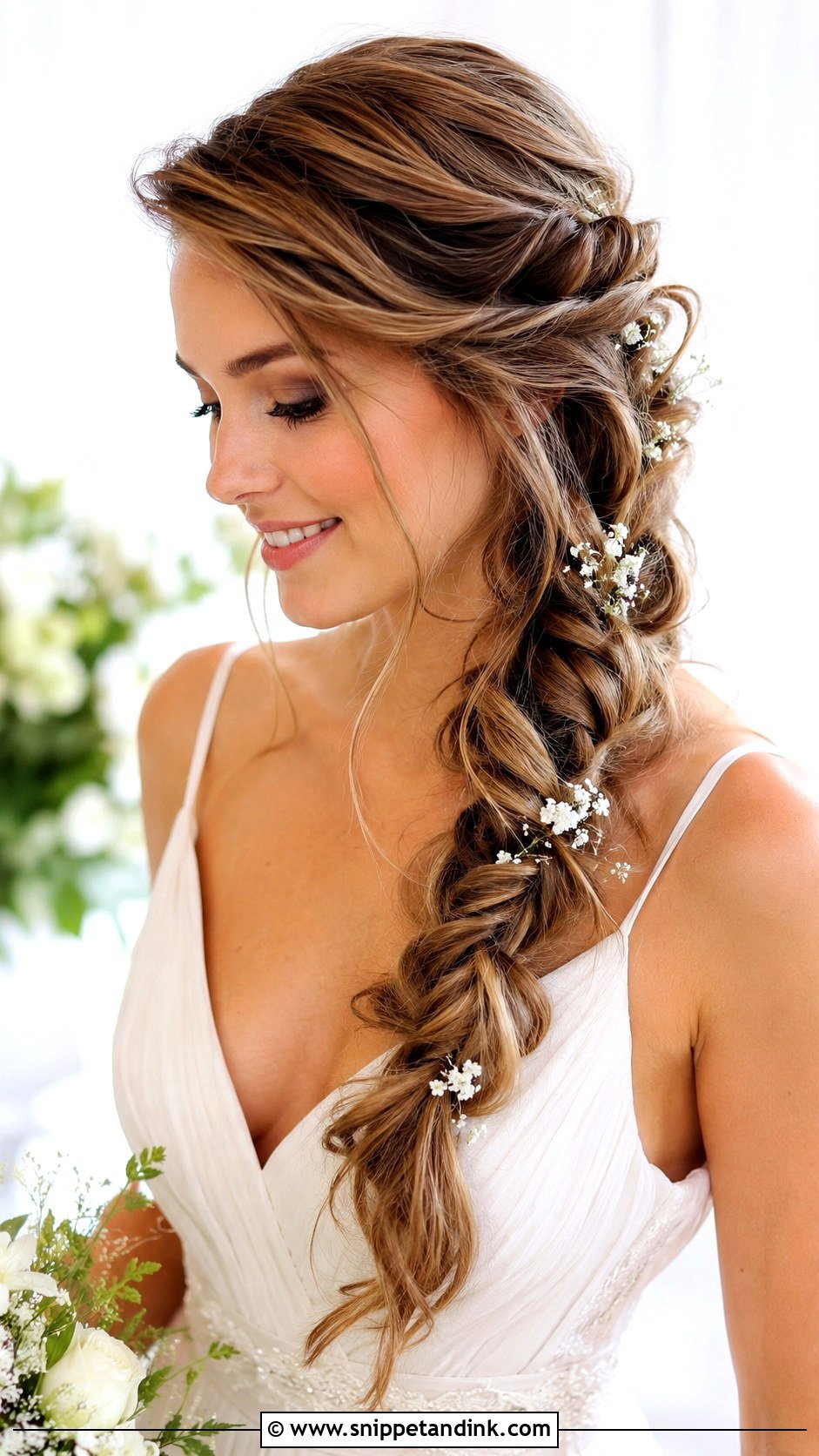
Sweeping everything over one shoulder shows off the neckline and earrings on the opposite side, which is why I suggest it for one-shoulder and off-the-shoulder dresses. The braid drapes forward and the end is pinned into a loose knot behind the ear. The catch is wind: on a beach or open lawn, a side style blows across your face more than a centered bun does. I anchor the hidden side with a cross of pins behind the ear before I braid anything. Small florals or vine wire along the plait suit garden settings, and you’ll want to decide which side faces your partner at the altar.
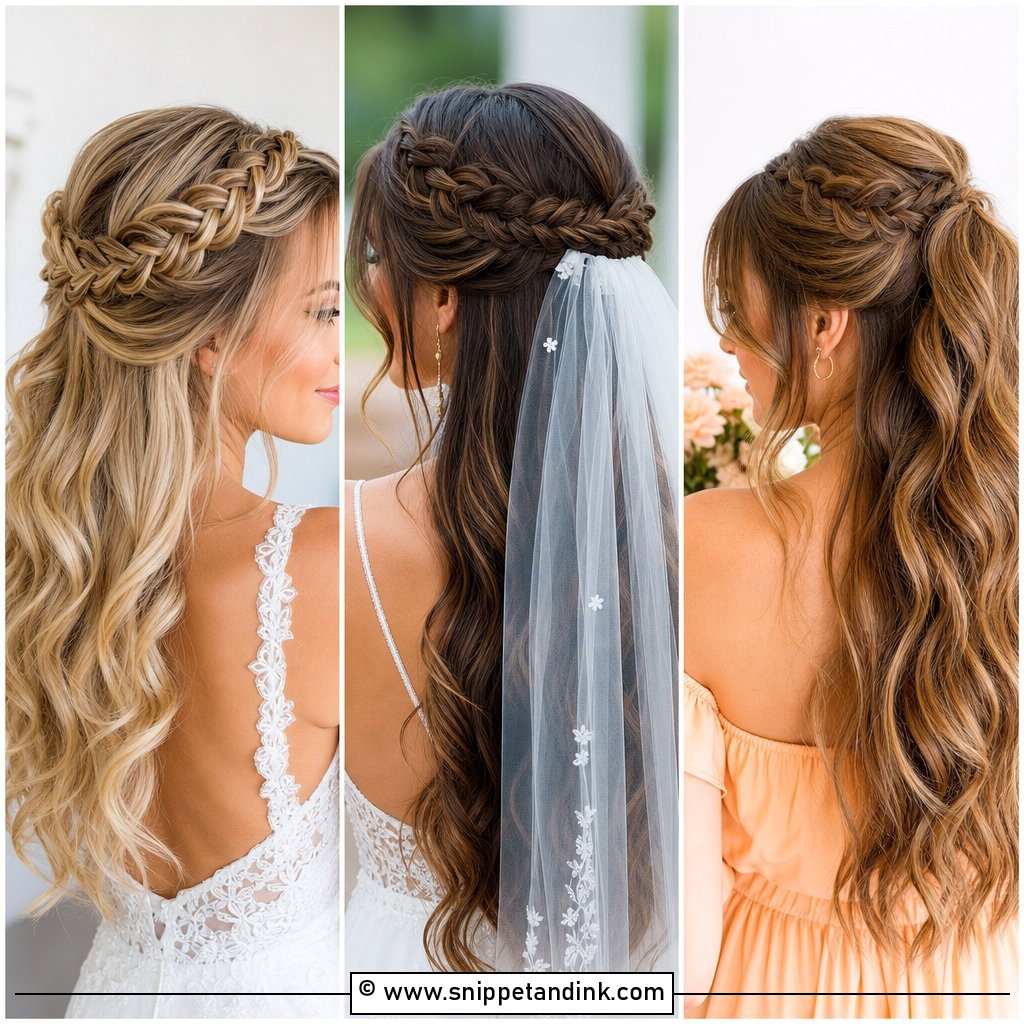
6. Halo Braid With Loose Curls
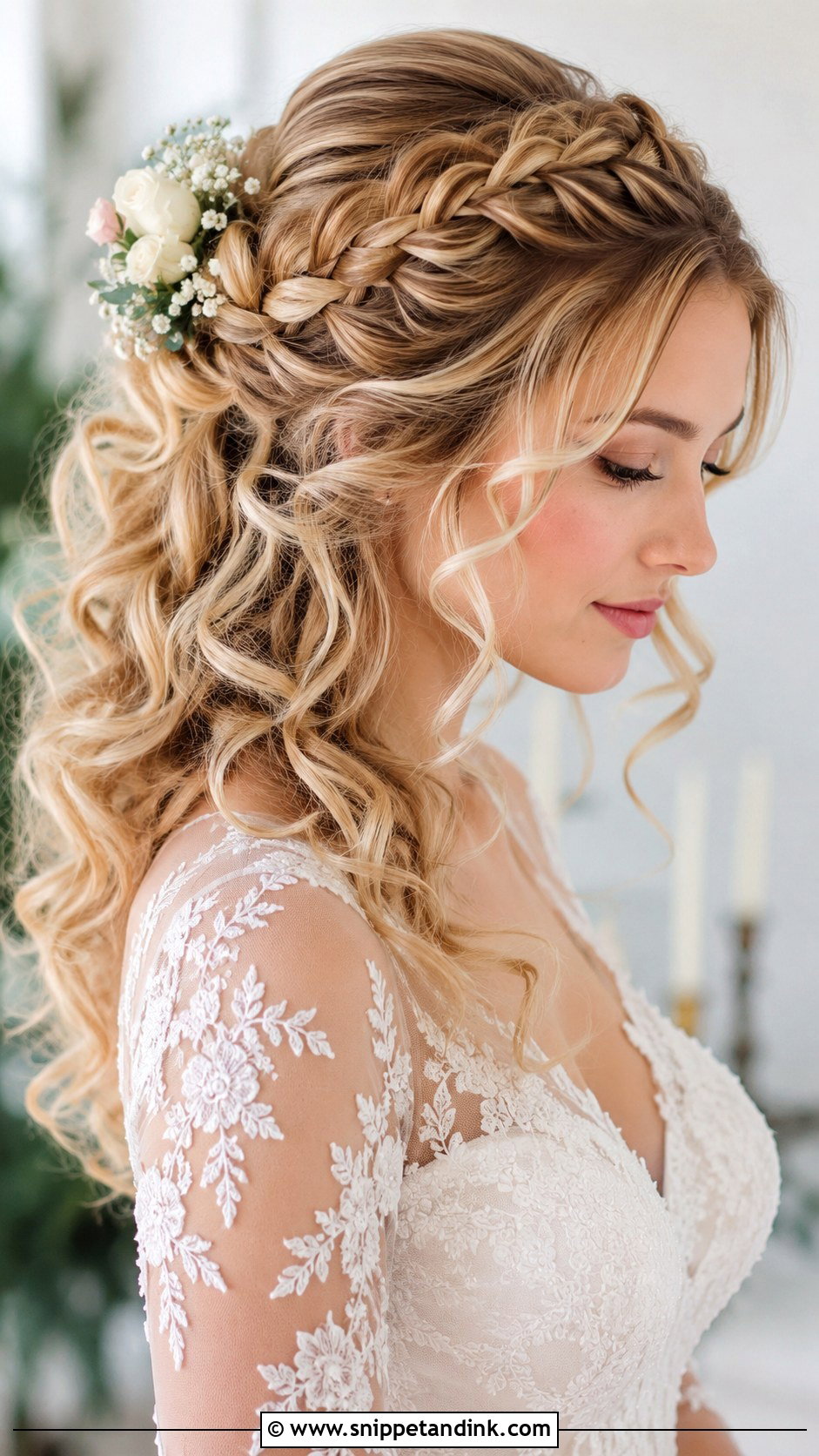
Technically this is half-up: a thin braid circles the head and the curls below stay loose. It keeps hair off your face while still giving you length and movement. The braid is the easy part; the curls are where it can fail. On hair that won’t hold a curl, I set every section in pin curls and let them cool fully before brushing out, otherwise the waves are flat by the reception. Long, naturally wavy hair gives the best result here, and tiny flowers in the braid suit an outdoor ceremony.
7. Low Braided Bun
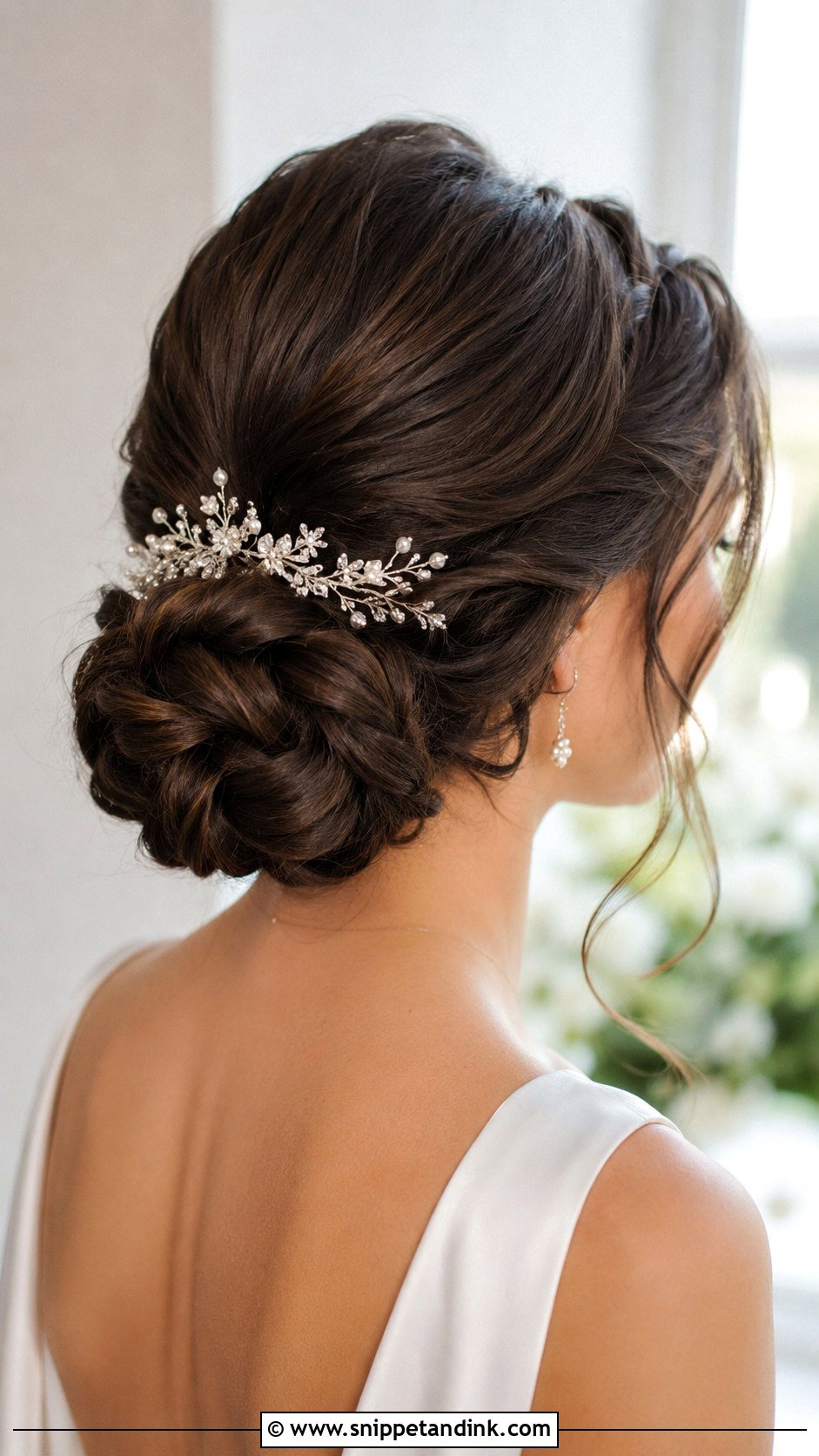
Braided sections looped into a smooth bun at the nape: that’s the whole idea, and it’s one of the most versatile styles I do. It sits under a cathedral veil and still looks deliberate once the veil comes out. Low placement also means you can lean back in a chair or a car without crushing it. Soft tendrils around the face keep it from looking strict. Put a small comb above the bun rather than beside it, because that’s the angle guests see most during the vows.
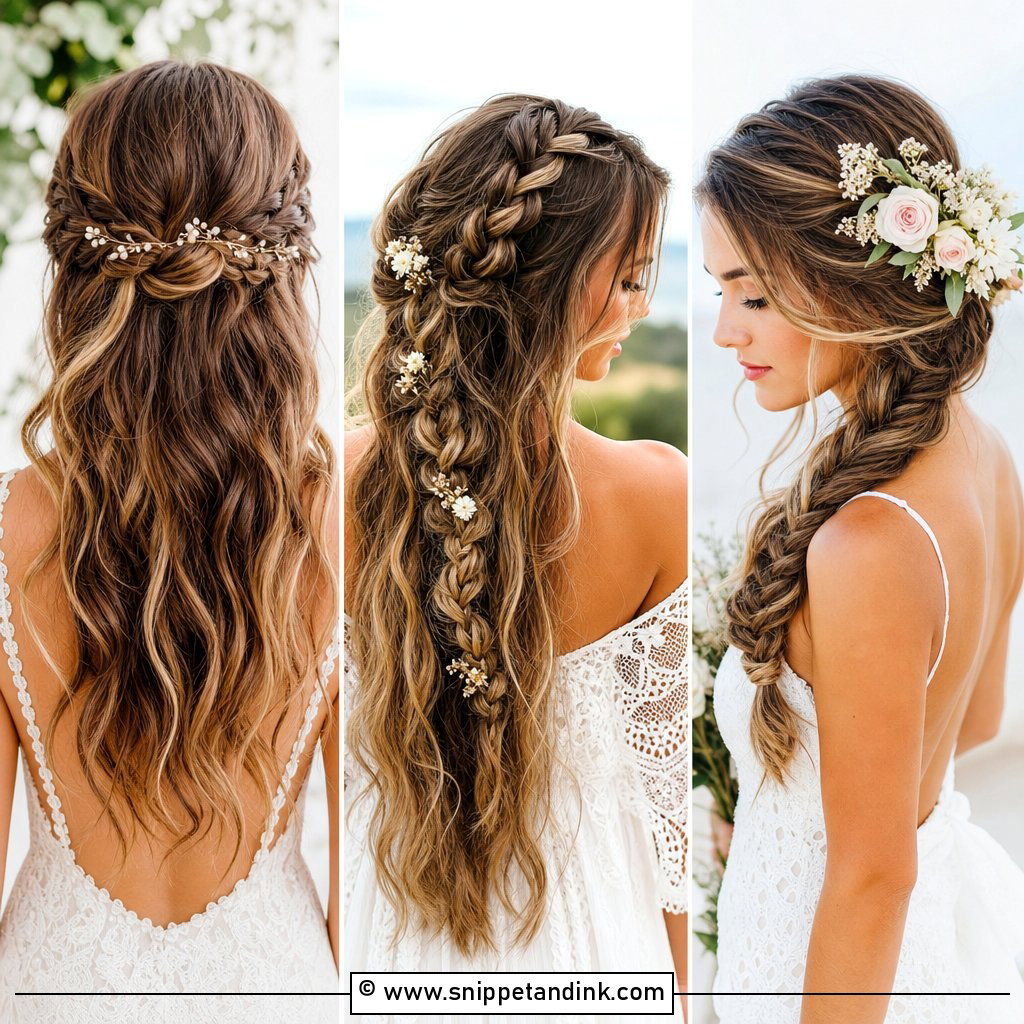
8. Boho Braided Updo
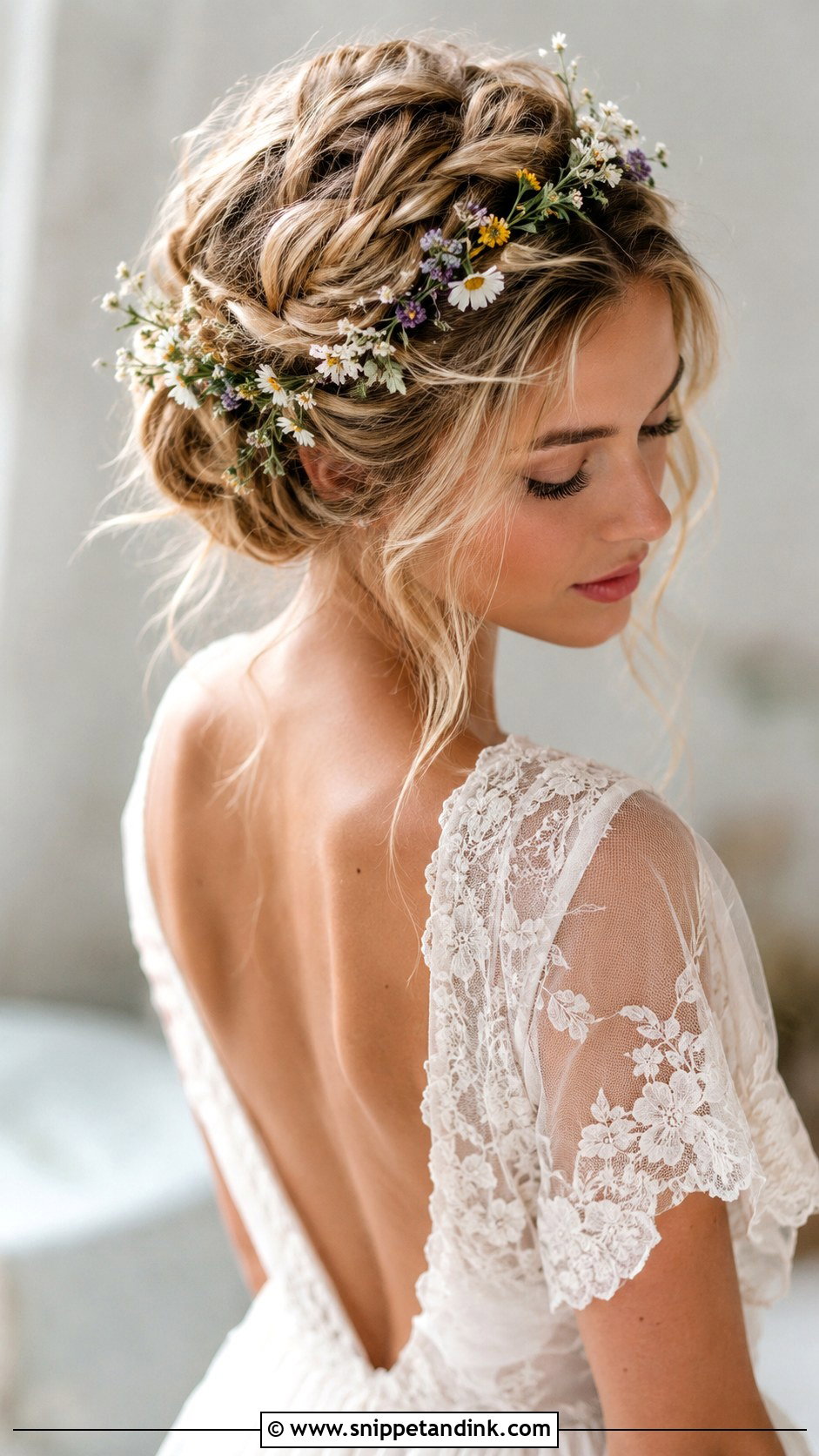
Boho braids are loose on purpose, but loose is not the same as unsecured. I braid with texture spray, pin each plait into a soft shape, and then pull pieces free, so the mess is placed rather than accidental. Wavy and textured hair does a lot of the work here; very sleek, straight hair needs a dry texturizer or the braids slide apart. Flower crowns and dried florals suit it, but dried stems snap, so I attach them with pins through the stem, not just tucked in. Expect a few more strands to come loose as the day goes on; with this style that only helps.
9. French Braid Updo
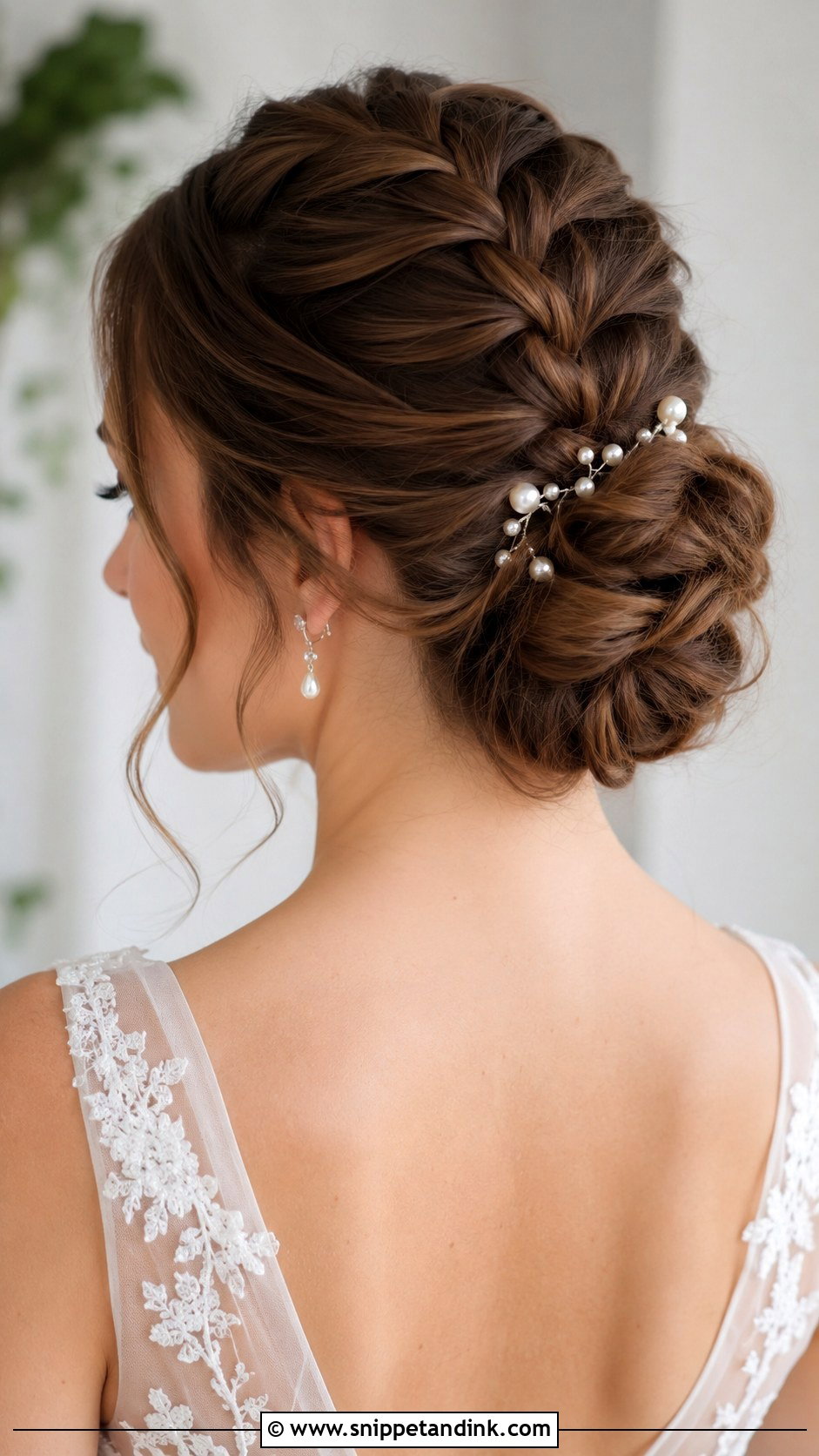
The French braid starts at the crown and picks up hair as it moves down, so by the time it reaches the nape it has gathered almost everything. That’s what makes it hold so well when pinned into a bun or twist. I braid it a little tighter than I would for a casual style, then tease the edges once it’s secure. It suits almost any face shape and works under a veil without fuss. Small pearl pins along the woven sections add detail; I’d keep them to one side so the braid’s own pattern still shows.
10. Braided Updo With Veil
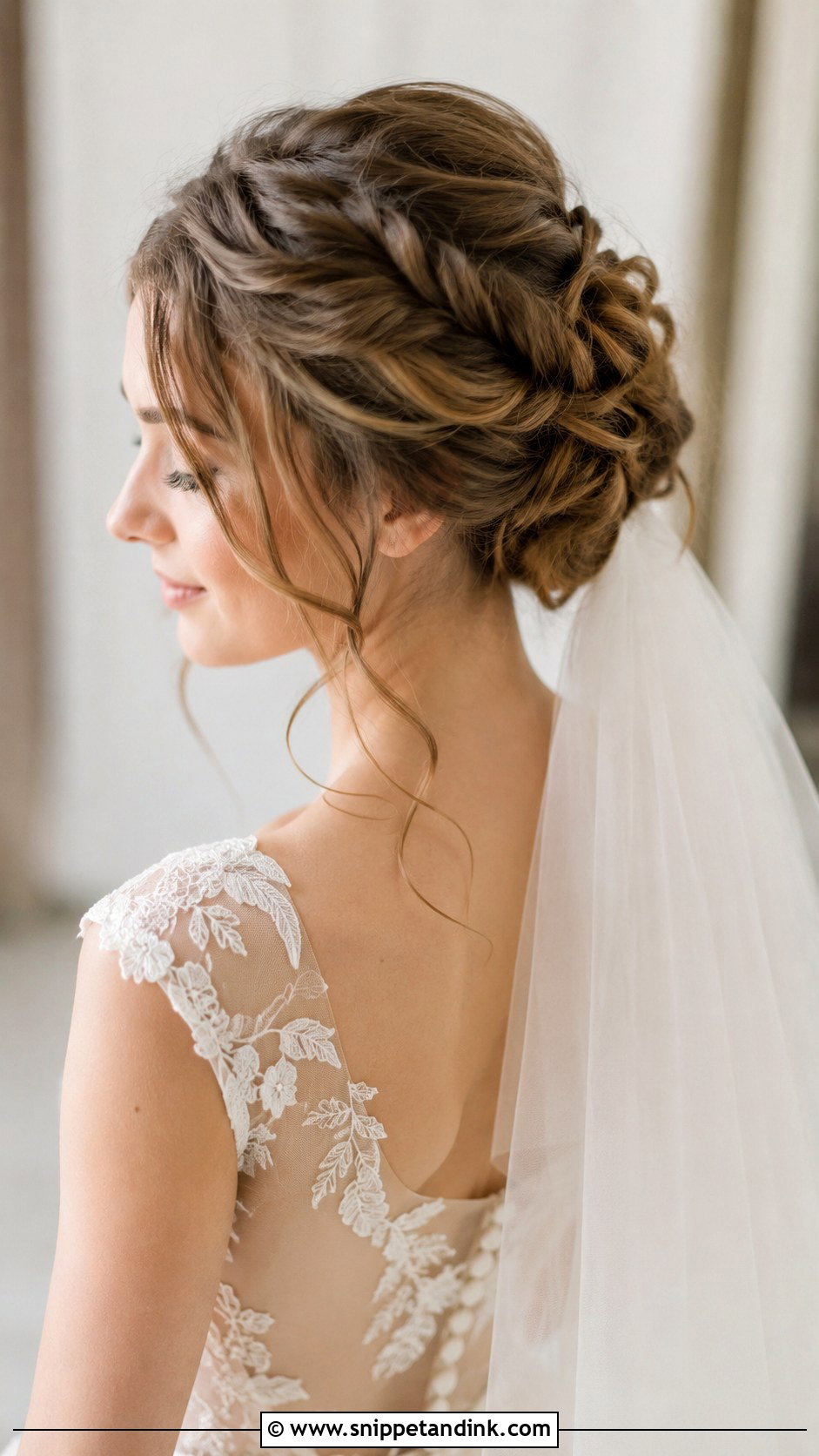
A braided updo under a veil is one of the most traditional pairings, and it does take a little planning. The braid shows around or below the veil, so I need to know where the comb will sit before I design the style. My usual approach is to place the comb just above the bun and slide it through the braid itself, which grips far better than smooth hair. When the veil comes off for the reception, the braid is still there and nothing needs redoing. Bring the veil to your trial so we can test its weight on your actual hair.
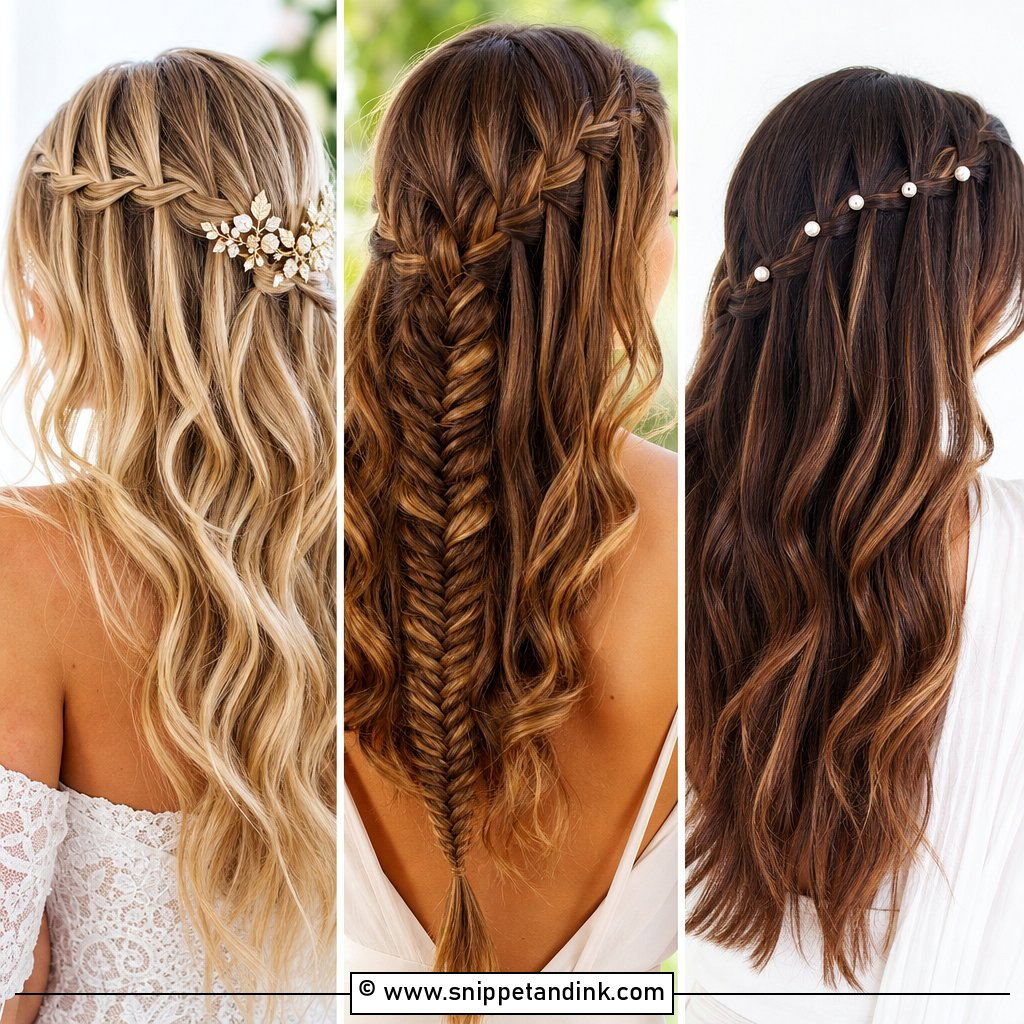
11. Waterfall Braid Updo
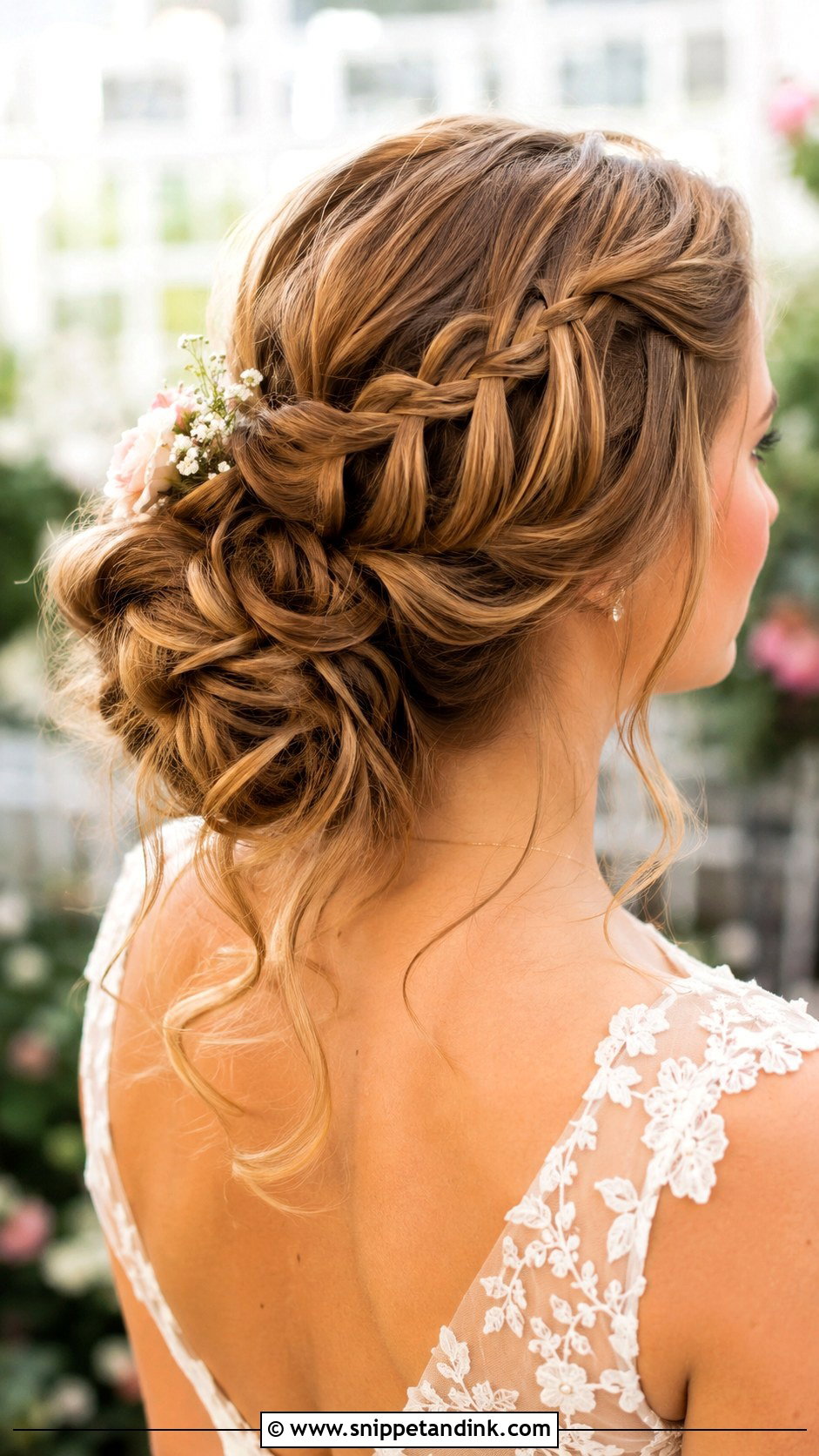
The waterfall braid runs horizontally and drops a strand at every stitch, so pieces fall through like water. The remaining length is pinned into a soft bun behind it. It’s delicate, and that’s also its weakness: the dropped strands are what frizz first in humidity. I curl those pieces and set them with a light hold spray rather than a heavy one, which would make them look stiff. Long, wavy hair shows the effect best. On thick, straight hair the strands can look heavy, so I’ll take finer sections.
12. Braided Updo With Flowers
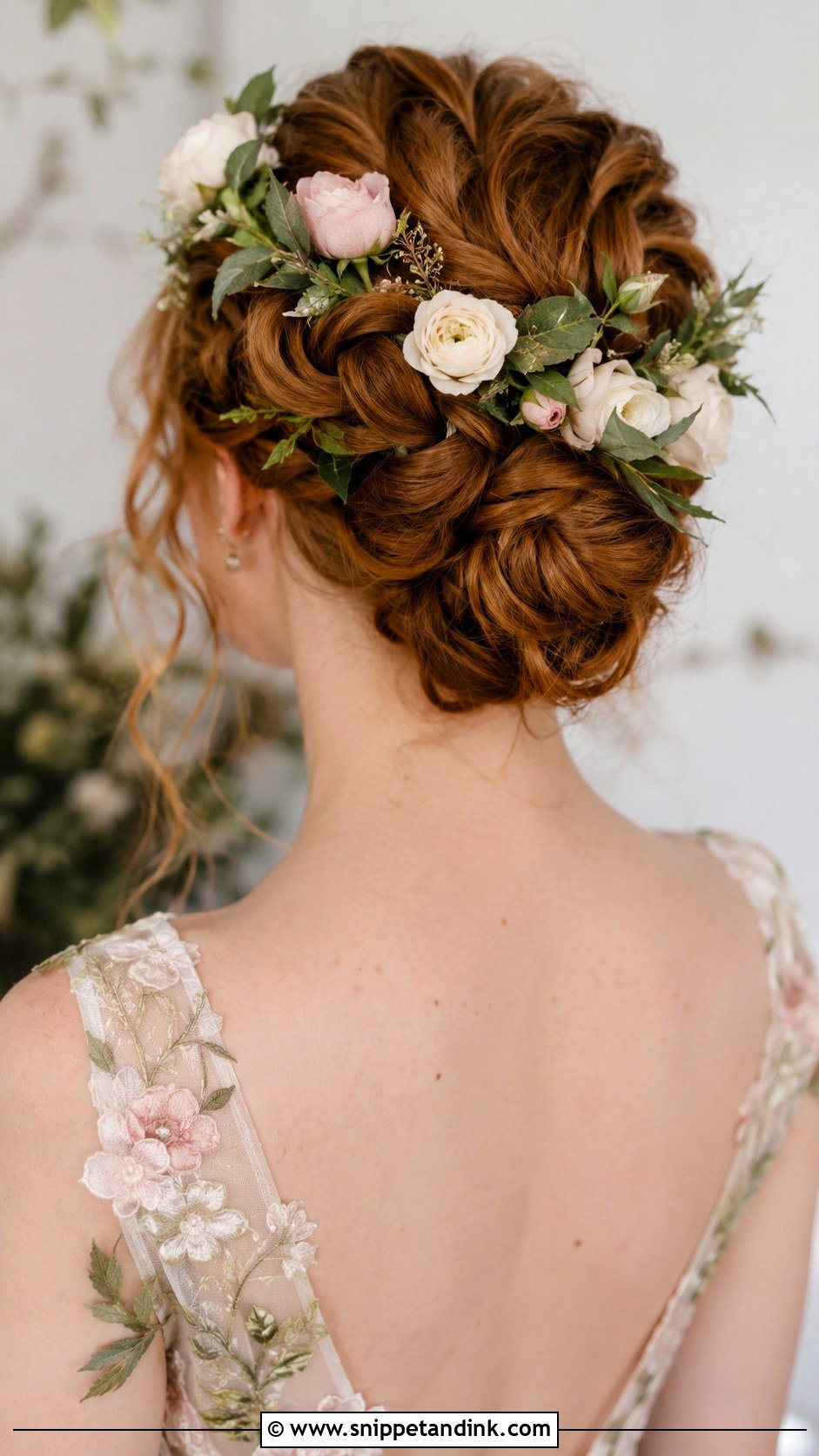
Braids are the best base I know for fresh flowers, because the weave gives each stem somewhere to grip. Roses, greenery and Baby’s breath all hold well. Ask your florist for blooms that cope out of water for hours; ranunculus and spray roses last, while gardenias brown at the edges quickly. I usually ask for flowers to be delivered to the getting-ready room an hour before I need them, wrapped in damp tissue. Matching a few blooms to your bouquet ties the look together. Silk flowers are a sensible backup on a very hot day.
13. Messy Braided Bun
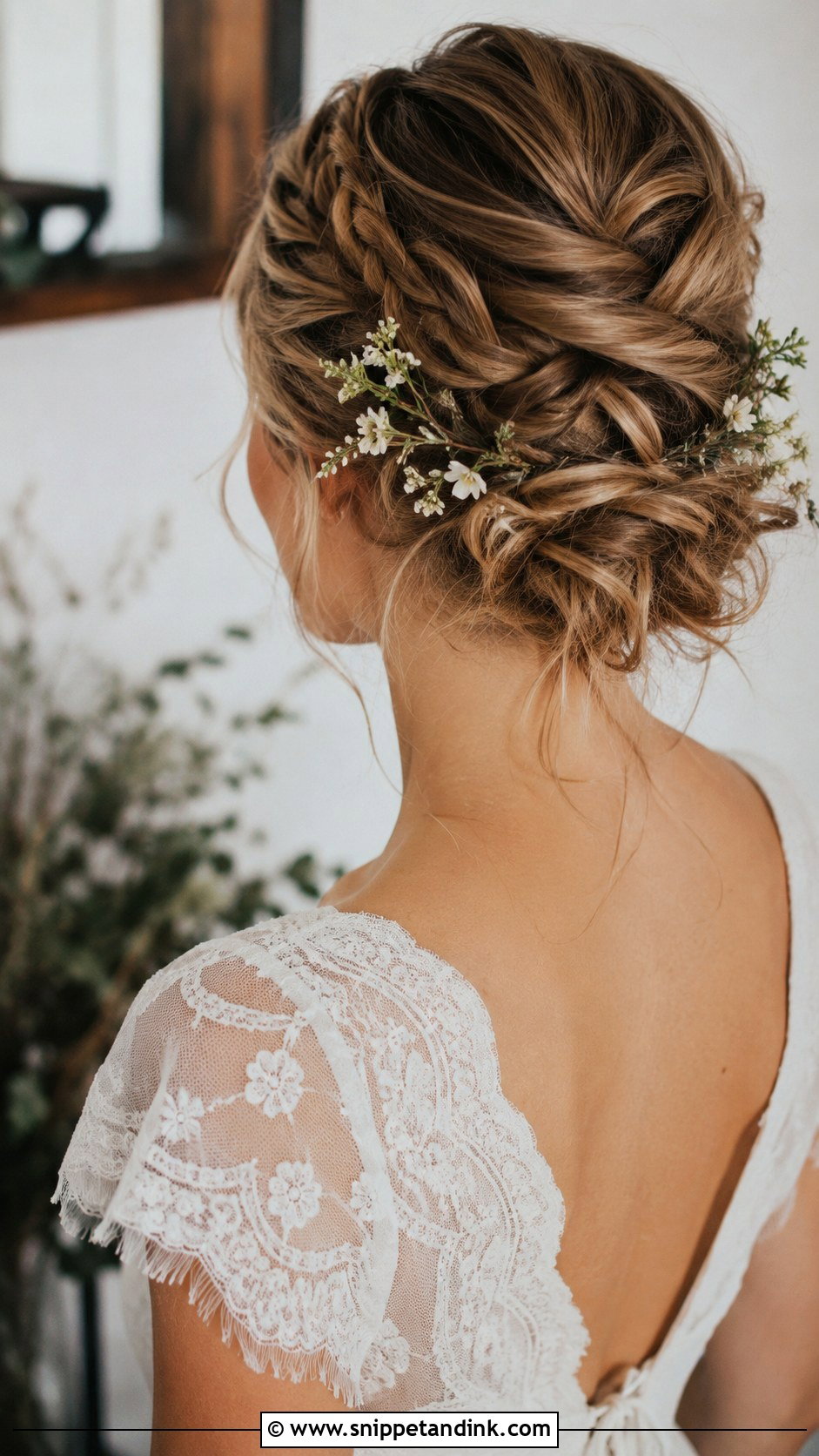
The messy braided bun is loose braids gathered into a soft, textured knot with pieces pulled free. It looks casual, but it takes almost as long as a sleek style, because each loose piece has to land in the right place. Bring photos to your stylist of how undone you actually want it; one person’s messy is another’s unfinished. I like it for outdoor and bohemian weddings. A few small florals or pins tucked into the bun are plenty.
14. Double Braid Updo
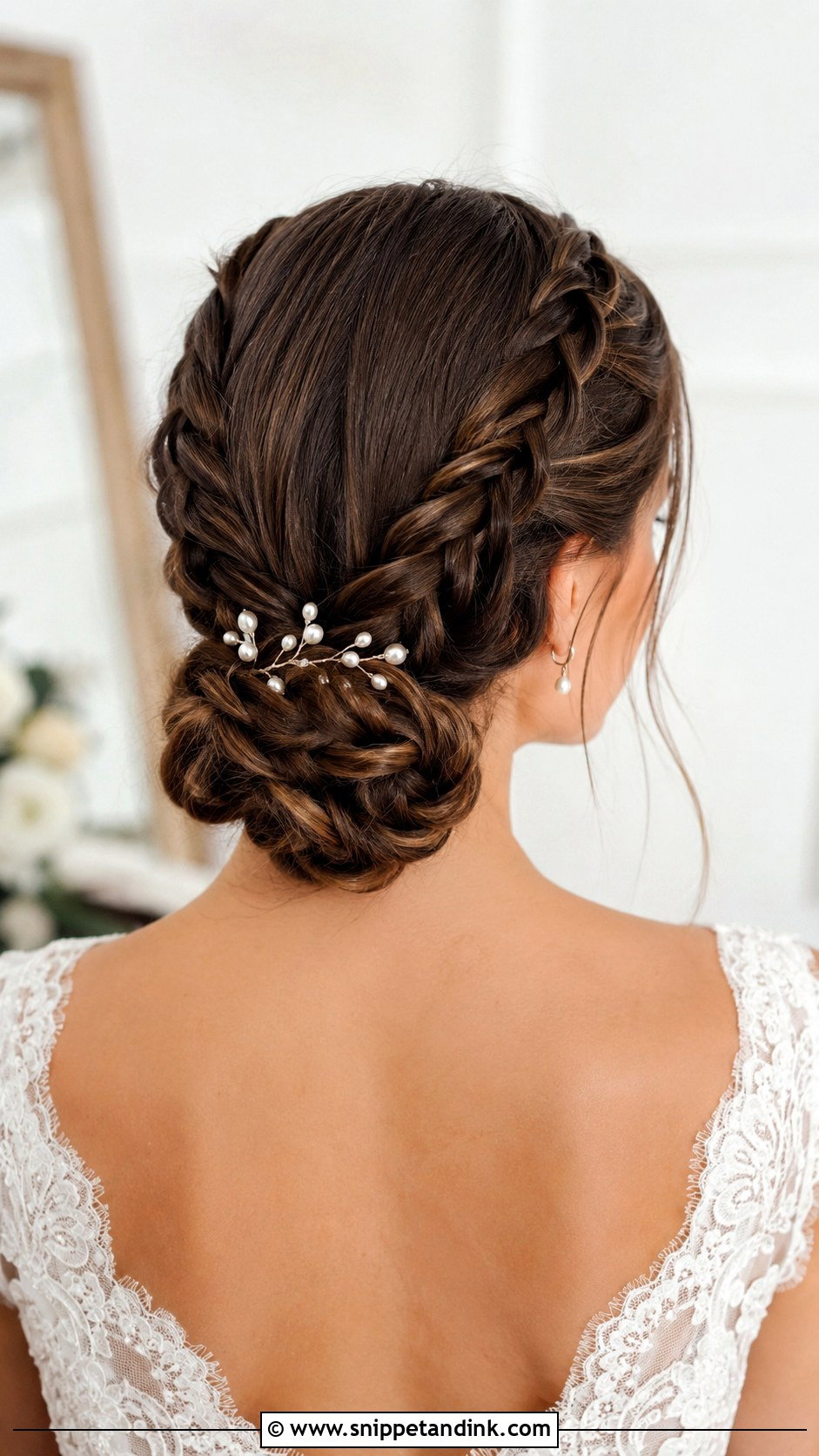
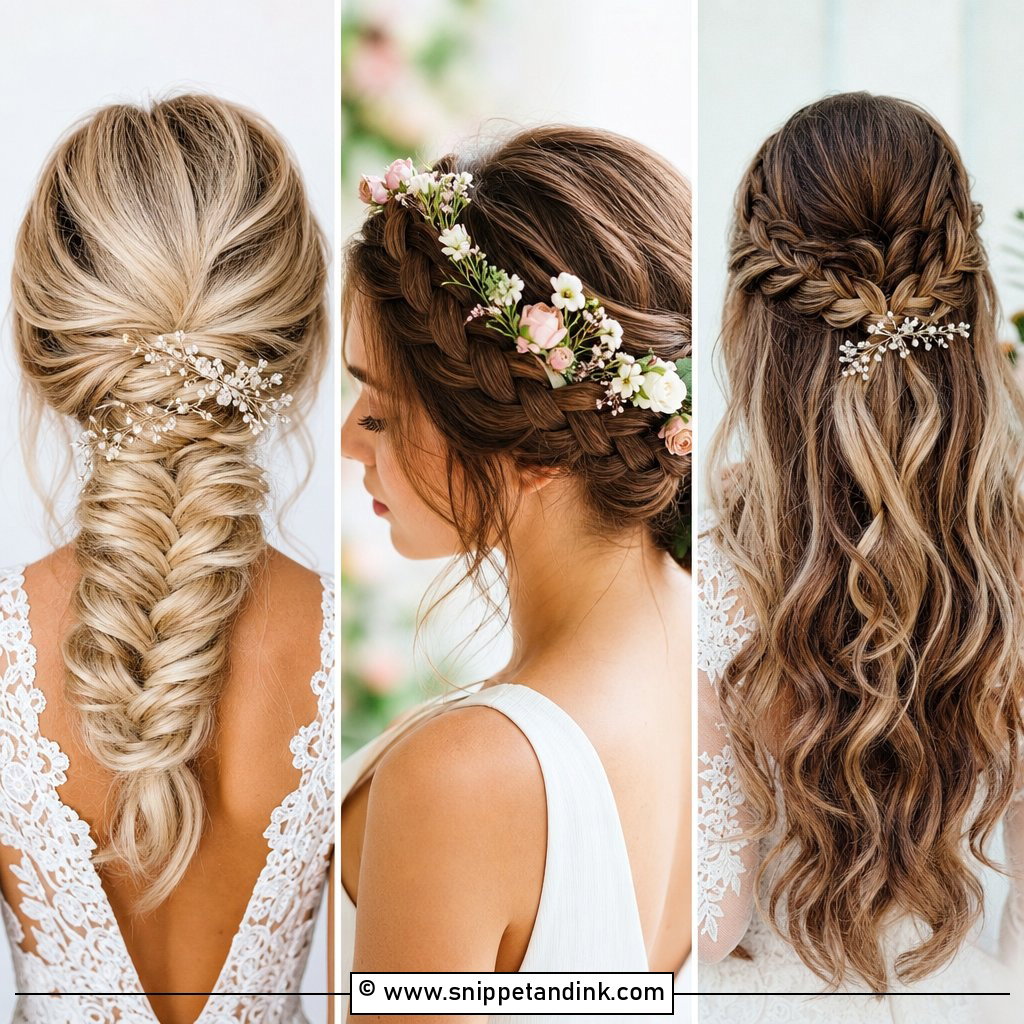
Two braids run parallel and meet in a bun, and the symmetry is what makes it look so considered. The tricky part is getting both braids exactly level. I section with a tail comb and check from behind with a hand mirror before pinning, because a quarter-inch difference shows up instantly in photos from behind at the altar. Both Dutch and French braids work here. Pin them into a low or mid-height bun, and keep any pearls or flowers matched on each side.
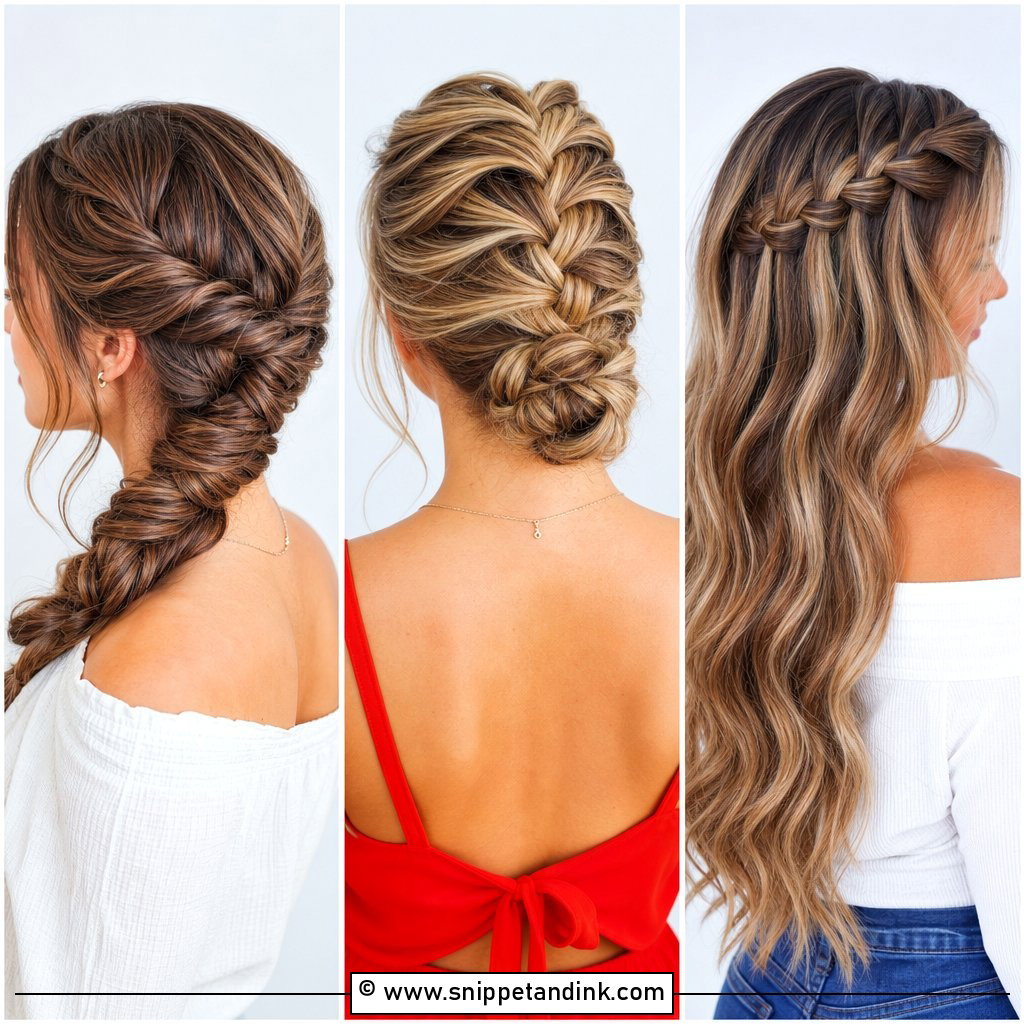
15. Braided Updo For Short Hair
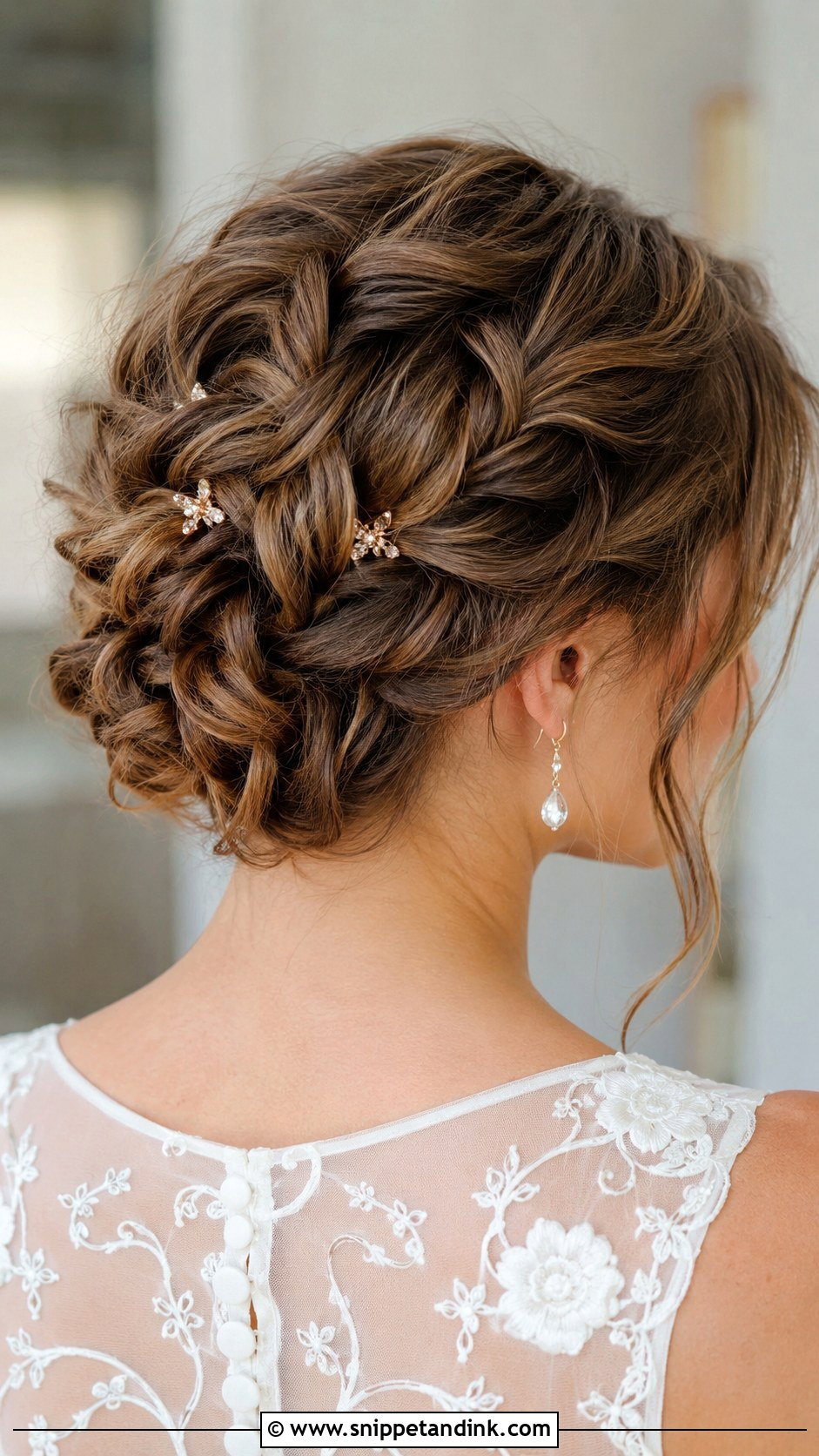
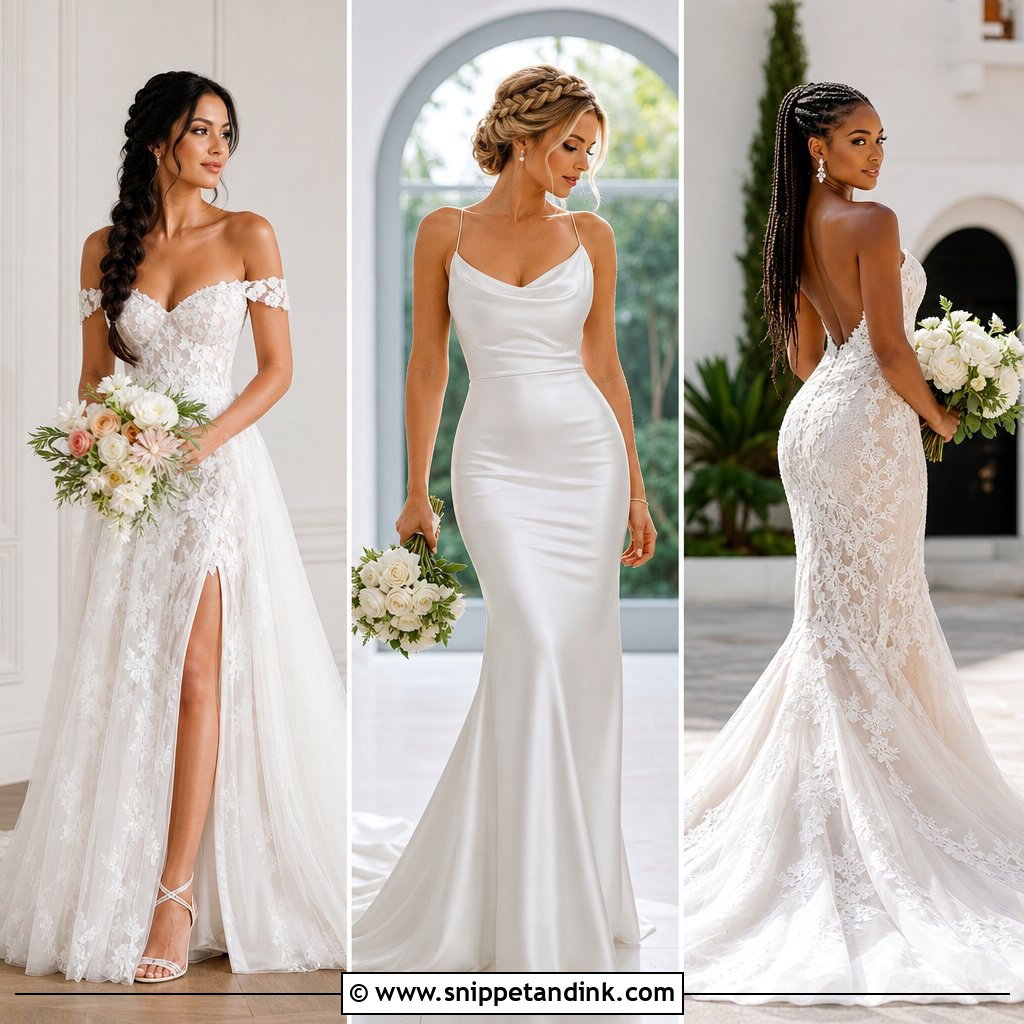
Short hair can absolutely be braided up; it just needs smaller sections. On a bob or lob I braid small sections close to the scalp, twist the rest, and pin everything into a compact shape at the nape. The ends from the shorter layers will poke out, and I’d rather leave them than fight them with gel. Pins that match your hair color matter more here, because there’s less hair to hide them. Sparkly clips or a small flower suit the scale better than a large hairpiece, and the whole shape stays close and neat.
16. Twisted Braid Updo
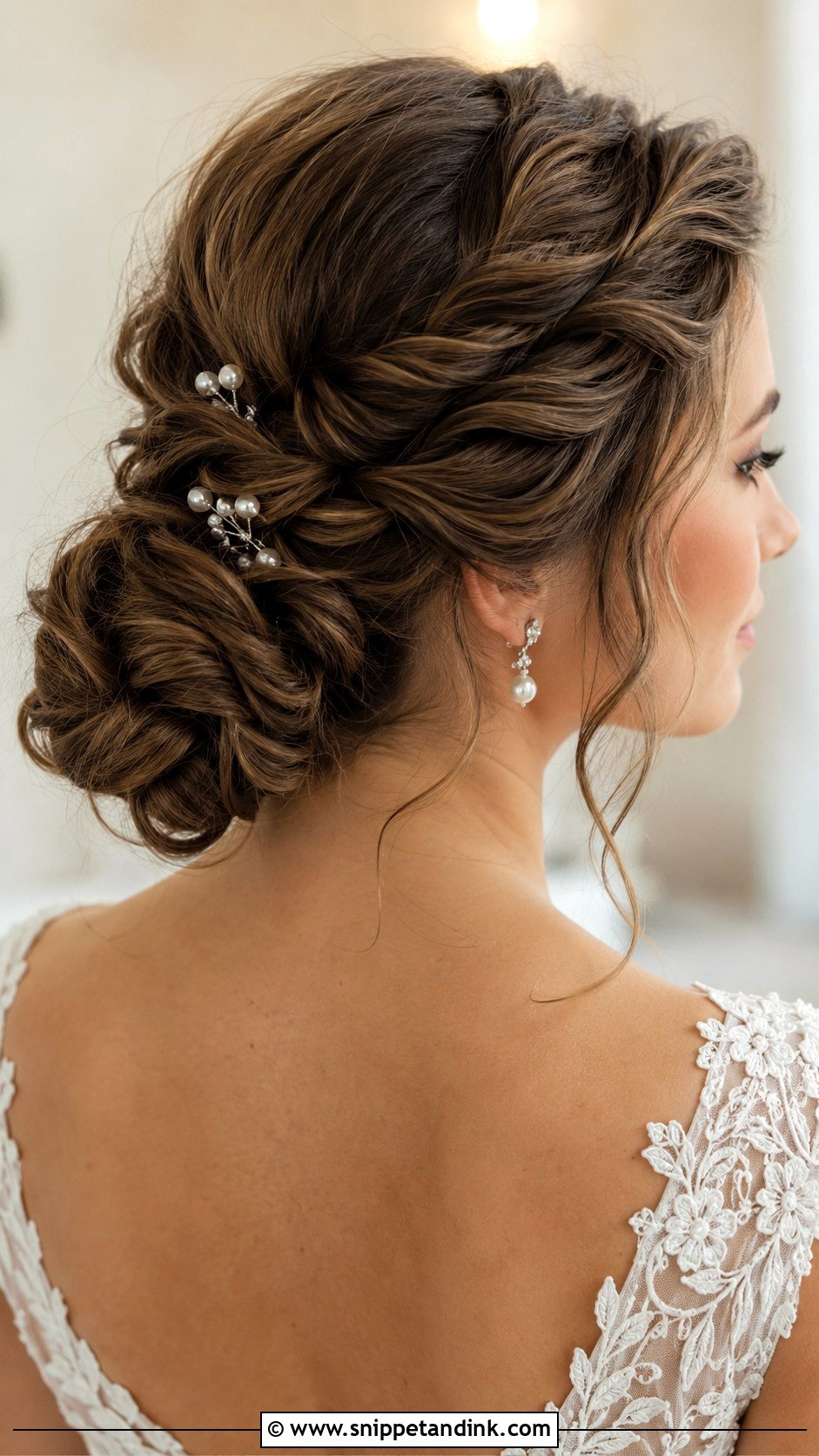
Twists use two strands rolled together instead of three plaited ones, so the result is softer and rounder than a braid. Gathered into a bun, the rope-like sections give dimension without sharp lines. It’s quicker for me to build, which helps on a tight morning schedule. Twists will unwind if they aren’t pinned firmly at both ends, so I secure each one before it goes into the bun. It suits medium to long hair, and pearl pins or flowers sit naturally in the gaps between twists.
17. Braided Half Updo
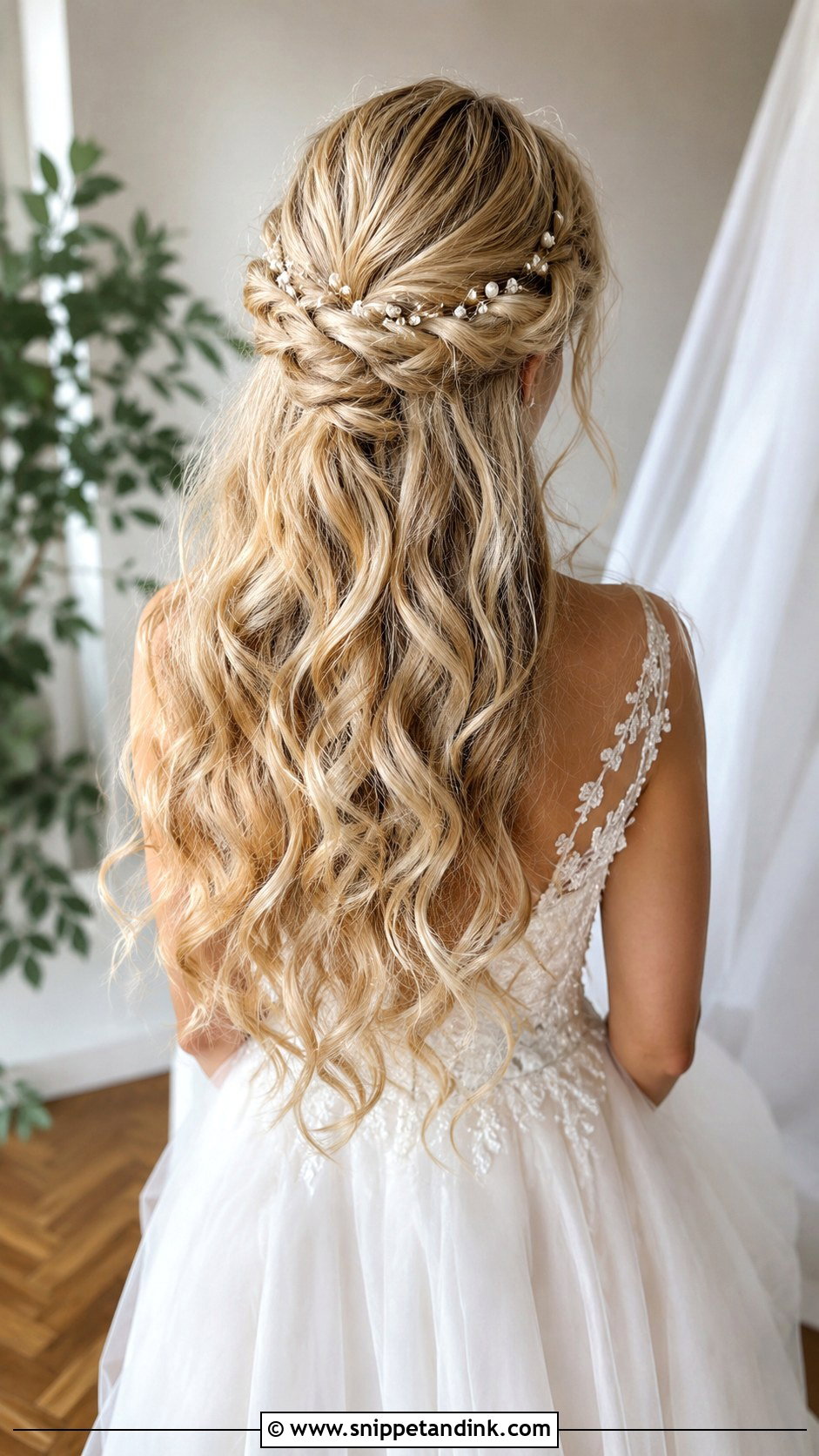
Can’t decide between up and down? This takes the top sections into braids that meet at the back, while the rest falls in curls. It shows off your length and keeps hair off your face. The honest trade-off is longevity: the down half will lose more curl through the day than any updo. On fine hair I’d suggest it only with a good set and some backcombing at the crown. Florals or pearls where the braids meet hide the pins neatly.
18. Pearl Braided Updo
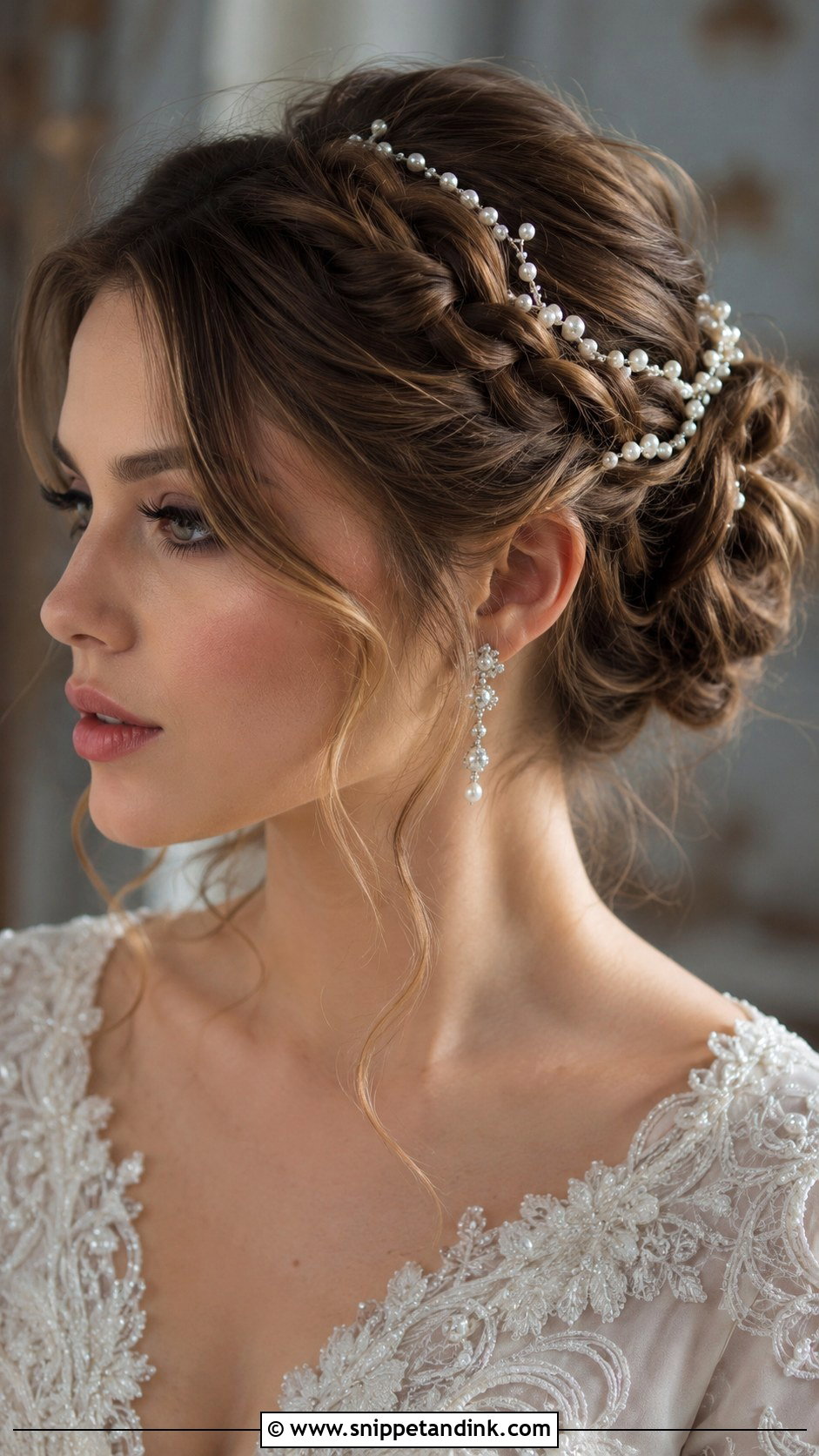
Pearls threaded through a braided updo add pure bridal magic without the weight of a tiara. Pins and strands are woven along the braids and bun. Pearl pins come in different sizes, and I’d use a mix, with the larger ones near the bun and smaller ones scattered along the plait. Too many in one area and it begins to look like a costume. Pearls suit both vintage and modern dresses and won’t compete with a sparkly bodice the way crystals can. Ivory or champagne pearls usually match a gown better than bright white.
19. Rope Braid Updo
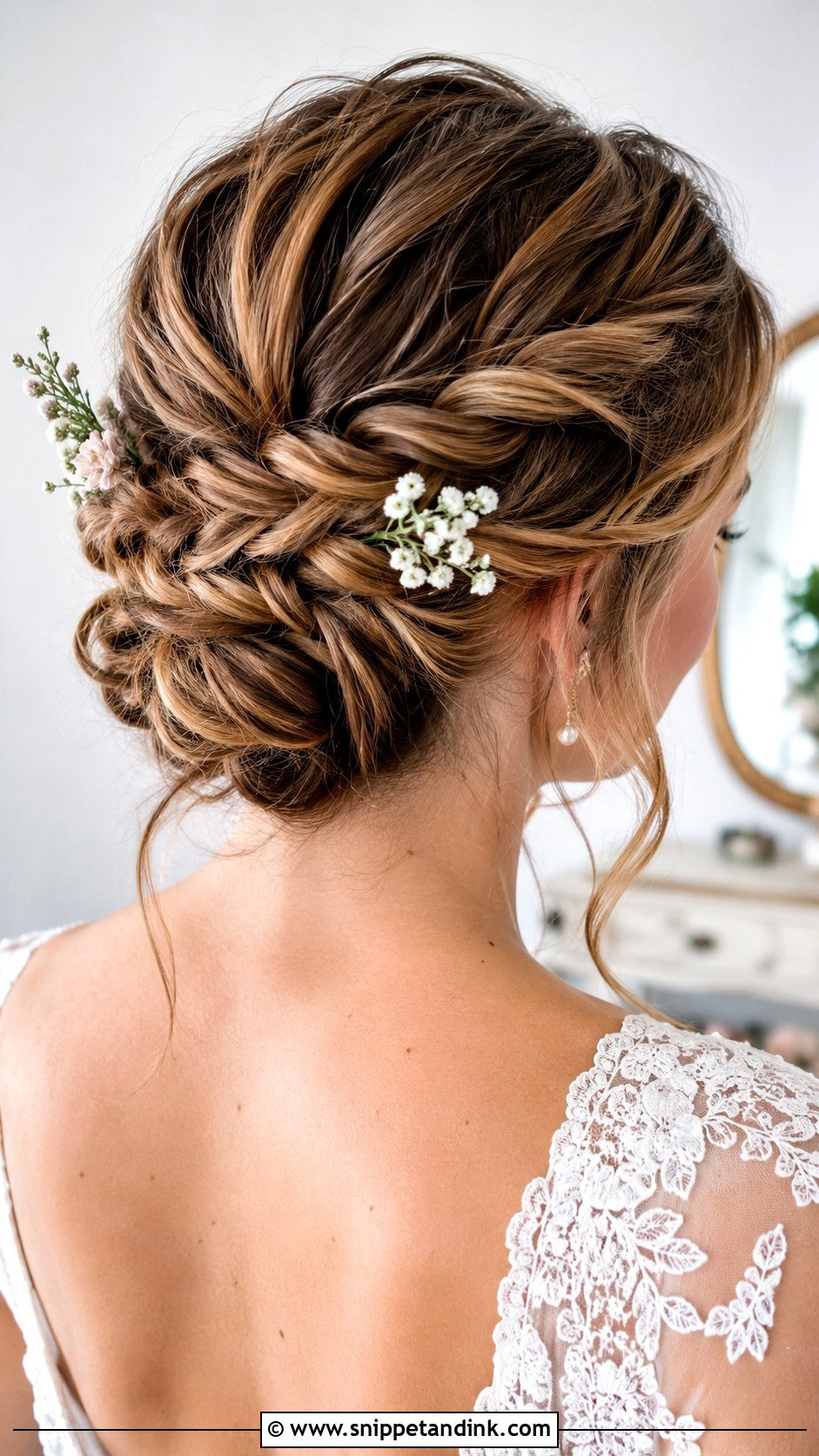
The rope braid is two sections twisted, then twisted around each other in the opposite direction, and that opposing twist is what stops it unravelling. Pinned into an updo, it’s a softer alternative to a full plait. It catches light along its spiral, which shows up well in photos. Medium to long hair shows the twist best. I’ll usually finish with a low bun and add a small floral or jeweled pin only if the dress is very plain.
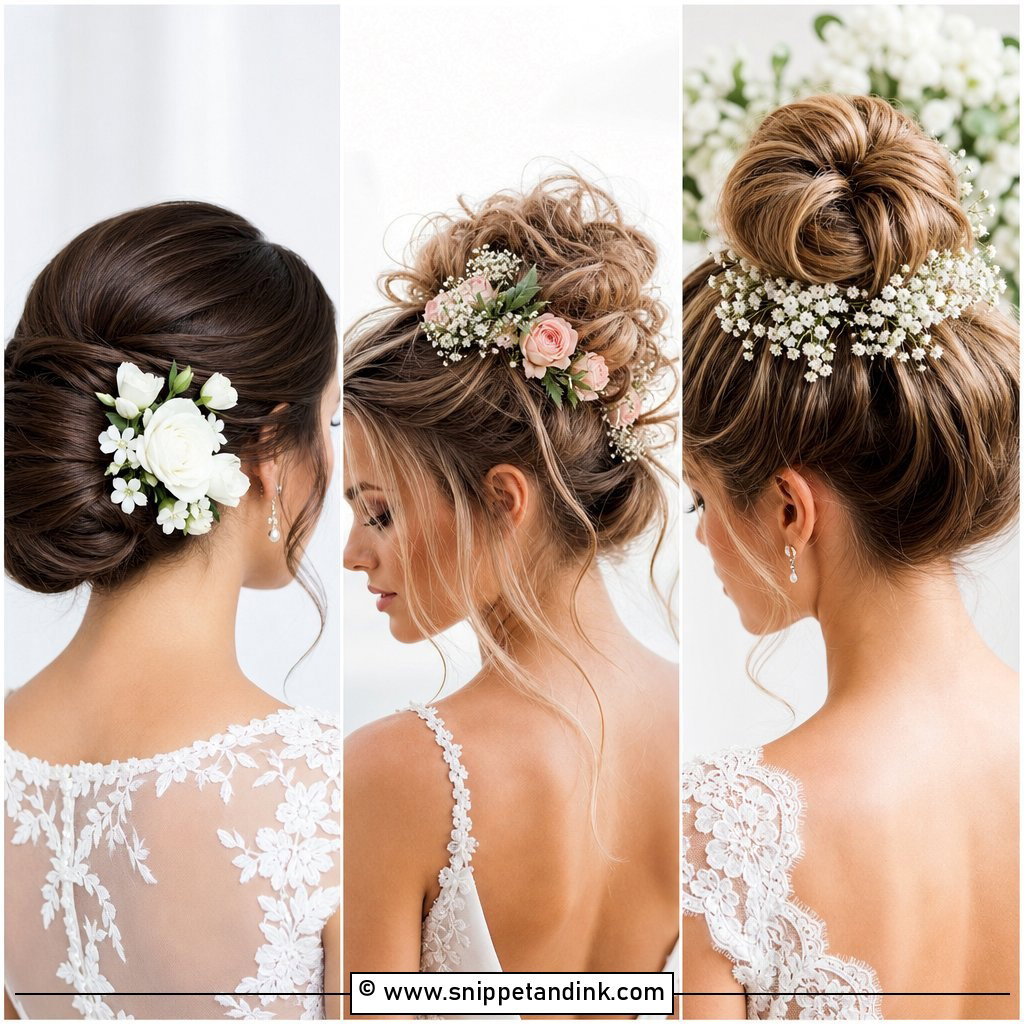
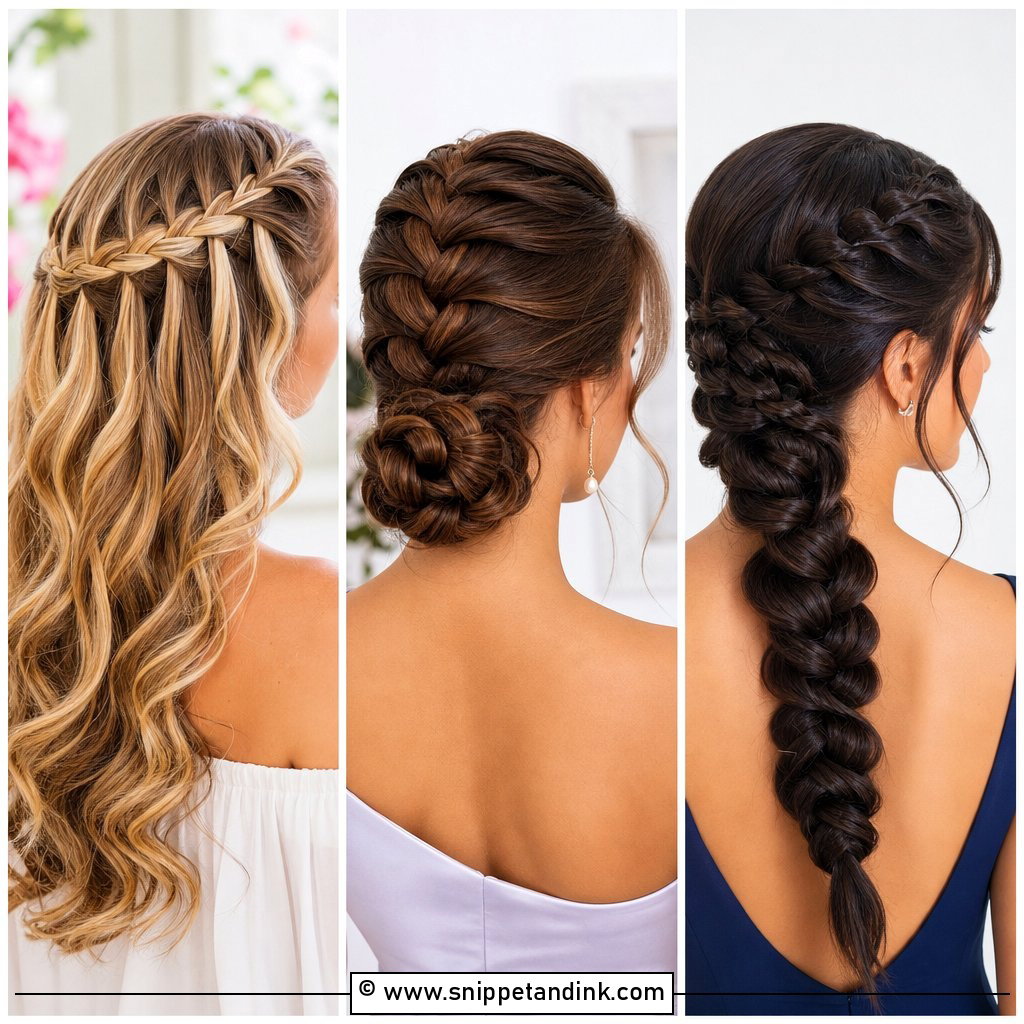
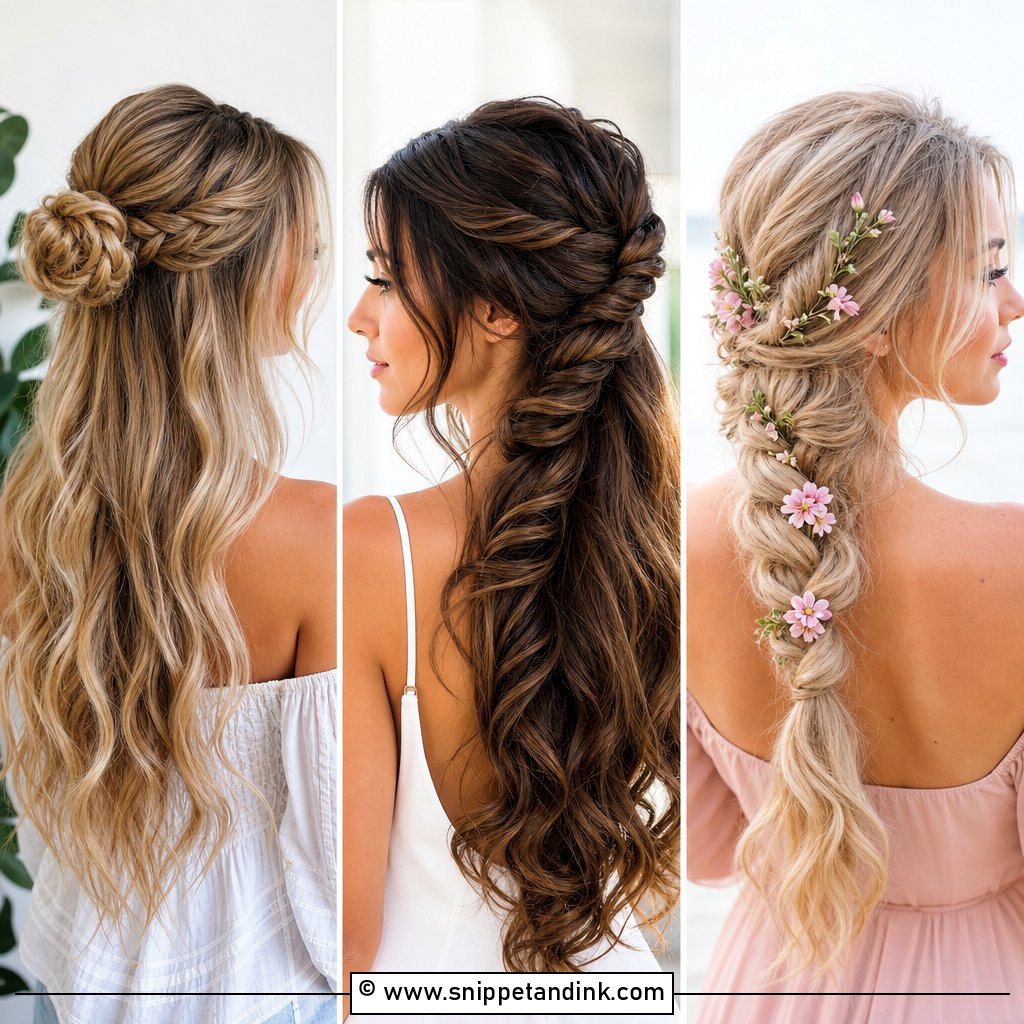
20. Vintage Braided Updo
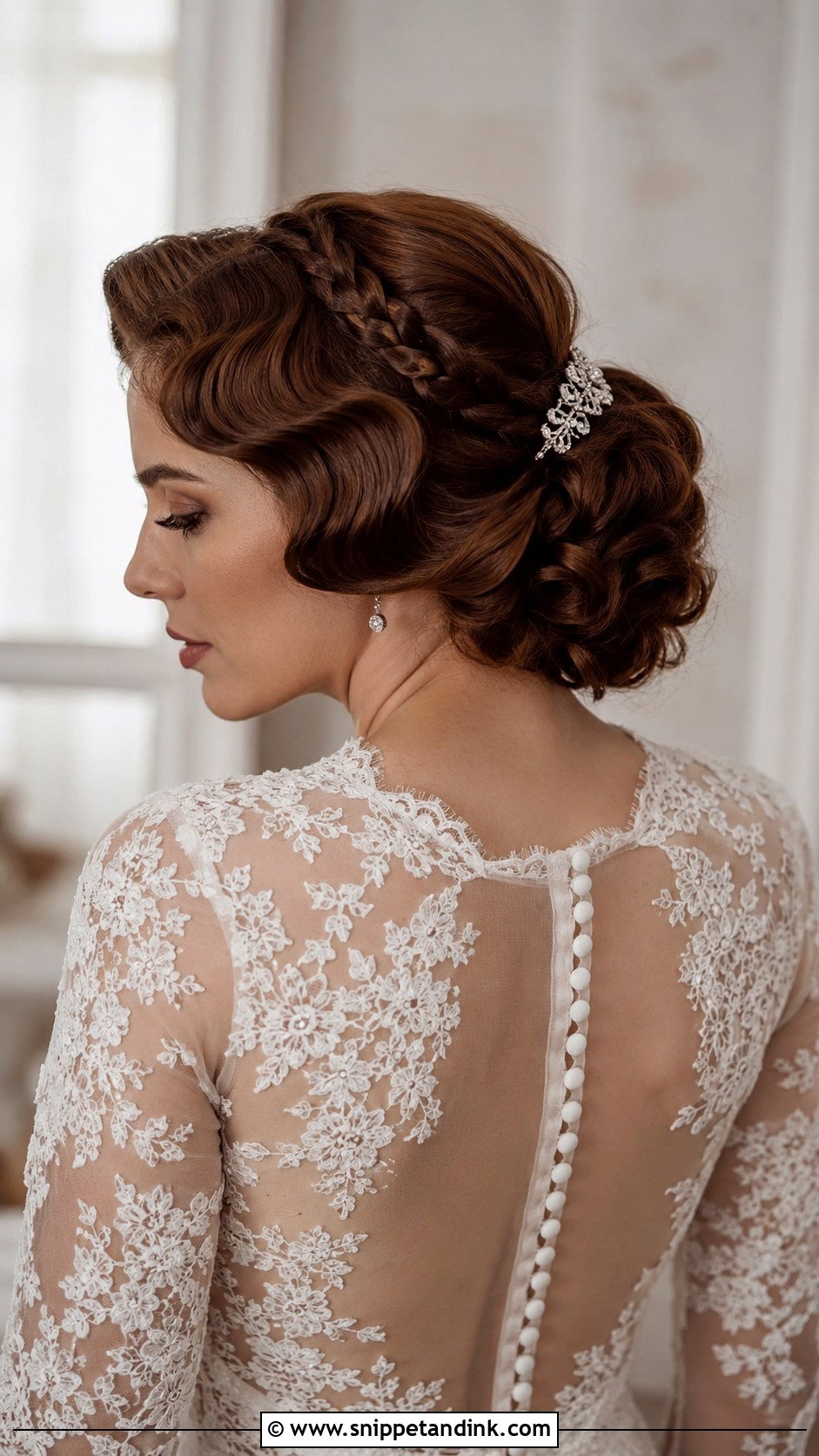
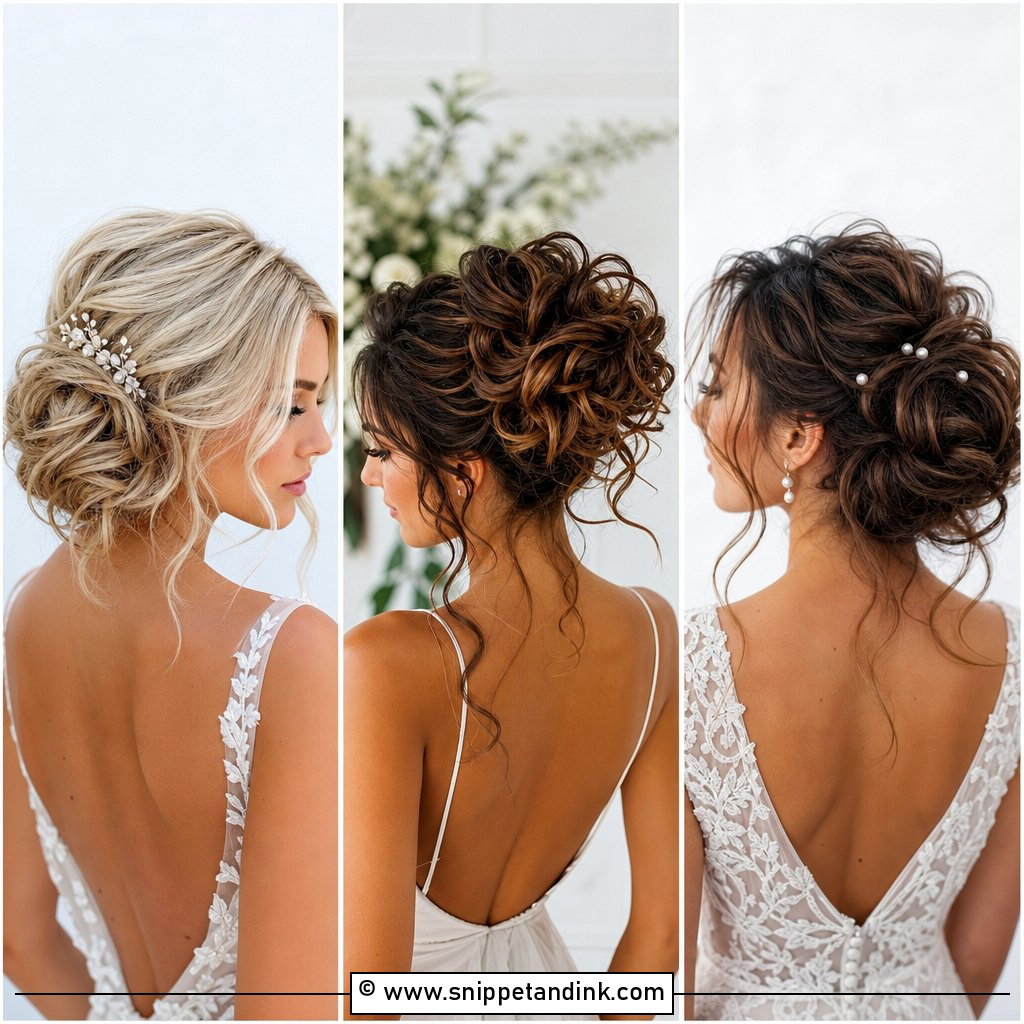
This draws on old Hollywood: structured braids, sculpted waves at the front, and a polished bun. It’s the most structured style on this list and needs the most time. Finger waves need a setting lotion and patience; I set them with clips while the rest of the updo is built, then remove the clips last. It suits lace gowns and statement jewelry. A jeweled comb or a vintage hairpiece adds the finishing note, and the style holds its shape well into the night.
Repairing a Braided Updo That Slips After Dinner
Braids rarely fail completely, but they do loosen. I tell every bride what to watch for and give one bridesmaid a tiny bag of matching bobby pins, a travel spray and a few clear elastics.
- If the bun droops, don’t pull it back up. Push a pin through the base, angled toward the scalp, and it lifts the whole shape.
- A braid end poking out can be tucked under the nearest loop and pinned in a cross.
- Flowers wilting? Pull them out entirely. The braid underneath still looks finished on its own.
- Frizz along the plait in humidity can be smoothed with a drop of serum rubbed between your palms, not sprayed directly.
Avoid tugging on loose strands during the reception. That’s usually what turns a soft, relaxed braid into something that looks undone in the late photos.
Bring Your Favorite Braid to the Trial and Test It Hard
Every braid here does the same structural job, so the choice comes down to how much texture you want, how long your hair is and what the veil or dress needs. Pick two from this list and bring them to your trial with the actual veil and pins. Wear the style for a few hours afterwards, hug people, sit in the car. If it still looks right at bedtime, it’ll get you through the wedding.
You'll Like These Ideas:


Leave a Reply