
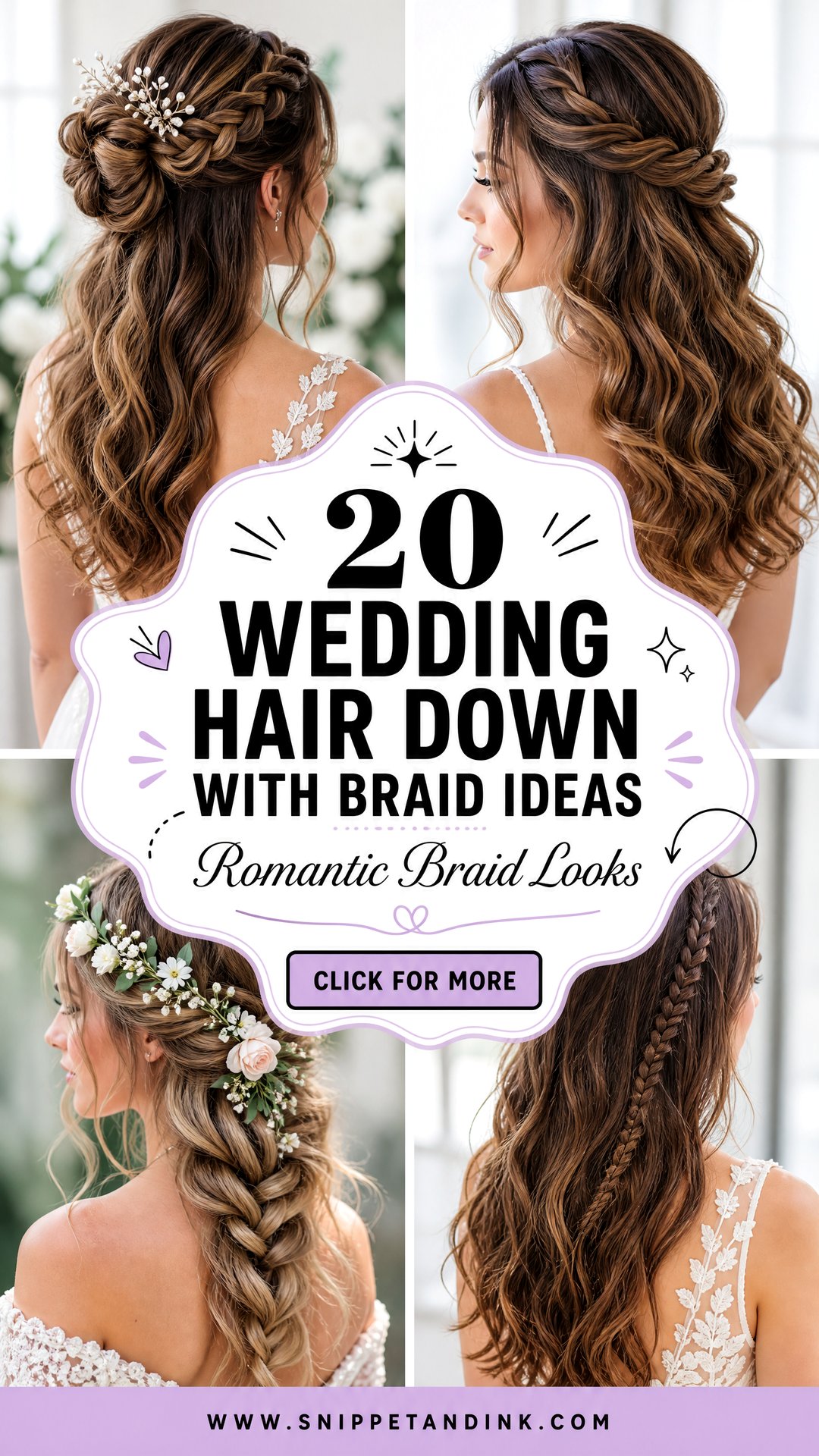
A braid is the quiet engineering inside most down styles I do. It looks like decoration, but it is usually doing a job: holding the front off your face, giving a veil comb something to grip, or keeping hair in place through a windy ceremony while the rest stays loose. The twenty braids below range from a thin accent plait at the temple to a full crown, and each one behaves differently on fine, thick, layered or curly hair. I’ve added notes on what each needs and where it tends to go wrong, so you can bring the right picture to your trial.
Is Your Hair Right for a French, Dutch or Fishtail Plait?
Before you fall for a particular braid, it helps to know what your hair can carry. The three main families each behave differently.
- French braids lie flat and blend into the head, so they suit fine hair and look neat even with short layers.
- Dutch braids sit on top and show strongly, but they make thin hair look thinner unless the braid is loosened or padded with a weft.
- Fishtails need length and patience. They show their texture best on hair past the shoulders and look fussy on very short hair.
- Twists and rope braids forgive uneven layers better than any plait, which makes them useful for growing-out cuts.
Layered hair is the most common obstacle I see. Short pieces escape every few crossovers, so I either use a little pomade on the ends as I braid or choose a twist instead. Curly and coily hair braids beautifully when it is stretched and moisturised first, and it holds a plait far longer than straight hair does.
At the trial, I braid one side and leave the other loose so you can see both in the mirror. If the braided side feels heavy, tight at the scalp or itchy after twenty minutes, that is the moment to switch styles, not on the morning itself.
1. Waterfall Braid With Loose Waves
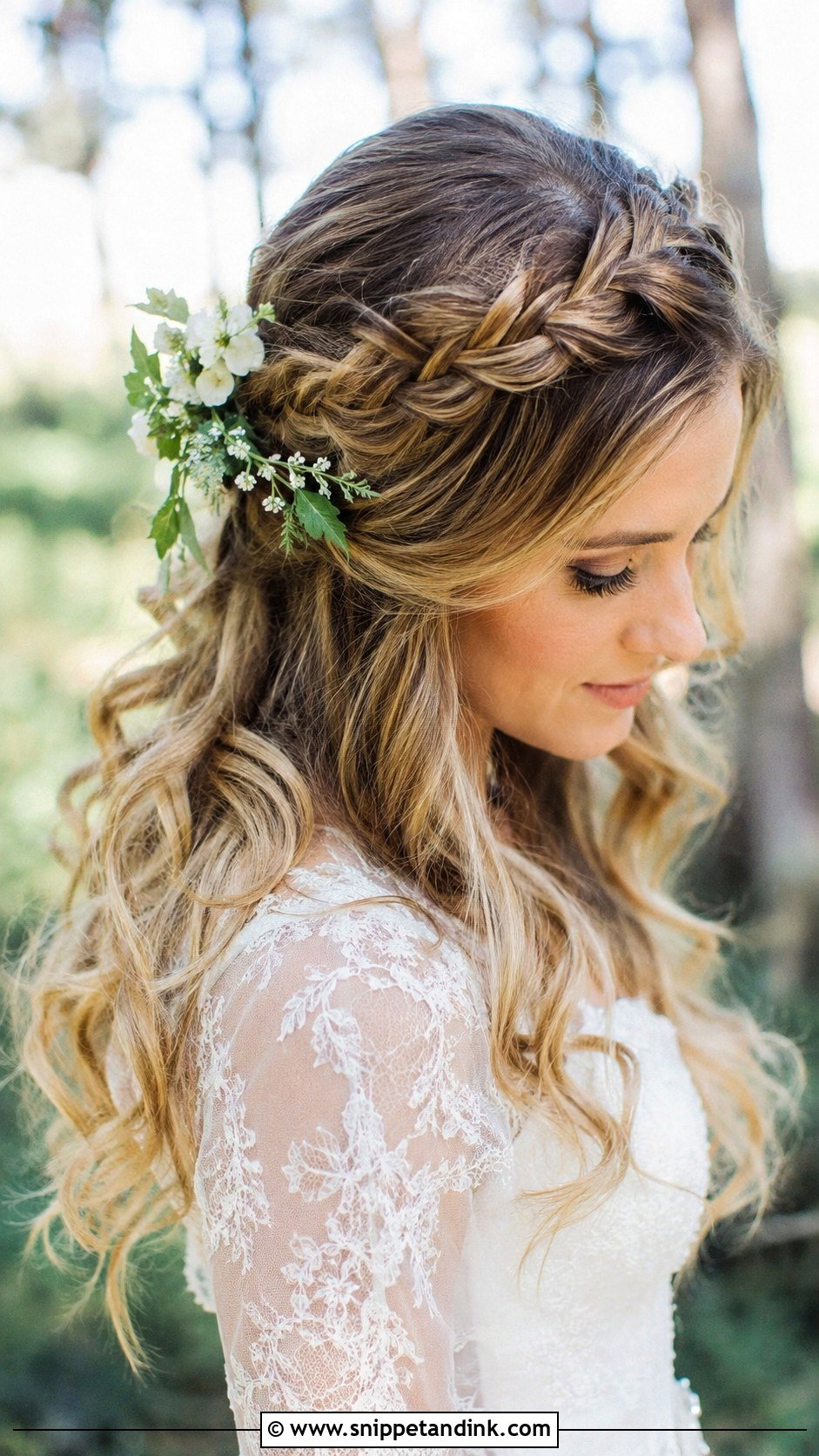
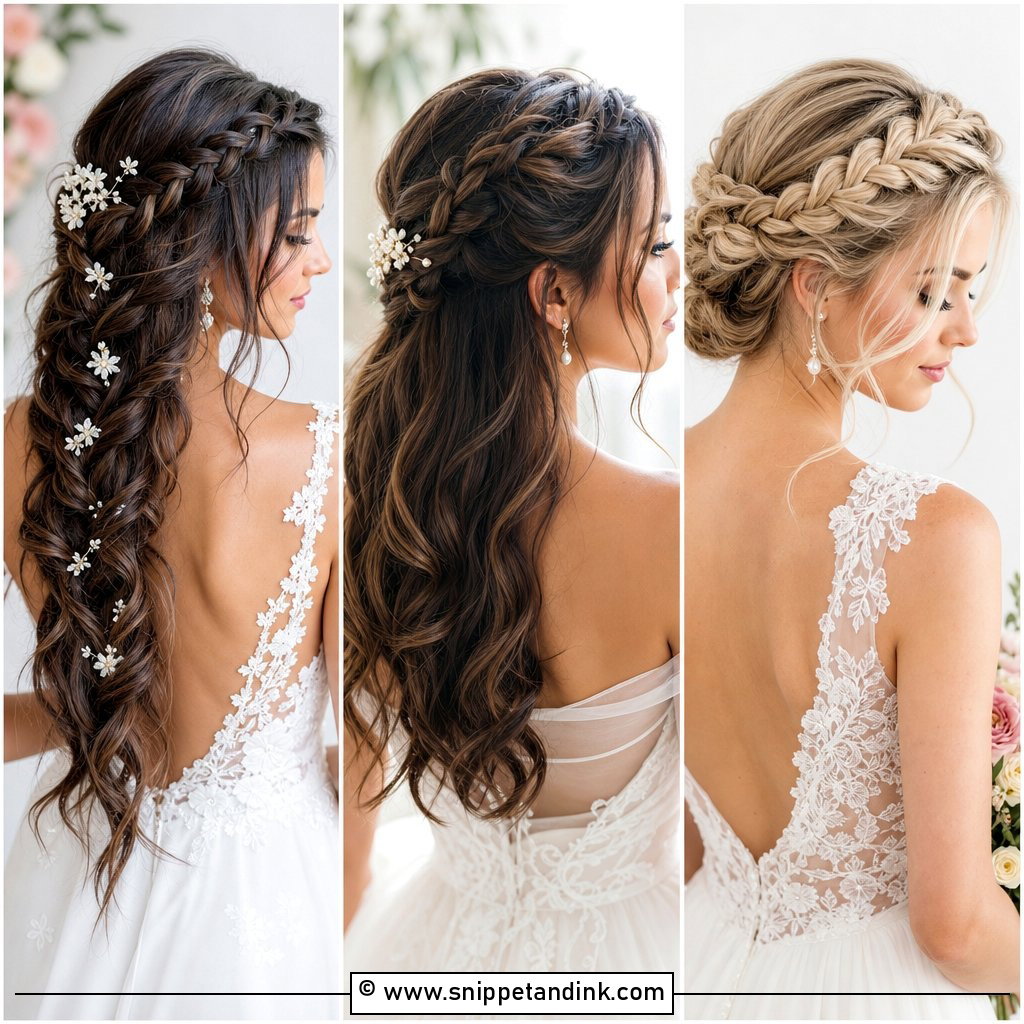
The waterfall braid travels across the head and drops a strand at every crossover, so those dropped pieces fall into the waves below. It needs hair at least past the shoulders and, ideally, few short layers, because layers poke out of the braid at each pass. I curl the hair first and braid second, since curling after a waterfall braid tends to pull the dropped strands loose. It shows off highlights and dimension very well. Tiny flowers or pearl pins sit nicely in the braid itself, and it works with a flowing veil or none.
2. Half Up Fishtail Braid
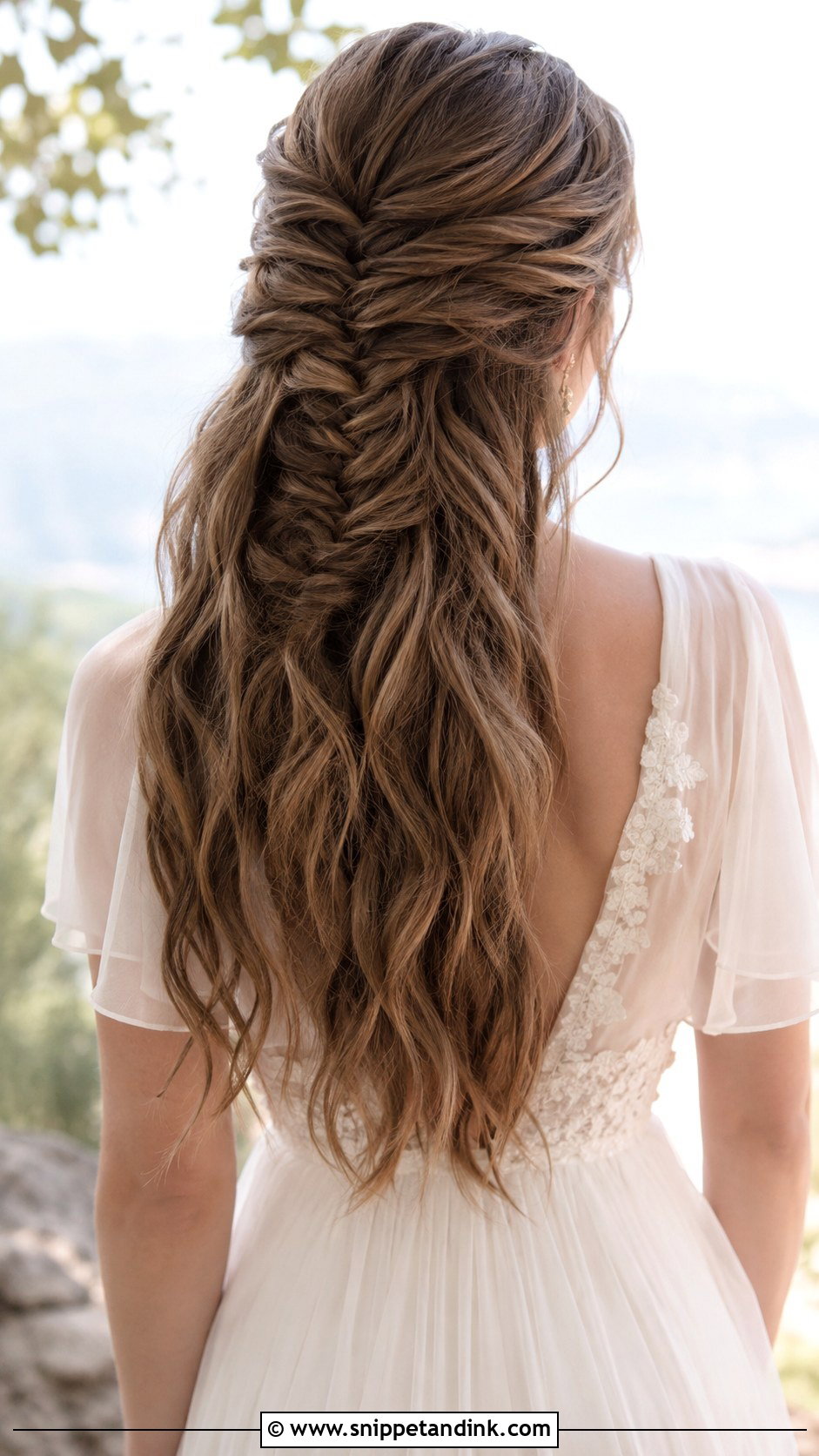
A fishtail on just the top section gives you a focal point at the back without lifting the rest of your hair. The weave uses two strands and very small cross-overs, so it takes longer than a three-strand braid but looks more intricate once it is gently pulled out. I do that loosening, called pancaking, after the braid is secured, pinching the edges outward a little at a time. It pairs well with beachy waves and a small flower crown or hairpiece, and it holds well in a garden or barn where you are moving around a lot.
3. Braided Headband With Hair Down
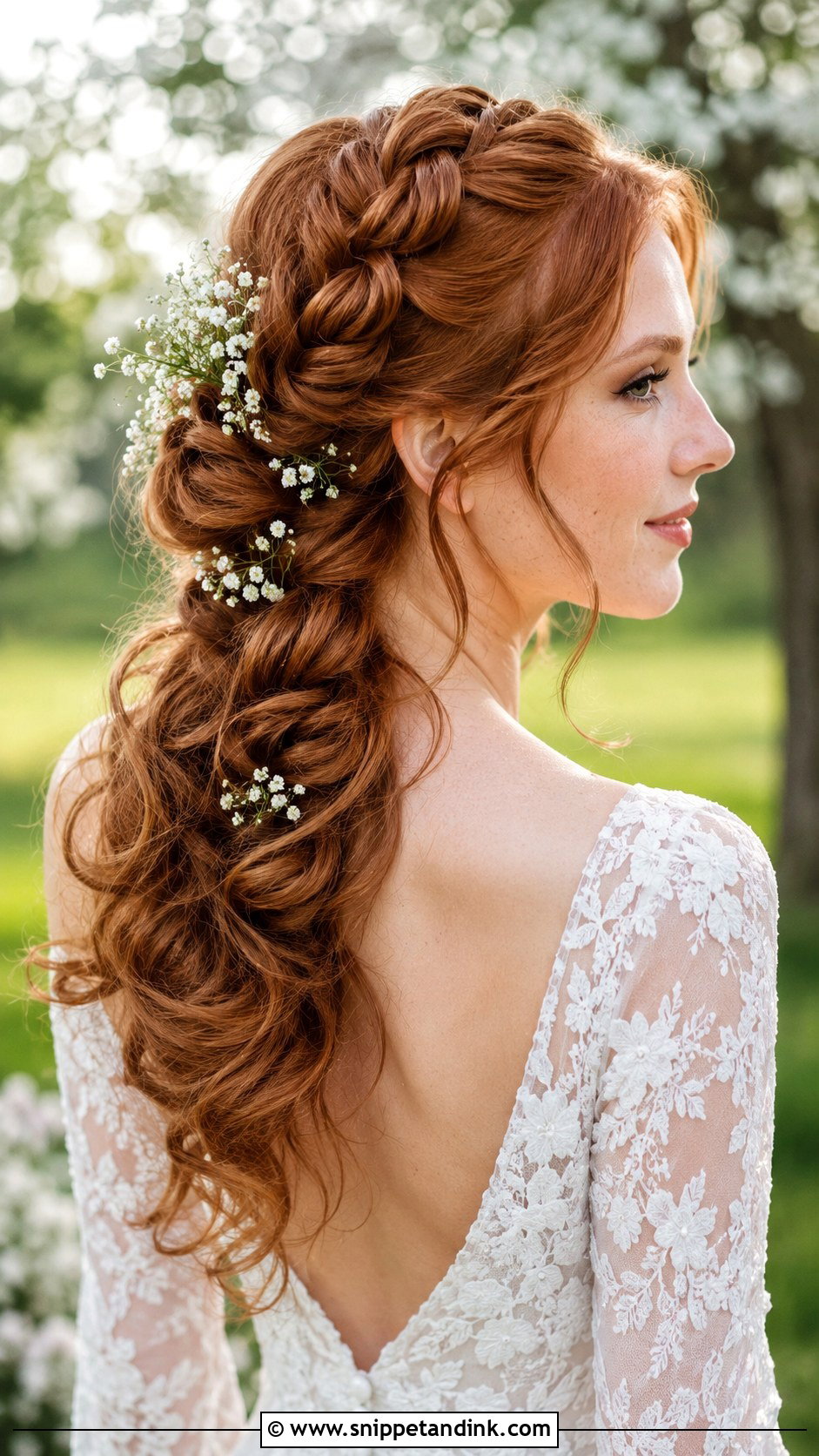
Running a braid across the front like a headband frames your face and keeps your length free. It is one of the few braids I can do on chin-length hair, because it only needs the front section. Fine hair benefits from a little dry shampoo before braiding so the plait looks thicker. Keep the hair below wavy or straight; both work. Small blooms tucked into the braid suit a garden setting, and the open neckline of a minimalist gown shows the detail best.
4. Dutch Braid Into Loose Curls
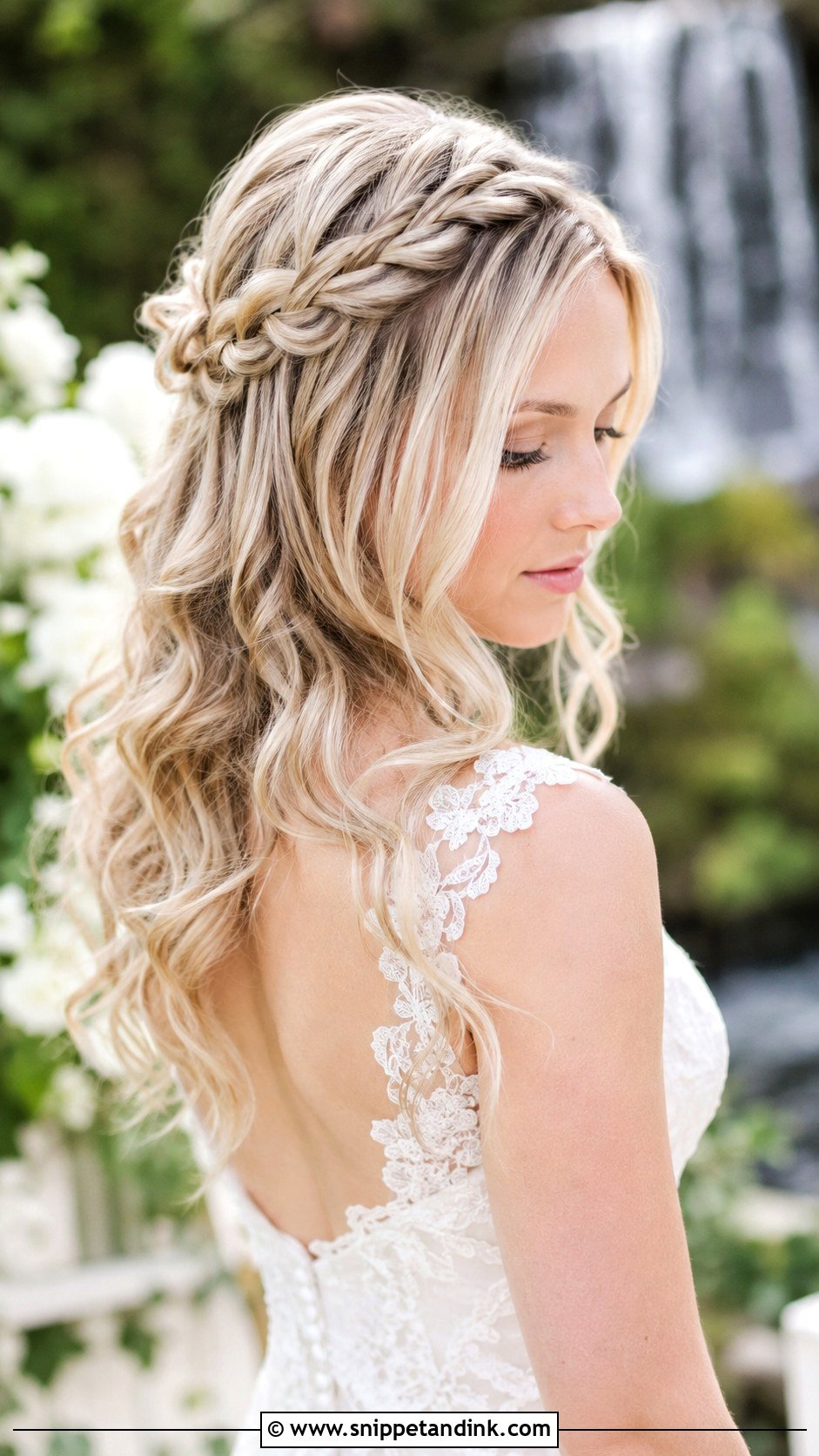
A Dutch braid is braided under rather than over, so it sits raised on top of the hair and casts a little shadow, which is why it shows so clearly in photos. I start it at the crown and finish it partway down into loose curls. A Dutch braid adds structure without feeling formal, especially once the edges are loosened. On very fine hair, I’d use a clip-in weft underneath so the braid has some body. Baby’s breath or small rosebuds can be tucked into the raised loops.
5. French Braid Crown With Flowing Hair
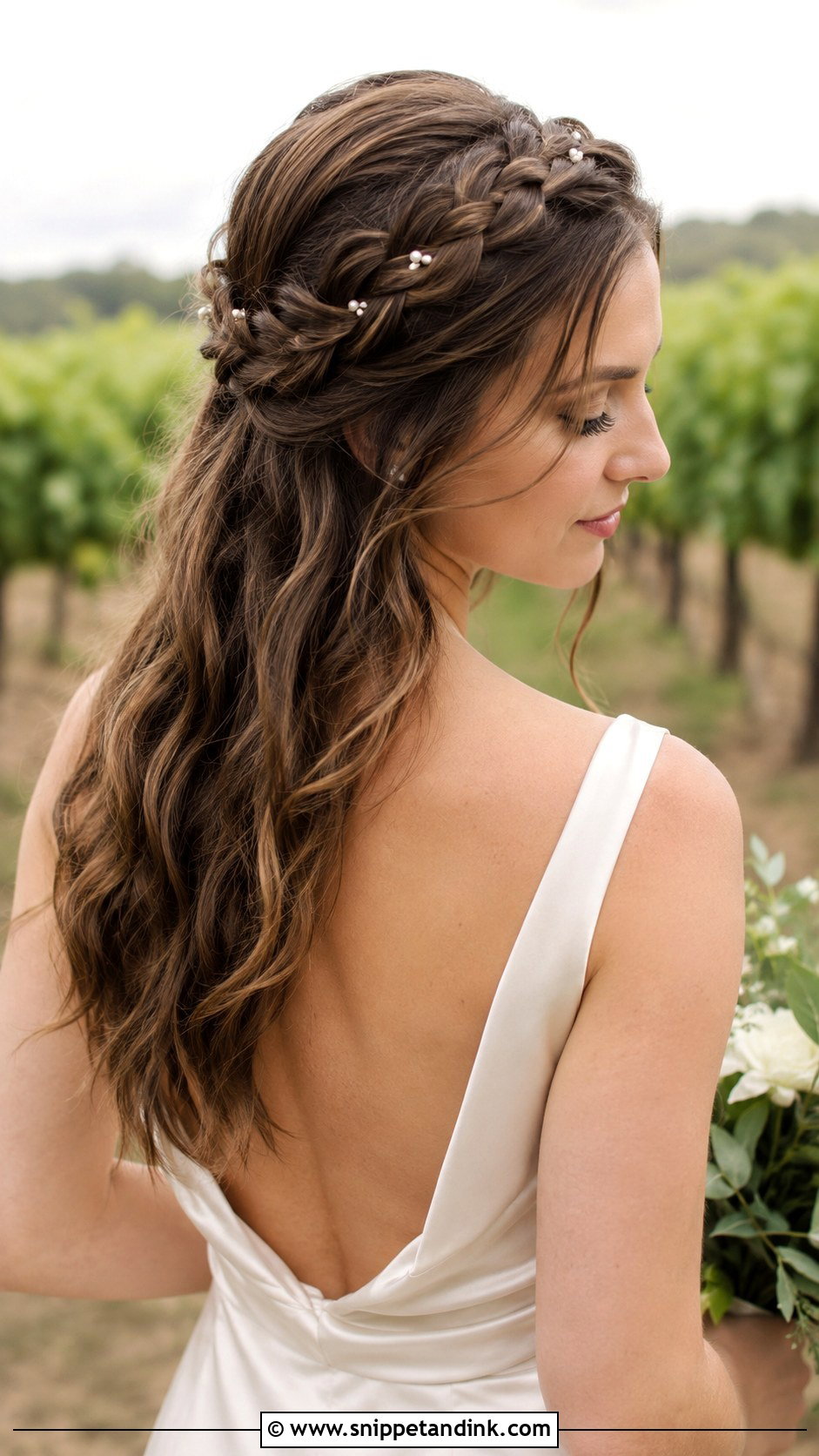
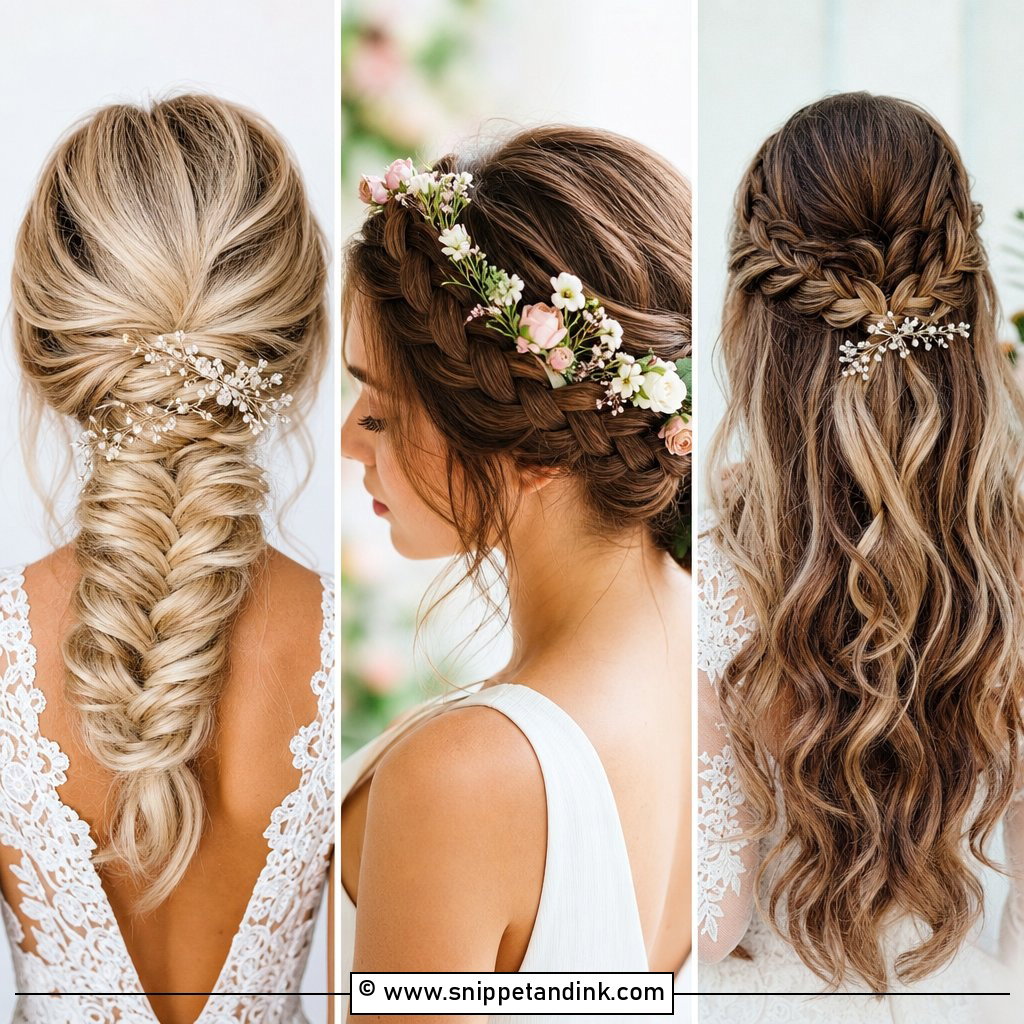
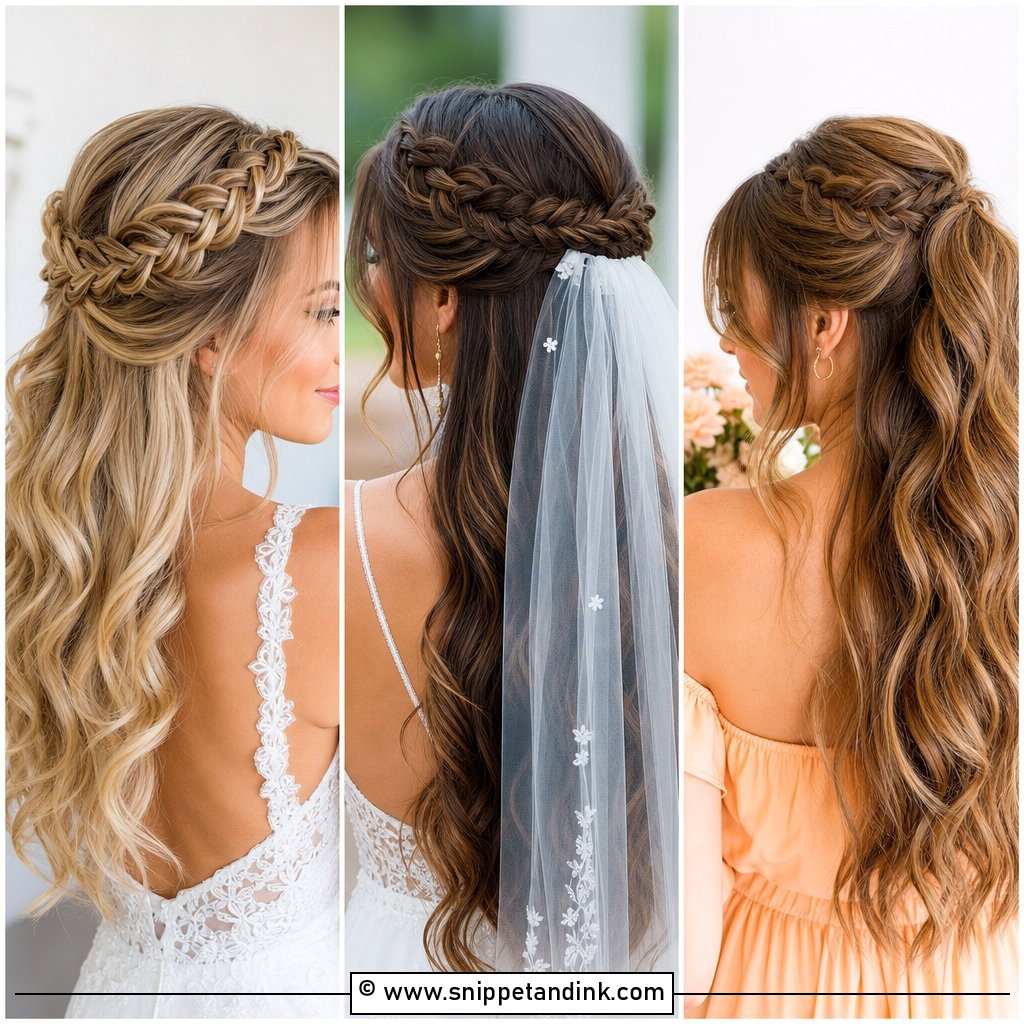
Wrapping a French braid around the crown keeps the front and sides away from your face all day, which is genuinely practical if you’re outside in wind. The braid runs from one side to the other like a halo, and everything beneath stays loose. I pin it every few centimetres along the underside, crossing the pins, because a crown braid that is only pinned at the ends slips back as soon as you start moving. Delicate flowers or pearl pins along the plait finish it. It suits garden and vineyard ceremonies, and it looks equally right with or without a veil.
6. Boho Braid With Beach Waves
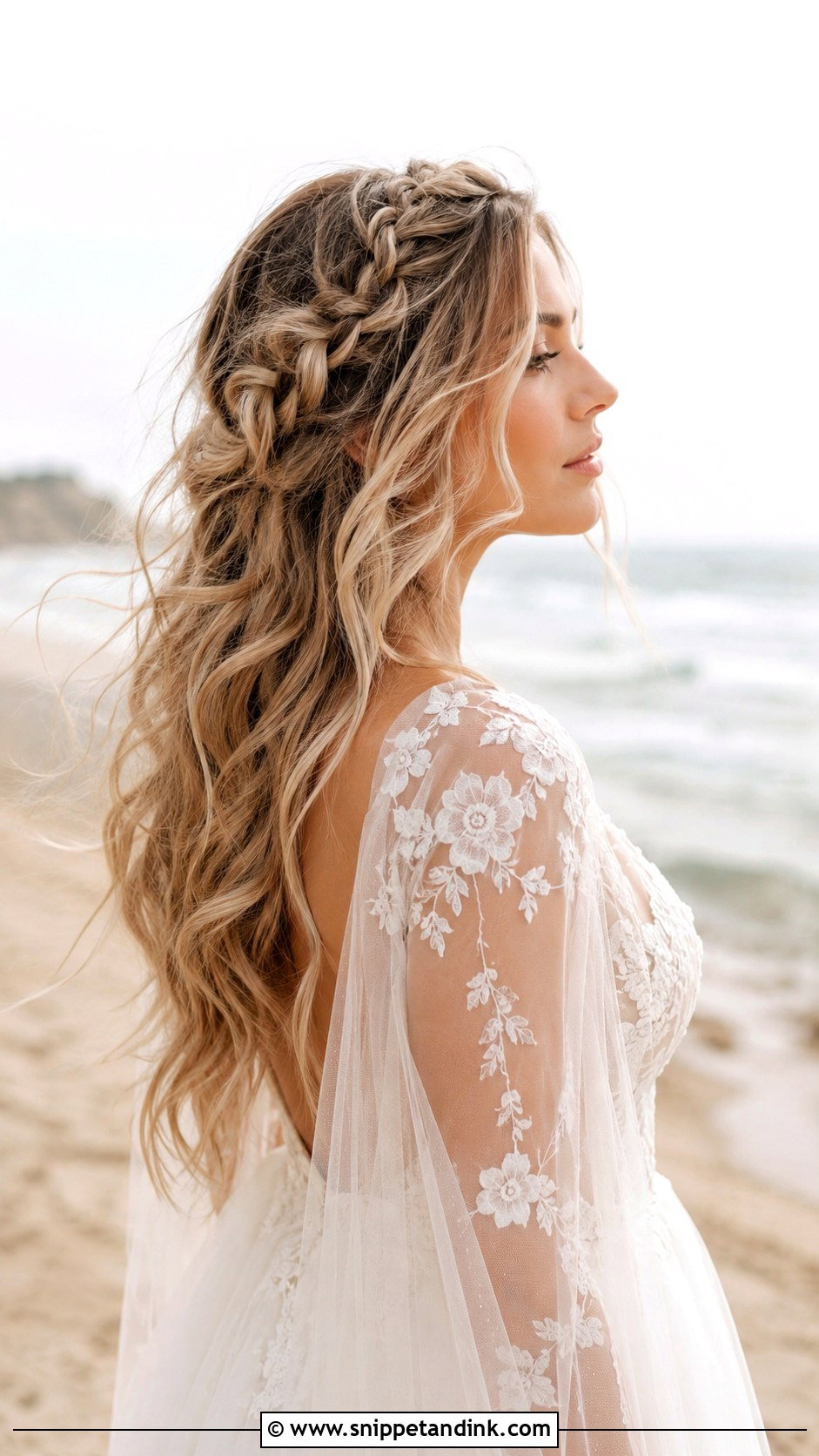
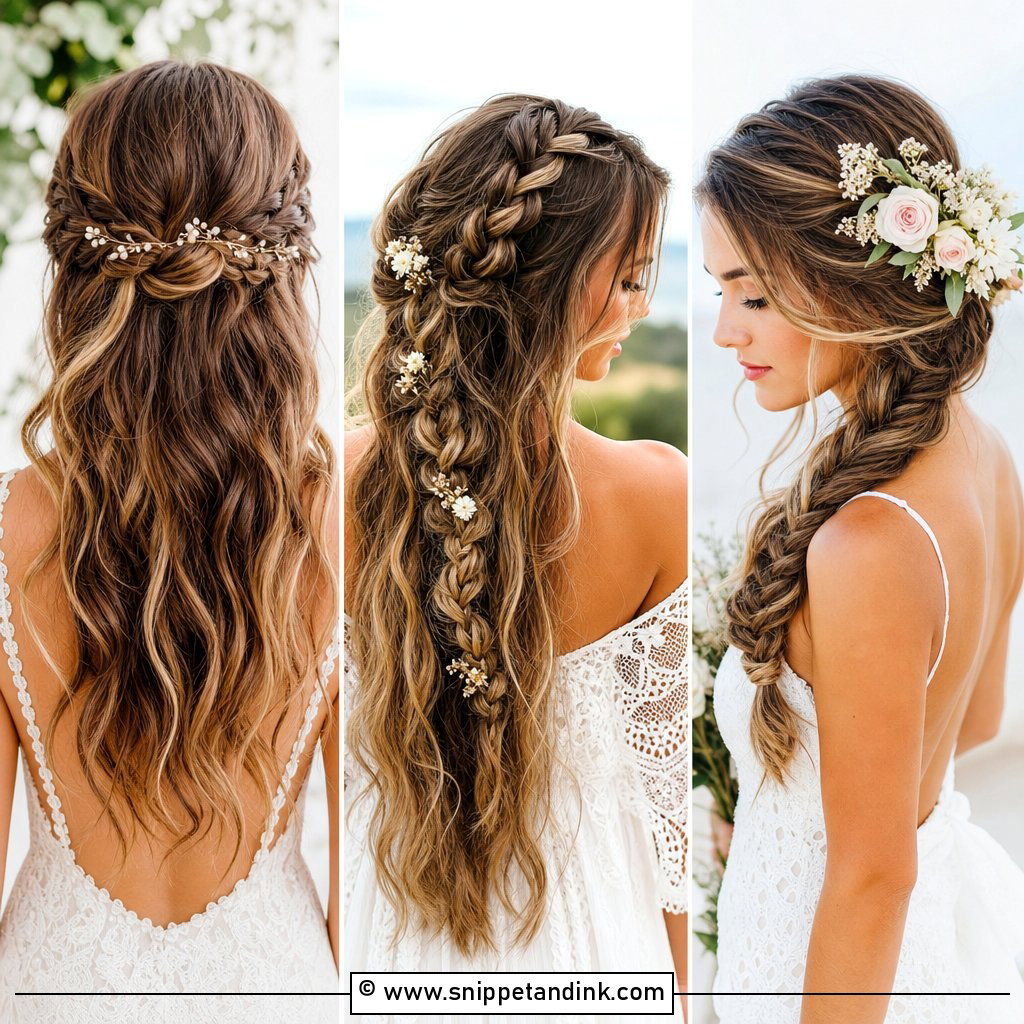
This is the braid that should look like you did it on a sandy walk. That look still takes work: texture spray on dry hair, a loose three-strand plait, then pieces pulled out on purpose. A wind-blown finish at the beach is the goal, but sea air is humid, so I set the waves with a stronger hold than the finish suggests. Pull a few front pieces free and add simple pins or a flower crown.
7. Side Swept Braid Over One Shoulder
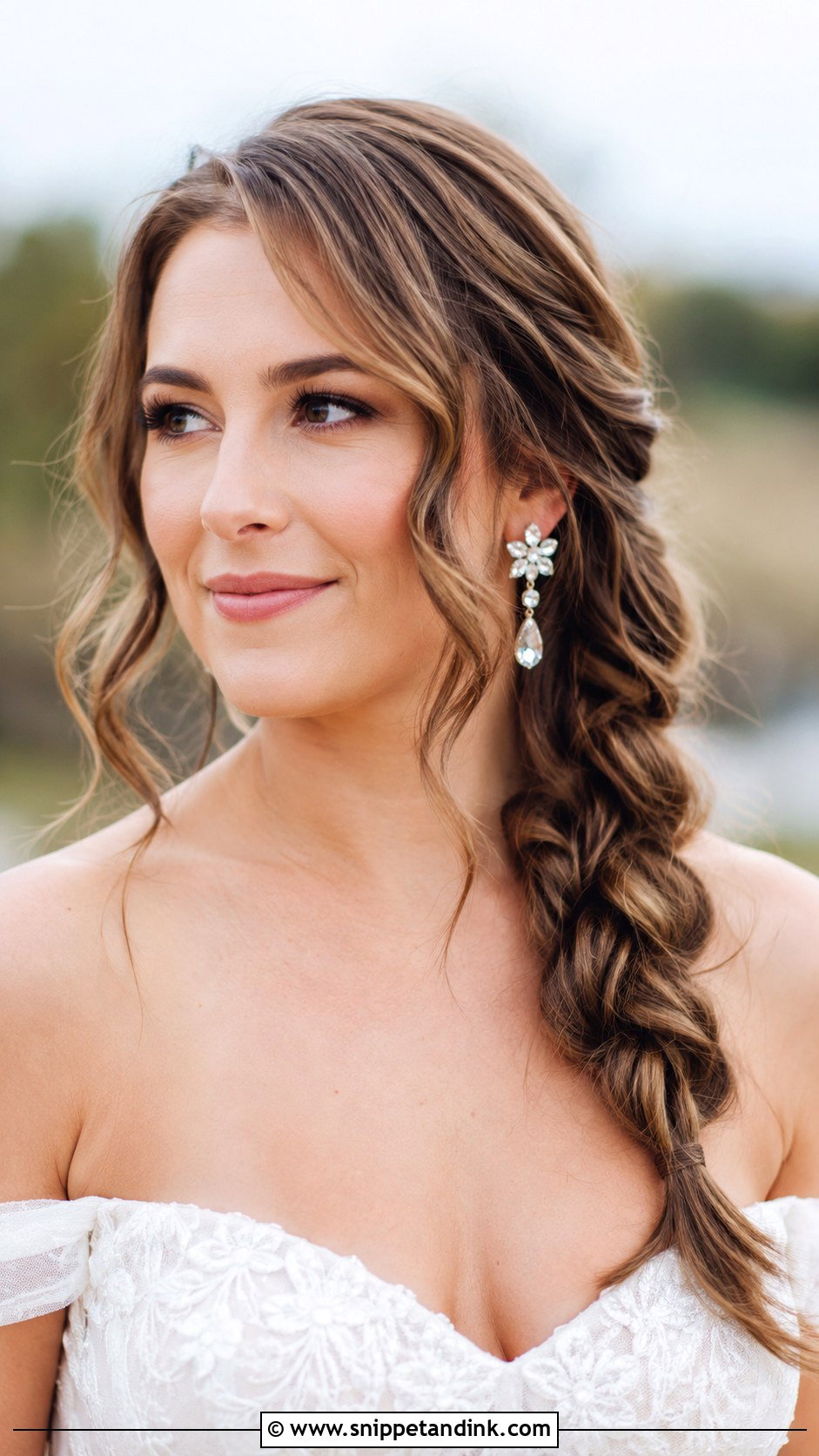
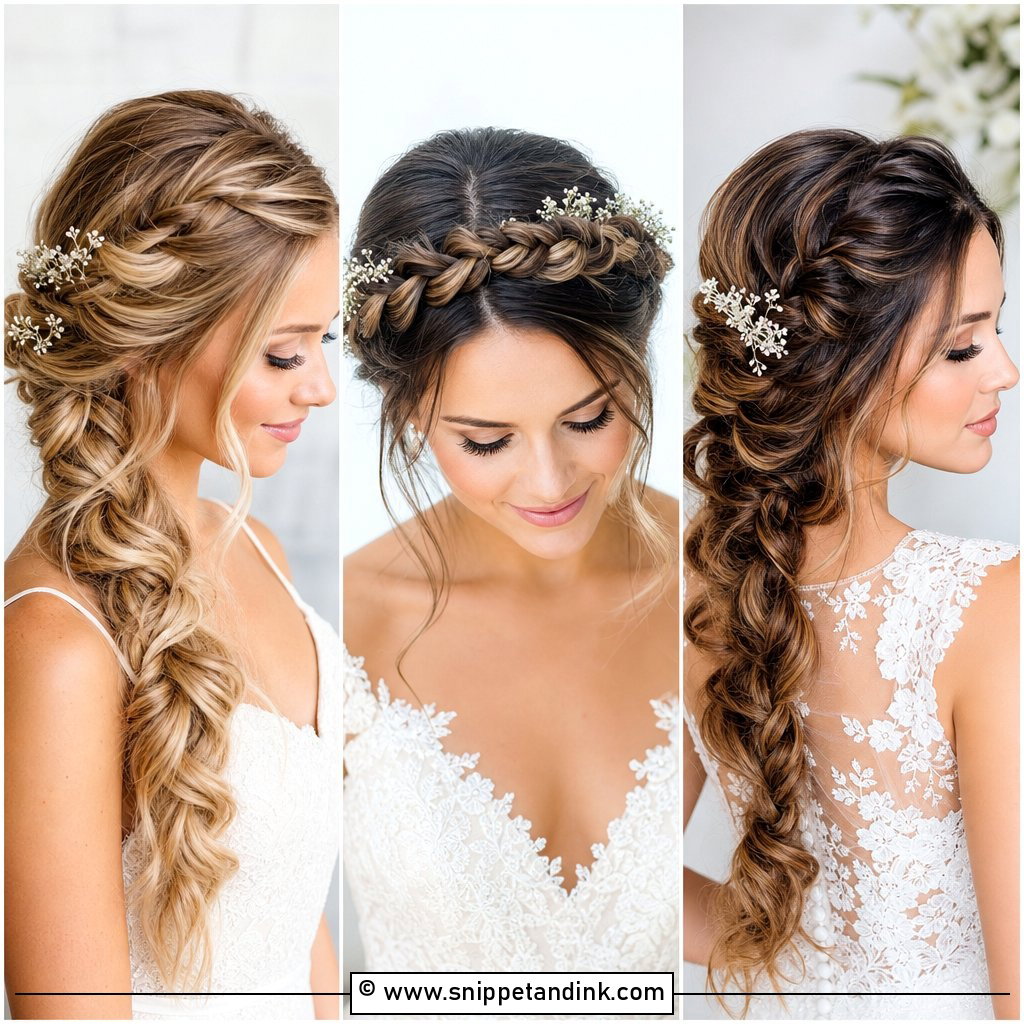
Sweeping a braid over one shoulder shows off statement earrings and a neckline on the open side. I gather everything to one side, anchor it behind the ear with crossed pins so it does not swing back, and braid loosely down over the collarbone. The heavier your hair, the more that anchor matters. Small flowers tucked into the braid work well, and the shape is strongest in front-facing photos. One honest warning: if your dress has a high neck or lace at the shoulder, the braid will catch on it.
8. Crown Braid With Curls Underneath
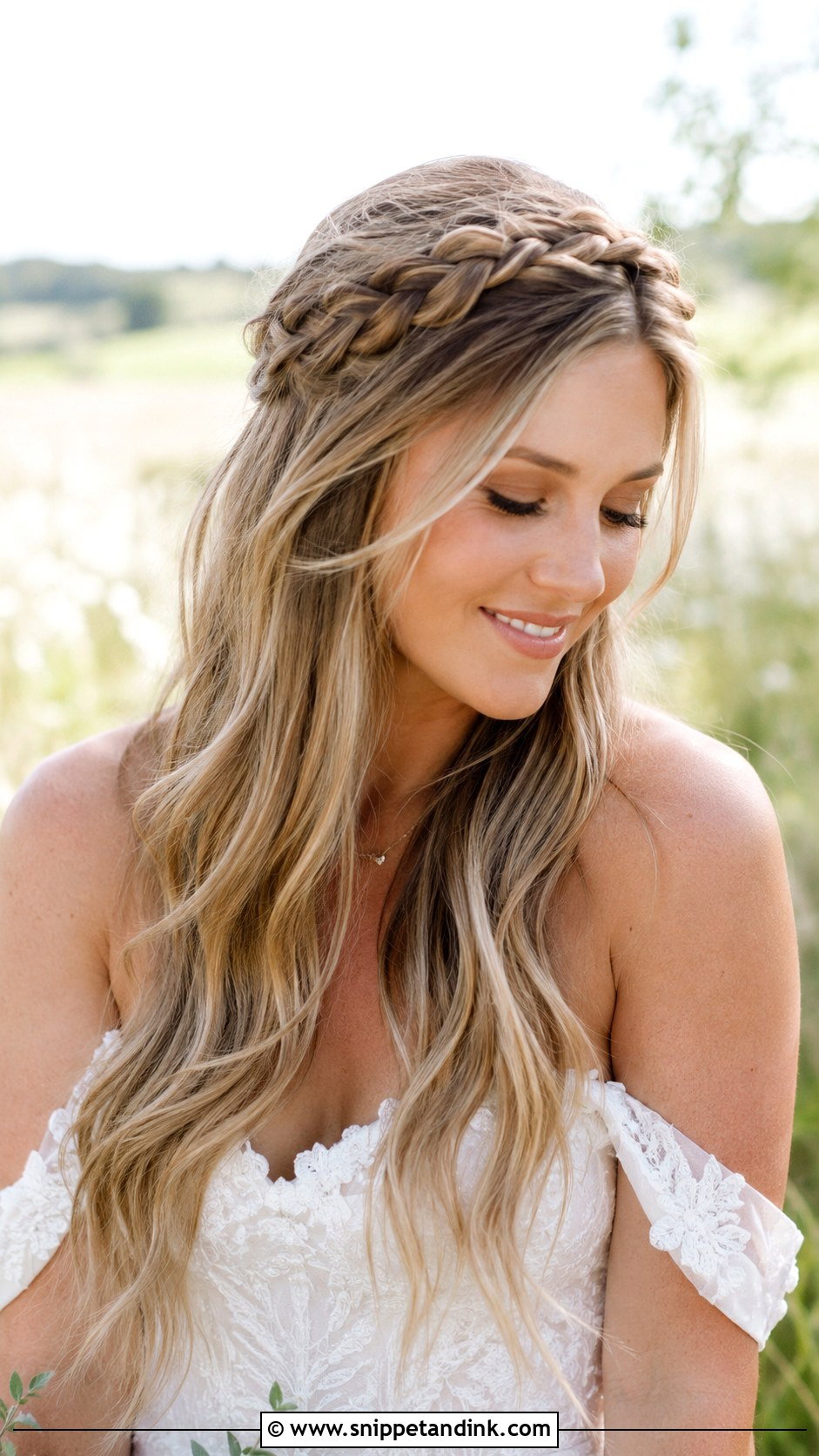
A crown braid sits around the upper part of the head like a tiara made of hair, with soft curls flowing out below. It is more secure than it looks, because the braid lies flat and is pinned along its whole length. Fresh flowers can be threaded along the top, though I would pick small, sturdy stems so they do not droop over your forehead by the afternoon. It suits garden and woodland ceremonies and works with a flowing veil or none.
9. Half Up Braided Bun With Waves
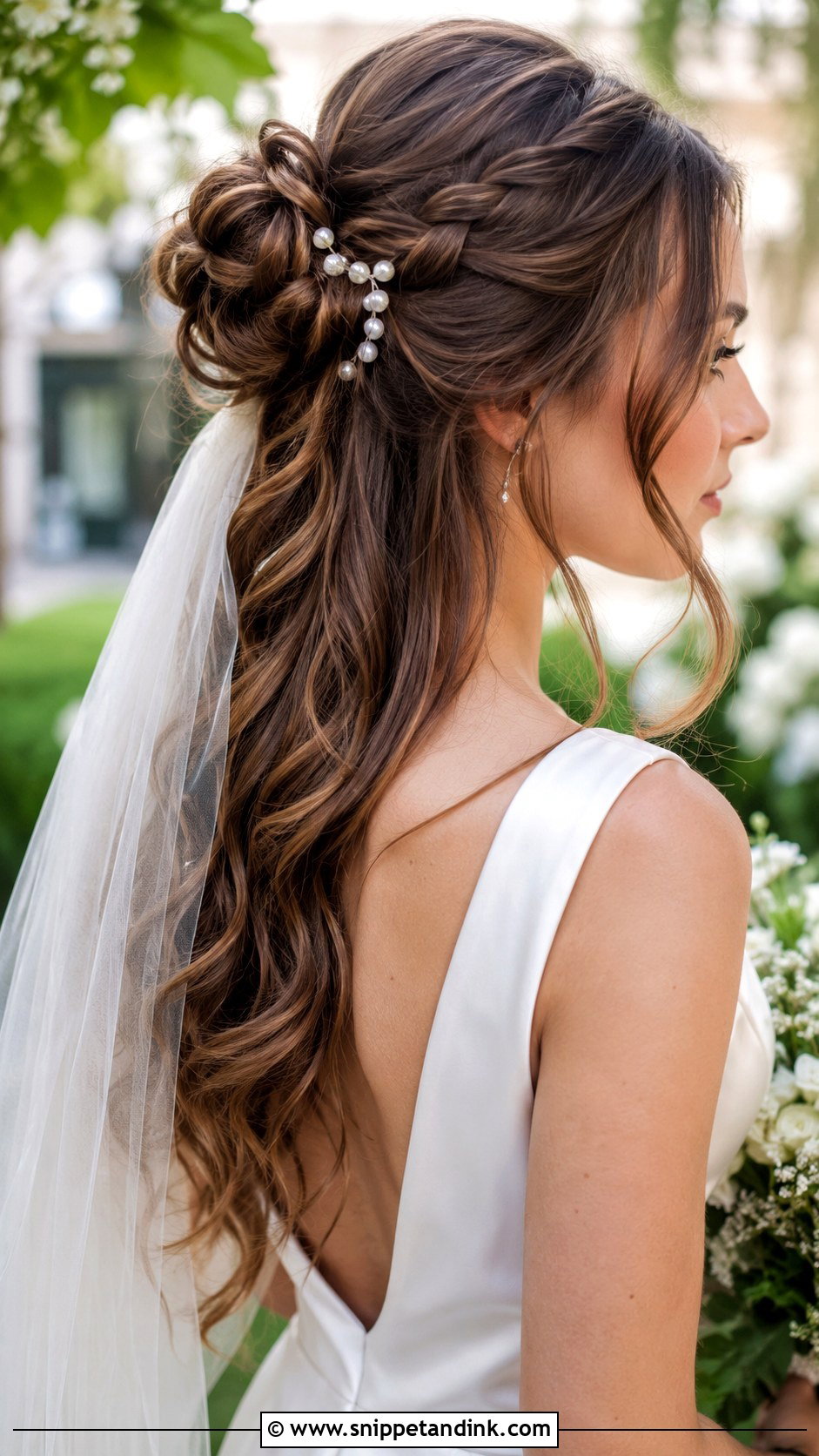
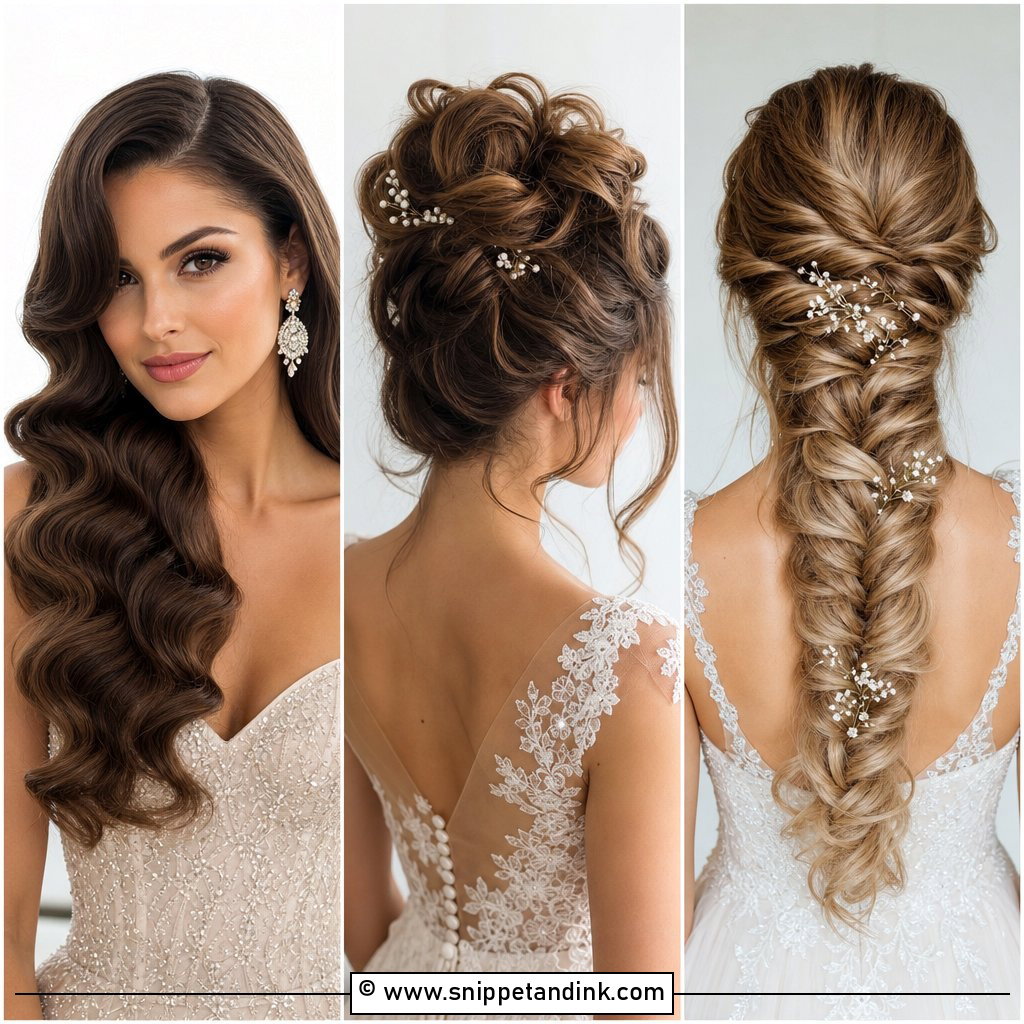
Braiding the top section and coiling it into a small bun gives you a clear face and a solid anchor point at the crown. It’s the version I suggest most when a bride wants her hair down but has a heavy veil, because the comb slides in just under the bun and has something firm to hold. Loosen the braid before coiling it so the bun looks textured rather than tight. Pearl pins or tiny blooms around the base cover any pins.
10. Twisted Braid With Soft Curls
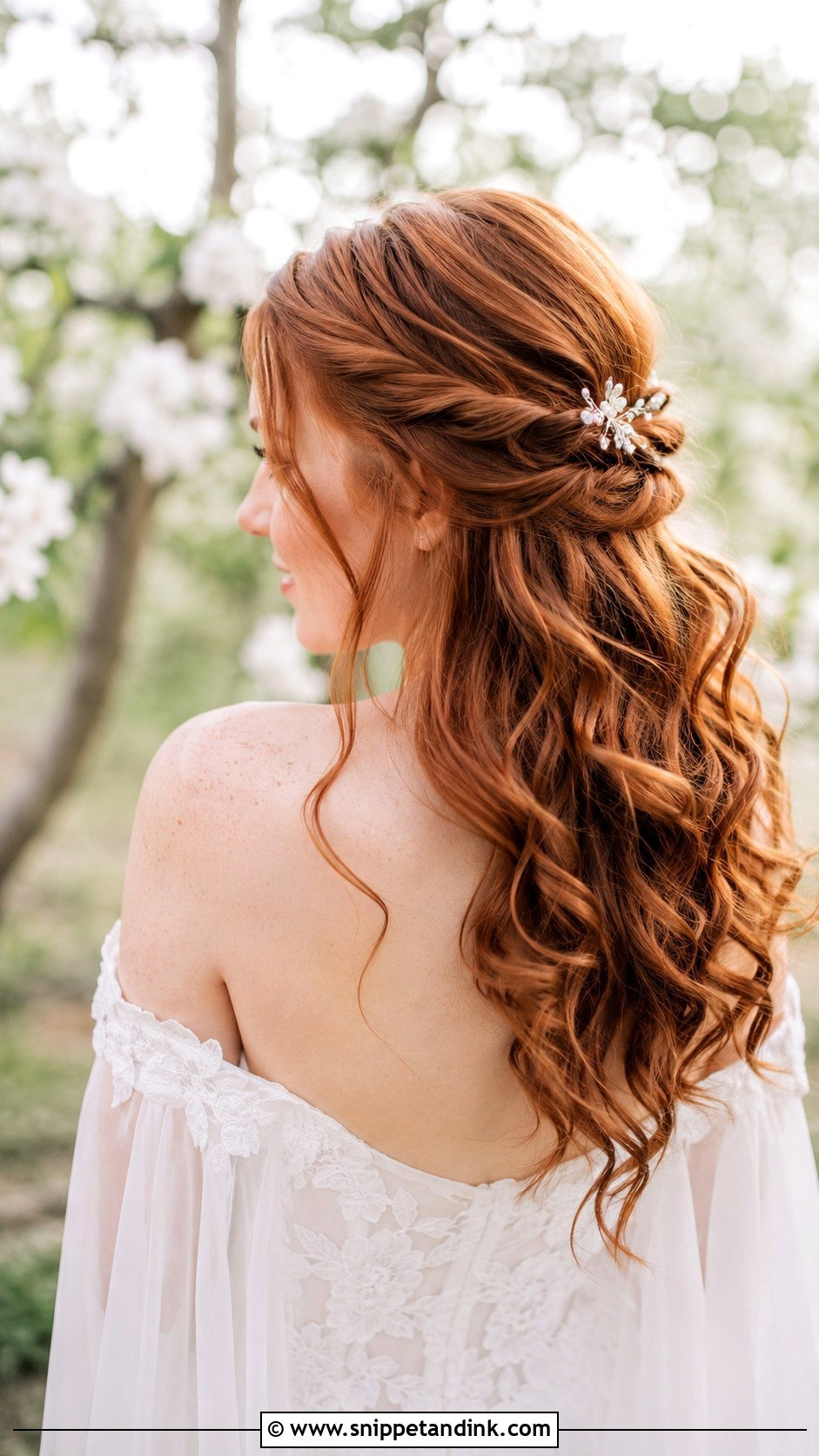
Twisted sections are softer than a true plait and quicker to do. I twist small sections back from the temples and pin them, letting the rest cascade in soft curls. It’s my go-to when hair is too short or too layered for a clean braid, since twists forgive uneven lengths. Pull a few pieces loose at the face and add small flowers or pins. It’s low-key and still reads as bridal.
11. Fishtail Braid Down The Back
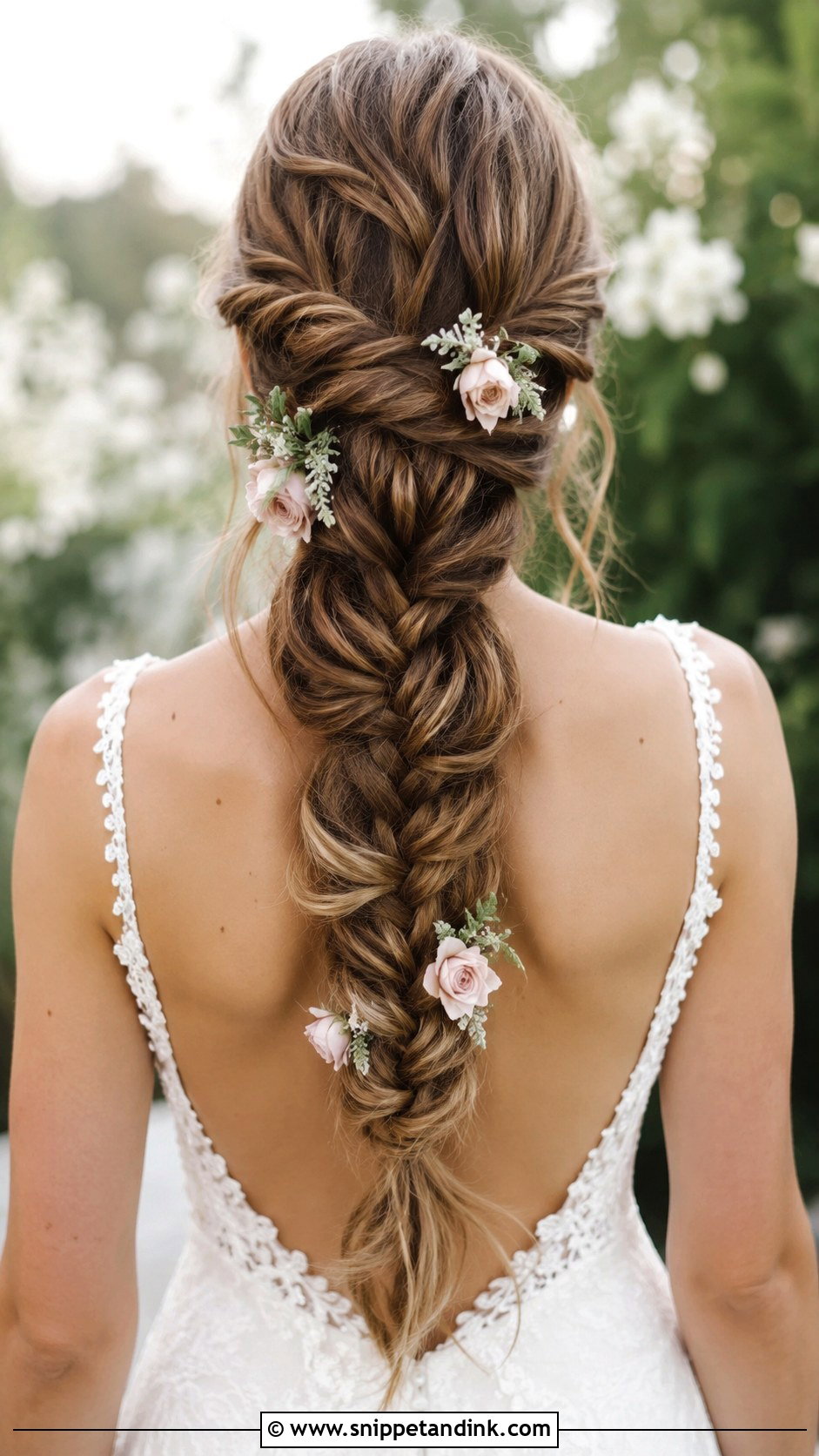
A single fishtail running down the back is a show piece for photos taken from behind, during the ceremony and the first dance. It needs real length; on shoulder-length hair the braid is too short to show off the weave. I keep the top soft, gather everything at the nape, and fishtail to the ends before loosening it gently. Baby’s breath or small roses tucked along the length look romantic. With thick hair this braid can get heavy, so secure it with a clear elastic and a hidden pin.
12. Braided Half Up With Veil
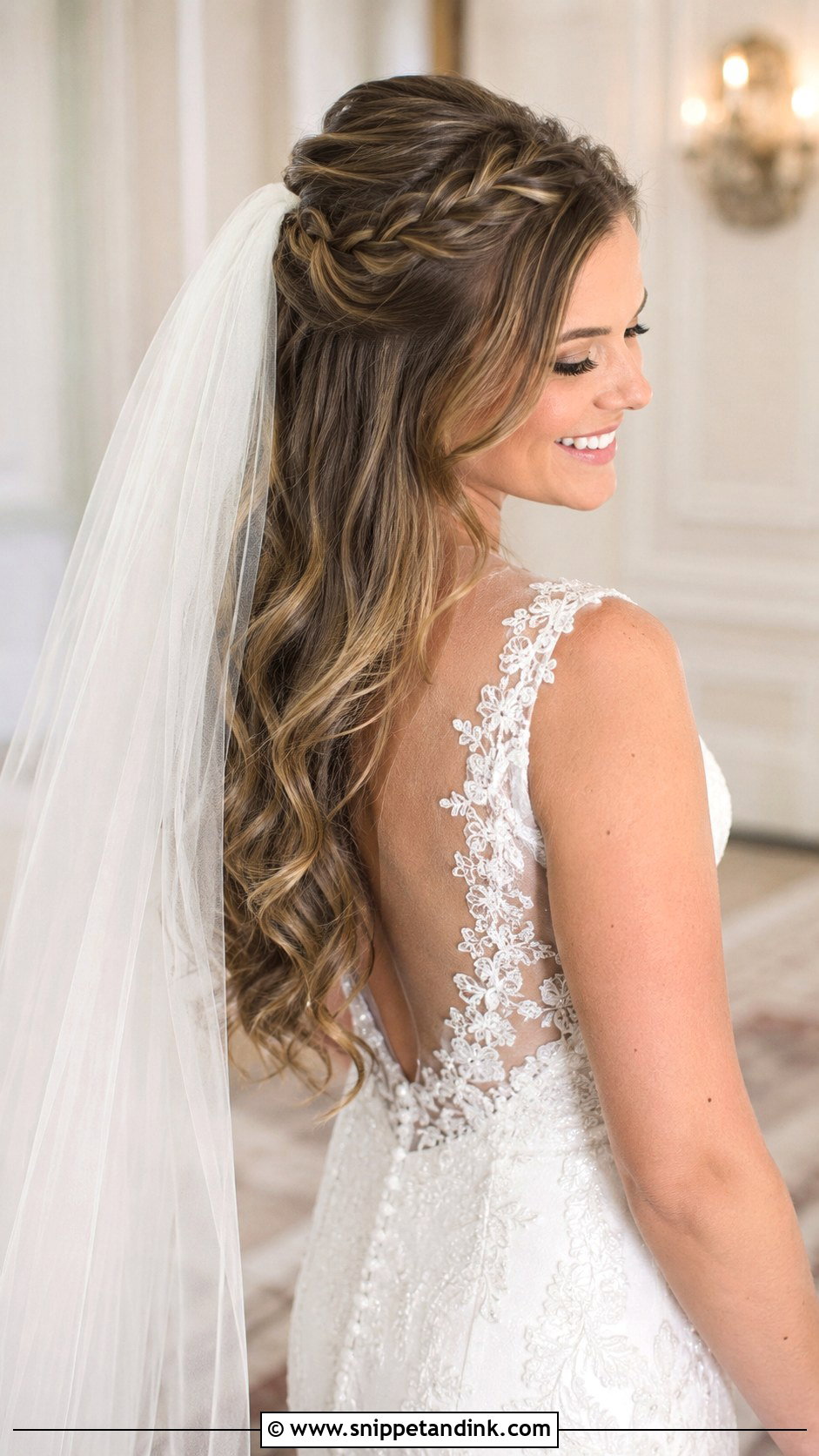
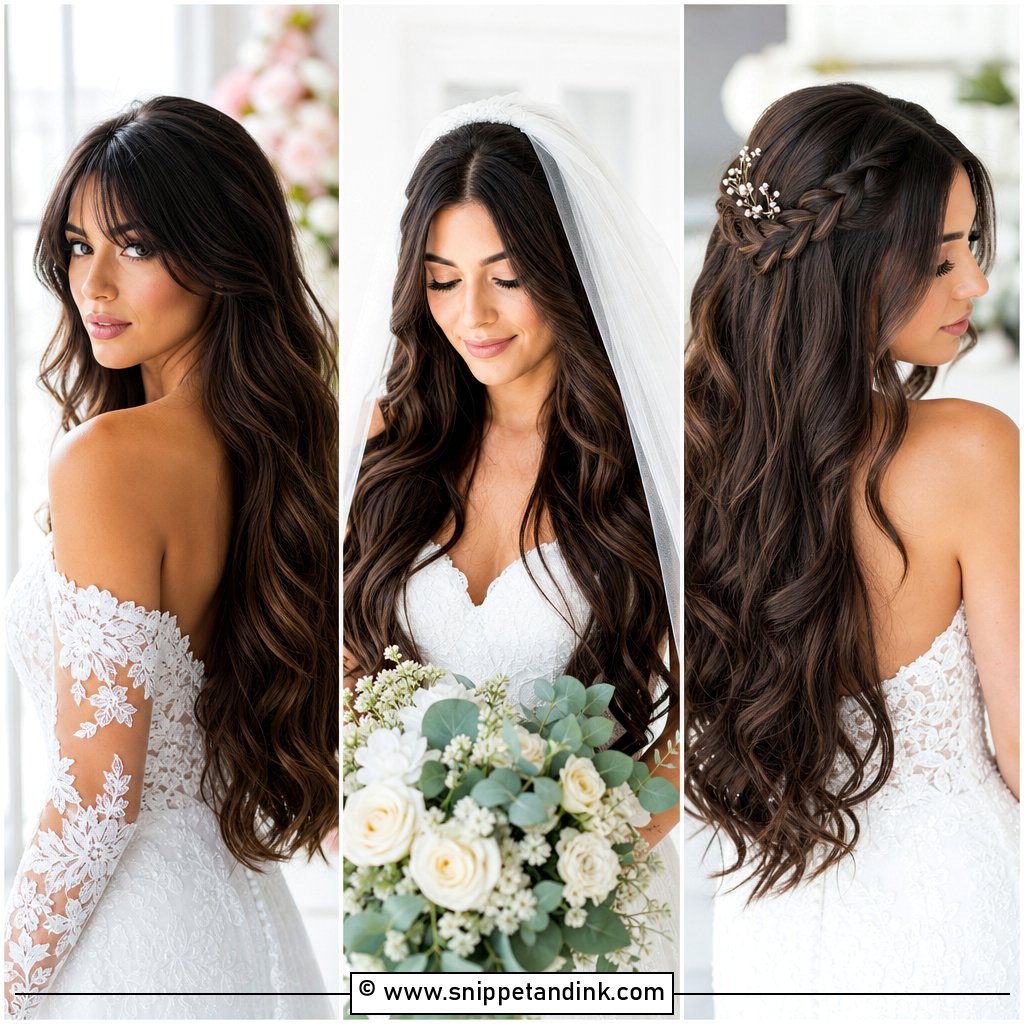
The braid and the veil work together here. I weave a soft braid through the top section and slide the veil comb in directly beneath it, so the braid acts as a shelf and the veil never drags downward. The rest of your hair stays down in waves. The braid keeps hair off your face during the vows, and when the veil comes off for the reception the hairstyle still looks finished, because nothing was built around the veil alone.
13. Loose Side Braid With Flowers
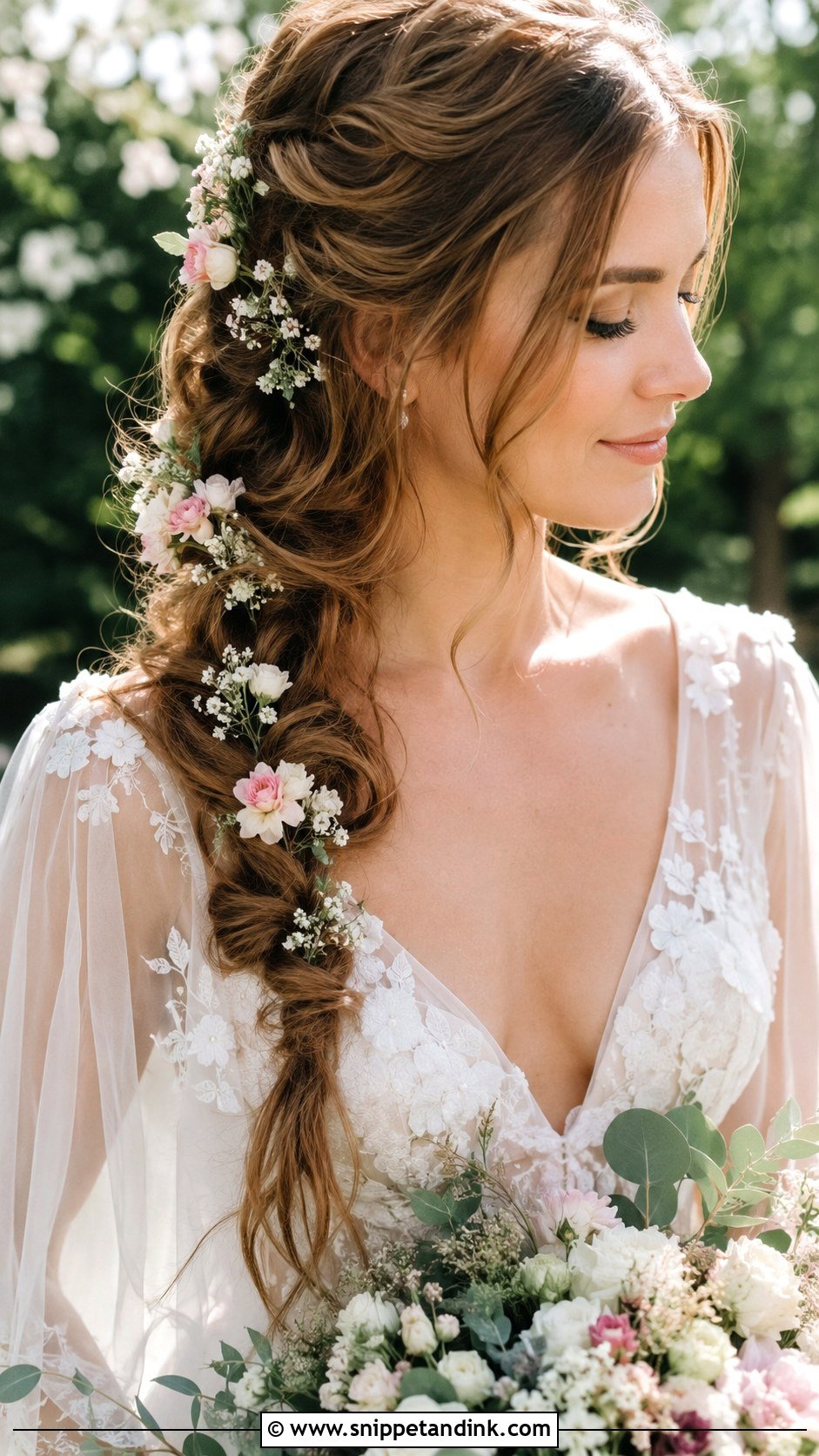
A loose side braid with flowers woven in only works if the flowers can last. I ask your florist for small, sturdy blooms with short wired stems, and I add them last, after the relaxed plait is secure. The braid drapes softly over the shoulder and face-framing pieces fall naturally around it. It ties your hair to your bouquet and the rest of the floral theme. In hot weather, choose blooms that are known to hold out of water, or the flowers will wilt before the braid does.
14. Double Dutch Braids Into Waves
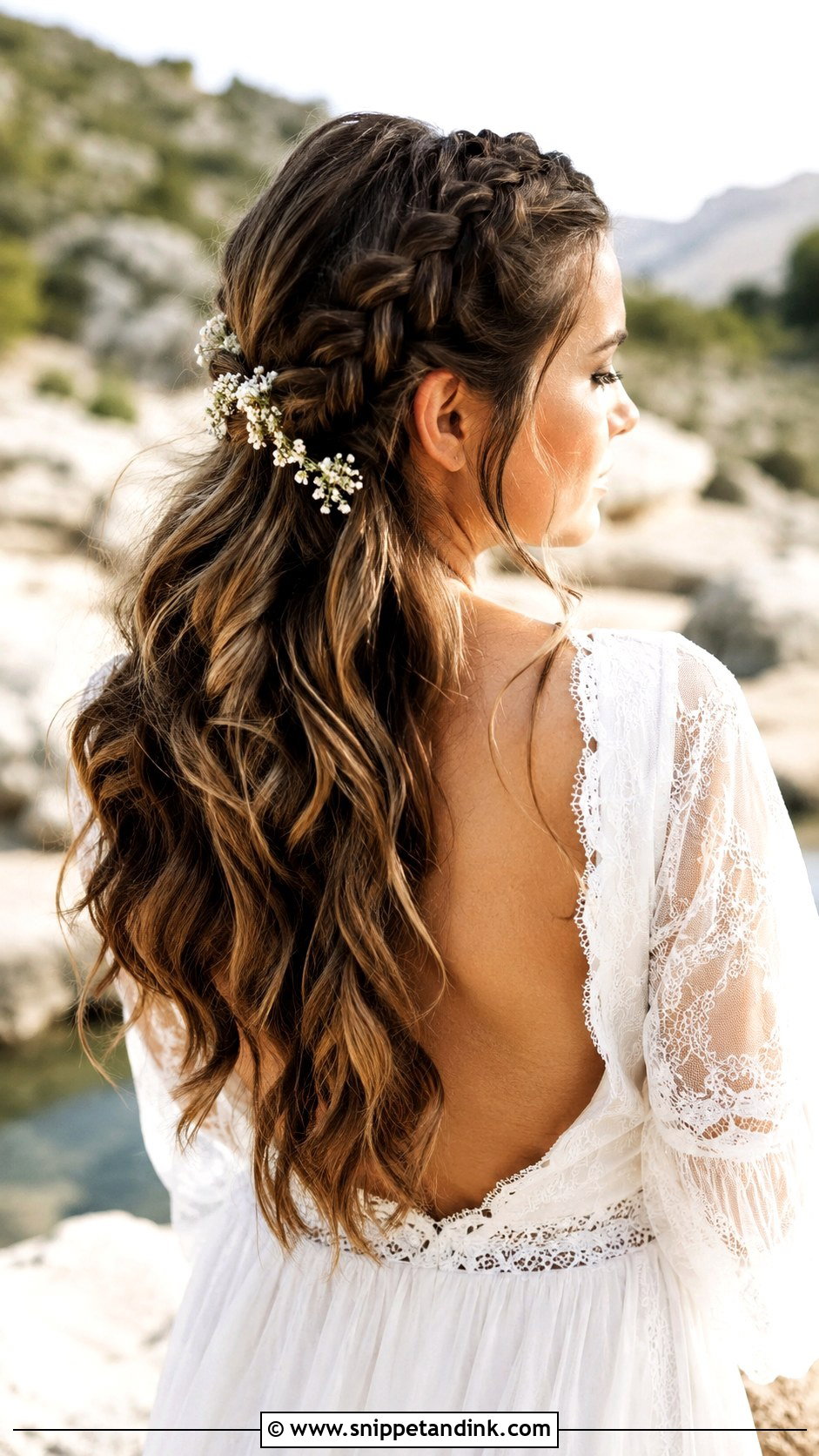
Two Dutch braids running back from the hairline give bold texture and frame the face from both sides. They need to be even, so I part very precisely before starting; a slightly crooked part looks obvious when the braids are symmetrical. The double braids finish partway down and blend into waves. They’re youthful and a little playful, which suits a festival or boho wedding more than a black-tie one. Tiny flowers are optional.
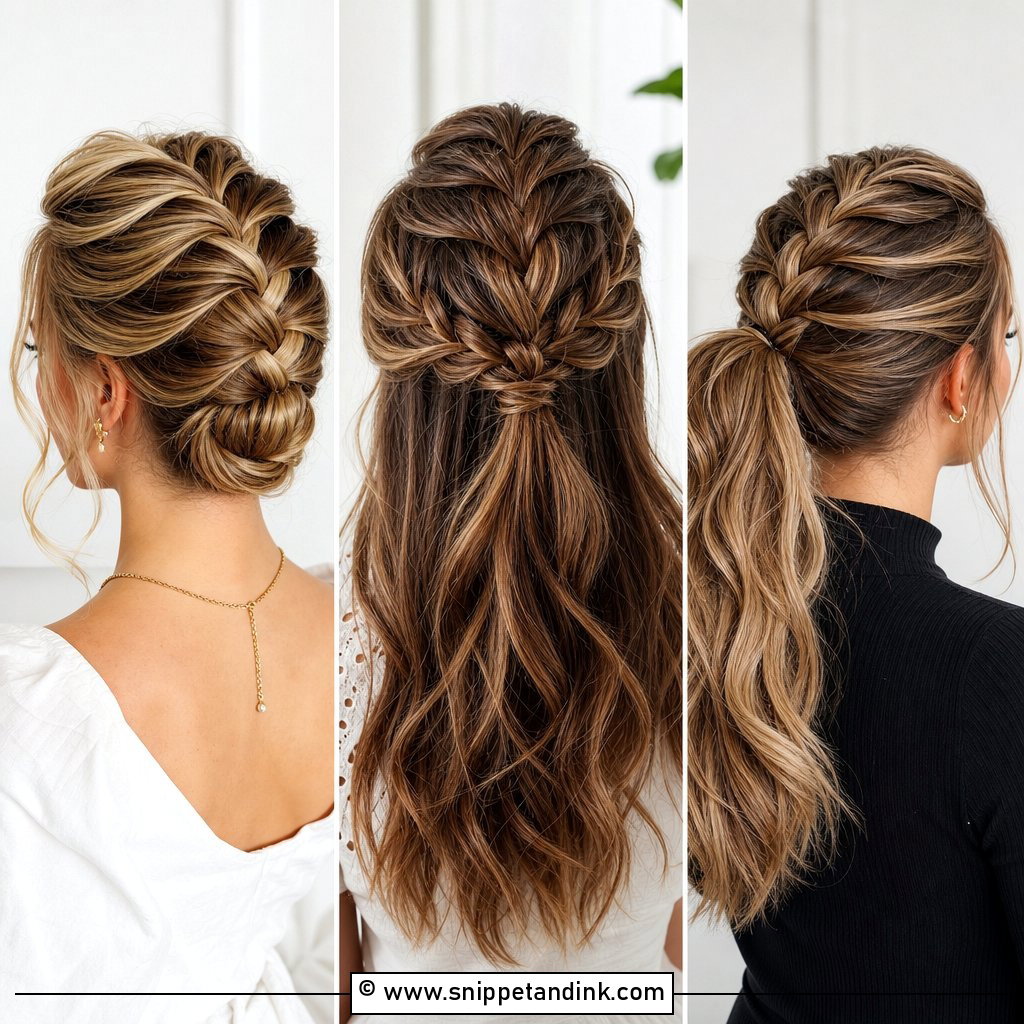
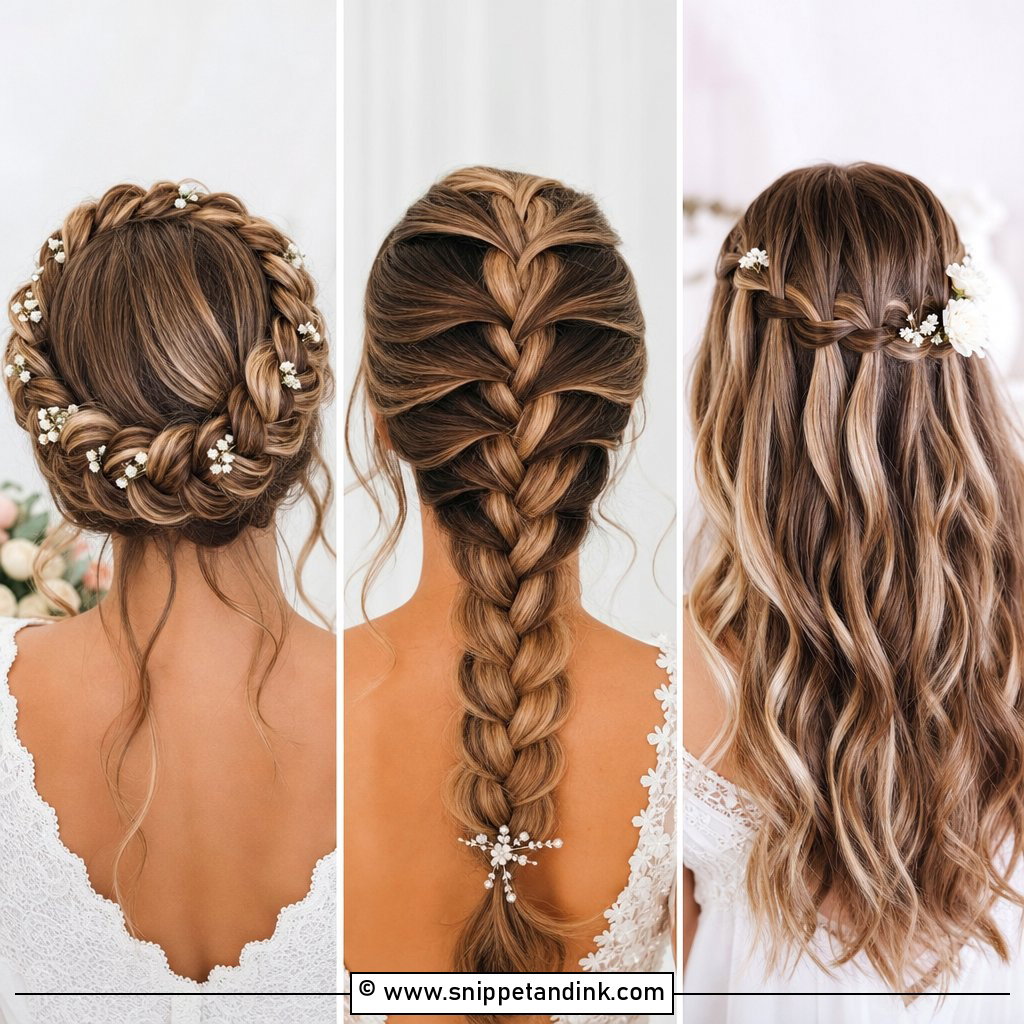
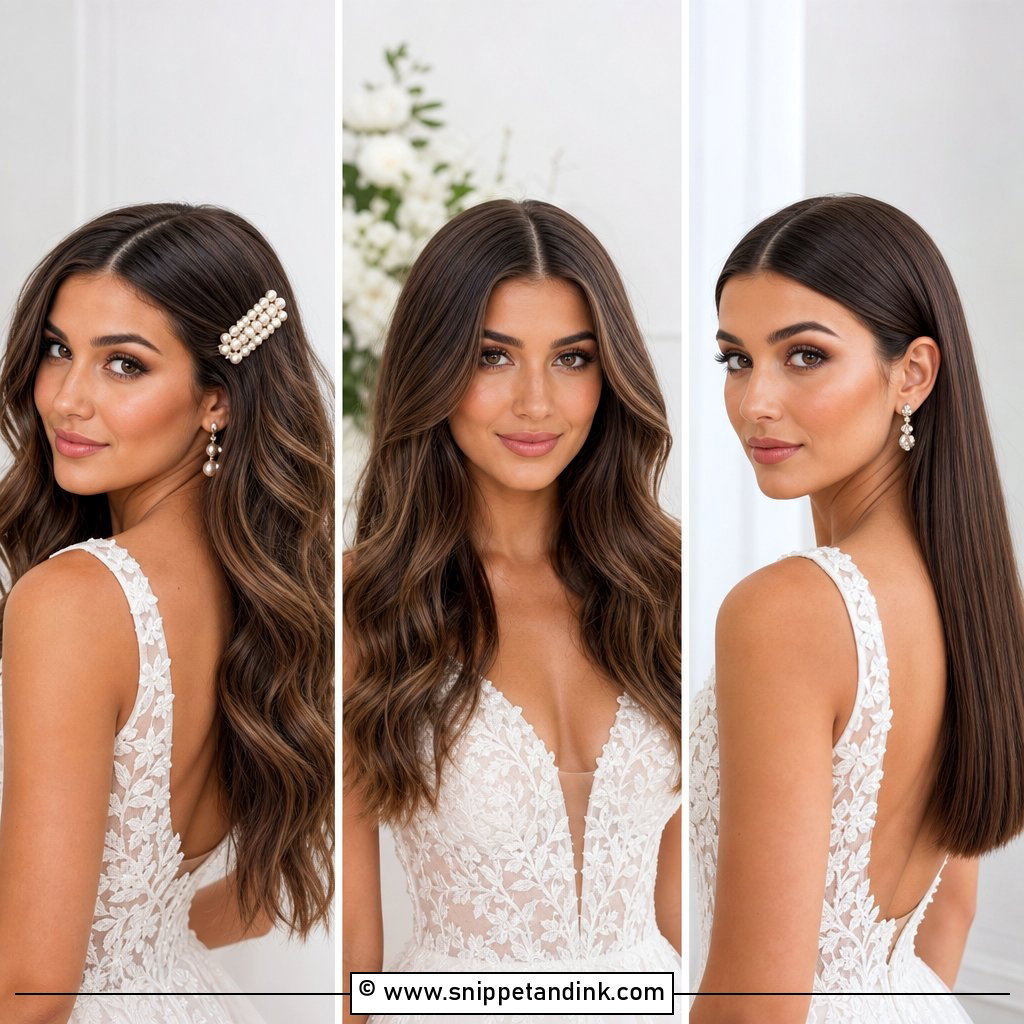
15. Braided Halo With Flowing Hair
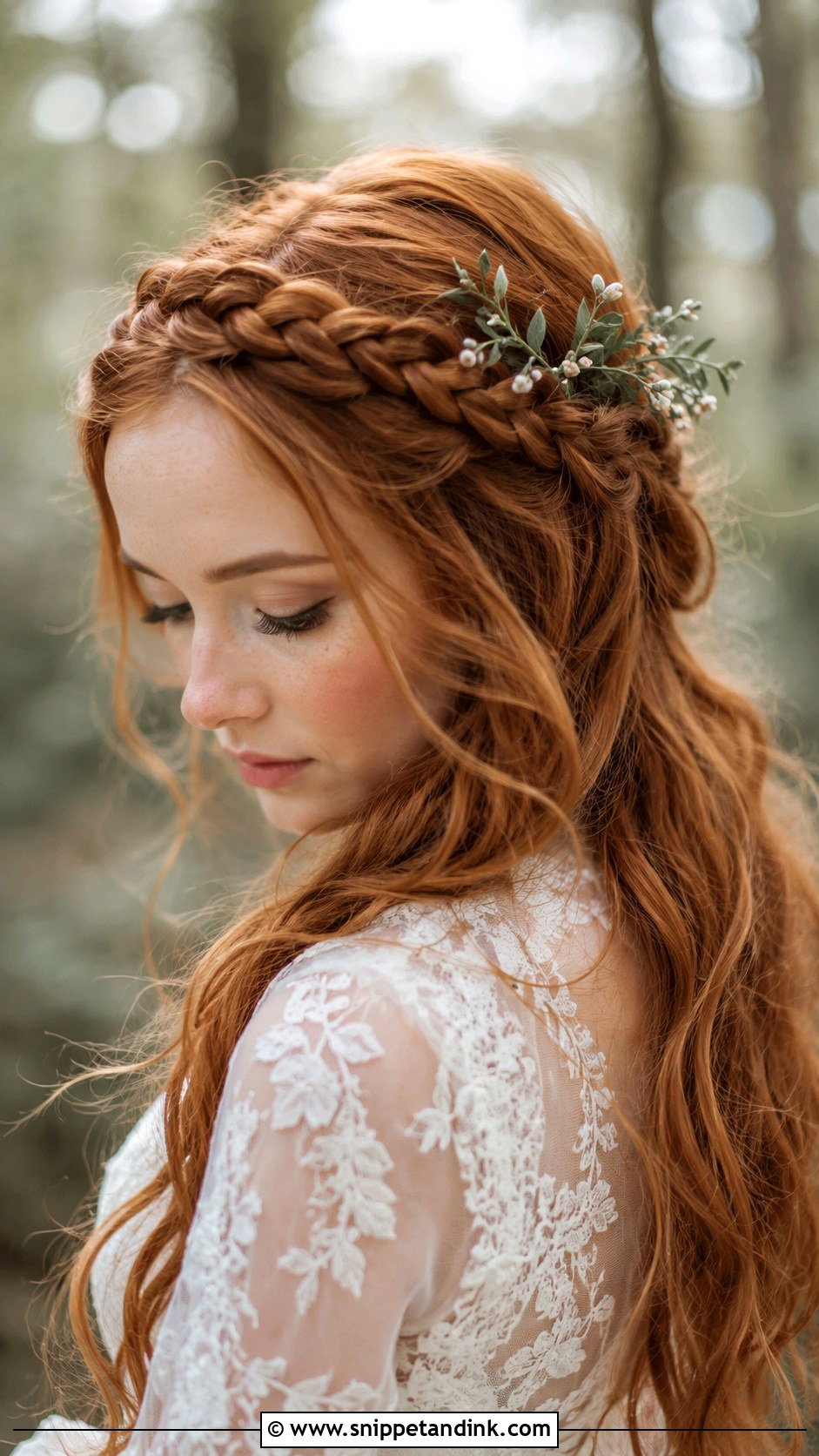
A braided halo is a thinner, more delicate cousin of the crown braid. It circles the head and frames the face, with the rest of your hair flowing in waves below. Greenery or small fresh flowers along the braid suit a woodland or garden setting. I find it best on medium-density hair; on very thick hair the halo becomes chunky unless I braid only part of the hair into it. A flowing veil can sit inside the halo at the back.
16. Messy Braid With Textured Waves
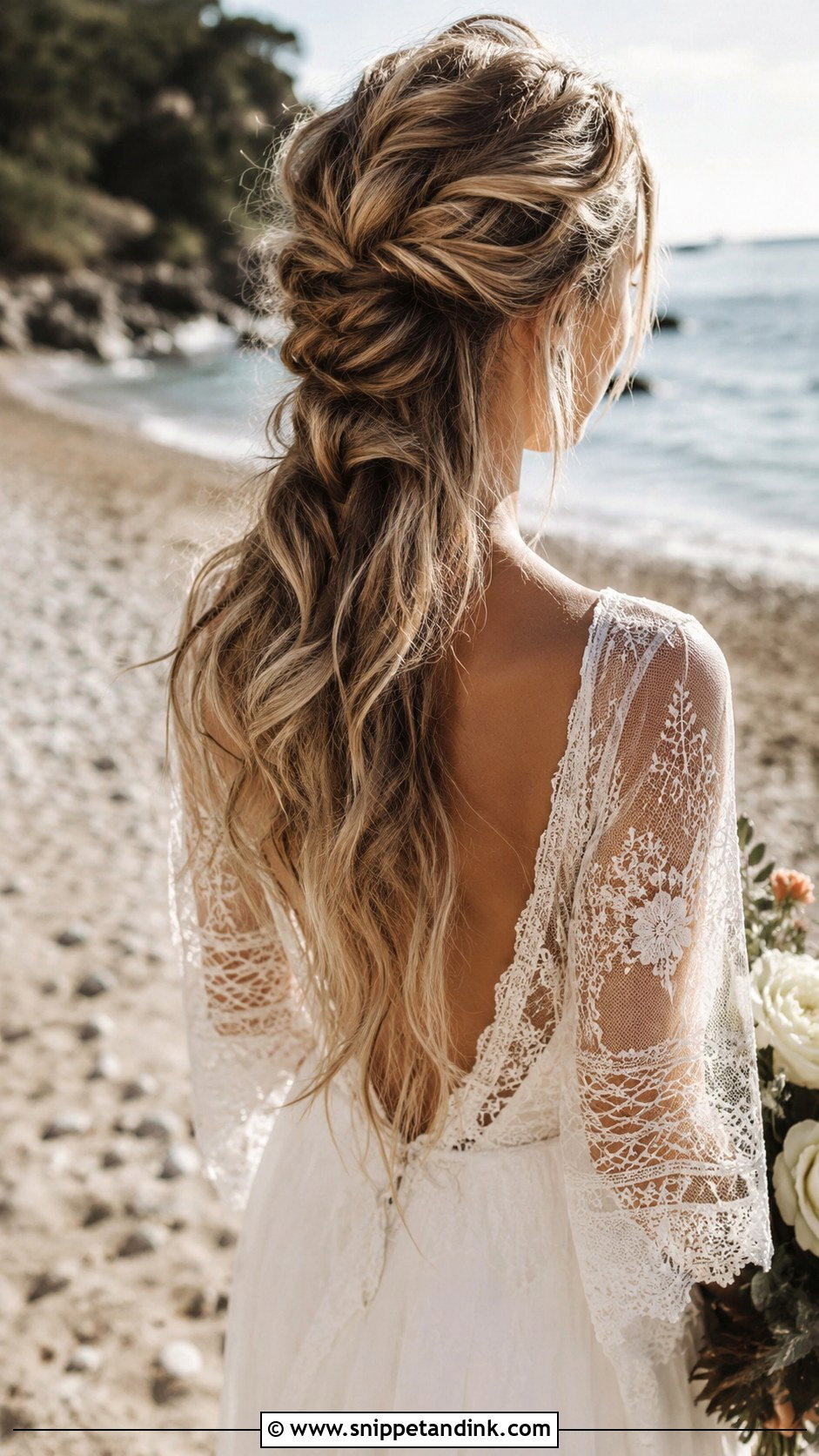
A deliberately messy braid needs more control than it suggests. If the base is too soft, it falls apart; if it is too tight, it looks like a neat braid that has been pulled at. I braid loosely over a texture spray, then pull strands out one at a time and set them with hairspray so the mess stays where I placed it. The rest stays wavy and tousled. It’s suited to beach and outdoor weddings and to brides who’d rather not look too polished.
17. Braided Updo Detail With Hair Down
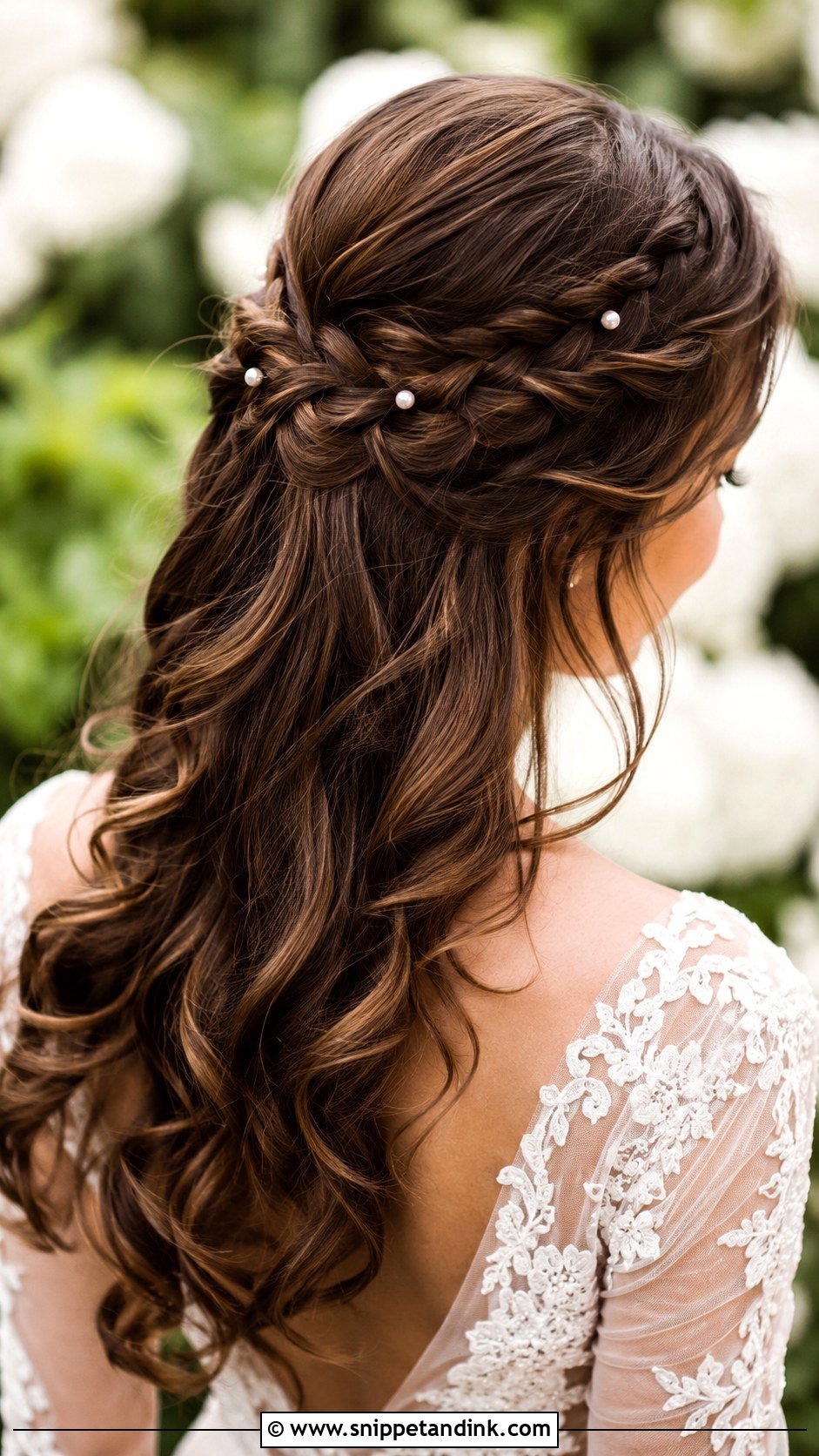
Small braids near the crown or sides, pinned softly while everything else flows, give the detail of an updo without lifting your hair. I often use two or three thin plaits rather than one thick one, because thin braids sit flatter and are easier to pin invisibly. They add dimension that reads in photos. Pearl pins or tiny blooms can be added along them. This is a good compromise for brides who keep switching between up and down at the trial.
18. Rope Braid With Soft Curls
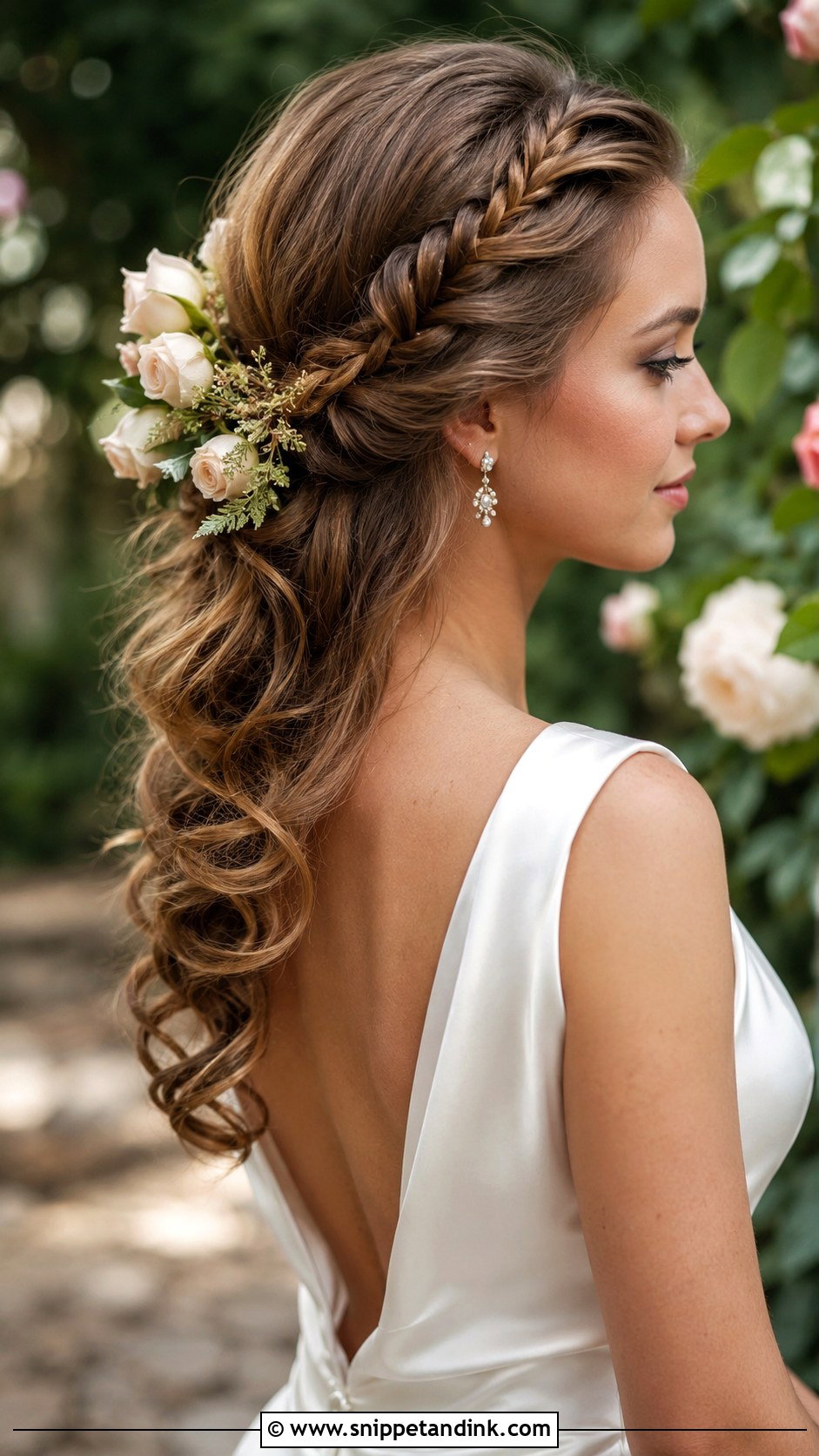
A rope braid is made by twisting two sections in one direction and then wrapping them around each other in the opposite direction, which is what locks the rope-like, spiraled texture in place. Twist both strands the same way and it unravels within the hour. The rest of the hair falls in soft curls. It’s slightly unexpected and quite neat, so it suits brides who find classic plaits too sweet. Small flowers tucked into the twists add a little colour.
19. Braided Crown With Half Up Waves
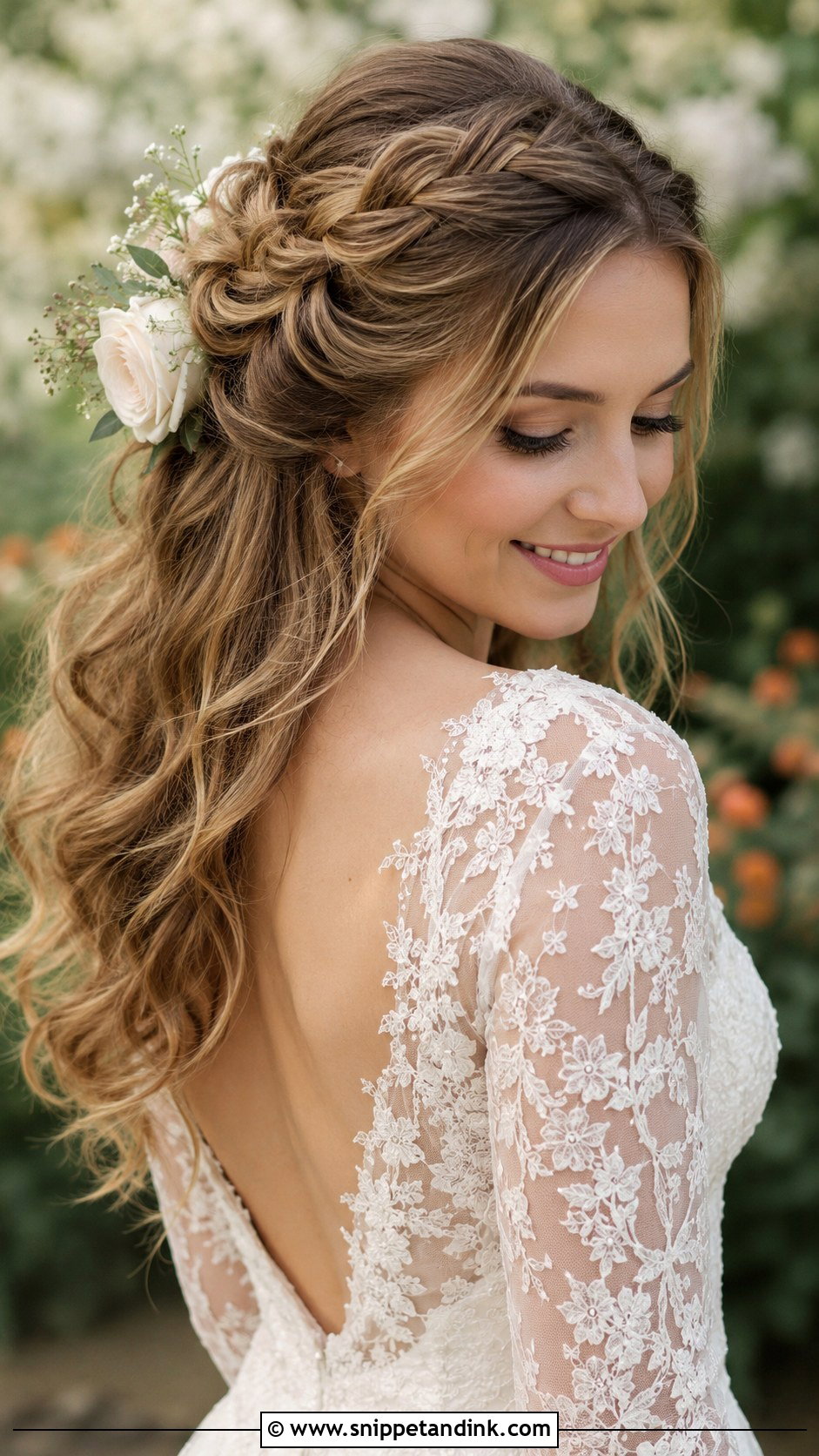
Putting a braided crown on a half-up style gives you two levels of structure: a braid across the top, then a section gathered up beneath it, with the rest of the hair flowing. That double anchor makes it one of the most secure down-ish styles on this list. Fresh flowers or pearl pins finish it. It frames the face while showing length. If you are wearing it all day, check at your trial that the gathered section does not press uncomfortably on the back of your head.
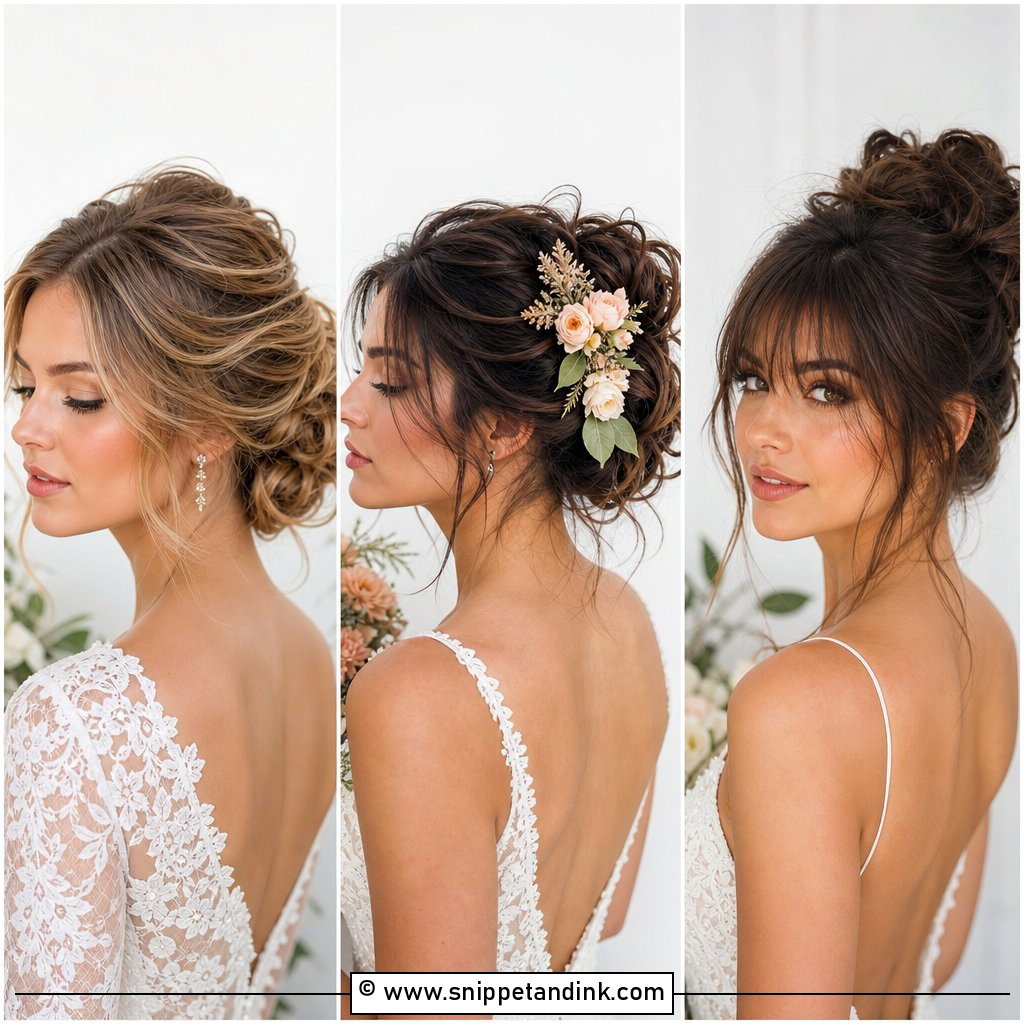
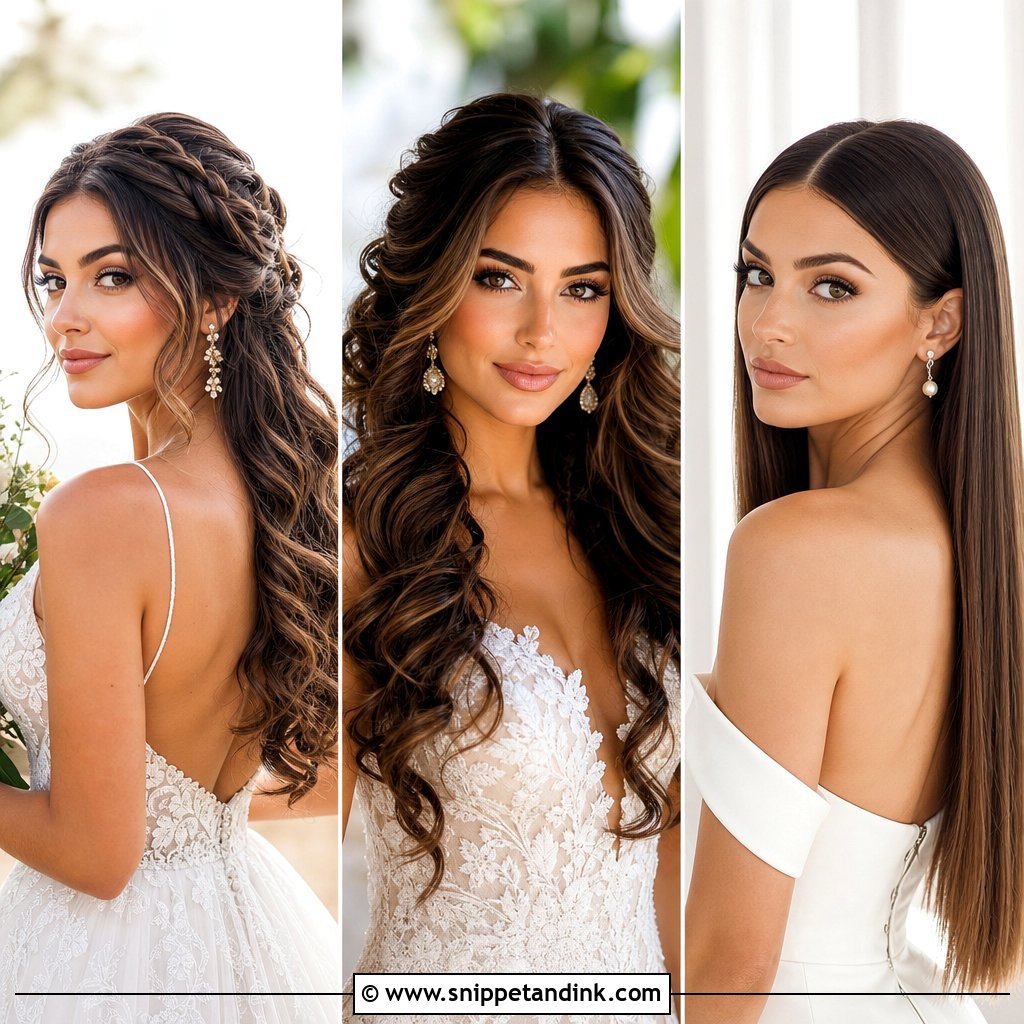
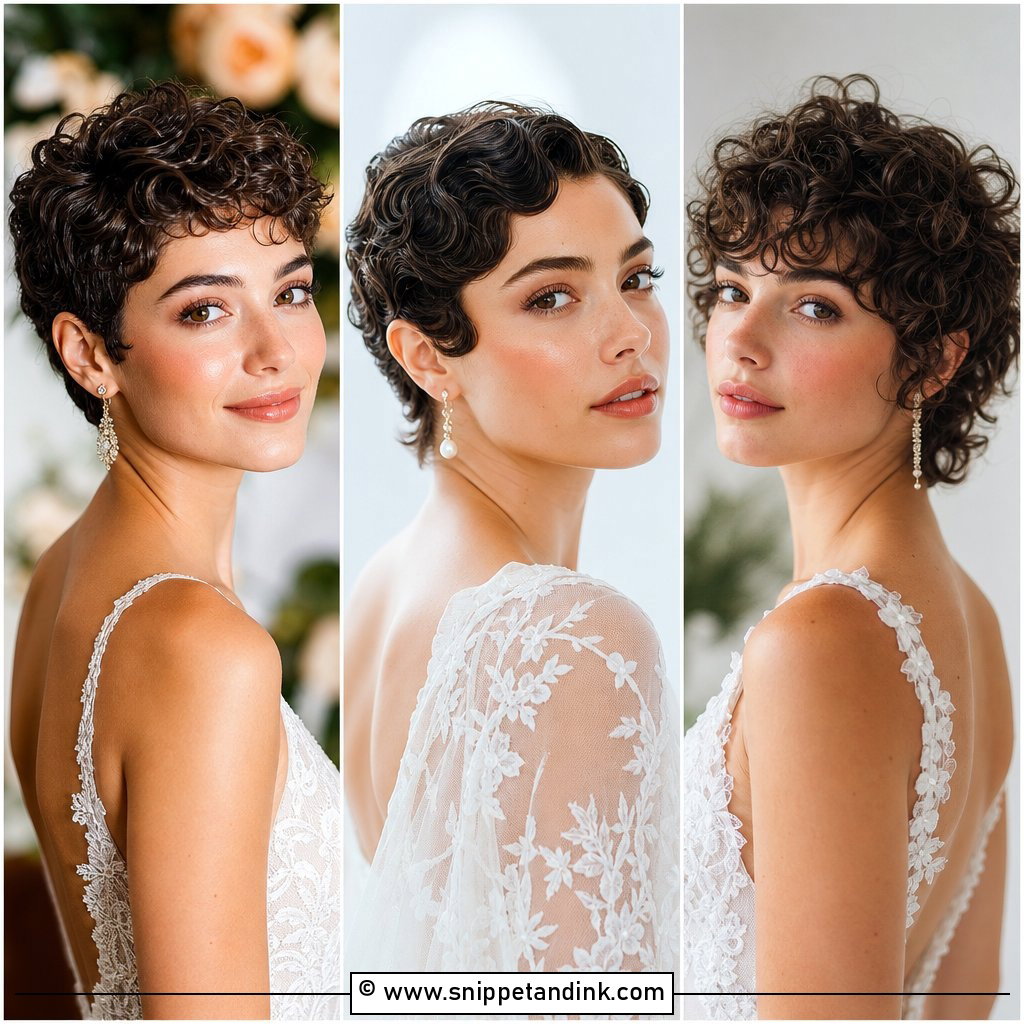
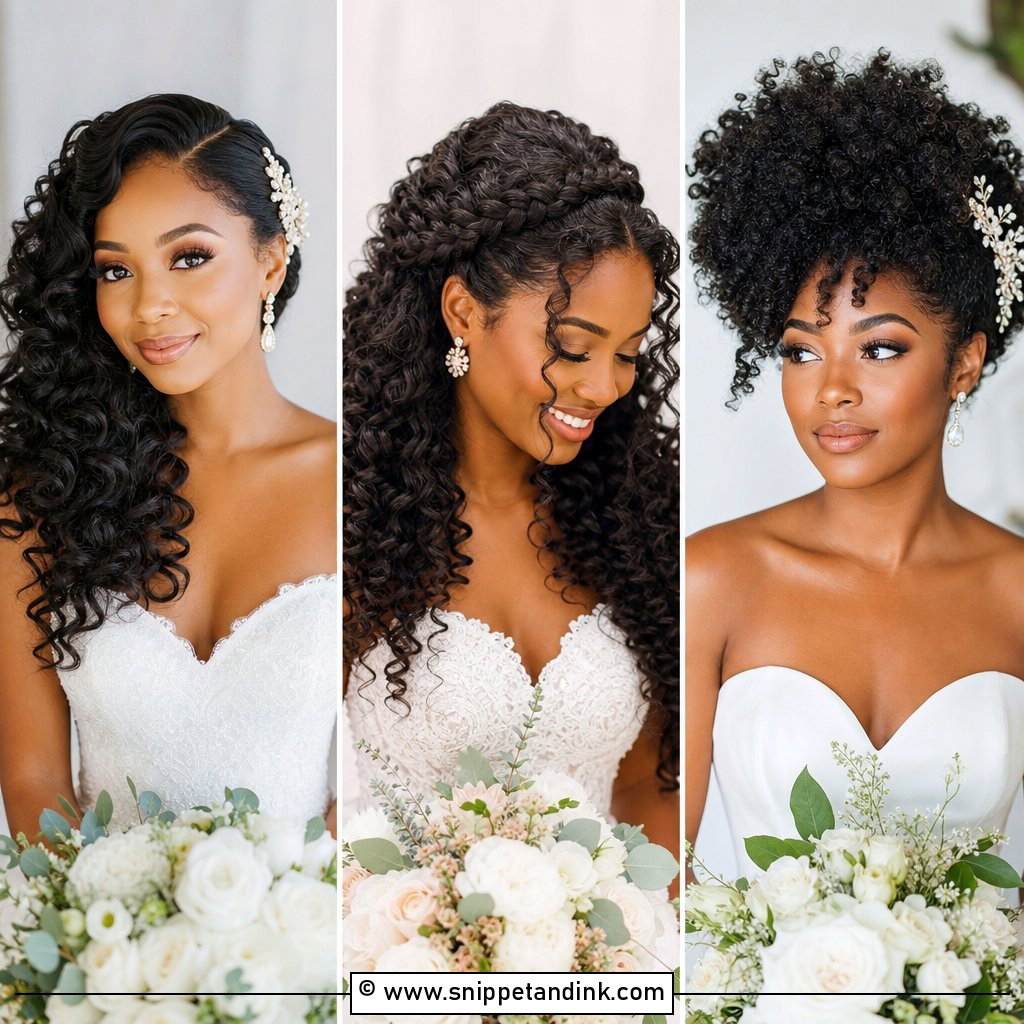
20. Accent Braid With Long Loose Hair
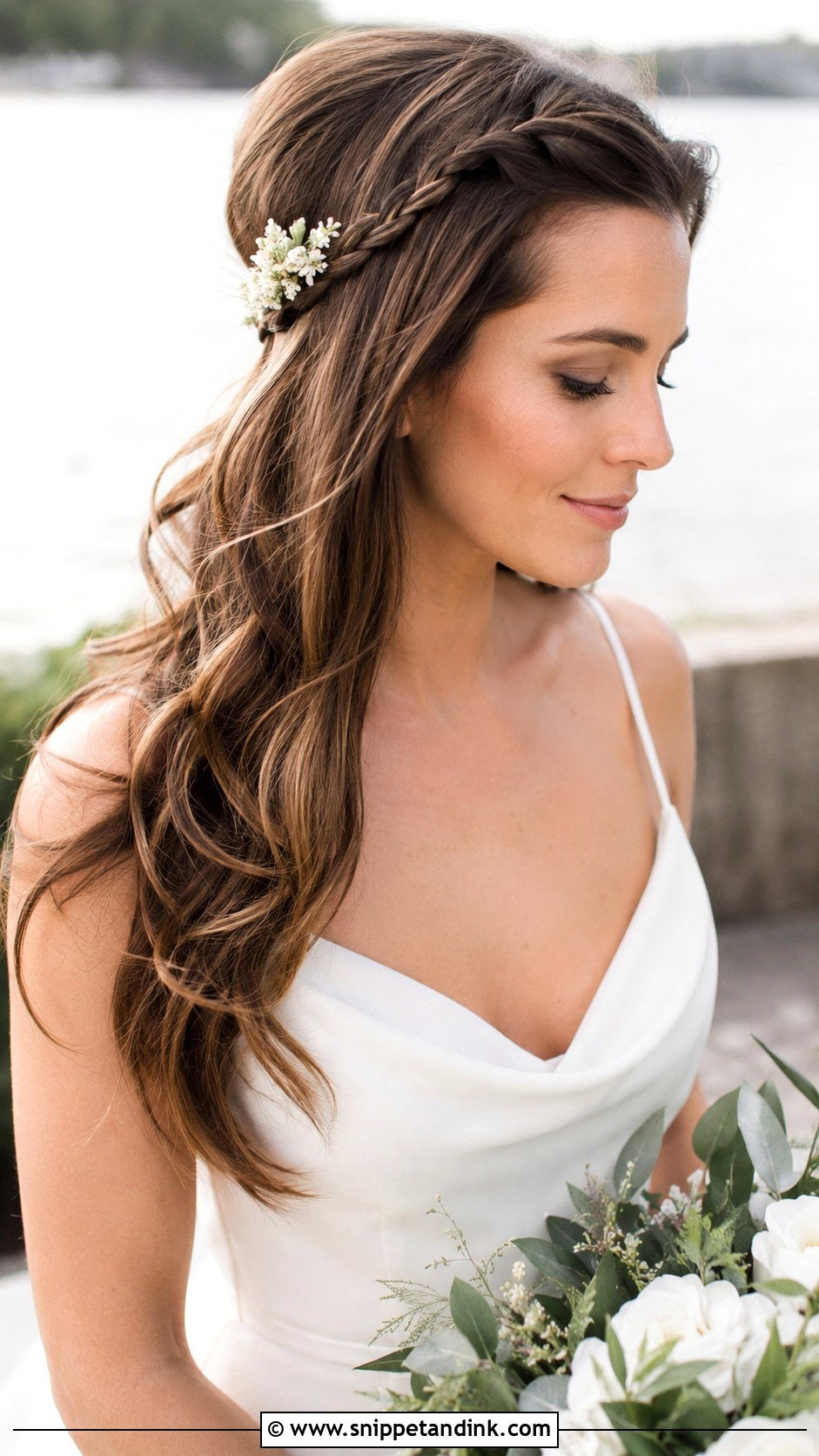
Sometimes one thin braid near the part or temple is all the detail long hair needs. It’s the easiest braid to redo yourself if it loosens, and it adds texture without taking attention from your length or your dress. Everything else falls in soft waves. Tuck a single small flower into it if you like. I also use this on brides who are nervous about braids, because it is so easy to take out at the trial if they change their mind.
Pull It Apart Slowly: How I Loosen a Braid So It Still Holds
That soft, full braid in most wedding photos is a tight braid that has been carefully opened. The order matters, and it is where most at-home attempts fall apart.
- Braid firmly over a light texture spray, so the hair has grip.
- Secure the end with a clear elastic before loosening anything.
- Pinch the outer edge of each loop and pull it out a few millimetres, working from the top down.
- Stop before the braid looks wide everywhere. Uneven loosening looks more natural than perfectly flat.
- Pin the loosened braid to the hair underneath in a few hidden places and mist lightly with hairspray.
If a braid slips during the reception
A loose braid usually drops from the end, not the start. Have someone tighten the elastic, then slide two bobby pins in a cross under the bottom loop. Re-pinching the loops by hand is fine; re-braiding in a bathroom mirror rarely ends well, so leave that alone.
A Braid Should Hold Your Hair, Not Just Decorate It
Hair worn down with a braid gives you soft movement and just enough structure. From whimsical waterfall braids to bold Dutch plaits and thin accent braids, each one fits a different hair type and a different kind of day. Think about the job you need the braid to do: keep the front clear, support a veil, survive wind or simply add detail. Then add flowers, pearl pins or your veil, and test the whole thing at your trial before you commit.
You'll Like These Ideas:



Leave a Reply