
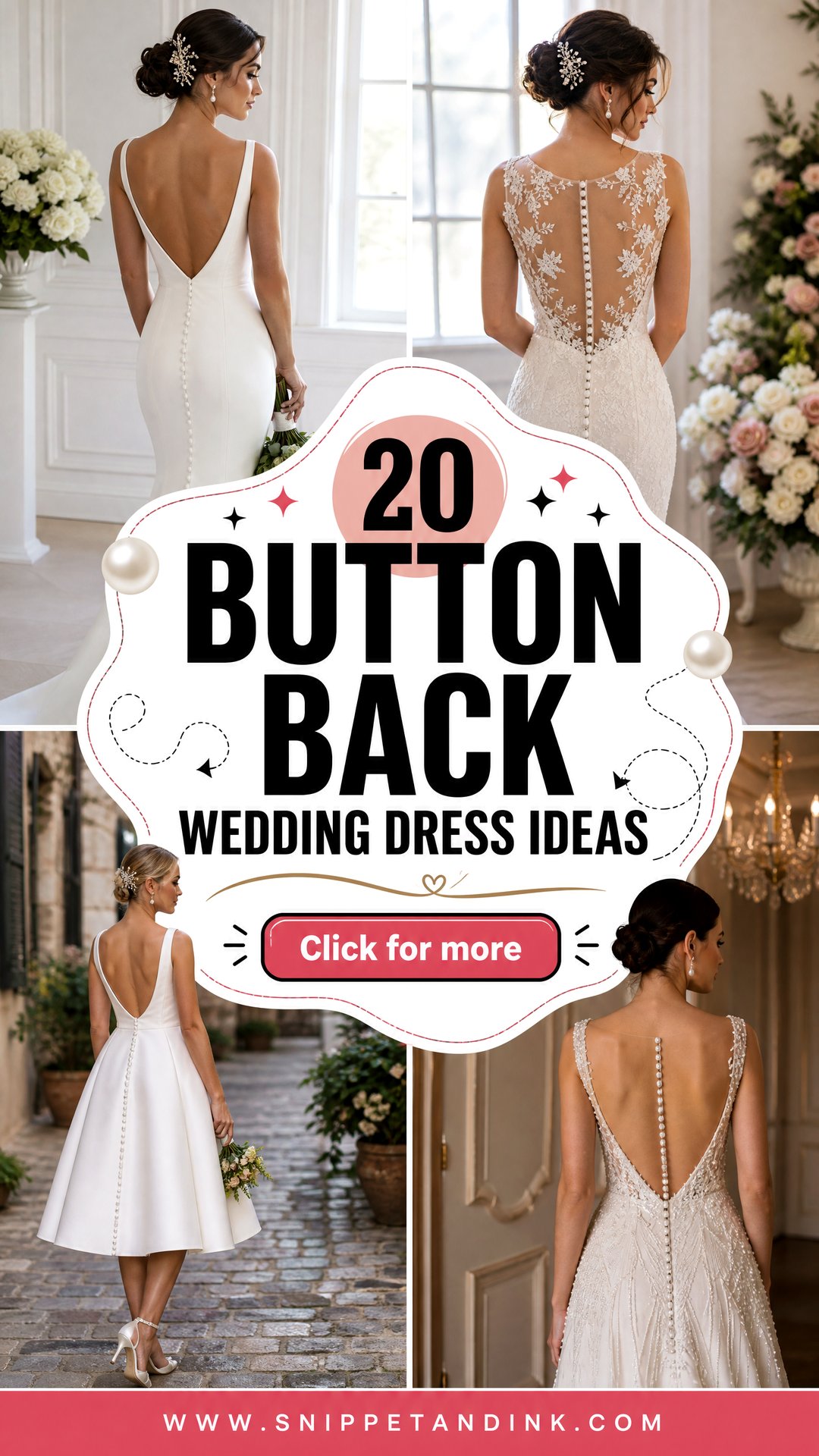
A row of buttons is the detail guests stare at for the whole ceremony, because the back of the dress is what they see while you stand at the front. The gowns below run from satin A-lines to crepe columns and open backs, and the buttons on them are paired with everything from illusion lace and low V-backs to stiff Mikado ball gowns. When I style a button back, I always look at it from behind first, with the veil and hair in place, since that is the view your photographer will keep returning to. Use the list to find the fabric and coverage you like, then read the notes on loops, zips and getting dressed before you order.
Real Loops or Decorative Buttons Over a Zip?
Two very different closures look identical from the aisle. On a true button back, every button passes through a small fabric or elastic loop, and the dress is fastened one by one. On many modern gowns, the buttons are sewn on as decoration over a concealed zip, which is faster to get into and easier to adjust.
Neither is better, but they behave differently. Elastic loops forgive a little bloating after lunch. Fabric loops hold firmer and look cleaner up close, though they take longer to fasten. A zip under decorative buttons gives the most support for a strapless or heavily boned bodice, because the closure takes the strain instead of thirty tiny loops.
Questions I’d ask at the boutique
- Are the buttons functional, decorative over a zip, or a mix of both?
- If there are loops, are they elastic or fabric rouleau?
- Can the back be taken in or let out without moving every button?
- Are spare buttons supplied in case one comes off before the day?
That alteration question matters most. Taking in a true button back usually means moving the whole row of loops, which adds time and cost. If you expect your size to change before the wedding, a zip under the buttons gives your seamstress far more room to work.
1. Satin A-Line Button Back Wedding Dress
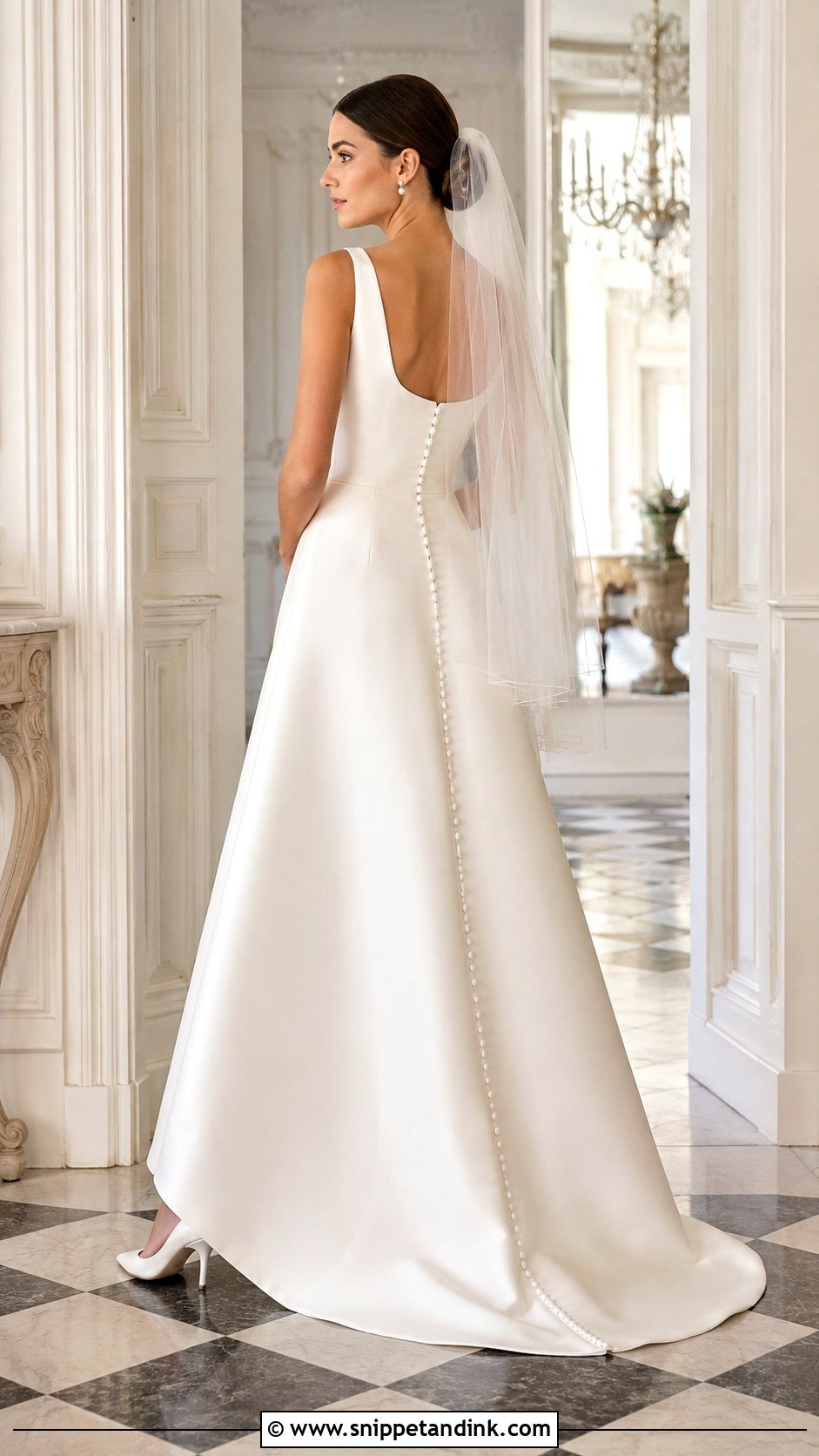
Satin on an A-line is the safest place to start, because the fabric is smooth enough that covered buttons sit flat instead of puckering. I like the buttons to begin between the shoulder blades and run past the waist so the line doesn’t stop abruptly at the seam. Watch the waist at your fitting: satin shows every pull, and if the bodice is a touch tight the fabric gapes between buttons. A fingertip veil and a smooth low bun keep the whole row in view, and pearl drops are about all the jewelry this needs.
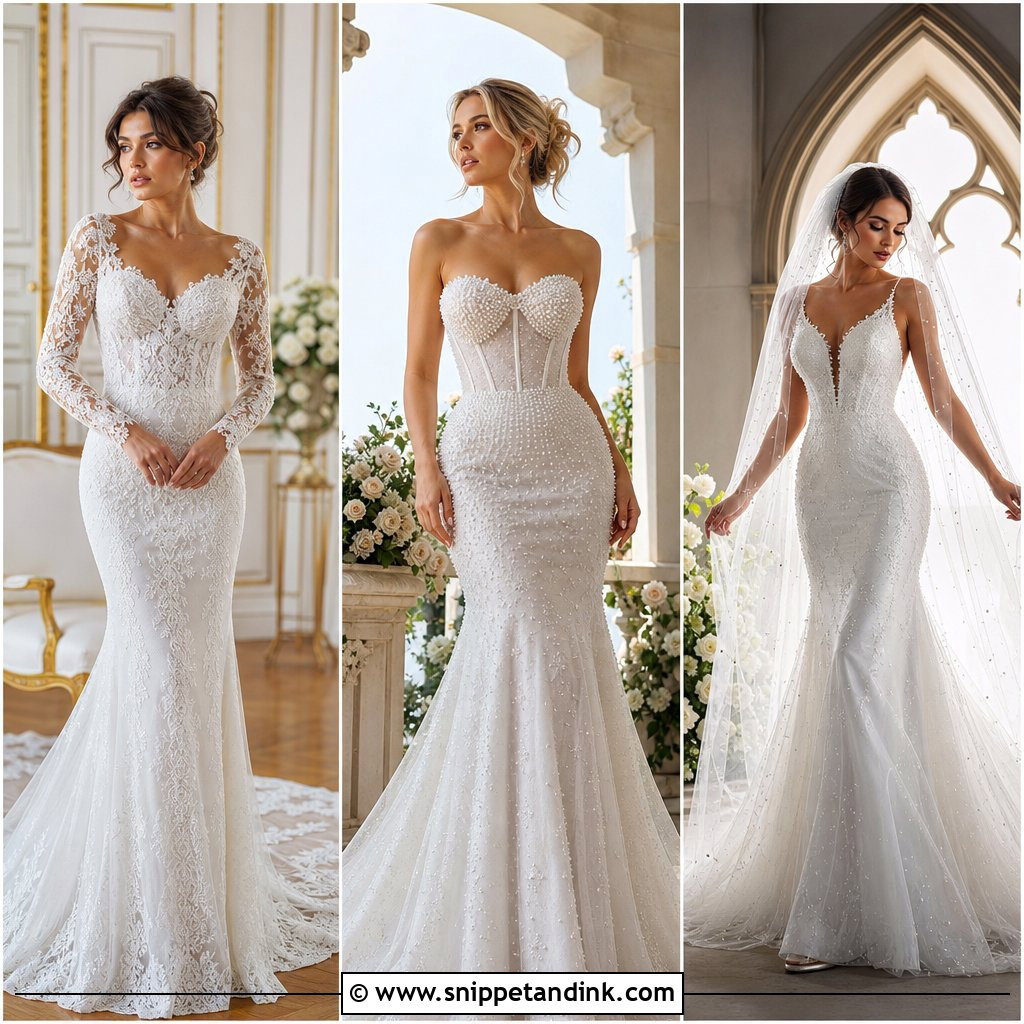
2. Lace Long Sleeve Button Back Wedding Dress
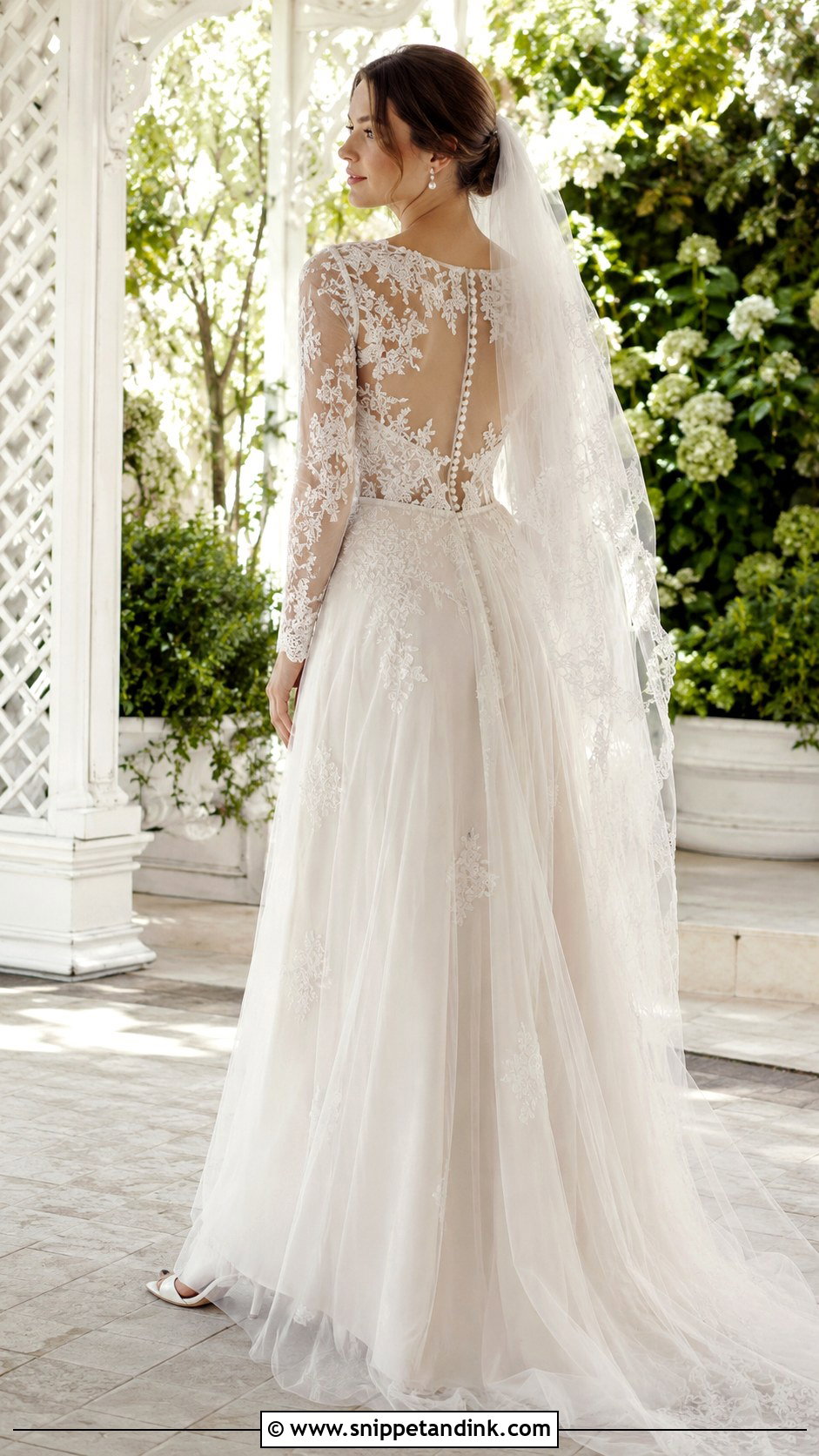
Lace sleeves and a button back are a natural pair, since the lace hides the small tension lines a closure can create. The prettiest versions set the buttons on an illusion panel so they appear to float between the appliqués. Check your arm movement before you commit. Long lace sleeves are often cut close, and if you can’t lift your arms to hug someone, the buttons across the shoulders take the strain. I’d keep the veil edge plain or very narrow so it doesn’t fight the lace pattern underneath.
3. Crepe Fit And Flare Button Back Wedding Dress
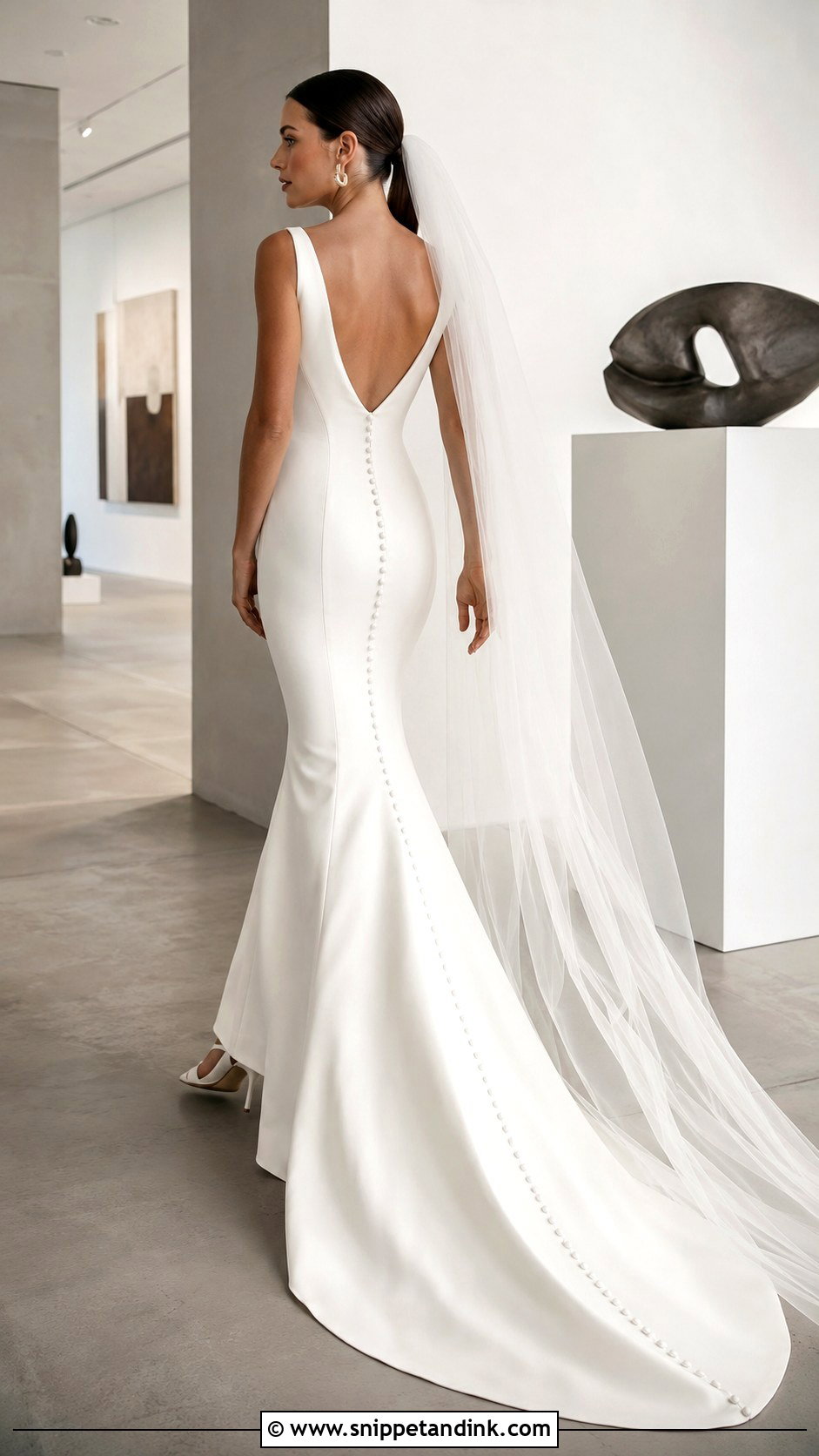
Crepe is unforgiving in the best way: no texture to hide behind, so the tonal covered buttons become the whole design. On a fit-and-flare, run them down the center back and into the train for one long vertical line. The catch is that heavier crepe stretches slightly through the day, and a skilled seamstress will leave a little ease at the hip for that. Pair it with a sleek low ponytail and a plain chapel veil. Anything fussier pulls the eye away from that single line.
4. Mikado Ball Gown Button Back Wedding Dress
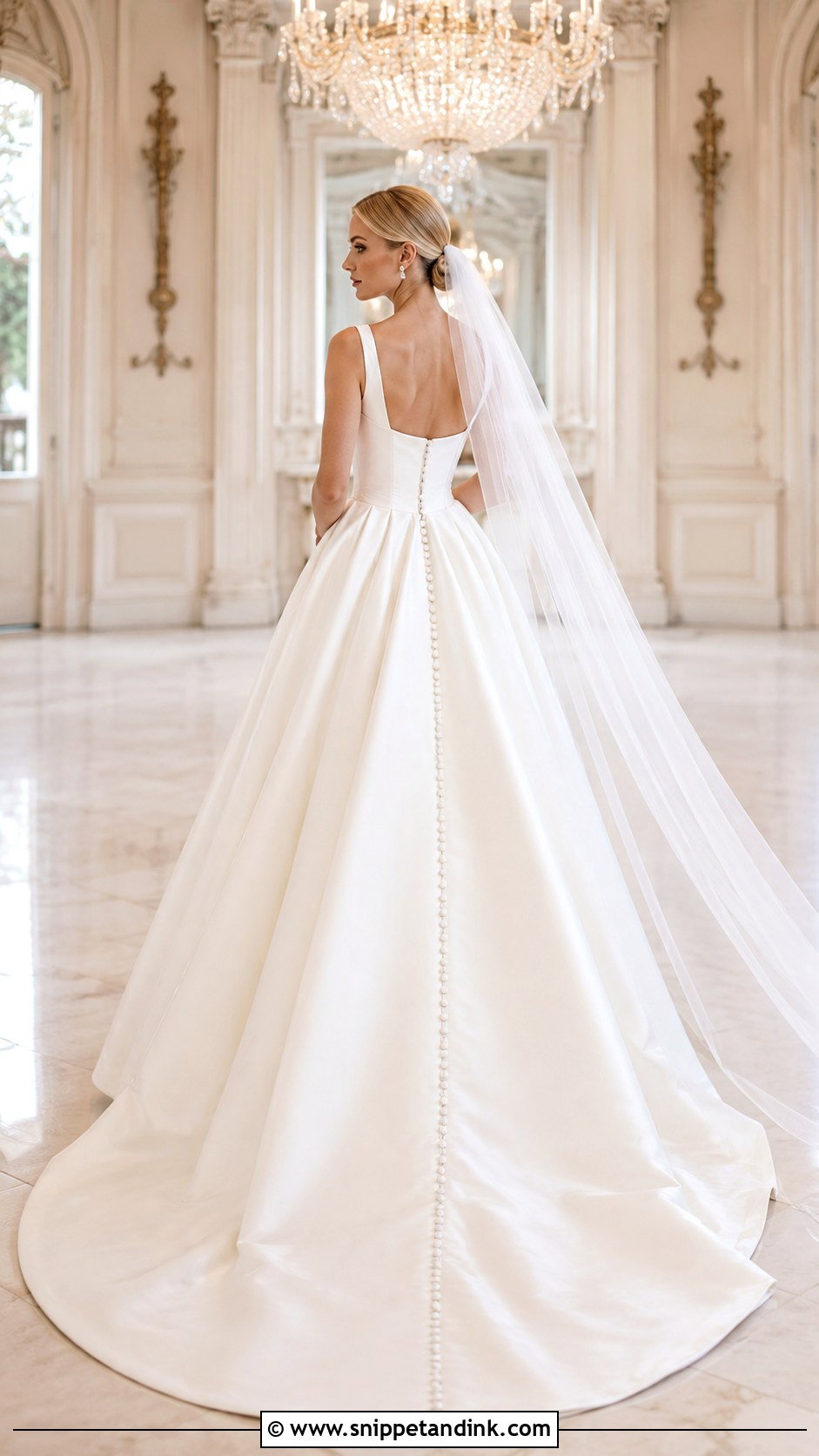
Mikado holds its shape almost like card, which is exactly why every button shows so clearly on it. A neck-to-train row softens what can otherwise read as a very architectural ball gown. Be aware that Mikado creases sharply where you sit, so I always steam the skirt after the car ride and before the aisle. This is a lot of dress for a small room. It needs space around it, and an updo that keeps your shoulders clear so the bodice proportions stay balanced.
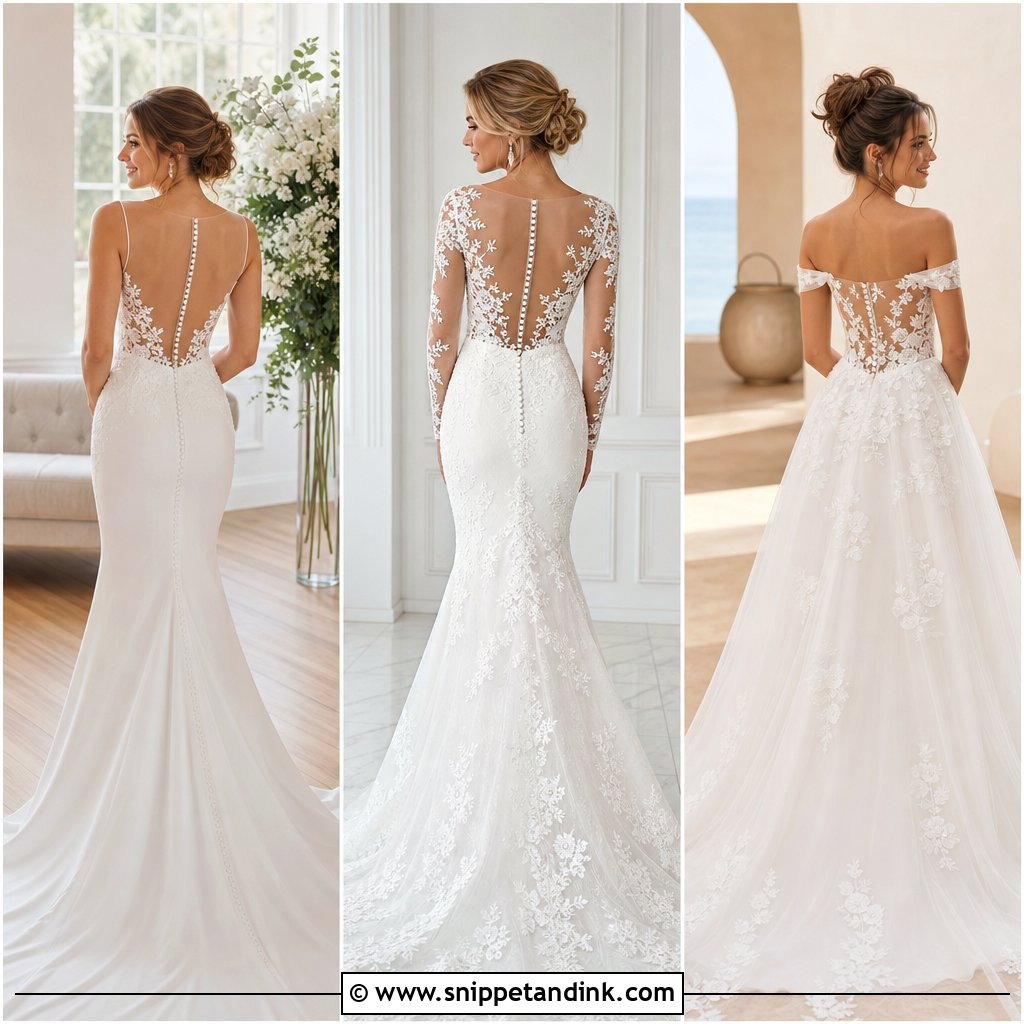
5. Illusion Lace Button Back Wedding Dress
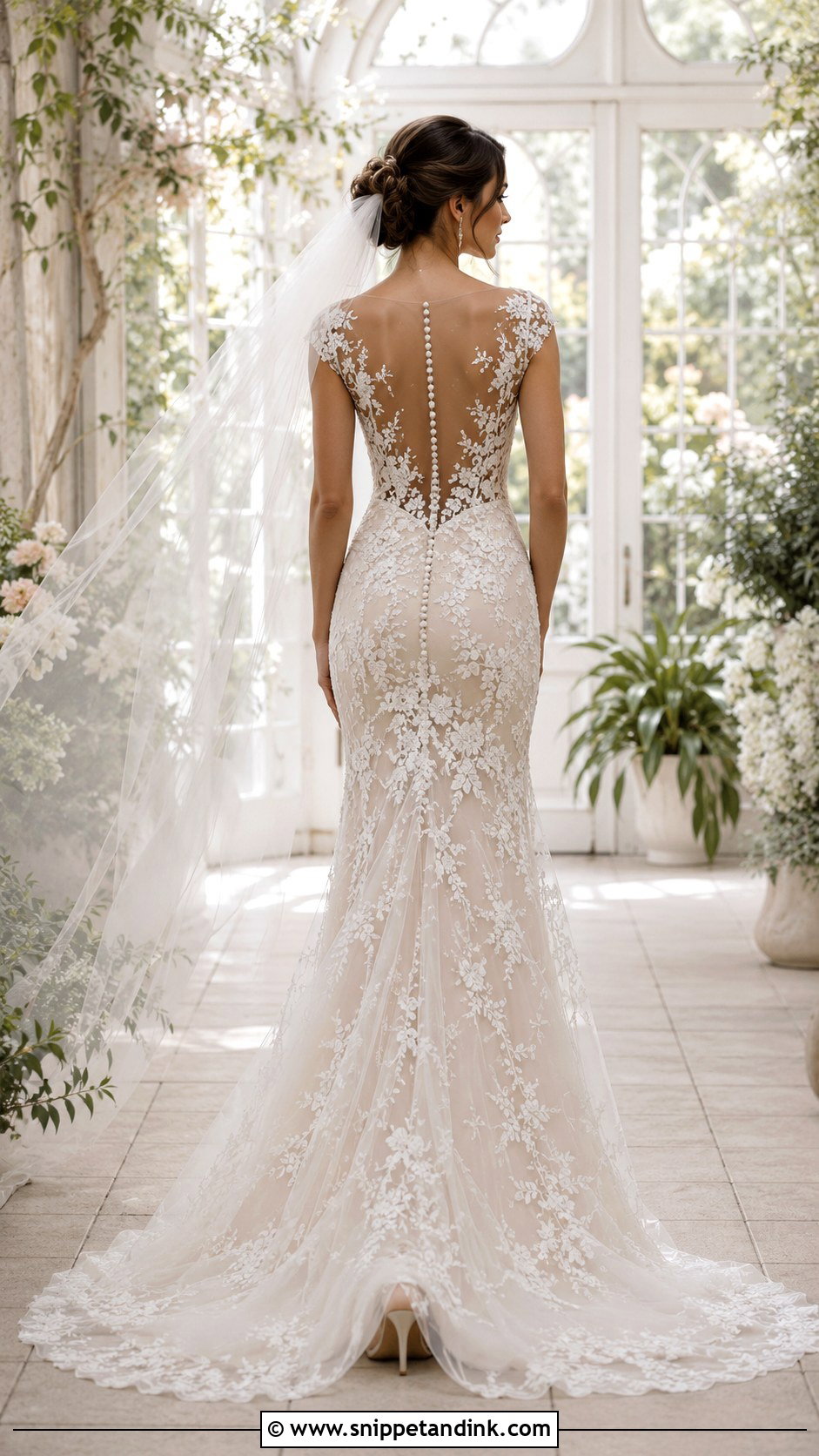
Illusion lace gives you the look of an open back while the tulle quietly holds everything in place. Skin-toned tulle carries the appliqués and a neat row of covered buttons, and from ten feet away the lace looks as if it sits directly on your skin. Ask to see the tulle in daylight, since a shade that matches under boutique lighting can look grey or pink outdoors. A fitted A-line or trumpet silhouette keeps the back as the main event. Choose a veil with no heavy edging so the lace shows through it.
6. Square Neck Satin Button Back Wedding Dress
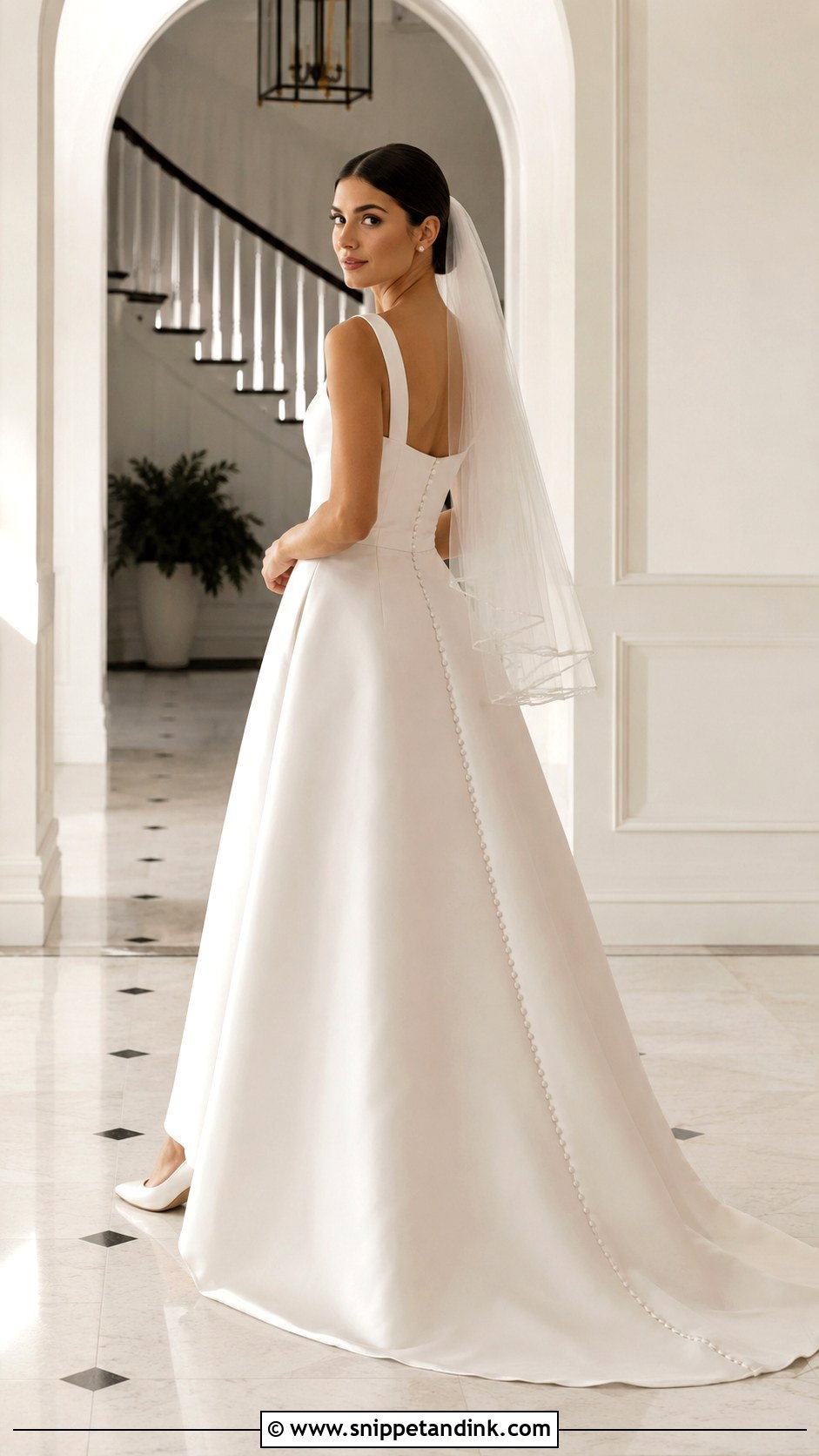
A square neckline paired with satin is all about clean tailoring. The back can echo the square or drop into a modest V, finished with buttons that run through the waist. I steer petite brides toward the A-line version here, since a slim column skirt in satin can cut the body in half at the hip. Wide straps or short fitted sleeves give real support, which matters because a square neck has nowhere to hide a strap that slips. Keep the hair low and parted in the center.
7. Off Shoulder Button Back Wedding Dress
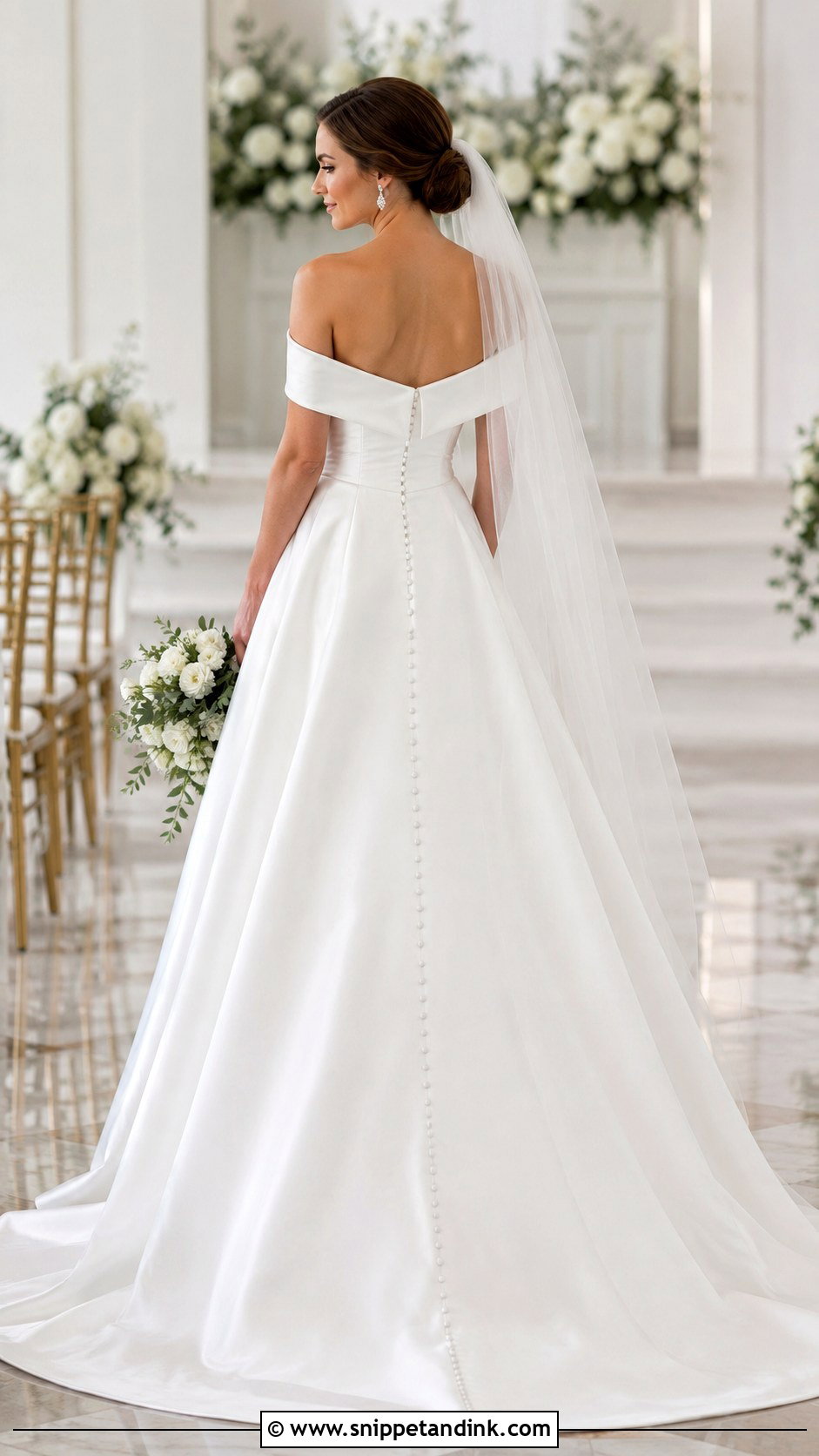
Off-the-shoulder necklines rely entirely on internal structure. If the bodice isn’t boned and fitted tightly, the folded neckline creeps up every time you raise your arms, and the buttons start to pull. Have the seamstress add a silicone grip strip along the top edge if it moves at the second fitting. Buttons that begin between the shoulder blades read well with satin or lace. Skip a necklace entirely, since the collarbones are already doing the work, and attach the veil beneath a low updo.
8. V Neck Button Back Wedding Dress
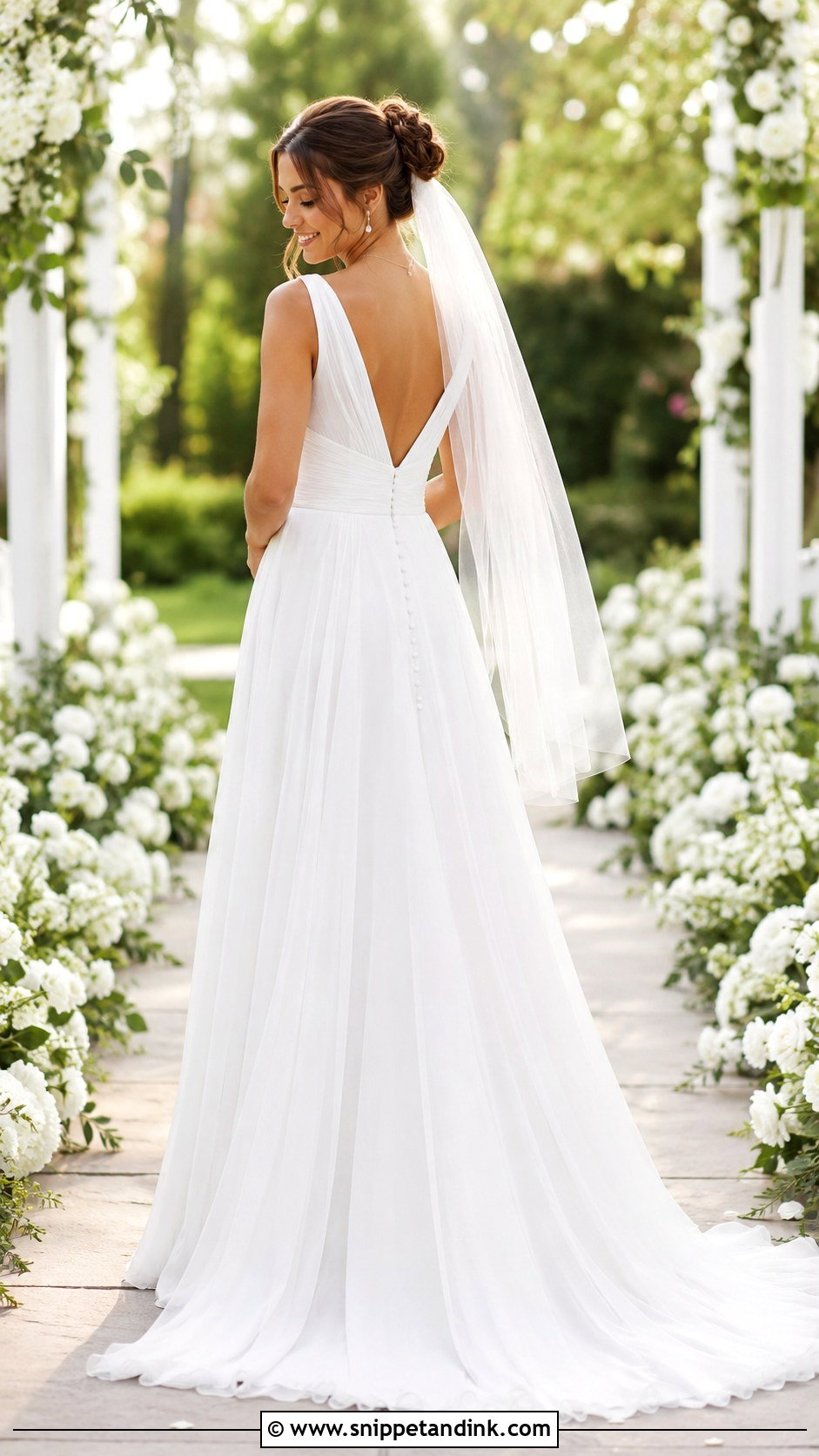
With a V-neck, the same angle front and back draws a long line down the body, and covered buttons at the base of the back V make a low cut look finished rather than unfinished. Wide straps carry the bodice, so make sure they sit in the middle of your shoulders and don’t slide outward. Chiffon skirts move freely for outdoor ceremonies; satin or crepe gives a cleaner shape indoors. A fine pendant is enough jewelry. Secure the veil above a textured bun so it frames the V instead of covering it.
9. High Neck Button Back Wedding Dress
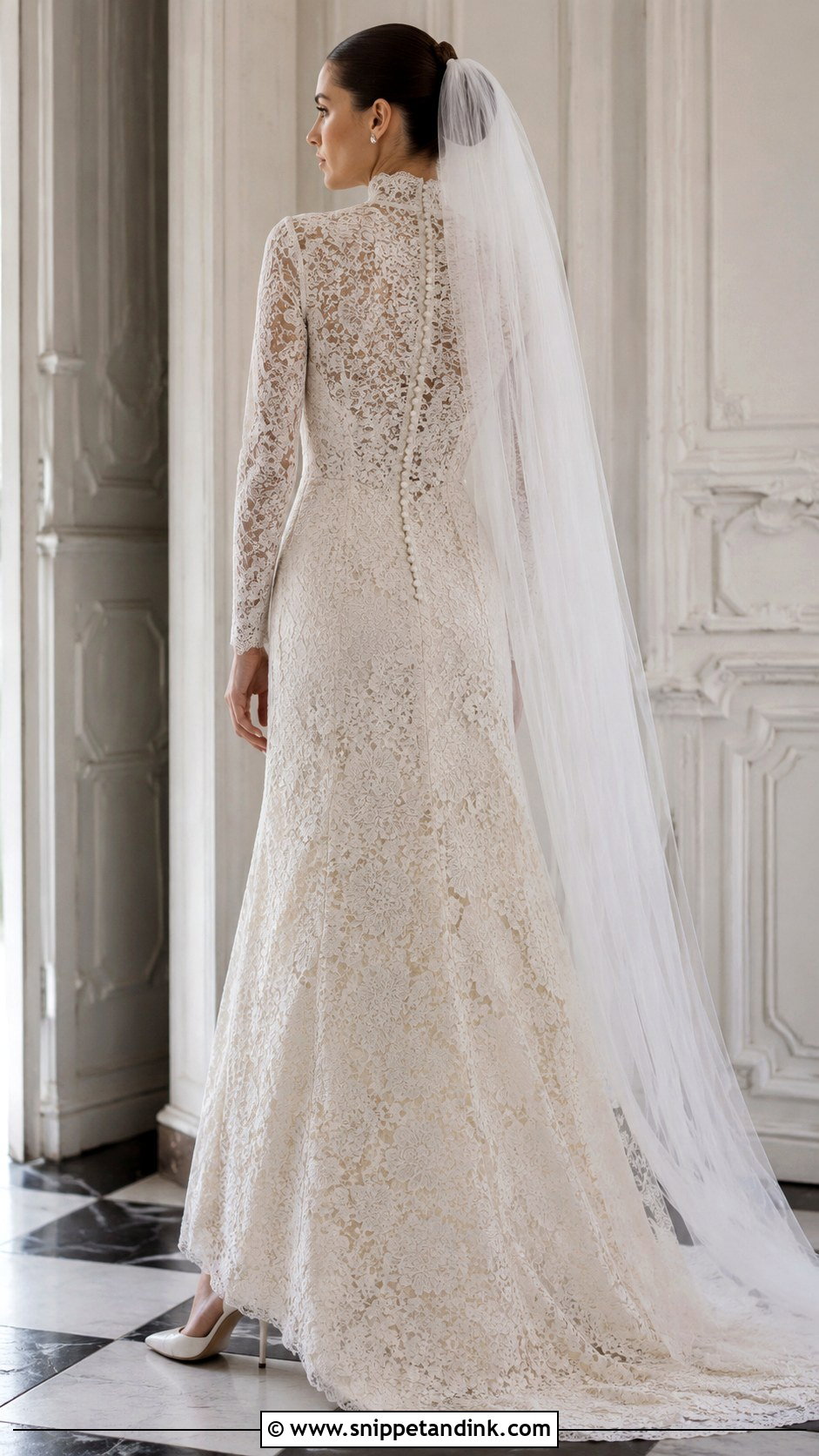
A high neck with buttons running from the collar to the waist is one of the most striking backs you can wear. In lace with a narrow standing collar it leans vintage; in matte crepe with minimal seams it looks sharp and current. Try sitting and looking down during your fitting, because a high collar that is a fraction too snug becomes uncomfortable by the reception. Balance the closed top with a moderate skirt. Studs and a sleek bun are all I’d add.
10. Strapless Button Back Wedding Dress
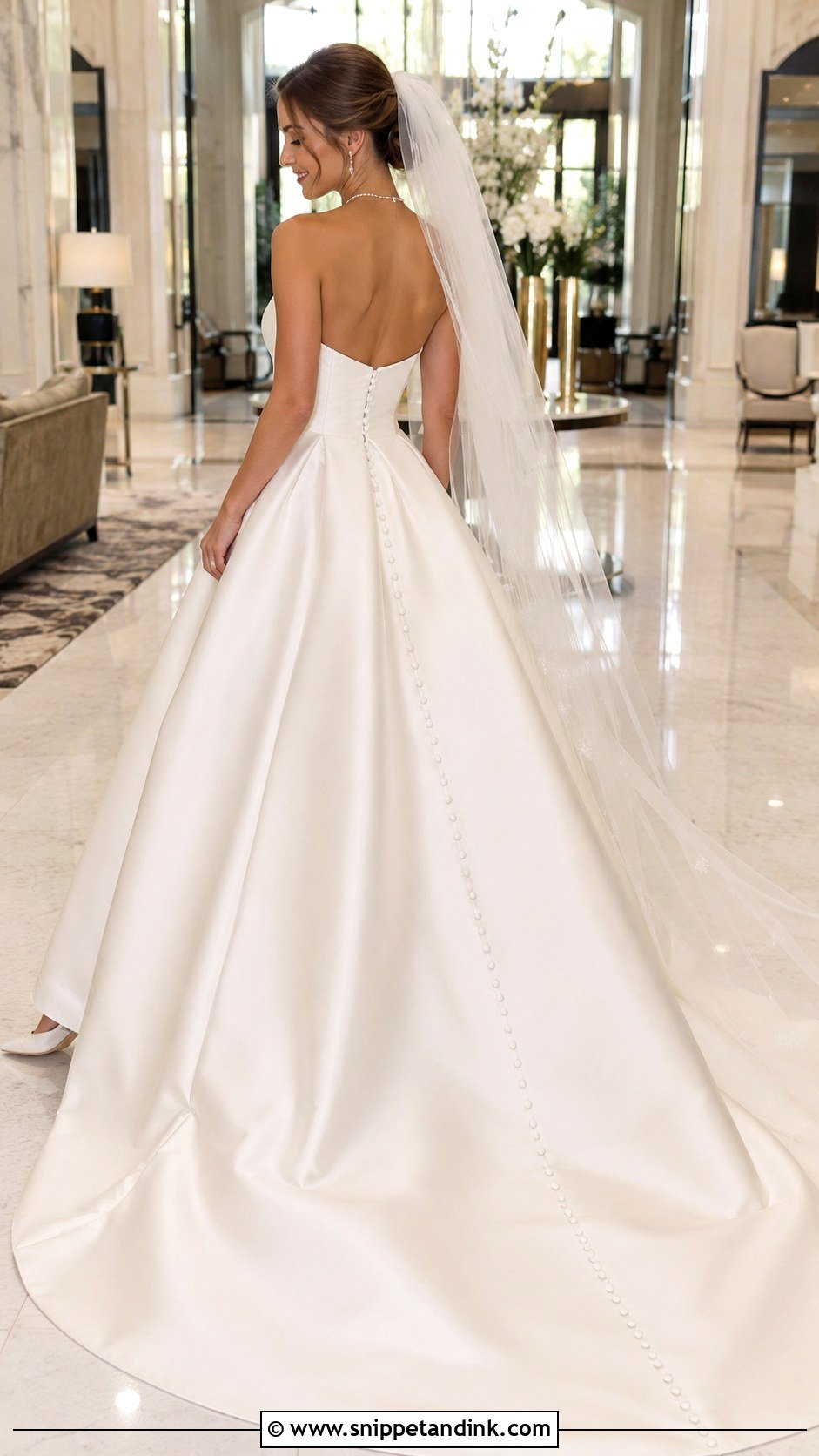
Strapless bodices put the whole visual load on the waist and that unbroken row of buttons. Look for proper boning and a bodice fitted so closely that it stays up without you hitching it. On many strapless gowns the buttons cover a zip, which makes the dress quicker to get into and easier to alter. A long veil for the ceremony, removed afterward, lets guests see the back fully at the reception. Soft waves over one shoulder or a structured updo keep the buttons visible.
11. Cap Sleeve Button Back Wedding Dress
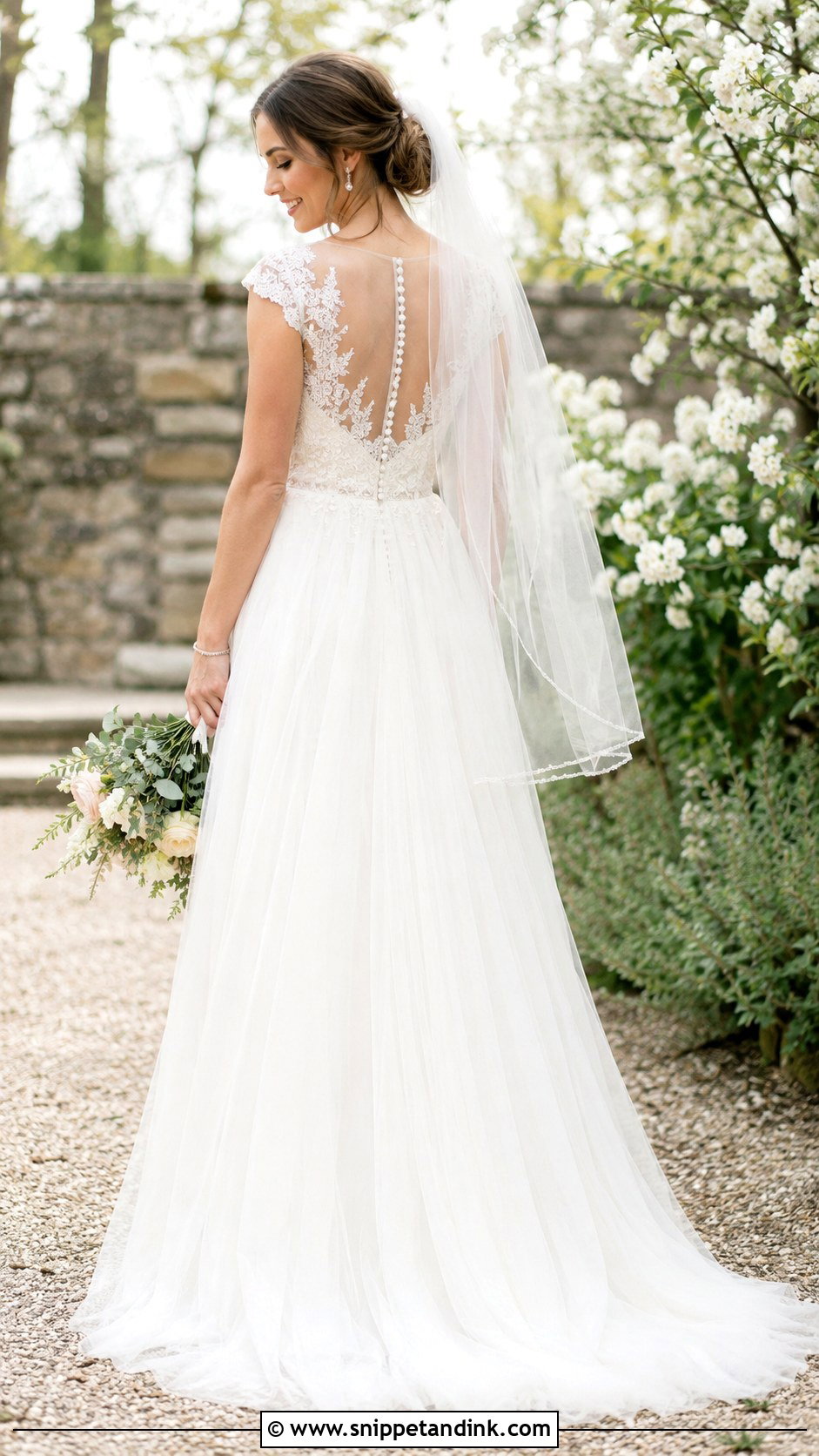
Cap sleeves give a little shoulder coverage without the weight or restriction of a full sleeve, and they pair naturally with tiny fabric-covered buttons on an embroidered illusion back. I like a defined waist here so the busy bodice and the soft chiffon or tulle skirt stay distinct. Cap sleeves can dig into the arm if they are cut too narrow, so raise your arms at the fitting and see where the edge lands. Small pearl or floral earrings suit the scale of the detail.
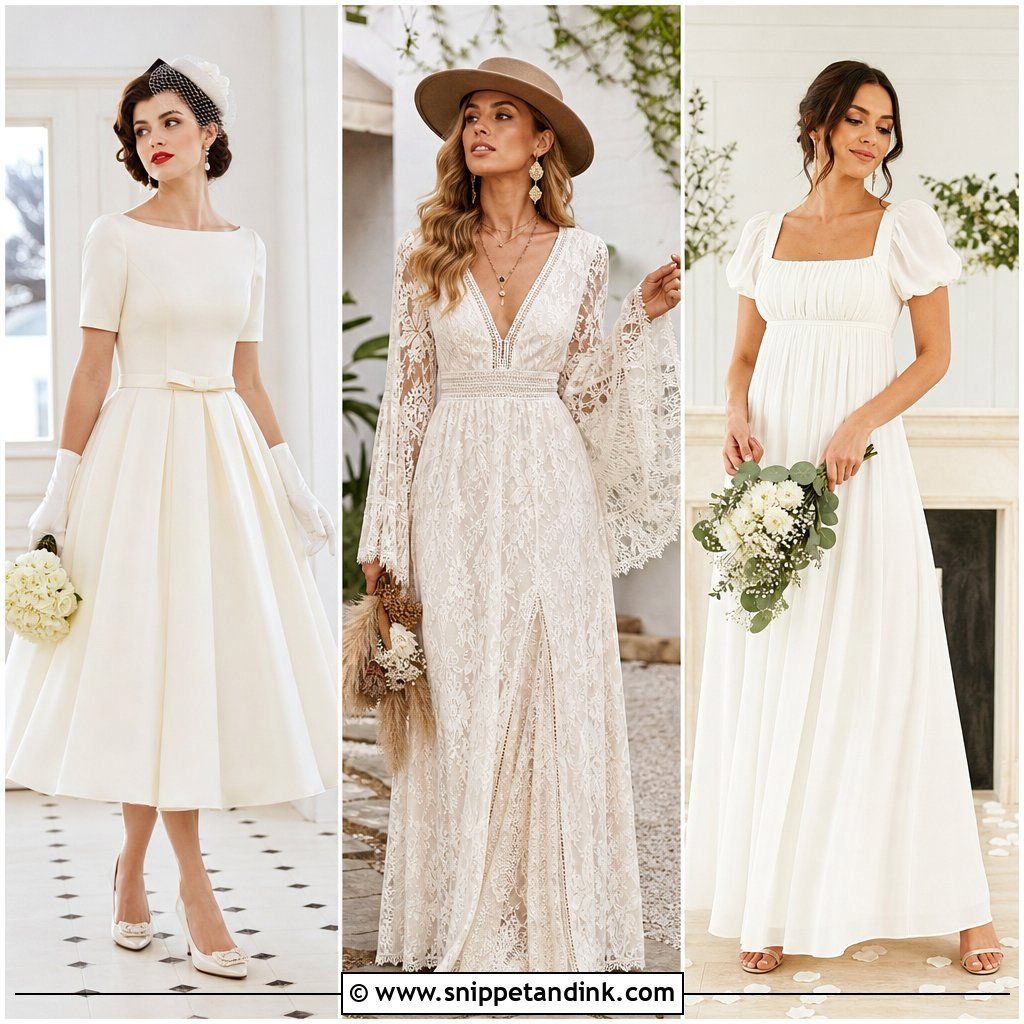
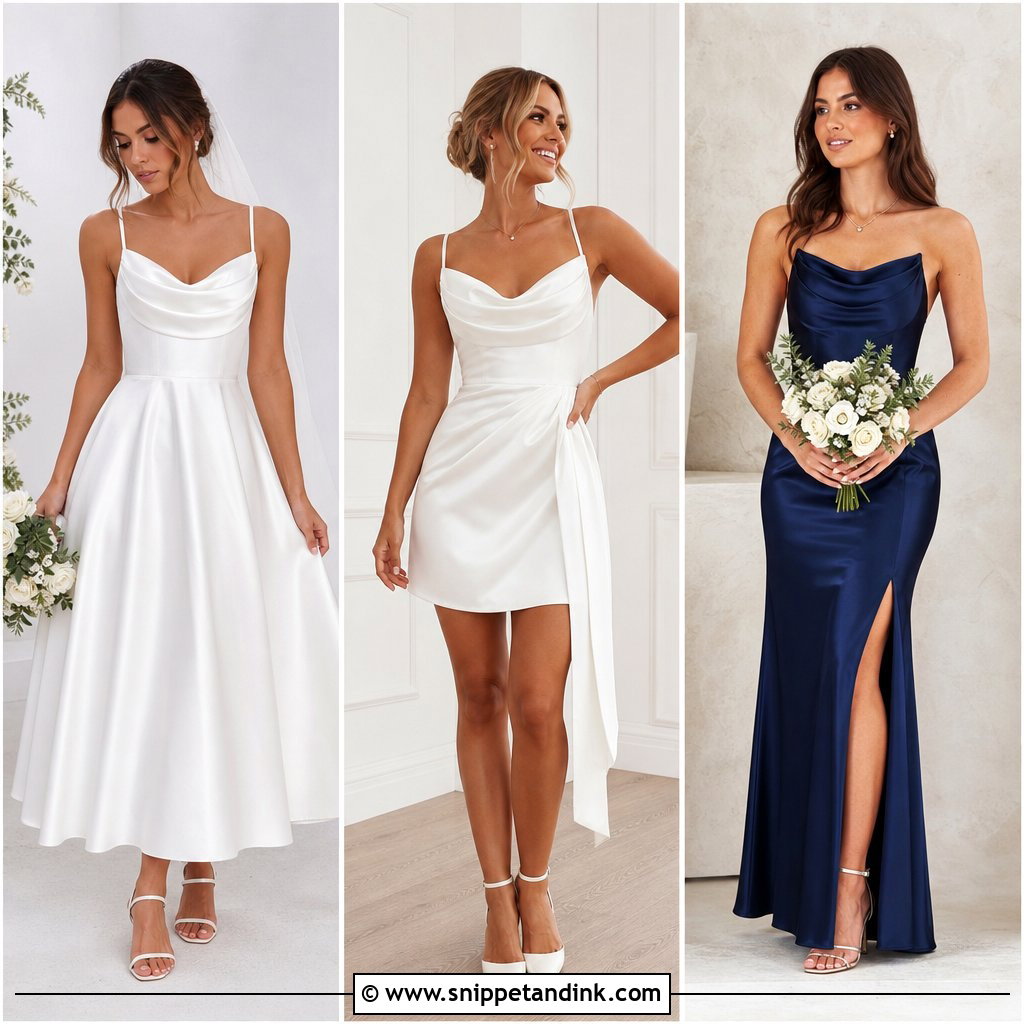
12. Tea Length Button Back Wedding Dress
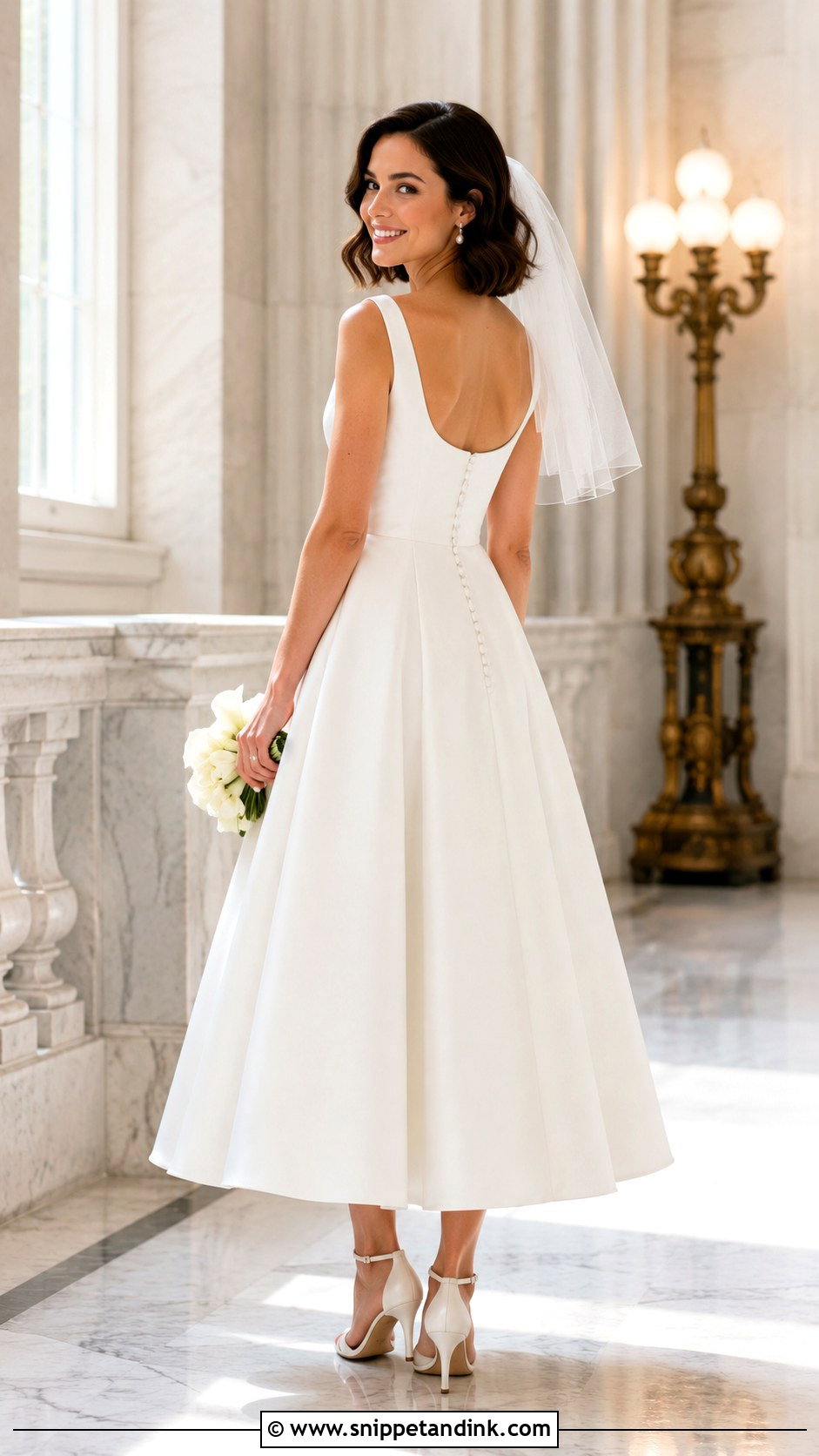
Tea length is the button back that lets your shoes be seen. The hem sits between the knee and ankle, so the buttons running to the waist are balanced by a flash of pointed pumps or ankle straps below. Hem length is the fitting detail to fuss over: a tea-length skirt that lands mid-calf can shorten a petite frame, so try it with the actual shoes before the hem is cut. A short veil and a neat bun or curled bob keep the proportions playful. Courthouse ceremonies and daytime parties suit it well.
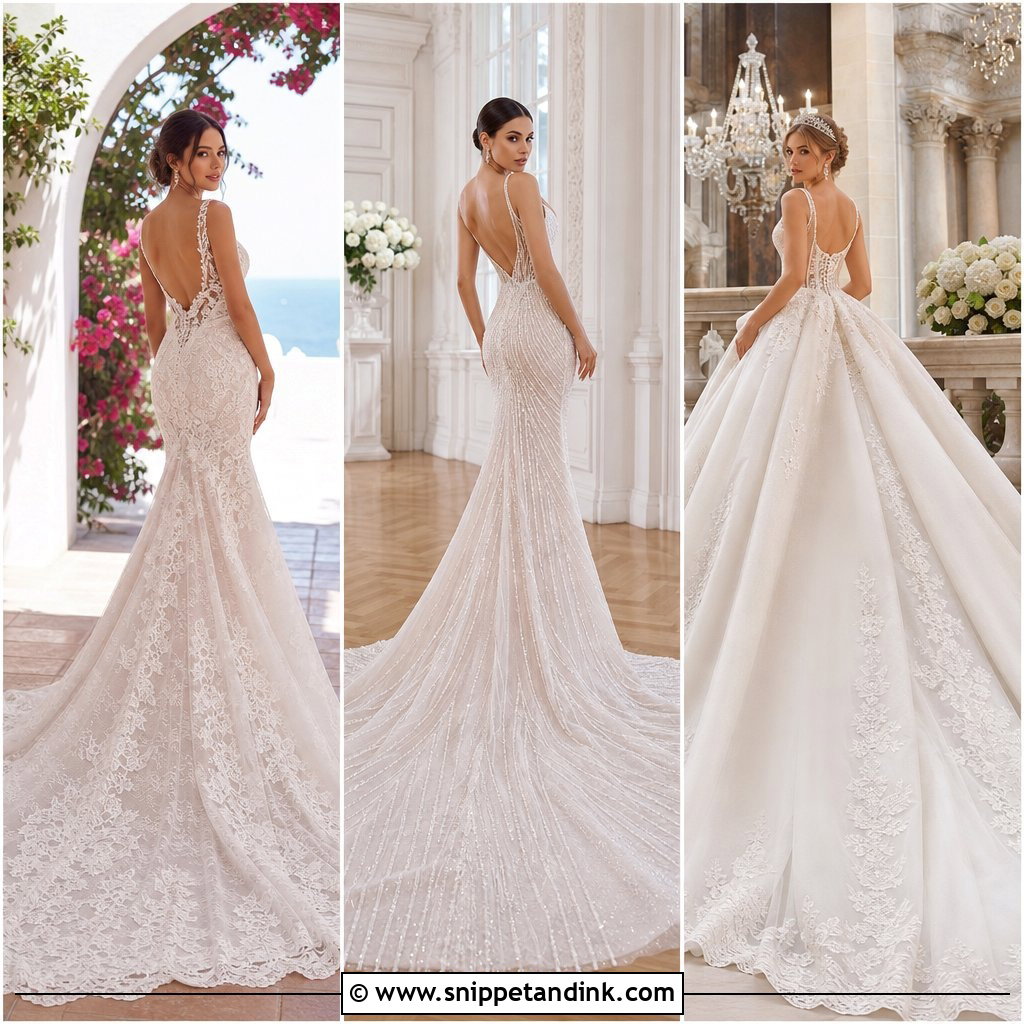
13. Mermaid Button Back Wedding Dress
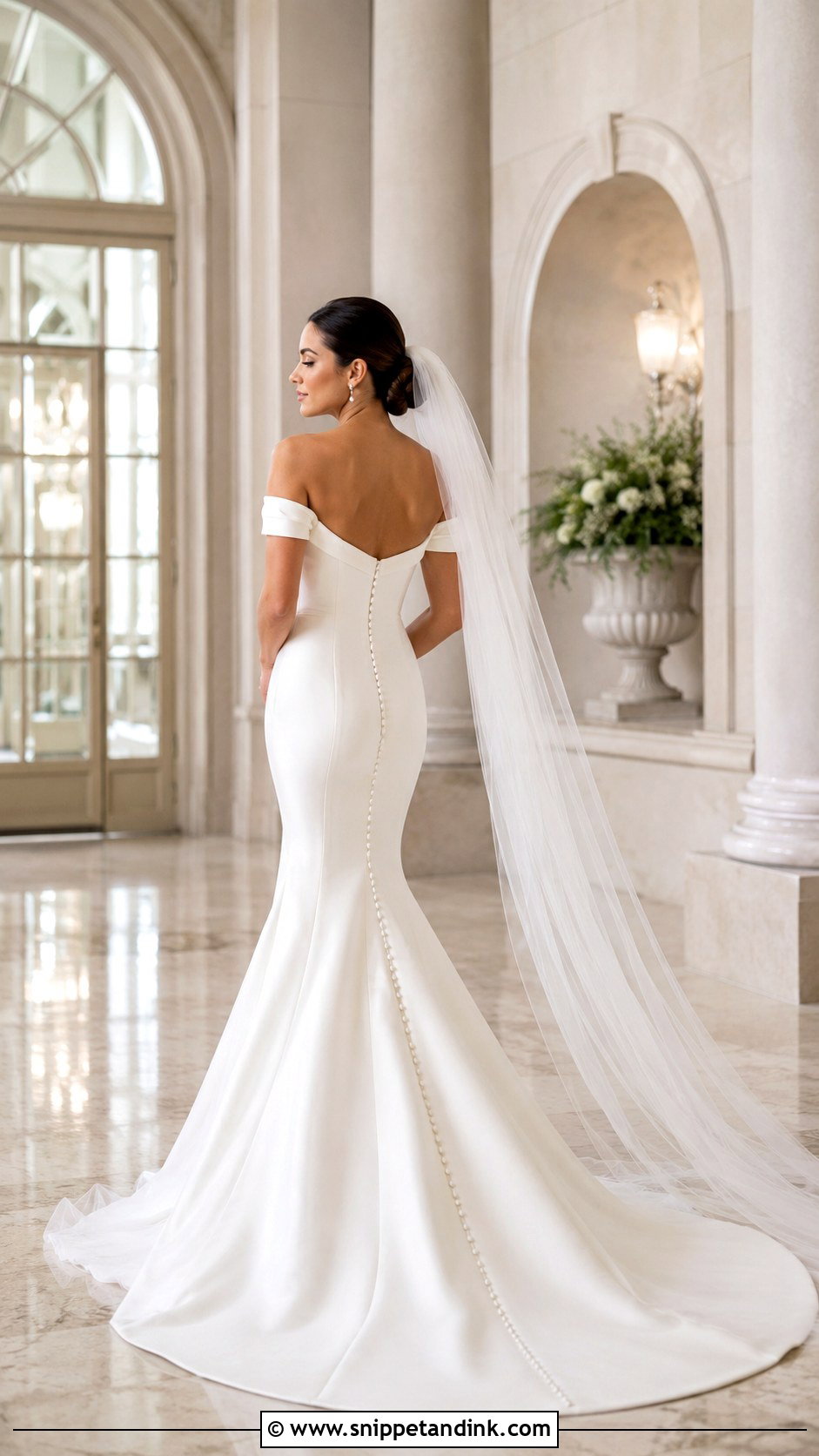
The mermaid shape hugs through the hips and flares near the knee, and buttons down the center back lead the eye straight into the train. Stretch crepe is the forgiving choice; lace looks richer but has less give. Sit and walk in it at every fitting. A mermaid that can’t bend at the knee will have you shuffling down the aisle, and I’ve seen buttons at the hip strain open when a bride sits for dinner. A smooth updo keeps attention on the construction.
14. Empire Waist Button Back Wedding Dress
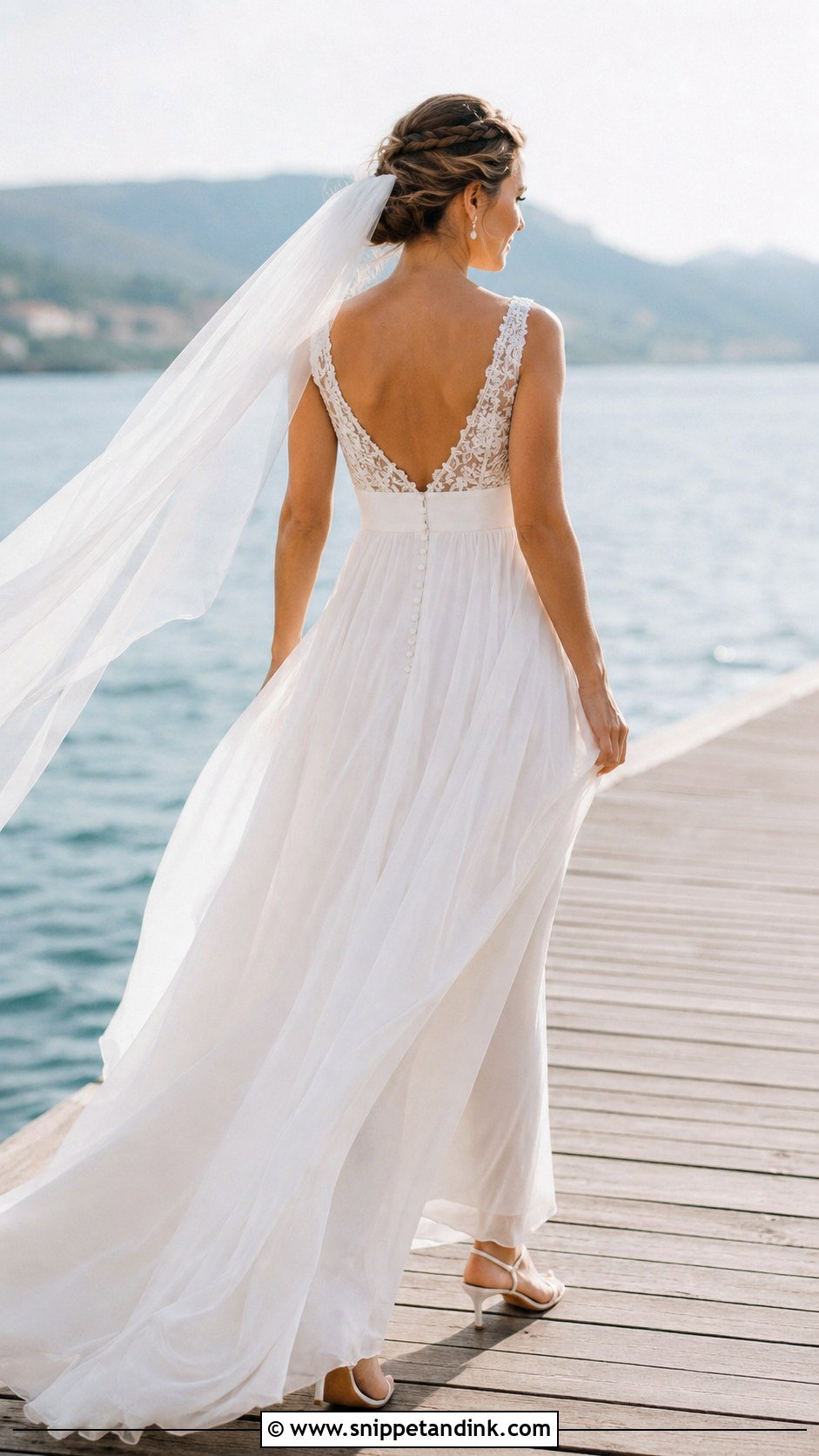
An empire waist sits just below the bust and lets the skirt fall loosely, which is why it feels so comfortable in heat. Buttons from the upper back to that raised seam make a short, delicate line rather than a long dramatic one. The fitting point to watch is the bust seam itself; if it sits even slightly low, the whole silhouette sags. Chiffon over a lace or gathered bodice moves well on a breezy waterfront. Low sandals and loose waves or a braided updo match the relaxed shape.
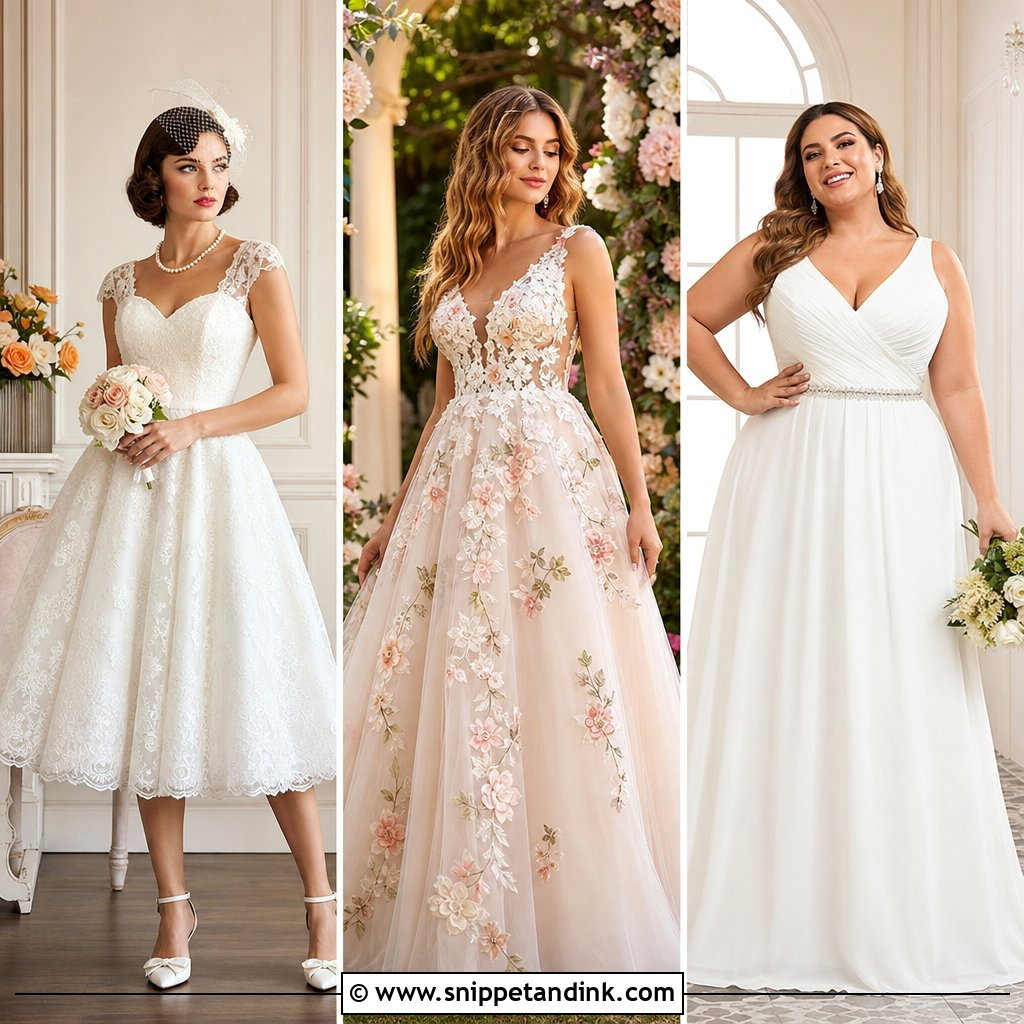
15. Basque Waist Button Back Wedding Dress
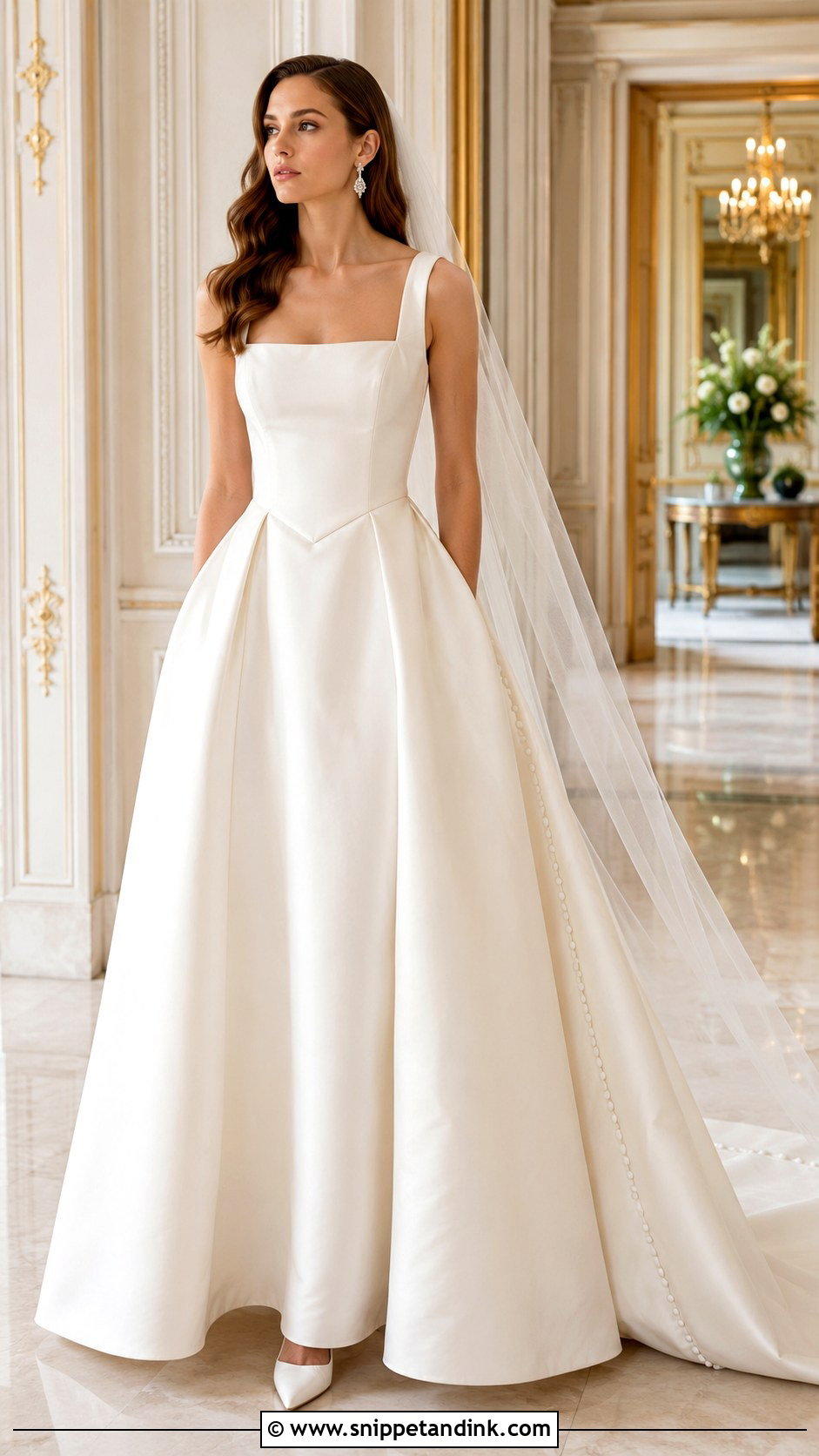
The basque waist dips into a point at front and back, and covered buttons that continue below that point draw attention to how the gown is built. It suits structured satin or Mikado, where the point holds its shape. Brides with a short torso should try this one carefully, because a deep basque can make the bodice look longer than the body underneath it. A square or strapless neckline keeps things balanced. I’d add a sleek bun and a long veil with a simple edge.
16. Floral Applique Button Back Wedding Dress
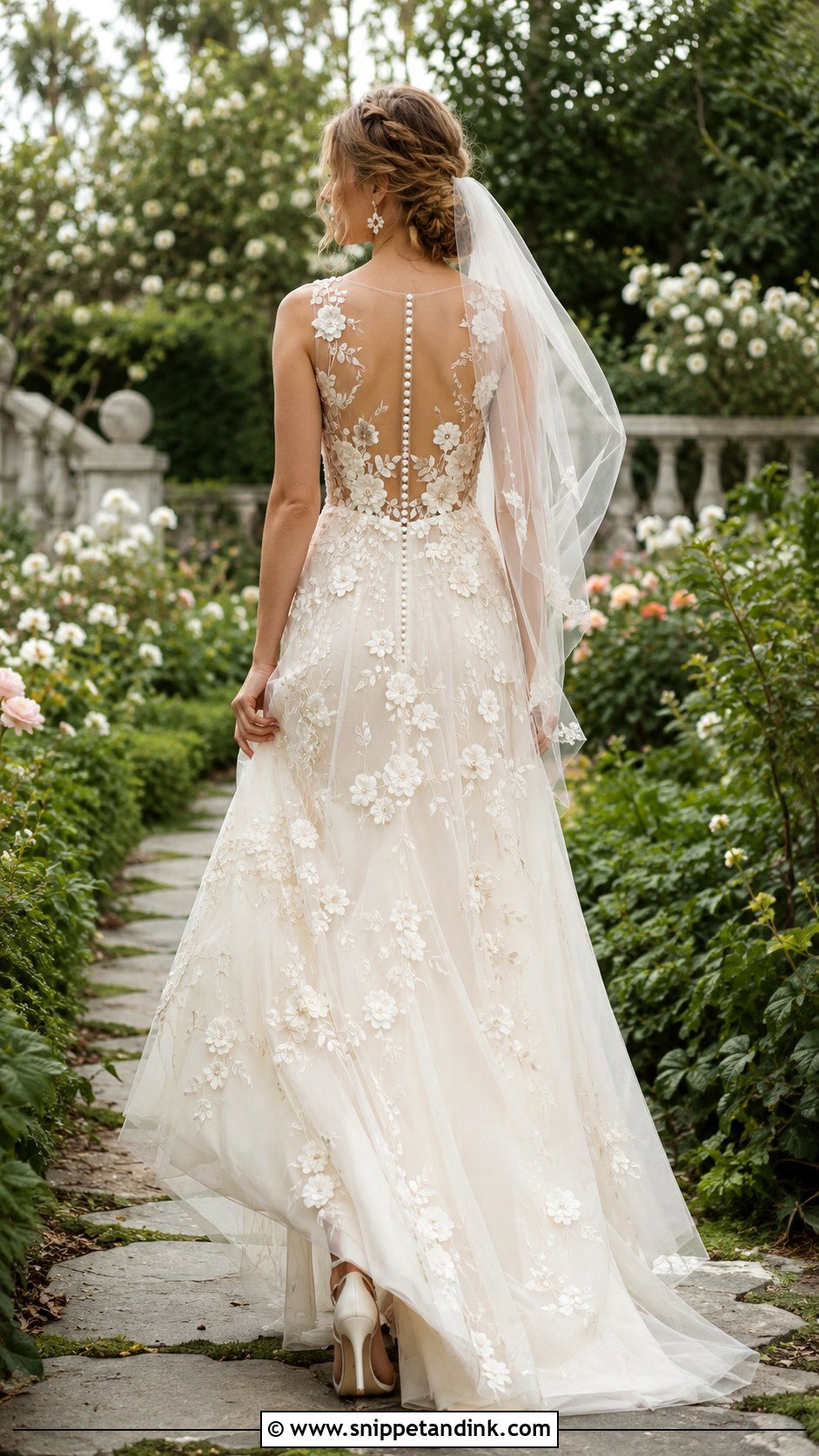
Floral appliqués turn the back into something guests want to look at closely. On a sheer illusion panel, carefully spaced blossoms, leaves and covered buttons can spill over the shoulders and onto the skirt. Dimensional flowers catch on a veil, so ask the veil maker for a soft tulle with no cut edge, or try the two together at a fitting. A soft A-line or trumpet gives the pattern room. Keep the earrings small, maybe with a floral hint, and let the dress carry the theme.
17. Pearl Button Back Wedding Dress
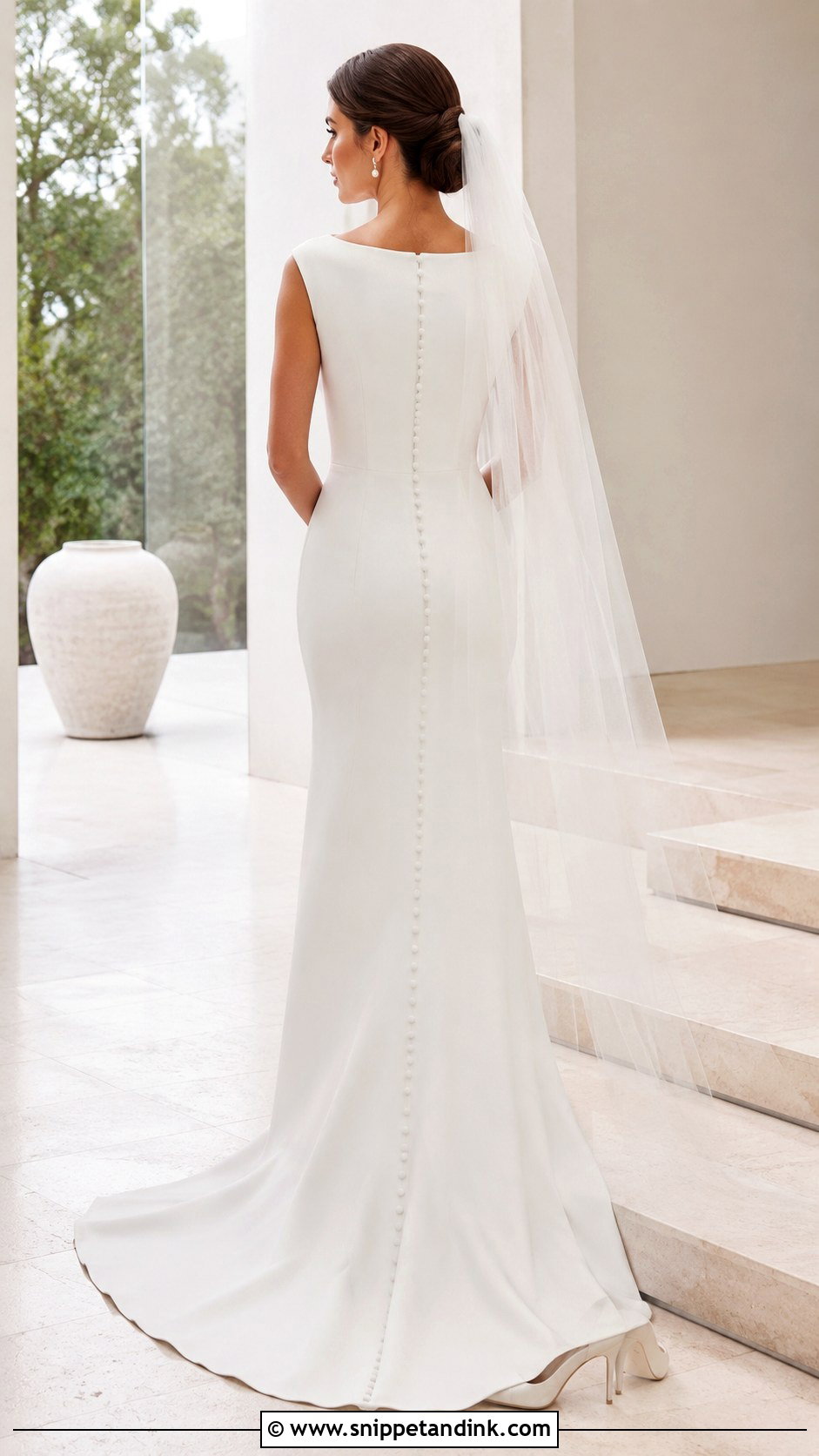
Pearl buttons add a little shine without breaking the traditional look of a closure. They show best against matte crepe or silk satin, where nothing else on the surface competes. Real pearl or glass pearl buttons are heavier than fabric-covered ones, so on very fine silk I ask the seamstress to back each one with a small reinforcement stitch. Pearl earrings are fine; a full pearl necklace too starts to look matched. A low twist exposes the back.
18. Open Back Wedding Dress With Buttons
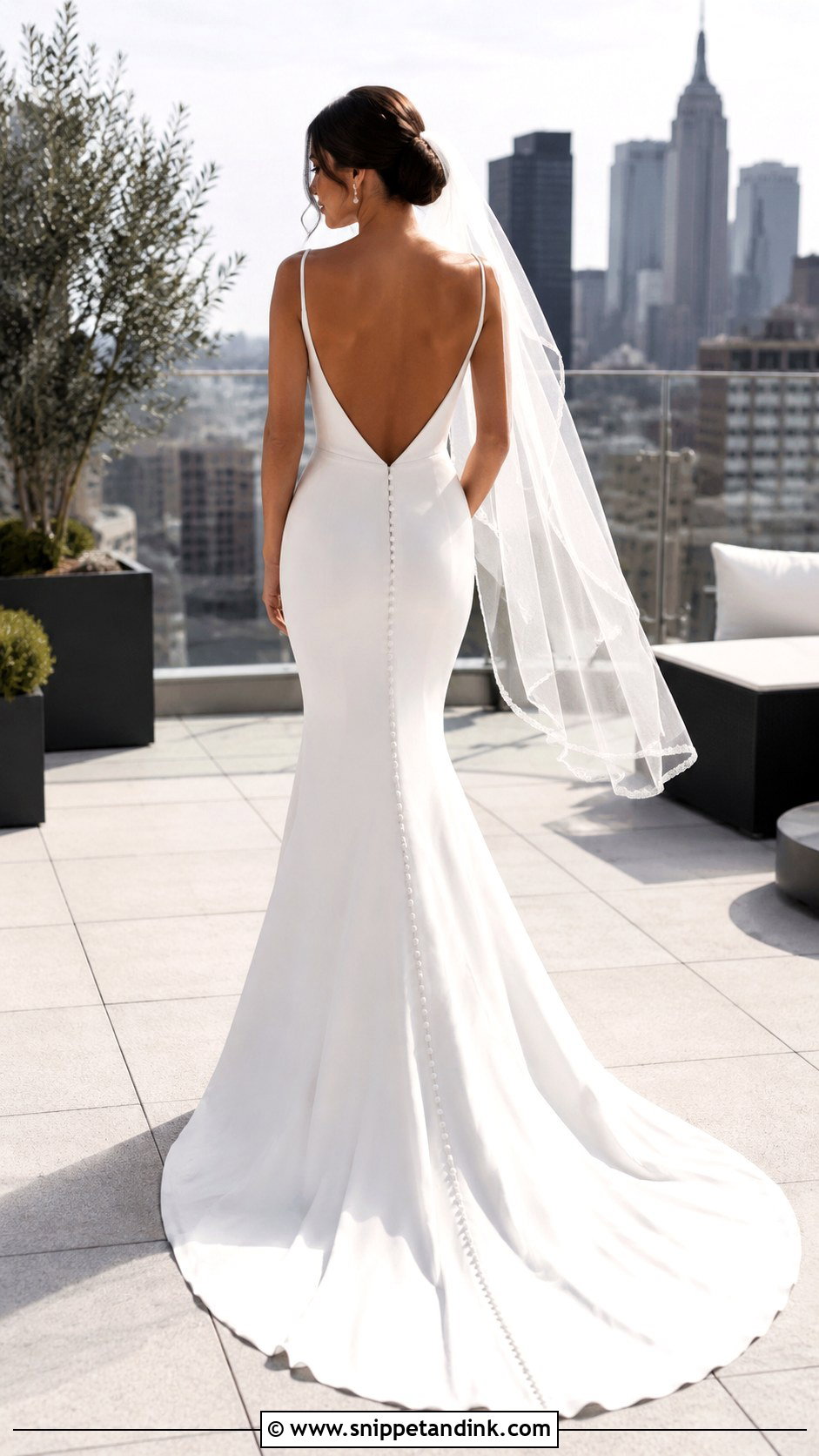
An open back with buttons framing the bottom of the opening is the modern take on this list. A low V, a rounded scoop or a geometric cutout can be held in place with discreet tulle, while buttons begin at the base and flow down the skirt. Support is the real question. Ask your seamstress which backless foundation she recommends, or have cups sewn in, because adhesive bras lose their grip after hours of dancing. Bend, sit and reach during the fitting to make sure the opening stays where it should.
19. Modest Button Back Wedding Dress
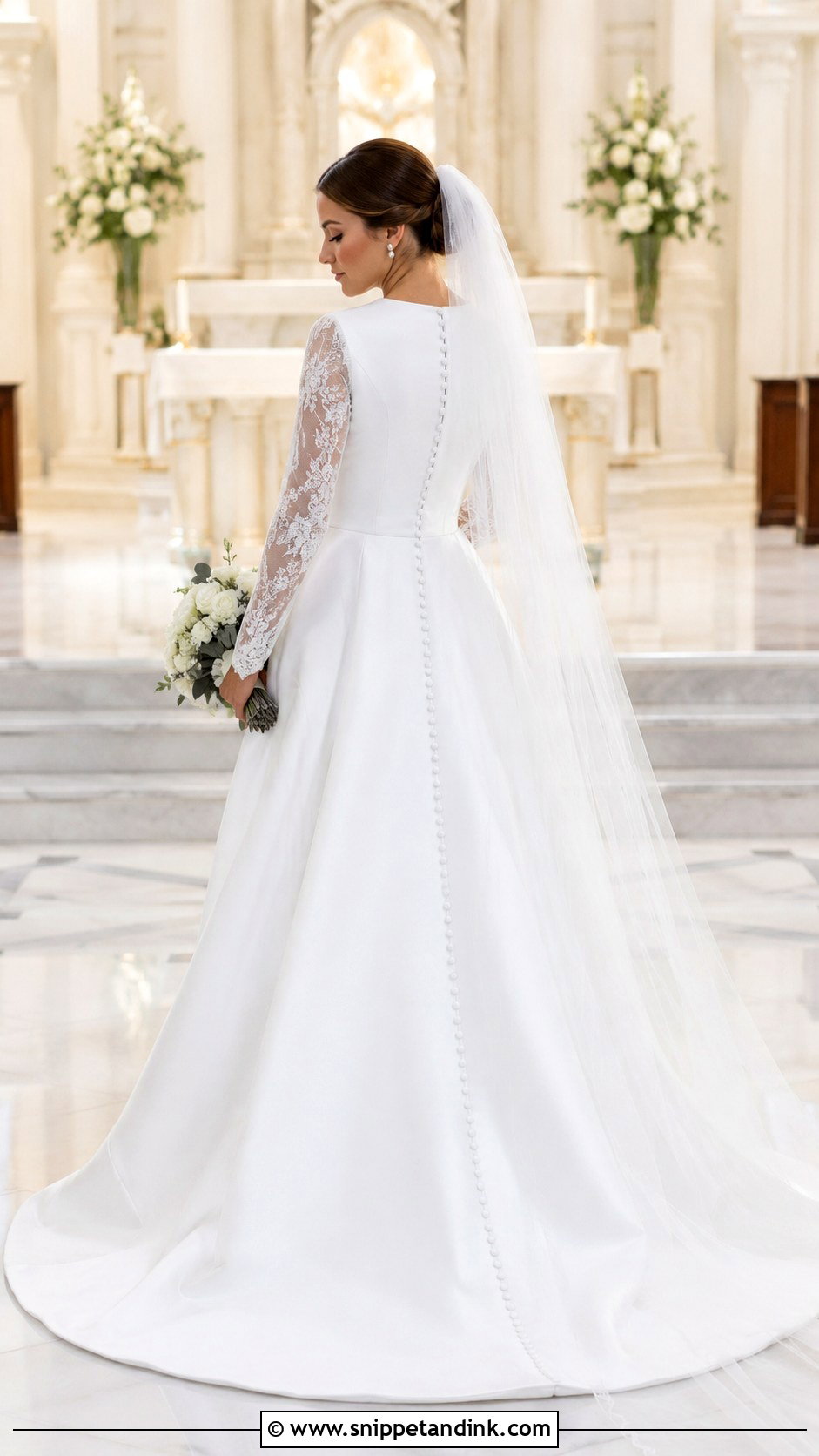
A high back, long sleeves and buttons from neck to train give full coverage without looking plain. Satin keeps it formal; lace sleeves soften it. With this much fabric, lining matters more than anything else on the label, so ask what the bodice is lined in and whether the sleeves have stretch. A bateau neckline and an A-line or ball gown skirt balance the enclosed top. Closed-toe pumps, pearl earrings and a polished low bun finish it quietly.
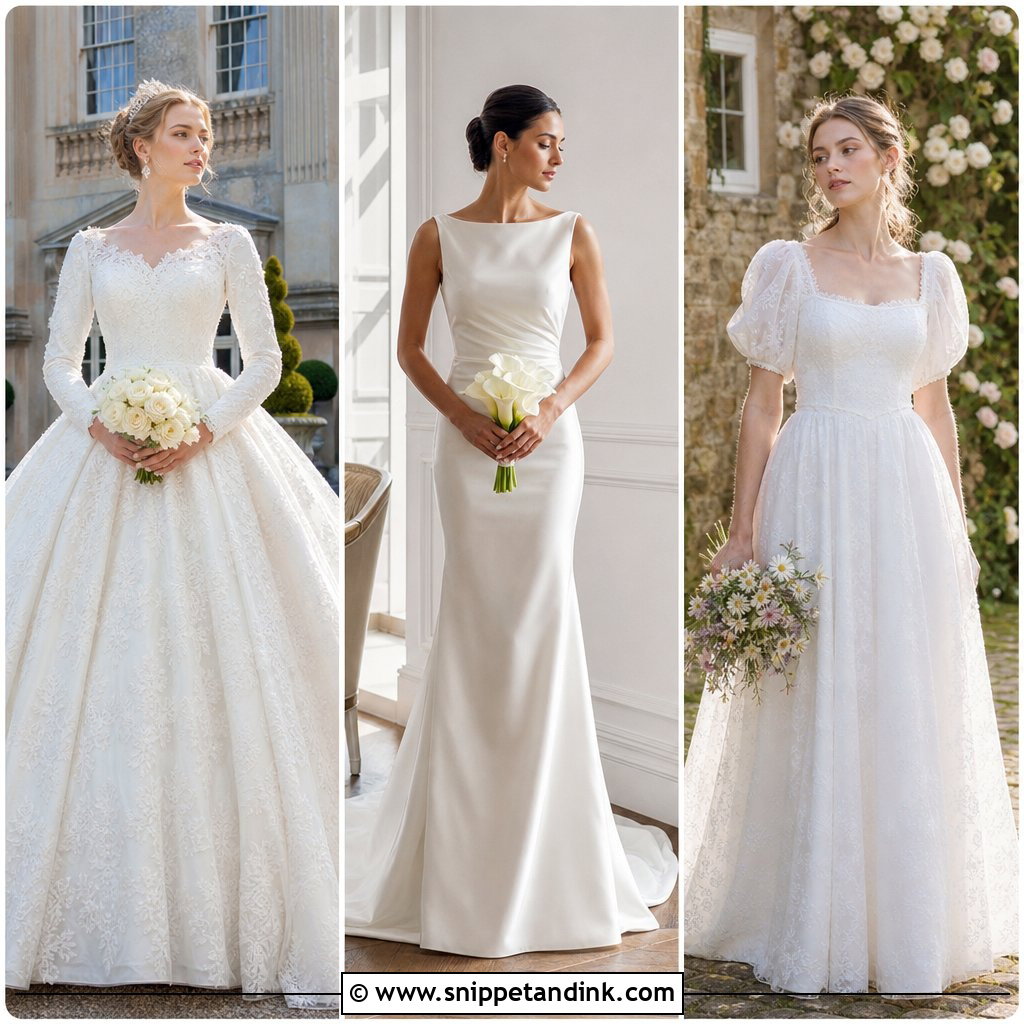
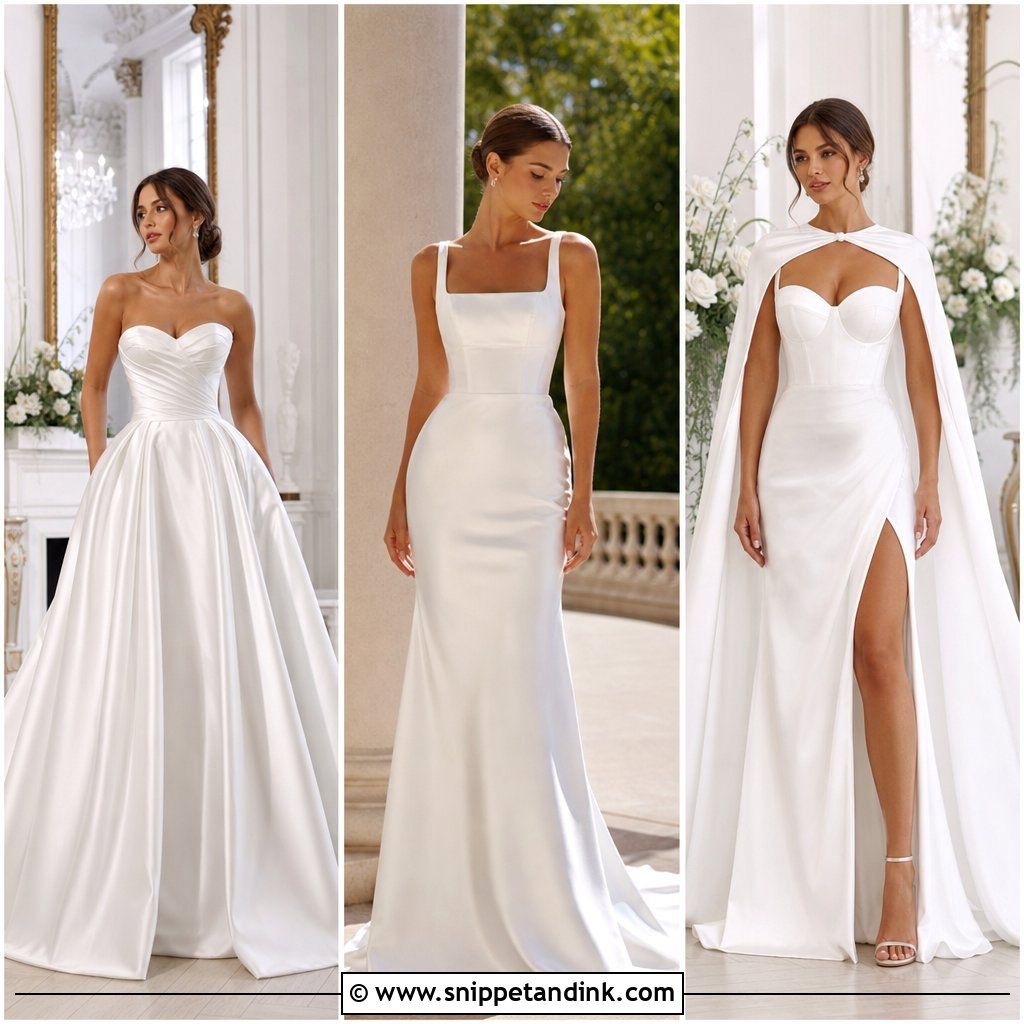
20. Minimalist Column Button Back Wedding Dress
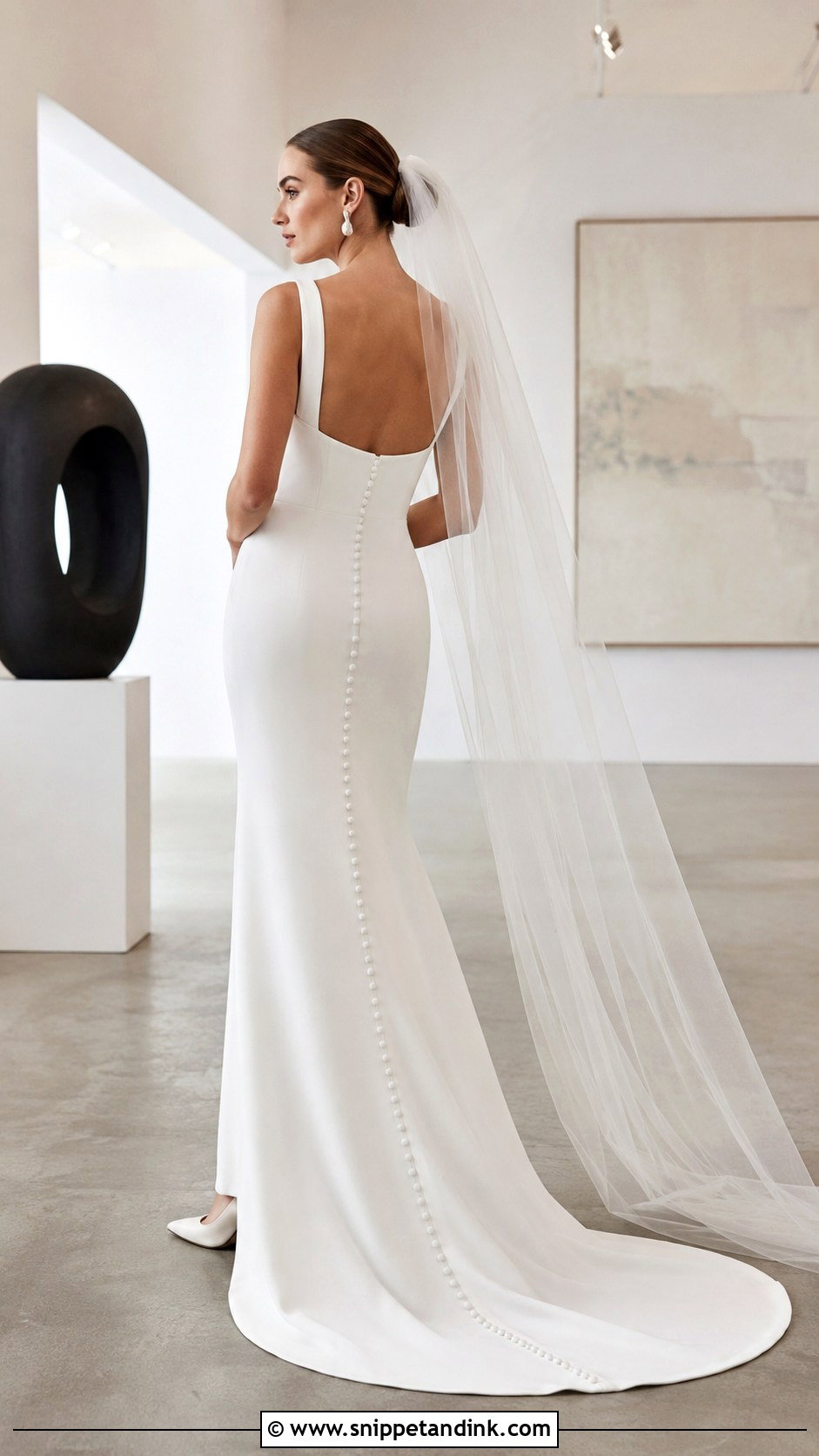
In a minimalist column, the long row of covered buttons is the only real decoration, so it has to be perfectly straight. Matte crepe or silk with a lightly structured bodice gives that clean drop. A bateau or square neckline adds quiet visual interest at the front. The column is the least forgiving shape on this list, and a seamstress who hems it with your exact shoes is worth waiting for. Wear a plain cathedral veil for the ceremony, or none at all.
The Twenty Minutes Nobody Plans For
A long row of functional buttons takes real time to fasten, often fifteen minutes or more with nervous hands. I build that into the morning schedule and ask the photographer to arrive after it starts rather than before, because it makes a sweet set of photos when a parent or friend does the last few.
Tools that make it faster
- A crochet hook or proper button hook pulls each loop over its button in one move.
- Fasten from the bottom up so the bodice settles before the top buttons take any tension.
- Have whoever will help practice once at your final fitting, not on the morning.
Bathroom breaks and bustling
Most brides never need to unbutton the bodice to use the bathroom, since the skirt can be gathered up instead. Ask a bridesmaid to learn the bustle at the last fitting, and check that the bustle points don’t sit on top of the button line, which pulls the row crooked once the train is lifted.
If a button pops on the day, a safety pin fastened from the inside, through the loop and the fabric behind the button, will hold until the end of the night. Keep a few in the emergency kit along with the spare buttons.
Turn Around in the Mirror Before You Say Yes
A button back only works if the fit underneath it is right. Buttons can disappear into satin, shine as pearls, float over illusion lace or run the full length of a train, but every version shows the same problems when the bodice is too tight or too loose. When you try gowns on, turn and look over your shoulder, walk a few steps, then sit down. Check the back under your veil. If the row stays straight and you can breathe easily, that dress is worth a second appointment.
You'll Like These Ideas:





Leave a Reply