
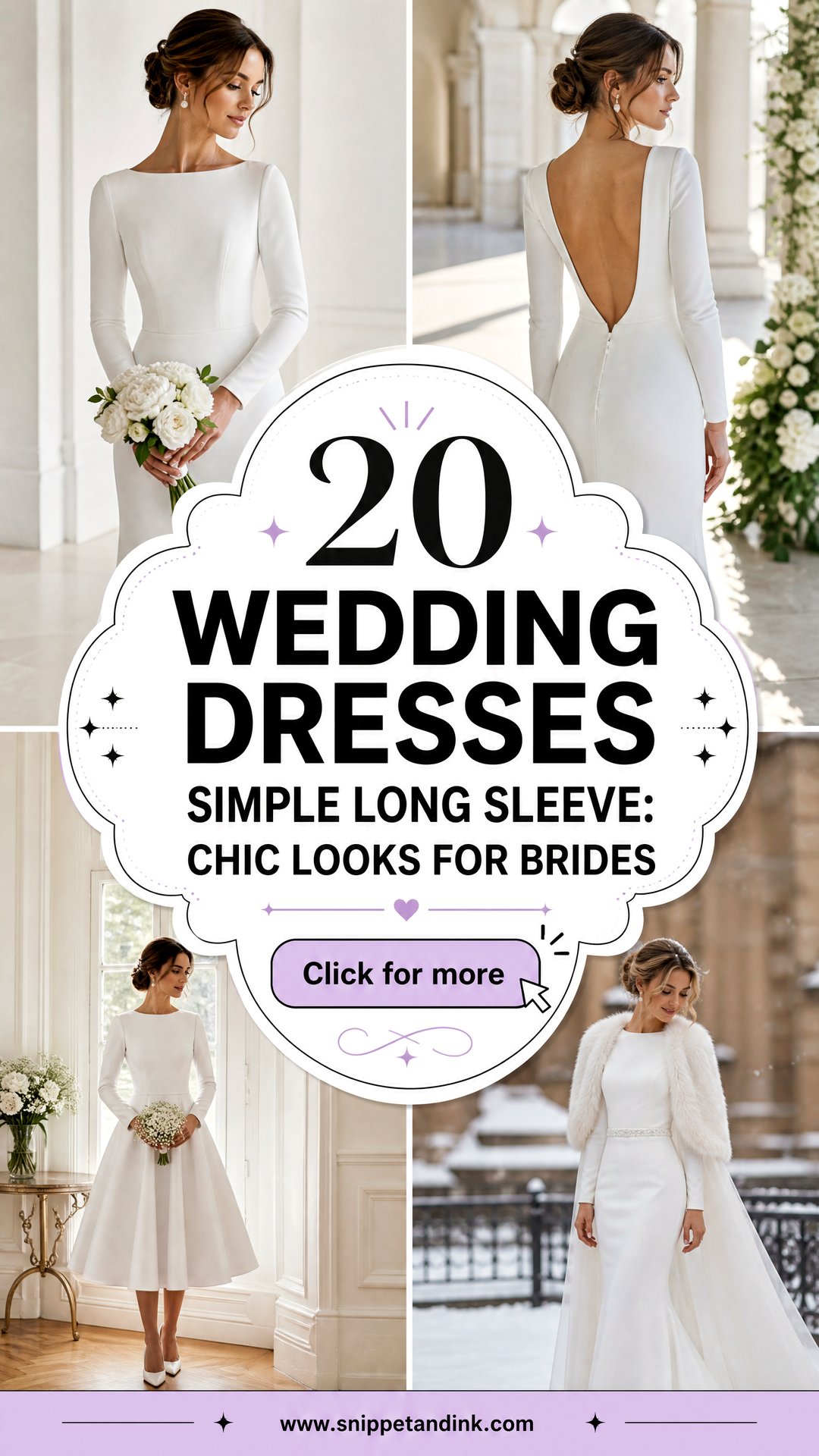
Long sleeves change how a simple gown behaves more than any other detail. They add coverage and line, but they also decide whether you can hug, lift a bouquet and dance without the bodice shifting. The twenty looks below keep decoration to a minimum: A-lines, columns, sheaths and a few fuller skirts in satin, chiffon, lace and crepe, for courthouse ceremonies, gardens, ballrooms and winter weddings. Each one comes with shoes, jewelry and a veil so you can picture the finished outfit. Modest necklines, open backs and square necks all appear, so start with the amount of coverage you’re comfortable in.
Lift Your Arms Before You Fall for the Sleeves
Sleeves are the hardest part of a gown to fit and the part brides test least. Standing still in front of a mirror, almost any sleeve looks right. At the first try-on, I run every bride through four quick checks:
- Raise both arms to shoulder height. If the whole bodice lifts with them, the armhole is cut too low.
- Reach forward as if hugging someone. Tightness across the upper back means the sleeve or back panel needs more room.
- Look at the wrist. A plain sleeve should stop at the wrist bone, or just below if you like it touching the hand. A sleeve that covers the knuckles hides your hand during the ring exchange.
- Bend the elbow fully. Tight sleeves without stretch bind there first.
Stretch crepe and lace on a soft mesh base forgive far more than woven satin or mikado, which have almost no give. If you love a structured fabric, the sleeve has to be cut with extra ease from the start.
1. Simple A-Line Long Sleeve Wedding Dress
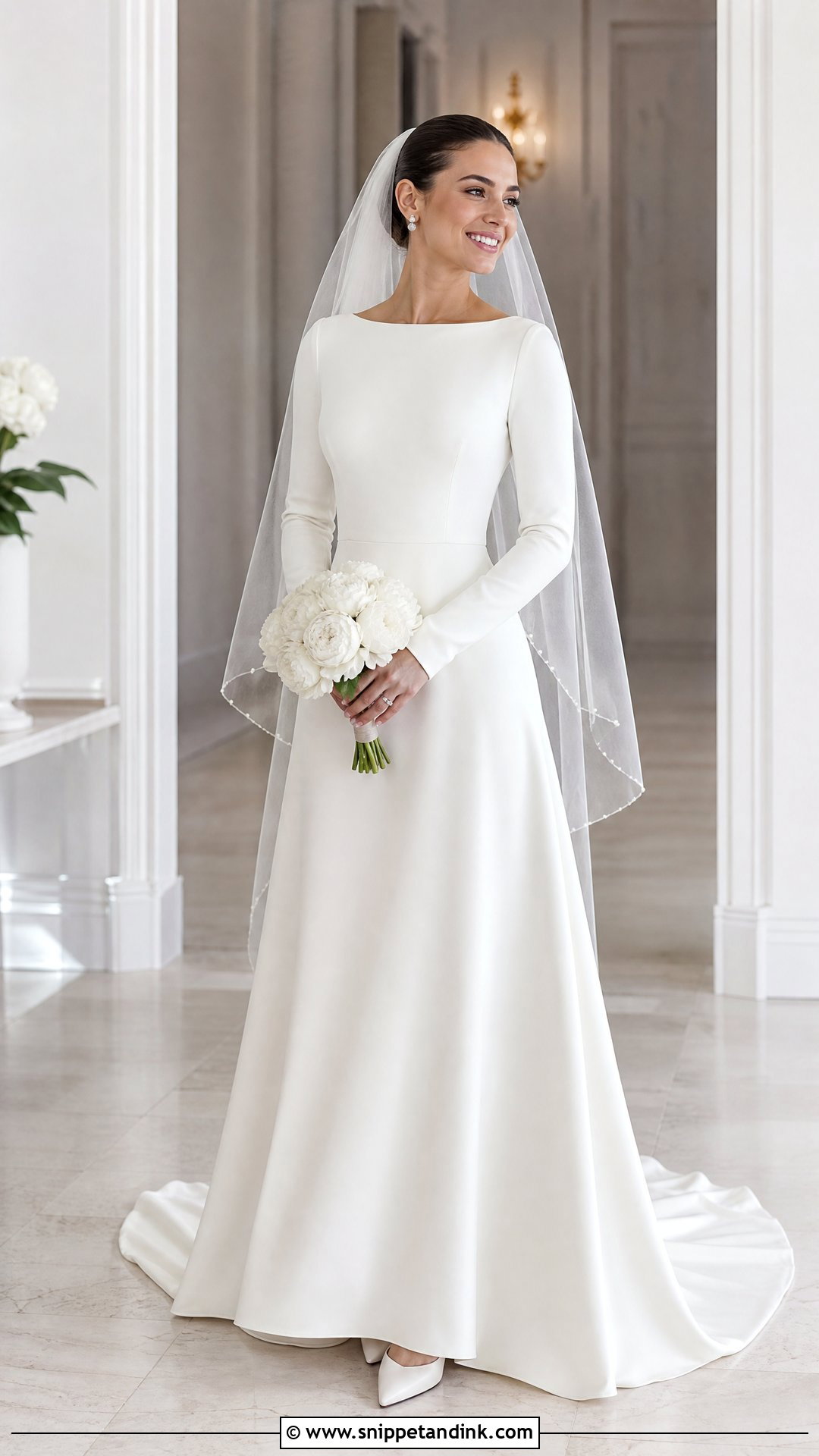
Crepe or matte satin, fitted sleeves, a natural waist and a skirt that falls gently over the hips: this is the gown I’d show anyone who tells me they want simple. The A-line skirt gives room to walk and sit, so the real fitting work happens in the sleeves and waist. On a plain gown, the sleeve should end at the wrist bone; any longer and it bunches over the hand. Pointed ivory pumps, pearl studs and a single-layer fingertip veil, with block heels instead for an outdoor ceremony. A soft low bun keeps the neckline and shoulders clear, and a small structured clutch carries the essentials.
2. Simple Satin Long Sleeve Wedding Dress
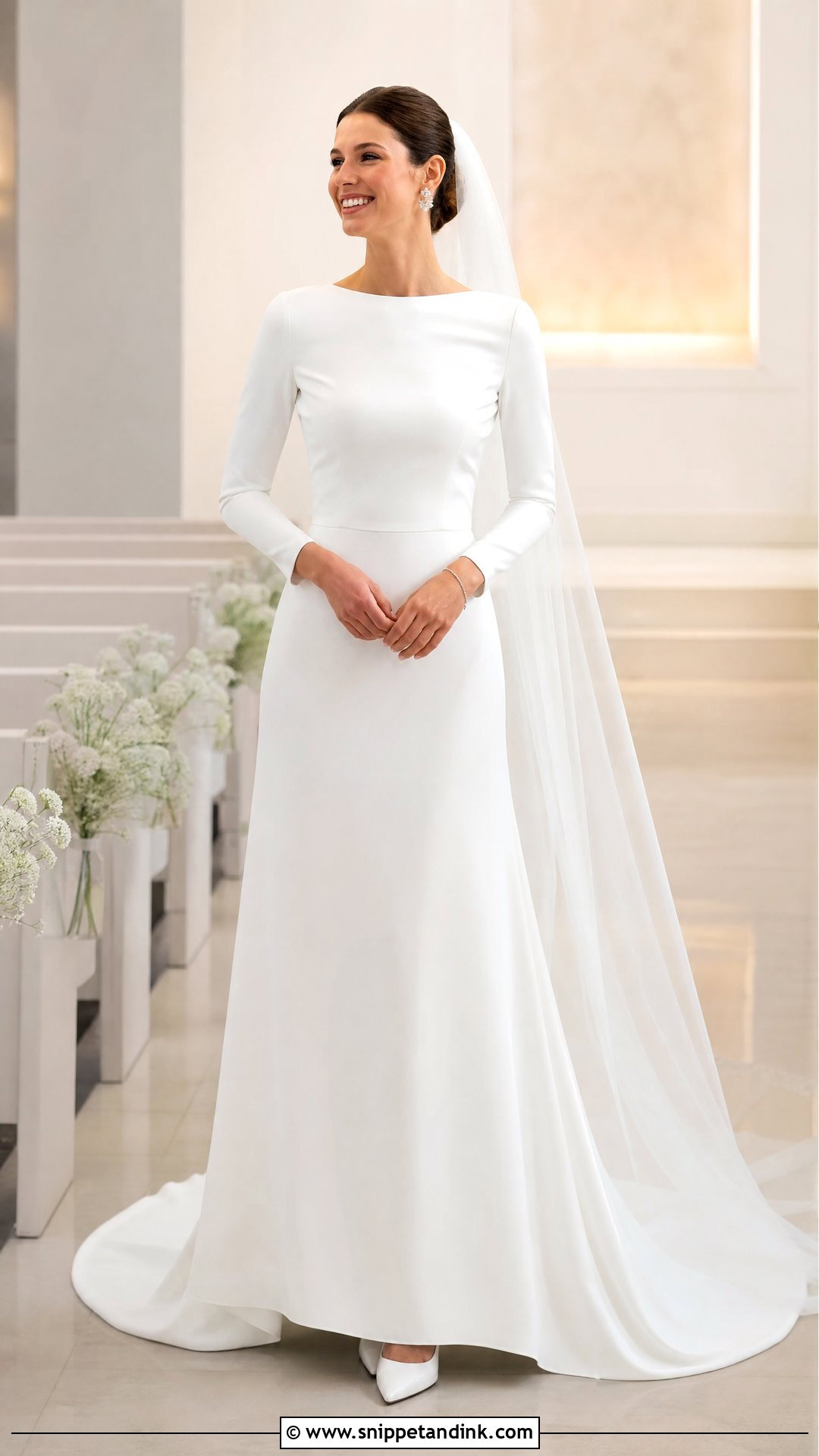
Satin adds shine without a single bead, which is why minimalists love it. Look for a softly fitted bodice, a high or gently curved neckline and a fluid skirt with very few seams, since every seam line catches light on satin. A chapel train gives ceremony presence. One thing I always mention: satin sleeves crease at the inside of the elbow within an hour of wear, so a heavier, tightly woven satin is worth paying for. Satin pumps, crystal drops and a thin bracelet. A sheer cathedral veil contrasts with the solid fabric, and a compact white and green bouquet keeps the palette quiet in hotels and bright indoor venues.
3. Simple Square Neck Long Sleeve Wedding Dress
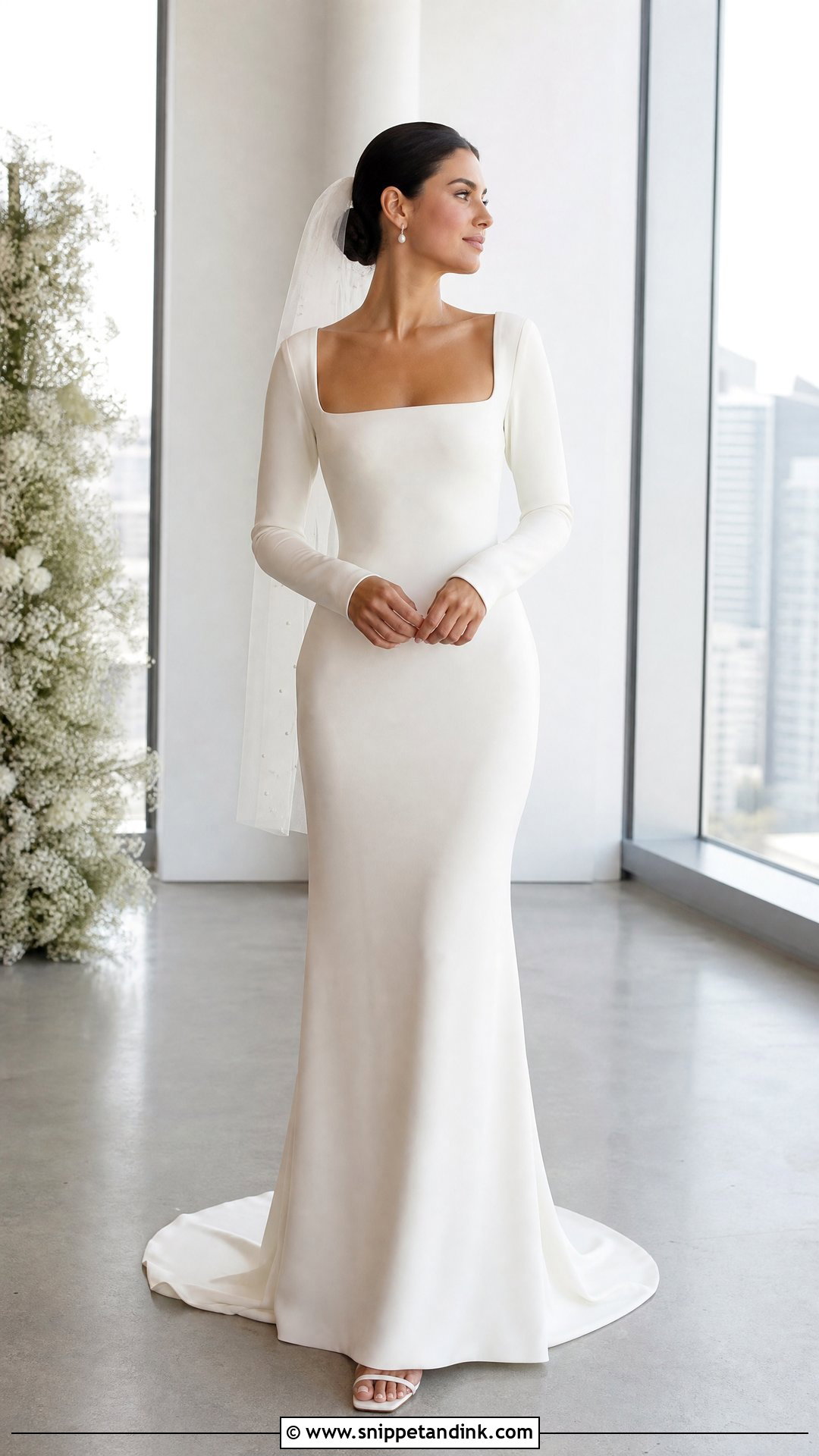
A square neckline frames the collarbone without showing much and gives a plain gown real structure. With fitted sleeves and a straight or softly flared skirt, stretch crepe is my pick, because it moves with you and keeps a smooth surface. The corners of the neckline need to sit flat; if they gape when you lean forward, the bodice needs taking in at the side seams. A delicate pendant or just small pearl earrings, low ivory heels and a waist-length veil under a sleek bun. A square-toe shoe repeats the geometry quietly. It suits formal ceremonies and city weddings without looking tied to one season’s trends.
4. Simple V-Neck Long Sleeve Wedding Dress
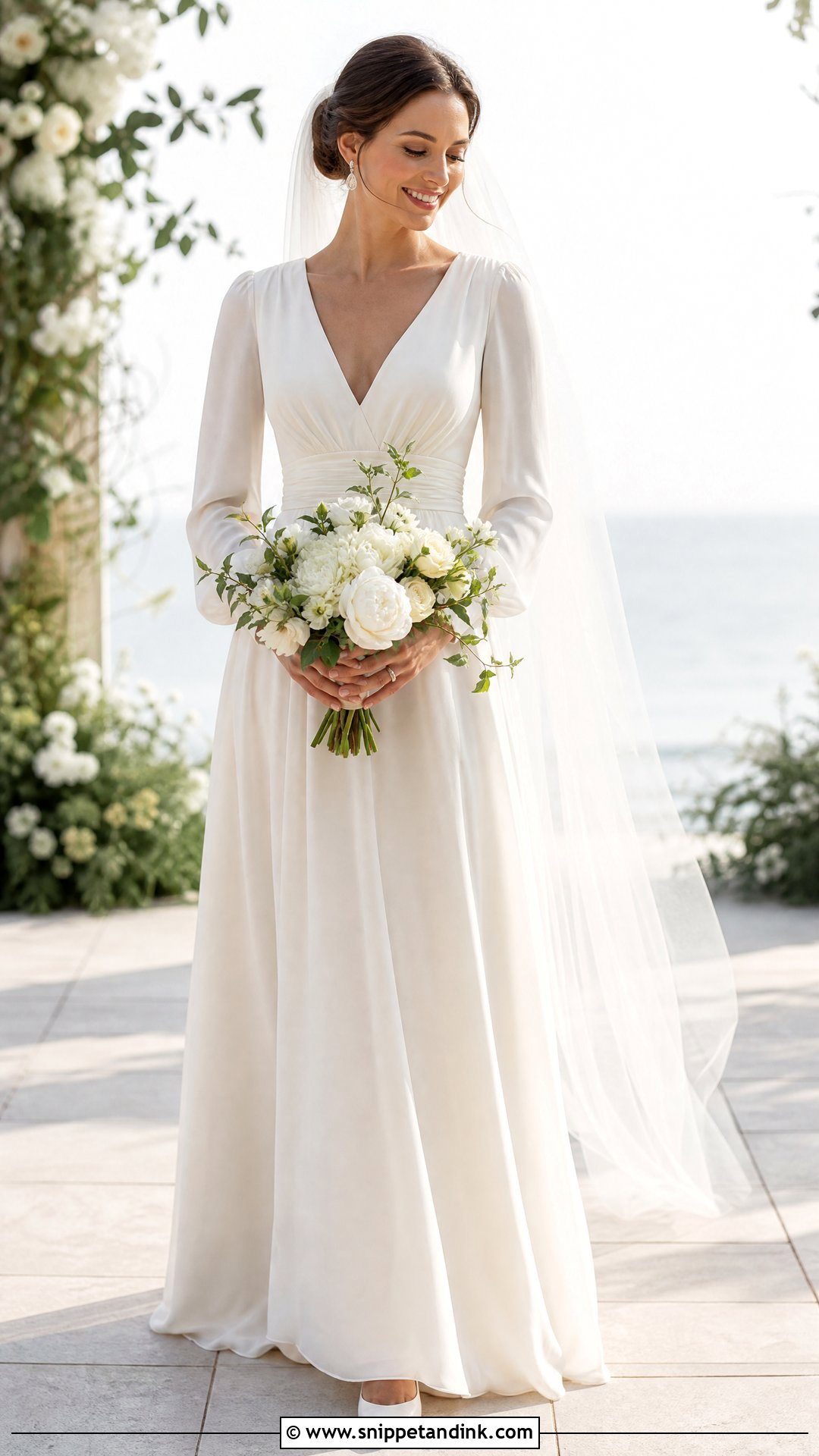
A moderate V lengthens the upper body and stays supportive. Very deep Vs on a long-sleeve gown tend to pull open when the arms move forward, which is why I steer brides toward a shallower cut. Chiffon falls soft, crepe looks tailored and light satin reads crisp. Closed-toe pumps, small drop earrings and a plain tulle veil keep it quiet, and a thin waist seam or narrow satin belt gives definition. For more coverage, an illusion mesh panel can fill the neckline; ask for mesh in a shade close to your skin so it disappears. Soft waves or a low ponytail leave the V clear.
5. Simple Bateau Neck Long Sleeve Wedding Dress
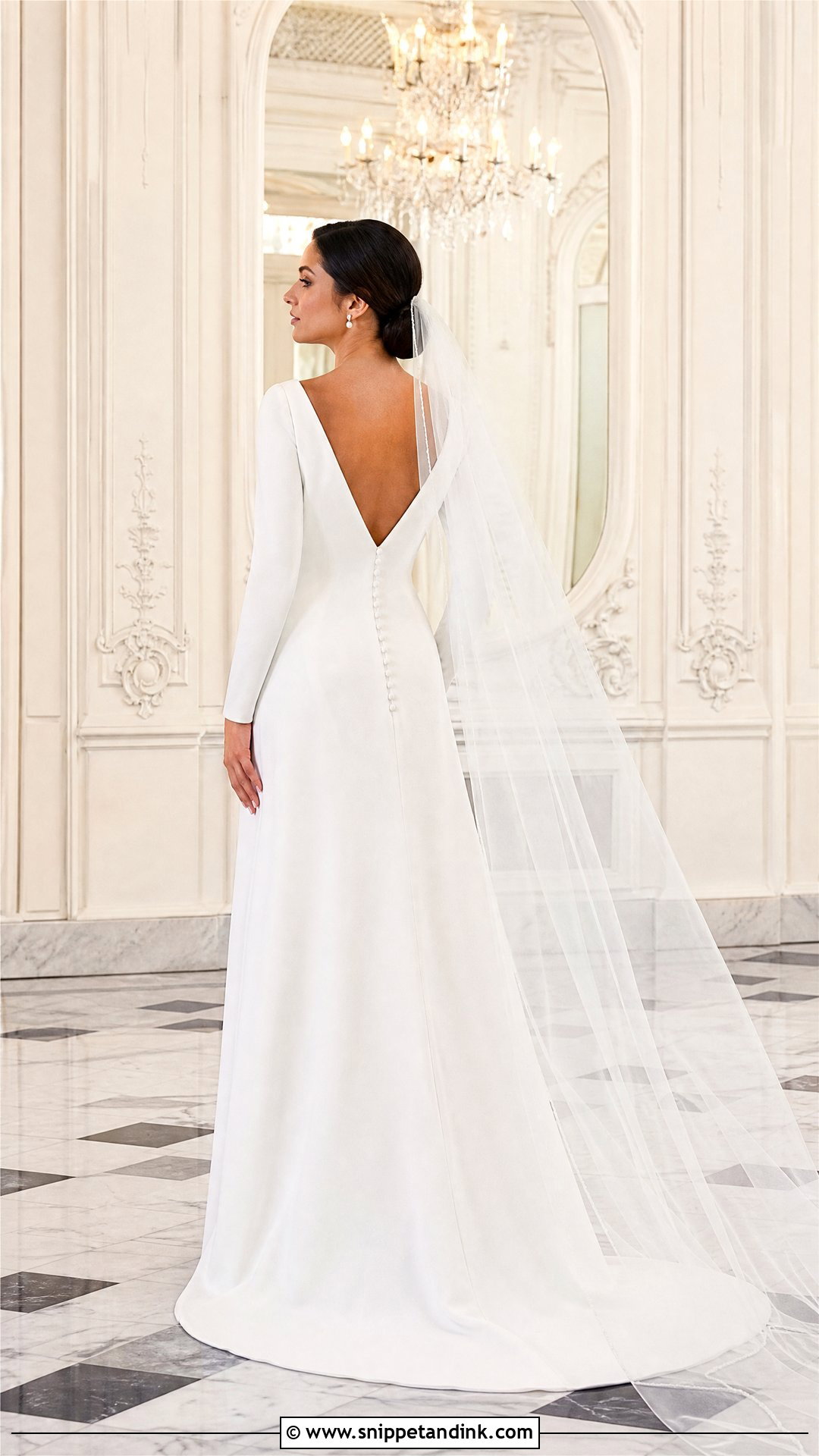
Bateau necklines run along the collarbone from shoulder to shoulder, which leaves little room for the sleeve to join. That’s why I check the shoulder seam closely: if it sits too far out, the sleeves drag when you lift your arms. Matte crepe or heavier satin holds the wide line. The front is fully covered, so a shallow V-back or a row of covered buttons brings interest behind. Pearl earrings, pointed heels and a smooth low chignon, with the long veil attached below the bun. Skip the necklace. It looks as right at a courthouse as it does in a ballroom.
6. Simple High Neck Long Sleeve Wedding Dress
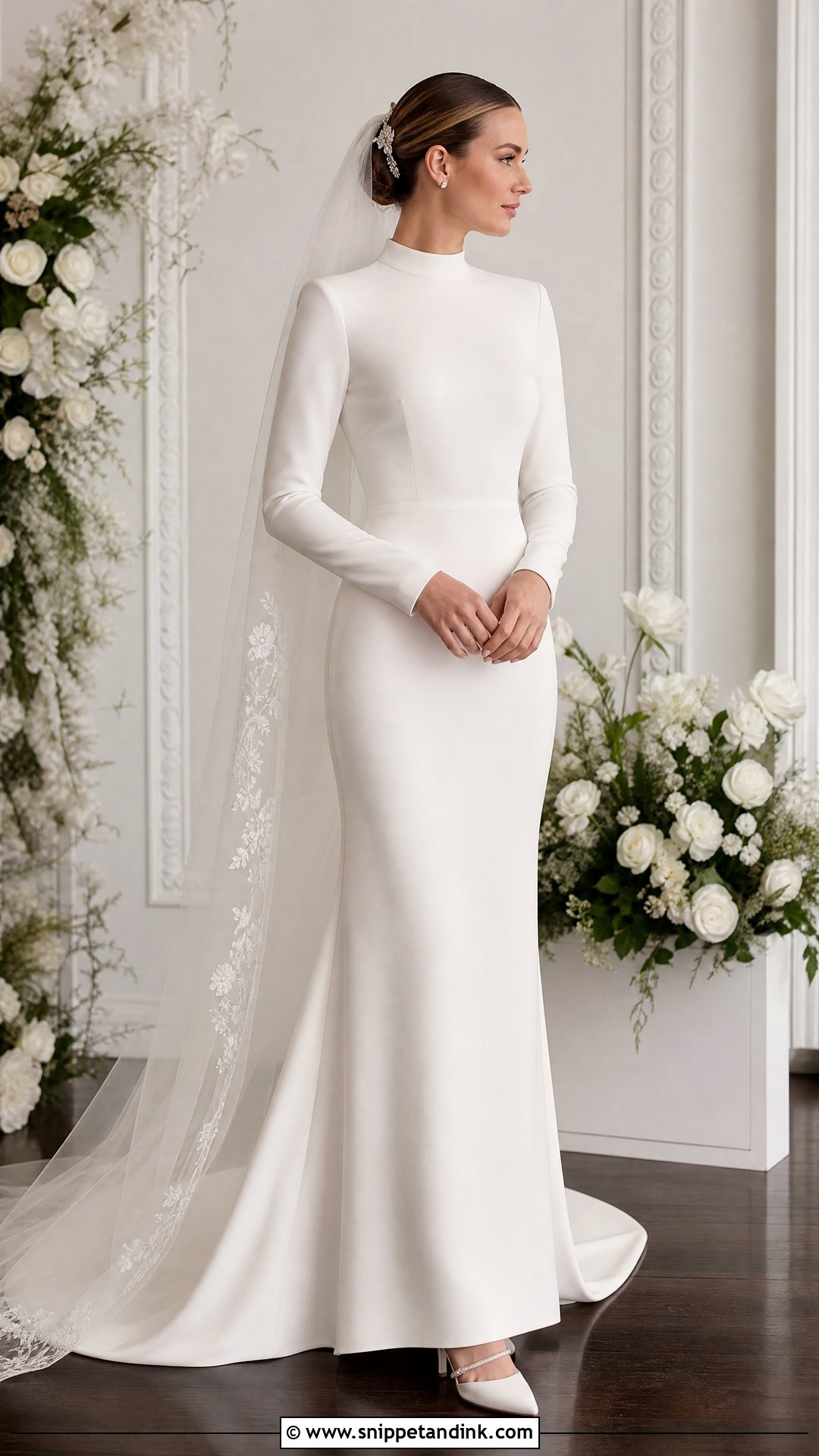
A high neck pulls the eye straight to the face, and a plain crepe bodice keeps that from looking severe. Fitted sleeves and a softly shaped waist keep it streamlined. The collar is the fitting detail. It needs about a finger’s width of room so you can turn your head and swallow comfortably, and a collar that’s too tight shows as a ridge in photos. Small diamond or crystal studs, ivory slingbacks and a narrow comb above a neat bun, no necklace. A chapel veil falls from the back of the hair without covering the front. Cool-weather and formal weddings suit it best.
7. Simple Open Back Long Sleeve Wedding Dress
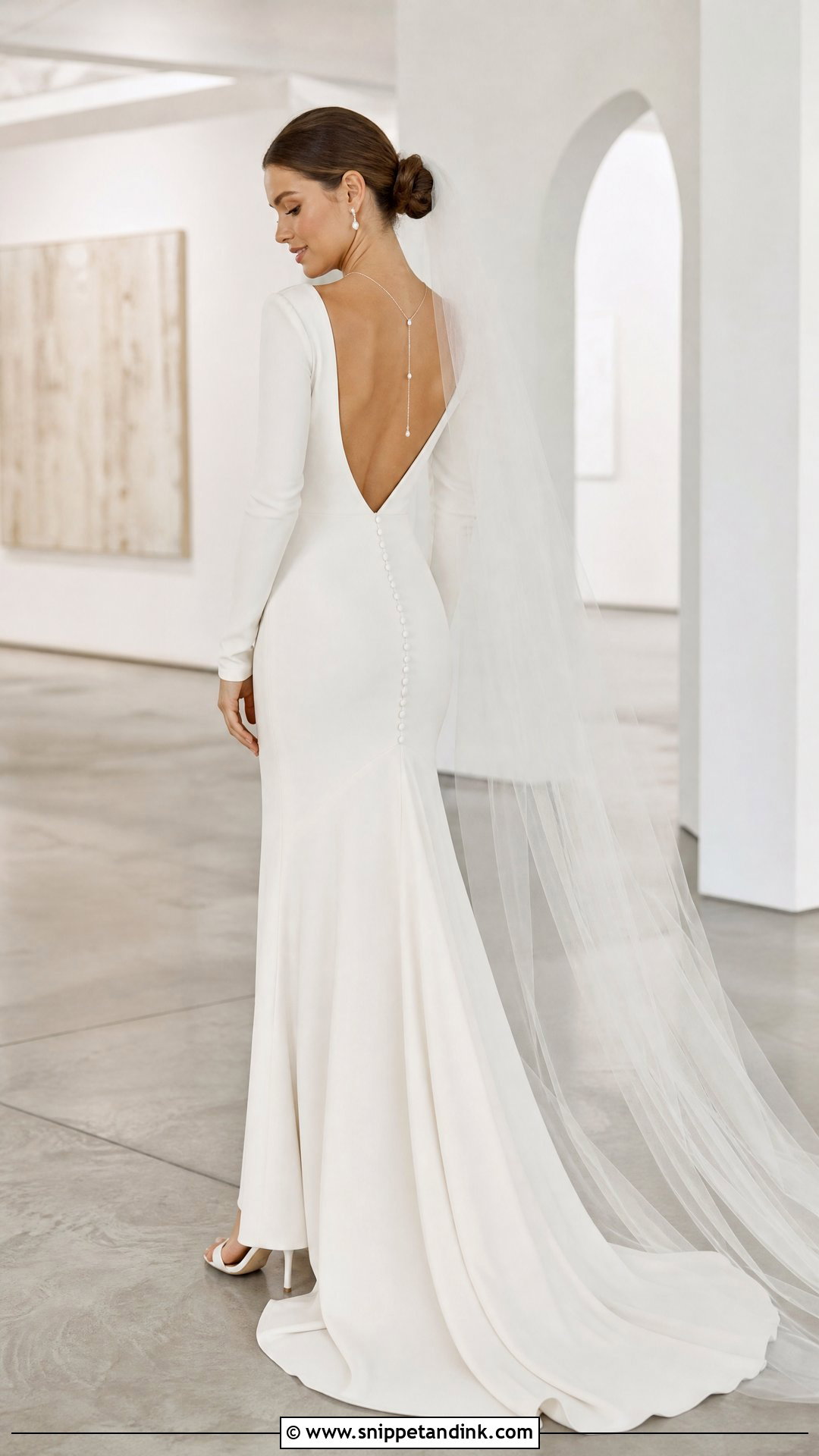
Sleeves and an open back work against each other. With nothing across the back to anchor them, sleeves can slide off the shoulders, so the cut of the shoulder and a hidden strap or elastic matter a lot. A rounded, V or softly squared opening with a modest front, in crepe or satin, shows the outline cleanly, and covered buttons at the base of the opening add a traditional touch. Attach the veil below a low bun so the back stays visible during the ceremony. Minimalist earrings, an optional back necklace and low satin heels. It reads clean from the front and memorable from behind.
8. Simple Crepe Sheath Long Sleeve Wedding Dress
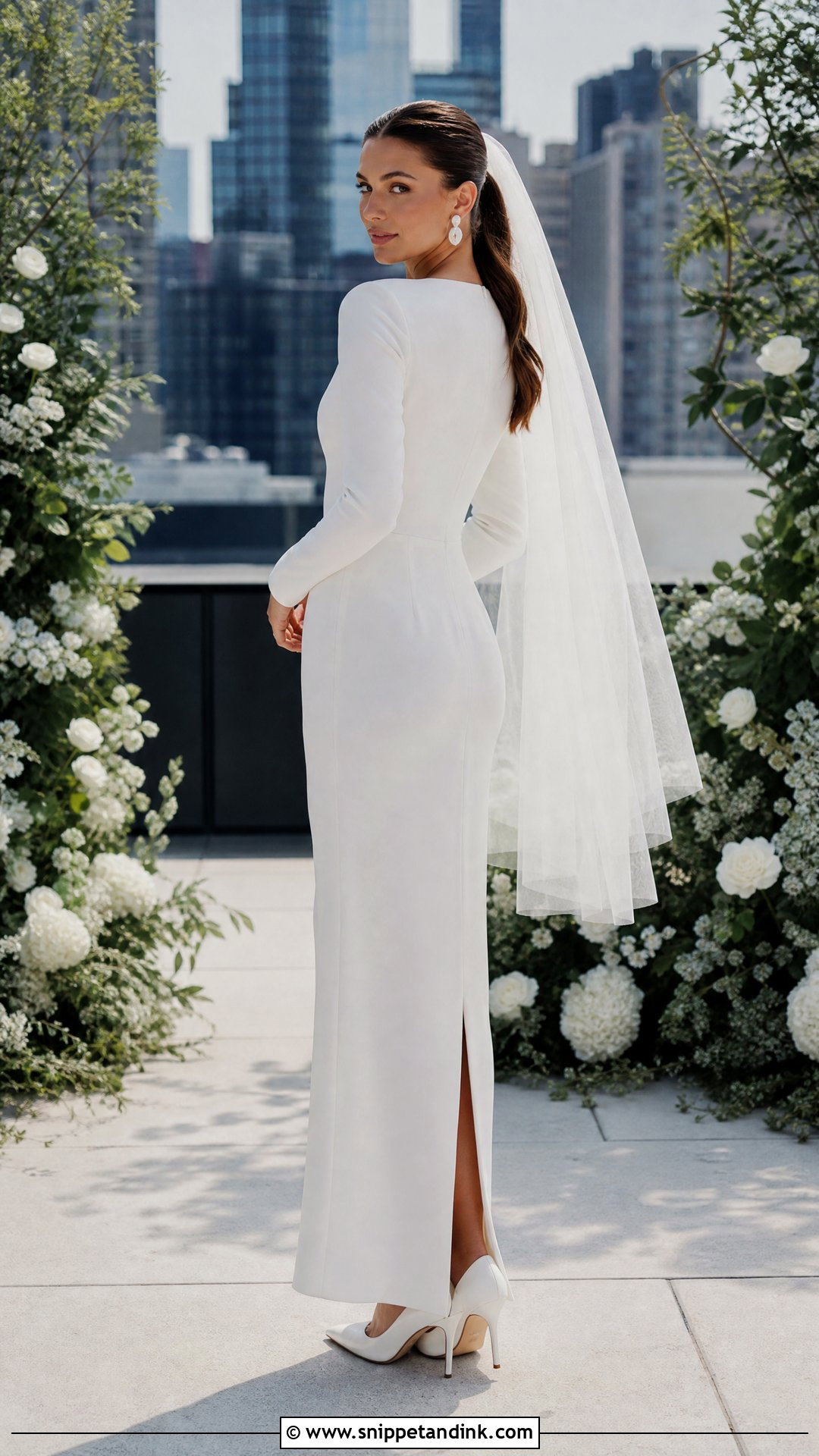
A crepe sheath runs in one uninterrupted line, so stretch is non-negotiable. Without it, a narrow skirt and slim sleeves together leave you almost no room to move. A back slit or small kick pleat makes walking easier. Pointed pumps, sculptural studs and a plain chapel veil, with a sleek ponytail or smooth bun. For waist definition, I’d rely on precise seam placement rather than a decorative belt. City venues, galleries and rooftops suit it, especially where a full skirt would be hard to manage.
9. Simple Mermaid Long Sleeve Wedding Dress
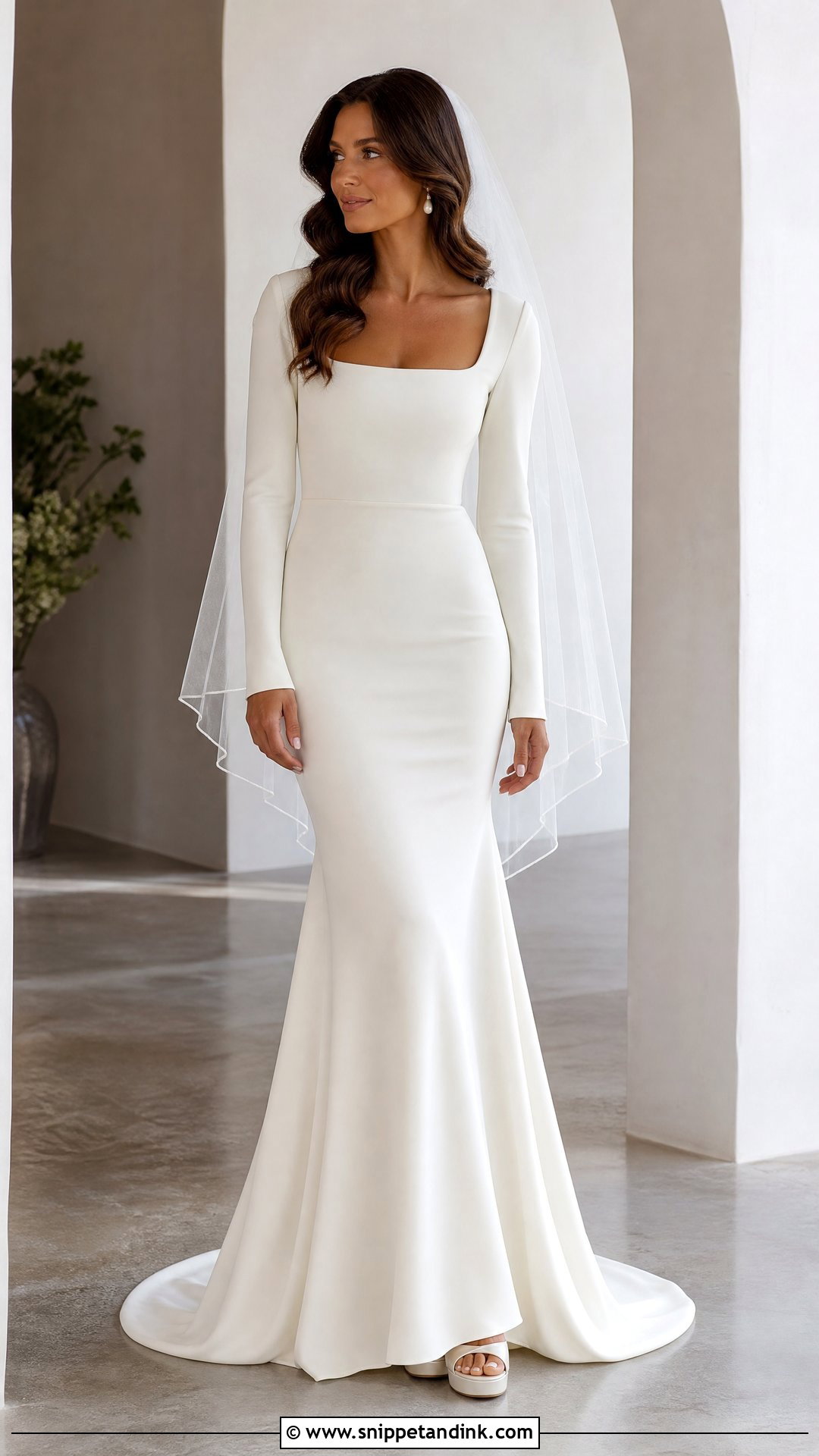
A plain stretch crepe mermaid gets its drama from the cut alone: a fitted bodice, supportive sleeves and a flare starting around the knee. Long sleeves on a mermaid mean the whole body is fitted, so comfort while seated is the first thing I check. A square, bateau or modest V neckline balances the close fit. The hem is usually set with some heel height in mind, so platform heels or supportive pumps help. Small drop earrings, a fingertip veil and a smooth clutch for the reception. Keep alterations precise around the hips and knees, and sweep soft waves behind the shoulders so they don’t hide the neckline.
10. Simple Ball Gown Long Sleeve Wedding Dress
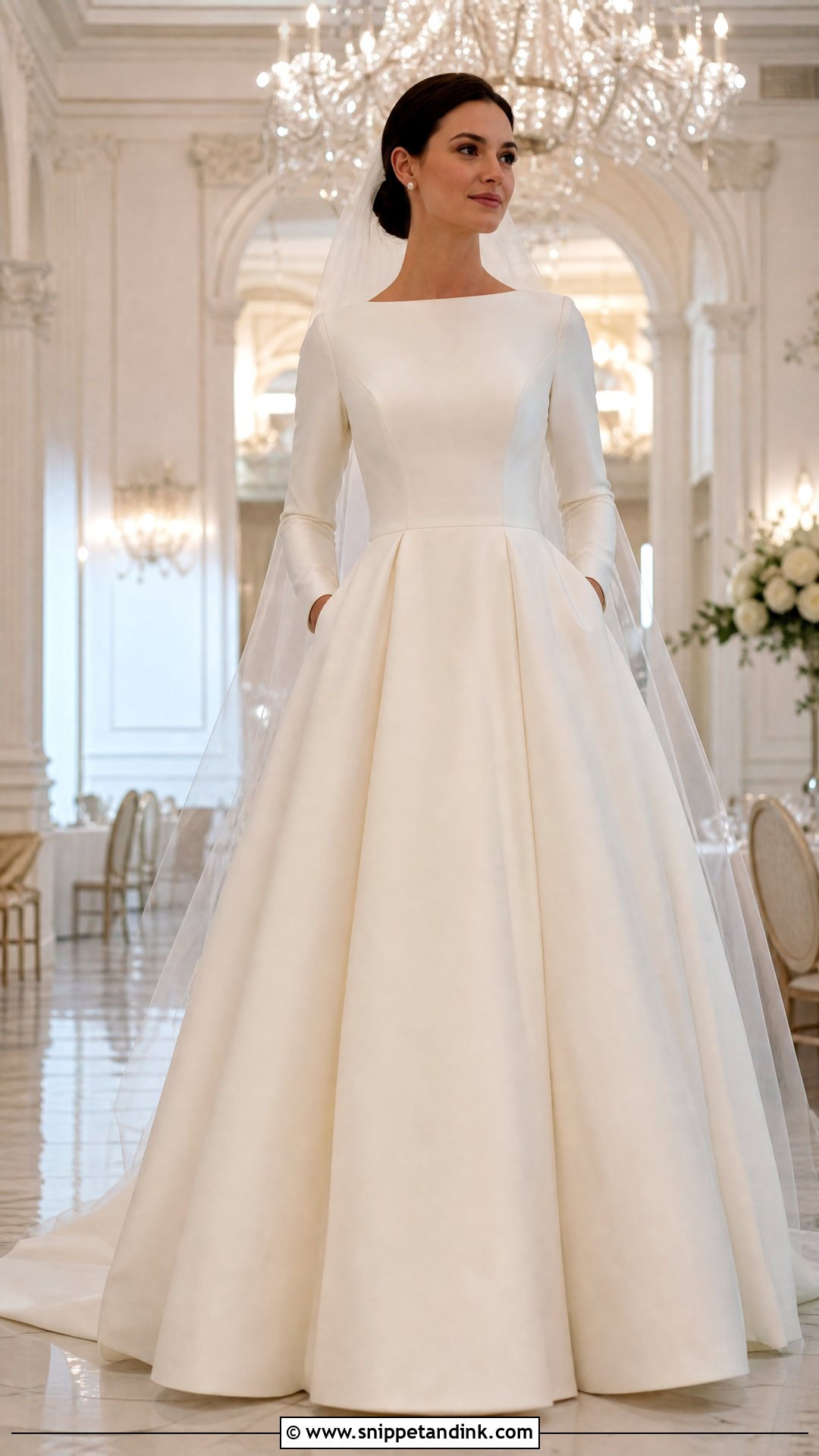
A plain ball gown makes its entrance through volume. Structured satin or mikado with a fitted long-sleeve bodice and a full, unembellished skirt has all the impact it needs; mikado holds folds and pleats crisply, which suits this shape. Hidden pockets are a practical extra that won’t change the outline. With so much skirt, I fit the sleeves closely so the top half doesn’t look heavy. Classic pumps, pearl earrings and a long plain-edged veil, with a neat bun or soft updo. Skip big necklaces and jeweled belts. Formal venues and large reception rooms suit it.
11. Simple Chiffon Long Sleeve Wedding Dress
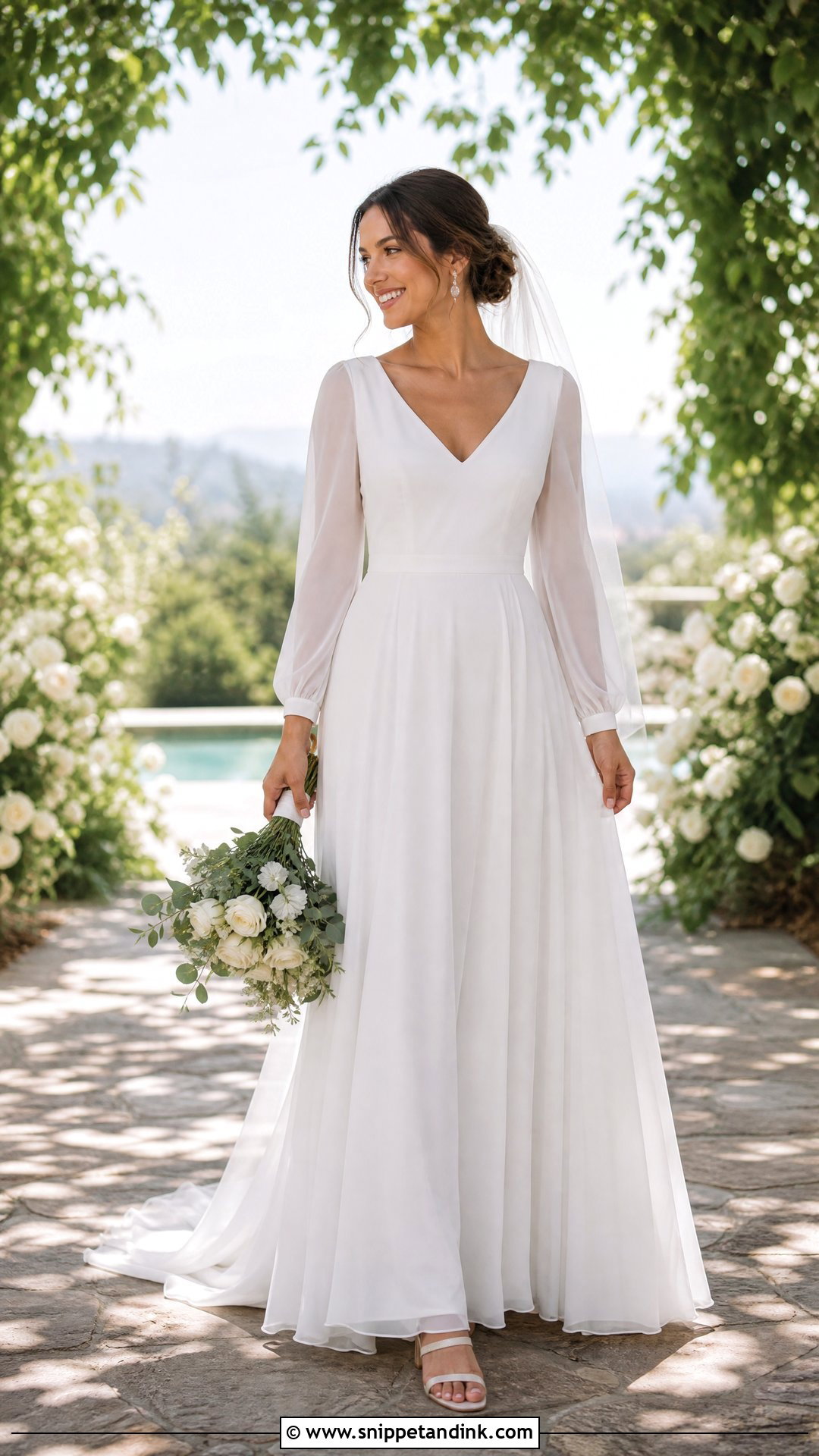
Chiffon is the long-sleeve fabric I suggest for warm weather, because sheer or lightly lined sleeves let air through. Choose a lined bodice and a flowing A-line skirt that moves in a breeze; a V-neck or gathered jewel neckline suits the softness. Chiffon snags easily on bracelets, ring prongs and bouquet wire, so ask your florist to wrap the stems well. Block-heel sandals, delicate earrings and a light fingertip veil. Outdoors, keep the hem just off the ground so it doesn’t drag through grass or sand. A loose low bun or pinned waves, perhaps a small floral pin instead of a necklace. Gardens, coasts and destination weddings suit it.
12. Simple Lace Long Sleeve Wedding Dress
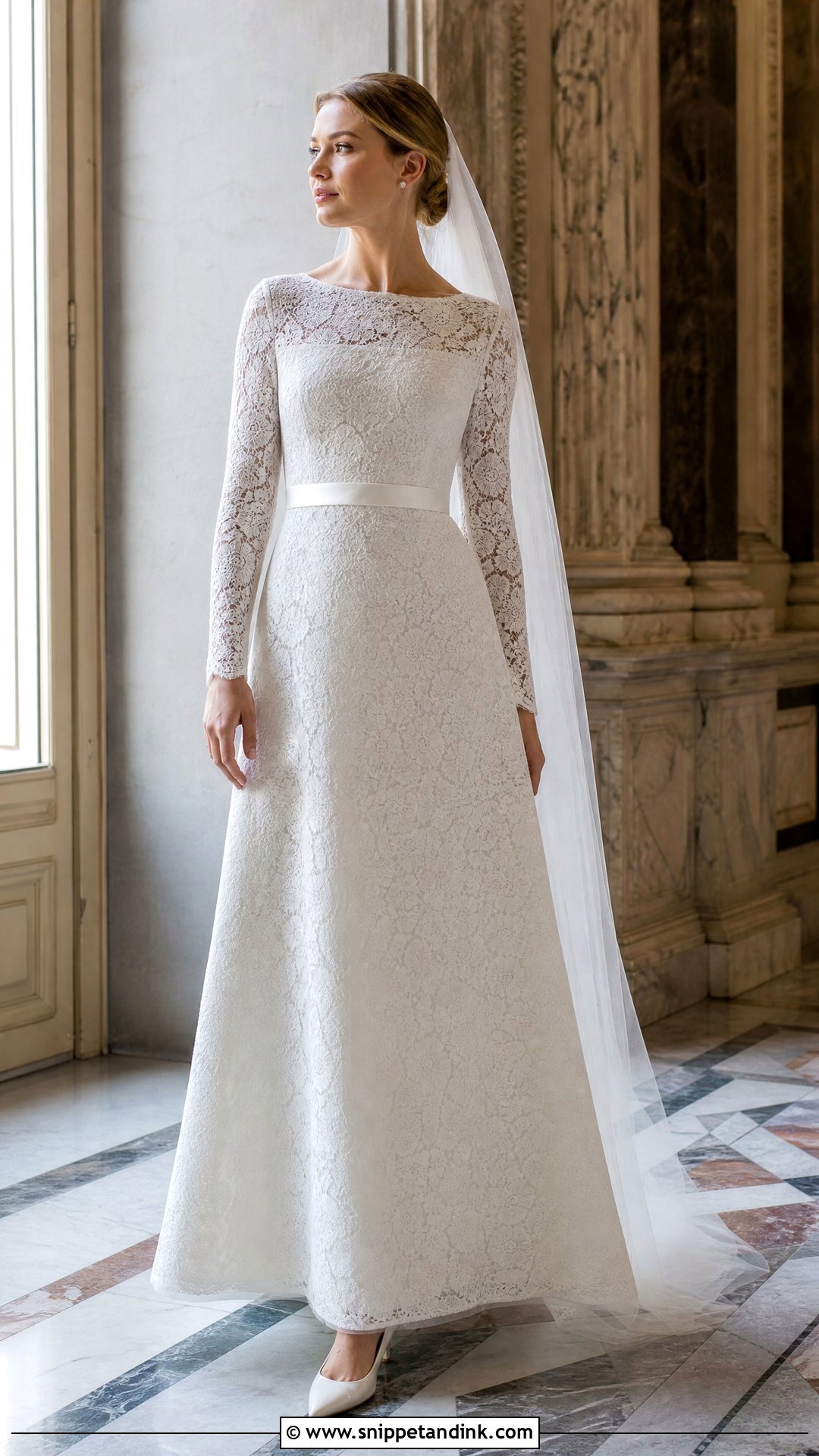
Lace stays simple when there’s one consistent pattern and a clean shape. Fine floral lace over a lightly fitted bodice, straight sleeves and an uncomplicated A-line or sheath skirt is my standard. Mixing patterns or adding heavy beading and contrasting appliqués makes it busy fast. On lace sleeves, check how the cuff is finished: a scalloped edge at the wrist looks lovely but makes shortening the sleeve harder. Ivory pumps, pearl studs and a plain tulle veil. With a high neck, a low bun and no necklace. A satin ribbon at the waist adds gentle definition. Traditional venues, gardens and historic locations suit it.
13. Simple Modest Long Sleeve Wedding Dress
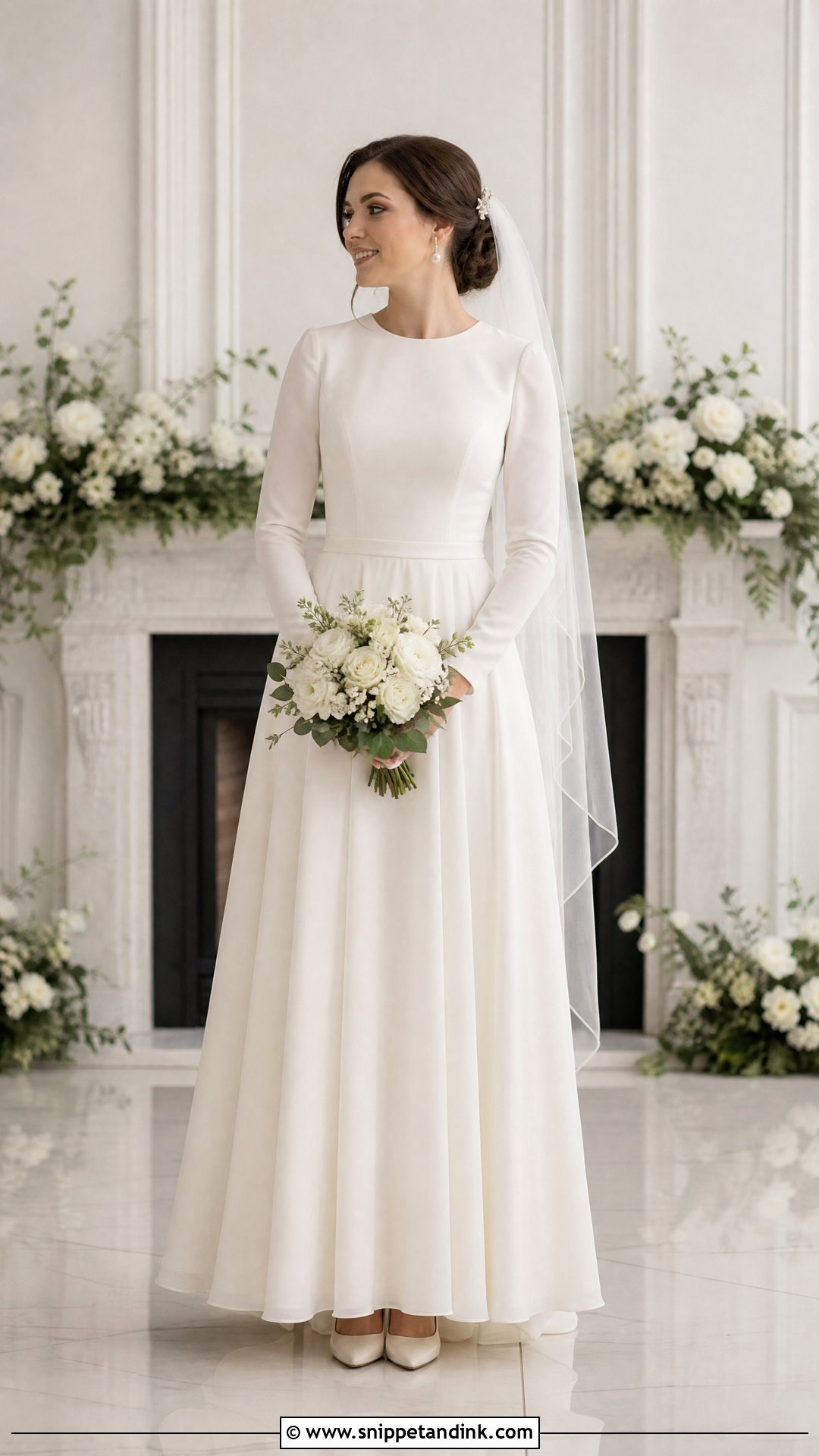
Modest gowns need a little shaping or they look boxy. An opaque lined bodice, a jewel or bateau neckline, wrist-length sleeves and a floor-length A-line in light crepe or chiffon give coverage without weight. The most common problem I see is a sleeve set into a low armhole, which lifts the whole bodice when you raise your arms, so test that during alterations. Closed-toe pumps, a simple comb and a veil matched to the formality. Pearl earrings add brightness near the face. It suits formal ceremonies, family-centered celebrations and any bride who feels most herself with more coverage.
14. Simple Puff Sleeve Wedding Dress
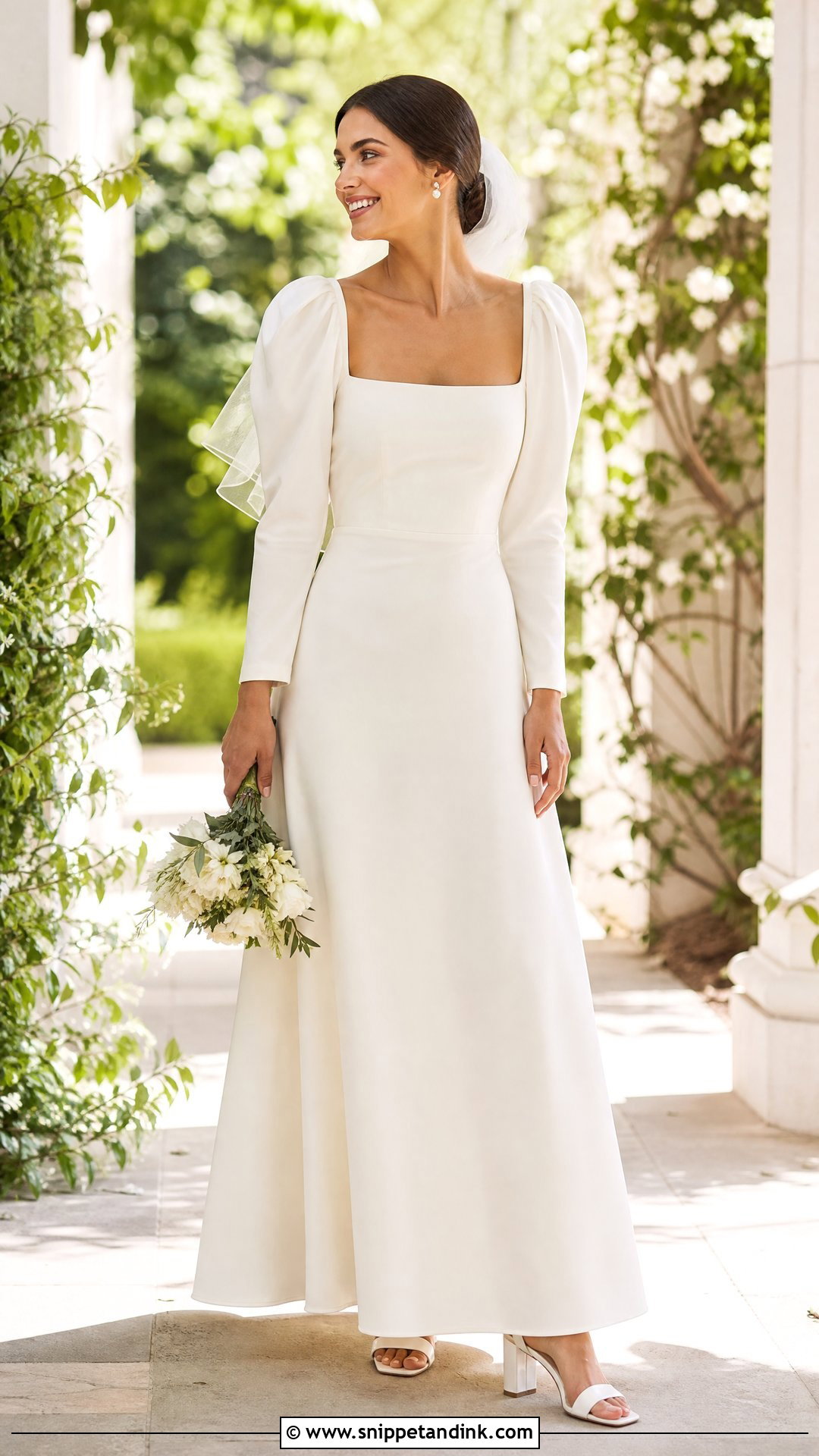
Puff sleeves are the single feature in an otherwise plain dress, so scale is everything. I prefer sleeves that rise slightly at the shoulder and narrow toward the wrist; oversized puffs make the shoulders look wider than the skirt. A plain square-neck bodice and a straight or A-line skirt balance the volume above. Puffs crush in a garment bag, so ask how to revive them, usually a gentle steam from inside the sleeve. Simple earrings, ivory block heels, a short veil or small hair bow, and a compact bouquet that doesn’t compete. A center-parted bun or low ponytail keeps hair off the shoulders.
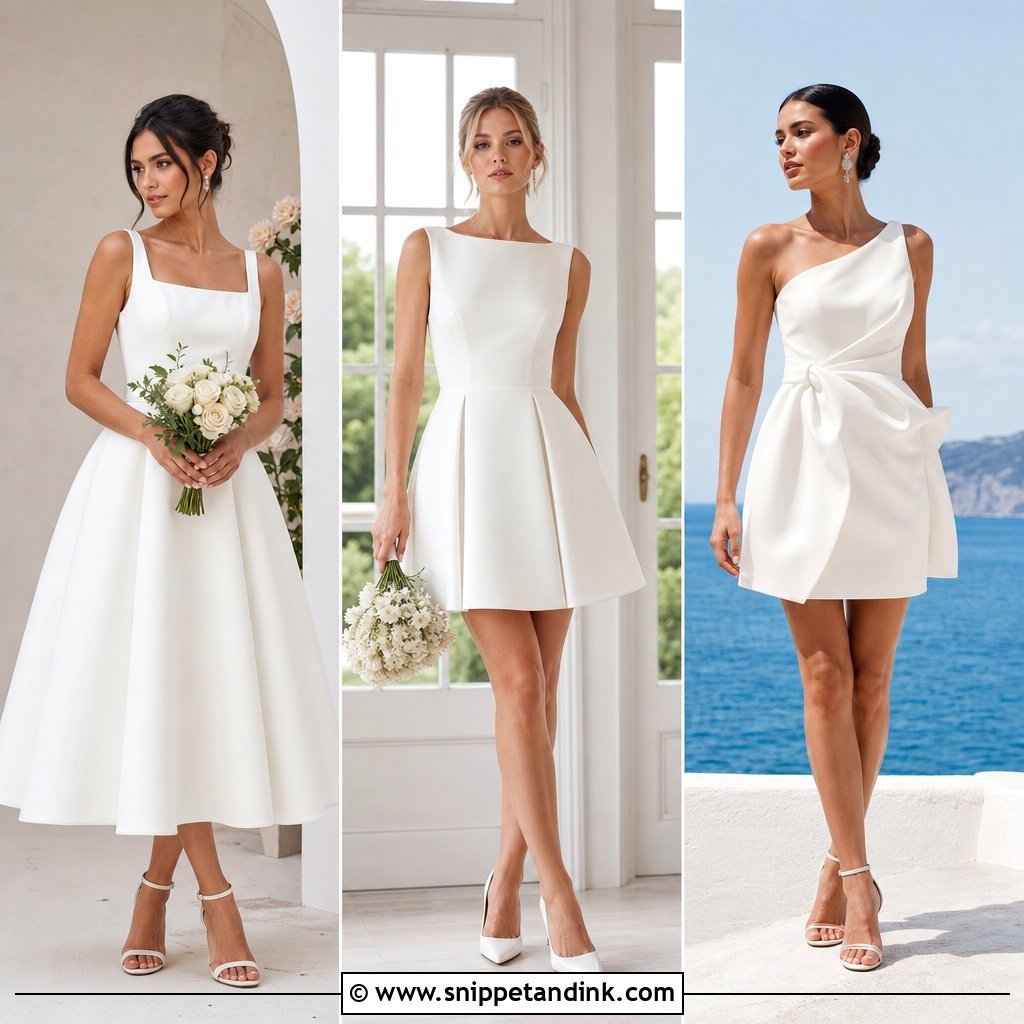


15. Simple Bell Sleeve Wedding Dress
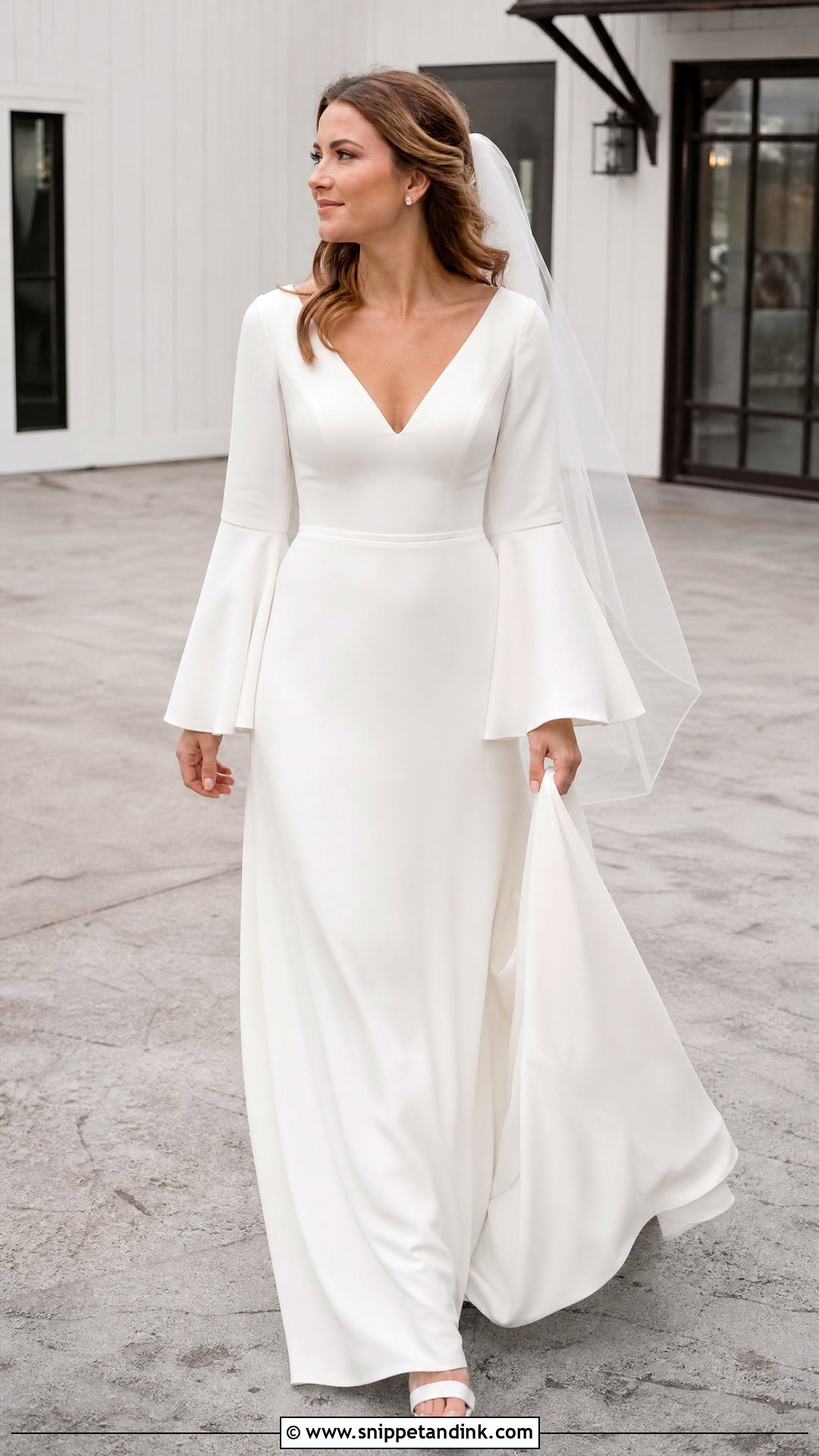
A bell sleeve adds movement to an otherwise minimal gown. The wearable version stays fitted through the upper arm and opens gently below the elbow so your hands stay visible. Pair it with a clean V-neck bodice and a flowing crepe or chiffon skirt. Wide cuffs dip into food and catch on bracelets, so I always ask brides to hold flowers and mime eating during a fitting. Streamlined heels, small studs and a veil without lace edging. A loose updo or softly pinned waves suit the relaxed shape, and outdoor or relaxed modern venues are its natural setting.
16. Simple Button Back Long Sleeve Wedding Dress
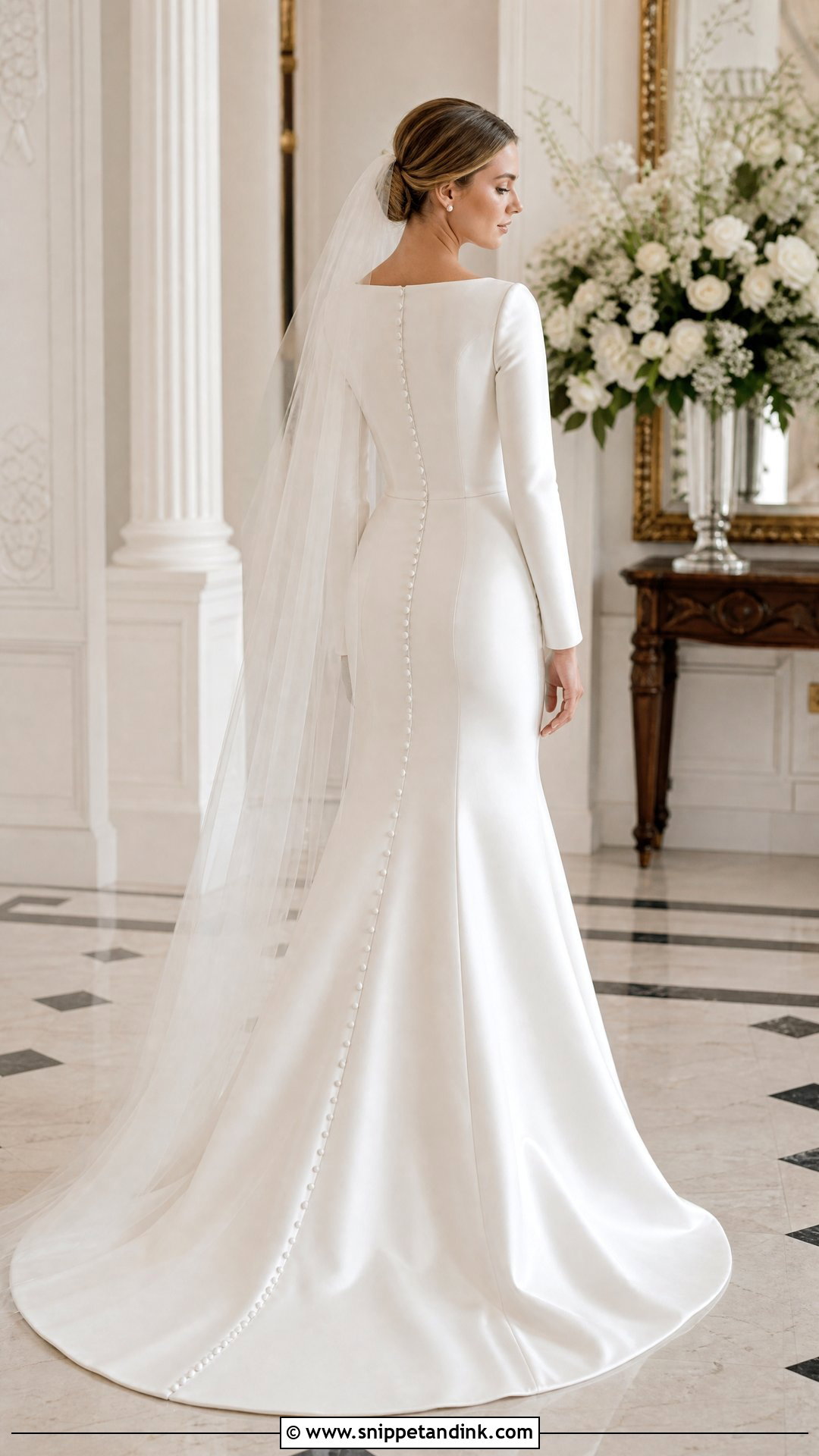
Covered buttons running from the neckline to the waist, or on down the train, give the back a long, quiet line. Satin, mikado and crepe show them most clearly. Keep the front minimal with a bateau or round neck and a fitted waist. Ask whether the buttons are functional or decorative over a hidden zipper. Dozens of tiny loops take a long time to fasten, and a zipper underneath can save your getting-ready schedule. Pearl studs, closed-toe pumps and a sheer veil attached beneath a low bun so the buttons stay on show. It gives interest from behind with no lace or cutouts at all.
17. Simple Tea Length Long Sleeve Wedding Dress
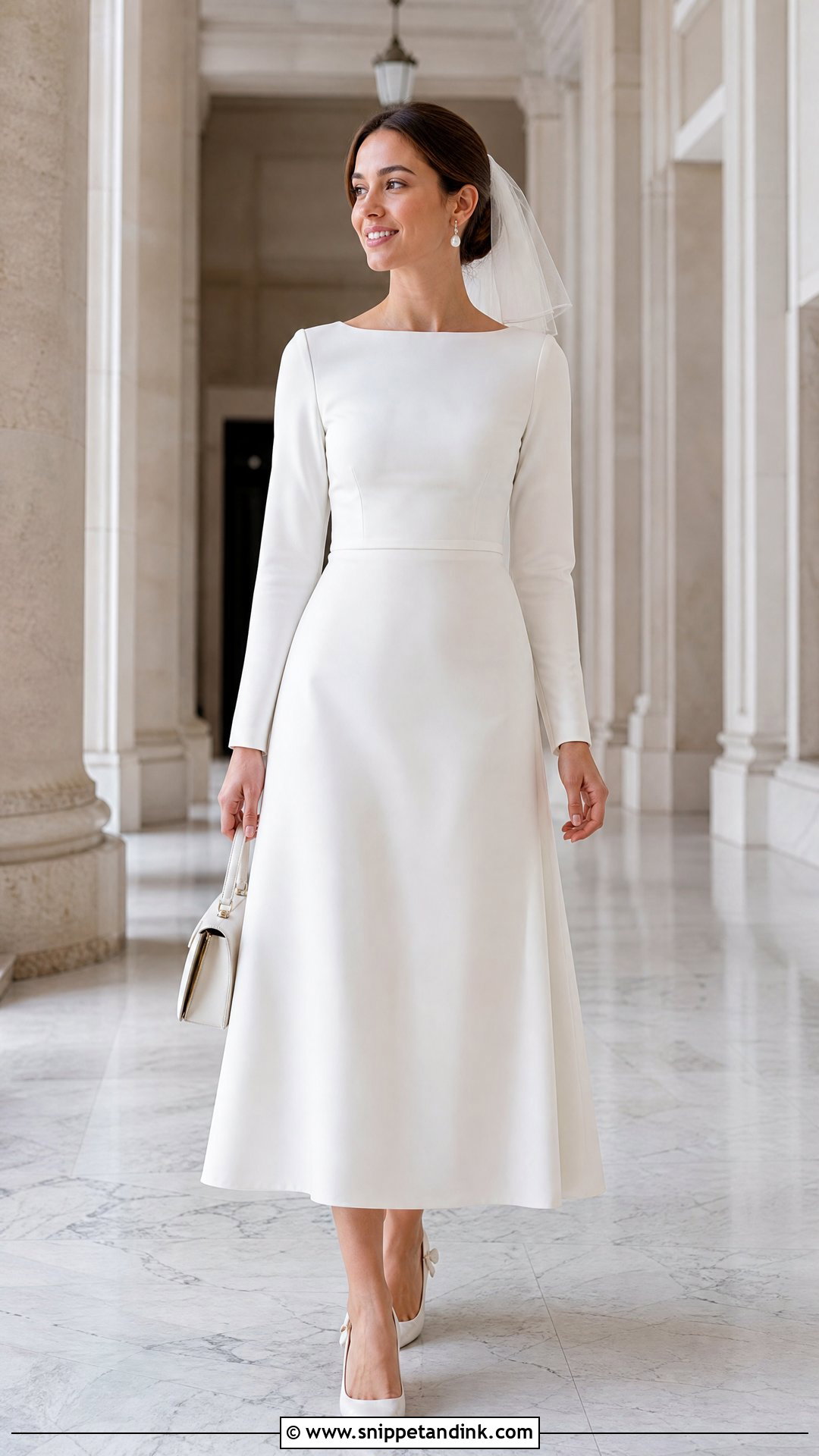
Tea length suits a courthouse ceremony or daytime reception. The hem falls between knee and ankle, paired with slim long sleeves and a fitted waist, and crepe, satin or a structured cotton blend keeps the skirt crisp. Proportion is the trick here: long sleeves over a shorter skirt can look top-heavy unless the sleeves are slim and the waist clearly defined. Polished ivory pumps, slingbacks or low block heels, pearl earrings, a short veil and a small structured bag. A softly flared skirt moves without the upkeep of a train. Finish with a low ponytail or smooth shoulder-length waves.
18. Simple Column Long Sleeve Wedding Dress
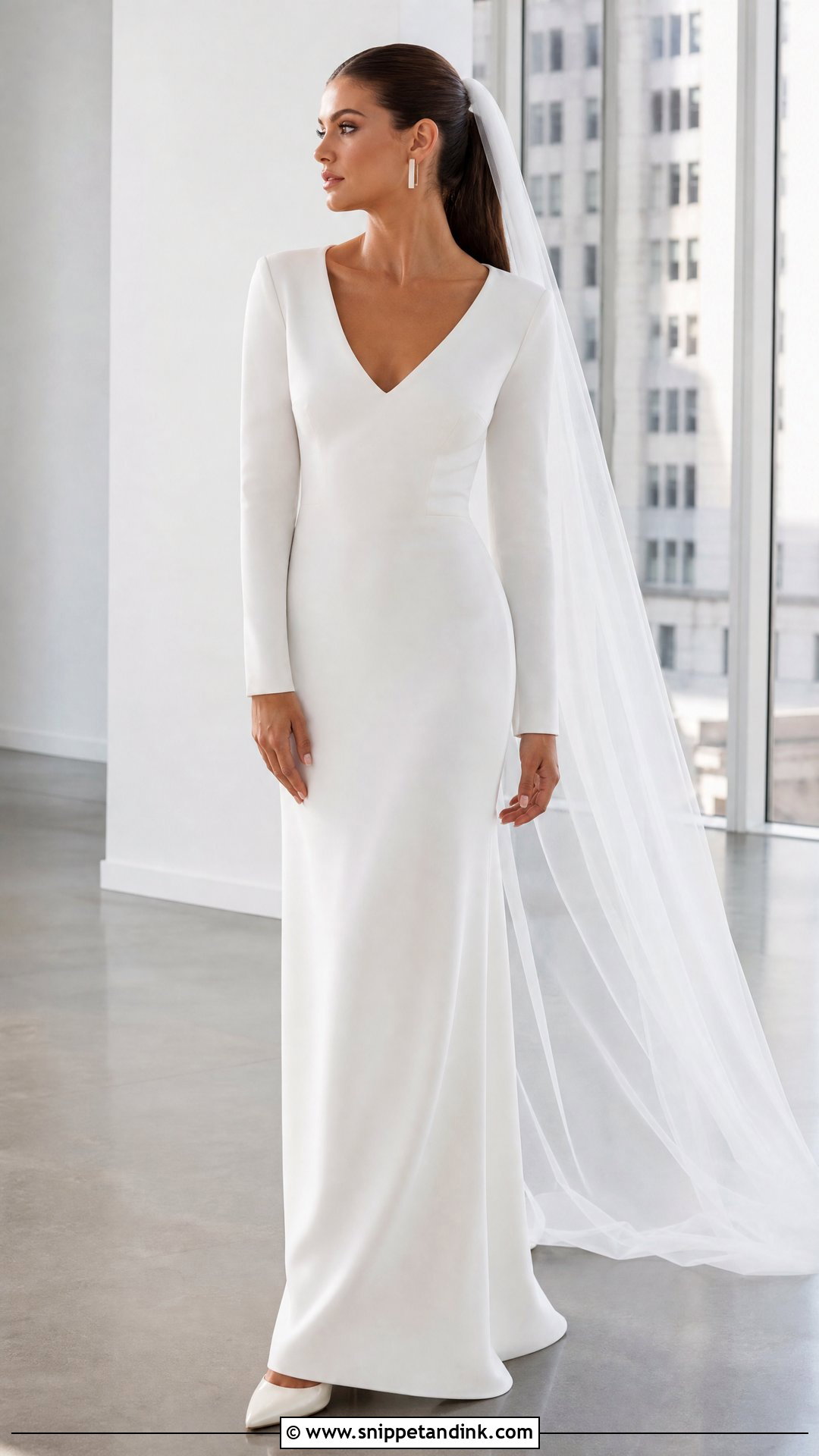
A column falls almost straight from the shoulders or hips in a clean, elongated outline. Fluid crepe with subtle waist shaping and narrow sleeves keeps it from feeling rigid. A high neckline looks sophisticated, and a shallow V is softer. If the fabric has little stretch, add a side or back slit, because a straight skirt shortens your step more than you’d think. Pointed pumps, geometric earrings and a long plain veil that echoes the vertical line, with a low bun or polished ponytail. It suits petite brides well, since there’s no volume to overwhelm the frame.
19. Simple Plus Size Long Sleeve Wedding Dress
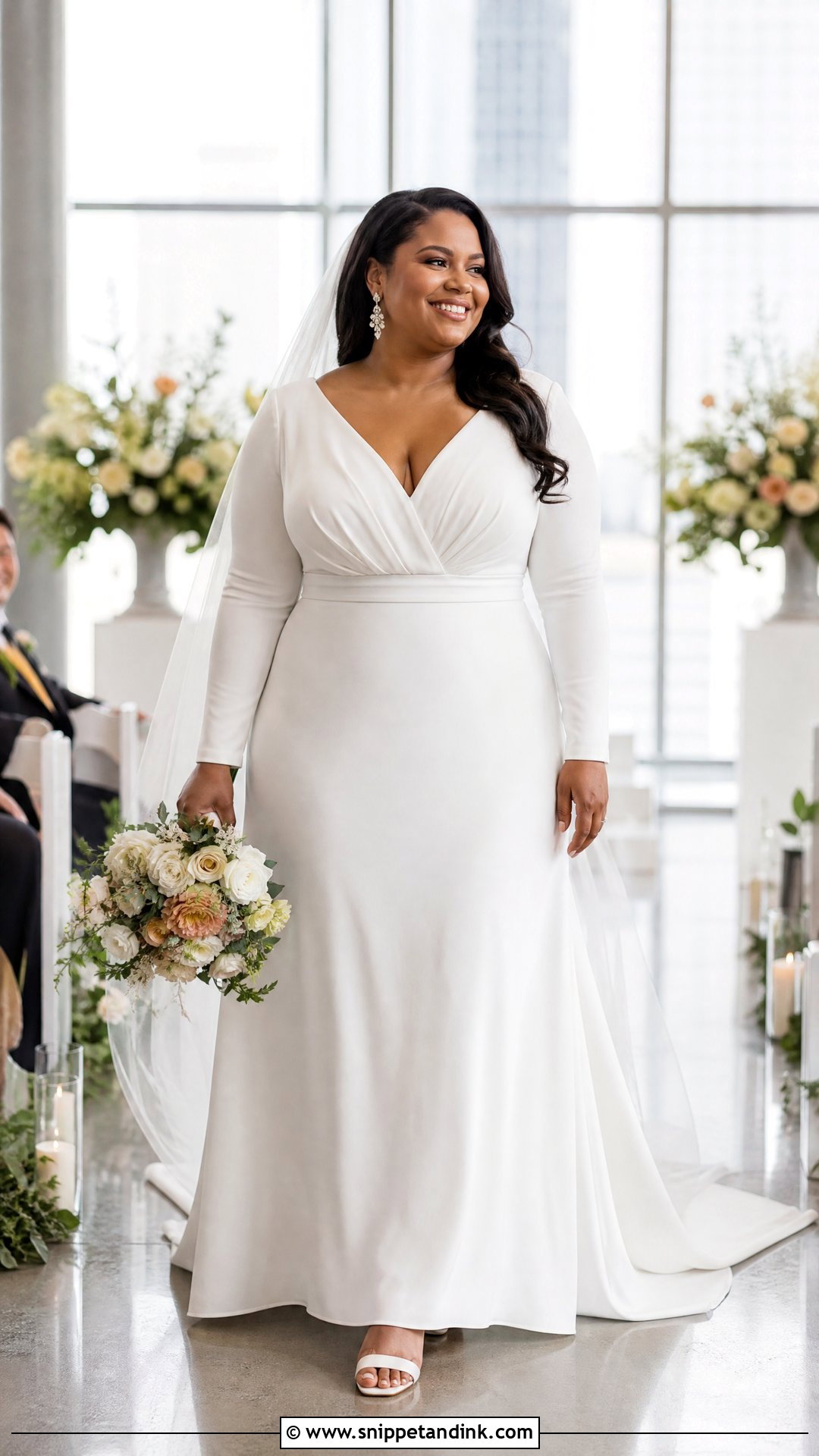
A long-sleeve gown should support the body, not bury it in extra fabric. An A-line with a structured bodice, defined waist and smooth crepe skirt is a reliable foundation. Sleeves are where standard sizing most often fails, so ask for enough room through the upper arm and elbow and request custom adjustments; some designers offer a wider sleeve pattern on request. A V-neck, square neck or soft sweetheart neckline frames the face. Stable block heels, statement earrings and a light veil. Undergarments should work with the gown’s intended shape, not change it. Sit, raise your arms and walk at every fitting.
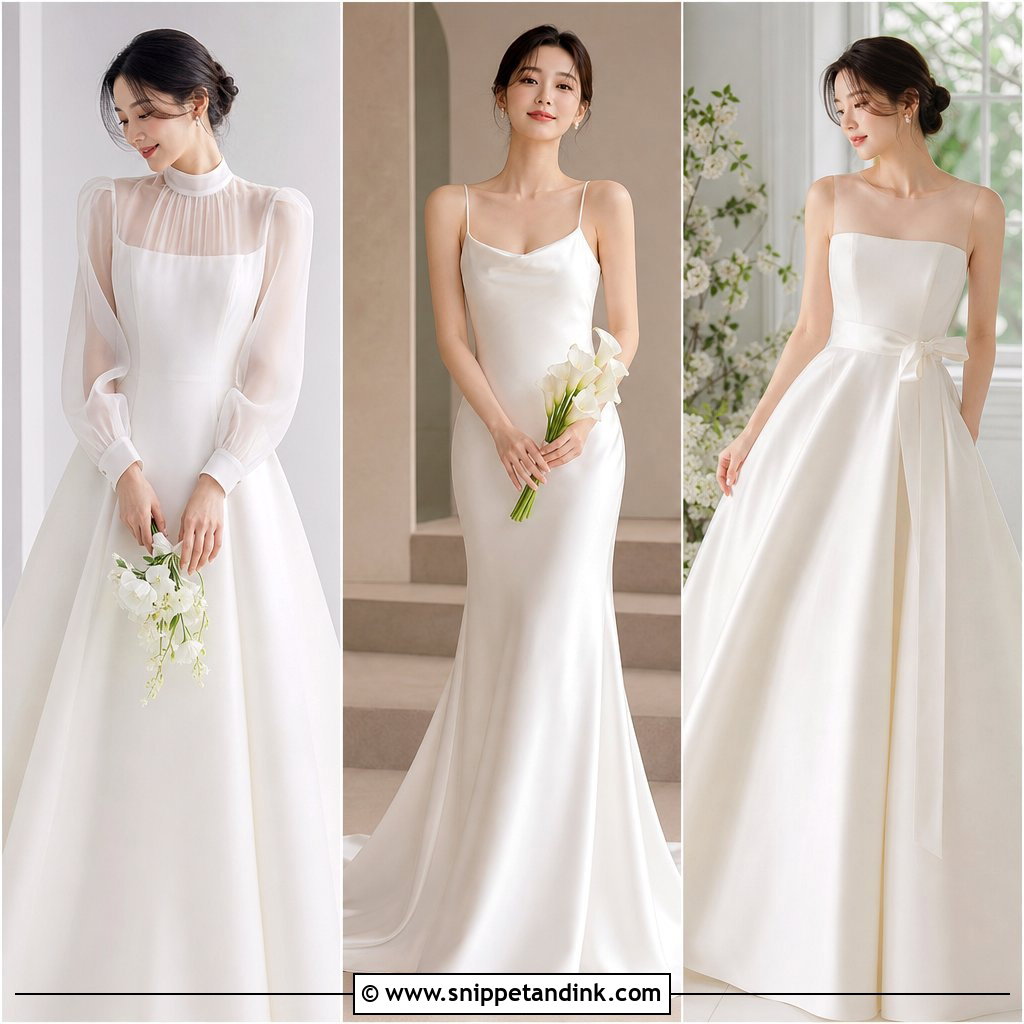
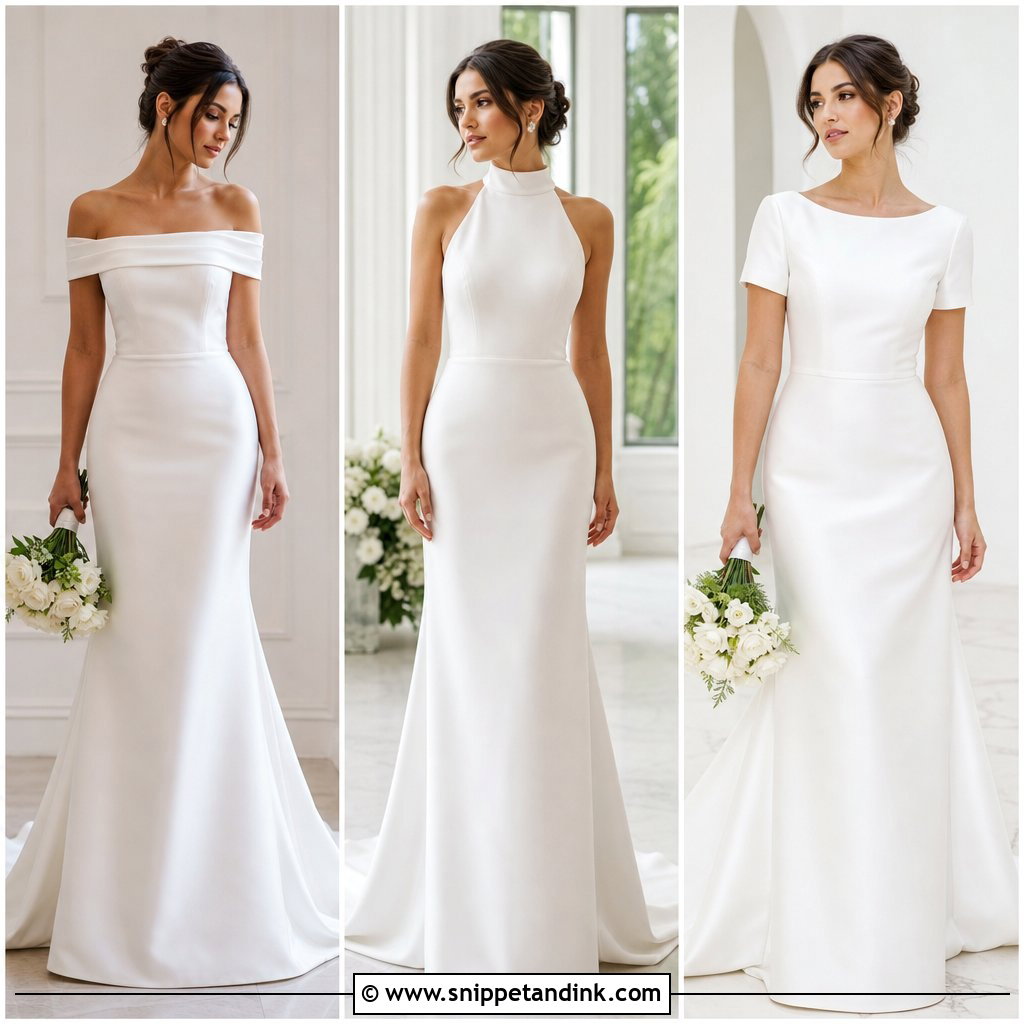
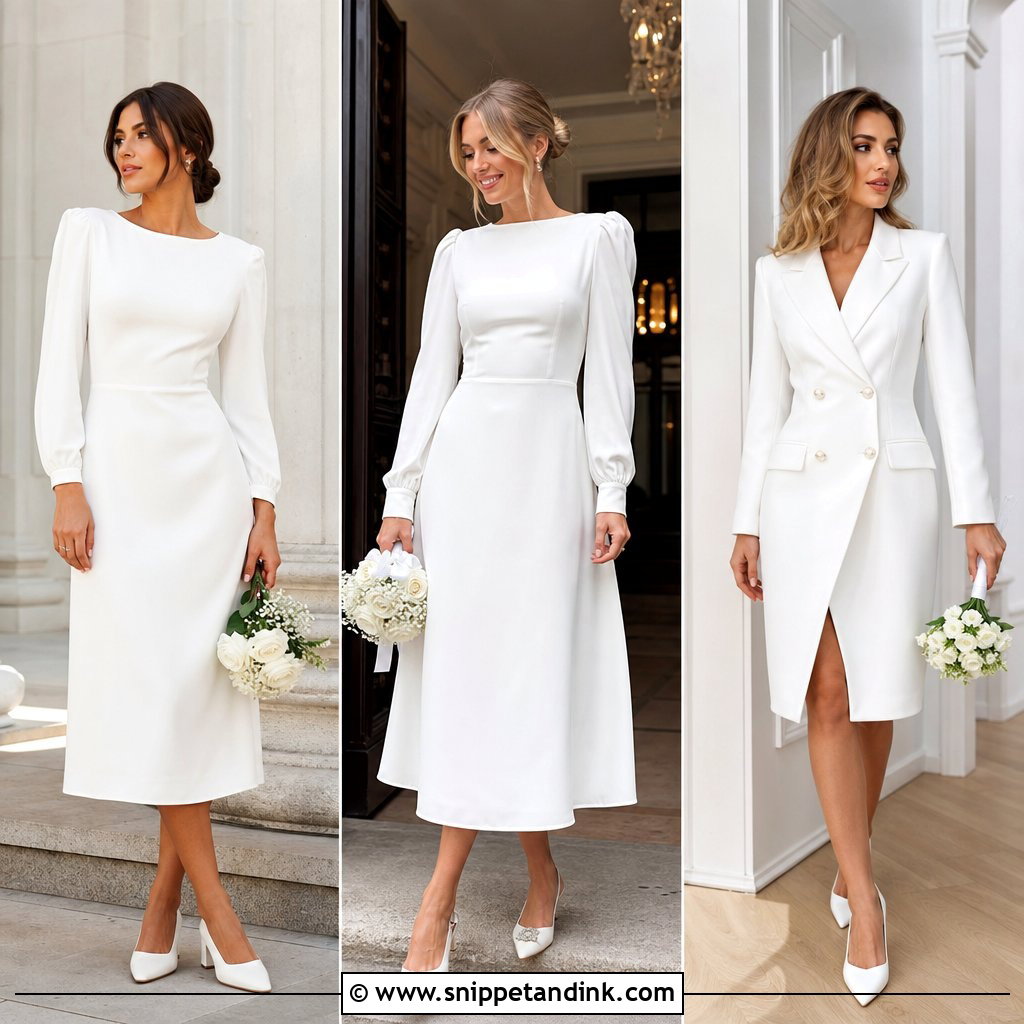
20. Simple Winter Long Sleeve Wedding Dress
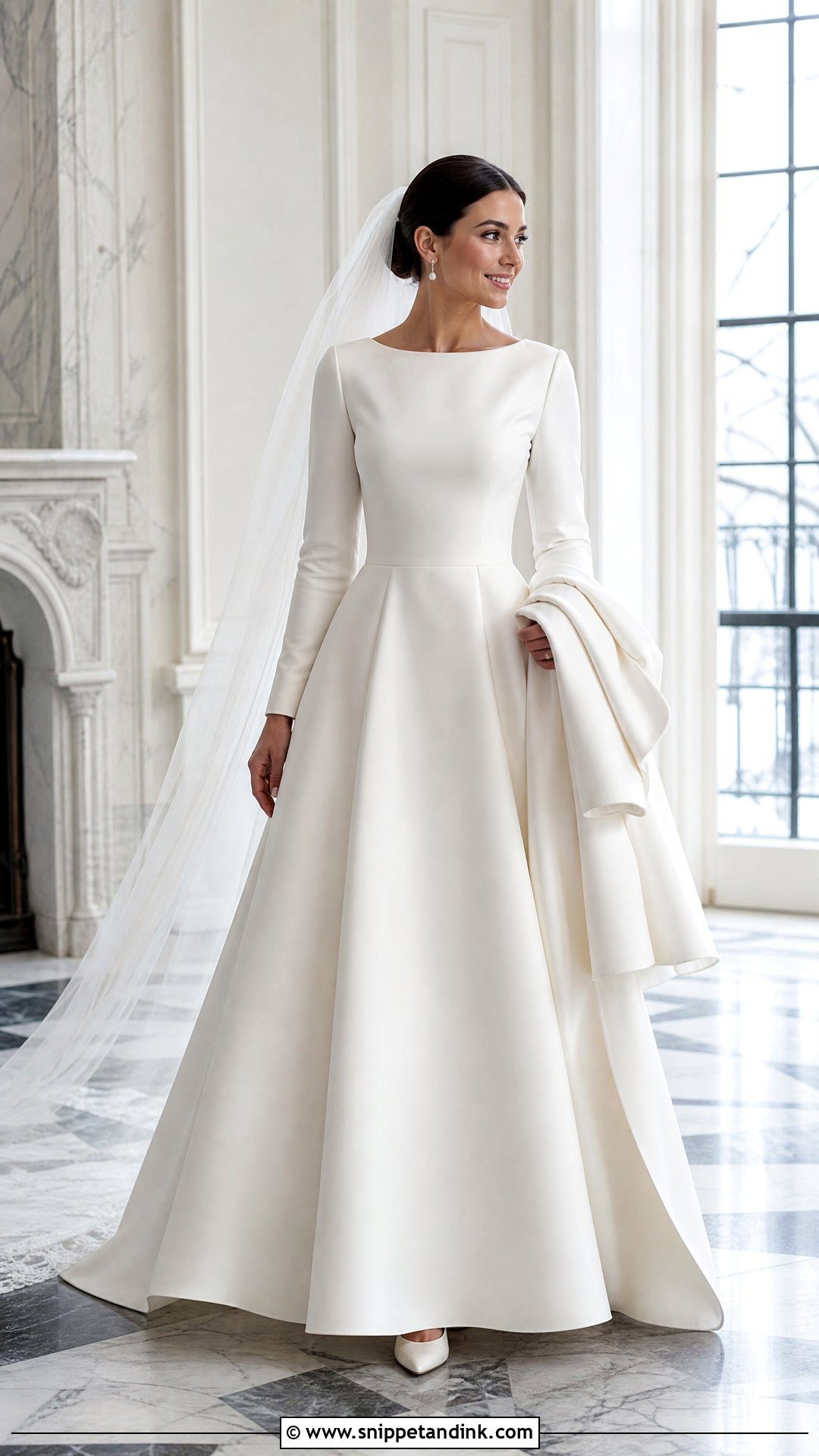
For winter, substantial crepe, satin or mikado with a structured A-line skirt, fitted bodice and fully lined sleeves looks seasonal without decoration. The lining matters: lined sleeves slide over a thin thermal layer instead of clinging. Closed-toe pumps or ankle boots hidden under the hem, pearl drops and a long veil. Add a tailored ivory coat or wrap for outdoor photos, and make sure it comes off easily so the silhouette stays clean indoors. Sleeves aren’t a coat, so plan proper outerwear for real cold. A sleek bun holds up in wind and shows the earrings. It’s the practical side of a simple winter wedding gown.
Which Sleeve Alterations Are Simple, and Which Get Tricky
Not every sleeve change takes the same effort, and knowing which is which helps you judge a sample honestly.
Shortening a plain sleeve
On plain crepe or satin with a simple hem, shortening is routine work for any good seamstress.
Lace cuffs and buttoned wrists
A scalloped lace edge has to be unpicked and moved up, and a cuff with buttons and loops has to be reset. Both are doable but take longer, so raise them at the first fitting rather than the last.
Letting a sleeve out
Taking a sleeve in is usually straightforward. Letting one out depends on the seam allowance left inside, which is often slim. If the upper arm is tight on the sample, ask the shop about ordering a larger sleeve or extra fabric before the order goes in.
Long Sleeves at a Summer Wedding
Heat and long sleeves can coexist with the right fabric. Unlined chiffon, sheer tulle or lace on a fine mesh breathe far better than satin or lined crepe. Ask whether the sleeves can be left unlined, keep the bodice lining light, and schedule an outdoor ceremony in shade if you can. A cooler fabric does more for comfort than a shorter sleeve ever will.
A Plain Gown Lives or Dies by Its Sleeves
A simple gown works when the coverage you want meets a silhouette you can wear all day. Chiffon, lace, satin and crepe all appear above, in shapes for different bodies, venues, seasons and levels of formality. At fittings, test sleeve mobility, fabric weight, neckline placement and hem length before anything else. Keep accessories in a supporting role; simple earrings, comfortable shoes and a veil in proportion are usually enough. With careful tailoring and a little restraint, long sleeves make a plain dress look finished rather than bare.
You'll Like These Ideas:





Leave a Reply