
Plain dresses are the hardest ones to get right, and I mean that as a compliment to the brides who choose them. A simple bridal dress has nowhere to hide. Without lace or beading, your eye goes straight to the fabric, the seams and how the hem meets the floor, so those three things carry the whole look. Below are twenty clean silhouettes, from satin A-lines to crepe columns, each styled with the shoes, veil and flowers I’d put with it, plus the fitting detail I’d watch on that particular cut.
What Makes a Plain Dress Look Expensive
When a bride tells me she wants simple, I hand her the gown inside out. The inside tells you more than the hanger does.
Fabric weight
Hold the skirt up and let it drop. Good satin and crepe fall heavily and straight; thin fabric flutters and creases where you grip it. Rub a corner between your fingers for a few seconds. If it wrinkles hard, it’ll look crumpled after the ceremony car.
Seams and lining
Seams should be flat and straight with no puckering, especially at the side of the bodice. A full lining in the skirt makes the outer layer hang cleanly, while a missing or short one shows through in sunlight.
The hem
On a plain gown, a rippled hem or a train that twists is the first thing people notice in photographs. Ask whether the hem has horsehair braid or a weighted finish, which helps the edge sit smoothly.
The zip and closures
Run the zip up and down a few times. On a well-made plain gown, it’s hidden under a placket or set so cleanly that you barely see it, and it doesn’t ripple at the small of the back. A lumpy invisible zip is distracting on a dress with no other detail, and replacing one properly is a bigger job than most brides expect, so it’s worth catching before you order.
1. Simple Satin A-Line Wedding Gown
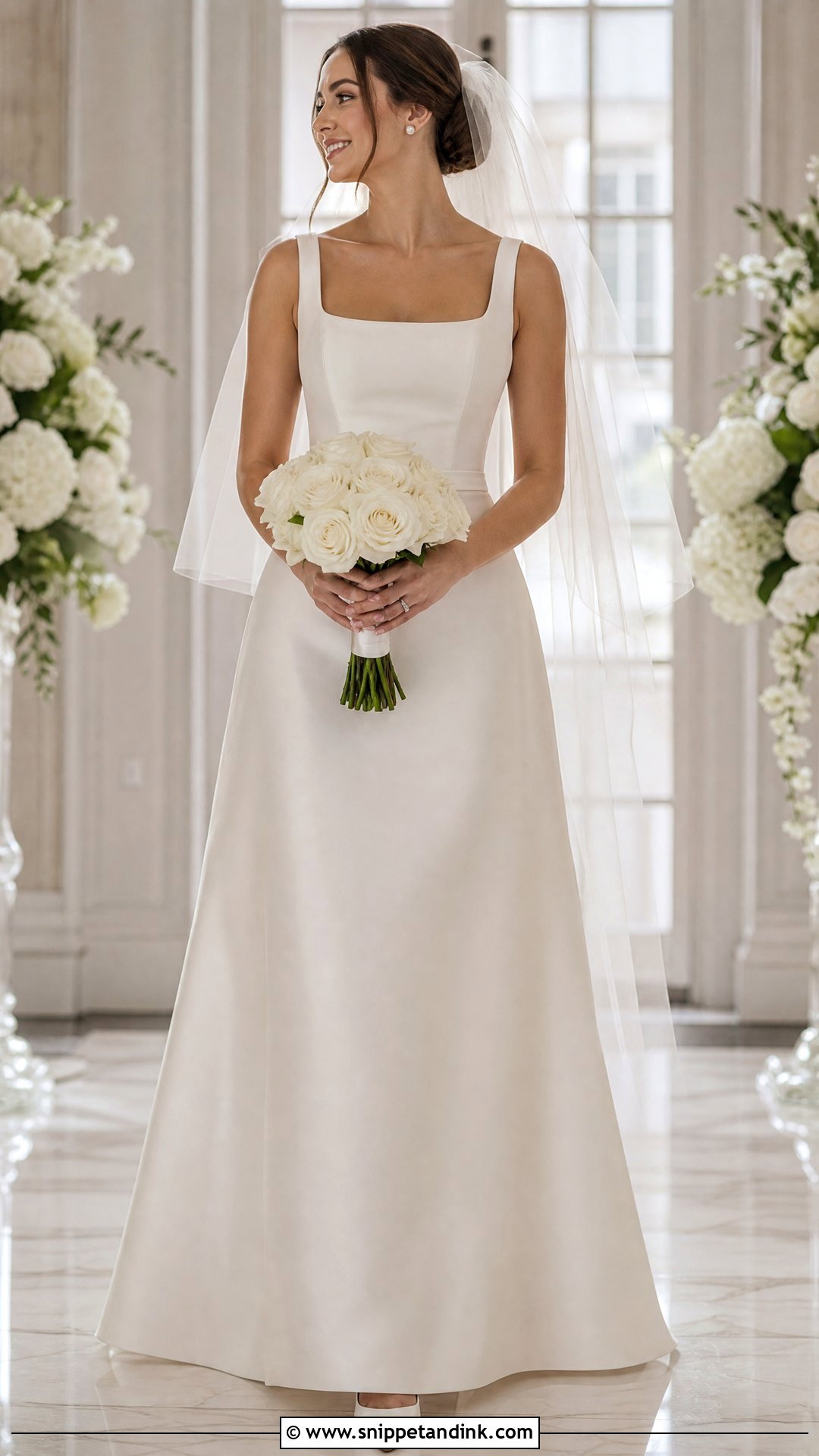
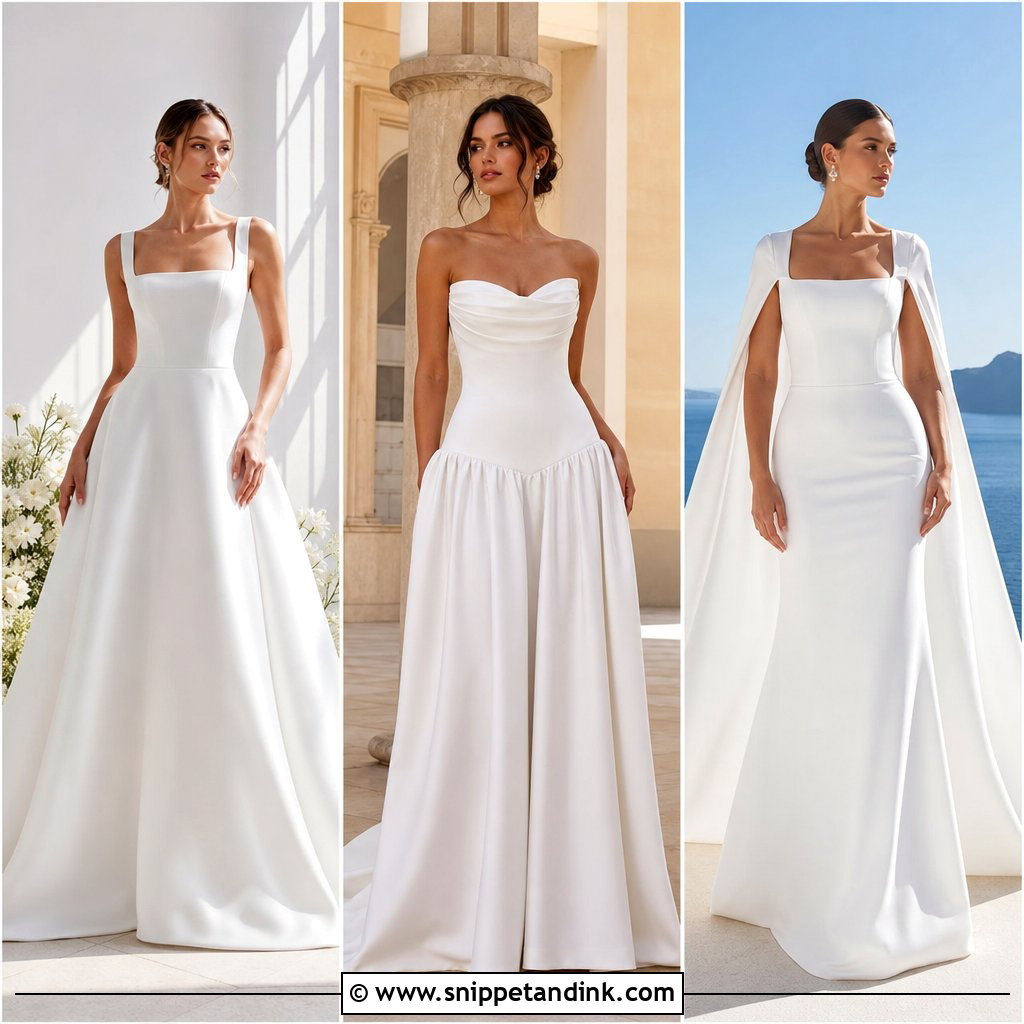
Satin A-lines suit more body shapes than almost anything else I fit, because the skirt releases from the waist and skims rather than clings. A smooth bodice with wide straps or a soft curved neckline gives support without fuss. Pointed ivory pumps, pearl studs, a fingertip tulle veil and a compact rose bouquet keep it traditional. Satin already reflects light, so go easy on sparkle. If you’re petite, ask for a slightly narrower skirt; taller brides can carry a longer train. The hem is everything here. A satin A-line hemmed a quarter inch too long drags and dulls at the front within the first hour.
2. Square Neck Crepe Wedding Gown
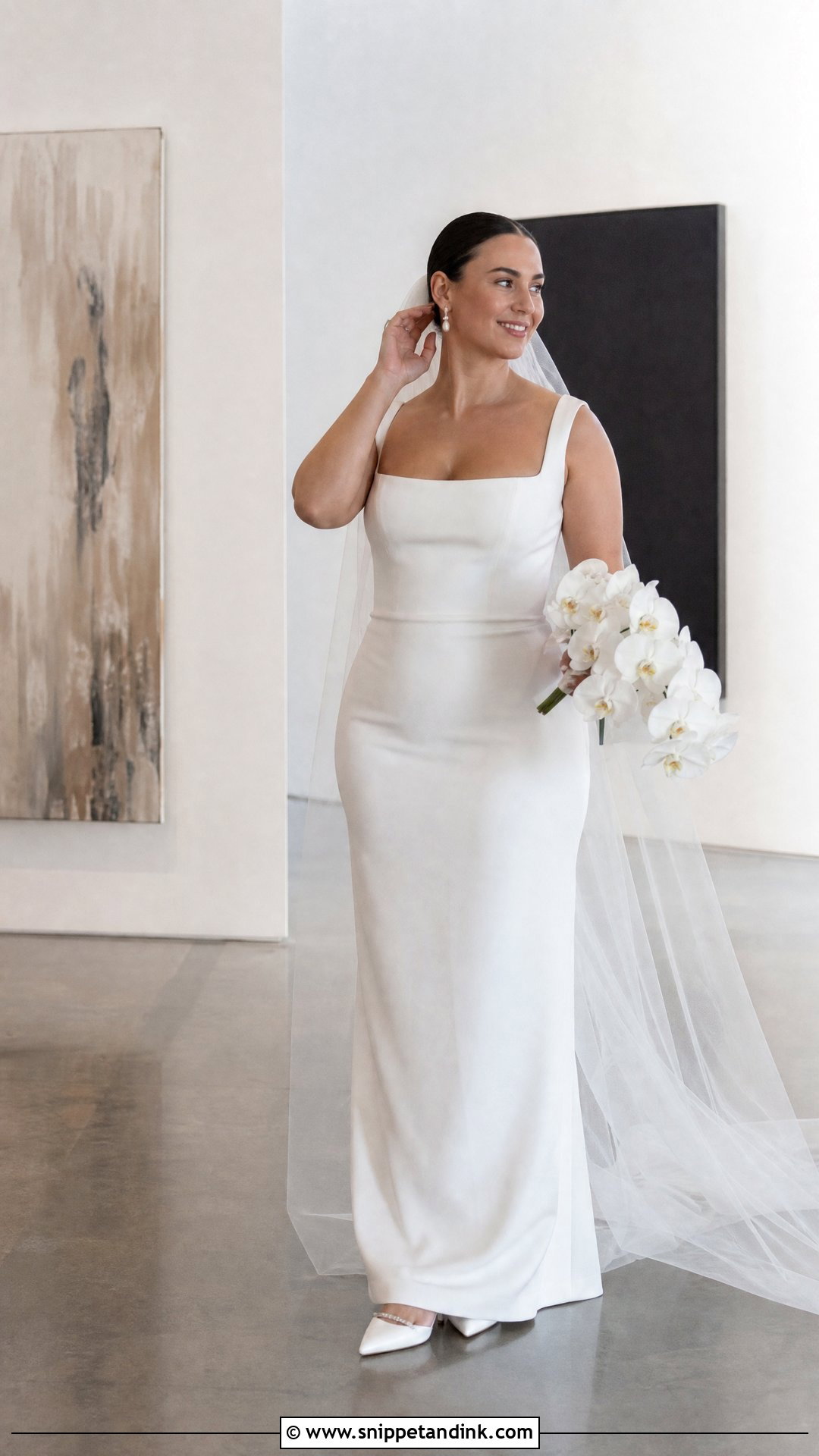
Square necks look modern in crepe without losing the bridal feel. The straight edge frames the collarbone and pairs well with wide straps or short fitted sleeves. Pick a medium-weight crepe; anything thinner clings at the hip. A fitted waist and straight skirt give one long line. Low pearl earrings, a sleek bun, slingback heels and a cathedral veil finish it, with a white orchid bouquet for shape. If you want more waist definition, I’d add seaming through the bodice rather than a belt, since a belt cuts that line in half. Crepe shows every lump of an undergarment, so wear the real ones to fittings.
3. Strapless Column Wedding Gown
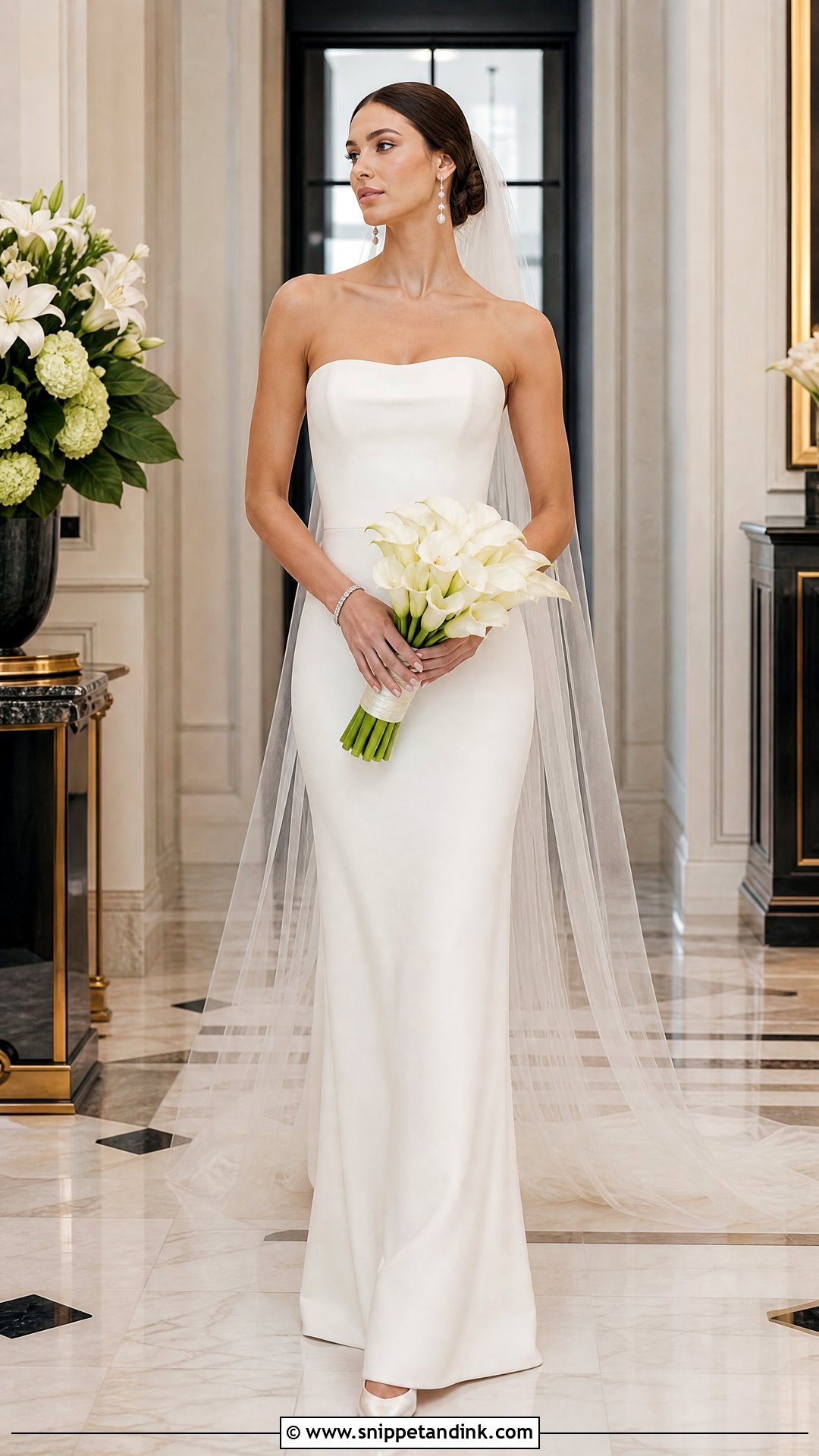
Strapless columns live or die on the corset inside. Before I look at anything else, I check that the boning is sewn into the bodice and that the dress stays up when the bride raises her arms, with no tugging. A straight or gently sculpted neckline, a skirt that follows the body without hobbling you, and you’re set. Satin pointed heels, a slim tennis bracelet, small drops and a long sheer veil suit a hotel or modern indoor venue. An updo keeps the neckline clear. Want coverage for arrival or outdoor photos? A removable satin wrap does it, and calla lilies echo the straight line.
4. Silk Slip Wedding Gown
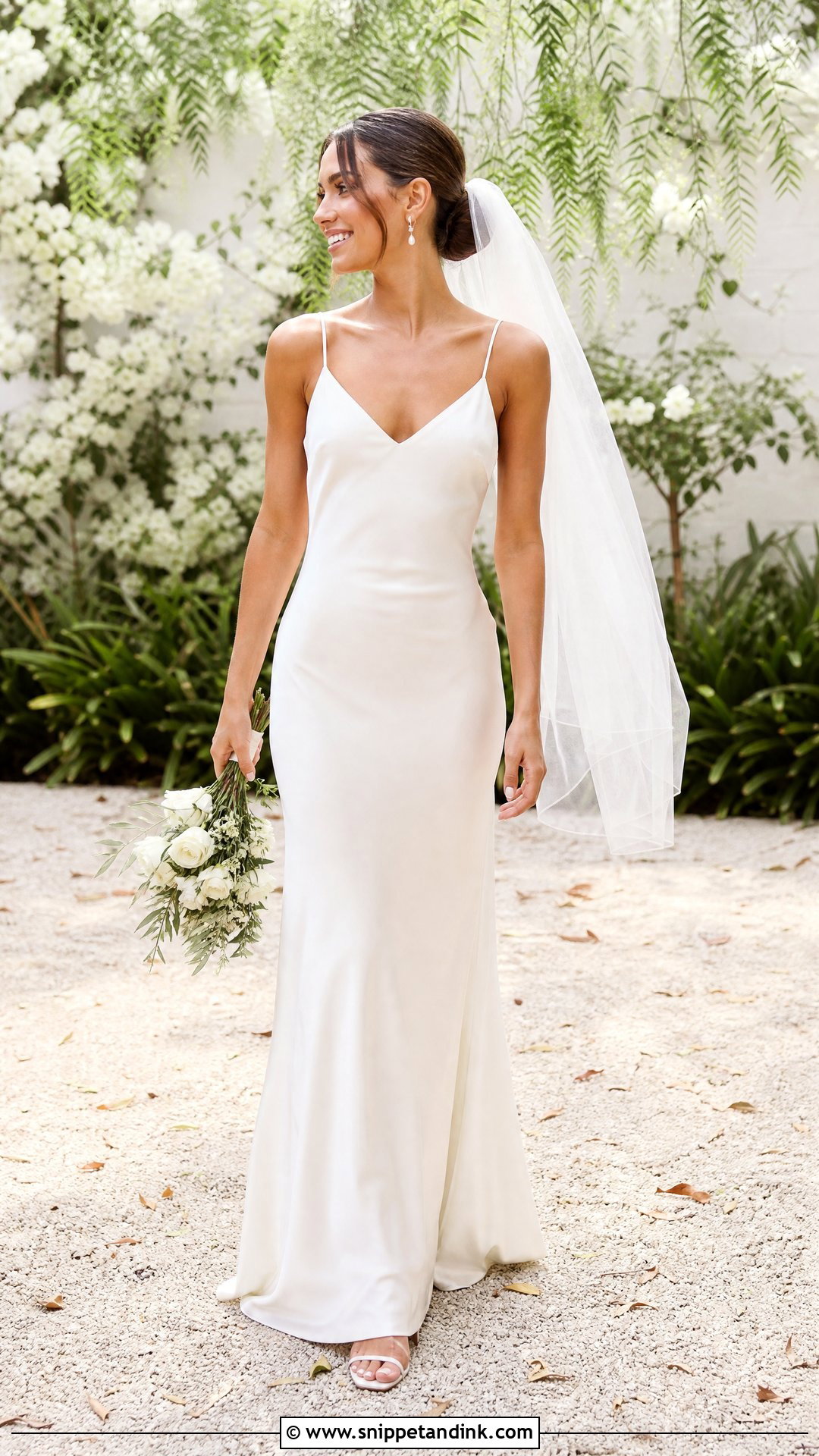
A bias-cut silk slip moves like nothing else, and it’s also the least forgiving dress on this list. Cutting on the bias lets the fabric stretch and drape across the body, which is why it skims so closely, and why it shows every seam and every line underneath. Narrow straps, a gentle V and a full lining to stop it going sheer in sunlight are non-negotiable. Minimal sandals, fine pearl or gold earrings and a light veil beneath a low bun keep it relaxed, with white tulips in hand. Buy for fit, not the label, and let a tailor adjust the straps and neckline so it sits securely.
5. Boat Neck Long Sleeve Wedding Gown
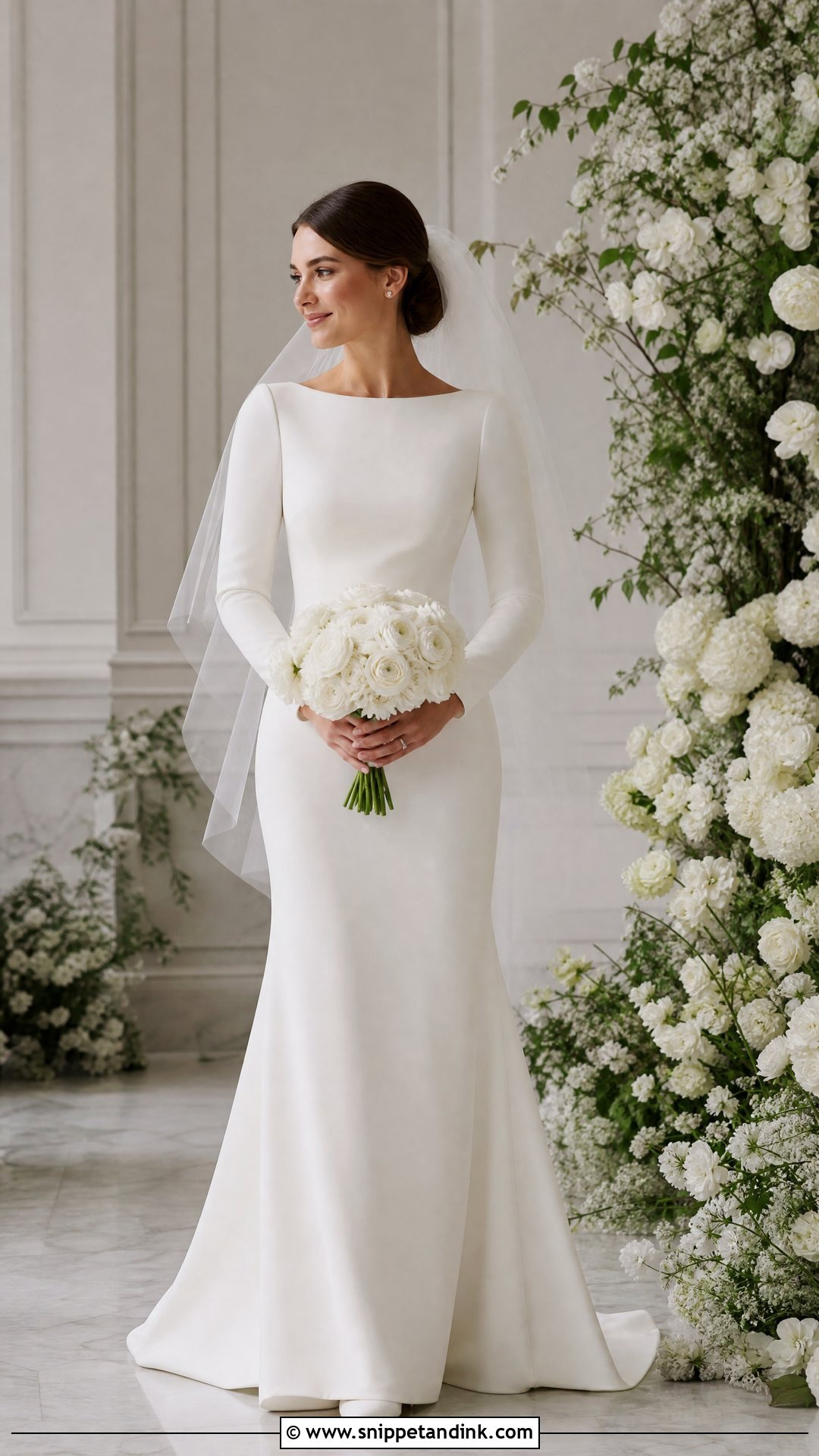
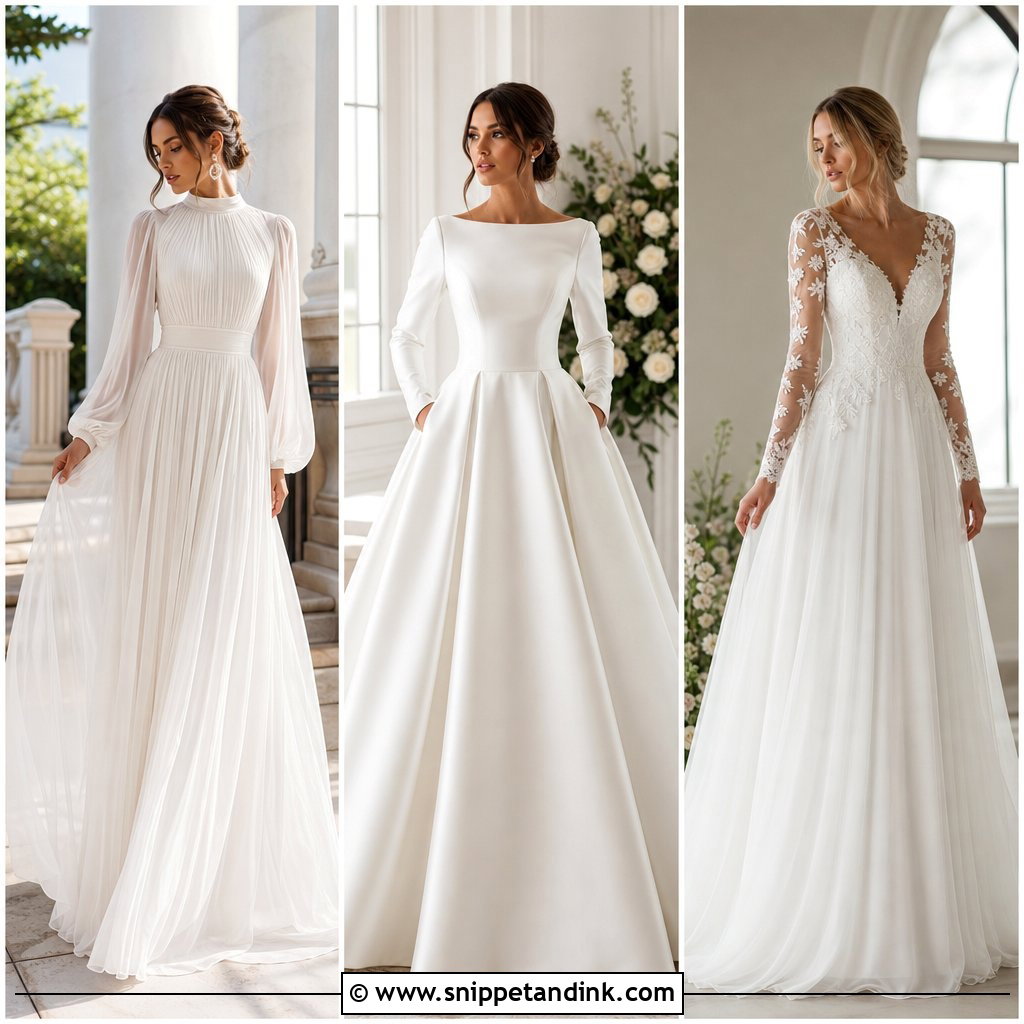
Boat necks run straight across from shoulder to shoulder, so they frame the collarbone without showing much skin. Add fitted long sleeves in matte crepe or silk faille and you’ve got a modest look that stays clean. A defined waist and gentle flare stop it feeling severe. Closed-toe pumps, pearl studs and a low chignon suit it, with a plain tulle veil anchored under the bun and white ranunculus in hand. One fitting note: a boat neck slides if the shoulders are even slightly too wide, so have the seamstress check it while you reach forward.
6. Off Shoulder Mikado Wedding Gown
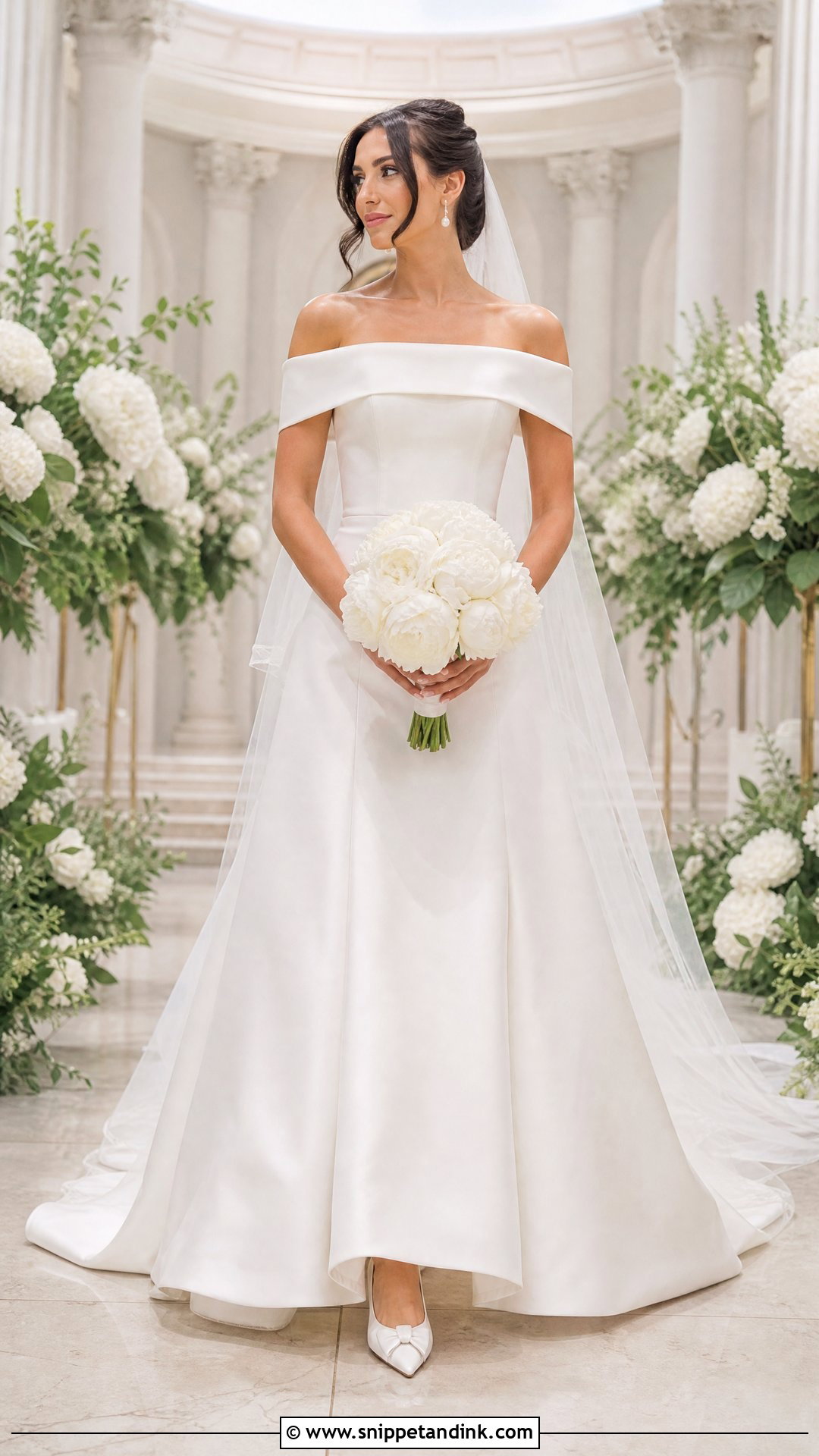
Mikado has enough body to stand on its own, which is why an off-shoulder mikado gown feels special without a single bead. The folded neckline should sit securely around the shoulders and not rely on the sleeves to hold anything up. Pearl drops, a center-parted bun and pointed satin pumps are all it needs. Skip the necklace. A long plain veil and white peonies keep it uncluttered. Off-shoulder bands restrict how high you can raise your arms, so practice a hug and a wave at the fitting. A little restriction is normal; pinching isn’t.
7. High Neck Sheath Wedding Gown
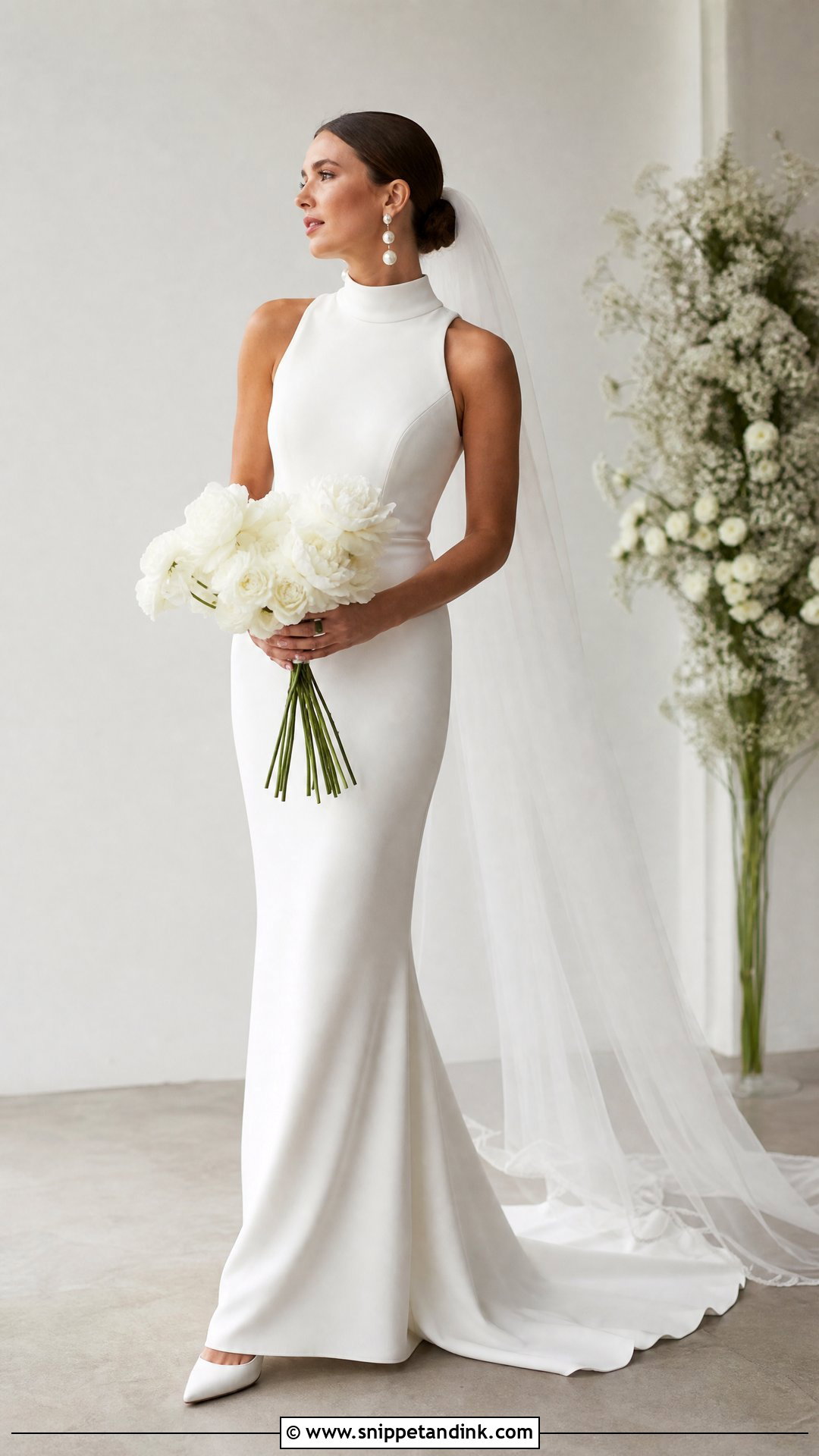
High neck sheaths draw the eye straight up to the face. I’d pair soft crepe with a sleeveless bodice, a fitted waist and a modest train. Sculptural earrings or pearl studs, pointed pumps and a low bun or smooth ponytail suit it. Choose a sheer chapel veil with a raw cut edge instead of a decorated one, and a long-stemmed bouquet to match the vertical line. For a fuller bust, a high neck can look boxy; darts and a neckline dropped by an inch or so usually solve it. Walk and sit at fittings to check it isn’t pulling across the hips.
8. Cowl Neck Satin Wedding Gown
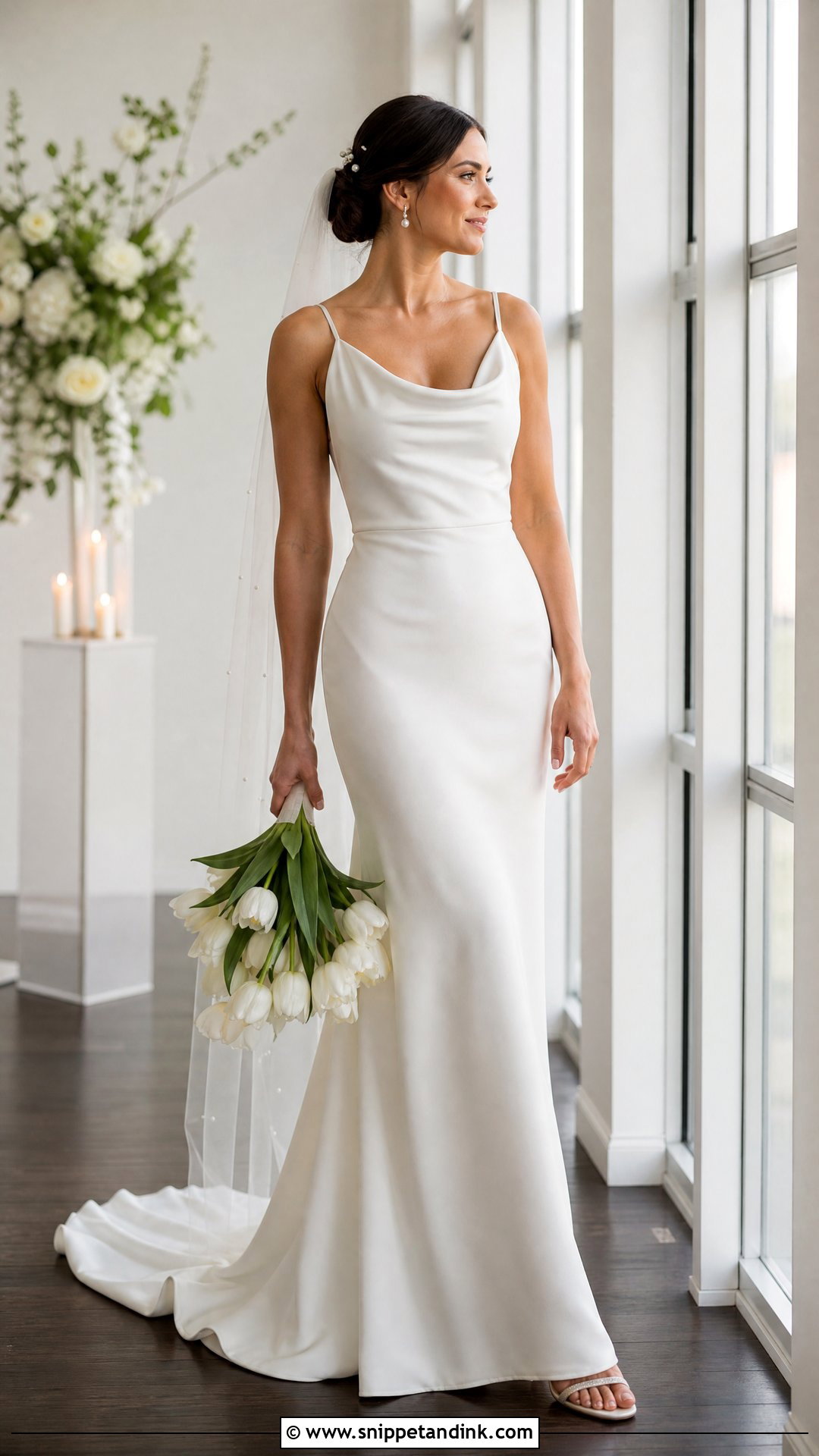
A cowl is just fabric draped in soft folds at the neckline, and it needs a fluid satin to work. Stiff satin won’t fall; it sticks out. A lightly draped front pairs well with narrow straps and a slim skirt. Pearl hairpins, small earrings and simple heeled sandals, plus a shoulder or fingertip veil so the neckline still shows. Sweet peas or tulips keep the bouquet loose. The risk with a cowl is that it gapes when you lean forward. Shortening the straps a fraction and a strip of fashion tape keep it in place through the hugs.
9. V-Neck Chiffon A-Line Wedding Gown
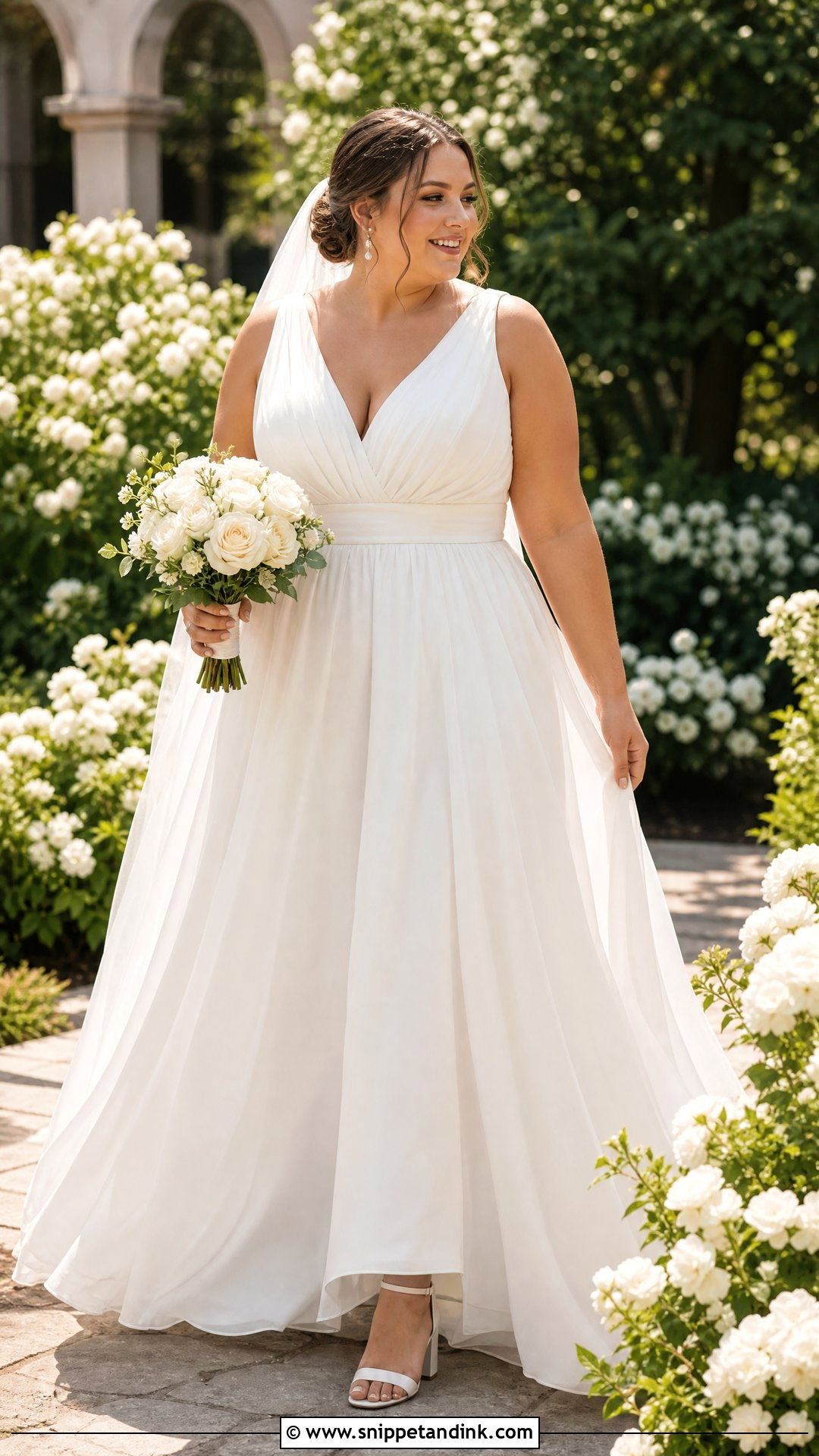
Chiffon is the fabric I recommend most for heat. It’s light, breathes and moves with the smallest breeze. On a V-neck A-line, I look for a lined bodice and supportive straps with only gentle gathering at the waist, because heavy gathers in chiffon add bulk fast. Block-heel sandals keep you steady on grass. Small pearl earrings, a narrow veil and loose waves or a soft low bun suit the relaxed shape, and white garden roses keep the palette pale. Need more coverage? Go for a shallower V or an illusion panel. Check that the lining is hemmed to the same length as the chiffon, or you’ll see a line through it outdoors.
10. Cap Sleeve Crepe Wedding Gown
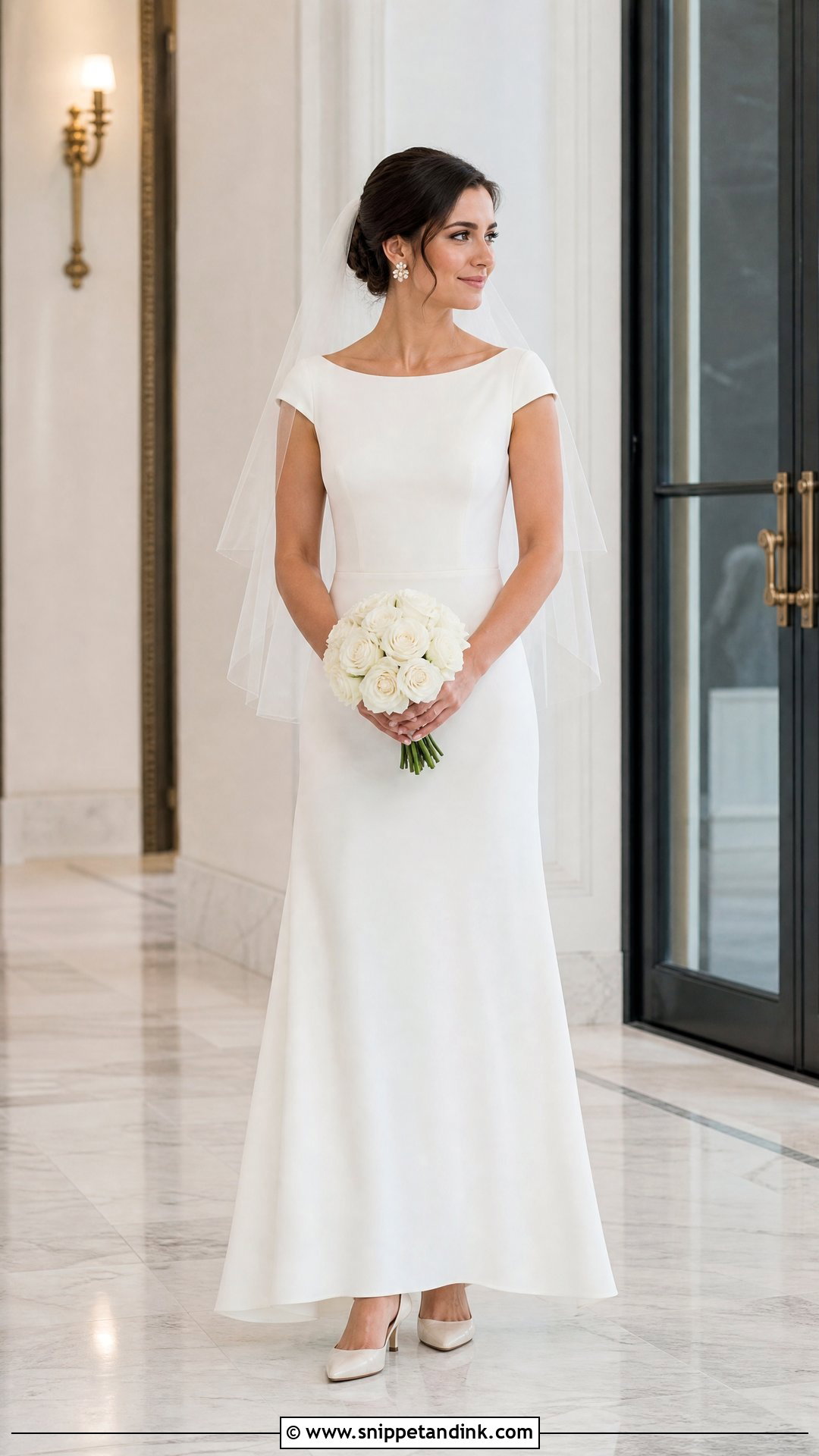
Cap sleeves give you a little shoulder coverage without adding weight. The bodice should be fitted, the neckline softly curved and the skirt straight before opening slightly below the hips. The sleeves must sit flat. If they stand away from the arm, they’re cut too wide and will make the shoulders look broader in photos. Ivory kitten heels, pearl cluster earrings and an elbow-length veil with a low bun suit it, along with white roses or lisianthus. Petite and curvy brides can both wear this well once sleeve width and waist placement are adjusted. Leave heavy necklaces and ornate belts at home.
11. Basque Waist Satin Wedding Gown
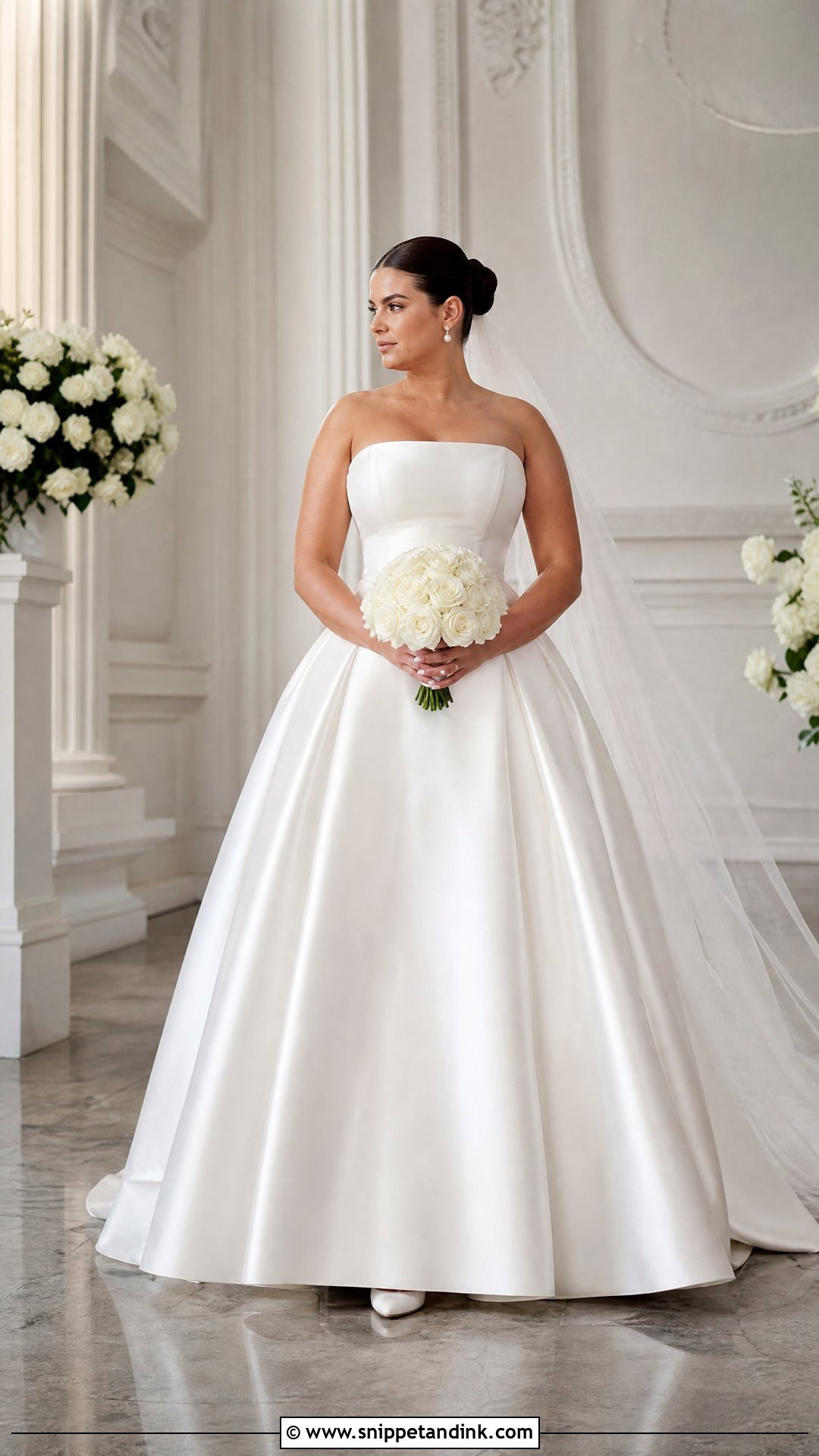
The pointed basque waist gives a full satin skirt its shape and makes this one of the more formal options here. A clean strapless or wide-strap bodice stops it from tipping into fussy. Structured satin holds the point and skirt without needing many petticoats. Pearl earrings, closed-toe satin heels and a cathedral veil suit it, and a smooth ballerina bun matches its traditional proportions. White roses with ribbon-wrapped stems finish it. Check the point is centered. If a bodice is even slightly twisted, a basque waist shows it more than any other shape, and it shouldn’t dig in when you sit.
12. One Shoulder Crepe Wedding Gown
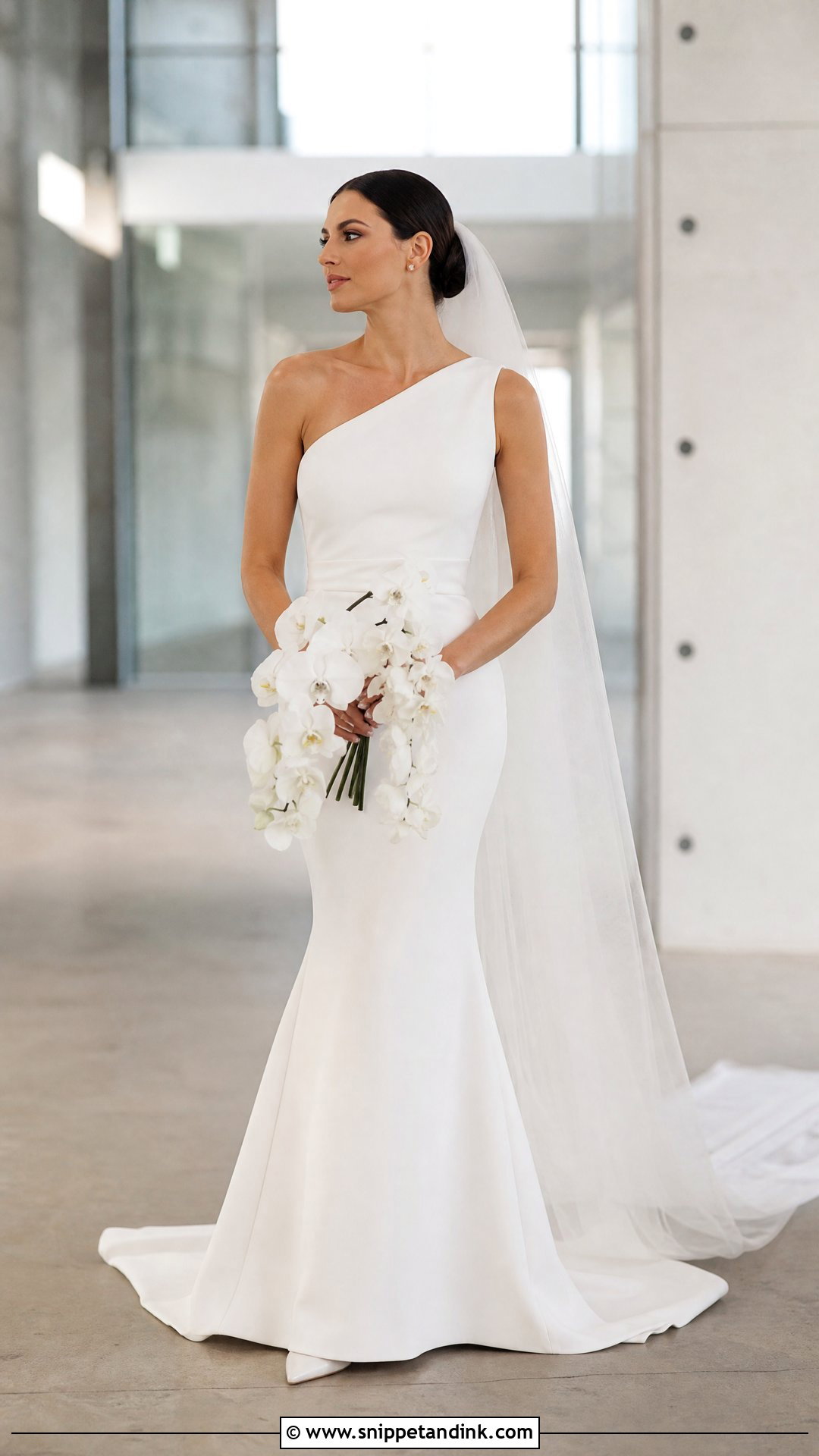
One wide shoulder strap is all the decoration a one-shoulder crepe gown needs. Keep ruffles off it. Pair a fitted bodice with a straight or gently flared skirt. I’d set the bun low and to the side of the bare shoulder so the asymmetry balances, then add small studs, pointed heels and no necklace. A plain chapel veil under the bun or a simple hair clip works, and white orchids suit the sculptural shape. One-shoulder styles want to slide toward the open side. Internal support and a snug strap stop that, so test it by greeting a few people and swaying as if dancing.
13. Halter Neck Silk Wedding Gown
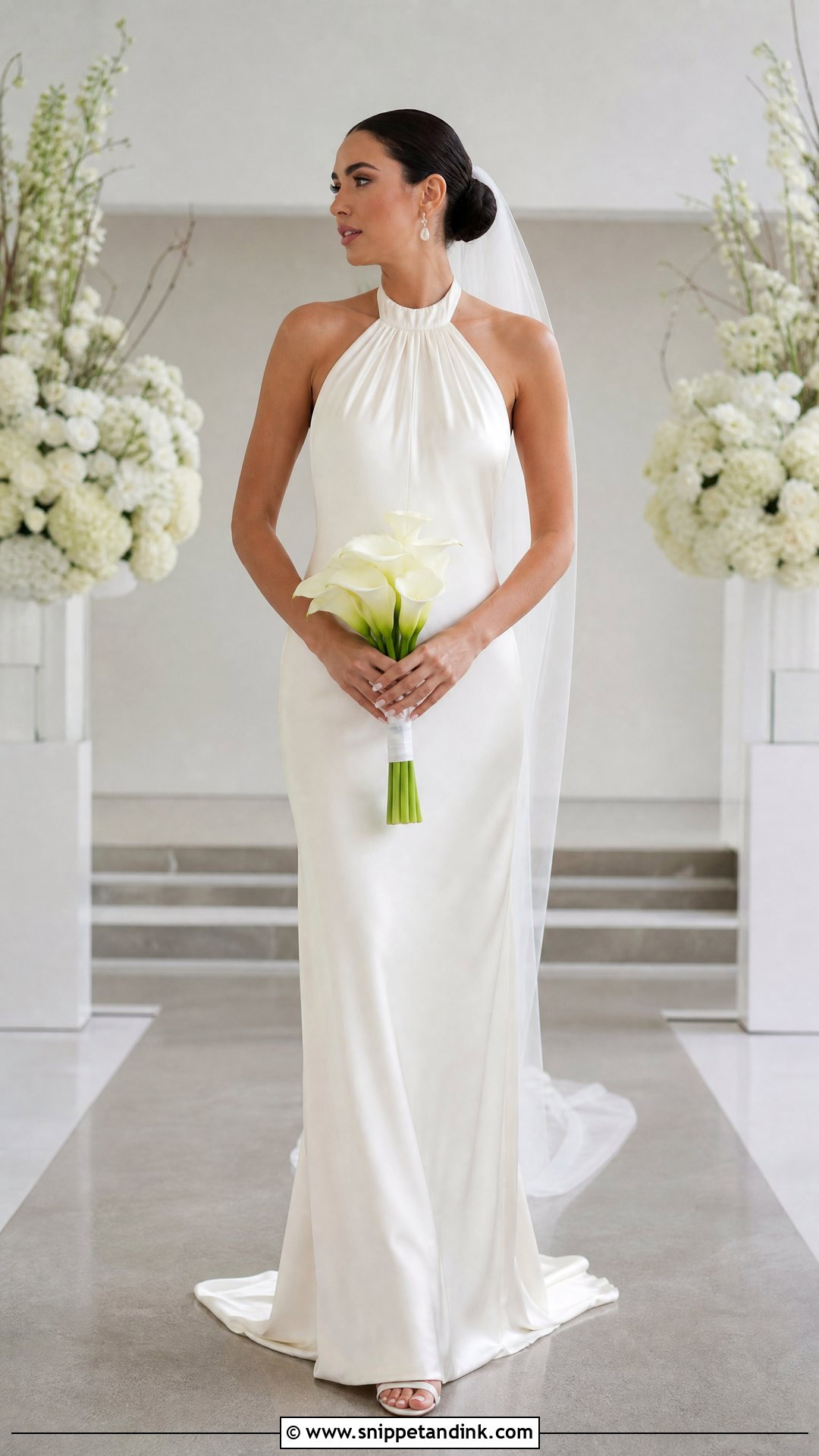
Halters show off the shoulders and create a long line through the body, especially in silk. A clean or lightly gathered neckline with a secure fastening behind the neck, a fluid column skirt and perhaps a low back are enough. Drop earrings, strappy heels and a twisted bun suit it, with the veil attached below the bun so it doesn’t crowd the neck. Calla lilies echo the vertical. Brides with a larger bust should look for built-in cups, because a halter puts the weight on the neck otherwise, and by evening that can give you a headache.
14. Scoop Neck Fit And Flare Wedding Gown
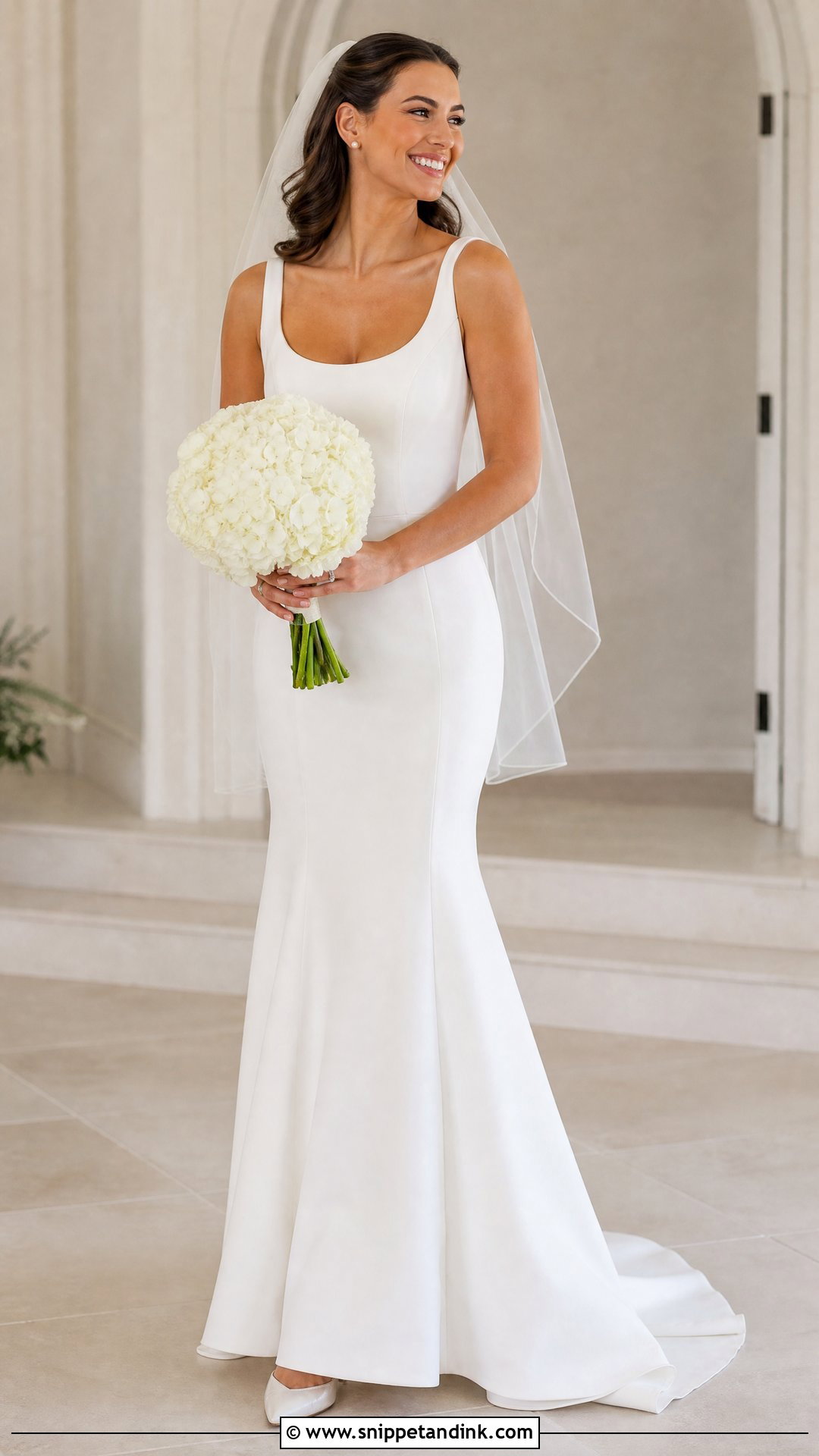
Fit and flare gives definition through the waist and hips with a gentler flare than a mermaid. In matte crepe or smooth satin, princess seams do the shaping. The skirt should open around the thigh or knee; the higher the flare, the easier you’ll walk. Slingback heels, pearl studs and a plain fingertip veil, with soft waves tucked behind the ears, keep it natural. A scoop neck is easy to adjust in width and depth, so it suits a wide range of bust sizes. Tailoring should smooth the hips, but you should still be able to climb a step comfortably.
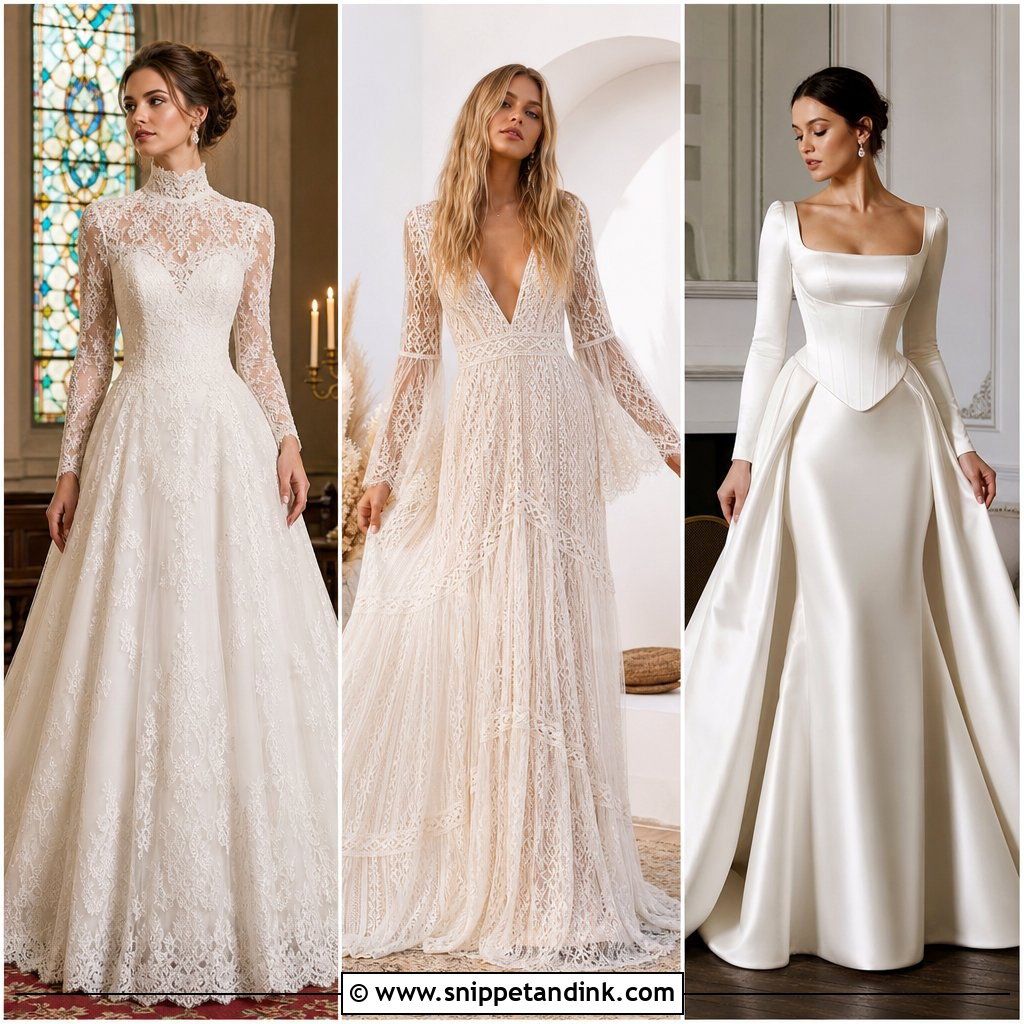
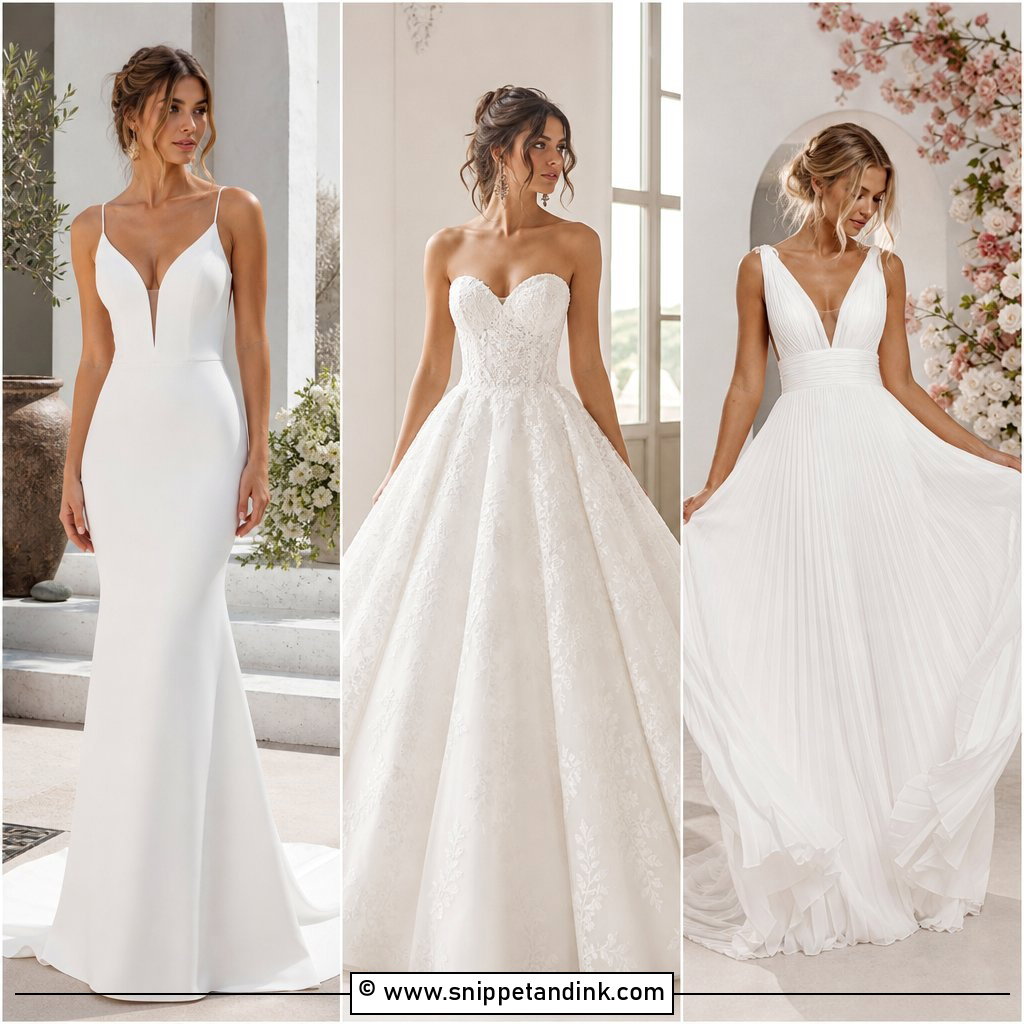
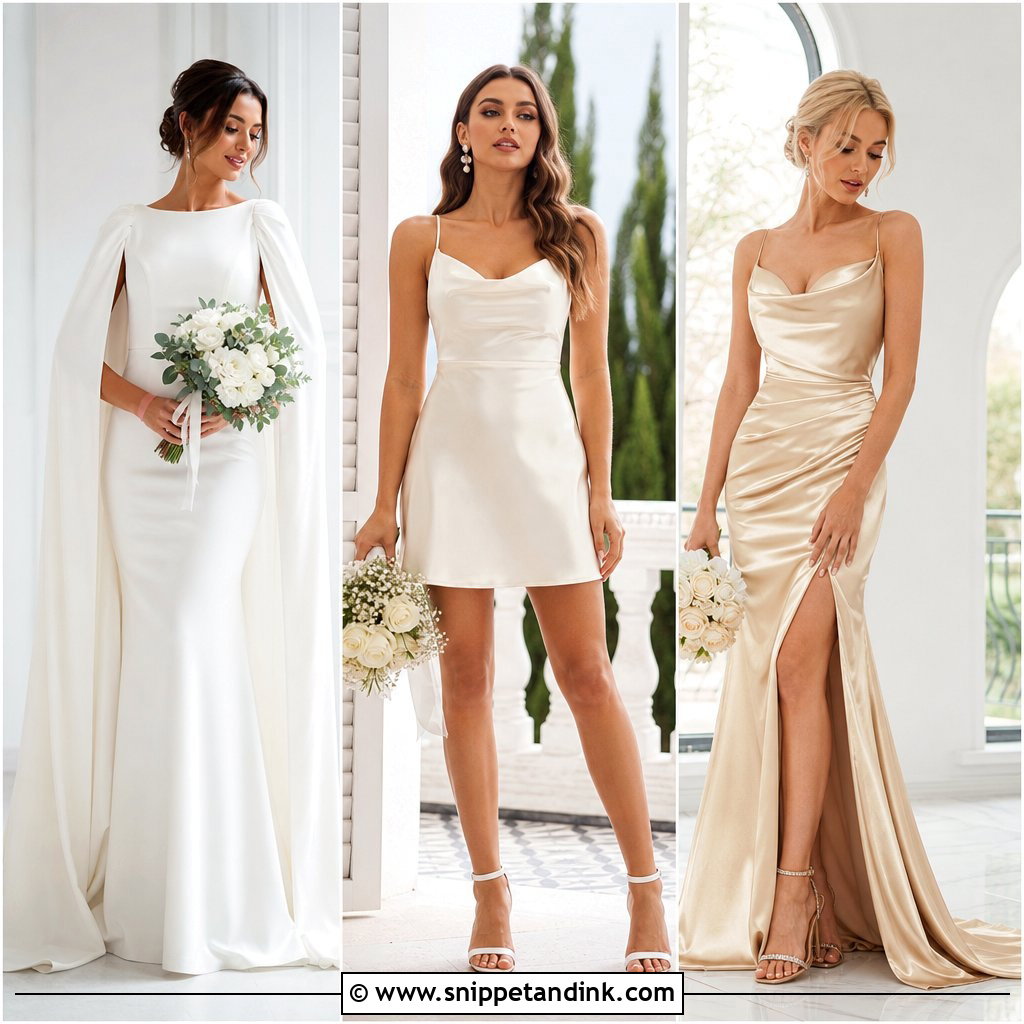
15. Tea Length Wedding Gown
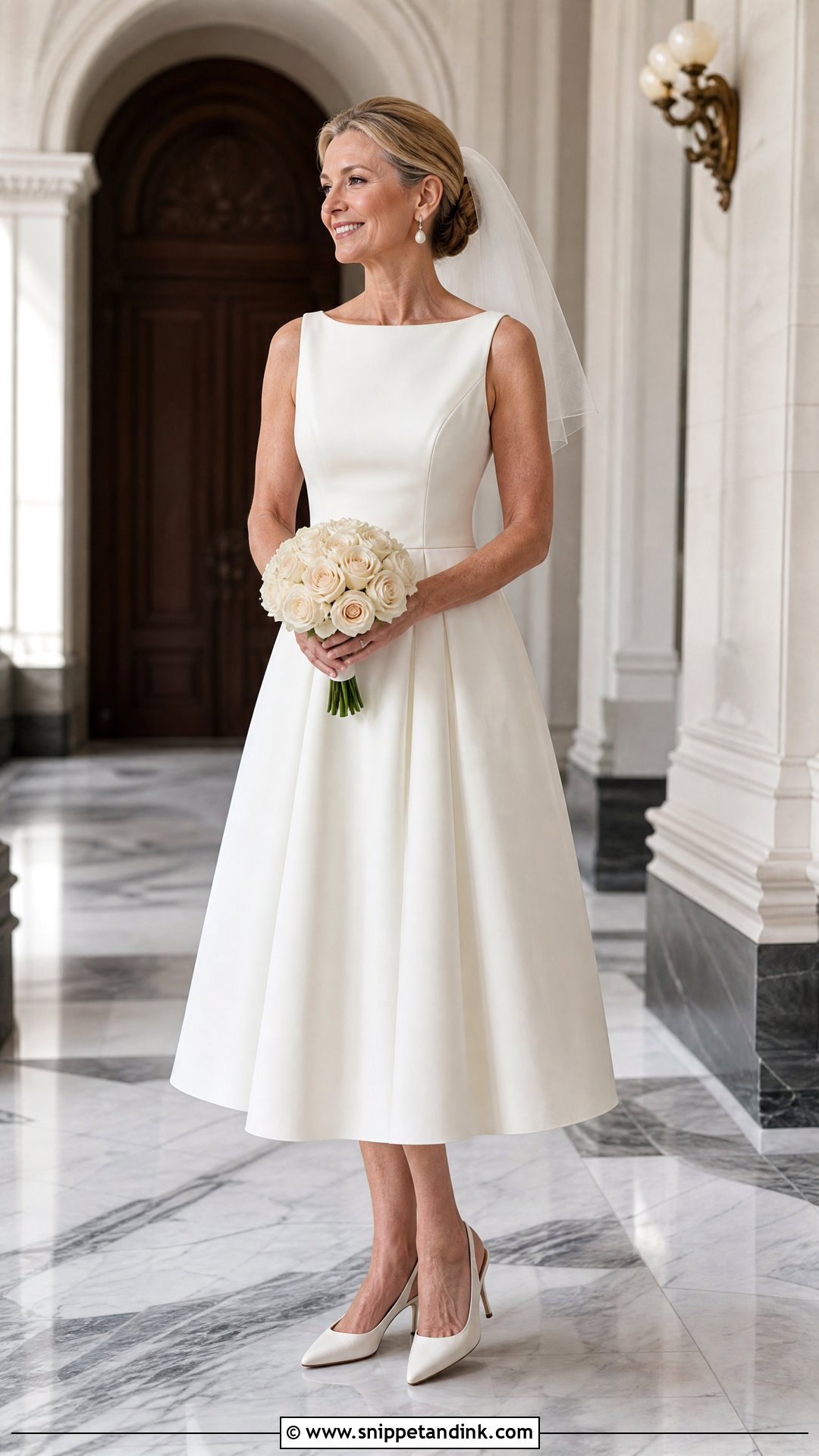
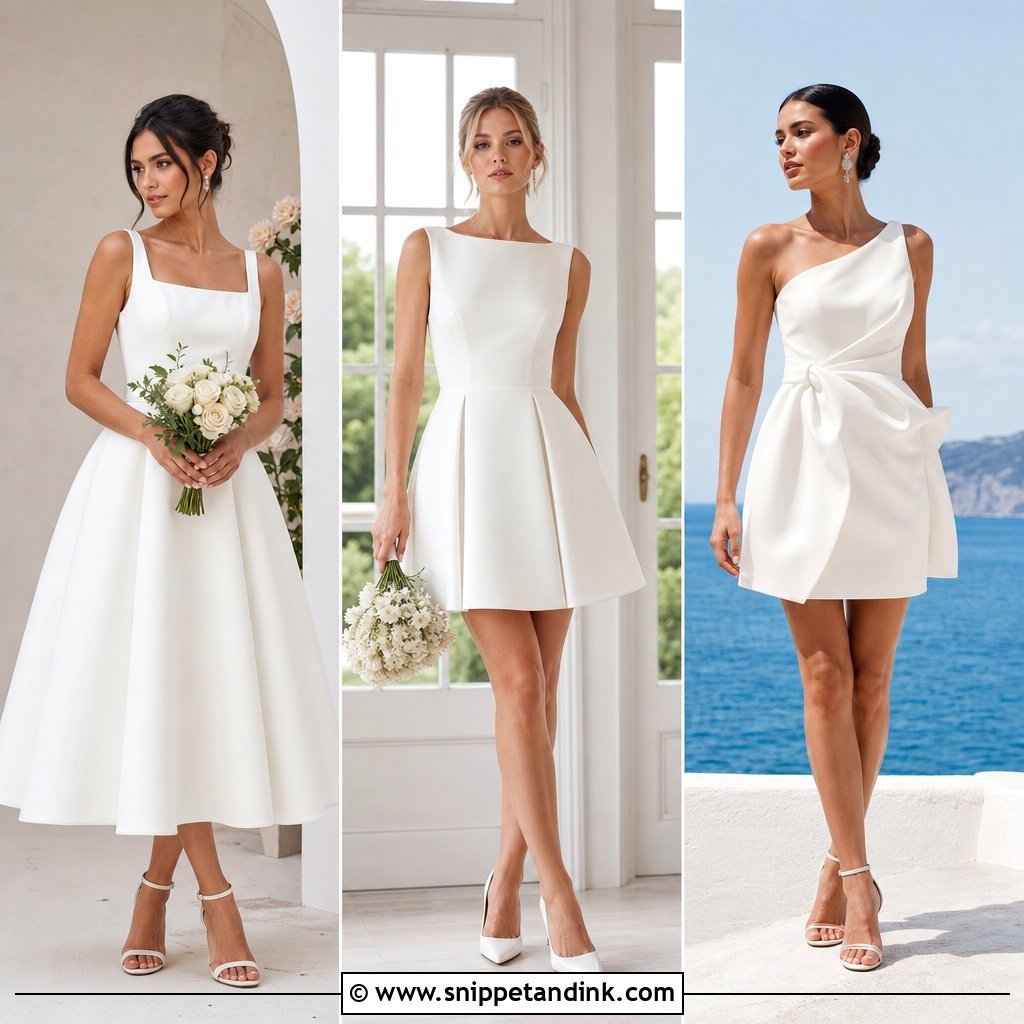
Tea length is my favourite answer for courthouse and daytime ceremonies. A fitted sleeveless bodice with a bateau, square or gently curved neck, and a structured skirt ending between knee and ankle, turns your shoes into part of the outfit. Pointed pumps or slingbacks, pearl earrings, a short veil, a neat bun and a compact rose bouquet keep it classic. Where the hem lands matters more than on a floor-length gown. Ending at the widest part of the calf makes legs look heavier; a couple of inches lower or higher looks far better. Block heels are fine if you’ll be standing a long time.
16. Cape Sleeve Wedding Gown
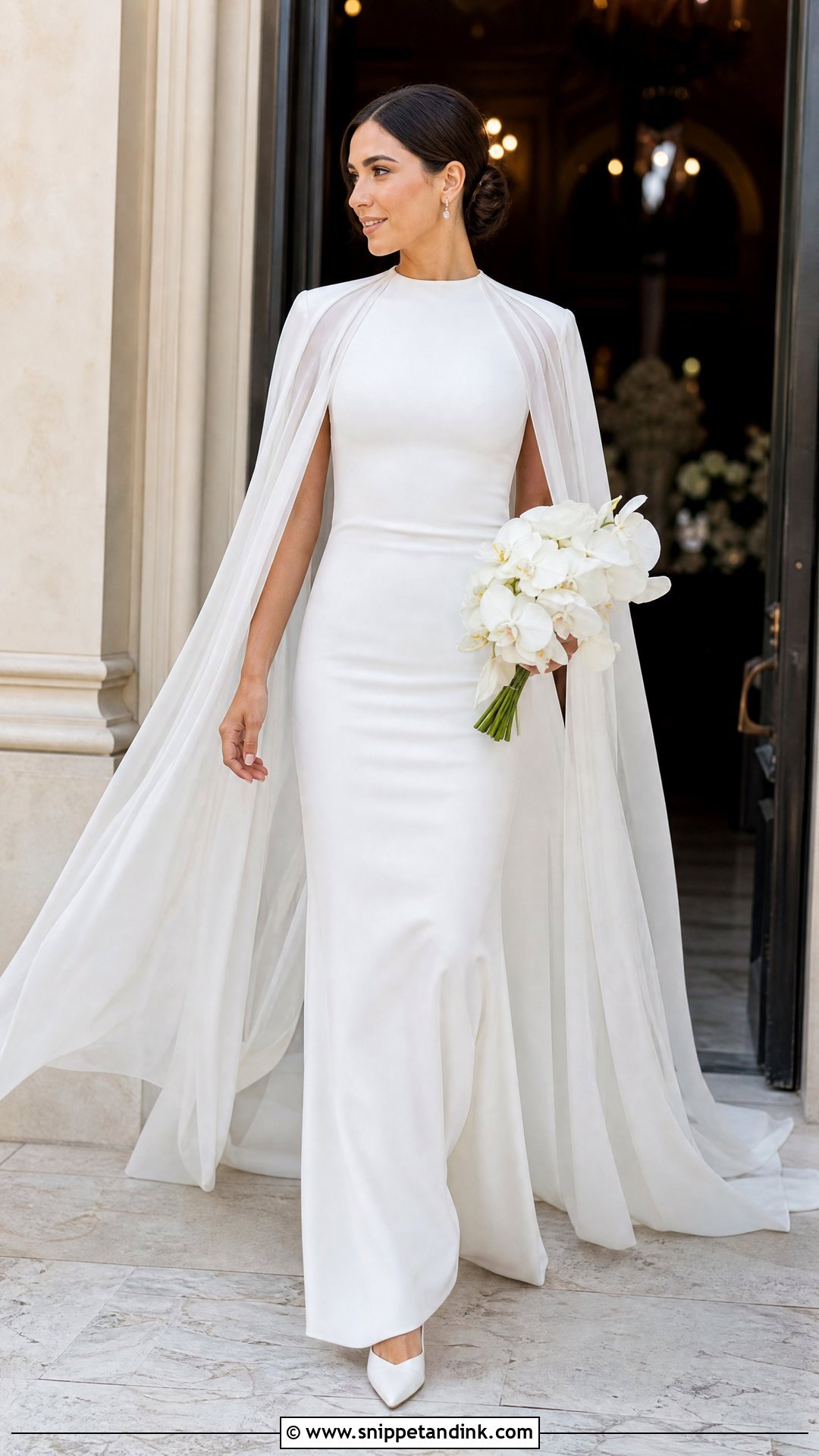
Cape sleeves add movement and light coverage to a plain base. I’d start with a crepe column or a quiet A-line and choose cape panels that fall from the shoulders without covering the waist. Sheer or lightweight fabric moves best. Pointed pumps, small studs and a smooth low bun suit it, with a structured white bouquet to anchor all that flow. If the cape extends into a train, skip the veil; two long sheer layers fight each other. Take it outside before the wedding. A cape catches wind like a sail, and you’ll want to know how it behaves for portraits.
17. Low Back Satin Wedding Gown
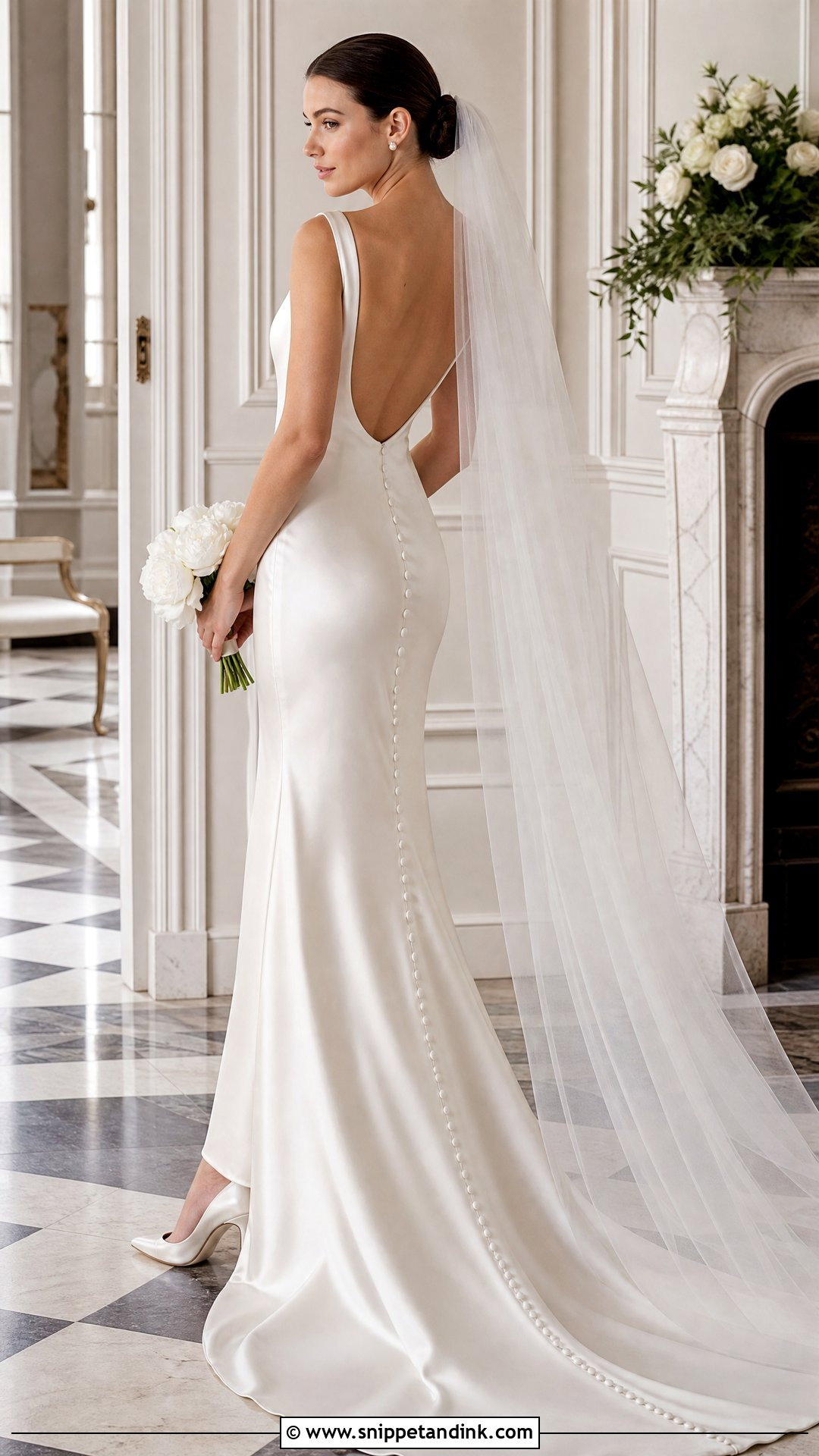
On a low back gown, the back is the whole design, so the front can stay simple with a bateau, scoop or high neckline. Covered buttons from waist to hem add quiet texture. Pearl earrings, a clean bun and a sheer veil set below the hair keep the back visible, with pointed pumps and a small white bouquet. Support is the challenge. I’d look for a structured bodice with built-in cups, or a proper low-back bra fitted early. Sit down at the fitting and have someone look at the back. Gaping at the waist edge is the usual problem, and it’s fixable.
18. Pearl Button Crepe Wedding Gown
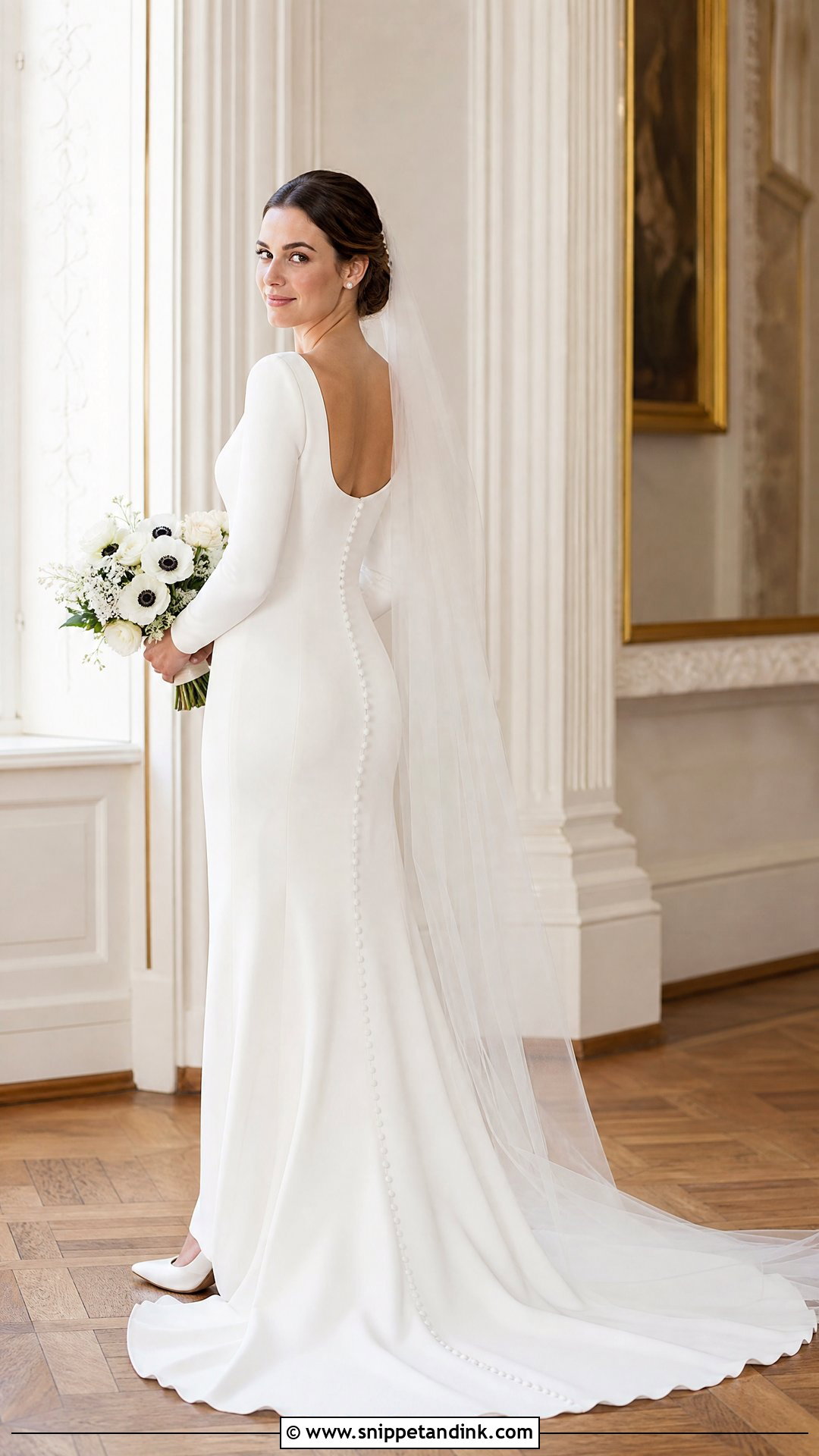
Pearl buttons are a small detail, so they need a clean crepe background to show up. A fitted bodice, long-sleeved or sleeveless, with buttons running down the back and into the train, and a square, boat or shallow V front, is the classic version. Pearl studs, ivory pumps, a plain tulle veil the buttons can show through, an updo and white anemones finish it. Check every button is sewn on firmly, and if any are functional, practice the loops with whoever is dressing you. Thirty tiny loops take longer than people expect.
19. Empire Waist Chiffon Wedding Gown
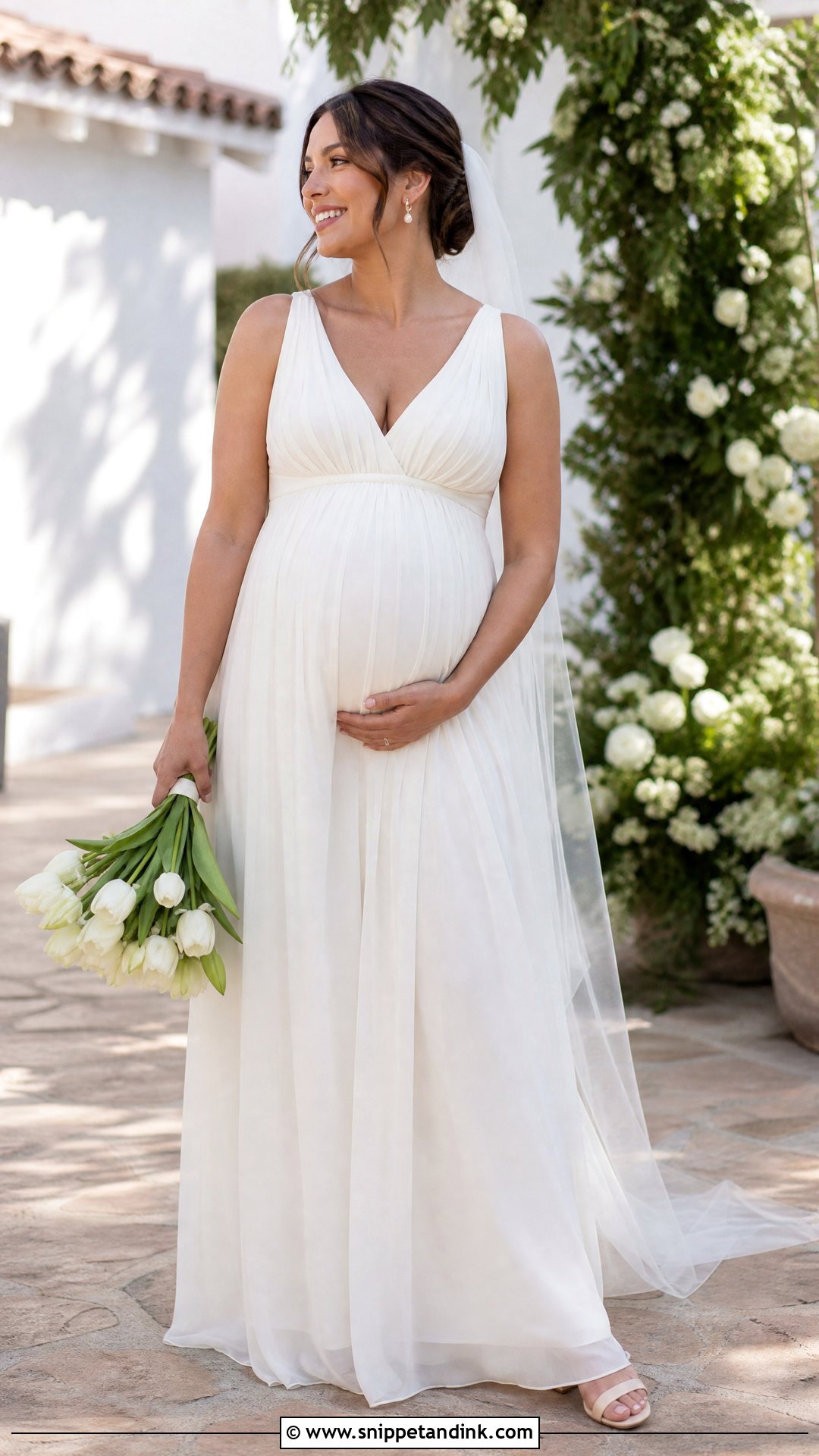
An empire waist chiffon wedding gown puts the seam just under the bust and lets the skirt fall freely from there. It’s the shape I suggest for pregnant brides and summer heat, because nothing presses on the natural waist. A clean V or scoop bodice with supportive straps works; avoid heavy gathers under the bust, which add volume where you don’t want it. Low block-heel sandals, pearl earrings, a fingertip veil and a loose bun suit it, with cosmos or tulips. The bodice still needs careful fitting so the seam lies flat and doesn’t bunch.



20. Minimal Lace A-Line Wedding Gown
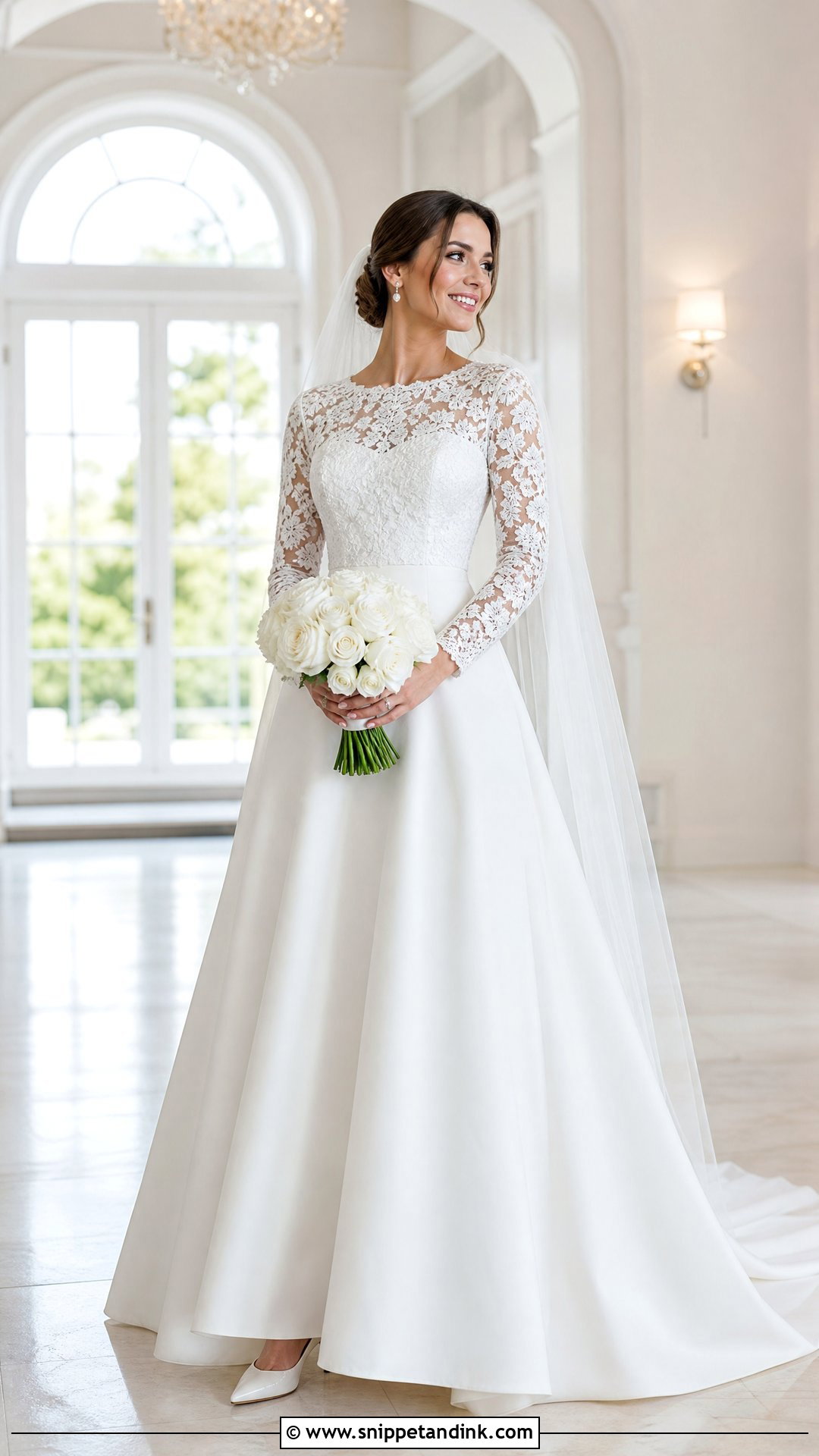
If you love lace but want to keep things restrained, choose an A-line wedding gown with lace only on the bodice or sleeves. Pick a simple floral pattern over an opaque lining, no glitter or beading, and a plain crepe, chiffon or satin skirt below. Pearl earrings, pointed heels, a veil without lace edging, a low chignon and white roses keep it classic. Look closely at where the lace ends. On a well-made gown, the motifs are cut around and finished along the waist and neckline rather than chopped through, and that one detail is what makes a simple lace gown look expensive.
Pressing a Minimal Gown on the Morning Itself
Without lace to hide them, creases from the garment bag show on every frame. Unpack the dress the day before and hang it high, letting the train fall free. Most wrinkles drop out overnight.
For the rest, use a steamer held a few inches off the fabric and work from the inside where you can. Satin and silk can water-spot if a drip lands on them, so fill the steamer with distilled water rather than tap water, which can leave mineral marks. Never put an iron straight onto satin; it leaves a shine that won’t come out. Crepe is easier, though it still needs a pressing cloth if the steamer isn’t enough.
- Hang the gown away from windows, since direct sun can yellow ivory silk.
- Keep makeup, spray tan and self-tanner well away until the dress is on.
- Step into it with a scarf or makeup cover over your face.
Restraint Works When the Fit Is Exact
Every gown here relies on design rather than decoration. Start with a silhouette that’s comfortable and suits your venue, then look hard at fabric, neckline, support, hem and movement. Satin glows, crepe gives smooth structure, chiffon feels airy and a little lace softens things. Keep accessories quiet, wear shoes you can stand in and choose a veil in proportion. Above all, book proper alterations and move around at every fitting. A simple dress only looks luxurious when it fits precisely, which leaves you, not the gown, at the center of every photo.
You'll Like These Ideas:









Leave a Reply